EP2776596B1 - Procédé de fabrication d'un alliage a base de titane pour dispositifs biomedicaux - Google Patents
Procédé de fabrication d'un alliage a base de titane pour dispositifs biomedicaux Download PDFInfo
- Publication number
- EP2776596B1 EP2776596B1 EP12795498.0A EP12795498A EP2776596B1 EP 2776596 B1 EP2776596 B1 EP 2776596B1 EP 12795498 A EP12795498 A EP 12795498A EP 2776596 B1 EP2776596 B1 EP 2776596B1
- Authority
- EP
- European Patent Office
- Prior art keywords
- phase
- alloy
- temperature
- quenching
- beta
- Prior art date
- Legal status (The legal status is an assumption and is not a legal conclusion. Google has not performed a legal analysis and makes no representation as to the accuracy of the status listed.)
- Active
Links
- 238000000034 method Methods 0.000 title claims description 32
- 238000004519 manufacturing process Methods 0.000 title claims description 6
- 229910001069 Ti alloy Inorganic materials 0.000 title description 3
- 229910045601 alloy Inorganic materials 0.000 claims description 59
- 239000000956 alloy Substances 0.000 claims description 59
- 239000010936 titanium Substances 0.000 claims description 25
- 238000005121 nitriding Methods 0.000 claims description 22
- 238000010791 quenching Methods 0.000 claims description 19
- 230000000171 quenching effect Effects 0.000 claims description 19
- 150000004767 nitrides Chemical class 0.000 claims description 17
- RTAQQCXQSZGOHL-UHFFFAOYSA-N Titanium Chemical compound [Ti] RTAQQCXQSZGOHL-UHFFFAOYSA-N 0.000 claims description 14
- PXHVJJICTQNCMI-UHFFFAOYSA-N Nickel Chemical compound [Ni] PXHVJJICTQNCMI-UHFFFAOYSA-N 0.000 claims description 12
- 229910052719 titanium Inorganic materials 0.000 claims description 12
- 239000007789 gas Substances 0.000 claims description 11
- 238000003754 machining Methods 0.000 claims description 7
- 230000008018 melting Effects 0.000 claims description 7
- 238000002844 melting Methods 0.000 claims description 7
- 229910052751 metal Inorganic materials 0.000 claims description 6
- 239000002184 metal Substances 0.000 claims description 6
- 229910052759 nickel Inorganic materials 0.000 claims description 6
- 238000001953 recrystallisation Methods 0.000 claims description 6
- 150000002739 metals Chemical class 0.000 claims description 5
- XLYOFNOQVPJJNP-UHFFFAOYSA-N water Substances O XLYOFNOQVPJJNP-UHFFFAOYSA-N 0.000 claims description 5
- 239000012298 atmosphere Substances 0.000 claims description 4
- 238000006243 chemical reaction Methods 0.000 claims description 4
- 238000010438 heat treatment Methods 0.000 claims description 4
- 238000004381 surface treatment Methods 0.000 claims description 4
- 239000000470 constituent Substances 0.000 claims description 3
- 238000005096 rolling process Methods 0.000 claims description 3
- 238000002360 preparation method Methods 0.000 claims description 2
- 239000012299 nitrogen atmosphere Substances 0.000 claims 1
- 238000005491 wire drawing Methods 0.000 claims 1
- IJGRMHOSHXDMSA-UHFFFAOYSA-N Atomic nitrogen Chemical compound N#N IJGRMHOSHXDMSA-UHFFFAOYSA-N 0.000 description 18
- 239000010955 niobium Substances 0.000 description 16
- 239000000203 mixture Substances 0.000 description 14
- 239000010410 layer Substances 0.000 description 13
- 230000008569 process Effects 0.000 description 10
- 238000000151 deposition Methods 0.000 description 8
- 230000008021 deposition Effects 0.000 description 7
- 238000000265 homogenisation Methods 0.000 description 7
- 229910052757 nitrogen Inorganic materials 0.000 description 7
- 238000000137 annealing Methods 0.000 description 6
- 230000015572 biosynthetic process Effects 0.000 description 6
- 230000008901 benefit Effects 0.000 description 5
- 238000007493 shaping process Methods 0.000 description 5
- VYZAMTAEIAYCRO-UHFFFAOYSA-N Chromium Chemical compound [Cr] VYZAMTAEIAYCRO-UHFFFAOYSA-N 0.000 description 4
- GYHNNYVSQQEPJS-UHFFFAOYSA-N Gallium Chemical compound [Ga] GYHNNYVSQQEPJS-UHFFFAOYSA-N 0.000 description 4
- XEEYBQQBJWHFJM-UHFFFAOYSA-N Iron Chemical compound [Fe] XEEYBQQBJWHFJM-UHFFFAOYSA-N 0.000 description 4
- ZOKXTWBITQBERF-UHFFFAOYSA-N Molybdenum Chemical compound [Mo] ZOKXTWBITQBERF-UHFFFAOYSA-N 0.000 description 4
- XUIMIQQOPSSXEZ-UHFFFAOYSA-N Silicon Chemical compound [Si] XUIMIQQOPSSXEZ-UHFFFAOYSA-N 0.000 description 4
- QCWXUUIWCKQGHC-UHFFFAOYSA-N Zirconium Chemical compound [Zr] QCWXUUIWCKQGHC-UHFFFAOYSA-N 0.000 description 4
- 229910052782 aluminium Inorganic materials 0.000 description 4
- XAGFODPZIPBFFR-UHFFFAOYSA-N aluminium Chemical compound [Al] XAGFODPZIPBFFR-UHFFFAOYSA-N 0.000 description 4
- 230000000694 effects Effects 0.000 description 4
- 229910052733 gallium Inorganic materials 0.000 description 4
- 229910052735 hafnium Inorganic materials 0.000 description 4
- VBJZVLUMGGDVMO-UHFFFAOYSA-N hafnium atom Chemical compound [Hf] VBJZVLUMGGDVMO-UHFFFAOYSA-N 0.000 description 4
- 229910000734 martensite Inorganic materials 0.000 description 4
- 229910052758 niobium Inorganic materials 0.000 description 4
- GUCVJGMIXFAOAE-UHFFFAOYSA-N niobium atom Chemical compound [Nb] GUCVJGMIXFAOAE-UHFFFAOYSA-N 0.000 description 4
- GUVRBAGPIYLISA-UHFFFAOYSA-N tantalum atom Chemical compound [Ta] GUVRBAGPIYLISA-UHFFFAOYSA-N 0.000 description 4
- 239000011135 tin Substances 0.000 description 4
- 229910052720 vanadium Inorganic materials 0.000 description 4
- GPPXJZIENCGNKB-UHFFFAOYSA-N vanadium Chemical compound [V]#[V] GPPXJZIENCGNKB-UHFFFAOYSA-N 0.000 description 4
- 229910052726 zirconium Inorganic materials 0.000 description 4
- ATJFFYVFTNAWJD-UHFFFAOYSA-N Tin Chemical compound [Sn] ATJFFYVFTNAWJD-UHFFFAOYSA-N 0.000 description 3
- 238000012423 maintenance Methods 0.000 description 3
- 230000001954 sterilising effect Effects 0.000 description 3
- 238000004659 sterilization and disinfection Methods 0.000 description 3
- 239000002344 surface layer Substances 0.000 description 3
- 230000009466 transformation Effects 0.000 description 3
- XKRFYHLGVUSROY-UHFFFAOYSA-N Argon Chemical compound [Ar] XKRFYHLGVUSROY-UHFFFAOYSA-N 0.000 description 2
- ZOXJGFHDIHLPTG-UHFFFAOYSA-N Boron Chemical compound [B] ZOXJGFHDIHLPTG-UHFFFAOYSA-N 0.000 description 2
- OKTJSMMVPCPJKN-UHFFFAOYSA-N Carbon Chemical compound [C] OKTJSMMVPCPJKN-UHFFFAOYSA-N 0.000 description 2
- CURLTUGMZLYLDI-UHFFFAOYSA-N Carbon dioxide Chemical compound O=C=O CURLTUGMZLYLDI-UHFFFAOYSA-N 0.000 description 2
- MWUXSHHQAYIFBG-UHFFFAOYSA-N Nitric oxide Chemical compound O=[N] MWUXSHHQAYIFBG-UHFFFAOYSA-N 0.000 description 2
- 239000004411 aluminium Substances 0.000 description 2
- QVGXLLKOCUKJST-UHFFFAOYSA-N atomic oxygen Chemical compound [O] QVGXLLKOCUKJST-UHFFFAOYSA-N 0.000 description 2
- 229910052796 boron Inorganic materials 0.000 description 2
- 229910052799 carbon Inorganic materials 0.000 description 2
- 125000004122 cyclic group Chemical group 0.000 description 2
- 230000002526 effect on cardiovascular system Effects 0.000 description 2
- 230000006870 function Effects 0.000 description 2
- 229910052742 iron Inorganic materials 0.000 description 2
- 238000001000 micrograph Methods 0.000 description 2
- 229910052750 molybdenum Inorganic materials 0.000 description 2
- 239000011733 molybdenum Substances 0.000 description 2
- 238000000399 optical microscopy Methods 0.000 description 2
- 229910052760 oxygen Inorganic materials 0.000 description 2
- 239000001301 oxygen Substances 0.000 description 2
- 230000002441 reversible effect Effects 0.000 description 2
- 229910001285 shape-memory alloy Inorganic materials 0.000 description 2
- 229910052710 silicon Inorganic materials 0.000 description 2
- 239000010703 silicon Substances 0.000 description 2
- 238000005482 strain hardening Methods 0.000 description 2
- 239000000126 substance Substances 0.000 description 2
- 229910052715 tantalum Inorganic materials 0.000 description 2
- 229910052718 tin Inorganic materials 0.000 description 2
- WFKWXMTUELFFGS-UHFFFAOYSA-N tungsten Chemical compound [W] WFKWXMTUELFFGS-UHFFFAOYSA-N 0.000 description 2
- 229910052721 tungsten Inorganic materials 0.000 description 2
- 239000010937 tungsten Substances 0.000 description 2
- 206010017076 Fracture Diseases 0.000 description 1
- 206010061218 Inflammation Diseases 0.000 description 1
- 241000135309 Processus Species 0.000 description 1
- 241001080024 Telles Species 0.000 description 1
- 229910004337 Ti-Ni Inorganic materials 0.000 description 1
- NRTOMJZYCJJWKI-UHFFFAOYSA-N Titanium nitride Chemical compound [Ti]#N NRTOMJZYCJJWKI-UHFFFAOYSA-N 0.000 description 1
- 229910011209 Ti—Ni Inorganic materials 0.000 description 1
- HZEWFHLRYVTOIW-UHFFFAOYSA-N [Ti].[Ni] Chemical compound [Ti].[Ni] HZEWFHLRYVTOIW-UHFFFAOYSA-N 0.000 description 1
- 230000002009 allergenic effect Effects 0.000 description 1
- 229910052786 argon Inorganic materials 0.000 description 1
- 230000000721 bacterilogical effect Effects 0.000 description 1
- 230000006399 behavior Effects 0.000 description 1
- 230000009286 beneficial effect Effects 0.000 description 1
- 239000002763 biomedical alloy Substances 0.000 description 1
- 210000000988 bone and bone Anatomy 0.000 description 1
- 239000001569 carbon dioxide Substances 0.000 description 1
- 229910002092 carbon dioxide Inorganic materials 0.000 description 1
- 238000013130 cardiovascular surgery Methods 0.000 description 1
- 238000012512 characterization method Methods 0.000 description 1
- 229910052804 chromium Inorganic materials 0.000 description 1
- 239000011651 chromium Substances 0.000 description 1
- 150000001875 compounds Chemical class 0.000 description 1
- 238000011109 contamination Methods 0.000 description 1
- 230000008094 contradictory effect Effects 0.000 description 1
- 238000004320 controlled atmosphere Methods 0.000 description 1
- 230000007797 corrosion Effects 0.000 description 1
- 238000005260 corrosion Methods 0.000 description 1
- 238000005520 cutting process Methods 0.000 description 1
- 239000004053 dental implant Substances 0.000 description 1
- 230000001687 destabilization Effects 0.000 description 1
- 229910001873 dinitrogen Inorganic materials 0.000 description 1
- 238000004090 dissolution Methods 0.000 description 1
- 229940082150 encore Drugs 0.000 description 1
- 238000001125 extrusion Methods 0.000 description 1
- 230000004927 fusion Effects 0.000 description 1
- 239000008240 homogeneous mixture Substances 0.000 description 1
- KHYBPSFKEHXSLX-UHFFFAOYSA-N iminotitanium Chemical compound [Ti]=N KHYBPSFKEHXSLX-UHFFFAOYSA-N 0.000 description 1
- 238000002513 implantation Methods 0.000 description 1
- 230000006698 induction Effects 0.000 description 1
- 230000004054 inflammatory process Effects 0.000 description 1
- 238000005468 ion implantation Methods 0.000 description 1
- 238000009533 lab test Methods 0.000 description 1
- 238000005339 levitation Methods 0.000 description 1
- 239000000463 material Substances 0.000 description 1
- 230000007935 neutral effect Effects 0.000 description 1
- 230000003287 optical effect Effects 0.000 description 1
- 210000000056 organ Anatomy 0.000 description 1
- 230000000399 orthopedic effect Effects 0.000 description 1
- 230000002028 premature Effects 0.000 description 1
- 230000002685 pulmonary effect Effects 0.000 description 1
- 238000011084 recovery Methods 0.000 description 1
- 230000009467 reduction Effects 0.000 description 1
- 238000005245 sintering Methods 0.000 description 1
- 239000003381 stabilizer Substances 0.000 description 1
- 238000001356 surgical procedure Methods 0.000 description 1
- 238000003786 synthesis reaction Methods 0.000 description 1
- 238000009864 tensile test Methods 0.000 description 1
- -1 étain Chemical compound 0.000 description 1
Images
Classifications
-
- C—CHEMISTRY; METALLURGY
- C22—METALLURGY; FERROUS OR NON-FERROUS ALLOYS; TREATMENT OF ALLOYS OR NON-FERROUS METALS
- C22F—CHANGING THE PHYSICAL STRUCTURE OF NON-FERROUS METALS AND NON-FERROUS ALLOYS
- C22F1/00—Changing the physical structure of non-ferrous metals or alloys by heat treatment or by hot or cold working
- C22F1/16—Changing the physical structure of non-ferrous metals or alloys by heat treatment or by hot or cold working of other metals or alloys based thereon
- C22F1/18—High-melting or refractory metals or alloys based thereon
- C22F1/183—High-melting or refractory metals or alloys based thereon of titanium or alloys based thereon
-
- A—HUMAN NECESSITIES
- A61—MEDICAL OR VETERINARY SCIENCE; HYGIENE
- A61L—METHODS OR APPARATUS FOR STERILISING MATERIALS OR OBJECTS IN GENERAL; DISINFECTION, STERILISATION OR DEODORISATION OF AIR; CHEMICAL ASPECTS OF BANDAGES, DRESSINGS, ABSORBENT PADS OR SURGICAL ARTICLES; MATERIALS FOR BANDAGES, DRESSINGS, ABSORBENT PADS OR SURGICAL ARTICLES
- A61L27/00—Materials for grafts or prostheses or for coating grafts or prostheses
- A61L27/02—Inorganic materials
- A61L27/04—Metals or alloys
- A61L27/06—Titanium or titanium alloys
-
- A—HUMAN NECESSITIES
- A61—MEDICAL OR VETERINARY SCIENCE; HYGIENE
- A61L—METHODS OR APPARATUS FOR STERILISING MATERIALS OR OBJECTS IN GENERAL; DISINFECTION, STERILISATION OR DEODORISATION OF AIR; CHEMICAL ASPECTS OF BANDAGES, DRESSINGS, ABSORBENT PADS OR SURGICAL ARTICLES; MATERIALS FOR BANDAGES, DRESSINGS, ABSORBENT PADS OR SURGICAL ARTICLES
- A61L29/00—Materials for catheters, medical tubing, cannulae, or endoscopes or for coating catheters
- A61L29/02—Inorganic materials
-
- A—HUMAN NECESSITIES
- A61—MEDICAL OR VETERINARY SCIENCE; HYGIENE
- A61L—METHODS OR APPARATUS FOR STERILISING MATERIALS OR OBJECTS IN GENERAL; DISINFECTION, STERILISATION OR DEODORISATION OF AIR; CHEMICAL ASPECTS OF BANDAGES, DRESSINGS, ABSORBENT PADS OR SURGICAL ARTICLES; MATERIALS FOR BANDAGES, DRESSINGS, ABSORBENT PADS OR SURGICAL ARTICLES
- A61L31/00—Materials for other surgical articles, e.g. stents, stent-grafts, shunts, surgical drapes, guide wires, materials for adhesion prevention, occluding devices, surgical gloves, tissue fixation devices
- A61L31/02—Inorganic materials
- A61L31/022—Metals or alloys
-
- C—CHEMISTRY; METALLURGY
- C22—METALLURGY; FERROUS OR NON-FERROUS ALLOYS; TREATMENT OF ALLOYS OR NON-FERROUS METALS
- C22C—ALLOYS
- C22C1/00—Making non-ferrous alloys
- C22C1/02—Making non-ferrous alloys by melting
-
- C—CHEMISTRY; METALLURGY
- C22—METALLURGY; FERROUS OR NON-FERROUS ALLOYS; TREATMENT OF ALLOYS OR NON-FERROUS METALS
- C22C—ALLOYS
- C22C14/00—Alloys based on titanium
-
- C—CHEMISTRY; METALLURGY
- C23—COATING METALLIC MATERIAL; COATING MATERIAL WITH METALLIC MATERIAL; CHEMICAL SURFACE TREATMENT; DIFFUSION TREATMENT OF METALLIC MATERIAL; COATING BY VACUUM EVAPORATION, BY SPUTTERING, BY ION IMPLANTATION OR BY CHEMICAL VAPOUR DEPOSITION, IN GENERAL; INHIBITING CORROSION OF METALLIC MATERIAL OR INCRUSTATION IN GENERAL
- C23C—COATING METALLIC MATERIAL; COATING MATERIAL WITH METALLIC MATERIAL; SURFACE TREATMENT OF METALLIC MATERIAL BY DIFFUSION INTO THE SURFACE, BY CHEMICAL CONVERSION OR SUBSTITUTION; COATING BY VACUUM EVAPORATION, BY SPUTTERING, BY ION IMPLANTATION OR BY CHEMICAL VAPOUR DEPOSITION, IN GENERAL
- C23C8/00—Solid state diffusion of only non-metal elements into metallic material surfaces; Chemical surface treatment of metallic material by reaction of the surface with a reactive gas, leaving reaction products of surface material in the coating, e.g. conversion coatings, passivation of metals
- C23C8/06—Solid state diffusion of only non-metal elements into metallic material surfaces; Chemical surface treatment of metallic material by reaction of the surface with a reactive gas, leaving reaction products of surface material in the coating, e.g. conversion coatings, passivation of metals using gases
- C23C8/08—Solid state diffusion of only non-metal elements into metallic material surfaces; Chemical surface treatment of metallic material by reaction of the surface with a reactive gas, leaving reaction products of surface material in the coating, e.g. conversion coatings, passivation of metals using gases only one element being applied
- C23C8/24—Nitriding
-
- C—CHEMISTRY; METALLURGY
- C23—COATING METALLIC MATERIAL; COATING MATERIAL WITH METALLIC MATERIAL; CHEMICAL SURFACE TREATMENT; DIFFUSION TREATMENT OF METALLIC MATERIAL; COATING BY VACUUM EVAPORATION, BY SPUTTERING, BY ION IMPLANTATION OR BY CHEMICAL VAPOUR DEPOSITION, IN GENERAL; INHIBITING CORROSION OF METALLIC MATERIAL OR INCRUSTATION IN GENERAL
- C23C—COATING METALLIC MATERIAL; COATING MATERIAL WITH METALLIC MATERIAL; SURFACE TREATMENT OF METALLIC MATERIAL BY DIFFUSION INTO THE SURFACE, BY CHEMICAL CONVERSION OR SUBSTITUTION; COATING BY VACUUM EVAPORATION, BY SPUTTERING, BY ION IMPLANTATION OR BY CHEMICAL VAPOUR DEPOSITION, IN GENERAL
- C23C8/00—Solid state diffusion of only non-metal elements into metallic material surfaces; Chemical surface treatment of metallic material by reaction of the surface with a reactive gas, leaving reaction products of surface material in the coating, e.g. conversion coatings, passivation of metals
- C23C8/06—Solid state diffusion of only non-metal elements into metallic material surfaces; Chemical surface treatment of metallic material by reaction of the surface with a reactive gas, leaving reaction products of surface material in the coating, e.g. conversion coatings, passivation of metals using gases
- C23C8/28—Solid state diffusion of only non-metal elements into metallic material surfaces; Chemical surface treatment of metallic material by reaction of the surface with a reactive gas, leaving reaction products of surface material in the coating, e.g. conversion coatings, passivation of metals using gases more than one element being applied in one step
-
- C—CHEMISTRY; METALLURGY
- C23—COATING METALLIC MATERIAL; COATING MATERIAL WITH METALLIC MATERIAL; CHEMICAL SURFACE TREATMENT; DIFFUSION TREATMENT OF METALLIC MATERIAL; COATING BY VACUUM EVAPORATION, BY SPUTTERING, BY ION IMPLANTATION OR BY CHEMICAL VAPOUR DEPOSITION, IN GENERAL; INHIBITING CORROSION OF METALLIC MATERIAL OR INCRUSTATION IN GENERAL
- C23C—COATING METALLIC MATERIAL; COATING MATERIAL WITH METALLIC MATERIAL; SURFACE TREATMENT OF METALLIC MATERIAL BY DIFFUSION INTO THE SURFACE, BY CHEMICAL CONVERSION OR SUBSTITUTION; COATING BY VACUUM EVAPORATION, BY SPUTTERING, BY ION IMPLANTATION OR BY CHEMICAL VAPOUR DEPOSITION, IN GENERAL
- C23C8/00—Solid state diffusion of only non-metal elements into metallic material surfaces; Chemical surface treatment of metallic material by reaction of the surface with a reactive gas, leaving reaction products of surface material in the coating, e.g. conversion coatings, passivation of metals
- C23C8/06—Solid state diffusion of only non-metal elements into metallic material surfaces; Chemical surface treatment of metallic material by reaction of the surface with a reactive gas, leaving reaction products of surface material in the coating, e.g. conversion coatings, passivation of metals using gases
- C23C8/28—Solid state diffusion of only non-metal elements into metallic material surfaces; Chemical surface treatment of metallic material by reaction of the surface with a reactive gas, leaving reaction products of surface material in the coating, e.g. conversion coatings, passivation of metals using gases more than one element being applied in one step
- C23C8/30—Carbo-nitriding
-
- A—HUMAN NECESSITIES
- A61—MEDICAL OR VETERINARY SCIENCE; HYGIENE
- A61C—DENTISTRY; APPARATUS OR METHODS FOR ORAL OR DENTAL HYGIENE
- A61C2201/00—Material properties
- A61C2201/007—Material properties using shape memory effect
-
- A—HUMAN NECESSITIES
- A61—MEDICAL OR VETERINARY SCIENCE; HYGIENE
- A61L—METHODS OR APPARATUS FOR STERILISING MATERIALS OR OBJECTS IN GENERAL; DISINFECTION, STERILISATION OR DEODORISATION OF AIR; CHEMICAL ASPECTS OF BANDAGES, DRESSINGS, ABSORBENT PADS OR SURGICAL ARTICLES; MATERIALS FOR BANDAGES, DRESSINGS, ABSORBENT PADS OR SURGICAL ARTICLES
- A61L2400/00—Materials characterised by their function or physical properties
- A61L2400/16—Materials with shape-memory or superelastic properties
-
- C—CHEMISTRY; METALLURGY
- C21—METALLURGY OF IRON
- C21D—MODIFYING THE PHYSICAL STRUCTURE OF FERROUS METALS; GENERAL DEVICES FOR HEAT TREATMENT OF FERROUS OR NON-FERROUS METALS OR ALLOYS; MAKING METAL MALLEABLE, e.g. BY DECARBURISATION OR TEMPERING
- C21D2201/00—Treatment for obtaining particular effects
- C21D2201/01—Shape memory effect
-
- C—CHEMISTRY; METALLURGY
- C21—METALLURGY OF IRON
- C21D—MODIFYING THE PHYSICAL STRUCTURE OF FERROUS METALS; GENERAL DEVICES FOR HEAT TREATMENT OF FERROUS OR NON-FERROUS METALS OR ALLOYS; MAKING METAL MALLEABLE, e.g. BY DECARBURISATION OR TEMPERING
- C21D2201/00—Treatment for obtaining particular effects
- C21D2201/02—Superplasticity
-
- F—MECHANICAL ENGINEERING; LIGHTING; HEATING; WEAPONS; BLASTING
- F04—POSITIVE - DISPLACEMENT MACHINES FOR LIQUIDS; PUMPS FOR LIQUIDS OR ELASTIC FLUIDS
- F04C—ROTARY-PISTON, OR OSCILLATING-PISTON, POSITIVE-DISPLACEMENT MACHINES FOR LIQUIDS; ROTARY-PISTON, OR OSCILLATING-PISTON, POSITIVE-DISPLACEMENT PUMPS
- F04C2270/00—Control; Monitoring or safety arrangements
- F04C2270/04—Force
- F04C2270/042—Force radial
- F04C2270/0421—Controlled or regulated
Definitions
- the present invention relates to a process for producing a titanium-based alloy having super elastic and / or shape memory properties, and intended to constitute devices used in the biomedical field, such as, for example, endodontic files, arcs , orthodontic wires and other orthodontic springs, dental implants, cardiovascular or pulmonary stents, guidewires and catheters for cardiovascular surgery, staples and joint prostheses for orthopedic surgery.
- devices used in the biomedical field such as, for example, endodontic files, arcs , orthodontic wires and other orthodontic springs, dental implants, cardiovascular or pulmonary stents, guidewires and catheters for cardiovascular surgery, staples and joint prostheses for orthopedic surgery.
- devices and elements In the biomedical field, devices and elements, such as those mentioned above by way of example, must have very different characteristics, on the one hand from the mechanical point of view given the objective of acting on a part of the human body (such as a tooth, for example in the context of an orthodontic application), and secondly on the biological level, to avoid, or minimize as much as possible, the reactions or consequences related to the contact of the device with the part of the human body or the organ.
- the superelastic and / or shape memory alloys currently used in the biomedical field are of the titanium-nickel type.
- Ni-Ni alloys have poor machinability that causes premature rupture of endodontic files (see for example: Oiknine M., Benizri J., REV. Odont. Stomato. 36 (2007) 109-123 ) and are sometimes difficult to get in cold form.
- nickel-free titanium alloys (known as nickel-free "Gum Metals", Saito T., Furuta T. et al, SCIENCE 300 (2003) 464-467 ) which are considered to be super elastic because, although they do not show martensitic transformation under stress, they have a low stiffness and a very high recoverable elasticity.
- EP0449793 A1 discloses titanium alloy products having a nitrided surface layer and the method of their manufacture.
- the alloys proposed in this prior art do not respond globally satisfactorily to all the required criteria, both mechanically and biocompatibility, especially at the surface.
- the above-mentioned French patent proposes a surface treatment of the alloy by nitride deposition, and this by a plasma-based technique.
- the method of the invention solves the problems of the prior art, by proposing to make a titanium-based alloy, for biomedical applications, with super elastic properties and / or shape memory, surface-treated , and which meets all the mechanical requirements, expressed above, and further which is improved over the prior art, with regard to the surface hardness, the ease of machining and the cold working, also resistance to sterilization, while also being perfectly biocompatible.
- the ingot obtained in the first step has a mass ranging from a few tens to a few hundred grams to realize the biomedical device.
- said gas is nitrogen.
- the process of the invention introduces a surface treatment step (by gas phase nitriding) in order to improve the mechanical properties and surface biocompatibility of the alloy.
- the ingot is suspended by a chain in the heart of the enclosure constituting the oven.
- the first and second quenching aims to retain the beta phase at room temperature, to obtain the desired super elastic effect.
- a quenching with water or an air quenching is carried out.
- the homogenization phase is optional in that, for certain alloy compositions, the melting phase can lead directly to obtaining a homogeneous ingot.
- the homogenization phase is carried out at a temperature above 900 ° C.
- the "transus beta" temperature is the lowest temperature at which a 100% "beta” phase of the alloy can exist. It varies between 600 ° C and 1050 ° C, depending on the composition of the alloy.
- the simultaneous phase of redissolution in beta phase and nitriding is carried out at a temperature of between 600 and 1050 ° C., preferably between 800 ° C. and 1050 ° C. ° C, under a gaseous atmosphere, preferably nitrogen, for a period of a few hours, to obtain a nitride surface layer ranging from a few microns to tens of microns thick, depending on the intended use.
- the duration of maintenance at the annealing temperature of the homogenization phase is between 12 hours and 20 hours, and preferably of the order of 16 hours.
- the technique employed must not modify the metastable beta microstructure of the alloy which is at the origin of the super elastic effect.
- the nitriding phase is conjugated with a simultaneous recrystallization phase and leads to obtaining a recrystallized beta microstructure.
- the present application also discloses on the one hand an alloy as obtained by the above method, and on the other hand a device for biomedical use, incorporating said alloy.
- the method of the invention applies to an alloy that does not contain nickel.
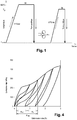
- figure 1 shows a schematic curve of the temperature variations of an ingot including different compounds, and intended to constitute the alloy, as a function of time, with regard to the successive steps of the method of the invention.
- a preliminary step (not shown on the figure 1 ), the various amounts of metals that will be included in the composition of the alloy to be produced are collected in the proportions defined below.
- the metal mixture is subjected to a preliminary melting operation at a temperature of between 2000 ° C and 3000 ° C.
- this preliminary melting step is carried out in a cold crucible by semi magnetic levitation using a high frequency induction generator. It is also possible to use sintering techniques, conventional or fast (flash).
- the melting is preferably carried out under vacuum or in a controlled atmosphere with a neutral gas (such as argon for example).
- the various components are chosen in qualitative and quantitative terms in order to achieve a metastable beta-type alloy by quenching, and allowing the formation of a martensitic phase alpha ", which is reversible, and thus providing super elastic properties and / or shape memory.
- the "beta-metastable" character of the alloy results in a low apparent modulus of elasticity ranging from 10 GPa to 70 GPa approaching that of the bone.
- the second step consists of a "homogenization annealing" carried out at high temperature (typically between 900 ° C. and 1200 ° C.) under ultra-high vacuum.
- the ingot is maintained at the so-called annealing temperature for a period that may be several hours.
- the temperature and duration of the treatment depend on the alloy considered. In the end, a completely homogeneous alloy must be obtained.
- the homogenization annealing phase is completed by a first quenching, preferably by quenching with water, so as to retain a metastable "beta" microstructure at room temperature which will favor the shaping operations.
- the quenching is carried out in a fraction of a second by dropping the ingot from the annealing temperature into a tray of water at room temperature.
- This step aims at conforming the ingot according to the shape of the desired device or element, for a biomedical application as mentioned above.
- the shaping operation is of course adapted to the configuration and shape of the product to be produced and uses known machining techniques, or shaping such as drawing, rolling, extrusion or other.
- the biomedical device thus manufactured consisting of the desired alloy, is then subjected to a heat-treatment solution in solution above the temperature T ⁇ which is the transus temperature beta typically between 600 ° C and 1050 ° C.
- the device is maintained at this temperature for a duration of a few tens of minutes to a few hours, and this, under gaseous atmosphere such as nitrogen for example.
- the apparatus used is an oven known in itself.
- a second quenching preferably quenching with water, is carried out, which brings the temperature of the device to room temperature.
- This second quenching makes it possible to maintain the beta microstructure of the alloy in a metastable form.
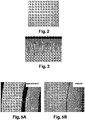
- the alloy in question is super-elastic of the recrystallized beta-metastable type, with a grain size of between 10 and 60 microns (see the beta microstructure of the alloy core in figure 2 ).
- Its composition, expressed as mass percentage is: Ti (50%), Ta (25%) and Nb (25%).
- the recrystallization-nitriding phase was carried out at 800 ° C. for a duration of 3 hours and led to a titanium nitride layer a few tens of microns thick.
- the microstructure of the nitride at the surface is shown in cross section on the figure 3 , where the dark parts correspond to the nitride zone consisting of nitrogen-rich needles (internal nitriding).
- the thin nitride layer does not alter the super elastic properties of the alloy thus obtained.
- the figure 4 shows the cyclic tensile curve for the nitrided alloy which shows the presence of charge / discharge hysteresis characteristic of the super elastic effect.
- the cycled tensile test presented in this figure was conducted on a flat test-tube one millimeter thick obtained by the present method of manufacture. The charge / discharge cycles were carried out with an incrementation of 0.5% in deformation.
- a nitrided alloy produced by the process of the invention has, compared with an alloy of the same composition, non-nitrided, an increase in the surface hardness (measured 4 times higher by micro hardness Vickers), which causes a very strong increase in the wear resistance (used volume reduced by 85%) as well as a clear reduction in the coefficient of friction (divided by 5).
- the Figures 5A and 5B each show a view from above of a sample of alloy having undergone a scratch test, respectively non-nitride (5A - prior art) and nitride (5B - according to the invention).
- the furrows are obtained under 25g load after 200 cycles in rotation using a pawn-disk tribometer. It is found that the alloy according to the invention ( Figure 5B ) has a much higher surface resistance.
- the second quenching of the process of the invention which follows the simultaneous nitriding / recrystallization step, has the advantage of maintaining the metastable beta microstructure in the core of the alloy, to obtain the super elastic effect.
- the invention is not limited to the deposition of nitride, but also includes the deposition of surface layer of oxynitride, or carbonitride.
- a gas or a suitable gas mixture is used, in this case adding carbon dioxide, nitrogen monoxide or even air to obtain oxynitride, or surface carbonitride.
- the alloy made according to the process of the invention, and according to the compositions indicated, has advantages according to the alloys of the titanium / nickel type and in particular a very high capacity to cold deformation, and superior machinability these two advantages being particularly appreciated in the case of devices with biomedical application.
- endodontic files have in the prior art relatively high wear and significant risk of fractures caused by machining streaks.
- the cutting capacity of the alloy according to the invention is greater than that of the alloys of the prior art.
- the nitride layer improves the properties of hardness and wear resistance, while providing beneficial effects in terms of biocompatibility.
- the cardiovascular application devices such as stents
- a better haemocompatibility there is observed, as regards the alloy of the invention, a better haemocompatibility.
- the biomedical device thus produced is more resistant to sterilization operations and is less sensitive to bacteriological activity thanks to the presence of the nitriding layer.
- the process according to the invention makes it possible to manufacture a titanium-based alloy for biomedical application, which has super elastic and / or shape memory properties, with all the advantages that derive from it and expressed above, and in addition, these properties are for some of them reinforced by the nitride layer, which itself provides other capabilities or mechanical properties, and finally the latter enhances or improves the biocompatibility of the device for biomedical use.
Landscapes
- Chemical & Material Sciences (AREA)
- Health & Medical Sciences (AREA)
- Engineering & Computer Science (AREA)
- Materials Engineering (AREA)
- Mechanical Engineering (AREA)
- Metallurgy (AREA)
- Organic Chemistry (AREA)
- Veterinary Medicine (AREA)
- Inorganic Chemistry (AREA)
- Epidemiology (AREA)
- Life Sciences & Earth Sciences (AREA)
- Animal Behavior & Ethology (AREA)
- General Health & Medical Sciences (AREA)
- Public Health (AREA)
- Chemical Kinetics & Catalysis (AREA)
- Crystallography & Structural Chemistry (AREA)
- Thermal Sciences (AREA)
- Physics & Mathematics (AREA)
- Transplantation (AREA)
- Oral & Maxillofacial Surgery (AREA)
- Medicinal Chemistry (AREA)
- Dermatology (AREA)
- Heart & Thoracic Surgery (AREA)
- Surgery (AREA)
- Vascular Medicine (AREA)
- Materials For Medical Uses (AREA)
- Solid-Phase Diffusion Into Metallic Material Surfaces (AREA)
- Manufacture And Refinement Of Metals (AREA)
Description
- La présente invention concerne un procédé pour fabriquer un alliage à base de titane, présentant des propriétés super élastique et/ou à mémoire de forme, et destiné à constituer des dispositifs utilisés dans le domaine biomédical, tel que par exemple des limes endodontiques, des arcs, fils et autres ressorts orthodontiques, des implants dentaires, des stents cardiovasculaires ou pulmonaires, des fils guide et des cathéters pour la chirurgie cardiovasculaire, des agrafes et prothèses d'articulation pour la chirurgie orthopédique.
- Dans le domaine biomédical, les dispositifs et éléments, tels que ceux mentionnés ci-dessus à titre d'exemple, doivent présenter des caractéristiques très différentes, d'une part sur le plan mécanique compte tenu de l'objectif visé consistant à agir sur une partie du corps humain (telle qu'une dent, par exemple dans le cadre d'une application orthodontique), et d'autre part sur le plan biologique, pour éviter, ou atténuer au maximum, les réactions ou conséquences liées au contact du dispositif avec la partie du corps humain ou l'organe.
- Parmi les caractéristiques techniques recherchées, voire nécessaires, on peut citer : un domaine d'élasticité recouvrable le plus large possible (propriété de super élasticité), une faible rigidité, une excellente biocompatibilité chimique, une grande résistance à la corrosion et aux produits de stérilisation, une facilité d'usinage et de travail à froid, ainsi qu'une augmentation de la dureté et de la résistance à l'usure superficielle.
- De manière connue, on a tenté de concilier ces contraintes qui sont globalement contradictoires les unes avec les autres.
- Les alliages super élastiques et/ou à mémoire de forme actuellement utilisés dans le domaine biomédical sont du type titane-nickel.
- Néanmoins, on sait que le nickel est allergisant pour l'organisme et peut provoquer des réactions inflammatoires, malgré l'intérêt qu'il présente pour ses propriétés mécaniques, notamment de super élasticité et/ou de mémoire de forme. Par ailleurs, les alliages Ti-Ni possèdent une usinabilité médiocre qui engendre des ruptures prématurées des limes endodontiques (voir par exemple : Oiknine M., Benizri J., REV. ODONT. STOMATO. 36 (2007) 109-123) et sont parfois difficile à mettre en forme à froid.
- Ces alliages connus présentent un caractère super élastique par la déstabilisation sous contrainte de la phase beta mère (cubique) par transformation en une phase martensitique alpha" (orthorhombique) réversible (Kim H.Y., Ikehara Y., et al, ACTA MATERIALIA 54 (2006) 2419-2429).
- En outre, on connait des alliages à base de titane sans nickel (appelés « Gum Metals », Saito T., Furuta T. et al, SCIENCE 300 (2003) 464-467) qui sont considérés comme étant super élastiques car, bien que ne présentant pas de transformation martensitique sous contraintes, ils possèdent une faible rigidité et une élasticité recouvrable très importante.
- Par ailleurs, on connait par le brevet français
2 848 810 US 2007/0137742 et par la demande de brevetWO 2005/093109 des alliages à base de titane et sans nickel. - La demande de brevet
EP0449793 A1 divulgue des produits en alliage de titane pourvus d'une couche superficielle nitrurée et le procédé de leur fabrication. - Néanmoins, les alliages proposés dans cet art antérieur ne répondent pas de façon globalement satisfaisante à l'ensemble des critères requis, à la fois sur le plan mécanique et de la biocompatibilité notamment en surface. Par exemple, au regard de la compatibilité biologique, le brevet français ci-dessus propose un traitement de surface de l'alliage par dépôt de nitrure, et ce par une technique à base de plasma.
- Cependant, cette technique connue n'est pas satisfaisante. En effet, le dépôt à l'aide de plasma ne permet pas un dépôt d'une couche de nitrure uniforme. Ceci a des conséquences dommageables ou gênantes dans le cas de dispositifs ou d'éléments présentant des formes particulières ou des parties ou zones difficilement accessibles (telles que des concavités ou similaires).
- En outre, ledit brevet français décrit un procédé qui ne s'applique pas à un alliage à mémoire de forme et/ou super élastique.
- Si la plupart des alliages sont donc à base de titane et de nickel, il a été proposé récemment des alliages super élastiques à base de titane sans nickel et particulièrement bien déformable à froid. L'article publié dans la revue JOURNAL OF THE MECHANICAL BEHAVIOR OF BIOMEDICAL MATERIALS 3 (2010) 559-564, par Bertrand E., Gloriant T. et al « Synthesis and characterisation of a new superelastic Ti-25Ta-25Nb biomedical alloy » montre de tels alliages à base de titane sans nickel.
- Ainsi, le procédé de l'invention permet de résoudre les problèmes de l'art antérieur, en proposant de réaliser un alliage à base de titane, pour des applications biomédicales, à propriétés super élastiques et/ou à mémoire de forme, traité en surface, et qui répond à l'ensemble des conditions requises sur le plan mécanique, exprimées ci-dessus, et en outre qui est amélioré par rapport à l'art antérieur, au regard de la dureté superficielle, de la facilité d'usinage et du travail à froid, également de résistance à la stérilisation, tout en étant en outre parfaitement biocompatible.
- L'invention est définie dans les revendications.
- A cette fin, selon l'invention, le procédé de fabrication d'un alliage à base de titane, ne contenant pas de nickel, à propriétés super élastique et/ ou à mémoire de forme pour application biomédicale, du type comportant les phases successives de :
- préparation par fusion sous vide des différents métaux constitutifs de l'alliage souhaité, pour réaliser un lingot;
- optionnellement, homogénéisation sous vide du lingot par recuit à une première température, notamment supérieure à 900°C, consista nt en une montée en température du lingot, d'un maintien à cette température pendant une durée permettant l'homogénéisation complète
- première trempe ;
- mise en forme mécanique à température ambiante, telle que par laminage, tréfilage, usinage, ou équivalent ;
- traitement thermique de remise en solution en phase beta au delà du transus beta consistant en une montée en température jusqu'à une seconde température désirée, d'un maintien à cette température pour une certaine durée
- seconde trempe ;
- Le lingot obtenu en première étape présente une masse variant de quelques dizaines à quelques centaines de grammes permettant de réaliser le dispositif biomédical.
- Avantageusement, ledit gaz est de l'azote.
- Ainsi, le procédé de l'invention introduit une étape de traitement de surface (par nitruration en phase gazeuse) en vue d'améliorer les propriétés mécaniques et de biocompatibilité superficielle de l'alliage.
- Lors de l'étape de nitruration, on a veillé à un installer le lingot mis en forme dans une enceinte et tel que son agencement permette le dépôt de la couche en phase gazeuse sur la totalité de sa surface, y compris dans les concavités du lingot mis en forme. Pour ce faire, le lingot est suspendu par une chainette au coeur de l'enceinte constituant le four.
- Les première et seconde trempes ont pour objectif de retenir la phase beta à température ambiante, pour obtenir l'effet super élastique désiré. On réalise, selon la composition de l'alliage, soit une trempe à l'eau, soit une trempe à l'air.
- La phase d'homogénéisation est optionnelle en ce sens que, pour certaines compositions d'alliages, la phase de fusion peut conduire directement à l'obtention d'un lingot homogène. La phase d'homogénéisation est réalisée à une température supérieure à 900 °C. Par ailleurs, on sait que la température du « transus béta » est la température la plus basse à laquelle une phase 100 % « béta » de l'alliage puisse exister. Elle varie entre 600° C et 1050° C, en fonction de la composition de l'alliage.
- De préférence, la phase simultanée de remise en solution en phase beta et de nitruration (dans le cas où le gaz est de l'azote) est réalisée à une température comprise entre 600 et 1050 °C, de préférence entre 800°C et 1050°C, sous une atmosphère gazeuse, de préférence d'azote, pendant une durée de quelques heures, pour obtenir une couche superficielle de nitrure variant de quelques microns à quelques dizaines de microns d'épaisseur, selon l'usage envisagé.
- La durée de maintien à la température de recuit de la phase d'homogénéisation est comprise entre 12 heures et 20 heures, et de préférence de l'ordre de 16 heures.
- En variante, ne faisant pas partie de la présente invention, la couche de nitrure (ou tout autre type de couche) peut être réalisée par une technique du type :
- plasma
- implantation ionique
- arc cathodique
- laser
- tout procédé PVD ou CVD.
- La technique employée ne doit pas modifier la microstructure beta métastable de l'alliage qui est à l'origine de l'effet super élastique. Avantageusement, la phase de nitruration est conjuguée avec une phase simultanée de recristallisation et conduit à l'obtention d'une microstructure beta recristallisée.
- La présente demande divulgue également d'une part un alliage tel qu'obtenu par la procédé ci-dessus, et d'autre part un dispositif à usage biomédical, incorporant ledit alliage.
- Selon une forme préférée, l'alliage de l'invention comporte selon sa composition chimique en pourcentage atomique :
- Titane : entre 30 % et 98 %
- Niobium : entre 0 % et 40 %
- Molybdène : entre 0 % et 15 %
- Chrome : entre 0 % et 15 %
- Fer : entre 0 % et 15 %
- Zirconium : entre 0 % et 40 %
- Hafnium : entre 0% et 40 %
- Tantale : entre 0 % et 60 %
- Oxygène : entre 0 % et 2 %
- Azote : entre 0 % et 2 %
- Silicium : entre 0 % et 2 %
- Bore ; entre 0 % et 2 %
- Carbone : entre 0 % et 2 %
- Vanadium : entre 0 % et 15 %
- Tungstène : entre 0 % et 20 %
- Aluminium entre 0 % et 10 %
- Etain entre 0 % et 10 %
- Gallium : entre 0 % et 10 %
- On mentionne ci-dessous quelques compositions de l'alliage de l'invention, données en pourcentage atomique :
- Ti74 Nb26
- Ti72 Nb18 Ta10
- Ti74 Nb20 Zr6
- Ti76 Nb23 N
- Ti78.5 Nb15 Zr2.5 Sn4
- Ti73.1 Nb23 Ta0.7 Zr2 O1.2
- Ainsi, contrairement à l'art antérieur, le procédé de l'invention s'applique à un alliage qui ne comporte pas de nickel.
- L'invention sera bien comprise à la lumière de la description qui suit d'exemples illustratifs mais non limitatifs sur la base des dessins annexés dans lesquels :
- La
figure 1 est une représentation graphique de la variation de la température en fonction du temps à laquelle est soumis le lingot d'alliage, selon les différentes étapes du procédé de l'invention. - La
figure 2 est une micrographie obtenue par microscope optique, montrant la microstructure beta métastable d'un exemple d'alliage Ti-25Ta-25Nb à coeur. - La
figure 3 montre une coupe transversale, observée par microscopie optique, de la microstructure de la surface nitrurée de l'alliage de lafigure 2 . - La
figure 4 montre une courbe de traction uni-axiale cyclée (charge/décharge successifs) montrant le caractère super élastique de l'alliage nitruré par la formation d'hystérésis entre charge et décharge due à la transformation martensitique alpha" sous contrainte. - Les
figures 5A et 5B montrent des micrographies obtenues par microscopie optique respectives d'un échantillon non nitruré (art antérieur) et nitruré (selon l'invention) après test de rayure par tribomètre pion-disque à charge et à nombres de cycles équivalents. - L'invention est maintenant décrite en regard de la
figure 1 qui montre une courbe schématique des variations de température d'un lingot incluant des différents composés, et destiné à constituer l'alliage, en fonction du temps, au regard des étapes successives du procédé de l'invention. - Dans une étape préliminaire (non représentée sur la
figure 1 ), on rassemble les différentes quantités de métaux qui rentreront dans la composition de l'alliage à réaliser, dans des proportions définies ci après. Le mélange de métaux est soumis à une opération de fusion préliminaire à une température comprise entre 2000 °C et 3000 °C. Avantageusement, cette étape préliminaire de fusion est réalisée en creuset froid par semi lévitation magnétique à l'aide d'un générateur à induction haute fréquence. On peut également utiliser des techniques de frittage, conventionnel ou rapide (flash). - Il importe, lors de cette étape préliminaire, de s'assurer de réaliser un mélange homogène, sans aucune inclusion ni contamination ou pollution d'éléments étrangers. A cet égard, la fusion est réalisée de préférence sous vide ou sous atmosphère contrôlée avec un gaz neutre (tel que de l'argon par exemple).
- Les différents éléments susceptibles d'entrer dans la composition du lingot et donc du futur alliage incluent :
- le titane, pour une grande partie ou une partie majoritaire
- d'autres métaux : tantale, niobium, molybdène, zirconium, hafnium, vanadium, fer, chrome, tungstène qui constituent des éléments dits « beta-stabilisants », et éventuellement
- encore d'autres éléments tels que : aluminium, silicium, bore, carbone, oxygène, azote, étain, gallium... qui, ajoutés en faible quantité, sont susceptibles d'améliorer les propriétés de super élasticité.
- Les différents composants sont choisis en termes qualitatif et quantitatif en vue de réaliser un alliage du type beta métastable par trempe, et permettant la formation d'une phase martensitique alpha", qui soit réversible, et procurant ainsi des propriétés super élastiques et/ou à mémoire de forme.
- Le caractère « beta-métastable » de l'alliage se traduit par un faible module d'élasticité apparent variant de 10 GPa à 70 GPa se rapprochant de celui de l'os.
- A partir du lingot fusionné, obtenu par l'étape préliminaire de fusion mentionnée ci-dessus, la seconde étape consiste en un « recuit d'homogénéisation » effectuée à haute température (typiquement entre 900 °C et 1200 °C) sous ultra vide.
- A noter que sur le graphique de la
figure 1 , l'échelle de temps (abscisse) n'est pas respectée, pour des raisons pratiques. - Le lingot est maintenu à la température dite de recuit pendant une durée qui peut être de plusieurs heures. La température et la durée du traitement dépendent de l'alliage considéré. Au final, un alliage complètement homogène doit être obtenu.
- La phase de recuit d'homogénéisation s'achève par une première trempe, de préférence par une trempe à l'eau, de manière à retenir une microstructure « beta » métastable à la température ambiante qui favorisera les opérations de mise en forme. La trempe est réalisée en une fraction de seconde par chute du lingot depuis la température de recuit dans un bac d'eau à température ambiante.
- Ensuite, on réalise les opérations de mise en forme et d'usinage, à froid, c'est-à-dire à température ambiante. Cette étape vise à conformer le lingot selon la forme du dispositif ou élément souhaité, pour une application biomédicale telle que mentionnée ci-dessus. L'opération de mise en forme est adaptée bien entendu à la configuration et la forme du produit à réaliser et fait appel à des techniques connues d'usinage, ou de mise en forme telle que tréfilage, laminage, extrusion ou autre.
- Le dispositif biomédical ainsi fabriqué, constitué de l'alliage souhaité, est alors soumis à un traitement thermique de remise en solution au dessus de la température Tβ qui est la température de transus beta typiquement entre 600 °C et 1050 °C.
- Le dispositif est maintenu à cette température pendant une durée de quelques dizaines de minutes à quelques heures, et ce, sous atmosphère gazeuse tel que de l'azote par exemple. L'appareil utilisé est un four connu en lui-même.
- Ce traitement mené à température constante, vise deux objectifs :
- l'obtention d'une microstructure « beta recristallisée » présentant une taille de grain affinée afin d'améliorer et optimiser les propriétés mécaniques du dispositif biomédical final ;
- le dépôt, lors de son séjour dans le four, d'une couche de nitrure en surface sur le dispositif, par la réaction directe à chaud, entre l'alliage constitutif du dispositif, et l'azote gazeux introduit dans le four de trempe. Ce traitement constitue un processus de nitruration en phase gazeuse. La durée de cette étape de nitruration varie entre 0, 5 et 10 heures en fonction des compositions de l'alliage, des épaisseurs souhaitées et de la forme du dispositif. La température maintenue durant cette étape de nitruration est comprise entre 600 et 1050°C.
- Enfin, à l'issu de la phase de nitruration / recristallisation, on réalise une seconde trempe, de préférence une trempe à l'eau, qui ramène la température du dispositif à la température ambiante. Cette seconde trempe permet de maintenir la microstructure beta de l'alliage sous une forme métastable.
- Le demandeur a réalisé des essais en laboratoire sur des échantillons d'alliage réalisé selon le procédé de l'invention décrit ci-dessus. L'alliage en question est super élastique du type beta-métastable recristallisé, avec une taille de grain comprise entre 10 et 60 microns (voir la microstructure beta du coeur de l'alliage en
figure 2 ). Sa composition, exprimée en pourcentage massique est : Ti (50%), Ta (25%) et Nb (25%). La phase de recristallisation-nitruration avait été effectuée à 800°C pendant une durée de 3 heures et a conduit à une couche de nitrure de titane de quelques dizaines de microns d'épaisseur. La microstructure du nitrure en surface est montrée en coupe transversale sur lafigure 3 , où les parties sombres correspondent à la zone nitrurée constituée d'aiguilles riches en azote (nitruration interne). - La couche de nitrure de faible épaisseur n'altère pas les propriétés super élastiques de l'alliage ainsi obtenu. La
figure 4 montre la courbe de traction cyclée concernant l'alliage nitruré qui montre la présence d'hystérésis charge/décharge caractéristiques de l'effet super élastique. L'essai de traction cyclé présenté sur cette figure a été mené sur une éprouvette plate d'un millimètre d'épaisseur obtenu par le présent procédé de fabrication. Les cycles charge/décharge ont été effectués avec une incrémentation de 0.5% en déformation. - Un alliage nitruré réalisé par le procédé de l'invention, présente par rapport à un alliage de même composition, non nitruré, une augmentation de la dureté superficielle (mesuré 4 fois supérieure par micro dureté Vickers), ce qui entraine une très forte augmentation de la résistance à l'usure (volume usé réduit de 85%) ainsi qu'une nette diminution du coefficient de friction (divisée par 5). Les
figures 5A et 5B montrent chacune une vue de dessus d'un échantillon d'alliage ayant subi un test de rayure, respectivement non nitruré (5A - art antérieur) et nitruré (5B - selon l'invention). Les sillons (de couleur foncée) sont obtenus sous charge de 25g après 200 cycles en rotation à l'aide d'un tribomètre pion-disque. On constate que l'alliage selon l'invention (figure 5B ) présente une résistance bien supérieure en surface. - La phase de nitruration réalisée en phase gazeuse comme décrit ci-dessus présente de nombreux avantages par rapport aux techniques de nitruration connues.
- Le dépôt d'une couche de nitrure d'épaisseur sensiblement homogène, même sur des objets de forme complexe, comme le sont d'ailleurs dans la plupart des cas les dispositifs à usage biomédical ;
- Grande simplicité de mise en oeuvre ;
- La nitruration (c'est-à-dire le dépôt d'un nitrure) est réalisée de manière simultanée à la recristallisation de l'alliage lors de la mise en solution ; ceci n'est pas possible par les autres méthodes de nitruration qui suppose de n'effectuer celles-ci qu'après recristallisation sous vide.
- Une très bonne adhérence de la couche sur l'alliage par formation de nitruration interne près de la surface.
- De plus, la seconde trempe du procédé de l'invention, qui suit l'étape simultanée de nitruration/recristallisation, présente l'avantage de maintenir la microstructure beta métastable au coeur de l'alliage, pour obtenir l'effet super élastique.
- L'invention n'est pas limitée au dépôt de nitrure, mais inclut également le dépôt de couche superficielle d'oxynitrure, ou de carbonitrure. Dans ce cas, on utilise un gaz ou un mélange de gaz adapté, en l'occurrenceen ajoutant du dioxyde de carbone, du monoxyde d'azote ou même de l'air pour l'obtention d'oxynitrure, ou de carbonitrure en surface.
- L'alliage réalisée selon le procédé de l'invention, et selon les compositions indiquées, présente des avantages suivant par rapport aux alliages du type titane/nickel et notamment une capacité à la déformation à froid très importante, et aptitude à l'usinage supérieure, ces deux avantages étant particulièrement appréciés dans le cas de dispositifs à application biomédicale. A titre d'exemple, les limes endodontiques présentent dans l'art antérieur une usure relativement importante et des risques de fractures non négligeables causées par les stries d'usinage.
- En outre, la capacité de coupe de l'alliage selon l'invention est plus importante que celle des alliages de l'art antérieur. La couche de nitrure améliore les propriétés de dureté et de résistance à l'usure, tout en procurant des effets bénéfiques sur le plan de la biocompatibilité. Dans les dispositifs d'application cardio-vasculaires, tels que des stents, on observe, pour ce qui est de l'alliage de l'invention, une meilleure hémocompatibilité. Enfin, le dispositif biomédical ainsi réalisé résiste mieux aux opérations de stérilisation et est moins sensible à l'activité bactériologique grâce à la présence de la couche de nitruration.
- En résumé, le procédé selon l'invention permet de fabriquer un alliage à base de titane pour application biomédicale, qui présente des propriétés super élastiques et/ou à mémoire de forme, avec tous les avantages qui en découlent et exprimés ci-dessus, et en outre ces propriétés étant pour certaines d'entre elles renforcées par la couche de nitrure, qui elle-même apporte d'autres capacités ou propriétés mécaniques, et enfin cette dernière renforce ou améliore la biocompatibilité du dispositif à usage biomédical.
Claims (5)
- Procédé de fabrication d'un alliage à base de titane, ne contenant pas de nickel, à propriétés super élastique pour application biomédicale, du type comportant les phases successives de :- préparation par fusion sous vide des différents métaux constitutifs de l'alliage souhaité, pour réaliser un lingot ;- première trempe ;- mise en forme mécanique à température ambiante, telle que par laminage, tréfilage, usinage, ou équivalent ;- traitement thermique de remise en solution en phase beta au delà du transus beta consistant en une montée en température jusqu'à une seconde température désirée, d'un maintien à cette température pour une certaine durée ;- seconde trempe ;caractérisé en ce que ladite phase de traitement thermique est réalisée sous atmosphère gazeuse, et constitue également une phase dite de nitruration, réalisant un traitement de surface par réaction avec ledit gaz, de manière à former de manière homogène en surface, une couche de nitrure, carbonitrure, oxynitrure, et en ce que l'alliage est en phase beta méta stable à la température ambiante après la trempe.
- Procédé selon la revendication 1, caractérisé en ce que la phase de nitruration est réalisée à la seconde température comprise entre 600° C et 1050°C, de préférence entre 800° C et 1050° C.
- Procédé selon la revendication 1 ou 2, caractérisé en ce que la phase de nitruration est réalisée sous atmosphère d'azote.
- Procédé selon l'une des revendications 1 à 3, caractérisé en ce que la phase de nitruration est conjuguée avec une phase simultanée de recristallisation.
- Procédé selon l'une des revendications 1 à 4, caractérisé en ce que la première et la seconde trempes sont réalisées sous forme de trempes à l'eau ou à l'air.
Applications Claiming Priority (2)
| Application Number | Priority Date | Filing Date | Title |
|---|---|---|---|
| FR1160281A FR2982618B1 (fr) | 2011-11-10 | 2011-11-10 | Procede de fabrication d'un alliage a base de titane pour dispositifs biomedicaux |
| PCT/FR2012/052572 WO2013068691A1 (fr) | 2011-11-10 | 2012-11-07 | Procédé de fabrication d'un alliage a base de titane pour dispositifs biomedicaux |
Publications (2)
| Publication Number | Publication Date |
|---|---|
| EP2776596A1 EP2776596A1 (fr) | 2014-09-17 |
| EP2776596B1 true EP2776596B1 (fr) | 2019-04-24 |
Family
ID=47291093
Family Applications (1)
| Application Number | Title | Priority Date | Filing Date |
|---|---|---|---|
| EP12795498.0A Active EP2776596B1 (fr) | 2011-11-10 | 2012-11-07 | Procédé de fabrication d'un alliage a base de titane pour dispositifs biomedicaux |
Country Status (7)
| Country | Link |
|---|---|
| US (1) | US9677162B2 (fr) |
| EP (1) | EP2776596B1 (fr) |
| JP (2) | JP6469444B2 (fr) |
| CN (1) | CN104245975A (fr) |
| ES (1) | ES2736301T3 (fr) |
| FR (1) | FR2982618B1 (fr) |
| WO (1) | WO2013068691A1 (fr) |
Families Citing this family (52)
| Publication number | Priority date | Publication date | Assignee | Title |
|---|---|---|---|---|
| FR2982618B1 (fr) | 2011-11-10 | 2014-08-01 | Institut Nat Des Sciences Appliquees De Rennes Insa De Rennes | Procede de fabrication d'un alliage a base de titane pour dispositifs biomedicaux |
| US10066282B2 (en) * | 2014-02-13 | 2018-09-04 | Titanium Metals Corporation | High-strength alpha-beta titanium alloy |
| DE102014010032B4 (de) | 2014-07-08 | 2017-03-02 | Technische Universität Braunschweig | Titanlegierung |
| FR3027230B1 (fr) * | 2014-10-17 | 2016-11-04 | Univ De Lorraine | Ressort d'orthodontie helicoidal et son procede de fabrication. |
| JP6005119B2 (ja) * | 2014-10-23 | 2016-10-12 | 国立大学法人東京工業大学 | 超弾性合金 |
| CN105755413B (zh) * | 2015-04-14 | 2017-08-15 | 金华市秸和环保技术咨询有限公司 | 一种人工关节的热处理方法 |
| CN104745870B (zh) * | 2015-04-14 | 2016-09-07 | 陕西爱骨医疗股份有限公司 | 一种人工关节 |
| CN106063953A (zh) * | 2015-04-21 | 2016-11-02 | 焦雷 | 一种植入性血泵泵体 |
| CN106063954A (zh) * | 2015-04-21 | 2016-11-02 | 焦雷 | 一种医疗器械植入血泵 |
| CN106063955A (zh) * | 2015-04-21 | 2016-11-02 | 傅风荣 | 一种治疗心血管疾病的医疗器械微动力泵 |
| CN104857583A (zh) * | 2015-04-21 | 2015-08-26 | 傅风荣 | 一种医用心内泵装置 |
| CN106075622A (zh) * | 2015-04-28 | 2016-11-09 | 焦雷 | 一种医用心脏植入泵泵体 |
| CN105833370A (zh) * | 2015-04-28 | 2016-08-10 | 傅风荣 | 一种抗溶血和抗血栓性能良好的用于手术心脏内的血液泵 |
| CN104962764B (zh) * | 2015-06-11 | 2017-05-10 | 哈尔滨工业大学 | 一种航天非金属基复合材料结构连接用Ti‑V‑Al轻质记忆合金功能化处理方法 |
| CN105296801A (zh) * | 2015-10-29 | 2016-02-03 | 创辉医疗器械江苏有限公司 | 低模量钛合金 |
| CN105506370A (zh) * | 2015-12-15 | 2016-04-20 | 毛培 | 一种Ce、Nd增强钛合金材料 |
| ITUB20160885A1 (it) * | 2016-02-19 | 2017-08-19 | Getters Spa | Catodi sinterizzati non porosi e pompe a vuoto ioniche contenenti gli stessi |
| KR102251066B1 (ko) * | 2016-04-25 | 2021-05-11 | 아르코닉 인코포레이티드 | 티타늄, 알루미늄, 니오븀, 바나듐 및 몰리브덴의 bcc 재료, 및 그로부터 제조된 제품 |
| KR102594682B1 (ko) * | 2016-04-25 | 2023-10-27 | 한국재료연구원 | 석출강화형 고강도 고연성 타이타늄 합금 및 그 제조 방법 |
| CN105839044B (zh) * | 2016-06-03 | 2020-12-22 | 哈尔滨东安发动机(集团)有限公司 | 一种钛合金齿轮的制造方法 |
| US11111571B2 (en) | 2016-11-14 | 2021-09-07 | Fort Wayne Metals Research Products | Ni-free beta Ti alloys with shape memory and super-elastic properties |
| JPWO2018135568A1 (ja) * | 2017-01-20 | 2019-11-14 | 日本ピストンリング株式会社 | 医療部材および軟組織の治療方法 |
| GB2562703A (en) | 2017-03-10 | 2018-11-28 | Ilika Tech Limited | Titanium Alloys |
| GB2561815A (en) | 2017-03-10 | 2018-10-31 | Ilika Tech Limited | Titanium Alloys |
| RU2681030C2 (ru) * | 2017-05-12 | 2019-03-01 | Хермит Эдванст Технолоджиз ГмбХ | Сплав на основе титана |
| RU2706916C2 (ru) * | 2017-05-12 | 2019-11-21 | Хермит Эдванст Технолоджиз ГмбХ | Заготовка для изготовления упругих элементов из сплава на основе титана |
| RU2691692C2 (ru) * | 2017-05-12 | 2019-06-17 | Хермит Эдванст Технолоджиз ГмбХ | Сплав на основе титана |
| RU2691787C2 (ru) * | 2017-05-12 | 2019-06-18 | Хермит Эдванст Технолоджиз ГмбХ | Сплав на основе титана |
| CN107130160B (zh) * | 2017-05-24 | 2018-09-14 | 哈尔滨工业大学 | 一种Ti-V-Al基轻质记忆合金及其制备方法 |
| US10538835B2 (en) * | 2017-06-05 | 2020-01-21 | Adallo Llc | Variably flexible metal article and methods of making the same |
| CN107468356A (zh) * | 2017-08-29 | 2017-12-15 | 孙艳平 | 一种弹性牙骨锤 |
| CN107684462A (zh) * | 2017-08-29 | 2018-02-13 | 孙艳平 | 一种兼具弹性和刚性的牙骨锤 |
| CN107586997A (zh) * | 2017-09-05 | 2018-01-16 | 钱友静 | 一种用于外科手术骨关节固定的钛箔 |
| CN107904441B (zh) * | 2017-11-28 | 2020-05-05 | 杭州杭联汽车连杆有限公司 | 钛合金及其制备方法 |
| CN108098268A (zh) * | 2017-12-18 | 2018-06-01 | 西安赛特思迈钛业有限公司 | 一种高尺寸精度医用钛合金板材的加工方法 |
| CN112020569A (zh) * | 2018-02-27 | 2020-12-01 | 奥克斯梅特科技有限公司 | 一种为增材制造而优化的生物相容性钛合金 |
| JP7129057B2 (ja) * | 2018-03-30 | 2022-09-01 | 国立研究開発法人物質・材料研究機構 | Ti系合金の製造方法 |
| GB2572609A (en) | 2018-04-03 | 2019-10-09 | Ilika Tech Ltd | Titanium alloys |
| US10913991B2 (en) | 2018-04-04 | 2021-02-09 | Ati Properties Llc | High temperature titanium alloys |
| CN108486408B (zh) * | 2018-04-18 | 2019-12-17 | 山东创瑞健康医疗科技有限公司 | 一种低弹性模量补牙用β型钛合金及其制造方法 |
| WO2019228963A1 (fr) * | 2018-05-28 | 2019-12-05 | Life Vascular Devices Biotech, S.L. | Alliage de tungstène et de titane en phase bêta |
| CA3113804A1 (fr) | 2018-09-25 | 2020-05-07 | Titanium Metals Corporation | Alliage de titane a resistance moderee et a haute ductilite |
| CN109609894A (zh) * | 2018-11-21 | 2019-04-12 | 中国航发哈尔滨东安发动机有限公司 | 一种减小钛合金零件离子氮化变形的退火工艺方法 |
| CN109763027A (zh) * | 2019-02-01 | 2019-05-17 | 中国兵器科学研究院宁波分院 | 一种低成本高硬度钛合金及其制备方法 |
| CN110527935B (zh) * | 2019-09-27 | 2021-03-16 | 河北科技大学 | 一种提高锆基合金表面硬度的方法 |
| CN111172424B (zh) * | 2020-01-17 | 2021-03-02 | 西部金属材料股份有限公司 | 一种日用品用钛合金及其制备方法 |
| CN111809081B (zh) * | 2020-07-23 | 2021-10-29 | 河北科技师范学院 | 一种高强度高塑性ZrTiAlNb锆钛基合金及其制备方法 |
| CN112143935B (zh) * | 2020-08-19 | 2022-03-01 | 中国石油天然气集团有限公司 | ω相变诱发增强增韧亚稳β型钛合金、管材及制造方法 |
| CN112095104B (zh) * | 2020-09-07 | 2021-08-27 | 山东大学 | 一种在钛表面制备复合膜层的方法、复合材料和应用 |
| US20240002982A1 (en) * | 2020-11-13 | 2024-01-04 | Royal Melbourne Institute Of Technology | Superelastic alloys |
| CN121079442A (zh) * | 2023-04-04 | 2025-12-05 | 威森波-阿维斯玛股份公司 | 高强度钛基合金和由其制造的制品 |
| CN119265450B (zh) * | 2024-09-30 | 2025-06-17 | 中国科学院力学研究所 | 一种高温下宽温域高阻尼钛合金及其制备方法 |
Family Cites Families (17)
| Publication number | Priority date | Publication date | Assignee | Title |
|---|---|---|---|---|
| AU644393B2 (en) * | 1989-12-21 | 1993-12-09 | Smith & Nephew, Inc. | Biocompatible low modulus titanium alloy for medical implants |
| US5477864A (en) * | 1989-12-21 | 1995-12-26 | Smith & Nephew Richards, Inc. | Cardiovascular guidewire of enhanced biocompatibility |
| SE9001009L (sv) * | 1990-03-21 | 1991-09-22 | Ytbolaget I Uppsala Ab | Foerfarande foer att bilda ett haart och slitagebestaendigt skikt med god vidhaeftning paa titan eller titanregleringar och produkter, framstaellda enligt foerfarandet |
| US6238491B1 (en) * | 1999-05-05 | 2001-05-29 | Davitech, Inc. | Niobium-titanium-zirconium-molybdenum (nbtizrmo) alloys for dental and other medical device applications |
| JP3884316B2 (ja) * | 2002-04-04 | 2007-02-21 | 株式会社古河テクノマテリアル | 生体用超弾性チタン合金 |
| US20040168751A1 (en) * | 2002-06-27 | 2004-09-02 | Wu Ming H. | Beta titanium compositions and methods of manufacture thereof |
| US20040261912A1 (en) * | 2003-06-27 | 2004-12-30 | Wu Ming H. | Method for manufacturing superelastic beta titanium articles and the articles derived therefrom |
| FR2848810B1 (fr) * | 2002-12-19 | 2005-11-11 | Pol Jean Marie Robert Thiry | Fil orthodontique a caracteristiques mecaniques elevees et a faible frottement dans les attaches |
| JP3753380B2 (ja) * | 2003-07-18 | 2006-03-08 | 株式会社古河テクノマテリアル | 生体用超弾性チタン合金の製造方法及び生体用超弾性チタン合金 |
| WO2005064026A1 (fr) | 2003-12-25 | 2005-07-14 | Institute Of Metal Research Chinese Academy Of Sciences | Alliages ti a faible module et super-elasticite, procede de production correspondant |
| JP4302604B2 (ja) * | 2004-09-27 | 2009-07-29 | 株式会社古河テクノマテリアル | 生体用超弾性チタン合金 |
| JP2006089826A (ja) * | 2004-09-27 | 2006-04-06 | Furukawa Techno Material Co Ltd | 生体用超弾性チタン合金 |
| JP2006097115A (ja) * | 2004-09-30 | 2006-04-13 | Teigu:Kk | β型チタン合金の強化方法およびそれによって得られたβ型チタン合金製品 |
| JP2006314525A (ja) * | 2005-05-12 | 2006-11-24 | Tohoku Univ | 管状器官への挿入具 |
| CN101285139A (zh) * | 2008-05-29 | 2008-10-15 | 厦门大学 | 一种低弹性模量钛钽锆形状记忆合金及其制备方法 |
| CN101724764B (zh) * | 2009-12-10 | 2011-07-20 | 中南大学 | 一种生物医用β-钛合金的制备工艺 |
| FR2982618B1 (fr) | 2011-11-10 | 2014-08-01 | Institut Nat Des Sciences Appliquees De Rennes Insa De Rennes | Procede de fabrication d'un alliage a base de titane pour dispositifs biomedicaux |
-
2011
- 2011-11-10 FR FR1160281A patent/FR2982618B1/fr active Active
-
2012
- 2012-11-07 CN CN201280055596.4A patent/CN104245975A/zh active Pending
- 2012-11-07 US US14/357,559 patent/US9677162B2/en active Active
- 2012-11-07 ES ES12795498T patent/ES2736301T3/es active Active
- 2012-11-07 JP JP2014540538A patent/JP6469444B2/ja active Active
- 2012-11-07 EP EP12795498.0A patent/EP2776596B1/fr active Active
- 2012-11-07 WO PCT/FR2012/052572 patent/WO2013068691A1/fr not_active Ceased
-
2019
- 2019-01-16 JP JP2019005302A patent/JP2019094567A/ja active Pending
Non-Patent Citations (2)
| Title |
|---|
| LIU X ET AL: "Surface modification of titanium, titanium alloys, and related materials for biomedical applications", MATERIALS SCIENCE AND ENGINEERING: R: REP, ELSEVIER, AMSTERDAM, NL, vol. 47, no. 3-4, 24 December 2004 (2004-12-24), pages 49 - 121, XP004722113, ISSN: 0927-796X, DOI: 10.1016/J.MSER.2004.11.001 * |
| NAKAI M ET AL: "Surface hardening of biomedical Ti-29Nb-13Ta-4.6Zr and Ti-6Al-4V ELI by gas nitriding", MATERIALS SCIENCE AND ENGINEERING: A, ELSEVIER, AMSTERDAM, NL, vol. 486, no. 1-2, 15 July 2008 (2008-07-15), pages 193 - 201, XP022633354, ISSN: 0921-5093, [retrieved on 20080429], DOI: 10.1016/J.MSEA.2007.08.065 * |
Also Published As
| Publication number | Publication date |
|---|---|
| FR2982618B1 (fr) | 2014-08-01 |
| US20140338795A1 (en) | 2014-11-20 |
| JP2015503025A (ja) | 2015-01-29 |
| JP2019094567A (ja) | 2019-06-20 |
| CN104245975A (zh) | 2014-12-24 |
| JP6469444B2 (ja) | 2019-02-13 |
| US9677162B2 (en) | 2017-06-13 |
| EP2776596A1 (fr) | 2014-09-17 |
| ES2736301T3 (es) | 2019-12-27 |
| WO2013068691A1 (fr) | 2013-05-16 |
| FR2982618A1 (fr) | 2013-05-17 |
Similar Documents
| Publication | Publication Date | Title |
|---|---|---|
| FR2982618A1 (fr) | Procede de fabrication d'un alliage a base de titane pour dispositifs biomedicaux | |
| Zhao et al. | A review in titanium-zirconium binary alloy for use in dental implants: Is there an ideal Ti-Zr composing ratio? | |
| Aniołek | The influence of thermal oxidation parameters on the growth of oxide layers on titanium | |
| Li et al. | Electrochemical and surface analyses of nanostructured Ti–24Nb–4Zr–8Sn alloys in simulated body solution | |
| Kobayashi et al. | Diamond-like carbon coatings on orthodontic archwires | |
| EP3416769A1 (fr) | Procédé de fabrication d'un béta-alliage titane niobium zirconium (tnz) à très bas module d'élasticité pour applications biomédicales et son mode de réalisation par fabrication additive | |
| Correa et al. | Effect of temperature on thermal oxidation behavior of biomedical Ti-Zr-Mo alloys | |
| US20170067137A1 (en) | Titanium sintered body and ornament | |
| Travessa et al. | Corrosion performance of the biocompatible β-Ti12Mo6Zr2Fe alloy submitted to laser and plasma-nitriding surface modifications | |
| O’Brien | Niobium biomaterials | |
| Kuroda et al. | The effect of Nb on the formation of TiO2 anodic coating oxide on Ti–Nb alloys through MAO treatment | |
| EP2635719B1 (fr) | Materiau metallique a gradient d'elasticite | |
| Wang et al. | Improving tribological property of TiZrHfNbTa high entropy alloy by transient oxidation for biomedical application | |
| Li et al. | Microstructure evolution of Ni-rich NiTi (-Hf) alloy during thermal oxidation at different temperatures | |
| Sun et al. | PIIID-formed (Ti, O)/Ti,(Ti, N)/Ti and (Ti, O, N)/Ti coatings on NiTi shape memory alloy for medical applications | |
| Meng et al. | Laser cladded and laser surface nitrided TiZrNb coatings on Ti-6Al-4 V: Microstructure, Tribological, and corrosion behavior | |
| US10934607B2 (en) | Titanium sintered body, ornament, and heat resistant component | |
| EP1573083A2 (fr) | Fil metallique du type utilise en orthodontie et son procede d'obtention | |
| Reger et al. | Electrochemical and tribological studies of in-situ grown ceramic layers on additively manufactured Ti–50Zr alloy for load-bearing implant applications | |
| Matsuki et al. | Effects of aging on phase constitution, lattice parameter and mechanical properties of Ti-4 mol% Au near-eutectoid alloy | |
| JPH04200557A (ja) | 生体用インプラント材料 | |
| Ormanova et al. | Structure of Ti-Ta alloys fabricated by electron-beam surface alloying | |
| Roegnitz et al. | Tribological Investigations of the Novel Titanium Alloy TNTZ-O for Dental Implant Applications: Subsequent Results of a Comparative Study | |
| BE466510A (fr) | ||
| WO2025146427A1 (fr) | Dispositif médical ou composant de dispositif médical et son procédé de préparation |
Legal Events
| Date | Code | Title | Description |
|---|---|---|---|
| PUAI | Public reference made under article 153(3) epc to a published international application that has entered the european phase |
Free format text: ORIGINAL CODE: 0009012 |
|
| 17P | Request for examination filed |
Effective date: 20140310 |
|
| AK | Designated contracting states |
Kind code of ref document: A1 Designated state(s): AL AT BE BG CH CY CZ DE DK EE ES FI FR GB GR HR HU IE IS IT LI LT LU LV MC MK MT NL NO PL PT RO RS SE SI SK SM TR |
|
| DAX | Request for extension of the european patent (deleted) | ||
| STAA | Information on the status of an ep patent application or granted ep patent |
Free format text: STATUS: EXAMINATION IS IN PROGRESS |
|
| 17Q | First examination report despatched |
Effective date: 20170724 |
|
| GRAP | Despatch of communication of intention to grant a patent |
Free format text: ORIGINAL CODE: EPIDOSNIGR1 |
|
| STAA | Information on the status of an ep patent application or granted ep patent |
Free format text: STATUS: GRANT OF PATENT IS INTENDED |
|
| RIC1 | Information provided on ipc code assigned before grant |
Ipc: C23C 14/06 20060101ALI20181022BHEP Ipc: C22C 14/00 20060101ALI20181022BHEP Ipc: A61L 29/02 20060101ALI20181022BHEP Ipc: C23C 8/24 20060101ALI20181022BHEP Ipc: A61C 13/00 20060101ALI20181022BHEP Ipc: C23C 16/34 20060101ALI20181022BHEP Ipc: C22F 1/18 20060101ALI20181022BHEP Ipc: C22C 1/02 20060101AFI20181022BHEP Ipc: A61L 27/06 20060101ALI20181022BHEP Ipc: A61L 31/02 20060101ALI20181022BHEP |
|
| INTG | Intention to grant announced |
Effective date: 20181114 |
|
| GRAS | Grant fee paid |
Free format text: ORIGINAL CODE: EPIDOSNIGR3 |
|
| GRAA | (expected) grant |
Free format text: ORIGINAL CODE: 0009210 |
|
| STAA | Information on the status of an ep patent application or granted ep patent |
Free format text: STATUS: THE PATENT HAS BEEN GRANTED |
|
| AK | Designated contracting states |
Kind code of ref document: B1 Designated state(s): AL AT BE BG CH CY CZ DE DK EE ES FI FR GB GR HR HU IE IS IT LI LT LU LV MC MK MT NL NO PL PT RO RS SE SI SK SM TR |
|
| REG | Reference to a national code |
Ref country code: GB Ref legal event code: FG4D Free format text: NOT ENGLISH |
|
| REG | Reference to a national code |
Ref country code: CH Ref legal event code: EP |
|
| REG | Reference to a national code |
Ref country code: AT Ref legal event code: REF Ref document number: 1124231 Country of ref document: AT Kind code of ref document: T Effective date: 20190515 Ref country code: IE Ref legal event code: FG4D Free format text: LANGUAGE OF EP DOCUMENT: FRENCH |
|
| REG | Reference to a national code |
Ref country code: DE Ref legal event code: R096 Ref document number: 602012059390 Country of ref document: DE |
|
| REG | Reference to a national code |
Ref country code: NL Ref legal event code: MP Effective date: 20190424 |
|
| REG | Reference to a national code |
Ref country code: LT Ref legal event code: MG4D |
|
| PG25 | Lapsed in a contracting state [announced via postgrant information from national office to epo] |
Ref country code: NL Free format text: LAPSE BECAUSE OF FAILURE TO SUBMIT A TRANSLATION OF THE DESCRIPTION OR TO PAY THE FEE WITHIN THE PRESCRIBED TIME-LIMIT Effective date: 20190424 |
|
| PG25 | Lapsed in a contracting state [announced via postgrant information from national office to epo] |
Ref country code: AL Free format text: LAPSE BECAUSE OF FAILURE TO SUBMIT A TRANSLATION OF THE DESCRIPTION OR TO PAY THE FEE WITHIN THE PRESCRIBED TIME-LIMIT Effective date: 20190424 Ref country code: PT Free format text: LAPSE BECAUSE OF FAILURE TO SUBMIT A TRANSLATION OF THE DESCRIPTION OR TO PAY THE FEE WITHIN THE PRESCRIBED TIME-LIMIT Effective date: 20190824 Ref country code: SE Free format text: LAPSE BECAUSE OF FAILURE TO SUBMIT A TRANSLATION OF THE DESCRIPTION OR TO PAY THE FEE WITHIN THE PRESCRIBED TIME-LIMIT Effective date: 20190424 Ref country code: HR Free format text: LAPSE BECAUSE OF FAILURE TO SUBMIT A TRANSLATION OF THE DESCRIPTION OR TO PAY THE FEE WITHIN THE PRESCRIBED TIME-LIMIT Effective date: 20190424 Ref country code: FI Free format text: LAPSE BECAUSE OF FAILURE TO SUBMIT A TRANSLATION OF THE DESCRIPTION OR TO PAY THE FEE WITHIN THE PRESCRIBED TIME-LIMIT Effective date: 20190424 Ref country code: LT Free format text: LAPSE BECAUSE OF FAILURE TO SUBMIT A TRANSLATION OF THE DESCRIPTION OR TO PAY THE FEE WITHIN THE PRESCRIBED TIME-LIMIT Effective date: 20190424 Ref country code: NO Free format text: LAPSE BECAUSE OF FAILURE TO SUBMIT A TRANSLATION OF THE DESCRIPTION OR TO PAY THE FEE WITHIN THE PRESCRIBED TIME-LIMIT Effective date: 20190724 |
|
| REG | Reference to a national code |
Ref country code: GB Ref legal event code: 732E Free format text: REGISTERED BETWEEN 20191024 AND 20191030 |
|
| PG25 | Lapsed in a contracting state [announced via postgrant information from national office to epo] |
Ref country code: RS Free format text: LAPSE BECAUSE OF FAILURE TO SUBMIT A TRANSLATION OF THE DESCRIPTION OR TO PAY THE FEE WITHIN THE PRESCRIBED TIME-LIMIT Effective date: 20190424 Ref country code: PL Free format text: LAPSE BECAUSE OF FAILURE TO SUBMIT A TRANSLATION OF THE DESCRIPTION OR TO PAY THE FEE WITHIN THE PRESCRIBED TIME-LIMIT Effective date: 20190424 Ref country code: GR Free format text: LAPSE BECAUSE OF FAILURE TO SUBMIT A TRANSLATION OF THE DESCRIPTION OR TO PAY THE FEE WITHIN THE PRESCRIBED TIME-LIMIT Effective date: 20190725 Ref country code: LV Free format text: LAPSE BECAUSE OF FAILURE TO SUBMIT A TRANSLATION OF THE DESCRIPTION OR TO PAY THE FEE WITHIN THE PRESCRIBED TIME-LIMIT Effective date: 20190424 Ref country code: BG Free format text: LAPSE BECAUSE OF FAILURE TO SUBMIT A TRANSLATION OF THE DESCRIPTION OR TO PAY THE FEE WITHIN THE PRESCRIBED TIME-LIMIT Effective date: 20190724 |
|
| REG | Reference to a national code |
Ref country code: AT Ref legal event code: MK05 Ref document number: 1124231 Country of ref document: AT Kind code of ref document: T Effective date: 20190424 |
|
| REG | Reference to a national code |
Ref country code: ES Ref legal event code: FG2A Ref document number: 2736301 Country of ref document: ES Kind code of ref document: T3 Effective date: 20191227 |
|
| PG25 | Lapsed in a contracting state [announced via postgrant information from national office to epo] |
Ref country code: IS Free format text: LAPSE BECAUSE OF FAILURE TO SUBMIT A TRANSLATION OF THE DESCRIPTION OR TO PAY THE FEE WITHIN THE PRESCRIBED TIME-LIMIT Effective date: 20190824 |
|
| REG | Reference to a national code |
Ref country code: DE Ref legal event code: R097 Ref document number: 602012059390 Country of ref document: DE |
|
| PG25 | Lapsed in a contracting state [announced via postgrant information from national office to epo] |
Ref country code: DK Free format text: LAPSE BECAUSE OF FAILURE TO SUBMIT A TRANSLATION OF THE DESCRIPTION OR TO PAY THE FEE WITHIN THE PRESCRIBED TIME-LIMIT Effective date: 20190424 Ref country code: SK Free format text: LAPSE BECAUSE OF FAILURE TO SUBMIT A TRANSLATION OF THE DESCRIPTION OR TO PAY THE FEE WITHIN THE PRESCRIBED TIME-LIMIT Effective date: 20190424 Ref country code: AT Free format text: LAPSE BECAUSE OF FAILURE TO SUBMIT A TRANSLATION OF THE DESCRIPTION OR TO PAY THE FEE WITHIN THE PRESCRIBED TIME-LIMIT Effective date: 20190424 Ref country code: EE Free format text: LAPSE BECAUSE OF FAILURE TO SUBMIT A TRANSLATION OF THE DESCRIPTION OR TO PAY THE FEE WITHIN THE PRESCRIBED TIME-LIMIT Effective date: 20190424 Ref country code: CZ Free format text: LAPSE BECAUSE OF FAILURE TO SUBMIT A TRANSLATION OF THE DESCRIPTION OR TO PAY THE FEE WITHIN THE PRESCRIBED TIME-LIMIT Effective date: 20190424 Ref country code: RO Free format text: LAPSE BECAUSE OF FAILURE TO SUBMIT A TRANSLATION OF THE DESCRIPTION OR TO PAY THE FEE WITHIN THE PRESCRIBED TIME-LIMIT Effective date: 20190424 |
|
| PG25 | Lapsed in a contracting state [announced via postgrant information from national office to epo] |
Ref country code: SM Free format text: LAPSE BECAUSE OF FAILURE TO SUBMIT A TRANSLATION OF THE DESCRIPTION OR TO PAY THE FEE WITHIN THE PRESCRIBED TIME-LIMIT Effective date: 20190424 Ref country code: IT Free format text: LAPSE BECAUSE OF FAILURE TO SUBMIT A TRANSLATION OF THE DESCRIPTION OR TO PAY THE FEE WITHIN THE PRESCRIBED TIME-LIMIT Effective date: 20190424 |
|
| PLBE | No opposition filed within time limit |
Free format text: ORIGINAL CODE: 0009261 |
|
| STAA | Information on the status of an ep patent application or granted ep patent |
Free format text: STATUS: NO OPPOSITION FILED WITHIN TIME LIMIT |
|
| REG | Reference to a national code |
Ref country code: ES Ref legal event code: GD2A Effective date: 20200306 |
|
| PG25 | Lapsed in a contracting state [announced via postgrant information from national office to epo] |
Ref country code: TR Free format text: LAPSE BECAUSE OF FAILURE TO SUBMIT A TRANSLATION OF THE DESCRIPTION OR TO PAY THE FEE WITHIN THE PRESCRIBED TIME-LIMIT Effective date: 20190424 |
|
| REG | Reference to a national code |
Ref country code: CH Ref legal event code: NV Representative=s name: LUCHS AND PARTNER AG PATENTANWAELTE, CH Ref country code: CH Ref legal event code: PLI Free format text: EXCLUSIVE LICENCE Name of requester: OUEST VALORISATION, FR |
|
| 26N | No opposition filed |
Effective date: 20200127 |
|
| PG25 | Lapsed in a contracting state [announced via postgrant information from national office to epo] |
Ref country code: SI Free format text: LAPSE BECAUSE OF FAILURE TO SUBMIT A TRANSLATION OF THE DESCRIPTION OR TO PAY THE FEE WITHIN THE PRESCRIBED TIME-LIMIT Effective date: 20190424 |
|
| PG25 | Lapsed in a contracting state [announced via postgrant information from national office to epo] |
Ref country code: LU Free format text: LAPSE BECAUSE OF NON-PAYMENT OF DUE FEES Effective date: 20191107 Ref country code: MC Free format text: LAPSE BECAUSE OF FAILURE TO SUBMIT A TRANSLATION OF THE DESCRIPTION OR TO PAY THE FEE WITHIN THE PRESCRIBED TIME-LIMIT Effective date: 20190424 |
|
| REG | Reference to a national code |
Ref country code: DE Ref legal event code: R088 Ref document number: 602012059390 Country of ref document: DE |
|
| REG | Reference to a national code |
Ref country code: BE Ref legal event code: QB Free format text: DETAILS LICENCE: LICENCE, ENREGISTREMENT D'UNE NOUVELLE LICENCE Name of requester: OUEST VALORISATION Effective date: 20200914 |
|
| PG25 | Lapsed in a contracting state [announced via postgrant information from national office to epo] |
Ref country code: IE Free format text: LAPSE BECAUSE OF NON-PAYMENT OF DUE FEES Effective date: 20191107 |
|
| PG25 | Lapsed in a contracting state [announced via postgrant information from national office to epo] |
Ref country code: CY Free format text: LAPSE BECAUSE OF FAILURE TO SUBMIT A TRANSLATION OF THE DESCRIPTION OR TO PAY THE FEE WITHIN THE PRESCRIBED TIME-LIMIT Effective date: 20190424 |
|
| PG25 | Lapsed in a contracting state [announced via postgrant information from national office to epo] |
Ref country code: MT Free format text: LAPSE BECAUSE OF FAILURE TO SUBMIT A TRANSLATION OF THE DESCRIPTION OR TO PAY THE FEE WITHIN THE PRESCRIBED TIME-LIMIT Effective date: 20190424 Ref country code: HU Free format text: LAPSE BECAUSE OF FAILURE TO SUBMIT A TRANSLATION OF THE DESCRIPTION OR TO PAY THE FEE WITHIN THE PRESCRIBED TIME-LIMIT; INVALID AB INITIO Effective date: 20121107 |
|
| PG25 | Lapsed in a contracting state [announced via postgrant information from national office to epo] |
Ref country code: MK Free format text: LAPSE BECAUSE OF FAILURE TO SUBMIT A TRANSLATION OF THE DESCRIPTION OR TO PAY THE FEE WITHIN THE PRESCRIBED TIME-LIMIT Effective date: 20190424 |
|
| PGFP | Annual fee paid to national office [announced via postgrant information from national office to epo] |
Ref country code: DE Payment date: 20241108 Year of fee payment: 13 |
|
| PGFP | Annual fee paid to national office [announced via postgrant information from national office to epo] |
Ref country code: BE Payment date: 20241113 Year of fee payment: 13 |
|
| PGFP | Annual fee paid to national office [announced via postgrant information from national office to epo] |
Ref country code: GB Payment date: 20241122 Year of fee payment: 13 |
|
| PGFP | Annual fee paid to national office [announced via postgrant information from national office to epo] |
Ref country code: FR Payment date: 20241120 Year of fee payment: 13 |
|
| PGFP | Annual fee paid to national office [announced via postgrant information from national office to epo] |
Ref country code: ES Payment date: 20241209 Year of fee payment: 13 |
|
| PGFP | Annual fee paid to national office [announced via postgrant information from national office to epo] |
Ref country code: CH Payment date: 20241201 Year of fee payment: 13 |