EP2714872B1 - Hochtemperaturöl - Google Patents
Hochtemperaturöl Download PDFInfo
- Publication number
- EP2714872B1 EP2714872B1 EP12727785.3A EP12727785A EP2714872B1 EP 2714872 B1 EP2714872 B1 EP 2714872B1 EP 12727785 A EP12727785 A EP 12727785A EP 2714872 B1 EP2714872 B1 EP 2714872B1
- Authority
- EP
- European Patent Office
- Prior art keywords
- weight
- temperature oil
- oil
- gew
- alkylated
- Prior art date
- Legal status (The legal status is an assumption and is not a legal conclusion. Google has not performed a legal analysis and makes no representation as to the accuracy of the status listed.)
- Active
Links
Images


Classifications
-
- C—CHEMISTRY; METALLURGY
- C10—PETROLEUM, GAS OR COKE INDUSTRIES; TECHNICAL GASES CONTAINING CARBON MONOXIDE; FUELS; LUBRICANTS; PEAT
- C10M—LUBRICATING COMPOSITIONS; USE OF CHEMICAL SUBSTANCES EITHER ALONE OR AS LUBRICATING INGREDIENTS IN A LUBRICATING COMPOSITION
- C10M111/00—Lubrication compositions characterised by the base-material being a mixture of two or more compounds covered by more than one of the main groups C10M101/00 - C10M109/00, each of these compounds being essential
- C10M111/04—Lubrication compositions characterised by the base-material being a mixture of two or more compounds covered by more than one of the main groups C10M101/00 - C10M109/00, each of these compounds being essential at least one of them being a macromolecular organic compound
-
- C—CHEMISTRY; METALLURGY
- C10—PETROLEUM, GAS OR COKE INDUSTRIES; TECHNICAL GASES CONTAINING CARBON MONOXIDE; FUELS; LUBRICANTS; PEAT
- C10M—LUBRICATING COMPOSITIONS; USE OF CHEMICAL SUBSTANCES EITHER ALONE OR AS LUBRICATING INGREDIENTS IN A LUBRICATING COMPOSITION
- C10M169/00—Lubricating compositions characterised by containing as components a mixture of at least two types of ingredient selected from base-materials, thickeners or additives, covered by the preceding groups, each of these compounds being essential
- C10M169/04—Mixtures of base-materials and additives
-
- C—CHEMISTRY; METALLURGY
- C10—PETROLEUM, GAS OR COKE INDUSTRIES; TECHNICAL GASES CONTAINING CARBON MONOXIDE; FUELS; LUBRICANTS; PEAT
- C10M—LUBRICATING COMPOSITIONS; USE OF CHEMICAL SUBSTANCES EITHER ALONE OR AS LUBRICATING INGREDIENTS IN A LUBRICATING COMPOSITION
- C10M105/00—Lubricating compositions characterised by the base-material being a non-macromolecular organic compound
- C10M105/08—Lubricating compositions characterised by the base-material being a non-macromolecular organic compound containing oxygen
- C10M105/32—Esters
-
- C—CHEMISTRY; METALLURGY
- C10—PETROLEUM, GAS OR COKE INDUSTRIES; TECHNICAL GASES CONTAINING CARBON MONOXIDE; FUELS; LUBRICANTS; PEAT
- C10M—LUBRICATING COMPOSITIONS; USE OF CHEMICAL SUBSTANCES EITHER ALONE OR AS LUBRICATING INGREDIENTS IN A LUBRICATING COMPOSITION
- C10M143/00—Lubricating compositions characterised by the additive being a macromolecular hydrocarbon or such hydrocarbon modified by oxidation
- C10M143/06—Lubricating compositions characterised by the additive being a macromolecular hydrocarbon or such hydrocarbon modified by oxidation containing butene
-
- C—CHEMISTRY; METALLURGY
- C10—PETROLEUM, GAS OR COKE INDUSTRIES; TECHNICAL GASES CONTAINING CARBON MONOXIDE; FUELS; LUBRICANTS; PEAT
- C10M—LUBRICATING COMPOSITIONS; USE OF CHEMICAL SUBSTANCES EITHER ALONE OR AS LUBRICATING INGREDIENTS IN A LUBRICATING COMPOSITION
- C10M169/00—Lubricating compositions characterised by containing as components a mixture of at least two types of ingredient selected from base-materials, thickeners or additives, covered by the preceding groups, each of these compounds being essential
- C10M169/04—Mixtures of base-materials and additives
- C10M169/041—Mixtures of base-materials and additives the additives being macromolecular compounds only
-
- C—CHEMISTRY; METALLURGY
- C10—PETROLEUM, GAS OR COKE INDUSTRIES; TECHNICAL GASES CONTAINING CARBON MONOXIDE; FUELS; LUBRICANTS; PEAT
- C10M—LUBRICATING COMPOSITIONS; USE OF CHEMICAL SUBSTANCES EITHER ALONE OR AS LUBRICATING INGREDIENTS IN A LUBRICATING COMPOSITION
- C10M169/00—Lubricating compositions characterised by containing as components a mixture of at least two types of ingredient selected from base-materials, thickeners or additives, covered by the preceding groups, each of these compounds being essential
- C10M169/04—Mixtures of base-materials and additives
- C10M169/044—Mixtures of base-materials and additives the additives being a mixture of non-macromolecular and macromolecular compounds
-
- C—CHEMISTRY; METALLURGY
- C10—PETROLEUM, GAS OR COKE INDUSTRIES; TECHNICAL GASES CONTAINING CARBON MONOXIDE; FUELS; LUBRICANTS; PEAT
- C10M—LUBRICATING COMPOSITIONS; USE OF CHEMICAL SUBSTANCES EITHER ALONE OR AS LUBRICATING INGREDIENTS IN A LUBRICATING COMPOSITION
- C10M2205/00—Organic macromolecular hydrocarbon compounds or fractions, whether or not modified by oxidation as ingredients in lubricant compositions
- C10M2205/02—Organic macromolecular hydrocarbon compounds or fractions, whether or not modified by oxidation as ingredients in lubricant compositions containing acyclic monomers
- C10M2205/026—Butene
-
- C—CHEMISTRY; METALLURGY
- C10—PETROLEUM, GAS OR COKE INDUSTRIES; TECHNICAL GASES CONTAINING CARBON MONOXIDE; FUELS; LUBRICANTS; PEAT
- C10M—LUBRICATING COMPOSITIONS; USE OF CHEMICAL SUBSTANCES EITHER ALONE OR AS LUBRICATING INGREDIENTS IN A LUBRICATING COMPOSITION
- C10M2205/00—Organic macromolecular hydrocarbon compounds or fractions, whether or not modified by oxidation as ingredients in lubricant compositions
- C10M2205/02—Organic macromolecular hydrocarbon compounds or fractions, whether or not modified by oxidation as ingredients in lubricant compositions containing acyclic monomers
- C10M2205/026—Butene
- C10M2205/0265—Butene used as base material
-
- C—CHEMISTRY; METALLURGY
- C10—PETROLEUM, GAS OR COKE INDUSTRIES; TECHNICAL GASES CONTAINING CARBON MONOXIDE; FUELS; LUBRICANTS; PEAT
- C10M—LUBRICATING COMPOSITIONS; USE OF CHEMICAL SUBSTANCES EITHER ALONE OR AS LUBRICATING INGREDIENTS IN A LUBRICATING COMPOSITION
- C10M2207/00—Organic non-macromolecular hydrocarbon compounds containing hydrogen, carbon and oxygen as ingredients in lubricant compositions
- C10M2207/28—Esters
- C10M2207/283—Esters of polyhydroxy compounds
- C10M2207/2835—Esters of polyhydroxy compounds used as base material
-
- C—CHEMISTRY; METALLURGY
- C10—PETROLEUM, GAS OR COKE INDUSTRIES; TECHNICAL GASES CONTAINING CARBON MONOXIDE; FUELS; LUBRICANTS; PEAT
- C10M—LUBRICATING COMPOSITIONS; USE OF CHEMICAL SUBSTANCES EITHER ALONE OR AS LUBRICATING INGREDIENTS IN A LUBRICATING COMPOSITION
- C10M2207/00—Organic non-macromolecular hydrocarbon compounds containing hydrogen, carbon and oxygen as ingredients in lubricant compositions
- C10M2207/28—Esters
- C10M2207/285—Esters of aromatic polycarboxylic acids
- C10M2207/2855—Esters of aromatic polycarboxylic acids used as base material
-
- C—CHEMISTRY; METALLURGY
- C10—PETROLEUM, GAS OR COKE INDUSTRIES; TECHNICAL GASES CONTAINING CARBON MONOXIDE; FUELS; LUBRICANTS; PEAT
- C10M—LUBRICATING COMPOSITIONS; USE OF CHEMICAL SUBSTANCES EITHER ALONE OR AS LUBRICATING INGREDIENTS IN A LUBRICATING COMPOSITION
- C10M2211/00—Organic non-macromolecular compounds containing halogen as ingredients in lubricant compositions
-
- C—CHEMISTRY; METALLURGY
- C10—PETROLEUM, GAS OR COKE INDUSTRIES; TECHNICAL GASES CONTAINING CARBON MONOXIDE; FUELS; LUBRICANTS; PEAT
- C10M—LUBRICATING COMPOSITIONS; USE OF CHEMICAL SUBSTANCES EITHER ALONE OR AS LUBRICATING INGREDIENTS IN A LUBRICATING COMPOSITION
- C10M2223/00—Organic non-macromolecular compounds containing phosphorus as ingredients in lubricant compositions
- C10M2223/06—Organic non-macromolecular compounds containing phosphorus as ingredients in lubricant compositions having phosphorus-to-carbon bonds
-
- C—CHEMISTRY; METALLURGY
- C10—PETROLEUM, GAS OR COKE INDUSTRIES; TECHNICAL GASES CONTAINING CARBON MONOXIDE; FUELS; LUBRICANTS; PEAT
- C10N—INDEXING SCHEME ASSOCIATED WITH SUBCLASS C10M RELATING TO LUBRICATING COMPOSITIONS
- C10N2020/00—Specified physical or chemical properties or characteristics, i.e. function, of component of lubricating compositions
- C10N2020/01—Physico-chemical properties
- C10N2020/079—Liquid crystals
-
- C—CHEMISTRY; METALLURGY
- C10—PETROLEUM, GAS OR COKE INDUSTRIES; TECHNICAL GASES CONTAINING CARBON MONOXIDE; FUELS; LUBRICANTS; PEAT
- C10N—INDEXING SCHEME ASSOCIATED WITH SUBCLASS C10M RELATING TO LUBRICATING COMPOSITIONS
- C10N2030/00—Specified physical or chemical properties which is improved by the additive characterising the lubricating composition, e.g. multifunctional additives
- C10N2030/02—Pour-point; Viscosity index
-
- C—CHEMISTRY; METALLURGY
- C10—PETROLEUM, GAS OR COKE INDUSTRIES; TECHNICAL GASES CONTAINING CARBON MONOXIDE; FUELS; LUBRICANTS; PEAT
- C10N—INDEXING SCHEME ASSOCIATED WITH SUBCLASS C10M RELATING TO LUBRICATING COMPOSITIONS
- C10N2030/00—Specified physical or chemical properties which is improved by the additive characterising the lubricating composition, e.g. multifunctional additives
- C10N2030/06—Oiliness; Film-strength; Anti-wear; Resistance to extreme pressure
-
- C—CHEMISTRY; METALLURGY
- C10—PETROLEUM, GAS OR COKE INDUSTRIES; TECHNICAL GASES CONTAINING CARBON MONOXIDE; FUELS; LUBRICANTS; PEAT
- C10N—INDEXING SCHEME ASSOCIATED WITH SUBCLASS C10M RELATING TO LUBRICATING COMPOSITIONS
- C10N2030/00—Specified physical or chemical properties which is improved by the additive characterising the lubricating composition, e.g. multifunctional additives
- C10N2030/08—Resistance to extreme temperature
-
- C—CHEMISTRY; METALLURGY
- C10—PETROLEUM, GAS OR COKE INDUSTRIES; TECHNICAL GASES CONTAINING CARBON MONOXIDE; FUELS; LUBRICANTS; PEAT
- C10N—INDEXING SCHEME ASSOCIATED WITH SUBCLASS C10M RELATING TO LUBRICATING COMPOSITIONS
- C10N2030/00—Specified physical or chemical properties which is improved by the additive characterising the lubricating composition, e.g. multifunctional additives
- C10N2030/74—Noack Volatility
-
- C—CHEMISTRY; METALLURGY
- C10—PETROLEUM, GAS OR COKE INDUSTRIES; TECHNICAL GASES CONTAINING CARBON MONOXIDE; FUELS; LUBRICANTS; PEAT
- C10N—INDEXING SCHEME ASSOCIATED WITH SUBCLASS C10M RELATING TO LUBRICATING COMPOSITIONS
- C10N2040/00—Specified use or application for which the lubricating composition is intended
- C10N2040/38—Conveyors or chain belts
Definitions
- the invention relates to novel high-temperature oils based on aromatic esters, such as trimellitic esters, pyromellitic esters, trimesic acid esters or a mixture or derivatives of phloroglucin, such as Phloroglucin-trioctylic acid, Phloroglucin tridecylklareester and Phloroglucin-tridodecylklareester thereof and a fully hydrogenated or hydrogenated polyisobutylene or a mixture thereof ,
- aromatic esters such as trimellitic esters, pyromellitic esters, trimesic acid esters or a mixture or derivatives of phloroglucin, such as Phloroglucin-trioctylic acid, Phloroglucin tridecylklareester and Phloroglucin-tridodecylklareester thereof and a fully hydrogenated or hydrogenated polyisobutylene or a mixture thereof ,
- High temperature oils used in industrial chain lubrication e.g. in conveyor systems, paint lines, textile industry, insulation industry, glass industry, etc., and belt lubrication are used in continuous Holzpreßanlagen, usually consist of a three-component system.
- This three-component system usually consists of an aromatic ester, a synthetic hydrocarbon and a polymer based on polyisobutylene.
- the synthetic hydrocarbon is used as a solubilizer.
- commercial additives are added to this lubrication system.
- a disadvantage of these systems, however, is that by the use of the synthetic hydrocarbon the Working temperature of the oil is limited because it evaporates very quickly at temperatures> 200 ° C.
- a three-component system is for example in the EP 1 154 011 B1 described.
- a lubricating oil composition containing an aromatic ester compound and, as another base oil, an ⁇ -olefin oligomer and a polyisobutene.
- Another three-component system is in the DE 10 2006 043 747 A1 specified.
- This system consists of a trimellitic ester synthetic base oil, a polyol ester base and an adhesive base selected from polyolefins, polyisobutylene and polybutene.
- Such a high-temperature oil is particularly required for the chain and belt lubrication of wood presses, as they are available for example in Contipressen TM for the production of laminate flooring.
- the object of the present invention was to provide a high-temperature oil with which at a constant high temperature over a long A good lubricating effect is achieved and can be provided depending on the application in different viscosities.
- a high-temperature oil which is a two-component system an aromatic ester of the general formula (I) wherein R1 is a linear or branched alkyl group having 6 to 16 carbon atoms and n is 3 or 4 or a compound of general formula (II) wherein R is a linear or branched alkyl group having a chain length of 8 to 16 carbon atoms, and and a hydrogenated polyisobutylene, a fully hydrogenated polyisobutylene or a mixture of a fully hydrogenated and a hydrogenated polyisobutylene.
- a fully hydrogenated polyisobutylene is used.
- the high-temperature oil comprises 40 to 91.9% by weight of the aromatic ester of the general formula (I) or the compound of the general formula (II) and 50 to 5% by weight of the hydrogenated fully hydrogenated one Polyisobutylene or a mixture of hydrogenated and fully hydrogenated polyisobutylene.
- the high-temperature oil may comprise from 0.1 to 6% by weight, in particular from 2 to 5% by weight, of an antioxidant.
- the high-temperature oil 0 to 4 wt .-%, in particular 0.3 to 3.5 wt .-% of a wear protection agent, 0.1 to 1.0 wt .-% of a corrosion inhibitor and 0 to 2 wt .-%, in particular 0.1 to 1.5 wt .-% of an ionic liquid.
- the ester compound of the formula (I) present in the high-temperature oil is preferably selected from the group consisting of esters of trimellitic acid, pyromellitic acid, trimesic acid or mixtures thereof.
- the compound of the general formula (II) is a derivative of phloroglucinol (benzene-1,3,5-triol), preferably phloroglucinotrioctylic acid ester, phloroglucinetridecylic acid ester and phloroglucinetridodecylic acid ester.
- the antioxidant present in the high temperature oil which may contain sulfur and / or nitrogen and / or phosphorus in the molecule, is selected from the group consisting of aromatic amine antioxidants, such as alkylated phenyl-alpha-naphthylamine, dialkyldiphenylamine, hindered phenols, such as butylhydroxytoluene ( BHT), phenolic antioxidants with thioether groups, Zn or Mo or W dialkyldithiophosphates and phosphites.
- aromatic amine antioxidants such as alkylated phenyl-alpha-naphthylamine, dialkyldiphenylamine, hindered phenols, such as butylhydroxytoluene ( BHT), phenolic antioxidants with thioether groups, Zn or Mo or W dialkyldithiophosphates and phosphites.
- the anti-wear agent present in the high-temperature oil is selected from the group consisting of diphenyl cresyl phosphate-based anti-wear additives, amine-neutralized phosphates, alkylated and non-alkylated triaryl phosphates, alkylated and non-alkylated triaryl thiophosphates, zinc or Mo or dialkyldithiophosphates, carbamates, thiocarbamates , Zinc or Mo or W dithiocarbamates, dimercapto thiadiazole, calcium sulfonates and benzotriazole derivatives.
- the corrosion inhibitor present in the high-temperature oil is selected from the group consisting of additives based on overbased Ca sulfonates having a TBN of 100 to 300 mg KOH / g, amine-neutralized phosphates, alkylated Ca naphthalenesulfonates, oxazoline derivatives, imidazole Derivatives, succinic acid half esters, N-alkylated benzotriazoles.
- the ionic liquid (IL) used in the high-temperature oil is so-called molten salt, which by definition is liquid at temperatures below 100 ° C. Many ionic liquids are also liquid at room temperature or at lower temperatures. Suitable cations for ionic liquids have been found to be a quaternary ammonium cation, a phosphonium cation, an imidazolium cation, a pyridinium cation, a pyrazolium cation, an oxazolium cation, a pyrrolidinium cation, a guanidinium cation, a morpholinium cation or a triazolium cation selected from the group consisting of [PF 6 ] - , [BF 4 ] - , [CF 3 CO 2 ] - , [CF 3 SO 3 ] - , [(CF 3 SO 2 ) 2 N] - , [(R 4 SO 2 ) (R 5 SO 2
- Anions of the type [PF (6-x) R 7 x ] - , [R 7 -SO 3 ] - are also known.
- R 7 represent here or completely fluorinated radicals such as pentafluoroethyl or perfluorobutyl.
- Thermally also quite stable is the following anion type: (FSO 2 ) 2 N - .
- the ionic liquids should firstly show a solubility in the oils, but complete miscibility is not absolutely necessary.
- the ionic liquids should be thermally stable and not promote corrosion, for example by not forming corrosive reaction products in the presence of water or only with a very long delay.
- Ionic liquids such as tetraalkylammonium and tetraalkylphosphonium bis (trifluoromethylsulfonyl) imides, such as, for example, trihexyl (tetradecyl) phosphonium bis (trifluoromethylsulfonyl) imide (HPDimide) and methyltrioctylammonium bis (trifluoromethylsulfonyl) imide, have proved to be particularly advantageous (moimide).
- ionic liquids such as tetraalkylammonium and tetraalkylphosphonium tris (perfluoroethyl) trifluorophosphate such as tetrabutylphosphonium tris (perfluoroethyl) trifluorophosphate (BuPPFET), trihexyl (tetradecyl) tris (perfluoroethyl) trifluorophosphate (HDPPFET). Also particularly advantageous pyrrolidium tris (perfluoroethyl) trifluorophosphates have shown.
- tetraalkylammonium and tetraalkylphosphonium perfluorobutanesulfonates such as trihexyl (tetradecyl) phosphonium perfluorobutanesulfonate (HDPnonaflat).
- the two-component system according to the invention has a significantly higher performance in terms of thermal stability and residue formation or residue behavior.
- the enormous increase in thermal stability is particularly noticeable in a significant increase in the lubricating behavior.
- the relubrication intervals could be extended and an energy saving of up to 30% electricity savings could be achieved.
- Example 1 The oils prepared in Example 1 and Comparative Example 1 were used to determine the friction values.
- a vibration friction wear test (SRV) based on DIN 51834, test condition ball / disc, 250 N load, 50 ° C to 250 ° C, 1 mm stroke 50 Hz, 165 min was performed. The results are shown in Table 3.
- the oil to be tested is weighed on a previously bent and solvent-cleaned steel sheet with 5 g and then at 250 ° C in a convection oven min. 72h evaporated.
- the square sheet is bent manually on all four sides to create a shell shape. After cooling, the results of the back weighing are documented.
- Essential for this test is the determination of the solubility of the residue with fresh oil and the amount of residue formed. For this purpose, a drop of the fresh oil is applied to the residue and rubbed gently by means of rounded glass rod and circular movements.
- FIG. 12 shows the performance chain test bench working under the following test conditions Temperature: 220 ° C, Speed: 2 m / sec, Load: 2600 N
- the chain Before the test, the chain is immersed in the lubricating oil to be tested. After diving, the chain is hung up so that the excess lubricant can drip off. Then we installed the chain in the chain test bench (see FIG. 10 ) and started the test under the given conditions. The temperature, the speed and the load can be varied. The maturity is fixed with a chain elongation of 0.1%. The elongation of the chain is due to wear on the chain links during the test run.
- Example 2 The oils prepared in Example 2 and Comparative Example 2 were used to determine the friction values.
- a vibration friction wear test (SRV) based on DIN 51834, test condition ball / disc, 250 N load, 50 ° C to 250 ° C, 1 mm stroke 50 Hz, 165 min was performed. The results are shown in Table 6.
- Both the high-temperature oil according to the invention and the known oil had a residue of 3.0%, and the formed residue of the high-temperature oil according to the invention was very readily soluble, which means that these residues can be easily dissolved with fresh oil. In contrast, the residue of the known oil can dissolve much worse with fresh oil again.
- the performance chain test was carried out at 220 ° C, a speed of 2.0 m / sec and a load of 2600 N.
- the run time after 0.1% chain elongation for example 2 is 19 h, that of comparative example 2 is 17 h.
- the test was carried out as described in Example 1.
- Example 3 The oils prepared in Example 3 and Comparative Example 3 were used to determine the friction values.
- a vibration friction wear test (SRV) based on DIN 51834, test condition ball / disc, 250 N load, 50 ° C to 250 ° C, 1 mm stroke 50 Hz, 165 min was performed. The results are shown in Table 9.
- the performance chain test was carried out at 220 ° C, a speed of 2.0 m / sec and a load of 2600 N.
- the transit time after 0.1% chain elongation was 17 h for Example 3 and 15 h for Comparative Example 3.
- the test was carried out as described in Example 1.
- HDP imide trihexyl (tetradey-phosphonium bis (trifluoreomethyl-sulfonyl) imide) was used.
- Example 4 Comparative Example 4 corresponds to Example 1 Evaporation loss after 72 h / 250 ° C 19% 46% Increase of the apparent dynamic viscosity after 72 h / 250 ° C 2300 mPas 27000 mPas
- the two-component system according to the invention has a significantly higher performance in terms of thermal stability and residue formation or residue behavior.
- the enormous increase in thermal stability is particularly noticeable in a significant increase in the lubricating behavior.
- the relubrication intervals could be extended and an energy saving of up to 30% electricity savings could be achieved.
Landscapes
- Chemical & Material Sciences (AREA)
- Chemical Kinetics & Catalysis (AREA)
- General Chemical & Material Sciences (AREA)
- Oil, Petroleum & Natural Gas (AREA)
- Organic Chemistry (AREA)
- Health & Medical Sciences (AREA)
- Emergency Medicine (AREA)
- Lubricants (AREA)
- Fats And Perfumes (AREA)
- Organic Low-Molecular-Weight Compounds And Preparation Thereof (AREA)
Description
- Die Erfindung betrifft neue Hochtemperaturöle auf der Basis von aromatischen Estern, wie Trimellitsäureestern, Pyromellitsäureestern, Trimesinsäureestern oder einer Mischung oder Derivaten des Phloroglucin, wie Phloroglucin-trioctylsäureester, Phloroglucin-tridecylsäureester und Phloroglucin-tridodecylsäureester daraus und einem vollhydrierten oder einem hydrierten Polyisobutylen oder einer Mischung daraus.
- Hochtemperaturöle, die im Bereich der Industriekettenschmierung, z.B. in Förderanlagen, Lackierstraßen, Textilindustrie, Dämmstoffindustrie, Glasindustrie usw. und Bandschmierung bei kontinuierlichen Holzpreßanlagen eingesetzt werden, bestehen üblicherweise aus einem Dreikomponentensystem.
- Dieses Dreikomponentensystem besteht in der Regel aus einem aromatischen Ester, eine synthetischen Kohlenwasserstoff und einem Polymeren auf der Basis von Polyisobutylen. Der synthetische Kohlenwasserstoff wird als Lösungsvermittler eingesetzt. Diesem Schmiersystem werden außerdem handelsübliche Additive zugesetzt. Nachteilig an diesen Systemen ist allerdings, daß durch die Verwendung des synthetischen Kohlenwasserstoff die Arbeitstemperatur des Öls begrenzt wird, da dieser bei Temperaturen > 200°C sehr schnell verdampft.
- Ein Dreikomponentensystem ist beispielsweise in der
EP 1 154 011 B1 beschrieben. Hier wird eine Schmierölzusammensetzung bereitgestellt, welche eine aromatische Esterverbindung und als ein weiteres Basisöl ein α-Olefinoligomer sowie ein Polyisobuten enthält. - Ein weiteres Dreikomponentensystem ist in der
DE 10 2006 043 747 A1 angegeben. Dieses System besteht aus einem Trimellithatester als synthetischem Basisöl, einem Polyolester-Grundstoff und einem Haftmittel-Grundstoff, der ausgewählt wird aus Polyolefinen, Polyisobutylen und Polybuten. - Wie bereits oben ausgeführt, ist der Leistungsverlust einer Dreikomponentenschmiermittelzusammensetzung durch die Verdampfung des Lösungsvermittlers hoch. Durch die Verdampfung bildet sich auf der Anwendungsoberfläche oder dem Anwendungsbereich eine Ablagerung bzw. ein Rückstand aus den verbleibenden Bestandteilen des Schmiermittels, wodurch eine vollständige Schmierung nicht mehr gewährleistet werden kann. Diese Ablagerung muß nun wieder gelöst werden. In der Regel muß der Betrieb eingestellt werden und der Rückstand abgelöst werden. Es besteht also ein Bedarf an einem Hochtemperaturöl, bei dem die Verdampfung einzelner Bestandteile des Öls stark reduziert wird und so bei konstant hoher Temperatur über einen langen Zeitraum die Schmierwirkung nicht verloren geht.
- Ein derartiges Hochtemperaturöl ist insbesondere erforderlich für die Kettenund Bandschmierung von Holzpressen, wie sie beispielsweise in Contipressen™ für die Herstellung von Laminatböden vorhanden sind.
- Die Aufgabe der vorliegenden Erfindung bestand darin, ein Hochtemperaturöl bereitzustellen, mit dem bei konstant hoher Temperatur über einen langen Zeitraum eine gute Schmierwirkung erzielt wird und das je nach Anwendung in unterschiedlichen Viskositäten bereitgestellt werden kann.
- Diese Aufgabe wird überraschenderweise durch die Bereitstellung eines Hochtemperaturöls gelöst, das als Zweikomponentensystem
einen aromatischen Ester der allgemeinen Formel (I)
oder eine Verbindung der allgemeinen Formel (II)
einem hydrierten Polyisobutylen, einem vollhydrierten Polyisobutylen oder einer Mischung aus einem vollhydrierten und einem hydriertem Polyisobutylen besteht. Vorzugsweise wird ein vollhydriertes Polyisobutylen verwendet. - Im allgemeinen umfasst das Hochtemperaturöl 40 bis 91,9 Gew.-% des aromatischen Esters der allgemeinen Formel (I) oder der Verbindung der allgemeinen Formel (II) und 50 bis 5 Gew.-% des hydrierten, vollhydrierten Polyisobutylens oder einer Mischung aus hydriertem und vollhydrierten Polyisobutylen.
- Des weiteren kann das Hochtemperaturöl 0,1 bis 6 Gew.-%, insbesondere 2 bis 5 Gew.-% eines Antioxidationsmittels umfassen.
- Außerdem kann das Hochtemperaturöl 0 bis 4 Gew.-%, insbesondere 0,3 bis 3,5 Gew.-% eines Verschleißschutzmittels, 0,1 bis 1,0 Gew.-% eines Korrosionsschutzmittels sowie 0 bis 2 Gew.-%, insbesondere 0,1 bis 1,5 Gew.-% einer Ionischen Flüssigkeit umfassen.
- Die in dem Hochtemperaturöl vorhandene Esterverbindung gemäß Formel (I) wird vorzugsweise ausgewählt aus der Gruppe bestehend aus Estern der Trimellitsäure, Pyromellitsäure, Trimesinsäure oder deren Mischungen. Die Verbindung der allgemeinen Formel (II) ist ein Derivat des Phloroglucins (Benzol-1,3,5-triol), vorzugsweise Phloroglucin-trioctylsäureester, Phloroglucintridecylsäureester und Phloroglucin-tridodecylsäureester.
- Das in dem Hochtemperaturöl vorhandene Antioxidationsmittel, das Schwefel und/oder Stickstoff und/oder Phosphor im Molekül enthalten kann, wird ausgewählt aus der Gruppe bestehend aus aromatischen aminischen Antioxidantien, wie alkyliertes Phenyl-alpha-Naphthylamin, Dialkyldiphenylamin, sterisch gehinderte Phenole, wie Butylhydroxytoluol (BHT), phenolische Antioxidantien mit Thioether-Gruppen, Zn- oder Mo- oder W-dialkyldithiophosphate und Phosphite.
- Das in dem Hochtemperaturöl vorhandene Verschleißschutzmittel wird ausgewählt aus der Gruppe bestehend aus Anti-wear Additiven auf Basis von Diphenylkresylphosphat, Amin neutralisierte Phosphate, alkylierte und nicht alkylierte Triarylphosphate, alkylierte und nicht alkylierte Triarylthiophosphate, Zink- oder Mo oder W-dialkyldithiophosphate, Carbamate, Thiocarbamate, Zinkoder Mo- oder W-dithiocarbamate, Dimercapto-Thiadiazol, Calcium-Sulfonate und Benzotriazol-Derivate.
- Das in dem Hochtemperaturöl vorhandene Korrosionsschutzmittel wird ausgewählt aus der Gruppe bestehend aus Additiven auf Basis "overbased" Ca-Sulfonaten mit einer TBN von 100 bis 300 mg KOH/g, amin-neutralisierten Phosphaten, alkylierte Ca-Naphthalinsulfonate, Oxazolin-Derivate, Imidazol-Derivate, Bernsteinsäurehalbester, N-alkylierte Benzotriazole.
- Bei der in dem Hochtemperaturöl verwendeten Ionischen Flüssigkeit (IL) handelt es sich um so genannte Salzschmelzen, die per Definition bei Temperaturen unter 100°C flüssig sind. Viele Ionische Flüssigkeiten sind auch bei Raumtemperatur oder bei niedrigeren Temperaturen flüssig. Als geeignete Kationen für ionische Flüssigkeiten haben sich ein quaternäres Ammoniumkation, ein Phosphoniumkation, ein Imidazoliumkation, ein Pyridiniumkation, ein Pyrazoliumkation, ein Oxazoliumkation, ein Pyrrolidiniumkation, ein Guanidiniumkation, ein Morpholiniumkation oder ein Triazoliumkation erwiesen, die mit einem Anion ausgewählt aus der Gruppe bestehend aus [PF6]-, [BF4]-, [CF3CO2]-, [CF3SO3]-, [(CF3SO2)2N]-, [(R4SO2)( R5SO2)N]-, [(CF3SO2)(CF3COO)N]-, [R4-SO3]-, [R4-O-SO3]-, [R4-COO]-, Cl-, Br, [NO3]-, [N(CN)2]-, [HSO4]-, oder [R4R5PO4]-, und die Reste R4 und R5 unabhängig voneinander ausgewählt werden aus Wasserstoff; linearen oder verzweigten, gesättigten oder ungesättigten, aliphatischen oder alicyclischen Alkylgruppen mit 1 bis 20 Kohlenstoffatomen; Heteroaryl-, Heteroaryl-C1-C6-Alkylgruppen mit 3 bis 8 Kohlenstoffatomen im Heteroarylrest und wenigstens einem Heteroatom aus N, O und S, das mit wenigstens einer Gruppe ausgewählt aus C1-C6-Alkylgruppen und/oder Halogenatomen substituiert sein kann; Aryl- Aryl-C1-C6-Alkylgruppen mit 5 bis 12 Kohlenstoffatomen im Arylrest, die mit wenigstens einer C1-C6-Alkylgruppe substituiert sein können, kombiniert werden können, teil- und völlig fluorierten Alkylresten Es sind allerdings auch weitere Kombinationen möglich. Auch Anionen des Types [PF(6-x)R7 x]-, [R7-SO3]- sind bekannt. R7 stellen hier teil oder völlig fluorierte Reste wie pentafluorethyl oder perfluorbutyl dar. Thermisch ebenfalls recht stabil ist folgender Anionentyp: (FSO2)2N-.
- Um in Ölen positive Wirkung zu entfalten, sollten die Ionischen Flüssigkeiten zum einen eine Löslichkeit in den Ölen zeigen, eine vollständige Mischbarkeit ist allerdings nicht unbedingt erforderlich. Die Ionischen Flüssigkeiten sollten thermisch stabil sein und die Korrosion nicht fördern, beispielsweise indem sie bei Anwesenheit von Wasser nicht oder nur sehr verzögert korrosive Reaktionsprodukte bilden.
Als besonders vorteilhaft haben sich Ionische Flüssigkeiten wie Tetraalkylammonium- und Tetraalkylphosphonium bis(trifluormethylsulfonyl)imide wie beispielsweise Trihexyl(tetradecyl)phosphonium-bis(trifluromethylsulfonyl)imid (HPDimid) und Methyltrioktylammonium-bis(trifluormethylsulfonyl)imid erwiesen (Moimid). Ebenfalls als besonders vorteilhaft sind ionische Flüssigkeiten wie Tetraalkylammonium- und Tetraalkylphosphonium tris(perfluorethyl)trifluorphosphat wie beispielsweise Tetrabutylphosphonium-tris(perfluorethyl)trifluorphosphat (BuPPFET), Trihexyl(tetradecyl)-tris(perfluorethyl)trifluorophosphat (HDPPFET). Ebenfalls als besonders vorteilhaft haben sich Pyrrolidium tris(perfluorethyl)trifluorphosphate gezeigt. Weiterhin besonders vorteilhaft sind Tetraalkylammonium und Tetraalkylphosphonium perfluorbutansulfonate wie Trihexyl(tetradecyl)phosphonium perfluorbutansulfonat (HDPnonaflat). - Es können auch beliebige Gemische der Ionischen Flüssigkeiten eingesetzt werden.
- Das erfindungsgemäße Zweikomponentensystem weist eine deutlich höhere Leistungsfähigkeit im Hinblick auf die thermische Stabilität und die Rückstandsbildung bzw. Rückstandsverhalten auf. Die enorme Steigerung der thermischen Stabilität macht sich insbesondere in einer deutlichen Steigung des Schmierverhaltens bemerkbar. Die Nachschmierintervalle konnten verlängert werden und eine Energieeinsparung von bis zu 30% Stromeinsparung erreicht werden.
- Wie bereits erwähnt ist die Bildung von Rückständen deutlich reduziert. Dadurch wird auch die Bildung von Verkrackungsrückständen reduziert und die gebildeten Rückstände können mit frischem Öl sehr leicht angelöst werden.
- Die beigefügten Figuren zeigen die Vorteile des erfindungsgemäßen Hochtemperaturöls auf Basis von Zweikomponenten.
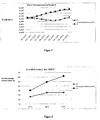
- Figur 1
- zeigt die Reibungswerte in Abhängigkeit von der Temperatur und einer Last von 250 N eines erfindungsgemäßen Hochtemperaturöls auf Zweikomponentenbasis des Beispiels 1 verglichen mit einem bekannten Öl auf Dreikomponentenbasis des Vergleichsbeispiels 1 bei einer kinematischen Viskosität bei 40°C von ca. 260 mm2/sec;
- Figur 2
- zeigt die Verdampfungsverluste eines erfindungsgemäßen Hochtemperaturöls auf Zweikomponentenbasis des Beispiels 1 verglichen mit einem bekannten Öl auf Dreikomponentenbasis des Vergleichsbeispiels 1 bei einer kinematischen Grundölviskosität bei 40°C von 270 mm2/sec;
- Figur 3
- zeigt Zunahme der scheinbaren dynamischen Viskosität eines erfindungsgemäßen Hochtemperaturöls auf Zweikomponentenbasis des Beispiels 1 verglichen mit einem bekannten Öl auf Dreikomponentenbasis des Vergleichsbeispiels 1 bei einer kinematischen Grundölviskosität bei 40°C von ca. 260 mm2/sec;
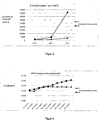
- Figur 4
- zeigt die Reibungswerte in Abhängigkeit von der Temperatur und einer Last von 250 N eines erfindungsgemäßen Hochtemperaturöls auf Zweikomponentenbasis des Beispiels 2 verglichen mit einem bekannten Öl auf Dreikomponentenbasis des Vergleichsbeispiels 2;
- Figur 5
- zeigt die Verdampfungsverluste eines erfindungsgemäßen Hochtemperaturöls auf Zweikomponentenbasis des Beispiels 2 verglichen mit einem bekannten Öl auf Dreikomponentenbasis des Vergleichsbeispiels 2 bei einer kinematischen Grundölviskosität bei 40°C von ca. 100 mm2/sec;
- Figur 6
- zeigt Zunahme der scheinbaren Viskosität eines erfindungsgemäßen Hochtemperaturöls auf Zweikomponentenbasis des Beispiels 2 verglichen mit einem bekannten Öl auf Dreikomponentenbasis des Vergleichsbeispiels 2 bei einer kinematischen Grundölviskosität bei 40°C von ca. 100 mm2/sec;
- Figur 7
- zeigt die Reibungswerte in Abhängigkeit von der Temperatur und einer Last von 250 N eines erfindungsgemäßen Hochtemperaturöls auf Zweikomponentenbasis des Beispiels 3 verglichen mit einem bekannten Öl auf Dreikomponentenbasis des Vergleichsbeispiels 3;
- Figur 8
- zeigt die Verdampfungsverluste eines erfindungsgemäßen Hochtemperaturöls auf Zweikomponentenbasis des Beispiels 3 verglichen mit einem bekannten Öl auf Dreikomponentenbasis des Vergleichsbeispiels 3 bei einer kinematischen Grundölviskosität bei 40°C von ca. 680 mm2/sec;
- Figur 9
- zeigt Zunahme der scheinbaren dynamischen Viskosität eines erfindungsgemäßen Hochtemperaturöls auf Zweikomponentenbasis des Beispiels 3 verglichen mit einem bekannten Öl auf Dreikomponentenbasis des Vergleichsbeispiels 3 bei einer kinematischen Grundölviskosität bei 40°C von ca. 680 mm2/sec;
- Figur 10
- zeigt die Verdampfungsverluste eines erfindungsgemäßen Hochtemperaturöls auf Zweikompomenentenbasis mit einer ionischen Flüssigkeit des Beispiels 4 verglichen mit dem Vergleichsbeispiel 4, welches dem Beispiel 1 entspricht bei einer kinematischen Grundölviskosität von ca. 260 mm2/sec.
- Figur 11
- zeigt die Zunahme der scheinbaren dynamischen Viskosität eines erfindungsgemäßen Hochtemperaturöls auf Zweikompomenentenbasis mit einer ionischen Flüssigkeit des Beispiels 4 verglichen mit dem Vergleichsbeispiel 4, welches dem Beispiel 1 entspricht bei einer kinematischen Grundölviskosität von ca. 260 mm2/sec.
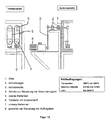
- Figur 12
- zeigt den Versuchsaufbau für den Leistungskettenprüfstand.
- Die Erfindung wird nun anhand der nachfolgenden Beispiele näher erläutert.
- Herstellung eines erfindungsgemäßen Zweikomponenten-Hochtemperaturöls
- Zusammensetzung des Hochtemperaturöls:
- 63,4 Gew.-% aromatischer Trimellitsäureester
- 30,0 Gew.-% vollhydriertes Polyisobutylen
- 3,5 Gew.-% Verschleißschutzmittel
- 3,0 Gew.-% Antioxidationsmittel
- 0,1 Gew.-% Korrosionsschutzmittel
- Als aromatischer Ester wird Trimelittsäureester in einem Rührkessel vorgelegt. Bei 100°C wird unter Rühren das Polyisobutylen hinzugegeben. Anschließend wird das Gemisch 1 Stunde gerührt, um eine homogene Mischung zu erhalten. Die Verschleißschutzmittel und das Antioxidationsmittel werden bei 60°C unter Rühren in den Kessel zugegeben. Nach ca. 1 Stunde kann das fertige Öl in die vorgesehenen Gebinde abgefüllt werden.
- Herstellung eines bekannten Dreikomponenten-Hochtemperaturöls
- Zusammensetzung des Hochtemperaturöls:
- 47,4 Gew.-% aromatischer Trimellitsäureester
- 16,0 Gew.-% Polyisobutylen
- 30,0 Gew.-% synthetischer Kohlenwasserstoff
- 3,5 Gew.-% Verschleißschutzmittel
- 3,0 Gew.-% Antioxidationsmittels
- 0,1 Gew.-% Korrosionsschutzmittel
- Als aromatischer Ester wird Trimelittsäureester zusammen mit dem Poly-α-olefin als synthetischem Kohlenwasserstoff in einem Rührkessel vorgelegt. Bei 100°C wird unter Rühren das Polyisobutylen hinzugegeben. Anschließend wird das Gemisch 1 Stunde gerührt, um eine homogene Mischung zu erhalten. Die Verschleißschutzmittel und die Antioxidationsmittel werden bei 60°C unter Rühren in den Kessel zugegeben. Nach ca. 1 Stunde kann das fertige Öl in die vorgesehenen Gebinde abgefüllt werden.
- Nachfolgend werden die Vorteile des erfindungsgemäßen Hochtemperaturöls gezeigt.
- Die Basisdaten des Öls gemäß Beispiel 1 und des Vergleichsbeispiels 1 sind in Tabelle 1 gezeigt.
Tabelle 1 Beispiel 1 Vergleichsbeispiel 1 Aussehen klar klar Kinematische Viskosität 40°C 271 mm2/sec 275 mm2/sec Kinematische Viskosität 100°C 24 mm2/sec 25 mm2/sec Flammpunkt >250°C >250°C Pourpoint -30°C -30°C - Es wurden Untersuchungen hinsichtlich der Verdampfung und Viskosität unter Temperaturbelastung von 5 g Einwaage in einem Alu-Schälchen bei 230°C durchgeführt. Hierzu wurden die Öle gemäß Beispiel 1 und Vergleichsbeispiel 1 miteinander verglichen.
Tabelle 2 Beispiel 1 Vergleichsbeispiel 1 Verdampfungsverlust nach 24 h/230°C 16 % 30% Verdampfungsverlust nach 48 h/230°C 25 % 49% Verdampfungsverlust nach 72 h/230°C 35 % 62% Zunahme der scheinbaren dynamischen Viskosität nach 24 h/230°C 970 mPas 1300 mPas Zunahme der scheinbaren dynamischen Viskosität nach 48 h/ 230°C 1400 mPas 4400 mPas Zunahme der scheinbaren dynamischen Viskosität nach 72 h/ 230°C 3200 mPas 41000 mPas - Die obigen Ergebnisse zeigen, daß durch die Verwendung von vollhydriertem Polyisobutylen in einem Zweikomponenten-Hochtemperaturöl der Anstieg der Viskosität und des Verdampfungsverlustes im Vergleich mit dem bekannten Dreikomponentenöl deutlich verringert werden können. Diese Ergebnisse sind auch in den
Figuren 2 und3 graphisch dargestellt. - Es wurden die in Beispiel 1 und Vergleichsbeispiel 1 hergestellten Öle zur Bestimmung der Reibungswerte verwendet. Dazu wurde ein Schwingreibverschleißtest (SRV) in Anlehnung an DIN 51834, Testbedingung Kugel/Scheibe, 250 N Last, 50°C bis 250°C, 1 mm Hub 50 Hz, 165 Min. durchführt. Die Ergebnisse sind in Tabelle 3 gezeigt.
Tabelle 3 SRV TST 250 N Punkt Beispiel 1 Reibungszahl Vergleichsbeispiel 1 Reibungszahl 50 bis 120°C 0,104 0,109 bis 140°C 0,105 0,109 bis 160°C 0,102 0,118 bis 180°C 0,096 0,128 bis 200°C 0,090 0,138 bis 210°C 0,087 0,145 bis 220°C 0,087 0,151 bis 230°C 0,091 0,159, bis 240°C 0,102 0,166 bis 250°C 0,110 0,169 - Diese Ergebnisse, die auch in
Figur 1 dargestellt sind, zeigen die positive Wirkung des Hochtemperaturöls auf Zweikomponentenbasis auf die Reibungszahl im Vergleich mit dem Dreikomponentensystem. - Es wurden die Bildung von Rückständen und das Verhalten der Rückstände hinsichtlich der Löslichkeit untersucht.
- Das zu prüfende Öl wird auf ein zuvor zurechtgebogenes und mit Lösungsmittel gereinigtes Stahlblech mit 5 g eingewogen und dann bei 250°C in einem Umluftrockenschrank min. 72h abgedampft. Das quadratische Blech wird an allen vier Seiten manuell gebogen, so dass eine Schalenform entsteht.
Nach dem Erkalten werden die Ergebnisse der Rückwaage dokumentiert. Wesentlich für diese Prüfung ist die Bestimmung der Anlösbarkeit des Rückstandes mit frischem Öl und die Menge des gebildeten Rückstands. Hierzu wird ein Tropfen des Frischöles auf den Rückstand aufgetragen und sanft mittels abgerundetem Glasstab und kreisenden Bewegungen eingerieben. - Die Ergebnisse zeigen, daß das erfindungsgemäße Hochtemperaturöl mit 4,8% weniger Rückstände bildet als das bekannte Öl, das einen Rückstand von 6,0 % aufweist. Der gebildete Rückstand des erfindungsgemäßen Hochtemperaturöls ist sehr gut anlösbar, was bedeutet, daß diese Rückstände mit frischem Öl leicht zu lösen sind. Im Gegensatz dazu lässt sich der Rückstand des bekannten Öls wesentlich schlechter mit Frischöl wieder anlösen.
-
Figur 12 zeigt den Leistungskettenprüfstand, der unter den nachfolgenden Prüfbedingungen arbeitetTemperatur: 220°C, Geschwindigkeit: 2 m/sec, Last: 2600 N - Laufzeit nach 0,1% Kettenlängung 22 Stunden bei Beispiel 1 und 17 Stunden bei Vergleichsbeispiel 1.
- Vor dem Test wird die Kette in den zu testenden Schmieröl eingetaucht. Nach dem Tauchen wird die Kette aufgehängt, so dass der überschüssige Schmierstoff abtropfen kann. Anschließend wir die Kette in den Kettenprüfstand eingebaut (siehe
Figur 10 ) und die Prüfung unter den vorgegebenen Bedingungen gestartet. Es können die Temperatur, die Geschwindigkeit und die Last variiert werden.
Die Laufzeit ist mit einer Kettenlängung von 0,1% festgelegt. Die Längung der Kette entsteht durch Verschleiß an den Kettengliedern währende des Prüflaufes. - Zusammensetzung des erfindungsgemäßen Hochtemperaturöls:
- 82 Gew.-% aromatischer Trimellitsäureester
- 12,7 Gew.-% vollhydriertes Polyisobutylen
- 0,3 Gew.-% Verschleißschutzmittel
- 4,5 Gew.-% Antioxidationsmittel
- 0,5 Gew.-% Korrosionsschutzmittel
- Die Herstellung erfolgt wie in Beispiel 1 beschrieben.
- Zusammensetzung des Dreikomponenten-Hochtemperaturöls:
- 55,7 Gew.-% aromatischer Trimellitsäureester
- 7 Gew.-% Polyisobutylen
- 33,20 Gew.-% synthetischer Kohlenwasserstoff
- 0,30 Gew.-% Verschleißschutzmittel
- 3,7 Gew.-% Antioxidationsmittels
- 0,10 Gew.-% Korrosionsschutzmittel
- Die Herstellung erfolgt wie in Vergleichsbeispiel 1 beschrieben.
- Nachfolgend werden die Vorteile des erfindungsgemäßen Hochtemperaturöls gezeigt.
- Die Basisdaten des Öls gemäß Beispiel 2 und des Vergleichsbeispiels 2 sind in Tabelle 4 gezeigt.
Tabelle 4 Viskosität bei 40°C 100 mm2/sec Beispiel 2 Vergleichsbeisplel Aussehen klar klar Kinematische Viskosität 40°C 120,0 mm2/sec 107,0 mm2/sec Kinematische Viskosität 100°C 14 mm2/sec 13,5 mm2/sec Flammpunkt >250 °C >250°C Pourpoint -20°C -30°C - Es wurden Untersuchungen hinsichtlich der Verdampfung und Viskosität unter Temperaturbelastung von 5 g Einwaage in einem Alu-Schälchen bei 230°C durchgeführt. Hierzu wurden die Öle gemäß Beispiel 2 und Vergleichsbeispiel 2 miteinander verglichen.
Tabelle 5 Beispiel 2 Vergleichsbeispiel 2 Verdampfungsverlust nach 24 h/230°C 18% 36 % Verdampfungsverlust nach 48 h/230°C 37 % 57 % Verdampfungsverlust nach 72 h/230°C 52 % 71 % Zunahme der scheinbaren dynamischen Viskosität nach 24 h/230°C 340 mPas 430 mPas Zunahme der scheinbaren dynamischen Viskosität nach 48 h/ 230°C 1250 mPas 200 mPas Zunahme der scheinbaren dynamischen Viskosität nach 72 h/ 230°C 4700 mPas 23000 mPas - Die obigen Ergebnisse zeigen, dass durch die Verwendung von vollhydriertem Polyisobutylen in einem Zweikomponenten-Hochtemperaturöl der Anstieg der Viskosität und des Verdampfungsverlustes im Vergleich mit dem bekannten Dreikomponentenöl deutlich verringert werden können. Diese Ergebnisse sind auch in den
Figuren 5 und 6 graphisch dargestellt. - Es wurden die in Beispiel 2 und Vergleichsbeispiel 2 hergestellten Öle zur Bestimmung der Reibungswerte verwendet. Dazu wurde ein Schwingreibverschleißtest (SRV) in Anlehnung an DIN 51834, Testbedingung Kugel/Scheibe, 250 N Last, 50°C bis 250°C, 1 mm Hub 50 Hz, 165 Min. durchführt. Die Ergebnisse sind in Tabelle 6 gezeigt.
Tabelle 6 SRV TST 250 N Punkt Beispiel 2 Reibungszahl Vergleichsbeispiel 2 Reibungszahl 50 bis 120°C 0,097 0,105 bis 140°C 0,093 0,112 bis 160°C 0,122 0,129 bis 180°C 0,133 0,136 bis 200°C 0,138 0,143 bis 210°C 0,139 0,157 bis 220°C 0,136 0,175 bis 230°C 0,138 0,186 bis 240°C 0,136 0,196 bis 250°C 0,136 0,205 - Diese Ergebnisse, die auch in
Figur 4 dargestellt sind, zeigen die positive Wirkung des Hochtemperaturöls auf Zweikomponentenbasis auf die Reibungszahl im Vergleich mit dem Dreikomponentensystem. - Es wurden die Bildung von Rückständen und das Verhalten der Rückstände hinsichtlich der Löslichkeit untersucht. Das Verfahren ist in Beispiel 1 beschrieben.
- Sowohl das erfindungsgemäße Hochtemperaturöl als auch das bekannte Öl wiesen einen Rückstand von 3,0% auf, der gebildete Rückstand des erfindungsgemäßen Hochtemperaturöls war sehr gut anlösbar, was bedeutet, dass diese Rückstände mit frischem Öl leicht zu lösen sind. Im Gegensatz dazu lässt sich der Rückstand des bekannten Öls wesentlich schlechter mit Frischöl wieder anlösen.
- Die Prüfung auf dem Leistungskettenprüfstand wurde bei 220°C, einer Geschwindigkeit von 2,0 m/sec und einer Last von 2600 N durchgeführt. Die Laufzeit nach 0,1% Kettenlängung liegt für Beispiel 2 bei 19 h, die des Vergleichsbeispiels 2 bei 17h.
Der Test wurde wie bei Beispiel 1 beschrieben durchgeführt. - Zusammensetzung des erfindungsgemäßen Hochtemperaturöls:
- 45,4 Gew.-% aromatischer Trimellitsäureester
- 48,00 Gew.-% vollhydriertes Polyisobutylen
- 2,5 Gew.-% Verschleißschutzmittel
- 3,0 Gew.-% Antioxidationsmittel
- 0,1 Gew.-% Korrosionsschutzmittel
- Die Herstellung erfolgte wie in Beispiel 1 beschrieben.
- Zusammensetzung des Dreikomponenten-Hochtemperaturöls:
- 47,0 Gew.-% aromatischer Trimellitsäureester
- 17,4 Gew.-% Polyisobutylen
- 29,0 Gew.-% synthetischer Kohlenwasserstoff
- 3,5 Gew.-% Verschleißschutzmittel
- 3,0 Gew.-% Antioxidationsmittels
- 0,10 Gew.-% Korrosionsschutzmittel
- Die Herstellung erfolgte wie in Vergleichsbeispiel 1 beschrieben.
- Nachfolgend werden die Vorteile des erfindungsgemäßen Hochtemperaturöls gezeigt.
- Die Basisdaten des Öls gemäß Beispiel 3 und des Vergleichsbeispiels 3 sind in Tabelle 7 gezeigt.
Tabelle 7 Viskosität bei 40°C 680 mm2/sec Beispiel 3 Vergleichsbeispiel 3 Aussehen klar klar Kinematische Viskosität 40°C 690 mm2/sec 690 mm2/sec Kinematische Viskosität 100°C 24 mm2/sec 47 mm2/sec Flammpunkt >250°C >250°C Pourpoint -30°C -30°C - Es wurden Untersuchungen hinsichtlich der Verdampfung und Viskosität unter Temperaturbelastung von 5 g Einwaage in einem Alu-Schälchen bei 230°C durchgeführt. Hierzu wurden die Öle gemäß Beispiel 3 und Vergleichsbeispiel 3 miteinander verglichen.
Tabelle 8 Beispiel 3 Vergleichsbeispiel 3 Verdampfungsverlust nach 24 h/230°C 18% 20% Verdampfungsverlust nach 48 h/230°C 28 % 38% Verdampfungsverlust nach 72 h/230°C 37% 53% Zunahme der scheinbaren dynamischen Viskosität nach 24 h/230°C 3400 mPas 2800 mPas Zunahme der scheinbaren dynamischen Viskosität nach 48 h/230°C 6000 mPas 13250 mPas Zunahme der scheinbaren dynamischen Viskosität nach 72 h/ 230°C 12700 mPas 47000 mPas - Die obigen Ergebnisse zeigen, dass durch die Verwendung von vollhydriertem Polyisobutylen in einem Zweikomponenten-Hochtemperaturöl der Anstieg der Viskosität und des Verdampfungsverlustes im Vergleich mit dem bekannten Dreikomponentenöl verringert werden können. Diese Ergebnisse sind auch in den
Figuren 8 und9 graphisch dargestellt. - Es wurden die in Beispiel 3 und Vergleichsbeispiel 3 hergestellten Öle zur Bestimmung der Reibungswerte verwendet. Dazu wurde ein Schwingreibverschleißtest (SRV) in Anlehnung an DIN 51834, Testbedingung Kugel/Scheibe, 250 N Last, 50°C bis 250°C, 1 mm Hub 50 Hz, 165 Min. durchführt. Die Ergebnisse sind in Tabelle 9 gezeigt.
Tabelle 9 SRV TST 250 N Punkt Beispiel 3 Reibungszahl Vergleichsbeispiel 3 Reibungszahl 50 bis 120°C 0,119 0,118 bis 140°C 0,116 0,115 bis 160°C 0,119 0,114 bis 180°C 0,115 0,110 bis 200°C 0,105 0,108 bis 210°C 0,098 0,105 bis 220°C 0,096 0,102 bis 230°C 0,099 0,102 bis 240°C 0,112 0,089 bis 250°C 0,126 0,086 - Diese Ergebnisse, die auch in
Figur 7 dargestellt sind, zeigen die positive Wirkung des Hochtemperaturöls auf Zweikomponentenbasis auf die Reibungszahl im Vergleich mit dem Dreikomponentensystem. - Es wurden die Bildung von Rückständen und das Verhalten der Rückstände hinsichtlich der Löslichkeit untersucht. Die Prüfung wurde wie in Beispiel 1 beschrieben durchgeführt.
- Die Ergebnisse zeigen, dass das erfindungsgemäße Hochtemperaturöl mit 4,8% weniger Rückstände bildet als das bekannte Öl, das einen Rückstand von 11,8% aufweist. Der gebildete Rückstand des erfindungsgemäßen Hochtemperaturöls ist sehr gut anlösbar, was bedeutet, dass diese Rückstände mit frischem Öl leicht zu lösen sind. Im Gegensatz dazu lässt sich der Rückstand des bekannten Öls wesentlich schlechter mit Frischöl wieder anlösen.
- Die Prüfung auf dem Leistungskettenprüfstand wurde bei 220°C, einer Geschwindigkeit von 2,0 m/sec und einer Last von 2600 N durchgeführt. Die Laufzeit nach 0,1% Kettenlängung betrug für Beispiel 3 17 h und für das Vergleichsbeispiel 3 15 h. Der Test wurde wie bei Beispiel 1 beschrieben durchgeführt.
- Zusammensetzung des erfindungsgemäßen Hochtemperaturöls:
- 62,90 Gew.-% aromatischer Trimellitsäureester
- 30,00 Gew.-% vollhydriertes Polyisobutylen
- 3,5 Gew.-% Verschleißschutzmittel
- 3,0 Gew.-% Antioxidationsmittel
- 0,1 Gew.-% Korrosionsschutzmittel
- 0,50 Gew.-% Ionische Flüssigkeit
- Die Herstellung erfolgte wie in Beispiel 1 beschrieben. Als Ionische Flüssigkeit wurde HDP Imid (= Trihexyl(tetradey-phosphonium bis (trifluoreomethyl-sulfonyl)imid) eingesetzt.
- Zusammensetzung des erfindungsgemäßen Hochtemperaturöls
- 63,40 Gew.-% aromatischer Trimellitsäureester
- 30,00 Gew.-% vollhydriertes Polyisobutylen
- 3,5 Gew.-% Verschleißschutzmittel
- 3,0 Gew.-% Antioxidationsmittel
- 0,1 Gew.-% Korrosionsschutzmittel
- Die Herstellung erfolgte wie in Beispiel 1 beschrieben.
- Die Basisdaten des Öls gemäß Beispiel 4 und des Vergleichsbeispiels 4 sind in Tabelle 10 gezeigt.
Tabelle 10 Viskosität bei 40°C 200 mm2/sec Beispiel 4 Vergleichsbeispiel 4 (entspricht Bsp. 1) Aussehen klar klar Kinematische Viskosität 40°C 270,0 mm2/sec 271,0 mm2/sec Kinematische Viskosität 100°C 24 mm2/sec 25 mm2/sec Flammpunkt >250°C >250 °C Pourpoint -30°C -30°C - Es wurden Untersuchungen hinsichtlich der Verdampfung und Viskosität unter Temperaturbelastung von 5 g Einwaage in einem geschlossenen Alu-Schälchen bei 250°C durchgeführt. Der Verdampfungsverlust nach 72h/250°C betrug 19 %. Die Zunahme der scheinbaren dynamischen Viskosität in mPas nach 72h/250°C betrug 2300 mPas.
Tabelle 11 Beispiel 4 Vergleichsbeispiel 4 entspricht Beispiel 1 Verdampfungsverlust nach 72 h/250°C 19% 46% Zunahme der scheinbaren dynamischen Viskosität nach 72 h/250°C 2300 mPas 27000 mPas - Die obigen Ergebnisse zeigen, dass durch die Verwendung von HDP-imid die thermische Stabilität eines Zweikomponentensystem nochmals signifikant verbessert werden kann. Diese Ergebnisse sind auch in den
Figuren 10 und11 graphisch dargestellt. - Zusammensetzung des erfindungsgemäßen Hochtemperaturöls
- 63,5 % Phloroglucin-tridecylsäureester
- 30,0 % vollhydriertes Polyisobutylen
- 3,5 % Verschleißschutzmittel
- 3,0 % Antioxidationsmittel
- 0,1 Gew.-% Korrosionsschutzmittel
- Die Herstellung erfolgte, wie in Beispiel 1, beschrieben.
- Auch mit dem Hochtemperaturöl auf der Basis eines Derivates des Phhoroglucin konnten die oben im Detail beschriebenen Ergebnisse erhalten werden.
- Die obigen Versuchsergebnisse zeigen, dass durch das erfindungsgemäße Hochtemperaturöl bei allen durchgeführten Untersuchungen deutlich bessere Werte erhalten wurden als bei den bekannten Hochtemperaturölen.
- Zusammengefasst lässt sich feststellen, dass das erfindungsgemäße Zweikomponentensystem eine deutlich höhere Leistungsfähigkeit im Hinblick auf die thermische Stabilität und die Rückstandsbildung bzw. Rückstandsverhalten aufweist. Die enorme Steigerung der thermischen Stabilität macht sich insbesondere in einer deutlichen Steigung des Schmierverhaltens bemerkbar. Die Nachschmierintervalle konnten verlängert werden und eine Energieeinsparung von bis zu 30% Stromeinsparung erreicht werden.
Claims (13)
- Hochtemperaturöl zur Schmierung von Ketten, Kettenlaufrollen und Bändern von kontinuierlichen Pressen, umfassend40 bis 91,9 Gew.-% eines aromatisches Ester der allgemeinen Formel (I)

oder 40 bis 91,9 Gew.-% einer Verbindung der allgemeinen Formel (II)
und 5 bis 50 Gew.-% eines hydrierten Polyisobutylen, eines vollhydrierten Polyisobutylen oder einer Mischung aus einem vollhydrierten und einem hydriertem Polyisobutylen. - Hochtemperaturöl nach Anspruch 1, des weiteren umfassend 0,1 bis 6 Gew.-% eines Antioxidationsmittels.
- Hochtemperaturöl nach Anspruch 1 oder 2, des weiteren umfassend 1 bis 4 Gew.-% eines Verschleißschutzmittels.
- Hochtemperaturöl nach Anspruch 1 bis 3, des weiteren umfassend 0,1 bis 0,5 Gew.-% eines Korrosionsschutzmittels.
- Hochtemperaturöl nach Anspruche 1, umfassend62,90 Gew.-% aromatische Trimelithsäureester,30,00 Gew.-% vollhydriertes Polyisobutylen,3,5 Gew.-% Verschleißschutzmittel,3.0 Gew.-% Antioxidationsmittel,0,1 Gew.-% Korrosionsschutzmittel und0,50 Gew.-% einer Ionischen Flüssigkeit.
- Hochtemperaturöl nach einem der vorherigen Ansprüche 1 bis 4, wobei die Esterverbindung der allgemeinen Formel (I) ausgewählt wird aus der Gruppe bestehend aus Estern der Trimellitsäure, Pyromellitsäure, Trimesinsäure oder einer Mischung daraus.
- Hochtemperaturöl nach einem der Ansprüche 1 bis 4, wobei die Verbindung der allgemeinen Formel (II) ein Derivat von Phloroglucin (Benzol-1,3,5-triol). ist
- Hochtemperaturöl nach Anspruch 7 bei dem das Derivat des Phloroglucins Phloroglucin-trioctylsäureester, Phloroglucintridecylsäureester oder Phloroglucin-tridodecylsäureester ist.
- Hochtemperaturöl nach einem der vorherigen Ansprüche 1 bis 8, wobei das Antioxidationsmittel, Schwefel und/oder Stickstoff und/oder Phosphor im Molekül trägt, und ausgewählt wird aus der Gruppe bestehend aus aromatischen aminischen Antioxidantien, wie alkyliertes Phenyl-alpha-Naphthylamin, Dialkyldiphenylamin, sterische gehinderte Phenole, wie Butylhydroxytoluol (BHT), phenolische Antioxidantien mit Thioether Gruppen, Zn- oder Mo- oder W-dialkyldithiophosphate und Phosphite.
- Hochtemperaturöl nach einem der vorherigen Ansprüche 1 bis 9, wobei das Verschleißschutzmittel ausgewählt wird aus der Gruppe bestehend aus Anti-wear Additiven auf Basis von Diphenylkresylphosphat, Amin neutralisierten Phosphaten, alkylierte und nicht alkylierte Triarylphosphate, alkylierte und nicht alkylierte Triarylthiophosphate, Zink- oder Mo oder W-dialkyldithiophosphate, Carbamate, Thiocarbamate, Zink- oder Mo- oder W-dithiocarbamate, Dimercapto-Thiadiazol, Calcium-Sulfonate und Benzotriazol-Derivate.
- Hochtemperaturöl nach einem der vorherigen Ansprüche 1 bis 10, wobei das Korrosionsschutzmittel ausgewählt wird aus der Gruppe bestehend aus Additiven auf Basis overbased Ca-Sulfonaten, amin-neutralisierten Phospahten, alkylierte Ca-Naphthalinsulfonate, Oxazolin-Derivate, ImidazolDerivate, Bernsteinsäurehalbester, N-alkylierte Benzotriazole.
- Hochtemperaturöl nach Anspruch 5, wobei die Ionische Flüssigkeit ausgewählt wird aus der Gruppe bestehend aus Tetraalkylammonium- und Tetraalkylphosphonium bis(trifluormethyl-sulfonyl)imide wie beispielsweise Trihexyl(tetradecyl)phosphonium-bis(triflouromethylsulfonyl)imid (HPDimid) und Methyltrioktylammonium-bis(trifluormethylsulfonyl)imid (Moimid), sowie Tetraalkylammonium- und Tetraalkylphosphonium tris(perfluorethyl)trifluorphosphat, insbesondere Tetrabutylphosphonium-tris(perfluorethyl)trifluorphosphat (BuPPFET), Trihexyl(tetradecyl)phosphonium-tris(perfluorethyl)trifluorphosphat HDPPFET), Pyrrolidinium tris(perfluorethyl)trifluorphosphate, Tetraalkylammonium, Tetraalkylphosphonium-perfluorbutansulfonate, Trihexyl(tetradecyl)phosphonium-perfluorbutansulfonat (HDPnonaflat).
- Verwendung des Hochtemperaturöls nach einem der Ansprüche 1 bis 12 im Bereich der Industriekettenschmierung in Förderanlagen, Lackierstraßen, Textilindustrie, Dämmstoffindustrie, Glasindustrie und Bandschmierung bei kontinuierlichen Holzpressanlagen eingesetzt werden.
Priority Applications (1)
| Application Number | Priority Date | Filing Date | Title |
|---|---|---|---|
| SI201230680A SI2714872T1 (sl) | 2011-05-26 | 2012-05-22 | Visokotemperaturno olje |
Applications Claiming Priority (2)
| Application Number | Priority Date | Filing Date | Title |
|---|---|---|---|
| DE102011102540A DE102011102540B4 (de) | 2011-05-26 | 2011-05-26 | Hochtemperaturöl |
| PCT/EP2012/002172 WO2012159738A1 (de) | 2011-05-26 | 2012-05-22 | Hochtemperaturöl |
Publications (2)
| Publication Number | Publication Date |
|---|---|
| EP2714872A1 EP2714872A1 (de) | 2014-04-09 |
| EP2714872B1 true EP2714872B1 (de) | 2016-08-03 |
Family
ID=46317322
Family Applications (1)
| Application Number | Title | Priority Date | Filing Date |
|---|---|---|---|
| EP12727785.3A Active EP2714872B1 (de) | 2011-05-26 | 2012-05-22 | Hochtemperaturöl |
Country Status (17)
| Country | Link |
|---|---|
| US (1) | US20140200169A1 (de) |
| EP (1) | EP2714872B1 (de) |
| JP (1) | JP5752321B2 (de) |
| KR (1) | KR101539218B1 (de) |
| CN (1) | CN103764808A (de) |
| AU (1) | AU2012261221B2 (de) |
| BR (1) | BR112013030286B1 (de) |
| CL (1) | CL2013003397A1 (de) |
| DE (1) | DE102011102540B4 (de) |
| EA (1) | EA026445B1 (de) |
| ES (1) | ES2601401T3 (de) |
| HU (1) | HUE029149T2 (de) |
| LT (1) | LT2714872T (de) |
| MY (1) | MY164068A (de) |
| PL (1) | PL2714872T3 (de) |
| SI (1) | SI2714872T1 (de) |
| WO (1) | WO2012159738A1 (de) |
Families Citing this family (19)
| Publication number | Priority date | Publication date | Assignee | Title |
|---|---|---|---|---|
| CN104087392A (zh) * | 2014-07-28 | 2014-10-08 | 中国石油化工股份有限公司 | 一种板材加工行业连续压机钢带专用高温润滑油及其制备方法 |
| DE102014018719A1 (de) * | 2014-12-17 | 2016-06-23 | Klüber Lubrication München Se & Co. Kg | Hochtemperaturschmierstoff für die Lebensmittelindustrie |
| DE102014018718A1 (de) * | 2014-12-17 | 2016-06-23 | Klüber Lubrication München Se & Co. Kg | Hochtemperaturschmierstoffe |
| DE102016105758B4 (de) | 2015-04-10 | 2024-10-24 | Minebea Mitsumi Inc. | Verwendung einer Schmiermittelzusammensetzung in fluiddynamischen Lagersystemen |
| CN104911002B (zh) * | 2015-06-10 | 2018-05-29 | 广东正骉润滑油科技有限公司 | 一种抗压耐磨润滑剂 |
| KR102295397B1 (ko) * | 2015-06-18 | 2021-08-30 | 에스케이이노베이션 주식회사 | 이온성 액체 및 이를 포함하는 윤활제 조성물 |
| US10550349B2 (en) * | 2015-07-16 | 2020-02-04 | Afton Chemical Corporation | Lubricants with titanium and/or tungsten and their use for improving low speed pre-ignition |
| JP6883571B2 (ja) | 2015-09-25 | 2021-06-09 | コンパニー ゼネラール デ エタブリッスマン ミシュラン | 芳香族ポリフェノール誘導体を含む高強度ゴム組成物 |
| US10711132B2 (en) | 2015-09-25 | 2020-07-14 | Compagnie Generale Des Etablissements Michelin | Use of an esterified aromatic polyphenol derivative for the production of a phenol-aldehyde resin for reinforcement of a rubber composition |
| FR3041647B1 (fr) * | 2015-09-25 | 2017-10-27 | Michelin & Cie | Composition de caoutchouc a haute rigidite a base d'un derive de polyphenol aromatique |
| WO2017050953A1 (fr) | 2015-09-25 | 2017-03-30 | Compagnie Generale Des Etablissements Michelin | Utilisation d'un dérivé de polyphénol aromatique silylé pour la fabrication d'une résine phénol-aldéhyde de renforcement d'une composition de caoutchouc |
| FR3041633A1 (fr) * | 2015-09-25 | 2017-03-31 | Michelin & Cie | Compose esterifie pour eviter la reticulation precoce d'une resine phenol aldehyde |
| JP6822635B2 (ja) * | 2016-03-25 | 2021-01-27 | 出光興産株式会社 | 潤滑油組成物、及び潤滑油組成物の使用方法 |
| JP2019172729A (ja) * | 2018-03-27 | 2019-10-10 | Emgルブリカンツ合同会社 | 潤滑油組成物 |
| CN109181811B (zh) * | 2018-09-05 | 2021-04-06 | 安徽泰达新材料股份有限公司 | 一种高粘指耐高温型均苯三甲酸类合成酯基础油及制备方法 |
| KR102097232B1 (ko) * | 2019-02-28 | 2020-04-06 | 대림산업 주식회사 | 기어유용 윤활유 조성물 |
| AU2022327545B2 (en) | 2021-08-12 | 2026-02-26 | Klüber Lubrication München GmbH & Co. KG | Use of hemimellitic ester as a base oil for lubricant compositions |
| EP4682229A1 (de) | 2023-03-13 | 2026-01-21 | Klueber Lubrication München GmbH & Co. KG | Schmiermittel und anwendung davon sowie herstellungsverfahren |
| CN119685074B (zh) * | 2024-12-11 | 2026-04-17 | 广东电网有限责任公司 | 一种复配添加剂及其在脱除矿物绝缘油中腐蚀性硫产品的应用 |
Family Cites Families (16)
| Publication number | Priority date | Publication date | Assignee | Title |
|---|---|---|---|---|
| BE636108A (de) * | 1961-08-18 | 1900-01-01 | ||
| US3336349A (en) * | 1964-09-17 | 1967-08-15 | Koppers Co Inc | Alkanoyl esters of the trihydroxy benzenes |
| US3755169A (en) * | 1970-10-13 | 1973-08-28 | Lubrizol Corp | High molecular weight carboxylic acid acylating agents and the process for preparing the same |
| NL185354C (nl) * | 1976-05-07 | 1990-03-16 | Bayer Ag | Werkwijze voor de bereiding van thermoplastische vormmassa's, alsmede gevormd voortbrengsel geheel of ten dele vervaardigd daaruit. |
| GB8408017D0 (en) * | 1984-03-28 | 1984-05-10 | Bp Chem Int Ltd | Oil-based lubricant compositions |
| US4589990A (en) * | 1985-06-21 | 1986-05-20 | National Distillers And Chemical Corporation | Mist lubricant compositions |
| JP2543919B2 (ja) * | 1987-12-11 | 1996-10-16 | 出光興産株式会社 | 冷凍機油組成物 |
| DE68902891T2 (de) * | 1988-07-22 | 1993-03-25 | Akzo Nv | Synthetische schmieroelzusammensetzung. |
| US5990261A (en) * | 1996-08-29 | 1999-11-23 | Mitsui Chemicals, Inc. | Organic optical component |
| JPH10130673A (ja) * | 1996-10-25 | 1998-05-19 | New Japan Chem Co Ltd | 潤滑油基油 |
| JP4049916B2 (ja) * | 1998-12-25 | 2008-02-20 | 出光興産株式会社 | 高温用潤滑油組成物 |
| AU2002227186A1 (en) * | 2000-11-06 | 2002-05-15 | Exxonmobil Chemical Patents Inc | Fluorinated zwitterionic cocatalyst activators for olefin polymerization |
| DE102006043747A1 (de) * | 2006-09-13 | 2008-03-27 | Addinol Lube Oil Gmbh | Hochtemperaturschmierstoff für Ketten |
| JP2008101163A (ja) * | 2006-10-20 | 2008-05-01 | Nippon Shokubai Co Ltd | バイオディーゼル燃料用添加剤 |
| DE102007028427A1 (de) * | 2007-06-20 | 2008-12-24 | KLüBER LUBRICATION MüNCHEN KG | Verwendung von ionischen Flüssigkeiten zur Verbesserung der Eigenschaften von Schmierstoffzusammensetzungen |
| MX2009013879A (es) * | 2007-06-20 | 2010-01-27 | Klueber Lubrication | Composicion de grasa lubricante. |
-
2011
- 2011-05-26 DE DE102011102540A patent/DE102011102540B4/de not_active Expired - Fee Related
-
2012
- 2012-05-22 AU AU2012261221A patent/AU2012261221B2/en active Active
- 2012-05-22 HU HUE12727785A patent/HUE029149T2/hu unknown
- 2012-05-22 ES ES12727785.3T patent/ES2601401T3/es active Active
- 2012-05-22 SI SI201230680A patent/SI2714872T1/sl unknown
- 2012-05-22 JP JP2014511763A patent/JP5752321B2/ja not_active Expired - Fee Related
- 2012-05-22 CN CN201280024232.XA patent/CN103764808A/zh active Pending
- 2012-05-22 EP EP12727785.3A patent/EP2714872B1/de active Active
- 2012-05-22 EA EA201301331A patent/EA026445B1/ru not_active IP Right Cessation
- 2012-05-22 PL PL12727785T patent/PL2714872T3/pl unknown
- 2012-05-22 WO PCT/EP2012/002172 patent/WO2012159738A1/de not_active Ceased
- 2012-05-22 LT LTEP12727785.3T patent/LT2714872T/lt unknown
- 2012-05-22 US US14/119,015 patent/US20140200169A1/en not_active Abandoned
- 2012-05-22 BR BR112013030286-0A patent/BR112013030286B1/pt active IP Right Grant
- 2012-05-22 KR KR1020137030344A patent/KR101539218B1/ko active Active
- 2012-05-22 MY MYPI2013003925A patent/MY164068A/en unknown
-
2013
- 2013-11-26 CL CL2013003397A patent/CL2013003397A1/es unknown
Also Published As
| Publication number | Publication date |
|---|---|
| JP5752321B2 (ja) | 2015-07-22 |
| DE102011102540A1 (de) | 2012-11-29 |
| EA201301331A1 (ru) | 2014-05-30 |
| BR112013030286B1 (pt) | 2020-11-10 |
| ES2601401T3 (es) | 2017-02-15 |
| WO2012159738A1 (de) | 2012-11-29 |
| US20140200169A1 (en) | 2014-07-17 |
| AU2012261221A1 (en) | 2013-12-12 |
| DE102011102540B4 (de) | 2013-12-12 |
| SI2714872T1 (sl) | 2016-11-30 |
| CL2013003397A1 (es) | 2014-07-11 |
| JP2014515412A (ja) | 2014-06-30 |
| HUE029149T2 (hu) | 2017-02-28 |
| EP2714872A1 (de) | 2014-04-09 |
| EA026445B1 (ru) | 2017-04-28 |
| BR112013030286A2 (pt) | 2016-11-29 |
| PL2714872T3 (pl) | 2017-01-31 |
| KR20140009499A (ko) | 2014-01-22 |
| CN103764808A (zh) | 2014-04-30 |
| MY164068A (en) | 2017-11-15 |
| AU2012261221B2 (en) | 2016-05-12 |
| LT2714872T (lt) | 2016-09-26 |
| KR101539218B1 (ko) | 2015-07-29 |
Similar Documents
| Publication | Publication Date | Title |
|---|---|---|
| EP2714872A1 (de) | Hochtemperaturöl | |
| EP3375850B1 (de) | Hochtemperaturschmierstoff für die lebensmittelindustrie | |
| EP3372660B1 (de) | Hochtemperaturschmierstoffe | |
| DE69004282T2 (de) | Die Verwendung einer Zusammensetzung in einer hydraulischen Flüssigkeit für Servolenkung. | |
| EP3872154B1 (de) | Ionische flüssigkeiten enthaltende schmierstoffzusammensetzung | |
| DE69528100T2 (de) | Verwendung von organischen Bismuthverbindungen in Hochdruckschmierfettzusammensetzungen für Wälzlager mit erhöhter Lebensdauer | |
| EP3601209B1 (de) | Neue esterverbindungen, verfahren zu ihrer herstellung sowie ihre verwendung | |
| WO2013037456A1 (de) | Hochtemperaturfett | |
| DE3876432T2 (de) | Hydraulische fluessigkeiten. | |
| EP3036313B1 (de) | Additiv für ölbasierte schmiermittel mit verbesserten extreme-pressure-eigenschaften | |
| WO2021228442A1 (de) | Lithiumkomplexhybridfett | |
| DE112010005707B4 (de) | Schmiermittelzusammensetzung und dessen Verwendung | |
| DE2046368A1 (de) | Zusatz fur Schmiermittelmischung | |
| DE112013000604B4 (de) | Schmiermittelzusammensetzung und dessen Verwendung für Lager | |
| EP0098809A2 (de) | Phosphoryl-mercaptocarbonsäuresalze | |
| EP0231524B1 (de) | Verwendung von Alkylbenzoylacrylsäuren als Korrosionsinhibitoren | |
| DE102012015648A1 (de) | Hochtemperaturfett | |
| EP3841190B1 (de) | Verwendung einer schmiermittelzusammensetzung | |
| DE1149480B (de) | Schmiermittel auf Schmieroelbasis | |
| EP2487227B1 (de) | Umformschmiermittelzusammensetzung, insbesondere für die Kaltumformung von metallischen Teilen | |
| HK1193629A (en) | High temperature oil | |
| EP2363452A1 (de) | Thixotrope Korrosionsschutzadditive für Konservierungsflüssigkeiten und Schmierfette |
Legal Events
| Date | Code | Title | Description |
|---|---|---|---|
| PUAI | Public reference made under article 153(3) epc to a published international application that has entered the european phase |
Free format text: ORIGINAL CODE: 0009012 |
|
| 17P | Request for examination filed |
Effective date: 20131118 |
|
| AK | Designated contracting states |
Kind code of ref document: A1 Designated state(s): AL AT BE BG CH CY CZ DE DK EE ES FI FR GB GR HR HU IE IS IT LI LT LU LV MC MK MT NL NO PL PT RO RS SE SI SK SM TR |
|
| DAX | Request for extension of the european patent (deleted) | ||
| 17Q | First examination report despatched |
Effective date: 20141002 |
|
| GRAP | Despatch of communication of intention to grant a patent |
Free format text: ORIGINAL CODE: EPIDOSNIGR1 |
|
| INTG | Intention to grant announced |
Effective date: 20160405 |
|
| GRAS | Grant fee paid |
Free format text: ORIGINAL CODE: EPIDOSNIGR3 |
|
| GRAA | (expected) grant |
Free format text: ORIGINAL CODE: 0009210 |
|
| AK | Designated contracting states |
Kind code of ref document: B1 Designated state(s): AL AT BE BG CH CY CZ DE DK EE ES FI FR GB GR HR HU IE IS IT LI LT LU LV MC MK MT NL NO PL PT RO RS SE SI SK SM TR |
|
| REG | Reference to a national code |
Ref country code: GB Ref legal event code: FG4D Free format text: NOT ENGLISH |
|
| REG | Reference to a national code |
Ref country code: CH Ref legal event code: EP Ref country code: CH Ref legal event code: NV Representative=s name: ROTTMANN, ZIMMERMANN + PARTNER AG, CH Ref country code: AT Ref legal event code: REF Ref document number: 817350 Country of ref document: AT Kind code of ref document: T Effective date: 20160815 |
|
| REG | Reference to a national code |
Ref country code: IE Ref legal event code: FG4D Free format text: LANGUAGE OF EP DOCUMENT: GERMAN |
|
| REG | Reference to a national code |
Ref country code: SE Ref legal event code: TRGR |
|
| REG | Reference to a national code |
Ref country code: DE Ref legal event code: R096 Ref document number: 502012007836 Country of ref document: DE |
|
| REG | Reference to a national code |
Ref country code: CH Ref legal event code: PCAR Free format text: NEW ADDRESS: GARTENSTRASSE 28 A, 5400 BADEN (CH) |
|
| REG | Reference to a national code |
Ref country code: NL Ref legal event code: MP Effective date: 20160803 |
|
| PG25 | Lapsed in a contracting state [announced via postgrant information from national office to epo] |
Ref country code: NL Free format text: LAPSE BECAUSE OF FAILURE TO SUBMIT A TRANSLATION OF THE DESCRIPTION OR TO PAY THE FEE WITHIN THE PRESCRIBED TIME-LIMIT Effective date: 20160803 Ref country code: NO Free format text: LAPSE BECAUSE OF FAILURE TO SUBMIT A TRANSLATION OF THE DESCRIPTION OR TO PAY THE FEE WITHIN THE PRESCRIBED TIME-LIMIT Effective date: 20161103 Ref country code: HR Free format text: LAPSE BECAUSE OF FAILURE TO SUBMIT A TRANSLATION OF THE DESCRIPTION OR TO PAY THE FEE WITHIN THE PRESCRIBED TIME-LIMIT Effective date: 20160803 Ref country code: FI Free format text: LAPSE BECAUSE OF FAILURE TO SUBMIT A TRANSLATION OF THE DESCRIPTION OR TO PAY THE FEE WITHIN THE PRESCRIBED TIME-LIMIT Effective date: 20160803 Ref country code: RS Free format text: LAPSE BECAUSE OF FAILURE TO SUBMIT A TRANSLATION OF THE DESCRIPTION OR TO PAY THE FEE WITHIN THE PRESCRIBED TIME-LIMIT Effective date: 20160803 Ref country code: IS Free format text: LAPSE BECAUSE OF FAILURE TO SUBMIT A TRANSLATION OF THE DESCRIPTION OR TO PAY THE FEE WITHIN THE PRESCRIBED TIME-LIMIT Effective date: 20161203 |
|
| REG | Reference to a national code |
Ref country code: SK Ref legal event code: T3 Ref document number: E 22240 Country of ref document: SK |
|
| REG | Reference to a national code |
Ref country code: ES Ref legal event code: FG2A Ref document number: 2601401 Country of ref document: ES Kind code of ref document: T3 Effective date: 20170215 |
|
| PG25 | Lapsed in a contracting state [announced via postgrant information from national office to epo] |
Ref country code: PT Free format text: LAPSE BECAUSE OF FAILURE TO SUBMIT A TRANSLATION OF THE DESCRIPTION OR TO PAY THE FEE WITHIN THE PRESCRIBED TIME-LIMIT Effective date: 20161205 Ref country code: LV Free format text: LAPSE BECAUSE OF FAILURE TO SUBMIT A TRANSLATION OF THE DESCRIPTION OR TO PAY THE FEE WITHIN THE PRESCRIBED TIME-LIMIT Effective date: 20160803 Ref country code: GR Free format text: LAPSE BECAUSE OF FAILURE TO SUBMIT A TRANSLATION OF THE DESCRIPTION OR TO PAY THE FEE WITHIN THE PRESCRIBED TIME-LIMIT Effective date: 20161104 |
|
| REG | Reference to a national code |
Ref country code: HU Ref legal event code: AG4A Ref document number: E029149 Country of ref document: HU |
|
| PG25 | Lapsed in a contracting state [announced via postgrant information from national office to epo] |
Ref country code: RO Free format text: LAPSE BECAUSE OF FAILURE TO SUBMIT A TRANSLATION OF THE DESCRIPTION OR TO PAY THE FEE WITHIN THE PRESCRIBED TIME-LIMIT Effective date: 20160803 Ref country code: EE Free format text: LAPSE BECAUSE OF FAILURE TO SUBMIT A TRANSLATION OF THE DESCRIPTION OR TO PAY THE FEE WITHIN THE PRESCRIBED TIME-LIMIT Effective date: 20160803 |
|
| REG | Reference to a national code |
Ref country code: DE Ref legal event code: R097 Ref document number: 502012007836 Country of ref document: DE |
|
| REG | Reference to a national code |
Ref country code: FR Ref legal event code: PLFP Year of fee payment: 6 |
|
| PG25 | Lapsed in a contracting state [announced via postgrant information from national office to epo] |
Ref country code: DK Free format text: LAPSE BECAUSE OF FAILURE TO SUBMIT A TRANSLATION OF THE DESCRIPTION OR TO PAY THE FEE WITHIN THE PRESCRIBED TIME-LIMIT Effective date: 20160803 Ref country code: BG Free format text: LAPSE BECAUSE OF FAILURE TO SUBMIT A TRANSLATION OF THE DESCRIPTION OR TO PAY THE FEE WITHIN THE PRESCRIBED TIME-LIMIT Effective date: 20161103 Ref country code: SM Free format text: LAPSE BECAUSE OF FAILURE TO SUBMIT A TRANSLATION OF THE DESCRIPTION OR TO PAY THE FEE WITHIN THE PRESCRIBED TIME-LIMIT Effective date: 20160803 |
|
| PLBE | No opposition filed within time limit |
Free format text: ORIGINAL CODE: 0009261 |
|
| STAA | Information on the status of an ep patent application or granted ep patent |
Free format text: STATUS: NO OPPOSITION FILED WITHIN TIME LIMIT |
|
| 26N | No opposition filed |
Effective date: 20170504 |
|
| PG25 | Lapsed in a contracting state [announced via postgrant information from national office to epo] |
Ref country code: LU Free format text: LAPSE BECAUSE OF NON-PAYMENT OF DUE FEES Effective date: 20170531 |
|
| PG25 | Lapsed in a contracting state [announced via postgrant information from national office to epo] |
Ref country code: MC Free format text: LAPSE BECAUSE OF FAILURE TO SUBMIT A TRANSLATION OF THE DESCRIPTION OR TO PAY THE FEE WITHIN THE PRESCRIBED TIME-LIMIT Effective date: 20160803 |
|
| PG25 | Lapsed in a contracting state [announced via postgrant information from national office to epo] |
Ref country code: LU Free format text: LAPSE BECAUSE OF NON-PAYMENT OF DUE FEES Effective date: 20170522 |
|
| REG | Reference to a national code |
Ref country code: FR Ref legal event code: PLFP Year of fee payment: 7 |
|
| REG | Reference to a national code |
Ref country code: AT Ref legal event code: MM01 Ref document number: 817350 Country of ref document: AT Kind code of ref document: T Effective date: 20170522 |
|
| PG25 | Lapsed in a contracting state [announced via postgrant information from national office to epo] |
Ref country code: AT Free format text: LAPSE BECAUSE OF NON-PAYMENT OF DUE FEES Effective date: 20170522 |
|
| PG25 | Lapsed in a contracting state [announced via postgrant information from national office to epo] |
Ref country code: MT Free format text: LAPSE BECAUSE OF FAILURE TO SUBMIT A TRANSLATION OF THE DESCRIPTION OR TO PAY THE FEE WITHIN THE PRESCRIBED TIME-LIMIT Effective date: 20160803 |
|
| PG25 | Lapsed in a contracting state [announced via postgrant information from national office to epo] |
Ref country code: AL Free format text: LAPSE BECAUSE OF FAILURE TO SUBMIT A TRANSLATION OF THE DESCRIPTION OR TO PAY THE FEE WITHIN THE PRESCRIBED TIME-LIMIT Effective date: 20160803 |
|
| PGFP | Annual fee paid to national office [announced via postgrant information from national office to epo] |
Ref country code: PT Payment date: 20190503 Year of fee payment: 14 Ref country code: LT Payment date: 20190607 Year of fee payment: 8 |
|
| PG25 | Lapsed in a contracting state [announced via postgrant information from national office to epo] |
Ref country code: CY Free format text: LAPSE BECAUSE OF NON-PAYMENT OF DUE FEES Effective date: 20160803 |
|
| PG25 | Lapsed in a contracting state [announced via postgrant information from national office to epo] |
Ref country code: MK Free format text: LAPSE BECAUSE OF FAILURE TO SUBMIT A TRANSLATION OF THE DESCRIPTION OR TO PAY THE FEE WITHIN THE PRESCRIBED TIME-LIMIT Effective date: 20160803 |
|
| REG | Reference to a national code |
Ref country code: LT Ref legal event code: MM4D Effective date: 20200522 |
|
| PG25 | Lapsed in a contracting state [announced via postgrant information from national office to epo] |
Ref country code: LT Free format text: LAPSE BECAUSE OF NON-PAYMENT OF DUE FEES Effective date: 20200522 Ref country code: CZ Free format text: LAPSE BECAUSE OF NON-PAYMENT OF DUE FEES Effective date: 20200522 |
|
| PGFP | Annual fee paid to national office [announced via postgrant information from national office to epo] |
Ref country code: CH Payment date: 20220523 Year of fee payment: 11 |
|
| P01 | Opt-out of the competence of the unified patent court (upc) registered |
Effective date: 20230503 |
|
| PGFP | Annual fee paid to national office [announced via postgrant information from national office to epo] |
Ref country code: IE Payment date: 20230516 Year of fee payment: 12 |
|
| REG | Reference to a national code |
Ref country code: CH Ref legal event code: PL |
|
| REG | Reference to a national code |
Ref country code: DE Ref legal event code: R082 Ref document number: 502012007836 Country of ref document: DE Representative=s name: PUSCHMANN BORCHERT KAISER KLETTNER PATENTANWAE, DE Ref country code: DE Ref legal event code: R082 Ref document number: 502012007836 Country of ref document: DE Representative=s name: PATCARE PATENTANWAELTE PARTNERSCHAFT MBB, DE |
|
| PG25 | Lapsed in a contracting state [announced via postgrant information from national office to epo] |
Ref country code: LI Free format text: LAPSE BECAUSE OF NON-PAYMENT OF DUE FEES Effective date: 20230531 Ref country code: CH Free format text: LAPSE BECAUSE OF NON-PAYMENT OF DUE FEES Effective date: 20230531 |
|
| PG25 | Lapsed in a contracting state [announced via postgrant information from national office to epo] |
Ref country code: IE Free format text: LAPSE BECAUSE OF NON-PAYMENT OF DUE FEES Effective date: 20240522 |
|
| PGFP | Annual fee paid to national office [announced via postgrant information from national office to epo] |
Ref country code: DE Payment date: 20250527 Year of fee payment: 14 Ref country code: PL Payment date: 20250509 Year of fee payment: 14 |
|
| PGFP | Annual fee paid to national office [announced via postgrant information from national office to epo] |
Ref country code: GB Payment date: 20250522 Year of fee payment: 14 Ref country code: ES Payment date: 20250616 Year of fee payment: 14 |
|
| PGFP | Annual fee paid to national office [announced via postgrant information from national office to epo] |
Ref country code: HU Payment date: 20250519 Year of fee payment: 14 |
|
| PGFP | Annual fee paid to national office [announced via postgrant information from national office to epo] |
Ref country code: BE Payment date: 20250520 Year of fee payment: 14 Ref country code: IT Payment date: 20250530 Year of fee payment: 14 |
|
| PGFP | Annual fee paid to national office [announced via postgrant information from national office to epo] |
Ref country code: FR Payment date: 20250523 Year of fee payment: 14 |
|
| PGFP | Annual fee paid to national office [announced via postgrant information from national office to epo] |
Ref country code: SK Payment date: 20250516 Year of fee payment: 14 Ref country code: TR Payment date: 20250515 Year of fee payment: 14 |
|
| PGFP | Annual fee paid to national office [announced via postgrant information from national office to epo] |
Ref country code: SE Payment date: 20250522 Year of fee payment: 14 Ref country code: SI Payment date: 20250512 Year of fee payment: 14 |