EP2575473B1 - Lösliche guanylat-cyclase-aktivatoren - Google Patents
Lösliche guanylat-cyclase-aktivatoren Download PDFInfo
- Publication number
- EP2575473B1 EP2575473B1 EP11787236.6A EP11787236A EP2575473B1 EP 2575473 B1 EP2575473 B1 EP 2575473B1 EP 11787236 A EP11787236 A EP 11787236A EP 2575473 B1 EP2575473 B1 EP 2575473B1
- Authority
- EP
- European Patent Office
- Prior art keywords
- methyl
- dihydro
- pyrrolo
- amino
- pentafluorobutyl
- Prior art date
- Legal status (The legal status is an assumption and is not a legal conclusion. Google has not performed a legal analysis and makes no representation as to the accuracy of the status listed.)
- Active
Links
- 0 *c(c1ccccc11)n[n]1N Chemical compound *c(c1ccccc11)n[n]1N 0.000 description 17
- DUUADMGTZDJNRI-UHFFFAOYSA-N CC(NC1CC1)=O Chemical compound CC(NC1CC1)=O DUUADMGTZDJNRI-UHFFFAOYSA-N 0.000 description 3
- FMXBGQLKFOHXKW-UHFFFAOYSA-N CC(C(NC1CC1)=O)(c1c(N2)nc(-c3n[n](CCC(C(F)(F)F)(F)F)c4c3ccc(Cl)c4)nc1N)C2=O Chemical compound CC(C(NC1CC1)=O)(c1c(N2)nc(-c3n[n](CCC(C(F)(F)F)(F)F)c4c3ccc(Cl)c4)nc1N)C2=O FMXBGQLKFOHXKW-UHFFFAOYSA-N 0.000 description 1
- LZDZRUZOBXUCIZ-UHFFFAOYSA-N CC(N=C1)=CCC1F Chemical compound CC(N=C1)=CCC1F LZDZRUZOBXUCIZ-UHFFFAOYSA-N 0.000 description 1
- ZABWBIYTCWTRLP-UHFFFAOYSA-N CC(c1c(N2)nc(-c3n[n](CCC(C(F)(F)F)(F)F)c4c3cccn4)nc1N)(C2=O)c1nnc(C)[o]1 Chemical compound CC(c1c(N2)nc(-c3n[n](CCC(C(F)(F)F)(F)F)c4c3cccn4)nc1N)(C2=O)c1nnc(C)[o]1 ZABWBIYTCWTRLP-UHFFFAOYSA-N 0.000 description 1
- WFOHPSPGOISBQK-UHFFFAOYSA-N CC[n]1nnc(C(C)(c2c(N3)nc(-c4n[n](CCC(C(F)(F)F)(F)F)c5c4cccn5)nc2N)C3=O)c1 Chemical compound CC[n]1nnc(C(C)(c2c(N3)nc(-c4n[n](CCC(C(F)(F)F)(F)F)c5c4cccn5)nc2N)C3=O)c1 WFOHPSPGOISBQK-UHFFFAOYSA-N 0.000 description 1
- ZMVLPFLDXMKPCG-UHFFFAOYSA-N C[n](c1c2[s]cc1)nc2I Chemical compound C[n](c1c2[s]cc1)nc2I ZMVLPFLDXMKPCG-UHFFFAOYSA-N 0.000 description 1
- AOIJXQCXLKVRJP-UHFFFAOYSA-N C[n](c1c[s]cc11)nc1N Chemical compound C[n](c1c[s]cc11)nc1N AOIJXQCXLKVRJP-UHFFFAOYSA-N 0.000 description 1
- DQCYRLXJSPENPG-UHFFFAOYSA-N Cc1n[n](C)c2c1CCCC2 Chemical compound Cc1n[n](C)c2c1CCCC2 DQCYRLXJSPENPG-UHFFFAOYSA-N 0.000 description 1
- LNJMHEJAYSYZKK-UHFFFAOYSA-N Cc1ncccn1 Chemical compound Cc1ncccn1 LNJMHEJAYSYZKK-UHFFFAOYSA-N 0.000 description 1
- VRLJFRODHVSTIK-UHFFFAOYSA-N N#CCN=C(c1ccccc1)c1ccccc1 Chemical compound N#CCN=C(c1ccccc1)c1ccccc1 VRLJFRODHVSTIK-UHFFFAOYSA-N 0.000 description 1
Classifications
-
- C—CHEMISTRY; METALLURGY
- C07—ORGANIC CHEMISTRY
- C07D—HETEROCYCLIC COMPOUNDS
- C07D487/00—Heterocyclic compounds containing nitrogen atoms as the only ring hetero atoms in the condensed system, not provided for by groups C07D451/00 - C07D477/00
- C07D487/02—Heterocyclic compounds containing nitrogen atoms as the only ring hetero atoms in the condensed system, not provided for by groups C07D451/00 - C07D477/00 in which the condensed system contains two hetero rings
- C07D487/04—Ortho-condensed systems
-
- A—HUMAN NECESSITIES
- A61—MEDICAL OR VETERINARY SCIENCE; HYGIENE
- A61K—PREPARATIONS FOR MEDICAL, DENTAL OR TOILETRY PURPOSES
- A61K31/00—Medicinal preparations containing organic active ingredients
- A61K31/33—Heterocyclic compounds
- A61K31/395—Heterocyclic compounds having nitrogen as a ring hetero atom, e.g. guanethidine or rifamycins
- A61K31/495—Heterocyclic compounds having nitrogen as a ring hetero atom, e.g. guanethidine or rifamycins having six-membered rings with two or more nitrogen atoms as the only ring heteroatoms, e.g. piperazine or tetrazines
- A61K31/505—Pyrimidines; Hydrogenated pyrimidines, e.g. trimethoprim
- A61K31/519—Pyrimidines; Hydrogenated pyrimidines, e.g. trimethoprim ortho- or peri-condensed with heterocyclic rings
-
- A—HUMAN NECESSITIES
- A61—MEDICAL OR VETERINARY SCIENCE; HYGIENE
- A61P—SPECIFIC THERAPEUTIC ACTIVITY OF CHEMICAL COMPOUNDS OR MEDICINAL PREPARATIONS
- A61P1/00—Drugs for disorders of the alimentary tract or the digestive system
- A61P1/16—Drugs for disorders of the alimentary tract or the digestive system for liver or gallbladder disorders, e.g. hepatoprotective agents, cholagogues, litholytics
-
- A—HUMAN NECESSITIES
- A61—MEDICAL OR VETERINARY SCIENCE; HYGIENE
- A61P—SPECIFIC THERAPEUTIC ACTIVITY OF CHEMICAL COMPOUNDS OR MEDICINAL PREPARATIONS
- A61P11/00—Drugs for disorders of the respiratory system
-
- A—HUMAN NECESSITIES
- A61—MEDICAL OR VETERINARY SCIENCE; HYGIENE
- A61P—SPECIFIC THERAPEUTIC ACTIVITY OF CHEMICAL COMPOUNDS OR MEDICINAL PREPARATIONS
- A61P11/00—Drugs for disorders of the respiratory system
- A61P11/06—Antiasthmatics
-
- A—HUMAN NECESSITIES
- A61—MEDICAL OR VETERINARY SCIENCE; HYGIENE
- A61P—SPECIFIC THERAPEUTIC ACTIVITY OF CHEMICAL COMPOUNDS OR MEDICINAL PREPARATIONS
- A61P13/00—Drugs for disorders of the urinary system
- A61P13/12—Drugs for disorders of the urinary system of the kidneys
-
- A—HUMAN NECESSITIES
- A61—MEDICAL OR VETERINARY SCIENCE; HYGIENE
- A61P—SPECIFIC THERAPEUTIC ACTIVITY OF CHEMICAL COMPOUNDS OR MEDICINAL PREPARATIONS
- A61P15/00—Drugs for genital or sexual disorders; Contraceptives
-
- A—HUMAN NECESSITIES
- A61—MEDICAL OR VETERINARY SCIENCE; HYGIENE
- A61P—SPECIFIC THERAPEUTIC ACTIVITY OF CHEMICAL COMPOUNDS OR MEDICINAL PREPARATIONS
- A61P15/00—Drugs for genital or sexual disorders; Contraceptives
- A61P15/10—Drugs for genital or sexual disorders; Contraceptives for impotence
-
- A—HUMAN NECESSITIES
- A61—MEDICAL OR VETERINARY SCIENCE; HYGIENE
- A61P—SPECIFIC THERAPEUTIC ACTIVITY OF CHEMICAL COMPOUNDS OR MEDICINAL PREPARATIONS
- A61P29/00—Non-central analgesic, antipyretic or antiinflammatory agents, e.g. antirheumatic agents; Non-steroidal antiinflammatory drugs [NSAID]
-
- A—HUMAN NECESSITIES
- A61—MEDICAL OR VETERINARY SCIENCE; HYGIENE
- A61P—SPECIFIC THERAPEUTIC ACTIVITY OF CHEMICAL COMPOUNDS OR MEDICINAL PREPARATIONS
- A61P3/00—Drugs for disorders of the metabolism
-
- A—HUMAN NECESSITIES
- A61—MEDICAL OR VETERINARY SCIENCE; HYGIENE
- A61P—SPECIFIC THERAPEUTIC ACTIVITY OF CHEMICAL COMPOUNDS OR MEDICINAL PREPARATIONS
- A61P3/00—Drugs for disorders of the metabolism
- A61P3/06—Antihyperlipidemics
-
- A—HUMAN NECESSITIES
- A61—MEDICAL OR VETERINARY SCIENCE; HYGIENE
- A61P—SPECIFIC THERAPEUTIC ACTIVITY OF CHEMICAL COMPOUNDS OR MEDICINAL PREPARATIONS
- A61P3/00—Drugs for disorders of the metabolism
- A61P3/08—Drugs for disorders of the metabolism for glucose homeostasis
- A61P3/10—Drugs for disorders of the metabolism for glucose homeostasis for hyperglycaemia, e.g. antidiabetics
-
- A—HUMAN NECESSITIES
- A61—MEDICAL OR VETERINARY SCIENCE; HYGIENE
- A61P—SPECIFIC THERAPEUTIC ACTIVITY OF CHEMICAL COMPOUNDS OR MEDICINAL PREPARATIONS
- A61P37/00—Drugs for immunological or allergic disorders
- A61P37/08—Antiallergic agents
-
- A—HUMAN NECESSITIES
- A61—MEDICAL OR VETERINARY SCIENCE; HYGIENE
- A61P—SPECIFIC THERAPEUTIC ACTIVITY OF CHEMICAL COMPOUNDS OR MEDICINAL PREPARATIONS
- A61P43/00—Drugs for specific purposes, not provided for in groups A61P1/00-A61P41/00
-
- A—HUMAN NECESSITIES
- A61—MEDICAL OR VETERINARY SCIENCE; HYGIENE
- A61P—SPECIFIC THERAPEUTIC ACTIVITY OF CHEMICAL COMPOUNDS OR MEDICINAL PREPARATIONS
- A61P7/00—Drugs for disorders of the blood or the extracellular fluid
- A61P7/02—Antithrombotic agents; Anticoagulants; Platelet aggregation inhibitors
-
- A—HUMAN NECESSITIES
- A61—MEDICAL OR VETERINARY SCIENCE; HYGIENE
- A61P—SPECIFIC THERAPEUTIC ACTIVITY OF CHEMICAL COMPOUNDS OR MEDICINAL PREPARATIONS
- A61P7/00—Drugs for disorders of the blood or the extracellular fluid
- A61P7/04—Antihaemorrhagics; Procoagulants; Haemostatic agents; Antifibrinolytic agents
-
- A—HUMAN NECESSITIES
- A61—MEDICAL OR VETERINARY SCIENCE; HYGIENE
- A61P—SPECIFIC THERAPEUTIC ACTIVITY OF CHEMICAL COMPOUNDS OR MEDICINAL PREPARATIONS
- A61P7/00—Drugs for disorders of the blood or the extracellular fluid
- A61P7/10—Antioedematous agents; Diuretics
-
- A—HUMAN NECESSITIES
- A61—MEDICAL OR VETERINARY SCIENCE; HYGIENE
- A61P—SPECIFIC THERAPEUTIC ACTIVITY OF CHEMICAL COMPOUNDS OR MEDICINAL PREPARATIONS
- A61P9/00—Drugs for disorders of the cardiovascular system
-
- A—HUMAN NECESSITIES
- A61—MEDICAL OR VETERINARY SCIENCE; HYGIENE
- A61P—SPECIFIC THERAPEUTIC ACTIVITY OF CHEMICAL COMPOUNDS OR MEDICINAL PREPARATIONS
- A61P9/00—Drugs for disorders of the cardiovascular system
- A61P9/04—Inotropic agents, i.e. stimulants of cardiac contraction; Drugs for heart failure
-
- A—HUMAN NECESSITIES
- A61—MEDICAL OR VETERINARY SCIENCE; HYGIENE
- A61P—SPECIFIC THERAPEUTIC ACTIVITY OF CHEMICAL COMPOUNDS OR MEDICINAL PREPARATIONS
- A61P9/00—Drugs for disorders of the cardiovascular system
- A61P9/08—Vasodilators for multiple indications
-
- A—HUMAN NECESSITIES
- A61—MEDICAL OR VETERINARY SCIENCE; HYGIENE
- A61P—SPECIFIC THERAPEUTIC ACTIVITY OF CHEMICAL COMPOUNDS OR MEDICINAL PREPARATIONS
- A61P9/00—Drugs for disorders of the cardiovascular system
- A61P9/10—Drugs for disorders of the cardiovascular system for treating ischaemic or atherosclerotic diseases, e.g. antianginal drugs, coronary vasodilators, drugs for myocardial infarction, retinopathy, cerebrovascula insufficiency, renal arteriosclerosis
-
- A—HUMAN NECESSITIES
- A61—MEDICAL OR VETERINARY SCIENCE; HYGIENE
- A61P—SPECIFIC THERAPEUTIC ACTIVITY OF CHEMICAL COMPOUNDS OR MEDICINAL PREPARATIONS
- A61P9/00—Drugs for disorders of the cardiovascular system
- A61P9/12—Antihypertensives
-
- C—CHEMISTRY; METALLURGY
- C07—ORGANIC CHEMISTRY
- C07D—HETEROCYCLIC COMPOUNDS
- C07D519/00—Heterocyclic compounds containing more than one system of two or more relevant hetero rings condensed among themselves or condensed with a common carbocyclic ring system not provided for in groups C07D453/00 or C07D455/00
Definitions
- Cyclic GMP is an important intracellular messenger which triggers a multitude of different effects via the modulation of cGMP-dependent protein kinases, phosphodiesterases and ion channels. Examples are the relaxation of smooth muscles, the inhibition of thrombocyte activation and the inhibition of the proliferation of smooth-muscle cells and of leukocyte adhesion.
- cGMP is produced by particulate and soluble guanylate cyclases as a response to a number of extracellular and intracellular stimuli. In the case of the particulate guanylate cyclases, stimulation is essentially effected by peptidic messengers, such as the atrial natriuretic peptide or the cerebral natriuretic peptide.
- sGC soluble guanylate cyclases
- sGC soluble guanylate cyclases
- the most important stimulant is nitrogen monoxide ("NO") or a closely related species.
- NO nitrogen monoxide
- the function of other factors such as carbon monoxide or the hydroxyl radical is still largely unclear.
- NO nitrogen monoxide
- the binding of NO to the heme with formation of a penta-coordinate heme-nitrosyl complex is proposed as the mechanism of the activation by NO.
- the associated release of the histidine which is bound in the basal state to the iron converts the enzyme into the active conformation.
- Active soluble guanylate cyclases are composed of an ⁇ and a ⁇ subunit each.
- Several subunit subtypes have been described which differ from one another with respect to sequence, tissue-specific distribution and expression in different development stages.
- the subtypes ⁇ 1 and ⁇ 1 are mainly expressed in brain and lung, while ⁇ 2 is found in particular in liver and kidney.
- the subtype ⁇ 2 was shown to be present in human fetal brain.
- the subunits referred to as ⁇ 3 and ⁇ 3 were isolated from human brain and are homologous to ⁇ 1 and ⁇ 1 .
- More recent works indicate an ⁇ 2 i subunit which contains an insert in the catalytic domain. All subunits show great homologies in the region of the catalytic domain.
- the enzymes presumably contain one heme per heterodimer, which is bound via ⁇ 1 -Cys-78 and/or ⁇ 1 -His-105 and is part of the regulatory center.
- guanylate-cyclase-activating factors can be reduced, or their degradation may be promoted owing to the increased occurrence of free radicals.
- the resulting reduced activation of the sGC leads, via a weakening of the respective cGMP-mediated cellular response, for example to an increase of the blood pressure, to platelet activation or to increased cell proliferation and cell adhesion.
- a weakening of the respective cGMP-mediated cellular response for example to an increase of the blood pressure, to platelet activation or to increased cell proliferation and cell adhesion.
- endothelial dysfunction, atherosclerosis, hypertension, stable or unstable angina pectoris, thromboses, myocardial infarction, strokes or erectile dysfunction results.
- Pharmacological stimulation of sGC offers a possibility to normalize cGMP production and therefore makes possible the treatment and/or prevention of such disorders.
- US 6903 089 discloses structurally distinct pyrazolopyridine derivatives as cGMP activators.
- the compounds of the present invention effect a strong activation of guanylate cyclase and are therefore suitable for the therapy and prophylaxis of disorders which are associated with a low cGMP level.
- the present invention relates to compounds which activate soluble guanylate cyclase and are valuable pharmaceutically active compounds for the therapy and prophylaxis of diseases, for example for cardiovascular diseases such as hypertension, heart failure, pulmonary hypertension, angina pectoris, diabetes, cardiac insufficiency, thromboses or atherosclerosis.
- the compounds of Formula I are capable of modulating the body's production of cyclic guanosine monophosphate ("cGMP") and are generally suitable for the therapy and prophylaxis of diseases which are associated with a disturbed cGMP balance.
- the invention furthermore relates to processes for preparing compounds of Formula I, to their use for the therapy and prophylaxis of the abovementioned diseases and for preparing pharmaceuticals for this purpose, and to pharmaceutical preparations which comprise compounds of Formula I.
- the invention concerns compounds of Formula I which activate soluble guanylate cyclase: or a pharmaceutically acceptable salt thereof, wherein is a heteroaryl selected from where * indicates attachment to the pyrmidinyl ring and ** indicates attachment to the -CH 2 -R 2 of structural Formula I;
- Each X 1 , X 2 , X 3 and X 4 is independently N or CH, provided that no more than two of X 1 , X 2 , X 3 and X 4 is N;
- Each R x and RY are independently H, C 3-10 cycloalkyl, or -C 1 -C 6 alkyl;
- Each R 1 is independently -H, halo, OR, -C 1 -C 6 alkyl, aryl, heterocyclyl, heteroaryl, -C 3 - 10 cycloalkyl, -CN, -NR a C(O)R b , or -C(O)NR a R b , said ary
- the invention is directed to compound of Formula I having structural Formula IA: or a pharmaceutically acceptable salt thereof, wherein is a heteroaryl selected from where * indicates attachment to the pyrmidinyl ring and ** indicates attachment to the -CH 2 -R 2 of structural Formula I;
- Each X 1 , X 2 , X 3 and X 4 are independently N or CH, provided that no more than two of X 1 , X 2 , X 3 and X 4 is N;
- Each R is independently -H, -C 1 -C 6 alkyl, -CF 3 , or aryl;
- Each R a and R b are independently-H, -C 1 -C 6 alkyl, aryl, heteroaryl, heterocyclyl, or -C 3 - 10 cycloalkyl, wherein said alkyl, heteroaryl, heterocyclyl, and cycloalkyl are optionally substituted with one to three substituents selected R 6 ; optionally, when R
- the invention is directed to compounds of Formula I having structural Formula IA: or a pharmaceutically acceptable salt thereof, wherein is a heteroaryl selected from where * indicates attachment to the pyrmidinyl ring and ** indicates attachment to the -CH 2 -R 2 of structural Formula I;
- Each X 1 , X 2 , X 3 and X 4 are independently N or CH, provided that no more than two of X 1 , X 2 , X 3 and X 4 is N; and all other substituents and variables are as previously defined in Formula IA.
- Formula I and IA is a heteroaryl selected from where * indicates attachment to the pyrmidinyl ring and ** indicates attachment to the -CH 2 -R 2 of structural Formula I;
- X 1 , X 2 , X 3 and X 4 are independently selected from N or CH, provided that no more than one of X 1 , X 2 , X 3 and X 4 is N; and all other variables are as previously defined in Formula IA.
- R 3 is aryl, heteroaryl, heterocyclyl, CN, -C(O)NR a R b , -NR a C(O)R b , -C(O)OR a , or -OR a , said aryl, heteroaryl or heterocyclyl are optionally substituted with from one to three substituents selected from halo, OR, CN, S(O) p R c , or -C 1 -C 6 alkyl, said alkyl being optionally substituted with one to three substituents selected from halo or OR; and all other variables are as previously defined in Formula I.
- R 4 is -C 1 -C 6 alkyl; and all other variables are as previously defined in Formula IA.
- the invention is directed to compounds of Formula I having structural Formual II: or a pharmaceutically acceptable salt thereof, wherein is a heteroaryl selected from where * indicates attachment to the pyrmidinyl ring and ** indicates attachment to the -CH 2 -R 2 of structural Formula II;
- X 4 is CH or N;
- Each R is independently -H, -C 1 -C 6 alkyl, -CF 3 , or aryl;
- Each R a is independently -H or -C 1 -C 6 alkyl;
- Each R b is independently-H, -C 1 -C 6 alkyl or -C 3 - 10 cycloalkyl, wherein said alkyl and cycloalkyl are optionally substituted with one to three substituents selected R 6 ;
- Each R c is independently -C 1 -C 6 alkyl, -CF 3 , or aryl;
- Each R d is independently H, halo, -CF 3 or -C
- the invention is directed to compounds of Formula I having structural Formual III: or a pharmaceutically acceptable salt thereof, wherein X 4 is CH or N; Each R is independently -H, -C 1 -C 6 alkyl, -CF 3 , or aryl; Each R a is independently -H or -C 1 -C 6 alkyl; Each R b is independently-H, -C 1 -C 6 alkyl, -C 3 - 10 cycloalkyl or heteroaryl, wherein said alkyl, cycloalkyl and heteroaryl are optionally substituted with one to three substituents selected R 6 ; Each R c is independently -C 1 -C 6 alkyl, -CF 3 , or aryl; Each R d is independently H, halo, -CF 3 or -C 1 -C 6 alkyl; Each R 1 is independently -H, OR, CN, halo or -C 1 -C 6 alkyl, said
- compounds of the invention are Example IUPAC NAME 1 4-amino-2-[5-chloro-3-(3,3,3-trifluoropropyl)-1H-indazol-1-yl]-5-methyl-5-phenyl-5,7-dihydro-6H-pyrrolo[2,3-d]pyrimidin-6-one 2 4-amino-2-[5-chloro-3-(3,3,4,4,4-pentafluorobutyl)-1 H -indazol-1-yl]-5-methyl-5-phenyl-5,7-dihydro-6 H -pyrrolo[2,3- d ]pyrimidin-6-one 3 4-amino-2-[5-chloro-3-(2,3,6-trifluorobenzyl)-1 H -indazol-1-yl]-5-methyl-5-phenyl-5,7-dihydro-6H-pyrrolo[2,3-d]pyrimidin-6-one 4 4-amino-2-[5-chlor
- a compound of the instant invention is:
- Example IUPAC Name 2 4-amino-2-[5-chloro-3-(3,3,4,4,4-pentafluorobutyl)-1 H -indazol-1-yl]-5-methyl-5-phenyl-5,7-dihydro-6 H -pyrrolo[2,3- d ]pyrimidin-6-one 26
- a compound of the instant invention is: EXAMPLE NO. IUPAC NAME 159 4-amino-2-[6-chloro-1-(3,3,4,4,4-pentafluorobutyl)-1 H -indazol-3-yl]-5-methyl-6-oxo-6,7-dihydro-5 H -pyrrolo[2,3- D ]pyrimidine-5-carboxamide 160 4-amino-2-[6-chloro-1-(3,3,4,4,4-pentafluorobutyl)-1 H -indazol-3-yl]- N- cyclopropyl-5-methyl-6-oxo-6,7-dihydro-5 H -pyrrolo[2,3-D]pyrimidine-5-carboxamide 162 4-amino-5-cyclopropyl-6-oxo-2-[1-(3,3,4,4,4-pentafluorobutyl)-1 H- pyrazolo[3,4-5]pyri
- alkyl is intended to include both branched- and straight-chain saturated aliphatic hydrocarbon groups having the specified number of carbon atoms.
- the term “cycloalkyl” means carbocycles containing no heteroatoms. Examples of cycloalkyl include cyclopropyl, cyclobutyl, cyclopentyl, cyclohexyl, cycloheptyl, decahydronaphthyl and the like. In an embodiment, cycloalkyl is cyclopropyl, Commonly used abbreviations for alkyl groups are used throughout the specification, e.g.
- methyl may be represented by conventional abbreviations including "Me” or CH 3 or a symbol that is an extended bond without defined terminal group, e.g. " ", ethyl may be represented by “Et” or CH 2 CH 3 , propyl may be represented by “Pr” or CH 2 CH 2 CH 3 , butyl may be represented by "Bu” or CH 2 CH 2 CH 2 CH 3 , etc.
- C 1-6 alkyl (or “C 1 -C 6 alkyl”) for example, means linear or branched chain alkyl groups, including all isomers, having the specified number of carbon atoms.
- C 1-6 alkyl includes all of the hexyl alkyl and pentyl alkyl isomers as well as n-, iso-, sec- and t-butyl, n- and isopropyl, ethyl and methyl.
- C 1-4 alkyl means n-, iso-, sec- and t-butyl, n- and isopropyl, ethyl and methyl. If no number is specified, 1-10 carbon atoms are intended for linear or branched alkyl groups.
- C 1-6 alkyl wherein the alkyl group may be unsubstututed or substituted with 1-3 fluorine atoms
- alkenyl unless otherwise indicated, means carbon chains which contain at least one carbon-carbon double bond, and which may be linear or branched or combinations thereof. Examples of alkenyl include, but are not limited to, vinyl, allyl, isopropenyl, pentenyl, hexenyl, heptenyl, 1-propenyl, 2-butenyl, 2-methyl-2-butenyl, and the like.
- cycloalkenyl means carbocycles containing no heteroatoms having at least one carbon-carbon double bond.
- alkynyl refers to a hydrocarbon radical straight, branched or cyclic, containing from 2 to 10 carbon atoms and at least one carbon to carbon triple bond. Up to three carbon-carbon triple bonds may be present.
- C 2 -C 6 alkynyl means an alkynyl, radical having from 2 to 6 carbon atoms.
- Alkynyl groups include ethynyl, propynyl, butynyl, 3-methylbutynyl and so on.
- the straight, branched or cyclic portion of the alkynyl group may contain triple bonds and may be substituted if a substituted alkynyl group is indicated.
- Aryl unless otherwise indicated, means mono- and bicyclic aromatic rings containing 6-12 carbon atoms. Examples of aryl include, but are not limited to, phenyl, naphthyl, indenyl and the like. “Aryl” also includes monocyclic rings fused to an aryl group. Examples include tetrahydronaphthyl, indanyl and the like. In an embodiment, aryl is phenyl.
- Heteroaryl unless otherwise indicated, means a mono- or bicyclic aromatic ring or ring system having 5 to 10 atoms and containing at least one heteroatom selected from O, S and N,. Examples include, but are not limited to, pyrrolyl, isoxazolyl, isothiazolyl, pyrazolyl, pyridyl, oxazolyl, oxadiazolyl, 1,3,4-oxadiazolyl-2(3H)-one, thiadiazolyl, thiazolyl, imidazolyl, triazolyl, tetrazolyl, furanyl, triazinyl, thienyl, pyridinyl, pyrimidinyl, pyrimidyl, pyridazinyl, pyrazinyl, and the like.
- Heteroaryl also includes aromatic heterocyclic groups fused to heterocycles that are non-aromatic or partially aromatic, and aromatic heterocyclic groups fused to cycloalkyl rings. Additional examples of heteroaryls include, but are not limited to, indazolyl, thienopyrazolyl, imidazopyridazinyl, pyrazolopyrazolyl, pyrazolopyridinyl, imidazopyridinyl and imidazothiazolyl. Heteroaryl also includes such groups in charged form, e.g., pyridinium.
- heteroaryl is imidazolyl, indazolyl, oxadiazolyl, 1,3,4-oxadiazolyl-2(3H)-one, pyrimidinyl, pyridinyl, pyrazolyl, thiadiazolyl, triazolyl, tetrazolyl or thiazolyl.
- Heterocyclyl unless otherwise indicated, means a 5- or 6-membered monocyclic saturated ring containing at least one heteroatom selected from N, S and O, in which the point of attachment may be carbon or nitrogen.
- heterocyclyl include, but are not limited to, pyrrolidinyl, piperidinyl, piperazinyl, morpholinyl, imidazolidinyl, 2,3-dihydrofuro(2,3-b)pyridyl, benzoxazinyl, oxetanyl, tetrahydrofuranyl or tetrahydropyranyl and the like.
- heterocyclyl moreover includes such moieties in charged form, e.g., piperidinium.
- heterocyclyl is oxetanyl, tetrahydrofuranyl or tetrahydropyranyl.
- Halogen or halo
- fluorine fluoro
- chlorine chloro
- bromine bromine
- iodine iodo
- halo is fluoro (-F) or chloro (-Cl).
- substitution by a named substituent is permitted on any atom in a ring (e.g., aryl, a heteroaryl ring, or a saturated heterocyclic ring) provided such ring substitution is chemically allowed and results in a stable compound.
- a “stable” compound is a compound which can be prepared and isolated and whose structure and properties remain or can be caused to remain essentially unchanged for a period of time sufficient to allow use of the compound for the purposes described herein (e.g., therapeutic or prophylactic administration to a subject).
- any variable e.g., R 1 , R a , etc.
- its definition on each occurrence is independent of its definition at every other occurrence. Also, combinations of substituents and/or variables are permissible only if such combinations result in stable compounds.
- substituted shall be deemed to include multiple degrees of substitution by a named substitutent. Where multiple substituent moieties are disclosed or claimed, the substituted compound can be independently substituted by one or more of the disclosed or claimed substituent moieties, singly or plurally. By independently substituted, it is meant that the (two or more) substituents can be the same or different.
- Reference to the compounds of structural Formula I includes the compounds of other generic structural Formulae that fall within the scope of Formula I, including but not limited to Formulae IA, II and III.
- Compounds of structural Formula I may contain one or more asymmetric centers and can thus occur as racemates and racemic mixtures, single enantiomers, diastereoisomeric mixtures and individual diastereoisomers.
- the present invention is meant to comprehend all such isomeric forms of the compounds of structural Formula I.
- Compounds of structural Formula I may be separated into their individual diastereoisomers by, for example, fractional crystallization from a suitable solvent, for example methanol or ethyl acetate or a mixture thereof, or via chiral chromatography using an optically active stationary phase.
- Absolute stereochemistry may be determined by X-ray crystallography of crystalline products or crystalline intermediates which are derivatized, if necessary, with a reagent containing an asymmetric center of known absolute configuration.
- any stereoisomer or isomers of a compound of the general structural Formula I may be obtained by stereospecific synthesis using optically pure starting materials or reagents of known absolute configuration.
- racemic mixtures of the compounds may be separated so that the individual enantiomers are isolated.
- the separation can be carried out by methods well known in the art, such as the coupling of a racemic mixture of compounds to an enantiomerically pure compound to form a diastereoisomeric mixture, followed by separation of the individual diastereoisomers by standard methods, such as fractional crystallization or chromatography.
- the coupling reaction is often the formation of salts using an enantiomerically pure acid or base.
- the diasteromeric derivatives may then be converted to the pure enantiomers by cleavage of the added chiral residue.
- the racemic mixture of the compounds can also be separated directly by chromatographic methods utilizing chiral stationary phases, which methods are well known in the art.
- Some of the compounds described herein may exist as tautomers which have different points of attachment of hydrogen accompanied by one or more double bond shifts.
- a ketone and its enol form are keto-enol tautomers.
- the individual tautomers as well as mixtures thereof are encompassed with compounds of Formula I of the present invention.
- the atoms may exhibit their natural isotopic abundances, or one or more of the atoms may be artificially enriched in a particular isotope having the same atomic number, but an atomic mass or mass number different from the atomic mass or mass number predominately found in nature.
- the present invention is meant to include all suitable isotopic variations of the compounds of structural Formula I.
- different isotopic forms of hydrogen (H) include protium ( 1 H) and deuterium ( 2 H, also denoted as D).
- Protium is the predominant hydrogen isotope found in nature.
- Enriching for deuterium may afford certain therapeutic advantages, such as increasing in vivo half-life or reducing dosage requirements, or may provide a compound useful as a standard for characterization of biological samples.
- Isotopically-enriched compounds within structural Formula I can be prepared without undue experimentation by conventional techniques well known to those skilled in the art or by processes analogous to those described in the Schemes and Examples herein using appropriate isotopically-enriched reagents and/or intermediates.
- the present invention includes all stereoisomeric forms of the compounds of Formula I. Centers of asymmetry that are present in the compounds of Formula I can all independently of one another have S configuration or R configuration.
- the invention includes all possible enantiomers and diastereomers and mixtures of two or more stereoisomers, for example mixtures of enantiomers and/or diastereomers, in all ratios.
- enantiomers are a subject of the invention in enantiomerically pure form, both as levorotatory and as dextrorotatory antipodes, in the form of racemates and in the form of mixtures of the two enantiomers in all ratios.
- the invention includes both the cis form and the trans form as well as mixtures of these forms in all ratios.
- the preparation of individual stereoisomers can be carried out, if desired, by separation of a mixture by customary methods, for example by chromatography or crystallization, by the use of stereochemically uniform starting materials for the synthesis or by stereoselective synthesis.
- a derivatization can be carried out before a separation of stereoisomers.
- the separation of a mixture of stereoisomers can be carried out at the stage of the compounds of Formula I or at the stage of an intermediate during the synthesis.
- references to the compounds of structural Formula I are meant to also include the pharmaceutically acceptable salts, and also salts that are not pharmaceutically acceptable when they are used as precursors to the free compounds or their pharmaceutically acceptable salts or in other synthetic manipulations.
- the compounds of the present invention may be administered in the form of a pharmaceutically acceptable salt.
- pharmaceutically acceptable salt refers to salts prepared from pharmaceutically acceptable non-toxic bases or acids including inorganic or organic bases and inorganic or organic acids. Salts of basic compounds encompassed within the term “pharmaceutically acceptable salt” refer to non-toxic salts of the compounds of this invention which are generally prepared by reacting the free base with a suitable organic or inorganic acid.
- Representative salts of basic compounds of the present invention include, but are not limited to, the following: acetate, ascorbate, benzenesulfonate, benzoate, bicarbonate, bisulfate, bitartrate, borate, bromide, butyrate, camphorate, camphorsulfonate, camsylate, carbonate, chloride, clavulanate, citrate, dihydrochloride, edetate, edisylate, estolate, esylate, fumarate, gluceptate, gluconate, glutamate, glycollylarsanilate, hexylresorcinate, hydrabamine, hydrobromide, hydrochloride, hydroxynaphthoate, iodide, isothionate, lactate, lactobionate, laurate, malate, maleate, mandelate, mesylate, methylbromide, methylnitrate, methylsulfate, methanes
- suitable pharmaceutically acceptable salts thereof include, but are not limited to, salts derived from inorganic bases including aluminum, ammonium, calcium, copper, ferric, ferrous, lithium, magnesium, manganic, mangamous, potassium, sodium, zinc, and the like. Particularly preferred are the ammonium, calcium, magnesium, potassium, and sodium salts.
- Salts derived from pharmaceutically acceptable organic non-toxic bases include salts of primary, secondary, and tertiary amines, cyclic amines, dicyclohexyl amines and basic ion-exchange resins, such as arginine, betaine, caffeine, choline, N,N-dibenzylethylenediamine, diethylamine, 2-diethylaminoethanol, 2-dimethylaminoethanol, ethanolamine, ethylenediamine, N-ethylmorpholine, N-ethylpiperidine, glucamine, glucosamine, histidine, hydrabamine, isopropylamine, lysine, methylglucamine, morpholine, piperazine, piperidine, polyamine resins, procaine, purines, theobromine, triethylamine, trimethylamine, tripropylamine, tromethamine, and the like.
- basic ion-exchange resins such as arg
- esters of carboxylic acid derivatives such as methyl, ethyl, or pivaloyloxymethyl
- acyl derivatives of alcohols such as O -acetyl, O -pivaloyl, O -benzoyl, and O -aminoacyl
- esters and acyl groups known in the art for modifying the solubility or hydrolysis characteristics for use as sustained-release or prodrug formulations.
- Solvates including but not limited to the ethyl acetate solvate, and in particular, the hydrates of the compounds of structural Formula I are included in the present invention as well.
- the invention also includes, in addition to the salt forms mentioned, inner salts or betaines (zwitterions). Salts can be obtained from the compounds of Formula I by customary methods which are known to the person skilled in the art, for example by combination with an organic or inorganic acid or base in a solvent or dispersant, or by anion exchange or cation exchange from other salts.
- the present invention also includes all salts of the compounds of Formula I which, owing to low physiological compatibility, are not directly suitable for use in pharmaceuticals but which can be used, for example, as intermediates for chemical reactions or for the preparation of physiologically acceptable salts.
- physiologically acceptable salt(s) and “pharmaceutically acceptable salt(s)” are intended to have the same meaning and are used interchangeably herein.
- the 8- or 9-membered bicyclic heteroaryl ring system comprisesd of a 5-membered ring fused to a 5- or 6-membered ring so that the fused rings share two adjacent atoms.
- the 8- or 9-membered heteroaryl is composed of a first ring which is a 5-membered ring containing two nitrogens, fused to a second ring that optionally contains one or more heteroatoms (N, O or S).
- the two nitrogens of the first ring may be fully in the first ring, or one of the two nitrogens may be shared at a fusion point with the second ring.
- the 8- or 9-membered bicyclic heteroaryl is attached to the pyrmidinyl ring and the -CH 2 -R 2 group of structural Formula I, IA or II via the first ring, and more specifically via each of the atoms in the first ring that are adjacent to each of the two atoms shared by both rings in the bicyclic heteroaryl.
- each R 1 is independently H, halo, aryl, OR, CN, heteroaryl, -C 1 -C 6 alkyl, or -C 3 - 10 cycloalkyl, said aryl, heteroaryl, alkyl and cycloalkyl optionally being substituted with one to three substituents selected from halo, -C 1 -C 6 alkyl, -OR, oxo and -CF 3 .
- each R 1 is independently H, halo or -C 1 -C 6 alkyl, wherein said -C 1 -C 6 alkyl is optionally substituted with one to three substituents selected from halo or -CF 3 .
- each R 1 is independently H, halo, CN, OCH 3 or CH 3 .
- R 2 is -(CR d 2 ) t C 1 -C 6 alkyl, -(CR d 2 ) t CF 3 , -(CR d 2 ) t -C 3 - 10 cycloalkyl, -(CR d 2 ) t heteroaryl, or -(CR d 2 ) t aryl, said alkyl, cycloalkyl, heteroaryl, and aryl being optionally substituted with one to three substituents selected from halo, -C 1 -C 6 alkyl and -CF 3 .
- R 2 is -C 1 -C 6 alkyl, -C 3-10 cycloalkyl, aryl, heteroaryl, or -C(O)Oalkyl, said alkyl, cycloalkyl, aryl, and heteroaryl being optionally substituted with one to three substituents selected from halo, -C 1 -C 6 alkyl, -CF 3 , -CN and -OR.
- R 2 is -(CR d 2 ) t C 1 -C 6 alkyl, or -(CR d 2 ) t CF 3 , said alkyl being optionally substituted with one to three substituents selected from halo, -C 1 -C 6 alkyl and -CF 3 .
- R 2 is -C 1 -C 6 alkyl or -aryl, said alkyl and aryl being optionally substituted with one to three substituents selected from halo, -C 1 -C 6 alkyl and -CF 3 .
- R 2 is CH 2 CF 2 CF 3 , CH 2 CH 2 CF 3 ,CH 2 CF 2 CHF 2 , CH 2 CF 3 , or CH 2 CHF 2 . In an embodiment, R 2 is CH 2 CF 2 CF 3 , or CH 2 CF 3 .
- R 3 is aryl, heteroaryl, CN, -C(O)NR a R b , -NR a C(O)R b ,-C(O)OR a , or -OR a , said alkyl, aryl, heteroaryl or heterocyclyl are optionally substituted with from one to three substituent selected R 5 .
- R 3 is -C(O)NR a R b , aryl or heteroaryl, wherein said aryl and heteroaryl being optionally substituted with one to three substituents selected from halo, -C 1 -C 6 alkyl and -CF 3 .
- R 3 is heteroaryl, -C(O)NR a R b , or -NR a C(O)R b .
- R 3 is heteroaryl, where said heteroaryl is oxadizaolyl, thiadiazolyl, dihydro-oxadiazolyl, or triazolyl, or -C(O)NR a R b , where R a and R b are independently -H, -C 1 -C 6 alkyl, heteroaryl, or -(CH 2 ) 0-3 -C 3-10 cycloalkyl.
- R 4 is C 1 -C 6 alkyl or C 3-10 cycloalkyl. In a further embodiment, R 4 is methyl. In an embodiment, R 4 is methyl or cyclopropyl.
- R 5 is halo, -(CR d 2 ) t CF 3 , -(CR d 2 ) t C 3 - 10 cycloalkyl, or -C 1 -C 6 alkyl, said alkyl and cycloalkyl being optionally substituted with one to three substituents independently selected from halo or OR.
- n is 1 or 2. More particularly, m is 1 and R 1 is H, Cl or F. In an embodiment, t is 0, 1, or 2.
- the present invention also relates to processes for the preparation of the compounds of Formula I which are described in the following and by which the compounds of the invention are obtainable.
- the compounds of Formula I according to the invention effect an increase of cGMP concentration via the activation of the soluble guanylate cyclase (sGC), and they are therefore useful agents for the therapy and prophylaxis of disorders which are associated with a low or decreased cGMP level or which are caused thereby, or for whose therapy or prophylaxis an increase of the present cGMP level is desired.
- the activation of the sGC by the compounds of Formula I can be examined, for example, in the activity assay described below.
- terapéuticaally effective (or efficacious) amount and similar descriptions such as “an amount efficacious for treatment” are intended to mean that amount of a pharmaceutical drug that will elicit the biological or medical response of a tissue, a system, animal or human that is being sought by a researcher, veterinarian, medical doctor or other clinician.
- prophylactically effective (or efficacious) amount and similar descriptions such as “an amount efficacious for prevention” are intended to mean that amount of a pharmaceutical drug that will prevent or reduce the risk of occurrence of the biological or medical event that is sought to be prevented in a tissue, a system, animal or human by a researcher, veterinarian, medical doctor or other clinician.
- the dosage a patient receives can be selected so as to achieve the desired reduction in blood pressure; the dosage a patient receives may also be titrated over time in order to reach a target blood pressure.
- the dosage regimen utilizing a compound of the instant invention is selected in accordance with a variety of factors including type, species, age, weight, sex and medical condition of the patient; the severity of the condition to be treated; the potency of the compound chosen to be administered; the route of administration; and the renal and hepatic function of the patient. A consideration of these factors is well within the purview of the ordinarily skilled clinician for the purpose of determining the therapeutically effective or prophylactically effective dosage amount needed to prevent, counter, or arrest the progress of the condition. It is understood that a specific daily dosage amount can simultaneously be both a therapeutically effective amount, e.g., for treatment of hypertension, and a prophylactically effective amount, e.g., for prevention of myocardial infarction.
- disorders and pathological conditions which are associated with a low cGMP level or in which an increase of the cGMP level is desired and for whose therapy and prophylaxis it is possible to use compounds of Formula I are, for example, cardiovascular diseases, such as endothelial dysfunction, diastolic dysfunction, atherosclerosis, hypertension, heart failure, pulmonary hypertension, which includes pulmonary arterial hypertension (PAH), stable and unstable angina pectoris, thromboses, restenoses, myocardial infarction, strokes, cardiac insufficiency or pulmonary hypertonia, or, for example, erectile dysfunction, asthma bronchiale, chronic kidney insufficiency and diabetes.
- cardiovascular diseases such as endothelial dysfunction, diastolic dysfunction, atherosclerosis, hypertension, heart failure, pulmonary hypertension, which includes pulmonary arterial hypertension (PAH), stable and unstable angina pectoris, thromboses, restenoses, myocardial infarction, strokes, cardiac insufficiency
- the compounds of Formula I and their pharmaceutically acceptable salts can be administered to animals, preferably to mammals, and in particular to humans, as pharmaceuticals by themselves, in mixtures with one another or in the form of pharmaceutical preparations.
- the term "patient” includes animals, preferably mammals and especially humans, who use the instant active agents for the prevention or treatment of a medical condition. Administering of the drug to the patient includes both self-administration and administration to the patient by another person.
- the patient may be in need of, or desire, treatment for an existing disease or medical condition, or may be in need of or desire prophylactic treatment to prevent or reduce the risk of occurrence of said disease or medical condition.
- a patient "in need" of treatment of an existing condition or of prophylactic treatment encompasses both a determination of need by a medical professional as well as the desire of a patient for such treatment.
- a subject of the present invention therefore also are the compounds of Formula I and their pharmaceutically acceptable salts for use as pharmaceuticals, their use for activating soluble guanylate cyclase, for normalizing a disturbed cGMP balance and in particular their use in the therapy and prophylaxis of the abovementioned syndromes as well as their use for preparing medicaments for these purposes.
- a therapeutically effective amount is intended to mean that amount of a drug or pharmaceutical agent that will elicit the biological or medical response of a tissue, a system, animal or human that is being sought by a researcher, veterinarian, medical doctor or other clinician.
- a prophylactically effective amount is intended to mean that amount of a pharmaceutical drug that will prevent or reduce the risk of occurrence of the biological or medical event that is sought to be prevented in a tissue, a system, animal or human by a researcher, veterinarian, medical doctor or other clinician. It is understood that a specific daily dosage amount can simultaneously be both a therapeutically effective amount, e.g., for treatment of hypertension, and a prophylactically effective amount, e.g., for prevention of myocardial infarction.
- a subject of the present invention are pharmaceutical preparations (or pharmaceutical compositions) which comprise as active component an effective dose of at least one compound of Formula I and/or a pharmaceutically acceptable salt thereof and a customary pharmaceutically acceptable carrier, i.e., one or more pharmaceutically acceptable carrier substances and/or additives.
- a subject of the invention are, for example, said compound and its pharmaceutically acceptable salts for use as a pharmaceutical, pharmaceutical preparations which comprise as active component an effective dose of said compound and/or a pharmaceutically acceptable salt thereof and a customary pharmaceutically acceptable carrier, and the uses of said compound and/or a pharmaceutically acceptable salt thereof in the therapy or prophylaxis of the abovementioned syndromes as well as their use for preparing medicaments for these purposes.
- the pharmaceuticals according to the invention can be administered orally, for example in the form of pills, tablets, lacquered tablets, sugar-coated tablets, granules, hard and soft gelatin capsules, aqueous, alcoholic or oily solutions, syrups, emulsions or suspensions, or rectally, for example in the form of suppositories. Administration can also be carried out parenterally, for example subcutaneously, intramuscularly or intravenously in the form of solutions for injection or infusion.
- Suitable administration forms are, for example, percutaneous or topical administration, for example in the form of ointments, tinctures, sprays or transdermal therapeutic systems, or the inhalative administration in the form of nasal sprays or aerosol mixtures, or, for example, microcapsules, implants or rods.
- the preferred administration form depends, for example, on the disease to be treated and on its severity.
- the amount of active compound of Formula I and/or its pharmaceutically acceptable salts in the pharmaceutical preparations normally is from 0.2 to 200 mg, preferably from 1 to 200 mg, per dose, but depending on the type of the pharmaceutical preparation it can also be higher.
- the pharmaceutical preparations usually comprise 0.5 to 90 percent by weight of the compounds of Formula I and/or their pharmaceutically acceptable salts.
- the preparation of the pharmaceutical preparations can be carried out in a manner known per se.
- one or more compounds of Formula I and/or their pharmaceutically acceptable salts together with one or more solid or liquid pharmaceutical carrier substances and/or additives (or auxiliary substances) and, if desired, in combination with other pharmaceutically active compounds having therapeutic or prophylactic action, are brought into a suitable administration form or dosage form which can then be used as a pharmaceutical in human or veterinary medicine.
- Carriers for soft gelatin capsules and suppositories are, for example, fats, waxes, semisolid and liquid polyols, natural or hardened oils, etc.
- Suitable carriers for the preparation of solutions, for example of solutions for injection, or of emulsions or syrups are, for example, water, physiologically sodium chloride solution, alcohols such as ethanol, glycerol, polyols, sucrose, invert sugar, glucose, mannitol, vegetable oils, etc.
- Suitable carriers for microcapsules, implants or rods are, for example, copolymers of glycolic acid and lactic acid.
- the pharmaceutical preparations can also contain customary additives, for example fillers, disintegrants, binders, lubricants, wetting agents, stabilizers, emulsifiers, dispersants, preservatives, sweeteners, colorants, flavorings, aromatizers, thickeners, diluents, buffer substances, solvents, solubilizers, agents for achieving a depot effect, salts for altering the osmotic pressure, coating agents or antioxidants.
- customary additives for example fillers, disintegrants, binders, lubricants, wetting agents, stabilizers, emulsifiers, dispersants, preservatives, sweeteners, colorants, flavorings, aromatizers, thickeners, diluents, buffer substances, solvents, solubilizers, agents for achieving a depot effect, salts for altering the osmotic pressure, coating agents or antioxidants.
- the dosage of the active compound of Formula I and/or of a pharmaceutically acceptable salt thereof to be adminstered depends on the individual case and is, as is customary, to be adapted to the individual circumstances to achieve an optimum effect. Thus, it depends on the nature and the severity of the disorder to be treated, and also on the sex, age, weight and individual responsiveness of the human or animal to be treated, on the efficacy and duration of action of the compounds used, on whether the therapy is acute or chronic or prophylactic, or on whether other active compounds are administered in addition to compounds of Formula I.
- a daily dose of approximately 0.01 to 100 mg/kg, preferably 0.01 to 10 mg/kg, in particular 0.3 to 5 mg/kg (in each case mg per kg of bodyweight) is appropriate for administration to an adult weighing approximately 75 kg in order to obtain the desired results.
- the daily dose can be administered in a single dose or, in particular when larger amounts are administered, be divided into several, for example two, three or four individual doses. In some cases, depending on the individual response, it may be necessary to deviate upwards or downwards from the given daily dose. A single daily dose is preferred.
- the compounds of Formula I activate soluble guanylate cyclase.
- They can also be employed as a scientific tool or as an aid for biochemical investigations in which such an effect on soluble guanylate cyclase is intended, and also for diagnostic purposes, for example in the in vitro diagnosis of cell samples or tissue samples.
- the compounds of Formula I and salts thereof can furthermore be employed, as already mentioned above, as intermediates for the preparation of other pharmaceutically active compounds.
- One or more additional pharmacologically active agents may be administered in combination with a compound of Formula I.
- An additional active agent is intended to mean a pharmaceutically active agent (or agents) that is active in the body, including pro-drugs that convert to pharmaceutically active form after administration, which are different from the compound of Formula I, and also includes free-acid, free-base and pharmaceutically acceptable salts of said additional active agents.
- any suitable additional active agent or agents including but not limited to anti-hypertensive agents, anti-atherosclerotic agents such as a lipid modifying compound, anti-diabetic agents and/or anti-obesity agents may be used in any combination with the compound of Formula I in a single dosage formulation (a fixed dose drug combination), or may be administered to the patient in one or more separate dosage formulations which allows for concurrent or sequential administration of the active agents (co-administration of the separate active agents).
- angiotensin converting enzyme inhibitors e.g, alacepril, benazepril, captopril, ceronapril, cilazapril, delapril, enalapril, enalaprilat, fosinopril, imidapril, lisinopril, moveltipril, perindopril, quinapril, ramipril, spirapril, temocapril, or trandolapril), angiotensin II receptor antagonists (e.g., losartan i.e., COZAAR®, valsartan, candesartan, olmesartan, telmesartan and any of these drugs used in combination with hydrochlorothiazide such as HYZAAR®); neutral endopeptidase inhibitors (e.g., thiorphan and phosphoramidon), ald
- angiotensin II receptor antagonists e.
- urea derivatives of di- and tri-peptides See U.S. Pat. No. 5,116,835 ), amino acids and derivatives ( U.S. Patents 5,095,119 and 5,104,869 ), amino acid chains linked by non-peptidic bonds ( U.S. Patent 5,114,937 ), di- and tri-peptide derivatives ( U.S. Patent 5,106,835 ), peptidyl amino diols ( U.S. Patents 5,063,208 and 4,845,079 ) and peptidyl beta-aminoacyl aminodiol carbamates ( U.S. Patent 5,089,471 ); also, a variety of other peptide analogs as disclosed in the following U.S.
- Patent 4,980,283 and fluoro- and chloro-derivatives of statone-containing peptides ( U.S. Patent 5,066,643 ), enalkrein, RO 42-5892, A 65317, CP 80794, ES 1005, ES 8891, SQ 34017, aliskiren (2(S),4(S),5(S),7(S)-N-(2-carbamoyl-2-methylpropyl)-5-amino-4-hydroxy-2,7-diisopropyl-8-[4-methoxy-3-(3-methoxypropoxy)-phenyl]-octanamid hemifumarate) SPP600, SPP630 and SPP635), endothelin receptor antagonists, phosphodiesterase-5 inhibitors (e.g.
- sildenafil, tadalfil and vardenafil vasodilators
- calcium channel blockers e.g., amlodipine, nifedipine, verastrial, diltiazem, gallopamil, niludipine, nimodipins, nicardipine
- potassium channel activators e.g., nicorandil, pinacidil, cromakalim, minoxidil, aprilkalim, loprazolam
- diuretics e.g., hydrochlorothiazide
- sympatholitics e.g., beta-adrenergic blocking drugs (e.g., propranolol, atenolol, bisoprolol, carvedilol, metoprolol, or metoprolol tartate), alpha adrenergic blocking drugs (e.g., doxazocin, prazocin or alpha methyldo
- lipid lowering agents e.g., HMG-CoA reductase inhibitors such as simvastatin and lovastatin which are marketed as ZOCOR® and MEVACOR® in lactone pro-drug form and function as inhibitors after administration, and pharmaceutically acceptable salts of dihydroxy open ring acid HMG-CoA reductase inhibitors such as atorvastatin (particularly the calcium salt sold in LIPITOR®), rosuvastatin (particularly the calcium salt sold in CRESTOR®), pravastatin (particularly the sodium salt sold in PRAVACHOL®), and fluvastatin (particularly the sodium salt sold in LESCOL®); a cholesterol absorption inhibitor such as ezetimibe (ZETIA®) and ezetimibe in combination with any other lipid lowering agents such as the HMG-CoA reductase inhibitors noted above and particularly with simvastatin (VYTORIN®) or with atorvastatin calcium; niacin in immediate-
- compounds with structure 1 may be prepared by the sequence depicted in Scheme 1.
- Ring structure Z represents a five or six membered aryl, heterocyclyl or heteroaryl ring.
- Reaction of compound 2 with the aminoguanidine hydrazone 3 in an alcohol solvent such as MeOH, n-BuOH or t-BuOH and a base such as NaOMe, NaOEt, t-BuOK, K 2 CO 3 or NaHCO 3 at 90°C to 150°C gives the pyrimidine hydrazone 4 .
- the reaction may also be carried out in the absence of a base. Additionally, the reaction may also be carried out on the corresponding ethyl or propyl ester of compound 2 .
- Compound 1 is prepared by treating the pyrimidine hydrazone 4 with CuI and a ligand such as trans-N,N'-dimethylcyclohexane-1,2-diamine or N,N'-dimethylethylenediamine in a solvent such as DMF, DMA or NMP at ambient temperature to 160°C. The reaction may also be carried out in the absence of a ligand.
- the copper mediated cyclization of hydrazones to form indazoles may also be carried out using the conditions described by Liu, R. et al Synthetic Communications 2008, 32(2), 249 .
- the copper mediated cyclization shown in Scheme 1 may also be carried out on the corresponding chloride or iodide.
- ester 5 The preparation of compound 2 is outlined in Scheme 2. Deprotonation of ester 5 using a base such as LiHMDS, NaHMDS, NaH or LDA in a solvent such as THF or DMF followed by treatment with methyl iodide affords the ester 6 .
- the esters 5 and 6 may be prepared from the corresponding carboxylic acid by treatment with trimethylsilyl diazomethane or methanol with catalytic sulfuric acid.
- the esters 5 and 6 may be prepared by the alpha arylation/heteroarylation of esters as described by Buchwald, S. L. et al Organic Letters 2009, 11(8), 1773 ; or by Shen, H. C. et al Organic Letters 2006, 8(7), 1447 .
- Compounds 5 and 6 where R 3 is 5-membered ring heterocycle, may be prepared using methods familiar to those skilled in the art.
- compound 5 where R 3 is a 2-methyl-1,3-oxazol-4-yl group, may be prepared by the condensation of methyl chloroacetoacetate and acetamide.
- Compound 6 where R 3 is a 3-methyl-1,2,4-oxadiazol-5-yl group, may be prepared from dimethyl methyl malonate using the procedure described by Du, W. et al Tetrahedron Letters 2006, 47(25), 4271 .
- Compound 6 where R 3 is a 5-methyl-1,3-oxazol-2-yl group, may be prepared from dimethyl methyl malonate using the procedure described by Hashmi, A. S. K. et al Organic Letters 2004, 6(23), 4391 .
- compound 6 where R 3 is a 5-methyl-1,2,4-oxadiazol-3-yl group, may be prepared by the reaction of methyl 2-methylcyanoacetate with hydroxylamine and acetic anhydride.
- the compound 7 is prepared by treating compound 6 with a brominating reagent such as NBS and AIBN in a solvent such as carbon tetrachloride at refluxing temperatures.
- the compound 7 may be prepared by reaction with NBS and magnesium perchlorate in acetonitrile solvent at room temperature as described by Yang, D. et al Journal of Organic Chemistry 2002, 67(21), 7429 .
- Compound 7 may also be prepared by treating compound 6 with a base such as sodium hydride followed by treatment with NBS.
- Compound 2 is obtained from 7 by reaction with malononitrile and a base such as sodium hydride, t-BuOK, K 2 CO 3 or DBU in a solvent such as THF or DMF at ambient temperature to 100°C.
- the synthetic sequence depicted in Scheme 2 may also used to prepare the corresponding ethyl or propyl ester of compound 2 .
- the preparation of the aminoguanidine hydrazone 3 is outlined in Scheme 3. Formation of the dianion of carboxylic acid 9 with a base such as NaHMDS followed by treatment with ester 8 gives the ketone 10 .
- the ketone 10 may be prepared using numerous methods familiar to those skilled in the art.
- Compound 3 is prepared by treatment of the ketone 10 with aminoguanidine hydrochloride and boron trifluoride etherate in an alcohol solvent such as methanol at 100°C.
- indazole 12 may be prepared from a 2-methyl aniline using the procedure described by Ruchardt, C. et al Synthesis 1972 , 7 , 375. Treatment of 12 with an iodinating reagent such as NIS in a solvent such as DCM or acetonitrile at ambient temperature to 100°C gives the compound 13 .
- an iodinating reagent such as NIS in a solvent such as DCM or acetonitrile at ambient temperature to 100°C gives the compound 13 .
- Reaction of 13 with zinc cyanide in the presence of a catalyst such as Pd 2 (dba) 3 and DPPF in a solvent such as DMA at 120°C affords compound 14 .
- Alkylation of 14 with the halide R 2 CH 2 I using a base such as cesium carbonate, sodium hydride or K 2 CO 3 in a solvent such as DMF, DMA or acetonitrile at ambient temperature to 100°C gives the compound 15 .
- Conversion of the nitrile 15 to the amidine 16 can be accomplished with a reagent such as amino(chloro)methylaluminum, prepared from trimethylaluminum and ammonium chloride, in a non-polar solvent such as toluene at 100°C as described by Garigipati, R. S. et al Tetrahedron Letters 1990, 31(14), 1969 .
- the reaction may also be carried out on the corresponding methyl ester of compound 15 .
- Compound 16 can be converted to compound 17 as described in Scheme 1 (compound 3 to 4 ).
- compounds with structure 20 may be prepared by the sequence depicted in Scheme 5. Conversion of the nitrile 18 to the amidine 19 can be accomplished using the conditions described for the conversion of compound 15 to 16 in Scheme 4. Reaction of amidine 19 with the compound 2 as described in Scheme 1 (compound 3 to 4 ) affords 20 .
- Scheme 6 outlines the preparation of nitrile intermediate 18 .
- Amino methyl compound 21 can be coupled with the carboxylic acid 9 and a coupling reagent such as EDC and an organic base such as DIEA or TEA in a solvent like DCM to afford the amide 22 .
- This can be converted to the imidazopyridine 23 with phosphorous oxychloride in a chlorinated solvent such DCE under refluxing conditions.
- Iodination of 23 to afford 24 can be accomplished with NIS in solvents like DCM or acetonitrile at ambient temperature or under reflux conditions.
- the nitrile 18 can be prepared by treatment of the iodide 24 with zinc cyanide in the presence of a suitable catalyst such as Pd(PPh 3 ) 4 or Pd 2 (dba) 3 and ligand such as dppf in a polar solvent such as DMF.
- a suitable catalyst such as Pd(PPh 3 ) 4 or Pd 2 (dba) 3 and ligand such as dppf in a polar solvent such as DMF.
- the amino methyl compound 21 may be prepared using methods familiar to those skilled in the art.
- One specific example for the preparation of compound 21A is outlined in Scheme 7.
- Pyridazine 25 can be converted to 2-cyano pyridazine 27 using the chemistry described by Dostal, W. and Heinisch, G. Heterocycles 1986, 793 .
- Reduction of the nitrile 27 can be accomplished under high pressure hydrogenation conditions using a suitable catalyst such as palladium on carbon in an alcoholic solvent such as methanol or ethanol and a suitable acid such as hydrochloric acid to afford the 2-amino methyl pyridazine hydrochloride 21A .
- the amino methyl compounds 21B and 21C may be prepared as outlined in Scheme 8. Addition of diethyl acetamidomalonate to 2-chloro-5-nitropyridine affords compound 29 . Reduction of 29 with hydrogen and palladium on carbon gives the amine 30 . Sandmeyer reaction of 30 using the indicated conditions gives the halo (chloro or fluoro) pyridine 31 . Saponification of 31 with base followed by treatment with hydrochloric acid gives amino methyl compounds 21B and 21C .
- Compounds of the present invention may be prepared using methods familiar to those skilled in the art.
- One such method is the reduction of ring structure Z in compounds 1, 17 and 20 to the corresponding tetrahydro or dihydro compounds using hydrogen and a catalyst such as palladium or platinum. This reduction may also be carried out using a reducing agent such as triethylsilane and an acid such as TFA.
- Compounds 1 , 17 and 20 bearing a halogen substituent may be converted to the corresponding cyanide as described in Scheme 4 (compound 13 to 14 ), or to a hydroxyl as described by Buchwald, S. L. et al Journal of the American Chemical Society 2006, 128 (33), 10694 , or to another halogen as described by Arvela, R.
- Halogen substituents on compounds 1 , 17 and 20 may be converted to aryl or heteroaryl substituents by a Suzuki coupling using conditions described by Buchwald, S. L. et al Journal of the American Chemical Society 2007, 129 (11), 3358 .
- Compounds 1 , 17 and 20 , where R 3 is an ester may be converted to a R 3 5-membered ring heterocycle using methods mentioned for compounds 5 and 6 in Scheme 2. Additional methods for this conversion are summarized in Scheme 9.
- the ester 32 can be converted to amide 33 by treatment with amines such as ammonia, hydrazine, or methyl hydrazine in an alcohol solvent such as methanol at ambient temperature to 50°C.
- amines such as ammonia, hydrazine, or methyl hydrazine in an alcohol solvent such as methanol at ambient temperature to 50°C.
- Acylation of 33B with N-acetylimidazole gives an acyl hydrazine intermediate with can be converted to 34A by treatment with thionyl chloride or to 34B by treatment with Lawesson's reagent.
- Compound 35 is prepared by reacting 33C with carbonyl diimidazole.
- compound 2 (depicted as the ethyl ester) may also be prepared as shown in Scheme 10.
- Reaction of alkyl, or aryl magnesium bromide with the dicyanopropenoate 36A (or 36B ) and lithium chloride in a solvent such as THF affords compound 2.
- Cycloalkyl, heteroaryl, and alkynyl magnesium halides are also suitable reagents for this reaction.
- Compound 36A R 3 is CO 2 Et
- Compound 36B (R 4 is Me) can be prepared using the procedure described by Hagiware et. al. Synthesis 1974, 9, 669 .
- the R 1 substituent if not present in starting material (e.g. compound 11 in Scheme 4), may be incorporated in a late intermediate using methods familiar to those skilled in the art.
- the compound 14 R 1 is H
- R 1 bromide
- Another method is depicted in Scheme 11.
- Treatment of compound 15A with m CPBA in acetic acid solvent at 75 °C affords the N -oxide which is then reacted with phosphorous oxychloride at 75 °C to give compound 15B .
- Compound 15B can be converted to 17A using the procedures described in Scheme 4.
- the chloro substituent in compound 17A may be converted to a variety of groups using methods familiar to those skilled in the art.
- the chloro substituent can be converted to methoxy, methyl and cyano substituents using the conditions summarized in Scheme 11 (compound 17B ).
- compounds with structure 42 may be prepared as depicted in Scheme 12. Reaction of the ketone 37 with hydroxyl amine gives an oxime which is subsequently reduced with zinc to afford amine compound 38 .
- the ketone compound 37 may be prepared using numerous methods familiar to those skilled in the art. Treatment of compound 38 with methyl oxalyl chloride affords compound 39 . Cyclization of compound 39 to compound 40 can be accomplished with phosphorous oxychloride at 120 °C. Conversion of compound 40 to compound 42 is accomplished using the methods discussed in Schemes 4.
- the compound 40A is then converted to the amidine 41A using the three step sequence depicted in Scheme 13.
- Compounds possessing an alkyl amino pyrimidine substituent i.e. compound 49
- Scheme 14 Compounds possessing an alkyl amino pyrimidine substituent (i.e. compound 49 ) may be prepared as outlined in Scheme 14. Reaction of compound 47 with tert -butyl nitrite and copper (II) bromide at 65 °C in a solvent such as 1,2-dichloroethane affords the bromide 48 . This can then be reacted with amines at elevated temperature (50 °C to 150 °C) to afford compound 49 .
- the ester 32 in Scheme 9 can be converted to alkyl amide 33 simply by heating with an amine.
- Aryl and heteroaryl amides can be prepared by treating compound 32 with an amine and a reagent such i -PrMgCl, i -PrMgCl with LiCl, or AlMe 3 .
- amides may be prepared from acyl hydrazide 33B as depicted in Scheme 15. Treatment of 33B with sodium nitrite or an alkyl nitrite such as tert -butyl nitrite affords the acyl azide 50 . This can then be reacted with an alkyl, aryl or heteroaryl amine at ambient temperature to afford amide 33 .
- the acyl azide 50 undergoes the Curtius rearrangement at elevated temperature to give an isocyanate which can then react with an amine to give a urea or an alcohol such as tert -butanol to give the carbamate 51 as depicted in Scheme 15.
- Carbamate 51 may then be treated with an acid such as trifluoroacetic acid to give the primary amine which can then be used in a variety of reactions, such as a coupling with a carboxylic acid or a reductive amination to give compound 52, as the depicted in Scheme 15.
- the amide 33A in Scheme 9 may be converted to number of substituents using methods familiar to those skilled in the art.
- compound 33A can be converted to the corresponding nitrile by treatment with a reagent such as phosphorous oxychloride.
- the amide 33A can be reacted with Lawesson's reagent to form a thioamide which can then be converted to a number of heterocycles such as a 1,3-thiazole.
- a 1,2,3-triazole can be prepared by the copper catalyzed reaction of alkyne 53 and an azide as depicted in Scheme 1 6 .
- compound 56 can be prepared by the alkylation of the mono substituted lactam 55 as depicted in Scheme 16.
- Ac acetate
- Bn benzyl BF 3
- OEt 2 boron trifluoride diethyl etherate
- t-BuOK potassium tert -butoxide
- Bu butyl
- t -Bu tert -butyl t-Boc 2
- O di- tert -butyl dicarbonate
- t-BuONO tert -butyl nitrite conc, conc.
- Step B methyl 2-bromo-2-phenylpropanoate
- Step C methyl 33-dicyano-2-methyl-2-phenylpropanoate
- Methyl 2-pyridylacetate (6.81 mL, 50 mmol) was added dropwise to LHMDS (1.0M in THF, 50 mL) and THF (65 mL) cooled to 0°C. After 30 minutes iodomethane (3.97 g, 63.5 mmol) was added to the solution. After stirring for 1 hour at 0°C the solution was concentrated and the residue was purified by silica gel chromatography using a hexanes/EtOAc gradient to give the indicated product.
- Step B methyl 2-bromo-2-(pyridin-2-yl)propanoate
- Step C methyl 3,3-dicyano-2-methyl-2-(pyridin-2-yl)propanoate
- Step A tert-butyl 2-(pyrazin-2-yl)propanoate
- Step B methyl 2-(pyrazin-2-yl)propanoate
- Step C methyl 2-bromo-2-(pyrazin-2-yl)propanoate
- Step D methyl 3,3-dicyano-2-methyl-2-(pyrazin-2-yl)propanoate
- Step A ethyl (3 Z )-3-amino-3-(hydroxyimino)-2-methylpropanoate
- Step B ethyl 2-(5-methyl-1,2,4-oxadiazol-3-yl)propanoate
- Acetic anhydride (4.6 mL, 49 mmol) was added to a pyridine (50 mL) solution of the intermediate from Step A (2.6 g, 16.2 mmol). The solution was heated at reflux for 1 hour and then at room temperature overnight. The solution was then concentrated to remove most of the pyridine. The concentrated solution was diluted with EtOAc and washed twice with water. The organic layer was concentrated and the residue purified by silica gel chromatography using a hexanes/EtOAc gradient to give the indicated product.
- Step C ethyl 2-bromo-2-(5-methyl-1,2,4-oxadiazol-3-yl)propanoate
- Step D ethyl 3,3-dicyano-2-methyl-2-(5-methyl-1,2,4-oxadiazol-3-yl)propanoate
- Step A methyl 2-(3-methyl-1,2,4-oxadiazol-5-yl)propanoate
- Step B methyl 2-bromo-2-(3-methyl-1,2,4-oxadiazol-5-yl)propanoate
- Step C methyl 3,3-dicyano-2-methyl-2-(3-methyl-1,2,4-oxadiazol-5-yl)propanoate
- Step A methyl 2-methyl-3-oxo-3-(prop-2-yn-1-ylamino)propanoate
- Step B methyl 2-(5-methyl-1,3-oxazol-2-yl)propanoate
- Step C methyl 2-bromo-2-(5-methyl-1,3-oxazol-2-yl)propanoate
- Step D methyl 3.3-dicyano-2-methyl-2-(5-methyl-1,3-oxazol-2-yl)propanoate
- Step A methyl (2-methyl-1,3-oxazol-4-yl)acetate
- Step B methyl 2-(2-methyl-1,3-oxazol-4-yl)propanoate
- Step C methyl 2-bromo-2-(2-methyl-1,3-oxazol-4-yl)propanoate
- Step D methyl 3,3-dicyano-2-methyl-2-(2-methyl-1,3-oxazol-4-yl)propanoate
- Ethyl 3,3-dicyano-2-methylprop-2-enoate was prepared according to the procedure described by Hagiware et. al. Synthesis 1974, 9, 669 .
- the reaction was stirred for 10 min in the cooling bath then quenched with saturated aqueous NH 4 Cl, and then diluted with water and EtOAc. The layers were separated and the organic layer was dried (sodium sulfate) and concentrated in vacuo. Purification by silica gel column chromatography using a hexanes/EtOAc gradient afforded the title product as a clear oil.
- Step B (2E)-2-[1-(2-bromo-5-chlorophenyl)-4,4,4-trifluorobutylidene] hydrazinecarboximidamide
- Step C 4-amino-2- ⁇ (2E)-2-[1-(2-bromo-5-chlorophenyl)-4,4,4-trifluorobutylidene]hydrazinyl ⁇ -5-methyl-5-phenyl-5,7-dihydro-6H-pyrrolo[2,3-d]pyrimidin-6-one
- Step D 4-amino-2-[5-chloro-3-(3,3,3-trifluoropropyl)-1H-indazol-1-yl]-5-methyl-5-phenyl-5,7-dihydro-6H-pyrrolo[2,3-d]pyrimidin-6-one
- the isolated material was converted to the free base by suspending in EtOAc, washing with aqueous saturated NaHCO 3 solution (2x) and brine. The solution was dried over anhydrous MgSO 4 , filtered, concentrated. The residue was purified by silica gel chromatography using a hexanes/EtOAc gradient to give the indicated compound as a racemic mixture. The enantiomers were separated on a ChiralPak IB column using 7% EtOH/heptane as eluent to give the indicated compound. Data is given for the faster eluting enantiomer.
- Step B 1-(2-bromo-5-chlorophenyl)-4,4,5,5,5-pentafluoropentan-1-one
- Step C (2E)-2-[1-(2-bromo-5-chlorophenyl)-4,4,5,5,5-pentafluoropentylidene] hydrazinecarboximidamide
- Step D 4-amino-2- ⁇ (2E)-2-[1-(2-bromo-5-chlorophenyl)-4,4,5,5,5-pentafluoropentylidene] hydrazinyl ⁇ -5-methyl-5-phenyl-5,7-dihydro-6H-pyrrolo[2,3-d]pyrimidin-6-one
- Step E 4-amino-2-[5-chloro-3-(3,3,4,4,4-pentafluorobutyl)-1H-indazol-1-yl]-5-methyl-5-phenyl-5,7-dihydro-6H-pyrrolo[2,3-d]pyrimidin-6-one
- Step A 1-(2-bromo-5-chlorophenyl)-2-(2.3.6-trifluorophenyl)ethanone
- Step B (2Z)-2-[1-(2-bromo-5-chlorophenyl)-2-(2,3,6-trifluorophenyl)ethylidene] hydrazinecarboximidamide
- Step C 4-amino-2- ⁇ (2Z)-2-[1-(2-bromo-5-chlorophenyl)-2-(2,3,6-trifluorophenyl)ethylidene] hydrazinyl ⁇ -5-methyl-5-phenyl-5,7-dihydro-6H-pyrrolo[2,3-d]pyrimidin-6-one
- Step D 4-amino-2-[5-chloro-3-(2,3,6-trifluorobenzyl)-1H-indazol-1-yl]-5-methyl-5-phenyl-5,7-dihydro-6H-pyrrolo[2,3-d]pyrimidin-6-one
- Acetic anhydride (10.0 mL, 106 mmol) was added dropwise to a benzene solution (110 mL) containing 5-chloro-2-methylaniline (5.0 g, 35.3 mmol) and potassium acetate (3.8 g, 38.7 mmol) at room temperature. After 10 minutes the reaction mixture, which had formed a thick white suspension, was heated to 80 °C. Tert-butyl nitrite (6.99 mL, 90%, 53.0 mmol) was added over 20 minutes. The reaction mixture was kept at 80 °C overnight. The reaction was then cooled to room temperature and concentrated. The residue was dissolved in MeOH and stirred for 10 minutes.
- Step D 6-chloro-1-(3,3,4,4,4-pentafluorobutyl)-1H-indazole-3-carbonitrile
- Step E 6-chloro-1-(3,3,4,4,4-pentafluorobutyl)-1H-indazole-3-carboximidamide
- Trimethylaluminum (2.0M in toluene, 23.17 mL, 46.3 mmol) was added dropwise to a suspension of ammonium chloride (2.49 g, 46.5 mmol) in 69 mL toluene cooled to 0 °C. The solution was then stirred at room temperature for 3 hours. This solution was then added to the intermediate from Step D (3.0 g, 9.27 mmol) and then heated at 110 °C for 6 hours. The solution was then cooled to room temperature and carefully poured to silica gel (ca 150 mL) and methanol (ca 250 mL). After stirring for 1.5 hours the suspension was filtered and the filtrate concentrated to give the indicated product which was used in the next step without further purification.
- Step F 4-amino-2-[6-chloro-1-(3,3,4,4,4-pentafluorobutyl)-1 H -indazol-3-yl]-5-methyl-5-phenyl-5,7-dihydro-6 H -pyrrolo[2,3- d ]pyrimidin-6-one
- the indicated compound was prepared from the intermediate from Step E in Example 58 and Intermediate 5 using the procedure described in Example 58.
- the racemic material was resolved by chiral SFC chromatography to give the indicated compound. Data is given for the more active isomer (slower eluting using an OJ column).
- Step A 4-amino-2-[5-chloro-3-(3,3,4,4,4-pentafluorobutyl)-1H-indazol-1-yl]-5-methyl-6-oxo-6,7-dihydro-5H-pyrrolo[2,3-d]pyrimidine-5-carbohydrazide
- Step B N'-acetyl-4-amino-2-[5-chloro-3-(3,3,4,4,4-pentafluorobutyl)-1H-indazol-1-yl]-5-methyl-6-oxo-6,7-dihydro-5H-pyrrolo[2,3-d]pyrimidine-5-carbohydrazide
- Step C 4-amino-2-[5-chloro-3-(3,3,4,4,4-pentafluorobutyl)-1 H -indazol-1-yl]-5-methyl-5-(5-methyl-1,3,4-thiadiazol-2-yl)-5,7-dihydro-6 H -pyrrolo[2,3- d ]pyrimidin-6-one
- Example 85 To the intermediate from Step B in Example 85 (50 mg, 0.089 mmol) was added thionyl chloride (0.1 mL, 1.37 mmol) and the resultant mixture heated at 75 °C for 1.5 hours. The solution was diluted with EtOAc, washed with 0.5 N NaOH (3X) and brine (1X). The organic layer was dried over anhydrous magnesium sulfate, filtered, and concentrated in vacuo. The crude was purified by preparative TLC using 5% MeOH/0.5% NH 4 OH/DCM as the eluent to give the indicated compound.
- Example 54 (15 mg, 0.03 mmol, racemic), 1,2-dichloroethane (1 mL), triethylsilane (0.7 mL) and TFA (0.3 mL). The reaction mixture was heated at 75 °C for 3 hours. The reaction solution was then concentrated and partitioned between EtOAc and 1N NaOH aq. The organic phase was washed with brine and dried over MgSO 4 . The crude was purified by reverse phase HPLC using a water/acetonitrile (with 0.1 % TFA) gradient to give the indicated product.
- Example 69 (13.1 mg, 0.026 mmol), 5 mL or 4/1 MeOH/acetic acid and 20 mg of 20 wt. % palladium hydroxide on activated charcoal.
- the resultant mixture was heated to 65 °C under 40 psig for 18 hours.
- the reaction mixture was filtered through a PTFE filter disk and the filtrate concentrated in vacuo.
- the crude material was purified by reverse phase HPLC using a water/acetonitrile (with 0.1% TFA) gradient.
- the isolated material was converted to the free base by suspending in DCM and washing with saturated NaHCO 3 solution (2X) and brine (1X).
- Step A diethyl (acetylamino)(5-nitropyridin-2-yl)propanedioate
- Step B diethyl (acetylamino)(5-aminopyridin-2-yl)propanedioate
- Step C diethyl (acetylamino)(5-chloropyridin-2-yl)propanedioate
- Step F N-[(5-chloropyridin-2-yl)methyl]-4,4,5,5,5-pentafluoropentanamide
- Step G 6-chloro-3-(3,3,4,4,4-pentafluorobutyl)imidazo[1,5-a]pyridine
- Step H 6-chloro-1-iodo-3-(3,3,4,4,4-pentafluorobutyl)imidazo[1,5-a]pyridine
- Step I 6-chloro-3-(3,3,4,4,4-pentafluorobutyl)imidazo[1,5-a]pyridine-1-carbonitrile
- Step J 6-chloro-3-(3,3,4,4,4-pentafluorobutyl)imidazo[1,5-a]pyridine-1-carboximidamide
- Trimethyl aluminum (2.0 M toluene, 10 mL, 20 mmol) was added to ammonium chloride (1.07 g, 20 mmol) suspended in toluene (30 mL) at 0 °C. The solution was then stirred at room temperature for 2 hours to give a 0.5 M amino(chloro)methylaluminum solution in toluene.
- To the intermediate from Step I (2 g, 6.33 mmol) in toluene (1 mL) was added amino(chloro)methylaluminum (40 mL of 0.5 M solution in toluene, 20 mmol). The resulting mixture was left stirring at 100 °C for 18 hours.
- Step K 4-amino-2-[6-chloro-3-(3,3,4,4,4-pentafluorobutyl)imidazo[1,5- a ]pyridin-1-yl]-5-(4-fluorophenyl)-5-methyl-5,7-dihydro-6 H -pyrrolo[2,3- d ]pyrimidin-6-one
- Step A diethyl (acetylamino)(5-fluoropyridin-2-yl)propanedioate
- Step D 4-amino-2-[6-fluoro-3-(3,3,4,4,4-pentafluorobutyl)imidazo[1,5- a ]pyridin-1-yl]-5-(4-fluorophenyl)-5-methyl-5,7-dihydro-6 H -pyrrolo[2,3- d ]pyrimidin-6-one
- Step A 2-[(4-methylphenyl)sulfonyl]-23-dihydropyridazine-3-carbonitrile
- Step B pyridazine-3-carbonitrile
- Step D 4-amino-5-methyl-2-[7-(3,3,4,4,4-pentafluorobutyl)imidazo[1,5- b ]pyridazin-5-yl]-5-phenyl-5,7-dihydro-6 H -pyrrolo[2,3- d ]pyrimidin-6-one
- the indicated compound was prepared from the amidine derived from Example 105 Step J and Intermediate 7 using the procedure described in Example 105.
- the racemic material was resolved by preparative SFC using AD column to give the indicated compound (fast isomer).
- m / z 542 (M+H).
- the racemic product can be resolved by chiral SFC chromatography using a Chiralcel OJ or Chiralpak AD column.
- m / z 533.1 (M+H).
- Step A 1 H- pyrazolo[3,4- b ]pyridine
- Step B 3-iodo-1 H- pyrazolo[3,4- b ]pyridine
- Step C 1 H -pyrazolo[3,4- b ]pyridine-3-carbonitrile
- a DMF (180 mL) solution containing the intermediate from Step B above (24.1 g, 98 mmol), zinc cyanide (6.93 g, 59.0 mmol), 1,1'-bis(diphenylphosphino)ferrocene (4.36g, 7.87 mmol) and tris(dibenzylideneacetone)dipalladium (3.60g, 3.93 mmol) was heated at 120 °C for 1.5 hours. The solution was cooled to room temperature and diluted with water. The precipitated product was collected and dried under vacuum with a nitrogen sweep to give the title compound.
- Step D 1-(3,3,4,4,4-pentafluorobutyl)-1 H -pyrazolo[3,4- b ]pyridine-3-carbonitrile
- Step E 1-(3,3,4,4,4-pentafluorobutyl)-1 H -pyrazolo[3,4- b ]pyridine-3-carboximidamide
- Step F ethyl 4-amino-5-methyl-6-oxo-2-[1-(3,3,4,4,4-pentafluorobutyl)-1 H- pyrazolo[3,4- b ]pyridin-3-yl]-6,7-dihydro-5 H- pyrrolo[2,3- d ]pyrimidine-5-carboxylate
- reaction mixture was concentrated in vacuo and the residue purified by silica gel column chromatography using a DCM/MeOH (with 0.5% NH 4 OH) gradient. Chiral separation by SFC using a Chiralpak AD column provided both enantiomers of the title compound.
- Trimethylaluminum (2.0 M in toluene, 1.2 mL, 2.4 mmol) was added to a toluene (8 mL) solution of aniline (248 mg, 2.66 mmol).
- Step A 4-amino-2-[6-chloro-1-(3,3,4,4,4-pentafluorobutyl)-1 H -indazol-3-yl]-5-methyl-6-oxo-6,7-dihydro-5 H -pyrrolo[2,3- d ]pyrimidine-5-carbohydrazide
- Step B 4-amino-2-[6-chloro-1-(3,3,4,4,4-pentafluorobutyl)-1 H -indazol-3-yl]-5-methyl-6-oxo-6,7-dihydro-5 H -pyrrolo[2,3- d ]pyrimidine-5-carbonyl azide
- Step C ethyl (4-amino-2-(6-chloro-1-(3,3,4,4,4-pentafluorobutyl)-1 H -indazol-3-yl)-5-methyl-6-oxo-6,7-dihydro-5 H -pyrrolo[2,3- d ]pyrimidin-5-yl)carbamate
- Step A 4-amino-2-[6-chloro-1-(3,3,4,4,4-pentafluorobutyl)-1 H -indazol-3-yl]-5-methyl-6-oxo-6,7-dihydro-5 H -pyrrolo[2,3- d ]pyrimidine-5-carbothioamide
- Ste B 4-amino-2-[6-chloro-1-(3,3,4,4,4-pentafluorobutyl)-1 H- indazol-3-yl]-5-(4,5-dimethyl-1,3-thiazol-2-yl)-5-methyl-5,7-dihydro-6 H- pyrrolo[2,3- d ]pyrimidin-6-one
- Step A 4-amino-5-methyl-6-oxo-2-[1-(3,3,4,4,4-pentafluorobutyl)-1 H -pyrazolo[3,4- b ]pyridin-3-yl]-6,7-dihydro-5 H -pyrrolo[2,3- d ]pyrimidine-5-carbohydrazide
- Step B 4-amino- N '-formyl-5-methyl-6-oxo-2-[1-(3,3,4,4,4-pentafluorobutyl)-1 H -pyrazolo[3,4- b ]pyridin-3-yl]-6,7-dihydro-5 H -pyrrolo[2,3- d ]pyrimidine-5-carbohydrazide
- Step C 4-amino-5-methyl-2-[1-(3,3,4,4,4-pentafluorobutyl)-1 H -pyrazolo[3,4- b ]pyridin-3-yl]-5-(1,3,4-thiadiazol-2-yl)-5,7-dihydro-6 H -pyrrolo[2,3- d ]pyrimidin-6-one
- Lawesson's reagent (133 mg, 0.328 mmol) was added to a toluene (5 mL) solution of the intermediate from Step B (170 mg, 0.298 mmol).
- THF 0.5 mL was added to improve solubility and the reaction was heated to 100 °C for 1 hour in a screw cap vial. The reaction was then cooled and concentrated in vacuo .
- the crude product was purified by silica gel column chromatography using a hexanes/EtOAc gradient to give the title compound. Chiral separation using SFC on a Chiralcel OD column provided both enantiomers of the title compound.
- Step A N '-acetyl-4-amino-5-methyl-6-oxo-2-[1-(3,3,4,4,4-pentafluorobutyl)-1 H -pyrazolo[3,4- b ]pyridin-3-yl]-6,7-dihydro-5 H -pyrrolo[2,3- d ]pyrimidine-5-carbohydrazide
- Step B 4-amino-5-methyl-5-(5-methyl-1,3,4-oxadiazol-2-yl)-2-[1-(3,3,4,4,4-pentafluorobutyl)-1 H -pyrazolo[3,4- b ]pyridin-3-yl]-5,7-dihydro-6 H -pyrrolo[2,3- d ]pyrimidin-6-one
- Step A 4-amino-2-[6-chloro-1-(3,3,4,4,4-pentafluorobutyl)-1 H -indazol-3-yl]-5-methyl-5-(5- oxo-4,5-dihydro-1,3,4-oxadiazol-2-yl)-5,7-dihydro-6 H -pyrrolo[2,3- d ]pyrimidin-6-one
- Step B 4-amino-2-[6-chloro-1-(3,3,4,4,4-pentafluorobutyl)-1 H -indazol-3-yl]-5-methyl-5-[5-oxo-4-(propan-2-yl)-4,5-dihydro-1,3,4-oxadiazol-2-yl]-5,7-dihydro-6 H -pyrrolo[2,3- d ]pyrimidin-6-one
- Step B 4-amino-2-[6-chloro-1-(3,3,4,4,4-pentafluorobutyl)-1 H -indazol-3-yl]-5-methyl-5-[4-(propan-2-yl)-5-thioxo-4.5-dihydro-1,3,4-oxadiazol-2-yl]-5,7-dihydro-6 H -pyrrolo[2.3- d ]pyrimidin-6-one
- Ethyl azide was prepared by adding iodoethane (59.1 ⁇ l, 0.731 mmol) and sodium azide (43.2 mg, 0.665 mmol) to DMF (2.8 mL, 0.08M) in a 4 mL vial wrapped in aluminum foil.
- Step A tert -butyl ⁇ 4-amino-5-methyl-6-oxo-2-[1-(3,3,4,4,4-pentafluorobutyl)-1 H -pyrazolo[3,4- b ]pyridin-3-yl]-6,7-dihydro-5 H -pyrrolo[2,3- d ]pyrimidin-5-yl ⁇ carbamate
- Step B 4,5-diamino-5-methyl-2-[1-(3,3,4,4,4-pentafluorobutyl)-1 H -pyrazolo[3,4- b ]pyridin-3-yl]-5,7-dihydro-6 H -pyrrolo[2,3- d ]pyrimidin-6-one
- Step C 4-amino-5-[(cyclopropylmethyl)amino]-5-methyl-2-[1-(3,3,4,4,4-pentafluorobutyl)-1H-pyrazolo[3,4-b]pyridin-3-YL]-5,7-dihydro-6H-pyrrolo[2,3-d]pyrimidin-6-one
- Step A 4-ainino-2-[6-chloro-1-(3,3,4,4,4-pentafluorobutyl)-1 H -indazol-3-yl]-5-methyl-5,7-dihydro-6 H -pyrrolo[2,3- d ]pyrimidin-6-one
- Step B tert -butyl 4-amino-2-[6-chloro-1-(3,3,4,4,4-pentafluorobutyl)-1 H -indazol-3-yl]-5- methyl-6-oxo-5,6-dihydro-7 H -pyrrolo[2,3- d ]pyrimidine-7-carboxylate
- Step C ⁇ 4-amino-2-[6-chloro-1-(3,3,4,4,4-pentafluorobutyl)-1 H -indazol-3-yl]-5-methyl-6-oxo-6,7-dihydro-5 H -pyrrolo[2,3- d ]pyrimidin-5-yl ⁇ acetonitrile
- Step A 3-cyano-1-(3,3,4,4,4-pentafluorobutyl)-1 H -pyrazol[3,4- b ]pyridine 7-oxide
- Step B 6-chloro-1-(3,3,4,4-pentafluorobutyl)-1 H -pyrazolo[3,4- b ]pyridine-3-carbonitrile
- Step C 6-chloro-1-(3,3,4,4,4-pentafluorobutyl)-1 H -pyrazolo[3,4- b ]pyridine-3-carboximidamide
- Step D ethyl 4-amino-2-(6-chloro-1-(3,3,4,4,4-pentafluorobutyl)-1 H -pyrazolo[3,4- b ]pyridin-3-yl)-5-methyl-6-oxo-6,7-dihydro-5 H -pyrrolo[2,3- d ]pyrimidine-5-carboxylate
- Step E 4-amino-2-(6-chloro-1-(3,3,4,4,4-pentafluorobutyl)-1 H -pyrazolo[3,4- b ]pyridin-3-yl)- N- cyclopropyl-5-methyl-6-oxo-6,7-dihydro-5 H -pyrrolo[2,3- d ]pyrimidine-5-carboxamide
- Methylmagnesium bromide (0.42 ml, 0.584 mmol, 1.4 M in THF) was added to a THF (1.2 ml) and NMP (0.3 ml) solution containing 4-amino-2-(6-chloro-1-(3,3,4,4,4-pentafluorobutyl)-1H-pyrazolo[3,4-b]pyridin-3-yl)-N-cyclopropyl-5-methyl-6-oxo-6,7-dihydro-5H-pyrrolo[2,3-d]pyrimidine-5-carboxamide, as described in Example 176, (53 mg, 0.097 mmol) and iron(lll) acetylacetonate (34.4 mg, 0.097 mmol).
- Step A 1-(3,3,3-tifluoropropyl)-1 H -pyrazolo[3,4- b ]pyridine-3-carbonitrile
- Step B 1-(3,3,3-trifluoropropyl)-1 H -pyrazolo[3, 4 - b ]pyridine-3-carboximidamide
- Step C 4-amino-5-ethynyl-5-methyl-2-[1-(3,3,3-trifluoropropyl)-1 H -pyrazolo[3,4- b ]pyridin-3- yl]-5,7-dihydro-6 H -pyrrolo[2,3- d ]pyrimidin-6-one
- Step D 4-amino-5-[1-(cyclopropylmethyl)-1 H -1,2,3-triazol-4-yl]-5-methyl-2-[1-(3,3,3-trifluoropropyl)-1 H -pyrazolo[3,4- b ]pyridin-3-yl]-5,7-dihydro-6 H -pyrrolo[2,3- d ]pyrimidin-6-one
- Step A ethyl 4-amino-5-methyl-6-oxo-2-[1-(3,3,3-trifluoropropyl)-1 H -pyrazolo[3,4- b ]pyridin-3-yl]-6,7-dihydro-5 H -pyrrolo[2,3- d ]pyrimidine-5-carboxylate
- Ste B 4-amino- N -cyclopropyl-5-methyl-6-oxo-2-[1-(3,3,3-trifluoropropyl)-1 H -pyrazolo[3,4- b ]pyridin-3-yl]-6,7-dihydro-5 H -pyrrolo[2,3- d ]pyrimidine-5-carbaxamide
- Step A 4-amino-5-methyl-6-oxo-2-[1-(3,3,3-trifluoropropyl)-1 H -pyrazolo[3,4- b ]pyridin-3-yl]-6,7-dihydro-5 H -pyrrolo[2,3- d ]pyrimidine-5-carbohydrazide
- Step B 4-amino-5-methyl-6-oxo- N -(pyridin-3-yl)-2-[1-(3,3,3-trifluoropropyl)-1 H -pyrazolo[3,4- b ]pyridin-3-yl]-6,7-dihydro-5 H -pyrrolo[2,3- d ]imidine-5-carboxamide
- Step A 1-(3,3,3-trifluoropropyl)-1 H -pyrazolo[3,4- b ]pyridine-3-carbonitrile 7-oxide
- Step B 6-chloro-1-(3,3,3-trifluoropropyl)-1 H -pyrazolo[3,4- b ]pyridine-3-carbonitrile
- Step C 6-chloro-1-(3,3,3-trifluoropropyl)-1 H -pyrazolo[3,4- b ]pyridine-3-carboximidamide
- Step D Ethyl 4-amino-2-[6-chloro-1-(3,3,3-trifluoropropyl)-1 H -pyrazolo[3,4- b ]pyridin-3-yl]-5-methyl-6-oxo-6,7-dihydro-5 H -pyrrolo[2,3- d ]pyrimidine-5-carboxylate
- Step E 4-amino-2-[6-chloro-1-(3,3,3-trifluoropropyl)-1 H -pyrazolo[3,4-b]pyridin-3-yl]- N- cyclopropyl-5-methyl-6-oxo-6,7-dihydro-5 H -pyrrolo[2,3-d]pyrimidine-5-carboxamide
- Methyl magnesium bromide (2.08 mL, 2.91 mmol, 1.4 M in THF) was added to 4-amino-2-[6-chloro-1-(3,3,3-trifluoropropyl)-1 H -pyrazalo[3,4- b ]pyridin-3-yl]-N-cyclopropyl-5-methyl-6-oxo-6,7-dihydro-5 H -pyrrolo[2,3- d ]pyrimidine-5-carboxamide, as described in Example 183, (240 mg, 0.485 mmol) and iron(III) acetylacetonate (171 mg, 0.485 mmol) in THF (2.8 mL) and NMP (0.7 mL).
- Step A 4-bromo-5-methyl-2-[1-(3,3,4,4,4-pentafluorobutyl)-1 H -pyrazolo[3,4- b ]pyridin-3-yl]-5-phenyl-5,7-dihydro-6 H -pyrrolo[2,3- d ]pyrimidin-6-one
- Step B -methyl-4-(methylamino)-2-[1-(3,3,4,4,4-pentafluorobutyl)-1 H -pyrazolo[3,4- b ]pyridin-3-yl]-5-phenyl-5,7-dihydro-6 H -pyrrolo[2,3- d ]pyrimidin-6-one
- Step A ethyl 4-bromo-5-methyl-6-oxo-2-[1-(3,3,4,4,4-pentafluorobutyl)-1 H -pyrazolo[3,4- b ]pyridin-3-yl]-6,7-dihydro-5 H -pyrrolo[2,3- d ]pyrimidine-5-carboxylate
- Step B ethyl 15-methyl-4-(methylamino)-6-oxo-2-[1-(3,3,4,4,4-pentafluorobutyl)-1 H- pyrazolo[3,4- b ]pyridin-3-yl]-6,7-dihydro-5 H -pyrrolo[2,3- d ]pyrimidine-5-carboxylate
- Step C N -cyclopropyl-5-methyl-4-(methylamino)-6-oxo-2-[1-(3,3,4,4,4-pentafluorobutyl)-1 H- pyrazolo[3,4- b ]pyridin-3-yl]-6,7-dihydro-5 H -pyrrolo[2,3- d ]pyrimidine-5-carboxamide
- Step A 4-bromo-2-[6-chloro-1-(3,3,4,4,4-pentafluorobutyl)-1 H -indazol-3-yl]-5-methyl-5-phenyl-5,7-dihydro-6 H- pyrrolo[2,3- d ]pyrimidin-6-one
- Step B 2-[6-chloro-1-(3,3,4,4,4-pentafluorobutyl)-1 H -indazol-3-yl]-5-methyl-4-(methylamino)-5-phenyl-5,7-dihydro-6 H -pyrrolo[2,3- d ]pyrimidin-6-one.
- Step A 4-bromo-5-methyl-5-(5-methyl-1,3,4-oxadiazol-2-yl)-2-[1-(3,3,4,4,4-pentafluorobutyl)-1 H -pyrazolo[3,4- b ]pyridin-3-yl]-5,7-dihydro-6 H -pyrrolo[2,3- d ]pyrimidin-6-one
- Step B 5-methyl-4-(methylamino)-5-(5-methyl-1,3,4-oxadiazol-2-yl)-2-[1-(3,4,4,4-pentafluorobutyl)-1H-pyrazolo[3,4-b]pyridin-3-yl]-5,7-dihydro-6H-pyrrolo[2,3-d]pyriimidin-6-one
- Triethylamine (1.082 mL, 7.81 mmol) was added to a stirred solution of 4,4,5,5,5-pentafluoropentanoic acid (1.00 g, 5.21 mmol), N , O -dimethylhydroxylamine hydrochloride (0.559 g, 5.73 mmol), and 1-(3-dimethylaminopropyl)-3-ethylcarbodiimide hydrochloride (0.998 g, 5.21 mmol) in dry DCM (5.35 mL) at 25 °C under N 2 . The reaction was stirred at 25 °C overnight. The reaction was diluted with CH 2 Cl 2 (60 mL) and washed consecutively with 1N aq.
- Step B 4,4,5,5,5-pentafluoro-1-(pyridin-2-yl)pentan-1-one
- Step D methyl oxo ⁇ [4,4,5,5,5-pentafluoro-1-(pyridin-2-yl)pentyl]amino ⁇ acetate
- Triethylamine (0.607 mL, 4.38 mmol) and methyl oxalyl chloride (0.322 mL, 3.50 mmol) were added sequentially to a solution of 4,4,5,5,5-pentafluoro-1-(pyridin-2-yl)pentan-1-amine (0.7424 g, 2.92 mmol) in dry DCM (10.82 mL) at 0 °C.
- the reaction was allowed to warm to 25 °C and stirred for 3 h.
- the reaction mixture was diluted with DCM and washed with saturated aq. NaHCO 3 .
- the organic layer was dried (Na 2 SO 4 ) and concentrated in vacuo to give the crude product. This was purified by silica gel chromatography using a hexanes/EtOAc gradient to afford the desired product, as a colorless oil.
- m / z 341.0 (M+H).
- Step E methyl 1-(3,3,4,4,4-pentafluorobutyl)imidazo[1,5- a ]pyridine-3-carboxylate
- Step F 1-(3,4,4,4-pentafluorobutyl)imidazo[1,5- a ]pyridine-3-carboximidamide
- Step G 4-amino-5-methyl-2-[1-(3,3,4,4,4-pentafluorobutyl)imidazo[1.5-a]pyridin-3-yl]-5-phenyl-5,7-dihydro-6H-pyrrolo[2,3-d]pyrimidin-6-one
- Step A 2-amino-5,5,6,6,6-pentafluorohexanenitrile
- the organic phase was separated, dried (Na 2 SO 4 ) and concentrated in vacuo, The resulting residue was mixed with Et 2 O (72 mL) and 1N aq. HCl (72 mL) and stirred at room temperature for 2 days. The aqueous layer was separated and made alkaline with 5N aq. NaOH solution and the resulting oil was taken up in DCM. The organic phase was dried (Na 2 SO 4 ) and concentrated in vacuo to afford the desired product, as an oil.
- Step B 2-ethoxy-1-(methylsulfanyl)-2-oxoethaniminium tetrafluoroborate
- Step C ethyl 5-amino-4-(3,3,4,4,4-pentafluorobutyl)-1 H -imidazole-2-carboxylate
- Step D ethyl 8-(3,3,4,4,4-pentafluorobutyl)imidazo[1,5- a ]pyrimidine-6-carboxylate
- Step E 8-(3,3,4,4,4-pentafluorobutyl)imidazo[1,5- a ]pyrimidine-6-carboxamide
- Step F 8-(3,3,4,4,4-pentafluorobutyl)imidazo[1,5- a ]pyrimidine-6-carbonitrile
- Step G 8-(3,3,4,4,4-pentafluorobutyl)imidazo[1,5- a ]pyrimidine-6-carboximidamide
- Step H 4-amino-5-methyl-2-[8-(3,3,4,4,4-pentafluorobutyl)imidazo[1,5- a ]pyrimidin-6-yl]-5-phenyl-5,7-dihydro-6 H -pyrrolo[2,3- d ]pyrimidin-6-one
- sGC is a heme-containing enzyme that converts GTP to secondary messenger cGMP. Increases in cGMP levels affect several physiological processes including vasorelaxation through multiple downstream pathways. The rate by which sGC catalyzes cGMP formation is greatly increased by NO and by recently discovered NO-independent activators and stimulators. Heme-dependent activators (HDAs) preferentially activate sGC containing a ferrous heme group. To determine the effect of sGC activators on enzyme activity, the CASA assay was developed to monitor the generation of cGMP in a cell line that stably expresses the heterodimeric sGC protein.
- HDAs Heme-dependent activators
- a CHO-K1 cell line stably expressing the sGC ⁇ 1/ ⁇ 1 heterodimer was generated using a standard transfection protocol.
- CHO-K1 cells were transfected with plasmids pIREShyghsGC ⁇ 1 and pIRESneo-hsGC ⁇ 1 simultaneously using FUGENE reagent.
- Clones that stably express both subunits were selected with hygromycin and neomycin for ⁇ 2 weeks. Clone #7 was chosen for the assay and was designated CHO-K1/sGC.
- CHO-K1/sGC cells were maintained in F-K12 medium containing 10% heat-inactivated Fetal Bovine Serum (FBS), 100 ⁇ g/mL penicillin/streptomycin, 0.5 mg/mL hygromycin and 0.25 mg/mL G418.
- FBS Fetal Bovine Serum
- FBS heat-inactivated Fetal Bovine Serum
- cells were harvested in EBSS Assay Buffer (EAB) containing 5mM MgCl2, 10mM HEPES (4-(2-hydroxyethyl)piperazine-1-ethanesulfonic acid) and 0.05% BSA (bovine serum albumin) and cell density was adjusted to 2X10⁶/mL with EAB.
- EAB EBSS Assay Buffer
- IBMX (3-isobutyl-1-methylxanthin, 0.5mM) was added to inhibit degradation of cGMP.
- Compounds were diluted from DMSO stock solutions and added to the assay at a final DMSO concentration of 1%.
- Cells were incubated with compounds in the presence and absence of 10 ⁇ M of 1H-(1,2,4)oxadiazolo(4,3-a) quinoxalin-1-one (ODQ) for 1hr at 37 oC. At the end of the incubation period, the reaction was terminated and the cells were lysed.
- the level of intracellular cGMP was determined using an HTRF-based assay kit (CisBio, 62GM2PEC), which detects the displacement of a fluorescence labeled cGMP from its specific antibody.
- the amount of cGMP was plotted against compound concentration in PRISM software and the IP and maximum fold induction over DMSO control were derived from the plot.
- the compounds of the instant invention had inflection points (IP) less than or equal to 10 ⁇ M and a maximum fold induction over DMSO control of at least 4-fold in the cell based assay described above (without ODQ incubation), and more particularly less than or equal to about 200 nM/ equal to or greater than about 20-fold.
- IP inflection points
- Preferred compounds had an IP of less than or equal to about 100 nM and a maximum fold induction over DMSO control of at least 50-fold.
- Spontaneously hypertensive rats (SHR, male, Charles River) were implanted with DSI TA11PA-C40 telemetry device (Data Sciences, Inc., St. Paul, MN) under isoflurane or ketamine/metomidine anesthesia.
- the telemetry unit catheter was inserted into the descending aorta via the femoral artery and the telemetry device was implanted subcutaneously in the left flank area. Animals were allowed to recover from surgery for 14 days before the start of any studies. Blood pressure, heart rate, and activity signals from conscious, freely moving rats were recorded continuously for 30 seconds every 10 minutes.
- SBP systolic blood pressure
Landscapes
- Health & Medical Sciences (AREA)
- Chemical & Material Sciences (AREA)
- Organic Chemistry (AREA)
- General Health & Medical Sciences (AREA)
- Medicinal Chemistry (AREA)
- Pharmacology & Pharmacy (AREA)
- Life Sciences & Earth Sciences (AREA)
- Animal Behavior & Ethology (AREA)
- Public Health (AREA)
- Veterinary Medicine (AREA)
- Bioinformatics & Cheminformatics (AREA)
- Engineering & Computer Science (AREA)
- Chemical Kinetics & Catalysis (AREA)
- General Chemical & Material Sciences (AREA)
- Nuclear Medicine, Radiotherapy & Molecular Imaging (AREA)
- Diabetes (AREA)
- Hematology (AREA)
- Cardiology (AREA)
- Heart & Thoracic Surgery (AREA)
- Pulmonology (AREA)
- Epidemiology (AREA)
- Endocrinology (AREA)
- Obesity (AREA)
- Urology & Nephrology (AREA)
- Reproductive Health (AREA)
- Gastroenterology & Hepatology (AREA)
- Emergency Medicine (AREA)
- Pain & Pain Management (AREA)
- Rheumatology (AREA)
- Hospice & Palliative Care (AREA)
- Immunology (AREA)
- Gynecology & Obstetrics (AREA)
- Vascular Medicine (AREA)
- Pharmaceuticals Containing Other Organic And Inorganic Compounds (AREA)
- Nitrogen Condensed Heterocyclic Rings (AREA)
- Nitrogen And Oxygen Or Sulfur-Condensed Heterocyclic Ring Systems (AREA)
- Acyclic And Carbocyclic Compounds In Medicinal Compositions (AREA)
- Saccharide Compounds (AREA)
Claims (34)
- Eine Verbindung der Strukturformel I:



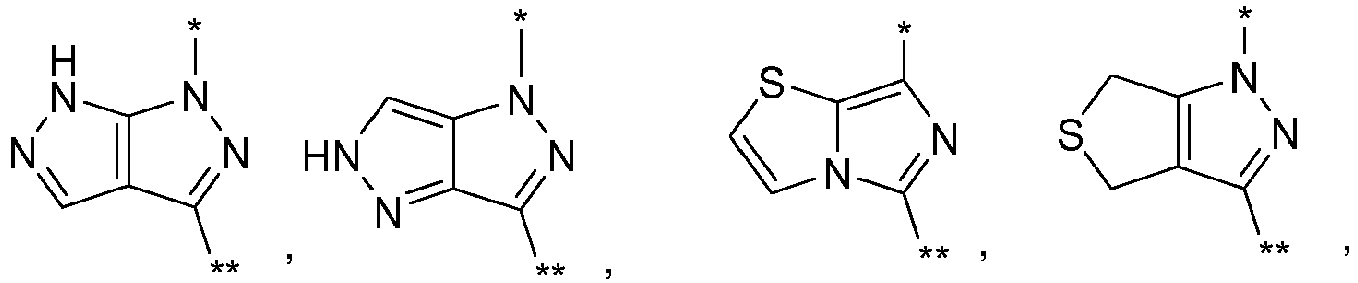
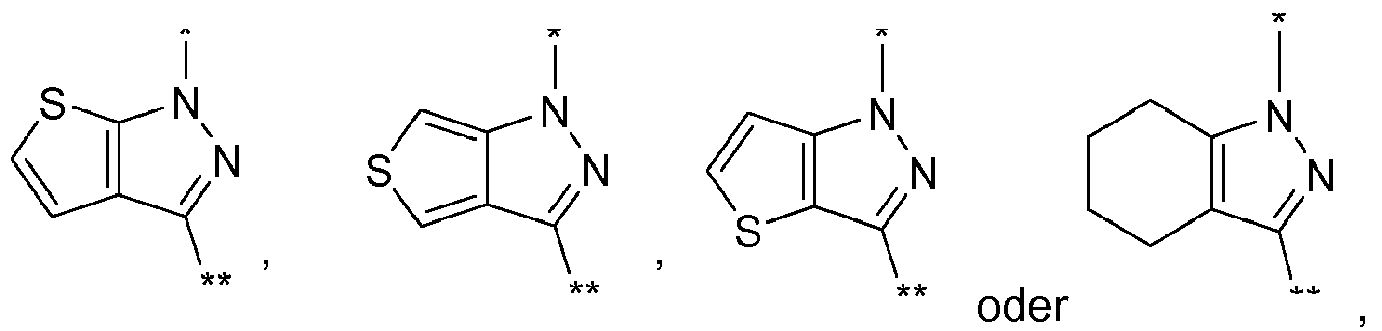
jedes X1, X2, X3 und X4 unabhängig N oder CH ist, mit der Maßgabe, dass nicht mehr als zwei von X1, X2, X3 und X4 N sind,
jedes Rx und Ry unabhängig H, C3-10-Cycloalkyl oder -C1-C6-Alkyl ist,
jedes R1 unabhängig -H, Halogen, OR, -C1-C6-Alkyl, Aryl, Heterocyclyl, Heteroaryl, -C3-10-Cycloalkyl, -CN, -NRaC(O)Rb oder-C(O)NRaRb ist, wobei das Aryl, Heteroaryl und Cycloalkyl gegebenenfalls substituiert sind mit einem bis drei Substituenten, ausgewählt aus Halogen, -C1-C6-Alkyl, -OR, -CN und -CF3,
R2 -(CRd 2)tC1-C6-Alkyl, -C2-C6-Alkenyl, -C2-C6-Alkinyl, -(CRd 2)tOR, -(CRd 2)tSR, -(CRd 2)tCF3, -(CRd 2)tC3-10-Cycloalkyl, -(CRd 2)t-Aryl, -(CRd 2)t-Heterocyclyl oder -(CRd 2)t-Heteroaryl ist, wobei das Alkyl, Cycloalkyl, Aryl, Heterocyclyl und Heteroaryl gegebenenfalls substituiert sind mit einem bis drei Substituenten, ausgewählt aus Halogen, -C1-C6-Alkyl, -CF3, -CN oder -OR,
R3 (CRd 2)t-Aryl, -(CRd 2)t-Heteroaryl, -(CRd 2)t-Heterocyclyl, -(CRd 2)tC3-10-Cycloalkyl, -(CRd 2)tCN, -(CRd 2)t-C(O)NRaRb, -(CRd 2)t-NRaC(O)Rb, -(CRd 2)t-C(S)NRaRb, -(CRd 2)t-C(O)ORa, -(CRd 2)t-NRaC(O)NRb, -(CRd 2)t-NRaC(O)ORa, -(CRd 2)t-NRaRb oder -ORa ist, wobei das Aryl, Heteroaryl oder Heterocyclyl gegebenenfalls substituiert ist mit einem bis drei Substituenten, ausgewählt aus R5,
R4 -C1-C6-Alkyl, C3-10-Cycloalkyl, Halogen oder CF3 ist,
jedes R5 unabhängig Halogen, OR, CN, -(CRd 2)tCF3, S(O)pRc, -(CRd 2)tC3-10-Cycloalkyl oder -C1-C6-Alkyl ist, wobei das Alkyl und Cycloalkyl gegebenenfalls substituiert sind mit einem bis drei Substituenten, ausgewählt aus Halogen oder OR,
jedes R6 unabhängig Halogen, -C1-C6-Alkyl, OR, CN, CF3, Aryl oder Heteroaryl ist, wobei das Alkyl, Aryl oder Heteroaryl gegebenenfalls substituiert ist mit Halogen, C1-C6-Alkyl oder CF3,
jedes R unabhängig -H, -C1-C6-Alkyl, -CF3 oder Aryl ist,
jedes Ra und Rb unabhängig -H, -C1-C6-Alkyl, Aryl, Heteroaryl, Heterocyclyl oder -(CH2)0-3-C3-10-Cycloalkyl ist, wobei das Alkyl, Heteroaryl, Heterocyclyl und Cycloalkyl gegebenenfalls substituiert sind mit einem bis drei Substituenten, ausgewählt aus R6,
wobei wenn Ra und Rb -C1-C6-Alkyl sind und an dasselbe Stickstoffatom gebunden sind, Ra und Rb gegebenenfalls cyclisiert sein können, so dass sie einen C3-C6-Cycloalkylring bilden,
jedes Rc unabhängig -C1-C6-Alkyl, -CF3 oder Aryl ist,
jedes Rd unabhängig H, Halogen, -CF3 oder -C1-C6-Alkyl ist,
m eine ganze Zahl ist, ausgewählt aus 1, 2 oder 3,
p eine ganze Zahl ist, unabhängig ausgewählt aus 0, 1 oder 2, und
t eine ganze Zahl ist, unabhängig ausgewählt aus 0, 1, 2, 3 oder 4, oder die Verbindung:4-Amino-5-ethinyl-5-methyl-2-[1-(3,3,4,4,4-pentafluorbutyl)-1H-pyrazol[3,4-b]pyridin-3-yl]-5,7-dihydro-6H-pyrrolo[2,3-d]pyrimidin-6-on. - Die Verbindung gemäß Anspruch 1 der Strukturformel IA:



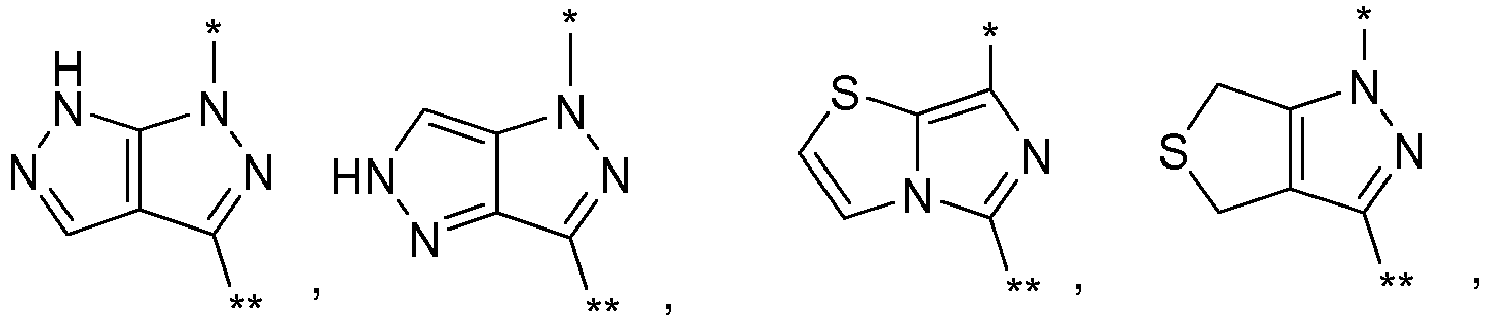

jedes X1, X2, X3 und X4 unabhängig N oder CH ist, mit der Maßgabe, dass nicht mehr als zwei von X1, X2, X3 und X4 N sind,
jedes R unabhängig -H, -C1-C6-Alkyl, -CF3 oder Aryl ist,
jedes Ra und Rb unabhängig -H, -C1-C6-Alkyl, Aryl, Heteroaryl, Heterocyclyl oder -C3-10-Cycloalkyl ist, wobei das Alkyl, Heteroaryl, Heterocyclyl und Cycloalkyl gegebenenfalls substituiert sind mit einem bis drei Substituenten, ausgewählt aus R6,
wobei wenn Ra und Rb -C1-C6-Alkyl sind und an dasselbe Stickstoffatom gebunden sind, Ra und Rb gegebenenfalls cyclisiert sein können, so dass sie einen C3-C6-Cycloalkylring bilden,
jedes Rc unabhängig -C1-C6-Alkyl, -CF3 oder Aryl ist,
jedes Rd unabhängig H, Halogen, -CF3 oder -C1-C6-Alkyl ist,
jedes R1 unabhängig -H, Halogen, Aryl, Heterocyclyl, Heteroaryl, -C3-10-Cycloalkyl, -CN, -NRaC(O)Rb oder -C(O)NRaRb ist, wobei das Aryl, Heteroaryl und Cycloalkyl gegebenenfalls substituiert sind mit einem bis drei Substituenten, ausgewählt aus Halogen, -C1-C6-Alkyl, -OR, -CN und -CF3,
R2 -C1-C6-Alkyl, -C2-C6-Alkenyl, -C2-C6-Alkinyl, -(CRd 2)tOR, -(CRd 2)tSR, -(CRd 2)tCF3, -(CRd 2)tC3-10-Cycloalkyl, -(CRd 2)t-Aryl, -(CRd 2)t-Heterocyclyl oder -(CRd 2)tHeteroaryl ist, wobei das Alkyl, Cycloalkyl, Aryl, Heterocyclyl und Heteroaryl gegebenenfalls substituiert sind mit einem bis drei Substituenten, ausgewählt aus Halogen, -C1-C6-Alkyl, -CF3, -CN oder -OR,
R3 Aryl, Heteroaryl, Heterocyclyl, CN, -C(O)NRaRb, -NRaC(O)Rb, -C(S)NRaRb, -C(O)ORa, -NRaC(O)NRb, -NRaC(O)ORa, -NRaRb oder -ORa ist, wobei das Aryl, Heteroaryl oder Heterocyclyl gegebenenfalls substituiert ist mit einem bis drei Substituenten, ausgewählt aus R5,
R4 -C1-C6-Alkyl, Halogen oder CF3 ist,
jedes R5 unabhängig Halogen, OR, CN, S(O)pRc oder -C1-C6-Alkyl ist, wobei das Alkyl gegebenenfalls substituiert ist mit einem bis drei Substituenten, ausgewählt aus Halogen oder OR,
jedes R6 unabhängig Halogen, -C1-C6-Alkyl, OR, CN, CF3, Aryl oder Heteroaryl ist, wobei das Alkyl, Aryl oder Heteroaryl gegebenenfalls substituiert ist mit Halogen, C1-C6-Alkyl oder CF3,
m eine ganze Zahl ist, ausgewählt aus 1, 2 oder 3,
p eine ganze Zahl ist, unabhängig ausgewählt aus 0, 1 oder 2, und
t eine ganze Zahl ist, unabhängig ausgewählt aus 0, 1, 2, 3 oder 4. - Die Verbindung gemäß Anspruch 1 der Strukturformel IA:
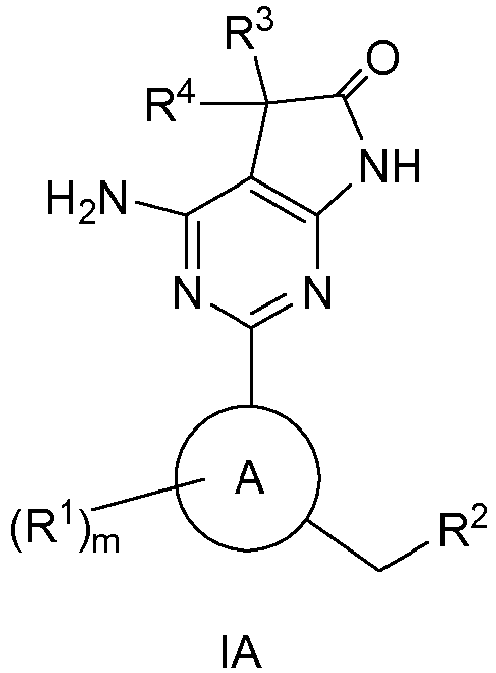


jedes X1, X2, X3 und X4 unabhängig N oder CH ist, mit der Maßgabe, dass nicht mehr als zwei von X1, X2, X3 und X4 N sind. - Die Verbindung gemäß Anspruch 1, wobei


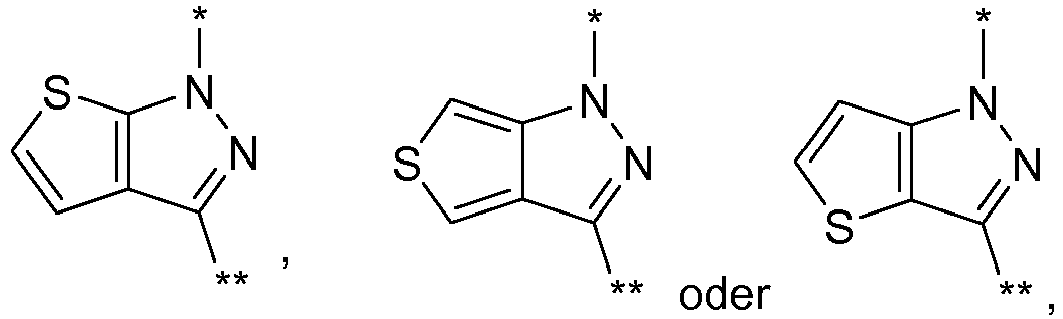
X1, X2, X3 und X4 unabhängig ausgewählt sind aus N oder CH, mit der Maßgabe, dass nicht mehr als eines von X1, X2, X3 und X4 N ist,
oder ein pharmazeutisch annehmbares Salz davon. - Die Verbindung gemäß Anspruch 1, wobei R3 Aryl, Heteroaryl, Heterocyclyl, CN, -C(O)NRaRb, -NRaC(O)Rb, -C(O)ORa oder-ORa ist, wobei das Aryl, Heteroaryl oder Heterocyclyl gegebenenfalls substituiert sind mit einem bis drei Substituenten, ausgewählt aus Halogen, OR, CN, S(O)pRc oder -C1-C6-Alkyl, wobei das Alkyl gegebenenfalls substituiert ist mit einem bis drei Substituenten, ausgewählt aus Halogen oder OR,
oder ein pharmazeutisch annehmbares Salz davon. - Die Verbindung gemäß Anspruch 1, wobei R4 -C1-C6-Alkyl ist, oder ein pharmazeutisch annehmbares Salz davon.
- Die Verbindung gemäß Anspruch 1 der Strukturformel II:
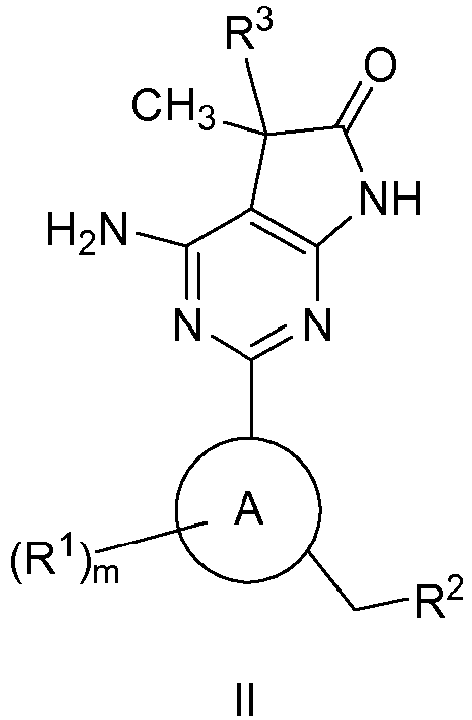
wobei

X4 CH oder N ist,
jedes R unabhängig -H, -C1-C6-Alkyl, -CF3 oder Aryl bedeutet,
jedes Ra unabhängig -H oder -C1-C6-Alkyl ist,
jedes Rb unabhängig -H, -C1-C6-Alkyl oder -C3-10-Cycloalkyl ist, wobei das Alkyl und Cycloalkyl gegebenenfalls substituiert sind mit einem bis drei Substituenten, ausgewählt aus R6,
jedes Rc unabhängig -C1-C6-Alkyl, -CF3 oder Aryl ist,
jedes Rd unabhängig H, Halogen, -CF3 oder -C1-C6-Alkyl ist,
jedes R1 unabhängig -H, CN, Halogen oder -C1-C6-Alkyl ist, wobei das Alkyl gegebenenfalls substituiert ist mit einem bis drei Substituenten, ausgewählt aus Halogen, -C1-C6-Alkyl und -CF3,
R2 -C1-C6-Alkyl, -(CRd 2)tCF3, -(CRd 2)t-C3-10-Cycloalkyl oder -(CRd 2)t-Aryl ist, wobei das Alkyl, Cycloalkyl und Aryl gegebenenfalls substituiert sind mit einem bis drei Substituenten, ausgewählt aus Halogen, -C1-C6-Alkyl und -CF3,
R3 Aryl, Heteroaryl, Heterocyclyl, CN, -C(O)NRaRb, -NRaC(O)Rb, -C(O)ORa oder -ORa ist, wobei das Aryl, Heteroaryl oder Heterocyclyl gegebenenfalls substituiert sind mit einem bis drei Substituenten, ausgewählt aus R5,
jedes R5 unabhängig Halogen, OR, CN, S(O)pRc oder -C1-C6-Alkyl ist, wobei das Alkyl gegebenenfalls substituiert ist mit einem bis drei Substituenten, ausgewählt aus Halogen oder OR,
jedes R6 unabhängig Halogen, -C1-C6-Alkyl, OR, CN, CF3, Aryl oder Heteroaryl das Alkyl, Aryl oder Heteroaryl gegebenenfalls substituiert ist mit Halogen, C1-C6 oder CF3,
m eine ganze Zahl ist, ausgewählt aus 1, 2 oder 3,
p eine ganze Zahl ist, unabhängig ausgewählt aus 0, 1 oder 2, und
t eine ganze Zahl ist, unabhängig ausgewählt aus 0, 1, 2, 3 oder 4. - Die Verbindung gemäß Anspruch 1 der Strukturformel III:
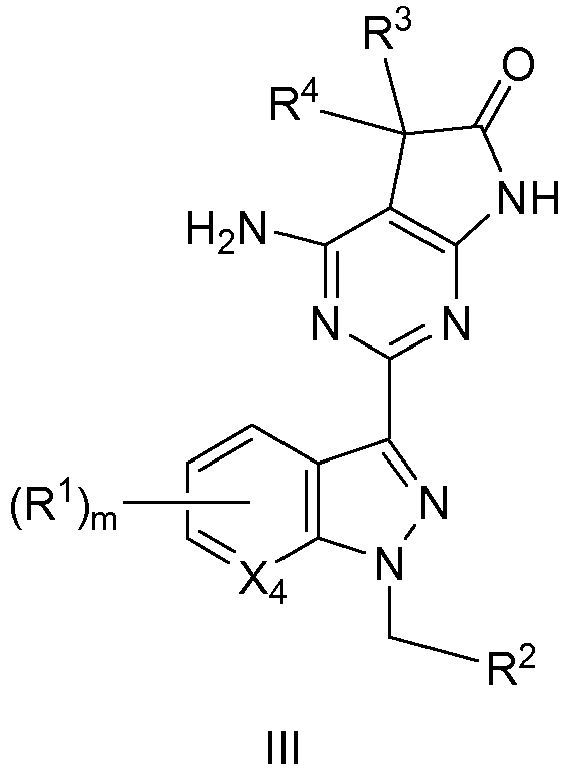
wobei
X4 CH oder N ist,
jedes R unabhängig -H, -C1-C6-Alkyl, -CF3 oder Aryl ist,
jedes Ra unabhängig -H oder -C1-C6-Alkyl ist,
jedes Rb unabhängig -H, -C1-C6-Alkyl, -C3-10-Cycloalkyl oder Heteroaryl ist, wobei das Alkyl, Cycloalkyl und Heteroaryl gegebenenfalls substituiert sind mit einem bis drei Substituenten, ausgewählt aus R6,
jedes Rc unabhängig -C1-C6-Alkyl, -CF3 oder Aryl ist,
jedes Rd unabhängig H, Halogen, -CF3 oder -C1-C6-Alkyl ist,
jedes R1 unabhängig -H, OR, CN, Halogen oder -C1-C6-Alkyl ist, wobei das Alkyl gegebenenfalls substituiert ist mit einem bis drei Substituenten, ausgewählt aus Halogen, -C1-C6-Alkyl und -CF3,
R2 -(CRd 2)tC1-C6-Alkyl, -(CRd 2)tCF3, -(CRd 2)t-C3-10-Cycloalkyl oder -(CRd 2)t-Aryl ist, wobei das Alkyl, Cycloalkyl und Aryl gegebenenfalls substituiert sind mit einem bis drei Substituenten, ausgewählt aus Halogen, -C1-C6-Alkyl und -CF3,
R3 Aryl, Heteroaryl, Heterocyclyl, CN, -C(O)NRaRb, -NRaC(O)Rb, -C(O)ORa oder -ORa ist, wobei das Alkyl, Aryl, Heteroaryl oder Heterocyclyl gegebenenfalls substituiert ist mit einem bis drei Substituenten, ausgewählt aus R5,
R4-CH3 oder C3-10-Cycloalkyl ist,
jedes R5 unabhängig Halogen, OR, CN, S(O)pRc oder -C1-C6-Alkyl ist, wobei das Alkyl gegebenenfalls substituiert ist mit einem bis drei Substituenten, ausgewählt aus Halogen, -C3-10-Cycloalkyl oder OR,
jedes R6 unabhängig Halogen, -C1-C6-Alkyl, OR, CN, CF3, Aryl oder Heteroaryl ist, wobei das Alkyl, Aryl oder Heteroaryl gegebenenfalls substituiert ist mit Halogen, C1-C6-Alkyl oder CF3,
m eine ganze Zahl ist, ausgewählt aus 1, 2 oder 3,
p eine ganze Zahl ist, unabhängig ausgewählt aus 0, 1 oder 2, und
t eine ganze Zahl ist, unabhängig ausgewählt aus 0, 1, 2, 3 oder 4. - Die Verbindung gemäß Anspruch 1, die ist
Beispiel IUPAC-Name 1 4-Amino-2-[5-chlor-3-(3,3,3-trifluorpropyl)-1H-indazol-1-yl]-5-methyl-5-phenyl-5,7-dihydro-6H-pyrrolo[2,3-d]pyrimidin-6-on 2 4-Amino-2-[5-chlor-3-(3,3,4,4,4-pentafluorbutyl)-1H-indazol-1-yl]-5-methyl-5-phenyl-5,7-dihydro-6H-pyrrolo[2,3-d]pyrimidin-6-on 3 4-Amino-2-[5-chlor-3-(2,3,6-trifluorbenzyl)-1H-indazol-1-yl]-5-methyl-5-phenyl-5,7-dihydro-6H-pyrrolo[2,3-d]pyrimidin-6-on 4 4-Amino-2-[5-chlor-3-(3,3,4,4,4-pentafluorbutyl)-1H-indazol-1-yl]-5-methyl-5-(3-methyl-1,2,4-oxadiazol-5-yl)-5,7-dihydro-6H-pyrrolo[2,3-d]pyrimidin-6-on 5 4-Amino-2-[3-(2-fluorbenzyl)-1H-indazol-1-yl]-5-methyl-5-phenyl-5,7-dihydro-6H-pyrrolo[2,3-d]pyrimidin-6-on 6 4-Amino-2-[5-chlor-3-(2-fluorbenzyl)-1H-indazol-1-yl]-5-methyl-5-phenyl-5,7-dihydro-6H-pyrrolo[2,3-d]pyrimidin-6-on 7 4-Amino-2-[5-chlor-3-(2-fluorbenzyl)-1H-indazol-1-yl]-5-methyl-5-(pyridin-3-yl)-5,7-dihydro-6H-pyrrolo[2,3-d]pyrimidin-6-on 8 4-Amino-2-[5-chlor-3-(2-fluorbenzyl)-1H-indazol-1-yl]-5-methyl-5-(pyridin-4-yl)-5,7-dihydro-6H-pyrrolo[2,3-d]pyrimidin-6-on 9 4-Amino-2-[5-chlor-3-(2,3-difluorbenzyl)-1H-indazol-1-yl]-5-methyl-5-phenyl-5,7-dihydro-6H-pyrrolo[2,3-d]pyrimidin-6-on 10 4-Amino-2-[5-chlor-3-(2,3-difluorbenzyl)-1H-indazol-1-yl]-5-methyl-5-(pyridin-3-yl)-5,7-dihydro-6H-pyrrolo[2,3-d]pyrimidin-6-on 11 4-Amino-2-[5-chlor-3-(2,3-difluorbenzyl)-1H-indazol-1-yl]-5-methyl-5-(pyridin-4-yl)-5,7-dihydro-6H-pyrrolo[2,3-d]pyrimidin-6-on 12 4-Amino-5-methyl-5-phenyl-2-[3-(2,3,6-trifluorbenzyl)-1H-indazol-1-yl]-5,7-dihydro-6H-pyrrolo[2,3-d]pyrimidin-6-on 13 4-Amino-2-[5-chlor-3-(2-phenylethyl)-1H-indazol-1-yl]-5-methyl-5-phenyl-5,7-dihydro-6H-pyrrolo[2,3-d]pyrimidin-6-on 14 4-Amino-5-methyl-5-phenyl-2-[3-(3,3,3-trifluorpropyl)-1H-indazol-1-yl]-5,7-dihydro-6H-pyrrolo[2,3-d]pyrimidin-6-on 15 4-Amino-2-[5-fluor-3-(3,3,3-trifluorpropyl)-1H-indazol-1-yl]-5-methyl-5-phenyl-5,7-dihydro-6H-pyrrolo[2,3-d]pyrimidin-6-on 16 4-Amino-2-[5-(chlor-3-(3,3,3-trifluorpropyl)-1H-indazol-1-yl]-5-(4-fluorphenyl)-5-methyl-5,7-dihydro-6H-pyrrolo[2,3-d]pyrimidin-6-on 17 4-Amino-2-[5-chlor-3-(3,3,3-trifluorpropyl)-1H-indazol-1-yl]-5-methyl-5-(pyridin-2-yl)-5,7-dihydro-6H-pyrrolo[2,3-d]pyrimidin-6-on 18 4-Amino-2-[5-chlor-3-(3,3,3-trifluorpropyl)-1H-indazol-1-yl]-5-methyl-5-(pyridin-3-yl)-5,7-dihydro-6H-pyrrolo[2,3-d]pyrimidin-6-on 19 4-Amino-2-[5-chlor-3-(3,3,3-trifluorpropyl)-1H-indazol-1-yl]-5-methyl-5-(pyridin-4-yl)-5,7-dihydro-6H-pyrrolo[2,3-d]pyrimidin-6-on 20 4-Amino-2-[5-chlor-3-(3,3,3-trifluorpropyl)-1H-indazol-1-yl]-5-methyl-5-(pyrazin-2-yl)-5,7-dihydro-6H-pyrrolo[2,3-d]pyrimidin-6-on 21 4-Amino-2-[5-chlor-3-(3,3,3-trifluor-2-methylpropyl)-1H-indazol-1-yl]-5-methyl-5-phenyl-5,7-dihydro-6H-pyrrolo[2,3-d]pyrimidin-6-on 22 4-Amino-5-methyl-2-[3-(3,3,4,4,4-pentafluorbutyl)-1H-indazol-1-yl]-5-phenyl-5,7-dihydro-6H-pyrrolo[2,3-d]pyrimidin-6-on 23 4-Amino-5-(2-fluorphenyl)-5-methyl-2-[3-(3,3,4,4,4-pentafluorbutyl)-1H-indazol-1-yl]-5,7-dihydro-6H-pyrrolo[2,3-d]pyrimidin-6-on 24 4-Amino-5-(3-fluorphenyl)-5-methyl-2-[3-(3,3,4,4,4-pentafluorbutyl)-1H-indazol-1-yl]-5,7-dihydro-6H-pyrrolo[2,3-d]pyrimidin-6-on 25 4-Amino-5-(4-fluorphenyl)-5-methyl-2-[3-(3,3,4,4,4-pentafluorbutyl)-1H-indazol-1-yl]-5,7-dihydro-6H-pyrrolo[2,3-d]pyrimidin-6-on 26 4-Amino-2-[5-fluor-3-(3,3,4,4,4-pentafluorbutyl)-1H-indazol-1-yl]-5-methyl-5-phenyl-5,7-dihydro-6H-pyrrolo[2,3-d]pyrimidin-6-on 27 4-Amino-2-[5-fluor-3-(3,3,4,4,4-pentafluorbutyl)-1H-indazol-1-yl]-5-(2-fluorphenyl)-5-methyl-5,7-dihydro-6H-pyrrolo[2,3-d]pyrimidin-6-on 28 4-Amino-2-[5-chlor-3-(3,3,4,4,4-pentafluorbutyl)-1H-indazol-1-yl]-5-(2-fluorphenyl)-5-methyl-5,7-dihydro-6H-pyrrolo[2,3-d]pyrimidin-6-on 29 4-Amino-2-[5-chlor-3-(3,3,4,4,4-pentafluorbutyl)-1H-indazol-1-yl]-5-(3-fluorphenyl)-5-methyl-5,7-dihydro-6H-pyrrolo[2,3-d]pyrimidin-6-on 30 4-Amino-2-[5-chlor-3-(3,3,4,4,4-pentafluorbutyl)-1H-indazol-1-yl]-5-(4-fluorphenyl)-5-methyl-5,7-dihydro-6H-pyrrolo[2,3-d]pyrimidin-6-on 31 4-Amino-2-[5-chlor-3-(3,3,4,4,4-pentafluorbutyl)-1H-indazol-1-yl]-5-(3,5-difluorphenyl)-5-methyl-5,7-dihydro-6H-pyrrolo[2,3-d]pyrimidin-6-on 32 4-Amino-5-(4-chlorphenyl)-5-methyl-2-[3-(3,3,4,4,4-pentafluorbutyl)-1H-indazol-1-yl]-5,7-dihydro-6H-pyrrolo[2,3-d]pyrimidin-6-on 33 4-Amino-2-[5-chlor-3-(3,3,4,4,4-pentafluorbutyl)-1H-indazol-1-yl]-5-(4-chlorphenyl)-5-methyl-5,7-dihydro-6H-pyrrolo[2,3-d]pyrimidin-6-on 34 4-Amino-5-(4-bromphenyl)-2-[5-chlor-3-(3,3,4,4,4-pentafluorbutyl)-1H-indazol-1-yl]-5-methyl-5,7-dihydro-6H-pyrrolo[2,3-d]pyrimidin-6-on 35 4-{4-Amino-2-[5-chlor-3-(3,3,4,4,4-pentafluorbutyl)-1H-indazol-1-yl]-5-methyl-6-oxo-6,7-dihydro-5H-pyrrolo[2,3-d]pyrimidin-5-yl}benzonitril 36 4-Amino-5-(4-hydroxyphenyl)-5-methyl-2-[3-(3,3,4,4,4-pentafluorbutyl)-1H-indazol-1-yl]-5,7-dihydro-6H-pyrrolo[2,3-d]pyrimidin-6-on 37 4-Amino-2-[5-chlor-3-(3,3,4,4,4-pentafluorbutyl)-1H-indazol-1-yl]-5-methyl-5-[4-(methylsulfonyl)phenyl]-5,7-dihydro-6H-pyrrolo[2,3-d]pyrimidin-6-on 38 4-Amino-5-methyl-2-[3-(3,3,4,4,4-pentafluorbutyl)-1H-indazol-1-yl]-5-(pyridin-2-yl)-5,7-dihydro-6H-pyrrolo[2,3-d]pyrimidin-6-on 39 4-Amino-2-[5-fluor-3-(3,3,4,4,4-pentafluorbutyl)-1H-indazol-1-yl]-5-methyl-5-(pyridin-2-yl)-5,7-dihydro-6H-pyrrolo[2,3-d]pyrimidin-6-on 40 4-Amino-2-[5-chlor-3-(3,3,4,4,4-pentafluorbutyl)-1H-indazol-1-yl]-5-methyl-5-(pyridin-2-yl)-5,7-dihydro-6H-pyrrolo[2,3-d]pyrimidin-6-on 41 4-Amino-2-[5-chlor-3-(3,3,4,4,4-pentafluorbutyl)-1H-indazol-1-yl]-5-(5-fluorpyridin-2-yl)-5-methyl-5,7-dihydro-6H-pyrrolo[2,3-d]pyrimidin-6-on 42 4-Amino-5-(5-chlorpyridin-2-yl)-5-methyl-2-[3-(3,3,4,4,4-pentafluorbutyl)-1H-indazol-1-yl]-5,7-dihydro-6H-pyrrolo[2,3-d]pyrimidin-6-on 43 4-Amino-2-[5-chlor-3-(3,3,4,4,4-pentafluorbutyl)-1H-indazol-1-yl]-5-(5-chlorpyridin-2-yl)-5-methyl-5,7-dihydro-6H-pyrrolo[2,3-d]pyrimidin-6-on 44 4-Amino-2-[5-chlor-3-(3,3,4,4,4-pentafluorbutyl)-1H-indazol-1-yl]-5-methyl-5-(pyrazin-2-yl)-5,7-dihydro-6H-pyrrolo[2,3-d]pyrimidin-6-on 45 4-Amino-2-[5-chlor-3-(3,3,4,4,4-pentafluorbutyl)-1H-indazol-1-yl]-5-methyl-5-(5-methyl-1,2,4-oxadiazol-3-yl)-5,7-dihydro-6H-pyrrolo[2,3-d]pyrimidin-6-on 46 4-Amino-2-[5-fluor-3-(3,3,4,4,4-pentafluorbutyl)-1H-indazol-1-yl]-5-methyl-5-(3-methyl-1,2,4-oxadiazol-5-yl)-5,7-dihydro-6H-pyrrolo[2,3-d]pyrimidin-6-on 47 4-Amino-2-[5-chlor-3-(4,4,5,5,5-pentafluorpentyl)-1H-indazol-1-yl]-5-methyl-5-phenyl-5,7-dihydro-6H-pyrrolo[2,3-d]pyrimidin-6-on 48 4-Amino-2-[5-chlor-3-(3,3,4,4,5,5,5-heptafluorpentyl)-1H-indazol-1-yl]-5-methyl-5-phenyl-5,7-dihydro-6H-pyrrolo[2,3-d]pyrimidin-6-on 49 Methyl-4-amino-2-[5-chlor-3-(3,3,3-trifluorpropyl)-1H-indazol-1-yl]-5-methyl-6-oxo-6,7-dihydro-5H-pyrrolo[2,3-d]pyrimidin-5-carboxylat 50 Ethyl-4-amino-2-[5-chlor-3-(3,3,3-trifluorpropyl)-1H-indazol-1-yl]-5-methyl-6-oxo-6,7-dihydro-5H-pyrrolo[2,3-d]pyrimidin-5-carboxylat 51 Methyl-4-amino-2-[5-fluor-3-(3,3,4,4,4-pentafluorbutyl)-1H-indazol-1-yl]-5-methyl-6-oxo-6,7-dihydro-5H-pyrrolo[2,3-d]pyrimidin-5-carboxylat 52 Methyl-4-amino-2-[5-chlor-3-(3,3,4,4,4-pentafluorbutyl)-1H-indazol-1-yl]-5-methyl-6-oxo-6,7-dihydro-5H-pyrrolo[]2,3-d]pyrimidin-5-carboxylat 53 4-Amino-2-[5-chlor-3-(3,3,3-trifluorpropyl)-1H-thieno[2,3-c]pyrazol-1-yl]-5-methyl-5-phenyl-5,7-dihydro-6H-pyrrolo[2,3-d]pyrimidin-6-on 54 4-Amino-5-methyl-5-phenyl-2-[3-(2,3,6-trifluorbenzyl)-1H-thieno[3,4-c]pyrazol-1-yl]-5,7-dihydro-6H-pyrrolo[2,3-d]pyrimidin-6-on 55 4-Amino-2-[3-(2,3-difluorbenzyl)-1H-pyrazolo[4,3-b]pyridin-1-yl]-5-methyl-5-phenyl-5,7-dihydro-6H-pyrrolo[2,3-d]pyrimidin-6-on 56 4-Amino-5-methyl-5-phenyl-2-[3-(3,3,3-trifluorpropyl)-1H-pyrazol[4,3-b]pyridin-1-yl]-5,7-dihydro-6H-pyrrolo[2,3-d]pyrimidin-6-on 57 4-Amino-5-methyl-2-[3-(3,3,4,4,4-pentafluorbutyl)-1H-pyrazol-[4,3-b]pyridin-1-yl]-5-phenyl-5,7-dihydro-6H-pyrrolo[2,3-c]pyrimidin-6-on 58 4-Amino-2-[6-chlor-1-(3,3,4,4,4-pentafluorbutyl)-1H-indazol-3-yl]-5-methyl-5-phenyl-5,7-dihydro-6H-pyrrolo[2,3-d]pyrimidin-6-on 59 4-Amino-2-[6-chlor-1-(3,3,4,4,4-pentafluorbutyl)-1H-indazol-3-yl]-5-methyl-5-(3-methyl-1,2,4-oxadiazol-5-yl)-5,7-dihydro-6H-pyrrolo[2,3-d]pyrimidin-6-on 60 4-Amino-5-methyl-5-phenyl-2-[1-(2,2,2-trifluorethyl)-1H-indazol-3-yl]-5,7-dihydro-6H-pyrrolo[2,3-d]pyrimidin-6-on 61 4-Amino-2-[1-(2-methoxyethyl)-1H-indazol-3-yl]-5-methyl-5-phenyl-5,7-dihydro-6H-pyrrolo[2,3-d]pyrimidin-6-on 62 4-Amino-2-[1-(ethoxymethyl)-1H-indazol-3-yl]-5-methyl-5-phenyl-5,7-dihydro-6H-pyrrolo[2,3-d]pyrimidin-6-on 63 4-Amino-5-methyl-2-[1-(2,2,3,3,3-pentafluorpropyl)-1H-indazol-3-yl]-5-phenyl-5,7-dihydro-6H-pyrrolo[2,3-d]pyrimidin-6-on 64 4-Amino-2-{1-[(2,2-difluorcyclopropyl)methyl]-1H-indazol-3-yl}-5-methyl-5-phenyl-5,7-dihydro-6H-pyrrolo[2,3-d]pyrimidin-6-on 65 4-Amino-5-methyl-5-phenyl-2-[1-(3,3,3-trifluorpropyl)-1H-indazol-3-yl]-5,7-dihydro-6H-pyrrolo[2,3-d]pyrimidin-6-on 66 4-Amino-2-[6-chlor-1-(3,3,3-trifluorpropyl)-1H-indazol-3-yl]-5-methyl-5-phenyl-5,7-dihydro-6H-pyrrolo[2,3-d]pyrimidin-6-on 67 4-Amino-2-[6-chlor-1-(3,3,3-trifluorpropyl)-1H-indazol-3-yl]-5-methyl-5-(3-methyl-1,2,4-oxadiazol-5-yl)-5,7-dihydro-6H-pyrrolo[2,3-d]pyrimidin-6-on 68 Methyl-4-amino-2-[6-chlor-1-(3,3,3-trifluorpropyl)-1H-indazol-3-yl]-5-methyl-6-oxo-6,7-dihydro-5H-pyrrolo[2,3-d]pyrimidin-5-carboxylat 69 4-Amino-5-methyl-2-[1-(3,3,4,4,4-pentafluorbutyl)-1H-indazol-3-yl]-5-phenyl-5,7-dihydro-6H-pyrrolo[2,3-d]pyrimidin-6-on 70 4-Amino-2-[6-fluor-1-(3,3,4,4,4-pentafluorbutyl)-1Hindazol-3-yl]-5-methyl-5-phenyl-5,7-dihydro-6H-pyrrolo[2,3-d]pyrimidin-6-on 71 4-Amino-2-[6-brom-1-(3,3,4,4,4-pentafluorbutyl)-1H-indazol-3-yl]-5-methyl-5-phenyl-5,7-dihydro-6H-pyrrolo[2,3-d]pyrimidin-6-on 72 4-Amino-5-(2-fluorphenyl)-5-methyl-2-[1-(3,3,4,4,4-pentafluorbutyl)-1H-indazol-3-yl]-5,7-dihydro-6H-pyrrolo[2,3-d]pyrimidin-6-on 73 4-Amino-2-[6-fluor-1-(3,3,4,4,4-pentafluorbutyl)-1H-indazol-3-yl]-5-(2-fluorphenyl)-5-methyl-5,7-dihydro-6H-pyrrolo[2,3-d]pyrimidin-6-on 74 4-Amino-2-[6-chlor-1-(3,3,4,4,4-pentafluorbutyl)-1H-indazol-3-yl]-5-(2-fluorphenyl)-5-methyl-5,7-dihydro-6H-pyrrolo[2,3-d]pyrimidin-6-on 75 4-Amino-5-(4-chlorphenyl)-5-methyl-2-[1-(3,3,4,4,4-pentafluorbutyl)-1H-indazol-3-yl]-5,7-dihydro-6H-pyrrolo[2,3-d]pyrimidin-6-on 76 4-Amino-2-[6-chlor-1-(3,3,4,4,4-pentafluorbutyl)-1H-indazol-3-yl]-5-(4-chlorphenyl)-5-methyl-5,7-dihydro-6H-pyrrolo[2,3-d]pyrimidin-6-on 77 4-Amino-5-(4-bromphenyl)-2-[6-chlor-1-(3,3,4,4,4-pentafluorbutyl)-1H-indazol-3-yl]-5-methyl-5,7-dihydro-6H-pyrrolo[2,3-d]pyrimidin-6-on 78 4-Amino-2-[6-chlor-1-(3,3,4,4,4-pentafluorbutyl)-1H-indazol-3-yl]-5-methyl-5-[4-(methylsulfonyl)phenyl]-5,7-dihydro-6H-pyrrolo[2,3-d]pyrimidin-6-on 79 4-Amino-5-methyl-2-[1-(3,3,4,4,4-pentafluorbutyl)-1H-indazol-3-yl]-5-(pyridin-2-yl)-5,7-dihydro-6H-pyrrolo[2,3-d]pyrimidin-6-on 80 4-Amino-2-[6-chlor-1-(3,3,4,4,4-pentafluorbutyl)-1H-indazol-3-yl]-5-methyl-5-(pyridin-2-yl)-5,7-dihydro-6H-pyrrolo[2,3-d]pyrimidin-6-on 81 4-Amino-2-[6-chlor-1-(3,3,4,4,4-pentafluorbutyl)-1H-indazol-3-yl]-5-methyl-5-(pyrimidin-2-yl)-5,7-dihydro-6H-pyrrolo[2,3-d]pyrimidin-6-on 82 4-Amino-2-[6-chlor-1-(3,3,4,4,4-pentafluorbutyl)-1H-indazol-3-yl]-5-methyl-5-(5-methyl-1,3-oxazol-2-yl)-5,7-dihydro-6H-pyrrolo[2,3-d]pyrimidin-6-on 83 4-Amino-2-[6-fluor-1-(3,3,4,4,4-pentafluorbutyl)-1H-indazol-3-yl]-5-methyl-5-(3-methyl-1,2,4-oxadiazol-5-yl)-5,7-dihydro-6H-pyrrolo[2,3-d]pyrimidin-6-on 84 4-Amino-5-methyl-2-[1-(3,3,4,4,4-pentafluorbutyl)-1H-pyrazol[3,4-b]pyridin-3-yl]-5-phenyl-5,7-dihydro-6H-pyrrolo[2,3-d]pyrimidin-6-on 85 4-Amino-2-[5-chlor-3-(3,3,4,4,4-pentafluorbutyl)-1H-indazol-1-yl]-5-methyl-5-(5-methyl-1,3,4-thiadiazol-2-yl)-5,7-dihydro-6H-pyrrolo[2,3-d]pyrimidin-6-on 86 4-Amino-2-[5-chlor-3-(3,3,4,4,4-pentafluorbutyl)-1H-indazol-1-yl]-5-methyl-5-(5-methyl-1,3,4-oxadiazol-2-yl)-5,7-dihydro-6H-pyrrolo[2,3-d]pyrimidin-6-on 87 4-Amino-5-methyl-6-oxo-2-[3-(3,3,4,4,4-pentafluorbutyl)-1H-indazol-1-yl]-6,7-dihydro-5H-pyrrolo[2,3-d]pyrimidin-5-carboxamid 88 4-Amino-2-[5-chlor-3-(3,3,4,4,4-pentafluorbutyl)-1H-indazol-1-yl]-5-methyl-6-oxo-6,7-dihydro-5H-pyrrolo[2,3-d]pyrimidin-5-carboxamid 89 4-Amino-2-[5-fluor-3-(3,3,4,4,4-pentafluorbutyl)-1H-indazol-1-yl]-N,5-dimethyl-6-oxo-6,7-dihydro-5H-pyrrolo[2,3-d]pyrimidin-5-carboxamid 90 4-Amino-2-[5-chlor-3-(3,3,4,4,4-pentafluorbutyl)-1H-indazol-1-yl]-N,5-dimethyl-6-oxo-6,7-dihydro-5H-pyrrolo[2,3-d]pyrimidin-5-carboxamid 91 4-Amino-2-[5-chlor-3-(3,3,4,4,4-pentafluorbutyl)-1H-indazol-1-yl]-N-ethyl-5-methyl-6-oxo-6,7-dihydro-5H-pyrrolo[2,3-d]pyrimidin-5-carboxamid 92 4-Amino-2-[5-chlor-3-(3,3,4,4,4-pentafluorbutyl)-1H-indazol-1-yl]-5-methyl-N-[(1-methyl-1H-pyrazol-3-yl)methyl]-6-oxo-6,7-dihydro-5H-pyrrolo[2,3-d]pyrimidin-5-carboxamid 93 4-Amino-5-methyl-5-(4-methyl-5-oxo-4,5-dihydro-1,3,4-oxadiazol-2-yl)-2-[3-(3,3,4,4,4-pentafluorbutyl)-1H-indazol-1-yl]-5,7-dihydro-6H-pyrrolo[2,3-d]pyrimidin-6-on 94 4-Amino-2-[5-chlor-3-(3,3,4,4,4-pentafluorbutyl)-1H-indazol-1-yl]-5-methyl-5-(1,3,4-thiadiazol-2-yl)-5,7-dihydro-6H-pyrrolo[2,3-d]pyrimidin-6-on 95 4-Amino-2-[6-chlor-1-(3,3,4,4,4-pentafluorbutyl)-1H-indazol-3-yl]-N,5-dimethyl-6-oxo-6,7-dihydro-5H-pyrrolo[2,3-d]pyrimidin-5-carboxamid 96 4-Amino-2-[6-chlor-1-(3,3,4,4,4-pentafluorbutyl)-1H-indazol-3-yl]-5-methyl-5-(4-methyl-5-oxo-4,5-dihydro-1,3,4-oxadiazol-2-yl)-5,7-dihydro-6H-pyrrolo[2,3-d]pyrimidin-6-on 97 4-Amino-2-[6-chlor-1-(3,3,4,4,4-pentafluorbutyl)-1H-indazol-3-yl]-5-methyl-5-(5-methyl-1,3,4-thiadiazol-2-yl)-5,7-dihydro-6H-pyrrolo[2,3-d]pyrimidin-6-on 98 4-Amino-2-[6-chlor-1-(3,3,4,4,4-pentafluorbutyl)-1H-indazol-3-yl]-5-methyl-5-(5-methyl-1,3,4-oxadiazol-2-yl)-5,7-dihydro-6H-pyrrolo[2,3-d]pyrimidin-6-on 99 4-Amino-5-methyl-5-phenyl-2-[3-(2,3,6-trifluorbenzyl)-4,6-dihydro-1H-thieno[3,4-c]pyrazol-1-yl]-5,7-dihydro-6H-pyrrolo[2,3-d]pyrimidin-6-on 100 4-Amino-5-methyl-2-[1-(3,3,4,4,4-pentafluorbutyl)-4,5,6,7-tetrahydro-1H-indazol-3-yl]-5-phenyl-5,7-dihydro-6H-pyrrolo[2,3-d]pyrimidin-6-on 101 4-Amino-5-(2-fluorphenyl)-5-methyl-2-[3-(3,3,4,4,4-pentafluorbutyl)-4,5,6,7-tetrahydro-1H-indazol-1-yl]-5,7-dihydro-6H-pyrrolo[2,3-d]pyrimidin-6-on 102 4-Amino-5-(3-fluorphenyl)-5-methyl-2-[3-(3,3,4,4,4-pentafluorbutyl)-4,5,6,7-tetrahydro-1H-indazol-1-yl]-5,7-dihydro-6H-pyrrolo[2,3-d]pyrimidin-6-on 103 4-Amino-5-(4-fluorphenyl)-5-methyl-2-[3-(3,3,4,4,4-pentafluorbutyl)-4,5,6,7-tetrahydro-1H-indazol-1-yl]-5,7-dihydro-6H-pyrrolo[2,3-d]pyrimidin-6-on 104 4-Amino-5-methyl-5-phenyl-2-[1-(3,3,3-trifluorpropyl)-4,5,6,7-tetrahydro-1H-indazol-3-yl]-5,7-dihydro-6H-pyrrolo[2,3-d]pyrimidin-6-on 105 4-Amino-2-[6-chlor-3-(3,3,4,4,4-pentafluorbutyl)imidazo[1,5-a]pyridin-1-yl]-5-(4-fluorphenyl)-5-methyl-5,7-dihydro-6H-pyrrolo[2,3-d]pyrimidin-6-on 106 4-Amino-2-[6-fluor-3-(3,3,4,4,4-pentafluorbutyl)imidazo[1,5-a]pyridin-1-yl]-5-(4-fluorphenyl)-5-methyl-5,7-dihydro-6H-pyrrolo[2,3-d]pyrimidin-6-on 107 4-Amino-5-methyl-2-[7-(3,3,4,4,4-pentafluorbutyl)imidazo[1,5-b]pyridazin-5-yl]-5-phenyl-5,7-dihydro-6H-pyrrolo[2,3-d]pyrimidin-6-on 108 4-Amino-5-methyl-5-(3-methyl-1,2,4-oxadiazol-5-yl)-2-[3-(3,3,4,4,4-pentafluorbutyl)imidazo[1,5-a]pyridin-1-yl]-5,7-dihydro-6H-pyrrolo[2,3-d]pyrimidin-6-on 109 4-Amino-2-[6-fluor-3-(3,3,4,4,4-pentafluorbutyl)imidazo[1,5-a]pyridin-1-yl]-5-methyl-5-(3-methyl-1,2,4-oxadiazol-5-yl)-5,7-dihydro-6H-pyrrolo[2,3-d]pyrimidin-6-on 110 4-Amino-2-[6-chlor-3-(3,3,4,4,4-pentafluorbutyl)imidazo[1,5-a]pyridin-1-yl]-5-methyl-5-(3-methyl-1,2,4-oxadiazol-5-yl)-5,7-dihydro-6H-pyrrolo[2,3-d]pyrimidin-6-on 111 4-Amino-2-[6-chlor-3-(3,3,4,4,4-pentafluorbutyl)imidazo[1,5-a]pyridin-1-yl]-5-methyl-5-(5-methyl-1,3-oxazol-2-yl)-5,7-dihydro-6H-pyrrolo[2,3-d]pyrimidin-6-on 112 4-Amino-2-[6-chlor-3-(3,3,4,4,4-pentafluorbutyl)imidazo[1,5-a]pyridin-1-yl]-5-methyl-5-(2-methyl-1,3-oxazol-4-yl)-5,7-dihydro-6H-pyrrolo[2,3-d]pyrimidin-6-on 113 4-Amino-2-[3-(2-fluorbenzyl)imidazo[1,5-a]pyridin-1-yl]-5-methyl-5-phenyl-5,7-dihydro-6H-pyrrolo[2,3-d]pyrimidin-6-on 114 4-Amino-2-[3-(2-fluorbenzyl)imidazo[1,5-a]pyridin-1-yl]-5-methyl-5-(pyridin-4-yl)-5,7-dihydro-6H-pyrrolo[2,3-d]pyrimidin-6-on 115 4-Amino-2-[6-chlor-3-(2-fluorbenzyl)imidazo[1,5-a]pyridin-1-yl]-5-methyl-5-(3-methyl-1,2,4-oxadiazol-5-yl)-5,7-dihydro-6H-pyrrolo[2,3-d]pyrimidin-6-on 116 4-Amino-2-[3-(2,3-difluorbenzyl)imidazo[1,5-a]pyridin-1-yl]-5-methyl-5-phenyl-5,7-dihydro-6H-pyrrolo[2,3-d]pyrimidin-6-on 117 4-Amino-2-[3-(2,3-difluorbenzyl)-6-fluorimidazo[1,5-a]pyridin-1-yl]-5-methyl-5-phenyl-5,7-dihydro-6H-pyrrolo[2,3-d]pyrimidin-6-on 118 4-Amino-2-[3-(2,3-difluorbenzyl)imidazo[1,5-a]pyridin-1-yl]-5-(4-fluorphenyl)-5-methyl-5,7-dihydro-6H-pyrrolo[2,3-d]pyrimidin-6-on 119 4-Amino-2-[3-(2,3-Difluorbenzyl)-6-fluorimidazo[1,5-a]pyridin-1-yl]-5-(4-fluorphenyl)-5-methyl-5,7-dihydro-6H-pyrrolo[2,3-d]pyrimidin-6-on 120 4-Amino-2-[3-(2,3-difluorbenzyl)imidazo[1,5-a]pyridin-1-yl]-5-methyl-5-(pyrazin-2-yl)-5,7-dihydro-6H-pyrrolo[2,3-d]pyrimidin-6-on 121 4-Amino-2-[3-(2,3-difluorbenzyl)-6-fluorimidazo[1,5-a]pyridin-1-yl]-5-methyl-5-(pyrazin-2-yl)-5,7-dihydro-6H-pyrrolo[2,3-d]pyrimidin-6-on 122 4-Amino-5-methyl-5-phenyl-2-[3-(2,3,6-trifluorbenzyl)imidazo[1,5-a]pyridin-1-yl]-5,7-dihydro-6H-pyrrolo[2,3-d]pyrimidin-6-on 123 4-Amino-2-[6-fluor-3-(2,3,6-trifluorbenzyl)imidazo[1,5-a]pyridin-1-yl]-5-methyl-5-phenyl-5,7-dihydro-6H-pyrrolo[2,3-d]pyrimidin-6-on 124 4-Amino-2-[6-chlor-3-(2,3,6-trifluorbenzyl)imidazo[1,5-a]pyridin-1-yl]-5-methyl-5-phenyl-5,7-dihydro-6H-pyrrolo[2,3-d]pyrimidin-6-on 125 4-Amino-2-[6-fluor-3-(3,3,3-trifluorpropyl)imidazo[1,5-a]pyridin-1-yl]-5-methyl-5-phenyl-5,7-dihydro-6H-pyrrolo[2,3-d]pyrimidin-6-on 126 4-Amino-2-[6-chlor-3-(3,3,3-trifluorpropyl)imidazo[1,5-a]pyridin-1-yl]-5-methyl-5-phenyl-5,7-dihydro-6H-pyrrolo[2,3-d]pyrimidin-6-on 127 4-Amino-5-methyl-5-phenyl-2-[3-(4,4,4-trifluorbutyl)imidazo[1,5-a]pyridin-1-yl]-5,7-dihydro-6H-pyrrolo[2,3-d]pyrimidin-6-on 128 4-Amino-2-[6-fluor-3-(4,4,4-trifluorbutyl)imidazo[1,5-a]pyridin-1-yl]-5-methyl-5-phenyl-5,7-dihydro-6H-pyrrolo[2,3-d]pyrimidin-6-on 129 4-Amino-2-[6-chlor-3-(4,4,4-trifluorbutyl)imidazo[1,5-a]pyridin-1-yl]-5-methyl-5-phenyl-5,7-dihydro-6H-pyrrolo[2,3-d]pyrimidin-6-on 130 4-Amino-2-[6-chlor-3-(4,4,4-trifluorbutyl)imidazo[1,5-a]pyridin-1-yl]-5-(4-fluorphenyl)-5-methyl-5,7-dihydro-6H-pyrrolo[2,3-d]pyrimidin-6-on 131 4-Amino-2-[6-chlor-3-(4,4,4-trifluorbutyl)imidazo[1,5-a]pyridin-1-yl]-4-methyl-5-(pyridin-2-yl)-5,7-dihydro-6H-pyrrolo[2,3-d]pyrimidin-6-on 132 4-Amino-2-[6-chlor-3-(4,4,4-trifluorbutyl)imidazo[1,5-a]pyridin-1-yl]-5-(5-fluorpyridin-2-yl)-5-methyl-5,7-dihydro-6H-pyrrolo[2,3-d]pyrimidin-6-on 133 4-Amino-2-[6-chlor-3-(4,4,4-trifluorbutyl)imidazo[1,5-a]pyridin-1-yl]-5-methyl-5-(pyrazin-2-yl)-5,7-dihydro-6H-pyrrolo[2,3-d]pyrimidin-6-on 134 4-Amino-5-methyl-2-[3-(3,3,4,4,4-pentafluorbutyl)imidazo[1,5-a]pyridin-1-yl]-5-phenyl-5,7-dihydro-6H-pyrrolo[2,3-d]pyrimidin-6-on 135 4-Amino-2-[6-fluor-3-(3,3,4,4,4-pentafluorbutyl)imidazo[1,5-a]pyridin-1-yl]-5-methyl-5-phenyl-5,7-dihydro-6H-pyrrolo[2,3-d]pyrimidin-6-on 136 4-Amino-2-[6-chlor-3-(3,3,4,4,4-pentafluorbutyl)imidazo[1,5-a]pyridin-1-yl]-5-methyl-5-phenyl-5,7-dihydro-6H-pyrrolo[2,3-d]pyrimidin-6-on 137 4-Amino-5-(2-fluorphenyl)-5-methyl-2-[3-(3,3,4,4,4-pentafluorbutyl)imidazo[1,5-a]pyridin-1-yl]-5,7-dihydro-6H-pyrrolo[2,3-d]pyrimidin-6-on 138 4-Amino-5-(3-fluorphenyl)-5-methyl-2-[3-(3,3,4,4,4-pentafluorbutyl)imidazo[1,5-a]pyridin-1-yl]-5,7-dihydro-6H-pyrrolo[2,3-d]pyrimidin-6-on 139 4-Amino-5-(4-fluorphenyl)-5-methyl-2-[3-(3,3,4,4,4-pentafluorbutyl)imidazo[1,5-a]pyridin-1-yl]-5,7-dihydro-6H-pyrrolo[2,3-d]pyrimidin-6-on 140 4-Amino-5-(3,5-difluorphenyl)-5-methyl-2-[3-(3,3,4,4,4-pentafluorbutyl)imidazo[1,5-a]pyridin-1-yl]-5,7-dihydro-6H-pyrrolo[2,3-d]pyrimidin-6-on 141 4-Amino-5-(5-chlorpyridin-2-yl)-5-methyl-2-[3-(3,3,4,4,4-pentafluorbutyl)imidazo[1,5-a]pyridin-1-yl]-5,7-dihydro-6H-pyrrolo[2,3-d]pyrimidin-6-on 142 4-Amino-2-[6-fluor-3-(3,3,4,4,4-pentafluorbutyl)imidazo[1,5-a]pyridin-1-yl]-5-(2-fluorphenyl)-5-methyl-5,7-dihydro-6H-pyrrolo[2,3-d]pyrimidin-6-on 143 4-Amino-2-[6-fluor-3-(3,3,4,4,4-pentafluorbutyl)imidazo[1,5-a]pyridin-1-yl]-5-(3-fluorphenyl)-5-methyl-5,7-dihydro-6H-pyrrolo[2,3-d]pyrimidin-6-on 144 4-Amino-5-(3,5-difluorphenyl)-2-[6-fluor-3-(3,3,4,4,4-pentafluorbutyl)imidazo[1,5-a]pyridin-1-yl]-5-methyl-5,7-dihydro-6H-pyrrolo[2,3-d]pyrimidin-6-on 145 4-Amino-2-[6-fluor-3-(3,3,4,4,4-pentafluorbutyl)imidazo[1,5-a]pyridin-1-yl]-5-methyl-5-(pyridin-2-yl)-5,7-dihydro-6H-pyrrolo[2,3-d]pyrimidin-6-on 146 4-Amino-2-[6-fluor-3-(3,3,4,4,4-pentafluorbutyl)imidazo[1,5-a]pyridin-1-yl]-5-methyl-5-(5-methyl-1,2,4-oxadiazol-3-yl)-5,7-dihydro-6H-pyrrolo[2,3-d]pyrimidin-6-on 147 Ethyl-4-amino-2-[6-fluor-3-(3,3,4,4,4-pentafluorbutyl)imidazo[1,5-a]pyridin-1-yl]-5-methyl-6-oxo-6,7-dihydro-5H-pyrrolo[2,3-d]pyrimidin-5-carboxylat 148 4-Amino-2-[6-chlor-3-(3,3,4,4,4-pentafluorbutyl)imidazo[1,5-a]pyridin-1-yl]-5-(2-fluorphenyl)-5-methyl-5,7-dihydro-6H-pyrrolo[2,3-d]pyrimidin-6-on 149 4-Amino-2-[6-chlor-3-(3,3,4,4,4-pentafluorbutyl)imidazo[1,5-a]pyridin-1-yl]-5-(3-fluorphenyl)-5-methyl-5,7-dihydro-6H-pyrrolo[2,3-d]pyrimidin-6-on 150 4-Amino-2-[6-chlor-3-(3,3,4,4,4-pentafluorbutyl)imidazo[1,5-a]pyridin-1-yl]-5-(3,5-difluorphenyl)-5-methyl-5,7-dihydro-6H-pyrrolo[2,3-d]pyrimidin-6-on 151 4-Amino-2-[6-chlor-3-(3,3,4,4,4-pentafluorbutyl)imidazo[1,5-a]pyridin-1-yl]-5-(4-chlorphenyl)-5-methyl-5,7-dihydro-6H-pyrrolo[2,3-d]pyrimidin-6-on 152 4-Amino-2-[6-chlor-3-(3,3,4,4,4-pentafluorbutyl)imidazo[1,5-a]pyridin-1-yl]-5-methyl-5-(pyridin-2-yl)-5,7-dihydro-6H-pyrrolo[2,3-d]pyrimidin-6-on 153 4-Amino-2-[6-chlor-3-(3,3,4,4,4-pentafluorbutyl)imidazo[1,5-a]pyridin-1-yl]-5-(5-fluorpyridin-2-yl)-5-methyl-5,7-dihydro-6H-pyrrolo[2,3-d]pyrimidin-6-on 154 4-Amino-2-[6-chlor-3-(3,3,4,4,4-pentafluorbutyl)imidazo[1,5-a]pyridin-1-yl]-5-methyl-5-(pyrazin-2-yl)-5,7-dihydro-6H-pyrrolo[2,3-d]pyrimidin-6-on 155 4-Amino-2-[6-chlor-3-(3,3,4,4,4-pentafluorbutyl)imidazo[1,5-a]pyridin-1-yl]-5-methyl-5-(5-methyl-1,2,4-oxadiazol-3-yl)-5,7-dihydro-6H-pyrrolo[2,3-d]pyrimidin-6-on 156 4-Amino-2-[3-(2,3-difluorbenzyl)imidazo[1,5-a]pyrazin-1-yl]-5-methyl-5-phenyl-5,7-dihydro-6H-pyrrolo[2,3-d]pyrimidin-6-on 157 Ethyl-4-amino-2-[6-chlor-1-(3,3,4,4,4-pentafluorbutyl)-1H-indazol-3-yl]-5-methyl-6-oxo-6,7-dihydro-5H-pyrrolo[2,3-d]pyrimidin-5-carboxylat 158 Ethyl-4-amino-5-methyl-6-oxo-2-[1-(3,3,4,4,4-pentafluorbutyl)-1H-pyrazolo[3,4-b]pyridin-3-yl]-6,7-dihydro-5H-pyrrolo[2,3-d]pyrimidin-5-carboxylat 159 4-Amino-2-[6-chlor-1-(3,3,4,4,4-pentafluorbutyl)-1H-indazol-3-yl]-5-methyl-6-oxo-6,7-dihydro-5H-pyrrolo[2,3-d]pyrimidin-5-carboxamid 160 4-Amino-2-[6-chlor-1-(3,3,4,4,4-pentafluorbutyl)-1H-indazol-3-yl]-N-cyclopropyl-5-methyl-6-oxo-6,7-dihydro-5H-pyrrolo[2,3-d]pyrimidin-5-carboxamid 161 4-Amino-5-methyl-6-oxo-2-[1-(3,3,4,4,4-pentafluorbutyl)-1H-pyrazolo[3,4-b]pyridin-3-yl]-6,7-dihydro-5H-pyrrolo[2,3-d]pyrimidin-5-carboxamid 162 4-Amino-5-cyclopropyl-6-oxo-2-[1-(3,3,4,4,4-pentafluorbutyl)-1H-pyrazolo[3,4-b]pyridin-3-yl]-6,7-dihydro-5H-pyrrolo[2,3-d]pyrimidin-5-carboxamid 163 4-Amino-5-cyclopropyl-6-oxo-2-[1-(3,3,4,4,4-pentafluorbutyl)-1H-pyrazolo[3,4-b]pyridin-3-yl]-6,7-dihydro-5H-pyrrolo[2,3-d]pyrimidin-5-carbonitril 164 4-Amino-N-cyclopropyl-5-methyl-6-oxo-2-[1-(3,3,4,4,4-pentafluorbutyl)-1H-pyrazolo[3,4-b]pyridin-3-yl]-6,7-dihydro-5H-pyrrolo[2,3-d]pyrimidin-5-carboxamid 165 4-Amino-2-[6-chlor-1-(3,3,4,4,4-pentafluorbutyl)-1H-indazol-3-yl]-5-methyl-6-oxo-N-phenyl-6,7-dihydro-5H-pyrrolo[2,3-d]pyrimidin-5-carboxamid 166 Ethyl-(4-amino-2-(6-chlor-1-(3,3,4,4,4-pentafluorbutyl)-1H-indazol-3-yl)-5-methyl-6-oxo-6,7-dihydro-5H-pyrrolo[2,3-d]pyrimidin-5-yl)carbamat 167 4-Amino-2-[6-chlor-1-(3,3,4,4,4-pentafluorbutyl)-1H-indazol-3-yl]-5-(4,5-dimethyl-1,3-thiazol-2-yl)-5-methyl-5,7-dihydro-6H-pyrrolo[2,3-d]pyrimidin-6-on 168 4-Amino-5-methyl-2-[1-(3,3,4,4,4-pentafluorbutyl)-1H-pyrazolo[3,4-b]pyridin-3-yl]-5-(1,3,4-thiadiazol-2-yl)-5,7-dihydro-6H-pyrrolo[2,3-d]pyrimidin-6-on 169 4-Amino-5-methyl-5-(5-methyl-1,3,4-oxadiazol-2-yl)-2-[1-(3,3,4,4,4-pentafluorbutyl)-1H-pyrazolo[3,4-b]pyridin-3-yl]-5,7-dihydro-6H-pyrrolo[2,3-d]pyrimidin-6-on 170 4-Amino-5-methyl-2-[1-(3,3,4,4,4-pentafluorbutyl)-1H-pyrazolo[3,4-b]pyridin-3-yl]-5-pyrimidin-2-yl-5,7-dihydro-6H-pyrrolo[2,3-d]pyrimidin-6-on 171 4-Amino-2-[6-chlor-1-(3,3,4,4,4-pentafluorbutyl)-1H-indazol-3-yl]-5-methyl-5-[5-oxo-4-(propan-2-yl)-4,5-dihydro-1,3,4-oxadiazol-2-yl]-5,7-dihydro-6H-pyrrolo[2,3-d]pyrimidin-6-on 172 4-Amino-2-[6-chlor-1-(3,3,4,4,4-pentafluorbutyl)-1H-indazol-3-yl]-5-methyl-5-[4-(propan-2-yl)-5-thioxo-4,5-dihydro-1,3,4-oxadiazol-2-yl]-5,7-dihydro-6H-pyrrolo[2,3-d]pyrimidin-6-on 173 4-Amino-5-(1-ethyl-1H-1,2,3-triazol-4-yl)-5-methyl-2-[1-(3,3,4,4,4-pentafluorbutyl)-1H-pyrazolo[3,4-b]pyridin-3-yl]-5,7-dihydro-6H-pyrrolo[2,3-d]pyrimidin-6-on 174 4-Amino-5-[(cyclopropylmethyl)amino]-5-methyl-2-[1-(3,3,4,4,4-pentafluorbutyl)-1H-pyrazolo[3,4-b]pyridin-3-yl]-5,7-dihydro-6H-pyrrolo[2,3-d]pyrimidin-6-on 175 {4-Amino-2-[6-chlor-1-(3,3,4,4,4-pentafluorbutyl)-1H-indazol-3-yl]-5-methyl-6-oxo-6,7-dihydro-5H-pyrrolo[2,3-d]pyrimidin-5-yl}acetonitril 176 4-Amino-2-(6-chlor-1-(3,3,4,4,4-pentafluorbutyl)-1H-pyrazolo[3,4-b]pyridin-3-yl)-N-cyclopropyl-5-methyl-6-oxo-6,7-dihydro-5H-pyrrolo[2,3-d]pyrimidin-5-carboxamid 177 4-Amino-2-(6-cyano-1-(3,3,4,4,4-pentafluorbutyl)-1H-pyrazolo[3,4-b]pyridin-3-yl)-N-cyclopropyl-5-methyl-6-oxo-6,7-dihydro-5H-pyrrolo[2,3-d]pyrimidin-5-carboxamid 178 4-Amino-N-cyclopropyl-2-(6-methoxy-1-(3,3,4,4,4-pentafluorbutyl)-1H-pyrazolo[3,4-b]pyridin-3-yl)-5-methyl-6-oxo-6,7-dihydro-5H-pyrrolo[2,3-d]pyrimidin-5-carboxamid 179 4-Amino-N-cyclopropyl-5-methyl-2-(6-methyl-1-(3,3,4,4,4-pentafluorbutyl)-1H-pyrazolo[3,4-b]pyridin-3-yl)-6-oxo-6,7-dihydro-5H-pyrrolo[2,3-d]pyrimidin-5-carboxamid 180 4-Amino-5-[1-(cyclopropylmethyl)-1H-1,2,3-triazol-4-yl]-5-methyl-2-[1-(3,3,3-trifluorpropyl)-1H-pyrazolo[3,4-b]pyridin-3-yl]-5,7-dihydro-6H-pyrrolo[2,3-d]pyrimidin-6-on 181 4-Amino-N-cyclopropyl-5-methyl-6-oxo-2-[1-(3,3,3-trifluorpropyl)-1H-pyrazolo[3,4-b]pyridin-3-yl]-6,7-dihydro-5H-pyrrolo[2,3-d]pyrimidin-5-carboxamid 182 4-Amino-5-methyl-6-oxo-N-(pyridin-3-yl)-2-[1-(3,3,3-trifluorpropyl)-1H-pyrazolo[3,4-b]pyridin-3-yl]-6,7-dihydro-5H-pyrrolo[2,3-d]pyrimidin-5-carboxamid 183 4-Amino-2-[6-chlor-1-(3,3,3-trifluorpropyl)-1H-pyrazolo[3,4-b]pyridin-3-yl]-N-cyclopropyl-5-methyl-6-oxo-6,7-dihydro-5H-pyrrolo[2,3-d]pyrimidin-5-carboxamid 184 4-Amino-N-cyclopropyl-5-methyl-2-[6-methyl-1-(3,3,3-trifluorpropyl)-1H-pyrazolo[3,4-b]pyridin-3-yl]-6-oxo-6,7-dihydro-5H-pyrrolo[2,3-d]pyrimidin-5-carboxamid 185 4-Amino-N-cyclopropyl-2-[6-methoxy-1-(3,3,3-trifluorpropyl)-1H-pyrazolo[3,4-b]pyridin-3-yl]-5-methyl-6-oxo-6,7-dihydro-5H-pyrrolo[2,3-d]pyrimidin-5-carboxamid 186 5-Methyl-4-(methylamino)-2-[1-(3,3,4,4,4-pentafluorbutyl)-1H-pyrazolo[3,4-b]pyridin-3-yl]-5-phenyl-5,7-dihydro-6H-pyrrolo[2,3-d]pyrimidin-6-on 187 N-Cyclopropyl-5-methyl-4-(methylamino)-6-oxo-2-[1-(3,3,4,4,4-pentafluorbutyl)-1H-pyrazolo[3,4-b]pyridin-3-yl]-6,7-dihydro-5H-pyrrolo[2,3-d]pyrimidin-5-carboxamid 188 2-[6-Chlor-1-(3,3,4,4,4-pentafluorbutyl)-1H-indazol-3-yl]-5-methyl-4-(methylamino)-5-phenyl-5,7-dihydro-6H-pyrrolo[2,3-d]pyrimidin-6-on 189 5-Methyl-4-(methylamino)-5-(5-methyl-1,3,4-oxadiazol-2-yl)-2-[1-(3,3,4,4,4-pentafluorbutyl)-1H-pyrazolo[3,4-b]pyridin-3-yl]-5,7-dihydro-6H-pyrrolo[2,3-d]pyrimidin-6-on 190 4-Amino-5-methyl-2-[1-(3,3,4,4,4-pentafluorbutyl)imidazo[1,5-a]pyridin-3-yl]-5-phenyl-5,7-dihydro-6H-pyrrolo[2,3-d]pyrimidin-6-on 191 4-Amino-5-methyl-2-[8-(3,3,4,4,4-pentafluorbutyl)imidazo[1,5-a]pyrimidin-6-yl]-5-phenyl-5,7-dihydro-6H-pyrrolo[2,3-d]pyrimidin-6-on 192 4-Amino-2-[6-fluor-1-(3,3,4,4,4-pentafluorbutyl)-1H-indazol-3-yl]-5-methyl-6-oxo-6,7-dihydro-5H-pyrrolo[2,3-d]pyrimidin-5-carboxamid 193 4-Amino-5-methyl-6-oxo-2-[1-(3,3,4,4,4-pentafluorbutyl)-1H-indazol-3-yl]-6,7-dihydro-5H-pyrrolo[2,3-d]pyrimidin-5-carboxamid 194 4-Amino-N-cyclopropyl-5-methyl-6-oxo-2-[1-(3,3,4,4,4-pentafluorbutyl)-1H-indazol-3-yl]-6,7-dihydro-5H-pyrrolo[2,3-d]pyrimidin-5-carboxamid 195 4-Amino-N-cyclopropyl-2-[6-fluor-1-(3,3,4,4,4-pentafluorbutyl)-1H-indazol-3-yl]-5-methyl-6-oxo-6,7-dihydro-5H-pyrrolo[2,3-d]pyrimidin-5-carboxamid 196 4-Amino-2-[6-chlor-1-(3,3,4,4,4-pentafluorbutyl)-1H-indazol-3-yl]-N-cyclobutyl-5-methyl-6-oxo-6,7-dihydro-5H-pyrrolo[2,3-d]pyrimidin-5-carboxamid 197 4-Amino-5-methyl-N-(1-methylethyl)-6-oxo-2-[1-(3,3,4,4,4-pentafluorbutyl)-1H-pyrazolo[3,4-b]pyridin-3-yl]-6,7-dihydro-5H-pyrrolo[2,3-d]pyrimidin-5-carboxamid 198 4-Amino-2-[6-chlor-1-(3,3,3-trifluorpropyl)-1H-indazol-3-yl]-5-methyl-5-(5-methyl-1,3,4-oxadiazol-2-yl)-5,7-dihydro-6H-pyrrolo[2,3-d]pyrimidin-6-on 199 4-Amino-5-methyl-5-[4-(1-methylethyl)-5-oxo-4,5-dihydro-1,3,4-oxadiazol-2-yl]-2-[1-(3,3,4,4,4-pentafluorbutyl)-1H-pyrazolo[3,4-b]pyridin-3-yl]-5,7-dihydro-6H-pyrrolo[2,3-d]pyrimidin-6-on 200 4-Amino-N-cyclopropyl-5-methyl-6-oxo-2-{1-[2-(trifluormethoxy)ethyl]-1H-pyrazolo[3,4-b]pyridin-3-yl}-6,7-dihydro-5H-pyrrolo[2,3-d]pyrimidin-5-carboxamid 201 4,5-Diamino-2-[6-chlor-1-(3,3,4,4,4-pentafluorbutyl)-1H-indazol-3-yl]-5-methyl-5,7-dihydro-6H-pyrrolo[2,3-d]pyrimidin-6-on 202 4-Amino-2-[6-chlor-1-(3,3,4,4,4-pentafluorbutyl)-1H-indazol-3-yl]-5-[(cyclopropylmethyl)amino]-5-methyl-5,7-dihydro-6H-pyrrolo[2,3-d]pyrimidin-6-on 203 4-Amino-5-methyl-2-[1-(3,3,4,4,4-pentafluorbutyl)-1H-pyrazolo[3,4-b]pyridin-3-yl]-5-[5-(trifluormethyl)-1,3,4-oxadiazol-2-yl]-5,7-dihydro-6H-pyrrolo[2,3-d]pyrimidin-6-on 204 4-Amino-5-methyl-5-(1,3,4-oxadiazol-2-yl)-2-[1-(3,3,4,4,4-pentafluorbutyl)-1H-pyrazolo[3,4-b]pyridin-3-yl]-5,7-dihydro-6H-pyrrolo[2,3-d]pyrimidin-6-on 205 4-Amino-5-methyl-6-oxo-2-[1-(3,3,4,4,4-pentafluorbutyl)-1H-pyrazolo[3,4-b]pyridin-3-yl]-6,7-dihydro-5H-pyrrolo[2,3-d]pyrimidin-5-carbothioamid 206 4-Amino-5-(4,5-dimethyl-1,3-thiazol-2-yl)-5-methyl-2-[1-(3,3,4,4,4-pentafluorbutyl)-1H-pyrazolo[3,4-b]pyridin-3-yl]-5,7-dihydro-6H-pyrrolo[2,3-d]pyrimidin-6-on 207 4-Amino-5-methyl-2-[1-(3,3,4,4,4-pentafluorbutyl)-1H-pyrazolo[3,4-b]pyridin-3-yl]-5-[3-(trifluormethyl)-1,2,4-oxadiazol-5-yl]-5,7-dihydro-6H-pyrrolo[2,3-d]pyrimidin-6-on 208 2-{4-Amino-2-[6-chlor-1-(3,3,4,4,4-pentafluorbutyl)-1H-indazol-3-yl]-5-methyl-6-oxo-6,7-dihydro-5H-pyrrolo[2,3-d]pyrimidin-5-yl}-N-cyclopropylacetamid 209 4-Amino-5-methyl-6-oxo-N-pyridin-2-yl-2-{1-[2-(trifluormethoxy)ethyl]-1H-pyrazolo[3,4-b]pyridin-3-yl}-6,7-dihydro-5H-pyrrolo[2,3-d]pyrimidin-5-carboxamid 210 4-Amino-5-methyl-N-(1-methyl-1H-pyrazol-3-yl)-6-oxo-2-{1-[2-(trifluormethoxy)ethyl]-1H-pyrazolo[3,4-b]pyridin-3-yl}-6,7-dihydro-5H-pyrrolo[2,3-d]pyrimidin-5-carboxamid 211 4-Amino-5-(5-ethyl-1,3,4-oxadiazol-2-yl)-5-methyl-2-[1-(3,3,4,4,4-pentafluorbutyl)-1H-pyrazolo[3,4-b]pyridin-3-yl]-5,7-dihydro-6H-pyrrolo[2,3-d]pyrimidin-6-on 212 4-Amino-5-[5-(difluormethyl)-1,3,4-oxadiazol-2-yl]-5-methyl-2-[1-(3,3,4,4,4-pentafluorbutyl)-1H-pyrazolo[3,4-b]pyridin-3-yl]-5,7-dihydro-6H-pyrrolo[2,3-d]pyrimidin-6-on 213 4-Amino-5-methyl-5-[5-(1-methylethyl)-1,3,4-oxadiazol-2-yl]-2-[1-(3,3,4,4,4-pentafluorbutyl)-1H-pyrazolo[3,4-b]pyridin-3-yl]-5,7-dihydro-6H-pyrrolo[2,3-d]pyrimidin-6-on 214 4-Amino-2-[6-chlor-1-(3,3,4,4,4-pentafluorbutyl)-1H-pyrazolo[3,4-b]pyridin-3-yl]-5-methyl-6-oxo-6,7-dihydro-5H-pyrrolo[2,3-d]pyrimidin-5-carboxamid 215 4-Amino-5-methyl-N-(1-methyl-1H-pyrazol-4-yl)-6-oxo-2-{1-[2-(trifluormethoxy)ethyl]-1H-pyrazolo[3,4-b]pyridin-3-yl}-6,7-dihydro-5H-pyrrolo[2,3-d]pyrimidin-5-carboxamid 216 4-Amino-5-methyl-2-[1-(3,3,4,4,4-pentafluorbutyl)-1H-pyrazolo[3,4-b]pyridin-3-yl]-5-[5-(2,2,2-trifluorethyl)-1,3,4-oxadiazol-2-yl]-5,7-dihydro-6H-pyrrolo[2,3-d]pyrimidin-6-on 217 4-Amino-2-[6-chlor-1-(3,3,4,4,4-pentafluorbutyl)-1H-indazol-3-yl]-5-methyl-N-(1-methyl-1H-pyrazol-4-yl)-6-oxo-6,7-dihydro-5H-pyrrolo[2,3-d]pyrimidin-5-carboxamid 218 4-Amino-5-methyl-N-(1-methyl-1H-pyrazol-3-yl)-6-oxo-2-[1-(3,3,4,4,4-pentafluorbutyl)-1H-pyrazolo[3,4-b]pyridin-3-yl]-6,7-dihydro-5H-pyrrolo[2,3-d]pyrimidin-5-carboxamid 219 4-Amino-5-ethinyl-5-methyl-2-[1-(3,3,4,4,4-pentafluorbutyl)-1H-pyrazolo[3,4-b]pyridin-3-yl]-5,7-dihydro-6H-pyrrolo[2,3-d]pyrimidin-6-on 220 4-Amino-2-[6-methoxy-1-(3,3,4,4,4-pentafluorbutyl)-1H-pyrazolo[3,4-b]pyridin-3-yl]-5-methyl-6-oxo-6,7-dihydro-5H-pyrrolo[2,3-d]pyrimidin-5-carboxamid 221 4-Amino-2-[6-cyano-1-(3,3,3-trifluorpropyl)-1H-pyrazolo[3,4-b]pyridin-3-yl]-N-cyclopropyl-5-methyl-6-oxo-6,7-dihydro-5H-pyrrolo[2,3-d]pyrimidin-5-carboxamid 222 4-Amino-N-cyclopropyl-5-methyl-6-oxo-2-[1-(4,4,4-trifluorbutyl)-1H-pyrazolo[3,4-b]pyridin-3-yl]-6,7-dihydro-5H-pyrrolo[2,3-d]pyrimidin-5-carboxamid 223 4-Amino-N-cyclopropyl-2-[6-cyclopropyl-1-(3,3,4,4,4-pentafluorbutyl)-1H-pyrazolo[3,4-b]pyridin-3-yl]-5-methyl-6-oxo-6,7-dihydro-5H-pyrrolo[2,3-d]pyrimidin-5-carboxamid 224 4-Amino-N-cyclopropyl-2-[6-cyclopropyl-1-(3,3,3-trifluorpropyl)-1H-pyrazolo[3,4-b]pyridin-3-yl]-5-methyl-6-oxo-6,7-dihydro-5H-pyrrolo[2,3-d]pyrimidin-5-carboxamid 225 4-Amino-5-(5-cyclopropyl-1,3,4-oxadiazol-2-yl)-5-methyl-2-[1-(4,4,4-trifluorbutyl)-1H-pyrazolo[3,4-b]pyridin-3-yl]-5,7-dihydro-6H-pyrrolo[2,3-d]pyrimidin-6-on 226 4-Amino-5-methyl-6-oxo-N-pyridin-2-yl-2-[1-(4,4,4-trifluorbutyl)-1H-pyrazolo[3,4-b]pyridin-3-yl]-6,7-dihydro-5H-pyrrolo[2,3-d]pyrimidin-5-carboxamid 227 4-Amino-5-methyl-6-oxo-N-pyridin-3-yl-2-[1-(4,4,4-trifluorbutyl)-1H-pyrazolo[3,4-b]pyridin-3-yl]-6,7-dihydro-5H-pyrrolo[2,3-d]pyrimidin-5-carboxamid 228 4-Amino-5-methyl-6-oxo-2-[1-(4,4,4-trifluorbutyl)-1H-pyrazolo[3,4-b]pyridin-3-yl]-6,7-dihydro-5H-pyrrolo[2,3-d]pyrimidin-5-carboxamid 229 4-Amino-2-[6-chlor-1-(3,3,4,4,4-pentafluorbutyl)-1H-indazol-3-yl]-5-methyl-5-(1-methyl-1H-pyrazol-4-yl)-5,7-dihydro-6H-pyrrolo[2,3-d]pyrimidin-6-on 230 4-Amino-2-[6-chlor-1-(3,3,4,4,4-pentafluorbutyl)-1H-pyrazolo[3,4-b]pyridin-3-yl]-5-methyl-N-oxetan-3-yl-6-oxo-6,7-dihydro-5H-pyrrolo[2,3-d]pyrimidin-5-carboxamid 231 4-Amino-5-methyl-N-oxetan-3-yl-6-oxo-2-[1-(3,3,4,4,4-pentafluorbutyl)-1H-pyrazolo[3,4-b]pyridin-3-yl]-6,7-dihydro-5H-pyrrolo[2,3-d]pyrimidin-5-carboxamid 232 4-Amino-5-methyl-5-pyridin-2-yl-2-[1-(3,3,3-trifluorpropyl)-1H-pyrazolo[3,4-b]pyridin-3-yl]-5,7-dihydro-6H-pyrrolo[2,3-d]pyrimidin-6-on 233 4-Amino-5-methyl-6-oxo-N-pyridin-3-yl-2-{1-[2-(trifluormethoxy)ethyl]-1H-pyrazolo[3,4-b]pyridin-3-yl}-6,7-dihydro-5H-pyrrolo[2,3-d]pyrimidin-5-carboxamid 234 4-Amino-5-methyl-6-oxo-2-[1-(3,3,4,4,4-pentafluorbutyl)-1H-pyrazolo[3,4-b]pyridin-3-yl]-N-pyridin-3-yl-6,7-dihydro-5H-pyrrolo[2,3-d]pyrimidin-5-carboxamid 235 4-Amino-5-methyl-6-oxo-2-[1-(3,3,4,4,4-pentafluorbutyl)-1H-pyrazolo[3,4-b]pyridin-3-yl]-N-(tetrahydrofuran-3-yl)-6,7-dihydro-5H-pyrrolo[2,3-d]pyrimidin-5-carboxamid 236 4-Amino-5-methyl-5-(1,3,4-thiadiazol-2-yl)-2-[1-(4,4,4-trifluorbutyl)-1H-pyrazolo[3,4-b]pyridin-3-yl]-5,7-dihydro-6H-pyrrolo[2,3-d]pyrimidin-6-on 237 4-Amino-N-cyclopropyl-5-methyl-6-oxo-2-[1-(3,3,4,4-tetrafluorbutyl)-1H-pyrazolo[3,4-b]pyridin-3-yl]-6,7-dihydro-5H-pyrrolo[2,3-d]pyrimidin-5-carboxamid 238 4-Amino-N-cyclopropyl-2-[1-(3,3-difluorpropyl)-1H-pyrazolo[3,4-b]pyridin-3-yl]-5-methyl-6-oxo-6,7-dihydro-5H-pyrrolo[2,3-d]pyrimidin-5-carboxamid 239 4-Amino-5-methyl-2-[6-methyl-1-(3,3,4,4,4-pentafluorbutyl)-1H-pyrazolo[3,4-b]pyridin-3-yl]-6-oxo-N-(tetrahydro-2H-pyran-4-yl)-6,7-dihydro-5H-pyrrolo[2,3-d]pyrimidin-5-carboxamid 240 4-Amino-N-cyclopropyl-2-[1-(3,3-difluorbutyl)-1H-pyrazolo[3,4-b]pyridin-3-yl]-5-methyl-6-oxo-6,7-dihydro-5H-pyrrolo[2,3-d]pyrimidin-5-carboxamid 241 4-Amino-5-ethyl-6-oxo-2-[1-(3,3,4,4,4-pentafluorbutyl)-1H-pyrazolo[3,4-b]pyridin-3-yl]-6,7-dihydro-5H-pyrrolo[2,3-d]pyrimidin-5-carboxamid 242 4-Amino-N,5-diyclopropyl-6-oxo-2-[1-(3,3,4,4,4-pentafluorbutyl)-1H-pyrazolo[3,4-b]pyridin-3-yl]-6,7-dihydro-5H-pyrrolo[2,3-d]pyrimidin-5-carboxamid 243 4-Amino-5-cyclopentyl-N-cyclopropyl-6-oxo-2-[1-(3,3,4,4,4-pentafluorbutyl)-1H-pyrazolo[3,4-b]pyridin-3-yl]-6,7-dihydro-5H-pyrrolo[2,3-d]pyrimidin-5-carboxamid 244 4-Amino-5-(1-methylethyl)-6-oxo-2-[1-(3,3,4,4,4-pentafluorbutyl)-1H-pyrazolo[3,4-b]pyridin-3-yl]-6,7-dihydro-5H-pyrrolo[2,3-d]pyrimidin-5-carboxamid 245 4-Amino-N,5-dicyclopropyl-6-oxo-2-[1-(3,3,3-trifluorpropyl)-1H-pyrazolo[3,4-b]pyridin-3-yl]-6,7-dihydro-5H-pyrrolo2,3-d]pyrimidin-5-carboxamid 246 4-Amino-N,5-diyclopropyl-6-oxo-2-[1-(4,4,4-trifluorbutyl)-1H-pyrazolo[3,4-b]pyridin-3-yl]-6,7-dihydro-5H-pyrrolo[2,3-d]pyrimidin-5-carboxamid 247 4-Amino-5-cyclopropyl-6-oxo-2-[1-(4,4,4-trifluorbutyl)-1H-pyrazolo[3,4-b]pyridin-3-yl]-6,7-dihydro-5H-pyrrolo[2,3-d]pyrimidin-5-carboxamid 248 4-Amino-2-[6-fluor-3-(4,4,4-trifluorbutyl)imidazo[1,5-a]pyridin-1-yl]-5-methyl-5-[3-(trifluormethyl)-1,2,4-oxadiazol-5-yl]-5,7-dihydro-6H-pyrrolo[2,3-d]pyrimidin-6-on 249 4-Amino-2-[6-chlor-3-(4,4,4-trifluorbutyl)imidazo[1,5-a]pyridin-1-yl]-5-methyl-5-(5-methyl-1,2,4-oxadiazol-3-yl)-5,7-dihydro-6H-pyrrolo[2,3-d]pyrimidin-6-on 250 4-Amino-2-[6-chlor-3-(3,3,4,4,4-pentafluorbutyl)imidazo[1,5-a]pyridin-1-yl]-H-cyclopropyl-5-methyl-6-oxo-6,7-dihydro-5H-pyrrolo[2,3-d]pyrimidin-5-carboxamid 251 4-Amino-H-cyclopropyl-5-methyl-6-oxo-2-[7-(3,3,4,4,4-pentafluorbutyl)imidazo[1,5-b]pyridazin-5-yl]-6,7-dihydro-5H-pyrrolo[2,3-d]pyrimidin-5-carboxamid 252 4-Amino-H-cyclopropyl-2-[6-fluor-3-(3,3,4,4,4-pentafluorbutyl)imidazo[1,5-a]pyridin-1-yl]-5-methyl-6-oxo-6,7-dihydro-5H-pyrrolo[2,3-d]pyrimidin-5-carboxamid 253 4-Amino-2-[6-fluor-3-(3,3,4,4,4-pentafluorbutyl)imidazo[1,5-a]pyridin-1-yl]-5-methyl-6-oxo-H-pyridin-3-yl-6,7-dihydro-5H-pyrrolo[2,3-d]pyrimidin-5-carboxamid 254 4-Amino-5-methyl-6-oxo-2-[7-(3,3,4,4,4-pentafluorbutyl)imidazo[1,5-b]pyridazin-5-yl]-6,7-dihydro-5H-pyrrolo[2,3-d]pyrimidin-5-carboxamid 255 4-Amino-5-(5-cyclopropyl-1,3,4-oxadiazol-2-yl)-5-methyl-2-[7-(3,3,4,4,4-pentafluorbutyl)imidazo[1,5-b]pyridazin-5-yl]-5,7-dihydro-6H-pyrrolo[2,3-d]pyrimidin-6-on 256 4-Amino-H-cyclopropyl-5-methyl-6-oxo-2-[7-(3,3,3-trifluorpropyl)imidazo[1,5-b]pyridazin-5-yl]-6,7-dihydro-5H-pyrrolo[2,3-d]pyrimidin-5-carboxamid 257 2-[6-Chlor-1-(3,3,4,4,4-pentafluorbutyl)-1H-indazol-3-yl]-N-cyclopropyl-5-methyl-4-(methylamino)-6-oxo-6,7-dihydro-5H-pyrrolo[2,3-d]pyrimidin-5-carboxamid 258 2-[6-Chlor-1-(3,3,4,4,4-pentafluorbutyl)-1H-indazol-3-yl]-N,5-dimethyl-4-(methylamino)-6-oxo-6,7-dihydro-5H-pyrrolo[2,3-d]pyrimidin-5-carboxamid 259 N,5-Dimethyl-4-(methylamino)-6-oxo-2-[1-(3,3,4,4,4-pentafluorbutyl)-1H-pyrazolo[3,4-b]pyridin-3-yl]-6,7-dihydro-5H-pyrrolo[2,3-d]pyrimidin-5-carboxamid 260 N-Cyclopropyl-5-methyl-4-(methylamino)-6-oxo-2-[7-(3,3,4,4,4-pentafluorbutyl)imidazo[1,5-b]pyridazin-5-yl]-6,7-dihydro-5H-pyrrolo[2,3-d]pyrimidin-5-carboxamid 261 5-(5-Cyclopropyl-1,3,4-oxadiazol-2-yl)-5-methyl-4-(methylamino)-2-[1-(3,3,4,4,4-pentafluorbutyl)-1H-pyrazolo[3,4-b]pyridin-3-yl]-5,7-dihydro-6H-pyrrolo[2,3-d]pyrimidin-6-on 262 N,5-Diyclopropyl-4-(methylamino)-6-oxo-2-[1-(3,3,4,4,4-pentafluorbutyl)-1H-pyrazolo[3,4-b]pyridin-3-yl]-6,7-dihydro-5H-pyrrolo[2,3-d]pyrimidin-5-carboxamid 263 N-Cyclopropyl-5-methyl-4-(methylamino)-6-oxo-2-[1-(3,3,3-trifluorpropyl)-1H-pyrazolo[3,4-b]pyridin-3-yl]-6,7-dihydro-5H-pyrrolo[2,3-d]pyrimidin-5-carboxamid 264 N-Cyclopropyl-5-methyl-4-(methylamino)-6-oxo-2-[1-(4,4,4-trifluorbutyl)-1H-pyrazolo[3,4-b]pyridin-3-yl]-6,7-dihydro-5H-pyrrolo[2,3-d]pyrimidin-5-carboxamid 265 4-Amino-2-[5-chlor-3-(3,3,4,4,4-pentafluorbutyl)-1H-indazol-1-yl]-N,N,5-trimethyl-6-oxo-6,7-dihydro-5H-pyrrolo[2,3-d]pyrimidin-5-carboxamid 266 4-Amino-N-cyclopropyl-5-methyl-6-oxo-2-[3-(3,3,4,4,4-pentafluorbutyl)-1H-pyrazolo[4,3-b]pyridin-1-yl]-6,7-dihydro-5H-pyrrolo[2,3-d]pyrimidin-5-carboxamid 267 4-Amino-2-[5-chlor-1-(3,3,4,4,4-pentafluorbutyl)-1H-pyrazolo[3,4-b]pyridin-3-yl]-N-cyclopropyl-5-methyl-6-oxo-6,7-dihydro-5H-pyrrolo[2,3-d]pyrimidin-5-carboxamid 268 4-Amino-2-[5-chlor-1-(3,3,4,4,4-pentafluorbutyl)-1H-pyrazolo[3,4-b]pyridin-3-yl]-N-cyclopropyl-5-methyl-6-oxo-6,7-dihydro-5H-pyrrolo[2,3-d]pyrimidin-5-carboxamid 269 4-Amino-2-[5-chlor-1-(3,3,4,4,4-pentafluorbutyl)-1H-pyrazolo[3,4-b]pyridin-3-yl]-5-methyl-5-(5-methyl-1,3,4-oxadiazol-2-yl)-5,7-dihydro-6H-pyrrolo[2,3-d]pyrimidin-6-on 270 4-Amino-5-methyl-6-oxo-2-[1-(3,3,4,4,4-pentafluorbutyl)imidazo[1,5-a]pyridin-3-yl]-6,7-dihydro-5H-pyrrolo[2,3-d]pyrimidin-5-carboxamid - Die Verbindung gemäß Anspruch 9, die ist
Beispiel IUPAC-Name 2 4-Amino-2-[5-chlor-3-(3,3,4,4,4-pentafluorbutyl)-1H-indazol-1-yl]-5-methyl-5-phenyl-5,7-dihydro-6H-pyrrolo[2,3-d]pyrimidin-6-on 26 4-Amino-2-[5-fluor-3-(3,3,4,4,4-pentafluorbutyl)-1H-indazol-1-yl]-5-methyl-5-phenyl-5,7-dihydro-6H-pyrrolo[2,3-d]pyrimidin-6-on 58 4-Amino-2-[6-chlor-1-(3,3,4,4,4-pentafluorbutyl)-1H-indazol-3-yl]-5-methyl-5-phenyl-5,7-dihydro-6H-pyrrolo[2,3-d]pyrimidin-6-on 59 4-Amino-2-[6-chlor-1-(3,3,4,4,4-pentafluorbutyl)-1H-indazol-3-yl]-5-methyl-5-(3-methyl-1,2,4-oxadiazol-5-yl)-5,7-dihydro-6H-pyrrolo[2,3-d]pyrimidin-6-on 70 4-Amino-2-[6-fluor-1-(3,3,4,4,4-pentafluorbutyl)-1H-indazol-3-yl]-5-methyl-5-phenyl-5,7-dihydro-6H-pyrrolo[2,3-d]pyrimidin-6-on 105 4-Amino-2-[6-chlor-3-(3,3,4,4,4-pentafluorbutyl)imidazo[1,5-a]pyridin-1-yl]-5-(4-fluorphenyl)-5-methyl-5,7-dihydro-6H-pyrrolo[2,3-d]pyrimidin-6-on 136 4-Amino-2-[6-chlor-3-(3,3,4,4,4-pentafluorbutyl)imidazo[1,5-a]pyridin-1-yl]-5-methyl-5-phenyl-5,7-dihydro-6H-pyrrolo[2,3-d]pyrimidin-6-on 159 4-Amino-2-[6-chlor-1-(3,3,4,4,4-pentafluorbutyl)-1H-indazol-3-yl]-5-methyl-6-oxo-6,7-dihydro-5H-pyrrolo[2,3-d]pyrimidin-5-carboxamid 160 4-Amino-2-[6-chlor-1-(3,3,4,4,4-pentafluorbutyl)-1H-indazol-3-yl]-N-cyclopropyl-5-methyl-6-oxo-6,7-dihydro-5H-pyrrolo[2,3-d]pyrimidin-5-carboxamid 162 4-Amino-5-cyclopropyl-6-oxo-2-[1-(3,3,4,4,4-pentafluorbutyl)-1H-pyrazolo[3,4-b]pyridin-3-yl]-6,7-dihydro-5H-pyrrolo[2,3-d]pyrimidin-5-carboxamid 168 4-Amino-5-methyl-2-[1-(3,3,4,4,4-pentafluorbutyl)-1H-pyrazolo[3,4-b]pyridin-3-yl]-5-(1,3,4-thiadiazol-2-yl)-5,7-dihydro-6H-pyrrolo[2,3-d]pyrimidin-6-on 169 4-Amino-5-methyl-5-(5-methyl-1,3,4-oxadiazol-2-yl)-2-[1-(3,3,4,4,4-pentafluorbutyl)-1H-pyrazolo[3,4-b]pyridin-3-yl]-5,7-dihydro-6H-pyrrolo[2,3-d]pyrimidin-6-on 170 4-Amino-5-methyl-2-[1-(3,3,4,4,4-pentafluorbutyl)-1H-pyrazolo[3,4-b]pyridin-3-yl]-5-pyrimidin-2-yl-5,7-dihydro-6H-pyrrolo[2,3-d]pyrimidin-6-on 173 4-Amino-5-(1-ethyl-1H-1,2,3-triazol-4-yl)-5-methyl-2-[1-(3,3,4,4,4-pentafluorbutyl)-1H-pyrazolo[3,4-b]pyridin-3-yl]-5,7-dihydro-6H-pyrrolo[2,3-d]pyrimidin-6-on 180 4-Amino-5-[1-(cyclopropylmethyl)-1H-1,2,3-triazol-4-yl]-5-methyl-2-[1-(3,3,3-trifluorpropyl)-1H-pyrazolo[3,4-b]pyridin-3-yl]-5,7-dihydro-6H-pyrrolo[2,3-d]pyrimidin-6-on 181 4-Amino-N-cyclopropyl-5-methyl-6-oxo-2-[1-(3,3,3-trifluorpropyl)-1H-pyrazolo[3,4-b]pyridin-3-yl]-6,7-dihydro-5H-pyrrolo[2,3-d]pyrimidin-5-carboxamid 182 4-Amino-5-methyl-6-oxo-N-(pyridin-3-yl)-2-[1-(3,3,3-trifluorpropyl)-1H-pyrazolo[3,4-b]pyridin-3-yl]-6,7-dihydro-5H-pyrrolo[2,3-d]pyrimidin-5-carboxamid 184 4-Amino-N-cyclopropyl-5-methyl-2-[6-methyl-1-(3,3,3-trifluorpropyl)-1H-pyrazolo[3,4-b]pyridin-3-yl]-6-oxo-6,7-dihydro-5H-pyrrolo[2,3-d]pyrimidin-5-carboxamid 185 4-Amino-N-cyclopropyl-2-[6-methoxy-1-(3,3,3-trifluorpropyl)-1H-pyrazolo[3,4-b]pyridin-3-yl]-5-methyl-6-oxo-6,7-dihydro-5H-pyrrolo[2,3-d]pyrimidin-5-carboxamid - Die Verbindung gemäß Anspruch 9, die ist:
BEISPIEL NR. IUPAC-NAME 159 4-Amino-2-[6-chlor-1-(3,3,4,4,4-pentafluorbutyl)-1H-indazol-3-yl]-5-methyl-6-oxo-6,7-dihydro-5H-pyrrolo[2,3-d]pyrimidin-5-carboxamid 160 4-Amino-2-[6-chlor-1-(3,3,4,4,4-pentafluorbutyl)-1H-indazol-3-yl]-N-cyclopropyl-5-methyl-6-oxo-6,7-dihydro-5H-pyrrolo[2,3-d]pyrimidin-5-carboxamid 162 4-Amino-5-cyclopropyl-6-oxo-2-[1-(3,3,4,4,4-pentafluorbutyl)-1H-pyrazolo[3,4-b]pyridin-3-yl]-6,7-dihydro-5H-pyrrolo[2,3-d]pyrimidin-5-carboxamid 168 4-Amino-5-methyl-2-[1-(3,3,4,4,4-pentafluorbutyl)-1H-pyrazolo[3,4-b]pyridin-3-yl]-5-(1,3,4-thiadiazol-2-yl)-5,7-dihydro-6H-pyrrolo[2,3-d]pyrimidin-6-on 169 4-Amino-5-methyl-5-(5-methyl-1,3,4-oxadiazol-2-yl)-2-[1-(3,3,4,4,4-pentafluorbutyl)-1H-pyrazolo[3,4-b]pyridin-3-yl]-5,7-dihydro-6H-pyrrolo[2,3-d]pyrimidin-6-on 170 4-Amino-5-methyl-2-[1-(3,3,4,4,4-pentafluorbutyl)-1H-pyrazolo[3,4-b]pyridin-3-yl]-5-pyrimidin-2-yl-5,7-dihydro-6H-pyrrolo[2,3-d]pyrimidin-6-on 173 4-Amino-5-(1-ethyl-1H-1,2,3-triazol-4-yl)-5-methyl-2-[1-(3,3,4,4,4-pentafluorbutyl)-1H-pyrazolo[3,4-b]pyridin-3-yl]-5,7-dihydro-6H-pyrrolo[2,3-d]pyrimidin-6-on 180 4-Amino-5-[1-(cyclopropylmethyl)-1H-1,2,3-triazol-4-yl]-5-methyl-2-[1-(3,3,3-trifluorpropyl)-1H-pyrazolo[3,4-b]pyridin-3-yl]-5,7-dihydro-6H-pyrrolo[2,3-d]pyrimidin-6-on 181 4-Amino-N-cyclopropyl-5-methyl-6-oxo-2-[1-(3,3,3-trifluorpropyl)-1H-pyrazolo[3,4-b]pyridin-3-yl]-6,7-dihydro-5H-pyrrolo[2,3-d]pyrimidin-5-carboxamid 182 4-Amino-5-methyl-6-oxo-N-(pyridin-3-yl)-2-[1-(3,3,3-trifluorpropyl)-1H-pyrazolo[3,4-b]pyridin-3-yl]-6,7-dihydro-5H-pyrrolo[2,3-d]pyrimidin-5-carboxamid 184 4-Amino-N-cyclopropyl-5-methyl-2-[6-methyl-1-(3,3,3-trifluorpropyl)-1H-pyrazolo[3,4-b]pyridin-3-yl]-6-oxo-6,7-dihydro-5H-pyrrolo[2,3-d]pyrimidin-5-carboxamid 185 4-Amino-N-cyclopropyl-2-[6-methoxy-1-(3,3,3-trifluorpropyl)-1H-pyrazolo[3,4-b]pyridin-3-yl]-5-methyl-6-oxo-6,7-dihydro-5H-pyrrolo[2,3-d]pyrimidin-5-carboxamid - Die Verbindung nach Anspruch 1, die 4-Amino-2-[6-chlor-1-(3,3,4,4,4-pentafluorbutyl)-1H-indazol-3-yl]-5-methyl-6-oxo-6,7-dihydro-5H-pyrrolo[2,3-d]pyrimidin-5-carboxamid

- Die Verbindung nach Anspruch 1, die 4-Amino-2-[6-chlor-1-(3,3,4,4,4-pentafluorbutyl)-1H-indazol-3-yl]-N-cyclopropyl-5-methyl-6-oxo-6,7-dihydro-5H-pyrrolo[2,3-d]pyrimidin-5-carboxamid

- Die Verbindung nach Anspruch 1, die 4-Amino-5-cyclopropyl-6-oxo-2-[1-(3,3,4,4,4-pentafluorbutyl)-1H-pyrazolo[3,4-b]pyridin-3-yl]-6,7-dihydro-5H-pyrrolo[2,3-d]pyrimidin-5-carboxamid

- Die Verbindung nach Anspruch 1, die 4-Amino-5-methyl-2-[1-(3,3,4,4,4-pentafluorbutyl)-1H-pyrazolo[3,4-b]pyridin-3-yl]-5-(1,3,4-thiadiazol-2-yl)-5,7-dihydro-6H-pyrrolo[2,3-d]pyrimidin-6-on

- Die Verbindung nach Anspruch 1, die 4-Amino-5-methyl-5-(5-methyl-1,3,4-oxadiazol-2-yl)-2-[1-(3,3,4,4,4-pentafluorbutyl)-1H-pyrazolo[3,4-b]pyridin-3-yl]-5,7-dihydro-6H-pyrrolo[2,3-d]pyrimidin-6-on
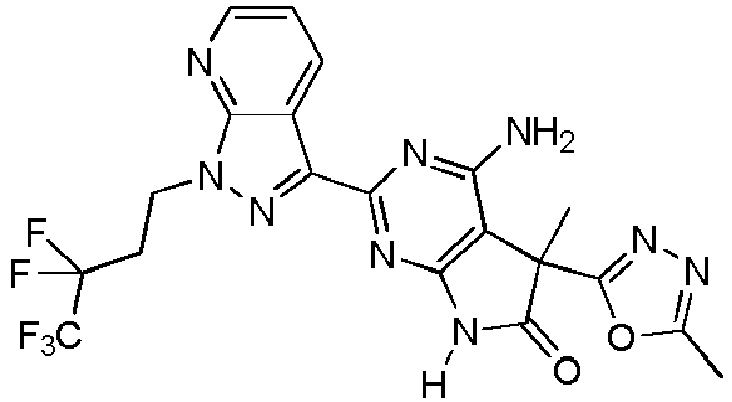
- Die Verbindung nach Anspruch 1, die 4-Amino-5-(1-ethyl-1H-1,2,3-triazol-4-yl)-5-methyl-2-[1-(3,3,4,4,4-pentafluorbutyl)-1H-pyrazolo[3,4-b]pyridin-3-yl]-5,7-dihydro-6H-pyrrolo[2,3-d]pyrimidin-6-on

- Ein pharmazeutisch annehmbares Salz einer Verbindung oder eines Stereoisomers davon nach einem der Ansprüche 12 bis 17.
- Eine Verbindung oder ein pharmazeutisch annehmbares Salz davon nach einem vorhergehenden Anspruch zur Verwendung in der Therapie.
- Eine Verbindung oder ein pharmazeutisch annehmbares Salz davon nach einem der Ansprüche 1 bis 18 zur Verwendung bei der Aktivierung von löslicher Guanylatcyclase.
- Eine Verbindung oder ein pharmazeutisch annehmbares Salz davon nach einem der Ansprüche 1 bis 18 zur Verwendung bei der Behandlung eines oder mehrerer Zustände, ausgewählt aus Herz-Kreislauf-Erkrankung, Endothel-Dysfunktion, diastolischer Dysfunktion, Atherosklerose, Hypertonie, Herzversagen, Lungenhochdruck, pulmonaler arterieller Hypertonie, Angina pectoris, Thrombosen, Restenosen, Myokardinfarkt, Schlaganfall, Herzinsuffizienz, Lungenhypertonie, erektiler Dysfunktion, Bronchialasthma, chronischer Niereninsuffizienz, Diabetes oder Leberzirrhose bei einem Patienten.
- Eine Kombination, umfassend eine Verbindung oder ein pharmazeutisch annehmbares Salz davon nach einem der Ansprüche 1 bis 18 und ein oder mehrere zusätzliche pharmakologische Wirkstoffe.
- Die Kombination nach Anspruch 22, wobei der eine oder die mehreren zusätzliche(n) Wirkstoff(e) ausgewählt ist/sind aus einem Angiotensinkonversionsenzym-Hemmer, einem Angiotensin-II-Rezeptor-Antagonisten, einem Inhibitor der neutralen Endopeptidase, einem Aldosteron-Antagonisten, einem Renin-Hemmer, einem Antagonisten der Endothelin-Rezeptoren, einem Aldosteron-Synthase-Hemmer, einem Phosphodiesterase-5-Hemmer, einem Vasodilator, einem peripheren Vasodilator, einem Kalziumkanalblocker, einem Kaliumkanalaktivator, einen Diuretikum, einem Sympatholytikum, einem Beta-Adrenozeptor-Blocker, einem Alpha-Adrenozeptor-Blocker, einem zentral wirkenden Alpha-Adrenozeptor-Agonisten, einem peripheren Vasodilator, einem Lipidsenker oder einem den Metabolismus verändernden Mittel.
- Die Kombination nach Anspruch 22, wobei der eine oder die mehreren zusätzliche(n) Wirkstoff(e) ausgewählt ist/sind aus einem Angiotensinkonversionsenzym-Hemmer, einem Angiotensin-II-Rezeptor-Antagonisten und einem Diuretikum.
- Die Kombination nach Anspruch 24, wobei der Angiotensinkonversionsenzym-Hemmer Alacepril, Benazepril, Captopril, Ceronapril, Cilazapril, Delapril, Enalapril, Enalaprilat, Fosniopril, Imidapril, Lisinopril, Moveltipril, Perindopril, Quinapril, Ramipril, Spirapril, Temocapril oder Trandolapril ist; der Angiotensin-II-Rezeptor-Antagonist Losartan, Valsartan, Candesartan, Olmesartan oder Telmesartan ist; und das Diuretikum Hydrochlorthiazid ist; und pharmazeutisch annehmbare Salze davon.
- Eine Kombination nach Anspruch 22, wobei der eine oder die mehreren zusätzliche(n) Wirkstoff(e) ausgewählt ist/sind aus einem Beta-Adrenozeptor-Blocker, einem Angiotensinkonversionsenzym-Hemmer, einem Angiotensin-II-Rezeptor-Antagonisten, einem Aldosteron-Antagonisten, einem peripheren Vasodilator und einem Diuretikum.
- Die Kombination nach Anspruch 26, wobei der Beta-Adrenozeptor-Blocker Propranolol, Atenolol, Bisoprolol, Carvedilol, Metoprolol oder Metoprololtartrat ist; der Angiotensinkonversionsenzym-Hemmer Alacepril, Benazepril, Captopril, Ceronapril, Cilazapril, Delapril, Enalapril, Enalaprilat, Fosinopril, Imidapril, Lisinopril, Moveltipril, Perindopril, Quinapril, Ramipril, Spirapril, Temocapril oder Trandolapril ist; der Angiotensin-II-Rezeptor-Antagonist Losartan, Valsartan, Candesartan, Olmesartan oder Telmesartan ist; der periphere Vasodilator Hydralazin ist; und das Diuretikum Hydrochlorthiazid ist; und pharmazeutisch annehmbare Salze davon.
- Die Kombination nach Anspruch 22, wobei der eine oder die mehreren zusätzliche(n) Wirkstoff(e) ausgewählt ist/sind aus einem Beta-Adrenozeptor-Blocker, einem Angiotensinkonversionsenzym-Hemmer, einem Angiotensin-II-Rezeptor-Antagonisten und einem Diuretikum.
- Die Kombination nach Anspruch 28, wobei der Beta-Adrenozeptor-Blocker Propranolol, Atenolol, Bisoprolol, Carvedilol, Metoprolol oder Metoprololtartrat ist; der Angiotensinkonversionsenzym-Hemmer Alacepril, Benazepril, Captopril, Ceronapril, Cilazapril, Delapril, Enalapril, Enalaprilat, Fosinopril, Imidapril, Lisinopril, Moveltipril, Perindopril, Quinapril, Ramipril, Spirapril, Temocapril oder Trandolapril ist; der Angiotensin-II-Rezeptor-Antagonist Losartan, Valsartan, Candesartan, Olmesartan oder Telmesartan ist; der periphere Vasodilator Hydralazin ist; und das Diuretikum Hydrochlorthiazid ist; und pharmazeutisch annehmbare Salze davon.
- Die Kombination nach Anspruch 22, wobei der eine oder die mehreren zusätzliche(n) Wirkstoff(e) ausgewählt ist/sind aus einem Endothelin-Rezeptor-Antagonisten, einem Phosphodiesterase-5-Hemmer, einem Kalziumkanalblocker und einem Diuretikum.
- Die Kombination nach Anspruch 30, wobei der Phosphodiesterase-5-Hemmer Sildenafil, Tadalfil oder Vardenafil ist; der Kalziumkanalblocker Amlodipin, Nifedipin, Veraparmil, Diltiazem, Gallopamil, Niludipin, Nimodipine oder Nicardipin ist; und das Diuretikum Hydrochlorthiazid ist; und pharmazeutisch annehmbare Salze davon.
- Die Kombination nach Anspruch 23, wobei der Angiotensinkonversionsenzym-Hemmer Alacepril, Benazepril, Captopril, Ceronapril, Cilazapril, Delapril, Enalapril, Enalaprilat, Fosinopril, Imidapril, Lisinopril, Moveltipril, Perindopril, Quinapril, Ramipril, Spirapril, Temocapril oder Trandolapril ist; der Angiotensin-II-Rezeptor-Antagonist Losartan, Valsartan, Candesartan, Olmesartan oder Telmesartan ist; der Inhibitor der neutralen Endopeptidase Thiorphan oder Phosphoramidon ist; der Phosphodiesterase-5-Hemmer Sildenafil, Tadalfil oder Vardenafil ist; der periphere Vasodilator Hydralazin ist; der Kalziumkanalblocker Amlodipin, Nifedipin, Veraparmil, Diltiazem, Gallopamil, Niludipin, Nimodipine oder Nicardipin ist; der Kaliumkanalaktivator Nicorandil, Pinacidil, Cromakalim, Minoxidil, Aprilkalim oder Loprazolam ist; das Diuretikum Hydrochlorthiazid ist; der Beta-Adrenozeptor-Blocker Propranolol, Atenolol, Bisoprolol, Carvedilol, Metoprolol oder Metoprololtartrat ist; der Alpha-Adrenozeptor-Blocker Doxazocin, Prazocin oder alpha-Methyldopa ist; der periphere Vasodilator Hydralazin ist; der Lipidsenker Simvastatin, Lovastatin, Atorvastatin, Rosuvastatin, Pravastatin oder Fluvastatin ist; und das den Metabolismus verändernde Mittel Muraglitazar, Glipizid, Metformin oder Rosiglitazon ist; und pharmazeutisch annehmbare Salze davon.
- Eine pharmazeutische Zusammensetzung, umfassend die Verbindung oder ein pharmazeutisch annehmbares Salz davon nach einem der Ansprüche 1 bis 18 und einen pharmazeutisch annehmbaren Träger.
- Die Verwendung der Verbindung oder eines pharmazeutisch annehmbaren Salzes davon nach einem der Ansprüche 1 bis 18 zur Herstellung eines Medikaments, das sich zur Behandlung oder Prävention eines oder mehrerer Zustände, ausgewählt aus Herz-Kreislauf-Erkrankung, Endothel-Dysfunktion, diastolischer Dysfunktion, Atherosklerose, Hypertonie, Herzversagen, Lungenhochdruck, Angina pectoris, Thrombosen, Restenosen, Myokardinfarkt, Schlaganfall, Herzinsuffizienz, Lungenhypertonie, erektiler Dysfunktion, Bronchialasthma, chronischer Niereninsuffizienz, Diabetes oder Leberzirrhose, eignet.
Applications Claiming Priority (2)
| Application Number | Priority Date | Filing Date | Title |
|---|---|---|---|
| US34906510P | 2010-05-27 | 2010-05-27 | |
| PCT/US2011/037718 WO2011149921A1 (en) | 2010-05-27 | 2011-05-24 | Soluble guanylate cyclase activators |
Publications (3)
| Publication Number | Publication Date |
|---|---|
| EP2575473A1 EP2575473A1 (de) | 2013-04-10 |
| EP2575473A4 EP2575473A4 (de) | 2013-11-27 |
| EP2575473B1 true EP2575473B1 (de) | 2016-01-20 |
Family
ID=45004331
Family Applications (1)
| Application Number | Title | Priority Date | Filing Date |
|---|---|---|---|
| EP11787236.6A Active EP2575473B1 (de) | 2010-05-27 | 2011-05-24 | Lösliche guanylat-cyclase-aktivatoren |
Country Status (29)
| Country | Link |
|---|---|
| US (1) | US9365574B2 (de) |
| EP (1) | EP2575473B1 (de) |
| JP (2) | JP5409961B2 (de) |
| KR (2) | KR101499308B1 (de) |
| CN (1) | CN103096718B (de) |
| AR (1) | AR081830A1 (de) |
| AU (1) | AU2011258436B2 (de) |
| BR (1) | BR112012030177B1 (de) |
| CA (1) | CA2800541C (de) |
| CL (1) | CL2012003317A1 (de) |
| CO (1) | CO6640255A2 (de) |
| CR (1) | CR20120599A (de) |
| DO (1) | DOP2012000300A (de) |
| EA (1) | EA023254B1 (de) |
| ES (1) | ES2564503T3 (de) |
| GT (1) | GT201200320A (de) |
| HN (1) | HN2012002555A (de) |
| IL (1) | IL223259A0 (de) |
| MA (1) | MA34330B1 (de) |
| MX (1) | MX2012013774A (de) |
| NI (1) | NI201200172A (de) |
| NZ (1) | NZ603884A (de) |
| PE (1) | PE20130222A1 (de) |
| PH (1) | PH12012502319A1 (de) |
| SG (1) | SG185777A1 (de) |
| TN (1) | TN2012000544A1 (de) |
| TW (1) | TW201202245A (de) |
| UA (1) | UA107112C2 (de) |
| WO (1) | WO2011149921A1 (de) |
Families Citing this family (91)
| Publication number | Priority date | Publication date | Assignee | Title |
|---|---|---|---|---|
| CA2705851C (en) | 2007-11-21 | 2016-11-01 | Oregon Health & Science University | Anti-factor xi monoclonal antibodies and methods of use thereof |
| CA2743864A1 (en) | 2008-11-25 | 2010-06-10 | Merck Sharp & Dohme Corp. | Soluble guanylate cyclase activators |
| AU2009335643B2 (en) | 2008-12-18 | 2014-05-29 | Oregon Health & Science University | Anti-fXI antibodies and methods of use |
| US9284301B2 (en) | 2010-03-25 | 2016-03-15 | Merck Sharp & Dohme Corp. | Soluble guanylate cyclase activators |
| DE102010021637A1 (de) | 2010-05-26 | 2011-12-01 | Bayer Schering Pharma Aktiengesellschaft | Substituierte 5-Fluor-1H-Pyrazolopyridine und ihre Verwendung |
| JP5940062B2 (ja) * | 2010-07-09 | 2016-06-29 | バイエル・インテレクチュアル・プロパティ・ゲゼルシャフト・ミット・ベシュレンクテル・ハフツングBayer Intellectual Property GmbH | 環縮合4−アミノピリミジンおよび可溶性グアニル酸シクラーゼの刺激剤としてのその使用 |
| EP2590979A1 (de) | 2010-07-09 | 2013-05-15 | Bayer Intellectual Property GmbH | Annellierte pyrimidine und triazine und ihre verwendung zur behandlung bzw. prophylaxe von herz-kreislauf-erkrankungen |
| DE102010040233A1 (de) | 2010-09-03 | 2012-03-08 | Bayer Schering Pharma Aktiengesellschaft | Bicyclische Aza-Heterocyclen und ihre Verwendung |
| DE102012200356A1 (de) | 2012-01-11 | 2013-07-11 | Bayer Intellectual Property Gmbh | Substituierte Imidazopyridine und Imidazopyridazine und ihre Verwendung |
| US20140171434A1 (en) * | 2011-01-11 | 2014-06-19 | Bayer Pharma Aktiengessellschaft | Substituted imidazopyridines and imidazopyridazines and the use thereof |
| WO2012143510A1 (de) | 2011-04-21 | 2012-10-26 | Bayer Intellectual Property Gmbh | Fluoralkyl-substituierte pyrazolopyridine und ihre verwendung |
| DE102012200357A1 (de) | 2012-01-11 | 2013-07-11 | Bayer Intellectual Property Gmbh | Fluoralkyl-substituierte Pyrazolopyridine und ihre Verwendung |
| CN103906752B (zh) * | 2011-07-06 | 2016-08-24 | 拜耳知识产权有限责任公司 | 杂芳基取代的吡唑并吡啶及其用作可溶性鸟苷酸环化酶刺激剂的用途 |
| DE102012200354A1 (de) | 2012-01-11 | 2013-07-11 | Bayer Intellectual Property Gmbh | Heteroaryl-substituierte Pyrazolopyridine und ihre Verwendung |
| DE102012200351A1 (de) | 2012-01-11 | 2013-07-11 | Bayer Pharma Aktiengesellschaft | Substituierte annellierte Pyrimidine und ihre Verwendung |
| BR112014005110A2 (pt) | 2011-09-02 | 2017-04-18 | Bayer Ip Gmbh | pirimidinas aneladas substituídas e utilização das mesmas |
| CN102491974B (zh) | 2011-12-12 | 2013-08-07 | 南京药石药物研发有限公司 | 1-(2-氟苄基)-1H-吡唑并[3,4-b]吡啶-3-甲脒盐酸盐的合成方法 |
| DE102012200349A1 (de) * | 2012-01-11 | 2013-07-11 | Bayer Intellectual Property Gmbh | Substituierte annellierte Pyrimidine und Triazine und ihre Verwendung |
| DE102012200352A1 (de) * | 2012-01-11 | 2013-07-11 | Bayer Intellectual Property Gmbh | Substituierte, annellierte Imidazole und Pyrazole und ihre Verwendung |
| DE102012200360A1 (de) | 2012-01-11 | 2013-07-11 | Bayer Intellectual Property Gmbh | Substituierte Triazine und ihre Verwendung |
| JP6140738B2 (ja) * | 2012-03-06 | 2017-05-31 | バイエル・インテレクチュアル・プロパティ・ゲゼルシャフト・ミット・ベシュレンクテル・ハフツングBayer Intellectual Property GmbH | 置換アザ二環およびその使用 |
| US9783614B2 (en) | 2012-05-10 | 2017-10-10 | Bayer Pharma Aktiengesellschaft | Antibodies capable of binding to the coagulation Factor XI and/or its activated form factor Xia and uses thereof |
| US9550750B2 (en) | 2012-10-05 | 2017-01-24 | Merck Sharp & Dohme Corp. | Indoline compounds as aldosterone synthase inhibitors |
| US9624214B2 (en) | 2012-11-05 | 2017-04-18 | Bayer Pharma Aktiengesellschaft | Amino-substituted imidazo[1,2-a]pyridinecarboxamides and their use |
| EP2927231B1 (de) * | 2012-11-30 | 2017-09-20 | Astellas Pharma Inc. | Imidazopyridinverbindung |
| CA2901636A1 (en) | 2013-02-21 | 2014-08-28 | Adverio Pharma Gmbh | Forms of methyl {4,6-diamino-2-[1-(2-fluorobenzyl)-1h-pyrazolo[3,4-b]pyridino-3-yl]pyrimidino-5-yl}methyl carbamate |
| HK1220974A1 (zh) | 2013-03-01 | 2017-05-19 | Bayer Pharma Aktiengesellschaft | 三氟甲基取代的稠合嘧啶类及其用途 |
| WO2014131741A1 (de) | 2013-03-01 | 2014-09-04 | Bayer Pharma Aktiengesellschaft | Benzyl-substituierte pyrazolopyridine und ihre verwendung |
| ES2911276T3 (es) | 2013-03-15 | 2022-05-18 | Cyclerion Therapeutics Inc | Estimuladores de sGC |
| US9776997B2 (en) | 2013-06-04 | 2017-10-03 | Bayer Pharma Aktiengesellschaft | 3-aryl-substituted imidazo[1,2-A]pyridines and their use |
| AP2016008970A0 (en) | 2013-07-10 | 2016-01-31 | Bayer Pharma AG | Benzyl-1h-pyrazolo[3,4-b]pyridines and use thereof |
| EP3079700B1 (de) | 2013-12-11 | 2020-11-25 | Merck Sharp & Dohme Corp. | Lösliche guanylat-cyclase-aktivatoren |
| JP2016540017A (ja) | 2013-12-11 | 2016-12-22 | アイアンウッド ファーマシューティカルズ インコーポレイテッド | sGC刺激物質 |
| WO2015088885A1 (en) * | 2013-12-11 | 2015-06-18 | Merck Sharp & Dohme Corp. | Soluble guanylate cyclase activators |
| WO2015106268A1 (en) | 2014-01-13 | 2015-07-16 | Ironwood Pharmaceuticals, Inc. | USE OF sGC STIMULATORS FOR THE TREATMENT OF NEUROMUSCULAR DISORDERS |
| CN106459090A (zh) | 2014-02-19 | 2017-02-22 | 拜耳制药股份公司 | 3‑(嘧啶‑2‑基)咪唑并[1,2‑a]吡啶 |
| US9796733B2 (en) | 2014-06-04 | 2017-10-24 | Merck Sharp & Dohme Corp. | Imidazo-pyrazine derivatives useful as soluble guanylate cyclase activators |
| EP3186251A1 (de) | 2014-08-29 | 2017-07-05 | Bayer Pharma Aktiengesellschaft | Substituierte annellierte pyrimidine und ihre verwendung |
| WO2016030354A1 (de) | 2014-08-29 | 2016-03-03 | Bayer Pharma Aktiengesellschaft | Amino-substituierte annellierte pyrimidine und ihre verwendung |
| US10844064B2 (en) | 2014-09-17 | 2020-11-24 | Cyclerion Therapeutics, Inc. | sGC stimulators |
| EP3194382B1 (de) | 2014-09-17 | 2021-09-08 | Cyclerion Therapeutics, Inc. | Pyrazolderivate als sgc-stimulatoren |
| WO2016044445A2 (en) | 2014-09-17 | 2016-03-24 | Ironwood Pharmaceuticals, Inc. | sGC STIMULATORS |
| TW201625635A (zh) * | 2014-11-21 | 2016-07-16 | 默沙東藥廠 | 作為可溶性鳥苷酸環化酶活化劑之三唑并吡基衍生物 |
| WO2016087343A1 (de) | 2014-12-02 | 2016-06-09 | Bayer Pharma Aktiengesellschaft | Heteroaryl-substituierte imidazo[1,2-a]pyridine und ihre verwendung |
| TN2017000465A1 (en) | 2015-05-06 | 2019-04-12 | Bayer Pharma AG | The use of sgc stimulators, sgc activators, alone and combinations with pde5 inhibitors for the treatment of digital ulcers (du) concomitant to systemic sclerosis (ssc) |
| US10245264B2 (en) | 2015-05-27 | 2019-04-02 | Merck Sharp & Dohme Corp. | Substituted imidazo[1,2-a]pyrazines as soluble guanylate cyclase activators |
| EP3310782B1 (de) * | 2015-05-28 | 2021-12-01 | Merck Sharp & Dohme Corp. | Als lösliche guanylat-cyclase-aktivatoren geeignete imidazopyrazinylderivate |
| LT3325013T (lt) | 2015-07-23 | 2020-11-10 | Bayer Pharma Aktiengesellschaft | Tirpios guanilatciklazės (sgc) stimuliatoriai/aktyvatoriai derinyje su nep inhibitoriumi ir (arba) angiotenzino aii antagonistu ir jų naudojimas |
| KR20180094965A (ko) | 2015-12-14 | 2018-08-24 | 아이언우드 파마슈티컬스, 인코포레이티드 | 위장 괄약근 기능장애의 치료를 위한 sGC 자극제의 용도 |
| WO2017107052A1 (en) | 2015-12-22 | 2017-06-29 | Merck Sharp & Dohme Corp. | Soluble guanylate cyclase stimulators |
| WO2017121693A1 (de) | 2016-01-15 | 2017-07-20 | Bayer Pharma Aktiengesellschaft | Substituierte thiazol- und thiadiazolamide und ihre verwendung |
| WO2017121692A1 (de) | 2016-01-15 | 2017-07-20 | Bayer Pharma Aktiengesellschaft | Substituierte sulfamide und ihre verwendung |
| WO2017121700A1 (de) | 2016-01-15 | 2017-07-20 | Bayer Pharma Aktiengesellschaft | 1,3-disubstituierte 1h-pyrazolo[3,4-b]pyridin- derivate und ihre verwendung als stimulatoren der löslichen guanylatcyclase |
| WO2017197555A1 (en) * | 2016-05-16 | 2017-11-23 | Merck Sharp & Dohme Corp. | Fused pyrazine derivatives useful as soluble guanylate cyclase stimulators |
| US10925876B2 (en) | 2016-05-18 | 2021-02-23 | Merck Sharp & Dohme Corp. | Methods for using triazolo-pyrazinyl soluble guanylate cyclase activators in fibrotic disorders |
| KR102513343B1 (ko) | 2016-07-07 | 2023-03-22 | 사이클리온 테라퓨틱스, 인크. | sGC 자극제의 인 전구약물 |
| EA039753B1 (ru) | 2016-07-07 | 2022-03-10 | Сайклерион Терапьютикс, Инк. | ТВЕРДЫЕ ФОРМЫ СТИМУЛЯТОРА sGC |
| IL264955B (en) | 2016-09-02 | 2022-06-01 | Ironwood Pharmaceuticals Inc | Fused bicyclic sgc stimulators |
| ES2985316T3 (es) | 2016-10-11 | 2024-11-05 | Bayer Pharma AG | Combinación que contiene el estimulador sGC vericuguat y el antagonista de los receptores de corticoides minerales finerenona |
| US11331308B2 (en) | 2016-10-11 | 2022-05-17 | Bayer Pharma Aktiengesellschaft | Combination containing sGC activators and mineralocorticoid receptor antagonists |
| AU2017356887B2 (en) | 2016-11-08 | 2022-06-30 | Cyclerion Therapeutics, Inc. | sGC stimulators |
| EP3538096B1 (de) | 2016-11-08 | 2024-02-28 | Tisento Therapeutics Inc. | Behandlung von zns-erkrankungen mit sgc-stimulatoren |
| WO2018111795A2 (en) | 2016-12-13 | 2018-06-21 | Ironwood Pharmaceuticals, Inc. | Use of sgc stimulators for the treatment of esophageal motility disorders |
| KR102615821B1 (ko) * | 2017-04-11 | 2023-12-21 | 선샤인 레이크 파르마 컴퍼니 리미티드 | 불소-치환된 인다졸 화합물 및 이의 용도 |
| WO2019081456A1 (en) | 2017-10-24 | 2019-05-02 | Bayer Aktiengesellschaft | USE OF SGC ACTIVATORS AND STIMULATORS COMPRISING A BETA2 SUBUNIT |
| EP3498298A1 (de) | 2017-12-15 | 2019-06-19 | Bayer AG | Verwendung von sgc-stimulatoren und sgc-aktivatoren alleine oder in kombination mit pde5-inhibitoren zur behandlung von knochenerkrankungen einschliesslich osteogenesis imperfecta (oi) |
| JP7337067B2 (ja) | 2017-12-19 | 2023-09-01 | サイクレリオン・セラピューティクス,インコーポレーテッド | sGC刺激薬 |
| CN111836812A (zh) | 2018-03-07 | 2020-10-27 | 塞科里昂医疗股份有限公司 | sGC刺激剂的晶型 |
| CN112055584A (zh) | 2018-04-30 | 2020-12-08 | 拜耳公司 | sGC活化剂和sGC刺激剂用于治疗认知障碍的用途 |
| MA52616A (fr) | 2018-05-15 | 2021-03-24 | Bayer Ag | Benzamides à substitution 1,3-thiazol-2-yl pour le traitement de maladies associées à la sensibilisation de fibres nerveuses |
| US11508483B2 (en) | 2018-05-30 | 2022-11-22 | Adverio Pharma Gmbh | Method of identifying a subgroup of patients suffering from dcSSc which benefits from a treatment with sGC stimulators and sGC activators in a higher degree than a control group |
| WO2019233994A1 (en) | 2018-06-04 | 2019-12-12 | Exscientia Ltd | Pyrazolopyrimidine compounds as adenosine receptor antagonists |
| US12220414B2 (en) | 2018-07-11 | 2025-02-11 | Tisento Therapeutics Inc. | Use of sGC stimulators for the treatment of mitochondrial disorders |
| EP3887376A1 (de) | 2018-11-28 | 2021-10-06 | Topadur Pharma AG | Neuartige lösliche guanylat-cyclase-aktivatoren und phosphodiesteraseinhibitoren mit dualem wirkungsmechanismus und verwendungen davon |
| WO2020148379A1 (en) | 2019-01-17 | 2020-07-23 | Bayer Aktiengesellschaft | Methods to determine whether a subject is suitable of being treated with an agonist of soluble guanylyl cyclase (sgc) |
| WO2020164008A1 (en) | 2019-02-13 | 2020-08-20 | Bayer Aktiengesellschaft | Process for the preparation of porous microparticles |
| US12086719B2 (en) * | 2019-10-11 | 2024-09-10 | Royal Bank Of Canada | System and method of machine learning using embedding networks |
| US20230130739A1 (en) | 2020-03-26 | 2023-04-27 | Cyclerion Therapeutics, Inc. | DEUTERATED sGC STIMULATORS |
| WO2021202546A1 (en) | 2020-03-31 | 2021-10-07 | Cyclerion Therapeutics, Inc. | Early drug interventions to reduce covid-19 related respiratory distress, need for ventilator assistance and death |
| CN111467350B (zh) * | 2020-04-20 | 2021-03-19 | 黑龙江中医药大学 | 一种治疗乳腺炎的药物及其制备方法 |
| WO2021245192A1 (en) | 2020-06-04 | 2021-12-09 | Topadur Pharma Ag | Novel dual mode of action soluble guanylate cyclase activators and phosphodiesterase inhibitors and uses thereof |
| EP4011873A1 (de) | 2020-12-10 | 2022-06-15 | Bayer Aktiengesellschaft | Substituierte pyrazolo-piperidin-carbonsäuren |
| WO2022225902A1 (en) | 2021-04-20 | 2022-10-27 | Cyclerion Therapeutics, Inc. | Treatment of cns diseases with sgc stimulators |
| MX2023012398A (es) | 2021-04-20 | 2024-03-13 | Tisento Therapeutics Inc | Estimuladores de guanilil ciclasa soluble (sgc). |
| WO2022265984A1 (en) | 2021-06-14 | 2022-12-22 | Curtails Llc | Use of nep inhibitors for the treatment of gastrointestinal sphincter disorders |
| WO2023018795A1 (en) | 2021-08-11 | 2023-02-16 | Curtails Llc | Nep inhibitors for the treatment of laminitis |
| EP4605394A1 (de) | 2022-10-18 | 2025-08-27 | Tisento Therapeutics Inc. | Pyrimidin-sgc-stimulatoren |
| EP4605080A1 (de) | 2022-10-18 | 2025-08-27 | Tisento Therapeutics Inc. | Behandlung von mitochondrialen erkrankungen mit sgc-stimulatoren |
| JP2026521484A (ja) * | 2023-06-09 | 2026-06-30 | ハイスーク ファーマシューティカル グループ カンパニー リミテッド | ピロロ[2,3-d]ピリミジン-4-アミン誘導体及びその医薬学的な応用 |
| EP4731209A1 (de) * | 2023-06-26 | 2026-04-29 | Merck Sharp & Dohme LLC | Verfahren zur herstellung von löslichen guanylatcyclasestimulatoren |
| WO2025016393A1 (zh) * | 2023-07-17 | 2025-01-23 | 海思科医药集团股份有限公司 | 一种4-氨基-吡咯并[2,3-d]嘧啶-6-酮衍生物及其在医药上的应用 |
Family Cites Families (54)
| Publication number | Priority date | Publication date | Assignee | Title |
|---|---|---|---|---|
| GB876526A (en) | 1957-12-24 | 1961-09-06 | Geigy Ag J R | Process for the production of new aminobenzoic acid derivatives and their use in pest control |
| DE4410997A1 (de) * | 1994-03-30 | 1995-10-26 | Isis Pharma Gmbh | Pharmazeutische Zubereitungen und Arzneistoffe zur Prävention und Behandlung endothelialer Dysfunktionen |
| US5585381A (en) | 1994-06-01 | 1996-12-17 | Kureha Chemical Industry Co., Ltd. | Pyrimidine derivatives and pharmaceutical composition |
| CN1082949C (zh) * | 1995-06-06 | 2002-04-17 | 辉瑞大药厂 | 2,4-二氯吡啶类化合物转化为2-芳氧基-4-氯吡啶类化合物的方法 |
| ATE431347T1 (de) | 1996-10-14 | 2009-05-15 | Bayer Healthcare Ag | Neue heterocyclylmethyl-substituierte pyrazolderivate und ihre verwendung in der behandlung von herz-kreislauf-erkrankungen |
| DE19744027A1 (de) | 1997-10-06 | 1999-04-08 | Hoechst Marion Roussel De Gmbh | Substituierte Pyrazolo[3,4-b]pyridine, ihre Herstellung und Verwendung in Arzneimitteln |
| DE19744026A1 (de) | 1997-10-06 | 1999-04-08 | Hoechst Marion Roussel De Gmbh | Pyrazol-Derivate, ihre Herstellung und ihre Verwendung in Arzneimitteln |
| US6610497B1 (en) | 1997-12-11 | 2003-08-26 | Millennium Pharmaceuticals, Inc. | Angiotensin converting enzyme homolog and therapeutic and diagnostic uses therefor |
| DE19756388A1 (de) | 1997-12-18 | 1999-06-24 | Hoechst Marion Roussel De Gmbh | Substituierte 2-Aryl-4-amino-chinazoline |
| DE19834044A1 (de) * | 1998-07-29 | 2000-02-03 | Bayer Ag | Neue substituierte Pyrazolderivate |
| DE19836697A1 (de) | 1998-08-13 | 2000-02-17 | Hoechst Marion Roussel De Gmbh | Substituierte 4-Amino-2-aryl-pyrimidine, ihre Herstellung, ihre Verwendung und sie enthaltende pharmazeutische Präparate |
| GB9824310D0 (en) | 1998-11-05 | 1998-12-30 | Univ London | Activators of soluble guanylate cyclase |
| DE19904710A1 (de) | 1999-02-05 | 2000-08-10 | Aventis Pharma Gmbh | Substituierte 4-Amino-2-aryl-tetrahydrochinazoline, ihre Herstellung, ihre Verwendung und sie enthaltende pharmazeutische Präparate |
| US20010044445A1 (en) | 1999-04-08 | 2001-11-22 | Bamaung Nwe Y. | Azole inhibitors of cytokine production |
| DE19943636A1 (de) | 1999-09-13 | 2001-03-15 | Bayer Ag | Neuartige Dicarbonsäurederivate mit pharmazeutischen Eigenschaften |
| DE10021069A1 (de) | 2000-04-28 | 2001-10-31 | Bayer Ag | Substituiertes Pyrazolderivat |
| DE10054278A1 (de) | 2000-11-02 | 2002-05-08 | Bayer Ag | Verwendung von Stimulatoren der löslichen Guanylatcyclase zur Behandlung von Osteoporose |
| AR031176A1 (es) | 2000-11-22 | 2003-09-10 | Bayer Ag | Nuevos derivados de pirazolpiridina sustituidos con piridina |
| DE10057751A1 (de) | 2000-11-22 | 2002-05-23 | Bayer Ag | Neue Carbamat-substituierte Pyrazolopyridinderivate |
| DE10057754A1 (de) | 2000-11-22 | 2002-05-23 | Bayer Ag | Neue Sulfonamid-substituierte Pyrazolopyridinderivate |
| AU2002221827A1 (en) * | 2000-11-22 | 2002-06-03 | Bayer Aktiengesellschaft | Novel lactame-substituted pyrazolopyridine derivatives |
| SK11422003A3 (sk) | 2001-03-15 | 2004-04-06 | Basf Aktiengesellschaft | 5-Fenylpyrimidíny, spôsoby a medziprodukty na ich prípravu a ich použitie pri ničení škodlivých húb |
| DE10122894A1 (de) | 2001-05-11 | 2002-11-14 | Bayer Ag | Neue Sulfonat-substituierte Pyrazolopyridinderivate |
| WO2003035005A2 (en) | 2001-10-26 | 2003-05-01 | University Of Connecticut | Heteroindanes: a new class of potent cannabimimetic ligands |
| CN1324015C (zh) | 2002-02-13 | 2007-07-04 | 霍夫曼-拉罗奇有限公司 | 吡啶-和嘧啶-衍生物 |
| US20040048866A1 (en) * | 2002-03-08 | 2004-03-11 | Teodozyj Kolasa | Indazole derivatives that are activators of soluble guanylate cyclase |
| DE10220570A1 (de) | 2002-05-08 | 2003-11-20 | Bayer Ag | Carbamat-substituierte Pyrazolopyridine |
| DE10222550A1 (de) | 2002-05-17 | 2003-11-27 | Bayer Ag | Substituierte Benzyl-pyrazolopyridine |
| DE10232571A1 (de) | 2002-07-18 | 2004-02-05 | Bayer Ag | 4-Aminosubstituierte Pyrimidinderivate |
| AU2003294275A1 (en) | 2002-11-21 | 2004-06-18 | New York Blood Center | Compounds for inhibition of hiv infection by blocking hiv entry |
| US20040121994A1 (en) | 2002-12-20 | 2004-06-24 | Anderson Steven N. | Novel amides that activate soluble guanylate cyclase |
| US20050038183A1 (en) | 2003-08-14 | 2005-02-17 | Dongchan Ahn | Silicones having improved surface properties and curable silicone compositions for preparing the silicones |
| DE10351903A1 (de) | 2003-11-06 | 2005-06-09 | Bayer Healthcare Ag | Neue Kombination |
| EP1616965A1 (de) * | 2004-07-16 | 2006-01-18 | AXXAM S.r.l. | Verfahren und Assays zum Nachweis von Guanylate Cyclase Aktivität |
| CN100396678C (zh) | 2004-11-16 | 2008-06-25 | 财团法人工业技术研究院 | 1-苯甲基-3-(5’-羟甲基-2’-呋喃基)吲唑的吲哚类似物的合成及用途 |
| EP1893581B1 (de) | 2005-06-15 | 2010-01-27 | Pfizer Limited | Substituierte arylpyrazole zur verwendung gegen parasiten |
| WO2006134459A1 (en) | 2005-06-15 | 2006-12-21 | Pfizer Limited | Substituted arylpyrazoles |
| KR101363278B1 (ko) | 2005-06-27 | 2014-02-21 | 엑셀리시스 페이턴트 컴퍼니 엘엘씨 | 이미다졸계 lxr 변조제 |
| DE102005031575A1 (de) | 2005-07-06 | 2007-01-11 | Bayer Healthcare Ag | Verwendung von Aktivatoren der löslichen Guanylatzyklase zur Förderung der Wundheilung |
| EP1906957A1 (de) | 2005-07-18 | 2008-04-09 | Bayer HealthCare AG | Neue verwendung von aktivatoren und stimulatoren von löslicher guanylatcyclase zur prävention oder behandlung von nierenerkrankungen |
| DE102006043443A1 (de) | 2006-09-15 | 2008-03-27 | Bayer Healthcare Ag | Neue aza-bicyclische Verbindungen und ihre Verwendung |
| JP2010505794A (ja) | 2006-10-03 | 2010-02-25 | ノイロサーチ アクティーゼルスカブ | カリウムチャネル調節剤として有用なインダゾリル誘導体 |
| WO2008045484A1 (en) | 2006-10-10 | 2008-04-17 | Amgen Inc. | N-aryl pyrazole compounds for use against diabetes |
| EP1921067A1 (de) | 2006-11-08 | 2008-05-14 | Bayer Schering Pharma Aktiengesellschaft | Indol- und Indazolderivate als Entzündungshemmer |
| DE102006054757A1 (de) | 2006-11-21 | 2008-05-29 | Bayer Healthcare Ag | Neue aza-bicyclische Verbindungen und ihre Verwendung |
| WO2009068652A1 (en) | 2007-11-30 | 2009-06-04 | Smithkline Beecham Corporation | 2, 6-disubstituted pyridines and 2, 4-disubstituted pyrimidines as soluble guanylate cyclase activators |
| WO2010015652A2 (en) | 2008-08-07 | 2010-02-11 | Smithkline Beecham Corporation | Thiazole compounds as activators of soluble guanylate cyclase |
| CA2743864A1 (en) | 2008-11-25 | 2010-06-10 | Merck Sharp & Dohme Corp. | Soluble guanylate cyclase activators |
| DE102009046115A1 (de) | 2009-10-28 | 2011-09-08 | Bayer Schering Pharma Aktiengesellschaft | Substituierte 3-Phenylpropansäuren und ihre Verwendung |
| RU2576662C2 (ru) | 2010-03-18 | 2016-03-10 | Энститю Пастер Корея | Противоинфекционные соединения |
| DE102010021637A1 (de) | 2010-05-26 | 2011-12-01 | Bayer Schering Pharma Aktiengesellschaft | Substituierte 5-Fluor-1H-Pyrazolopyridine und ihre Verwendung |
| EP2590979A1 (de) * | 2010-07-09 | 2013-05-15 | Bayer Intellectual Property GmbH | Annellierte pyrimidine und triazine und ihre verwendung zur behandlung bzw. prophylaxe von herz-kreislauf-erkrankungen |
| JP5940062B2 (ja) * | 2010-07-09 | 2016-06-29 | バイエル・インテレクチュアル・プロパティ・ゲゼルシャフト・ミット・ベシュレンクテル・ハフツングBayer Intellectual Property GmbH | 環縮合4−アミノピリミジンおよび可溶性グアニル酸シクラーゼの刺激剤としてのその使用 |
| DE102010040233A1 (de) * | 2010-09-03 | 2012-03-08 | Bayer Schering Pharma Aktiengesellschaft | Bicyclische Aza-Heterocyclen und ihre Verwendung |
-
2011
- 2011-05-24 UA UAA201214964A patent/UA107112C2/ru unknown
- 2011-05-24 CA CA2800541A patent/CA2800541C/en not_active Expired - Fee Related
- 2011-05-24 AU AU2011258436A patent/AU2011258436B2/en not_active Ceased
- 2011-05-24 ES ES11787236T patent/ES2564503T3/es active Active
- 2011-05-24 US US13/699,046 patent/US9365574B2/en active Active
- 2011-05-24 CN CN201180036555.6A patent/CN103096718B/zh not_active Expired - Fee Related
- 2011-05-24 MA MA35482A patent/MA34330B1/fr unknown
- 2011-05-24 PE PE2012002232A patent/PE20130222A1/es not_active Application Discontinuation
- 2011-05-24 KR KR1020127033846A patent/KR101499308B1/ko not_active Expired - Fee Related
- 2011-05-24 PH PH1/2012/502319A patent/PH12012502319A1/en unknown
- 2011-05-24 WO PCT/US2011/037718 patent/WO2011149921A1/en not_active Ceased
- 2011-05-24 EA EA201291348A patent/EA023254B1/ru not_active IP Right Cessation
- 2011-05-24 SG SG2012087169A patent/SG185777A1/en unknown
- 2011-05-24 JP JP2013512149A patent/JP5409961B2/ja not_active Expired - Fee Related
- 2011-05-24 KR KR1020137034895A patent/KR20140019004A/ko not_active Withdrawn
- 2011-05-24 MX MX2012013774A patent/MX2012013774A/es active IP Right Grant
- 2011-05-24 NZ NZ603884A patent/NZ603884A/en not_active IP Right Cessation
- 2011-05-24 EP EP11787236.6A patent/EP2575473B1/de active Active
- 2011-05-24 BR BR112012030177A patent/BR112012030177B1/pt not_active IP Right Cessation
- 2011-05-26 TW TW100118580A patent/TW201202245A/zh unknown
- 2011-05-27 AR ARP110101824A patent/AR081830A1/es unknown
-
2012
- 2012-11-21 TN TNP2012000544A patent/TN2012000544A1/en unknown
- 2012-11-26 HN HN2012002555A patent/HN2012002555A/es unknown
- 2012-11-26 IL IL223259A patent/IL223259A0/en unknown
- 2012-11-26 NI NI201200172A patent/NI201200172A/es unknown
- 2012-11-27 DO DO2012000300A patent/DOP2012000300A/es unknown
- 2012-11-27 CR CR20120599A patent/CR20120599A/es unknown
- 2012-11-27 GT GT201200320A patent/GT201200320A/es unknown
- 2012-11-27 CL CL2012003317A patent/CL2012003317A1/es unknown
- 2012-11-27 CO CO12215103A patent/CO6640255A2/es active IP Right Grant
-
2013
- 2013-11-05 JP JP2013229137A patent/JP5789288B2/ja not_active Expired - Fee Related
Also Published As
Similar Documents
| Publication | Publication Date | Title |
|---|---|---|
| US9365574B2 (en) | Soluble guanylate cyclase activators | |
| EP2373317B1 (de) | 4-Amino-5,7-Dihydro-6H-Pyrrolo[2,3-d]Pyrimidin-6-on oder 4-Amino-5,8-Dihydropyrido[2,3-d]Pyrimidin-7(6H)-on Derivate als Aktivatoren der löslichen Guanylatcyclase zur Behandlung von Herz-Kreislauf-Erkrankungen | |
| US9783552B2 (en) | Soluble guanylate cyclase activators | |
| US9611278B2 (en) | Soluble guanylate cyclase activators | |
| JP4056015B2 (ja) | PDE−5抑制活性を有する5,7−ジアミノピラゾロ[4,3−d]ピリミジン | |
| KR102021159B1 (ko) | 트리시클릭 헤테로시클릭 화합물 및 jak 저해제 | |
| JP2012509877A5 (de) |
Legal Events
| Date | Code | Title | Description |
|---|---|---|---|
| PUAI | Public reference made under article 153(3) epc to a published international application that has entered the european phase |
Free format text: ORIGINAL CODE: 0009012 |
|
| 17P | Request for examination filed |
Effective date: 20130102 |
|
| AK | Designated contracting states |
Kind code of ref document: A1 Designated state(s): AL AT BE BG CH CY CZ DE DK EE ES FI FR GB GR HR HU IE IS IT LI LT LU LV MC MK MT NL NO PL PT RO RS SE SI SK SM TR |
|
| AX | Request for extension of the european patent |
Extension state: BA ME |
|
| REG | Reference to a national code |
Ref country code: HK Ref legal event code: DE Ref document number: 1177874 Country of ref document: HK |
|
| A4 | Supplementary search report drawn up and despatched |
Effective date: 20131024 |
|
| RIC1 | Information provided on ipc code assigned before grant |
Ipc: A01N 43/90 20060101AFI20131018BHEP Ipc: A61K 31/519 20060101ALI20131018BHEP |
|
| GRAP | Despatch of communication of intention to grant a patent |
Free format text: ORIGINAL CODE: EPIDOSNIGR1 |
|
| INTG | Intention to grant announced |
Effective date: 20150217 |
|
| GRAS | Grant fee paid |
Free format text: ORIGINAL CODE: EPIDOSNIGR3 |
|
| GRAP | Despatch of communication of intention to grant a patent |
Free format text: ORIGINAL CODE: EPIDOSNIGR1 |
|
| INTG | Intention to grant announced |
Effective date: 20150728 |
|
| GRAA | (expected) grant |
Free format text: ORIGINAL CODE: 0009210 |
|
| AK | Designated contracting states |
Kind code of ref document: B1 Designated state(s): AL AT BE BG CH CY CZ DE DK EE ES FI FR GB GR HR HU IE IS IT LI LT LU LV MC MK MT NL NO PL PT RO RS SE SI SK SM TR |
|
| AX | Request for extension of the european patent |
Extension state: BA ME |
|
| REG | Reference to a national code |
Ref country code: GB Ref legal event code: FG4D Ref country code: NL Ref legal event code: FP |
|
| REG | Reference to a national code |
Ref country code: CH Ref legal event code: EP |
|
| REG | Reference to a national code |
Ref country code: IE Ref legal event code: FG4D |
|
| REG | Reference to a national code |
Ref country code: AT Ref legal event code: REF Ref document number: 771273 Country of ref document: AT Kind code of ref document: T Effective date: 20160215 |
|
| REG | Reference to a national code |
Ref country code: CH Ref legal event code: NV Representative=s name: MARKS AND CLERK (LUXEMBOURG) LLP, CH |
|
| REG | Reference to a national code |
Ref country code: FR Ref legal event code: PLFP Year of fee payment: 6 |
|
| REG | Reference to a national code |
Ref country code: DE Ref legal event code: R096 Ref document number: 602011022856 Country of ref document: DE |
|
| REG | Reference to a national code |
Ref country code: ES Ref legal event code: FG2A Ref document number: 2564503 Country of ref document: ES Kind code of ref document: T3 Effective date: 20160323 |
|
| REG | Reference to a national code |
Ref country code: LT Ref legal event code: MG4D |
|
| REG | Reference to a national code |
Ref country code: AT Ref legal event code: MK05 Ref document number: 771273 Country of ref document: AT Kind code of ref document: T Effective date: 20160120 |
|
| PG25 | Lapsed in a contracting state [announced via postgrant information from national office to epo] |
Ref country code: HR Free format text: LAPSE BECAUSE OF FAILURE TO SUBMIT A TRANSLATION OF THE DESCRIPTION OR TO PAY THE FEE WITHIN THE PRESCRIBED TIME-LIMIT Effective date: 20160120 Ref country code: GR Free format text: LAPSE BECAUSE OF FAILURE TO SUBMIT A TRANSLATION OF THE DESCRIPTION OR TO PAY THE FEE WITHIN THE PRESCRIBED TIME-LIMIT Effective date: 20160421 Ref country code: FI Free format text: LAPSE BECAUSE OF FAILURE TO SUBMIT A TRANSLATION OF THE DESCRIPTION OR TO PAY THE FEE WITHIN THE PRESCRIBED TIME-LIMIT Effective date: 20160120 Ref country code: NO Free format text: LAPSE BECAUSE OF FAILURE TO SUBMIT A TRANSLATION OF THE DESCRIPTION OR TO PAY THE FEE WITHIN THE PRESCRIBED TIME-LIMIT Effective date: 20160420 |
|
| PG25 | Lapsed in a contracting state [announced via postgrant information from national office to epo] |
Ref country code: IS Free format text: LAPSE BECAUSE OF FAILURE TO SUBMIT A TRANSLATION OF THE DESCRIPTION OR TO PAY THE FEE WITHIN THE PRESCRIBED TIME-LIMIT Effective date: 20160520 Ref country code: RS Free format text: LAPSE BECAUSE OF FAILURE TO SUBMIT A TRANSLATION OF THE DESCRIPTION OR TO PAY THE FEE WITHIN THE PRESCRIBED TIME-LIMIT Effective date: 20160120 Ref country code: BE Free format text: LAPSE BECAUSE OF NON-PAYMENT OF DUE FEES Effective date: 20160531 Ref country code: AT Free format text: LAPSE BECAUSE OF FAILURE TO SUBMIT A TRANSLATION OF THE DESCRIPTION OR TO PAY THE FEE WITHIN THE PRESCRIBED TIME-LIMIT Effective date: 20160120 Ref country code: SE Free format text: LAPSE BECAUSE OF FAILURE TO SUBMIT A TRANSLATION OF THE DESCRIPTION OR TO PAY THE FEE WITHIN THE PRESCRIBED TIME-LIMIT Effective date: 20160120 Ref country code: LV Free format text: LAPSE BECAUSE OF FAILURE TO SUBMIT A TRANSLATION OF THE DESCRIPTION OR TO PAY THE FEE WITHIN THE PRESCRIBED TIME-LIMIT Effective date: 20160120 Ref country code: LT Free format text: LAPSE BECAUSE OF FAILURE TO SUBMIT A TRANSLATION OF THE DESCRIPTION OR TO PAY THE FEE WITHIN THE PRESCRIBED TIME-LIMIT Effective date: 20160120 Ref country code: PT Free format text: LAPSE BECAUSE OF FAILURE TO SUBMIT A TRANSLATION OF THE DESCRIPTION OR TO PAY THE FEE WITHIN THE PRESCRIBED TIME-LIMIT Effective date: 20160520 Ref country code: PL Free format text: LAPSE BECAUSE OF FAILURE TO SUBMIT A TRANSLATION OF THE DESCRIPTION OR TO PAY THE FEE WITHIN THE PRESCRIBED TIME-LIMIT Effective date: 20160120 |
|
| REG | Reference to a national code |
Ref country code: DE Ref legal event code: R097 Ref document number: 602011022856 Country of ref document: DE |
|
| PG25 | Lapsed in a contracting state [announced via postgrant information from national office to epo] |
Ref country code: EE Free format text: LAPSE BECAUSE OF FAILURE TO SUBMIT A TRANSLATION OF THE DESCRIPTION OR TO PAY THE FEE WITHIN THE PRESCRIBED TIME-LIMIT Effective date: 20160120 Ref country code: DK Free format text: LAPSE BECAUSE OF FAILURE TO SUBMIT A TRANSLATION OF THE DESCRIPTION OR TO PAY THE FEE WITHIN THE PRESCRIBED TIME-LIMIT Effective date: 20160120 |
|
| PLBE | No opposition filed within time limit |
Free format text: ORIGINAL CODE: 0009261 |
|
| STAA | Information on the status of an ep patent application or granted ep patent |
Free format text: STATUS: NO OPPOSITION FILED WITHIN TIME LIMIT |
|
| PG25 | Lapsed in a contracting state [announced via postgrant information from national office to epo] |
Ref country code: CZ Free format text: LAPSE BECAUSE OF FAILURE TO SUBMIT A TRANSLATION OF THE DESCRIPTION OR TO PAY THE FEE WITHIN THE PRESCRIBED TIME-LIMIT Effective date: 20160120 Ref country code: SK Free format text: LAPSE BECAUSE OF FAILURE TO SUBMIT A TRANSLATION OF THE DESCRIPTION OR TO PAY THE FEE WITHIN THE PRESCRIBED TIME-LIMIT Effective date: 20160120 Ref country code: RO Free format text: LAPSE BECAUSE OF FAILURE TO SUBMIT A TRANSLATION OF THE DESCRIPTION OR TO PAY THE FEE WITHIN THE PRESCRIBED TIME-LIMIT Effective date: 20160120 Ref country code: SM Free format text: LAPSE BECAUSE OF FAILURE TO SUBMIT A TRANSLATION OF THE DESCRIPTION OR TO PAY THE FEE WITHIN THE PRESCRIBED TIME-LIMIT Effective date: 20160120 |
|
| 26N | No opposition filed |
Effective date: 20161021 |
|
| PG25 | Lapsed in a contracting state [announced via postgrant information from national office to epo] |
Ref country code: BE Free format text: LAPSE BECAUSE OF FAILURE TO SUBMIT A TRANSLATION OF THE DESCRIPTION OR TO PAY THE FEE WITHIN THE PRESCRIBED TIME-LIMIT Effective date: 20160120 Ref country code: LU Free format text: LAPSE BECAUSE OF FAILURE TO SUBMIT A TRANSLATION OF THE DESCRIPTION OR TO PAY THE FEE WITHIN THE PRESCRIBED TIME-LIMIT Effective date: 20160524 |
|
| REG | Reference to a national code |
Ref country code: IE Ref legal event code: MM4A |
|
| PG25 | Lapsed in a contracting state [announced via postgrant information from national office to epo] |
Ref country code: BG Free format text: LAPSE BECAUSE OF FAILURE TO SUBMIT A TRANSLATION OF THE DESCRIPTION OR TO PAY THE FEE WITHIN THE PRESCRIBED TIME-LIMIT Effective date: 20160420 Ref country code: SI Free format text: LAPSE BECAUSE OF FAILURE TO SUBMIT A TRANSLATION OF THE DESCRIPTION OR TO PAY THE FEE WITHIN THE PRESCRIBED TIME-LIMIT Effective date: 20160120 |
|
| REG | Reference to a national code |
Ref country code: FR Ref legal event code: PLFP Year of fee payment: 7 |
|
| PG25 | Lapsed in a contracting state [announced via postgrant information from national office to epo] |
Ref country code: IE Free format text: LAPSE BECAUSE OF NON-PAYMENT OF DUE FEES Effective date: 20160524 |
|
| REG | Reference to a national code |
Ref country code: FR Ref legal event code: PLFP Year of fee payment: 8 |
|
| PG25 | Lapsed in a contracting state [announced via postgrant information from national office to epo] |
Ref country code: CY Free format text: LAPSE BECAUSE OF FAILURE TO SUBMIT A TRANSLATION OF THE DESCRIPTION OR TO PAY THE FEE WITHIN THE PRESCRIBED TIME-LIMIT Effective date: 20160120 Ref country code: HU Free format text: LAPSE BECAUSE OF FAILURE TO SUBMIT A TRANSLATION OF THE DESCRIPTION OR TO PAY THE FEE WITHIN THE PRESCRIBED TIME-LIMIT; INVALID AB INITIO Effective date: 20110524 |
|
| PG25 | Lapsed in a contracting state [announced via postgrant information from national office to epo] |
Ref country code: MT Free format text: LAPSE BECAUSE OF NON-PAYMENT OF DUE FEES Effective date: 20160531 Ref country code: MC Free format text: LAPSE BECAUSE OF FAILURE TO SUBMIT A TRANSLATION OF THE DESCRIPTION OR TO PAY THE FEE WITHIN THE PRESCRIBED TIME-LIMIT Effective date: 20160120 Ref country code: MK Free format text: LAPSE BECAUSE OF FAILURE TO SUBMIT A TRANSLATION OF THE DESCRIPTION OR TO PAY THE FEE WITHIN THE PRESCRIBED TIME-LIMIT Effective date: 20160120 |
|
| PG25 | Lapsed in a contracting state [announced via postgrant information from national office to epo] |
Ref country code: AL Free format text: LAPSE BECAUSE OF FAILURE TO SUBMIT A TRANSLATION OF THE DESCRIPTION OR TO PAY THE FEE WITHIN THE PRESCRIBED TIME-LIMIT Effective date: 20160120 |
|
| PGFP | Annual fee paid to national office [announced via postgrant information from national office to epo] |
Ref country code: NL Payment date: 20190429 Year of fee payment: 9 |
|
| PGFP | Annual fee paid to national office [announced via postgrant information from national office to epo] |
Ref country code: IT Payment date: 20190527 Year of fee payment: 9 Ref country code: ES Payment date: 20190603 Year of fee payment: 9 |
|
| PGFP | Annual fee paid to national office [announced via postgrant information from national office to epo] |
Ref country code: BE Payment date: 20190516 Year of fee payment: 9 |
|
| PGFP | Annual fee paid to national office [announced via postgrant information from national office to epo] |
Ref country code: CH Payment date: 20190425 Year of fee payment: 9 |
|
| REG | Reference to a national code |
Ref country code: HK Ref legal event code: WD Ref document number: 1177874 Country of ref document: HK |
|
| REG | Reference to a national code |
Ref country code: NL Ref legal event code: MM Effective date: 20200601 |
|
| PG25 | Lapsed in a contracting state [announced via postgrant information from national office to epo] |
Ref country code: LI Free format text: LAPSE BECAUSE OF NON-PAYMENT OF DUE FEES Effective date: 20200531 Ref country code: CH Free format text: LAPSE BECAUSE OF NON-PAYMENT OF DUE FEES Effective date: 20200531 |
|
| PG25 | Lapsed in a contracting state [announced via postgrant information from national office to epo] |
Ref country code: NL Free format text: LAPSE BECAUSE OF NON-PAYMENT OF DUE FEES Effective date: 20200601 |
|
| REG | Reference to a national code |
Ref country code: ES Ref legal event code: FD2A Effective date: 20211006 |
|
| PG25 | Lapsed in a contracting state [announced via postgrant information from national office to epo] |
Ref country code: IT Free format text: LAPSE BECAUSE OF NON-PAYMENT OF DUE FEES Effective date: 20200524 |
|
| PG25 | Lapsed in a contracting state [announced via postgrant information from national office to epo] |
Ref country code: ES Free format text: LAPSE BECAUSE OF NON-PAYMENT OF DUE FEES Effective date: 20200525 |
|
| PG25 | Lapsed in a contracting state [announced via postgrant information from national office to epo] |
Ref country code: TR Free format text: LAPSE BECAUSE OF NON-PAYMENT OF DUE FEES Effective date: 20200524 |
|
| REG | Reference to a national code |
Ref country code: DE Ref legal event code: R081 Ref document number: 602011022856 Country of ref document: DE Owner name: MERCK SHARP & DOHME LLC, RAHWAY, US Free format text: FORMER OWNER: MERCK SHARP & DOHME CORP., RAHWAY, N.J., US |
|
| REG | Reference to a national code |
Ref country code: GB Ref legal event code: 732E Free format text: REGISTERED BETWEEN 20221013 AND 20221019 |
|
| REG | Reference to a national code |
Ref country code: FR Ref legal event code: PLFP Year of fee payment: 13 |
|
| PGFP | Annual fee paid to national office [announced via postgrant information from national office to epo] |
Ref country code: GB Payment date: 20260320 Year of fee payment: 16 |
|
| PGFP | Annual fee paid to national office [announced via postgrant information from national office to epo] |
Ref country code: DE Payment date: 20260414 Year of fee payment: 16 |
|
| PGFP | Annual fee paid to national office [announced via postgrant information from national office to epo] |
Ref country code: FR Payment date: 20260409 Year of fee payment: 16 |