EP2531890B1 - Photosensitive resin composition, method for producing structure, and liquid discharge head - Google Patents
Photosensitive resin composition, method for producing structure, and liquid discharge head Download PDFInfo
- Publication number
- EP2531890B1 EP2531890B1 EP11739545.9A EP11739545A EP2531890B1 EP 2531890 B1 EP2531890 B1 EP 2531890B1 EP 11739545 A EP11739545 A EP 11739545A EP 2531890 B1 EP2531890 B1 EP 2531890B1
- Authority
- EP
- European Patent Office
- Prior art keywords
- resin composition
- photosensitive resin
- component
- atom
- composition according
- Prior art date
- Legal status (The legal status is an assumption and is not a legal conclusion. Google has not performed a legal analysis and makes no representation as to the accuracy of the status listed.)
- Active
Links
- BUHCEVSAMMJHLV-UHFFFAOYSA-N C(C1OC1)Oc1ccc(cc(cc2)OCC3OC3)c2c1 Chemical compound C(C1OC1)Oc1ccc(cc(cc2)OCC3OC3)c2c1 BUHCEVSAMMJHLV-UHFFFAOYSA-N 0.000 description 1
- ZAEPKIJFSDDJDA-UHFFFAOYSA-O Cc(cc1)ccc1[SH+]c(cc1)ccc1Sc(cc1)cc2c1Sc1ccccc1C2=O Chemical compound Cc(cc1)ccc1[SH+]c(cc1)ccc1Sc(cc1)cc2c1Sc1ccccc1C2=O ZAEPKIJFSDDJDA-UHFFFAOYSA-O 0.000 description 1
- WXXWYZQMCOKNPO-UHFFFAOYSA-N Cc(cc1C)cc(C)c1[S+](c(cc1)ccc1Sc(cc1)cc2c1Sc1ccccc1C2=O)c(cc1)cc2c1Sc1ccccc1C2=O Chemical compound Cc(cc1C)cc(C)c1[S+](c(cc1)ccc1Sc(cc1)cc2c1Sc1ccccc1C2=O)c(cc1)cc2c1Sc1ccccc1C2=O WXXWYZQMCOKNPO-UHFFFAOYSA-N 0.000 description 1
- MNMXFQVIZKKBCC-UHFFFAOYSA-N O=C1c(cc(cc2)Sc(cc3)ccc3[S+](c(cc3)ccc3Sc(cc34)ccc3Sc(cccc3)c3C4=O)c(cc3)cc4c3Sc3ccccc3C4=O)c2Sc2c1cccc2 Chemical compound O=C1c(cc(cc2)Sc(cc3)ccc3[S+](c(cc3)ccc3Sc(cc34)ccc3Sc(cccc3)c3C4=O)c(cc3)cc4c3Sc3ccccc3C4=O)c2Sc2c1cccc2 MNMXFQVIZKKBCC-UHFFFAOYSA-N 0.000 description 1
- XDMIJROWNNESQE-UHFFFAOYSA-N O=C1c(cc(cc2)Sc(cc3)ccc3[S+](c3ccccc3)c(cc3)cc4c3Sc3ccccc3C4=O)c2Sc2c1cccc2 Chemical compound O=C1c(cc(cc2)Sc(cc3)ccc3[S+](c3ccccc3)c(cc3)cc4c3Sc3ccccc3C4=O)c2Sc2c1cccc2 XDMIJROWNNESQE-UHFFFAOYSA-N 0.000 description 1
- ARPIJZZNIBOCJK-UHFFFAOYSA-N O=C1c(cc(cc2)[S+](c(cc3)cc4c3Sc3ccccc3C4=O)c(cc34)ccc3Sc(cccc3)c3C4=O)c2Sc2c1cccc2 Chemical compound O=C1c(cc(cc2)[S+](c(cc3)cc4c3Sc3ccccc3C4=O)c(cc34)ccc3Sc(cccc3)c3C4=O)c2Sc2c1cccc2 ARPIJZZNIBOCJK-UHFFFAOYSA-N 0.000 description 1
- WOWCTIAITZCNGG-UHFFFAOYSA-N O=C1c2cc(Sc(cc3)ccc3[S+](c(cc3)ccc3Sc(cc34)ccc3Sc(cccc3)c3C4=O)c(cc3)ccc3Sc(cc34)ccc3Sc3ccccc3C4=O)ccc2Sc2c1cccc2 Chemical compound O=C1c2cc(Sc(cc3)ccc3[S+](c(cc3)ccc3Sc(cc34)ccc3Sc(cccc3)c3C4=O)c(cc3)ccc3Sc(cc34)ccc3Sc3ccccc3C4=O)ccc2Sc2c1cccc2 WOWCTIAITZCNGG-UHFFFAOYSA-N 0.000 description 1
- XYIADVSRWSMRAY-UHFFFAOYSA-N O=C1c2cc(Sc(cc3)ccc3[S+](c3ccccc3)c(cc3)ccc3Sc(cc3)cc4c3Sc(cccc3)c3C4=O)ccc2Sc2c1cccc2 Chemical compound O=C1c2cc(Sc(cc3)ccc3[S+](c3ccccc3)c(cc3)ccc3Sc(cc3)cc4c3Sc(cccc3)c3C4=O)ccc2Sc2c1cccc2 XYIADVSRWSMRAY-UHFFFAOYSA-N 0.000 description 1
- SMHHYIKZZNCAII-UHFFFAOYSA-O O=C1c2cc([SH+]c3ccccc3)ccc2Sc2c1cccc2 Chemical compound O=C1c2cc([SH+]c3ccccc3)ccc2Sc2c1cccc2 SMHHYIKZZNCAII-UHFFFAOYSA-O 0.000 description 1
Images




Classifications
-
- B—PERFORMING OPERATIONS; TRANSPORTING
- B41—PRINTING; LINING MACHINES; TYPEWRITERS; STAMPS
- B41J—TYPEWRITERS; SELECTIVE PRINTING MECHANISMS, i.e. MECHANISMS PRINTING OTHERWISE THAN FROM A FORME; CORRECTION OF TYPOGRAPHICAL ERRORS
- B41J2/00—Typewriters or selective printing mechanisms characterised by the printing or marking process for which they are designed
- B41J2/005—Typewriters or selective printing mechanisms characterised by the printing or marking process for which they are designed characterised by bringing liquid or particles selectively into contact with a printing material
- B41J2/01—Ink jet
- B41J2/135—Nozzles
- B41J2/16—Production of nozzles
- B41J2/1601—Production of bubble jet print heads
- B41J2/1603—Production of bubble jet print heads of the front shooter type
-
- B—PERFORMING OPERATIONS; TRANSPORTING
- B41—PRINTING; LINING MACHINES; TYPEWRITERS; STAMPS
- B41J—TYPEWRITERS; SELECTIVE PRINTING MECHANISMS, i.e. MECHANISMS PRINTING OTHERWISE THAN FROM A FORME; CORRECTION OF TYPOGRAPHICAL ERRORS
- B41J2/00—Typewriters or selective printing mechanisms characterised by the printing or marking process for which they are designed
- B41J2/005—Typewriters or selective printing mechanisms characterised by the printing or marking process for which they are designed characterised by bringing liquid or particles selectively into contact with a printing material
- B41J2/01—Ink jet
- B41J2/135—Nozzles
- B41J2/16—Production of nozzles
- B41J2/1621—Manufacturing processes
- B41J2/1637—Manufacturing processes molding
- B41J2/1639—Manufacturing processes molding sacrificial molding
-
- C—CHEMISTRY; METALLURGY
- C09—DYES; PAINTS; POLISHES; NATURAL RESINS; ADHESIVES; COMPOSITIONS NOT OTHERWISE PROVIDED FOR; APPLICATIONS OF MATERIALS NOT OTHERWISE PROVIDED FOR
- C09B—ORGANIC DYES OR CLOSELY-RELATED COMPOUNDS FOR PRODUCING DYES, e.g. PIGMENTS; MORDANTS; LAKES
- C09B69/00—Dyes not provided for by a single group of this subclass
- C09B69/001—Dyes containing an onium group attached to the dye skeleton via a bridge
- C09B69/004—Sulfonium group
-
- C—CHEMISTRY; METALLURGY
- C09—DYES; PAINTS; POLISHES; NATURAL RESINS; ADHESIVES; COMPOSITIONS NOT OTHERWISE PROVIDED FOR; APPLICATIONS OF MATERIALS NOT OTHERWISE PROVIDED FOR
- C09B—ORGANIC DYES OR CLOSELY-RELATED COMPOUNDS FOR PRODUCING DYES, e.g. PIGMENTS; MORDANTS; LAKES
- C09B69/00—Dyes not provided for by a single group of this subclass
- C09B69/10—Polymeric dyes; Reaction products of dyes with monomers or with macromolecular compounds
- C09B69/109—Polymeric dyes; Reaction products of dyes with monomers or with macromolecular compounds containing other specific dyes
-
- G—PHYSICS
- G03—PHOTOGRAPHY; CINEMATOGRAPHY; ANALOGOUS TECHNIQUES USING WAVES OTHER THAN OPTICAL WAVES; ELECTROGRAPHY; HOLOGRAPHY
- G03F—PHOTOMECHANICAL PRODUCTION OF TEXTURED OR PATTERNED SURFACES, e.g. FOR PRINTING, FOR PROCESSING OF SEMICONDUCTOR DEVICES; MATERIALS THEREFOR; ORIGINALS THEREFOR; APPARATUS SPECIALLY ADAPTED THEREFOR
- G03F7/00—Photomechanical, e.g. photolithographic, production of textured or patterned surfaces, e.g. printing surfaces; Materials therefor, e.g. comprising photoresists; Apparatus specially adapted therefor
- G03F7/004—Photosensitive materials
- G03F7/0045—Photosensitive materials with organic non-macromolecular light-sensitive compounds not otherwise provided for, e.g. dissolution inhibitors
-
- G—PHYSICS
- G03—PHOTOGRAPHY; CINEMATOGRAPHY; ANALOGOUS TECHNIQUES USING WAVES OTHER THAN OPTICAL WAVES; ELECTROGRAPHY; HOLOGRAPHY
- G03F—PHOTOMECHANICAL PRODUCTION OF TEXTURED OR PATTERNED SURFACES, e.g. FOR PRINTING, FOR PROCESSING OF SEMICONDUCTOR DEVICES; MATERIALS THEREFOR; ORIGINALS THEREFOR; APPARATUS SPECIALLY ADAPTED THEREFOR
- G03F7/00—Photomechanical, e.g. photolithographic, production of textured or patterned surfaces, e.g. printing surfaces; Materials therefor, e.g. comprising photoresists; Apparatus specially adapted therefor
- G03F7/004—Photosensitive materials
- G03F7/0046—Photosensitive materials with perfluoro compounds, e.g. for dry lithography
-
- G—PHYSICS
- G03—PHOTOGRAPHY; CINEMATOGRAPHY; ANALOGOUS TECHNIQUES USING WAVES OTHER THAN OPTICAL WAVES; ELECTROGRAPHY; HOLOGRAPHY
- G03F—PHOTOMECHANICAL PRODUCTION OF TEXTURED OR PATTERNED SURFACES, e.g. FOR PRINTING, FOR PROCESSING OF SEMICONDUCTOR DEVICES; MATERIALS THEREFOR; ORIGINALS THEREFOR; APPARATUS SPECIALLY ADAPTED THEREFOR
- G03F7/00—Photomechanical, e.g. photolithographic, production of textured or patterned surfaces, e.g. printing surfaces; Materials therefor, e.g. comprising photoresists; Apparatus specially adapted therefor
- G03F7/004—Photosensitive materials
- G03F7/038—Macromolecular compounds which are rendered insoluble or differentially wettable
-
- G—PHYSICS
- G03—PHOTOGRAPHY; CINEMATOGRAPHY; ANALOGOUS TECHNIQUES USING WAVES OTHER THAN OPTICAL WAVES; ELECTROGRAPHY; HOLOGRAPHY
- G03F—PHOTOMECHANICAL PRODUCTION OF TEXTURED OR PATTERNED SURFACES, e.g. FOR PRINTING, FOR PROCESSING OF SEMICONDUCTOR DEVICES; MATERIALS THEREFOR; ORIGINALS THEREFOR; APPARATUS SPECIALLY ADAPTED THEREFOR
- G03F7/00—Photomechanical, e.g. photolithographic, production of textured or patterned surfaces, e.g. printing surfaces; Materials therefor, e.g. comprising photoresists; Apparatus specially adapted therefor
- G03F7/26—Processing photosensitive materials; Apparatus therefor
- G03F7/40—Treatment after imagewise removal, e.g. baking
Definitions
- the present invention relates to a photosensitive resin composition, a method for producing a structure, and a liquid discharge head.
- a known micro-fabrication technique includes a photolithographic technique including subjecting a negative-type photosensitive resin to exposure to light and development to form a patterned structure.
- This technique is widely used in applications such as semiconductor integrated circuit production applications, semiconductor exposure mask production applications, and applications of the production of various microelectromechanical systems (MEMS).
- MEMS microelectromechanical systems
- the technique is used for the production of liquid discharge head nozzles. Steppers with i-line light sources are widely used as exposure devices.
- the production of more complicated and sophisticatedly-shaped structures has recently been demanded, and therefore, a negative-type photosensitive resin exhibiting high photosensitivity to light from a light source and high shaping accuracy has been demanded.
- Japanese Patent Application Laid-Open No. 2008-256980 discusses a photosensitive resin composition which contains a polyfunctional epoxy resin and a cationic polymerization initiator as an example of such a negative-type photosensitive resin.
- U.S. Patent No. 6,155,673 discusses an example of the structure of a liquid discharge device having nozzles in which bubbles produced by heating a heat resistor are allowed to communicate with outside air so that ink droplets can be discharged.
- the above composition does not have satisfactory properties in some cases for the reason below.
- a complicated structure such as a tapered discharge port for a liquid discharge device is formed using such a negative-type photosensitive resin composition and an i-line light source, an undesired shape such as a partially-rounded edge may be formed.
- JP H09 12615 A , JP 2009 269849 A , JP H10 212286 A , JP H10 7680 A , and JP H08 157510 A are related to photosensitive compositions comprising a sulfonium salt with a thioxanthone structure and/or an anthraquinone structure.
- JP H10 152554 A and JP 2005 187799 A are related to curable compositions containing a sulfonium salt as photoreaction initiator.
- JP 2000 321416 A discloses a radiation sensitive composition for a color filter comprising a colorant, an alkali soluble resin, a polyfunctional monomer, a photo-radical generator, a photo-cation generator, and a cationic reactive compound.
- EP 2 441 778 A1 being a prior art document according to Art. 54(3) in conjunction with R. 165 EPC, provides a curable photosensitive composition containing a radical initiator, an acid generator or a base generator, a polymerizable substance, and a colorant.
- JP 2006 241384 A discloses an ink composition which comprises a polymerizable compound and a polymerization initiator represented by the formula S-L-A, wherein S is a light absorption part, A is an active part generating a polymerization initiator by interaction with an optically excited S, and L is bivalent connecting group or a single bond.
- JP S51 56885 A provides a photopolymerizable composition comprising an acid polymerizable or acid-curable material and as a photosensitizer a salt comprising sulphur, selenium or tellurium.
- JP 2008 173971 A discloses a method for manufacturing a liquid discharge head using a cationic photopolymerizable epoxy resin composition for forming a precise pattern.
- the present invention is directed to a photosensitive resin composition with which a structure can be formed with high sensitivity and high shaping accuracy using i-line photolithography.
- a photosensitive resin composition with which a structure can be formed with high sensitivity and high shaping accuracy using i-line photolithography.
- the photosensitive resin composition according to an exemplary embodiment of the present invention is described in detail below.
- the photosensitive resin composition according to an exemplary embodiment of the present invention contains a compound (component (a)) polymerizable in the presence of an acid.
- the compound polymerizable in the presence of an acid may be any cationically polymerizable compound such as an epoxy compound, an oxetane compound, or a cationically polymerizable vinyl compound.
- an epoxy compound is preferred, and a polyfunctional epoxy compound having two or more epoxy groups is preferred.
- the number of functional groups in the polyfunctional epoxy compound is preferably five or more.
- polyfunctional epoxy compound examples include a polyfunctional alicyclic epoxy resin, a polyfunctional phenol novolac epoxy resin, a polyfunctional o-cresol novolac epoxy resin, a polyfunctional triphenyl-type novolac epoxy resin, and a polyfunctional bisphenol-A novolac epoxy resin.
- a polyfunctional bisphenol-A novolac epoxy resin or a polyfunctional alicyclic epoxy resin is preferred.
- Examples of a commercially available polyfunctional epoxy compound include Epicoat 157S70 (trade name) manufactured by Japan Epoxy Resins Co., Ltd., EPICLON N-865 (trade name) manufactured by DIC Corporation, and EHPE 3150 (trade name) manufactured by DAICEL CHEMICAL INDUSTRIES, LTD.
- the component (a) is preferably a solid at room temperature (24 degrees Celsius).
- the softening point of the component (a) is preferably, but not limited to, 50 to 180 degrees Celsius, more preferably 60 to 160 degrees Celsius.
- a single component (a) or two or more components (a) may be used alone or in combination.
- the content of the component (a) in the photosensitive resin composition is preferably from 60 to 99.9% by weight, more preferably from 80 to 99.9% by weight, even more preferably from 85 to 99.2% by weight, based on the total solids of the photosensitive resin composition.
- the photosensitive resin composition having a component (a) content in the above range can form a resist layer with high sensitivity and suitable hardness when applied to a supporting material.
- the photosensitive resin composition according to an exemplary embodiment of the present invention contains a photoacid generating agent (component (b)).
- the photoacid generating agent (component (b)) includes an onium salt having the ability to produce an acid upon exposure to i-line, specifically light at a wavelength of 365 nm, and having a cationic part structure represented by formula (b1) below and an anionic part structure represented by formula (b2) below.
- R 1 to R 3 each independently represent an organic group of 1 to 30 carbon atoms, and R 1 to R 3 represent structures containing two or more oxygen atoms and including at least one organic group of a 9,10-dialkoxyanthracene skeleton. Since the photoacid generating agent has the cationic part structure represented by formula (bl), the absorption wavelength shifts toward longer wavelengths, and the resulting photosensitive resin composition can have photosensitivity to i-line.
- Examples of the organic group represented by each of R 1 to R 3 include an alkyl group of 1 to 30 carbon atoms, an alkenyl group of 2 to 30 carbon atoms, an alkynyl group of 2 to 30 carbon atoms, an aryl group of 6 to 30 carbon atoms, a heterocyclic group of 4 to 30 carbon atoms, the above groups in which at least one hydrogen atom is replaced by a hydroxyl group, an amino group, a cyano group, a nitro group, or a halogen atom, and the above groups in which an ether bond, a thioether bond, a carbonyl group, an oxycarbonyl group, a thiocarbonyl group, a sulfinyl group, or a sulfonyl group is interposed between carbon atoms to such an extent that the number of carbon atoms is not more than 30.
- R 1 to R 3 may be the same or different. Two or more of R 1 to R 3 may be linked
- X is selected from a carbon atom, a nitrogen atom, a phosphorus atom, a boron atom, and an antimony atom.
- X represents a carbon atom
- X represents a nitrogen atom
- X represents a phosphorus or antimony atom
- X represents a boron atom
- the component (b) can be decomposed by i-line light irradiation so that an acid can be produced from the structure represented by formula (b2).
- the produced acid can act to initiate and facilitate the cationic polymerization reaction of the component (a).
- the acid produced by the decomposition of the component (b) has such a degree of acidity that the component (a) can be sufficiently cured.
- the expression "such a degree of acidity that the component (a) can be sufficiently cured” means that the acid is a strong Lewis acid that is as strong as or stronger than hexafluoroantimonic acid, specifically a strong Lewis acid whose Hammett acidity function - HO is 18 or more, or that the acid is a strong Broensted acid that is as strong as or stronger than nonafluorobutanesulfonic acid, specifically a strong Broensted acid having a PKa of -3.57 or more.
- Preferred examples of the cationic part structure represented by formula (b1) include (b1-15) to (b1-26) illustrated below, and preferred examples of the anionic part structure represented by formula (b2) include (b2-1) to (b2-23) illustrated below.
- Formulae (b1-1) to (b1-14) illustrate reference examples outside the scope of the present invention as claimed.
- a single component (b) or two or more components (b) may be used alone or in combination.
- the content of the component (b) in the photosensitive resin composition is preferably from 0.01 to 20 parts by weight, more preferably from 0.1 to 10 parts by weight, based on the total solids of the photosensitive resin composition.
- the amount of 365 nm wavelength light absorbed by the component (b) makes up 50% or more of the amount of 365 nm wavelength light absorbed by the photosensitive resin composition. This makes it possible to obtain high photosensitivity and to perform patterning with a highly sensitive exposure.
- the amount of 365 nm wavelength light absorbed by the component (b) preferably makes up 80% or more of the amount of 365 nm wavelength light absorbed by the photosensitive resin composition.
- the photosensitive resin composition according to an exemplary embodiment of the present invention may further contain a compound (component (c)) capable of deactivating the acid produced from the component (b).
- the compound capable of deactivating the acid is typically a nitrogen atom-containing basic compound, while it is not particularly restricted in terms of chemical structure.
- the nitrogen atom-containing basic compound refers to a basic compound that contains a nitrogen atom and expresses basic properties derived from the lone-pair electrons of the nitrogen atom.
- the component (c) can function to trap the acid produced from the photoacid generating agent and to deactivate the acidity.
- the nitrogen atom-containing basic compound as the component (c) is preferably, but not limited to, a basic compound having two or more nitrogen atoms in different chemical environments.
- the nitrogen atom-containing basic compound is preferably a compound containing at least one substituted or unsubstituted amino group and at least one nitrogen atom-containing ring structure, and such a compound more preferably has at least one alkylamino group as the substituted amino group.
- the nitrogen atom-containing basic compound may be an ionic compound such as a tetraalkyl ammonium salt, or a nonionic compound.
- nitrogen atom-containing basic compound examples include guanidine, pyridine, pyrrolidine, indazole, imidazole, pyrazole, pyrazine, pyrimidine, purine, imidazoline, pyrazoline, piperazine, piperidine, and morpholine.
- substituents include an amino group, an aminoalkyl group, an alkylamino group, an aminoaryl group, an arylamino group, an alkyl group, an alkoxy group, an acyl group, an allyloxy group, an aryl group, an aryloxy group, a nitro group, a hydroxy group, and a cyano group.
- Preferred examples of the nitrogen atom-containing basic compound include guanidine, 1,1-dimethylguanidine, 1,1,3,3-tetramethylguanidine, 2-aminopyridine, 3-aminopyridine, 4-aminopyridine, 2-dimethylaminopyridine, 4-dimethylaminopyridine, 2-diethylaminopyridine, 2- (aminomethyl)pyridine, 2-amino-3-methylpyridine, 2-amino-4-methylpyridine, 2-amino-5-methylpyridine, 2-amino-6-methylpyridine, 3-aminoethylpyridine, 4-aminoethylpyridine, 2-aminopyrrolidine, 3-aminopyrrolidine, 1-(2-aminoethyl)pyrrolidine, piperazine, N-(2-aminoethyl)piperazine, N-(2-aminoethyl)piperidine, 4-amino-2,2,6,6-tetramethylpiperidine, 4-piperidinopi
- a single component (c) or two or more components (c) may be used alone or in combination.
- the content of the component (c) in the photosensitive resin composition is preferably from 0.001 to 10 parts by weight, more preferably from 0.01 to 5 parts by weight, based on the total solids of the photosensitive resin composition.
- the photosensitive resin composition according to an exemplary embodiment of the present invention may further contain a low-molecular-weight compound (component (d)) containing two or more benzene rings or a condensed ring in the molecule.
- the component (d) is a low-molecular-weight compound containing two or more benzene rings or a condensed ring in the molecule, which preferably has such a molecular weight that it is less volatile and remains in a sufficient amount in the formed film, while it is not particularly restricted in terms of chemical structure, as long as it neither corresponds to the component (b) nor to the component (c).
- the molecular weight of the component (d) is preferably in the range of 100 to 1,100, more preferably in the range of 200 to 900.
- the component (d) may have the function of controlling the characteristics of the formed film. For example, it may function to relax the internal stress generated as the curing proceeds, to control the hydrophilicity or repellency of the formed film, or to improve the coating surface profile.
- component (d) examples include (d-1) to (d-7) illustrated below.
- a single component (d) or two or more components (d) may be used alone or in combination.
- the content of the component (d) in the photosensitive resin composition is preferably from 0.1 to 30 parts by weight, more preferably from 1 to 25 parts by weight, based on the total solids of the photosensitive resin composition.
- the photosensitive resin composition according to an exemplary embodiment of the present invention may be applied in various fields, examples of which include, but are not limited to, semiconductor integrated circuit production, semiconductor exposure mask production, and MEMS production.
- the photosensitive resin composition according to an exemplary embodiment of the present invention has a high level of sensitivity and shaping accuracy, it can form sophisticatedly-shaped discharge ports, when used in the production of a liquid discharge head in the field of MEMS.
- the liquid discharge head according to an exemplary embodiment of the present invention has a discharge port formed through a layer of the photosensitive resin composition.
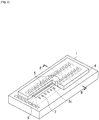
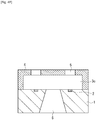
- An example of the liquid discharge head may be, but not limited to, an inkjet recording head having the structure illustrated in Fig. 2 .
- the inkjet recording head illustrated in Fig. 2 includes a substrate 1 having a plurality of energy generation elements 2 and an ink flow path forming layer 4 that is provided on the substrate 1 and forms an ink flow path 3c for holding ink and ink discharge ports 5 for discharging ink which communicate with the ink flow path 3c.
- the substrate 1 also has an ink supply port 6 through which ink is supplied to the ink flow path 3c.
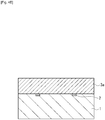
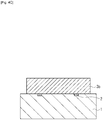
- the liquid discharge head according to an exemplary embodiment of the present invention and a method for manufacture thereof are described below with reference to Fig. 2 and Figs. 4A to 4F illustrating A-B cross-sectional views of Fig. 3 .
- a plurality of energy generation elements 2 are placed at predetermined pitches on the substrate 1, and the energy generation elements 2 are each connected to a control signal input electrode (not illustrated) for turning on the element.
- the substrate 1 is preferably a silicon substrate.
- the substrate 1 is preferably a single crystal silicon substrate.
- the substrate 1 is preferably a single crystal silicon substrate with a crystal orientation of [100].
- the substrate 1 may be a single crystal silicon substrate with a crystal orientation of [110].
- the energy generation elements 2 may be of any type capable of applying energy to ink so that ink droplets can be discharged from the ink discharge ports.
- the heat resistor elements when heat resistor elements are used as the energy generation elements 2, the heat resistor elements heat the ink in the vicinity thereof to change the state of the ink, so that energy for discharge is generated.
- a soluble resin composition is applied to the substrate 1 to form an ink flow path pattern layer 3a ( Fig. 4B ).
- a method of forming the ink flow path pattern layer 3a may include dissolving a positive-type photosensitive resin in an appropriate solvent, applying the solution to the substrate 1 by spin coating or any other method, and then heating the coating to form the ink flow path pattern layer 3a.
- the thickness of the ink flow path pattern layer 3a may be such that an ink flow path with the desired height can be formed, which is preferably, but not limited to, 2 to 50 micrometers.
- the ink flow path pattern layer 3 is then irradiated with radiation and developed, so that an ink flow path pattern 3b is formed ( Fig. 4C ).
- An ink flow path forming layer 4 is then formed on the ink flow path pattern 3b and the substrate 1 using the photosensitive resin composition according to an exemplary embodiment of the present invention.
- the thickness of the ink flow path forming layer 4 on the ink flow path pattern 3b is preferably 2 micrometers or more.
- the upper limit of the thickness of the ink flow path forming layer 4 on the ink flow path pattern 3b is preferably 100 micrometers or less, while it is not particularly restricted as long as it is in the range where the developability for the ink discharge ports is not reduced.
- the ink flow path forming layer 4 is irradiated with radiation, then developed with methyl isobutyl ketone (MIBK) or the like, and further subjected to a rinse treatment with IPA or the like, so that ink discharge ports 5 are formed ( Fig. 4D ).
- an ink supply port 6 is formed by an appropriate method such as etching ( Fig. 4E ).
- the ink flow path pattern 3b is then dissolved and removed using an appropriate solvent ( Fig. 4F ).
- the solvent to be used may be an aqueous alkali solution or an organic solvent.
- the substrate 1 is cut and separated into chips using a dicing saw or any other means, and electrical bonding is performed on each chip so that the energy generation elements 2 can be driven.
- a chip tank component for ink supply is further attached thereto, so that an inkjet recording head is completed.
- Photosensitive resin compositions each containing a polyfunctional epoxy resin (the component (a)), a photoacid generating agent (the component (b)), a solvent, and optionally the component (c), the component (d), and/or a sensitizer were prepared according to the formulations (in units of parts by weight) illustrated in Table 1.
- Concerning the component (b), Table 1 indicates the chemical formulae of the anionic and cationic parts in the Components column.
- the solvent used was a mixed solvent of propylene glycol monomethyl ether acetate and propylene carbonate (25:1 in weight ratio), and 80 parts by weight of the solvent was added to 100 parts by weight of the component (a).
- Each of these photosensitive resin compositions was applied to a supporting material of a silicon wafer using a spin coater and then dried by prebaking at 90 degrees Celsius for 5 minutes, so that a photosensitive resin composition layer with a thickness of 20 micrometers was obtained.
- the resin composition layer was subjected to pattern exposure through a mask having the desired pattern using FPA-3000i5 + (trade name of an i-line stepper manufactured by Cannon Inc.) and then subjected to post-exposure baking at 90 degrees Celsius for 4 minutes using a hot plate. Development was then performed using CDS-630+ (trade name, manufactured by Cannon Inc.). After the development, the patterned resin on the substrate was subjected to post baking at 140 degrees Celsius for 1 hour using an oven, so that a cured resist pattern was obtained on the supporting material.
- Comparative Examples 1 to 3 were performed using a photoacid generating agent containing a sulfonium salt (b1-27) (as an alternative to the component (b)), which does not contain an organic group selected from a thioxanthone skeleton, a 9,10-dialkoxyanthracene skeleton, or an anthraquinone skeleton and in which all the constituent atoms for R 1 to R 3 contain only one oxygen atom.
- Comparative Example 4 was performed using a photoacid generating agent containing a sulfonium salt (bl-28) (as an alternative to the component (b)), which does not contain an organic group selected from a thioxanthone skeleton, a 9,10-dialkoxyanthracene skeleton, or an anthraquinone skeleton and in which all the constituent atoms for R 1 to R 3 contain no oxygen atom.
- a photoacid generating agent containing a sulfonium salt (bl-28) (as an alternative to the component (b)
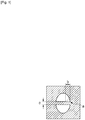
- a negative-type resist pattern was formed by transferring a model pattern having an elliptic nozzle port pattern with a design size of 20 micrometers (major axis) * 16 micrometers (minor axis) and a bridge line pattern (represented by c in Fig. 1 ) with a width of 3 micrometers across the ellipse along the minor axis.
- i-line exposure was performed with the amount of light exposure gradually changed in the range of 500 to 20,000 J/m 2 , and the amount of light exposure required to form the pattern with the design size was determined.
- the part at which the bridge line pattern intersects with the ellipse was observed using a scanning electron microscope (SEM), when the resolution was determined.
- a virtual straight line was drawn from an end (represented by a in Fig. 1 ) of the crescent shape, which will be formed if the resist pattern is formed according to the design of the mask pattern, along the edge of the bridge line pattern.
- the shaping accuracy (in units of micrometers) was defined as the length (represented by b in Fig. 1 ) of the virtual straight line drawn to the point where it intersects with the actually developed pattern. If the actually developed pattern reaches the end (a in Fig. 1 ) of the crescent shape, the shaping accuracy will be 0 micrometer, which means that the pattern accords with the design size. However, as the shaping accuracy degrades, the cured material remains at the end (a in Fig. 1 ) of the crescent shape. Thus, the shaping accuracy value is determined by how much the cured material spreads.
- a photosensitive resin composition was obtained by the same method as described above, except that the component (b) was not added.
- compositions 1 and 2 were each applied to a supporting material of quartz glass using a spin coater and then dried by prebaking at 90 degrees Celsius for 5 minutes, so that resin composition layers 1 and 2 with a thickness of about 20 micrometers were each obtained.
- the absorbance (in units of Abs) of each of the resin composition layers 1 and 2 was measured at a wavelength of 365 nm using a spectrophotometer Model U-3300 (trade name, manufactured by Hitachi Ltd.).
- the thickness of each of the resin composition layers 1 and 2 was also measured (in units of micrometers).
- the ratio of the amount of 365 nm wavelength light absorbed by the component (b) to the amount of 365 nm wavelength light absorbed by the photosensitive resin composition was calculated from the measurement results according to the formula below.
- Absorption ratio the absorbance of the resin composition layer 1 / the thickness of the resin composition layer 1 ⁇ the absorbance of the resin composition layer 2 / the thickness of the resin composition layer 2 / the absorbance of the resin composition layer 1 / the thickness of the resin composition layer 1 ⁇ 100
- the model pattern for a droplet discharge port was successfully formed with a small amount of light exposure of 4,000 J/m2 or less. At this time, the shaping accuracy was as fine as 2.0 micrometers or less.
- the photosensitive resin composition according to an exemplary embodiment of the present invention is suitable for use in the production of various micro-fabricated devices for MEMS and other systems.
Landscapes
- Physics & Mathematics (AREA)
- General Physics & Mathematics (AREA)
- Engineering & Computer Science (AREA)
- Manufacturing & Machinery (AREA)
- Spectroscopy & Molecular Physics (AREA)
- Chemical & Material Sciences (AREA)
- Organic Chemistry (AREA)
- Materials For Photolithography (AREA)
- Micromachines (AREA)
- Particle Formation And Scattering Control In Inkjet Printers (AREA)
- Exposure And Positioning Against Photoresist Photosensitive Materials (AREA)
- Compositions Of Macromolecular Compounds (AREA)
Priority Applications (1)
| Application Number | Priority Date | Filing Date | Title |
|---|---|---|---|
| EP16000494.1A EP3064996B1 (en) | 2010-02-05 | 2011-02-01 | Liquid discharge head |
Applications Claiming Priority (2)
| Application Number | Priority Date | Filing Date | Title |
|---|---|---|---|
| JP2010024681 | 2010-02-05 | ||
| PCT/JP2011/000549 WO2011096195A1 (en) | 2010-02-05 | 2011-02-01 | Photosensitive resin composition, method for producing structure, and liquid discharge head |
Related Child Applications (2)
| Application Number | Title | Priority Date | Filing Date |
|---|---|---|---|
| EP16000494.1A Division EP3064996B1 (en) | 2010-02-05 | 2011-02-01 | Liquid discharge head |
| EP16000494.1A Division-Into EP3064996B1 (en) | 2010-02-05 | 2011-02-01 | Liquid discharge head |
Publications (3)
| Publication Number | Publication Date |
|---|---|
| EP2531890A1 EP2531890A1 (en) | 2012-12-12 |
| EP2531890A4 EP2531890A4 (en) | 2013-11-06 |
| EP2531890B1 true EP2531890B1 (en) | 2019-08-28 |
Family
ID=44355213
Family Applications (2)
| Application Number | Title | Priority Date | Filing Date |
|---|---|---|---|
| EP11739545.9A Active EP2531890B1 (en) | 2010-02-05 | 2011-02-01 | Photosensitive resin composition, method for producing structure, and liquid discharge head |
| EP16000494.1A Not-in-force EP3064996B1 (en) | 2010-02-05 | 2011-02-01 | Liquid discharge head |
Family Applications After (1)
| Application Number | Title | Priority Date | Filing Date |
|---|---|---|---|
| EP16000494.1A Not-in-force EP3064996B1 (en) | 2010-02-05 | 2011-02-01 | Liquid discharge head |
Country Status (6)
| Country | Link |
|---|---|
| US (1) | US8980968B2 (enExample) |
| EP (2) | EP2531890B1 (enExample) |
| JP (1) | JP5822477B2 (enExample) |
| CN (1) | CN102754028B (enExample) |
| RU (1) | RU2526258C2 (enExample) |
| WO (1) | WO2011096195A1 (enExample) |
Families Citing this family (13)
| Publication number | Priority date | Publication date | Assignee | Title |
|---|---|---|---|---|
| JP5787720B2 (ja) * | 2010-12-16 | 2015-09-30 | キヤノン株式会社 | 感光性ネガ型樹脂組成物 |
| JP6120574B2 (ja) * | 2012-01-31 | 2017-04-26 | キヤノン株式会社 | 感光性ネガ型樹脂組成物、微細構造体、微細構造体の製造方法及び液体吐出ヘッド |
| JP5739497B2 (ja) * | 2012-09-15 | 2015-06-24 | ローム アンド ハース エレクトロニック マテリアルズ エルエルシーRohm and Haas Electronic Materials LLC | 酸発生剤化合物およびそれを含むフォトレジスト |
| JP6071718B2 (ja) | 2013-04-10 | 2017-02-01 | キヤノン株式会社 | 感光性ネガ型樹脂組成物 |
| JP6278367B2 (ja) * | 2014-05-13 | 2018-02-14 | 東洋合成工業株式会社 | オニウム塩、光酸発生剤、感光性樹脂組成物及びデバイスの製造方法 |
| KR102272225B1 (ko) * | 2016-06-09 | 2021-07-01 | 산아프로 가부시키가이샤 | 술포늄염, 광산 발생제, 경화성 조성물 및 레지스트 조성물 |
| US9938136B2 (en) * | 2016-08-18 | 2018-04-10 | Stmicroelectronics Asia Pacific Pte Ltd | Fluid ejection device |
| US20190056659A1 (en) * | 2017-08-21 | 2019-02-21 | Funai Electric Co., Ltd. | Method for manufacturing mems devices using multiple photoacid generators in a composite photoimageable dry film |
| JP7413039B2 (ja) * | 2020-01-22 | 2024-01-15 | キヤノン株式会社 | 液体吐出ヘッド及び液体吐出ヘッドの製造方法 |
| JP2021151992A (ja) * | 2020-03-23 | 2021-09-30 | 住友化学株式会社 | カルボン酸塩、カルボン酸発生剤、レジスト組成物及びレジストパターンの製造方法 |
| JP2021175721A (ja) * | 2020-04-22 | 2021-11-04 | 住友化学株式会社 | カルボン酸塩、カルボン酸発生剤、レジスト組成物及びレジストパターンの製造方法 |
| JP2023069242A (ja) * | 2021-11-05 | 2023-05-18 | 東京応化工業株式会社 | レジスト組成物及びレジストパターン形成方法 |
| JP7777969B2 (ja) * | 2021-12-02 | 2025-12-01 | 東京応化工業株式会社 | 感光性組成物、積層体の製造方法、硬化パターン形成方法及び積層体 |
Family Cites Families (34)
| Publication number | Priority date | Publication date | Assignee | Title |
|---|---|---|---|---|
| GB1526923A (en) | 1974-09-18 | 1978-10-04 | Ici Ltd | Photopolymerisable compositions |
| IE42085B1 (en) | 1974-09-18 | 1980-06-04 | Ici Ltd | Photopolymerisable compositions |
| JPH0412859A (ja) | 1990-04-28 | 1992-01-17 | Canon Inc | 液体噴射方法、該方法を用いた記録ヘッド及び該方法を用いた記録装置 |
| ES2073614T3 (es) | 1990-04-27 | 1995-08-16 | Canon Kk | Metodo y aparato de impresion. |
| US5639802A (en) * | 1991-05-20 | 1997-06-17 | Spectra Group Limited, Inc. | Cationic polymerization |
| JPH07145346A (ja) | 1993-11-22 | 1995-06-06 | Dainippon Ink & Chem Inc | ソルダーレジストインキ用樹脂組成物 |
| JPH08157510A (ja) | 1994-12-09 | 1996-06-18 | Nippon Kayaku Co Ltd | 光重合開始剤、これを含有するエネルギー線硬化性組成物及びその硬化物 |
| JPH0925393A (ja) | 1995-05-09 | 1997-01-28 | Toray Ind Inc | 繊維強化複合材料用エポキシ樹脂組成物、プリプレグおよび繊維強化複合材料 |
| JPH0912615A (ja) | 1995-06-29 | 1997-01-14 | Nippon Kayaku Co Ltd | エネルギー線硬化性組成物及びその硬化物 |
| US6054501A (en) | 1996-06-12 | 2000-04-25 | Nippon Kayaku Kabushiki Kaisha | Photopolymerization initiator and energy ray curable composition containing the same |
| JPH107680A (ja) * | 1996-06-18 | 1998-01-13 | Nippon Kayaku Co Ltd | 光重合開始剤、これを含有するエネルギー線硬化性組成物及びその硬化物 |
| JPH10152554A (ja) | 1996-11-21 | 1998-06-09 | Nippon Kayaku Co Ltd | エネルギー線硬化性組成物及びその硬化物 |
| JPH10212286A (ja) * | 1997-01-30 | 1998-08-11 | Nippon Kayaku Co Ltd | 光重合開始剤、これを含有するエネルギー線硬化性組成物及びその硬化物 |
| JPH11322900A (ja) | 1998-03-19 | 1999-11-26 | Nippon Soda Co Ltd | 光硬化性組成物および硬化方法 |
| JP4385437B2 (ja) | 1999-05-10 | 2009-12-16 | Jsr株式会社 | カラーフィルタ用感放射線性組成物およびそれを用いたカラーフィルタ |
| EP1295180B1 (en) | 2000-06-15 | 2013-05-22 | 3M Innovative Properties Company | Process for producing microfluidic articles |
| JP3978601B2 (ja) * | 2001-09-27 | 2007-09-19 | 信越化学工業株式会社 | 化学増幅レジスト材料及びパターン形成方法 |
| JP3880912B2 (ja) | 2002-10-10 | 2007-02-14 | ジャパンエポキシレジン株式会社 | 半導体封止用エポキシ樹脂組成物 |
| KR101197539B1 (ko) | 2003-11-04 | 2012-11-12 | 헨켈 아게 운트 코. 카게아아 | 술포늄염 광개시제 및 그의 용도 |
| JP4593309B2 (ja) | 2005-01-21 | 2010-12-08 | 東京応化工業株式会社 | 精密微細空間の天板部形成方法 |
| JP2006241384A (ja) | 2005-03-07 | 2006-09-14 | Fuji Photo Film Co Ltd | インク組成物、インクジェット記録方法、印刷物、平版印刷版及びその製造方法 |
| JP2007034153A (ja) | 2005-07-29 | 2007-02-08 | Toyo Ink Mfg Co Ltd | 感エネルギー線重合性組成物およびそれを用いたネガ型レジストおよびそれを用いた画像パターン形成方法。 |
| US20080292993A1 (en) | 2006-12-22 | 2008-11-27 | Canon Kabushiki Kaisha | Photo-cationic polymerizable epoxy resin composition, liquid discharge head, and manufacturing method thereof |
| JP4355725B2 (ja) | 2006-12-25 | 2009-11-04 | 信越化学工業株式会社 | ポジ型レジスト材料及びパターン形成方法 |
| JP4564977B2 (ja) | 2007-04-05 | 2010-10-20 | 東京応化工業株式会社 | 感光性樹脂組成物、レジストパターンの製造方法、積層体、及びデバイス |
| JP2008292993A (ja) | 2007-04-24 | 2008-12-04 | Ricoh Co Ltd | 画像形成装置 |
| JP5039442B2 (ja) | 2007-06-15 | 2012-10-03 | 東京応化工業株式会社 | 感光性樹脂組成物、感光性樹脂積層体、及びパターン形成方法 |
| JP4998112B2 (ja) | 2007-06-27 | 2012-08-15 | 住友化学株式会社 | 化学増幅型ポジ型レジスト組成物 |
| JP2010276623A (ja) | 2008-03-26 | 2010-12-09 | Panasonic Electric Works Co Ltd | 立体基板上に透明樹脂構造体を形成させる方法 |
| JP2009244779A (ja) | 2008-03-31 | 2009-10-22 | Fujifilm Corp | ネガ型レジスト組成物及びパターン形成方法 |
| JP2009258506A (ja) | 2008-04-18 | 2009-11-05 | Fujifilm Corp | ネガ型レジスト組成物およびレジストパターン形成方法 |
| JP5208573B2 (ja) | 2008-05-06 | 2013-06-12 | サンアプロ株式会社 | スルホニウム塩、光酸発生剤、光硬化性組成物及びこの硬化体 |
| JP5247396B2 (ja) | 2008-07-02 | 2013-07-24 | 日本化薬株式会社 | Mems用感光性樹脂組成物及びその硬化物 |
| KR101486692B1 (ko) | 2009-06-08 | 2015-01-29 | 산요가세이고교 가부시키가이샤 | 감광성 조성물 |
-
2011
- 2011-02-01 EP EP11739545.9A patent/EP2531890B1/en active Active
- 2011-02-01 US US13/576,895 patent/US8980968B2/en active Active
- 2011-02-01 RU RU2012137721/04A patent/RU2526258C2/ru not_active IP Right Cessation
- 2011-02-01 WO PCT/JP2011/000549 patent/WO2011096195A1/en not_active Ceased
- 2011-02-01 CN CN201180008124.9A patent/CN102754028B/zh active Active
- 2011-02-01 EP EP16000494.1A patent/EP3064996B1/en not_active Not-in-force
- 2011-02-03 JP JP2011021767A patent/JP5822477B2/ja active Active
Non-Patent Citations (1)
| Title |
|---|
| None * |
Also Published As
| Publication number | Publication date |
|---|---|
| EP2531890A1 (en) | 2012-12-12 |
| EP2531890A4 (en) | 2013-11-06 |
| EP3064996B1 (en) | 2020-07-22 |
| CN102754028A (zh) | 2012-10-24 |
| RU2526258C2 (ru) | 2014-08-20 |
| WO2011096195A1 (en) | 2011-08-11 |
| JP2011180586A (ja) | 2011-09-15 |
| EP3064996A1 (en) | 2016-09-07 |
| US8980968B2 (en) | 2015-03-17 |
| RU2012137721A (ru) | 2014-03-10 |
| CN102754028B (zh) | 2015-06-03 |
| US20120292412A1 (en) | 2012-11-22 |
| JP5822477B2 (ja) | 2015-11-24 |
Similar Documents
| Publication | Publication Date | Title |
|---|---|---|
| EP2531890B1 (en) | Photosensitive resin composition, method for producing structure, and liquid discharge head | |
| JP5247138B2 (ja) | 液体吐出ヘッドの製造方法 | |
| JP5159823B2 (ja) | 構造体の製造方法および液体吐出ヘッドの製造方法 | |
| JP5787720B2 (ja) | 感光性ネガ型樹脂組成物 | |
| CN102754029B (zh) | 感光性树脂组合物、结构体的制造方法和液体排出头 | |
| JP5709561B2 (ja) | 液体吐出ヘッド | |
| JP2006227544A (ja) | 精密微細空間の天板部形成用感光性積層フィルムおよび精密微細空間の形成方法 | |
| US9707757B2 (en) | Photosensitive negative resin composition | |
| JP4533256B2 (ja) | 微細構造体の製造方法および液体吐出ヘッドの製造方法 | |
| US10265960B2 (en) | Method for manufacturing liquid ejection head | |
| JP7749408B2 (ja) | 液体吐出ヘッドの製造方法及び液体吐出ヘッド | |
| JP7362698B2 (ja) | 感光性樹脂組成物、造形物、造形物の製造方法及び液体吐出ヘッドの製造方法 | |
| US20080213596A1 (en) | Photosensitive Laminate Film for Forming Top Plate Portion of Precision Fine Space and Method of Forming Precision Fine Space |
Legal Events
| Date | Code | Title | Description |
|---|---|---|---|
| PUAI | Public reference made under article 153(3) epc to a published international application that has entered the european phase |
Free format text: ORIGINAL CODE: 0009012 |
|
| 17P | Request for examination filed |
Effective date: 20120723 |
|
| AK | Designated contracting states |
Kind code of ref document: A1 Designated state(s): AL AT BE BG CH CY CZ DE DK EE ES FI FR GB GR HR HU IE IS IT LI LT LU LV MC MK MT NL NO PL PT RO RS SE SI SK SM TR |
|
| DAX | Request for extension of the european patent (deleted) | ||
| A4 | Supplementary search report drawn up and despatched |
Effective date: 20131004 |
|
| RIC1 | Information provided on ipc code assigned before grant |
Ipc: B05C 5/00 20060101ALI20130927BHEP Ipc: C09K 3/00 20060101ALI20130927BHEP Ipc: B41J 2/05 20060101ALI20130927BHEP Ipc: G03F 7/004 20060101AFI20130927BHEP |
|
| 17Q | First examination report despatched |
Effective date: 20151022 |
|
| GRAP | Despatch of communication of intention to grant a patent |
Free format text: ORIGINAL CODE: EPIDOSNIGR1 |
|
| STAA | Information on the status of an ep patent application or granted ep patent |
Free format text: STATUS: GRANT OF PATENT IS INTENDED |
|
| INTG | Intention to grant announced |
Effective date: 20180926 |
|
| GRAJ | Information related to disapproval of communication of intention to grant by the applicant or resumption of examination proceedings by the epo deleted |
Free format text: ORIGINAL CODE: EPIDOSDIGR1 |
|
| STAA | Information on the status of an ep patent application or granted ep patent |
Free format text: STATUS: EXAMINATION IS IN PROGRESS |
|
| INTC | Intention to grant announced (deleted) | ||
| GRAP | Despatch of communication of intention to grant a patent |
Free format text: ORIGINAL CODE: EPIDOSNIGR1 |
|
| STAA | Information on the status of an ep patent application or granted ep patent |
Free format text: STATUS: GRANT OF PATENT IS INTENDED |
|
| INTG | Intention to grant announced |
Effective date: 20190404 |
|
| GRAS | Grant fee paid |
Free format text: ORIGINAL CODE: EPIDOSNIGR3 |
|
| GRAA | (expected) grant |
Free format text: ORIGINAL CODE: 0009210 |
|
| STAA | Information on the status of an ep patent application or granted ep patent |
Free format text: STATUS: THE PATENT HAS BEEN GRANTED |
|
| AK | Designated contracting states |
Kind code of ref document: B1 Designated state(s): AL AT BE BG CH CY CZ DE DK EE ES FI FR GB GR HR HU IE IS IT LI LT LU LV MC MK MT NL NO PL PT RO RS SE SI SK SM TR |
|
| REG | Reference to a national code |
Ref country code: GB Ref legal event code: FG4D |
|
| REG | Reference to a national code |
Ref country code: CH Ref legal event code: EP |
|
| REG | Reference to a national code |
Ref country code: AT Ref legal event code: REF Ref document number: 1173145 Country of ref document: AT Kind code of ref document: T Effective date: 20190915 |
|
| REG | Reference to a national code |
Ref country code: IE Ref legal event code: FG4D |
|
| REG | Reference to a national code |
Ref country code: DE Ref legal event code: R096 Ref document number: 602011061608 Country of ref document: DE |
|
| REG | Reference to a national code |
Ref country code: NL Ref legal event code: MP Effective date: 20190828 |
|
| REG | Reference to a national code |
Ref country code: LT Ref legal event code: MG4D |
|
| PG25 | Lapsed in a contracting state [announced via postgrant information from national office to epo] |
Ref country code: NO Free format text: LAPSE BECAUSE OF FAILURE TO SUBMIT A TRANSLATION OF THE DESCRIPTION OR TO PAY THE FEE WITHIN THE PRESCRIBED TIME-LIMIT Effective date: 20191128 Ref country code: BG Free format text: LAPSE BECAUSE OF FAILURE TO SUBMIT A TRANSLATION OF THE DESCRIPTION OR TO PAY THE FEE WITHIN THE PRESCRIBED TIME-LIMIT Effective date: 20191128 Ref country code: LT Free format text: LAPSE BECAUSE OF FAILURE TO SUBMIT A TRANSLATION OF THE DESCRIPTION OR TO PAY THE FEE WITHIN THE PRESCRIBED TIME-LIMIT Effective date: 20190828 Ref country code: HR Free format text: LAPSE BECAUSE OF FAILURE TO SUBMIT A TRANSLATION OF THE DESCRIPTION OR TO PAY THE FEE WITHIN THE PRESCRIBED TIME-LIMIT Effective date: 20190828 Ref country code: PT Free format text: LAPSE BECAUSE OF FAILURE TO SUBMIT A TRANSLATION OF THE DESCRIPTION OR TO PAY THE FEE WITHIN THE PRESCRIBED TIME-LIMIT Effective date: 20191230 Ref country code: NL Free format text: LAPSE BECAUSE OF FAILURE TO SUBMIT A TRANSLATION OF THE DESCRIPTION OR TO PAY THE FEE WITHIN THE PRESCRIBED TIME-LIMIT Effective date: 20190828 Ref country code: FI Free format text: LAPSE BECAUSE OF FAILURE TO SUBMIT A TRANSLATION OF THE DESCRIPTION OR TO PAY THE FEE WITHIN THE PRESCRIBED TIME-LIMIT Effective date: 20190828 Ref country code: SE Free format text: LAPSE BECAUSE OF FAILURE TO SUBMIT A TRANSLATION OF THE DESCRIPTION OR TO PAY THE FEE WITHIN THE PRESCRIBED TIME-LIMIT Effective date: 20190828 |
|
| PG25 | Lapsed in a contracting state [announced via postgrant information from national office to epo] |
Ref country code: AL Free format text: LAPSE BECAUSE OF FAILURE TO SUBMIT A TRANSLATION OF THE DESCRIPTION OR TO PAY THE FEE WITHIN THE PRESCRIBED TIME-LIMIT Effective date: 20190828 Ref country code: GR Free format text: LAPSE BECAUSE OF FAILURE TO SUBMIT A TRANSLATION OF THE DESCRIPTION OR TO PAY THE FEE WITHIN THE PRESCRIBED TIME-LIMIT Effective date: 20191129 Ref country code: RS Free format text: LAPSE BECAUSE OF FAILURE TO SUBMIT A TRANSLATION OF THE DESCRIPTION OR TO PAY THE FEE WITHIN THE PRESCRIBED TIME-LIMIT Effective date: 20190828 Ref country code: IS Free format text: LAPSE BECAUSE OF FAILURE TO SUBMIT A TRANSLATION OF THE DESCRIPTION OR TO PAY THE FEE WITHIN THE PRESCRIBED TIME-LIMIT Effective date: 20191228 Ref country code: LV Free format text: LAPSE BECAUSE OF FAILURE TO SUBMIT A TRANSLATION OF THE DESCRIPTION OR TO PAY THE FEE WITHIN THE PRESCRIBED TIME-LIMIT Effective date: 20190828 Ref country code: ES Free format text: LAPSE BECAUSE OF FAILURE TO SUBMIT A TRANSLATION OF THE DESCRIPTION OR TO PAY THE FEE WITHIN THE PRESCRIBED TIME-LIMIT Effective date: 20190828 |
|
| REG | Reference to a national code |
Ref country code: AT Ref legal event code: MK05 Ref document number: 1173145 Country of ref document: AT Kind code of ref document: T Effective date: 20190828 |
|
| PG25 | Lapsed in a contracting state [announced via postgrant information from national office to epo] |
Ref country code: TR Free format text: LAPSE BECAUSE OF FAILURE TO SUBMIT A TRANSLATION OF THE DESCRIPTION OR TO PAY THE FEE WITHIN THE PRESCRIBED TIME-LIMIT Effective date: 20190828 |
|
| PG25 | Lapsed in a contracting state [announced via postgrant information from national office to epo] |
Ref country code: RO Free format text: LAPSE BECAUSE OF FAILURE TO SUBMIT A TRANSLATION OF THE DESCRIPTION OR TO PAY THE FEE WITHIN THE PRESCRIBED TIME-LIMIT Effective date: 20190828 Ref country code: IT Free format text: LAPSE BECAUSE OF FAILURE TO SUBMIT A TRANSLATION OF THE DESCRIPTION OR TO PAY THE FEE WITHIN THE PRESCRIBED TIME-LIMIT Effective date: 20190828 Ref country code: DK Free format text: LAPSE BECAUSE OF FAILURE TO SUBMIT A TRANSLATION OF THE DESCRIPTION OR TO PAY THE FEE WITHIN THE PRESCRIBED TIME-LIMIT Effective date: 20190828 Ref country code: PL Free format text: LAPSE BECAUSE OF FAILURE TO SUBMIT A TRANSLATION OF THE DESCRIPTION OR TO PAY THE FEE WITHIN THE PRESCRIBED TIME-LIMIT Effective date: 20190828 Ref country code: AT Free format text: LAPSE BECAUSE OF FAILURE TO SUBMIT A TRANSLATION OF THE DESCRIPTION OR TO PAY THE FEE WITHIN THE PRESCRIBED TIME-LIMIT Effective date: 20190828 Ref country code: EE Free format text: LAPSE BECAUSE OF FAILURE TO SUBMIT A TRANSLATION OF THE DESCRIPTION OR TO PAY THE FEE WITHIN THE PRESCRIBED TIME-LIMIT Effective date: 20190828 |
|
| PG25 | Lapsed in a contracting state [announced via postgrant information from national office to epo] |
Ref country code: CZ Free format text: LAPSE BECAUSE OF FAILURE TO SUBMIT A TRANSLATION OF THE DESCRIPTION OR TO PAY THE FEE WITHIN THE PRESCRIBED TIME-LIMIT Effective date: 20190828 Ref country code: SM Free format text: LAPSE BECAUSE OF FAILURE TO SUBMIT A TRANSLATION OF THE DESCRIPTION OR TO PAY THE FEE WITHIN THE PRESCRIBED TIME-LIMIT Effective date: 20190828 Ref country code: SK Free format text: LAPSE BECAUSE OF FAILURE TO SUBMIT A TRANSLATION OF THE DESCRIPTION OR TO PAY THE FEE WITHIN THE PRESCRIBED TIME-LIMIT Effective date: 20190828 Ref country code: IS Free format text: LAPSE BECAUSE OF FAILURE TO SUBMIT A TRANSLATION OF THE DESCRIPTION OR TO PAY THE FEE WITHIN THE PRESCRIBED TIME-LIMIT Effective date: 20200224 |
|
| REG | Reference to a national code |
Ref country code: DE Ref legal event code: R097 Ref document number: 602011061608 Country of ref document: DE |
|
| PLBE | No opposition filed within time limit |
Free format text: ORIGINAL CODE: 0009261 |
|
| STAA | Information on the status of an ep patent application or granted ep patent |
Free format text: STATUS: NO OPPOSITION FILED WITHIN TIME LIMIT |
|
| PG2D | Information on lapse in contracting state deleted |
Ref country code: IS |
|
| 26N | No opposition filed |
Effective date: 20200603 |
|
| PG25 | Lapsed in a contracting state [announced via postgrant information from national office to epo] |
Ref country code: SI Free format text: LAPSE BECAUSE OF FAILURE TO SUBMIT A TRANSLATION OF THE DESCRIPTION OR TO PAY THE FEE WITHIN THE PRESCRIBED TIME-LIMIT Effective date: 20190828 |
|
| REG | Reference to a national code |
Ref country code: CH Ref legal event code: PL |
|
| GBPC | Gb: european patent ceased through non-payment of renewal fee |
Effective date: 20200201 |
|
| REG | Reference to a national code |
Ref country code: BE Ref legal event code: MM Effective date: 20200229 |
|
| PG25 | Lapsed in a contracting state [announced via postgrant information from national office to epo] |
Ref country code: LU Free format text: LAPSE BECAUSE OF NON-PAYMENT OF DUE FEES Effective date: 20200201 Ref country code: MC Free format text: LAPSE BECAUSE OF FAILURE TO SUBMIT A TRANSLATION OF THE DESCRIPTION OR TO PAY THE FEE WITHIN THE PRESCRIBED TIME-LIMIT Effective date: 20190828 |
|
| PG25 | Lapsed in a contracting state [announced via postgrant information from national office to epo] |
Ref country code: CH Free format text: LAPSE BECAUSE OF NON-PAYMENT OF DUE FEES Effective date: 20200229 Ref country code: LI Free format text: LAPSE BECAUSE OF NON-PAYMENT OF DUE FEES Effective date: 20200229 |
|
| PG25 | Lapsed in a contracting state [announced via postgrant information from national office to epo] |
Ref country code: IE Free format text: LAPSE BECAUSE OF NON-PAYMENT OF DUE FEES Effective date: 20200201 Ref country code: FR Free format text: LAPSE BECAUSE OF NON-PAYMENT OF DUE FEES Effective date: 20200229 Ref country code: GB Free format text: LAPSE BECAUSE OF NON-PAYMENT OF DUE FEES Effective date: 20200201 |
|
| PG25 | Lapsed in a contracting state [announced via postgrant information from national office to epo] |
Ref country code: BE Free format text: LAPSE BECAUSE OF NON-PAYMENT OF DUE FEES Effective date: 20200229 |
|
| PG25 | Lapsed in a contracting state [announced via postgrant information from national office to epo] |
Ref country code: MT Free format text: LAPSE BECAUSE OF FAILURE TO SUBMIT A TRANSLATION OF THE DESCRIPTION OR TO PAY THE FEE WITHIN THE PRESCRIBED TIME-LIMIT Effective date: 20190828 Ref country code: CY Free format text: LAPSE BECAUSE OF FAILURE TO SUBMIT A TRANSLATION OF THE DESCRIPTION OR TO PAY THE FEE WITHIN THE PRESCRIBED TIME-LIMIT Effective date: 20190828 |
|
| PG25 | Lapsed in a contracting state [announced via postgrant information from national office to epo] |
Ref country code: MK Free format text: LAPSE BECAUSE OF FAILURE TO SUBMIT A TRANSLATION OF THE DESCRIPTION OR TO PAY THE FEE WITHIN THE PRESCRIBED TIME-LIMIT Effective date: 20190828 |
|
| PGFP | Annual fee paid to national office [announced via postgrant information from national office to epo] |
Ref country code: DE Payment date: 20240123 Year of fee payment: 14 |
|
| REG | Reference to a national code |
Ref country code: DE Ref legal event code: R119 Ref document number: 602011061608 Country of ref document: DE |