EP2473201B1 - Chitosan tissue dressing - Google Patents
Chitosan tissue dressing Download PDFInfo
- Publication number
- EP2473201B1 EP2473201B1 EP09778249.4A EP09778249A EP2473201B1 EP 2473201 B1 EP2473201 B1 EP 2473201B1 EP 09778249 A EP09778249 A EP 09778249A EP 2473201 B1 EP2473201 B1 EP 2473201B1
- Authority
- EP
- European Patent Office
- Prior art keywords
- chitosan
- tissue
- dressing material
- tissue dressing
- wound
- Prior art date
- Legal status (The legal status is an assumption and is not a legal conclusion. Google has not performed a legal analysis and makes no representation as to the accuracy of the status listed.)
- Active
Links
Images



Classifications
-
- A—HUMAN NECESSITIES
- A61—MEDICAL OR VETERINARY SCIENCE; HYGIENE
- A61L—METHODS OR APPARATUS FOR STERILISING MATERIALS OR OBJECTS IN GENERAL; DISINFECTION, STERILISATION OR DEODORISATION OF AIR; CHEMICAL ASPECTS OF BANDAGES, DRESSINGS, ABSORBENT PADS OR SURGICAL ARTICLES; MATERIALS FOR BANDAGES, DRESSINGS, ABSORBENT PADS OR SURGICAL ARTICLES
- A61L26/00—Chemical aspects of, or use of materials for, wound dressings or bandages in liquid, gel or powder form
- A61L26/0009—Chemical aspects of, or use of materials for, wound dressings or bandages in liquid, gel or powder form containing macromolecular materials
- A61L26/0023—Polysaccharides
-
- A—HUMAN NECESSITIES
- A61—MEDICAL OR VETERINARY SCIENCE; HYGIENE
- A61L—METHODS OR APPARATUS FOR STERILISING MATERIALS OR OBJECTS IN GENERAL; DISINFECTION, STERILISATION OR DEODORISATION OF AIR; CHEMICAL ASPECTS OF BANDAGES, DRESSINGS, ABSORBENT PADS OR SURGICAL ARTICLES; MATERIALS FOR BANDAGES, DRESSINGS, ABSORBENT PADS OR SURGICAL ARTICLES
- A61L15/00—Chemical aspects of, or use of materials for, bandages, dressings or absorbent pads
- A61L15/16—Bandages, dressings or absorbent pads for physiological fluids such as urine or blood, e.g. sanitary towels, tampons
- A61L15/22—Bandages, dressings or absorbent pads for physiological fluids such as urine or blood, e.g. sanitary towels, tampons containing macromolecular materials
- A61L15/28—Polysaccharides or their derivatives
-
- A—HUMAN NECESSITIES
- A61—MEDICAL OR VETERINARY SCIENCE; HYGIENE
- A61L—METHODS OR APPARATUS FOR STERILISING MATERIALS OR OBJECTS IN GENERAL; DISINFECTION, STERILISATION OR DEODORISATION OF AIR; CHEMICAL ASPECTS OF BANDAGES, DRESSINGS, ABSORBENT PADS OR SURGICAL ARTICLES; MATERIALS FOR BANDAGES, DRESSINGS, ABSORBENT PADS OR SURGICAL ARTICLES
- A61L26/00—Chemical aspects of, or use of materials for, wound dressings or bandages in liquid, gel or powder form
- A61L26/0061—Use of materials characterised by their function or physical properties
- A61L26/0066—Medicaments; Biocides
-
- A—HUMAN NECESSITIES
- A61—MEDICAL OR VETERINARY SCIENCE; HYGIENE
- A61P—SPECIFIC THERAPEUTIC ACTIVITY OF CHEMICAL COMPOUNDS OR MEDICINAL PREPARATIONS
- A61P17/00—Drugs for dermatological disorders
- A61P17/02—Drugs for dermatological disorders for treating wounds, ulcers, burns, scars, keloids, or the like
-
- A—HUMAN NECESSITIES
- A61—MEDICAL OR VETERINARY SCIENCE; HYGIENE
- A61P—SPECIFIC THERAPEUTIC ACTIVITY OF CHEMICAL COMPOUNDS OR MEDICINAL PREPARATIONS
- A61P31/00—Antiinfectives, i.e. antibiotics, antiseptics, chemotherapeutics
-
- A—HUMAN NECESSITIES
- A61—MEDICAL OR VETERINARY SCIENCE; HYGIENE
- A61P—SPECIFIC THERAPEUTIC ACTIVITY OF CHEMICAL COMPOUNDS OR MEDICINAL PREPARATIONS
- A61P31/00—Antiinfectives, i.e. antibiotics, antiseptics, chemotherapeutics
- A61P31/02—Local antiseptics
-
- A—HUMAN NECESSITIES
- A61—MEDICAL OR VETERINARY SCIENCE; HYGIENE
- A61P—SPECIFIC THERAPEUTIC ACTIVITY OF CHEMICAL COMPOUNDS OR MEDICINAL PREPARATIONS
- A61P31/00—Antiinfectives, i.e. antibiotics, antiseptics, chemotherapeutics
- A61P31/04—Antibacterial agents
-
- A—HUMAN NECESSITIES
- A61—MEDICAL OR VETERINARY SCIENCE; HYGIENE
- A61P—SPECIFIC THERAPEUTIC ACTIVITY OF CHEMICAL COMPOUNDS OR MEDICINAL PREPARATIONS
- A61P31/00—Antiinfectives, i.e. antibiotics, antiseptics, chemotherapeutics
- A61P31/04—Antibacterial agents
- A61P31/06—Antibacterial agents for tuberculosis
-
- A—HUMAN NECESSITIES
- A61—MEDICAL OR VETERINARY SCIENCE; HYGIENE
- A61P—SPECIFIC THERAPEUTIC ACTIVITY OF CHEMICAL COMPOUNDS OR MEDICINAL PREPARATIONS
- A61P31/00—Antiinfectives, i.e. antibiotics, antiseptics, chemotherapeutics
- A61P31/10—Antimycotics
-
- A—HUMAN NECESSITIES
- A61—MEDICAL OR VETERINARY SCIENCE; HYGIENE
- A61P—SPECIFIC THERAPEUTIC ACTIVITY OF CHEMICAL COMPOUNDS OR MEDICINAL PREPARATIONS
- A61P31/00—Antiinfectives, i.e. antibiotics, antiseptics, chemotherapeutics
- A61P31/12—Antivirals
-
- A—HUMAN NECESSITIES
- A61—MEDICAL OR VETERINARY SCIENCE; HYGIENE
- A61P—SPECIFIC THERAPEUTIC ACTIVITY OF CHEMICAL COMPOUNDS OR MEDICINAL PREPARATIONS
- A61P7/00—Drugs for disorders of the blood or the extracellular fluid
- A61P7/04—Antihaemorrhagics; Procoagulants; Haemostatic agents; Antifibrinolytic agents
-
- A—HUMAN NECESSITIES
- A61—MEDICAL OR VETERINARY SCIENCE; HYGIENE
- A61L—METHODS OR APPARATUS FOR STERILISING MATERIALS OR OBJECTS IN GENERAL; DISINFECTION, STERILISATION OR DEODORISATION OF AIR; CHEMICAL ASPECTS OF BANDAGES, DRESSINGS, ABSORBENT PADS OR SURGICAL ARTICLES; MATERIALS FOR BANDAGES, DRESSINGS, ABSORBENT PADS OR SURGICAL ARTICLES
- A61L2300/00—Biologically active materials used in bandages, wound dressings, absorbent pads or medical devices
- A61L2300/20—Biologically active materials used in bandages, wound dressings, absorbent pads or medical devices containing or releasing organic materials
- A61L2300/23—Carbohydrates
- A61L2300/232—Monosaccharides, disaccharides, polysaccharides, lipopolysaccharides
-
- A—HUMAN NECESSITIES
- A61—MEDICAL OR VETERINARY SCIENCE; HYGIENE
- A61L—METHODS OR APPARATUS FOR STERILISING MATERIALS OR OBJECTS IN GENERAL; DISINFECTION, STERILISATION OR DEODORISATION OF AIR; CHEMICAL ASPECTS OF BANDAGES, DRESSINGS, ABSORBENT PADS OR SURGICAL ARTICLES; MATERIALS FOR BANDAGES, DRESSINGS, ABSORBENT PADS OR SURGICAL ARTICLES
- A61L2300/00—Biologically active materials used in bandages, wound dressings, absorbent pads or medical devices
- A61L2300/40—Biologically active materials used in bandages, wound dressings, absorbent pads or medical devices characterised by a specific therapeutic activity or mode of action
- A61L2300/404—Biocides, antimicrobial agents, antiseptic agents
-
- Y—GENERAL TAGGING OF NEW TECHNOLOGICAL DEVELOPMENTS; GENERAL TAGGING OF CROSS-SECTIONAL TECHNOLOGIES SPANNING OVER SEVERAL SECTIONS OF THE IPC; TECHNICAL SUBJECTS COVERED BY FORMER USPC CROSS-REFERENCE ART COLLECTIONS [XRACs] AND DIGESTS
- Y02—TECHNOLOGIES OR APPLICATIONS FOR MITIGATION OR ADAPTATION AGAINST CLIMATE CHANGE
- Y02A—TECHNOLOGIES FOR ADAPTATION TO CLIMATE CHANGE
- Y02A50/00—TECHNOLOGIES FOR ADAPTATION TO CLIMATE CHANGE in human health protection, e.g. against extreme weather
- Y02A50/30—Against vector-borne diseases, e.g. mosquito-borne, fly-borne, tick-borne or waterborne diseases whose impact is exacerbated by climate change
Definitions
- the invention relates to a tissue dressing material for being applied in contact with a tissue of a patient. Moreover, the invention relates to a tissue dressing material for use in a method of treating a tissue of a patient.
- the polysaccharide chitosan is the at least partially N-deacetylated derivative of chitin.
- Chitin can be found widely in the exoskeletons of arthropods, shells, crustaceans and the cuticles of insects. It is usually derived from such natural sources.
- Chitosan in general is synthetically prepared by hydrolysis of chitin, although it can also be naturally derived directly, e.g. from certain fungi in which it occurs. The different solubilities of chitin and chitosan in dilute acids are commonly used to distinguish between the two polysaccharides.
- Chitosan the soluble form
- DA degree of acetylation
- chitosan precipitates at a pH of above 6.3.
- Chitin and chitosan have been held to be of particular promise in wound healing applications, early scientific reports on this subject dating back to 1970 when Prudden et. al. in "The discovery of a potent pure chemical wound-healing accelerator", Am. J. Surg. 1970, 119, 560 described the successful application of chitin powder on human wounds.
- the primary factor in the acceleration of wound healing was reported to be the presence of N-acetyl-D-glucosamine (in contrast to D-glucosamine) which is released from chitin due to enzymatic degradation by lysozyme, which is abundantly available in fresh and healing wounds.
- the UK patent GB 2358354 B teaches a flexible polymeric film comprising at least 80% by weight of chitosan with a degree of acetylation between 12 and 30%. A slightly higher rate of wound healing compared to non-treated wounds was found. The relatively weak mechanical properties which necessitate the use of an epichlorhydrine cross-linker or silicon coating may constitute a disadvantage of this prior art material. The document also suggests washing off the film in saline solution after healing of the wound.
- a chitosan acetate foam is described for use as a hemorrhage control wound dressing for severe bleeding.
- the chitosan is required to be at least 70% deacetylated and in the examples, degrees of deacetylation between 85 and 93% are used.
- the US patent application US 2005/042265 A1 discloses a hydrogel for skin repair, the hydrogel containing a maximum of 5% chitosan.
- the chitosan's degree of acetylation is required to be no greater than 40%, in particular between 2% and 6%.
- the international patent application WO 2008/128567 A1 discloses medical articles, including wound dressings, at least partially made of chitosan. The lowest degree of acetylation disclosed is 3%.
- Minagawa et al. disclose the treatment of wounds with a chitin or chitosan dispersion. The material is lavaged into the wound and the wound is then closed with a suture. Degrees of the acetylation of 14%, 33%, 63% and 96% were studied and it was found that acetylation of chitosan leads to increased fibroblast activity which in turn is linked to scar formation.
- chitosan may be in solution or in solid form. Moreover, a solution of 100% de-acetylated chitosan is described.
- the inventions further aims to provide an improved tissue dressing material for use in a method for treating a tissue of a patient.
- the problem is solved by providing a tissue dressing material for being applied in contact with a tissue of a patient with the features according to claim 1.
- the expression "main component" with regard to the tissue dressing material and a type of chitosan means that the respective type of chitosan makes up at least 50% by weight of the tissue dressing material.
- the tissue dressing material is provided as a solid or gel-like film to be applied to the tissue, this film is required to be made up of the respective type of chitosan by at least 50% by weight.
- the expression "main component" with regard to the constituent(s) other than water in the aqueous mixture means that at least 50% by weight of the combination of all constituents other than water must be the respective type of chitosan.
- the tissue dressing may comprise a first layer, which layer is formed of the tissue dressing material, and another layer formed of another material, this other layer acting as a support. In such a case, according to the above definition, it would be the first layer but not the support layer that is required to be made up of the respective type of chitosan by at least 50% by weight. Note that material which the tissue dressing material takes up from a tissue, such as exudative fluid from a wound, is not considered a component of the tissue dressing material.
- native chitosan in the context of the present invention refers to the defined chemical entity chitosan, which is a poly(N-acetyl-D-glucosamine-co-D-glucosamine) copolymer or a poly(D-glucosamine) homopolymer. Any cross-linked or otherwise chemically modified chitosan is considered a chitosan derivative, having different properties than native chitosan.
- native chitosan includes both the chitosan base and chitosan in the form of a chitosan salt, dissolved or undissolved.
- chitosan in general, this can be native chitosan or any derivative of a poly(N-acetyl-D-glucosamine-co-D-glucosamine) copolymer or a poly(D-glucosamine) homopolymer, cross-linked and/or otherwise modified.
- the tissue dressing material according to the invention can advantageously be employed as a wound dressing material.
- the invention exploits the inventors' discovery that a significantly accelerated rate of wound healing can be achieved by applying a native chitosan material that is deacetylated, i.e. essentially free of N-acetyl-D-glucosamine subunits. This finding is surprising when considering the importance attributed to the N-acetylated form of D-glucosamine in wound healing applications, e.g. as described in the US-patent US 3,632,754 , supra. Furthermore, it has been suggested, e.g., in Izume et.
- the invention exploits the fact that chitosan is dissolvable in acidic aqueous media.
- dissolvable and dissolution refer to a process of mass loss of a solid chitosan form without molecular weight decrease (ie, without decrease in polymer chain length) due to solubility in an aqueous environment. This is to be distinguished from “degradation”, which is the process of molecular weight decrease due to depolymerisation of chitosan.
- Advantageously dissolution can facilitate the removal of the tissue dressing material. It can be achieved with the invention that the tissue dressing material is partly or even entirely dissolvable.
- the tissue dressing material according to the invention can have a high biocompatibility and bioactivity, in particular through the use of deacetylated native chitosan.
- cross-linking of chitosan may lead to the blockage of active functionalities of the biomaterial, namely the amine groups.
- Prior art chitosans that are cross-linked or otherwise chemically modified may therefore carry the risk of limited biocompatibility and loss of functionality, such as cell adhesiveness and growth, antibacterial properties, hemostatic properties, as well as the ability to biodissolve or biodegrade partially or completely and into non-toxic components.
- tissue dressing material can be provided that is essentially free of toxic compounds.
- the invention can reduce the risk of wound infections, by exploiting the antibiotic nature of the deacetylated native chitosan as a natural polymeric antibiotic with no systemic but only topical activity.
- the tissue dressing material can be applied in practically non-lysozyme biodegradable form, which can contribute to preventing tissue ingrowths and undesired adhesion of the polymeric matrix to growing tissue.
- the removal of the tissue dressing can be facilitated, and the irritation or damage of the regenerating tissue due to adhesions to the wound dressing being removed can be avoided.
- liquid tissue dressing material according to the invention advantageously can exploit the fact that deacetylated native chitosan is soluble in such acidic aqueous media.
- the tissue dressing material is present in the form of a solid film or a gel-like film.
- the preferred film has a smooth surface, preferably with an average roughness R a of 1 ⁇ m ( (micrometre) or less, more preferably 0.3 ⁇ m or less, more preferably 0.1 ⁇ m or less.
- R a average roughness
- a smooth surface can reduce the formation of mechanical anchoring to the tissue, thereby making it easier to remove the dressing.
- the film is between 5 and 500 ⁇ m (micrometres) thick, preferably between 10 and 100 ⁇ m. It has a surface area sufficient to cover the tissue to be treated, such as a wound, and, preferably, also some of the surrounding tissue.
- tissue dressing material is deacetylated chitosan, preferably deacetylated native chitosan.
- a preferred tissue dressing material entirely consists of deacetylated chitosan, preferably deacetylated native chitosan.
- the tissue dressing material is present as a liquid aqueous mixture.
- at least 70% by weight of the constituent(s) of the mixture other than water are deacetylated chitosan, preferably deacetylated native chitosan.
- a particularly preferred mixture essentially only consists of deacetylated chitosan, preferably deacetylated native chitosan, and water.
- the preferred mixture is acidic.
- the concentration of the deacetylated native chitosan preferably is less than 15%, more preferably less than 10%, more preferably less than 5%, more preferably less than 2% by weight.
- the liquid dispersion preferably is sprayed or brushed onto the tissue and the dispersion medium subsequently is allowed to evaporate.
- a solid or gel-like film forms.
- the film is between 1 and 50 ⁇ m (micrometres) thick, preferably between 10 and 20 ⁇ m. It has a surface area sufficient to cover the tissue to be treated, such as a wound, and, preferably, also some of the surrounding tissue.
- the deacetylated chitosan's or the deacetylated native chitosan's DA is 2% or less, preferably 1.5% or less, more preferably 1% or less, more preferably 0.5% or less.
- such extremely low degrees of acetylation can further improve the wound healing properties of the invention.
- biodegradation can be further inhibited, avoiding tissue ingrowths and excessive adhesion of the tissue dressing material.
- the respective type of chitosan preferably deacetylated native chitosan
- the tissue dressing material adheres well to the tissue. Thereby, it can be avoided that the tissue dressing material prematurely detaches from the tissue.
- This embodiment of the invention advantageously exploits the fact that chitosan salt is soluble in an aqueous solvent of neutral pH.
- wet or pre-wetted tissue can liquefy the tissue dressing material's surface, providing for a durable contact with the tissue.
- Preferred salts are those derived from the dissolution of chitosan in inorganic acids, such as hydrochloric acid, and organic acids selected from the group of monobasic or multibasic organic acids having 2 to 12 carbon atoms and a first pKa value between 1 and 5, such as acetic acid, citric acid, lactic acid, malic acid, succinic acid, mandelic acid, oxalic acid, tartaric acid, ascorbic acid, etc.
- the respective type of chitosan preferably deacetylated native chitosan, is present in the form of the chitosan base.
- the tissue dressing material in some embodiments of the invention is a mixture or a compound material, comprising other components in addition to the respective type of chitosan, preferably deacetylated native chitosan.
- the tissue dressing material comprises at least one pharmaceutically active and/or bioactive additional component. Suitable bioactive additional components may e.g.
- the tissue dressing material may comprise biological cells.
- the preferred tissue dressing material has a water uptake capacity of less than 100% by weight, more preferably less than 80%. Thereby, it is advantageously achievable that a degree of humidity that is favourable for wound healing can be maintained at a wound site.
- the tissue dressing material has a water uptake capacity of more than 25%, more preferably more than 50%.
- this embodiment of the invention is suitable for absorbing exudative fluids and toxins.
- the water uptake capacity of the tissue dressing material is between 65% and 75%.
- the tissue dressing material has a pH below 6.3, preferably below 6, particularly preferably around 5 to 5.5.
- the preferred pH is above 4.0, more preferably above 4.5. It is an achievable advantage of this embodiment of the invention, that the pH is close to that of the surface of healthy skin, thereby avoiding irritation or damage of the tissue to which the tissue dressing material is attached.
- This embodiment of the invention preferably applies to external applications of the tissue dressing material.
- the tissue dressing material has a pH below 8.5, preferably below 8, particularly preferably around 7 to 7.5.
- the preferred pH is above 6.0, more preferably above 6.5. It is an achievable advantage of this embodiment of the invention, that the pH is close to that of healthy tissue, thereby avoiding irritation or damage of the tissue to which the tissue dressing material is attached.
- This embodiment of the invention preferably applies to internal applications of the tissue dressing material.
- the tissue dressing material is transparent.
- the material is a transparent solid film.
- it is a dispersion that forms a transparent film when applied to the tissue.
- a preferred tissue dressing according to the invention comprises a first layer, which layer is formed of the tissue dressing material, and another layer formed of another material, this other layer acting as a support.
- the support advantageously can help preventing premature detachment of the tissue dressing material from the tissue.
- the support preferably is located at the side of the layer of the tissue dressing material opposite to the side that is in contact with the tissue. Preferably, the support is adjacent to the tissue dressing material.
- the support according to the invention is particularly advantageous if the respective type of chitosan, preferably deacetylated native chitosan is provided in the tissue dressing material in the form of the chitosan base, as the chitosan base in general adheres less well to tissue than a chitosan salt containing tissue dressing material.
- the support may for example be a woven fabric.
- the support may for example be of natural materials such as cotton or a natural or synthetic polymer.
- Suitable polymers include biodegradable polymers, such as polyesters, polyorthoesters, polycarbonates, polyanhydrides, polyurethanes, polyphosphazenes, polyphosphoesters, polysaccharides, polypeptides, as well as derivatives, copolymers, and blends based on these polymers.
- biodegradable polymers such as polyesters, polyorthoesters, polycarbonates, polyanhydrides, polyurethanes, polyphosphazenes, polyphosphoesters, polysaccharides, polypeptides, as well as derivatives, copolymers, and blends based on these polymers.
- biodegradable polymers such as polyesters, polyorthoesters, polycarbonates, polyanhydrides, polyurethanes, polyphosphazenes, polyphosphoesters, polysaccharides, polypeptides, as well as derivatives, copolymers, and blends based on these polymers.
- biodissolvable polymers such
- the support may consist of a non-biodegradable/non-biodissolvable polymer, such as silicones, polyurethanes, polyethylene terephthalate, polytetrafluorethylene, polysulfones, polyethersulfones, polyether ether ketones, polycarbonates, polymethacrylates, polysaccharides, polypeptides, as well as derivatives, copolymers, and blends based on these polymers.
- a non-biodegradable/non-biodissolvable polymer such as silicones, polyurethanes, polyethylene terephthalate, polytetrafluorethylene, polysulfones, polyethersulfones, polyether ether ketones, polycarbonates, polymethacrylates, polysaccharides, polypeptides, as well as derivatives, copolymers, and blends based on these polymers.
- a preferred tissue dressing according to the invention comprises a first layer, which layer is formed of the tissue dressing material, and another layer formed of another material, this other layer acting as an at least partial moisture barrier.
- the other layer can prevent or at least delay the evaporation of water in the tissue dressing material during treatment of the tissue with the tissue dressing material according to the invention.
- the other layer preferably is located at the side of the layer of the tissue dressing material opposite to the side that is in contact with the tissue.
- the other layer is adjacent to the tissue dressing material.
- the invention also encompasses tissue dressings that have both a support layer and another layer that acts as an at least partial moisture barrier. Of course both functions, that of a support and that of an at least partial moisture barrier, can also be fulfilled by a single other layer.
- the other layer may for example be of silicone or another polymer or polymer composition from the groups of polymers listed above.
- the other layer is between 10 and 1000 ⁇ m thick, preferably between 50 and 500 ⁇ m.
- the other layer is perforated.
- the holes of the perforation typically are between 10 and 1500 ⁇ m in diameter, preferably between 50 and 1000 ⁇ m.
- the tissue dressing material not only contacts the tissue to be treated but also tissue surrounding the tissue to be treated. While the tissue dressing material preferably is used for external wounds, it may also be applied to internal wounds.
- the wound dressing is used internally as a hemostatic agent to control bleedings during surgeries, or it is applied in the treatment of injuries or diseases that cause internal bleedings.
- the wound dressing is used internally to prevent or limit infections by exploiting the potential of the deacetylated native chitosan as polymeric antibiotic.
- the solubility of chitosan is exploited in the method according to the invention of treating a tissue of a patient, wherein in a first step the tissue dressing material is brought into contact with the tissue and in a second step a detachment solvent is applied to the tissue dressing material to at least partly dissolve the tissue dressing material.
- a detachment solvent is applied to the tissue dressing material to the tissue dressing material.
- at least part of the tissue dressing material can be dissolved.
- removal of the tissue dressing material from the tissue can be facilitated.
- the step of at least partly dissolving the tissue dressing material preferably at least part of the chitosan component of the tissue dressing material is dissolved.
- the chitosan used together with the detachment solvent preferably is deacetylated native chitosan, even though the invention also encompasses methods in which the chitosan is a chitosan derivative.
- the deacetylated chitosan more preferably the deacetylated native chitosan, is the tissue dressing material's main component, more preferably the tissue dressing material is a material as described in one of the above embodiments.
- a preferred kit according to the invention comprises a tissue dressing material for being applied in contact with a tissue of a patient, the tissue dressing material comprising chitosan.
- the chitosan in the tissue dressing material is deacetylated chitosan.
- the chitosan in the tissue dressing material is native chitosan, more preferby deacetylated native chitosan.
- the chitosan, more preferably the deacetylated chitosan, more preferably the deacetylated native chitosan is the tissue dressing material's main component, more preferably the tissue dressing material is a material as described in one of the above embodiments.
- kits according to the invention in addition to a layer of the tissue dressing material another layer as described above may be provided, e.g. as a support or as an at least partial moisture barrier.
- a preferred kit according to the invention comprises a detachment solvent for at last partly dissolving the tissue dressing material to detach the tissue dressing material at least partly from the tissue.
- the amount of detachment solvent provided in the kit is at least 5 times per weight the amount of chitosan provided in the kit, more preferably at least 50 times per weight the amount of chitosan provided in the kit.
- the detachment solvent may for example be provided in a sealed bottle or disposable pipette, or by means of a gauze, a sponge or a gel soaked with the detachment solvent.
- the polymer preferably is provided in the form of a tissue dressing material according to the invention.
- the material is solid or gel-like or assumes a solid or gel-like consistency when applied to the tissue.
- the tissue dressing material according to the invention advantageously can be applied to acute wounds, chronic wounds, and burn wounds or other types of wounds. It can also be applied to tissue affected by dermatosis, for example athlete's food disease and psoriasis.
- the tissue dressing material can be applied in wound coverings, for example band aids, gauzes, films and foams, and in support aids, for example bandages, support tights and plaster casts.
- the tissue dressing material and the tissue dressing according to the invention may advantageously be applied to treat cuts and abrasions, nose bleeding, severely bleeding wounds, and external and internal wounds in general.
- the invention can be of use when surgery is performed on a patient.
- the invention can also be applied advantageously to treat acne, razor burn and insect bites as well as in cosmetic application such as face masks and peelings.
- the tissue dressing material according to the invention in particular can exhibit one or a combination of the following advantageous properties: transparency; adhesion to the tissue to which it is applied; permeability for gas, in particular oxygen; locally confined antibiotic properties; regulation of humidity; and dissolvability at moderate pH.
- the material may inhibit or, alternatively, promote the growth cells of the tissue treated. It may also act as a barrier to protect from bacterial infection from inside and outside the tissue treated and as a mechanical protection. In particular it may protect and cover superficial wounds, lesions, abrasions that are at risk of infection, and burns.
- tissue dressing material and the tissue dressing according to the invention can provide protection in cases where conventional wound dressings prove ineffective or are at least less effective, such as in the treatment of ulcerous tissue, wounds caused by viruses which tend do become ulcerous, mucosal tissue, the genital area, and body cavities.
- the chitosan used as a starting material in the examples below was obtained in the form of fine flakes from Cognis (Germany).
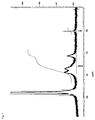
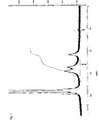
- the degree of acetylation (DA) was determined by 1 H NMR spectroscopy.
- Figure 1 shows an 1 H NMR spectrum obtained from this commercially available chitosan.
- Figure 2 shows a corresponding 1 H NMR spectrum obtained from chitosan deacetylated after further hydrolysis steps applied to the commercial product as described further below.
- chitosan was analyzed in a mixture of 0.25% DCl in D 2 O at a chitosan concentration of approximately 0.5% (w/v). The spectra were recorded using a Bruker AC200 spectrometer.
- tissue dressing material A 7.5 g of the thus obtained native chitosan having a DA of 1.5% were dissolved in 500 ml of a 0.5% aqueous acetic acid by gently shaking for 24 h. A portion of the solution was filtered first through a glass fiber filter (pore size approximately 1 ⁇ m), and then through a 0.22 ⁇ m filter for sterilization, resulting in solution of a tissue dressing material essentially consisting entirely of deacetylated native chitosan. Below, the material is referred to as tissue dressing material A.
- tissue dressing material B Two portions of 144 ml each of the non-filtered solution of deacetylated native chitosan prepared above were poured into two square-shaped moulds, 24 x 24 cm 2 (square centimetres) in size, and left in a dust-free environment for drying at room temperature. The resulting film was removed from the first mould, and sterilized using a 10 kGy (kilogray) electron beam. An approximately 80 ⁇ m thick transparent film of tissue dressing material essentially consisting entirely of deacetylated native chitosan acetate salt was obtained. Below, the material is referred to as tissue dressing material B.
- tissue dressing material C The dried film from the second mould was placed for 2 hours in a bath containing a solution of 1.5% ammonia in methanol/water 90/10 (v/v). The film was then removed from the bath and dried by storage at room temperature. The film was sterilized using a 10 kGy electron beam. An approximately 80 ⁇ m thick transparent film of tissue dressing material essentially consisting entirely of deacetylated native chitosan base was obtained. Below, the material is referred to as tissue dressing material C.
- Tissue dressing material C produced as described in the above example, was weighted, and then placed in distilled water for 15 min. The weight of the wet film was compared to the weight of the dry film, and the water uptake was determined to be 72 % by weight.
- tissue dressing A one treatment skin incision completely closed after 24 h B male, 42 yrs cut of 1.5 cm length and 3 mm depth (hand), weak bleeding application of tissue dressing B (size 2 x 0.5 cm 2 ) on pre-wetted skin (one treatment) skin incision completely closed after 4 h C male, 57 yrs praeputial inflammation application of tissue dressing C (size 1,5 x 1,5 cm 2 ) (treatment repeated after 24 h) Wound and ulcus completely healed after 48 h
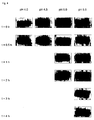
- Controlled dissolution of tissue dressing materials B and C was tested in dissolution experiments using distilled water, 0.9% aqueous sodium chloride solution, and 0.5% acetic acid/acetate buffered solution, respectively.
- the pH of the solutions was adjusted to the values indicated in Table 2 using appropriate amounts of 1 N hydrochloric acid or sodium hydroxide solutions.
- Materials B and C were cut into rectangular samples having dry weights between 5 and 10 mg each. A gauze soaked with a 100-fold per volume excess of the respective solution to the dry weight of the film was applied to each sample film and the time for complete film dissolution was recorded.
- Fig. 6 schematically shows a tissue dressing material in the form of a solid film 6 that is applied to a tissue 1, comprising a wound 2.
- the solid film is about 80 ⁇ m thick.
- Cavities 7, 8 between the tissue 1 and the tissue dressing material 6 may be filled with water or exudative fluid.
- a tissue dressing 9 comprising a tissue dressing material 6 of Fig. 6 as a first layer and a silicon film 10 as a second layer is applied to a tissue 1, comprising a wound 2.
- the silicon film 10 is about 50 ⁇ m tick.
- Cavities 7, 8 between the tissue 1 and the tissue dressing material 6 may be filled with water or exudative fluid.
- Fig. 8 shows a tissue dressing 11 applied to a tissue 1 comprising a wound 2, the tissue dressing 11 differing from that 9 of Fig. 7 in that the silicon film 10 is perforated to allow an exchange of air between the tissue 1 and the surrounding though the wound dressing material 6.
- the perforations have a diameter if between 50 and 100 ⁇ m.
Landscapes
- Health & Medical Sciences (AREA)
- Life Sciences & Earth Sciences (AREA)
- Chemical & Material Sciences (AREA)
- Veterinary Medicine (AREA)
- Public Health (AREA)
- General Health & Medical Sciences (AREA)
- Animal Behavior & Ethology (AREA)
- Medicinal Chemistry (AREA)
- Organic Chemistry (AREA)
- Chemical Kinetics & Catalysis (AREA)
- Pharmacology & Pharmacy (AREA)
- General Chemical & Material Sciences (AREA)
- Nuclear Medicine, Radiotherapy & Molecular Imaging (AREA)
- Engineering & Computer Science (AREA)
- Oncology (AREA)
- Communicable Diseases (AREA)
- Epidemiology (AREA)
- Materials Engineering (AREA)
- Hematology (AREA)
- Bioinformatics & Cheminformatics (AREA)
- Pulmonology (AREA)
- Dermatology (AREA)
- Virology (AREA)
- Diabetes (AREA)
- Materials For Medical Uses (AREA)
- Pharmaceuticals Containing Other Organic And Inorganic Compounds (AREA)
- Medicinal Preparation (AREA)
- Polymers & Plastics (AREA)
- Media Introduction/Drainage Providing Device (AREA)
- Medicines Containing Material From Animals Or Micro-Organisms (AREA)
Applications Claiming Priority (1)
| Application Number | Priority Date | Filing Date | Title |
|---|---|---|---|
| PCT/EP2009/006323 WO2011026498A1 (en) | 2009-09-01 | 2009-09-01 | Chitosan tissue dressing |
Publications (2)
| Publication Number | Publication Date |
|---|---|
| EP2473201A1 EP2473201A1 (en) | 2012-07-11 |
| EP2473201B1 true EP2473201B1 (en) | 2016-08-10 |
Family
ID=42115621
Family Applications (3)
| Application Number | Title | Priority Date | Filing Date |
|---|---|---|---|
| EP09778249.4A Active EP2473201B1 (en) | 2009-09-01 | 2009-09-01 | Chitosan tissue dressing |
| EP10748093.1A Active EP2473200B1 (en) | 2009-09-01 | 2010-09-01 | Tissue dressing kit |
| EP16181211.0A Active EP3117842B1 (en) | 2009-09-01 | 2010-09-01 | Tissue dressing material |
Family Applications After (2)
| Application Number | Title | Priority Date | Filing Date |
|---|---|---|---|
| EP10748093.1A Active EP2473200B1 (en) | 2009-09-01 | 2010-09-01 | Tissue dressing kit |
| EP16181211.0A Active EP3117842B1 (en) | 2009-09-01 | 2010-09-01 | Tissue dressing material |
Country Status (9)
| Country | Link |
|---|---|
| US (5) | US10207022B2 (pl) |
| EP (3) | EP2473201B1 (pl) |
| JP (6) | JP5752123B2 (pl) |
| CA (5) | CA2771365A1 (pl) |
| DK (1) | DK3572100T3 (pl) |
| ES (2) | ES2908609T3 (pl) |
| HK (1) | HK1246216B (pl) |
| PL (1) | PL4005606T3 (pl) |
| WO (4) | WO2011026498A1 (pl) |
Families Citing this family (19)
| Publication number | Priority date | Publication date | Assignee | Title |
|---|---|---|---|---|
| JP3094553B2 (ja) | 1991-09-30 | 2000-10-03 | 東レ株式会社 | タフテッドカーペット及びタフテッドカーペット用基布 |
| EP2473201B1 (en) * | 2009-09-01 | 2016-08-10 | Medovent GmbH | Chitosan tissue dressing |
| US10940047B2 (en) | 2011-12-16 | 2021-03-09 | Kci Licensing, Inc. | Sealing systems and methods employing a hybrid switchable drape |
| CN103974679B (zh) * | 2011-12-16 | 2017-05-03 | 凯希特许有限公司 | 采用可切换盖布的密封系统和方法 |
| DE102012002209A1 (de) * | 2012-02-07 | 2013-08-08 | Carl Freudenberg Kg | Biodegradierbares Vlies für medizinische Zwecke |
| US8899277B2 (en) * | 2012-08-03 | 2014-12-02 | Shin Era Technology Co., Ltd. | Manufacturing method of medical textiles woven from chitosan containing high wet modulus rayon fibre |
| BR112016006512B1 (pt) * | 2013-11-22 | 2021-11-23 | Somahlution, Llc | Kits, métodos para preparar solução de conservação de órgãos e tecidos e métodos para conservação de órgãos e tecidos |
| JP6536411B2 (ja) * | 2014-01-23 | 2019-07-03 | 日産化学株式会社 | 培地組成物 |
| CN106170292A (zh) | 2014-02-04 | 2016-11-30 | 金珂生物医疗公司 | 来自碳酸溶液的壳聚糖材料 |
| JP6640748B2 (ja) | 2014-06-05 | 2020-02-05 | ケーシーアイ ライセンシング インコーポレイテッド | 流体獲得および分配特徴を備えるドレッシング |
| US11160901B2 (en) | 2015-04-10 | 2021-11-02 | Tricol Biomedical, Inc. | Bioadhesive chitosan gel for controlling bleeding and for promoting healing with scar reduction without obscuring or interfering with access to a surgical field |
| KR102659079B1 (ko) * | 2017-01-13 | 2024-04-22 | 프리멕스 이에이치에프 | 키토산-함유 제제 및 그의 제조 및 사용 방법 |
| RU2739771C1 (ru) * | 2017-09-12 | 2020-12-28 | Шилпа Медикеа Лимитед | Спрей на основе транексамовой кислоты для артропластики коленного сустава |
| CN113939266A (zh) | 2019-04-08 | 2022-01-14 | 梅多德姆有限公司 | 用于影响受试者皮肤上微生物群的包含壳聚糖的液体组合物 |
| EP3972562B1 (en) * | 2019-05-22 | 2025-09-03 | Università Degli Studi Di Torino | Medical device comprising a chitosan-based support structure |
| CN113891743A (zh) * | 2019-05-27 | 2022-01-04 | 国立大学法人东京医科齿科大学 | 抗菌性组合物 |
| EP4228595A1 (en) | 2020-10-14 | 2023-08-23 | Medoderm GmbH | Liquid composition for use in the prevention or reduction of skin irritation, allergy and/or an infectious disease |
| CN113813439A (zh) * | 2021-11-04 | 2021-12-21 | 湖南愈尔美医疗科技有限公司 | 一种医用酵母重组ⅲ型胶原蛋白敷料的制备方法 |
| WO2024044026A1 (en) | 2022-08-26 | 2024-02-29 | Checkpoint Surgical, Inc. | Chitosan tubular member and method of producing |
Citations (2)
| Publication number | Priority date | Publication date | Assignee | Title |
|---|---|---|---|---|
| GB2129300A (en) * | 1982-11-08 | 1984-05-16 | William Graham Malette | Method of achieving hemostasis, inhibiting fibroplasia and promoting tissue regeneration in a tissue wound. |
| WO2005087280A1 (en) * | 2004-03-11 | 2005-09-22 | Medtrade Products Limited | Compositions of alpha and beta chitosan and methods of preparing them |
Family Cites Families (49)
| Publication number | Priority date | Publication date | Assignee | Title |
|---|---|---|---|---|
| US3632754A (en) | 1968-02-12 | 1972-01-04 | Lescarden Ltd | Use of chitin for promoting wound healing |
| JPH0227487B2 (ja) | 1982-07-07 | 1990-06-18 | Kokudo Sogo Kensetsu Kk | Jibankairyohoho |
| CA1202904A (en) * | 1983-11-21 | 1986-04-08 | Brian G. Sparkes | Chitosan based wound dressing materials |
| JPH0615476B2 (ja) * | 1985-05-22 | 1994-03-02 | イハラケミカル工業株式会社 | 抗感染症剤 |
| JPS61172817A (ja) * | 1985-01-25 | 1986-08-04 | Sanyo Chem Ind Ltd | 医薬部材組成物 |
| EP0271551B1 (en) * | 1986-06-06 | 1996-10-30 | Union Carbide Corporation | Acid decrystallization of higly cristalline chitosan or partially deacylated chitin |
| US4920158A (en) * | 1989-10-11 | 1990-04-24 | Medipro Sciences Limited | Hydrogel-forming wound dressing or skin coating material |
| US5013769A (en) * | 1988-08-22 | 1991-05-07 | Medipro Sciences Limited | Method of making a hydrogel-forming wound dressing or skin coating material |
| FI95207C (fi) * | 1992-09-14 | 1996-01-10 | Novasso Oy | Haavansuojaside |
| SE9402531L (sv) | 1994-07-19 | 1996-01-20 | Medicarb Ab | Sårläkningsmedel |
| US6486140B2 (en) | 1994-07-19 | 2002-11-26 | Medicarb Ab | Agents, and methods employing them, for the prevention or reduction of tissue adhesion at a wound site |
| CA2212300A1 (en) | 1997-08-04 | 1999-02-04 | Abdellatif Chenite | In vitro or in vivo gelfying chitosan and therapeutic uses thereof |
| JP3511856B2 (ja) | 1997-08-04 | 2004-03-29 | コクヨ株式会社 | 家具の免震装置 |
| GB2329181B (en) | 1997-09-11 | 2002-03-13 | Johnson & Johnson Medical | Bioabsorbable Wound Dressing Materials |
| JP2001055335A (ja) | 1999-08-18 | 2001-02-27 | Toshio Sato | アレルギー性皮膚疾患治療剤 |
| GB9929472D0 (en) * | 1999-12-13 | 2000-02-09 | Btg Int Ltd | Polymeric film |
| GB9929897D0 (en) | 1999-12-18 | 2000-02-09 | Slabas Antoni R | Improvements in or relating to conjugated fatty acids and related compounds |
| US6426066B1 (en) * | 2000-01-12 | 2002-07-30 | California Pacific Labs, Inc. | Use of physiologically balanced, ionized, acidic solution in wound healing |
| US20020018732A1 (en) * | 2000-04-21 | 2002-02-14 | Hung William M. | Preserving compositions containing chitosan and processes for making water soluble O-acetylated chitosan and chitosan |
| US6960655B2 (en) | 2000-04-25 | 2005-11-01 | The Procter & Gamble Company | Articles having an odor control system comprising a cationic polysaccharide and an odor controlling agent |
| EP1149595A1 (en) * | 2000-04-25 | 2001-10-31 | The Procter & Gamble Company | Odour control system comprising a cationic polysaccharide and an odour controlling agent |
| US6867287B2 (en) | 2000-04-25 | 2005-03-15 | The Procter & Gamble Company | Breathable absorbent articles comprising chitosan material |
| EP1149597A1 (en) * | 2000-04-25 | 2001-10-31 | The Procter & Gamble Company | Breathable absorbent articles comprising chitosan material |
| GB2369997B (en) * | 2000-12-12 | 2004-08-11 | Johnson & Johnson Medical Ltd | Dressings for the treatment of exuding wounds |
| KR100953465B1 (ko) | 2001-06-14 | 2010-04-16 | 프로비던스 헬스 시스템-오레곤 | 상처 드레싱과 생명을 위협하는 심각한 출혈을 조절하는방법 |
| JP2003128704A (ja) * | 2001-10-24 | 2003-05-08 | Matsumoto Shika Univ | キチン・キトサンの低分子化方法及び骨伝導物の製造方法 |
| FR2836044A1 (fr) | 2002-02-15 | 2003-08-22 | Octaris | Composition pour la reparation et la cicatrisation cutanee comprenant exclusivement un vrai hydrogel physique de chitosane |
| JP2004115777A (ja) | 2002-09-06 | 2004-04-15 | Ulvac Japan Ltd | 抗菌性高分子及びその製造方法、抗菌性高分子被膜及びその作製方法、並びにこの被膜を表面に有する物品 |
| US20060159732A1 (en) * | 2003-06-20 | 2006-07-20 | Cullen Breda M | Antioxidant wound dressing materials |
| JP2005089372A (ja) * | 2003-09-18 | 2005-04-07 | Lion Corp | 毛髪化粧料 |
| KR100546793B1 (ko) * | 2003-10-27 | 2006-01-25 | 주식회사 효성 | 키토산을 이용한 폼 드레싱재 및 이의 제조방법 |
| JP4124745B2 (ja) * | 2004-02-12 | 2008-07-23 | エス・イーケミカル株式会社 | キトサン分散液及びその製造方法並びにキトサン膜の製造方法 |
| JP4703283B2 (ja) | 2005-06-20 | 2011-06-15 | 星製薬株式会社 | 創傷被覆材およびその製造方法 |
| JP5160102B2 (ja) * | 2006-02-14 | 2013-03-13 | 甲陽ケミカル株式会社 | 非晶質の部分脱アセチル化キチン塩のスポンジ状止血材及びその製造方法 |
| JP2009528437A (ja) * | 2006-03-01 | 2009-08-06 | エフエムシー バイオポリマー エイエス | 生分解性発泡体 |
| JP5539727B2 (ja) * | 2006-12-11 | 2014-07-02 | チット2ジェル リミテッド | ヒドロゲルを形成する新規な注入可能なキトサン混合物 |
| JP5076141B2 (ja) | 2006-12-28 | 2012-11-21 | 国立大学法人福井大学 | 組織再生用組成物及びそれを用いたスキャフォールド |
| CA2682291C (en) | 2007-04-19 | 2013-08-13 | Medovent Gmbh | Device made at least partially of n-acetylchitosan with controlled biodissolution |
| EP2166991A4 (en) * | 2007-04-24 | 2013-12-18 | Gen Hospital Corp | HYDROGELS BASED ON PVA-PAA |
| DE102007038125A1 (de) | 2007-08-03 | 2009-02-05 | Aesculap Ag | Kombination zum Verkleben von biologischen Geweben |
| DK2195039T3 (en) * | 2007-08-28 | 2017-01-30 | Otago Innovation Ltd | SURGICAL HYDROGEL |
| US20090117213A1 (en) | 2007-11-06 | 2009-05-07 | Clermont Beaulieu | Stable solutions having antiviral, antibacterial and hemostatic properties and methods of making thereof |
| WO2009134447A1 (en) * | 2008-05-02 | 2009-11-05 | Providence Health System-Oregon D/B/A Providence St. Vincent Medical Center | Wound dressing devices and methods |
| US20110105709A1 (en) * | 2008-07-23 | 2011-05-05 | Sumitomo Seika Chemicals Co., Ltd. | Water-soluble acrylic acid salt polymer and gelling base |
| WO2010021930A1 (en) | 2008-08-16 | 2010-02-25 | Synedgen, Inc. | Prevention and treatment of mrsa infections with chitosan-derivatives |
| CN101366969B (zh) * | 2008-09-12 | 2012-07-18 | 武汉华纳联合药业有限公司 | 氧化锌作为壳聚糖生物膜的增强剂的用途 |
| FR2937244B1 (fr) * | 2008-10-22 | 2011-11-18 | Sofradim Production | Implant de remplacement de tendon a base de collagene |
| CN101507830A (zh) * | 2009-03-20 | 2009-08-19 | 武汉锐尔生物科技有限公司 | 一种用于敷料的水胶体及其制备方法 |
| EP2473201B1 (en) * | 2009-09-01 | 2016-08-10 | Medovent GmbH | Chitosan tissue dressing |
-
2009
- 2009-09-01 EP EP09778249.4A patent/EP2473201B1/en active Active
- 2009-09-01 CA CA2771365A patent/CA2771365A1/en not_active Abandoned
- 2009-09-01 US US13/393,006 patent/US10207022B2/en active Active
- 2009-09-01 JP JP2012525885A patent/JP5752123B2/ja active Active
- 2009-09-01 WO PCT/EP2009/006323 patent/WO2011026498A1/en not_active Ceased
-
2010
- 2010-09-01 EP EP10748093.1A patent/EP2473200B1/en active Active
- 2010-09-01 JP JP2012526084A patent/JP2013503656A/ja active Pending
- 2010-09-01 JP JP2012526085A patent/JP5782442B2/ja active Active
- 2010-09-01 WO PCT/EP2010/005369 patent/WO2011026614A2/en not_active Ceased
- 2010-09-01 CA CA2772800A patent/CA2772800C/en active Active
- 2010-09-01 CA CA2771490A patent/CA2771490C/en active Active
- 2010-09-01 CA CA2771556A patent/CA2771556C/en active Active
- 2010-09-01 WO PCT/EP2010/062823 patent/WO2011026870A1/en not_active Ceased
- 2010-09-01 DK DK19167865.5T patent/DK3572100T3/da active
- 2010-09-01 EP EP16181211.0A patent/EP3117842B1/en active Active
- 2010-09-01 US US13/392,673 patent/US20120232032A1/en not_active Abandoned
- 2010-09-01 ES ES19167865T patent/ES2908609T3/es active Active
- 2010-09-01 WO PCT/EP2010/062822 patent/WO2011026869A2/en not_active Ceased
- 2010-09-01 PL PL21207189.8T patent/PL4005606T3/pl unknown
- 2010-09-01 ES ES21207189T patent/ES2980898T3/es active Active
- 2010-09-01 US US13/392,222 patent/US20120209320A1/en not_active Abandoned
- 2010-09-01 US US13/393,520 patent/US9439998B2/en not_active Expired - Fee Related
- 2010-09-01 CA CA3033304A patent/CA3033304C/en active Active
-
2015
- 2015-03-23 JP JP2015059771A patent/JP6069394B2/ja active Active
- 2015-06-02 JP JP2015112415A patent/JP6250591B2/ja active Active
-
2016
- 2016-06-10 US US15/179,045 patent/US9814800B2/en active Active
-
2017
- 2017-07-03 JP JP2017130413A patent/JP2017213376A/ja not_active Withdrawn
-
2018
- 2018-05-07 HK HK18105868.8A patent/HK1246216B/en unknown
Patent Citations (2)
| Publication number | Priority date | Publication date | Assignee | Title |
|---|---|---|---|---|
| GB2129300A (en) * | 1982-11-08 | 1984-05-16 | William Graham Malette | Method of achieving hemostasis, inhibiting fibroplasia and promoting tissue regeneration in a tissue wound. |
| WO2005087280A1 (en) * | 2004-03-11 | 2005-09-22 | Medtrade Products Limited | Compositions of alpha and beta chitosan and methods of preparing them |
Non-Patent Citations (1)
| Title |
|---|
| KIM ET AL: "Chitosan and its derivatives for tissue engineering applications", BIOTECHNOLOGY ADVANCES, ELSEVIER PUBLISHING, BARKING, GB, vol. 26, no. 1, 23 November 2007 (2007-11-23), pages 1 - 21, XP022360242, ISSN: 0734-9750, DOI: 10.1016/J.BIOTECHADV.2007.07.009 * |
Also Published As
Similar Documents
| Publication | Publication Date | Title |
|---|---|---|
| EP2473201B1 (en) | Chitosan tissue dressing | |
| Patrulea et al. | Chitosan as a starting material for wound healing applications | |
| US8735571B2 (en) | Composition, preparation, and use of dense chitosan membrane materials | |
| HK1246216A1 (en) | Antimicrobial composition | |
| HK1246216A (en) | Antimicrobial composition | |
| US20220160752A1 (en) | Genipin-crosslinked pdrn-sacran biopolymer scaffolds | |
| US11975120B2 (en) | Antimicrobial and/or epithelial cell growth stimulating substance and composition and tissue dressing material | |
| EP3572100B1 (en) | Composition for stimulating epithelial cell growth | |
| CN101077347A (zh) | 一种青光眼手术后用多功能膜及其制备方法 | |
| Doğrul et al. | Natural and New Generation Hydrogels Enriched with Plant Polysaccharides for Wound Healing | |
| CN108404193B (zh) | 白及止血绷带产品及其制备方法 | |
| HK40069716A (en) | Epithelial cell growth stimulating composition. | |
| Sarkar et al. | Biopolymers in Wound Dressing | |
| HK40069716B (en) | Epithelial cell growth stimulating composition. | |
| CN115806633A (zh) | 京尼平交联的pdrn-sacran生物聚合物支架 |
Legal Events
| Date | Code | Title | Description |
|---|---|---|---|
| PUAI | Public reference made under article 153(3) epc to a published international application that has entered the european phase |
Free format text: ORIGINAL CODE: 0009012 |
|
| 17P | Request for examination filed |
Effective date: 20120322 |
|
| AK | Designated contracting states |
Kind code of ref document: A1 Designated state(s): AT BE BG CH CY CZ DE DK EE ES FI FR GB GR HR HU IE IS IT LI LT LU LV MC MK MT NL NO PL PT RO SE SI SK SM TR |
|
| DAX | Request for extension of the european patent (deleted) | ||
| 17Q | First examination report despatched |
Effective date: 20130802 |
|
| GRAP | Despatch of communication of intention to grant a patent |
Free format text: ORIGINAL CODE: EPIDOSNIGR1 |
|
| INTG | Intention to grant announced |
Effective date: 20160225 |
|
| GRAS | Grant fee paid |
Free format text: ORIGINAL CODE: EPIDOSNIGR3 |
|
| GRAA | (expected) grant |
Free format text: ORIGINAL CODE: 0009210 |
|
| AK | Designated contracting states |
Kind code of ref document: B1 Designated state(s): AT BE BG CH CY CZ DE DK EE ES FI FR GB GR HR HU IE IS IT LI LT LU LV MC MK MT NL NO PL PT RO SE SI SK SM TR |
|
| REG | Reference to a national code |
Ref country code: GB Ref legal event code: FG4D |
|
| REG | Reference to a national code |
Ref country code: CH Ref legal event code: EP Ref country code: AT Ref legal event code: REF Ref document number: 818389 Country of ref document: AT Kind code of ref document: T Effective date: 20160815 |
|
| REG | Reference to a national code |
Ref country code: IE Ref legal event code: FG4D |
|
| REG | Reference to a national code |
Ref country code: DE Ref legal event code: R096 Ref document number: 602009040291 Country of ref document: DE |
|
| REG | Reference to a national code |
Ref country code: CH Ref legal event code: NV Representative=s name: MEYERLUSTENBERGER LACHENAL, CH |
|
| REG | Reference to a national code |
Ref country code: FR Ref legal event code: PLFP Year of fee payment: 8 |
|
| REG | Reference to a national code |
Ref country code: LT Ref legal event code: MG4D |
|
| REG | Reference to a national code |
Ref country code: NL Ref legal event code: MP Effective date: 20160810 |
|
| REG | Reference to a national code |
Ref country code: AT Ref legal event code: MK05 Ref document number: 818389 Country of ref document: AT Kind code of ref document: T Effective date: 20160810 |
|
| PG25 | Lapsed in a contracting state [announced via postgrant information from national office to epo] |
Ref country code: FI Free format text: LAPSE BECAUSE OF FAILURE TO SUBMIT A TRANSLATION OF THE DESCRIPTION OR TO PAY THE FEE WITHIN THE PRESCRIBED TIME-LIMIT Effective date: 20160810 Ref country code: IT Free format text: LAPSE BECAUSE OF FAILURE TO SUBMIT A TRANSLATION OF THE DESCRIPTION OR TO PAY THE FEE WITHIN THE PRESCRIBED TIME-LIMIT Effective date: 20160810 Ref country code: NO Free format text: LAPSE BECAUSE OF FAILURE TO SUBMIT A TRANSLATION OF THE DESCRIPTION OR TO PAY THE FEE WITHIN THE PRESCRIBED TIME-LIMIT Effective date: 20161110 Ref country code: LT Free format text: LAPSE BECAUSE OF FAILURE TO SUBMIT A TRANSLATION OF THE DESCRIPTION OR TO PAY THE FEE WITHIN THE PRESCRIBED TIME-LIMIT Effective date: 20160810 Ref country code: NL Free format text: LAPSE BECAUSE OF FAILURE TO SUBMIT A TRANSLATION OF THE DESCRIPTION OR TO PAY THE FEE WITHIN THE PRESCRIBED TIME-LIMIT Effective date: 20160810 Ref country code: HR Free format text: LAPSE BECAUSE OF FAILURE TO SUBMIT A TRANSLATION OF THE DESCRIPTION OR TO PAY THE FEE WITHIN THE PRESCRIBED TIME-LIMIT Effective date: 20160810 Ref country code: IS Free format text: LAPSE BECAUSE OF FAILURE TO SUBMIT A TRANSLATION OF THE DESCRIPTION OR TO PAY THE FEE WITHIN THE PRESCRIBED TIME-LIMIT Effective date: 20161210 |
|
| PG25 | Lapsed in a contracting state [announced via postgrant information from national office to epo] |
Ref country code: PL Free format text: LAPSE BECAUSE OF FAILURE TO SUBMIT A TRANSLATION OF THE DESCRIPTION OR TO PAY THE FEE WITHIN THE PRESCRIBED TIME-LIMIT Effective date: 20160810 Ref country code: SE Free format text: LAPSE BECAUSE OF FAILURE TO SUBMIT A TRANSLATION OF THE DESCRIPTION OR TO PAY THE FEE WITHIN THE PRESCRIBED TIME-LIMIT Effective date: 20160810 Ref country code: GR Free format text: LAPSE BECAUSE OF FAILURE TO SUBMIT A TRANSLATION OF THE DESCRIPTION OR TO PAY THE FEE WITHIN THE PRESCRIBED TIME-LIMIT Effective date: 20161111 Ref country code: ES Free format text: LAPSE BECAUSE OF FAILURE TO SUBMIT A TRANSLATION OF THE DESCRIPTION OR TO PAY THE FEE WITHIN THE PRESCRIBED TIME-LIMIT Effective date: 20160810 Ref country code: BE Free format text: LAPSE BECAUSE OF NON-PAYMENT OF DUE FEES Effective date: 20160930 Ref country code: LV Free format text: LAPSE BECAUSE OF FAILURE TO SUBMIT A TRANSLATION OF THE DESCRIPTION OR TO PAY THE FEE WITHIN THE PRESCRIBED TIME-LIMIT Effective date: 20160810 Ref country code: PT Free format text: LAPSE BECAUSE OF FAILURE TO SUBMIT A TRANSLATION OF THE DESCRIPTION OR TO PAY THE FEE WITHIN THE PRESCRIBED TIME-LIMIT Effective date: 20161212 Ref country code: AT Free format text: LAPSE BECAUSE OF FAILURE TO SUBMIT A TRANSLATION OF THE DESCRIPTION OR TO PAY THE FEE WITHIN THE PRESCRIBED TIME-LIMIT Effective date: 20160810 |
|
| PG25 | Lapsed in a contracting state [announced via postgrant information from national office to epo] |
Ref country code: RO Free format text: LAPSE BECAUSE OF FAILURE TO SUBMIT A TRANSLATION OF THE DESCRIPTION OR TO PAY THE FEE WITHIN THE PRESCRIBED TIME-LIMIT Effective date: 20160810 Ref country code: EE Free format text: LAPSE BECAUSE OF FAILURE TO SUBMIT A TRANSLATION OF THE DESCRIPTION OR TO PAY THE FEE WITHIN THE PRESCRIBED TIME-LIMIT Effective date: 20160810 |
|
| REG | Reference to a national code |
Ref country code: DE Ref legal event code: R097 Ref document number: 602009040291 Country of ref document: DE |
|
| PG25 | Lapsed in a contracting state [announced via postgrant information from national office to epo] |
Ref country code: CZ Free format text: LAPSE BECAUSE OF FAILURE TO SUBMIT A TRANSLATION OF THE DESCRIPTION OR TO PAY THE FEE WITHIN THE PRESCRIBED TIME-LIMIT Effective date: 20160810 Ref country code: SM Free format text: LAPSE BECAUSE OF FAILURE TO SUBMIT A TRANSLATION OF THE DESCRIPTION OR TO PAY THE FEE WITHIN THE PRESCRIBED TIME-LIMIT Effective date: 20160810 Ref country code: SK Free format text: LAPSE BECAUSE OF FAILURE TO SUBMIT A TRANSLATION OF THE DESCRIPTION OR TO PAY THE FEE WITHIN THE PRESCRIBED TIME-LIMIT Effective date: 20160810 Ref country code: BE Free format text: LAPSE BECAUSE OF FAILURE TO SUBMIT A TRANSLATION OF THE DESCRIPTION OR TO PAY THE FEE WITHIN THE PRESCRIBED TIME-LIMIT Effective date: 20160810 Ref country code: BG Free format text: LAPSE BECAUSE OF FAILURE TO SUBMIT A TRANSLATION OF THE DESCRIPTION OR TO PAY THE FEE WITHIN THE PRESCRIBED TIME-LIMIT Effective date: 20161110 Ref country code: DK Free format text: LAPSE BECAUSE OF FAILURE TO SUBMIT A TRANSLATION OF THE DESCRIPTION OR TO PAY THE FEE WITHIN THE PRESCRIBED TIME-LIMIT Effective date: 20160810 |
|
| PLBE | No opposition filed within time limit |
Free format text: ORIGINAL CODE: 0009261 |
|
| STAA | Information on the status of an ep patent application or granted ep patent |
Free format text: STATUS: NO OPPOSITION FILED WITHIN TIME LIMIT |
|
| REG | Reference to a national code |
Ref country code: IE Ref legal event code: MM4A |
|
| PG25 | Lapsed in a contracting state [announced via postgrant information from national office to epo] |
Ref country code: MC Free format text: LAPSE BECAUSE OF FAILURE TO SUBMIT A TRANSLATION OF THE DESCRIPTION OR TO PAY THE FEE WITHIN THE PRESCRIBED TIME-LIMIT Effective date: 20160810 |
|
| 26N | No opposition filed |
Effective date: 20170511 |
|
| PG25 | Lapsed in a contracting state [announced via postgrant information from national office to epo] |
Ref country code: IE Free format text: LAPSE BECAUSE OF NON-PAYMENT OF DUE FEES Effective date: 20160901 |
|
| PG25 | Lapsed in a contracting state [announced via postgrant information from national office to epo] |
Ref country code: LU Free format text: LAPSE BECAUSE OF NON-PAYMENT OF DUE FEES Effective date: 20160901 Ref country code: SI Free format text: LAPSE BECAUSE OF FAILURE TO SUBMIT A TRANSLATION OF THE DESCRIPTION OR TO PAY THE FEE WITHIN THE PRESCRIBED TIME-LIMIT Effective date: 20160810 |
|
| REG | Reference to a national code |
Ref country code: FR Ref legal event code: PLFP Year of fee payment: 9 |
|
| REG | Reference to a national code |
Ref country code: CH Ref legal event code: PFA Owner name: MEDOVENT GMBH, DE Free format text: FORMER OWNER: MEDOVENT GMBH, DE |
|
| REG | Reference to a national code |
Ref country code: DE Ref legal event code: R082 Ref document number: 602009040291 Country of ref document: DE Representative=s name: MAIWALD GMBH, DE Ref country code: DE Ref legal event code: R082 Ref document number: 602009040291 Country of ref document: DE Representative=s name: MAIWALD GMBH PATENTANWAELTE, DE Ref country code: DE Ref legal event code: R082 Ref document number: 602009040291 Country of ref document: DE Representative=s name: MAIWALD PATENTANWALTS- UND RECHTSANWALTSGESELL, DE |
|
| PG25 | Lapsed in a contracting state [announced via postgrant information from national office to epo] |
Ref country code: HU Free format text: LAPSE BECAUSE OF FAILURE TO SUBMIT A TRANSLATION OF THE DESCRIPTION OR TO PAY THE FEE WITHIN THE PRESCRIBED TIME-LIMIT; INVALID AB INITIO Effective date: 20090901 Ref country code: CY Free format text: LAPSE BECAUSE OF FAILURE TO SUBMIT A TRANSLATION OF THE DESCRIPTION OR TO PAY THE FEE WITHIN THE PRESCRIBED TIME-LIMIT Effective date: 20160810 |
|
| REG | Reference to a national code |
Ref country code: DE Ref legal event code: R082 Ref document number: 602009040291 Country of ref document: DE Representative=s name: MAIWALD GMBH, DE Ref country code: DE Ref legal event code: R082 Ref document number: 602009040291 Country of ref document: DE Representative=s name: MAIWALD PATENTANWALTS- UND RECHTSANWALTSGESELL, DE |
|
| PG25 | Lapsed in a contracting state [announced via postgrant information from national office to epo] |
Ref country code: TR Free format text: LAPSE BECAUSE OF FAILURE TO SUBMIT A TRANSLATION OF THE DESCRIPTION OR TO PAY THE FEE WITHIN THE PRESCRIBED TIME-LIMIT Effective date: 20160810 Ref country code: MT Free format text: LAPSE BECAUSE OF NON-PAYMENT OF DUE FEES Effective date: 20160930 Ref country code: MK Free format text: LAPSE BECAUSE OF FAILURE TO SUBMIT A TRANSLATION OF THE DESCRIPTION OR TO PAY THE FEE WITHIN THE PRESCRIBED TIME-LIMIT Effective date: 20160810 |
|
| REG | Reference to a national code |
Ref country code: FR Ref legal event code: PLFP Year of fee payment: 10 |
|
| REG | Reference to a national code |
Ref country code: CH Ref legal event code: PUE Owner name: MEDODERM GMBH, DE Free format text: FORMER OWNER: MEDOVENT GMBH, DE |
|
| REG | Reference to a national code |
Ref country code: GB Ref legal event code: 732E Free format text: REGISTERED BETWEEN 20181115 AND 20181130 |
|
| REG | Reference to a national code |
Ref country code: DE Ref legal event code: R082 Ref document number: 602009040291 Country of ref document: DE Representative=s name: MAIWALD PATENTANWALTS- UND RECHTSANWALTSGESELL, DE Ref country code: DE Ref legal event code: R081 Ref document number: 602009040291 Country of ref document: DE Owner name: MEDODERM GMBH, DE Free format text: FORMER OWNER: MEDOVENT GMBH, 55129 MAINZ, DE |
|
| REG | Reference to a national code |
Ref country code: CH Ref legal event code: PCOW Free format text: NEW ADDRESS: ROBERT-KOCH-STRASSE 50 D, 55129 MAINZ (DE) |
|
| P01 | Opt-out of the competence of the unified patent court (upc) registered |
Effective date: 20230428 |
|
| P02 | Opt-out of the competence of the unified patent court (upc) changed |
Effective date: 20230513 |
|
| REG | Reference to a national code |
Ref country code: CH Ref legal event code: U11 Free format text: ST27 STATUS EVENT CODE: U-0-0-U10-U11 (AS PROVIDED BY THE NATIONAL OFFICE) Effective date: 20251001 |
|
| PGFP | Annual fee paid to national office [announced via postgrant information from national office to epo] |
Ref country code: GB Payment date: 20250923 Year of fee payment: 17 |
|
| PGFP | Annual fee paid to national office [announced via postgrant information from national office to epo] |
Ref country code: FR Payment date: 20250924 Year of fee payment: 17 |
|
| PGFP | Annual fee paid to national office [announced via postgrant information from national office to epo] |
Ref country code: DE Payment date: 20250929 Year of fee payment: 17 |
|
| PGFP | Annual fee paid to national office [announced via postgrant information from national office to epo] |
Ref country code: CH Payment date: 20251001 Year of fee payment: 17 |