EP2178916B1 - Human antibodies to human cd20 and method of using thereof - Google Patents
Human antibodies to human cd20 and method of using thereof Download PDFInfo
- Publication number
- EP2178916B1 EP2178916B1 EP08796917.6A EP08796917A EP2178916B1 EP 2178916 B1 EP2178916 B1 EP 2178916B1 EP 08796917 A EP08796917 A EP 08796917A EP 2178916 B1 EP2178916 B1 EP 2178916B1
- Authority
- EP
- European Patent Office
- Prior art keywords
- synthetic
- artificial sequence
- antibody
- prt
- dna
- Prior art date
- Legal status (The legal status is an assumption and is not a legal conclusion. Google has not performed a legal analysis and makes no representation as to the accuracy of the status listed.)
- Active
Links
Images
Classifications
-
- C—CHEMISTRY; METALLURGY
- C07—ORGANIC CHEMISTRY
- C07K—PEPTIDES
- C07K16/00—Immunoglobulins [IG], e.g. monoclonal or polyclonal antibodies
- C07K16/18—Immunoglobulins [IG], e.g. monoclonal or polyclonal antibodies against material from animals or humans
- C07K16/28—Immunoglobulins [IG], e.g. monoclonal or polyclonal antibodies against material from animals or humans against receptors, cell surface antigens or cell surface determinants
- C07K16/2887—Immunoglobulins [IG], e.g. monoclonal or polyclonal antibodies against material from animals or humans against receptors, cell surface antigens or cell surface determinants against CD20
-
- A—HUMAN NECESSITIES
- A61—MEDICAL OR VETERINARY SCIENCE; HYGIENE
- A61P—SPECIFIC THERAPEUTIC ACTIVITY OF CHEMICAL COMPOUNDS OR MEDICINAL PREPARATIONS
- A61P1/00—Drugs for disorders of the alimentary tract or the digestive system
- A61P1/04—Drugs for disorders of the alimentary tract or the digestive system for ulcers, gastritis or reflux esophagitis, e.g. antacids, inhibitors of acid secretion, mucosal protectants
-
- A—HUMAN NECESSITIES
- A61—MEDICAL OR VETERINARY SCIENCE; HYGIENE
- A61P—SPECIFIC THERAPEUTIC ACTIVITY OF CHEMICAL COMPOUNDS OR MEDICINAL PREPARATIONS
- A61P11/00—Drugs for disorders of the respiratory system
-
- A—HUMAN NECESSITIES
- A61—MEDICAL OR VETERINARY SCIENCE; HYGIENE
- A61P—SPECIFIC THERAPEUTIC ACTIVITY OF CHEMICAL COMPOUNDS OR MEDICINAL PREPARATIONS
- A61P11/00—Drugs for disorders of the respiratory system
- A61P11/06—Antiasthmatics
-
- A—HUMAN NECESSITIES
- A61—MEDICAL OR VETERINARY SCIENCE; HYGIENE
- A61P—SPECIFIC THERAPEUTIC ACTIVITY OF CHEMICAL COMPOUNDS OR MEDICINAL PREPARATIONS
- A61P13/00—Drugs for disorders of the urinary system
- A61P13/12—Drugs for disorders of the urinary system of the kidneys
-
- A—HUMAN NECESSITIES
- A61—MEDICAL OR VETERINARY SCIENCE; HYGIENE
- A61P—SPECIFIC THERAPEUTIC ACTIVITY OF CHEMICAL COMPOUNDS OR MEDICINAL PREPARATIONS
- A61P17/00—Drugs for dermatological disorders
-
- A—HUMAN NECESSITIES
- A61—MEDICAL OR VETERINARY SCIENCE; HYGIENE
- A61P—SPECIFIC THERAPEUTIC ACTIVITY OF CHEMICAL COMPOUNDS OR MEDICINAL PREPARATIONS
- A61P17/00—Drugs for dermatological disorders
- A61P17/06—Antipsoriatics
-
- A—HUMAN NECESSITIES
- A61—MEDICAL OR VETERINARY SCIENCE; HYGIENE
- A61P—SPECIFIC THERAPEUTIC ACTIVITY OF CHEMICAL COMPOUNDS OR MEDICINAL PREPARATIONS
- A61P19/00—Drugs for skeletal disorders
- A61P19/02—Drugs for skeletal disorders for joint disorders, e.g. arthritis, arthrosis
-
- A—HUMAN NECESSITIES
- A61—MEDICAL OR VETERINARY SCIENCE; HYGIENE
- A61P—SPECIFIC THERAPEUTIC ACTIVITY OF CHEMICAL COMPOUNDS OR MEDICINAL PREPARATIONS
- A61P21/00—Drugs for disorders of the muscular or neuromuscular system
- A61P21/04—Drugs for disorders of the muscular or neuromuscular system for myasthenia gravis
-
- A—HUMAN NECESSITIES
- A61—MEDICAL OR VETERINARY SCIENCE; HYGIENE
- A61P—SPECIFIC THERAPEUTIC ACTIVITY OF CHEMICAL COMPOUNDS OR MEDICINAL PREPARATIONS
- A61P25/00—Drugs for disorders of the nervous system
-
- A—HUMAN NECESSITIES
- A61—MEDICAL OR VETERINARY SCIENCE; HYGIENE
- A61P—SPECIFIC THERAPEUTIC ACTIVITY OF CHEMICAL COMPOUNDS OR MEDICINAL PREPARATIONS
- A61P27/00—Drugs for disorders of the senses
- A61P27/02—Ophthalmic agents
-
- A—HUMAN NECESSITIES
- A61—MEDICAL OR VETERINARY SCIENCE; HYGIENE
- A61P—SPECIFIC THERAPEUTIC ACTIVITY OF CHEMICAL COMPOUNDS OR MEDICINAL PREPARATIONS
- A61P29/00—Non-central analgesic, antipyretic or antiinflammatory agents, e.g. antirheumatic agents; Non-steroidal antiinflammatory drugs [NSAID]
-
- A—HUMAN NECESSITIES
- A61—MEDICAL OR VETERINARY SCIENCE; HYGIENE
- A61P—SPECIFIC THERAPEUTIC ACTIVITY OF CHEMICAL COMPOUNDS OR MEDICINAL PREPARATIONS
- A61P3/00—Drugs for disorders of the metabolism
- A61P3/08—Drugs for disorders of the metabolism for glucose homeostasis
- A61P3/10—Drugs for disorders of the metabolism for glucose homeostasis for hyperglycaemia, e.g. antidiabetics
-
- A—HUMAN NECESSITIES
- A61—MEDICAL OR VETERINARY SCIENCE; HYGIENE
- A61P—SPECIFIC THERAPEUTIC ACTIVITY OF CHEMICAL COMPOUNDS OR MEDICINAL PREPARATIONS
- A61P31/00—Antiinfectives, i.e. antibiotics, antiseptics, chemotherapeutics
- A61P31/12—Antivirals
-
- A—HUMAN NECESSITIES
- A61—MEDICAL OR VETERINARY SCIENCE; HYGIENE
- A61P—SPECIFIC THERAPEUTIC ACTIVITY OF CHEMICAL COMPOUNDS OR MEDICINAL PREPARATIONS
- A61P31/00—Antiinfectives, i.e. antibiotics, antiseptics, chemotherapeutics
- A61P31/12—Antivirals
- A61P31/14—Antivirals for RNA viruses
- A61P31/18—Antivirals for RNA viruses for HIV
-
- A—HUMAN NECESSITIES
- A61—MEDICAL OR VETERINARY SCIENCE; HYGIENE
- A61P—SPECIFIC THERAPEUTIC ACTIVITY OF CHEMICAL COMPOUNDS OR MEDICINAL PREPARATIONS
- A61P31/00—Antiinfectives, i.e. antibiotics, antiseptics, chemotherapeutics
- A61P31/12—Antivirals
- A61P31/20—Antivirals for DNA viruses
- A61P31/22—Antivirals for DNA viruses for herpes viruses
-
- A—HUMAN NECESSITIES
- A61—MEDICAL OR VETERINARY SCIENCE; HYGIENE
- A61P—SPECIFIC THERAPEUTIC ACTIVITY OF CHEMICAL COMPOUNDS OR MEDICINAL PREPARATIONS
- A61P35/00—Antineoplastic agents
-
- A—HUMAN NECESSITIES
- A61—MEDICAL OR VETERINARY SCIENCE; HYGIENE
- A61P—SPECIFIC THERAPEUTIC ACTIVITY OF CHEMICAL COMPOUNDS OR MEDICINAL PREPARATIONS
- A61P35/00—Antineoplastic agents
- A61P35/02—Antineoplastic agents specific for leukemia
-
- A—HUMAN NECESSITIES
- A61—MEDICAL OR VETERINARY SCIENCE; HYGIENE
- A61P—SPECIFIC THERAPEUTIC ACTIVITY OF CHEMICAL COMPOUNDS OR MEDICINAL PREPARATIONS
- A61P37/00—Drugs for immunological or allergic disorders
-
- A—HUMAN NECESSITIES
- A61—MEDICAL OR VETERINARY SCIENCE; HYGIENE
- A61P—SPECIFIC THERAPEUTIC ACTIVITY OF CHEMICAL COMPOUNDS OR MEDICINAL PREPARATIONS
- A61P37/00—Drugs for immunological or allergic disorders
- A61P37/02—Immunomodulators
-
- A—HUMAN NECESSITIES
- A61—MEDICAL OR VETERINARY SCIENCE; HYGIENE
- A61P—SPECIFIC THERAPEUTIC ACTIVITY OF CHEMICAL COMPOUNDS OR MEDICINAL PREPARATIONS
- A61P37/00—Drugs for immunological or allergic disorders
- A61P37/02—Immunomodulators
- A61P37/06—Immunosuppressants, e.g. drugs for graft rejection
-
- A—HUMAN NECESSITIES
- A61—MEDICAL OR VETERINARY SCIENCE; HYGIENE
- A61P—SPECIFIC THERAPEUTIC ACTIVITY OF CHEMICAL COMPOUNDS OR MEDICINAL PREPARATIONS
- A61P37/00—Drugs for immunological or allergic disorders
- A61P37/08—Antiallergic agents
-
- A—HUMAN NECESSITIES
- A61—MEDICAL OR VETERINARY SCIENCE; HYGIENE
- A61P—SPECIFIC THERAPEUTIC ACTIVITY OF CHEMICAL COMPOUNDS OR MEDICINAL PREPARATIONS
- A61P5/00—Drugs for disorders of the endocrine system
- A61P5/14—Drugs for disorders of the endocrine system of the thyroid hormones, e.g. T3, T4
-
- A—HUMAN NECESSITIES
- A61—MEDICAL OR VETERINARY SCIENCE; HYGIENE
- A61P—SPECIFIC THERAPEUTIC ACTIVITY OF CHEMICAL COMPOUNDS OR MEDICINAL PREPARATIONS
- A61P7/00—Drugs for disorders of the blood or the extracellular fluid
-
- A—HUMAN NECESSITIES
- A61—MEDICAL OR VETERINARY SCIENCE; HYGIENE
- A61P—SPECIFIC THERAPEUTIC ACTIVITY OF CHEMICAL COMPOUNDS OR MEDICINAL PREPARATIONS
- A61P7/00—Drugs for disorders of the blood or the extracellular fluid
- A61P7/06—Antianaemics
-
- A—HUMAN NECESSITIES
- A61—MEDICAL OR VETERINARY SCIENCE; HYGIENE
- A61P—SPECIFIC THERAPEUTIC ACTIVITY OF CHEMICAL COMPOUNDS OR MEDICINAL PREPARATIONS
- A61P9/00—Drugs for disorders of the cardiovascular system
- A61P9/08—Vasodilators for multiple indications
-
- A—HUMAN NECESSITIES
- A61—MEDICAL OR VETERINARY SCIENCE; HYGIENE
- A61P—SPECIFIC THERAPEUTIC ACTIVITY OF CHEMICAL COMPOUNDS OR MEDICINAL PREPARATIONS
- A61P9/00—Drugs for disorders of the cardiovascular system
- A61P9/10—Drugs for disorders of the cardiovascular system for treating ischaemic or atherosclerotic diseases, e.g. antianginal drugs, coronary vasodilators, drugs for myocardial infarction, retinopathy, cerebrovascula insufficiency, renal arteriosclerosis
-
- A—HUMAN NECESSITIES
- A61—MEDICAL OR VETERINARY SCIENCE; HYGIENE
- A61K—PREPARATIONS FOR MEDICAL, DENTAL OR TOILETRY PURPOSES
- A61K39/00—Medicinal preparations containing antigens or antibodies
- A61K2039/505—Medicinal preparations containing antigens or antibodies comprising antibodies
-
- C—CHEMISTRY; METALLURGY
- C07—ORGANIC CHEMISTRY
- C07K—PEPTIDES
- C07K2317/00—Immunoglobulins specific features
- C07K2317/20—Immunoglobulins specific features characterized by taxonomic origin
- C07K2317/21—Immunoglobulins specific features characterized by taxonomic origin from primates, e.g. man
-
- C—CHEMISTRY; METALLURGY
- C07—ORGANIC CHEMISTRY
- C07K—PEPTIDES
- C07K2317/00—Immunoglobulins specific features
- C07K2317/50—Immunoglobulins specific features characterized by immunoglobulin fragments
- C07K2317/56—Immunoglobulins specific features characterized by immunoglobulin fragments variable (Fv) region, i.e. VH and/or VL
-
- C—CHEMISTRY; METALLURGY
- C07—ORGANIC CHEMISTRY
- C07K—PEPTIDES
- C07K2317/00—Immunoglobulins specific features
- C07K2317/50—Immunoglobulins specific features characterized by immunoglobulin fragments
- C07K2317/56—Immunoglobulins specific features characterized by immunoglobulin fragments variable (Fv) region, i.e. VH and/or VL
- C07K2317/565—Complementarity determining region [CDR]
-
- C—CHEMISTRY; METALLURGY
- C07—ORGANIC CHEMISTRY
- C07K—PEPTIDES
- C07K2317/00—Immunoglobulins specific features
- C07K2317/70—Immunoglobulins specific features characterized by effect upon binding to a cell or to an antigen
- C07K2317/73—Inducing cell death, e.g. apoptosis, necrosis or inhibition of cell proliferation
- C07K2317/732—Antibody-dependent cellular cytotoxicity [ADCC]
-
- C—CHEMISTRY; METALLURGY
- C07—ORGANIC CHEMISTRY
- C07K—PEPTIDES
- C07K2317/00—Immunoglobulins specific features
- C07K2317/70—Immunoglobulins specific features characterized by effect upon binding to a cell or to an antigen
- C07K2317/73—Inducing cell death, e.g. apoptosis, necrosis or inhibition of cell proliferation
- C07K2317/734—Complement-dependent cytotoxicity [CDC]
-
- C—CHEMISTRY; METALLURGY
- C07—ORGANIC CHEMISTRY
- C07K—PEPTIDES
- C07K2317/00—Immunoglobulins specific features
- C07K2317/90—Immunoglobulins specific features characterized by (pharmaco)kinetic aspects or by stability of the immunoglobulin
- C07K2317/92—Affinity (KD), association rate (Ka), dissociation rate (Kd) or EC50 value
-
- Y—GENERAL TAGGING OF NEW TECHNOLOGICAL DEVELOPMENTS; GENERAL TAGGING OF CROSS-SECTIONAL TECHNOLOGIES SPANNING OVER SEVERAL SECTIONS OF THE IPC; TECHNICAL SUBJECTS COVERED BY FORMER USPC CROSS-REFERENCE ART COLLECTIONS [XRACs] AND DIGESTS
- Y10—TECHNICAL SUBJECTS COVERED BY FORMER USPC
- Y10S—TECHNICAL SUBJECTS COVERED BY FORMER USPC CROSS-REFERENCE ART COLLECTIONS [XRACs] AND DIGESTS
- Y10S530/00—Chemistry: natural resins or derivatives; peptides or proteins; lignins or reaction products thereof
- Y10S530/808—Materials and products related to genetic engineering or hybrid or fused cell technology, e.g. hybridoma, monoclonal products
-
- Y—GENERAL TAGGING OF NEW TECHNOLOGICAL DEVELOPMENTS; GENERAL TAGGING OF CROSS-SECTIONAL TECHNOLOGIES SPANNING OVER SEVERAL SECTIONS OF THE IPC; TECHNICAL SUBJECTS COVERED BY FORMER USPC CROSS-REFERENCE ART COLLECTIONS [XRACs] AND DIGESTS
- Y10—TECHNICAL SUBJECTS COVERED BY FORMER USPC
- Y10S—TECHNICAL SUBJECTS COVERED BY FORMER USPC CROSS-REFERENCE ART COLLECTIONS [XRACs] AND DIGESTS
- Y10S530/00—Chemistry: natural resins or derivatives; peptides or proteins; lignins or reaction products thereof
- Y10S530/866—Chemistry: natural resins or derivatives; peptides or proteins; lignins or reaction products thereof involving immunoglobulin or antibody fragment, e.g. fab', fab, fv, fc, heavy chain or light chain
-
- Y—GENERAL TAGGING OF NEW TECHNOLOGICAL DEVELOPMENTS; GENERAL TAGGING OF CROSS-SECTIONAL TECHNOLOGIES SPANNING OVER SEVERAL SECTIONS OF THE IPC; TECHNICAL SUBJECTS COVERED BY FORMER USPC CROSS-REFERENCE ART COLLECTIONS [XRACs] AND DIGESTS
- Y10—TECHNICAL SUBJECTS COVERED BY FORMER USPC
- Y10S—TECHNICAL SUBJECTS COVERED BY FORMER USPC CROSS-REFERENCE ART COLLECTIONS [XRACs] AND DIGESTS
- Y10S530/00—Chemistry: natural resins or derivatives; peptides or proteins; lignins or reaction products thereof
- Y10S530/867—Chemistry: natural resins or derivatives; peptides or proteins; lignins or reaction products thereof involving immunoglobulin or antibody produced via recombinant dna technology
Definitions
- the present invention related to human antibodies and antibody fragments specific for human CD20, pharmaceutical compositions, and therapeutic methods thereof
- CD20 (also known as human B-lymphocyte-restricted differentiation antigen or Bp35; B-lymphocyte surface antigen B1, Leu-16, BM5, and LF5) is a hydrophobic transmembrane protein with a molecular weight of ⁇ 35 kD expressed on pre-B and mature B lymphocytes ( Valentine et al. (1989) J Biol Chem 264:11282 ; Einfield et al. (1988) EMBO J 7:711-717 ).
- the amino acid sequence of human CD20 is shown in SEQ ID NO:1 (GenBank Accession No. NP_690605).
- Anti-CD20 antibodies are described in, for example, US 5,736,137 , WO 2004/056312 , and US 2004/0167319 .
- Methods for producing antibodies useful as human therapeutics include generation of chimeric antibodies and humanized antibodies (see, for example, US 6,949,245 ). See also, for example, WO 94/02602 and US 6,596,541 describing methods of generating genetically modified mice capable of producing antibodies useful for making human therapeutics.
- the invention provides a human antibody or antigen-binding fragment of an antibody that specifically binds human CD20 and is capable of inducing complement dependent cytotoxicity (CDC) in a human non-Hodgkin's B-cell lymphoma cell line with an antibody concentration 1 nM or less, exhibits an EC50 of 0.2 nM or less as measured in Daudi cells, or an EC50 of 0.4 nM or less as measured by RL cells, and increases symptom free survival time 9-fold or more when administered intravenously at a dose of 10 mg/kg to mice engrafted with the human non-Hodgkin's B-cell lymphoma cell line Raji, relative to SCID mice engrafted with the human non-Hodgkin's B-cell lymphoma cell line Raji that receive 10 mg/kg of a human Fc control, wherein the antibody or antibody fragment comprises:
- the antibodies provided are human antibodies, preferably recombinant human antibodies that specifically bind human CD20. These antibodies are characterized by specifically binding to human CD20 and by mediating the killing of B-cell lymphoma cells expressing CD20.
- the antibodies can be full-length (for example, an IgG1 or IgG4 antibody) or may comprise only an antigen-binding portion (for example, an Fab, F(ab') 2 or scFv fragment), and may be modified to effect functionality, e.g., to eliminate or enhance residual effector functions ( Reddy et al. (2000) J. Immunol. 164:1925-1933 ).
- the antibody or an antigen-binding fragment thereof specifically binds human CD20 and is capable of inducing complement dependent cytotoxicity (CDC) of cells expressing CD20 in the presence of complement, wherein the antibody at a concentration of about 1 nM or less induces 50% lysis of Daudi and RL cells in the presence of 5% normal human serum with complement.
- the antibody or fragment thereof exhibits an EC 50 of 0.2 nM or less as measured in Daudi cells, or an EC 50 of 0.4 nM or less as measured by RL cells.
- the antibody or antibody fragment is capable of increasing symptom free survival time 9-fold or more, relative to control-treated animals in a mouse model of human lymphoma.
- the antibody or fragment thereof specifically binds human CD20 and is capable of inducing antibody-dependent cellular cytotoxicity (ADCC) of cells expressing CD20 in the presence of peripheral blood mononuclear cells (PBMC), wherein the antibody exhibits an EC 50 of 0.2 nM or less, as measured in Daudi cells.
- ADCC antibody-dependent cellular cytotoxicity
- PBMC peripheral blood mononuclear cells
- the antibody exhibits an EC 50 of about 50 pM or less; about 20 pM or less; about 10 pM or less.
- antibodies exhibits enhanced ADCC activity may comprise reduced levels of fucosylation, for example, about 5% fucose.
- the antibody or antigen-binding portion of the antibody of the invention comprises a heavy chain variable region (HCVR) sequence of SEQ ID NO:339, or a substantially similar sequence thereof.
- the antibody or fragment comprises the HCVR sequence of SEQ ID NO:339.
- the antibody or antigen-binding fragment thereof further comprises a light chain variable region (LCVR) sequence of SEQ ID NO: 347, or a substantially similar sequence thereof.
- the antibody or fragment comprises the LCVR of SEQ ID NO:347.
- the antibody or fragment thereof comprises the HCVR/LCVR sequence pair of SEQ ID NO:339/347.
- the invention provides isolated nucleic acid molecules that encode an antibody or fragment thereof.
- the nucleic acid molecule encodes an HCVR wherein the nucleotide sequence is SEQ ID NO: 338, or a substantially identical sequence thereof.
- the invention provides an isolated nucleic acid molecule encoding an LCVR, wherein the nucleotide sequence is SEQ ID NO: 346, or a substantially identical sequence thereof.
- the antibody or antibody fragment comprise an HCVR encoded by a nucleic acid molecule of SEQ ID NO:338, a LCVR encoded by a nucleic acid molecule of SEQ ID NO:346, respectively.
- the antibody or antigen-binding fragment thereof comprises a heavy chain CDR3 (HCDR3) comprising an amino acid sequence of SEQ ID NO: 345; and a light chain CDR3 (LCDR3) comprising an amino acid sequence selected from the group consisting of SEQ ID NO: 353.
- the antibody or fragment thereof comprises as a HCDR3 and LCDR3 sequence pair SEQ ID NO: 345/353.
- the antibody or fragment thereof further comprises a heavy chain CDR1 (HCDR1) domain sequence of SEQ ID NO: 341; a heavy chain CDR2 (HCDR2) domain sequence of SEQ ID NO: 343; a light chain CDR1 (LCDR1) domain sequence of SEQ ID NO: 349; and a light chain CDR2 (LCDR2) domain sequence of SEQ ID NO: 351.
- the antibody or fragment thereof comprises heavy and light chain CDRs sequences of SEQ ID NO:341, 343, 345, 349, 351 and 353.
- the invention features isolated nucleic acid molecules encoding an antibody or antigen-binding fragments of the invention, wherein the nucleic acid molecules encoding a HCDR3 domain and a LCDR3 domain are 344 and 352; respectively.
- the invention provides recombinant expression vectors carrying the nucleic acid molecules of the invention, and host cells into which such vectors have been introduced, as well as methods of making the antibodies or fragments thereof of the invention obtained by culturing the host cells of the invention.
- the invention provides an expression vector comprising a nucleic acid molecule of the invention.
- the invention further provides a method of producing an anti-human CD20 antibody or antigen-binding fragment of an antibody comprising the steps of introducing the expression vector of the invention into an isolated host cell, growing the cell under conditions permitting production of the antibody or antibody fragment, and recovering the antibody or antibody fragment so produced.
- the host cell may be a prokaryotic or eukaryotic cell, preferably the host cell is an E.
- an antibody may be produced with varying amounts of fucosylation.
- a CHO cell line may be selected to produce an antibody or antibody fragment with a range of fucosylation from a minimum of about 5% to a maximum of about 95%.
- the invention features a fully human antibody or antibody fragment capable of binding to human CD20, with a EC 50 of 0.2 nM or less as measured in Daudi cells, or an EC 50 of 0.4 nM or less as measured by RL cells, as measured by cell binding experiments (described below).
- the antibody of the invention exhibits an EC 50 of about 10 -9 to about 10 -12 M or higher, for example, at least about 10 -9 M, at least 10 -10 M, at least 10 -11 M, or at least 10 -12 M, when measured by binding to antigen presented on cell surface.
- the invention encompasses anti-CD20 antibodies having a modified glycosylation pattern.
- modification to remove undesirable glycosylation sites may be useful, or an antibody lacking a fucose moiety present on the oligosaccharide chain, for example, to increase antibody dependent cellular cytotoxicity (ADCC) function (see Shield et al. (2002) JBC 277:26733 ).
- ADCC antibody dependent cellular cytotoxicity
- modification of a galactosylation can be made in order to modify complement dependent cytotoxicity (CDC).
- the invention features an antibody or antigen-binding fragment of an antibody as described above for use to attenuate or inhibit a CD20-mediated disease or condition in a human wherein the disease or condition treated is selected from the group consisting of non-Hodgkin's lymphoma, rheumatoid arthritis, systemic lupus erythematosus, Crohn's disease, chronic lymphocytic leukemia, and inflammatory diseases.
- the invention encompasses use of an antibody or antigen-binding fragment of an antibody of the invention in the manufacture of a medicament for use to attenuate or inhibit a CD20-mediated disease or condition in a human, wherein the disease or condition is selected from the group consisting of non-Hodgkin's lymphoma, rheumatoid arthritis, systemic lupus erythematosus, Crohn's disease, chronic lymphocytic leukemia, and inflammatory diseases.
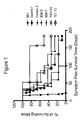
- Fig. 1 Symptom-free survival curve. Results are shown for human Fc control, control antibodies I and II, and antibodies: 8G6-5, 9D4-7, 10F2-13, and 7E1-13.
- CD20 includes variants and isoforms of human CD20, which are naturally expressed by cells. Binding of an antibody of the invention to the CD20 antigen mediates the killing of cells expressing CD20 (for example, a tumor cell). The killing of cells expressing CD20 may occur in a number of ways, including complement dependent cytotoxicity (CDC) of cells expressing CD20, apoptosis of cells expressing CD20, effector cell phagocytosis of cells expressing CD20, or effector cell antibody dependent cellular cytotoxicity (ADCC) of cells expressing CD20.
- CDC complement dependent cytotoxicity
- ADCC effector cell antibody dependent cellular cytotoxicity
- antibody as used herein, is intended to refer to immunoglobulin molecules comprising four polypeptide chains, two heavy (H) chains and two light (L) chains interconnected by disulfide bonds. Each heavy chain comprises a heavy chain variable region
- HCVR HCVR
- VH heavy chain constant region
- the heavy chain constant region comprises three domains, CH1, CH2 and CH3.
- Each light chain comprises a light chain variable region (abbreviated herein as LCVR or VL) and a light chain constant region.
- the light chain constant region comprises of one domain (CL1).
- the VH and VL regions can be further subdivided into regions of hypervariability, termed complementary determining regions (CDR), interspersed with regions that are more conserved, termed framework regions (FR).
- CDR complementary determining regions
- FR framework regions
- Each VH and VL is composed of three CDRs and four FRs, arranged from amino-terminus to carboxy-terminus in the following order: FR1, CDR1, FR2, CDR2, FR3, CDR3, FR4.
- antibody portion refers to one or more fragments of an antibody that retain the ability to specifically bind to an antigen (e.g., hCD20). It has been shown that fragments of a full-length antibody can perform the antigen-binding function of an antibody.
- binding fragments encompassed within the term "antigen-binding portion" of an antibody include (i) an Fab fragment, a monovalent fragment consisting of the VL, VH, CL1 and CH1 domains; (ii) an F(ab') 2 fragment, a bivalent fragment comprising two F(ab)' fragments linked by a disulfide bridge at the hinge region; (iii) an Fd fragment consisting of the VH and CH1 domains; (iv) an Fv fragment consisting of the VL and VH domains of a single arm of an antibody; (v) a dAb fragment ( Ward et al.
- VL and VH are coded for by separate genes, they can be joined, using recombinant methods, by a synthetic linker that enables them to be made as a single contiguous chain in which the VL and VH regions pair to form monovalent molecules (known as single chain Fv (scFv); see e.g., Bird et al. (1988) Science 242:423-426 ; and Huston et al. (1988) Proc. Natl. Acad. Sci. USA 85:5879-5883 ).
- scFv single chain Fv
- single chain antibodies are also intended to be encompassed within the term "antigen-binding portion" of an antibody.
- Other forms of single chain antibodies, such as diabodies, are also encompassed (see e.g., Holliger et al. (1993) Proc. Natl. Acad Sci. USA 90:6444-6448 ).
- a “CDR” or complementary determining region is a region of hypervariability interspersed within regions that are more conserved, termed “framework regions” (FR).
- FR frame regions
- the FRs may be identical to the human germline sequences, or may be naturally or artificially modified.
- surface plasmon resonance refers to an optical phenomenon that allows for the analysis of real-time interactions by detection of alterations in protein concentrations within a biosensor matrix, for example using the BIACORETM system (Pharmacia Biosensor AB).
- epitope refers to an antigenic determinant that interacts with a specific antigen binding site in the variable region of an antibody molecule known as a paratope.
- a single antigen may have more than one epitope.
- Epitopes may be either conformational or linear.
- a conformational epitope is produced by spatially juxtaposed amino acids from different segments of one (or more) linear polypeptide chain(s).
- a linear epitope is an epitope produced by adjacent amino acid residues in a polypeptide chain.
- an epitope may include other moieties, such as saccharides, phosphoryl groups, or sufonyl groups on the antigen.
- nucleic acid or fragment thereof indicates that, when optimally aligned with appropriate nucleotide insertions or deletions with another nucleic acid (or its complementary strand), there is nucleotide sequence identity in at least about 95%, and more preferably at least about 96%, 97%, 98% or 99% of the nucleotide bases, as measured by any well-known algorithm of sequence identity, such as FASTA, BLAST or GAP, as discussed below.
- the term “substantial similarity” or “substantially similar” means that two peptide sequences, when optimally aligned, such as by the programs GAP or BESTFIT using default gap weights, share at least 95% sequence identity, even more preferably at least 98% or 99% sequence identity.
- residue positions, which are not identical differ by conservative amino acid substitutions.
- a "conservative amino acid substitution” is one in which an amino acid residue is substituted by another amino acid residue having a side chain (R group) with similar chemical properties (e.g., charge or hydrophobicity). In general, a conservative amino acid substitution will not substantially change the functional properties of a protein.
- the percent or degree of similarity may be adjusted upwards to correct for the conservative nature of the substitution. Means for making this adjustment are well-known to those of skill in the art. See, e.g., Pearson (1994) Methods Mol. Biol. 24: 307-331 .
- Examples of groups of amino acids that have side chains with similar chemical properties include 1) aliphatic side chains: glycine, alanine, valine, leucine and isoleucine; 2) aliphatic-hydroxyl side chains: serine and threonine; 3) amide-containing side chains: asparagine and glutamine; 4) aromatic side chains: phenylalanine, tyrosine, and tryptophan; 5) basic side chains: lysine, arginine, and histidine; 6) acidic side chains: aspartate and glutamate, and 7) sulfur-containing side chains: cysteine and methionine.
- Preferred conservative amino acids substitution groups are: valine-leucine-isoleucine, phenylalanine-tyrosine, lysine-arginine, alanine-valine, glutamate-aspartate, and asparagine-glutamine.
- a conservative replacement is any change having a positive value in the PAM250 log-likelihood matrix disclosed in Gonnet et al. (1992) Science 256: 1443 45 .
- a "moderately conservative" replacement is any change having a nonnegative value in the PAM250 log-likelihood matrix.
- Sequence similarity for polypeptides is typically measured using sequence analysis software. Protein analysis software matches similar sequences using measures of similarity assigned to various substitutions, deletions and other modifications, including conservative amino acid substitutions.
- GCG software contains programs such as GAP and BESTFIT which can be used with default parameters to determine sequence homology or sequence identity between closely related polypeptides, such as homologous polypeptides from different species of organisms or between a wild type protein and a mutein thereof. See, e.g., GCG Version 6.1. Polypeptide sequences also can be compared using FASTA with default or recommended parameters; a program in GCG Version 6.1.
- FASTA e.g., FASTA2 and FASTA3
- FASTA2 and FASTA3 provides alignments and percent sequence identity of the regions of the best overlap between the query and search sequences (Pearson (2000) supra).
- Another preferred algorithm when comparing a sequence of the invention to a database containing a large number of sequences from different organisms is the computer program BLAST, especially BLASTP or TBLASTN, using default parameters. See, e.g., Altschul et al. (1990) J. Mol. Biol. 215: 403 410 and Altschul et al. (1997) Nucleic Acids Res. 25:3389 402 .
- an “effective amount” is a concentration or amount of an antibody or antigen-binding fragment of an antibody which results in achieving a particular stated purpose.
- An “effective amount” of an anti-CD20 antibody or antigen-binding fragment of an antibody thereof may be determined empirically.
- a “therapeutically effective amount” is a concentration or amount of an anti-CD20 antibody or antigen-binding fragment thereof which is effective for achieving a stated therapeutic effect This amount may also be determined empirically.
- Methods for generating human antibodies include, for example, VeloclmmuneTM (Regeneron Pharmaceuticals), XenoMouseTM technology ( Green et al. (1994) Nature Genetics 7:13-21 ; Abgenix), the "minilocus” approach, and phage display (and see, for example, US 5,545,807 , US 6,787,637 ).
- VeloclmmuneTM technology US 6, 596,541 ) encompasses a method of generating a high specificity fully human antibody to a select antigen.
- This technology involves generation of a transgenic mouse having a genome comprising human heavy and light chain variable regions operably linked to endogenous mouse constant region loci such that the mouse produces an antibody comprising a human variable region and a mouse constant region in response to antigenic stimulation.
- the DNA encoding the variable regions of the heavy and light chains of the antibody are isolated and operably linked to DNA encoding the human heavy and light chain constant regions.
- the DNA is then expressed in a cell capable of expressing the fully human antibody.
- the cell is a CHO cell.
- Antibodies may be therapeutically useful in blocking a ligand-receptor interaction or inhibiting receptor component interaction, rather than by killing cells through fixation of complement (CDC) and participation antibody-dependent cell-mediated cytotoxicity (ADCC).
- the constant region of an antibody is important in the ability of an antibody to fix complement and mediate cell-dependent cytotoxicity.
- the isotype of an antibody may be selected on the basis of whether it is desirable for the antibody to mediate cytotoxicity.
- Human immunoglobulins can exist in two forms that are associated with hinge heterogeneity.
- an immunoglobulin molecule comprises a stable four-chain construct of approximately 150-160 kDa in which the dimers are held together by an interchain heavy chain disulfide bond.
- the dimers are not linked via interchain disulfide bonds and a molecule of about 75-80 kDa is formed composed of a covalently coupled light and heavy chain (half-antibody). These forms have been extremely difficult to separate, even after affinity purification.
- the frequency of appearance of the second form in various intact IgG isotypes is due to, but not limited to, structural differences associated with the hinge region isotype of the antibody.
- a single amino acid substitution in the hinge region of the human IgG4 hinge can significantly reduce the appearance of the second form ( Angal et al. (1993) Molecular Immunology 30: 105 ) to levels typically observed using a human IgG1 hinge.
- the instant invention encompasses antibodies having one or more mutations in the hinge, CH2 or CH3 region, which may be desirable, for example, in production, to improve the yield of the desired antibody, form.
- Antibodies of the invention are preferably prepared with the use of VeloclmmuneTM technology.
- a transgenic mouse in which the endogenous immunoglobulin heavy and light chain variable regions are replaced with the corresponding human variable regions is challenged with the antigen of interest, and lymphatic cells (such as B-cells) are recovered from the mice that express antibodies.
- lymphatic cells such as B-cells
- the lymphatic cells may be fused with a myeloma cell line to prepare immortal hybridoma cell lines, and such hybridoma cell lines are screened and selected to identify hybridoma cell lines that produce antibodies specific to the antigen of interest.
- DNA encoding the variable regions of the heavy chain and light chain may be isolated and linked to desirable isotypic constant regions of the heavy chain and light chain.
- Such an antibody protein may be produced in a cell, such as a CHO cell.
- DNA encoding the antigen-specific chimeric antibodies or the variable domains of the light and heavy chains may be isolated directly from antigen-specific lymphocytes
- the antibodies of the instant invention possess very high affinities, typically possessing K D of from about 10 -8 through about 10 -12 M or higher, for example, at least 10 -8 M, at least 10 -9 M, at least 10 -10 M, at least 10 -11 M, or at least 10 -12 M, or EC 50 of from about 10 -9 through about 10 -12 M or higher, for example, at least 10 -9 M, at least 10 -10 M, at least 10 -11 M, or at least 10 -12 M, when measured by binding to antigen presented on cell surface.
- high affinity chimeric antibodies are isolated having a human variable region and a mouse constant region.
- the antibodies are characterized and selected for desirable characteristics, including affinity, selectivity, epitope, etc.
- the mouse constant regions are replaced with a desired human constant region to generate the fully human antibody of the invention, for example wild-type or modified IgG1 or IgG4 (for example, SEQ ID NO:416, 417, 418). While the constant region selected may vary according to specific use, high affinity antigen-binding and target specificity characteristics reside in the variable region.
- mutant CD20 proteins consisting of selected amino acid substitutions were constructed.
- the mutant CD20 proteins contained substitutions of certain amino acids occurring in the human protein with corresponding amino acids occurring in the mouse protein. This approach helped ensure that the mutant CD20 proteins maintained their tertiary structure and, presumably, any conformational epitopes. Binding of the test antibodies to these mutant CD20 proteins was compared with binding of control (known) CD20 antibodies, as measured by FACS. None of the inventive antibodies displayed a binding profile that was identical (with respect to each and every mutant) to either of the control antibodies.
- the invention encompasses a human anti-CD20 monoclonal antibody conjugated to a therapeutic moiety ("immunoconjugate”), such as a cytotoxin, a chemotherapeutic drug, an immunosuppressant or a radioisotope.
- a therapeutic moiety such as a cytotoxin, a chemotherapeutic drug, an immunosuppressant or a radioisotope.
- Cytotoxin agents include any agent that is detrimental to cells. Examples of suitable cytotoxin agents and chemotherapeutic agents for forming immunoconjugates are known in the art, see for example, WO 05/103081 .
- the antibodies of the present invention may be monospecific, bispecific, or multispecific. Multispecific antibodies may be specific for different epitopes of one target polypeptide or may contain antigen-binding domains specific for more than one target polypeptide. See, e.g., Tutt et al. (1991) J. Immunol. 147:60-69 .
- the human anti-CD20 antibodies can be linked to or coexpressed with another functional molecule, e.g., another peptide or protein.
- an antibody or fragment thereof can be functionally linked (e.g., by chemical coupling, genetic fusion, noncovalent association or otherwise) to one or more other molecular entities, such as another antibody or antibody fragment, to produce a bispecific or a multispecific antibody with a second binding specificity.
- a multispecific antibody of the invention may specifically bind both a CD20 expressing cell and a human effector cell expressing a polypeptide, such as a human Fc receptor, and/or components of the T cell receptor complex.
- the multispecific antibody of the invention comprises a CD20-binding portion and a cytokine.
- the human antibodies, antigen-binding fragments of antibodies, immunoconjugates, and bispecific molecules of the invention are useful in therapeutic methods for treating human diseases which are inhibited or ameliorated by inhibiting growth of cells expressing CD20 and/or killing cells expressing CD20.
- the mechanism of action by which the therapeutic methods of the invention are achieved include killing of the cell expressing CD20 in the presence of effector cells, for example, by CDC, apoptosis, ADCC, phagocytosis, or by a combination of two or more of these mechanisms.
- the mechanism for achieving the therapeutic effect of the molecules of the invention may result in direct killing or inhibition of cells expressing CD20, or indirectly, through inhibiting cells which do not express CD20 for, for example, express a structurally related cell-surface antigen (i.e., without cross-reactivity to related but functionally distinct cell surface antigens).
- Cells expressing CD20 which can be inhibited or killed using the human antibodies of the invention include, for example, tumorigenic B cells.
- diseases and conditions that involve cells expressing CD20 include, but are not limited to, tumorigenic diseases, such as B cell lymphoma (NHL, precursor B cell lymphoblastic leukemia/lymphoma, mature B cell neoplasms, B cell chronic lymphocytic leukemia/small lymphocytic lymphoma, B cell prolymphocytic leukemia, lymphoplasmacytic lymphoma, mantle cell lymphoma, follicular lymphoma, cutaneous follicle center lymphoma, marginal zone B cell lymphoma, hairy cell leukemia, diffuse large B cell lymphoma, Burkitt's lymphoma, plasmacytoma, plasma cell myeloma, post-transplant lymphoproliferative disorder, Waldenstrom's macroglobulinemia, and anaplastic large-cell lymphoma); immune diseases, such as autoimmune diseases (psoriasis, psoriatic arthritis, dermatitis, systemic sc
- the disease or condition attenuated or inhibited by the invention is one selected from non-Hodgkin's lymphoma, rheumatoid arthritis, systemic lupus erythematosus, Crohn's disease, chronic lymphocytic leukemia, and a inflammatory disease.
- the subject being administered the antibody is additionally treated with a chemotherapeutic agent, radiation, or an agent that modulates (enhances or inhibits) the expression or activity of an Fc receptor, such as a cytokine.
- a chemotherapeutic agent such as radiation, or an agent that modulates (enhances or inhibits) the expression or activity of an Fc receptor, such as a cytokine.
- cytokines for administration during treatment include granulocyte colony-stimulating factor (G-CSF), granulocyte-macrophage colony-stimulating factor (GM-CSF), interferon-gamma. (IFN- ⁇ ), and tumor necrosis factor (TNF).
- Typical therapeutic agents include, among others, anti-neoplastic agents such as doxorubicin, cisplatin, bleomycin, carmustine, chlorambucil, and cyclophosphamide.
- the invention provides therapeutic compositions comprising the human anti-CD20 antibodies or antigen-binding fragments thereof of the present invention.
- the therapeutic compositions in accordance with the invention will be administered with suitable carriers, excipients, and other agents that are incorporated into formulations to provide improved transfer, delivery, tolerance, and the like.
- carriers, excipients, or other agents can include, for example, oils (e.g., canola, cottonseed, peanut, safflower, sesame, soybean), fatty acids and salts and esters thereof (e.g., oleic acid, stearic acid, palmitic acid), alcohols (e.g., ethanol, benzyl alcohol), polyalcohols (e.g., glycerol, propylene glycols and polyethylene glycols, e.g., PEG 3350), polysorbates (e.g., polysorbate 20, polysorbate 80), gelatin, albumin (e.g., human serum albumin), salts (e.g., sodium chloride), succinic acid and salts thereof (e.g., sodium succinate), amino acids and salts thereof (e.g., alanine, histidine, glycine, arginine, lysine), acetic acid or a salt or ester thereof (e.g.,
- Non-therapeutic agents are described in US 7,001,892 , in particular in Table A.
- a multitude of appropriate formulations can be found in the formulary known to all pharmaceutical chemists: Remington's Pharmaceutical Sciences (Mack Publishing Company, Easton, Pa ). These formulations include, for example, powders, pastes, ointments, jellies, waxes, oils, lipids, lipid (cationic or anionic) containing vesicles (such as LIPOFECTINTM), DNA conjugates, anhydrous absorption pastes, oil-in-water and water-in-oil emulsions, emulsions carbowax (polyethylene glycols of various molecular weights), semi-solid gels, and semi-solid mixtures containing carbowax.
- any of the foregoing mixtures may be appropriate in treatments and therapies in accordance with the present invention, provided that the active ingredient in the formulation is not inactivated by the formulation and the formulation is physiologically compatible and tolerable with the route of administration. See also Powell et al. PDA (1998) J Pharm Sci Technol. 52:238-311 and the citations therein for additional information related to excipients and carriers well known to pharmaceutical chemists.
- the dose of the therapeutic compositions may vary depending upon the age and the size of a subject to be administered, target disease, conditions, route of administration, and the like.
- the antibody of the present invention is used for treating various conditions and diseases associated with CD20 activity, including non-Hodgkin's lymphoma, rheumatoid arthritis, systemic lupus erythematosus, Crohn's disease, chronic lymphocytic leukemia, inflammatory diseases, and the like, in an adult patient, it is advantageous to intravenously administer the antibody of the present invention normally at a single dose of about 0.01 to about 20 mg/kg body weight, preferably about 0.1 to about 10 mg/kg body weight, and more preferably about 0.1 to about 5 mg/kg body weight. Depending on the severity of the condition or disease, the frequency and the duration of the treatment can be adjusted. In other parenteral administration and oral administration, the antibody can be administered in a dose corresponding to the dose given above.
- Various delivery systems are known and can be used to administer the pharmaceutical composition of the invention, e.g., encapsulation in liposomes, microparticles, microcapsules, recombinant cells capable of expressing the mutant viruses, receptor mediated endocytosis (see, e.g., Wu et al. (1987) J. Biol. Chem. 262:4429-4432 ).
- Methods of introduction include, but are not limited to, intradermal, intramuscular, intraperitoneal, intravenous, subcutaneous, intranasal, epidural, and oral routes.
- composition may be administered by any convenient route, for example by infusion or bolus injection, by absorption through epithelial or mucocutaneous linings (e.g., oral mucosa, rectal and intestinal mucosa, etc.) and may be administered together with other biologically active agents. Administration may preferably be systemic or local.
- epithelial or mucocutaneous linings e.g., oral mucosa, rectal and intestinal mucosa, etc.
- Administration may preferably be systemic or local.
- the pharmaceutical composition can be also delivered in a vesicle, in particular a liposome (see Langer (1990) Science 249:1527-1533 ).
- the pharmaceutical composition can be delivered in a controlled release system.
- a pump may be used (see Langer, supra; Sefton (1987) CRC Crit. Ref. Biomed. Eng. 14:201 ).
- polymeric materials can be used (see Medical Applications of Controlled Release, Langer and Wise (eds.), CRC Pres., Boca Raton, Florida (1974 ); Controlled Drug Bioavailability, Drug Product Design and Performance, Smolen and Ball (eds.), Wiley, New York (1984 ).
- a controlled release system can be placed in proximity of the composition's target, thus requiring only a fraction of the systemic dose (see, e.g., Goodson, in Medical Applications of Controlled Release, supra, vol. 2, pp. 115-138, 1984 ).
- the injectable preparations may include dosage forms for intravenous, subcutaneous, intracutaneous and intramuscular injections, drip infusions, etc. These injectable preparations may be prepared by methods publicly known. For example, the injectable preparations may be prepared, e.g., by dissolving, suspending or emulsifying the antibody or its salt described above in a sterile aqueous medium or an oily medium conventionally used for injections.
- aqueous medium for injections there are, for example, physiological saline, an isotonic solution containing glucose and other auxiliary agents, etc., which may be used in combination with an appropriate solubilizing agent such as an alcohol (e.g., ethanol), a polyalcohol (e.g., propylene glycol, polyethylene glycol), a nonionic surfactant [e.g., polysorbate 80, HCO-50 (polyoxyethylene (50 mol) adduct of hydrogenated castor oil)], etc.
- an alcohol e.g., ethanol
- a polyalcohol e.g., propylene glycol, polyethylene glycol
- a nonionic surfactant e.g., polysorbate 80, HCO-50 (polyoxyethylene (50 mol) adduct of hydrogenated castor oil
- oily medium there are employed, e.g., sesame oil, soybean oil, etc., which may be used in combination with a solubilizing agent such as benzyl benzoate, benzyl alcohol, etc.
- a solubilizing agent such as benzyl benzoate, benzyl alcohol, etc.
- the pharmaceutical compositions for oral or parenteral use described above are prepared into dosage forms in a unit dose suited to fit a dose of the active ingredients.
- dosage forms in a unit dose include, for example, tablets, pills, capsules, injections (ampoules), suppositories, etc.
- the amount of the aforesaid antibody contained is generally about 5 to 500 mg per dosage form in a unit dose; especially in the form of injection, it is preferred that the aforesaid antibody is contained in about 5 to 100 mg and in about 10 to 250 mg for the other dosage forms.
- Immunization of rodents can be done by any method known in the art (see, for example, Harlow & Lane, eds. (1988) Antibodies: A Laboratory Manual, Cold Spring Harbor Press, New York ; Malik and Lillehoj, Antibody techniques: Academic Press, 1994, San Diego ).
- cells expressing CD20 are administered directly to mice which have DNA loci encoding both human Ig heavy chain variable regions and Kappa light chain variable regions (VeloclmmuneTM, Regeneron Pharmaceuticals, Inc.; US 6,596,541 ), with an adjuvant to stimulate the immune response.
- Such an adjuvant can include complete and incomplete Freund's adjuvant, MPL+TDM adjuvant system (Sigma), or RIBI (muramyl dipeptides) (see O'Hagan, Vaccine Adjuvant, by Human Press, 2000, Totawa, NJ ).
- MPL+TDM adjuvant system Sigma
- RIBI muramyl dipeptides
- mice are given booster injections every 3 ⁇ 4 weeks.
- the immune response is monitored by a cell-based immunoassay as described below in which serum samples in 1- to 3-fold serial dilutions are immunoassayed.
- Serum titer is defined as the dilution of serum sample that yielded an assay signal two-fold over background.
- NS/0 cells In primary screening, NS/0 cells (ATCC) were transfected with the human CD20 gene and high-expressing cells (NS/0-hCD20 cells) were pooled and maintained in culture for use in screening hybridoma-conditioned media, generally about 11 to 14 days following fusion.
- NS/0-hCD20 cells in RPMI 1640 with 10% fetal calf serum were plated at a density of 50,000 cells per well in 96-well poly-D-lysine plates.
- Hybridoma-conditioned medium was diluted 5-fold and allowed to bind to the cells for 30 minutes. The cells were then fixed onto the plates with the addition of an equal volume of 8% formaldehyde for 20 min, followed by four successive PBST washes.
- HCVR/LCVR SEQ ID NO 3B9-10N (3/11); 3B9-10GSP (19/21); 3B9-10FGL (23/25); 9C11-14N (27/35); 9C11-14GSP (43/45); 9C11-14FGL (47/49); 2B7-7N (51/59); 2B7-7GSP (67/69); 2B7-7FGL (71/73); 2C11-4N (75/83); 2C11-4GSP (91/93); 2C11-4FGL (95/97); 3H7-6N (99/107); 3H7-6GSP (115/117); 3H7-6FGL (119/121); 5H2-17N
- Antigen binding specificity of the fully human anti-CD20 antibodies was verified using flow cytometry as described below, with human CD20-transfected MG87 cells. Briefly, parental MG87 and human CD20-transfected MG87 cells were incubated for 30 min at 4°C with each of the 15 human antibodies and the two control antibodies, followed by incubation with PE-conjugated anti-human IgG antibody. Binding was assessed by flow cytometry. Fluorescence intensities were compared with binding to the parental cell line and control isotype-matched sample. Results are summarized on Table 1. All antibodies bound to human CD20-transfected MG87 cells, whereas no binding was observed to parental MG87 cells, indicating that the antibodies are CD20-specific.
- Control I chimeric (murine/human) anti-CD20 mAb, rituximab, (RITUXAN®, IDEC Pharmaceuticals Corp.); control II: human anti-CD20 mAb, 2F2, described in WO 2005/103081 ).
- Mutant human CD20s were generated by substituting human CD20 amino acid sequences with corresponding mouse amino acids using a Strategene Mutagenesis kit (Table 2).
- a plasmid vector comprising a mutant human CD20, a CMV promoter, and a hygromycin resistant gene-IRES-GFP marker was then transfected into MG87 cells.
- a pool of hygromycin-resistant cells that displayed high GFP expression were collected and a stable line was created for antibody binding assay.
- Table 3 shows the percent binding of each anti-CD20 antibody to each mutant human CD20.
- Table 3 Antibody Percent of Binding to Mutant Human CD20 (%) #1 #2 #3 #4 #5 #6 #7 #8 #9 #10 Control II 60 30 70 51 84 1 1 0 4 79 3B9-10 56 6 67 40 72 1 1 0 4 79 9C11-14 89 83 0 87 29 87 96 100 100 83 7E1-13 94 49 95 84 85 1 1 0 4 92 6F6-1 100 74 100 85 100 16 2 0 4 98 8G6-5 86 45 65 70 76 5 1 0 4 96 10F2-13 79 54 55 60 69 1 2 0 4 87 2B7-7 100 40 87 100 88 12 2 0 4 83 10E3-17 61 1 6 1 49 1 1 0 4 87 2C11-4 35 0 11 31 30 1 1 0 3 68 9D
- the anti-human CD20 human antibodies were tested for their ability to promote complement dependent cytotoxicity (CDC) using the human lymphoma cell lines Daudi and RL as target cell lines.
- the antibodies were serially diluted (final concentration range of 50 nM to 0.85 pM plus buffer control) into media and added to target cells seeded in a 96 well plate format.
- Human serum with complement components (Quidel) was added to each well to give a final serum concentration of 5%.
- the cells were incubated at 37°C for 2 hrs with the test antibodies and human serum with complement components and then assayed for cell survival as detected by ALAMARBLUETM. Fluorescence was measured using an excitation wavelength of 560 nm and an emission wavelength of 590 nm (Table 4).
- the off-rates of the anti-CD20 mAbs were analyzed in a CDC assay. The experiments were performed in 3 separate sets. Within each set, the percentage of cell lysis was determined for 5 antibodies at a time relative to controls I and II at 0, 1, and 6 hrs. Antibody was bound to the cells by incubating 2 ⁇ g of each antibody with 10 6 Daudi cells for 45 min (RT). For the zero time point, the cells were washed and immediately resuspended in 100 ⁇ l of medium containing 20% normal human serum complement, then incubated for 45 min at 37°C, 5% CO 2 .
- Biochemical off-rates for selected test anti-CD20 antibodies were determined and compared with control antibodies I and II.
- Two selected human antibodies, control I or II (each 2 ⁇ g/ml) were incubated with CD20-expressing Raji cells, at 10 6 /ml, for 2 hrs at RT. The cells were then washed, excess antibody was removed, re-suspended in 1% serum-containing medium, and incubated at 37°C. At time 0, 15, 30, 45, 60, 90, 120, and 180 min, an aliquot of 1 ml of cells was removed, washed, stained with PE-labeled anti-hFc antibody, and FACS analysis conducted. Mean fluorescent intensity (MFI) was used as an indicator of the amount of antibody bound to the cell surface.
- MFI Mean fluorescent intensity
- Biochemical off rates were calculated by setting the percentage binding at time zero as 100%. The experiment was repeated 5 additional times, and biochemical off rate for 12 the test antibodies determined and compared to control I and II (Tables 8-13).
- PBMCs peripheral blood mononuclear cells
- PBMCs Enriched PBMCs were collected, washed, and plated in RPMI 1640 containing 10% heat inactivated FBS, 2 mM glutamine and 50 nM beta-mercaptoethanol. The cells were then stimulated with 5 ng/ml human IL-2 for three days, washed once in media, then used directly in the ADCC assay. Approximately 300,000 PBMCs were added to each mixture of antibody and target cells to give a final ratio of effector to target cells of approximately 30:1. The 96-well plates were then incubated for 4 hr and centrifuged at 250 x g.
- Example 10 Therapeutic Activities of Anti-CD20 Antibodies with a Human Lymphoma Xenograft Mouse Model.
- mice were monitored for a period up to 180 days. Mice exhibiting signs of disease including hind-limb paralysis, cachexia, and occasional large local tumor mass were euthanized by CO 2 asphyxiation. Symptom-free survival curves were constructed using the Kaplan-Meier method ( Fig. 1 ). The results are expressed as percent survival as a function of symptom free survival time. These results show that ab 10F2-13 increased survival times significantly in the animal model, from about 20 days (hFc control treated animals) to about 180 days (more than a 9-fold increase in survival rate) (50% of treated animals survived about 20 days (hFc control), about 40 days (control I), about 85 days (control II), and more than 180 days (10F2-13). These increased survival times are at least 2-fold greater (relative to control II), about 4.5-fold greater (relative to control I), or at least about 9-fold or greater relative to hFc-treated animals.
Landscapes
- Health & Medical Sciences (AREA)
- Life Sciences & Earth Sciences (AREA)
- Chemical & Material Sciences (AREA)
- Organic Chemistry (AREA)
- Medicinal Chemistry (AREA)
- General Health & Medical Sciences (AREA)
- Veterinary Medicine (AREA)
- Public Health (AREA)
- Chemical Kinetics & Catalysis (AREA)
- Nuclear Medicine, Radiotherapy & Molecular Imaging (AREA)
- General Chemical & Material Sciences (AREA)
- Pharmacology & Pharmacy (AREA)
- Animal Behavior & Ethology (AREA)
- Engineering & Computer Science (AREA)
- Bioinformatics & Cheminformatics (AREA)
- Immunology (AREA)
- Diabetes (AREA)
- Virology (AREA)
- Hematology (AREA)
- Oncology (AREA)
- Molecular Biology (AREA)
- Pulmonology (AREA)
- Communicable Diseases (AREA)
- Endocrinology (AREA)
- Neurology (AREA)
- Cardiology (AREA)
- Proteomics, Peptides & Aminoacids (AREA)
- Genetics & Genomics (AREA)
- Urology & Nephrology (AREA)
- Biophysics (AREA)
- Biochemistry (AREA)
- Heart & Thoracic Surgery (AREA)
- Dermatology (AREA)
- Rheumatology (AREA)
- Physical Education & Sports Medicine (AREA)
- Orthopedic Medicine & Surgery (AREA)
- Tropical Medicine & Parasitology (AREA)
- Biotechnology (AREA)
- Emergency Medicine (AREA)
- Obesity (AREA)
Priority Applications (1)
| Application Number | Priority Date | Filing Date | Title |
|---|---|---|---|
| PL08796917T PL2178916T3 (pl) | 2007-07-31 | 2008-07-31 | Ludzkie przeciwciała przeciwko ludzkiemu CD20 i sposób ich zastosowania |
Applications Claiming Priority (3)
| Application Number | Priority Date | Filing Date | Title |
|---|---|---|---|
| US96281107P | 2007-07-31 | 2007-07-31 | |
| US6799408P | 2008-03-03 | 2008-03-03 | |
| PCT/US2008/071709 WO2009018411A1 (en) | 2007-07-31 | 2008-07-31 | Human antibodies to human cd20 and method of using thereof |
Publications (2)
| Publication Number | Publication Date |
|---|---|
| EP2178916A1 EP2178916A1 (en) | 2010-04-28 |
| EP2178916B1 true EP2178916B1 (en) | 2014-12-17 |
Family
ID=40010730
Family Applications (1)
| Application Number | Title | Priority Date | Filing Date |
|---|---|---|---|
| EP08796917.6A Active EP2178916B1 (en) | 2007-07-31 | 2008-07-31 | Human antibodies to human cd20 and method of using thereof |
Country Status (28)
| Country | Link |
|---|---|
| US (3) | US7879984B2 (pl) |
| EP (1) | EP2178916B1 (pl) |
| JP (1) | JP5588865B2 (pl) |
| KR (1) | KR101561020B1 (pl) |
| CN (1) | CN101809037B (pl) |
| AU (1) | AU2008282152B2 (pl) |
| BR (1) | BRPI0813985B1 (pl) |
| CA (1) | CA2695199C (pl) |
| CO (1) | CO6260105A2 (pl) |
| CR (1) | CR11243A (pl) |
| DK (1) | DK2178916T3 (pl) |
| DO (1) | DOP2010000037A (pl) |
| EC (1) | ECSP10010005A (pl) |
| ES (1) | ES2527297T3 (pl) |
| GT (1) | GT201000026A (pl) |
| HN (1) | HN2010000202A (pl) |
| MA (1) | MA31634B1 (pl) |
| ME (1) | ME00973B (pl) |
| MX (1) | MX2010000970A (pl) |
| MY (1) | MY147651A (pl) |
| NI (1) | NI201000016A (pl) |
| NZ (1) | NZ583019A (pl) |
| PL (1) | PL2178916T3 (pl) |
| RU (1) | RU2486205C2 (pl) |
| SV (1) | SV2010003468A (pl) |
| TN (2) | TN2010000054A1 (pl) |
| WO (1) | WO2009018411A1 (pl) |
| ZA (1) | ZA201000545B (pl) |
Families Citing this family (118)
| Publication number | Priority date | Publication date | Assignee | Title |
|---|---|---|---|---|
| US6596541B2 (en) | 2000-10-31 | 2003-07-22 | Regeneron Pharmaceuticals, Inc. | Methods of modifying eukaryotic cells |
| US20050144655A1 (en) | 2000-10-31 | 2005-06-30 | Economides Aris N. | Methods of modifying eukaryotic cells |
| US20090137416A1 (en) | 2001-01-16 | 2009-05-28 | Regeneron Pharmaceuticals, Inc. | Isolating Cells Expressing Secreted Proteins |
| US20100069614A1 (en) | 2008-06-27 | 2010-03-18 | Merus B.V. | Antibody producing non-human mammals |
| ES2408582T3 (es) | 2003-05-30 | 2013-06-21 | Merus B.V. | Biblioteca de Fab para la preparación de una mezcla de anticuerpos |
| US8877199B2 (en) | 2009-05-15 | 2014-11-04 | The United States Of America, As Represented By The Secretary Of The Department Of Health And Human Services | B cell surface reactive antibodies |
| US9445581B2 (en) | 2012-03-28 | 2016-09-20 | Kymab Limited | Animal models and therapeutic molecules |
| BR112012000536A2 (pt) | 2009-07-08 | 2020-08-11 | Kymab Limited | métodos para produção de anticorpo ou cadeia leve ou pesada de anticorpo específico para um antígeno desejado, para produção de anticorpo ou cadeia de anticorpo e seu uso, composição farmacêutica e derivado de anticorpo quimérico |
| PL3498730T3 (pl) | 2009-12-21 | 2026-04-07 | Regeneron Pharmaceuticals, Inc. | Humanizowane myszy fc gamma r |
| BR112014006394A2 (pt) | 2011-09-19 | 2017-03-28 | Kymab Ltd | manipulação de diversidade genética de imunoglobulina e terapêuticos multi-anticorpos |
| WO2013045916A1 (en) | 2011-09-26 | 2013-04-04 | Kymab Limited | Chimaeric surrogate light chains (slc) comprising human vpreb |
| US9253965B2 (en) | 2012-03-28 | 2016-02-09 | Kymab Limited | Animal models and therapeutic molecules |
| KR102338833B1 (ko) * | 2012-02-06 | 2021-12-13 | 인히브릭스, 인크. | Cd47 항체 및 그 사용 방법 |
| US10251377B2 (en) | 2012-03-28 | 2019-04-09 | Kymab Limited | Transgenic non-human vertebrate for the expression of class-switched, fully human, antibodies |
| GB2502127A (en) | 2012-05-17 | 2013-11-20 | Kymab Ltd | Multivalent antibodies and in vivo methods for their production |
| JOP20200236A1 (ar) | 2012-09-21 | 2017-06-16 | Regeneron Pharma | الأجسام المضادة لمضاد cd3 وجزيئات ربط الأنتيجين ثنائية التحديد التي تربط cd3 وcd20 واستخداماتها |
| TW202423993A (zh) * | 2012-11-14 | 2024-06-16 | 美商再生元醫藥公司 | 重組細胞表面捕捉蛋白質 |
| US20140140991A1 (en) * | 2012-11-20 | 2014-05-22 | Celgene Avilomics Research, Inc. | Methods of treating a disease or disorder associated with bruton's tyrosine kinase |
| AU2014214846A1 (en) | 2013-02-08 | 2015-07-23 | Celgene Avilomics Research, Inc. | ERK inhibitors and uses thereof |
| AR095196A1 (es) | 2013-03-15 | 2015-09-30 | Regeneron Pharma | Medio de cultivo celular libre de suero |
| US9788534B2 (en) | 2013-03-18 | 2017-10-17 | Kymab Limited | Animal models and therapeutic molecules |
| CN105358177B (zh) | 2013-04-17 | 2018-11-23 | 西格诺药品有限公司 | 包含tor激酶抑制剂和imid化合物的联合疗法用于治疗癌症 |
| BR112015026297B1 (pt) | 2013-04-17 | 2022-08-23 | Signal Pharmaceuticals, Llc | Uso de um inibidor da quinase tor e quinazolinona 5-substituída, composição farmacêutica que os compreende, e kit |
| TW201521725A (zh) | 2013-04-17 | 2015-06-16 | Signal Pharm Llc | 使用tor激酶抑制劑組合療法以治療癌症之方法 |
| US9783618B2 (en) | 2013-05-01 | 2017-10-10 | Kymab Limited | Manipulation of immunoglobulin gene diversity and multi-antibody therapeutics |
| US9783593B2 (en) | 2013-05-02 | 2017-10-10 | Kymab Limited | Antibodies, variable domains and chains tailored for human use |
| US11707056B2 (en) | 2013-05-02 | 2023-07-25 | Kymab Limited | Animals, repertoires and methods |
| TW201534305A (zh) | 2013-05-03 | 2015-09-16 | Celgene Corp | 使用組合療法治療癌症之方法 |
| US9492471B2 (en) | 2013-08-27 | 2016-11-15 | Celgene Avilomics Research, Inc. | Methods of treating a disease or disorder associated with Bruton'S Tyrosine Kinase |
| DE112014004537T5 (de) | 2013-10-01 | 2016-07-21 | Kymab Limited | Tiermodelle und therapeutische Moleküle |
| CN113995843A (zh) * | 2013-11-07 | 2022-02-01 | 豪夫迈·罗氏有限公司 | 抗cd20抗体与btk抑制剂的组合疗法 |
| TWI754319B (zh) * | 2014-03-19 | 2022-02-01 | 美商再生元醫藥公司 | 用於腫瘤治療之方法及抗體組成物 |
| RU2763795C2 (ru) | 2014-04-23 | 2022-01-11 | Джуно Терапьютикс, Инк. | Способы выделения, культивирования и генетической инженерии популяций клеток иммунной системы для адоптивной терапии |
| US10005760B2 (en) | 2014-08-13 | 2018-06-26 | Celgene Car Llc | Forms and compositions of an ERK inhibitor |
| GB201419084D0 (en) | 2014-10-27 | 2014-12-10 | Agency Science Tech & Res | Anti-PD-1 antibodies |
| RS60739B1 (sr) | 2014-11-17 | 2020-09-30 | Regeneron Pharma | Postupci za lečenje tumora upotrebom cd3xcd20 bispecifičnog antitela |
| AU2016271124C1 (en) | 2015-05-30 | 2020-05-14 | Molecular Templates, Inc. | De-immunized, Shiga toxin a subunit scaffolds and cell-targeting molecules comprising the same |
| MX391086B (es) | 2015-06-24 | 2025-03-21 | Hoffmann La Roche | Anticuerpos anti-receptor de transferrina con afinidad diseñada. |
| TW202440904A (zh) | 2015-08-04 | 2024-10-16 | 美商再生元醫藥公司 | 補充牛磺酸之細胞培養基及用法(二) |
| AR106189A1 (es) | 2015-10-02 | 2017-12-20 | Hoffmann La Roche | ANTICUERPOS BIESPECÍFICOS CONTRA EL A-b HUMANO Y EL RECEPTOR DE TRANSFERRINA HUMANO Y MÉTODOS DE USO |
| NZ741067A (en) | 2015-10-02 | 2023-07-28 | Hoffmann La Roche | Bispecific anti-human cd20/human transferrin receptor antibodies and methods of use |
| JP7126941B2 (ja) | 2015-12-22 | 2022-08-29 | リジェネロン・ファーマシューティカルズ・インコーポレイテッド | がんを治療するための抗pd-1抗体と二重特異性抗cd20/抗cd3抗体の組合せ |
| EP3489262A4 (en) * | 2016-07-19 | 2020-07-08 | Ibentrus, Inc. | BISPECIFIC PROTEINS AND PROCESSES FOR THEIR PREPARATION |
| WO2018039499A1 (en) | 2016-08-24 | 2018-03-01 | Regeneron Pharmaceuticals, Inc. | Host cell protein modification |
| US10610104B2 (en) | 2016-12-07 | 2020-04-07 | Progenity, Inc. | Gastrointestinal tract detection methods, devices and systems |
| EP3554545A4 (en) | 2016-12-19 | 2020-08-12 | Vanderbilt University | ANTIBODIES DIRECTED AGAINST HUMAN RESPIRATORY SYNCYTIAL VIRUS PRE-FUSION PROTEIN CONFORMATION AND THEIR USE METHODS |
| CN108395482B (zh) | 2017-02-08 | 2021-02-05 | 西比曼生物科技(香港)有限公司 | 一种靶向cd20抗原嵌合抗原受体的构建及其工程化t细胞的活性鉴定 |
| US20210138213A1 (en) | 2017-03-30 | 2021-05-13 | Progenity, Inc. | Treatment of a disease of the gastrointestinal tract with an immune modulatory agent released using an ingestible device |
| KR102659791B1 (ko) | 2017-07-06 | 2024-04-23 | 리제너론 파마슈티칼스 인코포레이티드 | 당단백질을 만들기 위한 세포 배양 과정 |
| CN111511762B (zh) | 2017-08-21 | 2025-05-06 | 天演药业公司 | 抗cd137分子及其用途 |
| BR112020010615A2 (pt) | 2017-12-22 | 2020-10-27 | Regeneron Pharmaceuticals, Inc. | produto farmacêutico proteico, método e sistema para caracterizar impurezas de produto farmacêutico proteico e de fármaco de baixo peso molecular, método para produzir um anticorpo, anticorpo, e, usos do método e do sistema |
| CN111655722A (zh) | 2018-01-31 | 2020-09-11 | 瑞泽恩制药公司 | 用于表征药物产品杂质的系统和方法 |
| TW202311746A (zh) | 2018-02-02 | 2023-03-16 | 美商再生元醫藥公司 | 用於表徵蛋白質二聚合之系統及方法 |
| WO2019148445A1 (en) | 2018-02-02 | 2019-08-08 | Adagene Inc. | Precision/context-dependent activatable antibodies, and methods of making and using the same |
| MX2020008988A (es) | 2018-02-28 | 2020-09-28 | Regeneron Pharma | Sistemas y metodos para la identificacion de contaminantes virales. |
| US12259355B2 (en) | 2018-03-19 | 2025-03-25 | Regeneron Pharmaceuticals, Inc. | Microchip capillary electrophoresis assays and reagents |
| CA3089655C (en) | 2018-03-19 | 2026-01-20 | Regeneron Pharmaceuticals, Inc. | Microchip capillary electrophoresis assays and reagents |
| US12253490B2 (en) | 2018-03-19 | 2025-03-18 | Regeneron Pharmaceuticals, Inc. | Microchip capillary electrophoresis assays and reagents |
| TW202016125A (zh) | 2018-05-10 | 2020-05-01 | 美商再生元醫藥公司 | 用於定量及調節蛋白質黏度之系統與方法 |
| WO2019246312A1 (en) | 2018-06-20 | 2019-12-26 | Progenity, Inc. | Treatment of a disease of the gastrointestinal tract with an immunomodulator |
| US12227565B2 (en) | 2018-06-20 | 2025-02-18 | Biora Therapeutics, Inc. | Method of formulating a pharmaceutical composition comprising administering an immune modulator to the small intestine |
| MY204234A (en) | 2018-08-27 | 2024-08-16 | Regeneron Pharma | Use of raman spectroscopy in downstream purification |
| AU2019333047A1 (en) | 2018-08-30 | 2020-12-03 | Regeneron Pharmaceuticals, Inc. | Methods for characterizing protein complexes |
| RS66543B1 (sr) | 2018-08-31 | 2025-03-31 | Regeneron Pharma | Strategija doziranja koja ublažava sindrom oslobađanja citokina za cd3/cd20 bispecifična antitela |
| CA3112584A1 (en) | 2018-09-17 | 2020-03-26 | The United States Of America, As Represented By The Secretary, Department Of Health And Human Services | Bicistronic chimeric antigen receptors targeting cd19 and cd20 and their uses |
| AU2019354391A1 (en) * | 2018-10-01 | 2021-05-06 | Adicet Therapeutics, Inc. | Compositions and methods regarding engineered and non- engineered γδ-Τ cells for treatment of hematological tumors |
| US20220249814A1 (en) | 2018-11-19 | 2022-08-11 | Progenity, Inc. | Methods and devices for treating a disease with biotherapeutics |
| GB201820687D0 (en) * | 2018-12-19 | 2019-01-30 | Kymab Ltd | Antagonists |
| ES2942024T3 (es) | 2019-01-16 | 2023-05-29 | Regeneron Pharma | Métodos para caracterizar enlaces disulfuro |
| EP3969908A1 (en) | 2019-05-13 | 2022-03-23 | Regeneron Pharmaceuticals, Inc. | Improved competitive ligand binding assays |
| EP4653865A3 (en) | 2019-09-24 | 2026-02-18 | Regeneron Pharmaceuticals, Inc. | Systems and methods for chromatography use and regeneration |
| US12297451B1 (en) | 2019-10-25 | 2025-05-13 | Regeneron Pharmaceuticals, Inc. | Cell culture medium |
| WO2021108548A1 (en) | 2019-11-25 | 2021-06-03 | Regeneron Pharmaceuticals, Inc. | Sustained release formulations using non-aqueous emulsions |
| CN121197633A (zh) | 2019-12-13 | 2025-12-26 | 比特比德科有限责任公司 | 用于将治疗剂递送至胃肠道的可摄取装置 |
| MX2022008973A (es) | 2020-01-21 | 2022-08-11 | Regeneron Pharma | Metodos de desglicosilacion para electroforesis de proteinas glicosiladas. |
| CN113402612A (zh) | 2020-03-17 | 2021-09-17 | 西比曼生物科技(香港)有限公司 | 靶向cd19和cd20的联合嵌合抗原受体及其应用 |
| AU2021332355A1 (en) | 2020-08-31 | 2023-03-23 | Regeneron Pharmaceuticals, Inc. | Asparagine feed strategies to improve cell culture performance and mitigate asparagine sequence variants |
| WO2022115588A1 (en) | 2020-11-25 | 2022-06-02 | Regeneron Pharmaceuticals, Inc. | Sustained release formulations using non-aqueous membrane emulsification |
| JP2024500409A (ja) | 2020-12-17 | 2024-01-09 | リジェネロン・ファーマシューティカルズ・インコーポレイテッド | タンパク質封入マイクロゲルの作製 |
| KR20230134117A (ko) | 2021-01-20 | 2023-09-20 | 리제너론 파마슈티칼스 인코포레이티드 | 세포 배양물에서 단백질 역가를 개선시키는 방법 |
| IL305156A (en) | 2021-03-03 | 2023-10-01 | Regeneron Pharma | Systems and methods for quantifying and modifying protein viscosity |
| US20240165153A1 (en) | 2021-03-24 | 2024-05-23 | The United States Of America,As Represented By The Secretary,Department Of Health And Human Services | Bicistronic chimeric antigen receptors designed to reduce retroviral recombination and uses thereof |
| BR112023018665A2 (pt) | 2021-03-26 | 2023-10-03 | Regeneron Pharma | Métodos e sistemas para desenvolvimento de protocolos de mistura |
| EP4348234B1 (en) | 2021-06-01 | 2026-04-08 | Regeneron Pharmaceuticals, Inc. | Microchip capillary electrophoresis assays and reagents |
| US20230077710A1 (en) | 2021-09-08 | 2023-03-16 | Regeneron Pharmaceuticals, Inc. | HIGH-THROUGHPUT AND MASS-SPECTROMETRY-BASED METHOD FOR QUANTITATING ANTIBODIES AND OTHER Fc-CONTAINING PROTEINS |
| JP2024531800A (ja) | 2021-09-20 | 2024-08-29 | リジェネロン・ファーマシューティカルズ・インコーポレイテッド | 抗体の不均一性を制御する方法 |
| CA3230985A1 (en) | 2021-10-07 | 2023-04-13 | Ross BROWNE | Ph meter calibration and correction |
| WO2023059800A2 (en) | 2021-10-07 | 2023-04-13 | Regeneron Pharmaceuticals, Inc. | Systems and methods of ph modeling and control |
| CA3236367A1 (en) | 2021-10-26 | 2023-05-04 | Michelle Lafond | Systems and methods for generating laboratory water and distributing laboratory water at different temperatures |
| IL315548A (en) | 2022-03-18 | 2024-11-01 | Regeneron Pharma | Methods and systems for analyzing polypeptide variants |
| WO2023196903A1 (en) | 2022-04-06 | 2023-10-12 | Regeneron Pharmaceuticals, Inc. | Bispecific antigen-binding molecules that bind and cd3 and tumor associated antigens (taas) and uses thereof |
| WO2023215560A1 (en) | 2022-05-05 | 2023-11-09 | Atoosa Corporation | Tumor cell/immune cell multivalent receptor engager – bio-nanoparticle (timre-bnp) |
| EP4634659A1 (en) | 2022-12-16 | 2025-10-22 | Regeneron Pharmaceuticals, Inc. | Methods and systems for assessing chromatographic column integrity |
| WO2024158961A1 (en) | 2023-01-25 | 2024-08-02 | Regeneron Pharmaceuticals, Inc. | Mass spectrometry-based characterization of antibodies co-expressed in vivo |
| US20240245779A1 (en) | 2023-01-25 | 2024-07-25 | Regeneron Pharmaceuticals, Inc. | Methods of modeling liquid protein composition stability |
| US20240255519A1 (en) | 2023-02-01 | 2024-08-01 | Regeneron Pharmaceuticals, Inc. | Asymmetrical flow field-flow fractionation with mass spectrometry for biomacromolecule analysis |
| US20240280551A1 (en) | 2023-02-22 | 2024-08-22 | Regeneron Pharmaceuticals, Inc. | System suitability parameters and column aging |
| KR20260005874A (ko) | 2023-02-28 | 2026-01-12 | 주노 쎄러퓨티크스 인코퍼레이티드 | 전신 자가면역 질환을 치료하기 위한 세포 요법 |
| CA3278900A1 (en) | 2023-03-31 | 2024-10-03 | AbelZeta Inc. | BISPECIFIC CHIMERIC ANTIGENIC RECEPTORS TARGETING CD20 AND BCMA |
| EP4704808A1 (en) | 2023-05-01 | 2026-03-11 | Regeneron Pharmaceuticals, Inc. | Multidose antibody drug products using phenol or benzyl alcohol |
| TW202528736A (zh) | 2023-09-08 | 2025-07-16 | 美商再生元醫藥公司 | 用於評估層析管柱完整性的方法及系統 |
| WO2025064403A2 (en) | 2023-09-18 | 2025-03-27 | Regeneron Pharmaceuticals, Inc. | Methods and systems for developing chromatography protocols |
| CN121925272A (zh) | 2023-09-29 | 2026-04-24 | 瑞泽恩制药公司 | 利用受控成核进行冻干 |
| WO2025085594A1 (en) | 2023-10-18 | 2025-04-24 | Regeneron Pharmaceuticals, Inc. | Rapid purification of monoclonal antibody from in-process upstream cell culture material |
| US20250145662A1 (en) | 2023-11-02 | 2025-05-08 | Regeneron Pharmaceuticals, Inc. | Methods for reducing lipase activity using stress |
| WO2025160324A2 (en) | 2024-01-26 | 2025-07-31 | Regeneron Pharmaceuticals, Inc. | Methods and compositions for using plasma cell depleting agents and/or b cell depleting agents to suppress host anti-aav antibody response and enable aav transduction and re-dosing |
| WO2025160340A2 (en) | 2024-01-26 | 2025-07-31 | Regeneron Pharmaceuticals, Inc. | Combination immunosuppression for inhibiting an immune response and enabling immunogen administration and re-administration |
| WO2025166281A1 (en) | 2024-02-01 | 2025-08-07 | Regeneron Pharmaceuticals, Inc. | Platform for charge-detection mass spectrometry analysis of aavs |
| WO2025175164A1 (en) | 2024-02-16 | 2025-08-21 | Regeneron Pharmaceuticals, Inc. | Methods of producing concentrated formulated drug substances comprising proteins, and concentrated formulated drug substance made by the methods |
| WO2025184567A1 (en) | 2024-03-01 | 2025-09-04 | Regeneron Pharmaceuticals, Inc. | Methods and compositions for re-dosing aav using anti-cd40 antagonistic antibody to suppress host anti-aav antibody response |
| TW202602489A (zh) | 2024-03-15 | 2026-01-16 | 美商再生元醫藥公司 | 作為經穩定的蛋白質調配物之賦形劑的聚山梨醇酯及聚氧乙烯山梨糖醇酐 |
| WO2025259840A1 (en) | 2024-06-13 | 2025-12-18 | Regeneron Pharmaceuticals, Inc. | Methods and systems for scaled chromatography |
| WO2026025028A1 (en) | 2024-07-26 | 2026-01-29 | Regeneron Pharmaceuticals, Inc. | Methods of making ultra-high concentrated protein formulations using lyophilization |
| WO2026050426A2 (en) | 2024-08-28 | 2026-03-05 | Juno Therapeutics, Inc. | Cd19-directed chimeric antigen receptor cell therapy for treating autoimmune and neurological diseases |
| WO2026060350A1 (en) | 2024-09-13 | 2026-03-19 | Regeneron Pharmaceuticals, Inc. | Methods of improving photo stability and controlling formation of hmw species in biologic formulations, and biologic formulations produced by the methods |
| WO2026076201A2 (en) | 2024-10-03 | 2026-04-09 | Regeneron Pharmaceuticals, Inc. | Systems and methods for producing therapeutic proteins using single pass tangential flow filtration for in-line concentration and volume reduction of production pools |
| WO2026080597A1 (en) | 2024-10-08 | 2026-04-16 | Regeneron Pharmaceuticals, Inc. | Sustained delivery of biologics and non-aqueous manufacture of same |
| CN120647759A (zh) * | 2025-06-13 | 2025-09-16 | 郑州伊美诺生物技术有限公司 | 醛固酮抗原结合分子及其应用 |
Family Cites Families (31)
| Publication number | Priority date | Publication date | Assignee | Title |
|---|---|---|---|---|
| US6893625B1 (en) * | 1986-10-27 | 2005-05-17 | Royalty Pharma Finance Trust | Chimeric antibody with specificity to human B cell surface antigen |
| IL85035A0 (en) * | 1987-01-08 | 1988-06-30 | Int Genetic Eng | Polynucleotide molecule,a chimeric antibody with specificity for human b cell surface antigen,a process for the preparation and methods utilizing the same |
| IE922437A1 (en) * | 1991-07-25 | 1993-01-27 | Idec Pharma Corp | Recombinant antibodies for human therapy |
| US5736137A (en) * | 1992-11-13 | 1998-04-07 | Idec Pharmaceuticals Corporation | Therapeutic application of chimeric and radiolabeled antibodies to human B lymphocyte restricted differentiation antigen for treatment of B cell lymphoma |
| MD1367C2 (ro) * | 1992-11-13 | 2000-11-30 | Idec Pharmaceuticals Corporation | Metode de tratament al limfomului celulelor B, anticorpi anti-CD20, hibridom. |
| US6528624B1 (en) * | 1998-04-02 | 2003-03-04 | Genentech, Inc. | Polypeptide variants |
| CA2340091C (en) * | 1998-08-11 | 2013-02-05 | Idec Pharmaceuticals Corporation | Combination therapies for b-cell lymphomas comprising administration of anti-cd20 antibody |
| US6224866B1 (en) * | 1998-10-07 | 2001-05-01 | Biocrystal Ltd. | Immunotherapy of B cell involvement in progression of solid, nonlymphoid tumors |
| EP1176195B1 (en) * | 1999-04-09 | 2013-05-22 | Kyowa Hakko Kirin Co., Ltd. | Method for controlling the activity of immunologically functional molecule |
| MXPA01011279A (es) | 1999-05-07 | 2002-07-02 | Genentech Inc | Tratamiento de enfermedades autoinmunes con antagonistas que se unene a los marcadores de superficie, de celulas b. |
| ITMI991299A1 (it) | 1999-06-11 | 2000-12-11 | Consiglio Nazionale Ricerche | Uso di anticorpi contro antigeni di superficie per il trattamento della malattia trapianto contro ospite |
| US20040093621A1 (en) * | 2001-12-25 | 2004-05-13 | Kyowa Hakko Kogyo Co., Ltd | Antibody composition which specifically binds to CD20 |
| KR101033196B1 (ko) * | 2002-02-14 | 2011-05-09 | 이뮤노메딕스, 인코오포레이티드 | 항-cd20 항체 및 그 융합 단백질 및 이들의 이용방법 |
| US20030233797A1 (en) * | 2002-06-25 | 2003-12-25 | Anderson Dean A. | Air handling system including shroud and grille, and method of use |
| CN101928344B (zh) * | 2002-10-17 | 2014-08-13 | 根马布股份公司 | 抗cd20的人单克隆抗体 |
| US6736137B1 (en) * | 2003-02-28 | 2004-05-18 | Tmr-A, Llc | Protective hooded respirator with oral-nasal cup breathing interface |
| US8084582B2 (en) * | 2003-03-03 | 2011-12-27 | Xencor, Inc. | Optimized anti-CD20 monoclonal antibodies having Fc variants |
| CA2525251C (en) | 2003-05-09 | 2015-10-27 | Duke University | Cd20-specific antibodies and methods employing same |
| AR044388A1 (es) * | 2003-05-20 | 2005-09-07 | Applied Molecular Evolution | Moleculas de union a cd20 |
| DE10334793A1 (de) * | 2003-07-30 | 2005-02-24 | BSH Bosch und Siemens Hausgeräte GmbH | Geschirrspülmaschine |
| KR20060132554A (ko) * | 2003-08-29 | 2006-12-21 | 제넨테크, 인크. | 안과 질병의 항-cd20 치료 |
| MXPA06006865A (es) * | 2003-12-19 | 2006-08-23 | Genentech Inc | Deteccion de cd20 en rechazo de transplante. |
| WO2005103081A2 (en) * | 2004-04-20 | 2005-11-03 | Genmab A/S | Human monoclonal antibodies against cd20 |
| JP2007536246A (ja) * | 2004-05-05 | 2007-12-13 | ジェネンテック・インコーポレーテッド | 自己免疫疾患の予防法 |
| EP1765400A2 (en) * | 2004-06-04 | 2007-03-28 | Genentech, Inc. | Method for treating lupus |
| CA2580271A1 (en) * | 2004-10-05 | 2006-04-20 | Genentech, Inc. | Method for treating vasculitis |
| TW200714289A (en) * | 2005-02-28 | 2007-04-16 | Genentech Inc | Treatment of bone disorders |
| CN1331888C (zh) * | 2005-03-02 | 2007-08-15 | 中国人民解放军军事医学科学院生物工程研究所 | 一种抗人b细胞淋巴瘤的单链双特异性抗体 |
| AR053579A1 (es) * | 2005-04-15 | 2007-05-09 | Genentech Inc | Tratamiento de la enfermedad inflamatoria intestinal (eii) |
| JP2008538767A (ja) * | 2005-04-22 | 2008-11-06 | ジェネンテック・インコーポレーテッド | Cd20抗体による認知症又はアルツハイマー病の治療方法 |
| KR20080031001A (ko) * | 2005-06-02 | 2008-04-07 | 아스트라제네카 아베 | Cd20에 대한 항체 및 그의 용도 |
-
2008
- 2008-07-31 NZ NZ583019A patent/NZ583019A/en not_active IP Right Cessation
- 2008-07-31 MY MYPI2010000349A patent/MY147651A/en unknown
- 2008-07-31 CN CN200880109581.5A patent/CN101809037B/zh not_active Expired - Fee Related
- 2008-07-31 DK DK08796917.6T patent/DK2178916T3/en active
- 2008-07-31 EP EP08796917.6A patent/EP2178916B1/en active Active
- 2008-07-31 PL PL08796917T patent/PL2178916T3/pl unknown
- 2008-07-31 AU AU2008282152A patent/AU2008282152B2/en not_active Ceased
- 2008-07-31 MX MX2010000970A patent/MX2010000970A/es active IP Right Grant
- 2008-07-31 ES ES08796917.6T patent/ES2527297T3/es active Active
- 2008-07-31 JP JP2010520180A patent/JP5588865B2/ja not_active Expired - Fee Related
- 2008-07-31 KR KR1020107003899A patent/KR101561020B1/ko not_active Expired - Fee Related
- 2008-07-31 WO PCT/US2008/071709 patent/WO2009018411A1/en not_active Ceased
- 2008-07-31 US US12/183,274 patent/US7879984B2/en active Active
- 2008-07-31 RU RU2010107175/10A patent/RU2486205C2/ru active
- 2008-07-31 BR BRPI0813985-7A patent/BRPI0813985B1/pt not_active IP Right Cessation
- 2008-07-31 ME MEP-2010-15A patent/ME00973B/me unknown
- 2008-07-31 CA CA2695199A patent/CA2695199C/en active Active
-
2010
- 2010-01-22 NI NI201000016A patent/NI201000016A/es unknown
- 2010-01-25 ZA ZA2010/00545A patent/ZA201000545B/en unknown
- 2010-01-27 SV SV2010003468A patent/SV2010003468A/es unknown
- 2010-01-27 DO DO2010000037A patent/DOP2010000037A/es unknown
- 2010-01-28 CR CR11243A patent/CR11243A/es unknown
- 2010-01-29 GT GT201000026A patent/GT201000026A/es unknown
- 2010-01-29 TN TNP2010000054A patent/TN2010000054A1/fr unknown
- 2010-01-29 HN HN2010000202A patent/HN2010000202A/es unknown
- 2010-02-01 TN TNP2010000056A patent/TN2010000056A1/fr unknown
- 2010-02-24 MA MA32651A patent/MA31634B1/fr unknown
- 2010-02-26 EC EC2010010005A patent/ECSP10010005A/es unknown
- 2010-02-26 CO CO10023468A patent/CO6260105A2/es active IP Right Grant
- 2010-12-13 US US12/965,956 patent/US8097713B2/en active Active
-
2011
- 2011-12-13 US US13/323,875 patent/US8329181B2/en active Active
Non-Patent Citations (2)
| Title |
|---|
| BENDIG M M: "HUMANIZATION OF RODENT MONOCLONAL ANTIBODIES BY CDR GRAFTING", METHODS : A COMPANION TO METHODS IN ENZYMOLOGY, ACADEMIC PRESS INC., NEW YORK, NY, US, vol. 8, 1 January 1995 (1995-01-01), pages 83 - 93, XP002943667, ISSN: 1046-2023 * |
| WINTER G ET AL: "Humanized antibodies", IMMUNOLOGY TODAY, ELSEVIER PUBLICATIONS, CAMBRIDGE, GB, vol. 14, no. 6, 1 June 1993 (1993-06-01), pages 243 - 246, XP024347425, ISSN: 0167-5699, [retrieved on 19930601], DOI: 10.1016/0167-5699(93)90039-N * |
Also Published As
Similar Documents
| Publication | Publication Date | Title |
|---|---|---|
| EP2178916B1 (en) | Human antibodies to human cd20 and method of using thereof | |
| EP3715372B1 (en) | High affinity human antibodies to human il-4 receptor | |
| AU2014216019B2 (en) | High affinity human antibodies to Human IL-4 receptor | |
| HK1141811B (en) | Human antibodies to human cd20 and method of using thereof | |
| HK40102995A (en) | High affinity human antibodies to human il-4 receptor | |
| HK40036835B (en) | High affinity human antibodies to human il-4 receptor | |
| HK40036835A (en) | High affinity human antibodies to human il-4 receptor | |
| HK1228425A1 (en) | Medical use of high affinity human antibodies to human il-4 receptor | |
| HK1189600A (en) | High affinity human antibodies to human il-4 receptor | |
| HK1159136B (en) | High affinity human antibodies to human il-4 receptor |
Legal Events
| Date | Code | Title | Description |
|---|---|---|---|
| PUAI | Public reference made under article 153(3) epc to a published international application that has entered the european phase |
Free format text: ORIGINAL CODE: 0009012 |
|
| 17P | Request for examination filed |
Effective date: 20100215 |
|
| AK | Designated contracting states |
Kind code of ref document: A1 Designated state(s): AT BE BG CH CY CZ DE DK EE ES FI FR GB GR HR HU IE IS IT LI LT LU LV MC MT NL NO PL PT RO SE SI SK TR |
|
| AX | Request for extension of the european patent |
Extension state: AL BA MK RS |
|
| REG | Reference to a national code |
Ref country code: HK Ref legal event code: DE Ref document number: 1141811 Country of ref document: HK |
|
| 17Q | First examination report despatched |
Effective date: 20120426 |
|
| GRAP | Despatch of communication of intention to grant a patent |
Free format text: ORIGINAL CODE: EPIDOSNIGR1 |
|
| INTG | Intention to grant announced |
Effective date: 20140708 |
|
| GRAS | Grant fee paid |
Free format text: ORIGINAL CODE: EPIDOSNIGR3 |
|
| GRAA | (expected) grant |
Free format text: ORIGINAL CODE: 0009210 |
|
| AK | Designated contracting states |
Kind code of ref document: B1 Designated state(s): AT BE BG CH CY CZ DE DK EE ES FI FR GB GR HR HU IE IS IT LI LT LU LV MC MT NL NO PL PT RO SE SI SK TR |
|
| AX | Request for extension of the european patent |
Extension state: AL BA MK RS |
|
| REG | Reference to a national code |
Ref country code: GB Ref legal event code: FG4D |
|
| REG | Reference to a national code |
Ref country code: CH Ref legal event code: EP Ref country code: CH Ref legal event code: NV Representative=s name: E. BLUM AND CO. AG PATENT- UND MARKENANWAELTE , CH |
|
| REG | Reference to a national code |
Ref country code: DK Ref legal event code: T3 Effective date: 20150108 |
|
| REG | Reference to a national code |
Ref country code: IE Ref legal event code: FG4D |
|
| REG | Reference to a national code |
Ref country code: AT Ref legal event code: REF Ref document number: 701841 Country of ref document: AT Kind code of ref document: T Effective date: 20150115 |
|
| REG | Reference to a national code |
Ref country code: ES Ref legal event code: FG2A Ref document number: 2527297 Country of ref document: ES Kind code of ref document: T3 Effective date: 20150122 |
|
| REG | Reference to a national code |
Ref country code: DE Ref legal event code: R096 Ref document number: 602008035927 Country of ref document: DE Effective date: 20150219 |
|
| REG | Reference to a national code |
Ref country code: SE Ref legal event code: TRGR |
|
| REG | Reference to a national code |
Ref country code: NL Ref legal event code: T3 |
|
| PG25 | Lapsed in a contracting state [announced via postgrant information from national office to epo] |
Ref country code: LT Free format text: LAPSE BECAUSE OF FAILURE TO SUBMIT A TRANSLATION OF THE DESCRIPTION OR TO PAY THE FEE WITHIN THE PRESCRIBED TIME-LIMIT Effective date: 20141217 |
|
| REG | Reference to a national code |
Ref country code: NO Ref legal event code: T2 Effective date: 20141217 |
|
| REG | Reference to a national code |
Ref country code: LT Ref legal event code: MG4D |
|
| PG25 | Lapsed in a contracting state [announced via postgrant information from national office to epo] |
Ref country code: LV Free format text: LAPSE BECAUSE OF FAILURE TO SUBMIT A TRANSLATION OF THE DESCRIPTION OR TO PAY THE FEE WITHIN THE PRESCRIBED TIME-LIMIT Effective date: 20141217 Ref country code: GR Free format text: LAPSE BECAUSE OF FAILURE TO SUBMIT A TRANSLATION OF THE DESCRIPTION OR TO PAY THE FEE WITHIN THE PRESCRIBED TIME-LIMIT Effective date: 20150318 Ref country code: HR Free format text: LAPSE BECAUSE OF FAILURE TO SUBMIT A TRANSLATION OF THE DESCRIPTION OR TO PAY THE FEE WITHIN THE PRESCRIBED TIME-LIMIT Effective date: 20141217 |
|
| REG | Reference to a national code |
Ref country code: AT Ref legal event code: MK05 Ref document number: 701841 Country of ref document: AT Kind code of ref document: T Effective date: 20141217 |
|
| PG25 | Lapsed in a contracting state [announced via postgrant information from national office to epo] |
Ref country code: EE Free format text: LAPSE BECAUSE OF FAILURE TO SUBMIT A TRANSLATION OF THE DESCRIPTION OR TO PAY THE FEE WITHIN THE PRESCRIBED TIME-LIMIT Effective date: 20141217 Ref country code: SK Free format text: LAPSE BECAUSE OF FAILURE TO SUBMIT A TRANSLATION OF THE DESCRIPTION OR TO PAY THE FEE WITHIN THE PRESCRIBED TIME-LIMIT Effective date: 20141217 Ref country code: RO Free format text: LAPSE BECAUSE OF FAILURE TO SUBMIT A TRANSLATION OF THE DESCRIPTION OR TO PAY THE FEE WITHIN THE PRESCRIBED TIME-LIMIT Effective date: 20141217 Ref country code: CZ Free format text: LAPSE BECAUSE OF FAILURE TO SUBMIT A TRANSLATION OF THE DESCRIPTION OR TO PAY THE FEE WITHIN THE PRESCRIBED TIME-LIMIT Effective date: 20141217 |
|
| PG25 | Lapsed in a contracting state [announced via postgrant information from national office to epo] |
Ref country code: IS Free format text: LAPSE BECAUSE OF FAILURE TO SUBMIT A TRANSLATION OF THE DESCRIPTION OR TO PAY THE FEE WITHIN THE PRESCRIBED TIME-LIMIT Effective date: 20150417 Ref country code: AT Free format text: LAPSE BECAUSE OF FAILURE TO SUBMIT A TRANSLATION OF THE DESCRIPTION OR TO PAY THE FEE WITHIN THE PRESCRIBED TIME-LIMIT Effective date: 20141217 |
|
| REG | Reference to a national code |
Ref country code: PL Ref legal event code: T3 |
|
| REG | Reference to a national code |
Ref country code: DE Ref legal event code: R097 Ref document number: 602008035927 Country of ref document: DE |
|
| PLBE | No opposition filed within time limit |
Free format text: ORIGINAL CODE: 0009261 |
|
| REG | Reference to a national code |
Ref country code: HK Ref legal event code: GR Ref document number: 1141811 Country of ref document: HK |
|
| STAA | Information on the status of an ep patent application or granted ep patent |
Free format text: STATUS: NO OPPOSITION FILED WITHIN TIME LIMIT |
|
| 26N | No opposition filed |
Effective date: 20150918 |
|
| PG25 | Lapsed in a contracting state [announced via postgrant information from national office to epo] |
Ref country code: MC Free format text: LAPSE BECAUSE OF FAILURE TO SUBMIT A TRANSLATION OF THE DESCRIPTION OR TO PAY THE FEE WITHIN THE PRESCRIBED TIME-LIMIT Effective date: 20141217 Ref country code: SI Free format text: LAPSE BECAUSE OF FAILURE TO SUBMIT A TRANSLATION OF THE DESCRIPTION OR TO PAY THE FEE WITHIN THE PRESCRIBED TIME-LIMIT Effective date: 20141217 |
|
| PG25 | Lapsed in a contracting state [announced via postgrant information from national office to epo] |
Ref country code: LU Free format text: LAPSE BECAUSE OF FAILURE TO SUBMIT A TRANSLATION OF THE DESCRIPTION OR TO PAY THE FEE WITHIN THE PRESCRIBED TIME-LIMIT Effective date: 20150731 |
|
| REG | Reference to a national code |
Ref country code: FR Ref legal event code: PLFP Year of fee payment: 9 |
|
| PG25 | Lapsed in a contracting state [announced via postgrant information from national office to epo] |
Ref country code: MT Free format text: LAPSE BECAUSE OF FAILURE TO SUBMIT A TRANSLATION OF THE DESCRIPTION OR TO PAY THE FEE WITHIN THE PRESCRIBED TIME-LIMIT Effective date: 20141217 |
|
| PG25 | Lapsed in a contracting state [announced via postgrant information from national office to epo] |
Ref country code: HU Free format text: LAPSE BECAUSE OF FAILURE TO SUBMIT A TRANSLATION OF THE DESCRIPTION OR TO PAY THE FEE WITHIN THE PRESCRIBED TIME-LIMIT; INVALID AB INITIO Effective date: 20080731 Ref country code: BG Free format text: LAPSE BECAUSE OF FAILURE TO SUBMIT A TRANSLATION OF THE DESCRIPTION OR TO PAY THE FEE WITHIN THE PRESCRIBED TIME-LIMIT Effective date: 20141217 |
|
| REG | Reference to a national code |
Ref country code: FR Ref legal event code: PLFP Year of fee payment: 10 |
|
| PG25 | Lapsed in a contracting state [announced via postgrant information from national office to epo] |
Ref country code: CY Free format text: LAPSE BECAUSE OF FAILURE TO SUBMIT A TRANSLATION OF THE DESCRIPTION OR TO PAY THE FEE WITHIN THE PRESCRIBED TIME-LIMIT Effective date: 20141217 |
|
| PG25 | Lapsed in a contracting state [announced via postgrant information from national office to epo] |
Ref country code: TR Free format text: LAPSE BECAUSE OF FAILURE TO SUBMIT A TRANSLATION OF THE DESCRIPTION OR TO PAY THE FEE WITHIN THE PRESCRIBED TIME-LIMIT Effective date: 20141217 |
|
| REG | Reference to a national code |
Ref country code: FR Ref legal event code: PLFP Year of fee payment: 11 |
|
| PG25 | Lapsed in a contracting state [announced via postgrant information from national office to epo] |
Ref country code: PT Free format text: LAPSE BECAUSE OF FAILURE TO SUBMIT A TRANSLATION OF THE DESCRIPTION OR TO PAY THE FEE WITHIN THE PRESCRIBED TIME-LIMIT Effective date: 20141217 |
|
| P01 | Opt-out of the competence of the unified patent court (upc) registered |
Effective date: 20230509 |
|
| PGFP | Annual fee paid to national office [announced via postgrant information from national office to epo] |
Ref country code: NO Payment date: 20230622 Year of fee payment: 16 Ref country code: NL Payment date: 20230623 Year of fee payment: 16 Ref country code: IT Payment date: 20230620 Year of fee payment: 16 Ref country code: IE Payment date: 20230622 Year of fee payment: 16 Ref country code: DK Payment date: 20230622 Year of fee payment: 16 |
|
| PGFP | Annual fee paid to national office [announced via postgrant information from national office to epo] |
Ref country code: SE Payment date: 20230622 Year of fee payment: 16 Ref country code: PL Payment date: 20230623 Year of fee payment: 16 Ref country code: FI Payment date: 20230630 Year of fee payment: 16 |
|
| PGFP | Annual fee paid to national office [announced via postgrant information from national office to epo] |
Ref country code: BE Payment date: 20230622 Year of fee payment: 16 |
|
| PGFP | Annual fee paid to national office [announced via postgrant information from national office to epo] |
Ref country code: ES Payment date: 20230801 Year of fee payment: 16 Ref country code: CH Payment date: 20230802 Year of fee payment: 16 |
|
| REG | Reference to a national code |
Ref country code: DK Ref legal event code: EBP Effective date: 20240731 |
|
| REG | Reference to a national code |
Ref country code: CH Ref legal event code: PL |
|
| REG | Reference to a national code |
Ref country code: NL Ref legal event code: MM Effective date: 20240801 |
|
| REG | Reference to a national code |
Ref country code: SE Ref legal event code: EUG |
|
| PG25 | Lapsed in a contracting state [announced via postgrant information from national office to epo] |
Ref country code: NL Free format text: LAPSE BECAUSE OF NON-PAYMENT OF DUE FEES Effective date: 20240801 Ref country code: FI Free format text: LAPSE BECAUSE OF NON-PAYMENT OF DUE FEES Effective date: 20240731 |
|
| PG25 | Lapsed in a contracting state [announced via postgrant information from national office to epo] |
Ref country code: NO Free format text: LAPSE BECAUSE OF NON-PAYMENT OF DUE FEES Effective date: 20240731 |
|
| PG25 | Lapsed in a contracting state [announced via postgrant information from national office to epo] |
Ref country code: CH Free format text: LAPSE BECAUSE OF NON-PAYMENT OF DUE FEES Effective date: 20240731 Ref country code: BE Free format text: LAPSE BECAUSE OF NON-PAYMENT OF DUE FEES Effective date: 20240731 |
|
| REG | Reference to a national code |
Ref country code: BE Ref legal event code: MM Effective date: 20240731 |
|
| PG25 | Lapsed in a contracting state [announced via postgrant information from national office to epo] |
Ref country code: DK Free format text: LAPSE BECAUSE OF NON-PAYMENT OF DUE FEES Effective date: 20240731 |
|
| PGFP | Annual fee paid to national office [announced via postgrant information from national office to epo] |
Ref country code: GB Payment date: 20250619 Year of fee payment: 18 |
|
| PG25 | Lapsed in a contracting state [announced via postgrant information from national office to epo] |
Ref country code: IT Free format text: LAPSE BECAUSE OF NON-PAYMENT OF DUE FEES Effective date: 20240731 |
|
| PGFP | Annual fee paid to national office [announced via postgrant information from national office to epo] |
Ref country code: FR Payment date: 20250620 Year of fee payment: 18 |
|
| PG25 | Lapsed in a contracting state [announced via postgrant information from national office to epo] |
Ref country code: IE Free format text: LAPSE BECAUSE OF NON-PAYMENT OF DUE FEES Effective date: 20240731 |
|
| REG | Reference to a national code |
Ref country code: ES Ref legal event code: FD2A Effective date: 20250903 |
|
| PG25 | Lapsed in a contracting state [announced via postgrant information from national office to epo] |
Ref country code: ES Free format text: LAPSE BECAUSE OF NON-PAYMENT OF DUE FEES Effective date: 20240801 |
|
| PGFP | Annual fee paid to national office [announced via postgrant information from national office to epo] |
Ref country code: DE Payment date: 20250620 Year of fee payment: 18 |
|
| PG25 | Lapsed in a contracting state [announced via postgrant information from national office to epo] |
Ref country code: SE Free format text: LAPSE BECAUSE OF NON-PAYMENT OF DUE FEES Effective date: 20240801 |
|
| PG25 | Lapsed in a contracting state [announced via postgrant information from national office to epo] |
Ref country code: PL Free format text: LAPSE BECAUSE OF NON-PAYMENT OF DUE FEES Effective date: 20240731 |