EP2034031A1 - DNA polymorphism identity determination using flow cytometry - Google Patents
DNA polymorphism identity determination using flow cytometry Download PDFInfo
- Publication number
- EP2034031A1 EP2034031A1 EP08104631A EP08104631A EP2034031A1 EP 2034031 A1 EP2034031 A1 EP 2034031A1 EP 08104631 A EP08104631 A EP 08104631A EP 08104631 A EP08104631 A EP 08104631A EP 2034031 A1 EP2034031 A1 EP 2034031A1
- Authority
- EP
- European Patent Office
- Prior art keywords
- oligonucleotide
- sequence
- microsphere
- primer
- microspheres
- Prior art date
- Legal status (The legal status is an assumption and is not a legal conclusion. Google has not performed a legal analysis and makes no representation as to the accuracy of the status listed.)
- Withdrawn
Links
- 238000000684 flow cytometry Methods 0.000 title claims abstract description 37
- 108091034117 Oligonucleotide Proteins 0.000 claims abstract description 101
- 239000004005 microsphere Substances 0.000 claims abstract description 99
- JLCPHMBAVCMARE-UHFFFAOYSA-N [3-[[3-[[3-[[3-[[3-[[3-[[3-[[3-[[3-[[3-[[3-[[5-(2-amino-6-oxo-1H-purin-9-yl)-3-[[3-[[3-[[3-[[3-[[3-[[5-(2-amino-6-oxo-1H-purin-9-yl)-3-[[5-(2-amino-6-oxo-1H-purin-9-yl)-3-hydroxyoxolan-2-yl]methoxy-hydroxyphosphoryl]oxyoxolan-2-yl]methoxy-hydroxyphosphoryl]oxy-5-(5-methyl-2,4-dioxopyrimidin-1-yl)oxolan-2-yl]methoxy-hydroxyphosphoryl]oxy-5-(6-aminopurin-9-yl)oxolan-2-yl]methoxy-hydroxyphosphoryl]oxy-5-(6-aminopurin-9-yl)oxolan-2-yl]methoxy-hydroxyphosphoryl]oxy-5-(6-aminopurin-9-yl)oxolan-2-yl]methoxy-hydroxyphosphoryl]oxy-5-(6-aminopurin-9-yl)oxolan-2-yl]methoxy-hydroxyphosphoryl]oxyoxolan-2-yl]methoxy-hydroxyphosphoryl]oxy-5-(5-methyl-2,4-dioxopyrimidin-1-yl)oxolan-2-yl]methoxy-hydroxyphosphoryl]oxy-5-(4-amino-2-oxopyrimidin-1-yl)oxolan-2-yl]methoxy-hydroxyphosphoryl]oxy-5-(5-methyl-2,4-dioxopyrimidin-1-yl)oxolan-2-yl]methoxy-hydroxyphosphoryl]oxy-5-(5-methyl-2,4-dioxopyrimidin-1-yl)oxolan-2-yl]methoxy-hydroxyphosphoryl]oxy-5-(6-aminopurin-9-yl)oxolan-2-yl]methoxy-hydroxyphosphoryl]oxy-5-(6-aminopurin-9-yl)oxolan-2-yl]methoxy-hydroxyphosphoryl]oxy-5-(4-amino-2-oxopyrimidin-1-yl)oxolan-2-yl]methoxy-hydroxyphosphoryl]oxy-5-(4-amino-2-oxopyrimidin-1-yl)oxolan-2-yl]methoxy-hydroxyphosphoryl]oxy-5-(4-amino-2-oxopyrimidin-1-yl)oxolan-2-yl]methoxy-hydroxyphosphoryl]oxy-5-(6-aminopurin-9-yl)oxolan-2-yl]methoxy-hydroxyphosphoryl]oxy-5-(4-amino-2-oxopyrimidin-1-yl)oxolan-2-yl]methyl [5-(6-aminopurin-9-yl)-2-(hydroxymethyl)oxolan-3-yl] hydrogen phosphate Polymers Cc1cn(C2CC(OP(O)(=O)OCC3OC(CC3OP(O)(=O)OCC3OC(CC3O)n3cnc4c3nc(N)[nH]c4=O)n3cnc4c3nc(N)[nH]c4=O)C(COP(O)(=O)OC3CC(OC3COP(O)(=O)OC3CC(OC3COP(O)(=O)OC3CC(OC3COP(O)(=O)OC3CC(OC3COP(O)(=O)OC3CC(OC3COP(O)(=O)OC3CC(OC3COP(O)(=O)OC3CC(OC3COP(O)(=O)OC3CC(OC3COP(O)(=O)OC3CC(OC3COP(O)(=O)OC3CC(OC3COP(O)(=O)OC3CC(OC3COP(O)(=O)OC3CC(OC3COP(O)(=O)OC3CC(OC3COP(O)(=O)OC3CC(OC3COP(O)(=O)OC3CC(OC3COP(O)(=O)OC3CC(OC3COP(O)(=O)OC3CC(OC3CO)n3cnc4c(N)ncnc34)n3ccc(N)nc3=O)n3cnc4c(N)ncnc34)n3ccc(N)nc3=O)n3ccc(N)nc3=O)n3ccc(N)nc3=O)n3cnc4c(N)ncnc34)n3cnc4c(N)ncnc34)n3cc(C)c(=O)[nH]c3=O)n3cc(C)c(=O)[nH]c3=O)n3ccc(N)nc3=O)n3cc(C)c(=O)[nH]c3=O)n3cnc4c3nc(N)[nH]c4=O)n3cnc4c(N)ncnc34)n3cnc4c(N)ncnc34)n3cnc4c(N)ncnc34)n3cnc4c(N)ncnc34)O2)c(=O)[nH]c1=O JLCPHMBAVCMARE-UHFFFAOYSA-N 0.000 claims abstract description 26
- 239000002773 nucleotide Substances 0.000 claims abstract description 18
- 125000003729 nucleotide group Chemical group 0.000 claims abstract description 18
- 239000000523 sample Substances 0.000 claims description 44
- 230000000295 complement effect Effects 0.000 claims description 40
- 238000000034 method Methods 0.000 claims description 37
- 239000000203 mixture Substances 0.000 claims description 16
- 238000000137 annealing Methods 0.000 claims description 6
- 102000003960 Ligases Human genes 0.000 claims description 4
- 108090000364 Ligases Proteins 0.000 claims description 4
- 230000003993 interaction Effects 0.000 claims description 2
- 108091033319 polynucleotide Proteins 0.000 claims 9
- 239000002157 polynucleotide Substances 0.000 claims 9
- 102000040430 polynucleotide Human genes 0.000 claims 9
- 108020004414 DNA Proteins 0.000 abstract description 75
- 102000053602 DNA Human genes 0.000 abstract description 41
- 239000005546 dideoxynucleotide Substances 0.000 abstract description 17
- 108010014303 DNA-directed DNA polymerase Proteins 0.000 abstract description 14
- 102000016928 DNA-directed DNA polymerase Human genes 0.000 abstract description 14
- 238000011835 investigation Methods 0.000 abstract description 13
- 102000012410 DNA Ligases Human genes 0.000 abstract description 8
- 108010061982 DNA Ligases Proteins 0.000 abstract description 8
- 239000013615 primer Substances 0.000 description 96
- 239000003155 DNA primer Substances 0.000 description 26
- 238000003752 polymerase chain reaction Methods 0.000 description 19
- 108090001008 Avidin Proteins 0.000 description 12
- 102000004190 Enzymes Human genes 0.000 description 10
- 108090000790 Enzymes Proteins 0.000 description 10
- 239000011541 reaction mixture Substances 0.000 description 10
- 108010058966 bacteriophage T7 induced DNA polymerase Proteins 0.000 description 8
- 108010090804 Streptavidin Proteins 0.000 description 7
- 238000004458 analytical method Methods 0.000 description 7
- 238000012408 PCR amplification Methods 0.000 description 5
- 238000003556 assay Methods 0.000 description 5
- YBJHBAHKTGYVGT-ZKWXMUAHSA-N (+)-Biotin Chemical compound N1C(=O)N[C@@H]2[C@H](CCCCC(=O)O)SC[C@@H]21 YBJHBAHKTGYVGT-ZKWXMUAHSA-N 0.000 description 4
- 102000002260 Alkaline Phosphatase Human genes 0.000 description 4
- 108020004774 Alkaline Phosphatase Proteins 0.000 description 4
- 108091003079 Bovine Serum Albumin Proteins 0.000 description 4
- 241000238557 Decapoda Species 0.000 description 4
- KCXVZYZYPLLWCC-UHFFFAOYSA-N EDTA Chemical compound OC(=O)CN(CC(O)=O)CCN(CC(O)=O)CC(O)=O KCXVZYZYPLLWCC-UHFFFAOYSA-N 0.000 description 4
- 108010007577 Exodeoxyribonuclease I Proteins 0.000 description 4
- 102100029075 Exonuclease 1 Human genes 0.000 description 4
- 230000008901 benefit Effects 0.000 description 4
- 229940098773 bovine serum albumin Drugs 0.000 description 4
- GNBHRKFJIUUOQI-UHFFFAOYSA-N fluorescein Chemical compound O1C(=O)C2=CC=CC=C2C21C1=CC=C(O)C=C1OC1=CC(O)=CC=C21 GNBHRKFJIUUOQI-UHFFFAOYSA-N 0.000 description 4
- 238000009396 hybridization Methods 0.000 description 4
- 230000003100 immobilizing effect Effects 0.000 description 4
- 230000008569 process Effects 0.000 description 4
- 230000002194 synthesizing effect Effects 0.000 description 4
- 239000001226 triphosphate Substances 0.000 description 4
- 235000011178 triphosphate Nutrition 0.000 description 4
- 125000002264 triphosphate group Chemical class [H]OP(=O)(O[H])OP(=O)(O[H])OP(=O)(O[H])O* 0.000 description 4
- 239000004793 Polystyrene Substances 0.000 description 3
- 239000011324 bead Substances 0.000 description 3
- 229960002685 biotin Drugs 0.000 description 3
- 239000011616 biotin Substances 0.000 description 3
- 238000005516 engineering process Methods 0.000 description 3
- 239000012634 fragment Substances 0.000 description 3
- 102000054765 polymorphisms of proteins Human genes 0.000 description 3
- 229920002223 polystyrene Polymers 0.000 description 3
- 230000037452 priming Effects 0.000 description 3
- 108090000623 proteins and genes Proteins 0.000 description 3
- 238000012163 sequencing technique Methods 0.000 description 3
- LMDZBCPBFSXMTL-UHFFFAOYSA-N 1-ethyl-3-(3-dimethylaminopropyl)carbodiimide Chemical compound CCN=C=NCCCN(C)C LMDZBCPBFSXMTL-UHFFFAOYSA-N 0.000 description 2
- 108020004635 Complementary DNA Proteins 0.000 description 2
- 238000001712 DNA sequencing Methods 0.000 description 2
- 108091028043 Nucleic acid sequence Proteins 0.000 description 2
- 230000003321 amplification Effects 0.000 description 2
- 235000020958 biotin Nutrition 0.000 description 2
- 150000001718 carbodiimides Chemical class 0.000 description 2
- 238000006243 chemical reaction Methods 0.000 description 2
- 238000001514 detection method Methods 0.000 description 2
- 201000010099 disease Diseases 0.000 description 2
- 208000037265 diseases, disorders, signs and symptoms Diseases 0.000 description 2
- 230000002255 enzymatic effect Effects 0.000 description 2
- 238000012921 fluorescence analysis Methods 0.000 description 2
- 239000007850 fluorescent dye Substances 0.000 description 2
- 230000002068 genetic effect Effects 0.000 description 2
- 238000002372 labelling Methods 0.000 description 2
- 238000013507 mapping Methods 0.000 description 2
- 238000002844 melting Methods 0.000 description 2
- 230000008018 melting Effects 0.000 description 2
- 238000012986 modification Methods 0.000 description 2
- 230000004048 modification Effects 0.000 description 2
- 238000003199 nucleic acid amplification method Methods 0.000 description 2
- 125000002924 primary amino group Chemical group [H]N([H])* 0.000 description 2
- 239000000758 substrate Substances 0.000 description 2
- QKNYBSVHEMOAJP-UHFFFAOYSA-N 2-amino-2-(hydroxymethyl)propane-1,3-diol;hydron;chloride Chemical compound Cl.OCC(N)(CO)CO QKNYBSVHEMOAJP-UHFFFAOYSA-N 0.000 description 1
- 238000000018 DNA microarray Methods 0.000 description 1
- 238000012300 Sequence Analysis Methods 0.000 description 1
- 238000002835 absorbance Methods 0.000 description 1
- 239000002253 acid Substances 0.000 description 1
- 150000007513 acids Chemical class 0.000 description 1
- 230000009471 action Effects 0.000 description 1
- 238000013459 approach Methods 0.000 description 1
- 238000003491 array Methods 0.000 description 1
- 239000001913 cellulose Substances 0.000 description 1
- 229920002678 cellulose Polymers 0.000 description 1
- 230000008878 coupling Effects 0.000 description 1
- 238000010168 coupling process Methods 0.000 description 1
- 238000005859 coupling reaction Methods 0.000 description 1
- 239000003431 cross linking reagent Substances 0.000 description 1
- 238000012217 deletion Methods 0.000 description 1
- 230000037430 deletion Effects 0.000 description 1
- 230000001419 dependent effect Effects 0.000 description 1
- 238000002405 diagnostic procedure Methods 0.000 description 1
- 208000022602 disease susceptibility Diseases 0.000 description 1
- 229940079593 drug Drugs 0.000 description 1
- 239000003814 drug Substances 0.000 description 1
- 239000000975 dye Substances 0.000 description 1
- 238000001917 fluorescence detection Methods 0.000 description 1
- 125000000524 functional group Chemical group 0.000 description 1
- 238000003205 genotyping method Methods 0.000 description 1
- 238000010348 incorporation Methods 0.000 description 1
- 238000003780 insertion Methods 0.000 description 1
- 230000037431 insertion Effects 0.000 description 1
- 239000000463 material Substances 0.000 description 1
- 238000002493 microarray Methods 0.000 description 1
- 238000002966 oligonucleotide array Methods 0.000 description 1
- 238000005457 optimization Methods 0.000 description 1
- 238000011160 research Methods 0.000 description 1
- 230000004044 response Effects 0.000 description 1
- 238000012216 screening Methods 0.000 description 1
- 239000007787 solid Substances 0.000 description 1
- 238000005382 thermal cycling Methods 0.000 description 1
Images


Classifications
-
- C—CHEMISTRY; METALLURGY
- C12—BIOCHEMISTRY; BEER; SPIRITS; WINE; VINEGAR; MICROBIOLOGY; ENZYMOLOGY; MUTATION OR GENETIC ENGINEERING
- C12Q—MEASURING OR TESTING PROCESSES INVOLVING ENZYMES, NUCLEIC ACIDS OR MICROORGANISMS; COMPOSITIONS OR TEST PAPERS THEREFOR; PROCESSES OF PREPARING SUCH COMPOSITIONS; CONDITION-RESPONSIVE CONTROL IN MICROBIOLOGICAL OR ENZYMOLOGICAL PROCESSES
- C12Q1/00—Measuring or testing processes involving enzymes, nucleic acids or microorganisms; Compositions therefor; Processes of preparing such compositions
- C12Q1/68—Measuring or testing processes involving enzymes, nucleic acids or microorganisms; Compositions therefor; Processes of preparing such compositions involving nucleic acids
- C12Q1/6813—Hybridisation assays
- C12Q1/6827—Hybridisation assays for detection of mutation or polymorphism
-
- C—CHEMISTRY; METALLURGY
- C12—BIOCHEMISTRY; BEER; SPIRITS; WINE; VINEGAR; MICROBIOLOGY; ENZYMOLOGY; MUTATION OR GENETIC ENGINEERING
- C12Q—MEASURING OR TESTING PROCESSES INVOLVING ENZYMES, NUCLEIC ACIDS OR MICROORGANISMS; COMPOSITIONS OR TEST PAPERS THEREFOR; PROCESSES OF PREPARING SUCH COMPOSITIONS; CONDITION-RESPONSIVE CONTROL IN MICROBIOLOGICAL OR ENZYMOLOGICAL PROCESSES
- C12Q1/00—Measuring or testing processes involving enzymes, nucleic acids or microorganisms; Compositions therefor; Processes of preparing such compositions
- C12Q1/68—Measuring or testing processes involving enzymes, nucleic acids or microorganisms; Compositions therefor; Processes of preparing such compositions involving nucleic acids
- C12Q1/6813—Hybridisation assays
- C12Q1/6816—Hybridisation assays characterised by the detection means
-
- C—CHEMISTRY; METALLURGY
- C12—BIOCHEMISTRY; BEER; SPIRITS; WINE; VINEGAR; MICROBIOLOGY; ENZYMOLOGY; MUTATION OR GENETIC ENGINEERING
- C12Q—MEASURING OR TESTING PROCESSES INVOLVING ENZYMES, NUCLEIC ACIDS OR MICROORGANISMS; COMPOSITIONS OR TEST PAPERS THEREFOR; PROCESSES OF PREPARING SUCH COMPOSITIONS; CONDITION-RESPONSIVE CONTROL IN MICROBIOLOGICAL OR ENZYMOLOGICAL PROCESSES
- C12Q1/00—Measuring or testing processes involving enzymes, nucleic acids or microorganisms; Compositions therefor; Processes of preparing such compositions
- C12Q1/68—Measuring or testing processes involving enzymes, nucleic acids or microorganisms; Compositions therefor; Processes of preparing such compositions involving nucleic acids
- C12Q1/6813—Hybridisation assays
- C12Q1/6834—Enzymatic or biochemical coupling of nucleic acids to a solid phase
-
- C—CHEMISTRY; METALLURGY
- C12—BIOCHEMISTRY; BEER; SPIRITS; WINE; VINEGAR; MICROBIOLOGY; ENZYMOLOGY; MUTATION OR GENETIC ENGINEERING
- C12Q—MEASURING OR TESTING PROCESSES INVOLVING ENZYMES, NUCLEIC ACIDS OR MICROORGANISMS; COMPOSITIONS OR TEST PAPERS THEREFOR; PROCESSES OF PREPARING SUCH COMPOSITIONS; CONDITION-RESPONSIVE CONTROL IN MICROBIOLOGICAL OR ENZYMOLOGICAL PROCESSES
- C12Q1/00—Measuring or testing processes involving enzymes, nucleic acids or microorganisms; Compositions therefor; Processes of preparing such compositions
- C12Q1/68—Measuring or testing processes involving enzymes, nucleic acids or microorganisms; Compositions therefor; Processes of preparing such compositions involving nucleic acids
- C12Q1/6844—Nucleic acid amplification reactions
- C12Q1/6853—Nucleic acid amplification reactions using modified primers or templates
- C12Q1/6855—Ligating adaptors
-
- C—CHEMISTRY; METALLURGY
- C12—BIOCHEMISTRY; BEER; SPIRITS; WINE; VINEGAR; MICROBIOLOGY; ENZYMOLOGY; MUTATION OR GENETIC ENGINEERING
- C12Q—MEASURING OR TESTING PROCESSES INVOLVING ENZYMES, NUCLEIC ACIDS OR MICROORGANISMS; COMPOSITIONS OR TEST PAPERS THEREFOR; PROCESSES OF PREPARING SUCH COMPOSITIONS; CONDITION-RESPONSIVE CONTROL IN MICROBIOLOGICAL OR ENZYMOLOGICAL PROCESSES
- C12Q1/00—Measuring or testing processes involving enzymes, nucleic acids or microorganisms; Compositions therefor; Processes of preparing such compositions
- C12Q1/68—Measuring or testing processes involving enzymes, nucleic acids or microorganisms; Compositions therefor; Processes of preparing such compositions involving nucleic acids
- C12Q1/6844—Nucleic acid amplification reactions
- C12Q1/6862—Ligase chain reaction [LCR]
-
- C—CHEMISTRY; METALLURGY
- C12—BIOCHEMISTRY; BEER; SPIRITS; WINE; VINEGAR; MICROBIOLOGY; ENZYMOLOGY; MUTATION OR GENETIC ENGINEERING
- C12Q—MEASURING OR TESTING PROCESSES INVOLVING ENZYMES, NUCLEIC ACIDS OR MICROORGANISMS; COMPOSITIONS OR TEST PAPERS THEREFOR; PROCESSES OF PREPARING SUCH COMPOSITIONS; CONDITION-RESPONSIVE CONTROL IN MICROBIOLOGICAL OR ENZYMOLOGICAL PROCESSES
- C12Q1/00—Measuring or testing processes involving enzymes, nucleic acids or microorganisms; Compositions therefor; Processes of preparing such compositions
- C12Q1/68—Measuring or testing processes involving enzymes, nucleic acids or microorganisms; Compositions therefor; Processes of preparing such compositions involving nucleic acids
- C12Q1/6869—Methods for sequencing
Definitions
- the present invention relates generally to the use of flow cytometry for the determination of DNA nucleotide base composition and, more particularly, to the use flow cytometry to determine the base identification of single nucleotide polymorphisms, including nucleotide polymorphisms, insertions, and deletions.
- This invention was made with government support under Contract No. W-7405-ENG-36 awarded by the US Department of Energy to The Regents of The University of California. The government has certain rights in this invention.
- the determination of the DNA base sequence of the human genome will have a major impact on biomedical science in the next century.
- the completion of the first complete human DNA will enhance a range of applications from genetic mapping of disease-associated genes to diagnostic tests for disease susceptibility and drug response.
- the determination of base composition at specific, variable DNA sites known as single nucleotide polymorphisms (SNPs) is especially important.
- SNPs single nucleotide polymorphisms
- SNPs have a number of uses in mapping, disease gene identification, and diagnostic assays. All of these applications involve the determination of base composition at the SNP site. Conventional sequencing can provide this information, but is impractical for screening a large number of sites in a large number of individuals. Several alternative methods have been developed to increase throughput.
- minisequencing See, e.g., " Minisequencing: A Specific Tool For DNA Analysis And Diagnostics On Oligonucleotide Arrays," by Tomi Pastinen et al., Genome Research 7, 606 (1997 )), and oligo-ligation (See, e.g., " Single-Well Genotyping Of Diallelic Sequence Variations By A Two-Color ELISA-Based Oligonucleotide Ligation Assay," by Vincent O. Tobe et al., Nuclear Acids Res. 24, 3728 (1996 )).
- a primer In minisequencing, a primer is designed to interrogate a specific site on a sample template, and polymerase is used to extend the primer with a labeled dideoxynucleotide.
- oligo-ligation a similar primer is designed, and ligase is used to covalently attach a downstream oligo that is variable at the site of interest.
- the preference of an enzyme for correctly base-paired substrates is used to discriminate the base identity that is revealed by the covalent attachment of a label to the primer.
- these assays are configured with the primer immobilized on a solid substrate, including microplates, magnetic beads and recently, oligonucleotides microarrayed on microscope slides. Detection strategies include direct labeling with fluorescence detection or indirect labeling using biotin and a labeled streptavidin with fluorescent, chemiluminescent, or absorbance detection.
- Oligonucleotide microarrays or "DNA chips” have generated much attention for their potential for massively parallel analysis.
- the prospect of sequencing tens of thousands of bases of a small sample in just a few minutes is exciting.
- this technology has limited availability in that arrays to sequence only a handful of genes are currently available, with substantial hardware and consumable costs.
- the general approach of sequencing by hybridization is not particularly robust, with the requirement of significant sequence-dependent optimization of hybridization conditions. Nonetheless, the parallelism of an "array” technology is very powerful. and multiplexed sequence determination is an important element of the new flow cytometry method.
- the method for determining the base composition at specific sites on a DNA strand hereof includes the steps of: preparing an oligonucleotide primer bearing an immobilization or capture tag, fluorescently labeled dideoxynucleotides; extending the oligonucleotide primer using DNA polymerase with the fluorescent dideoxynucleotide; specifically binding the tagged primers to microspheres; and measuring microsphere fluorescence by flow cytometry.
- the oligonucleotide primers are designed to anneal to the DNA sample under investigation immediately adjacent to the site of interest so as to interrogate the next nucleotide base on the DNA sample.
- the primers have on their 5' terminus one of: (a) an amino or other functional group suitable for covalent coupling to a microsphere; (b) a biotin group suitable for binding to avidin or streptavidin immobilized on a microsphere; or (c) an oligonucleotide tag that is complementary to an oligonucleotide capture probe immobilized on a microsphere surface.
- the method for determining the base composition at specific sites on a DNA strand hereof includes the steps of: preparing an oligonucleotide primer bearing an immobilization or capture tag, fluorescently labeled dideoxynucleotides; preparing a fluorescent reporter oligonucleotide; enzymatically ligating the oligonucleotide primer to the fluorescent reporter oligonucleotide; specifically binding the tagged primers to microspheres; and measuring microsphere fluorescence by flow cytometry.
- Benefits and advantages of the present invention include a sensitive, homogenous, and flexible method for determining DNA base composition at specific sites.
- An object of the invention is a method for determining the base identity at specific sites on a DNA strand, which comprises the steps of:
- the fluorescent reporter molecules include fluorescent dideoxynucleotides and the enzyme includes DNA polymerase.
- the oligonucleotide primers are biotinylated and the microspheres are coated with avidin or alternatively with streptavidin.
- oligonucleotide primers are covalently attached to the microspheres.
- the oligonucleotide primers are hybridized to a complementary capture probe immobilized on microspheres.
- the oligonucleotide primers include a sequence tag which is hybridized to a capture probe that is complementary thereto and is immobilized on the microspheres, and the sequence tags and capture probes contain at least one of the non-natural bases iso-C and 5-methyl-iso-G.
- the reporter molecule includes fluorescent oligonucleotides and the enzyme includes DNA ligase.
- the oligonucleotide primers are biotinylated and the microspheres are coated with avidin or alternatively with streptavidin.
- oligonucleotide primers are covalently attached to the microspheres.
- the oligonucleotide primers are hybridized to a complementary capture probe immobilized on microspheres.
- the oligonucleotide primers include a sequence tag which is hybridized to a capture probe that is complementary thereto and is immobilized on the microspheres, and the sequence tags and capture probes contain at least one of the non-natural bases iso-C and 5-methyl-iso-G.
- the fluorescent reporter molecules include fluorescent dideoxynucleotides and the enzyme includes DNA polymerase.
- the oligonucleotide primers are biotinylated and the microspheres are coated with avidin or alternatively with streptavidin.
- oligonucleotide primers are covalently attached to the microspheres.
- the oligonucleotide primers are hybridized to a complementary capture probe immobilized on microspheres.
- the oligonucleotide primers include a sequence tag which is hybridized to a capture probe that is complementary thereto and is immobilized on the microspheres, and the sequence tags and capture probes contain at least one of the non-natural bases iso-C and 5-methyl-iso-G.
- the reporter molecules includes fluorescent oligonucleotides and the enzyme includes DNA ligase.
- the oligonucleotide primers are biotinylated and the microspheres are coated with avidin or alternitevely with streptavidin.
- oligonucleotide primers are covalently attached to the microspheres.
- the oligonucleotide primers are hybridized to a complementary capture probe immobilized on microspheres.
- the oligonucleotide primers include a sequence tag which is hybridized to a capture probe that is complementary thereto and is immobilized on the microspheres, and the sequence tags and capture probes contain at least one of the non-natural bases iso-C and 5-methyl-iso-G.
- the present invention includes the use of oligonucleotide primers, fluorescent dideoxynucleotides, DNA polymerase, microspheres, and flow cytometry to determine DNA base composition at specific sites in a DNA strand.
- Tagged oligonucleotide primers are incubated with a DNA sample and allowed to anneal immediately adjacent to the site of interest. Fluorescent dideoxynucleotides and DNA polymerase are added and allowed to extend the primer by one base unit, such that upon enzymatic incorporation of the single fluorescent dideoxynucleotide into the DNA strand, the DNA strand can be detected by a flow cytometer.
- DNA polymerase may be Sequenase, Thermosequenase, or any other conventional or thermostable DNA polymerase.
- Another embodiment of the invention uses oligonucleotide primers, oligonucleotide reporters and DNA ligase along with microspheres and flow cytometry to make this determination.
- a fluorescent reporter oligonucleotide and DNA ligase are added and allowed to ligate the primer to the reporter.
- the fluorescent reporter oligonucleotides are designed to bind the sample DNA immediately 3' to the annealed oligonucleotide primer. That is, the sequence reporter oligonucleotide is complementary to that of the sample DNA strand except at its 5' terminus, where the reporter is variable so as to interrogate the site of interest on the sample DNA, which can then be investigated by its fluorescent signature using flow cytometry.
- the DNA ligase may be any conventional or thermostable ligase. Primer extension or ligation may be enhanced through the use of thermal cycling using heat-stable DNA polymerase or ligase.
- Oligonucleotide primers are bound to microspheres either before or after enzymatic extension or ligation.
- Amino-labeled primers can be covalently attached to carboxylated microspheres using EDAC.
- Biotinylated primers can be attached to avidin or streptavidin-coated microspheres.
- Primers bearing an oligonucleotide sequence tag may be annealed to complementary oligonucleotide capture sequences immobilized on microspheres covalently or by the biotin-avidin interaction.
- Microspheres may be composed of polystyrene, cellulose, or other appropriate material. Microspheres having different sizes, or stained with different amounts of fluorescent dyes, may be used to perform multiplexed sequence analysis.
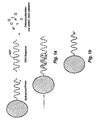
- Fig. 1a is a schematic representation of microsphere-based minisequencing for flow cytometry, where a primer immobilized on a microsphere is used for hybridizing with the DNA sequence under investigation in the presence of dideoxynucleotides, at least one of which is fluorescently labeled, and polymerase.
- the primer is extended by one base by the action of the polymerase.
- Figure 1b is a schematic representation of the resulting primer having a single, fluorescent dideoxynucleotide bound to the end thereof which can be detected using flow cytometry, and represents the complementary base to the SNP on the DNA.
- the sample DNA template is first amplified using the polymerase chain reaction (PCR), and the resulting product treated with shrimp alkaline phosphatase (SAP) and exonuclease I (Exo I) to remove unconsumed deoxynucleotide triphosphates and PCR primers, respectively.
- the minisequencing primer designed to interrogate a specific site on the DNA strand under investigation, is immobilized by means of a 5'-amino group on a carboxylated polystyrene microsphere using a crosslinking reagent (e.g., carbodiimide).
- the primer-bearing microspheres (5 ⁇ l) are added to the amplified DNA (1 ⁇ l, 1 nM) DNA polymerase (one unit, Thermosequenase, Amersham Life Sciences, Cleveland, OH), one fluorescein-labeled ddNTP (5 ⁇ M), 5 ⁇ M each of the other three non-fluorescent ddNTPs, and buffer (Thermosequenase buffer, Amersham) in a total volume of 10 ⁇ l. This process was repeated three times using each of the four fluorescent ddNTPs. The reaction mixtures are cycled 99 times at 94 °C for 10 s and at 60 °C for 10 s in a thermal cycler.
- Figure 2a is a schematic representation of microsphere-based minisequencing for flow cytometry similar to that described in Figs. 1 a and 1 b hereof, except that soluble biotinylated primers and avidin-coated capture microspheres are used instead of primers which have already been immobilized on the microspheres.
- Figure 2b shows the hybridization of the biotinylated primer to the DNA strand to be investigated and the extension of this primer by a single, fluorescent A dideoxynucleotide (assuming that the SNP is a T base) as a result of the DNA polymerase present in the solution.
- Figure 2c shows the capture of the extended biotinylated primer onto an avidin-coated microsphere after the hybridized DNA strand is melted, with the subsequent fluorescence analysis using flow cytometry.
- the sample DNA template is amplified by PCR, and the resulting product treated with shrimp alkaline phosphatase (SAP) and exonuclease I (Exo I) to remove unconsumed deoxynucleotide triphosphates and PCR primers, respectively.
- SAP shrimp alkaline phosphatase
- Exo I exonuclease I
- the biotinylated primer is added to the template DNA (1 ⁇ l, 1 nM), DNA polymerase (one unit, Thermosequenase, Amersham), one fluorescein-labeled ddNTP (5 ⁇ M), 5 ⁇ M each of the other three non-fluorescent ddNTPs, and buffer (Thermosequenase buffer, Amersham) in a total volume of 10 ⁇ l. This process is repeated three times using a different fluorescent ddNTP.
- the reaction mixtures are cycled 99 times at 94 °C for 10 s and 60 °C for 10 s in a thermal cycler.
- Figure 3a is a schematic representation of a multiplexed microsphere-based minisequencing procedure using soluble sequence-tagged primers and capture probe-bearing microspheres in a similar manner to the minisequencing illustrated in Figs. 2a and 2b hereof, except that four SNPs have been assumed to be present on the DNA strand.
- Figure 3b illustrates the microspheres and the captured extended primers to be analyzed using flow cytometry.
- the sample DNA template is amplified by PCR, and the resulting product treated with shrimp alkaline phosphatase (SAP) and exonuclease I (Exo I) to remove unconsumed deoxynucleotide triphosphates and PCR primers, respectively.
- SAP shrimp alkaline phosphatase
- Exo I exonuclease I
- the minisequencing primer designed to interrogate a specific site on the template DNA, and bearing a 5'-sequence tag is prepared.
- a capture probe is designed to bind to the 5'-sequence tag of the primer, and is immobilized on microspheres.
- the capture tag-bearing primer is added to the template DNA (1 ⁇ l, 1 nM), DNA polymerase (one unit, Thermosequenase, Amersham), one fluorescein-labeled ddNTP (5 ⁇ M), 5 ⁇ M of each of the other three non-fluorescent ddNTPs, and buffer (Thermosequenase buffer, Amersham) in a total volume of 10 ⁇ l.
- reaction mixtures are cycled 99 times at 94 °C for 10 s and 60 °C for 10 s in a thermal cycler.
- Five microliters of avidin-coated microspheres are added to the reaction mixture to capture the biotinylated primers.
- Two microliters of each reaction mixture is diluted into 500 ⁇ l of TEB buffer (50 mM Tris-HCl, pH, 8.0, 0.5 mM EDTA, 0.5% (w/v) bovine serum albumin, BSA), and the microsphere-associated fluorescence is measured using flow cytometry.
- TEB buffer 50 mM Tris-HCl, pH, 8.0, 0.5 mM EDTA, 0.5% (w/v) bovine serum albumin, BSA
- Figure 4a is a schematic representation of microsphere-based oligonucleotide ligation assay using flow cytometry, where a primer immobilized on a microsphere along with fluorescent complementary primers for ligating to the primer which has hybridized to the DNA strand to be investigated in the region of the SNP.
- Figure 4b is a schematic representation of the microsphere-attached primer to which the proper fluorescent complement has been ligated after the DNA has been melted away, the flow cytometric determined fluorescence of the microsphere indicating which fluorescent complement has been attached to the DNA strand.
- the sample DNA template is amplified by PCR, and the resulting product treated with shrimp alkaline phosphatase (SAP) and exonuclease I (Exo I) to remove unconsumed deoxynucleotide triphosphates and PCR primers, respectively.
- SAP shrimp alkaline phosphatase
- Exo I exonuclease I
- the oligonucleotide ligation primer designed to interrogate a specific site on the template DNA, is immobilized via a 5'-amino group on a carboxylated polystyrene microsphere using carbodiimide.
- Four fluorescent reporter oligonucleotides designed to bind immediately adjacent to the site of interest, but varying at the 5'-terminus are prepared.
- the primer-bearing microspheres (5 ⁇ l) are added to the template DNA (1 ⁇ l, 1 nM), DNA ligase (one unit, Thermoligase, Epicentre Technologies, Madison, Wl), one fluorescein-labeled reporter oligonucleotide (5 ⁇ M), and buffer (Thermoligase buffer, Epicentre) in a total volume of 10 ⁇ l. This process is repeated three times using each of the four fluorescent reporter oligonucleotides (5 ⁇ M). The reaction mixtures are cycled 99 times at 94 °C for 10 s and 60 °C for 10 s in a thermal cycler.
- TEB buffer 50 mM Tris-HCI, pH, 8.0, 0.5 mM EDTA, 0.5% (w/v) bovine serum albumin, BSA
- BSA bovine serum albumin
- Figures 5a and 5b are schematic representations of oligonucleotide ligation on unamplified DNA, followed by PCR amplification, capture on microspheres, and analysis of microsphere fluorescence by flow cytometry, for the case where the complementary base is found on the DNA strand and where the complementary base does not exist on the DNA strand, respectively.
- a set of oligonucleotide primers is designed including one oligonucleotide (oligonucleotide 1) that is complementary to the sequence of the template DNA immediately adjacent to a site of interest, and four oligonucleotides (oligonucleotides 1A, 1C, 1G, and 1T) that are complementary to the sequence of the template DNA immediately adjacent to oligonucleotide 1, and containing the site of interest.
- Each of the four oligonucleotides (1A, 1C, 1G, and 1T) differs in the nucleotide base adjacent to the other oligonucleotide (oligonucleotide 1), corresponding to each of the four possible bases, A, C, G, and T.
- Oligonucleotide 1 is intended to ligate to one of the other oligonucleotides (1A, 1C, 1G, or 1T), depending which one contains the complementary base for the site of interest.
- each of the two oligonucleotides in a potential pair (five oligonucleotides total) contain additional nucleotides that form a "tail" consisting of a PCR priming site. This site is different for oligonucleotide 1 than for oligonucleotides 1A, 1C, 1G, and 1T, which have the same primer-binding site within this group, but different from that of oligonucleotide 1.
- Unligated oligonucleotides cannot be amplified with the PCR technique ( Fig. 5b ) because there is no priming site for oligonucleotide 2 unless PCR amplification from primer 1 extends across a ligated fragment, creating sequence complementary to primer 2.
- fluorescently labeled dNTPs are added to label the PCR fragments during amplification.
- primer 2 is labeled with a fluorescent dye, producing dye-labeled PCR amplification products where amplification occurs.
- the final step involves adding to the PCR mixture microspheres with an oligonucleotide immobilized on its surface that has the same sequence as oligonucleotides 1A, 1C, 1 G, and 1 T, except for the variable nucleotide at one end and the priming site on the other.
- This microsphere is intended to capture labeled PCR products if they are present in the PCR mixture by annealing to the newly synthesized complement of the ligated oligonucleotide complex. Bead fluorescence due to hybridized fragments is then analyzed by flow cytometry. Many sets of primers can simultaneously type many SNPs in solution, each being captured onto a different bead in a multiplexed set to be simultaneously read in a flow cytometer.
- the oligonucleotide primers may include a sequence tag which is hybridized to a capture probe that is complementary to the sequence tag and is immobilized on the microspheres, the sequence tags and capture probes containing at least one of the non-natural bases iso-C and 5-methyl-iso-G.
- sequence tags and capture probes containing at least one of the non-natural bases iso-C and 5-methyl-iso-G.
Landscapes
- Chemical & Material Sciences (AREA)
- Life Sciences & Earth Sciences (AREA)
- Organic Chemistry (AREA)
- Proteomics, Peptides & Aminoacids (AREA)
- Health & Medical Sciences (AREA)
- Wood Science & Technology (AREA)
- Zoology (AREA)
- Engineering & Computer Science (AREA)
- Biochemistry (AREA)
- General Engineering & Computer Science (AREA)
- Microbiology (AREA)
- Molecular Biology (AREA)
- Analytical Chemistry (AREA)
- Biotechnology (AREA)
- Physics & Mathematics (AREA)
- Biophysics (AREA)
- Bioinformatics & Cheminformatics (AREA)
- Immunology (AREA)
- General Health & Medical Sciences (AREA)
- Genetics & Genomics (AREA)
- Chemical Kinetics & Catalysis (AREA)
- Measuring Or Testing Involving Enzymes Or Micro-Organisms (AREA)
- Investigating Or Analysing Materials By The Use Of Chemical Reactions (AREA)
- Investigating Or Analysing Biological Materials (AREA)
- Saccharide Compounds (AREA)
Applications Claiming Priority (2)
| Application Number | Priority Date | Filing Date | Title |
|---|---|---|---|
| US6368597P | 1997-10-28 | 1997-10-28 | |
| EP98955222A EP1040202B9 (en) | 1997-10-28 | 1998-10-28 | Dna polymorphism identity determination using flow cytometry |
Related Parent Applications (1)
| Application Number | Title | Priority Date | Filing Date |
|---|---|---|---|
| EP98955222A Division EP1040202B9 (en) | 1997-10-28 | 1998-10-28 | Dna polymorphism identity determination using flow cytometry |
Publications (1)
| Publication Number | Publication Date |
|---|---|
| EP2034031A1 true EP2034031A1 (en) | 2009-03-11 |
Family
ID=22050818
Family Applications (3)
| Application Number | Title | Priority Date | Filing Date |
|---|---|---|---|
| EP08104631A Withdrawn EP2034031A1 (en) | 1997-10-28 | 1998-10-28 | DNA polymorphism identity determination using flow cytometry |
| EP98955222A Expired - Lifetime EP1040202B9 (en) | 1997-10-28 | 1998-10-28 | Dna polymorphism identity determination using flow cytometry |
| EP98955221A Withdrawn EP1032701A1 (en) | 1997-10-28 | 1998-10-28 | Dna base mismatch detection using flow cytometry |
Family Applications After (2)
| Application Number | Title | Priority Date | Filing Date |
|---|---|---|---|
| EP98955222A Expired - Lifetime EP1040202B9 (en) | 1997-10-28 | 1998-10-28 | Dna polymorphism identity determination using flow cytometry |
| EP98955221A Withdrawn EP1032701A1 (en) | 1997-10-28 | 1998-10-28 | Dna base mismatch detection using flow cytometry |
Country Status (13)
| Country | Link |
|---|---|
| US (2) | US6287766B1 (https=) |
| EP (3) | EP2034031A1 (https=) |
| JP (3) | JP4502502B2 (https=) |
| AT (1) | ATE419382T1 (https=) |
| AU (2) | AU1207799A (https=) |
| CA (2) | CA2308599C (https=) |
| DE (1) | DE69840416D1 (https=) |
| DK (1) | DK1040202T3 (https=) |
| ES (1) | ES2320604T3 (https=) |
| IL (2) | IL135852A0 (https=) |
| IS (2) | IS2699B (https=) |
| PT (1) | PT1040202E (https=) |
| WO (2) | WO1999022030A1 (https=) |
Families Citing this family (72)
| Publication number | Priority date | Publication date | Assignee | Title |
|---|---|---|---|---|
| WO1999022030A1 (en) * | 1997-10-28 | 1999-05-06 | The Regents Of The University Of California | Dna polymorphism identity determination using flow cytometry |
| JP4318859B2 (ja) * | 1997-12-04 | 2009-08-26 | ジーイー・ヘルスケア・ユーケイ・リミテッド | 複合アッセイ方法 |
| AU3519900A (en) * | 1999-03-19 | 2000-10-09 | Aclara Biosciences, Inc. | Methods for single nucleotide polymorphism detection |
| JP3668075B2 (ja) | 1999-10-12 | 2005-07-06 | 光夫 板倉 | 遺伝物質シーケンス決定用懸濁系、その懸濁系を用いた遺伝物質シーケンス決定方法およびその懸濁系を用いたSNPs高速スコアリング方法 |
| DE19958980A1 (de) * | 1999-11-18 | 2001-09-27 | Wolfgang Goehde | Verfahren zur Bestimmung von PCR-Produkten, sowie ein PCR-Detektions-Kit und eine Vorrichtung für ein solches Verfahren |
| EP1990428B1 (en) * | 2000-02-07 | 2010-12-22 | Illumina, Inc. | Nucleic acid detection methods using universal priming |
| US6340566B1 (en) * | 2000-03-28 | 2002-01-22 | The Regents Of The University Of California | Detection and quantitation of single nucleotide polymorphisms, DNA sequence variations, DNA mutations, DNA damage and DNA mismatches |
| US6365355B1 (en) | 2000-03-28 | 2002-04-02 | The Regents Of The University Of California | Chimeric proteins for detection and quantitation of DNA mutations, DNA sequence variations, DNA damage and DNA mismatches |
| ATE497018T1 (de) | 2000-05-19 | 2011-02-15 | Eragen Biosciences Inc | Materialien und methoden zum nachweis von nukleinsäuren |
| US6977161B2 (en) | 2000-10-14 | 2005-12-20 | Eragen Biosciences, Inc. | Solid support assay systems and methods utilizing non-standard bases |
| KR20020065471A (ko) * | 2000-08-30 | 2002-08-13 | 산코 준야쿠 가부시키가이샤 | 유전자의 검출방법 |
| US7465540B2 (en) * | 2000-09-21 | 2008-12-16 | Luminex Corporation | Multiple reporter read-out for bioassays |
| US6592713B2 (en) | 2000-12-18 | 2003-07-15 | Sca Hygiene Products Ab | Method of producing a nonwoven material |
| US7083951B2 (en) * | 2001-02-14 | 2006-08-01 | The Regents Of The University Of California | Flow cytometric detection method for DNA samples |
| US20020115116A1 (en) * | 2001-02-22 | 2002-08-22 | Yong Song | Multiplex protein interaction determinations using glutathione-GST binding |
| US7153656B2 (en) * | 2001-09-11 | 2006-12-26 | Los Alamos National Security, Llc | Nucleic acid sequence detection using multiplexed oligonucleotide PCR |
| EP1463825B1 (en) | 2001-10-15 | 2017-12-06 | BioArray Solutions Ltd. | Multiplexed analysis of polymorphic loci by concurrent interrogation and enzyme-mediated detection |
| US7179598B2 (en) * | 2001-11-20 | 2007-02-20 | The Regents Of The University Of California | Early leukemia diagnostics using microsphere arrays |
| WO2003054232A2 (en) * | 2001-12-13 | 2003-07-03 | Blue Heron Biotechnology, Inc. | Methods for removal of double-stranded oligonucleotides containing sequence errors using mismatch recognition proteins |
| US7282355B2 (en) | 2002-03-13 | 2007-10-16 | Syngenta Participations Ag | Nucleic acid detection method |
| US7304128B2 (en) * | 2002-06-04 | 2007-12-04 | E.I. Du Pont De Nemours And Company | Carbon nanotube binding peptides |
| US20040096870A1 (en) * | 2002-06-28 | 2004-05-20 | Sention, Inc. | Methods of detecting sequence differences |
| EP1613768A4 (en) * | 2003-03-11 | 2006-05-31 | Gene Check Inc | RECA-SUPPORTED ALLELSPECIFIC OLIGONUCLEOTIDE EXTENSION PROCESS |
| EP1606419A1 (en) | 2003-03-18 | 2005-12-21 | Quantum Genetics Ireland Limited | Systems and methods for improving protein and milk production of dairy herds |
| WO2004090153A2 (en) * | 2003-04-01 | 2004-10-21 | Eragen Biosciences,Inc. | Polymerase inhibitor and method of using same |
| US20060134638A1 (en) * | 2003-04-02 | 2006-06-22 | Blue Heron Biotechnology, Inc. | Error reduction in automated gene synthesis |
| EP1725572B1 (de) | 2003-11-05 | 2017-05-31 | AGCT GmbH | Makromolekulare nukleotidverbindungen und methoden zu deren anwendung |
| MXPA06009452A (es) | 2004-02-19 | 2007-03-15 | Univ Alberta | Polimorfismos del promotor de leptin y sus usos. |
| DE102005008583B4 (de) * | 2005-02-24 | 2007-10-25 | Johannes-Gutenberg-Universität Mainz | Verfahren zur Typisierung eines Individuums mittels short tandem repeat (STR)-Loci der genomischen DNA |
| JP4399575B2 (ja) * | 2005-03-31 | 2010-01-20 | 独立行政法人産業技術総合研究所 | 遺伝子断片中のヌクレオチドの種類の特定方法 |
| US8293472B2 (en) * | 2005-06-07 | 2012-10-23 | Luminex Corporation | Methods for detection and typing of nucleic acids |
| EP1953241A1 (en) * | 2005-11-29 | 2008-08-06 | Olympus Corporation | Method of analyzing change in primary structure of nucleic acid |
| US8871687B2 (en) * | 2007-09-28 | 2014-10-28 | Quest Diagnostics Investments Incorporated | Nucleic acid sequencing by single-base primer extension |
| US7960116B2 (en) * | 2007-09-28 | 2011-06-14 | Pacific Biosciences Of California, Inc. | Nucleic acid sequencing methods and systems |
| US8093063B2 (en) | 2007-11-29 | 2012-01-10 | Quest Diagnostics Investments Incorporated | Assay for detecting genetic abnormalities in genomic nucleic acids |
| CN101445832B (zh) * | 2008-12-23 | 2011-09-14 | 广州益善生物技术有限公司 | Pik3ca基因突变的检测探针、液相芯片及其检测方法 |
| CN101487051B (zh) * | 2009-02-24 | 2011-07-20 | 广州益善生物技术有限公司 | Braf基因突变的检测探针、液相芯片及其检测方法 |
| WO2011050278A1 (en) * | 2009-10-23 | 2011-04-28 | Eragen Biosciences, Inc. | Amplification primers with non-standard bases for increased reaction specificity |
| ITPV20100009A1 (it) * | 2010-07-15 | 2012-01-16 | Luca Lova | Rilevamento multiparametrico in sospensione per sequenze nucleotidiche |
| SG10201510189WA (en) | 2011-10-19 | 2016-01-28 | Nugen Technologies Inc | Compositions And Methods For Directional Nucleic Acid Amplification And Sequencing |
| EP4372084A3 (en) | 2012-01-26 | 2024-08-14 | Tecan Genomics, Inc. | Compositions and methods for targeted nucleic acid sequence enrichment and high efficiency library generation |
| WO2013191775A2 (en) | 2012-06-18 | 2013-12-27 | Nugen Technologies, Inc. | Compositions and methods for negative selection of non-desired nucleic acid sequences |
| US20150011396A1 (en) | 2012-07-09 | 2015-01-08 | Benjamin G. Schroeder | Methods for creating directional bisulfite-converted nucleic acid libraries for next generation sequencing |
| US9411930B2 (en) | 2013-02-01 | 2016-08-09 | The Regents Of The University Of California | Methods for genome assembly and haplotype phasing |
| EP3885446A1 (en) | 2013-02-01 | 2021-09-29 | The Regents of The University of California | Methods for genome assembly and haplotype phasing |
| US9540699B2 (en) | 2013-03-13 | 2017-01-10 | William Beaumont Hospital | Methods of diagnosing increased risk of developing MRSA |
| US9822408B2 (en) | 2013-03-15 | 2017-11-21 | Nugen Technologies, Inc. | Sequential sequencing |
| CA2929596C (en) | 2013-11-13 | 2022-07-05 | Nugen Technologies, Inc. | Compositions and methods for identification of a duplicate sequencing read |
| AU2014362322B2 (en) | 2013-12-11 | 2021-05-27 | The Regents For Of The University Of California | Methods for labeling DNA fragments to recontruct physical linkage and phase |
| WO2015131107A1 (en) | 2014-02-28 | 2015-09-03 | Nugen Technologies, Inc. | Reduced representation bisulfite sequencing with diversity adaptors |
| CN106574305B (zh) * | 2014-06-13 | 2021-03-02 | 生命技术公司 | 多重核酸扩增 |
| CA2956925C (en) | 2014-08-01 | 2024-02-13 | Dovetail Genomics, Llc | Tagging nucleic acids for sequence assembly |
| CN107075581B (zh) | 2014-08-06 | 2022-03-18 | 纽亘技术公司 | 由靶向测序进行数字测量 |
| GB201501603D0 (en) | 2015-01-30 | 2015-03-18 | Norwegian University Of Life Sciences And Hedmark University College | Method and product |
| NZ734854A (en) | 2015-02-17 | 2022-11-25 | Dovetail Genomics Llc | Nucleic acid sequence assembly |
| US11807896B2 (en) | 2015-03-26 | 2023-11-07 | Dovetail Genomics, Llc | Physical linkage preservation in DNA storage |
| CA3002740A1 (en) | 2015-10-19 | 2017-04-27 | Dovetail Genomics, Llc | Methods for genome assembly, haplotype phasing, and target independent nucleic acid detection |
| JP7441003B2 (ja) | 2016-02-23 | 2024-02-29 | ダブテイル ゲノミクス エルエルシー | ゲノムアセンブリのためのフェージングされたリードセットの生成とハプロタイプフェージング |
| WO2017197300A1 (en) | 2016-05-13 | 2017-11-16 | Dovetail Genomics Llc | Recovering long-range linkage information from preserved samples |
| US10190155B2 (en) | 2016-10-14 | 2019-01-29 | Nugen Technologies, Inc. | Molecular tag attachment and transfer |
| DE102016124692B4 (de) * | 2016-12-16 | 2019-05-16 | Gna Biosolutions Gmbh | Verfahren und System zum Vervielfältigen einer Nukleinsäure |
| US12492430B2 (en) | 2017-04-11 | 2025-12-09 | Tecan Genomics, Inc. | Library quantitation and qualification |
| WO2018232597A1 (zh) * | 2017-06-20 | 2018-12-27 | 深圳华大智造科技有限公司 | 用于定量pcr扩增的组合物及其应用 |
| CN109652499B (zh) * | 2017-10-12 | 2022-06-03 | 深圳华大智造科技股份有限公司 | 快速检测dna聚合酶3′-5′外切活性或错配的方法和试剂盒 |
| US11099202B2 (en) | 2017-10-20 | 2021-08-24 | Tecan Genomics, Inc. | Reagent delivery system |
| WO2019152543A1 (en) | 2018-01-31 | 2019-08-08 | Dovetail Genomics, Llc | Sample prep for dna linkage recovery |
| US10768173B1 (en) | 2019-09-06 | 2020-09-08 | Element Biosciences, Inc. | Multivalent binding composition for nucleic acid analysis |
| WO2020264185A1 (en) | 2019-06-27 | 2020-12-30 | Dovetail Genomics, Llc | Methods and compositions for proximity ligation |
| US11287422B2 (en) | 2019-09-23 | 2022-03-29 | Element Biosciences, Inc. | Multivalent binding composition for nucleic acid analysis |
| EP3851542A1 (en) | 2020-01-20 | 2021-07-21 | Tecan Genomics, Inc. | Depletion of abundant uninformative sequences |
| US12059674B2 (en) | 2020-02-03 | 2024-08-13 | Tecan Genomics, Inc. | Reagent storage system |
| AU2023325064A1 (en) | 2022-08-15 | 2025-03-06 | Element Biosciences, Inc. | Spatially resolved surface capture of nucleic acids |
Citations (4)
| Publication number | Priority date | Publication date | Assignee | Title |
|---|---|---|---|---|
| WO1996006950A1 (en) * | 1994-08-30 | 1996-03-07 | Chiron Corporation | Reduction of nonspecific hybridization by using novel base-pairing schemes |
| US5512439A (en) * | 1988-11-21 | 1996-04-30 | Dynal As | Oligonucleotide-linked magnetic particles and uses thereof |
| WO1996015271A1 (en) * | 1994-11-16 | 1996-05-23 | Abbott Laboratories | Multiplex ligations-dependent amplification |
| US5670325A (en) * | 1996-08-14 | 1997-09-23 | Exact Laboratories, Inc. | Method for the detection of clonal populations of transformed cells in a genomically heterogeneous cellular sample |
Family Cites Families (14)
| Publication number | Priority date | Publication date | Assignee | Title |
|---|---|---|---|---|
| US4770992A (en) * | 1985-11-27 | 1988-09-13 | Den Engh Gerrit J Van | Detection of specific DNA sequences by flow cytometry |
| US4962037A (en) * | 1987-10-07 | 1990-10-09 | United States Of America | Method for rapid base sequencing in DNA and RNA |
| US4988617A (en) * | 1988-03-25 | 1991-01-29 | California Institute Of Technology | Method of detecting a nucleotide change in nucleic acids |
| US5629158A (en) * | 1989-03-22 | 1997-05-13 | Cemu Bitecknik Ab | Solid phase diagnosis of medical conditions |
| US5437976A (en) * | 1991-08-08 | 1995-08-01 | Arizona Board Of Regents, The University Of Arizona | Multi-domain DNA ligands bound to a solid matrix for protein and nucleic acid affinity chromatography and processing of solid-phase DNA |
| AU3919293A (en) * | 1992-03-27 | 1993-11-08 | University Of Maryland At Baltimore | Detection of gene mutations with mismatch repair enzymes |
| ES2165402T3 (es) * | 1994-07-16 | 2002-03-16 | Roche Diagnostics Gmbh | Procedimiento para la deteccion sensible de acidos nucleicos. |
| DE69638321D1 (de) * | 1995-10-11 | 2011-03-03 | Luminex Corp | Gleichzeitige mehrfachanalyse klinischer proben |
| US5736330A (en) * | 1995-10-11 | 1998-04-07 | Luminex Corporation | Method and compositions for flow cytometric determination of DNA sequences |
| AU711754B2 (en) * | 1995-12-22 | 1999-10-21 | Esoterix Genetic Laboratories, Llc | Methods for the detection of clonal populations of transformed cells in a genomically heterogeneous cellular sample |
| EP1033411B1 (en) * | 1996-06-04 | 2006-02-22 | University of Utah Research Foundation | Fluorescent donor-acceptor pair |
| JP2002508664A (ja) * | 1997-06-25 | 2002-03-19 | オーキッド・バイオサイエンシーズ・インコーポレイテッド | 複数の単一ヌクレオチド多型を単一の反応で検出する方法 |
| WO1999022030A1 (en) * | 1997-10-28 | 1999-05-06 | The Regents Of The University Of California | Dna polymorphism identity determination using flow cytometry |
| EP1090138A4 (en) | 1998-06-24 | 2003-01-02 | Glaxo Group Ltd | DETECTION METHOD FOR NUCLEOTIDES |
-
1998
- 1998-10-28 WO PCT/US1998/023143 patent/WO1999022030A1/en not_active Ceased
- 1998-10-28 EP EP08104631A patent/EP2034031A1/en not_active Withdrawn
- 1998-10-28 JP JP2000518119A patent/JP4502502B2/ja not_active Expired - Fee Related
- 1998-10-28 IL IL13585298A patent/IL135852A0/xx unknown
- 1998-10-28 EP EP98955222A patent/EP1040202B9/en not_active Expired - Lifetime
- 1998-10-28 US US09/182,869 patent/US6287766B1/en not_active Expired - Lifetime
- 1998-10-28 CA CA2308599A patent/CA2308599C/en not_active Expired - Fee Related
- 1998-10-28 EP EP98955221A patent/EP1032701A1/en not_active Withdrawn
- 1998-10-28 DK DK98955222T patent/DK1040202T3/da active
- 1998-10-28 AT AT98955222T patent/ATE419382T1/de active
- 1998-10-28 CA CA002306907A patent/CA2306907A1/en not_active Abandoned
- 1998-10-28 AU AU12077/99A patent/AU1207799A/en not_active Abandoned
- 1998-10-28 WO PCT/US1998/023142 patent/WO1999022029A1/en not_active Ceased
- 1998-10-28 IL IL13585198A patent/IL135851A/en not_active IP Right Cessation
- 1998-10-28 AU AU12078/99A patent/AU754849B2/en not_active Ceased
- 1998-10-28 ES ES98955222T patent/ES2320604T3/es not_active Expired - Lifetime
- 1998-10-28 PT PT98955222T patent/PT1040202E/pt unknown
- 1998-10-28 DE DE69840416T patent/DE69840416D1/de not_active Expired - Lifetime
- 1998-10-28 JP JP2000518118A patent/JP2003502005A/ja active Pending
-
2000
- 2000-04-14 IS IS5454A patent/IS2699B/is unknown
- 2000-04-14 IS IS5455A patent/IS5455A/is unknown
-
2001
- 2001-09-11 US US09/953,534 patent/US20020015962A1/en not_active Abandoned
-
2009
- 2009-12-22 JP JP2009291170A patent/JP2010088454A/ja active Pending
Patent Citations (4)
| Publication number | Priority date | Publication date | Assignee | Title |
|---|---|---|---|---|
| US5512439A (en) * | 1988-11-21 | 1996-04-30 | Dynal As | Oligonucleotide-linked magnetic particles and uses thereof |
| WO1996006950A1 (en) * | 1994-08-30 | 1996-03-07 | Chiron Corporation | Reduction of nonspecific hybridization by using novel base-pairing schemes |
| WO1996015271A1 (en) * | 1994-11-16 | 1996-05-23 | Abbott Laboratories | Multiplex ligations-dependent amplification |
| US5670325A (en) * | 1996-08-14 | 1997-09-23 | Exact Laboratories, Inc. | Method for the detection of clonal populations of transformed cells in a genomically heterogeneous cellular sample |
Non-Patent Citations (8)
| Title |
|---|
| BARON H ET AL: "OLIGONUCLEOTIDE LIGATON ASSAY (OLA) FOR THE DIAGNOSIS OF FAMILIAL HYPERCHOLESTEROLEMIA", BIO/TECHNOLOGY, NATURE PUBLISHING CO. NEW YORK, US, vol. 14, no. 10, October 1996 (1996-10-01), pages 1279 - 1282, XP001153081, ISSN: 0733-222X * |
| DATABASE GOOGLE 4 April 1995 (1995-04-04) * |
| EGGERDING F A ET AL: "FLUORESCENCE-BASED OLIGONUCLEOTIDE LIGATION ASSAY FOR ANALYSIS OF CYSTIC FIBROSIS TRANSMEMBRANE CONDUCTANCE REGULATOR GENE MUTATIONS", HUMAN MUTATION, WILEY-LISS, NEW YORK, NY, US, vol. 5, no. 2, 1995, pages 153 - 165, XP001095324, ISSN: 1059-7794 * |
| FULTON R J ET AL: "Advanced multiplexd analysis with the FlowMetrix(TM) system", CLINICAL CHEMISTRY, AMERICAN ASSOCIATION FOR CLINICAL CHEMISTRY. WINSTON, US, vol. 43, no. 9, September 1997 (1997-09-01), pages 1749 - 1756, XP002142645, ISSN: 0009-9147 * |
| PASTINEN T ET AL: "Multiplex, fluorescent, solid-phase minisequencing for efficient screening of DNA sequence variation", CLINICAL CHEMISTRY. PRINCIPLES AND TECHNICS, NEW YORK, HARPER & ROW, US, 1974, pages 1391 - 1397, XP002116875 * |
| TOMI PASTINEN ET AL.: "Minisequencing: A Specific Tool For DNA Analysis And Diagnostics On Oligonucleotide Arrays", GENOME RESEARCH, vol. 7, 1997, pages 606 |
| VINCENT O. TOBE ET AL.: "Single-Well Genotyping Of Diallelic Sequence Variations By A Two-Color ELISA-Based Oligonucleotide Ligation Assay", NUCLEAR ACIDS RES., vol. 24, 1996, pages 3728, XP000978683, DOI: doi:10.1093/nar/24.19.3728 |
| VLIEGER A M ET AL: "QUANTITATION OF POLYMERASE CHAIN REACTION PRODUCTS BY HYBRIDIZATION-BASED ASSAYS WITH FLUORESCENT, COLORIMETRIC, OR CHEMILUMINESCENT DETECTION1", ANALYTICAL BIOCHEMISTRY, ACADEMIC PRESS INC. NEW YORK, vol. 205, no. 1, 15 August 1992 (1992-08-15), pages 1 - 07, XP000294452, ISSN: 0003-2697 * |
Also Published As
| Publication number | Publication date |
|---|---|
| JP2010088454A (ja) | 2010-04-22 |
| PT1040202E (pt) | 2009-03-26 |
| IS2699B (is) | 2010-11-15 |
| AU1207799A (en) | 1999-05-17 |
| IS5454A (is) | 2000-04-14 |
| CA2306907A1 (en) | 1999-05-06 |
| EP1040202B1 (en) | 2008-12-31 |
| EP1032701A1 (en) | 2000-09-06 |
| IL135851A (en) | 2004-03-28 |
| ATE419382T1 (de) | 2009-01-15 |
| IL135851A0 (en) | 2001-05-20 |
| IS5455A (is) | 2000-04-14 |
| AU1207899A (en) | 1999-05-17 |
| EP1040202B9 (en) | 2009-09-23 |
| JP2001520895A (ja) | 2001-11-06 |
| US6287766B1 (en) | 2001-09-11 |
| ES2320604T3 (es) | 2009-05-25 |
| WO1999022030A1 (en) | 1999-05-06 |
| US20020015962A1 (en) | 2002-02-07 |
| CA2308599A1 (en) | 1999-05-06 |
| IL135852A0 (en) | 2001-05-20 |
| AU754849B2 (en) | 2002-11-28 |
| WO1999022029A1 (en) | 1999-05-06 |
| JP2003502005A (ja) | 2003-01-21 |
| JP4502502B2 (ja) | 2010-07-14 |
| CA2308599C (en) | 2012-05-22 |
| DK1040202T3 (da) | 2009-04-14 |
| DE69840416D1 (de) | 2009-02-12 |
| EP1040202A4 (en) | 2004-08-18 |
| EP1040202A1 (en) | 2000-10-04 |
Similar Documents
| Publication | Publication Date | Title |
|---|---|---|
| CA2308599C (en) | Dna polymorphism identity determination using flow cytometry | |
| US10837059B2 (en) | Multiplex nucleic acid reactions | |
| US7153656B2 (en) | Nucleic acid sequence detection using multiplexed oligonucleotide PCR | |
| US6258539B1 (en) | Restriction enzyme mediated adapter | |
| US8003354B2 (en) | Multiplex nucleic acid reactions | |
| US6913884B2 (en) | Compositions and methods for repetitive use of genomic DNA | |
| US7803537B2 (en) | Parallel genotyping of multiple patient samples | |
| JP2001520895A5 (https=) | ||
| AU2001238389A1 (en) | Parallel genotyping of multiple patient samples | |
| JP2003521252A (ja) | ユニバーサルプライミングを用いる核酸検出方法 | |
| EP2246438A1 (en) | Multiplex nucleic acid reactions | |
| WO2000009738A1 (en) | Rolling circle-based analysis of polynucleotide sequence | |
| Green et al. | High-throughput SNP scoring with GAMMArrays: genomic analysis using multiplexed microsphere arrays |
Legal Events
| Date | Code | Title | Description |
|---|---|---|---|
| PUAI | Public reference made under article 153(3) epc to a published international application that has entered the european phase |
Free format text: ORIGINAL CODE: 0009012 |
|
| AC | Divisional application: reference to earlier application |
Ref document number: 1040202 Country of ref document: EP Kind code of ref document: P |
|
| AK | Designated contracting states |
Kind code of ref document: A1 Designated state(s): AT BE CH CY DE DK ES FI FR GB GR IE IT LI LU MC NL PT SE |
|
| STAA | Information on the status of an ep patent application or granted ep patent |
Free format text: STATUS: THE APPLICATION IS DEEMED TO BE WITHDRAWN |
|
| 18D | Application deemed to be withdrawn |
Effective date: 20090912 |