EP2000918A1 - Informationsverarbeitungsvorrichtung, informationsverarbeitungsverfahren und computerprogramm - Google Patents
Informationsverarbeitungsvorrichtung, informationsverarbeitungsverfahren und computerprogramm Download PDFInfo
- Publication number
- EP2000918A1 EP2000918A1 EP07737974A EP07737974A EP2000918A1 EP 2000918 A1 EP2000918 A1 EP 2000918A1 EP 07737974 A EP07737974 A EP 07737974A EP 07737974 A EP07737974 A EP 07737974A EP 2000918 A1 EP2000918 A1 EP 2000918A1
- Authority
- EP
- European Patent Office
- Prior art keywords
- content
- iptv
- service
- client
- home
- Prior art date
- Legal status (The legal status is an assumption and is not a legal conclusion. Google has not performed a legal analysis and makes no representation as to the accuracy of the status listed.)
- Ceased
Links
Images









Classifications
-
- H—ELECTRICITY
- H04—ELECTRIC COMMUNICATION TECHNIQUE
- H04N—PICTORIAL COMMUNICATION, e.g. TELEVISION
- H04N7/00—Television systems
- H04N7/16—Analogue secrecy systems; Analogue subscription systems
- H04N7/173—Analogue secrecy systems; Analogue subscription systems with two-way working, e.g. subscriber sending a programme selection signal
- H04N7/17309—Transmission or handling of upstream communications
-
- H—ELECTRICITY
- H04—ELECTRIC COMMUNICATION TECHNIQUE
- H04L—TRANSMISSION OF DIGITAL INFORMATION, e.g. TELEGRAPHIC COMMUNICATION
- H04L12/00—Data switching networks
- H04L12/28—Data switching networks characterised by path configuration, e.g. LAN [Local Area Networks] or WAN [Wide Area Networks]
- H04L12/46—Interconnection of networks
-
- G—PHYSICS
- G06—COMPUTING OR CALCULATING; COUNTING
- G06F—ELECTRIC DIGITAL DATA PROCESSING
- G06F13/00—Interconnection of, or transfer of information or other signals between, memories, input/output devices or central processing units
-
- H—ELECTRICITY
- H04—ELECTRIC COMMUNICATION TECHNIQUE
- H04N—PICTORIAL COMMUNICATION, e.g. TELEVISION
- H04N21/00—Selective content distribution, e.g. interactive television or video on demand [VOD]
- H04N21/20—Servers specifically adapted for the distribution of content, e.g. VOD servers; Operations thereof
- H04N21/27—Server based end-user applications
- H04N21/274—Storing end-user multimedia data in response to end-user request, e.g. network recorder
- H04N21/2747—Remote storage of video programmes received via the downstream path, e.g. from the server
-
- H—ELECTRICITY
- H04—ELECTRIC COMMUNICATION TECHNIQUE
- H04N—PICTORIAL COMMUNICATION, e.g. TELEVISION
- H04N21/00—Selective content distribution, e.g. interactive television or video on demand [VOD]
- H04N21/40—Client devices specifically adapted for the reception of or interaction with content, e.g. set-top-box [STB]; Operations thereof
- H04N21/43—Processing of content or additional data, e.g. demultiplexing additional data from a digital video stream; Elementary client operations, e.g. monitoring of home network or synchronising decoder's clock; Client middleware
- H04N21/436—Interfacing a local distribution network, e.g. communicating with another STB or one or more peripheral devices inside the home
- H04N21/43615—Interfacing a Home Network, e.g. for connecting the client to a plurality of peripherals
-
- H—ELECTRICITY
- H04—ELECTRIC COMMUNICATION TECHNIQUE
- H04N—PICTORIAL COMMUNICATION, e.g. TELEVISION
- H04N21/00—Selective content distribution, e.g. interactive television or video on demand [VOD]
- H04N21/40—Client devices specifically adapted for the reception of or interaction with content, e.g. set-top-box [STB]; Operations thereof
- H04N21/47—End-user applications
- H04N21/482—End-user interface for programme selection
- H04N21/4826—End-user interface for programme selection using recommendation lists, e.g. of programmes or channels sorted out according to their score
-
- H—ELECTRICITY
- H04—ELECTRIC COMMUNICATION TECHNIQUE
- H04N—PICTORIAL COMMUNICATION, e.g. TELEVISION
- H04N21/00—Selective content distribution, e.g. interactive television or video on demand [VOD]
- H04N21/60—Network structure or processes for video distribution between server and client or between remote clients; Control signalling between clients, server and network components; Transmission of management data between server and client, e.g. sending from server to client commands for recording incoming content stream; Communication details between server and client
- H04N21/63—Control signaling related to video distribution between client, server and network components; Network processes for video distribution between server and clients or between remote clients, e.g. transmitting basic layer and enhancement layers over different transmission paths, setting up a peer-to-peer communication via Internet between remote STB's; Communication protocols; Addressing
- H04N21/64—Addressing
- H04N21/6405—Multicasting
-
- H—ELECTRICITY
- H04—ELECTRIC COMMUNICATION TECHNIQUE
- H04N—PICTORIAL COMMUNICATION, e.g. TELEVISION
- H04N21/00—Selective content distribution, e.g. interactive television or video on demand [VOD]
- H04N21/60—Network structure or processes for video distribution between server and client or between remote clients; Control signalling between clients, server and network components; Transmission of management data between server and client, e.g. sending from server to client commands for recording incoming content stream; Communication details between server and client
- H04N21/63—Control signaling related to video distribution between client, server and network components; Network processes for video distribution between server and clients or between remote clients, e.g. transmitting basic layer and enhancement layers over different transmission paths, setting up a peer-to-peer communication via Internet between remote STB's; Communication protocols; Addressing
- H04N21/64—Addressing
- H04N21/6408—Unicasting
-
- H—ELECTRICITY
- H04—ELECTRIC COMMUNICATION TECHNIQUE
- H04N—PICTORIAL COMMUNICATION, e.g. TELEVISION
- H04N21/00—Selective content distribution, e.g. interactive television or video on demand [VOD]
- H04N21/60—Network structure or processes for video distribution between server and client or between remote clients; Control signalling between clients, server and network components; Transmission of management data between server and client, e.g. sending from server to client commands for recording incoming content stream; Communication details between server and client
- H04N21/63—Control signaling related to video distribution between client, server and network components; Network processes for video distribution between server and clients or between remote clients, e.g. transmitting basic layer and enhancement layers over different transmission paths, setting up a peer-to-peer communication via Internet between remote STB's; Communication protocols; Addressing
- H04N21/643—Communication protocols
- H04N21/64322—IP
-
- H—ELECTRICITY
- H04—ELECTRIC COMMUNICATION TECHNIQUE
- H04N—PICTORIAL COMMUNICATION, e.g. TELEVISION
- H04N7/00—Television systems
- H04N7/16—Analogue secrecy systems; Analogue subscription systems
- H04N7/173—Analogue secrecy systems; Analogue subscription systems with two-way working, e.g. subscriber sending a programme selection signal
Definitions
- the present invention relates to an information processing apparatus and an information processing method, and a computer program. More specifically, the present invention relates to an information processing apparatus and an information processing method, and a computer program which realize use of data supplied from outside a home network by devices within the home network.
- IP Internet Protocol
- DLNA Digital Living Network Alliance
- Fig. 1 shows an example of a home network 100 proposed by the DLNA.
- a DVR Digital Video Recorder
- a PC 102 with a built-in TV tuner can receive satellite/terrestrial analog and digital broadcasting, and record and store broadcast programs onto a built-in hard disk recorder.
- a device that accumulates content and provides content to devices within a home network is referred to as a digital media server (DMS: Digital Media Server).
- DMS Digital Media Server
- a DMS can perform streaming of video content such as TV programs recorded on a hard disk, for example, to a digital media player (DMP: Digital Media Player) connected to the DMS via the home IP network.
- DMP Digital Media Player
- the digital media player (DMP) is a device that receives content from the DMS for playback.
- the DMP is implemented on a TV 103.
- the user operates the TV 103 by using, for example, an infrared remote control of the TV 103, thus enabling playback of video content accumulated in the PC 102 or the DVR 101 placed in a remote room.
- a residential gateway (RG: Residential Gateway) 104 is used as a network connecting device when a device within a household connects to an IP broadband network 120 as the Internet, in the use cases of the DLNA, the RG 104 is used as a bridge for a device within a household to establish IP connection.
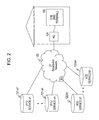
- FIG. 2 is a conceptual diagram of an IPTV/VOD service.
- An STB (Set Top Box) 105 is installed within a household, and can receive content based on services provided from various IPTV service-providing servers 121a1 to 121an and VOD service-providing servers 122b1 to 122bn, via the RG (Residential Gateway) 104.
- the STB (Set Top Box) 105 has such functions as a function of receiving video information, and a function of executing applications required for command transmission/reception, MREG decoding, and playback of received data.
- the residential gateway (RG) 104 receives services (contents) provided by the plurality of IPTV service-providing servers 121 or VOD service-providing servers 122 via the same operator, for example, the same access line provider such as a telephone company or a Cable TV company, or receives respective services individually.
- the STB (Set Top Box) 105 used by the user itself must be configured as a system that is compatible with the IPTV service to which it connects.
- IPTV services or VOD services become more widespread in the years to come, there will be a users' demand for the ability to use video content provided by the IPTV service on a DLNA device, in the same way that TV broadcast content as standard broadcast is shared for viewing and listening on a DLNA device in the related art.
- Examples of conceivable solutions to meet such a demand include a method in which video content from an IPTV service is downloaded onto a device with a large capacity hard disk such as a home server to be shared within a home network, and a method in which the protocol, media format, or the like of the IPTV service is converted into the protocol or media format of a DLNA device by a residential gateway (RG) and provided to a home network connecting device.
- a residential gateway RG
- the former method requires download time for temporary storage of content on the home server, and hence it is difficult for the users to enjoy video whenever they like, which makes the method not suitable for live viewing and listening.
- the latter method in which processing is performed by the residential gateway (RG) requires the residential gateway (RG) to perform protocol/media format conversion. High-performance hardware is thus required, and also software becomes complex, which drives up the cost of the RG.
- An RG is typically supplied from broadband network access line providers (such as a telephone company). This presents an obstacle to offering IPTV services on the open Internet due to such reasons that the IPTV services available to the user are limited to those of the vendors provided by the access lines. Although it is possible to provide a new gateway device in the home IP network separately from the residential gateway (RG), in this case, depending on the network topology, overlapping transmissions of content streaming data may occur in the home network, resulting in wasted bandwidth within the home network.
- Viiv registered trademark
- Viiv is designed as a platform for PC hardware or software, and is aimed at allowing content from the Internet to be streamed for viewing and listening on the PC by means of a Dual Core high-performance CPU.
- ViiV also has a DLNA function, and serves as a DLNA media server (DLNA Media Server) for streaming content that has been temporarily downloaded to the PC from the Internet to another DLNA device connected to the home network.
- Patent Document 1 PCT Japanese Translation Patent Publication No. 2005-531231
- the present invention has been made in view of the above-mentioned problems. Accordingly, it is an object of the present invention to provide an information processing apparatus, an information processing method, and a computer program which allow content provided by an external server located outside a home network such as an IPTV service to be viewed and listened to on an existing DLNA device, for example, in an open Internet connection environment that does not depend on infrastructure such as an internet access line or gateway.
- an external server located outside a home network such as an IPTV service
- an existing DLNA device for example, in an open Internet connection environment that does not depend on infrastructure such as an internet access line or gateway.
- an information processing apparatus including: a communication section that executes communication processing via a home network; and a data processing section that executes reception processing of a content provision service provided by an external server through application of mapping information that sets the external server located outside the home network as a virtual home network device, wherein the data processing section is configured to execute termination processing of an inactive channel that occurs due to channel switching at the time of executing switching processing of channels that provide content provided by the external server.
- the data processing section is configured to execute a process of transmitting an IGMP leave (IGMP leaving) message to the external server or a management server as a message according to IGMP (Internet Group Management Protocol) if the terminated channel is for multicast distributed content.
- IGMP Internet Group Management Protocol
- the data processing section is configured to execute a process of converting an HTTP request for a channel change from a DLNA (Digital Living Network Alliance) device into IGMP (Internet Group Management Protocol).
- DLNA Digital Living Network Alliance
- IGMP Internet Group Management Protocol
- the data processing section is configured to execute a process of acquiring a content list corresponding to a channel selected in accordance with a provided profile on the basis of provision of a user profile or a client profile to the external server, in a process of receiving from the external server a content list corresponding to content that can be provided by the external server.
- the data processing section is configured to execute SIP message transmission according to SIP (Session Initiation Protocol) if channel switching accompanies switching of service providers, and not to execute SIP message transmission in the case of channel switching for content provided by the same service provider.
- SIP Session Initiation Protocol
- an information processing method executed by an information processing apparatus including: a communication step of causing a communication section to execute communication processing via a home network; a content receiving step of causing a data processing section to execute reception processing of a content provision service provided by an external server through application of mapping information that sets the external server located outside the home network as a virtual home network device; and a channel controlling step of causing the data processing section to execute termination processing of an inactive channel that occurs due to channel switching at the time of executing switching processing of channels that provide content provided by the external server.
- the channel controlling step includes a step of executing a process of transmitting an IGMP leave (IGMP leaving) message to the external server or a management server as a message according to IGMP (Internet Group Management Protocol) if the terminated channel is for multicast distributed content.
- IGMP Internet Group Management Protocol
- the channel controlling step includes a step of executing a process of converting an HTTP request for a channel change from a DLNA (Digital Living Network Alliance) device into IGMP (Internet Group Management Protocol).
- DLNA Digital Living Network Alliance
- IGMP Internet Group Management Protocol
- the data processing section is configured to further execute a process of acquiring a content list corresponding to a channel selected in accordance with a provided profile on the basis of provision of a user profile or a client profile to the external server, in a process of receiving from the external server a content list corresponding to content that can be provided by the external server.
- the channel controlling step executes SIP message transmission according to SIP (Session Initiation Protocol) if channel switching accompanies switching of service providers, and does not to execute SIP message transmission in the case of channel switching for content provided by the same service provider.
- SIP Session Initiation Protocol
- a computer program for causing an information processing apparatus to execute information processing including: a communication step of causing a communication section to execute communication processing via a home network; a content receiving step of causing a data processing section to execute reception processing of a content provision service provided by an external server through application of mapping information that sets the external server located outside the home network as a virtual home network device; and a channel controlling step of causing the data processing section to execute termination processing of an inactive channel that occurs due to channel switching at the time of executing switching processing of channels that provide content provided by the external server.
- the computer program according to the present invention is a computer program that can be provided with respect to a general-purpose computer capable of executing a variety of program codes via a storage medium or communication medium that is provided in a computer-readable format. By providing such a program in a computer-readable format, processing corresponding to that program is realized on the computer system.
- system refers to a logical assembly of a plurality of devices, and is not limited to one in which respective component devices are located within the same casing.
- DMP as a content playback apparatus that is a client device within the home network can receive and play back content from a content providing server that is located outside the home network.
- the home IMS gateway as the information processing apparatus according to the present invention executes communication with the content providing server, maps the content providing server as a virtual home network device, and upon reception of a device discovery request from a content playback apparatus within the home network, provides server information of the content providing server to the content playback device as device information indicative of a device from which services can be received. Further, at the time of executing switching processing of channels that provide content provided by an external server, it is possible to execute termination processing of an inactive channel that occurs due to the channel switching.
- IPTV service systems have been developed and commercialized by various vendors such as Microsoft USA, in this embodiment, description will be directed to the case of using an IPTV service architecture which uses an IP multimedia subsystem (IMS: IP Multimedia Subsystem).
- IMS IP Multimedia Subsystem
- IMS is originally developed by the 3GPP (3rd Generation Partnership Project) that is a standardization project for third generation mobile communication systems, as the basic technology for providing, for example, push-to-talk (push to talk) conference systems that realize conversation between more than three mobile phones, communications such as instant messages, and multimedia add-on services in voice-based telephone services in the wireless communication infrastructure for mobile phones.
- 3GPP 3rd Generation Partnership Project
- IMS is based on the IP technology, and highly compatible with the Internet infrastructure of a fixed communication system. Meanwhile, there is a trend called FMC (Fixed Mobile Convergence) for integrating wired and wireless communication network infrastructures by IP. In the light of this trend, the IPTV system using IMS has been attracting attention.
- FMC Fixed Mobile Convergence
- the IMS is configured by such functional elements as a home subscriber subsystem (HSS: Home Subscriber Subsystem) and an application server (AS: Application Server).
- HSS Home Subscriber Subsystem
- AS Application Server
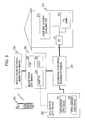
- An IMS network 230 shown in Fig. 3 has a CSCF 231, an HSS 232, and an AS (IPTV) 233 as these functional elements.
- the IMS network 230 provides services with respect to a mobile phone 260 via a mobile phone network 240.
- the CSCF 231 performs user registration and session set-up control on the basis of SIP (Session Initiation Protocol). Further, the CSCF 231 executes activation of necessary service processing in accordance with user profile setting registered in the HSS 232.
- the HSS 232 has a database for the management of user IDs used in the IMS, the management of the profile of services to which each user subscribes, the management of authentication information, the management as to whether or not each IMS service can be used, and user movement management.
- the AS 233 is a server that executes each individual service processing, and is activated by the CSCF 231 in accordance with the service subscription status of each user to provide services to the user.
- a terminal for which the user ID is set makes access to the CSCF 231 to perform terminal registration and session set-up control, and performs activation of necessary services in accordance with the user profile setting registered in the HSS 232.
- the ASS 233 actually performs each individual service processing.
- a representative example of services using IMS is "Push to Talk”.
- the user terminal connects to the application server (AS: Application Server) in the IMS network 230 which executes the "Push to Talk” service, and establishes sessions with a plurality of members from the AS with respect to registered group members, a phone conversation between the members being performed via a relay server using VoIP (Voice Over IP).
- AS Application Server
- VoIP Voice Over IP
- the AS of the IPTV service set in the IMS network 230 is used.
- the AS (IPTV) 233 shown in Fig. 3 corresponds to the AS executing this IPTV service.
- the AS (IPTV) 233 executes services with respect to the user terminal in corporation with an IPTV service (IPTV Service) executing entity, that is, an IPTV service 250 as a content providing entity.
- IPTV Service IPTV Service
- the IPTV service 250 has an EPG server 251, which is a server providing EPG (Electronic Program Guide) as a program information guide such as a content list, and a video server 252 that is a server providing video content.
- EPG Electronic Program Guide
- the content list provision service and content provision service with respect to the user terminal are realized through cooperation between the respective servers and the AS (IPTV) 233 of the IMS network 230.
- a home network 210 is constituted by the home network of the related art described with reference to Figs. 1 and 2 , that is, an existing DLNA (Digital Living Network Alliance) device.
- Fig. 3 shows a residential gateway (RG: Residential Gateway) 211 as a network connecting device through which a device within the home network connects to an IP broadband network 221 and which is used as a bridge, a home IMS gateway 212 that executes processing with respect to a device within the home network 210 (for example, a content playback apparatus such as a TV (DMP) 213) to enable use of services provided by a server that is located outside the home network, and the TV 213 as a digital media player (DMP: Digital Media Player) that is a client device that receives and plays back content.
- DMP Digital Media Player
- a broadband IP network 220 is a network such as the , Internet that allows mutual communication between the IPTV 250, the IMS network 230, the home network 210, and the like.
- the home IMS gateway 212 is set as the terminal that receives services of the IMS network.
- the IMS user ID is set for the home IMS gateway 212. That is, the user ID and user profile of the home IMS gateway 212 are registered in the home subscriber subsystem (HSS) 232 of the IMS network 230.
- HSS home subscriber subsystem
- the home IMS gateway 212 receives IPTV services by executing the same processing as that performed when the mobile phone 260 executes IPTV services. That is, the home IMS gateway 212 makes access to the CSCF 231 to perform terminal registration and session set-up control, and performs activation of necessary services in accordance with the setting of the user profile registered in the HSS 232, thus performing reception of services using the AS (IPTV) 233.
- the home IMS gateway 212 executes a gateway function for a DLNA device, for example, the TV (DMP) 213 shown in the drawing to access video content provided by the IPTV service 250. That is, the home IMS gateway 212 retains the following functions.
- the home IMS gateway 212 executes the processing of relaying video content provided by the IPTV service 250 to a DLNA device, for example, the TV (DMP) 213 shown in the drawing, the home IMS gateway 212 further includes:
- this function is not absolutely necessary. It is also possible to adopt a configuration in which content transmission/reception is executed not via the home IMS gateway 212 but through communication between DMP as a DLNA device and an external server, in which case the home gateway 212 is not required to have the DMS function. Specific processing configuration for this will be described later.
- an existing DLNA device for example, the TV (DMP) 213 shown in the drawing
- DMP TV
- the TV (DMP) 213 as a client device within the home network can execute IPTV services executed as content provision processing from a device that is located outside the home network, through the same content usage processing as when receiving provision of content from the DMS within the home network, that is, the home IMS gateway 212.
- the home IMS gateway 212 implements a DMS (Digital Media Server) function as a content providing server in a DLNA device. Access is made to the home IMS gateway 212 from the TV 213 in which the DMP (Digital Media Player) is implemented, and the IMS gateway 212 can provide IPTV services received via the IMS network 230 to the TV 213.
- DMS Digital Media Server
- the home IMS gateway 212 can be implemented in various devices connected to an existing home IP network which has a network communication function.
- the IMS-network-service receiving function can be implemented in a residential gateway (RG: Residential Gateway) supplied from an access line vendor of a telephone company or cable TV company as a network line provider.
- RG Residential Gateway
- the RG 211 and the home IMS gateway 212 shown in Fig. 3 are integrated together.
- the IMS-network-service receiving function can be implemented in the DVR (Digital Video Recorder) or PC that functions as a Digital Media Server (DMS) as a device performing content provision.
- DVR Digital Video Recorder
- DMS Digital Media Server
- the device in which the IMS-network-service receiving function can be implemented is not limited, thus allowing adaptation to IPTV services on the open Internet.
- the network topology is not limited either, thus allowing adaptation to any arbitrary network configuration.
- Fig. 4 shows the functional components of the DLNA guidelines.
- the following layers are defined from the top: a media format layer (Media Format); a media transport layer (Media Transport); a device discovery control and media management layer (Device Discovery Control and Media Management); a network layer (Network Stack); and a network connectivity layer (Network Connectivity).
- a device within the home network executes data communication according to a network protocol that conforms to the guideline of DLNA (Digital Living Network Alliance), in accordance with the basic components shown in Fig. 4 .
- Network Connectivity at the lowermost layer specifies the physical layer/link layer of the home network. While a communication function according to the IEEE802.3u, 802.211a/b/g standard is implemented in the DLNA device, the communication standard is not limited as far as the home network infrastructure is configured so as to allow IP connection such as PLC (Power line communication).
- PLC Power line communication
- IPv4 The protocol of IPv4 is used for the network layer, and each DLNA device performs communication by using TCP, UDP.
- UPnP registered trademark
- Device Architecture 1.0 specified in the device discovery control and media management layer specifies SSDP (Simple Service Discovery Protocol) for device discovery, SOAP (Simple Object Access Protocol) for performing control, and the like.
- SSDP Simple Service Discovery Protocol
- SOAP Simple Object Access Protocol
- UPnP AV is implemented on top of UPnP DA (UPnP Device Architecture).
- UPnP AV version 1 specifies a UPnP media server (UPnP Media Server) and a UPnP media renderer (UPnP Media Renderer)
- the DMS as a DLNA-specified content providing server implements the UPnP media server (UPnP Media Server)
- the DMP as a DLNA-specified content playback device implements a controller for the UPnP media server (UPnP Media Server).
- Main content directory service (Content Directory Service) is implemented in the UPnP media server (UPnP Media Server), and the content list and metadata acquisition method is provided.
- the DMP as a DLNA-specified content playback device performs acquisition of the list of content to be streamed from the DMS as a DLNA-specified content providing server.
- the media transport (Media Transport) layer specifies that HTTP1.0/1.1 be used for streaming playback.
- HTTP1.0/1.1 As for the media format, it is specified that in the case of video content, contents of Media Formats according to the profile of MPEG2-PS specified by the DLNA are transported by streaming from the DMS to the DMP.
- the DMP as a DLNA-specified content playback device sequentially decodes and plays back the MPEG2-PS data that has been received by streaming transmission, for example, thereby allowing the user to view or listen to the contents.
- Fig. 5 shows an example of the hardware configuration of the home IMS gateway 212 described with reference to Fig. 3 .
- the home IMS gateway 212 retains the following functions.
- the home IMS gateway 212 includes a CPU 301 as a data processing section hat executes various kinds of software (computer program), a memory 302 that is configured by a ROM as a program storage area, a RAM used for a work area or the like at the time of executing data processing, or the like, a network I/F 303 as a network connecting section, and a bus 304 for command/data transport between these components.
- a CPU 301 as a data processing section hat executes various kinds of software (computer program)
- a memory 302 that is configured by a ROM as a program storage area, a RAM used for a work area or the like at the time of executing data processing, or the like
- a network I/F 303 as a network connecting section
- a bus 304 for command/data transport between these components.
- the network I/F 303 is, for example, a wired LAN network I/F such as IEEE802.3u.
- the OS and other software programs are stored in the Flash-ROM constituting the memory 302, and these programs are copied to the RAM constituting the memory 302 and executed. Further, user IDs and various kinds of setting information necessary for establishing IMS sessions are also stored in the Flash-ROM constituting the memory 302.
- the software module is classified into the following three types.
- the area is divided by a broken line such that the software module applied on the IMS/IPTV side is shown on the left side of the broken line, and that the software module applied on the DLNA side is shown on the right side.
- the network module is used in common to both the networks.
- the network module implements an Auto IP/DHCP (Dynamic Host Configuration Protocol) Client module for performing IP address setting specified by the IPv4 TCP/IP stack and UPnP DA.
- the same network module can be used for both the IMS and DLNA.
- the home IMS gateway 212 be connected to the home IP network, so it is not absolutely necessary to set a network I/F separately. It should be noted, however, that in cases such as when the home IMS gateway 212 is integrated with a residential gateway, a home network connecting I/F and an external network connecting I/F may be separately configured.
- the protocol module is individually set in correspondence to the respective protocols.
- the DLNA side includes SOAP specified by UPnP DA, GENA (Generic Event Notification Architecture), Presentation Page by HTTP (Hyper Text Transfer Protocol) server, and Device Description module, SSDP that is in charge of Device Discovery as device discovery processing, and an AKE module that executes authentication and key exchange (AKE: Authentication and Key Exchange) by DTCP-IP (Digital Transmission Content Protection - Internet Protocol) necessary for implementing content within the home network.
- the IMS side includes SIP/Module for establishing sessions with the AS (Application Server) as an IMS service providing server, and SOAP, GENA module that performs message communication with the AS. Since communication over the open Internet is assumed on the IMS side, communication execution protocols such as SIP and SOAP are implemented on the TLS (Transport Layer Security) protocol as specified by IETF RFC 2246 for security, thereby achieving a protocol setting for executing communication under a secure environment.
- AS Application Server
- SOAP GENA module that performs message communication with the AS. Since communication over the open Internet is assumed on the IMS side, communication execution protocols such as SIP and SOAP are implemented on the TLS (Transport Layer Security) protocol as specified by IETF RFC 2246 for security, thereby achieving a protocol setting for executing communication under a secure environment.
- TLS Transport Layer Security
- a characteristic feature of the home IMS gateway 212 as the information processing apparatus according to the present invention is that it is configured to execute the processing of mapping the AS (IPTV service) of the IMS as a UPnP device (UPnP Device) by using a function called Device Discovery Control as a device discovery processing function used in a DLNA-side device. That is, the home IMS gateway 212 performs mapping of a server outside the home network as a virtual home network device. Specifically, the home IMS gateway 212 creates a UPnP Media Server instance corresponding to AS (IPTV) as an external server by using UPnP Device Proxy Manager (see Fig. 6 ) set as an application module in the home IMS gateway 212, or the like.
- the home IMS gateway 212 maps the AS (IPTV service) of the IMS, which is as an external device that does not exist in the home network, as the DMS of DLNA.
- the AS (IPTV service) of the IMS is set as if it were a content providing server (DMS) existing within the home network.
- DMS content providing server
- a DLNA device within the home network for example, DMP as a content playback executing device such as TV executes device discovery processing according to UPnP
- the home IMS gateway 212 to notify the DMP of the fact that it has a service providing function based on the UPnP Media Server instance corresponding to AS (IPTV).
- the DMP can recognize the AS (IPTV service) of the IMS as the same device as a content providing server (DMS) within the home network, thereby making it possible to receive services of the AS (IPTV service) of the IMS as an external network through the same process as that for reception of services based on content provision from within the home network.
- DMS content providing server
- the home IMS gateway 212 as the information processing apparatus according to the present invention can be arbitrarily set as to whether or not to perform relaying of content provided by the AS (IPTV service) of the IMS with respect to the DMP as a content playback executing device within the home network.
- a setting is possible in which the DMP directly acquires content data from an external network through communication between a DLNA device (DMP as a content playback executing device) and the back-end Video Server of the AS (IMS) of the IMS, without performing relaying of content. Specific examples of these processing will be described later.
- the home IMS gateway 212 performs relaying of content provided by the AS (IPTV service) of the IMS
- functions called Media Management for example, a Content Directory service for performing acquisition of the metadata of a content list, and a protocol for performing transport of video content called Media Transport of the DLNA are implemented in the home IMS gateway 212.
- these functions that is, the Media Management functions need not be implemented in the home IMS gateway 212.
- a setting is possible in which the content list request is directly made to an external server such as AS (IPTV service) from the client device (DMP), without relaying by the home IMS gateway 212.
- AS IPTV service
- the home IMS gateway 212 be configured such that it can respond to a device discovery request from the client.
- the URL specified by [controlURL] and [eventSubURL] of device information [Device Description] specified in the UPnP Device Architecture is set to the URL of not the home IMS gateway but the external server.
- the home IMS gateway 212 by providing the device information [Device Description] set as described above to the client device, the party to which the client makes a content list request or various kinds of request by referring to the device information is set to an external server such as AS (IPTV service) thereafter.
- AS IPTV service
- the home IMS gateway becomes a model in charge of device discovery only, thereby further lightening the load.
- the URL [SCPDUAL] for device information acquisition specified by the UPnP Device Architecture can be also set to the URL of not the home IMS gateway 212 but the external server.
- the application module executes a gateway function, that is, a function of setting the communication environment between a DLNA device within the home network and a server that is located outside the home network.
- the application module can be roughly divided into a group of modules that perform a mapping process of setting the AS (IPTV) service of the IMS as the DMS of the DLNA, and a group of modules that interface, with respect to the mapped DMS of the DLNA (which is in substance the AS (IPTV) Service of the IMS), a request transmitted from the DMP as a content playback device within the home network to the AS (IPTV) service of the IMS.
- IPTV IPTV
- the former group of modules that perform the mapping process are AS Discovery, Service Manager, and UPnP Device Proxy Manager.
- the latter group of modules that execute the request transfer processing are UPnP Message Proxy and AKE Proxy.
- the home IMS gateway 212 as the information processing apparatus according to the present invention performs the process of mapping the AS (IPTV service) of IMS as an external device that is not present in the home network as the DMS of DLNA.
- the home IMS gateway 212 further has a function of selectively mapping only the service entity [AS (IPTV)] selected by the user at the time of this mapping process.
- IPTV IP Multimedia Subsystem
- AS Discovery as a module on the IMS/IPTV side shown in Fig. 6 executes the processing of discovering an IPTV service provided by the IMS system
- UPnP Device Proxy Manager as a module on the DLNA side manages the list of ASs discovered and acquired by the AS Discovery and presents this list to the user to execute purchasing or selection processing of AS (IPTV).
- the home IMS gateway 212 as the information processing apparatus according to the present invention serving as the HTTP server, by using the scheme of Presentation specified by UPnP DA, the home IMS gateway 212 connects to UPnP Control Point incorporating an HTML browser, and the user selects a desired IPTV service from the HTML screen displayed by using the browser function and performs a service subscription procedure.
- UPnP Control Point incorporating an HTML browser
- the user selects a desired IPTV service from the HTML screen displayed by using the browser function and performs a service subscription procedure.
- a list retained by the home IMS gateway 212 is presented on the display to allow selection of an IPTV service.
- this IPTV service reception procedure can be coordinated with a charging system provided by the IMS system, and charging to the user is made from the customer information of an IMS user ID that has been set as an ID corresponding to the home IMS gateway 212.
- the home IMS gateway 212 can perform selective mapping such that with the user's subscription procedure to AS (IPTV) as a condition, through the processing of UPnP Device Proxy Manager as an application module, an IPTV service to which a subscription procedure has been made is selected and mapped to DLNA DMS.
- AS IPTV
- AS IPTV
- the DMP as a content playback device that is a DLNA device within the home network interprets the AS (IPTV) that has completed the mapping process in the home IMS gateway 212 as a content providing server (DMS) within the home network, thus allowing reception of services of the AS (IPTV).
- AS IPTV
- DMS content providing server
- UPnP Message Proxy as the application module relays a message supplied from DLNA DMP to AS (IPTV).
- SOAP, GENA equivalent to UPnP are used as the protocols for achieving this, and AS achieves mutual compatibility by directly processing the message of UPnP Media Server, Content Directory service as specified by UPnP AV or by performing protocol conversion of AS (IPTV) in UPnP Message Proxy.
- the example of the software module configuration of the IMS gateway 212 shown in Fig. 6 is a software module configuration in the case where the home IMS gateway can execute both communication according to the communication protocol on the IMS/IPTV side and communication according to the communication protocol on the DLNA side within the home network, and the home IMS gateway 212 executes protocol conversion as required during communication between the IMS/IPTV side and the DLNA side.
- the protocol conversion process is performed by an external server that directly executes communication with the home IMS gateway 212 side, for example, the AS on the IMS side or the execution server of the IPTV service.
- the home IMS gateway 212 may simply have the protocol module and the application module on the DLNA side.
- the mapping process of the external server can be executed by executing a device discovery process according to the SSDP protocol specified by DLNA.
- the embodiment described below adopts a method in which the AS directly processes the UPnP Content Directory service.
- a service subscription procedure is performed with UPnP Control Point in which the HTML browser is implemented, and while this may be DMP of DLNA, this may not necessarily be DMP of DLNA.
- the same processing can be performed with the HTML browser of a third party, for example, a PC.
- the purchasing procedure can be similarly performed when the HTML browser is implemented in a mobile phone or the like.
- a list acquired from AS can be directly presented onto the user interface to enable input of user-input information. Service subscription procedures can be thus performed even without control by the HTML browser.
- the subscription procedure for AS can take various forms. That is, in addition to selection on a service-by-service basis as the selection of AS (IPTV) itself, various settings are possible, including content-by-content selection of content provided by AS (IPTV). According to these settings, the scheme for selecting purchases on a content-by-content basis is provided from Presentation Page on the basis of the setting of AS (IPTV), the selection information is registered to the IMS side as data constituting user profile information, and content provision according to the registered information is performed on the AS (IPTV) side.
- the home IMS gateway 212 can be set either to perform or not to perform relaying of content provided by the AS (IPTV service) of the IMS with respect to the DMP as a content playback executing device within the home network.
- service logic processing on the application level for example, data processing corresponding to respective services such as interpretation of services provided by the AS (IPTV) service or conversion thereof into a format intelligible to the DMP, is not necessary, nor is it unnecessary to perform temporary storage or conversion of content data. It is thus possible to realize the home IMS gateway as an apparatus with very inexpensive software or hardware configuration.
- Eliminating the need to perform service logic processing by the gateway device makes it possible to achieve enhanced service extendability as compared with a configuration in which such processing is performed.
- the AS IPTV
- the gateway device performs service logic processing
- updating of a program for example, is necessary in order to allow the gateway to execute interpretation and processing of the added metadata.
- the home IMS gateway according to the present invention can be set so as not to perform these processing, and various service logic changes are possible solely by changes on the distribution service side without making changes to the gateway itself.
- Figs. 7 , 8 show the following components in order from the left side:
- the AS (IPTV) subscription procedure sequence shown in Figs. 7 , 8 can be divided into the following three phases.
- step S11 the home IMS gateway transmits the IMS user ID set in the home IMS gateway in advance to the CSCF of the IMS network, and receives a registration confirmation in step S12 to perform registration with respect to the IMS network.
- step S13 the home IMS gateway presents configuration information (config) to the CSCF, and receives a confirmation response in step S14.
- step S15 the CSCF requests the HSS, which has a database that manages user profile information, for information of usable services registered in association with IMS user IDs and acquires the information (step S16).
- step S17 the CSCF transmits to the home IMS gateway the list of usable services thus acquired.
- step S18 the home IMS gateway transmits a reception confirmation to the CSCF.
- the home IMS gateway acquires the list of usable services in this way and stores it into a memory.
- the home IMS gateway creates an HTML document from the IPTV service list thus acquired, in preparation for AS setting by the HTML browser thereafter.
- the second phase is a device discovery process. Initially, the AS to be used has not been selected by the user. Therefore, at this point, the home IMS gateway has not mapped AS (IPTV) as DLNA DMS, so DMP as a content playback device within the home network cannot perform content reception by interpreting AS (IPTV) as DMS.
- AS IPTV
- the home IMS gateway serves as the HTTP server, and by using the scheme of Presentation specified by UPnP DA, connects to the UPnP Control Point incorporating an HTML browser so that the user selects a desired IPTV service from the HTML screen displayed by using the browser function.
- the (A2) device discovery process shown in Fig. 7 represents the sequence of this process.
- the user transmits processing according to the device discovery protocol specified by UPnP, that is, SSDP M-Search of step S19, from the UPnP Control Point on a PC or the like having a browser function, for example, and in step S20, receives SSDP M-Response as a response thereto, thus discovering that the home IMS gateway is connected on the home network.
- Steps S21, S22 represent specific device-information requesting and receiving steps.
- Fig. 8 shows the sequence of the AS (IPTV) selection process to be executed next.
- the user browses the AS (IPTV) service list acquired by the home IMS gateway in the first phase from the UPnP Control Point on a PC or the like, and executes service (AS) selection.
- AS service
- steps S23, 24 with respect to the home IMS gateway as the HTTP server, an HTML document is acquired on the basis of HTTP GET, and an HTML page is displayed.
- the AS (IPTV) service list is displayed on that screen.
- step S25 When the user selects from that list the AS (IPTV) from which the user wishes to receive services or content, in step S25, this request information is inputted to the home IMS gateway.
- step S26 the home IMS gateway requests service subscription with respect to the CSCF of the IMS.
- step S27 on the basis of the service subscription request from the home IMS gateway, the CSCF executes registration of information corresponding to this service subscription request to the HSS as registration information corresponding to the user.
- step S28 a processing completion response is notified by the HSS to the CSCF, and in step S29, is notified by the CSCF to the home IMS gateway. Further, in step S30, the processing completion response is transmitted to an apparatus having a user interface such as a PC as the UPnP Control Point, and is confirmed by the user.
- the (A) sequence of AS (IPTV) service subscription procedure includes the following three processes.
- the home IMS gateway Upon completion of this AS (IPTV) subscription procedure, the home IMS gateway executes mapping of the selected AS (IPTV) as DLNA DMS, thereby allowing the DMP as a content playback device within the home network to perform content reception by interpreting the selected AS (IPTV) as the DMS. That is, the home IMS gateway creates, by using the UPnP Device Proxy Manager shown in Fig. 6 or the like, an instance of UPnP Media Server corresponding to the selected AS (AS3 in this example).
- AS IPTV
- DMS DLNA Media Server
- DMP DLNA Media Player
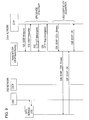
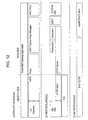
- Figs. 9 , 10 show the following components in order from the left side:
- the usage sequence for content provided by AS (IPTV) shown in Figs. 9 , 10 can be divided into the following four phases.
- the first process is a device discovery phase.
- the home IMS gateway has already mapped AS (IPTV) as DLNA DMS, and it has been advertised to each DLNA device within the home network that AS (IPTV) can be used as DLNA DMS. That is, by the device discovery sequence specified by UPnP DA, all DMPs as content playback apparatuses connected to the home network can acquire AS (IPTV) information as DMS from the home IMS gateway.
- This device discovery sequence corresponds to the processing of steps S31 to S34.
- DMP as a content playback device transmits processing according to the device discovery protocol specified by UPnP, that is, SSDP M-Search of step S31, to the home IMS gateway, and in step S32, receives SSDP M-Response as a response thereto, thus discovering the AS (IPTV) set as DMS.
- Steps S33, S34 represent specific device-information requesting and receiving steps.
- the home IMS gateway provides, to DMP as a content playback device, information based on the UPnP Media Server instance corresponding to AS (IPTV) created by the home IMS gateway by the mapping process, that is, server information corresponding to AS (IPTV).
- the DMP interprets the AS (IPTV) as a content providing server (DMS) within the home network.
- the second process is a process of acquiring a content list from the AS (IPTV) set as DMS.
- AS IPTV
- the home IMS gateway has established a session with the IMS network. If a section has not been established or a section has been cut off, reconnection is performed with a content acquisition request or the like as a trigger.
- Information of the AS that has been subscribed to by establishing a session with the IMS network has been already acquired.
- step S35 the DMP issues a Browse action for Content Directory Service of UPnP with respect to the AS (IPTV) that has been discovered in the first phase and set as DMS.
- the home IMS gateway Upon receiving the Browse action from the DMP, in step S36, the home IMS gateway relays this request for transport to IPTV (AS).
- AS IPTV
- the IPTV interprets the contents of this Browse action, creates a video content list from a back-end electronic program information storage server (EPG server) or the like, and sends a response to the DMP via the home IMS gateway (steps S37, S38). For example, when the content list has a layered structure, a plurality of Browse actions are issued. It should be noted that as specified in the UPnP Content Directory Service, the content list is expressed in the form of an XML document in conformity to XML Schema called DIDL-Lite.
- the resource information (URI) of video data of each content indicates video content provided by back-end Video Server of the AS.
- the content list request from DMP is made directly to an external server such as AS (IPTV service) from a client device (DMP), without relaying by the home IMS gateway.
- the URL designated by [controlURL] and [eventSubURL] of device information [Device Description] specified in the UPnP Device Architecture is set to the URL of not the home IMS gateway but the external server.
- the device information [Device Description] having the above-described URL setting to the client device, the party to which a client makes a content list request or various kinds of request by referring to the device information is set to an external server such as AS (IPTV service) thereafter.
- the third phase is authentication and key exchange.
- DLNA when transmitting copy-protected content, the content is encrypted in accordance with DTCP-IP before being transmitted. Also in the case of streaming from the video server of AS (IPTV), encryption in conformity to DTCP-IP is performed and encrypted content is transmitted.
- the key to be applied to the encryption of content is generated through an authentication and key exchange (AKE) process according to the specification of DTCP-IP.
- AKE authentication and key exchange
- the home IMS gateway has a DTCP-IP AKE Proxy function.
- While the resource URI of content set in the list acquired by the content list acquisition process of (B2) is set to include the IP address of the video server of AS, the address for which an authentication and key exchange process, that is, an AKE process required for executing such content acquisition is executed, is set to the home IMS gateway. That is, the DMP performs authentication and key exchange with the home IMS gateway in which an instance of the DMS recognized as a content providing service entity is registered.
- the target of authentication and key exchange by the DMP is often set to the encrypted-content transmitting entity, that is, the IP address of the video server of AS included in content resource URI, in the configuration of the present invention, the target of the AKE process executed by the DMP in response to an acquisition request for content included in the content list provided to the DMP in the content list acquisition process of (B2) is set to the home IMS gateway.
- the list may be set in this way in advance, or addition or change of metadata may be performed in the home IMS gateway.
- the home IMS gateway may execute a notification informing that the target of AKE is the home IMS gateway.
- the authentication and key exchange process is executed in accordance with the authentication and key exchange (AKE: Authentication and Key Exchange) process sequence specified by DTCP-IP.
- AKE Authentication and Key Exchange
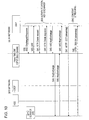
- the authentication and key exchange between DMP and the home IMS gateway is completed through steps S39 to S46 shown in Fig. 10 listed below.
- Steps S41, S42 In this authentication and key exchange process, in order to confirm that the home IMS gateway as the target of AKE is present near DMP, checking of TTL (Time to Live) of IP packets and checking of response time are carried out as the RTT measurement in steps S41, S42.
- Steps S44, S45 represent characteristic processing according to the configuration of the present invention. According to this processing, in order to share a key to be applied as an encryption key between the IPTV service (AS) as a content providing entity and the DMP as a content using entity, the key shared by the home IMS gateway and the DMP in the AKE sequence is passed to the IPTV service (AS).
- AS IPTV service
- steps S44, S45 Adding this processing of steps S44, S45 enables sharing of an encryption key between the IPTV service (AS) as a content providing entity and the DMP as a content using entity.
- this IPTV service (AS) is a legitimate service permitted to share a key, and the processing of steps S44, S45 is performed via secure communication.
- step S47 DMP as a content playback device issues a content request based on HTTP GET through the application of the URL of the resource acquired in the (B2) content list acquisition process mentioned above, and requests HTTP streaming.
- the video server of the IPTV service (AS) encrypts content data with the key shared with DMP in the previous AKE phase, and in step S48, starts streaming transmission of content with respect to DMP as a DLNA device within the home network.
- DMP as a content playback device within the home network performs decryption and decoding of the data received from the IPTV service (AS) through application of the encryption key shared with the IPTV service (AS) in the previous AKE phase, thereby executing content playback.
- the processing configuration according to the present invention is one that conforms to streaming playback according to DTCP-IP specified by DLNA, except for that, in the following third and fourth phases mentioned above:
- Fig. 11 shows a DMP 501 as a content playback device, a home IMS gateway 502, and a residential gateway (RG) 503 as devices that are present within a home network 500. Further, an IP multimedia Subsystem (IMS) 510 and an IPTV service 520 are shown as components that are present outside the home network 500.
- IMS IP multimedia Subsystem
- the IP multimedia subsystem (IMS) 510 forms the basis of wireless communication infrastructure for mobile phones developed by 3GPP (3rd Generation Partnership Project) that is a standardization project for third generation mobile communication systems.
- CSCF Call Session Control Function
- the IMS is configured by such functional elements as a home subscriber subsystem (HSS: Home Subscriber Subsystem) and an application server (AS: Application Server).
- Fig. 11 shows an application server (AS) 511.
- the application server (AS) 511 includes a CDS (Content Directory Service) 512 as a directory service executing section that performs such processing as function registration for a service providing server.
- CDS Content Directory Service
- An IPTV service 520 has an EPG server 521 as a server that provides EPG (Electronic Program Guide) as a program information guide such as a content list, and a video server 522 as a server that provides video content.
- EPG Electronic Program Guide
- a content list provision service and a content provision service with respect to the DMP 501 as a user terminal are realized through cooperation between each of the servers and the CDS 512 of the AS (IPTV) 511.
- the home IMS gateway 502 has already performed mapping of the IPTV service (AS) as DLNA DMS through the AS subscription sequence described above with reference to Figs. 7 , 8 .
- AS IPTV service
- step S101 the DMP 501 executes device discovery as a UPnP action, and acquires information of the AS (IPTV) set as DMS from the home IMS gateway 502.
- the home IMS gateway 502 provides information based on the UPnP Media Server instance corresponding to the AS (IPTV) created by the home IMS gateway 502 in the mapping process, to the DMP 501 as a content playback device.
- the DMP 501 interprets the AS (IPTV) as a content providing server (DMS) within the home network.
- DMS content providing server
- the DMP 501 issues a Browse action for Content Directory Service of UPnP with respect to the AS (IPTV) that has been set as DMS.
- the home IMS gateway 502 Upon receiving the Browse action from the DMP 501, the home IMS gateway 502 relays this request to the AS 511 (CDS 512).
- the AS 511 (CDS 512) acquires a list of video content provided by the EPG server 521 of the IPTV service 520, and in the home IMS gateway 502, the content list is transmitted to the DMP 501 as a response.
- this content list records the content URL applied to the acquisition of content as metadata, and target device information for the authentication and key exchange (AKE) process that is executed as a precondition for content acquisition.
- the target device information for the key exchange (AKE) process is set to the home IMS gateway 502.
- a setting may be employed in which the home IMS gateway 502 notifies the DMP 501 of the fact that the target device for the key exchange (AKE) process is the home IMS gateway 502, without using content metadata.
- the DMP 501 executes an authentication and key exchange (AKE) process according to the specification of DTCP-IP.
- the DMP executes the process with the home IMS gateway 502 set as the execution target for authentication and key exchange.
- the home IMS gateway 502 provides the key applied as an encryption key for content to the video server 522 of the IPTV service 520 as a content providing entity.
- the key is shared between the video server 522 of the IPTV service 520 as a content providing entity, and the DMP as a content using entity.
- step S104 the DMP 501 as a content playback device issues a content request based on HTTP GET by applying the URL of the resource acquired in the content list acquisition process, and requests the video server 522 for HTTP streaming.
- the video server 522 of the IPTV service 520 encrypts content data with the key shared with the DMP 501 in the previous AKE phase, and transmits the encrypted data to the DMP 501.
- the DMP 501 executes description processing with respect to the data received from the IPTV service 520 through application of the shared encryption key, thereby executing content playback.
- the DMP as a content playback apparatus within the home network to receive content from a content providing server that is located outside the home network and playback the content.
- the home IMS gateway installed within the home network executes communication with a content providing server, and performs mapping of the content providing server as a virtual home network device, that is, creates an instance that records the server information of an external server and stores it into a storage section.
- the home IMS gateway Upon reception of a device discovery request according to the UPnP specification from a content playback apparatus within the home network, on the basis of the instance, the home IMS gateway executes a process of providing server information corresponding to a content providing server to the content playback device as device information indicating a device from which services can be received.
- the home IMS gateway transfers this request to the content providing server, and causes the content to be transmitted to the content playback apparatus from the content providing server, thereby enabling content reception and playback by the content playback apparatus.
- a configuration is adopted in which a key generated by executing the process (AKE) as specified between the content playback apparatus and the home IMS gateway is transmitted by the home IMS gateway to a content providing server.
- the content providing server and the content playback apparatus can thus share the key generated in the authentication and key exchange process.
- encrypted content is transmitted from the content providing server to the content playback apparatus, thus realizing secure content transmission and reception.
- this content transmission scheme can be applied to Home-to-Home content transmission as well.
- another household home server providing similar services in place of the video server 522 of the IPTV SERVICE 520 shown in Fig. 11 , content transmission can be performed within that household.
- content is transmitted without being encrypted.
- DMS as a content providing server specified by DLNA implements the UPnP media server (UPnP Media Server), and the main content directory service (Content Directory Service) is implemented in the UPnP media server (UPnP Media Server), thereby allowing content list and metadata acquisition through application of the content directory service.
- UPnP Media Server the UPnP media server
- Content Directory Service Content Directory Service
- the DMP as a DLNA-specified content playback device performs acquisition of the content list streamed from the DMS as a DLNA-specified content providing server.
- the content list acquisition process by the UPnP content directory service is performed through the application of SOAP/GENA message communication specified by UPnP DA.
- description will be given of a processing example using the scheme of Presentation specified by UPnP DA.
- the home IMS gateway 212 shown in Fig. 3 as the information processing apparatus according to the present invention serves as the HTTP server, and by using the scheme of presentation (Presentation) specified by UPnP DA, the home IMS gateway 212 connects to a UPnP Control Point incorporating an HTML browser, and the user selects a desired IPTV service from the HTML screen displayed by using the browser function and receives the service.
- Presentation the scheme of presentation
- the embodiment represents a processing example in which, by applying the scheme of presentation (Presentation) specified by UPnP DA described above, for example, a process of providing HTML data describing a service screen including a content list, content information, and the like is executed from the home IMS gateway 212 with respect to the DMP as a content playback device, for example, the TV (DMP) 213 shown in Fig. 3 , and the service screen configured by HTML data is displayed on a display on the side of the DMP as a content playback device so that the user performs content selection on the basis of the displayed data to receive IPTV services. That is, for example, by using a PC or TV having a browser function set as a DLNA device within the home network, a list retained by the home IMS gateway 212 is presented on a display to allow selection of IPTV services, thereby performing service reception.
- Presentation the scheme of presentation
- UPnP DA the scheme of presentation
- the content playback device that is, the TV (DMP) 213 shown in Fig. 3 , for example, implements an HTML browser for realizing a presentation (Presentation) function specified by UPnP DA.
- the UPnP content directory ULP Content Directory
- the implementation of the content playback device is based on the specification for media transport by DLNA or the DTCP-IP specification for content protection for the purpose of the streaming playback function.
- IPTV IPTV
- Fig. 12 shows an example of the software module configuration of the home IMS gateway 212 for performing this (B2a) service screen acquisition process.
- the software module of SOAP, GENA described with reference to Fig. 6 is not implemented.
- an HTTP proxy HTTP Proxy that relays HTML data between an HTTP server and an HTTP client is implemented.
- step S201 the DMP as a content playback device transmits an HTTP:GET request to the HTTP server of the DMS by using the presentation URL (Presentation URL) acquired in the (B1) device discovery process.
- step S202 the HTTP proxy (HTTP Proxy) implemented in the home IMS gateway transmits the HTTP:GET request received by the HTTP server from the DMP as a content playback device to the application server (AS) of the IPTV service.
- HTTP Proxy HTTP Proxy
- the application server (AS) of the IPTV service creates a service screen including a content list as HTML (HyperText Markup Language) data, and in step S203, returns the HTML data representing the service screen to the home IMS gateway as an HTTP:OK response.
- HTML HyperText Markup Language
- step S204 the home IMS gateway transfers the response including HTML data, which is received from the application server (AS) of the IPTV service, to the DMP as a content playback device by the HTTP proxy (HTTP Proxy).
- AS application server
- HTTP Proxy HTTP proxy
- the DMP as a content playback device performs rendering with an HTML browser with respect to the HTML data transmitted by the application server (AS) of the IPTV service and transferred via the home IMS gateway, thereby creating a service screen including a content list and the like for display to the user.
- An IPTV service content list is included in this service screen. The user selects the content to be played back from this content list.
- This content selection process is executed as a process of selecting a content list displayed on a screen by means of a pointer such as a remote control, a switch, a keyboard, a mouse, or the like.
- a pointer such as a remote control, a switch, a keyboard, a mouse, or the like.
- the resource URL of content included in HTML data is identified.
- the service screen may take the configuration of a structural menu represented by a plurality of pieces of HTML data, which makes it possible to execute reacquisition of the service screen on the basis of operation of the HTML browser by the user. That is, it is possible to adopt a configuration in which the same processing as that of steps S201 to S204 is repeatedly executed, thereby allowing various service screens to be provided to the DMP from the AS of the IPTV service.
- the user on the DMP side selects an arbitrary content from content lists presented on various service screens.
- HTML data representing a confirmation screen is transmitted from the AS of the IPTV service to the DMP via the home IMS gateway.
- the user can receive various services provided by the IPTV service while operating the service screen displayed on a display of the DMP and carrying out interactive processing.
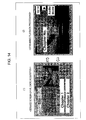
- Fig. 14 shows an example of service screen and streaming playback screen provided to the DMP from the AS of the IPTV service and displayed on the display of the DMP.
- Fig. 14(1) shows an example of service screen displayed on the display of the DMP in the service screen acquisition process of (B2) in steps S201 to S204 described with reference to the sequence diagram of Fig. 13 .
- Fig. 14(2) shows an example of screen displayed on the display of the DMP during the subsequent content streaming process. That is, this represents an example of the display screen of a content playback apparatus when the (B4) content screening process described with reference to Fig. 10 is being performed. It should be noted that the following two processing screens shown in Fig. 14 , that is,
- the CEA-2014 standard will be briefly described.
- the CEA-2014 standard is a standard for Web-based protocol and framework, and is a standard for a remote user interface using a UPnP network and the Internet.
- the CEA-2014 standard is a standard that defines a mechanism necessary for providing a user interface under the control of a remote device connected via a network or the like, for example.
- the basic process of a device providing a user interface is a process conforming to UPnP device architecture (v1.0) as a specification with respect to the UPnP network and in-home UPnP.
- the CEA-2014 standard also permits remote display processing of a user interface provided by the Internet service of a third party with respect to an in-home UPnP device, and specifies various UI functions used in TVs, mobile phones, and portable devices. It should be noted that the CEA-2014 standard is configured as a standard that includes specifications to meet the specific requirements of CEA-2027-A that is an UI standard for a home network.
- the same processing as the processing described with reference to Fig. 13 is realized through the acquisition of a service screen using the HTML browser (HTML Browser).
- the UPnP device class (UPnP Device class) of the home IMS gateway is a remote UI server (Remote UI server), and HTML data according to the HTML protocol specified by the CEA-2014 is used.
- IPTV service recipient client As described above with reference to Fig. 3 , the following devices are present within the home network 210:
- the home network 210 may take various device configuration settings. It should be noted, however, that in such various possible device configurations, it is required that one of the devices be equipped with the function necessary for receiving IPTV services.
- a single information processing apparatus or each of a combination of a plurality of information processing apparatuses connected within the home network as a client basically includes a communication section that executes communication processing via a home network, and a data processing section that executes a process of receiving a content provision service provided by an external server through the application of mapping information that sets an external server located outside the home network as a virtual home network device.
- a function that becomes necessary or effective for the information processing apparatus connected within the home network to receive IPTV services that is, the function of an IPTV service recipient client will be described.
- the function required for an IPTV service recipient client to receive IPTV services is an IPTV terminal function.
- the IPTV terminal function is a function required for a logical end point of IPTV services.
- each of the RG 211, the home IMS gateway 212, and the TV (IPTV) 213 executes a part of this IPTV terminal function.
- services provided from an external server can be received and presented on a device within the home network, for example, the TV (DMP) 213 shown in Fig. 3 .
- services from an external server are provided to other home network devices to also execute such processing as storage, printing, and display.
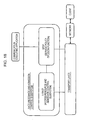
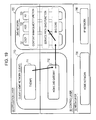
- Fig. 15 shows the components of the IPTV terminal function that is a function required for receiving IPTV services. As shown in Fig. 15 , the IPTV terminal function can be divided into the following components.
- the IPTV client is a component that ensures that IPTV services can be reliably received by an IPTV device, for example, the TV (DMP) 213 shown in Fig. 3 .
- the IPTV client has the following subcomponents as functional elements. IPTV Application Client IMS Communication Client IPTV Navigation Client Content Protection Client IPTV-DLNA Application Gateway Hereinbelow, these functional elements (subcomponents) will be described.
- the IPTV application client is a component that receives a media signal and sends it to a display system. For instance, the IPTV application client receives a command from the user via a remote control, and executes processing according to the command. Specifically, the IPTV application client performs, for example, display of EPG (Electronic Program Guide), channel designation and changing using the EPG, and the like.
- EPG Electronic Program Guide
- the IMS communication client is an IMS application set used for distributing message information such as messages and video data, other service information based on the IMS not related to the IPTV, and the like.
- the IPTV navigation client is used for downloading EPG (Electronic Program Guide), a content list corresponding to VoD (Video on Demand), and other metadata and displaying them on a dedicated GUI for content selection.
- the IPTV navigation client executes integration processing of other metadata or the like from sources such as the broadcast TV and the DLNA home network.
- the content protection client executes protection of content provided by the IPTV service, for example, encryption processing for protecting the copyright of a content owner, management of an encryption key, and the like.
- the IPTV-DLNA application gateway executes such processing as receiving media and EPG (Electronic Program Guide) from an IPTV client, for example, converting them into a format usable on a DLNA device, and transmitting the EPG (Electronic Program Guide) or the like via a network.
- EPG Electronic Program Guide
- the IPTV-DLNA application gateway acts as a SIP (Session Initiation Protocol) client, and executes registration processing for other home devices connected to the home network. For example, the IPTV-DLNA application gateway executes registration of family members or devices.
- SIP Session Initiation Protocol
- the home IMS gateway 212 is a component that connects a device within the home network to the IMS network, and executes mediation of messages between a device within the home network and an apparatus outside the home network by performing conversion between various signal protocols as required.
- the home IMS gateway includes the following functional elements (subcomponents):
- the IMS B2BUA functions as an inter-working unit between a pure SIP client and the IMS system, and executes such processing as translation between SIP messages and IMS messages and message transfer.
- the IMS proxy simply sends a message without performing message translation like the B2BUA, and executes routing processing, mapping processing of an IP address (local and global) to a port number, and the like.
- the IMS client executes a client registration process (IMS registration process) through the application of client identification information or the like. Further, the IMS client supports processing such as authentication, and IPSec security connection setup with the CSCF.
- the home router interface function provides a router function such as provision of a NAT function.
- the home router interface function acquires a P-CSCF address by a SIP server DHCP option [DHCP-SIP] or by a DNS look-up for a SRV record, and executes such processing as opening and closing of a control signal port specified by UPnP and a port for unicast media stream.
- the HTTP proxy is an intermediate program that executes processing according to the specification of [HTTP] protocol, and acts as both a server and a client for the purpose of making a request on behalf of another client (HTTP client).
- This HTTP proxy can intercept HTTP GET sent to the outside, for example, and cache and use data that can be referred to by the requested URI. Further, the HTTP proxy acts as an HTTP client, and executes data retrieval based on the requested URI and the like.
- the caching function is used for caching data that has been received by a client by unicast download or multicast.
- the caching function executes a caching process of temporarily recording such data as web pages (EPG and other IPTV menu), images, and metadata.
- the caching function is used for, for example, minimizing the interaction waiting time for the user, minimizing the amount of unicast download from the IPTV application and control function.
- the caching function can be directly accessed from a client, and in cases where the IPTV client and the caching function are physically separated apart from each other within the same network, an event such as generation of new cache data, for example, can be notified to the IPTV client by the cashing function in accordance with the definition of DLNA by using the GENA protocol.
- the multicast data channel (MDC) control function is a function that interfaces between the caching function and an application installed on the client, and includes a multicast data channel (MDC: Multicast Data Channel) insertion function.
- the MDC insertion function receives content requests to the MDC from various applications, and distributes content by multicast via a multicast channel.
- the multicast data channel (MDC) control function identifies requests from various applications by tags. For example, in the browser executed on the client side, acquisition of EPG becomes possible by making a request while designating an EPG page tag.
- the MDC control function filters the incoming MDC, and sends an MDC object together with the tag being applied for to each application.
- the multicast data channel (MDC) control function includes an MDC proxy, and if the MDC proxy is registered with a specific number of requests related to a given object such as an EPG page, it is possible to request the MDC control function to place this EPG page into the MDC. That is, the same data can be distributed to a plurality of clients by multicast, and it is possible to eliminate the necessity of data request from each client via a unicast channel.
- MDC multicast data channel
- IMS IP Multimedia Subsystem
- the IMS is based on the IP technology, and is highly compatible with the Internet infrastructure of a fixed communication system.
- CSCF Call Session Control Function
- SIP Session Initiation Protocol
- RFC-3261 of the IETF (The Internet Engineering Task Force)
- HSS Home Subscriber Subsystem
- AS Application Server
- the IMS network 230 shown in Fig. 3 has the CSCF 231, the HSS 233, and the AS (IPTV) 233 as these functional elements, and provides services with respect to the mobile phone 260 via the mobile phone network 240.
- the CSCF 231 performs user registration and session set-up control on the basis of SIP (Session Initiation Protocol). Further, the CSCF 231 executes activation of necessary service processing in accordance with user profile setting registered in the HSS 232.
- the HSS 232 has a database for the management of user IDs used in the IMS, the management of the profile of services to which each user subscribes, the management of authentication information, the management as to whether or not each IMS service can be used, and user movement management.
- the AS 233 is a server that executes each individual service processing, and is activated by the CSCF 231 in accordance with the service subscription status of each user to provide services to the user.
- a user with a registered user ID makes access to the CSCF 231 by using a client device to perform terminal (client) registration and session set-up control, and performs activation of necessary services in accordance with the user profile setting registered in the HSS 232.
- the ASS 233 actually performs each individual service processing.
- the AS of the IPTV service set in the IMS network 230 is used.
- the AS (IPTV) 233 shown in Fig. 3 corresponds to the AS executing the IPTV service.
- the AS (IPTV) 233 executes services with respect to the user terminal in corporation with an IPTV service (IPTV Service) executing entity, that is, the IPTV service 250 as a content providing entity.
- IPTV Service IPTV Service
- the IPTV service 250 has the EPG server 251, which is a server providing EPG (Electronic Program Guide) as a program information guide such as a content list, and the video server 252 that is a server providing video content.
- EPG Electronic Program Guide
- the content list provision service and content provision service with respect to the user terminal are realized through cooperation between the respective servers and the AS (IPTV) 233 of the IMS network 230.
- the main functional part of the IMS includes the CSCF (Call Session Control Function) 231, the home subscriber subsystem (HSS: Home Subscriber Subsystem) 232, and the application server (AS: Application Server) 233.
- the CSCF 231 performs user registration and session set-up control on the basis of SIP (Session Initiation Protocol), and executes activation of necessary service processing in accordance with user profile setting registered in the HSS 232.
- SIP Session Initiation Protocol
- the HSS 232 has a database for the management of user IDs used in the IMS, the management of the profile of services to which each user subscribes, the management of authentication information, the management as to whether or not each IMS service can be used, and user movement management.
- the AS 233 executes services with respect to the user terminal in corporation with an IPTV service (IPTV Service) executing entity, that is, the IPTV service 250 as a content providing entity.
- IPTV Service IPTV Service
- Fig. 16 is a diagram showing the following main functions of the IMS (IP Multimedia Subsystem).
- the CSCF (Call Session Control Function) is divided into three logical entities, that is, a proxy (Proxy), an interrogating (Interrogating) CSCF, and a serving (Serving) CSCF.
- the proxy (Proxy) CSCF serves as, for example, the first point of entry from a client within the home network serving as an IMS terminal, for example, the home IMS gateway 212 shown in Fig. 3 .
- the proxy CSCF uses a key acquired from the serving CSCF to establish IPSec security association with a client within the home network serving as an IMS terminal, for example, the home IMS gateway 212 shown in Fig. 3 .
- the proxy CSCF verifies the integrity of the message and decodes it. For example, if the message is encrypted, decoding is performed by decryption. When decoding succeeds, the proxy CSCF executes checking of a client identifier and the like.
- the interrogating (Interrogating) CSCF executes an interrogation or the like with respect to the HSS, for example, and acquires subscriber information (user profile and the like) to support registration processing. Further, the interrogating CSCF also executes processing with respect to SIP messages and determination of the billing path.
- the serving (Serving) CSCF is the contact point with the home network, functions as a SIP registrar, and functions as a SIP server that keeps a binding between the user location and the recorded user SIP address.
- the serving CSCF performs such processing as acquiring from the HSS an AKA authentication vector (AV) used for the authentication of a client and the user profile/service profile.
- the serving (Serving) CSCF executes client authentication processing by using the IMS AKA protocol, and after the authentication succeeds, provides a key included in the AKA authentication vector (AV) to the proxy CSCF.
- the serving (Serving) CSCF inspects all the SIP messages between it and an IMS terminal, for example, a client, and determines the message path. This process can be executed as a process that takes into consideration a trigger rule/event based on the user service profile acquired from the HSS.
- the home subscriber subsystem retains IMS subscriber information, and a list of client (user) information related to user profiles or the like. It should be noted that in the client, a private user identity (IMPI) and a public user identity (IMPU) are set as a plurality of pieces of identification information, and user information is recorded and managed in association with at least one of these pieces of identification information.
- IMPI private user identity
- IMPU public user identity
- an IPTV service subscriber profile is bound with the IMPI as client (user) identification information, and includes a service profile corresponding to each client.
- the service profile includes more than one public user identity (IMPU), core network authentication information (option), and more than one filter reference information, and the like.
- the above-described serving CSCF determines whether or not setting a path for AS (Application Server) is appropriate, whether or not this is required with respect to a certain SIP request, or the like, and carries out filtering.
- AS Application Server
- information to be applied to a filter is stored and notified for each AS with respect to each user.
- the HSS retains information related to the IPTV service providing entity and service identifier, and carries out filtering on the basis of these pieces of information.
- the HSS also performs generation of an AKA authentication vector (AV) used during a normal IMS registration procedure.
- AV AKA authentication vector
- the IMS application server has the following IPTV functions.
- the functions used in the network configuration include the following functional elements.
- the media server is the most important component of a media player, and executes, for example, storage and outputting of VoD (Video on Demand) content, retention of content for network personal video recording (nPVR) executed on each client as a client-specific content recording process, and the like. Further, the media server performs media stream processing necessary when performing trick plays such as slow-motion, fast forward, rewind, and skip chapter in VoD (Video in Demand), for example.
- VoD (Video in Demand) content is inputted to the media server from a content management system.
- the Transcoding function is a function of executing conversion and encoding of data corresponding to SD (Standard Definition) representing standard image quality and HD (High Definition) representing high image quality.
- SD Standard Definition
- HD High Definition
- the client can negotiate with the IPTV service providing server about the stream coding mode or the like, and receive data coded in a format adapted to the client.
- the transcoding function is required to execute processing that takes compatibility in terms of the screen size, resolution, and the like of the client into consideration by executing coding while also taking into consideration the encoding mode that can be used by the network and the bandwidth that can be used by the stream path.
- a home network is connected to a distribution network by a home router that provides a NAT/NAPT (network address translation/network address port translation) function.
- the home router can be classified into two profiles of full support and limited home router. For example, to receive IPTV services, it is preferable to adopt a configuration that supports the following capabilities:
- NAT network address translation
- NAPT network address port translation
- SIP messages between an IMS client such as the home IMS gateway 212 within the home network 210 shown in Fig. 3 and the proxy CSCF in the CSCF 231 within the IMS network 230 are transferred by using IPSec. If a NAT/NAPT router is present between them, the UDP Encapsulation of IPsec ESP packets [ESP] is used.
- the NAT/NAPT router To support multicast streaming distribution via a home router, the NAT/NAPT router also includes an IGMP (Internet Group Management Protocol) proxy and an IGMP snooping functionality. In the case where the home router is equipped with an NAT/NAPT routing functionality, this is managed by the IMS gateway.
- an IGMP membership report In order for the IGMP snooping function to operate property, an IGMP membership report must be created by a device wishing to receive IP multicast packets. For example, the IGMP membership report for multicast streaming is created not by the IMS gateway but by the IPTV client.
- a client within the IPTV system for example, the home IMS gateway 212 or the TV 213 shown in Fig. 3 requires accurate time control to within 0.1 seconds for purposes such as setting a time stamp and starting recording.
- the client implements a system network time protocol client [SNTP].
- SNTP client can receive a time signal by a defined multicast channel.
- the media protocol used for media (program) communication in the IPTV service is required to provide real-time audio/video streaming transport and control function on the media plane.
- the following protocols are used.
- MPEG-2TS MPEG transport stream
- MPEG-2TS packets are transferred by RTP protocol conforming to RFC 3550 and RFC 2250.
- RTCP can be applied to both the media server and the client as an option.
- the RTCP protocol conforms to RFC 3550 with respect to either unicast or multicast.
- both implementations with and without RTCP support are assumed for all the media servers and clients. For example, while the media server can send a sender report, the client cannot respond by a receiver report. Further, RTCP information can be ignored by SDP prior to streaming.
- packet loss rate of 1 or less per 2-hour content
- 2-hour HD content includes about 10M-IP packets, and hence it is required that the packet loss rate be 10-7 or less.
- FEC forward error correction
- the IPTV adopts forward error correction (FEC) in performing error correction.
- FEC is sent by another IP port from the original RTP stream.
- the FEC transport format is based on RFC 2377 and its extension. FEC information is described in SDP so as to enable another version to be made in the future.
- RTSP Real-Time Transport Protocol
- TCP is used for transport of RTSP.
- RTSP is not used in the case of multicast.
- the client establishes a media session using the SIP protocol, and after the session set-up, RTSP for playback control is used.
- MPEG-2 Part 2 and MPEG-4 Part 10 are used for the media codec of video content.
- the distribution of media such as TV programs can be managed by a dedicated media server after the setup of a session between the client and the server.
- the transcoding and coding of the distribution data are also executed via a media distribution network.
- a unicast stream is set up by browsing upon request from the client.
- a media server for example, the IPTV service 250 shown in Fig. 3
- RTSP a protocol such as RTSP
- the IPTV control function of the client When preparations for initiating a session are complete, the IPTV control function of the client responds to SIP invite from the client, and stream is initiated by RTSP PLAY from the client directly with respect to the media server or via the IPTV control function acting as an RTSP proxy.
- Unicast stream is used in, for example, nPVR (Network Personal Video Recording) or VoD (Video on Demand).
- nPVR Network Personal Video Recording
- VoD Video on Demand
- MPEG-2 or MPEG-4 Part 10 frames are encapsulated as an MPEG-2 transport stream, and then set as RTP packets.
- the RTP packets are transferred by UDP/IP.
- Multicast streaming is usually used for realizing viewing and listening of TV broadcast. There are the following two options for resource reservation in multicast.
- the home IMS gateway 212 or the TV 213 as a client shown in Fig. 3 executes SIP invite with respect to the AS 233 of the IMS network 230 shown in Fig. 3 or the IPTV control function of the IPTV service 250, and acquires resources that can be used from the network.
- the client executes a process of acquiring a content list corresponding to a channel selected in accordance with the provided profile.
- Resource ID as an identifier for available resources is described in EPG metadata.
- the client sends an IGMP-join (IGMP joining) message specified by IGMP (Internet Group Management Protocol).
- IGMP Internet Group Management Protocol
- the multicast group to join is retrieved from EPG by a linking mechanism.
- the client executes a process of acquiring a content list corresponding to a channel selected in accordance with the provided profile.
- IGMP leaving IGMP leaving
- IGMP joining IGMP joining
- the client notifies a change in session parameters, and sends SIP UPDATE to the IPTV control function to enable the proxy CSCF to change resource allocation.
- the client transmits an IGMP join message for a new multicast group.
- the client executes SIP message transmission according to SIP (Session Initiation Protocol) in a case where channel switching accompanies service provider switching, and does not execute SIP message transmission in the case of channel switching for content provided by the same service provider.
- SIP Session Initiation Protocol
- the channel changing operations are the same, except for that a SIP update message is not necessary for changing of channels with different resource requirements. Further, all resource requests are made by an IP-edge device as a result of an IGMP report. When resources are not sufficient for a channel change, no multicast binding is performed.
- the purpose of a SIP session is not resource management but rather service monitoring.
- the client includes a function of limiting the IGMP channels that the user is permitted to join in accordance with the subscriber profile retained by the HSS 233 shown in Fig. 3 , for example. Further, the network access node can execute, as an option, verification for permitting a subscriber to join a certain channel. While the communication mechanism of a multicast stream is basically the same as that of unicast, the source and the destination address at the IP layer are set in accordance with the media server and the multicast group.
- the switching process between multicast distributed content and unicast distributed content executed on the client side will be summarized.
- the data processing section of a client device executes a process of transmitting an IGMP-join (IGMP joining) message to the external server or management server as a message according to IGMP (Internet Group Management Protocol), and when stopping the reception of multicast distributed content to start reception of unicast distributed content, transmitting an IGMP leave (IGMP leaving) message to the external server or management server as a message according to IGMP.
- IGMP joining an IGMP-join
- IGMP Internet Group Management Protocol
- the data processing section of the client executes reception of multicast distributed content in the case of TV broadcast reception, and executes switching to unicast distribution at the execution of VoD (Video on Demand). Further, in the processing of nPVR (Network Personal Video Recording) executed as a user-specific content recording process, the data processing section of the client executes switching to unicast distribution. The data processing section of the client also executes switching to unicast distribution also at the execution of trick plays as special content playback processing. It should be noted that the data processing section of the client executes switching to unicast distribution as processing for reception of a content list corresponding to the user profile or client profile.
- VoD Video on Demand
- nPVR Network Personal Video Recording
- Fig. 18 Qos (Quality of Services) control/management in IPTV is executed on the basis of RACS (Resource and Admission Control Subsystem).
- the RACS is in charge of policy control, resource reservation, and admission control. This enables a service to request transport resources via RACS.
- the current range of RACS includes interconnection between a plurality of networks used in the IPTV system.
- RACS architecture includes SPDF (Service Policy Decision Function) and A-RACF (Access Resource and Admission Control Function).
- a communication executing application maps the application layer QoS information (for example, parameters defined in SDP) into QoS information to be sent to the SPDF.
- the SPDF can be set as the logical entity of the proxy CSCF or another physical node. The information necessary for this processing is obtained from a SIP invite message that is sent from the client when the user requests a multicast channel or unicast session.
- A-RACF located in the access network receives requests from the SPDF, and on the basis of these requests and policy information stored in the A-RACF, the A-RACF can accept or reject these requests for the transport resources within its control. This includes an IP edge and access node, and a response is generated in the end and provided to the application.
- the RACS is responsible for resource reservation. Hereinbelow, failure of resource reservation, and failure notification processing will be described.
- the SPDF fails in resource reservation, that is, when the SPDF receives a reservation failure notification from the A-RACF, as a communication error code notification process, the SPDF returns Experimental-Result-Code AVP to the proxy CSCF as the communication executing application together with the following values.
- the proxy CSCF as the communication executing application maps the received error code to a SIP error code, and sends it back to the terminal (client). That is, SIP INVITE or SIP UPDATE must be rejected. It should be noted that for [SETUP] of this processing, "Precondition Failure" SIP status code can be used.
- the prioritization of communication data within the home network can be performed on the basis of priority marking.
- This approach is in accordance with the DLNA guidelines. For example, a mapping rule between the type (traffic type) and priority (priority [DLNA]) of communication data is set, and the priority of communication data is determined on the basis of this rule.
- IPTV service media as content such as a program is distributed via the IP network, and IMS is used for identity (identifier) management, authentication, certification, and the like.
- the IPTV system uses the IMS to ensure that data communications be handled by a reliable, authenticated, and certified method.
- SIP is used in the distribution of a media stream, and SIP is used also for executing other functions.
- the advantage of using the IMS is that all SIP messages automatically pass through the IMS proxy. This means that the content and header of a message can be used for automated interaction such as the setting of proper quality of service, for example.
- the IPTV architecture is designed so as to allow interconnection with the DLNA communication converted to SIP as well.
- the IPTV application function receives SIP signal communication from the IPTV control function, and converts it to another protocol (such as HTTP).
- AS application server
- Deployment Scenarios 1 and 2 described below appear very similar to each other, they are actually very different. The major difference resides in that while in Scenario 1 it is assumed that each terminal owns a unique private IMS identifier (identity), in Scenario 2, terminals share the same private IMS identifier. Although this is not visible from the user's perspective, for the operator, this presents a significant difference in terms of network management method and subscription processing method. It should be noted that the scenarios described below are not exclusive from each other but are complementary, and can occur simultaneously in the same network.
- each client is configured as an IMS terminal.
- Fig. 19 shows a client (home network client) 710, an IMS network 720, a home network 730, and an IP network 740.
- the client (home client) 710 includes a TV (DMP) 711 and a home IMS gateway 712 as components for receiving IPTV services.
- the IMS network 720 has a CSCF 721, an HSS 722, and an AS 723. Further, these components are depicted as being divided into a control management function that executes content control, a service provision function that performs service provision, and an IMS core portion that executes other controls such as registration processing and communication interfacing.
- Various processes are segmented into (a) application layer, (b) control layer, and (c) media layer, and performed as processes accompanying communication between respective layers.
- Deployment Scenario 1 represents an example of processing in the case where there is no physical boundary between the TV (DMP) 711 and the home IMS gateway 712 within the client (home network client) 710 and these devices are integrated together.
- Fig. 19 shows an example of client registration processing.
- a registration request is sent from the TV (DMP) 711 as a client to the IMS core of the IMS network 720 via the home IMS gateway 712, and registration processing is executed in the service provision function.
- the TV (DMP) 711 as a client sends [SIP SUBSCRIBE] to the IPTV control function included in the content management function of the IMS network 720. Then, as shown in Fig. 20 , the IPTV control function of the content management function provides [SIP NOTIFY] containing the address of a multicast data channel and the URL of EPG to the client.
- the TV (DMP) 711 as a client After receiving SIP NOTIFY, the TV (DMP) 711 as a client starts listening on a multicast channel.
- the first page of EPG is downloaded and displayed (in the case of a configuration where the user starts with EPG). Depending on the case, many pages are downloaded.
- the user After reception of EPG, the user selects the channel to watch.
- [T SIP INVITE] is sent to the IPTV control function, and this function supplements it and sets up proper QoS. The user then starts watching the channel, and switches between multicast channels.
- Fig. 21 shows the communication sequence when the channel selection processing by the user is executed.
- QoS is managed by the A-RACF (see Fig. 18 ) upon request from the proxy CSCF that uses information obtained from [SIP Invite], or upon request from an IP-edge device that uses knowledge of IGMP and multicast stream requirements.
- the SIP message is not sent to the IPTV control function.
- the IPTV control function must receive a notification because the P-CSCF can change the necessary resource conditions.
- the SIP message becomes necessary only when the user switches to the pay-per-view.
- the TV (DMP) 711 as an IPTV client and the home IMS gateway 712 are physically divided from each other and are hence separate devices that are not integrated together.
- the IPTV client there is no separate ISIM (IP Multimedia Services Identity Module).
- the ISIM of IMS GW is shared by all the clients.
- the home IMS gateway 712 is used as a proxy.
- the TV (DMP) 711 as an IPTV client directly registers in the IMS core
- the IMS gateway 712 passes messages to the IMS core.
- Control information is passed by using SIP via the home IMS gateway 712, and media is directly distributed from the media server (within a content provider domain) to the IPTV client.
- IMS identification information IMS PUID
- the flow in this case is basically the same as the follow in Deployment Scenario 1, the main difference being that the registration is made via the home IMS gateway 712.
- the user acquires EPG and media stream in the same manner as in Scenario 1.
- IPTV-DLNA application gateway When the home network uses DLNA, it is necessary to bridge between SIP communication in the IPTV system and HTTP communication in the DLNA system, and between media distribution by IP (using DVB encapsulation) in the IPTV system and media distribution based on HTTP in the DLNA system.
- IP using DVB encapsulation
- the IPTV-DLNA application gateway when a DLNA device 713 requests a media stream from an IPTV service provider, the IPTV-DLNA application gateway connects to the home IMS gateway 712, and in the same manner as in Scenario 2, registers as a SIP client having no IMS client.
- the TV (DMP) 711 functions as the IPTV-DLNA application gateway.
- the IPTV-DLNA application gateway can also register when connecting to a network as a SIP client, as in the case where it does not have an IMS client.
- This Deployment Scenario 3 can be realized by two methods. One is a method based on Deployment Scenario 1, and the other is realized as a process based on Deployment Scenario 2.
- a dotted line 715 shown in Fig. 23 means that the TV 711 as an IPTV client and the home IMS gateway 712 may either be physically integrated or separated.
- description will be given of five use cases of the IPTV and DLNA application gateway. From the viewpoint of the IPTV system, the IPTV-DLNA application gateway acts as an IPTV client.
- the IPTV-DLNA application gateway functions as a DLNA digital media server (DMS) that implements a UPnP AV media server (UPnP device).
- DMS digital media server
- UPF device UPnP device
- the IPTV-DLNA application gateway converts the format and protocol of media such as an EPG/VoD content list or other program content into the DLNA protocol in response to a request of the DLNA digital media player (operated by the user).
- the IPTV application gateway functions as a DLNA digital media server as in the use case of 2BOX PULL.
- the difference from 2BOX PULL is that a download controller (+DN+) can download video content provided by DMS.
- content cannot be outputted to the IPTV-DLNA application gateway, instead, content is downloaded in response to a request (for a VoD service, for example).
- the IPTV-DLNA application gateway functions as a DLNA Push controller (+PU+) that implements a UPnP control point for a UPnP AV renderer.
- the user operates a client device and browses a content list corresponding to EPG/VoD of the IPTV service, and the selected video content can be played by a DLNA digital media renderer by a method in which a DLNA Push controller controls the DLNA media renderer to transmit video streaming provided by the DLNA Push controller of he IPTV-DLNA application gateway.
- the IPTV-DLNA application gateway functions as a DLNA upload controller (+UP+) that implements a UPnP control point for a UPnP AV server (UPnP device).
- UPnP device UPnP device
- the user can browse an EPG/VoD content list of the IPTV service by operating a client device.
- a DLNA digital media server stores selected video content provided by the DLNA upload controller of the IPTV-DLNA application gateway.
- Fig. 24 is a sequence diagram showing an example of network connection process for a client.
- Fig. 24 shows, in order from the left side, a client corresponding to the TV (DMP) shown in Fig. 3 , and a home IMS gateway, and further a CSCF, an HSS, and an AS (IPTV) as components of the IMS network, for example.
- DMP TV
- Fig. 3 shows a client corresponding to the TV
- a home IMS gateway and further a CSCF, an HSS, and an AS (IPTV) as components of the IMS network, for example.
- IPTV IPTV
- the proxy CSCF of the IMS network the proxy CSCF (P-CSCF), the interrogating (Interrogating) CSCF (I-CSCF), and the serving (Serving) CSCF (S-CSCF) are shown individually.
- P-CSCF proxy CSCF
- I-CSCF interrogating CSCF
- S-CSCF serving (Serving) CS
- the client acquires an IP address in step S501, and outputs a registration request in step S502.
- the registration request is notified by the home IMS gateway to the proxy CSCF (P-CSCF), interrogating (Interrogating) CSCF (I-CSCF), and serving (Serving) CSCF (S-CSCF) of the CSCF as a component of the IMS network.
- P-CSCF proxy CSCF
- I-CSCF interrogating CSCF
- S-CSCF serving (Serving) CSCF
- step S505 a setting is made to allow IPsec communication between the client and the proxy CSCF (P-CSCF) of the CSCF as a component of the IMS network, and subsequent communications are executed in accordance with IPSec.
- P-CSCF proxy CSCF
- step S506 a registration request for an IPTV service is outputted from the client, and this is received by the serving CSCF (S-CSCF) of the CSCF as a component of the IMS network.
- S-CSCF serving CSCF
- step S508 a registration request is made to the selected AS.
- the AS acquires an IPTV profile in step S509, and makes a registration completion notification to the client in step S510.
- the client On the basis of the reception of the registration completion notification, the client outputs a content acquisition request to the AS in step S511, and acquires content from the AS in step S512.
- Fig. 25 is a sequence diagram of a case in which registration processing by the home IMS gateway is performed, instead of registration processing by the client.
- the home IMS gateway acquires an IP address in step S521, and outputs a registration request in step S522.
- the registration request is notified by the home IMS gateway to the proxy CSCF (P-CSCF), interrogating (Interrogating) CSCF (I-CSCF), and serving (Serving) CSCF (S-CSCF) of the CSCF as a component of the IMS network.
- P-CSCF proxy CSCF
- I-CSCF interrogating CSCF
- S-CSCF serving (Serving) CSCF
- step S525 a setting is made to enable IPsec communication between the home IMS gateway and the proxy CSCF (P-CSCF) of the CSCF as a component of the IMS network, and subsequent communications are executed in accordance with IPSec.
- P-CSCF proxy CSCF
- step S526 a registration request for an IPTV service is outputted from the home IMS gateway, and this is received by the serving CSCF (S-CSCF) of the CSCF as a component of the IMS network.
- S-CSCF serving CSCF
- step S527 AS selection processing is performed, and in step S528, a registration request is made to the selected AS.
- the AS acquires an IPTV profile in step S529, and makes a registration completion notification to the home IMS gateway in step S530.
- Fig. 26 shows an example of sequence in a case where the communication between the client and the home IMS gateway, and the communication between the home IMS gateway and the IMS network are executed individually.
- the client sends a registration request to the home IMS gateway.
- the client address in this case is the address within the home network (@home).
- the home IMS gateway translates it into a global address (@op.com) before outputting the registration request to the IMS network.
- the registration request is notified by the home IMS gateway to the proxy CSCF (P-CSCF), interrogating (Interrogating) CSCF (I-CSCF), and serving (Serving) CSCF (S-CSCF) of the CSCF as a component of the IMS network.
- P-CSCF proxy CSCF
- I-CSCF interrogating CSCF
- S-CSCF serving CSCF
- user profile acquisition from the HSS is executed by the S-CSCF
- step S543 a request response notification is made to the home IMS gateway.
- step S544 a setting is made to enable IPsec communication between the home IMS gateway and the proxy CSCF (P-CSCF) of the CSCF as a component of the IMS network, and subsequent communications are executed in accordance with IPSec.
- P-CSCF proxy CSCF
- step S545 a registration request for an IPTV service is outputted from the home IMS gateway, and this is received by the serving CSCF (S-CSCF) of the CSCF as a component of the IMS network.
- S-CSCF serving CSCF
- step S547 a registration request is made to the selected AS.
- the AS acquires an IPTV profile in step S548, and makes a registration completion notification to the home IMS gateway in step S549. This notification is made by the home IMS gateway to the client via the home network.
- the client On the basis of the reception of the registration completion notification, the client outputs a content acquisition request to the home IMS gateway in step S550.
- the home IMS gateway outputs this request to the AS, and in step S551, acquires content from the AS and transfers the acquired content to the client.
- the home IMS gateway when making a setting that allows the provision of an IPTV service to the DLNA device 713 as described above with reference to Fig. 23 , the home IMS gateway discovers the IPTV control function and receives EPG data, and then enables [IPTV DLNA app GW] for executing the interconnection between the DLNA device and the IPTV service.
- [IPTV DLNA app GW] functions as a UPnP device, that is, as a DLNA media server
- IPTV DLNA app GW starts SSDP (Simple Service Discovery protocol) discovered by a UPnP control point [SSDP].
- SSDP Simple Service Discovery protocol
- IPTV DLNA app GW functions as a UPnP control point, that is, as a DLNA Push controller
- IPTV DLNA app GW need not to start SSDP of a UPnP device. Instead, in order to discover a UPnP device, IPTV DLNA app GW starts SSDP of the UPnP control point.
- the DLNA protocol that is, device discovery and device control of the UPnP device architecture are based on session-less communication
- the digital media server that is, the UPnP device can be used on the network
- the digital media player and the digital media renderer that is, the UPnP control point
- the DMS of IPTV DLNA app GW must respond to the request within, for example, 30 seconds at the latest.
- IPTV DLNA app GW can maintain a session to the IM core (CSCF) and the IPTV control function during the period in which the DMS of IPTV DLNA app GW can be used on the network. Upon termination of the session, IPTV DLNA app GW can reset the session when there are a SOAP request and HTTP request from the DMP. In a case where IPTV DLNA app GW acts as a Push controller, that is, as a UPnP control point, the duration for which the session is maintained can be learned.
- CSCF IM core
- an HTTP request for a channel change from a DLNA device is converted into IGMP (Internet Group Management Protocol).
- IGMP Internet Group Management Protocol
- the HTTP request is converted into IGMP (Internet Group Management Protocol) by the IPTV-DLNA application gateway, for example.
- disconnection processing from an IPTV service will be described.
- the display is turned off to allow disconnection of the client from the network.
- the disconnection processing from the IPTV service is executed in accordance with the following sequence, for example.
- IGMP leave (IGMP leaving) is used to leave the multicast stream related to the channel that the user has been viewing.
- the client sends SIP BYE to an IPTV service providing entity, completing a SIP session related to media reception.
- IPTV service providing entity executes a RTSP TEAR DOWN command to stop RTP unicast flow, and closes the port if the media server is not aware of the SIP protocol.
- the client sends SIP SUBSCRIBE to an IPTV service providing entity with Expire 0, and notifies the IPTV AS that a switch off is performed on the client side.
- the client sends SIP REGISTER together with service expiration time, and cancels client identifier registration. It should be noted that reception data (GRUU: Globally Routable User Agent URI) from the serving CSCF is necessary for the acquisition of this registration information.
- reception data GRUU: Globally Routable User Agent URI
- the client sends IGMP leave (IGMP leaving) for a control channel.
- the client is disconnected from the IPTV service and the IMS.
- All SIP states on the network have a normal default expiration value of 3600 seconds. This state is related to SIP REGISTER, SUBSCRIBE, and INVITE.
- the time-out mechanism clears the state of the IMS core (what happens when a reconnection occurs within the timeout period is that the timer increments after new registration). The fact that the state of SIP is maintained active for 1 hour does not mean that traffic is sent for 1 hour. In fact, after the first NOTIFY not reaching the destination, the IMS core is notified that the client cannot be used, and the state is cleared accordingly.
- IPTV service provider is discovered in the manner as described above, for example, and presented to the user, thus allowing selection by the user. It should be noted that this process is based on the precondition that the user has finished IMS registration.
- the client first requests an IMS provider to attempt at discovering an IPTV service provider. When this fails, a request can be also made to an entity other than the IMS provider, for example, a route.
- the service provider discovery process begins with the discovery of the IPTV service provider that provides IPTV services.
- IPTV application server
- the service provider discovery step is executed in accordance with a high-level description of "Transport of MPEG-2TS based DVB service over IP based network".
- SIP is used for communication of user authentication, and an IMS trust model for bootstrapping information, such as P-Asserted-Identity, is used.
- a SIP request using DVB IP del starting with service IPTV can become an IPTV provider.
- SP CANAL+ is identified by the domain name, and a name corresponding to a service can be assigned for the service.
- IPTV SIP dialog control signal communication is set by the IPTV client, and a path is set to the IMS network CSCF. This also means that the accurate address of a service need not be known because it can be added later.
- IPTV SIP dialog is an IPTV dialog, and set its path to IPTV CF (Control Function). This allows IPTV CF to provide discovered information related to service providers and provided services.
- IPTV service providers for example, SIP URI
- SIP URI IPTV service providers
- An IPTV client acquires the IP address of a proxy CSCF from the DHCP option of SIP, or uses the default IP address of the proxy CSCF described in an ISIM (IP Multimedia Services Identity Module) of an IMS operator.
- ISIM IP Multimedia Services Identity Module
- the IPTV client discovers a home IMS gateway by using a UPnP discovery mechanism.
- the home IMS gateway implements a UPnP IMS GW service as a UPnP service.
- the IPTV client performs processing using SSIP such as transmission of SSDP: M-Search or reception of SSDP.
- SSIP such as transmission of SSDP: M-Search or reception of SSDP.
- the sequence of processing in the case of service discovery by a DLNA device described with reference to Fig. 23 is as described below.
- the UPnP control point on the DLNA device can discover DMS by IPTV DLNA app GW.
- the service discovery of the IPTV service is executed by home IMS GW by the same method as that described above.
- the method of deploying a plurality of IPTV services differs depending on the vendor. For example, IPTV DLNA app GW can use a plurality of DMSs each corresponding to an IPTV service.
- IPTV-DLNA application GW controls the UPnP device of the DLNA device so that the IPTV-DLNA application need not to implement the UPnP device.
- EPG metadata related to programming for a certain period (for example, 8 days) is preloaded to the client, and in order to minimize the transaction and required bandwidth per 1 second of the EPG distribution system, service information, that is, TV channel information and EPG, that is, TV programming information is distributed via a multicast data channel.
- service information that is, TV channel information and EPG, that is, TV programming information is distributed via a multicast data channel.
- the IPTV content browser and IPTV navigation application of the client described with reference to Fig. 15 retrieve EPG metadata by using an MDC control function.
- EPG metadata is also distributed via unicast.
- EPG metadata corresponding to basic programming corresponding to programs provided by the IPTV service, or EPG metadata of statistically popular programming is distributed via multicast.
- High-level EPG metadata with richer information such as other programming information and thumbnail images can be acquired by retrieval using unicast.
- EPG metadata provided by the IPTV service provider is distributed periodically by a single multicast channel.
- the multicast channel control function of the client described with reference to Fig. 15 filters EPG metadata with a tag, such as channel subscription, in accordance with the client configuration, and stores the filtered EPG metadata in a memory.
- the IPTV service browser and the IPTV navigation application use the MDC control function for retrieving EPG data.
- the cycle time for transmitting EPG metadata differs depending on the information type.
- Service information including the multicast channel address of a TV channel, and EPG metadata related to the content (program) being currently broadcast and the next content is transmitted frequently, for example, every 2 seconds.
- EPG metadata corresponding to today's programming is transmitted every 30 seconds, for example.
- the client Since the schedule of TV programming of the broadcast TV service are determined in advance, the client simply need to retrieve new EPG metadata for future programming once every day. However, in order to notify the client of a change in programming schedule that occurs occasionally such as flash news or a prolonged baseball game, updates of EPG metadata are also distributed periodically, for example, every 2 seconds via a multicast data channel. In order to receive the updates of EPG metadata, when receiving a media stream via a multicast channel, the client monitors the multicast data channel of the EPG metadata.
- the EPG metadata distributed via a multicast data channel is data containing basic information related to programming as program information.
- the client can use a unicast request to the EPG server.
- Programming information includes text, video, audio, and the like, and the interaction with the user for such presentation of programming can be realized by a two-way unicast communication.
- a preview video stream can be displayed by setting a sub-screen in the display of the client on which the menu is displayed.
- EPG can be presented in a manner personalized for each user or client, that is, in the form of unique EPG setting adapted to the user or client.
- EPG personalization for each channel can be realized in the same manner as EPG is configured in accordance with channel subscription related to the user profile.
- programming information related to a specific channel is not displayed.
- the display order of channels related to the EPG menu can be also personalized, that is, processed in a manner adapted to each user.
- IPTV services packet buffering is performed on the client to ensure smooth playback processing, such as removal of jitter due to the network.
- the client accumulates data received from an IPTV service providing server until a certain threshold is reached, and executes processes such as decoding for playback thereafter. Further, there are cases where intraframe transmission/reception is executed via multicast for image reconstruction.
- IGMP leave IGMP leaving
- This processing involves checking all IGMP aware nodes, and a comparison against a list of nodes receiving old multicast data is executed. When a certain node stops reception of multicast data, the processing of disconnecting the node from a multicast tree is performed.
- the decoder To execute decoding and playback of received video stream on the client, it is necessary to collect many pieces of information from the received stream. These pieces of information are sent at a specific frequency. In particular, to start display of a new video feed, the decoder must wait until intraframes arrive in a video stream.
- the intraframes are each configured as a frame with sufficient information contained in itself in order to reconstruct a complete image. They are usually transmitted at a cycle of 0.5 to 5 seconds depending on the encoding type.
- SIP interaction processing at the time of setting up a new stream can be a delaying factor.
- processing related to SIP INVITE executed in the SIP interaction processing can be conceived as a delaying factor. Accordingly, reducing SIP interaction processing provides a measure for eliminating delay. Specifically, it is effective to adopt a setting in which a SIP dialog is created only when the characteristics of multicast streams vary between multicast channels.
- a setting is provided such that when the client tunes to a normal broadcast channel, multicast transmission with stream characteristics is requested to establish a SIP session, and other multicast channel changes require only IGMP interactions without SIP mediation, replacement with a SIP dialog being performed only when received streams differ in characteristics. Further, SIP INVITE and IGMP join for new channel are sent. A delay that occurs in the IGMP setup can be mitigated by allowing a multicast channel to be used at a location as close as possible to the end user. However, this consumes more bandwidth in the access network.
- Intraframe delay required for starting decoding of an MPEG stream is also a problem that needs to be improved.
- the intraframe delay can be eliminated by adopting a configuration in which intraframes are acquired by a pull mechanism from a point relatively close to the client in the network, or by providing intraframes to the client by an out-of-band mechanism.
- nPVR Network Personal Video Recording
- nPVR Network Personal Video Recording
- the method varies mainly depending on the IPTV service provider.
- the simplest method of recording programming such as programs is to select a program from EPG and press a record button with a remote control owned by the user. Further, the time, date, and duration of the user's recording may be inputted as well. Alternatively, a setting may be adopted in which all the programs provided to the client are recorded. This means that the IPTV service provider records all the programs, and stores them on a server for a period of time designated in advance. In this way, the user can view nPVR EPG that appears similar to the past normal EPG without being bothered by recordings.
- IPTV architecture is required to support are an interface that identifies programming to be recorded, and an identification mechanism for achieving this by means of EPG.
- the link mechanism is set as the same as that of TV broadcast if possible, and as for the command communication for record processing, there can be used an RTSP RECORD command, or SIP INVITE to nPVR including details of recordings.
- an example of processing in the case where the user requests personal recording with respect to content being received and played back in the IPTV service is a trick play.
- the client executes the nPVR recording function by pressing a pause button with a remote control, and then freezes the picture and executes IGMP leave (IGMP leaving) from a multicast channel. Further, the client stores content. It should be noted that data storage may be executed on the server. When the user wants to view the content again later, nPVR retrieval is executed to allow the content to be played back via an RTSP PLAY command.
- nPVR content list (table of contents) that can be used in nPVR
- the same content format and metadata as those of EPG and VoD can be used.
- the same linking mechanism as that of TV broadcast must be used, expect for that as in the case of VoD, the linking is performed by the IPTV control function in order to identify a unicast source.
- nPVR content list retrieval is normally executed as HTTP GET.
- the IPTV service provider provides a server-based retrieval function. The interfacing of retrieval pages completely depends on the service provider.
- nPVR In the playback processing of content recorded by nPVR, selection of the target nPVR content is required first. Retireval is done by clicking on a link for the nPVR content list. Content retrieval is executed as a unicast stream. That is, a stream is initiated when the user presses "play” or clicks on a link for the content list.
- An information processing apparatus as a client has a data processing section that executes reception processing of a content provision service provided by an external server through the application of mapping information that sets the external server located outside a home network as a virtual home network device.
- the data processing section performs processing control of nPVR (Network Personal Video Recording) which is executed as user-specific content recording processing with respect to content provided by the external server.
- the data processing section executes reception processing of multicast distributed content when receiving TV broadcast provided by the external server, and executes switching processing to unicast distribution in the case of nPVR (Network Personal Video Recording) executed as user-specific content recording processing.
- nPVR Network Personal Video Recording
- IGMP leave Internet Group Management Protocol
- the data processing section of the client can also request an external server or other such network connecting server to execute content recording by using the recording means of these servers.
- information required for recording such as recording content information and time information is provided to these servers.
- the data processing section of the client performs, on the basis of the provision of a user profile or client profile with respect to the external server, a process of acquiring a content list selected in accordance with the provided profile.
- nPVR Network Personal Video Recording
- the data processing section of the client executes a process of outputting content selection information in EPG (electronic program guide) or recording time designation information to an external server or management server.
- EPG electronic program guide
- nPVR is executed through such processing.
- the client is an information processing apparatus that receives content related to IPTV provided via a public network that is not a home network.
- the client includes means for setting an external server connected to a public network as a virtual home network device, and control means for controlling content recording or playback processing on the external server via the public network so that the external server functions as a personal video recorder that records or plays back user-specific content.
- the control means of the client performs a process of controlling content playback processing on the external server via a public network.
- the control means of the client performs a process of controlling content recording or playback processing on the external server via the public network so that the external server to function as a personal video recorder that records user content.
- VoD Video on Demand
- VoD is a specification for distributing content in response to a request from the user on the client side.
- VoD is basically executed via unicast. Insertion of an advertisement into content (media) distributed by VoD, or retrieval based on the advertisement can be executed in the same manner as in broadcast services or EPG.
- the content list (table of contents) that can be used for VoD can be browsed on the client side as well.
- This content list (table of contents) is limited to only those contents that the user is allowed to view, that is, the filtered version can be browsed. While filtering can be executed within the network, in that case, the VoD content list must be unicast, or the client can use multicast for preloading the cache of the VoD content list. Acquisition of the VoD content list is partially the same as EPG information acquisition.
- VoD content retrieval For retrieval of available VoD content, it is required that the client can execute an interrogation with respect to the network. Content retrieval is executed by content metadata.
- the client is required to select one available content that the user is permitted to view from the VoD content list, and output a content request. For example, upon designating a content from the content list, the link to the URI of the VoD service is activated and the IPTV control function processes the request, and it is verified whether or not the user has already purchased the content. If the content has not been purchased, charges related to the content are verified, and in other cases, the content request is rejected.
- Filtering of content is a content selection process in which content provided to the end user on the basis of the end user's IMS and IPTV profiles and a set of subscribed channels is set only to one adapted to the user
- personalization is a process of selecting content provided to the user based on the user's profile. This includes, for example, a process of distributing messages and advertisements targeted to individuals based on user profiles.
- Content filtering enables creation and display of EPG adapted to the profile of a log-in user.
- the user profile is downloaded from a server storing the profile, for example, the HSS 232 of the IMS network 230 shown in Fig. 3 by using XCAP, and stored to the user device.
- content filtering is applied when creating a view of VoD provided by the server, or when receiving VoD metadata on the client.
- the user profile may be stored on the client as a user-side device in advance for use.
- the user profile information on an external server or client device is presented to a server that provides content, and the content providing server executes content personalization of selecting and editing content on the basis of the user profile to create and provide content adapted to the user.
- the content providing server executes content personalization of selecting and editing content on the basis of the user profile to create and provide content adapted to the user.
- personalization processing may be executed on the client side.
- Content personalization includes distribution of messages and advertisements targeted to individuals based on user profiles. These pieces of data designed for specific users are overlaid onto the screen by the user device, and displayed in the PinP (picture in picture) mode, for example. Personalization is executed by inserting a target advertisement as a show goes into an advertisement pause while watching a broadcast show or VoD content. Interactivity can be also said to be one form of personalization based on the user profile. Information included in the interactivity data is displayed by the same means as that for individual messages or advertisements, that is, by using an overlay or dedicated window. Personalization is distributed via a dedicated unicast channel, or in the smallest multicast groups for a set of profiles (location information, age, sex, income bracket, and the like).
- a mechanism using a browser applied to the IPTV service is used for interaction with TV programming.
- reference information to an XHTML document representing interaction with programming is embedded in the metadata of program content.
- the interactivity system calls up an IPTV service browser for interaction with programming (program).
- the XHTML document is distributed via a multicast data channel and unicast communication. The feedback of interaction is realized by the IPTV service browser by unicast communication.
- IPTV service various profiles such as the user profile of a client are managed. Examples of profiles are described below.
- Service Profile related to Operator's Services and User Profile Profiles of billing, user identifier, authentication vector used for authentication processing, and service trigger are stored and retained in the HSS 232 of the IMS network 230 shown in Fig. 3 .
- *User's Own Profile The user's own profile is stored on the client device on the user side. If the IPTV provider differs from the IMS provider, the IPTV provider can store a user profile specific to IPTV to its own database.
- IPTV Provider Profile An IPTV provider profile as information related to the IPTV provider can be stored on the client side, and is also stored to the IPTV provider's own database.
- the user profiles include, for example, SIP identifier, language, nationality, age, (those provided by the operator and those provided by the user), E-mail address, telephone number, and interests and hobbies (hobbies/preferences information), IPTV-specific parameters, and the like. These user profiles are used for service personalization. Specifically, setting and provision of user-specific data (my %) are possible on the basis of the user's preferences. For example, setting of my channel, setting of start-up channel, and further my VoD, my Pay TV, personal mapping of buttons to channels, localized control, and the like can be executed on the basis of the user's preferences.
- the IPTV provider profile includes, for example,
- User management means that the user can add, change, or delete users in a domain
- user profile management means that the user can change information of the user profile.
- User profile management executed by the end user of a client is executed by the following processing, for example.
- the registration and updating of the user profile can be performed also via the IPTV service portal.
- the user profile is provided to the IPTV service portal from the client. Thereafter, the IPTV service portal transmits these pieces of data to a user profile management server (for example, the HSS 232 of the IMS network 230 or the IPTV 250 shown in Fig. 3 ).
- a user profile management server for example, the HSS 232 of the IMS network 230 or the IPTV 250 shown in Fig. 3 ).
- the data processing section of the information processing apparatus as a client executes a process of receiving data from an external server as personalized data selected or edited on the basis of a user profile as user information registered in advance.
- the data processing section of the client acquires a user profile previously stored in a management server such as HSS, and provides the acquired user profile to an external server such as a content providing server. Further, the data processing section transmits the user profile that has been updated on the client device to the management server such as HSS, and executes update processing of the user profile stored in the management server.
- the data processing section of the client executes a process of receiving, from an external server such as a content providing server, a content list, advertisement information, content corresponding to VoD (Video on Demand), or the like set as personalized data on the basis of the user profile, and displaying the data on a display section.
- an external server such as a content providing server, a content list, advertisement information, content corresponding to VoD (Video on Demand), or the like set as personalized data on the basis of the user profile, and displaying the data on a display section.
- the user profile includes information on at least one of the user's use language, nationality, age, address, telephone number, and hobbies/preferences information.
- Various devices can be set as the client, and the processing that can be executed by each client differs depending on the client. That is, the clients have diverse device capabilities. To ensure interoperability between these various clients and the IPTV service, a set of device capability profiles is designated, and the capabilities required of a client are specified.
- client device capabilities include the screen size, screen resolution, available memory size, and kind of the codec to be supported.
- the description of the CSCF 231 device of the IMS network 230 is downloaded, and the downloaded description and its URI are recorded into the database or repository to be shared with other entities such as individual servers. It should be noted that if a global repository such as the W3C DCI repository can be used, that repository may be used.
- adaptation processing of AV content to the client device requires selection of an appropriate content version.
- adaptation processing of text content is realized by using transformation, combination, formatting (for example, XSLT), or the like corresponding to the version.
- An executing entity for example, a target server or a proxy that performs transcoding
- adaptation processing executes the processing of receiving device capabilities, and adapting a document in accordance with a set of rules expressed in document metadata.
- the content metadata must include rules related to the transformation to be applied, and also means that the service profile must include restrictions related to the applied transport, terminal, or the like.
- the data processing section of the content receiving client executes a process of acquiring device information of the client, and transmitting and registering the device information into a database that is located outside the home network, for example, the home subscriber subsystem (HSS: Home Subscriber Subsystem) specified by the IP multimedia system (IMS).
- HSS Home Subscriber Subsystem
- IMS IP multimedia system
- the content providing sever executes a process of acquiring this device information of the client registered in the HSS, and providing content adapted to the device to the client.
- the device information includes device information on at least one of the screen size, screen resolution, available memory size, and kind of the codec to be supported on the client.
- the content providing server executes a process of acquiring these pieces of device information, and providing content that can be played back on the device to the client.
- the series of processing described in this specification can be executed by hardware, software or a composite configuration of both. If the series of processing is to be executed by software, the series of processing can be executed by installing a program recording the processing sequence into a memory of a computer built in dedicated hardware, or by installing the program into a general purpose computer capable of executing various processing.
- the program can be recorded in a recording medium in advance.
- the program can be received via a network such as LAN (Local Area Network) and the Internet, and installed into the recording medium such as a built-in hard disk.
- system as used in this specification refers to a logical assembly of a plurality of devices, and is not limited to one in which devices of respective component devices are located within the same casing.
- DMP as a content playback device that is a client device within the home network can receive and play back content from a content providing server within the home network. That is,_the home IMS gateway as the information processing apparatus according to the present invention executes communication with the content providing server, maps the content providing server as a virtual home network device, and upon reception of a device discovery request from a content playback apparatus within the home network, provides server information of the content providing server to the content playback device as device information indicative of a device from which services can be received. Further, at the time of executing switching processing of channels that provide content provided by an external server, it is possible to execute termination processing of an inactive channel that occurs due to the channel switching.
Landscapes
- Engineering & Computer Science (AREA)
- Signal Processing (AREA)
- Multimedia (AREA)
- Theoretical Computer Science (AREA)
- Human Computer Interaction (AREA)
- Software Systems (AREA)
- Physics & Mathematics (AREA)
- General Physics & Mathematics (AREA)
- General Engineering & Computer Science (AREA)
- Computer Networks & Wireless Communication (AREA)
- Small-Scale Networks (AREA)
- Two-Way Televisions, Distribution Of Moving Picture Or The Like (AREA)
- Data Exchanges In Wide-Area Networks (AREA)
- Information Transfer Between Computers (AREA)
- Computer And Data Communications (AREA)
- Television Signal Processing For Recording (AREA)
Applications Claiming Priority (2)
| Application Number | Priority Date | Filing Date | Title |
|---|---|---|---|
| JP2006061230 | 2006-03-07 | ||
| PCT/JP2007/054461 WO2007105568A1 (ja) | 2006-03-07 | 2007-03-07 | 情報処理装置、および情報処理方法、並びにコンピュータ・プログラム |
Publications (2)
| Publication Number | Publication Date |
|---|---|
| EP2000918A1 true EP2000918A1 (de) | 2008-12-10 |
| EP2000918A4 EP2000918A4 (de) | 2011-10-26 |
Family
ID=38474971
Family Applications (3)
| Application Number | Title | Priority Date | Filing Date |
|---|---|---|---|
| EP07737975A Ceased EP2000919A4 (de) | 2006-03-07 | 2007-03-07 | Informationsverarbeitungsvorrichtung, informationsverarbeitungsverfahren und computerprogramm |
| EP07737973A Ceased EP2000917A4 (de) | 2006-03-07 | 2007-03-07 | Informationsverarbeitungsvorrichtung, informationsverarbeitungsverfahren und computerprogramm |
| EP07737974A Ceased EP2000918A4 (de) | 2006-03-07 | 2007-03-07 | Informationsverarbeitungsvorrichtung, informationsverarbeitungsverfahren und computerprogramm |
Family Applications Before (2)
| Application Number | Title | Priority Date | Filing Date |
|---|---|---|---|
| EP07737975A Ceased EP2000919A4 (de) | 2006-03-07 | 2007-03-07 | Informationsverarbeitungsvorrichtung, informationsverarbeitungsverfahren und computerprogramm |
| EP07737973A Ceased EP2000917A4 (de) | 2006-03-07 | 2007-03-07 | Informationsverarbeitungsvorrichtung, informationsverarbeitungsverfahren und computerprogramm |
Country Status (8)
| Country | Link |
|---|---|
| US (5) | US8316082B2 (de) |
| EP (3) | EP2000919A4 (de) |
| JP (5) | JPWO2007105568A1 (de) |
| KR (3) | KR20080113364A (de) |
| CN (4) | CN101438256B (de) |
| BR (1) | BRPI0708573A2 (de) |
| RU (1) | RU2460213C2 (de) |
| WO (5) | WO2007105568A1 (de) |
Cited By (2)
| Publication number | Priority date | Publication date | Assignee | Title |
|---|---|---|---|---|
| CN103346951A (zh) * | 2013-07-29 | 2013-10-09 | 迈普通信技术股份有限公司 | 建立代理成员数据库的方法和装置 |
| US9591367B2 (en) | 2011-05-27 | 2017-03-07 | Thomson Licensing | Method, apparatus and system for multiple screen media experience |
Families Citing this family (468)
| Publication number | Priority date | Publication date | Assignee | Title |
|---|---|---|---|---|
| US10156959B2 (en) | 2005-03-16 | 2018-12-18 | Icontrol Networks, Inc. | Cross-client sensor user interface in an integrated security network |
| US10200504B2 (en) | 2007-06-12 | 2019-02-05 | Icontrol Networks, Inc. | Communication protocols over internet protocol (IP) networks |
| US9531593B2 (en) | 2007-06-12 | 2016-12-27 | Icontrol Networks, Inc. | Takeover processes in security network integrated with premise security system |
| US9141276B2 (en) | 2005-03-16 | 2015-09-22 | Icontrol Networks, Inc. | Integrated interface for mobile device |
| US10522026B2 (en) | 2008-08-11 | 2019-12-31 | Icontrol Networks, Inc. | Automation system user interface with three-dimensional display |
| US20090077623A1 (en) | 2005-03-16 | 2009-03-19 | Marc Baum | Security Network Integrating Security System and Network Devices |
| US12063220B2 (en) | 2004-03-16 | 2024-08-13 | Icontrol Networks, Inc. | Communication protocols in integrated systems |
| US11916870B2 (en) | 2004-03-16 | 2024-02-27 | Icontrol Networks, Inc. | Gateway registry methods and systems |
| US20170118037A1 (en) | 2008-08-11 | 2017-04-27 | Icontrol Networks, Inc. | Integrated cloud system for premises automation |
| US11368429B2 (en) * | 2004-03-16 | 2022-06-21 | Icontrol Networks, Inc. | Premises management configuration and control |
| US11343380B2 (en) | 2004-03-16 | 2022-05-24 | Icontrol Networks, Inc. | Premises system automation |
| US11316958B2 (en) | 2008-08-11 | 2022-04-26 | Icontrol Networks, Inc. | Virtual device systems and methods |
| US11811845B2 (en) | 2004-03-16 | 2023-11-07 | Icontrol Networks, Inc. | Communication protocols over internet protocol (IP) networks |
| US10142392B2 (en) | 2007-01-24 | 2018-11-27 | Icontrol Networks, Inc. | Methods and systems for improved system performance |
| US11277465B2 (en) | 2004-03-16 | 2022-03-15 | Icontrol Networks, Inc. | Generating risk profile using data of home monitoring and security system |
| US8635350B2 (en) | 2006-06-12 | 2014-01-21 | Icontrol Networks, Inc. | IP device discovery systems and methods |
| US10237237B2 (en) | 2007-06-12 | 2019-03-19 | Icontrol Networks, Inc. | Communication protocols in integrated systems |
| US20160065414A1 (en) | 2013-06-27 | 2016-03-03 | Ken Sundermeyer | Control system user interface |
| US11582065B2 (en) | 2007-06-12 | 2023-02-14 | Icontrol Networks, Inc. | Systems and methods for device communication |
| GB2428821B (en) | 2004-03-16 | 2008-06-04 | Icontrol Networks Inc | Premises management system |
| US10339791B2 (en) | 2007-06-12 | 2019-07-02 | Icontrol Networks, Inc. | Security network integrated with premise security system |
| US11201755B2 (en) | 2004-03-16 | 2021-12-14 | Icontrol Networks, Inc. | Premises system management using status signal |
| US7711796B2 (en) | 2006-06-12 | 2010-05-04 | Icontrol Networks, Inc. | Gateway registry methods and systems |
| US11159484B2 (en) * | 2004-03-16 | 2021-10-26 | Icontrol Networks, Inc. | Forming a security network including integrated security system components and network devices |
| US11113950B2 (en) | 2005-03-16 | 2021-09-07 | Icontrol Networks, Inc. | Gateway integrated with premises security system |
| US9729342B2 (en) | 2010-12-20 | 2017-08-08 | Icontrol Networks, Inc. | Defining and implementing sensor triggered response rules |
| US11244545B2 (en) | 2004-03-16 | 2022-02-08 | Icontrol Networks, Inc. | Cross-client sensor user interface in an integrated security network |
| US11677577B2 (en) | 2004-03-16 | 2023-06-13 | Icontrol Networks, Inc. | Premises system management using status signal |
| US11489812B2 (en) | 2004-03-16 | 2022-11-01 | Icontrol Networks, Inc. | Forming a security network including integrated security system components and network devices |
| US10721087B2 (en) | 2005-03-16 | 2020-07-21 | Icontrol Networks, Inc. | Method for networked touchscreen with integrated interfaces |
| US11190578B2 (en) | 2008-08-11 | 2021-11-30 | Icontrol Networks, Inc. | Integrated cloud system with lightweight gateway for premises automation |
| US8266429B2 (en) | 2004-07-20 | 2012-09-11 | Time Warner Cable, Inc. | Technique for securely communicating and storing programming material in a trusted domain |
| US8312267B2 (en) | 2004-07-20 | 2012-11-13 | Time Warner Cable Inc. | Technique for securely communicating programming content |
| US10999254B2 (en) | 2005-03-16 | 2021-05-04 | Icontrol Networks, Inc. | System for data routing in networks |
| US11496568B2 (en) | 2005-03-16 | 2022-11-08 | Icontrol Networks, Inc. | Security system with networked touchscreen |
| US11615697B2 (en) * | 2005-03-16 | 2023-03-28 | Icontrol Networks, Inc. | Premise management systems and methods |
| US20120324566A1 (en) | 2005-03-16 | 2012-12-20 | Marc Baum | Takeover Processes In Security Network Integrated With Premise Security System |
| US20170180198A1 (en) | 2008-08-11 | 2017-06-22 | Marc Baum | Forming a security network including integrated security system components |
| US20150054947A1 (en) | 2005-03-16 | 2015-02-26 | Paul J. Dawes | Device for data routing in networks |
| US11700142B2 (en) | 2005-03-16 | 2023-07-11 | Icontrol Networks, Inc. | Security network integrating security system and network devices |
| US20110128378A1 (en) | 2005-03-16 | 2011-06-02 | Reza Raji | Modular Electronic Display Platform |
| JP2007272868A (ja) | 2006-03-07 | 2007-10-18 | Sony Corp | 情報処理装置、情報通信システム、および情報処理方法、並びにコンピュータ・プログラム |
| CN101438256B (zh) | 2006-03-07 | 2011-12-21 | 索尼株式会社 | 信息处理设备、信息通信系统、信息处理方法 |
| US12063221B2 (en) | 2006-06-12 | 2024-08-13 | Icontrol Networks, Inc. | Activation of gateway device |
| US10079839B1 (en) | 2007-06-12 | 2018-09-18 | Icontrol Networks, Inc. | Activation of gateway device |
| US8520850B2 (en) | 2006-10-20 | 2013-08-27 | Time Warner Cable Enterprises Llc | Downloadable security and protection methods and apparatus |
| JP4940898B2 (ja) * | 2006-11-02 | 2012-05-30 | 富士通株式会社 | デジタルコンテンツ検索プログラム、デジタルコンテンツ検索装置およびデジタルコンテンツ検索方法 |
| US8019055B2 (en) * | 2007-01-19 | 2011-09-13 | Nokia Corporation | Media instant messaging for mobile device |
| US8621540B2 (en) | 2007-01-24 | 2013-12-31 | Time Warner Cable Enterprises Llc | Apparatus and methods for provisioning in a download-enabled system |
| US11706279B2 (en) | 2007-01-24 | 2023-07-18 | Icontrol Networks, Inc. | Methods and systems for data communication |
| US7633385B2 (en) | 2007-02-28 | 2009-12-15 | Ucontrol, Inc. | Method and system for communicating with and controlling an alarm system from a remote server |
| JP2008236344A (ja) * | 2007-03-20 | 2008-10-02 | Hitachi Ltd | プロキシ装置、ネットワークシステムおよび通信方法 |
| CN101272477A (zh) * | 2007-03-22 | 2008-09-24 | 华为技术有限公司 | 一种iptv系统、媒体服务器和iptv节目搜索、定位方法 |
| CN101287091B (zh) * | 2007-04-10 | 2010-11-24 | 华为技术有限公司 | 一种实现因特网协议电视业务的系统、装置和方法 |
| JP4758935B2 (ja) * | 2007-04-13 | 2011-08-31 | ヤフー株式会社 | コンテンツの送信方法 |
| US8683527B2 (en) * | 2007-04-20 | 2014-03-25 | At&T Intellectual Property I, Lp | System and apparatus for supplying media content to portable communication devices |
| US8451986B2 (en) | 2007-04-23 | 2013-05-28 | Icontrol Networks, Inc. | Method and system for automatically providing alternate network access for telecommunications |
| CN101299825B (zh) * | 2007-04-30 | 2012-07-25 | 华为技术有限公司 | 一种实现组播承载资源控制的方法、系统及装置 |
| US12184443B2 (en) | 2007-06-12 | 2024-12-31 | Icontrol Networks, Inc. | Controlling data routing among networks |
| US11423756B2 (en) | 2007-06-12 | 2022-08-23 | Icontrol Networks, Inc. | Communication protocols in integrated systems |
| US11316753B2 (en) | 2007-06-12 | 2022-04-26 | Icontrol Networks, Inc. | Communication protocols in integrated systems |
| US11646907B2 (en) | 2007-06-12 | 2023-05-09 | Icontrol Networks, Inc. | Communication protocols in integrated systems |
| US11089122B2 (en) | 2007-06-12 | 2021-08-10 | Icontrol Networks, Inc. | Controlling data routing among networks |
| US10523689B2 (en) | 2007-06-12 | 2019-12-31 | Icontrol Networks, Inc. | Communication protocols over internet protocol (IP) networks |
| US11212192B2 (en) | 2007-06-12 | 2021-12-28 | Icontrol Networks, Inc. | Communication protocols in integrated systems |
| US12003387B2 (en) | 2012-06-27 | 2024-06-04 | Comcast Cable Communications, Llc | Control system user interface |
| US11218878B2 (en) | 2007-06-12 | 2022-01-04 | Icontrol Networks, Inc. | Communication protocols in integrated systems |
| US12283172B2 (en) | 2007-06-12 | 2025-04-22 | Icontrol Networks, Inc. | Communication protocols in integrated systems |
| US11237714B2 (en) | 2007-06-12 | 2022-02-01 | Control Networks, Inc. | Control system user interface |
| US11601810B2 (en) | 2007-06-12 | 2023-03-07 | Icontrol Networks, Inc. | Communication protocols in integrated systems |
| US7954131B2 (en) | 2007-06-13 | 2011-05-31 | Time Warner Cable Inc. | Premises gateway apparatus and methods for use in a content-based network |
| US20100046516A1 (en) * | 2007-06-26 | 2010-02-25 | Media Patents, S.L. | Methods and Devices for Managing Multicast Traffic |
| ATE542327T1 (de) * | 2007-06-26 | 2012-02-15 | Media Patents Sl | Vorrichtung zur verwaltung von mehrfachsendungsgruppen |
| US8966641B2 (en) * | 2007-06-29 | 2015-02-24 | Samsung Electronics Co., Ltd. | Method and apparatus for ensuring security of remote user interface session using out-of-band communication |
| US8028090B2 (en) | 2008-11-17 | 2011-09-27 | Amazon Technologies, Inc. | Request routing utilizing client location information |
| US7991910B2 (en) | 2008-11-17 | 2011-08-02 | Amazon Technologies, Inc. | Updating routing information based on client location |
| JP5098078B2 (ja) * | 2007-07-20 | 2012-12-12 | アルカテル−ルーセント | 登録要求を処理するための方法、ネットワーク要素、および通信システム |
| WO2009020332A2 (en) * | 2007-08-06 | 2009-02-12 | Samsung Electronics Co, . Ltd. | Method and apparatus for providing/receiving web-based service of plurality of service providers |
| US10223903B2 (en) | 2010-09-28 | 2019-03-05 | Icontrol Networks, Inc. | Integrated security system with parallel processing architecture |
| US12541237B2 (en) | 2007-08-10 | 2026-02-03 | Icontrol Networks, Inc. | Integrated security system with parallel processing architecture |
| KR101512321B1 (ko) * | 2007-08-22 | 2015-04-16 | 삼성전자주식회사 | 복수의 서비스 제공자의 서비스를 제공/수신하기 위한 방법및 장치 |
| US11831462B2 (en) | 2007-08-24 | 2023-11-28 | Icontrol Networks, Inc. | Controlling data routing in premises management systems |
| US20090106397A1 (en) * | 2007-09-05 | 2009-04-23 | O'keefe Sean Patrick | Method and apparatus for interactive content distribution |
| JP5241181B2 (ja) * | 2007-09-11 | 2013-07-17 | キヤノン株式会社 | サービスの制御装置、及び方法 |
| US8064449B2 (en) * | 2007-10-15 | 2011-11-22 | Media Patents, S.L. | Methods and apparatus for managing multicast traffic |
| US8184630B2 (en) * | 2007-10-15 | 2012-05-22 | Media Patents, S.L. | Method for managing multicast traffic in a data network and network equipment using said method |
| CN101459664B (zh) * | 2007-10-22 | 2010-10-20 | 华为技术有限公司 | 一种获取iptv业务媒体描述信息的方法及装置 |
| US8301570B2 (en) * | 2007-10-29 | 2012-10-30 | Infosys Technologies Limited | Method and system for data security in an IMS network |
| EP2215772A1 (de) | 2007-10-30 | 2010-08-11 | Media Patents, S. L. | Verfahren zum verwalten von multicast-verkehr zwischen routern, die mittels eines protokolls kommunizieren, das das pim-protokoll integriert; und bei dem verfahren beteiligter router und switch |
| JP4958741B2 (ja) * | 2007-11-15 | 2012-06-20 | キヤノン株式会社 | サービスの制御装置、及び方法 |
| US7958485B2 (en) * | 2007-11-21 | 2011-06-07 | General Electric Company | Methods and systems for managing content dependency deployment |
| KR101747296B1 (ko) * | 2007-11-27 | 2017-06-14 | 삼성전자주식회사 | 범용 웹 애플리케이션을 이용하여 홈 네트워크 장치를 제어하는 방법 및 장치 |
| KR101531166B1 (ko) * | 2007-11-27 | 2015-06-25 | 삼성전자주식회사 | Sip 프로토콜을 이용한 iptv 서비스 제공자 및 iptv 서비스 검색 방법 및 장치 |
| US7986702B1 (en) * | 2007-11-29 | 2011-07-26 | Bigband Networks Inc. | Method and system for streaming multimedia transmissions |
| MX2010005624A (es) * | 2007-11-30 | 2010-06-01 | Samsung Electronics Co Ltd | Metodo y aparato de busqueda de dispositivos de retransmision de servicio de television de protocolo de internet y metodo y aparato de interaccion con dispositivos. |
| US8893205B2 (en) * | 2007-12-05 | 2014-11-18 | Lg Electronics Inc. | IPTV receiver and method of providing channel map management information |
| US8813155B2 (en) * | 2007-12-05 | 2014-08-19 | Lg Electronics Inc. | Method for receiving service information data and an IPTV receiver |
| US8893200B2 (en) * | 2007-12-05 | 2014-11-18 | Lg Electronics Inc. | IPTV receiver and method of acquiring a resource for an IPTV service |
| US8869219B2 (en) * | 2007-12-05 | 2014-10-21 | Lg Electronics Inc. | Method for controlling a channel and an IPTV receiver |
| US8484689B2 (en) * | 2007-12-05 | 2013-07-09 | Lg Electronics Inc. | IPTV receiver and method of discovering an IPTV service |
| US8635641B2 (en) * | 2007-12-05 | 2014-01-21 | Lg Electronics Inc. | Method of performing parental control a channel and an IPTV receiver |
| CN101197832B (zh) * | 2007-12-13 | 2012-01-25 | 华为技术有限公司 | 一种实现iptv业务的方法、系统、装置 |
| EP2091203A1 (de) * | 2008-02-12 | 2009-08-19 | Koninklijke KPN N.V. | Verfahren und System zur Übertragung eines Multimedia-Datenstroms |
| US20090177735A1 (en) * | 2007-12-21 | 2009-07-09 | Nortel Networks Limited | Unified communications systems and methods |
| US7716310B2 (en) * | 2007-12-21 | 2010-05-11 | Telefonaktiebolaget L M Ericsson (Publ) | Method and Internet Protocol Television (IPTV) content manager server for IPTV servicing |
| KR101510878B1 (ko) * | 2008-01-04 | 2015-04-10 | 삼성전자주식회사 | Dlna 네트워크의 dlna 디바이스 제어 방법 및 장치 |
| US11916928B2 (en) | 2008-01-24 | 2024-02-27 | Icontrol Networks, Inc. | Communication protocols over internet protocol (IP) networks |
| KR101582084B1 (ko) * | 2008-01-25 | 2016-01-05 | 삼성전자주식회사 | 홈 네트워크에서 이벤트를 처리하는 방법 및 이를 위한장치 |
| WO2009093847A2 (ko) | 2008-01-25 | 2009-07-30 | Samsung Electronics Co,. Ltd. | 제어 작동을 제한하여 미디어 데이터를 재생하는 방법 및 장치 |
| KR20090082068A (ko) * | 2008-01-25 | 2009-07-29 | 삼성전자주식회사 | 컨텐츠의 메타데이터 제공 방법 및 장치와 컨텐츠의 이용권한 제한 방법 및 장치 |
| KR101495722B1 (ko) * | 2008-01-31 | 2015-02-26 | 삼성전자주식회사 | 홈 네트워크에서의 통신 보안성을 보장하는 방법 및 이를위한 장치 |
| WO2009095041A1 (en) | 2008-02-01 | 2009-08-06 | Soporte Multivendor S.L. | Method for managing multicast traffic through a switch operating in the layer 2 of the osi model, and router and switch involved in said method |
| US9031068B2 (en) * | 2008-02-01 | 2015-05-12 | Media Patents, S.L. | Methods and apparatus for managing multicast traffic through a switch |
| MX2010008642A (es) * | 2008-02-05 | 2010-12-14 | Samsung Electronics Co Ltd | Metodo y aparato de transmision y recepcion de metadatos para aplicacion que proporciona servicio de television de protocolo de internet. |
| KR101582091B1 (ko) * | 2008-02-19 | 2016-01-04 | 삼성전자주식회사 | Api에 기초한 iptv 서비스 이용 방법 및 장치 |
| KR101528854B1 (ko) * | 2008-02-20 | 2015-06-30 | 삼성전자주식회사 | Rui 프록시 장치 및 rui 프록시 장치에서의 ui컴포넌트 처리 방법 |
| JP2009199281A (ja) * | 2008-02-21 | 2009-09-03 | Brother Ind Ltd | データ送信装置 |
| KR101531960B1 (ko) * | 2008-02-29 | 2015-06-26 | 톰슨 라이센싱 | 균형 부하의 신호 분배 제공 방법 및 장치 |
| WO2009109684A1 (es) * | 2008-03-05 | 2009-09-11 | Media Patents, S. L. | Procedimiento para monitorizar o gestionar equipos conectados a una red de datos |
| US20110022651A1 (en) * | 2008-03-18 | 2011-01-27 | Samsung Electronics Co., Ltd. | Method and apparatus for receiving notification |
| JP4623118B2 (ja) * | 2008-03-28 | 2011-02-02 | ソニー株式会社 | ゲートウェイ装置、通信方法及びプログラム |
| WO2009120030A2 (ko) | 2008-03-28 | 2009-10-01 | 삼성전자 주식회사 | Iptv 통신 서비스를 제공하는 응용에 대한 정보 수신 방법 및 장치 |
| US8606996B2 (en) | 2008-03-31 | 2013-12-10 | Amazon Technologies, Inc. | Cache optimization |
| US8156243B2 (en) | 2008-03-31 | 2012-04-10 | Amazon Technologies, Inc. | Request routing |
| US7970820B1 (en) | 2008-03-31 | 2011-06-28 | Amazon Technologies, Inc. | Locality based content distribution |
| US8447831B1 (en) | 2008-03-31 | 2013-05-21 | Amazon Technologies, Inc. | Incentive driven content delivery |
| US8533293B1 (en) | 2008-03-31 | 2013-09-10 | Amazon Technologies, Inc. | Client side cache management |
| US7962597B2 (en) | 2008-03-31 | 2011-06-14 | Amazon Technologies, Inc. | Request routing based on class |
| US8321568B2 (en) | 2008-03-31 | 2012-11-27 | Amazon Technologies, Inc. | Content management |
| US8601090B1 (en) | 2008-03-31 | 2013-12-03 | Amazon Technologies, Inc. | Network resource identification |
| CN101562550A (zh) * | 2008-04-14 | 2009-10-21 | 鸿富锦精密工业(深圳)有限公司 | 数字内容服务整合系统 |
| WO2009137498A1 (en) * | 2008-05-06 | 2009-11-12 | The Directv Group, Inc. | Method and system for interfacing content between devices |
| JP5332303B2 (ja) * | 2008-05-13 | 2013-11-06 | ソニー株式会社 | サービス提供方法、ストリーミングサーバ、ストリーミング送信方法及びプログラム |
| EP2279597B1 (de) * | 2008-05-19 | 2014-03-12 | Telefonaktiebolaget LM Ericsson (publ) | Wechsel zwischen lieferungsmethoden in einem iptv kommunikationsnetz |
| TW200950439A (en) * | 2008-05-21 | 2009-12-01 | Wistron Corp | Multimedia file transferring method and system thereof |
| US8781300B2 (en) | 2008-05-23 | 2014-07-15 | At&T Intellectual Property I, Lp | System and apparatus for managing video content recordings |
| EP2283430B1 (de) * | 2008-05-23 | 2018-08-01 | Telefonaktiebolaget LM Ericsson (publ) | Ims-benutzergerät, steuerverfahren dafür, hosteinrichtung und steuerverfahren dafür |
| KR101573329B1 (ko) | 2008-05-27 | 2015-12-01 | 삼성전자주식회사 | 멀티캐스트 세션을 통해 수신한 어플리케이션에 기초한 iptv 서비스 이용 방법 및 장치 |
| US8125999B2 (en) * | 2008-05-30 | 2012-02-28 | At&T Intellectual Property I, L.P. | Systems and methods to minimize customer equipment downtime in a voice over internet protocol (VOIP) service network |
| US8223631B2 (en) * | 2008-05-30 | 2012-07-17 | At&T Intellectual Property I, L.P. | Systems and methods to monitor and analyze customer equipment downtime in a voice over internet protocol (VoIP) service network |
| WO2009148221A2 (ko) | 2008-06-04 | 2009-12-10 | 삼성전자 주식회사 | 연령 제한에 따라 필터링된 콘텐트를 송수신하는 방법 및 장치 |
| US8443410B2 (en) * | 2008-06-06 | 2013-05-14 | Telefonaktiebolaget Lm Ericsson (Publ) | Method and a user equipment for reserving bandwidth |
| US20170185278A1 (en) | 2008-08-11 | 2017-06-29 | Icontrol Networks, Inc. | Automation system user interface |
| US9912740B2 (en) | 2008-06-30 | 2018-03-06 | Amazon Technologies, Inc. | Latency measurement in resource requests |
| US7925782B2 (en) | 2008-06-30 | 2011-04-12 | Amazon Technologies, Inc. | Request routing using network computing components |
| US9407681B1 (en) | 2010-09-28 | 2016-08-02 | Amazon Technologies, Inc. | Latency measurement in resource requests |
| US20100005517A1 (en) * | 2008-07-02 | 2010-01-07 | Telefonaktiebolaget Lm Ericsson (Publ) | Iptv content sharing in ims network |
| US20110119724A1 (en) * | 2008-07-07 | 2011-05-19 | Telefonaktiebolaget Lm Ericsson (Publ) | Proxy Functionality |
| KR101661210B1 (ko) | 2008-07-24 | 2016-09-29 | 삼성전자주식회사 | Iptv 통신 서비스 수행 방법 및 장치 |
| US8396941B2 (en) * | 2008-08-05 | 2013-03-12 | Sony Corporation | Digital living network alliance (DLNA) server that serves contents from IVL services |
| KR101580839B1 (ko) | 2008-08-05 | 2015-12-29 | 삼성전자주식회사 | 홈 네트워크에서 rui 서버의 이벤트를 통지하는 방법 및이를 위한 장치 |
| US11792036B2 (en) | 2008-08-11 | 2023-10-17 | Icontrol Networks, Inc. | Mobile premises automation platform |
| US11758026B2 (en) | 2008-08-11 | 2023-09-12 | Icontrol Networks, Inc. | Virtual device systems and methods |
| US11729255B2 (en) | 2008-08-11 | 2023-08-15 | Icontrol Networks, Inc. | Integrated cloud system with lightweight gateway for premises automation |
| US11258625B2 (en) | 2008-08-11 | 2022-02-22 | Icontrol Networks, Inc. | Mobile premises automation platform |
| KR101614945B1 (ko) * | 2008-08-20 | 2016-04-25 | 삼성전자주식회사 | 홈 네트워크에서의 개인정보 보호 방법 및 장치 |
| JP2010061305A (ja) * | 2008-09-02 | 2010-03-18 | Sony Corp | 情報処理装置、情報処理方法および通信システム |
| JP2010081321A (ja) * | 2008-09-26 | 2010-04-08 | Fujitsu Ltd | コンテンツの再生を指示するためのコントロール端末、コンテンツ中継装置及びリモートコンテンツ再生システム |
| EP2173078A1 (de) * | 2008-10-01 | 2010-04-07 | Thomson Licensing | Netzwerkvorrichtung und Verfahren zum Einrichten einer IPTV-Sitzung |
| WO2010041627A1 (ja) * | 2008-10-06 | 2010-04-15 | シャープ株式会社 | デジタル放送受信装置及びデジタル放送受信方法 |
| RU2011118468A (ru) * | 2008-10-07 | 2012-11-20 | Шарп Кабусики Кайся (Jp) | Приемник цифрового широковещания и способ приема |
| US8544046B2 (en) * | 2008-10-09 | 2013-09-24 | Packetvideo Corporation | System and method for controlling media rendering in a network using a mobile device |
| US20110219417A1 (en) * | 2008-10-30 | 2011-09-08 | Telefonaktiebolaget L M Ericsson (Publ) | Method and Apparatus For Providing Interactive Television |
| US8065417B1 (en) | 2008-11-17 | 2011-11-22 | Amazon Technologies, Inc. | Service provider registration by a content broker |
| US8122098B1 (en) | 2008-11-17 | 2012-02-21 | Amazon Technologies, Inc. | Managing content delivery network service providers by a content broker |
| US8073940B1 (en) | 2008-11-17 | 2011-12-06 | Amazon Technologies, Inc. | Managing content delivery network service providers |
| US8060616B1 (en) | 2008-11-17 | 2011-11-15 | Amazon Technologies, Inc. | Managing CDN registration by a storage provider |
| US8732309B1 (en) | 2008-11-17 | 2014-05-20 | Amazon Technologies, Inc. | Request routing utilizing cost information |
| US8521880B1 (en) | 2008-11-17 | 2013-08-27 | Amazon Technologies, Inc. | Managing content delivery network service providers |
| US9769427B2 (en) | 2008-11-18 | 2017-09-19 | Nec Corporation | Content delivery system |
| US20100146534A1 (en) * | 2008-12-09 | 2010-06-10 | At&T Intellectual Property I, L.P. | System and Method to Authenticate a Set-Top Box Device |
| KR101029853B1 (ko) * | 2008-12-10 | 2011-04-18 | 한국전자통신연구원 | Iptv 서비스 위한 웹서비스 게이트웨이 및 그 동작방법 |
| US20100153573A1 (en) * | 2008-12-12 | 2010-06-17 | At&T Intellectual Property I, L.P. | Methods and Apparatus to Provide Content |
| KR101718889B1 (ko) * | 2008-12-26 | 2017-03-22 | 삼성전자주식회사 | 홈 네트워크에서 디바이스에게 원격 애플리케이션을 제공하는 방법 및 장치 |
| US8418211B2 (en) * | 2008-12-31 | 2013-04-09 | Echostar Technologies L.L.C. | Antenna diversity for control device applications |
| US8869290B2 (en) * | 2010-06-04 | 2014-10-21 | Broadcom Corporation | Method and system for secure content distribution by a broadband gateway |
| US8555322B2 (en) * | 2009-01-23 | 2013-10-08 | Microsoft Corporation | Shared television sessions |
| US20100199308A1 (en) * | 2009-01-30 | 2010-08-05 | Neale Hall | Channel Change Insert |
| EP2399366A4 (de) | 2009-02-20 | 2013-09-18 | Ericsson Telefon Ab L M | Dlna-datenverteilung von einer abgesetzten quelle |
| US9282337B2 (en) * | 2009-02-27 | 2016-03-08 | Vixs Systems, Inc. | Media source device with digital format conversion and methods for use therewith |
| US8484458B2 (en) | 2009-03-17 | 2013-07-09 | At&T Mobility Ii, Llc | System and method for secure transmission of media content |
| WO2010108053A1 (en) | 2009-03-19 | 2010-09-23 | Azuki Systems, Inc. | Method for scalable live streaming delivery for mobile audiences |
| KR101593702B1 (ko) * | 2009-03-22 | 2016-02-15 | 엘지전자 주식회사 | 무선 통신 시스템에서 참조 신호 전송 방법 및 장치 |
| US8688837B1 (en) | 2009-03-27 | 2014-04-01 | Amazon Technologies, Inc. | Dynamically translating resource identifiers for request routing using popularity information |
| US8521851B1 (en) | 2009-03-27 | 2013-08-27 | Amazon Technologies, Inc. | DNS query processing using resource identifiers specifying an application broker |
| US8412823B1 (en) | 2009-03-27 | 2013-04-02 | Amazon Technologies, Inc. | Managing tracking information entries in resource cache components |
| US8756341B1 (en) | 2009-03-27 | 2014-06-17 | Amazon Technologies, Inc. | Request routing utilizing popularity information |
| US8295200B2 (en) * | 2009-03-31 | 2012-10-23 | Motorola Mobility Llc | Discovering multicast routing capability of an access network |
| CN102804705B (zh) | 2009-04-02 | 2015-09-09 | 瑞典爱立信有限公司 | 用于处理网络通信的技术 |
| US8984615B2 (en) * | 2009-04-08 | 2015-03-17 | At&T Mobility Ii, Llc | Web to IMS registration and authentication for an unmanaged IP client device |
| CN101540886B (zh) * | 2009-04-15 | 2012-09-05 | 中兴通讯股份有限公司 | 一种视频点播业务的实现方法、系统及归属流媒体服务器 |
| JP5487697B2 (ja) * | 2009-04-20 | 2014-05-07 | ソニー株式会社 | ネットワークサーバ、メディア形式変換方法、及び、メディア形式変換システム |
| US8638211B2 (en) | 2009-04-30 | 2014-01-28 | Icontrol Networks, Inc. | Configurable controller and interface for home SMA, phone and multimedia |
| EP2425348A4 (de) * | 2009-05-01 | 2015-09-02 | Ericsson Telefon Ab L M | Einen verbunddienst bereitstellendes informationsverarbeitungssystem und verfahren |
| US8078665B2 (en) | 2009-05-04 | 2011-12-13 | Comcast Cable Holdings, Llc | Sharing media content based on a media server |
| US8190751B2 (en) | 2009-05-04 | 2012-05-29 | Comcast Cable Communications, Llc | Personalized media server in a service provider network |
| US8190706B2 (en) | 2009-05-04 | 2012-05-29 | Comcast Cable Communications, Llc | Network based digital media server |
| US20100281508A1 (en) | 2009-05-04 | 2010-11-04 | Comcast Cable Holdings, Llc | Internet Protocol (IP) to Video-on-Demand (VOD) Gateway |
| KR20100121384A (ko) * | 2009-05-08 | 2010-11-17 | 삼성전자주식회사 | 홈 네트워크 상에서 UPnP를 이용하여 복수의 장치로 전화 관련 서비스를 제공하는 시스템 및 방법 |
| US8553879B2 (en) | 2009-05-11 | 2013-10-08 | Panasonic Corporation | Content transmission device and content transmission method |
| EP2252048A1 (de) * | 2009-05-13 | 2010-11-17 | Sony Europe Limited | Verfahren zur Bereitstellung von Fernsehprogramminformation |
| US20100293555A1 (en) * | 2009-05-14 | 2010-11-18 | Nokia Corporation | Method and apparatus of message routing |
| US20110246567A1 (en) * | 2009-05-18 | 2011-10-06 | Telefonaktiebolaget L M Ericsson (Publ) | Method for implementing ims functionality in a set top box |
| US8813127B2 (en) * | 2009-05-19 | 2014-08-19 | Microsoft Corporation | Media content retrieval system and personal virtual channel |
| FR2946164B1 (fr) * | 2009-05-29 | 2016-04-15 | Thales Sa | Procede de telechargement de donnees de grande taille vers un grand nombre de machines clientes en reseau a partir d'un serveur unique |
| WO2010138041A1 (en) * | 2009-05-29 | 2010-12-02 | Telefonaktiebolaget L M Ericsson (Publ) | Methods, apparatuses and computer program products for media recording |
| US10038760B2 (en) | 2009-06-01 | 2018-07-31 | International Business Machines Corporation | System and method to support codec delivery models for IMS networks |
| JP5317835B2 (ja) * | 2009-06-03 | 2013-10-16 | キヤノン株式会社 | コンテンツ属性情報提供装置、コンテンツ属性情報提供方法、及びコンピュータプログラム |
| US20100309913A1 (en) * | 2009-06-05 | 2010-12-09 | Nick Herodotou | Method and system for handling iptv multicast traffic in a home network |
| US9602864B2 (en) | 2009-06-08 | 2017-03-21 | Time Warner Cable Enterprises Llc | Media bridge apparatus and methods |
| US9866609B2 (en) | 2009-06-08 | 2018-01-09 | Time Warner Cable Enterprises Llc | Methods and apparatus for premises content distribution |
| US8782236B1 (en) | 2009-06-16 | 2014-07-15 | Amazon Technologies, Inc. | Managing resources using resource expiration data |
| US20100322264A1 (en) * | 2009-06-18 | 2010-12-23 | Nokia Corporation | Method and apparatus for message routing to services |
| US8667122B2 (en) * | 2009-06-18 | 2014-03-04 | Nokia Corporation | Method and apparatus for message routing optimization |
| US20100322236A1 (en) * | 2009-06-18 | 2010-12-23 | Nokia Corporation | Method and apparatus for message routing between clusters using proxy channels |
| US11647243B2 (en) | 2009-06-26 | 2023-05-09 | Seagate Technology Llc | System and method for using an application on a mobile device to transfer internet media content |
| CN101729532B (zh) * | 2009-06-26 | 2012-09-05 | 中兴通讯股份有限公司 | 一种ip多媒体子系统延迟媒体信息传输方法及系统 |
| US20110023069A1 (en) * | 2009-07-27 | 2011-01-27 | At&T Intellectual Property I, L.P. | System and Method for Creating and Managing an Internet Protocol Television Personal Movie Library |
| US8189584B2 (en) | 2009-07-27 | 2012-05-29 | Media Patents, S. L. | Multicast traffic management in a network interface |
| WO2011019309A1 (en) * | 2009-08-11 | 2011-02-17 | Telefonaktiebolaget Lm Ericsson (Publ) | Method and arrangement for enabling multimedia services for a device in a local network |
| CN101631229B (zh) * | 2009-08-14 | 2011-09-14 | 华为技术有限公司 | 网络个人录制处理方法和设备及系统 |
| BRPI1013143A2 (pt) | 2009-08-21 | 2016-04-05 | Samsung Electronics Co Ltd | metodo para gerar informacoes de atividade de interacao em um segundo aparato, metodo para usar informacoes de atividade de interacao em um segundo aparelho, aparelho para gerrar informacoes de atividade de interacao, e aparelho para usar informacoes de atividade de interacao |
| EP3595270B1 (de) | 2009-08-21 | 2021-06-16 | Samsung Electronics Co., Ltd. | Verfahren und vorrichtung zur erzeugung oder verwendung von interaktionsaktivitätsinformationen |
| JP5550288B2 (ja) * | 2009-09-01 | 2014-07-16 | キヤノン株式会社 | コンテンツ提供装置、コンテンツ処理方法 |
| US8397073B1 (en) | 2009-09-04 | 2013-03-12 | Amazon Technologies, Inc. | Managing secure content in a content delivery network |
| US8681680B2 (en) | 2009-09-15 | 2014-03-25 | Comcast Cable Communications, Llc | Control plane architecture for multicast cache-fill |
| US9003472B2 (en) | 2009-09-17 | 2015-04-07 | Telefonaktiebolaget L M Ericsson (Publ) | Method and arrangement for sharing media content |
| JP2011071663A (ja) * | 2009-09-24 | 2011-04-07 | Buffalo Inc | ローカルサーバ及びコンテンツ送信方法 |
| US8433771B1 (en) | 2009-10-02 | 2013-04-30 | Amazon Technologies, Inc. | Distribution network with forward resource propagation |
| KR101612553B1 (ko) * | 2009-10-09 | 2016-04-27 | 삼성전자주식회사 | 리모트 사용자 인터페이스 서버와 리모트 사용자 인터페이스 클라이언트간의 인터페이스를 위한 장치 및 방법 |
| JP5498476B2 (ja) * | 2009-10-20 | 2014-05-21 | 株式会社日立ソリューションズ | コンテンツ配信装置およびシステム |
| KR101732057B1 (ko) * | 2009-11-02 | 2017-05-02 | 삼성전자주식회사 | Av 시스템에서 사용자 입력 백 채널을 제공하는 방법 및 기기 |
| KR20110052934A (ko) * | 2009-11-13 | 2011-05-19 | 삼성전자주식회사 | 화상독취장치 및 스캔 방법 |
| KR101664430B1 (ko) | 2009-11-13 | 2016-10-10 | 삼성전자주식회사 | 리모트 ui 서비스 제공 방법 및 장치 |
| US20110122774A1 (en) * | 2009-11-25 | 2011-05-26 | T-Mobile Usa, Inc. | Time or Condition-Based Reestablishment of a Secure Connection |
| WO2011068784A1 (en) * | 2009-12-01 | 2011-06-09 | Azuki Systems, Inc. | Method and system for secure and reliable video streaming with rate adaptation |
| US20110137980A1 (en) * | 2009-12-08 | 2011-06-09 | Samsung Electronics Co., Ltd. | Method and apparatus for using service of plurality of internet service providers |
| JP4774473B2 (ja) * | 2009-12-09 | 2011-09-14 | パナソニック株式会社 | 機器登録方法及びサーバ装置 |
| AU2010329814B2 (en) * | 2009-12-11 | 2015-10-29 | Nokia Technologies Oy | Smart card security feature profile in home subscriber server |
| US20110149960A1 (en) * | 2009-12-17 | 2011-06-23 | Media Patents, S.L. | Method and apparatus for filtering multicast packets |
| CN101741547B (zh) * | 2009-12-18 | 2012-05-23 | 西安西电捷通无线网络通信股份有限公司 | 节点间保密通信方法及系统 |
| US8406798B2 (en) * | 2009-12-22 | 2013-03-26 | Motorola Solutions, Inc. | Method and apparatus for bridging calls between two disparate push-to-talk systems |
| US8533507B2 (en) | 2009-12-23 | 2013-09-10 | Apple Inc. | Efficient service advertisement and discovery in a peer-to-peer networking environment |
| US8819219B2 (en) * | 2009-12-23 | 2014-08-26 | Apple Inc. | Efficient service advertisement and discovery in multiple wireless networks |
| US9118934B2 (en) * | 2010-01-18 | 2015-08-25 | Sprint Communications Company L.P. | Integration of remote electronic device with media local area network |
| US9118745B2 (en) * | 2010-01-18 | 2015-08-25 | Telefonaktiebolaget L M Ericsson (Publ) | Remote access to a device in an IMS system with a second media access channel |
| US9495338B1 (en) | 2010-01-28 | 2016-11-15 | Amazon Technologies, Inc. | Content distribution network |
| US9794647B1 (en) | 2010-02-02 | 2017-10-17 | Sprint Communications Company L.P. | Centralized program guide |
| EP2548338B1 (de) * | 2010-03-15 | 2020-02-26 | Samsung Electronics Co., Ltd | Verfahren und system zum speichern von sitzungsinformationen in einem universellen plug-and-play-telefoniedienst |
| US8996610B1 (en) * | 2010-03-15 | 2015-03-31 | Salesforce.Com, Inc. | Proxy system, method and computer program product for utilizing an identifier of a request to route the request to a networked device |
| JP5531692B2 (ja) * | 2010-03-17 | 2014-06-25 | 株式会社リコー | 機器管理装置、機器管理システム、情報管理方法、情報管理プログラム、及びそのプログラムを記録した記録媒体 |
| US9521168B2 (en) * | 2010-03-23 | 2016-12-13 | France Telecom | Method for managing records in an IMS network, and S-CSCF server implementing said method |
| KR20110112199A (ko) * | 2010-03-26 | 2011-10-12 | 삼성전자주식회사 | 실시간 방송 신호에 포함된 비실시간 콘텐트를 수신하는 방법 및 장치 |
| US8583811B2 (en) * | 2010-04-23 | 2013-11-12 | Qualcomm Incorporated | Gateway device for multimedia content |
| US8843736B2 (en) * | 2010-05-04 | 2014-09-23 | Sony Corporation | Authentication and authorization for internet video client |
| CN101820499B (zh) * | 2010-05-18 | 2014-01-01 | 中兴通讯股份有限公司 | 一种实现机顶盒与家庭网关自动交互的方法及系统 |
| US8358640B1 (en) | 2010-06-01 | 2013-01-22 | Sprint Communications Company L.P. | Femtocell bridging in media local area networks |
| CN101945251B (zh) * | 2010-06-02 | 2014-02-05 | 中兴通讯股份有限公司 | 一种实现交互式网络电视业务控制的方法及系统及机顶盒 |
| US8407753B2 (en) | 2010-06-10 | 2013-03-26 | Sony Corporation | Content list tailoring for capability of IPTV device |
| US8423658B2 (en) * | 2010-06-10 | 2013-04-16 | Research In Motion Limited | Method and system to release internet protocol (IP) multimedia subsystem (IMS), session initiation protocol (SIP), IP-connectivity access network (IP-CAN) and radio access network (RAN) networking resources when IP television (IPTV) session is paused |
| US20110320559A1 (en) * | 2010-06-23 | 2011-12-29 | Telefonaktiebolaget L M Ericsson (Publ) | Remote access with media translation |
| CN102972001A (zh) * | 2010-07-02 | 2013-03-13 | 阿尔卡特朗讯公司 | 信息记录会话期间的控制选项 |
| US8938770B2 (en) * | 2010-07-08 | 2015-01-20 | Verizon Patent And Licensing Inc. | Bandwidth and server resource savings through use of legacy client capability in a remote user interface system |
| US9253165B2 (en) * | 2010-07-20 | 2016-02-02 | Verimatrix, Inc. | Digital rights domain management for secure content distribution in a local network |
| EP2996282B1 (de) | 2010-07-29 | 2019-05-15 | Telefonaktiebolaget LM Ericsson (publ) | Handhabung von netzwerkverkehr über einen fixen zugang |
| JP4865068B1 (ja) * | 2010-07-30 | 2012-02-01 | 株式会社東芝 | 録再装置及び録再装置のタグリスト生成方法及び録再装置の制御装置 |
| US8495176B2 (en) * | 2010-08-18 | 2013-07-23 | International Business Machines Corporation | Tiered XML services in a content management system |
| US8756272B1 (en) | 2010-08-26 | 2014-06-17 | Amazon Technologies, Inc. | Processing encoded content |
| US9398315B2 (en) * | 2010-09-15 | 2016-07-19 | Samsung Electronics Co., Ltd. | Multi-source video clip online assembly |
| US8930513B1 (en) | 2010-09-28 | 2015-01-06 | Amazon Technologies, Inc. | Latency measurement in resource requests |
| US8938526B1 (en) | 2010-09-28 | 2015-01-20 | Amazon Technologies, Inc. | Request routing management based on network components |
| US9712484B1 (en) | 2010-09-28 | 2017-07-18 | Amazon Technologies, Inc. | Managing request routing information utilizing client identifiers |
| US10097398B1 (en) | 2010-09-28 | 2018-10-09 | Amazon Technologies, Inc. | Point of presence management in request routing |
| US8924528B1 (en) | 2010-09-28 | 2014-12-30 | Amazon Technologies, Inc. | Latency measurement in resource requests |
| US8819283B2 (en) | 2010-09-28 | 2014-08-26 | Amazon Technologies, Inc. | Request routing in a networked environment |
| US10958501B1 (en) | 2010-09-28 | 2021-03-23 | Amazon Technologies, Inc. | Request routing information based on client IP groupings |
| US8836467B1 (en) | 2010-09-28 | 2014-09-16 | Icontrol Networks, Inc. | Method, system and apparatus for automated reporting of account and sensor zone information to a central station |
| US9003035B1 (en) | 2010-09-28 | 2015-04-07 | Amazon Technologies, Inc. | Point of presence management in request routing |
| US8468247B1 (en) | 2010-09-28 | 2013-06-18 | Amazon Technologies, Inc. | Point of presence management in request routing |
| US8577992B1 (en) | 2010-09-28 | 2013-11-05 | Amazon Technologies, Inc. | Request routing management based on network components |
| EP2636201B1 (de) | 2010-11-02 | 2019-02-27 | Telefonaktiebolaget LM Ericsson (publ) | Verfahren und vorrichtungen zur bereitstellung von medienbeschreibungen |
| US8874738B2 (en) * | 2010-11-04 | 2014-10-28 | Panasonic Intellectual Property Corporation Of America | Gateway apparatus, communication apparatus, apparatus co-operation network system, and apparatus co-operation method |
| US9924229B2 (en) * | 2010-11-09 | 2018-03-20 | Sony Network Entertainment International Llc | Employment of multiple second displays to control IPTV content |
| WO2012065186A2 (en) * | 2010-11-12 | 2012-05-18 | Realnetworks, Inc. | Traffic management in adaptive streaming protocols |
| US8452874B2 (en) | 2010-11-22 | 2013-05-28 | Amazon Technologies, Inc. | Request routing processing |
| JP2012114606A (ja) * | 2010-11-24 | 2012-06-14 | Hitachi Consumer Electronics Co Ltd | 制御装置及び制御方法 |
| US9391949B1 (en) | 2010-12-03 | 2016-07-12 | Amazon Technologies, Inc. | Request routing processing |
| US8626950B1 (en) | 2010-12-03 | 2014-01-07 | Amazon Technologies, Inc. | Request routing processing |
| WO2012079208A1 (en) | 2010-12-13 | 2012-06-21 | Motorola, Inc. | Sharing media among remote access clients in a universal plug and play environment |
| KR20120066147A (ko) * | 2010-12-14 | 2012-06-22 | 삼성전자주식회사 | Dlna 기기 표시 방법 및 장치 |
| US11750414B2 (en) | 2010-12-16 | 2023-09-05 | Icontrol Networks, Inc. | Bidirectional security sensor communication for a premises security system |
| US9147337B2 (en) | 2010-12-17 | 2015-09-29 | Icontrol Networks, Inc. | Method and system for logging security event data |
| CN102546551A (zh) * | 2010-12-24 | 2012-07-04 | 中兴通讯股份有限公司 | 一种获知媒体服务器运行状态的方法及系统 |
| EP2661859B1 (de) * | 2011-01-04 | 2024-07-10 | InterDigital Madison Patent Holdings, SAS | Verfahren und vorrichtung zur fernbedienten kanalabstimmung unter benutzung eines dlna dms dienstes |
| US9124675B2 (en) | 2011-01-19 | 2015-09-01 | Samsung Electronics Co., Ltd. | Method and system for providing an enhanced event notification in a universal plug and play home network environment |
| US8854962B2 (en) * | 2011-01-20 | 2014-10-07 | Dell Products L.P. | Methods for coupling information handling systems through a communications stack |
| JP2012160017A (ja) * | 2011-01-31 | 2012-08-23 | Buffalo Inc | コンテンツ管理方法、管理ストレージ及びコンテンツ管理プログラム |
| WO2012109568A1 (en) | 2011-02-11 | 2012-08-16 | Packetvideo Corporation | System and method for using an application on a mobile device to transfer internet media content |
| US9602851B2 (en) * | 2011-03-01 | 2017-03-21 | Sony Corporation | Method and apparatus for switching between a native application and a second application |
| US8798777B2 (en) | 2011-03-08 | 2014-08-05 | Packetvideo Corporation | System and method for using a list of audio media to create a list of audiovisual media |
| CN102684978B (zh) * | 2011-03-11 | 2016-03-30 | 国基电子(上海)有限公司 | 具有多媒体文件传送功能的路由器及方法 |
| CN102118686B (zh) * | 2011-03-17 | 2013-08-07 | 华为技术有限公司 | 位置信息处理方法及接入网设备 |
| JP2012226397A (ja) * | 2011-04-14 | 2012-11-15 | Hitachi Solutions Ltd | Dlnaコンテンツ変換装置、dlnaコンテンツ変換方法、dlnaコンテンツ変換プログラム |
| US10467042B1 (en) | 2011-04-27 | 2019-11-05 | Amazon Technologies, Inc. | Optimized deployment based upon customer locality |
| KR101903989B1 (ko) * | 2011-05-09 | 2018-10-05 | 삼성전자주식회사 | 범용 플러그 앤드 플레이(upnp) 디바이스의 디바이스 기능을 서비스 네트워크 엔티티와 공유하기 위한 방법 및 시스템 |
| US9009760B2 (en) * | 2011-06-30 | 2015-04-14 | Verizon Patent And Licensing Inc. | Provisioning interactive video content from a video on-demand (VOD) server |
| JP5057124B1 (ja) * | 2011-07-14 | 2012-10-24 | Necインフロンティア株式会社 | 通信装置、ルータ、通信システム、並びに通信装置及びルータの制御方法 |
| JP5708368B2 (ja) * | 2011-08-24 | 2015-04-30 | 三菱電機株式会社 | ゲートウェイ装置、通信システムおよび通信制御方法 |
| US9716743B2 (en) * | 2011-09-02 | 2017-07-25 | Microsoft Technology Licensing, Llc | Accessing hardware devices using web server abstractions |
| US9286384B2 (en) | 2011-09-21 | 2016-03-15 | Sonos, Inc. | Methods and systems to share media |
| US20130081007A1 (en) * | 2011-09-27 | 2013-03-28 | International Business Machines Corporation | Providing continuous application availability during application update |
| CN102510371B (zh) | 2011-09-30 | 2017-12-22 | 中兴通讯股份有限公司 | 一种控制数字移动网络联盟内容的方法及装置 |
| ES2972427T3 (es) | 2011-10-13 | 2024-06-12 | Samsung Electronics Co Ltd | Aparato y procedimiento de configuración de un mensaje de control en un sistema de difusión |
| CN103051962B (zh) * | 2011-10-17 | 2016-01-06 | 华为终端有限公司 | 录制节目方法和设备 |
| BR112014013689A2 (pt) | 2011-12-12 | 2017-06-13 | Sony Corp | terminal de cliente, métodos de operação de um terminal de cliente, e de um servidor de transmissão, programa, e, servidor de transmissão |
| FR2984667B1 (fr) * | 2011-12-16 | 2014-09-26 | Awox | Procede et dispositif de communication entre terminaux |
| JP2013131163A (ja) * | 2011-12-22 | 2013-07-04 | Toshiba Corp | 情報処理装置、放送波受信装置、および情報処理装置の表示制御方法 |
| US8893168B2 (en) | 2012-02-07 | 2014-11-18 | Turner Broadcasting System, Inc. | Method and system for synchronization of dial testing and audience response utilizing automatic content recognition |
| US8904009B1 (en) | 2012-02-10 | 2014-12-02 | Amazon Technologies, Inc. | Dynamic content delivery |
| US9054892B2 (en) * | 2012-02-21 | 2015-06-09 | Ecolink Intelligent Technology, Inc. | Method and apparatus for registering remote network devices with a control device |
| US10021179B1 (en) | 2012-02-21 | 2018-07-10 | Amazon Technologies, Inc. | Local resource delivery network |
| US9172674B1 (en) | 2012-03-21 | 2015-10-27 | Amazon Technologies, Inc. | Managing request routing information utilizing performance information |
| US8627388B2 (en) | 2012-03-27 | 2014-01-07 | Roku, Inc. | Method and apparatus for channel prioritization |
| US8977721B2 (en) | 2012-03-27 | 2015-03-10 | Roku, Inc. | Method and apparatus for dynamic prioritization of content listings |
| US20130262558A1 (en) * | 2012-03-27 | 2013-10-03 | Roku, Inc. | Method and Apparatus for Dynamic Prioritization of Content Through Interactive Browsing |
| US9519645B2 (en) | 2012-03-27 | 2016-12-13 | Silicon Valley Bank | System and method for searching multimedia |
| US10623408B1 (en) | 2012-04-02 | 2020-04-14 | Amazon Technologies, Inc. | Context sensitive object management |
| KR101894396B1 (ko) * | 2012-04-03 | 2018-10-05 | 삼성전자주식회사 | 복수의 스토리지를 이용한 콘텐트 공유 시스템 및 방법 |
| JP2013232697A (ja) | 2012-04-27 | 2013-11-14 | Sony Corp | コンテンツ転送装置及びコンテンツ転送方法、コンテンツ再生装置及びコンテンツ再生方法、コンテンツ配信システム、並びにコンピューター・プログラム |
| CN103391277B (zh) * | 2012-05-10 | 2016-08-10 | 华为技术有限公司 | 媒体播放方法、装置和系统 |
| RU2014145704A (ru) * | 2012-05-23 | 2016-06-10 | Сони Корпорейшн | Устройство обработки информации, способ обработки информации и программа |
| TWI502975B (zh) * | 2012-05-24 | 2015-10-01 | Acer Inc | 線上影音串流的播放方法及系統 |
| TWI465948B (zh) * | 2012-05-25 | 2014-12-21 | Gemtek Technology Co Ltd | 前置瀏覽及瀏覽資料客製化的方法及其數位媒體裝置 |
| US9154551B1 (en) | 2012-06-11 | 2015-10-06 | Amazon Technologies, Inc. | Processing DNS queries to identify pre-processing information |
| US9998396B2 (en) * | 2012-07-03 | 2018-06-12 | Verizon Patent And Licensing Inc. | Method and system for providing dynamic admission control |
| US10306326B1 (en) * | 2012-08-06 | 2019-05-28 | Cox Communications, Inc. | Channel jumping |
| US20150256584A1 (en) * | 2012-08-23 | 2015-09-10 | Mitsubishi Electric Corporation | Synchronous transmission server |
| US9525659B1 (en) | 2012-09-04 | 2016-12-20 | Amazon Technologies, Inc. | Request routing utilizing point of presence load information |
| US9323577B2 (en) | 2012-09-20 | 2016-04-26 | Amazon Technologies, Inc. | Automated profiling of resource usage |
| US9135048B2 (en) | 2012-09-20 | 2015-09-15 | Amazon Technologies, Inc. | Automated profiling of resource usage |
| CN102915627A (zh) * | 2012-09-25 | 2013-02-06 | 金同磊 | 一种控制传统家电的方法、系统及家电控制器 |
| US9727321B2 (en) | 2012-10-11 | 2017-08-08 | Netflix, Inc. | System and method for managing playback of streaming digital content |
| US9565475B2 (en) | 2012-10-11 | 2017-02-07 | Netflix, Inc. | System and method for managing playback of streaming digital content |
| FR2999047A1 (fr) * | 2012-12-03 | 2014-06-06 | France Telecom | Communication entre un reseau domestique et une plateforme de services externe |
| US9565472B2 (en) | 2012-12-10 | 2017-02-07 | Time Warner Cable Enterprises Llc | Apparatus and methods for content transfer protection |
| US10205698B1 (en) | 2012-12-19 | 2019-02-12 | Amazon Technologies, Inc. | Source-dependent address resolution |
| US9282346B2 (en) | 2012-12-28 | 2016-03-08 | Turner Broadcasting System, Inc. | Method and system for automatic content recognition (ACR) integration for smartTVs and mobile communication devices |
| US9264751B2 (en) * | 2013-02-15 | 2016-02-16 | Time Warner Cable Enterprises Llc | Method and system for device discovery and content management on a network |
| US9454548B1 (en) * | 2013-02-25 | 2016-09-27 | Emc Corporation | Pluggable storage system for distributed file systems |
| US8959562B2 (en) * | 2013-02-26 | 2015-02-17 | Roku, Inc. | Method and apparatus for automatic second screen engagement |
| US20140282786A1 (en) | 2013-03-12 | 2014-09-18 | Time Warner Cable Enterprises Llc | Methods and apparatus for providing and uploading content to personalized network storage |
| US9203813B2 (en) * | 2013-03-15 | 2015-12-01 | Panasonic Intellectual Property Management Co., Ltd. | Content distribution method, content distribution system, source device, and sink device |
| JP6394591B2 (ja) * | 2013-04-05 | 2018-09-26 | ソニー株式会社 | 制御装置、制御方法、コンピュータプログラム及び映像伝送システム |
| US20140337909A1 (en) * | 2013-05-07 | 2014-11-13 | Ericsson Television Inc. | Network personal video recorder system, method and associated subscriber device |
| US20140337901A1 (en) * | 2013-05-07 | 2014-11-13 | Ericsson Television Inc. | Network personal video recorder system, method and associated subscriber device |
| US9294391B1 (en) | 2013-06-04 | 2016-03-22 | Amazon Technologies, Inc. | Managing network computing components utilizing request routing |
| CN105264906A (zh) | 2013-06-05 | 2016-01-20 | 汤姆逊许可公司 | 多屏幕观看的内容分发的方法和装置 |
| WO2014194489A1 (en) | 2013-06-05 | 2014-12-11 | Thomson Licensing | Method and apparatus for content distribution for multiscreen viewing |
| CA2913608C (en) * | 2013-06-05 | 2021-10-26 | Thomson Licensing | Method and apparatus for content distribution for multiscreen viewing |
| US9706255B2 (en) | 2013-06-05 | 2017-07-11 | Thomson Licensing | Method and apparatus for content distribution for multiscreen viewing wherein video program and information related to the video program are transmitted to a second device but not to a first device when the distance between the two devices is greater than a predetermined threshold |
| US9191209B2 (en) * | 2013-06-25 | 2015-11-17 | Google Inc. | Efficient communication for devices of a home network |
| JP2015023438A (ja) * | 2013-07-19 | 2015-02-02 | ソニー株式会社 | 情報処理装置、情報処理方法及びプログラム |
| JP6224105B2 (ja) | 2013-07-22 | 2017-11-01 | パナソニック インテレクチュアル プロパティ コーポレーション オブ アメリカPanasonic Intellectual Property Corporation of America | 情報管理方法 |
| WO2015025393A1 (ja) * | 2013-08-22 | 2015-02-26 | 三菱電機株式会社 | 宅内配信装置 |
| US9955203B2 (en) * | 2013-09-24 | 2018-04-24 | Ericsson Ab | Recording device and method for efficient network personal video recorder manipulation through adaptive bit rate streaming |
| CN104580086A (zh) * | 2013-10-17 | 2015-04-29 | 腾讯科技(深圳)有限公司 | 信息传输方法、客户端、服务器及系统 |
| KR20150055777A (ko) * | 2013-11-14 | 2015-05-22 | (주)휴맥스 | 미디어 컨텐츠 제공 가능 정보 업데이트 시스템 및 방법 |
| CN104656572A (zh) * | 2013-11-20 | 2015-05-27 | 田锐 | 一种基于手持终端的物联网家居控制系统 |
| JP5880526B2 (ja) * | 2013-11-28 | 2016-03-09 | オンキヨー&パイオニアテクノロジー株式会社 | 情報共有システム |
| US10033723B2 (en) | 2013-12-18 | 2018-07-24 | At&T Intellectual Property I, L.P. | Methods, devices, and computer readable storage devices for authenticating devices having non-SIM based clients |
| CN103823967A (zh) * | 2013-12-19 | 2014-05-28 | 中山大学深圳研究院 | 一种基于ims的数字家庭互动医疗系统 |
| CN103647971B (zh) * | 2013-12-24 | 2017-05-17 | 广州鸿根信息科技有限公司 | 基于视频传输的加密和解密方法及系统 |
| WO2015122663A1 (en) * | 2014-02-11 | 2015-08-20 | Lg Electronics Inc. | Broadcast reception device and operating method thereof |
| US11405463B2 (en) | 2014-03-03 | 2022-08-02 | Icontrol Networks, Inc. | Media content management |
| US11146637B2 (en) | 2014-03-03 | 2021-10-12 | Icontrol Networks, Inc. | Media content management |
| US9438942B2 (en) * | 2014-03-04 | 2016-09-06 | Verizon Patent And Licensing Inc. | Configurable digital content storage |
| CN104010026B (zh) * | 2014-03-31 | 2018-04-17 | Tcl集团股份有限公司 | 一种控制家电的方法、装置和家电控制系统 |
| US9485801B1 (en) * | 2014-04-04 | 2016-11-01 | Sprint Communications Company L.P. | Mobile communication device connected to home digital network |
| US11553018B2 (en) | 2014-04-08 | 2023-01-10 | Comcast Cable Communications, Llc | Dynamically switched multicast delivery |
| KR102287510B1 (ko) * | 2014-04-10 | 2021-08-06 | 엘지전자 주식회사 | 서버, 영상제공장치, 및 이를 포함하는 영상 제공 시스템 |
| CN111666148A (zh) | 2014-04-30 | 2020-09-15 | 华为技术有限公司 | 计算机,控制设备和数据处理方法 |
| US11477256B2 (en) * | 2014-05-02 | 2022-10-18 | Stationhead, Inc. | System and process for controlling a computerized entertainment property playlist |
| US9621940B2 (en) | 2014-05-29 | 2017-04-11 | Time Warner Cable Enterprises Llc | Apparatus and methods for recording, accessing, and delivering packetized content |
| DE102014107656B3 (de) * | 2014-05-30 | 2015-12-03 | Deutsche Telekom Ag | SAT>IP Proxyserver für IPTV |
| CN104135443B (zh) * | 2014-06-27 | 2018-07-27 | 小米科技有限责任公司 | 路由器控制方法及装置 |
| KR20160009276A (ko) * | 2014-07-16 | 2016-01-26 | 한국전자통신연구원 | Ims 기반의 서비스 공유를 위한 마스터 ims 단말, ims 기반의 서비스 공유를 위한 슬레이브 ims 단말, ims 기반의 서비스 공유 시스템, 및 공유 방법. |
| US9871828B2 (en) * | 2014-07-18 | 2018-01-16 | T-Mobile Usa, Inc. | Enhanced IMS services restriction and selection control for mobile devices roaming in foreign networks |
| US20160036843A1 (en) * | 2014-08-01 | 2016-02-04 | Honeywell International Inc. | Connected home system with cyber security monitoring |
| JP6035299B2 (ja) * | 2014-09-17 | 2016-11-30 | 京セラコミュニケーションシステム株式会社 | 動画視聴端末装置 |
| CN105491460B (zh) * | 2014-09-19 | 2020-04-24 | 中兴通讯股份有限公司 | 基于dns的组播安全控制方法及装置 |
| US20160105400A1 (en) * | 2014-10-08 | 2016-04-14 | Time Warner Cable Enterprises Llc | Apparatus and methods for data transfer beteween a plurality of user devices |
| JP6115961B2 (ja) * | 2014-10-24 | 2017-04-19 | テレフオンアクチーボラゲット エルエム エリクソン(パブル) | ネットワークトラヒックを処理するための技術 |
| US10091096B1 (en) | 2014-12-18 | 2018-10-02 | Amazon Technologies, Inc. | Routing mode and point-of-presence selection service |
| US10033627B1 (en) | 2014-12-18 | 2018-07-24 | Amazon Technologies, Inc. | Routing mode and point-of-presence selection service |
| US10097448B1 (en) | 2014-12-18 | 2018-10-09 | Amazon Technologies, Inc. | Routing mode and point-of-presence selection service |
| CN104618267B (zh) * | 2014-12-29 | 2018-02-13 | 小米科技有限责任公司 | 接入控制方法及装置 |
| US9961004B2 (en) | 2015-02-18 | 2018-05-01 | Viasat, Inc. | Popularity-aware bitrate adaptation of linear programming for mobile communications |
| US9716735B2 (en) | 2015-02-18 | 2017-07-25 | Viasat, Inc. | In-transport multi-channel media delivery |
| US9769646B2 (en) * | 2015-02-26 | 2017-09-19 | T-Mobile Usa, Inc. | Realm translation in an IMS network |
| US10225326B1 (en) | 2015-03-23 | 2019-03-05 | Amazon Technologies, Inc. | Point of presence based data uploading |
| US9887931B1 (en) | 2015-03-30 | 2018-02-06 | Amazon Technologies, Inc. | Traffic surge management for points of presence |
| US9819567B1 (en) | 2015-03-30 | 2017-11-14 | Amazon Technologies, Inc. | Traffic surge management for points of presence |
| US9887932B1 (en) | 2015-03-30 | 2018-02-06 | Amazon Technologies, Inc. | Traffic surge management for points of presence |
| US9832141B1 (en) | 2015-05-13 | 2017-11-28 | Amazon Technologies, Inc. | Routing based request correlation |
| JP2016220103A (ja) * | 2015-05-22 | 2016-12-22 | 三菱電機株式会社 | 通信システム、配信装置及び操作装置 |
| US10534778B2 (en) | 2015-06-05 | 2020-01-14 | Apple Inc. | Search results based on subscription information |
| US10601661B2 (en) | 2015-06-22 | 2020-03-24 | Arista Networks, Inc. | Tracking state of components within a network element |
| US10616179B1 (en) | 2015-06-25 | 2020-04-07 | Amazon Technologies, Inc. | Selective routing of domain name system (DNS) requests |
| US10097566B1 (en) | 2015-07-31 | 2018-10-09 | Amazon Technologies, Inc. | Identifying targets of network attacks |
| US9742795B1 (en) | 2015-09-24 | 2017-08-22 | Amazon Technologies, Inc. | Mitigating network attacks |
| US9794281B1 (en) | 2015-09-24 | 2017-10-17 | Amazon Technologies, Inc. | Identifying sources of network attacks |
| US9774619B1 (en) | 2015-09-24 | 2017-09-26 | Amazon Technologies, Inc. | Mitigating network attacks |
| KR102454746B1 (ko) * | 2015-10-01 | 2022-10-17 | 삼성전자주식회사 | 통신 시스템에서 미디어 리소스 식별 정보를 송수신하는 장치 및 방법 |
| CN105429884A (zh) * | 2015-10-30 | 2016-03-23 | 上海斐讯数据通信技术有限公司 | 通过终端来管理不同网络中路由器的方法和系统 |
| US10270878B1 (en) | 2015-11-10 | 2019-04-23 | Amazon Technologies, Inc. | Routing for origin-facing points of presence |
| US10049051B1 (en) | 2015-12-11 | 2018-08-14 | Amazon Technologies, Inc. | Reserved cache space in content delivery networks |
| US10257307B1 (en) | 2015-12-11 | 2019-04-09 | Amazon Technologies, Inc. | Reserved cache space in content delivery networks |
| US10098082B2 (en) * | 2015-12-16 | 2018-10-09 | Sonos, Inc. | Synchronization of content between networked devices |
| US10348639B2 (en) | 2015-12-18 | 2019-07-09 | Amazon Technologies, Inc. | Use of virtual endpoints to improve data transmission rates |
| US10015671B2 (en) | 2016-01-19 | 2018-07-03 | T-Mobile Usa, Inc. | Network service access control |
| US10075551B1 (en) | 2016-06-06 | 2018-09-11 | Amazon Technologies, Inc. | Request management for hierarchical cache |
| US10110694B1 (en) | 2016-06-29 | 2018-10-23 | Amazon Technologies, Inc. | Adaptive transfer rate for retrieving content from a server |
| US9992086B1 (en) | 2016-08-23 | 2018-06-05 | Amazon Technologies, Inc. | External health checking of virtual private cloud network environments |
| US10033691B1 (en) | 2016-08-24 | 2018-07-24 | Amazon Technologies, Inc. | Adaptive resolution of domain name requests in virtual private cloud network environments |
| US9967689B1 (en) | 2016-09-29 | 2018-05-08 | Sonos, Inc. | Conditional content enhancement |
| US10616250B2 (en) | 2016-10-05 | 2020-04-07 | Amazon Technologies, Inc. | Network addresses with encoded DNS-level information |
| CN108377575B (zh) * | 2016-11-08 | 2020-07-24 | 展讯通信(上海)有限公司 | 多卡移动终端及其业务处理方法 |
| CN108377225B (zh) * | 2016-11-14 | 2021-04-02 | 展讯通信(上海)有限公司 | 一种多通路终端业务处理方法及装置 |
| CN108156109B (zh) * | 2016-12-02 | 2021-04-30 | 北京金山云网络技术有限公司 | 一种服务响应方法及装置 |
| US10372499B1 (en) | 2016-12-27 | 2019-08-06 | Amazon Technologies, Inc. | Efficient region selection system for executing request-driven code |
| US10831549B1 (en) | 2016-12-27 | 2020-11-10 | Amazon Technologies, Inc. | Multi-region request-driven code execution system |
| US20180184141A1 (en) * | 2016-12-28 | 2018-06-28 | Arris Enterprises Llc | Device, method, and program for providing subscription content to multiple client devices connected in a home network |
| US10701438B2 (en) | 2016-12-31 | 2020-06-30 | Turner Broadcasting System, Inc. | Automatic content recognition and verification in a broadcast chain |
| US10938884B1 (en) | 2017-01-30 | 2021-03-02 | Amazon Technologies, Inc. | Origin server cloaking using virtual private cloud network environments |
| EP3591908B9 (de) * | 2017-03-23 | 2022-04-06 | Huawei Technologies Co., Ltd. | Verfahren und vorrichtung zur lippensynchronisation zwischen mehreren vorrichtungen |
| US10503613B1 (en) | 2017-04-21 | 2019-12-10 | Amazon Technologies, Inc. | Efficient serving of resources during server unavailability |
| JP6894758B2 (ja) * | 2017-05-15 | 2021-06-30 | キヤノン株式会社 | 電子機器、制御方法およびプログラム |
| US11075987B1 (en) | 2017-06-12 | 2021-07-27 | Amazon Technologies, Inc. | Load estimating content delivery network |
| US10447648B2 (en) | 2017-06-19 | 2019-10-15 | Amazon Technologies, Inc. | Assignment of a POP to a DNS resolver based on volume of communications over a link between client devices and the POP |
| US10397655B2 (en) * | 2017-07-12 | 2019-08-27 | Verizon Patent And Licensing Inc. | Content onboarding and custom channel lineup provisioning |
| EP3637658B1 (de) * | 2017-07-27 | 2021-09-08 | Guangdong Oppo Mobile Telecommunications Corp., Ltd. | Drahtloskommunikationsverfahren, endgerätevorrichtung und netzwerkvorrichtung |
| CN108989078B (zh) * | 2017-08-29 | 2021-12-03 | 视联动力信息技术股份有限公司 | 一种视联网中节点设备故障检测方法和装置 |
| US10742593B1 (en) | 2017-09-25 | 2020-08-11 | Amazon Technologies, Inc. | Hybrid content request routing system |
| JP6734830B2 (ja) * | 2017-09-27 | 2020-08-05 | Kddi株式会社 | コンテンツ受信システム、通信装置及びプログラム |
| US10966073B2 (en) | 2017-11-22 | 2021-03-30 | Charter Communications Operating, Llc | Apparatus and methods for premises device existence and capability determination |
| EP3528468B1 (de) * | 2018-02-20 | 2021-04-07 | Nokia Technologies Oy | Profilinformationsteilung |
| US10592578B1 (en) | 2018-03-07 | 2020-03-17 | Amazon Technologies, Inc. | Predictive content push-enabled content delivery network |
| EP3780635B1 (de) * | 2018-03-30 | 2023-01-11 | Panasonic Intellectual Property Management Co., Ltd. | Renderer-vorrichtung, renderer-wiedergabesystem und aktualisierungsverfahren |
| CN109379636B (zh) * | 2018-09-20 | 2022-06-17 | 京东方科技集团股份有限公司 | 弹幕处理方法、装置及系统 |
| US10862852B1 (en) | 2018-11-16 | 2020-12-08 | Amazon Technologies, Inc. | Resolution of domain name requests in heterogeneous network environments |
| US11025747B1 (en) | 2018-12-12 | 2021-06-01 | Amazon Technologies, Inc. | Content request pattern-based routing system |
| CN111343480B (zh) * | 2018-12-18 | 2021-10-08 | 腾讯科技(深圳)有限公司 | 一种视频处理方法、装置及存储介质 |
| KR102794441B1 (ko) * | 2019-01-10 | 2025-04-11 | 삼성전자주식회사 | 전자 장치 및 그 동작 방법 |
| CN113556580A (zh) * | 2019-06-10 | 2021-10-26 | 西安万像电子科技有限公司 | 数据传输方法及装置 |
| US11374779B2 (en) | 2019-06-30 | 2022-06-28 | Charter Communications Operating, Llc | Wireless enabled distributed data apparatus and methods |
| US11182222B2 (en) | 2019-07-26 | 2021-11-23 | Charter Communications Operating, Llc | Methods and apparatus for multi-processor device software development and operation |
| JP2019208280A (ja) * | 2019-08-16 | 2019-12-05 | サターン ライセンシング エルエルシーSaturn Licensing LLC | テレビ受信機、表示装置、並びに装置 |
| US11368552B2 (en) | 2019-09-17 | 2022-06-21 | Charter Communications Operating, Llc | Methods and apparatus for supporting platform and application development and operation |
| CN112910941B (zh) * | 2019-12-04 | 2022-11-04 | 成都鼎桥通信技术有限公司 | 跨系统动态重组的方法和系统 |
| US11316938B2 (en) * | 2020-03-19 | 2022-04-26 | Rovi Guldes, Inc. | Tracking media content consumed on foreign devices |
| CN113453084A (zh) * | 2020-03-27 | 2021-09-28 | 华为技术有限公司 | 节目播放方法和装置 |
| US11310568B2 (en) * | 2020-05-05 | 2022-04-19 | Panasonic Avionics Corporation | Systems and methods for securely providing preview samples of media content distributed to in-flight entertainment systems |
| FR3110801A1 (fr) * | 2020-05-25 | 2021-11-26 | Orange | Procédé de délégation de la livraison de contenus à un serveur cache |
| CN111935457B (zh) * | 2020-08-12 | 2021-04-13 | 创意信息技术股份有限公司 | 一种智能存储系统 |
| CN112600942B (zh) * | 2021-02-18 | 2022-12-02 | 杭州网银互联科技股份有限公司 | 一种应用于提升sd-wan中的路由计算效率的方法及系统 |
| US11973824B2 (en) * | 2021-09-23 | 2024-04-30 | Shanghai Anviz Technology Co., Ltd. | Method for data transmission of audio and video in end-to-end system |
| EP4436187A4 (de) * | 2021-12-06 | 2025-02-19 | LG Electronics Inc. | Vorrichtung mit künstlicher intelligenz zur gemeinsamen nutzung von inhalten zwischen mehreren anzeigevorrichtungen und verfahren zur gemeinsamen nutzung von inhalten |
| US20260142814A1 (en) * | 2024-11-15 | 2026-05-21 | T-Mobile Innovations Llc | User data encryption based on a user subscription |
Family Cites Families (46)
| Publication number | Priority date | Publication date | Assignee | Title |
|---|---|---|---|---|
| US6463585B1 (en) * | 1992-12-09 | 2002-10-08 | Discovery Communications, Inc. | Targeted advertisement using television delivery systems |
| US5682325A (en) * | 1994-09-12 | 1997-10-28 | Bell Atlantic Network Services, Inc. | Level 1 gateway for video tone networks |
| US6564250B1 (en) * | 1997-08-21 | 2003-05-13 | Planetweb, Inc. | Miniclient for internet appliance |
| EP1040645B1 (de) * | 1997-12-16 | 2018-03-28 | Nokia Solutions and Networks GmbH & Co. KG | Verfahren und vorrichtung zum empfang von digitalen bewegtvideorundfunksignaleninteraktiven daten-und sprachsignalen über eine dsl leitung |
| JP3583657B2 (ja) * | 1998-09-30 | 2004-11-04 | 株式会社東芝 | 中継装置及び通信装置 |
| JP4058845B2 (ja) * | 1999-06-24 | 2008-03-12 | 松下電器産業株式会社 | ゲートウェイ装置 |
| JP2001251341A (ja) * | 2000-03-06 | 2001-09-14 | Nec Corp | データ通信方法、クライアント、ゲートウェイ、サーバ、サービス処理装置、中継端末及びその通信プログラムを記録した記録媒体 |
| CN1322730C (zh) * | 2000-08-14 | 2007-06-20 | 皇家菲利浦电子有限公司 | HAVi及其它网际互联设备中的资源请求转发 |
| US7363643B2 (en) * | 2000-08-31 | 2008-04-22 | Eddie Drake | Real-time audience monitoring, content rating, and content enhancing |
| US20060015904A1 (en) * | 2000-09-08 | 2006-01-19 | Dwight Marcus | Method and apparatus for creation, distribution, assembly and verification of media |
| CN101707693B (zh) * | 2000-10-11 | 2017-04-26 | 乐威指南公司 | 提供数据存储到点播媒体传递系统中服务器上的系统和方法 |
| US20020075844A1 (en) * | 2000-12-15 | 2002-06-20 | Hagen W. Alexander | Integrating public and private network resources for optimized broadband wireless access and method |
| US7103979B2 (en) * | 2001-04-20 | 2006-09-12 | Hitachi Koki Co., Ltd. | Portable electric cutting device with blower mechanism |
| KR100413684B1 (ko) * | 2001-07-05 | 2003-12-31 | 삼성전자주식회사 | 서로 다른 미들웨어를 가진 디바이스들간 통신을 가능하게하는 게이트웨이, 홈네트웍시스템 및 데이터 중계방법 |
| EP1315353A1 (de) * | 2001-11-23 | 2003-05-28 | Thomson Licensing S.A. | Verfahren zum Verbindungsaufbau zwischen einem ersten und einem zweiten Gerät über eine Brücke zwischen einem HAVi- und einem anderen Unternetzwerk |
| EP1345357A1 (de) * | 2002-03-12 | 2003-09-17 | Thomson Licensing S.A. | Verfahren zur Kommunikation zwischen einem HTTP-Server und einem Client |
| US7114173B2 (en) * | 2002-05-03 | 2006-09-26 | Aol Time Warner Interactive Video Group, Inc. | Technique for synchronizing deliveries of information and entertainment in a communications network |
| US7073189B2 (en) * | 2002-05-03 | 2006-07-04 | Time Warner Interactive Video Group, Inc. | Program guide and reservation system for network based digital information and entertainment storage and delivery system |
| KR100440583B1 (ko) * | 2002-05-16 | 2004-07-19 | 한국전자통신연구원 | 외부 인터넷에 의한 댁내망의 UPnP장치 관리제어 장치및 방법 |
| DE10228605A1 (de) * | 2002-06-26 | 2004-01-15 | Deutsche Thomson-Brandt Gmbh | Modul zur Integration in einem Heimnetzwerk |
| JP2004088466A (ja) | 2002-08-27 | 2004-03-18 | Nec Corp | ライブ映像配信システム |
| US20040103434A1 (en) * | 2002-11-25 | 2004-05-27 | United Video Properties, Inc. | Interactive television systems with conflict management capabilities |
| US7493646B2 (en) | 2003-01-30 | 2009-02-17 | United Video Properties, Inc. | Interactive television systems with digital video recording and adjustable reminders |
| US20040172650A1 (en) * | 2003-02-28 | 2004-09-02 | Hawkins William J. | Targeted content delivery system in an interactive television network |
| JP4487490B2 (ja) * | 2003-03-10 | 2010-06-23 | ソニー株式会社 | 情報処理装置、およびアクセス制御処理方法、情報処理方法、並びにコンピュータ・プログラム |
| US20060164550A1 (en) * | 2003-04-24 | 2006-07-27 | Kyosuke Yoshimoto | Video device, video module unit, and video device operation method |
| JP2005020303A (ja) * | 2003-06-25 | 2005-01-20 | Sony Corp | コンテンツ受信システム |
| JP2005107728A (ja) * | 2003-09-29 | 2005-04-21 | Hitachi Software Eng Co Ltd | 携帯電話端末における広告表示システム及び広告表示方法 |
| US20050125732A1 (en) * | 2003-12-05 | 2005-06-09 | General Instrument Corporation | Method and apparatus for generating a personalized content selection user interface incorporating multiple types and sources of content |
| JP2005244705A (ja) * | 2004-02-27 | 2005-09-08 | Matsushita Electric Ind Co Ltd | 携帯端末、機器制御システム、および機器制御方法 |
| JP4264650B2 (ja) * | 2004-04-07 | 2009-05-20 | ソニー株式会社 | コンテンツ伝送システム及びコンテンツ伝送方法、コンテンツ送信装置及びコンテンツ送信方法、コンテンツ受信装置及びコンテンツ受信方法、並びにコンピュータ・プログラム |
| JP4154364B2 (ja) * | 2004-04-22 | 2008-09-24 | キヤノン株式会社 | 通知方法 |
| JP2006053767A (ja) * | 2004-08-12 | 2006-02-23 | Ntt Comware Corp | コンテンツ配信システム及び方法、コンテンツ配信サーバ、クライアント端末、ならびに、コンピュータプログラム |
| US7873638B2 (en) * | 2004-09-17 | 2011-01-18 | Ciena Corporation | Apparatus and method for the collection and utilization of user selection in a content delivery environment |
| KR100657010B1 (ko) * | 2004-12-22 | 2006-12-14 | 한국전자통신연구원 | 홈게이트웨이와 서비스 게이트웨이 플랫폼을 이용한 댁내UPnP 장치에 대한 댁외 멀티미디어 서비스 제공자의멀티미디어 서비스 장치 및 방법 |
| US20060253547A1 (en) * | 2005-01-07 | 2006-11-09 | Wood Anthony J | Universal music apparatus for unifying access to multiple specialized music servers |
| US20060245403A1 (en) * | 2005-04-27 | 2006-11-02 | Matsushita Electric Industrial Co., Ltd. | UPnP mobility extension using session initiation protocol |
| JP4253848B2 (ja) * | 2005-05-10 | 2009-04-15 | ソニー株式会社 | 番組推薦装置及び番組推薦方法 |
| US20060291506A1 (en) * | 2005-06-23 | 2006-12-28 | Cain David C | Process of providing content component displays with a digital video recorder |
| US7925973B2 (en) * | 2005-08-12 | 2011-04-12 | Brightcove, Inc. | Distribution of content |
| US7792025B2 (en) * | 2005-10-11 | 2010-09-07 | Alcatel Lucent | Multi-service session admission control |
| US7472197B2 (en) * | 2005-10-31 | 2008-12-30 | Ut Starcom, Inc. | Method and apparatus for automatic switching of multicast/unicast live TV streaming in a TV-over-IP environment |
| KR100724940B1 (ko) * | 2005-12-05 | 2007-06-04 | 삼성전자주식회사 | Dlna 시스템에서의 dms의 컨텐츠 업데이트 방법 |
| US20070130604A1 (en) * | 2005-12-07 | 2007-06-07 | In Tark Han | Home server having integrated set-top function and controlling method thereof |
| KR100678966B1 (ko) * | 2006-01-18 | 2007-02-06 | 삼성전자주식회사 | Rui 서비스 제공 장치 및 방법 |
| CN101438256B (zh) * | 2006-03-07 | 2011-12-21 | 索尼株式会社 | 信息处理设备、信息通信系统、信息处理方法 |
-
2007
- 2007-02-23 CN CN200780016506XA patent/CN101438256B/zh not_active Expired - Fee Related
- 2007-03-07 US US12/281,922 patent/US8316082B2/en not_active Expired - Fee Related
- 2007-03-07 US US12/281,760 patent/US20090100147A1/en not_active Abandoned
- 2007-03-07 JP JP2008505082A patent/JPWO2007105568A1/ja active Pending
- 2007-03-07 CN CN2007800166490A patent/CN101438257B/zh not_active Expired - Fee Related
- 2007-03-07 WO PCT/JP2007/054461 patent/WO2007105568A1/ja not_active Ceased
- 2007-03-07 JP JP2008503893A patent/JPWO2007102549A1/ja active Pending
- 2007-03-07 KR KR1020087021769A patent/KR20080113364A/ko not_active Ceased
- 2007-03-07 EP EP07737975A patent/EP2000919A4/de not_active Ceased
- 2007-03-07 CN CNA2007800077891A patent/CN101395588A/zh active Pending
- 2007-03-07 EP EP07737973A patent/EP2000917A4/de not_active Ceased
- 2007-03-07 WO PCT/JP2007/054463 patent/WO2007102549A1/ja not_active Ceased
- 2007-03-07 CN CNA2007800004725A patent/CN101322109A/zh active Pending
- 2007-03-07 RU RU2008136041/08A patent/RU2460213C2/ru not_active IP Right Cessation
- 2007-03-07 JP JP2008503891A patent/JPWO2007102547A1/ja active Pending
- 2007-03-07 JP JP2008503892A patent/JPWO2007102548A1/ja active Pending
- 2007-03-07 JP JP2008503894A patent/JPWO2007102550A1/ja active Pending
- 2007-03-07 BR BRPI0708573-7A patent/BRPI0708573A2/pt not_active IP Right Cessation
- 2007-03-07 US US12/281,863 patent/US20090235317A1/en not_active Abandoned
- 2007-03-07 WO PCT/JP2007/054464 patent/WO2007102550A1/ja not_active Ceased
- 2007-03-07 KR KR1020087021767A patent/KR101365225B1/ko not_active Expired - Fee Related
- 2007-03-07 KR KR1020077023909A patent/KR101361053B1/ko not_active Expired - Fee Related
- 2007-03-07 WO PCT/JP2007/054462 patent/WO2007102548A1/ja not_active Ceased
- 2007-03-07 EP EP07737974A patent/EP2000918A4/de not_active Ceased
- 2007-03-07 US US11/911,316 patent/US20090193469A1/en not_active Abandoned
- 2007-03-07 WO PCT/JP2007/054460 patent/WO2007102547A1/ja not_active Ceased
- 2007-03-07 US US12/281,750 patent/US20090180484A1/en not_active Abandoned
Non-Patent Citations (4)
| Title |
|---|
| DONG-OH KANG ET AL: "UPnP AV architectural multimedia system with a home gateway powered by the OSGi platform", 2005 DIGEST OF TECHNICAL PAPERS. INTERNATIONAL CONFERENCE ON CONSUMER ELECTRONICS (IEEE CAT. NO.05CH37619) IEEE PISCATAWAY, NJ, USA,, 8 January 2005 (2005-01-08), pages 405-406, XP010796703, DOI: 10.1109/ICCE.2005.1429889 ISBN: 978-0-7803-8838-3 * |
| DVB ORGANIZATION: "ipi2083 - ipi2074r0 Handbook updates with SW proposed changes.doc", DVB, DIGITAL VIDEO BROADCASTING, C/O EBU - 17A ANCIENNE ROUTE - CH-1218 GRAND SACONNEX, GENEVA - SWITZERLAND, 9 September 2005 (2005-09-09), XP017811131, * |
| DVB ORGANIZATION: "tm3022r2.ipi2083r3.IPI_1.1_HBook.doc", DVB, DIGITAL VIDEO BROADCASTING, C/O EBU - 17A ANCIENNE ROUTE - CH-1218 GRAND SACONNEX, GENEVA - SWITZERLAND, 24 January 2006 (2006-01-24), XP017800992, * |
| See also references of WO2007105568A1 * |
Cited By (3)
| Publication number | Priority date | Publication date | Assignee | Title |
|---|---|---|---|---|
| US9591367B2 (en) | 2011-05-27 | 2017-03-07 | Thomson Licensing | Method, apparatus and system for multiple screen media experience |
| CN103346951A (zh) * | 2013-07-29 | 2013-10-09 | 迈普通信技术股份有限公司 | 建立代理成员数据库的方法和装置 |
| CN103346951B (zh) * | 2013-07-29 | 2017-04-19 | 迈普通信技术股份有限公司 | 建立代理成员数据库的方法和装置 |
Also Published As
Similar Documents
| Publication | Publication Date | Title |
|---|---|---|
| US20090193469A1 (en) | Information processing apparatus and information processing method, and computer program | |
| US11609972B2 (en) | Apparatus and methods for rights-managed data delivery | |
| KR101346531B1 (ko) | 정보 처리 장치, 정보 통신 시스템, 정보 처리 방법 및 컴퓨터 프로그램이 기록된 컴퓨터 판독가능한 기록 매체 | |
| US10219017B2 (en) | Apparatus and methods for multicast delivery of content in a content delivery network | |
| CN102812450B (zh) | 用于在内容递送网络上进行经包化内容递送的方法及设备 | |
| CN102007732B (zh) | UPnP/DNLA兼容的MR-DVR | |
| JP4891467B1 (ja) | セットトップボックスにおいてims機能を実現する方法 | |
| CN101884203A (zh) | Ip媒体成流服务传送 |
Legal Events
| Date | Code | Title | Description |
|---|---|---|---|
| PUAI | Public reference made under article 153(3) epc to a published international application that has entered the european phase |
Free format text: ORIGINAL CODE: 0009012 |
|
| 17P | Request for examination filed |
Effective date: 20071108 |
|
| AK | Designated contracting states |
Kind code of ref document: A1 Designated state(s): DE FR GB |
|
| DAX | Request for extension of the european patent (deleted) | ||
| RBV | Designated contracting states (corrected) |
Designated state(s): DE FR GB |
|
| RIN1 | Information on inventor provided before grant (corrected) |
Inventor name: IGARASHI, TATSUYA |
|
| A4 | Supplementary search report drawn up and despatched |
Effective date: 20110922 |
|
| RIC1 | Information provided on ipc code assigned before grant |
Ipc: G06F 13/00 20060101AFI20110916BHEP Ipc: H04N 7/173 20110101ALI20110916BHEP Ipc: H04L 12/46 20060101ALI20110916BHEP |
|
| 17Q | First examination report despatched |
Effective date: 20121016 |
|
| REG | Reference to a national code |
Ref country code: DE Ref legal event code: R003 |
|
| STAA | Information on the status of an ep patent application or granted ep patent |
Free format text: STATUS: THE APPLICATION HAS BEEN REFUSED |
|
| 18R | Application refused |
Effective date: 20140305 |