EP1917374B1 - Magnesiumlegierung - Google Patents
Magnesiumlegierung Download PDFInfo
- Publication number
- EP1917374B1 EP1917374B1 EP20060761798 EP06761798A EP1917374B1 EP 1917374 B1 EP1917374 B1 EP 1917374B1 EP 20060761798 EP20060761798 EP 20060761798 EP 06761798 A EP06761798 A EP 06761798A EP 1917374 B1 EP1917374 B1 EP 1917374B1
- Authority
- EP
- European Patent Office
- Prior art keywords
- mass
- magnesium
- alloy
- copper
- nickel
- Prior art date
- Legal status (The legal status is an assumption and is not a legal conclusion. Google has not performed a legal analysis and makes no representation as to the accuracy of the status listed.)
- Not-in-force
Links
Images

Classifications
-
- C—CHEMISTRY; METALLURGY
- C22—METALLURGY; FERROUS OR NON-FERROUS ALLOYS; TREATMENT OF ALLOYS OR NON-FERROUS METALS
- C22B—PRODUCTION AND REFINING OF METALS; PRETREATMENT OF RAW MATERIALS
- C22B26/00—Obtaining alkali, alkaline earth metals or magnesium
- C22B26/20—Obtaining alkaline earth metals or magnesium
- C22B26/22—Obtaining magnesium
-
- C—CHEMISTRY; METALLURGY
- C22—METALLURGY; FERROUS OR NON-FERROUS ALLOYS; TREATMENT OF ALLOYS OR NON-FERROUS METALS
- C22B—PRODUCTION AND REFINING OF METALS; PRETREATMENT OF RAW MATERIALS
- C22B7/00—Working up raw materials other than ores, e.g. scrap, to produce non-ferrous metals and compounds thereof; Methods of a general interest or applied to the winning of more than two metals
- C22B7/001—Dry processes
- C22B7/003—Dry processes only remelting, e.g. of chips, borings, turnings; apparatus used therefor
-
- C—CHEMISTRY; METALLURGY
- C22—METALLURGY; FERROUS OR NON-FERROUS ALLOYS; TREATMENT OF ALLOYS OR NON-FERROUS METALS
- C22C—ALLOYS
- C22C23/00—Alloys based on magnesium
- C22C23/02—Alloys based on magnesium with aluminium as the next major constituent
-
- Y—GENERAL TAGGING OF NEW TECHNOLOGICAL DEVELOPMENTS; GENERAL TAGGING OF CROSS-SECTIONAL TECHNOLOGIES SPANNING OVER SEVERAL SECTIONS OF THE IPC; TECHNICAL SUBJECTS COVERED BY FORMER USPC CROSS-REFERENCE ART COLLECTIONS [XRACs] AND DIGESTS
- Y02—TECHNOLOGIES OR APPLICATIONS FOR MITIGATION OR ADAPTATION AGAINST CLIMATE CHANGE
- Y02P—CLIMATE CHANGE MITIGATION TECHNOLOGIES IN THE PRODUCTION OR PROCESSING OF GOODS
- Y02P10/00—Technologies related to metal processing
- Y02P10/20—Recycling
Definitions
- the invention relates to a corrosion-resistant magnesium alloy, in particular a secondary alloy melted from scrap, their use and a process for their preparation.
- magnesium alloys are corrosion resistant therein when the contents of copper, nickel and iron are very low.
- groups AZ (magnesium with aluminum and zinc), AM (magnesium with aluminum and manganese), AS (magnesium with aluminum and silicon) and AJ (magnesium with aluminum and silicon) and AJ (magnesium with aluminum and strontium) the tolerance limits are set to mostly 250 ppm copper, 10 ppm nickel and 50 ppm iron. If these levels are exceeded, it comes to severe corrosion, especially by pitting, such as Bakke, P., Sannes, S., Albright, D .: Soc. Automotive Engineers, paper 1999-01-0926, (1999), pp. 1-10 and Chamber, C.
- magnesium alloys must therefore be made from pure precursors, which must be above all free of copper and nickel, since these elements can not be removed easily from magnesium and its alloys.
- the alloys AZ92, AM100 and AM90 from Table 1 have either high aluminum contents and low zinc contents or vice versa.
- the corrosion properties of these alloys are at elevated levels of copper,
- Nickel and iron poor compared to a pure alloy as described below with reference to the figures and examples.
- the alloy AZ125 has high contents of aluminum and zinc, the sum of the other components is only 0.3%.
- a secondary alloy should be distinguished by the fact that higher defined contents of copper, nickel and iron, which are always present in secondary alloys, are tolerable with regard to corrosion resistance. Therefore, this alloy can not be considered as a secondary alloy.
- the US2005 / 129564 A1 (D3, NAKAMURA KIYOMI ET AL, June 16, 2005 (2005-06-16) also relates to a magnesium casting alloy which is said to have good fluidity in the casting state and good creep properties during casting to be injection molded:
- This magnesium alloy consists essentially of 10 to 15% by weight of aluminum, 0.5 to 10% by weight of tin, 0.1 to 3% by weight of yttrium and 0.1 to 1% by weight of manganese and ad 100% by weight.
- the object of the invention was to develop a magnesium alloy which, despite higher defined contents of copper and nickel, possesses comparable or better corrosion properties than a high-purity magnesium primary alloy.
- Such a magnesium alloy can be obtained from scrap or impure precursors, particularly containing copper or nickel, by adjusting the constituents upon melting, and used again for structural parts.
- the alloy will additionally contain at least one of copper, nickel, cobalt, iron, silicon, zirconium and beryllium with a total content of up to 2% (copper in addition to nickel or nickel in addition to copper).
- a "containment" of the respective element will normally be discussed if it is present in a minimum quantity of approx. 0.001% by mass,
- the corrosion behavior is just as good as that of the high-purity alloys.
- the contamination-tolerant magnesium alloy consists of 11 to 18 mass% aluminum, preferably 12 to 16 mass% aluminum, 3 to 8 mass% zinc, preferably 3 to 5 mass% zinc, 0.3 to 1.5 mass% manganese, preferably 0, 5 to 1 mass% manganese, 0.3 to 2 mass% copper, preferably 0.45 to 0.8 mass% copper, and optionally at least one of the elements nickel, cobalt, iron, silicon, zirconium and beryllium in a total content up to 1 , 5%, preferably with a total content of up to 1% and the remainder magnesium.
- the invention thus relates to a magnesium alloy which contains the stated contents of aluminum, zinc and manganese and additionally 0.3% to 2% copper and / or the elements nickel, cobalt, iron, silicon, zirconium and beryllium in a total content up to 2 %, preferably to 1.5%, more preferably to 1%, wherein the elements copper, nickel, cobalt, iron and silicon are generally introduced into the alloy by contaminated alloy sources or scrap.
- the nickel content of the magnesium alloy is preferably at least 0.003%. These nickel contents can be compensated for by the higher aluminum, zinc and manganese contents in the alloy according to the invention in the sense that, despite the higher nickel content, no increased corrosion properties could be detected.
- the magnesium alloy contains at least 0.4% copper.
- the magnesium alloy further contains up to 2% each of at least one of the elements calcium and strontium and in another preferred embodiment up to 2% each at least one of the elements from the group rare earth elements, yttrium and scandium, according to another Embodiment of the invention contains the magnesium alloy preferably up to 2%, and more preferably at least 0.1% cerium mischmetal.
- Cerium mischmetal is commercially available and well known to those skilled in the art.
- a typical composition for cerium mischmetal would be, for example: rare earths at least 99.00%, cerium maximum 57.12%, lanthanum maximum 36.19%, praseodymium maximum 4.33%, neodymium maximum 2.36%, iron maximum 0, 54%, maximum magnesium 0.14%, silicon maximum 0.051%, sulfur maximum 0.01%, phosphorus maximum 0.01% (from Handbook of Extractive Metallurgy, vol. III, 1997)
- the magnesium alloy obtained preferably has a corrosion rate below 1.2 mm / year, measured by means of a salt spray test according to DIN 50021 as specified more precisely in the examples.
- the object of the invention is also achieved in that the magnesium alloy is a secondary alloy which contains copper and / or nickel by melting scrap or impure raw materials.
- Such a magnesium secondary alloy is inexpensive to produce and particularly suitable for the production of structural parts.
- Such a magnesium alloy is also particularly suitable for the production and use of anti-corrosion anodes in the fresh water area.
- the invention also includes a process for producing a magnesium alloy from precursors contaminated with copper and / or nickel, in particular from magnesium scrap, which is characterized in that the scrap or the impure precursors are melted and that the alloy is adjusted to a content of constituents, which corresponds to a magnesium alloy according to the invention as described above.
- the comparative corrosion tests were carried out by immersion in 3.5 and 5% sodium chloride solution and after the salt spray test according to DIN 50021. In the immersion measurements, the corrosion rate was determined by measuring the amount of hydrogen evolved and / or by titration with hydrochloric acid. In the salt spray test the mass loss is determined. Table 2 compares the corrosion rates of a new secondary alloy, a pure alloy and a comparative alloy with similar levels of copper and nickel. The composition of the alloys listed in Table 2 is given in Table 3.
- a corrosion rate of less than 10 mm / year results for the alloys according to the invention and, after at least 400 hours, a corrosion rate of less than 20 mm / year.
- the salt spray test in accordance with DIN 50021 showed that the magnesium alloys according to the invention show corrosion rates of less than 1.2 mm / year and thus at least comparable magnesium-based alloys are comparable.
- the microstructure of the new secondary alloy is determined by a very small grain size and a change in the beta phase Mg 17 Al 12 .
- the beta phase then recreates a network structure FIG. 1 which slows down the corrosion attack caused by the local element formers copper, nickel, cobalt and iron.
- the microstructure of the pure AZ91 alloy does not exhibit the network structure of the beta phase, FIG. 2 ,
- the new alloy is thus tolerant to high levels of copper, nickel, cobalt and iron.
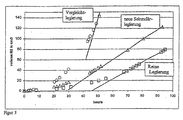
- FIG. 3 and Table 2 shows an alloy which shows how a contaminated alloy with only slightly increased nickel and iron content corrodes, if the composition does not correspond to that of a secondary alloy according to the invention.
- This alloy has the name "comparative alloy”.
- Table 4 Corrosion rates in mm / year of magnesium alloys with strontium, calcium and rare earths Magnesium secondary alloy Salt spray test mm / year With strontium 0.67 With calcium 0.25 With rare earths 0.33 Magnesium secondary alloy al Zn Mn Cu Ni Fe Si With 0.0034% strontium 10.97 3.28 0.61 0.47 0.0037 0.0043 0.12 With 0.30% calcium 9.84 2.38 0.40 0.27 0.0025 0.0014 0.10 With rare earths *) 10.47 3.00 0.60 0.47 0.0025 0.0047 0.15 *) 0.16% Ce, 0.13% La, 0.028% Pr, 0.039 Nd
- the magnesium secondary alloys according to the invention are outstandingly suitable for use as structural parts in the field of cast alloys and semi-solid casting methods, e.g. New Rheo casting. They are also suitable for use as anticorrosion anodes in the fresh water sector.
- the corrosion behavior of the new secondary alloy is in FIG. 3 the reference alloy and a Ni and Fe contaminated comparative alloy of the composition 8.17% Al, 2.84% Zn, 0.21% Mn, 0.0085% Cu, 0.0026% Ni, 0.023% Fe and 0.18% Si faced.
- Example 2 (not according to the invention, comparative example)
- a magnesium secondary alloy having the composition 10.97% aluminum, 3.28% zinc, 0.61% manganese, 0.47% copper, 0.0037% nickel, 0.0043% iron, 0.12% silicon and 0 was used , 0034% strontium, remainder magnesium melted.
- a magnesium secondary alloy was added with cermetic metal composition 10.47% aluminum, 3.00% zinc, 0.60% manganese, 0.47% copper, 0.0025% nickel, 0.0047% iron, 0.15 % Silicon and 0.16% cerium, 0.13% lanthanum, 0.028% praseodymium and 0.039% neodymium, balance magnesium melted.
- the corrosion rate is thus clearly below that of the high-purity AZ 91 alloy of 1.07 mm / year.
Landscapes
- Chemical & Material Sciences (AREA)
- Engineering & Computer Science (AREA)
- Metallurgy (AREA)
- Materials Engineering (AREA)
- Mechanical Engineering (AREA)
- Organic Chemistry (AREA)
- Geology (AREA)
- General Life Sciences & Earth Sciences (AREA)
- Manufacturing & Machinery (AREA)
- Environmental & Geological Engineering (AREA)
- Life Sciences & Earth Sciences (AREA)
- Manufacture And Refinement Of Metals (AREA)
- Prevention Of Electric Corrosion (AREA)
Description
- Die Erfindung betrifft eine korrosionsbeständige Magnesiumlegierung, insbesondere eine aus Schrott erschmolzene Sekundärlegierung, deren Verwendung und ein Verfahren zu ihrer Herstellung.
- Im Bereich der Magnesiummetallurgie gibt es bisher keine Sekundärlegierungen, wie bei anderen Metällen wie zum Beispiel in der Aluminiummetallurgie. Sekundärlegierungen werden aus Schrott erschmolzen. Sie werden dann erneut zu Produkten verarbeitet.
- Es ist bekannt, dass Magnesiumlegierungen darin korrosionsbeständig sind, wenn die Gehalte an Kupfer, Nickel und Eisen sehr niedrig sind. In den weitverbreiteten Legierungen der Gruppen AZ (Magnesium mit Aluminium und Zink), AM (Magnesium mit Aluminium und Mangan), AS (Magnesium mit Aluminium und Silizium) und AJ (Magnesium mit Aluminium und Silizium) und AJ (Magnesium mit Aluminium und Strontium) sind die Toleranzgrenzen auf meist 250 ppm Kupfer, 10 ppm Nickel und 50 ppm Eisen festgelegt. Werden diese Gehalte überschritten, kommt es zu starker Korrosion vor allem durch Lochfraß, wie Bakke, P., Sannes, S., Albright, D.: Soc. Automotive Engineers, paper 1999-01-0926, (1999), pp. 1-10 und Kammer, C. (Hrsg.): Magnesiumtaschenbuch, Aluminium-Verlag Düsseldorf, 2000, 1. Auflage, ISBN 3-87017-264-9 angeben. Damit werden unbeschichtete Teile, wie Getriebegehäuse oder Kurbelgehäuse, aus den Magnesiumlegierungen unbrauchbar.
- Auch beschichtete Teile, wie Handy-, Computer- oder Kettensägengehäuse, sind dem Korrosionsangriff dann ausgesetzt, wenn die Oberflächen auch nur geringe Beschädigungen aufweisen. Die Magnesiumlegierungen müssen daher aus reinen Vorstoffen hergestellt werden, die vor allem frei von Kupfer und Nickel sein müssen, da diese Elemente ohne großen Aufwand nicht aus Magnesium und seinen Legierungen zu entfernen sind.
- Die Notwendigkeit der Energieeinsparüng und der Schonung der Umwelt erfördert ein Recycling der Produkte aus Magnesiumlegierungen. Das wird klar, wenn der Energieaufwand von 35 kWh/kg-Magnesium (ohne Berücksichtigung von Wirkungsgraden für die Energieumwandlung) bei der primären Herstellung von Magnesium dem Energiebedarf von 1 kWh/kg für das Recycling von Neuschrott gegenüberstellt wird.
- Ein Recycling von Altschrott und insbesondere von Schredderfraktionen durch einfaches Umschmelzen mit günstigem Energiebedarf, nur unwesentlich höher als Neuschrott, ist bis jetzt nicht möglich. Die Schredderfraktionen enthalten immer Aluminiumschrott und damit auch Kupfer. Selbst sortenrein erfasste Demontageteile haben die gleichen Probleme, da aus den Beschichtungen Nickel und Kupfer in die Umschmelziegierungen gelangen. Wegen dieser Situation gibt es keine Sekundärlegierungen wie bei den Aluminiumleglerungen, die seit langem akzeptiert werden. Bekannte Magnesiumlegierungen mit erhöhten Gehalten an Aluminium und Zink sind in Tabelle 1 aufgeführt. Alle nachfolgend verwendeten %-Angaben bedeuten, wie auf dem Fachgebiet allgemein üblich, Massenprozente.
Tabelle 1: Zusammensetzung von Magnesiumlegierungen mit erhöhten Aluminium- und Zinkgehalten in Massenprozent, ASM Handbook, ISBN 0-87170-657-1, 199. Legierung Al Zn Mn max. zu max. Ni max. Fe max. Si max. andere AZ92 8,3-9,7 1,6-2,4 0,9-0,35 0,35 0,01 0, 02 0,3 0,3 AZ125 11-13 4,5-5,5 0.3 AM100 9,3-10,7 0,3 0,1-0,5 0,1 0,01 0,023 0,18 0,3 AM90 (SIS144640) 7-9,5 0,3-2 0,15 0,35 0,02 0,05 0.5 - Die Legierungen AZ92, AM100 und AM90 aus Tabelle 1 haben entweder hohe Aluminiumgehalte und niedrige Zinkgehalte oder umgekehrt. Die Korrosionseigenschaften dieser Legierungen sind bei erhöhten Gehalten an Kupfer,
- Nickel und Eisen schlecht im Vergleich zu einer reinen Legierung, wie unten anhand der Figuren und Beispiele beschrieben. Die Legierung AZ125 hat zwar hohe Gehalte an Aluminium und Zink, die Summe der anderen Bestandteile beträgt jedoch nur 0,3 %. Eine Sekundärlegierung soll sich allerdings dadurch auszeichnen, dass höhere definierte Gehalte an Kupfer, Nickel und Eisen, die in Sekundärlegierungen immer vorhanden sind, hinsichtlich der Korrosionsbeständigkeit tolerierbar sind. Daher kann diese Legierung nicht als Sekundärlegierung angesehen werden.
- In C. SCHARF, C. BLAWERT, A. DITZE: "Appiication of remelted post consumer scrap for structural magnesium parts" 2004, WILEY-VCH VERLAG GMBH & CO. KGAA, ED. K.U. KAINER, WEINHEIM, XP009072472 wurde die Eignung von wieder eingeschmolzenem Schrott zur Herstellung von Strukturteilen aus Magnesium untersucht. Hlerfür wurden Standardiegierungen des Typs AZ91D und AZ91B gezielt mit zusätzlichen Gehalten an Kupfer, Silizium und Nickel versehen, um eine aus Schrott gewonnene Zusammensetzung zu simulieren. Die Eignung für die Wiederverwendung wurde anhand von Korrosionstests untersucht und die grundsätzliche Möglichkeit einer Eignung festgestellt, Aus der
EP 1 108 799 A2 (D2, HITACHI, LTD, 20. Juni 2001 (2001-06-20)) ist eine hochfeste Magnesium basierte Gussiegierung bekannt, die eine gute Gießfähigkeit und gute mechanische Eigenschaften besitzen soll. Diese hochfeste Magnesiumlegierung enthält 2 bis 20 Gew.-% Aluminium, 0,1 bis 10 Ges.-% Zink, 0,1 bis 15 Gew.-% Zinn und 0,05 bis 1,5 Gew.-% Mangan. - Die
US2005/129564 A1 (D3, NAKAMURA KIYOMI ET AL; 16. Juni 2005 (2005-06-16) betrifft ebenfalls eine Magnesiumgusslegierung, die eine-gute Fluidität im Gießzustand und gute Kriecheigenschaften beim Guss besitzen soll, um damit im Spritzguss Formteil herstellen zu können: Diese Magnesiumlegierung besteht im Wesentlichen aus 10 bis 15 Gew.-% Aluminium, 0,5 bis 10 Ges.-% Zinn, 0,1 bis 3 Gew.-% Yttrium und 0,1 bis 1 Gew.% Mangan sowie ad 100 Gew.-% Magnesium bei unvermeldbaren Verunreinigungen. - C. SCHARF, A. DITZE, A. SHURANKOV, E. MORALES, C. BLAWERT, W. DIETZEL, K.-U. KAINER in "Corrosion of AZ91 secondary magnesium alloy" ADVANCED ENGINEERING MATERIALS, Bd. 7, Nr. 12, 2005, XP009072476) beschreiben das Korrosionsverhalten eine AZ91-Sekundärmagnesiumlegierung.
- Der Erfindung lag die Aufgabe zugrunde, eine Magnesiumlegierung zu entwickeln, die trotz höherer definierter Gehalte an Kupfer und Nickel, vergleichbare oder bessere Korrosionseigenschaften wie eine hochreine Magnesiumprimärlegierung besitzt.
- Eine solche Magnesiumlegierung kann aus Schrott oder unreinen Vorstoffen, die insbesondere Kupfer oder Nickel enthalten durch Einstellen der Bestandteile beim Erschmelzen erhalten und erneut für Strukturteile verwendet werden.
- Die erfindungsgemäße Magnesiumlegierung enthält
- 10 bis 20 Mass% Aluminium,
- 2,5 bis 10 Mass% Zink,
- 0,1 bis 2 Mass% Mangan,
- 0,3 bis 2 Mass% Kupfer,
- Alternativ enthält die Magnesiumlegierung
- 10 bis 20 Mass% Aluminium,
- 2,5 bis 10 Mass% Zink,
- 0,1 bis 2 Mass% Mangan,
- 0,001 bis 2 Mass% Nickel,
- In den meisten Fällen wird in der Legierung zusätzlich wenigstens eines der Elemente Kupfer, Nickel, Kobalt, Eisen, Silizium, Zirkon und Beryllium mit einem Gesamtgehalt bis zu 2 % enthalten sein (Kupfer zusätzlich zu Nickel oder Nickel zusätzlich zu Kupfer). Von einem "Enthaltensein" des jeweiligen Elements wird in der Regel dann zu sprechen sein, wenn es in einer Mindestmenge von ca. 0,001 Mass% vorhanden ist,
- Überraschenderweise wurde gefunden, dass trotz vielfach höherer Gehälte an Kupfer, Nickel, Eisen und Silizium in der neuen Magnesiumsekundärlegierung im
- Vergleich zu den Grenzgehalten der Legierungen, die bisher für Strukturteile eingesetzt werden, das Korrosionsverhalten genauso gut ist, wie das der hochreinen Legierungen.
- Vorzugsweise besteht die verunreinigungstolerante Magnesiumlegierung aus 11 bis 18 Mass% Aluminium, vorzugsweise 12 bis 16 Mass% Aluminium, 3 bis 8 Mass% Zink, vorzugsweise 3 bis 5 Mass% Zink, 0,3 bis 1,5 Mass% Mangan, vorzugsweise 0,5 bis 1 Mass% Mangan, 0,3 bis 2 Mass% Kupfer, vorzugsweise 0,45 bis 0,8 Mass% Kupfer, sowie gegebenenfalls wenigstens eines der Elemente Nickel, Kobalt, Eisen, Silizium, Zirkon und Beryllium in einem Gesamtgehalt bis 1,5 %, vorzugweise mit einem Gesamtgehalt bis 1 % und Rest Magnesium.
- Gegenstand der Erfindung ist somit eine Magnesiumlegierung, die die angegebenen Gehalte an Aluminium, Zink und Mangan enthält sowie zusätzlich 0,3 % bis 2 % Kupfer und/oder die Elemente Nickel, Kobalt, Eisen, Silizium, Zirkon und Beryllium in einem Gesamtgehalt bis 2 %, vorzugsweise bis 1,5 %, weiter vorzugsweise bis 1 %, wobei die Elemente Kupfer, Nickel, Kobalt, Eisen und Silizium im Allgemeinen durch verunreinigte Legierungsausgangsstoffe bzw. Schrott in die Legierung eingebracht werden.
- Zusätzliche geringe Gehalte anderer Elemente, die der Fachmann nicht als Legierungsbestandteile qualifizieren würde, können vorhanden sein. Derartige Verunreinigungen bewegen sich in Größenordnungen bis maximal 0,1 % undinsbesondere maximal 0,01 %. Verunreinigungen in dieser Größenordnung können ihrerseits durch die Verwendung unreiner Vorstoffe oder Schrott eingeschleppt worden sein.
- Der Nickelgehalt der Magnesiumlegierung liegt vorzugsweise bei wenigstens 0,003 %. Diese Nickelgehalte können durch die höheren Aluminium-, Zink- und Mangangehalte in der erfindungsgemäßen Legierung in dem Sinne ausgeglichen werden, dass trotz des höheren Nickelgehalts keine erhöhten Korrosionseigenschaften festgestellt werden konnten.
- Weiter vorzugsweise enthält die Magnesiumlegierung wenigstens 0,4 % Kupfer.
- In bevorzugter Weiterbildung der Erfindung enthält die Magnesiumlegierung weiter bis zu je 2 % wenigstens eines der Elemente Kalzium und Strontium und in weiterer bevorzugter Ausführungsform bis zu je 2 % wenigstens eines der Elemente aus der Gruppe Elemente der Seltenen Erden, Yttrium und Scandium, Gemäß einer weiteren Ausführungsform der Erfindung enthält die Magnesiumlegierung vorzugsweise bis zu 2 % und weiter vorzugsweise wenigstens 0,1 % Cer-Mischmetall. Cer-Mischmetall ist kommerziell erhältlich und dem Fachmann wohl bekannt. Eine typische Zusammensetzung für Cer-Mischmetall wäre beispielsweise: Seltene Erden mindestens 99,00 %, Cer maximal 57,12 %, Lanthan maximal 36,19 %, Praseodym maximal 4,33 %, Neodym maximal 2,36 %, Eisen maximal 0,54 %, Magnesium maximal 0,14 %, Silizium maximal 0,051 %, Schwefel maximal 0,01 %, Phosphor maximal 0,01 % (aus Handbook of Extractive Metallurgy, vol. III, 1997)
- Es wurde überraschenderweise festgestellt, dass durch Zusatz von Strontium, Calcium, Seltenen Erden, Yttrium und Scandium einzeln oder im Gemisch in Gehalten bis zu 2 % die Korrosionseigenschaften noch weiter verbessert wurden. Die Korrosionsraten dieser Legierungen, ermittelt nach dem Salzsprühtest nach DIN 50021, sind weiter unten in Tabelle 4, die Zusammensetzungen in Tabelle 5 angegeben.
- Die erhaltene Magnesiumlegierung besitzt vorzugsweise eine Korrosionsrate unter 1,2 mm/Jahr, gemessen mittels eines Salzsprühtests nach DIN 50021 wie unter den Beispielen genauer angegeben.
- Die Aufgabe der Erfindung wird auch dadurch gelöst, dass es sich bei der Magnesiumlegierung um eine Sekundärlegierung handelt, die durch Erschmelzen von Schrott oder unreinen Vorstoffen die Kupfer und/oder Nickel enthalten, erhalten wurde.
- Eine solche Magnesiumsekundärlegierung ist kostengünstig herzustellen und besonders geeignet für die Herstellung von Strukturteilen.
- Eine solche Magnesiumlegierung ist ebenfalls besonders geeignet für die Herstellung und den Einsatz des Korrosionsschutzanoden im Süßwasserbereich.
- Die Erfindung umfasst auch ein Verfahren zur Herstellung einer Magnesiumlegierung aus mit Kupfer und/oder Nickel verunreinigten Vorstoffen, insbesondere aus Magnesiumschrott, welches sich dadurch auszeichnet, dass der Schrott oder die unreinen Vorstoffe erschmolzen werden und dass die Legierung auf einen Gehalt an Bestandteilen eingestellt wird, der einer erfindungsgemäßen Magnesiumlegierung wie oben beschrieben entspricht.
- Die vergleichenden Korrosionsuntersuchungen erfolgten durch Immersion in 3,5 und 5 %iger Natriumchloridlösung und nach dem Salzsprühtest nach DIN 50021. In den Immersionsmessungen wurde die Korrosionsrate durch Messung der entwickelten Wasserstoffmenge und/oder durch Titration mit Salzsäure ermittelt. Im Salzsprühtest wird der Massenverlust bestimmt. In der Tabelle 2 sind die Korrosionsraten einer neuen Sekundärlegierung, einer reinen Legierung und einer Vergleichslegierung mit ähnlichen Gehalten an Kupfer und Nickel gegenüberstellt. Die Zusammensetzung der in Tabelle 2 aufgeführten Legierungen ist in Tabelle 3 angegeben.
Tabelle 2: Korrosionsraten in mm/Jahr der Magnesiumlegierungen Immersion pH = 6 mm/Jahr Salzsprühtest mm/Jahr Neue Sekundärlegierung 6,57 1,00 Reine Legierung 5,73 1,07 Vergleichslegierung 35,27 23,79 Tabelle 3: Zusammensetzung der in Tabelle 2 genannten Legierungen in Massenprozent Al Zn Mn Cu Ni Fe Si Neue Sekundärlegierung 11,7 3,04 0,48 0,47 0,0032 0,0087 0,39 Reine Legierung 8,65 0,67 0,20 0,0081 0,00061 0,0022 0,054 Vergleichslegierung 8,17 2,84 0,21 0,0085 0,0026 0,023 0,18 - Die Bedingungen für den Immersionstest waren folgende:
- 3,5 Gew.-% wässrige NaCl-Lösung
- pH-Wert = 6 (konstant)
- Volumen der Lösung: 1,9 I
- Probengröße: Durchmesser 25 mm, Dicke 4 mm
- Probenbehandlung: geschliffen mit Körnung 1200, gespült mit Wasser und Ethanol.
- Nach mindestens 100 Stunden Immersion ergibt sich für die erfindungsgemäßen Legierungen eine Korrosionsrate unter 10 mm/Jahr und nach mindestens 400 Stunden eine Korrosionsrate unter 20 mm/Jahr. Der Salzsprühtest nach DIN 50021 ergab, dass die erfindungsgemäßen Magnesiumlegierungen Korrosionsraten unter 1,2 mm/Jahr zeigen und damit Magnesiumreinstlegierungen wenigstens vergleichbar sind.
- Die Mikrostruktur der neuen Sekundärlegierung ist durch eine sehr geringe Korngröße und eine Veränderung der Betaphase Mg17Al12 bestimmt. Die Betaphase bildet dann eine Netzstruktur nach
Figur 1 , die den Korrosionsangriff, der durch die Lokalelementbildner Kupfer, Nickel, Kobalt und Eisen hervorgerufen wird, verlangsamt. Die Mikrostruktur der reinen Legierung AZ91 weist dagegen die Netzstruktur der Betaphase nicht auf,Figur 2 . Die neue Legierung ist damit tolerant gegenüber hohen Gehalten an Kupfer, Nickel, Kobalt und Eisen. - In der
Figur 3 und Tabelle 2 ist eine Legierung mit angegeben, die zeigt, wie eine verunreinigte Legierung mit nur wenig erhöhtem Nickel- und Eisengehalt korrodiert, wenn die Zusammensetzung nicht der einer erfindungsgemäßen Sekundärlegierung entspricht. Diese Legierung hat die Bezeichnung "Vergleichslegierung".Tabelle 4: Korrosionsraten in mm/Jahr der Magnesiumlegierungen mit Strontium, Calcium und Seltenen Erden Magnesiumsekundärlegierung Salzsprühtest mm/Jahr Mit Strontium 0,67 Mit Calcium 0,25 Mit Seltenen Erden 0,33 Tabelle 5: Zusammensetzung der in Tabelle 4 genannten Legierungen in Massenprozent Magnesiumsekundärlegierung Al Zn Mn Cu Ni Fe Si Mit 0,0034 % Strontium 10,97 3,28 0,61 0,47 0,0037 0,0043 0,12 Mit 0,30 % Calcium 9,84 2,38 0,40 0,27 0,0025 0,0014 0,10 Mit Seltenen Erden*) 10,47 3,00 0,60 0,47 0,0025 0,0047 0,15 *) 0,16 % Ce, 0,13 % La, 0,028 % Pr, 0,039 Nd - Die erfindungsgemäßen Magnesiumsekundärlegierungen sind in hervorragender Weise geeignet für den Einsatz als Strukturteile im Bereich der Gusslegierungen und der Semi-Solid-Gießverfahren z.B. New Rheo Casting. Sie sind ebenfalls für den Einsatz als Korrosionsschutzanoden im Süßwasserbereich geeignet.
- Die Erfindung verbessert den Stand der Technik in folgenden Punkten:
- es können Sekundärlegierungen für Strukturteile auf dem Markt eingeführt werden, die kostengünstiger als die hochreinen Magnesiumlegierungen sind und die gleichen Korrosionsraten haben.
- die neuen Legierungen ermöglichen das kosten- und energiegünstige Recycling von Altschrott mit dem Ziel, erneut Strukturteile zu erzeugen.
- es können für die neuen Legierungen unreinere Vorstoffe, die Kupfer und Nickel enthalten, eingesetzt werden. Damit entfallen Raffinationsschritte bei der Magnesiumoxid- und Magnesiumchloridherstellung.
- ein Downcycling, wie der Einsatz von Schredder im Aluminiumbereich oder als Entschwefelungsmittel in der Stahlindustrie wird vermieden.
- Die Erfindung wird durch Ausführungsbeispiele näher erläutert.
- Es wurde eine Magnesiumlegierung mit der Zusammensetzung 11,7 % Al, 3,04 % Zn, 0,48 % Mn, 0,47 % Cu, 0,0032 % Ni, 0,0087 % Fe und 0,39 % Si in der Legierung erschmolzen. Die Herstellung der Legierung erfolgte bei 760 °C. Die Schmelze wurde in eine auf 200 °C vorgewärmte Kupferkokille gegossen. Auf die gleiche Weise wurde eine hochreine Referenzlegierung der Zusammensetzung 8,65 % Al, 0,67 % Zn, 0,20 % Mn, 0,0081 % Cu, 0,00061 % Ni, 0,0022 % Fe und 0,054 % Si hergestellt. Die Referenzlegierung entspricht einer hochreinen Magnesiumlegierung AZ 91 mit besonders guter Korrosionsbeständigkeit.
- Aus dem Legierungsstab wurden Scheiben mit einem Durchmesser von 25 mm und einer Dicke von 4 mm herausgeschnitten und der Korrosionsprüfung unterzogen. Die Korrosionsprüfung erfolgte durch Eintauchen der Scheiben in eine 3,5%ige wässrige NaCl-Lösung bei konstantem pH-Wert. Gemäß der Reaktion
Mg + 2H2O = Mg(OH)2 + H2
entsteht für ein Atom Magnesium ein Mol Wasserstoff. Dadurch kann die Korrosionsrate aus dem entstehenden Wasserstoffvolumen ermittelt werden. Das Korrosionsverhalten der neuen Sekundärlegierung ist inFigur 3 der Referenzlegierung sowie einer mit Ni und Fe verunreinigten Vergleichslegierung der Zusammensetzung 8,17 % Al, 2,84 % Zn, 0,21 % Mn, 0,0085 % Cu, 0,0026 % Ni, 0,023 % Fe und 0,18 % Si gegenübergestellt.Figur 3 zeigt die Wasserstoffentwicklung in 3,5 % NaCl-Lösung bei konstantem pH = 6. Nach unterschiedlichem Anfangsverlauf der Wasserstoffentwicklung inFigur 3 , ist das Korrosionsverhalten durch die linearen Bereiche inFigur 3 gekennzeichnet. Die - daraus berechneten Korrosionsraten sind in Tabelle 2 angegeben. In Tabelle 2 sind ebenfalls die Korrosionsraten, ermittelt aus dem Salzsprühtest nach DIN 50021, eingetragen.
- Aus Tabelle 2 ist ersichtlich, dass die neue Sekundärlegierung die gleichen Korrosionsraten wie die hochreine Legierung hat.
- Es wurde eine Magnesiurnsekundätlegierung mit der Zusammensetzung 9,84 % Aluminium, 2,38 % Zink, 0,40 % Mangan, 0,27 % Kupfer, 0,0025 % Nickel, 0,0014 % eisen, 0,10 %Silizium und 0,30 % Calcium, Rest Magnesium erschmolzen. Die Korrosionsrate, im Salzsprühtest nach DIN 50021 ermittelt, betrug 0,25 mm/Jahr. Die Korrosionsrate liegt damit deutlich unter der der hochreinen Legierung AZ 91 von 1,07 mm/Jahr.
- Es wurde eine Magnesiumsekundärlegierung mit der Zusammensetzung 10,97 % Aluminium, 3,28 % Zink, 0,61 % Mangan, 0,47 % Kupfer, 0,0037 % Nickel, 0,0043 % Eisen, 0,12 % Silizium und 0,0034 % Strontium, Rest Magnesium erschmolzen. Die Korrosionsrate, im Salzsprühtest nach DIN 50021 ermittelt, betrug 0,67 mm/Jahr. Die Korrosionsrate liegt damit deutlich unter der der hochreinen Legierung AZ 91 von 1,07 mm/Jahr.
- Es wurde eine Magnesiumsekundärlegierung unter Zusatz von Cermischmetall mit der Zusammensetzung 10,47 % Aluminium, 3,00 % Zink, 0,60 % Mangan, 0,47 % Kupfer, 0,0025 % Nickel, 0,0047 % Eisen, 0,15 % Silizium und 0,16 % Cer, 0,13 % Lanthan, 0,028 % Praseodym und 0,039 % Neodym, Rest Magnesium erschmolzen. Die Korrosionsrate, im Salzsprühtest nach DIN 50021 ermittelt, betrug 0,33 mm/Jahr.
- Die Korrosionsrate liegt damit deutlich unter der der hochreinen Legierung AZ 91 von 1,07 mm/Jahr.
fakultativ ergänzt um bis zu je 2 Mass% wenigstens eines der Elemente Calcium und Strontium,
fakultativ ergänzt um bis zu je 2 Mass% wenigstens eines der Elemente aus der Gruppe: Elemente der Seltenen Erden, Yttrium, Scandium, CerMischmetall,
ad 100 % ergänzt mit Magnesium, wobei die Betaphase der Legierung eine Netzstruktur aufweist,
fakultativ ergänzt um bis zu je 2 Mass% wenigstens eines der Elemente Calcium und Strontium,
fakultativ ergänzt um bis zu je 2 Mass% wenigstens eines der Elemente aus der Gruppe: Elemente der Seltenen Erden, Yttrium, Scandium, CerMischmetall,
ad 100 % ergänzt mit Magnesium, wobei die Betaphase der Legierung eine Netzstruktur aufweist.
Claims (9)
- Magnesiumlegierung enthaltend10 bis 20 Mass% Aluminium,2,5 bis 10 Mass% Zink,0,1 bis 2 Mass% Mangan,0,3 bis 2 Mass% Kupfer,fakultativ ergänzt um wenigstens eines der Elemente Nickel, Kobalt, Eisen, Silizium, Zirkon und Beryllium bis zu einem Gesamtgehalt von 2 Mass%,
fakultativ ergänzt um bis zu je 2 Mass% wenigstens eines der Elemente Calcium und Strontium,
fakultativ ergänzt um bis zu je 2 Mass% wenigstens eines der Elemente aus der Gruppe: Elemente der seltenen Erden, insbesondere Yttrium, Scandium, Cer-Mischmetall,
ad 100 % ergänzt mit Magnesium, wobei die Betaphase der Legierung eine Netzstruktur aufweist. - Magnesiumlegierung enthaltend10 bis 20 Mass% Aluminium,2,5 bis 10 Mass% Zink,0,1 bis 2 Mass% Mangan,0,001 bis 2 Mass% Nickel,fakultativ ergänzt um wenigstens eines der Elemente Kupfer, Kobalt, Eisen, Silizium, Zirkon und Beryllium bis zu einem Gesamtgehalt von 2 Mass%,
fakultativ ergänzt um bis zu je 2 Mass% wenigstens eines der Elemente Calcium und Strontium,
fakultativ ergänzt um bis zu je 2 Mass% wenigstens eines der Elemente aus der Gruppe: Elemente der seltenen Erden, insbesondere Yttrium, Scandium, Cer-Mischmetall,
ad 100 % ergänzt mit Magnesium, wobei die Betaphase der Legierung eine Netzstruktur aufweist. - Magnesiumlegierung nach Anspruch 1, bestehend aus 11 bis 18 % Aluminium, vorzugsweise 12 % bis 16 % Aluminium, 3 % bis 8 % Zink, vorzugsweise 3 % bis 5 % Zink, 0,3 % bis 1,5 % Mangan, vorzugsweise 0,5 % bis 1 % Mangan, 0,3 % bis 2 % Kupfer, vorzugsweise 0,45 % bis 0,8 % Kupfer, sowie gegebenenfalls wenigstens einem der Elemente Nickel, Kobalt, Eisen, Silizium, Zirkon und Beryllium in einem Gesamtgehalt bis 1,5 %, vorzugsweise mit einem Gesamtgehalt bis 1 % und Rest Magnesium (jeweils Mass%).
- Magnesiumlegierung nach einen der Ansprüche 1 bis 3, dadurch gekennzeichnet, dass der Nickelgehalt wenigstens 0,003 % beträgt.
- Magnesiumlegierung nach einem der Ansprüche 1 bis 4, dadurch gekennzeichnet, dass der Kupfergehalt wenigstens 0,4 % beträgt.
- Magnesiumlegierung nach einem der Ansprüche 1 bis 5, dadurch gekennzeichnet, dass sie eine Korrosionsrate unter 1,2 mm/Jahr besitzt, gemessen mittels eines Salzsprühtestes nach DIN 50021.
- Magnesiumlegierung nach einem der Ansprüche 1 bis 6, dadurch gekennzeichnet, dass es sich um eine Sekundärlegierung handelt, die durch Erschmelzen von Schrott oder unreinen Vorstoffen, die Kupfer und/oder Nickel enthalten, erhalten wurde.
- Verwendung der Magnesiumlegierung nach einem der Ansprüche 1 bis 7 zur Herstellung von Strukturteilen oder Korrosionsschutzanoden.
- Verfahren zur Herstellung einer Magnesiumlegierung aus mit Kupfer und/oder Nickel verunreinigten Vorstoffen, insbesondere aus Magnesiumschrott, dadurch gekennzeichnet, dass der Schrott oder die unreinen Vorstoffe erschmolzen werden und dass die Legierung auf einen Gehalt an Bestandteilen eingestellt wird, der einer Magnesiumlegierung nach einem der Ansprüche 1 bis 7 entspricht.
Applications Claiming Priority (2)
| Application Number | Priority Date | Filing Date | Title |
|---|---|---|---|
| DE102005033835A DE102005033835A1 (de) | 2005-07-20 | 2005-07-20 | Magnesiumsekundärlegierung |
| PCT/DE2006/001212 WO2007009435A1 (de) | 2005-07-20 | 2006-07-13 | Magnesiumlegierung |
Publications (2)
| Publication Number | Publication Date |
|---|---|
| EP1917374A1 EP1917374A1 (de) | 2008-05-07 |
| EP1917374B1 true EP1917374B1 (de) | 2012-08-29 |
Family
ID=36954115
Family Applications (1)
| Application Number | Title | Priority Date | Filing Date |
|---|---|---|---|
| EP20060761798 Not-in-force EP1917374B1 (de) | 2005-07-20 | 2006-07-13 | Magnesiumlegierung |
Country Status (9)
| Country | Link |
|---|---|
| US (1) | US20090104070A1 (de) |
| EP (1) | EP1917374B1 (de) |
| JP (1) | JP2009501845A (de) |
| CN (1) | CN101248201B (de) |
| AU (1) | AU2006272244B2 (de) |
| CA (1) | CA2615835C (de) |
| DE (2) | DE102005033835A1 (de) |
| IL (1) | IL188837A (de) |
| WO (1) | WO2007009435A1 (de) |
Families Citing this family (25)
| Publication number | Priority date | Publication date | Assignee | Title |
|---|---|---|---|---|
| CN101177745B (zh) * | 2007-10-16 | 2010-04-21 | 中国科学院长春应用化学研究所 | 一种镁-硅中间体及利用该中间体制备的高镁铝合金及制备方法 |
| DE102007060743A1 (de) | 2007-12-17 | 2009-06-18 | Helmut Dr. Witteler | Schuh umfassend Konstruktionselemente aus Magnesiumblech oder Magnesiumstrangpressprofil |
| DE102007061561A1 (de) * | 2007-12-18 | 2009-06-25 | Magontec Gmbh | Legierung umfassend Mg und Sr und hieraus gefertigte galvanische Opferanode |
| DE102008020523B4 (de) | 2008-04-23 | 2014-05-15 | Helmholtz-Zentrum Geesthacht Zentrum für Material- und Küstenforschung GmbH | Duktile Magnesiumlegierung |
| JP2010150057A (ja) * | 2008-12-24 | 2010-07-08 | Liangfeng Plastic Machinery Co | 水素生成方法及びその応用 |
| JP5405392B2 (ja) * | 2009-06-17 | 2014-02-05 | 株式会社豊田中央研究所 | 再生マグネシウム合金とその製造方法およびマグネシウム合金 |
| US8435444B2 (en) | 2009-08-26 | 2013-05-07 | Techmag Ag | Magnesium alloy |
| CN102899544A (zh) * | 2012-10-17 | 2013-01-30 | 创金美科技(深圳)有限公司 | 一种稀土镁合金 |
| CN103834839A (zh) * | 2012-11-23 | 2014-06-04 | 天津德盛镁科技发展有限公司 | 一种新型钙锶耐热镁合金 |
| JP6065580B2 (ja) * | 2012-12-25 | 2017-01-25 | 住友電気工業株式会社 | 内燃機関用材料の評価試験方法 |
| CN104120318B (zh) * | 2013-04-24 | 2017-01-25 | 中国石油化工股份有限公司 | 一种镁合金及其制备方法 |
| CN103343271B (zh) * | 2013-07-08 | 2015-07-01 | 中南大学 | 一种轻质耐压快速分解的铸造镁合金 |
| CN103789589B (zh) * | 2014-03-04 | 2015-09-09 | 南京信息工程大学 | 一种高阳极利用率电池材料及制备方法 |
| CN106244891A (zh) * | 2014-11-10 | 2016-12-21 | 吴小再 | 使用寿命较长的耐腐蚀生物医用镁合金的制备方法 |
| KR101644330B1 (ko) * | 2016-06-02 | 2016-08-01 | 울산과학기술원 | 마그네슘 합금 및 이의 제조방법 |
| US10883158B2 (en) | 2016-06-02 | 2021-01-05 | Unist (Ulsan National Institute Of Science And Technology) | Magnesium alloy materials and method for producing the same |
| CN105950930B (zh) * | 2016-06-24 | 2018-02-06 | 中国石油集团川庆钻探工程有限公司长庆井下技术作业公司 | 一种可溶挤压态镁合金及其制备方法 |
| WO2018082052A1 (en) * | 2016-11-04 | 2018-05-11 | GM Global Technology Operations LLC | Corrosion resistant magnesium alloy |
| CN107448389B (zh) * | 2017-08-31 | 2021-12-31 | 广东美芝制冷设备有限公司 | 旋转压缩机用底座和旋转压缩机及制冷设备 |
| CN107815574A (zh) * | 2017-09-28 | 2018-03-20 | 江苏晶王新材料科技有限公司 | 一种耐腐蚀的镁合金材料 |
| CN108004423A (zh) * | 2017-11-30 | 2018-05-08 | 于海松 | 高性能镁基合金的合成工艺 |
| CN108193111B (zh) * | 2018-01-31 | 2019-10-18 | 中南大学 | 一种稀土镁合金阳极材料及其制备方法 |
| KR102210236B1 (ko) * | 2018-12-14 | 2021-02-01 | 울산과학기술원 | 마그네슘 합금재 및 이의 제조방법 |
| AT522003B1 (de) * | 2018-12-18 | 2021-10-15 | Lkr Leichtmetallkompetenzzentrum Ranshofen Gmbh | Magnesiumbasislegierung und Verfahren zur Herstellung derselben |
| CN115652159B (zh) * | 2022-11-15 | 2024-02-06 | 上海交通大学 | 一种高强韧压铸镁合金及其制备方法 |
Family Cites Families (12)
| Publication number | Priority date | Publication date | Assignee | Title |
|---|---|---|---|---|
| US2264310A (en) * | 1940-03-09 | 1941-12-02 | Dow Chemical Co | Magnesium base alloy |
| US2279712A (en) * | 1940-12-23 | 1942-04-14 | Dow Chemical Co | Magnesium base alloy |
| US2453444A (en) * | 1945-06-28 | 1948-11-09 | Olin Mathieson | Magnesium base lithium alloys |
| JPH09157782A (ja) * | 1995-12-06 | 1997-06-17 | Sumitomo Metal Mining Co Ltd | 流電陽極用マグネシウム合金 |
| KR100252237B1 (ko) * | 1996-04-25 | 2000-04-15 | 정몽규 | 고압주조용 마그네슘 합금 |
| JP3603706B2 (ja) * | 1999-12-03 | 2004-12-22 | 株式会社日立製作所 | 高強度Mg基合金とMg基鋳造合金及び物品 |
| JP2001181773A (ja) * | 1999-12-24 | 2001-07-03 | Tetsuji Yamanishi | Mg合金被覆Mg合金製品 |
| JP3592659B2 (ja) * | 2001-08-23 | 2004-11-24 | 株式会社日本製鋼所 | 耐食性に優れたマグネシウム合金およびマグネシウム合金部材 |
| CN1386881A (zh) * | 2002-04-16 | 2002-12-25 | 太原理工大学 | 团球硅相镁基合金及制备 |
| US20050129564A1 (en) * | 2003-11-26 | 2005-06-16 | Kiyomi Nakamura | Magnesium alloy |
| JP2005179776A (ja) * | 2003-11-26 | 2005-07-07 | Hitachi Ltd | マグネシウム合金 |
| CN1327021C (zh) * | 2004-07-22 | 2007-07-18 | 同济大学 | 一种镁合金及其复合材料的制备工艺 |
-
2005
- 2005-07-20 DE DE102005033835A patent/DE102005033835A1/de not_active Withdrawn
-
2006
- 2006-07-13 CA CA 2615835 patent/CA2615835C/en not_active Expired - Fee Related
- 2006-07-13 EP EP20060761798 patent/EP1917374B1/de not_active Not-in-force
- 2006-07-13 US US11/994,717 patent/US20090104070A1/en not_active Abandoned
- 2006-07-13 JP JP2008521795A patent/JP2009501845A/ja active Pending
- 2006-07-13 CN CN2006800262883A patent/CN101248201B/zh not_active Expired - Fee Related
- 2006-07-13 DE DE200611002614 patent/DE112006002614A5/de not_active Withdrawn
- 2006-07-13 AU AU2006272244A patent/AU2006272244B2/en not_active Ceased
- 2006-07-13 WO PCT/DE2006/001212 patent/WO2007009435A1/de not_active Ceased
-
2008
- 2008-01-17 IL IL18883708A patent/IL188837A/en not_active IP Right Cessation
Also Published As
| Publication number | Publication date |
|---|---|
| EP1917374A1 (de) | 2008-05-07 |
| AU2006272244B2 (en) | 2011-08-18 |
| AU2006272244A1 (en) | 2007-01-25 |
| DE102005033835A1 (de) | 2007-01-25 |
| WO2007009435A1 (de) | 2007-01-25 |
| CA2615835C (en) | 2014-04-15 |
| DE112006002614A5 (de) | 2008-06-26 |
| CN101248201B (zh) | 2011-12-14 |
| JP2009501845A (ja) | 2009-01-22 |
| CA2615835A1 (en) | 2007-01-25 |
| IL188837A (en) | 2013-09-30 |
| CN101248201A (zh) | 2008-08-20 |
| IL188837A0 (en) | 2008-04-13 |
| US20090104070A1 (en) | 2009-04-23 |
Similar Documents
| Publication | Publication Date | Title |
|---|---|---|
| EP1917374A1 (de) | Magnesiumlegierung | |
| DE602004004537T2 (de) | Giessbare magnesiumlegierungen | |
| DE69801133T2 (de) | Magnesiumlegierung mit hohen Hochtemperatureigenschaften und mit guter Vergiessbarkeit | |
| EP1682688B1 (de) | Al-Mg-Si-Aluminium-Gusslegierung mit Scandium | |
| US5059390A (en) | Dual-phase, magnesium-based alloy having improved properties | |
| DE112010002575T5 (de) | Recycelte Magnesiumlegierung, Verfahren zu deren Herstellung, und Magnesiumlegierung | |
| DE19937184B4 (de) | Magnesiumlegierung für Hochtemperatur-Anwendungen | |
| DE102008020523B4 (de) | Duktile Magnesiumlegierung | |
| EP3235916B1 (de) | Gusslegierung | |
| EP3176275B2 (de) | Aluminium-silizium-druckgusslegierung, verfahren zur herstellung eines druckgussbauteils aus der legierung und karosseriekomponente mit einem druckgussbauteil | |
| DE10236440B4 (de) | Magnesiumlegierung und Magnesiumlegierungs-Formkörper mit verbesserter Korrosionsbeständigkeit | |
| WO2009010264A2 (de) | Aluminium-gusslegierung und deren verwendung | |
| DE2658187A1 (de) | Magnesiumlegierungen | |
| EP1888798B1 (de) | Aluminium-gleitlagerlegierung | |
| DE3426175C2 (de) | ||
| WO2014154191A1 (de) | Kupferlegierung | |
| DE102007061561A1 (de) | Legierung umfassend Mg und Sr und hieraus gefertigte galvanische Opferanode | |
| AT407533B (de) | Aluminiumlegierung | |
| DE69402406T2 (de) | Hitzebeständige Magnesiumlegierung | |
| EP1340827B1 (de) | Aluminium-silizium-gusslegierung sowie daraus hergestellter kolben und gussstück | |
| DE3828397A1 (de) | Hochfeste, leicht giessbare zinklegierung | |
| DE69012270T2 (de) | Elektrochemische Batterie mit einer Anode aus einer Zinklegierung. | |
| DE2731941C3 (de) | Korrosionsbeständige Aluminium-Magnesium-Legierung | |
| DE2656876A1 (de) | Bleilegierung hoher festigkeit und daraus gefertigte akkumulatorenplatten | |
| DE1608136C (de) | Verwendung einer Magnesiumlegierung fur Druckgußstucke, die Betriebstemperaturen von 93 bis 204 Grad C ausgesetzt sind |
Legal Events
| Date | Code | Title | Description |
|---|---|---|---|
| PUAI | Public reference made under article 153(3) epc to a published international application that has entered the european phase |
Free format text: ORIGINAL CODE: 0009012 |
|
| 17P | Request for examination filed |
Effective date: 20080114 |
|
| AK | Designated contracting states |
Kind code of ref document: A1 Designated state(s): AT BE BG CH CY CZ DE DK EE ES FI FR GB GR HU IE IS IT LI LT LU LV MC NL PL PT RO SE SI SK TR |
|
| RIN1 | Information on inventor provided before grant (corrected) |
Inventor name: KAINER, KARL, ULRICH Inventor name: DITZE, ANDRE Inventor name: SCHARF, CHRISTIANE Inventor name: BLAWERT, CARSTEN Inventor name: MORALES GARZA, EMMA, DEYANIRA |
|
| 17Q | First examination report despatched |
Effective date: 20081217 |
|
| RAP1 | Party data changed (applicant data changed or rights of an application transferred) |
Owner name: TECHNISCHE UNIVERSITAET CLAUSTHAL Owner name: HELMHOLTZ-ZENTRUM GEESTHACHT ZENTRUM FUER MATERIAL |
|
| GRAP | Despatch of communication of intention to grant a patent |
Free format text: ORIGINAL CODE: EPIDOSNIGR1 |
|
| GRAC | Information related to communication of intention to grant a patent modified |
Free format text: ORIGINAL CODE: EPIDOSCIGR1 |
|
| DAX | Request for extension of the european patent (deleted) | ||
| GRAS | Grant fee paid |
Free format text: ORIGINAL CODE: EPIDOSNIGR3 |
|
| GRAA | (expected) grant |
Free format text: ORIGINAL CODE: 0009210 |
|
| AK | Designated contracting states |
Kind code of ref document: B1 Designated state(s): AT BE BG CH CY CZ DE DK EE ES FI FR GB GR HU IE IS IT LI LT LU LV MC NL PL PT RO SE SI SK TR |
|
| REG | Reference to a national code |
Ref country code: GB Ref legal event code: FG4D Free format text: NOT ENGLISH |
|
| REG | Reference to a national code |
Ref country code: CH Ref legal event code: EP |
|
| REG | Reference to a national code |
Ref country code: AT Ref legal event code: REF Ref document number: 573150 Country of ref document: AT Kind code of ref document: T Effective date: 20120915 |
|
| REG | Reference to a national code |
Ref country code: IE Ref legal event code: FG4D Free format text: LANGUAGE OF EP DOCUMENT: GERMAN |
|
| REG | Reference to a national code |
Ref country code: DE Ref legal event code: R096 Ref document number: 502006011923 Country of ref document: DE Effective date: 20121018 |
|
| REG | Reference to a national code |
Ref country code: NL Ref legal event code: VDEP Effective date: 20120829 |
|
| REG | Reference to a national code |
Ref country code: LT Ref legal event code: MG4D Effective date: 20120829 |
|
| PG25 | Lapsed in a contracting state [announced via postgrant information from national office to epo] |
Ref country code: CY Free format text: LAPSE BECAUSE OF FAILURE TO SUBMIT A TRANSLATION OF THE DESCRIPTION OR TO PAY THE FEE WITHIN THE PRESCRIBED TIME-LIMIT Effective date: 20120829 Ref country code: IS Free format text: LAPSE BECAUSE OF FAILURE TO SUBMIT A TRANSLATION OF THE DESCRIPTION OR TO PAY THE FEE WITHIN THE PRESCRIBED TIME-LIMIT Effective date: 20121229 Ref country code: LT Free format text: LAPSE BECAUSE OF FAILURE TO SUBMIT A TRANSLATION OF THE DESCRIPTION OR TO PAY THE FEE WITHIN THE PRESCRIBED TIME-LIMIT Effective date: 20120829 Ref country code: FI Free format text: LAPSE BECAUSE OF FAILURE TO SUBMIT A TRANSLATION OF THE DESCRIPTION OR TO PAY THE FEE WITHIN THE PRESCRIBED TIME-LIMIT Effective date: 20120829 |
|
| PG25 | Lapsed in a contracting state [announced via postgrant information from national office to epo] |
Ref country code: GR Free format text: LAPSE BECAUSE OF FAILURE TO SUBMIT A TRANSLATION OF THE DESCRIPTION OR TO PAY THE FEE WITHIN THE PRESCRIBED TIME-LIMIT Effective date: 20121130 Ref country code: LV Free format text: LAPSE BECAUSE OF FAILURE TO SUBMIT A TRANSLATION OF THE DESCRIPTION OR TO PAY THE FEE WITHIN THE PRESCRIBED TIME-LIMIT Effective date: 20120829 Ref country code: SE Free format text: LAPSE BECAUSE OF FAILURE TO SUBMIT A TRANSLATION OF THE DESCRIPTION OR TO PAY THE FEE WITHIN THE PRESCRIBED TIME-LIMIT Effective date: 20120829 Ref country code: SI Free format text: LAPSE BECAUSE OF FAILURE TO SUBMIT A TRANSLATION OF THE DESCRIPTION OR TO PAY THE FEE WITHIN THE PRESCRIBED TIME-LIMIT Effective date: 20120829 Ref country code: PT Free format text: LAPSE BECAUSE OF FAILURE TO SUBMIT A TRANSLATION OF THE DESCRIPTION OR TO PAY THE FEE WITHIN THE PRESCRIBED TIME-LIMIT Effective date: 20121231 |
|
| PG25 | Lapsed in a contracting state [announced via postgrant information from national office to epo] |
Ref country code: ES Free format text: LAPSE BECAUSE OF FAILURE TO SUBMIT A TRANSLATION OF THE DESCRIPTION OR TO PAY THE FEE WITHIN THE PRESCRIBED TIME-LIMIT Effective date: 20121210 Ref country code: RO Free format text: LAPSE BECAUSE OF FAILURE TO SUBMIT A TRANSLATION OF THE DESCRIPTION OR TO PAY THE FEE WITHIN THE PRESCRIBED TIME-LIMIT Effective date: 20120829 Ref country code: DK Free format text: LAPSE BECAUSE OF FAILURE TO SUBMIT A TRANSLATION OF THE DESCRIPTION OR TO PAY THE FEE WITHIN THE PRESCRIBED TIME-LIMIT Effective date: 20120829 Ref country code: NL Free format text: LAPSE BECAUSE OF FAILURE TO SUBMIT A TRANSLATION OF THE DESCRIPTION OR TO PAY THE FEE WITHIN THE PRESCRIBED TIME-LIMIT Effective date: 20120829 Ref country code: CZ Free format text: LAPSE BECAUSE OF FAILURE TO SUBMIT A TRANSLATION OF THE DESCRIPTION OR TO PAY THE FEE WITHIN THE PRESCRIBED TIME-LIMIT Effective date: 20120829 Ref country code: EE Free format text: LAPSE BECAUSE OF FAILURE TO SUBMIT A TRANSLATION OF THE DESCRIPTION OR TO PAY THE FEE WITHIN THE PRESCRIBED TIME-LIMIT Effective date: 20120829 |
|
| PG25 | Lapsed in a contracting state [announced via postgrant information from national office to epo] |
Ref country code: SK Free format text: LAPSE BECAUSE OF FAILURE TO SUBMIT A TRANSLATION OF THE DESCRIPTION OR TO PAY THE FEE WITHIN THE PRESCRIBED TIME-LIMIT Effective date: 20120829 Ref country code: IT Free format text: LAPSE BECAUSE OF FAILURE TO SUBMIT A TRANSLATION OF THE DESCRIPTION OR TO PAY THE FEE WITHIN THE PRESCRIBED TIME-LIMIT Effective date: 20120829 Ref country code: PL Free format text: LAPSE BECAUSE OF FAILURE TO SUBMIT A TRANSLATION OF THE DESCRIPTION OR TO PAY THE FEE WITHIN THE PRESCRIBED TIME-LIMIT Effective date: 20120829 |
|
| PLBE | No opposition filed within time limit |
Free format text: ORIGINAL CODE: 0009261 |
|
| STAA | Information on the status of an ep patent application or granted ep patent |
Free format text: STATUS: NO OPPOSITION FILED WITHIN TIME LIMIT |
|
| PG25 | Lapsed in a contracting state [announced via postgrant information from national office to epo] |
Ref country code: BG Free format text: LAPSE BECAUSE OF FAILURE TO SUBMIT A TRANSLATION OF THE DESCRIPTION OR TO PAY THE FEE WITHIN THE PRESCRIBED TIME-LIMIT Effective date: 20121129 |
|
| 26N | No opposition filed |
Effective date: 20130530 |
|
| REG | Reference to a national code |
Ref country code: DE Ref legal event code: R097 Ref document number: 502006011923 Country of ref document: DE Effective date: 20130530 |
|
| BERE | Be: lapsed |
Owner name: TECHNISCHE UNIVERSITAT CLAUSTHAL Effective date: 20130731 Owner name: HELMHOLTZ-ZENTRUM GEESTHACHT ZENTRUM FUR MATERIAL Effective date: 20130731 |
|
| PG25 | Lapsed in a contracting state [announced via postgrant information from national office to epo] |
Ref country code: MC Free format text: LAPSE BECAUSE OF FAILURE TO SUBMIT A TRANSLATION OF THE DESCRIPTION OR TO PAY THE FEE WITHIN THE PRESCRIBED TIME-LIMIT Effective date: 20120829 |
|
| REG | Reference to a national code |
Ref country code: CH Ref legal event code: PL |
|
| REG | Reference to a national code |
Ref country code: IE Ref legal event code: MM4A |
|
| PG25 | Lapsed in a contracting state [announced via postgrant information from national office to epo] |
Ref country code: LI Free format text: LAPSE BECAUSE OF NON-PAYMENT OF DUE FEES Effective date: 20130731 Ref country code: CH Free format text: LAPSE BECAUSE OF NON-PAYMENT OF DUE FEES Effective date: 20130731 Ref country code: BE Free format text: LAPSE BECAUSE OF NON-PAYMENT OF DUE FEES Effective date: 20130731 |
|
| PG25 | Lapsed in a contracting state [announced via postgrant information from national office to epo] |
Ref country code: IE Free format text: LAPSE BECAUSE OF NON-PAYMENT OF DUE FEES Effective date: 20130713 |
|
| REG | Reference to a national code |
Ref country code: AT Ref legal event code: MM01 Ref document number: 573150 Country of ref document: AT Kind code of ref document: T Effective date: 20130713 |
|
| PG25 | Lapsed in a contracting state [announced via postgrant information from national office to epo] |
Ref country code: AT Free format text: LAPSE BECAUSE OF NON-PAYMENT OF DUE FEES Effective date: 20130713 |
|
| PG25 | Lapsed in a contracting state [announced via postgrant information from national office to epo] |
Ref country code: TR Free format text: LAPSE BECAUSE OF FAILURE TO SUBMIT A TRANSLATION OF THE DESCRIPTION OR TO PAY THE FEE WITHIN THE PRESCRIBED TIME-LIMIT Effective date: 20120829 |
|
| REG | Reference to a national code |
Ref country code: DE Ref legal event code: R082 Ref document number: 502006011923 Country of ref document: DE Representative=s name: GRAMM, LINS & PARTNER GBR, DE Ref country code: DE Ref legal event code: R081 Ref document number: 502006011923 Country of ref document: DE Owner name: HELMHOLTZ-ZENTRUM GEESTHACHT ZENTRUM FUER MATE, DE Free format text: FORMER OWNER: HELMHOLTZ-ZENTRUM GEESTHACHT ZE, TECHNISCHE UNIVERSITAET CLAUSTHA, , DE Ref country code: DE Ref legal event code: R082 Ref document number: 502006011923 Country of ref document: DE Representative=s name: GRAMM, LINS & PARTNER PATENT- UND RECHTSANWAEL, DE Ref country code: DE Ref legal event code: R081 Ref document number: 502006011923 Country of ref document: DE Owner name: HELMHOLTZ-ZENTRUM GEESTHACHT ZENTRUM FUER MATE, DE Free format text: FORMER OWNERS: HELMHOLTZ-ZENTRUM GEESTHACHT ZENTRUM FUER MATERIAL- UND KUESTENFORSCHUNG GMBH, 21502 GEESTHACHT, DE; TECHNISCHE UNIVERSITAET CLAUSTHAL, 38678 CLAUSTHAL-ZELLERFELD, DE |
|
| REG | Reference to a national code |
Ref country code: FR Ref legal event code: PLFP Year of fee payment: 10 |
|
| PG25 | Lapsed in a contracting state [announced via postgrant information from national office to epo] |
Ref country code: HU Free format text: LAPSE BECAUSE OF FAILURE TO SUBMIT A TRANSLATION OF THE DESCRIPTION OR TO PAY THE FEE WITHIN THE PRESCRIBED TIME-LIMIT; INVALID AB INITIO Effective date: 20060713 Ref country code: LU Free format text: LAPSE BECAUSE OF NON-PAYMENT OF DUE FEES Effective date: 20130713 |
|
| REG | Reference to a national code |
Ref country code: GB Ref legal event code: 732E Free format text: REGISTERED BETWEEN 20150709 AND 20150715 |
|
| REG | Reference to a national code |
Ref country code: DE Ref legal event code: R082 Ref document number: 502006011923 Country of ref document: DE Representative=s name: GRAMM, LINS & PARTNER PATENT- UND RECHTSANWAEL, DE |
|
| REG | Reference to a national code |
Ref country code: FR Ref legal event code: TP Owner name: HELMHOLZ-ZENTRUM GEESTHACHT ZENTRUM FUR MATERI, DE Effective date: 20150930 |
|
| REG | Reference to a national code |
Ref country code: FR Ref legal event code: PLFP Year of fee payment: 11 |
|
| REG | Reference to a national code |
Ref country code: FR Ref legal event code: PLFP Year of fee payment: 12 |
|
| REG | Reference to a national code |
Ref country code: FR Ref legal event code: PLFP Year of fee payment: 13 |
|
| PGFP | Annual fee paid to national office [announced via postgrant information from national office to epo] |
Ref country code: DE Payment date: 20190723 Year of fee payment: 14 Ref country code: FR Payment date: 20190724 Year of fee payment: 14 |
|
| PGFP | Annual fee paid to national office [announced via postgrant information from national office to epo] |
Ref country code: GB Payment date: 20190725 Year of fee payment: 14 |
|
| REG | Reference to a national code |
Ref country code: DE Ref legal event code: R119 Ref document number: 502006011923 Country of ref document: DE |
|
| GBPC | Gb: european patent ceased through non-payment of renewal fee |
Effective date: 20200713 |
|
| PG25 | Lapsed in a contracting state [announced via postgrant information from national office to epo] |
Ref country code: GB Free format text: LAPSE BECAUSE OF NON-PAYMENT OF DUE FEES Effective date: 20200713 Ref country code: FR Free format text: LAPSE BECAUSE OF NON-PAYMENT OF DUE FEES Effective date: 20200731 |
|
| PG25 | Lapsed in a contracting state [announced via postgrant information from national office to epo] |
Ref country code: DE Free format text: LAPSE BECAUSE OF NON-PAYMENT OF DUE FEES Effective date: 20210202 |