EP1888761B1 - Recombinant n-glycosylated proteins from procaryotic cells - Google Patents
Recombinant n-glycosylated proteins from procaryotic cells Download PDFInfo
- Publication number
- EP1888761B1 EP1888761B1 EP06753552A EP06753552A EP1888761B1 EP 1888761 B1 EP1888761 B1 EP 1888761B1 EP 06753552 A EP06753552 A EP 06753552A EP 06753552 A EP06753552 A EP 06753552A EP 1888761 B1 EP1888761 B1 EP 1888761B1
- Authority
- EP
- European Patent Office
- Prior art keywords
- recombinant
- protein
- glycosylated
- nucleic acids
- jejuni
- Prior art date
- Legal status (The legal status is an assumption and is not a legal conclusion. Google has not performed a legal analysis and makes no representation as to the accuracy of the status listed.)
- Active
Links
Images

Classifications
-
- C—CHEMISTRY; METALLURGY
- C12—BIOCHEMISTRY; BEER; SPIRITS; WINE; VINEGAR; MICROBIOLOGY; ENZYMOLOGY; MUTATION OR GENETIC ENGINEERING
- C12P—FERMENTATION OR ENZYME-USING PROCESSES TO SYNTHESISE A DESIRED CHEMICAL COMPOUND OR COMPOSITION OR TO SEPARATE OPTICAL ISOMERS FROM A RACEMIC MIXTURE
- C12P21/00—Preparation of peptides or proteins
- C12P21/005—Glycopeptides, glycoproteins
-
- A—HUMAN NECESSITIES
- A61—MEDICAL OR VETERINARY SCIENCE; HYGIENE
- A61P—SPECIFIC THERAPEUTIC ACTIVITY OF CHEMICAL COMPOUNDS OR MEDICINAL PREPARATIONS
- A61P31/00—Antiinfectives, i.e. antibiotics, antiseptics, chemotherapeutics
-
- A—HUMAN NECESSITIES
- A61—MEDICAL OR VETERINARY SCIENCE; HYGIENE
- A61P—SPECIFIC THERAPEUTIC ACTIVITY OF CHEMICAL COMPOUNDS OR MEDICINAL PREPARATIONS
- A61P43/00—Drugs for specific purposes, not provided for in groups A61P1/00-A61P41/00
-
- C—CHEMISTRY; METALLURGY
- C07—ORGANIC CHEMISTRY
- C07K—PEPTIDES
- C07K14/00—Peptides having more than 20 amino acids; Gastrins; Somatostatins; Melanotropins; Derivatives thereof
- C07K14/195—Peptides having more than 20 amino acids; Gastrins; Somatostatins; Melanotropins; Derivatives thereof from bacteria
- C07K14/205—Peptides having more than 20 amino acids; Gastrins; Somatostatins; Melanotropins; Derivatives thereof from bacteria from Campylobacter (G)
-
- C—CHEMISTRY; METALLURGY
- C07—ORGANIC CHEMISTRY
- C07K—PEPTIDES
- C07K14/00—Peptides having more than 20 amino acids; Gastrins; Somatostatins; Melanotropins; Derivatives thereof
- C07K14/195—Peptides having more than 20 amino acids; Gastrins; Somatostatins; Melanotropins; Derivatives thereof from bacteria
- C07K14/24—Peptides having more than 20 amino acids; Gastrins; Somatostatins; Melanotropins; Derivatives thereof from bacteria from Enterobacteriaceae (F), e.g. Citrobacter, Serratia, Proteus, Providencia, Morganella, Yersinia
- C07K14/25—Shigella (G)
-
- C—CHEMISTRY; METALLURGY
- C12—BIOCHEMISTRY; BEER; SPIRITS; WINE; VINEGAR; MICROBIOLOGY; ENZYMOLOGY; MUTATION OR GENETIC ENGINEERING
- C12N—MICROORGANISMS OR ENZYMES; COMPOSITIONS THEREOF; PROPAGATING, PRESERVING, OR MAINTAINING MICROORGANISMS; MUTATION OR GENETIC ENGINEERING; CULTURE MEDIA
- C12N15/00—Mutation or genetic engineering; DNA or RNA concerning genetic engineering, vectors, e.g. plasmids, or their isolation, preparation or purification; Use of hosts therefor
- C12N15/09—Recombinant DNA-technology
- C12N15/63—Introduction of foreign genetic material using vectors; Vectors; Use of hosts therefor; Regulation of expression
- C12N15/70—Vectors or expression systems specially adapted for E. coli
-
- C—CHEMISTRY; METALLURGY
- C12—BIOCHEMISTRY; BEER; SPIRITS; WINE; VINEGAR; MICROBIOLOGY; ENZYMOLOGY; MUTATION OR GENETIC ENGINEERING
- C12N—MICROORGANISMS OR ENZYMES; COMPOSITIONS THEREOF; PROPAGATING, PRESERVING, OR MAINTAINING MICROORGANISMS; MUTATION OR GENETIC ENGINEERING; CULTURE MEDIA
- C12N9/00—Enzymes; Proenzymes; Compositions thereof; Processes for preparing, activating, inhibiting, separating or purifying enzymes
- C12N9/10—Transferases (2.)
-
- C—CHEMISTRY; METALLURGY
- C12—BIOCHEMISTRY; BEER; SPIRITS; WINE; VINEGAR; MICROBIOLOGY; ENZYMOLOGY; MUTATION OR GENETIC ENGINEERING
- C12N—MICROORGANISMS OR ENZYMES; COMPOSITIONS THEREOF; PROPAGATING, PRESERVING, OR MAINTAINING MICROORGANISMS; MUTATION OR GENETIC ENGINEERING; CULTURE MEDIA
- C12N9/00—Enzymes; Proenzymes; Compositions thereof; Processes for preparing, activating, inhibiting, separating or purifying enzymes
- C12N9/10—Transferases (2.)
- C12N9/1048—Glycosyltransferases (2.4)
- C12N9/1051—Hexosyltransferases (2.4.1)
-
- C—CHEMISTRY; METALLURGY
- C12—BIOCHEMISTRY; BEER; SPIRITS; WINE; VINEGAR; MICROBIOLOGY; ENZYMOLOGY; MUTATION OR GENETIC ENGINEERING
- C12P—FERMENTATION OR ENZYME-USING PROCESSES TO SYNTHESISE A DESIRED CHEMICAL COMPOUND OR COMPOSITION OR TO SEPARATE OPTICAL ISOMERS FROM A RACEMIC MIXTURE
- C12P21/00—Preparation of peptides or proteins
-
- C—CHEMISTRY; METALLURGY
- C12—BIOCHEMISTRY; BEER; SPIRITS; WINE; VINEGAR; MICROBIOLOGY; ENZYMOLOGY; MUTATION OR GENETIC ENGINEERING
- C12Y—ENZYMES
- C12Y204/00—Glycosyltransferases (2.4)
- C12Y204/01—Hexosyltransferases (2.4.1)
-
- C—CHEMISTRY; METALLURGY
- C07—ORGANIC CHEMISTRY
- C07K—PEPTIDES
- C07K2319/00—Fusion polypeptide
- C07K2319/01—Fusion polypeptide containing a localisation/targetting motif
- C07K2319/034—Fusion polypeptide containing a localisation/targetting motif containing a motif for targeting to the periplasmic space of Gram negative bacteria as a soluble protein, i.e. signal sequence should be cleaved
-
- Y—GENERAL TAGGING OF NEW TECHNOLOGICAL DEVELOPMENTS; GENERAL TAGGING OF CROSS-SECTIONAL TECHNOLOGIES SPANNING OVER SEVERAL SECTIONS OF THE IPC; TECHNICAL SUBJECTS COVERED BY FORMER USPC CROSS-REFERENCE ART COLLECTIONS [XRACs] AND DIGESTS
- Y02—TECHNOLOGIES OR APPLICATIONS FOR MITIGATION OR ADAPTATION AGAINST CLIMATE CHANGE
- Y02A—TECHNOLOGIES FOR ADAPTATION TO CLIMATE CHANGE
- Y02A50/00—TECHNOLOGIES FOR ADAPTATION TO CLIMATE CHANGE in human health protection, e.g. against extreme weather
- Y02A50/30—Against vector-borne diseases, e.g. mosquito-borne, fly-borne, tick-borne or waterborne diseases whose impact is exacerbated by climate change
Definitions
- the present invention relates to recombinant N-glycosylated proteins, comprising one or more introduced N-glycosylated optimized amino acid consensus sequence(s), nucleic acids encoding these proteins as well as corresponding vectors and host cells.
- the present invention is directed to the use of said proteins, nucleic acids, vectors and host cells for preparing medicaments.
- the present invention provides methods for producing said proteins.
- N-linked protein glycosylation is an essential and conserved process occurring in the endoplasmic reticulum of eukarotic organisms. It is important for protein folding, oligomerization, stability, quality control, sorting and transport of secretory and membrane proteins ( Helenius, A., and Aebi, M. (2004). Roles of N-linked glycans in the endoplasmic reticulum. Annu. Rev. Biochem. 73, 1019-1049 ).
- Protein glycosylation has a profound influence on the antigenicity, the stability and the half-life of a protein.
- glycosylation can assist the purification of proteins by chromatography, e.g. affinity chromatography with lectin ligands bound to a solid phase interacting with glycosylated moieties of the protein. It is therefore established practice to produce many glycosylated proteins recombinantly in eukaryotic cells to provide biologically and pharmaceutically useful glycosylation patterns.
- European Patent Application No. 03 702 276.1 (European Patent 1 481 057 ), an earlier invention of the present inventors, teaches a procaryotic organism into which is introduced a nucleic acid encoding for (i) specific glycosyltransferases for the assembly of an oligosaccharide on a lipid carrier, (ii) a recombinant target protein comprising a consensus sequence "N - X - S/T", wherein X can be any amino acid except proline, and (iii) an oligosaccharyl transferase of C. jejuni (OTase) that covalently links said oligosaccharide to the consensus sequence of the target protein.
- N-glycans with a specific structure which is defined by the type of the specific glycosyltransferases.
- Nita - Lazar et al (Colycobiology, Vol. 15, No. 4 April 2005, p. 361-367 ), discloses the sequence requirements of acceptor polypeptides for N-glycosylation in the reconstituted N-glycosylation of the model protein A cr A in E. coli.
- N-glycosylation consensus sequence in a protein does allow for the N-glycosylation of recombinant target proteins in procaryotic organisms comprising the oligosaccharyl transferase (OTase) of C. jejuni, the N-glycosylation of some target proteins is often inefficient.
- the object of the present invention is to provide methods for producing such proteins having an optimized efficiency for N-glycosylation that can be produced in procaryotic organisms in vivo.
- Another object of the present invention aims at the more efficient introduction of N-glycans into recombinant proteins for modifying antigenicity, stability, biological, prophylactic and/or therapeutic activity of said proteins.
- a further object is the provision of a host cell that efficiently displays recombinant N-glycosylated proteins of the present invention on its surface.
- the present invention provides a method of producing N-linked glycosylated proteins, comprising:
- partial amino acid sequence(s) as it is used in the context of the present invention will also be referred to as "optimized consensus sequence(s)".
- the optimized consensus sequence is N-glycosylated by the oligosaccharyl transferase (OST, [MWI] OTase) from Campylobacter spp., preferably C. jejuni, much more efficiently than the regular consensus sequence "N - X - S/T" known in the prior art.
- the term "recombinant N-glycosylated protein” refers to any heterologous poly- or oligopeptide produced in a host cell that does not naturally comprise the nucleic acid encoding said protein. In the context of the present invention this term refers to a protein produced recombinantly in any host cell, e.g. an eukaryotic or prokaryotic host cell, preferably a procaryotic host cell, e.g.
- Escherichia ssp. Campylobacter ssp., Salmonella ssp., Shigella ssp., Helicobacter ssp., Pseudomonas ssp., Bacillus ssp., more preferably Escherichia coli, Campylobacter jejuni, Salmonella typhimurium etc., wherein the nucleic acid encoding said protein has been introduced into said host cell and wherein the encoded protein is N-glycosylated by the OTase from Campylobacter spp., preferably C. jejuni, said transferase enzyme naturally occurring in or being introduced recombinantly into said host cell.
- D, E, N, S and T denote aspartic acid, glutamic acid, asparagine, serine, and threonine, respectively.
- Proteins according to the invention differ from natural or prior art proteins in that one or more of the optimized consensus sequence(s) D/E - X - N - Z - S/T is/are introduced and N-glycosylated.
- the proteins of the present invention differ from the naturally occurring C. jejuni proteins which also contain the optimized consensus sequence but do not comprise any additional (introduced) optimized consensus sequences.
- the introduction of the optimized consensus sequence can be accomplished by the addition, deletion and/or substitution of one or more amino acids.
- the addition, deletion and/or substitution of one or more amino acids for the purpose of introducing the optimized consensus sequence can be accomplished by chemical synthetic strategies well known to those skilled in the art such as solid phase-assisted chemical peptide synthesis.
- the proteins of the present invention can be prepared by standard recombinant techniques.
- the proteins produced according to the present invention have the advantage that they may be produced with high efficiency and in any procaryotic host comprising a functional pgl operon from Campylobacter spp., preferably C. jejuni.
- Preferred alternative OTases from Campylobacter spp. for practicing the aspects and embodiments of the present invention are Campylobacter coli and Campylobacter lari (see Szymanski, C.M. and Wren, B.W. (2005). Protein glycosylation in bacterial mucosal pathogens. Nat. Rev. Microbiol. 3: 225-237 ).
- the functional pgl operon may be present naturally when said procaryotic host is Campylobacter spp., preferably C. jejuni. However, as demonstrated before in the art and mentioned above, the pgl operon can be transferred into cells and remain functional in said new cellular environment.
- the term "functional pgl operon from Campylobacter spp., preferably C. jejuni” is meant to refer to the cluster of nucleic acids encoding the functional oligosaccharyl transferase (OTase) of Campylobacter spp., preferably C. jejuni, and one or more specific glycosyltransferases capable of assembling an oligosaccharide on a lipid carrier, and wherein said oligosaccharide can be transferred from the lipid carrier to the target protein having one or more optimized amino acid sequence(s): D/E - X N - Z - S/T by the OTase.
- OTase functional oligosaccharyl transferase
- the term "functional pgl operon from Campylobacter spp., preferably C. jejuni " in the context of this invention does not necessarily refer to an operon as a singular transcriptional unit.
- the term merely requires the presence of the functional components for N-glycosylation of the recombinant protein in one host cell. These components may be transcribed as one or more separate mRNAs and may be regulated together or separately.
- the term also encompasses functional components positioned in genomic DNA and plasmid(s) in one host cell. For the purpose of efficiency, it is preferred that all components of the functional pgl operon are regulated and expressed simultaneously.
- oligosaccharyl transferase should originate from Campylobacter spp., preferably C . jejuni, and that the one or more specific glycosyltransferases capable of assembling an oligosaccharide on a lipid carrier may originate from the host cell or be introduced recombinantly into said host cell, the only functional limitation being that the oligosaccharide assembled by said glycosyltransferases can be transferred from the lipid carrier to the target protein having one or more optimized consensus sequences by the OTase.
- the selection of the host cell comprising specific glycosyltransferases naturally and/or incapacitating specific glycosyltransferases naturally present in said host as well as the introduction of heterologous specific glycosyltransferases will enable those skilled in the art to vary the N-glycans bound to the optimized N-glycosylation consensus site in the proteins of the present invention.
- the present invention provides for the individual design of N-glycan-patterns on the proteins of the present invention.
- the proteins can therefore be individualize in their N-glycan pattern to suit biological, pharmaceutical and purification needs.
- the proteins produced according to the present invention may comprise one but also more than one, preferably at least two, preferably at least 3, more preferably at least 5 of said N-glycosylated optimized amino acid sequences.
- N-glycosylated optimized amino acid sequence(s) in the proteins can be of advantage for increasing their antigenicity, increasing their stability, affecting their biological activity, prolonging their biological half-life and/or simplifying their purification.
- the optimized consensus sequence may include any amino acid except proline in position(s) X and Z.
- the term "any amino acids” is meant to encompass common and rare natural amino acids as well as synthetic amino acid derivatives and analogs that will still allow the optimized consensus sequence to be N-glycosylated by the OTase. Naturally occurring common and rare amino acids are preferred for X and Z. X and Z may be the same or different.
- X and Z may differ for each optimized consensus sequence in a protein according to the present invention.
- the N-glycan bound to the optimized consensus sequence will be determined by the specific glycosyltransferases and their interaction when assembling the oligosaccharide on a lipid carrier for transfer by the OTase.
- Those skilled in the art can design the N-glycan by varying the type(s) and amount of the specific glycosyltransferases present in the desired host cell.
- N-glycans are defined herein as mono-, oligo- or polysaccharides of variable compositions that are linked to an ⁇ -amide nitrogen of an asparagine residue in a protein via an N-glycosidic linkage.
- the N-glycans transferred by the OTase are assembled on an undecaprenol-pyrophosphate lipid-anchor that is present in the cytoplasmic membrane of gram-negative or positive bacteria. They are involved in the synthesis of O antigen, O polysaccharide and peptidoglycan ( Bugg, T. D., and Brandish, P. E. (1994).
- the recombinant protein comprises one or more N-glycans selected from the group of N-glycans from Campylobacter spp., preferably C. jejuni, the N-glycans derived from oligo- and polysaccharides transferred to O antigen forming O polysaccharide in Gram-negative bacteria or capsular polysaccharides from Gram-positive bacteria, preferably: P. aeruginosa 09, 011; E. coli 07, 09, 016, 0157 and Shigella dysenteriae 01 and engineered variants thereof obtained by inserting or deleting glycosyltransferases and epimerases affecting the polysaccharide structure.
- the recombinant protein comprises two or more different N-glycans.
- different N-glycans on the same protein can prepared by controlling the timing of the expression of specific glycosyltransferases using early or late promoters or introducing factors for starting, silencing, enhancing and/or reducing the promoter activity of individual specific glycosyltransferases.
- Suitable promoters and factors governing their activity are available to those in the art routinely and will not be discussed further.
- the origin of the recombinant protein of the invention is derived from mammalian, bacterial, viral, fungal or plant proteins. More preferably, the protein is derived from mammalian, most preferably human proteins.
- the recombinant protein is derived from a bacterial, viral or fungal protein.
- the recombinant proteins are ones wherein either the protein and/or the N-glycan(s) is (are) therapeutically and/or prophylactically active.
- the introduction of at least one optimized and N-glycosylated consensus sequence can modify or even introduce therapeutic and/or prophylactic activity in a protein.
- the introduced N-glycosylation(s) may have a modifying effect on the proteins biological activity and/or introduce new antigenic sites and/or may mask the protein to evade degrading steps and/or increase the half-life.
- the recombinant proteins can be efficiently targeted to the outer membrane and/or surface of host cells, preferably bacteria, more preferably gram-negative bacteria.
- the recombinant protein of the invention further comprises at least one polypeptide sequence capable of targeting said recombinant protein to the outer membrane and/or cell surface of a bacterium, preferably a gram-negative bacterium.
- the recombinant protein is one, wherein said targeting polypeptide sequence is selected from the group consisting of type II signal peptides ( Paetzel, M., Karla, A., Strynadka, N.C., and Dalbey, R.E. 2002. Signal peptidases. Chem Rev 102: 4549-4580 .) or outer membrane proteins (reviewed in Wemerus, H., and Stahl, S. 2004. Biotechnological applications for surtace-engineered bacteria. Biotechnol Appl Biochem 40: 209-228 . ⁇ mk2 ⁇ ), preferably selected from the group consisting of the full length protein or the signal peptides of OmpH1 from C.
- type II signal peptides Paetzel, M., Karla, A., Strynadka, N.C., and Dalbey, R.E. 2002. Signal peptidases. Chem Rev 102: 4549-4580 .
- outer membrane proteins reviewed in
- the present invention provides a method for preparing a recombinant gram-negative bacterium having:
- the present invention provides A prokaryotic organism into which is introduced genetic information comprising nucleic acids encoding for:
- proteins of the invention such as EPO, IFN-alpha, TNFalpha, IgG, IgM, IgA, Interleukins, cytokines, viral and bacterial proteins for vaccination like C. jejuni proteins such as HisJ (Cj0734c), AcrA (Cj0367c), OmpH1 (Cj0982c), Diphteria toxin (CRM197), Cholera toxin, P.
- aeruginosa exoprotein to name just a few, and having introduced therein the optimized N-glycosylated consensus sequence are useful for preparing a medicament
- Oral immunization of chickens with avirulent Salmonella vaccine strain carrying C. jejuni 72Dz/92 cjaA gene elicits specific humoral immune response associated with protection against challenge with wild-type Campylobacter. Vaccine 22, 1379-1389 ).
- nucleic acids and/or vectors described herein are also useful for the preparation of a medicament, preferably or use in gene therapy.
- a host cell according to the invention preferably one that has a phenotype comprising an N-glycosylated recombinant protein of the invention that is located in and/or on the outer membrane of a bacterium, preferably a gram-negative bacterium, more preferably one of the above-listed gram-negative bacteria, is particularly useful for the preparation of a medicament.
- a protein as described herein is used for the preparation of a medicament for the therapeutic and/or prophylactic vaccination of a subject in need thereof.
- the host cells described herein displaying said N-glycosylated recombinant proteins are particularly useful for preparing vaccines, because the displayed N-glycosylated proteins are abundantly present on the host cell's surface and well accessible by immune cells, in particular their hydrophilic N-glycans, and because the host cells have the added effect of an adjuvant, that, if alive, may even replicate to some extent and amplify its vaccination effects.
- the host cell for practicing the medical aspects of this invention is an attenuated or killed host cell.
- Another advantage of the use of the inventive host cells for preparing medicaments, preferably vaccines, is that they induce IgA antibodies due to the cellular component.
- said host cells are used according to the invention for inducing IgA antibodies in an animal, preferably a mammal, a rodent, ovine, equine, canine, bovine or a human.
- said subject in need of vaccination is avian, mammalian or fish, preferably mammalian, more preferably a mammal selected from the group consisting of cattle, sheep, equines, dogs, cats, and humans, most preferably human.
- Fowls are also preferred.
- the proteins produced according to the invention may be used in a pharmaceutical composition, comprising at least one protein, at least one nucleic acid, at least one vector and/or at least one host cell.
- a pharmaceutical composition comprising at least one protein, at least one nucleic acid, at least one vector and/or at least one host cell.
- the preparation of medicaments comprising proteins or host cells, preferably attenuated or killed host cells, and the preparation of medicaments comprising nucleic acids and/or vectors for gene therapy are well known in the art.
- the preparation scheme for the final pharmaceutical composition and the mode and details of its administration will depend on the protein, the host cell, the nucleic acid and/or the vector employed.
- the pharmaceutical composition comprises a pharmaceutically acceptable excipient, diluent and/or adjuvant.
- a pharmaceutical composition comprising at least one of the following, (i) a recombinant protein, a host cell, a nucleic acid and/or a recombinant vector being/encoding/expressing a recombinant protein according to the present invention, and (ii) a pharmaceutically acceptable excipient, diluent and/or adjuvant, may be useful.
- excipients Suitable excipients, diluents and/or adjuvants are well-known in the art.
- An excipient or diluent may be a solid, semi-solid or liquid material which may serve as a vehicle or medium for the active ingredient.
- An excipient or diluent may be a solid, semi-solid or liquid material which may serve as a vehicle or medium for the active ingredient.
- One of ordinary skill in the art in the field of preparing compositions can readily select the proper form and mode of administration depending upon the particular characteristics of the product selected, the disease or condition to be treated, the stage of the disease or condition, and other relevant circumstances ( Remington's Pharmaceutical Sciences, Mack Publishing Co. (1990 )).
- the proportion and nature of the pharmaceutically acceptable diluent or excipient are determined by the solubility and chemical properties of the pharmaceutically active compound selected, the chosen route of administration, and standard pharmaceutical practice.
- the pharmaceutical preparation may be adapted for oral, parenteral or topical use and may be administered to the patient in the form of tablets, capsules, suppositories, solution, suspensions, or the like.
- the pharmaceutically active compounds of the present invention while effective themselves, can be formulated and administered in the form of their pharmaceutically acceptable salts, such as acid addition salts or base addition salts, for purposes of stability, convenience of crystallization, increased solubility, and the like.
- the recombinant procaryotic organism or host cell is peferably selected from the group of bacteria consisting of Escherichia ssp., Campylobacter ssp., Salmonella ssp., Shigella ssp., Helicobacter ssp., Pseudomonas ssp., Bacillus ssp., preferably Escherichia coli, preferably E. coli strains Top10, W3110, CLM24, BL21, SCM6 and SCM7, and S. enterica strains SL3261, SL3749 and SL3261 ⁇ waaL .
- Another preferred method for producing, isolating and/or purifying a recombinant protein as described herein comprises the steps of:
- Exemplary methods for removing the outer membrane of a cell are suitable enzymatic treatment methods, osmotic shock detergent solubilisation and the French press method.
- the present invention relates to a method, wherein recombinant or natural specific glycosyltransferases from species other than Campylobacter spp., preferably C. jejuni, are selected from the group of glycosyltransferases and epimerases originating from bacteria, archea, and/or eukaryota that can be functionally expressed in said host cell.
- the elongated molecule contains three linearly arranged subdomains: an ⁇ -helical, anti-parallel coiled-coil which is held together at the base by a lipoyl domain, which is followed by a six-stranded ⁇ -barrel domain.
- the 23-28 residues at the N -terminus and 95-101 residues in the C-terminus are unstructured in the crystals.
- MexA and AcrA protein sequences are 29.3% identical and 50 % similar. Thus, the two proteins likely exhibit a similar overall fold.
- lipoyl domains similar to MexA of P. aeruginosa and accordingly also in AcrA of C. jejuni form a compact protein that can be individually expressed in E. coli (reviewed by Berg, A., and de Kok, A. (1997). 2-Oxo acid dehydrogenase multienzyme complexes. The central role of the lipoyl domain. Biol. Chem. 378, 617-634 ). To check which acceptor peptide sequence was required for N-glycosylation by the pgl machinery in E. coli the lipoyl domain of AcrA was taken. It was used as a molecular scaffold to transport peptides of different lengths to the periplasm and present them to the pg / machinery in vivo.
- a plasmid coding for the lipoyl domain was constructed and N-terminally fused to the signal sequence of OmpA ( Choi, J. H., and Lee, S. Y. (2004). Secretory and extracellular production of recombinant proteins using Escherichia coli. Appl Microbiol Biotechnol 64, 625-635 ) and C-terminally to a hexa histag. Cloning was performed to place the gene expression under the control of the arabinose promoter. For the Lip domain borders amino acid positions were chosen that appeared at the same positions as the domain borders of the Lipoyl domain part in MexA.
- N-glycan stretches of the sequence were inserted between the two hammerhead-like parts of the Lip domain.
- the stretches consisted of sequences comprising the N-glycosylation site N123 of C. jejuni AcrA.
- the resulting open reading frames consisted of the sequences coding for the OmpA signal sequence, the N-terminal hammerhead-like part of AcrA (D60-D95, the numbering of the amino acids refers to the mature AcrA polypeptide sequence numbering), the different stretches containing the native N123 glycosylation site of AcrA (see below), the C-terminal hammerhead-like part of AcrA-Lip (L167-D210) and the C-terminal his-tag.
- E. coli Top10 cells (Invitrogen, Carlsbad, CA, USA) carrying pACYC pgl or pACYC pgl mut (Wacker et al., 2002, supra ) and a plasmid coding constructs A, B or C were grown in LB medium containing ampicillin and chloramphenicol up to an OD of 0.5 at 37°C. For induction 1/1000 volume 20% arabinose (w/v) solution was added and the cells were grown for another 2 hrs.
- the cells were then harvested by centrifugation and resuspended in 20 mM Tris/HCl, pH 8.5, 20% sucrose (w/v), 1 mM EDTA, 1 mM PMSF, and 1 g/l (w/v) lysozyme and incubated at 4°C for 1 hr.
- Periplasmic extracts were obtained after pelletting of the spheroblasts and diluted with 1/9 volume (v/v) of 10x buffer A (3 M NaCl, 0.5 M Tris/HCl, pH 8.0 and 0.1 M imidazole) and MgSO 4 added to 2.5 mM.
- Ni-affinity purification was performed on 1 ml Ni-Sepharose columns from Amersham Pharmacia Biotech (Uppsala, Sweden) in buffer A. Proteins were eluted in buffer A containing 0.25 M imidazole.
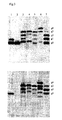
- Fig. 1 shows Coomassie brilliant blue stained SDS-PAGE gel of the peak elution fractions from the Ni-purified periplasmic extracts.
- the expression analysis showed that construct B produced a prominent single protein species ( Fig. 1 , lane 1).
- the only amino acid missing in construct B but present in A and C was D121, the aspartate residue 2 positions N-terminally to the glycosylated N123.
- D121 plays an important role for glycosylation by the OTase.
- D121 is essential for glycosylation it was mutated to alanine in construct C.
- Expression analysis resulted in only one protein band ( Figure 1 , lane 4), thus showing that D121 is important for glycosylation.
- an artificial peptide display protein can be glycosylated shows that a short peptide of the D/E-X-N-Y-S/T type contains all information for C. jejuni -bome N-glycosylation to occur.
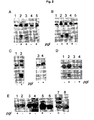
- the assay to test the glycosylation status of AcrA and mutants thereof was as follows: expression of AcrA was induced with 0.02% arabinose in exponentially growing E . coli CLM24 (Feldman et al., 2005, supra ) cells containing the plasmid-bome pgl operon in its active or inactive form (pACYC pg / or pACYC pgl mut, see (Wacker et al., 2002, supra )) and a plasmid coding for AcrA (pAcrAper).
- periplasmic extracts were prepared as described above and analyzed by SDS-PAGE, electrotransfer and immunodetection with either anti-AcrA antiserum or R12 antiserum. The latter is specific for C. jejuni N-glycan containing proteins (Wacker et al., 2002, supra).
- the first two lanes of Fig. 2A show AcrA in the absence and presence of a functional pgl operon. Only one band appears in the absence but three in the presence of the functional pgl operon ( Fig. 2A , top panel). These correspond to unglycosylated AcrA (lane 1) and un-, mono- and diglycosylated AcrA (lane 2). That the two heavier proteins in lane 2 were glycosylated was confirmed by the R12 western blot (lane 2, bottom panel). When the mutant AcrA-N273Q was expressed the same way, only the monoglycosylated AcrA was detected in presence of the functional glycosylation pgl operon (lane 3).
- the lowest faint band is unglycosylated AcrA because it is also present in the absence of glycosylation (lane 1), the highest results in a strong signal probably due to the five antigenic determinants in a fourfold glycosylated AcrA.
- the two introduced sites at N117 and N147
- the two natively used sites (N123 and N273) are used and glycosylated by the pgl machinery.
- Expression of AcrA-N123Q-N273Q-N272D with and without the pgl operon demonstrated that a third artificially introduced glycosylation site, N274 (DNNST), was also recognized by the pgl operon ( Fig. 2C , lanes 3 and 4).
- glycosylation consensus sequence for bacteria can be optimized by a negatively charged amino acid in the -2 position, resulting in D/E - X - N - Z - S/T, wherein X & Z ⁇ P.
- a point mutation of W88 to D or a D insertion after W88 generated an optimized glycosylation site (DNNKT).
- the wildtype and W88D CtxB proteins containing the signal sequence and his-tag were expressed in E . coli Top 10 and other cell types in the presence and absence of the functional pgl locus from C. jejuni.
- periplasmic extracts from Top10 cells were analyzed by SDS-PAGE, electrotransfer and consecutive immunoblotting with a CtxB antiserum, only CtxB W88D produced a higher and thus glycosylated band in the pgl locus background ( Fig. 2E , compare lanes 3 and 4).
- a consensus sequence (DSNIT) was also inserted by replacing G54 or Q56 of CtxB (the latter is denoted CtxB-Q56/DSNIT), i.e. in one of the loops that was reported to contribute to the ganglioside GM1 binding activity of CtxB.
- Lanes 5 and 6 of Figure 2E demonstrate that the engineered protein (exemplified by the construct which contains the peptide sequence DSNIT instead of Q56 expressed in Top10 cells) produced a lower mobility and thus glycosylated band in glycosylation competent but not glycosylation-deficient cells when analyzed in the same way as described above. It was also demonstrated that a CtxB containing two manipulations, i.e.
- a potential application of the N-glycosylation in bacteria is the display of the glycan on the surface of a bacterial host cell in order to link the pheno- to the genotype and thereby select for specific genetic mutations.
- the OmpH1 protein was engineered in a way that it contained multiple optimized consensus sites according to the invention. The sites were engineered into loop regions of the protein as deduced from the known crystal structure ( Muller, A., Thomas, G.H., Horler, R., Brannigan, J.A., Blagova, E., Levdikov, V.M., Fogg, M.J., Wilson, K.S., and Wilkinson, A.J. 2005.
- FIG. 3 shows the analysis of various OmpH1 variants harboring multiple glycosylation sequons in addition to the existing wild type sequon.
- OmpH1 variants were generated with three (lane 3, 4, 5 and 7) and four glycosylation sequons (lane 6).
- a wild type OmpH1 with only one glycosylation sequon and a mutant lacking the critical asparagine for glycosylation were also included in the experiment. All variants tested here did not only demonstrate a high level of glycosylation efficiency but also that every glycosylation sequon was utilized. The results were confirmed with Campylobacter N-glycan specific immuneserum ( Fig. 3 lower panel).
- the native glycosylation site in the protein is bold, the signal sequence underlined.
- Example 7 Surface display of N-glycans from C. jejuni on OmpH1 on the outer membrane of E . coli cells
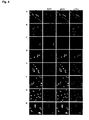
- c-Myc- and N-glycan-specific immuneserum in combination with corresponding secondary antibodies conjugated to FITC and Cy3 were used to detect the protein (red fluorescence) and N-glycan (green) on the bacterial cell surface, respectively. Additionally, 4,6-diamino-2-phenylindole (DAPI, blue) was employed to stain for bacterial DNA to unambiguously differentiate between bacterial cells and cellular debris. When the cells expressing wild type OmpH1 were stained, immunofluorescence specific to the protein as well as the N-glycan was detected ( Fig. 4 A ).
Landscapes
- Chemical & Material Sciences (AREA)
- Health & Medical Sciences (AREA)
- Organic Chemistry (AREA)
- Life Sciences & Earth Sciences (AREA)
- Genetics & Genomics (AREA)
- Engineering & Computer Science (AREA)
- Wood Science & Technology (AREA)
- Zoology (AREA)
- Bioinformatics & Cheminformatics (AREA)
- General Health & Medical Sciences (AREA)
- Biochemistry (AREA)
- Molecular Biology (AREA)
- General Engineering & Computer Science (AREA)
- Biotechnology (AREA)
- Medicinal Chemistry (AREA)
- Microbiology (AREA)
- Biomedical Technology (AREA)
- Biophysics (AREA)
- General Chemical & Material Sciences (AREA)
- Chemical Kinetics & Catalysis (AREA)
- Gastroenterology & Hepatology (AREA)
- Proteomics, Peptides & Aminoacids (AREA)
- Physics & Mathematics (AREA)
- Plant Pathology (AREA)
- Pharmacology & Pharmacy (AREA)
- Veterinary Medicine (AREA)
- Public Health (AREA)
- Animal Behavior & Ethology (AREA)
- Nuclear Medicine, Radiotherapy & Molecular Imaging (AREA)
- Communicable Diseases (AREA)
- Oncology (AREA)
- Preparation Of Compounds By Using Micro-Organisms (AREA)
- Micro-Organisms Or Cultivation Processes Thereof (AREA)
- Peptides Or Proteins (AREA)
- Medicines Containing Material From Animals Or Micro-Organisms (AREA)
- Medicines That Contain Protein Lipid Enzymes And Other Medicines (AREA)
- Medicines Containing Antibodies Or Antigens For Use As Internal Diagnostic Agents (AREA)
- Pharmaceuticals Containing Other Organic And Inorganic Compounds (AREA)
Priority Applications (5)
| Application Number | Priority Date | Filing Date | Title |
|---|---|---|---|
| DK10179208T DK2311972T3 (en) | 2005-05-11 | 2006-05-10 | Recombinant N-glycosylated proteins from prokaryotic cells |
| EP10179208.3A EP2311972B1 (en) | 2005-05-11 | 2006-05-10 | Recombinant N-glycosylated proteins from procaryotic cells |
| EP06753552A EP1888761B1 (en) | 2005-05-11 | 2006-05-10 | Recombinant n-glycosylated proteins from procaryotic cells |
| PL10179208T PL2311972T3 (pl) | 2005-05-11 | 2006-05-10 | Rekombinowane n-glikozylowane białka z komórek prokariotycznych |
| EP14199949.0A EP2853600B1 (en) | 2005-05-11 | 2006-05-10 | Recombinant N-glycosylated proteins from procaryotic cells |
Applications Claiming Priority (3)
| Application Number | Priority Date | Filing Date | Title |
|---|---|---|---|
| EP05010276 | 2005-05-11 | ||
| PCT/EP2006/004397 WO2006119987A2 (en) | 2005-05-11 | 2006-05-10 | Recombinant n-glycosylated proteins from procaryotic cells |
| EP06753552A EP1888761B1 (en) | 2005-05-11 | 2006-05-10 | Recombinant n-glycosylated proteins from procaryotic cells |
Related Child Applications (2)
| Application Number | Title | Priority Date | Filing Date |
|---|---|---|---|
| EP10179208.3A Division EP2311972B1 (en) | 2005-05-11 | 2006-05-10 | Recombinant N-glycosylated proteins from procaryotic cells |
| EP14199949.0A Division EP2853600B1 (en) | 2005-05-11 | 2006-05-10 | Recombinant N-glycosylated proteins from procaryotic cells |
Publications (2)
| Publication Number | Publication Date |
|---|---|
| EP1888761A2 EP1888761A2 (en) | 2008-02-20 |
| EP1888761B1 true EP1888761B1 (en) | 2010-09-29 |
Family
ID=37396912
Family Applications (3)
| Application Number | Title | Priority Date | Filing Date |
|---|---|---|---|
| EP06753552A Active EP1888761B1 (en) | 2005-05-11 | 2006-05-10 | Recombinant n-glycosylated proteins from procaryotic cells |
| EP14199949.0A Active EP2853600B1 (en) | 2005-05-11 | 2006-05-10 | Recombinant N-glycosylated proteins from procaryotic cells |
| EP10179208.3A Active EP2311972B1 (en) | 2005-05-11 | 2006-05-10 | Recombinant N-glycosylated proteins from procaryotic cells |
Family Applications After (2)
| Application Number | Title | Priority Date | Filing Date |
|---|---|---|---|
| EP14199949.0A Active EP2853600B1 (en) | 2005-05-11 | 2006-05-10 | Recombinant N-glycosylated proteins from procaryotic cells |
| EP10179208.3A Active EP2311972B1 (en) | 2005-05-11 | 2006-05-10 | Recombinant N-glycosylated proteins from procaryotic cells |
Country Status (19)
| Country | Link |
|---|---|
| US (3) | US8753864B2 (OSRAM) |
| EP (3) | EP1888761B1 (OSRAM) |
| JP (3) | JP5356807B2 (OSRAM) |
| KR (2) | KR101408653B1 (OSRAM) |
| CN (2) | CN101360831B (OSRAM) |
| AT (1) | ATE483027T1 (OSRAM) |
| AU (1) | AU2006245969B8 (OSRAM) |
| CA (1) | CA2607595C (OSRAM) |
| CY (1) | CY1116285T1 (OSRAM) |
| DE (1) | DE602006017207D1 (OSRAM) |
| DK (2) | DK1888761T3 (OSRAM) |
| ES (3) | ES2703061T3 (OSRAM) |
| HK (1) | HK1205193A1 (OSRAM) |
| HR (1) | HRP20150312T1 (OSRAM) |
| IL (2) | IL187293A (OSRAM) |
| PL (1) | PL2311972T3 (OSRAM) |
| PT (2) | PT2311972E (OSRAM) |
| SI (1) | SI2311972T1 (OSRAM) |
| WO (1) | WO2006119987A2 (OSRAM) |
Families Citing this family (80)
| Publication number | Priority date | Publication date | Assignee | Title |
|---|---|---|---|---|
| US7173003B2 (en) | 2001-10-10 | 2007-02-06 | Neose Technologies, Inc. | Granulocyte colony stimulating factor: remodeling and glycoconjugation of G-CSF |
| US7214660B2 (en) | 2001-10-10 | 2007-05-08 | Neose Technologies, Inc. | Erythropoietin: remodeling and glycoconjugation of erythropoietin |
| ATE317897T1 (de) | 2002-03-07 | 2006-03-15 | Eidgenoess Tech Hochschule | System und methode zur herstellung von rekombinanten, glykosylierten protein in prokaryontischen wirtszellen |
| US8791070B2 (en) | 2003-04-09 | 2014-07-29 | Novo Nordisk A/S | Glycopegylated factor IX |
| PL1615945T3 (pl) | 2003-04-09 | 2012-03-30 | Ratiopharm Gmbh | Sposoby glikopegylacji i białka/peptydy wytwarzane tymi sposobami |
| US9005625B2 (en) | 2003-07-25 | 2015-04-14 | Novo Nordisk A/S | Antibody toxin conjugates |
| US8633157B2 (en) | 2003-11-24 | 2014-01-21 | Novo Nordisk A/S | Glycopegylated erythropoietin |
| US20080305992A1 (en) | 2003-11-24 | 2008-12-11 | Neose Technologies, Inc. | Glycopegylated erythropoietin |
| US20060040856A1 (en) | 2003-12-03 | 2006-02-23 | Neose Technologies, Inc. | Glycopegylated factor IX |
| CA2552892C (en) | 2004-01-08 | 2014-08-05 | Neose Technologies, Inc. | O-linked glycosylation of peptides |
| US8092788B2 (en) * | 2004-03-03 | 2012-01-10 | Revance Therapeutics, Inc. | Compositions and methods for topical diagnostic and therapeutic transport |
| US9211248B2 (en) | 2004-03-03 | 2015-12-15 | Revance Therapeutics, Inc. | Compositions and methods for topical application and transdermal delivery of botulinum toxins |
| EP1771066A2 (en) | 2004-07-13 | 2007-04-11 | Neose Technologies, Inc. | Branched peg remodeling and glycosylation of glucagon-like peptide-1 glp-1 |
| DK2586456T3 (en) | 2004-10-29 | 2016-03-21 | Ratiopharm Gmbh | Conversion and glycopegylation of fibroblast growth factor (FGF) |
| WO2006074467A2 (en) | 2005-01-10 | 2006-07-13 | Neose Technologies, Inc. | Glycopegylated granulocyte colony stimulating factor |
| SG160357A1 (en) | 2005-03-03 | 2010-04-29 | Revance Therapeutics Inc | Compositions and methods for topical application and transdermal delivery of botulinum toxins |
| US20070154992A1 (en) | 2005-04-08 | 2007-07-05 | Neose Technologies, Inc. | Compositions and methods for the preparation of protease resistant human growth hormone glycosylation mutants |
| JP5216580B2 (ja) | 2005-05-25 | 2013-06-19 | ノヴォ ノルディスク アー/エス | グリコペグ化第ix因子 |
| US20070105755A1 (en) | 2005-10-26 | 2007-05-10 | Neose Technologies, Inc. | One pot desialylation and glycopegylation of therapeutic peptides |
| WO2007056191A2 (en) | 2005-11-03 | 2007-05-18 | Neose Technologies, Inc. | Nucleotide sugar purification using membranes |
| CN101516388B (zh) | 2006-07-21 | 2012-10-31 | 诺和诺德公司 | 通过o-联糖基化序列的肽的糖基化 |
| EP2054521A4 (en) | 2006-10-03 | 2012-12-19 | Novo Nordisk As | PROCESS FOR CLEANING POLYPEPTIDE CONJUGATES |
| JP2010523582A (ja) | 2007-04-03 | 2010-07-15 | バイオジェネリクス アクチェンゲゼルシャフト | グリコpeg化g−csfを用いた治療方法 |
| WO2008154639A2 (en) | 2007-06-12 | 2008-12-18 | Neose Technologies, Inc. | Improved process for the production of nucleotide sugars |
| JP5667880B2 (ja) | 2008-01-03 | 2015-02-12 | コーネル リサーチ ファンデーション インコーポレイテッド | 原核生物におけるグリコシル化されたタンパク質の発現方法 |
| CN102037004A (zh) * | 2008-01-08 | 2011-04-27 | 生物种属学股份公司 | 使用寡糖基转移酶的多肽的糖缀合 |
| WO2009104074A2 (en) * | 2008-02-20 | 2009-08-27 | Glycovaxyn Ag | Bioconjugates made from recombinant n-glycosylated proteins from procaryotic cells |
| RU2573587C2 (ru) | 2008-02-27 | 2016-01-20 | Ново Нордиск А/С | Конъюгированные молекулы фактора viii |
| US9309493B2 (en) * | 2009-03-27 | 2016-04-12 | Eidgenoessische Technische Hochschule Zurich | Salmonella enterica presenting C. jejuni N-glycan or derivatives thereof |
| ES2660227T3 (es) * | 2009-11-19 | 2018-03-21 | Glaxosmithkline Biologicals S.A. | Sistema biosintético que produce polisacáridos inmunogénicos en células procariotas |
| PT2545081E (pt) | 2010-02-11 | 2015-05-18 | Univ Alberta | Compostos de glicano ligados por n |
| CN103079591B (zh) * | 2010-05-06 | 2017-07-28 | 格林考瓦因有限公司 | 荚膜革兰氏阳性细菌生物缀合物疫苗 |
| US20130266604A1 (en) * | 2010-09-03 | 2013-10-10 | The Governors of the University of Alberta a non-profit educational institution | Peptide containing multiple n-linked glycosylation sequons |
| AU2012306345A1 (en) * | 2011-09-06 | 2014-03-20 | Glycovaxyn Ag | Bioconjugate vaccines made in prokaryotic cells |
| EA201590705A1 (ru) | 2012-11-07 | 2016-05-31 | Гликоваксин Аг | ПОЛУЧЕНИЕ РЕКОМБИНАНТНОЙ ВАКЦИНЫ В E.coli ПОСРЕДСТВОМ ЭНЗИМАТИЧЕСКОЙ КОНЪЮГАЦИИ |
| PL2945651T3 (pl) | 2013-01-17 | 2018-08-31 | Arsanis Biosciences Gmbh | Przeciwciało swoiste wobec E.coli MDR |
| EP2946010B1 (en) | 2013-01-18 | 2018-08-29 | London School of Hygiene and Tropical Medicine | Glycosylation method |
| GB201301085D0 (en) | 2013-01-22 | 2013-03-06 | London School Hygiene & Tropical Medicine | Glycoconjugate Vaccine |
| CN105228984B (zh) | 2013-03-15 | 2018-03-23 | 爱西里斯药物技术有限公司 | 硝羟喹啉碱加成盐及其用途 |
| BR112015025288B1 (pt) * | 2013-04-05 | 2023-02-23 | The Governors Of The University Of Alberta | Composição de vacina para uso na vacinação de galinhas contra campylobacter |
| CN106062203B (zh) * | 2013-10-11 | 2020-08-07 | 葛兰素史密丝克莱恩生物有限公司 | 宿主细胞修饰的方法 |
| SI3110441T1 (sl) | 2014-02-24 | 2024-07-31 | Glaxosmithkline Biologicals S.A. | Novi polisaharidi in njihova uporaba |
| CA2945542C (en) | 2014-04-17 | 2024-03-05 | Glycovaxyn Ag | Modified host cells and uses thereof |
| MX378792B (es) | 2014-08-08 | 2025-03-10 | Glaxosmithkline Biologicals Sa | Células hospederas modificadas y oligosacáridos híbridos para su uso en producción de bioconjugados. |
| ES2907211T3 (es) * | 2014-12-30 | 2022-04-22 | Glaxosmithkline Biologicals Sa | Composiciones y métodos para la glicosilación de proteínas |
| TWI715617B (zh) | 2015-08-24 | 2021-01-11 | 比利時商葛蘭素史密斯克藍生物品公司 | 對抗腸道外病原性大腸桿菌之免疫保護之方法及組合物 |
| GB201518668D0 (en) * | 2015-10-21 | 2015-12-02 | Glaxosmithkline Biolog Sa | Immunogenic Comosition |
| WO2017117539A1 (en) | 2015-12-30 | 2017-07-06 | Northwestern University | Cell-free glycoprotein synthesis (cfgps) in prokaryotic cell lysates enriched with components for glycosylation |
| GB201610599D0 (en) | 2016-06-17 | 2016-08-03 | Glaxosmithkline Biologicals Sa | Immunogenic Composition |
| US10829795B2 (en) | 2016-07-14 | 2020-11-10 | Northwestern University | Method for rapid in vitro synthesis of glycoproteins via recombinant production of N-glycosylated proteins in prokaryotic cell lysates |
| AR109621A1 (es) | 2016-10-24 | 2018-12-26 | Janssen Pharmaceuticals Inc | Formulaciones de vacunas contra glucoconjugados de expec |
| EP3573654A4 (en) * | 2017-01-27 | 2020-11-25 | University of Florida Research Foundation, Incorporated | FOOD SAFETY VACCINE TO CONTROL SALMONELLA ENTERICA AND REDUCE CAMPYLOBACTER IN POULTRY |
| GB201712678D0 (en) | 2017-08-07 | 2017-09-20 | Glaxosmithkline Biologicals Sa | Process for the manipulation of nucleic acids |
| US11898187B2 (en) | 2017-08-15 | 2024-02-13 | Northwestern University | Protein glycosylation sites by rapid expression and characterization of N-glycosyltransferases |
| GB201721576D0 (en) | 2017-12-21 | 2018-02-07 | Glaxosmithkline Biologicals Sa | Hla antigens and glycoconjugates thereof |
| GB201721582D0 (en) * | 2017-12-21 | 2018-02-07 | Glaxosmithkline Biologicals Sa | S aureus antigens and immunogenic compositions |
| WO2019175145A1 (en) | 2018-03-12 | 2019-09-19 | Janssen Vaccines & Prevention B.V. | Vaccines against urinary tract infections |
| US11530432B2 (en) | 2018-03-19 | 2022-12-20 | Northwestern University | Compositions and methods for rapid in vitro synthesis of bioconjugate vaccines in vitro via production and N-glycosylation of protein carriers in detoxified prokaryotic cell lysates |
| US11725224B2 (en) | 2018-04-16 | 2023-08-15 | Northwestern University | Methods for co-activating in vitro non-standard amino acid (nsAA) incorporation and glycosylation in crude cell lysates |
| US12098433B2 (en) | 2018-08-03 | 2024-09-24 | Northwestern University | On demand, portable, cell-free molecular sensing platform |
| EP3894431A2 (en) | 2018-12-12 | 2021-10-20 | GlaxoSmithKline Biologicals SA | Modified carrier proteins for o-linked glycosylation |
| KR20210116512A (ko) | 2019-01-11 | 2021-09-27 | 노쓰웨스턴유니버시티 | 원핵생물 세포 용해물에서의 생체접합체 백신 합성 |
| US12325884B2 (en) | 2019-03-04 | 2025-06-10 | Northwestern University | Riboswitch-based fluoride sensing in cell-free extract |
| IL286467B1 (en) | 2019-03-18 | 2025-10-01 | Janssen Pharmaceuticals Inc | Methods for producing bioconjugates of E. COLI O-antigen polysaccharides, preparations thereof and methods for using them |
| US11446370B2 (en) | 2019-03-18 | 2022-09-20 | Janssen Pharmaceuticals, Inc. | Bioconjugates of E. coli o-antigen polysaccharides, methods of production thereof, and methods of use thereof |
| EP3757217A1 (en) | 2019-06-27 | 2020-12-30 | GlaxoSmithKline Biologicals S.A. | Methods for protein purification |
| EP3770269A1 (en) * | 2019-07-23 | 2021-01-27 | GlaxoSmithKline Biologicals S.A. | Quantification of bioconjugate glycosylation |
| EP3777884A1 (en) | 2019-08-15 | 2021-02-17 | GlaxoSmithKline Biologicals S.A. | Immunogenic composition |
| US12226410B2 (en) | 2019-10-18 | 2025-02-18 | Northwestern University | Methods for enhancing cellular clearance of pathological molecules via activation of the cellular protein ykt6 |
| IL294445B2 (en) | 2020-01-16 | 2023-10-01 | Janssen Pharmaceuticals Inc | FIMH mutant, its preparations and their use |
| EP4168040A1 (en) | 2020-06-18 | 2023-04-26 | GlaxoSmithKline Biologicals S.A. | Shigella-tetravalent (shigella4v) bioconjugate |
| EP4171624A1 (en) | 2020-06-25 | 2023-05-03 | GlaxoSmithKline Biologicals S.A. | Modified exotoxin a proteins |
| BR112023004819A2 (pt) | 2020-09-17 | 2023-04-18 | Janssen Pharmaceuticals Inc | Composições de vacinas multivalentes e seus usos |
| KR20250007029A (ko) | 2021-01-12 | 2025-01-13 | 얀센 파마슈티칼즈, 인코포레이티드 | FimH 돌연변이체, 이를 포함하는 조성물 및 이의 용도 |
| UY39710A (es) | 2021-04-01 | 2022-09-30 | Janssen Pharmaceuticals Inc | Producción de bioconjugados de o18 de e. coli |
| WO2023118033A1 (en) | 2021-12-22 | 2023-06-29 | Glaxosmithkline Biologicals Sa | Vaccine |
| GB202302579D0 (en) | 2023-02-23 | 2023-04-12 | Glaxosmithkline Biologicals Sa | Immunogenic composition |
| WO2025032535A2 (en) | 2023-08-09 | 2025-02-13 | Glaxosmithkline Biologicals Sa | Modified proteins |
| WO2025032534A2 (en) | 2023-08-09 | 2025-02-13 | Glaxosmithkline Biologicals Sa | Modified proteins |
| WO2025172892A1 (en) | 2024-02-16 | 2025-08-21 | Glaxosmithkline Biologicals Sa | Modified proteins and methods |
Family Cites Families (12)
| Publication number | Priority date | Publication date | Assignee | Title |
|---|---|---|---|---|
| EP0170204B1 (de) | 1984-08-01 | 1991-09-25 | BOEHRINGER INGELHEIM INTERNATIONAL GmbH | Neue genetische Sequenzen, die durch sie codierten Interferon-Peptide vom Typ I und diese sie produzierende Organismen |
| US5643758A (en) | 1987-03-10 | 1997-07-01 | New England Biolabs, Inc. | Production and purification of a protein fused to a binding protein |
| AU6663294A (en) | 1993-05-14 | 1994-12-12 | Upjohn Company, The | Cloned dna encoding a udp-galnac:polypeptide,n-acetylgalactos aminyltransferase |
| US6503744B1 (en) | 1999-02-01 | 2003-01-07 | National Research Council Of Canada | Campylobacter glycosyltransferases for biosynthesis of gangliosides and ganglioside mimics |
| EP1399538A4 (en) | 1999-03-02 | 2004-03-24 | Human Genome Sciences Inc | TECHOLOGICAL MANIPULATION OF INTRACELLULAR SIALIZATION PATHS |
| US20020127219A1 (en) * | 1999-12-30 | 2002-09-12 | Okkels Jens Sigurd | Lysosomal enzymes and lysosomal enzyme activators |
| JP2004528001A (ja) | 2000-05-12 | 2004-09-16 | ネオーズ テクノロジーズ, インコーポレイテッド | インビトロにおけるフコシル化組換えグリコペプチド |
| EP1294910B1 (en) | 2000-06-30 | 2008-11-19 | VIB vzw | Protein glycosylation modification in pichia pastoris |
| DE10113573A1 (de) * | 2001-03-20 | 2002-02-28 | Messer Griesheim Gmbh | Verfahren zum Regenerieren von Schwefelsäure aus schwefelhaltigen Reststoffen |
| ATE317897T1 (de) | 2002-03-07 | 2006-03-15 | Eidgenoess Tech Hochschule | System und methode zur herstellung von rekombinanten, glykosylierten protein in prokaryontischen wirtszellen |
| KR20100119905A (ko) | 2002-03-07 | 2010-11-11 | 아이드게노쉬쉐 테흐니쉐 호흐슐레 쥬리히 | 원핵 숙주에서의 재조합 글리코실화 단백질 생산 방법 및 생산계 |
| EP1527080B1 (en) * | 2002-08-01 | 2012-06-20 | National Research Council Of Canada | Campylobacter glycans and glycopeptides |
-
2006
- 2006-05-10 AT AT06753552T patent/ATE483027T1/de active
- 2006-05-10 KR KR1020077028970A patent/KR101408653B1/ko active Active
- 2006-05-10 CN CN200680020861XA patent/CN101360831B/zh active Active
- 2006-05-10 SI SI200631910T patent/SI2311972T1/sl unknown
- 2006-05-10 CN CN201310241471.7A patent/CN103396478B/zh active Active
- 2006-05-10 PT PT101792083T patent/PT2311972E/pt unknown
- 2006-05-10 DK DK06753552.6T patent/DK1888761T3/da active
- 2006-05-10 CA CA2607595A patent/CA2607595C/en active Active
- 2006-05-10 DE DE602006017207T patent/DE602006017207D1/de active Active
- 2006-05-10 WO PCT/EP2006/004397 patent/WO2006119987A2/en not_active Ceased
- 2006-05-10 EP EP06753552A patent/EP1888761B1/en active Active
- 2006-05-10 PL PL10179208T patent/PL2311972T3/pl unknown
- 2006-05-10 JP JP2008510495A patent/JP5356807B2/ja active Active
- 2006-05-10 ES ES14199949T patent/ES2703061T3/es active Active
- 2006-05-10 ES ES06753552T patent/ES2353814T3/es active Active
- 2006-05-10 DK DK10179208T patent/DK2311972T3/en active
- 2006-05-10 EP EP14199949.0A patent/EP2853600B1/en active Active
- 2006-05-10 EP EP10179208.3A patent/EP2311972B1/en active Active
- 2006-05-10 US US11/920,175 patent/US8753864B2/en active Active
- 2006-05-10 KR KR1020147001671A patent/KR101524636B1/ko active Active
- 2006-05-10 PT PT06753552T patent/PT1888761E/pt unknown
- 2006-05-10 ES ES10179208.3T patent/ES2535084T3/es active Active
- 2006-05-10 AU AU2006245969A patent/AU2006245969B8/en active Active
-
2007
- 2007-11-11 IL IL187293A patent/IL187293A/en active IP Right Grant
-
2012
- 2012-01-06 JP JP2012001342A patent/JP5687637B2/ja active Active
-
2013
- 2013-06-10 IL IL226857A patent/IL226857A/en not_active IP Right Cessation
- 2013-12-03 JP JP2013250586A patent/JP5827303B2/ja active Active
-
2014
- 2014-02-06 US US14/174,742 patent/US9551019B2/en active Active
-
2015
- 2015-03-18 HR HRP20150312TT patent/HRP20150312T1/hr unknown
- 2015-04-15 CY CY20151100351T patent/CY1116285T1/el unknown
- 2015-06-09 HK HK15105466.7A patent/HK1205193A1/en unknown
-
2016
- 2016-05-19 US US15/159,535 patent/US20160326563A1/en not_active Abandoned
Also Published As
Similar Documents
| Publication | Publication Date | Title |
|---|---|---|
| EP1888761B1 (en) | Recombinant n-glycosylated proteins from procaryotic cells | |
| US11944675B2 (en) | Bioconjugates made from recombinant N-glycosylated proteins from procaryotic cells | |
| AU2011218682B2 (en) | Recombinant N-glycosylated proteins from procaryotic cells | |
| HK1113588B (en) | Recombinant n-glycosylated proteins from procaryotic cells | |
| HK1156983B (en) | Recombinant n-glycosylated proteins from procaryotic cells | |
| AU2014200938A1 (en) | Recombinant n-glycosylated proteins from procaryotic cells |
Legal Events
| Date | Code | Title | Description |
|---|---|---|---|
| PUAI | Public reference made under article 153(3) epc to a published international application that has entered the european phase |
Free format text: ORIGINAL CODE: 0009012 |
|
| 17P | Request for examination filed |
Effective date: 20071211 |
|
| AK | Designated contracting states |
Kind code of ref document: A2 Designated state(s): AT BE BG CH CY CZ DE DK EE ES FI FR GB GR HU IE IS IT LI LT LU LV MC NL PL PT RO SE SI SK TR |
|
| AX | Request for extension of the european patent |
Extension state: AL BA HR MK YU |
|
| 17Q | First examination report despatched |
Effective date: 20080221 |
|
| REG | Reference to a national code |
Ref country code: HK Ref legal event code: DE Ref document number: 1113588 Country of ref document: HK |
|
| GRAP | Despatch of communication of intention to grant a patent |
Free format text: ORIGINAL CODE: EPIDOSNIGR1 |
|
| GRAS | Grant fee paid |
Free format text: ORIGINAL CODE: EPIDOSNIGR3 |
|
| GRAA | (expected) grant |
Free format text: ORIGINAL CODE: 0009210 |
|
| AK | Designated contracting states |
Kind code of ref document: B1 Designated state(s): AT BE BG CH CY CZ DE DK EE ES FI FR GB GR HU IE IS IT LI LT LU LV MC NL PL PT RO SE SI SK TR |
|
| AX | Request for extension of the european patent |
Extension state: AL BA HR MK YU |
|
| REG | Reference to a national code |
Ref country code: GB Ref legal event code: FG4D |
|
| REG | Reference to a national code |
Ref country code: CH Ref legal event code: EP |
|
| REG | Reference to a national code |
Ref country code: CH Ref legal event code: NV Representative=s name: KIRKER & CIE S.A. |
|
| REG | Reference to a national code |
Ref country code: DK Ref legal event code: T3 |
|
| REG | Reference to a national code |
Ref country code: IE Ref legal event code: FG4D |
|
| REF | Corresponds to: |
Ref document number: 602006017207 Country of ref document: DE Date of ref document: 20101111 Kind code of ref document: P |
|
| REG | Reference to a national code |
Ref country code: GR Ref legal event code: EP Ref document number: 20100402523 Country of ref document: GR |
|
| REG | Reference to a national code |
Ref country code: PT Ref legal event code: SC4A Free format text: AVAILABILITY OF NATIONAL TRANSLATION Effective date: 20101228 |
|
| REG | Reference to a national code |
Ref country code: SE Ref legal event code: TRGR |
|
| REG | Reference to a national code |
Ref country code: NL Ref legal event code: T3 |
|
| PG25 | Lapsed in a contracting state [announced via postgrant information from national office to epo] |
Ref country code: LT Free format text: LAPSE BECAUSE OF FAILURE TO SUBMIT A TRANSLATION OF THE DESCRIPTION OR TO PAY THE FEE WITHIN THE PRESCRIBED TIME-LIMIT Effective date: 20100929 |
|
| LTIE | Lt: invalidation of european patent or patent extension |
Effective date: 20100929 |
|
| PG25 | Lapsed in a contracting state [announced via postgrant information from national office to epo] |
Ref country code: SI Free format text: LAPSE BECAUSE OF FAILURE TO SUBMIT A TRANSLATION OF THE DESCRIPTION OR TO PAY THE FEE WITHIN THE PRESCRIBED TIME-LIMIT Effective date: 20100929 |
|
| REG | Reference to a national code |
Ref country code: ES Ref legal event code: FG2A Effective date: 20110223 |
|
| PG25 | Lapsed in a contracting state [announced via postgrant information from national office to epo] |
Ref country code: LV Free format text: LAPSE BECAUSE OF FAILURE TO SUBMIT A TRANSLATION OF THE DESCRIPTION OR TO PAY THE FEE WITHIN THE PRESCRIBED TIME-LIMIT Effective date: 20100929 |
|
| REG | Reference to a national code |
Ref country code: HK Ref legal event code: GR Ref document number: 1113588 Country of ref document: HK |
|
| PG25 | Lapsed in a contracting state [announced via postgrant information from national office to epo] |
Ref country code: SK Free format text: LAPSE BECAUSE OF FAILURE TO SUBMIT A TRANSLATION OF THE DESCRIPTION OR TO PAY THE FEE WITHIN THE PRESCRIBED TIME-LIMIT Effective date: 20100929 Ref country code: IS Free format text: LAPSE BECAUSE OF FAILURE TO SUBMIT A TRANSLATION OF THE DESCRIPTION OR TO PAY THE FEE WITHIN THE PRESCRIBED TIME-LIMIT Effective date: 20110129 Ref country code: EE Free format text: LAPSE BECAUSE OF FAILURE TO SUBMIT A TRANSLATION OF THE DESCRIPTION OR TO PAY THE FEE WITHIN THE PRESCRIBED TIME-LIMIT Effective date: 20100929 Ref country code: RO Free format text: LAPSE BECAUSE OF FAILURE TO SUBMIT A TRANSLATION OF THE DESCRIPTION OR TO PAY THE FEE WITHIN THE PRESCRIBED TIME-LIMIT Effective date: 20100929 |
|
| PLBE | No opposition filed within time limit |
Free format text: ORIGINAL CODE: 0009261 |
|
| STAA | Information on the status of an ep patent application or granted ep patent |
Free format text: STATUS: NO OPPOSITION FILED WITHIN TIME LIMIT |
|
| PG25 | Lapsed in a contracting state [announced via postgrant information from national office to epo] |
Ref country code: PL Free format text: LAPSE BECAUSE OF FAILURE TO SUBMIT A TRANSLATION OF THE DESCRIPTION OR TO PAY THE FEE WITHIN THE PRESCRIBED TIME-LIMIT Effective date: 20100929 |
|
| REG | Reference to a national code |
Ref country code: DE Ref legal event code: R097 Ref document number: 602006017207 Country of ref document: DE Effective date: 20110630 |
|
| PG25 | Lapsed in a contracting state [announced via postgrant information from national office to epo] |
Ref country code: CY Free format text: LAPSE BECAUSE OF FAILURE TO SUBMIT A TRANSLATION OF THE DESCRIPTION OR TO PAY THE FEE WITHIN THE PRESCRIBED TIME-LIMIT Effective date: 20100929 |
|
| PG25 | Lapsed in a contracting state [announced via postgrant information from national office to epo] |
Ref country code: BG Free format text: LAPSE BECAUSE OF FAILURE TO SUBMIT A TRANSLATION OF THE DESCRIPTION OR TO PAY THE FEE WITHIN THE PRESCRIBED TIME-LIMIT Effective date: 20101229 |
|
| PG25 | Lapsed in a contracting state [announced via postgrant information from national office to epo] |
Ref country code: HU Free format text: LAPSE BECAUSE OF FAILURE TO SUBMIT A TRANSLATION OF THE DESCRIPTION OR TO PAY THE FEE WITHIN THE PRESCRIBED TIME-LIMIT Effective date: 20100929 |
|
| REG | Reference to a national code |
Ref country code: FR Ref legal event code: PLFP Year of fee payment: 11 |
|
| REG | Reference to a national code |
Ref country code: FR Ref legal event code: PLFP Year of fee payment: 12 |
|
| REG | Reference to a national code |
Ref country code: FR Ref legal event code: PLFP Year of fee payment: 13 |
|
| PGFP | Annual fee paid to national office [announced via postgrant information from national office to epo] |
Ref country code: NL Payment date: 20250423 Year of fee payment: 20 |
|
| PGFP | Annual fee paid to national office [announced via postgrant information from national office to epo] |
Ref country code: LU Payment date: 20250423 Year of fee payment: 20 |
|
| PGFP | Annual fee paid to national office [announced via postgrant information from national office to epo] |
Ref country code: MC Payment date: 20250429 Year of fee payment: 20 |
|
| PGFP | Annual fee paid to national office [announced via postgrant information from national office to epo] |
Ref country code: FI Payment date: 20250423 Year of fee payment: 20 |
|
| PGFP | Annual fee paid to national office [announced via postgrant information from national office to epo] |
Ref country code: DE Payment date: 20250423 Year of fee payment: 20 |
|
| PGFP | Annual fee paid to national office [announced via postgrant information from national office to epo] |
Ref country code: ES Payment date: 20250602 Year of fee payment: 20 Ref country code: DK Payment date: 20250423 Year of fee payment: 20 Ref country code: GB Payment date: 20250423 Year of fee payment: 20 |
|
| PGFP | Annual fee paid to national office [announced via postgrant information from national office to epo] |
Ref country code: IT Payment date: 20250423 Year of fee payment: 20 Ref country code: BE Payment date: 20250423 Year of fee payment: 20 |
|
| PGFP | Annual fee paid to national office [announced via postgrant information from national office to epo] |
Ref country code: PT Payment date: 20250423 Year of fee payment: 20 |
|
| PGFP | Annual fee paid to national office [announced via postgrant information from national office to epo] |
Ref country code: FR Payment date: 20250423 Year of fee payment: 20 |
|
| PGFP | Annual fee paid to national office [announced via postgrant information from national office to epo] |
Ref country code: GR Payment date: 20250424 Year of fee payment: 20 |
|
| PGFP | Annual fee paid to national office [announced via postgrant information from national office to epo] |
Ref country code: CH Payment date: 20250601 Year of fee payment: 20 |
|
| PGFP | Annual fee paid to national office [announced via postgrant information from national office to epo] |
Ref country code: AT Payment date: 20250424 Year of fee payment: 20 |
|
| PGFP | Annual fee paid to national office [announced via postgrant information from national office to epo] |
Ref country code: TR Payment date: 20250429 Year of fee payment: 20 |
|
| PGFP | Annual fee paid to national office [announced via postgrant information from national office to epo] |
Ref country code: CZ Payment date: 20250429 Year of fee payment: 20 |
|
| PGFP | Annual fee paid to national office [announced via postgrant information from national office to epo] |
Ref country code: IE Payment date: 20250424 Year of fee payment: 20 |
|
| PGFP | Annual fee paid to national office [announced via postgrant information from national office to epo] |
Ref country code: SE Payment date: 20250423 Year of fee payment: 20 |