EP1863083A2 - Verfahren zur Herstellung eines Halbleitersubstrats - Google Patents
Verfahren zur Herstellung eines Halbleitersubstrats Download PDFInfo
- Publication number
- EP1863083A2 EP1863083A2 EP07008809A EP07008809A EP1863083A2 EP 1863083 A2 EP1863083 A2 EP 1863083A2 EP 07008809 A EP07008809 A EP 07008809A EP 07008809 A EP07008809 A EP 07008809A EP 1863083 A2 EP1863083 A2 EP 1863083A2
- Authority
- EP
- European Patent Office
- Prior art keywords
- wafer
- active layer
- hydrogen
- ions
- oxide film
- Prior art date
- Legal status (The legal status is an assumption and is not a legal conclusion. Google has not performed a legal analysis and makes no representation as to the accuracy of the status listed.)
- Granted
Links
Images


Classifications
-
- H10P90/1916—
-
- H10W10/181—
Definitions
- This invention relates to a method for producing a semiconductor substrate, and more particularly to a method for producing a semiconductor substrate through a lamination process of directly laminating silicon wafers to each other without using an oxide film.
- semiconductor substrates having such a SOI structure that a silicon layer or a so-called SOI layer is formed on an oxide film are applied as a wafer for high-performance LSI in electron devices because they are adaptable for the speeding-up of the device and are low in the consumption power and excellent in the pressure resistance, environment resistance and the like.
- SOI wafer having a higher quality in association with a higher integration of semiconductor device and hence it is increasingly requested to form a laminated wafer by thinning a buried oxide film, for example, up to a thickness of about 20 nm as compared with the conventional ones or by directly laminating silicon wafers to each other without using the oxide film.
- the semiconductor substrate of SOI structure there are known a so-called SIMOX method wherein oxygen ions are implanted into a silicon wafer at a high concentration and then subjected to a heat treatment at a higher temperature to form an oxide film in its interior, and a method called as a lamination process.
- a lamination process an oxide film is formed on at least one of a wafer for an active layer forming SOI layer and a wafer for a support substrate turning a support substrate and the wafer for the active layer is laminated onto the wafer for the substrate through the oxide film and thereafter the wafer for the active layer is thinned to produce a semiconductor substrate wherein SOI layer is formed on the buried oxide film as an insulating film.
- the lamination process can be classified into a grinding and polishing process, a PACE (plasma assisted chemical etching) process, an ion implantation exfoliation process (which is also called as Smart Cut (registered trademark) process), an ELTRAN process and the like.
- a PACE plasma assisted chemical etching
- an ion implantation exfoliation process which is also called as Smart Cut (registered trademark) process
- ELTRAN ELTRAN process
- the ion implantation exfoliation process is frequently used in view of advantageous points that the crystallinity of the active layer is good, the uniformity of the thickness of the active layer is good, the flatness of the surface is good and the like.
- FIG. 1 The production procedure of the semiconductor substrate through the ion implantation exfoliation process is shown in FIG. 1 with respect to a case that silicon wafers are directly laminated to each other without using an oxide film. That is, a wafer 1 for an active layer and a wafer 2 for a support substrate are previously provided (step (a)), and hydrogen ions (or inert gas ions) are implanted into at least one of these wafers (the wafer 1 for the active layer in the illustrated embodiment) to form an ion implanted layer 3 in the interior of the wafer 1 for the active layer (step (b)).
- hydrogen ions or inert gas ions
- the ion implanted face of the wafer 1 for the active layer is laminated onto the wafer 2 for the support substrate (step (c)) and thereafter subjected to an exfoliation heat treatment to partly exfoliate the wafer 1 for the active layer using the ion implanted layer 3 as a cleavage plane (exfoliation face) (step (d)), and thereafter an oxidation treatment is again conducted for removing a damaged layer formed on the surface of the active layer (step (e)), and a step (f) of removing the resulting oxide film 4 is conducted and a planarization treatment is conducted to produce a semiconductor substrate 6 in which a silicon layer 5 is formed on the wafer 2 for the support substrate (step (g)).
- the preparation of the wafer without forming the oxide film is conducted by laminating the wafer for the active layer and the wafer for the support substrate to each other without forming the oxide film on both the wafers.
- defects such as voids, blisters may be generated on the laminated interface.
- void or blister defects tend to be frequently generated as the thickness of the buried oxide film existing between the two semiconductor substrates becomes thinner and particularly come into a serious problem in the production of the laminated semiconductor wafer having no oxide film.
- JP-A-2004-259970 proposes a countermeasure that the thickness of the wafer for the active layer is increased to increase the thickness of the active layer and raise the hardness of the active layer.
- the thickening of the thickness of the active layer for raising the hardness at a midway step requires labor in the subsequent work for the film thinning and results in the deterioration of the quality. That is, when the thickness of the active layer is thick at the midway step, in order to obtain a final thickness of the active layer, it is required to reduce the thickness by thermal oxidation and removal of oxide film or by grinding or polishing work. As the working quantity (oxidation quantity, etching quantity, grinding or polishing quantity) increases, it is difficult to make the thickness of the active layer uniform.
- an object of the invention to provide a method for suppressing the occurrence of defects such as voids or blisters even in the laminated wafer having no oxide film.
- the inventors have made various studies on the cause of frequently generating the defects such as void and blister in the production of the laminated wafer having no oxide film and discovered the followings.
- the voids or blisters are generated due to the fact that hydrogen ions implanted into the active layer are diffused into the laminated interface in the exfoliation heat treatment to form hydrogen gas which weaken the bonding strength between the wafer for the active layer and the wafer for the support substrate.
- the oxide film formed in the wafer for the active layer is thick, since the implantation energy in the implantation of hydrogen ions is large, there is caused a phenomenon that the hydrogen ions sputter oxygen from the oxide film to implant oxygen into the active layer.
- oxygen implanted into the active layer traps hydrogen ions to suppress the diffusion of hydrogen into the laminated interface and hence the occurrence of void or blister defects. Further, it has been found that as an adequate dose of oxygen is implanted into the active layer, the wafer for the active layer becomes hard and also contributes to suppress the occurrence of voids or blisters.
- a method for producing a semiconductor substrate which comprises the steps of implanting ions other than hydrogen into a wafer for an active layer having no oxide film on its surface up to a position shallower than an exfoliation region of the wafer for the active layer, implanting hydrogen ions into the exfoliation region to form a hydrogen ion implanted layer, laminating the wafer for the active layer at the ion implanted side to a wafer for a support substrate, and then exfoliating the wafer for the active layer at the hydrogen ion implanted layer (second invention).
- a method for producing a semiconductor substrate which comprises the steps of forming an oxide film on a wafer for an active layer, implanting hydrogen ions into the wafer for the active layer to form a hydrogen ion implanted layer, implanting ions other than hydrogen up to a position that a depth from the surface side the hydrogen ion implantation is shallower than the hydrogen ion implanted layer, removing the oxide film from the wafer for the active layer, laminating the wafer for the active layer at the ion implanted side to a wafer for a support substrate, and then exfoliating the wafer for the active layer at the hydrogen ion implanted layer (third invention).
- a method for producing a semiconductor substrate which comprises the steps of forming an oxide film on a wafer for an active layer, implanting ions other than hydrogen into a wafer for an active layer having no oxide film on its surface up to a position shallower than an exfoliation region of the wafer for the active layer, implanting hydrogen ions into the exfoliation region to form a hydrogen ion implanted layer, removing the oxide film from the wafer for the active layer, laminating the wafer for the active layer at the ion implanted side to a wafer for a support substrate, and then exfoliating the wafer for the active layer at the hydrogen ion implanted layer (fourth invention).
- the semiconductor substrate formed by directly silicon wafers to each other without using the oxide film can be produced under a stable quality without causing void or blister defects.
- FIG. 1 is a flow chart showing procedures of producing a semiconductor substrate by the conventional lamination process
- the invention lies in that when a semiconductor substrate is produced by directly silicon wafers to each other without using an oxide film, ions other than hydrogen ions implanted for exfoliating the wafer for the active layer is implanted in a dose enough to suppress hydrogen ion diffusion in thermal exfoliation, and concrete methods therefor are explained individually.
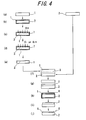
- a wafer 1 for an active layer and a wafer 2 for a support substrate are previously provided (step (a)).
- hydrogen ions are implanted into the wafer 1 for the active layer without forming an oxide film to form an ion implanted layer 3 in the interior of the wafer 1 for the active layer (step (b)).
- ions other than hydrogen such as oxygen ions or argon ions are implanted up to a position that a depth from the surface side the hydrogen ion implantation is shallower than the hydrogen ion implanted layer 3 (step (c)).
- oxygen ions or argon ions are implanted a dose of ions sufficient to suppress the occurrence of void or blister defects in the active layer.
- step (d) the wafer 1 for the active layer is laminated at the ion implanted side to the wafer 2 for the support substrate (step (d)), and an exfoliation heat treatment is applied to partly exfoliate the wafer 1 for the active layer at the ion implanted layer 3 as a cleavage plane (exfoliation face) (step (e)), and thereafter the re-oxidation treatment (step (f)), removal of oxide film 4 (step (g)) and planarization treatment (step (h)) are carried out to produce a semiconductor substrate 6 in which a silicon layer 5 is formed on the wafer 2 for the support substrate.
- planarization treatment is suitable a treatment in Ar or H 2 atmosphere at a high temperature above 1100°C.
- the ions other than hydrogen are particularly implanted at the step (c), so that the diffusion of hydrogen into the laminated interface at the exfoliation heat treatment of the step (e) is suppressed by such implanted ions to suppress the occurrence of voids or blisters, and hence the semiconductor substrate is obtained by directly laminating silicon wafers to each other without using the oxide film.
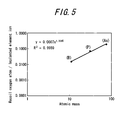
- the condition for implanting the ions other than hydrogen required for the suppression of void or blister defects in the active layer is explained in detail below. That is, the dose of the ions other than hydrogen is derived from a relational equation to the thickness of the oxide film in the implantation as follows. Moreover, the upper limit can be determined experimentally, and is 1x10 16 atoms/cm 2 for argon ions and 2x10 16 atoms/cm 2 for oxygen ions, respectively.
- a wafer 1 for an active layer and a wafer 2 for a support substrate are previously provided (step (a)).
- ions other than hydrogen such as oxygen ions or argon ions are implanted into the wafer 1 for the active layer up to a position shallower than an exfoliation region of the wafer 1 for the active layer without forming an oxide film (step (b)).
- hydrogen ions are implanted into the exfoliation region to form a hydrogen ion implanted layer 3 (step (c)).
- step (d) the wafer 1 for the active layer is laminated at the ion implanted side to the wafer 2 for the support substrate (step (d)), and an exfoliation heat treatment is applied to partly exfoliate the wafer 1 for the active layer at the ion implanted layer 3 as a cleavage plane (exfoliation face) (step (e)), and thereafter the re-oxidation treatment (step (f)), removal of oxide film 4 (step (g)) and planarization treatment (step (h)) are carried out to produce a semiconductor substrate 6 in which a silicon layer 5 is formed on the wafer 2 for the support substrate.
- the ions other than hydrogen are particularly implanted at the step (b), so that the diffusion of hydrogen into the laminated interface at the exfoliation heat treatment of the step (e) is suppressed by such implanted ions to suppress the occurrence of voids or blisters, and hence the semiconductor substrate is obtained by directly laminating silicon wafers to each other without using the oxide film.
- a wafer 1 for an active layer and a wafer 2 for a support substrate are previously provided (step (a)).
- an oxide film 7 is formed on the wafer 1 for the active layer (step (b)), and hydrogen ions are implanted into the wafer 1 for the active layer to form an ion implanted layer 3 in the interior of the wafer 1 for the active layer (step (c)).
- ions other than hydrogen such as oxygen ions or argon ions are implanted up to a position that a depth from the surface side the hydrogen ion implantation is shallower than the hydrogen ion implanted layer 3 (step (d)).
- oxygen ions or argon ions are implanted a dose of ions and oxygen sufficient to suppress the occurrence of void or blister defects in the active layer by such ions themselves and oxygen sputtered by such ions.
- the oxide film 7 is completely removed by using a chemical polishing treatment with an etching solution composed mainly of, for example, hydrofluoric acid (hereinafter referred to as HF treatment) (step (e)), and the wafer 1 for the active layer is laminated at the ion implanted side to the wafer 2 for the support substrate (step (f)), and an exfoliation heat treatment is applied to partly exfoliate the wafer 1 for the active layer at the ion implanted layer 3 as a cleavage plane (exfoliation face) (step (g)), and thereafter the re-oxidation treatment (step (h)), removal of oxide film 4 (step (i)) and planarization treatment (step (j)) are carried out to produce a semiconductor substrate 6 in which a silicon layer 5 is formed on the wafer 2 for the support substrate.
- HF treatment hydrofluoric acid
- the ions other than hydrogen are particularly implanted at the step (d) in addition to the hydrogen ion implantation of the preceding step, so that the diffusion of hydrogen into the laminated interface at the exfoliation heat treatment of the step (e) is suppressed by such implanted ions and oxygen sufficiently sputtered at these steps to suppress the occurrence of voids or blisters, and hence the semiconductor substrate is obtained by directly laminating silicon wafers to each other without using the oxide film.
- N D defined in the equation (I) satisfies N D > 4.2x10 14 atoms/cm 2 by implanting ions other than hydrogen, it is required to make up a shortfall of N HO (oxygen introduced into the active layer by hydrogen ion implantation) with N IO (oxygen introduced into the active layer by an element other than hydrogen) and N ID (defect introduced into the active layer by implanting ions other than hydrogen).
- N D N HO + N ArO + N ArD
- N ArD D Ar
- N D N HO + N OO + N OD
- N HO D H hydrogen dose ⁇ t box thickness of oxide film ⁇ k HO coefficient
- N OO D O (oxygen dose) x t box (thickness of oxide film)
- x k OO coefficient)
- N OD D O
- FIG. 6 results obtained by arranging the above adequate implantation doses of argon ions and oxygen ions by the thickness of the oxide film.
- the upper limit on the implantation doses of argon ions and oxygen ions in FIG. 6 is set due to the fact that though defects are introduced into the active layer by implanting the argon ions and oxygen ions, if the implantation dose is too large, the crystallinity of the active layer is broken and the good active layer is not obtained.
- the upper limit is experimentally 1x10 16 atoms/cm 2 in case of the argon ions and 2x10 16 atoms/cm 2 in case of the oxygen ions, respectively.
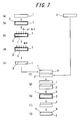
- a wafer 1 for an active layer and a wafer 2 for a support substrate are previously provided (step (a)).
- an oxide film 7 is formed on the wafer 1 for the active layer (step (b)), and ions other than hydrogen such as oxygen ions or argon ions are implanted into the wafer 1 for the active layer up to a position shallower than an exfoliation region of the wafer 1 for the active layer (step (c)).
- hydrogen ions are implanted into the exfoliation region to form a hydrogen ion implanted layer 3 (step (d)).
- the oxide film 7 is completely removed by using, for example, HF treatment (step (e)), and the wafer 1 for the active layer is laminated at the ion implanted side to the wafer 2 for the support substrate (step (f)), and an exfoliation heat treatment is applied to partly exfoliate the wafer 1 for the active layer at the ion implanted layer 3 as a cleavage plane (exfoliation face) (step (g)), and thereafter the re-oxidation treatment (step (h)), removal of oxide film 4 (step (i)) and planarization treatment (step (j)) are carried out to produce a semiconductor substrate 6 in which a silicon layer 5 is formed on the wafer 2 for the support substrate.
- HF treatment step (e)
- an exfoliation heat treatment is applied to partly exfoliate the wafer 1 for the active layer at the ion implanted layer 3 as a cleavage plane (exfoliation face)
- step (h) re-oxidation treatment
- step (i) removal of oxide film
- the ions other than hydrogen are particularly implanted at the step (c) in addition to the hydrogen ion implantation of the subsequent step, so that the diffusion of hydrogen into the laminated interface at the exfoliation heat treatment of the step (e) is suppressed by such implanted ions and oxygen sufficiently sputtered at these steps to suppress the occurrence of voids or blisters, and hence the semiconductor substrate is obtained by directly laminating silicon wafers to each other without using the oxide film.
- the plasma treatment for increasing the adhesion strength at the laminated interface prior to the lamination between the wafer for the active layer and the wafer for the support substrate. Since the plasma treatment has effects of activating the laminated surface and removing organic substance adhered to the surface, the adhesion strength of the laminated interface is improved to bring about the decrease of voids or blisters. Moreover, the conditions of the plasma treatment are not particularly limited, but the similar effects can be typically developed by treating the wafers in a gas of oxygen, nitrogen, hydrogen or the like for several tens seconds.
- a laminated semiconductor substrate is prepared by forming an oxide film of 150 nm in thickness on the surface of the wafer for the active layer and implanting hydrogen ions so as to come a peak of the implantation dose (ion implanted layer) to a depth position of 500 nm from the surface of the wafer for the active layer, and then laminating the wafer for the active layer at its ion implanted side to the wafer for the support substrate and conducting the exfoliation heat treatment to exfoliate the wafer for the active layer at the hydrogen ion implanted peak region (ion implanted layer), and thereafter conducting an oxidation treatment and removing the oxide film and conducting the planarization treatment.
- a laminated semiconductor substrate is prepared by implanting hydrogen ions so as to come a peak of the implantation dose (ion implanted layer) to a depth position of 500 nm from the surface of the wafer for the active layer without forming an oxide film on the surface of the wafer for the active layer as shown in FIG. 1, and laminating the wafer for the active layer at its ion implanted side to the wafer for the support substrate and conducting the exfoliation heat treatment to exfoliate the wafer for the active layer at the hydrogen ion implanted peak region (ion implanted layer), and thereafter conducting an oxidation treatment and removing the oxide film and conducting the planarization treatment.
- a laminated semiconductor substrate is prepared by implanting hydrogen ions so as to come a peak of the implantation dose (ion implanted layer) to a depth position of 500 nm from the surface of the wafer for the active layer without forming an oxide film on the surface of the wafer for the active layer as shown in FIG. 1, and then subjecting the surfaces of the wafer for the active layer and the wafer for the support substrate to an oxygen plasma treatment and laminating the wafer for the active layer at its ion implanted side to the wafer for the support substrate and conducting the exfoliation heat treatment to exfoliate the wafer for the active layer at the hydrogen ion implanted peak region (ion implanted layer), and thereafter conducting an oxidation treatment and removing the oxide film and conducting the planarization treatment.
- a laminated semiconductor substrate is prepared by implanting hydrogen ions so as to come a peak of the implantation dose (ion implanted layer) to a depth position of 500 nm from the surface of the wafer for the active layer without forming an oxide film on the surface of the wafer for the active layer, and further implanting oxygen ions so as to come a peak of the implantation dose to a depth position of 50 nm from the surface of the wafer for the active layer, and laminating the wafer for the active layer at its ion implanted side to the wafer for the support substrate after the implantation of both the ions, and conducting the exfoliation heat treatment to exfoliate the wafer for the active layer at the hydrogen ion implanted peak region (ion implanted layer), and thereafter conducting an oxidation treatment and removing the oxide film and conducting the planarization treatment.
- a laminated semiconductor substrate is prepared by implanting oxygen ions so as to come a peak of the implantation dose to a depth position of 50 nm from the surface of the wafer for the active layer without forming an oxide film on the surface of the wafer for the active layer, and further implanting hydrogen ions so as to come a peak of the implantation dose (ion implanted layer) to a depth position of 500 nm from the surface of the wafer for the active layer, and laminating the wafer for the active layer at its ion implanted side to the wafer for the support substrate after the implantation of both the ions, and conducting the exfoliation heat treatment to exfoliate the wafer for the active layer at the hydrogen ion implanted peak region (ion implanted layer), and thereafter conducting an oxidation treatment and removing the oxide film and conducting the planarization treatment.
- a laminated semiconductor substrate is prepared by implanting hydrogen ions so as to come a peak of the implantation dose (ion implanted layer) to a depth position of 500 nm from the surface of the wafer for the active layer without forming an oxide film on the surface of the wafer for the active layer, and further implanting argon ions so as to come a peak of the implantation dose to a depth position of 50 nm from the surface of the wafer for the active layer, and laminating the wafer for the active layer at its ion implanted side to the wafer for the support substrate after the implantation of both the ions, and conducting the exfoliation heat treatment to exfoliate the wafer for the active layer at the hydrogen ion implanted peak region (ion implanted layer), and thereafter conducting an oxidation treatment and removing the oxide film and conducting the planarization treatment.
- a laminated semiconductor substrate is prepared by implanting argon ions so as to come a peak of the implantation dose to a depth position of 50 nm from the surface of the wafer for the active layer without forming an oxide film on the surface of the wafer for the active layer, and further implanting hydrogen ions so as to come a peak of the implantation dose (ion implanted layer) to a depth position of 500 nm from the surface of the wafer for the active layer, and laminating the wafer for the active layer at its ion implanted side to the wafer for the support substrate after the implantation of both the ions, and conducting the exfoliation heat treatment to exfoliate the wafer for the active layer at the hydrogen ion implanted peak region (ion implanted layer), and thereafter conducting an oxidation treatment and removing the oxide film and conducting the planarization treatment.
- a laminated semiconductor substrate is prepared by forming an oxide film of 20 nm on the wafer for the active layer, implanting hydrogen ions so as to come a peak of the implantation dose (ion implanted layer) to a depth position of 500 nm from the surface of the wafer for the active layer, and further implanting oxygen ions so as to come a peak of the implantation dose to a depth position of 50 nm from the surface of the wafer for the active layer, and then completely removing the oxide film through HF treatment, and laminating the wafer for the active layer at its ion implanted side to the wafer for the support substrate, and conducting the exfoliation heat treatment to exfoliate the wafer for the active layer at the hydrogen ion implanted peak region (ion implanted layer), and thereafter conducting an oxidation treatment and removing the oxide film and conducting the planarization treatment.
- a laminated semiconductor substrate is prepared by forming an oxide film of 20 nm on the wafer for the active layer, implanting oxygen ions so as to come a peak of the implantation dose to a depth position of 50 nm from the surface of the wafer for the active layer, and further implanting hydrogen ions so as to come a peak of the implantation dose (ion implanted layer) to a depth position of 500 nm from the surface of the wafer for the active layer, and laminating the wafer for the active layer at its ion implanted side to the wafer for the support substrate after the implantation of both the ions, and conducting the exfoliation heat treatment to exfoliate the wafer for the active layer at the hydrogen ion implanted peak region (ion implanted layer), and thereafter conducting an oxidation treatment and removing the oxide film and conducting the planarization treatment.
- a laminated semiconductor substrate is prepared by forming an oxide film of 20 nm on the wafer for the active layer, implanting hydrogen ions so as to come a peak of the implantation dose (ion implanted layer) to a depth position of 500 nm from the surface of the wafer for the active layer, and further implanting argon ions so as to come a peak of the implantation dose to a depth position of 50 nm from the surface of the wafer for the active layer, and then completely removing the oxide film through HF treatment, and laminating the wafer for the active layer at its ion implanted side to the wafer for the support substrate, and conducting the exfoliation heat treatment to exfoliate the wafer for the active layer at the hydrogen ion implanted peak region (ion implanted layer), and thereafter conducting an oxidation treatment and removing the oxide film and conducting the planarization treatment.
- a laminated semiconductor substrate is prepared by forming an oxide film of 20 nm on the wafer for the active layer, implanting argon ions so as to come a peak of the implantation dose to a depth position of 50 nm from the surface of the wafer for the active layer, and further implanting hydrogen ions so as to come a peak of the implantation dose (ion implanted layer) to a depth position of 500 nm from the surface of the wafer for the active layer, and laminating the wafer for the active layer at its ion implanted side to the wafer for the support substrate after the implantation of both the ions, and conducting the exfoliation heat treatment to exfoliate the wafer for the active layer at the hydrogen ion implanted peak region (ion implanted layer), and thereafter conducting an oxidation treatment and removing the oxide film and conducting the planarization treatment.
- the ion implantation conditions are as follows. Hydrogen dose: 6.0x 10 16 atoms/cm 2 and implantation energy: 50 keV Oxygen dose: 1.0x10 16 atoms/cm 2 and implantation energy: 50 keV Argon dose: 1.0x10 16 atoms/cm 2 and implantation energy: 80 keV
- the quantity of defects generated is visually measured as a count of defect number under a high-intensity light-gathering lamp or a fluorescent lamp.
- Table 2 As seen from Table 2, the occurrence of defects is suppressed in the semiconductor substrates according to the invention even when the oxide film is not existent.
Landscapes
- Element Separation (AREA)
Priority Applications (1)
| Application Number | Priority Date | Filing Date | Title |
|---|---|---|---|
| EP10008251.0A EP2244286B1 (de) | 2006-05-09 | 2007-04-30 | Verfahren zur Herstellung eines Halbleitersubstrats |
Applications Claiming Priority (1)
| Application Number | Priority Date | Filing Date | Title |
|---|---|---|---|
| JP2006130237A JP5109287B2 (ja) | 2006-05-09 | 2006-05-09 | 半導体基板の製造方法 |
Related Child Applications (2)
| Application Number | Title | Priority Date | Filing Date |
|---|---|---|---|
| EP10008251.0A Division EP2244286B1 (de) | 2006-05-09 | 2007-04-30 | Verfahren zur Herstellung eines Halbleitersubstrats |
| EP10008251.0 Division-Into | 2010-08-06 |
Publications (3)
| Publication Number | Publication Date |
|---|---|
| EP1863083A2 true EP1863083A2 (de) | 2007-12-05 |
| EP1863083A3 EP1863083A3 (de) | 2008-02-20 |
| EP1863083B1 EP1863083B1 (de) | 2010-09-29 |
Family
ID=38611013
Family Applications (2)
| Application Number | Title | Priority Date | Filing Date |
|---|---|---|---|
| EP10008251.0A Active EP2244286B1 (de) | 2006-05-09 | 2007-04-30 | Verfahren zur Herstellung eines Halbleitersubstrats |
| EP07008809A Active EP1863083B1 (de) | 2006-05-09 | 2007-04-30 | Verfahren zur Herstellung eines Halbleitersubstrats |
Family Applications Before (1)
| Application Number | Title | Priority Date | Filing Date |
|---|---|---|---|
| EP10008251.0A Active EP2244286B1 (de) | 2006-05-09 | 2007-04-30 | Verfahren zur Herstellung eines Halbleitersubstrats |
Country Status (6)
| Country | Link |
|---|---|
| US (2) | US7851337B2 (de) |
| EP (2) | EP2244286B1 (de) |
| JP (1) | JP5109287B2 (de) |
| CN (1) | CN100539025C (de) |
| SG (1) | SG137758A1 (de) |
| TW (1) | TWI343624B (de) |
Cited By (1)
| Publication number | Priority date | Publication date | Assignee | Title |
|---|---|---|---|---|
| WO2010049497A1 (en) * | 2008-10-30 | 2010-05-06 | S.O.I.Tec Silicon On Insulator Technologies | Method of detaching semi-conductor layers at low temperature |
Families Citing this family (7)
| Publication number | Priority date | Publication date | Assignee | Title |
|---|---|---|---|---|
| JP5109287B2 (ja) * | 2006-05-09 | 2012-12-26 | 株式会社Sumco | 半導体基板の製造方法 |
| JP5082299B2 (ja) * | 2006-05-25 | 2012-11-28 | 株式会社Sumco | 半導体基板の製造方法 |
| FR2923079B1 (fr) * | 2007-10-26 | 2017-10-27 | S O I Tec Silicon On Insulator Tech | Substrats soi avec couche fine isolante enterree |
| JP5452590B2 (ja) | 2008-06-20 | 2014-03-26 | 天錫 李 | 薄膜製造方法 |
| JP2010135538A (ja) * | 2008-12-04 | 2010-06-17 | Sumco Corp | 貼り合わせウェーハの製造方法 |
| KR102527811B1 (ko) * | 2015-12-22 | 2023-05-03 | 삼성전자주식회사 | 타임랩스 영상을 생성하는 장치 및 방법 |
| CN114141630B (zh) * | 2021-12-01 | 2025-08-05 | 济南晶正电子科技有限公司 | 一种二次离子注入薄膜晶圆方法、复合薄膜及电子元器件 |
Family Cites Families (16)
| Publication number | Priority date | Publication date | Assignee | Title |
|---|---|---|---|---|
| JPH05259012A (ja) * | 1992-03-10 | 1993-10-08 | Nec Corp | 半導体基板およびその製造方法 |
| KR100232886B1 (ko) * | 1996-11-23 | 1999-12-01 | 김영환 | Soi 웨이퍼 제조방법 |
| US6027988A (en) * | 1997-05-28 | 2000-02-22 | The Regents Of The University Of California | Method of separating films from bulk substrates by plasma immersion ion implantation |
| JPH11233449A (ja) * | 1998-02-13 | 1999-08-27 | Denso Corp | 半導体基板の製造方法 |
| JPH11251207A (ja) | 1998-03-03 | 1999-09-17 | Canon Inc | Soi基板及びその製造方法並びにその製造設備 |
| JP3951487B2 (ja) * | 1998-12-25 | 2007-08-01 | 信越半導体株式会社 | Soi基板及びその製造方法 |
| US6448152B1 (en) * | 2001-02-20 | 2002-09-10 | Silicon Genesis Corporation | Method and system for generating a plurality of donor wafers and handle wafers prior to an order being placed by a customer |
| JP4802380B2 (ja) * | 2001-03-19 | 2011-10-26 | 株式会社デンソー | 半導体基板の製造方法 |
| US7052974B2 (en) * | 2001-12-04 | 2006-05-30 | Shin-Etsu Handotai Co., Ltd. | Bonded wafer and method of producing bonded wafer |
| US6995075B1 (en) * | 2002-07-12 | 2006-02-07 | Silicon Wafer Technologies | Process for forming a fragile layer inside of a single crystalline substrate |
| JP2004259970A (ja) | 2003-02-26 | 2004-09-16 | Shin Etsu Handotai Co Ltd | Soiウエーハの製造方法及びsoiウエーハ |
| JP4730645B2 (ja) * | 2004-02-13 | 2011-07-20 | 株式会社Sumco | Soiウェーハの製造方法 |
| WO2005093807A1 (en) * | 2004-03-01 | 2005-10-06 | S.O.I.Tec Silicon On Insulator Technologies | Oxidation process of a sige layer and applications thereof |
| EP1792339A1 (de) * | 2004-09-21 | 2007-06-06 | S.O.I.Tec Silicon on Insulator Technologies | Verfahren zum erhalten einer dünnen schicht durch implemenieren von coimplantation und nachfolgender implantation |
| US7148124B1 (en) * | 2004-11-18 | 2006-12-12 | Alexander Yuri Usenko | Method for forming a fragile layer inside of a single crystalline substrate preferably for making silicon-on-insulator wafers |
| JP5109287B2 (ja) * | 2006-05-09 | 2012-12-26 | 株式会社Sumco | 半導体基板の製造方法 |
-
2006
- 2006-05-09 JP JP2006130237A patent/JP5109287B2/ja active Active
-
2007
- 2007-04-30 EP EP10008251.0A patent/EP2244286B1/de active Active
- 2007-04-30 EP EP07008809A patent/EP1863083B1/de active Active
- 2007-05-01 TW TW096115469A patent/TWI343624B/zh active
- 2007-05-07 SG SG200703274-1A patent/SG137758A1/en unknown
- 2007-05-09 CN CNB2007101011624A patent/CN100539025C/zh active Active
- 2007-05-09 US US11/801,461 patent/US7851337B2/en active Active
-
2010
- 2010-10-12 US US12/903,139 patent/US8183133B2/en active Active
Non-Patent Citations (1)
| Title |
|---|
| None |
Cited By (2)
| Publication number | Priority date | Publication date | Assignee | Title |
|---|---|---|---|---|
| WO2010049497A1 (en) * | 2008-10-30 | 2010-05-06 | S.O.I.Tec Silicon On Insulator Technologies | Method of detaching semi-conductor layers at low temperature |
| US8623740B2 (en) | 2008-10-30 | 2014-01-07 | Soitec | Method of detaching semi-conductor layers at low temperature |
Also Published As
| Publication number | Publication date |
|---|---|
| US20070264797A1 (en) | 2007-11-15 |
| EP1863083B1 (de) | 2010-09-29 |
| US7851337B2 (en) | 2010-12-14 |
| EP2244286B1 (de) | 2016-06-22 |
| TW200807627A (en) | 2008-02-01 |
| US20110027969A1 (en) | 2011-02-03 |
| TWI343624B (en) | 2011-06-11 |
| US8183133B2 (en) | 2012-05-22 |
| JP2007305662A (ja) | 2007-11-22 |
| JP5109287B2 (ja) | 2012-12-26 |
| EP1863083A3 (de) | 2008-02-20 |
| CN100539025C (zh) | 2009-09-09 |
| CN101071767A (zh) | 2007-11-14 |
| EP2244286A2 (de) | 2010-10-27 |
| SG137758A1 (en) | 2007-12-28 |
| EP2244286A3 (de) | 2011-03-02 |
Similar Documents
| Publication | Publication Date | Title |
|---|---|---|
| EP1863083B1 (de) | Verfahren zur Herstellung eines Halbleitersubstrats | |
| EP1863082B1 (de) | Verfahren zur Herstellung eines Halbleitersubstrats | |
| EP2012347B1 (de) | Soi-wafer-herstellungsverfahren | |
| US20050118789A1 (en) | Method of producing soi wafer and soi wafer | |
| EP1998367A2 (de) | Verfahren zur Herstellung eines SOI-Wafers | |
| CN1672261A (zh) | Soi晶片的制造方法 | |
| EP1881528A1 (de) | Verfahren zur Herstellung eines gebundenen Wafers | |
| CN101946303A (zh) | Soi基板的表面处理方法 | |
| EP3309819A1 (de) | Verfahren zur herstellung eines soi-wafers | |
| EP2053645B1 (de) | Verfahren zur Herstellung eines Halbleitersubstrats | |
| TWI450366B (zh) | Semiconductor substrate manufacturing method | |
| EP2357659B1 (de) | Verfahren zur herstellung eines soi-wafers | |
| JP2011054704A (ja) | 貼り合わせウェーハの製造方法 | |
| JP5135713B2 (ja) | 半導体基板の製造方法 | |
| US20080261411A1 (en) | Method for manufacturing SOI substrate | |
| JP5364345B2 (ja) | Soi基板の作製方法 | |
| JP6927143B2 (ja) | 貼り合わせsoiウェーハの製造方法 | |
| JP2008263010A (ja) | Soi基板の製造方法 | |
| US20130012008A1 (en) | Method of producing soi wafer | |
| JP2006013179A (ja) | Soiウェーハの製造方法 |
Legal Events
| Date | Code | Title | Description |
|---|---|---|---|
| PUAI | Public reference made under article 153(3) epc to a published international application that has entered the european phase |
Free format text: ORIGINAL CODE: 0009012 |
|
| 17P | Request for examination filed |
Effective date: 20070430 |
|
| AK | Designated contracting states |
Kind code of ref document: A2 Designated state(s): AT BE BG CH CY CZ DE DK EE ES FI FR GB GR HU IE IS IT LI LT LU LV MC MT NL PL PT RO SE SI SK TR |
|
| AX | Request for extension of the european patent |
Extension state: AL BA HR MK YU |
|
| PUAL | Search report despatched |
Free format text: ORIGINAL CODE: 0009013 |
|
| AK | Designated contracting states |
Kind code of ref document: A3 Designated state(s): AT BE BG CH CY CZ DE DK EE ES FI FR GB GR HU IE IS IT LI LT LU LV MC MT NL PL PT RO SE SI SK TR |
|
| AX | Request for extension of the european patent |
Extension state: AL BA HR MK YU |
|
| RIN1 | Information on inventor provided before grant (corrected) |
Inventor name: MORIMOTO, NOBUYUKI Inventor name: ENDO, AKIHIKO Inventor name: NISHIHATA, HIDEKI Inventor name: MURAKAMI, SATOSHI |
|
| 17Q | First examination report despatched |
Effective date: 20080715 |
|
| AKX | Designation fees paid |
Designated state(s): FR |
|
| REG | Reference to a national code |
Ref country code: DE Ref legal event code: 8566 |
|
| GRAP | Despatch of communication of intention to grant a patent |
Free format text: ORIGINAL CODE: EPIDOSNIGR1 |
|
| GRAS | Grant fee paid |
Free format text: ORIGINAL CODE: EPIDOSNIGR3 |
|
| GRAA | (expected) grant |
Free format text: ORIGINAL CODE: 0009210 |
|
| AK | Designated contracting states |
Kind code of ref document: B1 Designated state(s): FR |
|
| PLBE | No opposition filed within time limit |
Free format text: ORIGINAL CODE: 0009261 |
|
| STAA | Information on the status of an ep patent application or granted ep patent |
Free format text: STATUS: NO OPPOSITION FILED WITHIN TIME LIMIT |
|
| REG | Reference to a national code |
Ref country code: FR Ref legal event code: PLFP Year of fee payment: 10 |
|
| REG | Reference to a national code |
Ref country code: FR Ref legal event code: PLFP Year of fee payment: 11 |
|
| REG | Reference to a national code |
Ref country code: FR Ref legal event code: PLFP Year of fee payment: 12 |
|
| PGFP | Annual fee paid to national office [announced via postgrant information from national office to epo] |
Ref country code: FR Payment date: 20250423 Year of fee payment: 19 |