EP1724279A2 - 5-Beta-sapogenin and pseudosapogenin derivatives and their use in the treatment of dementia. - Google Patents
5-Beta-sapogenin and pseudosapogenin derivatives and their use in the treatment of dementia. Download PDFInfo
- Publication number
- EP1724279A2 EP1724279A2 EP06005887A EP06005887A EP1724279A2 EP 1724279 A2 EP1724279 A2 EP 1724279A2 EP 06005887 A EP06005887 A EP 06005887A EP 06005887 A EP06005887 A EP 06005887A EP 1724279 A2 EP1724279 A2 EP 1724279A2
- Authority
- EP
- European Patent Office
- Prior art keywords
- optionally substituted
- substituted alkyl
- carbamoyl
- alkoxycarbonyl
- substituted acyl
- Prior art date
- Legal status (The legal status is an assumption and is not a legal conclusion. Google has not performed a legal analysis and makes no representation as to the accuracy of the status listed.)
- Withdrawn
Links
Images


Classifications
-
- C—CHEMISTRY; METALLURGY
- C07—ORGANIC CHEMISTRY
- C07J—STEROIDS
- C07J71/00—Steroids in which the cyclopenta(a)hydrophenanthrene skeleton is condensed with a heterocyclic ring
-
- A—HUMAN NECESSITIES
- A61—MEDICAL OR VETERINARY SCIENCE; HYGIENE
- A61P—SPECIFIC THERAPEUTIC ACTIVITY OF CHEMICAL COMPOUNDS OR MEDICINAL PREPARATIONS
- A61P21/00—Drugs for disorders of the muscular or neuromuscular system
- A61P21/04—Drugs for disorders of the muscular or neuromuscular system for myasthenia gravis
-
- A—HUMAN NECESSITIES
- A61—MEDICAL OR VETERINARY SCIENCE; HYGIENE
- A61P—SPECIFIC THERAPEUTIC ACTIVITY OF CHEMICAL COMPOUNDS OR MEDICINAL PREPARATIONS
- A61P25/00—Drugs for disorders of the nervous system
-
- A—HUMAN NECESSITIES
- A61—MEDICAL OR VETERINARY SCIENCE; HYGIENE
- A61P—SPECIFIC THERAPEUTIC ACTIVITY OF CHEMICAL COMPOUNDS OR MEDICINAL PREPARATIONS
- A61P25/00—Drugs for disorders of the nervous system
- A61P25/14—Drugs for disorders of the nervous system for treating abnormal movements, e.g. chorea, dyskinesia
-
- A—HUMAN NECESSITIES
- A61—MEDICAL OR VETERINARY SCIENCE; HYGIENE
- A61P—SPECIFIC THERAPEUTIC ACTIVITY OF CHEMICAL COMPOUNDS OR MEDICINAL PREPARATIONS
- A61P25/00—Drugs for disorders of the nervous system
- A61P25/14—Drugs for disorders of the nervous system for treating abnormal movements, e.g. chorea, dyskinesia
- A61P25/16—Anti-Parkinson drugs
-
- A—HUMAN NECESSITIES
- A61—MEDICAL OR VETERINARY SCIENCE; HYGIENE
- A61P—SPECIFIC THERAPEUTIC ACTIVITY OF CHEMICAL COMPOUNDS OR MEDICINAL PREPARATIONS
- A61P25/00—Drugs for disorders of the nervous system
- A61P25/28—Drugs for disorders of the nervous system for treating neurodegenerative disorders of the central nervous system, e.g. nootropic agents, cognition enhancers, drugs for treating Alzheimer's disease or other forms of dementia
-
- A—HUMAN NECESSITIES
- A61—MEDICAL OR VETERINARY SCIENCE; HYGIENE
- A61P—SPECIFIC THERAPEUTIC ACTIVITY OF CHEMICAL COMPOUNDS OR MEDICINAL PREPARATIONS
- A61P43/00—Drugs for specific purposes, not provided for in groups A61P1/00-A61P41/00
-
- A—HUMAN NECESSITIES
- A61—MEDICAL OR VETERINARY SCIENCE; HYGIENE
- A61P—SPECIFIC THERAPEUTIC ACTIVITY OF CHEMICAL COMPOUNDS OR MEDICINAL PREPARATIONS
- A61P9/00—Drugs for disorders of the cardiovascular system
- A61P9/02—Non-specific cardiovascular stimulants, e.g. drugs for syncope, antihypotensives
-
- C—CHEMISTRY; METALLURGY
- C07—ORGANIC CHEMISTRY
- C07J—STEROIDS
- C07J71/00—Steroids in which the cyclopenta(a)hydrophenanthrene skeleton is condensed with a heterocyclic ring
- C07J71/0005—Oxygen-containing hetero ring
Definitions
- the present invention relates to sapogenin derivatives and their use in treating cognitive disfunction and allied conditions; and to compositions for use in such treatments.
- the invention is also concerned with the treatment of conditions that are characterised by a deficiency in the number or function of membrane-bound receptors.
- AD Alzheimer's disease
- SDAT senile dementia of the Alzheimer's type
- the present invention relates generally to the treatment of conditions attributable to intrinsic pathological conditions and/or exposure to adverse environmental conditions these conditions being characterised by a deficiency in the number or function of membrane-bound receptors or a deficiency in transmission at the junctions between neurones or at the junctions of neurones and effector cells.
- Conditions of the type mentioned above include Parkinson's disease, Lewi body dementia, postural hypotension, autism, chronic fatigue syndrome, Myasthenia Gravis, Lambert Eaton disease, diseases and problems associated with Gulf War Syndrome, occupational exposure to organophosphorus compounds and problems associated with ageing.
- AD Alzheimer's disease
- SDAT senile dementia of the Alzheimer's type
- Age-associated memory impairment is a characteristic of older patients who, while being psychologically and physically normal, complain of memory loss. It is a poorly defined syndrome, but agents which are effective in treatment of AD/SDAT may also be of value in these patients.
- AD/SDA T research into AD/SDA T is being carried out by traditional and conventional medical research methods and disciplines.
- AD/SDAT the biochemical processes subserving memory in the cerebral cortex are (at least in part) cholinergically-mediated.
- cholinergically mediated mechanisms may be directly attributable to acetylcholine acting on receptors, and these are direct effects.
- Other, clinically useful effects may also be caused by modulation of release of acetylcholine from pre-synaptic nerve endings or inhibition of enzymes that destroy acetylcholine.
- These modulating factors may be exerted through neurones where the mediator is non-cholinergic; these are referred to as indirect effects.
- NGF nerve growth factor
- compositions which modulate cholinergic function are known to affect memory and recall.
- nicotine stimulates nicotinic acetylcholine receptors, and the short lived memory enhancing effects of cigarette smoking are thought to be due to the effect of nicotine.
- Scopolamine an antagonist of acetylcholine, will produce amnesia and impaired cognitive function manifesting in psychomotor tests as a prolongation of simple reaction times, possibly as a result of impaired attention, and is used for this purpose as an adjunctive analgesic treatment.
- the amnesic effect of scopolamine can be antagonised by nicotine.
- Nicotinic receptors are ligand-gated ion channels, and their activation causes a rapid (millisecond) increase in cellular permeability to Na + and Ca ++ , depolarisation and excitation.
- muscarinic receptors can be stimulated by muscarine.
- Such muscarinic (M) receptors are G protein-coupled receptors. Responses of muscarinic receptors are slower; they may be excitatory or inhibitory. They are not necessarily linked to changes in ion permeability.
- Five types of muscarinic receptors have been detected by cholinergic receptor cloning, and are designated as m 1 -m 5 .
- Pharmacological effects are associated with four of the cloned receptors and they are designated as M 1 -M 4 based on pharmacological specificity.
- M 2 receptors are postsynaptic. Presynaptic muscarinic receptors are thought to be inhibitory, the binding of ACh to these receptors attenuating the release of further ACh to provide a negative feedback mechanism for Ach release. Selective M 2 receptor antagonists which are preferentially distributed to the brain may therefore be useful in treating Alzheimer's disease.
- Agonist activation at nicotinic receptors in brain has rapid onset and offset. A decreased affinity of the nicotinic receptors will reduce the desensitisation process. Schwarz R.D. et al (J. Neuro Chem 42, (1984), 1495-8) have shown that nicotine binding sites are presynaptically located on cholinergic (and also 5-hydroxytryptaminergic and catecholaminergic) axon terminals. A change in high affinity binding sites on AD/SDAT may also induce a change in the modulatory effect the nicotinic binding sites may have on other transmitter systems.
- Presynaptic cholinergic mechanisms are also under inhibitory control by GABAergic neurons and this inhibition is thought to be intensified in AD/SDAT. Removal or reduction of this inhibition intensifies presynaptic cortical cholinergic activity and enhances cognitive processing.
- a more radical approach to AD/SDAT and AAMI aims to increase the number of postsynaptic (M 1 ) receptors, in brain. It is known from Chinese Patent No. CN 1096031A, that sarsasapogenin (SaG) can up-regulate M 1 cholinergic receptors.
- Patent applications have been published which claim the usefulness of a number of steroid sapogenins having spirostane, furo-spirostane, spirosolane or solanidine structures in the treatment of diseases including SDAT.
- Two patent publications are of particular relevance here: Chinese patent publication No CN1096031A claims the use of the spirostane sapogenin, sarsasapogenin, in the treatment of SDAT.
- the disclosure in this document is brief.
- patent publication DE 4303214A1 claims the use of a very wide range of saponins and sapogenins in the treatment of a whole range of diseases that the inventors consider to be of viral origin.
- sapogenin derivatives exhibit the ability to regulate receptors.
- these compounds have been found to increase the number of M2 receptors in the brain.
- a sapogenin derivative of general formula (I) or (II) in the manufacture of a medicament for the treatment of a condition characterised by a deficiency in membrane-bound receptor number or function.
- saponins tend to be fat-soluble whereas the saponins tend to be water-soluble. Sapogenins are therefore better able to cross the blood-brain barrier.
- the skilled man will also be aware of the epimerisation of certain sapogenins under conditions of acid hydrolysis.
- the variation in pharmacological properties and pharmacodynamic actions of various types of sapogenins underlines the need for selection of those agents which are most useful in the treatment or A/SDAT.
- the discovery of novel facts about the action of sapogenin derivatives has made it possible to determine which substances are most useful for the treatment for the treatment of AD/SDAT and the like.
- the inventors have found that the above-described properties are exhibited by sapogenin derivatives wherein the A/B ring conformation of the fused ring system is Cis .
- the sapogenin derivatives of interest in this invention have the following general formulas (I) or (II): and their stereoisomers and racemic mixtures, their pharmaceutically acceptable pro-drugs and salts.
- acyl means an H-CO- or Alkyl-CO- group wherein the alkyl group is as herein described.
- Preferred acyls contain a lower alkyl.
- Exemplary acyl groups include formyl, acetyl, propanoyl, 2-methylpropanoyl, butanoyl and palmitoyl.
- Alkyl means an aliphatic hydrocarbon group which may be straight or branched having about 1 to about 20 carbon atoms in the chain. Preferred alkyl groups have 1 to about 12 carbon atoms in the chain.
- Branched means that one or more lower alkyl groups such as methyl, ethyl or propyl are attached to a linear alkyl chain.
- Lower alkyl means about 1 to about 4 carbon atoms in the chain which may be straight or branched.
- Exemplary alkyl groups include methyl, ethyl, n -propyl, i -propyl, n -butyl, t -butyl, n -pentyl, 3-pentyl.
- Optionally substituted means that the said group may be substituted with one or more substituents which may be the same or different, and include halo, alkyl, cycloalkyl, hydroxy, alkoxy, amino, acylamino, aryl, aroylamino, carboxy, alkoxycarbonyl, aralkoxycarbonyl, heteroaralkoxycarbonyl, optionally substituted carbamoyl.
- composition means a composition comprising a compound of formula I or II and at least one component selected from the group comprising pharmaceutically acceptable carriers, diluents, adjuvants, excipients, or vehicles, such as preserving agents, fillers, disintegrating agents, wetting agents, emulsifying agents, suspending agents, sweetening agents, flavoring agents, perfuming agents, antibacterial agents, antifungal agents, lubricating agents and dispensing agents, depending on the nature of the mode of administration and dosage forms.
- pharmaceutically acceptable carriers such as preserving agents, fillers, disintegrating agents, wetting agents, emulsifying agents, suspending agents, sweetening agents, flavoring agents, perfuming agents, antibacterial agents, antifungal agents, lubricating agents and dispensing agents, depending on the nature of the mode of administration and dosage forms.
- “Pharmaceutically acceptable” means it is, within the scope of sound medical judgement, suitable for use in contact with the cells of humans and lower animals without undue toxicity, irritation, allergic response and the like, and are commensurate with a reasonable benefit/risk ratio.
- “Pharmaceutically acceptable dosage forms” means dosage forms of the compound of the invention, and includes, for example, tablets, dragees, powders, elixirs, syrups, liquid preparations, including suspensions, sprays, inhalants tablets, lozenges, emulsions, solutions, granules, capsules and suppositories, as well as liquid preparations for injections, including liposome preparations. Techniques and formulations generally may be found in Remington, Pharmaceutical Sciences, Mack Publishing Co., Easton, PA, latest edition.
- prodrugs as used herein means those prodrugs of the compounds useful according to the present invention which are, within the scope of sound medical judgment, suitable for use in contact with the tissues of humans and lower animals with undue toxicity, irritation, allergic response, and the like, commensurate with a reasonable benefit/risk ratio, and effective for their intended use, as well as the zwitterionic forms, where possible, of the compounds of the invention.
- prodrug means compounds that are rapidly transformed in vivo to yield the parent compound of the above formula, for example by hydrolysis in blood. Functional groups which may be rapidly transformed, by metabolic cleavage, in vivo form a class of groups reactive with the carboxyl group of the compounds of this invention.
- prodrugs act as pro-drugs.
- prodrugs Design of Prodrugs, H. Bundgaard, ed., Elsevier, 1985; Methods in Enzymology, K. Widder et al, Ed., Academic Press, 42, p.309-396,1985; A Textbook of Drug Design and Development, Krogsgaard-Larsen and H. Bundgaard, ed., Chapter 5; Design and Applications of Prodrugs p.113-191, 1991; Advanced Drug Delivery Reviews, H.
- “Pharmaceutically acceptable salts” means the relatively non-toxic, inorganic and organic acid addition salts, and base addition salts, of compounds of the present invention. These salts can be prepared in situ during the final isolation and purification of the compounds.
- acid addition salts can be prepared by separately reacting the purified compound in its free base form with a suitable organic or inorganic acid and isolating the salt thus formed. See, for example S. M. Berge, et al., Pharmaceutical Salts, J. Pharm. Sci., 66: p.1-19 (1977) which is incorporated herein by reference.
- Base addition salts can also be prepared by separately reacting the purified compound in its acid form with a suitable organic or inorganic base and isolating the salt thus formed.
- Base addition salts include pharmaceutically acceptable metal and amine salts.
- Some sapogenin derivatives of interest in the present invention may occur naturally in a range of plant species, notably from the genera Smilax, Asparagus, Anemarrhena, Yucca and Agave.
- the species presently of greatest interest include Smilax regelii Kilip & Morton - commonly known as Honduran sarsaparilla; Smilax aristolochiaefolia Miller - commonly known as Mexican sarsaparilla; Smilax ornata Hooker - commonly known as Jamaican sarsaparilla; Smilax aspera - commonly known as Spanish sarsaparilla; Smilax glabra Roxburgh ; Smilax febrifuga - Kunth - commonly known as Ecuadorian or Peruvian sarsaparilla; Anemarrhena asphodeloides Bunge ; Yucca schidigera Roezl ex Ortgies ; and Yucca brevifolia Engelm .
- Sapogenin derivatives which may be of interest may also occur naturally in other genera, for example Dioscorea, Trillium, Solanum, Strophanthus, Digitalis and Trigonella. However, some sapogenin derivatives from these sources possess undesirable properties and are thus not recommended for use in the invention.
- Sapogenin derivatives of the invention may also be commercially available; suppliers are well-known from the one skilled in the art and may include Sigma Aldrich, Research Plus Inc., Steraloids Inc., etc...
- Substitued sapogenins of the present invention may be prepared by synthetic methods. For instance, they may be prepared from unsubstituted sapogenin derivatives, which may occur naturally or be commercially available, as stated above.
- the reaction may involve at least one substitution step, wherein the functional group is substituted on the sapogenin derivative; usually, the starting product is an unsubstituted sapogenin having the required sterechemistry, and the reaction may involve the substitution of one OH-group by the functional radical desired; smilagenin and epismilagenin are preferred as starting products.
- the compound thus prepared may be recovered from the reaction mixture by conventional means.
- the compounds may be recovered by distilling off the solvent from the reaction mixture or, if necessary after distilling off the solvent from the reaction mixture, pouring the residue into water followed by extraction with a water-immiscible organic solvent and distilling off the solvent from the extract.
- the product can, if desired, be further purified by various well techniques, such as recrystallization, reprecipitation or the various chromatography techniques, notably column chromatography or preparative thin layer chromatography.
- a pharmaceutical composition having cognitive function enhancing properties which comprises an effective amount of a sapogenin derivative of the invention.
- the sapogenin derivatives of the present invention are steroidal; they are preferably non-oestrogenic in effect.
- the invention provides a pharmaceutical composition having cognitive function enhancing properties which comprises an effective amount of a sapogenin derivative of the invention in the form of an extract derived from a plant of the genus Smilax, Asparagus, Anemarrhena, Yucca or Agave.
- the present invention provides a method of enhancing cognitive function which comprises administering to a human or animal an effective dosage of a composition of the invention.
- the invention also provides a method of enhancing cognitive function in a human or non-human animal, which comprises administering an effective dose of sapogenin derivatives of the invention. Also, it concerns the use of the sapogenin derivatives of the invention in food product or beverage for enhancing cognitive function.
- cognitive function refers to functions such as thinking, reasoning, remembering, imagining and learning.
- composition having cognitive function enhancing properties which comprises at least two, preferably two, sapogenin derivatives of the invention.
- Sapogenin derivatives ofthe present invenion have also been tested for activity in a number of in-vitro assays.
- the assays/experiments that were considered of key importance in determining possible activity in the elevation of membrane bound receptor numbers were as follows:
- the compounds are increasing the synthesis or release or a decreased rate of degradation of neurotropic factors such as brain derived growth factor and/or nerve growth factor.
- neurotropic factors such as brain derived growth factor and/or nerve growth factor.
- These effects on growth factors might be due to an effect of the compound on a cytosolic or nuclear receptor or the binding of a compound to a promoter region with a consequent effect directly on the rate of production of mRNA for the growth factor or as a consequence of increasing the production of another material factor such as G-protein or finally the effects may be secondary to an effect on receptor or G-protein procession.
- amyloid precursor protein The increased expression and/or abnormal processing ofthe amyloid precursor protein (APP) is associated with the formation of amyloid plaques and cerebrovascular amyloid deposits which are the major morphological hallmarks of Alzheimer's disease.
- APP amyloid precursor protein
- processes regulating the proteolytic cleavage of APP into amyloidogenic and nonamyloidogenic fragments The cleavage of APP by the enzyme ⁇ -secretase within the ⁇ -amyloid sequence of the protein results in the formation of a non amyloidogenic C-Terminal fragment, and the soluble APPs ⁇ fragment; this latter fragment has been shown to have neurotropic and neuroprotective activity as well as to enhance memory in mice when injected intra-cerebro-ventrically (ICV).
- ICV intra-cerebro-ventrically
- ⁇ -secretase In contrast, processing of APP by ⁇ -secretase exposes the N-terminus of ⁇ -amyloid which is released by ⁇ -secretase cleavage at the variable C-terminus.
- the resulting ⁇ -amyloid peptides which contain 39-43 amino acids, have been shown to be neurotoxic and to accumulate in plaques which interfere with inter-neurone connections.
- NGF tyrosine kinase receptor
- RhkA tyrosine kinase receptor
- PKC protein kinase C
- any treatment which increases activity of protein-kinase C selectively in brain might therefore be expected to be of use in the management of Alzheimer's disease.
- agonists selective at the M 1 receptor have not been available.
- Non-selective agonists would be expected to stimulate pre-synaptic M 2 receptors which cause negative feedback and hence would further severely impair muscarinic transmission.
- Selective agonists at the M 1 receptor are now becoming available (talsaclidine) and such agents are under investigation for the treatment of AD.
- talsaclidine talsaclidine
- the clinical benefits seen will be severely limited in terms of the size of benefit by reducing receptor numbers or reducing sensitivity and in terms of side effects due to lack of receptor specificity.
- compounds as described in this invention which selectively regulate muscarinic receptor number or function, would be expected to be devoid of the problems seen with a muscarinic agonist and hence have particular utility. Indeed the benefits may be seen in three parts as follows.
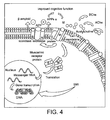
- Fig.4 a diagrammatic representation of the function of sapogenin derivatives of the invention is shown. It is believed that sapogenin derivatives act primarily on cell nuclei; the invention is not, however, limited to any particular mode of action. The observed increase in muscarinic receptor number consequential upon administration of sapogenin derivatives is interpreted as leading to increased expression of muscarinic receptor protein. The possible link between the secretases and ⁇ -amyloid protein formation (discussed above) is indicated in the drawing.
Landscapes
- Health & Medical Sciences (AREA)
- Chemical & Material Sciences (AREA)
- Organic Chemistry (AREA)
- General Health & Medical Sciences (AREA)
- Bioinformatics & Cheminformatics (AREA)
- Engineering & Computer Science (AREA)
- Life Sciences & Earth Sciences (AREA)
- Nuclear Medicine, Radiotherapy & Molecular Imaging (AREA)
- Medicinal Chemistry (AREA)
- Pharmacology & Pharmacy (AREA)
- Chemical Kinetics & Catalysis (AREA)
- Animal Behavior & Ethology (AREA)
- Neurology (AREA)
- Public Health (AREA)
- Veterinary Medicine (AREA)
- General Chemical & Material Sciences (AREA)
- Neurosurgery (AREA)
- Biomedical Technology (AREA)
- Heart & Thoracic Surgery (AREA)
- Cardiology (AREA)
- Psychology (AREA)
- Hospice & Palliative Care (AREA)
- Psychiatry (AREA)
- Orthopedic Medicine & Surgery (AREA)
- Physical Education & Sports Medicine (AREA)
- Pharmaceuticals Containing Other Organic And Inorganic Compounds (AREA)
- Steroid Compounds (AREA)
- Peptides Or Proteins (AREA)
- Medicines That Contain Protein Lipid Enzymes And Other Medicines (AREA)
- Preparation Of Compounds By Using Micro-Organisms (AREA)
- Coloring Foods And Improving Nutritive Qualities (AREA)
- Acyclic And Carbocyclic Compounds In Medicinal Compositions (AREA)
Applications Claiming Priority (2)
| Application Number | Priority Date | Filing Date | Title |
|---|---|---|---|
| GBGB9923076.5A GB9923076D0 (en) | 1999-09-29 | 1999-09-29 | Sapogenin derivatives and their use |
| EP00964439A EP1224205B1 (en) | 1999-09-29 | 2000-09-29 | 5-beta-sapogenin and pseudosapogenin derivatives and their use in the treatment of dementia |
Related Parent Applications (1)
| Application Number | Title | Priority Date | Filing Date |
|---|---|---|---|
| EP00964439A Division EP1224205B1 (en) | 1999-09-29 | 2000-09-29 | 5-beta-sapogenin and pseudosapogenin derivatives and their use in the treatment of dementia |
Publications (1)
| Publication Number | Publication Date |
|---|---|
| EP1724279A2 true EP1724279A2 (en) | 2006-11-22 |
Family
ID=10861837
Family Applications (2)
| Application Number | Title | Priority Date | Filing Date |
|---|---|---|---|
| EP06005887A Withdrawn EP1724279A2 (en) | 1999-09-29 | 2000-09-29 | 5-Beta-sapogenin and pseudosapogenin derivatives and their use in the treatment of dementia. |
| EP00964439A Expired - Lifetime EP1224205B1 (en) | 1999-09-29 | 2000-09-29 | 5-beta-sapogenin and pseudosapogenin derivatives and their use in the treatment of dementia |
Family Applications After (1)
| Application Number | Title | Priority Date | Filing Date |
|---|---|---|---|
| EP00964439A Expired - Lifetime EP1224205B1 (en) | 1999-09-29 | 2000-09-29 | 5-beta-sapogenin and pseudosapogenin derivatives and their use in the treatment of dementia |
Country Status (27)
| Country | Link |
|---|---|
| US (2) | US7138427B2 (https=) |
| EP (2) | EP1724279A2 (https=) |
| JP (1) | JP2003510332A (https=) |
| KR (1) | KR100771491B1 (https=) |
| CN (2) | CN100445295C (https=) |
| AT (1) | ATE325808T1 (https=) |
| AU (1) | AU778294C (https=) |
| BR (1) | BR0014381A (https=) |
| CA (2) | CA2640998A1 (https=) |
| CY (1) | CY1105225T1 (https=) |
| CZ (1) | CZ300150B6 (https=) |
| DE (1) | DE60027913T2 (https=) |
| DK (1) | DK1224205T3 (https=) |
| ES (1) | ES2260055T3 (https=) |
| GB (1) | GB9923076D0 (https=) |
| HK (1) | HK1045525B (https=) |
| HR (2) | HRP20080467A2 (https=) |
| IL (2) | IL148920A0 (https=) |
| MX (1) | MXPA02003305A (https=) |
| NO (1) | NO324959B1 (https=) |
| NZ (1) | NZ518596A (https=) |
| PT (1) | PT1224205E (https=) |
| RU (1) | RU2325396C2 (https=) |
| TR (1) | TR200200821T2 (https=) |
| UA (1) | UA82978C2 (https=) |
| WO (1) | WO2001023406A1 (https=) |
| ZA (1) | ZA200202382B (https=) |
Families Citing this family (27)
| Publication number | Priority date | Publication date | Assignee | Title |
|---|---|---|---|---|
| GB9923076D0 (en) | 1999-09-29 | 1999-12-01 | Phytopharm Plc | Sapogenin derivatives and their use |
| GB9923078D0 (en) * | 1999-09-29 | 1999-12-01 | Phytopharm Plc | Sapogenin derivatives and their use |
| GB0000228D0 (en) * | 2000-01-06 | 2000-03-01 | Phytopharm Plc | Fluoro substituted sapogenins and their use |
| GB0107822D0 (en) * | 2001-03-28 | 2001-05-23 | Phytopharm Plc | Sapogenin derivatives their synthesis and use methods based upon their use |
| KR20100093621A (ko) * | 2002-03-27 | 2010-08-25 | 파이토팜 피엘씨 | 사포게닌 및 그 유도체의 치료 방법 및 용도 |
| DE60326437D1 (de) * | 2002-03-27 | 2009-04-16 | Phytopharm Plc Godmanchester | Therapeutische verwendung von sapogeninen |
| JP4573157B2 (ja) * | 2002-03-27 | 2010-11-04 | フィトファーム・パブリック・リミテッド・カンパニー | 治療方法ならびにサポゲニンおよびその誘導体の使用 |
| PL210114B1 (pl) | 2002-10-28 | 2011-12-30 | Phytopharm Plc | Sposób stereospecyficznego wytwarzania 3β-hydroksy-5β-H-steroidowych sapogenin |
| GB0513881D0 (en) * | 2005-07-06 | 2005-08-10 | Btg Int Ltd | Core 2 GLCNAC-T Inhibitors III |
| US20080182801A1 (en) * | 2003-12-22 | 2008-07-31 | Btg International Limited | Core 2 glcnac-t inhibitors |
| GB0329667D0 (en) * | 2003-12-22 | 2004-01-28 | King S College London | Core 2 GlcNAc-T inhibitor |
| GB0409567D0 (en) | 2004-04-28 | 2004-06-02 | Phytopharm Plc | Chemical compounds |
| GB0424528D0 (en) | 2004-11-05 | 2004-12-08 | Phytopharm Plc | Chemical compounds |
| GB0512726D0 (en) * | 2005-06-22 | 2005-07-27 | Btg Int Ltd | Multiple sclerosis therapy and diagnosis |
| GB0513883D0 (en) * | 2005-07-06 | 2005-08-10 | Btg Int Ltd | Diagnosis of Atherosclerosis |
| GB0513888D0 (en) * | 2005-07-06 | 2005-08-10 | Btg Int Ltd | Core 2 GLCNAC-T Inhibitors II |
| WO2010084356A1 (en) | 2009-01-24 | 2010-07-29 | Phytopharm Plc | Treatment of neurotrophic factor mediated disorders |
| CN101768202B (zh) * | 2009-02-18 | 2013-10-30 | 沈阳药科大学 | 知母中菝葜皂苷元及其衍生物的制备方法及其医药新用途 |
| AU2011281336B2 (en) | 2010-07-20 | 2015-03-05 | Junaxo, Inc. | Treatment of L-DOPA, dopamine agonist and/or dopamine enhancer induced disorders |
| CU20110244A7 (es) * | 2011-12-27 | 2013-08-29 | Ct De Investigación Y Desarrollo De Medicamentos Cidem | Sistemas espiroesteroidales con efectos neuroactivos y anti-inflamatorios |
| US11319338B2 (en) | 2012-04-03 | 2022-05-03 | Goldporp Pharma Limited | Timosaponin compounds |
| CN102924559B (zh) * | 2012-11-16 | 2015-10-28 | 沈阳药科大学 | 菝葜皂苷元衍生物及其制备和应用 |
| GB201305708D0 (en) * | 2013-03-28 | 2013-05-15 | Clasado Inc | Novel use |
| CN103232520A (zh) * | 2013-05-13 | 2013-08-07 | 中国药科大学 | 一种螺甾类化合物、其制备方法及医药用途 |
| CN104513289B (zh) * | 2015-01-27 | 2017-12-22 | 华东理工大学 | 知母皂苷元结构修饰的衍生物、其药物组合物及其应用 |
| CA3001510C (en) * | 2015-10-29 | 2022-05-24 | Emmyon, Inc. | Furostan-3-ol derivatives as skeletal muscle hypertrophic agents |
| CN106977581B (zh) * | 2017-04-17 | 2021-01-01 | 华东理工大学 | 知母皂苷元结构修饰的衍生物的应用以及药物组合物 |
Family Cites Families (77)
| Publication number | Priority date | Publication date | Assignee | Title |
|---|---|---|---|---|
| GB852847A (en) | 1958-03-04 | 1960-11-02 | British Drug Houses Ltd | Improvements in or relating to 6-methyl steroid compounds |
| US3575810A (en) * | 1967-07-19 | 1971-04-20 | Takashi Matsushima | Method for removal of side chain of sapogenins |
| BE794362A (fr) * | 1972-01-22 | 1973-07-23 | Merck Patent Gmbh | Sulfates hydrosolubles de sterine |
| US3929769A (en) * | 1972-05-19 | 1975-12-30 | Ciba Geigy Corp | Process for the manufacture of steroid epoxides |
| CA985172A (en) * | 1972-10-06 | 1976-03-09 | Dushan M. Dvornik | Compositions and methods for reducing blood cholesterol |
| DE2416978A1 (de) * | 1974-04-08 | 1975-10-09 | Degussa | Arzneimittel mit dem hauptsapogenin der helleborus-arten als wirkstoff |
| LU81256A1 (fr) * | 1979-05-15 | 1980-12-16 | Oreal | Composition cosmetique capillaire notamment pour le lavage et/ou le demelage des cheveux,a base d'un extrait de plantes contenant des saponosides |
| IT1144136B (it) | 1980-03-05 | 1986-10-29 | Zenyaku Kogyo Kk | Glucosidi di condurango agenti antitumorali che li comprendono e procedimento per la loro preparazione |
| GB2097672A (en) | 1981-05-01 | 1982-11-10 | Pattni Ramesh Damji Devji | Process for extraction of crude sapogenins from Agave Leaves |
| JPS5855500A (ja) * | 1981-09-25 | 1983-04-01 | Tokiwa Yakuhin Kogyo Kk | 16−デヒドロプレグネノロンの製造法 |
| US4602005A (en) * | 1982-05-17 | 1986-07-22 | Medical Research Foundation Of Oregon | Tigogenin cellobioside for treating hypercholesterolemia and atherosclerosis |
| US4602003A (en) * | 1982-05-17 | 1986-07-22 | Medical Research Foundation Of Oregon | Synthetic compounds to inhibit intestinal absorption of cholesterol in the treatment of hypercholesterolemia |
| US4562250A (en) * | 1982-09-13 | 1985-12-31 | Regents Of The University Of Minnesota | Steroidal glycosides produced by Yucca tissue culture |
| US4546097A (en) * | 1983-11-04 | 1985-10-08 | The United States Of America As Represented By The Department Of Health And Human Services | Saponin-based polyether polyols, pharmaceutical compositions and a method of using same |
| US4680289A (en) * | 1985-06-05 | 1987-07-14 | Progenics, Inc. | Treatment of obesity and diabetes using sapogenins |
| JPS62234025A (ja) | 1986-04-03 | 1987-10-14 | Asahi Chem Ind Co Ltd | 老人性痴呆者用食品 |
| US5017562A (en) * | 1987-02-11 | 1991-05-21 | Regents Of The University Of Minnesota | Crystalline saponin-containing complex |
| DE3838716A1 (de) * | 1988-11-15 | 1990-05-17 | Kanoldt Arzneimittel Gmbh | Arzneimittelzubereitung aus esterderivaten des hecogenins und dessen verwendung zur behandlung von benigner prostatahyperplasie |
| JPH02188528A (ja) | 1989-01-13 | 1990-07-24 | Tsurataka Tashiro | 痴呆症治療薬 |
| WO1991010743A1 (en) * | 1990-01-18 | 1991-07-25 | Cura Nominees Pty Ltd | Glycoalkaloids |
| SE9100342D0 (sv) | 1991-02-04 | 1991-02-04 | Astra Ab | Novel steroid esters |
| US5252729A (en) * | 1991-10-23 | 1993-10-12 | Schering Corporation | Extraction of compounds from plant materials using supercritical fluids |
| US5244887A (en) * | 1992-02-14 | 1993-09-14 | Straub Carl D | Stanols to reduce cholesterol absorption from foods and methods of preparation and use thereof |
| JPH05246866A (ja) * | 1992-03-06 | 1993-09-24 | Ruibosuteii Japan:Kk | 脳代謝促進・脳機能改善剤 |
| US5629295A (en) * | 1992-06-26 | 1997-05-13 | Pfizer Inc. | Steroidal glycosides for treating hypercholesterolemia |
| DE4303214A1 (de) * | 1993-02-04 | 1994-08-11 | Wolfgang Marks | Behandlung von Erkrankungen viraler, viroidaler oder onkogener Genese durch Steroid-Saponine oder deren Aglykone |
| WO1994018994A1 (en) | 1993-02-23 | 1994-09-01 | Pharmakon Usa, Inc. | Therapeutic herbal composition |
| CN1052636C (zh) | 1993-03-29 | 2000-05-24 | 中国科学院沈阳应用生态研究所 | 文冠果子的醇提取物在制备治疗智力低下的药物中的应用 |
| CN1092992A (zh) | 1993-03-29 | 1994-10-05 | 中国科学院沈阳应用生态研究所 | 提高脑功能的药物及其制备方法 |
| JPH06305952A (ja) | 1993-04-27 | 1994-11-01 | Sumitomo Pharmaceut Co Ltd | スレオ−3−(3,4−ジヒドロキシフェニル)セリン経鼻投与製剤 |
| CA2161239A1 (en) * | 1993-04-28 | 1994-11-10 | Douglas J.M. Allen | Spirostanyl glycosidal crystalline monohydrate |
| CN1033754C (zh) * | 1993-05-31 | 1997-01-08 | 上海第二医科大学 | 知母皂甙元作为制备β肾上腺素和M胆碱受体双向调节药的用途及其制法 |
| CN1102186A (zh) | 1993-10-29 | 1995-05-03 | 沈阳医学院 | 中药薤白新成分的鉴定及用途 |
| US5589182A (en) * | 1993-12-06 | 1996-12-31 | Tashiro; Renki | Compositions and method of treating cardio-, cerebro-vascular and alzheimer's diseases and depression |
| US5698526A (en) * | 1993-12-28 | 1997-12-16 | Pfizer Inc. | Steroidal glycosides |
| EP0737202A1 (en) * | 1993-12-28 | 1996-10-16 | Pfizer Inc. | Hypocholesterolemic agents |
| IL109614A (en) | 1994-05-10 | 1998-06-15 | Yissum Res Dev Co | Comestible products containing saponins |
| US5563131A (en) | 1994-08-04 | 1996-10-08 | Pherin Corporation | Pregnane steroids as neurochemical initiators of change in human hypothalamic function and related pharmaceutical compositions and methods |
| US5840740A (en) | 1995-06-07 | 1998-11-24 | Magainin Pharmaceuticals Inc. | Aminosterol compounds and a method of treating infection using the aminosterol compounds |
| US5856535A (en) * | 1994-08-18 | 1999-01-05 | Magainin Pharmaceuticals, Inc. | Aminosterol ester compounds |
| FI970828L (fi) * | 1994-08-30 | 1997-02-27 | Pfizer | Spirostanyyliglykosidien kiteitä |
| AU2453295A (en) | 1994-09-20 | 1996-04-19 | Pfizer Inc. | Combination of a cholesterol absorption inhibitor and a cholesterol synthesis inhibitor |
| WO1996038466A1 (en) | 1995-05-29 | 1996-12-05 | Pfizer Inc. | Steroidal glycosides |
| US5840936A (en) * | 1995-06-07 | 1998-11-24 | Magainin Pharmaceuticals Inc. | Aminosterol compounds useful as inhibitors of the sodium/proton exchanger (NHE) |
| US5847172A (en) * | 1995-06-07 | 1998-12-08 | Magainin Pharmaceuticals Inc. | Certain aminosterol compounds and pharmaceutical compositions including these compounds |
| US5763430A (en) * | 1995-06-07 | 1998-06-09 | Magainin Pharmaceuticals Inc. | Method of treating a viral infection by administering a steroid compound |
| US5792635A (en) * | 1995-06-07 | 1998-08-11 | Magainin Pharmaceuticals, Inc. | Method of inhibiting the sodium/proton exchanger NHE3 and method of inhibiting growth by administering squalamine |
| US5795885A (en) * | 1995-06-07 | 1998-08-18 | Magainin Pharmaceuticals Inc. | Method of inhibiting profileration of cells by administering an aminosterol compound |
| US6143738A (en) * | 1995-06-07 | 2000-11-07 | Magainin Pharmaceuticals, Inc. | Therapeutic uses for an aminosterol compound |
| JPH09100295A (ja) | 1995-06-13 | 1997-04-15 | Toray Ind Inc | 新規トリテルペノイドサポニン類およびそれを有効成分とする神経突起伸展作用を有する治療剤 |
| CU22860A1 (es) | 1995-10-12 | 2003-05-26 | Univ La Habana | Espirostanonas con funciones oxigenadas en el anillo a. como reguladores del crecimiento vegetal y su procedimiento de obtención |
| ATE205490T1 (de) | 1995-10-13 | 2001-09-15 | Banyu Pharma Co Ltd | Substituierte heteroaromatische derivate |
| FR2743561B1 (fr) | 1996-01-15 | 1998-02-20 | Fournier Sca Lab | Derives de steroides, procede de preparation et utilisation en therapeutique |
| KR0169536B1 (ko) | 1996-02-27 | 1999-01-15 | 손경식 | 신규한 인삼 사포닌, 그의 제조방법 및 이를 유효성분으로 하는 항종양제 |
| US5726179A (en) | 1996-04-01 | 1998-03-10 | The University Of Toledo | Muscarinic agonists |
| CN1245982C (zh) | 1996-05-09 | 2006-03-22 | 阿姆瑞德手术有限公司 | 哮喘和气道疾病的治疗 |
| EP1806131A3 (en) | 1996-07-22 | 2007-08-01 | Renovo Limited | Use of sex steroid function modulators to treat wounds and fibrotic disorders |
| US5804239A (en) * | 1996-07-26 | 1998-09-08 | Nouveau Technologies, Inc. | Method and composition for food flavoring |
| WO1998051302A1 (en) | 1997-05-15 | 1998-11-19 | University Of Washington | Composition and methods for treating alzheimer's disease and other amyloidoses |
| WO1998058543A1 (en) | 1997-06-20 | 1998-12-30 | Gubarev Michael J | Method to enhance innate immunity defense mechanisms by treatment with plant-derived alkaloids |
| KR20010023208A (ko) | 1997-08-28 | 2001-03-26 | 브루스, 제임스 에이취 | 허브 추출물의 화학 및 약리학적 표준화 |
| JP3906948B2 (ja) * | 1997-09-13 | 2007-04-18 | 本田技研工業株式会社 | 電動式変速装置の変速制御装置 |
| CN1131237C (zh) * | 1997-09-26 | 2003-12-17 | 中国人民解放军军事医学科学院放射医学研究所 | 甾体皂甙防治老年性痴呆的用途及新的甾体皂甙 |
| CA2217088A1 (en) | 1997-09-30 | 1999-03-30 | Universite De Sherbrooke | New mandevilla velutina derivatives as steady-state r-type ca2+ channel blockers, method of making and use thereof |
| JP3873097B2 (ja) * | 1997-11-06 | 2007-01-24 | 独立行政法人理化学研究所 | 抗肥満剤及び脂質代謝改善剤 |
| GB9905275D0 (en) * | 1999-03-08 | 1999-04-28 | Phytopharm Ltd | Treatment of conditions associated with membrane-bound receptors and their function |
| GB9923076D0 (en) | 1999-09-29 | 1999-12-01 | Phytopharm Plc | Sapogenin derivatives and their use |
| PL195897B1 (pl) * | 1998-03-26 | 2007-11-30 | Phytopharm Plc | Zastosowanie smilageniny |
| KR100292406B1 (ko) * | 1998-06-11 | 2001-07-12 | 윤종용 | 감광성중합체,용해억제제및이들을포함하는화학증폭형포토레지스트조성물 |
| GB2347676A (en) * | 1999-03-08 | 2000-09-13 | Phytopharm Plc | Screening method |
| GB9923078D0 (en) | 1999-09-29 | 1999-12-01 | Phytopharm Plc | Sapogenin derivatives and their use |
| AUPP968699A0 (en) | 1999-04-09 | 1999-05-06 | Cura Nominees Pty Ltd | Therapeutic compositions and method for their preparation |
| US6544566B1 (en) * | 1999-04-23 | 2003-04-08 | Protein Technologies International, Inc. | Composition containing plant sterol, soy protein and isoflavone for reducing LDL cholesterol |
| GB9923077D0 (en) | 1999-09-29 | 1999-12-01 | Phytopharm Plc | Sapogenin derivatives and their use |
| GB0000228D0 (en) | 2000-01-06 | 2000-03-01 | Phytopharm Plc | Fluoro substituted sapogenins and their use |
| BR0001794A (pt) * | 2000-05-15 | 2001-12-26 | Laboratorios Biosintetica Ltda | Aplicação de fitosteróides (e seus isÈmeros), ácidofólico, cianocobalamina e piridoxina em fibrasdietéticas (alimentares) |
| US20050130948A1 (en) | 2002-03-27 | 2005-06-16 | Daryl Rees | Therapeutic methods and uses of sapogenins and their derivatives |
-
1999
- 1999-09-29 GB GBGB9923076.5A patent/GB9923076D0/en not_active Ceased
-
2000
- 2000-09-29 HR HR20080467A patent/HRP20080467A2/xx not_active Application Discontinuation
- 2000-09-29 HR HR20020255A patent/HRP20020255A2/hr not_active Application Discontinuation
- 2000-09-29 UA UA2002043435A patent/UA82978C2/ru unknown
- 2000-09-29 PT PT00964439T patent/PT1224205E/pt unknown
- 2000-09-29 RU RU2002111355/04A patent/RU2325396C2/ru not_active IP Right Cessation
- 2000-09-29 AT AT00964439T patent/ATE325808T1/de active
- 2000-09-29 HK HK02106662.2A patent/HK1045525B/en not_active IP Right Cessation
- 2000-09-29 IL IL14892000A patent/IL148920A0/xx not_active IP Right Cessation
- 2000-09-29 ES ES00964439T patent/ES2260055T3/es not_active Expired - Lifetime
- 2000-09-29 JP JP2001526556A patent/JP2003510332A/ja active Pending
- 2000-09-29 CA CA002640998A patent/CA2640998A1/en not_active Abandoned
- 2000-09-29 CN CNB008136068A patent/CN100445295C/zh not_active Expired - Fee Related
- 2000-09-29 CA CA002385402A patent/CA2385402C/en not_active Expired - Fee Related
- 2000-09-29 AU AU75375/00A patent/AU778294C/en not_active Ceased
- 2000-09-29 TR TR2002/00821T patent/TR200200821T2/xx unknown
- 2000-09-29 NZ NZ518596A patent/NZ518596A/en unknown
- 2000-09-29 CZ CZ20021114A patent/CZ300150B6/cs not_active IP Right Cessation
- 2000-09-29 BR BR0014381-2A patent/BR0014381A/pt not_active Application Discontinuation
- 2000-09-29 EP EP06005887A patent/EP1724279A2/en not_active Withdrawn
- 2000-09-29 MX MXPA02003305A patent/MXPA02003305A/es active IP Right Grant
- 2000-09-29 CN CNA2008101760374A patent/CN101411712A/zh active Pending
- 2000-09-29 KR KR1020027003973A patent/KR100771491B1/ko not_active Expired - Fee Related
- 2000-09-29 DE DE60027913T patent/DE60027913T2/de not_active Expired - Lifetime
- 2000-09-29 EP EP00964439A patent/EP1224205B1/en not_active Expired - Lifetime
- 2000-09-29 DK DK00964439T patent/DK1224205T3/da active
- 2000-09-29 WO PCT/GB2000/003737 patent/WO2001023406A1/en not_active Ceased
-
2002
- 2002-03-25 ZA ZA200202382A patent/ZA200202382B/en unknown
- 2002-03-27 NO NO20021541A patent/NO324959B1/no not_active IP Right Cessation
- 2002-03-28 US US10/109,095 patent/US7138427B2/en not_active Expired - Fee Related
-
2006
- 2006-07-17 CY CY20061100986T patent/CY1105225T1/el unknown
- 2006-08-11 US US11/502,784 patent/US7507720B2/en not_active Expired - Fee Related
-
2007
- 2007-01-25 IL IL180972A patent/IL180972A0/en unknown
Also Published As
Similar Documents
| Publication | Publication Date | Title |
|---|---|---|
| AU778294C (en) | 5-beta-sapogenin and pseudosapogenin derivatives and their use in the treatment of dementia | |
| US20080021004A1 (en) | Sapogenin derivatives and their use in the treatment of cognitive dysfunction | |
| US20080207576A1 (en) | Substituted sapogenins and their use | |
| US20080020021A1 (en) | 5-Hydroxysapogenin derivatives with anti-dementia activity | |
| HK1092159A (en) | 5-beta-sapogenin and pseudosapogenin derivatives and their use in the treatment of dementia | |
| HK1073661A (en) | Sapogenin derivatives and their use in the treatment of cognitive dysfunction |
Legal Events
| Date | Code | Title | Description |
|---|---|---|---|
| PUAI | Public reference made under article 153(3) epc to a published international application that has entered the european phase |
Free format text: ORIGINAL CODE: 0009012 |
|
| AC | Divisional application: reference to earlier application |
Ref document number: 1224205 Country of ref document: EP Kind code of ref document: P |
|
| AK | Designated contracting states |
Kind code of ref document: A2 Designated state(s): AT BE CH CY DE DK ES FI FR GB GR IE IT LI LU MC NL PT SE |
|
| AX | Request for extension of the european patent |
Extension state: AL LT LV MK RO SI |
|
| REG | Reference to a national code |
Ref country code: HK Ref legal event code: DE Ref document number: 1092159 Country of ref document: HK |
|
| STAA | Information on the status of an ep patent application or granted ep patent |
Free format text: STATUS: THE APPLICATION IS DEEMED TO BE WITHDRAWN |
|
| 18D | Application deemed to be withdrawn |
Effective date: 20120403 |