EP1605774B2 - Verfahren zur reduktion der acrylamid-bildung in thermisch verarbeiteten lebensmitteln - Google Patents
Verfahren zur reduktion der acrylamid-bildung in thermisch verarbeiteten lebensmitteln Download PDFInfo
- Publication number
- EP1605774B2 EP1605774B2 EP04709050.1A EP04709050A EP1605774B2 EP 1605774 B2 EP1605774 B2 EP 1605774B2 EP 04709050 A EP04709050 A EP 04709050A EP 1605774 B2 EP1605774 B2 EP 1605774B2
- Authority
- EP
- European Patent Office
- Prior art keywords
- acrylamide
- cooking
- product
- processed foods
- thermally processed
- Prior art date
- Legal status (The legal status is an assumption and is not a legal conclusion. Google has not performed a legal analysis and makes no representation as to the accuracy of the status listed.)
- Expired - Lifetime
Links
Images




Classifications
-
- A—HUMAN NECESSITIES
- A23—FOODS OR FOODSTUFFS; TREATMENT THEREOF, NOT COVERED BY OTHER CLASSES
- A23L—FOODS, FOODSTUFFS OR NON-ALCOHOLIC BEVERAGES, NOT OTHERWISE PROVIDED FOR; PREPARATION OR TREATMENT THEREOF
- A23L5/00—Preparation or treatment of foods or foodstuffs, in general; Food or foodstuffs obtained thereby; Materials therefor
- A23L5/10—General methods of cooking foods, e.g. by roasting or frying
-
- A—HUMAN NECESSITIES
- A23—FOODS OR FOODSTUFFS; TREATMENT THEREOF, NOT COVERED BY OTHER CLASSES
- A23L—FOODS, FOODSTUFFS OR NON-ALCOHOLIC BEVERAGES, NOT OTHERWISE PROVIDED FOR; PREPARATION OR TREATMENT THEREOF
- A23L19/00—Products from fruits or vegetables; Preparation or treatment thereof
- A23L19/10—Products from fruits or vegetables; Preparation or treatment thereof of tuberous or like starch containing root crops
- A23L19/12—Products from fruits or vegetables; Preparation or treatment thereof of tuberous or like starch containing root crops of potatoes
- A23L19/18—Roasted or fried products, e.g. snacks or chips
- A23L19/19—Roasted or fried products, e.g. snacks or chips from powdered or mashed potato products
-
- A—HUMAN NECESSITIES
- A23—FOODS OR FOODSTUFFS; TREATMENT THEREOF, NOT COVERED BY OTHER CLASSES
- A23L—FOODS, FOODSTUFFS OR NON-ALCOHOLIC BEVERAGES, NOT OTHERWISE PROVIDED FOR; PREPARATION OR TREATMENT THEREOF
- A23L19/00—Products from fruits or vegetables; Preparation or treatment thereof
- A23L19/10—Products from fruits or vegetables; Preparation or treatment thereof of tuberous or like starch containing root crops
- A23L19/12—Products from fruits or vegetables; Preparation or treatment thereof of tuberous or like starch containing root crops of potatoes
- A23L19/18—Roasted or fried products, e.g. snacks or chips
-
- A—HUMAN NECESSITIES
- A23—FOODS OR FOODSTUFFS; TREATMENT THEREOF, NOT COVERED BY OTHER CLASSES
- A23L—FOODS, FOODSTUFFS OR NON-ALCOHOLIC BEVERAGES, NOT OTHERWISE PROVIDED FOR; PREPARATION OR TREATMENT THEREOF
- A23L5/00—Preparation or treatment of foods or foodstuffs, in general; Food or foodstuffs obtained thereby; Materials therefor
- A23L5/10—General methods of cooking foods, e.g. by roasting or frying
- A23L5/11—General methods of cooking foods, e.g. by roasting or frying using oil
-
- A—HUMAN NECESSITIES
- A23—FOODS OR FOODSTUFFS; TREATMENT THEREOF, NOT COVERED BY OTHER CLASSES
- A23L—FOODS, FOODSTUFFS OR NON-ALCOHOLIC BEVERAGES, NOT OTHERWISE PROVIDED FOR; PREPARATION OR TREATMENT THEREOF
- A23L5/00—Preparation or treatment of foods or foodstuffs, in general; Food or foodstuffs obtained thereby; Materials therefor
- A23L5/10—General methods of cooking foods, e.g. by roasting or frying
- A23L5/15—General methods of cooking foods, e.g. by roasting or frying using wave energy, irradiation, electrical means or magnetic fields, e.g. oven cooking or roasting using radiant dry heat
-
- A—HUMAN NECESSITIES
- A23—FOODS OR FOODSTUFFS; TREATMENT THEREOF, NOT COVERED BY OTHER CLASSES
- A23L—FOODS, FOODSTUFFS OR NON-ALCOHOLIC BEVERAGES, NOT OTHERWISE PROVIDED FOR; PREPARATION OR TREATMENT THEREOF
- A23L5/00—Preparation or treatment of foods or foodstuffs, in general; Food or foodstuffs obtained thereby; Materials therefor
- A23L5/20—Removal of unwanted matter, e.g. deodorisation or detoxification
-
- A—HUMAN NECESSITIES
- A23—FOODS OR FOODSTUFFS; TREATMENT THEREOF, NOT COVERED BY OTHER CLASSES
- A23L—FOODS, FOODSTUFFS OR NON-ALCOHOLIC BEVERAGES, NOT OTHERWISE PROVIDED FOR; PREPARATION OR TREATMENT THEREOF
- A23L5/00—Preparation or treatment of foods or foodstuffs, in general; Food or foodstuffs obtained thereby; Materials therefor
- A23L5/20—Removal of unwanted matter, e.g. deodorisation or detoxification
- A23L5/21—Removal of unwanted matter, e.g. deodorisation or detoxification by heating without chemical treatment, e.g. steam treatment, cooking
-
- A—HUMAN NECESSITIES
- A23—FOODS OR FOODSTUFFS; TREATMENT THEREOF, NOT COVERED BY OTHER CLASSES
- A23L—FOODS, FOODSTUFFS OR NON-ALCOHOLIC BEVERAGES, NOT OTHERWISE PROVIDED FOR; PREPARATION OR TREATMENT THEREOF
- A23L7/00—Cereal-derived products; Malt products; Preparation or treatment thereof
- A23L7/10—Cereal-derived products
- A23L7/117—Flakes or other shapes of ready-to-eat type; Semi-finished or partly-finished products therefor
-
- A—HUMAN NECESSITIES
- A23—FOODS OR FOODSTUFFS; TREATMENT THEREOF, NOT COVERED BY OTHER CLASSES
- A23L—FOODS, FOODSTUFFS OR NON-ALCOHOLIC BEVERAGES, NOT OTHERWISE PROVIDED FOR; PREPARATION OR TREATMENT THEREOF
- A23L7/00—Cereal-derived products; Malt products; Preparation or treatment thereof
- A23L7/10—Cereal-derived products
- A23L7/117—Flakes or other shapes of ready-to-eat type; Semi-finished or partly-finished products therefor
- A23L7/13—Snacks or the like obtained by oil frying of a formed cereal dough
Definitions
- the present invention relates to a method for reducing the amount of acrylamide in thermally processed foods.
- This invention permits the production of foods having significantly reduced levels of acrylamide.
- the method relies on _varying the parameters of various unit operations to manipulate the amount of acrylamide found in the finished product while also maintaining product quality.
- the chemical acrylamide has long been used in its polymer form in industrial applications for water treatment, enhanced oil recovery, papermaking, flocculants, thickeners, ore processing and permanent-press fabrics.
- Acrylamide precipitates as a white crystalline solid, is odorless, and is highly soluble in water (2155 g/L at 30° C).
- Synonyms for acrylamide include 2-propenamide, ethylene carboxamide, acrylic acid amide, vinyl amide, and propenoic acid amide.
- Acrylamide has a molecular mass of 71.08, a melting point of 84.5°C, and a boiling point of 125°C at 25 mmHg.
- acrylamide monomer has tested positive for the presence of acrylamide monomer.
- Acrylamide has especially been found primarily in carbohydrate food products that have been heated or processed at high temperatures.
- foods that have tested positive for acrylamide include coffee, cereals, cookies, potato chips, crackers, french-fried potatoes, breads and rolls, and fried breaded meats.
- relatively low contents of acrylamide have been found in heated protein-rich foods, while relatively high contents of acrylamide have been found in carbohydrate-rich foods, compared to non-detectable levels in unheated and boiled foods.
- Reported levels of acrylamide found in various similarly processed foods include a range of 330 - 2,300 ( ⁇ g/kg) in potato chips, a range of 300 - 1100 ( ⁇ g/kg) in french fries, a range 120 - 180 ( ⁇ g/kg) in corn chips, and levels ranging from not detectable up to 1400 ( ⁇ g/kg) in various breakfast cereals.
- acrylamide is formed from the presence of amino acids and reducing sugars.
- a reaction between free asparagine, an amino acid commonly found in raw vegetables, and free reducing sugars accounts for the majority of acrylamide found in fried food products.
- Asparagine accounts for approximately 40% of the total free amino acids found in raw potatoes, approximately 18% of the total free amino acids found in high protein rye, and approximately 14% of the total free amino acids found in wheat.
- acrylamide from amino acids other than asparagine is possible, but it has not yet, been confirmed to any degree of certainty. For example, some acrylamide formation has been reported from testing glutamine, methionine, cysteine, and aspartic acid as precursors. These findings are difficult to confirm, however, due to potential asparagine impurities in stock amino acids. Nonetheless, asparagine has been identified as the amino acid precursor most responsible for the formation of acrylamide.
- acrylamide in foods is a recently discovered phenomenon, its exact mechanism of formation has not been confirmed.
- the Maillard reaction has long been recognized in food chemistry as one of the most important chemical reactions in food processing and can affect flavor, color, and the nutritional value of the food.
- the Maillard reaction requires heat, moisture, reducing sugars, and amino acids.
- the Maillard reaction involves a series of complex reactions with numerous intermediates, but can be generally described as involving three steps.
- the first step of the Maillard reaction involves the combination of a free amino group (from free amino acids and/or proteins) with a reducing sugar (such as glucose) to form Amadori or Heyns rearrangement products.
- the second step involves degradation of the Amadori or Heyns rearrangement products via different alternative routes involving deoxyosones, fission, or Strecker degradation.
- a complex series of reactions including dehydration, elimination, cyclization, fission, and fragmentation result in a pool of flavor intermediates and flavor compounds.
- the third step of the Maillard reaction is characterized by the formation of brown nitrogenous polymers and co-polymers. Using the Maillard reaction as the likely route for the formation of acrylamide, Figure 1 illustrates a simplification of suspected pathways for the formation of acrylamide starting with asparagine and glucose.
- Acrylamide has not been determined to be detrimental to humans, but its presence in food products, especially at elevated levels, is undesirable. As noted previously, relatively higher concentrations of acrylamide are found in food products that have been heated or thermally processed. The reduction of acrylamide in such food products could be accomplished by reducing or eliminating the precursor compounds that form acrylamide, inhibiting the formation of acrylamide during the processing of the food, breaking down or reacting the acylamide monomer once formed in the food, or removing acrylamide from the product prior to consumption. Understandably, each food product presents unique challenges for accomplishing any of the above options. For example, foods that are sliced and cooked as coherent pieces may not be readily mixed with various additives without physically destroying the cell structures that give the food products their unique characteristics upon cooking. Other processing requirements for specific food products may likewise make acrylamide reduction strategies incompatible or extremely difficult.
- Figure 2 illustrates well known prior art methods for making fried potato chips from raw potato stock.
- the raw potatoes which contain about 80% or more water by weight, first proceed to a peeling step 21. After the skins are peeled from the raw potatoes, the potatoes are then transported to a slicing step 22.
- the thickness of each potato slice at the slicing step 22 is dependent on the desired the thickness of the final product.
- An example in the prior art involves slicing the potatoes to a thickness of about 0.04 to about 0.08 inches. These slices are then transported to a washing step 23, wherein the surface starch on each slice is removed with water. The washed potato slices are then transported to a cooking step 24.
- This cooking step 24 typically involves frying the slices in a continuous fryer at, for example, about 171°C to about 182°C (340-360°F) for approximately two to three minutes.
- the cooking step generally reduces the moisture level of the chip to less than 2% by weight.
- a typical fried potato chip exits the fryer with approximately 1-2% moisture by weight.
- the cooked potato chips are then transported to a seasoning step 25, where seasonings are applied in a rotation drum.
- seasoning step 25 seasonings are applied in a rotation drum.
- the seasoned chips proceed to a packaging step 26.
- This packaging step 26 usually involves feeding the seasoned chips to one or more weighers which then direct chips to one or more vertical form, fill, and seal machines for packaging in a flexible package. Once packaged, the product goes into distribution and is purchased by a consumer.
- Minor adjustments in a number of the potato chip processing steps described above can result in significant changes in the characteristics of the final product.
- an extended residence time of the slices in water at the washing step 23 can result in leaching compounds from the slices that provide the end product with its potato flavor, color and texture.
- Increased residence times or heating temperatures at the cooking step 24 can result in an increase in the Maillard browning levels in the chip, as well as a lower moisture content. If it is desirable to incorporate ingredients into the potato slices prior to frying, it may be necessary to establish mechanisms that provide for the absorption of the added ingredients into the interior portions of the slices without disrupting the cellular structure of the chip or leaching beneficial compounds from the slice.
- fabricated snack means a snack food that uses as its starting ingredient something other than the original and unaltered starchy starting material.
- fabricated snacks include fabricated potato chips that use a dehydrated potato product as a starting material and corn chips which use a masa flour as its starting material. It is noted here that the dehydrated potato product can be potato flour, potato flakes, potato granules, or any other form in which dehydrated potatoes exist. When any of these terms are used in this application, it is understood that all of these variations are included.
- a fabricated potato chip does not require the peeling step 21, the slicing step 22, or the washing step 23. Instead, fabricated potato chips start with a dehydrated potato product such as potato flakes. The dehydrated potato product is mixed with water and other minor ingredients to form a dough. This dough is then sheeted and cut before proceeding to a cooking step. The cooking step may involve frying or baking. The chips then proceed to a seasoning step and a packaging step.
- the mixing of the potato dough generally lends itself to the easy addition of other ingredients.
- the addition of such ingredients to a raw food product, such as potato slices requires that a mechanism be found to allow for the penetration of ingredients into the cellular structure of the product.
- the addition of any ingredients in the mixing step must be done with the consideration that the ingredients may adversely affect the sheeting characteristics of the dough as well as the final chip characteristics.
- the present invention is a method for reducing the amount of acrylamide in thermally processed food products.
- the present invention provides a method for reducing acrylamide formation in thermally processed foods according to claim 1.
- the washing step of a typical potato-chip-making process can be manipulated to comprise a contacting step where the potato slices are contacted with an aqueous solution.
- the contact time and temperature can be increased and manipulated, and one or more ingredients can be added to the aqueous solution.
- the cooking step is manipulated by dividing it into a higher-temperature first heating step and a lower-temperature second heating step.
- the higher-temperature first heating step comprises atmospheric par-frying, or vacuum par-frying.
- the second heating step can comprise vacuum frying, low temperature oven drying, vacuum oven drying, or any method of cooking that maintains cooking temperatures required by the second heating step. Other methods for manipulating the contacting and cooking unit operations to reduce acrylamide formation are possible.
- acrylamide in thermally processed foods requires a source of carbon and a source of nitrogen. It is hypothesized that carbon is provided by a carbohydrate source and nitrogen is provided by a protein source or amino acid source.
- Many plant-derived food ingredients such as rice, wheat, corn, barley, soy, potato and oats contain asparagine and are primarily carbohydrates having minor amino acid components. Typically, such food ingredients have a small amino acid pool, which contains other amino acids in addition to asparagine.
- thermal processed is meant food or food ingredients wherein components of the food, such as a mixture of food ingredients, are heated at temperatures of at least 80°C.
- the thermal processing of the food or food ingredients takes place at temperatures between about 100°C and about 205°C.
- raw food ingredient is used in the preparation of the final food product wherein the production of the final food product includes a thermal heating step.
- the final food product results from a thermal heating step, being the manufacture of potato chips from raw potato slices by the step of frying at a temperature of from about 100°C to about 205°C.
- acrylamide a significant formation of acrylamide has been found to occur when the amino acid asparagine is heated in the presence of a reducing sugar. Heating other amino acids such as lysine and alanine in the presence of a reducing sugar such as glucose does not lead to the formation of acrylamide. But, surprisingly, the addition of other amino acids to the asparagine-sugar mixture can increase or decrease the amount of acrylamide formed.
- a reduction of acrylamide in thermally processed foods can be achieved by inactivating the asparagine.
- inactivating is meant removing asparagine from the food or rendering asparagine non-reactive along the acrylamide formation route by means of conversion or binding to another chemical that interferes with the formation of acrylamide from asparagine.
- each one of the potato chip processing steps (the peeling step 21, the slicing step 22, the washing step 23, the cooking step 24, the seasoning step 25, and the packaging step 26 ) is considered a separate unit operation with regard to the overall process of producing a potato chip food product.
- a first example of the manipulation of a unit operation involves the washing step 23 (illustrated in Figure 2 ) of potato chips produced by slicing raw potato stock.
- the prior art method of washing slices involves rinsing the chips with water at room temperature.
- the average residence time of each chip in this water rinse in the prior art is typically less than about 60 seconds, depending on the equipment used.
- Figure 3 illustrates how the chip washing unit operation can be manipulated such that acrylamide levels in the finished chip product can be adjusted.
- the washing step 23 can be manipulated to comprise a contacting step, where a continuous feed of potato slices is contacted with an aqueous solution for residence times and at temperatures that differ from those used in the prior art washing step.
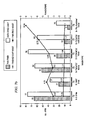
- Figure 3 is a chart showing on the left (from the viewer's perspective) vertical or y- axis, the amount of acrylamide ("AA”) in parts per billion (“ppb”) found in the finished potato chip product.
- the right vertical or y- axis of the graph in Figure 3 shows the percent moisture by weight in the finished chip product.
- the acrylamide level is charted on the graph by the vertical bars, while the percent moisture level is charted by the line plot.
- the horizontal or x- axis of the chart shown in Figure 3 lists various processing parameter changes made to the washing unit operations of a potato chip manufacturing process.
- the cooking time and temperature were identical for all product runs reflected in Figure 3 . Specifically, each sample was fried at about 178°C (353°F) for about 120-140 seconds. Consequently, the moisture levels of the end product tended to vary.
- the prior art washing step described above using chip-stock potatoes sliced to a thickness of .05 inches and fried at about 178°C (353°F) for about 120-140 seconds, results in a finished product having an acrylamide level of about 300-500 ppb (which can be higher depending on glucose content and other potato stock variable ) and a final moisture level by weight of about 1.4%.
- This prior art result is quite similar to the first data point 31 found on the chart shown in Figure 3 , which represents the base data point and involves a washing step with a water residence time for the potato slices of two to three minutes.
- the next data point 32 shown on the graph in Figure 3 reflects a change in the washing step that comprises contacting the potato slices with water as the aqueous solution, increasing the contact time of the aqueous solution with the potato slices to ten minutes, and increasing the temperature of the aqueous solution from ambient or room temperature to about 38°C (100°F).
- This adjustment resulted in a decrease of the acrylamide in the finished product to approximately 210 ppb and a reduction in the moisture level of the finished product to less than 1% by weight.
- the third data point 33 reflects that increasing the aqueous solution (again, water) temperature to about 54°C (130°F) with an average contact time of five minutes did not result in appreciable reduction in acrylamide levels in the finished product.
- the fourth data point 34 demonstrates an appreciable reduction in acrylamide levels in the final product (below 100 ppb) when the washing unit operation involves a contacting step providing one minute contact time with an aqueous solution comprising water at a temperature of about 82°C (180°F).
- the moisture level of the end-product chip was nearly 1.8%.
- the fifth data point 35 reflects that using a 1% L-Cysteine solution as the aqueous solution, at ambient temperatures for fifteen minutes, reduces the acrylamide level in the final product to less than 250 ppb.
- the experiment results shown in Figure 3 are normalized to depict the acrylamide levels that could be expected if the test samples were fried to the same standardized moisture level (the second of each pair of vertical bars).
- the results of the test data shown in Figure 3 can be normalized by multiplying the actual acrylamide levels by the percent change in the moisture levels required to reach the final moisture level of the base/standard sample. Normalizing the experiment data to the same moisture level allows one to more accurately compare the relative effectiveness of each contacting method at reducing acrylamide formation.
- each data point shows a pair of vertical bars, the bars on the left of a pair are imported from Figure 3 while the bars on the right of a pair reflect the expected results of the same contacting process parameters if the final product were fried to a uniform or standardized moisture level of 1.32%.
- the first data point 41 is the base sample involving a two to three minute water wash at ambient temperature.
- the second data point 42 involves the contacting step according to the present invention, where the potato slices are contacted with an aqueous solution comprising water at a temperature of about 38°C (100°F) for a ten minute contact time.
- the left-hand bar again reflects that such contacting followed by frying at approximately 178°C (353°F) for about 120-130 seconds will result in just over 200 ppb acrylamide in the finished product and a finished product having a moisture level of less than 1%.
- the right-hand bar demonstrates that if a chip thus contacted were fried to a standardized moisture level of 1.32%, the projected acrylamide level would drop to approximately 150 ppb.
- the fourth data point 44 reflects that the reduction of the moisture level of the finished product slightly raises the acrylamide level found.
- the last data point 45 reflects significant acrylamide reduction when an aqueous solution comprising 1% L-Cysteine and a fifteen-minute contact time is used.
- a particularly low acrylamide level is projected for a final chip moisture level of 1.32% by weight. It is also interesting to note that the projected acrylamide level for potato slices contacted with 1% L-Cysteine for a fifteen-minute contact time is nearly the same as the projected level for slices contacted with an aqueous solution comprising water for ten minutes at about 38°C (100°F).
- contacting the potato slices with an aqueous solution further comprises removing one or more acrylamide precursors, such as asparagine or reducing sugars, from the raw potato slices by leaching such acrylamide precursors out of the raw potato slices with a potato extract or a leaching stream.
- Leaching of components in the potato slices by the potato extract or the leaching stream occurs for those components for which a concentration gradient exists between the potato slices and the potato extract or the leaching stream.
- the leaching may be accomplished selectively by a potato extract solution that is deficient in the acrylamide precursor to be removed, but has concentration levels of other soluble matter that are at or near equilibrium with the corresponding concentration levels in the potato slices.
- the leaching may also be accomplished non-selectively by a leaching stream such as pure water.
- a leaching stream such as pure water.
- An example of selective leaching involves making the potato extract deficient in asparagine, and then contacting the raw potato slices with the asparagine-deficient potato extract to leach asparagine out of the raw potato slices.
- the potato extract deficient in one or more acrylamide precursors contacts the raw potato slices in a counter-current fashion, which may lead to more effective leaching than a parallel flow.
- the leaching is further enhanced by ultrasonically vibrating the potato extract while it is in contact with the potato slices.
- the potato extract or the leaching stream can be treated to remove the leached acrylamide precursors so that the potato extract or the leaching stream can be recycled for continuous use in the leaching of more potato slices.
- Figure 5 focuses on another aspect of unit operations and shows the effect of decreasing moisture level in the chip during the cooking stage.
- the cooking step 24 is a unit operation that typically involves cooking sliced potato chips in a continuous oil fryer at high temperatures.
- the graph thereon reflects on the horizontal or x- axis the moisture level of the final chip product.
- the vertical or y-axis is again labeled in ppb of acrylamide ("AA”) found in the final product.
- a number of data points are then plotted showing a percent moisture versus the acrylamide level of the final chip.
- the line plots 51, 52 are curve-fitted to the data points in order to establish a trend.
- the first line plot 51 relates to the 149°C (300°F) frying temperature data points.
- the second line 52 relates to the data points plotted for the 178°C (353°F) frying temperature.
- acrylamide levels remain very low at chip moisture levels above about 3% moisture by weight regardless of frying temperature.
- Figure 5 shows the relationship between acrylamide levels and moisture content in fried potato slices
- Figure 6 depicts the same relationship in baked potato chip products made from a dry mix not in accordance with the invention.
- the vertical axis of the graph in Figure 6 shows acrylamide concentrations, while the horizontal axis shows moisture levels by weight. While the acrylamide concentrations tend to be higher in baked potato chip products than in fried potato slices, Figures 5 and 6 both show that the acrylamide concentrations remain fairly low in cooking potato products until the moisture level falls below about 3%.
- Figures 5 and 6 What is made apparent by Figures 5 and 6 is that acrylamide levels in potato chips cooked in a typical fryer increase rather dramatically once the moisture level falls below 3% moisture by weight, at which point it seems there is not enough moisture left to keep the product temperature below an acrylamide formation temperature.
- Figure 5 illustrates that the level of acrylamide found in the final product is relatively low when the moisture level of the chip during the cooking unit operation is 3% by weight or greater, regardless of the exposure to high-temperature cooking environments.
- Figures 5 and 6 demonstrate that moisture level is a useful additional parameter in a unit operation that can be adjusted for the reduction of acrylamide formation in the final product.
- the moisture level in a finished potato chip should ideally be below about 2%, and preferably between about 1.3 and 1.4%. Anything higher than 2%, and even higher than 1.4% can lead to staling and microbial spoilage issues in the packaged product, as well as organoleptic consequences, for example, taste, texture, etc. However, changes in color, taste, and consistency of the final product can be adjusted by various means. In addition, it may be possible to counter the consequences of finishing the food product with a higher moisture content by adjusting various factors in the pre-packaging step, such as extending fryer hoods, covering conveyors to the packaging machine, dehumidification of the plant environment, and various factors in the packaging, such as packaging materials, films, bags and seals.
- a further unit operation comprises finishing the food product as it emerges from its final cooking step at a moisture content at about 1.4% by weight, rather than about 1.6% by weight, about 1.8% by weight or about 2% by weight.
- moisture level can still be a good gauge of its internal temperature.
- non-potato products made from corn, barley, wheat, rye, rice, oats, millet, and other starch-based grains.
- continuous cooking equipment can be designed with different temperature stages that progressively decrease from higher to lower temperatures as the moisture content of the cooking product decreases. This enables moisture to be removed rapidly without allowing the product temperature to rise above the acrylamide formation temperature.
- this invention involves dividing the cooking unit operation (the fourth unit operation 24 shown in Figure 2 ) into at least two separate heating steps.
- a first heating step occurs at elevated temperatures to reduce the moisture level to some point near but above 3% by weight.
- the product is then finished to the desired moisture level of about 1.4% by weight, with a lower-temperature cooking step having a temperature below about 120°C (250°F).
- the process modifications described herein are not limited to prior art processes for cooking potato slices such as the one disclosed in Figure 2 .
- the terms "modified cooking step” and "modified cooking unit operation” are meant to include not only Figure 2 ' s prior art method for cooking potato slices but also prior art methods for preparing other food products in which it is desirable to reduce acrylamide formation.
- the first heating step comprises atmospheric frying or vacuum frying.
- the first heating step involves frying the product, and is called “par-frying,” as such frying only partially cooks the product until its moisture content is lowered to some point near but above 3% by weight.
- the second heating step can comprise vacuum frying, low temperature oven drying, vacuum oven drying, or any method of cooking that maintains cooking temperatures required by the second heating step.
- other methods can also be used to reduce moisture content in the second heating step while avoiding the low-moisture/high-temperature conditions most favorable to acrylamide formation as long as the product temperature remains below the acrylamide formation temperature of about 120°C (250°F).
- the second heating step is often called "finish-frying" or “finish-drying,” as the moisture content is further reduced to the final desired level.
- acrylamide levels in the final product can be reduced significantly without adversely affecting product quality and final characteristics.
- a potato-chip-making process using fresh chipping potatoes combines traditional peeling, slicing, and washing steps with a modified cooking unit operation involving par-frying at about 165 to about 182°C (330-360°F) for about 1-3 minutes, followed by oven-drying below about 120°C (250°F) until the chip moisture level is reduced to about 1.4% by weight.
- acrylamide levels below 130 ppb are achieved.
- FIGS. 7a , 7b , and 8 show various examples of combinations of washing modifications comprising contacting with an aqueous solution and cooking modifications that reduce final acrylamide levels from those levels resulting from the prior art methods. For example, a final acrylamide level of more than 300 ppb is reduced to less than 100 ppb.
- Figure 7a depicts the resulting acrylamide levels of potato chips made from combining several different embodiments of a modified washing step comprising contacting with one particular embodiment of a modified cooking step.
- the modified cooking step of Figure 7a comprises partially frying ("par frying") potato slices at about 178°C (353°F) for approximately one to three minutes in a first heating step, then oven-drying the potato slices at about 120°C (250°F) until the moisture content is reduced to approximately 1.3% by weight in a second heating step.
- the advantage of par-frying followed by oven-drying is that the low-moisture/high-temperature conditions most favorable to acrylamide formation can be avoided while still producing final products that are organoleptically similar to traditionally fried products.
- extensive oven-drying can give the product a dry-mouth feel and may cause product scorching that is difficult to mask.
- the vertical or y- axis of the graph in Figure 7a shows acrylamide concentrations in ppb, while the horizontal or x- axis is labeled to show the parameters of each embodiment of the modified washing step comprising contacting the potato slices with an aqueous solution.
- Each data point shows a pair of vertical bars: the left bar represents acrylamide concentrations after contacting and par-frying while the right bar represents acrylamide concentrations after oven-drying.
- Reading left to right, the first data point 71 of Figure 7a like that of Figures 3 and 4 , is a base sample involving a two to three minute water wash at ambient temperature, after which the sample is then atmospherically fried to roughly 1.3% moisture by weight.
- the second data point 72 is like the first except the sample is fried to about 1.0% moisture. Note that the first and second samples 71, 72 developed about 320 ppb and 630 ppb of acrylamide, respectively.
- the third data point 73 involves the same two to three minute ambient water wash, but the sample is then par fried to slightly above 3% moisture and oven-dried to about 1.3% moisture. The left and right bars show that the sample exited the par-frying step with a relatively low acrylamide concentration of about 65 ppb and gained less than 15 ppb in the oven-drying step.
- the fourth data point 74 involves an aqueous solution comprising water contacting the potato slices for a five minute contact time at about 60°C (140°F), followed by the par-frying and oven-drying steps of the modified cooking unit operation.
- This five-minute, 60°C (140°F) contact combined with the par-frying and oven-drying steps resulted in an even lower final acrylamide concentration of less than 40 ppb.
- the last data point 78 involves a 15-minute contact with an aqueous solution comprising 1% L-cysteine.
- this contacting method produced the lowest concentration of acrylamide.
- This contacting method also required the longest contact time of the various methods shown in Figure 7a .
- 1% L-cysteine 78 as the aqueous solution for contacting resulted in the lowest level of acrylamide in the final product, other factors must be considered, such as the effect of such a long contact time on product quality, as well as the expense of increasing contact time.
- Figure 7b shows the last six data points 73, 74, 75, 76, 77, 78 of Figure 7a on a graph with a narrower acrylamide concentration scale.
- Figure 4 shows that frying in a traditional manner to a standardized 1.32% moisture level by weight should result in acrylamide concentrations ranging from slightly above 100 ppb to over 400 ppb
- Figure 8 shows that par-frying and oven-drying to the same standardized moisture level should result in significantly lower acrylamide concentrations under 100 ppb.
- the cumulative benefit of combining both a modified washing unit operation comprising a contacting step with a modified cooking unit operation is particularly apparent when comparing the 54°C (130°F)/5min contact data point 43 of Figure 4 and the 60°C (140°F)/5minute contact data point 84 of Figure 8 with the base data point 41 of Figure 4 .
- Figure 9 shows the dramatic increase in final acrylamide concentrations that results from using an oven-drying temperature above about 120°C (250°F).
- the test samples were contacted and then par-fried in the same manner as in Figure 7b , but the samples were then oven-dried at about 176°C (350°F) rather than about 120°C (250°F).
- the final acrylamide concentrations of the test samples were then normalized to show the expected acrylamide levels upon reaching 0.76% by weight (which is the final moisture content that was reached in the base-point/standard two-to-three minute water wash shown as the first data point).
- FIG 10 charts the results and operating conditions of yet another embodiment in which potato slices were washed, par-fried, and then oven-dried.
- a control sample 101 was processed in a manner similar to that described with respect to the base samples 71, 72 shown in Figure 7a . After about a 20-30 second ambient-temperature water wash, followed by briefly contacting the potato slices with a dilute (3 - 5%) solution of sodium chloride for a few seconds, a control sample 101 of 1.45 mm thick slices of peeled Hermes chipping potatoes was par-fried in oil having an initial temperature of about 179°C (354°F) for approximately three minutes to 1.4% moisture by weight.
- the control sample 101 had an acrylamide concentration of 640 ppb, similar to the 630 ppb produced in the second base sample 72 shown in Figure 7a .
- the test sample 102 was similarly washed and contacted like the control sample 101. Using a large commercial fryer, the test sample 102 was then par-fried in oil having an initial temperature of about 174°C (345°F) for about three minutes until the moisture content decreased to 2.5% by weight. The par-fried test sample 102 was then finish-dried for about six minutes using an oven at about 110°C (230°F) until the moisture level decreased to 1.4% by weight. Cooking in this manner produced product with a reduced acrylamide concentration of 160 ppb, which is roughly 25% of the acrylamide concentration of the control sample 101.
- potato slices underwent a standard wash procedure, were par-fried to about 3-5% moisture by weight, and then oven-dried to less than about 2% moisture by weight.
- a control sample was washed and then fried at about 179°C (354°F) to a finished moisture content of about 1.3% by weight, resulting in an acrylamide level of 380 ppb.
- par-frying test samples at about 179°C (354°F) to a moisture content of between about 3 to about 5% resulted in acrylamide levels of approximately 64 ppb.
- the par-fried product was then dried in a commercial Wenger oven at various temperatures.
- potato slices can be removed from the par-fry step with moisture levels as high as 10% by weight, but removing the product too soon can affect the final texture of the product.
- the advantage of par-frying and then oven-drying at about 100°C (212°F) is that the cooking unit operation alone can be modified to significantly reduce acrylamide formation from above 300 ppb to less than about 70 ppb; the standard peeling, slicing, and washing steps need not be modified.
- oven-drying In the set of embodiments involving par-frying followed by oven-drying, it is also possible to conduct the oven-drying under vacuum in order to enhance moisture removal. By oven-drying under vacuum, less time is required to dry the product to the desired final moisture content. Although it has been shown that oven-drying at or near 100°C (212°F) does not cause any measurable increase in acrylamide levels, oven-drying at that temperature takes a relatively long time to dry the product. Thus, vacuum oven-drying helps decrease the amount of time it takes for product to dry. It also helps decrease the amount of time the product is exposed to acrylamide-forming temperatures, should higher oven-drying temperatures be used.
- Figures 7a , 7b , 8 , and 10 depicted test results from combining one particular embodiment of a modified cooking unit operation with several different embodiments of a modified washing unit operation comprising a contacting step
- other embodiments and combinations are possible.
- the various different contacting steps shown in those figures can instead be followed by a different modified cooking unit operation.
- an improved method for reducing acrylamide formation can simply utilize a modified cooking unit operation without modifying any of the other unit operations.
- the second of the two heating steps of a modified cooking unit operation comprises vacuum finish-frying rather than atmospheric frying.
- the vacuum pressure should be such that frying occurs below about 120°C (250°F).
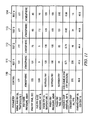
- Figure 11 charts the results and operating conditions of several examples of a modified cooking unit operation involving par-frying followed by vacuum finish-frying.
- control 110 and test samples 111,112,113,114 Hermes variety of chipping potatoes were peeled, sliced to about 1.35 mm thickness, and subjected to a standard 20-to-30-second ambient-temperature water wash. After washing, the control sample 110 was fried at atmospheric pressure in oil having an initial temperature of about 177°C (351°F) for about 2.5 minutes to a moisture level of 0.83% by weight, producing an acrylamide concentration of 370 ppb.
- Tests 1-4 all of the test samples 111,112, 113, 114 were atmospheric par-fried at about 177°C (351°F) and vacuum finish-fried at about 120°C (248°F) and 100 millibars, but each was par-fried and vacuum finish-fried for different lengths of time.
- Test 1 111 , 220 ppb of acrylamide were found in the test sample after washing, atmospheric par-frying for about 100 seconds to 3% moisture by weight, and vacuum finish-frying for 44 seconds to about 0.7% moisture by weight.
- the results of Tests 2-4 112,113,114 show that acrylamide levels in the final product dramatically decrease when par-frying is stopped, and vacuum finish-drying is commenced, before the moisture content decreases to 3% by weight.
- Tests 2-4 112,113,114 all produced final acrylamide concentrations below 50 ppb.
- an acrylamide level of only 13 ppb was achieved by par-fiying to 10% moisture by weight, then vacuum-frying to about 1% moisture by weight.
- partially frying slices to higher moisture content before they are low-temperature vacuum finish-fried dramatically lowers final acrylamide concentrations.
- the advantages of vacuum finish-frying after par-frying to about 3-10% moisture by weight are that the final stages of cooking can be completed at low temperatures without affecting product texture, and its effectiveness at reducing acrylamide formation can eliminate the need for a modified washing step comprising contacting the product with an aqueous solution.
- vacuum finish-fiying also allows for the final stages of cooking to be completed at temperatures higher than those that can be used when not frying under a vacuum, while still providing a reduced acrylamide concentration in the finished product. It is noted that the vacuum finish-fried product had a lighter color than the control sample, and transferring cooking product from the par-frying operation to the vacuum finish-frying unit at higher moisture levels may impart a bland flavor to the product. It should be kept in mind that the capital cost of vacuum finish-frying equipment may be greater than that of oven-drying equipment.
- vacuum par-frying can be used in the first of the two heating steps of a modified cooking unit operation.
- a modified cooking unit operation involves vacuum par-fiying to a moisture content near but above the threshold moisture level of 3-4% by weight, then oven-drying at no greater than about 120°C (250°F) to completion.
- the product can be fried at lower temperature, thus producing less acrylamide.
- oven-drying at or below about 120°C (250°F) ensures that little to no additional acrylamide is formed during the oven-drying stage.
- This invention contemplates combining the teachings herein with regard to various unit operation manipulations in order to achieve a desired acrylamide level in the end product along with the desired end-product characteristics.
- the combinations used depend on the starting product and the desired end product and can be adjusted by one skilled in the art pursuant to the teachings herein.
- the effect of pH on acrylamide formation is another factor that may be considered and combined with the teachings herein.
- changes in the characteristics of the final product can be adjusted by various means.
- color characteristics in potato chips can be adjusted by controlling the amount of sugars in the starting product.
- Some flavor characteristics can be changed by the addition of various flavoring agents to the end product.
- the physical texture of the product can be adjusted by, for example, the addition of leavening agents or various emulsifiers.
Landscapes
- Chemical & Material Sciences (AREA)
- Polymers & Plastics (AREA)
- Life Sciences & Earth Sciences (AREA)
- Nutrition Science (AREA)
- Engineering & Computer Science (AREA)
- Food Science & Technology (AREA)
- Health & Medical Sciences (AREA)
- Oil, Petroleum & Natural Gas (AREA)
- Preparation Of Fruits And Vegetables (AREA)
- Coloring Foods And Improving Nutritive Qualities (AREA)
- General Preparation And Processing Of Foods (AREA)
- Cereal-Derived Products (AREA)
- Bakery Products And Manufacturing Methods Therefor (AREA)
- Seasonings (AREA)
Claims (13)
- Verfahren zur Verringerung einer Bildung von Acrylamid in wärmebehandelten Nahrungsmitteln, die Kartoffelchips umfassen, wobei das Verfahren die folgenden Schritte umfasst:a) Bereitstellen eines Nahrungsmittels, das eine Vielzahl von Kartoffelscheiben umfasst und das vor dem Garen einen Wassergehalt von mindestens 4 Gew.-% aufweist;b) Garen des Nahrungsmittels, um ein gegartes Nahrungsmittel mit einer verringerten Acrylamidkonzentration und einem Wassergehalt von weniger als 3 Gew.-% zu bilden, wobei das Garen ein Erhitzen bei einer Temperatur von unter etwa 120 °C umfasst, während der Wassergehalt des Nahrungsmittels bei unter 3 Gew.-% liegt, und wobei das Garen von Schritt b) ferner ein erstes Erhitzen bei einer Temperatur von über etwa 120 °C umfasst, während der Wassergehalt bei mindestens 3 Gew.-% liegt, wobei das Erhitzen bei einer Temperatur von über etwa 120 °C ein Vorfrittieren bei Umgebungsdruck oder einem Unterdruck umfasst, und wobei das Garen von Schritt b) ferner das Fertigstellen des Nahrungsmittels bei einem Wassergehalt von etwa 1,4 Gew.-% umfasst.
- Verfahren zur Verringerung einer Bildung von Acrylamid in wärmebehandelten Nahrungsmitteln nach Anspruch 1, wobei das Erhitzen bei einer Temperatur unterhalb von etwa 120 °C das Frittieren unter einem Unterdruck umfasst.
- Verfahren zur Verringerung einer Bildung von Acrylamid in wärmebehandelten Nahrungsmitteln nach Anspruch 1, wobei das Erhitzen bei einer Temperatur unterhalb von etwa 120 °C ein Trocknen in einem Ofen umfasst.
- Verfahren zur Verringerung einer Bildung von Acrylamid in wärmebehandelten Nahrungsmitteln nach Anspruch 1, wobei das Trocknen im Ofen in mehreren Stufen durchgeführt wird, von denen jede eine Erhitzung bei einer jeweils niedrigeren Temperatur als die vorangehende beinhaltet.
- Verfahren zur Verringerung einer Bildung von Acrylamid in wärmebehandelten Nahrungsmitteln nach Anspruch 1, wobei das Garen von Schritt b) ferner ein Frittieren unterhalb von etwa 120 °C unter Unterdruck umfasst.
- Verfahren zur Verringerung einer Bildung von Acrylamid in wärmebehandelten Nahrungsmitteln nach Anspruch 1, wobei das Garen von Schritt b) ferner ein Backen unterhalb von etwa 120 °C umfasst.
- Verfahren zur Verringerung einer Bildung von Acrylamid in wärmebehandelten Nahrungsmitteln nach Anspruch 1, wobei Schritt a) ferner das Inkontaktbringen des Nahrungsmittels mit einer wässrigen Lösung beinhaltet.
- Verfahren zur Verringerung einer Bildung von Acrylamid in wärmebehandelten Nahrungsmitteln nach Anspruch 7, wobei das Inkontaktbringen unter Verwendung von Wasser bei Umgebungstemperatur durchgeführt wird.
- Verfahren zur Verringerung einer Bildung von Acrylamid in wärmebehandelten Nahrungsmitteln nach Anspruch 7, wobei das Inkontaktbringen unter Verwendung von Wasser bei einer Temperatur oberhalb Umgebungstemperatur durchgeführt wird.
- Verfahren zur Verringerung einer Bildung von Acrylamid in wärmebehandelten Nahrungsmitteln nach Anspruch 7, wobei das Inkontaktbringen unter Verwendung einer wässrigen Calciumchloridlösung durchgeführt wird.
- Verfahren zur Verringerung einer Bildung von Acrylamid in wärmebehandelten Nahrungsmitteln nach Anspruch 7, wobei das Inkontaktbringen unter Verwendung einer wässrigen Lösung von L-Cystein durchgeführt wird.
- Verfahren zur Verringerung einer Bildung von Acrylamid in wärmebehandelten Nahrungsmitteln nach Anspruch 7, wobei das Inkontaktbringen ein Auslaugen mindestens eines Acrylamidvorläufers aus dem Nahrungsmittel umfasst.
- Verfahren zur Verringerung einer Bildung von Acrylamid in wärmebehandelten Nahrungsmitteln nach Anspruch 12, ferner das Auslaugen mindestens eines Acrylamidvorläufers aus dem Nahrungsmittel mit einem Extrakt, der dem auszulaugenden Acrylamidvorläufer mangelt, umfasst.
Priority Applications (6)
| Application Number | Priority Date | Filing Date | Title |
|---|---|---|---|
| EP10180357A EP2277390A1 (de) | 2003-02-21 | 2004-02-06 | Verfahren zur Reduktion der Acrylamid-Bildung in thermisch verarbeiteten Lebensmitteln |
| EP10180350A EP2277389A1 (de) | 2003-02-21 | 2004-02-06 | Verfahren zur Reduktion der Acrylamid-Bildung in thermisch verarbeiteten Lebensmitteln |
| EP10180368A EP2277391A1 (de) | 2003-02-21 | 2004-02-06 | Verfahren zur Reduktion der Acrylamid-Bildung in thermisch verarbeiteten Lebensmitteln |
| EP09163939A EP2156749A1 (de) | 2003-02-21 | 2004-02-06 | Verfahren zur Reduktion der Acrylamid-Bildung in thermisch verarbeiteten Lebensmitteln |
| EP10180380A EP2277392A1 (de) | 2003-02-21 | 2004-02-06 | Verfahren zur Reduktion der Acrylamid-Bildung in thermisch verarbeiteten Lebensmitteln |
| CY20091100977T CY1109388T1 (el) | 2003-02-21 | 2009-09-21 | Μεθοδος μειωσης του σχηματισμου ακρυλαμιδιου σε θερμικως επεξεργασμενα τροφιμα |
Applications Claiming Priority (3)
| Application Number | Priority Date | Filing Date | Title |
|---|---|---|---|
| US371448 | 2003-02-21 | ||
| US10/371,448 US7393550B2 (en) | 2003-02-21 | 2003-02-21 | Method for reducing acrylamide formation in thermally processed foods |
| PCT/US2004/003414 WO2004075656A2 (en) | 2003-02-21 | 2004-02-06 | Method for reducing acrylamide formation in thermally processed foods |
Related Child Applications (5)
| Application Number | Title | Priority Date | Filing Date |
|---|---|---|---|
| EP10180380A Division-Into EP2277392A1 (de) | 2003-02-21 | 2004-02-06 | Verfahren zur Reduktion der Acrylamid-Bildung in thermisch verarbeiteten Lebensmitteln |
| EP10180368A Division-Into EP2277391A1 (de) | 2003-02-21 | 2004-02-06 | Verfahren zur Reduktion der Acrylamid-Bildung in thermisch verarbeiteten Lebensmitteln |
| EP09163939A Division-Into EP2156749A1 (de) | 2003-02-21 | 2004-02-06 | Verfahren zur Reduktion der Acrylamid-Bildung in thermisch verarbeiteten Lebensmitteln |
| EP10180350A Division-Into EP2277389A1 (de) | 2003-02-21 | 2004-02-06 | Verfahren zur Reduktion der Acrylamid-Bildung in thermisch verarbeiteten Lebensmitteln |
| EP10180357A Division-Into EP2277390A1 (de) | 2003-02-21 | 2004-02-06 | Verfahren zur Reduktion der Acrylamid-Bildung in thermisch verarbeiteten Lebensmitteln |
Publications (4)
| Publication Number | Publication Date |
|---|---|
| EP1605774A2 EP1605774A2 (de) | 2005-12-21 |
| EP1605774A4 EP1605774A4 (de) | 2006-05-17 |
| EP1605774B1 EP1605774B1 (de) | 2009-07-01 |
| EP1605774B2 true EP1605774B2 (de) | 2015-07-29 |
Family
ID=32868332
Family Applications (6)
| Application Number | Title | Priority Date | Filing Date |
|---|---|---|---|
| EP10180380A Withdrawn EP2277392A1 (de) | 2003-02-21 | 2004-02-06 | Verfahren zur Reduktion der Acrylamid-Bildung in thermisch verarbeiteten Lebensmitteln |
| EP10180357A Withdrawn EP2277390A1 (de) | 2003-02-21 | 2004-02-06 | Verfahren zur Reduktion der Acrylamid-Bildung in thermisch verarbeiteten Lebensmitteln |
| EP09163939A Withdrawn EP2156749A1 (de) | 2003-02-21 | 2004-02-06 | Verfahren zur Reduktion der Acrylamid-Bildung in thermisch verarbeiteten Lebensmitteln |
| EP04709050.1A Expired - Lifetime EP1605774B2 (de) | 2003-02-21 | 2004-02-06 | Verfahren zur reduktion der acrylamid-bildung in thermisch verarbeiteten lebensmitteln |
| EP10180350A Withdrawn EP2277389A1 (de) | 2003-02-21 | 2004-02-06 | Verfahren zur Reduktion der Acrylamid-Bildung in thermisch verarbeiteten Lebensmitteln |
| EP10180368A Withdrawn EP2277391A1 (de) | 2003-02-21 | 2004-02-06 | Verfahren zur Reduktion der Acrylamid-Bildung in thermisch verarbeiteten Lebensmitteln |
Family Applications Before (3)
| Application Number | Title | Priority Date | Filing Date |
|---|---|---|---|
| EP10180380A Withdrawn EP2277392A1 (de) | 2003-02-21 | 2004-02-06 | Verfahren zur Reduktion der Acrylamid-Bildung in thermisch verarbeiteten Lebensmitteln |
| EP10180357A Withdrawn EP2277390A1 (de) | 2003-02-21 | 2004-02-06 | Verfahren zur Reduktion der Acrylamid-Bildung in thermisch verarbeiteten Lebensmitteln |
| EP09163939A Withdrawn EP2156749A1 (de) | 2003-02-21 | 2004-02-06 | Verfahren zur Reduktion der Acrylamid-Bildung in thermisch verarbeiteten Lebensmitteln |
Family Applications After (2)
| Application Number | Title | Priority Date | Filing Date |
|---|---|---|---|
| EP10180350A Withdrawn EP2277389A1 (de) | 2003-02-21 | 2004-02-06 | Verfahren zur Reduktion der Acrylamid-Bildung in thermisch verarbeiteten Lebensmitteln |
| EP10180368A Withdrawn EP2277391A1 (de) | 2003-02-21 | 2004-02-06 | Verfahren zur Reduktion der Acrylamid-Bildung in thermisch verarbeiteten Lebensmitteln |
Country Status (21)
| Country | Link |
|---|---|
| US (7) | US7393550B2 (de) |
| EP (6) | EP2277392A1 (de) |
| JP (1) | JP2006515181A (de) |
| KR (1) | KR100794044B1 (de) |
| CN (1) | CN100594802C (de) |
| AR (1) | AR043236A1 (de) |
| AT (1) | ATE434942T1 (de) |
| AU (1) | AU2004216281B2 (de) |
| BR (1) | BRPI0408049A (de) |
| CA (1) | CA2516655C (de) |
| CL (1) | CL2004000285A1 (de) |
| CY (1) | CY1109388T1 (de) |
| DE (1) | DE602004021784D1 (de) |
| EG (1) | EG23712A (de) |
| ES (1) | ES2327735T5 (de) |
| MX (1) | MXPA05008834A (de) |
| PT (1) | PT1605774E (de) |
| RU (1) | RU2326548C2 (de) |
| TW (2) | TWI355901B (de) |
| WO (1) | WO2004075656A2 (de) |
| ZA (1) | ZA200506675B (de) |
Families Citing this family (58)
| Publication number | Priority date | Publication date | Assignee | Title |
|---|---|---|---|---|
| US7393550B2 (en) | 2003-02-21 | 2008-07-01 | Frito-Lay North America, Inv. | Method for reducing acrylamide formation in thermally processed foods |
| US20050064084A1 (en) * | 2002-09-19 | 2005-03-24 | Elder Vincent Allen | Method for reducing acrylamide formation in thermally processed foods |
| US7811618B2 (en) * | 2002-09-19 | 2010-10-12 | Frito-Lay North America, Inc. | Method for reducing asparagine in food products |
| US20070141226A1 (en) * | 2002-09-19 | 2007-06-21 | Frito-Lay North America, Inc. | Method for Reducing Acrylamide Formation in Thermally Processed Foods |
| US20050118322A1 (en) * | 2002-09-19 | 2005-06-02 | Elder Vincent A. | Method for enhancing acrylamide decomposition |
| US20050074538A1 (en) * | 2002-09-19 | 2005-04-07 | Elder Vincent Allen | Method for reducing acrylamide formation in thermally processed foods |
| US20070178219A1 (en) * | 2002-09-19 | 2007-08-02 | Eric Boudreaux | Method for Reducing Acrylamide Formation |
| US20080299273A1 (en) * | 2002-09-19 | 2008-12-04 | Ajay Rajeshwar Bhaskar | Method of reducing acryalmide by treating a food product |
| US20070141225A1 (en) * | 2002-09-19 | 2007-06-21 | Elder Vincent A | Method for Reducing Acrylamide Formation |
| US8105815B2 (en) * | 2002-12-19 | 2012-01-31 | Dsm Ip Assets B.V. | Asparaginase and its use in food production |
| US8110240B2 (en) * | 2003-02-21 | 2012-02-07 | Frito-Lay North America, Inc. | Method for reducing acrylamide formation in thermally processed foods |
| KR100525178B1 (ko) * | 2003-03-12 | 2005-11-01 | 주식회사농심 | 아크릴아마이드 저감화 스낵 및 이의 제조방법 |
| JP2006174845A (ja) * | 2003-04-04 | 2006-07-06 | House Foods Corp | 食品中のアクリルアミドの低減方法 |
| US6989167B2 (en) * | 2003-06-25 | 2006-01-24 | Procter + Gamble Co. | Method for reducing acrylamide in foods comprising reducing the level of reducing sugars, foods having reduced levels of acrylamide, and article of commerce |
| US20050048172A1 (en) * | 2003-09-02 | 2005-03-03 | Vattem Dhiraj A. | Compositions of legume proteins and methods of use thereof for reducing acrylamide in cooked foods |
| US20050196504A1 (en) * | 2004-03-04 | 2005-09-08 | Finley John W. | Reduction of acrylamide in processed foods |
| CN101299927A (zh) * | 2005-11-01 | 2008-11-05 | 普罗蒂厄斯工业有限公司 | 降低熟食中的丙烯酰胺的方法 |
| PL1978825T3 (pl) * | 2006-01-30 | 2010-11-30 | Bma Nederland B V | Sposób i urządzenie do wielostopniowego smażenia produktu |
| US20100040729A1 (en) * | 2006-03-21 | 2010-02-18 | Michael Sahagian | Compositions and methods for surface modification of root vegetable products |
| US20070281062A1 (en) * | 2006-06-01 | 2007-12-06 | Wilfred Marcellien Bourg | Process for Neutralizing Enzymes in Corn |
| US7867533B2 (en) * | 2006-07-19 | 2011-01-11 | Frito-Lay Trading Compnay GmbH | Process for making a healthy snack food |
| US7993693B2 (en) * | 2006-07-19 | 2011-08-09 | Frito-Lay Trading Company Gmbh | Process for making a healthy snack food |
| US7951436B2 (en) * | 2006-08-14 | 2011-05-31 | Frito-Lay North America, Inc. | Environmentally-friendly multi-layer flexible film having barrier properties |
| US7943218B2 (en) * | 2006-08-14 | 2011-05-17 | Frito-Lay North America, Inc. | Environmentally-friendly multi-layer flexible film having barrier properties |
| US20090061126A1 (en) * | 2007-08-31 | 2009-03-05 | Anthony Robert Knoerzer | Package and Multi-Layer Flexible Film Having Paper Containing Post Consumer Recycled Fiber |
| US20100221560A1 (en) * | 2006-08-14 | 2010-09-02 | Frito-Lay North America, Inc. | Bio-Based In-Line High Barrier Metalized Film and Process for its Production |
| EP1980158B9 (de) * | 2007-04-05 | 2016-06-15 | Intersnack Knabber-Gebäck GmbH & Co. KG | Verfahren zum Entfernen von acrylamid- und/oder melanoidin-bildenden Zellinhaltsstoffen aus stärkehaltigem pflanzlichen Material, sowie pflanzliches Material mit verringertem Gehalt an Acrylamid und/oder Melanoidinen |
| US20100129504A1 (en) * | 2007-05-07 | 2010-05-27 | Koenders Damiet Josephina Petr | Novel method for preparing a food product |
| US8486684B2 (en) | 2007-08-13 | 2013-07-16 | Frito-Lay North America, Inc. | Method for increasing asparaginase activity in a solution |
| US8372467B2 (en) * | 2008-07-22 | 2013-02-12 | Heat And Control, Inc. | Universal potato chip cooker |
| US8284248B2 (en) | 2009-08-25 | 2012-10-09 | Frito-Lay North America, Inc. | Method for real time detection of defects in a food product |
| US8158175B2 (en) * | 2008-08-28 | 2012-04-17 | Frito-Lay North America, Inc. | Method for real time measurement of acrylamide in a food product |
| US9095145B2 (en) | 2008-09-05 | 2015-08-04 | Frito-Lay North America, Inc. | Method and system for the direct injection of asparaginase into a food process |
| US20100080872A1 (en) * | 2008-10-01 | 2010-04-01 | J. R. Simplot Company | Low acrylamide french fry and preparation process |
| US9215886B2 (en) | 2008-12-05 | 2015-12-22 | Frito-Lay North America, Inc. | Method for making a low-acrylamide content snack with desired organoleptical properties |
| US20100255167A1 (en) * | 2009-04-07 | 2010-10-07 | Frito-Lay North America, Inc. | Method for Reducing Acrylamide in Food Products |
| US20110200844A1 (en) * | 2010-02-17 | 2011-08-18 | Frito-Lay North America, Inc. | Composition for facilitating environmental degradation of a film |
| US20110250334A1 (en) * | 2010-04-12 | 2011-10-13 | Andrew Anthony Caridis | Process to control color, moisture and acrylamide in thermally processed foods |
| WO2012009642A2 (en) * | 2010-07-15 | 2012-01-19 | Frito-Lay North America, Inc. | Controlled cooling of food exiting a fryer |
| CN102113700B (zh) * | 2010-12-14 | 2012-07-25 | 国家粮食局科学研究院 | 一种降低挤压膨化即食食品中丙烯酰胺含量的方法 |
| GB2481469B (en) | 2011-01-31 | 2013-02-13 | Frito Lay Trading Co Gmbh | De-oiling apparatus and method in the manufacture of low oil potato chips |
| US9040120B2 (en) | 2011-08-05 | 2015-05-26 | Frito-Lay North America, Inc. | Inorganic nanocoating primed organic film |
| WO2013032418A1 (en) * | 2011-09-01 | 2013-03-07 | Heat And Control Inc. | Process to control color, moisture and acrylamide in thermally processed foods |
| CN102428988B (zh) * | 2011-11-11 | 2013-03-13 | 河南工业大学 | 减少面包中丙烯酰胺生成量的生产方法 |
| US9267011B2 (en) | 2012-03-20 | 2016-02-23 | Frito-Lay North America, Inc. | Composition and method for making a cavitated bio-based film |
| US9162421B2 (en) | 2012-04-25 | 2015-10-20 | Frito-Lay North America, Inc. | Film with compostable heat seal layer |
| WO2013192547A1 (en) | 2012-06-23 | 2013-12-27 | Frito-Lay North America, Inc. | Deposition of ultra-thin inorganic oxide coatings on packaging |
| US20150150269A1 (en) * | 2012-08-01 | 2015-06-04 | Frito-Lay North America, Inc. | Continuous process and apparatus for making a pita chip |
| US9090021B2 (en) | 2012-08-02 | 2015-07-28 | Frito-Lay North America, Inc. | Ultrasonic sealing of packages |
| US9149980B2 (en) | 2012-08-02 | 2015-10-06 | Frito-Lay North America, Inc. | Ultrasonic sealing of packages |
| WO2014091364A1 (en) * | 2012-12-13 | 2014-06-19 | Koninklijke Philips N.V. | Method and apparatus for cooking |
| ES2768451T3 (es) | 2013-03-15 | 2020-06-22 | Pepsico Inc | Adaptación de propiedades de humectación y lubricación de la grasa comestible con emulsionantes o lecitinas de HLB bajo |
| CN105394655A (zh) * | 2015-12-10 | 2016-03-16 | 云南农业大学 | 一种抑制马铃薯食品中丙烯酰胺形成的协同阻断方法 |
| JP6889247B2 (ja) | 2016-08-09 | 2021-06-18 | ケロッグ カンパニー | アクリルアミドを低減した調理済み食品 |
| CN106721930A (zh) * | 2016-11-22 | 2017-05-31 | 河南省科学院同位素研究所有限责任公司 | 一种降低淀粉类油炸食品中丙烯酰胺的方法 |
| CN109043464B (zh) * | 2018-06-21 | 2021-07-02 | 合肥工业大学 | 一种增味香精及其制备方法 |
| CN109170779A (zh) * | 2018-11-22 | 2019-01-11 | 云南省林业科学院 | 一种脱衣琥珀核桃仁制备方法 |
| CN112385773A (zh) * | 2020-11-18 | 2021-02-23 | 湖北卧龙神厨食品股份有限公司 | 一种酥脆锅巴的生产工艺 |
Citations (3)
| Publication number | Priority date | Publication date | Assignee | Title |
|---|---|---|---|---|
| GB1132296A (en) † | 1966-10-28 | 1968-10-30 | Inst Voor Bewaring | Process for the preparation of a fried potato product and oven for frying a pre-fried potato product under reduced pressure |
| US3436229A (en) † | 1966-05-04 | 1969-04-01 | J D Ferry Co Inc | Method of cooking potato chips to increase fluffiness and prevent browning |
| US3634095A (en) † | 1968-12-09 | 1972-01-11 | Miles J Willard | Preparing a potato snack product |
Family Cites Families (289)
| Publication number | Priority date | Publication date | Assignee | Title |
|---|---|---|---|---|
| US1053A (en) | 1838-12-31 | Water-wheel | ||
| US1132296A (en) | 1914-02-26 | 1915-03-16 | Jacob H Anspach | Gas-furnace. |
| GB156905A (en) | 1919-10-14 | 1921-01-14 | Hermann Bollmann | Improvements in or relating to the extraction of fat or oil from raw materials |
| US1782960A (en) | 1927-11-17 | 1930-11-25 | Erysin Harry Adrian | Method of making food product |
| GB335214A (en) | 1929-06-19 | 1930-09-19 | Josef Dapper | Improvements in or relating to flour and dough |
| FR874453A (fr) | 1940-08-15 | 1942-08-07 | Scholten Chemische Fab | Procédé de fabrication d'aliments ne forme de flocons à partir de la fécule |
| US2490431A (en) * | 1946-07-19 | 1949-12-06 | Research Corp | Dehydrating process for starchy vegetables, fruits, and the like |
| US2498024A (en) * | 1946-08-08 | 1950-02-21 | John L Baxter | Prefrying treatment of potatoes |
| US2448152A (en) | 1947-01-27 | 1948-08-31 | Alva R Patton | Processes for controlling potato chip color |
| US2611705A (en) * | 1950-06-16 | 1952-09-23 | Carl E Hendel | Production of potato chips |
| US2744017A (en) | 1950-08-15 | 1956-05-01 | Ben L Sarett | Removal of sugars by enzymatic process |
| US2584893A (en) * | 1951-12-06 | 1952-02-05 | Armour Res Found | Method of making a tortilla flour |
| US2704257A (en) * | 1952-10-01 | 1955-03-15 | Process Millers Inc | Method of producing corn tortilla flour |
| US2762709A (en) | 1953-05-19 | 1956-09-11 | Kuehmann Foods Inc | Treating method for potatoes |
| US2780552A (en) * | 1954-04-01 | 1957-02-05 | Jr Miles J Willard | Dehydration of cooked potato |
| US2759832A (en) | 1954-11-15 | 1956-08-21 | Jr James Cording | Drum drying of cooked mashed potatoes |
| US2893878A (en) * | 1956-06-11 | 1959-07-07 | Simon Morris | Process for retarding non-enzymatic browning of potatoes |
| US2910367A (en) * | 1957-07-09 | 1959-10-27 | Corn Products Co | Food composition |
| US2987401A (en) * | 1957-12-11 | 1961-06-06 | Carter D Johnston | Composition and method for inhibiting discoloration of cut organic materials |
| US3026885A (en) * | 1958-03-18 | 1962-03-27 | Frito Company | Apparatus for producing potato chips and the like |
| US2905559A (en) | 1958-11-13 | 1959-09-22 | Little Inc A | Process for preparing a corn chip product |
| US3044880A (en) | 1959-01-09 | 1962-07-17 | Gen Foods Corp | Method of making a cooked potato product |
| US3038810A (en) * | 1959-08-18 | 1962-06-12 | Corn Products Co | Food composition containing an auxiliary additive and a fungistat |
| US3085020A (en) | 1960-08-18 | 1963-04-09 | Gen Foods Corp | Method of making a french fried potato product |
| US3027258A (en) | 1961-03-21 | 1962-03-27 | Dca Food Ind | Method of producing a chip-type food product |
| US3219458A (en) | 1961-03-30 | 1965-11-23 | Sunkist Growers Inc | Process for the preservation of citrus juice products and composition |
| US3305366A (en) * | 1963-03-25 | 1967-02-21 | Stauffer Chemical Co | Color and fermentation stabilization of fresh fruits |
| US3365301A (en) * | 1964-03-25 | 1968-01-23 | Lipoma Electronics Co | Process for making fried chips |
| US3369908A (en) | 1965-04-02 | 1968-02-20 | Roberto M. Gonzalez | Process for producing tortilla flour |
| US3278311A (en) | 1965-05-10 | 1966-10-11 | Morton Foods Inc | Method of manufacturing corn dough and corn chips |
| US3359123A (en) * | 1966-06-03 | 1967-12-19 | Gen Foods Corp | Process of dehydrating potatoes |
| US3404986A (en) * | 1966-07-18 | 1968-10-08 | Krause Milling Co | Process for manufacturing corn flour |
| GB1202809A (en) * | 1968-10-29 | 1970-08-19 | Inst Voor Bewaring | Fried edible products |
| US3812775A (en) * | 1966-10-28 | 1974-05-28 | Inst Bewaring En Verwerking Va | Process and apparatus for preparing fried edible products |
| US3578463A (en) * | 1967-03-08 | 1971-05-11 | Cryodry Corp | Microwave blanching |
| IL31276A (en) * | 1967-12-27 | 1973-06-29 | Bayer Ag | Purified l-asparaginase and its preparation |
| US3545979A (en) * | 1968-03-18 | 1970-12-08 | Abdul R Ghafoori | Snack chip and method of making |
| GB1230032A (de) * | 1968-06-24 | 1971-04-28 | ||
| US3652402A (en) * | 1968-08-31 | 1972-03-28 | Tanabe Seiyaku Co | Asparaginase having anti-tumor activity and process for preparing the same |
| US3627535A (en) | 1969-07-31 | 1971-12-14 | Lamb Weston Inc | Method and apparatus for removal of oil from surface of fried food products |
| US3690895A (en) * | 1969-09-05 | 1972-09-12 | Pet Inc | Process for preparing folded food chips |
| US3608728A (en) | 1969-10-15 | 1971-09-28 | Leslie E Trimble | Oil skimmer |
| US3987210A (en) * | 1969-11-04 | 1976-10-19 | A. E. Staley Manufacturing Company | Method for producing french fried potatoes |
| US3998975A (en) | 1970-08-07 | 1976-12-21 | The Procter & Gamble Company | Potato chip products and process for making same |
| US3725087A (en) * | 1970-08-07 | 1973-04-03 | Rogers Brothers Co | Dehydrated potato pieces |
| US3782973A (en) * | 1970-09-03 | 1974-01-01 | Int Flavors & Fragrances Inc | Flavoring compositions and processes |
| US3917866A (en) * | 1971-06-30 | 1975-11-04 | Procter & Gamble | Decreasing the retrograded starch level and increasing the rehydration rate of dehydrated potato granules |
| US3925568A (en) | 1972-09-22 | 1975-12-09 | Far Mar Co | Process for fortifying food and feed products with amino acids |
| US3997684A (en) * | 1972-11-24 | 1976-12-14 | Willard Miles J | Method for making expanded potato based snack products |
| CA971031A (en) * | 1972-12-11 | 1975-07-15 | Tadanobu Nakadai | Process for manufacturing soy sauce using enzymatic preparation(s) |
| SE397256B (sv) | 1974-09-26 | 1977-10-31 | Svenska Foodco Ab | Sett och anordning for framstellning av frityrkokt skivad potatis |
| JPS5210440A (en) * | 1975-07-07 | 1977-01-26 | Pepsico Inc | Potato product and method of making same |
| US4084008A (en) * | 1975-07-14 | 1978-04-11 | General Mills, Inc. | Instantized potato products and method of making same |
| US4005225A (en) * | 1975-08-13 | 1977-01-25 | Patent Technology Inc. | Bakery process and developer composition therefor |
| NL7601876A (nl) * | 1976-02-24 | 1977-08-26 | Inst Voor Bewaring | Werkwijze en inrichting voor het bakken van chips. |
| US4122198A (en) * | 1976-03-16 | 1978-10-24 | Frito-Lay, Inc. | Process for preparing a cooked dough product |
| JPS5938207B2 (ja) | 1976-03-31 | 1984-09-14 | 科研製薬株式会社 | 腎疾患治療剤 |
| US4073952A (en) | 1976-08-02 | 1978-02-14 | The Pillsbury Company | Method of making dehydrated potato |
| US4076853A (en) * | 1977-02-04 | 1978-02-28 | International Flavors & Fragrances Inc. | Flavoring with substituted norbornane derivatives |
| US4124727A (en) | 1977-04-20 | 1978-11-07 | The United States Of America As Represented By The Secretary Of Agriculture | Nutritionally balanced protein snack food prepared from legume seeds |
| JPS5435189A (en) * | 1977-08-24 | 1979-03-15 | Mitsubishi Gas Chem Co Inc | Oxygen absorber |
| DE2743230A1 (de) | 1977-09-26 | 1979-04-05 | Vogt Hans Dr H C | Kartoffelknabbererzeugnis und verfahren zu dessen herstellung |
| US4199612A (en) | 1977-10-11 | 1980-04-22 | Fragas Restituto R | Corn powder preparation |
| US4210594A (en) | 1977-12-08 | 1980-07-01 | The Procter & Gamble Company | Process for separating esters of fatty acids |
| EP0003903B1 (de) * | 1978-02-24 | 1982-12-22 | Teijin Limited | Sauerstoff entfernende Zusammensetzung, wärmeerzeugende Zusammensetzung und Gefüge, und ihre Anwendung als Sauerstoffentferner und als Wärmeerzeuger |
| US4277510A (en) * | 1979-01-02 | 1981-07-07 | Frito-Lay, Inc. | Process of making potato chips |
| US4312892A (en) * | 1979-03-22 | 1982-01-26 | Rubio Manuel J | Making corn products |
| DE2911776A1 (de) | 1979-03-26 | 1980-10-09 | Basf Ag | Verfahren zur herstellung von in kieselgel eingebetteten enzymatisch aktiven praeparaten |
| US4272554A (en) * | 1979-05-07 | 1981-06-09 | Frito-Lay, Inc. | Process for preparing blister-inhibited potato chips |
| US4251895A (en) * | 1979-09-21 | 1981-02-24 | Heat And Control, Inc. | Surface water removal from potato slices |
| FR2493677A1 (fr) * | 1980-11-10 | 1982-05-14 | Dechenon Minoterie Biscotterie | Procede de fabrication d'un produit alimentaire et produit alimentaire obtenu |
| US4751093A (en) * | 1983-03-15 | 1988-06-14 | Leon Hong | Preparation of fried potato pieces |
| US5134263A (en) * | 1983-08-15 | 1992-07-28 | Donald P. Smith | Infrared heating control |
| US4537786A (en) * | 1983-12-05 | 1985-08-27 | Frito-Lay, Inc. | Method of preparing low oil fried potato chips |
| US4978684A (en) * | 1987-11-13 | 1990-12-18 | The Rockefeller University | Method and agents for preventing staining of teeth |
| US4673581A (en) | 1984-04-04 | 1987-06-16 | Frito-Lay, Inc. | Fried food product fried in synthetic cooking oils containing dicarboxylic acid esters |
| US4582927A (en) * | 1984-04-04 | 1986-04-15 | Frito-Lay, Inc. | Synthetic cooking oils containing dicarboxylic acid esters |
| US4555409A (en) | 1984-04-09 | 1985-11-26 | Hart Edwin R | Cereal processing |
| US4595597A (en) * | 1984-06-28 | 1986-06-17 | National Starch And Chemical Corporation | Batters containing high amylose flour for microwaveable pre-fried foodstuffs |
| US4594260A (en) * | 1984-09-21 | 1986-06-10 | Imit, A.C. | Process for producing nixtamalized corn flour |
| US6001409A (en) * | 1984-12-14 | 1999-12-14 | Nabisco Technology Company | Masa corn-based food products and method of preparing |
| US4834996A (en) | 1985-09-05 | 1989-05-30 | Nabisco Brands, Inc. | Extruded starch snack foods and process |
| US4645679A (en) * | 1984-12-24 | 1987-02-24 | The Procter & Gamble Co. | Process for making a corn chip with potato chip texture |
| US4889733A (en) | 1985-02-12 | 1989-12-26 | Willard Miles J | Method for controlling puffing of a snack food product |
| US4884780A (en) * | 1985-04-26 | 1989-12-05 | Nissan Motor Company, Limited | Valve actuating arrangement |
| JPS6248351A (ja) | 1985-08-26 | 1987-03-03 | Tadayuki Yoshida | 澱粉粕の脱水法 |
| US4721625A (en) | 1985-11-01 | 1988-01-26 | Borden, Inc. | Process for preparing low oil potato chips |
| US4706556A (en) | 1986-01-13 | 1987-11-17 | Vanmark Corporation | Potato chip manufacturing machine |
| CA1260312A (fr) | 1986-03-26 | 1989-09-26 | Steve Haydock | Procede de fabrication de croustilles, et croustilles ainsi obtenues |
| US4863750A (en) * | 1986-05-07 | 1989-09-05 | Frito-Lay, Inc. | Method for making potato chips having batch-fried texture and flavor |
| US4937085A (en) | 1986-08-15 | 1990-06-26 | Agra-Research, Inc. | Discoloration preventing food preservative and method |
| US4844931A (en) * | 1987-06-22 | 1989-07-04 | Webb Wells A | Process for dehydrating and puffing food particles |
| US4844930A (en) | 1987-07-22 | 1989-07-04 | Borden, Inc. | Method for making potato chips |
| US4756916A (en) * | 1987-09-30 | 1988-07-12 | Frito-Lay, Inc. | Process for producing low oil potato chips |
| US4806377A (en) | 1987-10-08 | 1989-02-21 | Frito-Lay, Inc. | Waxy corn masa based products and methods of making |
| US5534280A (en) * | 1987-12-04 | 1996-07-09 | Welch; George | Method for dehydration of solid foods |
| ATE88063T1 (de) * | 1987-12-07 | 1993-04-15 | Unilever Nv | Ein verfahren zur verbesserung der geschmackseigenschaften von kartoffelprodukten. |
| US5009903A (en) * | 1988-02-02 | 1991-04-23 | Dca Food Industries, Inc. | Method of making fried pie |
| US4931298A (en) | 1988-05-12 | 1990-06-05 | Horizons International Foods, Inc. | Process for preparing potato granule coated french fried potatoes |
| US5126153A (en) * | 1988-05-13 | 1992-06-30 | Basic American Foods, Inc. | Compositions and methods for inhibiting browning of processed produce |
| US5035904A (en) * | 1988-06-29 | 1991-07-30 | The Pillsbury Company | Starch-based products for microwave cooking or heating |
| US4966782A (en) * | 1988-09-27 | 1990-10-30 | Monsanto Company | Chemical leavening system |
| US4900576A (en) * | 1988-11-04 | 1990-02-13 | Universal Foods Corporation | Process for preparing parfried and frozen potato products |
| US4933199A (en) * | 1989-02-01 | 1990-06-12 | Frito-Lay, Inc. | Process for preparing low oil potato chips |
| US4963373A (en) | 1989-04-17 | 1990-10-16 | General Mills, Inc. | R-T-E cereal composition and method of preparation |
| CA1336968C (en) * | 1989-05-16 | 1995-09-12 | J. R. Jocelyn Pare | Microwave-assisted natural products extraction |
| US4917909A (en) | 1989-06-23 | 1990-04-17 | Gaf Chemicals Corporation | Low oil potato chips and process for preparing |
| US5167975A (en) * | 1989-07-04 | 1992-12-01 | Asahi Denka Kogyo Kabushiki Kaisha | Frozen cream puff paste |
| CA2023885C (en) | 1989-09-22 | 1996-02-27 | Richard Worthington Lodge | Low fat fried snack |
| KR910006619B1 (ko) | 1989-12-01 | 1991-08-29 | 주식회사 농심 | 냉동감자를 사용한 포테이토 칩의 제조방법 |
| US4971813A (en) | 1990-02-13 | 1990-11-20 | The Procter & Gamble Company | Process for making concentrated low calorie fruit juice |
| EP0468044B1 (de) * | 1990-02-15 | 1995-10-11 | PQ Corporation | Verfahren zur behandlung von bratöl unter verwendung einer aluminiumoxid- und amorphen kieselerdezusammensetzung |
| ES2019044A6 (es) | 1990-02-19 | 1991-05-16 | Gonzalez Lozano Agustin | Procedimiento para mejorar la uniformidad de las patatas fritas. |
| USH1053H (en) * | 1990-02-26 | 1992-05-05 | The Dow Chemical Company | Composition and method of forming extrudable food items |
| US5087467A (en) | 1990-03-30 | 1992-02-11 | Karl R. Mygrant | Method of inhibiting discoloration of produce |
| US4985269A (en) | 1990-06-12 | 1991-01-15 | Borden, Inc. | Continuous extrusion for tortilla chip production |
| US5196225A (en) * | 1990-06-20 | 1993-03-23 | Lush Raymon W | Prepared food product with sweet corn and method of preparing same |
| US5071661A (en) | 1990-09-12 | 1991-12-10 | Miles J. Willard | Process for dehydrating potato products |
| SU1750586A1 (ru) | 1990-10-02 | 1992-07-30 | Международная Ассоциация Научного И Делового Сотрудничества В Области Биотехнологических Способов Производства Продуктов Питания И Защиты Окружающей Среды "Интербиос" | Состав дл обработки лука перед сушкой |
| CA2055884C (en) * | 1990-11-21 | 1999-12-21 | Timothy C. Gerrish | Low oil food composition and method |
| US5171600A (en) | 1990-12-19 | 1992-12-15 | The Procter & Gamble Company | Process for making low fat snack |
| RU1822863C (ru) | 1991-04-04 | 1993-06-23 | Кемеровский технологический институт пищевой промышленности | Способ получени облепихового масла |
| AU643134B2 (en) * | 1991-04-24 | 1993-11-04 | Byron Food Science Pty Limited | Fat free potato chips and straws |
| KR920019370A (ko) | 1991-04-26 | 1992-11-19 | 스야마 다다카즈 | 주입 제제 |
| US5393543A (en) * | 1991-06-10 | 1995-02-28 | Laufer; Stephen | Process for preparing low fat potato chips and shoestring potatoes |
| US5176933A (en) | 1991-07-29 | 1993-01-05 | Recot, Inc. | Substituted succinate esters and low-calorie oils containing them |
| US5298274A (en) | 1992-04-10 | 1994-03-29 | Khalsa Nirbhao S | Methods for making tortilla chips and tortilla chips produced thereby |
| US5279840A (en) | 1992-06-10 | 1994-01-18 | The Pillsbury Company | Method of making reduced fat deep fried comestibles and product thereof |
| CA2073670C (en) | 1992-06-11 | 1996-10-29 | Giuseppe Mazza | Process for controlling after-cooking darkening in par-fried french fried potatoes |
| WO1993025091A1 (en) * | 1992-06-16 | 1993-12-23 | Fit-Foods Inc. | A method of making food chip products |
| US5292542A (en) | 1992-06-19 | 1994-03-08 | Services Alimentaires, S.A. | Process for making dehydrated potato products |
| RU2048512C1 (ru) | 1992-07-14 | 1995-11-20 | Евгений Петрович Тюрев | Способ подготовки зерна к осахариванию |
| JPH0630782A (ja) | 1992-07-15 | 1994-02-08 | New Oji Paper Co Ltd | 酵素反応方法 |
| US5362511A (en) * | 1992-09-14 | 1994-11-08 | The Procter & Gamble Company | Method of production of extruded protein-containing cereal grain-based food products having improved qualities |
| US5356646A (en) * | 1992-12-07 | 1994-10-18 | Simic Glavaski Branimir | Electron source cooking method |
| US5458903A (en) | 1993-01-19 | 1995-10-17 | The Pillsbury Company | High fat biscuit mix and products resulting therefrom |
| US5368879A (en) | 1993-07-23 | 1994-11-29 | R. J. Reynolds Tobacco Company | Flavorful dry food condiment and process of providing the same |
| US5464642A (en) | 1993-08-16 | 1995-11-07 | The Procter & Gamble Company | Process for making reduced-fat fried snacks with lighter, more expanded snack structures |
| US5558886A (en) * | 1993-10-21 | 1996-09-24 | Centro De Investigacion Y De Estudios Avanzados Del I.P.N. | Extrusion apparatus for the preparation of instant fresh corn dough or masa |
| US5695804A (en) | 1994-03-24 | 1997-12-09 | Nabisco Technology Company | Production of chip-like durum wheat-based snacks |
| US5505978A (en) * | 1994-05-16 | 1996-04-09 | Apv Baker, Inc. | Baked corn-based product and process |
| US5447742A (en) | 1994-05-24 | 1995-09-05 | Malvido; Oscar F. | High temperature/short time process for the production of lime cooked corn derivatives |
| US5394790A (en) | 1994-08-15 | 1995-03-07 | Smith; J. Hudson P. | Apparatus for preparing and packaging potato chips |
| RU2078797C1 (ru) | 1994-10-04 | 1997-05-10 | Московская государственная академия пищевых производств | Способ извлечения масла и белкового продукта из высокомасличного растительного материала |
| US5919691A (en) | 1994-10-06 | 1999-07-06 | Novo Nordisk A/S | Enzyme and enzyme preparation with endoglucanase activity |
| US5514387A (en) * | 1994-11-29 | 1996-05-07 | Nabisco, Inc. | Calcium-enriched baked good production and method of making |
| US5589213A (en) * | 1995-04-07 | 1996-12-31 | Recot, Inc. | Dual-stage process for manufacturing potato chips |
| ATE188840T1 (de) | 1995-05-02 | 2000-02-15 | Philippe Douaire | Verfahren zur herstellung von einem hefeteig oder laminiertem hefeteig und mit einem solchen teig hergestellten nahrungsmittel |
| US5603972A (en) * | 1995-05-08 | 1997-02-18 | Mcfarland; Archie R. | Irradiation method and apparatus |
| US6039978A (en) * | 1995-06-06 | 2000-03-21 | Campbell Soup Company | Dietary food enhancement agent |
| US5603973A (en) * | 1995-06-07 | 1997-02-18 | Heat And Control, Inc. | Process for preparing a baked, non-oil containing snack food product |
| US5659624A (en) | 1995-09-01 | 1997-08-19 | Fazzari; Rodney J. | High speed mass flow food sorting appartus for optically inspecting and sorting bulk food products |
| CN1079652C (zh) | 1995-10-27 | 2002-02-27 | 普罗克特和甘保尔公司 | 颜色稳定的,铁、锌、和维生素强化的混合饮料粉 |
| JP2847484B2 (ja) * | 1995-10-31 | 1999-01-20 | 健司 佐久間 | フライ食品の製造装置 |
| US5747084A (en) | 1995-11-28 | 1998-05-05 | Kraft Foods, Inc. | Ready-to-assemble, ready-to-eat packaged pizza |
| US6033707A (en) | 1996-01-16 | 2000-03-07 | Lanner; David Arthur | Fried snack |
| US5792499A (en) | 1996-01-23 | 1998-08-11 | The Pillsbury Company | Method for reducing syruping in refrigerated doughs |
| FR2745211B1 (fr) | 1996-02-22 | 1998-04-30 | Vesuvius France Sa | Repartiteur equipe d'un changeur de tube et plaque pour le changeur de tube |
| US5846589A (en) | 1996-04-29 | 1998-12-08 | Recot, Inc. | Process of making a reduced oil snack chip |
| ES2179354T3 (es) | 1996-07-01 | 2003-01-16 | Procter & Gamble | Escamas de patata deshidratadas. |
| US5707671A (en) | 1996-07-25 | 1998-01-13 | Nonpareil Corporation | Method for preparing rehydratable vegetable pieces |
| RU2140927C1 (ru) | 1996-10-22 | 1999-11-10 | Кубанский государственный аграрный университет | Способ получения пектина из корзинок подсолнечника |
| US5858431A (en) * | 1996-11-25 | 1999-01-12 | International Machinery, Inc. | Method and apparatus for preparing fat free snack chips using hot air impingement, microwaving, and hot air drying |
| US6025011A (en) * | 1997-06-09 | 2000-02-15 | J. R. Short Milling Company | Process for producing nixtamal and masa flour |
| US6078243A (en) | 1997-06-12 | 2000-06-20 | Barnes; Gregory | Adaptive appliance control module including switching relay |
| US5972397A (en) | 1997-06-16 | 1999-10-26 | The University Of British Columbia | Method for preparing dried, uncooked potato slices |
| JP3544606B2 (ja) | 1997-06-30 | 2004-07-21 | 旭エンジニアリング株式会社 | 連続式真空乾燥装置と方法 |
| US6558730B1 (en) * | 1997-07-01 | 2003-05-06 | The Procter & Gamble Co. | Potato-based fabricated snacks made from continuously sheeted doughs and methods for controlling the texture and organoleptical properties thereof |
| US5945146A (en) * | 1997-07-14 | 1999-08-31 | Twinam; Jerry Richard | Fresh vegetable product having long shelf life and method of making thereof |
| US5947010A (en) | 1997-09-30 | 1999-09-07 | Recot, Inc. | Chip de-oiler apparatus |
| US6139884A (en) | 1997-10-16 | 2000-10-31 | Shifferaw; Tessema Dosho | High energy snack food product and process of manufacture |
| AU2688899A (en) | 1998-02-20 | 1999-09-06 | Recot, Inc | Interconvertible solid and liquid states of olestra |
| US6251651B1 (en) | 1998-06-04 | 2001-06-26 | Amano Pharmaceutical Co., Ltd. | Protein-deamidating enzyme, gene encoding the same, production process therefor, and use thereof |
| AU761467B2 (en) | 1998-06-09 | 2003-06-05 | Ajinomoto Co., Inc. | Novel enzyme-treated protein-containing food, and methods for producing the same |
| US6217921B1 (en) * | 1998-07-24 | 2001-04-17 | The Procter & Gamble Company | Coated low-fat and fat-free snack food products and method to prepare the same |
| US6068873A (en) * | 1998-08-20 | 2000-05-30 | Cargill, Incorporated | Process for the production of masa flour |
| JP4104753B2 (ja) | 1998-11-24 | 2008-06-18 | ブリヂストンフローテック株式会社 | 漏水検査用プラグ |
| GB9902073D0 (en) | 1999-01-29 | 1999-03-24 | Nestle Sa | Chewy confectionery product |
| US6287672B1 (en) * | 1999-03-12 | 2001-09-11 | Rexam, Inc. | Bright metallized film laminate |
| US6599547B1 (en) | 1999-04-26 | 2003-07-29 | The Procter & Gamble Co. | Method for preparing dehydrated food products |
| US6207204B1 (en) | 1999-06-18 | 2001-03-27 | Albion International, Inc. | Cereal grain kernels fortified with amino acid chelates and method of making |
| US6159530A (en) * | 1999-06-18 | 2000-12-12 | Albion International, Inc. | Cereal grains fortified with amino acid chelates and process of making |
| US6607777B1 (en) * | 1999-06-18 | 2003-08-19 | Utah State University | Textured whey protein product and method |
| US6210720B1 (en) * | 1999-09-22 | 2001-04-03 | General Mills, Inc. | Calcium fortified cereal product and method of preparation |
| US6299914B1 (en) | 1999-11-01 | 2001-10-09 | Albion International, Inc. | Compositions and methods for calcium fortification of dairy products and oleaginous foods |
| AU2001241843A1 (en) | 2000-03-10 | 2001-09-24 | General Mills Marketing, Inc. | Scoopable dough and products resulting therefrom |
| US6716462B2 (en) * | 2000-04-12 | 2004-04-06 | Mid-America Commercialization Corporation | Nutritionally balanced traditional snack foods |
| US20020025367A1 (en) | 2000-04-18 | 2002-02-28 | The Procter & Gamble Co. | Snack with improved flavor |
| WO2001089320A1 (en) * | 2000-05-24 | 2001-11-29 | Fruit Chips B.V. | Method and device for frying products |
| US20020018838A1 (en) | 2000-05-27 | 2002-02-14 | Zimmerman Stephen Paul | Tortilla chips with controlled surface bubbling |
| WO2002061101A2 (en) | 2000-11-03 | 2002-08-08 | Monsanto Technology Llc | Method of imparting disease resistance to plants by reducing polyphenol oxidase activity |
| US6855294B2 (en) | 2000-11-22 | 2005-02-15 | Resonance, Inc. | Apparatus and methods for efficient generation of chlorine dioxide |
| US6467401B2 (en) | 2001-03-13 | 2002-10-22 | Heat And Control, Inc. | Tostada forming and cooking |
| US20030049359A1 (en) | 2001-09-06 | 2003-03-13 | Kulkarni Rajendra G. | Self-rising sheeted dough |
| US6521871B1 (en) | 2001-09-17 | 2003-02-18 | Carton Drive Enterprises Llc | Thermalizing apparatus |
| US6638558B2 (en) | 2001-09-27 | 2003-10-28 | Cargill, Incorporated | Masa flavored cereal germ and a process for making same |
| US6528768B1 (en) * | 2001-10-26 | 2003-03-04 | Branimir Simic-Glavaski | Electron source for food treating apparatus and method |
| US6992771B2 (en) | 2001-11-28 | 2006-01-31 | Battelle Memorial Institute | Systems and techniques for detecting the presence of foreign material |
| US20030198725A1 (en) | 2001-11-28 | 2003-10-23 | Cardenas Juan De Dios Figueroa | Nixtamalized corn and products thereof |
| RU2216574C2 (ru) | 2002-01-11 | 2003-11-20 | Марколия Анатолий Иванович | Способ экстракции ценных веществ из растительного сырья с помощью свч-энергии |
| US7534934B2 (en) * | 2002-02-20 | 2009-05-19 | J.R. Simplot Company | Precise breeding |
| US20030183092A1 (en) | 2002-03-29 | 2003-10-02 | Recot, Inc. | Application of brine solutions to food products, without the production of effluent |
| US20030219518A1 (en) * | 2002-05-21 | 2003-11-27 | Zhaoaying Li | Process and apparatus for reducing residual level of acrylamide in heat processed food |
| CN1387792A (zh) * | 2002-06-13 | 2003-01-01 | 李东涛 | 一种油炸薯块的生产方法 |
| US6778887B2 (en) | 2002-06-14 | 2004-08-17 | Joshua E. Britton | Aquatic pesticide application system |
| JP2004039367A (ja) | 2002-07-02 | 2004-02-05 | Yazaki Corp | コネクタの接続構造 |
| AU2003237576A1 (en) | 2002-07-02 | 2004-01-23 | Yaron Mayer | Composition and method for preparing crispy starchy foods |
| US6638554B1 (en) | 2002-08-30 | 2003-10-28 | Roberto Gonzalez Barrera | Continuous production of an instant corn flour for arepa and tortilla, using an enzymatic precooking |
| US20040047973A1 (en) * | 2002-09-09 | 2004-03-11 | Yves Bourhis | Method of improving safety and quality of cooking oils |
| US7037540B2 (en) * | 2002-09-19 | 2006-05-02 | Frito-Lay North America, Inc. | Method for reducing acrylamide formation in thermally processed foods |
| US20050064084A1 (en) | 2002-09-19 | 2005-03-24 | Elder Vincent Allen | Method for reducing acrylamide formation in thermally processed foods |
| US7267834B2 (en) | 2003-02-21 | 2007-09-11 | Frito-Lay North America, Inc. | Method for reducing acrylamide formation in thermally processed foods |
| US20040058045A1 (en) * | 2002-09-19 | 2004-03-25 | Elder Vincent Allen | Method for reducing acrylamide formation in thermally processed foods |
| US20070141226A1 (en) | 2002-09-19 | 2007-06-21 | Frito-Lay North America, Inc. | Method for Reducing Acrylamide Formation in Thermally Processed Foods |
| US7393550B2 (en) | 2003-02-21 | 2008-07-01 | Frito-Lay North America, Inv. | Method for reducing acrylamide formation in thermally processed foods |
| US20050074538A1 (en) | 2002-09-19 | 2005-04-07 | Elder Vincent Allen | Method for reducing acrylamide formation in thermally processed foods |
| US20080299273A1 (en) | 2002-09-19 | 2008-12-04 | Ajay Rajeshwar Bhaskar | Method of reducing acryalmide by treating a food product |
| US20050118322A1 (en) | 2002-09-19 | 2005-06-02 | Elder Vincent A. | Method for enhancing acrylamide decomposition |
| US20070141225A1 (en) | 2002-09-19 | 2007-06-21 | Elder Vincent A | Method for Reducing Acrylamide Formation |
| US20070178219A1 (en) | 2002-09-19 | 2007-08-02 | Eric Boudreaux | Method for Reducing Acrylamide Formation |
| US7811618B2 (en) | 2002-09-19 | 2010-10-12 | Frito-Lay North America, Inc. | Method for reducing asparagine in food products |
| US7524519B2 (en) | 2002-09-20 | 2009-04-28 | The Procter & Gamble Company | Method for reducing acrylamide in foods, foods having reduced levels of acrylamide, and article of commerce |
| GB0222185D0 (en) | 2002-09-24 | 2002-10-30 | Forinnova As | Use |
| FI20021807A7 (fi) | 2002-10-10 | 2004-04-11 | Slk Found | Menetelmä akryyliamidin muodostumisen estämiseksi tai vähentämiseksi elintarvikkeissa |
| ATE372059T1 (de) | 2002-10-11 | 2007-09-15 | Novozymes As | Verfahren zur herstellung von wärmebehandelten produkten |
| US7220440B2 (en) * | 2002-10-25 | 2007-05-22 | The Procter & Gamble Company | Method for reduction of acrylamide in roasted coffee beans, roasted coffee beans having reduced levels of acrylamide, and article of commerce |
| AU2003276613A1 (en) | 2002-10-30 | 2004-05-25 | Danisco A/S | A method of preventing acrylamide formation in a foodstuff |
| AU2002952457A0 (en) * | 2002-11-01 | 2002-11-21 | Mars, Incorporated | Method of Treatment of Vegetable Matter with Ultrasonic Energy |
| US8414940B2 (en) * | 2002-11-06 | 2013-04-09 | Urth Tech, LLC | Reduction of acrylamide formation in cooked starchy foods |
| US7660440B2 (en) | 2002-11-07 | 2010-02-09 | Frito-Lay North America, Inc. | Method for on-line machine vision measurement, monitoring and control of organoleptic properties of products for on-line manufacturing processes |
| JP4699898B2 (ja) | 2002-11-08 | 2011-06-15 | バイエル・クロップサイエンス・アーゲー | 熱処理された食品のアクリルアミド含有率を減少させる方法 |
| JP2004208682A (ja) * | 2002-11-13 | 2004-07-29 | Toyo Suisan Kaisha Ltd | アクリルアミドを低減化した即席油揚げ麺 |
| EP1419703A1 (de) | 2002-11-15 | 2004-05-19 | Vico S.A. | Verfahren zur Verbeugung der Acrylamiderzeugung bei der Nahrungsmittelswärmebehandlung |
| EP1419702A1 (de) * | 2002-11-15 | 2004-05-19 | Vico S.A. | Verfahren zur Verbeugung der Acrylamiderzeugung bei der Nahrungsmittelswärmebehandlung |
| US20040101607A1 (en) * | 2002-11-22 | 2004-05-27 | The Procter & Gamble Company | Method for reducing acrylamide in foods, foods having reduced levels of acrylamide, and article of commerce |
| JP2004305201A (ja) | 2002-11-27 | 2004-11-04 | Hayashibara Biochem Lab Inc | アクリルアミドの生成抑制方法とその用途 |
| JP4213949B2 (ja) | 2002-12-02 | 2009-01-28 | 三栄源エフ・エフ・アイ株式会社 | アクリルアミド生成抑制剤 |
| JP2005021150A (ja) * | 2002-12-03 | 2005-01-27 | Toyo Suisan Kaisha Ltd | アクリルアミドを低減化し得る加熱調理食品の製造方法 |
| US6959496B2 (en) | 2002-12-12 | 2005-11-01 | Wilkinson Jr Arland Gray | Barbecue cooking utensil |
| JP2005021152A (ja) * | 2002-12-16 | 2005-01-27 | Toyo Suisan Kaisha Ltd | アクリルアミドを低減化し得る加熱調理食品の製造方法 |
| US8105815B2 (en) | 2002-12-19 | 2012-01-31 | Dsm Ip Assets B.V. | Asparaginase and its use in food production |
| JP2005021153A (ja) | 2002-12-26 | 2005-01-27 | Toyo Suisan Kaisha Ltd | アクリルアミドを低減化し得る加熱調理食品の製造方法 |
| AU2003258855A1 (en) | 2003-01-03 | 2004-07-29 | Mun Yhung Jung | Method for the reduction of acrylamide formation |
| US7190813B2 (en) | 2003-01-15 | 2007-03-13 | Georgia Tech Research Corporation | Systems and methods for inspecting natural or manufactured products |
| US8110240B2 (en) | 2003-02-21 | 2012-02-07 | Frito-Lay North America, Inc. | Method for reducing acrylamide formation in thermally processed foods |
| US20040224066A1 (en) * | 2003-02-26 | 2004-11-11 | Lindsay Robert C. | Method for suppressing acrylamide formation |
| US20040180125A1 (en) | 2003-03-11 | 2004-09-16 | Plank David W. | Cyclodextrin-containing compositions and methods |
| US20040180129A1 (en) | 2003-03-11 | 2004-09-16 | Plank David W. | Method of reducing acrylamide levels in food products and food intermediates and products and intermediates produced thereby |
| JP2004313183A (ja) | 2003-04-04 | 2004-11-11 | House Foods Corp | 食品中のアクリルアミドの低減方法 |
| DE10316998A1 (de) | 2003-04-11 | 2004-10-28 | Basf Ag | Verfahren zur Verminderung der Acrylamidbildung beim Erhitzen von aminogruppenhaltigen Verbindungen |
| US6989167B2 (en) | 2003-06-25 | 2006-01-24 | Procter + Gamble Co. | Method for reducing acrylamide in foods comprising reducing the level of reducing sugars, foods having reduced levels of acrylamide, and article of commerce |
| US7189422B2 (en) | 2003-06-25 | 2007-03-13 | The Procter And Gamble Company | Method for reduction of acrylamide in cocoa products, cocoa products having reduced levels of acrylamide, and article of commerce |
| US7527815B2 (en) | 2003-06-25 | 2009-05-05 | The Procter & Gamble Company | Method for reducing acrylamide in corn-based foods, corn-based foods having reduced levels of acrylamide, and article of commerce |
| US20050079254A1 (en) | 2003-10-10 | 2005-04-14 | The Procter & Gamble Company | Method for reducing acrylamide in foods, foods having reduced levels of acrylamide, and article of commerce |
| US6872417B1 (en) | 2003-10-29 | 2005-03-29 | Frito-Lay North America, Inc. | Nixtamalization process |
| US7169417B2 (en) | 2004-02-02 | 2007-01-30 | Delavau Llc | Calcium fortification of bread dough |
| US20050196504A1 (en) | 2004-03-04 | 2005-09-08 | Finley John W. | Reduction of acrylamide in processed foods |
| US20050214411A1 (en) | 2004-03-29 | 2005-09-29 | Lindsay Robert C | Methods for suppressing acrylamide formation and restoring browned color and flavor |
| JP2005278448A (ja) | 2004-03-29 | 2005-10-13 | Nissin Food Prod Co Ltd | 加工食品のアクリルアミド生成抑制方法、アクリルアミド生成抑制剤、および、加工食品の製造方法 |
| EP1740060A1 (de) | 2004-04-05 | 2007-01-10 | Danisco A/S | Enzymverfahren für die herabsetzung des acrylamidgehalts in nahrungsmitteln |
| US7291380B2 (en) | 2004-07-09 | 2007-11-06 | Hewlett-Packard Development Company, L.P. | Laser enhanced plating for forming wiring patterns |
| GB2416106A (en) | 2004-07-15 | 2006-01-18 | Cargill Inc | Roasting cocoa |
| WO2006040345A2 (en) | 2004-10-15 | 2006-04-20 | Dsm Ip Assets B.V. | Amidases from aspergillus niger and their use in a food production process |
| US20060088633A1 (en) | 2004-10-26 | 2006-04-27 | Barber Keith A | Process to produce a reduced fat potato chip |
| AU2005306163B2 (en) | 2004-11-17 | 2011-04-14 | Novozymes A/S | Process for reducing acrylamide |
| US7740895B2 (en) | 2005-02-28 | 2010-06-22 | The Board Of Trustees Of The University Of Illinois | Nixtamalization process and products produced therefrom |
| US7829127B2 (en) | 2005-03-25 | 2010-11-09 | The Hershey Company | Fortification of syrup with calcium and other minerals and vitamins |
| EP1865782A2 (de) | 2005-03-28 | 2007-12-19 | CP KELCO ApS | Brotzusammensetzungen mit zuckerrübenpektinen |
| JP2007023876A (ja) | 2005-07-15 | 2007-02-01 | Isuzu Motors Ltd | 排気ガス浄化システムの制御方法及び排気ガス浄化システム |
| US20070087101A1 (en) | 2005-10-14 | 2007-04-19 | Gusek Todd W | Soy-fortified corn dough and tortillas |
| US20070148318A1 (en) | 2005-12-22 | 2007-06-28 | Rubio Felipe A | Continuous production of masa flour and whole-corn flour for grain-based foods, using a novel precooking |
| PL1978825T3 (pl) | 2006-01-30 | 2010-11-30 | Bma Nederland B V | Sposób i urządzenie do wielostopniowego smażenia produktu |
| US20100040729A1 (en) | 2006-03-21 | 2010-02-18 | Michael Sahagian | Compositions and methods for surface modification of root vegetable products |
| US20070281062A1 (en) | 2006-06-01 | 2007-12-06 | Wilfred Marcellien Bourg | Process for Neutralizing Enzymes in Corn |
| US7829128B2 (en) | 2006-06-30 | 2010-11-09 | Kraft Foods Global Brands Llc | Production of whole grain-containing composite food products |
| US7993693B2 (en) | 2006-07-19 | 2011-08-09 | Frito-Lay Trading Company Gmbh | Process for making a healthy snack food |
| US8014569B2 (en) | 2006-10-30 | 2011-09-06 | The Regents Of The University Of California | Method and apparatus for performing qualitative and quantitative analysis of produce (fruit, vegetables) using spatially structured illumination |
| US7949154B2 (en) | 2006-12-18 | 2011-05-24 | Cryovac, Inc. | Method and system for associating source information for a source unit with a product converted therefrom |
| US20080166452A1 (en) | 2007-01-05 | 2008-07-10 | The Procter & Gamble Company | Methods for reducing asparagine in a food material using cooling |
| US20080166450A1 (en) | 2007-01-05 | 2008-07-10 | The Procter & Gamble Company | Methods for reducing asparagine in a dough food component using water activity |
| US7860277B2 (en) | 2007-04-10 | 2010-12-28 | Bizerba Gmbh & Co. Kg | Food product checking system and method for identifying and grading food products |
| US8486684B2 (en) | 2007-08-13 | 2013-07-16 | Frito-Lay North America, Inc. | Method for increasing asparaginase activity in a solution |
| US20090098265A1 (en) | 2007-10-11 | 2009-04-16 | Satake Usa, Inc. | Method for production of masa |
| US20100040750A1 (en) | 2008-08-13 | 2010-02-18 | Assaad Kimberly Nicole | Method and apparatus to produce a fried food product having a reduced level of fat and acrylamide |
| US20100051419A1 (en) | 2008-08-27 | 2010-03-04 | Pravin Maganlal Desai | System, method and apparatus for lowering the variability of temperature, moisture content, and acrylamide level in a food product |
| US8158175B2 (en) | 2008-08-28 | 2012-04-17 | Frito-Lay North America, Inc. | Method for real time measurement of acrylamide in a food product |
| US9095145B2 (en) | 2008-09-05 | 2015-08-04 | Frito-Lay North America, Inc. | Method and system for the direct injection of asparaginase into a food process |
| US9215886B2 (en) | 2008-12-05 | 2015-12-22 | Frito-Lay North America, Inc. | Method for making a low-acrylamide content snack with desired organoleptical properties |
| US20100255167A1 (en) | 2009-04-07 | 2010-10-07 | Frito-Lay North America, Inc. | Method for Reducing Acrylamide in Food Products |
-
2003
- 2003-02-21 US US10/371,448 patent/US7393550B2/en not_active Expired - Lifetime
-
2004
- 2004-02-06 KR KR1020057015271A patent/KR100794044B1/ko not_active Expired - Fee Related
- 2004-02-06 EP EP10180380A patent/EP2277392A1/de not_active Withdrawn
- 2004-02-06 RU RU2005129990/13A patent/RU2326548C2/ru not_active IP Right Cessation
- 2004-02-06 EP EP10180357A patent/EP2277390A1/de not_active Withdrawn
- 2004-02-06 AU AU2004216281A patent/AU2004216281B2/en not_active Ceased
- 2004-02-06 EP EP09163939A patent/EP2156749A1/de not_active Withdrawn
- 2004-02-06 EP EP04709050.1A patent/EP1605774B2/de not_active Expired - Lifetime
- 2004-02-06 DE DE602004021784T patent/DE602004021784D1/de not_active Expired - Lifetime
- 2004-02-06 AT AT04709050T patent/ATE434942T1/de active
- 2004-02-06 BR BRPI0408049-1A patent/BRPI0408049A/pt not_active IP Right Cessation
- 2004-02-06 WO PCT/US2004/003414 patent/WO2004075656A2/en not_active Ceased
- 2004-02-06 PT PT04709050T patent/PT1605774E/pt unknown
- 2004-02-06 JP JP2005518874A patent/JP2006515181A/ja active Pending
- 2004-02-06 CN CN200480004853A patent/CN100594802C/zh not_active Expired - Fee Related
- 2004-02-06 CA CA2516655A patent/CA2516655C/en not_active Expired - Fee Related
- 2004-02-06 EP EP10180350A patent/EP2277389A1/de not_active Withdrawn
- 2004-02-06 MX MXPA05008834A patent/MXPA05008834A/es active IP Right Grant
- 2004-02-06 ES ES04709050.1T patent/ES2327735T5/es not_active Expired - Lifetime
- 2004-02-06 EP EP10180368A patent/EP2277391A1/de not_active Withdrawn
- 2004-02-18 CL CL200400285A patent/CL2004000285A1/es unknown
- 2004-02-19 TW TW093104113A patent/TWI355901B/zh not_active IP Right Cessation
- 2004-02-19 TW TW100132467A patent/TWI367726B/zh not_active IP Right Cessation
- 2004-02-20 AR ARP040100524A patent/AR043236A1/es active IP Right Grant
-
2005
- 2005-08-19 ZA ZA200506675A patent/ZA200506675B/en unknown
- 2005-08-20 EG EGNA2005000477 patent/EG23712A/xx active
- 2005-10-31 US US11/263,237 patent/US7767247B2/en not_active Expired - Lifetime
- 2005-10-31 US US11/262,578 patent/US7763304B2/en active Active
- 2005-10-31 US US11/263,239 patent/US8114463B2/en active Active
- 2005-10-31 US US11/263,295 patent/US7763305B2/en not_active Expired - Lifetime
- 2005-10-31 US US11/263,400 patent/US7763306B2/en not_active Expired - Lifetime
- 2005-10-31 US US11/263,060 patent/US8124160B2/en active Active
-
2009
- 2009-09-21 CY CY20091100977T patent/CY1109388T1/el unknown
Patent Citations (3)
| Publication number | Priority date | Publication date | Assignee | Title |
|---|---|---|---|---|
| US3436229A (en) † | 1966-05-04 | 1969-04-01 | J D Ferry Co Inc | Method of cooking potato chips to increase fluffiness and prevent browning |
| GB1132296A (en) † | 1966-10-28 | 1968-10-30 | Inst Voor Bewaring | Process for the preparation of a fried potato product and oven for frying a pre-fried potato product under reduced pressure |
| US3634095A (en) † | 1968-12-09 | 1972-01-11 | Miles J Willard | Preparing a potato snack product |
Non-Patent Citations (2)
| Title |
|---|
| FLECK F.: "News", BRITISH MEDICAL JOURNAL, vol. 325, 20 July 2002 (2002-07-20), pages 120 † |
| MOTTRAM ET AL: "Brief communications", NATURE, vol. 419, October 2002 (2002-10-01), pages 448 † |
Also Published As
Similar Documents
| Publication | Publication Date | Title |
|---|---|---|
| EP1605774B2 (de) | Verfahren zur reduktion der acrylamid-bildung in thermisch verarbeiteten lebensmitteln | |
| CA2728119C (en) | Method for reducing acrylamide formation in thermally processed foods | |
| US7267834B2 (en) | Method for reducing acrylamide formation in thermally processed foods |
Legal Events
| Date | Code | Title | Description |
|---|---|---|---|
| PUAI | Public reference made under article 153(3) epc to a published international application that has entered the european phase |
Free format text: ORIGINAL CODE: 0009012 |
|
| 17P | Request for examination filed |
Effective date: 20050919 |
|
| AK | Designated contracting states |
Kind code of ref document: A2 Designated state(s): AT BE BG CH CY CZ DE DK EE ES FI FR GB GR HU IE IT LI LU MC NL PT RO SE SI SK TR |
|
| AX | Request for extension of the european patent |
Extension state: AL LT LV MK |
|
| A4 | Supplementary search report drawn up and despatched |
Effective date: 20060330 |
|
| RIC1 | Information provided on ipc code assigned before grant |
Ipc: A23L 1/217 20060101ALI20060324BHEP Ipc: A23L 1/164 20060101ALI20060324BHEP Ipc: A23L 1/01 20060101AFI20050926BHEP |
|
| DAX | Request for extension of the european patent (deleted) | ||
| 17Q | First examination report despatched |
Effective date: 20060915 |
|
| RIN1 | Information on inventor provided before grant (corrected) |
Inventor name: DESAI, PRAVIN, MAGANLAL, DESAI Inventor name: STALDER, JAMES, WILLIAM Inventor name: LEUNG, HENRY, KIN-HANG Inventor name: JOSEPH, PONNATTU, KURIAN Inventor name: BARRY, DAVID, LAWRENCE Inventor name: RAO, MOHAN, V., N. Inventor name: BURNHAM, COLIN, JEFFREY Inventor name: SAUNDERS, ROBERT, WILLIAM Inventor name: TOPOR, MICHAEL, GRANT Inventor name: MASSON, JOHN, RICHARD |
|
| GRAP | Despatch of communication of intention to grant a patent |
Free format text: ORIGINAL CODE: EPIDOSNIGR1 |
|
| GRAC | Information related to communication of intention to grant a patent modified |
Free format text: ORIGINAL CODE: EPIDOSCIGR1 |
|
| TPAB | Information related to observations by third parties deleted |
Free format text: ORIGINAL CODE: EPIDOSDTIPA |
|
| TPAC | Observations filed by third parties |
Free format text: ORIGINAL CODE: EPIDOSNTIPA |
|
| GRAS | Grant fee paid |
Free format text: ORIGINAL CODE: EPIDOSNIGR3 |
|
| TPAC | Observations filed by third parties |
Free format text: ORIGINAL CODE: EPIDOSNTIPA |
|
| TPAC | Observations filed by third parties |
Free format text: ORIGINAL CODE: EPIDOSNTIPA |
|
| GRAA | (expected) grant |
Free format text: ORIGINAL CODE: 0009210 |
|
| AK | Designated contracting states |
Kind code of ref document: B1 Designated state(s): AT BE BG CH CY CZ DE DK EE ES FI FR GB GR HU IE IT LI LU MC NL PT RO SE SI SK TR |
|
| REG | Reference to a national code |
Ref country code: GB Ref legal event code: FG4D |
|
| REG | Reference to a national code |
Ref country code: CH Ref legal event code: EP |
|
| REG | Reference to a national code |
Ref country code: IE Ref legal event code: FG4D |
|
| REF | Corresponds to: |
Ref document number: 602004021784 Country of ref document: DE Date of ref document: 20090813 Kind code of ref document: P |
|
| REG | Reference to a national code |
Ref country code: CH Ref legal event code: NV Representative=s name: BOVARD AG PATENTANWAELTE |
|
| REG | Reference to a national code |
Ref country code: PT Ref legal event code: SC4A Free format text: AVAILABILITY OF NATIONAL TRANSLATION Effective date: 20090827 |
|
| REG | Reference to a national code |
Ref country code: SE Ref legal event code: TRGR |
|
| REG | Reference to a national code |
Ref country code: GR Ref legal event code: EP Ref document number: 20090402046 Country of ref document: GR |
|
| REG | Reference to a national code |
Ref country code: RO Ref legal event code: EPE |
|
| REG | Reference to a national code |
Ref country code: ES Ref legal event code: FG2A Ref document number: 2327735 Country of ref document: ES Kind code of ref document: T3 |
|
| PG25 | Lapsed in a contracting state [announced via postgrant information from national office to epo] |
Ref country code: SI Free format text: LAPSE BECAUSE OF FAILURE TO SUBMIT A TRANSLATION OF THE DESCRIPTION OR TO PAY THE FEE WITHIN THE PRESCRIBED TIME-LIMIT Effective date: 20090701 |
|
| PG25 | Lapsed in a contracting state [announced via postgrant information from national office to epo] |
Ref country code: FI Free format text: LAPSE BECAUSE OF FAILURE TO SUBMIT A TRANSLATION OF THE DESCRIPTION OR TO PAY THE FEE WITHIN THE PRESCRIBED TIME-LIMIT Effective date: 20090701 |
|
| REG | Reference to a national code |
Ref country code: EE Ref legal event code: FG4A Ref document number: E003730 Country of ref document: EE Effective date: 20090921 |
|
| PLBI | Opposition filed |
Free format text: ORIGINAL CODE: 0009260 |
|
| PG25 | Lapsed in a contracting state [announced via postgrant information from national office to epo] |
Ref country code: DK Free format text: LAPSE BECAUSE OF FAILURE TO SUBMIT A TRANSLATION OF THE DESCRIPTION OR TO PAY THE FEE WITHIN THE PRESCRIBED TIME-LIMIT Effective date: 20090701 |
|
| PLAX | Notice of opposition and request to file observation + time limit sent |
Free format text: ORIGINAL CODE: EPIDOSNOBS2 |
|
| 26 | Opposition filed |
Opponent name: THE PROCTER & GAMBLE COMPANY Effective date: 20100331 |
|
| PG25 | Lapsed in a contracting state [announced via postgrant information from national office to epo] |
Ref country code: SK Free format text: LAPSE BECAUSE OF FAILURE TO SUBMIT A TRANSLATION OF THE DESCRIPTION OR TO PAY THE FEE WITHIN THE PRESCRIBED TIME-LIMIT Effective date: 20090701 |
|
| REG | Reference to a national code |
Ref country code: HU Ref legal event code: AG4A Ref document number: E007872 Country of ref document: HU |
|
| PLAF | Information modified related to communication of a notice of opposition and request to file observations + time limit |
Free format text: ORIGINAL CODE: EPIDOSCOBS2 |
|
| PG25 | Lapsed in a contracting state [announced via postgrant information from national office to epo] |
Ref country code: MC Free format text: LAPSE BECAUSE OF NON-PAYMENT OF DUE FEES Effective date: 20100301 |
|
| PLBB | Reply of patent proprietor to notice(s) of opposition received |
Free format text: ORIGINAL CODE: EPIDOSNOBS3 |
|
| REG | Reference to a national code |
Ref country code: CH Ref legal event code: PFA Owner name: FRITO-LAY NORTH AMERICA, INC. Free format text: FRITO-LAY NORTH AMERICA, INC.#7701 LEGACY DRIVE#PLANO, TX 75024-4099 (US) -TRANSFER TO- FRITO-LAY NORTH AMERICA, INC.#7701 LEGACY DRIVE#PLANO, TX 75024-4099 (US) |
|
| PGFP | Annual fee paid to national office [announced via postgrant information from national office to epo] |
Ref country code: CZ Payment date: 20110127 Year of fee payment: 8 |
|
| TPAC | Observations filed by third parties |
Free format text: ORIGINAL CODE: EPIDOSNTIPA |
|
| PGFP | Annual fee paid to national office [announced via postgrant information from national office to epo] |
Ref country code: HU Payment date: 20120130 Year of fee payment: 9 Ref country code: LU Payment date: 20120308 Year of fee payment: 9 |
|
| PGFP | Annual fee paid to national office [announced via postgrant information from national office to epo] |
Ref country code: EE Payment date: 20120119 Year of fee payment: 9 Ref country code: PT Payment date: 20120119 Year of fee payment: 9 Ref country code: BG Payment date: 20120228 Year of fee payment: 9 |
|
| PGFP | Annual fee paid to national office [announced via postgrant information from national office to epo] |
Ref country code: GR Payment date: 20120228 Year of fee payment: 9 Ref country code: SE Payment date: 20120228 Year of fee payment: 9 |
|
| APBM | Appeal reference recorded |
Free format text: ORIGINAL CODE: EPIDOSNREFNO |
|
| APBP | Date of receipt of notice of appeal recorded |
Free format text: ORIGINAL CODE: EPIDOSNNOA2O |
|
| APAH | Appeal reference modified |
Free format text: ORIGINAL CODE: EPIDOSCREFNO |
|
| PGFP | Annual fee paid to national office [announced via postgrant information from national office to epo] |
Ref country code: CY Payment date: 20120203 Year of fee payment: 9 |
|
| APBQ | Date of receipt of statement of grounds of appeal recorded |
Free format text: ORIGINAL CODE: EPIDOSNNOA3O |
|
| PGFP | Annual fee paid to national office [announced via postgrant information from national office to epo] |
Ref country code: AT Payment date: 20120119 Year of fee payment: 9 |
|
| PGFP | Annual fee paid to national office [announced via postgrant information from national office to epo] |
Ref country code: RO Payment date: 20130201 Year of fee payment: 10 Ref country code: CH Payment date: 20130225 Year of fee payment: 10 Ref country code: IE Payment date: 20130226 Year of fee payment: 10 |
|
| REG | Reference to a national code |
Ref country code: PT Ref legal event code: MM4A Free format text: LAPSE DUE TO NON-PAYMENT OF FEES Effective date: 20130806 |
|
| REG | Reference to a national code |
Ref country code: SE Ref legal event code: EUG |
|
| REG | Reference to a national code |
Ref country code: EE Ref legal event code: MM4A Ref document number: E003730 Country of ref document: EE Effective date: 20130228 Ref country code: AT Ref legal event code: MM01 Ref document number: 434942 Country of ref document: AT Kind code of ref document: T Effective date: 20130228 |
|
| REG | Reference to a national code |
Ref country code: GR Ref legal event code: ML Ref document number: 20090402046 Country of ref document: GR Effective date: 20130904 |
|
| PG25 | Lapsed in a contracting state [announced via postgrant information from national office to epo] |
Ref country code: HU Free format text: LAPSE BECAUSE OF NON-PAYMENT OF DUE FEES Effective date: 20130207 Ref country code: AT Free format text: LAPSE BECAUSE OF NON-PAYMENT OF DUE FEES Effective date: 20130228 Ref country code: SE Free format text: LAPSE BECAUSE OF NON-PAYMENT OF DUE FEES Effective date: 20130207 Ref country code: GR Free format text: LAPSE BECAUSE OF NON-PAYMENT OF DUE FEES Effective date: 20130904 Ref country code: PT Free format text: LAPSE BECAUSE OF NON-PAYMENT OF DUE FEES Effective date: 20130806 Ref country code: CZ Free format text: LAPSE BECAUSE OF NON-PAYMENT OF DUE FEES Effective date: 20130206 Ref country code: EE Free format text: LAPSE BECAUSE OF NON-PAYMENT OF DUE FEES Effective date: 20130228 |
|
| PG25 | Lapsed in a contracting state [announced via postgrant information from national office to epo] |
Ref country code: CY Free format text: LAPSE BECAUSE OF NON-PAYMENT OF DUE FEES Effective date: 20130206 |
|
| REG | Reference to a national code |
Ref country code: CH Ref legal event code: PL |
|
| PG25 | Lapsed in a contracting state [announced via postgrant information from national office to epo] |
Ref country code: RO Free format text: LAPSE BECAUSE OF NON-PAYMENT OF DUE FEES Effective date: 20140206 Ref country code: CH Free format text: LAPSE BECAUSE OF NON-PAYMENT OF DUE FEES Effective date: 20140228 Ref country code: LI Free format text: LAPSE BECAUSE OF NON-PAYMENT OF DUE FEES Effective date: 20140228 |
|
| REG | Reference to a national code |
Ref country code: IE Ref legal event code: MM4A |
|
| APBU | Appeal procedure closed |
Free format text: ORIGINAL CODE: EPIDOSNNOA9O |
|
| PG25 | Lapsed in a contracting state [announced via postgrant information from national office to epo] |
Ref country code: IE Free format text: LAPSE BECAUSE OF NON-PAYMENT OF DUE FEES Effective date: 20140206 |
|
| PUAH | Patent maintained in amended form |
Free format text: ORIGINAL CODE: 0009272 |
|
| STAA | Information on the status of an ep patent application or granted ep patent |
Free format text: STATUS: PATENT MAINTAINED AS AMENDED |
|
| 27A | Patent maintained in amended form |
Effective date: 20150729 |
|
| AK | Designated contracting states |
Kind code of ref document: B2 Designated state(s): AT BE BG CH CY CZ DE DK EE ES FI FR GB GR HU IE IT LI LU MC NL PT RO SE SI SK TR |
|
| REG | Reference to a national code |
Ref country code: DE Ref legal event code: R102 Ref document number: 602004021784 Country of ref document: DE |
|
| PG25 | Lapsed in a contracting state [announced via postgrant information from national office to epo] |
Ref country code: BG Free format text: LAPSE BECAUSE OF NON-PAYMENT OF DUE FEES Effective date: 20130228 Ref country code: LU Free format text: LAPSE BECAUSE OF NON-PAYMENT OF DUE FEES Effective date: 20130206 |
|
| REG | Reference to a national code |
Ref country code: ES Ref legal event code: DC2A Ref document number: 2327735 Country of ref document: ES Kind code of ref document: T5 Effective date: 20150928 |
|
| REG | Reference to a national code |
Ref country code: NL Ref legal event code: FP |
|
| PG25 | Lapsed in a contracting state [announced via postgrant information from national office to epo] |
Ref country code: GR Free format text: LAPSE BECAUSE OF FAILURE TO SUBMIT A TRANSLATION OF THE DESCRIPTION OR TO PAY THE FEE WITHIN THE PRESCRIBED TIME-LIMIT Effective date: 20151030 |
|
| REG | Reference to a national code |
Ref country code: FR Ref legal event code: PLFP Year of fee payment: 13 |
|
| REG | Reference to a national code |
Ref country code: FR Ref legal event code: PLFP Year of fee payment: 14 |
|
| REG | Reference to a national code |
Ref country code: FR Ref legal event code: PLFP Year of fee payment: 15 |
|
| PGFP | Annual fee paid to national office [announced via postgrant information from national office to epo] |
Ref country code: NL Payment date: 20180226 Year of fee payment: 15 |
|
| PGFP | Annual fee paid to national office [announced via postgrant information from national office to epo] |
Ref country code: DE Payment date: 20180227 Year of fee payment: 15 Ref country code: GB Payment date: 20180227 Year of fee payment: 15 Ref country code: ES Payment date: 20180301 Year of fee payment: 15 |
|
| PGFP | Annual fee paid to national office [announced via postgrant information from national office to epo] |
Ref country code: IT Payment date: 20180222 Year of fee payment: 15 Ref country code: FR Payment date: 20180227 Year of fee payment: 15 Ref country code: BE Payment date: 20180227 Year of fee payment: 15 Ref country code: TR Payment date: 20180123 Year of fee payment: 15 |
|
| PG25 | Lapsed in a contracting state [announced via postgrant information from national office to epo] |
Ref country code: BG Free format text: LAPSE BECAUSE OF NON-PAYMENT OF DUE FEES Effective date: 20170808 |
|
| REG | Reference to a national code |
Ref country code: DE Ref legal event code: R119 Ref document number: 602004021784 Country of ref document: DE |
|
| REG | Reference to a national code |
Ref country code: NL Ref legal event code: MM Effective date: 20190301 |
|
| GBPC | Gb: european patent ceased through non-payment of renewal fee |
Effective date: 20190206 |
|
| REG | Reference to a national code |
Ref country code: BE Ref legal event code: MM Effective date: 20190228 |
|
| PG25 | Lapsed in a contracting state [announced via postgrant information from national office to epo] |
Ref country code: DE Free format text: LAPSE BECAUSE OF NON-PAYMENT OF DUE FEES Effective date: 20190903 Ref country code: GB Free format text: LAPSE BECAUSE OF NON-PAYMENT OF DUE FEES Effective date: 20190206 Ref country code: NL Free format text: LAPSE BECAUSE OF NON-PAYMENT OF DUE FEES Effective date: 20190301 |
|
| PG25 | Lapsed in a contracting state [announced via postgrant information from national office to epo] |
Ref country code: FR Free format text: LAPSE BECAUSE OF NON-PAYMENT OF DUE FEES Effective date: 20190228 Ref country code: IT Free format text: LAPSE BECAUSE OF NON-PAYMENT OF DUE FEES Effective date: 20190206 Ref country code: BE Free format text: LAPSE BECAUSE OF NON-PAYMENT OF DUE FEES Effective date: 20190228 |
|
| REG | Reference to a national code |
Ref country code: ES Ref legal event code: FD2A Effective date: 20200327 |
|
| PG25 | Lapsed in a contracting state [announced via postgrant information from national office to epo] |
Ref country code: ES Free format text: LAPSE BECAUSE OF NON-PAYMENT OF DUE FEES Effective date: 20190207 |
|
| PG25 | Lapsed in a contracting state [announced via postgrant information from national office to epo] |
Ref country code: TR Free format text: LAPSE BECAUSE OF NON-PAYMENT OF DUE FEES Effective date: 20190206 |
|
| P01 | Opt-out of the competence of the unified patent court (upc) registered |
Effective date: 20230518 |