EP1589124A1 - Walzdraht aus hochfestem hochzähem kohlenstoffreichem stahl und herstellungsverfahren dafür - Google Patents
Walzdraht aus hochfestem hochzähem kohlenstoffreichem stahl und herstellungsverfahren dafür Download PDFInfo
- Publication number
- EP1589124A1 EP1589124A1 EP04705540A EP04705540A EP1589124A1 EP 1589124 A1 EP1589124 A1 EP 1589124A1 EP 04705540 A EP04705540 A EP 04705540A EP 04705540 A EP04705540 A EP 04705540A EP 1589124 A1 EP1589124 A1 EP 1589124A1
- Authority
- EP
- European Patent Office
- Prior art keywords
- wire rod
- less
- steel
- steel wire
- ppm
- Prior art date
- Legal status (The legal status is an assumption and is not a legal conclusion. Google has not performed a legal analysis and makes no representation as to the accuracy of the status listed.)
- Granted
Links
Images


Classifications
-
- C—CHEMISTRY; METALLURGY
- C22—METALLURGY; FERROUS OR NON-FERROUS ALLOYS; TREATMENT OF ALLOYS OR NON-FERROUS METALS
- C22C—ALLOYS
- C22C38/00—Ferrous alloys, e.g. steel alloys
- C22C38/18—Ferrous alloys, e.g. steel alloys containing chromium
- C22C38/40—Ferrous alloys, e.g. steel alloys containing chromium with nickel
- C22C38/50—Ferrous alloys, e.g. steel alloys containing chromium with nickel with titanium or zirconium
-
- C—CHEMISTRY; METALLURGY
- C22—METALLURGY; FERROUS OR NON-FERROUS ALLOYS; TREATMENT OF ALLOYS OR NON-FERROUS METALS
- C22C—ALLOYS
- C22C38/00—Ferrous alloys, e.g. steel alloys
- C22C38/02—Ferrous alloys, e.g. steel alloys containing silicon
-
- C—CHEMISTRY; METALLURGY
- C21—METALLURGY OF IRON
- C21D—MODIFYING THE PHYSICAL STRUCTURE OF FERROUS METALS; GENERAL DEVICES FOR HEAT TREATMENT OF FERROUS OR NON-FERROUS METALS OR ALLOYS; MAKING METAL MALLEABLE, e.g. BY DECARBURISATION OR TEMPERING
- C21D8/00—Modifying the physical properties of ferrous metals or ferrous alloys by deformation combined with, or followed by, heat treatment
- C21D8/06—Modifying the physical properties of ferrous metals or ferrous alloys by deformation combined with, or followed by, heat treatment during manufacturing of rods or wires
-
- C—CHEMISTRY; METALLURGY
- C22—METALLURGY; FERROUS OR NON-FERROUS ALLOYS; TREATMENT OF ALLOYS OR NON-FERROUS METALS
- C22C—ALLOYS
- C22C38/00—Ferrous alloys, e.g. steel alloys
- C22C38/001—Ferrous alloys, e.g. steel alloys containing N
-
- C—CHEMISTRY; METALLURGY
- C22—METALLURGY; FERROUS OR NON-FERROUS ALLOYS; TREATMENT OF ALLOYS OR NON-FERROUS METALS
- C22C—ALLOYS
- C22C38/00—Ferrous alloys, e.g. steel alloys
- C22C38/04—Ferrous alloys, e.g. steel alloys containing manganese
-
- C—CHEMISTRY; METALLURGY
- C22—METALLURGY; FERROUS OR NON-FERROUS ALLOYS; TREATMENT OF ALLOYS OR NON-FERROUS METALS
- C22C—ALLOYS
- C22C38/00—Ferrous alloys, e.g. steel alloys
- C22C38/14—Ferrous alloys, e.g. steel alloys containing titanium or zirconium
-
- C—CHEMISTRY; METALLURGY
- C22—METALLURGY; FERROUS OR NON-FERROUS ALLOYS; TREATMENT OF ALLOYS OR NON-FERROUS METALS
- C22C—ALLOYS
- C22C38/00—Ferrous alloys, e.g. steel alloys
- C22C38/18—Ferrous alloys, e.g. steel alloys containing chromium
- C22C38/40—Ferrous alloys, e.g. steel alloys containing chromium with nickel
- C22C38/42—Ferrous alloys, e.g. steel alloys containing chromium with nickel with copper
-
- C—CHEMISTRY; METALLURGY
- C23—COATING METALLIC MATERIAL; COATING MATERIAL WITH METALLIC MATERIAL; CHEMICAL SURFACE TREATMENT; DIFFUSION TREATMENT OF METALLIC MATERIAL; COATING BY VACUUM EVAPORATION, BY SPUTTERING, BY ION IMPLANTATION OR BY CHEMICAL VAPOUR DEPOSITION, IN GENERAL; INHIBITING CORROSION OF METALLIC MATERIAL OR INCRUSTATION IN GENERAL
- C23C—COATING METALLIC MATERIAL; COATING MATERIAL WITH METALLIC MATERIAL; SURFACE TREATMENT OF METALLIC MATERIAL BY DIFFUSION INTO THE SURFACE, BY CHEMICAL CONVERSION OR SUBSTITUTION; COATING BY VACUUM EVAPORATION, BY SPUTTERING, BY ION IMPLANTATION OR BY CHEMICAL VAPOUR DEPOSITION, IN GENERAL
- C23C2/00—Hot-dipping or immersion processes for applying the coating material in the molten state without affecting the shape; Apparatus therefor
- C23C2/02—Pretreatment of the material to be coated, e.g. for coating on selected surface areas
- C23C2/022—Pretreatment of the material to be coated, e.g. for coating on selected surface areas by heating
- C23C2/0224—Two or more thermal pretreatments
-
- C—CHEMISTRY; METALLURGY
- C23—COATING METALLIC MATERIAL; COATING MATERIAL WITH METALLIC MATERIAL; CHEMICAL SURFACE TREATMENT; DIFFUSION TREATMENT OF METALLIC MATERIAL; COATING BY VACUUM EVAPORATION, BY SPUTTERING, BY ION IMPLANTATION OR BY CHEMICAL VAPOUR DEPOSITION, IN GENERAL; INHIBITING CORROSION OF METALLIC MATERIAL OR INCRUSTATION IN GENERAL
- C23C—COATING METALLIC MATERIAL; COATING MATERIAL WITH METALLIC MATERIAL; SURFACE TREATMENT OF METALLIC MATERIAL BY DIFFUSION INTO THE SURFACE, BY CHEMICAL CONVERSION OR SUBSTITUTION; COATING BY VACUUM EVAPORATION, BY SPUTTERING, BY ION IMPLANTATION OR BY CHEMICAL VAPOUR DEPOSITION, IN GENERAL
- C23C2/00—Hot-dipping or immersion processes for applying the coating material in the molten state without affecting the shape; Apparatus therefor
- C23C2/02—Pretreatment of the material to be coated, e.g. for coating on selected surface areas
- C23C2/024—Pretreatment of the material to be coated, e.g. for coating on selected surface areas by cleaning or etching
-
- C—CHEMISTRY; METALLURGY
- C23—COATING METALLIC MATERIAL; COATING MATERIAL WITH METALLIC MATERIAL; CHEMICAL SURFACE TREATMENT; DIFFUSION TREATMENT OF METALLIC MATERIAL; COATING BY VACUUM EVAPORATION, BY SPUTTERING, BY ION IMPLANTATION OR BY CHEMICAL VAPOUR DEPOSITION, IN GENERAL; INHIBITING CORROSION OF METALLIC MATERIAL OR INCRUSTATION IN GENERAL
- C23C—COATING METALLIC MATERIAL; COATING MATERIAL WITH METALLIC MATERIAL; SURFACE TREATMENT OF METALLIC MATERIAL BY DIFFUSION INTO THE SURFACE, BY CHEMICAL CONVERSION OR SUBSTITUTION; COATING BY VACUUM EVAPORATION, BY SPUTTERING, BY ION IMPLANTATION OR BY CHEMICAL VAPOUR DEPOSITION, IN GENERAL
- C23C2/00—Hot-dipping or immersion processes for applying the coating material in the molten state without affecting the shape; Apparatus therefor
- C23C2/34—Hot-dipping or immersion processes for applying the coating material in the molten state without affecting the shape; Apparatus therefor characterised by the shape of the material to be treated
- C23C2/36—Elongated material
- C23C2/38—Wires; Tubes
-
- C—CHEMISTRY; METALLURGY
- C21—METALLURGY OF IRON
- C21D—MODIFYING THE PHYSICAL STRUCTURE OF FERROUS METALS; GENERAL DEVICES FOR HEAT TREATMENT OF FERROUS OR NON-FERROUS METALS OR ALLOYS; MAKING METAL MALLEABLE, e.g. BY DECARBURISATION OR TEMPERING
- C21D2211/00—Microstructure comprising significant phases
- C21D2211/001—Austenite
-
- C—CHEMISTRY; METALLURGY
- C21—METALLURGY OF IRON
- C21D—MODIFYING THE PHYSICAL STRUCTURE OF FERROUS METALS; GENERAL DEVICES FOR HEAT TREATMENT OF FERROUS OR NON-FERROUS METALS OR ALLOYS; MAKING METAL MALLEABLE, e.g. BY DECARBURISATION OR TEMPERING
- C21D2211/00—Microstructure comprising significant phases
- C21D2211/003—Cementite
Definitions
- the present invention relates to piano wire rod or high carbon steel wire rod used for PC steel wire, galvanized steel strands, spring use steel wire, cables for suspension bridges, etc. Further, the present invention relates to a method of production for obtaining a bloom or billet with less center segregation or porosity and therefore a good internal quality in the process of casting molten steel.
- Japanese Unexamined Patent Publication (Kokai) No. 2002-129223 proposes a method of including in molten steel with solidified primary crystals of ⁇ -Fe 1 to 10 ⁇ m inclusions in an amount of 1 to 500/mm 2 to obtain a bloom or billet having a fine solidified structure and using this bloom or billet to produce high carbon steel wire.
- Japanese Unexamined Patent Publication (Kokai) No. 2001-64753 proposes, for the purpose of improving the lubrication performance in a high carbon steel wire rod for large diameter of steel wire, making the oxide-based inclusions containing Zr etc. hard inclusions of 70% or more of Al 2 O 3 in composition.
- Japanese Unexamined Patent Publication (Kokai) No. 2003-96544 proposes high carbon steel wire rod in which delamination is suppressed and ductility is improved by adding either or Mg or Zr to cause formation of fine oxides or sulfides and reduce the solid solution C after patenting.
- electromagnetic stirring is a method of stirring at the further downstream side of the strand than the method of stirring in the mold, but for converting the solidified structure to equiaxed crystals, it is known that electromagnetic stirring in the mold is extremely effective.
- the continuous casting powder becomes entrained and causes defects. For example, with high carbon wire rod, this sometimes becomes a cause of breakage at the time of wire drawing. Therefore, there is a limit to raising the thrust of the electromagnetic stirring in the mold.
- equiaxed crystals obtained by electromagnetic stirring are relatively large equiaxed crystals, so there is the problem that the segregated grains at the center segregation (size of parts where the solute becomes remarkably concentrated near the center of the bloom or billet) do not become sufficiently fine.
- Japanese Unexamined Patent Publication (Kokai) No. 2002-129223 discloses a bloom or billet provided with a fine solidified structure characterized by including and causing solidification of inclusions with a lattice strain with ⁇ -Fe of 7% or less in molten steel where the solidified primary crystals are ⁇ -Fe. Further, as these inclusions, ones containing one or more of MgS, ZrO 2 , Ti 2 O 3 , CeO 2 , or Ce 2 O 3 may be mentioned.
- the present invention was made taking note of the above situation and has as its object to cause provide inclusions with good coherency with ⁇ -Fe in molten steel so as to raise the equiaxed crystal zone ratio at the time of solidification and reduce the center segregation so as to thereby restrict the precipitation of proeutectoid cementite at the center of the wire rod after rolling and thereby provide a high carbon steel wire rod able to prevent breakage at the time of wire drawing. That is, the present inventors discovered that with the technology disclosed in the above-mentioned Japanese Unexamined Patent Publication (Kokai) No. 2002-129223, a fine solidified structure still cannot be obtained and that for this purpose, 10 ⁇ m or less fine inclusions are effective and that their numerical density must be 500/mm 2 or more.
- the present inventors discovered that by employing deoxidizing means for obtain a greater effect of refinement of equiaxed crystals by ZrO 2 it is possible to reduce center segregation.
- the present invention was made based on the above-mentioned discoveries and has as its gist the following so as to solve the above-mentioned problems:
- the present invention specifies the chemical compositions of the high carbon steel wire rod, crystal structure, size, and numerical density of the inclusions contained in the wire rod to improve the equiaxed crystal zone ratio at the time of solidification of a bloom or billet and reduce the center segregation and thereby restrict the precipitation of proeutectoid cementite and micromartensite at the center of the wire rod after rolling and thereby provide high carbon steel wire rod able to prevent breakage at the time of wire drawing.
- N Al, Ti, Cr, Ni, Co, W, V, or Nb
- Nb N, Al, Ti, Cr, Ni, Co, W, V, or Nb
- a steel wire rod is obtained mainly comprised of fine pearlite and, as shown in FIG. 1, having an average value of the proeutectoid cementite area ratio of 5% or less in the center region (r ⁇ 0.2d) having a length (r) from the center (p) of the wire rod of less than 20% of the wire rod radius (d).
- proeutectoid cementite precipitates in a network along the grain boundaries of the austenite.
- This proeutectoid cementite not only causes a decline in the hardenability of steel and inhibits the improvement of strength, but also has an adverse effect on the wire drawability.
- the inventors ran various studies according to which the factors particularly influencing the wire drawability were found to be the proeutectoid cementite and micromartensite precipitated at the center of said wire rod.
- the proeutectoid cementite As explained above, it was confirmed that with an average value of the area ratio of the proeutectoid cementite in the r ⁇ 0.2d center region suppressed to 5% or less, even when setting the subsequent wire drawing ratio to a range of 70 to 90%, there is no breakage etc. and the drop in the hardenability is suppressed to the minimum extent. Further, regarding the micromartensite, it was confirmed that with a size (maximum length) of the micromartensite grains at the C section of 100 ⁇ m or less, even if the subsequent wire drawing ratio is set to a range of 70 to 90%, there is no breakage etc. and the drop in the hardenability is suppressed to the minimum extent.
- the strong deoxidizing element Zr will produce ZrO 2 in large amounts which will aggregate and combine to form coarse ZrO 2 which end up floating up to the surface of the molten steel, not finely distributed in the molten steel, and seriously reduce the yield of the Zr.
- the high carbon steel is melted in a converter, added with Si and Mn and, in some cases, added with Ti or Al, then poured into a ladle and added with Zr in the ladle.
- This molten steel is passed through a tundish and, since high carbon steel generally becomes wire rod, rails, or other steel shapes, is cast by a billet or bloom continuous casting machine.
- electromagnetic stirring in the mold or strand is also possible.
- both adding Zr and, at the end of the solidification process, applying rolling reduction by the soft reduction method, center segregation and porosity can be further improved.
- casting by the ingot casting method is also possible. After casting, the steel is rolled in the same way as producing normal products.
- the concentration of Zr is defined in the following way. That is, to form fine equiaxed crystals, it is necessary to add Zr in an amount of 10 wt ppm or more, preferably 20 wt ppm or more. This lower limit is extremely small, but the solubility product of Zr and oxygen is extremely small and with this extent of addition, a certain degree of an inoculation effect is obtained. The upper limit was made 500 wt ppm, but even if adding more than this, the equiaxed crystals become finer. There is no need to add more of the extremely expensive Zr than this, but even if adding more than this, the ZrO 2 will easily cluster and will not effectively act. Note that this concentration of Zr is the value of analysis at the tundish or slab. The same is true for other elements besides Al.
- the concentration of the Al is defined as follows. That is, to ensure that the ZrO 2 finely distributes by leaving dissolved oxygen after the deoxidation by Al and preventing the formation of Al 2 O 3 clusters, it is preferable that the amount of addition of the Al before addition of the Zr shall be 0.01% or less. Further, when adding Al after adding Zr, the value of analysis at the tundish or slab was made 0.04% or less.
- Ti may be added or not added, but by adding 0.003% or more, the equiaxed crystals at the time of adding Zr can be further made to increase. If adding in an amount of 0.02% or more, the oxides of the Ti cluster, so the amount has to be less than that.
- the solidified structure is observed by the etch print method at the cross-section passing through the center of the bloom or billet and the grain size of the equiaxed crystals and the equiaxed crystal zone ratio are measured.
- the grain size of the equiaxed crystals was measured in the equiaxed crystal zone considering that the locations where the directions of the dendrites change discontinuously represent the boundaries between grains. Further, using the etch print, the segregated grain size at the center segregation (size of parts where solute remarkably concentrates near center of bloom or billet) was also measured.
- the number of inclusions in the bloom or billet was measured by an optical microscope and the inclusions were identified by SEM and EDX.
- the inclusions forming inoculation nuclei are larger size than that of the micron order, since the number of micron order inclusions among them is far larger than the number of large inclusions, the micron order (0.1 to 10 ⁇ m) inclusions were measured above.
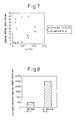
- the grain sizes of the equiaxed crystals when adding to molten steel containing C:0.80%, Si:0.20%, Mn:0.70%, P:0.010%, S:0.01% Al in an amount of 0.003 to 0.03%, then adding Zr in amounts of 0 wt ppm and 20 wt ppm are shown in FIG. 7. It is learned that along with an increase in the Al concentration, the grain size of the equiaxed crystals becomes larger. The results of measurement of the number of inclusions at this time are shown in FIG. 8. It is learned that compared with the addition of Al+Zr, when not adding Al and adding Zr, the number of inclusions becomes larger. Therefore, in the latter case, the equiaxed crystals are believed to become finer.
- Zr has to be contained in a mole fraction of 0.2 or more.
- FIG. 2 shows the relationship between the numerical density of 0.1 to 10 ⁇ m Zr-containing inclusions and the proeutectoid cementite area ratio
- FIG. 3 shows the relationship of the amount of addition of Zr and the micromartensite size
- FIG. 4 shows the relationship of the numerical density of 0.1 to 10 ⁇ m Zr-containing inclusions and the micromartensite size
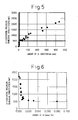
- FIG. 5 shows the relationship between the amount of Zr addition and the numerical density of 0.1 to 10 ⁇ m Zr-containing inclusions.
- FIG. 6 shows the effects of the amount of Al on the numerical density of predetermined sizes of Zr-based inclusions.
- the high carbon steel wire rod of each of the chemical compositions shown in Table 1 was hot rolled after continuous casting to obtain steel wire rod of a diameter of 11 mm, then was directly patented or reheated and then patented under various conditions. (Lead patenting conditions: reheating at 950°Cx5 min->isothermal transformation 540°Cx4 min).
- This patenting material was polished by embedded abrasives and chemically corroded by dodecyl sulfonic acid. It was then observed under an SEM to determine the proeutectoid cementite area ratio in the center region (r ⁇ 0.2d) of a length (r) from the center (p) of less than 20% of the wire rod radius (d). Further, the material was polished by embedded abrasives and chemically corroded using a Nytal solution and then observed under an SEM to determine the size of the micromartensite grains at the C section. Further, the inventors used TEM observation and XEDS analysis of a carbon replica sample to analyze the numerical density, size distribution, and chemical composition of the inclusions.
- the chemical compositions of the steel materials used for the evaluation are shown in Table 1.
- the data on the inclusions of the steel materials, the proeutectoid cementite area ratio at the center parts, and the micromartensite size in the C sections are shown in Table 2.
- the numerical density of the inclusions was obtained by counting by TEM observation of the extracted carbon replica sample.
- the sample surface was diamond polished, the surface layer was etched 5 to 10 ⁇ m by the speed etch method, and the exposed inclusions were extracted by the two-stage carbon replica method. This was observed under a TEM. The number of inclusions per unit area of the carbon film was counted.
- Invention Steel Nos. 1 to 18 contained Zr in amounts of 10 wt ppm to 100 wt ppm in the steel, so could give high strength, high toughness, high carbon wire rods satisfying all of the conditions of having Zr inclusions with mole fractions of Zr of 0.2 or more and with numerical densities of 500 to 3000/mm 2 , having average values of the proeutectoid cementite area ratios of 5% or less in the center region of less than 20% of the wire rod radius from the center of the wire rod, and having micromartensite sizes of 100 ⁇ m.
- Comparative Steels U, W, and X contained Zr, but the amounts added were small ones of 10 ppm or less, so the numerical densities of the Zr-containing inclusions were small or the contents of Zr in the inclusions were small, so sufficient equiaxiality could not be obtained and therefore center segregation of the carbon could not be suppressed and as a result the formation of coarse micromartensite or proeutectoid cementite could not be suppressed.
- Comparative Steels S, T, V, and Y were steel materials not containing Zr, therefore did not have inclusions containing Zr and could not give sufficient equiaxiality.
- Molten steel containing C:0.80%, Si:0.20%, Mn:0.70%, P:0.010%, and S:0.01% was melted in a converter, added with Ti or Al, then added with Zr in the ladle.
- This molten steel was cast by a bloom continuous casting machine. An electromagnetic stirring is performed in the mold. Further, depending on the case, at the end of the solidification, rolling reduction was applied by the light reduction method. The size of the bloom was 300 mm x 500 mm. The bloom was cut and evaluated by the above methods for the solidified structure, center segregation, and inclusions. (After casting, the bloom was rolled to a wire rod which was then measured for the area ratio of the proeutectoid cementite.)
- Comparative Steel No. 8 shows a bloom obtained without addition of Zr. Almost no equiaxed crystals were formed. Even if formed, the equiaxed crystals were extremely coarse and the aggregate grain size was also large. As opposed to this, in Invention Steel Nos. 19 to 21 each showing Ti deoxidation, then addition of Zr, even without electromagnetic stirring, the equiaxed crystal zone ratio was large and the grain size of the equiaxed crystals was small. The number of the inclusions comprised mostly of ZrO 2 was remarkably greater than that of Comparative Steel No. 8. It is believed that these functioned as nuclei-forming sites for the equiaxed crystals. In each case, the segregated grain size also became very small.
- Invention Steel No. 22 the amount of addition of Al was considerably large, so the number of inclusions was somewhat small. Therefore, the equiaxed crystal zone ratio was somewhat small, but even so there was an effect of improvement. As opposed to this, if, like in Comparative Steel No. 9, adding Al over the upper limit of the present invention, the effect of the Zr in increasing the equiaxed crystal zone ratio and reducing the equiaxed crystal grain size is small. Invention Steel No. 23 used both mold electromagnetic stirring and Zr addition, but compared with only Zr addition, the formation of equiaxed crystals was promoted and the segregated grain size became very small. Comparative Steel Nos. 11 and 12 used only mold electromagnetic stirring to obtain equiaxed crystals, but the equiaxed crystal zone ratios were considerably large compared with the present invention steels.
- Invention Steel No. 24 shows the case of no electromagnetic stirring or light rolling reduction, but addition of Zr. Even with this, the result was a relatively small segregated grain size.
- Invention Steel No. 25 shows the case of not adding any Al or Ti at all, but adding Zr. Compared with the case of adding Ti, the equiaxed crystals were somewhat small, but compared with the comparative steels, a clear effect of improvement was obtained.
- Invention Steel No. 26 had a concentration of Al of 0.03%, but since Zr was added in the state containing Al in an amount of 0.005%, a large number of fine equiaxed crystals was obtained.
- the present invention specifies the chemical compositions of the steel material used and causes inclusions containing Zr and having good coherency with the primary crystals ⁇ to distribute in it so as to improve the equiaxed grain size of the solidified structure and suppress center segregation and thereby obtain a hard steel wire rod or piano wire rod with an average area ratio of the proeutectoid cementite of 5% or less near the center of the rolled wire rod and a micromartensite size in the C-section of 100 ⁇ m or less and consequently improve the performance as PC steel wire, galvanized steel wire, spring use steel wire, suspension bridge use cables etc.
Landscapes
- Chemical & Material Sciences (AREA)
- Engineering & Computer Science (AREA)
- Mechanical Engineering (AREA)
- Organic Chemistry (AREA)
- Metallurgy (AREA)
- Materials Engineering (AREA)
- Chemical Kinetics & Catalysis (AREA)
- Physics & Mathematics (AREA)
- Thermal Sciences (AREA)
- Manufacturing & Machinery (AREA)
- Crystallography & Structural Chemistry (AREA)
- Treatment Of Steel In Its Molten State (AREA)
- Heat Treatment Of Steel (AREA)
Applications Claiming Priority (7)
| Application Number | Priority Date | Filing Date | Title |
|---|---|---|---|
| JP2003017640A JP4319839B2 (ja) | 2003-01-27 | 2003-01-27 | 高強度、高靭性高炭素鋼線材 |
| JP2003017719 | 2003-01-27 | ||
| JP2003017640 | 2003-01-27 | ||
| JP2003017719A JP4319840B2 (ja) | 2003-01-27 | 2003-01-27 | 高強度、高靭性高炭素鋼線材とその製造方法 |
| JP2003094190A JP4250008B2 (ja) | 2003-03-31 | 2003-03-31 | 条鋼用鋼の製造方法 |
| JP2003094190 | 2003-03-31 | ||
| PCT/JP2004/000715 WO2004067789A1 (ja) | 2003-01-27 | 2004-01-27 | 高強度、高靭性高炭素鋼線材とその製造方法 |
Publications (3)
| Publication Number | Publication Date |
|---|---|
| EP1589124A1 true EP1589124A1 (de) | 2005-10-26 |
| EP1589124A4 EP1589124A4 (de) | 2007-10-17 |
| EP1589124B1 EP1589124B1 (de) | 2010-05-05 |
Family
ID=32830623
Family Applications (1)
| Application Number | Title | Priority Date | Filing Date |
|---|---|---|---|
| EP04705540A Expired - Lifetime EP1589124B1 (de) | 2003-01-27 | 2004-01-27 | Walzdraht aus hochfestem hochzähem kohlenstoffreichem stahl und herstellungsverfahren dafür |
Country Status (6)
| Country | Link |
|---|---|
| US (1) | US7462250B2 (de) |
| EP (1) | EP1589124B1 (de) |
| KR (1) | KR100695371B1 (de) |
| BR (1) | BRPI0406929B1 (de) |
| DE (1) | DE602004026995D1 (de) |
| WO (1) | WO2004067789A1 (de) |
Cited By (3)
| Publication number | Priority date | Publication date | Assignee | Title |
|---|---|---|---|---|
| DE102009010442A1 (de) * | 2009-02-26 | 2010-09-02 | C.D. Wälzholz GmbH | Mikrolegierter Kohlenstoffstahl als texturgewalzter Bandstahl, insbesondere für Federelemente |
| US8308875B2 (en) * | 2006-10-12 | 2012-11-13 | Nippon Steel Corporation | High-strength wire rod excellent in drawing characteristics and method of manufacturing the same |
| CN105154949A (zh) * | 2015-10-14 | 2015-12-16 | 贵州钢绳股份有限公司 | 高强度、大直径电镀锌钢丝生产工艺 |
Families Citing this family (20)
| Publication number | Priority date | Publication date | Assignee | Title |
|---|---|---|---|---|
| JP4788861B2 (ja) | 2003-11-28 | 2011-10-05 | ヤマハ株式会社 | 楽器弦用鋼線およびその製造方法 |
| KR100711469B1 (ko) * | 2005-12-12 | 2007-04-24 | 주식회사 포스코 | 2000MPa급 과공석 강선의 제조방법 |
| KR101445868B1 (ko) * | 2007-06-05 | 2014-10-01 | 주식회사 포스코 | 피로수명이 우수한 고탄소 강판 및 그 제조 방법 |
| JP5353883B2 (ja) | 2008-04-28 | 2013-11-27 | 新日鐵住金株式会社 | 鋼の連続鋳造方法およびそれに用いる電磁攪拌装置 |
| JP5455181B2 (ja) * | 2008-06-13 | 2014-03-26 | 株式会社ブリヂストン | ゴム物品補強用スチールコードおよびそれを用いた空気入りタイヤ |
| KR101008112B1 (ko) | 2008-10-24 | 2011-01-13 | 주식회사 포스코 | 선재 냉각용 폴리머 솔루션 및 그 제조방법과 상기 폴리머 솔루션을 이용한 냉각방법 및 그 냉각방법에 의해 제조된 선재 |
| JP4842408B2 (ja) * | 2010-01-25 | 2011-12-21 | 新日本製鐵株式会社 | 線材、鋼線、及び線材の製造方法 |
| CN101875059B (zh) * | 2010-05-20 | 2013-02-13 | 宝钢集团上海二钢有限公司 | 一种制造ф5.0mm1860MPa超高强度热镀锌钢丝的方法 |
| KR101142427B1 (ko) * | 2010-06-15 | 2012-05-16 | 고려제강 주식회사 | 고탄소강 선재를 이용한 우산 |
| KR101357846B1 (ko) * | 2011-03-01 | 2014-02-05 | 신닛테츠스미킨 카부시키카이샤 | 신선성 및 신선 후의 피로 특성이 우수한 고탄소강 선재 |
| CN102936688B (zh) * | 2012-11-21 | 2014-11-19 | 武汉钢铁(集团)公司 | 抗拉强度≥2000MPa的桥梁缆索用线材及生产方法 |
| CN103962401B (zh) * | 2014-01-17 | 2016-01-13 | 东南大学 | 一种低缺陷高强度钢丝的生产方法 |
| JP2016014169A (ja) * | 2014-07-01 | 2016-01-28 | 株式会社神戸製鋼所 | 鋼線用線材および鋼線 |
| JP6369288B2 (ja) * | 2014-10-28 | 2018-08-08 | 新日鐵住金株式会社 | 炭素鋼鋳片及び炭素鋼鋳片の製造方法 |
| CN106437543A (zh) * | 2016-11-30 | 2017-02-22 | 无锡双马钻探工具有限公司 | 一种高韧性非开挖定向钻杆 |
| PL3783120T3 (pl) * | 2019-08-23 | 2024-02-19 | Vossloh Fastening Systems Gmbh | Drut sprężynowy, zacisk napinający uformowany z niego i sposób wytwarzania takiego drutu sprężynowego |
| CN116652143B (zh) * | 2023-04-12 | 2024-05-07 | 重庆大学 | 一种大方坯连铸轻压下和重压下在线协同控制方法 |
| CN116657041A (zh) * | 2023-05-26 | 2023-08-29 | 本钢板材股份有限公司 | 一种预应力钢丝及钢绞线用盘条钢c82d2及生产工艺 |
| CN116716555A (zh) * | 2023-06-13 | 2023-09-08 | 江苏省沙钢钢铁研究院有限公司 | 一种盘条及其制备方法和应用 |
| CN118814088B (zh) * | 2024-06-28 | 2025-09-05 | 马鞍山钢铁股份有限公司 | 一种具有良好耐蚀性的2300MPa级高强度钢绞线用钢及其生产方法及一种具有良好耐蚀性的2300MPa级高强度钢绞线 |
Family Cites Families (12)
| Publication number | Priority date | Publication date | Assignee | Title |
|---|---|---|---|---|
| EP0493807B1 (de) * | 1990-12-28 | 1996-01-31 | Kabushiki Kaisha Kobe Seiko Sho | Reifenkord aus Stahldrähten mit hoher Festigkeit und hoher Zähigkeit und Verfahren zum Herstellung desselben |
| JPH06299286A (ja) * | 1993-04-13 | 1994-10-25 | Nippon Steel Corp | 酸化物粒子を制御した鋼およびその製造方法 |
| JPH0741900A (ja) * | 1993-07-28 | 1995-02-10 | Nippon Steel Corp | 耐遅れ破壊特性に優れた高強度pc棒線 |
| JP3647969B2 (ja) * | 1996-04-22 | 2005-05-18 | 新日本製鐵株式会社 | 鋼中有害介在物の微細化方法 |
| EP1018565A4 (de) * | 1998-06-23 | 2003-07-23 | Sumitomo Metal Ind | Walzdraht und verfahren zur herstellung des entsprechenden stahls |
| JP2000178685A (ja) * | 1998-12-15 | 2000-06-27 | Sumitomo Metal Ind Ltd | 疲労特性及び伸線加工性に優れた鋼線材とその製造方法 |
| US6447622B1 (en) | 1999-06-16 | 2002-09-10 | Nippon Steel Corporation | High carbon steel wire excellent in wire-drawability and in fatigue resistance after wire drawing |
| JP3601388B2 (ja) * | 1999-12-17 | 2004-12-15 | 住友金属工業株式会社 | 鋼線材及び鋼線材用鋼の製造方法 |
| JP4435953B2 (ja) * | 1999-12-24 | 2010-03-24 | 新日本製鐵株式会社 | 冷間鍛造用棒線材とその製造方法 |
| DE60024495T2 (de) | 2000-03-06 | 2006-08-24 | Nippon Steel Corp. | Stahl mit ausgezeichneter Schmiedbarkeit und Bearbeitbarkeit |
| JP4264189B2 (ja) * | 2000-10-24 | 2009-05-13 | 新日本製鐵株式会社 | 高炭素鋼用溶鋼の処理方法 |
| JP4422362B2 (ja) * | 2001-04-25 | 2010-02-24 | 新日本製鐵株式会社 | 微細な凝固組織を備えた鋳片の製造方法 |
-
2004
- 2004-01-27 EP EP04705540A patent/EP1589124B1/de not_active Expired - Lifetime
- 2004-01-27 BR BRPI0406929A patent/BRPI0406929B1/pt not_active IP Right Cessation
- 2004-01-27 KR KR1020057013735A patent/KR100695371B1/ko not_active Expired - Fee Related
- 2004-01-27 DE DE602004026995T patent/DE602004026995D1/de not_active Expired - Lifetime
- 2004-01-27 US US10/543,513 patent/US7462250B2/en not_active Expired - Fee Related
- 2004-01-27 WO PCT/JP2004/000715 patent/WO2004067789A1/ja not_active Ceased
Cited By (6)
| Publication number | Priority date | Publication date | Assignee | Title |
|---|---|---|---|---|
| US8308875B2 (en) * | 2006-10-12 | 2012-11-13 | Nippon Steel Corporation | High-strength wire rod excellent in drawing characteristics and method of manufacturing the same |
| DE102009010442A1 (de) * | 2009-02-26 | 2010-09-02 | C.D. Wälzholz GmbH | Mikrolegierter Kohlenstoffstahl als texturgewalzter Bandstahl, insbesondere für Federelemente |
| WO2010097078A3 (de) * | 2009-02-26 | 2010-12-23 | C.D. Wälzholz GmbH | Mikrolegierter kohlenstoffstahl als texturgewalzter bandstahl insbesondere für federelemente |
| CN102356174A (zh) * | 2009-02-26 | 2012-02-15 | C.D.威尔斯有限公司 | 作为纹理化轧制带钢尤其用于弹簧元件的微合金碳钢 |
| US9290832B2 (en) | 2009-02-26 | 2016-03-22 | C.D. Waelzholz Gmbh | Micro-alloyed carbon steel as a texture-rolled strip steel, in particular for spring elements |
| CN105154949A (zh) * | 2015-10-14 | 2015-12-16 | 贵州钢绳股份有限公司 | 高强度、大直径电镀锌钢丝生产工艺 |
Also Published As
| Publication number | Publication date |
|---|---|
| US7462250B2 (en) | 2008-12-09 |
| DE602004026995D1 (de) | 2010-06-17 |
| KR20050094463A (ko) | 2005-09-27 |
| WO2004067789A1 (ja) | 2004-08-12 |
| BRPI0406929B1 (pt) | 2016-01-19 |
| KR100695371B1 (ko) | 2007-03-16 |
| EP1589124A4 (de) | 2007-10-17 |
| BRPI0406929A (pt) | 2006-01-03 |
| EP1589124B1 (de) | 2010-05-05 |
| US20060137776A1 (en) | 2006-06-29 |
Similar Documents
| Publication | Publication Date | Title |
|---|---|---|
| US7462250B2 (en) | High strength, high toughness, high carbon steel wire rod and method of production of same | |
| US5514065A (en) | Wear- and seizing-resistant roll for hot rolling and method of making the roll | |
| KR102162777B1 (ko) | 박 강판 및 도금 강판, 그리고, 열연 강판의 제조 방법, 냉연 풀 하드 강판의 제조 방법, 박 강판의 제조 방법 및 도금 강판의 제조 방법 | |
| CN100366776C (zh) | 高强度、高韧性高碳钢线材及其制造方法 | |
| CA2138801C (en) | Thin steel sheet having excellent stretch-flange ability and process for producing the same | |
| EP0924313A1 (de) | Ferritischer Chromstahl mit Widerstand gegen Rillenbildung | |
| JP4751152B2 (ja) | 耐食性と穴拡げ性に優れた溶融亜鉛めっき高強度鋼板、合金化溶融亜鉛めっき高強度鋼板、およびそれらの製造方法 | |
| TWI394843B (zh) | Melt Method of Ti - containing Very Low Carbon Steel and Manufacturing Method of Ti - containing Very Low Carbon Steel Casting | |
| JP2019183276A (ja) | 熱間圧延用遠心鋳造複合ロール及びその製造方法 | |
| JP2012200783A (ja) | 鋳片の連続鋳造方法および連続鋳造鋳片 | |
| CN116716555A (zh) | 一种盘条及其制备方法和应用 | |
| JP7666328B2 (ja) | 熱間圧延用遠心鋳造複合ロール | |
| JP4780084B2 (ja) | 表面性状の良好なチタンキルド鋼材およびその製造方法 | |
| JP4303578B2 (ja) | 鋼の連続鋳造鋳片の中心欠陥低減方法 | |
| JPH0676643B2 (ja) | 加工性のすぐれた高強度鋼線材 | |
| JP7360033B2 (ja) | 鋼の薄肉鋳片及び鋼の薄肉鋳片製造方法 | |
| US8302667B2 (en) | Cast iron semi-finished product excellent in workability and method of production of the same | |
| JP3450777B2 (ja) | 希土類元素含有ステンレス鋼の製造方法 | |
| JP5103964B2 (ja) | 表面性状の良好な深絞り用鋼板およびその製造方法 | |
| JP2000001745A (ja) | 表面性状が良好で耐食性に優れた深絞り用鋼板およびその製造方法 | |
| JP7644344B2 (ja) | スラブ鋳片の連続鋳造方法 | |
| JP2000001742A (ja) | 表面性状が良好で焼付硬化性に優れる深絞り用鋼板およびその製造方法 | |
| JP2018193595A (ja) | 炭素鋼鋳片及び炭素鋼鋳片の製造方法 | |
| JP3775178B2 (ja) | 薄鋼板およびその製造方法 | |
| JP2000001746A (ja) | 表面性状の良好な深絞り用鋼板およびその製造方法 |
Legal Events
| Date | Code | Title | Description |
|---|---|---|---|
| PUAI | Public reference made under article 153(3) epc to a published international application that has entered the european phase |
Free format text: ORIGINAL CODE: 0009012 |
|
| 17P | Request for examination filed |
Effective date: 20050818 |
|
| AK | Designated contracting states |
Kind code of ref document: A1 Designated state(s): AT BE BG CH CY CZ DE DK EE ES FI FR GB GR HU IE IT LI LU MC NL PT RO SE SI SK TR |
|
| AX | Request for extension of the european patent |
Extension state: AL LT LV MK |
|
| DAX | Request for extension of the european patent (deleted) | ||
| RBV | Designated contracting states (corrected) |
Designated state(s): DE FR GB |
|
| A4 | Supplementary search report drawn up and despatched |
Effective date: 20070917 |
|
| 17Q | First examination report despatched |
Effective date: 20080118 |
|
| GRAP | Despatch of communication of intention to grant a patent |
Free format text: ORIGINAL CODE: EPIDOSNIGR1 |
|
| GRAS | Grant fee paid |
Free format text: ORIGINAL CODE: EPIDOSNIGR3 |
|
| GRAA | (expected) grant |
Free format text: ORIGINAL CODE: 0009210 |
|
| AK | Designated contracting states |
Kind code of ref document: B1 Designated state(s): DE FR GB |
|
| REG | Reference to a national code |
Ref country code: GB Ref legal event code: FG4D |
|
| REF | Corresponds to: |
Ref document number: 602004026995 Country of ref document: DE Date of ref document: 20100617 Kind code of ref document: P |
|
| PLBE | No opposition filed within time limit |
Free format text: ORIGINAL CODE: 0009261 |
|
| STAA | Information on the status of an ep patent application or granted ep patent |
Free format text: STATUS: NO OPPOSITION FILED WITHIN TIME LIMIT |
|
| 26N | No opposition filed |
Effective date: 20110208 |
|
| REG | Reference to a national code |
Ref country code: DE Ref legal event code: R097 Ref document number: 602004026995 Country of ref document: DE Effective date: 20110207 |
|
| REG | Reference to a national code |
Ref country code: DE Ref legal event code: R081 Ref document number: 602004026995 Country of ref document: DE Owner name: NIPPON STEEL & SUMITOMO METAL CORPORATION, JP Free format text: FORMER OWNER: NIPPON STEEL CORP., TOKIO/TOKYO, JP Effective date: 20130227 Ref country code: DE Ref legal event code: R082 Ref document number: 602004026995 Country of ref document: DE Representative=s name: VOSSIUS & PARTNER, DE Effective date: 20130227 Ref country code: DE Ref legal event code: R082 Ref document number: 602004026995 Country of ref document: DE Representative=s name: VOSSIUS & PARTNER PATENTANWAELTE RECHTSANWAELT, DE Effective date: 20130227 |
|
| REG | Reference to a national code |
Ref country code: FR Ref legal event code: CA Effective date: 20130913 Ref country code: FR Ref legal event code: CD Owner name: NIPPON STEEL & SUMITOMO METAL CORPORATION, JP Effective date: 20130913 |
|
| REG | Reference to a national code |
Ref country code: FR Ref legal event code: PLFP Year of fee payment: 13 |
|
| REG | Reference to a national code |
Ref country code: FR Ref legal event code: PLFP Year of fee payment: 14 |
|
| REG | Reference to a national code |
Ref country code: FR Ref legal event code: PLFP Year of fee payment: 15 |
|
| PGFP | Annual fee paid to national office [announced via postgrant information from national office to epo] |
Ref country code: FR Payment date: 20181213 Year of fee payment: 16 |
|
| PGFP | Annual fee paid to national office [announced via postgrant information from national office to epo] |
Ref country code: GB Payment date: 20190123 Year of fee payment: 16 Ref country code: DE Payment date: 20190115 Year of fee payment: 16 |
|
| REG | Reference to a national code |
Ref country code: DE Ref legal event code: R082 Ref document number: 602004026995 Country of ref document: DE Representative=s name: VOSSIUS & PARTNER PATENTANWAELTE RECHTSANWAELT, DE Ref country code: DE Ref legal event code: R081 Ref document number: 602004026995 Country of ref document: DE Owner name: NIPPON STEEL CORPORATION, JP Free format text: FORMER OWNER: NIPPON STEEL & SUMITOMO METAL CORPORATION, TOKYO, JP |
|
| REG | Reference to a national code |
Ref country code: DE Ref legal event code: R119 Ref document number: 602004026995 Country of ref document: DE |
|
| GBPC | Gb: european patent ceased through non-payment of renewal fee |
Effective date: 20200127 |
|
| PG25 | Lapsed in a contracting state [announced via postgrant information from national office to epo] |
Ref country code: FR Free format text: LAPSE BECAUSE OF NON-PAYMENT OF DUE FEES Effective date: 20200131 Ref country code: GB Free format text: LAPSE BECAUSE OF NON-PAYMENT OF DUE FEES Effective date: 20200127 Ref country code: DE Free format text: LAPSE BECAUSE OF NON-PAYMENT OF DUE FEES Effective date: 20200801 |