EP1580983B1 - Schaltung zur Erzeugung eines äusseren Synchronsignals und zur Messung von Phasendifferenz - Google Patents
Schaltung zur Erzeugung eines äusseren Synchronsignals und zur Messung von Phasendifferenz Download PDFInfo
- Publication number
- EP1580983B1 EP1580983B1 EP04025823A EP04025823A EP1580983B1 EP 1580983 B1 EP1580983 B1 EP 1580983B1 EP 04025823 A EP04025823 A EP 04025823A EP 04025823 A EP04025823 A EP 04025823A EP 1580983 B1 EP1580983 B1 EP 1580983B1
- Authority
- EP
- European Patent Office
- Prior art keywords
- signal
- digital video
- frm
- phase
- synchronous signal
- Prior art date
- Legal status (The legal status is an assumption and is not a legal conclusion. Google has not performed a legal analysis and makes no representation as to the accuracy of the status listed.)
- Expired - Lifetime
Links
Images





Classifications
-
- H—ELECTRICITY
- H04—ELECTRIC COMMUNICATION TECHNIQUE
- H04N—PICTORIAL COMMUNICATION, e.g. TELEVISION
- H04N5/00—Details of television systems
- H04N5/04—Synchronising
- H04N5/12—Devices in which the synchronising signals are only operative if a phase difference occurs between synchronising and synchronised scanning devices, e.g. flywheel synchronising
-
- H—ELECTRICITY
- H04—ELECTRIC COMMUNICATION TECHNIQUE
- H04N—PICTORIAL COMMUNICATION, e.g. TELEVISION
- H04N5/00—Details of television systems
- H04N5/04—Synchronising
-
- H—ELECTRICITY
- H04—ELECTRIC COMMUNICATION TECHNIQUE
- H04N—PICTORIAL COMMUNICATION, e.g. TELEVISION
- H04N5/00—Details of television systems
- H04N5/04—Synchronising
- H04N5/06—Generation of synchronising signals
Definitions
- the present invention relates to a circuit that generates an external synchronous signal (an external frame synchronous signal and an external horizontal synchronous signal) from an external synchronous reference signal.
- the external synchronous signal is used as, for example, a timing signal when the waveform of a digital video signal (HD-SDI or SD-SDI) is displayed.
- the present invention also relates to a circuit that measures a phase difference between the external synchronous reference signal and the digital video signal while the external synchronous signal is being generated.
- Fig. 1 shows the flow of a digital video signal.
- a switcher 12 switches one of the multiple digital video signals to another.
- the switcher then outputs the switched digital video signal (the selected digital video signal 14).
- the phase of a digital video signal 13a selected before the switching must match the phase of a digital video signal 13b selected after the switching. This is because each of the digital video signals has a switching point and because when the digital video signal 13 is switched at a point other than the switching point, a video in the digital video signal 14, outputted by the switcher, is disturbed every time the signal is switched.
- FIG. 2 shows an example of a system that measures the phase of each digital video signal.
- an external reference synchronous signal 24 (an analog reference synchronous signal: a composite of a horizontal synchronous signal and a vertical synchronous signal) from an external reference synchronous generator 21 is inputted to a waveform monitor 22.
- an external frame synchronous signal (an external vertical synchronous signal) is separated from the external reference synchronous signal 24.
- two digital video signals 13a and 13b from the respective video signal output device 11 are inputted to the waveform monitor 22.
- one of the digital video signals 13a and 13b is connected to the signal processing circuit 23. Operations of the signal processing circuit will be described assuming that the digital video signal 13a is connected to the signal processing circuit 23.
- a clock (a parallel clock: PCLK) of the digital video signal 13a is reproduced from the digital video signal 13a.
- the signal processing circuit 23 generates an external horizontal synchronous signal from the external frame synchronous signal and the clock of the digital video signal 13a; the external horizontal synchronous signal is phase-synchronous with the external frame synchronous signal of the external reference synchronous signal 24 and has the same period as the horizontal synchronous period of the digital video signal 13a.
- Such signal processing is disclosed in Patent Document 1 or 2.
- the external frame synchronous signal corresponds to a vertical synchronous signal for an SDTV signal shown in Patent Document 1 or 2. Further, the external horizontal synchronous signal corresponds to a trigger signal.
- the waveform monitor 22 displays the waveform of the digital video signal 13a using the external frame synchronous signal and external horizontal synchronous signal instead of a frame synchronous signal (internal frame synchronous signal) and a horizontal synchronous signal (internal horizontal synchronous signal) of the digital video signal 13a.
- the external synchronous signal is used in place of the internal synchronous signal, the phase difference between the external reference synchronous signal 24 and the digital video signal 13a is reflected in the display of the waveform of the digital video signal 13a.
- Observing the display of the waveform of the digital video signal 13a (for example, a start point of the horizontal synchronous signal of the digital video signal 13a) enables the phase of the digital video signal 13a to be measured.
- the position of a marker is adjusted so that the marker aligns with the start point of the horizontal synchronous signal of the digital video signal 13a.
- the digital video signal 13b is connected to the signal processing circuit 23.
- the waveform of the digital video signal 13b is displayed using the external frame synchronous signal and the external horizontal synchronous signal.
- the phase difference between the external reference synchronous signal 24 and the digital video signal 13b is reflected in the display of the waveform of the digital video signal 13b.
- Observing the display of the waveform of the digital video signal 13b (for example, a start point of the horizontal synchronous signal of the digital video signal 13b) enables the phase of the digital video signal 13b to be measured.
- the phase of the digital video signal 13b can be adjusted using a phase adjuster (not shown; for example, a phase adjusting circuit inside the video signal output device 11 or a phase adjuster connected between the video signal output device 11 and the waveform monitor 22).
- the phases of multiple digital video signals (13a and 13b) can be matched with each other by adjusting the phase of the digital video signal 13b while viewing the waveform monitor 22.
- an external synchronous signal an external frame synchronous signal and an external horizontal synchronous signal
- a circuit that generates an external synchronous signal comprises: means for inputting an external frame synchronous signal (FRM_SYNC) as well as a frame synchronous signal (FRM) and a horizontal synchronous signal (HBK) of a digital video signal; means for measuring a phase difference between the external frame synchronous signal (FRM_SYNC) and the frame synchronous signal (FRM) of the digital video signal; means for generating a signal (EXT_H) having the same period as that of the horizontal synchronous signal (HBK) of the digital video signal, the signal (EXT_H) having the measured phase difference with reference to the frame synchronous signal (FRM) of the digital video; and means for generating a signal (EXT_F) having the same period as that of the frame synchronous signal (FRM) of the digital video signal, the signal (EXT_F) having the measured phase difference with reference to the frame synchronous signal (FRM) of the digital video.
- the circuit that generates the external synchronous signal comprises: means (4) for generating a pulse signal (FRM_SYNC_PS) that is phase-synchronous with an external frame synchronous signal (FRM_SYNC): means (1) for generating a pulse signal (FRM_PS) that is phase-synchronous with a frame synchronous signal (FRM) of a digital video signal; means (5) for generating a pulse signal (HBK_PS) that is phase-synchronous with a horizontal synchronous signal (HBK) of the digital video signal; means (6,7) for measuring a number of lines by which a phase of the pulse signal (FRM_SYNC_PS) of the external frame synchronous signal is separated from a phase of the pulse signal (FRM_PS) of the frame synchronous signal of the digital video signal in terms of a period of the horizontal synchronous signal (HBK) of the digital video signal; means (2,3) for measuring a number of dots by which the phase of the pulse signal (FRM_SYNC_PS) of the external frame synchronous signal is
- a circuit that measures a phase difference comprises: means (4) for generating a pulse signal (FRM_SYNC_PS) that is phase-synchronous with an external frame synchronous signal (FRM_SYNC); means (1) for generating a pulse signal (FRM_PS) that is phase-synchronous with a frame synchronous signal (FRM) of a digital video signal; means (5) for generating a pulse signal (HBK_PS) that is phase-synchronous with a horizontal synchronous signal (HBK) of the digital video signal; means (6,7) for measuring a number of lines by which a phase of the pulse signal (FRM_SYNC_PS) of the external frame synchronous signal is separated from a phase of the pulse signal (FRM_PS) of the frame synchronous signal of the digital video signal in terms of a period of the horizontal synchronous signal (HBK) of the digital video signal; and means (2,3) for measuring a number of dots by which the phase of the pulse signal (FRM_SYNC_PS) of the external frame synchronous signal is
- a waveform monitor comprises the circuit that measures the phase difference, and memory means for storing the measured number of lines and the measured number of dots. The stored number of lines and the measured number of dots are displayed on the waveform monitor.
- the waveform monitor further comprises a CPU that calculates a difference between the number of lines and the number of dots of a digital video signal inputted as a first input, and the number of lines and the number of dots for another digital video signal inputted as a second input.
- the calculated difference is displayed on the waveform monitor as a relative phase difference between the digital video signal as the first input and the digital video signal as the second input.
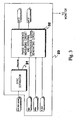
- Fig. 3 is a schematic block diagram of a part of a signal processing circuit for a waveform monitor, which circuit comprises an external synchronous signal generating circuit and a phase difference measuring circuit according to the present invention.
- the external reference synchronous signal 24 (EXT_REF_SIGNAL) is inputted to a sync separator 31 of the signal processing circuit 23.
- the sync separator separates an external frame synchronous signal (FRM_SYNC) from the external reference synchronous signal 24 (EXT_REF_SIGNAL).
- a clock (PCLK) is reproduced from a digital video signal.
- a horizontal synchronous signal (HBK) and a frame synchronous signal (FRM) of the digital video signal 13 are generated from the clock (PCLK) and the digital video signal.
- the external frame synchronous signal (FRM_SYNC) as well as the horizontal synchronous signal (HBK), frame synchronous signal (FRM), and clock (PCLK) of the digital video signal are inputted to an external synchronous signal generating circuit and phase difference measuring circuit 32 according to the present invention.
- the phase difference measuring circuit measures the phase difference between the external frame synchronous signal (FRM_SYNC) and the frame synchronous signal (FRM) of the digital video signal, that is, the phase difference between the external reference synchronous signal (EXT_REF_SIGNAL) and the frame synchronous signal (FRM) of the digital video signal.
- the external synchronous signal generating circuit generates an external horizontal timing signal (EXT_H) and an external frame timing signal (EXT_F) that are phase-synchronous with the external frame synchronous signal (or external synchronous reference signal).
- the waveform monitor uses the external horizontal timing signal (EXT_H) and external frame timing signal (EXT_F) to display the waveform of the digital video signal.
- Fig. 4 is a block diagram specifically showing the external synchronous signal generating circuit and phase difference measuring circuit according to the present invention.
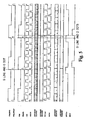
- Fig. 5 is an example of a timing chart of signals processed or generated in the external synchronous signal generating circuit and phase difference measuring circuit according to the present invention.
- the period of the external frame synchronous signal (FRM_SYNC) is the same as that of the frame synchronous signal (FRM) of the digital video signal and is 25 times as large as that of the clock (PCLK) (that is, 25 clocks).
- the period of the horizontal synchronous signal (HBK) of the digital video signal is five times as large as that of the clock (PCLK) of the digital video signal (that is, 5 clocks).
- the phase of the external frame synchronous signal (FRM_SYNC) matches the phase of the frame synchronous signal (FRM) of the digital video signal.
- the phase difference measuring circuit comprises means (4) for generating a pulse signal (FRM_SYNC_PS) which is phase-synchronous with the external frame synchronous signal (FRM_SYNC) and which has a pulse width equal to one clock period of the digital video signal.
- the means (4) for generating the pulse signal (FRM_SYNC_PS) which is phase-synchronous with the external frame synchronous signal (FRM_SYNC) is a rise detecting circuit (RISE EDGE DETECT).
- the external frame synchronous signal (FRM_SYNC) and the clock (PCLK) of the digital video signal are inputted to the rise detecting circuit.
- the rise detecting circuit outputs the pulse signal (FRM_SYNC_PS) whenever a rise in the external frame synchronous signal (FRM_SYNC) is detected (see Fig. 5 ).
- the phase difference measuring circuit comprises means (1) for generating a pulse signal (FRM_PS) which is phase-synchronous with the frame synchronous signal (FRM) of the digital video signal and which has a pulse width equal to one clock period of the digital video signal.
- the means (1) for generating the pulse signal (FRM_PS) which is phase-synchronous with the frame synchronous signal (FRM) of the digital video signal is a rise detecting circuit (RISE EDGE DETECT).
- the frame synchronous signal (FRM) of the digital video signal and the clock (PCLK) of the digital video signal are inputted to the rise detecting circuit.
- the rise detecting circuit outputs the pulse signal (FRM_PS) whenever a rise in the frame synchronous signal (FRM) of the digital video signal is detected (see Fig. 5 ).
- the phase difference measuring circuit comprises means (5) for generating a pulse signal (HBK_PS) which is phase-synchronous with the horizontal synchronous signal (HBK) of the digital video signal and which has a pulse width equal to one clock period of the digital video signal.
- the means (5) for generating the pulse signal (HBK_PS) which is phase-synchronous with the horizontal synchronous signal (HBK) of the digital video signal is a rise detecting circuit (RISE EDGE DETECT).
- the horizontal synchronous signal (HBK) of the digital video signal and the clock (PCLK) of the digital video signal are inputted to the rise detecting circuit.
- the rise detecting circuit outputs the pulse signal (HBK_PS) whenever a rise in the horizontal synchronous signal (HBK) of the digital video signal is detected (see Fig. 5 ).
- the phase difference measuring circuit further comprises means (6), (7), (2), and (3) for measuring the phase difference between the pulse signal (FRM_SYNC_PS) of the external frame synchronous signal and the pulse signal (FRM_PS) of the frame synchronous signal of the digital video signal.
- the means (6), (7), (2), and (3) for measuring the phase difference measure how far the phase of the pulse signal (FRM_SYNC_PS) of the external frame synchronous signal is separated from the phase of the pulse signal (FRM_PS) of the frame synchronous signal of the digital video signal in terms of a period of the horizontal synchronous signal (HBK) of the digital video signal, that is, the number of lines and dots by which these phases are separated from each other.
- the means (6), (7), (2), and (3) for measuring the phase difference measures the number of lines (2,3) and the number of dots (6,7) by which the phase of the pulse signal (FRM_SYNC_PS) of the external frame synchronous signal is separated from the phase of the pulse signal (FRM_PS) of the frame synchronous signal of the digital video signal.
- the means (6), (7), (2), and (3) for measuring the phase difference comprises a dot phase difference counter (DOT PHASE COUNTER), a dot phase difference register (DOT PHASE REGISTER), a line phase difference counter (LINE PHASE COUNTER), and a line phase difference register (LINE PHASE REGISTER).
- DOT PHASE COUNTER dot phase difference counter
- DOT PHASE REGISTER dot phase difference register
- LINE PHASE COUNTER line phase difference counter
- LINE PHASE REGISTER line phase difference register
- the pulse signal (HBK_PS) of the horizontal synchronous signal of the digital video signal is inputted to the dot phase difference counter (DOT PHASE COUNTER) as a reset signal.
- the clock (PCLK) of the digital video signal is also inputted to the dot phase difference counter (DOT PHASE COUNTER), which counts the clock and outputs the counter value to the dot phase difference register (DOT PHASE REGISTER).
- the dot phase difference counter resets the counter value to "0".
- the dot phase difference counter increments the counter value to "1". After one clock or dot has further elapsed, the dot phase difference counter increments the counter value to "2". After one clock or dot has further elapsed, the dot phase difference counter increments the counter value to "3”. After one clock or dot has further elapsed, the pulse signal (HBK_PS) of the horizontal synchronous signal of the digital video signal is inputted to the dot phase difference counter. The dot phase difference counter then increments the counter value to "4". Then, when one clock or dot has elapsed after the pulse signal (HBK_PS) of the horizontal synchronous signal of the digital video signal has been inputted to the dot phase difference counter, the dot phase difference counter resets the counter value to "0".
- the clock (PCLK) of the digital video signal is inputted to the dot phase difference register (DOT PHASE REGISTER) as an operation clock.
- the pulse signal (FRM_SYNC_PS) of the external frame synchronous signal is also inputted to the dot phase difference register (DOT PHASE REGISTER) as an enable signal.
- the counter value from the dot phase difference counter is also inputted to the dot phase difference register (DOT PHASE REGISTER).
- the dot phase difference register holds and outputs the counter value when the pulse signal of the external frame synchronous signal is inputted.
- the dot phase difference counter shows a counter value of "4". Accordingly, the dot phase difference register holds the counter value "4".
- the counter value held by the dot phase difference register indicates the number of dots by which the phase of the pulse signal (FRM_SYNC_PS) of the external frame synchronous signal is separated from the phase of the pulse signal (FRM_PS) of the frame synchronous signal of the digital video signal in terms of the period of the horizontal synchronous signal (HBK) of the digital video signal.
- the counter value "4" held by the dot phase difference register means that the phase of the pulse signal (FRM_SYNC_PS) of the external frame synchronous signal is separated from the phase of the pulse signal (FRM_PS) of the frame synchronous signal of the digital video signal by a "0" dot. Note that, if the counter value held by the dot phase difference register indicates "0", “1", “2”, or "3”, it means that the phases are separated from each other by "1", "2", “3", or "4" dots.
- the pulse signal (FRM_PS) of the frame synchronous signal of the digital video signal is inputted to the line phase difference counter (LINE PHASE COUNTER) as a reset signal.
- the pulse signal (HBK_PS) of the horizontal synchronous signal of the digital video signal is also inputted to the line phase difference counter (LINE PHASE COUNTER) as an enable signal.
- the clock (PCLK) of the digital video signal is also inputted to the line phase difference counter (LINE PHASE COUNTER) as an operation clock.
- the line phase difference counter (LINE PHASE COUNTER) counts the pulse signal (HBK_PS) of the horizontal synchronous signal of the digital video signal and outputs the counter value to the line phase difference register (LINE PHASE REGISTER).
- the line phase difference counter resets the counter value to "0".
- the line phase difference counter increments the counter value to "1".
- the line phase difference counter increments the counter value to "2".
- the line phase difference counter increments the counter value to "3".
- the line phase difference counter increments the counter value to "4".
- the line phase difference counter resets the counter value to "0".
- the clock (PCLK) of the digital video signal is inputted to the line phase difference register (LINE PHASE REGISTER) as an operation clock.
- the pulse signal (FRM_SYNC_PS) of the external frame synchronous signal is also inputted to the line phase difference register (LINE PHASE REGISTER) as an enable signal.
- the counter value from the line phase difference counter is also inputted to the line phase difference register (LINE PHASE REGISTER).
- the line phase difference register holds and outputs the counter value when the pulse signal of the external frame synchronous signal is inputted.
- the line phase difference counter shows a counter value of "4". Accordingly, the line phase difference register holds the counter value "4".
- the counter value held by the line phase difference register means that the number of lines by which the phase of the pulse signal (FRM_SYNC_PS) of the external frame synchronous signal is separated from the phase of the pulse signal (FRM_PS) of the frame synchronous signal of the digital video signal in terms of the period of the horizontal synchronous signal (HBK) of the digital video signal.
- the counter value "4" held by the line phase difference register means that the phase of the pulse signal (FRM_SYNC_PS) of the external frame synchronous signal is separated from the phase of the pulse signal (FRM_PS) of the frame synchronous signal of the digital video signal by a "0" line.
- means (13) for adjusting the counter value held by the dot phase difference register means (12) for adjusting the counter value held by the line phase difference register.
- the external synchronous signal generating circuit comprises means (9) for generating a signal (EXT_H_A) having the same period as that of the horizontal synchronous signal (HBK) of the digital video signal and being phase-shifted with respect to the phase of the pulse signal (FRM_PS) of the frame synchronous signal of the digital video signal on the basis of the number of dots by which the phase of the pulse signal (FRM_SYNC_PS) of the external frame synchronous signal is separated from the phase of the pulse signal (FRM_PS) of the frame synchronous signal of the digital video signal.
- the means (9) for generating the signal (EXT_H_A) having the same period as that of the horizontal synchronous signal (HBK) of the digital video signal is a comparator (DOT COMPARATOR) that outputs the signal (EXT_H_A) indicating a HIGH status when the counter value counted by the dot phase difference counter matches the counter value held by the dot phase difference register. More specifically, the counter value counted by the dot phase difference counter and the counter value held by the dot phase difference register are inputted to the comparator (DOT COMPARATOR). The clock (PCLK) of the digital video signal is also inputted to the comparator (DOT COMPARATOR) as an operation clock.
- the comparator (DOT COMPARATOR) outputs a signal indicating a HIGH status only while the counter value counted by the dot phase difference counter matches the counter value held by the dot phase difference register.
- the comparator (DOT COMPARATOR) outputs a signal indicating a LOW status during the remaining period.
- the signal (EXT_H_A) indicating the HIGH status is generated while the counter value "4" is counted (one clock).
- the external synchronous signal generating circuit comprises means (8) for generating a signal (EXT_F_A) having the same period as that of the frame synchronous signal (FRM) of the digital video signal and being phase-shifted with respect to the phase of the pulse signal (FRM_PS) of the frame synchronous signal of the digital video signal on the basis of the number of lines by which the phase of the pulse signal (FRM_SYNC_PS) of the external frame synchronous signal is separated from the phase of the pulse signal (FRM_PS) of the frame synchronous signal of the digital video signal.
- the means (8) for generating the signal (EXT_F_A) having the same period as that of the frame synchronous signal (FRM) of the digital video signal is a comparator (LINE COMPARATOR) that outputs the signal (EXT_F_A) indicating the HIGH status when the counter value counted by the line phase difference counter matches the counter value held by the line phase difference register. More specifically, the counter value counted by the line phase difference counter and the counter value held by the line phase difference register are inputted to the comparator (LINE COMPARATOR). The clock (PCLK) of the digital video signal is also inputted to the comparator (LINE COMPARATOR) as an operation clock.
- PCLK clock
- the comparator (LINE COMPARATOR) outputs a signal indicating a HIGH status only while the counter value counted by the line phase difference counter matches the counter value held by the line phase difference register.
- the comparator (LINE COMPARATOR) outputs the signal indicating a LOW status during the remaining period.
- the signal (EXT_F_A) indicating the HIGH status is generated while the counter value "4" is counted (five clocks).
- phase difference between the pulse signal (FRM_SYNC_PS) of the external frame synchronous signal and the pulse signal (FRM_PS) of the frame synchronous signal of the digital video signal is not completely reflected in the signal (EXT_F_A) having the same period as that of the frame synchronous signal (FRM) of the digital video signal. That is, only the following is reflected in the signal (EXT_F_A) having the same period as that of the frame synchronous signal (FRM) of the digital video signal: the number of lines by which the phase of the pulse signal (FRM_SYNC_PS) of the external frame synchronous signal is separated from the phase of the pulse signal (FRM_PS) of the frame synchronous signal of the digital video signal.
- the external synchronous signal generating circuit comprises means (10) for phase-shifting the signal (EXT_F_A) having the same period as that of the frame synchronous signal (FRM) of the digital video signal, on the basis of the number of dots by which the phase of the pulse signal (FRM_SYNC_PS) of the external frame synchronous signal is separated from the phase of the pulse signal (FRM_PS) of the frame synchronous signal of the digital video signal.
- a flip flop (F/F) constitutes the means (10) for phase-shifting the signal (EXT_F_A) having the same period as that of the frame synchronous signal (FRM) of the digital video signal.
- the signal (EXT_F_A) from the comparator (LINE COMPARATOR) is inputted to the flip flop (F/F).
- the clock (PCLK) of the digital video signal is also inputted to the flip flop (F/F) as an operation clock.
- the signal (EXT_H_A) from the comparator (DOT COMPARATOR) is also inputted to the flip flop (F/F) as an enable signal.
- the flip flop (F/F) latches the signal (EXT_F_A) from the comparator (LINE COMPARATOR) temporally in accordance with the signal (EXT_H_A) from the comparator (DOT COMPARATOR).
- the external frame timing signal (EXT_F) has a phase difference of 0 line and 2 dots (a phase difference of 0 line and 0 dot and a phase difference of 2 dots) with respect to the pulse signal (FRM_SYNC_PS) of the external frame synchronous signal.
- the phase difference of 0 line and 0 dot is observed between the pulse signal (FRM_SYNC_PS) of the external frame synchronous signal and the pulse signal (FRM_PS) of the frame synchronous signal of the digital video signal.
- the phase difference of 2 dots corresponds to a delay of 1 clock or dot caused by the comparator (LINE COMPARATOR) or a delay of 1 clock or dot caused by the flip flop (F/F).
- phase of the external frame timing signal (EXT_F) must be matched with the phase of the signal (EXT_H_A) outputted by the means (9) for generating the signal (EXT_H_A) having the same period as that of the horizontal synchronous signal (HBK) of the digital video signal.
- the signal (EXT_H_A) needs to have a phase delay of 1 clock or dot.
- the external synchronous signal generating circuit comprises means (11) for phase-shifting the signal (EXT_H_A) having the same period as that of the horizontal synchronous signal (HBK) of the digital video signal.
- a flip flop (F/F) constitutes the means (11) for phase-shifting the signal (EXT_H_A) having the same period as that of the horizontal synchronous signal (HBK) of the digital video signal.
- the signal (EXT_H_A) from the comparator (DOT COMPARATOR) is inputted to the flip flop (F/F).
- the clock (PCLK) of the digital video signal is also inputted to the flip flop (F/F) as an operation clock.
- the flip flop (F/F) phase-shifts the signal (EXT_F_A) from the comparator (DOT COMPARATOR) by an amount equal to the phase of one clock or dot.
- the flip flop (F/F) then outputs the phase-shifted signal as an external horizontal timing signal (EXT_H).
- the external frame timing signal (EXT_F) and the external horizontal timing signal (EXT_H) have a phase difference of 2 dots from the pulse signal (FRM_SYNC_PS) of the external frame synchronous signal, the phase difference being caused by a delay in the external synchronous signal generating circuit.
- the external synchronous signal generating circuit may comprise means (12) and (13) for phase-shifting the external frame timing signal (EXT_F) and the external horizontal timing signal (EXT_H).
- the means (13) for phase-shifting the external frame timing signal (EXT_F) and the external horizontal timing signal (EXT_H) in order to eliminate the phase difference of 2 dots resulting from the delay in the external synchronous signal generating circuit is the means (13) adjusting the counter value held by the dot phase difference register (7) and delivering the value to the comparator (DOT COMPARATOR).
- the means (13) is composed of a CPU or hardware.
- the 2 dots resulting from the delay in the external synchronous signal generating circuit are subtracted from the counter value held by the dot phase difference register (7).
- the resulting value is then outputted to the comparator (DOT COMPARATOR).
- the signal (EXT_H_A) outputted by the comparator (DOT COMPARATOR) is moved ahead by an amount equal to the phase difference of 2 dots compared to the case in which the external synchronous signal generating circuit does not comprise the means (13) for adjusting the counter value held by the dot phase difference register (7).
- the external synchronous signal generating circuit moves both external frame timing signal (EXT_F) and external horizontal timing signal (EXT_H) forward by a phase difference of 2 dots.
- the external frame timing signal (EXT_F) and external horizontal timing signal (EXT_H) have a phase difference caused by a factor other than a delay in the external synchronous signal generating circuit (a system-wide phase difference) with respect to the pulse signal (FRM_SYNC_PS) of the external frame synchronous signal
- the counter value held by the dot phase difference register (7) is adjusted so as to eliminate the phase difference.
- the external synchronous signal generating circuit may comprise the means (12) for adjusting the counter value held by the line phase difference register (3) and delivering the adjusted value to the comparator (LINE COMPARATOR).
- the means (12) is composed of a CPU or hardware.
- Fig. 6 shows another example of a timing chart of signals processed or generated in the external synchronous signal generating circuit and phase difference measuring circuit according to the present invention.
- the period of the external frame synchronous signal (FRM_SYNC) is the same as that of the frame synchronous signal (FRM) of the digital video signal and is 25 times as large as that of the clock (PCLK) of the digital video signal (that is, 25 clocks).
- the period of the horizontal synchronous signal (HBK) of the digital video signal is 5 times as large as that of the clock (PCLK) of the digital video signal (that is, 5 clocks).
- the phase of the external frame synchronous signal (FRM_SYNC) is set later than that of the frame synchronous signal (FRM) of the digital video signal by 2 lines and 4 dots.
- the dot phase difference register (DOT PHASE REGISTER) holds the counter value "3"., which indicates a phase difference of 4 dots.
- the line phase difference register (LINE PHASE REGISTER) holds the counter value "2".
- the counter value held by the dot phase difference register does not indicate "4", so the counter value "2" held by the line phase difference register indicates a phase difference of 2 lines.
- the external frame timing signal (EXT_F) has a phase difference of 3 lines and 1 dot (a phase difference of 2 lines and 4 dots and a phase difference of 2 dots) from the pulse signal (FRM-SYNC-PS) of the external frame synchronous signal.
- the phase difference of 2 lines and 4 dots is observed between the pulse signal (FRM-SYNC-PS) of the external frame synchronous signal and the pulse signal (FRM-PS) of the frame synchronous signal of the digital video signal.
- the phase difference of 2 dots corresponds to a delay of 1 clock or dot caused by the comparator (LINE COMPARATOR) or the flip flop (F/F).
- the external synchronous signal generating circuit comprises the means (12) and (13) for phase-shifting the external frame timing signal (EXT_F) and the external horizontal timing signal (EXT_H). If the external synchronous signal generating circuit does not comprise the means (12) or (13) for phase-shifting the external frame timing signal (EXT_F) and the external horizontal timing signal (EXT_H), the external frame timing signal (EXT_F) and the external horizontal timing signal (EXT_H) have a phase difference of 2 dots from the pulse signal (FRM_SYNC_PS) of the external frame synchronous signal, the phase difference being caused by a delay in the external synchronous signal generating circuit.
- the external frame timing signal (EXT_F) and external horizontal timing signal (EXT_H), outputted by the external synchronous signal generating circuit are phase-synchronous with each other while maintaining a fixed phase difference from the pulse signal (FRM_SYNC_PS) of the external frame synchronous signal.
- the external synchronous signal generating circuit comprises the means (12) and (13) for phase-shifting the external frame timing signal (EXT_F) and the external horizontal timing signal (EXT_H), each of the external frame timing signal (EXT_F) and external horizontal timing signal(EXT_H) is utilized as an external reference signal (an external frame synchronous signal or an external horizontal synchronous signal) in displaying the waveform of the digital video signal.
- a characteristic of the external synchronous signal generating circuit according to the present invention is that even if the frame frequency (frame period) of the external reference synchronous signal 24 (EXT_REF_SIGNAL) is different from the frame frequency (frame period) of the digital video signal 13, an external frame timing signal (EXT_F) can be generated. This is because the external synchronous signal generating circuit of the present invention generates an external frame synchronous signal from the external reference synchronous signal 24 again.
- the signal processing in Patent Document 1 or 2 generates only an external horizontal synchronous signal (trigger signal).
- the sync separator 31 extracts a 10-field reference number (a field ID) multiplexed in the external reference synchronous signal. The sync separator 31 then separates an external frame synchronous signal (FRM_SYNC) having only one predetermined field ID.
- the 10-field reference number is a field ID multiplexed in the external reference synchronous signal so as to enable the external frame synchronous signal (FRM_SYNC) to be separated using a period corresponding to the least common multiple of the period of the external frame synchronous signal (FRM_SYNC) and the period of the external reference synchronous signal (FRM) of the video signal 13.
- the digital video signal is an HD-SDI (format: for example, 1,080 psF/23.98 or 1,080 p/23.98) and the external reference synchronous signal is an NTSC (an NTSC in which the 10-field ID is multiplexed)
- the digital video signal has a frame frequency of 23.98 Hz
- the external reference synchronous signal has a frame frequency of 23.98 Hz. Consequently, a 5-frame period of the external reference synchronous signal is equal to a 4-frame period of the digital video signal.
- the external frame synchronous signal (FRM_SYNC) is inputted to the phase difference measuring circuit using a period corresponding to the least common multiple of the period of the external frame synchronous signal (FRM_SYNC) and the period of the frame synchronous signal (FRM) of the video signal 13.
- each of the external frame timing signal and external horizontal timing signal, generated by the external frame synchronous signal (FRM_SYNC), is utilized as an external reference signal (an external frame synchronous signal or an external horizontal synchronous signal) in displaying the waveform of the digital video signal.
- Fig. 7 shows another example of a specific block diagram of the phase difference measuring circuit of the present invention. Unlike the block diagram in Fig. 4 , Fig. 7 shows the phase difference measuring circuit comprising a memory.
- one (for example, 13a) of the digital video signals 13a and 13b is inputted to the waveform monitor as, for example, an Ach input.
- the phase difference measuring circuit comprises the means (6), (7), (2), and (3) for measuring the phase difference between the pulse signal (FRM_SYNC_PS) of the external frame synchronous signal and the pulse signal (FRM_PS) of the frame synchronous signal of the digital video signal 13a as described above, for example, the CPU stores the measured phase difference in the memory.
- the counter values held by the dot phase difference register (7) and line phase difference register (3) are stored in the memory and displayed on the waveform monitor.
- the other (for example, 13b) of the digital video signals 13a and 13b is inputted to the waveform monitor as, for example, a Bch input.
- the phase difference between the pulse signal (FRM_SYNC_PS) of the external frame synchronous signal and the pulse signal (FRM_PS) of the frame synchronous signal of the digital video signal 13b is stored in the memory.
- the CPU calculates the relative difference between the phase difference of the Ach input and the phase difference of the Bch input. The CPU then stores the relative difference in the memory and the relative difference is displayed on the waveform monitor.
- the relative phase difference between the digital video signals 13a and 13b is displayed numerically (for example, the number of lines and dots), and it is possible to easily measure the relative phase difference.
- a phase adjuster can adjust the phase of the digital video signal 13a or 13b so that the numeral value which represents the relative phase difference goes to zero.
Landscapes
- Engineering & Computer Science (AREA)
- Multimedia (AREA)
- Signal Processing (AREA)
- Control Of Indicators Other Than Cathode Ray Tubes (AREA)
- Synchronizing For Television (AREA)
Claims (5)
- Wellenformmonitor, umfassend eine Schaltung, die eine Phasendifferenz misst, wobei die Schaltung umfasst:(a) Mittel (4) zur Erzeugung eines Pulssignals (FRM_SYNC_PS), das phasensynchron mit einem externen Rahmen(Frame)-synchronen Signal (FRM_SYNC) ist;(b) Mittel (1) zur Erzeugung eines Pulssignals (FRM_PS), das phasensynchron mit einem Rahmen-synchronen Signal (FRM) eines digitalen Videosignals ist;(c) Mittel (5) zur Erzeugung eines Pulssignals (HBK_PS), das phasensynchron mit einem horizontalen synchronen Signal (HBK) des digitalen Videosignals ist;(d) Mittel (6, 7) zur Messung einer Anzahl von Punkten durch die eine Phase des Pulssignals (FRM_SYNC_PS) des externen Rahmen-synchronen Signals von einer Phase des Pulssignals (FRM_PS) des Rahmen-synchronen Signals des digitalen Videosignals in Bezug auf eine Taktperiode des digitalen Videosignals getrennt ist;(e) Mittel (2,3) zur Messung einer Anzahl von Linien durch die die Phase des Pulssignals (FRM_SYNC_PS) des externen Rahmen-synchronen Signals von der Phase des Pulssignals (FRM_PS) des Rahmen-synchronen Signals des digitalen Videosignals in Bezug auf die Periode des horizontalen synchronen Signals (HBK) des digitalen Videosignals getrennt ist; gekennzeichnet durch(f) Speichermittel zur Speicherung der gemessenen Anzahl von Linien und der gemessenen Anzahl von Punkten; und(g) ein Anzeigegerät zur Anzeige der gemessenen Anzahl von Linien und der gemessenen Anzahl von Punkten.
- Der Wellenformmonitor nach Anspruch 1, weiter umfassend:eine CPU, die eine Differenz zwischen der Anzahl an Linien und der Anzahl von Punkten eines digitalen Videosignals, das als erste Eingabe eingegeben wird, und der Anzahl von Linien und der Anzahl von Punkten eines weiteren digitalen Videosignals, das als zweite Eingabe eingegeben wird, berechnet, wobei der berechnete Unterschied auf dem Wellenformmonitor als relative Phasendifferenz zwischen dem digitalen Videosignal erster Eingabe und dem digitalen Videosignal zweiter Eingabe angezeigt wird.
- Der Wellenformmonitor nach Anspruch 1, wobei:das Mittel (4) einen Anstieg in dem externen Rahmen-synchronen Signal (FRM_SYNC) erkennt, um das Pulssignal (FRM_SYNC_PS) zu erzeugen;das Mittel (1) einen Anstieg in dem Rahmen-synchronen Signal (FRM) erkennt, um das Pulssignal (FRM_PS) zu erzeugen;das Mittel (5) einen Anstieg in dem horizontalen synchronen Signal (HBK) erkennt, um das Pulssignal (HBK_PS) zu erzeugen;die Mittel (6,7) eine Anzahl von Takten des digitalen Videosignals zählen unter Verwendung des Pulssignals (HBK_PS) des horizontalen synchronen Signals des digitalen Videosignals als Reset-Signal;die Mittel (6,7) das Pulssignal (FRM_SYNC_PS) des externen Rahmen-synchronen Signals als Enable-Signal eingeben und einen Zählerwert in den Mitteln (6,7) halten, wenn das Pulssignal des externen Rahmen-synchronen Signals eingegeben wird;die Mittel (2,3) eine Anzahl von Perioden des Pulssignals (HBK_PS) des horizontalen synchronen Signals des digitalen Videosignals zählen unter Verwendung des Pulssignals (FMR_PS) des Rahmen-synchronen Signals des digitalen Videosignals als ein Reset-Signal; unddie Mittel (2,3) das Pulssignal (FRM_SYNC_PS) des externen Rahmen-synchronen Signals als ein Enable-Signal eingeben und einen Zählerwert in den Mitteln (2,3) halten, wenn das Pulssignal des externen Rahmen-synchronen Signals eingegeben wird.
- Der Wellenformmonitor nach Anspruch 1, der weiterhin umfasst:Mittel (9) zur Erzeugung eines Signals (EXT_H_A) das bezogen auf die Phase des Pulssignals (FRM_PS) des Rahmen-synchronen Signals des digitalen Videosignals phasenverschoben ist auf der Basis der gemessenen Anzahl von Punkten, wobei das Signal (EXT_H_A) dieselbe Periode aufweist wie diejenige des horizontalen synchronen Signals (HBK) des digitalen Videosignals;Mittel (8) zur Erzeugung eines Signals (EXT_F_A), das im Hinblick auf die Phase des Pulssignals (FRM_PS) des Rahmen-synchronen Signals des digitalen Videosignals phasenverschoben ist auf der Basis der gemessenen Anzahl von Linien, wobei das Signal (EXT_F_A) dieselbe Periode aufweist wie diejenige des Rahmen-synchronen Signals (FRM) des digitalen Videosignals;Mittel (10) zur Phasenverschiebung des Signals (EXT_F_A), das erzeugt wird durch die Mittel (8) auf der Basis der gemessenen Anzahl von Punkten; undMittel (11) zur Phasenverschiebung des Signals (EXT_H_A), das erzeugt wird durch die Mittel (9), sodass eine Phase des Signals (EXT_F), die durch das Mittel (10) phasenverschoben wurde, einer Phase des Signals (EXT_H_A), das durch das Mittel (9) erzeugt wurde, entspricht, wobei das Signal (EXT_F), das durch das Mittel (10) phasenverschoben wurde, und das Signal (EXT_H), das durch das Mittel (11) phasenverschoben wurde, als externes Rahmen-Timing-Signal und externes horizontales Timingsignal des externen synchronen Signals ausgegeben werden.
- Der Wellenformmonitor nach Anspruch 4, wobei:Mittel (4) einen Anstieg in dem externen Rahmen-synchronen Signal (FRM_SYNC) erkennt, um das Pulssignal (FRM_SYNC_PS) zu erzeugen;Mittel (1) einen Anstieg in dem Rahmen-synchronen Signal (FRM) erkennt, um das Pulssignal (FRM_PS) zu erzeugen;Mittel (5) einen Anstieg in dem horizontalen synchronen Signal (HBK) erkennt, um das Pulssignal (HBK_PS) zu erzeugen;die Mittel (6,7) eine Anzahl von Takten des digitalen Videosignals zählen unter Verwendung des Pulssignals (HBK_PS) des horizontalen synchronen Signals des digitalen Videosignals als ein Reset-Signal;die Mittel (6,7) das Pulssignal (FRM_SYNC_PS) des externen Rahmen-synchronen Signals als ein Enable-Signal eingeben und einen Zählerwert in den Mitteln (6,7) halten, wenn das Pulssignal des externen Rahmen-synchronen Signals eingegeben wird;die Mittel (2,3) eine Anzahl von Perioden des Pulssignals (HBK_PS) des horizontalen synchronen Signals des digitalen Videosignals unter Verwendung des Pulssignals (FRM_PS) des Rahmen-synchronen Signals des digitalen Videosignals als ein Reset-Signal zählen;die Mittel (2,3) das Pulssignal (FRM_SYNC_PS) des externen Rahmen-synchronen Signals als ein Enable-Signal eingeben und einen Zählerwert in den Mitteln (2,3) halten, wenn das Pulssignal des externen Rahmen-synchronen Signals eingegeben wird;Mittel (9) das Signal (EXT_H_A) ausschließlich einen HIGH-Status anzeigen lässt, soweit der Zählerwert, der durch die Mittel (6,7) gezählt wird, dem Zählerwert der durch die Mittel (6,7) gehalten wird, entspricht;Mittel (8) das Signal (EXT_F_A) lediglich dann einen HIGH-Status anzeigen lässt, soweit der Zählerwert, der durch die Mittel (2,3) gezählt wird dem Zählerwert, der durch die Mittel (2,3) gehalten wird, entspricht;Mittel (10) das Signal (EXT_F_A) von dem Mittel (8) gemäß dem Signal (EXT_H_A) aus dem Mittel (9) temporär verzögert, um das Signal (EXT_F_A) phasenzuverschieben; undMittel (11) das Signal (EXT_H_A) von dem Mittel (9) gemäß der Taktung des digitalen Videosignals temporär verzögert, um das Signal (EXT_H_A) phasenzuverschieben.
Applications Claiming Priority (2)
| Application Number | Priority Date | Filing Date | Title |
|---|---|---|---|
| JP2004092187A JP4504714B2 (ja) | 2004-03-26 | 2004-03-26 | 外部同期信号生成回路および位相差測定回路 |
| JP2004092187 | 2004-03-26 |
Publications (3)
| Publication Number | Publication Date |
|---|---|
| EP1580983A1 EP1580983A1 (de) | 2005-09-28 |
| EP1580983B1 true EP1580983B1 (de) | 2011-03-09 |
| EP1580983B8 EP1580983B8 (de) | 2011-12-28 |
Family
ID=34858504
Family Applications (1)
| Application Number | Title | Priority Date | Filing Date |
|---|---|---|---|
| EP04025823A Expired - Lifetime EP1580983B8 (de) | 2004-03-26 | 2004-10-29 | Schaltung zur Erzeugung eines äusseren Synchronsignals und zur Messung von Phasendifferenz |
Country Status (4)
| Country | Link |
|---|---|
| US (1) | US7295248B2 (de) |
| EP (1) | EP1580983B8 (de) |
| JP (1) | JP4504714B2 (de) |
| DK (1) | DK1580983T3 (de) |
Families Citing this family (3)
| Publication number | Priority date | Publication date | Assignee | Title |
|---|---|---|---|---|
| JP4586127B2 (ja) * | 2006-03-01 | 2010-11-24 | テクトロニクス・インターナショナル・セールス・ゲーエムベーハー | 波形表示装置 |
| US9122443B1 (en) * | 2008-05-01 | 2015-09-01 | Rockwell Collins, Inc. | System and method for synchronizing multiple video streams |
| US9813659B1 (en) * | 2016-05-11 | 2017-11-07 | Drone Racing League, Inc. | Diversity receiver |
Family Cites Families (15)
| Publication number | Priority date | Publication date | Assignee | Title |
|---|---|---|---|---|
| JPS61141267A (ja) * | 1984-12-14 | 1986-06-28 | Hitachi Ltd | テレビジヨン外部同期結合回路 |
| JPH04207865A (ja) * | 1990-11-30 | 1992-07-29 | Sony Corp | 同期信号発生回路 |
| US5717469A (en) * | 1994-06-30 | 1998-02-10 | Agfa-Gevaert N.V. | Video frame grabber comprising analog video signals analysis system |
| KR100305874B1 (ko) * | 1995-06-02 | 2001-11-30 | 모리시타 요이찌 | 다방식 텔레비전수상기 |
| JP3823420B2 (ja) * | 1996-02-22 | 2006-09-20 | セイコーエプソン株式会社 | ドットクロック信号を調整するための方法及び装置 |
| JPH1028256A (ja) * | 1996-07-11 | 1998-01-27 | Matsushita Electric Ind Co Ltd | 映像信号変換装置とテレビジョン信号処理装置 |
| JP2974301B2 (ja) * | 1998-01-23 | 1999-11-10 | ソニー・テクトロニクス株式会社 | トリガ生成回路及び波形表示装置 |
| US6636269B1 (en) * | 1999-08-18 | 2003-10-21 | Webtv Networks, Inc. | Video timing system and method |
| US6493034B1 (en) * | 1999-08-23 | 2002-12-10 | Elbex Video Ltd. | Method and apparatus for remote adjustment of a time delay circuit of externally synchronized video transmitters |
| US6999131B2 (en) * | 2000-02-23 | 2006-02-14 | Matsushita Electric Industrial Co., Ltd. | Video output apparatus and output video changeover control method |
| JP3506329B2 (ja) * | 2000-06-01 | 2004-03-15 | 松下電器産業株式会社 | 映像切替検出回路 |
| US6316974B1 (en) * | 2000-08-26 | 2001-11-13 | Rgb Systems, Inc. | Method and apparatus for vertically locking input and output signals |
| KR100472436B1 (ko) * | 2000-08-29 | 2005-03-07 | 삼성전자주식회사 | 디지털 텔레비전에서의 적응적 외부 입력 비디오 신호의처리장치 |
| JP3739274B2 (ja) * | 2000-10-31 | 2006-01-25 | Kddi株式会社 | 2系統映像の位置ずれ補正装置 |
| JP4462769B2 (ja) * | 2001-01-30 | 2010-05-12 | Necディスプレイソリューションズ株式会社 | 自動調整方法および自動調整回路 |
-
2004
- 2004-03-26 JP JP2004092187A patent/JP4504714B2/ja not_active Expired - Lifetime
- 2004-10-29 DK DK04025823.8T patent/DK1580983T3/da active
- 2004-10-29 EP EP04025823A patent/EP1580983B8/de not_active Expired - Lifetime
- 2004-11-05 US US10/981,459 patent/US7295248B2/en not_active Expired - Lifetime
Also Published As
| Publication number | Publication date |
|---|---|
| EP1580983B8 (de) | 2011-12-28 |
| EP1580983A1 (de) | 2005-09-28 |
| DK1580983T3 (da) | 2011-05-16 |
| US20050212963A1 (en) | 2005-09-29 |
| JP2005278088A (ja) | 2005-10-06 |
| US7295248B2 (en) | 2007-11-13 |
| JP4504714B2 (ja) | 2010-07-14 |
Similar Documents
| Publication | Publication Date | Title |
|---|---|---|
| JP4917345B2 (ja) | 同期信号生成装置、デジタルカメラ、及び同期信号生成方法 | |
| US6385267B1 (en) | System and method for locking disparate video formats | |
| WO2007128114A1 (en) | Method and apparatus for synchronizing a graphics signal according to a reference signal | |
| US7295248B2 (en) | External synchronous signal generating circuit and phase difference measuring circuit | |
| US9344607B2 (en) | Method and device for synchronizing an image display in a motor vehicle | |
| CA2328951C (en) | Image signal processing device | |
| US7268824B2 (en) | Method and apparatus for canceling jitter | |
| CN107317980B (zh) | 半导体装置、影像显示系统以及影像信号输出方法 | |
| JP3846735B2 (ja) | 垂直位置−ジッタ除去 | |
| JP2974301B2 (ja) | トリガ生成回路及び波形表示装置 | |
| JP2002112067A (ja) | 同期信号発生回路 | |
| JP4487356B2 (ja) | 制御信号マスク方法および制御信号マスク回路 | |
| JP3378973B2 (ja) | 制御コンソール | |
| KR980013257A (ko) | 영상신호 및 동기신호 처리장치 | |
| JP4200227B2 (ja) | 同期信号処理回路 | |
| JP2713063B2 (ja) | デジタル画像生成装置 | |
| KR100425687B1 (ko) | 평판표시장치의 합성동기신호 분리회로 | |
| JP2000132137A (ja) | 垂直同期信号検出回路 | |
| JP3974341B2 (ja) | 映像表示装置 | |
| JPH0370275A (ja) | 映像表示装置 | |
| JP3156862B2 (ja) | ジッタ測定治具 | |
| JP3364664B2 (ja) | 画像信号変換装置 | |
| JP4032540B2 (ja) | テレビジョン受像機のタイミング信号発生装置 | |
| JP2012191304A (ja) | 同期信号処理装置及び同期信号処理方法 | |
| KR960028166A (ko) | 샘플링된 비디오 신호에서 수평 동기신호의 검출시기 오차 보정장치 및 그 방법 |
Legal Events
| Date | Code | Title | Description |
|---|---|---|---|
| PUAI | Public reference made under article 153(3) epc to a published international application that has entered the european phase |
Free format text: ORIGINAL CODE: 0009012 |
|
| AK | Designated contracting states |
Kind code of ref document: A1 Designated state(s): AT BE BG CH CY CZ DE DK EE ES FI FR GB GR HU IE IT LI LU MC NL PL PT RO SE SI SK TR |
|
| AX | Request for extension of the european patent |
Extension state: AL HR LT LV MK |
|
| 17P | Request for examination filed |
Effective date: 20051017 |
|
| AKX | Designation fees paid |
Designated state(s): DK |
|
| REG | Reference to a national code |
Ref country code: DE Ref legal event code: 8566 |
|
| GRAP | Despatch of communication of intention to grant a patent |
Free format text: ORIGINAL CODE: EPIDOSNIGR1 |
|
| GRAS | Grant fee paid |
Free format text: ORIGINAL CODE: EPIDOSNIGR3 |
|
| GRAA | (expected) grant |
Free format text: ORIGINAL CODE: 0009210 |
|
| AK | Designated contracting states |
Kind code of ref document: B1 Designated state(s): DK |
|
| REG | Reference to a national code |
Ref country code: DK Ref legal event code: T3 |
|
| RTI2 | Title (correction) |
Free format text: EXTERNAL SYNCHRONOUS SIGNAL GENERATING CIRCUIT AND PHASE DIFFERENCE MEASURING CIRCUIT |
|
| PLBE | No opposition filed within time limit |
Free format text: ORIGINAL CODE: 0009261 |
|
| STAA | Information on the status of an ep patent application or granted ep patent |
Free format text: STATUS: NO OPPOSITION FILED WITHIN TIME LIMIT |
|
| 26N | No opposition filed |
Effective date: 20111212 |
|
| PGFP | Annual fee paid to national office [announced via postgrant information from national office to epo] |
Ref country code: DK Payment date: 20230914 Year of fee payment: 20 |
|
| REG | Reference to a national code |
Ref country code: DK Ref legal event code: EUP Expiry date: 20241029 |