EP1564691B1 - Sicherheitskontrollgerät zur Verwendung mit einer tragbaren Vorrichtung und einer Verwaltungsvorrichtung, sowie entsprechendes Verfahren zur Sicherheitskontrolle - Google Patents
Sicherheitskontrollgerät zur Verwendung mit einer tragbaren Vorrichtung und einer Verwaltungsvorrichtung, sowie entsprechendes Verfahren zur Sicherheitskontrolle Download PDFInfo
- Publication number
- EP1564691B1 EP1564691B1 EP20050003329 EP05003329A EP1564691B1 EP 1564691 B1 EP1564691 B1 EP 1564691B1 EP 20050003329 EP20050003329 EP 20050003329 EP 05003329 A EP05003329 A EP 05003329A EP 1564691 B1 EP1564691 B1 EP 1564691B1
- Authority
- EP
- European Patent Office
- Prior art keywords
- security
- portable device
- code
- signal
- controller
- Prior art date
- Legal status (The legal status is an assumption and is not a legal conclusion. Google has not performed a legal analysis and makes no representation as to the accuracy of the status listed.)
- Ceased
Links
- 238000000034 method Methods 0.000 title claims description 20
- 238000004891 communication Methods 0.000 claims description 100
- 230000009849 deactivation Effects 0.000 claims description 38
- 230000004044 response Effects 0.000 claims description 16
- 230000005540 biological transmission Effects 0.000 claims description 10
- 230000006870 function Effects 0.000 description 125
- 230000001413 cellular effect Effects 0.000 description 37
- 238000012545 processing Methods 0.000 description 7
- 230000000694 effects Effects 0.000 description 3
- 230000008569 process Effects 0.000 description 3
- 238000012986 modification Methods 0.000 description 2
- 230000004048 modification Effects 0.000 description 2
- 230000002265 prevention Effects 0.000 description 2
- 239000007858 starting material Substances 0.000 description 2
- 230000003213 activating effect Effects 0.000 description 1
- 238000013459 approach Methods 0.000 description 1
- 238000010586 diagram Methods 0.000 description 1
- 230000002708 enhancing effect Effects 0.000 description 1
- 239000000446 fuel Substances 0.000 description 1
- 230000002401 inhibitory effect Effects 0.000 description 1
- 238000002347 injection Methods 0.000 description 1
- 239000007924 injection Substances 0.000 description 1
- 238000012546 transfer Methods 0.000 description 1
- 238000012795 verification Methods 0.000 description 1
Images
Classifications
-
- G—PHYSICS
- G07—CHECKING-DEVICES
- G07C—TIME OR ATTENDANCE REGISTERS; REGISTERING OR INDICATING THE WORKING OF MACHINES; GENERATING RANDOM NUMBERS; VOTING OR LOTTERY APPARATUS; ARRANGEMENTS, SYSTEMS OR APPARATUS FOR CHECKING NOT PROVIDED FOR ELSEWHERE
- G07C9/00—Individual registration on entry or exit
- G07C9/00174—Electronically operated locks; Circuits therefor; Nonmechanical keys therefor, e.g. passive or active electrical keys or other data carriers without mechanical keys
- G07C9/00309—Electronically operated locks; Circuits therefor; Nonmechanical keys therefor, e.g. passive or active electrical keys or other data carriers without mechanical keys operated with bidirectional data transmission between data carrier and locks
-
- B—PERFORMING OPERATIONS; TRANSPORTING
- B60—VEHICLES IN GENERAL
- B60R—VEHICLES, VEHICLE FITTINGS, OR VEHICLE PARTS, NOT OTHERWISE PROVIDED FOR
- B60R25/00—Fittings or systems for preventing or indicating unauthorised use or theft of vehicles
- B60R25/20—Means to switch the anti-theft system on or off
- B60R25/24—Means to switch the anti-theft system on or off using electronic identifiers containing a code not memorised by the user
-
- G—PHYSICS
- G07—CHECKING-DEVICES
- G07C—TIME OR ATTENDANCE REGISTERS; REGISTERING OR INDICATING THE WORKING OF MACHINES; GENERATING RANDOM NUMBERS; VOTING OR LOTTERY APPARATUS; ARRANGEMENTS, SYSTEMS OR APPARATUS FOR CHECKING NOT PROVIDED FOR ELSEWHERE
- G07C9/00—Individual registration on entry or exit
- G07C9/00174—Electronically operated locks; Circuits therefor; Nonmechanical keys therefor, e.g. passive or active electrical keys or other data carriers without mechanical keys
- G07C9/00817—Electronically operated locks; Circuits therefor; Nonmechanical keys therefor, e.g. passive or active electrical keys or other data carriers without mechanical keys where the code of the lock can be programmed
- G07C2009/00825—Electronically operated locks; Circuits therefor; Nonmechanical keys therefor, e.g. passive or active electrical keys or other data carriers without mechanical keys where the code of the lock can be programmed remotely by lines or wireless communication
Definitions
- the present invention relates to a security controller and a security control method used in, for example, vehicles or houses.
- security equipment such as door locks for vehicles or houses is operated by a user using an exclusive mechanical key.
- security equipment there is a risk of the mechanical key being fraudulently copied or the lock being picked. This would result in unauthorized operation of the security equipment.
- Japanese Laid-Open Patent Publication Nos. 2001-289142 and 2001-311333 describe examples of a vehicle security control system designed to perform radio communication between a portable device carried by a user and a security controller installed in a vehicle.
- the portable device transmits to the security controller an ID code signal containing a unique ID code assigned to the portable device.
- the security controller compares the ID code contained in the ID code signal with an ID code registered beforehand in the security controller. If the two ID codes match, the security controller unlocks the door or enables the engine to be started.
- the security controller is designed to deactivate the security of security equipment on the condition that the ID code of the portable device matches with the ID code registered in the security controller. Therefore, a third party who does not have the portable device corresponding to the vehicle will not be able to deactivate the security. This enhances the security level of the security equipment.
- the security controllers for vehicles in the prior art exhibit a superior anti-theft effect as long as they are used in ordinary circumstances.
- the user may lose the portable device. Further, the portable device may be stolen. In such a case, a third party may use the portable device.
- the vehicle security control system of the prior art cannot always provide sufficient anti-theft effect in such special cases.
- EP 1 568 834 A1 discloses a keyless entry system including a key device for carrying out locking and unlocking operations, a mobile terminal including a mobile terminal transmitting/receiving unit for transmitting user-ID number data used for identifying a user of the key device, and a key security system including a key device transmitting/receiving unit for receiving the user-ID number data from the mobile terminal.
- the key security system includes an ID-number data comparison unit for recognizing the fact that key-device ID number data pre-stored in the key device is identical to the user-ID number data transmitted from the mobile terminal and a key-device ECU for receiving an unlock enable signal and outputting a lock control signal to the key device.
- a keyless entry system and a keyless entry method that are reliable and convenient for users can be provided.
- the user can instruct the mobile terminal to disable the user-ID number data so as to disable the mobile terminal.
- This disabling operation is carried out by transmitting a disable signal which erases or modifies the user-ID number data from the key-device security service site to the mobile terminal.
- Document DE 198 12 210 C1 discloses a device and a method for securing a motor vehicle against unauthorized use.
- Each of the vehicle keys issued for the vehicle can be selectively authorized and locked.
- a lost or stolen vehicle key can thus be selectively blocked by a control unit, whereas the other keys can continue to be used by legal possessors. If a previously misplaced key should be found, it can be authorized again selectively via the control unit.
- Document EP 1 059 212 A1 discloses a vehicle theft prevention device prohibiting release of a vehicle theft prevention control under a predetermined condition even when the control is applied using an authorized portable tool to thereby prevent the vehicle from running.
- One embodiment of the present invention is a security controller for use with a portable device, having a portable device ID code, and a management apparatus, for transmitting a function restriction signal.
- the security controller security controller for use with a portable device having a portable device ID code, and a management apparatus transmitting a function restriction signal in response to a function restriction request signal transmitted to the management apparatus is adapted to control a security device provided with a security function, wherein the security controller comprises a portable device communication unit adapted to communicate with the portable device, a recording unit adapted to record a controller ID code corresponding to the portable device ID code, a control unit adapted to determine whether the portable device ID code, received from the portable device, matches the controller ID code and control the security function of the security device based on a determination result, when the security controller is in a security control mode, and a security communication unit adapted to communicate with the management apparatus, and wherein the control unit is adapted to prohibit or restrict deactivation of the security function of the security device when the security communication unit receives the function restriction signal
- the security controller is characterized in the control unit is adapted to communicate with the portable device and records the portable device ID code in the recording unit as the controller ID code, when the security controller is in a portable device ID code registration mode, and is adapted not to enter the portable device ID code registration mode by prohibiting recording of the portable device ID code in the recording unit in order to prohibit or restrict control of the security device when the security communication unit receives the function restriction signal from the management apparatus.
- Another embodiment of the present invention is a security control method for use with a portable device, having a portable device ID code, a security controller, having a controller ID code, and a management apparatus, for communicating with the security controller.
- the security control method requires a portable device having a portable device ID code, a security controller having a controller ID code, and a management apparatus communicating with the security controller, wherein the security controller determines whether the portable device ID code, received from the portable device, matches the controller ID code and controls deactivation of a security function of a security device based on the determination result, when the security controller is in a security control mode, the method comprising the further steps of transmitting a restriction request signal for function restriction to the management apparatus, transmitting a function restriction signal from the management apparatus to at least one of the portable device and the security controller in response to the restriction request signal, prohibiting or restricting deactivation of the security function of the security device when the security controller, when in the security control mode, receives the function restriction signal or when the security controller communicates with the portable device that has
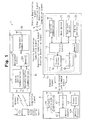
- a vehicle security control system 1 will now be described with reference to Figs. 1 to 4 .
- the vehicle security control system 1 includes a portable device 3 carried by a user (owner) of a vehicle 2, a security controller 10 installed in the vehicle 2, and a management apparatus 30 arranged outside of (separately from) the vehicle 2.
- the portable device 3 which is provided with a communication function, records a predetermined ID code.
- the security controller 10 transmits a request signal.
- the portable device 3 includes a receiver circuit 41 for receiving the request signal from the security controller 10, a microcomputer 42 for receiving the request signal from the receiver circuit 41, and a transmitter circuit 43 for transmitting an ID code signal and a lock command signal provided from the microcomputer 42.
- the receiver circuit 41 demodulates the received request signal to a pulse signal and provides the pulse signal to microcomputer 42.
- the transmitter circuit 43 modulates the ID code signal and the lock command signal provided from the microcomputer 42 to radio waves having predetermined frequencies and transmits the radio waves.
- the microcomputer 42 includes a CPU, a ROM, a RAM (none of which are shown), and a non-volatile memory 42a.
- the memory 42a records a predetermined ID code for each portable device.
- the microcomputer 42 reads the ID code from the memory 42a when receiving a request signal from the receiver circuit 41 and transmits an ID code signal, which contains the ID code, to the transmitter circuit 43.
- the microcomputer 42 is electrically connected to an operation portion (not shown), which is located on an ornamental surface of the portable device 3. When the operation portion is operated, an operation signal is provided to the microcomputer 42.
- the microcomputer 42 then provides the transmitter circuit 43 with a lock command signal, which includes the ID code and a lock code or an unlock code.
- the security controller 10 has a transmitter circuit 11, a receiver circuit 12, a vehicle control unit 13, and a security communication unit 14.
- the transmitter circuit 11 and the receiver circuit 12 form a portable device communication unit 9.
- the transmitter circuit 11, the receiver circuit 12, and the security communication unit 14 are electrically connected to the vehicle control unit 13.
- the vehicle control unit 13 provides a request signal to the transmitter circuit 11.
- the transmitter circuit 11 converts the request signal to radio waves of a predetermined frequency (134 kHz). Then, the transmitter circuit 11 transmits the radio waves, via a transmitter antenna 11a, selectively to a predetermined area around the vehicle 2 and to the passenger compartment of the vehicle 2.
- the receiver circuit 12 receives the ID code signal and the lock command signal transmitted by the portable device 3 via a receiver antenna 12a. Then, the receiver circuit 12 demodulates the received signal to a pulse signal before providing the signal to the vehicle control unit 13.
- the security communication unit 14 is designed to be able to communicate with a management apparatus 30 which transmits a transmission signal.
- the vehicle control unit 13 provides a registration signal to the security communication unit 14.
- the security communication unit 14 modulates the registration signal to radio waves with a predetermined frequency, and transmits the radio waves to the management apparatus 30.
- the security communication unit 14 demodulates the transmission signal to a pulse signal before providing the demodulated signal to the vehicle control unit 13.
- the vehicle control unit 13 has a CPU, a ROM, a RAM (none of which are shown), and a nonvolatile memory 13a, which functions as a recording unit.
- the memory 13a records one or more ID codes assigned to the portable device 3.
- the vehicle control unit 13 is electrically connected to a mode switch 21, a door lock driver 22, and an engine controller 23.
- the door lock driver 22 and the engine controller 23 function as a security device.
- the mode switch 21 is located in the passenger compartment of the vehicle 2 and operated by a user. When operated by the user, the mode switch 21 provides an operation signal to the vehicle control unit 13.
- the door lock driver 22 is connected to an actuator (not shown).
- the vehicle control unit 13 provides a drive signal to the door lock driver 22.
- the door lock driver 22 drives the actuator to lock or unlock a door.
- the door lock driver 22 provides, to the vehicle control unit 13, a lock signal indicating whether the door is locked or unlocked.
- the vehicle control unit 13 recognizes whether the door is locked or unlocked based on the lock signal.
- the engine controller 23 is connected to a starter motor (not shown).
- the vehicle control unit 13 provides a start signal to the engine controller 23.
- the engine controller 23 drives the starter motor and, at the same time, performs fuel injection control and ignition control to start the engine.
- the engine controller 23 provides to the vehicle control unit 13 a drive state signal indicating the drive state of the engine.
- the vehicle control unit 13 recognizes the drive state of the engine based on the drive state signal.
- the vehicle control unit 13 operates in a vehicle registration mode, an ID registration mode, and a security control mode.
- the vehicle registration mode refers to a mode for performing vehicle registration control in which the vehicle 2 is registered as the management subject of the management apparatus 30.
- the ID registration mode refers to a mode for performing ID registration control for recording (registering) the ID code of the portable device 3 in the memory 13a.
- the security control mode refers to a mode for controlling the door lock driver 22 and the engine controller 23 through communication with the portable device 3 of which the ID has been registered.
- the vehicle control unit 13 enters the ID registration mode or the vehicle registration mode. Otherwise, the vehicle control unit 13 is set in the security control mode.
- the vehicle control unit 13 is normally set in the security control mode but is switched to the ID registration mode or the vehicle registration mode when the mode switch is operated.
- the vehicle control unit 13 may be switched to the ID registration mode by operating the mode switch 21 and be switched to the vehicle registration mode when another switch is operated. That is, the vehicle control unit 13 may be configured to be switched to the ID registration mode or the vehicle registration mode by performing a certain operation.
- the vehicle control unit 13 performs vehicle registration control when entering the vehicle registration mode.
- the vehicle control unit 13 receives an input signal from an input device (not shown), such as an input unit of a car navigation system. After entering the vehicle registration mode, the user inputs a function restriction code number with an input device. Then, an input signal containing the function restriction code number is provided to the vehicle control unit 13. As a result, the vehicle control unit 13 transmits to the management apparatus 30 via the security communication unit 14 a vehicle registration signal containing vehicle information and the function restriction code.
- the vehicle information code is information for identifying the vehicle 2.
- the vehicle information includes at least one of the chassis number of the vehicle 2, the vehicle number, and dealer information (e.g., the store identification number or password uniquely assigned to the dealer).
- the function control restriction code is obtained by binary-converting a function restriction code number.
- the vehicle control unit 13 When receiving a vehicle registration completion signal from the management apparatus 30 via the security communication unit 14, the vehicle control unit 13 displays a message indicating completion of registration of the vehicle 2 on an indicator (not shown) arranged in the passenger compartment of the vehicle 2.
- the vehicle control unit 13 When entering the ID registration mode, the vehicle control unit 13 performs registration communication control.
- the vehicle control unit 13 intermittently provides the transmitter circuit 11 with the request signal.
- the transmitter circuit 11 transmits the request signal to the passenger compartment of the vehicle 2 via the transmitter circuit 11 and the transmitter antenna 11a.
- the portable device 3 transmits an ID code signal that is received by the receiver circuit 12 via the receiver antenna 12a.
- the vehicle control unit 13 records the ID code that is contained in the ID code signal in the memory 13a.
- the vehicle control unit 13 provides the security communication unit 14 with a registration signal containing the ID code and vehicle information.
- the security communication unit 14 transmits the registration signal to the management apparatus 30.
- the vehicle control unit 13 intermittently provides a request signal to the transmitter circuit 11.
- the transmitter circuit 11 transmits the request signal, via the transmitter antenna 11a, selectively to a predetermined area around the vehicle 2 or to the passenger compartment of the vehicle 2.
- the vehicle control unit 13 compares the ID code contained in the received signal with the ID code recorded in the memory 13a (ID code authentication). If the two ID codes match or if the authentication of the ID code is established, the vehicle control unit 13 drives the door lock driver 22 or the engine controller 23.
- the vehicle control unit 13 when receiving an ID code signal in response to a request signal transmitted to the predetermined area around the vehicle 2, the vehicle control unit 13 provides a drive signal to the door lock driver 22 to unlock the door. When the ID code signal is no longer provided to the vehicle control unit 13, the vehicle control unit 13 provides a drive signal to the door lock driver 22 to lock the door.
- the vehicle control unit 13 When receiving an ID code signal in response to a request signal transmitted to the passenger compartment of the vehicle 2, the vehicle control unit 13 is set to an engine start stand-by state.
- a start switch (not shown) is arranged in the vicinity of the driver's seat in the passenger compartment of the vehicle 2 and is electrically connected to the vehicle control unit 13.
- the vehicle control unit 13 receives an operation signal from the start switch in the engine start stand-by state, the vehicle control unit 13 provides a start signal to the engine controller 23 to start the engine. This means that when the vehicle control unit 13 is not in the engine start stand-by state, the vehicle control unit 13 will not provide a start signal to the engine controller 23 even if receiving an operation signal from the start switch.
- the vehicle control unit 13 When receiving a lock command signal containing a lock code, the vehicle control unit 13 locks the door. When receiving a lock command signal containing an unlock code, the vehicle control unit 13 unlocks the door.
- the security controller 10 controls the security of the door lock driver 22 and the engine controller 23 based on whether the authentication of the ID code involving the use of the portable device 3 has been established or not.
- the management apparatus 30 is arranged in, for example, an exclusive management center and includes a management communication unit 31, a management control unit 32, and a mobile device communication unit 33.
- the management control unit 32 is electrically connected to the management communication unit 31 and the mobile device communication unit 33.
- the management communication unit 31 communicates with the security communication unit 14 in the security controller 10. When receiving a registration signal from the security communication unit 14, the management communication unit 31 demodulates the registration signal and provides the demodulated signal to the management control unit 32.
- the mobile device communication unit 33 communicates with a mobile device (cellular phone 4) held by the user.
- the cellular phone 4 determines that a restriction operation has been performed when the function restriction code number is input with the numeric keys of the cellular phone 4. Then, the cellular phone 4 transmits to the management apparatus 30 a restriction request signal including a function restriction code generated by binary-converting the function restriction code number.
- a portable device designation number designating the portable device 3 is input with the numeric keys in addition to the function restriction code number
- the cellular phone 4 transmits to the management apparatus 30 a restriction request signal containing the function restriction code and a portable device designation code.
- the portable device designation number indicates the registration number of ID codes recorded in the memory 32a of the management apparatus 30.
- the portable device designation code is generated by binary-converting the portable device designation number.
- the mobile device communication unit 33 When receiving a restriction request signal from the cellular phone 4, the mobile device communication unit 33 demodulates the restriction request signal and provides the demodulated signal to the management control unit 32. When receiving a restriction completion signal from the management control unit 32, the mobile device communication unit 33 transmits the restriction completion signal to the cellular phone 4 through a public communication network. When receiving the restriction completion signal from the mobile device communication unit 33, the cellular phone 4 informs the receipt of the restriction completion signal by means of noise, vibrations, or a message display.
- the management control unit 32 is a computer unit including a CPU, a ROM, and a RAM (none of which are shown), and a non-volatile memory 32a.
- the memory 32a records vehicle information of the vehicle 2 set as the management subject. More specifically, the memory 32a records the vehicle information including the chassis number, the vehicle number, the dealer information (e.g. the store identification number or password uniquely assigned to the dealer) of the vehicle 2, device information of the cellular phone 4 (e.g., telephone number and e-mail address), and other information for identifying the vehicle 2.
- vehicle information including the chassis number, the vehicle number, the dealer information (e.g. the store identification number or password uniquely assigned to the dealer) of the vehicle 2, device information of the cellular phone 4 (e.g., telephone number and e-mail address), and other information for identifying the vehicle 2.
- the memory 32a records the function restriction code transmitted from the security controller 10 during vehicle registration and the ID code transmitted from the security controller 10 during registration communication control in a state respectively associated with the vehicle information. More specifically, a recording region for the function restriction code and a recording region for the ID code (ID recording region) are set in association with the vehicle information in the memory 32a. For example, when vehicle information A and B for two vehicles are recorded in the memory 32a, the function restriction code recording region and ID recording region associated with vehicle information A are set separately from the function restriction code recording region and ID recording region associated with vehicle information B. A plurality of ID codes are recordable in the ID recording regions. The number of recordable ID codes in the recording region is preset or set by the user. Further, for example, registration numbers are added to the ID codes recorded in the recording region in accordance with the recording order.
- the management control unit 32 When receiving a vehicle registration signal from the management communication unit 31, the management control unit 32 records the vehicle information and the function restriction code, which are contained in the vehicle registration signal, in a state associated with each other in the memory 32a. The management control unit 32 transmits the vehicle registration completion signal, which indicates completion of the vehicle registration, to the security controller 10 via the management communication unit 31.
- the management control unit 32 When receiving the registration signal from the management communication unit 31, the management control unit 32 records the ID code included in the registration signal in the ID recording region associated with the vehicle information contained in the registration signal. The management control unit 32 transmits to the security controller 10 via the management communication unit 31 a registration completion signal indicating completion of recording.
- the management control unit 32 determines whether there is a function restriction code in the memory 32a that is corresponding to the function restriction code contained in the restriction request signal (code presence determination).
- the management control unit 32 specifies the vehicle that is the management subject of the restriction command control based on the vehicle information associated with the function restriction code.
- the management control unit 32 transmits the function restriction signal containing the function restriction code via the management communication unit 31 to the security controller 10 installed in the specified vehicle 2.
- the management control unit 32 reads the ID code associated with the registration number corresponding to the portable device designation code.
- the management control unit 32 transmits a function restriction signal containing the read ID code and the function restriction code via the management communication unit 31.
- the management control unit 32 transmits a restriction completion signal to the cellular phone 4 via the mobile device communication unit 33.
- the security controller 10 When receiving a function restriction signal from the management apparatus 30, the security controller 10 restricts or prohibits the driving of the door lock driver 22 or the engine controller 23 based on communication with the portable device 3 (function restriction processing).
- the security communication unit 14 of the security controller 10 receives a function restriction signal.
- the function restriction signal is then provided to the vehicle control unit 13.
- the vehicle control unit 13 transmits the restriction completion signal, which indicates that the setting for function restriction has been completed, to the management apparatus 30 via the security communication unit 14. Further, the vehicle control unit 13 determines whether or not an ID code is contained in the function restriction signal. If it is determined that no ID code is contained in the function restriction signal, the vehicle control unit 13 restricts or prohibits the control of the door lock driver 22 or the engine controller 23 even if the ID code of the portable device 3, which is able to communicate, is authenticated.
- the vehicle control unit 13 restricts or prohibits deactivation of security devices (the door lock driver 22 or the engine controller 23) even if the ID code of the portable device 3 corresponding to the ID code recorded in the memory 13a is authenticated. If the function restriction signal contains an ID code, the vehicle control unit 13 restricts or prohibits the control of the door lock driver 22 or the engine controller 23 only when the ID code of the portable device 3, which corresponds to the ID code contained in the function restriction signal, is authenticated.
- the vehicle control unit 13 implements the function restriction processing as described in the following (a) or (b).
- the user is allowed to select the processing that is to be performed.
- the vehicle control unit 13 When receiving an ID code signal or lock command signal transmitted by a portable device 3 in response to a request signal, the vehicle control unit 13 does not drive the door lock driver 22 or the engine controller 23 even if the ID code contained in the ID code signal or the lock command signal is recorded in the memory 13a. That is, the vehicle control unit 13 prohibits the unlocking of the door or the startup of the engine even if the ID code of the portable device is authenticated. In other words, when receiving a function restriction signal, the vehicle control unit 13 prohibits the security deactivation operations, such as unlocking the door with the door lock driver 22 or enabling the starting of the engine with the engine controller 23.
- the vehicle control unit 13 When receiving an ID code signal or lock command signal transmitted by a portable device 3 in response to a request signal, the vehicle control unit 13 first compares the ID code contained in the ID code signal or the lock command signal with the ID code contained in the function restriction signal. The vehicle control unit 13 does not drive the door lock driver 22 or the engine controller 23 when these two ID codes match. In other words, the vehicle control unit 13 prohibits security deactivation operations, such as unlocking the door or starting the engine, when the ID code of the portable device 3 matches the ID code contained in the function restriction signal. Accordingly, the vehicle control unit 13 performs a security deactivation operation when receiving an ID code signal or lock command signal containing an ID code not contained in the function restriction signal but recorded in the memory 13a. In other words, the attempt to deactivate security with a specific portable device 3 is prevented.
- the vehicle control unit 13 When receiving an ID code signal or a lock command signal transmitted by a portable device 3 in response to a request signal transmitted to the outside of the vehicle 2, the vehicle control unit 13 controls the door lock driver 22 to lock or unlock the door.
- the vehicle control unit 13 when receiving an ID code signal transmitted by the portable device 3 in response to a request signal transmitted to the passenger compartment of the vehicle 2, the vehicle control unit 13 is not set to enable the starting of the engine. Therefore, even if the start switch is operated, the vehicle control unit 13 does not drive the engine controller 23. This means that when the ID code of the portable device 3 is authenticated, the vehicle control unit 13 locks or unlocks the door. However, the starting of the engine is prohibited. In other words, when receiving a function restriction signal, the vehicle control unit 13 restricts security deactivation operations.
- the vehicle control unit 13 When receiving an ID code signal or lock command signal transmitted by a portable device 3 in response to a request signal transmitted to the outside of the vehicle 2, the vehicle control unit 13 also drives the door lock driver 22 to lock or unlock the door. That is, the vehicle control unit 13 locks or unlocks the door in the same manner as when the function restriction signal contains no ID code. However, if the vehicle control unit 13 receives, after receiving a function restriction signal containing an ID code, an ID code signal transmitted by the portable device 3 in response to a request signal transmitted to the passenger compartment of the vehicle 2, the vehicle control unit 13 first compares the ID code contained in the ID code signal with the ID code contained in the function restriction signal.
- the vehicle control unit 13 is not set to enable the starting of the engine when the ID code contained in the ID code signal matches the ID code contained in the function restriction signal. That is, if the ID code contained in the function restriction signal matches the ID code of the portable device 3, the vehicle control unit 13 locks or unlocks the door but prohibits the starting of the engine. In other words, when receiving a function restriction signal containing an ID code, the vehicle control unit 13 restricts security deactivation operations based on communication with the portable device 3 corresponding to the ID code contained in the function restriction signal. Accordingly, when receiving an ID code signal or lock command signal containing an ID code not contained in the function restriction signal but recorded in the memory 13a, the vehicle control unit 13 performs security deactivation operations as usual. This means that security deactivation operations are restricted only when using a specific portable device 3.
- the vehicle control unit 13 When receiving a restriction release signal indicating that the restriction control is to be released, the vehicle control unit 13 releases the function restriction control to switch the control mode to the normal security control mode. More specifically, the user inputs a restriction release number to the cellular phone 4. The cellular phone 4 transmits a restriction release signal that is in accordance with the restriction release number to the management apparatus 30. The management apparatus 30 transmits the restriction release signal to the security controller 10. When receiving the restriction release signal, the security controller 10 is switched to the normal security control mode.
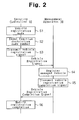
- a communication mode implemented during vehicle registration control in which vehicle information of the vehicle 2 is registered in the management apparatus 30 so that the vehicle 2 is set as a subject that is to be managed by the management apparatus 30 will now be described with reference to Fig. 2 .
- registration of the vehicle 2 in the management apparatus 30 is performed by communication between the security controller 10 and the management apparatus 30.
- the security controller 10 when a predetermined operation for shifting to the vehicle registration mode is performed with the mode switch 21, the security controller 10 is first switched to the vehicle registration mode (step S1).
- the security controller 10 receives a function restriction code number from the input device (step S2).
- the security controller 10 then transmits a vehicle registration signal containing vehicle information of the vehicle 2 and a function restriction security code to the management apparatus 30 (step S3).
- the management apparatus 30 When receiving the vehicle registration signal from the security controller 10, the management apparatus 30 records the vehicle information and the function restriction security code contained in the vehicle registration signal in the memory 32a, and thus completes the registration of the vehicle 2 as a management subject (managed vehicle registration) (step S4).
- the security controller 10 vehicle 2 is registered as a management subject in the management apparatus 30.
- the management apparatus 30 transmits a vehicle registration completion signal indicating the completion of the vehicle registration to the security controller 10 (step S5).
- the security controller 10 When receiving the vehicle registration completion signal from the management apparatus 30, the security controller 10 has the indicator display a message indicating that the registration of the vehicle 2 has been completed (step S6). Thus, the user is able to confirm that the registration of the vehicle 2 has been completed by viewing the indicator.
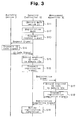
- a communication mode implemented by the vehicle security control system 1 to register an ID code for the portable device 3 in the security controller 10 will now be described with reference to the sequence chart shown in Fig. 3 .
- ID registration is performed through communication between the portable device 3, the security controller 10, and the management apparatus 30.
- the user operates the mode switch 21 of the security controller 10 (step S11).
- the security controller 10 is thereby switched from the security control mode to the ID registration mode (step S12).
- the security controller 10 transmits a request signal to the passenger compartment of the vehicle 2 (step S13).
- the portable device 3 When receiving the request signal, the portable device 3 transmits an ID code signal (step S14).
- the security controller 10 When receiving the ID code signal from the portable device 3, the security controller 10 records the ID code contained in the ID code signal in the memory 13a (step S15). That is, the security controller 10 registers the acquired ID code of the portable device 3. Subsequently, the security controller 10 transmits a registration signal to the portable device management apparatus 30 (step S16).
- the management apparatus 30 When receiving the registration signal from the security controller 10, the management apparatus 30 records the ID code contained in the registration signal in the memory 32a at the ID recording region associated with the vehicle information (step S17). Further, the management apparatus 30 transmits the registration completion signal to the security controller 10 (step S18). Accordingly, the management apparatus 30 manages the portable device 3 associated with the vehicle 2 based on the registered ID code.
- the security controller 10 When receiving a registration completion signal from the portable device management apparatus 30, the security controller 10, for example, has an indicator (not shown) provided in the passenger compartment of the vehicle 2 display a message indicating that the registration has been completed or has a speaker (not shown) generate an audible announcement indicating that the registration has been completed (step S19). In this manner, the user may confirm that the portable device 3 has been registered.
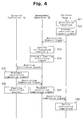
- the function restriction control is conducted by communication between the security controller 10, the management apparatus 30, and the cellular phone 4.
- a function restriction code number is input to the cellular phone 4 to perform a restriction operation (step S21).
- the cellular phone 4 then transmits a restriction request signal containing a function restriction security code to the management apparatus 30 (step S22). If the cellular phone 4 has received a portable device designation number together with the function restriction code number, the restriction request signal transmitted to the management apparatus 30 contains the function restriction security code and the portable device designation code.
- the management apparatus 30 When receiving the restriction request signal, the management apparatus 30 specifies a corresponding vehicle 2 based on the function restriction security code contained in the restriction request signal (step S23). The management apparatus 30 transmits a function restriction signal containing a function restriction code to the security controller 10 provided in the specified vehicle 2 (step S24). If the restriction request signal received by the management apparatus 30 contains a portable device designation code, then the management apparatus 30 transmits a function restriction signal containing an ID code corresponding to the portable device designation code in addition to the function restriction code.
- the security controller 10 When receiving the function restriction signal from the management apparatus 30, the security controller 10 transmits the restriction completion signal to the management.apparatus 30 (step S25). Further, the security controller 10 performs the function restriction processes (a) and (b) (step S26).
- the management apparatus 30 When receiving the restriction completion signal, the management apparatus 30 transmits the restriction completion signal to the cellular phone 4 (step S27). That is, the management apparatus 30 functions as a communication relay means for transmitting the restriction completion signal transmitted from the security controller 10 to the cellular phone 4.
- the cellular phone 4 When receiving the restriction completion signal, the cellular phone 4 notifies the user that the security controller 10 is in a function restriction state by means of noise, vibrations, or a message display.
- the security control system 1 has the advantages described below.
- the security controller 10 may prohibit communication with the portable device 3 when receiving a function restriction signal that does not contain the ID code in a state in which the first function restriction process (security deactivation prohibition process) is set (the case of (a-1)).
- a function restriction signal is provided to the vehicle control unit 13
- communication between the security controller 10 and the portable device 3 is disabled in the security control mode. Since the portable device 3 and the vehicle control unit 13 do not communicate with each other, control of the door lock driver 22 and the engine controller 23 with the vehicle control unit 13 is prohibited. This ensures a high security level for the security devices.
- the security controller 10 does not transmit a request signal during the security control mode. Since the portable device 3 does not receive the request signal, the ID code signal is not transmitted. This prevents unnecessary communication between the portable device 3 and the security controller 10 and reduces power consumption of the portable device 3 and the security controller 10.
- the management apparatus 30 transmits the function restriction signal to the security controller 10.
- the portable device 3 may include a portable device side communication unit 44 for communicating with the management apparatus 30, and the management apparatus 30 may include a portable device communication unit 34 for transmitting the function restriction signal to the portable device 3.
- the portable device 3 transmits a transmission signal containing the function restriction code (ID code signal, lock command signal).
- the security controller 10 receives the transmission signal containing the function restriction code, the security controller prohibits or restricts security deactivation operations. This would also prohibit or restrict security deactivation operations with the portable device 3. This ensures a high security level.
- the portable device 3 may disable transmission of the ID code signal and the lock command signal.
- the security controller 10 may prohibit or restrict security deactivation operations based on communication with the portable device 3 and does not have to enter the ID registration mode. As a result, ID registration control is prohibited. This prohibits security deactivation operations with a portable device 3 that has undergone a new registration attempt. Accordingly, a third party is prevented from fraudulently registering an ID code. This ensures a high security level for security devices.
- the security controller 10 transmits the restriction completion signal to the cellular phone 4 via the management apparatus 30 when the function restriction state is set.
- the security controller 10 may directly transmit the restriction completion signal to the cellular phone 4 through a telephone network or the like without using the management apparatus 30.
- the restriction completion signal when the restriction completion signal is transmitted to the cellular phone 4 via the management apparatus 30 from the security controller 10, notification is sent to the cellular phone 4 indicating that the security controller 10 has been set in the function restriction state.
- the management apparatus 30 may send the restriction completion signal to the cellular phone 4 when the management apparatus 30 transmits the function restriction signal to the security controller 10.
- the management apparatus 30 determines that the security controller 10 has been set in the function restriction state and sends such notification to the cellular phone 4.
- mutual authentication may be performed between the vehicle control unit 13 and the security communication unit 14 in the security controller 10 for mutually determining whether these two units operate normally.
- the security controller 10 may be designed to approve the registration of the ID code of the portable device 3 only when it is determined that the two units operate normally, namely, when the mutual authentication is established. According to such arrangement, if the security communication unit 14 is wrongfully removed or broken, the mutual authentication will not be established, and hence the ID code cannot be registered in the security controller 10. Thus, fraudulent registration of an ID code can be prevented with higher reliability.
- the portable device 3 may be provided with a GPS module. In such case, the position of the portable device 3 can be located by the management apparatus 30 when function restriction is performed, and notification is sent to the cellular phone 4 from the management apparatus 30. Therefore, even if a portable device 3 has been lost or stolen, the user is able to know the location of the portable device 3.
- a restriction request signal is transmitted from the cellular phone 4 to the management apparatus 30.
- the user may use the vehicle 2 to conduct the restriction operation, so that a restriction request signal is transmitted from the security controller 10 to the management apparatus 30.
- the function restriction for a device e.g., the door lock driver 22 and the engine controller 23
- the function restriction for a device may be performed by conducting the restriction operation with the use of the vehicle 2.
- mobile devices such as the cellular phone 4, are not required for performing the function restriction.
- a vehicle registration signal is transmitted from the security controller 10 to the management apparatus 30 when the vehicle registration control is implemented to set the vehicle 2 as a subject to be managed by the management apparatus 30.
- a vehicle registration signal may be transmitted to the management apparatus 30 from a registration device provided separately from the security controller 10 when such vehicle registration control is performed.
- a personal computer may be used as the registration device so that a vehicle registration signal is transmitted from the personal computer to the management apparatus 30.
- vehicle registration information such as vehicle information and function restriction code number is input to the personal computer, and a vehicle registration signal containing the vehicle registration information is transmitted to the management apparatus 30 via a communication network such as the Internet.
- the security controller 10 (vehicle 2) is not always required for the vehicle registration, and hence the convenience of the vehicle registration is improved. Further, a password that is set by the user, the dealer, or the manufacturer of the portable device 3 may be assigned to the vehicle registration signal to prevent the vehicle from being fraudulently registered by a third party.
- the procedure for registering a vehicle 2 in the management apparatus 30 (vehicle registration procedure) and the procedure for registering an ID code of a portable device 3 in the security controller 10 (ID registration procedure) may be performed not only by the user but also by the dealer, the manufacturer of the portable device 3, or any other person that the user can trust.
- the communication between the security controller 10 and the management apparatus 30 is not limited to radio communication but may also be, for example, be via wire communication employing a public communication line.
- a connector for connecting a telephone modular jack may be provided in the vehicle 2, so that communication is performed between the security controller 10 and the management apparatus 30 using a telephone line.
- the mobile device is not limited to a cellular phone 4, but may be for example, a laptop personal computer, a Personal Digital Assistance (PDA), or a special communication device.
- PDA Personal Digital Assistance
- the vehicle security control system 1 of the above examples is provided with a function for automatically unlocking the door when the portable device 3 approaches the vehicle 2 (smart entry function) and with a function for starting the engine when the portable device 3 enters the passenger compartment of the vehicle 2 (smart ignition function). These functions are implemented by communication between the portable device 3 and the security controller 10.
- the vehicle security control system 1 may not be provided with such smart entry function or smart ignition function.
- the portable device 3 may include a transponder and a mechanical key.
- the mechanical key communicates with the security controller 10 when arranged in the vehicle 2.
- the security controller 10 allows the mechanical key to be rotated if communication with the transponder is established. If the mechanical key is rotated, the security controller 10 controls the door lock driver 22 or the engine controller 23. In other words, the only requirement is that the security controller 10 implements security deactivation operations based on communication with the portable device 3.
- Such communication between the portable device 3 and the security controller 10 is not essential.
- the portable device 3 may transmit only a lock command signal and, hence, the security controller 10 may not have a transmitter circuit 11 and may not transmit a request signal.
- the security controller 10 does not always have to perform communication with the portable device 3 as long as the security controller 10 performs security deactivation operations based on a transmission signal containing an ID code transmitted from the portable device 3.
- the management apparatus 30 manages the number of ID codes of portable devices 3 that can be registered in the security controller 10 provided in the vehicle 2 to be managed. However, the management apparatus 30 does not always have to manage such number of ID codes.
- the management apparatus 30 does not necessarily have to manage the ID code of the portable device 3. In other words, the management apparatus 30 does not necessarily have to be configured to record ID codes in the memory 32a. This reduces the recording load on the memory 32a of the management apparatus 30. In addition, the transfer of the registration signal and the registration completion signal between the security controller 10 and the management apparatus 30 becomes unnecessary. This reduces the communication load on the security controller 10 and the management apparatus 30. In this case, however, the security controller 10 cannot perform control for prohibiting or restricting only security deactivation operations with a predetermined portable device 3 (control of (a-2) and (b-2)).
- the management apparatus 30 is configured so that when receiving a restriction request signal containing a portable device designation code, the management apparatus transmits the function restriction signal containing the portable device designation code. Further, a registration number associated with a portable device designation code may be added to the ID code recorded in the memory 13a of the security controller 10. In this case, the security controller 10 prohibits or restricts only security deactivation operations through communication with a predetermined portable device 3 based on the portable device designation code contained in the function restriction signal and the registration number recorded in the memory 13a.
- the vehicle security control system 1 is capable of registering a portable device 3 irrespective of where the portable device 3 is.
- the vehicle security control system 1 may be modified, for example, such that a portable device 3 can be registered by the security controller 10 only when the portable device 3 is at a predetermined position (e.g., at home, an office, or the dealer) by connecting a GPS module to the security controller 10. According to such arrangement, fraudulent ID code registration by a third party is prevented with higher reliability, and the security level can be further improved.
- Such modification is not limited to the registration location of the portable device 3 and may also be applied to any location where vehicle registration can be performed to register the vehicle 2 as the management subject of the management apparatus 30.
- the operation for switching the security controller 10 to the ID registration mode is not limited to the operation of the mode switch 21.
- the security controller 10 may be modified to be switched to the ID registration mode by using an existing switch provided in the vehicle 2 (e.g., lever combination switch) in a predetermined mode (desirably, in a mode that is preset by and known only by the user or dealer).
- the mode switch 21 can be omitted.
- the security controller 10 can be prevented from being switched unintentionally to the ID registration mode by an erroneous operation of the mode switch 21.
- the operation for entering the vehicle registration mode may also be modified.
- the management apparatus 30 may be arranged not only in a special management center but also in a user's residence. In this case, the management apparatus 30 may be a personal computer or the like.
- the cellular phone 4 may be designed to transmit a restriction request signal to the management apparatus 30 when receiving a predetermined voice command.
- the communication between the cellular phone 4 and the management apparatus 30 may be implemented by conversation between the user and an operator working in the management center where the management apparatus 30 is located.
- the user may call the management center by using the cellular phone 4 and provide a restriction request through conversation with the operator.
- the operator as instructed by the user, operates the management apparatus 30 to conduct function restriction control.
- the cellular phone 4 is not required to transmit a restriction request signal to the management apparatus 30.
- the security control system may control the security not only of the door lock driver 22 or the engine controller 23, but also the security of other vehicle devices such as a steering lock device, a shift lock device, or a wheel lock device. That is, the security control system may control the security of any device as long as the control of such equipment is effective for restricting or inhibiting the vehicle 2 from traveling normally.
- the security control system is not limited to the vehicle security control system 1 for control of vehicle equipment but may be applied to a building security system for controlling the locking and unlocking of a building door.
Landscapes
- Engineering & Computer Science (AREA)
- Mechanical Engineering (AREA)
- Computer Networks & Wireless Communication (AREA)
- Physics & Mathematics (AREA)
- General Physics & Mathematics (AREA)
- Lock And Its Accessories (AREA)
- Mobile Radio Communication Systems (AREA)
- Transceivers (AREA)
Claims (16)
- Sicherheitssteuergerät (10) zur Verwendung mit einer tragbaren Vorrichtung (3), die einen ID-Code für tragbare Vorrichtungen besitzt, und eine Verwaltungseinrichtung (30), die in Reaktion auf ein an die Verwaltungseinrichtung (30) gesendetes FunktionsbeschränkungsAnforderungs-Signal ein Funktionsbeschränkungs-Signal sendet,
wobei das Sicherheitssteuergerät (10) dafür eingerichtet ist, eine Sicherheitsvorrichtung (22, 23) zu steuern, die mit einer Sicherheitsfunktion ausgestattet ist,
wobei das Sicherheitssteuergerät (10) Folgendes umfasst:- eine Kommunikationseinheit für tragbare Vorrichtungen (9), die dafür eingerichtet ist, mit der tragbaren Vorrichtung (3) zu kommunizieren,- eine Aufzeichnungseinheit (13a), die dafür eingerichtet ist, einen Steuereinheit-ID-Code aufzuzeichnen, der dem ID-Code für tragbare Vorrichtungen entspricht,- eine Steuereinheit (13), die dafür eingerichtet ist festzustellen, ob der von der tragbaren Vorrichtung ausgesendete ID-Code für tragbare Vorrichtungen mit dem Steuereinheit-ID-Code übereinstimmt, und die Sicherheitsfunktion der Sicherheitsvorrichtung (22, 23) auf der Grundlage des Ergebnisses der Feststellung zu steuern, wenn sich das Sicherheitssteuergerät (10) in einem Sicherheits-Steuerungsmodus befindet, und- eine Sicherheits-Kommunikationseinheit (14), die dafür eingerichtet ist, mit der Verwaltungseinrichtung (30) zu kommunizieren, und wobei die Steuereinheit (13) dafür eingerichtet ist, die Deaktivierung der Sicherheitsfunktion der Sicherheitsvorrichtung (22, 23) zu verbieten oder zu beschränken, wenn die Sicherheits-Kommunikationseinheit (14) das Funktionsbeschränkungs-Signal empfängt und das Sicherheitssteuergerät (10) im Sicherheits-Steuerungsmodus ist,dadurch gekennzeichnet, dass die Steuereinheit (13):dafür eingerichtet ist, mit der tragbaren Vorrichtung (3) zu kommunizieren und den ID-Code für tragbare Vorrichtungen in der Aufzeichnungseinheit (13a) als den Steuereinheit-ID-Code aufzuzeichnen, wenn das Sicherheitssteuergerät (10) in einem Modus zum Registrieren eines ID-Codes für tragbare Vorrichtungen ist; unddafür eingerichtet ist, nicht in den Modus zum Registrieren eines ID-Codes für tragbare Vorrichtungen einzutreten, indem die Aufzeichnung des ID-Codes für tragbare Vorrichtungen in der Aufzeichnungseinheit (13a) verboten wird, um die Steuerung der Sicherheitsvorrichtung (22, 23) zu verbieten oder zu beschränken, wenn die Sicherheits-Kommunikationseinheit (14) das Funktionsbeschränkungs-Signal von der Verwaltungseinrichtung empfängt. - Steuereinheit nach Anspruch 1, dadurch gekennzeichnet, dass die Steuereinheit (13) dafür eingerichtet ist, die Kommunikation mit der tragbaren Vorrichtung (3) zu verbieten, wenn die Sicherheits-Kommunikationseinheit (14) das Funktionsbeschränkungs-Signal empfängt.
- Steuereinheit nach einem der Ansprüche 1 oder 2, dadurch gekennzeichnet, dass die Steuereinheit (13) dafür eingerichtet ist, die Deaktivierung der Sicherheitsfunktion der Sicherheitsvorrichtung (22, 23) zu verbieten, wenn die Sicherheits-Kommunikationseinheit und/oder die Steuereinheit nicht normal arbeiten.
- System (1) zum Steuern einer Sicherheitsvorrichtung (22, 23), die mit einer Sicherheitsfunktion ausgestattet ist, wobei das System Folgendes umfasst:- eine tragbare Vorrichtung (3), die mit einer Kommunikationsfunktion ausgestattet ist und einen ID-Code für tragbare Vorrichtungen aufweist,- ein Sicherheitssteuergerät (10) nach einem der Ansprüche 1 bis 3, und- eine Verwaltungseinrichtung (30), die dafür eingerichtet ist, in Reaktion auf ein Beschränkungs-Anforderungssignal ein Funktionsbeschränkungs-Signal an die tragbare Vorrichtung (3) und/oder das Sicherheitssteuergerät (10) zu senden, wobei das Sicherheitssteuergerät dafür eingerichtet ist, die Steuerung der Sicherheitsvorrichtung zu verbieten oder zu beschränken, wenn es das Funktionsbeschränkungs-Signal empfängt oder wenn es mit der tragbaren Vorrichtung (3) kommuniziert, die das Funktionsbeschränkungs-Signal empfangen hat.
- System nach Anspruch 4, dadurch gekennzeichnet, dass das Sicherheitssteuergerät (10) dafür eingerichtet ist, die Kommunikation mit der tragbaren Vorrichtung zu verbieten, wenn sie das Funktionsbeschränkungs-Signal empfängt.
- System nach Anspruch 4 oder 5, dadurch gekennzeichnet, dass:die tragbare Vorrichtung (3) dafür eingerichtet ist,ein Übertragungssignal, das einen Funktionsbeschränkungs-Code umfasst, an das Sicherheitssteuergerät (10) zu senden, wenn sie das Funktionsbeschränkungs-Signal empfängt; unddas Sicherheitssteuergerät (10) dafür eingerichtet ist, die Steuerung der Sicherheitsvorrichtung (22, 23) gemäß dem Funktionsbeschränkungs-Code zu verbieten oder zu beschränken, wenn es das Sendesignal empfängt.
- System nach einem der Ansprüche 4 bis 6, dadurch gekennzeichnet, dass:das Beschränkungsanforderungs-Signal von einem mobilen Gerät (4) gesendet wird;die Verwaltungseinrichtung (30) eine Kommunikationseinheit (33) umfasst, die eingerichtet ausgelegt ist, das Beschränkungsanforderungs-Signal zu empfangen und das Funktionsbeschränkungssignal zu senden, wenn die Kommunikationseinheit (33) das Beschränkungsanforderungs-Signal empfängt.
- System nach einem der Ansprüche 4 bis 7, dadurch gekennzeichnet, dass das Sicherheitssteuergerät (10) dafür eingerichtet ist:mit der tragbaren Vorrichtung (3) zu kommunizieren und den ID-Code für tragbare Vorrichtungen in der Aufzeichnungseinheit (13a) als den Steuereinheit-ID-Code aufzuzeichnen; unddie Aufzeichnung des ID-Codes für tragbare Vorrichtungen in der Aufzeichnungseinheit (13a) zu verbieten, um die Steuerung der Sicherheitsvorrichtung (10) zu verbieten, wenn es das Funktionsbeschränkungs-Signal empfängt oder wenn es mit der tragbaren Vorrichtung (3) kommuniziert, die das Funktionsbeschränkungs-Signal empfangen hat.
- System nach einem der Ansprüche 4 bis 8, dadurch gekennzeichnet, dass die Verwaltungseinrichtung (30) dafür eingerichtet ist:mit einem mobilen Gerät (4) zu kommunizieren, das durch einen Nutzer bedient wird; undan das mobile Gerät (3) ein Benachrichtigungssignal zu senden, das die Übertragung des Funktionsbeschränkungs-Signals anzeigt, wenn das Funktionsbeschränkungs-Signal an die tragbare Vorrichtung und/oder das Sicherheitssteuergerät (10) gesendet wird.
- System nach einem der Ansprüche 4 bis 9, dadurch gekennzeichnet, dass das System (1) zur Verwendung in einem Fahrzeug vorgesehen ist, das eine Tür und einen Motor aufweist, und die Sicherheitsvorrichtung (22, 23) einen Türschlosstreiber (22), der dafür eingerichtet ist, eine Fahrzeugtür zu ver- und entriegeln, und/oder eine Motorsteuereinheit (23), die dafür eingerichtet ist, die Fähigkeit zum Anlassen des Motors zu steuern, umfasst.
- System nach einem der Ansprüche 4 bis 10, dadurch gekennzeichnet, dass:das Beschränkungsanforderungs-Signal einen Bezeichnungscode für tragbare Vorrichtungen zum Bezeichnen einer tragbaren Vorrichtung (3) umfasst;die Verwaltungseinrichtung (30) dafür eingerichtet ist, das Funktionsbeschränkungs-Signal, das den ID-Code für tragbare Vorrichtungen, der dem Zielort-Code für tragbare Vorrichtungen zugeordnet ist, umfasst, an das Sicherheitssteuergerät zu senden; unddas Sicherheitssteuergerät (10) dafür eingerichtet ist, die Deaktivierung der Sicherheitsfunktion der Sicherheitsvorrichtung (22, 23) gemäß dem in dem Funktionsbeschränkungs-Signal enthaltenen ID-Code für tragbare Vorrichtungen zu verbieten oder zu beschränken.
- System nach Anspruch 11, dadurch gekennzeichnet, dass das Sicherheitssteuergerät (10) dafür eingerichtet ist, die Steuerung der Sicherheitsvorrichtung (22, 23) zu verbieten oder zu beschränken, wenn es den ID-Code für tragbare Vorrichtungen von der tragbaren Vorrichtung empfängt, der dem ID-Code für tragbare Vorrichtungen, der in dem Funktionsbeschränkungs-Code enthalten ist, entspricht.
- System nach Anspruch 4, wobei die Verwaltungseinrichtung Folgendes umfasst:- eine Verwaltungskommunikations-Einheit (31) und/oder eine Kommunikationseinheit für tragbare Vorrichtungen (33), wobei die Verwaltungskommunikations-Einheit dafür eingerichtet ist, mit dem Sicherheitssteuergerät zu kommunizieren, und die Kommunikationseinheit für tragbare Vorrichtungen dafür eingerichtet ist, mit der tragbaren Vorrichtung zu kommunizieren; und- eine Verwaltungssteuereinheit (32) die dafür eingerichtet ist, bei Empfang eines Beschränkungsanforderungs-Signals ein Funktionsbeschränkungs-Signal an das Sicherheitssteuergerät und/oder die tragbare Vorrichtung über die Verwaltungskommunikations-Einheit und/oder die Kommunikationseinheit für tragbare Vorrichtungen zu senden, wobei das Funktionsbeschränkungs-Signal die Deaktivierung einer Sicherheitsfunktion einer Sicherheitsvorrichtung verbietet oder einschränkt.
- System nach Anspruch 13, dadurch gekennzeichnet, dass die Verwaltungseinrichtung mit einem mobilen Gerät (4) zum Senden des Beschränkungsanforderungs-Signals verwendet wird, wobei die Verwaltungseinrichtung des Weiteren Folgendes umfasst:- eine Kommunikationseinheit für ein mobiles Gerät (34), die dafür eingerichtet ist, das Beschränkungsanforderungs-Signal von dem mobilen Gerät zu empfangen und das Beschränkungsanforderungs-Signal an die Verwaltungssteuereinheit zu übermitteln.
- Sicherheitssteuerungsverfahren, das eine tragbare Vorrichtung (3), die einen ID-Code für tragbare Vorrichtungen besitzt, ein Sicherheitssteuergerät (10), das einen Steuereinheit-ID-Code besitzt, und eine Verwaltungseinrichtung (30), die mit dem Sicherheitssteuergerät kommuniziert, benötigt, wobei das Sicherheitssteuergerät feststellt, ob der ID-Code für tragbare Vorrichtungen, der von der tragbaren Vorrichtung gesendet wurde, mit dem Steuereinheit-ID-Code übereinstimmt, und die Deaktivierung einer Sicherheitsfunktion einer Sicherheitsvorrichtung (22, 23) anhand des Ergebnisses der Feststellung steuert, wenn sich das Sicherheitssteuergerät in einem Sicherheitssteuerungsmodus befindet, wobei das Verfahren des Weiteren folgende Schritte umfasst:- Senden eines Beschränkungsanforderungs-Signals für eine Funktionsbeschränkung an die Verwaltungseinrichtung (30);- Senden eines Funktionsbeschränkungs-Signals von der Verwaltungseinrichtung an die tragbare Vorrichtung (3) und/oder das Sicherheitssteuergerät (10) in Reaktion auf das Beschränkungsanforderungs-Signal;- Verbieten oder Beschränken der Deaktivierung der Sicherheitsfunktion der Sicherheitsvorrichtung, wenn das Sicherheitssteuergerät, während es sich im Sicherheitssteuerungsmodus befindet, das Funktionsbeschränkungs-Signal empfängt, oder wenn das Sicherheitssteuergerät mit der tragbaren Vorrichtung kommuniziert, die das Funktionsbeschränkungs-Signal empfangen hat;
wobei das Verfahren gekennzeichnet ist durch:Kommunizieren mit der tragbaren Vorrichtung (3) und Aufzeichnen des ID-Codes für tragbare Vorrichtungen in einer Aufzeichnungseinheit (13a) des Sicherheitssteuergerätes als der Steuereinheit-ID-Code, wenn das Sicherheitssteuergerät in einem Modus zum Registrieren eines ID-Codes für tragbare Vorrichtungen ist; undNichteintreten in den Modus zum Registrieren eines ID-Codes für tragbare Vorrichtungen durch Verbieten des Aufzeichnens des ID-Codes für tragbare Vorrichtungen in der Aufzeichnungseinheit (13a), um die Steuerung der Sicherheitsvorrichtung (22, 23) zu verbieten oder zu beschränken, wenn eine Sicherheitskommunikations-Einheit (14) des Sicherheitssteuergerätes das Funktionsbeschränkungs-Signal von der Verwaltungseinrichtung empfängt. - Verfahren nach Anspruch 15, dadurch gekennzeichnet, dass das Senden eines Beschränkungsanforderungs-Signals umfasst, das Beschränkungsanforderungs-Signal von einem mobilen Gerät, das durch einen Nutzer gehalten wird, an die Verwaltungseinrichtung zu senden, wenn der Nutzer mit dem mobilen Gerät arbeitet.
Applications Claiming Priority (2)
| Application Number | Priority Date | Filing Date | Title |
|---|---|---|---|
| JP2004038023A JP4524122B2 (ja) | 2004-02-16 | 2004-02-16 | セキュリティ制御システム、セキュリティ制御装置、セキュリティ制御システムにおける管理装置、及び、セキュリティ制御方法 |
| JP2004038023 | 2004-02-16 |
Publications (3)
| Publication Number | Publication Date |
|---|---|
| EP1564691A2 EP1564691A2 (de) | 2005-08-17 |
| EP1564691A3 EP1564691A3 (de) | 2006-05-03 |
| EP1564691B1 true EP1564691B1 (de) | 2013-06-19 |
Family
ID=34697945
Family Applications (1)
| Application Number | Title | Priority Date | Filing Date |
|---|---|---|---|
| EP20050003329 Ceased EP1564691B1 (de) | 2004-02-16 | 2005-02-16 | Sicherheitskontrollgerät zur Verwendung mit einer tragbaren Vorrichtung und einer Verwaltungsvorrichtung, sowie entsprechendes Verfahren zur Sicherheitskontrolle |
Country Status (3)
| Country | Link |
|---|---|
| US (1) | US7466216B2 (de) |
| EP (1) | EP1564691B1 (de) |
| JP (1) | JP4524122B2 (de) |
Cited By (1)
| Publication number | Priority date | Publication date | Assignee | Title |
|---|---|---|---|---|
| US20230117696A1 (en) * | 2020-07-01 | 2023-04-20 | Sphinx Electronics Gmbh & Co Kg | Method and system for starting up or managing an offline control device |
Families Citing this family (31)
| Publication number | Priority date | Publication date | Assignee | Title |
|---|---|---|---|---|
| US11270182B2 (en) | 2005-02-07 | 2022-03-08 | Mynette Technologies, Inc. | RFID financial device including mechanical switch |
| US11347949B2 (en) | 2005-05-06 | 2022-05-31 | Mynette Technologies, Inc. | Cellular device including inductive antenna |
| US20070012761A1 (en) * | 2005-07-18 | 2007-01-18 | Paone Timothy V | Secure personal identification document and system for preventing unauthorized use of same |
| US20070176740A1 (en) * | 2005-12-12 | 2007-08-02 | Jean-Pierre Aubertin | Vehicle modular security system |
| JP2007253729A (ja) * | 2006-03-22 | 2007-10-04 | Denso Corp | 車両用セキュリティー装置及び車両用セキュリティーシステム |
| JP2007253728A (ja) * | 2006-03-22 | 2007-10-04 | Denso Corp | 車両用セキュリティー装置及び車両用セキュリティーシステム |
| JP2007253730A (ja) * | 2006-03-22 | 2007-10-04 | Denso Corp | 車両用セキュリティー装置及び車両用セキュリティーシステム |
| JP4775083B2 (ja) * | 2006-04-05 | 2011-09-21 | 株式会社デンソー | 車両用セキュリティー装置及び車両用セキュリティーシステム |
| JP4816597B2 (ja) * | 2007-09-03 | 2011-11-16 | 株式会社デンソー | ドライバ検出システム、キー信号検出装置、ドアロック制御システム、およびエンジン制御システム |
| US8502642B2 (en) * | 2007-11-20 | 2013-08-06 | Voxx International Corporation | System for controlling the use of electronic devices within an automobile |
| US9386447B2 (en) | 2009-07-21 | 2016-07-05 | Scott Ferrill Tibbitts | Method and system for controlling a mobile communication device |
| US9615213B2 (en) | 2009-07-21 | 2017-04-04 | Katasi Llc | Method and system for controlling and modifying driving behaviors |
| WO2011011544A1 (en) | 2009-07-21 | 2011-01-27 | Scott Ferrill Tibbitts | Method and system for controlling a mobile communication device in a moving vehicle |
| US8493177B2 (en) | 2010-01-29 | 2013-07-23 | Immersion Corporation | System and method of haptically communicating vehicle information from a vehicle to a keyless entry device |
| US8295812B1 (en) * | 2010-10-15 | 2012-10-23 | Sprint Communications Company L.P. | Reducing mobile-phone fraud |
| US9365188B1 (en) * | 2011-04-22 | 2016-06-14 | Angel A. Penilla | Methods and systems for using cloud services to assign e-keys to access vehicles |
| US9165127B2 (en) * | 2011-07-25 | 2015-10-20 | Kubota Corporation | Working machine, data communcation system for working machine, operation system for working machine, and setting change system for working machine |
| FR2981028B1 (fr) * | 2011-10-06 | 2014-08-29 | Continental Automotive France | Systeme de cle virtuelle |
| CN102673517B (zh) * | 2012-05-29 | 2015-03-04 | 浙江吉利汽车研究院有限公司杭州分公司 | 一种基于nfc手机的车主认证装置、控制系统及控制方法 |
| JP2014054901A (ja) * | 2012-09-12 | 2014-03-27 | Tokai Rika Co Ltd | 車両制御システム |
| CN102951117A (zh) * | 2012-11-16 | 2013-03-06 | 东南大学 | 一种基于手机的汽车车载遥控钥匙系统 |
| US10354251B1 (en) | 2013-07-26 | 2019-07-16 | Sprint Communications Company L.P. | Assigning risk levels to electronic commerce transactions |
| WO2015101210A1 (zh) * | 2013-12-31 | 2015-07-09 | 马要武 | 钥匙和锁 |
| US9667625B2 (en) * | 2014-07-10 | 2017-05-30 | Ricoh Company, Ltd. | Access control method, authentication method, and authentication device |
| EP3107072B1 (de) * | 2015-06-15 | 2023-01-11 | Assa Abloy AB | Lokalisierung eines elektronischen schlüssels |
| EP3107073B1 (de) * | 2015-06-15 | 2019-09-18 | Assa Abloy AB | Annullierung eines elektronischen schlüssels |
| CN105034981A (zh) * | 2015-07-07 | 2015-11-11 | 北京汽车研究总院有限公司 | 一种车辆控制方法、装置、系统及车辆 |
| CN105912898A (zh) * | 2016-03-30 | 2016-08-31 | 深圳还是威健康科技有限公司 | 一种基于智能穿戴设备的身份认证方法及身份认证装置 |
| JP2019105056A (ja) * | 2017-12-11 | 2019-06-27 | 株式会社オートネットワーク技術研究所 | 車両ドアロックシステム、車載通信装置、通信端末装置、コンピュータプログラム及び車両ドアロック制御方法 |
| US11037388B2 (en) * | 2019-10-09 | 2021-06-15 | Ford Global Technologies, Llc | Systems and methods for creating a password and/or a keypad code for executing keyless operations upon a vehicle |
| US10640084B1 (en) * | 2019-11-26 | 2020-05-05 | Global Promotions, Inc. | Early warning theft alert and vehicle tracking system |
Family Cites Families (21)
| Publication number | Priority date | Publication date | Assignee | Title |
|---|---|---|---|---|
| US6822553B1 (en) * | 1985-10-16 | 2004-11-23 | Ge Interlogix, Inc. | Secure entry system with radio reprogramming |
| US5686765A (en) * | 1993-03-19 | 1997-11-11 | Driver Id Llc | Vehicle security system including fingerprint and eyeball part identification |
| JPH07264315A (ja) | 1994-03-18 | 1995-10-13 | Honda Motor Co Ltd | 車両用遠隔操作装置 |
| JPH08307955A (ja) | 1995-05-10 | 1996-11-22 | Koji Yamamoto | 移動体遠隔停止システム |
| DE19643759C2 (de) * | 1996-10-23 | 1998-10-15 | Daimler Benz Ag | Elektronischer Fahrzeugschlüssel |
| US6091340A (en) * | 1997-11-25 | 2000-07-18 | Lee; Brian | Remote on/off disable parts and system |
| JP2970644B2 (ja) | 1998-03-02 | 1999-11-02 | トヨタ自動車株式会社 | 車両用盗難防止装置 |
| DE19812210C1 (de) | 1998-03-19 | 1999-05-06 | Siemens Ag | Vorrichtung und Verfahren zum Sichern eines Kraftfahrzeugs gegen unberechtigte Benutzung |
| US6333703B1 (en) * | 1998-11-24 | 2001-12-25 | International Business Machines Corporation | Automated traffic mapping using sampling and analysis |
| JP2000339592A (ja) | 1999-05-25 | 2000-12-08 | Toyota Motor Corp | メーデーシステム |
| JP3415514B2 (ja) * | 1999-10-01 | 2003-06-09 | 本田技研工業株式会社 | 車両用遠隔ドアロック制御装置 |
| JP4210412B2 (ja) | 2000-04-03 | 2009-01-21 | 株式会社東海理化電機製作所 | 車両用エンジン始動装置 |
| JP4558136B2 (ja) | 2000-04-26 | 2010-10-06 | 株式会社東海理化電機製作所 | 車両用遠隔操作装置 |
| JP2001323700A (ja) * | 2000-05-18 | 2001-11-22 | Takamisawa Cybernetics Co Ltd | 入退場管理端末、および入退場管理システム |
| JP2002059812A (ja) * | 2000-08-15 | 2002-02-26 | Pioneer Electronic Corp | 車両盗難防止システム |
| JP3597143B2 (ja) * | 2001-05-01 | 2004-12-02 | 日本電気株式会社 | 自動車錠管理システム |
| JP4078087B2 (ja) * | 2002-02-04 | 2008-04-23 | 株式会社東海理化電機製作所 | 電子キーシステム |
| US10562492B2 (en) * | 2002-05-01 | 2020-02-18 | Gtj Ventures, Llc | Control, monitoring and/or security apparatus and method |
| JP4402338B2 (ja) | 2002-08-29 | 2010-01-20 | 株式会社東海理化電機製作所 | 電子キーシステム |
| JP2004187096A (ja) * | 2002-12-04 | 2004-07-02 | Toshiba Corp | キーレスエントリシステムおよびキーレスエントリ方法 |
| JP4534455B2 (ja) * | 2003-09-22 | 2010-09-01 | 株式会社デンソー | 車両遠隔操作システム |
-
2004
- 2004-02-16 JP JP2004038023A patent/JP4524122B2/ja not_active Expired - Fee Related
-
2005
- 2005-02-16 US US11/059,057 patent/US7466216B2/en not_active Expired - Fee Related
- 2005-02-16 EP EP20050003329 patent/EP1564691B1/de not_active Ceased
Cited By (1)
| Publication number | Priority date | Publication date | Assignee | Title |
|---|---|---|---|---|
| US20230117696A1 (en) * | 2020-07-01 | 2023-04-20 | Sphinx Electronics Gmbh & Co Kg | Method and system for starting up or managing an offline control device |
Also Published As
| Publication number | Publication date |
|---|---|
| US7466216B2 (en) | 2008-12-16 |
| US20050179519A1 (en) | 2005-08-18 |
| EP1564691A2 (de) | 2005-08-17 |
| JP2005226390A (ja) | 2005-08-25 |
| JP4524122B2 (ja) | 2010-08-11 |
| EP1564691A3 (de) | 2006-05-03 |
Similar Documents
| Publication | Publication Date | Title |
|---|---|---|
| EP1564691B1 (de) | Sicherheitskontrollgerät zur Verwendung mit einer tragbaren Vorrichtung und einer Verwaltungsvorrichtung, sowie entsprechendes Verfahren zur Sicherheitskontrolle | |
| EP1564690B1 (de) | System zur Sicherheitskontrolle für die Verwaltung von Identifikationscodes für tragbare Geräte | |
| EP1634782B1 (de) | Diebstahlsicherung in einem Fahrzeug und zentrale Identifizierungsvorrichtung | |
| EP1376481B1 (de) | Elektronisches Schlüsselsystem | |
| KR100586467B1 (ko) | 차량용 보안 시스템 | |
| JP4476062B2 (ja) | 車載制御装置 | |
| US8884739B2 (en) | Vehicle security apparatus and system which prevents unauthorized use of a vehicle by immobilization | |
| US6127922A (en) | Vehicle security system with remote systems control | |
| US20060143463A1 (en) | Keyless entry system and keyless entry method | |
| JP2005083011A (ja) | 車両用電子キーシステムの携帯機及び車両用電子キーシステム | |
| WO1999044869A1 (en) | Car stealing prevention device | |
| JP4534455B2 (ja) | 車両遠隔操作システム | |
| JP2014094680A (ja) | 車両盗難防止装置および方法、並びにスマートエントリーシステム | |
| JP4394472B2 (ja) | 車両盗難防止システム | |
| JP3721145B2 (ja) | 車載機器遠隔制御システム | |
| JP4406189B2 (ja) | エンジン始動制御システム | |
| JP4124138B2 (ja) | 車両用盗難防止装置および車両用盗難防止システム | |
| JP3973984B2 (ja) | イモビライザ認証を行うキーレスエントリ | |
| JP3930385B2 (ja) | 電子キーシステム | |
| JP4181186B2 (ja) | 車載機器遠隔制御装置 | |
| JP2006021598A (ja) | 車両用盗難防止システム | |
| JP4099866B2 (ja) | 車両用パスワード入力装置 | |
| JP2005206048A (ja) | 車両の盗難防止装置 | |
| JP4075796B2 (ja) | 車両用制御装置、車両用制御方法及び車両用制御システム | |
| JP2008273520A (ja) | エンジン始動制御システム |
Legal Events
| Date | Code | Title | Description |
|---|---|---|---|
| PUAI | Public reference made under article 153(3) epc to a published international application that has entered the european phase |
Free format text: ORIGINAL CODE: 0009012 |
|
| AK | Designated contracting states |
Kind code of ref document: A2 Designated state(s): AT BE BG CH CY CZ DE DK EE ES FI FR GB GR HU IE IS IT LI LT LU MC NL PL PT RO SE SI SK TR |
|
| AX | Request for extension of the european patent |
Extension state: AL BA HR LV MK YU |
|
| PUAL | Search report despatched |
Free format text: ORIGINAL CODE: 0009013 |
|
| AK | Designated contracting states |
Kind code of ref document: A3 Designated state(s): AT BE BG CH CY CZ DE DK EE ES FI FR GB GR HU IE IS IT LI LT LU MC NL PL PT RO SE SI SK TR |
|
| AX | Request for extension of the european patent |
Extension state: AL BA HR LV MK YU |
|
| 17P | Request for examination filed |
Effective date: 20060727 |
|
| AKX | Designation fees paid |
Designated state(s): DE FR GB |
|
| 17Q | First examination report despatched |
Effective date: 20070808 |
|
| GRAP | Despatch of communication of intention to grant a patent |
Free format text: ORIGINAL CODE: EPIDOSNIGR1 |
|
| RAP1 | Party data changed (applicant data changed or rights of an application transferred) |
Owner name: KABUSHIKI KAISHA TOKAI RIKA DENKI SEISAKUSHO Owner name: TOYOTA JIDOSHA KABUSHIKI KAISHA |
|
| RIN1 | Information on inventor provided before grant (corrected) |
Inventor name: KAWAMURA, DAISUKE C/O K.K. TOKAI RIKA DENKI SEISAK Inventor name: YAMAMOTO, KEIJI Inventor name: KIMURA, AKIHITO C/O K.K. TOKAI RIKA DENKI SEISAKUS Inventor name: NAKANE, YOSHIHIDE Inventor name: MASAMURA, KOICHI Inventor name: OZAWA, TAKAO |
|
| GRAS | Grant fee paid |
Free format text: ORIGINAL CODE: EPIDOSNIGR3 |
|
| GRAA | (expected) grant |
Free format text: ORIGINAL CODE: 0009210 |
|
| AK | Designated contracting states |
Kind code of ref document: B1 Designated state(s): DE FR GB |
|
| REG | Reference to a national code |
Ref country code: GB Ref legal event code: FG4D |
|
| REG | Reference to a national code |
Ref country code: DE Ref legal event code: R096 Ref document number: 602005040009 Country of ref document: DE Effective date: 20130814 |
|
| PLBE | No opposition filed within time limit |
Free format text: ORIGINAL CODE: 0009261 |
|
| STAA | Information on the status of an ep patent application or granted ep patent |
Free format text: STATUS: NO OPPOSITION FILED WITHIN TIME LIMIT |
|
| 26N | No opposition filed |
Effective date: 20140320 |
|
| REG | Reference to a national code |
Ref country code: DE Ref legal event code: R097 Ref document number: 602005040009 Country of ref document: DE Effective date: 20140320 |
|
| REG | Reference to a national code |
Ref country code: FR Ref legal event code: PLFP Year of fee payment: 12 |
|
| REG | Reference to a national code |
Ref country code: DE Ref legal event code: R084 Ref document number: 602005040009 Country of ref document: DE |
|
| REG | Reference to a national code |
Ref country code: GB Ref legal event code: 746 Effective date: 20161129 |
|
| REG | Reference to a national code |
Ref country code: FR Ref legal event code: PLFP Year of fee payment: 13 |
|
| REG | Reference to a national code |
Ref country code: FR Ref legal event code: PLFP Year of fee payment: 14 |
|
| PGFP | Annual fee paid to national office [announced via postgrant information from national office to epo] |
Ref country code: GB Payment date: 20190213 Year of fee payment: 15 Ref country code: DE Payment date: 20190205 Year of fee payment: 15 Ref country code: FR Payment date: 20190111 Year of fee payment: 15 |
|
| REG | Reference to a national code |
Ref country code: DE Ref legal event code: R119 Ref document number: 602005040009 Country of ref document: DE |
|
| GBPC | Gb: european patent ceased through non-payment of renewal fee |
Effective date: 20200216 |
|
| PG25 | Lapsed in a contracting state [announced via postgrant information from national office to epo] |
Ref country code: FR Free format text: LAPSE BECAUSE OF NON-PAYMENT OF DUE FEES Effective date: 20200229 Ref country code: GB Free format text: LAPSE BECAUSE OF NON-PAYMENT OF DUE FEES Effective date: 20200216 Ref country code: DE Free format text: LAPSE BECAUSE OF NON-PAYMENT OF DUE FEES Effective date: 20200901 |