EP1557462B1 - Transplant acceptance inducing cells of monocytic origin and their preparation and use - Google Patents
Transplant acceptance inducing cells of monocytic origin and their preparation and use Download PDFInfo
- Publication number
- EP1557462B1 EP1557462B1 EP05009317A EP05009317A EP1557462B1 EP 1557462 B1 EP1557462 B1 EP 1557462B1 EP 05009317 A EP05009317 A EP 05009317A EP 05009317 A EP05009317 A EP 05009317A EP 1557462 B1 EP1557462 B1 EP 1557462B1
- Authority
- EP
- European Patent Office
- Prior art keywords
- cells
- taic
- lymphocytes
- monocytes
- lew
- Prior art date
- Legal status (The legal status is an assumption and is not a legal conclusion. Google has not performed a legal analysis and makes no representation as to the accuracy of the status listed.)
- Expired - Lifetime
Links
Images







Classifications
-
- A—HUMAN NECESSITIES
- A61—MEDICAL OR VETERINARY SCIENCE; HYGIENE
- A61K—PREPARATIONS FOR MEDICAL, DENTAL OR TOILETRY PURPOSES
- A61K39/00—Medicinal preparations containing antigens or antibodies
- A61K39/0005—Vertebrate antigens
- A61K39/001—Preparations to induce tolerance to non-self, e.g. prior to transplantation
-
- A—HUMAN NECESSITIES
- A61—MEDICAL OR VETERINARY SCIENCE; HYGIENE
- A61K—PREPARATIONS FOR MEDICAL, DENTAL OR TOILETRY PURPOSES
- A61K40/00—Cellular immunotherapy
- A61K40/10—Cellular immunotherapy characterised by the cell type used
- A61K40/17—Monocytes; Macrophages
-
- A—HUMAN NECESSITIES
- A61—MEDICAL OR VETERINARY SCIENCE; HYGIENE
- A61K—PREPARATIONS FOR MEDICAL, DENTAL OR TOILETRY PURPOSES
- A61K40/00—Cellular immunotherapy
- A61K40/20—Cellular immunotherapy characterised by the effect or the function of the cells
- A61K40/22—Immunosuppressive or immunotolerising
-
- A—HUMAN NECESSITIES
- A61—MEDICAL OR VETERINARY SCIENCE; HYGIENE
- A61K—PREPARATIONS FOR MEDICAL, DENTAL OR TOILETRY PURPOSES
- A61K40/00—Cellular immunotherapy
- A61K40/20—Cellular immunotherapy characterised by the effect or the function of the cells
- A61K40/24—Antigen-presenting cells [APC]
-
- A—HUMAN NECESSITIES
- A61—MEDICAL OR VETERINARY SCIENCE; HYGIENE
- A61K—PREPARATIONS FOR MEDICAL, DENTAL OR TOILETRY PURPOSES
- A61K40/00—Cellular immunotherapy
- A61K40/40—Cellular immunotherapy characterised by antigens that are targeted or presented by cells of the immune system
- A61K40/41—Vertebrate antigens
- A61K40/418—Antigens related to induction of tolerance to non-self
-
- A—HUMAN NECESSITIES
- A61—MEDICAL OR VETERINARY SCIENCE; HYGIENE
- A61P—SPECIFIC THERAPEUTIC ACTIVITY OF CHEMICAL COMPOUNDS OR MEDICINAL PREPARATIONS
- A61P37/00—Drugs for immunological or allergic disorders
-
- A—HUMAN NECESSITIES
- A61—MEDICAL OR VETERINARY SCIENCE; HYGIENE
- A61P—SPECIFIC THERAPEUTIC ACTIVITY OF CHEMICAL COMPOUNDS OR MEDICINAL PREPARATIONS
- A61P37/00—Drugs for immunological or allergic disorders
- A61P37/02—Immunomodulators
- A61P37/06—Immunosuppressants, e.g. drugs for graft rejection
-
- C—CHEMISTRY; METALLURGY
- C07—ORGANIC CHEMISTRY
- C07K—PEPTIDES
- C07K16/00—Immunoglobulins [IG], e.g. monoclonal or polyclonal antibodies
- C07K16/18—Immunoglobulins [IG], e.g. monoclonal or polyclonal antibodies against material from animals or humans
- C07K16/28—Immunoglobulins [IG], e.g. monoclonal or polyclonal antibodies against material from animals or humans against receptors, cell surface antigens or cell surface determinants
-
- C—CHEMISTRY; METALLURGY
- C07—ORGANIC CHEMISTRY
- C07K—PEPTIDES
- C07K16/00—Immunoglobulins [IG], e.g. monoclonal or polyclonal antibodies
- C07K16/18—Immunoglobulins [IG], e.g. monoclonal or polyclonal antibodies against material from animals or humans
- C07K16/28—Immunoglobulins [IG], e.g. monoclonal or polyclonal antibodies against material from animals or humans against receptors, cell surface antigens or cell surface determinants
- C07K16/2803—Immunoglobulins [IG], e.g. monoclonal or polyclonal antibodies against material from animals or humans against receptors, cell surface antigens or cell surface determinants against the immunoglobulin superfamily
- C07K16/2833—Immunoglobulins [IG], e.g. monoclonal or polyclonal antibodies against material from animals or humans against receptors, cell surface antigens or cell surface determinants against the immunoglobulin superfamily against MHC-molecules, e.g. HLA-molecules
-
- C—CHEMISTRY; METALLURGY
- C12—BIOCHEMISTRY; BEER; SPIRITS; WINE; VINEGAR; MICROBIOLOGY; ENZYMOLOGY; MUTATION OR GENETIC ENGINEERING
- C12N—MICROORGANISMS OR ENZYMES; COMPOSITIONS THEREOF; PROPAGATING, PRESERVING, OR MAINTAINING MICROORGANISMS; MUTATION OR GENETIC ENGINEERING; CULTURE MEDIA
- C12N5/00—Undifferentiated human, animal or plant cells, e.g. cell lines; Tissues; Cultivation or maintenance thereof; Culture media therefor
- C12N5/06—Animal cells or tissues; Human cells or tissues
- C12N5/0602—Vertebrate cells
- C12N5/0634—Cells from the blood or the immune system
- C12N5/0636—T lymphocytes
-
- C—CHEMISTRY; METALLURGY
- C12—BIOCHEMISTRY; BEER; SPIRITS; WINE; VINEGAR; MICROBIOLOGY; ENZYMOLOGY; MUTATION OR GENETIC ENGINEERING
- C12N—MICROORGANISMS OR ENZYMES; COMPOSITIONS THEREOF; PROPAGATING, PRESERVING, OR MAINTAINING MICROORGANISMS; MUTATION OR GENETIC ENGINEERING; CULTURE MEDIA
- C12N5/00—Undifferentiated human, animal or plant cells, e.g. cell lines; Tissues; Cultivation or maintenance thereof; Culture media therefor
- C12N5/06—Animal cells or tissues; Human cells or tissues
- C12N5/0602—Vertebrate cells
- C12N5/0634—Cells from the blood or the immune system
- C12N5/0645—Macrophages, e.g. Kuepfer cells in the liver; Monocytes
-
- A—HUMAN NECESSITIES
- A61—MEDICAL OR VETERINARY SCIENCE; HYGIENE
- A61K—PREPARATIONS FOR MEDICAL, DENTAL OR TOILETRY PURPOSES
- A61K35/00—Medicinal preparations containing materials or reaction products thereof with undetermined constitution
- A61K35/12—Materials from mammals; Compositions comprising non-specified tissues or cells; Compositions comprising non-embryonic stem cells; Genetically modified cells
- A61K2035/122—Materials from mammals; Compositions comprising non-specified tissues or cells; Compositions comprising non-embryonic stem cells; Genetically modified cells for inducing tolerance or supression of immune responses
-
- A—HUMAN NECESSITIES
- A61—MEDICAL OR VETERINARY SCIENCE; HYGIENE
- A61K—PREPARATIONS FOR MEDICAL, DENTAL OR TOILETRY PURPOSES
- A61K35/00—Medicinal preparations containing materials or reaction products thereof with undetermined constitution
- A61K35/12—Materials from mammals; Compositions comprising non-specified tissues or cells; Compositions comprising non-embryonic stem cells; Genetically modified cells
- A61K2035/124—Materials from mammals; Compositions comprising non-specified tissues or cells; Compositions comprising non-embryonic stem cells; Genetically modified cells the cells being hematopoietic, bone marrow derived or blood cells
-
- C—CHEMISTRY; METALLURGY
- C12—BIOCHEMISTRY; BEER; SPIRITS; WINE; VINEGAR; MICROBIOLOGY; ENZYMOLOGY; MUTATION OR GENETIC ENGINEERING
- C12N—MICROORGANISMS OR ENZYMES; COMPOSITIONS THEREOF; PROPAGATING, PRESERVING, OR MAINTAINING MICROORGANISMS; MUTATION OR GENETIC ENGINEERING; CULTURE MEDIA
- C12N2501/00—Active agents used in cell culture processes, e.g. differentation
- C12N2501/20—Cytokines; Chemokines
- C12N2501/22—Colony stimulating factors (G-CSF, GM-CSF)
-
- C—CHEMISTRY; METALLURGY
- C12—BIOCHEMISTRY; BEER; SPIRITS; WINE; VINEGAR; MICROBIOLOGY; ENZYMOLOGY; MUTATION OR GENETIC ENGINEERING
- C12N—MICROORGANISMS OR ENZYMES; COMPOSITIONS THEREOF; PROPAGATING, PRESERVING, OR MAINTAINING MICROORGANISMS; MUTATION OR GENETIC ENGINEERING; CULTURE MEDIA
- C12N2501/00—Active agents used in cell culture processes, e.g. differentation
- C12N2501/20—Cytokines; Chemokines
- C12N2501/24—Interferons [IFN]
-
- C—CHEMISTRY; METALLURGY
- C12—BIOCHEMISTRY; BEER; SPIRITS; WINE; VINEGAR; MICROBIOLOGY; ENZYMOLOGY; MUTATION OR GENETIC ENGINEERING
- C12N—MICROORGANISMS OR ENZYMES; COMPOSITIONS THEREOF; PROPAGATING, PRESERVING, OR MAINTAINING MICROORGANISMS; MUTATION OR GENETIC ENGINEERING; CULTURE MEDIA
- C12N2502/00—Coculture with; Conditioned medium produced by
- C12N2502/11—Coculture with; Conditioned medium produced by blood or immune system cells
Definitions
- the invention relates to transplant acceptance inducing cells of monocytic origin and their preparation as well as their use for generating transplant acceptance.
- the invention relates to transplant acceptance inducing cells (in the following also called TAIC) which are derived from human monocytes.
- TAIC transplant acceptance inducing cells
- the invention moreover describes the monoclonal antibody GM-7, which specifically recognises transplant acceptance inducing cells according to the invention which are derived from man.
- the invention describes the use of the antibody GM-7 for detecting and/or selecting transplant acceptance inducing cells.
- transplantation is used in the field of immunology for the transfer of cells, tissue or organs from one body to another.
- the need for transplantation arises from the finding that numerous diseases can be cured by transferring (transplanting) healthy organs, tissue or cells from one individual who is healthy in this respect - the donor - to an individual suffering from the disease concerned - the recipient or host.
- transplant Depending on the relationship between the donor and the recipient, the following types of transplant can be distinguished:
- T-lymphocytes T-lymphocytes
- MHC major histocompatibility complexes
- Micro-chimerism refers to a state in which cells derived from the donor, e.g. after a blood or bone marrow transfusion or after transplanting lymphocyte-rich organs such as the small intestine or the liver, remain persistent in the MHC-different host but are detectable only in a few isolated cases.
- macro-chimerism is used when more than 5% of the cells detected in the recipient originate from the donor, a distinction needing to be made in both cases between the blood and the organ chimerism with the corresponding detection of donor cells in the recipient's blood or organs.
- Chimerism can, to a certain extent, lead to tolerance vis-a-vis transplants.
- a "donor chimerism" was thus observed after corresponding myelo-ablative conditioning (destruction of the individual's own bone marrow and the blood cells derived therefrom) and subsequent stem cell transplantation.
- myelo-ablative conditioning destruction of the individual's own bone marrow and the blood cells derived therefrom
- stem cell transplantation In the case of these patients, more than 99% of the cells detectable in the blood originated from the donor's stem cells and this chimerism formed the basis for the tolerance vis-à-vis all organs transplanted from this donor.
- This disease occurs whenever the recipient's immune system has been weakened by the prior conditioning to such an extent that the T-cells transferred with the bone marrow are capable of causing a lethal rejection in the recipient.
- the transplant acceptance inducing cells of monocytic origin (TAIC) from vertebrates, in particular form mammals, and more preferred from humans are provided.
- monocytes from the blood of the donor (organ donor), modified according to the invention are capable of protecting the recipient organism, in the case of preoperative and/or postoperative administration, against its own body T-cells activated by the foreign MHC-complex thereby preventing the rejection of the transplant.
- the modified cells When used as "cellular therapeutic agents" for inducing transplant tolerance, the modified cells cause no or no noteworthy side effects in the sense of cellular rejection, induction of tumours, in particular of malignant tumours and graft versus host disease in the patient concerned.
- the process according to the invention leads to the in vitro modification of monocytes in such a way that cells are obtained which, after injection into a not immune suppressed allogeneic recipient, are capable of preventing the naturally occurring immune response against cells or tissue of the donor and which are thus capable of circulating in the peripheral blood for at least three weeks.
- BW body weight
- the immunosuppressive effect of the cells of the invention are not associated with the macrophage-induced T-cell suppression by expression of the tryptophan degrading enzyme Indolamine-2,3-Diogenase (IDO), as observed by Munn et al., (see above). Rather, the TAIC of the invention induce a specific tolerance versus the donor in the recipient, by inactivating alloreactive T-cells on the one hand and by inducing the formation of regulatory T-cells in the recipient on the other hand, see Examples 12 and 13.
- IDO Indolamine-2,3-Diogenase
- Macrophages derived from monocytes which inhibit the proliferation of T-cells by an IDO-mediated elimination of Tryptophan in the environment surrounding the cells, are therefore not included in the invention.
- TAIC transplant acceptance inducing cells of monocytic origin
- This cell population comprises next to the cells derived from monocytes, which are effective according to the invention, also lymphocytes, see Example 11, as well as optionally further cells derived from the buffy-coat, as for instance granulocytes.
- the amount of cells derived from monocytes within the TAIC-population is preferably 50 to 90 %, more preferably 60 to 70 %, referring to the total cell number.
- total cell number refers to the amount of vital cells in the cell population under consideration. This amount can be determined by the "trypan blue dye exclusion technique", since this dye allows to distinguish vital cells from non-vital cells by optical means.
- the TAIC according to the invention may usually be used in a quantity of 10 4 -10 6 cells per kilogram body weight, preferably 10 5 cells per kilogram body weight, to induce transplant acceptance.
- TAIC administration may be carried out repeatedly, in the case of a large MHC difference preferably three times at intervals of approximately 10 days where the administration of the cells may take place prior to or after transplantation (see below).
- the total number of cells necessary for this purpose can be provided within 6 to 8 days after the blood was taken.
- the cells according to the invention have proved to be risk-free regarding the formation of malignoma, both in the animal test and in culture; this is a result which could not have been expected in any other way because of the nature of the original monocytic cell from which the cells according to the invention are derived.
- the monoclonal antibody GM-7 is an antibody of the immunoglobulin isotype IgG 2a , the light chain of which exhibits the kappa-isotype.
- the characteristic property of this antibody is its stringent capacity to bind to the monocytes modified by the culture conditions according to the invention since original monocytic cells are not recognised, i.e. binding of the antibody to the original cells does not take place, (see Example 9).
- the antibody was prepared by immunising mice with TAIC derived from human monocytes using methods known to the person skilled in the art ( Davis, W.C. "Methods in Molecular Biology: Monoclonal Antibody Protocols", New York: Humana Press Inc. Totowa, 1995 ).
- a hybridoma cell line was then produced by fusion of a B cell generating the antibody and a myeloma cell from the mouse. Methods used for the preparation of such cell lines are known in the state of the art ( Davis, W.C. "Methods in Molecular Biology: Monoclonal Antibody Protocols", New York: Humana Press Inc. Totowa, 1995 ; Kohler, G., Milstein, C.
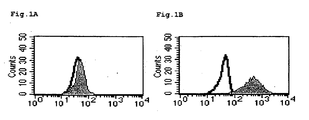
- Figure 1 shows the binding capacity, determined by flow cytometry, of GM-7 to monocytic cells after in vitro modification according to the invention. It can be seen that the CD14-positive monocytes obtained directly from buffy-coat do not bind the antibody GM-7 (the cloud shaded grey is congruent with the non-shaded antibody control). In contrast, following cultivation in the presence of M-CSF and stimulation with ⁇ -IFN, part of the monocytes express an antigen which is recognised by the monoclonal antibody GM-7. The monoclonal antibody GM-7 was characterised as isotype ⁇ -IgG 2a . The process according to the invention consequently leads to a change in the phenotypic pattern of the antigen expression on the cell membrane of the modified monocytes ( Figure 1 ).
- the monoclonal antibody GM-7 binds specifically to that cell population which, among those cells produced by the process according to the invention, induce the most effective transplant acceptance (see Figure 9 )
- the invention describes such TAIC, which are capable of binding the antibody GM-7. These cells are subsequently designated as TAIC Gm7 .
- the antibody GM-7 therefore represents an extraordinarily effective and easy to handle agent for selecting and purifying the cells inducing transplant acceptance (TAIC).
- TAIC transplant acceptance
- the transplant acceptance inducing cells formed in step c) of the above described process of the invention, which express the antigen binding to the antibody GM-7 may either be selected directly from the culture medium after step c), or they may be selected from the cell population obtained after separating the cells from the culture medium according to step d) of the above-mentioned process of the invention by binding to the antibody GM-7 produced by the hybridoma cell line DSM ACC2542.
- the antibody is contacted with the sample under conditions which permit binding of the antibody to the transplant acceptance inducing cells present in the sample.
- the reaction complexes resulting from the binding reaction are subsequently separated from the sample.
- the antibody can be immobilised on a carrier material before contact with the sample; for example, it can be bound to a matrix suitable for chromatographic purposes or to so-called "magnetic beads". This procedure allows to select and concentrate transplant acceptance inducing cells from large volumes of sample.
- the bond between the antibody and the transplant acceptance inducing cells is separated after the isolation of the reaction complex from the sample.
- This can be effected by methods known in the state of the art such as e.g. by competitive displacement or by washing with salt solutions.
- Corresponding methods are for instance described by Utz U. et al. ("Analysis of the T-cell Receptor repertoire of human T-cell leukemia virus type-1 (HTLV-1) Tax-specific CD8+ Cytotoxic T Lymphocytes from patients with HTLV-1 associated disease: Evidence for the oligoclonal expansion" J. of Virology Feb. 1996, 843-851 ).
- the monoclonal antibody GM-7 permits the qualitative and quantitative detection of the transplant acceptance inducing cells of monocytic origin in blood and/or tissue samples of the patient in vitro .
- This patient may, for example, be the recipient of an organ yet to be transplanted or already transplanted.
- the formation of reaction complexes in the sample which indicate the presence and, if applicable, the quantity of the transplant acceptance inducing cells is detected by known methods.
- detectable molecules are described in large numbers in the field of molecular diagnostics and include, among others, fluorescent dyes such as fluorescein isothiocyanate or tetramethyl rhodamine-5-isothiocyanate, luminescent dyes, radioactively labelled molecules and enzymes such as peroxidases (compare Lottspeich, F., Zorbas, H. "Bioanalytik", Spektrum Akademischer Verlag GmbH, Heidelberg-Berlin, 1998 )
- the detection of the antibody takes place dependent of the molecule selected for labelling of the former.
- the antibody GM-7 was coupled with the fluorescent molecule fluorescein isothiocyanate (FITC) so that the detection of the antibody could be carried out by means of flow cytometry and/or fluorescence microscopy.
- FITC fluorescent molecule fluorescein isothiocyanate
- the reaction complex can also be detected in a two-stage process using secondary antibodies.
- the unlabelled antibody GM-7 can be detected in the reaction complex with a further labelled antibody (compare Lottspeich, F., Zorbas, H. "Bioanalytik", Spektrum Akademischer Verlag GmbH, Heidelberg-Berlin, 1998 ).
- This two-stage method of detection is considerably more sensitive than the direct detection of binding of the antibody since several labelled secondary antibodies can bind to one GM-7 antibody (signal amplification).
- the antibody GM-7 consequently allows the detection of TAIC in the peripheral blood of the patient treated with TAIC, for example in the form of "monitoring", during which the number of cells in the peripheral blood is determined at specific time intervals.
- TAIC prepared from monocytes of the donor correlates, in the animal test in the peripheral blood of the transplant recipient, with the tolerance of the transplanted organ. This finding consequently permits the clinician to wean off or to reduce the dosage of the immuno-suppressants that are optionally administered stepwise.
- the invention also discloses a sub-population of the TAIC, which co-express the antigens CD3 and CD14 on their cell surface. These cells are subsequently indicated as TAIC CD3+/CD14+ . Such cells have to date not been reported in the state of the art. Monocytes and known cells derived from monocytes do carry the surface marker CD14, however, they do not additionally carry the surface marker CD3 at the same time.
- TAIC which co-express the surface antigens CD3 and CD14 may either be directly selected from the transplant acceptance inducing cells formed in step c) of the above described process of the invention, or they may be selected from the cell population obtained after separating the cells from the culture medium according to step d) of the above-mentioned process of the invention, or they may alternatively be selected from the TAIC GM7 population.
- the TAIC CD3+/CD14+ express the genes Foxp3, CTLA4 and Integrin ⁇ E ⁇ 7 strongly (see Example 12). In contrast, these genes are not or only to a small extent expressed by the original monocytes. The upregulation of the expression of the genes Foxp3, CTLA4 and Integrin ⁇ E ⁇ 7 is therefore a characteristic of TAIC CD3+/CD14+ cells.
- T-lymphocytes which co-express the surface antigens CD4 and CD25 are a sub-population of regulatory T-lymphocytes, which are also indicated as "suppressor cells”. It is their function to suppress the immune response of the body.
- Foxp3 is seen as a specific transcription factor, which serves as a control gene for the development of regulatory T-cells, and which is specifically expressed by these cells.
- the TAIC cD3+/CD14+ -cells express at least 1 ⁇ 10 -9 , more preferably at least 5 ⁇ 10 -9 , and in particularly preferred manner at least 1 ⁇ 10 -8 ⁇ g Foxp3-RNA per ⁇ g total RNA
- CTLA4 is similarly viewed as a marker for the detection of the regulatory function of T-lymphocytes, in particular of CD4/CD25 positive T-lymphocytes (see the literature cited in Example 12).
- the TAIC CD3+/CD14+ -cells should preferably express at least 5 ⁇ 10 -7 , more preferably at least 3 ⁇ 10 -6 and in a particularly preferred manner at least 5 ⁇ 10 -6 ⁇ g CTLA4-RNA per ⁇ g total RNA.
- Integrin ⁇ E ⁇ 7 which recognizes epithelial Cadherin was recently described by Lehmann et al. in PNAS 99, pages 13031-13036 (2002 ) as a new marker for a sub-population of highly potent regulatory T-lymphocytes, which interact with the epithelial environment.
- the expression of the Integrin ⁇ E ⁇ 7 -RNA should according to the invention amount in TAIC CD3+/CD14+ -cells to preferably at least 1 ⁇ 10 -12 , more preferably to at least 1 ⁇ 10 -11 , and in a particularly preferred manner to at least 1 ⁇ 10 -10 , and most preferably to at least 1 ⁇ 10 -9 ⁇ g per 1 ⁇ g total RNA.
- the direct co-culturing of the TAIC of the invention with lymphocytes leads to a significant increase in the number of regulatory T-lymphocytes, in particular of CD4/CD25 double-positive cells in the lymphocyte population with strongly up-regulated expression of the genes Foxp3, CTLA4 and Integrin ⁇ E ⁇ 7 .
- the Example further demonstrates that this effect is not observed if TAIC are indirectly co-cultured with lymphocytes.
- Example 13 confirms this hypothesis.
- lymphocytes from the recipient animals of Examples 3, 4, 5, 6 and 7 were incubated with TAIC from the respective donor animals in vitro .
- TAIC pre-incubated with the lymphocytes from the recipients were injected to the animals instead of TAIC.
- Donor specific tolerance could be induced also in this manner, while animals, to which recipient lymphocytes not co-cultivated with donor derived TAIC were administered, did not develop tolerance.
- the TAIC of the invention can be used as such as pharmaceutical preparation.
- the cells obtained from step d) of the method of the invention as described above can be used directly. About 10 - 50 % of the total cells of the populations so obtained is formed by lymphocytes and granulocytes, which stem from the initial monocyte isolate (buffy-coat). These cells support the formation of the TAIC of the invention derived from the monocytes in the culturing step (see Example 11); they do not interfere with the tolerance induction if the TAIC of the invention are used as a pharmaceutical preparation.
- the sub-populations TAIC GM7 and/or TAIC CD3+/CD14+ may be isolated from the totality of the TAIC population obtained from process of the invention (see above) and may be used for tolerance induction.
- the TAIC or the TAIC GM7 and/or TAIC CD3+/CD14+ may be kept for at least 48 hours without their tolerance inducing effect becoming lost.
- the TAIC or the sub-populations TAIC GM-7 and/or TAIC CD3+/CD14+ suspended in e.g. human AB serum can be administered intravenously as short transfusion.
- the TAIC generated from the monocytes of the donor or the sub-populations TAIC GM7 and/or TAIC CD3+/CD14+ can be injected into the MHC-different recipient either pre-operatively or postoperatively.
- the TAIC should be injected once to three times approximately 1 week before the operation.
- the period between the operation and the single administration of the cells should not be longer than 7 days.
- the TAIC according to the invention or the sub-populations TAIC GM7 and/or TAIC CD3+/CD14+ are then capable of repelling the T-cell response of the recipient's immune system against the transplant and to persist in the recipient blood for a sufficiently long period of time to guarantee long-term transplant acceptance.
- Preoperative intravenous injection can be considered in connection with donations from living individuals; however, if a corpse donation (blood and organ from a dead body) is at issue, postoperative administration of the TAIC according to the invention or the sub-populations TAIC GM7 and/or TAIC CD3+/CD14+ may be preferred.
- a corpse donation the body of the donor is flushed with a perfusion medium by switch of the principal artery for purposes of organ preservation.
- the venous blood is normally sucked out via the vena cava and discarded.
- the venous blood can be collected and processed as described in Example 1.
- TAIC may also be obtained from cells (lymphocytes and monocytes) from the donor spleen.
- the interval between the transplantation and the application of the cells can be overcome by combination with immuno-suppressants, in order to prevent an acute rejection of the organ in the interval between the transplantation and the provision of the TAIC obtained from the donor blood.
- immuno-suppressants such as, for example, calcineurin inhibitors such as cyclosporin A (CSA) or tacrolimus or with azathioprine (AZA), mycophenolate mofetil, rapamycin, monoclonal antibodies (ATG, ALG, but neither with Dicliziumab or Basiliximab) or steroids (STE) can be considered.
- immuno-suppressants except for known IL-2-receptor- ⁇ monoclonal antibodies such as Dicliziumab and Basiliximab
- TAIC TAIC
- the cells of monocytic origin which have been modified according to the invention can be used as "vehicle for tolerance transfer" for any cellular transplant (such as islet cells, hepatocytes, adult stem cells and for any other programmed cell type or tissue type) and organ (such as e.g. kidney, liver, heart) insofar as they are genetically identical to the cells to be transplanted (organs), i.e. they must originate from the donor him/herself or from identical twins thereof.
- the TAIC fulfil their protective function by allowing the transplanted cells / organs to become adherent in the new environment, thus saving the recipient from suffering the side effects of a longterm immunosuppressive therapy.
- the starting cells for the process according to the invention are blood monocytes. These are preferably monocytes from human blood. For purposes of inducing transplant acceptance, the cells must originate from the donor of the transplant (or his/her identical twin). In the case of xenogeneic transplantations of e.g. monkey or pig organs into man, the TAIC according to the invention must consequently be derived from the monocytes of the donor animal concerned.
- the blood can first be separated, after the usual treatment with an anticoagulant, into plasma and into white and red blood cells using methods known in the art, preferably by centrifugation. After centrifugation, the plasma will be present in the supernatant; below it, there is a layer which contains the white blood cells in their entirety. This layer is also referred to as buffy-coat. Below this is the phase containing the red blood cells (hematocrit).
- the buffy-coat layer is first isolated and separated to obtain the monocytes e.g. by centrifuging according to known methods.
- the buffy-coat layer is applied onto a lymphocyte separation medium (Ficoll-Hypaque) and centrifuged (see Example 1).
- Example 1 describes the preferred embodiment of the invention, wherein the erythrocytes and dead cells still contained in the buffy-coat are separated by centrifuging, and the white blood cells including the monocytes are present as an isolate on the separation medium. Thereafter, the white phase of monocytes may be carefully pipetted off, and, for enrichment of the monocytes within the isolate, are repeatedly centrifuged and washed. In the course of this process, the monocytes will assemble at the bottom of the centrifuge vessel together with a part of the lymphocytes.
- a lymphocyte separation medium Ficoll-Hypaque
- the conditions for obtaining the monocyte containing isolate are controlled such that the isolate contains about 10 - 50 % lymphocytes next to the monocytes, by reference to the total number of cells.
- the isolate contains about 50 - 90 %, in a particularly preferred manner 60 - 70 % monocytes and about 10 - 50 %, in a particularly preferred manner 20 - 50 % lymphocytes, each by reference to the total cell count, wherein the difference will optionally be provided by granolocytes.
- lymphocytes in a magnitude of 20 - 30 % referred to the total cell count
- M-CSF macrophage-colony-stimulating-factor
- the concentration of M-CSF in the culture medium may preferably amount from 2 to 20 ⁇ g/l medium, more preferably 4 to 6 ⁇ g/l and in particularly preferred manner 5 ⁇ g/l.
- the cells must be stimulated with ⁇ -IFN, i.e. cultured in the presence of ⁇ -IFN.
- ⁇ -IFN i.e. cultured in the presence of ⁇ -IFN.
- the stimulation of the monocytes with ⁇ -IFN takes place after an initrial propagation phase lasting 3 to 6 days in the culture medium containing the growth factor.
- ⁇ -IFN stimulation is carried out and this stimulation is extended over a period of preferably 24 to 72 hours, more preferably 48 hours under incubator conditions i.e. at 37°C and in a 5% CO 2 atmosphere.
- the concentration of ⁇ -IFN in the medium may be 0.1 to 20 ng/ml, preferably 1 to 10 ng/ml and particularly preferably 5 ng/ml.
- the stimulation with ⁇ -IFN may begin simultaneously with the propagation of the monocytes in the medium containing the growth factor. However, stimulation after a 3 to 6 day long initial propagation phase, as indicated above, is preferred.
- the propagation of the cells and stimulation with ⁇ -IFN should, overall, preferably not take more than 8 days. In any case, treatment with ⁇ -IFN should be carried out such that after the propagation phase it lasts for at least 24 hours, at maximum 72 hours, preferably 48 hours. The period for propagation and stimulation of the cells should consequently last for a total of preferably 4 to 8 days.
- the propagation and stimulation with ⁇ -interferon is carried out as indicated in Example 2 in such a way that the monocytes are first propagated in a culture medium containing the growth factor and that ⁇ -IFN is added to the culture medium after 3 to 6 days in such an amount that a concentration of 0.1 to 20 ng/ml, preferably 1 to 10 ng/ml and particularly preferably 5 ng/ml is obtained in the medium.
- the process according to the invention is carried out in culture vessels the surface of which has previously been coated with fetal calf serum (FCS) or alternatively with human AB serum (see Example 2).
- FCS fetal calf serum
- Coating with FCS can take place by covering the surface of the culture vessels with FCS before use and, following a period of interaction of a few hours, in particular 4 to 72 hours, preferably 12-48 hours and in particular 24 hours, removing the FCS not adhering to the surface in a suitable manner.
- the cells will settle at the bottom of the culturing vessel after about 24 hours. Due to their adhesive properties the monocytes and the TAIC, derived from the monocytes during the process, will then adhere to the bottom of the respective culture vessel. If, as described in Example 2, the culture medium is changed during cultivation, the supernatant is initially carefully removed, for instance by pipetting off or decanting, and subsequently fresh culture medium is filled in. Preferably however, the cells adhering to the bottom are not or only carefully washed, so that any lymphocytes present are not removed.
- Removing the adhering cells can take place mechanically, e.g. by means of a fine cell scraper or spatula.
- the complete removal of the cell takes place by treatment with a suitable enzyme, e.g. with trypsin (see Example 2).
- a suitable enzyme e.g. with trypsin (see Example 2).
- the trypsin solution (0.1 to 0.025 g/l, preferably 0,05 g/l) can be allowed to act onto the cells for 2 to 10 minutes at 35°C to 39°C, preferably at 37°C, in the presence of 5% CO 2 .
- the enzyme activity is then blocked in the usual manner and the now freely floating TAIC can be obtained in the usual way by centrifuging. They are then available for immediate use, optionally in suspension in a suitable medium, e.g. in PBS. However, they can also be kept for several days, in particular for approximately 2 to 3 days, in a nutrient medium (see Example 2); wherein this preservation medium should contain neither the growth factor nor ⁇ -IFN.
- the cells can be kept in such a nutrient medium as TAIC for at least 48 hours.
- the cells can be deep frozen. Protocols for deep freezing of living cells are known in the state of the art, compare Griffith M. et al., (" Epithelial Cell Culture, Cornea", in Methods of tissue engineering, Atala A. and Lanza R.P., Academic Press 2002, chapter 4, pages 131-140 ).
- a preferred suspension medium for deep freezing of the cells according to the invention is FCS containing DMSO.
- the cell suspension containing transplant acceptance inducing cells obtained from steps c) or d) may be further purified with respect to those cells, which bind the antibody GM-7, so as to obtain a sub-population TAIC GM7 . Methods for such purification are described above in detail.
- Such cells are selected from the TAIC population, which co-express the antigens CD3 and CD14 on their cell surfaces.
- Methods for selecting such cells are known in the art. Examples for such methods are the “Fluorescent-Activating Cell Sorting” (FACS), the “Immuno Magnetic Bead Sorting” and the “Magnetic Activated Cell Sorting” (MACS), or the so-called “Rosetting Method” [see Gmelig-Meyling F. et al. "Simplified procedure for the separation of human T- and non-T-cells", Vox Sang. 33, 5-8 (1977 )].
- the selection of the TAIC sub-population TAIC CD3+/CD14+ can take place directly from the TAIC population obtained from steps c) or d) of the above-described process of the invention, or from the TAIC GM7 -sub-population.
- the latter way to proceed means that a stepwise enrichment of TAIC CD3+/CD14+ will take place.
- the TAIC according to the invention are used per se for the production of a pharmaceutical composition for the in vivo suppression of transplant rejection.
- Such pharmaceutical preparation may contain vital TAIC according to the invention, which are obtained from step d) of the process of the invention, suspended in a pharmaceutically acceptable carrier preferably in a quantity of about 1 ⁇ 10 5 to 1 ⁇ 10 7 cells/ml and more preferably of about 1 ⁇ 10 6 cells/ml of the preparation.
- the cells of the TAIC GM7 sub-population are used per se for the production of a pharmaceutical composition for the in vivo suppression of transplant rejection.
- Such pharmaceutical preparation may contain vital TAIC GM7 cells, which bind to the antibody GM-7, suspended in a pharmacologically acceptable liquid carrier, preferably in a quantity of about 1 ⁇ 10 6 to 1 ⁇ 10 8 cells/ml and more preferably of about 1 ⁇ 10 6 cells/ml of the preparation.
- the cells of the TAIC CD3+/CD14+ sub-population are used per se for the production of a pharmaceutical composition for the in vivo suppression of transplant rejection.
- Such pharmaceutical preparation may contain vital TAIC CD3+/CD14+ cells which co-express the antigens CD3 and CD14, in a quantity of preferably about 5 ⁇ 10 5 to 5 ⁇ 10 7 cells/ml and more preferably of about 5 ⁇ 10 6 cells/ml of the preparation.
- the above described pharmaceutical preparations may contain the cells according to the invention suspended in a physiologically well-tolerated medium.
- Suitable media are for example Ringer solution, physiological saline or 5 to 20 % human albumin solution and the like.
- Cell preparations according to the invention may contain vital TAIC, which are obtained from step d) of the process of the invention.
- the preparations may contain cells belonging to the sub-populations of TAIC GM7 cells, which bind to the antibody GM-7, or of TAIC CD3+/CD14+ cells, which co-express the antigens CD3 and CD14 on their cell surface.
- the preparations may contain the respective cells in a quantity of preferably at least 1 ⁇ 10 5 , more preferably at least 5 ⁇ 10 5 and most preferably at least 1 ⁇ 10 6 cells per ml suspended in a liquid carrier medium.
- the medium may be a cell culture or transport medium well-tolerated by cells, such as 5 to 20% human albumin solution.
- the cells within the preparation may be deep-frozen and contained in a suitable storage medium, such as e.g. RPMI with 50% human albumin solution and 10% DMSO.
- the invention also relates to a method wherein the transplant-acceptance inducing cells of the invention (TAIC, TAIC GM7 or TAIC CD3+/CD14+ ) are used for generating or expanding regulatory T-lymphocytes in vitro .
- the direct in vitro cocultivation of TAIC with lymphocytes leads to a significant proliferation of regulatory T-lymphocytes, in particular of CD4 + /CD25 + lymphocytes, see Wood and Sakaguchi: "Regulatory Cells in Transplantation Tolerance", Nature Review Immunology 3, 199-210 (2003 ). It is therefore possible to generate and/or expand regulatory T-lymphocytes in particular CD4 + /CD25 + lymphocytes by directly coculturing TAIC with lymphocytes as described in Example 12.
- Direct in vitro culturing means that TAIC and lymphocytes are cocultured in direct physical contact within the same medium, as a.o. exemplified in Example 12.
- the medium preferably contains the respective cells i.e. TAIC and lymphocytes in about equal cell numbers and each in a quantity of preferably at least 1 ⁇ 10 5 , more preferably at least 5 ⁇ 10 5 and most preferably at least 1 ⁇ 10 6 cells per ml suspended in a liquid carrier medium; the medium may be a cell culture or transport medium well-tolerated by cells, such as 5-20% human albumin solution.
- the co-cultivation preferably should take place under physiological conditions at about 37°C, e.g. in an incubator, for preferably about 3 to 5, more preferably 4 days.
- transplant acceptance can not only be induced by administering TAIC generated from donor monocytes to the recipient, but also by readministering recipient lymphocytes to the recipient, which have previously been directly cocultured in vitro with TAIC prepared from donor monocytes as described above.
- regulatory T-lymphocytes can therefore be prepared in vitro from lymphocytes originating form the recipient of a transplant, by direct coculturing of lymphocytes from the recipient with TAIC originating from the donor of that transplant. Readministering the cocultivated lymphocytes to the recipient will lead to transplant acceptance by the recipient, as shown in Example 13.
- the recipient derived regulatory T-lymphocytes so prepared may be isolated by FACS as described herein (see above) and may be used in a pharmaceutical preparation for preventing transplant rejection in the recipient, wherein the cells are suspended in a pharmacologically acceptable carrier as described above.
- composition of the media and substances used are as follows: 1. Penicillin/streptomycin solution: 10,000 units of penicillin as sodium salt of penicillin G and 1000 ⁇ g streptomycin as streptomycin sulphate per ml physiological sodium chloride solution (NaCl 0,85 %) (Gibco Catalogue No. 15140122). 2. Trypsin-EDTA 0.5 g trypsin and 0.2 g EDTA (4 Na)/l 3. RPMI 1640 (1x, liquid (11875)) contains L-Glutamine RPMI (Roswell Park Memorial Institute) Media 1640 are enriched formulations, which can be used extensively for mammalian cells. Components Mol.-weight Conc.
- ⁇ -Interferon ( ⁇ -IFN) Recombinant human ⁇ -IFN from E. coli; 16.7 kD protein containing 143 amino acid residues (CHEMICON Catalogue No. IF002)
- 450 ml human whole blood was mixed in a triple chamber bag set with 63 ml of a stabiliser solution which contained, per litre H 2 O, 3.27 g of citric acid, 26.3 of g trisodium citrate, 25.5 g of dextrose and 22.22 g of sodium dihydroxy phosphate.
- the pH of the solution was 5.6-5.8.
- the quantity of 50 ml of freshly obtained buffy-coat was then divided into 2 portions of 25 ml each and layered onto 25 ml of Ficoll-Hypaque separation medium respectively which had been introduced previously into two 50 ml Falcon tubes.
- This preparation was centrifuged for 30 minutes at 2500 rpm without braking. Thereafter, any erythrocytes and dead cells still present in the buffy-coat were below the Ficoll phase, whereas the white blood cells, including the monocytes, were separated off on the Ficoll as white interphase.
- the white interphase including the monocytes was carefully removed by pipetting and mixed with 10 ml of phosphate-buffered saline (PBS).
- PBS phosphate-buffered saline
- This preparation was then centrifuged three times for 10 minutes at 1800 rpm with braking, the supernatant being removed by pipetting after each centrifuging process and fresh PBS being introduced.
- the cell pellets assembled at the bottom of the centrifuging vessel contained the mononuclear cell fraction, i.e. the monocytes.
- the cultivation and propagation of the monocytes was carried out in nutrient medium with the following composition: RPMI 1640 medium 440 ml Fetal calf serum (FCS), alternatively, AB serum 50 ml Penicillin / Streptomycin Solution 5 ml Total volume 500 ml
- the nutrient medium contained 2,5 ⁇ g / 500 ml M-CSF.
- the monocytes isolated in Example 1 were suspended in a total quantity of 10 6 cells in 10 ml of the nutrient medium and transferred onto a Petri dish (100 mm in diameter).
- the Petri dish had previously been filled with pure inactivated FCS and the FCS had been poured off after 24 hours in order to obtain, in this way, a dish coated with FCS.
- the Petri dish was covered with the appropriate cover and kept for 3 days in an incubator at 37°C.
- the cells settled at the bottom of the Petri dish after 24 hours.
- the supernatant was pipetted off and the Petri dish again filled with 10 ml of fresh nutrient medium.
- the determination of the cell count for the determination of the exact dosage took place according to known methods, compare Hay R.J., "Cell Quantification and Characterisation", in Methods of Tissue Engineering, Academic Press 2002, Chapter 4, S. 55-84 .
- This cell suspension was centrifuged (1800 rpm, 10 minutes, see above) and the cell pellet were incorporated either into PBS or for application in man into NaCl (physiol.). Subsequently, the intravenous administration can take place directly or within 48 hours.
- FCS/DMSO was added as freezing medium to the cells and these were deep frozen in a volume of 10 ml.
- the freezing medium contained 95% FCS and 5% DMSO. In each case, approximately 10 6 cells were incorporated into 1 ml of the medium and cooled in the following steps:
- Figure 1 shows the phenotypic changes in the antigen expression, determined by flow cytometry, on the monocytes used after cultivation and ⁇ -IFN stimulation of the original monocytic cells.
- TIC Transplant Acceptance Inducing Cells
- TAIC for treating a potential recipient before transplantation offers itself, for example, in the clinical case of a live donation, where it has been clarified in advance of the organ transplantation who the donor will be and who will receive the donor organ.
- the heterotopic heart transplantation was carried out in the rat model on male inbred rats of the strain combination LEW[RT1. 1 ] (in connection with the present invention referred to as "LEW") -> DA[RT1. av1 ] (in connection with the present invention referred to as "DA") using the technique described by Ono and Lindsey [Ref. Ono, K. and Lindsey, E.S. "Improved technique of heart transplantation in rats". J. Thorac. Cardiovasc. Surg. 57, 225-229 (1969 )].
- the DA recipient rats received 10 6 TAIC derived from LEW monocytes intravenously in 1 ml of PBS.
- the transplantation took place seven days later of a heart taken from the LEW rat strain, which was heterotopically implanted into the abdomen (abdominal cavity) of the DA recipient animal. Since the rat strains used were inbred strains, the TAIC according to the invention expressed identical tissue antigens as the transplanted LEW heart.
- TAIC 10 6
- CAP CAP rat inbred strain
- CAP rats express the haplotype RT1. c , they are therefore fully MHC-discordant (MHC-different) to the LEW donor animals.
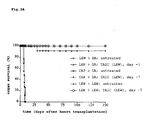
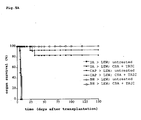
- LEW -> DA 10 6 LEW derived TAIC i.v., day -7 before LEW heart transplantation; 3. CAP -> DA; 10 6 LEW derived TAIC i.v., day -7 before LEW heart transplantation; 4. CAP -> DA; untreated; 5. LEW -> LEW, untreated; 6. LEW -> LEW, 10 6 LEW derived TAIC i.v., day -7 before LEW heart transplantation.
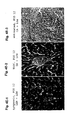
- Figure 2B shows the histological evaluation of a LEW allogeneic transplant on postoperative day (POD) 150, following heterotopic transplantation into the abdomen of a DA recipient rat.
- the recipient rat had been pre-treated on day -7 before transplantation with 10 6 LEW-derived TAIC.
- the transplant was functioning satisfactorily (strong heart beat) up to the time of its removal from the recipient rat (POD) 150.
- the histological preparation (x40) showed a healthy heart muscle morphology, normal vascular endothelial tissue and only minimal infiltration with mononuclear cells without any indication of acute and chronic rejection processes.
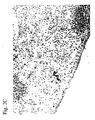
- FIG. 2C shows a histological preparation of a thymus, removed on POD 150, of a DA rat pre-treated with 10 6 LEW-derived TAIC. The preparation was labelled with the monoclonal antibody I1.69 specific for LEW-MHC class I.
- administering TAIC leads to the colonisation of the thymus gland where the presentation of donor-derived MHC antigens to the maturing T-cells takes place; small nests of cells can be clearly recognised which can be labelled with the antibody.
- the induction of a mixed chimerism by the intravenous injection of the LEW-derived TAIC in the DA animal concerned can be considered as a possible cause of the tolerance induced according to the invention.
- a test was therefore carried out to check whether, following the injection of LEW-derived TAIC, more than 5% of cells can be detected in the blood of the recipient animal by flow cytometry in the long term (>45 days).
- the flow cytometry was carried out as described in the state of the art [Ref. Preffer F.I., "Flow cytometry" In: Diagnostic Immunopathology, Colvin RB, Bhan AK, McCluskey, RT (eds.), Raven Press New York, pp. 725-449 (1994 )].
- the proportion of donor cells in the peripheral blood of the DA rat can be highly accurately determined with I1.69.
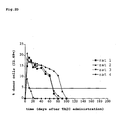
- I1.69 the donor antigen labelled by I1.69 within the first 6 weeks following the intravenous injection of the TAIC.
- this proportion of the chimerism in the peripheral blood of these DA rats decreases substantially and disappears completely on day 100.
- this transient chimerism correlates closely to the transplant survival of LEW hearts transplanted after double time (i.e.
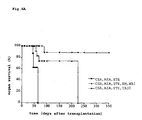
- LEW -> DA CSA, 5 mg / kg ⁇ BW, i.v., day 0, 1, 2 and 3 3.
- LEW -> DA CSA, 5 mg / kg ⁇ BW, i.v., day 0, 1, 2 and 3 plus 10 6 LEW-derived TAIC, i.v., day 7 4.
- CAP -> DA CSA, 5 mg / kg ⁇ BW, i.v., day 0, 1, 2 and 3 plus 10 6 LEW-derived TAIC, i.v., day 7
- the postoperative intravenous treatment of the DA recipient rats with 10 6 LEW-derived TAIC on POD (postoperative day) 7 leads to long-term tolerance if an initial administration of 4 cycles of CSA (5mg/kg ⁇ BW, i.v.) has been effected from day 0-3.
- the initial administration of CSA is necessary since the sole treatment with a single administration of 10 6 TAIC on POD 7 (postoperative day) prevents acute rejection only in 1 out of 6 cases.
- the CSA dose chosen in this case has only a sub-therapeutic effect since no long-term acceptance can be induced by the exclusive CSA administration even though the survival of the transplant is prolonged.
- the induced transplant acceptance is donor-specific since a corresponding treatment of DA rats with LEW-derived TAIC does not induce any tolerance for CAP-third strain heart transplants.
- the hearts of experimental group 1 were rejected acutely after 7.0 ⁇ 0.8 days.
- the hearts of group 2 were rejected with a delay after 14.4 ⁇ 7.0 days.
- the hearts of group 3 were accepted for longer than 150 days in 5 out of 6 cases.
- the sole postoperative administration of TAIC (10 6 cells) was able to prevent acute rejection only in 1 out of 6 cases since the heart organs ceased to beat after 22.6 ⁇ 31.6 days (group 4).
- the third strain control with CAP hearts showed the specificity of induced transplant acceptance since third strain hearts were again rejected acutely after 7.4 ⁇ 2.2 days.
- DA -> LEW rat inbred system 1. DA (kidney) -> LEW; untreated 2. DA (kidney) -> LEW; 10 6 DA-derived TAIC, i.v., day -7 and -1 before transplantation 3. LEW (kidney) -> LEW; untreated 4. DA (liver) -> LEW; untreated 5.
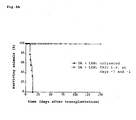
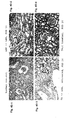
- FIG. 4D shows that as a result of the intravenous injection, given twice, of 10 6 TAIC per kg body weight on days -7 and -1 before transplantation, the morphology of the transplanted kidney can be shown to be intact (compare control kidney and syngeneic transplant LEW -> LEW), whereas, in the untreated allogeneic control group DA -> LEW, a clear infiltration of the transplant in the interstice can be recognised (on postoperative day 14).
- the allogeneic liver transplant ( Figure 4E ), which had been fully rejected on POD 12 without TAIC pre-treatment (DA -> LEW without TAIC), behaves in an analogous manner whereas the prior administration of TAIC allows the parenchyma of liver transplants to appear as being completely homogeneous and intact in comparison with the syngeneic transplant.
- the allogeneic skin transplant (DA) also heals without complication (compare comparison with the syngeneic LEW transplant) whereas the CAP third strain graft transplanted simultaneously was rejected acutely as early as on postoperative day 12.
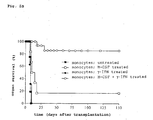
- the inbred strain BN[RT1. n ] (referred to as "BN" in connection with the present invention) was also used, among others. 1. DA -> LEW; untreated 2. DA -> LEW; CSA, 5 mg / kg ⁇ BW, i.v., day 0, 1, 2, 3 plus 10 6 DA-derived TAIC / kg ⁇ BW, i.v., day 7 and 10 postoperative 3. CAP -> LEW; untreated 4.
- LEW -> DA 10 6 / kg ⁇ BW LEW-derived blood monocytes (stimulated with ⁇ -IFN), i.v., day -7 before heart transplantation 4.
- the left lung of a donor pig is removed and transplanted orthotopically into a genetically different recipient pig (namely into the left thoracic cavity following the removal of the left lung from the recipient pig).
- 500 ml of donor blood was removed simultaneously which served to prepare the TAIC from the monocytes of this pig.
- the donor animals all had a weight of 30-35 kg.
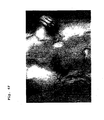
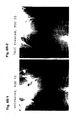
- Figure 6B shows the lung transplants of a pig of experimental group 1 (POD 41) and a pig treated with TAIC from experimental group 3 (55 days after transplantation; B).
- a visible reduction in transparency shading
- the thorax x-ray picture of the animal treated with TAIC shows an x-ray unobtrusive lung and transplant finding respectively, with a good delimitation with respect to the heart silhouette
- the monoclonal antibody GM-7 was generated by immunising mice with human TAIC which had been prepared as described in Example 2.
- the hybridoma cells producing the antibody were deposited at the "Deutsche Sammlung für Mikroorganismen" under the accession no. DSM ACC2542.
- the results reported below demonstrate that the antibody binds specifically to an antigen which is expressed only on CD14 + cells which had been subjected to the 6 day ex situ modification with M-CSF and 2 day ⁇ -IFN stimulation according to the invention.
- Figure 1 shows the binding capacity, determined by flow cytometry, of GM-7 to monocytic cells after in vitro modification, i.e. after transformation into TAIC. It can be seen that the CD14-positive monocytes obtained directly from buffy-coat do not bind the antibody GM-7 (the grey shaded cloud corresponds to the antibody control). In contrast, part of the monocytes express an antigen after cultivation in M-CSF and stimulation with ⁇ -IFN, which antigen is recognised by the monoclonal antibody GM-7. After cultivation as described in Example 2, about 80% of the transformed monocytes are able to bind the monoclonal antibody GM-7.
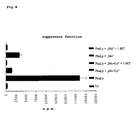
- the suppressor activity of the CD14 + /GM-7 + cells was compared with that of CD14 + /GM-7 - cells in a mixed lymphocyte culture (MLC).
- MLC mixed lymphocyte culture
- the TAIC stem from an individual B.
- lymphocytes with 2 ⁇ g PHA were transferred into the wells of a 96-well-plate, followed by a proliferation period over 144 hours (indicated as "PhaLy”). Lymphocytes only cultivated in medium without addition of PHA were run as a further control (indicated as " "Ly”).
- PhaLy + "Mo+Ly” PHA-stimulated lymphocytes and TAIC [10 5 cells from the set up "Mo+Ly” according to Example 11].
- PhaLy+"Mo+Ly”+1-MT PHA-stimulated lymphocytes and TAIC in the presence of 2 ⁇ mol 1-MT [10 5 cells from the set up "Mo+Ly” according to Example 11].
- PhaLy + "Mo" PHA-stimulated lymphocytes and TAIC [10 5 cells from the set up "Mo” according to Example 11].
- PhaLy+"Mo"+1-MT PHA-stimulated lymphocytes and TAIC in the presence of 2 ⁇ mol 1-MT [10 5 cells from the set up "Mo” according to Example 11].
- lymphocytes not stimulated with PHA do not significantly proliferate, the mean radioactivity observed being 367 cpm (see Figure 8 ).
- the stimulation with 2 ⁇ g PHA leads to a significant increase in the proliferation rate of the lymphocytes (“PhaLy”), the highest incorporation being measured at a mean value of 18459 cpm in these samples.
- lymphocytes present in the monocyte fraction were determined by comparison of two different set ups.
- the monocyte fraction was initially taken from the interphase of the buffy-coat as described in Example 1. As described in Example 2, the cells were subsequently transferred to the cultivation step with M-CSF. Within one hour after the starting point of the cultivation, the monocytes adhering to the bottom of the tissue culture flask were washed five times with 10 ml PBS each, and the amount of the lymphocytes present in the culture was thereby decreased to ⁇ 5 % (4,8 ⁇ 2,4 %), while the amount of enriched monocytes (CD14 + ) so obtained was above 90 % (92 ⁇ 5.6 %). Additional cell components within the set up were B-lymphocytes and granulocytes.
- the cells in the second set up were also taken from the interphase of the "buffy-coat” as monocyte fraction as described in Example 1.
- the cells adhering to the bottom of the tissue culture flask were only washed once after 24 hours starting from the beginning of the cultivation phase, as described in Example 2.
- a cell population was obtained, which was composed of 45 ⁇ 5,3 % CD14 + -monocytes and 23,5 ⁇ 8,9 % CD2 + -lymphocytes.
- lymphocytes and granulocytes were also present in this set up.
- the lymphocytes proliferate quicker than the monocytes;the relative amount of lymphocytes increased in set up "Mo” from 4,8 % to 69,8 % and in set up "Mo+Ly” from 23,5 % to 50,6 %.
- CD14 + /CD3 + -cells effective as TAIC are formed in both cultures. It is important in this context that a significantly higher increase in CD14 + /CD3 + -cells is observed in the set up "Mo+Ly" with an amount of 32,0 ⁇ 5,3 % as opposed to set up "Mo" with only 7,2 ⁇ 3,2 %.
- TAIC of donor A were directly or indirectly co-cultivated in vitro together with lymphocytes of a donor B.
- the direct cell-to-cell-contact between the TAIC (of donor A) and the lymphocytes (of donor B) was made possible, while in the indirect co-culture a membrane ("cell culture insert", 0,4 ⁇ m pore size, Falcon, order no. 353090) allowed exchange of the medium, but inhibited the physical contact of the two cell populations.
- the direct or indirect co-culture is carried out for preferably 3 to 5 days, more preferably for 4 days under incubator conditions i.e. at 37°C and in a 5% CO 2 atmosphere.
- the respective numbers of regulatory T-cells (CD4 + /CD25 + ) were determined in both set ups as well as in the controls, wherein TAIC or lymphocytes respectively were cultivated alone. Further, the number of CD3 + /CD14 + -cells, which represent the component of the TAIC-cell population having the most significant suppressor function in the mixed lymphocyte culture, was determined in the control set up, wherein the TAIC were cultured alone.
- the surface antigens of the cells were determined per FACS analysis and the amount of the respective cell populations in the total amount of the cells was analysed.
- Foxp3 is a specific transcription factor, which is viewed as a control gene for the development of regulatory T-cells, and which is specifically expressed by these cells [see Hori, S. et al., "Control of Regulatory T-cell Development by the Transcription Factor Foxp3", Science 299, 1057 - 1061 (2003 )].
- CTLA-4 is a further factor, which is used as a marker for the determination of the regulatory function of CD4 + /CD25 + -T-cells (see Khattri, R. et al., "An essential role for Scurfin in CD4+/CD25+ T regulatory cells", Nature Immunology, online publication, doi:10.1038/ni909 (2003 ); Shimizu, J. et al. "Stimulation of CD25+/CD4+ regulatory T cells through GITR breaks immunological self-tolerance", Nature Immunology, online publication, doi:10.1038/ni759 (2003 ); Cobbold, S.P. et al. "Regulatory T cells in the induction and maintenance of peripheral transplantation tolerance", Transpl. Int. 16(2), 66-75 (2003 )].
- Integrin ⁇ E ⁇ 7 is an integrin, which binds to epithelial Catherine and which may be used as a marker for the most potent sub-population of regulatory CD25 + -T-cells [see Lehmann, J. et al. "Expression of the integrin ⁇ E ⁇ 7 identifies unique subsets of CD25+ as well as CD25- regulatory T cells" PNAS 99(20), 13031-13036 (2002 )].
- the Table shows that within the population of lymphocytes obtained from the direct co-culture, the percentage of double positive cells CD4 + /CD25 + increases manifold to a value of 8,7 % in comparison to the amount of CD4 + /CD25 + lymphocytes obtained from the indirect co-culture or control, which is nearly identical with 2,38 % and 2,65 % respectively.
- CD4 + /CD25 + cells expresses the highest relative amounts of mRNA from all tested mastergenes as compared to the expression in CD4 + /CD25 - cells (see Table). While the expression of Foxp3 is increased by about a factor 10 (37 versus 3,75), CTLA-4 expression reaches an even higher maximum expression% (4699 versus 0,376).
- the increase expresssion of the third mastergene integrin increases CD4 + /CD25 + cells during co-culturing is nearly as high as for CTLA-4 since the absolute amount of integrin ⁇ E ⁇ 7 mRNA is raised to 1,4 ⁇ 10 -9 in CD4 + /CD25 + cells as compared to 3,4 ⁇ 10 -12 ⁇ g mRNA/ ⁇ g total RNA in CD4 + /CD25 - cells.
- the relative amount of Foxp3-mRNA in the CD4 + /CD25 + sub-population amounts to only 10 and is nearly as low as the relative amount expressed by the lymphocytes of the control, which expresses a relative amount of Foxp3-mRNA of 15.
- the relative amount of CTLA-4-mRNA expressed by the lymphocytes of the control is as low as 0,375 in the CD4 + /CD25 + -population and 0,1 in the CD4 + /CD25 - population.
- CTLA-4 in the CD14 + /CD3 + sub-population of the TAIC cells was similar to the expression of Foxp3 and was also significantly higher than in all other cell populations.
- CTLA-4 expression (relative value of 12.500) was manifold stronger in the CD14 + /CD3 + -sub-population than the Foxp3-expression, which exhibited a relative value of 50.
- Example 12 The results and conclusions presented in Example 12 were confirmed in vivo in an animal experiment. Different from the procedure described in Examples 3, 4, 5, 6 and 7, the animals in the selectedLEW->DA Inbred combinations were not injected with LEW-derived TAIC for induction of tolerance, but DA-lymphocytes from the recipient which, over a period of 5 days, were previously directly co-cultivated (LEW)-derived TAIC from the donor, or which were cultivated alone in medium as controls, were injected to the animals in this example.
- LEW directly co-cultivated
Landscapes
- Health & Medical Sciences (AREA)
- Life Sciences & Earth Sciences (AREA)
- Immunology (AREA)
- Chemical & Material Sciences (AREA)
- General Health & Medical Sciences (AREA)
- Engineering & Computer Science (AREA)
- Organic Chemistry (AREA)
- Biomedical Technology (AREA)
- Veterinary Medicine (AREA)
- Genetics & Genomics (AREA)
- Animal Behavior & Ethology (AREA)
- Public Health (AREA)
- Bioinformatics & Cheminformatics (AREA)
- Epidemiology (AREA)
- Zoology (AREA)
- Wood Science & Technology (AREA)
- Medicinal Chemistry (AREA)
- Biotechnology (AREA)
- Biochemistry (AREA)
- Microbiology (AREA)
- Cell Biology (AREA)
- Biophysics (AREA)
- Pharmacology & Pharmacy (AREA)
- General Engineering & Computer Science (AREA)
- Molecular Biology (AREA)
- Hematology (AREA)
- Proteomics, Peptides & Aminoacids (AREA)
- Transplantation (AREA)
- Gastroenterology & Hepatology (AREA)
- Chemical Kinetics & Catalysis (AREA)
- General Chemical & Material Sciences (AREA)
- Nuclear Medicine, Radiotherapy & Molecular Imaging (AREA)
- Mycology (AREA)
- Micro-Organisms Or Cultivation Processes Thereof (AREA)
- Medicines Containing Material From Animals Or Micro-Organisms (AREA)
- Preparation Of Compounds By Using Micro-Organisms (AREA)
- Peptides Or Proteins (AREA)
- Measuring Or Testing Involving Enzymes Or Micro-Organisms (AREA)
Priority Applications (1)
| Application Number | Priority Date | Filing Date | Title |
|---|---|---|---|
| SI200331240T SI1557462T1 (sl) | 2002-07-12 | 2003-07-11 | Celice monocitnega izvora, ki inducirajo sprejemljivost transplantata, kot tudi njihova priprava in uporaba |
Applications Claiming Priority (3)
| Application Number | Priority Date | Filing Date | Title |
|---|---|---|---|
| DE10231655 | 2002-07-12 | ||
| DE10231655A DE10231655A1 (de) | 2002-07-12 | 2002-07-12 | Transplantat-Akzeptanz induzierende Zellen monozytären Ursprungs, sowie deren Herstellung und Verwendung |
| EP03763823A EP1492869B9 (en) | 2002-07-12 | 2003-07-11 | Transplant acceptance inducing cells of monocytic origin and their preparation and use |
Related Parent Applications (1)
| Application Number | Title | Priority Date | Filing Date |
|---|---|---|---|
| EP03763823A Division EP1492869B9 (en) | 2002-07-12 | 2003-07-11 | Transplant acceptance inducing cells of monocytic origin and their preparation and use |
Publications (3)
| Publication Number | Publication Date |
|---|---|
| EP1557462A2 EP1557462A2 (en) | 2005-07-27 |
| EP1557462A3 EP1557462A3 (en) | 2006-02-01 |
| EP1557462B1 true EP1557462B1 (en) | 2008-03-26 |
Family
ID=30009939
Family Applications (2)
| Application Number | Title | Priority Date | Filing Date |
|---|---|---|---|
| EP05009317A Expired - Lifetime EP1557462B1 (en) | 2002-07-12 | 2003-07-11 | Transplant acceptance inducing cells of monocytic origin and their preparation and use |
| EP03763823A Expired - Lifetime EP1492869B9 (en) | 2002-07-12 | 2003-07-11 | Transplant acceptance inducing cells of monocytic origin and their preparation and use |
Family Applications After (1)
| Application Number | Title | Priority Date | Filing Date |
|---|---|---|---|
| EP03763823A Expired - Lifetime EP1492869B9 (en) | 2002-07-12 | 2003-07-11 | Transplant acceptance inducing cells of monocytic origin and their preparation and use |
Country Status (18)
| Country | Link |
|---|---|
| US (1) | US20060286670A1 (enExample) |
| EP (2) | EP1557462B1 (enExample) |
| JP (1) | JP2005532803A (enExample) |
| CN (1) | CN100523176C (enExample) |
| AT (2) | ATE309331T1 (enExample) |
| AU (1) | AU2003250939B2 (enExample) |
| BR (1) | BR0312693A (enExample) |
| CA (1) | CA2492383A1 (enExample) |
| DE (3) | DE10231655A1 (enExample) |
| DK (2) | DK1492869T3 (enExample) |
| ES (3) | ES2252696T3 (enExample) |
| IL (3) | IL166021A0 (enExample) |
| NO (1) | NO20050719L (enExample) |
| PT (2) | PT1557462E (enExample) |
| RU (1) | RU2370535C2 (enExample) |
| SI (3) | SI1492869T1 (enExample) |
| WO (1) | WO2004007701A1 (enExample) |
| ZA (2) | ZA200501054B (enExample) |
Cited By (1)
| Publication number | Priority date | Publication date | Assignee | Title |
|---|---|---|---|---|
| CN101812428A (zh) * | 2010-04-26 | 2010-08-25 | 西北农林科技大学 | 一种乳腺上皮细胞的组织块种植方法 |
Families Citing this family (28)
| Publication number | Priority date | Publication date | Assignee | Title |
|---|---|---|---|---|
| DE10362002B4 (de) | 2003-06-23 | 2006-10-12 | Fraunhofer-Gesellschaft zur Förderung der angewandten Forschung e.V. | Adulte pluripotente Stammzellen |
| AU2004256154A1 (en) * | 2003-07-11 | 2005-01-20 | Blasticon Biotechnologische Forschung Gmbh | Autologous self-tolerance inducing cells of monocytic origin and their use in pharmaceutical proparations |
| EP2514315A3 (en) * | 2005-08-24 | 2012-11-07 | Yeda Research and Development Co. Ltd. | Universal donor-derived tolerogenic cells for inducing non-syngeneic transplantation tolerance |
| US8470316B2 (en) | 2005-10-14 | 2013-06-25 | Chugai Seiyaku Kabushiki Kaisha | Agents for suppressing damage to transplanted islets after islet transplantation |
| RU2450830C2 (ru) | 2005-10-21 | 2012-05-20 | Чугаи Сейяку Кабусики Кайся | Средства для лечения кардиопатии |
| AR057582A1 (es) | 2005-11-15 | 2007-12-05 | Nat Hospital Organization | Agentes para suprimir la induccion de linfocitos t citotoxicos |
| JP5754875B2 (ja) | 2006-04-07 | 2015-07-29 | 国立大学法人大阪大学 | 筋再生促進剤 |
| MX2009007830A (es) | 2007-01-23 | 2009-10-07 | Univ Shinshu | Inhibidor de rechazo cronico. |
| TW201503898A (zh) | 2008-06-05 | 2015-02-01 | Chugai Pharmaceutical Co Ltd | 神經浸潤抑制劑 |
| WO2010049935A1 (en) * | 2008-10-30 | 2010-05-06 | Yeda Research And Development Co. Ltd. | Anti third party central memory t cells, methods of producing same and use of same in transplantation and disease treatment |
| JP5436905B2 (ja) * | 2009-03-26 | 2014-03-05 | テルモ株式会社 | シート状細胞培養物の製造方法 |
| JP5667357B2 (ja) * | 2009-11-30 | 2015-02-12 | テルモ株式会社 | シート状細胞培養物の製造方法 |
| RS63800B1 (sr) | 2010-05-28 | 2022-12-30 | Chugai Pharmaceutical Co Ltd | Poboljšanje antitumorskog odgovora t ćelije |
| DE102011004335A1 (de) | 2011-02-17 | 2012-08-23 | Thomas Grammel | Verfahren zur Herstellung eines Vakzins |
| RU2508924C1 (ru) * | 2013-02-21 | 2014-03-10 | Государственное бюджетное учреждение здравоохранения Московской области "Московский областной научно-исследовательский клинический институт им. М.Ф. Владимирского" | Способ профилактики и лечения отторжения почечного трансплантата |
| JP5727665B2 (ja) * | 2014-12-11 | 2015-06-03 | テルモ株式会社 | シート状細胞培養物の製造方法 |
| JP5893786B2 (ja) * | 2015-04-02 | 2016-03-23 | テルモ株式会社 | シート状細胞培養物の製造方法 |
| KR102769850B1 (ko) * | 2015-07-03 | 2025-02-20 | 인스티튜트 내셔날 드 라 싼테 에 드 라 리셰르셰 메디칼르 | 조절 t 세포를 수득하는 방법 및 이의 용도 |
| JP6903866B2 (ja) * | 2016-01-27 | 2021-07-14 | 国立大学法人 熊本大学 | 血液由来単球の増殖誘導方法 |
| JP6140322B2 (ja) * | 2016-02-24 | 2017-05-31 | テルモ株式会社 | シート状細胞培養物の製造方法 |
| JP6490738B2 (ja) * | 2017-04-28 | 2019-03-27 | テルモ株式会社 | シート状細胞培養物の製造方法 |
| EP3620531A4 (en) | 2017-05-02 | 2021-03-17 | National Center of Neurology and Psychiatry | METHOD OF PREDICTION AND EVALUATION OF THERAPEUTIC EFFECT IN DISEASES RELATING TO IL-6 AND NEUTROPHILS |
| WO2019078344A1 (ja) | 2017-10-20 | 2019-04-25 | 学校法人兵庫医科大学 | 抗il-6受容体抗体を含有する術後の癒着を抑制するための医薬組成物 |
| TWI822728B (zh) | 2018-01-31 | 2023-11-21 | 加藤元一 | 含有il-6抑制劑的哮喘治療劑 |
| JP6657452B2 (ja) * | 2019-02-27 | 2020-03-04 | テルモ株式会社 | シート状細胞培養物の製造方法 |
| AU2020259884A1 (en) | 2019-04-17 | 2021-10-07 | Chugai Seiyaku Kabushiki Kaisha | Therapeutic agent for urological cancer which is characterized by being administered with il-6 inhibitor and ccr2 inhibitor in combination |
| JP7002497B2 (ja) * | 2019-06-20 | 2022-01-20 | テルモ株式会社 | シート状細胞培養物の製造方法 |
| JP6872051B2 (ja) * | 2020-02-05 | 2021-05-19 | テルモ株式会社 | シート状細胞培養物の製造方法 |
Family Cites Families (11)
| Publication number | Priority date | Publication date | Assignee | Title |
|---|---|---|---|---|
| US5766920A (en) * | 1982-08-11 | 1998-06-16 | Cellcor, Inc. | Ex vivo activation of immune cells |
| US5683693A (en) * | 1994-04-25 | 1997-11-04 | Trustees Of Dartmouth College | Method for inducing T cell unresponsiveness to a tissue or organ graft with anti-CD40 ligand antibody or soluble CD40 |
| US9068164B1 (en) * | 1995-02-02 | 2015-06-30 | Tristem Trading (Cyprus) Limited | Method of preparing an undifferentiated cell |
| US7112440B2 (en) * | 1995-02-02 | 2006-09-26 | Ghazi Jaswinder Dhoot | Method of increasing the relative number of CD45 low cells in a cell population |
| GB9502022D0 (en) * | 1995-02-02 | 1995-03-22 | Abuljadayel Ilham M S | A method for preparing lymphohaematopoietic progenitor cells |
| US7410773B2 (en) * | 1995-02-02 | 2008-08-12 | Ghazi Jaswinder Dhoot | Method of preparing an undifferentiated cell |
| WO1996027392A1 (en) * | 1995-03-08 | 1996-09-12 | The Scripps Research Institute | Antigen presenting system and methods for activation of t-cells |
| AU7499498A (en) * | 1997-05-21 | 1998-12-11 | Government Of The United States Of America, As Represented By The Secretary Of The Department Of Health And Human Services, The | Methods and compositions for making dendritic cells from expanded populations ofmonocytes and for activating t cells |
| NL1017973C2 (nl) * | 2000-05-10 | 2002-11-08 | Tristem Trading Cyprus Ltd | Inrichting. |
| AU2002224851A1 (en) * | 2000-11-14 | 2002-05-27 | Universite Libre De Bruxelles | Generation and use of dendritic cells |
| TWI288779B (en) * | 2002-03-28 | 2007-10-21 | Blasticon Biotech Forschung | Dedifferentiated, programmable stem cells of monocytic origin, and their production and use |
-
2002
- 2002-07-12 DE DE10231655A patent/DE10231655A1/de not_active Ceased
-
2003
- 2003-07-11 BR BR0312693-5A patent/BR0312693A/pt not_active IP Right Cessation
- 2003-07-11 PT PT05009317T patent/PT1557462E/pt unknown
- 2003-07-11 ES ES03763823T patent/ES2252696T3/es not_active Expired - Lifetime
- 2003-07-11 DK DK03763823T patent/DK1492869T3/da active
- 2003-07-11 ES ES05009317T patent/ES2304647T3/es not_active Expired - Lifetime
- 2003-07-11 DE DE60320009T patent/DE60320009T2/de not_active Expired - Fee Related
- 2003-07-11 JP JP2004520603A patent/JP2005532803A/ja active Pending
- 2003-07-11 DE DE60302231T patent/DE60302231T2/de not_active Expired - Fee Related
- 2003-07-11 CN CNB038215748A patent/CN100523176C/zh not_active Expired - Fee Related
- 2003-07-11 DK DK05009317T patent/DK1557462T3/da active
- 2003-07-11 WO PCT/EP2003/007551 patent/WO2004007701A1/en not_active Ceased
- 2003-07-11 IL IL16602103A patent/IL166021A0/xx unknown
- 2003-07-11 AT AT03763823T patent/ATE309331T1/de not_active IP Right Cessation
- 2003-07-11 AU AU2003250939A patent/AU2003250939B2/en not_active Ceased
- 2003-07-11 CA CA002492383A patent/CA2492383A1/en not_active Abandoned
- 2003-07-11 US US10/520,931 patent/US20060286670A1/en not_active Abandoned
- 2003-07-11 EP EP05009317A patent/EP1557462B1/en not_active Expired - Lifetime
- 2003-07-11 SI SI200330146T patent/SI1492869T1/sl unknown
- 2003-07-11 SI SI200331240T patent/SI1557462T1/sl unknown
- 2003-07-11 EP EP03763823A patent/EP1492869B9/en not_active Expired - Lifetime
- 2003-07-11 AT AT05009317T patent/ATE390480T1/de not_active IP Right Cessation
- 2003-07-11 RU RU2005103627/13A patent/RU2370535C2/ru not_active IP Right Cessation
-
2004
- 2004-01-09 ES ES04701001T patent/ES2310711T3/es not_active Expired - Lifetime
- 2004-01-09 SI SI200430965T patent/SI1644484T1/sl unknown
- 2004-01-09 PT PT04701001T patent/PT1644484E/pt unknown
- 2004-12-28 IL IL166021A patent/IL166021A/en not_active IP Right Cessation
-
2005
- 2005-02-04 ZA ZA200501054A patent/ZA200501054B/xx unknown
- 2005-02-10 NO NO20050719A patent/NO20050719L/no not_active Application Discontinuation
- 2005-12-27 IL IL172854A patent/IL172854A0/en unknown
-
2006
- 2006-02-07 ZA ZA200601074A patent/ZA200601074B/en unknown
Cited By (1)
| Publication number | Priority date | Publication date | Assignee | Title |
|---|---|---|---|---|
| CN101812428A (zh) * | 2010-04-26 | 2010-08-25 | 西北农林科技大学 | 一种乳腺上皮细胞的组织块种植方法 |
Also Published As
Similar Documents
| Publication | Publication Date | Title |
|---|---|---|
| EP1492869B9 (en) | Transplant acceptance inducing cells of monocytic origin and their preparation and use | |
| EP3091991B1 (en) | Immunomodulatory compositions | |
| US8075921B2 (en) | Rapamycin-resistant T cells and therapeutic uses thereof | |
| JP2002506831A (ja) | 移植で免疫応答の予防と処置のための間葉幹細胞を利用する方法とその組成物 | |
| US20120082687A1 (en) | Use of cell adhesion inhibitor for the mobilization of antigen presenting cells and immune cells in a cell mixture (AIM) from the peripheral blood and methods of use | |
| US10821134B2 (en) | BK virus specific T cells | |
| EP1644484B1 (en) | Autologous self-tolerance inducing cells of monocytic origin and their use in pharmaceutical proparations | |
| HK1071586B (en) | Transplant acceptance inducing cells of monocytic origin and their preparation and use | |
| WO2005003335A9 (en) | Rapamycin resistant t cells and therapeutic uses thereof | |
| US20250255906A1 (en) | Formulations and methods for cellular therapies involving chimeric antigen receptors | |
| KR20050018998A (ko) | 단구성 기원의 이식 조직편 허용 유도성 세포, 및 이의생성 방법 및 용도 | |
| HK1088926B (en) | Autologous self-tolerance inducing cells of monocytic origin and their use in pharmaceutical proparations | |
| CN120500344A (zh) | 调理方案同抗病毒中央型记忆cd8+反抑细胞用于单倍体相同的干细胞移植中的用途 |
Legal Events
| Date | Code | Title | Description |
|---|---|---|---|
| PUAI | Public reference made under article 153(3) epc to a published international application that has entered the european phase |
Free format text: ORIGINAL CODE: 0009012 |
|
| 17P | Request for examination filed |
Effective date: 20050428 |
|
| AC | Divisional application: reference to earlier application |
Ref document number: 1492869 Country of ref document: EP Kind code of ref document: P |
|
| AK | Designated contracting states |
Kind code of ref document: A2 Designated state(s): AT BE BG CH CY CZ DE DK EE ES FI FR GB GR HU IE IT LI LU MC NL PT RO SE SI SK TR |
|
| AX | Request for extension of the european patent |
Extension state: AL LT LV MK |
|
| PUAL | Search report despatched |
Free format text: ORIGINAL CODE: 0009013 |
|
| AK | Designated contracting states |
Kind code of ref document: A3 Designated state(s): AT BE BG CH CY CZ DE DK EE ES FI FR GB GR HU IE IT LI LU MC NL PT RO SE SI SK TR |
|
| AX | Request for extension of the european patent |
Extension state: AL LT LV MK |
|
| AKX | Designation fees paid |
Designated state(s): AT BE BG CH CY CZ DE DK EE ES FI FR GB GR HU IE IT LI LU MC NL PT RO SE SI SK TR |
|
| AXX | Extension fees paid |
Extension state: LT Payment date: 20050428 Extension state: MK Payment date: 20050428 Extension state: AL Payment date: 20050428 Extension state: LV Payment date: 20050428 |
|
| 17Q | First examination report despatched |
Effective date: 20070320 |
|
| GRAP | Despatch of communication of intention to grant a patent |
Free format text: ORIGINAL CODE: EPIDOSNIGR1 |
|
| GRAS | Grant fee paid |
Free format text: ORIGINAL CODE: EPIDOSNIGR3 |
|
| GRAA | (expected) grant |
Free format text: ORIGINAL CODE: 0009210 |
|
| RIN1 | Information on inventor provided before grant (corrected) |
Inventor name: SCHULZE, MAREN Inventor name: FAENDRICH, FRED Inventor name: KREMER, BERND KARL FRIEDRICH |
|
| AC | Divisional application: reference to earlier application |
Ref document number: 1492869 Country of ref document: EP Kind code of ref document: P |
|
| AK | Designated contracting states |
Kind code of ref document: B1 Designated state(s): AT BE BG CH CY CZ DE DK EE ES FI FR GB GR HU IE IT LI LU MC NL PT RO SE SI SK TR |
|
| AX | Request for extension of the european patent |
Extension state: AL LT LV MK |
|
| REG | Reference to a national code |
Ref country code: GB Ref legal event code: FG4D |
|
| REG | Reference to a national code |
Ref country code: IE Ref legal event code: FG4D Ref country code: CH Ref legal event code: EP |
|
| REF | Corresponds to: |
Ref document number: 60320009 Country of ref document: DE Date of ref document: 20080508 Kind code of ref document: P |
|
| REG | Reference to a national code |
Ref country code: CH Ref legal event code: NV Representative=s name: E. BLUM & CO. AG PATENT- UND MARKENANWAELTE VSP |
|
| REG | Reference to a national code |
Ref country code: PT Ref legal event code: SC4A Free format text: AVAILABILITY OF NATIONAL TRANSLATION Effective date: 20080604 Ref country code: GR Ref legal event code: EP Ref document number: 20080401360 Country of ref document: GR |
|
| REG | Reference to a national code |
Ref country code: DK Ref legal event code: T3 |
|
| REG | Reference to a national code |
Ref country code: SE Ref legal event code: TRGR |
|
| PGFP | Annual fee paid to national office [announced via postgrant information from national office to epo] |
Ref country code: CZ Payment date: 20080626 Year of fee payment: 6 |
|
| LTIE | Lt: invalidation of european patent or patent extension |
Effective date: 20080326 |
|
| PGFP | Annual fee paid to national office [announced via postgrant information from national office to epo] |
Ref country code: PT Payment date: 20080627 Year of fee payment: 6 Ref country code: TR Payment date: 20080618 Year of fee payment: 6 Ref country code: MC Payment date: 20080627 Year of fee payment: 6 |
|
| REG | Reference to a national code |
Ref country code: ES Ref legal event code: FG2A Ref document number: 2304647 Country of ref document: ES Kind code of ref document: T3 |
|
| PGFP | Annual fee paid to national office [announced via postgrant information from national office to epo] |
Ref country code: BG Payment date: 20080620 Year of fee payment: 6 Ref country code: CH Payment date: 20080912 Year of fee payment: 6 Ref country code: DE Payment date: 20080717 Year of fee payment: 6 Ref country code: DK Payment date: 20080721 Year of fee payment: 6 Ref country code: ES Payment date: 20080821 Year of fee payment: 6 Ref country code: LU Payment date: 20080721 Year of fee payment: 6 Ref country code: SI Payment date: 20080701 Year of fee payment: 6 |
|
| PG25 | Lapsed in a contracting state [announced via postgrant information from national office to epo] |
Ref country code: RO Free format text: LAPSE BECAUSE OF FAILURE TO SUBMIT A TRANSLATION OF THE DESCRIPTION OR TO PAY THE FEE WITHIN THE PRESCRIBED TIME-LIMIT Effective date: 20080326 |
|
| PGFP | Annual fee paid to national office [announced via postgrant information from national office to epo] |
Ref country code: FR Payment date: 20080718 Year of fee payment: 6 Ref country code: IE Payment date: 20080714 Year of fee payment: 6 Ref country code: AT Payment date: 20080711 Year of fee payment: 6 Ref country code: FI Payment date: 20080714 Year of fee payment: 6 Ref country code: IT Payment date: 20080729 Year of fee payment: 6 Ref country code: NL Payment date: 20080703 Year of fee payment: 6 Ref country code: SK Payment date: 20080703 Year of fee payment: 6 |
|
| ET | Fr: translation filed | ||
| REG | Reference to a national code |
Ref country code: HU Ref legal event code: AG4A Ref document number: E003854 Country of ref document: HU |
|
| PGFP | Annual fee paid to national office [announced via postgrant information from national office to epo] |
Ref country code: GB Payment date: 20080716 Year of fee payment: 6 |
|
| PG25 | Lapsed in a contracting state [announced via postgrant information from national office to epo] |
Ref country code: DE Free format text: LAPSE BECAUSE OF FAILURE TO SUBMIT A TRANSLATION OF THE DESCRIPTION OR TO PAY THE FEE WITHIN THE PRESCRIBED TIME-LIMIT Effective date: 20080627 |
|
| PLBE | No opposition filed within time limit |
Free format text: ORIGINAL CODE: 0009261 |
|
| STAA | Information on the status of an ep patent application or granted ep patent |
Free format text: STATUS: NO OPPOSITION FILED WITHIN TIME LIMIT |
|
| PGFP | Annual fee paid to national office [announced via postgrant information from national office to epo] |
Ref country code: SE Payment date: 20080709 Year of fee payment: 6 |
|
| 26N | No opposition filed |
Effective date: 20081230 |
|
| PG25 | Lapsed in a contracting state [announced via postgrant information from national office to epo] |
Ref country code: EE Free format text: LAPSE BECAUSE OF FAILURE TO SUBMIT A TRANSLATION OF THE DESCRIPTION OR TO PAY THE FEE WITHIN THE PRESCRIBED TIME-LIMIT Effective date: 20080326 |
|
| PGFP | Annual fee paid to national office [announced via postgrant information from national office to epo] |
Ref country code: GR Payment date: 20080619 Year of fee payment: 6 |
|
| PGFP | Annual fee paid to national office [announced via postgrant information from national office to epo] |
Ref country code: BE Payment date: 20090126 Year of fee payment: 6 Ref country code: CY Payment date: 20080610 Year of fee payment: 6 |
|
| REG | Reference to a national code |
Ref country code: PT Ref legal event code: MM4A Free format text: LAPSE DUE TO NON-PAYMENT OF FEES Effective date: 20100111 |
|
| BERE | Be: lapsed |
Owner name: BLASTICON BIOTECHNOLOGISCHE FORSCHUNG G.M.B.H. Effective date: 20090731 |
|
| PG25 | Lapsed in a contracting state [announced via postgrant information from national office to epo] |
Ref country code: MC Free format text: LAPSE BECAUSE OF NON-PAYMENT OF DUE FEES Effective date: 20090731 |
|
| REG | Reference to a national code |
Ref country code: CH Ref legal event code: PL |
|
| REG | Reference to a national code |
Ref country code: DK Ref legal event code: EBP |
|
| EUG | Se: european patent has lapsed | ||
| GBPC | Gb: european patent ceased through non-payment of renewal fee |
Effective date: 20090711 |
|
| PGFP | Annual fee paid to national office [announced via postgrant information from national office to epo] |
Ref country code: HU Payment date: 20081001 Year of fee payment: 6 |
|
| REG | Reference to a national code |
Ref country code: SI Ref legal event code: KO00 Effective date: 20100225 |
|
| NLV4 | Nl: lapsed or anulled due to non-payment of the annual fee |
Effective date: 20100201 |
|
| REG | Reference to a national code |
Ref country code: SK Ref legal event code: MM4A Ref document number: E 3645 Country of ref document: SK Effective date: 20090711 |
|
| REG | Reference to a national code |
Ref country code: FR Ref legal event code: ST Effective date: 20100331 |
|
| PG25 | Lapsed in a contracting state [announced via postgrant information from national office to epo] |
Ref country code: CH Free format text: LAPSE BECAUSE OF NON-PAYMENT OF DUE FEES Effective date: 20090731 Ref country code: HU Free format text: LAPSE BECAUSE OF NON-PAYMENT OF DUE FEES Effective date: 20090712 Ref country code: FI Free format text: LAPSE BECAUSE OF NON-PAYMENT OF DUE FEES Effective date: 20090711 Ref country code: FR Free format text: LAPSE BECAUSE OF NON-PAYMENT OF DUE FEES Effective date: 20090731 Ref country code: CZ Free format text: LAPSE BECAUSE OF NON-PAYMENT OF DUE FEES Effective date: 20090711 Ref country code: LI Free format text: LAPSE BECAUSE OF NON-PAYMENT OF DUE FEES Effective date: 20090731 Ref country code: PT Free format text: LAPSE BECAUSE OF NON-PAYMENT OF DUE FEES Effective date: 20100111 |
|
| PG25 | Lapsed in a contracting state [announced via postgrant information from national office to epo] |
Ref country code: CY Free format text: LAPSE BECAUSE OF NON-PAYMENT OF DUE FEES Effective date: 20090711 Ref country code: SK Free format text: LAPSE BECAUSE OF NON-PAYMENT OF DUE FEES Effective date: 20090711 Ref country code: SI Free format text: LAPSE BECAUSE OF NON-PAYMENT OF DUE FEES Effective date: 20090712 Ref country code: GB Free format text: LAPSE BECAUSE OF NON-PAYMENT OF DUE FEES Effective date: 20090711 |
|
| PG25 | Lapsed in a contracting state [announced via postgrant information from national office to epo] |
Ref country code: BE Free format text: LAPSE BECAUSE OF NON-PAYMENT OF DUE FEES Effective date: 20090731 Ref country code: AT Free format text: LAPSE BECAUSE OF NON-PAYMENT OF DUE FEES Effective date: 20090711 Ref country code: DE Free format text: LAPSE BECAUSE OF NON-PAYMENT OF DUE FEES Effective date: 20100202 |
|
| PG25 | Lapsed in a contracting state [announced via postgrant information from national office to epo] |
Ref country code: BG Free format text: FAILURE TO ELECT DOMICILE IN THE NATIONAL COUNTRY Effective date: 20100131 Ref country code: DK Free format text: LAPSE BECAUSE OF NON-PAYMENT OF DUE FEES Effective date: 20090731 Ref country code: IE Free format text: LAPSE BECAUSE OF NON-PAYMENT OF DUE FEES Effective date: 20090713 |
|
| REG | Reference to a national code |
Ref country code: ES Ref legal event code: FD2A Effective date: 20090713 |
|
| PG25 | Lapsed in a contracting state [announced via postgrant information from national office to epo] |
Ref country code: GR Free format text: LAPSE BECAUSE OF NON-PAYMENT OF DUE FEES Effective date: 20100204 Ref country code: ES Free format text: LAPSE BECAUSE OF NON-PAYMENT OF DUE FEES Effective date: 20090713 |
|
| PG25 | Lapsed in a contracting state [announced via postgrant information from national office to epo] |
Ref country code: IT Free format text: LAPSE BECAUSE OF NON-PAYMENT OF DUE FEES Effective date: 20090711 |
|
| PG25 | Lapsed in a contracting state [announced via postgrant information from national office to epo] |
Ref country code: LU Free format text: LAPSE BECAUSE OF NON-PAYMENT OF DUE FEES Effective date: 20090711 |
|
| PG25 | Lapsed in a contracting state [announced via postgrant information from national office to epo] |
Ref country code: SE Free format text: LAPSE BECAUSE OF NON-PAYMENT OF DUE FEES Effective date: 20090712 |
|
| PG25 | Lapsed in a contracting state [announced via postgrant information from national office to epo] |
Ref country code: NL Free format text: LAPSE BECAUSE OF NON-PAYMENT OF DUE FEES Effective date: 20100201 |
|
| PG25 | Lapsed in a contracting state [announced via postgrant information from national office to epo] |
Ref country code: TR Free format text: LAPSE BECAUSE OF NON-PAYMENT OF DUE FEES Effective date: 20090711 |