EP1545248B1 - Grenzflächenstabilisierung von produkten mit zwei oder mehr phasen mit einem polysaccharid-protein komplex - Google Patents
Grenzflächenstabilisierung von produkten mit zwei oder mehr phasen mit einem polysaccharid-protein komplex Download PDFInfo
- Publication number
- EP1545248B1 EP1545248B1 EP03769333A EP03769333A EP1545248B1 EP 1545248 B1 EP1545248 B1 EP 1545248B1 EP 03769333 A EP03769333 A EP 03769333A EP 03769333 A EP03769333 A EP 03769333A EP 1545248 B1 EP1545248 B1 EP 1545248B1
- Authority
- EP
- European Patent Office
- Prior art keywords
- protein
- polysaccharide
- product
- emulsion
- solution
- Prior art date
- Legal status (The legal status is an assumption and is not a legal conclusion. Google has not performed a legal analysis and makes no representation as to the accuracy of the status listed.)
- Expired - Lifetime
Links
- 229920001282 polysaccharide Polymers 0.000 title claims abstract description 71
- 239000005017 polysaccharide Substances 0.000 title claims abstract description 71
- 230000006641 stabilisation Effects 0.000 title description 3
- 102000004169 proteins and genes Human genes 0.000 claims abstract description 105
- 108090000623 proteins and genes Proteins 0.000 claims abstract description 105
- 239000000839 emulsion Substances 0.000 claims abstract description 65
- 239000000203 mixture Substances 0.000 claims abstract description 37
- 239000006260 foam Substances 0.000 claims abstract description 24
- 239000006185 dispersion Substances 0.000 claims abstract description 23
- 239000007787 solid Substances 0.000 claims abstract description 16
- 238000000034 method Methods 0.000 claims abstract description 15
- 230000008569 process Effects 0.000 claims abstract description 10
- 150000001875 compounds Chemical class 0.000 claims abstract description 8
- 230000009881 electrostatic interaction Effects 0.000 claims abstract description 5
- 150000004676 glycans Chemical class 0.000 claims abstract 18
- 235000018102 proteins Nutrition 0.000 claims description 95
- 239000000047 product Substances 0.000 claims description 66
- 238000002360 preparation method Methods 0.000 claims description 30
- 229920000084 Gum arabic Polymers 0.000 claims description 21
- 235000010489 acacia gum Nutrition 0.000 claims description 21
- 239000000205 acacia gum Substances 0.000 claims description 21
- 235000015243 ice cream Nutrition 0.000 claims description 15
- 235000013336 milk Nutrition 0.000 claims description 11
- 239000008267 milk Substances 0.000 claims description 11
- 210000004080 milk Anatomy 0.000 claims description 11
- 108010060630 Lactoglobulins Proteins 0.000 claims description 10
- 102000008192 Lactoglobulins Human genes 0.000 claims description 10
- 239000012467 final product Substances 0.000 claims description 10
- 239000002245 particle Substances 0.000 claims description 9
- 108010046377 Whey Proteins Proteins 0.000 claims description 8
- 241000209140 Triticum Species 0.000 claims description 7
- 235000021307 Triticum Nutrition 0.000 claims description 7
- 102000007544 Whey Proteins Human genes 0.000 claims description 7
- 235000012431 wafers Nutrition 0.000 claims description 7
- 235000021119 whey protein Nutrition 0.000 claims description 7
- 239000000416 hydrocolloid Substances 0.000 claims description 6
- 235000013365 dairy product Nutrition 0.000 claims description 5
- 239000001768 carboxy methyl cellulose Substances 0.000 claims description 4
- 235000010948 carboxy methyl cellulose Nutrition 0.000 claims description 4
- 239000008112 carboxymethyl-cellulose Substances 0.000 claims description 4
- 229940105329 carboxymethylcellulose Drugs 0.000 claims description 4
- 235000019219 chocolate Nutrition 0.000 claims description 4
- 239000003381 stabilizer Substances 0.000 claims description 4
- 102000002322 Egg Proteins Human genes 0.000 claims description 3
- 108010000912 Egg Proteins Proteins 0.000 claims description 3
- 241000196324 Embryophyta Species 0.000 claims description 3
- 235000010469 Glycine max Nutrition 0.000 claims description 3
- 239000002537 cosmetic Substances 0.000 claims description 3
- 235000014611 low fat mayonnaise Nutrition 0.000 claims description 3
- 230000000087 stabilizing effect Effects 0.000 claims description 3
- 241000251468 Actinopterygii Species 0.000 claims description 2
- 229920000189 Arabinogalactan Polymers 0.000 claims description 2
- 229920001661 Chitosan Polymers 0.000 claims description 2
- 108010073771 Soybean Proteins Proteins 0.000 claims description 2
- 235000019312 arabinogalactan Nutrition 0.000 claims description 2
- 235000021185 dessert Nutrition 0.000 claims description 2
- 235000013601 eggs Nutrition 0.000 claims description 2
- 235000019688 fish Nutrition 0.000 claims description 2
- 235000013372 meat Nutrition 0.000 claims description 2
- 239000002304 perfume Substances 0.000 claims description 2
- 229940001941 soy protein Drugs 0.000 claims description 2
- 235000012461 sponges Nutrition 0.000 claims description 2
- 229920001285 xanthan gum Polymers 0.000 claims description 2
- FYGDTMLNYKFZSV-URKRLVJHSA-N (2s,3r,4s,5s,6r)-2-[(2r,4r,5r,6s)-4,5-dihydroxy-2-(hydroxymethyl)-6-[(2r,4r,5r,6s)-4,5,6-trihydroxy-2-(hydroxymethyl)oxan-3-yl]oxyoxan-3-yl]oxy-6-(hydroxymethyl)oxane-3,4,5-triol Chemical compound O[C@@H]1[C@@H](O)[C@H](O)[C@@H](CO)O[C@H]1OC1[C@@H](CO)O[C@@H](OC2[C@H](O[C@H](O)[C@H](O)[C@H]2O)CO)[C@H](O)[C@H]1O FYGDTMLNYKFZSV-URKRLVJHSA-N 0.000 claims 1
- 229920002498 Beta-glucan Polymers 0.000 claims 1
- 229940045110 chitosan Drugs 0.000 claims 1
- 239000000230 xanthan gum Substances 0.000 claims 1
- 235000010493 xanthan gum Nutrition 0.000 claims 1
- 229940082509 xanthan gum Drugs 0.000 claims 1
- 108090000765 processed proteins & peptides Proteins 0.000 abstract 2
- 150000004804 polysaccharides Chemical class 0.000 description 41
- 239000000243 solution Substances 0.000 description 27
- XLYOFNOQVPJJNP-UHFFFAOYSA-N water Substances O XLYOFNOQVPJJNP-UHFFFAOYSA-N 0.000 description 20
- 238000002156 mixing Methods 0.000 description 17
- KRKNYBCHXYNGOX-UHFFFAOYSA-N citric acid Chemical compound OC(=O)CC(O)(C(O)=O)CC(O)=O KRKNYBCHXYNGOX-UHFFFAOYSA-N 0.000 description 12
- 235000013305 food Nutrition 0.000 description 9
- 239000007788 liquid Substances 0.000 description 9
- 239000012071 phase Substances 0.000 description 9
- 230000015572 biosynthetic process Effects 0.000 description 8
- JVTAAEKCZFNVCJ-UHFFFAOYSA-N lactic acid Chemical compound CC(O)C(O)=O JVTAAEKCZFNVCJ-UHFFFAOYSA-N 0.000 description 8
- 238000009826 distribution Methods 0.000 description 7
- 239000003995 emulsifying agent Substances 0.000 description 7
- 235000019486 Sunflower oil Nutrition 0.000 description 6
- 239000003925 fat Substances 0.000 description 6
- 235000013861 fat-free Nutrition 0.000 description 6
- 235000019197 fats Nutrition 0.000 description 6
- 239000003921 oil Substances 0.000 description 6
- 239000000843 powder Substances 0.000 description 6
- 239000002600 sunflower oil Substances 0.000 description 6
- 235000019482 Palm oil Nutrition 0.000 description 5
- 244000299461 Theobroma cacao Species 0.000 description 5
- 229920001222 biopolymer Polymers 0.000 description 5
- 239000003346 palm kernel oil Substances 0.000 description 5
- 239000002540 palm oil Substances 0.000 description 5
- VEXZGXHMUGYJMC-UHFFFAOYSA-N Hydrochloric acid Chemical compound Cl VEXZGXHMUGYJMC-UHFFFAOYSA-N 0.000 description 4
- 229930006000 Sucrose Natural products 0.000 description 4
- CZMRCDWAGMRECN-UGDNZRGBSA-N Sucrose Chemical compound O[C@H]1[C@H](O)[C@@H](CO)O[C@@]1(CO)O[C@@H]1[C@H](O)[C@@H](O)[C@H](O)[C@@H](CO)O1 CZMRCDWAGMRECN-UGDNZRGBSA-N 0.000 description 4
- 239000000084 colloidal system Substances 0.000 description 4
- 238000009792 diffusion process Methods 0.000 description 4
- 238000005187 foaming Methods 0.000 description 4
- 230000003993 interaction Effects 0.000 description 4
- 239000004310 lactic acid Substances 0.000 description 4
- 235000014655 lactic acid Nutrition 0.000 description 4
- 150000002632 lipids Chemical class 0.000 description 4
- 235000010746 mayonnaise Nutrition 0.000 description 4
- 239000008268 mayonnaise Substances 0.000 description 4
- 238000000386 microscopy Methods 0.000 description 4
- 235000019198 oils Nutrition 0.000 description 4
- 235000019865 palm kernel oil Nutrition 0.000 description 4
- 238000010008 shearing Methods 0.000 description 4
- 239000005720 sucrose Substances 0.000 description 4
- 239000004094 surface-active agent Substances 0.000 description 4
- PEDCQBHIVMGVHV-UHFFFAOYSA-N Glycerine Chemical compound OCC(O)CO PEDCQBHIVMGVHV-UHFFFAOYSA-N 0.000 description 3
- 229920001525 carrageenan Polymers 0.000 description 3
- 235000010418 carrageenan Nutrition 0.000 description 3
- VYXSBFYARXAAKO-WTKGSRSZSA-N chembl402140 Chemical compound Cl.C1=2C=C(C)C(NCC)=CC=2OC2=C\C(=N/CC)C(C)=CC2=C1C1=CC=CC=C1C(=O)OCC VYXSBFYARXAAKO-WTKGSRSZSA-N 0.000 description 3
- 239000004006 olive oil Substances 0.000 description 3
- 235000008390 olive oil Nutrition 0.000 description 3
- 238000005191 phase separation Methods 0.000 description 3
- 230000035939 shock Effects 0.000 description 3
- 235000000346 sugar Nutrition 0.000 description 3
- 241000195940 Bryophyta Species 0.000 description 2
- 229920002134 Carboxymethyl cellulose Polymers 0.000 description 2
- 244000020518 Carthamus tinctorius Species 0.000 description 2
- 244000303965 Cyamopsis psoralioides Species 0.000 description 2
- 244000020551 Helianthus annuus Species 0.000 description 2
- 229920000161 Locust bean gum Polymers 0.000 description 2
- 229920002774 Maltodextrin Polymers 0.000 description 2
- 239000005913 Maltodextrin Substances 0.000 description 2
- 235000019485 Safflower oil Nutrition 0.000 description 2
- 235000007238 Secale cereale Nutrition 0.000 description 2
- 229920002472 Starch Polymers 0.000 description 2
- 235000009470 Theobroma cacao Nutrition 0.000 description 2
- 239000007864 aqueous solution Substances 0.000 description 2
- 229920000617 arabinoxylan Polymers 0.000 description 2
- 150000004783 arabinoxylans Chemical class 0.000 description 2
- 230000005591 charge neutralization Effects 0.000 description 2
- 238000005354 coacervation Methods 0.000 description 2
- 238000004624 confocal microscopy Methods 0.000 description 2
- 239000006071 cream Substances 0.000 description 2
- 235000015142 cultured sour cream Nutrition 0.000 description 2
- 230000001955 cumulated effect Effects 0.000 description 2
- 230000001186 cumulative effect Effects 0.000 description 2
- 230000003247 decreasing effect Effects 0.000 description 2
- 230000000694 effects Effects 0.000 description 2
- 235000013345 egg yolk Nutrition 0.000 description 2
- 210000002969 egg yolk Anatomy 0.000 description 2
- 235000013312 flour Nutrition 0.000 description 2
- 230000008014 freezing Effects 0.000 description 2
- 238000007710 freezing Methods 0.000 description 2
- 239000000499 gel Substances 0.000 description 2
- 238000000265 homogenisation Methods 0.000 description 2
- 238000010191 image analysis Methods 0.000 description 2
- 230000006872 improvement Effects 0.000 description 2
- 238000002347 injection Methods 0.000 description 2
- 239000007924 injection Substances 0.000 description 2
- 235000010420 locust bean gum Nutrition 0.000 description 2
- 239000000711 locust bean gum Substances 0.000 description 2
- 229920002521 macromolecule Polymers 0.000 description 2
- 229940035034 maltodextrin Drugs 0.000 description 2
- 238000002844 melting Methods 0.000 description 2
- 230000008018 melting Effects 0.000 description 2
- 238000001000 micrograph Methods 0.000 description 2
- 235000011929 mousse Nutrition 0.000 description 2
- 239000003813 safflower oil Substances 0.000 description 2
- 235000005713 safflower oil Nutrition 0.000 description 2
- 238000001179 sorption measurement Methods 0.000 description 2
- 239000008107 starch Substances 0.000 description 2
- 235000019698 starch Nutrition 0.000 description 2
- IIZPXYDJLKNOIY-JXPKJXOSSA-N 1-palmitoyl-2-arachidonoyl-sn-glycero-3-phosphocholine Chemical compound CCCCCCCCCCCCCCCC(=O)OC[C@H](COP([O-])(=O)OCC[N+](C)(C)C)OC(=O)CCC\C=C/C\C=C/C\C=C/C\C=C/CCCCC IIZPXYDJLKNOIY-JXPKJXOSSA-N 0.000 description 1
- MIDXCONKKJTLDX-UHFFFAOYSA-N 3,5-dimethylcyclopentane-1,2-dione Chemical compound CC1CC(C)C(=O)C1=O MIDXCONKKJTLDX-UHFFFAOYSA-N 0.000 description 1
- FHVDTGUDJYJELY-UHFFFAOYSA-N 6-{[2-carboxy-4,5-dihydroxy-6-(phosphanyloxy)oxan-3-yl]oxy}-4,5-dihydroxy-3-phosphanyloxane-2-carboxylic acid Chemical compound O1C(C(O)=O)C(P)C(O)C(O)C1OC1C(C(O)=O)OC(OP)C(O)C1O FHVDTGUDJYJELY-UHFFFAOYSA-N 0.000 description 1
- GJCOSYZMQJWQCA-UHFFFAOYSA-N 9H-xanthene Chemical compound C1=CC=C2CC3=CC=CC=C3OC2=C1 GJCOSYZMQJWQCA-UHFFFAOYSA-N 0.000 description 1
- 101800000263 Acidic protein Proteins 0.000 description 1
- 241000894006 Bacteria Species 0.000 description 1
- 240000006766 Cornus mas Species 0.000 description 1
- 235000003363 Cornus mas Nutrition 0.000 description 1
- 108010010803 Gelatin Proteins 0.000 description 1
- 102000006395 Globulins Human genes 0.000 description 1
- 108010044091 Globulins Proteins 0.000 description 1
- 102000004407 Lactalbumin Human genes 0.000 description 1
- 108090000942 Lactalbumin Proteins 0.000 description 1
- 102000007474 Multiprotein Complexes Human genes 0.000 description 1
- 108010085220 Multiprotein Complexes Proteins 0.000 description 1
- 244000234609 Portulaca oleracea Species 0.000 description 1
- 235000001855 Portulaca oleracea Nutrition 0.000 description 1
- 101710093543 Probable non-specific lipid-transfer protein Proteins 0.000 description 1
- HDSBZMRLPLPFLQ-UHFFFAOYSA-N Propylene glycol alginate Chemical compound OC1C(O)C(OC)OC(C(O)=O)C1OC1C(O)C(O)C(C)C(C(=O)OCC(C)O)O1 HDSBZMRLPLPFLQ-UHFFFAOYSA-N 0.000 description 1
- 102000007562 Serum Albumin Human genes 0.000 description 1
- 108010071390 Serum Albumin Proteins 0.000 description 1
- 230000002378 acidificating effect Effects 0.000 description 1
- 238000005273 aeration Methods 0.000 description 1
- 229940072056 alginate Drugs 0.000 description 1
- 235000010443 alginic acid Nutrition 0.000 description 1
- 229920000615 alginic acid Polymers 0.000 description 1
- 238000004458 analytical method Methods 0.000 description 1
- 229920001586 anionic polysaccharide Polymers 0.000 description 1
- 150000004836 anionic polysaccharides Chemical class 0.000 description 1
- 239000008346 aqueous phase Substances 0.000 description 1
- 230000008901 benefit Effects 0.000 description 1
- 235000013736 caramel Nutrition 0.000 description 1
- 239000005018 casein Substances 0.000 description 1
- BECPQYXYKAMYBN-UHFFFAOYSA-N casein, tech. Chemical compound NCCCCC(C(O)=O)N=C(O)C(CC(O)=O)N=C(O)C(CCC(O)=N)N=C(O)C(CC(C)C)N=C(O)C(CCC(O)=O)N=C(O)C(CC(O)=O)N=C(O)C(CCC(O)=O)N=C(O)C(C(C)O)N=C(O)C(CCC(O)=N)N=C(O)C(CCC(O)=N)N=C(O)C(CCC(O)=N)N=C(O)C(CCC(O)=O)N=C(O)C(CCC(O)=O)N=C(O)C(COP(O)(O)=O)N=C(O)C(CCC(O)=N)N=C(O)C(N)CC1=CC=CC=C1 BECPQYXYKAMYBN-UHFFFAOYSA-N 0.000 description 1
- 235000021240 caseins Nutrition 0.000 description 1
- 235000013339 cereals Nutrition 0.000 description 1
- 238000010909 chemical acidification Methods 0.000 description 1
- 239000003153 chemical reaction reagent Substances 0.000 description 1
- 238000010668 complexation reaction Methods 0.000 description 1
- 239000012141 concentrate Substances 0.000 description 1
- 230000001627 detrimental effect Effects 0.000 description 1
- 235000014113 dietary fatty acids Nutrition 0.000 description 1
- 235000021245 dietary protein Nutrition 0.000 description 1
- 235000013399 edible fruits Nutrition 0.000 description 1
- 238000004945 emulsification Methods 0.000 description 1
- 238000011067 equilibration Methods 0.000 description 1
- 235000013341 fat substitute Nutrition 0.000 description 1
- 239000003778 fat substitute Substances 0.000 description 1
- 239000000194 fatty acid Substances 0.000 description 1
- 229930195729 fatty acid Natural products 0.000 description 1
- 150000004665 fatty acids Chemical class 0.000 description 1
- -1 fluoresceine isothiocyanate Chemical class 0.000 description 1
- 235000013572 fruit purees Nutrition 0.000 description 1
- 235000011389 fruit/vegetable juice Nutrition 0.000 description 1
- 239000008273 gelatin Substances 0.000 description 1
- 229920000159 gelatin Polymers 0.000 description 1
- 235000019322 gelatine Nutrition 0.000 description 1
- 235000011852 gelatine desserts Nutrition 0.000 description 1
- 238000001879 gelation Methods 0.000 description 1
- 239000011521 glass Substances 0.000 description 1
- 238000010438 heat treatment Methods 0.000 description 1
- 230000001744 histochemical effect Effects 0.000 description 1
- 230000002209 hydrophobic effect Effects 0.000 description 1
- 239000004615 ingredient Substances 0.000 description 1
- 239000000787 lecithin Substances 0.000 description 1
- 235000010445 lecithin Nutrition 0.000 description 1
- 229940067606 lecithin Drugs 0.000 description 1
- 239000007791 liquid phase Substances 0.000 description 1
- 239000011159 matrix material Substances 0.000 description 1
- 230000035800 maturation Effects 0.000 description 1
- 230000007246 mechanism Effects 0.000 description 1
- 235000021243 milk fat Nutrition 0.000 description 1
- 239000001814 pectin Substances 0.000 description 1
- 229920001277 pectin Polymers 0.000 description 1
- 235000010987 pectin Nutrition 0.000 description 1
- 150000003904 phospholipids Chemical class 0.000 description 1
- 230000000750 progressive effect Effects 0.000 description 1
- 230000002035 prolonged effect Effects 0.000 description 1
- 235000010409 propane-1,2-diol alginate Nutrition 0.000 description 1
- 239000000770 propane-1,2-diol alginate Substances 0.000 description 1
- 238000004445 quantitative analysis Methods 0.000 description 1
- 230000035484 reaction time Effects 0.000 description 1
- 235000015067 sauces Nutrition 0.000 description 1
- 239000002904 solvent Substances 0.000 description 1
- 230000003019 stabilising effect Effects 0.000 description 1
- 230000003068 static effect Effects 0.000 description 1
- 230000036962 time dependent Effects 0.000 description 1
- 150000003626 triacylglycerols Chemical class 0.000 description 1
- 235000013618 yogurt Nutrition 0.000 description 1
- 235000021241 α-lactalbumin Nutrition 0.000 description 1
Images


Classifications
-
- A—HUMAN NECESSITIES
- A23—FOODS OR FOODSTUFFS; TREATMENT THEREOF, NOT COVERED BY OTHER CLASSES
- A23G—COCOA; COCOA PRODUCTS, e.g. CHOCOLATE; SUBSTITUTES FOR COCOA OR COCOA PRODUCTS; CONFECTIONERY; CHEWING GUM; ICE-CREAM; PREPARATION THEREOF
- A23G3/00—Sweetmeats; Confectionery; Marzipan; Coated or filled products
- A23G3/34—Sweetmeats, confectionery or marzipan; Processes for the preparation thereof
- A23G3/36—Sweetmeats, confectionery or marzipan; Processes for the preparation thereof characterised by the composition containing organic or inorganic compounds
-
- A—HUMAN NECESSITIES
- A21—BAKING; EDIBLE DOUGHS
- A21D—TREATMENT OF FLOUR OR DOUGH FOR BAKING, e.g. BY ADDITION OF MATERIALS; BAKING; BAKERY PRODUCTS
- A21D13/00—Finished or partly finished bakery products
- A21D13/80—Pastry not otherwise provided for elsewhere, e.g. cakes, biscuits or cookies
-
- A—HUMAN NECESSITIES
- A21—BAKING; EDIBLE DOUGHS
- A21D—TREATMENT OF FLOUR OR DOUGH FOR BAKING, e.g. BY ADDITION OF MATERIALS; BAKING; BAKERY PRODUCTS
- A21D8/00—Methods for preparing or baking dough
- A21D8/02—Methods for preparing dough; Treating dough prior to baking
- A21D8/025—Treating dough with gases
-
- A—HUMAN NECESSITIES
- A23—FOODS OR FOODSTUFFS; TREATMENT THEREOF, NOT COVERED BY OTHER CLASSES
- A23D—EDIBLE OILS OR FATS, e.g. MARGARINES, SHORTENINGS OR COOKING OILS
- A23D7/00—Edible oil or fat compositions containing an aqueous phase, e.g. margarines
- A23D7/005—Edible oil or fat compositions containing an aqueous phase, e.g. margarines characterised by ingredients other than fatty acid triglycerides
- A23D7/0053—Compositions other than spreads
-
- A—HUMAN NECESSITIES
- A23—FOODS OR FOODSTUFFS; TREATMENT THEREOF, NOT COVERED BY OTHER CLASSES
- A23G—COCOA; COCOA PRODUCTS, e.g. CHOCOLATE; SUBSTITUTES FOR COCOA OR COCOA PRODUCTS; CONFECTIONERY; CHEWING GUM; ICE-CREAM; PREPARATION THEREOF
- A23G3/00—Sweetmeats; Confectionery; Marzipan; Coated or filled products
- A23G3/0002—Processes of manufacture not relating to composition and compounding ingredients
- A23G3/0004—Processes specially adapted for manufacture or treatment of sweetmeats or confectionery
- A23G3/0006—Manufacture or treatment of liquids, pastes, creams, granules, shred or powder
- A23G3/001—Mixing, kneading processes
- A23G3/0012—Mixing, kneading processes with introduction or production of gas or under vacuum; Whipping; Manufacture of cellular mass
-
- A—HUMAN NECESSITIES
- A23—FOODS OR FOODSTUFFS; TREATMENT THEREOF, NOT COVERED BY OTHER CLASSES
- A23G—COCOA; COCOA PRODUCTS, e.g. CHOCOLATE; SUBSTITUTES FOR COCOA OR COCOA PRODUCTS; CONFECTIONERY; CHEWING GUM; ICE-CREAM; PREPARATION THEREOF
- A23G3/00—Sweetmeats; Confectionery; Marzipan; Coated or filled products
- A23G3/0002—Processes of manufacture not relating to composition and compounding ingredients
- A23G3/0004—Processes specially adapted for manufacture or treatment of sweetmeats or confectionery
- A23G3/0019—Shaping of liquid, paste, powder; Manufacture of moulded articles, e.g. modelling, moulding, calendering
- A23G3/0042—Moulding or shaping of cellular or expanded articles
-
- A—HUMAN NECESSITIES
- A23—FOODS OR FOODSTUFFS; TREATMENT THEREOF, NOT COVERED BY OTHER CLASSES
- A23G—COCOA; COCOA PRODUCTS, e.g. CHOCOLATE; SUBSTITUTES FOR COCOA OR COCOA PRODUCTS; CONFECTIONERY; CHEWING GUM; ICE-CREAM; PREPARATION THEREOF
- A23G3/00—Sweetmeats; Confectionery; Marzipan; Coated or filled products
- A23G3/34—Sweetmeats, confectionery or marzipan; Processes for the preparation thereof
- A23G3/36—Sweetmeats, confectionery or marzipan; Processes for the preparation thereof characterised by the composition containing organic or inorganic compounds
- A23G3/44—Sweetmeats, confectionery or marzipan; Processes for the preparation thereof characterised by the composition containing organic or inorganic compounds containing peptides or proteins
-
- A—HUMAN NECESSITIES
- A23—FOODS OR FOODSTUFFS; TREATMENT THEREOF, NOT COVERED BY OTHER CLASSES
- A23G—COCOA; COCOA PRODUCTS, e.g. CHOCOLATE; SUBSTITUTES FOR COCOA OR COCOA PRODUCTS; CONFECTIONERY; CHEWING GUM; ICE-CREAM; PREPARATION THEREOF
- A23G3/00—Sweetmeats; Confectionery; Marzipan; Coated or filled products
- A23G3/34—Sweetmeats, confectionery or marzipan; Processes for the preparation thereof
- A23G3/50—Sweetmeats, confectionery or marzipan; Processes for the preparation thereof characterised by shape, structure or physical form, e.g. products with supported structure
- A23G3/52—Aerated, foamed, cellular or porous products
-
- A—HUMAN NECESSITIES
- A23—FOODS OR FOODSTUFFS; TREATMENT THEREOF, NOT COVERED BY OTHER CLASSES
- A23K—FODDER
- A23K40/00—Shaping or working-up of animal feeding-stuffs
-
- A—HUMAN NECESSITIES
- A23—FOODS OR FOODSTUFFS; TREATMENT THEREOF, NOT COVERED BY OTHER CLASSES
- A23K—FODDER
- A23K50/00—Feeding-stuffs specially adapted for particular animals
- A23K50/40—Feeding-stuffs specially adapted for particular animals for carnivorous animals, e.g. cats or dogs
-
- A—HUMAN NECESSITIES
- A23—FOODS OR FOODSTUFFS; TREATMENT THEREOF, NOT COVERED BY OTHER CLASSES
- A23L—FOODS, FOODSTUFFS OR NON-ALCOHOLIC BEVERAGES, NOT OTHERWISE PROVIDED FOR; PREPARATION OR TREATMENT THEREOF
- A23L27/00—Spices; Flavouring agents or condiments; Artificial sweetening agents; Table salts; Dietetic salt substitutes; Preparation or treatment thereof
- A23L27/60—Salad dressings; Mayonnaise; Ketchup
-
- A—HUMAN NECESSITIES
- A23—FOODS OR FOODSTUFFS; TREATMENT THEREOF, NOT COVERED BY OTHER CLASSES
- A23L—FOODS, FOODSTUFFS OR NON-ALCOHOLIC BEVERAGES, NOT OTHERWISE PROVIDED FOR; PREPARATION OR TREATMENT THEREOF
- A23L29/00—Foods or foodstuffs containing additives; Preparation or treatment thereof
- A23L29/20—Foods or foodstuffs containing additives; Preparation or treatment thereof containing gelling or thickening agents
- A23L29/206—Foods or foodstuffs containing additives; Preparation or treatment thereof containing gelling or thickening agents of vegetable origin
- A23L29/25—Exudates, e.g. gum arabic, gum acacia, gum karaya or tragacanth
-
- A—HUMAN NECESSITIES
- A23—FOODS OR FOODSTUFFS; TREATMENT THEREOF, NOT COVERED BY OTHER CLASSES
- A23L—FOODS, FOODSTUFFS OR NON-ALCOHOLIC BEVERAGES, NOT OTHERWISE PROVIDED FOR; PREPARATION OR TREATMENT THEREOF
- A23L29/00—Foods or foodstuffs containing additives; Preparation or treatment thereof
- A23L29/20—Foods or foodstuffs containing additives; Preparation or treatment thereof containing gelling or thickening agents
- A23L29/206—Foods or foodstuffs containing additives; Preparation or treatment thereof containing gelling or thickening agents of vegetable origin
- A23L29/262—Cellulose; Derivatives thereof, e.g. ethers
-
- A—HUMAN NECESSITIES
- A23—FOODS OR FOODSTUFFS; TREATMENT THEREOF, NOT COVERED BY OTHER CLASSES
- A23L—FOODS, FOODSTUFFS OR NON-ALCOHOLIC BEVERAGES, NOT OTHERWISE PROVIDED FOR; PREPARATION OR TREATMENT THEREOF
- A23L29/00—Foods or foodstuffs containing additives; Preparation or treatment thereof
- A23L29/20—Foods or foodstuffs containing additives; Preparation or treatment thereof containing gelling or thickening agents
- A23L29/269—Foods or foodstuffs containing additives; Preparation or treatment thereof containing gelling or thickening agents of microbial origin, e.g. xanthan or dextran
- A23L29/27—Xanthan not combined with other microbial gums
-
- A—HUMAN NECESSITIES
- A23—FOODS OR FOODSTUFFS; TREATMENT THEREOF, NOT COVERED BY OTHER CLASSES
- A23L—FOODS, FOODSTUFFS OR NON-ALCOHOLIC BEVERAGES, NOT OTHERWISE PROVIDED FOR; PREPARATION OR TREATMENT THEREOF
- A23L29/00—Foods or foodstuffs containing additives; Preparation or treatment thereof
- A23L29/20—Foods or foodstuffs containing additives; Preparation or treatment thereof containing gelling or thickening agents
- A23L29/269—Foods or foodstuffs containing additives; Preparation or treatment thereof containing gelling or thickening agents of microbial origin, e.g. xanthan or dextran
- A23L29/271—Curdlan; beta-1-3 glucan; Polysaccharides produced by agrobacterium or alcaligenes
-
- A—HUMAN NECESSITIES
- A23—FOODS OR FOODSTUFFS; TREATMENT THEREOF, NOT COVERED BY OTHER CLASSES
- A23L—FOODS, FOODSTUFFS OR NON-ALCOHOLIC BEVERAGES, NOT OTHERWISE PROVIDED FOR; PREPARATION OR TREATMENT THEREOF
- A23L29/00—Foods or foodstuffs containing additives; Preparation or treatment thereof
- A23L29/20—Foods or foodstuffs containing additives; Preparation or treatment thereof containing gelling or thickening agents
- A23L29/275—Foods or foodstuffs containing additives; Preparation or treatment thereof containing gelling or thickening agents of animal origin, e.g. chitin
-
- A—HUMAN NECESSITIES
- A23—FOODS OR FOODSTUFFS; TREATMENT THEREOF, NOT COVERED BY OTHER CLASSES
- A23P—SHAPING OR WORKING OF FOODSTUFFS, NOT FULLY COVERED BY A SINGLE OTHER SUBCLASS
- A23P30/00—Shaping or working of foodstuffs characterised by the process or apparatus
- A23P30/40—Foaming or whipping
Definitions
- the present invention concerns a two-phases or more product with enhanced stability.
- a two-phases product like a foamed product are very known on the market and appreciated by the consumer.
- An emulsion like a mayonnaise, is also very spread on the market.
- an emulsifier is normally used, which is directly present in the bulk phase.
- the main drawback of this solution is the limitation of the diffusion of the emulsifier from the bulk to the interface resulting in a decrease in the final product stability.
- the control and design of texture is mainly achieved by adjusting the viscosity properties of the liquid bulk phase surrounding air bubbles ( Walstra P. and De Roos A.L. (1993), Food Rev. Int., 9,503-525 ).
- surfactant molecules phospholipids, fatty acids
- tension active molecules proteins
- the former will initially decrease the interfacial area by adsorption at the interface, resulting in a high foam capacity.
- the latter will form a viscoelastic layer around the bubbles, decreasing then the surface tension. This results in a higher stability of the foam.
- this combination has some drawbacks, since it requires the use of complex mixtures of surfactant and tension-active molecules.
- both types of molecules are generally incompatible at the interface leading to interfacial phase separation and destabilisation ( Mackie A.R. and al. (1999), J. Colloid Interf. Sc., 210, 157-166 ).
- the present invention it is possible to stabilise efficiently interfaces using protein-polysaccharide or protein-protein electrostatic complexes formed at the same time than the interface they have to stabilise, because they have smaller size and a higher diffusion coefficient.
- the protein-polysaccharide complexes will be soluble and with sufficiently low molecular weight to be at the interface.
- the objective of the present invention is, in the case of a at least two phases product, to control the surface properties between said phases.
- the present invention concerns a product taken from the group consisting of a foam, an emulsion, a foamed emulsion, a dispersed emulsion and a foamed dispersion, wherein the interface water-air, water-oil or water-solid comprises a soluble complex formed concomitantly with the interface and instantaneously forming coacervates which form a stabilizing film at said interface by the mixture of at least a protein and at least a polysaccharide oppositely charged or the mixture of two proteins oppositely charged, said product being in a pH range within which the electrostatic interaction between both compounds oppositely charged occurs and wherein the total amount of protein and polysaccharide, is comprised between 0.01 and 5 % in weight.
- the complex (or coacervate) in the product of the invention is formed instantaneously, directly during the preparation of said product and positioned directly at the interface water-air, water-oil and water-solid.
- the active compounds are in aqueous solutions or oil-in-water emulsions.
- the purpose of the invention is to control the surface properties of the interfaces by using an ingredient mix of protein and polysaccharide or a mix of two proteins.
- the mix significantly enhances, in the case of foaming, the foam capacity, that means more foam is obtained and the foam stability (smaller air bubbles, less drainage).
- the mix can also be used for emulsions, and other at least two phases products.
- the mix efficiency remains in the formation of electrostatic complexes under well defined conditions of pH (when electrostatic interaction occurs), temperature (from 0°C to room temperature), with a ratio protein to polysaccharide or ratio of both proteins from 1:20 to 20:1 and total biopolymer concentration between 0.01 and 5 % in weight. Under biopolymer, we understand the addition of the weight concentrations of protein and polysaccharide.
- the complex in liquid form, in case of foam, it is possible to enhance the foam formation since the initially formed complex acts as surfactant. After the foam is formed, the complex further interacts one with the other to form the so-called coacervates. These coacervates exhibit high viscoelastic properties and by the way rearrange at the interface to form a viscoelastic film that stabilise the foam.
- a product containing protein-polysaccharide or protein-protein complex obtained through ionic interaction is used to produce different types of interfaces from liquid dispersion.
- the molecular complex acts as surfactant, so that the interfacial area is decreased.
- the complex rearrange at the interface in order to form coacervates that spread around the air bubbles (or oil droplets) , forming a viscoelastic film that stabilises the bubbles (or oils droplets) against destabilisation.
- the instant formation of the protein-polysaccharide or protein-protein complex results in a characteristic structural signature combining both a typical structure and distribution of fats and a typical structure and composition of viscoelastic films at the water/air or water/oil or water/solid interfaces. This can be demonstrated with various microscopy techniques, in particular, by showing specifically the location of the protein(s) and the polysaccharide components within the interfaces: see below figures 5 and 6 .
- the active compounds are in aqueous form, and the interface concerned is an air-water interface.
- the active compounds are in an aqueous phase, and the interface concerned is an oil-water interface.
- both air-water and oil-water interfaces are concerned.
- both air-solid and oil-water interfaces are concerned.
- both air-solid and water-air interfaces are concerned.
- the protein of the product is taken from the group consisting of a protein from milk, soy, egg, meat, fish and plant. Under plant, we understand mainly cereals but also leguminosea. Most preferably, the protein is ⁇ -lactoglobulin, gelatin, ⁇ -lactalbumin, bovin serum albumin, soy globulin, soy protein, wheat protein, whey protein, soy protein, egg white protein.
- the polysaccharide is taken from the group consisting of charged natural or synthetic polysaccharides. Most preferably, the polysaccharide is acacia gum, carboxy-methyl-cellulose, chitosan, xanthan, alginate, propyleneglycol alginate, carrageenans, low or high methoxylated pectins, arabinogalactans, rye arabinoxylans (Ax rye), wheat arabinoxylans (Ax wheat).
- the product of the invention can be used either per se or in mixture with another product.
- the final product is ice cream, a culinary product, chocolate, dessert, a dairy product , wafers, sponge cakes or a petfood product. It is also possible to use it in coffee creamer or dairy coffee creamer.
- the product of the invention is present in an amount of 10 to 100 % of the final product in weight.
- the product is used in an amount comprised between 10 and 100 % of the final product in weight.
- the invention concerns further the processes for the preparation of the product of the invention. There are different possible products and the following description will consider all these possible ways.
- the way of preparation is following : a solution of at least one protein and a solution of at least one polysaccharide or a solution of one protein and another solution of one protein are mixed together in the presence of air.
- This is the basic concept of the invention : the mixing of both active compounds creates per se the formation of the foam. If necessary, it is also possible to carry out a subsequent whipping. According to this way of proceeding, the product obtained is not the final product. It is then mixed with a preparation for ice cream, or with a preparation for a wafer.
- a foamed emulsion it is also possible, according to a second embodiment of the preparation of an emulsion to have a foamed emulsion.
- a solution of at least one protein and a solution of at least one polysaccharide or a solution of one protein and another solution of one protein are mixed together in the presence of air.
- This foamed product is then incorporated in an emulsion to obtain for example a foamed mayonnaise.
- the protein is ⁇ -lactoglobulin
- the polysaccharide is acacia gum
- the lipid phase is sunflower oil or olive oil.
- the overrun of whipping is around 10 to 700 %.
- the bulk product is preferably a mix for ice cream.
- the lipid used for the emulsion is preferably sunflower oil, palm oil, palm kernel oil or milk fat.
- the protein used is preferably ⁇ -lactoglobulin and the polysaccharide is acacia gum. The amount of both protein and polysaccharide is around 0.01 to 5 % in weight.
- the pH is around 4.2.
- the final product is then either frozen by a static freezing or by a dynamic freezing.
- a dispersed emulsion can be prepared.
- the way of preparation is following :
- a foamed dispersion is prepared.
- the way of producing is following
- a typical example of a foamed dispersion is the preparation of a sorbet.
- a solution of the at least one protein and a solution of the at least one polysaccharide or a solution of one protein and another solution of one protein is injected with the air in a bulk mass.
- the bulk mass does not contain fat, but more a fruit, or juice or fruit puree.
- the bulk dispersed particles can be a yoghurt preparation, or another acidic gel with bacteria or with a gel obtained by chemical acidification or heat treatment of gelling polysaccharides or proteins.
- a solution of at least one protein and a solution of at least one polysaccharide or a solution of one protein and another solution of one protein are mixed together in the presence of air.
- the bulk of dispersed particles is then mixed with this foam to obtain the foamed dispersion.
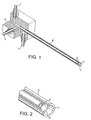
- the invention concerns further the device for carrying out the process of the invention.
- This device comprises on a frame :
- a further object of the present invention is to have a product, wherein the stability of its structure during storage or heat shock is kept practically unchanged.
- a storage of one to twelve months we understand a storage of one to twelve months.
- the volume of air bubbles does not decrease much by taking out and putting again said ice cream several time in the freezer.
- the consumer has therefore a product, wherein the quality remains practically unchanged during its whole storage. This is the same for the other products considered in the present patent.
- a further advantage of the present invention is that in the case of a co-emulsion, no emulsifier is needed in the product according to the invention.
- the injection system is on a frame (4).
- this frame there are 3 pipes.
- the pipe (1) is used for the arrival of the first dispersion with the protein
- the pipe (2) is used for the entrance of the gas, that is the air
- the pipe (3) is used for the arrival of the second dispersion with the polysaccharide.
- the 3 pipes of the device arrive on a main channel (8) : they are disposed perpendicularly and staggered along said main channel (8). This device is used for the different examples in the specification and hereunder.
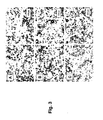
- Figure 3 is the air bubbles dispersion found after whipping to 100% overrun at +4°C the ice-cream recipe described in example 2 using a Mondomix apparatus.
- Picture A is a classical mixture (10% non-fat milk solids) that did not contained the ⁇ -lactoglobulin and the acacia gum. The shearing speed was set to 800 rpm.
- Picture B is the same recipe but part of the non-fat milk solids was replaced by 2.5% whey protein isolate and 1.25% acacia gum. Here also shearing speed was 800 rpm.
- Picture C was taken after aeration of the recipes described in example 2 using the injection device ( Fig. 1 ) coupled with the whipping device (Mondomix). The air bubble size is the same than in A and B, but the shearing rate is only 400 rpm.
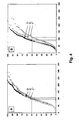
- Figure 4 represents the cumulated volume size distributions of the recipes corresponding to the previous control (D), BLG/AG control (E) and triple needle BLG/AG (F) recipes described before (A) and after (B) heat shock treatement.
- the graphs represent the cumulative distribution of air bubbles in percent of the total volume of air analysed (x axis gives the air bubble diameter in mm and y axis gives in % the cumulated air volume analysed). Samples were equilibrated for one week at -40°C before bubbles were measured. Heat-shock was achieved with 7 days cycle of temperature variation between -20 and -8°C. Each increase or decrease of temperature lasted 12 hours.
- Bubble size distribution was achieved by image analysis of the bubbles taken from 4 repetitions of the same sample after dispersion in a viscous glycerol containing medium. It is clear that the initial size distributions are very similar, which corroborates the previous microscopical observations on the bubbles (the sample produced with our invention required 2 times less energy input). After heat shock, both the control and BLG/AG control showed a shift of the size distribution to smaller air bubbles, which is in fact due to a loss of the largest air bubbles. Difference in air bubble content is the area between the initial and the heat-shock curves. Very interestingly, the curve corresponding to our invention did not move at all. This reveals the very high heat-shock stability of the sample.
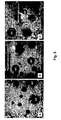
- Figure 5 shows the confocal scanning laser microscopy pictures of the three ice-cream products after 7 days equilibration at -40°C.
- the protein was coloured by the rhodamine 6G reagent that is known to specifically label protein through hydrophobic interactions.
- the confocal microscopy is carried out as follows : an aliquot of the product is put into a 2 mm deep covet and covered with 100 ⁇ l of a 10 -6 M aqueous solution of Rhodamine 6G. After melting, the melting is covered with a glass cover slide and examined by confocal microscopy.
- the views are following : (A) control recipe; (B) BLG/AG control recipe; (C) recipe according to our invention. From the observation of the pictures, the structuration of the air bubble interface with proteins using our invention is clear as compared to the two controls. In these two latter products, proteins are somewhat distributed randomly within the matrix.
- Figure 6 represents the thin section micrographs of the three ice-cream products after Rhodamine 6G coloration according to the same procedure as for the preceding figure.
- the views are following : (A) control recipe; (B) BLG/AG control recipe; (C) recipe according to hour invention.
- the presence of specific structures around the air bubbles has to be noted. To our opinion, these are coacervates made from the interfacial interaction between the primary formed BLG/AG complexes.
- Figure 7 shows the confocal scanning laser micrograph of the interface of an air bubble made in a just made mixture of ⁇ -lactoglobulin 2.5% and acacia gum 1.25% at pH 4.2 in water.
- ⁇ -lactoglobulin was covalently labeled with fluoresceine isothiocyanate.
- the coacervates present at the interface are comparable to those observed in the final ice cream product obtained according to our invention ( Fig. 6C ).
- An concentrated emulsion is obtained preparing first an emulsion by mixing during 5 minutes using a mixer 0.74% whey protein isolate, 66% sunflower oil and water at pH 4.2 by addition of lactic acid. A second emulsion is then prepared by mixing during 5 minutes using a mixer 0.23% acacia gum powder, 66% sunflower oil and water at pH 4.2 by addition of lactic acid. The final concentrated emulsion is obtained by mixing the two previously prepared emulsions at a 1:1 weight ratio and mixing during 10 minutes using a mixer or a high shear pump.
- An ice cream mix is prepared from 9% palm-palm kernel oil, 5% non-fat milk solids, 5% whey protein isolate, 17% sucrose, 0.4% of a stabiliser blend containing hydrocolloids such as locust bean gum, guar, carrageenans, carboxymethylcellulose, water and emulsifiers.
- the pH of this first mix is ajusted to pH 4.2 by addition of citric acid.
- a second mix is prepared from 9% palm kernel oil, 7.5% non-fat milk solids, 2.5% acacia gum powder, 14% sucrose, 0.4% of a stabiliser blend containing hydrocolloids such as locust bean gum, guar, carrageenans, carboxymethylcellulose, water and emulsifiers.
- This second mix is ajusted to pH 4.2 by addition of citric acid. Both mix are then homogenised at 100 bars using a homogeniser and then pasteurised. After maturation at 4°C, the two ice cream preparations were mix together at a 1:1 mixing ratio and aerated at -6°C to +4°C using the processing device described on Fig. 1 coupled with a shearing device (Hoyer freezer or Mondomix whipper) to obtain an overrun of 100%. The mix was then poured in molds and hardened at a temperature of -40°C.
- a sour cream mousse is prepared from 50% milk cream (30% fat), 10% non-fat milk solids, 5% whey protein isolate, 8% sucrose, water and emulsifiers. The pH of this first recipe is ajusted to pH 4.3 by addition of citric acid.
- a second recipe is prepared from 50% milk cream (30% fat), 10% non-fat milk solids, 2.5% acacia gum powder, 8% sucrose, 0.4% of a stabiliser blend, water and emulsifiers. The pH of this second recipe is ajusted to pH 4.3 by addition of citric acid. Both preparations are then homogenised at 80 bars using a homogeniser and then pasteurised.
- the two preparations were mix together at a 1:1 mixing ratio and aerated at +4°C using the processing device described on Fig. 1 coupled with a Mondomix whipper to obtain an overrun of 100%.
- the aerated sour cream mousse was then poured in molds and stored at +4°C.
- a wafer recipe is obtained by mixing using a mixer 50% of a wheat flour containing 70% of starch and 4% of a whey protein concentrate with water and adjusting the pH to 4.2 by addition of lactic acid.
- Another recipe is obtained by mixing using a Hobbard mixer 50% of a wheat flour containing 70% of starch and 1.6% of an acacia gum powder with water and adjusting the pH to 4.2 by addition of lactic acid. Both recipes are then mixed together at a 1:1 mixing ratio and aerated using the mixing device described on Fig. 1 coupled with Hobbard mixer equiped with a thermostated bowl. This aerated wafer base is then poured in-between baking plates at 150°C and cooked to obtain wafers.
- a liquid dairy coffee creamer recipe is obtained by mixing and high-pressure homogenization (400 bars + 80 bars) 10% maltodextrin DE21, 15% hydrogenated palm oil, 3% whey protein isolate with water at 50°C and adjusting the pH to 4.2 by addition of hydrochloric acid.
- Another recipe is obtained by mixing and high-pressure homogenization (400 bars + 80 bars) 10% maltodextrin DE21, 15% hydrogenated palm oil, 3% acacia gum powder with water at 50°C and adjusting the pH to 4.2 by addition of hydrochloric acid. Both recipes are then mixed together at a 1:1 mixing ratio using a high-shear mixer equiped with a thermostated bowl at 50°C.
Landscapes
- Chemical & Material Sciences (AREA)
- Life Sciences & Earth Sciences (AREA)
- Food Science & Technology (AREA)
- Polymers & Plastics (AREA)
- Engineering & Computer Science (AREA)
- Health & Medical Sciences (AREA)
- Nutrition Science (AREA)
- Dispersion Chemistry (AREA)
- Zoology (AREA)
- Inorganic Chemistry (AREA)
- Animal Husbandry (AREA)
- Birds (AREA)
- Oil, Petroleum & Natural Gas (AREA)
- Proteomics, Peptides & Aminoacids (AREA)
- Confectionery (AREA)
- General Preparation And Processing Of Foods (AREA)
- Cosmetics (AREA)
- Edible Oils And Fats (AREA)
- Colloid Chemistry (AREA)
- Emulsifying, Dispersing, Foam-Producing Or Wetting Agents (AREA)
- Peptides Or Proteins (AREA)
- Dairy Products (AREA)
- Seeds, Soups, And Other Foods (AREA)
- Seasonings (AREA)
- Formation And Processing Of Food Products (AREA)
- Bakery Products And Manufacturing Methods Therefor (AREA)
- Manufacture Of Porous Articles, And Recovery And Treatment Of Waste Products (AREA)
- Polysaccharides And Polysaccharide Derivatives (AREA)
- Laminated Bodies (AREA)
- Compositions Of Macromolecular Compounds (AREA)
- Manufacture Of Macromolecular Shaped Articles (AREA)
- Grain Derivatives (AREA)
Claims (14)
- Produkt aus der Gruppe, umfassend einen Schaum, eine Emulsion, eine geschäumte Emulsion, eine dispergierte Emulsion, und eine geschäumte Dispersion, wobei die Grenzschicht Wasser-Luft, Wasser-Öl oder Wasser-Feststoff einen löslichen Komplex umfasst, der gleichzeitig mit der Grenzschicht gebildet wird und sofort Coacervate ausbildet, welche durch das Gemisch von wenigstens einem Protein und wenigstens einem entgegengesetzt geladenen Polysaccharid oder dem Gemisch von zwei entgegengesetzt geladenen Proteinen einen stabilisierenden Film auf der Grenzschicht bildet, wobei das Produkt in einem pH-Bereich liegt, innerhalb welchem die elektrostatische Wechselwirkung zwischen den beiden entgegengesetzt geladenen Verbindungen auftritt und wobei die Gesamtmenge an Protein und Polysaccharid von 0,01 bis 5 Gew.-% umfasst.
- Produkt nach Anspruch 1, wobei das Protein aus der Gruppe, umfassend ein Protein aus Milch, Soja, Ei, Fleisch, Fisch und Pflanzen, ausgewählt wird.
- Produkt nach Anspruch 2, wobei das Protein aus der Gruppe, umfassend β-Lactoglobulin, Molkeprotein, Sojaprotein, Eiweißprotein und Weizenprotein, ausgewählt wird.
- Produkt nach einem der Ansprüche 1 bis 3, wobei das Polysaccharid aus der Gruppe, umfassend Gummen, Hydrokolloide und Stabilisatoren, ausgewählt wird.
- Produkt nach Anspruch 4, wobei das Polysaccharid Akaziengummi, Arabinogalactane, Ax-Roggen, Ax-Weizen, Carboxymethylcellulose, Chitosan, Xanthangummi, β-Glucan ist.
- Produkt nach einem der Ansprüche 1 bis 5, wobei das Verhältnis von Protein zu Polysaccharid oder von Protein zu Protein von 1:20 bis 20:1 umfasst.
- Verwendung des Produkts nach einem der Ansprüche 1 bis 6 in Eiscreme, Majonäse mit niedrigem Fettgehalt, Kulinarischem, Schokolade, Desserts, Waffeln, Biskuitkuchen, im Molkerei- und Haustierfutterbereich, wobei das Produkt in einer Menge, umfassend von 10 bis 100 Gew.-% des Endprodukts, verwendet wird.
- Verwendung des Produkts nach einem der Ansprüche 1 bis 6 im Kosmetik- und Parfümbereich, wobei das Produkt in einer Menge, umfassend von 10 bis 100 Gew.-% des Endprodukts, verwendet wird.
- Verfahren zur Herstellung eines Schaum-Produkts nach Anspruch 1, wobei eine Lösung oder eine Grundmasse von dem wenigstens einem Protein und eine Lösung oder eine Grundmasse von dem wenigstens einem Polysaccharid oder eine Lösung oder eine Grundmasse von einem Protein und eine weitere Lösung oder eine Grundmasse von einem Protein mit Luft in eine Grundmasse oder direkt in die Luft gespritzt wird.
- Verfahren zur Herstellung eines Schaum-Produkts nach Anspruch 1, wobei eine Lösung von wenigstens einem Protein und eine Lösung von wenigstens einem Polysaccharid oder eine Lösung von einem Protein und eine weitere Lösung von einem Protein in Gegenwart von Luft zusammengemischt werden.
- Verfahren zur Herstellung einer Emulsion nach Anspruch 1, wobei ein erster Teil einer Emulsion mit dem wenigstens einem Protein stabilisiert wird, ein zweiter Teil einer Emulsion mit dem wenigstens einem Polysaccharid oder einem zweiten Protein stabilisiert wird und beide Emulsionen zusammengemischt werden.
- Verfahren zur Herstellung einer geschäumten Emulsion nach Anspruch 1, wobei ein Grundprodukt hergestellt wird, ein erster Teil einer Emulsion mit wenigstens einem Protein stabilisiert wird, ein zweiter Teil einer Emulsion mit wenigstens einem Polysaccharid oder einem zweiten Protein stabilisiert wird, beide Emulsionen zusammengemischt und im Grundprodukt verdünnt werden, dann eine neue Lösung des Proteins mit einer neuen Lösung des Polysaccharids mit Luft in das Grundprodukt gespritzt wird, um das geschäumte Hauptprodukt zu bilden.
- Verfahren zur Herstellung einer dispergierten Emulsion nach Anspruch 1, wobei ein erster Teil einer Emulsion mit wenigstens einem Protein stabilisiert wird, ein zweiter Teil einer Emulsion mit dem wenigstens einen Polysaccharid oder einem zweiten Protein stabilisiert wird und beide Emulsionen zusammengemischt werden, wobei die erhaltene Endemulsion dann mit einer Teilchen umfassenden Grundlage gemischt wird.
- Verfahren zur Herstellung einer geschäumten Dispersion nach Anspruch 1, wobei eine Lösung von dem wenigstens einen Protein und eine Lösung von dem wenigstens einen Polysaccharid oder eine Lösung von einem Protein und eine weitere Lösung von einem Protein mit Luft in eine Masse von dispergierten Teilchen gespritzt wird.
Priority Applications (1)
| Application Number | Priority Date | Filing Date | Title |
|---|---|---|---|
| EP03769333.0A EP1545248B2 (de) | 2002-09-27 | 2003-09-26 | Grenzflächenstabilisierung von produkten mit zwei oder mehr phasen mit einem polysaccharid-protein komplex |
Applications Claiming Priority (4)
| Application Number | Priority Date | Filing Date | Title |
|---|---|---|---|
| EP02021653A EP1402790A3 (de) | 2002-09-27 | 2002-09-27 | Grenzflächenstabilisierung von produkten mit zwei oder mehr phasen mit einem polysaccharid-protein komplex |
| EP02021653 | 2002-09-27 | ||
| PCT/EP2003/010740 WO2004028281A1 (en) | 2002-09-27 | 2003-09-26 | Interface stabilisation of a product with 2 or more phases with a protein-polysaccharide complex |
| EP03769333.0A EP1545248B2 (de) | 2002-09-27 | 2003-09-26 | Grenzflächenstabilisierung von produkten mit zwei oder mehr phasen mit einem polysaccharid-protein komplex |
Publications (3)
| Publication Number | Publication Date |
|---|---|
| EP1545248A1 EP1545248A1 (de) | 2005-06-29 |
| EP1545248B1 true EP1545248B1 (de) | 2009-11-11 |
| EP1545248B2 EP1545248B2 (de) | 2013-08-21 |
Family
ID=31970330
Family Applications (2)
| Application Number | Title | Priority Date | Filing Date |
|---|---|---|---|
| EP02021653A Withdrawn EP1402790A3 (de) | 2002-09-27 | 2002-09-27 | Grenzflächenstabilisierung von produkten mit zwei oder mehr phasen mit einem polysaccharid-protein komplex |
| EP03769333.0A Expired - Lifetime EP1545248B2 (de) | 2002-09-27 | 2003-09-26 | Grenzflächenstabilisierung von produkten mit zwei oder mehr phasen mit einem polysaccharid-protein komplex |
Family Applications Before (1)
| Application Number | Title | Priority Date | Filing Date |
|---|---|---|---|
| EP02021653A Withdrawn EP1402790A3 (de) | 2002-09-27 | 2002-09-27 | Grenzflächenstabilisierung von produkten mit zwei oder mehr phasen mit einem polysaccharid-protein komplex |
Country Status (15)
| Country | Link |
|---|---|
| US (1) | US20060067956A1 (de) |
| EP (2) | EP1402790A3 (de) |
| JP (1) | JP2006500061A (de) |
| CN (1) | CN1323616C (de) |
| AT (1) | ATE447859T1 (de) |
| AU (1) | AU2003277913A1 (de) |
| BR (1) | BR0314693A (de) |
| CA (1) | CA2499124C (de) |
| DE (1) | DE60330031D1 (de) |
| ES (1) | ES2333218T5 (de) |
| IL (1) | IL167056A (de) |
| MX (1) | MXPA05002679A (de) |
| RU (1) | RU2350232C2 (de) |
| WO (1) | WO2004028281A1 (de) |
| ZA (1) | ZA200503379B (de) |
Families Citing this family (28)
| Publication number | Priority date | Publication date | Assignee | Title |
|---|---|---|---|---|
| DE602006001401D1 (de) * | 2005-03-30 | 2008-07-17 | Unilever Nv | Kosmetisches abgabesystem und verfahren zu seiner herstellung |
| US20080227873A1 (en) * | 2005-08-04 | 2008-09-18 | Laneuville Ballester Sandra I | Gelation of Undenatured Proteins with Polysaccharides |
| DE602005009951D1 (de) * | 2005-08-31 | 2008-11-06 | Nestec Sa | Konfektprodukten mit niedrigem Fettgehalt |
| DE102006019241B4 (de) * | 2006-04-24 | 2009-04-23 | Dietmar Härtel | Proteine und Polysaccharide enthaltende Emulsion mit hoher Wasserbindung für Lebensmittel, insbesondere Getränke, cremiger Konsistenz und Verfahren zur Herstellung einer solchen Emulsion |
| DE102007026090A1 (de) | 2007-06-04 | 2008-12-24 | Friedrich-Schiller-Universität Jena | Proteine und Polysaccharide enthaltende Emulsion für Lebensmittel sowie deren Herstellung und Verwendung |
| US20100272859A1 (en) * | 2007-08-28 | 2010-10-28 | Pepsico, Inc. | Delivery and controlled release of encapsulated water-insoluble flavorants |
| US9186640B2 (en) * | 2007-08-28 | 2015-11-17 | Pepsico, Inc. | Delivery and controlled release of encapsulated lipophilic nutrients |
| US20100028503A1 (en) * | 2008-07-30 | 2010-02-04 | Jimbay Peter Loh | Simultaneous Multiple Acervation Process |
| AU2009304092B2 (en) | 2008-10-16 | 2013-09-05 | Unilever Plc | Hydrophobin solution containing antifoam |
| PL2196097T3 (pl) | 2008-12-04 | 2014-12-31 | Nestec Sa | Hydrolizowane kompleksy białko-polisacharyd |
| CN101518293B (zh) * | 2009-02-20 | 2012-05-23 | 郑力坤 | 一种可以承载有效成份的含香糖果及制备方法 |
| EP2229823A1 (de) * | 2009-03-12 | 2010-09-22 | Nestec S.A. | Elektrostatische Protein-Glucosinolat Komplexe |
| EP2229824A1 (de) * | 2009-03-12 | 2010-09-22 | Nestec S.A. | Kovalente Milchprotein/isothiocyanatkomplexe |
| RU2485787C2 (ru) * | 2010-01-25 | 2013-06-27 | Государственное образовательное учреждение высшего профессионального образования "Казанский государственный технологический университет" | Способ производства кондитерской кремово-сбивной массы и кондитерская кремово-сбивная масса, полученная этим способом |
| EP2401921A1 (de) * | 2010-07-02 | 2012-01-04 | Nestec S.A. | Verfahren und Vorrichtung zur Herstellung eines Waffelprodukts mit geringer Dichte |
| JP5605160B2 (ja) * | 2010-10-20 | 2014-10-15 | キユーピー株式会社 | 気泡入り加工食品の製造方法、及び気泡入り加工食品 |
| JP5605173B2 (ja) * | 2010-11-05 | 2014-10-15 | キユーピー株式会社 | 冷菓の製造方法、及び冷菓 |
| US20180213823A1 (en) * | 2015-07-31 | 2018-08-02 | Fuji Oil Holdings Inc. | Method for producing polysaccharide-protein complex |
| CN108013475B (zh) * | 2017-12-26 | 2021-06-08 | 华中农业大学 | 一种多肽-多糖复合乳液及其制备方法 |
| CN109169955B (zh) * | 2018-09-25 | 2022-07-19 | 苏州大学 | 含蛋白质-多糖的低脂肪类涂抹物及其制备方法与应用 |
| WO2020210195A1 (en) * | 2019-04-08 | 2020-10-15 | Corn Products Development, Inc. | Analog dairy products using gum acacia |
| CN110916157A (zh) * | 2019-11-25 | 2020-03-27 | 上海交通大学 | 一种蛋黄酱类似物及其制备方法 |
| US12426607B2 (en) * | 2021-04-22 | 2025-09-30 | Octopi Brewing | Flavor additive emulsion and method of making thereof |
| CN113397156B (zh) * | 2021-06-08 | 2024-08-02 | 中新国际联合研究院 | 一种双重Pickering乳液及其制备方法 |
| CN115991794B (zh) * | 2021-11-30 | 2024-05-14 | 内蒙古伊利实业集团股份有限公司 | 一种用于提取多糖的提取介质及其应用 |
| CN114934086B (zh) * | 2022-05-27 | 2023-08-15 | 南京林业大学 | 应用植物乳杆菌产天然蛋白质/多糖复合纳米颗粒的方法 |
| CN116942555A (zh) * | 2022-09-19 | 2023-10-27 | 汉肽生物医药集团有限公司 | 一种用于祛除脸部皱纹的重组胶原蛋白复合液 |
| CN116076696B (zh) * | 2023-01-09 | 2024-12-20 | 南京农业大学 | 一种可得然多糖乳液凝胶和低脂乳化肠的制备方法 |
Family Cites Families (12)
| Publication number | Priority date | Publication date | Assignee | Title |
|---|---|---|---|---|
| BE530008A (de) * | 1953-06-30 | |||
| US3407076A (en) † | 1964-08-28 | 1968-10-22 | Hercules Inc | Protein-polymer complexes and process |
| GB1440181A (en) * | 1972-05-18 | 1976-06-23 | Unilever Ltd | Food compositions |
| US3944680A (en) * | 1973-05-08 | 1976-03-16 | Lever Brothers Company | Preparation of whippable emulsions |
| GB2134117B (en) * | 1983-01-21 | 1986-05-29 | British Food Manufacturing Ind | Protein composition |
| JPS6016573A (ja) * | 1983-07-07 | 1985-01-28 | Lion Corp | 乳化液状ドレツシング |
| EP0163787A1 (de) † | 1984-06-05 | 1985-12-11 | The British Food Manufacturing Industries Research Association | Proteinprodukt |
| GB8520085D0 (en) * | 1985-08-09 | 1985-09-18 | British Food Mfg Ind Res | Foamed food products |
| CH675370A5 (en) * | 1988-06-03 | 1990-09-28 | Ciba Geigy Ag | Filled pill mfr. - by concentric nozzles receiving ingredients from oscillating diaphragms |
| DE3907676A1 (de) † | 1989-03-09 | 1990-11-22 | Kraft Europ R & D Inc | Verfahren zur herstellung einer margarine mit reduziertem fettgehalt |
| US5342643A (en) * | 1991-10-16 | 1994-08-30 | Pepsico Inc. | Protein/alkylene glycol alginate complex as an emulsifier and stabilizer |
| WO2000023038A1 (en) * | 1998-10-21 | 2000-04-27 | Revlon Consumer Products Corporation | Cosmetic compositions containing polysaccharide/protein complexes |
-
2002
- 2002-09-27 EP EP02021653A patent/EP1402790A3/de not_active Withdrawn
-
2003
- 2003-09-26 CN CNB038230321A patent/CN1323616C/zh not_active Expired - Fee Related
- 2003-09-26 WO PCT/EP2003/010740 patent/WO2004028281A1/en not_active Ceased
- 2003-09-26 AU AU2003277913A patent/AU2003277913A1/en not_active Abandoned
- 2003-09-26 BR BR0314693-6A patent/BR0314693A/pt not_active IP Right Cessation
- 2003-09-26 US US10/529,245 patent/US20060067956A1/en not_active Abandoned
- 2003-09-26 ES ES03769333T patent/ES2333218T5/es not_active Expired - Lifetime
- 2003-09-26 DE DE60330031T patent/DE60330031D1/de not_active Expired - Lifetime
- 2003-09-26 JP JP2004539045A patent/JP2006500061A/ja active Pending
- 2003-09-26 MX MXPA05002679A patent/MXPA05002679A/es not_active Application Discontinuation
- 2003-09-26 RU RU2005112744/13A patent/RU2350232C2/ru not_active IP Right Cessation
- 2003-09-26 AT AT03769333T patent/ATE447859T1/de not_active IP Right Cessation
- 2003-09-26 CA CA2499124A patent/CA2499124C/en not_active Expired - Lifetime
- 2003-09-26 EP EP03769333.0A patent/EP1545248B2/de not_active Expired - Lifetime
-
2005
- 2005-02-22 IL IL167056A patent/IL167056A/en not_active IP Right Cessation
- 2005-04-26 ZA ZA200503379A patent/ZA200503379B/en unknown
Also Published As
| Publication number | Publication date |
|---|---|
| EP1545248B2 (de) | 2013-08-21 |
| ZA200503379B (en) | 2006-07-26 |
| EP1402790A3 (de) | 2004-05-06 |
| BR0314693A (pt) | 2005-08-09 |
| RU2350232C2 (ru) | 2009-03-27 |
| CN1684597A (zh) | 2005-10-19 |
| CN1323616C (zh) | 2007-07-04 |
| EP1402790A2 (de) | 2004-03-31 |
| CA2499124A1 (en) | 2004-04-08 |
| WO2004028281A1 (en) | 2004-04-08 |
| AU2003277913A1 (en) | 2004-04-19 |
| RU2005112744A (ru) | 2005-10-27 |
| EP1545248A1 (de) | 2005-06-29 |
| DE60330031D1 (de) | 2009-12-24 |
| ATE447859T1 (de) | 2009-11-15 |
| JP2006500061A (ja) | 2006-01-05 |
| ES2333218T3 (es) | 2010-02-18 |
| IL167056A (en) | 2010-04-29 |
| ES2333218T5 (es) | 2013-12-05 |
| CA2499124C (en) | 2012-03-13 |
| US20060067956A1 (en) | 2006-03-30 |
| MXPA05002679A (es) | 2006-04-28 |
Similar Documents
| Publication | Publication Date | Title |
|---|---|---|
| EP1545248B2 (de) | Grenzflächenstabilisierung von produkten mit zwei oder mehr phasen mit einem polysaccharid-protein komplex | |
| US9005690B2 (en) | Aerated products with reduced creaming | |
| CN101001534B (zh) | 得自谷粒的乳化剂 | |
| CA3068897A1 (en) | Emulsion in foods | |
| CZ163895A3 (en) | Use of complex coacervate particles and foodstuff and cosmetic articles | |
| CN102802445B (zh) | 含有膳食纤维的低脂可搅打乳液 | |
| Yuliarti et al. | Evaluation of the physicochemical and sensorial properties of coconut milk-soy protein-based ice cream | |
| CN105142415A (zh) | 食品的脂肪体系或化妆品的脂肪体系或药品的脂肪体系 | |
| Wassell | Bakery fats | |
| JPH0242943A (ja) | 乳化食品の製造法 | |
| JP2022029080A (ja) | 水中油型乳化物 | |
| JPH09220065A (ja) | ペースト状水中油型油脂乳化組成物 | |
| SK283061B6 (sk) | Potravinový výrobok vo forme prevzdušnenej masy na výrobu pečiva, biskvitov a cukroviniek, spôsob jeho výroby a plnený zložený výrobok | |
| JP2848849B2 (ja) | 水中油型乳化組成物 | |
| Baldino et al. | Interfacial rheology of food: protein as a model food | |
| Garti | Food emulsifiers and stabilizers | |
| Gomes et al. | Demystifying Emulsifiers as Additives through Molecular Gastronomy: A Contribution to Rise Consumer’s Sovereignty | |
| EA007605B1 (ru) | Пищевая добавка | |
| JPS6119225B2 (de) | ||
| Jeantet et al. | Stability of complex foods and dispersed systems | |
| RU2158515C2 (ru) | Жировой продукт типа растительного масла и способ его получения | |
| Xiao | The development of two types of emulsifier-free ice cream: a thesis presented in partial fulfilment of the requirements for the degree of Master of Food Technology at Massey University, Manawatū, New Zealand | |
| RU2192764C1 (ru) | Пищевая добавка "аляска" и способ подготовки пищевой добавки перед введением в смесь рецептурных компонентов пищевого продукта | |
| WO2024256701A1 (en) | Pectin emulsion gels with improved mouthfeel | |
| JP2022086969A (ja) | O/w/o型食品、食品及びo/w/o型食品の製造方法 |
Legal Events
| Date | Code | Title | Description |
|---|---|---|---|
| PUAI | Public reference made under article 153(3) epc to a published international application that has entered the european phase |
Free format text: ORIGINAL CODE: 0009012 |
|
| 17P | Request for examination filed |
Effective date: 20050427 |
|
| AK | Designated contracting states |
Kind code of ref document: A1 Designated state(s): AT BE BG CH CY CZ DE DK EE ES FI FR GB GR HU IE IT LI LU MC NL PT RO SE SI SK TR |
|
| AX | Request for extension of the european patent |
Extension state: AL LT LV MK |
|
| DAX | Request for extension of the european patent (deleted) | ||
| 17Q | First examination report despatched |
Effective date: 20051221 |
|
| GRAP | Despatch of communication of intention to grant a patent |
Free format text: ORIGINAL CODE: EPIDOSNIGR1 |
|
| RIC1 | Information provided on ipc code assigned before grant |
Ipc: A61K 8/00 20060101ALI20090603BHEP Ipc: A23L 1/0534 20060101ALI20090603BHEP Ipc: A23L 1/056 20060101ALI20090603BHEP Ipc: A23L 1/053 20060101ALI20090603BHEP Ipc: A21D 13/00 20060101ALI20090603BHEP Ipc: A23G 1/00 20060101ALI20090603BHEP Ipc: A23G 3/00 20060101ALI20090603BHEP Ipc: A23J 3/00 20060101ALI20090603BHEP Ipc: A23L 1/05 20060101ALI20090603BHEP Ipc: A23P 1/16 20060101AFI20090603BHEP Ipc: A23L 1/054 20060101ALI20090603BHEP |
|
| GRAS | Grant fee paid |
Free format text: ORIGINAL CODE: EPIDOSNIGR3 |
|
| GRAA | (expected) grant |
Free format text: ORIGINAL CODE: 0009210 |
|
| AK | Designated contracting states |
Kind code of ref document: B1 Designated state(s): AT BE BG CH CY CZ DE DK EE ES FI FR GB GR HU IE IT LI LU MC NL PT RO SE SI SK TR |
|
| REG | Reference to a national code |
Ref country code: GB Ref legal event code: FG4D |
|
| REG | Reference to a national code |
Ref country code: CH Ref legal event code: EP |
|
| REG | Reference to a national code |
Ref country code: IE Ref legal event code: FG4D |
|
| REF | Corresponds to: |
Ref document number: 60330031 Country of ref document: DE Date of ref document: 20091224 Kind code of ref document: P |
|
| REG | Reference to a national code |
Ref country code: GR Ref legal event code: EP Ref document number: 20090403226 Country of ref document: GR |
|
| REG | Reference to a national code |
Ref country code: ES Ref legal event code: FG2A Ref document number: 2333218 Country of ref document: ES Kind code of ref document: T3 |
|
| NLV1 | Nl: lapsed or annulled due to failure to fulfill the requirements of art. 29p and 29m of the patents act | ||
| PG25 | Lapsed in a contracting state [announced via postgrant information from national office to epo] |
Ref country code: SE Free format text: LAPSE BECAUSE OF FAILURE TO SUBMIT A TRANSLATION OF THE DESCRIPTION OR TO PAY THE FEE WITHIN THE PRESCRIBED TIME-LIMIT Effective date: 20091111 Ref country code: PT Free format text: LAPSE BECAUSE OF FAILURE TO SUBMIT A TRANSLATION OF THE DESCRIPTION OR TO PAY THE FEE WITHIN THE PRESCRIBED TIME-LIMIT Effective date: 20100311 |
|
| PG25 | Lapsed in a contracting state [announced via postgrant information from national office to epo] |
Ref country code: CY Free format text: LAPSE BECAUSE OF FAILURE TO SUBMIT A TRANSLATION OF THE DESCRIPTION OR TO PAY THE FEE WITHIN THE PRESCRIBED TIME-LIMIT Effective date: 20091111 Ref country code: SI Free format text: LAPSE BECAUSE OF FAILURE TO SUBMIT A TRANSLATION OF THE DESCRIPTION OR TO PAY THE FEE WITHIN THE PRESCRIBED TIME-LIMIT Effective date: 20091111 |
|
| PG25 | Lapsed in a contracting state [announced via postgrant information from national office to epo] |
Ref country code: AT Free format text: LAPSE BECAUSE OF FAILURE TO SUBMIT A TRANSLATION OF THE DESCRIPTION OR TO PAY THE FEE WITHIN THE PRESCRIBED TIME-LIMIT Effective date: 20091111 Ref country code: BE Free format text: LAPSE BECAUSE OF FAILURE TO SUBMIT A TRANSLATION OF THE DESCRIPTION OR TO PAY THE FEE WITHIN THE PRESCRIBED TIME-LIMIT Effective date: 20091111 |
|
| PG25 | Lapsed in a contracting state [announced via postgrant information from national office to epo] |
Ref country code: RO Free format text: LAPSE BECAUSE OF FAILURE TO SUBMIT A TRANSLATION OF THE DESCRIPTION OR TO PAY THE FEE WITHIN THE PRESCRIBED TIME-LIMIT Effective date: 20091111 Ref country code: BG Free format text: LAPSE BECAUSE OF FAILURE TO SUBMIT A TRANSLATION OF THE DESCRIPTION OR TO PAY THE FEE WITHIN THE PRESCRIBED TIME-LIMIT Effective date: 20100211 Ref country code: DK Free format text: LAPSE BECAUSE OF FAILURE TO SUBMIT A TRANSLATION OF THE DESCRIPTION OR TO PAY THE FEE WITHIN THE PRESCRIBED TIME-LIMIT Effective date: 20091111 Ref country code: EE Free format text: LAPSE BECAUSE OF FAILURE TO SUBMIT A TRANSLATION OF THE DESCRIPTION OR TO PAY THE FEE WITHIN THE PRESCRIBED TIME-LIMIT Effective date: 20091111 |
|
| PLBI | Opposition filed |
Free format text: ORIGINAL CODE: 0009260 |
|
| PG25 | Lapsed in a contracting state [announced via postgrant information from national office to epo] |
Ref country code: CZ Free format text: LAPSE BECAUSE OF FAILURE TO SUBMIT A TRANSLATION OF THE DESCRIPTION OR TO PAY THE FEE WITHIN THE PRESCRIBED TIME-LIMIT Effective date: 20091111 Ref country code: SK Free format text: LAPSE BECAUSE OF FAILURE TO SUBMIT A TRANSLATION OF THE DESCRIPTION OR TO PAY THE FEE WITHIN THE PRESCRIBED TIME-LIMIT Effective date: 20091111 |
|
| 26 | Opposition filed |
Opponent name: KRAFT FOODS GLOBAL, INC. Effective date: 20100810 |
|
| PLAX | Notice of opposition and request to file observation + time limit sent |
Free format text: ORIGINAL CODE: EPIDOSNOBS2 |
|
| PLAF | Information modified related to communication of a notice of opposition and request to file observations + time limit |
Free format text: ORIGINAL CODE: EPIDOSCOBS2 |
|
| PLBB | Reply of patent proprietor to notice(s) of opposition received |
Free format text: ORIGINAL CODE: EPIDOSNOBS3 |
|
| PG25 | Lapsed in a contracting state [announced via postgrant information from national office to epo] |
Ref country code: MC Free format text: LAPSE BECAUSE OF NON-PAYMENT OF DUE FEES Effective date: 20100930 |
|
| PG25 | Lapsed in a contracting state [announced via postgrant information from national office to epo] |
Ref country code: IE Free format text: LAPSE BECAUSE OF NON-PAYMENT OF DUE FEES Effective date: 20100926 |
|
| PGFP | Annual fee paid to national office [announced via postgrant information from national office to epo] |
Ref country code: CH Payment date: 20110913 Year of fee payment: 9 |
|
| PGFP | Annual fee paid to national office [announced via postgrant information from national office to epo] |
Ref country code: FI Payment date: 20110912 Year of fee payment: 9 |
|
| APBM | Appeal reference recorded |
Free format text: ORIGINAL CODE: EPIDOSNREFNO |
|
| APBP | Date of receipt of notice of appeal recorded |
Free format text: ORIGINAL CODE: EPIDOSNNOA2O |
|
| APAH | Appeal reference modified |
Free format text: ORIGINAL CODE: EPIDOSCREFNO |
|
| PG25 | Lapsed in a contracting state [announced via postgrant information from national office to epo] |
Ref country code: NL Free format text: LAPSE BECAUSE OF FAILURE TO SUBMIT A TRANSLATION OF THE DESCRIPTION OR TO PAY THE FEE WITHIN THE PRESCRIBED TIME-LIMIT Effective date: 20091111 Ref country code: HU Free format text: LAPSE BECAUSE OF FAILURE TO SUBMIT A TRANSLATION OF THE DESCRIPTION OR TO PAY THE FEE WITHIN THE PRESCRIBED TIME-LIMIT Effective date: 20100512 Ref country code: LU Free format text: LAPSE BECAUSE OF NON-PAYMENT OF DUE FEES Effective date: 20100926 |
|
| APBU | Appeal procedure closed |
Free format text: ORIGINAL CODE: EPIDOSNNOA9O |
|
| PG25 | Lapsed in a contracting state [announced via postgrant information from national office to epo] |
Ref country code: TR Free format text: LAPSE BECAUSE OF FAILURE TO SUBMIT A TRANSLATION OF THE DESCRIPTION OR TO PAY THE FEE WITHIN THE PRESCRIBED TIME-LIMIT Effective date: 20091111 |
|
| PGFP | Annual fee paid to national office [announced via postgrant information from national office to epo] |
Ref country code: GR Payment date: 20120817 Year of fee payment: 10 |
|
| PG25 | Lapsed in a contracting state [announced via postgrant information from national office to epo] |
Ref country code: FI Free format text: LAPSE BECAUSE OF NON-PAYMENT OF DUE FEES Effective date: 20120926 |
|
| REG | Reference to a national code |
Ref country code: CH Ref legal event code: PL |
|
| PUAH | Patent maintained in amended form |
Free format text: ORIGINAL CODE: 0009272 |
|
| STAA | Information on the status of an ep patent application or granted ep patent |
Free format text: STATUS: PATENT MAINTAINED AS AMENDED |
|
| PG25 | Lapsed in a contracting state [announced via postgrant information from national office to epo] |
Ref country code: LI Free format text: LAPSE BECAUSE OF NON-PAYMENT OF DUE FEES Effective date: 20120930 Ref country code: CH Free format text: LAPSE BECAUSE OF NON-PAYMENT OF DUE FEES Effective date: 20120930 |
|
| 27A | Patent maintained in amended form |
Effective date: 20130821 |
|
| AK | Designated contracting states |
Kind code of ref document: B2 Designated state(s): AT BE BG CH CY CZ DE DK EE ES FI FR GB GR HU IE IT LI LU MC NL PT RO SE SI SK TR |
|
| REG | Reference to a national code |
Ref country code: DE Ref legal event code: R102 Ref document number: 60330031 Country of ref document: DE Effective date: 20130821 |
|
| REG | Reference to a national code |
Ref country code: ES Ref legal event code: DC2A Ref document number: 2333218 Country of ref document: ES Kind code of ref document: T5 Effective date: 20131205 |
|
| PG25 | Lapsed in a contracting state [announced via postgrant information from national office to epo] |
Ref country code: GR Free format text: LAPSE BECAUSE OF FAILURE TO SUBMIT A TRANSLATION OF THE DESCRIPTION OR TO PAY THE FEE WITHIN THE PRESCRIBED TIME-LIMIT Effective date: 20131122 |
|
| REG | Reference to a national code |
Ref country code: DE Ref legal event code: R079 Ref document number: 60330031 Country of ref document: DE Free format text: PREVIOUS MAIN CLASS: A23P0001160000 Ipc: A23P0030400000 |
|
| REG | Reference to a national code |
Ref country code: FR Ref legal event code: PLFP Year of fee payment: 14 |
|
| PGFP | Annual fee paid to national office [announced via postgrant information from national office to epo] |
Ref country code: IT Payment date: 20160921 Year of fee payment: 14 Ref country code: DE Payment date: 20160920 Year of fee payment: 14 Ref country code: GB Payment date: 20160921 Year of fee payment: 14 |
|
| PGFP | Annual fee paid to national office [announced via postgrant information from national office to epo] |
Ref country code: FR Payment date: 20160816 Year of fee payment: 14 |
|
| PGFP | Annual fee paid to national office [announced via postgrant information from national office to epo] |
Ref country code: ES Payment date: 20160811 Year of fee payment: 14 |
|
| REG | Reference to a national code |
Ref country code: DE Ref legal event code: R119 Ref document number: 60330031 Country of ref document: DE |
|
| GBPC | Gb: european patent ceased through non-payment of renewal fee |
Effective date: 20170926 |
|
| REG | Reference to a national code |
Ref country code: FR Ref legal event code: ST Effective date: 20180531 |
|
| PG25 | Lapsed in a contracting state [announced via postgrant information from national office to epo] |
Ref country code: GB Free format text: LAPSE BECAUSE OF NON-PAYMENT OF DUE FEES Effective date: 20170926 Ref country code: DE Free format text: LAPSE BECAUSE OF NON-PAYMENT OF DUE FEES Effective date: 20180404 |
|
| PG25 | Lapsed in a contracting state [announced via postgrant information from national office to epo] |
Ref country code: IT Free format text: LAPSE BECAUSE OF NON-PAYMENT OF DUE FEES Effective date: 20170926 Ref country code: FR Free format text: LAPSE BECAUSE OF NON-PAYMENT OF DUE FEES Effective date: 20171002 |
|
| REG | Reference to a national code |
Ref country code: ES Ref legal event code: FD2A Effective date: 20181017 |
|
| PG25 | Lapsed in a contracting state [announced via postgrant information from national office to epo] |
Ref country code: ES Free format text: LAPSE BECAUSE OF NON-PAYMENT OF DUE FEES Effective date: 20170927 |