EP1535652A2 - Spielsystem, das von verschiedenen Spielern bedient wird, Spielvorrichtung und Aufzeichnungsmedium für Spielprogramm - Google Patents
Spielsystem, das von verschiedenen Spielern bedient wird, Spielvorrichtung und Aufzeichnungsmedium für Spielprogramm Download PDFInfo
- Publication number
- EP1535652A2 EP1535652A2 EP04106028A EP04106028A EP1535652A2 EP 1535652 A2 EP1535652 A2 EP 1535652A2 EP 04106028 A EP04106028 A EP 04106028A EP 04106028 A EP04106028 A EP 04106028A EP 1535652 A2 EP1535652 A2 EP 1535652A2
- Authority
- EP
- European Patent Office
- Prior art keywords
- game
- displayed item
- item
- player
- player character
- Prior art date
- Legal status (The legal status is an assumption and is not a legal conclusion. Google has not performed a legal analysis and makes no representation as to the accuracy of the status listed.)
- Withdrawn
Links
Images


Classifications
-
- A—HUMAN NECESSITIES
- A63—SPORTS; GAMES; AMUSEMENTS
- A63F—CARD, BOARD, OR ROULETTE GAMES; INDOOR GAMES USING SMALL MOVING PLAYING BODIES; VIDEO GAMES; GAMES NOT OTHERWISE PROVIDED FOR
- A63F13/00—Video games, i.e. games using an electronically generated display having two or more dimensions
- A63F13/25—Output arrangements for video game devices
- A63F13/27—Output arrangements for video game devices characterised by a large display in a public venue, e.g. in a movie theatre, stadium or game arena
-
- A—HUMAN NECESSITIES
- A63—SPORTS; GAMES; AMUSEMENTS
- A63F—CARD, BOARD, OR ROULETTE GAMES; INDOOR GAMES USING SMALL MOVING PLAYING BODIES; VIDEO GAMES; GAMES NOT OTHERWISE PROVIDED FOR
- A63F13/00—Video games, i.e. games using an electronically generated display having two or more dimensions
- A63F13/50—Controlling the output signals based on the game progress
- A63F13/54—Controlling the output signals based on the game progress involving acoustic signals, e.g. for simulating revolutions per minute [RPM] dependent engine sounds in a driving game or reverberation against a virtual wall
-
- A—HUMAN NECESSITIES
- A63—SPORTS; GAMES; AMUSEMENTS
- A63F—CARD, BOARD, OR ROULETTE GAMES; INDOOR GAMES USING SMALL MOVING PLAYING BODIES; VIDEO GAMES; GAMES NOT OTHERWISE PROVIDED FOR
- A63F13/00—Video games, i.e. games using an electronically generated display having two or more dimensions
- A63F13/30—Interconnection arrangements between game servers and game devices; Interconnection arrangements between game devices; Interconnection arrangements between game servers
- A63F13/32—Interconnection arrangements between game servers and game devices; Interconnection arrangements between game devices; Interconnection arrangements between game servers using local area network [LAN] connections
- A63F13/323—Interconnection arrangements between game servers and game devices; Interconnection arrangements between game devices; Interconnection arrangements between game servers using local area network [LAN] connections between game devices with different hardware characteristics, e.g. hand-held game devices connectable to game consoles or arcade machines
-
- A—HUMAN NECESSITIES
- A63—SPORTS; GAMES; AMUSEMENTS
- A63F—CARD, BOARD, OR ROULETTE GAMES; INDOOR GAMES USING SMALL MOVING PLAYING BODIES; VIDEO GAMES; GAMES NOT OTHERWISE PROVIDED FOR
- A63F13/00—Video games, i.e. games using an electronically generated display having two or more dimensions
- A63F13/40—Processing input control signals of video game devices, e.g. signals generated by the player or derived from the environment
-
- A—HUMAN NECESSITIES
- A63—SPORTS; GAMES; AMUSEMENTS
- A63F—CARD, BOARD, OR ROULETTE GAMES; INDOOR GAMES USING SMALL MOVING PLAYING BODIES; VIDEO GAMES; GAMES NOT OTHERWISE PROVIDED FOR
- A63F13/00—Video games, i.e. games using an electronically generated display having two or more dimensions
- A63F13/50—Controlling the output signals based on the game progress
- A63F13/52—Controlling the output signals based on the game progress involving aspects of the displayed game scene
-
- A—HUMAN NECESSITIES
- A63—SPORTS; GAMES; AMUSEMENTS
- A63F—CARD, BOARD, OR ROULETTE GAMES; INDOOR GAMES USING SMALL MOVING PLAYING BODIES; VIDEO GAMES; GAMES NOT OTHERWISE PROVIDED FOR
- A63F13/00—Video games, i.e. games using an electronically generated display having two or more dimensions
- A63F13/55—Controlling game characters or game objects based on the game progress
- A63F13/57—Simulating properties, behaviour or motion of objects in the game world, e.g. computing tyre load in a car race game
-
- A—HUMAN NECESSITIES
- A63—SPORTS; GAMES; AMUSEMENTS
- A63F—CARD, BOARD, OR ROULETTE GAMES; INDOOR GAMES USING SMALL MOVING PLAYING BODIES; VIDEO GAMES; GAMES NOT OTHERWISE PROVIDED FOR
- A63F13/00—Video games, i.e. games using an electronically generated display having two or more dimensions
- A63F13/60—Generating or modifying game content before or while executing the game program, e.g. authoring tools specially adapted for game development or game-integrated level editor
- A63F13/69—Generating or modifying game content before or while executing the game program, e.g. authoring tools specially adapted for game development or game-integrated level editor by enabling or updating specific game elements, e.g. unlocking hidden features, items, levels or versions
-
- A—HUMAN NECESSITIES
- A63—SPORTS; GAMES; AMUSEMENTS
- A63F—CARD, BOARD, OR ROULETTE GAMES; INDOOR GAMES USING SMALL MOVING PLAYING BODIES; VIDEO GAMES; GAMES NOT OTHERWISE PROVIDED FOR
- A63F13/00—Video games, i.e. games using an electronically generated display having two or more dimensions
- A63F13/80—Special adaptations for executing a specific game genre or game mode
- A63F13/843—Special adaptations for executing a specific game genre or game mode involving concurrently two or more players on the same game device, e.g. requiring the use of a plurality of controllers or of a specific view of game data for each player
-
- A—HUMAN NECESSITIES
- A63—SPORTS; GAMES; AMUSEMENTS
- A63F—CARD, BOARD, OR ROULETTE GAMES; INDOOR GAMES USING SMALL MOVING PLAYING BODIES; VIDEO GAMES; GAMES NOT OTHERWISE PROVIDED FOR
- A63F13/00—Video games, i.e. games using an electronically generated display having two or more dimensions
- A63F13/90—Constructional details or arrangements of video game devices not provided for in groups A63F13/20 or A63F13/25, e.g. housing, wiring, connections or cabinets
- A63F13/92—Video game devices specially adapted to be hand-held while playing
-
- A—HUMAN NECESSITIES
- A63—SPORTS; GAMES; AMUSEMENTS
- A63F—CARD, BOARD, OR ROULETTE GAMES; INDOOR GAMES USING SMALL MOVING PLAYING BODIES; VIDEO GAMES; GAMES NOT OTHERWISE PROVIDED FOR
- A63F13/00—Video games, i.e. games using an electronically generated display having two or more dimensions
- A63F13/90—Constructional details or arrangements of video game devices not provided for in groups A63F13/20 or A63F13/25, e.g. housing, wiring, connections or cabinets
- A63F13/95—Storage media specially adapted for storing game information, e.g. video game cartridges
-
- A—HUMAN NECESSITIES
- A63—SPORTS; GAMES; AMUSEMENTS
- A63F—CARD, BOARD, OR ROULETTE GAMES; INDOOR GAMES USING SMALL MOVING PLAYING BODIES; VIDEO GAMES; GAMES NOT OTHERWISE PROVIDED FOR
- A63F2300/00—Features of games using an electronically generated display having two or more dimensions, e.g. on a television screen, showing representations related to the game
- A63F2300/20—Features of games using an electronically generated display having two or more dimensions, e.g. on a television screen, showing representations related to the game characterised by details of the game platform
- A63F2300/204—Features of games using an electronically generated display having two or more dimensions, e.g. on a television screen, showing representations related to the game characterised by details of the game platform the platform being a handheld device
-
- A—HUMAN NECESSITIES
- A63—SPORTS; GAMES; AMUSEMENTS
- A63F—CARD, BOARD, OR ROULETTE GAMES; INDOOR GAMES USING SMALL MOVING PLAYING BODIES; VIDEO GAMES; GAMES NOT OTHERWISE PROVIDED FOR
- A63F2300/00—Features of games using an electronically generated display having two or more dimensions, e.g. on a television screen, showing representations related to the game
- A63F2300/20—Features of games using an electronically generated display having two or more dimensions, e.g. on a television screen, showing representations related to the game characterised by details of the game platform
- A63F2300/206—Game information storage, e.g. cartridges, CD ROM's, DVD's, smart cards
-
- A—HUMAN NECESSITIES
- A63—SPORTS; GAMES; AMUSEMENTS
- A63F—CARD, BOARD, OR ROULETTE GAMES; INDOOR GAMES USING SMALL MOVING PLAYING BODIES; VIDEO GAMES; GAMES NOT OTHERWISE PROVIDED FOR
- A63F2300/00—Features of games using an electronically generated display having two or more dimensions, e.g. on a television screen, showing representations related to the game
- A63F2300/40—Features of games using an electronically generated display having two or more dimensions, e.g. on a television screen, showing representations related to the game characterised by details of platform network
- A63F2300/403—Connection between platform and handheld device
-
- A—HUMAN NECESSITIES
- A63—SPORTS; GAMES; AMUSEMENTS
- A63F—CARD, BOARD, OR ROULETTE GAMES; INDOOR GAMES USING SMALL MOVING PLAYING BODIES; VIDEO GAMES; GAMES NOT OTHERWISE PROVIDED FOR
- A63F2300/00—Features of games using an electronically generated display having two or more dimensions, e.g. on a television screen, showing representations related to the game
- A63F2300/60—Methods for processing data by generating or executing the game program
- A63F2300/6063—Methods for processing data by generating or executing the game program for sound processing
-
- A—HUMAN NECESSITIES
- A63—SPORTS; GAMES; AMUSEMENTS
- A63F—CARD, BOARD, OR ROULETTE GAMES; INDOOR GAMES USING SMALL MOVING PLAYING BODIES; VIDEO GAMES; GAMES NOT OTHERWISE PROVIDED FOR
- A63F2300/00—Features of games using an electronically generated display having two or more dimensions, e.g. on a television screen, showing representations related to the game
- A63F2300/60—Methods for processing data by generating or executing the game program
- A63F2300/609—Methods for processing data by generating or executing the game program for unlocking hidden game elements, e.g. features, items, levels
-
- A—HUMAN NECESSITIES
- A63—SPORTS; GAMES; AMUSEMENTS
- A63F—CARD, BOARD, OR ROULETTE GAMES; INDOOR GAMES USING SMALL MOVING PLAYING BODIES; VIDEO GAMES; GAMES NOT OTHERWISE PROVIDED FOR
- A63F2300/00—Features of games using an electronically generated display having two or more dimensions, e.g. on a television screen, showing representations related to the game
- A63F2300/60—Methods for processing data by generating or executing the game program
- A63F2300/64—Methods for processing data by generating or executing the game program for computing dynamical parameters of game objects, e.g. motion determination or computation of frictional forces for a virtual car
-
- A—HUMAN NECESSITIES
- A63—SPORTS; GAMES; AMUSEMENTS
- A63F—CARD, BOARD, OR ROULETTE GAMES; INDOOR GAMES USING SMALL MOVING PLAYING BODIES; VIDEO GAMES; GAMES NOT OTHERWISE PROVIDED FOR
- A63F2300/00—Features of games using an electronically generated display having two or more dimensions, e.g. on a television screen, showing representations related to the game
- A63F2300/80—Features of games using an electronically generated display having two or more dimensions, e.g. on a television screen, showing representations related to the game specially adapted for executing a specific type of game
- A63F2300/8023—Features of games using an electronically generated display having two or more dimensions, e.g. on a television screen, showing representations related to the game specially adapted for executing a specific type of game the game being played by multiple players at a common site, e.g. in an arena, theatre, shopping mall using a large public display
-
- A—HUMAN NECESSITIES
- A63—SPORTS; GAMES; AMUSEMENTS
- A63F—CARD, BOARD, OR ROULETTE GAMES; INDOOR GAMES USING SMALL MOVING PLAYING BODIES; VIDEO GAMES; GAMES NOT OTHERWISE PROVIDED FOR
- A63F2300/00—Features of games using an electronically generated display having two or more dimensions, e.g. on a television screen, showing representations related to the game
- A63F2300/80—Features of games using an electronically generated display having two or more dimensions, e.g. on a television screen, showing representations related to the game specially adapted for executing a specific type of game
- A63F2300/8088—Features of games using an electronically generated display having two or more dimensions, e.g. on a television screen, showing representations related to the game specially adapted for executing a specific type of game involving concurrently several players in a non-networked game, e.g. on the same game console
Definitions
- the present invention relates to a game system playable by a plurality of players, a game apparatus, and a storage medium storing a game program. More specifically, the present invention relates to a game system playable by a plurality of players, a game apparatus, and a storage medium storing a game program that allow a plurality of player characters simultaneously displayed to search a non-displayed item such as a treasure hidden being not displayed on a screen.
- a game apparatus in which by connecting a plurality of controllers to one game apparatus, a plurality of players play the same game while simultaneously viewing a common display.
- a number of mini games playable by a plurality of players simultaneously are published.
- the games includes a game for causing a character operated by a player himself to swim faster to finish in first place, or a game for causing players to shoot balls toward a plurality of goals for the basketball to compete the number of goals made by operating the respective controllers of a plurality of players.
- Another object of the present invention is to provide a game system playable by a plurality of players, a game apparatus, and a storage medium storing a game program that allow notification of the progress of the game by sound when searching an invisible non-displayed item by a plurality of players, thereby to give an influence on player's psychology.
- the other object of the present invention is to provide a game system playable by a plurality of players, a game apparatus, and a storage medium storing a game program, in which during playing a game searching an invisible non-displayed item by a plurality of players, by notifying of being close to the hiding place with sound so that another player can hear, the player whose game apparatus rings plays a game with a delight, knowing that he is about to obtain the non-displayed item, and the other players feel restless, knowing someone among them during playing is about to obtain the non-displayed item, thereby heating up the game play.
- a further object of the present invention is to provide a game system playable by a plurality of players, a game apparatus, and a storage medium storing a game program, in which the tone of the sound is rendered in common to the game apparatuses, this consciously makes difficult to know which player is the closest to the hiding place of the non-displayed item, that is, which player is about to obtain the non-displayed item, thus further giving a restless feeling during the game and heating up the game play.
- Another object of the present invention is to provide a game system playable by a plurality of players, a game apparatus, and a storage medium storing a game program, in which by changing an output sound depending on the distance between a non-displayed item and a player character, the sound gives a restless feeling or a sense of security caused by being aware of a delay, capable of increasing a level of savor or taste.
- a game system is a game system playable by the plurality of players provided with a game console including a first display apparatus, and a plurality of hand-held game apparatuses including at least an operating means with which the player plays a game and a sound outputting means, and for searching an invisible non-displayed item by a plurality of player characters simultaneously displayed.
- the game console further includes a processing means, a first display means, a field generating means, a non-displayed item data storing means, a player position storing means, a distance calculating means, and an instructing means.
- the processing means performs a game processing in response to an input from the operating means of the plurality of hand-held game apparatuses.
- the first display means displays a result processed by the processing means as an image on the first display apparatus.
- the field generating means generates a game field where at least one non-displayed item is arranged.
- the non-displayed item data storing means stores at least a position of the non-displayed item in the game field.
- the player position storing means temporarily stores positions of the plurality of player characters in the game field that are operated by the plurality of operating means respectively.
- the distance calculating means calculates a distance between the non-displayed item and the player character on the basis of a position of the non-displayed item and a position of the player character.
- the instructing means instructs, when the position of the player character falls within a predetermined range from the position of the non-displayed item, the hand-held game apparatus operating the player character to emit at least one kind of notification sound on the basis of the distance obtained by the distance calculating means. Then, the sound outputting means of the hand-held game apparatus outputs the notification sound when receiving the instruction by the instructing means.
- the game system (10: reference numeral corresponding in the embodiment, and so forth) includes one game console (12) and the plurality of hand-held game apparatuses (14) to be connected thereto.
- the game console includes the first display apparatus (26), and the hand-held game apparatus includes at least the operating means (28) with which the player plays the game, and the sound outputting means (30, 52).
- the plurality of player characters (P1, P2, P3, P4) simultaneously displayed on the first display apparatus search the invisible non-displayed items (116).
- the processing means (36) of the game console performs the game processing in response to the input by the operating means from the plurality of hand-held game apparatuses, and the first display means (36, 42) displays the result processed by the processing means as an image on the first display apparatus.
- the field generating means (36, 64, S5) generates the game field where at least one non-displayed item as an object to be sought is arranged.
- the non-displayed item data storing means (36, 90) stores at least the position of the non-displayed item in the game field.
- the player position storing means (36, 72, 86, S9) temporarily stores positions of the plurality ofplayer characters in the game field that are operated by the plurality of operating means respectively.
- the distance calculating means calculates the distance between the non-displayed item and the player character on the basis of the position of the non-displayed item and the position of the player character.
- the instructing means (36, 80, S15, S51, S53) instructs, when the position of the player character falls within the predetermined range from the position of the non-displayed item, the hand-held game apparatus that takes charge of the operation of the player character to emit at least one kind of notification sound on the basis of the distance obtained by the distance calculating means.
- the sound outputting means (46, 108, S73) of the hand-held game apparatus outputs the notification sound when receiving the instruction by the instructing means.
- the notification sound can be output, and therefore, the progress of searching the non-displayed item for each player can be notified by sound thereby to exert an influence on psychology of the players.
- the player who is notified can enjoy playing the game with a sense of superiority, and the other players have an irritated feeling.
- the players In a case of outputting one kind of common notification sound, not easily knowing who is about to obtain the non-displayed item, the players have a more restless feeling.
- the instructing means changes the notification sound to be emitted depending on the distance obtained by the distance calculating means. That is, the instructing means (S23, S25) changes the notification sound to be emitted depending on the distance between the player character and the non-displayed item, for example. Accordingly, notified by a different sound depending on the distance, the players who know the distance from the non-displayed item by the changes of the notification sound can alternate between joy and grief.
- the game console further includes a non-displayed item displaying means for displaying, after the non-displayed item is found, an image of the non-displayed item on the first display apparatus. That is, the non-displayed item displaying means (36, 42, 76, S27) of the game console displays, after the non-displayed item is found, an image of the non-displayed item on the first display apparatus, for example. Accordingly, as a result of playing the game with a restless feeling by the notification sound, the players can know which player is about to obtain the hidden item only when the hidden item is fmally found or obtained, capable of directing the end of the searching at a climax in a dramatic way.
- the non-displayed item data storing means (92) further stores type data of the non-displayed item. Accordingly, with referring to the attribute data, a game processing according to the attribute of the obtained item is executed to thereby develop the game after the non-displayed item is obtained or found in various ways.
- a game apparatus is a game apparatus for searching an invisible non-displayed item by a plurality of player characters simultaneously displayed.
- the game apparatus includes a plurality of operating means, a sound outputting means, a processing means, a first display means, a field generating means, a non-displayed item data storing means, a player position storing means, a distance calculating means, and a notification sound generating means.
- the sound outputting means is provided to each of the plurality of operating means.
- the processing means performs a game processing in response to an input from the plurality of operating means.
- the first display means displays a result processed by the processing means as an image.
- the field generating means generates a game field where the at least one non-displayed item is arranged.
- the non-displayed item data storing means stores at least a position of the non-displayed item in the game field.
- the player position storing means temporarily stores positions of the plurality of player characters in the game field that are operated by the plurality of operating means respectively.
- the distance calculating means calculates a distance between the non-displayed item and the player character on the basis of a position of the non-displayed item and a position of the player character.
- the notification sound generating means generates, when the position of the player character falls within a predetermined range from the position of the non-displayed item, at least one kind of notification sound on the basis of the distance obtained by the distance calculating means.
- the sound outputting means of the operating means for operating the player character that exists within the predetermined range outputs the notification sound generated by the notification sound generating means.
- the notification sound generating means changes the notification sound depending on the distance obtained by the distance calculating means.
- a game apparatus further includes a non-displayed item displaying means for displaying, after the non-displayed item is found, an image of the non-displayed item on the first display means.
- the non-displayed item data storing means further stores type data of the non-displayed item.
- a storage medium storing a game program is a storage medium storing a game program that causes a game apparatus including a plurality of operating means, a sound outputting means provided to each of the plurality of operating means, a processing means for performing a game processing in response to an input from the plurality of operating means, and a first display means for displaying a result processed by the processing means as an image to function as a game apparatus for searching an invisible non-displayed item by a plurality of player characters simultaneously displayed.
- the game program of the storage medium causes the computer of the processing means to execute a field generating step, a non-displayed item data storing step, a player position storing step, a distance calculating step, a notification sound generating step, and a sound outputting step.
- the field generating step generates a game field where at least one non-displayed item is arranged.
- the non-displayed item data storing step stores at least a position of the non-displayed item in the game field.
- the player position storing step temporarily stores positions of the plurality of player characters in the game field that are operated by the plurality of operating means.
- the distance calculating step calculates a distance between the non-displayed item and the player character on the basis of a position of the non-displayed item and a position of the player character.
- the notification sound generating step generates, when the position of the player character falls within a predetermined range from the position of the non-displayed item, at least one kind of notification sound on the basis of the distance obtained by the distance calculating step.
- the sound outputting step causes the sound outputting means of the operating means operating the player character that exists within the predetermined range to output the notification sound generated by the notification sound generating step.
- the notification sound generating step changes the notification sound depending on the distance obtained by the distance calculating step.
- the game program further includes a non-displayed item displaying step for displaying, after the non-displayed item is found, an image of the non-displayed item on the first display means.
- the non-displayed item data storing step further stores type data of the non-displayed item.
- the notification sound is output from the sound outputting means of the operating means depending on the distance between the player character and the non-displayed item, and therefore, the progress of the game for each player can be notified by sound, capable of exerting an influence on psychology of the players.
- the notification sound is output as necessary from the operating means (hand-held game apparatus) at hand depending on the distance between the player character and the non-displayed item, and therefore, the player who is notified can play the game with a beautiful feeling by knowing that the player character operated by him is close to the non-displayed item.
- the other players by hearing the notification sound, notify that the player other than themselves is about to obtain the non-displayed item, so that they became very frustrated for themselves. Therefore, it becomes possible to perform a heated search for the non-displayed item or hunt for treasure.
- the notification sound has a tone commonly used for the respective player characters, and this makes it difficult for the players to know which player is about to obtain the non-displayed item. Therefore, the other players have a more restless feeling, capable of boosting the game play.
- the player who is notified can know to what extent his player object is close to the non-displayed item or away from it, while the other players can know whether the player other than themselves is close to or far from the non-displayed item.
- the notification sound enables direction allowing the players to be alternated from joy to grief when searching the non-displayed item.
- the players can know, as a result of playing the game with a restless feeling, which player is about to obtain the non-displayed item only when the non-displayed item is finally found or obtained, capable of directing the end of the search at a climax in a dramatic way.
- the development of the game after the non-displayed item is obtained or found can be conceived in various ways in correspondence to the kind, etc. capable of providing a more interesting non-displayed item search game.
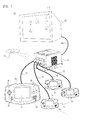
- a game system 10 of this embodiment shown in Figure 1 is for playing a game to search an invisible non-displayed item like a hunt for treasure by a plurality of players, and includes one game console (fixed-type game apparatus) 12 and a plurality of hand-held game apparatuses 14 (four in this embodiment).
- the game console 12 is provided with an optical disk drive 16 ( Figure 2) on an upper surface of an approximately cubic housing.
- An optical disk 18 which is one example of an information storage medium storing a game program and data is loaded on the optical disk drive 16.
- the housing is provided with a plurality of connectors 20 (four in this embodiment) on a front surface thereof ( Figure 2). These connectors 20 are connected with a plurality of hand-held game apparatuses 14 by a plurality of connecting cables 22.
- the game console 12 is connected with a monitor 26 as a first display apparatus via an AV cable 24.
- the monitor 26 is typically a color television receiver, and via the AV cable 24, a video signal from the game console 12 is input to a video input terminal of the color television, and a sound signal is applied to a sound input terminal. Accordingly, a game image generated according to the processing of the program is displayed on the screen of the monitor 26, and a game sound such as a game music (BGM), a sound effect, etc. is output from a speaker not shown.
- a game sound such as a game music (BGM), a sound effect, etc.
- the hand-held game apparatus 14 is a hand-held type game apparatus having a size capable of being held with both hands, and includes a rectangular-shaped housing.
- the housing is provided with an operating switch 28 as an operating means to be operated by each player on a front surface thereof.
- the operating switch 28 for example, includes a direction switch for moving a player character and a cursor during the game, a plurality of action switches for instructing a movement of the character, etc., and a start switch for instructing a start, a suspend, etc. of the game, and so on.
- a speaker 30 as a sound outputting means is integrated inside sound-bleeding holes provided on the surface of the housing. As described later, when the player character operated by the hand-held game apparatus 14 is close to the neighborhood of an arrangement position of a hidden non-displayed item, a notification sound is output from the speaker 30.
- a liquid crystal display (hereinafter, referred to as "LCD") 32 is provided at the approximately center of the housing. Furthermore, a connector 34 ( Figure 2) is provided on the top surface of the housing, and the connector 34 is connected with the connecting cable 22.
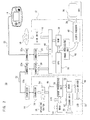
- FIG. 2 is an internal block diagram showing the game system10.
- the game console 12 includes a CPU 36.
- the CPU 36 is called a processor or a computer, and entirely controls the game console 12.
- the CPU 36 executes a game processing according to the game program.
- the CPU 36 is connected with a RAM 38, an input/output interface (hereinafter, referred to as "I/O") 40, an image processing unit 42, etc.
- I/O input/output interface
- the RAM 38 is utilized as a working memory or a buffer memory for CPU 36, and into the RAM 38, data required at a time of performing the game processing by the CPU 36 is loaded, and data generated by the game processing is temporarily stored.
- the image processing unit 42 processes the data temporarily stored in the RAM 38 on the basis of the instruction by the CPU 36 to generate image data for display. The generated image is displayed on the monitor 26 via a video encoder 44 and the AV cable 24.
- the I/O 40 is connected with the disk drive 16.
- the data of the optical disk 18 is read by the disk drive16 on the basis of the instruction by the CPU 36, and transferred to the RAM 38 so as to be stored.
- the I/O 40 is connected with the plurality of connectors 20, and each of the connectors 20 is connected with a connector 22a being one end of the connecting cable 22 for being connected to the hand-held game apparatus 14.
- Data received from the hand-held game apparatus 14 such as operation data, etc. is applied to the CPU 36 via the connector 20 and the I/O 40, and stored in a predetermined area of the RAM 38.
- transmission data such as a game program, game data, instruction data, etc. directed to the hand-held game apparatus 14 is transmitted from the predetermined area to each hand-held game apparatus 14 via the I/O 40 and each connector 20 by the CPU 36.
- the CPU 36 is also connected with a sound processing unit, etc.
- the sound processing unit generates sound output data on the basis of the instruction by the CPU 36, and applies it to the speaker of the monitor 26 via the AV cable 24, and whereby, a game music, etc. is output from the speaker.
- the hand-held game apparatus 14 includes a CPU 46, and the CPU 46 entirely controls the hand-held game apparatus 14.
- the CPU 46 is connected with a working RAM (hereinafter abbreviated as "WRAM”) 48, an image processing unit 50, a sound unit52, and an input-output interface (hereinafter abbreviated as "I/O") 54.
- WRAM working RAM
- I/O input-output interface
- the WRAM 48 is utilized as a work memory or a buffer memory for the CPU 46.
- a game program and data transmitted from the game console 12 is stored, and the CPU 46 executes a processing according to the game program.
- the image processing unit 50 is connected with a video RAM (hereinafter abbreviated as "VRAM") 56.
- VRAM video RAM
- the image processing unit 50 generates, according to an instruction of the CPU 46, image data for display on the basis of the data temporarily stored in the WRAM 48.
- the VRAM 56 temporarily stores the image data for display generated by the image processing unit 50.
- the image data stored in the VRAM 56 is applied to the LCD 32 via an LCD driver 58 so as to be displayed on the LCD 32.
- the sound unit 52 converts sound data generated by the processing of the CPU 32 into an analog signal to output it as a sound from the speaker 30.
- the I/O 54 connects the CPU 46 with the operating switch 28, the connector 34, etc.
- the connector 34 is connected with a connector 22b being the other end of the connecting cable 22 that is connected to the game console 12.
- the CPU 46 receives the data from the operating switch 28 via the I/O 54 so as to use it for the program processing, and transmits to the game console 12 the input data as an operation data via the I/O 54 and the connector 34. Also, the transmission data from the game console 12 is applied to the CPU 46 via the connector 34 and the I/O 54 so as to be stored in a predetermined area of the WRAM 48.
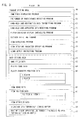
- Figure 3 shows one example of a memory map of the RAM 38 of the game console 12. Into the RAM 38, all or a necessary part of the program and data are loaded from the optical disk 18 when starting the game or when necessary.
- the memory map of the RAM 3 8 is roughly divided into a program storing area 60 and a data storing area 62.
- the program storing area 60 various programs to be executed by the CPU 36 are stored.
- the data storing area 62 various data to be utilized by the programs stored in the program storing area 60 are stored.
- the data storing area 62 is an area for temporarily storing the data generated as a result of the program processing.
- the program storing area 60 includes a game field displaying program storing area 64, the number of participants detecting program storing area 66, a hand-held game-destination-data transmitting program storing area 68, a hand-held game apparatus data receiving program storing area 70, a player character display controlling program storing area 72, a distance detecting program storing area 74, an item display program storing area 76, an item obtaining character specifying program storing area 78, a sound output instructing program storing area 80, etc.
- a program for generating a game field where a plurality ofplayer characters simultaneously search the non-displayed item and displaying the image of the game field is stored.
- at least one hidden item as a non-displayed item is arranged at a predetermined position. The invisible hidden item becomes an object to be sought.
- a program for detecting the number of the hand-held game apparatuses 14 connected with the game console 12, and detecting the number of the participants in the game is stored.
- a program for transmitting the data to the hand-held game apparatus 14 is stored.
- this program for example, a program for making the hand-held game apparatus 14 function as an operating means of the player in the game console 12, a program for outputting a sound from the hand-held game apparatus 14, and so on are transmitted.
- a program for receiving the transmission data including the operation data, etc. transmitted from the hand-held game apparatus 14 is stored.
- a program for controlling the actions of the plurality of player characters and displaying these images in the game field is stored. According to this program, a position of each player character is calculated on the basis of the operation data from each hand-held game apparatus 14, and temporarily stored.
- a program for calculating a distance between each player character and a hidden item on the basis of a position of each player character and a position of the hidden item is stored.
- a program for displaying, after a hidden item is found, an image of the hidden item at an arrangement position in the game field is stored.
- a program for specifying a player character who obtains the hidden item is stored. Furthermore, this program, when the position of the player character and the position of the hidden item have a predetermined relationship, that is, when the position of the player character reaches a place where the hidden item is obtainable, causes the player character to obtain the hidden item.
- a program for transmitting a command for instructing it to output a notification sound to the hand-held game apparatus 14 is stored.
- sound data to be rung is set depending on the distance, and a command for providing an instruction to ring the set sound data is transmitted to the hand-held game apparatus 14 that takes charge of the operation of the player character.
- the sound data for reproduction when obtaining item is set as the sound data to be rung, and the command for providing the instruction to ring the set sound data is transmitted to the hand-held game apparatus 14 that takes charge of the operation of the player character.
- the data storing area 62 includes a game field data area 82, a player image data area 84, a player character position data area 86, an item image data area 88, an item position data area 90, an item attribute data area 92, an operation data temporarily storing buffer area 94, and a hand-held game apparatus-use transmitting/receiving data temporarily storing buffer 96 area, etc.
- the game field data area 82 data relating to the game field where at least one hidden item is arranged, and a plurality of player characters simultaneously search the hidden item is stored.
- the game field displaying program By use of the data, the game field displaying program generates and displays the game field.
- the player image data area 84 image data for displaying the plurality of player characters is stored.
- the player character position data area 86 data relating to positions of the player characters (1 player, 2 player,...) calculated by the character display controlling program on the basis of the operation data, etc are temporarily stored.
- the distance detecting program calculates the distance between each player character and a hidden item.
- the item image data area 88 image data of a hidden item to be displayed when it is found is stored.
- the item position data area 90 the data relating to the position of each hidden item arranged in the game field is stored. By use of the position data, the distance detecting program calculates the distance between the hidden item and each player character.
- the item attribute data area 92 data relating to type data or an attribute of each hidden item arranged in the game field is stored.
- an attribute of the hidden item for example, money, various items equipped or used by the player character, an extra game for hand-held game apparatus, etc. are set.
- a program relating to the extra game is transmitted to only the hand-held game apparatus 14 of the player who obtains the hidden item, and in the only hand-held game apparatus 14, the extra game is playable.
- each operation data transmitted from each hand-held game apparatus 14 is temporarily stored.
- the hand-held game apparatus-use transmitting/receiving data temporarily storing buffer 96 data to be transmitted to each hand-held game apparatus 14, and data received from each hand-held game apparatus 14 are temporarily stored.
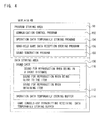
- FIG 4 shows one example of a memory map of the WRAM 48 of the hand-held game apparatus 14.
- the memory map of the WRAM 48 includes a program storing area 98 and a data storing area 100.
- the program storing area 98 various programs to be executed by the CPU 46 are stored.
- the data storing area 100 various data to be used by the programs stored in the program storing area 98 are stored, and data generated by the processing is also temporarily stored.
- the program storing area 98 includes a communication control program storing area 102, an operation data temporarily storing program storing area 104, a hand-held game data reception storing program storing area 106, a sound generation program storing area 108, etc.
- a program for controlling the communication with the game console 12 is stored.
- a program for receiving and storing data for hand-held game transmitted from the game console 12 is stored.
- the program for example, a program for making the hand-held game apparatus 14 function as the operating means of the player in the game console 12, a program for outputting a sound from the hand-held game apparatus 14, and so on are received.
- a program for generating a sound to be rung according to a sound output command from the game console 12 and outputting the sound from the speaker 30 is stored.
- the data storing area 100 includes a sound data area 110, an operation data temporarily storing buffer area 112, and a game console-use transmitting/receiving data temporarily storing buffer area 114, etc.
- sound data for outputting at least one kind of notification sound is stored.
- a plurality of sound data different depending on the distance between the player character and the hidden item are stored. More specifically, sound data for reproduction when being in a short distance indicating a case that the player character exists within the range of a short distance from the hidden item, sound data for reproduction when being close to the item indicating a case that the player character exists within a nearby range closer to the hidden item than in the short distance case, sound data for reproduction when obtaining the item indicating a case that the player character obtains the hidden item, etc. are stored.
- a sound generation program obtains the sound data designated by the command from the game console 12 from the area 110 to thereby generate the sound and output it from the speaker 30.
- the sound data is commonly used to the respective player characters, and therefore, the notification sound having a tone common to the respective player characters is output.
- the operation data temporarily storing buffer area 112 the operation data input from the operating switch 28 is temporarily stored.
- the game console-use transmitting/receiving data temporarily storing buffer area 114 the data to be transmitted to the game console 12 and the data received from the game console 12 are temporarily stored.
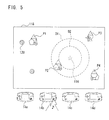
- Figure 5 shows one example of a display screen, and a manner of sound outputs of the respective hand-held game apparatuses 14 at the display screen.
- a plurality ofplayer characters of P1, P2, P3, P4 are simultaneously displayed, and a game for searching the hidden item 116 of an object to be found by the player as an invisible non-displayed item is performed.
- At least one hidden item 116 is hidden at a predetermined position within the game field, and is not displayed on the display screen 118 until being discovered. It is noted that in Figure 5, the hidden item 116 is displayed by dotted lines for the sake of convenience.
- the plurality of players respectively move the player characters P1, P2, P3, P4 belonging to themselves in an arbitrary direction by operating the operating switches 28 of the respective hand-held game apparatuses 14a, 14b, 14c, 14d, and search the hidden item 116 by digging a hole 120 at an arbitrary place, for example.
- the progress of the search for each player is notified by sound from the hand-held game apparatus 14 at hand as the operating means.
- the player character is moved on the basis of the operation data from the hand-held game apparatus 14, and whereby, it is determined whether or not the player character exists within the range of the predetermined distance from the hidden item 116. If the player character exists within the range of the predetermined distance from the hidden item 116, the game console 12 transmits to the hand-held game apparatus 14 that takes charge of the operation of the player character a command for providing an instruction to output a predetermined sound depending on the distance between the player character and the hidden item 116. The hand-held game apparatus 14 outputs the predetermined sound according to the received command.
- the player character P2 exists within the range of the short distance from the hidden item 116 (area between the dash lines D1 and dash lines D2 in Figure 5), and therefore, a notification sound indicative of existing in the short distance from the hidden item 116 is output from the speaker 30 of the hand-held game apparatus 14b that takes charge of operating the player character P2.
- the player who hears the sound from his own hand-held game apparatus 14b at hand notifies that the player character P2 operated by him is close to the hidden item 116 to have a peaceful feeling, and further concentrates on playing the game in order to try to find the position of the hidden item 116.
- the rest of the players hear the notification sound from the hand-held game apparatus 14b other than themselves, and whereby they notifies that the player other than themselves is about to obtain the hidden item 116, so that they became very frustrated for themselves.
- the notification sound is, in this embodiment, the tone in common to the respective player characters is used, and this makes difficult to know which player is close to the hidden item 116. Therefore, this causes other players to have a restless feeling, capable of boosting the game play.
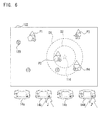
- Figure 6 shows one example of a display screen when the game further proceeds from a state of Figure 5, and a state of a sound output of the respective hand-held game apparatuses 14 at that time.
- the player character P2 exists within the range of the nearby distance from the hidden item 116 (area circled by the dash lines D2 in Figure 6) closer to the hidden item than in the short distance range. Accordingly, a notification sound indicative of being closer to the hidden item 116 is output from the speaker 30 of the hand-held game apparatus 14b operating the player character P2.
- the player character P4 exists within the range of short distance from the hidden item 116, and therefore, a notification sound indicative of existing in the short distance from the hidden item 116 is output from the speaker 30 of the hand-held game apparatus 14d operating the player character P4.
- the notification sound is changed depending on the distance from the hidden item 116, and therefore, the player who is notified can know to what extent his player object is close to the hidden item or away from it.
- the other players can know whether the player other than themselves is close to the hidden item or away from it.
- the notification sound gives a restless feeling or a sense of security caused by being aware of a little delay. Therefore, direction is performed on the search for the non-displayed item such that the players are moved from joy to grief by sound, capable of increasing a level of savor or taste of the game.
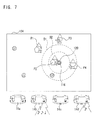
- Figure 7 shows one example of a display screen when the game further proceeds from a state of Figure 6, and a sound output state of the respective hand-held game apparatuses 14 at that time.
- the player character P2 digs a hole 120 at the arrangement position of the hidden item 116, and finally finds the hidden item 116. By this find, the hidden item 116 is displayed on the display screen 124. Thereafter, in a case that the position of the player character P2 is equal to the place where the found hidden item 116 is obtainable, that is, the arrangement position of the hidden item 116 or its nearby position, the player character P2 obtains the hidden item 116. Then, a notification sound indicative of obtaining the hidden item 116 is output from the speaker 30 of the hand-held game apparatus 14b that takes charge of operating the player character P2.
- the image of the hidden item 116 is displayed only after the hidden item 116 is found, and therefore, the players can know which player is about to obtain the hidden item 116 only when the hidden item 116 is finally found or obtained as a result of playing the game with a restless feeling, capable of directing the end of the hidden item searching game in a dramatic way at a climax.
- the attribute of the hidden item 116 is stored in the item attribute data storing area 92, and therefore, with referring to the attribute data after the item is obtained or found, a game processing according to the attribute of the obtained item is executed to develop the game after obtaining or finding the item in various ways.
- the attribute of the hidden item 116 is money, for example, money carried by the player character is increased by a predetermined amount while in a case of the various items, the item can be possessed, equipped, or utilized by the player character.
- the attribute of the obtained hidden item 116 is an extra game for hand-held game apparatus, a program and data for extra game are transmitted to only the hand-held game apparatus 14 operating the player character who obtains the hidden item to allow the player to play the extra game in only the hand-held game apparatus 14.
- the player who obtains the hidden item can play the special game such as fmding another item, and so forth while viewing the display screen displayed on the LCD 32 of the hand-held game apparatus 14 at hand that cannot be seen from the other players, thereby, capable of proceeding the game with a joyful feeling and a sense of superiority due to be able to a further item.
- the other players result in proceeding the game with a restless frustrated feeling because the player other than themselves plays the secret game.
- Figure 8 shows one example of an operation of the game console 12 in the game system 10.
- necessary programs and data are loaded from the optical disk 18 to the predetermined area of the RAM 38, and stored according to the memory map in Figure 3, for example.
- the CPU 36 of the game console 12 detects the hand-held game apparatuses 14 connected thereto.
- the CPU 36 transmits the hand-held game apparatus destination programs and data to each of the detected hand-held game apparatus 14.
- the programs and data to be transmitted include, for example, a program for making the hand-held game apparatus 14 serve as the operating means for the game console 12, a program for outputting a notification sound according to the instruction, sound data of the notification sound, etc.
- the programs and data are, for example, stored in the WRAM 48 of the hand-held game apparatus 14 according to the memory map in Figure 4.
- a step S5 the CPU 36 generates a game field on the basis of the game field data, etc. by use of the image processing unit 42 to display the display screen on the monitor 26.
- the CPU 36 requests each hand-held game apparatus 14 to transmit the operation data, receives the operation data from each hand-held game apparatus 14, and temporarily stores it in the operation data temporarily storing buffer area 94.
- the CPU 36 calculates a position of each player character on the basis of each operation data, temporarily stores each position data in the player character position data area 86, and generates in the game field an image of each player character on the basis of the position data of each player character, the player image data, etc. by use of the image processing unit 42 to display the display screen on monitor 26.
- the CPU 36 calculates distances between the arrangement position of each hidden item and each player character in the game field on the basis of the item position data, the player character position data, etc. On the basis of the calculated distance, the CPU 36, in a step S13, determines whether or not the player character exists within the range of a predetermined distance from each hidden item. For example, as shown in Figure 5, it is determined whether or not the player character having data value being lower than a distance defined by the short distance from the hidden item 116 represented by the dash lines D1 exists. If "NO" in the step S13, that is, if no player characters reach the short distance from the hidden item, the process returns to the step S7 to repeat this processing.
- the CPU 36 executes an item obtaining process in a step S 15.
- the item obtaining process depending on the distance between the player character existing in the short distance and the hidden item, a predetermined notification sound is output from the hand-held game apparatus 14 that takes charge of the operation of the player character. The detail of the item obtaining process is described later.
- step S17 the CPU 36 determines whether or not the game is over, and if ''NO'', the process returns to the step S7 to repeat this processing, while if "YES", the game is ended.
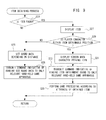
- Figure 9 shows a detail operation of the item obtaining process in the step S15 shown in Figure 8.
- the CPU 36 determines whether or not the hidden item is found in a first step S21 in Figure 9. For example, as shown in Figure 7, if the hole 120 is dug at the arrangement position of the hidden item 116, this means that the hidden item 116 is found.
- the CPU 36 sets the sound data to be rung depending on the distance between the player who is determined to exist in the range of the predetermined distance and the hidden item in a succeeding step S23. For example, as shown in Figure 5, in a case that the distance data value between player character P2 and the hidden item 116 is larger than the distance data value defining the nearby distance represented by the dash lines D2, the sound data for reproduction when being in a short distance is set. As shown in Figure 6, for example, in a case that the distance data value between the player character P2 and the hidden item 116 corresponds to the nearby distance represented by the dash lines D2, the sound data for reproduction when being close to the item is set.
- a step S25 the CPU 36 transmits a command for providing an instruction to ring the set sound data only to the hand-held game apparatus 14 that takes charge of operating the relevant player character.
- the command includes an identifier, and so on for designating the set sound data.
- the hand-held game apparatus 14 receiving the command outputs the notification sound from the speaker 30 on the basis of the set sound data. For example, as shown in Figure 5, in a case that the player character P2 exists within the range of the short distance, the notification sound indicative of being within the short distance is output from the hand-held game apparatus 14b while as shown in Figure 6, the player character P2 exists within the range of the nearby distance, the notification sound indicative of being closer to the hidden item is output from the hand-held game apparatus 14b.
- the item obtaining process is ended, and the process is returned to the step S17 in Figure 8.
- the CPU 36 generates in the game field the image of the hidden item on the basis of the item position data, item image data, etc. by use of the image processing unit 42, and displays the display screen on the monitor 26 in a succeeding step S27.
- a step S29 the CPU 36 determines whether or not the player character that is determined to exist within the range of the predetermined distance exists in a position where the hidden item is obtainable. As shown in Figure 7, for example, it is determined whether or not the position of the player character P2 is equal to the arrangement position of the hidden item 116 or its periphery. If "NO" in the step S29, that is, if the hidden item cannot be obtained, the process proceeds to the step S23 to cause the relevant hand-held game apparatus 14 to output a sound depending on the distance from the hidden item in the above-described manner.
- the CPU 36 determines whether the position of the relevant player character is equal to the position where the hidden item is obtainable. If "YES" in the step S29, that is, if the position of the relevant player character is equal to the position where the hidden item is obtainable, the CPU 36 generates a screen at a time the player character obtains the hidden item by use of the image processing unit 42, and displays it on the monitor 26 in a succeeding step S31. Then, in a step S33, the CPU 36 sets the sound data for reproduction when obtaining the item as the sound data to be rung, and transmits to only the hand-held game apparatus 14 operating the player character who obtains the item a command indicative of ringing the item obtaining sound.
- the hand-held game apparatus 14 that has received the command as shown in Figure 7, for example, outputs from the speaker 30 the notification sound on the basis of the sound data for reproduction when obtaining the item.
- a step S35 the CPU 36 of the game console 12 executes a game processing according to the attribute of the obtained item on the basis of the item attribute data. For example, in a case that the attribute of the item is money, the money carried by the player character is increased while in a case that the attribute is various items, the player character is allowed to possess, equip or use the item. Alternatively, in a case that the attribute is an extra game for hand-held game apparatus, the CPU 36 loads into the RAM 38 the programs and data for playing the extra game from the optical disk 18, and transmits the programs and data to only the relevant hand-held game apparatus 14 so as to allow the player who operates the hand-held game apparatus 14 to play the extra game.
- the CPU 46 of the hand-held game apparatus 14 receives the programs and data of the extra game, executes the game processing according to the programs, the operation data from the operating switch 28, etc., and displays the game image of the extra game on the LCD 32.
- the item obtaining process is ended, and the process returns to the step S17 in Figure 8.
- Figure 10 shows one example of a timing diagram of a communication between the game console 12 and the hand-held game apparatus 14 in this game system 10.
- the CPU 36 of the game console 12 detects the hand-held game apparatuses 14 connected thereto in a step S41.
- the CPU 46 of the hand-held game apparatus 14 detects capability of data exchange in a step S61, and establishes a communication between the game console 12 and each hand-held game apparatus 14.
- the CPU 36 of the game console 12 transmits to each hand-held game apparatus 14 hand-held-game-destination-data and programs in a step S43.
- the CPU 46 of the hand-held game apparatus 14 receives the hand-held game-destination-data and programs, and stores it in the predetermined area of the WRAM 48.
- the CPU 46 of the hand-held game apparatus 14 generates operation data on the basis of the input data from the operating switch 28 in a step S65, and stores it in the operation data temporarily storing buffer area 112.
- the CPU 36 of the game console 12 transmits to each hand-held game apparatus 14 a command for requesting the operation data in a step S45.
- the CPU 46 of the hand-held game apparatus 14 receives the command for requesting the transmission of the operation data in a step S67, and transmits the operation data to the game console 12 in a step S69.
- the CPU 36 of the game console 12 receives the operation data transmitted from each hand-held game apparatus 14, and stores it in the operation data temporarily storing buffer area 94 in a step S47. Then, the CPU 36 executes the game processing in a succeeding step S49.
- the CPU 36 calculates a position of each player character on the basis of each operation data to display each player character, and calculates a distance between each player character and the hidden item.
- the CPU 36 sets the sound data to be rung in the hand-held game apparatus 14 that takes charge of operating the player character on the basis of the distance between each player character and the hidden item in a case that the player character exists within the range of the predetermined distance from the hidden item.
- a step S53 the CPU 36 transmits only to the hand-held game apparatus 14 from which the sound data has to be rung a command for providing an instruction to output the set sound data. Then, in a step S55, the CPU 36 repeats the processing from the step S45 onward until the game is over, and ends the process when the game is over.
- the CPU 46 of the hand-held game apparatus 14 receives the sound output command in a step S71. Succeedingly, in a step S73, the CPU 46 reads-out the sound data designated by the command from the sound data area 110 to generate the data of the notification sound to be output based on the sound data, and outputs the notification sound from the speaker 30 by utilizing the sound unit 52. Then, the CPU 46 repeats the processing from the step S65 onward until the game is over in a step S75, and ends the processing when the game is over.
- the notification sound has a tone in common to the each of the attribute or the type data of the hidden item in the above-described embodiment.
- a different notification sound may be output in correspondence to the attribute or the type data of the item.
- the player can presume the type data of the hidden item before finding or obtaining it by hearing out the difference between the notification sounds.
- the item is not one which he wants, for example, by postponing the obtainment of the item to search another place, and so forth, it is possible to search the only item he wants. This makes it possible to search the item efficiently and makes the competition with the other players intense and heated.
- the value indicative of the predetermined distance for determining whether or not the sound is output depending on the attribute or the type data of the hidden item may be set to a different value.
- the hidden item as a non-displayed item is fixedly arranged at a predetermined position in the game field
- the hidden non-displayed item may be an item (invisible non player object, etc.) moving in the game field.
- the hand-held game apparatus 14 that is provided with the LCD 32, etc. and is able to function as a singly game apparatus is utilized.
- the operating means may be a general game controller that applies the operation signal from operating switch 28 to the game console 12, and is further provided with a sound outputting means such as a speaker, a sound processing circuit, etc.
- the sound generation programs, the sound data, etc. stored in the WRAM 48 of the hand-held game apparatus 14 is stored in the RAM 38 of the game console 12.
- the CPU 36 selectively processes the predetermined sound data on the basis of the distance between the player character and the hidden item to generate the notification sound, and applies it to the sound processing circuit of the relevant controller to output the notification sound from the speaker.
Landscapes
- Engineering & Computer Science (AREA)
- Multimedia (AREA)
- Physics & Mathematics (AREA)
- Acoustics & Sound (AREA)
- Theoretical Computer Science (AREA)
- Human Computer Interaction (AREA)
- User Interface Of Digital Computer (AREA)
- Controls And Circuits For Display Device (AREA)
- Processing Or Creating Images (AREA)
Applications Claiming Priority (2)
| Application Number | Priority Date | Filing Date | Title |
|---|---|---|---|
| JP2003398958A JP2005152508A (ja) | 2003-11-28 | 2003-11-28 | 複数人でプレイするゲームシステム、ゲーム装置およびゲームプログラム |
| JP2003398958 | 2003-11-28 |
Publications (2)
| Publication Number | Publication Date |
|---|---|
| EP1535652A2 true EP1535652A2 (de) | 2005-06-01 |
| EP1535652A3 EP1535652A3 (de) | 2007-03-07 |
Family
ID=34463872
Family Applications (1)
| Application Number | Title | Priority Date | Filing Date |
|---|---|---|---|
| EP04106028A Withdrawn EP1535652A3 (de) | 2003-11-28 | 2004-11-24 | Spielsystem, das von verschiedenen Spielern bedient wird, Spielvorrichtung und Aufzeichnungsmedium für Spielprogramm |
Country Status (3)
| Country | Link |
|---|---|
| US (1) | US7699704B2 (de) |
| EP (1) | EP1535652A3 (de) |
| JP (1) | JP2005152508A (de) |
Cited By (2)
| Publication number | Priority date | Publication date | Assignee | Title |
|---|---|---|---|---|
| WO2011001120A1 (fr) * | 2009-07-01 | 2011-01-06 | Bernard Trouvilliez | Systeme interactif de simulation de recherche de tresors |
| EP2055360A4 (de) * | 2006-07-28 | 2015-06-03 | Sony Computer Entertainment Inc | Spielsteuerprogramm, spielsteuerverfahren und spielvorrichtung |
Families Citing this family (51)
| Publication number | Priority date | Publication date | Assignee | Title |
|---|---|---|---|---|
| US7502770B2 (en) * | 2001-04-11 | 2009-03-10 | Metaweb Technologies, Inc. | Knowledge web |
| US8069175B2 (en) | 2002-04-10 | 2011-11-29 | Google Inc. | Delegating authority to evaluate content |
| US20030195834A1 (en) * | 2002-04-10 | 2003-10-16 | Hillis W. Daniel | Automated online purchasing system |
| US7844610B2 (en) | 2003-12-12 | 2010-11-30 | Google Inc. | Delegated authority evaluation system |
| AU2003297193A1 (en) | 2002-12-13 | 2004-07-09 | Applied Minds, Inc. | Meta-web |
| US8012025B2 (en) * | 2002-12-13 | 2011-09-06 | Applied Minds, Llc | Video game controller hub with control input reduction and combination schemes |
| US8038533B2 (en) * | 2003-05-09 | 2011-10-18 | Nintendo Co., Ltd. | Game system using parent game machine and child game machine |
| US20050131918A1 (en) * | 2003-12-12 | 2005-06-16 | W. Daniel Hillis | Personalized profile for evaluating content |
| AU2005312283B2 (en) | 2004-09-21 | 2011-09-15 | Timeplay Inc. | System, method and handheld controller for multi-player gaming |
| JP5146813B2 (ja) * | 2005-09-09 | 2013-02-20 | 株式会社セガ | ゲーム装置とゲームシステム及びゲームシステムの効果音生成方法 |
| US20070087830A1 (en) * | 2005-10-14 | 2007-04-19 | Microsoft Corporation | Multi-component gaming system |
| US9573067B2 (en) * | 2005-10-14 | 2017-02-21 | Microsoft Technology Licensing, Llc | Mass storage in gaming handhelds |
| JP4137151B2 (ja) * | 2006-09-21 | 2008-08-20 | 株式会社スクウェア・エニックス | ビデオゲーム制御システム、及びビデオゲーム制御サーバ |
| JP2009000387A (ja) * | 2007-06-22 | 2009-01-08 | Sega Corp | ゲーム装置、ゲーム制御方法、ゲーム制御プログラムおよび記録媒体 |
| US20090062007A1 (en) * | 2007-08-31 | 2009-03-05 | Big Fish Games, Inc. | Injecting Content into Episodic Video Games |
| JP5420833B2 (ja) * | 2007-11-30 | 2014-02-19 | 任天堂株式会社 | ゲームシステム |
| US20090253512A1 (en) * | 2008-04-07 | 2009-10-08 | Palo Alto Research Center Incorporated | System And Method For Providing Adjustable Attenuation Of Location-Based Communication In An Online Game |
| US8616970B2 (en) * | 2008-04-07 | 2013-12-31 | Palo Alto Research Center Incorporated | System and method for managing a multiplicity of text messages in an online game |
| US8265252B2 (en) * | 2008-04-11 | 2012-09-11 | Palo Alto Research Center Incorporated | System and method for facilitating cognitive processing of simultaneous remote voice conversations |
| US8814686B2 (en) | 2010-02-03 | 2014-08-26 | Nintendo Co., Ltd. | Display device, game system, and game method |
| US8961305B2 (en) | 2010-02-03 | 2015-02-24 | Nintendo Co., Ltd. | Game system, controller device and game method |
| US8913009B2 (en) | 2010-02-03 | 2014-12-16 | Nintendo Co., Ltd. | Spatially-correlated multi-display human-machine interface |
| US8339364B2 (en) | 2010-02-03 | 2012-12-25 | Nintendo Co., Ltd. | Spatially-correlated multi-display human-machine interface |
| JP6243586B2 (ja) * | 2010-08-06 | 2017-12-06 | 任天堂株式会社 | ゲームシステム、ゲーム装置、ゲームプログラム、および、ゲーム処理方法 |
| US10150033B2 (en) | 2010-08-20 | 2018-12-11 | Nintendo Co., Ltd. | Position calculation system, position calculation device, storage medium storing position calculation program, and position calculation method |
| JP5840386B2 (ja) | 2010-08-30 | 2016-01-06 | 任天堂株式会社 | ゲームシステム、ゲーム装置、ゲームプログラム、および、ゲーム処理方法 |
| JP5840385B2 (ja) | 2010-08-30 | 2016-01-06 | 任天堂株式会社 | ゲームシステム、ゲーム装置、ゲームプログラム、および、ゲーム処理方法 |
| KR101492310B1 (ko) | 2010-11-01 | 2015-02-11 | 닌텐도가부시키가이샤 | 조작 장치 및 정보 처리 장치 |
| JP5792971B2 (ja) | 2011-03-08 | 2015-10-14 | 任天堂株式会社 | 情報処理システム、情報処理プログラム、および情報処理方法 |
| EP2497544A3 (de) | 2011-03-08 | 2012-10-03 | Nintendo Co., Ltd. | Informationsverarbeitungsprogramm, Informationsverarbeitungssystem und Informationsverarbeitungsverfahren |
| US9925464B2 (en) | 2011-03-08 | 2018-03-27 | Nintendo Co., Ltd. | Computer-readable storage medium, information processing system, and information processing method for displaying an image on a display device using attitude data of a display device |
| EP2497547B1 (de) | 2011-03-08 | 2018-06-27 | Nintendo Co., Ltd. | Informationsverarbeitungsprogramm, Informationsverarbeitungsvorrichtung, Informationsverarbeitungssystem und Informationsverarbeitungsverfahren |
| EP2497543A3 (de) | 2011-03-08 | 2012-10-03 | Nintendo Co., Ltd. | Informationsverarbeitungsprogramm, Informationsverarbeitungssystem und Informationsverarbeitungsverfahren |
| US9539511B2 (en) | 2011-03-08 | 2017-01-10 | Nintendo Co., Ltd. | Computer-readable storage medium, information processing system, and information processing method for operating objects in a virtual world based on orientation data related to an orientation of a device |
| JP5689014B2 (ja) | 2011-04-07 | 2015-03-25 | 任天堂株式会社 | 入力システム、情報処理装置、情報処理プログラム、および3次元位置算出方法 |
| JP5901891B2 (ja) * | 2011-05-23 | 2016-04-13 | 任天堂株式会社 | ゲームシステム、ゲーム処理方法、ゲーム装置、およびゲームプログラム |
| JP5869236B2 (ja) | 2011-06-03 | 2016-02-24 | 任天堂株式会社 | 情報処理プログラム、情報処理装置、情報処理システム、および情報処理方法 |
| JP5937792B2 (ja) * | 2011-06-03 | 2016-06-22 | 任天堂株式会社 | ゲームプログラム、ゲーム装置、ゲームシステム、およびゲーム処理方法 |
| JP5883592B2 (ja) * | 2011-08-12 | 2016-03-15 | 株式会社タイトー | ゲーム機 |
| JP5951957B2 (ja) * | 2011-10-27 | 2016-07-13 | 任天堂株式会社 | ゲームシステム、ゲーム装置、ゲームプログラム、およびゲーム処理方法 |
| US20130307796A1 (en) * | 2012-05-16 | 2013-11-21 | Chi-Chang Liu | Touchscreen Device Integrated Computing System And Method |
| JP6534198B2 (ja) * | 2012-05-31 | 2019-06-26 | 任天堂株式会社 | ゲームシステム、ゲーム処理方法、ゲーム装置およびゲームプログラム |
| JP6336730B2 (ja) * | 2013-09-18 | 2018-06-06 | 株式会社スクウェア・エニックス | ビデオゲーム処理プログラム、及びビデオゲーム処理システム |
| JP6663634B2 (ja) * | 2014-05-29 | 2020-03-13 | フリュー株式会社 | ビデオゲーム装置、ビデオゲームの制御方法、ビデオゲーム制御プログラム、および記録媒体 |
| JP6022644B2 (ja) * | 2015-07-14 | 2016-11-09 | 株式会社タイトー | ゲーム機 |
| US10207187B2 (en) | 2016-09-14 | 2019-02-19 | Bally Gaming, Inc. | Multi-player gaming sound system |
| JP6427160B2 (ja) * | 2016-12-12 | 2018-11-21 | 株式会社カプコン | ゲームプログラム及びゲームシステム |
| JP6989325B2 (ja) * | 2017-09-06 | 2022-01-05 | 株式会社バンダイナムコエンターテインメント | プログラム及びサーバ装置 |
| JP6640270B2 (ja) * | 2018-05-07 | 2020-02-05 | 株式会社スクウェア・エニックス | ビデオゲーム処理プログラム、及びビデオゲーム処理システム |
| US11089240B2 (en) * | 2018-05-07 | 2021-08-10 | Craig Randall Rogers | Television video and/or audio overlay entertainment device and method |
| JP6670030B1 (ja) * | 2019-08-30 | 2020-03-18 | 任天堂株式会社 | 周辺装置、ゲームコントローラ、情報処理システム、および、情報処理方法 |
Family Cites Families (11)
| Publication number | Priority date | Publication date | Assignee | Title |
|---|---|---|---|---|
| JPH07265546A (ja) | 1994-03-31 | 1995-10-17 | Nec Home Electron Ltd | 多人数参加型視聴覚装置及び多人数参加型テレビゲー ム機 |
| US6004209A (en) | 1994-05-31 | 1999-12-21 | Capcom Co., Ltd. | Body-acoustic device, playing apparatus and its control method, light-beam utilizing playing apparatus, and acoustic apparatus |
| US5556107A (en) * | 1995-06-15 | 1996-09-17 | Apple Computer, Inc. | Computer game apparatus for providing independent audio in multiple player game systems |
| JP2642088B2 (ja) | 1995-07-14 | 1997-08-20 | カシオ計算機株式会社 | 親子電子ゲーム装置 |
| JPH11347250A (ja) | 1998-06-04 | 1999-12-21 | Enix Corp | ビデオゲーム装置およびプログラムを格納した記録媒体 |
| JP3883331B2 (ja) | 1999-05-28 | 2007-02-21 | 任天堂株式会社 | 携帯ゲーム機とビデオゲーム機の複合ゲームシステム |
| JP2001069475A (ja) * | 1999-08-27 | 2001-03-16 | Pioneer Electronic Corp | ケーブルテレビジョンの端末装置 |
| JP3791666B2 (ja) | 2000-04-25 | 2006-06-28 | コナミ株式会社 | ゲーム機用フィギュア玩具 |
| JP5027355B2 (ja) | 2001-02-27 | 2012-09-19 | 株式会社スクウェア・エニックス | ビデオゲーム装置およびその制御方法、ならびにビデオゲームのプログラムおよびそのプログラムを記録したコンピュータ読取り可能な記録媒体。 |
| JP4691268B2 (ja) * | 2001-05-02 | 2011-06-01 | 任天堂株式会社 | ゲームシステムおよびゲームプログラム |
| JP3534345B1 (ja) * | 2002-10-22 | 2004-06-07 | コナミ株式会社 | ゲームプログラム及びゲーム装置 |
-
2003
- 2003-11-28 JP JP2003398958A patent/JP2005152508A/ja active Pending
-
2004
- 2004-11-17 US US10/989,454 patent/US7699704B2/en active Active
- 2004-11-24 EP EP04106028A patent/EP1535652A3/de not_active Withdrawn
Cited By (4)
| Publication number | Priority date | Publication date | Assignee | Title |
|---|---|---|---|---|
| EP2055360A4 (de) * | 2006-07-28 | 2015-06-03 | Sony Computer Entertainment Inc | Spielsteuerprogramm, spielsteuerverfahren und spielvorrichtung |
| WO2011001120A1 (fr) * | 2009-07-01 | 2011-01-06 | Bernard Trouvilliez | Systeme interactif de simulation de recherche de tresors |
| FR2947463A1 (fr) * | 2009-07-01 | 2011-01-07 | Bernard Romuald Trouvilliez | Jeu interactif sonore et visuel de simulation de recherche de tresors pouvant comporter un affichage du tresor, la simulation de creusement de trous et une distribution de lots |
| US8814644B2 (en) | 2009-07-01 | 2014-08-26 | Bernard Trouvilliez | Interactive system for simulating a treasure hunt |
Also Published As
| Publication number | Publication date |
|---|---|
| US20050119053A1 (en) | 2005-06-02 |
| US7699704B2 (en) | 2010-04-20 |
| JP2005152508A (ja) | 2005-06-16 |
| EP1535652A3 (de) | 2007-03-07 |
Similar Documents
| Publication | Publication Date | Title |
|---|---|---|
| US7699704B2 (en) | Game system playable by plurality of players, game apparatus and storage medium storing game program | |
| US8979650B2 (en) | Game apparatus, recording medium having game program recorded thereon, and game system | |
| US6964610B2 (en) | Video game device, technique setting method in video game, and computer readable recording medium storing technique setting program | |
| US8419538B2 (en) | Storage medium storing game program, game apparatus and game control method | |
| EP0768105B1 (de) | Verfahren zur Unterstützung eines Spielers bei der Eingabe von Befehlen in einem Videospiel, Videospielsystem und Videospielspeichermedium | |
| KR100873601B1 (ko) | 게임 장치, 컴퓨터의 제어 방법 및 정보 기억 매체 | |
| EP2478944A2 (de) | Vorrichtung und Verfahren zur Anzeige von Spielercharakteren und deren Spezialbewegungsstatus in einem Netzwerkspiel | |
| EP1503365A1 (de) | Musik-Spielsoftware und Musik-Spielmaschine | |
| US20080293495A1 (en) | Game server and program | |
| JP3786669B2 (ja) | ゲームシステム、プログラム及び情報記憶媒体 | |
| KR20040002937A (ko) | 화상처리장치 및 게임장치 | |
| JP3579042B1 (ja) | ゲーム装置、ゲーム方法、ならびに、プログラム | |
| EP4311584A2 (de) | Datenverarbeitungsvorrichtung und -verfahren | |
| JP3449480B2 (ja) | ゲーム機におけるコントローラの機能表示 | |
| US20010016511A1 (en) | Entertainment system, entertainment apparatus, recording medium, and program | |
| JP2019180944A (ja) | ゲームプログラム、方法、および端末装置 | |
| KR101131882B1 (ko) | 게임 장치, 게임 제어 방법, 게임 제어 프로그램을 기록한 컴퓨터로 읽을 수 있는 기록 매체 | |
| JP4167710B2 (ja) | ビデオゲーム処理装置、およびビデオゲーム処理プログラム | |
| JP2006230578A (ja) | プログラム、情報記憶媒体及びゲーム装置 | |
| JP3818769B2 (ja) | 情報記憶媒体、ゲーム装置及びゲームシステム | |
| JP2019181229A (ja) | ゲームプログラム、方法、および端末装置 | |
| JP2001224732A (ja) | ゲーム装置、及び情報記憶媒体 | |
| JP7566964B2 (ja) | プログラム | |
| JP7427039B2 (ja) | プログラム、ゲーム装置、ゲーム管理装置及びゲームシステム | |
| US20230302367A1 (en) | Computer-readable non-transitory storage medium having game program stored therein, game apparatus, game system, and game processing method |
Legal Events
| Date | Code | Title | Description |
|---|---|---|---|
| PUAI | Public reference made under article 153(3) epc to a published international application that has entered the european phase |
Free format text: ORIGINAL CODE: 0009012 |
|
| AK | Designated contracting states |
Kind code of ref document: A2 Designated state(s): AT BE BG CH CY CZ DE DK EE ES FI FR GB GR HU IE IS IT LI LU MC NL PL PT RO SE SI SK TR |
|
| AX | Request for extension of the european patent |
Extension state: AL HR LT LV MK YU |
|
| PUAL | Search report despatched |
Free format text: ORIGINAL CODE: 0009013 |
|
| AK | Designated contracting states |
Kind code of ref document: A3 Designated state(s): AT BE BG CH CY CZ DE DK EE ES FI FR GB GR HU IE IS IT LI LU MC NL PL PT RO SE SI SK TR |
|
| AX | Request for extension of the european patent |
Extension state: AL HR LT LV MK YU |
|
| STAA | Information on the status of an ep patent application or granted ep patent |
Free format text: STATUS: THE APPLICATION HAS BEEN WITHDRAWN |
|
| 18W | Application withdrawn |
Effective date: 20070821 |