EP1510237A2 - Spielgerät und Speichermedium mit darauf gespeichertem Spielprogramm - Google Patents
Spielgerät und Speichermedium mit darauf gespeichertem Spielprogramm Download PDFInfo
- Publication number
- EP1510237A2 EP1510237A2 EP04016819A EP04016819A EP1510237A2 EP 1510237 A2 EP1510237 A2 EP 1510237A2 EP 04016819 A EP04016819 A EP 04016819A EP 04016819 A EP04016819 A EP 04016819A EP 1510237 A2 EP1510237 A2 EP 1510237A2
- Authority
- EP
- European Patent Office
- Prior art keywords
- player
- partial area
- game
- mode game
- mode
- Prior art date
- Legal status (The legal status is an assumption and is not a legal conclusion. Google has not performed a legal analysis and makes no representation as to the accuracy of the status listed.)
- Withdrawn
Links
Images





Classifications
-
- A63F13/10—
-
- A—HUMAN NECESSITIES
- A63—SPORTS; GAMES; AMUSEMENTS
- A63F—CARD, BOARD, OR ROULETTE GAMES; INDOOR GAMES USING SMALL MOVING PLAYING BODIES; VIDEO GAMES; GAMES NOT OTHERWISE PROVIDED FOR
- A63F13/00—Video games, i.e. games using an electronically generated display having two or more dimensions
- A63F13/80—Special adaptations for executing a specific game genre or game mode
-
- A—HUMAN NECESSITIES
- A63—SPORTS; GAMES; AMUSEMENTS
- A63F—CARD, BOARD, OR ROULETTE GAMES; INDOOR GAMES USING SMALL MOVING PLAYING BODIES; VIDEO GAMES; GAMES NOT OTHERWISE PROVIDED FOR
- A63F13/00—Video games, i.e. games using an electronically generated display having two or more dimensions
- A63F13/45—Controlling the progress of the video game
-
- A—HUMAN NECESSITIES
- A63—SPORTS; GAMES; AMUSEMENTS
- A63F—CARD, BOARD, OR ROULETTE GAMES; INDOOR GAMES USING SMALL MOVING PLAYING BODIES; VIDEO GAMES; GAMES NOT OTHERWISE PROVIDED FOR
- A63F13/00—Video games, i.e. games using an electronically generated display having two or more dimensions
- A63F13/80—Special adaptations for executing a specific game genre or game mode
- A63F13/843—Special adaptations for executing a specific game genre or game mode involving concurrently two or more players on the same game device, e.g. requiring the use of a plurality of controllers or of a specific view of game data for each player
-
- A—HUMAN NECESSITIES
- A63—SPORTS; GAMES; AMUSEMENTS
- A63F—CARD, BOARD, OR ROULETTE GAMES; INDOOR GAMES USING SMALL MOVING PLAYING BODIES; VIDEO GAMES; GAMES NOT OTHERWISE PROVIDED FOR
- A63F2300/00—Features of games using an electronically generated display having two or more dimensions, e.g. on a television screen, showing representations related to the game
- A63F2300/80—Features of games using an electronically generated display having two or more dimensions, e.g. on a television screen, showing representations related to the game specially adapted for executing a specific type of game
- A63F2300/8094—Unusual game types, e.g. virtual cooking
Definitions
- This invention relates to a game apparatus and a storage medium storing a game program and more particularly to a game apparatus and a storage medium storing a game program for realizing a game in which a plurality of players strive with one another to obtain as many partial areas as possible from among a plurality of partial areas constituting a predetermined area displayed on a game screen.
- an object of the present invention is to realize, in connection with a game in which a plurality of players strive with one another to obtain as many partial areas as possible from among a plurality of partial areas constituting a predetermined area displayed on a game screen, a game where the development of the game does not become monotonous and where each player can enjoy playing the game even when the differences in competence between the players are large.
- a game apparatus is a game apparatus for executing a game in which a plurality of players strive with one another to obtain one or more partial areas from among a plurality of partial areas constituting a predetermined area displayed on a game screen, and the game apparatus comprises a plurality of operation means (18) to be operated by separate players, obtained partial area storage means (78) for storing a partial area obtained by each player as an obtained partial area, partial area choice means (30), single-player-mode game execution means (30), and obtained partial area adding means (30).
- the partial area choice means allows each player to choose a partial area in turns (S12).
- the single-player-mode game execution means when a partial area is chosen, executes a single-player-mode game for a player who has chosen the partial area (S15).
- the obtained partial area adding means stores, as an obtained partial area of the present player, the partial area chosen by the player who has played the single-player-mode game in the obtainedpartial area storage means, depending on the result of the single-player-mode game (S20).
- the single-player-mode game execution means chooses one single-player-mode game at random from among a plurality of previously-prepared single-player-mode games and executes the chosen single-player-mode game (S13).
- the game apparatus further comprises stipulated number storage means (78) for storing a stipulated number which is assigned to each partial area, and stipulated number update means (30, S18) for reducing the stipulated number for the partial area as stored in the stipulated number storage means if the result of the single-player-mode game executed when the partial area is chosen satisfies a predetermined requirement, wherein: if a player plays a single-player-mode game and the result of the single-player-mode game satisfies the predetermined requirement, the single-player-mode game execution means executes another single-player-mode game for the same player in succession; if a player plays a single-player-mode game and as a result the stipulated number for a partial area in the stipulated number storage means becomes zero, the obtained partial area adding means stores the partial area as an obtained partial area of that player's in the obtained partial area storage means; and if the result of the single-player-mode game does not satisfy the predetermined requirement or if the
- the game apparatus further comprises playhistory information storagemeans (74) for storing, as play history information, a playing result of a single-player-mode game played by a player, wherein, based on the play history information stored in the play history information storage means, the single-player-mode game execution means executes a single-player-mode game with an increased speed of game progress as the number of single-player-mode games the player has played in succession increases.
- playhistory information storagemeans (74) for storing, as play history information, a playing result of a single-player-mode game played by a player, wherein, based on the play history information stored in the play history information storage means, the single-player-mode game execution means executes a single-player-mode game with an increased speed of game progress as the number of single-player-mode games the player has played in succession increases.
- stipulated numbers are initially assigned to at least two of the plurality of partial areas in the stipulated number storage means.
- the game apparatus further comprises obtained partial area change means (30, 62) for changing, in the obtained partial area storage means, a partial area of a player which is sandwiched between a partial area added by the obtained partial area adding means and a partial area which is already possessed by a player who has obtained the added partial area to become an obtained partial area of the player who has obtained the added partial area, wherein, the predetermined area and the plurality of partial areas are rectangular areas, and in the stipulated number storage means, a larger stipulated number is initially assigned to a partial area (P1) placed in a corner of the predetermined area than for a partial area placed in a non-corner location of the predetermined area.
- the single-player-mode game execution means executes a single-player-mode game having a degree of difficulty which varies according to the number of obtained partial areas of each player as stored in the obtained partial area storage means.
- the game apparatus further comprises play history information storage means (74) for storing, as play history information, a playing result of a single-player-mode game played by a player, wherein the single-player-mode game execution means executes a single-player-mode game having a degree of difficulty which varies according to the play history information stored in the play history information storage means.
- the game apparatus further comprises obtained partial area change means (30, 62) for, if a player newly obtains a partial area and the newly obtained partial area is in a predetermined positional relationship with respect to an obtained partial area of another player, changing, in the obtained partial area storage means, the obtained partial area of the other player to become an obtained partial area of the player who has newly obtained the partial area.
- the game apparatus further comprises: all-player-mode game execution means (30, S41) for executing an all-player-mode game which is capable of being played concurrently by all of the plurality of players in response to a prescribed number of partial areas having been obtained; and pilfering process means (30, S43) for changing, in the obtained partial area storage means, an obtained partial area of a player to become an obtained partial area of another player based on the result of the all-player-mode game.
- the game apparatus further comprises: victor determination means (30, S24) for, when all of the plurality of partial areas contained in the predetermined area have been obtained by the plurality of players, determining one player of the plurality of players as a victor (e.g., a player who has obtained the greatest number of partial areas, or a player who has obtained a previously-designated partial area) by considering the partial area or areas obtained by each player; and special game execution means (30, S26) for executing a single-player-mode special game which is executed for the victor on a game field corresponding to the predetermined area in which only portions corresponding to the obtained partial areas of the victor are made visible.
- victor determination means (30, S24) for, when all of the plurality of partial areas contained in the predetermined area have been obtained by the plurality of players, determining one player of the plurality of players as a victor (e.g., a player who has obtained the greatest number of partial areas, or a player who has obtained a previously-designated partial area) by considering
- a storage medium is a storage medium storing a game program for causing a computer in a game system to execute a game in which a plurality of players strive with one another to obtain one or more partial areas from among a plurality of partial areas constituting a predetermined area displayed on a game screen, wherein, the game system includes a plurality of operation means (18) to be operated by separate players and obtained partial area storage means (78) for storing a partial area obtained by each player as an obtained partial area, and the game program causes the computer to function as partial area choice means, single-player-mode game execution means , and obtained partial area adding means.
- the partial area choice means allows each player to choose a partial area in turns (S12).
- the single-player-mode game execution means when a partial area is chosen, executes a single-player-mode game for a player who has chosen the partial area (S15).
- the obtained partial area adding means stores the partial area chosen by the player who has played the single-player-mode game as an obtained partial area of the player in the obtained partial area storage means, depending on the result of the single-player-mode game (S20).
- the game apparatus of the first aspect in connection with a game in which a plurality of players strive with one another to obtain one or more partial areas from among a plurality of partial areas constituting a predetermined area displayed on a game screen, there is realized a game where the development of the game does not become monotonous and which each player can enjoy playing even when the differences in competence between the players are large. Specifically, the development of the game does not become monotonous as it would in the othello game because although each player chooses a partial area in turns, even if a turn to choose a partial area comes to a player, it still depends on the result of a single-player-mode game whether the player can obtain the partial area.
- a player is unable to know which single-player-mode game he or she will play until the single-player-mode game is actually started.
- the development of the game becoming monotonous can be prevented.
- the number of times a single-player-mode game should be played to obtain a partial area is predetermined with respect to each partial area, so that a partial areawhich can be obtained relatively easily and a partial area which can be obtained with more difficulty will arise. As a result, strategic thoughts are required in choosing a partial area.
- the degrees of difficulty of single-player-mode games gradually become higher as a player continues to succeed in more single-player-mode games.
- a sophisticated strategy will be required in choosing a partial area. For example, the player will be faced with the difficult question of whether to attack a high-stipulated-number partial area which is difficult to obtain or to safely obtain a partial area whose stipulated number is small.
- a strategy will be required in choosing a partial area. For example, a player will be faced with the difficult question of whether to attack a high-stipulated-number partial area which is difficult to obtain or to safely obtain a partial area whose stipulated number is small.
- the stipulated numbers for the partial areas placed in the corners of the predetermined area, which cannot be sandwiched between partial areas of another player's, are set to be larger than those for the other partial areas.
- amore sophisticated strategy will be required in choosing a partial area.
- the player will be faced with the difficult question of whether to attack a high-stipulated-number partial area in a corner, which is difficult to obtain but which cannot be sandwiched by partial areas of another player's, or to safely obtain a low-stipulated-number partial area, which can be taken by another player easily.
- the degree of difficulty of a single-player-mode game can be changed according to the number of obtained partial areas of each player's. Therefore, by increasing the degree of difficulty of a single-player-mode game which is played when a player attempts to newly obtain a partial area as the number of partial areas already obtained by the player grows, for example, it becomes unlikely that the game develops so one-sidedly that only a particular player obtains most of the partial areas. Thus, each player can enjoy playing the game.
- the degree of difficulty of a single-player-mode game can be changed according to the playing result(s) of a single-player-mode game(s) played by each player in the past. Therefore, for example, the game apparatus may be arranged so that each time a player fails to clear a single-player-mode game, the degree of difficulty of a single-player-mode game the player will play the next time is reduced. This prevents the problem of discouraging a player from playing a mini game due to the degree of difficulty of the mini game being much too high for the ability of the player. Conversely, the degree of difficulty of a single-player-mode game may be increased as the number of single-player-mode games the player has successfully cleared increases.
- a player can play a special game in a more advantageous condition by achieving a victory with more partial areas having been obtained by him or her. Therefore, even in the situation where it is almost evident that a particular player will become the victor while partial areas are still being strived for by the players, the particular player will still want to obtain more partial areas, while the other players will strive to prevent it. Thus, each player can continue to enjoy the game to the end.
- FIG. 1 is an external view illustrating the structure of a game system according to an embodiment of the present invention
- FIG. 2 is its block diagram.
- the game system includes a TV monitor 10, a main body 12 of a game machine, a DVD-ROM 14, an external memory card 16, and a controller 18.
- the TV monitor 10 is equipped with a loudspeaker 20.
- the DVD-ROM 14 and the external memory card 16 are mounted to the main body 12 of the game machine such that it can be removed or inserted at will.
- the controller 18 is connected, via a communication cable, to one of a plurality of connectors for controller ports (four connectors are shown in FIG. 1) which are provided in the main body 12 of the game machine.
- the TV monitor 10 is connected to the main body 12 via an AV cable or the like. Note that the communication between the main body 12 and the controller 18 may be performed wirelessly. With reference to FIG. 2, each part of the game system is described in more detail below.
- the DVD-ROM 14 stably stores a game program, game data, and the like. When a player plays the game, the DVD-ROM 14 is inserted into the main body 12.
- an external storage medium such as a CD-ROM, an MO, a memory card, a ROM cartridge, and the like, for example, may be used instead of a DVD-ROM 14.
- the external memory card 16 is composed of a rewritable storage medium such as a flash memory or the like, for example, and records data such as "save data" of the game, for example.
- the main body 12 reads the program stored in a DVD-ROM 14 and performs a process in accordance with the program.
- the controller 18, which is an input device for a player to make an input relating to a game operation, has a plurality of operation switches.
- the controller 18 outputs operation data to the main body 12 in accordance with a pressing of an operation switch by a player or the like.
- the TV monitor 10 displays image data outputted from the main body 12 on the screen, and outputs from the loudspeaker 20 audio which is outputted from the main body 12 during the game.
- the main body 12 is equipped with a CPU 30 and a memory controller 40 connected thereto. Further, in the main body 12, the memory controller 40 is connected to a GPU (Graphic Processing Unit) 32, a main memory 34, a DSP 36, and various kinds of interfaces (I/F) 42, 44, 46, 48, and 52.
- the memory controller 40 controls the data transfer between these components.
- a disk drive 50 drives the DVD-ROM 14 which has been inserted to the main body 12.
- the game program stored in the DVD-ROM 14 is read and loaded into the main memory 34 via the disk I/F 52 and the memory controller 40.
- the game is started by the CPU 30 executing the program in the main memory 34.
- a player performs an input to the controller 18 using an operation switch, e.g., an input pertaining to a game operation.
- the controller 18 outputs operation data to the main body 12.
- the operation data outputted from the controller 18 is provided to the CPU 30 via the controller I/F 42 and the memory controller 40.
- the CPU 30 performs a game process in accordance with the inputted operation data.
- the GPU 32 or the DSP 36 is utilized.
- An ARAM 38 is utilized when the DSP 36 performs a process.
- the GPU 32 generates image data to be displayed on the TV monitor 10 and outputs the image data to the TV monitor 10, when appropriate, via the memory controller 40 and the video I/F 44. Audio data which is generated in the CPU 30 when the game program is in execution is outputted through the memory controller 40 and the audio I/F 48 to the loudspeaker 20.
- the game executed in the present embodiment is a game in which a plurality of players strive with one another to obtain as many panels as possible from among twenty-five panels (panels P1 to P25) displayed on the TV monitor 10 as shown in FIG. 3. More specifically, players try to obtain one of the twenty-five panels in turns, and, as in the othello game, when a player' panel(s) sandwiches a different player's panel(s), the player can add the sandwiched panel(s) to his or her own possession.
- FIG. 4 shows an exemplary screen displayed immediately after the game started. It is assumed that a separate game, hereinafter referred to as a "mini game,” is to be played as a requisite to this game.
- a number is written on each panel. This number shows the number of times (hereinafter simply referred to as "a stipulated number") a player has to clear a mini game to obtain the panel. For example, to obtain panel P1, it is required to clear a mini game five times.
- panel P13 at the center is a special panel, which can be obtained only when it becomes sandwiched between a player's panels. Therefore, no number is written on this panel.
- players each choose a panel in a predetermined order. It is assumed here that panels are to be chosen in the following order of players: player A, player B, player C, player D, player A, and so on.
- player A who is the first player entitled to choosing a panel, chooses a panel by moving a cursor as shown in FIG. 5, for example. It is preferable for the cursor to be controlled so that it can be moved only upon panels which are possible to be obtained, based on a choice determination program described later.
- a mini game starts. Player A plays the mini game seeing a game screen displayed on the TV monitor 10 as is shown in FIG. 6.
- the mini game which is executed at this time is chosen at random from among a plurality of previously-prepared mini games, and executed.
- a requirement for clearing the mini game has been previously set, and if player A clears this mini game, another mini game is chosen at random from among the plurality of previously-prepared mini games and executed, and player A proceeds to play the newly executed mini game. In this manner, player A may play a mini game at most three times (which corresponds to the stipulated number assigned to the chosen panel) in succession.
- the stipulated number assigned to panel P14, which player A chose is reduced by the number of times player A has cleared a mini game. For example, if player A fails to clear a third mini game after clearing two mini games in succession, the stipulated number for panel P14 is reduced to one as shown in FIG. 7, and the right to choose a panel is transferred to player B.
- panel P14 is colored to indicate that the possessor of panel P14 is player A (for example, panels of player A's, player B' s, player C's, and player D's may be colored in yellow, red, blue, and green, respectively). Thereafter, the right to choose a panel is transferred to player B.
- players A to D take turns to choose a panel and play a mini game ( s ) , and may obtain the panel depending on the result of the mini game(s).
- a player newly obtains a panel and as a result a different player's panel (s ) becomes sandwiched between the newly obtained panel and a panel already obtained by the player who has newly obtained the panel
- the different player's sandwiched panel(s) also becomes a possession (s) of the player who has newly obtained the panel. For example, if player A obtains panel P4 in the situation as shown in FIG. 9, panel P9 becomes player A's possession.
- a game named "pilfering chance" starts.
- the pilfering chance gives a player a chance to unconditionally obtain a panel that is already possessedbyanotherplayer.
- a screen on the TV monitor 10 may be divided into four parts, where players A to D play mini games concurrently.
- player A may play a mini game while watching a game image displayed at the upper left of FIG. 10, and, in the same manner, player B, player C, and player D play mini games while watching game images displayed at the upper right, lower left, and lower right, respectively.
- players A to D proceed to choose a panel and play a mini game(s) by taking turns in the same manner as before, and depending on the result of the mini game(s) may obtain a panel.
- the player who possesses the greatest number of panels (namely, player A in the example of FIG. 11) is decided as a provisional victor and a special game for that player starts. Note that if there is more than one player who possesses the greatest number of panels, a playoff game is played, and based on the result thereof a provisional victor is decided.
- the provisional victor plays a mini game in a condition where the portions corresponding to the panels possessed by the other players are masked so as to be visually blocked, as shown in FIG. 12. If this mini game is cleared, the provisional victor becomes the final victor. If the provisional victor fails to clear the mini game, one of the other players (three players, in this example) becomes the final victor.
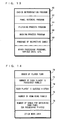
- the program or data for realizing a game as described above is stored in the DVD-ROM 14. More specifically, a choice determination program 60, a panel reversal program 62, a pilfering process program 64, a masking process program 66, programs 68 of respective games, and other processing programs, various data, and the like are recorded on the DVD-ROM 14.
- the choice determination program 60 determines which panel(s) can be chosen by a player based on how a panel(s) has been obtained by the players until the present time.
- the choice determination program 60 determines which panel(s) can be chosen by a player according to the following basic rules.
- the panel reversal program 62 is a program which, when a player has newly obtained a panel, determines whether a different player's panel (s) is sandwiched between the newly obtained panel and another panel already obtained by the player who has obtained the newly obtained panel, and, if it is, changes the sandwiched panel (s) to that of the player who has obtained the newly obtained panel.
- the pilfering process program 64 is a program which, when the total number of panels possessed by the players has reached a prescribed number (for example, twenty), causes all of the players to play a multi-player game as a pilfering chance game (it is assumed in the present embodiment that all of the players concurrently play mini games, such that a player who fails to clear the mini game is eliminated from the competition, and a player who has survived to the end is decided as a victor in the pilfering chance game).
- the pilfering process program 64 decides a victor in the pilfering chance game based on the result thereof.
- the pilfering process program 64 grants the victor a panel as arbitrarily designated by the victor, and if another player's panel(s) becomes sandwiched between the panel which the victor has newly obtained and a panel already possessed by the victor, the pilfering process program 64 also grants the sandwiched panel(s) to the victor.
- the masking process program 66 is a program which, when the provisional victor who possesses the greatest number of panels at the end of the game tries the special game, masks the panels possessed by the other players.
- the programs 68 of respective games are programs for executing a plurality (e.g. , more than two hundred kinds) of mini games, special games, and the like.
- the degree of difficulty of each game can be adjusted by increasing the speed of the progress of the game or the like.
- the other processing programs include programs necessary for general processes such as image display, audio output, and the like.
- the various data includes image data, audio data, and the like.
- the main memory 34 includes: an order-of-player-turn storage area 70, a number-of-each-player's-possessed-panels storage area 72, an each-player's-success-history storage area 74, a number-of-remaining-panels storage area 76, a number-of-games-for-obtaining-each-panel (or possessing player) storage area 78, and "other work area.”
- the order-of-player-turn storage area 70 stores data showing an order in which players are allowed to choose a panel, i . e . , an order in which the right to choose a panel is transferred among the players. This order is determined immediately after the game starts.
- the number-of-each-player's-possessed-panels storage area 72 stores data showing the current number of panels possessed by each player.
- the each-player's-success-history storage area 74 stores data showing the history of the results of a mini game(s) (whether he or she succeeded or failed in clearing the mini game(s)) which each player has attempted to clear so far.
- the number-of-remaining-panels storage area 76 stores data showing the number of panels which are still left to be obtained by a player.
- the number-of-games-for-obtaining-each-panel (or possessing player) storage area 78 stores the data showing the number of times (the "stipulated number") a mini game has to be cleared for obtaining each panel. This number of times is, as was described earlier, reduced each time a player clears a mini game which is executed when a panel is chosen, and when that number becomes zero, the panel becomes possessed by the player who cleared the last mini game. After the stipulated number becomes zero, data indicating the present possessor of the panel is stored.
- the "other work area” is used, when necessary, for performing necessary calculations and storing temporary values, and the like.
- data indicating how many mini games a player will have played in succession when he or she plays a next mini game (hereinafter referred to as "consecutively-played number data") is stored in this area. For example, when the right to choose a panel is transferred to the next player, the consecutively-played number data is reset to one, and every time the player clears a mini game the consecutively-played number is incremented. Note that if a player has played two mini games in succession and continues to play a third mini game, the consecutively-played number data indicates the value of three.
- the CPU 30 performs the processes shown in FIG. 15 according to the kinds of programs recorded in a DVD-ROM 14.
- the CPU 30, at step S11 first determines a response order (i.e., the order in which the right to choose a panel is transferred among the players) and stores the determined order in the order-of-player-turn storage area 70 in the main memory 34.
- a response order i.e., the order in which the right to choose a panel is transferred among the players
- players choose a panel in this response order.
- the manner in which a response order is determined is arbitrary.
- the response order may be determined at random, for example.
- a player who has the right of choice chooses at the moment an arbitrary panel out of the panels from which the player is allowed to choose.
- the panel (s) from which the player is allowed to choose can be determined by the aforementioned choice determination program 60.
- a mini game is chosen at random from among a plurality of previously-prepared mini games.
- step S14 the degree of difficulty of the mini game chosen at step S13 is determined, and at the following step S15, the mini game chosen at step S13 is executed with the degree of difficulty determined at step S14.
- step S15 the degree of difficulty of the mini game chosen at step S13 is executed with the degree of difficulty determined at step S14.
- step S31 the CPU 30 reads data corresponding to the number of panels possessed by a player who is choosing a panel at the moment and his or her history of success in a mini game(s), respectively from the number-of-each-player's-possessed-panels storage area 72 and the each-player's-success-history storage area 74 shown in FIG. 14. Then, in accordance with the data which has been read, the degree of difficulty of the mini game is determined at step S32.
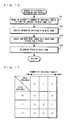
- the degree of difficulty of a mini game is determined based on the two variables (a base variable and a bias variable) shown in FIG. 17.
- a base variable which is a variable determined based on the number of panels possessed by each player, has an integer value ranging from 0 to 2. The base variable increases as the number of possessed panels increases.
- a bias variable which is a variable determined based on the history of success in a mini game(s) up to the moment, has an integer value ranging from -2 to 0.
- a bias variable, whose initial value is zero, is reduced by one each time a player fails to clear a mini game (however, a bias variable cannot have a value less than -2). If the player successfully clears a mini game, the bias variable is reset to zero.
- the sum of the base variable and bias variable determines the degree of difficulty of the mini game.
- a value indicating the degree of difficulty of a mini game is zero, one, or two.
- a previously-arranged parameter of a mini game (which is, for example, a parameter indicating the number of monsters, a parameter indicating the number of obstacles serving to prevent a player from clearing the mini game, a parameter indicating the number of balls to be caught, or the like, and which may be a parameter specific to each mini game) is changed when the mini game is executed at step S15.
- FIG. 1 is, for example, a parameter indicating the number of monsters, a parameter indicating the number of obstacles serving to prevent a player from clearing the mini game, a parameter indicating the number of balls to be caught, or the like, and which may be a parameter specific to each mini game
- FIG. 18A shows an exemplary game screen when a mini game, of which the degree of difficulty is set to be zero, is being played
- FIG. 18B shows an exemplary game screen when the same mini game, of which the degree of difficulty is set to be two, is being played.
- FIG. 19A shows an exemplary game screen when a different mini game, of which the degree of difficulty is set to be zero, is being played
- FIG. 19B shows an exemplary game screen when the same mini game, of which the degree of difficulty is set to be two, is being played.
- the degree of difficulty of a mini game is increased as the number of panels possessed by a player increases. Therefore, the probability is low that the development of the game becomes so one-sided that all panels are occupied by only one skilled player, and thus all players can enjoy playing the game.
- the degree of difficulty of a mini game for a player is reduced directly after the player failed to clear a mini game (i.e., only if the player has failed to clear the immediately preceding mini game).
- a player under a handicap condition deriving from possessing many panels still has a non-zero chance to obtain more panels.
- step S33 the CPU 30 reads the aforementioned consecutively-played number data from the "other work area" shown in FIG. 14. Then, at step S34, the speed of the mini game is determined based on the consecutively-played number data. Specifically, the speed of the mini game is increased as the consecutively-played number becomes greater. Consequently, when a panel with a large stipulated number is chosen, the degree of difficulty (i.e., the speed) of a mini game will increase each time a mini game is cleared.
- step S16 in FIG. 15 after a mini game is completed, the CPU 30 determines whether the result of the mini game satisfies the predetermined requirement for clearing the mini game. If it is determined that the predetermined requirement for clearing the mini game is not satisfied, the process proceeds to step S17. At this time the CPU 30 updates a mini game playing result history of the player who has played the mini game stored in the main memory 34. At step S17, in addition to transferring the right to choose a panel to the next player, the CPU 30 resets the consecutively-played number data to one, and thereafter, the process returns to step S12.
- step S16 determines whether the predetermined requirement for clearing the mini game is satisfied. If it is determined at step S16 that the predetermined requirement for clearing the mini game is satisfied, the process proceeds to step S18. At this time, data stored in the main memory 34 is updated appropriately. Specifically, the mini game playing result history of the player who has played the mini game stored in the main memory 34 is updated, and the consecutively-played number data is incremented.
- the CPU 30 decrements the stipulated number for the panel that is being chosen at the moment.
- the CPU 30 determines whether the stipulated number for the panel that is being chosen at the moment is zero. If it is determined to be non-zero (i.e., equal to or greater than one), the process returns to step S13. Accordingly, the same player plays mini games in succession until he or she fails to clear a mini game or the stipulated number for the panel becomes zero.
- step S19 if it is determined at step S19 that the stipulated number for the panel that is being chosen at the moment is zero, a process for granting the panel to the player who played the mini game is performed at step S20. Specifically, the number of remaining panels as stored in the main memory 34 is decremented. In addition, the number of panels possessed by the player is incremented and the player is memorized as the possessor of the newly obtained panel. Moreover, according to the panel reversal program 62 shown in FIG. 13, it is determined whether or not the panel at the center (panel P13) or another player's panel(s) exists between the panel newly obtained by the player and a panel already possessed by the player, and if such a panel exists, the possessor of that panel is changed.
- the CPU 30 determines whether the newly obtained panel is a twentieth panel (in other words, whether the number of remaining panels stored in the main memory 34 is five). If the newly obtained panel is not the twentieth panel, the process proceeds to step S23, and if the newly obtainedpanel is the twentieth panel, a pilfering chance game is carried out at step S22. With reference to FIG. 20, the details of the process of a pilfering chance game are described below.
- step S41 when a pilfering chance game is started, first at step S41, all of the players play a mini game as shown in FIG. 10. Note that at this time the degree of difficulty of the mini game played may be differentiated for each player. For example, such differentiations in the degree of difficulty of the mini game may be made according to the aforementioned base variables. The manner in which the victor in a pilfering chance game is determined has been described earlier. Then, at step S42, the victor designates a panel possessed by another player, and the possessor of the designated panel is changed to the victor at step S43.
- the sandwiched panel is added to the victor's possession. Then, the right to choose a panel is transferred to the player whose turn is supposed to come after the player who has obtained the twentieth panel (i.e., the next player to the player who obtained the last panel before the pilfering chance game), and the process returns to step S12. At this time, the consecutively-played number data is reset to one.
- the CPU 30 determines whether a newly obtained panel is a twenty-fifth panel (in other words, whether the number of remaining panels stored in the main memory 34 is zero). If the newly obtained panel is not the twenty-fifth panel, the process proceeds to step S17, and if the newly obtained panel is the twenty-fifth panel, the process proceeds to step S24.
- the CPU 30 determines whether a provisional victor has been determined. Specifically, the number of panels possessed by each player is compared with that of each of the other players, and if there is only one player who has obtained the greatest number of panels, that player is determined as a provisional victor, and the process proceeds to step S26. On the other hand, if there are a plurality of players who have obtained the greatest number of panels, a playoff game is played at step S25 to determine a provisional victor; based on the result of the playoff game a provisional victor is determined from among these players; and the process proceeds to step S26.
- a playoff game may be of any kind.
- a provisional victor may be determined by the players who have obtained the greatest number of panels playing an elimination game (s) similar to a pilfering chance game.
- step S26 the CPU 30 executes a special game for the provisional victor.
- a special game for the provisional victor.
- step S51 the CPU 30, first at step S51, masks the portions in the screen corresponding to the panels possessed by any player other than the provisional victor, based on the masking process program 66 shown in FIG. 13. Then, at step S52, a game (e.g. , a mini game) is started with the aforementioned portions of the screen being masked.
- step S53 it is determined whether the provisional victor has cleared the game, and if he or she has cleared the game, the provisional victor is determined as a final victor, and the process proceeds to step S55.
- step S54 one of the players other than the provisional victor is determined as a final victor at step S54, and the process proceeds to step S55.
- One method for determining a final victor from among the players other than the provisional victor may be that the player who possesses the greatest number of panels among the players other than the provisional victor is determined as a final victor.
- the CPU 30 displays a demonstration for applauding the final victor, and the game process is completed.
Landscapes
- Engineering & Computer Science (AREA)
- Multimedia (AREA)
- Slot Machines And Peripheral Devices (AREA)
- Management, Administration, Business Operations System, And Electronic Commerce (AREA)
Applications Claiming Priority (2)
| Application Number | Priority Date | Filing Date | Title |
|---|---|---|---|
| JP2003300362 | 2003-08-25 | ||
| JP2003300362A JP3719607B2 (ja) | 2003-08-25 | 2003-08-25 | ゲーム装置およびゲームプログラム |
Publications (2)
| Publication Number | Publication Date |
|---|---|
| EP1510237A2 true EP1510237A2 (de) | 2005-03-02 |
| EP1510237A3 EP1510237A3 (de) | 2010-05-26 |
Family
ID=34101161
Family Applications (1)
| Application Number | Title | Priority Date | Filing Date |
|---|---|---|---|
| EP04016819A Withdrawn EP1510237A3 (de) | 2003-08-25 | 2004-07-16 | Spielgerät und Speichermedium mit darauf gespeichertem Spielprogramm |
Country Status (3)
| Country | Link |
|---|---|
| US (1) | US7549923B2 (de) |
| EP (1) | EP1510237A3 (de) |
| JP (1) | JP3719607B2 (de) |
Families Citing this family (19)
| Publication number | Priority date | Publication date | Assignee | Title |
|---|---|---|---|---|
| JP5105730B2 (ja) * | 2005-09-15 | 2012-12-26 | 任天堂株式会社 | ゲーム装置およびゲームプログラム |
| JP2007202947A (ja) * | 2006-01-06 | 2007-08-16 | Kazuhiko Kasai | 電子ゲーム機及び電子ゲーム方法並びにそのプログラム |
| JP2008073273A (ja) * | 2006-09-22 | 2008-04-03 | Aruze Corp | ベットの累積額が最も多い遊技者に対してディーラーの画像の選択操作を有効化する多人数参加型ゲーム装置及びゲームのプレイ方法 |
| US20080207318A1 (en) * | 2006-12-20 | 2008-08-28 | Ubiquity Holdings | Interactive Puzzle Game over a Portable Device |
| US9773253B2 (en) | 2013-09-13 | 2017-09-26 | Ilya Nikolayev | External feature integration system and method |
| JP5795394B2 (ja) | 2014-02-26 | 2015-10-14 | グリー株式会社 | プログラム、通信システム、及び制御方法 |
| JP5844930B1 (ja) * | 2015-04-08 | 2016-01-20 | グリー株式会社 | 制御方法、サーバ装置及びプログラム |
| JP5833792B1 (ja) * | 2015-08-12 | 2015-12-16 | グリー株式会社 | プログラム、通信システム、及び制御方法 |
| JP5945052B2 (ja) * | 2015-10-29 | 2016-07-05 | グリー株式会社 | プログラム、通信システム、及び制御方法 |
| JP6022666B1 (ja) * | 2015-11-19 | 2016-11-09 | グリー株式会社 | 制御方法、サーバ装置及びプログラム |
| JP6224166B2 (ja) * | 2016-05-26 | 2017-11-01 | グリー株式会社 | プログラム、通信システム、及び制御方法 |
| JP6105132B1 (ja) | 2016-06-30 | 2017-03-29 | グリー株式会社 | 制御プログラム、制御方法及びゲーム装置 |
| JP6608409B2 (ja) * | 2017-10-04 | 2019-11-20 | グリー株式会社 | プログラム、通信システム、及び制御方法 |
| US10596471B2 (en) | 2017-12-22 | 2020-03-24 | Activision Publishing, Inc. | Systems and methods for enabling audience participation in multi-player video game play sessions |
| US11278813B2 (en) | 2017-12-22 | 2022-03-22 | Activision Publishing, Inc. | Systems and methods for enabling audience participation in bonus game play sessions |
| JP6538942B1 (ja) * | 2018-07-26 | 2019-07-03 | 株式会社Cygames | 情報処理プログラム、サーバ、情報処理システム、及び情報処理装置 |
| JP6778301B2 (ja) * | 2019-08-06 | 2020-10-28 | グリー株式会社 | プログラム、通信システム、及び制御方法 |
| JP7028919B2 (ja) * | 2020-07-16 | 2022-03-02 | グリー株式会社 | 制御プログラム、制御方法及びゲーム装置 |
| JP7668092B2 (ja) * | 2020-08-06 | 2025-04-24 | 株式会社バンダイナムコエンターテインメント | コンピュータシステム及びゲームシステム |
Family Cites Families (12)
| Publication number | Priority date | Publication date | Assignee | Title |
|---|---|---|---|---|
| US6062978A (en) * | 1995-12-11 | 2000-05-16 | Four Star Software, Inc. | Rotating cube computer video games |
| US5921864A (en) * | 1996-03-20 | 1999-07-13 | Walker Asset Management Limited Partnership | Electronic word puzzle game |
| US6302790B1 (en) * | 1998-02-19 | 2001-10-16 | International Game Technology | Audio visual output for a gaming device |
| JP3829014B2 (ja) * | 1998-06-03 | 2006-10-04 | 株式会社コナミデジタルエンタテインメント | ビデオゲーム装置 |
| JP3343099B2 (ja) * | 2000-03-08 | 2002-11-11 | 株式会社コナミコンピュータエンタテインメント大阪 | キャラクタ育成制御プログラムを記録したコンピュータ読み取り可能な記録媒体 |
| JP3763119B2 (ja) * | 2000-05-31 | 2006-04-05 | コナミ株式会社 | ゲームサービス提供装置及び方法 |
| JP4595228B2 (ja) * | 2000-08-24 | 2010-12-08 | ソニー株式会社 | 受信装置および方法、送信装置および方法、記録媒体、並びに通信システム |
| US6824469B2 (en) * | 2001-05-03 | 2004-11-30 | Sony Pictures Entertainment, Inc. | System and method for awarding prizes |
| US20030139210A1 (en) * | 2002-01-22 | 2003-07-24 | Joseph Raben | Computer-based acrostic puzzle for indiviual play and multi-player competition |
| JP2003325981A (ja) * | 2002-05-09 | 2003-11-18 | Nintendo Co Ltd | 多人数参加型ゲームシステムおよび多人数参加型ゲームプログラム |
| JP2004261236A (ja) * | 2003-02-20 | 2004-09-24 | Konami Co Ltd | ゲームシステム |
| WO2004081765A2 (en) * | 2003-03-12 | 2004-09-23 | Mattel, Inc. | Interactive dvd gaming system |
-
2003
- 2003-08-25 JP JP2003300362A patent/JP3719607B2/ja not_active Expired - Fee Related
-
2004
- 2004-07-16 EP EP04016819A patent/EP1510237A3/de not_active Withdrawn
- 2004-07-29 US US10/901,234 patent/US7549923B2/en not_active Expired - Fee Related
Also Published As
| Publication number | Publication date |
|---|---|
| JP3719607B2 (ja) | 2005-11-24 |
| US20050049045A1 (en) | 2005-03-03 |
| EP1510237A3 (de) | 2010-05-26 |
| US7549923B2 (en) | 2009-06-23 |
| JP2005066043A (ja) | 2005-03-17 |
Similar Documents
| Publication | Publication Date | Title |
|---|---|---|
| US7549923B2 (en) | Game apparatus and storage medium storing game program | |
| Juul | The game, the player, the world: Looking for a heart of gameness | |
| US7988545B2 (en) | Game result evaluating method and device | |
| JP3486180B2 (ja) | ゲームシステム及びコンピュータプログラム | |
| JP2001137534A (ja) | カードゲーム装置 | |
| US6270402B1 (en) | Video game device, control method for processing of soliciting video characters to join simulated team, and readable recording medium recording control programs for processing of soliciting video characters to join simulated team | |
| JP2000334170A (ja) | 携帯ゲーム機とビデオゲーム機の複合ゲームシステム | |
| JP4709872B2 (ja) | ゲーム装置およびそれに用いる記憶媒体 | |
| JP3712478B2 (ja) | ゲーム装置及びゲーム装置の制御方法 | |
| JP3437841B2 (ja) | ゲームシステム及びゲーム用プログラム | |
| JP3431619B2 (ja) | 画像生成システム、プログラム及び情報記憶媒体 | |
| WO2004073816A1 (ja) | ゲーム装置及び情報記憶媒体 | |
| EP1051999B1 (de) | Wettkampfvideospielvorrichtung, Ausführungsmethode für ein Wettkampfvideospiel, und rechnerlesbares Aufzeichnungsmedium mit abgespeichertem Videospiel | |
| US20010029201A1 (en) | Game apparatus, storage medium, transmission medium and computer program | |
| JP2001239056A (ja) | 記録媒体及びカードゲーム装置 | |
| JP3863437B2 (ja) | ゲーム装置、ゲーム制御プログラムおよびそのプログラムが記録された記録媒体 | |
| JP6678257B2 (ja) | ゲームプログラム、及び、情報処理装置 | |
| JP2001120840A (ja) | ゲーム装置およびそれに用いる記憶媒体 | |
| JP3736589B2 (ja) | 対戦ゲーム機における行動決定装置、行動決定方法及び対戦ゲーム機並びに媒体 | |
| US20070197273A1 (en) | Board game system, game device, storage medium storing game program | |
| JP2004105534A (ja) | ゲーム装置およびその装置に利用可能なゲーム制御方法 | |
| JP3824617B2 (ja) | ゲーム装置及び画像合成方法 | |
| JP7586534B1 (ja) | ゲームシステム、ゲーム制御方法およびプログラム | |
| JP7586535B1 (ja) | ゲームシステム、ゲーム制御方法およびプログラム | |
| JP2001009151A (ja) | ゲームシステム及び情報記憶媒体 |
Legal Events
| Date | Code | Title | Description |
|---|---|---|---|
| PUAI | Public reference made under article 153(3) epc to a published international application that has entered the european phase |
Free format text: ORIGINAL CODE: 0009012 |
|
| AK | Designated contracting states |
Kind code of ref document: A2 Designated state(s): AT BE BG CH CY CZ DE DK EE ES FI FR GB GR HU IE IT LI LU MC NL PL PT RO SE SI SK TR |
|
| AX | Request for extension of the european patent |
Extension state: AL HR LT LV MK |
|
| PUAL | Search report despatched |
Free format text: ORIGINAL CODE: 0009013 |
|
| AK | Designated contracting states |
Kind code of ref document: A3 Designated state(s): AT BE BG CH CY CZ DE DK EE ES FI FR GB GR HU IE IT LI LU MC NL PL PT RO SE SI SK TR |
|
| AX | Request for extension of the european patent |
Extension state: AL HR LT LV MK |
|
| 17P | Request for examination filed |
Effective date: 20101108 |
|
| 17Q | First examination report despatched |
Effective date: 20101213 |
|
| AKX | Designation fees paid |
Designated state(s): DE FR GB |
|
| RAP1 | Party data changed (applicant data changed or rights of an application transferred) |
Owner name: NINTENDO CO., LTD. |
|
| STAA | Information on the status of an ep patent application or granted ep patent |
Free format text: STATUS: THE APPLICATION HAS BEEN WITHDRAWN |
|
| 18W | Application withdrawn |
Effective date: 20150603 |