EP1501023B1 - Système de transfert et reproduction de données - Google Patents
Système de transfert et reproduction de données Download PDFInfo
- Publication number
- EP1501023B1 EP1501023B1 EP04011554A EP04011554A EP1501023B1 EP 1501023 B1 EP1501023 B1 EP 1501023B1 EP 04011554 A EP04011554 A EP 04011554A EP 04011554 A EP04011554 A EP 04011554A EP 1501023 B1 EP1501023 B1 EP 1501023B1
- Authority
- EP
- European Patent Office
- Prior art keywords
- transfer
- slave device
- data
- contents data
- master device
- Prior art date
- Legal status (The legal status is an assumption and is not a legal conclusion. Google has not performed a legal analysis and makes no representation as to the accuracy of the status listed.)
- Expired - Lifetime
Links
- 238000012546 transfer Methods 0.000 title claims description 76
- 230000004044 response Effects 0.000 claims description 29
- 230000005856 abnormality Effects 0.000 claims description 5
- 206010000210 abortion Diseases 0.000 claims 1
- 238000011084 recovery Methods 0.000 claims 1
- 238000012545 processing Methods 0.000 description 100
- 238000004891 communication Methods 0.000 description 54
- 238000000034 method Methods 0.000 description 5
- 238000013500 data storage Methods 0.000 description 4
- 238000001514 detection method Methods 0.000 description 4
- 230000002159 abnormal effect Effects 0.000 description 3
- 238000010586 diagram Methods 0.000 description 2
- 238000005516 engineering process Methods 0.000 description 2
- 239000000284 extract Substances 0.000 description 2
- 238000012544 monitoring process Methods 0.000 description 2
- 230000006870 function Effects 0.000 description 1
- 238000009434 installation Methods 0.000 description 1
- 230000002093 peripheral effect Effects 0.000 description 1
- 239000004065 semiconductor Substances 0.000 description 1
- 230000005236 sound signal Effects 0.000 description 1
Images


Classifications
-
- G—PHYSICS
- G11—INFORMATION STORAGE
- G11B—INFORMATION STORAGE BASED ON RELATIVE MOVEMENT BETWEEN RECORD CARRIER AND TRANSDUCER
- G11B27/00—Editing; Indexing; Addressing; Timing or synchronising; Monitoring; Measuring tape travel
- G11B27/02—Editing, e.g. varying the order of information signals recorded on, or reproduced from, record carriers
- G11B27/031—Electronic editing of digitised analogue information signals, e.g. audio or video signals
- G11B27/034—Electronic editing of digitised analogue information signals, e.g. audio or video signals on discs
-
- G—PHYSICS
- G11—INFORMATION STORAGE
- G11B—INFORMATION STORAGE BASED ON RELATIVE MOVEMENT BETWEEN RECORD CARRIER AND TRANSDUCER
- G11B27/00—Editing; Indexing; Addressing; Timing or synchronising; Monitoring; Measuring tape travel
- G11B27/002—Programmed access in sequence to a plurality of record carriers or indexed parts, e.g. tracks, thereof, e.g. for editing
-
- G—PHYSICS
- G11—INFORMATION STORAGE
- G11B—INFORMATION STORAGE BASED ON RELATIVE MOVEMENT BETWEEN RECORD CARRIER AND TRANSDUCER
- G11B27/00—Editing; Indexing; Addressing; Timing or synchronising; Monitoring; Measuring tape travel
- G11B27/10—Indexing; Addressing; Timing or synchronising; Measuring tape travel
-
- G—PHYSICS
- G11—INFORMATION STORAGE
- G11B—INFORMATION STORAGE BASED ON RELATIVE MOVEMENT BETWEEN RECORD CARRIER AND TRANSDUCER
- G11B27/00—Editing; Indexing; Addressing; Timing or synchronising; Monitoring; Measuring tape travel
- G11B27/10—Indexing; Addressing; Timing or synchronising; Measuring tape travel
- G11B27/11—Indexing; Addressing; Timing or synchronising; Measuring tape travel by using information not detectable on the record carrier
-
- G—PHYSICS
- G11—INFORMATION STORAGE
- G11B—INFORMATION STORAGE BASED ON RELATIVE MOVEMENT BETWEEN RECORD CARRIER AND TRANSDUCER
- G11B27/00—Editing; Indexing; Addressing; Timing or synchronising; Monitoring; Measuring tape travel
- G11B27/10—Indexing; Addressing; Timing or synchronising; Measuring tape travel
- G11B27/34—Indicating arrangements
-
- G—PHYSICS
- G11—INFORMATION STORAGE
- G11B—INFORMATION STORAGE BASED ON RELATIVE MOVEMENT BETWEEN RECORD CARRIER AND TRANSDUCER
- G11B31/00—Arrangements for the associated working of recording or reproducing apparatus with related apparatus
-
- G—PHYSICS
- G11—INFORMATION STORAGE
- G11B—INFORMATION STORAGE BASED ON RELATIVE MOVEMENT BETWEEN RECORD CARRIER AND TRANSDUCER
- G11B2220/00—Record carriers by type
- G11B2220/20—Disc-shaped record carriers
- G11B2220/25—Disc-shaped record carriers characterised in that the disc is based on a specific recording technology
- G11B2220/2537—Optical discs
- G11B2220/2562—DVDs [digital versatile discs]; Digital video discs; MMCDs; HDCDs
Definitions
- the present invention relates to a data transfer and reproduction system which transfers data from a master device to a slave device through, for example, a wired or wireless communication medium, and the like.
- a master device such as a personal computer, a server and the like installed indoors, and for transferring contents data to a car-mounted or portable sound/image reproducing device (hereinafter called “a slave device”) put outdoors.
- a master device such as a personal computer, a server and the like installed indoors
- a slave device for transferring contents data to a car-mounted or portable sound/image reproducing device put outdoors.
- US-A-2002/0085456 or Japanese Patent Kokai No. 2002-133834 which are reflected by the preamble of claim 1, for example, disclose such a technology for the system.
- contents data when contents data is transferred from the master device to the slave device, processing for transferring contents data is carried out by the following procedure. That is, contents data of music or the like, which a user has newly obtained by purchasing a compact disc or from distribution over a network, is once stored in memory in the master device. Then, the user selects and extracts such newly added contents data from the memory in the master device at arbitrary time, and transfers contents data to memory in the slave device by use of a wired or wireless communication medium.
- a portable recording medium such as a memory medium using flash memory and the like, the user himself/herself may move the portable recording medium on which contents data is stored.
- the conventional system like this, however, has problems such that the user has to always remember and recognize newly added and already transferred contents data, the operation of procedure for transferring contents data becomes complicated.
- the present invention has been made to solve these problems, and an object of the present invention is to provide a data transfer and reproduction system which is, for example, easily operated without burdening a user.
- a data transfer and reproduction system comprises: a master device including a memory means for storing pieces of contents data in advance, and a transfer means for selectively transferring each piece of contents data stored in the memory means; and a slave device including a receiver/memory means for receiving and storing the piece of contents data transferred from the master device, and a reproduction and player means for selectively reproducing and playing the piece of contents data stored in the receiver/memory means in response to a reproduction command.
- the memory means forms and stores a "yet-to-be transferred" identifier corresponding to each piece of contents data, the identifier designating that the piece of contents data is not transferred yet, and the transfer means selects and transfers the piece of contents data corresponding to the "yet-to-be transferred" identifier.
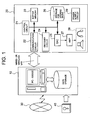
- FIG. 1 A block diagram of Fig. 1 shows an example of the structure of a data transfer and reproduction system based on the present invention.
- a master device 10 is a contents data control device such as, for example, a personal computer intended for home use, a server containing a hard disk device and the like.
- the master device 10 is connected to a slave device 20 described later through a wired or wireless communication medium such as, for example, Bluetooth, IEEE1394, USB, and the like.
- the master device 10 is connected to an external network 30 such as the Internet and the like via a predetermined interface circuit (not illustrated), to obtain music contents data from a music distribution site on the network. Moreover, the master device 10 contains a disk drive unit (not illustrated) for a CD-ROM or the like, to newly obtain music contents data from a music recording medium 40 such as a compact disc and the like.
- Music contents data obtained by the master device 10 is stored in data storage such as the hard disk device and the like, mounted inside the master device 10.
- Various application software programs are installed in the master device 10, to carry out processing for controlling copyright on music contents data and the like in conjunction with the slave device 20 described later.
- the slave device 20 is, for example, a car-mounted or portable sound/image reproducing device.
- the slave device 20, as shown in Fig. 1, mainly comprises a control circuit 21, a communication circuit 22, a buffer memory 23, a digital-to-analog converter circuit 25 (hereinafter called "DAC circuit 25"), a storage for storing music data 26, an audio amplifier circuit 27, a sound output device 28, and a power supply circuit 29.
- DAC circuit 25 digital-to-analog converter circuit 25
- the control circuit 21 which is a section for controlling the operation of the whole slave device 20, mainly comprises a microcomputer, memory such as ROM, RAM and the like, and the peripheral circuits of the microcomputer and memory.
- the control circuit 21 carries out, for example, the following control processing and the like:
- the communication circuit 22, which is a circuit for establishing communication between the master device 10 and the slave device 20, is composed with the use of various wired or wireless communication mediums such as, for example, a wireless LAN, Bluetooth, USB, IEEE1394 and the like. As shown in Fig. 1, the communication circuit 22 is connected to the control circuit 21 by a bus inside the slave device 20, in order to transmit and receive control data necessary for the various types of operation of the above control circuit 21 and music contents data, between the master device 10 and the slave device 20.
- the buffer memory 23, which performs the function of temporarily accumulating music contents data and various types of control data transferred from the master device 10, is composed of semiconductor memory or nonvolatile memory such as, for example, a RAM and the like.
- a decoder circuit 24 is a circuit necessary for, for example, decompressing music contents data compressed by a code.
- the decoder circuit 24 may be composed of LSI for particular specifications such as a DSP and the like, or may be composed of software processing by the microcomputer contained in the control circuit 21.
- the decoder circuit 24 is necessary for processing of compressed sound and an image signal, so that the decoder circuit 24 is not an essential component of the slave device 20.
- the DAC circuit 25, the audio amplifier circuit 27 and the sound output device 28 compose a section, in which decoded music contents data is amplified to a predetermined level after being converted from digital to analog, and is converted into a sound signal which a user can listen to.
- the sound output device 28 may be, for example, integrated into the slave device 20 like a speaker system, or externally provided in the slave device 20 like a headphone.
- the storage 26 for storing music which is data memory using, for example, nonvolatile memory or a hard disk device, is a section for mainly storing music contents data transferred from the master device 10, and various types of control contents data accompanying music contents data.
- the power supply circuit 29 is a power supply section for operating the slave device 20.
- the power supply circuit 29 is, for example, a battery of a car when the slave device 20 is mounted on the car, and is an internal battery when the slave device 20 is portable.
- a predetermined voltage is supplied from the power supply circuit 29 to each component described above.
- the control circuit 21, as described above, always monitors the voltage value and the electric charge condition of the power circuit 29.
- Fig. 1 just shows one of the embodiments of the present invention.
- step S101 of Fig. 2 processing for installing various application software programs used in this system, and processing for confirming the installation thereof are carried out.
- step (S101) processing for inputting various types of user information and for determining a certification number (hereinafter called "device ID") of the personal computer, the server or the like, which composes the master device 10, is carried out.
- the processing for determining the device ID for example, the user may input the individually predetermined device ID. Otherwise, the master device 10 accesses the external network 30 to connect with a Web site on the Internet, and the device ID may be assigned after a user name is inputted.
- processing for copying various programs used in this system, processing of setup and the like are also carried out in step S101.
- next step S102 processing for selecting a communication path used between both of the master and slave devices 10 and 20, and for displaying candidates for a slave device 20 linkable to the master device 10 is carried out.
- the user selects arbitrary means as the communication path, out of wired or wireless communication means provided between both devices 10 and 20, such as, for example, Bluetooth, IEEE1394, USB and the like, in order to select and set the communication path used between both devices 10 and 20.
- every car-mounted or portable slave device 20 is displayed on a display of the master device 10 with each device ID.
- step S102 the master device 10 advances to the next step S103 to carry out processing for selecting and setting the slave device 20.
- the user selects the slave device 20, which the master device 10 allows to connect with, based on the above displayed device IDs, and carries out the set and registration of that slave device 20.
- the master device 10 sends a connection requirement signal to the selected, set and registered slave device 20 via the communication path set in the above step S102.
- the linked slave device 20 sends back a response signal in response to the connection requirement signal
- the master device 10 advances to the next steps S104 and S105.
- the master device 10 carries out processing for confirming the contents of information related to the linked slave device 20 on the basis of the response signal in step S104. Then, in step S105, the master device 10 carries out processing for initializing the setup of the slave device 20. When the master device 10 already had information about the slave device 20, this step is omitted, so that the processing for initializing the setup is carried out if necessary.
- the master device 10 sends a predetermined initialization command signal to the slave device 20 through the communication path described above.
- the slave device 20 sends back a response signal to the master device 10 in response to the initialization command signal, to inform the master device 10 of information such as the completion of the' initialization processing and the like.
- the slave device 20 carries out processing for starting communication connection in step S201.
- the processing for starting communication connection which refers to various types of processing necessary for starting communication between the master device 10 and the slave device 20, includes, for example, processing for selecting and setting a communication path used between both of the master and slave devices 10 and 20 and the like, as in the case of step S102 of the master device 10. It is assumed that each slave device 20 has already been assigned to a device ID individually.
- step S202 the slave device 20 carries out processing for waiting for a connection requirement, in which the slave device 20 is waiting that the connection requirement signal, described in the processing on the side of the master device 10, is sent from the master device 10 through the communication path.
- the slave device 20 monitors the presence or absence of the connection requirement signal sent from the master device 10 in step S202, and repeats the monitoring operation of step S202 unless the connection requirement signal is detected.
- the slave device 20 may once return its control to a main routine program (not illustrated) at predetermined timing in the process of loop operation shown in step S202.
- the slave device 20 advances to step S203 in order to carry out processing for displaying candidates for a master device 10.
- the processing for displaying the candidates for a master device 10 is processing for, for example, displaying every device such as a personal computer and a server on a display of the slave device 20 with its device ID, when there are plural personal computers or servers as the master device 10 linkable to the slave device 20.
- a user operating the slave device 20 carries out processing for selecting and setting the master device 10 in the next step S204.
- the user selects and sets the connected personal computer or the server based on the device IDs, out of candidates for the master device 10 displayed in the above step S203.
- the slave device 20 Upon completing this processing on the side of the slave device 20, the slave device 20 sends back a predetermined response signal to the master device 10 through the communication path.
- the slave device 20 checks the initialization command signal sent from the master device 10, and confirms the reception of the initialization command signal. Then, in the next step S206, the slave device 20 carries out processing for initializing each part of the slave device 20, on the basis of the initialization command signal. When the slave device 20 already had information related to the initialization processing, the initialization processing is carried out with the exception of a part included in the information. Upon completing the initialization processing, the slave device 20 sends back the information of completion to the master device 10 via the communication path. Needless to say, various types of information are transferred between both of the master and slave devices 10 and 20 through the communication path as necessary during the initialization processing.
- both of the master and slave devices 10 and 20 are connected one-to-one through the communication path, but the embodiment of the present invention is not limited to such a case. Needless to say, the present invention is applicable to, for example, n-to-n multi-point connection.
- the processing operation may be started in accordance with, for example, a predetermined certain time schedule, or by inputting a predetermined transfer command to the master device 10 by the user. Moreover, the processing operation may be started when the master device 10 detects that a car having the car-mounted slave device 20 or the housing of the portable slave device 20 is put in the vicinity of the master device 10.
- step S301 of Fig. 3 the master device 10 carries out processing for waiting for a communication response, in which the master device 10 repeats the detection of the communication response from the slave device 20. Needless to say, the communication response is transferred through the communication path selected and set between both devices 10 and 20 during the processing of registration and certification described above.
- the master device 10 repeats the detecting operation of the communication response from the slave device 20 in step S301.
- the master device 10 certifies a timeout in the processing for waiting for the communication response, and ends processing shown in Fig. 3 due to the occurrence of communication response error.
- the master device 10 advances to the next step S302, and checks the device ID of the slave device 20 which is included in the detected communication response.
- the master device 10 judges that that slave device is not a partner for transferring contents data, and hence ends processing on the side of the master device 10.
- step S302 when it is judged that the slave device 20, which sent the communication response, corresponds to the registered device ID, the master device 10 advances to step S303.
- step S303 the master device 10 carries out processing for searching through a music contents data list, which is provided in a memory region inside the device.
- the titles of music contents data which the master device 10 has ever obtained from a music recording medium 40 such as a CD and the like, or from a music distribution site through the external network 30, are recorded.
- An identifier in a predetermined format is given to each title included in the list, and, the transfer flag of contents data of a number may be formed by use of, for example, a bit included in the identifier. Namely, the transfer flag is set when contents data of the number obtained by the master device 10 is stored in the data storage, and the transfer flag is reset when contents data of the number is transferred to the slave device 20.
- the master device 10 can easily distinguish between numbers which have already transferred to the slave device 20 and numbers which have not transferred yet, out of numbers included in the list, by checking the transfer flag of each number, in the processing for searching through the music contents data list in step S303.
- step S304 When it is judged that all transfer flags have been reset in step S304, in other words, when it is judged that all of the music contents data stored in the data storage of the master device 10 have been transferred to the slave device 20 and there is no music contents data to be newly transferred, the master device 10 advances to step S305. In step S305, the master device 10 informs the slave device 20 that there is no number to be transferred, and ends the processing on the side of the master device 10.
- step S304 when it is judged that there is at least one or more set transfer flags in step S304, in other words, when it is judged that there is a number to be transferred to the slave device 20, the master device 10 advances to step S306, to inform the slave device 20 that there is a number to be transferred. Then, in the next step S307, the master device 10 carries out processing for confirming memory free space in the slave device 20 and for setting the number to be transferred.
- step 5307 will be hereinafter described in detail.
- step S307 the master device 10 confirms detection data of the memory free space of the storage 26 for storing music, which is sent from the slave device 20. Then, the master device 10 compares the memory free space with the contents data size of the numbers to be transferred, in order to select music contents data to be transferred to the slave device 20.
- numbers the contents data size of which is transferable may be simply combined and set on the basis of the memory free space, or numbers in a specific category may be set by priority on the basis of a special command from the user. Otherwise, the master device 10 may access the slave device 20 to make the slave device 20 delete numbers, which are obtained a long time ago or which are reproduced with low frequency, from the storage 26 for storing music. After expanding the memory free space, music contents data is transferred. When there is sufficient free space, as a matter of course, all of music contents data, on which the transfer flags are set, may be set to be transferred at a time.
- step S308 to monitor notification about voltage abnormality, which is sent from the slave device 20.
- processing for issuing the notification about voltage abnormality from the slave device 20 it will be explained in processing on the side of the slave device 20 described later.
- the master device 10 advances to step S309 to carry out processing for transferring music contents data. Namely, the master device 10 extracts yet-to-be transferred music contents data from the data storage on the basis of a setup in the previous step S307, and transfers it to the slave device 20 on the basis of a predetermined communication format and communication protocol.
- the master device 10 always monitors the occurrence of data error, the occurrence of a timeout in the communication protocol and the like during the transfer of music contents data, though they are omitted in the flow chart of Fig. 3.
- the master device 10 advances to step S311 upon transferring the predetermined length of contents data to the slave device 20, and judges whether or not the transfer of music contents data for a single number is completed.
- a specific delimiter may be attached to the end of each number of music contents data, and the completion of the transfer of the single number may be detected by the detection of the delimiter. Otherwise, a predetermined number of data packets are assigned to each number of music contents data, and the completion of the transfer may be detected by counting the number of the transferred data packets.
- step S311 the master device 10 informs the slave device 20 that the transfer of music contents data for the single number is completed, and advances to the next step S312.
- step S312 it is judged that whether or not the transfer of all numbers set in step S307 is completed.
- the master device 10 informs the slave device 20 that the transfer of contents data for all numbers to be transferred is completed, and then advances to the next step S313.
- step S313 the master device 10 carries out processing for updating the music contents data list, namely, processing for resetting the transfer flags of the numbers which have been transferred, and then ends the processing on the side of the master device 10 shown in Fig. 3.
- step S311 and S312 when it is judged that the transfer of the single number or all numbers are uncompleted, the master device 10 returns to step S308 and repeats the foregoing processing.
- step S308 When the power supply voltage of the slave device 20 is judged to be abnormal in step S308, the master device 10 advances to step S310, and informs the slave device 20 that processing for transferring music contents data is aborted. Then, the master device 10 advances to step S313 to reset the transfer flags of numbers which have already been transferred, and ends processing on the side of the master device 10.
- This processing operation may be started in accordance with, for example, a predetermined certain time schedule, or by inputting a predetermined transfer command to the slave device 20 by the user. Moreover, the processing operation may be started when the slave device 20 detects that a car having the car-mounted slave device 20 or the housing of the portable slave device 20 is put in the vicinity of the master device 10, in conjunction with a GPS device (not illustrated).
- step S401 of Fig. 3 the slave device 20 carries out processing for waiting for a communication response, in which the slave device 20 repeats the detection of the communication response from the master device 10. Needless to say, the communication response is transferred through the communication path selected and set between both devices 10 and 20 during the processing of registration and certification described above.
- the slave device 20 repeats the detecting operation of the communication response from the master device 10.
- the slave device 20 certifies a timeout in the processing for waiting for the communication response, and ends processing on the side of the slave device 20 shown in Fig. 3 due to the occurrence of communication response error.
- the slave device 20 advances to the next step S402, and checks the device ID of the master device 10, which is included in the detected communication response.
- the slave device 20 recognizes that that personal computer or server is not a partner for transferring contents data, and hence ends processing on the side of the slave device 20.
- the slave device 20 advances to step S403, and judges notification relating to the presence or absence of a number next transferred from the master device 10.
- step S403 when the notification from the master device 10 indicates the absence of a number to be transferred, the slave device 20 judges that communication processing with the master device 10 is unnecessary, and hence ends the processing on the side of the slave device 20 shown in Fig. 3.
- step S403 when the notification from the master device 10 indicates the presence of a number to be transferred, the slave device 20 advances to the next step S404.
- the slave device 20 detects the memory free space of the storage 26 for storing music, and informs the master device 10 of a result.
- the slave device 20 advances to steps S405 and S406, and carries out processing for checking voltage.
- processing for checking voltage it is checked that whether or not the voltage value of the power supply circuit 29 in the slave device 20 is in a normal value.
- the checked power supply voltage is, for example, the terminal voltage of a car battery in the case of the car-mounted slave device 20, and is the terminal voltage of an internal battery in the case of the portable slave device 20.
- the slave device 20 advances to the next step S409, to start the transfer processing of music contents data between the master device 10 and the slave device 20. Namely, the slave device 20 temporarily stores music contents data, which is successively transferred from the master device 10 on the basis of the predetermined communication format and communication protocol, in the buffer memory 23.
- step S411 the slave device 20 moves contents data stored in the buffer memory 23 to the music contents data file on the storage 26 for storing music, and then temporarily closes the music contents data file.
- the slave device 20 updates a play list by adding the title of transferred music contents data to the play list.
- the play list which is stored in a memory area provided in the memory region inside the slave device 20, is a list on which the titles of reproducible numbers by the slave device 20 at that time are recorded.
- the slave device 20 receives notification which indicates the completion of the transfer of all numbers from the master device 10.
- the slave device 20 ends the processing on the side of the slave device 20.
- step S410 When it is judged that the transfer of contents data for the single number is uncompleted in step S410, on the other hand, the slave device 20 returns to step S405 in order to repeat the processing of step S405 and thereafter, such as processing for checking voltage, for transferring the number and the like. Since it is unnecessary to always carry out the processing for checking voltage in such repeated processing, the processing for checking voltage may be carried out at a predetermined number of repeat or at predetermined time intervals.
- step S413 the slave device 20 opens the music contents data file on the storage 26 for storing music in step S414, and returns to step S405.
- step S406 when the voltage value of the power source is judged to be abnormal in step S406, the following processing procedure is carried out. Namely, the slave device 20 advances to step S407, and informs the master device 10 through the communication path that the value of the power supply voltage is abnormal. Then, processing for aborting the transfer of music contents data is carried out in step S408, on the basis of predetermined procedure between the master device 10 and the slave device 20. After that, the slave device 20 closes the music contents data file in the storage 26 for storing music in step S412. Then, the slave device 20 adds the titles of numbers which have been transferred till then, and ends the processing on the side of the slave device 20.
- Contents data transferred from the master device 10 to the slave device 20, for example, may includes image contents data which is obtained from a recording medium such as a DVD and the like, and from a Web site on the Internet and the like.
- a requirement for aborting the transfer processing of contents data is only abnormality in the power supply voltage of the slave device 20. It is possible, however, to add another requirement such as increase in temperature inside the housing of the slave device 20 and the like.
- a data transfer and reproduction system which transfers contents data such as music and the like from a master device such as a personal computer and the like to a slave device such as a car-mounted audio device and the like, without putting an operational burden on a user.
- Certification is registered between the slave device and the master device which transfers contents data, and contents data is transferred between the devices the certification of which has been registered.
- contents data stored in memory in the master device contents data with a "yet-to-be transferred" identifier is transferred to the slave device at predetermined timing.
- the timing of the transfer may be in accordance with a predetermined time schedule, or a transfer command from the user. Otherwise, the transfer may be carried out, when it is detected that the slave device is put in the vicinity of the master device.
Landscapes
- Engineering & Computer Science (AREA)
- Multimedia (AREA)
- Mobile Radio Communication Systems (AREA)
- Information Transfer Between Computers (AREA)
- Signal Processing For Digital Recording And Reproducing (AREA)
- Fittings On The Vehicle Exterior For Carrying Loads, And Devices For Holding Or Mounting Articles (AREA)
Claims (9)
- Système de transfert et de reproduction de données comprenant :un dispositif maître (10) comprenant un moyen de mémoire pour stocker des fragments de données de contenus à l'avance, et un moyen de transfert pour transférer sélectivement chaque fragment de données de contenus stocké dans ledit moyen de mémoire ; etun dispositif esclave (20) comprenant un moyen de réception/mémoire (26) pour recevoir et stocker ledit fragment de données de contenus transféré à partir dudit dispositif maître (10), et un moyen de reproduction et de lecture pour reproduire et lire sélectivement ledit fragment de données de contenus stocké dans ledit moyen de réception/mémoire (26) en réponse à un ordre de reproduction, caractérisé en ce que :ledit moyen de mémoire du dispositif maître forme et stocke un identifiant « encore à transférer » correspondant à chaque fragment de données de contenus, ledit identifiant indiquant que ledit fragment de données de contenus n'est pas encore transféré, etledit moyen de transfert sélectionne et transfère ledit fragment de données de contenus correspondant audit identifiant « encore à transférer ».
- Système de transfert et de reproduction de données selon la revendication 1, dans lequel
ledit moyen de transfert effectue une opération de transfert dudit fragment de données de contenus selon un programme prédéterminé. - Système de transfert et de reproduction de données selon la revendication 1 ou 2, dans lequel
ledit moyen de transfert effectue une opération de transfert dudit fragment de données de contenus, lorsque chacun dudit dispositif maître (10) et dudit dispositif esclave (20) détecte un ordre de transfert dudit fragment de données de contenus. - Système de transfert et de reproduction de données selon l'une quelconque des revendications précédentes, dans lequel
ledit moyen de transfert effectue une opération de transfert dudit fragment de données de contenus, lorsqu'il est détecté que ledit dispositif esclave (20) se trouve au voisinage dudit dispositif maître (10). - Système de transfert et de reproduction de données selon l'une quelconque des revendications précédentes, dans lequel
ledit dispositif esclave (20) comprend en outre un moyen de notification de perturbations pour détecter une perturbation fonctionnelle dudit dispositif esclave et notifier ladite perturbation fonctionnelle audit dispositif maître (20),
dans lequel ledit moyen de transfert abandonne une opération de transfert dudit fragment de données de contenus en réponse à une notification. - Système de transfert et de reproduction de données selon la revendication 5, dans lequel
ledit moyen de transfert effectue ladite opération de transfert dudit fragment de données de contenus, lorsqu'une récupération de ladite perturbation fonctionnelle dudit dispositif esclave est détectée. - Système de transfert et de reproduction de données selon la revendication 5 ou 6, dans lequel
ladite perturbation fonctionnelle dudit dispositif esclave comprend une anomalie dans une valeur de tension d'alimentation électrique fournie audit dispositif esclave (20). - Système de transfert et de reproduction de données selon l'une quelconque des revendications précédentes, dans lequel
chaque fragment de données de contenus comprend des données de musique et des données de commande accompagnant les données de musique. - Système de transfert et de reproduction de données selon la revendication 8, dans lequel
chaque fragment de données de contenus comprend en outre des données d'image et des données de commande accompagnant les données d'image.
Applications Claiming Priority (2)
| Application Number | Priority Date | Filing Date | Title |
|---|---|---|---|
| JP2003153960A JP2004355444A (ja) | 2003-05-30 | 2003-05-30 | データ転送再生装置 |
| JP2003153960 | 2003-05-30 |
Publications (3)
| Publication Number | Publication Date |
|---|---|
| EP1501023A2 EP1501023A2 (fr) | 2005-01-26 |
| EP1501023A3 EP1501023A3 (fr) | 2006-01-11 |
| EP1501023B1 true EP1501023B1 (fr) | 2007-05-02 |
Family
ID=33487305
Family Applications (1)
| Application Number | Title | Priority Date | Filing Date |
|---|---|---|---|
| EP04011554A Expired - Lifetime EP1501023B1 (fr) | 2003-05-30 | 2004-05-14 | Système de transfert et reproduction de données |
Country Status (4)
| Country | Link |
|---|---|
| US (1) | US20040252985A1 (fr) |
| EP (1) | EP1501023B1 (fr) |
| JP (1) | JP2004355444A (fr) |
| DE (1) | DE602004006198T2 (fr) |
Families Citing this family (16)
| Publication number | Priority date | Publication date | Assignee | Title |
|---|---|---|---|---|
| JP4556127B2 (ja) * | 2005-02-15 | 2010-10-06 | ソニー株式会社 | 情報処理装置および情報処理方法、並びにプログラム |
| JP2006227710A (ja) * | 2005-02-15 | 2006-08-31 | Sony Corp | 情報処理装置および情報処理方法、並びにプログラム |
| JP2006235717A (ja) * | 2005-02-22 | 2006-09-07 | Sony Corp | コンテンツ転送方法、その装置及びプログラム |
| JP2006340034A (ja) * | 2005-06-02 | 2006-12-14 | Kenwood Corp | 増幅器搭載電子機器 |
| JP4876483B2 (ja) * | 2005-08-25 | 2012-02-15 | セイコーエプソン株式会社 | コンテンツデータ転送システム、再生機器、及び、センター機器 |
| US7565506B2 (en) * | 2005-09-08 | 2009-07-21 | Qualcomm Incorporated | Method and apparatus for delivering content based on receivers characteristics |
| JP4379738B2 (ja) * | 2005-12-09 | 2009-12-09 | ソニー株式会社 | 転送装置、転送方法及び転送プログラム |
| JP2007253872A (ja) * | 2006-03-24 | 2007-10-04 | Fujitsu Ten Ltd | 車載機 |
| US8301195B2 (en) * | 2006-07-05 | 2012-10-30 | Agere Systems Inc. | Systems and methods for mobile data storage and acquisition |
| JP2008090967A (ja) * | 2006-10-04 | 2008-04-17 | Kenwood Corp | 記録再生装置、記録再生プログラム、及び記録再生方法 |
| JP4506840B2 (ja) * | 2008-01-21 | 2010-07-21 | ソニー株式会社 | 情報処理装置、情報処理方法、およびコンピュータプログラム |
| US20090287832A1 (en) * | 2008-04-10 | 2009-11-19 | Wyse Technology Inc. | Multiple client control system |
| JP4645719B2 (ja) * | 2008-09-30 | 2011-03-09 | ブラザー工業株式会社 | 位置情報管理プログラムおよび通信装置 |
| US9019644B2 (en) | 2011-05-23 | 2015-04-28 | Lsi Corporation | Systems and methods for data addressing in a storage device |
| JP5391260B2 (ja) * | 2011-12-14 | 2014-01-15 | 株式会社Nttドコモ | 情報処理装置およびデータ出力方法 |
| EP3021606B1 (fr) * | 2013-11-07 | 2020-12-02 | Panasonic Intellectual Property Management Co., Ltd. | Dispositif de terminal et système de communication sans fil |
Family Cites Families (10)
| Publication number | Priority date | Publication date | Assignee | Title |
|---|---|---|---|---|
| JPH11242873A (ja) * | 1998-02-26 | 1999-09-07 | Sony Corp | 記録再生装置 |
| JP3511576B2 (ja) * | 1998-10-02 | 2004-03-29 | 松下電器産業株式会社 | ディスク記録再生方法および装置 |
| MY124066A (en) * | 1998-12-25 | 2006-06-30 | Sony Corp | Information processing device and method, and program storage medium. |
| JP4214651B2 (ja) * | 1999-03-31 | 2009-01-28 | ソニー株式会社 | データコミュニケーションシステム、データ管理方法 |
| JP2001160262A (ja) * | 1999-11-30 | 2001-06-12 | Pioneer Electronic Corp | 情報記録読取方法ならびに装置 |
| JP2001291365A (ja) * | 2000-03-31 | 2001-10-19 | Pioneer Electronic Corp | 記録再生装置及び記録方法 |
| WO2002021838A1 (fr) * | 2000-09-06 | 2002-03-14 | Robert Agresta | Systeme, dispositif et procede de distribution, d'acces et d'utilisation a distance de medias de divertissement personnels |
| JP2002133834A (ja) * | 2000-10-24 | 2002-05-10 | Pioneer Electronic Corp | 楽曲データ管理装置及び車載用オーディオ情報再生制御システム |
| JP3778009B2 (ja) * | 2001-06-13 | 2006-05-24 | ソニー株式会社 | データ転送システム、データ転送装置、データ記録装置、データ管理方法 |
| US6988222B2 (en) * | 2002-12-03 | 2006-01-17 | Uniloy Milacron U.S.A. Inc. | Power failure detection and response |
-
2003
- 2003-05-30 JP JP2003153960A patent/JP2004355444A/ja not_active Withdrawn
-
2004
- 2004-05-14 DE DE602004006198T patent/DE602004006198T2/de not_active Expired - Fee Related
- 2004-05-14 EP EP04011554A patent/EP1501023B1/fr not_active Expired - Lifetime
- 2004-05-25 US US10/852,240 patent/US20040252985A1/en not_active Abandoned
Also Published As
| Publication number | Publication date |
|---|---|
| DE602004006198D1 (de) | 2007-06-14 |
| DE602004006198T2 (de) | 2008-01-10 |
| US20040252985A1 (en) | 2004-12-16 |
| EP1501023A2 (fr) | 2005-01-26 |
| JP2004355444A (ja) | 2004-12-16 |
| EP1501023A3 (fr) | 2006-01-11 |
Similar Documents
| Publication | Publication Date | Title |
|---|---|---|
| EP1501023B1 (fr) | Système de transfert et reproduction de données | |
| KR100830555B1 (ko) | 통신시스템 및 그 방법, 통신장치 및 그 방법 | |
| USRE43917E1 (en) | Recording and reproducing apparatus and terminal apparatus | |
| HK1043649B (zh) | 控制装置及控制方法 | |
| EP1610239A2 (fr) | Système, méthode et programme de transfert de contenu | |
| US6529969B1 (en) | Reception method and apparatus for searching various first and second source devices apapted to send data signals to analog and optical input terminals | |
| KR100882522B1 (ko) | 전자기기 시스템, 제어기기 및 제어방법 | |
| KR101088102B1 (ko) | 전자기기와 인증 사용정보 갱신방법 | |
| EP0932160B1 (fr) | Système de transmission, méthode de transmission et système de transmission/réception | |
| JP4081695B2 (ja) | データ管理装置および方法 | |
| US20090019090A1 (en) | Method and device for producing recordings on storage devices | |
| JP4742493B2 (ja) | 情報処理装置、インストール実行画面の表示方法、インストール補助プログラム及び記録媒体 | |
| JP2006525569A (ja) | ネットワーク装置のアップグレード | |
| JP2003289304A (ja) | 信号処理装置、信号処理方法 | |
| US20020105543A1 (en) | User interface management for controlled devices | |
| US12541339B2 (en) | Speaker system, sound bar, wireless speaker, and method for controlling speaker system | |
| US20050232582A1 (en) | Content data reproducing apparatus, content data reproducing system and content data reproducing program | |
| JPH11203843A (ja) | 情報機器制御装置および方法、並びに提供媒体 | |
| WO2005055066A1 (fr) | Dispositif d'enregistrement d'informations, programme de commande et support d'enregistrement | |
| JP2003152574A (ja) | Avレシーバ | |
| JP2004208057A (ja) | 再生システム、サーバ、再生装置、プログラム、記録メディア、記録装置、通信方法 | |
| JP2000163866A (ja) | 音楽録音システム | |
| JP2001143379A (ja) | 情報記録装置、情報記録方法および記録媒体 | |
| JP2002074814A (ja) | データ配信システム、データ配信装置、データ再生装置、データ配信方法、記録媒体排出方法、及び、記録媒体 | |
| JP2004229079A (ja) | 被制御機器 |
Legal Events
| Date | Code | Title | Description |
|---|---|---|---|
| PUAI | Public reference made under article 153(3) epc to a published international application that has entered the european phase |
Free format text: ORIGINAL CODE: 0009012 |
|
| AK | Designated contracting states |
Kind code of ref document: A2 Designated state(s): AT BE BG CH CY CZ DE DK EE ES FI FR GB GR HU IE IT LI LU MC NL PL PT RO SE SI SK TR |
|
| AX | Request for extension of the european patent |
Extension state: AL HR LT LV MK |
|
| PUAL | Search report despatched |
Free format text: ORIGINAL CODE: 0009013 |
|
| AK | Designated contracting states |
Kind code of ref document: A3 Designated state(s): AT BE BG CH CY CZ DE DK EE ES FI FR GB GR HU IE IT LI LU MC NL PL PT RO SE SI SK TR |
|
| AX | Request for extension of the european patent |
Extension state: AL HR LT LV MK |
|
| RIC1 | Information provided on ipc code assigned before grant |
Ipc: G11B 31/00 19680901ALI20051123BHEP Ipc: G11B 27/28 19680901ALI20051123BHEP Ipc: G11B 27/034 19900101AFI20051123BHEP |
|
| 17P | Request for examination filed |
Effective date: 20060330 |
|
| AKX | Designation fees paid |
Designated state(s): DE FR GB |
|
| GRAP | Despatch of communication of intention to grant a patent |
Free format text: ORIGINAL CODE: EPIDOSNIGR1 |
|
| GRAS | Grant fee paid |
Free format text: ORIGINAL CODE: EPIDOSNIGR3 |
|
| GRAA | (expected) grant |
Free format text: ORIGINAL CODE: 0009210 |
|
| AK | Designated contracting states |
Kind code of ref document: B1 Designated state(s): DE FR GB |
|
| REG | Reference to a national code |
Ref country code: GB Ref legal event code: FG4D |
|
| REF | Corresponds to: |
Ref document number: 602004006198 Country of ref document: DE Date of ref document: 20070614 Kind code of ref document: P |
|
| PGFP | Annual fee paid to national office [announced via postgrant information from national office to epo] |
Ref country code: DE Payment date: 20070731 Year of fee payment: 4 |
|
| ET | Fr: translation filed | ||
| PLBE | No opposition filed within time limit |
Free format text: ORIGINAL CODE: 0009261 |
|
| STAA | Information on the status of an ep patent application or granted ep patent |
Free format text: STATUS: NO OPPOSITION FILED WITHIN TIME LIMIT |
|
| 26N | No opposition filed |
Effective date: 20080205 |
|
| PGFP | Annual fee paid to national office [announced via postgrant information from national office to epo] |
Ref country code: FR Payment date: 20070525 Year of fee payment: 4 |
|
| GBPC | Gb: european patent ceased through non-payment of renewal fee |
Effective date: 20080514 |
|
| REG | Reference to a national code |
Ref country code: FR Ref legal event code: ST Effective date: 20090119 |
|
| PG25 | Lapsed in a contracting state [announced via postgrant information from national office to epo] |
Ref country code: FR Free format text: LAPSE BECAUSE OF NON-PAYMENT OF DUE FEES Effective date: 20080602 Ref country code: DE Free format text: LAPSE BECAUSE OF NON-PAYMENT OF DUE FEES Effective date: 20081202 |
|
| PG25 | Lapsed in a contracting state [announced via postgrant information from national office to epo] |
Ref country code: GB Free format text: LAPSE BECAUSE OF NON-PAYMENT OF DUE FEES Effective date: 20080514 |