EP1448591B1 - 17alpha-alkyl-17beta-oxy-estratriene und zwischenprodukte zu deren herstellung, verwendung der 17alpha-alkyl-17beta-oxy-estratriene zur herstellung von arzneimitteln sowie pharmazeutische präparate - Google Patents
17alpha-alkyl-17beta-oxy-estratriene und zwischenprodukte zu deren herstellung, verwendung der 17alpha-alkyl-17beta-oxy-estratriene zur herstellung von arzneimitteln sowie pharmazeutische präparate Download PDFInfo
- Publication number
- EP1448591B1 EP1448591B1 EP02795080A EP02795080A EP1448591B1 EP 1448591 B1 EP1448591 B1 EP 1448591B1 EP 02795080 A EP02795080 A EP 02795080A EP 02795080 A EP02795080 A EP 02795080A EP 1448591 B1 EP1448591 B1 EP 1448591B1
- Authority
- EP
- European Patent Office
- Prior art keywords
- methyl
- amino
- pentyl
- radical
- fluoro
- Prior art date
- Legal status (The legal status is an assumption and is not a legal conclusion. Google has not performed a legal analysis and makes no representation as to the accuracy of the status listed.)
- Expired - Lifetime
Links
- 0 CC(CC(*)C1C(C=CC(*)C2)=C2C2)(C(CC3)C1[C@@]2N)C3*#C Chemical compound CC(CC(*)C1C(C=CC(*)C2)=C2C2)(C(CC3)C1[C@@]2N)C3*#C 0.000 description 1
Images



Classifications
-
- C—CHEMISTRY; METALLURGY
- C07—ORGANIC CHEMISTRY
- C07J—STEROIDS
- C07J43/00—Normal steroids having a nitrogen-containing hetero ring spiro-condensed or not condensed with the cyclopenta(a)hydrophenanthrene skeleton
- C07J43/003—Normal steroids having a nitrogen-containing hetero ring spiro-condensed or not condensed with the cyclopenta(a)hydrophenanthrene skeleton not condensed
-
- C—CHEMISTRY; METALLURGY
- C07—ORGANIC CHEMISTRY
- C07J—STEROIDS
- C07J41/00—Normal steroids containing one or more nitrogen atoms not belonging to a hetero ring
-
- A—HUMAN NECESSITIES
- A61—MEDICAL OR VETERINARY SCIENCE; HYGIENE
- A61P—SPECIFIC THERAPEUTIC ACTIVITY OF CHEMICAL COMPOUNDS OR MEDICINAL PREPARATIONS
- A61P13/00—Drugs for disorders of the urinary system
- A61P13/08—Drugs for disorders of the urinary system of the prostate
-
- A—HUMAN NECESSITIES
- A61—MEDICAL OR VETERINARY SCIENCE; HYGIENE
- A61P—SPECIFIC THERAPEUTIC ACTIVITY OF CHEMICAL COMPOUNDS OR MEDICINAL PREPARATIONS
- A61P15/00—Drugs for genital or sexual disorders; Contraceptives
-
- A—HUMAN NECESSITIES
- A61—MEDICAL OR VETERINARY SCIENCE; HYGIENE
- A61P—SPECIFIC THERAPEUTIC ACTIVITY OF CHEMICAL COMPOUNDS OR MEDICINAL PREPARATIONS
- A61P15/00—Drugs for genital or sexual disorders; Contraceptives
- A61P15/08—Drugs for genital or sexual disorders; Contraceptives for gonadal disorders or for enhancing fertility, e.g. inducers of ovulation or of spermatogenesis
-
- A—HUMAN NECESSITIES
- A61—MEDICAL OR VETERINARY SCIENCE; HYGIENE
- A61P—SPECIFIC THERAPEUTIC ACTIVITY OF CHEMICAL COMPOUNDS OR MEDICINAL PREPARATIONS
- A61P15/00—Drugs for genital or sexual disorders; Contraceptives
- A61P15/12—Drugs for genital or sexual disorders; Contraceptives for climacteric disorders
-
- A—HUMAN NECESSITIES
- A61—MEDICAL OR VETERINARY SCIENCE; HYGIENE
- A61P—SPECIFIC THERAPEUTIC ACTIVITY OF CHEMICAL COMPOUNDS OR MEDICINAL PREPARATIONS
- A61P15/00—Drugs for genital or sexual disorders; Contraceptives
- A61P15/16—Masculine contraceptives
-
- A—HUMAN NECESSITIES
- A61—MEDICAL OR VETERINARY SCIENCE; HYGIENE
- A61P—SPECIFIC THERAPEUTIC ACTIVITY OF CHEMICAL COMPOUNDS OR MEDICINAL PREPARATIONS
- A61P15/00—Drugs for genital or sexual disorders; Contraceptives
- A61P15/18—Feminine contraceptives
-
- A—HUMAN NECESSITIES
- A61—MEDICAL OR VETERINARY SCIENCE; HYGIENE
- A61P—SPECIFIC THERAPEUTIC ACTIVITY OF CHEMICAL COMPOUNDS OR MEDICINAL PREPARATIONS
- A61P17/00—Drugs for dermatological disorders
- A61P17/14—Drugs for dermatological disorders for baldness or alopecia
-
- A—HUMAN NECESSITIES
- A61—MEDICAL OR VETERINARY SCIENCE; HYGIENE
- A61P—SPECIFIC THERAPEUTIC ACTIVITY OF CHEMICAL COMPOUNDS OR MEDICINAL PREPARATIONS
- A61P35/00—Antineoplastic agents
-
- A—HUMAN NECESSITIES
- A61—MEDICAL OR VETERINARY SCIENCE; HYGIENE
- A61P—SPECIFIC THERAPEUTIC ACTIVITY OF CHEMICAL COMPOUNDS OR MEDICINAL PREPARATIONS
- A61P5/00—Drugs for disorders of the endocrine system
- A61P5/24—Drugs for disorders of the endocrine system of the sex hormones
- A61P5/32—Antioestrogens
-
- C—CHEMISTRY; METALLURGY
- C07—ORGANIC CHEMISTRY
- C07J—STEROIDS
- C07J1/00—Normal steroids containing carbon, hydrogen, halogen or oxygen, not substituted in position 17 beta by a carbon atom, e.g. estrane, androstane
-
- C—CHEMISTRY; METALLURGY
- C07—ORGANIC CHEMISTRY
- C07J—STEROIDS
- C07J41/00—Normal steroids containing one or more nitrogen atoms not belonging to a hetero ring
- C07J41/0033—Normal steroids containing one or more nitrogen atoms not belonging to a hetero ring not covered by C07J41/0005
- C07J41/0072—Normal steroids containing one or more nitrogen atoms not belonging to a hetero ring not covered by C07J41/0005 the A ring of the steroid being aromatic
-
- C—CHEMISTRY; METALLURGY
- C07—ORGANIC CHEMISTRY
- C07J—STEROIDS
- C07J43/00—Normal steroids having a nitrogen-containing hetero ring spiro-condensed or not condensed with the cyclopenta(a)hydrophenanthrene skeleton
Definitions
- the invention relates to 17 ⁇ -alkyl-17 ⁇ -oxy-estratrienes and intermediates for their preparation, use of the 17 ⁇ -alkyl-17 ⁇ -oxy-estratrienes for the preparation of medicaments and pharmaceutical compositions containing these compounds.
- the compounds of the invention have antiestrogenic activity, i. These substances exert inhibitory effects on estrogens. Such substances have already been described in numerous ways.
- anti-estrogenic compounds are made EP 0138 504 B1 known. These are essentially Estra-1,3,5 (10) -triene derivatives which are substituted in the 3-position, inter alia, with hydroxy or alkoxy, in the 17 ⁇ -position with hydroxy and in the 17 ⁇ -position, inter alia, with hydrogen or alkyl are. These compounds also have, in the 7 ⁇ -position, an alkyl side chain which may be partially fluorinated and which inter alia may be interrupted by amido, amino, amine N-oxide, oxy, sulfanyl, sulfinyl and / or sulfonyl groups can.
- the known compounds in the application form a variety of biologically very active metabolites.
- the formation of these metabolites leads to undesirable effects and thus to an uncontrollable spectrum of activity.
- side effects may occur, or the desired primary effect (antiestrogenic effect) becomes uncontrollable due to spontaneous formation of these metabolites.
- the compatibility of the known compounds in oral administration is not satisfactory.
- the known compounds favor the accumulation of alveolar macrophages.
- the present invention is therefore based on the object to find antiestrogenic compounds whose metabolism is controllable and therefore do not form or only a few biologically active metabolites.
- it is desirable that the compatibility of the compounds sought when administered orally is satisfactory and in their administration u.a. alveolar macrophages do not or at least accumulate only to a small extent.
- the 17 ⁇ -alkyl-17 ⁇ -oxy-estratrienes according to the invention have the general formula I:
- Hal is especially fluorine.
- R 3 may be hydrogen, methyl, ethyl, n -propyl, iso -propyl, n- butyl, iso -butyl and tert -butyl, a corresponding alkanyol (acetyl, propionyl, butanoyl) or a cyclic ether.
- R 3 is in particular hydrogen, CH 3 , CH 3 CO or C 5 H 10 O.
- R 17 ' and R 17 " are in particular methyl, ethyl, n- propyl, iso- propyl, n- butyl, iso- butyl and tert- butyl, where R 17' may additionally also be hydrogen, acetyl, propionyl and butanoyl, and in which case the corresponding isomers may also be included
- R 17 " may also be ethynyl, 1-propynyl, 2-propynyl, 1-butynyl, 2-butynyl and 3-butynyl, as well as trifluoromethyl, pentafluoroethyl, heptafluoropropyl and nonafluorobutyl, in which If the corresponding isomers are also included.
- R 17 ' is in particular hydrogen, CH 3 or CH 3 CO.
- R 17 " is preferably methyl, ethynyl and trifluoromethyl.
- U may in particular be a straight-chain or branched-chain alkylene radical and in particular a methylene, ethylene, propylene, butylene, pentylene, hexylene, heptylene, octylene, nonylene, decylene, undecylene, dodecylene or tridecylene radical ,
- U is (CH 2 ) p , where p is an integer from 2 to 10.
- U is a butylene, pentylene, hexylene or heptylene radical.
- V is in particular CH 2 .
- the UV moiety may be n -entylene.
- W is in particular the amine N (R 6 ), where R 6 is preferably hydrogen or CH 2 -R 7 , where R 7 is in particular hydrogen or methyl or ethyl.
- R 6 is therefore preferably hydrogen or a C 1 - C 3 -alkyl radical, ie in particular a methyl, ethyl, n- propyl or iso- Propylrest.
- X is an ethylene, n- propylene, n- butylene, n- pentylene, n- hexylene, n- heptylene or n- octylene radical.
- Y can represent a direct bond between X and Z. If this is the case, X stands for a longer alkylene chain, ie in particular for n- hexylene, n- heptylene or n- octylene.
- Z is preferably a direct bond between Y and E or a straight or branched chain C 1 - C 7 alkylene radical which may be at least partially fluorinated.
- Z may in particular be a methylene, ethylene, propylene or butylene radical which may be at least partially fluorinated.
- Z is in particular difluoromethylene or a straight-chain alkylene radical which is perfluorinated at one end, ie, for example, a 1,1-difluoroethylene, 1,1,2,2-tetrafluoro-n-propylene or 1,1,2,2,3 , 3-hexafluoro-n-butylene.
- Particularly favorable are alkylene radicals which carry only two fluorine atoms on a terminal carbon atom, this CF 2 group being bonded to the radical E. In this case, the side chain SK is terminated with C 2 F 5 .
- E is in particular CF 3 or pentafluorophenyl.
- the moiety ZE preferably represents one of the groups selected from the group comprising C 2 F 5 , C 3 F 7 and C 4 F 9 and C 6 F 5 .
- addition salts are the corresponding salts with inorganic and organic acids.
- Suitable addition salts are, in particular, the hydrochlorides, hydrobromides, acetates, citrates, oxalates, tartrates and methanesulfonates.
- R 3 and R 17 ' are hydrogen such that a 3,17 ⁇ -diol is present, the esters of these hydroxy compounds can also be formed.
- These esters are preferably formed with organic acids, the same acids as for the formation of addition salts in question, namely in particular the acetic acid, but also higher carboxylic acids, such as.
- novel 17 ⁇ -alkyl-17 ⁇ -oxy-estratrienes have several chiral centers. Therefore, there are several stereoisomeric forms of each compound.
- novel 17 ⁇ -alkyl-17 ⁇ -oxy-estratrienes differ from known compounds, especially in that a halogen atom is bonded in the 11 ⁇ -position and / or an alkyl radical in the 17 ⁇ -position.
- Metabolites may also be biologically active. It has been found that the estratriene derivatives which are formed by oxidation of the hydroxy group bonded in the 17 ⁇ -position to give a 17-oxo derivative have very strong biological activity.
- estratrienes used as active compounds according to the invention therefore have a species-independent activity and activity. The advantage of these compounds is therefore that the full effectiveness of the active ingredient is realized in a single compound.
- novel 17 ⁇ -alkyl-17 ⁇ -oxy-estratrienes inhibit the effect of estradiol to approximately 100%. They therefore represent antiestrogens.
- the principle of this method is to investigate the influence of the administration of anti-estrogenic compounds with concomitant administration of estrogens.
- the uterus reacts to the administration of estrogens with an increase in weight (both by proliferation and by water retention). This growth is dose-dependently inhibited by simultaneous administration of antiestrogen-acting compounds.
- the compounds of the invention are as effective as or even more potent than the corresponding compounds which are unsubstituted in the 17 ⁇ -position.
- the estratrienes according to the invention also have a better compatibility, so that the latter are to be preferred.
- the better compatibility is due in particular to the fact that the formation of metabolites is largely limited.
- 17 ⁇ -HSD2 mediates the intestinal enzymatic dehydrogenation of an OH group at position 17 of the sterane backbone to form a ketone group.
- the samples are stored until the measurement by LC / MS / MS at ⁇ -20 ° C for about 24 h and centrifuged before analysis at 3000 rpm, wherein the supernatant is measured.
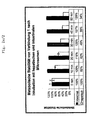
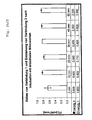
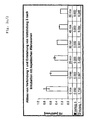
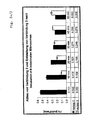
- the concentrations of the test substances and the resulting ketone product measured by LC / MS / MS are reported in Fig. 2a - 2f played.
- Compound 1 is metabolically stable in intestinal but not in liver microsomes, suggesting that different phase 1 responses occur in both tissues.
- none of the tissues show the putative product of the 17 ⁇ HSD reaction, 11 ⁇ -fluoro-7 ⁇ - ⁇ 5- [methyl (8,8,9,9,9-pentafluomonyl) amino] pentyl ⁇ -estra-1,3,5 (10) -triene-3-ol-17-one, Compound 3, on.
- compound 2 which lacks a methyl group, degrades in intestinal microsomes to give the corresponding 17-ketone. Consequently, the high metabolic stability of compound 1 can be explained by the blockade of the 17 ⁇ HSD reaction, which is completely inhibited by a 17 ⁇ -methyl group.
- an alkyl group for example a methyl group, or else an alkenyl or alkynyl group, for example an ethynyl group, adjacent to the 17-OH group surprisingly prevents their intestinal (as opposed to hepatic) oxidation to the ketone, which should result in higher oral bioavailability.
- the compounds according to the invention are therefore distinguished, furthermore, by an extraordinarily high bioavailability, so that high serum levels can be achieved by administering the compounds according to the invention in the affected patient.
- a successful and safe therapy can be carried out, because it is possible with the compounds according to the invention to set a serum level of the active compound which has a sufficient distance to the effective level corresponding compound.
- effective level is meant the serum concentration of the active ingredient that is at least necessary to achieve the desired effect in the particular indication.
- novel 17 ⁇ -alkyl-17 ⁇ -oxy-estratrienes with the general formula I are particularly suitable for the preparation of medicaments.
- the invention therefore also relates to pharmaceutical preparations which, in addition to at least one 17 ⁇ -alkyl-17 ⁇ -oxy-estratriene having the general formula I, the substituents Hal, R 3 , R 17 ' , R 17 " , U, V, W, X , Y , Z and E according to the above definitions, contains at least one pharmaceutically acceptable carrier.
- compositions according to the invention are prepared with conventional solid or liquid carriers or diluents and customary pharmaceutical and technical excipients according to the desired mode of administration with a suitable dosage in a manner known per se.
- Preferred formulations consist of a dosage form which is suitable for oral, enteral or parenteral, for example ip (intraperitoneal), iv (intravenous), in (intramuscular), or percutaneous administration.
- Such administration forms are, for example, tablets, coated tablets, dragees, pills, capsules , Powders, creams, ointments, lotions, liquids, such as syrups, gels, injectable liquids, for example, for ip, iv, in or percutaneous injection, etc.
- depot forms such as implantable preparations, and suppositories suitable.
- the individual formulations gradually or completely deliver the estratrienes according to the invention to the body in a short time.
- capsules, pills, tablets, dragees and liquids or other known oral dosage forms may be used as pharmaceutical preparations.
- the drugs may be formulated to either release the drugs in a short time and deliver them to the body or have a depot effect, so that a longer-lasting, slow supply of active ingredient to the body is achieved.
- the dosage units may contain, in addition to the at least one estratriene, one or more pharmaceutically acceptable carriers, for example rheology of the drug, surfactants, solubilizers, microcapsules, microparticles, granules, thinners, binders such as starch, sugar, sorbitol and gelatin Fillers, such as silica and talc, lubricants, dyes, fragrances and other substances.
- pharmaceutically acceptable carriers for example rheology of the drug, surfactants, solubilizers, microcapsules, microparticles, granules, thinners, binders such as starch, sugar, sorbitol and gelatin Fillers, such as silica and talc, lubricants, dyes, fragrances and other substances.
- Corresponding tablets can be prepared, for example, by mixing the active compound with known excipients, for example inert diluents such as dextrose, sugar, sorbitol, mannitol, polyvinylpyrrolidone, disintegrants such as corn starch or alginic acid, binders such as starch or gelatin, lubricants such as carboxypolymethylene, carboxymethylcellulose, cellulose acetate phthalate or polyvinyl acetate , to be obtained.
- excipients for example inert diluents such as dextrose, sugar, sorbitol, mannitol, polyvinylpyrrolidone, disintegrants such as corn starch or alginic acid, binders such as starch or gelatin, lubricants such as carboxypolymethylene, carboxymethylcellulose, cellulose acetate phthalate or polyvinyl acetate , to be obtained.
- the tablets can also consist of several
- dragees can be produced by coating cores produced analogously to the tablets with agents customarily used in dragee coatings, for example polyvinylpyrrolidone or shellac, gum arabic, talc, titanium oxide or sugar.
- the dragee wrapper can also consist of several layers, wherein the auxiliaries mentioned above in the case of the tablets can be used.
- Active ingredients containing capsules can be prepared, for example, by mixing the active ingredient with an inert carrier such as lactose or sorbitol, and encapsulated in gelatin capsules.
- an inert carrier such as lactose or sorbitol
- estratrienes according to the invention can also be formulated in the form of a solution intended for oral administration which, in addition to the active estratriene, contains as ingredients a pharmaceutically acceptable oil and / or a pharmaceutically acceptable lipophilic surfactant and / or a pharmaceutically acceptable hydrophilic, surfactant and / or a pharmaceutically acceptable water-miscible solvent.
- the compounds can also be formulated as cyclodextrin chlorate.
- the compounds with ⁇ -, ⁇ - or ⁇ -cyclodextrin or their derivatives are reacted.
- excipients are included, for example substances for adjusting the rheology of the drugs, surfactants, preservatives, solubilizers, thinners, substances to increase the permeability of the Estratriene according to the invention through the skin, dyes, fragrances and skin protection agents, such as conditioners and moisture regulators.
- other active substances may also be contained in the medicament [ Ullmanns Enzyklopadie der ischen Chemie, Volume 4 (1953), pages 1-39 ; J. Pharm. Sci., 52, 918 et seq.
- the substances according to the invention can also be used in suitable solutions, for example physiological saline solution, as an infusion or injection solution.
- suitable solutions for example physiological saline solution, as an infusion or injection solution.
- the active ingredients may be dissolved or suspended in a physiologically acceptable diluent.
- Particularly suitable diluents are oily solutions, for example solutions in sesame oil, castor oil and cottonseed oil.
- solubilizers such as benzyl benzoate or benzyl alcohol, may be added.
- any liquid carrier can be used in which the compounds according to the invention are dissolved or emulsified.
- These liquids often also contain substances for the regulation of viscosity, surface-active substances, preservatives, solubilizers, thinners and other additives with which the solution is rendered isotonic.
- Other active substances can also be administered together with the estratrienes.
- the estratrienes according to the invention can also be applied in the form of a depot injection or an implant preparation, for example subcutaneously. Such preparations may be formulated to allow sustained release of the active ingredient. For this purpose, known techniques can be used, for example, dissolving or working with a membrane depots. Implants may contain as inert materials, for example biodegradable polymers or synthetic silicones, for example silicone rubber. The estratrienes may also be incorporated into a patch for percutaneous administration, for example.
- transdermal system It is also possible to incorporate the substances according to the invention into a transdermal system and thus to apply them transdermally.
- the compounds according to the invention can also be used analogously as it is for other antiestrogens in the WO 01/76608 is described incorporated into transdermal systems.
- These transdermal systems are characterized by a special ratio of 2 penetration enhancers, in particular lauric acid and propylene glycol.
- the dosage of the substances of the general formula I according to the invention is determined by the attending physician and depends inter alia on the substance administered, the route of administration, the disease to be treated and on the severity of the disease.
- the amount of compounds to be administered will vary within a wide range and may cover any effective amount. Depending on the condition to be treated and the mode of administration, the amount of the compound administered may be 0.1-25 mg / kg body weight, preferably 0.5-5 mg / kg body weight, per day. In humans, this corresponds to a daily dose of 5 -1250 mg.
- the preferred daily dosage in humans is 50-200 mg. This applies in particular to tumor therapy.
- the dose may be given as a single dose to be administered once or divided into two or more daily doses.
- the compounds of the general formula I are compounds with very strong antiestrogenic activity.
- the compounds are useful in the therapy of estrogen-dependent diseases, for example, mammacarcinoma (second-line therapy of tamoxifen-resistant mammary carcinoma, adjuvant treatment of mammary carcinoma instead of tamoxifen), endometrial carcinoma, prostatic hyperplasia, anovulatory infertility, and melanoma.
- the compounds of general formula I can also be used as a component in the inter alia in the EP 346 014 B1 described products containing an estrogen and a pure antiestrogen, for simultaneous, sequential or separate use for the selective estrogen therapy peri- or postmenopausal women.
- the compounds of the general formula I can be used together with antigest genes (competitive progesterone antagonists) for the treatment of hormone-dependent tumors ( EP 310 542 A ).
- Further indications in which the compounds of general formula 1 can be used are male pattern baldness, diffuse alopecia, chemotherapy-induced alopecia and hirsutism ( Hye-Sun Oh and Robert C. Smart, Proc. Natl. Acad. Sci. USA, 93 (1996) 12525-12530 ).
- the compounds of general formula I can be used for the preparation of medicaments for the treatment of endometriosis. It is also possible to use the compounds of general formula I for the preparation of pharmaceutical compositions for male and female fertility control (male fertility control: DE 195 10 862.0 A ).
- the estratrienes according to the invention can be prepared analogously to known processes:
- FIG. 1 a reaction scheme is given, according to which the compounds according to the invention can be prepared.
- the novel 17 ⁇ -alkyl-17 ⁇ -oxy-estratrienes are designated in this scheme by the term "17 ⁇ -methyl-amine".
- the compounds having the name "17 ⁇ -methyl” in the 7 ⁇ -position on a side chain without amine moiety are termed "17 ⁇ -methyl-amine".
- the compounds designated "17 ⁇ -methyl-amine-oxide” are the amine N-oxides of the aforementioned "17 ⁇ -methyl-amine” compounds. If R 3 ⁇ H, etherification is carried out with a reagent R 3 , where X is a leaving group.
- compounds designated "17 ⁇ -OH” are estratrienes which have a hydroxy or alkoxy group in the 17 ⁇ -position, but have neither a 17 ⁇ -alkyl nor an amine moiety in the side chain in the 7 ⁇ -position.
- Compounds designated “17-keto” are estratrienes that carry an oxo group in the 17-position, but no amine moiety in the side chain in the 7-alpha position.
- the other compounds designated "17 ⁇ -OH-amine", “17-ketoamine”, “17 ⁇ -OH-amine-oxide” and "17-keto-amine-oxide” have corresponding substitution patterns on.
- all compounds listed can be prepared starting from the 17-oxo compound.
- the preparation of the 17-oxo compounds is, for example, in WO 99/33855 A1 described by way of example.
- Derivatives other than those expressly disclosed in this document having the same substitution pattern can be prepared analogously.
- the estratrienes according to the invention can also be prepared starting from the 17 ⁇ -hydroxy or 17 ⁇ -alkoxy compounds ("17 ⁇ -OH").
- the preparation of these derivatives is also for example in WO 99/33855 A1 specified.
- this document also discloses the preparation of the 17 ⁇ -hydroxy or 17 ⁇ -alkoxy compounds and the 17-oxo compounds with amine grouping in the side chain in the 7 ⁇ -position.
- the starting compounds are known and commercially available, or the compounds are synthesized analogously to the processes described.
- the preparation of some precursors, intermediates and products is described below by way of example.
- the 17 ⁇ -alkyl-17 ⁇ -oxy-estratrienes according to the invention can be prepared starting from the corresponding 17 ⁇ -oxy-estratrienes ("17 ⁇ -OH").
- the synthesis of these starting substances is also for example in WO 97/45441 A1 and WO 98/07740 A1 described.
- the resulting 17 ⁇ -hydroxy or 17 ⁇ -alkoxy compound can be oxidized with amine moiety in the side chain in the 7 ⁇ -position by oxidation to the corresponding 17-oxo compound ("17-ketoamine").
- conventional oxidizing agents for example, chromium (VI) compounds (Jones oxidation), nitric acid, manganese dioxide, selenium dioxide and SO 3 can be used in pyridine.
- the ketones can also be prepared by catalytic dehydrogenation with metallic copper, silver, copper chromate and zinc oxide at elevated temperature or by dehydrogenation with ketones, for example cyclohexanone, by Oppenauer oxidation. If the side chain contains reducing groups, these may optionally be selectively reduced again after overoxidation
- the 17 ⁇ -oxy-estratrienes can be oxidized directly to the 17-oxo-estratrienes ("17-keto") in the 7 ⁇ -side chain without amine pragmatization and these are then aminated in a known manner in the 7 ⁇ -side chain.
- an alkyl group can be introduced in 17 ⁇ -position.
- customary nucleophilic alkylating reagents can be used, for example Grignard-Regentien or alkyllithium compounds.
- the desired 17 ⁇ -alkyl-17 ⁇ -oxy-estratrienes (“17 ⁇ -methyl” are formed when starting from the corresponding 17 ⁇ -hydroxyestratrienes without amine-grouping in the side chain in the 7 ⁇ -position ["17 ⁇ -OH"], or 17 ⁇ -methyl-amine ", if it is assumed that the corresponding 7-Hydroxyestratrienen with amine moiety in the side chain in 17 ⁇ -position [" 17 ⁇ -OH-amine "]).
- the 17-oxo-estratriene obtained as intermediates can first be alkylated in a known manner and then aminated in the 7 ⁇ -side chain.
Landscapes
- Health & Medical Sciences (AREA)
- Organic Chemistry (AREA)
- Chemical & Material Sciences (AREA)
- General Health & Medical Sciences (AREA)
- Veterinary Medicine (AREA)
- Public Health (AREA)
- Medicinal Chemistry (AREA)
- Pharmacology & Pharmacy (AREA)
- Life Sciences & Earth Sciences (AREA)
- Animal Behavior & Ethology (AREA)
- General Chemical & Material Sciences (AREA)
- Nuclear Medicine, Radiotherapy & Molecular Imaging (AREA)
- Chemical Kinetics & Catalysis (AREA)
- Engineering & Computer Science (AREA)
- Bioinformatics & Cheminformatics (AREA)
- Endocrinology (AREA)
- Reproductive Health (AREA)
- Gynecology & Obstetrics (AREA)
- Diabetes (AREA)
- Dermatology (AREA)
- Pregnancy & Childbirth (AREA)
- Urology & Nephrology (AREA)
- Steroid Compounds (AREA)
- Pharmaceuticals Containing Other Organic And Inorganic Compounds (AREA)
- Acyclic And Carbocyclic Compounds In Medicinal Compositions (AREA)
Description
- Die Erfindung betrifft 17α-Alkyl-17β-oxy-estratriene und Zwischenprodukte zu deren Herstellung, Verwendung der 17α-Alkyl-17β-oxy-estratriene zur Herstellung von Arzneimitteln sowie diese Verbindungen enthaltende pharmazeutische Präparate.
- Die erfindungsgemässen Verbindungen weisen antiestrogene Wirksamkeit auf, d.h. diese Stoffe üben Hemmwirkungen gegenüber Estrogenen aus. Derartige Stoffe sind bereits zahlreich beschrieben worden.
- Beispielsweise sind antiestrogen-wirkende Verbindungen aus
EP 0138 504 B1 bekannt. Es handelt sich danach im wesentlichen um Estra-1,3,5(10)-trien-Derivate, die in 3-Stellung u.a. mit Hydroxy oder Alkoxy, in 17β-Stellung mit Hydroxy und in 17α-Stellung u.a. mit Wasserstoff oder Alkyl substituiert sind. Diese Verbindungen weisen in 7α-Stellung ferner eine Alkyl-Seitenkette auf, die teilweise fluoriert sein kann und die u.a. durch Amido-, Amino-, Amin-N-oxid-, Oxy-, Sulfanyl-, Sulfinyl- und/oder Sulfonylgruppen unterbrochen sein kann. - In
WO 99/33855 A1 - Weitere Verbindungen sind in
WO 98/07740 A1 - In
WO 97/45441 A1 - Es hat sich herausgestellt, dass die bekannten Verbindungen bei der Applikation eine Vielfalt biologisch sehr aktiver Metaboliten bilden. Die Bildung dieser Metaboliten führt zu unerwünschten Wirkungen und damit zu einem unkontrollierbaren Wirkungsspektrum. Insbesondere können sich Nebenwirkungen einstellen, oder die gewünschte Primärwirkung (antiestrogene Wirkung) wird durch spontane Bildung dieser Metaboliten unkontrollierbar. Ausserdem ist die Verträglichkeit der bekannten Verbindungen bei oraler Applikation nicht befriedigend. Es hat sich insbesondere herausgestellt, dass die bekannten Verbindungen die Anreicherung von alveolaren Makrophagen begünstigen.
- Der vorliegenden Erfindung liegt von daher die Aufgabe zugrunde, antiestrogene Verbindungen zu finden, deren Metabolismus kontrollierbar ist und die daher keine oder nur wenige biologisch aktive Metaboliten bilden. Ausserdem ist es erwünscht, dass die Verträglichkeit der gesuchten Verbindungen bei oraler Gabe befriedigend ist und bei deren Darreichung u.a. sich alveolare Makrophagen nicht oder zumindest nur in geringem Umfange anreichern.
- Diese Aufgabe wird gelöst durch neuartige 17α-Alkyl-17β-oxy-estratriene nach Anspruch 1, ferner durch die Verwendung der 17α-Alkyl-17β-oxy-estratriene zur Herstellung von Arzneimitteln nach Anspruch 16 und durch die erfindungsgemässen Verbindungen enthaltende pharmazeutische Zusammensetzungen nach Anspruch 17.
- Die erfindungsgemässen 17α-Alkyl-17β-oxy-estratriene haben die allgemeine Formel I:

- Darin bedeuten im einzelnen:
- Hal = F oder Cl; dieser Rest ist in 11 β-Position an das Estratriengrundgerüst gebunden;
- R3 = Wasserstoff, C1- - C4-Alkyl, -Alkanoyl oder cyclischer C3- - C7-Ether mit einem O-Atom,
- R17'= Wasserstoff, C1- - C4-Alkyl und C1- - C4-Alkanoyl
- R17" = C1- - C4-Alkyl, C1 - C4-Alkinyl sowie ein zumindest teilweise fluorierter Alkylrest,
wobei R17' -O in 17β-Position und R 17" in 17α-Position an das Estratriengrundgerüst gebunden ist; - SK = U-V-W-X-Y-Z-E, wobei diese Gruppierung über U in 7α-Position an das Estratriengerüst gebunden ist.
- In der Seitenkette haben die Symbole U, V, W, X, Y, Z und E die folgenden Bedeutungen:
- U stellt entweder einen gerad- oder verzweigtkettigen C1- - C13-Alkylen-, -Alkenylen- oder -Alkinylenrest oder die Gruppe A-B dar,
wobei A an das Estratriengrundgerüst gebunden ist und einen über -CH2- an das Estratriengrundgerüst gebundenen Benzylidenrest, einen Phenylenrest oder einen über die Alkylgruppe an das Estratriengrundgerüst gebundenen C1- - C3-Alkylarylrest darstellt und
B für einen gerad- oder verzweigtkettigen C1- - C13-Alkylen-, -Alkenylen- oder -Alkinylenrest steht und
wobei A und B auch über ein O-Atom miteinander verbunden sein können. - V stellt eine CH2- oder eine C(O)-Gruppe dar.
- W ist eine N(R6)- oder ein Azolidinylen-Ring,
wobei der Azolidinylen-Ring mindestens ein C-Atom der Gruppierung X einschliesst,
wobei ferner R6 entweder H oder CH2-R7 oder C(O)-R7 ist, worin R7 folgendes bedeuten kann:- a) Wasserstoff oder
- b) einen gerad- oder verzweigtkettigen, nichtfluorierten oder zumindest teilweise fluorierten C1- - C14-Alkyl-, -Alkenyl- oder -Alkinylrest, der einfach oder mehrfach hydroxyliert sein kann und der durch ein bis drei der Heteroatome -O- und-S- und/oder der Gruppierungen -NR9- unterbrochen sein kann, worin R9 für Wasserstoff oder einen C1- - C3-Alkylrest steht, oder
- c) einen unsubstituierten oder substituierten Aryl- oder Heteroarylrest oder
- d) einen unsubstituierten oder substituierten C3- - C10-Cycloalkylrest oder
- e) einen unsubstituierten oder substituierten C4- - C15-Cycloalkylalkylrest oder
- f) einen unsubstituierten oder substituierten C7- - C20-Aralkylrest oder
- g) einen unsubstituierten oder substituierten Heteroaryl-C1- - -C6--alkylrest oder
- h) einen unsubstituierten oder substituierten Aminoalkylrest oder einen Biphenylrest,
Bei Y kann es sich um eine direkte Bindung zwischen X und Z handeln. Y kann aber auch folgendes bedeuten:- a) die Gruppe R11 oder O-R11, wobei R11 für
- i) einen gerad- oder verzweigtkettigen C1- - C5-Alkylen-, -Alkenylen- oder -Alkinylenrest steht oder für
- ii) einen unsubstituierten oder substituierten Arylrest oder Heteroarylrest steht oder für
- iii) einen unsubstituierten oder substituierten C3- - C10-Cycloalkylrest steht oder für
- iv) einen unsubstituierten oder substituierten C4- - C15-Cycloalkylalkylrest steht oder für
- v) einen unsubstituierten oder substituierten C7- - C20-Aralkylrest steht oder für
- vi) einen unsubstituierten oder substituierten Heteroaryl-C1- - C6-alkylrest steht, oder
- b) die Gruppierung CH = CF oder
- c) die Gruppierung HN-C(O)-NH-R12,
- Hal steht insbesondere für Fluor.
- R3 kann Wasserstoff, Methyl, Ethyl, n-Propyl, iso-Propyl, n-Butyl, iso-Butyl und tert-Butyl, ein entsprechendes Alkanyol (Acetyl, Propionyl, Butanoyl) oder ein cyclischer Ether sein. R3 steht insbesondere für Wasserstoff, CH3, CH3CO oder C5H10O.
- R17' und R17" sind insbesondere Methyl, Ethyl, n-Propyl, iso-Propyl, n-Butyl, iso-Butyl und tert-Butyl, wobei R17' zusätzlich auch Wasserstoff, Acetyl, Propionyl und Butanoyl sein kann, und wobei in diesem Falle die entsprechenden Isomeren einbezogen sein können. R17" kann ausserdem Ethinyl, 1-Propinyl, 2-Propinyl, 1-Butinyl, 2-Butinyl und 3-Butinyl sowie Trifluormethyl, Pentafluorethyl, Heptafluorpropyl und Nonafluorbutyl sein, wobei in diesem Falle die entsprechenden Isomeren ebenfalls einbezogen sind. R17' ist insbesondere Wasserstoff, CH3 oder CH3CO. R17" steht vorzugsweise für Methyl, Ethinyl und Trifluormethyl.
- U kann insbesondere ein gerad- oder verzweigtkettiger Alkylenrest und insbesondere ein Methylen-, Ethylen-, Propylen-, Butylen-, Pentylen-, Hexylen-, Heptylen-, Octylen-, Nonylen-, Decylen-, Undecylen-, Dodecylen- oder Tridecylenrest sein. Vorzugsweise steht U für (CH2)p, wobei p eine ganze Zahl von 2 bis 10 ist. Insbesondere bevorzugt ist U ein Butylen-, Pentylen-, Hexylen- oder Heptylenrest. Ganz besonders bevorzugt ist U ein n-Butylenrest, d.h. in der Formel (CH2)p für U ist p = 4.
- V steht insbesondere für CH2. Damit kann die Gruppierung U-V in einer ganz bevorzugten Ausführungsform n-Pentylen sein.
- W steht insbesondere für das Amin N(R6), wobei R6 vorzugsweise Wasserstoff oder CH2-R7 ist, worin R7 insbesondere für Wasserstoff oder Methyl oder Ethyl steht. R6 ist damit vorzugsweise Wasserstoff oder ein C1- - C3-Alkylrest, also insbesondere ein Methyl-, Ethyl-, n-Propyl- oder iso-Propylrest.
- X steht vorzugsweise für (CH2)q, wobei q = 0 oder eine ganze Zahl von 1 bis 12 ist, also für eine direkte Bindung zwischen W und Y oder für einen geradkettigen oder verzweigten Methylen-, Ethylen-, Propylen-, Butylen-, Pentylen-, Hexylen-, Heptylen-, Octylen-, Nonylen-, Decylen-, Undecylen- oder Dodecylenrest. In einer insbesondere bevorzugten Ausführungsform ist X ein Ethylen-, n-Propylen-, n-Butylen-, n-Pentylen-, n-Hexylen-, n-Heptylen- oder n-Octylenrest.
- Y kann insbesondere eine direkte Bindung zwischen X und Z darstellen. Falls dies der Fall ist, steht X für eine längere Alkylenkette, also insbesondere für n-Hexylen, n-Heptylen oder n-Octylen.
- Z ist vorzugsweise eine direkte Bindung zwischen Y und E oder ein gerad- oder verzweigtkettiger C1- - C7-Alkylenrest, der zumindest teilweise fluoriert sein kann. Z kann insbesondere ein Methylen-, Ethylen-, Propylen- oder Butylenrest sein, der zumindest teilweise fluoriert sein kann. Z ist insbesondere Difluormethylen oder ein geradkettiger Alkylenrest, der an einem Ende perfluoriert ist, also beispielsweise ein 1,1-Difluorethylen-, 1,1,2,2-Tetrafluor-n-propylen- oder 1,1,2,2,3,3-Hexafluor-n-butylenrest. Besonders günstig sind Alkylenreste, die lediglich zwei Fluoratome an einem endständigen C-Atom tragen, wobei diese CF2-Gruppe an den Rest E gebunden ist. In diesem Falle ist die Seitenkette SK mit C2F5 terminiert.
- E steht insbesondere für CF3 oder für Pentafluorphenyl. Somit stellt die Gruppierung Z-E vorzugsweise eine der Gruppen, ausgewählt aus der Gruppe, umfassend C2F5, C3F7 und C4F9 sowie C6F5, dar.
- Gemäß der vorliegenden Erfindung sind auch pharmakologisch verträgliche Säureadditionssalze sowie Ester der 17α-Alkyl-17β-oxy-estratriene umfasst. Bei den Additionssalzen handelt es sich um die entsprechenden Salze mit anorganischen und organischen Säuren. Als Additionssalze kommen insbesondere die Hydrochloride, Hydrobromide, Acetate, Citrate, Oxalate, Tartrate und Methansulfonate in Betracht. Falls R3 und R17' Wasserstoff sind, so dass ein 3,17β-Diol vorliegt, können auch die Ester dieser Hydroxyverbindungen gebildet werden. Diese Ester werden vorzugsweise mit organischen Säuren gebildet, wobei dieselben Säuren wie zur Bildung der Additionssalze in Frage kommen, nämlich insbesondere die Essigsäure, aber auch höhere Carbonsäuren, wie z. B. die Propion-, Butter-, Isobutter-, Valerian-, Isovalerian- oder die Pivalinsäure.
- Die neuartigen 17α-Alkyl-17β-oxy-estratriene weisen mehrere chirale Zentren auf. Daher gibt es jeweils mehrere stereoisomere Formen jeder Verbindung.
- Besonders geeignete Verbindungen im erfindungsgemässen Sinne sind Estratriene mit der allgemeinen Formel I, nämlich
- 1) 11β-Fluor-7α-{5-[methyl(8,8,9,9,9-pentafluomonyl)amino]pentyl}-17α-methylestra-1,3,5(10)-trien-3,17β-diol
- 2) 11β-Fluor-7α-{5-[methyl(7,7,8,8,9,9,10,10,10-nonafluordecyl)amino]pentyl}-17α-methylestra-1,3,5(10)-trien-3,17β-diol
- 3) 11β-Fluor-7α-{5-[methyl(7,7,8,8,9,9,9-heptafluomonyl)amino]pentyl}-17α-methylestra-1,3,5(10)-trien-3,17β-diol
- 4) 17α-Ethinyl-11β-fluor-7α-{5-[methyl(7,7,8,8,9,9,10,10,10-nonafluordecyl)amino]pentyl}-estra-1,3,5(10)-trien-3,17β-diol
- 5) 17α-Ethinyl-11β-fluor-3-(2-tetrahydropyranoyloxy)-7α-{5-[methyl(7,7,8,8,9,9,10,10,10-nonafluordecyl)amino]pentyl}-estra-1,3,5(10)-trien-17β-ol
- 6) 11β-Fluor-3-(2-tetrahydropyranyloxy)-7α-{5-[methyl(7,7,8,8,9,9,10,10,10-nonafluordecyl)amino]pentyl}-17α-methylestra-1,3,5(10)-trien-17β-ol
- 7) 11β-Fluor-7α-{5-[methyl(7,7,8,8,9,9,10,10,10-nonafluordecyl)amino]pentyl}-17α-trifluormethylestra-1,3,5(10)-trien-3,17β-diol
- 8) 11β-Fluor-7α-{5-[methyl(6,6,7,7,8,8,8-heptafluoroctyl)amino]pentyl}-17α-methylestra-1,3,5(10)-trien-3,17β-diol
- 9) 11β-Fluor-7α-{5-[methyl(8,8,9,9,10,10,10-heptafluordecyl)amino]pentyl}-17α-methylestra-1,3,5(10)-trien-3,17β-diol
- 10) 11β-Fluor-7α-{5-[methyl(6,6,7,7,8,8,9,9,10, 10,10-undecafluordecyl)amino]pentyl}-17α-methylestra-1,3,5(10)-trien-3,17β-diol
- 11) 11β-Fluor-7α-{5-[methyl(5,5,6,6,7,7,8,8,8-nonafluoroctyl)amino]pentyl}-17α-methylestra-1,3,5(10)-trien-3,17β-diol
- 12) 11β-Fluor-7α-{5-[methyl(9,9,10,10,11,11,11-heptafluorundecyl)amino]pentyl}-17α-methylestra-1,3,5(10)-trien-3,17β-diol
- 13) 11β-Fluor-7α-{5-[methyl(9,9,10,10,10-pentafluordecyl)amino]pentyl}-17α-methylestra-1,3,5(10)-trien-3,17β-diol
- Physikalische Eigenschaften einiger dieser Verbindungen sind in Tabelle 1 angegeben.
- Die erfindungsgemässen 17α-Alkyl-17β-oxy-estratriene unterscheiden sich von bekannten Verbindungen vor allem dadurch, dass in 11α-Stellung ein Halogenatom und/oder in 17α-Stellung ein Alkylrest gebunden sind/ist.
- Im Gegensatz zu 3,17β-Dihydroxy-estratrienen, die in 17α-Stellung unsubstituiert sind, bilden sich aus den erfindungsgemässen 17α-Alkyl-17β-oxy-estratrienen praktisch keine Metaboliten. Metaboliten können ebenfalls biologisch aktiv sein. Es hat sich nämlich herausgestellt, dass die Estratrienderivate, die durch Oxidation der in 17β-Stellung gebundenen Hydroxygruppe entstehen, wobei ein 17-Oxoderivat entsteht, sehr starke biologische Aktivität aufweisen.
- Durch Blockierung der 17α-Stellung durch einen Alkylrest, insbesondere durch eine C1- - C4-Alkylgruppe, wird diese Oxidationsreaktion unterbunden, so dass auch eine metabolische Vielfalt unterdrückt wird. Die als Wirkstoffe verwendeten erfindungsgemässen Estratriene weisen daher eine speziesunabhängige Wirksamkeit und Aktivität auf. Der Vorteil dieser Verbindungen besteht daher darin, dass die volle Wirksamkeit des Wirkstoffes in einer einzigen Verbindung realisiert wird.
- Aus diesem Grunde ergeben sich Vorteile bei der Entwicklung von Arzneimitteln, denn mangels Bildung biologisch aktiver Metaboliten kann die Wirksamkeit bestimmten Strukturprinzipien einfacher zugeordnet werden, so dass eine zielgerichtete Wirkstoffsuche ermöglicht wird.
- Ausserdem inhibieren die erfindungsgemässen 17α-Alkyl-17β-oxy-estratriene die Wirkung von Estradiol zu annähernd 100 %. Sie stellen daher Antiestrogene dar.
- Zur Untersuchung der Wirksamkeit der erfindungsgemässen Verbindungen wurden in-vivo-Tests an der infantilen Ratte durchgeführt. Hierzu wurde das Uteruswachstum bei peroraler Gabe (p.o.) des Arzneimittels durchgeführt (Test auf antiestrogene Wirkung).
- Das Prinzip dieser Methode besteht darin zu untersuchen, welchen Einfluss die Gabe von antiestrogen-wirkenden Verbindungen bei gleichzeitiger Applikation von Estrogenen hat. Bei Nagem reagiert der Uterus auf die Darreichung von Estrogenen nämlich mit einer Gewichtszunahme (sowohl durch Proliferation als auch durch Wassereinlagerung). Dieses Wachstum ist durch gleichzeitige Gabe antiestrogen-wirkender Verbindungen dosisabhängig zu hemmen.
- Für die Tests wurden infantile weibliche Ratten mit einem Gewicht von 35 - 45 g bei Versuchsbeginn untersucht. Pro Dosis wurden fünf bis sechs Tiere getestet. Für die p.o. Applikation wurden die Substanzen in einem Teil Ethanol (E) gelöst und mit neun Teilen Erdnussöl (EÖ) aufgefüllt. Zur Eingewöhnung wurden die gerade von den Müttern abgesetzten jungen Ratten einen Tag vor Behandlungsbeginn geliefert und sofort mit Futter - auch in dem Tierkäfig - versorgt. Die Tiere wurden dann täglich einmal drei Tage lang in Kombination mit 0,5 µg Estradiolbenzoat (EB) behandelt. EB wurde immer subcutan (s.c.) appliziert, während die Testsubstanz p.o. verabreicht wurde. 24 Stunden nach der letzten Applikation wurden die Tiere gewogen, getötet und die Uteri entnommen. Von den präparierten Uteri wurden die Feuchtgewichte (ohne Inhalt) ermittelt. Es wurden folgende Kontrolluntersuchungen durchgeführt: Für eine negative Kontrolle wurden 0,2 ml einer E/EÖ-Mischung pro Tier undTag gegeben. Für eine positive Kontrolluntersuchungen wurden 0,5 µg EB/0,1 ml pro Tier und Tag appliziert.
- Von den relativen Organgewichten (mg/100 g Körpergewicht) wurden für jede Gruppe die Mittelwerte mit Standardabweichung (X ± SD) sowie die Signifikanz der Unterschiede zur Kontrollgruppe (EB) im Dunnett-Test (p < 0,05) ermittelt. Die Hemmung (in %) gegenüber der EB-Kontrolle wurde mit einem Rechenprogramm ermittelt. Die relative Wirksamkeit der Prüfsubstanzen wurde durch eine Kovarianz- und Regressionsanalyse berechnet.
- Untersuchungsergebnisse für ausgewählte Verbindungen sind in Tabelle 2 wiedergegeben. Dort sind Versuchsergebnisse für das Uteruswachstum bei gleichzeitiger Gabe von 0,5 µg EB/0,1 ml s.c. sowie peroraler Darreichung der antiestrogen wirkenden Verbindungen in einer Menge im Bereich von 0,03 mg/kg Körpergewicht und 0,3 mg/kg Körpergewicht wiedergegeben.
- Aus Tabelle 2 ist erkennbar, dass die antiestrogene Wirkung nahezu bei 100 % liegt, wenn eine Dosierung von etwa 0,3 mg/kg bei peroraler Verabreichung gegeben wurde.
- Die erfindungsgemässen Verbindungen sind ebenso wirksam wie oder sogar noch wirksamer als die entsprechenden Verbindungen, die in 17α-Stellung nicht substituiert sind. Gegenüber den in 17α-Stellung nicht substituierten Verbindungen weisen die erfindungsgemässen Estratriene ausserdem eine bessere Verträglichkeit auf, so dass letztere vorzuziehen sind. Die bessere Verträglichkeit ist insbesondere darauf zurückzuführen, dass eine Bildung von Metaboliten weitgehend eingeschränkt ist.
- 17β-HSD2 vermittelt die intestinale enzymatische Dehydrogenisierung einer OH-Gruppe in Position 17 des Sterangerüsts zu einer Keton-Gruppe.
- Für diesen Versuch werden folgende Materialien verwendet:
- Na-Phosphatpuffer: 100 mM Na2HPO4 x 2H2O und100 mM NaH2PO4 x H2O Testsubstanzlösung von
11β-Fluor-7α-{5-[methyl(8,8,9,9,9-pentafluomonyl)amino]pentyl}-17α-methylestra-1,3,5(10)-trien-3,17β-diol (Verbindung 1, als ein Vertreter für die Verbindungen der allgemeinen Formel I) und
11β-Fluor-7α-{5-[methyl(8,8,9,9,9-pentafluomonyl)amino]pentyl-estra-1,3,5(10)-trien- 3,17β-diol (Verbindung 2): 15µM in MeOH (im Versuchsansatz 0,3µM). - Kofaktor-Lösung: 2mL Glucose-6-Phoshat (160mM) / M9Cl2(80mM)-Mix werden zu 400 µL einer Glucose-6-Phoshat-Dehydrogenase-Lösung gegeben, anschließend werden 15,6 mg NADP und 13,4 mg NAD zugegeben.
- Mikrosomen-Lösung: Intestinale Mikrosomen (InVitroTechnologies; Proteingehalt: 24mg/mL; CYP450-Gehalt: 0,058nmol/mg Protein)
- Es werden jeweils 170 µL/well des Puffers und 5µL/well der Testsubstanzlösungen in die entsprechenden Wells vorgelegt, wobei für jeden Messzeitpunkt (0, 10, 20, 30, 45 und 60 Minuten) Doppelwerte angesetzt werden.
Zu den 0 Minuten-Werten wird jeweils 250µL eiskaltes MeOH gegeben. Unverzüglich danach werden zu allen Wells 25µL Mikrosomen-Lösung und 50µL Kofaktor-Lösung gegeben. Die Proben der 0-Minuten-Werte werden ohne Inkubation bei - -20°C für ca. 24h gelagert. Die anderen Proben werden jeweils für 10, 20, 30, 45 und 60 Minuten bei 37°C inkubiert und durch die Zugabe von jeweils 250µL eiskaltem MeOH nach diesen Zeitpunkten wird die Dehydrogenisierungsreaktion gestoppt. Die Proben werden bis zur Vermessung per LC/MS/MS bei ~ -20°C ca. 24h gelagert und vor der Analyse bei 3000 Upm zentrifugiert,
wobei der Überstand vermessen wird.
Die per LC/MS/MS gemessenen Konzentrationen an den Prüfsubstanzen und das entstehende 17 Keton-Produkt werden inFig. 2a - 2f wiedergegeben. - Verbindung 1 ist metabolisch stabil in intestinalen aber nicht in Lebermikrosomen, was darauf hindeutet, dass in beiden Geweben unterschiedliche Phase-1 Reaktionen stattfinden. In keinem der Gewebe tritt jedoch das putative Produkt der 17βHSD-Reaktion, 11β-Fluor-7α-{5-[methyl(8,8,9,9,9-pentafluomonyl)amino]pentyl}-estra-1,3,5(10)-trien-3-ol-17-on, Verbindung 3, auf. Im Gegensatz dazu wird Verbindung 2, die keine 17 Methylgruppe besitzt, in intestinalen Mikrosomen abgebaut, wobei das entsprechende 17-Keton entsteht. Demzufolge kann die hohe metabolische Stabilität von Verbindung 1 durch die Blockade der 17βHSD Reaktion erklärt werden, die durch eine 17β-Methylgruppe vollständig unterbunden wird. Es ist deshalb davon auszugehen, dass eine Alkyl-, beispielsweise eine Methylgruppe, oder auch eine Alkenyl- oder Alkinyl-, beispielsweise eine Ethinylgruppe, in Nachbarschaft zur 17-OH-Gruppe überraschenderweise deren intestinale (im Gegensatz zur hepatischen) Oxidation zum Keton verhindert, was eine höhere orale Bioverfügbarkeit zur Folge haben sollte.
- Die erfindungsgemässen Verbindungen zeichnen sich also desweiteren durch eine ausserordentlich hohe Bioverfügbarkeit aus, so dass durch die Applikation der erfindungsgemässen Verbindungen beim betroffenen Patienten hohe Serumspiegel erreicht werden können. In Zusammenhang mit der schon erwähnten hohen Verträglichkeit lässt sich so eine erfolgreiche und sichere Therapie durchführen, weil es mit den erfindungsgemässen Verbindungen gelingt, einen Serumspiegel der wirksamen Verbindung einzustellen, der einen ausreichenden Abstand zum Wirkspiegel entsprechenden Verbindung aufweist. Mit Wirkspiegel ist die Serumkonzentration des Wirkstoffes gemeint, die zur Erreichung des gewünschten Effektes in der jeweiligen Indikation mindestens erforderlich ist.
- Die erfindungsgemässen 17α-Alkyl-17β-oxy-estratriene mit der allgemeinen Formel I sind insbesondere zur Herstellung von Arzneimitteln geeignet. Die Erfindung betrifft daher ausserdem pharmazeutische Präparate, die neben mindestens einem 17α-Alkyl-17β-oxy-estratrien mit der allgemeinen Formel I, das die Substituenten Hal, R3, R17', R17", U, V, W, X, Y, Z und E gemäß vorstehenden Definitionen hat, mindestens einen pharmazeutisch verträglichen Träger enthält.
- Die pharmazeutischen Präparate bzw. Zusammensetzungen gemäß der Erfindung werden mit üblichen festen oder flüssigen Trägerstoffen oder Verdünnungsmitteln und üblichen pharmazeutischen und technischen Hilfsstoffen entsprechend der gewünschten Applikationsart mit einer geeigneten Dosierung in an sich bekannter Weise hergestellt. Bevorzugte Zubereitungen bestehen in einer Darreichungsform, die zur oralen, enteralen oder parenteralen, beispielsweise i.p. (intraperitonealen), i.v. (intravenösen), i.m. (intramuskulären), oder perkutanen, Applikation geeignet ist Solche Darreichungsformen sind beispielsweise Tabletten, Filmtabletten, Dragees, Pillen, Kapseln, Pulver, Cremes, Salben, Lotionen, Flüssigkeiten, wie Sirupe, Gele, injizierbare Flüssigkeiten, beispielsweise zur i.p., i.v., i.m. oder perkutanen Injektion usw. Weiterhin sind auch Depotformen, wie implantierbare Zubereitungen, sowie Suppositorien geeignet. Dabei geben die einzelnen Zubereitungen die erfindungsgemässen Estratriene je nach deren Art allmählich oder die gesamte Menge in kurzer Zeit an den Körper ab.
- Zur oralen Verabreichung können Kapseln, Pillen, Tabletten, Dragees und Flüssigkeiten oder andere bekannte orale Darreichungsformen als pharmazeutische Präparate eingesetzt werden. In diesem Falle können die Arzneimittel in der Weise formuliert sein, dass sie die Wirkstoffe entweder in kurzer Zeit freisetzen und an den Körper abgeben oder eine Depotwirkung aufweisen, so dass eine länger anhaltende, langsame Zufuhr von Wirkstoff zum Körper erreicht wird. Die Dosierungseinheiten können neben dem mindestens einen Estratrien einen oder mehrere pharmazeutisch verträgliche Träger enthalten, beispielsweise Stoffe zur Einstellung der Rheologie des Arzneimittels, oberflächenaktive Stoffe, Lösungsvermittler, Mikrokapseln, Mikropartikel, Granulate, Verdünner, Bindemittel, wie Stärke, Zucker, Sorbit und Gelatine, ferner Füllstoffe, wie Kieselsäure und Talkum, Gleitmittel, Farbstoffe, Duftstoffe und andere Stoffe.
- Entsprechende Tabletten können beispielsweise durch Mischen des Wirkstoffs mit bekannten Hilfsstoffen, beispielweise inerten Verdünnungsmitteln wie Dextrose, Zucker, Sorbit, Mannit, Polyvinylpyrrolidon, Sprengmitteln, wie Maisstärke oder Alginsäure, Bindemitteln, wie Stärke oder Gelatine, Gleitmitteln, wie Carboxypolymethylen, Carboxymethylcellulose, Celluloseacetatphthalat oder Polyvinylacetat, erhalten werden. Die Tabletten können auch aus mehreren Schichten bestehen.
- Entsprechend können Dragees durch Überziehen von analog zu den Tabletten hergestellten Kernen mit üblicherweise in Dragéeüberzügen verwendeten Mitteln, beispielsweise Polyvinylpyrrolidon oder Schellack, Gummiarabicum, Talk, Titanoxid oder Zucker, hergestellt werden. Dabei kann auch die Drageehülle aus mehreren Schichten bestehen, wobei die oben bei den Tabletten erwähnten Hilfsstoffe verwendet werden können.
- Wirkstoffe enthaltende Kapseln können beispielsweise hergestellt werden, indem man den Wirkstoff mit einem inerten Träger, wie Milchzucker oder Sorbit, mischt und in Gelatinekapseln einkapselt.
- Die erfindungsgemässen Estratriene können auch in Form einer Lösung formuliert werden, die für die orale Verabreichung bestimmt ist und die neben dem aktiven Estratrien als Bestandteile ein pharmazeutisch verträgliches Öl und/oder eine pharmazeutisch verträgliche lipophile, oberflächenaktive Substanz und/oder eine pharmazeutisch verträgliche hydrophile, oberflächenaktive Substanz und/oder ein pharmazeutisch verträgliches wassermischbares Lösungsmittel enthält.
- Um eine bessere Bioverfügbarkeit der erfindungsgemässen Wirkstoffe zu erreichen, können die Verbindungen auch als Cyclodextrinchlatrate formuliert werden. Hierzu werden die Verbindungen mit α-, β- oder γ-Cyclodextrin oder deren Derivaten umgesetzt.
- Falls Cremes, Salben, Lotionen und äusserlich anwendbare Flüssigkeiten eingesetzt werden sollen, müssen diese so beschaffen sein, dass die erfindungsgemässen Verbindungen dem Körper in ausreichender Menge zugeführt werden. In diesen Darreichungsformen sind Hilfsstoffe enthalten, beispielsweise Stoffe zur Einstellung der Rheologie der Arzneimittel, oberflächenaktive Mittel, Konservierungsmittel, Lösungsvermittler, Verdünner, Stoffe zur Erhöhung der Permeationsfähigkeit für die erfindungsgemässen Estratriene durch die Haut, Farbstoffe, Duftstoffe und Hautschutzmittel, wie Konditionierer und Feuchteregulatoren. Zusammen mit den erfindungsgemässen Verbindungen können auch andere Wirkstoffe in dem Arzneimittel enthalten sein [Ullmanns Enzyklopädie der technischen Chemie, Band 4 (1953), Seiten 1 - 39; J. Pharm. Sci., 52, 918 ff. (1963); H. v.Czetsch-Lindenwald, Hilfsstoffe für Pharmazie und angrenzende Gebiete; Pharm. Ind., 2, 72 ff (1961); Dr. H. P. Fiedler, Lexikon der Hilfsstoffe für Pharmazie , Kosmetik und angrenzende Gebiete, Cantor AG, Aulendort/Württ., 1971].
- Die erfindungsgemässen Substanzen können auch in geeigneten Lösungen, wie beispielsweise physiologischer Kochsalzlösung, als Infusions- oder Injektionslösung zur Anwendung kommen. Für die parenterale Applikation können die Wirkstoffe in einem physiologisch verträglichen Verdünnungsmittel gelöst oder suspendiert sein. Als Verdünnungsmittel sind insbesondere ölige Lösungen, wie zum Beispiel Lösungen in Sesamöl, Rizinusöl und Baumwollsamenöl, geeignet. Zur Erhöhung der Löslichkeit können Lösungsvermittler, wie zum Beispiel Benzylbenzoat oder Benzylalkohol, zugesetzt werden.
- Zur Formulierung eines injizierbaren Präparats kann ein beliebiger flüssiger Träger verwendet werden, in dem die erfindungsgemässen Verbindungen gelöst oder emulgiert sind. Diese Flüssigkeiten enthalten häufig auch Stoffe zur Regulation der Viskosität, oberflächenaktive Stoffe, Konservierungsstoffe, Lösungsvermittler, Verdünner und weitere Zusatzstoffe, mit denen die Lösung isotonisch eingestellt wird. Zusammen mit den Estratrienen können auch andere Wirkstoffe verabreicht werden.
- Die erfindungsgemässen Estratriene können auch in Form einer Depotinjektion oder eines Implantatpräparats, beispielsweise subkutan, angewendet werden. Derartige Präparate können so formuliert sein, dass eine verzögerte Wirkstoff-Freigabe ermöglicht wird. Hierzu können bekannte Techniken eingesetzt werden, beispielsweise sich auflösende oder mit einer Membran arbeitende Depots. Implantate können als inerte Materialien beispielsweise biologisch abbaubare Polymere oder synthetische Silikone, beispielsweise Silikonkautschuk, enthalten. Die Estratriene können ferner zur perkutanen Verabreichung beispielsweise in ein Pflaster eingearbeitet werden.
- Es ist auch möglich, die erfindungsgemässen Substanzen in ein transdermales System einzuarbeiten und sie damit transdermal zu applizieren.
Um einen verbesserten transdermalen Hautfluß zu erreichen, der therapeutisch wirksame Blutspiegel erzeugt, können die erfindungsgemässen Verbindungen auch analog wie es für andere Antiestrogene in derWO 01/76608 - Die Dosierung der erfindungsgemässen Substanzen der allgemeinen Formel I wird vom behandelnden Arzt bestimmt und hängt unter anderem von der verabreichten Substanz, dem Verabreichungsweg, der zu behandelnden Erkrankung und von der Schwere der Erkrankung ab. Die zu verabreichende Menge der Verbindungen schwankt innerhalb eines weiten Bereichs und kann jede wirksame Menge abdecken. In Abhängigkeit vom zu behandelnden Zustand und von der Art der Verabreichung kann die Menge der verabreichten Verbindung 0,1 - 25 mg/kg Körpergewicht, vorzugsweise 0,5 - 5 mg/kg Körpergewicht, je Tag betragen. Beim Menschen entspricht dies einer täglichen Dosis von 5 -1250 mg. Die bevorzugte tägliche Dosierung beim Menschen beträgt 50 - 200 mg. Dies gilt insbesondere für die Tumortherapie. Die Dosis kann als einmal zu verabreichende Einzeldosis oder unterteilt in zwei oder mehrere Tagesdosen gegeben werden.
- Die Verbindungen der allgeminen Formel I stellen, wie schon erwähnt, Verbindungen mit sehr starker antiestrogener Wirksamkeit dar.
Die Verbindungen eignen sich zur Therapie von estrogen-abhängigen Erkrankungen, zum Beispiel Mammacarcinom (second-line Therapie des Tamoxifen-resistenten Mammacarcinoms; zur adjuvanten Behandlung des Mammacarcinoms anstelle von Tamoxifen), Endometriumcarcinom, Prostatahyperplasie, anovulatorische Infertilität und Melanom. - Die Verbindungen der allgemeinen Formel I können auch als Komponente in den u. a. in der
EP 346 014 B1
Die Verbindungen der allgemeinen Formel I können gemeinsam mit Antigestgenen (kompetitiven Progesteronantagonisten) zur Behandlung hormonabhängiger Tumoren verwendet werden (EP 310 542 A
Weitere Indikationen, in denen die Verbindungen der allgemeinen Formel 1 zum Einsatz kommen können, ist der männliche Haarausfall, eine diffuse Alopecie, eine durch eine Chemotherapie hervorgerufene Alopecie sowie Hirsutismus (Hye-Sun Oh und Robert C. Smart, Proc. Natl. Acad. Sci. USA, 93 (1996) 12525 -12530).
Außerdem können die Verbindungen der allgemeinen Formel I zur Herstellung von Medikamenten zur Behandlung der Endometriose verwendet werden.
Ferner kann man die Verbindungen der allgemeinen Formel I zur Herstellung pharmazeutischer Zusammensetzungen für die männliche und weibliche Fertilitätskontrolle einsetzen (männliche Fertilitätskontrolle:DE 195 10 862.0 A ). - Die erfindungsgemässen Estratriene können analog zu bekannten Verfahren hergestellt werden:
InFigur 1 ist ein Reaktionsschema wiedergegeben, nach dem die erfindungsgemässen Verbindungen hergestellt werden können. Die erfindungsgemässen 17α-Alkyl-17β-oxy-estratriene sind in diesem Schema mit dem Begriff "17α-Methyl-amin" bezeichnet. Dagegen weisen die Verbindungen mit der Bezeichnung "17α-Methyl" in 7α-Stellung eine Seitenkette ohne Amingruppierung auf. Die Verbindungen, die in 17β-Stellung eine Hydroxy- oder Alkoxygruppe, in 17α-Stellung eine Alkylgruppe sowie eine 7α-Seitenkette mit Amingruppierung tragen, werden mit "17α-Methyl-amin" bezeichnet. In entsprechender Weise sind die Verbindungen, bezeichnet mit "17α-Methyl-amin-oxid", die Amin-N-oxide der vorbezeichneten "17α-Methyl-amin"-Verbindungen. Falls R3 ≠ H ist, wird eine Veretherung mit einem Reagenz R3 vorgenommen, worin X eine Fluchtgruppe bedeutet.
Ferner sind Verbindungen, die mit "17β-OH" bezeichnet sind, Estratriene, die in 17β-Stellung eine Hydroxy- oder Alkoxygruppe, jedoch weder eine 17α-Alkyl-, noch eine Amingruppierung in der Seitenkette in 7α-Stellung aufweisen. Verbindungen, die mit "17-Keto" bezeichnet sind, sind Estratriene, die in 17-Stellung eine Oxogruppe tragen, jedoch keine Amingruppierung in der Seitenkette in 7α-Stellung. Die weiteren Verbindungen, die mit "17β-OH-amin", mit "17-Keto-amin", mit "17β-OH-amin-oxid" und mit "17-Keto-amin-oxid" bezeichnet sind, weisen entsprechende Substitutionsmuster auf. - Grundsätzlich können alle aufgeführten Verbindungen, ausgehend von der 17-Oxoverbindung, hergestellt werden. Die Herstellung der 17-Oxoverbindungen ist beispielsweise in
WO 99/33855 A1 WO 99/33855 A1 - Bei der Herstellung der erfindungsgemässen Substanzen bedient man sich beispielsweise folgender Verfahren (siehe hierzu auch
EP 0138 504 B1 ;WO 97/45441 A1 WO 98/07740 A1 WO 99/33855 A1 - Die erfindungsgemässen 17α-Alkyl-17β-oxy-estratriene können, ausgehend von den entsprechenden 17β-Oxy-estratrienen ("17β-OH"), hergestellt werden. Die Synthese dieser Ausgangssubstanzen ist beispielsweise auch in
WO 97/45441 A1 WO 98/07740 A1 WO 98/07740 A1 - Anschließend kann die entstandene 17β-Hydroxy- oder 17β-Alkoxyverbindung mit Amingruppierung in der Seitenkette in 7α-Stellung durch Oxidation zur entsprechenden 17-Oxoverbindung oxidiert werden ("17-Keto-amin"). Hierzu können übliche Oxidationsmittel, beispielsweise Chrom(VI)-Verbindungen (Jones-Oxidation), Salpetersäure, Braunstein, Selendioxid und SO3 in Pyridin eingesetzt werden. Die Ketone können auch durch katalytische Dehydrierung mit metallischem Kupfer, Silber, Kupferchromat und Zinkoxid bei erhöhter Temperatur oder durch Dehydrierung mit Ketonen, beispielsweise Cyclohexanon, durch Oppenauer-Oxidation hergestellt werden. Falls die Seitenkette reduzierende Gruppen enthält, so können diese nach einer Überoxidation gegebenenfalls wieder selektiv reduziert werden
- In einer weiteren Verfahrensvariante können die 17β-Oxy-estratriene ohne Aminpruggierung in der 7α-Seitenkette direkt zu den 17-Oxo-estratrienen ("17-Keto") oxidiert und diese danach in bekannter Weise in der 7α-Seitenkette aminiert werden.
- Anschliessend kann eine Alkylgruppe in 17α-Stellung eingeführt werden. Hierzu können übliche nukleophile Alkylierungsreagentien verwendet werden, beispielsweise Grignard-Regentien oder Alkyllithium-Verbindungen. Bei dieser Reaktion entstehen die gewünschten 17α-Alkyl-17β-oxy-estratriene ("17α-Methyl", wenn von den entsprechenden 17β-Hydroxyestratrienen ohne Amingruppierung in der Seitenkette in 7α-Stellung ["17β-OH"] ausgegangen wird, oder "17α-Methyl-amin", wenn von den entsprechenden 7-Hydroxyestratrienen mit Amingruppierung in der Seitenkette in 17α-Stellung ["17β-OH-amin"] ausgegangen wird). Ausserdem können die als Zwischenprodukte erhaltenen 17-Oxo-estratriene zunächst ist bekannter Weise alkyliert und danach in der 7α-Seitenkette aminiert werden.
- Nachfolgend werden die Verfahrensschritte zur Herstellung der erfindungsgemässen Verbindungen näher beschrieben.
- Die in den folgenden Beispielen genannten "N-Oxid" Verbindungen sind nur Erklärung der Synthese erwähnt. Sie sind nicht Gegenstand der vorliegenden Erfindung.
- (Herstellung von 17-Oxo-estratrienen mit Amin-N-oxidgruppierung in der Seitenkette, ausgehend von 17β-Hydroxy-estratrienen mit Amingruppierung in der Seitenkette über die entsprechenden 17-Oxoestratriene):
- a) 11β-Fluor-7α-{5-[methyl(7,7,8,8,9,9,10,10,10-nonafluordecyl)amino]pentyl}estra-1,3,5(10)-trien-3-ol-17-on (Drehwert αD dieser Verbindung (Nr. Z14) ist in Tabelle 5 angegeben)
Zu einer Lösung von 1,23 g Pyridinschwefeltrioxidkomplex in 10 ml getrocknetem Dimethylsulfoxid tropft man bei 10°C 1,5 ml Ethyldiisopropylamin. Dann gibt man 1,72 g 11β-Fluor-7α-{5-[methyl(7,7,8,8,9,9,10,10,10-nonafluordecyl)amino]pentyl}estra-1,3,5(10)-trien-3,17β-diol (Verbindung Nr. Z9) sowie weitere 10 ml getrocknetes Dimethylsulfoxid zu und rührt 30 Minuten bei Raumtemperatur. Dann wird mit Essigester verdünnt, mit gesättigter Natriumhydrogencarbonatlösung, Wasser und Natriumchloridlösung gewaschen, über Natriumsulfat getrocknet, im Vakuum zur Trockne eingeengt und an Kieselgel mit Dichlormethan/Methanol chromatographiert. Man erhält 11β-Fluor-7α-{5-[methyl(7,7,8,8,9,9,10,10,10-nonafluordecyl)amino]pentyl}estra-1,3,5(10)-trien-3-ol-17-on. [α]D = +58,2° in Chloroform. - b) 11β-Fluor-7α-{5-[methyl(7,7,8,8,9,9,10,10,10-nonafluordecyl)amino]pentyl}estra-1,3,5(10)-trien-3-ol-17-on N-oxid
Eine Lösung von 0,5 g 11β-Fluor-7α-{5-[methyl(7,7,8,8,9,9,10,10,10-nonafluordecyl)amino]pentyl}estra-1,3,5(10)-trien-3-ol-17-on in 11 ml Methanol und 11ml Chloroform wird mit 3,5 ml 30%iger Wasserstoffperoxidlösung versetzt und fünf Tage bei Raumtemperatur gerührt. Dann wird mit Natriumthiosulfat versetzt, auf Wasser gegeben, dreimal mit Dichlormethan extrahiert, neutralgewaschen, über Natriumsulfat getrocknet, im Vakuum zur Trockne eingeengt und an Kieselgel mit Dichlormethan/Methanol chromatographiert. Man erhält 401 mg 11β-Fluor-7α-{5-[methyl(7,7,8,8,9,9,10,10,10-nonafluordecyl)amino]pentyl}estra-1,3,5(10)-trien-3-ol-17-on N-oxid als Feststoff vom Schmelzpunkt 84-86°C; [α]D = +53,6° in Chloroform. - c) 11β-Fluor-7α-{5-[methyl(7,7,8,8,9,9,10,10,10-nonafluordecyl)amino]pentyl}17β-methylestra-1,3,5(10)-trien-3,17-diol N-oxid
Eine Suspension von 2,3 g Cer-III-chlorid in 23 ml Tetrahydrofuran wird bei 0°C mit 3,19 ml einer 3-molaren Methylmagnesiumbromidlösung in Diethylether versetzt und 30 Minuten gerührt. Dazu tropft man eine Lösung von 250 mg 11 β-Fluor-7α-{5-[methyl(7,7,8,8,9,9,10,10,10-nonafluordecyl)amino]pentyl}estra-1,3,5(10)-trien-3-ol-17-on N-oxid in 5 ml Tetrahydrofuran und rührt anschließend 24 Stunden bei Raumtemperatur, versetzt bei 0°C mit 10 ml Ammoniumchloridlösung, extrahiert mit Essigester, wäscht mit Wasser, trocknet mit Natriumsulfat, engt im Vakuum ein, nimmt mit 5 ml Methanol und 5 ml Chloroform auf, versetzt mit 2 ml 30%iger Wasserstoffperoxidlösung, versetzt und rührt 5 Tage bei Raumtemperatur. Dann wird mit Natriumthiosulfat versetzt, auf Wasser gegeben, dreimal mit Dichlormethan extrahiert, neutralgewaschen, über Natriumsulfat getrocknet, im Vakuum zur Trockne eingeengt und an Kieselgel mit Dichlormethan / Methanol chromatographiert. Man erhält 165 mg 11 β-Fluor-7α-{5-[methyl(7,7,8,8,9,9,10,10,10-nonafluordecyl)amino]pentyl}-17α-methylestra-1,3,5(10)-trien-3,17β-diol N-oxid vom Schmelzpunkt 122°C. - (Herstellung von 17-Oxo-estratrienen mit Amin-N-oxidgruppierung in der Seitenkette, ausgehend von 17β-Hydroxy-estratrienen mit Amingruppierung in der Seitenkette über die entsprechenden 17β-Hydroxy-estratriene mit Amin-N-oxidgruppierung in der Seitenkette):
- a) 11β-Fluor-7α-{5-[methyl(7,7,8,8,9,9,10,10,10-nonafluordecyl)amino]pentyl}-estra-1,3,5(10)-trien-3,17-diol N-oxid
Eine Lösung von 50 g 11β-Fluor-7α-{5-[methyl(7,7,8,8,9,9,10,10,10-nonafluordecyl)amino]pentyl)-estra-1,3,5(10)-trien-3,17β-diol in 500 ml Methanol und 500 ml Chloroform wird mit 7,3 g Natriumhydrogencarbonat sowie 45 ml 30%iger Wasserstoffperoxidlösung versetzt und 3 Tage bei Raumtemperatur gerührt. Dann wird mit Natriumthiosulfat versetzt, auf Wasser gegeben, dreimal mit Dichlormethan extrahiert, neutralgewaschen, über Natriumsulfat getrocknet, im Vakuum zur Trockne eingeengt und aus Diethylether ausgerührt. Man erhält 48,3 g 11β-Fluor-7α-{5-[methyl(7,7,8,8,9,9,10,10,10-nonafluordecyl)amino]pentyl]-estra-1,3,5(10)-trien-3,17β-diol N-oxid vom Schmelzpunkt 131,7°C. - b) 11β-Fluor-7α-{5-[methyl(7,7,8,8,9,9,10,10,10-nonafluordecyl)amino]pentyl}-estra-1,3,5(10)-trien-3-ol-17on N-oxid
Zu einer Lösung von 1,23 g Pyridinschwefeltrioxidkomplex in 10 ml getrocknetem Dimethylsulfoxid tropft man bei 10°C 1,5 ml Ethyldiisopropylamin. Dann gibt man 1,62 g 11β-Fluor-7α-{5-[methyl(7,7,8,8,9,9,10,10,10-nonafluordecyl)amino]pentyl}-estra-1,3,5(10)-trien-3,17β-diol N-oxid sowie weitere 10 ml getrocknetes Dimethylsulfoxid zu und rührt 30 Minuten bei Raumtemperatur. Dann wird mit Essigester verdünnt, mit gesättigter Natriumhydrogencarbonatlösung, Wasser und Natriumchloridlösung gewaschen, über Natriumsulfat getrocknet, im Vakuum zur Trockne eingeengt und an Kieselgel mit Dichlormethan/Methanol chromatographiert. Man erhält 1,32 g 11β-Fluor-7α-{5-[methyl(7,7,8,8,9,9,10,10,10-nonafluordecyl)amino]pentylfestra-1,3,5(10)-trien-3-o1-17on N-oxid als Feststoff vom Schmelzpunkt 84-86°C; [α]D = +53,6° in Chloroform. - (Herstellung von 17α-Methyl-estratrienen mit Amin-N-oxidgruppierung in der Seitenkette, ausgehend von 17-Oxo-estratrienen mit Amingruppierung in der Seitenkette über die entsprechenden 17-Oxo-estratriene mit Amin-N-oxidgruppierung in der Seitenkette):
- a) 11β-Fluor-7α-{5-[methyl(7,7,8,8,9,9,10,10,10-nonafluordecyl)amino]pentyl}-17α-methylestra-1,3,5(10)-trien-3,17β-diol (physikalische Eigenschaften dieser Verbindung (Nr. 7) sind in Tabelle 1 angegeben)
Eine Suspension von 230 g Cer-III-chlorid in 2,3 l Tetrahydrofuran wird bei 0°C mit 320 ml einer 3-molaren Methylmagnesiumbromidlösung in Diethylether versetzt und 30 Minuten gerührt. Dazu tropft man eine Lösung von 25 g 11 β-Fluor-7α-{5-[methyl(7,7,8,8,9,9,10,10,10-nonafluordecyl)amino]pentyl}estra-1,3,5(10)-trien-3-ol-17-on (Drehwert αD dieser Verbindung (Nr. Z14) ist in Tabelle 5 angegeben) in 250 ml Tetrahydrofuran und rührt anschließend 24 Stunden bei Raumtemperatur, versetzt bei 0°C mit Ammoniumchloridlösung, extrahiert mit Essigester, wäscht mit Wasser, trocknet mit Natriumsulfat, engt im Vakuum ein und chromatographiert an Kieselgel mit Dichlormethan/Methanol. Man erhält 19,1 g 11β-Fluor-7α-{5-[methyl(7,7,8,8,9,9,10,10,10-nonafluordecyl)amino]pentyl}-17α-methylestra-1,3,5(10)-trien-3,17β-diol vom Schmelzpunkt 82-85°C und [α]D = +21,8° in Chloroform. - b) 11β-Fluor-7α-{5-[methyl(7,7,8,8,9,9,10,10,10-nonafluordecyl)amino]pentyl}-17α-methylestra-1,3,5(10)-trien-3,17β-diol N-oxid
Eine Lösung von 18 g 11β-Fluor-7α-{5-[methyl(7,7,8,8,9,9,10,10,10-nonafluordecyl)amino]pentyl}-17α-methylestra-1,3,5(10)-trien-3,17β-diol in 180 ml Chloroform und 180 ml Methanol wird mit 2,57 g Natriumhydrogencarbonat und 16,2 ml einer 30 %igen Wasserstoffperoxidlösung versetzt und 48 Stunden bei Raumtemperatur gerührt. Dann wird mit Dichlormethan verdünnt, mit Wasser und Natriumthiosulfatlösung gewaschen, über Natriumsulfat getrocknet, im Vakuum zur Trockne eingeengt und mit Diethylether ausgerührt. Man erhält 18,4 g 11β-Fluor-7α-{5-[methyl(7,7,8,8,9,9,10,10,10-nonafluordecyl)amino]pentyl}-17α-methylestra-1,3,5(10)-trien-3,17β-diol N-oxid vom Schmelzpunkt 122°C. - (Herstellung von 17α-Methyl-estratrienen mit Amingruppierung in der Seitenkette, ausgehend von 17-Oxo-estratrienen über die entsprechenden 17α-Methyl-estratriene):
- a) 7α-(5-Brompentyl)-11β-fluor-17a-methylestra-1,3,5(10)-trien-3,17β-diol
Eine Suspension von 46,8 g Cer-III-chlorid in 0,47 1 Tetrahydrofuran wird bei 0°C mit 63,8 ml einer 3-molaren Methylmagnesiumbromidlösung in Diethylether versetzt und 1 Stunde gerührt. Dazu tropft man eine Lösung von 25 g 7α-(5-Brompentyl)-11β-fluor-estra-1,3,5(10)-trien-3-ol-17-on in 200 ml Tetrahydrofuran und rührt anschließend 28 Stunden bei Raumtemperatur, versetzt bei 0°C mit Ammoniumchloridlösung, extrahiert mit Essigester, wäscht mit Wasser, trocknet mit Natriumsulfat, engt im Vakuum ein und chromatographiert an Kieselgel mit Dichlormethan/Methanol. Man erhält 15,1 g 7α-(5-Brompentyl)-11β-fluor-17α-methylestra-1,3,5(10)-trien-3,17β-diol vom Schmelzpunkt 48,6°C. - b) 11β-Fluor-7α-{5-[methyl(7,7,8,8,9,9,10,10,10-nonafluordecyl)amino]pentyl}-17α-methylestra-1,3,5(10)-trien-3,17β-diol (physikalische Eigenschaften dieser Verbindung (Nr. 7) sind in Tabelle 1 angegeben)
Eine Lösung von 18 g 7α-(5-Brompentyl)-11β-fluor-17α-methylestra-1,3,5(10)-trien-3,17β-diol in 180 ml Dimethylformamid wird mit 15,9 g (7,7,8,8,9,9,10,10,10-Nonafluordecyl)-methyl-amin und 5 g Natriumcarbonat versetzt und anschließend 8,5 Stunden bei 80°C Badtemperatur gerührt. Dann wird auf Wasser gegeben, mit Essigester extrahiert, mit Wasser und gesättigter Natriumchloridlösung gewaschen, über Natriumsulfat getrocknet, im Vakuum eingeengt und chromatographiert an Kieselgel mit Dichlormethan/Methanol. Man erhält 22,9 g 11β-Fluor-7α-{5-[methyl(7,7,8,8,9,9,10,10,10-nonafluordecyl)amino]pentyl}-17α-methylestra-1,3,5(10)-trien-3,17β-diol vom Schmelzpunkt 82-85°C und [α]D = +21,8° in Chloroform. - Weitere erfindungsgemässe Verbindungen können analog hergestellt werden. Hierzu sind zusätzlich Zwischenprodukte in Tabelle 5 aufgeführt. Ausserdem sind teilweise auch physikalische Eigenschaften dieser Verbindungen angegeben.
Tabelle 1: Schmelzpunkt [°C] Drehwert αD 1) 1 11β-Fluor-7α-{5-[methyl(7,7,8,8,9,9,9-heptafluornonyl)amino]pentyl}-17α-methylestra-1,3,5(10)- trien-3,17β-diol N-oxid 152-154 2 11β-Fluor-7α-{5-[methyl(8,8,9,9,10,10,10-heptafluordecyl)amino]pentyl}-17α-methy(estra-1,3,5(10)-trien-3,17β-diol N-oxid 137,7 +31° 3 (RS)-11β-Fluor-7α-{5-[methyl(7,7,8,8,9,9,10,10,10-nonafluordecyl)amino]pentyl}-17α-methylestra-1,3,5(10)-trien-3,17β-diol N-oxid 122 +29,6° 4 11β-Fluor-7α-{5-[methyl(8,8,9,9,9-pentafluornonyl)amino]pentyl}-17α-methylestra-1,3,5(10)-trien-3,17β-diol N-oxid 148,5 +25,3° 5 11β-Fluor-7α-{5-[methyl(9,9,10,10,10-pentafluordecyl)amino]pentyl-17α-methylestra-1,3,5(10)-trien-3,17β-diol N-oxid 118-120 + 26° 6 11β-Fluor-7α-{5-[methyl(8,8,9,9,9-pentafluomonyl)amino]pentyl)-17α-methylestra-1,3,5(10)-trien-3,17β-diol 68-71 + 32° 7 11β-Fluor-7α-{5-[methyl(7,7,8,8,9,9,10,10,10-nonafluordecyl)amino]pentyl}-17α-methylestra-1,3,5(10)-trien-3,17β-diol 82-85 + 21,8 8 11β-Fluor-7α-{5-[methyl(7,7,8,8,9,9,9-heptafluornonyl)amino]pentyl}-17α-methylestra-1,3,5(10)-trien-3,17β-diol 138 +29,8° 9 17α-Ethinyl-11β-fluor-7α-{5-[methyl(7,7,8,8,9,9,10,10,10-nonafluordecyl)amino]pentyl}-estra-1,3,5(10)-trien-3,17β-diol 128-130 + 13,1° 10 17α-Ethinyl-11β-fluor-3-(2-tetrahydropyranoytoxy)-7α-{5-[methyl(7,7,8,8,9,9,10,10,10-nonafluordecyl)amino]pentyl}-estra-1,3,5(10)-trien-17β-ol + 18,1° 11 11β-Fluor-3-(2-tetrahydropyranyloxy)-7α-{5-[methyl(7,7,8,8,9,9,10,10,10-nonafluordecyl)amino]pentyl}-17α-methylestra-1,3,5(10)-trien-17β-ol + 26,9° 12 11β-Fluor-7α-{5-[methyl(7,7,8,8,9,9,10,10,10-nonafluordecyl)amino]pentyl}-17α-trifluormethylestra-1,3,5(10)-trien-3,17β-diol +24,6° 13 11β-Fluor-7α-{5-[methyl(6,6,7,7,8,8,8-heptafluoroctyl)amino]pentyl}-17α-methylestra-1,3,5(10)-trien-3,17β-diol 96,3 + 38,8° 14 11β-Fluor-7α-{5-[methyl(8,8,9,9,10,10,10-heptafluordecyl)amino]pentyl}-17α-methylestra-1,3,5(10)-trien-3,17β-diol 137 + 24,6° 15 11β-Fluor-7α-{5-[methyl(6,6,7,7,8,8,9,9,10,10,10-undecafluordecyl)amino]pentyl}-17α-methylestra-1,3,5(10)-trien-3,17β-diol 112,6 + 21,3° 16 11 β-Fluor-7α-{5-[methyl(5,5,6,6,7,7,8,8,8-nonafluoroctyl)amino]pentyl}-17α-methylestra-1,3,5(10-trien-3,17β-diol 17 11 β-Fluor-7α-{5-[methyl(9,9,10,10,11,11,11-heptafluorundecyl)amino]pentyl}-17α-methylestra-1,3,5(10)-trien-3,17β-diol 18 11 β-Fluor-7α-(5-[methyl(9,9,10,10,10-pentafluordecyl)amino]pentyl)-17α-methylestra-1,3,5(10)-trien-3,17β-diol 88-90 + 32,5° 1) [α]D in Chloroform Tabelle 2: Antiuterotrophe Wirkung s.c. % Inhib. p.o. % Inhib. 3 (RS)-11β-Fluor-7α-{5-[methyl(7,7,8,8,9,9,10,10,10-nonafluordecyl)amino]pentyl}-17α-methylestra-1,3,5(10)-trien-3,17β-diol N-oxid 0,3 76 7 11β-Fluor-7α-{5-[methyl(7,7,8,8,9,9,10,10,10-nonafluordecyl)amino]pentyl)-17α-methylestra-1,3,5(10)-trien-3,17β-diol 0,03 59 8 11β-Fluor-7α-{5-[methyl(7,7,8,8,9,9,9-heptafluornonyl)amino]pentyly-17α-methylestra-1,3,5(10)-trien-3,17β-diol 0,3 94 Tabelle 3: Schmelzpunkt [°C] Drehwert αD 1) X1 11β-Fluor-7α-{5-[methyl(8,8,9,9,9-pentafluornonyl)amino]pentyl}estra-1,3,5(10)-trien-3,17β-diol N-oxid 158-160 + 33,6° X2 11β-Fluor-7α-[5-(methyl{3-[(2,3,4,5,6-pentafluorphenyl)sulfanyl]propyl}amino)pentyl]estra-1,3,5(10)-trien-3,17β-diol N-oxid X3 11β-Fluor-7α-[5-(methyl{3-[(4.4,5,5,5-pentafluorpentyl)sulfanyl]propyl}amino)pentyl]estra-1,3,5(10)-trien-3,17β-diol N-oxid 114-116 X4 11β-Fluor-7α-[5-(methyl{3-[(4,4,5,5,5-pentafluorpentyl)sulfinyl]propyl}amino)pentyl]estra-1,3,5(10)-trien-3,17β-diol N-oxid 103-105 X5 11β-Fluor-7α-{5-(methyl(7,7,8,8,9,9,10,10,10-nonafluordecyl)amino]pentyl}estra-1,3,5(10)-trien-3,17β-diol N-oxid 147-150 + 30,2° X6 (S)-11β-Fluor-7α-{5-[methyl(7,7,8,8,9,9,10,10,10-nonafluordecyl)amino]pentyl}-17α-methylestra-1,3,5(10)-trien-3,17β-diol N-oxid 128,5 + 32,5° X7 (R)-11β-Fluor-7α-{5-[methyl(7,7,8,8,9,9,10,10,10-nonafluordecyl)amino]pentyl}-17α-methylestra-1,3,5(10)-trien-3,17β-diol N-oxid 144,0 + 31,3° X8 11β-Fluor-7α-{5-[methyl(9,9,10,10,10-pentyfluordecyl)amino]pentyl}estra-1,3,5(10)-trien-3,17β-diol N-oxid 99-101 + 28,5° 1) [α]D in Chloroform Tabelle 4: Schmelzpunkt [°C] Drehwert αD 1) Y1 11β-Fluor-7α-[5-(methyl{3-[(4,4,5,5,5-pentafluorpentyl)sulfinyl]propyl}amino)pentyl]estra-1,3,5(10)-trien-3-ol-17-on N-oxid + 45,6° Y2 11 β-Fluor-7α-[5-(methyl{3-[(4,4,5,5,5-pentafluorpentyl)sulfanyl]propyl}amino)pentyl]estra-1,3,5(10)-trien-3-ol-17-on N-oxid + 52,8° Y3 11β-Fluor-7α-{5-[methyl(7,7,8,8,9,9,10,10,10-nonafluordecyl)amino]pentyl}estra-1,3,5(10)-trien-3-ol-17-on N-oxid 84-86 + 53,6° 1) [α])D in Chloroform Tabelle 5: Schmelzpunkt [°C] Drehwert αD 1) Z1 11β-Fluor-7α-{5-[methyl(8,8,9,9,9-pentafluomonyl)amino]pentyl}estra-1,3,5(10)-trien-3,17β-diol Z2 11β-Fluor-7α-{5-[methyl(8,8,9,9,9-pentafluornonyl)amino]pentyl}estra-1,3,5(10)-trien-3-ol-17-on Z3 11 β-Fluor-7α-{5-[methyl(3,3,4,4,5,5,6,6,7,7,8,8,8-tridecafluoroctyl)amino]pentyl}estra-1,3,5(10)-trien-3-ol-17-on Z4 11 β-Fluor-7α-{5-[methyl(9,9,10,10,10-pentafluordecyl)amino]pentyl}estra-1,3,5(10)-trien-3-ol-17-on + 48,4° Z5 11β-Fluor-7α-{5-[methyl(9,9,10,10,10-pentafluordecyl)amino]pentyl}estra-1,3,5(10)-trien-3,17β-diol Z6 11 β-Fluor-7α-{5-[methyl(3,3,4,4,5,5,6,6,6-nonafluorhexyl)aminolpentyl)estra-1,3,5(10)-trien-3,17β-diol Z7 11 β-Fluor-7α-{5-[methyl(4,4,5,5,6,6,7,7,8,8,9,9,9-tridecafluornonyl)amino]pentyl}estra-1,3,5(10)-trien-3,17β-diol Z8 11 β-Fluor-7α-{5-[methyl(7,7,8,8,8-pentafluoroctyl)amino]pentyl}estra-1,3,5(10)-trien-3,17β-diol Z9 11β-Fluor-7α-{5-[methyl(7,7,8,8,9,9,10,10,10-nonafluordecyl)amino)pentyl}estra-1,3,5(10)-trien-3,17β-diol Z10 11 β-Fluor-7α-{5-[methyl(7,7,8,8,9,9,10,10,11,11,12,12,12-tridecafluordodecyl)amino]pentyl}estra-1,3,5(10)-trien-3,17β-diol Z11 11 β-Fluor-7α-{5-[methyl(4,4,5,5,6,6,7,7,8,8,9,9,10,10,11,11,11-heptadecafluorundecyl)amino]pentyl}estra-1,3,5(10)-trien-3,17β-diol Z12 11 β-Fluor-7α-{5-[methyl(7,7,8,8,9,9,10,10,11,11,12,12,13,13,14,14,14-heptadecafluortetradecyl)amino]pentyl}estra-1,3,5(10)-trien-3,17β-diol Z13 11 β-Fluor-7α-{5-[methyl(5,5,6,6,7,7,8,8,9,9,10,10,10-tridecafluordecyl)amino]pentyl}estra-1,3,5(10)-trien-3,17β-diol Z14 11β-Fluor-7α-{5-[methyl(7,7,8,8,9,9,10,10,10-nonafluordecyl)amino]pentyl}estra-1,3,5(10)-trien-3-ol-17-on + 58,2° Z15 11β-Fluor-3-methoxy-7α-{5-[methyl(7,7,8,8,9,9,10,10,10-nonafluordecyl)amino]pentyl}estra-1,3,5(10)-trien-17β-ol + 39,2° Z16 11β-Fluor-3-methoxy-7α-{5-[methyl(7,7,8,8,9,9,10,10,10-nonafluordecyl)amino]pentyl}estra-1,3,5(10)-trien-17-on + 55,9° Z17 17β-Acetyloxy-11β-fluor-7α-{5-[methyl(7,7,8,8,9,9,10,10,10-nonafluordecyl)amino]pentyl}estra-1,3,5(10)-trien-3-ol + 21,0° Z18 11 β-Fluor-7α-{5-[methyl(7,7,8,8,9,9,10,10,10-nonafluordecyl)amino]pentyl}estra-1,3,5(10)-trien-3-(2-tetrahydropyranoyloxy)-17-on + 66,1 ° Z19 3-tert-Butanoyloxy-11β-fluor-7α-{5-[methyl(7,7,8,8,9,9,10,10,10-nonafluordecyl)amino]pentyl}estra-1,3,5(10)-trien-17β-ol + 31,2° Z20 3-Acetyloxy-11β-fluor-7α-{5-[methyl(7,7,8,8,9,9,10,10,10-nonafluordecyl)amino]pentyl}estra-1,3,5(10)-trien-17β-ol + 33° Z21 11β-Fluor-7α-{5-[methyl(6,6,7,7,8,8,9,9,9-nonafluorunonyl)amino]pentyl}estra-1,3,5(10)-trien-3,17β-diol Z22 11β-Fluor-7α-{5-[methyl(8,8,9,9,10,10,11,11,11-nonafluorundecyl)amino]pentyl}estra-1,3,5(10)-trien-3,17β-diol Z23 11β-Fluor-7α-{5-[methyl(7,7,8,8,9,9,9-heptafluornonyl)amino]pentyl}estra-1,3,5(10)-trien-3,17β-diol 125,0 Z24 11β-Fluor-7α-{5-[methyl(7,7,8,8,9,9,9-heptafluomonyl)amino]pentyl)estra-1,3,5(10)-trien-3-ol-17-on + 70,2° Z25 11β-Fluor-7α-{5-[methyl(6,6,7,7,8,8,8-heptafluoroctyl)amino]pentyl}estra-1,3,5(10)-trien-3-ol-17-on +71,6° Z26 11β-Fluor-7α-{5-[methyl(6,6,7,7,8,8,8-heptafluoroctyl)amino]pentyl}estra-1,3,5(10)-trien-3,17β-diol 112,8 + 42,6° Z27 11β-Fluor-7α-{5-[methyl(8,8,9,9,10,10,10-heptafluordecyl)amino]pentyl}estra-1,3,5(10)-trien-3-ol-17-on + 56,2° Z28 11β-Fluor-7α-{5-[methyl(8,8,9,9,10,10,10-heptatluordecyl)amino]pentyl}estra-1,3,5(10)-trien-3,17β-diol 104 + 34,9° Z29 11β-Fluor-7α-{5-[methyl(6,6,7,7,8,8,9,9,10,10,10-undecafluordecyl)amino]pentyl}estra-1,3,5(10)-trien-3-ol-17-on + 64,6° Z30 11β-Fluor-7α-{5-[methyl(6,6,7,7,8,8,9,9,10,10,10-undecafluordecyl)amino]pentyl}estra-1,3,5(10)-trien-3,17β-diol 94-96 + 36,8° Z31 11β-Fluor-7α-{5-[methyl(5,5,6,6,7,7,8,8,8-nonafluoroctyl)amino]pentyl}estra-1,3,5(10)-trien-3-ol-17-on Z32 11β-Fluor-7α-{5-[methyl(5,5,6,6,7,7,8,8,8-nonafluoroctyl)amino]pentyl}estra-1,3,5(10)-trien-3,17β-diol Z33 11β-Fluor-7α-{5-[methyl(9,9,10,10,11,11,11-heptafluorundecyl)amino]pentyl}estra-1,3,5(10)-trien-3-ol-17-on Z34 11 β-Fluor-7α-{5-[methyl(9,9,10,10,11,11,11-heptafluorundecyl)amino]pentyl}estra-1,3,5(10)-trien-3,17β-diol 1) [αD] in Chloroform
E ist eine CF3-Gruppe oder eine zumindest teilweise fluorierte Arylgruppe, insbesondere Phenylgruppe.
Claims (17)

Hal für F oder Cl steht und in 11 β-Position an das Estratriengrundgerüst gebunden ist,
R3 für Wasserstoff, C1- - C4-Alkyl, C1- - C4-Alkanoyl oder einen cyclischen C3- - C7-Ether mit einem O-Atom steht,
R17' für Wasserstoff, C1- - C4-Alkyl oder C1- - C4-Alkanoyl steht,
R17" für C1- - C4-Alkyl, C1- - C4-Alkyl, C1- - C4-Alkinyl sowie für zumindest teilweise fluorierte C1- - C4-Alkylreste, steht,
wobei R17' -O in 17β-Position und R17" in 17α-Position an das Estratriengrundgerüst gebunden ist, und
SK für die Gruppierung U-V-W-X-Y-Z-E steht, wobei diese Gruppierung über U in 7α-Position an das Estratriengerüst gebunden ist,
worin U entweder einen gerad- oder verzweigtkettigen C1- - C13-Alkylen-, -Alkenylen- oder -Alkinylenrest oder die Gruppe A-B darstellt, wobei A an das Estratriengrundgerüst gebunden ist und einen über -CH2- an das Estratriengrundgerüst gebundenen Benzylidenrest, einen Phenylenrest oder einen über die Alkylgruppe an das Estratriengrundgerüst gebundenen C1- - C3-Alkylarylrest darstellt und B für einen gerad- oder verzweigtkettigen C1- - C13-Alkylen-, -Alkenylen- oder -Alkinylenrest steht und wobei A und B auch über ein O-Atom miteinander verbunden sein können,
worin weiter V eine CH2- oder eine C(O)-Gruppe darstellt,
worin ferner W eine N(R6 )- oder ein Azolidinylenring ist, wobei der Azolidinylen- ring mindestens ein C-Atom der Gruppierung X einschliesst, wobei ferner R6 entweder H oder CH2-R7 oder C(O)-R7 ist, worin R7 folgendes bedeuten kann:
worin weiter Y eine direkte Bindung zwischen X und Z ist oder folgendes bedeuten kann:
worin weiter E eine CF3-Gruppe oder eine zumindest teilweise fluorierte Arylgruppe ist,
wobei auch pharmakologisch verträgliche Säureadditionssalze sowie Ester umfasst sind.
Priority Applications (2)
| Application Number | Priority Date | Filing Date | Title |
|---|---|---|---|
| EP08075102A EP1916254A3 (de) | 2001-11-27 | 2002-11-27 | 17alpha-Alkyl-17beta-oxy-estratriene und Zwischenprodukte zu deren Herstellung, Verwendung der 17alpha-Alkyl-17beta-oxy-estratriene zur Herstellung von Arzneimitteln sowie pharmazeutische Präparate |
| CY20081100893T CY1108279T1 (el) | 2001-11-27 | 2008-08-21 | 17α-ΑΛΚΥΛΟ-17β-ΟΞΥ-ΟΙΣΤΡΑΤΡΙΕΝΙΑ ΚΑΙ ΕΝΔΙΑΜΕΣΑ ΠΡΟΪΟΝΤΑ ΓΙΑ ΤΗΝ ΠΑΡΑΓΩΓΗ ΑΥΤΩΝ, Η ΧΡΗΣΗ ΤΩΝ 17α-ΑΛΚΥΛΟ-17β-ΟΞΥ-ΟΙΣΤΡΑΤΡΙΕΝΙΩΝ ΓΙΑ ΤΗΝ ΠΑΡΑΓΩΓΗ ΦΑΡΜΑΚΕΥΤΙΚΩΝ ΜΕΣΩΝ ΚΑΘΩΣ ΚΑΙ ΦΑΡΜΑΚΕΥΤΙΚΑ ΠΑΡΑΣΚΕΥΑΣΜΑΤΑ |
Applications Claiming Priority (3)
| Application Number | Priority Date | Filing Date | Title |
|---|---|---|---|
| DE10159217 | 2001-11-27 | ||
| DE10159217A DE10159217A1 (de) | 2001-11-27 | 2001-11-27 | 17alpha-Alkyl-17ß-oxy-estratriene und Zwischenprodukte zu deren Herstellung, Verwendung der 17alpha-Alkyl-17ß-oxy-estratriene zur Herstellung von Arzneimitteln sowie pharmazeutische Präparate |
| PCT/EP2002/013484 WO2003045972A1 (de) | 2001-11-27 | 2002-11-27 | 17α-ALKYL-17β-OXY-ESTRATRIENE UND ZWISCHENPRODUKTE ZU DEREN HERSTELLUNG, VERWENDUNG DER 17α-ALKYL-17β-OXY-ESTRATRIENE ZUR HERSTELLUNG VON ARZNEIMITTELN SOWIE PHARMAZEUTISCHE PRÄPARATE |
Related Child Applications (1)
| Application Number | Title | Priority Date | Filing Date |
|---|---|---|---|
| EP08075102A Division EP1916254A3 (de) | 2001-11-27 | 2002-11-27 | 17alpha-Alkyl-17beta-oxy-estratriene und Zwischenprodukte zu deren Herstellung, Verwendung der 17alpha-Alkyl-17beta-oxy-estratriene zur Herstellung von Arzneimitteln sowie pharmazeutische Präparate |
Publications (2)
| Publication Number | Publication Date |
|---|---|
| EP1448591A1 EP1448591A1 (de) | 2004-08-25 |
| EP1448591B1 true EP1448591B1 (de) | 2008-05-21 |
Family
ID=7707804
Family Applications (2)
| Application Number | Title | Priority Date | Filing Date |
|---|---|---|---|
| EP08075102A Withdrawn EP1916254A3 (de) | 2001-11-27 | 2002-11-27 | 17alpha-Alkyl-17beta-oxy-estratriene und Zwischenprodukte zu deren Herstellung, Verwendung der 17alpha-Alkyl-17beta-oxy-estratriene zur Herstellung von Arzneimitteln sowie pharmazeutische Präparate |
| EP02795080A Expired - Lifetime EP1448591B1 (de) | 2001-11-27 | 2002-11-27 | 17alpha-alkyl-17beta-oxy-estratriene und zwischenprodukte zu deren herstellung, verwendung der 17alpha-alkyl-17beta-oxy-estratriene zur herstellung von arzneimitteln sowie pharmazeutische präparate |
Family Applications Before (1)
| Application Number | Title | Priority Date | Filing Date |
|---|---|---|---|
| EP08075102A Withdrawn EP1916254A3 (de) | 2001-11-27 | 2002-11-27 | 17alpha-Alkyl-17beta-oxy-estratriene und Zwischenprodukte zu deren Herstellung, Verwendung der 17alpha-Alkyl-17beta-oxy-estratriene zur Herstellung von Arzneimitteln sowie pharmazeutische Präparate |
Country Status (25)
| Country | Link |
|---|---|
| US (2) | US7018994B2 (de) |
| EP (2) | EP1916254A3 (de) |
| JP (3) | JP2005513039A (de) |
| KR (1) | KR100956912B1 (de) |
| CN (2) | CN100558741C (de) |
| AR (1) | AR037674A1 (de) |
| AT (1) | ATE396198T1 (de) |
| AU (1) | AU2002360949A1 (de) |
| BR (1) | BR0214469A (de) |
| CA (1) | CA2468412C (de) |
| CY (1) | CY1108279T1 (de) |
| DE (2) | DE10159217A1 (de) |
| DK (1) | DK1448591T3 (de) |
| ES (1) | ES2307819T3 (de) |
| IL (2) | IL162200A0 (de) |
| MX (1) | MXPA04005015A (de) |
| NO (2) | NO326241B1 (de) |
| PE (1) | PE20030727A1 (de) |
| PL (1) | PL207955B1 (de) |
| PT (1) | PT1448591E (de) |
| RU (2) | RU2285009C2 (de) |
| TW (1) | TWI256891B (de) |
| UY (1) | UY27552A1 (de) |
| WO (1) | WO2003045972A1 (de) |
| ZA (2) | ZA200405029B (de) |
Families Citing this family (41)
| Publication number | Priority date | Publication date | Assignee | Title |
|---|---|---|---|---|
| DE10159217A1 (de) | 2001-11-27 | 2003-06-05 | Schering Ag | 17alpha-Alkyl-17ß-oxy-estratriene und Zwischenprodukte zu deren Herstellung, Verwendung der 17alpha-Alkyl-17ß-oxy-estratriene zur Herstellung von Arzneimitteln sowie pharmazeutische Präparate |
| US7731947B2 (en) | 2003-11-17 | 2010-06-08 | Intarcia Therapeutics, Inc. | Composition and dosage form comprising an interferon particle formulation and suspending vehicle |
| US20040242551A1 (en) * | 2003-05-28 | 2004-12-02 | Schering Ag | Composition comprising antiprogestins and pure antiestrogens for prophylaxis and treatment of hormone-dependent diseases |
| JP2007506805A (ja) | 2004-07-27 | 2007-03-22 | シコール インコーポレイティド | 7α−アルキル化された19−ノルステロイドの調製方法 |
| US11246913B2 (en) | 2005-02-03 | 2022-02-15 | Intarcia Therapeutics, Inc. | Suspension formulation comprising an insulinotropic peptide |
| PL2359808T3 (pl) | 2006-08-09 | 2013-10-31 | Intarcia Therapeutics Inc | Osmotyczne systemy dostawcze i zespoły tłokowe |
| JP4724073B2 (ja) | 2006-08-17 | 2011-07-13 | 富士通株式会社 | レジストパターンの形成方法、半導体装置及びその製造方法 |
| DE102007023614A1 (de) | 2007-05-21 | 2008-11-27 | Bayer Schering Pharma Aktiengesellschaft | Nichtsteroidale Progesteronrezeptor-Modulatoren |
| DE102007049630A1 (de) | 2007-10-11 | 2009-10-29 | Bayer Schering Pharma Aktiengesellschaft | Nichtsteroidale Progesteronrezeptor-Modulatoren |
| EP2157967B1 (de) | 2007-04-23 | 2013-01-16 | Intarcia Therapeutics, Inc | Suspensionsformulierungen insulinotroper peptide und ihre verwendung |
| DE102007032800A1 (de) | 2007-07-10 | 2009-01-15 | Bayer Schering Pharma Aktiengesellschaft | Nichtsteroidale Progesteronrezeptor-Modulatoren |
| EP2033948A1 (de) * | 2007-08-30 | 2009-03-11 | Bayer Schering Pharma Aktiengesellschaft | Verfahren zur Herstellung von östrogenantagonistischen 11beta-Fluor-17alpha-alkylestra-1,3,5(10)-trien-3,17-diolen mit einer 7alpha-(xi-Alkylamino-omega-perfluoralkyl)alkyl-Seitenkette und alpha-Alkyl(amino)-omega-perfluor(alkyl)alkane sowie Verfahren zu ihrer Herstellung |
| DE102007058747A1 (de) | 2007-12-05 | 2009-06-10 | Bayer Schering Pharma Aktiengesellschaft | Nichtsteroidale Progesteronrezeptor-Modulatoren |
| EP2070942A1 (de) | 2007-12-13 | 2009-06-17 | Bayer Schering Pharma Aktiengesellschaft | Verfahren zur Aromatisierung von 19-Nor-androst-4-en-3-onen zu Estra-1,3,5(10)-trienen |
| EP2070941A1 (de) | 2007-12-14 | 2009-06-17 | Bayer Schering Pharma Aktiengesellschaft | Stereoselektive Synthese von selektiven negativen Regulatoren von Östrogenrezeptoren |
| EP2070909A1 (de) | 2007-12-15 | 2009-06-17 | Bayer Schering Pharma AG | Nichtsteroidale Progesteronrezeptor-Modulatoren |
| EP2240155B1 (de) | 2008-02-13 | 2012-06-06 | Intarcia Therapeutics, Inc | Vorrichtungen, formulierungen und verfahren zur freisetzung mehrerer wirkstoffe |
| DE102008057230A1 (de) | 2008-11-11 | 2010-05-12 | Bayer Schering Pharma Aktiengesellschaft | Synergistische pharmazeutische Kombination mit einem Estrogenrezeptorantagonisten und einem Progestin |
| EP2258375A1 (de) | 2009-06-04 | 2010-12-08 | Bayer Schering Pharma Aktiengesellschaft | 17B-alkyl-17alpha-oxy-estratriene |
| DE102009034366A1 (de) | 2009-07-20 | 2011-01-27 | Bayer Schering Pharma Aktiengesellschaft | 17-Hydroxy-17-pentafluorethyl-estra-4,9(10)-dien-11-methylenoxyalkylenaryl-Derivate, Verfahren zu ihrer Herstellung und ihre Verwendung zur Behandlung von Krankheiten |
| DE102009034368A1 (de) | 2009-07-20 | 2011-01-27 | Bayer Schering Pharma Aktiengesellschaft | 17-Hydroxy-17-pentafluorethyl-estra-4,9(10)-dien-11-acyloxyalkylenphenyl-Derivate, Verfahren zu ihrer Herstellung und ihre Verwendung zur Behandlung von Krankheiten |
| DE102009034367A1 (de) | 2009-07-20 | 2011-01-27 | Bayer Schering Pharma Aktiengesellschaft | 17-Hydroxy-17-pentafluorethyl-estra-4,9(10)-dien-11-benzyliden-Derivate, Verfahren zu deren Herstellung und deren Verwendung zur Behandlung von Krankheiten |
| DE102009034362A1 (de) | 2009-07-20 | 2011-01-27 | Bayer Schering Pharma Aktiengesellschaft | 17-Hydroxy-17-pentafluorethyl-estra-4,9(10)-dien-11-aryl-Derivate, Verfahren zu ihrer Herstellung und ihre Verwendung zur Behandlung von Krankheiten |
| DE102009034526A1 (de) | 2009-07-21 | 2011-02-10 | Bayer Schering Pharma Aktiengesellschaft | 17-Hydroxy-17-pentafluorethyl-estra-4,9(10)-dien-11-ethinylphenyl-Derivate, Verfahren zu deren Herstellung und deren Verwendung zur Behandlung von Krankheiten |
| DE102009034525A1 (de) | 2009-07-21 | 2011-01-27 | Bayer Schering Pharma Aktiengesellschaft | 17-Hydroxy-17-pentafluorethyl-estra-4,9(10)-dien-11-aryl-Derivate, Verfahren zu ihrer Herstellung und ihre Verwendung zur Behandlung von Krankheiten |
| EP3323423B1 (de) | 2009-09-28 | 2020-06-17 | Intarcia Therapeutics, Inc | Schnelle initiierung und/oder beendigung der verabreichung substantiell stabiler arzneimittel |
| DE102010007722A1 (de) | 2010-02-10 | 2011-08-11 | Bayer Schering Pharma Aktiengesellschaft, 13353 | Progesteronrezeptorantagonisten |
| DE102010007719A1 (de) | 2010-02-10 | 2011-08-11 | Bayer Schering Pharma Aktiengesellschaft, 13353 | Progesteronrezeptorantagonisten |
| SG186333A1 (en) | 2010-06-16 | 2013-01-30 | Endorech Inc | Methods of treating or preventing estrogen-related diseases |
| US20120208755A1 (en) | 2011-02-16 | 2012-08-16 | Intarcia Therapeutics, Inc. | Compositions, Devices and Methods of Use Thereof for the Treatment of Cancers |
| DE102011004899A1 (de) | 2011-03-01 | 2012-09-06 | Bayer Pharma Aktiengesellschaft | 17-Hydroxy-17-pentafluorethyl-estra-4,9(10)-dien-11-aryl-Derivate, Verfahren zu ihrer Herstellung und ihre Verwendung zur Behandlung von Krankheiten |
| PL2983671T4 (pl) | 2013-04-11 | 2019-04-30 | Bayer Pharma AG | Postać dawkowania antagonisty receptora progesteronowego |
| US9889085B1 (en) | 2014-09-30 | 2018-02-13 | Intarcia Therapeutics, Inc. | Therapeutic methods for the treatment of diabetes and related conditions for patients with high baseline HbA1c |
| ES2968262T3 (es) | 2015-06-03 | 2024-05-08 | I2O Therapeutics Inc | Sistemas de colocación de implantes |
| KR20240037175A (ko) | 2016-05-16 | 2024-03-21 | 인타르시아 세라퓨틱스 인코포레이티드 | 글루카곤-수용체 선택적 폴리펩티드 및 이들의 이용 방법 |
| USD860451S1 (en) | 2016-06-02 | 2019-09-17 | Intarcia Therapeutics, Inc. | Implant removal tool |
| USD840030S1 (en) | 2016-06-02 | 2019-02-05 | Intarcia Therapeutics, Inc. | Implant placement guide |
| AU2018206539A1 (en) | 2017-01-03 | 2019-07-18 | Intarcia Therapeutics, Inc. | Methods comprising continuous administration of a GLP-1 receptor agonist and co-administration of a drug |
| US11624095B2 (en) | 2017-09-27 | 2023-04-11 | Case Western Reserve University | Method of quantifying HIV reservoirs by induced transcription based sequencing |
| RU2750488C1 (ru) * | 2020-06-03 | 2021-06-28 | Федеральное государственное бюджетное учреждение науки Новосибирский институт органической химии им. Н.Н. Ворожцова Сибирского отделения Российской академии наук (НИОХ СО РАН) | 1,2,4-Оксадиазольные производные дезоксихолевой кислоты, обладающие простатопротекторным действием, гипохолестеринемической и противовоспалительной активностями |
| CN116535454A (zh) * | 2023-04-28 | 2023-08-04 | 香港中文大学(深圳) | 氟维司群类化合物及其制备方法和应用 |
Family Cites Families (18)
| Publication number | Priority date | Publication date | Assignee | Title |
|---|---|---|---|---|
| IL36654A (en) * | 1970-04-24 | 1974-07-31 | Ciba Geigy Ag | 3-cyclopentyl ethers of 7alpha-methyl-3,16alpha,17(alpha and beta)-trihydroxy-delta 1,3,5(10)-estratriene,their manufacture and estrogenic pharmaceutical compositions containing them |
| GB8327256D0 (en) * | 1983-10-12 | 1983-11-16 | Ici Plc | Steroid derivatives |
| US4666885A (en) * | 1985-02-08 | 1987-05-19 | Fernand Labrie | Combination therapy for treatment of female breast cancer |
| DE3733478A1 (de) * | 1987-10-01 | 1989-04-13 | Schering Ag | Antigestagen- und antioestrogenwirksame verbindungen zur geburtseinleitung und zum schwangerschaftsabbruch sowie zur behandlung gynaekologischer stoerungen und hormonabhaengiger tumore |
| EP0310542B1 (de) | 1987-10-01 | 1994-06-08 | Schering Aktiengesellschaft | Antigestagen- und antiöstrogenwirksame Verbindungen zur Behandlung hormonabhängiger Tumoren |
| GB8813353D0 (en) | 1988-06-06 | 1988-07-13 | Ici Plc | Therapeutic product |
| DE19510862A1 (de) | 1995-03-16 | 1996-09-19 | Schering Ag | Verwendung von Antiestrogenen zur männlichen Fertilitätskontrolle |
| DE19622457A1 (de) * | 1996-05-24 | 1997-11-27 | Schering Ag | 7alpha-(5-Methylaminopentyl)-estratriene, Verfahren zu deren Herstellung, pharmazeutische Präparate, die diese 7alpha-(5-Methylaminopentyl)-estratriene enthalten sowie deren Verwendung zur Herstellung von Arzneimitteln |
| US5866560A (en) * | 1996-08-20 | 1999-02-02 | Schering Ag | 7α-(ξ-aminoalkyl)-estratrienes, process for their production, pharmaceutical preparations which contain these 7α-(ξ-aminoalkyl)-estratrienes as well as their use for the production of pharmaceutical agents |
| DE19635525A1 (de) * | 1996-08-20 | 1998-02-26 | Schering Ag | 7alpha-(xi-Aminoalkyl)-estratriene, Verfahren zu deren Herstellung, pharmazeutische Präparate, die diese 7alpha(xi-Aminoalkyl-estratriene enthalten sowie deren Verwendung zur Herstellung von Arzneimitteln |
| PL334920A1 (en) | 1997-01-30 | 2000-03-27 | Dsm Nv | Composition crossclinkable by irradiation |
| DE19706061A1 (de) | 1997-02-07 | 1998-08-13 | Schering Ag | Antigestagen wirksame Steroide mit fluorierter 17alpha-Alkylkette |
| AR015500A1 (es) * | 1997-12-23 | 2001-05-02 | Schering Ag | 11 BETA-HALoGENO-ESTRATRIENOS SUSTITUIDOS EN 7 ALFA, PROCEDIMIENTO PARA ELABORAR PREPARADOS FARMACEUTICOS QUE CONTIENEN TALES 11 BETA-HALOGENO-ESTRATRIENOSSUSTITUIDOS EN 7 ALFA, ASI COMO SU UTILIZACION EN LA ELABORACION DE MEDICAMENTOS. |
| DE19807791A1 (de) | 1998-02-19 | 1999-08-26 | Schering Ag | Kombinationspräparat aus Östrogen und Antiöstrogen |
| DE10019171A1 (de) | 2000-04-07 | 2001-10-18 | Schering Ag | Zusammensetzungen zur Verwendung als Penetrationsverstärker in transdermalen Formulierungen für hoch lipophile Wirkstoffe |
| CA2423017C (en) | 2000-10-18 | 2009-01-06 | Bayer Schering Pharma Aktiengesellschaft | Use of antiprogestins for prophylaxis and treatment of hormone-dependent diseases |
| DE10159217A1 (de) | 2001-11-27 | 2003-06-05 | Schering Ag | 17alpha-Alkyl-17ß-oxy-estratriene und Zwischenprodukte zu deren Herstellung, Verwendung der 17alpha-Alkyl-17ß-oxy-estratriene zur Herstellung von Arzneimitteln sowie pharmazeutische Präparate |
| US20040242551A1 (en) * | 2003-05-28 | 2004-12-02 | Schering Ag | Composition comprising antiprogestins and pure antiestrogens for prophylaxis and treatment of hormone-dependent diseases |
-
2001
- 2001-11-27 DE DE10159217A patent/DE10159217A1/de not_active Withdrawn
-
2002
- 2002-11-26 PE PE2002001136A patent/PE20030727A1/es not_active Application Discontinuation
- 2002-11-27 DK DK02795080T patent/DK1448591T3/da active
- 2002-11-27 JP JP2003547421A patent/JP2005513039A/ja active Pending
- 2002-11-27 CA CA002468412A patent/CA2468412C/en not_active Expired - Fee Related
- 2002-11-27 MX MXPA04005015A patent/MXPA04005015A/es active IP Right Grant
- 2002-11-27 CN CNB028275837A patent/CN100558741C/zh not_active Expired - Fee Related
- 2002-11-27 PL PL369171A patent/PL207955B1/pl not_active IP Right Cessation
- 2002-11-27 ES ES02795080T patent/ES2307819T3/es not_active Expired - Lifetime
- 2002-11-27 AR ARP020104555A patent/AR037674A1/es active IP Right Grant
- 2002-11-27 CN CNB2004100861882A patent/CN1325507C/zh not_active Expired - Fee Related
- 2002-11-27 AU AU2002360949A patent/AU2002360949A1/en not_active Abandoned
- 2002-11-27 US US10/305,418 patent/US7018994B2/en not_active Expired - Fee Related
- 2002-11-27 PT PT02795080T patent/PT1448591E/pt unknown
- 2002-11-27 IL IL16220002A patent/IL162200A0/xx unknown
- 2002-11-27 BR BR0214469-7A patent/BR0214469A/pt not_active IP Right Cessation
- 2002-11-27 EP EP08075102A patent/EP1916254A3/de not_active Withdrawn
- 2002-11-27 EP EP02795080A patent/EP1448591B1/de not_active Expired - Lifetime
- 2002-11-27 WO PCT/EP2002/013484 patent/WO2003045972A1/de not_active Ceased
- 2002-11-27 KR KR1020047008007A patent/KR100956912B1/ko not_active Expired - Fee Related
- 2002-11-27 RU RU2004119437/04A patent/RU2285009C2/ru not_active IP Right Cessation
- 2002-11-27 RU RU2006120215/04A patent/RU2339643C2/ru not_active IP Right Cessation
- 2002-11-27 DE DE50212302T patent/DE50212302D1/de not_active Expired - Lifetime
- 2002-11-27 TW TW091134468A patent/TWI256891B/zh not_active IP Right Cessation
- 2002-11-27 AT AT02795080T patent/ATE396198T1/de active
- 2002-11-27 UY UY27552A patent/UY27552A1/es not_active Application Discontinuation
-
2004
- 2004-05-27 IL IL162200A patent/IL162200A/en not_active IP Right Cessation
- 2004-06-24 ZA ZA200405029A patent/ZA200405029B/xx unknown
- 2004-06-25 NO NO20042694A patent/NO326241B1/no not_active IP Right Cessation
- 2004-09-29 ZA ZA200407868A patent/ZA200407868B/xx unknown
- 2004-10-04 NO NO20044192A patent/NO20044192L/no not_active Application Discontinuation
-
2005
- 2005-01-20 JP JP2005013016A patent/JP4335820B2/ja not_active Expired - Fee Related
- 2005-07-26 US US11/188,992 patent/US7538100B2/en not_active Expired - Fee Related
-
2006
- 2006-08-17 JP JP2006222528A patent/JP2006306896A/ja active Pending
-
2008
- 2008-08-21 CY CY20081100893T patent/CY1108279T1/el unknown
Also Published As
Similar Documents
| Publication | Publication Date | Title |
|---|---|---|
| EP1916254A2 (de) | 17alpha-Alkyl-17beta-oxy-estratriene und Zwischenprodukte zu deren Herstellung, Verwendung der 17alpha-Alkyl-17beta-oxy-estratriene zur Herstellung von Arzneimitteln sowie pharmazeutische Präparate | |
| EP1054676A1 (de) | Kombinationspräparat aus östrogen und antiöstrogen | |
| EP0906332B1 (de) | 7alpha-(5-methylaminopentyl)-estratriene, verfahren zu deren herstellung, pharmazeutische präparate, die diese 7alpha-(5-methylaminopentyl)-estratriene enthalten sowie deren verwendung zur herstellung von arzneimitteln | |
| EP1599493B1 (de) | Antitumor wirksame 2-substituierte estra-1,3,5(10)-trien-3-yl sulfamate | |
| EP1187846B1 (de) | 11beta-langkettig-substituierte estratriene, verfahren zur herstellung, pharmazeutische präparate, die diese 11beta-langkettig-substituierten estratriene enthalten, sowie deren verwendung zur herstellung von arzneimitteln | |
| DE102004025986A1 (de) | Steroid-Prodrugs mit androgener Wirkung | |
| EP2437746A2 (de) | 17 beta-alkyl-17 alpha-oxy-estratriene | |
| EP1737880B1 (de) | 17 alpha-fluor 17 beta-hydroximinomethyl-steroide, ein verfahren zu deren herstellung und diese verbindung enthaltende pharmazeutische zusammensetzungen | |
| EP1490391B1 (de) | 11beta-langkettig-substituierte 19-nor-17alpha-pregna-1,3,5(10)-trien-17beta-ole mit einem 21,16alpha-laktonring | |
| AU2006202187B2 (en) | 17alpah-alkyl-17beta-oxy-estratrienes and intermediate products for their production, uses thereof and pharmaceutical preparations | |
| AU2004202428B2 (en) | 17alpha-alkyl-17beta-oxy-estratrienes, uses thereof and pharmaceutical preparations | |
| DE10214179A1 (de) | 11beta-substituierte 19-Nor-17alpha-pregna-1,3,5(10)-trien-17beta-ole mit einem 21,16alpha-Laktonring | |
| EP1322662A1 (de) | 19-nor-17 alpha-pregna-1,3,5 (10)-trien-17 beta-ole einem 21,16 alpha-laktonring | |
| HK1079215B (en) | 17α-ALKYL-17β-OXY-ESTRATRIENES, USES THEREOF AND PHARMACEUTICAL PREPARATIONS | |
| HK1077832B (en) | 17α-ALKYL-17β-OXY-ESTRATRIENES AND INTERMEDIATES FOR THE FRODUCTION THEREOF, AND USE OF SAID 17α-ALKYL-17β-OXY-ESTRATRIENES FOR PRODUCING MEDICAMENTS AND PHARMACEUTICAL PREPARATIONS |
Legal Events
| Date | Code | Title | Description |
|---|---|---|---|
| PUAI | Public reference made under article 153(3) epc to a published international application that has entered the european phase |
Free format text: ORIGINAL CODE: 0009012 |
|
| 17P | Request for examination filed |
Effective date: 20040528 |
|
| AK | Designated contracting states |
Kind code of ref document: A1 Designated state(s): AT BE BG CH CY CZ DE DK EE ES FI FR GB GR IE IT LI LU MC NL PT SE SK TR |
|
| AX | Request for extension of the european patent |
Extension state: AL LT LV MK RO SI |
|
| RAP1 | Party data changed (applicant data changed or rights of an application transferred) |
Owner name: BAYER SCHERING PHARMA AG |
|
| RAP1 | Party data changed (applicant data changed or rights of an application transferred) |
Owner name: BAYER SCHERING PHARMA AKTIENGESELLSCHAFT |
|
| GRAP | Despatch of communication of intention to grant a patent |
Free format text: ORIGINAL CODE: EPIDOSNIGR1 |
|
| GRAS | Grant fee paid |
Free format text: ORIGINAL CODE: EPIDOSNIGR3 |
|
| GRAA | (expected) grant |
Free format text: ORIGINAL CODE: 0009210 |
|
| AK | Designated contracting states |
Kind code of ref document: B1 Designated state(s): AT BE BG CH CY CZ DE DK EE ES FI FR GB GR IE IT LI LU MC NL PT SE SK TR |
|
| REG | Reference to a national code |
Ref country code: GB Ref legal event code: FG4D Free format text: NOT ENGLISH |
|
| REG | Reference to a national code |
Ref country code: CH Ref legal event code: EP |
|
| REF | Corresponds to: |
Ref document number: 50212302 Country of ref document: DE Date of ref document: 20080703 Kind code of ref document: P |
|
| REG | Reference to a national code |
Ref country code: IE Ref legal event code: FG4D Free format text: LANGUAGE OF EP DOCUMENT: GERMAN |
|
| REG | Reference to a national code |
Ref country code: SE Ref legal event code: TRGR |
|
| REG | Reference to a national code |
Ref country code: PT Ref legal event code: SC4A Free format text: AVAILABILITY OF NATIONAL TRANSLATION Effective date: 20080909 Ref country code: GR Ref legal event code: EP Ref document number: 20080402187 Country of ref document: GR |
|
| REG | Reference to a national code |
Ref country code: DK Ref legal event code: T3 |
|
| REG | Reference to a national code |
Ref country code: ES Ref legal event code: FG2A Ref document number: 2307819 Country of ref document: ES Kind code of ref document: T3 |
|
| PLBE | No opposition filed within time limit |
Free format text: ORIGINAL CODE: 0009261 |
|
| STAA | Information on the status of an ep patent application or granted ep patent |
Free format text: STATUS: NO OPPOSITION FILED WITHIN TIME LIMIT |
|
| 26N | No opposition filed |
Effective date: 20090224 |
|
| PGFP | Annual fee paid to national office [announced via postgrant information from national office to epo] |
Ref country code: AT Payment date: 20101112 Year of fee payment: 9 Ref country code: DK Payment date: 20101110 Year of fee payment: 9 Ref country code: EE Payment date: 20101111 Year of fee payment: 9 Ref country code: IE Payment date: 20101123 Year of fee payment: 9 Ref country code: MC Payment date: 20101112 Year of fee payment: 9 Ref country code: NL Payment date: 20101111 Year of fee payment: 9 |
|
| PGFP | Annual fee paid to national office [announced via postgrant information from national office to epo] |
Ref country code: BG Payment date: 20101115 Year of fee payment: 9 Ref country code: CH Payment date: 20101123 Year of fee payment: 9 Ref country code: CZ Payment date: 20101025 Year of fee payment: 9 Ref country code: DE Payment date: 20101119 Year of fee payment: 9 Ref country code: FI Payment date: 20101112 Year of fee payment: 9 Ref country code: LU Payment date: 20101123 Year of fee payment: 9 Ref country code: PT Payment date: 20101118 Year of fee payment: 9 Ref country code: SK Payment date: 20101027 Year of fee payment: 9 |
|
| PGFP | Annual fee paid to national office [announced via postgrant information from national office to epo] |
Ref country code: IT Payment date: 20101127 Year of fee payment: 9 Ref country code: GR Payment date: 20101119 Year of fee payment: 9 Ref country code: TR Payment date: 20101022 Year of fee payment: 9 Ref country code: GB Payment date: 20101118 Year of fee payment: 9 Ref country code: SE Payment date: 20101112 Year of fee payment: 9 Ref country code: BE Payment date: 20101117 Year of fee payment: 9 |
|
| PGFP | Annual fee paid to national office [announced via postgrant information from national office to epo] |
Ref country code: CY Payment date: 20101111 Year of fee payment: 9 |
|
| PGFP | Annual fee paid to national office [announced via postgrant information from national office to epo] |
Ref country code: ES Payment date: 20111115 Year of fee payment: 10 Ref country code: FR Payment date: 20111130 Year of fee payment: 10 |
|
| BERE | Be: lapsed |
Owner name: BAYER SCHERING PHARMA A.G. Effective date: 20111130 |
|
| REG | Reference to a national code |
Ref country code: PT Ref legal event code: MM4A Free format text: LAPSE DUE TO NON-PAYMENT OF FEES Effective date: 20120528 |
|
| REG | Reference to a national code |
Ref country code: NL Ref legal event code: V1 Effective date: 20120601 |
|
| PG25 | Lapsed in a contracting state [announced via postgrant information from national office to epo] |
Ref country code: MC Free format text: LAPSE BECAUSE OF NON-PAYMENT OF DUE FEES Effective date: 20111130 |
|
| REG | Reference to a national code |
Ref country code: CH Ref legal event code: PL |
|
| REG | Reference to a national code |
Ref country code: DK Ref legal event code: EBP |
|
| REG | Reference to a national code |
Ref country code: SE Ref legal event code: EUG |
|
| REG | Reference to a national code |
Ref country code: GR Ref legal event code: ML Ref document number: 20080402187 Country of ref document: GR Effective date: 20120605 |
|
| PG25 | Lapsed in a contracting state [announced via postgrant information from national office to epo] |
Ref country code: EE Free format text: LAPSE BECAUSE OF NON-PAYMENT OF DUE FEES Effective date: 20111130 Ref country code: CZ Free format text: LAPSE BECAUSE OF NON-PAYMENT OF DUE FEES Effective date: 20111127 Ref country code: NL Free format text: LAPSE BECAUSE OF NON-PAYMENT OF DUE FEES Effective date: 20120601 Ref country code: LI Free format text: LAPSE BECAUSE OF NON-PAYMENT OF DUE FEES Effective date: 20111130 Ref country code: SK Free format text: LAPSE BECAUSE OF NON-PAYMENT OF DUE FEES Effective date: 20111127 Ref country code: CH Free format text: LAPSE BECAUSE OF NON-PAYMENT OF DUE FEES Effective date: 20111130 |
|
| REG | Reference to a national code |
Ref country code: DE Ref legal event code: R081 Ref document number: 50212302 Country of ref document: DE Owner name: BAYER INTELLECTUAL PROPERTY GMBH, DE Free format text: FORMER OWNER: BAYER SCHERING PHARMA AKTIENGESELLSCHAFT, 13353 BERLIN, DE Effective date: 20120612 |
|
| REG | Reference to a national code |
Ref country code: SK Ref legal event code: MM4A Ref document number: E 4400 Country of ref document: SK Effective date: 20111127 |
|
| REG | Reference to a national code |
Ref country code: EE Ref legal event code: MM4A Ref document number: E002334 Country of ref document: EE Effective date: 20111130 |
|
| REG | Reference to a national code |
Ref country code: IE Ref legal event code: MM4A |
|
| PG25 | Lapsed in a contracting state [announced via postgrant information from national office to epo] |
Ref country code: GR Free format text: LAPSE BECAUSE OF NON-PAYMENT OF DUE FEES Effective date: 20120605 Ref country code: PT Free format text: LAPSE BECAUSE OF NON-PAYMENT OF DUE FEES Effective date: 20120528 Ref country code: BE Free format text: LAPSE BECAUSE OF NON-PAYMENT OF DUE FEES Effective date: 20111130 Ref country code: FI Free format text: LAPSE BECAUSE OF NON-PAYMENT OF DUE FEES Effective date: 20111127 |
|
| PG25 | Lapsed in a contracting state [announced via postgrant information from national office to epo] |
Ref country code: CY Free format text: LAPSE BECAUSE OF NON-PAYMENT OF DUE FEES Effective date: 20111127 |
|
| PG25 | Lapsed in a contracting state [announced via postgrant information from national office to epo] |
Ref country code: IE Free format text: LAPSE BECAUSE OF NON-PAYMENT OF DUE FEES Effective date: 20111127 Ref country code: SE Free format text: LAPSE BECAUSE OF NON-PAYMENT OF DUE FEES Effective date: 20111128 Ref country code: DK Free format text: LAPSE BECAUSE OF NON-PAYMENT OF DUE FEES Effective date: 20111130 |
|
| REG | Reference to a national code |
Ref country code: AT Ref legal event code: MM01 Ref document number: 396198 Country of ref document: AT Kind code of ref document: T Effective date: 20111127 |
|
| PG25 | Lapsed in a contracting state [announced via postgrant information from national office to epo] |
Ref country code: AT Free format text: LAPSE BECAUSE OF NON-PAYMENT OF DUE FEES Effective date: 20111127 |
|
| REG | Reference to a national code |
Ref country code: DE Ref legal event code: R081 Ref document number: 50212302 Country of ref document: DE Owner name: BAYER INTELLECTUAL PROPERTY GMBH, DE Free format text: FORMER OWNER: BAYER PHARMA AKTIENGESELLSCHAFT, 13353 BERLIN, DE Effective date: 20130410 |
|
| PG25 | Lapsed in a contracting state [announced via postgrant information from national office to epo] |
Ref country code: LU Free format text: LAPSE BECAUSE OF NON-PAYMENT OF DUE FEES Effective date: 20111127 |
|
| GBPC | Gb: european patent ceased through non-payment of renewal fee |
Effective date: 20121127 |
|
| PG25 | Lapsed in a contracting state [announced via postgrant information from national office to epo] |
Ref country code: BG Free format text: LAPSE BECAUSE OF NON-PAYMENT OF DUE FEES Effective date: 20120630 |
|
| REG | Reference to a national code |
Ref country code: FR Ref legal event code: ST Effective date: 20130731 |
|
| PG25 | Lapsed in a contracting state [announced via postgrant information from national office to epo] |
Ref country code: IT Free format text: LAPSE BECAUSE OF NON-PAYMENT OF DUE FEES Effective date: 20121127 |
|
| REG | Reference to a national code |
Ref country code: DE Ref legal event code: R119 Ref document number: 50212302 Country of ref document: DE Effective date: 20130601 |
|
| PG25 | Lapsed in a contracting state [announced via postgrant information from national office to epo] |
Ref country code: TR Free format text: LAPSE BECAUSE OF NON-PAYMENT OF DUE FEES Effective date: 20111127 Ref country code: DE Free format text: LAPSE BECAUSE OF NON-PAYMENT OF DUE FEES Effective date: 20130601 |
|
| PG25 | Lapsed in a contracting state [announced via postgrant information from national office to epo] |
Ref country code: GB Free format text: LAPSE BECAUSE OF NON-PAYMENT OF DUE FEES Effective date: 20121127 Ref country code: FR Free format text: LAPSE BECAUSE OF NON-PAYMENT OF DUE FEES Effective date: 20121130 |
|
| REG | Reference to a national code |
Ref country code: FR Ref legal event code: CD Owner name: BAYER INTELLECTUAL PROPERTY GMBH, DE Effective date: 20131028 Ref country code: FR Ref legal event code: TP Owner name: BAYER INTELLECTUAL PROPERTY GMBH, DE Effective date: 20131028 |
|
| REG | Reference to a national code |
Ref country code: ES Ref legal event code: FD2A Effective date: 20140527 |
|
| PG25 | Lapsed in a contracting state [announced via postgrant information from national office to epo] |
Ref country code: ES Free format text: LAPSE BECAUSE OF NON-PAYMENT OF DUE FEES Effective date: 20121128 |
|
| REG | Reference to a national code |
Ref country code: GB Ref legal event code: 732E Free format text: REGISTERED BETWEEN 20160901 AND 20160907 |