EP1436445B1 - Verfahren zur herstellung poröser keramik-metall verbundwerkstoffe und dadurch erhaltene verbundwerkstoffe - Google Patents
Verfahren zur herstellung poröser keramik-metall verbundwerkstoffe und dadurch erhaltene verbundwerkstoffe Download PDFInfo
- Publication number
- EP1436445B1 EP1436445B1 EP02758575A EP02758575A EP1436445B1 EP 1436445 B1 EP1436445 B1 EP 1436445B1 EP 02758575 A EP02758575 A EP 02758575A EP 02758575 A EP02758575 A EP 02758575A EP 1436445 B1 EP1436445 B1 EP 1436445B1
- Authority
- EP
- European Patent Office
- Prior art keywords
- substrate
- metal
- ceramic layer
- thin film
- zirconia
- Prior art date
- Legal status (The legal status is an assumption and is not a legal conclusion. Google has not performed a legal analysis and makes no representation as to the accuracy of the status listed.)
- Expired - Lifetime
Links
Images


Classifications
-
- C—CHEMISTRY; METALLURGY
- C23—COATING METALLIC MATERIAL; COATING MATERIAL WITH METALLIC MATERIAL; CHEMICAL SURFACE TREATMENT; DIFFUSION TREATMENT OF METALLIC MATERIAL; COATING BY VACUUM EVAPORATION, BY SPUTTERING, BY ION IMPLANTATION OR BY CHEMICAL VAPOUR DEPOSITION, IN GENERAL; INHIBITING CORROSION OF METALLIC MATERIAL OR INCRUSTATION IN GENERAL
- C23C—COATING METALLIC MATERIAL; COATING MATERIAL WITH METALLIC MATERIAL; SURFACE TREATMENT OF METALLIC MATERIAL BY DIFFUSION INTO THE SURFACE, BY CHEMICAL CONVERSION OR SUBSTITUTION; COATING BY VACUUM EVAPORATION, BY SPUTTERING, BY ION IMPLANTATION OR BY CHEMICAL VAPOUR DEPOSITION, IN GENERAL
- C23C18/00—Chemical coating by decomposition of either liquid compounds or solutions of the coating forming compounds, without leaving reaction products of surface material in the coating; Contact plating
- C23C18/02—Chemical coating by decomposition of either liquid compounds or solutions of the coating forming compounds, without leaving reaction products of surface material in the coating; Contact plating by thermal decomposition
- C23C18/12—Chemical coating by decomposition of either liquid compounds or solutions of the coating forming compounds, without leaving reaction products of surface material in the coating; Contact plating by thermal decomposition characterised by the deposition of inorganic material other than metallic material
- C23C18/125—Process of deposition of the inorganic material
- C23C18/1295—Process of deposition of the inorganic material with after-treatment of the deposited inorganic material
-
- B—PERFORMING OPERATIONS; TRANSPORTING
- B01—PHYSICAL OR CHEMICAL PROCESSES OR APPARATUS IN GENERAL
- B01D—SEPARATION
- B01D53/00—Separation of gases or vapours; Recovering vapours of volatile solvents from gases; Chemical or biological purification of waste gases, e.g. engine exhaust gases, smoke, fumes, flue gases, aerosols
- B01D53/34—Chemical or biological purification of waste gases
- B01D53/92—Chemical or biological purification of waste gases of engine exhaust gases
- B01D53/94—Chemical or biological purification of waste gases of engine exhaust gases by catalytic processes
- B01D53/9445—Simultaneously removing carbon monoxide, hydrocarbons or nitrogen oxides making use of three-way catalysts [TWC] or four-way-catalysts [FWC]
- B01D53/945—Simultaneously removing carbon monoxide, hydrocarbons or nitrogen oxides making use of three-way catalysts [TWC] or four-way-catalysts [FWC] characterised by a specific catalyst
-
- B—PERFORMING OPERATIONS; TRANSPORTING
- B01—PHYSICAL OR CHEMICAL PROCESSES OR APPARATUS IN GENERAL
- B01J—CHEMICAL OR PHYSICAL PROCESSES, e.g. CATALYSIS OR COLLOID CHEMISTRY; THEIR RELEVANT APPARATUS
- B01J23/00—Catalysts comprising metals or metal oxides or hydroxides, not provided for in group B01J21/00
- B01J23/38—Catalysts comprising metals or metal oxides or hydroxides, not provided for in group B01J21/00 of noble metals
- B01J23/54—Catalysts comprising metals or metal oxides or hydroxides, not provided for in group B01J21/00 of noble metals combined with metals, oxides or hydroxides provided for in groups B01J23/02 - B01J23/36
- B01J23/56—Platinum group metals
- B01J23/63—Platinum group metals with rare earths or actinides
-
- B—PERFORMING OPERATIONS; TRANSPORTING
- B01—PHYSICAL OR CHEMICAL PROCESSES OR APPARATUS IN GENERAL
- B01J—CHEMICAL OR PHYSICAL PROCESSES, e.g. CATALYSIS OR COLLOID CHEMISTRY; THEIR RELEVANT APPARATUS
- B01J23/00—Catalysts comprising metals or metal oxides or hydroxides, not provided for in group B01J21/00
- B01J23/38—Catalysts comprising metals or metal oxides or hydroxides, not provided for in group B01J21/00 of noble metals
- B01J23/54—Catalysts comprising metals or metal oxides or hydroxides, not provided for in group B01J21/00 of noble metals combined with metals, oxides or hydroxides provided for in groups B01J23/02 - B01J23/36
- B01J23/56—Platinum group metals
- B01J23/64—Platinum group metals with arsenic, antimony, bismuth, vanadium, niobium, tantalum, polonium, chromium, molybdenum, tungsten, manganese, technetium or rhenium
- B01J23/656—Manganese, technetium or rhenium
- B01J23/6562—Manganese
-
- B—PERFORMING OPERATIONS; TRANSPORTING
- B01—PHYSICAL OR CHEMICAL PROCESSES OR APPARATUS IN GENERAL
- B01J—CHEMICAL OR PHYSICAL PROCESSES, e.g. CATALYSIS OR COLLOID CHEMISTRY; THEIR RELEVANT APPARATUS
- B01J23/00—Catalysts comprising metals or metal oxides or hydroxides, not provided for in group B01J21/00
- B01J23/70—Catalysts comprising metals or metal oxides or hydroxides, not provided for in group B01J21/00 of the iron group metals or copper
- B01J23/89—Catalysts comprising metals or metal oxides or hydroxides, not provided for in group B01J21/00 of the iron group metals or copper combined with noble metals
- B01J23/8926—Copper and noble metals
-
- B—PERFORMING OPERATIONS; TRANSPORTING
- B01—PHYSICAL OR CHEMICAL PROCESSES OR APPARATUS IN GENERAL
- B01J—CHEMICAL OR PHYSICAL PROCESSES, e.g. CATALYSIS OR COLLOID CHEMISTRY; THEIR RELEVANT APPARATUS
- B01J35/00—Catalysts, in general, characterised by their form or physical properties
- B01J35/50—Catalysts, in general, characterised by their form or physical properties characterised by their shape or configuration
- B01J35/58—Fabrics or filaments
-
- B—PERFORMING OPERATIONS; TRANSPORTING
- B01—PHYSICAL OR CHEMICAL PROCESSES OR APPARATUS IN GENERAL
- B01J—CHEMICAL OR PHYSICAL PROCESSES, e.g. CATALYSIS OR COLLOID CHEMISTRY; THEIR RELEVANT APPARATUS
- B01J37/00—Processes, in general, for preparing catalysts; Processes, in general, for activation of catalysts
- B01J37/02—Impregnation, coating or precipitation
- B01J37/0215—Coating
-
- B—PERFORMING OPERATIONS; TRANSPORTING
- B01—PHYSICAL OR CHEMICAL PROCESSES OR APPARATUS IN GENERAL
- B01J—CHEMICAL OR PHYSICAL PROCESSES, e.g. CATALYSIS OR COLLOID CHEMISTRY; THEIR RELEVANT APPARATUS
- B01J37/00—Processes, in general, for preparing catalysts; Processes, in general, for activation of catalysts
- B01J37/02—Impregnation, coating or precipitation
- B01J37/0215—Coating
- B01J37/0219—Coating the coating containing organic compounds
-
- B—PERFORMING OPERATIONS; TRANSPORTING
- B01—PHYSICAL OR CHEMICAL PROCESSES OR APPARATUS IN GENERAL
- B01J—CHEMICAL OR PHYSICAL PROCESSES, e.g. CATALYSIS OR COLLOID CHEMISTRY; THEIR RELEVANT APPARATUS
- B01J37/00—Processes, in general, for preparing catalysts; Processes, in general, for activation of catalysts
- B01J37/02—Impregnation, coating or precipitation
- B01J37/0234—Impregnation and coating simultaneously
-
- B—PERFORMING OPERATIONS; TRANSPORTING
- B01—PHYSICAL OR CHEMICAL PROCESSES OR APPARATUS IN GENERAL
- B01J—CHEMICAL OR PHYSICAL PROCESSES, e.g. CATALYSIS OR COLLOID CHEMISTRY; THEIR RELEVANT APPARATUS
- B01J37/00—Processes, in general, for preparing catalysts; Processes, in general, for activation of catalysts
- B01J37/02—Impregnation, coating or precipitation
- B01J37/024—Multiple impregnation or coating
-
- C—CHEMISTRY; METALLURGY
- C03—GLASS; MINERAL OR SLAG WOOL
- C03C—CHEMICAL COMPOSITION OF GLASSES, GLAZES OR VITREOUS ENAMELS; SURFACE TREATMENT OF GLASS; SURFACE TREATMENT OF FIBRES OR FILAMENTS MADE FROM GLASS, MINERALS OR SLAGS; JOINING GLASS TO GLASS OR OTHER MATERIALS
- C03C17/00—Surface treatment of glass, not in the form of fibres or filaments, by coating
- C03C17/34—Surface treatment of glass, not in the form of fibres or filaments, by coating with at least two coatings having different compositions
- C03C17/36—Surface treatment of glass, not in the form of fibres or filaments, by coating with at least two coatings having different compositions at least one coating being a metal
-
- C—CHEMISTRY; METALLURGY
- C03—GLASS; MINERAL OR SLAG WOOL
- C03C—CHEMICAL COMPOSITION OF GLASSES, GLAZES OR VITREOUS ENAMELS; SURFACE TREATMENT OF GLASS; SURFACE TREATMENT OF FIBRES OR FILAMENTS MADE FROM GLASS, MINERALS OR SLAGS; JOINING GLASS TO GLASS OR OTHER MATERIALS
- C03C17/00—Surface treatment of glass, not in the form of fibres or filaments, by coating
- C03C17/34—Surface treatment of glass, not in the form of fibres or filaments, by coating with at least two coatings having different compositions
- C03C17/36—Surface treatment of glass, not in the form of fibres or filaments, by coating with at least two coatings having different compositions at least one coating being a metal
- C03C17/3602—Surface treatment of glass, not in the form of fibres or filaments, by coating with at least two coatings having different compositions at least one coating being a metal the metal being present as a layer
- C03C17/3607—Coatings of the type glass/inorganic compound/metal
-
- C—CHEMISTRY; METALLURGY
- C03—GLASS; MINERAL OR SLAG WOOL
- C03C—CHEMICAL COMPOSITION OF GLASSES, GLAZES OR VITREOUS ENAMELS; SURFACE TREATMENT OF GLASS; SURFACE TREATMENT OF FIBRES OR FILAMENTS MADE FROM GLASS, MINERALS OR SLAGS; JOINING GLASS TO GLASS OR OTHER MATERIALS
- C03C17/00—Surface treatment of glass, not in the form of fibres or filaments, by coating
- C03C17/34—Surface treatment of glass, not in the form of fibres or filaments, by coating with at least two coatings having different compositions
- C03C17/36—Surface treatment of glass, not in the form of fibres or filaments, by coating with at least two coatings having different compositions at least one coating being a metal
- C03C17/3602—Surface treatment of glass, not in the form of fibres or filaments, by coating with at least two coatings having different compositions at least one coating being a metal the metal being present as a layer
- C03C17/3649—Surface treatment of glass, not in the form of fibres or filaments, by coating with at least two coatings having different compositions at least one coating being a metal the metal being present as a layer made of metals other than silver
-
- C—CHEMISTRY; METALLURGY
- C03—GLASS; MINERAL OR SLAG WOOL
- C03C—CHEMICAL COMPOSITION OF GLASSES, GLAZES OR VITREOUS ENAMELS; SURFACE TREATMENT OF GLASS; SURFACE TREATMENT OF FIBRES OR FILAMENTS MADE FROM GLASS, MINERALS OR SLAGS; JOINING GLASS TO GLASS OR OTHER MATERIALS
- C03C17/00—Surface treatment of glass, not in the form of fibres or filaments, by coating
- C03C17/34—Surface treatment of glass, not in the form of fibres or filaments, by coating with at least two coatings having different compositions
- C03C17/36—Surface treatment of glass, not in the form of fibres or filaments, by coating with at least two coatings having different compositions at least one coating being a metal
- C03C17/3602—Surface treatment of glass, not in the form of fibres or filaments, by coating with at least two coatings having different compositions at least one coating being a metal the metal being present as a layer
- C03C17/3697—Surface treatment of glass, not in the form of fibres or filaments, by coating with at least two coatings having different compositions at least one coating being a metal the metal being present as a layer one metallic layer at least being obtained by electroless plating
-
- C—CHEMISTRY; METALLURGY
- C23—COATING METALLIC MATERIAL; COATING MATERIAL WITH METALLIC MATERIAL; CHEMICAL SURFACE TREATMENT; DIFFUSION TREATMENT OF METALLIC MATERIAL; COATING BY VACUUM EVAPORATION, BY SPUTTERING, BY ION IMPLANTATION OR BY CHEMICAL VAPOUR DEPOSITION, IN GENERAL; INHIBITING CORROSION OF METALLIC MATERIAL OR INCRUSTATION IN GENERAL
- C23C—COATING METALLIC MATERIAL; COATING MATERIAL WITH METALLIC MATERIAL; SURFACE TREATMENT OF METALLIC MATERIAL BY DIFFUSION INTO THE SURFACE, BY CHEMICAL CONVERSION OR SUBSTITUTION; COATING BY VACUUM EVAPORATION, BY SPUTTERING, BY ION IMPLANTATION OR BY CHEMICAL VAPOUR DEPOSITION, IN GENERAL
- C23C18/00—Chemical coating by decomposition of either liquid compounds or solutions of the coating forming compounds, without leaving reaction products of surface material in the coating; Contact plating
- C23C18/02—Chemical coating by decomposition of either liquid compounds or solutions of the coating forming compounds, without leaving reaction products of surface material in the coating; Contact plating by thermal decomposition
- C23C18/06—Coating on selected surface areas, e.g. using masks
-
- C—CHEMISTRY; METALLURGY
- C23—COATING METALLIC MATERIAL; COATING MATERIAL WITH METALLIC MATERIAL; CHEMICAL SURFACE TREATMENT; DIFFUSION TREATMENT OF METALLIC MATERIAL; COATING BY VACUUM EVAPORATION, BY SPUTTERING, BY ION IMPLANTATION OR BY CHEMICAL VAPOUR DEPOSITION, IN GENERAL; INHIBITING CORROSION OF METALLIC MATERIAL OR INCRUSTATION IN GENERAL
- C23C—COATING METALLIC MATERIAL; COATING MATERIAL WITH METALLIC MATERIAL; SURFACE TREATMENT OF METALLIC MATERIAL BY DIFFUSION INTO THE SURFACE, BY CHEMICAL CONVERSION OR SUBSTITUTION; COATING BY VACUUM EVAPORATION, BY SPUTTERING, BY ION IMPLANTATION OR BY CHEMICAL VAPOUR DEPOSITION, IN GENERAL
- C23C18/00—Chemical coating by decomposition of either liquid compounds or solutions of the coating forming compounds, without leaving reaction products of surface material in the coating; Contact plating
- C23C18/02—Chemical coating by decomposition of either liquid compounds or solutions of the coating forming compounds, without leaving reaction products of surface material in the coating; Contact plating by thermal decomposition
- C23C18/12—Chemical coating by decomposition of either liquid compounds or solutions of the coating forming compounds, without leaving reaction products of surface material in the coating; Contact plating by thermal decomposition characterised by the deposition of inorganic material other than metallic material
- C23C18/1204—Chemical coating by decomposition of either liquid compounds or solutions of the coating forming compounds, without leaving reaction products of surface material in the coating; Contact plating by thermal decomposition characterised by the deposition of inorganic material other than metallic material inorganic material, e.g. non-oxide and non-metallic such as sulfides, nitrides based compounds
- C23C18/1208—Oxides, e.g. ceramics
-
- B—PERFORMING OPERATIONS; TRANSPORTING
- B01—PHYSICAL OR CHEMICAL PROCESSES OR APPARATUS IN GENERAL
- B01J—CHEMICAL OR PHYSICAL PROCESSES, e.g. CATALYSIS OR COLLOID CHEMISTRY; THEIR RELEVANT APPARATUS
- B01J21/00—Catalysts comprising the elements, oxides, or hydroxides of magnesium, boron, aluminium, carbon, silicon, titanium, zirconium, or hafnium
- B01J21/06—Silicon, titanium, zirconium or hafnium; Oxides or hydroxides thereof
- B01J21/066—Zirconium or hafnium; Oxides or hydroxides thereof
-
- C—CHEMISTRY; METALLURGY
- C03—GLASS; MINERAL OR SLAG WOOL
- C03C—CHEMICAL COMPOSITION OF GLASSES, GLAZES OR VITREOUS ENAMELS; SURFACE TREATMENT OF GLASS; SURFACE TREATMENT OF FIBRES OR FILAMENTS MADE FROM GLASS, MINERALS OR SLAGS; JOINING GLASS TO GLASS OR OTHER MATERIALS
- C03C2217/00—Coatings on glass
- C03C2217/40—Coatings comprising at least one inhomogeneous layer
- C03C2217/425—Coatings comprising at least one inhomogeneous layer consisting of a porous layer
-
- F—MECHANICAL ENGINEERING; LIGHTING; HEATING; WEAPONS; BLASTING
- F01—MACHINES OR ENGINES IN GENERAL; ENGINE PLANTS IN GENERAL; STEAM ENGINES
- F01N—GAS-FLOW SILENCERS OR EXHAUST APPARATUS FOR MACHINES OR ENGINES IN GENERAL; GAS-FLOW SILENCERS OR EXHAUST APPARATUS FOR INTERNAL-COMBUSTION ENGINES
- F01N2330/00—Structure of catalyst support or particle filter
-
- F—MECHANICAL ENGINEERING; LIGHTING; HEATING; WEAPONS; BLASTING
- F01—MACHINES OR ENGINES IN GENERAL; ENGINE PLANTS IN GENERAL; STEAM ENGINES
- F01N—GAS-FLOW SILENCERS OR EXHAUST APPARATUS FOR MACHINES OR ENGINES IN GENERAL; GAS-FLOW SILENCERS OR EXHAUST APPARATUS FOR INTERNAL-COMBUSTION ENGINES
- F01N2330/00—Structure of catalyst support or particle filter
- F01N2330/02—Metallic plates or honeycombs, e.g. superposed or rolled-up corrugated or otherwise deformed sheet metal
-
- F—MECHANICAL ENGINEERING; LIGHTING; HEATING; WEAPONS; BLASTING
- F01—MACHINES OR ENGINES IN GENERAL; ENGINE PLANTS IN GENERAL; STEAM ENGINES
- F01N—GAS-FLOW SILENCERS OR EXHAUST APPARATUS FOR MACHINES OR ENGINES IN GENERAL; GAS-FLOW SILENCERS OR EXHAUST APPARATUS FOR INTERNAL-COMBUSTION ENGINES
- F01N2330/00—Structure of catalyst support or particle filter
- F01N2330/06—Ceramic, e.g. monoliths
-
- F—MECHANICAL ENGINEERING; LIGHTING; HEATING; WEAPONS; BLASTING
- F01—MACHINES OR ENGINES IN GENERAL; ENGINE PLANTS IN GENERAL; STEAM ENGINES
- F01N—GAS-FLOW SILENCERS OR EXHAUST APPARATUS FOR MACHINES OR ENGINES IN GENERAL; GAS-FLOW SILENCERS OR EXHAUST APPARATUS FOR INTERNAL-COMBUSTION ENGINES
- F01N2330/00—Structure of catalyst support or particle filter
- F01N2330/12—Metallic wire mesh fabric or knitting
-
- G—PHYSICS
- G01—MEASURING; TESTING
- G01N—INVESTIGATING OR ANALYSING MATERIALS BY DETERMINING THEIR CHEMICAL OR PHYSICAL PROPERTIES
- G01N33/00—Investigating or analysing materials by specific methods not covered by groups G01N1/00 - G01N31/00
- G01N33/0004—Gaseous mixtures, e.g. polluted air
- G01N33/0009—General constructional details of gas analysers, e.g. portable test equipment
- G01N33/0027—General constructional details of gas analysers, e.g. portable test equipment concerning the detector
- G01N33/0036—General constructional details of gas analysers, e.g. portable test equipment concerning the detector specially adapted to detect a particular component
- G01N33/004—CO or CO2
-
- G—PHYSICS
- G01—MEASURING; TESTING
- G01N—INVESTIGATING OR ANALYSING MATERIALS BY DETERMINING THEIR CHEMICAL OR PHYSICAL PROPERTIES
- G01N33/00—Investigating or analysing materials by specific methods not covered by groups G01N1/00 - G01N31/00
- G01N33/0004—Gaseous mixtures, e.g. polluted air
- G01N33/0009—General constructional details of gas analysers, e.g. portable test equipment
- G01N33/0027—General constructional details of gas analysers, e.g. portable test equipment concerning the detector
- G01N33/0036—General constructional details of gas analysers, e.g. portable test equipment concerning the detector specially adapted to detect a particular component
- G01N33/0047—Organic compounds
-
- H—ELECTRICITY
- H05—ELECTRIC TECHNIQUES NOT OTHERWISE PROVIDED FOR
- H05K—PRINTED CIRCUITS; CASINGS OR CONSTRUCTIONAL DETAILS OF ELECTRIC APPARATUS; MANUFACTURE OF ASSEMBLAGES OF ELECTRICAL COMPONENTS
- H05K3/00—Apparatus or processes for manufacturing printed circuits
- H05K3/10—Apparatus or processes for manufacturing printed circuits in which conductive material is applied to the insulating support in such a manner as to form the desired conductive pattern
- H05K3/105—Apparatus or processes for manufacturing printed circuits in which conductive material is applied to the insulating support in such a manner as to form the desired conductive pattern by conversion of non-conductive material on or in the support into conductive material, e.g. by using an energy beam
-
- H—ELECTRICITY
- H05—ELECTRIC TECHNIQUES NOT OTHERWISE PROVIDED FOR
- H05K—PRINTED CIRCUITS; CASINGS OR CONSTRUCTIONAL DETAILS OF ELECTRIC APPARATUS; MANUFACTURE OF ASSEMBLAGES OF ELECTRICAL COMPONENTS
- H05K3/00—Apparatus or processes for manufacturing printed circuits
- H05K3/10—Apparatus or processes for manufacturing printed circuits in which conductive material is applied to the insulating support in such a manner as to form the desired conductive pattern
- H05K3/18—Apparatus or processes for manufacturing printed circuits in which conductive material is applied to the insulating support in such a manner as to form the desired conductive pattern using precipitation techniques to apply the conductive material
- H05K3/181—Apparatus or processes for manufacturing printed circuits in which conductive material is applied to the insulating support in such a manner as to form the desired conductive pattern using precipitation techniques to apply the conductive material by electroless plating
-
- Y—GENERAL TAGGING OF NEW TECHNOLOGICAL DEVELOPMENTS; GENERAL TAGGING OF CROSS-SECTIONAL TECHNOLOGIES SPANNING OVER SEVERAL SECTIONS OF THE IPC; TECHNICAL SUBJECTS COVERED BY FORMER USPC CROSS-REFERENCE ART COLLECTIONS [XRACs] AND DIGESTS
- Y02—TECHNOLOGIES OR APPLICATIONS FOR MITIGATION OR ADAPTATION AGAINST CLIMATE CHANGE
- Y02A—TECHNOLOGIES FOR ADAPTATION TO CLIMATE CHANGE
- Y02A50/00—TECHNOLOGIES FOR ADAPTATION TO CLIMATE CHANGE in human health protection, e.g. against extreme weather
- Y02A50/20—Air quality improvement or preservation, e.g. vehicle emission control or emission reduction by using catalytic converters
-
- Y—GENERAL TAGGING OF NEW TECHNOLOGICAL DEVELOPMENTS; GENERAL TAGGING OF CROSS-SECTIONAL TECHNOLOGIES SPANNING OVER SEVERAL SECTIONS OF THE IPC; TECHNICAL SUBJECTS COVERED BY FORMER USPC CROSS-REFERENCE ART COLLECTIONS [XRACs] AND DIGESTS
- Y02—TECHNOLOGIES OR APPLICATIONS FOR MITIGATION OR ADAPTATION AGAINST CLIMATE CHANGE
- Y02T—CLIMATE CHANGE MITIGATION TECHNOLOGIES RELATED TO TRANSPORTATION
- Y02T10/00—Road transport of goods or passengers
- Y02T10/10—Internal combustion engine [ICE] based vehicles
- Y02T10/12—Improving ICE efficiencies
Definitions
- the present invention relates to the manufacture of thin film porous ceramic-metal composites comprising a support substrate with a layer of porous ceramic having metals or metal oxides dispersed therein. More particularly, the invention relates to the manufacture of composites comprising a layer of porous stabilized zirconia in a suitable stable crystalline modification such as the cubic phase, incorporating metal, such as palladium or platinum, in highly dispersed form.
- the invention is particularly applicable for use as a catalyst for the combustion of hydrocarbons and as gas sensors, for example as a CO sensor.
- the pollution problem also demands the development of new highly sensitive gas sensors, capable of providing detection of the pollutants at lower levels than before, due to more severe requirements pertaining to the quality of purification of effluent gases and lower concentration limits applicable to vehicle catalysts.
- catalytic material and gas sensors are provided on substrates, such as metallic or ceramic substrates.
- substrates such as metallic or ceramic substrates.
- the substrates need to have very open structures in order to allow gas mixtures to interact with them efficiently.
- wire meshes, metallic or ceramic bodies provided with holes, and boards or meshes made of metallic or ceramic fibers have all been used.
- composite materials are widely used, which comprise a substrate as mentioned above coated with a porous ceramic layer incorporating or having applied thereon a catalytic metal or metals.
- catalytic material is applied to substrates by immersing the substrate in a washcoat slurry, which may also contain the catalytic material. Lately, organic solutions of metal organic precursors of catalytic material have become widely used instead of slurries.
- a catalyst is prepared by pre-oxidising a substrate, preparing a solution comprising a ceramic oxide precursor, such as alumina or silica, and a solution containing a catalyst precursor, depositing precursors onto the substrate, such as a fiber board, and thermally treating the board to decompose the precursor into the catalyst.
- the precursors are deposited by immersing, spraying or the like methods.
- the metallic fiber board obtained thereby comprises a plurality of metallic fibers, preferably produced from a Fe-Cr-Al alloy, wherein the fibers are coated with a dense oxide covering the surfaces of the fibers, onto which a porous oxide layer is deposited covering the exterior surface of the dense layer, and the catalyst is a noble metal distributed across the exterior surface of the porous oxide layer or incorporated within it.
- US 5,980,843 discloses another catalytic system obtained from a perforated foil or a metallic grid on which a porous ceramic layer, preferably of alumina or zirconia, is deposited by means of techniques including plasma spraying, flame spraying, and detonation spraying. The ceramic layer is then impregnated with a catalyst precursor solution or suspension. After suitable thermal treatments the final catalytic system is obtained.
- a porous ceramic layer preferably of alumina or zirconia
- the production processes described above are disadvantageous in that, predominantly, the ceramic oxide layer formed from precursor solutions has an amorphous structure, and hence, low structural strength, insufficient thermal stability and low adhesion to the substrate.
- a porous amorphous metal oxide ceramic deposit is formed directly on the substrate by spray pyrolyzing a solution of metalorganic precursors mixed at the molecular level onto the metallic substrate, which is previously heated to temperatures greater than the boiling point of the organic solvent and which are high enough to initiate in situ decomposition of the metalorganic precursor salts.
- the resultant porous amorphous oxide deposit is processed into a fully crystallized c-axis oriented ceramic through a series of mechanical compression and short reaction treatments that are used to crystallize the amorphous ceramic layer.
- a porous ceramic layer of yttria-stabilised zirconia is applied on a cermet electrode as a paste containing high percentage of these oxides.
- the method involves high temperature (1300-1600°C) sintering and results in a composite comprising a relatively thick layer of zirconia on cermete electrode.
- Still another objective is to provide a simple and convenient method of coating a substrate having low adhesion properties with a porous ceramic material incorporating one or more metals.
- Still one more objective is to provide a catalytic member for combustion of gases, having a high thermal conductivity and low flow resistivity but at the same time improved mass transfer characteristics and high catalytic activity.
- Still another objective is to provide a sensor element for a gas sensor having high sensitivity at low concentration of gases and useful reaction kinetics.
- Still another objective is to provide a convenient method of depositing metal, including patterned metal, on to various substrates, including, but not limited to, glass and polymers, and to achieve good adhesion between the metal and the substrate.
- the inventive approach of the present application as set forth in the claims is to introduce the stabilising oxide into the precursor solution, so that the transformation of the amorphous porous ceramic layer into a crystalline structure surprisingly occurs at lower temperatures and relatively milder conditions than usually employed to effect such a transformation.
- the result is that the porous oxide layer is bonded strongly to the substrate and has a high structural strength, avoiding the necessity of providing additional treatment of the composite material.
- a process for the production of a thin porous film, composed of a suitable material, such as zirconia in a suitable crystalline form such as the cubic phase comprising the steps of:
- the solution of the stabilising oxide is prepared in a suitable solvent separately or it may be dissolved in the first solution, or both compounds can be dissolved in one solvent.
- the stabilising oxide can be prepared in a solvent which differs from the solvent used to prepare the first solution.
- the metal organic compound can be dissolved in the same solution to make a composite in which the metal is incorporated in the porous ceramic layer, or a separate solution can be prepared to apply the metal precursor onto the porous ceramic layer.
- the substrate can be contacted sequentially with the first solution, then, with the second solution, and, then, with the third solution.
- the first and the second solution are mixed, so as to obtain the stabilised porous ceramic precursor solution, and the mixture is applied onto the substrate.
- Consolidating is understood to mean heating the coated substrate for a period of time and at an appropriate temperature.
- the matrix material may be converted to a stable phase, for example if the matrix material comprises zirconia the stable phase may be cubic zirconia.
- the precursor solutions can be deposited onto the substrate by immersing the substrate into the precursor solutions, or atomizing said precursor solutions and directing a spray onto said substrate and the like.
- One of the great advantages of the present approach is that it enables the coating to be applied readily to a whole range of substrates. In the case of a flat surface, this may be done by, for example, spin coating, whereas in the case of substrates of an irregular shape, such as fibres or wires, it may be done simple by immersing the substrate in the solution, followed by drying and subsequent heat treatment. Coatings may also be applied by other means, for example by electrostatic spraying or airless ultrasonic spraying.
- the solution being based on an organic solvent, produces a uniform coating on a wide range of substrates, including silicon, metals such as steel, polymers such as polyimide, and glass. After drying and thermal curing, it exhibits excellent adhesion.
- the substrate comprises metal, such as steel, or alloys, such as containing iron, chromium and aluminum, for example, Fecralloy steel, US 4,330,476 (Cairns et al).
- the substrate comprises a knitted wire monolith, such as in the form of a sheet-like material or a roll, for example as described in US 4,397,772 (Cairns et al), or US 4,464,482 (Bird et al).
- the substrate may be formed of silicon, polymers, such as polyimide, ceramics and glass.
- the organic precursor or precursors of the ceramic layer may be any suitable organic compounds which may be converted to a porous ceramic material on heating. It is understood that the porous ceramic material is porous to gases and/or liquids.
- suitable organic compounds include aluminium or zirconium substituted or unsubstituted C 1 -C 8 alkyl carboxylates, such as propionate or ethylhexanoate.
- the organic precursor is dissolved in an appropriate organic solvent.
- an appropriate organic solvent This will be determined by the nature of the organic precursor and may for example be ethanol, methanol, dimethylsulfoxide, tetrahydrofuran, chloroform, hexane, dichloromethane, ethylacetate, acetone, diethylether and the like.
- An organic precursor comprising compounds of zirconium and yttrium may for example be dissolved in tetrahydrofuran.
- the ceramic precursor is an organic compound of zirconium, such as zirconium substituted or unsubstituted C 1 -C 8 alkyl carboxylate, such as zirconium propionate.
- the method allows the ceramic materials, such as zirconia, to be stabilised by the addition of stabilising oxide precursors which may be any suitable organic compound of yttrium or cerium, such as yttrium substituted or unsubstituted C 1 -C 8 alkyl carboxylate.
- the stabilisation is performed under moderate conditions in the process of structuring the composite material, so asto convert the porous ceramic material into a preferred stable crystalline phase, contrary to the prior art methods employing additional steps to crystallize originally amorphous ceramic material.
- yttria-stabilised zirconia may be prepared by using zirconium propionate and yttrium 2-ethylhexanoate.
- the ceramic precursor may be also an organic compound of aluminium, such as aluminium 2-ethylhexanoate, while cerium 2-ethylhexanoate can be the organic precursor of the stabilising moiety.
- the yttria and/or ceria generally forms a minor component of the stabilised porous ceramic composite and as such typically comprises less than 20%, preferable less than 10% by weight of the composite material. In some cases however the ceria is the predominant component, comprising up to 70% by weight of the composite material.
- An organic compound of the metal to be incorporated in the matrix material may also be dissolved in the solution.
- Typical metals include palladium, platinum, rhodium, copper, silver, nickel, gold and the like, as well as mixtures thereof, and convenient compounds include the acetate, acetyl acetonate, alkyl halide, etc.
- the amount of metal as compared to the matrix material will depend on the ultimate application. Generally speaking, however, the amount of the metal as compared to the matrix material may be between 5% to 80% by weight more preferable 10% to 60%, such as about 15%, 20%, 30%, 40% or 50%.
- the thin film stabilised porous substantially crystalline ceramic is formed on said substrate by thermal oxidation carried out by heating said substrate in an atmosphere selected from the group of air, oxygen, nitrogen, mixtures of air and oxygen, mixtures of oxygen and nitrogen, water vapor, and combinations thereof.
- the heating is carried out at a temperature in the range from about 350°C to about 1000°C, typically 400°C, for a period between about 10 seconds to about 10 minutes.
- the heating may be also carried out at a temperature in the range from about 400°C to about 1000°C for a period in the range from about 10 minutes to about 2 hours.
- a thin film porous ceramic-metal composite comprising:
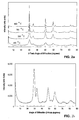
- the crystalline nature of the ceramic layer has been confirmed by using X-ray diffraction as shown in Figs. 2a and 2b.
- the porous properties of the ceramic layer have been confirmed by gas adsorption techniques to measure surface area and pore volume distribution methods, as shown in Fig.1 and by the following examples.
- the thin film catalytic member according to the invention is made on a substrate which is a metal wire, such as a knitted wire material or knitted wire material which is rolled to form a cylindrical member.
- a metal wire such as a knitted wire material or knitted wire material which is rolled to form a cylindrical member.
- the wire diameter is preferably from 0,12 mm to 0,25 mm.
- the porous ceramic layer is preferably an yttria-stabilised zirconia in a preferred crystalline form such as the cubic phase.
- the porous ceramic layer is an alumina stabilised by ceria.
- the thickness of the porous ceramic layer is from 1 nm to 10 ⁇ m.
- the thickness is from 50 nm to 500 nm, in still another preferable embodiment, less than 80 nm.
- the metal is a catalytic metal, for example taken from the 8 th group of the Periodic Table, such as mentioned above.
- the catalytic metal is palladium in a concentration from about 0,5% by weight to about 15% by weight to the weight of the ceramic material
- the thin film composite may further comprise rhodium in a concentration from 0,05% to 5% by weight to the weight of ceramic material.
- the composite exerts catalytic capability with respect to exhaust vehicle gases, including combustion of hydrocarbons and carbon monoxide and reduction of NOx. Also, the composite may be used to deal with other combustible gases, such as propane, butane and the like.
- the present invention provides a metallic wire catalyst member comprising a metallic wire support material formed of a knitted metallic wire or wires, wherein the wire (or wires) is coated with a thin film porous oxide ceramic material having a stabilised substantially crystalline structure, the ceramic incorporating thereon or therein one or more catalytic metals.
- the new type of vehicle exhaust catalyst prepared using the thin films of the present invention is much less likely to suffer from drawbacks of the prior art and offers several advantages over conventional vehicle exhaust catalysts, including the following ones.
- the thin films can be applied readily to a whole range of substrates, including metal wire, to which they exhibit excellent adhesion. Coatings derived from aqueous slurries exhibit poor adhesion to such metal substrates, and are likely to fall off in use, causing a serious loss of valuable precious metal. Thus, according to US 3,606,538, a separate preoxidation step is required to form a dense oxide layer in an attempt to enhance thereby the surface adherence of the coating to the metal substrate.
- the catalysts of the present invention are found to exhibit excellent adhesion to the steel wire. Typical wire diameters range from 0.12 mm to 0.25 mm, but other sizes outwith this range may be used depending on application.It should be noted also that the use of metal wire substrates offers additional significant advantages.
- the wire substrates also offer improved catalytic performance. This arises because conventional ceramic monoliths contain a multitude of flow channels of high aspect ratio (i.e. ratio of channel length to channel cross-sectional area). This causes the gas to develop a boundary layer along the length of the channel (see U.S. Patent Number 5,440,872) which results in the catalyst being mass-transfer limited, thereby reducing the efficiency of the interaction of the gas with the catalyst surface.
- a third advantage of the thin film technology is that it enables the catalyst support material to be synthesised in its most stable crystalline phase during the preparation of the catalyst.
- Vehicle exhaust catalysts must be able to operate at temperatures of 1000°C and above, and therefore the inorganic support material on which the catalytic metal is deposited should be in its most stable crystalline form.
- zirconium oxide can be converted into a stable crystalline phase by being doped with oxides of certain elements, such as yttrium. This normally requires processing at elevated temperatures: as high as 1200°C in the case of powders.
- the stabilised phase of zirconium oxide can be produced in-situ, and starts to form at temperatures as low as 350°C.
- this route can be used as a general method of preparing catalysts, including those containing several metals and several inorganic components, all of which can be brought together as solutions of organic precursor salts. This ensures efficient interaction between the components and enables the catalyst to be synthesised in its desired crystalline phase during its synthesis. This is in contrast to conventional catalyst preparation methods which use support materials which have been synthesised separately (often at high temperatures).
- the present invention provides a method of preparing a thin film porous ceramic-metal composite having catalytic functionality, comprising:
- the knitted wire material is made of Fecralloy steel as mentioned above.
- the metallic knitted wire catalyst material is rolled up to form a cylindrical member, but other geometric shapes can be used.
- the substrate of knitted wire material provides a very open structure that allows gases to pass easily.
- the metallic knitted wire catalyst member comprises a metallic wire (or wires) knitted material, wherein the wire (or wires) is coated with a porous stabilised ceramic material of substantially crystalline structure, incorporating one or more catalyst metal or metals, wherein the ceramic material is strongly adhered to the substrate.
- the inventive approach of the present patent is to introduce the stabilising oxide into the precursor solution, so that the porous oxide layer itself is bonded strongly to the substrate and has a high structural strength, avoiding the necessity of providing an intermediate dense oxide layer.
- the present invention is advantageous for several reasons.
- a porous, stabilised ceramic layer within which is incorporated one or more metals or metal oxides.
- the layer exhibits outstanding adhesion to the substrate.
- the catalytic metal has good access to the reactant gases. This allows the metal content of the catalyst to be reduced significantly.
- the metal particles can serve as nuclei during the subsequent post-treatment steps (if any), for example, when plating a metal onto the ceramic thin film.
- an enhanced sensing element is provided for solid state gas sensors using the process described in the present application.
- the thin film technology described here allows these sensors to be fabricated as miniature components (typically 2mm long and 1mm wide) from a single film, thereby enabling them to be mass-produced. Since the active layer of the sensor is very thin (of the order of 200 nanometres) and highly porous, the sensor is very sensitive and responsive.
- organic solutions of the precursors of zirconia, alumina, and palladium were used to produce a porous inorganic zirconia/alumina matrix, associated with highly dispersed palladium oxide. This intimate interaction between all of these components resulted in a sensor, which was able to respond rapidly to changes in the concentration of gases, such as carbon monoxide.
- the process of the invention is employed to produce a thin film metal coating on low adhesion substrates.
- a metal film such as copper
- a glass substrate Conventionally this is done in a vacuum system, with the metal being deposited on to the substrate by evaporation or sputtering.
- the films can simply be coated on to a substrate, then subjected to electroless deposition of copper in an appropriate chemical bath.
- palladium nuclei within the porous film act as catalytic sites, on to which the copper is deposited.
- the resulting copper films exhibit excellent adhesion to the substrate, due, it is believed, to the copper nuclei being dispersed throughout the porous film.
- the substrate need not be flat. Substrates of any shape, including fibres, can in this way be coated uniformly with metal.
- the metal such as copper
- the resist layer would then be irradiated with ultra-violet light through an appropriate mask. Having developed the resist layer to produce the desired pattern, the copper thereby exposed would be etched. Finally, the resist would be removed from the remaining copper, to leave the copper pattern.
- the thin films of the present invention offer a much simpler means of producing metal patterns.
- a solution containing the precursors of the inorganic matrix (such as zirconia) and the metal (such as palladium) is deposited on to the substrate, and allowed to dry under ambient conditions.
- the film is then maintained at a temperature below that necessary to cause decomposition of the precursor molecules.
- the resulting film is subjected to ultra-violet irradiation through an appropriate mask, the irradiated regions of the film are rendered less soluble than the non-irradiated regions. That is, the film behaves as a negative resist. Therefore when the film is subsequently immersed in an appropriate organic solvent, the non-irradiated regions are washed away.
- copper can be deposited in the form of the desired pattern.
- the solvent was removed by gentle heating and the resultant powder was cured by baking for 4 hours at 600°C.
- FIG. 1 shows a sample of palladium-containing yttria-stabilised zirconia, the latter having an overall surface area of 55.39m 2 g -1 with a maximum in the distribution curve at around 50nm.
- Figs 2a and 2b show peaks associated with a stable zirconia crystalline phase.
- a silicon nitride membrane of dimensions 0.5mm ⁇ 0.5mm ⁇ 100nm thickness supported in a 3mm square silicon frame was immersed into the solution and allowed to dry. It was then baked at 900°C for 2 hours and allowed to cool to room temperature.
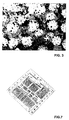
- Figure 3 is a transmission electron micrograph of this film, in which the platinum is visible as dark coloured particles.
- a three way catalyst i.e. designed to remove carbon monoxide, hydrocarbons and oxides of nitrogen
- *Fecralloy steel is a patented ferritic steel comprising iron, chromium, aluminium and yttrium.
- the catalyst monolith was fabricated by rolling the two lengths of wire together to form a cylinder approximately 6 inches (150mm) in length and 4 inches (100mm) in diameter.
- the catalyst produced in this manner was tested on an engine mounted on a test bed, and shown to exhibit good performance, as illustrated by the data in Table 1 below.
- the gas analysis was performed using a Signal Instruments system, comprising a 4000VM NO x analyser, a 3000HM THC analyser (hydrocarbons), two 7000FM GFC analysers (CO and CO 2 ) and an 8000M O 2 analyser.
- Table 1 Pre catalyst Post catalyst Conversion NO x (ppm) 2981 737 75% Total hydrocarbon (ppm) 327 15 95% Carbon monoxide (%) 0.43 0.053 88% Oxygen (%) 0.121 0.057
- the engine used for this test was a 1.81 8 valve normally-aspirated VW GTi unit operated at 2500rpm and under a load of 100Nm.
- the space velocity of the exhaust gas over the catalyst was approximately 70000 (normalised to STP).
- a three way catalyst i.e. designed to remove carbon monoxide, hydrocarbons and oxides of nitrogen was prepared from a metal wire substrate.
- the wire was immersed in a solution containing, per litre of tetrahydrofuran, the following ingredients:
- the precious metal (palladium) loading of the monolith was approximately 0.3g, and the rhodium loading was approximately 0.05g.
- the catalyst monolith was fabricated by rolling the length of wire to form a cylinder approximately 6 inches (150mm) in length and 4 inches (100mm) in diameter.
- the catalyst produced in this manner was tested on the same engine, under identical load conditions, and analysed using the same equipment as in the previous example.
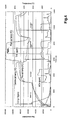
- Figure 4 shows the temperature of the exhaust gases measured at three points: immediately before the catalyst (pre cat); in the centre of the wire monolith (centre cat); and immediately downstream of the catalyst (post cat).
- the three gas concentrations shown are oxides of nitrogen (NOx), total hydrocarbons (THC) and carbon monoxide (CO). Note that this last trace has been expanded by a factor of 10 for clarity.
- the engine test comprises a 300s warm up with the engine idling off-load, then a load is applied and the engine speed increased.
- the exhaust gas is sampled pre- and post-catalyst, in order to facilitate the calculation of conversion efficiencies of the various exhaust gas components. This accounts for the large step changes seen in the traces.
- the load is then removed and a fault condition is simulated, as noted above, with the engine running at approximately 2500rpm. Again pre- and post-catalyst measurements are taken.
- the fault is then rectified and the load applied once more, and again pre- and post-catalyst measurements are taken. Finally the load is removed and the engine is switched off.
- a piece of alumina tile having dimensions 10mm by 20mm by 1mm thick was coated with a layer of palladium oxide/zirconia/alumina using a solution containing the following constituents, per litre of dichloromethane:
- the tile was coated by dip coating in a controlled environment and heated to 120°C at a rate of approximately 40°C per minute in an atmosphere of 4.5% hydrogen in a balance of nitrogen. It was held at 120°C for 2 minutes. This process was repeated 4 times to build up a layer having a suitable thickness to achieve the desired resistance in the final device.
- the temperature was ramped up to 350°C at a rate of approximately 100°C per minute and held at this higher temperature for 2 minutes.
- the sensor was tested using a simulated gas boiler comprising a modified Bunsen burner fuelled with natural gas, and having the ability to vary the fuel-air ratio. This allowed a variation in the amount of carbon monoxide (CO) in the exhaust gas from the boiler, which was detected by the sensor, and a response to the corresponding variation in oxygen concentration could then be measured.
- the results of the test are shown in Figures 5 and 6.
- glass was coated with a layer of palladium-containing zirconia/alumina, using a solution containing the following constituents, per litre of terahydrofuran:
- the glass substrate was spin coated with the solution at 2500rpm for 30 seconds, after which it was heated in air at 350°C for 2 minutes then allowed to cool to room temperature.
- Circuposit Electroless Copper 3350 is composed of four components as follows: 73.8% deionised water, 12.0% Circuposit Electroless Copper 3350M, 4.2% Circuposit Electroless Copper 3350A and 10.0% Circuposit Electroless Copper 3350B, made up in that order.
- the recommended bath temperature is 46°C, but the samples produced using the present technique have been found to plate very rapidly and for this reason the temperature of the bath was typically 25°C. Continuous air agitation was used during the plating process to stabilise the solution. A layer of copper several hundred nanometres in thickness was produced in a few seconds.
- a piece of polyimide sheet was coated with a layer of palladium-containing zirconia/alumina, using an identical solution to that described in Example 6.
- the substrate was spin coated with the solution at 2500rpm for 30 seconds and the solvent was then allowed to evaporate.
- the coated substrate was exposed through a chromium-on-quartz photomask to deep UV light (266nm) for 900s at approximately 20m Wcm -2 incident power.
- the substrate was then washed in a 1:1 mixture of acetone and isopropanol, and subsequently rinsed with isopropanol and dried using a nitrogen jet. This removed the unexposed parts of the coating, leaving behind the exposed regions which had been rendered less soluble by the irradiation process.
- the patterned substrate was then heated at 350°C for 2 minutes in air after which it was allowed to cool to room temperature.
- Nickel plating was performed on the sample by immersing it in a proprietary electroless plating solution at a temperature of 90°C for 120s.
- a layer of nickel of several hundred nanometres thickness was produced only on the remaining regions of palladium-containing zirconia/alumina.
- Figure 7 shows an example of a patterned nickel layer produced on a polyimide substrate. It was found that this layer of nickel was adhered sufficiently strongly to the substrate that it resisted removal by the Scotch tape test.When this procedure was used with a glass substrate it was found that strongly adherent solder bonds could be made to the nickel.
Landscapes
- Chemical & Material Sciences (AREA)
- Engineering & Computer Science (AREA)
- Chemical Kinetics & Catalysis (AREA)
- Materials Engineering (AREA)
- Organic Chemistry (AREA)
- General Chemical & Material Sciences (AREA)
- Geochemistry & Mineralogy (AREA)
- Life Sciences & Earth Sciences (AREA)
- Metallurgy (AREA)
- Physics & Mathematics (AREA)
- Thermal Sciences (AREA)
- Mechanical Engineering (AREA)
- Inorganic Chemistry (AREA)
- Analytical Chemistry (AREA)
- Health & Medical Sciences (AREA)
- Biomedical Technology (AREA)
- Environmental & Geological Engineering (AREA)
- Combustion & Propulsion (AREA)
- Oil, Petroleum & Natural Gas (AREA)
- Ceramic Engineering (AREA)
- Catalysts (AREA)
- Porous Artificial Stone Or Porous Ceramic Products (AREA)
- Investigating Or Analyzing Materials By The Use Of Fluid Adsorption Or Reactions (AREA)
- Investigating Or Analyzing Materials By The Use Of Electric Means (AREA)
- Exhaust Gas Treatment By Means Of Catalyst (AREA)
- Manufacture Of Alloys Or Alloy Compounds (AREA)
Claims (20)
- Verfahren zur Herstellung eines porösen KeramikMetall-Verbundwerkstoffes in Form eines dünnen Films, umfassend- das in-Kontakt-bringen eines Substrats mit einer Lösung oder Lösungen, die Vorläuferverbindungen einer Keramik, eines stabilisierenden Oxids, und eines Metalls umfassen, um direkt auf dem Substrat eine Vorläuferbeschichtung zu bilden;- thermisches Behandeln des Substrats mit der Beschichtung bei einer Temperatur, die ausreichend ist, um die Vorläuferverbindungen zu zersetzen, um einen dünnen Film aus stabilisierter poröser Keramik, die fest direkt an dem Substrat haftet, zu bilden, wobei die Keramik in einer geeigneten kristallinen Form wie zum Beispiel Zirconiumdioxid in der kubischen Phase vorliegt, und das eine oder die mehreren Metalle oder Metalloxide darin oder darauf inkorporiert sind.
- Verfahren nach Anspruch 1, wobei wenigstens eine Lösung mit wenigstens einer anderen Lösung vorvermischt wird.
- Verfahren nach Anspruch 1, wobei das Substrat ein Metall oder Metalle oder Legierungen, wie zum Beispiel einen Stahl, der Eisen, Chrom und Aluminium enthält, umfasst .
- Verfahren nach Anspruch 1, wobei das Substrat ein Monolith aus verknüpftem Draht, wie in der Form eines bogenförmigen Materials oder einer Rolle, umfasst.
- Verfahren nach Anspruch 1, wobei das Substrat Silicium, Polymere wie zum Beispiel Polyimid, und Glas umfasst.
- Verfahren nach Anspruch 1, wobei das Erwärmen etwa 10 Sekunden lang bis etwa 10 Minuten lang bei einer Temperatur im Bereich von etwa 350°C bis etwa 1000°C durchgeführt wird, bevorzugt bei einer Temperatur von 400°C.
- Verfahren nach Anspruch 1, wobei der Zirkoniumdioxid-Vorläufer eine organische Verbindung von Zirkoniumdioxid ist, wie zum Beispiel substituiertes oder unsubstituiertes Zirkonium-C1-C8-Alkylcarboxylat, wie zum Beispiel Propionat.
- Verfahren nach Anspruch 1, wobei der Vorläufer des stabilisierenden Oxids eine organische Verbindung von Yttrium oder Cer ist, wie zum Beispiel substituiertes oder unsubstituiertes Yttrium-C1-C8-Alkylcarboxylat, wie zum Beispiel Yttrium-2-Ethylhexanoat.
- Ein Verbundstoff umfassend:- eine poröse Keramikschicht in Form eines dünnen Films, die auf ein Substrat beschichtet ist, wobei die poröse Keramikschicht in einer geeigneten kristallinen Form vorliegt, wie zum Beispiel Zirkonium in einer kubischen Phase, stabilisiert durch ein stabilisierendes Oxid, wobei die Keramikschicht direkt an dem Substrat stark haftet, undein Metall, das in oder auf der Keramikschicht inkorporiert ist.
- Der Verbundstoff in Form eines dünnen Films gemäß Anspruch 9, wobei das Substrat ein Metalldraht ist, wie zum Beispiel ein verknüpftes Drahtmaterial oder ein aufgerolltes verknüpftes Drahtmaterial.
- Der Verbundstoff in Form eines dünnen Films nach Anspruch 9, wobei die poröse Keramikschicht ein durch Yttriumoxid stabilisiertes Zirconiumdioxid ist.
- Ein katalytisches Element umfassend:- eine poröse Keramikschicht in Form eines dünnen Films, der auf ein Metallsubstrat beschichtet ist, wobei die poröse Keramikschicht in einer geeigneten kristallinen Form vorliegt, wie zum Beispiel Zirkoniumdioxid in der kubischen Phase, stabilisiert durch ein stabilisierendes Oxid, wobei die Keramikschicht direkt an dem Substrat stark haftet, und- ein katalytisches Metall, das in oder auf der Keramikschicht inkorporiert ist.
- Das katalytische Element nach Anspruch 12, wobei das Substrat ein verknüpfter Metalldraht oder -drähte ist.
- Das katalytische Element nach Anspruch 12, wobei das katalytische Metall Palladium in einer Konzentration von etwa 0,5 Gew.-% bis etwa 5 Gew.-% hinsichtlich des Gewichtes der Keramikschicht ist.
- Ein Dünnfilmgassensor umfassend:- eine poröse Keramikschicht in Form eines dünnen Films, die auf ein Substrat beschichtet ist, wobei die poröse Keramikschicht in einer geeigneten kristallinen Form vorliegt, wie zum Beispiel Zirkoniumdioxid in der kubischen Phase, stabilisiert durch ein stabilisierendes Oxid, wobei die Keramikschicht direkt an dem Substrat stark haftet, undein Metall, das in oder auf der Keramikschicht inkorporiert ist.
- Gassensor in Form eines dünnen Films nach Anspruch 15, wobei der Gassensor eine Empfindlichkeit auf C1-C18 Kohlenwasserstoffe aufweist, wie zum Beispiel auf Propan, Butan, usw.
- Verfahren zur Herstellung eines metallplattierten Keramik/Metall-Verbundstoffes in Form eines dünnen Films, umfassend die folgenden Schritte:- in Kontakt-bringen eines Substrats mit einer Lösung zur Bildung einer Beschichtung direkt auf dem Substrat, wobei die Beschichtung Vorläufer einer Keramik wie zum Beispiel Zirconiumdioxid, eines stabilisierenden Oxids, und eines Metalls, umfasst.- thermisches Behandeln des beschichteten Substrats bei einer Temperatur, die ausreichend ist, um die Vorläuferverbindungen zu ersetzen, um eine poröse Keramikschicht aus stabilisierter Keramik, wie zum Beispiel Zirkoniumdioxid, zu bilden, die durch eine starke Bindung direkt an dem Substrat haftet, wobei die Keramik, wie zum Beispiel Zirconiumdioxid, in einer geeigneten kristallinen Form vorliegt, wie zum Beispiel der kubischen Phase, und darin oder darauf das eine oder die mehreren Metalle oder Metalloxide inkorporiert sind; und- Unterziehen des Substrats, mit der Keramikschicht darauf, einem Plattierungsverfahren bei Bedingungen, bei denen in oder auf der Keramikschicht inkorporierte dispergierte Metallteilchen bereitgestellt werden, die als Keime agieren, auf denen das Metall des Plattierungsverfahren abgeschieden wird.
- Verfahren nach Anspruch 17, wobei die Keramikschicht mit einem Muster versehen wird, bevor sie der Metallplattierung unterzogen wird.
- Ein metallplattierter Verbundstoff in Form eines dünnen Films umfassend:- eine poröse Keramikschicht in Form eines dünnen Films, die auf ein Substrat beschichtet ist, wobei die poröse Keramikschicht, wie zum Beispiel Zirkoniumdioxid, durch eine starke Bindung direkt auf dem Substrat haftet, wobei die Keramik in einer geeigneten kristallinen Form vorliegt, wie zum Beispiel in Form einer kubischen Phase, die durch ein stabilisierendes Oxid stabilisiert ist, und eines oder mehrere Metalle oder Metalloxide darin oder darauf inkorporiert sind, und- einen Metallfilm, der auf der Keramikschicht plattiert ist.
- Ein metallplattierter Verbundstoff in Form eines dünnen Films nach Anspruch 19, wobei das plattierte Metall Nickel ist.
Applications Claiming Priority (7)
| Application Number | Priority Date | Filing Date | Title |
|---|---|---|---|
| GB0120956A GB0120956D0 (en) | 2001-08-30 | 2001-08-30 | Porous matrix coating process and gas sensor |
| GB0120956 | 2001-08-30 | ||
| GB0120958 | 2001-08-30 | ||
| GB0120958A GB0120958D0 (en) | 2001-08-30 | 2001-08-30 | "Metal plating process and products" |
| GB0120961 | 2001-08-30 | ||
| GB0120961A GB0120961D0 (en) | 2001-08-30 | 2001-08-30 | "Porous matrix coating process and catalyst" |
| PCT/GB2002/004086 WO2003021004A1 (en) | 2001-08-30 | 2002-08-30 | Process for making thin film porous ceramic-metal composites and composites obtained by this process |
Publications (2)
| Publication Number | Publication Date |
|---|---|
| EP1436445A1 EP1436445A1 (de) | 2004-07-14 |
| EP1436445B1 true EP1436445B1 (de) | 2006-05-17 |
Family
ID=27256268
Family Applications (1)
| Application Number | Title | Priority Date | Filing Date |
|---|---|---|---|
| EP02758575A Expired - Lifetime EP1436445B1 (de) | 2001-08-30 | 2002-08-30 | Verfahren zur herstellung poröser keramik-metall verbundwerkstoffe und dadurch erhaltene verbundwerkstoffe |
Country Status (6)
| Country | Link |
|---|---|
| US (1) | US20040166340A1 (de) |
| EP (1) | EP1436445B1 (de) |
| JP (1) | JP2005503982A (de) |
| AT (1) | ATE326558T1 (de) |
| DE (1) | DE60211543T2 (de) |
| WO (1) | WO2003021004A1 (de) |
Cited By (5)
| Publication number | Priority date | Publication date | Assignee | Title |
|---|---|---|---|---|
| CN100569361C (zh) * | 2007-07-18 | 2009-12-16 | 中山大学 | 载Pd堇青石蜂窝陶瓷催化材料及其制备方法 |
| CN102030480A (zh) * | 2009-09-24 | 2011-04-27 | 海洋王照明科技股份有限公司 | 掺杂镍纳米粒子的多孔玻璃及其制备方法 |
| CN102020424B (zh) * | 2009-09-14 | 2012-07-25 | 海洋王照明科技股份有限公司 | 一种在多孔玻璃中制备钴纳米粒子的方法 |
| CN102030481B (zh) * | 2009-09-24 | 2013-09-11 | 海洋王照明科技股份有限公司 | 掺杂钴纳米粒子的多孔玻璃及其制备方法 |
| CN102030479B (zh) * | 2009-09-24 | 2014-04-09 | 海洋王照明科技股份有限公司 | 掺杂铜纳米粒子的多孔玻璃及其制备方法 |
Families Citing this family (57)
| Publication number | Priority date | Publication date | Assignee | Title |
|---|---|---|---|---|
| US8123814B2 (en) | 2001-02-23 | 2012-02-28 | Biomet Manufacturing Corp. | Method and appartus for acetabular reconstruction |
| US7597715B2 (en) | 2005-04-21 | 2009-10-06 | Biomet Manufacturing Corp. | Method and apparatus for use of porous implants |
| WO2004068918A2 (en) * | 2003-01-31 | 2004-08-12 | Aktina Limited | Method for producing thin silver layers |
| JP4584142B2 (ja) * | 2003-02-14 | 2010-11-17 | 茂夫 丸山 | 単層カーボンナノチューブ製造用触媒金属微粒子形成方法 |
| KR20060123213A (ko) * | 2003-10-29 | 2006-12-01 | 컨덕티브 잉크젯 테크놀로지 리미티드 | 기판 상의 층 형성 방법 |
| MY142111A (en) * | 2004-04-16 | 2010-09-15 | Nippon Oil Corp | Catalyst for fischer-tropsch synthesis and process for producing hydrocarbons |
| GB0502166D0 (en) * | 2005-02-02 | 2005-03-09 | Effectology Ltd | Ink-jet printing process |
| US8266780B2 (en) | 2005-04-21 | 2012-09-18 | Biomet Manufacturing Corp. | Method and apparatus for use of porous implants |
| US8292967B2 (en) | 2005-04-21 | 2012-10-23 | Biomet Manufacturing Corp. | Method and apparatus for use of porous implants |
| US8066778B2 (en) | 2005-04-21 | 2011-11-29 | Biomet Manufacturing Corp. | Porous metal cup with cobalt bearing surface |
| US8021432B2 (en) | 2005-12-05 | 2011-09-20 | Biomet Manufacturing Corp. | Apparatus for use of porous implants |
| US20070015002A1 (en) * | 2005-07-14 | 2007-01-18 | Ut-Battele, Llc | Oxygen-donor and catalytic coatings of metal oxides and metals |
| CA2618148A1 (en) * | 2005-08-12 | 2007-02-22 | Dunwilco (1198) Limited | Process for producing metal flakes |
| GB0516968D0 (en) * | 2005-08-18 | 2005-09-28 | Dunwilco 1198 Ltd | Process |
| JP4622753B2 (ja) | 2005-09-05 | 2011-02-02 | マツダ株式会社 | 触媒付きディーゼルパティキュレートフィルタ |
| ATE451338T1 (de) * | 2005-11-21 | 2009-12-15 | Eidgenoess Tech Hochschule | Verfahren zur herstellung eines porösen keramischen dünnfilms |
| US20090142483A1 (en) * | 2005-12-27 | 2009-06-04 | Edelbrock Andrew J | Process of Making Electrolessly Plated Auto-Calibration Circuits for Test Sensors |
| US7635447B2 (en) | 2006-02-17 | 2009-12-22 | Biomet Manufacturing Corp. | Method and apparatus for forming porous metal implants |
| GB2440140A (en) * | 2006-07-17 | 2008-01-23 | Dunwilco | Method of making flakes |
| DE102006047070A1 (de) * | 2006-09-26 | 2008-04-03 | Siemens Ag | Verfahren zum stoffschlüssigen Fügen von zwei metallischen Bauteilen |
| DE102006048906A1 (de) | 2006-10-17 | 2008-04-30 | Robert Bosch Gmbh | Verfahren zur Stabilisierung und Funktionalisierung von porösen metallischen Schichten |
| DE102007026626B3 (de) | 2007-06-07 | 2008-09-11 | Siemens Ag | Verfahren zum Erzeugen einer Trockenschmierstoff-Schicht |
| DE102007030047A1 (de) | 2007-06-26 | 2009-01-02 | Siemens Ag | Bauteil mit einer schweren benetzbaren keramischen Schicht und Verfahren zu deren Herstellung |
| DE102007030591B3 (de) | 2007-06-27 | 2008-08-28 | Siemens Ag | Verfahren zur Beschichtung der Innenwände von Rohren und Vorrichtung zum Heizen und Kühlen eines Rohres |
| DE102007030585A1 (de) | 2007-06-27 | 2009-01-02 | Siemens Ag | Verfahren zum Erzeugen einer keramischen Schicht auf einem Bauteil |
| DE102007030588A1 (de) | 2007-06-27 | 2009-01-02 | Siemens Ag | Bauteil mit einer einen Farbstoff enthaltenden keramischen Schicht und Verfahren zu deren Herstellung |
| US8512760B2 (en) | 2007-11-23 | 2013-08-20 | The University Court Of The University Of Dundee | Nano-particle dispersions |
| US8623301B1 (en) | 2008-04-09 | 2014-01-07 | C3 International, Llc | Solid oxide fuel cells, electrolyzers, and sensors, and methods of making and using the same |
| CA2899575C (en) | 2010-02-10 | 2020-03-10 | Ut-Battelle, Llc | Low temperature electrolytes for solid oxide cells having high ionic conductivity |
| US8304366B2 (en) * | 2010-11-24 | 2012-11-06 | Ford Global Technologies, Llc | System for remediating emissions and method of use |
| FR2976821B1 (fr) * | 2011-06-27 | 2015-03-27 | Air Liquide | Dispositif d'epuration des gaz d'echappement d'un moteur thermique comprenant un support ceramique et une phase active ancree chimiquement et mecaniquement dans le support |
| FR2976823B1 (fr) * | 2011-06-27 | 2015-03-27 | Air Liquide | Dispositif d'epuration des gaz d'echappement d'un moteur thermique comprenant un support ceramique et une phase active ancree mecaniquement dans le support |
| FR2976822B1 (fr) * | 2011-06-27 | 2015-03-27 | Air Liquide | Dispositif d'epuration des gaz d'echappement d'un moteur thermique comprenant un support ceramique catalytique comprenant une arrangement de cristallites sensiblement identiques |
| DE102011080138A1 (de) * | 2011-07-29 | 2013-01-31 | Siemens Aktiengesellschaft | Mikro-Gassensor und Verfahren zu dessen Herstellung |
| EP2750794A4 (de) * | 2011-09-01 | 2015-07-29 | Simon Trudel | Elektrokatalytische materialien und herstellungsverfahren dafür |
| WO2013142363A1 (en) * | 2012-03-19 | 2013-09-26 | Advex International Inc. | Vegetable oils, vegetable oil blends, and methods of use thereof |
| EP3022792B1 (de) | 2013-07-15 | 2024-09-11 | Fcet, Inc. | Niedrigtemperatur-festoxidzellen |
| WO2015044089A1 (en) * | 2013-09-26 | 2015-04-02 | Atotech Deutschland Gmbh | Novel adhesion promoting agents for metallisation of substrate surfaces |
| US9663400B2 (en) | 2013-11-08 | 2017-05-30 | Corning Incorporated | Scratch-resistant liquid based coatings for glass |
| IL257019B2 (en) * | 2015-07-22 | 2023-10-01 | Gencell Ltd | Process for the thermal decomposition of ammonia and reactor for carrying out said process |
| US10410883B2 (en) | 2016-06-01 | 2019-09-10 | Corning Incorporated | Articles and methods of forming vias in substrates |
| US10794679B2 (en) | 2016-06-29 | 2020-10-06 | Corning Incorporated | Method and system for measuring geometric parameters of through holes |
| US10134657B2 (en) | 2016-06-29 | 2018-11-20 | Corning Incorporated | Inorganic wafer having through-holes attached to semiconductor wafer |
| US10580725B2 (en) | 2017-05-25 | 2020-03-03 | Corning Incorporated | Articles having vias with geometry attributes and methods for fabricating the same |
| US11078112B2 (en) | 2017-05-25 | 2021-08-03 | Corning Incorporated | Silica-containing substrates with vias having an axially variable sidewall taper and methods for forming the same |
| US12180108B2 (en) | 2017-12-19 | 2024-12-31 | Corning Incorporated | Methods for etching vias in glass-based articles employing positive charge organic molecules |
| US11554984B2 (en) | 2018-02-22 | 2023-01-17 | Corning Incorporated | Alkali-free borosilicate glasses with low post-HF etch roughness |
| US11152294B2 (en) | 2018-04-09 | 2021-10-19 | Corning Incorporated | Hermetic metallized via with improved reliability |
| US11284510B2 (en) | 2018-04-17 | 2022-03-22 | Board Of Trustees Of Michigan State University | Controlled wetting and spreading of metals on substrates using porous interlayers and related articles |
| US20190363010A1 (en) * | 2018-05-23 | 2019-11-28 | Corning Incorporated | Methods of increasing adhesion between a conductive metal and an oxide substrate and articles made therefrom |
| EP3853394A1 (de) | 2018-09-20 | 2021-07-28 | Industrial Technology Research Institute | Kupfermetallisierung für durchkontaktierungen auf dünnglas |
| KR20250083587A (ko) | 2019-02-21 | 2025-06-10 | 코닝 인코포레이티드 | 구리-금속화된 쓰루 홀을 갖는 유리 또는 유리 세라믹 물품 및 이를 제조하기 위한 공정 |
| US11406960B2 (en) * | 2019-09-26 | 2022-08-09 | Uchicago Argonne, Llc | Materials and methods for selective noble gas adsorption |
| CN111118499A (zh) * | 2019-12-31 | 2020-05-08 | 彭磊 | 一种用于加工涂料混合器具用材料的制备方法 |
| JP2023542028A (ja) * | 2020-09-21 | 2023-10-04 | ユニフラックス アイ エルエルシー | 均質な触媒繊維コーティングとその調製方法 |
| CN115478247A (zh) * | 2021-05-28 | 2022-12-16 | 上海日岳新能源有限公司 | 耐磨耐高温大晶格陶瓷薄膜绝热结构 |
| CN116809062B (zh) * | 2023-06-29 | 2024-06-07 | 东北石油大学 | 氧化钇负载原子级团簇态钯基催化剂及其制备方法和应用 |
Family Cites Families (6)
| Publication number | Priority date | Publication date | Assignee | Title |
|---|---|---|---|---|
| EP0053884A1 (de) * | 1980-11-27 | 1982-06-16 | Johnson Matthey Public Limited Company | Dreidimensionaler, interstitieller Trägerkatalysator, seine Herstellung und Verwendung |
| US5698267A (en) * | 1992-12-01 | 1997-12-16 | Robert Bosch Gmbh | Method for fabricating high-activity electrodes for exhaust gas sensors |
| US6027826A (en) * | 1994-06-16 | 2000-02-22 | The United States Of America As Represented By The Secretary Of The Air Force | Method for making ceramic-metal composites and the resulting composites |
| SE504795C2 (sv) * | 1995-07-05 | 1997-04-28 | Katator Ab | Nätbaserad förbränningskatalysator och framställning av densamma |
| US5786294A (en) * | 1996-05-10 | 1998-07-28 | Northwestern University | Crystalline mesoporous zirconia catalysts having stable tetragonal pore wall structure |
| ITMI981245A1 (it) * | 1998-06-03 | 1999-12-03 | Getters Spa | Processo per la produzione di pannelli in fibre metalliche funzionalizzati con catalizzatori e pannelli cosi' prodotti |
-
2002
- 2002-08-30 DE DE60211543T patent/DE60211543T2/de not_active Expired - Lifetime
- 2002-08-30 EP EP02758575A patent/EP1436445B1/de not_active Expired - Lifetime
- 2002-08-30 WO PCT/GB2002/004086 patent/WO2003021004A1/en not_active Ceased
- 2002-08-30 AT AT02758575T patent/ATE326558T1/de not_active IP Right Cessation
- 2002-08-30 JP JP2003525701A patent/JP2005503982A/ja not_active Withdrawn
-
2004
- 2004-02-27 US US10/789,279 patent/US20040166340A1/en not_active Abandoned
Cited By (6)
| Publication number | Priority date | Publication date | Assignee | Title |
|---|---|---|---|---|
| CN100569361C (zh) * | 2007-07-18 | 2009-12-16 | 中山大学 | 载Pd堇青石蜂窝陶瓷催化材料及其制备方法 |
| CN102020424B (zh) * | 2009-09-14 | 2012-07-25 | 海洋王照明科技股份有限公司 | 一种在多孔玻璃中制备钴纳米粒子的方法 |
| CN102030480A (zh) * | 2009-09-24 | 2011-04-27 | 海洋王照明科技股份有限公司 | 掺杂镍纳米粒子的多孔玻璃及其制备方法 |
| CN102030481B (zh) * | 2009-09-24 | 2013-09-11 | 海洋王照明科技股份有限公司 | 掺杂钴纳米粒子的多孔玻璃及其制备方法 |
| CN102030480B (zh) * | 2009-09-24 | 2014-04-09 | 海洋王照明科技股份有限公司 | 掺杂镍纳米粒子的多孔玻璃及其制备方法 |
| CN102030479B (zh) * | 2009-09-24 | 2014-04-09 | 海洋王照明科技股份有限公司 | 掺杂铜纳米粒子的多孔玻璃及其制备方法 |
Also Published As
| Publication number | Publication date |
|---|---|
| DE60211543T2 (de) | 2007-05-10 |
| WO2003021004A1 (en) | 2003-03-13 |
| US20040166340A1 (en) | 2004-08-26 |
| DE60211543D1 (de) | 2006-06-22 |
| EP1436445A1 (de) | 2004-07-14 |
| ATE326558T1 (de) | 2006-06-15 |
| JP2005503982A (ja) | 2005-02-10 |
Similar Documents
| Publication | Publication Date | Title |
|---|---|---|
| EP1436445B1 (de) | Verfahren zur herstellung poröser keramik-metall verbundwerkstoffe und dadurch erhaltene verbundwerkstoffe | |
| US3920583A (en) | Supports for catalyst materials | |
| US4303552A (en) | Diesel exhaust catalyst | |
| US5242882A (en) | Catalyst for the production of nitric acid by oxidation of ammonia | |
| US5217939A (en) | Catalyst for the prduction of nitric acid by oxidation of ammonia | |
| EP0488514B1 (de) | Verfahren zur Herstellung eines Katalysators für Kraftwagenabgase | |
| KR101813226B1 (ko) | 다층 감응막 구조를 이용한 벤젠 가스 센서 및 그 제조방법 | |
| JPH03295184A (ja) | 抵抗調節型ヒーター及び触媒コンバーター | |
| SE504795C2 (sv) | Nätbaserad förbränningskatalysator och framställning av densamma | |
| US5256387A (en) | Catalyst for the production of nitric acid by oxidation of ammonia | |
| US5234882A (en) | Catalyst and preparation thereof | |
| JP2000015097A (ja) | 触媒の製造方法 | |
| US4170531A (en) | Method of producing an oxygen concentration cell | |
| US6303538B1 (en) | Process for producing metallic fiber boards functionalized by catalysts and boards so produced | |
| CN101039736A (zh) | 带催化剂的柴油机炭烟过滤器及其使用方法 | |
| CN1321722C (zh) | 用于室内空气中清除甲醛的负载型纳米金催化剂及其制备方法 | |
| Yoon et al. | Conformal three-dimensional platinum coating using rotary-type atomic layer deposition for a diesel oxidation catalyst application | |
| JP2003225568A (ja) | 揮発性有機化合物浄化触媒とその製造方法 | |
| JP4075412B2 (ja) | パティキュレート燃焼触媒及びその製造方法 | |
| CN1736590A (zh) | 金属载体型消氢催化剂及其制备方法 | |
| JP3275380B2 (ja) | 触媒被覆層の形成方法 | |
| JPS62163748A (ja) | 排ガス浄化用触媒の製造方法 | |
| JPS6146252A (ja) | 排気ガス浄化用モノリス触媒 | |
| US20070037698A1 (en) | Sol-gel-based methodology for the preparation of oxidation/reduction catalysts | |
| US20050220678A1 (en) | Exhaust gas clarification catalyst carrying article |
Legal Events
| Date | Code | Title | Description |
|---|---|---|---|
| PUAI | Public reference made under article 153(3) epc to a published international application that has entered the european phase |
Free format text: ORIGINAL CODE: 0009012 |
|
| 17P | Request for examination filed |
Effective date: 20040330 |
|
| AK | Designated contracting states |
Kind code of ref document: A1 Designated state(s): AT BE BG CH CY CZ DE DK EE ES FI FR GB GR IE IT LI LU MC NL PT SE SK TR |
|
| AX | Request for extension of the european patent |
Extension state: AL LT LV MK RO SI |
|
| 17Q | First examination report despatched |
Effective date: 20050411 |
|
| GRAP | Despatch of communication of intention to grant a patent |
Free format text: ORIGINAL CODE: EPIDOSNIGR1 |
|
| GRAS | Grant fee paid |
Free format text: ORIGINAL CODE: EPIDOSNIGR3 |
|
| GRAA | (expected) grant |
Free format text: ORIGINAL CODE: 0009210 |
|
| AK | Designated contracting states |
Kind code of ref document: B1 Designated state(s): AT BE BG CH CY CZ DE DK EE ES FI FR GB GR IE IT LI LU MC NL PT SE SK TR |
|
| PG25 | Lapsed in a contracting state [announced via postgrant information from national office to epo] |
Ref country code: IT Free format text: LAPSE BECAUSE OF FAILURE TO SUBMIT A TRANSLATION OF THE DESCRIPTION OR TO PAY THE FEE WITHIN THE PRESCRIBED TIME-LIMIT;WARNING: LAPSES OF ITALIAN PATENTS WITH EFFECTIVE DATE BEFORE 2007 MAY HAVE OCCURRED AT ANY TIME BEFORE 2007. THE CORRECT EFFECTIVE DATE MAY BE DIFFERENT FROM THE ONE RECORDED. Effective date: 20060517 Ref country code: LI Free format text: LAPSE BECAUSE OF FAILURE TO SUBMIT A TRANSLATION OF THE DESCRIPTION OR TO PAY THE FEE WITHIN THE PRESCRIBED TIME-LIMIT Effective date: 20060517 Ref country code: NL Free format text: LAPSE BECAUSE OF FAILURE TO SUBMIT A TRANSLATION OF THE DESCRIPTION OR TO PAY THE FEE WITHIN THE PRESCRIBED TIME-LIMIT Effective date: 20060517 Ref country code: CH Free format text: LAPSE BECAUSE OF FAILURE TO SUBMIT A TRANSLATION OF THE DESCRIPTION OR TO PAY THE FEE WITHIN THE PRESCRIBED TIME-LIMIT Effective date: 20060517 Ref country code: AT Free format text: LAPSE BECAUSE OF FAILURE TO SUBMIT A TRANSLATION OF THE DESCRIPTION OR TO PAY THE FEE WITHIN THE PRESCRIBED TIME-LIMIT Effective date: 20060517 Ref country code: FI Free format text: LAPSE BECAUSE OF FAILURE TO SUBMIT A TRANSLATION OF THE DESCRIPTION OR TO PAY THE FEE WITHIN THE PRESCRIBED TIME-LIMIT Effective date: 20060517 Ref country code: BE Free format text: LAPSE BECAUSE OF FAILURE TO SUBMIT A TRANSLATION OF THE DESCRIPTION OR TO PAY THE FEE WITHIN THE PRESCRIBED TIME-LIMIT Effective date: 20060517 Ref country code: SK Free format text: LAPSE BECAUSE OF FAILURE TO SUBMIT A TRANSLATION OF THE DESCRIPTION OR TO PAY THE FEE WITHIN THE PRESCRIBED TIME-LIMIT Effective date: 20060517 Ref country code: CZ Free format text: LAPSE BECAUSE OF FAILURE TO SUBMIT A TRANSLATION OF THE DESCRIPTION OR TO PAY THE FEE WITHIN THE PRESCRIBED TIME-LIMIT Effective date: 20060517 |
|
| REG | Reference to a national code |
Ref country code: GB Ref legal event code: FG4D |
|
| REG | Reference to a national code |
Ref country code: CH Ref legal event code: EP |
|
| REG | Reference to a national code |
Ref country code: IE Ref legal event code: FG4D |
|
| REF | Corresponds to: |
Ref document number: 60211543 Country of ref document: DE Date of ref document: 20060622 Kind code of ref document: P |
|
| PG25 | Lapsed in a contracting state [announced via postgrant information from national office to epo] |
Ref country code: DK Free format text: LAPSE BECAUSE OF FAILURE TO SUBMIT A TRANSLATION OF THE DESCRIPTION OR TO PAY THE FEE WITHIN THE PRESCRIBED TIME-LIMIT Effective date: 20060817 Ref country code: SE Free format text: LAPSE BECAUSE OF FAILURE TO SUBMIT A TRANSLATION OF THE DESCRIPTION OR TO PAY THE FEE WITHIN THE PRESCRIBED TIME-LIMIT Effective date: 20060817 |
|
| PG25 | Lapsed in a contracting state [announced via postgrant information from national office to epo] |
Ref country code: ES Free format text: LAPSE BECAUSE OF FAILURE TO SUBMIT A TRANSLATION OF THE DESCRIPTION OR TO PAY THE FEE WITHIN THE PRESCRIBED TIME-LIMIT Effective date: 20060828 |
|
| PG25 | Lapsed in a contracting state [announced via postgrant information from national office to epo] |
Ref country code: IE Free format text: LAPSE BECAUSE OF NON-PAYMENT OF DUE FEES Effective date: 20060830 |
|
| PG25 | Lapsed in a contracting state [announced via postgrant information from national office to epo] |
Ref country code: MC Free format text: LAPSE BECAUSE OF NON-PAYMENT OF DUE FEES Effective date: 20060831 |
|
| PG25 | Lapsed in a contracting state [announced via postgrant information from national office to epo] |
Ref country code: PT Free format text: LAPSE BECAUSE OF FAILURE TO SUBMIT A TRANSLATION OF THE DESCRIPTION OR TO PAY THE FEE WITHIN THE PRESCRIBED TIME-LIMIT Effective date: 20061017 |
|
| NLV1 | Nl: lapsed or annulled due to failure to fulfill the requirements of art. 29p and 29m of the patents act | ||
| REG | Reference to a national code |
Ref country code: CH Ref legal event code: PL |
|
| ET | Fr: translation filed | ||
| PLBE | No opposition filed within time limit |
Free format text: ORIGINAL CODE: 0009261 |
|
| STAA | Information on the status of an ep patent application or granted ep patent |
Free format text: STATUS: NO OPPOSITION FILED WITHIN TIME LIMIT |
|
| 26N | No opposition filed |
Effective date: 20070220 |
|
| PG25 | Lapsed in a contracting state [announced via postgrant information from national office to epo] |
Ref country code: GR Free format text: LAPSE BECAUSE OF FAILURE TO SUBMIT A TRANSLATION OF THE DESCRIPTION OR TO PAY THE FEE WITHIN THE PRESCRIBED TIME-LIMIT Effective date: 20060818 |
|
| PG25 | Lapsed in a contracting state [announced via postgrant information from national office to epo] |
Ref country code: BG Free format text: LAPSE BECAUSE OF FAILURE TO SUBMIT A TRANSLATION OF THE DESCRIPTION OR TO PAY THE FEE WITHIN THE PRESCRIBED TIME-LIMIT Effective date: 20060817 Ref country code: EE Free format text: LAPSE BECAUSE OF FAILURE TO SUBMIT A TRANSLATION OF THE DESCRIPTION OR TO PAY THE FEE WITHIN THE PRESCRIBED TIME-LIMIT Effective date: 20060517 |
|
| PG25 | Lapsed in a contracting state [announced via postgrant information from national office to epo] |
Ref country code: TR Free format text: LAPSE BECAUSE OF FAILURE TO SUBMIT A TRANSLATION OF THE DESCRIPTION OR TO PAY THE FEE WITHIN THE PRESCRIBED TIME-LIMIT Effective date: 20060517 Ref country code: LU Free format text: LAPSE BECAUSE OF NON-PAYMENT OF DUE FEES Effective date: 20060830 |
|
| PG25 | Lapsed in a contracting state [announced via postgrant information from national office to epo] |
Ref country code: CY Free format text: LAPSE BECAUSE OF FAILURE TO SUBMIT A TRANSLATION OF THE DESCRIPTION OR TO PAY THE FEE WITHIN THE PRESCRIBED TIME-LIMIT Effective date: 20060517 |
|
| PGFP | Annual fee paid to national office [announced via postgrant information from national office to epo] |
Ref country code: DE Payment date: 20090907 Year of fee payment: 8 Ref country code: GB Payment date: 20090728 Year of fee payment: 8 |
|
| GBPC | Gb: european patent ceased through non-payment of renewal fee |
Effective date: 20100830 |
|
| REG | Reference to a national code |
Ref country code: FR Ref legal event code: ST Effective date: 20110502 |
|
| REG | Reference to a national code |
Ref country code: DE Ref legal event code: R119 Ref document number: 60211543 Country of ref document: DE Effective date: 20110301 |
|
| PG25 | Lapsed in a contracting state [announced via postgrant information from national office to epo] |
Ref country code: FR Free format text: LAPSE BECAUSE OF NON-PAYMENT OF DUE FEES Effective date: 20100831 Ref country code: DE Free format text: LAPSE BECAUSE OF NON-PAYMENT OF DUE FEES Effective date: 20110301 |
|
| PG25 | Lapsed in a contracting state [announced via postgrant information from national office to epo] |
Ref country code: GB Free format text: LAPSE BECAUSE OF NON-PAYMENT OF DUE FEES Effective date: 20100830 |
|
| PGFP | Annual fee paid to national office [announced via postgrant information from national office to epo] |
Ref country code: FR Payment date: 20090915 Year of fee payment: 8 |