EP1363933B1 - Kationische sterolderivate, ph-sensitive liposomen diese umfassend und verfahren zur wirkstoffbeladung von liposomen - Google Patents
Kationische sterolderivate, ph-sensitive liposomen diese umfassend und verfahren zur wirkstoffbeladung von liposomen Download PDFInfo
- Publication number
- EP1363933B1 EP1363933B1 EP02712923A EP02712923A EP1363933B1 EP 1363933 B1 EP1363933 B1 EP 1363933B1 EP 02712923 A EP02712923 A EP 02712923A EP 02712923 A EP02712923 A EP 02712923A EP 1363933 B1 EP1363933 B1 EP 1363933B1
- Authority
- EP
- European Patent Office
- Prior art keywords
- liposomes
- sterol
- liposomes according
- mole
- active substance
- Prior art date
- Legal status (The legal status is an assumption and is not a legal conclusion. Google has not performed a legal analysis and makes no representation as to the accuracy of the status listed.)
- Expired - Lifetime
Links
- 239000002502 liposome Substances 0.000 title claims abstract description 141
- 229930182558 Sterol Natural products 0.000 title claims abstract description 27
- 235000003702 sterols Nutrition 0.000 title claims abstract description 27
- 150000003432 sterols Chemical class 0.000 title claims abstract description 24
- 239000013543 active substance Substances 0.000 title claims abstract description 18
- 238000000034 method Methods 0.000 title claims description 10
- 238000011068 loading method Methods 0.000 title claims description 6
- 238000004519 manufacturing process Methods 0.000 claims abstract description 5
- 125000005647 linker group Chemical group 0.000 claims abstract description 3
- WTJKGGKOPKCXLL-RRHRGVEJSA-N phosphatidylcholine Chemical compound CCCCCCCCCCCCCCCC(=O)OC[C@H](COP([O-])(=O)OCC[N+](C)(C)C)OC(=O)CCCCCCCC=CCCCCCCCC WTJKGGKOPKCXLL-RRHRGVEJSA-N 0.000 claims description 27
- 108090000623 proteins and genes Proteins 0.000 claims description 19
- 102000004169 proteins and genes Human genes 0.000 claims description 16
- HVYWMOMLDIMFJA-DPAQBDIFSA-N cholesterol Chemical compound C1C=C2C[C@@H](O)CC[C@]2(C)[C@@H]2[C@@H]1[C@@H]1CC[C@H]([C@H](C)CCCC(C)C)[C@@]1(C)CC2 HVYWMOMLDIMFJA-DPAQBDIFSA-N 0.000 claims description 12
- 239000000203 mixture Substances 0.000 claims description 12
- JZNWSCPGTDBMEW-UHFFFAOYSA-N Glycerophosphorylethanolamin Natural products NCCOP(O)(=O)OCC(O)CO JZNWSCPGTDBMEW-UHFFFAOYSA-N 0.000 claims description 11
- 125000006850 spacer group Chemical group 0.000 claims description 11
- IJGRMHOSHXDMSA-UHFFFAOYSA-N Atomic nitrogen Chemical compound N#N IJGRMHOSHXDMSA-UHFFFAOYSA-N 0.000 claims description 10
- 239000013598 vector Substances 0.000 claims description 10
- 150000008104 phosphatidylethanolamines Chemical class 0.000 claims description 9
- 125000002887 hydroxy group Chemical group [H]O* 0.000 claims description 7
- 150000001768 cations Chemical class 0.000 claims description 6
- 235000012000 cholesterol Nutrition 0.000 claims description 6
- 229910052757 nitrogen Inorganic materials 0.000 claims description 5
- OILXMJHPFNGGTO-UHFFFAOYSA-N (22E)-(24xi)-24-methylcholesta-5,22-dien-3beta-ol Natural products C1C=C2CC(O)CCC2(C)C2C1C1CCC(C(C)C=CC(C)C(C)C)C1(C)CC2 OILXMJHPFNGGTO-UHFFFAOYSA-N 0.000 claims description 4
- OQMZNAMGEHIHNN-UHFFFAOYSA-N 7-Dehydrostigmasterol Natural products C1C(O)CCC2(C)C(CCC3(C(C(C)C=CC(CC)C(C)C)CCC33)C)C3=CC=C21 OQMZNAMGEHIHNN-UHFFFAOYSA-N 0.000 claims description 4
- LGJMUZUPVCAVPU-UHFFFAOYSA-N beta-Sitostanol Natural products C1CC2CC(O)CCC2(C)C2C1C1CCC(C(C)CCC(CC)C(C)C)C1(C)CC2 LGJMUZUPVCAVPU-UHFFFAOYSA-N 0.000 claims description 4
- 125000004122 cyclic group Chemical group 0.000 claims description 4
- 238000005538 encapsulation Methods 0.000 claims description 4
- 238000000338 in vitro Methods 0.000 claims description 4
- 239000002088 nanocapsule Substances 0.000 claims description 4
- 239000002773 nucleotide Substances 0.000 claims description 4
- 125000003729 nucleotide group Chemical group 0.000 claims description 4
- 125000004432 carbon atom Chemical group C* 0.000 claims description 3
- 238000001727 in vivo Methods 0.000 claims description 3
- KZJWDPNRJALLNS-VPUBHVLGSA-N (-)-beta-Sitosterol Natural products O[C@@H]1CC=2[C@@](C)([C@@H]3[C@H]([C@H]4[C@@](C)([C@H]([C@H](CC[C@@H](C(C)C)CC)C)CC4)CC3)CC=2)CC1 KZJWDPNRJALLNS-VPUBHVLGSA-N 0.000 claims description 2
- OSELKOCHBMDKEJ-UHFFFAOYSA-N (10R)-3c-Hydroxy-10r.13c-dimethyl-17c-((R)-1-methyl-4-isopropyl-hexen-(4c)-yl)-(8cH.9tH.14tH)-Delta5-tetradecahydro-1H-cyclopenta[a]phenanthren Natural products C1C=C2CC(O)CCC2(C)C2C1C1CCC(C(C)CCC(=CC)C(C)C)C1(C)CC2 OSELKOCHBMDKEJ-UHFFFAOYSA-N 0.000 claims description 2
- BQPPJGMMIYJVBR-UHFFFAOYSA-N (10S)-3c-Acetoxy-4.4.10r.13c.14t-pentamethyl-17c-((R)-1.5-dimethyl-hexen-(4)-yl)-(5tH)-Delta8-tetradecahydro-1H-cyclopenta[a]phenanthren Natural products CC12CCC(OC(C)=O)C(C)(C)C1CCC1=C2CCC2(C)C(C(CCC=C(C)C)C)CCC21C BQPPJGMMIYJVBR-UHFFFAOYSA-N 0.000 claims description 2
- CSVWWLUMXNHWSU-UHFFFAOYSA-N (22E)-(24xi)-24-ethyl-5alpha-cholest-22-en-3beta-ol Natural products C1CC2CC(O)CCC2(C)C2C1C1CCC(C(C)C=CC(CC)C(C)C)C1(C)CC2 CSVWWLUMXNHWSU-UHFFFAOYSA-N 0.000 claims description 2
- RQOCXCFLRBRBCS-UHFFFAOYSA-N (22E)-cholesta-5,7,22-trien-3beta-ol Natural products C1C(O)CCC2(C)C(CCC3(C(C(C)C=CCC(C)C)CCC33)C)C3=CC=C21 RQOCXCFLRBRBCS-UHFFFAOYSA-N 0.000 claims description 2
- IZVFFXVYBHFIHY-UHFFFAOYSA-N (3alpha, 5alpha)-Cholest-7-en-3-ol, 9CI Natural products C1C(O)CCC2(C)C(CCC3(C(C(C)CCCC(C)C)CCC33)C)C3=CCC21 IZVFFXVYBHFIHY-UHFFFAOYSA-N 0.000 claims description 2
- PKEPPDGGTSZLBL-UHFFFAOYSA-N (3beta, 5alpha, 22E)-Cholesta-7, 22-dien-3-ol, 9CI Natural products C1C(O)CCC2(C)C(CCC3(C(C(CCC=C(C)C)C)CCC33)C)C3=CCC21 PKEPPDGGTSZLBL-UHFFFAOYSA-N 0.000 claims description 2
- CHGIKSSZNBCNDW-UHFFFAOYSA-N (3beta,5alpha)-4,4-Dimethylcholesta-8,24-dien-3-ol Natural products CC12CCC(O)C(C)(C)C1CCC1=C2CCC2(C)C(C(CCC=C(C)C)C)CCC21 CHGIKSSZNBCNDW-UHFFFAOYSA-N 0.000 claims description 2
- HVYWMOMLDIMFJA-VEIPTCAHSA-N (3r,8s,9s,10r,13r,14s,17r)-10,13-dimethyl-17-[(2r)-6-methylheptan-2-yl]-2,3,4,7,8,9,11,12,14,15,16,17-dodecahydro-1h-cyclopenta[a]phenanthren-3-ol Chemical compound C1C=C2C[C@H](O)CC[C@]2(C)[C@@H]2[C@@H]1[C@@H]1CC[C@H]([C@H](C)CCCC(C)C)[C@@]1(C)CC2 HVYWMOMLDIMFJA-VEIPTCAHSA-N 0.000 claims description 2
- QYIXCDOBOSTCEI-QCYZZNICSA-N (5alpha)-cholestan-3beta-ol Chemical compound C([C@@H]1CC2)[C@@H](O)CC[C@]1(C)[C@@H]1[C@@H]2[C@@H]2CC[C@H]([C@H](C)CCCC(C)C)[C@@]2(C)CC1 QYIXCDOBOSTCEI-QCYZZNICSA-N 0.000 claims description 2
- XYTLYKGXLMKYMV-UHFFFAOYSA-N 14alpha-methylzymosterol Natural products CC12CCC(O)CC1CCC1=C2CCC2(C)C(C(CCC=C(C)C)C)CCC21C XYTLYKGXLMKYMV-UHFFFAOYSA-N 0.000 claims description 2
- YRWIUNJQYGATHV-FTLVODPJSA-N 19-Hydroxycholesterol Chemical compound C1C=C2C[C@@H](O)CC[C@]2(CO)[C@@H]2[C@@H]1[C@@H]1CC[C@H]([C@H](C)CCCC(C)C)[C@@]1(C)CC2 YRWIUNJQYGATHV-FTLVODPJSA-N 0.000 claims description 2
- YRWIUNJQYGATHV-UHFFFAOYSA-N 19-hydroxycholesterol Natural products C1C=C2CC(O)CCC2(CO)C2C1C1CCC(C(C)CCCC(C)C)C1(C)CC2 YRWIUNJQYGATHV-UHFFFAOYSA-N 0.000 claims description 2
- RZPAXNJLEKLXNO-UKNNTIGFSA-N 22-Hydroxycholesterol Chemical compound C1C=C2C[C@@H](O)CC[C@]2(C)[C@@H]2[C@@H]1[C@@H]1CC[C@H]([C@H](C)C(O)CCC(C)C)[C@@]1(C)CC2 RZPAXNJLEKLXNO-UKNNTIGFSA-N 0.000 claims description 2
- KLEXDBGYSOIREE-UHFFFAOYSA-N 24xi-n-propylcholesterol Natural products C1C=C2CC(O)CCC2(C)C2C1C1CCC(C(C)CCC(CCC)C(C)C)C1(C)CC2 KLEXDBGYSOIREE-UHFFFAOYSA-N 0.000 claims description 2
- INBGSXNNRGWLJU-ZHHJOTBYSA-N 25-hydroxycholesterol Chemical compound C1C=C2C[C@@H](O)CC[C@]2(C)[C@@H]2[C@@H]1[C@@H]1CC[C@H]([C@@H](CCCC(C)(C)O)C)[C@@]1(C)CC2 INBGSXNNRGWLJU-ZHHJOTBYSA-N 0.000 claims description 2
- INBGSXNNRGWLJU-UHFFFAOYSA-N 25epsilon-Hydroxycholesterin Natural products C1C=C2CC(O)CCC2(C)C2C1C1CCC(C(CCCC(C)(C)O)C)C1(C)CC2 INBGSXNNRGWLJU-UHFFFAOYSA-N 0.000 claims description 2
- HVYWMOMLDIMFJA-UHFFFAOYSA-N 3-cholesterol Natural products C1C=C2CC(O)CCC2(C)C2C1C1CCC(C(C)CCCC(C)C)C1(C)CC2 HVYWMOMLDIMFJA-UHFFFAOYSA-N 0.000 claims description 2
- FPTJELQXIUUCEY-UHFFFAOYSA-N 3beta-Hydroxy-lanostan Natural products C1CC2C(C)(C)C(O)CCC2(C)C2C1C1(C)CCC(C(C)CCCC(C)C)C1(C)CC2 FPTJELQXIUUCEY-UHFFFAOYSA-N 0.000 claims description 2
- IZVFFXVYBHFIHY-SKCNUYALSA-N 5alpha-cholest-7-en-3beta-ol Chemical compound C1[C@@H](O)CC[C@]2(C)[C@@H](CC[C@@]3([C@@H]([C@H](C)CCCC(C)C)CC[C@H]33)C)C3=CC[C@H]21 IZVFFXVYBHFIHY-SKCNUYALSA-N 0.000 claims description 2
- CQSRUKJFZKVYCY-UHFFFAOYSA-N 5alpha-isofucostan-3beta-ol Natural products C1CC2CC(O)CCC2(C)C2C1C1CCC(C(C)CCC(=CC)C(C)C)C1(C)CC2 CQSRUKJFZKVYCY-UHFFFAOYSA-N 0.000 claims description 2
- OYXZMSRRJOYLLO-UHFFFAOYSA-N 7alpha-Hydroxycholesterol Natural products OC1C=C2CC(O)CCC2(C)C2C1C1CCC(C(C)CCCC(C)C)C1(C)CC2 OYXZMSRRJOYLLO-UHFFFAOYSA-N 0.000 claims description 2
- OYXZMSRRJOYLLO-KGZHIOMZSA-N 7beta-hydroxycholesterol Chemical compound C([C@@H]1O)=C2C[C@@H](O)CC[C@]2(C)[C@@H]2[C@@H]1[C@@H]1CC[C@H]([C@H](C)CCCC(C)C)[C@@]1(C)CC2 OYXZMSRRJOYLLO-KGZHIOMZSA-N 0.000 claims description 2
- SGNBVLSWZMBQTH-FGAXOLDCSA-N Campesterol Natural products O[C@@H]1CC=2[C@@](C)([C@@H]3[C@H]([C@H]4[C@@](C)([C@H]([C@H](CC[C@H](C(C)C)C)C)CC4)CC3)CC=2)CC1 SGNBVLSWZMBQTH-FGAXOLDCSA-N 0.000 claims description 2
- LPZCCMIISIBREI-MTFRKTCUSA-N Citrostadienol Natural products CC=C(CC[C@@H](C)[C@H]1CC[C@H]2C3=CC[C@H]4[C@H](C)[C@@H](O)CC[C@]4(C)[C@H]3CC[C@]12C)C(C)C LPZCCMIISIBREI-MTFRKTCUSA-N 0.000 claims description 2
- ARVGMISWLZPBCH-UHFFFAOYSA-N Dehydro-beta-sitosterol Natural products C1C(O)CCC2(C)C(CCC3(C(C(C)CCC(CC)C(C)C)CCC33)C)C3=CC=C21 ARVGMISWLZPBCH-UHFFFAOYSA-N 0.000 claims description 2
- UCTLRSWJYQTBFZ-UHFFFAOYSA-N Dehydrocholesterol Natural products C1C(O)CCC2(C)C(CCC3(C(C(C)CCCC(C)C)CCC33)C)C3=CC=C21 UCTLRSWJYQTBFZ-UHFFFAOYSA-N 0.000 claims description 2
- BDCFUHIWJODVNG-UHFFFAOYSA-N Desmosterol Natural products C1C=C2CC(O)C=CC2(C)C2C1C1CCC(C(C)CCC(CC)C(C)C)C1(C)CC2 BDCFUHIWJODVNG-UHFFFAOYSA-N 0.000 claims description 2
- QSVJYFLQYMVBDR-UHFFFAOYSA-N Ergosterin Natural products C1C(O)CCC2(C)C3=CCC4(C)C(C(C)C=CC(C)C(C)C)CCC4C3=CC=C21 QSVJYFLQYMVBDR-UHFFFAOYSA-N 0.000 claims description 2
- DNVPQKQSNYMLRS-NXVQYWJNSA-N Ergosterol Natural products CC(C)[C@@H](C)C=C[C@H](C)[C@H]1CC[C@H]2C3=CC=C4C[C@@H](O)CC[C@]4(C)[C@@H]3CC[C@]12C DNVPQKQSNYMLRS-NXVQYWJNSA-N 0.000 claims description 2
- GBBBJSKVBYJMBG-QTWVXCTBSA-N Fucosterol Natural products CC=C(CC[C@@H](C)[C@@H]1CC[C@@H]2[C@H]3C=C[C@@H]4C[C@H](O)CC[C@@]4(C)[C@@H]3CC[C@@]12C)C(C)C GBBBJSKVBYJMBG-QTWVXCTBSA-N 0.000 claims description 2
- BKLIAINBCQPSOV-UHFFFAOYSA-N Gluanol Natural products CC(C)CC=CC(C)C1CCC2(C)C3=C(CCC12C)C4(C)CCC(O)C(C)(C)C4CC3 BKLIAINBCQPSOV-UHFFFAOYSA-N 0.000 claims description 2
- BTEISVKTSQLKST-UHFFFAOYSA-N Haliclonasterol Natural products CC(C=CC(C)C(C)(C)C)C1CCC2C3=CC=C4CC(O)CCC4(C)C3CCC12C BTEISVKTSQLKST-UHFFFAOYSA-N 0.000 claims description 2
- OSELKOCHBMDKEJ-VRUYXKNBSA-N Isofucosterol Natural products CC=C(CC[C@@H](C)[C@H]1CC[C@@H]2[C@H]3CC=C4C[C@@H](O)CC[C@]4(C)[C@@H]3CC[C@]12C)C(C)C OSELKOCHBMDKEJ-VRUYXKNBSA-N 0.000 claims description 2
- LOPKHWOTGJIQLC-UHFFFAOYSA-N Lanosterol Natural products CC(CCC=C(C)C)C1CCC2(C)C3=C(CCC12C)C4(C)CCC(C)(O)C(C)(C)C4CC3 LOPKHWOTGJIQLC-UHFFFAOYSA-N 0.000 claims description 2
- CAHGCLMLTWQZNJ-UHFFFAOYSA-N Nerifoliol Natural products CC12CCC(O)C(C)(C)C1CCC1=C2CCC2(C)C(C(CCC=C(C)C)C)CCC21C CAHGCLMLTWQZNJ-UHFFFAOYSA-N 0.000 claims description 2
- HZYXFRGVBOPPNZ-UHFFFAOYSA-N UNPD88870 Natural products C1C=C2CC(O)CCC2(C)C2C1C1CCC(C(C)=CCC(CC)C(C)C)C1(C)CC2 HZYXFRGVBOPPNZ-UHFFFAOYSA-N 0.000 claims description 2
- QYIXCDOBOSTCEI-UHFFFAOYSA-N alpha-cholestanol Natural products C1CC2CC(O)CCC2(C)C2C1C1CCC(C(C)CCCC(C)C)C1(C)CC2 QYIXCDOBOSTCEI-UHFFFAOYSA-N 0.000 claims description 2
- 230000000692 anti-sense effect Effects 0.000 claims description 2
- MJVXAPPOFPTTCA-UHFFFAOYSA-N beta-Sistosterol Natural products CCC(CCC(C)C1CCC2C3CC=C4C(C)C(O)CCC4(C)C3CCC12C)C(C)C MJVXAPPOFPTTCA-UHFFFAOYSA-N 0.000 claims description 2
- NJKOMDUNNDKEAI-UHFFFAOYSA-N beta-sitosterol Natural products CCC(CCC(C)C1CCC2(C)C3CC=C4CC(O)CCC4C3CCC12C)C(C)C NJKOMDUNNDKEAI-UHFFFAOYSA-N 0.000 claims description 2
- SGNBVLSWZMBQTH-PODYLUTMSA-N campesterol Chemical compound C1C=C2C[C@@H](O)CC[C@]2(C)[C@@H]2[C@@H]1[C@@H]1CC[C@H]([C@H](C)CC[C@@H](C)C(C)C)[C@@]1(C)CC2 SGNBVLSWZMBQTH-PODYLUTMSA-N 0.000 claims description 2
- 235000000431 campesterol Nutrition 0.000 claims description 2
- QSVJYFLQYMVBDR-CMNOFMQQSA-N dehydroergosterol Chemical compound C1[C@@H](O)CC[C@]2(C)C3=CC[C@]4(C)[C@@H]([C@H](C)/C=C/[C@H](C)C(C)C)CC[C@H]4C3=CC=C21 QSVJYFLQYMVBDR-CMNOFMQQSA-N 0.000 claims description 2
- AVSXSVCZWQODGV-DPAQBDIFSA-N desmosterol Chemical compound C1C=C2C[C@@H](O)CC[C@]2(C)[C@@H]2[C@@H]1[C@@H]1CC[C@H]([C@@H](CCC=C(C)C)C)[C@@]1(C)CC2 AVSXSVCZWQODGV-DPAQBDIFSA-N 0.000 claims description 2
- 150000001982 diacylglycerols Chemical class 0.000 claims description 2
- QBSJHOGDIUQWTH-UHFFFAOYSA-N dihydrolanosterol Natural products CC(C)CCCC(C)C1CCC2(C)C3=C(CCC12C)C4(C)CCC(C)(O)C(C)(C)C4CC3 QBSJHOGDIUQWTH-UHFFFAOYSA-N 0.000 claims description 2
- DNVPQKQSNYMLRS-SOWFXMKYSA-N ergosterol Chemical compound C1[C@@H](O)CC[C@]2(C)[C@H](CC[C@]3([C@H]([C@H](C)/C=C/[C@@H](C)C(C)C)CC[C@H]33)C)C3=CC=C21 DNVPQKQSNYMLRS-SOWFXMKYSA-N 0.000 claims description 2
- 238000009472 formulation Methods 0.000 claims description 2
- OSELKOCHBMDKEJ-JUGJNGJRSA-N fucosterol Chemical compound C1C=C2C[C@@H](O)CC[C@]2(C)[C@@H]2[C@@H]1[C@@H]1CC[C@H]([C@H](C)CC\C(=C/C)C(C)C)[C@@]1(C)CC2 OSELKOCHBMDKEJ-JUGJNGJRSA-N 0.000 claims description 2
- 150000002460 imidazoles Chemical class 0.000 claims description 2
- 238000001990 intravenous administration Methods 0.000 claims description 2
- CAHGCLMLTWQZNJ-RGEKOYMOSA-N lanosterol Chemical compound C([C@]12C)C[C@@H](O)C(C)(C)[C@H]1CCC1=C2CC[C@]2(C)[C@H]([C@H](CCC=C(C)C)C)CC[C@@]21C CAHGCLMLTWQZNJ-RGEKOYMOSA-N 0.000 claims description 2
- 229940058690 lanosterol Drugs 0.000 claims description 2
- 150000002780 morpholines Chemical class 0.000 claims description 2
- 150000004885 piperazines Chemical class 0.000 claims description 2
- 108090000765 processed proteins & peptides Proteins 0.000 claims description 2
- KZJWDPNRJALLNS-VJSFXXLFSA-N sitosterol Chemical compound C1C=C2C[C@@H](O)CC[C@]2(C)[C@@H]2[C@@H]1[C@@H]1CC[C@H]([C@H](C)CC[C@@H](CC)C(C)C)[C@@]1(C)CC2 KZJWDPNRJALLNS-VJSFXXLFSA-N 0.000 claims description 2
- 235000015500 sitosterol Nutrition 0.000 claims description 2
- NLQLSVXGSXCXFE-UHFFFAOYSA-N sitosterol Natural products CC=C(/CCC(C)C1CC2C3=CCC4C(C)C(O)CCC4(C)C3CCC2(C)C1)C(C)C NLQLSVXGSXCXFE-UHFFFAOYSA-N 0.000 claims description 2
- 229950005143 sitosterol Drugs 0.000 claims description 2
- HCXVJBMSMIARIN-PHZDYDNGSA-N stigmasterol Chemical compound C1C=C2C[C@@H](O)CC[C@]2(C)[C@@H]2[C@@H]1[C@@H]1CC[C@H]([C@H](C)/C=C/[C@@H](CC)C(C)C)[C@@]1(C)CC2 HCXVJBMSMIARIN-PHZDYDNGSA-N 0.000 claims description 2
- 235000016831 stigmasterol Nutrition 0.000 claims description 2
- 229940032091 stigmasterol Drugs 0.000 claims description 2
- BFDNMXAIBMJLBB-UHFFFAOYSA-N stigmasterol Natural products CCC(C=CC(C)C1CCCC2C3CC=C4CC(O)CCC4(C)C3CCC12C)C(C)C BFDNMXAIBMJLBB-UHFFFAOYSA-N 0.000 claims description 2
- 125000001424 substituent group Chemical group 0.000 claims description 2
- QYSXJUFSXHHAJI-YRZJJWOYSA-N vitamin D3 Chemical compound C1(/[C@@H]2CC[C@@H]([C@]2(CCC1)C)[C@H](C)CCCC(C)C)=C\C=C1\C[C@@H](O)CCC1=C QYSXJUFSXHHAJI-YRZJJWOYSA-N 0.000 claims description 2
- 125000000217 alkyl group Chemical group 0.000 claims 1
- 150000003212 purines Chemical class 0.000 claims 1
- 150000003230 pyrimidines Chemical class 0.000 claims 1
- 150000001875 compounds Chemical class 0.000 abstract description 21
- 210000004027 cell Anatomy 0.000 description 31
- 239000012528 membrane Substances 0.000 description 30
- 150000002632 lipids Chemical class 0.000 description 22
- 239000000126 substance Substances 0.000 description 17
- 239000000872 buffer Substances 0.000 description 15
- -1 purines pyrimidines Chemical class 0.000 description 14
- 239000004480 active ingredient Substances 0.000 description 12
- 230000015572 biosynthetic process Effects 0.000 description 11
- WLNARFZDISHUGS-MIXBDBMTSA-N cholesteryl hemisuccinate Chemical compound C1C=C2C[C@@H](OC(=O)CCC(O)=O)CC[C@]2(C)[C@@H]2[C@@H]1[C@@H]1CC[C@H]([C@H](C)CCCC(C)C)[C@@]1(C)CC2 WLNARFZDISHUGS-MIXBDBMTSA-N 0.000 description 11
- 230000035699 permeability Effects 0.000 description 11
- 210000002966 serum Anatomy 0.000 description 11
- 125000002091 cationic group Chemical group 0.000 description 10
- 239000003814 drug Substances 0.000 description 10
- 229940079593 drug Drugs 0.000 description 10
- SCVFZCLFOSHCOH-UHFFFAOYSA-M potassium acetate Chemical compound [K+].CC([O-])=O SCVFZCLFOSHCOH-UHFFFAOYSA-M 0.000 description 10
- NTYJJOPFIAHURM-UHFFFAOYSA-N Histamine Chemical compound NCCC1=CN=CN1 NTYJJOPFIAHURM-UHFFFAOYSA-N 0.000 description 8
- 238000005859 coupling reaction Methods 0.000 description 8
- 239000000243 solution Substances 0.000 description 7
- KSXTUUUQYQYKCR-LQDDAWAPSA-M 2,3-bis[[(z)-octadec-9-enoyl]oxy]propyl-trimethylazanium;chloride Chemical compound [Cl-].CCCCCCCC\C=C/CCCCCCCC(=O)OCC(C[N+](C)(C)C)OC(=O)CCCCCCC\C=C/CCCCCCCC KSXTUUUQYQYKCR-LQDDAWAPSA-M 0.000 description 6
- JKMHFZQWWAIEOD-UHFFFAOYSA-N 2-[4-(2-hydroxyethyl)piperazin-1-yl]ethanesulfonic acid Chemical compound OCC[NH+]1CCN(CCS([O-])(=O)=O)CC1 JKMHFZQWWAIEOD-UHFFFAOYSA-N 0.000 description 6
- 229920002307 Dextran Polymers 0.000 description 6
- 239000007995 HEPES buffer Substances 0.000 description 6
- OKKJLVBELUTLKV-UHFFFAOYSA-N Methanol Chemical compound OC OKKJLVBELUTLKV-UHFFFAOYSA-N 0.000 description 6
- FAPWRFPIFSIZLT-UHFFFAOYSA-M Sodium chloride Chemical compound [Na+].[Cl-] FAPWRFPIFSIZLT-UHFFFAOYSA-M 0.000 description 6
- 230000008878 coupling Effects 0.000 description 6
- 238000010168 coupling process Methods 0.000 description 6
- 229910021645 metal ion Inorganic materials 0.000 description 6
- 108010067770 Endopeptidase K Proteins 0.000 description 5
- 229920004890 Triton X-100 Polymers 0.000 description 5
- 210000004369 blood Anatomy 0.000 description 5
- 239000008280 blood Substances 0.000 description 5
- 239000012634 fragment Substances 0.000 description 5
- 230000004927 fusion Effects 0.000 description 5
- 230000003993 interaction Effects 0.000 description 5
- 229920002521 macromolecule Polymers 0.000 description 5
- 150000002892 organic cations Chemical class 0.000 description 5
- 235000011056 potassium acetate Nutrition 0.000 description 5
- 238000003786 synthesis reaction Methods 0.000 description 5
- 230000032258 transport Effects 0.000 description 5
- BZTDTCNHAFUJOG-UHFFFAOYSA-N 6-carboxyfluorescein Chemical compound C12=CC=C(O)C=C2OC2=CC(O)=CC=C2C11OC(=O)C2=CC=C(C(=O)O)C=C21 BZTDTCNHAFUJOG-UHFFFAOYSA-N 0.000 description 4
- HEDRZPFGACZZDS-UHFFFAOYSA-N Chloroform Chemical compound ClC(Cl)Cl HEDRZPFGACZZDS-UHFFFAOYSA-N 0.000 description 4
- ISXSJGHXHUZXNF-LXZPIJOJSA-N [(3s,8s,9s,10r,13r,14s,17r)-10,13-dimethyl-17-[(2r)-6-methylheptan-2-yl]-2,3,4,7,8,9,11,12,14,15,16,17-dodecahydro-1h-cyclopenta[a]phenanthren-3-yl] n-[2-(dimethylamino)ethyl]carbamate;hydrochloride Chemical compound Cl.C1C=C2C[C@@H](OC(=O)NCCN(C)C)CC[C@]2(C)[C@@H]2[C@@H]1[C@@H]1CC[C@H]([C@H](C)CCCC(C)C)[C@@]1(C)CC2 ISXSJGHXHUZXNF-LXZPIJOJSA-N 0.000 description 4
- 230000008859 change Effects 0.000 description 4
- 238000010276 construction Methods 0.000 description 4
- BIABMEZBCHDPBV-UHFFFAOYSA-N dipalmitoyl phosphatidylglycerol Chemical compound CCCCCCCCCCCCCCCC(=O)OCC(COP(O)(=O)OCC(O)CO)OC(=O)CCCCCCCCCCCCCCC BIABMEZBCHDPBV-UHFFFAOYSA-N 0.000 description 4
- 229960001340 histamine Drugs 0.000 description 4
- 238000011534 incubation Methods 0.000 description 4
- 238000005259 measurement Methods 0.000 description 4
- 230000007935 neutral effect Effects 0.000 description 4
- 150000003904 phospholipids Chemical class 0.000 description 4
- 238000012546 transfer Methods 0.000 description 4
- 108090000790 Enzymes Proteins 0.000 description 3
- 102000004190 Enzymes Human genes 0.000 description 3
- 125000000129 anionic group Chemical group 0.000 description 3
- 230000027455 binding Effects 0.000 description 3
- 210000000170 cell membrane Anatomy 0.000 description 3
- 230000009920 chelation Effects 0.000 description 3
- 238000006243 chemical reaction Methods 0.000 description 3
- 230000001419 dependent effect Effects 0.000 description 3
- 239000000706 filtrate Substances 0.000 description 3
- RAXXELZNTBOGNW-UHFFFAOYSA-N imidazole Natural products C1=CNC=N1 RAXXELZNTBOGNW-UHFFFAOYSA-N 0.000 description 3
- 230000008823 permeabilization Effects 0.000 description 3
- 229920000867 polyelectrolyte Polymers 0.000 description 3
- 238000002360 preparation method Methods 0.000 description 3
- 239000011780 sodium chloride Substances 0.000 description 3
- 125000002328 sterol group Chemical group 0.000 description 3
- 238000012360 testing method Methods 0.000 description 3
- 230000001225 therapeutic effect Effects 0.000 description 3
- 231100000331 toxic Toxicity 0.000 description 3
- 230000002588 toxic effect Effects 0.000 description 3
- 238000001890 transfection Methods 0.000 description 3
- KILNVBDSWZSGLL-KXQOOQHDSA-N 1,2-dihexadecanoyl-sn-glycero-3-phosphocholine Chemical compound CCCCCCCCCCCCCCCC(=O)OC[C@H](COP([O-])(=O)OCC[N+](C)(C)C)OC(=O)CCCCCCCCCCCCCCC KILNVBDSWZSGLL-KXQOOQHDSA-N 0.000 description 2
- KDCGOANMDULRCW-UHFFFAOYSA-N 7H-purine Chemical compound N1=CNC2=NC=NC2=C1 KDCGOANMDULRCW-UHFFFAOYSA-N 0.000 description 2
- ZWZWYGMENQVNFU-UHFFFAOYSA-N Glycerophosphorylserin Natural products OC(=O)C(N)COP(O)(=O)OCC(O)CO ZWZWYGMENQVNFU-UHFFFAOYSA-N 0.000 description 2
- KFZMGEQAYNKOFK-UHFFFAOYSA-N Isopropanol Chemical compound CC(C)O KFZMGEQAYNKOFK-UHFFFAOYSA-N 0.000 description 2
- 108090001090 Lectins Proteins 0.000 description 2
- 102000004856 Lectins Human genes 0.000 description 2
- YNAVUWVOSKDBBP-UHFFFAOYSA-N Morpholine Chemical compound C1COCCN1 YNAVUWVOSKDBBP-UHFFFAOYSA-N 0.000 description 2
- PVNIIMVLHYAWGP-UHFFFAOYSA-N Niacin Chemical class OC(=O)C1=CC=CN=C1 PVNIIMVLHYAWGP-UHFFFAOYSA-N 0.000 description 2
- VEQPNABPJHWNSG-UHFFFAOYSA-N Nickel(2+) Chemical compound [Ni+2] VEQPNABPJHWNSG-UHFFFAOYSA-N 0.000 description 2
- GLUUGHFHXGJENI-UHFFFAOYSA-N Piperazine Chemical compound C1CNCCN1 GLUUGHFHXGJENI-UHFFFAOYSA-N 0.000 description 2
- JUJWROOIHBZHMG-UHFFFAOYSA-N Pyridine Chemical compound C1=CC=NC=C1 JUJWROOIHBZHMG-UHFFFAOYSA-N 0.000 description 2
- 239000013504 Triton X-100 Substances 0.000 description 2
- 230000009435 amidation Effects 0.000 description 2
- 238000007112 amidation reaction Methods 0.000 description 2
- 108010041102 azocasein Proteins 0.000 description 2
- 230000008901 benefit Effects 0.000 description 2
- 150000001735 carboxylic acids Chemical class 0.000 description 2
- 239000003795 chemical substances by application Substances 0.000 description 2
- 239000000470 constituent Substances 0.000 description 2
- 231100000433 cytotoxic Toxicity 0.000 description 2
- 230000001472 cytotoxic effect Effects 0.000 description 2
- 231100000135 cytotoxicity Toxicity 0.000 description 2
- 230000003013 cytotoxicity Effects 0.000 description 2
- 230000008021 deposition Effects 0.000 description 2
- 239000006185 dispersion Substances 0.000 description 2
- 150000002085 enols Chemical class 0.000 description 2
- 230000006870 function Effects 0.000 description 2
- 238000002523 gelfiltration Methods 0.000 description 2
- 239000005556 hormone Substances 0.000 description 2
- 229940088597 hormone Drugs 0.000 description 2
- 230000036571 hydration Effects 0.000 description 2
- 238000006703 hydration reaction Methods 0.000 description 2
- 239000002523 lectin Substances 0.000 description 2
- 239000003446 ligand Substances 0.000 description 2
- 230000007246 mechanism Effects 0.000 description 2
- RWIVICVCHVMHMU-UHFFFAOYSA-N n-aminoethylmorpholine Chemical compound NCCN1CCOCC1 RWIVICVCHVMHMU-UHFFFAOYSA-N 0.000 description 2
- 229910001453 nickel ion Inorganic materials 0.000 description 2
- 238000004806 packaging method and process Methods 0.000 description 2
- 239000002245 particle Substances 0.000 description 2
- 239000011148 porous material Substances 0.000 description 2
- 150000003222 pyridines Chemical class 0.000 description 2
- 230000002829 reductive effect Effects 0.000 description 2
- 239000000523 sample Substances 0.000 description 2
- 238000005204 segregation Methods 0.000 description 2
- 239000007858 starting material Substances 0.000 description 2
- 150000003460 sulfonic acids Chemical class 0.000 description 2
- 239000000725 suspension Substances 0.000 description 2
- 238000002560 therapeutic procedure Methods 0.000 description 2
- 210000001519 tissue Anatomy 0.000 description 2
- GPRLSGONYQIRFK-MNYXATJNSA-N triton Chemical compound [3H+] GPRLSGONYQIRFK-MNYXATJNSA-N 0.000 description 2
- SYIVLBUIDQMDRG-XFQVDRJFSA-N (3S,8S,9S,10R,13S,14S,17R)-16-(2-aminoethyl)-3-hydroxy-N,N,10,13-tetramethyl-17-[(2R)-6-methylheptan-2-yl]-1,2,3,4,7,8,9,11,12,14,15,17-dodecahydrocyclopenta[a]phenanthrene-16-carboxamide Chemical compound C1[C@@H](O)CC[C@]2(C)[C@H]3CC[C@]4(C)[C@@H]([C@H](C)CCCC(C)C)C(C(=O)N(C)C)(CCN)C[C@H]4[C@@H]3CC=C21 SYIVLBUIDQMDRG-XFQVDRJFSA-N 0.000 description 1
- QBAQSYMFLLIFMA-KPNWGBFJSA-N (3s,8s,9s,10r,13r,14s,17r)-10,13-dimethyl-17-[(2r)-6-methylheptan-2-yl]-2,3,4,7,8,9,11,12,14,15,16,17-dodecahydro-1h-cyclopenta[a]phenanthren-3-ol;1-morpholin-4-ylethanamine Chemical compound CC(N)N1CCOCC1.C1C=C2C[C@@H](O)CC[C@]2(C)[C@@H]2[C@@H]1[C@@H]1CC[C@H]([C@H](C)CCCC(C)C)[C@@]1(C)CC2 QBAQSYMFLLIFMA-KPNWGBFJSA-N 0.000 description 1
- QGVQZRDQPDLHHV-DPAQBDIFSA-N (3s,8s,9s,10r,13r,14s,17r)-10,13-dimethyl-17-[(2r)-6-methylheptan-2-yl]-2,3,4,7,8,9,11,12,14,15,16,17-dodecahydro-1h-cyclopenta[a]phenanthrene-3-thiol Chemical compound C1C=C2C[C@@H](S)CC[C@]2(C)[C@@H]2[C@@H]1[C@@H]1CC[C@H]([C@H](C)CCCC(C)C)[C@@]1(C)CC2 QGVQZRDQPDLHHV-DPAQBDIFSA-N 0.000 description 1
- TZCPCKNHXULUIY-RGULYWFUSA-N 1,2-distearoyl-sn-glycero-3-phosphoserine Chemical compound CCCCCCCCCCCCCCCCCC(=O)OC[C@H](COP(O)(=O)OC[C@H](N)C(O)=O)OC(=O)CCCCCCCCCCCCCCCCC TZCPCKNHXULUIY-RGULYWFUSA-N 0.000 description 1
- 238000001644 13C nuclear magnetic resonance spectroscopy Methods 0.000 description 1
- HYZJCKYKOHLVJF-UHFFFAOYSA-N 1H-benzimidazole Chemical compound C1=CC=C2NC=NC2=C1 HYZJCKYKOHLVJF-UHFFFAOYSA-N 0.000 description 1
- WQTCTMDKQPZJES-UHFFFAOYSA-N 2-aminoethyl dihydrogen phosphate;nonane Chemical compound NCCOP(O)(O)=O.CCCCCCCCC.CCCCCCCCC WQTCTMDKQPZJES-UHFFFAOYSA-N 0.000 description 1
- OYPRJOBELJOOCE-UHFFFAOYSA-N Calcium Chemical compound [Ca] OYPRJOBELJOOCE-UHFFFAOYSA-N 0.000 description 1
- ZAMOUSCENKQFHK-UHFFFAOYSA-N Chlorine atom Chemical compound [Cl] ZAMOUSCENKQFHK-UHFFFAOYSA-N 0.000 description 1
- 241000252203 Clupea harengus Species 0.000 description 1
- 230000004568 DNA-binding Effects 0.000 description 1
- 206010013710 Drug interaction Diseases 0.000 description 1
- 229910052693 Europium Inorganic materials 0.000 description 1
- NYHBQMYGNKIUIF-UUOKFMHZSA-N Guanosine Chemical class C1=NC=2C(=O)NC(N)=NC=2N1[C@@H]1O[C@H](CO)[C@@H](O)[C@H]1O NYHBQMYGNKIUIF-UUOKFMHZSA-N 0.000 description 1
- VEXZGXHMUGYJMC-UHFFFAOYSA-N Hydrochloric acid Chemical compound Cl VEXZGXHMUGYJMC-UHFFFAOYSA-N 0.000 description 1
- 108091005804 Peptidases Proteins 0.000 description 1
- 102000035195 Peptidases Human genes 0.000 description 1
- AJFWREUFUPEYII-UHFFFAOYSA-N Phosphatidylserin Natural products CCCCCCCCCCCCCCCCCC(=O)OCC(COP(O)(=O)OCC([NH3+])C([O-])=O)OC(=O)CCCCCCCC=CCCCCCCCC AJFWREUFUPEYII-UHFFFAOYSA-N 0.000 description 1
- 239000004698 Polyethylene Substances 0.000 description 1
- CZPWVGJYEJSRLH-UHFFFAOYSA-N Pyrimidine Chemical compound C1=CN=CN=C1 CZPWVGJYEJSRLH-UHFFFAOYSA-N 0.000 description 1
- 108091008103 RNA aptamers Proteins 0.000 description 1
- 102000003800 Selectins Human genes 0.000 description 1
- 108090000184 Selectins Proteins 0.000 description 1
- 229930006000 Sucrose Natural products 0.000 description 1
- CZMRCDWAGMRECN-UGDNZRGBSA-N Sucrose Chemical compound O[C@H]1[C@H](O)[C@@H](CO)O[C@@]1(CO)O[C@@H]1[C@H](O)[C@@H](O)[C@H](O)[C@@H](CO)O1 CZMRCDWAGMRECN-UGDNZRGBSA-N 0.000 description 1
- 229910052771 Terbium Inorganic materials 0.000 description 1
- XSQUKJJJFZCRTK-UHFFFAOYSA-N Urea Chemical compound NC(N)=O XSQUKJJJFZCRTK-UHFFFAOYSA-N 0.000 description 1
- PTFCDOFLOPIGGS-UHFFFAOYSA-N Zinc dication Chemical compound [Zn+2] PTFCDOFLOPIGGS-UHFFFAOYSA-N 0.000 description 1
- 238000010521 absorption reaction Methods 0.000 description 1
- 230000002378 acidificating effect Effects 0.000 description 1
- 150000003838 adenosines Chemical class 0.000 description 1
- GFFGJBXGBJISGV-UHFFFAOYSA-N adenyl group Chemical group N1=CN=C2N=CNC2=C1N GFFGJBXGBJISGV-UHFFFAOYSA-N 0.000 description 1
- 230000001464 adherent effect Effects 0.000 description 1
- 230000002411 adverse Effects 0.000 description 1
- 230000002776 aggregation Effects 0.000 description 1
- 238000004220 aggregation Methods 0.000 description 1
- 150000001408 amides Chemical class 0.000 description 1
- 150000001412 amines Chemical class 0.000 description 1
- 125000003277 amino group Chemical group 0.000 description 1
- IMUDHTPIFIBORV-UHFFFAOYSA-N aminoethylpiperazine Chemical compound NCCN1CCNCC1 IMUDHTPIFIBORV-UHFFFAOYSA-N 0.000 description 1
- 125000003118 aryl group Chemical group 0.000 description 1
- 150000001556 benzimidazoles Chemical class 0.000 description 1
- 239000003012 bilayer membrane Substances 0.000 description 1
- 239000011575 calcium Substances 0.000 description 1
- 229910052791 calcium Inorganic materials 0.000 description 1
- 239000004202 carbamide Substances 0.000 description 1
- PFKFTWBEEFSNDU-UHFFFAOYSA-N carbonyldiimidazole Chemical compound C1=CN=CN1C(=O)N1C=CN=C1 PFKFTWBEEFSNDU-UHFFFAOYSA-N 0.000 description 1
- 239000000969 carrier Substances 0.000 description 1
- 230000001413 cellular effect Effects 0.000 description 1
- 238000005119 centrifugation Methods 0.000 description 1
- 239000002800 charge carrier Substances 0.000 description 1
- 239000013522 chelant Substances 0.000 description 1
- 239000000460 chlorine Substances 0.000 description 1
- 229910052801 chlorine Inorganic materials 0.000 description 1
- 238000000576 coating method Methods 0.000 description 1
- 238000004440 column chromatography Methods 0.000 description 1
- 230000000052 comparative effect Effects 0.000 description 1
- 230000004154 complement system Effects 0.000 description 1
- 230000021615 conjugation Effects 0.000 description 1
- 239000013068 control sample Substances 0.000 description 1
- 239000003431 cross linking reagent Substances 0.000 description 1
- 238000001514 detection method Methods 0.000 description 1
- IJKVHSBPTUYDLN-UHFFFAOYSA-N dihydroxy(oxo)silane Chemical compound O[Si](O)=O IJKVHSBPTUYDLN-UHFFFAOYSA-N 0.000 description 1
- MWRBNPKJOOWZPW-CLFAGFIQSA-N dioleoyl phosphatidylethanolamine Chemical compound CCCCCCCC\C=C/CCCCCCCC(=O)OCC(COP(O)(=O)OCCN)OC(=O)CCCCCCC\C=C/CCCCCCCC MWRBNPKJOOWZPW-CLFAGFIQSA-N 0.000 description 1
- 238000004090 dissolution Methods 0.000 description 1
- 238000002296 dynamic light scattering Methods 0.000 description 1
- 230000000694 effects Effects 0.000 description 1
- 230000009881 electrostatic interaction Effects 0.000 description 1
- 239000003480 eluent Substances 0.000 description 1
- 239000000839 emulsion Substances 0.000 description 1
- 230000012202 endocytosis Effects 0.000 description 1
- 230000001159 endocytotic effect Effects 0.000 description 1
- 230000032050 esterification Effects 0.000 description 1
- 238000005886 esterification reaction Methods 0.000 description 1
- 238000006266 etherification reaction Methods 0.000 description 1
- 125000001495 ethyl group Chemical group [H]C([H])([H])C([H])([H])* 0.000 description 1
- 238000005188 flotation Methods 0.000 description 1
- 238000001506 fluorescence spectroscopy Methods 0.000 description 1
- 230000000799 fusogenic effect Effects 0.000 description 1
- 210000001035 gastrointestinal tract Anatomy 0.000 description 1
- 239000000499 gel Substances 0.000 description 1
- UYTPUPDQBNUYGX-UHFFFAOYSA-N guanine Chemical class O=C1NC(N)=NC2=C1N=CN2 UYTPUPDQBNUYGX-UHFFFAOYSA-N 0.000 description 1
- 235000019514 herring Nutrition 0.000 description 1
- 238000004128 high performance liquid chromatography Methods 0.000 description 1
- 230000002779 inactivation Effects 0.000 description 1
- 238000010348 incorporation Methods 0.000 description 1
- 208000015181 infectious disease Diseases 0.000 description 1
- 238000009434 installation Methods 0.000 description 1
- 150000002500 ions Chemical class 0.000 description 1
- 125000000468 ketone group Chemical group 0.000 description 1
- 150000002605 large molecules Chemical class 0.000 description 1
- 231100000053 low toxicity Toxicity 0.000 description 1
- 210000002751 lymph Anatomy 0.000 description 1
- 239000003550 marker Substances 0.000 description 1
- 125000002496 methyl group Chemical group [H]C([H])([H])* 0.000 description 1
- 230000004048 modification Effects 0.000 description 1
- 238000012986 modification Methods 0.000 description 1
- 229930014626 natural product Natural products 0.000 description 1
- PXHVJJICTQNCMI-UHFFFAOYSA-N nickel Substances [Ni] PXHVJJICTQNCMI-UHFFFAOYSA-N 0.000 description 1
- 235000001968 nicotinic acid Nutrition 0.000 description 1
- 230000009871 nonspecific binding Effects 0.000 description 1
- 238000011275 oncology therapy Methods 0.000 description 1
- 230000001575 pathological effect Effects 0.000 description 1
- 230000037368 penetrate the skin Effects 0.000 description 1
- 239000000825 pharmaceutical preparation Substances 0.000 description 1
- 230000004962 physiological condition Effects 0.000 description 1
- 230000035479 physiological effects, processes and functions Effects 0.000 description 1
- 229920000447 polyanionic polymer Polymers 0.000 description 1
- 239000004417 polycarbonate Substances 0.000 description 1
- 229920000515 polycarbonate Polymers 0.000 description 1
- 229920000573 polyethylene Polymers 0.000 description 1
- 229920000642 polymer Polymers 0.000 description 1
- 230000008569 process Effects 0.000 description 1
- 125000001436 propyl group Chemical group [H]C([*])([H])C([H])([H])C([H])([H])[H] 0.000 description 1
- 235000019833 protease Nutrition 0.000 description 1
- UMJSCPRVCHMLSP-UHFFFAOYSA-N pyridine Natural products COC1=CC=CN=C1 UMJSCPRVCHMLSP-UHFFFAOYSA-N 0.000 description 1
- 108020003175 receptors Proteins 0.000 description 1
- 102000005962 receptors Human genes 0.000 description 1
- 238000006268 reductive amination reaction Methods 0.000 description 1
- 230000004044 response Effects 0.000 description 1
- 239000002904 solvent Substances 0.000 description 1
- 239000011877 solvent mixture Substances 0.000 description 1
- 238000000527 sonication Methods 0.000 description 1
- 230000009870 specific binding Effects 0.000 description 1
- 150000003408 sphingolipids Chemical class 0.000 description 1
- 230000006641 stabilisation Effects 0.000 description 1
- 238000011105 stabilization Methods 0.000 description 1
- 238000003756 stirring Methods 0.000 description 1
- 238000006467 substitution reaction Methods 0.000 description 1
- 239000005720 sucrose Substances 0.000 description 1
- 229910021653 sulphate ion Inorganic materials 0.000 description 1
- 239000006228 supernatant Substances 0.000 description 1
- 230000008685 targeting Effects 0.000 description 1
- GZCRRIHWUXGPOV-UHFFFAOYSA-N terbium atom Chemical compound [Tb] GZCRRIHWUXGPOV-UHFFFAOYSA-N 0.000 description 1
- 238000010257 thawing Methods 0.000 description 1
- 125000003396 thiol group Chemical group [H]S* 0.000 description 1
- RWQNBRDOKXIBIV-UHFFFAOYSA-N thymine Chemical class CC1=CNC(=O)NC1=O RWQNBRDOKXIBIV-UHFFFAOYSA-N 0.000 description 1
- 230000000699 topical effect Effects 0.000 description 1
- 229910052723 transition metal Inorganic materials 0.000 description 1
- 150000003624 transition metals Chemical class 0.000 description 1
- 230000007723 transport mechanism Effects 0.000 description 1
- YNJBWRMUSHSURL-UHFFFAOYSA-N trichloroacetic acid Chemical compound OC(=O)C(Cl)(Cl)Cl YNJBWRMUSHSURL-UHFFFAOYSA-N 0.000 description 1
- 238000000108 ultra-filtration Methods 0.000 description 1
- 239000003981 vehicle Substances 0.000 description 1
- 230000035899 viability Effects 0.000 description 1
- XLYOFNOQVPJJNP-UHFFFAOYSA-N water Substances O XLYOFNOQVPJJNP-UHFFFAOYSA-N 0.000 description 1
Images
Classifications
-
- C—CHEMISTRY; METALLURGY
- C07—ORGANIC CHEMISTRY
- C07J—STEROIDS
- C07J43/00—Normal steroids having a nitrogen-containing hetero ring spiro-condensed or not condensed with the cyclopenta(a)hydrophenanthrene skeleton
-
- A—HUMAN NECESSITIES
- A61—MEDICAL OR VETERINARY SCIENCE; HYGIENE
- A61K—PREPARATIONS FOR MEDICAL, DENTAL OR TOILETRY PURPOSES
- A61K31/00—Medicinal preparations containing organic active ingredients
- A61K31/56—Compounds containing cyclopenta[a]hydrophenanthrene ring systems; Derivatives thereof, e.g. steroids
- A61K31/58—Compounds containing cyclopenta[a]hydrophenanthrene ring systems; Derivatives thereof, e.g. steroids containing heterocyclic rings, e.g. danazol, stanozolol, pancuronium or digitogenin
-
- A—HUMAN NECESSITIES
- A61—MEDICAL OR VETERINARY SCIENCE; HYGIENE
- A61K—PREPARATIONS FOR MEDICAL, DENTAL OR TOILETRY PURPOSES
- A61K9/00—Medicinal preparations characterised by special physical form
- A61K9/10—Dispersions; Emulsions
- A61K9/127—Synthetic bilayered vehicles, e.g. liposomes or liposomes with cholesterol as the only non-phosphatidyl surfactant
- A61K9/1271—Non-conventional liposomes, e.g. PEGylated liposomes or liposomes coated or grafted with polymers
- A61K9/1272—Non-conventional liposomes, e.g. PEGylated liposomes or liposomes coated or grafted with polymers comprising non-phosphatidyl surfactants as bilayer-forming substances, e.g. cationic lipids or non-phosphatidyl liposomes coated or grafted with polymers
-
- C—CHEMISTRY; METALLURGY
- C07—ORGANIC CHEMISTRY
- C07J—STEROIDS
- C07J41/00—Normal steroids containing one or more nitrogen atoms not belonging to a hetero ring
- C07J41/0033—Normal steroids containing one or more nitrogen atoms not belonging to a hetero ring not covered by C07J41/0005
- C07J41/0055—Normal steroids containing one or more nitrogen atoms not belonging to a hetero ring not covered by C07J41/0005 the 17-beta position being substituted by an uninterrupted chain of at least three carbon atoms which may or may not be branched, e.g. cholane or cholestane derivatives, optionally cyclised, e.g. 17-beta-phenyl or 17-beta-furyl derivatives
-
- C—CHEMISTRY; METALLURGY
- C07—ORGANIC CHEMISTRY
- C07J—STEROIDS
- C07J43/00—Normal steroids having a nitrogen-containing hetero ring spiro-condensed or not condensed with the cyclopenta(a)hydrophenanthrene skeleton
- C07J43/003—Normal steroids having a nitrogen-containing hetero ring spiro-condensed or not condensed with the cyclopenta(a)hydrophenanthrene skeleton not condensed
Definitions
- the invention relates to polar compounds based on a sterol skeleton, wherein an organic cation having a pK value between 3.5 and 8 is substituted at the 3-position of the ring system.
- the invention also relates to liposomes containing these compounds.
- lipids summarizes three classes of natural products that can be isolated from biological membranes: phospholipids, sphingolipids, and cholesterol with the derivatives.
- liposomes can be used inter alia as containers for active ingredients in pharmaceutical preparations. It is desirable to have an efficient and stable packaging of the cargo and a controllable release of the contents. Both claims can not be combined without further ado: the more stable and dense the packaging, the harder it releases the trapped active substance. For this reason, liposomes have been developed that alter their properties in response to an external stimulus. Thermosensitive and pH-sensitive liposomes are known. The pH-sensitive liposomes are of particular interest, as this parameter may also change under physiological circumstances, such as in the endocytotic uptake of a liposome in cells or in the passage of the gastrointestinal tract.
- pH-sensitive liposomes include in particular CHEMS.
- CHEMS used in mixture with phosphatidylethanolamine for the preparation of pH-sensitive liposomes ( Tachibana et al (1998); BBRC 251: 538-544 . US4891208 ).
- Nature Biotechnology Vol. 14, pp. 760-7 (1996 ) describes pH-sensitive liposomes containing the compounds ChIm.
- Such liposomes can be endocytosed by cells and, in this way, be able to transport cargo molecules into the interior of cells without violating the integrity of the cellular membrane.
- CHEMS CHEMS anionic character
- the liposomes produced therewith have a negative overall charge and are disadvantageously absorbed by cells only with low efficiency. Despite the transfer mechanism described above, they are therefore hardly suitable for the transport of macromolecules into cells:
- cationic liposomes are used which have as high and constant surface charge as possible.
- the positive total charge of such particles leads to an electrostatic attachment to cells and as a result to an efficient transport.
- use of these compounds and the liposomes made therewith remains limited to applications in vitro or ex vivo, as such positively charged liposomes with serum components adversely form uncontrolled aggregates.
- the object according to the invention is achieved by a sterol derivative having a pKa value between 3.5 and 8 according to the general formula: cation - spacer 2 - Y - spacer 1 - X - sterol . where Y and X represent connecting group.
- Y and X represent connecting group.
- compounds which change their charge at a specific pH value and can be incorporated by the sterol component in a high proportion into liposomal membranes are obtained.
- simple and inexpensive sterols or their derivatives can be used. Accordingly, the object of the invention by Conjugation of pH-sensitive cations to the 3-position of a Sterolgerüstes be solved.
- membrane-forming or membrane-bound groups of a biological bilayer membrane sterols are of particular interest, since these compounds are cheap available, have a simple chemistry and can be incorporated in a high proportion in membranes, without increasing their permeability or even completely destroy the membrane character , However, it is important for obtaining the latter characteristic that the substitution with a polar molecule takes place at the 3-position of the sterol.
- the sterol is, for example, cholesterol.
- the sterol skeleton lies the molecular fragments spacer 2 - Y - spacer 1 - X ..
- the total molecule receives its pH-dependent charge characteristic through one or more organic cations with a pKa of between 3.5 and 8.
- Typical molecules or molecular fragments with this property are nitrogen bases. These nitrogen bases are linked via spacers and coupling groups with the 3-position of the sterol skeleton, so that a compound is formed according to the formula of the invention.
- Positional isomerism alone can in many cases already influence the pKa values of the organic cations.
- the underlying rules are familiar to those skilled in the art. Alternatively, these influences can be estimated from tables ( Handbook of Chemistry and Physics, 73. Volume, pp. 8-37 et seq. ).
- the sterol derivative has a pKa of between 4 and 6.5.
- This pKa value is advantageously in a range which has a crucial significance for the physiology of numerous organisms.
- the cations are nitrogen bases selected from piperazines, imidazoles, morpholines, purines pyrimidines and 2-, 3- or 4-modified pyridines.
- the structural fragments mentioned here can have further substituents. These may be, for example, methyl, ethyl, propyl or isopropyl radicals, particularly preferably in hydroxylated form having one or two hydroxyl groups. But this can also be hydroxyl or keto functions of the ring system.
- further structural fragments are possible insofar as they do not form anionically dissociated moieties in the pH range between 3.5 and 8.5, for example carboxylic acids, sulfonic acids or some aromatic hydroxyl groups or enols.
- Anionic groups such as carboxylic acids, sulfonic acids, enols or aromatic hydroxyls may only be part of the molecule if they are present in the claimed pH range between 3.5 and 8.5 not dissociated. This is generally the case when their pKa is above 9.5.
- Spacer 1 is a lower alkyl radical having a linear, branched or ring-shaped structure which has up to 8 carbon atoms and contains 0, 1 or 2 ethylenic unsaturated bonds. Spacer 1 may have hydroxyl groups to increase the polarity of the molecule. Spacer 1 may in particular be a sugar.
- Spacer 2 is a lower alkyl radical having a linear, branched or ring-shaped structure which has up to 8 C atoms and contains 0, 1 or 2 ethylenic unsaturated bonds. Spacer 2 may have hydroxyl groups to increase the polarity of the molecule. In particular, spacer 2 may be a sugar.
- a particularly preferred method of coupling is the amidation of hemisuccinates of the sterols.
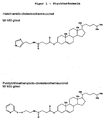
- Molecules which satisfy the requirements of the inventive task can be prepared inter alia by coupling histamine, N- (2-aminoethyl) morpholine or N- (2-aminoethyl) piperazine.
- His-Chol His-Chol
- Mo-Chol Mo-Chol
- Pip-Chol Pip-Chol.
- the sterol is selected from the group consisting of: cholesterol, sitosterol, campesterol, desmosterol, fucosterol, 22-ketosterol, 20-hydroxysterol, stigmasterol, 22-hydroxycholesterol, 25-hydroxycholesterol, lanosterol, 7-dehydrocholesterol, dihydrocholesterol, 19-hydroxycholesterol, 5 ⁇ -cholest-7-en-3 ⁇ -ol, 7-hydroxycholesterol, epicholesterol, ergosterol and the dehydroergosterol.
- the sterols used can carry at their 3-position different groups, which allow a simple and stable coupling or optionally fulfill the function of a spatial spacer.
- Particularly suitable for a direct coupling are the naturally occurring hydroxyl group, but also the chlorine of the sterol chlorides, or about the amino group of sterolamines or the thiol group of thiocholesterol.
- the invention also relates to liposomes comprising the inventive substances. All substances or compounds of the invention can be incorporated in a high proportion in liposomal membranes and only lead to a positive charge of the total particle when the pH of the medium is less than (pKa + 1) of the compounds of the invention.
- the proportion of the sterol derivative is at most 50 mol%.
- Particularly preferred are compositions containing at least 5 mol%, but at most 40 mol% of the compound.
- Most preferred are compositions containing at least 10 mole% and at most 30 mole% of the sterol derivative.
- the liposomes in particular comprise phosphatidylcholine, phosphatidylethanolamine and / or diacylglycerol. Since cholesterol itself can not form liposomes, is the Addition of another lipid necessary. This lipid may in particular be a phospholipid. Further modifications of the liposome are of course possible. Thus, in particular the use of polyethylene glycol-modified phospholipids or analogous compounds is advantageous.
- the liposomes have an average size between 50 and 1000 nm, preferably between 50 and 300 nm and most preferably between 60 and 130 nm.
- the liposomes comprise active substances.
- the liposomes according to the invention are suitable, for example, for parenteral use. They can be used, for example, in cancer therapy and for the therapy of severe infections. Liposomal dispersions can be injected, infused or implanted. They then distribute themselves in the blood or in the lymph or give off their active ingredient as a depot. The latter can be achieved by highly concentrated dispersions which are present as gels.
- the liposomes can also be used for topical application on the skin. In particular, they can help to ensure that various active ingredients are better able to penetrate the skin or even enter the body through the skin. Furthermore, it is possible to use the liposomes for gene transfer.
- liposomes are of course also known as Model membranes can be used. Liposomes are very similar in their basic structure to cell membranes. They can therefore be used as membrane models to quantify the permeation rate of drugs through membranes or the membrane binding of drugs.
- Liposomes produced using the substances according to the invention advantageously show only a slight unspecific binding to cell surfaces. This low non-specific binding is an essential prerequisite for the formation of a specific binding to target cells. If the described liposomes are provided with further ligands, a targeting of the vehicles is given. The active ingredient can then be specifically enriched for those cells or tissues that have pathological conditions.
- An essential use of the substances according to the invention therefore lies in the construction of vectors for the transfer of active ingredient in living organisms.
- the vectors are particularly suitable for the delivery of therapeutic macromolecules, such as proteins or DNA, which by themselves can not cross the cell membrane or rapidly degrade in the bloodstream.
- liposomes for this use comprise a sufficient amount of PDEA-Chol in addition to other lipids, including those mentioned in the present specification.
- the amount of PDEA-Chol used depends on the intended use. So for example, liposomes loaded with a marker need a high ratio of this signal generator to the specificity determining component. In this case, only a small number of antibodies should be coupled per liposome.
- the liposomes comprise as active ingredient a protein, a peptide, a DNA, an RNA, an antisense nucleotide and / or a decoy nucleotide.
- At least 80% of the active ingredient is located inside the liposome.
- the invention also relates to a method for drug loading of the liposomes, wherein a defined pH value is used for encapsulation and a second pH value for separating the unbound drug is set.
- the invention also relates to a method for drug loading of the liposomes wherein the liposomes are permeabilized and sealed at a defined pH.
- the invention also relates to the use of the liopsomes for the preparation of nanocapsules.
- the invention further relates to the use of the liposomes for the production of release systems in diagnostics.
- the liposomes are used for the transport and / or release of active ingredients.
- liposome depot formulation and / or as a circulating depot.
- the liposomes can be used in particular in intravenous or peritoneal administration.
- the liposomes in a further embodiment of the invention, it is advantageous to use the liposomes as a vector for transfecting cells in vitro and ex vivo. Also advantageous are the liposomes for use as a vector for transfection in vivo.
- the permeability of the lipid layer of the liposomes according to the invention is particularly dependent on the pH and thus on the charge state of the sterol derivative.
- a permeability increase occurs only in the simultaneous presence of high levels of phosphatidylethanolamine (PE) in the membrane.
- PE phosphatidylethanolamine
- This phospholipid alone does not form membranes and is artificially stabilized by the CHEMS.
- a disadvantage of such liposomes is their low stability, which manifests itself in the fact that smaller active ingredient molecules are already slowly diffusing out even without a pH change.
- membranes of phosphatidylcholine are also permeabilized so that trapped active substances or markers diffuse out within minutes to hours.
- these membranes are stable in themselves and show only a low initial permeability. Liposomes using the structures according to the invention are therefore suitable for the construction of release systems in which a release of agents depending on the pH of the medium to be made.
- Unincorporated, externally adherent cargo molecules can be removed, if necessary, by simply raising the pH. This step is necessary whenever unincorporated cargo molecules lead to aggregation of the liposomes.
- the advantage of using the components according to the invention is the fact that the entrapped active ingredients only have to be brought into conditions for the period of the actual inclusion, which permit interaction with the lipid layer. Once the lipid layer remains self-contained, it can become other Conditions are changed. A conceivable inactivation of active substances, in particular of proteins, can thereby be minimized.
- Liposomes comprising the components of the invention may be coated with polymers under conditions known to those skilled in the art.
- a simple or multiple deposition of such substances on the surface can take place.
- a multiple deposition which is optionally carried out in the presence of crosslinking agents, arise liposomal nanoacids, as described in the WO 00/28972 or in the WO01 / 64330 are described.
- An advantage of using the substances described here is the fact that the electrostatic interaction with the polyelectrolyte can be interrupted. It is known that the interaction of a polyelectrolyte with charge carriers of the liposomal membrane can lead to the segregation of membrane constituents and to the formation of lipid clusters. In many cases, this segregation occurs with a permeabilization of the liposome.
- the substances according to the invention enable a shutdown of this interaction after the coating process. If the pH is increased at this time, the liposomes are only sterically trapped in the nanocapsules, an interaction of the membrane with the polyelectrolytes then no longer exists. Cluster formation of the lipids and associated permeabilization of the membrane can thus be circumvented.
- the permeability changes are used specifically for the loading of liposomes.
- An entrapped agent can under High permeability conditions are added to the medium. Subsequently, conditions of low permeability are set. This leaves the active substance inside the liposomes. Unincorporated drug may then be optionally separated.
- Such a permeability change can be brought about on liposomes or on liposomal nanocapsules.
- liposomes whose membrane contains His-Chol or Pip-Chol are capable of chelating metal ions. This property leads to an increase in the positive charge of the liposome. This effect is particularly strong at neutral pH values, since then the intrinsic charge of the compound is low. Because of their chelating properties, such liposomes can be used in biochemical diagnostics and for pharmaceutical therapy.
- liposomes can be loaded with metal ions whose fluorescence is enhanced by the chelation, so for example terbium or europium ions.
- liposomes for this application contain specificity-determining components, eg antibodies, lectins, selectins, receptors or hormones or RNA aptamers.
- specificity-determining components eg antibodies, lectins, selectins, receptors or hormones or RNA aptamers.
- the presence of these metal ions is limited to the lumen of the liposomes in order to avoid nonspecific signals from externally adhering and slowly released metal ions.
- the liposomes according to the invention easily fuse at low pH with other membranes.
- this step requires the presence of a greater proportion of PE in the membrane.
- This has the function of a helper lipid due to its tendency to form hexagonal phases.
- the disadvantage is the lower stability of such membranes, often a creeping release of trapped drugs is observed here.
- liposomes produced using the substances of the invention effectively fuse even in the absence of such helper lipid.
- the substances according to the invention it is possible to produce those liposomes which can stably encapsulate an active ingredient, fuse above with cell membranes under the conditions of a low pH, and release the active substance there.
- liposomes for experimental or therapeutic purposes are their compatibility with cells and tissues.
- a number of known compounds used for introducing DNA or proteins into cells are cytotoxic.
- vectors for gene or protein transport into cells Another prerequisite for the construction of vectors for gene or protein transport into cells is their compatibility with serum or blood. Because of their strong cationic charge, the currently known vectors with serum form uncontrolled large aggregates that lead to the formation of thrombi in the organism. Their use is thus virtually eliminated in vivo and limited to in vitro or ex vivo applications.
- liposomes which have been built up using the components according to the invention do not form any aggregates in serum or blood.
- a next requirement for the construction of vectors for protein or gene transfer is their stability under physiological conditions.
- liposomes When administered to the bloodstream, liposomes are attacked by components of the complement system and rapidly lyzed. This reaction takes place within minutes. It comes to pore formation in the membrane through which even large molecules such as proteins can diffuse out. A stabilization of liposomes against these mechanisms is so far only possible by incorporation of cholesterol in the lipid layer. Such liposomes are then very stable, but can no longer interact with cells or release their active ingredient easily. It has surprisingly been found that liposomes under Use of the components of the invention are constructed, are stable in serum or blood for several hours. The drug release is low even under these conditions.
- a liposomal vector for transporting drugs must meet at least three requirements: it must have low toxicity, include the drug safely and stably, and be compatible with serum or blood.
- liposomes made using the substances of the invention are therefore well suited for use in therapeutic purposes. Further properties which support this use are the good loadability with active substances and the targeted release of these substances by permeabilization of the membrane at suitable pH values or redox states.
- Liposomes are generally prepared as in Example 4. The following lipid mixtures were used (data in mol%): A: DPPC 60 His Chol 40 B: DPPC 60 CHEMS 40 C: POPC 60 His Chol 40 D: POPC 60 CHEMS 40
- the lipids are dissolved in the specified solvent mixture and dried under vacuum.
- the lipid films are hydrated with 100 mM carboxyfluorescein, 50 mM NaCl, pH 7.5 at a lipid concentration of 15 mM and frozen, thawed and extruded as above. Uncontained carboxyfluorescein is removed by gel filtration.
- Liposomes are prepared as in Example 4. 40 ⁇ l of these liposomes are suspended in 7 ml of buffer (10 mM potassium acetate, 10 mM HEPES pH 4.2 or pH 7.5). Subsequently, the metal ions are added in the concentrations indicated and the zeta potential of the liposomes is measured. ions pH 4.2 pH 7.5 Ni 2+ 10mM + 16.8 + 11.6 10mM 10mM + 40.5 +4.6 10mM 10mM + 65.4 not measurable Without addition + 47.6 +2.4
- DNA (herring sperm, SIGMA D3159) is dissolved in 1 ml of water.
- a 0.2 mM suspension in buffer (10 mM potassium acetate, 10 mM HEPES, pH 4.2 or pH 7.5) is prepared. 45 ⁇ l of the DNA solution are added to each 1 ml of the different liposome samples and rapidly mixed. After 15 min of incubation, the sample is washed with Make up 6 ml of the appropriate buffer and measure the zeta potential of the liposomes.
- Liposomes having the following compositions are prepared as in Example 1 (all data in mol%): A) POPC 60 HisChol 40 X) POPC 100 Y) POPC 60 DPPG 40
- the facultative cationic liposomes A are incubated with the neutral liposomes X or the anionic liposomes Y in the buffer (10 mM HEPES, 10 mM potassium acetate, pH 4.2 or 7.5).
- the possible fusion of liposomes is analyzed by size measurement by dynamic light scattering.
- Liposome 1 X Y Liposome 2 A A pH 4.2 181.6 nm 1689.3 nm pH 7.5 191.8 nm 250.0 nm
- the liposomes thus prepared are incubated with 7.5 ml of buffer at pH 4.2 and pH 7.2 (buffer as above, starting pH 4.2 and 8.0). After incubation, released proteinase K is separated by ultrafiltration with a 0.1 ⁇ m membrane. The remaining liposomes in the filter are then treated with 7.5 ml of a solution of Triton X-100 in buffer (as above, pH 8.0).
- the liposomes are incubated at a pH of 7.2, the bulk of the enzyme is released already without the addition of Triton and is found in the first filtrate. The addition of Triton can then hardly dissolve any further enzyme from the liposomes.
- the toxic effect of the substances was tested with the MTT test.
- HeLa cells were seeded at a density of 2 * 10 ⁇ 4 cells per well of a 96-well-titer plate and cultivated for two days. Liposomes of various composition (see table) were added to the cells at a concentration of 0.5 mM and incubated with these cells for 24 h. Subsequently, the MTT test was performed.
- DOPE liposome viability
- DOPE Dioleoylphosphatidylethanolamine, 60mol% each POPC: palmitoyloleoylphosphatidylcholine, 60mol% each TLC-Chol: N, N-dimethyl (2-aminoethyl) carbamoylcholesterol
- liposomes comprising the substances according to the invention are very well tolerated by cells. A toxic effect is difficult to detect. In contrast, known cationic lipids such as DC-Chol or DOTAP have a significant cytotoxic effect.
- Carboxyfluorescein-loaded liposomes of the compositions POPC / His-Chol 60:40, POPC / Mo-Chol 60:40 and POPC / DPPG 60:40 (all data in mol%) were prepared analogously to Example 5.
- the liposomes were diluted to 0.1 mM in human serum and incubated at 37 ° C. At certain times the fluorescence was measured. Complete release of CF was achieved by adding Triton X-100 to the measurement buffer. The recovered CF release data are summarized in the table below. For comparison, the negatively charged POPC / DPPG liposomes are shown that virtually do not lose CF over 4 hours.
- POPC / His-Chol liposomes show very good serum stabilities up to 2 h but lose some CF until 4 h.
- POPC / Mo-Chol liposomes show slightly more permeability than POPC / His-Chol.
- POPC / His-Chol POPC / Mo-Chol POPC / DPPG 0 min 0% 0% 0% 30 min 0% 4% 0% 60 min 2% 5% 1 % 120 min 4% 9% 2% 240 min 19% 16% 2%
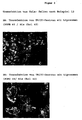
- HeLa cells (3 * 10 ⁇ 5) were plated in each well of a 6-well titer plate and cultured for three days. Liposomes were prepared in the same compositions as in Example 10 in the presence of fluorescently labeled dextran (TRITC-dextran, 10 mg / ml in hydration buffer). Unincorporated TRITC-dextran was removed by gel filtration. The liposomes thus prepared were added to the cells and incubated for 6 h at 37 ° C. Subsequently, the cells were washed twice with buffer. The uptake of the dextran was monitored in the microscopic image or quantified by fluorescence spectroscopy.
- TRITC-dextran 10 mg / ml in hydration buffer
- the new compounds do not yet achieve the efficacy of the known cationic lipids DOTAP or DC-Chol. However, they also mediate the transfection of macromolecules into cells. It is expected that this efficiency can be significantly increased by using ligands for cell attachment.
Landscapes
- Health & Medical Sciences (AREA)
- Chemical & Material Sciences (AREA)
- Organic Chemistry (AREA)
- General Health & Medical Sciences (AREA)
- Life Sciences & Earth Sciences (AREA)
- Medicinal Chemistry (AREA)
- Pharmacology & Pharmacy (AREA)
- Epidemiology (AREA)
- Animal Behavior & Ethology (AREA)
- Public Health (AREA)
- Veterinary Medicine (AREA)
- Molecular Biology (AREA)
- Dispersion Chemistry (AREA)
- Biophysics (AREA)
- Medicinal Preparation (AREA)
- Steroid Compounds (AREA)
- Medicines That Contain Protein Lipid Enzymes And Other Medicines (AREA)
- Pharmaceuticals Containing Other Organic And Inorganic Compounds (AREA)
Applications Claiming Priority (3)
| Application Number | Priority Date | Filing Date | Title |
|---|---|---|---|
| DE10109898A DE10109898A1 (de) | 2001-02-21 | 2001-02-21 | Lipide mit veränderlicher Ladung |
| DE10109898 | 2001-02-21 | ||
| PCT/EP2002/001879 WO2002066490A2 (de) | 2001-02-21 | 2002-02-21 | Kationische sterolderivate, ph-sensitive liposomen umfassend diese und verfahren zur wirkstoffbeladung von liposomen |
Publications (2)
| Publication Number | Publication Date |
|---|---|
| EP1363933A2 EP1363933A2 (de) | 2003-11-26 |
| EP1363933B1 true EP1363933B1 (de) | 2009-05-06 |
Family
ID=7675951
Family Applications (3)
| Application Number | Title | Priority Date | Filing Date |
|---|---|---|---|
| EP02712923A Expired - Lifetime EP1363933B1 (de) | 2001-02-21 | 2002-02-21 | Kationische sterolderivate, ph-sensitive liposomen diese umfassend und verfahren zur wirkstoffbeladung von liposomen |
| EP07106269A Withdrawn EP1806354A2 (de) | 2001-02-21 | 2002-02-21 | Amphotere Sterole und deren Verwendung |
| EP02729931A Expired - Lifetime EP1363932B1 (de) | 2001-02-21 | 2002-02-21 | Amphotere sterole und deren verwendung |
Family Applications After (2)
| Application Number | Title | Priority Date | Filing Date |
|---|---|---|---|
| EP07106269A Withdrawn EP1806354A2 (de) | 2001-02-21 | 2002-02-21 | Amphotere Sterole und deren Verwendung |
| EP02729931A Expired - Lifetime EP1363932B1 (de) | 2001-02-21 | 2002-02-21 | Amphotere sterole und deren verwendung |
Country Status (10)
| Country | Link |
|---|---|
| US (3) | US7312206B2 (https=) |
| EP (3) | EP1363933B1 (https=) |
| JP (2) | JP2004521917A (https=) |
| CN (1) | CN1231493C (https=) |
| AT (2) | ATE430759T1 (https=) |
| AU (2) | AU2002244726A1 (https=) |
| BR (1) | BR0207776A (https=) |
| CA (1) | CA2438910C (https=) |
| DE (3) | DE10109898A1 (https=) |
| WO (2) | WO2002066490A2 (https=) |
Families Citing this family (47)
| Publication number | Priority date | Publication date | Assignee | Title |
|---|---|---|---|---|
| DE10207177A1 (de) * | 2002-02-19 | 2003-09-04 | Novosom Ag | Fakultativ kationische Lipide |
| DE10207178A1 (de) * | 2002-02-19 | 2003-09-04 | Novosom Ag | Komponenten für die Herstellung amphoterer Liposomen |
| EP1393719A1 (en) * | 2002-08-23 | 2004-03-03 | Munich Biotech AG | Camptothecin-carboxylate formulations |
| AU2004238076A1 (en) * | 2003-05-09 | 2004-11-25 | Novosom Ag | Injectable liposomal depots for delivering active ingredients |
| CN1849112B (zh) * | 2003-09-09 | 2012-06-13 | 吉里德科学公司 | 治疗性脂质体 |
| EP1547580A1 (en) * | 2003-12-23 | 2005-06-29 | MediGene Oncology GmbH | Loading of a camptothecin drug into colloidal nanoparticles |
| WO2005063212A1 (en) * | 2003-12-31 | 2005-07-14 | Amorepacific Corporation | Cholesteryl hemisuccinate incorporated lipid-based nano-carriers and skin-care compositions for external application containing the same |
| US20050191344A1 (en) * | 2004-01-15 | 2005-09-01 | Samuel Zalipsky | Liposome composition for delivery of therapeutic agents |
| US8815599B2 (en) * | 2004-06-01 | 2014-08-26 | Pronai Therapeutics, Inc. | Methods and compositions for the inhibition of gene expression |
| WO2006048329A1 (en) * | 2004-11-05 | 2006-05-11 | Novosom Ag | Improvements in or relating to pharmaceutical compositions comprising an oligonucleotide as an active agent |
| JP2008520600A (ja) * | 2004-11-19 | 2008-06-19 | ノヴォソム アクチェンゲゼルシャフト | 局所投与のための医薬組成物におけるまたはそれに関する改善 |
| EP1764090A1 (en) * | 2005-09-15 | 2007-03-21 | Novosom AG | Amphoteric liposomes for local drug applications |
| EP1911443A1 (en) * | 2006-10-13 | 2008-04-16 | Novosom AG | Amphoteric liposomes, method of formulating an amphoteric liposome and a method of loading an amphoteric liposome |
| AU2006291429B2 (en) | 2005-09-15 | 2013-04-04 | Biontech Delivery Technologies Gmbh | Improvements in or relating to amphoteric liposomes |
| PL1957044T3 (pl) * | 2005-12-01 | 2013-11-29 | Pronai Therapeutics Inc | Amfoteryczny preparat liposomowy |
| ES2548240T3 (es) | 2005-12-01 | 2015-10-15 | Pronai Therapeutics, Inc. | Terapias para el cáncer y composiciones farmacéuticas usadas en las mismas |
| CA2665783C (en) | 2006-10-13 | 2015-12-15 | Novosom Ag | Improvements in or relating to amphoteric liposomes, a method of formulating an amphoteric liposome and a method of loading an amphoteric liposome |
| WO2008074487A2 (en) * | 2006-12-19 | 2008-06-26 | Novosom Ag | Lipids and lipid assemblies comprising transfection enhancer elements |
| HUE040417T2 (hu) | 2007-05-04 | 2019-03-28 | Marina Biotech Inc | Aminosavlipidek és alkalmazásuk |
| US8822409B2 (en) | 2007-06-20 | 2014-09-02 | Phylogica Limited | Compositions and uses thereof for the treatment of acute respiratory distress syndrome (ARDS) and clinical disorders associated with therewith |
| JP2009203228A (ja) * | 2008-01-29 | 2009-09-10 | Kochi Univ | キレーター化合物含有薬物輸送剤 |
| US8765171B2 (en) | 2009-03-09 | 2014-07-01 | The Regents Of The University Of California | Methods and compositions for liposomal formulation of antigens and uses thereof |
| WO2010135714A2 (en) | 2009-05-22 | 2010-11-25 | The Methodist Hospital Research Institute | Methods for modulating adipocyte expression using microrna compositions |
| EP3318248B1 (en) * | 2009-12-01 | 2019-04-10 | Translate Bio, Inc. | Delivery of mrna for the augmentation of proteins and enzymes in human genetic diseases |
| WO2012109495A1 (en) | 2011-02-09 | 2012-08-16 | Metabolic Solutions Development Company, Llc | Cellular targets of thiazolidinediones |
| CZ201181A3 (cs) * | 2011-02-15 | 2012-09-12 | Ústav organické chemie a biochemie Akademie ved CR, v.v.i. | Deriváty pregnanolonu substituované v poloze 3alfa kationickou skupinou, zpusob jejich výroby, jejich použití a prostredek je obsahující |
| WO2012159164A1 (en) | 2011-05-23 | 2012-11-29 | Phylogica Limited | Method of determining, identifying or isolating cell-penetrating peptides |
| GB201116248D0 (en) * | 2011-09-20 | 2011-11-02 | Glaxosmithkline Biolog Sa | Liposome production using isopropanol |
| US20150297725A1 (en) | 2012-07-30 | 2015-10-22 | Rutgers, The State University Of New Jersey | Cochleates made with soy phosphatidylserine |
| US10942184B2 (en) | 2012-10-23 | 2021-03-09 | Caris Science, Inc. | Aptamers and uses thereof |
| EP4170031A1 (en) | 2012-10-23 | 2023-04-26 | Caris Science, Inc. | Aptamers and uses thereof |
| CA2890725A1 (en) | 2012-11-05 | 2014-05-08 | Pronai Therapeutics, Inc. | Methods of using biomarkers for the treatment of cancer by modulation of bcl2|expression |
| AU2013361323B2 (en) | 2012-12-19 | 2018-09-06 | Caris Science, Inc. | Compositions and methods for aptamer screening |
| US20170000715A1 (en) * | 2014-01-29 | 2017-01-05 | Humedix Co., Ltd. | Pegylated 7-dehydrocholesterol derivatives |
| JP6399530B1 (ja) * | 2017-09-04 | 2018-10-03 | 一丸ファルコス株式会社 | pH感受性リポソーム |
| US20200208152A1 (en) | 2017-09-08 | 2020-07-02 | Mina Therapeutics Limited | Stabilized sarna compositions and methods of use |
| EP3775211B1 (en) | 2018-04-12 | 2023-04-05 | MiNA Therapeutics Limited | Sirt1-sarna compositions and methods of use |
| US12240824B2 (en) * | 2018-05-30 | 2025-03-04 | Translate Bio, Inc. | Vitamin cationic lipids |
| EP3953473A1 (en) | 2019-04-12 | 2022-02-16 | MiNA Therapeutics Limited | Sirt1-sarna compositions and methods of use |
| GB2603454A (en) | 2020-12-09 | 2022-08-10 | Ucl Business Ltd | Novel therapeutics for the treatment of neurodegenerative disorders |
| TW202305133A (zh) | 2021-03-26 | 2023-02-01 | 英商米納治療有限公司 | Tmem173 sarna組合物及其使用方法 |
| WO2023099884A1 (en) | 2021-12-01 | 2023-06-08 | Mina Therapeutics Limited | Pax6 sarna compositions and methods of use |
| GB202117758D0 (en) | 2021-12-09 | 2022-01-26 | Ucl Business Ltd | Therapeutics for the treatment of neurodegenerative disorders |
| WO2023170435A1 (en) | 2022-03-07 | 2023-09-14 | Mina Therapeutics Limited | Il10 sarna compositions and methods of use |
| WO2024125597A1 (en) | 2022-12-14 | 2024-06-20 | Providence Therapeutics Holdings Inc. | Compositions and methods for infectious diseases |
| WO2024134199A1 (en) | 2022-12-22 | 2024-06-27 | Mina Therapeutics Limited | Chemically modified sarna compositions and methods of use |
| WO2026027887A2 (en) | 2024-08-02 | 2026-02-05 | Mina Therapeutics Limited | Hbg1/2-sarna compositions and methods of use |
Family Cites Families (20)
| Publication number | Priority date | Publication date | Assignee | Title |
|---|---|---|---|---|
| US4891208A (en) | 1985-04-10 | 1990-01-02 | The Liposome Company, Inc. | Steroidal liposomes |
| ATE45744T1 (de) | 1984-07-25 | 1989-09-15 | Ciba Geigy Ag | Phosphatidylverbindungen, verfahren zu ihrer herstellung und ihre verwendung. |
| US4788162A (en) * | 1985-12-23 | 1988-11-29 | General Electric Company | Composite by compression |
| US5993823A (en) * | 1990-12-18 | 1999-11-30 | Institut Pasteur De Lille | Cytotoxic T lymphocyte-inducing lipopeptides and methods of use |
| US5283185A (en) | 1991-08-28 | 1994-02-01 | University Of Tennessee Research Corporation | Method for delivering nucleic acids into cells |
| US5365487A (en) * | 1992-03-24 | 1994-11-15 | Texas Instruments Incorporated | DRAM power management with self-refresh |
| JP2579730B2 (ja) * | 1993-01-22 | 1997-02-12 | 株式会社ディ・ディ・エス研究所 | ペプチド−脂質誘導体及びリポソーム |
| GB9420390D0 (en) | 1994-10-10 | 1994-11-23 | Nycomed Salutar Inc | Liposomal agents |
| DE59507224D1 (de) * | 1994-12-28 | 1999-12-16 | Max Delbrueck Centrum | Neues cholesterolderivat für den liposomalen gentransfer |
| PT888379E (pt) | 1996-03-01 | 2001-05-31 | Centre Nat Rech Scient | Compostos analogos a familia dos amidinios composicoes farmaceuticas que os contem e suas aplicacoes |
| WO1997039019A1 (en) | 1996-04-12 | 1997-10-23 | University Of Pittsburgh | Novel cationic cholesteryl derivatives containing cyclic polar groups |
| DE69727384T2 (de) | 1996-05-24 | 2004-11-04 | IC-VEC Ltd. | Polykatonische sterin-derivate zur transfektion |
| US5925628A (en) * | 1997-03-31 | 1999-07-20 | Genzyme Corporation | Cationic amphiphiles for intracellular delivery of therapeutic molecules |
| US6703381B1 (en) | 1998-08-14 | 2004-03-09 | Nobex Corporation | Methods for delivery therapeutic compounds across the blood-brain barrier |
| DE19852928C1 (de) | 1998-11-17 | 2000-08-03 | Steffen Panzner | Strukturen in Form von Hohlkugeln |
| US6342598B1 (en) * | 1998-11-26 | 2002-01-29 | Bracco International B.V. | Amphipatic polycarboxylic chelates and complexes with paramagnetic metals as MRI contrast agents |
| GB2345868A (en) | 1999-01-23 | 2000-07-26 | Martin Hodgson | Self adhesive magnetic or electromagnetic tapes |
| US6379698B1 (en) * | 1999-04-06 | 2002-04-30 | Isis Pharmaceuticals, Inc. | Fusogenic lipids and vesicles |
| DE10010264A1 (de) * | 2000-03-02 | 2001-09-13 | Novosom Gmbh | Stabilisierte Liposomen und Hüllstrukturen |
| GB0015624D0 (en) | 2000-06-26 | 2000-08-16 | Nat Cancer Centre | Materials and methods relating to improved gene delivery |
-
2001
- 2001-02-21 DE DE10109898A patent/DE10109898A1/de not_active Withdrawn
-
2002
- 2002-02-21 US US10/468,652 patent/US7312206B2/en not_active Expired - Lifetime
- 2002-02-21 JP JP2002566202A patent/JP2004521917A/ja active Pending
- 2002-02-21 CA CA002438910A patent/CA2438910C/en not_active Expired - Fee Related
- 2002-02-21 EP EP02712923A patent/EP1363933B1/de not_active Expired - Lifetime
- 2002-02-21 CN CNB028053206A patent/CN1231493C/zh not_active Expired - Fee Related
- 2002-02-21 DE DE50210313T patent/DE50210313D1/de not_active Expired - Lifetime
- 2002-02-21 WO PCT/EP2002/001879 patent/WO2002066490A2/de not_active Ceased
- 2002-02-21 EP EP07106269A patent/EP1806354A2/de not_active Withdrawn
- 2002-02-21 WO PCT/EP2002/001878 patent/WO2002066489A2/de not_active Ceased
- 2002-02-21 US US10/468,654 patent/US7407947B2/en not_active Expired - Lifetime
- 2002-02-21 JP JP2002566203A patent/JP4470197B2/ja not_active Expired - Fee Related
- 2002-02-21 EP EP02729931A patent/EP1363932B1/de not_active Expired - Lifetime
- 2002-02-21 BR BR0207776-0A patent/BR0207776A/pt not_active IP Right Cessation
- 2002-02-21 AT AT02712923T patent/ATE430759T1/de active
- 2002-02-21 DE DE50213524T patent/DE50213524D1/de not_active Expired - Lifetime
- 2002-02-21 AT AT02729931T patent/ATE364620T1/de active
- 2002-02-21 AU AU2002244726A patent/AU2002244726A1/en not_active Abandoned
- 2002-02-21 AU AU2002302364A patent/AU2002302364B2/en not_active Ceased
-
2007
- 2007-11-02 US US11/934,147 patent/US20080113017A1/en not_active Abandoned
Also Published As
| Publication number | Publication date |
|---|---|
| DE50210313D1 (de) | 2007-07-26 |
| EP1806354A2 (de) | 2007-07-11 |
| EP1363932B1 (de) | 2007-06-13 |
| CA2438910A1 (en) | 2002-08-29 |
| JP4470197B2 (ja) | 2010-06-02 |
| WO2002066489A2 (de) | 2002-08-29 |
| AU2002302364B2 (en) | 2008-01-03 |
| WO2002066490A3 (de) | 2003-04-24 |
| BR0207776A (pt) | 2004-03-23 |
| US20040131666A1 (en) | 2004-07-08 |
| JP2004521917A (ja) | 2004-07-22 |
| EP1363932A2 (de) | 2003-11-26 |
| US7407947B2 (en) | 2008-08-05 |
| DE50213524D1 (de) | 2009-06-18 |
| EP1363933A2 (de) | 2003-11-26 |
| CN1492876A (zh) | 2004-04-28 |
| JP2004525902A (ja) | 2004-08-26 |
| CA2438910C (en) | 2009-10-13 |
| US7312206B2 (en) | 2007-12-25 |
| AU2002244726A1 (en) | 2002-09-04 |
| ATE364620T1 (de) | 2007-07-15 |
| WO2002066490A2 (de) | 2002-08-29 |
| ATE430759T1 (de) | 2009-05-15 |
| US20040120997A1 (en) | 2004-06-24 |
| DE10109898A1 (de) | 2002-09-05 |
| US20080113017A1 (en) | 2008-05-15 |
| CN1231493C (zh) | 2005-12-14 |
| WO2002066489A3 (de) | 2003-01-03 |
Similar Documents
| Publication | Publication Date | Title |
|---|---|---|
| EP1363933B1 (de) | Kationische sterolderivate, ph-sensitive liposomen diese umfassend und verfahren zur wirkstoffbeladung von liposomen | |
| EP1363601B1 (de) | Amphotere liposomen und verwendung dieser | |
| EP1478652B1 (de) | Komponenten fur die herstellung amphoterer liposomen | |
| DE10207177A1 (de) | Fakultativ kationische Lipide | |
| DE69725877T2 (de) | Kationische lipid-nukleinsäure komplexe | |
| DE69527650T2 (de) | Katonische amphiphile und plasmide für die intrazelluläre abgabe von therapeutischen mitteln | |
| DE102007029471A1 (de) | Neue fakultativ kationische Sterole | |
| JP2004525902A5 (https=) | ||
| DD201973A5 (de) | Verfahren zur herstellung von liposomalen arzneimitteln | |
| JPWO2008120736A1 (ja) | 薬物送達制御用経肺投与リポソーム | |
| EP1397200A1 (de) | Auflösbare nano- und mikrokapseln, verfahren zu ihrer herstellung sowie ihre verwendung | |
| EP1734928A2 (de) | Serumstabile amphotere liposomen | |
| DE69820861T2 (de) | Teilchenförmige arzneimittelträger | |
| DE19736592C2 (de) | Tetraetherlipidderivat, ein oder mehrere Tetraetherlipidderivate enthaltendes Liposom oder Lipidagglomerat und pharmazeutische Zusammensetzung | |
| CN117982460A (zh) | 一种球棍状脂质纳米颗粒的制备及应用 | |
| DE3610873A1 (de) | Phospholipid-vesikel und verfahren zu ihrer herstellung | |
| EP3115039B1 (de) | Verfahren zum herstellen einer fusionsmischung zur übertragung eines geladenen moleküls in und/oder durch eine lipidmembran | |
| DE19623916A1 (de) | Neues Cholesterolderivat für den liposomalen Gentransfer |
Legal Events
| Date | Code | Title | Description |
|---|---|---|---|
| PUAI | Public reference made under article 153(3) epc to a published international application that has entered the european phase |
Free format text: ORIGINAL CODE: 0009012 |
|
| 17P | Request for examination filed |
Effective date: 20030919 |
|
| AK | Designated contracting states |
Kind code of ref document: A2 Designated state(s): AT BE CH CY DE DK ES FI FR GB GR IE IT LI LU MC NL PT SE TR |
|
| AX | Request for extension of the european patent |
Extension state: AL LT LV MK RO SI |
|
| 17Q | First examination report despatched |
Effective date: 20070921 |
|
| GRAP | Despatch of communication of intention to grant a patent |
Free format text: ORIGINAL CODE: EPIDOSNIGR1 |
|
| GRAS | Grant fee paid |
Free format text: ORIGINAL CODE: EPIDOSNIGR3 |
|
| GRAP | Despatch of communication of intention to grant a patent |
Free format text: ORIGINAL CODE: EPIDOSNIGR1 |
|
| GRAS | Grant fee paid |
Free format text: ORIGINAL CODE: EPIDOSNIGR3 |
|
| RIN1 | Information on inventor provided before grant (corrected) |
Inventor name: ENDERT, GEROLD Inventor name: PANZNER, STEFFEN Inventor name: BEHRENS, ANJA Inventor name: FANKHAENEL, STEFAN |
|
| GRAA | (expected) grant |
Free format text: ORIGINAL CODE: 0009210 |
|
| AK | Designated contracting states |
Kind code of ref document: B1 Designated state(s): AT BE CH CY DE DK ES FI FR GB GR IE IT LI LU MC NL PT SE TR |
|
| REG | Reference to a national code |
Ref country code: GB Ref legal event code: FG4D Free format text: NOT ENGLISH |
|
| REG | Reference to a national code |
Ref country code: CH Ref legal event code: EP |
|
| REG | Reference to a national code |
Ref country code: IE Ref legal event code: FG4D |
|
| REF | Corresponds to: |
Ref document number: 50213524 Country of ref document: DE Date of ref document: 20090618 Kind code of ref document: P |
|
| PG25 | Lapsed in a contracting state [announced via postgrant information from national office to epo] |
Ref country code: PT Free format text: LAPSE BECAUSE OF FAILURE TO SUBMIT A TRANSLATION OF THE DESCRIPTION OR TO PAY THE FEE WITHIN THE PRESCRIBED TIME-LIMIT Effective date: 20090906 Ref country code: FI Free format text: LAPSE BECAUSE OF FAILURE TO SUBMIT A TRANSLATION OF THE DESCRIPTION OR TO PAY THE FEE WITHIN THE PRESCRIBED TIME-LIMIT Effective date: 20090506 Ref country code: ES Free format text: LAPSE BECAUSE OF FAILURE TO SUBMIT A TRANSLATION OF THE DESCRIPTION OR TO PAY THE FEE WITHIN THE PRESCRIBED TIME-LIMIT Effective date: 20090817 |
|
| PG25 | Lapsed in a contracting state [announced via postgrant information from national office to epo] |
Ref country code: SE Free format text: LAPSE BECAUSE OF FAILURE TO SUBMIT A TRANSLATION OF THE DESCRIPTION OR TO PAY THE FEE WITHIN THE PRESCRIBED TIME-LIMIT Effective date: 20090806 |
|
| REG | Reference to a national code |
Ref country code: IE Ref legal event code: FD4D |
|
| PG25 | Lapsed in a contracting state [announced via postgrant information from national office to epo] |
Ref country code: IE Free format text: LAPSE BECAUSE OF FAILURE TO SUBMIT A TRANSLATION OF THE DESCRIPTION OR TO PAY THE FEE WITHIN THE PRESCRIBED TIME-LIMIT Effective date: 20090506 Ref country code: DK Free format text: LAPSE BECAUSE OF FAILURE TO SUBMIT A TRANSLATION OF THE DESCRIPTION OR TO PAY THE FEE WITHIN THE PRESCRIBED TIME-LIMIT Effective date: 20090506 |
|
| PLBE | No opposition filed within time limit |
Free format text: ORIGINAL CODE: 0009261 |
|
| STAA | Information on the status of an ep patent application or granted ep patent |
Free format text: STATUS: NO OPPOSITION FILED WITHIN TIME LIMIT |
|
| 26N | No opposition filed |
Effective date: 20100209 |
|
| BERE | Be: lapsed |
Owner name: NOVOSOM A.G. Effective date: 20100228 |
|
| PG25 | Lapsed in a contracting state [announced via postgrant information from national office to epo] |
Ref country code: GR Free format text: LAPSE BECAUSE OF FAILURE TO SUBMIT A TRANSLATION OF THE DESCRIPTION OR TO PAY THE FEE WITHIN THE PRESCRIBED TIME-LIMIT Effective date: 20090807 Ref country code: MC Free format text: LAPSE BECAUSE OF NON-PAYMENT OF DUE FEES Effective date: 20100301 |
|
| PG25 | Lapsed in a contracting state [announced via postgrant information from national office to epo] |
Ref country code: BE Free format text: LAPSE BECAUSE OF NON-PAYMENT OF DUE FEES Effective date: 20100228 |
|
| REG | Reference to a national code |
Ref country code: GB Ref legal event code: 732E Free format text: REGISTERED BETWEEN 20110224 AND 20110302 |
|
| REG | Reference to a national code |
Ref country code: FR Ref legal event code: TP |
|
| PG25 | Lapsed in a contracting state [announced via postgrant information from national office to epo] |
Ref country code: IT Free format text: LAPSE BECAUSE OF FAILURE TO SUBMIT A TRANSLATION OF THE DESCRIPTION OR TO PAY THE FEE WITHIN THE PRESCRIBED TIME-LIMIT Effective date: 20090506 |
|
| REG | Reference to a national code |
Ref country code: CH Ref legal event code: NV Representative=s name: ISLER & PEDRAZZINI AG Ref country code: CH Ref legal event code: PUE Owner name: MARINA BIOTECH, INC. Free format text: NOVOSOM AG#WEINBERGWEG 22#06120 HALLE (DE) -TRANSFER TO- MARINA BIOTECH, INC.#3830 MONTE VILLA PARKWAY#BOTHELL WA 98021-7266 (US) |
|
| REG | Reference to a national code |
Ref country code: NL Ref legal event code: SD Effective date: 20110408 |
|
| REG | Reference to a national code |
Ref country code: DE Ref legal event code: R081 Ref document number: 50213524 Country of ref document: DE Owner name: MARINA BIOTECH, INC., BOTHELL, US Free format text: FORMER OWNER: NOVOSOM AG, 06120 HALLE, DE Effective date: 20110330 |
|
| PG25 | Lapsed in a contracting state [announced via postgrant information from national office to epo] |
Ref country code: CY Free format text: LAPSE BECAUSE OF FAILURE TO SUBMIT A TRANSLATION OF THE DESCRIPTION OR TO PAY THE FEE WITHIN THE PRESCRIBED TIME-LIMIT Effective date: 20090506 |
|
| PG25 | Lapsed in a contracting state [announced via postgrant information from national office to epo] |
Ref country code: LU Free format text: LAPSE BECAUSE OF NON-PAYMENT OF DUE FEES Effective date: 20100221 |
|
| PG25 | Lapsed in a contracting state [announced via postgrant information from national office to epo] |
Ref country code: TR Free format text: LAPSE BECAUSE OF FAILURE TO SUBMIT A TRANSLATION OF THE DESCRIPTION OR TO PAY THE FEE WITHIN THE PRESCRIBED TIME-LIMIT Effective date: 20090506 |
|
| REG | Reference to a national code |
Ref country code: FR Ref legal event code: PLFP Year of fee payment: 15 |
|
| PGFP | Annual fee paid to national office [announced via postgrant information from national office to epo] |
Ref country code: DE Payment date: 20160216 Year of fee payment: 15 Ref country code: NL Payment date: 20160226 Year of fee payment: 15 |
|
| PGFP | Annual fee paid to national office [announced via postgrant information from national office to epo] |
Ref country code: GB Payment date: 20160217 Year of fee payment: 15 Ref country code: FR Payment date: 20160223 Year of fee payment: 15 Ref country code: AT Payment date: 20160225 Year of fee payment: 15 |
|
| PGFP | Annual fee paid to national office [announced via postgrant information from national office to epo] |
Ref country code: CH Payment date: 20170524 Year of fee payment: 16 |
|
| REG | Reference to a national code |
Ref country code: DE Ref legal event code: R119 Ref document number: 50213524 Country of ref document: DE |
|
| REG | Reference to a national code |
Ref country code: NL Ref legal event code: MM Effective date: 20170301 |
|
| REG | Reference to a national code |
Ref country code: AT Ref legal event code: MM01 Ref document number: 430759 Country of ref document: AT Kind code of ref document: T Effective date: 20170221 |
|
| GBPC | Gb: european patent ceased through non-payment of renewal fee |
Effective date: 20170221 |
|
| PG25 | Lapsed in a contracting state [announced via postgrant information from national office to epo] |
Ref country code: AT Free format text: LAPSE BECAUSE OF NON-PAYMENT OF DUE FEES Effective date: 20170221 |
|
| PG25 | Lapsed in a contracting state [announced via postgrant information from national office to epo] |
Ref country code: NL Free format text: LAPSE BECAUSE OF NON-PAYMENT OF DUE FEES Effective date: 20170301 |
|
| REG | Reference to a national code |
Ref country code: FR Ref legal event code: ST Effective date: 20171031 |
|
| PG25 | Lapsed in a contracting state [announced via postgrant information from national office to epo] |
Ref country code: DE Free format text: LAPSE BECAUSE OF NON-PAYMENT OF DUE FEES Effective date: 20170901 Ref country code: FR Free format text: LAPSE BECAUSE OF NON-PAYMENT OF DUE FEES Effective date: 20170228 |
|
| PG25 | Lapsed in a contracting state [announced via postgrant information from national office to epo] |
Ref country code: GB Free format text: LAPSE BECAUSE OF NON-PAYMENT OF DUE FEES Effective date: 20170221 |
|
| REG | Reference to a national code |
Ref country code: CH Ref legal event code: PL |
|
| PG25 | Lapsed in a contracting state [announced via postgrant information from national office to epo] |
Ref country code: LI Free format text: LAPSE BECAUSE OF NON-PAYMENT OF DUE FEES Effective date: 20180228 Ref country code: CH Free format text: LAPSE BECAUSE OF NON-PAYMENT OF DUE FEES Effective date: 20180228 |
|
| REG | Reference to a national code |
Ref country code: GB Ref legal event code: 732E Free format text: REGISTERED BETWEEN 20241003 AND 20241009 |