EP1277839B1 - L-glutamatoxidase - Google Patents
L-glutamatoxidase Download PDFInfo
- Publication number
- EP1277839B1 EP1277839B1 EP01921904A EP01921904A EP1277839B1 EP 1277839 B1 EP1277839 B1 EP 1277839B1 EP 01921904 A EP01921904 A EP 01921904A EP 01921904 A EP01921904 A EP 01921904A EP 1277839 B1 EP1277839 B1 EP 1277839B1
- Authority
- EP
- European Patent Office
- Prior art keywords
- glutamate oxidase
- dna
- gene
- coli
- glutamate
- Prior art date
- Legal status (The legal status is an assumption and is not a legal conclusion. Google has not performed a legal analysis and makes no representation as to the accuracy of the status listed.)
- Expired - Lifetime
Links
Images




Classifications
-
- C—CHEMISTRY; METALLURGY
- C12—BIOCHEMISTRY; BEER; SPIRITS; WINE; VINEGAR; MICROBIOLOGY; ENZYMOLOGY; MUTATION OR GENETIC ENGINEERING
- C12Y—ENZYMES
- C12Y104/00—Oxidoreductases acting on the CH-NH2 group of donors (1.4)
- C12Y104/03—Oxidoreductases acting on the CH-NH2 group of donors (1.4) with oxygen as acceptor (1.4.3)
- C12Y104/03011—L-Glutamate oxidase (1.4.3.11)
-
- C—CHEMISTRY; METALLURGY
- C12—BIOCHEMISTRY; BEER; SPIRITS; WINE; VINEGAR; MICROBIOLOGY; ENZYMOLOGY; MUTATION OR GENETIC ENGINEERING
- C12N—MICROORGANISMS OR ENZYMES; COMPOSITIONS THEREOF; PROPAGATING, PRESERVING, OR MAINTAINING MICROORGANISMS; MUTATION OR GENETIC ENGINEERING; CULTURE MEDIA
- C12N9/00—Enzymes; Proenzymes; Compositions thereof; Processes for preparing, activating, inhibiting, separating or purifying enzymes
- C12N9/0004—Oxidoreductases (1.)
- C12N9/0012—Oxidoreductases (1.) acting on nitrogen containing compounds as donors (1.4, 1.5, 1.6, 1.7)
- C12N9/0014—Oxidoreductases (1.) acting on nitrogen containing compounds as donors (1.4, 1.5, 1.6, 1.7) acting on the CH-NH2 group of donors (1.4)
- C12N9/0022—Oxidoreductases (1.) acting on nitrogen containing compounds as donors (1.4, 1.5, 1.6, 1.7) acting on the CH-NH2 group of donors (1.4) with oxygen as acceptor (1.4.3)
Definitions
- the present invention relates to a gene encoding a novel L-glutamate oxidase, and a method for producing the enzyme.
- L-Glutamate oxidase is an enzyme which catalyzes the following reaction: L-glutamic acid + O 2 + H 2 O ⁇ ⁇ -ketoglutaric acid + H 2 O 2 + NH 3 .
- L-Glutamate oxidase include those obtained through isolation and purification from Streptomyces sp. X-119-6, Streptomyces violascens, and Streptomyces endus ( Agric. Biol. Chem., 47, 1323-1328 (1983) , Chem. Pharm. Bull., 31, 1307-1314 (1983) , Chem. Pharm. Bull., 31, 3609-3616 (1983) , Eur. J. Biochem., 182, 327-332 (1989) ).
- L-glutamate oxidases have the following characteristics in common: (1) being produced from microorganisms belonging to genus Streptomyces; (2) remarkably high substrate specificity to L-glutamic acid; (3) comparatively stable under variations in temperature and pH; and (4) being a flavin enzyme requiring FAD as a coenzyme.
- these glutamate oxidases significantly differ in molecular weight depending on the microorganisms from which they have been obtained. For example, an L-glutamate oxidase derived from Streptomyces sp.
- L-Glutamic acid which is a predominant ingredient that imparts a flavor ( umami ) to food, is added to foods, inter alia processed foods, and such use amounts to about 1,000,000 tons per year. Since the L-glutamic acid content of foods can be readily determined by means of a kit or a sensor employing L-glutamate oxidase, this enzyme is now indispensable in the field of compositional analysis of foods.
- L-glutamate oxidase production processes of L-glutamate oxidase are not necessarily simple.
- the L-glutamate oxidase derived from Streptomyces sp. X-119-6 is difficult to produce through liquid culturing, and therefore, solid culturing is employed to produce the enzyme.
- L-glutamate oxidase can be readily prepared through a recombinant DNA technique, and new characteristics which native L-glutamate oxidase does not possess can be imparted to the prepared L-glutamate oxidase.
- hitherto neither analysis of a gene encoding L-glutamate oxidase nor the amino acid sequence of the enzyme has been reported.
- the present inventors have determined an N-terminal amino acid sequence of a subunit of the L-glutamate oxidase derived from Streptomyces sp. X-119-6, have produced primers on the basis of the sequence, and have carried out screening of a genomic DNA library, to thereby find a gene encoding a protein having an estimated molecular weight of about 76,000.
- the inventors have purified an enzyme produced through transformation of E . coli . by the gene and culturing, to thereby isolate a purified L-glutamate oxidase.
- the thus-isolated L-glutamate oxidase is formed of two subunits which are identical and have a molecular weight of about 70 kDa each (differing from conventionally reported features) and that the thus-isolated L-glutamate oxidase maintains L-glutamate oxidase activity although it does not have ⁇ 2 ⁇ 2 ⁇ 2 subunit conventionally reported.
- the present invention has been accomplished on the basis of these findings.
- a dimer-forming L-glutamate oxidase having the following physicochemical properties is described herein:
- the present invention is directed to an L-glutamate oxidase gene consisting of a nucleotide sequence represented by SEQ ID NO: 2 or encoding an L-glutamate oxidase with SEQ ID No. 1, which forms dimers.
- the present invention is directed to a method for producing L-glutamate oxidase, comprising the steps of transforming a host microorganism by use of the expression vector which has been prepared by inserting any of the aforementioned DNA fragments into a plasmid; culturing the resultant transformant, to thereby produce L-glutamate oxidase; and isolating the L-glutamate oxidase from the cultured product and purifying the product.
- the L-glutamate oxidase described herein has the following physicochemical properties:
- the L-glutamate oxidase described herein has an amino acid sequence represented by SEQ ID NO: 1.
- the amino acid sequence is not limited to the sequence represented by SEQ ID No. 1, so long as L-glutamate oxidase activity is conserved.
- Examples of such amino acid sequences include those in which N-terminal alanine has been substituted by methionine; and those in which methionine has been added to N-terminal alanine.
- enzymes having a homology of at least 90% to the amino acid sequence represented by SEQ ID NO: 1 fall within the definition of the L-glutamate oxidase described herein, so long as L-glutamate oxidase activity is conserved.
- the aforementioned enzyme can be produced by obtaining a gene encoding the L-glutamate oxidase from Streptomyces sp. X-119-6; preparing a recombination vector by use of the gene; transforming host cells by use of the recombination vector; culturing the resultant transformant; and collecting L-glutamate oxidase from the culture product.
- a gene encoding the L-glutamate oxidase from Streptomyces sp. X-119-6
- preparing a recombination vector by use of the gene transforming host cells by use of the recombination vector; culturing the resultant transformant; and collecting L-glutamate oxidase from the culture product.
- E. coli is preferred.
- a gene encoding the SEQ ID NO: 1 amino acid can be employed as the gene encoding L-glutamate oxidase which forms dimers.
- the gene has a nucleotide sequence represented by SEQ ID NO: 2.
- the gene of the present invention encoding L-glutamate oxidase is represented by base Nos. of 235 to 2,295 shown in Fig. 1 .
- a DNA fragment which can be hybridized with a DNA fragment of the above gene under stringent conditions and encodes a polypeptide having L- glutamate oxidase activity, which forms dimers may also be employed.
- the expression "can be hybridized with a DNA fragment under stringent conditions” refers to the ability to attain hybridization through hybridization reaction at 60°C for about 20 hours by use of a solution containing 5 x SSC (1 x SSC: sodium chloride (8.76 g) and sodium citrate (4.41 g) dissolved in water (1 L)), 0.1% w/v N-lauroylsarcosine sodium salt, 0.02% w/v SDS, and 0.5% w/v blocking reagent.
- a DNA fragment which further contains, on the upstream side of the gene encoding L-glutamate oxidase, a sequence encoding a signal peptide and/or the SD (Shine-Dalgarno) sequence may also be employed.
- an enzyme can be produced in an increased amount, and the produced enzyme can be purified more easily, depending on the host cells employed.
- FIG. 1 an example of such DNA fragments is represented by at least base Nos. 183 to 2,295. This DNA fragment contains the SD sequence and a sequence coding for signal peptide formed of 14 amino acid residues.
- any known technique can be employed for the preparation of DNA fragments, including cloning of a target gene obtained from chromosomal DNA of a microorganism; preparation of an expression vector by use of a cloned DNA fragment; and production of L-glutamate oxidase by use of the expression vector.
- chromosomal DNA is obtained, through a known extraction method, from Actinomyces belonging to Streptomyces, and the thus-obtained DNA is integrated into a plasmid or a phage vector, preferably a plasmid, to thereby prepare a DNA library of a microorganism such as E. coli or Actinomyces.
- a plasmid or a phage vector preferably a plasmid
- Any plasmids can be employed as plasmids into which the DNA is to be integrated, so long as the plasmids can be replicated and maintained in the host.
- the plasmids include those of E. coli or Actinomyces. Specific examples of E.
- coli plasmids include pBR322 [ Gene, 2, 95 (1977 )], pBR325 [ Gene, 4, 121 (1978 )], and pUC13 [ Gene, 19, 259 (1982 )], and specific examples of Actinomyces plasmids include pIJ61 [ Gene, 20, 51 (1982 )], and pIJ702 [ J. Gen. Microbiol., 129, 2703 (1983 )].
- Examples of methods for integrating chromosomal DNA into a plasmid vector include any appropriate methods known per se (e.g., disclosed in Maniatis, T. et al., Molecular Cloning, Cold Spring Harbor Laboratory, 239, 1982 and Hopwood, D.A. et al., Genetic Manipulation of Streptomyces, A Laboratory Manual, The John Innes Foundation, 1985 ).
- the thus-obtained plasmid vector is transferred into a host.
- the host include, but are not limited to, E. coli and actinomycetes.
- E. coli is preferred, because it provides excellent productivity of the novel L-glutamate oxidase of the present invention.
- E . coli include Escherichia coli K12 DH1 [ Pro., Natl. Acad. Sci., U.S.A. 60, 160 (1968 )], Escherichia coli JM103 [ Nucl. Acids. Res., 9, 309 (1981 )], Escherichia coli JA221 [ J. Mol.
- actinomycetes include Streptomyces lividans TK64 and derivatives thereof [Genetics Manipulation of Streptomyces, A Laboratory Manual].
- Transformation of the host with a plasmid may be performed through any appropriate method known per se.
- employable methods include the calcium chloride method and the calcium chloride/rubidium chloride method described in, for example, Molecular Cloning [Cold Spring Harbor Laboratory, 239(1982 )].
- an actinomycetes is used as a host, the protoplast method described in "Genetics Manipulation of Streptomyces, A Laboratory Manual" may be performed.
- a DNA library of E . coli or actinomycetes is obtained, and through use of the DNA library, cloning of an L-glutamate oxidase gene is performed.
- the cloning may be performed through any appropriate method known per se .
- colony hybridization using, as a probe, an oligonucleotide chemically synthesized on the basis of an amino acid sequence [ Molecular Cloning, Cold Spring Harbor Laboratory, (1982 )].
- the thus-cloned gene capable of encoding L-glutamate oxidase may be sub-cloned into a plasmid such as pBR322, pUC12, pUC13, pUC18, pUC19, pUC118, pUC119, pIJ702, pIJ61, pIJ101, pIJ486, or pIJ425.
- a plasmid such as pBR322, pUC12, pUC13, pUC18, pUC19, pUC118, pUC119, pIJ702, pIJ61, pIJ101, pIJ486, or pIJ425.
- the nucleotide sequence of the obtained DNA is determined through any appropriate method known per se, such as the Maxam-Gilbert method [ Pro. Natl. Acad. Sci., U.S.A. 74, 560 (1977 )], the dideoxy method [ Nucl. Acids. Res., 9, 309 (1981 )], or the deaza method [ Nucl. Acids. Res., 14, 1319(1986 )].
- the amino acid sequence deduced from the nucleotide sequence of the obtained DNA is compared with, for example, the previously analyzed N-terminal amino acid sequence of a known L-glutamate oxidase, to thereby confirm the presence of a DNA fragment encoding L-glutamate oxidase.
- colony hybridization or PCR is performed through use, as a probe, of a fragment of the previously cloned DNA for additional cloning, whereby DNA coding for the entire region of the L-glutamate oxidase gene is obtained.
- L-Glutamate oxidase may be produced through the following method. That is, the above-mentioned fragment of cloned DNA is inserted into a known plasmid harboring a promoter, etc., to thereby yield an expression vector. Subsequently, microorganisms (such as actinomyces and E. coli ) that have been transformed with the expression vector are incubated through use of any appropriate method known per se for production of L-glutamate oxidase in the culture product or in cells. Alternatively, through a routine method L-glutamate oxidase may be produced in the form of a fusion protein, which is a protein fused with, for example, maltose binding protein (MBP).
- MBP maltose binding protein
- Transformants may be incubated through any appropriate method known per se.
- a culture medium containing a carbon source such as glucose, glycerol, dextrin, sucrose, starch, or molasses; a nitrogen source such as corn steep liquor, cotton seed powder, raw soybean powder, pepton, or yeast extract; and inorganic nitrogen compounds, including a variety of ammonium salts and nitrates; and when needed, diverse inorganic salt compounds capable of releasing phosphate ions, magnesium ions, sodium ions, potassium ions, chlorine ions, or sulfate ions; and further, micro-elements required for growth, a variety of defoamers, etc.
- the incubation temperature is typically about 10 to about 50°C, preferably about 20 to about 40°C.
- the incubation time is about 1 to 96 hours, preferably about 10 to 72 hours. If necessary, incubation is performed under aeration or stirring.
- a method which is generally used for the promoter employed is performed, to thereby induce expression of the gene.
- the promoter employed is an lac promoter, a tac promoter, or a Taq promoter
- an appropriate amount of an expression inducer is added in the midterm of incubation.
- IPTG isopropyl- ⁇ -D-thiogalactopyranoside
- cells are recovered through a technique such as membrane separation or centrifugal separation.
- the recovered cells are suspended in an appropriate buffer, and the cells are physically disrupted through ultrasonication, by use of a French press, or by similar means.
- the cells are subjected to an enzymatic lysis treatment, such as lysozyme treatment, and then cell debris is removed through centrifugation, to thereby prepare a cell-free extract.
- the extract is further subjected to any of thermal treatment, ammonium sulfate salting-out treatment, dialysis, treatment with a solvent such as ethanol, and a variety of chromatography techniques, which may be performed singly or in combination, whereby L-glutamate oxidase can be isolated and purified.
- Example 1 Analysis of a gene encoding L-glutamate oxidase
- L-glutamate oxidase derived from Streptomyces sp. X-119-6 is constituted by three subunits.
- the following probes probe ⁇ and probe ⁇
- the probes were designed on the basis of the N-terminal amino acid sequences of ⁇ and ⁇ subunits, which had been previously analyzed ( ⁇ subunit: Ala-Asn-Glu-Met-Thr-Tyr-Glu ⁇ , ⁇ subunit: Ala-Ile-Val-Thr-Ile-Pro-Phe ⁇ ).
- a chromosomal DNA derived from Streptomyces sp. X-119-6 was prepared through a conventional method, and the DNA was cleaved with Bam HI. Subsequently, the resultant DNA fragments were subjected to agarose gel electrophoresis, to thereby obtain DNA fragments having size of about 2 kb.
- a DNA library was constructed by use of the DNA fragments, pUC19 (Takara Shuzo Co., Ltd.) as a vector, and E. coli (MV1184) (Takara Shuzo Co., Ltd.) as a host. The recombinant was subjected to colony hybridization by use of probe ⁇ .
- the hybridization was performed at 55°C on a membrane, and the membrane was sequentially washed at 58°C, 62°C, and 64°C. Each washing was performed for ten minutes.
- the thus-obtained membrane was autoradiographed, and subsequently, about 5,000 strains were screened, to thereby obtain 12 strains forming positive colonies.
- Plasmids were extracted from the thus-obtained 12 strains which form positive colonies.
- the inserted DNA portion was cleaved from the plasmids by use of Bam HI , followed by southern hybridization, whereby plasmids of five strains of strong signal were obtained.
- Each insert DNA was confirmed to have a size of 2.3 kb.
- a restriction map of the insert DNA revealed the presence of unique restriction sites ( Bam HI (0 kb), Sma I (0.15 kb), Sty I (1.05 kb), Sph I (1.5 kb), Kpn I (1.76 kb), Sal I (2.2 kb), and BamHI (2.3 kb) as viewed from the upstream side of insertion).
- the thus-obtained plasmids were cleaved with restriction enzymes (other than Sal I and Sma I) in the map, and the respective digested fragments were subjected to southern hybridization.
- N-terminal amino acid sequence of the ⁇ subunit of L-glutamate oxidase derived from Streptomyces sp. X-119-6 (ATCC 39343), sequencing of the insert DNA confirmed the presence of a signal peptide constituted by 14 amino acid residues, a valine residue GTG (which is considered a translation initiation site) at a position 15 amino acid residues upstream of the N-terminal, and a sequence having high homology to an SD sequence at a position 6 bp upstream of the valine residue.
- the chromosomal DNA is cleaved with Sac I, followed by agarose gel electrophoresis for collection of DNA fragments.
- Sac I a DNA fragment resulting from the excision with Sac I was ligated to ⁇ ZAP Express Phage DNA (product of Toyobo) employed as a vector, followed by packaging, whereby a library was constructed.
- E. coli XL1 blue MRF1 product of Toyobo
- plaques were directly employed in blotting, and through plaque hybridization using, as a probe, a Kpn I -Bam HI fragment (about 0.5 kb) in the 2.3kb Bam HI fragment, two plaques having intense signals were obtained.
- the vector portion of a positive plaque thus-obtained was rescued as to pBK-CMV through the single-clone excision method ( Nucleic Acids Res., 15, 7583-7600 (1988) ), then subjected to plasmid extraction.
- the obtained plasmid named pGS1 ( Fig. 2 )
- mapping of restriction enzymes of the inserted Sac I fragment through a conventional method revealed the presence of the following restriction enzymes in the listed order from the upstream side of insertion: Sac I (0 kb), Bam HI (0.1 kb), Sma I (0.3 kb), Sma I (1.3 kb), Sph I (1.5 kb), Kpn I (1.8 kb), Sal I (2.1 kb), Bam HI (2.2 kb), SphI (2.7 kb), Sma I (3.3 kb), Sal I (3.9 kb), Sma I (4.2 kb), and Sac I (5.5 kb).
- the nucleotide sequence of about 2400 bp of the insert fragment (from the Sph I site present at the position of 1.5 kb in the insert fragment to the Sal I site at the position of 3.9 kb) was identified, and the sequence has an initiation codon GTG and a 2103 bp ORF coding for 701 amino acid residues ( Fig. 1 ).
- X-119-6 (ATCC 39343) being Ala-Asn-Glu-Met-Thr-Tyr-, degree of hydrophobicity of amino acid residues, and other factors
- the 14 amino acid residues counting from the N-terminal of the protein encoded by the above-mentioned OFR are considered to correspond to a signal peptide
- the amino acid sequence of the L-glutamate oxidase of the present invention is considered to start from the 15th base, alanine, from the N-terminal.
- the molecular weight of the protein of interest as calculated from the present gene was found to be 76,359 (excepting the signal peptide). This value is slightly larger than the previously reported total molecular weight (about 70,000; ⁇ subunit: about 44,000, ⁇ subunit: about 16,000, and ⁇ subunit: about 9,000) of the three subunits of L-glutamate oxidase derived from Streptomyces sp. X-119-6 (ATCC 39343).
- the L-glutamate oxidase gene ORF was amplified through PCR by use of the following two primers (A) and (B) (purchased from Pharmacia) and, as a DNA sample, plasmid pGS1 containing a full-length L-glutamate oxidase gene.
- Amplification of the L-glutamate oxidase gene through PCR was performed by use of a GeneAmp PCR System 2400 (product of Perkin-Elmer Cetus Instrument) through 25 cycles of treatment, each cycle consisting of thermal denaturation (96°C, 10 seconds), annealing (55°C, 30 seconds), and polymerization (60°C, 120 seconds) of 50 ⁇ L reaction mixture which contained 10 x PCR buffer (5 ⁇ L), 25mM MgCl 2 (5 ⁇ L), dNTP (8 ⁇ L), primer DNAs (A) and (B) (10 pmol each), the DNA sample (about 0.5 ⁇ g), and LA Tag DNA Polymerase (product of Takara Shuzo Co., Ltd.).
- a 3M sodium acetate solution was added to the reaction mixture, in an amount of one-tenth the volume of the reaction mixture. Subsequently, ethanol was added thereto in an amount 2.5 times the volume of the reaction mixture, to thereby precipitate DNA.
- the precipitated DNA was treated with restriction enzymes EcoRI and PstI, the obtained DNA fragments were subjected to agarose gel electrophoresis, and a DNA fragment having a size of about 2 kb was isolated.
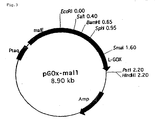
- the plasmid pGOX-mal1 has a Taq promoter and a maltose binding protein (MBP) gene inserted at a position upstream of the multicloning site thereof.
- MBP maltose binding protein
- ORF L-glutamate oxidase gene derived from Streptomyces sp. X-119-6 (ATCC 39343) (from which 14 amino acids of the N-terminal signal peptide have been deleted) has been introduced into pGOX-mal1. Therefore, when the plasmid pGOX-mal1s is expressed in E. coli, a fused protein of L-gultamate oxidase and MBP can be produced ( Fig. 3 ).
- E. coli JM109 was transformed by use of the plasmid pGOX-mal1, and the obtained transformant was inoculated into 2 x TY medium (5 mL) containing 50 ⁇ g/mL ampicillin, for shaking-culture at 30°C for about 12 hours. Subsequently, the culture product was inoculated into 2 x TY medium (1 L) containing 20 g/L glucose, and then subjected by shaking culturing at 24°C for about 24 hours. IPTG was added to the culture product, and the resultant mixture was cultured at the same temperature for about a further 24 hours. After completion of culturing, L-gultamate oxidase was isolated and purified according to the following purification method. Purification method
- the L-glutamate oxidase activity in the context of the present invention is measured and calculated in the following manner.
- absorbance of the resultant sample mixture was measured at 555 nm.
- amount of hydrogen peroxide was determined.
- One unit of enzyme activity is defined by the amount of the enzyme capable of producing 1 ⁇ mole hydrogen peroxide at 37°C for one minute.
- the L-glutamate oxidase gene was amplified by use of an LA-PCR kit (product of Takara Shuzo Co., Ltd.), the following two primers (C) and (D), which were produced on the basis of the ORF nucleotide sequence obtained through the above analysis, and chromosomal DNA derived from Streptomyces sp. X-119-6 (ATCC 39343) serving as a template.
- Amplification of the L-glutamate oxidase gene by use of the LA-PCR kit was performed by means of a PCR Thermal Cycler (product of Takara Shuzo Co., Ltd.) through cycles of treatment, each cycle consisting of thermal denaturation (94°C), annealing (68°C), and elongation (68°C) of GC buffer I ⁇ II solution (included in the LA-PCR Kit) containing dNTP, LA Tag, a template DNA (genomic DNA treated with SacI), and the primers (C) and (D).
- the reaction mixture was treated with a mixture of phenol and chloroform (1 : 1), and an aqueous fraction thus obtained was mixed with ethanol, to thereby cause DNA to precipitate.
- the precipitated DNA was subjected to agarose gel electrophoresis, whereby a DNA fragment having a size of about 2 kb was isolated.
- the DNA fragment was cleaved with restriction enzymes Nco I and Hin dIII, and the obtained DNA fragments were ligated, by use of T4 DNA ligase, to plasmid pTrc99A (product of Pharmacia Biotech Co.), which had also been digested with restriction enzymes Nco I and Hin dIII.
- E. coli JM109 product of Takara Shuzo Co., Ltd.
- the plasmid pGAI1 is a product obtained by inserting into pTrc99A, at the Nco I-HindIII cleavage site downstream of the trc promotor, an NcoI- Hin dIII DNA fragment containing L-glutamate oxidase gene (GAO) derived from Streptomyces sp. X-119-6 (ATCC 39343) ( Fig. 4 ).
- GEO L-glutamate oxidase gene
- E. coli JM109 was transformed by use of the plasmid pGAI1, and the obtained transformant was inoculated into 2 x TY medium (5 mL), for shaking-culture at 30°C for about 12 hours. Subsequently, the culture product was inoculated into 2 x TY medium (1 L) containing 20 g/L glucose, and then subjected to shaking culturing at 30°C for about 18 hours. IPTG was added to the culture product, and the resultant mixture was cultured at the same temperature for about a further 6 hours. After completion of culturing, L-gultamate oxidase was isolated and purified according to the following purification method.
- L-119-6-derived LGOX L-Glu 100 100 100 100 D-Glu 0 0 0 0 L-Gln - 0.07 0.09 0.11 L-Asp - 0.66 0.65 0.54 L-Asn - 0.58 0.66 0.61 L-Ala 0 0 0 0 0 L-Leu 0 0 0 0 0 L-Ile 0 0 0 0 L-Met 0 0 0 0 L-Trp 0 0 0 0 L-Phe 0 0 0 0 0 L-Pro 0 0 0 0 0 Gly 0 0 0 0 0 L-Ser 0 0 0 0 L-Thr 0 0 0 0 L-Cys 0 0 0 0 0 L-Tyr 0 0 0 0 L-His 0 0 0 0 0 0 L-Arg 0 0 0 0 0 L-Lys
- the L-glutamate oxidase described herein exhibits high specificity for L-glutamate.
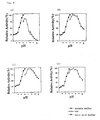
- Optimal temperature Reaction was performed at temperatures falling within the range of 20°C to 80°C (20°C to 60°C for E. coli JM109/pGOX mal1-derived MBP-LGOX fusion protein).
- Optimal pH The buffer employed is acetate buffer (pH 3.5 to 6.0), potassium phosphate buffer (pH 6.0 to 8.0), or borate buffer (pH 8.0 to 10.0).
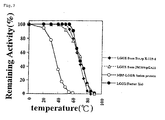
- Heat stability Enzyme activity was determined after the reaction mixture was maintained at respective temperatures of 0°C to 90°C (pH 7.4, for 30 minutes).
- Table 5 Physicochemical properties E. coli JM109/pGOX mall-derived MBP-LGOX fusion protein E. coli JM109/pGOX mall-derived LGOX (after treatment with factor Xa) E. coli JM109/pGAI1-derived LGOX Optimal temp.
- the L-glutamate oxidase described herein is a novel enzyme formed of two identical subunits each having a molecular weight of about 70 kD.
- the L-glutamate oxidase described herein is capable of producing L-glutamate oxidase conveniently and inexpensively when the gene of the present invention is subjected to a recombinant gene technique by use of a transformant such as E. coli .
Landscapes
- Chemical & Material Sciences (AREA)
- Life Sciences & Earth Sciences (AREA)
- Organic Chemistry (AREA)
- Health & Medical Sciences (AREA)
- Genetics & Genomics (AREA)
- Engineering & Computer Science (AREA)
- Bioinformatics & Cheminformatics (AREA)
- Zoology (AREA)
- Wood Science & Technology (AREA)
- General Health & Medical Sciences (AREA)
- Biochemistry (AREA)
- General Engineering & Computer Science (AREA)
- Microbiology (AREA)
- Biotechnology (AREA)
- Biomedical Technology (AREA)
- Molecular Biology (AREA)
- Medicinal Chemistry (AREA)
- Enzymes And Modification Thereof (AREA)
- Micro-Organisms Or Cultivation Processes Thereof (AREA)
- Medicines Containing Material From Animals Or Micro-Organisms (AREA)
- Acyclic And Carbocyclic Compounds In Medicinal Compositions (AREA)
Claims (7)
- Rekombinantes L-Glutamatoxidase-Gen, bestehend aus einer Nukleotidsequenz dargestellt durch SEQ ID NO: 2 oder die eine L-Glutamatoxidase mit SEQ ID NO: 1 codiert, die Dimer bildet.
- Gen nach Anspruch 1, das aus einem Mikroorganismus, der zu Streptomyces gehört, erhältlich ist.
- DNA-Fragment, das mit einem Gen gemäß Anspruch 1 oder 2 unter stringenten Bedingungen hybridisiert und ein Polypeptid mit L-Glutamatoxidase-Aktivität codiert und Dimere bildet.
- DNA-Fragment nach Anspruch 3, das aus einem Mikroorganismus, der zur Gattung Streptomyces gehört, erhältlich ist.
- Expressionsvektor, der hergestellt wird durch Einführen eines Gens, das eine L-Glutamatoxidase gemäß einem der Ansprüche 1 bis 4 codiert in ein Plasmid.
- Verfahren zur Herstellung einer L-Glutamatoxidase, umfassend das Transformieren eines Wirtsorganismus unter Verwendung eines Expressionsvektors nach Anspruch 5, Kultivieren des resultierenden Transformanten, um L-Glutamatoxidase herzustellen, und Isolieren der L-Glutamatoxidase aus dem kultivierten Erzeugnis und Reinigen des Erzeugnisses.
- Verfahren zur Herstellung einer L-Glutamatoxidase wie in Anspruch 6 beschrieben, wobei der Wirtsorganismus E. coli ist.
Applications Claiming Priority (5)
| Application Number | Priority Date | Filing Date | Title |
|---|---|---|---|
| JP2000117749 | 2000-04-19 | ||
| JP2000117749 | 2000-04-19 | ||
| JP2001057848 | 2001-03-02 | ||
| JP2001057848 | 2001-03-02 | ||
| PCT/JP2001/003345 WO2001079503A1 (en) | 2000-04-19 | 2001-04-19 | L-glutamate oxidase |
Publications (3)
| Publication Number | Publication Date |
|---|---|
| EP1277839A1 EP1277839A1 (de) | 2003-01-22 |
| EP1277839A4 EP1277839A4 (de) | 2004-05-12 |
| EP1277839B1 true EP1277839B1 (de) | 2008-02-27 |
Family
ID=26590377
Family Applications (1)
| Application Number | Title | Priority Date | Filing Date |
|---|---|---|---|
| EP01921904A Expired - Lifetime EP1277839B1 (de) | 2000-04-19 | 2001-04-19 | L-glutamatoxidase |
Country Status (8)
| Country | Link |
|---|---|
| US (2) | US7109008B2 (de) |
| EP (1) | EP1277839B1 (de) |
| JP (1) | JP4002765B2 (de) |
| AT (1) | ATE387501T1 (de) |
| AU (1) | AU4879101A (de) |
| CA (1) | CA2406130C (de) |
| DE (1) | DE60132989T2 (de) |
| WO (1) | WO2001079503A1 (de) |
Cited By (1)
| Publication number | Priority date | Publication date | Assignee | Title |
|---|---|---|---|---|
| CN103388002A (zh) * | 2013-07-23 | 2013-11-13 | 江南大学 | 一种产l-谷氨酸氧化酶重组菌株的构建方法及其应用 |
Families Citing this family (8)
| Publication number | Priority date | Publication date | Assignee | Title |
|---|---|---|---|---|
| EP1277839B1 (de) * | 2000-04-19 | 2008-02-27 | Yamasa Corporation | L-glutamatoxidase |
| WO2014150883A1 (en) | 2013-03-15 | 2014-09-25 | Abbott Point Of Care Inc. | Glutamate oxidase mutagenesis for diagnostic testing |
| CN106282205B (zh) * | 2015-06-12 | 2021-06-01 | 上海市农业科学院 | 一种高比活l-谷氨酸氧化酶基因多位点突变体及其制备方法和应用 |
| CN105331642B (zh) * | 2015-11-30 | 2020-06-19 | 浙江汇宁生物科技有限公司 | 一种利用L-谷氨酸氧化酶催化生产α-酮戊二酸的方法 |
| CN107686850B (zh) * | 2016-08-04 | 2022-08-09 | 中国科学院天津工业生物技术研究所 | 一种利用共表达重组菌株转化生产α-酮戊二酸的方法 |
| JP6349452B1 (ja) | 2017-11-29 | 2018-06-27 | ヤマサ醤油株式会社 | L−グルタミン酸オキシダーゼ乾燥組成物 |
| CN110283837A (zh) * | 2019-04-19 | 2019-09-27 | 中国科学院天津工业生物技术研究所 | 一种高酶活性l-谷氨酸氧化酶突变体及其制备方法 |
| WO2021193598A1 (ja) | 2020-03-24 | 2021-09-30 | 味の素株式会社 | L-グルタミン酸オキシダーゼ変異体 |
Family Cites Families (3)
| Publication number | Priority date | Publication date | Assignee | Title |
|---|---|---|---|---|
| JPS58149677A (ja) * | 1982-03-02 | 1983-09-06 | Toyo Jozo Co Ltd | L−グルタミン酸オキシダ−ゼ(h↓2o↓2・ジエネレイテイング)およびその製造法、ならびに分析方法 |
| AU565635B2 (en) | 1982-06-29 | 1987-09-24 | Yamasa Shoyu K.K. | L-glutamic acid oxidase |
| EP1277839B1 (de) * | 2000-04-19 | 2008-02-27 | Yamasa Corporation | L-glutamatoxidase |
-
2001
- 2001-04-19 EP EP01921904A patent/EP1277839B1/de not_active Expired - Lifetime
- 2001-04-19 AU AU48791/01A patent/AU4879101A/en not_active Abandoned
- 2001-04-19 JP JP2001577486A patent/JP4002765B2/ja not_active Expired - Lifetime
- 2001-04-19 DE DE60132989T patent/DE60132989T2/de not_active Expired - Lifetime
- 2001-04-19 CA CA002406130A patent/CA2406130C/en not_active Expired - Lifetime
- 2001-04-19 AT AT01921904T patent/ATE387501T1/de not_active IP Right Cessation
- 2001-04-19 US US10/257,398 patent/US7109008B2/en not_active Expired - Lifetime
- 2001-04-19 WO PCT/JP2001/003345 patent/WO2001079503A1/ja not_active Ceased
-
2006
- 2006-04-07 US US11/399,446 patent/US20060228790A1/en not_active Abandoned
Cited By (1)
| Publication number | Priority date | Publication date | Assignee | Title |
|---|---|---|---|---|
| CN103388002A (zh) * | 2013-07-23 | 2013-11-13 | 江南大学 | 一种产l-谷氨酸氧化酶重组菌株的构建方法及其应用 |
Also Published As
| Publication number | Publication date |
|---|---|
| US20040091989A1 (en) | 2004-05-13 |
| EP1277839A4 (de) | 2004-05-12 |
| DE60132989T2 (de) | 2009-02-19 |
| WO2001079503A1 (en) | 2001-10-25 |
| ATE387501T1 (de) | 2008-03-15 |
| JP4002765B2 (ja) | 2007-11-07 |
| US7109008B2 (en) | 2006-09-19 |
| EP1277839A1 (de) | 2003-01-22 |
| DE60132989D1 (de) | 2008-04-10 |
| US20060228790A1 (en) | 2006-10-12 |
| CA2406130C (en) | 2009-07-07 |
| AU4879101A (en) | 2001-10-30 |
| CA2406130A1 (en) | 2001-10-25 |
Similar Documents
| Publication | Publication Date | Title |
|---|---|---|
| JP6460152B2 (ja) | 新規なグルコース脱水素酵素 | |
| EP2508600B1 (de) | Mutantes enzym und seine anwendung | |
| CN101535476B (zh) | 修饰型黄素腺嘌呤二核苷酸依赖性葡萄糖脱氢酶 | |
| JP6212852B2 (ja) | 新規なグルコース脱水素酵素 | |
| JP5889800B2 (ja) | 大腸菌形質転換体、それを用いたフラビン結合型グルコースデヒドロゲナーゼの製造方法、および、変異型フラビン結合型グルコースデヒドロゲナーゼ | |
| JP6079038B2 (ja) | 新規なグルコース脱水素酵素 | |
| US9453206B2 (en) | Modified leucine dehydrogenase | |
| JP2008154572A (ja) | 糸状菌由来グルコース脱水素酵素の製造方法 | |
| EP1277839B1 (de) | L-glutamatoxidase | |
| JP5408125B2 (ja) | 糸状菌由来フラビンアデニンジヌクレオチド依存性グルコースデヒドロゲナーゼ(fadgdh) | |
| JP6465156B2 (ja) | 新規なグルコース脱水素酵素 | |
| JP6455430B2 (ja) | キサンチンオキシダーゼ遺伝子とそれをコードするアミノ酸配列 | |
| JPWO2001079503A1 (ja) | L−グルタミン酸オキシダーゼ | |
| US7091017B2 (en) | Fructosyl amino acid oxidase | |
| JP2002017351A (ja) | ホスホヘキシュロイソメラーゼ及びその遺伝子 | |
| EP0984066B1 (de) | Methanoldehydrogenase-Aktivator und dafür kodierendes Gen | |
| EP1538211B1 (de) | Neue glycerinkinase, deren gen sowie verfahren zur herstellung der glycerinkinase unter verwendung des gens | |
| JP4415247B2 (ja) | 新規なグリセロールキナーゼ、該遺伝子及び該遺伝子を用いたグリセロールキナーゼの製造法 | |
| EP1600503A1 (de) | Modifizierte pyrroloquinolin quinon-abhängige Glukose Dehydrogenase |
Legal Events
| Date | Code | Title | Description |
|---|---|---|---|
| PUAI | Public reference made under article 153(3) epc to a published international application that has entered the european phase |
Free format text: ORIGINAL CODE: 0009012 |
|
| 17P | Request for examination filed |
Effective date: 20021018 |
|
| AK | Designated contracting states |
Kind code of ref document: A1 Designated state(s): AT BE CH CY DE DK ES FI FR GB GR IE IT LI LU MC NL PT SE TR |
|
| AX | Request for extension of the european patent |
Free format text: AL;LT;LV;MK;RO;SI |
|
| A4 | Supplementary search report drawn up and despatched |
Effective date: 20040331 |
|
| 17Q | First examination report despatched |
Effective date: 20050608 |
|
| GRAP | Despatch of communication of intention to grant a patent |
Free format text: ORIGINAL CODE: EPIDOSNIGR1 |
|
| GRAS | Grant fee paid |
Free format text: ORIGINAL CODE: EPIDOSNIGR3 |
|
| GRAA | (expected) grant |
Free format text: ORIGINAL CODE: 0009210 |
|
| AK | Designated contracting states |
Kind code of ref document: B1 Designated state(s): AT BE CH CY DE DK ES FI FR GB GR IE IT LI LU MC NL PT SE TR |
|
| REG | Reference to a national code |
Ref country code: GB Ref legal event code: FG4D |
|
| REG | Reference to a national code |
Ref country code: CH Ref legal event code: EP |
|
| REG | Reference to a national code |
Ref country code: IE Ref legal event code: FG4D |
|
| REF | Corresponds to: |
Ref document number: 60132989 Country of ref document: DE Date of ref document: 20080410 Kind code of ref document: P |
|
| REG | Reference to a national code |
Ref country code: CH Ref legal event code: NV Representative=s name: NOVAGRAAF INTERNATIONAL SA |
|
| REG | Reference to a national code |
Ref country code: SE Ref legal event code: TRGR |
|
| PG25 | Lapsed in a contracting state [announced via postgrant information from national office to epo] |
Ref country code: ES Free format text: LAPSE BECAUSE OF FAILURE TO SUBMIT A TRANSLATION OF THE DESCRIPTION OR TO PAY THE FEE WITHIN THE PRESCRIBED TIME-LIMIT Effective date: 20080607 |
|
| NLV1 | Nl: lapsed or annulled due to failure to fulfill the requirements of art. 29p and 29m of the patents act | ||
| PG25 | Lapsed in a contracting state [announced via postgrant information from national office to epo] |
Ref country code: AT Free format text: LAPSE BECAUSE OF FAILURE TO SUBMIT A TRANSLATION OF THE DESCRIPTION OR TO PAY THE FEE WITHIN THE PRESCRIBED TIME-LIMIT Effective date: 20080227 |
|
| ET | Fr: translation filed | ||
| PG25 | Lapsed in a contracting state [announced via postgrant information from national office to epo] |
Ref country code: BE Free format text: LAPSE BECAUSE OF FAILURE TO SUBMIT A TRANSLATION OF THE DESCRIPTION OR TO PAY THE FEE WITHIN THE PRESCRIBED TIME-LIMIT Effective date: 20080227 |
|
| PG25 | Lapsed in a contracting state [announced via postgrant information from national office to epo] |
Ref country code: PT Free format text: LAPSE BECAUSE OF FAILURE TO SUBMIT A TRANSLATION OF THE DESCRIPTION OR TO PAY THE FEE WITHIN THE PRESCRIBED TIME-LIMIT Effective date: 20080721 Ref country code: NL Free format text: LAPSE BECAUSE OF FAILURE TO SUBMIT A TRANSLATION OF THE DESCRIPTION OR TO PAY THE FEE WITHIN THE PRESCRIBED TIME-LIMIT Effective date: 20080227 Ref country code: DK Free format text: LAPSE BECAUSE OF FAILURE TO SUBMIT A TRANSLATION OF THE DESCRIPTION OR TO PAY THE FEE WITHIN THE PRESCRIBED TIME-LIMIT Effective date: 20080227 |
|
| PG25 | Lapsed in a contracting state [announced via postgrant information from national office to epo] |
Ref country code: MC Free format text: LAPSE BECAUSE OF NON-PAYMENT OF DUE FEES Effective date: 20080430 |
|
| PLBE | No opposition filed within time limit |
Free format text: ORIGINAL CODE: 0009261 |
|
| STAA | Information on the status of an ep patent application or granted ep patent |
Free format text: STATUS: NO OPPOSITION FILED WITHIN TIME LIMIT |
|
| 26N | No opposition filed |
Effective date: 20081128 |
|
| PG25 | Lapsed in a contracting state [announced via postgrant information from national office to epo] |
Ref country code: IE Free format text: LAPSE BECAUSE OF NON-PAYMENT OF DUE FEES Effective date: 20080421 |
|
| PG25 | Lapsed in a contracting state [announced via postgrant information from national office to epo] |
Ref country code: CY Free format text: LAPSE BECAUSE OF FAILURE TO SUBMIT A TRANSLATION OF THE DESCRIPTION OR TO PAY THE FEE WITHIN THE PRESCRIBED TIME-LIMIT Effective date: 20080227 |
|
| PG25 | Lapsed in a contracting state [announced via postgrant information from national office to epo] |
Ref country code: IT Free format text: LAPSE BECAUSE OF FAILURE TO SUBMIT A TRANSLATION OF THE DESCRIPTION OR TO PAY THE FEE WITHIN THE PRESCRIBED TIME-LIMIT Effective date: 20080227 |
|
| PG25 | Lapsed in a contracting state [announced via postgrant information from national office to epo] |
Ref country code: LU Free format text: LAPSE BECAUSE OF NON-PAYMENT OF DUE FEES Effective date: 20080419 |
|
| PG25 | Lapsed in a contracting state [announced via postgrant information from national office to epo] |
Ref country code: TR Free format text: LAPSE BECAUSE OF FAILURE TO SUBMIT A TRANSLATION OF THE DESCRIPTION OR TO PAY THE FEE WITHIN THE PRESCRIBED TIME-LIMIT Effective date: 20080227 |
|
| PG25 | Lapsed in a contracting state [announced via postgrant information from national office to epo] |
Ref country code: GR Free format text: LAPSE BECAUSE OF FAILURE TO SUBMIT A TRANSLATION OF THE DESCRIPTION OR TO PAY THE FEE WITHIN THE PRESCRIBED TIME-LIMIT Effective date: 20080528 |
|
| REG | Reference to a national code |
Ref country code: CH Ref legal event code: PFA Owner name: YAMASA CORPORATION Free format text: YAMASA CORPORATION#10-1, ARAOICHO 2-CHOME#CHOSHI-SHI, CHIBA 288-0056 (JP) -TRANSFER TO- YAMASA CORPORATION#10-1, ARAOICHO 2-CHOME#CHOSHI-SHI, CHIBA 288-0056 (JP) |
|
| REG | Reference to a national code |
Ref country code: FR Ref legal event code: PLFP Year of fee payment: 16 |
|
| REG | Reference to a national code |
Ref country code: FR Ref legal event code: PLFP Year of fee payment: 17 |
|
| REG | Reference to a national code |
Ref country code: FR Ref legal event code: PLFP Year of fee payment: 18 |
|
| PGFP | Annual fee paid to national office [announced via postgrant information from national office to epo] |
Ref country code: FR Payment date: 20200312 Year of fee payment: 20 |
|
| PGFP | Annual fee paid to national office [announced via postgrant information from national office to epo] |
Ref country code: FI Payment date: 20200409 Year of fee payment: 20 Ref country code: CH Payment date: 20200420 Year of fee payment: 20 Ref country code: DE Payment date: 20200408 Year of fee payment: 20 |
|
| PGFP | Annual fee paid to national office [announced via postgrant information from national office to epo] |
Ref country code: SE Payment date: 20200415 Year of fee payment: 20 Ref country code: GB Payment date: 20200408 Year of fee payment: 20 |
|
| REG | Reference to a national code |
Ref country code: DE Ref legal event code: R071 Ref document number: 60132989 Country of ref document: DE |
|
| REG | Reference to a national code |
Ref country code: CH Ref legal event code: PL |
|
| REG | Reference to a national code |
Ref country code: GB Ref legal event code: PE20 Expiry date: 20210418 |
|
| REG | Reference to a national code |
Ref country code: FI Ref legal event code: MAE |
|
| REG | Reference to a national code |
Ref country code: SE Ref legal event code: EUG |
|
| PG25 | Lapsed in a contracting state [announced via postgrant information from national office to epo] |
Ref country code: GB Free format text: LAPSE BECAUSE OF EXPIRATION OF PROTECTION Effective date: 20210418 |