EP1274102A1 - Polymercompound mit nichtlinearer Strom-Spannungs-Kennlinie und Verfahren zur Herstellung eines Polymercompounds - Google Patents
Polymercompound mit nichtlinearer Strom-Spannungs-Kennlinie und Verfahren zur Herstellung eines Polymercompounds Download PDFInfo
- Publication number
- EP1274102A1 EP1274102A1 EP01810645A EP01810645A EP1274102A1 EP 1274102 A1 EP1274102 A1 EP 1274102A1 EP 01810645 A EP01810645 A EP 01810645A EP 01810645 A EP01810645 A EP 01810645A EP 1274102 A1 EP1274102 A1 EP 1274102A1
- Authority
- EP
- European Patent Office
- Prior art keywords
- polymer compound
- polymer
- filler
- compound according
- linear current
- Prior art date
- Legal status (The legal status is an assumption and is not a legal conclusion. Google has not performed a legal analysis and makes no representation as to the accuracy of the status listed.)
- Granted
Links
Images

Classifications
-
- H—ELECTRICITY
- H01—ELECTRIC ELEMENTS
- H01C—RESISTORS
- H01C7/00—Non-adjustable resistors formed as one or more layers or coatings; Non-adjustable resistors made from powdered conducting material or powdered semi-conducting material with or without insulating material
- H01C7/10—Non-adjustable resistors formed as one or more layers or coatings; Non-adjustable resistors made from powdered conducting material or powdered semi-conducting material with or without insulating material voltage responsive, i.e. varistors
- H01C7/105—Varistor cores
- H01C7/108—Metal oxide
- H01C7/112—ZnO type
Definitions
- the invention is based on a polymer compound after the The preamble of claim 1 and of a method for producing a Polymer compounds according to the preamble of claim 14.
- the Polymer compound contains a polymer matrix in which as a filler electrically conductive Particles, such as conductivity black and / or metal powder and / or electrically semiconducting particles such as SiC or ZnO are embedded.
- This Polymer compound has a non-linear current-voltage characteristic, which is influenced by the filler content and the dispersion of the filler.
- the one by the Current-voltage characteristic specific resistance and others electrical properties can vary depending on the strength of an am Polymer compound applied electric field in general only over the Filler content and the degree of dispersion can be influenced.
- the polymer compound can be used as a base material in advantage voltage limiting resistors (varistors) are used or as Field-controlling material in power engineering plants and apparatus, such as especially in cable terminations or in cable connection sleeves.
- a polymer compound of the type mentioned in the introduction and a method of the type mentioned in the introduction are described in an article by R. Strümpler et al. "Smart Varistor Composites” Proc.of the 8 th CIMTEC Ceramic Congress. June 1994 and in EP 875 087 B1 and WO 99/56290 A1.
- As filler doped and sintered particles of zinc oxide are provided in this polymer compound.
- Typical dopants are metals such as those used in the production of metal oxide varistors and typically include Bi, Cr, Co, Mn and Sb.
- Doped ZnO powder is sintered at 800 to 1300 ° C. By suitable Rated sintering temperatures and times become desirable electrical Properties of the filler achieved. After sintering, each particle has one electrical conductivity, which is dependent on an applied electric field changes nonlinearly. Each particle therefore acts as a small varistor. Due to the appropriately sized sintering conditions, the non-linear Behavior of the filler can be adjusted within certain limits. The nonlinear electrical properties of the polymer compound can therefore during the manufacture of the compound not only about the filler content and the degree of dispersion but also on the sintering conditions of the filler be set.
- the object is based on creating a polymer compound of the type mentioned, its non-linear electrical properties during the manufacturing process in can be adjusted easily and a method of producing a specify such polymer compounds, with the economically Polymer compounds with predetermined nonlinear electrical properties can be made.
- the filler contains at least two Filler components with divergent non-linear current-voltage characteristics.
- these Filler components can thus be a polymer compound with either of these two Characteristics deviating non-linear current-voltage characteristic reached become.
- the polymer compound according to the invention is therefore characterized that, despite well-defined nonlinear electrical properties, it can be used with low cost can be produced. From a small base set Filler components each with a defined non-linear current-voltage characteristic can polymer compounds with almost arbitrarily designed current-voltage characteristics be made.
- the combination of the two filler components allows the Polymer compound not only given predetermined electrical properties Because of this, its thermal conductivity can also be decisive to be influenced.
- polymer compounds as Field control material such as in cable sets, this is particularly important because of Dielectric losses in the polymer compound and electrical losses in the metallic conductor the cable set is strongly heated.
- the generally low thermal conductivity of the polymer is canceled by suitable selected filler components, which in addition to the good electrical Behavior of the polymer compound also sufficiently good thermal conductivity give.
- the two Filler components each of a doped, sintered metal oxide with Grain boundary-containing particles are formed and differ from each other by deviating stoichiometry of the dopants and / or by each other different, caused by different sintering conditions Grain boundary structures with different grain sizes.
- the metal oxide is in general zinc oxide, but may also be tin dioxide or titanium dioxide with advantage.
- the divergent current-voltage characteristics can be achieved are different weight percent of the dopants, i. by different recipes of the two filler components or through different conditions when sintering the filler components.
- the Sintering conditions mainly include the sintering temperature, the residence time, the Gas composition of the sintering atmosphere and the heating and cooling rates.
- the sintering temperature by increasing the sintering temperature, the conductivity of a plurality of metals doped powdered zinc oxide at a given electric field strength can be increased.
- the polymer compound can electrically conductive or electrically semiconducting material, such as Conductivity soot or metal powder, included. By this material will be present but all in all a better contacting of the individual particles of the nonlinear achieved electrical behavior exhibiting filler components.
- the Energy absorption of the polymer compound is significantly increased.
- One Surge arrester containing polymer compound according to the invention is characterized by a high pulse strength. To get a sufficient To achieve effect, the proportion of additional component should be 0.01 to 15 Percent by volume of the polymer compound.
- the Additional component particles with a large length-to-diameter ratio contains, in particular Nanotubes.
- the polymer matrix in the production the polymer compound as by injection molding in a preferred direction Aligned so can because of the large length-to-diameter ratio
- These particles oriented in the preferred direction and so in a simple Way reaches a polymer compound with anisotropic electrical properties become.
- Such a material can advantageously for the solution of field control tasks used in cable connection sleeves or in cable terminations.
- the polymer compound has a high dielectric constant.
- the polymer compound according to the invention can then easily control an electric field.
- Such a field control can relate, for example, to the homogenization of the distribution of electrical fields of energy-technical installations or apparatuses in normal operation.
- the field-controlling function of the polymer according to the invention can be improved in that the filler has an additional component of a material with a high dielectric constant.
- additional components are, for example, BaTiO 3 or TiO 2 .
- the polymer matrix typically contains a single polymer or mixture of polymers.
- the dielectric behavior of the polymer compound can thereby be further improved if the single polymer or at least one of Polymers of the mixture contains polar groups and / or an intrinsic electrical is conductive polymer.
- a typical polymer with polar groups is, for example a polyamide.
- the proportion of polar group-containing polymer and / or intrinsically electrically conductive polymer is advantageously from 0.01 to 50 Volume percent of the polymer matrix.
- the polymer compound may additionally be provided an additive which at least one stabilizer, a flame retardant and / or a Contains processing aids.
- the proportion of this additive can be between 0.01 to 5 Percent by volume of the polymer compound.
- a flame-retardant polymer compound can then be particularly economical be manufactured when it acts as a flame retardant aluminum and / or Contains magnesium hydroxide. Because of the flame retardant the Polymer matrix in many cases a predetermined LOI (Limited Oxygen Index) value the smaller the LOI value, the easier it can be Burning Polymer Compound) can be obtained by using the inexpensive Hydroxides of the LOI value can be increased in a very cost-effective manner.
- LOI Lited Oxygen Index
- the polymer compound has good mechanical strength when in addition, an adhesion promoter which increases the adhesion between polymer and filler is provided.
- the proportion of adhesion promoter should be between 0.01 to 5 Percent by volume of the polymer compound.
- the bonding agent which is preferably formed as a silane, the polymer matrix couples firmly to the Filler on. Cracking in the polymer compound due to lack of adhesion of the Polymer matrix on the filler and thereby initiated material breakage is so with great security avoided. At the same time the bonding agent improves the electrical properties of the inventive polymer compound entirely essential.
- the filler is a base set of at least two filler components with divergent non-linear current-voltage characteristics mixed.
- the mixing ratio of the components becomes so selected that the polymer compound has the predetermined characteristic.
- the Polymer compound can now be easier without extensive preliminary investigations and be manufactured economically.
- the mixing ratio is selected from a predetermined characteristic field of polymer compounds, two of which, respectively contain at most one of the at least two filler components and at least one more, the at least two with a predetermined ratio mixed filler components.
- varistor powders R1, R2, S1 and S2 were prepared.
- the Powders contained sintered as the main ingredient (more than 90 mole percent) Zinc oxide, which with additives, mainly Sb, Bi, Co, Mn and Cr, (total less than 10 mole percent).
- the varistor powder R1 had a smaller one Bismuth content as the varistor powder R2.
- the powders R1 and R2 were under produced sintering conditions at about 1100 ° C in a ceramic tube of a rotary kiln.
- the powders S1 and S2 had the same Composition, but were at different sintering conditions produced.
- the powder S1 was prepared by a continuous sintering process in a rotary kiln at a maximum sintering temperature of about 1070 ° C. prepared, the powder S2 in a batch oven at maximum sintering temperature from about 1200 ° C and a residence time of the batches in the oven of about 18 hours. Sieving, preceded by grinding, if necessary, made the particle sizes The powder is restricted to values typically between 32 and 125 microns lay.
- Oil was used as the matrix material, since in a particularly simple manner Test specimens could be manufactured. But instead of oil can also Duromer, an elastomer, a thermoplastic, a copolymer, a thermoplastic Elastomer or a gel or a mixture of at least two of these substances be used.
- a variable DC voltage source was applied to the two electrodes.
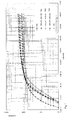
- the electric field E [V / mm] acting in the associated specimen was adjusted and the current flowing in the specimen was measured.
- the current density J [A / cm 2 ] determined therefrom the DC current-voltage characteristics shown in FIGS. 1 and 2 were obtained.
- the mixing ratio can be determined. By Mixing the filler components according to this mixing ratio is the Made filler and the desired polymer compound by mixing the Filler made with polymer, such as silicone.
- polymer compounds with fillers which by Mixing the filler components R1 or R2 and S1 or S2 or by mixing of three or four of these filler components can be achieved.
- the filler components do not necessarily have to be ZnO powder be. You can also use another powdered material with non-linear current-voltage characteristics, such as doped silicon carbide, tin dioxide or Titanium dioxide, included.
- electrically conductive or electrically semiconducting Material such as Si
- the electrical conductivity of the Polymer compounds in the range of small electric field strengths by several Magnitudes are increased, and so a polymer with a flat-running DC current-voltage characteristic can be achieved.
Landscapes
- Engineering & Computer Science (AREA)
- Microelectronics & Electronic Packaging (AREA)
- Physics & Mathematics (AREA)
- Electromagnetism (AREA)
- Compositions Of Macromolecular Compounds (AREA)
- Thermistors And Varistors (AREA)
- Compositions Of Oxide Ceramics (AREA)
- Addition Polymer Or Copolymer, Post-Treatments, Or Chemical Modifications (AREA)
- Treatments Of Macromolecular Shaped Articles (AREA)
- Polyoxymethylene Polymers And Polymers With Carbon-To-Carbon Bonds (AREA)
- Other Resins Obtained By Reactions Not Involving Carbon-To-Carbon Unsaturated Bonds (AREA)
Abstract
Description
| Füllstoff | Füllstoffkomponente in Gew% | |||
| R1 | R2 | S1 | S2 | |
| R1 | 100 | - | - | - |
| R82 | 80 | 20 | ||
| R55 | 50 | 50 | - | - |
| R28 | 20 | 80 | - | - |
| R2 | .- | 100 | - | - |
| S1 | - | - | 100 | - |
| S73 | .- | - | 70 | 30 |
| S37 | - | - | 30 | 70 |
| S2 | - | - | - | 100 |
Claims (15)
- Polymercompound mit einer nichtlinearen Strom-Spannungs-Kennlinie aus einer Polymermatrix und einem in die Matrix eingebetten Füllstoff mit einer nichtlinearen Strom-Spannungskennlinie, dadurch gekennzeichnet, dass der Füllstoff mindestens zwei Füllstoffkomponenten enthält mit voneinander abweichenden nichtlinearen Strom-Spannungs-Kennlinien.
- Polymercompound nach Anspruch 1, dadurch gekennzeichnet, dass die beiden Füllstoffkomponenten jeweils von einem dotierten, gesinterten Metalloxid mit Korngrenzen enthaltenden Teilchen gebildet sind und sich voneinder unterscheiden durch abweichende Stöchiometrie der Dotierstoffe und/oder durch voneinander abweichende, durch unterschiedliche Sinterbedingungen hervorgerufene Korngrenzenstrukturen.
- Polymercompound nach einem der Ansprüche 1 oder 2, dadurch gekennzeichnet, dass der Polymercompound zusätzlich elektrisch leitendes oder elektrisch halbleitendes Material enthält.
- Polymercompound nach Anspruch 3, dadurch gekennzeichnet, dass das elektrisch leitende oder elektrisch halbleitende Material Teilchen mit einem grossen Länge-zu-Durchmesser-Verhältnis enthält, wie insbesondere Nanotubes.
- Polymercompound nach einem der Ansprüche 1 bis 4, dadurch gekennzeichnet, dass der Füllstoff eine Zusatzkomponente aufweist aus einem Material mit einer hohen Dielektrizitätszahl.
- Polymercompound nach einem der Ansprüche 1 bis 5, dadurch gekennzeichnet, dass der Polymercompound zusätzlich ein Additiv enthält, welches mindestens einen Stabilisator, ein Flammschutzmittel und/oder ein Verarbeitungshilfsmittel enthält.
- Polymercompound nach Anspruch 6, dadurch gekennzeichnet, dass der Anteil an Additiv 0,01 bis 5 Volumenprozent des Polymercompounds beträgt.
- Polymercompound nach einem der Ansprüche 1 bis 7, dadurch gekennzeichnet, dass der Polymercompound zusätzlich als Flammschutzmittel wirkendes Aluminium- und/oder Magnesiumhydroxid enthält.
- Polymercompound nach einem der Ansprüche 1 bis 8, dadurch gekennzeichnet, dass der Polymercompound zusätzlich einen die Haftung zwischen Polymer und Füllstoff erhöhenden Haftvermittler enthält.
- Polymercompound nach Anspruchs 9, dadurch gekennzeichnet, dass der Anteil an Haftvermittler 0,01 bis 5 Volumenprozent des Polymercompounds beträgt.
- Polymercompound nach einem der Ansprüche 1 bis 10, dadurch gekennzeichnet, dass die Polymermatrix ein einzelnes Polymer oder ein Gemisch von Polymeren enthält.
- Polymercompound nach Anspruch 11, dadurch gekennzeichnet, dass das einzelne Polymer oder mindestens eines der Polymere des Gemischs polaren Gruppen enthält und/oder ein intrinsisch elektrisch leitfähiges Polymer ist.
- Polymercompound nach Anspruch 12, dadurch gekennzeichnet, dass der Anteil an polare Gruppen enthaltendem Polymer und/oder intrinsisch elektrisch leitfähigem Polymer 0,01 bis 50 Volumenprozent der Polymermatrix beträgt.
- Verfahren zur Herstellung eines Polymercompounds mit einer vorbestimmten nichtlinearen Strom-Spannungs-Kennlinie durch Mischen eines Polymers und eines Füllstoffs mit einer nichtlinearen Strom-Spannungs-Kennlinie, dadurch gekennzeichnet, dass aus einem Basissatz von mindestens zwei Füllstoffkomponenten mit voneinander abweichenden nichtlinearen Strom-Spannungs-Kennlinien der Füllstoff gemischt wird, wobei das Mischungsverhältnis der Komponenten derart gewählt wird, dass das Polymercompound die vorbestimmte Kennlinie aufweist.
- Verfahren nach Anspruch 14, dadurch gekennzeichnet, dass das Mischungsverhältnis gewählt wird aus einem vorbestimmten Kennlinienfeld von mindestens drei Polymercompounds, von denen zwei jeweils höchstens eine der mindestens zwei Füllstoffkomponenten enthalten und ein dritter die mindestens zwei mit einem vorgegebenen Verhältnis gemischten Füllstoffkomponenten
Priority Applications (11)
| Application Number | Priority Date | Filing Date | Title |
|---|---|---|---|
| AT01810645T ATE499691T1 (de) | 2001-07-02 | 2001-07-02 | Polymercompound mit nichtlinearer strom-spannungs-kennlinie und verfahren zur herstellung eines polymercompounds |
| EP01810645A EP1274102B1 (de) | 2001-07-02 | 2001-07-02 | Polymercompound mit nichtlinearer Strom-Spannungs-Kennlinie und Verfahren zur Herstellung eines Polymercompounds |
| DE50115800T DE50115800D1 (de) | 2001-07-02 | 2001-07-02 | Polymercompound mit nichtlinearer Strom-Spannungs-Kennlinie und Verfahren zur Herstellung eines Polymercompounds |
| US10/180,078 US7320762B2 (en) | 2001-07-02 | 2002-06-27 | Polymer compound with nonlinear current-voltage characteristic and process for producing a polymer compound |
| AU50684/02A AU5068402A (en) | 2001-07-02 | 2002-06-27 | Polymer compound with nonlinear current-voltage characteristic and process for producing a polymer compound |
| CA002390195A CA2390195A1 (en) | 2001-07-02 | 2002-06-28 | Polymer compound with nonlinear current-voltage characteristic and process for producing a polymer compound |
| JP2002192413A JP2003049084A (ja) | 2001-07-02 | 2002-07-01 | 非直線性電流ー電圧ー特性曲線を有するポリマー配合物及びポリマー配合物の製造方法 |
| RU2002117582/04A RU2282263C2 (ru) | 2001-07-02 | 2002-07-01 | Полимерный компаунд с нелинейными вольтамперными характеристиками и способ его получения |
| PL354829A PL206222B1 (pl) | 2001-07-02 | 2002-07-02 | Mieszanka polimerowa o nieliniowej charakterystyce prądowo-napięciowej i sposób wytwarzania mieszanki polimerowej o zadanej nieliniowej charakterystyce prądowo-napięciowej |
| CN02140255.8A CN1277888C (zh) | 2001-07-02 | 2002-07-02 | 具有非线性电流-电压特性的聚合物和该聚合物的生产方法 |
| US11/892,148 US7618550B2 (en) | 2001-07-02 | 2007-08-20 | Polymer compound with nonlinear current-voltage characteristic and process for producing a polymer compound |
Applications Claiming Priority (1)
| Application Number | Priority Date | Filing Date | Title |
|---|---|---|---|
| EP01810645A EP1274102B1 (de) | 2001-07-02 | 2001-07-02 | Polymercompound mit nichtlinearer Strom-Spannungs-Kennlinie und Verfahren zur Herstellung eines Polymercompounds |
Publications (2)
| Publication Number | Publication Date |
|---|---|
| EP1274102A1 true EP1274102A1 (de) | 2003-01-08 |
| EP1274102B1 EP1274102B1 (de) | 2011-02-23 |
Family
ID=8184001
Family Applications (1)
| Application Number | Title | Priority Date | Filing Date |
|---|---|---|---|
| EP01810645A Expired - Lifetime EP1274102B1 (de) | 2001-07-02 | 2001-07-02 | Polymercompound mit nichtlinearer Strom-Spannungs-Kennlinie und Verfahren zur Herstellung eines Polymercompounds |
Country Status (10)
| Country | Link |
|---|---|
| US (2) | US7320762B2 (de) |
| EP (1) | EP1274102B1 (de) |
| JP (1) | JP2003049084A (de) |
| CN (1) | CN1277888C (de) |
| AT (1) | ATE499691T1 (de) |
| AU (1) | AU5068402A (de) |
| CA (1) | CA2390195A1 (de) |
| DE (1) | DE50115800D1 (de) |
| PL (1) | PL206222B1 (de) |
| RU (1) | RU2282263C2 (de) |
Cited By (3)
| Publication number | Priority date | Publication date | Assignee | Title |
|---|---|---|---|---|
| US4654457A (en) * | 1984-08-10 | 1987-03-31 | Sumitomo Chemical Company, Limited | Method for selective dealkylation of 1,4-dialkylbenzene |
| EP1603140A1 (de) * | 2004-06-04 | 2005-12-07 | ABB Technology AG | Aktivteil für einen gekapselten Überspannungsableiter |
| US7651636B2 (en) | 2004-04-06 | 2010-01-26 | Abb Research Ltd | Nonlinear electrical material for high and medium voltage applications |
Families Citing this family (44)
| Publication number | Priority date | Publication date | Assignee | Title |
|---|---|---|---|---|
| US7695644B2 (en) * | 1999-08-27 | 2010-04-13 | Shocking Technologies, Inc. | Device applications for voltage switchable dielectric material having high aspect ratio particles |
| WO2001017320A1 (en) | 1999-08-27 | 2001-03-08 | Lex Kosowsky | Current carrying structure using voltage switchable dielectric material |
| US7825491B2 (en) * | 2005-11-22 | 2010-11-02 | Shocking Technologies, Inc. | Light-emitting device using voltage switchable dielectric material |
| US20100044080A1 (en) * | 1999-08-27 | 2010-02-25 | Lex Kosowsky | Metal Deposition |
| US7446030B2 (en) * | 1999-08-27 | 2008-11-04 | Shocking Technologies, Inc. | Methods for fabricating current-carrying structures using voltage switchable dielectric materials |
| US20100044079A1 (en) * | 1999-08-27 | 2010-02-25 | Lex Kosowsky | Metal Deposition |
| US20080035370A1 (en) * | 1999-08-27 | 2008-02-14 | Lex Kosowsky | Device applications for voltage switchable dielectric material having conductive or semi-conductive organic material |
| EP1736998A1 (de) * | 2005-06-21 | 2006-12-27 | Abb Research Ltd. | Band mit Varistor-Verhalten zur Steuerung eines elektischen Feldes |
| US7923844B2 (en) * | 2005-11-22 | 2011-04-12 | Shocking Technologies, Inc. | Semiconductor devices including voltage switchable materials for over-voltage protection |
| US20100264224A1 (en) * | 2005-11-22 | 2010-10-21 | Lex Kosowsky | Wireless communication device using voltage switchable dielectric material |
| FR2898427A1 (fr) * | 2006-03-08 | 2007-09-14 | Nexans Sa | Composition a haute permittivite pour cable elecrique ou dispositif de raccordement de tels cables |
| US7981325B2 (en) * | 2006-07-29 | 2011-07-19 | Shocking Technologies, Inc. | Electronic device for voltage switchable dielectric material having high aspect ratio particles |
| US20080032049A1 (en) * | 2006-07-29 | 2008-02-07 | Lex Kosowsky | Voltage switchable dielectric material having high aspect ratio particles |
| US20080029405A1 (en) * | 2006-07-29 | 2008-02-07 | Lex Kosowsky | Voltage switchable dielectric material having conductive or semi-conductive organic material |
| MY147311A (en) * | 2006-07-29 | 2012-11-30 | Shocking Technologies Inc | Voltage switchable dielectric material having high aspect ratio particles |
| WO2008036423A2 (en) * | 2006-09-24 | 2008-03-27 | Shocking Technologies, Inc. | Formulations for voltage switchable dielectric material having a stepped voltage response and methods for making the same |
| SE530587C2 (sv) * | 2006-10-31 | 2008-07-15 | Abb Research Ltd | Elektriskt fältstyrande material |
| US20120119168A9 (en) * | 2006-11-21 | 2012-05-17 | Robert Fleming | Voltage switchable dielectric materials with low band gap polymer binder or composite |
| US8288911B2 (en) * | 2006-12-15 | 2012-10-16 | General Electric Company | Non-linear dielectrics used as electrical insulation for rotating electrical machinery |
| RU2368565C2 (ru) * | 2006-12-26 | 2009-09-27 | Государственное образовательное учреждение высшего профессионального образования Московский государственный институт электронной техники (технический университет) | Проводящая молекулярная структура и способ ее создания |
| US7793236B2 (en) * | 2007-06-13 | 2010-09-07 | Shocking Technologies, Inc. | System and method for including protective voltage switchable dielectric material in the design or simulation of substrate devices |
| US8206614B2 (en) | 2008-01-18 | 2012-06-26 | Shocking Technologies, Inc. | Voltage switchable dielectric material having bonded particle constituents |
| US8203421B2 (en) * | 2008-04-14 | 2012-06-19 | Shocking Technologies, Inc. | Substrate device or package using embedded layer of voltage switchable dielectric material in a vertical switching configuration |
| US20100047535A1 (en) * | 2008-08-22 | 2010-02-25 | Lex Kosowsky | Core layer structure having voltage switchable dielectric material |
| WO2010033635A1 (en) * | 2008-09-17 | 2010-03-25 | Shocking Technologies, Inc. | Voltage switchable dielectric material containing boron compound |
| US9208931B2 (en) | 2008-09-30 | 2015-12-08 | Littelfuse, Inc. | Voltage switchable dielectric material containing conductor-on-conductor core shelled particles |
| EP2342722A2 (de) | 2008-09-30 | 2011-07-13 | Shocking Technologies Inc | Spannungsumschaltbares dielektrisches material mit leitenden kernhüllepartikeln |
| US8362871B2 (en) * | 2008-11-05 | 2013-01-29 | Shocking Technologies, Inc. | Geometric and electric field considerations for including transient protective material in substrate devices |
| US8272123B2 (en) | 2009-01-27 | 2012-09-25 | Shocking Technologies, Inc. | Substrates having voltage switchable dielectric materials |
| US9226391B2 (en) | 2009-01-27 | 2015-12-29 | Littelfuse, Inc. | Substrates having voltage switchable dielectric materials |
| US8399773B2 (en) | 2009-01-27 | 2013-03-19 | Shocking Technologies, Inc. | Substrates having voltage switchable dielectric materials |
| WO2010110909A1 (en) | 2009-03-26 | 2010-09-30 | Shocking Technologies, Inc. | Components having voltage switchable dielectric materials |
| US9053844B2 (en) * | 2009-09-09 | 2015-06-09 | Littelfuse, Inc. | Geometric configuration or alignment of protective material in a gap structure for electrical devices |
| EP2513913A1 (de) | 2009-12-14 | 2012-10-24 | 3M Innovative Properties Company | Dielektrisches material mit nichtlinearer dielektrischer konstante |
| US20110198544A1 (en) * | 2010-02-18 | 2011-08-18 | Lex Kosowsky | EMI Voltage Switchable Dielectric Materials Having Nanophase Materials |
| US9082622B2 (en) | 2010-02-26 | 2015-07-14 | Littelfuse, Inc. | Circuit elements comprising ferroic materials |
| US9320135B2 (en) * | 2010-02-26 | 2016-04-19 | Littelfuse, Inc. | Electric discharge protection for surface mounted and embedded components |
| US9224728B2 (en) * | 2010-02-26 | 2015-12-29 | Littelfuse, Inc. | Embedded protection against spurious electrical events |
| US8331074B2 (en) * | 2010-07-01 | 2012-12-11 | Cooper Technologies Company | Grading devices for a high voltage apparatus |
| US20140287175A1 (en) * | 2013-03-19 | 2014-09-25 | Shawcor Ltd. | Products for stress control in electrical power cables |
| JP6355492B2 (ja) * | 2013-10-03 | 2018-07-11 | アルパッド株式会社 | 複合樹脂及び電子デバイス |
| TWI605029B (zh) * | 2016-10-12 | 2017-11-11 | 不含銻的壓敏電阻組成物及積層式壓敏電阻器 | |
| EP3577660A4 (de) | 2017-01-31 | 2020-07-22 | 3M Innovative Properties Company | Mehrschichtiger spannungsregler und trockenabschluss für mittel- und hochspannungskabelanwendungen |
| CN110003656B (zh) * | 2019-04-11 | 2022-01-14 | 北京工业大学 | 一种硅橡胶复合材料及其制备方法 |
Citations (8)
| Publication number | Priority date | Publication date | Assignee | Title |
|---|---|---|---|---|
| DE2363172A1 (de) | 1973-12-14 | 1975-06-19 | Siemens Ag | Spannungsabhaengiger widerstand |
| CH664231A5 (en) * | 1984-12-02 | 1988-02-15 | Brugg Ag Kabelwerke | Plastics insulation for metallic medium and high voltage wiring - with multi-phase structure, contg. fine inorganic powder with non-linear current voltage curve |
| US4981624A (en) * | 1987-09-11 | 1991-01-01 | Fuji Electric Co., Ltd. | Method of producing a voltage-nonlinear resistor |
| EP0576836A2 (de) | 1992-06-29 | 1994-01-05 | Abb Research Ltd. | Strombegrenzendes Element |
| US5669381A (en) * | 1988-11-18 | 1997-09-23 | G & H Technology, Inc. | Electrical overstress pulse protection |
| WO1999056290A1 (de) | 1998-04-27 | 1999-11-04 | Abb Research Ltd. | Nichtlinearer widerstand mit varistorverhalten und verfahren zur herstellung dieses widerstands |
| DE19821239A1 (de) * | 1998-05-12 | 1999-11-25 | Siemens Matsushita Components | Verbundwerkstoff zur Ableitung von Überspannungsimpulsen |
| EP0875087B1 (de) | 1996-01-16 | 2000-11-29 | RAYCHEM GmbH | Steuerung elektrischer spannungen |
Family Cites Families (14)
| Publication number | Priority date | Publication date | Assignee | Title |
|---|---|---|---|---|
| US491624A (en) * | 1893-02-14 | Breast-drill | ||
| US3689863A (en) * | 1969-12-08 | 1972-09-05 | Matsushita Electric Industrial Co Ltd | Voltage dependent resistors in a surface barrier type |
| US4175152A (en) * | 1973-02-26 | 1979-11-20 | Uop Inc. | Polymeric materials containing semiconducting refractory oxides |
| US4003855A (en) * | 1975-06-23 | 1977-01-18 | General Electric Company | Nonlinear resistor material and method of manufacture |
| JPS5364752A (en) * | 1976-11-19 | 1978-06-09 | Matsushita Electric Industrial Co Ltd | Method of manufacturing voltage nonlinear resistor |
| US4176142A (en) * | 1978-05-22 | 1979-11-27 | Western Electric Company, Inc. | Powder coating composition |
| US4297250A (en) * | 1980-01-07 | 1981-10-27 | Westinghouse Electric Corp. | Method of producing homogeneous ZnO non-linear powder compositions |
| DE3470975D1 (en) * | 1983-12-22 | 1988-06-09 | Bbc Brown Boveri & Cie | Zinc oxide varistor |
| SU1302338A1 (ru) * | 1985-05-08 | 1987-04-07 | Особое Конструкторское Бюро "Регистр" Института Физики Ан Азсср | Композиционный материал дл варисторов |
| US5166658A (en) * | 1987-09-30 | 1992-11-24 | Raychem Corporation | Electrical device comprising conductive polymers |
| US5973588A (en) * | 1990-06-26 | 1999-10-26 | Ecco Limited | Multilayer varistor with pin receiving apertures |
| EP0698275A4 (de) * | 1993-04-28 | 1996-09-04 | Mark Mitchnick | Leitfähige polymere |
| EP0649150B1 (de) * | 1993-10-15 | 1998-06-24 | Abb Research Ltd. | Verbundwerkstoff |
| RU2152099C1 (ru) * | 1998-05-20 | 2000-06-27 | Акционерное общество открытого типа "НИИ Электрокерамика" | Резистивный материал |
-
2001
- 2001-07-02 EP EP01810645A patent/EP1274102B1/de not_active Expired - Lifetime
- 2001-07-02 DE DE50115800T patent/DE50115800D1/de not_active Expired - Lifetime
- 2001-07-02 AT AT01810645T patent/ATE499691T1/de active
-
2002
- 2002-06-27 AU AU50684/02A patent/AU5068402A/en not_active Abandoned
- 2002-06-27 US US10/180,078 patent/US7320762B2/en not_active Expired - Lifetime
- 2002-06-28 CA CA002390195A patent/CA2390195A1/en not_active Abandoned
- 2002-07-01 RU RU2002117582/04A patent/RU2282263C2/ru not_active IP Right Cessation
- 2002-07-01 JP JP2002192413A patent/JP2003049084A/ja active Pending
- 2002-07-02 PL PL354829A patent/PL206222B1/pl unknown
- 2002-07-02 CN CN02140255.8A patent/CN1277888C/zh not_active Expired - Lifetime
-
2007
- 2007-08-20 US US11/892,148 patent/US7618550B2/en not_active Expired - Lifetime
Patent Citations (8)
| Publication number | Priority date | Publication date | Assignee | Title |
|---|---|---|---|---|
| DE2363172A1 (de) | 1973-12-14 | 1975-06-19 | Siemens Ag | Spannungsabhaengiger widerstand |
| CH664231A5 (en) * | 1984-12-02 | 1988-02-15 | Brugg Ag Kabelwerke | Plastics insulation for metallic medium and high voltage wiring - with multi-phase structure, contg. fine inorganic powder with non-linear current voltage curve |
| US4981624A (en) * | 1987-09-11 | 1991-01-01 | Fuji Electric Co., Ltd. | Method of producing a voltage-nonlinear resistor |
| US5669381A (en) * | 1988-11-18 | 1997-09-23 | G & H Technology, Inc. | Electrical overstress pulse protection |
| EP0576836A2 (de) | 1992-06-29 | 1994-01-05 | Abb Research Ltd. | Strombegrenzendes Element |
| EP0875087B1 (de) | 1996-01-16 | 2000-11-29 | RAYCHEM GmbH | Steuerung elektrischer spannungen |
| WO1999056290A1 (de) | 1998-04-27 | 1999-11-04 | Abb Research Ltd. | Nichtlinearer widerstand mit varistorverhalten und verfahren zur herstellung dieses widerstands |
| DE19821239A1 (de) * | 1998-05-12 | 1999-11-25 | Siemens Matsushita Components | Verbundwerkstoff zur Ableitung von Überspannungsimpulsen |
Non-Patent Citations (2)
| Title |
|---|
| R STRÜMPLER ET AL.: "Smart Varistor Composites", PROC OFTHE 8TH CIMTEC CERAMIC CONGRESS, June 1994 (1994-06-01) |
| STRUMPLER R ET AL: "Smart varistor composites", INTELLIGENT MATERIALS AND SYSTEMS. PROCEEDINGS OF TOPICAL SYMPOSIUM VI ON INTELLIGENT MATERIALS AND SYSTEMS OF THE 8TH CIMTEC-WORLD CERAMICS CONGRESS AND FORUM ON NEW MATERIALS, PROCEEDINGS OF TOPICAL SYMPOSIUM IV ON INTELLIGENT MATERIALS AND SYSTEMS, 1995, Faenza, Italy, TECHNA, Italy, pages 15 - 22, XP001051331, ISBN: 88-86538-09-X * |
Cited By (3)
| Publication number | Priority date | Publication date | Assignee | Title |
|---|---|---|---|---|
| US4654457A (en) * | 1984-08-10 | 1987-03-31 | Sumitomo Chemical Company, Limited | Method for selective dealkylation of 1,4-dialkylbenzene |
| US7651636B2 (en) | 2004-04-06 | 2010-01-26 | Abb Research Ltd | Nonlinear electrical material for high and medium voltage applications |
| EP1603140A1 (de) * | 2004-06-04 | 2005-12-07 | ABB Technology AG | Aktivteil für einen gekapselten Überspannungsableiter |
Also Published As
| Publication number | Publication date |
|---|---|
| US7618550B2 (en) | 2009-11-17 |
| US20080023678A1 (en) | 2008-01-31 |
| DE50115800D1 (de) | 2011-04-07 |
| CN1394914A (zh) | 2003-02-05 |
| AU5068402A (en) | 2003-01-09 |
| CA2390195A1 (en) | 2003-01-02 |
| JP2003049084A (ja) | 2003-02-21 |
| US20030010960A1 (en) | 2003-01-16 |
| US7320762B2 (en) | 2008-01-22 |
| RU2282263C2 (ru) | 2006-08-20 |
| RU2002117582A (ru) | 2004-01-20 |
| ATE499691T1 (de) | 2011-03-15 |
| CN1277888C (zh) | 2006-10-04 |
| PL354829A1 (en) | 2003-01-13 |
| PL206222B1 (pl) | 2010-07-30 |
| EP1274102B1 (de) | 2011-02-23 |
Similar Documents
| Publication | Publication Date | Title |
|---|---|---|
| EP1274102B1 (de) | Polymercompound mit nichtlinearer Strom-Spannungs-Kennlinie und Verfahren zur Herstellung eines Polymercompounds | |
| DE69331099T2 (de) | Leitfähige polymerzusammensetzung | |
| DE19824104B4 (de) | Nichtlinearer Widerstand mit Varistorverhalten | |
| DE10196757B4 (de) | Leitfähige Polymerzusammensetzungen, die N,N-m-Phenylendimaleinimid enthalten, und Vorrichtungen | |
| EP0649150A1 (de) | Verbundwerkstoff | |
| DE2809449A1 (de) | Heizelement | |
| DE2450108C3 (de) | Verfahren zur Herstellung in sich selbst spannungsabhängiger Widerstände | |
| DE69021552T2 (de) | Zinkoxid-varistor, seine herstellung und zusammensetzung eines kristallisierten glases zur beschichtung. | |
| DE3887731T2 (de) | Material für Widerstände und daraus hergestellter nichtlinearer Widerstand. | |
| DE2061670B2 (de) | Spannungsabhängige Widerstände vom Oberflächensperrschichttyp | |
| EP0147607A1 (de) | Zinkoxid-Varistor | |
| EP0040881A2 (de) | Spannungsabhängiger Widerstand und Verfahren zu seiner Herstellung | |
| DE1961679B2 (de) | Spannungsabhängiger Widerstand auf der Basis von Zinkoxid (ZnO) | |
| DE2944029A1 (de) | Verfahren zur herstellung eines sinterkoerpers aus keramikmasse fuer einen spannungsabhaengigen widerstand | |
| EP1603140A1 (de) | Aktivteil für einen gekapselten Überspannungsableiter | |
| EP0065806B1 (de) | Spannungsabhängiger Widerstand und Verfahren zu seiner Herstellung | |
| DE2607454B2 (de) | Selbst spannungsabhängiger Widerstand auf der Basis von Zinkoxid | |
| DE1930970A1 (de) | Ein keramischer,spannungsabhaengiger Widerstand und ein Verfahren zu dessen Herstellung | |
| DE1952840C3 (de) | Keramikkörper als spannungsabhangiger Widerstand | |
| DE1765097A1 (de) | Nichtlinearer Widerstand | |
| DE2525053C2 (de) | Nichtlinearer Widerstandskörper aus Zinkoxid(Varistor) | |
| DE2529281C2 (de) | Nichtlinearer Widerstandskörper aus Zinkoxid (Varistor) | |
| DE2529280C2 (de) | Nichtlinearer Widerstandskörper aus Zinkoxid (Varistor) | |
| DE2500291C3 (de) | Spannungsabhängiger Widerstand mit einer Spannungsabhängigkeit allein aufgrund der Masse seines gesinterten Korpers | |
| DE2413485C3 (de) | Keramikmaterial mit aufgrund seiner Zusammensetzung nichtlinearer Spannungscharakteristik |
Legal Events
| Date | Code | Title | Description |
|---|---|---|---|
| PUAI | Public reference made under article 153(3) epc to a published international application that has entered the european phase |
Free format text: ORIGINAL CODE: 0009012 |
|
| AK | Designated contracting states |
Kind code of ref document: A1 Designated state(s): AT BE CH CY DE DK ES FI FR GB GR IE IT LI LU MC NL PT SE TR |
|
| AX | Request for extension of the european patent |
Free format text: AL;LT;LV;MK;RO;SI |
|
| 17P | Request for examination filed |
Effective date: 20030616 |
|
| AKX | Designation fees paid |
Designated state(s): AT BE CH CY DE DK ES FI FR GB GR IE IT LI LU MC NL PT SE TR |
|
| 17Q | First examination report despatched |
Effective date: 20080526 |
|
| GRAP | Despatch of communication of intention to grant a patent |
Free format text: ORIGINAL CODE: EPIDOSNIGR1 |
|
| GRAS | Grant fee paid |
Free format text: ORIGINAL CODE: EPIDOSNIGR3 |
|
| GRAA | (expected) grant |
Free format text: ORIGINAL CODE: 0009210 |
|
| AK | Designated contracting states |
Kind code of ref document: B1 Designated state(s): AT BE CH CY DE DK ES FI FR GB GR IE IT LI LU MC NL PT SE TR |
|
| REG | Reference to a national code |
Ref country code: GB Ref legal event code: FG4D Free format text: NOT ENGLISH |
|
| REG | Reference to a national code |
Ref country code: CH Ref legal event code: EP |
|
| REG | Reference to a national code |
Ref country code: IE Ref legal event code: FG4D Free format text: LANGUAGE OF EP DOCUMENT: GERMAN |
|
| REF | Corresponds to: |
Ref document number: 50115800 Country of ref document: DE Date of ref document: 20110407 Kind code of ref document: P |
|
| REG | Reference to a national code |
Ref country code: DE Ref legal event code: R096 Ref document number: 50115800 Country of ref document: DE Effective date: 20110407 |
|
| REG | Reference to a national code |
Ref country code: NL Ref legal event code: VDEP Effective date: 20110223 |
|
| PG25 | Lapsed in a contracting state [announced via postgrant information from national office to epo] |
Ref country code: PT Free format text: LAPSE BECAUSE OF FAILURE TO SUBMIT A TRANSLATION OF THE DESCRIPTION OR TO PAY THE FEE WITHIN THE PRESCRIBED TIME-LIMIT Effective date: 20110623 Ref country code: GR Free format text: LAPSE BECAUSE OF FAILURE TO SUBMIT A TRANSLATION OF THE DESCRIPTION OR TO PAY THE FEE WITHIN THE PRESCRIBED TIME-LIMIT Effective date: 20110524 Ref country code: SE Free format text: LAPSE BECAUSE OF FAILURE TO SUBMIT A TRANSLATION OF THE DESCRIPTION OR TO PAY THE FEE WITHIN THE PRESCRIBED TIME-LIMIT Effective date: 20110223 Ref country code: ES Free format text: LAPSE BECAUSE OF FAILURE TO SUBMIT A TRANSLATION OF THE DESCRIPTION OR TO PAY THE FEE WITHIN THE PRESCRIBED TIME-LIMIT Effective date: 20110603 |
|
| PG25 | Lapsed in a contracting state [announced via postgrant information from national office to epo] |
Ref country code: FI Free format text: LAPSE BECAUSE OF FAILURE TO SUBMIT A TRANSLATION OF THE DESCRIPTION OR TO PAY THE FEE WITHIN THE PRESCRIBED TIME-LIMIT Effective date: 20110223 Ref country code: NL Free format text: LAPSE BECAUSE OF FAILURE TO SUBMIT A TRANSLATION OF THE DESCRIPTION OR TO PAY THE FEE WITHIN THE PRESCRIBED TIME-LIMIT Effective date: 20110223 Ref country code: CY Free format text: LAPSE BECAUSE OF FAILURE TO SUBMIT A TRANSLATION OF THE DESCRIPTION OR TO PAY THE FEE WITHIN THE PRESCRIBED TIME-LIMIT Effective date: 20110223 |
|
| REG | Reference to a national code |
Ref country code: IE Ref legal event code: FD4D |
|
| PG25 | Lapsed in a contracting state [announced via postgrant information from national office to epo] |
Ref country code: DK Free format text: LAPSE BECAUSE OF FAILURE TO SUBMIT A TRANSLATION OF THE DESCRIPTION OR TO PAY THE FEE WITHIN THE PRESCRIBED TIME-LIMIT Effective date: 20110223 Ref country code: IE Free format text: LAPSE BECAUSE OF FAILURE TO SUBMIT A TRANSLATION OF THE DESCRIPTION OR TO PAY THE FEE WITHIN THE PRESCRIBED TIME-LIMIT Effective date: 20110223 |
|
| PLBE | No opposition filed within time limit |
Free format text: ORIGINAL CODE: 0009261 |
|
| STAA | Information on the status of an ep patent application or granted ep patent |
Free format text: STATUS: NO OPPOSITION FILED WITHIN TIME LIMIT |
|
| BERE | Be: lapsed |
Owner name: ABB SCHWEIZ A.G. Effective date: 20110731 |
|
| 26N | No opposition filed |
Effective date: 20111124 |
|
| PG25 | Lapsed in a contracting state [announced via postgrant information from national office to epo] |
Ref country code: MC Free format text: LAPSE BECAUSE OF NON-PAYMENT OF DUE FEES Effective date: 20110731 |
|
| REG | Reference to a national code |
Ref country code: DE Ref legal event code: R097 Ref document number: 50115800 Country of ref document: DE Effective date: 20111124 |
|
| PG25 | Lapsed in a contracting state [announced via postgrant information from national office to epo] |
Ref country code: BE Free format text: LAPSE BECAUSE OF NON-PAYMENT OF DUE FEES Effective date: 20110731 |
|
| PG25 | Lapsed in a contracting state [announced via postgrant information from national office to epo] |
Ref country code: IT Free format text: LAPSE BECAUSE OF FAILURE TO SUBMIT A TRANSLATION OF THE DESCRIPTION OR TO PAY THE FEE WITHIN THE PRESCRIBED TIME-LIMIT Effective date: 20110223 |
|
| REG | Reference to a national code |
Ref country code: AT Ref legal event code: MM01 Ref document number: 499691 Country of ref document: AT Kind code of ref document: T Effective date: 20110702 |
|
| PG25 | Lapsed in a contracting state [announced via postgrant information from national office to epo] |
Ref country code: AT Free format text: LAPSE BECAUSE OF NON-PAYMENT OF DUE FEES Effective date: 20110702 |
|
| PG25 | Lapsed in a contracting state [announced via postgrant information from national office to epo] |
Ref country code: LU Free format text: LAPSE BECAUSE OF NON-PAYMENT OF DUE FEES Effective date: 20110702 |
|
| PG25 | Lapsed in a contracting state [announced via postgrant information from national office to epo] |
Ref country code: TR Free format text: LAPSE BECAUSE OF FAILURE TO SUBMIT A TRANSLATION OF THE DESCRIPTION OR TO PAY THE FEE WITHIN THE PRESCRIBED TIME-LIMIT Effective date: 20110223 |
|
| PGFP | Annual fee paid to national office [announced via postgrant information from national office to epo] |
Ref country code: CH Payment date: 20150721 Year of fee payment: 15 |
|
| REG | Reference to a national code |
Ref country code: FR Ref legal event code: PLFP Year of fee payment: 16 |
|
| REG | Reference to a national code |
Ref country code: CH Ref legal event code: PL |
|
| PG25 | Lapsed in a contracting state [announced via postgrant information from national office to epo] |
Ref country code: LI Free format text: LAPSE BECAUSE OF NON-PAYMENT OF DUE FEES Effective date: 20160731 Ref country code: CH Free format text: LAPSE BECAUSE OF NON-PAYMENT OF DUE FEES Effective date: 20160731 |
|
| REG | Reference to a national code |
Ref country code: FR Ref legal event code: PLFP Year of fee payment: 17 |
|
| REG | Reference to a national code |
Ref country code: FR Ref legal event code: PLFP Year of fee payment: 18 |
|
| PGFP | Annual fee paid to national office [announced via postgrant information from national office to epo] |
Ref country code: GB Payment date: 20200727 Year of fee payment: 20 Ref country code: FR Payment date: 20200721 Year of fee payment: 20 Ref country code: DE Payment date: 20200721 Year of fee payment: 20 |
|
| REG | Reference to a national code |
Ref country code: DE Ref legal event code: R082 Ref document number: 50115800 Country of ref document: DE Representative=s name: DENNEMEYER & ASSOCIATES S.A., DE Ref country code: DE Ref legal event code: R081 Ref document number: 50115800 Country of ref document: DE Owner name: ABB POWER GRIDS SWITZERLAND AG, CH Free format text: FORMER OWNER: ABB SCHWEIZ AG, BADEN, CH |
|
| REG | Reference to a national code |
Ref country code: DE Ref legal event code: R071 Ref document number: 50115800 Country of ref document: DE |
|
| REG | Reference to a national code |
Ref country code: GB Ref legal event code: PE20 Expiry date: 20210701 |
|
| PG25 | Lapsed in a contracting state [announced via postgrant information from national office to epo] |
Ref country code: GB Free format text: LAPSE BECAUSE OF EXPIRATION OF PROTECTION Effective date: 20210701 |
|
| REG | Reference to a national code |
Ref country code: GB Ref legal event code: 732E Free format text: REGISTERED BETWEEN 20211104 AND 20211110 |