EP1253199A1 - Abasic moieties containing enzymatic nucleic acids - Google Patents
Abasic moieties containing enzymatic nucleic acids Download PDFInfo
- Publication number
- EP1253199A1 EP1253199A1 EP02009782A EP02009782A EP1253199A1 EP 1253199 A1 EP1253199 A1 EP 1253199A1 EP 02009782 A EP02009782 A EP 02009782A EP 02009782 A EP02009782 A EP 02009782A EP 1253199 A1 EP1253199 A1 EP 1253199A1
- Authority
- EP
- European Patent Office
- Prior art keywords
- nucleic acid
- acid molecule
- enzymatic nucleic
- abasic
- moieties
- Prior art date
- Legal status (The legal status is an assumption and is not a legal conclusion. Google has not performed a legal analysis and makes no representation as to the accuracy of the status listed.)
- Withdrawn
Links
- 150000007523 nucleic acids Chemical class 0.000 title claims abstract description 68
- 102000039446 nucleic acids Human genes 0.000 title claims abstract description 65
- 108020004707 nucleic acids Proteins 0.000 title claims abstract description 65
- 230000002255 enzymatic effect Effects 0.000 title claims abstract description 54
- 208000035657 Abasia Diseases 0.000 title claims abstract description 19
- 108091032973 (ribonucleotides)n+m Proteins 0.000 claims description 78
- 230000003197 catalytic effect Effects 0.000 claims description 24
- 230000015572 biosynthetic process Effects 0.000 claims description 17
- 238000003786 synthesis reaction Methods 0.000 claims description 17
- -1 ribonucleotide phosphoramidite Chemical class 0.000 claims description 14
- 108090000621 Ribonuclease P Proteins 0.000 claims description 12
- 102000004167 Ribonuclease P Human genes 0.000 claims description 12
- 241000724709 Hepatitis delta virus Species 0.000 claims description 11
- 238000000034 method Methods 0.000 claims description 10
- KKZFLSZAWCYPOC-VPENINKCSA-N Deoxyribose 5-phosphate Chemical group O[C@H]1C[C@H](O)[C@@H](COP(O)(O)=O)O1 KKZFLSZAWCYPOC-VPENINKCSA-N 0.000 claims description 3
- 108091027874 Group I catalytic intron Proteins 0.000 claims description 3
- 125000003342 alkenyl group Chemical group 0.000 claims description 3
- 125000000217 alkyl group Chemical group 0.000 claims description 3
- 125000000304 alkynyl group Chemical group 0.000 claims description 3
- 125000004432 carbon atom Chemical group C* 0.000 claims description 3
- 230000008569 process Effects 0.000 claims description 3
- 108091028664 Ribonucleotide Proteins 0.000 claims description 2
- 239000002336 ribonucleotide Substances 0.000 claims description 2
- 238000000926 separation method Methods 0.000 claims description 2
- 238000005866 tritylation reaction Methods 0.000 claims description 2
- 210000004962 mammalian cell Anatomy 0.000 claims 3
- 125000000548 ribosyl group Chemical group C1([C@H](O)[C@H](O)[C@H](O1)CO)* 0.000 claims 2
- 238000007360 debenzoylation reaction Methods 0.000 claims 1
- 210000005260 human cell Anatomy 0.000 claims 1
- 238000005731 phosphitylation reaction Methods 0.000 claims 1
- 239000002342 ribonucleoside Substances 0.000 claims 1
- 238000006884 silylation reaction Methods 0.000 claims 1
- 102000053642 Catalytic RNA Human genes 0.000 description 86
- 108090000994 Catalytic RNA Proteins 0.000 description 86
- 108091092562 ribozyme Proteins 0.000 description 86
- 239000002773 nucleotide Substances 0.000 description 67
- 125000003729 nucleotide group Chemical group 0.000 description 54
- 238000003776 cleavage reaction Methods 0.000 description 27
- 102000004190 Enzymes Human genes 0.000 description 26
- 108090000790 Enzymes Proteins 0.000 description 26
- 239000002502 liposome Substances 0.000 description 25
- 230000007017 scission Effects 0.000 description 24
- 210000004027 cell Anatomy 0.000 description 20
- 108090000623 proteins and genes Proteins 0.000 description 17
- 150000001875 compounds Chemical class 0.000 description 15
- 239000003981 vehicle Substances 0.000 description 15
- 239000000758 substrate Substances 0.000 description 14
- 108020004414 DNA Proteins 0.000 description 13
- 241000251131 Sphyrna Species 0.000 description 13
- 150000008300 phosphoramidites Chemical class 0.000 description 13
- 239000000203 mixture Substances 0.000 description 11
- 235000018102 proteins Nutrition 0.000 description 11
- 102000004169 proteins and genes Human genes 0.000 description 11
- 108091092195 Intron Proteins 0.000 description 10
- 230000007246 mechanism Effects 0.000 description 9
- 239000011541 reaction mixture Substances 0.000 description 9
- XEKOWRVHYACXOJ-UHFFFAOYSA-N Ethyl acetate Chemical compound CCOC(C)=O XEKOWRVHYACXOJ-UHFFFAOYSA-N 0.000 description 8
- 108090001102 Hammerhead ribozyme Proteins 0.000 description 8
- 241000223892 Tetrahymena Species 0.000 description 8
- 102000040650 (ribonucleotides)n+m Human genes 0.000 description 7
- 239000003814 drug Substances 0.000 description 7
- 230000000694 effects Effects 0.000 description 7
- 210000001519 tissue Anatomy 0.000 description 7
- HEDRZPFGACZZDS-UHFFFAOYSA-N Chloroform Chemical compound ClC(Cl)Cl HEDRZPFGACZZDS-UHFFFAOYSA-N 0.000 description 6
- OKKJLVBELUTLKV-UHFFFAOYSA-N Methanol Chemical compound OC OKKJLVBELUTLKV-UHFFFAOYSA-N 0.000 description 6
- 108091034117 Oligonucleotide Proteins 0.000 description 6
- YXFVVABEGXRONW-UHFFFAOYSA-N Toluene Chemical compound CC1=CC=CC=C1 YXFVVABEGXRONW-UHFFFAOYSA-N 0.000 description 6
- 210000004369 blood Anatomy 0.000 description 6
- 239000008280 blood Substances 0.000 description 6
- 150000002009 diols Chemical class 0.000 description 6
- 239000000243 solution Substances 0.000 description 6
- 230000009885 systemic effect Effects 0.000 description 6
- 208000037262 Hepatitis delta Diseases 0.000 description 5
- ZMXDDKWLCZADIW-UHFFFAOYSA-N N,N-Dimethylformamide Chemical compound CN(C)C=O ZMXDDKWLCZADIW-UHFFFAOYSA-N 0.000 description 5
- 238000006243 chemical reaction Methods 0.000 description 5
- 201000010099 disease Diseases 0.000 description 5
- 208000037265 diseases, disorders, signs and symptoms Diseases 0.000 description 5
- 229940079593 drug Drugs 0.000 description 5
- 238000012377 drug delivery Methods 0.000 description 5
- 238000003818 flash chromatography Methods 0.000 description 5
- 208000029570 hepatitis D virus infection Diseases 0.000 description 5
- 210000004698 lymphocyte Anatomy 0.000 description 5
- 238000012986 modification Methods 0.000 description 5
- 230000004048 modification Effects 0.000 description 5
- 230000035699 permeability Effects 0.000 description 5
- 238000011282 treatment Methods 0.000 description 5
- VHYFNPMBLIVWCW-UHFFFAOYSA-N 4-Dimethylaminopyridine Chemical compound CN(C)C1=CC=NC=C1 VHYFNPMBLIVWCW-UHFFFAOYSA-N 0.000 description 4
- XKRFYHLGVUSROY-UHFFFAOYSA-N Argon Chemical compound [Ar] XKRFYHLGVUSROY-UHFFFAOYSA-N 0.000 description 4
- 241000726301 Avocado sunblotch viroid Species 0.000 description 4
- 239000004721 Polyphenylene oxide Substances 0.000 description 4
- JUJWROOIHBZHMG-UHFFFAOYSA-N Pyridine Chemical compound C1=CC=NC=C1 JUJWROOIHBZHMG-UHFFFAOYSA-N 0.000 description 4
- UIIMBOGNXHQVGW-UHFFFAOYSA-M Sodium bicarbonate Chemical compound [Na+].OC([O-])=O UIIMBOGNXHQVGW-UHFFFAOYSA-M 0.000 description 4
- 230000008901 benefit Effects 0.000 description 4
- 230000001413 cellular effect Effects 0.000 description 4
- 230000000295 complement effect Effects 0.000 description 4
- 238000005520 cutting process Methods 0.000 description 4
- 238000005516 engineering process Methods 0.000 description 4
- 239000003623 enhancer Substances 0.000 description 4
- 235000019439 ethyl acetate Nutrition 0.000 description 4
- 238000002474 experimental method Methods 0.000 description 4
- 238000009472 formulation Methods 0.000 description 4
- 210000002540 macrophage Anatomy 0.000 description 4
- VLKZOEOYAKHREP-UHFFFAOYSA-N n-Hexane Chemical class CCCCCC VLKZOEOYAKHREP-UHFFFAOYSA-N 0.000 description 4
- 229920000570 polyether Polymers 0.000 description 4
- 238000011160 research Methods 0.000 description 4
- XLYOFNOQVPJJNP-UHFFFAOYSA-N water Substances O XLYOFNOQVPJJNP-UHFFFAOYSA-N 0.000 description 4
- 208000030507 AIDS Diseases 0.000 description 3
- IAZDPXIOMUYVGZ-UHFFFAOYSA-N Dimethylsulphoxide Chemical compound CS(C)=O IAZDPXIOMUYVGZ-UHFFFAOYSA-N 0.000 description 3
- SJRJJKPEHAURKC-UHFFFAOYSA-N N-Methylmorpholine Chemical compound CN1CCOCC1 SJRJJKPEHAURKC-UHFFFAOYSA-N 0.000 description 3
- 239000004952 Polyamide Substances 0.000 description 3
- PYMYPHUHKUWMLA-LMVFSUKVSA-N Ribose Natural products OC[C@@H](O)[C@@H](O)[C@@H](O)C=O PYMYPHUHKUWMLA-LMVFSUKVSA-N 0.000 description 3
- ZMANZCXQSJIPKH-UHFFFAOYSA-N Triethylamine Chemical compound CCN(CC)CC ZMANZCXQSJIPKH-UHFFFAOYSA-N 0.000 description 3
- 230000035508 accumulation Effects 0.000 description 3
- 238000009825 accumulation Methods 0.000 description 3
- 238000013459 approach Methods 0.000 description 3
- 230000015556 catabolic process Effects 0.000 description 3
- 230000030570 cellular localization Effects 0.000 description 3
- 230000004700 cellular uptake Effects 0.000 description 3
- 238000007385 chemical modification Methods 0.000 description 3
- 238000013270 controlled release Methods 0.000 description 3
- 238000006731 degradation reaction Methods 0.000 description 3
- 238000013461 design Methods 0.000 description 3
- 239000003937 drug carrier Substances 0.000 description 3
- 239000000017 hydrogel Substances 0.000 description 3
- 238000010348 incorporation Methods 0.000 description 3
- 230000005764 inhibitory process Effects 0.000 description 3
- 230000003834 intracellular effect Effects 0.000 description 3
- 238000007912 intraperitoneal administration Methods 0.000 description 3
- 238000001990 intravenous administration Methods 0.000 description 3
- 210000001165 lymph node Anatomy 0.000 description 3
- 238000004519 manufacturing process Methods 0.000 description 3
- 108020004999 messenger RNA Proteins 0.000 description 3
- 125000002467 phosphate group Chemical group [H]OP(=O)(O[H])O[*] 0.000 description 3
- 244000000003 plant pathogen Species 0.000 description 3
- 229920002647 polyamide Polymers 0.000 description 3
- 238000012545 processing Methods 0.000 description 3
- 239000000047 product Substances 0.000 description 3
- 235000004252 protein component Nutrition 0.000 description 3
- HEBKCHPVOIAQTA-ZXFHETKHSA-N ribitol Chemical compound OC[C@H](O)[C@H](O)[C@H](O)CO HEBKCHPVOIAQTA-ZXFHETKHSA-N 0.000 description 3
- 239000007787 solid Substances 0.000 description 3
- 125000006850 spacer group Chemical group 0.000 description 3
- 210000000952 spleen Anatomy 0.000 description 3
- 238000007920 subcutaneous administration Methods 0.000 description 3
- 230000001225 therapeutic effect Effects 0.000 description 3
- 230000014616 translation Effects 0.000 description 3
- 230000003612 virological effect Effects 0.000 description 3
- HZAXFHJVJLSVMW-UHFFFAOYSA-N 2-Aminoethan-1-ol Chemical compound NCCO HZAXFHJVJLSVMW-UHFFFAOYSA-N 0.000 description 2
- 229960000549 4-dimethylaminophenol Drugs 0.000 description 2
- IJGRMHOSHXDMSA-UHFFFAOYSA-N Atomic nitrogen Chemical compound N#N IJGRMHOSHXDMSA-UHFFFAOYSA-N 0.000 description 2
- VTYYLEPIZMXCLO-UHFFFAOYSA-L Calcium carbonate Chemical compound [Ca+2].[O-]C([O-])=O VTYYLEPIZMXCLO-UHFFFAOYSA-L 0.000 description 2
- 108091026890 Coding region Proteins 0.000 description 2
- 102000053602 DNA Human genes 0.000 description 2
- RTZKZFJDLAIYFH-UHFFFAOYSA-N Diethyl ether Chemical compound CCOCC RTZKZFJDLAIYFH-UHFFFAOYSA-N 0.000 description 2
- 108091080980 Hepatitis delta virus ribozyme Proteins 0.000 description 2
- JGFZNNIVVJXRND-UHFFFAOYSA-N N,N-Diisopropylethylamine (DIPEA) Chemical compound CCN(C(C)C)C(C)C JGFZNNIVVJXRND-UHFFFAOYSA-N 0.000 description 2
- 101710163270 Nuclease Proteins 0.000 description 2
- 108091028043 Nucleic acid sequence Proteins 0.000 description 2
- SMWDFEZZVXVKRB-UHFFFAOYSA-N Quinoline Chemical compound N1=CC=CC2=CC=CC=C21 SMWDFEZZVXVKRB-UHFFFAOYSA-N 0.000 description 2
- JVWLUVNSQYXYBE-UHFFFAOYSA-N Ribitol Natural products OCC(C)C(O)C(O)CO JVWLUVNSQYXYBE-UHFFFAOYSA-N 0.000 description 2
- 241000248384 Tetrahymena thermophila Species 0.000 description 2
- 241000723677 Tobacco ringspot virus Species 0.000 description 2
- ISAKRJDGNUQOIC-UHFFFAOYSA-N Uracil Chemical compound O=C1C=CNC(=O)N1 ISAKRJDGNUQOIC-UHFFFAOYSA-N 0.000 description 2
- 241000700605 Viruses Species 0.000 description 2
- 238000010521 absorption reaction Methods 0.000 description 2
- OIRDTQYFTABQOQ-KQYNXXCUSA-N adenosine Chemical compound C1=NC=2C(N)=NC=NC=2N1[C@@H]1O[C@H](CO)[C@@H](O)[C@H]1O OIRDTQYFTABQOQ-KQYNXXCUSA-N 0.000 description 2
- 230000000692 anti-sense effect Effects 0.000 description 2
- 239000000074 antisense oligonucleotide Substances 0.000 description 2
- 238000012230 antisense oligonucleotides Methods 0.000 description 2
- 229910052786 argon Inorganic materials 0.000 description 2
- 238000003556 assay Methods 0.000 description 2
- 239000012267 brine Substances 0.000 description 2
- 210000000170 cell membrane Anatomy 0.000 description 2
- 230000008859 change Effects 0.000 description 2
- HVYWMOMLDIMFJA-DPAQBDIFSA-N cholesterol Chemical compound C1C=C2C[C@@H](O)CC[C@]2(C)[C@@H]2[C@@H]1[C@@H]1CC[C@H]([C@H](C)CCCC(C)C)[C@@]1(C)CC2 HVYWMOMLDIMFJA-DPAQBDIFSA-N 0.000 description 2
- 229940125904 compound 1 Drugs 0.000 description 2
- 230000008878 coupling Effects 0.000 description 2
- 238000010168 coupling process Methods 0.000 description 2
- 238000005859 coupling reaction Methods 0.000 description 2
- OPTASPLRGRRNAP-UHFFFAOYSA-N cytosine Chemical compound NC=1C=CNC(=O)N=1 OPTASPLRGRRNAP-UHFFFAOYSA-N 0.000 description 2
- 230000001419 dependent effect Effects 0.000 description 2
- 238000009792 diffusion process Methods 0.000 description 2
- 238000004520 electroporation Methods 0.000 description 2
- 230000006870 function Effects 0.000 description 2
- UYTPUPDQBNUYGX-UHFFFAOYSA-N guanine Chemical compound O=C1NC(N)=NC2=C1N=CN2 UYTPUPDQBNUYGX-UHFFFAOYSA-N 0.000 description 2
- 108090001052 hairpin ribozyme Proteins 0.000 description 2
- 238000001727 in vivo Methods 0.000 description 2
- 239000012678 infectious agent Substances 0.000 description 2
- 238000007913 intrathecal administration Methods 0.000 description 2
- 238000005304 joining Methods 0.000 description 2
- 150000002632 lipids Chemical class 0.000 description 2
- 238000012423 maintenance Methods 0.000 description 2
- HEBKCHPVOIAQTA-UHFFFAOYSA-N meso ribitol Natural products OCC(O)C(O)C(O)CO HEBKCHPVOIAQTA-UHFFFAOYSA-N 0.000 description 2
- 239000012044 organic layer Substances 0.000 description 2
- KJIFKLIQANRMOU-UHFFFAOYSA-N oxidanium;4-methylbenzenesulfonate Chemical compound O.CC1=CC=C(S(O)(=O)=O)C=C1 KJIFKLIQANRMOU-UHFFFAOYSA-N 0.000 description 2
- 150000004713 phosphodiesters Chemical class 0.000 description 2
- 229920000768 polyamine Polymers 0.000 description 2
- 239000002244 precipitate Substances 0.000 description 2
- 239000002243 precursor Substances 0.000 description 2
- UMJSCPRVCHMLSP-UHFFFAOYSA-N pyridine Natural products COC1=CC=CN=C1 UMJSCPRVCHMLSP-UHFFFAOYSA-N 0.000 description 2
- 229910000030 sodium bicarbonate Inorganic materials 0.000 description 2
- HPALAKNZSZLMCH-UHFFFAOYSA-M sodium;chloride;hydrate Chemical compound O.[Na+].[Cl-] HPALAKNZSZLMCH-UHFFFAOYSA-M 0.000 description 2
- 238000001179 sorption measurement Methods 0.000 description 2
- 238000006467 substitution reaction Methods 0.000 description 2
- 230000008685 targeting Effects 0.000 description 2
- RWQNBRDOKXIBIV-UHFFFAOYSA-N thymine Chemical compound CC1=CNC(=O)NC1=O RWQNBRDOKXIBIV-UHFFFAOYSA-N 0.000 description 2
- 238000011200 topical administration Methods 0.000 description 2
- 230000000699 topical effect Effects 0.000 description 2
- 238000013519 translation Methods 0.000 description 2
- WRIDQFICGBMAFQ-UHFFFAOYSA-N (E)-8-Octadecenoic acid Natural products CCCCCCCCCC=CCCCCCCC(O)=O WRIDQFICGBMAFQ-UHFFFAOYSA-N 0.000 description 1
- LOSXTWDYAWERDB-UHFFFAOYSA-N 1-[chloro(diphenyl)methyl]-2,3-dimethoxybenzene Chemical compound COC1=CC=CC(C(Cl)(C=2C=CC=CC=2)C=2C=CC=CC=2)=C1OC LOSXTWDYAWERDB-UHFFFAOYSA-N 0.000 description 1
- JBWYRBLDOOOJEU-UHFFFAOYSA-N 1-[chloro-(4-methoxyphenyl)-phenylmethyl]-4-methoxybenzene Chemical compound C1=CC(OC)=CC=C1C(Cl)(C=1C=CC(OC)=CC=1)C1=CC=CC=C1 JBWYRBLDOOOJEU-UHFFFAOYSA-N 0.000 description 1
- NPEIGRBGMUJNFE-UHFFFAOYSA-N 1-aminohexan-1-ol Chemical compound CCCCCC(N)O NPEIGRBGMUJNFE-UHFFFAOYSA-N 0.000 description 1
- AXTGDCSMTYGJND-UHFFFAOYSA-N 1-dodecylazepan-2-one Chemical compound CCCCCCCCCCCCN1CCCCCC1=O AXTGDCSMTYGJND-UHFFFAOYSA-N 0.000 description 1
- HEWZVZIVELJPQZ-UHFFFAOYSA-N 2,2-dimethoxypropane Chemical compound COC(C)(C)OC HEWZVZIVELJPQZ-UHFFFAOYSA-N 0.000 description 1
- OZAIFHULBGXAKX-UHFFFAOYSA-N 2-(2-cyanopropan-2-yldiazenyl)-2-methylpropanenitrile Chemical compound N#CC(C)(C)N=NC(C)(C)C#N OZAIFHULBGXAKX-UHFFFAOYSA-N 0.000 description 1
- LQJBNNIYVWPHFW-UHFFFAOYSA-N 20:1omega9c fatty acid Natural products CCCCCCCCCCC=CCCCCCCCC(O)=O LQJBNNIYVWPHFW-UHFFFAOYSA-N 0.000 description 1
- QSBYPNXLFMSGKH-UHFFFAOYSA-N 9-Heptadecensaeure Natural products CCCCCCCC=CCCCCCCCC(O)=O QSBYPNXLFMSGKH-UHFFFAOYSA-N 0.000 description 1
- OZAIFHULBGXAKX-VAWYXSNFSA-N AIBN Substances N#CC(C)(C)\N=N\C(C)(C)C#N OZAIFHULBGXAKX-VAWYXSNFSA-N 0.000 description 1
- WEVYAHXRMPXWCK-UHFFFAOYSA-N Acetonitrile Chemical compound CC#N WEVYAHXRMPXWCK-UHFFFAOYSA-N 0.000 description 1
- 108020004491 Antisense DNA Proteins 0.000 description 1
- 239000002126 C01EB10 - Adenosine Substances 0.000 description 1
- 241000192700 Cyanobacteria Species 0.000 description 1
- 229920000858 Cyclodextrin Polymers 0.000 description 1
- HMFHBZSHGGEWLO-SOOFDHNKSA-N D-ribofuranose Chemical compound OC[C@H]1OC(O)[C@H](O)[C@@H]1O HMFHBZSHGGEWLO-SOOFDHNKSA-N 0.000 description 1
- 241000196324 Embryophyta Species 0.000 description 1
- 241000701533 Escherichia virus T4 Species 0.000 description 1
- LFQSCWFLJHTTHZ-UHFFFAOYSA-N Ethanol Chemical compound CCO LFQSCWFLJHTTHZ-UHFFFAOYSA-N 0.000 description 1
- 108060002716 Exonuclease Proteins 0.000 description 1
- 241001465754 Metazoa Species 0.000 description 1
- 239000007832 Na2SO4 Substances 0.000 description 1
- 102000007999 Nuclear Proteins Human genes 0.000 description 1
- 108010089610 Nuclear Proteins Proteins 0.000 description 1
- 239000005642 Oleic acid Substances 0.000 description 1
- ZQPPMHVWECSIRJ-UHFFFAOYSA-N Oleic acid Natural products CCCCCCCCC=CCCCCCCCC(O)=O ZQPPMHVWECSIRJ-UHFFFAOYSA-N 0.000 description 1
- 229910019142 PO4 Inorganic materials 0.000 description 1
- 244000025272 Persea americana Species 0.000 description 1
- 102000015097 RNA Splicing Factors Human genes 0.000 description 1
- 108010039259 RNA Splicing Factors Proteins 0.000 description 1
- 230000006819 RNA synthesis Effects 0.000 description 1
- 102000004389 Ribonucleoproteins Human genes 0.000 description 1
- 108010081734 Ribonucleoproteins Proteins 0.000 description 1
- 108020005543 Satellite RNA Proteins 0.000 description 1
- 108091027568 Single-stranded nucleotide Proteins 0.000 description 1
- 102000039471 Small Nuclear RNA Human genes 0.000 description 1
- 108020004688 Small Nuclear RNA Proteins 0.000 description 1
- PMZURENOXWZQFD-UHFFFAOYSA-L Sodium Sulfate Chemical compound [Na+].[Na+].[O-]S([O-])(=O)=O PMZURENOXWZQFD-UHFFFAOYSA-L 0.000 description 1
- 101710172711 Structural protein Proteins 0.000 description 1
- NINIDFKCEFEMDL-UHFFFAOYSA-N Sulfur Chemical compound [S] NINIDFKCEFEMDL-UHFFFAOYSA-N 0.000 description 1
- JLCPHMBAVCMARE-UHFFFAOYSA-N [3-[[3-[[3-[[3-[[3-[[3-[[3-[[3-[[3-[[3-[[3-[[5-(2-amino-6-oxo-1H-purin-9-yl)-3-[[3-[[3-[[3-[[3-[[3-[[5-(2-amino-6-oxo-1H-purin-9-yl)-3-[[5-(2-amino-6-oxo-1H-purin-9-yl)-3-hydroxyoxolan-2-yl]methoxy-hydroxyphosphoryl]oxyoxolan-2-yl]methoxy-hydroxyphosphoryl]oxy-5-(5-methyl-2,4-dioxopyrimidin-1-yl)oxolan-2-yl]methoxy-hydroxyphosphoryl]oxy-5-(6-aminopurin-9-yl)oxolan-2-yl]methoxy-hydroxyphosphoryl]oxy-5-(6-aminopurin-9-yl)oxolan-2-yl]methoxy-hydroxyphosphoryl]oxy-5-(6-aminopurin-9-yl)oxolan-2-yl]methoxy-hydroxyphosphoryl]oxy-5-(6-aminopurin-9-yl)oxolan-2-yl]methoxy-hydroxyphosphoryl]oxyoxolan-2-yl]methoxy-hydroxyphosphoryl]oxy-5-(5-methyl-2,4-dioxopyrimidin-1-yl)oxolan-2-yl]methoxy-hydroxyphosphoryl]oxy-5-(4-amino-2-oxopyrimidin-1-yl)oxolan-2-yl]methoxy-hydroxyphosphoryl]oxy-5-(5-methyl-2,4-dioxopyrimidin-1-yl)oxolan-2-yl]methoxy-hydroxyphosphoryl]oxy-5-(5-methyl-2,4-dioxopyrimidin-1-yl)oxolan-2-yl]methoxy-hydroxyphosphoryl]oxy-5-(6-aminopurin-9-yl)oxolan-2-yl]methoxy-hydroxyphosphoryl]oxy-5-(6-aminopurin-9-yl)oxolan-2-yl]methoxy-hydroxyphosphoryl]oxy-5-(4-amino-2-oxopyrimidin-1-yl)oxolan-2-yl]methoxy-hydroxyphosphoryl]oxy-5-(4-amino-2-oxopyrimidin-1-yl)oxolan-2-yl]methoxy-hydroxyphosphoryl]oxy-5-(4-amino-2-oxopyrimidin-1-yl)oxolan-2-yl]methoxy-hydroxyphosphoryl]oxy-5-(6-aminopurin-9-yl)oxolan-2-yl]methoxy-hydroxyphosphoryl]oxy-5-(4-amino-2-oxopyrimidin-1-yl)oxolan-2-yl]methyl [5-(6-aminopurin-9-yl)-2-(hydroxymethyl)oxolan-3-yl] hydrogen phosphate Polymers Cc1cn(C2CC(OP(O)(=O)OCC3OC(CC3OP(O)(=O)OCC3OC(CC3O)n3cnc4c3nc(N)[nH]c4=O)n3cnc4c3nc(N)[nH]c4=O)C(COP(O)(=O)OC3CC(OC3COP(O)(=O)OC3CC(OC3COP(O)(=O)OC3CC(OC3COP(O)(=O)OC3CC(OC3COP(O)(=O)OC3CC(OC3COP(O)(=O)OC3CC(OC3COP(O)(=O)OC3CC(OC3COP(O)(=O)OC3CC(OC3COP(O)(=O)OC3CC(OC3COP(O)(=O)OC3CC(OC3COP(O)(=O)OC3CC(OC3COP(O)(=O)OC3CC(OC3COP(O)(=O)OC3CC(OC3COP(O)(=O)OC3CC(OC3COP(O)(=O)OC3CC(OC3COP(O)(=O)OC3CC(OC3COP(O)(=O)OC3CC(OC3CO)n3cnc4c(N)ncnc34)n3ccc(N)nc3=O)n3cnc4c(N)ncnc34)n3ccc(N)nc3=O)n3ccc(N)nc3=O)n3ccc(N)nc3=O)n3cnc4c(N)ncnc34)n3cnc4c(N)ncnc34)n3cc(C)c(=O)[nH]c3=O)n3cc(C)c(=O)[nH]c3=O)n3ccc(N)nc3=O)n3cc(C)c(=O)[nH]c3=O)n3cnc4c3nc(N)[nH]c4=O)n3cnc4c(N)ncnc34)n3cnc4c(N)ncnc34)n3cnc4c(N)ncnc34)n3cnc4c(N)ncnc34)O2)c(=O)[nH]c1=O JLCPHMBAVCMARE-UHFFFAOYSA-N 0.000 description 1
- HMNZFMSWFCAGGW-XPWSMXQVSA-N [3-[hydroxy(2-hydroxyethoxy)phosphoryl]oxy-2-[(e)-octadec-9-enoyl]oxypropyl] (e)-octadec-9-enoate Chemical compound CCCCCCCC\C=C\CCCCCCCC(=O)OCC(COP(O)(=O)OCCO)OC(=O)CCCCCCC\C=C\CCCCCCCC HMNZFMSWFCAGGW-XPWSMXQVSA-N 0.000 description 1
- 239000002253 acid Substances 0.000 description 1
- 238000010306 acid treatment Methods 0.000 description 1
- 230000009471 action Effects 0.000 description 1
- 229960005305 adenosine Drugs 0.000 description 1
- 239000000443 aerosol Substances 0.000 description 1
- 150000001336 alkenes Chemical class 0.000 description 1
- HMFHBZSHGGEWLO-UHFFFAOYSA-N alpha-D-Furanose-Ribose Natural products OCC1OC(O)C(O)C1O HMFHBZSHGGEWLO-UHFFFAOYSA-N 0.000 description 1
- 150000001408 amides Chemical class 0.000 description 1
- 230000003466 anti-cipated effect Effects 0.000 description 1
- 230000036436 anti-hiv Effects 0.000 description 1
- 239000000427 antigen Substances 0.000 description 1
- 102000036639 antigens Human genes 0.000 description 1
- 108091007433 antigens Proteins 0.000 description 1
- 239000002246 antineoplastic agent Substances 0.000 description 1
- 239000003816 antisense DNA Substances 0.000 description 1
- PYMYPHUHKUWMLA-UHFFFAOYSA-N arabinose Natural products OCC(O)C(O)C(O)C=O PYMYPHUHKUWMLA-UHFFFAOYSA-N 0.000 description 1
- QVGXLLKOCUKJST-UHFFFAOYSA-N atomic oxygen Chemical compound [O] QVGXLLKOCUKJST-UHFFFAOYSA-N 0.000 description 1
- 230000001580 bacterial effect Effects 0.000 description 1
- 230000004888 barrier function Effects 0.000 description 1
- SRBFZHDQGSBBOR-UHFFFAOYSA-N beta-D-Pyranose-Lyxose Natural products OC1COC(O)C(O)C1O SRBFZHDQGSBBOR-UHFFFAOYSA-N 0.000 description 1
- 239000000227 bioadhesive Substances 0.000 description 1
- 230000004071 biological effect Effects 0.000 description 1
- 230000037396 body weight Effects 0.000 description 1
- 229910000019 calcium carbonate Inorganic materials 0.000 description 1
- 239000000969 carrier Substances 0.000 description 1
- 239000003054 catalyst Substances 0.000 description 1
- 230000003915 cell function Effects 0.000 description 1
- 230000003833 cell viability Effects 0.000 description 1
- 238000012512 characterization method Methods 0.000 description 1
- 230000005591 charge neutralization Effects 0.000 description 1
- 239000003153 chemical reaction reagent Substances 0.000 description 1
- 239000003795 chemical substances by application Substances 0.000 description 1
- 210000003763 chloroplast Anatomy 0.000 description 1
- 235000012000 cholesterol Nutrition 0.000 description 1
- 239000012141 concentrate Substances 0.000 description 1
- 230000021615 conjugation Effects 0.000 description 1
- 108091036078 conserved sequence Proteins 0.000 description 1
- 239000012043 crude product Substances 0.000 description 1
- 229940097362 cyclodextrins Drugs 0.000 description 1
- 210000000805 cytoplasm Anatomy 0.000 description 1
- 230000006743 cytoplasmic accumulation Effects 0.000 description 1
- 229940104302 cytosine Drugs 0.000 description 1
- 229940127089 cytotoxic agent Drugs 0.000 description 1
- 231100000135 cytotoxicity Toxicity 0.000 description 1
- 230000003013 cytotoxicity Effects 0.000 description 1
- 230000003247 decreasing effect Effects 0.000 description 1
- 230000003413 degradative effect Effects 0.000 description 1
- 238000002716 delivery method Methods 0.000 description 1
- 238000011161 development Methods 0.000 description 1
- 230000029087 digestion Effects 0.000 description 1
- 239000000539 dimer Substances 0.000 description 1
- 238000009826 distribution Methods 0.000 description 1
- 241001493065 dsRNA viruses Species 0.000 description 1
- 238000005538 encapsulation Methods 0.000 description 1
- 230000012202 endocytosis Effects 0.000 description 1
- 102000013165 exonuclease Human genes 0.000 description 1
- 239000000706 filtrate Substances 0.000 description 1
- 125000000524 functional group Chemical group 0.000 description 1
- 230000002538 fungal effect Effects 0.000 description 1
- 238000007429 general method Methods 0.000 description 1
- 238000009396 hybridization Methods 0.000 description 1
- 208000015181 infectious disease Diseases 0.000 description 1
- 239000003112 inhibitor Substances 0.000 description 1
- 238000007918 intramuscular administration Methods 0.000 description 1
- 150000002500 ions Chemical class 0.000 description 1
- QXJSBBXBKPUZAA-UHFFFAOYSA-N isooleic acid Natural products CCCCCCCC=CCCCCCCCCC(O)=O QXJSBBXBKPUZAA-UHFFFAOYSA-N 0.000 description 1
- 239000006194 liquid suspension Substances 0.000 description 1
- 210000004185 liver Anatomy 0.000 description 1
- 230000004807 localization Effects 0.000 description 1
- 210000004072 lung Anatomy 0.000 description 1
- 230000001926 lymphatic effect Effects 0.000 description 1
- 210000004324 lymphatic system Anatomy 0.000 description 1
- 239000000463 material Substances 0.000 description 1
- 239000012528 membrane Substances 0.000 description 1
- 238000000520 microinjection Methods 0.000 description 1
- 239000004005 microsphere Substances 0.000 description 1
- 210000003470 mitochondria Anatomy 0.000 description 1
- 239000002088 nanocapsule Substances 0.000 description 1
- 238000006386 neutralization reaction Methods 0.000 description 1
- 229910052757 nitrogen Inorganic materials 0.000 description 1
- 231100000252 nontoxic Toxicity 0.000 description 1
- 230000003000 nontoxic effect Effects 0.000 description 1
- 239000002777 nucleoside Substances 0.000 description 1
- 125000003835 nucleoside group Chemical group 0.000 description 1
- KOSYAAIZOGNATQ-UHFFFAOYSA-N o-phenyl chloromethanethioate Chemical compound ClC(=S)OC1=CC=CC=C1 KOSYAAIZOGNATQ-UHFFFAOYSA-N 0.000 description 1
- ZQPPMHVWECSIRJ-KTKRTIGZSA-N oleic acid Chemical compound CCCCCCCC\C=C/CCCCCCCC(O)=O ZQPPMHVWECSIRJ-KTKRTIGZSA-N 0.000 description 1
- 210000000056 organ Anatomy 0.000 description 1
- 229910052760 oxygen Inorganic materials 0.000 description 1
- 239000001301 oxygen Substances 0.000 description 1
- 239000002245 particle Substances 0.000 description 1
- 230000001717 pathogenic effect Effects 0.000 description 1
- 230000035515 penetration Effects 0.000 description 1
- 125000002080 perylenyl group Chemical group C1(=CC=C2C=CC=C3C4=CC=CC5=CC=CC(C1=C23)=C45)* 0.000 description 1
- CSHWQDPOILHKBI-UHFFFAOYSA-N peryrene Natural products C1=CC(C2=CC=CC=3C2=C2C=CC=3)=C3C2=CC=CC3=C1 CSHWQDPOILHKBI-UHFFFAOYSA-N 0.000 description 1
- 239000010452 phosphate Substances 0.000 description 1
- 150000003904 phospholipids Chemical class 0.000 description 1
- CLYVDMAATCIVBF-UHFFFAOYSA-N pigment red 224 Chemical compound C=12C3=CC=C(C(OC4=O)=O)C2=C4C=CC=1C1=CC=C2C(=O)OC(=O)C4=CC=C3C1=C42 CLYVDMAATCIVBF-UHFFFAOYSA-N 0.000 description 1
- 239000006187 pill Substances 0.000 description 1
- 229920000642 polymer Polymers 0.000 description 1
- 210000004990 primary immune cell Anatomy 0.000 description 1
- 230000000135 prohibitive effect Effects 0.000 description 1
- 230000035755 proliferation Effects 0.000 description 1
- 125000006239 protecting group Chemical group 0.000 description 1
- 238000001243 protein synthesis Methods 0.000 description 1
- 230000001177 retroviral effect Effects 0.000 description 1
- 125000002652 ribonucleotide group Chemical group 0.000 description 1
- 229920002477 rna polymer Polymers 0.000 description 1
- 239000000523 sample Substances 0.000 description 1
- 150000003384 small molecules Chemical class 0.000 description 1
- 229910052938 sodium sulfate Inorganic materials 0.000 description 1
- 238000010561 standard procedure Methods 0.000 description 1
- 210000000130 stem cell Anatomy 0.000 description 1
- 239000000126 substance Substances 0.000 description 1
- 229910052717 sulfur Inorganic materials 0.000 description 1
- 239000011593 sulfur Substances 0.000 description 1
- 239000000829 suppository Substances 0.000 description 1
- 208000024891 symptom Diseases 0.000 description 1
- 238000007910 systemic administration Methods 0.000 description 1
- 238000012360 testing method Methods 0.000 description 1
- 238000002560 therapeutic procedure Methods 0.000 description 1
- 229940113082 thymine Drugs 0.000 description 1
- 231100000419 toxicity Toxicity 0.000 description 1
- 230000001988 toxicity Effects 0.000 description 1
- 230000002110 toxicologic effect Effects 0.000 description 1
- 231100000027 toxicology Toxicity 0.000 description 1
- 238000010361 transduction Methods 0.000 description 1
- 230000026683 transduction Effects 0.000 description 1
- 238000012546 transfer Methods 0.000 description 1
- 230000001052 transient effect Effects 0.000 description 1
- DBGVGMSCBYYSLD-UHFFFAOYSA-N tributylstannane Chemical compound CCCC[SnH](CCCC)CCCC DBGVGMSCBYYSLD-UHFFFAOYSA-N 0.000 description 1
- 230000001960 triggered effect Effects 0.000 description 1
- 238000009966 trimming Methods 0.000 description 1
- 241001430294 unidentified retrovirus Species 0.000 description 1
- 229940035893 uracil Drugs 0.000 description 1
- 239000013598 vector Substances 0.000 description 1
- 230000035899 viability Effects 0.000 description 1
- 230000005727 virus proliferation Effects 0.000 description 1
Images




Classifications
-
- C—CHEMISTRY; METALLURGY
- C07—ORGANIC CHEMISTRY
- C07H—SUGARS; DERIVATIVES THEREOF; NUCLEOSIDES; NUCLEOTIDES; NUCLEIC ACIDS
- C07H21/00—Compounds containing two or more mononucleotide units having separate phosphate or polyphosphate groups linked by saccharide radicals of nucleoside groups, e.g. nucleic acids
-
- C—CHEMISTRY; METALLURGY
- C07—ORGANIC CHEMISTRY
- C07H—SUGARS; DERIVATIVES THEREOF; NUCLEOSIDES; NUCLEOTIDES; NUCLEIC ACIDS
- C07H19/00—Compounds containing a hetero ring sharing one ring hetero atom with a saccharide radical; Nucleosides; Mononucleotides; Anhydro-derivatives thereof
- C07H19/02—Compounds containing a hetero ring sharing one ring hetero atom with a saccharide radical; Nucleosides; Mononucleotides; Anhydro-derivatives thereof sharing nitrogen
- C07H19/04—Heterocyclic radicals containing only nitrogen atoms as ring hetero atom
- C07H19/06—Pyrimidine radicals
- C07H19/10—Pyrimidine radicals with the saccharide radical esterified by phosphoric or polyphosphoric acids
-
- C—CHEMISTRY; METALLURGY
- C07—ORGANIC CHEMISTRY
- C07H—SUGARS; DERIVATIVES THEREOF; NUCLEOSIDES; NUCLEOTIDES; NUCLEIC ACIDS
- C07H19/00—Compounds containing a hetero ring sharing one ring hetero atom with a saccharide radical; Nucleosides; Mononucleotides; Anhydro-derivatives thereof
- C07H19/02—Compounds containing a hetero ring sharing one ring hetero atom with a saccharide radical; Nucleosides; Mononucleotides; Anhydro-derivatives thereof sharing nitrogen
- C07H19/04—Heterocyclic radicals containing only nitrogen atoms as ring hetero atom
- C07H19/16—Purine radicals
- C07H19/20—Purine radicals with the saccharide radical esterified by phosphoric or polyphosphoric acids
-
- C—CHEMISTRY; METALLURGY
- C12—BIOCHEMISTRY; BEER; SPIRITS; WINE; VINEGAR; MICROBIOLOGY; ENZYMOLOGY; MUTATION OR GENETIC ENGINEERING
- C12N—MICROORGANISMS OR ENZYMES; COMPOSITIONS THEREOF; PROPAGATING, PRESERVING, OR MAINTAINING MICROORGANISMS; MUTATION OR GENETIC ENGINEERING; CULTURE MEDIA
- C12N15/00—Mutation or genetic engineering; DNA or RNA concerning genetic engineering, vectors, e.g. plasmids, or their isolation, preparation or purification; Use of hosts therefor
- C12N15/09—Recombinant DNA-technology
- C12N15/11—DNA or RNA fragments; Modified forms thereof; Non-coding nucleic acids having a biological activity
- C12N15/111—General methods applicable to biologically active non-coding nucleic acids
-
- C—CHEMISTRY; METALLURGY
- C12—BIOCHEMISTRY; BEER; SPIRITS; WINE; VINEGAR; MICROBIOLOGY; ENZYMOLOGY; MUTATION OR GENETIC ENGINEERING
- C12N—MICROORGANISMS OR ENZYMES; COMPOSITIONS THEREOF; PROPAGATING, PRESERVING, OR MAINTAINING MICROORGANISMS; MUTATION OR GENETIC ENGINEERING; CULTURE MEDIA
- C12N15/00—Mutation or genetic engineering; DNA or RNA concerning genetic engineering, vectors, e.g. plasmids, or their isolation, preparation or purification; Use of hosts therefor
- C12N15/09—Recombinant DNA-technology
- C12N15/11—DNA or RNA fragments; Modified forms thereof; Non-coding nucleic acids having a biological activity
- C12N15/113—Non-coding nucleic acids modulating the expression of genes, e.g. antisense oligonucleotides; Antisense DNA or RNA; Triplex- forming oligonucleotides; Catalytic nucleic acids, e.g. ribozymes; Nucleic acids used in co-suppression or gene silencing
- C12N15/1137—Non-coding nucleic acids modulating the expression of genes, e.g. antisense oligonucleotides; Antisense DNA or RNA; Triplex- forming oligonucleotides; Catalytic nucleic acids, e.g. ribozymes; Nucleic acids used in co-suppression or gene silencing against enzymes
-
- C—CHEMISTRY; METALLURGY
- C12—BIOCHEMISTRY; BEER; SPIRITS; WINE; VINEGAR; MICROBIOLOGY; ENZYMOLOGY; MUTATION OR GENETIC ENGINEERING
- C12N—MICROORGANISMS OR ENZYMES; COMPOSITIONS THEREOF; PROPAGATING, PRESERVING, OR MAINTAINING MICROORGANISMS; MUTATION OR GENETIC ENGINEERING; CULTURE MEDIA
- C12N15/00—Mutation or genetic engineering; DNA or RNA concerning genetic engineering, vectors, e.g. plasmids, or their isolation, preparation or purification; Use of hosts therefor
- C12N15/09—Recombinant DNA-technology
- C12N15/11—DNA or RNA fragments; Modified forms thereof; Non-coding nucleic acids having a biological activity
- C12N15/113—Non-coding nucleic acids modulating the expression of genes, e.g. antisense oligonucleotides; Antisense DNA or RNA; Triplex- forming oligonucleotides; Catalytic nucleic acids, e.g. ribozymes; Nucleic acids used in co-suppression or gene silencing
- C12N15/1138—Non-coding nucleic acids modulating the expression of genes, e.g. antisense oligonucleotides; Antisense DNA or RNA; Triplex- forming oligonucleotides; Catalytic nucleic acids, e.g. ribozymes; Nucleic acids used in co-suppression or gene silencing against receptors or cell surface proteins
-
- C—CHEMISTRY; METALLURGY
- C12—BIOCHEMISTRY; BEER; SPIRITS; WINE; VINEGAR; MICROBIOLOGY; ENZYMOLOGY; MUTATION OR GENETIC ENGINEERING
- C12Y—ENZYMES
- C12Y304/00—Hydrolases acting on peptide bonds, i.e. peptidases (3.4)
- C12Y304/24—Metalloendopeptidases (3.4.24)
- C12Y304/24017—Stromelysin 1 (3.4.24.17)
-
- C—CHEMISTRY; METALLURGY
- C12—BIOCHEMISTRY; BEER; SPIRITS; WINE; VINEGAR; MICROBIOLOGY; ENZYMOLOGY; MUTATION OR GENETIC ENGINEERING
- C12N—MICROORGANISMS OR ENZYMES; COMPOSITIONS THEREOF; PROPAGATING, PRESERVING, OR MAINTAINING MICROORGANISMS; MUTATION OR GENETIC ENGINEERING; CULTURE MEDIA
- C12N2310/00—Structure or type of the nucleic acid
- C12N2310/10—Type of nucleic acid
- C12N2310/12—Type of nucleic acid catalytic nucleic acids, e.g. ribozymes
- C12N2310/121—Hammerhead
-
- C—CHEMISTRY; METALLURGY
- C12—BIOCHEMISTRY; BEER; SPIRITS; WINE; VINEGAR; MICROBIOLOGY; ENZYMOLOGY; MUTATION OR GENETIC ENGINEERING
- C12N—MICROORGANISMS OR ENZYMES; COMPOSITIONS THEREOF; PROPAGATING, PRESERVING, OR MAINTAINING MICROORGANISMS; MUTATION OR GENETIC ENGINEERING; CULTURE MEDIA
- C12N2310/00—Structure or type of the nucleic acid
- C12N2310/30—Chemical structure
- C12N2310/31—Chemical structure of the backbone
- C12N2310/315—Phosphorothioates
-
- C—CHEMISTRY; METALLURGY
- C12—BIOCHEMISTRY; BEER; SPIRITS; WINE; VINEGAR; MICROBIOLOGY; ENZYMOLOGY; MUTATION OR GENETIC ENGINEERING
- C12N—MICROORGANISMS OR ENZYMES; COMPOSITIONS THEREOF; PROPAGATING, PRESERVING, OR MAINTAINING MICROORGANISMS; MUTATION OR GENETIC ENGINEERING; CULTURE MEDIA
- C12N2310/00—Structure or type of the nucleic acid
- C12N2310/30—Chemical structure
- C12N2310/31—Chemical structure of the backbone
- C12N2310/318—Chemical structure of the backbone where the PO2 is completely replaced, e.g. MMI or formacetal
-
- C—CHEMISTRY; METALLURGY
- C12—BIOCHEMISTRY; BEER; SPIRITS; WINE; VINEGAR; MICROBIOLOGY; ENZYMOLOGY; MUTATION OR GENETIC ENGINEERING
- C12N—MICROORGANISMS OR ENZYMES; COMPOSITIONS THEREOF; PROPAGATING, PRESERVING, OR MAINTAINING MICROORGANISMS; MUTATION OR GENETIC ENGINEERING; CULTURE MEDIA
- C12N2310/00—Structure or type of the nucleic acid
- C12N2310/30—Chemical structure
- C12N2310/32—Chemical structure of the sugar
- C12N2310/321—2'-O-R Modification
-
- C—CHEMISTRY; METALLURGY
- C12—BIOCHEMISTRY; BEER; SPIRITS; WINE; VINEGAR; MICROBIOLOGY; ENZYMOLOGY; MUTATION OR GENETIC ENGINEERING
- C12N—MICROORGANISMS OR ENZYMES; COMPOSITIONS THEREOF; PROPAGATING, PRESERVING, OR MAINTAINING MICROORGANISMS; MUTATION OR GENETIC ENGINEERING; CULTURE MEDIA
- C12N2310/00—Structure or type of the nucleic acid
- C12N2310/30—Chemical structure
- C12N2310/32—Chemical structure of the sugar
- C12N2310/322—2'-R Modification
-
- C—CHEMISTRY; METALLURGY
- C12—BIOCHEMISTRY; BEER; SPIRITS; WINE; VINEGAR; MICROBIOLOGY; ENZYMOLOGY; MUTATION OR GENETIC ENGINEERING
- C12N—MICROORGANISMS OR ENZYMES; COMPOSITIONS THEREOF; PROPAGATING, PRESERVING, OR MAINTAINING MICROORGANISMS; MUTATION OR GENETIC ENGINEERING; CULTURE MEDIA
- C12N2310/00—Structure or type of the nucleic acid
- C12N2310/30—Chemical structure
- C12N2310/33—Chemical structure of the base
- C12N2310/332—Abasic residue
-
- C—CHEMISTRY; METALLURGY
- C12—BIOCHEMISTRY; BEER; SPIRITS; WINE; VINEGAR; MICROBIOLOGY; ENZYMOLOGY; MUTATION OR GENETIC ENGINEERING
- C12N—MICROORGANISMS OR ENZYMES; COMPOSITIONS THEREOF; PROPAGATING, PRESERVING, OR MAINTAINING MICROORGANISMS; MUTATION OR GENETIC ENGINEERING; CULTURE MEDIA
- C12N2310/00—Structure or type of the nucleic acid
- C12N2310/30—Chemical structure
- C12N2310/34—Spatial arrangement of the modifications
- C12N2310/346—Spatial arrangement of the modifications having a combination of backbone and sugar modifications
-
- C—CHEMISTRY; METALLURGY
- C12—BIOCHEMISTRY; BEER; SPIRITS; WINE; VINEGAR; MICROBIOLOGY; ENZYMOLOGY; MUTATION OR GENETIC ENGINEERING
- C12N—MICROORGANISMS OR ENZYMES; COMPOSITIONS THEREOF; PROPAGATING, PRESERVING, OR MAINTAINING MICROORGANISMS; MUTATION OR GENETIC ENGINEERING; CULTURE MEDIA
- C12N2330/00—Production
- C12N2330/30—Production chemically synthesised
Definitions
- This invention relates to chemically synthesized non-nucleotide-containing enzymatic nucleic acid.
- interruptions in the coding sequence were given the name of intervening sequences (or introns) and the process of removing them from the RNA was termed splicing.
- splicing At least three different mechanisms have been discovered for removing introns from RNA. Two of these splicing mechanisms involve the binding of multiple protein factors which then act to correctly cut and join the RNA. A third mechanism involves cutting and joining of the RNA by the intron itself, in what was the first discovery of catalytic RNA molecules.
- RNA splicing was accomplished in a single-celled pond organism called Tetrahymena thermophila. Cech proved that the intervening sequence RNA was acting as its own splicing factor to snip itself out of the surrounding RNA.
- Continuing studies in the early 1980's served to elucidate the complicated structure of the Tetrahymena intron and to decipher the mechanism by which self-splicing occurs.
- Many research groups helped to demonstrate that the specific folding of the Tetrahymena intron is critical for bringing together the parts of the RNA that will be cut and spliced. Even after splicing is complete, the released intron maintains its catalytic structure.
- the released intron is capable of carrying out additional cleavage and splicing reactions on itself (to form intron circles).
- Cech was able to show that a shortened form of the Tetrahymena intron could carry out a variety of cutting and joining reactions on other pieces of RNA.
- the demonstration proved that the Tetrahymena intron can act as a true enzyme: (i) each intron molecule was able to cut many substrate molecules while the intron molecule remained unchanged, and (ii) reactions were specific for RNA molecules that contained a unique sequence (CUCU) which allowed the intron to recognize and bind the RNA.
- Zaug and Cech coined the term "ribozyme" to describe any ribonucleic acid molecule that has enzyme-like properties.
- RNA substrate sequence recognized by the Tetrahymena ribozyme could be changed by altering a sequence within the ribozyme itself. This property has led to the development of a number of site-specific ribozymes that have been individually designed to cleave at other RNA sequences.
- the Tetrahymena intron is the most well-studied of what is now recognized as a large class of introns, Group I introns.
- the overall folded structure, including several sequence elements, is conserved among the Group I introns, as is the general mechanism of splicing.
- some members of this class are catalytic, i.e., the intron itself is capable of the self-splicing reaction.
- Other Group I introns require additional (protein) factors, presumably to help the intron fold into and/or maintain its active structure.
- Ribonuclease P is an enzyme comprised of both RNA and protein components which are responsible for converting precursor tRNA molecules into their final form by trimming extra RNA off one of their ends.
- RNaseP activity has been found in all organisms tested. Sidney Altman and his colleagues showed that the RNA component of RNaseP is essential for its processing activity; however, they also showed that the protein component also was required for processing under their experimental conditions. After Cech's discovery of self-splicing by the Tetrahymena intron, the requirement for both protein and RNA components in RNaseP was reexamined. In 1983, Altman and Pace showed that the RNA was the enzymatic component of the RNaseP complex. This demonstrated that an RNA molecule was capable of acting as a true enzyme, processing numerous tRNA molecules without itself undergoing any change.
- RNaseP RNA The folded structure of RNaseP RNA has been determined, and while the sequence is not strictly conserved between RNAs from different organisms, this higher order structure is. It is thought that the protein component of the RNaseP complex may serve to stabilize the folded RNA in vivo.
- ASV avocado sunblotch viroid
- RNA from the negative strand of the tobacco ringspot virus undergoes self-cleavage but cannot be folded into the consensus hammerhead structure described above.
- Bruening and colleagues have independently identified a 50-nucleotide catalytic domain for this RNA.
- Hampel and Tritz succeeded in dividing the catalytic domain into two parts that could act as substrate and ribozyme in a multiple-turnover, cutting reaction.
- the catalytic portion contains most of the sequences required for catalytic activity, while only a short sequence (GUC in this case) is required in the target.
- Hepatitis Delta Virus is a virus whose genome consists of single-stranded RNA. A small region (about 80 nucleotides) in both the genomic RNA, and in the complementary anti-genomic RNA, is sufficient to support self-cleavage.
- Been and Perrotta proposed a secondary structure for the HDV RNAs that is conserved between the genomic and anti-genomic RNAs and is necessary for catalytic activity. Separation of the HDV RNA into "ribozyme” and "substrate” portions has recently been achieved by Been. Been has also succeeded in reducing the size of the HDV ribozyme to about 60 nucleotides.
- This invention concerns the use of non-nucleotide molecules as spacer elements at the base of double-stranded nucleic acid (e.g. , RNA or DNA) stems (duplex stems) or in the single-stranded regions, catalytic core, loops, or recognition arms of enzymatic nucleic acids.
- Duplex stems are ubiquitous structural elements in enzymatic RNA molecules.
- a base or base-pair mimetic may be used to reduce the nucleotide requirement in the synthesis of such molecules, and to confer nuclease resistance (since they are non-nucleic acid components). This also applies to both the catalytic core and recognition arms of a ribozyme.
- non-nucleotide mimetics examples include those described by Seela and Kaiser, Nucleic Acids Res. 1990, 18 :6353 and Nucleic Acids Res. 1987, 15 :3113; Cload and Schepartz, J. Am. Chem. Soc. 1991 , 113 :6324; Richardson and Schepartz, J. Am. Chem. Soc. 1991, 113 :5109; Ma et al., Nucleic Acids Res.
- the invention features an enzymatic nucleic acid molecule having one or more non-nucleotide moieties, and having enzymatic activity to cleave an RNA or DNA molecule.
- non-nucleotide mimetics examples include polyether, polyamine, polyamide, or polyhydrocarbon compounds.
- the enzymatic nucleic acid includes one or more stretches of RNA, which provide the enzymatic activity of the molecule, linked to the non-nucleotide moiety.
- non-nucleotide any group or compound which can be incorporated into a nucleic acid chain in the place of one or more nucleotide units, including either sugar and/or phosphate substitutions, and allows the remaining bases to exhibit their enzymatic activity.
- the group or compound is abasic in that it does not contain a commonly recognized nucleotide base, such as adenosine, guanine, cytosine, uracil or thymine. It may have substitutions for a 2' or 3' H or OH as described in the art. See Eckstein et al. and Usman et al., supra .
- the enzymatic nucleic acid includes one or more stretches of RNA, which provide the enzymatic activity of the molecule, linked to the non-nucleotide moiety.
- RNA Ribonucleic acid
- non-nucleotide-containing enzymatic nucleic acid means a nucleic acid molecule that contains at least one non-nucleotide component which replaces a portion of a ribozyme, e.g., but not limited to, a double-stranded stem, a single-stranded "catalytic core” sequence, a single-stranded loop or a single-stranded recognition sequence.
- These molecules are able to cleave (preferably, repeatedly cleave) separate RNA or DNA molecules in a nucleotide base sequence specific manner. Such molecules can also act to cleave intramolecularly if that is desired.
- Such enzymatic molecules can be targeted to virtually any RNA transcript.
- Such molecules also include nucleic acid molecules having a 3' or 5' non-nucleotide, useful as a capping group to prevent exonuclease digestion.
- Enzymatic molecules of this invention act by first binding to a target RNA or DNA. Such binding occurs through the target binding portion of the enzyme which is held in close proximity to an enzymatic portion of molecule that acts to cleave the target RNA or DNA. Thus, the molecule first recognizes and then binds a target nucleic acid through complementary base-pairing, and once bound to the correct site, acts enzymatically to cut the target. Strategic cleavage of such a target will destroy its ability to direct synthesis of an encoded protein. After an enzyme of this invention has bound and cleaved its target it is released from that target to search for another target, and can repeatedly bind and cleave new targets.
- an enzyme of this invention is advantageous over other technologies, such as antisense technology (where a nucleic acid molecule simply binds to a nucleic acid target to block its translation) since the effective concentration of the enzyme necessary to effect a therapeutic treatment is lower than that of an antisense oligonucleotide.
- This advantage reflects the ability of the enzyme to act enzymatically.
- a single enzyme molecule is able to cleave many molecules of target RNA.
- the enzyme is a highly specific inhibitor, with the specificity of inhibition depending not only on the base pairing mechanism of binding, but also on the mechanism by which the molecule inhibits the expression of the RNA to which it binds.
- the inhibition is caused by cleavage of the target and so specificity is defined as the ratio of the rate of cleavage of the targeted nucleic acid over the rate of cleavage of non-targeted nucleic acid.
- This cleavage mechanism is dependent upon factors additional to those involved in base pairing. Thus, it is. thought that the specificity of action of an enzyme of this invention is greater than that of antisense oligonucleotide binding the same target site.
- the phrase enzyme is meant a catalytic non-nucleotide-containing nucleic acid molecule that has complementarity in a substrate-binding region to a specified nucleic acid target, and also has an-enzymatic activity that specifically cleaves RNA or DNA in that target. That is, the enzyme is able to intramolecularly or intermolecularly cleave RNA or DNA and thereby inactivate a target RNA or DNA molecule.
- This complementarity functions to allow sufficient hybridization of the enzymatic molecule to the target RNA or DNA to allow the cleavage to occur.
- One hundred percent complementarity is preferred, but complementarity as low as 50-75% may also be useful in this invention.
- the enzyme molecule is formed generally in a hammerhead motif, but may also be formed in the motif of a hairpin, hepatitis delta virus, group I intron or RNaseP RNA (in association with an RNA guide sequence).
- hammerhead motifs are described by Rossi et al., Aids Research and Human Retroviruses 1992, 8 :183; of hairpin motifs by Hampel et al., "RNA Catalyst for Cleaving Specific RNA Sequences," filed September 20, 1989, which is a continuation-in-part of U.S. Serial No.
- the invention provides a method for producing a class of enzymatic cleaving agents which exhibit a high degree of specificity for the nucleic acid of a desired target.
- the enzyme molecule is preferably targeted to a highly conserved sequence region of a target such that specific treatment of a disease or condition can be provided with a single enzyme.
- Such enzyme molecules can be delivered exogenously to specific cells as required.
- the small size (less than 60 nucleotides, preferably between 30-40 nucleotides in length) of the molecule allows the cost of treatment to be reduced compared to other ribozyme motifs.
- nucleic acids greater than 100 nucleotides in length is difficult using automated methods, and the therapeutic cost of such molecules is prohibitive.
- small enzyme motifs e.g. , of the hammerhead structure
- the simple structure of these molecules increases the ability of the enzyme to invade targeted regions of mRNA structure. Unlike the situation when the hammerhead structure is included within longer transcripts, there are no non-enzyme flanking sequences to interfere with correct folding of the enzyme structure or with complementary regions.
- Non-nucleotide mimetics useful in this invention are generally described above. Those in the art will recognize that these mimetics can be incorporated into an enzymatic molecule by standard techniques at any desired location. Suitable choices can be made by standard experiments to determine the best location, e.g ., by synthesis of the molecule and testing of its enzymatic activity. The optimum molecule will contain the known ribonucleotides needed for enzymatic activity, and will have non-nucleotides which change the structure of the molecule in the least way possible. What is desired is that several nucleotides can be substituted by one non-nucleotide to save synthetic steps in enzymatic molecule synthesis and to provide enhanced stability of the molecule compared to RNA or even DNA.
- the method of synthesis used followed the procedure for normal RNA synthesis as described in Usman et al., J. Am. Chem. Soc. 1987, 109 :7845 and in Scaringe et al., Nucleic Acids Res.
- a specific linker for the base of the stem II C-G of a hammerhead ribozyme was designed. Applicant believes that the distance between the C1' carbons of the C-G base pair is about 16 Angstroms.
- a new type of dimer phosphoramidite containing a linker between the 3'-OH and the 5'-OH of the G and C residues respectively can be constructed.
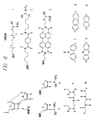
- Two types of base-pair mimetic are the rigid aromatic spacers, 2 or 3 , shown in Figure 4.
- Another mimetic is a flexible alkyl spacer similar to the polyamide backbone described by Nielsen et al., Science 1991 , 254 :1497 ( see , Figure 4; 6 or a derivative thereof 6a ; Zuckerman et al., J. Am. Chem. Soc. 1992 , 114 :10464). Use of such mimetics allows about 2-10 nucleotides to be omitted from the final nucleic acid molecule compared to the use of an oligonucleotide without a non-nucleotide mimetic.
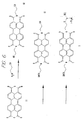
- the resulting diol 12 was then treated as outlined above for 2 to provide the phosphoramidite 3 .
- Selected ribozymes can be administered prophylactically, to viral infected patients or to diseased patients, e.g ., by exogenous delivery of the ribozyme to a relevant tissue by means of an appropriate delivery vehicle, e.g ., a liposome, a controlled release vehicle, by use of iontophoresis, electroporation or ion paired molecules, or covalently attached adducts, and other pharmacologically approved methods of delivery.
- routes of administration include intramuscular, aerosol, oral (tablet or pill form), topical, systemic, ocular, intraperitoneal and/or intrathecal.
- the specific delivery route of any selected ribozyme will depend on the use of the ribozyme. Generally, a specific delivery program for each ribozyme will focus on unmodified ribozyme uptake with regard to intracellular localization, followed by demonstration of efficacy. Alternatively, delivery to these same cells in an organ or tissue of an animal can be pursued. Uptake studies will include uptake assays to evaluate cellular ribozyme uptake, regardless of the delivery vehicle or strategy. Such assays will also determine the intracellular localization of the ribozyme following uptake, ultimately establishing the requirements for maintenance of steady-state concentrations within the cellular compartment containing the target sequence (nucleus and/or cytoplasm). Efficacy and cytotoxicity can then be tested. Toxicity will not only include cell viability but also cell function.
- Some methods of delivery that may be used include:
- Delivery strategies useful in the present invention include: ribozyme modifications, and particle carrier drug delivery vehicles.
- Unmodified ribozymes like most small molecules, are taken up by cells, albeit slowly.
- the ribozyme may be modified essentially at random, in ways which reduce its charge but maintains specific functional groups. This results in a molecule which is able to diffuse across the cell membrane, thus removing the permeability barrier.
- ribozymes Modification of ribozymes to reduce charge is just one approach to enhance the cellular uptake of these larger molecules.
- the random approach is not advisable since ribozymes are structurally and functionally more complex than small drug molecules.
- the structural requirements necessary to maintain ribozyme catalytic activity are well understood by those in the art. These requirements are taken into consideration when designing modifications to enhance cellular delivery. The modifications are also designed to reduce susceptibility to nuclease degradation. Both of these characteristics should greatly improve the efficacy of the ribozyme.
- Cellular uptake can be increased by several orders of magnitude without having to alter the phosphodiester linkages necessary for ribozyme cleavage activity.
- Drug delivery vehicles are effective for both systemic and topical administration. They can be designed to serve as a slow release reservoir, or to deliver their contents directly to the target cell.
- An advantage of using direct delivery drug vehicles is that multiple molecules are delivered per uptake. Such vehicles have been shown to increase the circulation half-life of drugs which would otherwise be rapidly cleared from the blood stream.
- Some examples of such specialized drug delivery vehicles which fall into this category are liposomes, hydrogels, cyclodextrins, biodegradable nanocapsules, and bioadhesive microspheres.
- liposomes are preferred. Liposomes increase intracellular stability, increase uptake efficiency and improve biological activity.
- Liposomes are hollow spherical vesicles composed of lipids arranged in a similar fashion as those lipids which make up the cell membrane. They have an internal aqueous space for entrapping water soluble compounds and range in size from 0.05 to several microns in diameter. Several studies have shown that liposomes can deliver RNA to cells and that the RNA remains biologically active.
- a liposome delivery vehicle originally designed as a research tool, Lipofectin has been shown to deliver intact mRNA molecules to cells yielding production of the corresponding protein.
- an antibody targeted liposome delivery system containing an RNA molecule 3,500 nucleotides in length and antisense to a structural protein of HIV inhibited virus proliferation in a sequence specific manner. Not only did the antibody target the liposomes to the infected cells, but it also triggered the internalization of the liposomes by the infected cells. Triggering the endocytosis is useful for viral inhibition.
- liposome delivered synthetic ribozymes have been shown to concentrate in the nucleus of H9 (an example of an HIV-sensitive cell) cells and are functional as evidenced by their intracellular cleavage of the sequence. Liposome delivery to other cell types using smaller ribozymes (less than 142 nucleotides in length) exhibit different intracellular localizations.
- Liposomes offer several advantages: They are non-toxic and biodegradable in composition; they display long circulation half-lives; and recognition molecules can be readily attached to their surface for targeting to tissues. Finally, cost effective manufacture of liposome-based pharmaceuticals, either in a liquid suspension or lyophilized product, has demonstrated the viability of this technology as an acceptable drug delivery system.
- Nonoparticles and hydrogels may be potential delivery vehicles for a ribozyme.
- These carriers have been developed for chemotherapeutic agents and protein-based pharmaceuticals, and consequently, can be adapted for ribozyme delivery.
- Topical administration of ribozymes is advantageous since it allows localized concentration at the site of administration with minimal systemic adsorption. This simplifies the delivery strategy of the ribozyme to the disease site and reduces the extent of toxicological characterization. Furthermore, the amount of material to be applied is far less than that required for other administration routes. Effective delivery requires the ribozyme to diffuse into the infected cells. Chemical modification of the ribozyme to neutralize negative charge may be all that is required for penetration. However, in the event that charge neutralization is insufficient, the modified ribozyme can be co-formulated with permeability enhancers, such as Azone or oleic acid, in a liposome.
- permeability enhancers such as Azone or oleic acid
- the liposomes can either represent a slow release presentation vehicle in which the modified ribozyme and permeability enhancer transfer from the liposome into the infected cell, or the liposome phospholipids can participate directly with the modified ribozyme and permeability enhancer in facilitating cellular delivery.
- both the ribozyme and permeability enhancer can be formulated into a suppository formulation for slow release.
- Ribozymes may also be systemically administered.
- Systemic absorption refers to the accumulation of drugs in the blood stream followed by distribution throughout the entire body.
- Administration routes which lead to systemic absorption include: intravenous, subcutaneous, intraperitoneal, intranasal, intrathecal and ophthalmic. Each of these administration routes expose the ribozyme to an accessible diseased tissue.
- Subcutaneous administration drains into a localized lymph node which proceeds through the lymphatic network into the circulation. The rate of entry into the circulation has been shown to be a function of molecular weight or size.
- the use of a liposome or other drug carrier localizes the ribozyme at the lymph node.
- the ribozyme can be modified to diffuse into the cell, or the liposome can directly participate in the delivery of either the unmodified or modified ribozyme to the cell. This method is particularly useful for treating AIDS using anti-HIV ribozymes.
- a liposome formulation which can deliver oligonucleotides to lymphocytes and macrophages.
- This oligonucleotide delivery system inhibits HIV proliferation in infected primary immune cells.
- Whole blood studies show that the formulation is taken up by 90% of the lymphocytes after 8 hours at 37°C.
- Preliminary biodistribution and pharmacokinetic studies yielded 70% of the injected dose/gm of tissue in the spleen after one hour following intravenous administration.
- This formulation offers an excellent delivery vehicle for anti-AIDS ribozymes for two reasons.
- T-helper lymphocytes and macrophages are the primary cells infected by the virus
- a subcutaneous administration delivers the ribozymes to the resident HIV-infected lymphocytes and macrophages in the lymph node.
- the liposomes then exit the lymphatic system, enter the circulation, and accumulate in the spleen, where the ribozyme is delivered to the resident lymphocytes and macrophages.
- Intraperitoneal administration also leads to entry into the circulation, with once again, the molecular weight or size of the ribozyme-delivery vehicle complex controlling the rate of entry.
- Liposomes injected intravenously show accumulation in the liver, lung and spleen.
- the composition and size can be adjusted so that this accumulation represents 30% to 40% of the injected dose.
- the remaining dose circulates in the blood stream for up to 24 hours.
- the chosen method of delivery should result in cytoplasmic accumulation in the afflicted cells and molecules should have some nuclease-resistance for optimal dosing.
- Nuclear delivery may be used but is less preferable.
- Most preferred delivery methods include liposomes (10-400 nm), hydrogels, controlled-release polymers, microinjection or electroporation (for ex vivo treatments) and other pharmaceutically applicable vehicles.
- the dosage will depend upon the disease indication and the route of administration but should be between 100-200 mg/kg of body weight/day.
- the duration of treatment will extend through the course of the disease symptoms, usually at least 14-16 days and possibly continuously. Multiple daily doses are anticipated for topical applications, ocular applications and vaginal applications. The number of doses will depend upon disease delivery vehicle and efficacy data from clinical trials.
- ribozyme within the cell is dependent upon the rate of uptake and degradation. Decreasing the degree of degradation will prolong the intracellular half-life of the ribozyme.
- chemically modified ribozymes e.g. , with modification of the phosphate backbone, or capping of the 5' and 3' ends of the ribozyme with nucleotide analogues may require different dosaging. Descriptions of useful systems are provided in the art cited above, all of which is hereby incorporated by reference herein.
Landscapes
- Chemical & Material Sciences (AREA)
- Life Sciences & Earth Sciences (AREA)
- Health & Medical Sciences (AREA)
- Engineering & Computer Science (AREA)
- Genetics & Genomics (AREA)
- Organic Chemistry (AREA)
- Molecular Biology (AREA)
- Biotechnology (AREA)
- Biomedical Technology (AREA)
- Biochemistry (AREA)
- General Health & Medical Sciences (AREA)
- General Engineering & Computer Science (AREA)
- Bioinformatics & Cheminformatics (AREA)
- Wood Science & Technology (AREA)
- Zoology (AREA)
- Plant Pathology (AREA)
- Physics & Mathematics (AREA)
- Biophysics (AREA)
- Microbiology (AREA)
- Virology (AREA)
- Saccharide Compounds (AREA)
- Pharmaceuticals Containing Other Organic And Inorganic Compounds (AREA)
- Preparation Of Compounds By Using Micro-Organisms (AREA)
- Enzymes And Modification Thereof (AREA)
- Measuring Or Testing Involving Enzymes Or Micro-Organisms (AREA)
Priority Applications (1)
| Application Number | Priority Date | Filing Date | Title |
|---|---|---|---|
| EP05015038A EP1602725A3 (en) | 1993-09-02 | 1994-08-19 | Abasic-nucleotide containing enzymatic nucleic acid |
Applications Claiming Priority (7)
| Application Number | Priority Date | Filing Date | Title |
|---|---|---|---|
| US11617793A | 1993-09-02 | 1993-09-02 | |
| US116177 | 1993-09-02 | ||
| US15248193A | 1993-11-12 | 1993-11-12 | |
| US152481 | 1993-11-12 | ||
| US23374894A | 1994-04-19 | 1994-04-19 | |
| US233748 | 1994-04-19 | ||
| EP94925939A EP0748382B1 (en) | 1993-09-02 | 1994-08-19 | Non-nucleotide containing enzymatic nucleic acid |
Related Parent Applications (1)
| Application Number | Title | Priority Date | Filing Date |
|---|---|---|---|
| EP94925939A Division EP0748382B1 (en) | 1993-09-02 | 1994-08-19 | Non-nucleotide containing enzymatic nucleic acid |
Related Child Applications (1)
| Application Number | Title | Priority Date | Filing Date |
|---|---|---|---|
| EP05015038A Division EP1602725A3 (en) | 1993-09-02 | 1994-08-19 | Abasic-nucleotide containing enzymatic nucleic acid |
Publications (1)
| Publication Number | Publication Date |
|---|---|
| EP1253199A1 true EP1253199A1 (en) | 2002-10-30 |
Family
ID=27381788
Family Applications (3)
| Application Number | Title | Priority Date | Filing Date |
|---|---|---|---|
| EP02009782A Withdrawn EP1253199A1 (en) | 1993-09-02 | 1994-08-19 | Abasic moieties containing enzymatic nucleic acids |
| EP05015038A Withdrawn EP1602725A3 (en) | 1993-09-02 | 1994-08-19 | Abasic-nucleotide containing enzymatic nucleic acid |
| EP94925939A Expired - Lifetime EP0748382B1 (en) | 1993-09-02 | 1994-08-19 | Non-nucleotide containing enzymatic nucleic acid |
Family Applications After (2)
| Application Number | Title | Priority Date | Filing Date |
|---|---|---|---|
| EP05015038A Withdrawn EP1602725A3 (en) | 1993-09-02 | 1994-08-19 | Abasic-nucleotide containing enzymatic nucleic acid |
| EP94925939A Expired - Lifetime EP0748382B1 (en) | 1993-09-02 | 1994-08-19 | Non-nucleotide containing enzymatic nucleic acid |
Country Status (10)
| Country | Link |
|---|---|
| US (5) | US5891683A (cg-RX-API-DMAC7.html) |
| EP (3) | EP1253199A1 (cg-RX-API-DMAC7.html) |
| JP (2) | JPH09502092A (cg-RX-API-DMAC7.html) |
| AT (1) | ATE227342T1 (cg-RX-API-DMAC7.html) |
| CA (1) | CA2169645A1 (cg-RX-API-DMAC7.html) |
| DE (1) | DE69431669T2 (cg-RX-API-DMAC7.html) |
| DK (1) | DK0748382T3 (cg-RX-API-DMAC7.html) |
| ES (1) | ES2186690T3 (cg-RX-API-DMAC7.html) |
| PT (1) | PT748382E (cg-RX-API-DMAC7.html) |
| WO (1) | WO1995006731A2 (cg-RX-API-DMAC7.html) |
Cited By (1)
| Publication number | Priority date | Publication date | Assignee | Title |
|---|---|---|---|---|
| US8115716B2 (en) | 2005-08-04 | 2012-02-14 | Sharp Kabushiki Kaisha | Liquid crystal display device and its drive method |
Families Citing this family (337)
| Publication number | Priority date | Publication date | Assignee | Title |
|---|---|---|---|---|
| US6399754B1 (en) * | 1991-12-24 | 2002-06-04 | Isis Pharmaceuticals, Inc. | Sugar modified oligonucleotides |
| EP1253199A1 (en) | 1993-09-02 | 2002-10-30 | Ribozyme Pharmaceuticals, Inc. | Abasic moieties containing enzymatic nucleic acids |
| AU687479B2 (en) | 1993-11-08 | 1998-02-26 | Ribozyme Pharmaceuticals, Inc. | Base-modified enzymatic nucleic acid |
| US5670347A (en) | 1994-05-11 | 1997-09-23 | Amba Biosciences Llc | Peptide-mediated gene transfer |
| US5672501A (en) * | 1994-12-23 | 1997-09-30 | Ribozyme Pharmaceuticals, Inc. | Base-modified enzymatic nucleic acid |
| US7034009B2 (en) | 1995-10-26 | 2006-04-25 | Sirna Therapeutics, Inc. | Enzymatic nucleic acid-mediated treatment of ocular diseases or conditions related to levels of vascular endothelial growth factor receptor (VEGF-R) |
| US5998203A (en) * | 1996-04-16 | 1999-12-07 | Ribozyme Pharmaceuticals, Inc. | Enzymatic nucleic acids containing 5'-and/or 3'-cap structures |
| US5728818A (en) * | 1996-01-16 | 1998-03-17 | Ribozyme Pharmaceuticals, Inc. | Chemical linkage of ribozyme protions |
| US20030044941A1 (en) * | 1996-06-06 | 2003-03-06 | Crooke Stanley T. | Human RNase III and compositions and uses thereof |
| US20040266706A1 (en) * | 2002-11-05 | 2004-12-30 | Muthiah Manoharan | Cross-linked oligomeric compounds and their use in gene modulation |
| US20040171030A1 (en) * | 1996-06-06 | 2004-09-02 | Baker Brenda F. | Oligomeric compounds having modified bases for binding to cytosine and uracil or thymine and their use in gene modulation |
| US20050119470A1 (en) * | 1996-06-06 | 2005-06-02 | Muthiah Manoharan | Conjugated oligomeric compounds and their use in gene modulation |
| US5898031A (en) * | 1996-06-06 | 1999-04-27 | Isis Pharmaceuticals, Inc. | Oligoribonucleotides for cleaving RNA |
| US20040203024A1 (en) * | 1996-06-06 | 2004-10-14 | Baker Brenda F. | Modified oligonucleotides for use in RNA interference |
| US20040171031A1 (en) * | 1996-06-06 | 2004-09-02 | Baker Brenda F. | Sugar surrogate-containing oligomeric compounds and compositions for use in gene modulation |
| US20050053976A1 (en) * | 1996-06-06 | 2005-03-10 | Baker Brenda F. | Chimeric oligomeric compounds and their use in gene modulation |
| US20080119427A1 (en) * | 1996-06-06 | 2008-05-22 | Isis Pharmaceuticals, Inc. | Double Strand Compositions Comprising Differentially Modified Strands for Use in Gene Modulation |
| US20040161777A1 (en) * | 1996-06-06 | 2004-08-19 | Baker Brenda F. | Modified oligonucleotides for use in RNA interference |
| US9096636B2 (en) * | 1996-06-06 | 2015-08-04 | Isis Pharmaceuticals, Inc. | Chimeric oligomeric compounds and their use in gene modulation |
| US20040171028A1 (en) * | 1996-06-06 | 2004-09-02 | Baker Brenda F. | Phosphorous-linked oligomeric compounds and their use in gene modulation |
| US20040147022A1 (en) * | 1996-06-06 | 2004-07-29 | Baker Brenda F. | 2'-methoxy substituted oligomeric compounds and compositions for use in gene modulations |
| US7812149B2 (en) | 1996-06-06 | 2010-10-12 | Isis Pharmaceuticals, Inc. | 2′-Fluoro substituted oligomeric compounds and compositions for use in gene modulations |
| US5807743A (en) * | 1996-12-03 | 1998-09-15 | Ribozyme Pharmaceuticals, Inc. | Interleukin-2 receptor gamma-chain ribozymes |
| US6251666B1 (en) | 1997-03-31 | 2001-06-26 | Ribozyme Pharmaceuticals, Inc. | Nucleic acid catalysts comprising L-nucleotide analogs |
| US6548657B1 (en) | 1997-06-09 | 2003-04-15 | Ribozyme Pharmaceuticals, Inc. | Method for screening nucleic acid catalysts |
| US6280936B1 (en) | 1997-06-09 | 2001-08-28 | Ribozyme Pharmaceuticals, Inc. | Method for screening nucleic acid catalysts |
| CA2304813A1 (en) * | 1997-09-22 | 1999-04-08 | Fritz Eckstein | Nucleic acid catalysts with endonuclease activity |
| US6656731B1 (en) | 1997-09-22 | 2003-12-02 | Max Planck Gesellschaft Zur Forderung Der Wissenschaften E.V. | Nucleic acid catalysts with endonuclease activity |
| US6858390B2 (en) | 1998-12-31 | 2005-02-22 | Ingeneus Corporation | Aptamers containing sequences of nucleic acid or nucleic acid analogues bound homologously, or in novel complexes |
| US6656692B2 (en) | 1999-12-21 | 2003-12-02 | Ingeneus Corporation | Parallel or antiparallel, homologous or complementary binding of nucleic acids or analogues thereof to form duplex, triplex or quadruplex complexes |
| US6420115B1 (en) | 1999-12-21 | 2002-07-16 | Ingeneus Corporation | Cation mediated triplex hybridization assay |
| US6403313B1 (en) | 1999-12-21 | 2002-06-11 | Ingeneus Corporation | Fluorescent intensity assay for duplex and triplex nucleic acid hybridization solution utilizing fluorescent intercalators |
| US6911536B1 (en) | 1999-12-21 | 2005-06-28 | Ingeneus Corporation | Triplex and quadruplex catalytic hybridization |
| US6927027B2 (en) | 1999-12-21 | 2005-08-09 | Ingeneus Corporation | Nucleic acid multiplex formation |
| US6924108B2 (en) | 1999-12-21 | 2005-08-02 | Ingeneus Corporation | Nucleic acid binding enhancement by conjugation with nucleotides, nucleosides, bases and/or their analogues |
| US7309569B2 (en) | 1999-12-21 | 2007-12-18 | Ingeneus, Inc. | Parallel or antiparallel, homologous or complementary binding of nucleic acids or analogues thereof to form duplex, triplex or quadruplex complexes |
| US20030181412A1 (en) * | 1999-12-21 | 2003-09-25 | Ingeneus Corporation | Method for modifying transcription and/or translation in an organism for therapeutic, prophylactic and/or analytic uses |
| US7052844B2 (en) * | 1999-12-21 | 2006-05-30 | Ingeneus, Inc. | Purification of DS-DNA using heteropolymeric capture probes and a triplex, quadruplex or homologous duplex binding mechanism |
| US7220541B2 (en) | 2000-01-24 | 2007-05-22 | Ingeneus, Inc. | Homogeneous assay of biopolymer binding by means of multiple measurements under varied conditions |
| US6982147B2 (en) * | 2000-01-24 | 2006-01-03 | Ingeneus Corporation | Apparatus for assaying biopolymer binding by means of multiple measurements under varied conditions |
| US6613524B1 (en) | 2000-01-24 | 2003-09-02 | Ingeneus Corporation | Amperometric affinity assay and electrically stimulated complexes of nucleic acids |
| US20030170659A1 (en) * | 2000-01-24 | 2003-09-11 | Ingeneus Corporation | Electrical treatment of binding media to encourage, discourage and/or study biopolymer binding |
| US6831171B2 (en) | 2000-02-08 | 2004-12-14 | Yale University | Nucleic acid catalysts with endonuclease activity |
| US7833992B2 (en) | 2001-05-18 | 2010-11-16 | Merck Sharpe & Dohme | Conjugates and compositions for cellular delivery |
| US20050233329A1 (en) * | 2002-02-20 | 2005-10-20 | Sirna Therapeutics, Inc. | Inhibition of gene expression using duplex forming oligonucleotides |
| US8202979B2 (en) * | 2002-02-20 | 2012-06-19 | Sirna Therapeutics, Inc. | RNA interference mediated inhibition of gene expression using chemically modified short interfering nucleic acid |
| US8273866B2 (en) | 2002-02-20 | 2012-09-25 | Merck Sharp & Dohme Corp. | RNA interference mediated inhibition of gene expression using chemically modified short interfering nucleic acid (SINA) |
| US20080039414A1 (en) * | 2002-02-20 | 2008-02-14 | Sima Therapeutics, Inc. | RNA interference mediated inhibition of gene expression using chemically modified short interfering nucleic acid (siNA) |
| CA2398282A1 (en) * | 2000-02-11 | 2001-08-16 | Ribozyme Pharmaceuticals, Inc. | Method and reagent for the modulation and diagnosis of cd20 and nogo gene expression |
| US7491805B2 (en) | 2001-05-18 | 2009-02-17 | Sirna Therapeutics, Inc. | Conjugates and compositions for cellular delivery |
| US20050032733A1 (en) * | 2001-05-18 | 2005-02-10 | Sirna Therapeutics, Inc. | RNA interference mediated inhibition of gene expression using chemically modified short interfering nucleic acid (SiNA) |
| US7102024B1 (en) * | 2000-08-01 | 2006-09-05 | Schwartz David A | Functional biopolymer modification reagents and uses thereof |
| US8568766B2 (en) | 2000-08-24 | 2013-10-29 | Gattadahalli M. Anantharamaiah | Peptides and peptide mimetics to treat pathologies associated with eye disease |
| US20080032942A1 (en) * | 2000-08-30 | 2008-02-07 | Mcswiggen James | RNA interference mediated treatment of Alzheimer's disease using short interfering nucleic acid (siNA) |
| US20050209179A1 (en) * | 2000-08-30 | 2005-09-22 | Sirna Therapeutics, Inc. | RNA interference mediated treatment of Alzheimer's disease using short interfering nucleic acid (siNA) |
| US20020150936A1 (en) * | 2000-09-01 | 2002-10-17 | Leonid Beigelman | Methods for synthesizing nucleosides, nucleoside derivatives and non-nucleoside derivatives |
| ATE506372T1 (de) | 2000-09-01 | 2011-05-15 | Ribozyme Pharm Inc | Verfahren zur herstellung von nukleosidderivate |
| US7125660B2 (en) | 2000-09-13 | 2006-10-24 | Archemix Corp. | Nucleic acid sensor molecules and methods of using same |
| CA2418724A1 (en) * | 2000-09-13 | 2002-03-21 | Archemix Corporation | Target activated nucleic acid biosensor and methods of using same |
| US20020165192A1 (en) * | 2000-09-19 | 2002-11-07 | Kerr William G. | Control of NK cell function and survival by modulation of ship activity |
| US20110052546A1 (en) * | 2000-09-19 | 2011-03-03 | University Of South Florida | Inhibition of SHIP to Enhance Stem Cell Harvest and Transplantation |
| WO2009042910A2 (en) * | 2007-09-26 | 2009-04-02 | University Of South Florida | Ship inhibition to direct hematopoietic stem cells and induce extramedullary hematopoiesis |
| JP5305553B2 (ja) | 2000-10-12 | 2013-10-02 | ユニバーシティー オブ ロチェスター | 癌細胞の増殖を阻害する組成物 |
| EP1386004A4 (en) | 2001-04-05 | 2005-02-16 | Ribozyme Pharm Inc | MODULATION OF GENE EXPRESSION ASSOCIATED WITH INFLAMMATORY PROLIFERATION AND GROWTH OF NEURITIES BY METHODS INVOLVING NUCLEIC ACID |
| US20040198682A1 (en) * | 2001-11-30 | 2004-10-07 | Mcswiggen James | RNA interference mediated inhibition of placental growth factor gene expression using short interfering nucleic acid (siNA) |
| US20050143333A1 (en) * | 2001-05-18 | 2005-06-30 | Sirna Therapeutics, Inc. | RNA interference mediated inhibition of interleukin and interleukin receptor gene expression using short interfering nucleic acid (SINA) |
| US20050227935A1 (en) * | 2001-05-18 | 2005-10-13 | Sirna Therapeutics, Inc. | RNA interference mediated inhibition of TNF and TNF receptor gene expression using short interfering nucleic acid (siNA) |
| US20050054596A1 (en) * | 2001-11-30 | 2005-03-10 | Mcswiggen James | RNA interference mediated inhibition of vascular endothelial growth factor and vascular endothelial growth factor receptor gene expression using short interfering nucleic acid (siNA) |
| US20050159379A1 (en) * | 2001-05-18 | 2005-07-21 | Sirna Therapeutics, Inc | RNA interference mediated inhibition of gastric inhibitory polypeptide (GIP) and gastric inhibitory polypeptide receptor (GIPR) gene expression using short interfering nucleic acid (siNA) |
| US20050153914A1 (en) * | 2001-05-18 | 2005-07-14 | Sirna Therapeutics, Inc. | RNA interference mediated inhibition of MDR P-glycoprotein gene expression using short interfering nucleic acid (siNA) |
| US20050148530A1 (en) | 2002-02-20 | 2005-07-07 | Sirna Therapeutics, Inc. | RNA interference mediated inhibition of vascular endothelial growth factor and vascular endothelial growth factor receptor gene expression using short interfering nucleic acid (siNA) |
| US20050233996A1 (en) * | 2002-02-20 | 2005-10-20 | Sirna Therapeutics, Inc. | RNA interference mediated inhibition of hairless (HR) gene expression using short interfering nucleic acid (siNA) |
| US20080188430A1 (en) * | 2001-05-18 | 2008-08-07 | Sirna Therapeutics, Inc. | RNA interference mediated inhibition of hypoxia inducible factor 1 (HIF1) gene expression using short interfering nucleic acid (siNA) |
| US9994853B2 (en) | 2001-05-18 | 2018-06-12 | Sirna Therapeutics, Inc. | Chemically modified multifunctional short interfering nucleic acid molecules that mediate RNA interference |
| US20080161256A1 (en) * | 2001-05-18 | 2008-07-03 | Sirna Therapeutics, Inc. | RNA interference mediated inhibition of gene expression using short interfering nucleic acid (siNA) |
| US20050054598A1 (en) * | 2002-02-20 | 2005-03-10 | Sirna Therapeutics, Inc. | RNA interference mediated inhibition hairless (HR) gene expression using short interfering nucleic acid (siNA) |
| US20050282188A1 (en) * | 2001-05-18 | 2005-12-22 | Sirna Therapeutics, Inc. | RNA interference mediated inhibition of gene expression using short interfering nucleic acid (siNA) |
| US20050153915A1 (en) * | 2001-05-18 | 2005-07-14 | Sirna Therapeutics, Inc. | RNA interference mediated inhibition of early growth response gene expression using short interfering nucleic acid (siNA) |
| US20050130181A1 (en) * | 2001-05-18 | 2005-06-16 | Sirna Therapeutics, Inc. | RNA interference mediated inhibition of wingless gene expression using short interfering nucleic acid (siNA) |
| US20050164224A1 (en) * | 2001-05-18 | 2005-07-28 | Sirna Therapeutics, Inc. | RNA interference mediated inhibition of cyclin D1 gene expression using short interfering nucleic acid (siNA) |
| US20050159380A1 (en) * | 2001-05-18 | 2005-07-21 | Sirna Therapeutics, Inc. | RNA interference mediated inhibition of angiopoietin gene expression using short interfering nucleic acid (siNA) |
| US7109165B2 (en) | 2001-05-18 | 2006-09-19 | Sirna Therapeutics, Inc. | Conjugates and compositions for cellular delivery |
| US20050287128A1 (en) * | 2001-05-18 | 2005-12-29 | Sirna Therapeutics, Inc. | RNA interference mediated inhibition of TGF-beta and TGF-beta receptor gene expression using short interfering nucleic acid (siNA) |
| US20050203040A1 (en) * | 2001-05-18 | 2005-09-15 | Sirna Therapeutics, Inc. | RNA interference mediated inhibition of vascular cell adhesion molecule (VCAM) gene expression using short interfering nucleic acid (siNA) |
| US20050137155A1 (en) * | 2001-05-18 | 2005-06-23 | Sirna Therapeutics, Inc. | RNA interference mediated treatment of Parkinson disease using short interfering nucleic acid (siNA) |
| US20050182007A1 (en) * | 2001-05-18 | 2005-08-18 | Sirna Therapeutics, Inc. | RNA interference mediated inhibition of interleukin and interleukin receptor gene expression using short interfering nucleic acid (SINA) |
| US20050119212A1 (en) * | 2001-05-18 | 2005-06-02 | Sirna Therapeutics, Inc. | RNA interference mediated inhibition of FAS and FASL gene expression using short interfering nucleic acid (siNA) |
| US20050176666A1 (en) * | 2001-05-18 | 2005-08-11 | Sirna Therapeutics, Inc. | RNA interference mediated inhibition of GPRA and AAA1 gene expression using short interfering nucleic acid (siNA) |
| US20050124567A1 (en) * | 2001-05-18 | 2005-06-09 | Sirna Therapeutics, Inc. | RNA interference mediated inhibition of TRPM7 gene expression using short interfering nucleic acid (siNA) |
| US20050209180A1 (en) * | 2001-05-18 | 2005-09-22 | Sirna Therapeutics, Inc. | RNA interference mediated inhibition of hepatitis C virus (HCV) expression using short interfering nucleic acid (siNA) |
| US20050119211A1 (en) * | 2001-05-18 | 2005-06-02 | Sirna Therapeutics, Inc. | RNA mediated inhibition connexin gene expression using short interfering nucleic acid (siNA) |
| US20050136436A1 (en) * | 2001-05-18 | 2005-06-23 | Sirna Therapeutics, Inc. | RNA interference mediated inhibition of G72 and D-amino acid oxidase (DAAO) gene expression using short interfering nucleic acid (siNA) |
| US20040219671A1 (en) * | 2002-02-20 | 2004-11-04 | Sirna Therapeutics, Inc. | RNA interference mediated treatment of parkinson disease using short interfering nucleic acid (siNA) |
| US20050080031A1 (en) * | 2001-05-18 | 2005-04-14 | Sirna Therapeutics, Inc. | Nucleic acid treatment of diseases or conditions related to levels of Ras, HER2 and HIV |
| US20070042983A1 (en) * | 2001-05-18 | 2007-02-22 | Sirna Therapeutics, Inc. | RNA interference mediated inhibition of gene expression using short interfering nucleic acid (siNA) |
| US20050124568A1 (en) * | 2001-05-18 | 2005-06-09 | Sirna Therapeutics, Inc. | RNA interference mediated inhibition of acetyl-CoA-carboxylase gene expression using short interfering nucleic acid (siNA) |
| US7517864B2 (en) | 2001-05-18 | 2009-04-14 | Sirna Therapeutics, Inc. | RNA interference mediated inhibition of vascular endothelial growth factor and vascular endothelial growth factor receptor gene expression using short interfering nucleic acid (siNA) |
| US20040209831A1 (en) * | 2002-02-20 | 2004-10-21 | Mcswiggen James | RNA interference mediated inhibition of hepatitis C virus (HCV) gene expression using short interfering nucleic acid (siNA) |
| EP3231445A1 (en) | 2001-05-18 | 2017-10-18 | Sirna Therapeutics, Inc. | Conjugates and compositions for cellular delivery |
| US20050124566A1 (en) * | 2001-05-18 | 2005-06-09 | Sirna Therapeutics, Inc. | RNA interference mediated inhibition of myostatin gene expression using short interfering nucleic acid (siNA) |
| US20050159376A1 (en) * | 2002-02-20 | 2005-07-21 | Slrna Therapeutics, Inc. | RNA interference mediated inhibition 5-alpha reductase and androgen receptor gene expression using short interfering nucleic acid (siNA) |
| US20050164966A1 (en) * | 2001-05-18 | 2005-07-28 | Sirna Therapeutics, Inc. | RNA interference mediated inhibition of type 1 insulin-like growth factor receptor gene expression using short interfering nucleic acid (siNA) |
| US20050288242A1 (en) * | 2001-05-18 | 2005-12-29 | Sirna Therapeutics, Inc. | RNA interference mediated inhibition of RAS gene expression using short interfering nucleic acid (siNA) |
| US20060241075A1 (en) * | 2001-05-18 | 2006-10-26 | Sirna Therapeutics, Inc. | RNA interference mediated inhibition of desmoglein gene expression using short interfering nucleic acid (siNA) |
| US20050182006A1 (en) * | 2001-05-18 | 2005-08-18 | Sirna Therapeutics, Inc | RNA interference mediated inhibition of protein kinase C alpha (PKC-alpha) gene expression using short interfering nucleic acid (siNA) |
| US20060142226A1 (en) * | 2001-05-18 | 2006-06-29 | Sirna Therapeutics, Inc. | RNA interference mediated inhibition of cholesteryl ester transfer protein (CETP) gene expression using short interfering nucleic acid (siNA) |
| US20050014172A1 (en) * | 2002-02-20 | 2005-01-20 | Ivan Richards | RNA interference mediated inhibition of muscarinic cholinergic receptor gene expression using short interfering nucleic acid (siNA) |
| US20050196765A1 (en) * | 2001-05-18 | 2005-09-08 | Sirna Therapeutics, Inc. | RNA interference mediated inhibition of checkpoint Kinase-1 (CHK-1) gene expression using short interfering nucleic acid (siNA) |
| US20060211642A1 (en) * | 2001-05-18 | 2006-09-21 | Sirna Therapeutics, Inc. | RNA inteference mediated inhibition of hepatitis C virus (HVC) gene expression using short interfering nucleic acid (siNA) |
| US20070270579A1 (en) * | 2001-05-18 | 2007-11-22 | Sirna Therapeutics, Inc. | RNA interference mediated inhibition of gene expression using short interfering nucleic acid (siNA) |
| US20060142225A1 (en) * | 2001-05-18 | 2006-06-29 | Sirna Therapeutics, Inc. | RNA interference mediated inhibition of cyclin dependent kinase-2 (CDK2) gene expression using short interfering nucleic acid (siNA) |
| US20050164967A1 (en) * | 2001-05-18 | 2005-07-28 | Sirna Therapeutics, Inc. | RNA interference mediated inhibition of platelet-derived endothelial cell growth factor (ECGF1) gene expression using short interfering nucleic acid (siNA) |
| US20050233344A1 (en) * | 2001-05-18 | 2005-10-20 | Sirna Therapeutics, Inc. | RNA interference mediated inhibition of platelet derived growth factor (PDGF) and platelet derived growth factor receptor (PDGFR) gene expression using short interfering nucleic acid (siNA) |
| US20050159382A1 (en) * | 2001-05-18 | 2005-07-21 | Sirna Therapeutics, Inc. | RNA interference mediated inhibition of polycomb group protein EZH2 gene expression using short interfering nucleic acid (siNA) |
| US20050191638A1 (en) * | 2002-02-20 | 2005-09-01 | Sirna Therapeutics, Inc. | RNA interference mediated treatment of polyglutamine (polyQ) repeat expansion diseases using short interfering nucleic acid (siNA) |
| US20050079610A1 (en) * | 2001-05-18 | 2005-04-14 | Sirna Therapeutics, Inc. | RNA interference mediated inhibition of Fos gene expression using short interfering nucleic acid (siNA) |
| US20050176665A1 (en) * | 2001-05-18 | 2005-08-11 | Sirna Therapeutics, Inc. | RNA interference mediated inhibition of hairless (HR) gene expression using short interfering nucleic acid (siNA) |
| US20040006035A1 (en) * | 2001-05-29 | 2004-01-08 | Dennis Macejak | Nucleic acid mediated disruption of HIV fusogenic peptide interactions |
| US20050176664A1 (en) * | 2001-05-18 | 2005-08-11 | Sirna Therapeutics, Inc. | RNA interference mediated inhibition of cholinergic muscarinic receptor (CHRM3) gene expression using short interfering nucleic acid (siNA) |
| US20060019913A1 (en) * | 2001-05-18 | 2006-01-26 | Sirna Therapeutics, Inc. | RNA interference mediated inhibtion of protein tyrosine phosphatase-1B (PTP-1B) gene expression using short interfering nucleic acid (siNA) |
| US20050164968A1 (en) * | 2001-05-18 | 2005-07-28 | Sirna Therapeutics, Inc. | RNA interference mediated inhibition of ADAM33 gene expression using short interfering nucleic acid (siNA) |
| US20050256068A1 (en) * | 2001-05-18 | 2005-11-17 | Sirna Therapeutics, Inc. | RNA interference mediated inhibition of stearoyl-CoA desaturase (SCD) gene expression using short interfering nucleic acid (siNA) |
| US20050222066A1 (en) * | 2001-05-18 | 2005-10-06 | Sirna Therapeutics, Inc. | RNA interference mediated inhibition of vascular endothelial growth factor and vascular endothelial growth factor receptor gene expression using short interfering nucleic acid (siNA) |
| US20050182009A1 (en) * | 2001-05-18 | 2005-08-18 | Sirna Therapeutics, Inc. | RNA interference mediated inhibition of NF-Kappa B / REL-A gene expression using short interfering nucleic acid (siNA) |
| US20050233997A1 (en) * | 2001-05-18 | 2005-10-20 | Sirna Therapeutics, Inc. | RNA interference mediated inhibition of matrix metalloproteinase 13 (MMP13) gene expression using short interfering nucleic acid (siNA) |
| US20050187174A1 (en) * | 2001-05-18 | 2005-08-25 | Sirna Therapeutics, Inc. | RNA interference mediated inhibition of intercellular adhesion molecule (ICAM) gene expression using short interfering nucleic acid (siNA) |
| US20050196767A1 (en) * | 2001-05-18 | 2005-09-08 | Sirna Therapeutics, Inc. | RNA interference mediated inhibition of GRB2 associated binding protein (GAB2) gene expression using short interfering nucleic acis (siNA) |
| US20050267058A1 (en) * | 2001-05-18 | 2005-12-01 | Sirna Therapeutics, Inc. | RNA interference mediated inhibition of placental growth factor gene expression using short interfering nucleic acid (sINA) |
| US7785610B2 (en) * | 2001-06-21 | 2010-08-31 | Dynavax Technologies Corporation | Chimeric immunomodulatory compounds and methods of using the same—III |
| KR100985457B1 (ko) | 2001-06-21 | 2010-10-06 | 다이나박스 테크놀로지 코퍼레이션 | 키메라 면역조절 화합물 및 그것들의 사용 방법 |
| US20040126867A1 (en) * | 2001-07-06 | 2004-07-01 | Crooke Stanley T. | Human RNase III and compositions and uses thereof |
| DE10150121B4 (de) * | 2001-10-11 | 2005-12-01 | Bernhard-Nocht-Institut für Tropenmedizin | Echtzeitdetektion von DNA-Amplifikationsprodukten |
| US20040138163A1 (en) * | 2002-05-29 | 2004-07-15 | Mcswiggen James | RNA interference mediated inhibition of vascular edothelial growth factor and vascular edothelial growth factor receptor gene expression using short interfering nucleic acid (siNA) |
| US20050075304A1 (en) * | 2001-11-30 | 2005-04-07 | Mcswiggen James | RNA interference mediated inhibition of vascular endothelial growth factor and vascular endothelial growth factor receptor gene expression using short interfering nucleic acid (siNA) |
| US20070203333A1 (en) * | 2001-11-30 | 2007-08-30 | Mcswiggen James | RNA interference mediated inhibition of vascular endothelial growth factor and vascular endothelial growth factor receptor gene expression using short interfering nucleic acid (siNA) |
| US20060009409A1 (en) | 2002-02-01 | 2006-01-12 | Woolf Tod M | Double-stranded oligonucleotides |
| EP1478656B1 (en) * | 2002-02-01 | 2009-09-16 | Life Technologies Corporation | Oligonucleotide compositions with enhanced efficiency |
| US20030166282A1 (en) * | 2002-02-01 | 2003-09-04 | David Brown | High potency siRNAS for reducing the expression of target genes |
| EP1572168B1 (en) | 2002-02-06 | 2010-05-26 | Vicor Technologies, Inc. | Anti-infarction molecules |
| WO2003106476A1 (en) * | 2002-02-20 | 2003-12-24 | Sirna Therapeutics, Inc | Nucleic acid mediated inhibition of enterococcus infection and cytolysin toxin activity |
| US9657294B2 (en) | 2002-02-20 | 2017-05-23 | Sirna Therapeutics, Inc. | RNA interference mediated inhibition of gene expression using chemically modified short interfering nucleic acid (siNA) |
| JP2005517450A (ja) * | 2002-02-20 | 2005-06-16 | サーナ・セラピューティクス・インコーポレイテッド | 短干渉核酸(siNA)を用いるRNA干渉媒介性標的発見および標的評価 |
| EP1432724A4 (en) | 2002-02-20 | 2006-02-01 | Sirna Therapeutics Inc | RNA inhibition mediated inhibition of MAP KINASE GENES |
| US20050096284A1 (en) * | 2002-02-20 | 2005-05-05 | Sirna Therapeutics, Inc. | RNA interference mediated treatment of polyglutamine (polyQ) repeat expansion diseases using short interfering nucleic acid (siNA) |
| US20050137153A1 (en) * | 2002-02-20 | 2005-06-23 | Sirna Therapeutics, Inc. | RNA interference mediated inhibition of alpha-1 antitrypsin (AAT) gene expression using short interfering nucleic acid (siNA) |
| US9181551B2 (en) | 2002-02-20 | 2015-11-10 | Sirna Therapeutics, Inc. | RNA interference mediated inhibition of gene expression using chemically modified short interfering nucleic acid (siNA) |
| US20050222064A1 (en) * | 2002-02-20 | 2005-10-06 | Sirna Therapeutics, Inc. | Polycationic compositions for cellular delivery of polynucleotides |
| EP1534729A2 (en) * | 2002-02-26 | 2005-06-01 | University of Utah Research Foundation | Variants of nedd4l associated with hypertension and viral budding |
| US20100075423A1 (en) * | 2002-06-12 | 2010-03-25 | Life Technologies Corporation | Methods and compositions relating to polypeptides with rnase iii domains that mediate rna interference |
| WO2003106630A2 (en) * | 2002-06-12 | 2003-12-24 | Ambion, Inc. | Methods and compositions relating to polypeptides with rnase iii domains that mediate rna interference |
| US20040248094A1 (en) * | 2002-06-12 | 2004-12-09 | Ford Lance P. | Methods and compositions relating to labeled RNA molecules that reduce gene expression |
| US7569343B2 (en) * | 2002-06-28 | 2009-08-04 | Rosetta Inpharmatics Llc | Methods to assess quality of microarrays |
| US6989442B2 (en) * | 2002-07-12 | 2006-01-24 | Sirna Therapeutics, Inc. | Deprotection and purification of oligonucleotides and their derivatives |
| US7655790B2 (en) | 2002-07-12 | 2010-02-02 | Sirna Therapeutics, Inc. | Deprotection and purification of oligonucleotides and their derivatives |
| US20050287648A1 (en) | 2002-08-05 | 2005-12-29 | University Of Rochester | Protein Transducing Domain/Deaminase Chimeric Proteins, Related Compounds, and Uses Thereof |
| AU2003256857A1 (en) * | 2002-08-08 | 2004-02-25 | Dharmacon, Inc. | Short interfering rnas having a hairpin structure containing a non-nucleotide loop |
| US20040029275A1 (en) * | 2002-08-10 | 2004-02-12 | David Brown | Methods and compositions for reducing target gene expression using cocktails of siRNAs or constructs expressing siRNAs |
| US7884083B2 (en) | 2002-08-12 | 2011-02-08 | Dynavax Technologies Corporation | Immunomodulatory compositions, methods of making, and methods of use thereof |
| US7923547B2 (en) | 2002-09-05 | 2011-04-12 | Sirna Therapeutics, Inc. | RNA interference mediated inhibition of gene expression using chemically modified short interfering nucleic acid (siNA) |
| AU2003268531A1 (en) | 2002-09-06 | 2004-03-29 | University Of South Florida | Materials and methods for treatment of allergic diseases |
| US20080214437A1 (en) * | 2002-09-06 | 2008-09-04 | Mohapatra Shyam S | Methods and compositions for reducing activity of the atrial natriuretic peptide receptor and for treatment of diseases |
| WO2004026887A2 (en) * | 2002-09-19 | 2004-04-01 | Merck & Co., Inc. | Estrogen receptor modulators |
| US20040242518A1 (en) * | 2002-09-28 | 2004-12-02 | Massachusetts Institute Of Technology | Influenza therapeutic |
| US8604183B2 (en) | 2002-11-05 | 2013-12-10 | Isis Pharmaceuticals, Inc. | Compositions comprising alternating 2′-modified nucleosides for use in gene modulation |
| WO2004044138A2 (en) | 2002-11-05 | 2004-05-27 | Isis Pharmaceuticals, Inc. | Chimeric oligomeric compounds and their use in gene modulation |
| US20040231231A1 (en) * | 2002-12-20 | 2004-11-25 | Cataldo Dominic A. | Use of colloidal clays for sustained release of active ingredients |
| US7625872B2 (en) * | 2002-12-23 | 2009-12-01 | Dynavax Technologies Corporation | Branched immunomodulatory compounds and methods of using the same |
| AU2004231740A1 (en) * | 2003-04-17 | 2004-11-04 | The Trustees Of Columbia University In The City Ofnew York | Desmoglein 4 is a novel gene involved in hair growth |
| EP3222294A1 (en) | 2003-04-30 | 2017-09-27 | Sirna Therapeutics, Inc. | Conjugates and compositions for cellular delivery |
| WO2005044976A2 (en) * | 2003-06-20 | 2005-05-19 | Isis Pharmaceuticals, Inc. | Oligomeric compounds for use in gene modulation |
| US7807646B1 (en) * | 2003-11-20 | 2010-10-05 | University Of South Florida | SHIP-deficiency to increase megakaryocyte progenitor production |
| EP1727556A2 (en) * | 2004-02-17 | 2006-12-06 | University Of South Florida | Materials and methods for treatment of inflammatory and cell proliferation disorders |
| EP1716234B1 (de) * | 2004-02-20 | 2013-10-02 | Mologen AG | Substituiertes, nicht-kodierendes nukleinsäuremolekül zur therapeutischen und prophylaktischen immunstimulation in menschen und höheren tieren |
| US8569474B2 (en) | 2004-03-09 | 2013-10-29 | Isis Pharmaceuticals, Inc. | Double stranded constructs comprising one or more short strands hybridized to a longer strand |
| EP2540734B1 (en) | 2004-04-05 | 2016-03-30 | Alnylam Pharmaceuticals, Inc. | Process and reagents for oligonucleotide synthesis and purification |
| CA2557532A1 (en) | 2004-04-23 | 2005-11-10 | Angela M. Christiano | Inhibition of hairless protein mrna |
| AU2005325262B2 (en) | 2004-04-27 | 2011-08-11 | Alnylam Pharmaceuticals, Inc. | Single-stranded and double-stranded oligonucleotides comprising a 2-arylpropyl moiety |
| AU2005323437B2 (en) * | 2004-04-30 | 2011-10-06 | Alnylam Pharmaceuticals, Inc. | Oligonucleotides comprising a C5-modified pyrimidine |
| US20060040882A1 (en) | 2004-05-04 | 2006-02-23 | Lishan Chen | Compostions and methods for enhancing delivery of nucleic acids into cells and for modifying expression of target genes in cells |
| US10508277B2 (en) | 2004-05-24 | 2019-12-17 | Sirna Therapeutics, Inc. | Chemically modified multifunctional short interfering nucleic acid molecules that mediate RNA interference |
| US8394947B2 (en) | 2004-06-03 | 2013-03-12 | Isis Pharmaceuticals, Inc. | Positionally modified siRNA constructs |
| JP2008504840A (ja) | 2004-06-30 | 2008-02-21 | アルニラム ファーマスーティカルズ インコーポレイテッド | 非リン酸骨格結合を含むオリゴヌクレオチド |
| AU2005328382C1 (en) | 2004-07-21 | 2013-01-24 | Alnylam Pharmaceuticals, Inc. | Oligonucleotides comprising a modified or non-natural nucleobase |
| EP1913011B1 (en) | 2004-08-04 | 2016-11-02 | Alnylam Pharmaceuticals Inc. | Oligonucleotides comprising a ligand tethered to a modified or non-natural nucleobase |
| PL1794174T3 (pl) | 2004-09-01 | 2012-11-30 | Dynavax Tech Corp | Sposoby i kompozycje do hamowania wrodzonych odpowiedzi immunologicznych i autoodporności |
| US7884086B2 (en) | 2004-09-08 | 2011-02-08 | Isis Pharmaceuticals, Inc. | Conjugates for use in hepatocyte free uptake assays |
| AU2005316503A1 (en) * | 2004-12-17 | 2006-06-22 | Dynavax Technologies Corporation | Methods and compositions for induction or promotion of immune tolerance |
| US20060142228A1 (en) * | 2004-12-23 | 2006-06-29 | Ambion, Inc. | Methods and compositions concerning siRNA's as mediators of RNA interference |
| BRPI0606791A2 (pt) | 2005-02-02 | 2010-02-09 | The Uab Research Foundation | métodos de reverter ou prevenir a resistência de uma célula a um agonista do receptor da morte, de triar uma célula quanto a um biomarcador da resistência a um agonista do receptor da morte, de monitorar a resistência a um agonista do receptor da morte em um indivìduo, de induzir seletivamente a apoptose em uma célula alvo expressando um receptor da morte, de tratar de um indivìduo com cáncer, de tratar de um indivìduo com uma doença inflamatória ou autoimune, de bloquear a ligação da proteìna contendo card a um receptor da morte em uma célula, de bloquear a associação de um iap com o receptor da morte e de triar um modulador de uma proteìna contendo card, composição, ácido nucleico isolado, vetor, célula, e, polipeptìdeo isolado |
| EP2551282A3 (en) | 2005-03-23 | 2013-02-13 | Genmab A/S | Antibodies against CD38 for treatment of multiple myeloma |
| US7476733B2 (en) * | 2005-03-25 | 2009-01-13 | The United States Of America As Represented By The Department Of Health And Human Services | Development of a real-time PCR assay for detection of pneumococcal DNA and diagnosis of pneumococccal disease |
| US20090203055A1 (en) * | 2005-04-18 | 2009-08-13 | Massachusetts Institute Of Technology | Compositions and methods for RNA interference with sialidase expression and uses thereof |
| WO2006138145A1 (en) | 2005-06-14 | 2006-12-28 | Northwestern University | Nucleic acid functionalized nanoparticles for therapeutic applications |
| US20090176725A1 (en) * | 2005-08-17 | 2009-07-09 | Sirna Therapeutics Inc. | Chemically modified short interfering nucleic acid molecules that mediate rna interference |
| AU2006302245A1 (en) * | 2005-10-06 | 2007-04-19 | Emthrax, Llc | Methods and compositions relating to anthrax spore glycoproteins as vaccines |
| EP2395076A1 (en) | 2005-10-14 | 2011-12-14 | MUSC Foundation For Research Development | Targeting PAX2 for the induction of DEFB1-mediated tumor immunity and cancer therapy |
| US8080534B2 (en) | 2005-10-14 | 2011-12-20 | Phigenix, Inc | Targeting PAX2 for the treatment of breast cancer |
| EP2051585A4 (en) * | 2006-04-28 | 2010-06-02 | Univ South Florida | MATERIALS AND METHODS OF SUPPRESSING INFLAMMATION THROUGH INHIBITION OF THE VORHOF RECEPTOR FOR NATRIURETIC PEPTIDES |
| CN101583346B (zh) | 2006-04-28 | 2015-08-19 | 儿童医院医疗中心 | 用于穿膜药物递送系统的皂化蛋白c和相关蛋白及肽的促融合性质 |
| EP2066812A4 (en) | 2006-09-21 | 2010-04-28 | Univ Rochester | COMPOSITIONS AND METHODS RELATED TO PROTEIN SHIFT THERAPY FOR MYOTONE DYSTROPHY |
| WO2008136852A2 (en) | 2006-11-01 | 2008-11-13 | University Of Rochester | Methods and compositions related to the structure and function of apobec3g |
| JP2010512327A (ja) * | 2006-12-11 | 2010-04-22 | ユニヴァーシティー オブ ユタ リサーチ ファウンデーション | 病的血管形成および脈管透過性の処置用の組成物および方法 |
| US7951789B2 (en) | 2006-12-28 | 2011-05-31 | Idenix Pharmaceuticals, Inc. | Compounds and pharmaceutical compositions for the treatment of viral infections |
| AU2008212820B2 (en) | 2007-02-09 | 2014-01-30 | Northwestern University | Particles for detecting intracellular targets |
| JP2010519256A (ja) | 2007-02-23 | 2010-06-03 | ザ・トラスティーズ・オブ・コランビア・ユニバーシティー・イン・ザ・シティー・オブ・ニューヨーク | 免疫疾患を治療するために、HLA−E/Qa−1拘束性CD8+T細胞制御性経路を活性化または遮断する方法 |
| WO2008104978A2 (en) * | 2007-02-28 | 2008-09-04 | Quark Pharmaceuticals, Inc. | Novel sirna structures |
| EP3434259A1 (en) | 2007-05-04 | 2019-01-30 | Marina Biotech, Inc. | Amino acid lipids and uses thereof |
| EP2826863B1 (en) | 2007-05-30 | 2017-08-23 | Northwestern University | Nucleic acid functionalized nanoparticles for therapeutic applications |
| AU2008296487A1 (en) | 2007-08-28 | 2009-03-12 | The Uab Research Foundation | Synthetic apolipoprotein E mimicking polypeptides and methods of use |
| JP2010538005A (ja) | 2007-08-28 | 2010-12-09 | ユーエービー リサーチ ファウンデーション | 合成アポリポ蛋白質e模倣ポリペプチドおよび使用方法 |
| CA2701845A1 (en) * | 2007-10-03 | 2009-04-09 | Quark Pharmaceuticals, Inc. | Novel sirna structures |
| EP2209896B1 (en) | 2007-10-26 | 2017-03-01 | Dynavax Technologies Corporation | Methods and compositions for inhibition of immune responses and autoimmunity |
| WO2010070380A2 (en) * | 2007-12-03 | 2010-06-24 | The Government Of The United States Of America, As Represented By The Secretary, Department Of Health Of Human Services, National Institutes Of Health | Doc1 compositions and methods for treating cancer |
| US8614311B2 (en) | 2007-12-12 | 2013-12-24 | Quark Pharmaceuticals, Inc. | RTP801L siRNA compounds and methods of use thereof |
| US20110105584A1 (en) * | 2007-12-12 | 2011-05-05 | Elena Feinstein | Rtp80il sirna compounds and methods of use thereof |
| WO2009090639A2 (en) * | 2008-01-15 | 2009-07-23 | Quark Pharmaceuticals, Inc. | Sirna compounds and methods of use thereof |
| EP3643782A1 (en) * | 2008-02-11 | 2020-04-29 | Phio Pharmaceuticals Corp. | Modified rnai polynucleotides and uses thereof |
| US20090233993A1 (en) * | 2008-03-06 | 2009-09-17 | Burnham Institute For Medical Research | Compositions and methods for inhibiting gsk3 activity and uses thereof |
| RU2010138558A (ru) * | 2008-03-20 | 2012-03-27 | Кварк Фармасьютикалс. Инк, (Us) | Новые соединения миphk для ингибирования rtp801 |
| WO2009144704A2 (en) * | 2008-04-15 | 2009-12-03 | Quark Pharmaceuticals, Inc. | siRNA COMPOUNDS FOR INHIBITING NRF2 |
| US20110229498A1 (en) | 2008-05-08 | 2011-09-22 | The Johns Hopkins University | Compositions and methods for modulating an immune response |
| US20110262395A1 (en) | 2008-05-08 | 2011-10-27 | University Of Utah Research Foundation | Sensory receptors for chronic fatigue and pain and uses thereof |
| US20110212021A1 (en) | 2008-05-30 | 2011-09-01 | Slack Frank J | Targeted oligonucleotide compositions for modifying gene expression |
| KR20110065440A (ko) * | 2008-07-02 | 2011-06-15 | 아이데닉스 파마슈티칼스, 인코포레이티드 | 바이러스 감염의 치료를 위한 화합물 및 제약 조성물 |
| US8815818B2 (en) | 2008-07-18 | 2014-08-26 | Rxi Pharmaceuticals Corporation | Phagocytic cell delivery of RNAI |
| EP2342340A1 (en) | 2008-09-22 | 2011-07-13 | Rxi Pharmaceuticals Corporation | Rna interference in skin indications |
| CN104382853A (zh) | 2008-10-16 | 2015-03-04 | 玛瑞纳生物技术有限公司 | 基因沉默治疗剂的脂质体有效递送方法和组合物 |
| US9074211B2 (en) | 2008-11-19 | 2015-07-07 | Rxi Pharmaceuticals Corporation | Inhibition of MAP4K4 through RNAI |
| AU2009316286B2 (en) | 2008-11-24 | 2016-05-26 | Northwestern University | Polyvalent RNA-nanoparticle compositions |
| US20120070443A1 (en) | 2008-12-02 | 2012-03-22 | University Of Utah Research Foundation | Pde1 as a target therapeutic in heart disease |
| US9493774B2 (en) | 2009-01-05 | 2016-11-15 | Rxi Pharmaceuticals Corporation | Inhibition of PCSK9 through RNAi |
| US20100233270A1 (en) | 2009-01-08 | 2010-09-16 | Northwestern University | Delivery of Oligonucleotide-Functionalized Nanoparticles |
| WO2010090762A1 (en) | 2009-02-04 | 2010-08-12 | Rxi Pharmaceuticals Corporation | Rna duplexes with single stranded phosphorothioate nucleotide regions for additional functionality |
| US20110038871A1 (en) | 2009-08-11 | 2011-02-17 | Veena Viswanth | Ccr2 inhibitors for treating conditions of the eye |
| WO2011031974A1 (en) | 2009-09-10 | 2011-03-17 | Southern Research Institute | Acridine analogs in the treatment of gliomas |
| CN102666879B (zh) | 2009-10-30 | 2016-02-24 | 西北大学 | 模板化的纳米缀合物 |
| TW201124160A (en) | 2009-11-26 | 2011-07-16 | Quark Pharmaceuticals Inc | SiRNA compounds comprising terminal substitutions |
| CA2781896C (en) | 2009-12-09 | 2021-03-30 | Nitto Denko Corporation | Modulation of hsp47 expression |
| WO2011084193A1 (en) | 2010-01-07 | 2011-07-14 | Quark Pharmaceuticals, Inc. | Oligonucleotide compounds comprising non-nucleotide overhangs |
| US20110207789A1 (en) | 2010-02-19 | 2011-08-25 | Ye Fang | Methods related to casein kinase ii (ck2) inhibitors and the use of purinosome-disrupting ck2 inhibitors for anti-cancer therapy agents |
| WO2011119852A1 (en) | 2010-03-24 | 2011-09-29 | Rxi Pharmaceuticals Corporation | Reduced size self-delivering rnai compounds |
| US9095504B2 (en) | 2010-03-24 | 2015-08-04 | Rxi Pharmaceuticals Corporation | RNA interference in ocular indications |
| CA2794189C (en) | 2010-03-24 | 2022-01-11 | Rxi Pharmaceuticals Corporation | Rna interference in dermal and fibrotic indications |
| WO2011120023A1 (en) | 2010-03-26 | 2011-09-29 | Marina Biotech, Inc. | Nucleic acid compounds for inhibiting survivin gene expression uses thereof |
| TWI515000B (zh) | 2010-04-01 | 2016-01-01 | 伊迪尼克製藥公司 | 用於治療病毒感染之化合物及醫藥組合物 |
| WO2011130371A1 (en) | 2010-04-13 | 2011-10-20 | Life Technologies Corporation | Compositions and methods for inhibition of nucleic acids function |
| WO2011133584A2 (en) | 2010-04-19 | 2011-10-27 | Marina Biotech, Inc. | Nucleic acid compounds for inhibiting hras gene expression and uses thereof |
| US20130190383A1 (en) | 2010-04-26 | 2013-07-25 | Marina Biotech, Inc. | Nucleic acid compounds with conformationally restricted monomers and uses thereof |
| WO2011139842A2 (en) | 2010-04-28 | 2011-11-10 | Marina Biotech, Inc. | Nucleic acid compounds for inhibiting fgfr3 gene expression and uses thereof |
| CN103153346A (zh) | 2010-06-16 | 2013-06-12 | 戴纳瓦克斯技术公司 | 使用tlr7和/或tlr9抑制剂的治疗方法 |
| JP6106085B2 (ja) | 2010-08-24 | 2017-03-29 | サーナ・セラピューティクス・インコーポレイテッドSirna Therapeutics,Inc. | 内部非核酸スペーサーを含む一本鎖RNAi剤 |
| WO2012058210A1 (en) | 2010-10-29 | 2012-05-03 | Merck Sharp & Dohme Corp. | RNA INTERFERENCE MEDIATED INHIBITION OF GENE EXPRESSION USING SHORT INTERFERING NUCLEIC ACIDS (siNA) |
| EP2681314B1 (en) | 2011-03-03 | 2017-11-01 | Quark Pharmaceuticals, Inc. | Compositions and methods for treating lung disease and injury |
| US10184942B2 (en) | 2011-03-17 | 2019-01-22 | University Of South Florida | Natriuretic peptide receptor as a biomarker for diagnosis and prognosis of cancer |
| US9243025B2 (en) | 2011-03-31 | 2016-01-26 | Idenix Pharmaceuticals, Llc | Compounds and pharmaceutical compositions for the treatment of viral infections |
| TWI658830B (zh) | 2011-06-08 | 2019-05-11 | 日東電工股份有限公司 | Hsp47表現調控強化用類視色素脂質體 |
| US10196637B2 (en) | 2011-06-08 | 2019-02-05 | Nitto Denko Corporation | Retinoid-lipid drug carrier |
| EP2753631A1 (en) | 2011-09-07 | 2014-07-16 | Marina Biotech, Inc. | Synthesis and uses of nucleic acid compounds with conformationally restricted monomers |
| US9403863B2 (en) | 2011-09-12 | 2016-08-02 | Idenix Pharmaceuticals Llc | Substituted carbonyloxymethylphosphoramidate compounds and pharmaceutical compositions for the treatment of viral infections |
| CN104023749B (zh) | 2011-09-14 | 2019-12-17 | 西北大学 | 能穿过血脑屏障的纳米缀合物 |
| AU2012325997C1 (en) | 2011-10-18 | 2018-07-05 | Dicerna Pharmaceuticals, Inc. | Amine cationic lipids and uses thereof |
| PT2877490T (pt) | 2012-06-27 | 2019-02-12 | Univ Princeton | Inteínas clivadas, conjugados e suas utilizações |
| AU2013291125A1 (en) | 2012-07-16 | 2015-01-22 | Dicerna Pharmaceuticals, Inc. | RNAi pharmaceutical composition capable of suppressing expression of KRAS gene |
| WO2014043291A1 (en) | 2012-09-12 | 2014-03-20 | Quark Pharmaceuticals, Inc. | Double-stranded nucleic acid compounds |
| US9228184B2 (en) | 2012-09-29 | 2016-01-05 | Dynavax Technologies Corporation | Human toll-like receptor inhibitors and methods of use thereof |
| CA3120574A1 (en) | 2013-03-14 | 2014-09-25 | Dicerna Pharmaceuticals, Inc. | Process for formulating an anionic agent |
| EP3019559A4 (en) * | 2013-08-22 | 2017-04-05 | Sony Corporation | Water soluble fluorescent or colored dyes and methods for their use |
| JP6772062B2 (ja) | 2013-12-02 | 2020-10-21 | フィオ ファーマシューティカルズ コーポレーションPhio Pharmaceuticals Corp. | 癌の免疫療法 |
| SI3581654T1 (sl) | 2013-12-27 | 2021-08-31 | Dicerna Pharmaceuticals, Inc. | Postopki in sestavki za specifično inhibicijo glikolat-oksidaze (HA01) z dvoverižno RNA |
| CA2947270A1 (en) | 2014-04-28 | 2015-11-05 | Rxi Pharmaceuticals Corporation | Methods for treating cancer using nucleic acids targeting mdm2 or mycn |
| AU2015269412B2 (en) | 2014-06-04 | 2020-03-12 | Exicure Operating Company | Multivalent delivery of immune modulators by liposomal spherical nucleic acids for prophylactic or therapeutic applications |
| JP7081923B2 (ja) | 2014-07-31 | 2022-06-07 | ユーエイビー リサーチ ファンデーション | アポe模倣ペプチド及び血漿コレステロールを取り除くためのより高い効果 |
| WO2016022866A1 (en) | 2014-08-07 | 2016-02-11 | Agilent Technologies, Inc. | Cis-blocked guide rna |
| EP3188799B1 (en) | 2014-09-05 | 2022-07-06 | Phio Pharmaceuticals Corp. | Methods for treating aging and skin disorders using nucleic acids targeting tyr or mmp1 |
| WO2016081911A2 (en) | 2014-11-21 | 2016-05-26 | Northwestern University | The sequence-specific cellular uptake of spherical nucleic acid nanoparticle conjugates |
| US10264976B2 (en) | 2014-12-26 | 2019-04-23 | The University Of Akron | Biocompatible flavonoid compounds for organelle and cell imaging |
| US11001845B2 (en) | 2015-07-06 | 2021-05-11 | Phio Pharmaceuticals Corp. | Nucleic acid molecules targeting superoxide dismutase 1 (SOD1) |
| US10808247B2 (en) | 2015-07-06 | 2020-10-20 | Phio Pharmaceuticals Corp. | Methods for treating neurological disorders using a synergistic small molecule and nucleic acids therapeutic approach |
| LU92821B1 (en) | 2015-09-09 | 2017-03-20 | Mologen Ag | Combination comprising immunostimulatory oligonucleotides |
| GB2542425A (en) | 2015-09-21 | 2017-03-22 | Mologen Ag | Means for the treatment of HIV |
| US11021707B2 (en) | 2015-10-19 | 2021-06-01 | Phio Pharmaceuticals Corp. | Reduced size self-delivering nucleic acid compounds targeting long non-coding RNA |
| AU2016371624B2 (en) | 2015-12-13 | 2020-08-27 | Nitto Denko Corporation | siRNA structures for high activity and reduced off target |
| KR20180103166A (ko) | 2016-01-29 | 2018-09-18 | 교와 핫꼬 기린 가부시키가이샤 | 핵산 복합체 |
| BR112018070164B1 (pt) | 2016-04-01 | 2022-09-27 | Sony Corporation Of America | Corantes diméricos ou poliméricos ultrabrilhantes |
| CN109153860B (zh) | 2016-04-06 | 2021-04-23 | 索尼公司 | 具有间隔连接体基团的超高亮二聚体或聚合物染料 |
| AU2017287536B9 (en) | 2016-06-30 | 2021-03-25 | Kyowa Kirin Co., Ltd. | Nucleic acid complex |
| WO2018022925A1 (en) | 2016-07-29 | 2018-02-01 | Sony Corporation | Ultra bright dimeric or polymeric dyes and methods for preparation of the same |
| EP3496736A4 (en) | 2016-08-03 | 2020-05-13 | H. Lee Moffitt Cancer Center And Research Institute, Inc. | THERAPEUTICS AGAINST TLR9 |
| WO2018039629A2 (en) | 2016-08-25 | 2018-03-01 | Northwestern University | Micellar spherical nucleic acids from thermoresponsive, traceless templates |
| JP7167059B2 (ja) | 2017-04-19 | 2022-11-08 | フィオ ファーマシューティカルズ コーポレーション | 核酸化合物の局所送達 |
| WO2019051355A1 (en) | 2017-09-08 | 2019-03-14 | Ohio State Innovation Foundation | NEW MICROARN INHIBITOR THERAPY FOR SYSTEMIC LUPUS ERYTHEMATOSUS |
| US12290571B2 (en) | 2017-10-05 | 2025-05-06 | Sony Group Corporation | Programmable dendritic drugs |
| KR20260011205A (ko) | 2017-10-05 | 2026-01-22 | 소니그룹주식회사 | 프로그램가능한 중합체성 약물 |
| CN111836645A (zh) | 2017-11-16 | 2020-10-27 | 索尼公司 | 可编程的聚合药物 |
| US12076407B2 (en) | 2018-01-12 | 2024-09-03 | Sony Group Corporation | Polymers with rigid spacing groups comprising biologically active compounds |
| WO2019140128A1 (en) | 2018-01-12 | 2019-07-18 | Sony Corporation | Phosphoalkyl polymers comprising biologically active compounds |
| EP3737417B1 (en) | 2018-01-12 | 2025-08-27 | Sony Group Corporation | Phosphoalkyl ribose polymers comprising biologically active compounds |
| KR102864292B1 (ko) | 2018-03-21 | 2025-09-26 | 소니그룹주식회사 | 링커 군을 갖는 중합체성 텐덤 염료 |
| JP7580689B2 (ja) | 2018-06-27 | 2024-11-12 | ソニーグループ株式会社 | デオキシリボースを含むリンカー基を有するポリマー色素 |
| US12578342B2 (en) | 2018-07-13 | 2026-03-17 | Sony Group Corporation | Polymeric dyes having a backbone comprising organophosphate units |
| EP4365289A3 (en) | 2018-11-16 | 2024-07-10 | Nitto Denko Corporation | Rna interference delivery formulation and methods for malignant tumors |
| US20220127605A1 (en) | 2018-11-30 | 2022-04-28 | Kyowa Kirin Co., Ltd. | Nucleic acid conjugate |
| EP3861074A2 (en) | 2019-09-26 | 2021-08-11 | Sony Group Corporation | Polymeric tandem dyes with linker groups |
| EP4038081A1 (en) | 2019-09-30 | 2022-08-10 | Sony Group Corporation | Nucleotide probes |
| CA3172117A1 (en) | 2020-03-18 | 2021-09-23 | Bob D. Brown | Compositions and methods for inhibiting angptl3 expression |
| TW202221120A (zh) | 2020-08-04 | 2022-06-01 | 美商黛瑟納製藥公司 | 用於治療代謝症候群之組成物及方法 |
| MX2023001450A (es) | 2020-08-04 | 2023-04-14 | Dicerna Pharmaceuticals Inc | Composiciones y metodos para la inhibicion de la expresion de plp1. |
| KR20250077604A (ko) | 2020-08-05 | 2025-05-30 | 다이서나 파마수이티컬, 인크. | Lpa 발현을 저해하기 위한 조성물 및 방법 |
| EP4256078A1 (en) | 2020-12-07 | 2023-10-11 | Sony Group Corporation | Spacing linker group design for brightness enhancement in dimeric or polymeric dyes |
| IL305634A (en) | 2021-03-05 | 2023-11-01 | Dicerna Pharmaceuticals Inc | Rnai conjugates and uses thereof |
| MX2023012048A (es) | 2021-04-12 | 2023-10-23 | Boehringer Ingelheim Int | Composiciones y metodos para inhibir cetohexoquinasa (khk). |
| KR20230171431A (ko) | 2021-04-14 | 2023-12-20 | 다이서나 파마수이티컬, 인크. | Pnpla3 발현을 조절하기 위한 조성물 및 방법 |
| IL307154A (en) | 2021-04-19 | 2023-11-01 | Novo Nordisk As | Compositions and methods for inhibiting nuclear receptor subfamily 1 group h member 3 (nr1h3) expression |
| US11655473B2 (en) | 2021-05-28 | 2023-05-23 | Novo Nordisk A/S | Compositions and methods for inhibiting mitochondria amidoxime reducing component 1 (MARC1) expression |
| KR20240046843A (ko) | 2021-08-25 | 2024-04-11 | 노보 노르디스크 에이/에스 | 알파-1 항트립신 발현을 억제하기 위한 조성물 및 방법 |
| WO2023092102A1 (en) | 2021-11-19 | 2023-05-25 | Sanegene Bio Usa Inc. | Double stranded rna targeting angiopoietin-like 3 (angptl-3) and methods of use thereof |
| JP7877458B2 (ja) | 2021-12-01 | 2026-06-22 | ディセルナ ファーマシューティカルズ インコーポレイテッド | Apoc3発現を調節するための組成物及び方法 |
| EP4441224A4 (en) * | 2021-12-03 | 2026-03-11 | Quralis Corp | Antisense oligonucleotides with modified skeletal chemicals |
| JP2025512445A (ja) | 2022-04-15 | 2025-04-17 | ディセルナ ファーマシューティカルズ インコーポレイテッド | Scap活性を調節するための組成物及び方法 |
| US20240002857A1 (en) | 2022-05-09 | 2024-01-04 | Sanegene Bio Usa Inc. | Double stranded rna targeting 17-beta hydroxysteroiddehydrogenase 13 (hsd17b13) and methods of use thereof |
| CA3247389A1 (en) | 2022-05-12 | 2023-11-16 | Dicerna Pharmaceuticals, Inc. | COMPOSITIONS AND METHODS FOR INHIBITING THE EXPRESSION OF MAPT |
| JP2025518507A (ja) | 2022-05-13 | 2025-06-17 | ディセルナ ファーマシューティカルズ インコーポレイテッド | Sncaの発現を阻害するための組成物及び方法 |
| TWI868755B (zh) | 2022-06-24 | 2025-01-01 | 丹麥商諾佛 儂迪克股份有限公司 | 抑制跨膜絲胺酸蛋白酶6(tmprss6)表現的組成物及方法 |
| WO2024031101A1 (en) | 2022-08-05 | 2024-02-08 | Sanegene Bio Usa Inc. | Double stranded rna targeting angiotensinogen (agt) and methods of use thereof |
| US20260049309A1 (en) | 2022-08-15 | 2026-02-19 | Novo Nordisk A/S | Regulation of activity of rnai molecules |
| TW202430192A (zh) | 2022-10-11 | 2024-08-01 | 德商百靈佳殷格翰國際股份有限公司 | 用於治療nash之劑量方案 |
| TW202430191A (zh) | 2022-10-11 | 2024-08-01 | 德商百靈佳殷格翰國際股份有限公司 | 用於治療伴有晚期纖維化及/或硬化之nash的方法 |
| WO2024081954A2 (en) | 2022-10-14 | 2024-04-18 | Sanegene Bio Usa Inc. | Small interfering rna targeting c3 and uses thereof |
| TW202430637A (zh) | 2022-11-16 | 2024-08-01 | 美商戴瑟納製藥股份有限公司 | Stat3靶向性寡核苷酸及其用途 |
| JP2025542234A (ja) | 2022-12-19 | 2025-12-25 | セーンジーン バイオ ユーエスエー インコーポレイティド | 低分子干渉rna標的化cfb及びその使用 |
| EP4638744A1 (en) | 2022-12-22 | 2025-10-29 | Eli Lilly and Company | Oligonucleotide fragments and methods of making rnai agents using the same |
| US20240309383A1 (en) | 2023-02-24 | 2024-09-19 | Suzhou Sanegene Bio Inc. | Small interfering rna targeting hbv and uses thereof |
| WO2024186673A2 (en) | 2023-03-03 | 2024-09-12 | Sanegene Bio Usa Inc. | Small interfering rna targeting apoc3 and uses thereof |
| WO2024233864A2 (en) | 2023-05-10 | 2024-11-14 | Dicerna Pharmaceuticals, Inc. | Galnac-conjugated rnai oligonucleotides |
| JP2026522625A (ja) | 2023-06-21 | 2026-07-08 | セーンジーン バイオ ユーエスエー インコーポレイティド | プロタンパク質転換酵素サブチリシン・ケキシン9型(pcsk9)を標的とする二本鎖rna、およびその使用方法 |
| WO2025228441A2 (en) | 2024-04-30 | 2025-11-06 | Sanegene Bio Usa Inc. | Small interfering rna targeting inhbe and uses thereof |
| WO2026017140A2 (en) | 2024-07-18 | 2026-01-22 | Sanegene Bio Usa Inc. | Small interfering rna targeting fxi and uses thereof |
Citations (1)
| Publication number | Priority date | Publication date | Assignee | Title |
|---|---|---|---|---|
| WO1993015187A1 (en) * | 1992-01-31 | 1993-08-05 | Massachusetts Institute Of Technology | Nucleozymes |
Family Cites Families (14)
| Publication number | Priority date | Publication date | Assignee | Title |
|---|---|---|---|---|
| US4987071A (en) * | 1986-12-03 | 1991-01-22 | University Patents, Inc. | RNA ribozyme polymerases, dephosphorylases, restriction endoribonucleases and methods |
| JP3012244B2 (ja) | 1987-09-21 | 2000-02-21 | ジェン―プローブ インコーポレイテッド | ヌクレオチドプローブ用非ヌクレオチド連結試薬 |
| CA1340323C (en) * | 1988-09-20 | 1999-01-19 | Arnold E. Hampel | Rna catalyst for cleaving specific rna sequences |
| US5262530A (en) * | 1988-12-21 | 1993-11-16 | Applied Biosystems, Inc. | Automated system for polynucleotide synthesis and purification |
| CA2039718C (en) | 1989-08-31 | 2003-02-25 | John J. Rossi | Chimeric dna-rna catalytic sequences |
| WO1991019789A1 (en) * | 1990-06-19 | 1991-12-26 | Commonwealth Scientific And Industrial Research Organisation | Endonucleases |
| US6365730B1 (en) * | 1990-06-19 | 2002-04-02 | Gene Shears Pty. Limited | DNA-Armed ribozymes and minizymes |
| AU649074B2 (en) | 1990-10-12 | 1994-05-12 | Max-Planck-Gesellschaft Zur Forderung Der Wissenschaften E.V. | Modified ribozymes |
| DE4216134A1 (de) * | 1991-06-20 | 1992-12-24 | Europ Lab Molekularbiolog | Synthetische katalytische oligonukleotidstrukturen |
| CA2135646A1 (en) * | 1992-05-11 | 1993-11-25 | Kenneth G. Draper | Method and reagent for inhibiting viral replication |
| JPH07509133A (ja) * | 1992-07-17 | 1995-10-12 | リボザイム・ファーマシューティカルズ・インコーポレイテッド | 動物疾患の処置のための方法および剤 |
| GB9225427D0 (en) * | 1992-12-04 | 1993-01-27 | Ribonetics Gmbh | Oligonucleotides with rna cleavage activity |
| EP1253199A1 (en) * | 1993-09-02 | 2002-10-30 | Ribozyme Pharmaceuticals, Inc. | Abasic moieties containing enzymatic nucleic acids |
| US5672501A (en) * | 1994-12-23 | 1997-09-30 | Ribozyme Pharmaceuticals, Inc. | Base-modified enzymatic nucleic acid |
-
1994
- 1994-08-19 EP EP02009782A patent/EP1253199A1/en not_active Withdrawn
- 1994-08-19 AT AT94925939T patent/ATE227342T1/de not_active IP Right Cessation
- 1994-08-19 EP EP05015038A patent/EP1602725A3/en not_active Withdrawn
- 1994-08-19 PT PT94925939T patent/PT748382E/pt unknown
- 1994-08-19 ES ES94925939T patent/ES2186690T3/es not_active Expired - Lifetime
- 1994-08-19 DE DE69431669T patent/DE69431669T2/de not_active Expired - Fee Related
- 1994-08-19 JP JP7508146A patent/JPH09502092A/ja active Pending
- 1994-08-19 EP EP94925939A patent/EP0748382B1/en not_active Expired - Lifetime
- 1994-08-19 WO PCT/US1994/009342 patent/WO1995006731A2/en not_active Ceased
- 1994-08-19 CA CA002169645A patent/CA2169645A1/en not_active Abandoned
- 1994-08-19 DK DK94925939T patent/DK0748382T3/da active
- 1994-12-23 US US08/363,253 patent/US5891683A/en not_active Expired - Lifetime
-
1998
- 1998-10-29 US US09/182,975 patent/US6117657A/en not_active Expired - Fee Related
-
2000
- 2000-07-31 US US09/628,959 patent/US6362323B1/en not_active Expired - Fee Related
-
2002
- 2002-01-08 US US10/041,614 patent/US6555668B2/en not_active Expired - Fee Related
-
2003
- 2003-03-17 US US10/390,206 patent/US6849726B2/en not_active Expired - Fee Related
-
2004
- 2004-04-16 JP JP2004121910A patent/JP3940407B2/ja not_active Expired - Fee Related
Patent Citations (1)
| Publication number | Priority date | Publication date | Assignee | Title |
|---|---|---|---|---|
| WO1993015187A1 (en) * | 1992-01-31 | 1993-08-05 | Massachusetts Institute Of Technology | Nucleozymes |
Non-Patent Citations (6)
| Title |
|---|
| BEIGELMAN LEONID ET AL: "Synthesis of 1-deoxy-D-ribofuranose phosphoramidite and the incorporation of abasic nucleotides in stem-loop II of a hammerhead ribozyme.", BIOORGANIC & MEDICINAL CHEMISTRY LETTERS, vol. 4, no. 14, 1994, pages 1715 - 1720, XP008007751, ISSN: 0960-894X * |
| MILLICAN T A ET AL: "SYNTHESIS AND BIOPHYSICAL STUDIES OF SHORT OLIGODEOXYNUCLEOTIDES WITH NOVEL MODIFICATIONS: A POSSIBLE APPROACH TO THE PROBLEM OF MIXED BASE OLIGODEOXYNUCLEOTIDE SYNTHESIS", NUCLEIC ACIDS RESEARCH, vol. 12, no. 19, 11 October 1984 (1984-10-11), pages 7435 - 7453, XP001007741, ISSN: 0305-1048 * |
| ORTIGAO J F R ET AL: "ANTISENSE EFFECT OF OLIGODEOXYNUCLEOTIDES WITH INVERTED TERMINAL INTERNUCLEOTIDIC LINKAGES: A MINIMAL MODIFICATION PROTECTING AGAINST NUCLEOLYTIC DEGRADATION", ANTISENSE RESEARCH AND DEVELOPMENT, vol. 2, no. 2, 1992, pages 129 - 146, XP000573884, ISSN: 1050-5261 * |
| THOMSON J B ET AL: "ACTIVITY OF HAMMERHEAD RIBOZYMES CONTAINING NON-NUCLEOTIDIC LINKERS", NUCLEIC ACIDS RESEARCH, vol. 21, no. 24, 11 December 1993 (1993-12-11), pages 5600 - 5603, XP000887278, ISSN: 0305-1048 * |
| UHLMANN E ET AL: "ANTISENSE OLIGONUCLEOTIDES: A NEW THERAPEUTIC PRINCIPLE", CHEMICAL REVIEWS, vol. 90, no. 4, 1 June 1990 (1990-06-01), pages 543 - 584, XP000141412, ISSN: 0009-2665 * |
| USMAN N ET AL: "EXPLOITING THE CHEMICAL SYNTHESIS OF RNA", TIBS TRENDS IN BIOCHEMICAL SCIENCES, vol. 17, 1992, pages 334 - 339, XP000887274, ISSN: 0968-0004 * |
Cited By (1)
| Publication number | Priority date | Publication date | Assignee | Title |
|---|---|---|---|---|
| US8115716B2 (en) | 2005-08-04 | 2012-02-14 | Sharp Kabushiki Kaisha | Liquid crystal display device and its drive method |
Also Published As
| Publication number | Publication date |
|---|---|
| US6555668B2 (en) | 2003-04-29 |
| WO1995006731A3 (en) | 1995-07-06 |
| ATE227342T1 (de) | 2002-11-15 |
| EP0748382B1 (en) | 2002-11-06 |
| EP1602725A2 (en) | 2005-12-07 |
| JP3940407B2 (ja) | 2007-07-04 |
| EP1602725A3 (en) | 2006-03-29 |
| DE69431669T2 (de) | 2003-10-23 |
| WO1995006731A2 (en) | 1995-03-09 |
| JP2004215675A (ja) | 2004-08-05 |
| PT748382E (pt) | 2003-03-31 |
| US6117657A (en) | 2000-09-12 |
| JPH09502092A (ja) | 1997-03-04 |
| US20020193579A1 (en) | 2002-12-19 |
| DK0748382T3 (da) | 2003-02-17 |
| US5891683A (en) | 1999-04-06 |
| US6849726B2 (en) | 2005-02-01 |
| US20030165969A1 (en) | 2003-09-04 |
| US6362323B1 (en) | 2002-03-26 |
| DE69431669D1 (de) | 2002-12-12 |
| ES2186690T3 (es) | 2003-05-16 |
| CA2169645A1 (en) | 1995-03-09 |
| EP0748382A1 (en) | 1996-12-18 |
Similar Documents
| Publication | Publication Date | Title |
|---|---|---|
| EP0748382B1 (en) | Non-nucleotide containing enzymatic nucleic acid | |
| EP0725788B1 (en) | 2'-amido and 2'-peptido modified oligonucleotides | |
| US5989906A (en) | Method and reagent for inhibiting P-glycoprotein (mdr-1-gene) | |
| AU750947C (en) | Nucleic acid catalysts with endonuclease activity | |
| US6017756A (en) | Method and reagent for inhibiting hepatitis B virus replication | |
| US5610054A (en) | Enzymatic RNA molecule targeted against Hepatitis C virus | |
| AU680405B2 (en) | Nucleozymes | |
| US5750390A (en) | Method and reagent for treatment of diseases caused by expression of the bcl-2 gene | |
| US20030125291A1 (en) | Xylofuranosly-containing nucleoside phosphoramidites and polynucleotides | |
| AU689129B2 (en) | Enhancement of oligonucleotide inhibition of protein production, cell proliferation, and/or multiplication of infectious disease pathogens | |
| US5616490A (en) | Ribozymes targeted to TNF-α RNA | |
| JP2003521943A (ja) | エンドヌクレアーゼ活性を有するヌクレオザイム | |
| AU730934B2 (en) | Non-nucleotide containing enzymatic nucleic acid | |
| WO1994029452A2 (en) | Enzymatic rna molecules and their application in the treatment of fibrosis and fibrous tissue disease | |
| AU1457195A (en) | Non-nucleotide containing enzymatic nucleic acid | |
| US6544755B1 (en) | Method and reagent for treatment of diseases by expression of the c-Myc gene | |
| US6492512B1 (en) | Method and reagent for treatment of lung cancer and other malignancies caused by the deregulation of L-MYC gene expression |
Legal Events
| Date | Code | Title | Description |
|---|---|---|---|
| PUAI | Public reference made under article 153(3) epc to a published international application that has entered the european phase |
Free format text: ORIGINAL CODE: 0009012 |
|
| AC | Divisional application: reference to earlier application |
Ref document number: 748382 Country of ref document: EP |
|
| AK | Designated contracting states |
Kind code of ref document: A1 Designated state(s): AT BE CH DE DK ES FR GB GR IE IT LI LU MC NL PT SE |
|
| RIN1 | Information on inventor provided before grant (corrected) |
Inventor name: BEIGELMAN, LEONID Inventor name: MATULIC-ADAMIC, JASENKA Inventor name: WINCOTT, FRANCINE E. Inventor name: USMAN, NASSIM |
|
| 17P | Request for examination filed |
Effective date: 20021223 |
|
| AKX | Designation fees paid |
Designated state(s): AT BE CH DE DK ES FR GB GR IE IT LI LU MC NL PT SE |
|
| STAA | Information on the status of an ep patent application or granted ep patent |
Free format text: STATUS: THE APPLICATION IS DEEMED TO BE WITHDRAWN |
|
| 18D | Application deemed to be withdrawn |
Effective date: 20051216 |