EP1252257B1 - Entschwefelungsverfahren für benzin- oder dieselkraftstoff in einem brennstoffzellenkraftwerk - Google Patents
Entschwefelungsverfahren für benzin- oder dieselkraftstoff in einem brennstoffzellenkraftwerk Download PDFInfo
- Publication number
- EP1252257B1 EP1252257B1 EP00986530A EP00986530A EP1252257B1 EP 1252257 B1 EP1252257 B1 EP 1252257B1 EP 00986530 A EP00986530 A EP 00986530A EP 00986530 A EP00986530 A EP 00986530A EP 1252257 B1 EP1252257 B1 EP 1252257B1
- Authority
- EP
- European Patent Office
- Prior art keywords
- fuel stream
- oxygenate
- gasoline
- fuel
- nickel
- Prior art date
- Legal status (The legal status is an assumption and is not a legal conclusion. Google has not performed a legal analysis and makes no representation as to the accuracy of the status listed.)
- Expired - Lifetime
Links
- 239000000446 fuel Substances 0.000 title claims description 128
- 239000003502 gasoline Substances 0.000 title claims description 82
- 238000000034 method Methods 0.000 title claims description 50
- 230000003009 desulfurizing effect Effects 0.000 title claims description 9
- 239000002283 diesel fuel Substances 0.000 title description 8
- PXHVJJICTQNCMI-UHFFFAOYSA-N Nickel Chemical compound [Ni] PXHVJJICTQNCMI-UHFFFAOYSA-N 0.000 claims description 140
- NINIDFKCEFEMDL-UHFFFAOYSA-N Sulfur Chemical compound [S] NINIDFKCEFEMDL-UHFFFAOYSA-N 0.000 claims description 75
- 239000000376 reactant Substances 0.000 claims description 75
- 229910052717 sulfur Inorganic materials 0.000 claims description 75
- 239000011593 sulfur Substances 0.000 claims description 75
- 229910052759 nickel Inorganic materials 0.000 claims description 69
- 229930195733 hydrocarbon Natural products 0.000 claims description 43
- 150000002430 hydrocarbons Chemical class 0.000 claims description 43
- 238000006477 desulfuration reaction Methods 0.000 claims description 31
- 230000023556 desulfurization Effects 0.000 claims description 31
- LFQSCWFLJHTTHZ-UHFFFAOYSA-N Ethanol Chemical compound CCO LFQSCWFLJHTTHZ-UHFFFAOYSA-N 0.000 claims description 30
- BZLVMXJERCGZMT-UHFFFAOYSA-N Methyl tert-butyl ether Chemical compound COC(C)(C)C BZLVMXJERCGZMT-UHFFFAOYSA-N 0.000 claims description 30
- 239000001257 hydrogen Substances 0.000 claims description 29
- 229910052739 hydrogen Inorganic materials 0.000 claims description 29
- OKKJLVBELUTLKV-UHFFFAOYSA-N Methanol Chemical compound OC OKKJLVBELUTLKV-UHFFFAOYSA-N 0.000 claims description 27
- 239000000203 mixture Substances 0.000 claims description 25
- XLYOFNOQVPJJNP-UHFFFAOYSA-N water Substances O XLYOFNOQVPJJNP-UHFFFAOYSA-N 0.000 claims description 25
- UFHFLCQGNIYNRP-UHFFFAOYSA-N Hydrogen Chemical compound [H][H] UFHFLCQGNIYNRP-UHFFFAOYSA-N 0.000 claims description 24
- OKTJSMMVPCPJKN-UHFFFAOYSA-N Carbon Chemical compound [C] OKTJSMMVPCPJKN-UHFFFAOYSA-N 0.000 claims description 21
- 239000004215 Carbon black (E152) Substances 0.000 claims description 21
- 229910052799 carbon Inorganic materials 0.000 claims description 21
- 150000002898 organic sulfur compounds Chemical class 0.000 claims description 13
- 239000007800 oxidant agent Substances 0.000 claims description 9
- 239000007788 liquid Substances 0.000 claims description 6
- VNWKTOKETHGBQD-UHFFFAOYSA-N methane Chemical compound C VNWKTOKETHGBQD-UHFFFAOYSA-N 0.000 claims description 6
- 230000008021 deposition Effects 0.000 claims description 5
- ATUOYWHBWRKTHZ-UHFFFAOYSA-N Propane Chemical compound CCC ATUOYWHBWRKTHZ-UHFFFAOYSA-N 0.000 claims description 4
- OTMSDBZUPAUEDD-UHFFFAOYSA-N Ethane Chemical compound CC OTMSDBZUPAUEDD-UHFFFAOYSA-N 0.000 claims description 2
- VQTUBCCKSQIDNK-UHFFFAOYSA-N Isobutene Chemical group CC(C)=C VQTUBCCKSQIDNK-UHFFFAOYSA-N 0.000 claims description 2
- 239000001273 butane Substances 0.000 claims description 2
- IJDNQMDRQITEOD-UHFFFAOYSA-N n-butane Chemical compound CCCC IJDNQMDRQITEOD-UHFFFAOYSA-N 0.000 claims description 2
- OFBQJSOFQDEBGM-UHFFFAOYSA-N n-pentane Natural products CCCCC OFBQJSOFQDEBGM-UHFFFAOYSA-N 0.000 claims description 2
- 239000001294 propane Substances 0.000 claims description 2
- WWNBZGLDODTKEM-UHFFFAOYSA-N sulfanylidenenickel Chemical compound [Ni]=S WWNBZGLDODTKEM-UHFFFAOYSA-N 0.000 claims description 2
- RTZKZFJDLAIYFH-UHFFFAOYSA-N Diethyl ether Chemical compound CCOCC RTZKZFJDLAIYFH-UHFFFAOYSA-N 0.000 claims 6
- 230000003134 recirculating effect Effects 0.000 claims 2
- BDERNNFJNOPAEC-UHFFFAOYSA-N propan-1-ol Chemical compound CCCO BDERNNFJNOPAEC-UHFFFAOYSA-N 0.000 claims 1
- 150000001336 alkenes Chemical class 0.000 description 17
- 238000009472 formulation Methods 0.000 description 16
- 230000008569 process Effects 0.000 description 15
- 238000001179 sorption measurement Methods 0.000 description 11
- 150000001875 compounds Chemical class 0.000 description 8
- 230000015572 biosynthetic process Effects 0.000 description 7
- 239000007789 gas Substances 0.000 description 7
- 150000003464 sulfur compounds Chemical class 0.000 description 7
- RWSOTUBLDIXVET-UHFFFAOYSA-N Dihydrogen sulfide Chemical compound S RWSOTUBLDIXVET-UHFFFAOYSA-N 0.000 description 6
- 238000006243 chemical reaction Methods 0.000 description 6
- 239000003054 catalyst Substances 0.000 description 5
- 238000000354 decomposition reaction Methods 0.000 description 5
- 229910000037 hydrogen sulfide Inorganic materials 0.000 description 5
- 229910052751 metal Inorganic materials 0.000 description 5
- 239000002184 metal Substances 0.000 description 5
- XEEYBQQBJWHFJM-UHFFFAOYSA-N Iron Chemical compound [Fe] XEEYBQQBJWHFJM-UHFFFAOYSA-N 0.000 description 4
- XLOMVQKBTHCTTD-UHFFFAOYSA-N Zinc monoxide Chemical compound [Zn]=O XLOMVQKBTHCTTD-UHFFFAOYSA-N 0.000 description 4
- 239000002156 adsorbate Substances 0.000 description 4
- 230000003197 catalytic effect Effects 0.000 description 4
- 239000002737 fuel gas Substances 0.000 description 4
- 150000002431 hydrogen Chemical class 0.000 description 4
- KWYUFKZDYYNOTN-UHFFFAOYSA-M Potassium hydroxide Chemical compound [OH-].[K+] KWYUFKZDYYNOTN-UHFFFAOYSA-M 0.000 description 3
- HEMHJVSKTPXQMS-UHFFFAOYSA-M Sodium hydroxide Chemical compound [OH-].[Na+] HEMHJVSKTPXQMS-UHFFFAOYSA-M 0.000 description 3
- 239000003463 adsorbent Substances 0.000 description 3
- 230000005574 cross-species transmission Effects 0.000 description 3
- 230000000694 effects Effects 0.000 description 3
- 230000005611 electricity Effects 0.000 description 3
- 230000001965 increasing effect Effects 0.000 description 3
- 229930195734 saturated hydrocarbon Natural products 0.000 description 3
- 229910052723 transition metal Inorganic materials 0.000 description 3
- 150000003624 transition metals Chemical class 0.000 description 3
- 229930195735 unsaturated hydrocarbon Natural products 0.000 description 3
- 239000005083 Zinc sulfide Substances 0.000 description 2
- QVGXLLKOCUKJST-UHFFFAOYSA-N atomic oxygen Chemical compound [O] QVGXLLKOCUKJST-UHFFFAOYSA-N 0.000 description 2
- 230000008901 benefit Effects 0.000 description 2
- 239000006227 byproduct Substances 0.000 description 2
- 230000000711 cancerogenic effect Effects 0.000 description 2
- 239000007833 carbon precursor Substances 0.000 description 2
- 230000008859 change Effects 0.000 description 2
- 239000000571 coke Substances 0.000 description 2
- 238000002485 combustion reaction Methods 0.000 description 2
- 239000000470 constituent Substances 0.000 description 2
- 230000009849 deactivation Effects 0.000 description 2
- 230000007613 environmental effect Effects 0.000 description 2
- 239000012634 fragment Substances 0.000 description 2
- 125000004435 hydrogen atom Chemical group [H]* 0.000 description 2
- 238000005984 hydrogenation reaction Methods 0.000 description 2
- 230000007774 longterm Effects 0.000 description 2
- 231100000252 nontoxic Toxicity 0.000 description 2
- 230000003000 nontoxic effect Effects 0.000 description 2
- JRZJOMJEPLMPRA-UHFFFAOYSA-N olefin Natural products CCCCCCCC=C JRZJOMJEPLMPRA-UHFFFAOYSA-N 0.000 description 2
- 239000001301 oxygen Substances 0.000 description 2
- 229910052760 oxygen Inorganic materials 0.000 description 2
- 230000000607 poisoning effect Effects 0.000 description 2
- 239000007787 solid Substances 0.000 description 2
- 239000011787 zinc oxide Substances 0.000 description 2
- 229910052984 zinc sulfide Inorganic materials 0.000 description 2
- DRDVZXDWVBGGMH-UHFFFAOYSA-N zinc;sulfide Chemical compound [S-2].[Zn+2] DRDVZXDWVBGGMH-UHFFFAOYSA-N 0.000 description 2
- UFWIBTONFRDIAS-UHFFFAOYSA-N Naphthalene Chemical compound C1=CC=CC2=CC=CC=C21 UFWIBTONFRDIAS-UHFFFAOYSA-N 0.000 description 1
- 239000002250 absorbent Substances 0.000 description 1
- 230000002745 absorbent Effects 0.000 description 1
- 150000001298 alcohols Chemical class 0.000 description 1
- 150000001412 amines Chemical class 0.000 description 1
- 125000003118 aryl group Chemical group 0.000 description 1
- 230000033228 biological regulation Effects 0.000 description 1
- 150000001722 carbon compounds Chemical class 0.000 description 1
- 231100000357 carcinogen Toxicity 0.000 description 1
- 231100000315 carcinogenic Toxicity 0.000 description 1
- 239000003183 carcinogenic agent Substances 0.000 description 1
- 238000006555 catalytic reaction Methods 0.000 description 1
- 230000002860 competitive effect Effects 0.000 description 1
- 230000000593 degrading effect Effects 0.000 description 1
- 238000006356 dehydrogenation reaction Methods 0.000 description 1
- 238000007323 disproportionation reaction Methods 0.000 description 1
- 150000002019 disulfides Chemical class 0.000 description 1
- 230000002708 enhancing effect Effects 0.000 description 1
- 150000002170 ethers Chemical class 0.000 description 1
- XLYOFNOQVPJJNP-ZSJDYOACSA-N heavy water Substances [2H]O[2H] XLYOFNOQVPJJNP-ZSJDYOACSA-N 0.000 description 1
- -1 i.e. Chemical compound 0.000 description 1
- 230000006872 improvement Effects 0.000 description 1
- 238000010952 in-situ formation Methods 0.000 description 1
- 230000000977 initiatory effect Effects 0.000 description 1
- 229910052742 iron Inorganic materials 0.000 description 1
- UQSXHKLRYXJYBZ-UHFFFAOYSA-N iron oxide Inorganic materials [Fe]=O UQSXHKLRYXJYBZ-UHFFFAOYSA-N 0.000 description 1
- 239000003350 kerosene Substances 0.000 description 1
- 238000004519 manufacturing process Methods 0.000 description 1
- 230000007246 mechanism Effects 0.000 description 1
- 230000005012 migration Effects 0.000 description 1
- 238000013508 migration Methods 0.000 description 1
- 239000003345 natural gas Substances 0.000 description 1
- 231100001223 noncarcinogenic Toxicity 0.000 description 1
- 125000001741 organic sulfur group Chemical group 0.000 description 1
- 230000035515 penetration Effects 0.000 description 1
- 239000002574 poison Substances 0.000 description 1
- 231100000614 poison Toxicity 0.000 description 1
- 231100000572 poisoning Toxicity 0.000 description 1
- 239000002243 precursor Substances 0.000 description 1
- 238000002407 reforming Methods 0.000 description 1
- 230000000630 rising effect Effects 0.000 description 1
- 229920006395 saturated elastomer Polymers 0.000 description 1
- 150000004763 sulfides Chemical class 0.000 description 1
- 230000002459 sustained effect Effects 0.000 description 1
- 229930192474 thiophene Natural products 0.000 description 1
- 150000003577 thiophenes Chemical class 0.000 description 1
- 231100000331 toxic Toxicity 0.000 description 1
- 230000002588 toxic effect Effects 0.000 description 1
Images


Classifications
-
- C—CHEMISTRY; METALLURGY
- C10—PETROLEUM, GAS OR COKE INDUSTRIES; TECHNICAL GASES CONTAINING CARBON MONOXIDE; FUELS; LUBRICANTS; PEAT
- C10G—CRACKING HYDROCARBON OILS; PRODUCTION OF LIQUID HYDROCARBON MIXTURES, e.g. BY DESTRUCTIVE HYDROGENATION, OLIGOMERISATION, POLYMERISATION; RECOVERY OF HYDROCARBON OILS FROM OIL-SHALE, OIL-SAND, OR GASES; REFINING MIXTURES MAINLY CONSISTING OF HYDROCARBONS; REFORMING OF NAPHTHA; MINERAL WAXES
- C10G29/00—Refining of hydrocarbon oils, in the absence of hydrogen, with other chemicals
- C10G29/04—Metals, or metals deposited on a carrier
-
- H—ELECTRICITY
- H01—ELECTRIC ELEMENTS
- H01M—PROCESSES OR MEANS, e.g. BATTERIES, FOR THE DIRECT CONVERSION OF CHEMICAL ENERGY INTO ELECTRICAL ENERGY
- H01M8/00—Fuel cells; Manufacture thereof
- H01M8/06—Combination of fuel cells with means for production of reactants or for treatment of residues
- H01M8/0662—Treatment of gaseous reactants or gaseous residues, e.g. cleaning
-
- H—ELECTRICITY
- H01—ELECTRIC ELEMENTS
- H01M—PROCESSES OR MEANS, e.g. BATTERIES, FOR THE DIRECT CONVERSION OF CHEMICAL ENERGY INTO ELECTRICAL ENERGY
- H01M8/00—Fuel cells; Manufacture thereof
- H01M8/06—Combination of fuel cells with means for production of reactants or for treatment of residues
- H01M8/0662—Treatment of gaseous reactants or gaseous residues, e.g. cleaning
- H01M8/0675—Removal of sulfur
-
- Y—GENERAL TAGGING OF NEW TECHNOLOGICAL DEVELOPMENTS; GENERAL TAGGING OF CROSS-SECTIONAL TECHNOLOGIES SPANNING OVER SEVERAL SECTIONS OF THE IPC; TECHNICAL SUBJECTS COVERED BY FORMER USPC CROSS-REFERENCE ART COLLECTIONS [XRACs] AND DIGESTS
- Y02—TECHNOLOGIES OR APPLICATIONS FOR MITIGATION OR ADAPTATION AGAINST CLIMATE CHANGE
- Y02E—REDUCTION OF GREENHOUSE GAS [GHG] EMISSIONS, RELATED TO ENERGY GENERATION, TRANSMISSION OR DISTRIBUTION
- Y02E60/00—Enabling technologies; Technologies with a potential or indirect contribution to GHG emissions mitigation
- Y02E60/30—Hydrogen technology
- Y02E60/50—Fuel cells
Definitions
- the present invention relates to a method for desulfurizing gasoline, diesel fuel or like hydrocarbon fuel streams so as to render the fuel more suitable for use in a mobile vehicular fuel cell power plant assembly. More particularly, the desulfurizing method of this invention is operable to remove organic sulfur compounds found in gasoline to levels which will not poison the catalysts in the fuel processing section of the fuel cell power plant assembly.
- the method of this invention involves the use of a nickel reactant bed which has an extended useful life cycle due to the inclusion of oxygenated hydrocarbons in the fuel stream in appropriate amounts.
- Gasoline, diesel fuel, and like hydrocarbon fuels have not been useful as a process fuel source suitable for conversion to a hydrogen rich stream for small mobile fuel cell power plants due to the existence of relatively high levels of naturally-occurring complex organic sulfur compounds. Hydrogen generation in the presence of sulfur results in a poisoning effect on all of the catalysts used in the hydrogen generation system in a fuel cell power plant.
- Conventional fuel processing systems used with stationary fuel cell power plants include a thermal steam reformer, such as that described in U.S. Patent No. 5,516,344. In such a fuel processing system, sulfur is removed by conventional hydrodesulfurization techniques which typically rely on a certain level of recycle as a source of hydrogen for the process.
- the recycle hydrogen combines with the organic sulfur compounds to form hydrogen sulfide within a catalytic bed.
- the hydrogen sulfide is then removed using a zinc oxide bed to form zinc sulfide.
- the general hydrodesulfurization process is disclosed in detail in U.S. Patent No. 5,292,428. While this system is effective for use in large stationary applications, it does not readily lend itself to mobile transportation applications because of system size, cost and complexity. Additionally, the gas being treated must use process recycle in order to provide hydrogen in the gas stream, as noted above.
- the hydrogen sulfide can then be removed using a solid absorbent scrubber, such as an iron or zinc oxide bed to form iron or zinc sulfide.
- a solid absorbent scrubber such as an iron or zinc oxide bed to form iron or zinc sulfide.
- the aforesaid solid scrubber systems are limited, due to thermodynamic considerations, as to their ability to lower sulfur concentrations to non-catalyst degrading levels in the fuel processing components which are located downstream of the reformer, such as in the shift converter, or the like.
- the hydrogen sulfide can be removed from the gas stream by passing the gas stream through a liquid scrubber, such as sodium hydroxide, potassium hydroxide, or amines.
- a liquid scrubber such as sodium hydroxide, potassium hydroxide, or amines.
- Liquid scrubbers are large and heavy, and are therefore useful principally only in stationary fuel cell power plants. From the aforesaid, it is apparent that current methods for dealing with the presence of complex organic sulfur compounds in a raw fuel stream for use in a fuel cell power plant require increasing fuel processing system complexity, volume and weight, and are therefore not suitable for use in mobile transportation systems.
- the article also indicates that the system tested was unable to desulfurize the raw fuel alone, without the addition of water or hydrogen, due to reactor carbon plugging.
- the carbon plugging occurred because the tendency for carbon formation greatly increases in the temperature range between about 285°C (550°F) and about 400°C (750°F).
- a system operating in the 315°C to 370°C (600°F to 700°F) range would be very susceptible to carbon plugging, as was found to be the case in the system described in the article.
- the addition of either hydrogen or steam reduces the carbon formation tendency by supporting the formation of gaseous carbon compounds thereby limiting carbon deposits which cause the plugging problem.
- the desulfurized processed fuel stream can be used to power a fuel cell power plant in a mobile environment or as a fuel for an internal combustion engine.
- the fuel being processed can be gasoline or diesel fuel, or some other fuel which contains relatively high levels of organic sulfur compounds such as thiophenes, mercaptans, sulfides, disulfides, and the like.
- the fuel stream is passed through a nickel desulfurizer bed wherein essentially all of the sulfur in the organic sulfur compounds reacts with the nickel reactant and is converted to nickel sulfide leaving a desulfurized hydrocarbon fuel stream which continues through the remainder of the fuel processing system.
- Previously filed PCT Application No. 99114319 filed June 24, 1999 and PCT Application No. 99/30090 filed December 17, 1999 describe systems for use in desulfurizing a gasoline or diesel fuel stream for use in a mobile fuel cell vehicular power plant; and in an internal combustion engine, respectively.
- GB A 1 082 509 describes a desulfurization process wherein gasoline vapours are mixed with water steam at a ratio of 1:2 in a range of 250 to 450 °C yielding a fuel with a sulfur content of 2 to 10 ppm.
- US A 4 336 130 describes a desulfurization process under non-hydrogenative conditions.
- This invention relates to an improved method according to claim 1 for processing a gasoline, diesel, or other hydrocarbon fuel stream over an extended period of time, which method is operable to remove substantially all of the sulfur present in the fuel stream.
- Gasoline for example, is a hydrocarbon mixture of paraffins, napthenes, olefins and aromatics, whose olefinic content is between 1% and 15 %, and aromatics between 20 % and 40%, with total sulfur in the range of about 20 ppm to about 1,000 ppm.
- the national average for the United States is 350 ppm sulfur.
- the legally mandated average for the State of California is 30 ppm sulfur.
- the phrase "California Certified Gasoline” refers to a gasoline which has between 30 and 40 ppm sulfur content, and which contains about 11% by volume MTBE at the present time. California Certified Gasoline is used by new car manufacturers to establish compliance with California emissions certification requirements.
- oxygenated hydrocarbons in the gasoline like MTBE (methyl-tertiary-butyl ether, i.e., (CH 3 ) 3 COCH 3 ), or ethanol, for example, prevent rapid deactivation of the nickel catalytic adsorption of organic sulfur compounds from the fuel stream.
- Ethanol could be an appropriate solution to this problem since it is non-toxic, is not a carcinogen, and is relatively inexpensive and readily available in large supplies as a byproduct of the agriculture industry.
- Methanol which would also extend the desulfurizer bed life, is not preferred since it is toxic; while MTBE is likewise not preferred since it is thought to be a carcinogenic compound, and may be banned in certain areas of the United States in the near future by new environmental regulations.
- Preferred oxygenated hydrocarbons are non-toxic and non-carcinogenic oxygen donor compounds, such as ethanol or the like.
- the effectiveness of a nickel adsorbent reactant to adsorb organic sulfur compounds from gasoline depends on the relative coverage of the active reactant sites by adsorption of all the various constituents of gasoline.
- the catalytic desulfurization process depends on the amount of competitive adsorption of the various constituents of gasoline. From the adsorption theory, it is known that the relative amount of adsorbate on an adsorbent surface depends primarily on the adsorption strength produced by attractive forces between the adsorbate and adsorbent molecules; secondarily on the concentration of the adsorbate in the gasoline, and temperature. Coverage of a reactant surface by an adsorbate increases with increasing attractive forces; higher fuel concentration; and lower temperatures.
- Somorjai Introduction to Surface Chemistry and Catalysis , pp, 60 - 74
- Somorjai provides some relevant information on the adsorption of hydrocarbons on transition metal surfaces, such as nickel. Saturated hydrocarbons only physically adsorb onto the nickel reactant surface at temperatures which are less than 35°C (100°F), therefore paraffins, and most likely napthenes, won't compete with sulfur compounds for adsorption sites on the nickel reactant at temperatures above 120°C and 1 50°C (250°F and 300°F).
- unsaturated hydrocarbons such as aromatics and olefins
- an unsaturated hydrocarbon such as an aromatic or an olefin adsorbs on a transition metal surface, and the surface is heated, the adsorbed molecule rather than desorbing intact, decomposes to evolve hydrogen, leaving the surface covered by the partially dehydrogenated fragment, i.,e., tar or coke precursors.
- unsaturated hydrocarbons are nearly completely dehydrogenated, and the dehydrogenated tar fragments form multiple carbon atom-to-nickel reactant surface bonds. This explains why aromatics and olefins in gasoline, in the absence of oxygenated compounds in appropriate concentrations, will deactivate the nickel reactant from adsorbing sulfur after a relatively short period of time.
- the adsorption strength of a compound depends on the dipole moment, or polarity, of the molecule.
- a higher dipole moment indicates that the compound is more polar and is more likely to adsorb on a reactant surface.
- Aromatics are an exception to this rule because their molecular structure includes a ⁇ ring of electron forces that produces a cloud of induced attractive forces with adjacent surfaces.
- the order of adsorption strength (highest to lowest) is: nitrogenated hydrocarbons > oxygenated hydrocarbons > aromatics > olefins > hydrocarbons containing sulfur > saturated hydrocarbons.
- oxygenated hydrocarbons such as ethanol, methanol, MTBE, or the like
- oxygenated hydrocarbons, or other oxygen donor compounds if present in the gasoline or diesel fuel stream being desulfurized, will provide greater coverage of the nickel reactant sites than do the aromatics and olefins in the gasoline.
- the oxygenated hydrocarbons can reduce the adsorption of aromatics and olefins on the nickel reactant bed.
- saturated hydrocarbons paraffins and cycloparaffins
- oxygenated hydrocarbons will also prevent them from adsorbing onto the nickel reactant.
- the adsorbed oxygenated hydrocarbons do not inhibit the sulfur compounds from being adsorbed on the nickel reactant.
- the oxygenated hydrocarbons and the sulfur compounds are both quite polar and therefore they are miscible, which allows the sulfur compounds to dissolve into and diffuse through the adsorbed layer of oxygenated hydrocarbon to the active nickel metal reactant sites.
- the oxygenated hydrocarbons provide a "shield" which inhibits the carbon-forming hydrocarbons from contacting the nickel reactant sites while allowing the sulfur compounds to contact and react with the active nickel metal reactant sites.
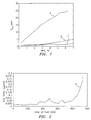
- FIG. 1 is a graph of the results of relatively short desulfurizer test runs using various formulations of California Certified Gasoline, which graph shows the sulfur level in ppm for the various formulations at the reactant bed exit, versus the operating time of the test runs in hours.
- sulfur was added to all of the California Certified Gasoline formulations, so that the gasoline contained 240 ppm of sulfur.
- One of the gasoline formulations contained 11% MTBE by volume, which is an oxygenate and which is presently a conventional component of California Certified Gasoline; another of the formulations contained 10% ethanol by volume, which is also an oxygenate; and the third formulation contained essentially no oxygenate.
- the trace line A shows the sulfur content of the gasoline formulation which did not contain an oxygenate. The sulfur content was measured at the exit end of the desulfurizer reactant bed. Trace A clearly shows that the oxygenate-free gasoline formulation had a steadily rising sulfur content at the desulfurizer exit during the duration of the test despite being run through the desulfurizer reactant bed indicating deactivation of the desulfurization reactant.
- Trace B shows the sulfur content of the gasoline formulation which contained MTBE.
- Trace C shows the sulfur content of the gasoline formulation which contained ethanol. This graph shows a major improvement and a decrease in sulfur at the reactant bed exit, when an MTBE or ethanol oxygenate is contained in the gasoline. This graph shows that the oxygenate component of the gasoline prolongs the ability of the reactant bed to remove sulfur from the gasoline.
- FIG. 2 is a graph of the results of a longer desulfurizer test run using California Certified Gasoline which contained about 30 ppm sulfur and about 11% MTBE by volume. The test was run until sulfur breakthrough occurred.
- the goal of the desulfurizer is to maintain the sulfur content of the gasoline below about 0.05 ppm so that the gasoline will be suitable for processing for use in a mobile fuel cell power plant. Therefore, "sulfur breakthrough" is defined by our requirements as occurring when a sustained post-reactant bed sulfur content of greater than about 0.05 ppm in the gasoline is present.
- the trace D shows the sulfur level in ppm at the exit of the reactant bed versus the operating time in hours and shows that the desulfurizer operated successfully for about 400 hours with consistent sulfur levels in the nickel reactant bed exit stream of below 0.05 ppm.
- the long term benefit of using an oxygenated hydrocarbon in the fuel to minimize sulfur penetration through the desulfurizer device is demonstrated.
- FIG. 3 is a graph of the results of the same longer term desulfurizer test run shown in FIG. 2, but showing the oxygenate level by percent weight at the nickel reactant bed exit versus the operating time in hours. From this figure, it will be noted that when the nickel reactant bed can no longer decompose the oxygenated hydrocarbon, the nickel reactant loses its ability to remove organic sulfur compounds. It is noted from trace E in FIG. 3 that at about 400 hours, the MTBE content of the gas stream exiting the nickel reactant bed was about 11% by volume which is the same concentration of MTBE in the gasoline stream entering the nickel reactant bed. Note that early in the test run, the nickel reactant bed is more capable of decomposing the MTBE, but this ability gradually declines as the test run continues. This inability to decompose the oxygenated hydrocarbon results in an increase in the sulfur content at the nickel reactant bed exit, as shown in FIG. 2.
- FIG. 4 is a graph of the results of another longer term desulfurizer test run using a gasoline which had about a 90 ppm sulfur content and which contained about 11% MTBE by volume. Trace F shows that the sulfur level at the nickel reactant bed exit remained below 0.05 ppm for about 125-135 hours, after which sulfur breakthrough occurred. In this test run, the long term benefit of using oxygenated hydrocarbons in the fuel to minimize sulfur getting through the desulfurizing bed is also demonstrated.
- FIG. 5 is a graph showing the results of two desulfurizer test runs using two different formulations of California Certified Gasoline, one containing an oxygenate (MTBE, 11% by volume), and the other containing no oxygenate.
- This graph shows the carbon level by percent weight deposited in each successive section of the desulfurizer nickel reactant bed.
- the post test carbon content for successive sections of the desulfurizers was measured and is shown for two tests that were run for different time periods, both of which were run until sulfur breakthrough occurred.
- Trace H shows the results of the test run for the gasoline formulation that contained no oxygenate. This test was run for 60 hours at which point in time, sulfur breakthrough occurred.
- Trace G shows the results of the test run for the gasoline formulation that contained MTBE.
- a nickel catalyst promotes the formation of methanol, a byproduct of MTBE decomposition, or ethanol disproportionation reaction.
- methanol is decomposed, the following reactions occur: 4CH 3 OH ⁇ 3CH 4 + CO 2 + 2H 2 O (1) 4CH 3 OH ⁇ 2CH 4 + 2CO 2 + 4H 2 (2)
- Table 1 is a "PONA" (which is an acronym for p araffins, o lefins, n aphthene, and a romatics) analysis of the changes in PONA compounds which are found in the gasoline described in FIG. 4, both before and after desulfurization; and also of the change in the sulfur content of the gasoline.
- Table 2 shows that, without MTBE, there is essentially no change in the "PONA" percentages in a low sulfur content, commercially available gasoline which is passed through the desulfurization nickel reactant bed. Also, Table 2 demonstrates that the sulfur content of the low sulfur content gasoline still contains an unacceptably high content of sulfur after the desulfurization step.
- FIG. 6 shows the exit stream desulfurization history of this low sulfur gasoline fuel sample.
- the desulfurization test run shown in FIG. 6 was run at a temperature of 190°C (375°F), except for the time period between 73 and 120 hours. During that time period, the reaction temperature was lowered to 175°C (350°F), as shown in FIG. 7.
- the fuel stream exiting the desulfurizer nickel reactant bed contained about 1% to about 2% water condensate which was derived from the MTBE.
- the exiting fuel stream did not contain any obvious water condensate. This fact confirms the formation of water, and coextant superior desulfurization results obtained when water is present in the fuel stream. It is noted from FIG. 6, that after the operating temperature is lowered to 175°C (350°F), and the water condensate in the fuel stream disappears, the sulfur level in the exiting fuel stream begins to rise, and then, sometime after the operating temperature is increased, and the water condensate reappears in the fuel stream, the sulfur level in the exiting fuel stream subsides.
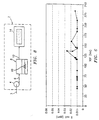
- FIG. 8 shows an embodiment of the desulfurization system of this invention wherein the desulfurizing bed 8 is positioned onboard a vehicle 2.
- the system includes a fuel line 3 from the vehicle gas tank to a pump 4 which pumps the fuel through a line 6 to the desulfurizer bed 8.
- the bed 8 is heated to operating temperatures by an electric heater 10.
- the desulfurized gasoline passes from the desulfurizing bed 8 through a line 12 to the fuel cell power plant 14 where the desulfurized fuel is further processed and converted to electricity for powering the vehicle 2.
- the oxygenated hydrocarbon not only protects the nickel reactant metal surface with an oxygenate "shield", it also produces hydrogen and water which enables the metal surface to remain free of excessive carbon deposits for longer periods of time than if no oxygenated hydrocarbons were present.
Landscapes
- Chemical & Material Sciences (AREA)
- Oil, Petroleum & Natural Gas (AREA)
- Engineering & Computer Science (AREA)
- Chemical Kinetics & Catalysis (AREA)
- General Chemical & Material Sciences (AREA)
- Organic Chemistry (AREA)
- Production Of Liquid Hydrocarbon Mixture For Refining Petroleum (AREA)
- Hydrogen, Water And Hydrids (AREA)
Claims (23)
- Verfahren zum Entschwefeln eines Kohlenwasserstoff-Brennstoffstroms, um den Kohlenwasserstoff-Brennstoffstrom in einen Brennstoff mit niedrigem Schwefelgehalt umzuwandeln, wobei der Brennstoff mit niedrigem Schwefelgehalt zur Verwendung in einem Brennstoff-Verarbeitungsbereich in einem Brennstoffzellen-Stromerzeuger geeignet ist, wobei das Verfahren folgende Schritte aufweist:a) Bereitstellen einer Nickel-Reaktionsmittel-Entschwefelungsstation, die betriebswirksam ist, in organischen Schwefelverbindungen, die in dem Brennstoffstrom enthalten sind, enthaltenen Schwefel in Nickelsulfid umzuwandeln;b) Einführen eines Kohlenwasserstoff-Brennstoffstroms, der eine sauerstoffhaltige Verbindung enthält, in die Nickel-Reaktionsmittel-Entschwefelungsstation; undc) wobei die sauerstoffhaltige Verbindung in dem Brennstoffstrom in einer Menge anwesend ist, die wirksam ist, an einem Ausgangsende der Nickel-Reaktionsmittel-Station einen ausströmenden Brennstoffstrom bereitzustellen, wobei der ausströmende Brennstoffstrom nicht mehr als 0,05 ppm Schwefel enthält, wobei die sauerstoffhaltige Verbindung in Form eines sauerstoffhaltigen Kohlenwasserstoffs eingeführt wird.
- Verfahren nach Anspruch 1, bei dem die sauerstoffhaltige Verbindung ausgewählt wird aus der Gruppe, die aus Alkohol, Ether und Gemischen davon besteht.
- Verfahren nach Anspruch 2, bei dem die sauerstoffhaltige Verbindung in Mengen anwesend ist, die betriebswirksam sind, für das Verfahren eine Betriebslebensdauer zu schaffen, die mindestens etwa das dreifache der Betriebslebensdauer eines Entschwefelungsverfahrens beträgt, das keine sauerstoffhaltige Verbindung in dem Brennstoffstrom enthält.
- Verfahren nach Anspruch 2, bei dem die sauerstoffhaltige Verbindung ausgewählt wird aus der Gruppe, die aus MTBE, Ethanol, Methanol und Gemischen davon besteht.
- Verfahren nach Anspruch 1, bei dem der Kohlenwasserstoff-Brennstoffstrom ein Benzin-Brennstoffstrom ist.
- Verfahren nach Anspruch 5, bei dem die sauerstoffhaltige Verbindung ausgewählt wird aus der Gruppe, die aus Alkohol, Ether und Gemischen davon besteht.
- Verfahren nach Anspruch 6, bei dem die sauerstoffhaltige Verbindung ausgewählt wird aus der Gruppe, die aus MTBE, Ethanol, Methanol und Gemischen davon besteht.
- Verfahren nach Anspruch 5, bei dem die sauerstoffhaltige Verbindung in dem Benzin-Brennstoffstrom in einer Menge anwesend ist, die wirksam ist, an einem Ausgangsende der Nickel-Reaktionsmittel-Station einen kontinuierlichen Benzin-Brennstoffstrom bereitzustellen, wobei der kontinuierliche Benzin-Brennstoffstrom im Mittel nicht mehr als 0,05 ppm Schwefel enthält.
- Verfahren nach Anspruch 8, bei dem die sauerstoffhaltige Verbindung von dem Nickel-Katalysator in solchen Mengen in Isobutylen und Methanol umgewandelt wird, die wirksam sind, eine Kohlenstoff-Ablagerung in der Nickel-Katalysator-Station zu hemmen und an einem Ausgangsende der Nickel-Reaktionsmittel-Station einen kontinuierlichen Benzin-Brennstoffstrom bereitzustellen, wobei der kontinuierliche Benzin-Brennstoffstrom nicht mehr als 0,05 ppm Schwefel enthält.
- Verfahren nach Anspruch 9, bei dem der Benzin-Brennstoffstrom mit niedrigem Schwefelgehalt so lange gebildet wird, wie das Nickel-Reaktionsmittel fortfährt, die sauerstoffhaltige Verbindung umzuwandeln.
- Verfahren nach Anspruch 10, bei dem der Benzin-Brennstoffstrom ein flüssiger Benzin-Brennstoffstrom ist, wobei das Verfahren den weiteren Schritt des Haltens der Nickel-Reaktionsmittel-Entschwefelungsstation bei einer Temperatur in dem Bereich von etwa 150°C bis etwa 235°C aufweist.
- Verfahren nach Anspruch 5, bei dem:der Benzin-Brennstoffstrom ein flüssiger Benzin-Brennstoffstrom ist;die Nickel-Reaktionsmittel-Entschwefelungsstation bei einer Temperatur in dem Bereich von 150°C bis 235°C gehalten wird;Volumenprozent bis 5 Volumenprozent Wasser in den flüssigen Benzin-Brennstoffstrom, der in die Nickel-Entschwefelungsstation eingeführt wird, eingemischt werden; und bei demdie sauerstoffhaltige Verbindung von dem Nickel-Reaktionsmittel während des Entschwefelungsschritts verbraucht wird, wobei der Benzin-Brennstoffstrom mit niedrigem Gehalt so lange gebildet wird, wie das Nickel-Reaktionsmittel fortfährt, die sauerstoffhaltige Verbindung zu verbrauchen.
- Verfahren nach Anspruch 12, bei dem das Wasser in dem Gemisch aus dem Rezirkulieren eines Teils des Austrags aus einem selektiven Brennstoffzellen-Oxidator zurück zu einem Einlass zu der Nickel-Reaktionsmittel-Station stammt.
- Verfahren nach Anspruch 12, bei dem die sauerstoffhaltige Verbindung einen Alkohol umfasst, der in dem Benzin-Brennstoffstrom anwesend ist.
- Verfahren nach Anspruch 14, bei dem der Alkohol ausgewählt wird aus der Gruppe, die aus Methanol, Ethanol, Propanol und Gemischen davon besteht.
- Verfahren nach Anspruch 12 oder 13, bei dem die sauerstoffhaltige Verbindung ein Ether ist.
- Verfahren nach Anspruch 16, bei dem die sauerstoffhaltige Verbindung MTBE ist.
- Verfahren nach einem der Ansprüche 13, 16 oder 17, bei dem der rezirkulierte Teil des Austrags aus dem selektiven Brennstoffzellen-Oxidator zwischen 1 % und 10 % des gesamten Austrags des selektiven Brennstoffzellen-Oxidators beträgt.
- Verfahren nach Anspruch 1, bei dem:der Kohlenwasserstoff-Brennstoffstrom ein gasförmiger Brennstoffstrom ist;ein Austrags-Rezirkulierungsgemisch aus Wasserstoff und Wasser aus einem selektiven-Brennstoffzellen-Oxidator in den gasförmigen Brennstoffstrom, der in die Nickel-Entschwefelungsstation eingeführt wird, eingemischt wird.
- Verfahren nach Anspruch 19, bei dem der gasförmige Brennstoff ausgewählt wird aus der Gruppe, die aus Methan, Ethan, Propan und Butan besteht.
- Verfahren nach Anspruch 19, bei dem die Entschwefelungsstation in einem Temperaturbereich 120° C bis 235°C arbeitet.
- Verfahren nach Anspruch 19, bei dem der rezirkulierte Teil des Austrags aus dem selektiven Brennstoffzellen-Oxidator zwischen 1 % und 10 % des gesamten Austrags aus dem selektiven Brennstoffzellen-Oxidator beträgt.
- Verfahren nach Anspruch 19, bei dem das Wasser in dem Gemisch aus dem Rezirkulieren eines Teils des Austrags aus einem selektiven Brennstoffzellen-Oxidator zurück zu einem Einlass zu der Nickel-Reaktionsmittel-Station stammt.
Applications Claiming Priority (3)
| Application Number | Priority Date | Filing Date | Title |
|---|---|---|---|
| US470483 | 1999-12-22 | ||
| US09/470,483 US6454935B1 (en) | 1999-12-22 | 1999-12-22 | Method for desulfurizing gasoline or diesel fuel for use in a fuel cell power plant |
| PCT/US2000/034357 WO2001046341A1 (en) | 1999-12-22 | 2000-12-18 | Method for desulfurizing gasoline or diesel fuel for use in a fuel cell power plant |
Publications (3)
| Publication Number | Publication Date |
|---|---|
| EP1252257A1 EP1252257A1 (de) | 2002-10-30 |
| EP1252257A4 EP1252257A4 (de) | 2004-03-24 |
| EP1252257B1 true EP1252257B1 (de) | 2006-11-29 |
Family
ID=23867800
Family Applications (1)
| Application Number | Title | Priority Date | Filing Date |
|---|---|---|---|
| EP00986530A Expired - Lifetime EP1252257B1 (de) | 1999-12-22 | 2000-12-18 | Entschwefelungsverfahren für benzin- oder dieselkraftstoff in einem brennstoffzellenkraftwerk |
Country Status (7)
| Country | Link |
|---|---|
| US (3) | US6454935B1 (de) |
| EP (1) | EP1252257B1 (de) |
| JP (1) | JP2003518155A (de) |
| CN (1) | CN100422293C (de) |
| AU (1) | AU2275401A (de) |
| DE (1) | DE60032176T2 (de) |
| WO (1) | WO2001046341A1 (de) |
Families Citing this family (38)
| Publication number | Priority date | Publication date | Assignee | Title |
|---|---|---|---|---|
| JP2001199709A (ja) * | 1999-11-12 | 2001-07-24 | Idemitsu Kosan Co Ltd | 水素製造用炭化水素組成物及びそれを用いる水素製造方法 |
| AU1893101A (en) * | 1999-12-17 | 2001-06-25 | Idemitsu Kosan Co. Ltd | Fuel oil for fuel cell, fuel oil composition and automobile driving system |
| US6533924B1 (en) * | 2000-02-24 | 2003-03-18 | Utc Fuel Cells, Llc | Method for desulfurizing gasoline or diesel fuel for use in an internal combustion engine |
| JP3674553B2 (ja) * | 2000-09-01 | 2005-07-20 | トヨタ自動車株式会社 | 燃料中の硫黄含有成分除去装置 |
| JP5027971B2 (ja) * | 2001-09-06 | 2012-09-19 | 出光興産株式会社 | 燃料油組成物 |
| US6635795B2 (en) * | 2001-12-19 | 2003-10-21 | Conocophillips Company | Desulfurization with improved sorbent regeneration |
| US6660050B1 (en) * | 2002-05-23 | 2003-12-09 | Chevron U.S.A. Inc. | Method for controlling deposits in the fuel reformer of a fuel cell system |
| US7309416B2 (en) * | 2003-07-11 | 2007-12-18 | Aspen Products Group, Inc. | Methods and compositions for desulfurization of hydrocarbon fuels |
| US7063732B2 (en) * | 2003-07-28 | 2006-06-20 | Fuelcell Energy, Inc. | High-capacity sulfur adsorbent bed and gas desulfurization method |
| US20050032640A1 (en) * | 2003-08-07 | 2005-02-10 | He Huang | Method and structure for desulfurizing gasoline or diesel fuel for use in a fuel cell power plant |
| US20050229489A1 (en) * | 2004-04-19 | 2005-10-20 | Texaco Inc. | Apparatus and method for hydrogen generation |
| US20050242588A1 (en) * | 2004-04-30 | 2005-11-03 | Washington Krik B | Integrated fuel cell and additive gas supply system for a power generation system including a combustion engine |
| US20060133993A1 (en) * | 2004-12-16 | 2006-06-22 | Chevron U.S.A. Inc. | Hydrocarbon fuel process using fuels with high autoignition temperature |
| US7597798B2 (en) | 2005-06-17 | 2009-10-06 | Exxonmobil Research And Engineering Company | Method for reducing the amount of high molecular weight organic sulfur picked-up by hydrocarbon streams transported through a pipeline |
| DE102007012812A1 (de) | 2007-03-16 | 2008-09-18 | Süd-Chemie AG | Verfahren zur Entschwefelung von Kraftstoffen und dafür geeigneter hochaktiver Nickel-Trägerkatalysator auf der Basis von Aluminiumoxid |
| FR2937045B1 (fr) | 2008-10-10 | 2012-11-30 | Inst Francais Du Petrole | Mise en oeuvre de solides a base de ferrite de zinc dans un procede de desulfuration profonde de charges oxygenees |
| DE102009022242A1 (de) | 2009-05-22 | 2010-11-25 | Süd-Chemie AG | Verfahren zur adsorptiven Entschwefelung flüssiger Kohlenwasserstoffe unter Verwendung von Wasserstoffdonatoren |
| US8939014B2 (en) | 2011-04-06 | 2015-01-27 | Exxonmobil Research And Engineering Company | Identification and use of an isomorphously substituted molecular sieve material for gas separation |
| US10696906B2 (en) | 2017-09-29 | 2020-06-30 | Marathon Petroleum Company Lp | Tower bottoms coke catching device |
| US10494575B2 (en) | 2018-03-28 | 2019-12-03 | King Fahd University Of Petroleum And Minerals | Sulfur adsorbent and a method of separating sulfur compounds from a sulfur-containing mixture |
| US12000720B2 (en) | 2018-09-10 | 2024-06-04 | Marathon Petroleum Company Lp | Product inventory monitoring |
| US12031676B2 (en) | 2019-03-25 | 2024-07-09 | Marathon Petroleum Company Lp | Insulation securement system and associated methods |
| US11975316B2 (en) | 2019-05-09 | 2024-05-07 | Marathon Petroleum Company Lp | Methods and reforming systems for re-dispersing platinum on reforming catalyst |
| CA3212048A1 (en) | 2019-05-30 | 2020-11-30 | Marathon Petroleum Company Lp | Methods and systems for minimizing nox and co emissions in natural draft heaters |
| CA3109606C (en) | 2020-02-19 | 2022-12-06 | Marathon Petroleum Company Lp | Low sulfur fuel oil blends for paraffinic resid stability and associated methods |
| US11905468B2 (en) | 2021-02-25 | 2024-02-20 | Marathon Petroleum Company Lp | Assemblies and methods for enhancing control of fluid catalytic cracking (FCC) processes using spectroscopic analyzers |
| US12473500B2 (en) | 2021-02-25 | 2025-11-18 | Marathon Petroleum Company Lp | Assemblies and methods for enhancing control of fluid catalytic cracking (FCC) processes using spectroscopic analyzers |
| US12461022B2 (en) | 2021-02-25 | 2025-11-04 | Marathon Petroleum Company Lp | Methods and assemblies for determining and using standardized spectral responses for calibration of spectroscopic analyzers |
| US11898109B2 (en) | 2021-02-25 | 2024-02-13 | Marathon Petroleum Company Lp | Assemblies and methods for enhancing control of hydrotreating and fluid catalytic cracking (FCC) processes using spectroscopic analyzers |
| US20250012744A1 (en) | 2021-02-25 | 2025-01-09 | Marathon Petroleum Company Lp | Methods and assemblies for enhancing control of refining processes using spectroscopic analyzers |
| US11702600B2 (en) | 2021-02-25 | 2023-07-18 | Marathon Petroleum Company Lp | Assemblies and methods for enhancing fluid catalytic cracking (FCC) processes during the FCC process using spectroscopic analyzers |
| US11692141B2 (en) | 2021-10-10 | 2023-07-04 | Marathon Petroleum Company Lp | Methods and systems for enhancing processing of hydrocarbons in a fluid catalytic cracking unit using a renewable additive |
| US11802257B2 (en) | 2022-01-31 | 2023-10-31 | Marathon Petroleum Company Lp | Systems and methods for reducing rendered fats pour point |
| US12311305B2 (en) | 2022-12-08 | 2025-05-27 | Marathon Petroleum Company Lp | Removable flue gas strainer and associated methods |
| CA3238046A1 (en) | 2023-05-12 | 2025-07-07 | Marathon Petroleum Company Lp | Systems, apparatuses, and methods for sample cylinder inspection, pressurization, and sample disposal |
| US12533615B2 (en) | 2023-06-02 | 2026-01-27 | Marathon Petroleum Company Lp | Methods and systems for reducing contaminants in a feed stream |
| US12415962B2 (en) | 2023-11-10 | 2025-09-16 | Marathon Petroleum Company Lp | Systems and methods for producing aviation fuel |
| US12599848B2 (en) | 2024-06-03 | 2026-04-14 | Marathon Petroleum Company Lp | Systems, analyzers, controllers, and associated methods to enhance fluid separation for distillation operations |
Family Cites Families (12)
| Publication number | Priority date | Publication date | Assignee | Title |
|---|---|---|---|---|
| DE1470588B2 (de) * | 1964-12-24 | 1976-02-26 | Krupp-Koppers Gmbh, 4300 Essen | Verfahren zur katalytischen raffination von organische schwefelverbindungen enthaltenden erdoeldestillaten und gasfoermigen kohlenwasserstoffen durch umsetzung mit wasserdampf |
| US3367862A (en) * | 1965-10-18 | 1968-02-06 | Exxon Research Engineering Co | Process for desulfurization by hydrolysis with metals on charcoal base catalysts |
| US3485746A (en) * | 1967-09-26 | 1969-12-23 | United Aircraft Corp | Sulfur removal from hydrocarbons |
| US4347811A (en) * | 1980-02-28 | 1982-09-07 | Phillips Petroleum Company | Method and apparatus for removing hydrogen sulfide from fuel for an internal combustion engine |
| US4419968A (en) * | 1980-02-28 | 1983-12-13 | Phillips Petroleum Company | Method and apparatus for removing hydrogen sulfide from fuel for an internal combustion engine |
| US4336130A (en) * | 1980-11-28 | 1982-06-22 | Union Oil Company Of California | Desulfurization of hydrocarbons |
| JPH07115842B2 (ja) * | 1988-01-22 | 1995-12-13 | 日本石油株式会社 | 分散型燃料電池用水素製造方法 |
| US5026536A (en) * | 1988-12-20 | 1991-06-25 | Nippon Oil Co., Ltd. | Hydrogen production from hydrocarbon |
| JP2519998B2 (ja) * | 1988-12-20 | 1996-07-31 | 日本石油株式会社 | 炭化水素から水素を製造する方法 |
| US4976747A (en) * | 1989-10-10 | 1990-12-11 | International Fuel Cells Corporation | Fuel treatment apparatus for fuel cells |
| CN1046121C (zh) * | 1994-07-05 | 1999-11-03 | 阿莫科公司 | 脱氢方法 |
| US6129835A (en) * | 1998-12-28 | 2000-10-10 | International Fuel Cells, Llc | System and method for desulfurizing gasoline or diesel fuel to produce a low sulfur-content fuel for use in an internal combustion engine |
-
1999
- 1999-12-22 US US09/470,483 patent/US6454935B1/en not_active Expired - Fee Related
-
2000
- 2000-12-18 EP EP00986530A patent/EP1252257B1/de not_active Expired - Lifetime
- 2000-12-18 JP JP2001546839A patent/JP2003518155A/ja active Pending
- 2000-12-18 AU AU22754/01A patent/AU2275401A/en not_active Abandoned
- 2000-12-18 WO PCT/US2000/034357 patent/WO2001046341A1/en not_active Ceased
- 2000-12-18 CN CNB008175217A patent/CN100422293C/zh not_active Expired - Fee Related
- 2000-12-18 DE DE60032176T patent/DE60032176T2/de not_active Expired - Fee Related
-
2002
- 2002-01-10 US US10/042,056 patent/US20020139718A1/en not_active Abandoned
- 2002-02-19 US US10/076,669 patent/US20030047490A1/en not_active Abandoned
Also Published As
| Publication number | Publication date |
|---|---|
| US20020139718A1 (en) | 2002-10-03 |
| AU2275401A (en) | 2001-07-03 |
| DE60032176D1 (de) | 2007-01-11 |
| EP1252257A1 (de) | 2002-10-30 |
| CN100422293C (zh) | 2008-10-01 |
| EP1252257A4 (de) | 2004-03-24 |
| WO2001046341A1 (en) | 2001-06-28 |
| JP2003518155A (ja) | 2003-06-03 |
| US20030047490A1 (en) | 2003-03-13 |
| DE60032176T2 (de) | 2007-10-25 |
| CN1413243A (zh) | 2003-04-23 |
| US6454935B1 (en) | 2002-09-24 |
Similar Documents
| Publication | Publication Date | Title |
|---|---|---|
| US6454935B1 (en) | Method for desulfurizing gasoline or diesel fuel for use in a fuel cell power plant | |
| US6533924B1 (en) | Method for desulfurizing gasoline or diesel fuel for use in an internal combustion engine | |
| Suzuki et al. | Steam reforming of kerosene on Ru/Al2O3 catalyst to yield hydrogen | |
| KR101078521B1 (ko) | 부분 산화에 의한 탄화수소의 탈황 방법 | |
| EP1192981B1 (de) | Entschwefelungsmittel und verfahren zur entschwefelung von kohlenwasserstoffen | |
| US6726836B1 (en) | Method for desulfurizing gasoline or diesel fuel for use in a fuel cell power plant | |
| US9023541B2 (en) | Liquid phase desulfurization of fuels at mild operating conditions | |
| WO2002031090A1 (en) | Dual purpose fuel for gasoline-driven automobile and fuel cell system, and system for storage and/or supply thereof | |
| US20050032640A1 (en) | Method and structure for desulfurizing gasoline or diesel fuel for use in a fuel cell power plant | |
| JPH06228570A (ja) | 燃料電池用炭化水素原料の脱硫方法 | |
| JP4213062B2 (ja) | 環境対応型クリーンガソリンおよびその製造方法 | |
| US20050031506A1 (en) | Structure for desulfurizing gasoline or diesel fuel for use in a fuel cell power plant | |
| US20060133993A1 (en) | Hydrocarbon fuel process using fuels with high autoignition temperature | |
| US20060133992A1 (en) | Hydrocarbon fuel processor and fuel useable therein | |
| JPH07115842B2 (ja) | 分散型燃料電池用水素製造方法 | |
| WO2011114694A1 (ja) | 脱硫剤及びその製造方法 | |
| WO2001082401A1 (fr) | Composition de carburant | |
| JP2009057421A (ja) | 液体燃料用脱硫剤及び液体燃料の脱硫方法 | |
| Krause et al. | Distributed reforming of diesel, JP-8, and other heavy hydrocarbon fuels for fuel cell applications: challenges and issues | |
| JP2008297455A (ja) | 多孔質脱硫剤及びこれを用いた炭化水素の脱硫方法 | |
| JPWO2001077266A1 (ja) | 燃料電池システム用燃料 | |
| JPWO2001077259A1 (ja) | 燃料電池システム用燃料 | |
| JP2001279276A (ja) | 燃料電池用燃料油及び燃料電池用水素の製造方法 |
Legal Events
| Date | Code | Title | Description |
|---|---|---|---|
| PUAI | Public reference made under article 153(3) epc to a published international application that has entered the european phase |
Free format text: ORIGINAL CODE: 0009012 |
|
| AK | Designated contracting states |
Kind code of ref document: A1 Designated state(s): AT BE CH CY DE DK ES FI FR GB GR IE IT LI LU MC NL PT SE TR |
|
| AX | Request for extension of the european patent |
Free format text: AL;LT;LV;MK;RO;SI |
|
| 17P | Request for examination filed |
Effective date: 20020722 |
|
| A4 | Supplementary search report drawn up and despatched |
Effective date: 20040205 |
|
| RIC1 | Information provided on ipc code assigned before grant |
Ipc: 7C 10G 29/04 A Ipc: 7C 10G 45/26 B Ipc: 7H 01M 8/06 B |
|
| RBV | Designated contracting states (corrected) |
Designated state(s): AT BE DE GB |
|
| 17Q | First examination report despatched |
Effective date: 20040528 |
|
| GRAP | Despatch of communication of intention to grant a patent |
Free format text: ORIGINAL CODE: EPIDOSNIGR1 |
|
| RBV | Designated contracting states (corrected) |
Designated state(s): DE GB |
|
| GRAS | Grant fee paid |
Free format text: ORIGINAL CODE: EPIDOSNIGR3 |
|
| GRAA | (expected) grant |
Free format text: ORIGINAL CODE: 0009210 |
|
| AK | Designated contracting states |
Kind code of ref document: B1 Designated state(s): DE GB |
|
| REG | Reference to a national code |
Ref country code: GB Ref legal event code: FG4D |
|
| REF | Corresponds to: |
Ref document number: 60032176 Country of ref document: DE Date of ref document: 20070111 Kind code of ref document: P |
|
| RAP2 | Party data changed (patent owner data changed or rights of a patent transferred) |
Owner name: UTC FUEL CELLS, LLC |
|
| PLBE | No opposition filed within time limit |
Free format text: ORIGINAL CODE: 0009261 |
|
| STAA | Information on the status of an ep patent application or granted ep patent |
Free format text: STATUS: NO OPPOSITION FILED WITHIN TIME LIMIT |
|
| 26N | No opposition filed |
Effective date: 20070830 |
|
| PGFP | Annual fee paid to national office [announced via postgrant information from national office to epo] |
Ref country code: DE Payment date: 20081230 Year of fee payment: 9 |
|
| PGFP | Annual fee paid to national office [announced via postgrant information from national office to epo] |
Ref country code: GB Payment date: 20081110 Year of fee payment: 9 |
|
| GBPC | Gb: european patent ceased through non-payment of renewal fee |
Effective date: 20091218 |
|
| PG25 | Lapsed in a contracting state [announced via postgrant information from national office to epo] |
Ref country code: DE Free format text: LAPSE BECAUSE OF NON-PAYMENT OF DUE FEES Effective date: 20100701 |
|
| PG25 | Lapsed in a contracting state [announced via postgrant information from national office to epo] |
Ref country code: GB Free format text: LAPSE BECAUSE OF NON-PAYMENT OF DUE FEES Effective date: 20091218 |