EP1190458B1 - Stabilisiertes elektrochemisches zellenmaterial - Google Patents
Stabilisiertes elektrochemisches zellenmaterial Download PDFInfo
- Publication number
- EP1190458B1 EP1190458B1 EP00926071A EP00926071A EP1190458B1 EP 1190458 B1 EP1190458 B1 EP 1190458B1 EP 00926071 A EP00926071 A EP 00926071A EP 00926071 A EP00926071 A EP 00926071A EP 1190458 B1 EP1190458 B1 EP 1190458B1
- Authority
- EP
- European Patent Office
- Prior art keywords
- lithium
- particles
- manganese oxide
- spinel
- lmo
- Prior art date
- Legal status (The legal status is an assumption and is not a legal conclusion. Google has not performed a legal analysis and makes no representation as to the accuracy of the status listed.)
- Expired - Lifetime
Links
- 239000011149 active material Substances 0.000 title description 38
- 229910002102 lithium manganese oxide Inorganic materials 0.000 claims abstract description 185
- VLXXBCXTUVRROQ-UHFFFAOYSA-N lithium;oxido-oxo-(oxomanganiooxy)manganese Chemical compound [Li+].[O-][Mn](=O)O[Mn]=O VLXXBCXTUVRROQ-UHFFFAOYSA-N 0.000 claims abstract description 180
- 229910052744 lithium Inorganic materials 0.000 claims abstract description 81
- WHXSMMKQMYFTQS-UHFFFAOYSA-N Lithium Chemical compound [Li] WHXSMMKQMYFTQS-UHFFFAOYSA-N 0.000 claims abstract description 68
- 239000002245 particle Substances 0.000 claims abstract description 67
- 239000000203 mixture Substances 0.000 claims abstract description 59
- 238000000354 decomposition reaction Methods 0.000 claims abstract description 50
- XGZVUEUWXADBQD-UHFFFAOYSA-L lithium carbonate Chemical compound [Li+].[Li+].[O-]C([O-])=O XGZVUEUWXADBQD-UHFFFAOYSA-L 0.000 claims abstract description 50
- 229910052808 lithium carbonate Inorganic materials 0.000 claims abstract description 48
- 229910052596 spinel Inorganic materials 0.000 claims abstract description 44
- 239000011029 spinel Substances 0.000 claims abstract description 44
- 238000000034 method Methods 0.000 claims abstract description 39
- 230000002829 reductive effect Effects 0.000 claims abstract description 8
- 239000002904 solvent Substances 0.000 claims description 66
- OKTJSMMVPCPJKN-UHFFFAOYSA-N Carbon Chemical compound [C] OKTJSMMVPCPJKN-UHFFFAOYSA-N 0.000 claims description 40
- 239000011230 binding agent Substances 0.000 claims description 23
- 239000000047 product Substances 0.000 claims description 20
- 229910052799 carbon Inorganic materials 0.000 claims description 19
- 239000011572 manganese Substances 0.000 claims description 19
- 238000010438 heat treatment Methods 0.000 claims description 18
- 150000001875 compounds Chemical class 0.000 claims description 17
- 239000002002 slurry Substances 0.000 claims description 15
- 230000001351 cycling effect Effects 0.000 claims description 10
- 238000005266 casting Methods 0.000 claims description 9
- 238000004519 manufacturing process Methods 0.000 claims description 6
- 229910006570 Li1+xMn2-xO4 Inorganic materials 0.000 claims description 5
- 229910006628 Li1+xMn2−xO4 Inorganic materials 0.000 claims description 5
- 239000012298 atmosphere Substances 0.000 claims description 5
- 239000007795 chemical reaction product Substances 0.000 claims description 3
- 238000001816 cooling Methods 0.000 claims description 3
- 229910002983 Li2MnO3 Inorganic materials 0.000 claims description 2
- 150000001768 cations Chemical class 0.000 claims description 2
- 229910016690 Mn2-zO4 Inorganic materials 0.000 claims 4
- 230000014759 maintenance of location Effects 0.000 claims 1
- 230000015556 catabolic process Effects 0.000 abstract description 15
- 238000006731 degradation reaction Methods 0.000 abstract description 11
- 210000004027 cell Anatomy 0.000 description 142
- 239000003792 electrolyte Substances 0.000 description 74
- 239000000654 additive Substances 0.000 description 63
- 230000000996 additive effect Effects 0.000 description 57
- XLYOFNOQVPJJNP-UHFFFAOYSA-N water Substances O XLYOFNOQVPJJNP-UHFFFAOYSA-N 0.000 description 55
- 239000002253 acid Substances 0.000 description 54
- 150000003839 salts Chemical class 0.000 description 36
- 238000006243 chemical reaction Methods 0.000 description 34
- 150000007514 bases Chemical class 0.000 description 30
- IEJIGPNLZYLLBP-UHFFFAOYSA-N dimethyl carbonate Chemical compound COC(=O)OC IEJIGPNLZYLLBP-UHFFFAOYSA-N 0.000 description 27
- 229910001290 LiPF6 Inorganic materials 0.000 description 26
- 239000010439 graphite Substances 0.000 description 20
- 229910002804 graphite Inorganic materials 0.000 description 20
- 239000000463 material Substances 0.000 description 20
- 239000004014 plasticizer Substances 0.000 description 19
- 229910001416 lithium ion Inorganic materials 0.000 description 18
- 238000002474 experimental method Methods 0.000 description 17
- -1 lithium carbonates Chemical class 0.000 description 17
- 230000007797 corrosion Effects 0.000 description 16
- 238000005260 corrosion Methods 0.000 description 16
- 239000008151 electrolyte solution Substances 0.000 description 16
- 230000007246 mechanism Effects 0.000 description 16
- 239000012535 impurity Substances 0.000 description 15
- WAEMQWOKJMHJLA-UHFFFAOYSA-N Manganese(2+) Chemical compound [Mn+2] WAEMQWOKJMHJLA-UHFFFAOYSA-N 0.000 description 14
- 210000003850 cellular structure Anatomy 0.000 description 14
- 229910000625 lithium cobalt oxide Inorganic materials 0.000 description 14
- 239000000243 solution Substances 0.000 description 14
- 230000003993 interaction Effects 0.000 description 13
- BFZPBUKRYWOWDV-UHFFFAOYSA-N lithium;oxido(oxo)cobalt Chemical compound [Li+].[O-][Co]=O BFZPBUKRYWOWDV-UHFFFAOYSA-N 0.000 description 13
- KRHYYFGTRYWZRS-UHFFFAOYSA-N Fluorane Chemical compound F KRHYYFGTRYWZRS-UHFFFAOYSA-N 0.000 description 12
- HBBGRARXTFLTSG-UHFFFAOYSA-N Lithium ion Chemical compound [Li+] HBBGRARXTFLTSG-UHFFFAOYSA-N 0.000 description 12
- 239000007789 gas Substances 0.000 description 12
- 150000002500 ions Chemical class 0.000 description 12
- 239000006182 cathode active material Substances 0.000 description 11
- 230000000052 comparative effect Effects 0.000 description 11
- 238000009830 intercalation Methods 0.000 description 11
- 239000007788 liquid Substances 0.000 description 11
- BVKZGUZCCUSVTD-UHFFFAOYSA-L Carbonate Chemical compound [O-]C([O-])=O BVKZGUZCCUSVTD-UHFFFAOYSA-L 0.000 description 10
- PWHULOQIROXLJO-UHFFFAOYSA-N Manganese Chemical compound [Mn] PWHULOQIROXLJO-UHFFFAOYSA-N 0.000 description 10
- 229910000040 hydrogen fluoride Inorganic materials 0.000 description 10
- 229910052748 manganese Inorganic materials 0.000 description 10
- BQCIDUSAKPWEOX-UHFFFAOYSA-N 1,1-Difluoroethene Chemical compound FC(F)=C BQCIDUSAKPWEOX-UHFFFAOYSA-N 0.000 description 9
- UFHFLCQGNIYNRP-UHFFFAOYSA-N Hydrogen Chemical compound [H][H] UFHFLCQGNIYNRP-UHFFFAOYSA-N 0.000 description 9
- WMFOQBRAJBCJND-UHFFFAOYSA-M Lithium hydroxide Chemical class [Li+].[OH-] WMFOQBRAJBCJND-UHFFFAOYSA-M 0.000 description 9
- 230000015572 biosynthetic process Effects 0.000 description 9
- 238000005755 formation reaction Methods 0.000 description 9
- 239000001257 hydrogen Substances 0.000 description 9
- 229910052739 hydrogen Inorganic materials 0.000 description 9
- 230000002687 intercalation Effects 0.000 description 9
- 238000012360 testing method Methods 0.000 description 9
- VYPSYNLAJGMNEJ-UHFFFAOYSA-N Silicium dioxide Chemical compound O=[Si]=O VYPSYNLAJGMNEJ-UHFFFAOYSA-N 0.000 description 8
- 230000002378 acidificating effect Effects 0.000 description 8
- 229910021450 lithium metal oxide Inorganic materials 0.000 description 8
- VEXZGXHMUGYJMC-UHFFFAOYSA-N Hydrochloric acid Chemical compound Cl VEXZGXHMUGYJMC-UHFFFAOYSA-N 0.000 description 7
- 229920006370 Kynar Polymers 0.000 description 7
- 125000000217 alkyl group Chemical group 0.000 description 7
- 230000008859 change Effects 0.000 description 7
- 239000010410 layer Substances 0.000 description 7
- PQXKHYXIUOZZFA-UHFFFAOYSA-M lithium fluoride Chemical compound [Li+].[F-] PQXKHYXIUOZZFA-UHFFFAOYSA-M 0.000 description 7
- 229910044991 metal oxide Inorganic materials 0.000 description 7
- 150000004706 metal oxides Chemical class 0.000 description 7
- CSCPPACGZOOCGX-UHFFFAOYSA-N Acetone Chemical compound CC(C)=O CSCPPACGZOOCGX-UHFFFAOYSA-N 0.000 description 6
- 238000013459 approach Methods 0.000 description 6
- 239000002585 base Substances 0.000 description 6
- 239000000872 buffer Substances 0.000 description 6
- 229920001577 copolymer Polymers 0.000 description 6
- 238000004090 dissolution Methods 0.000 description 6
- 239000012528 membrane Substances 0.000 description 6
- 150000007530 organic bases Chemical class 0.000 description 6
- 238000003860 storage Methods 0.000 description 6
- 150000004649 carbonic acid derivatives Chemical class 0.000 description 5
- 239000010406 cathode material Substances 0.000 description 5
- 239000011888 foil Substances 0.000 description 5
- 229910021485 fumed silica Inorganic materials 0.000 description 5
- 239000011521 glass Substances 0.000 description 5
- 150000002642 lithium compounds Chemical class 0.000 description 5
- NUJOXMJBOLGQSY-UHFFFAOYSA-N manganese dioxide Inorganic materials O=[Mn]=O NUJOXMJBOLGQSY-UHFFFAOYSA-N 0.000 description 5
- 229910001437 manganese ion Inorganic materials 0.000 description 5
- 229910052751 metal Inorganic materials 0.000 description 5
- 239000002184 metal Substances 0.000 description 5
- 239000003960 organic solvent Substances 0.000 description 5
- 238000002161 passivation Methods 0.000 description 5
- 229920002981 polyvinylidene fluoride Polymers 0.000 description 5
- 239000002243 precursor Substances 0.000 description 5
- 238000000807 solvent casting Methods 0.000 description 5
- CURLTUGMZLYLDI-UHFFFAOYSA-N Carbon dioxide Chemical compound O=C=O CURLTUGMZLYLDI-UHFFFAOYSA-N 0.000 description 4
- KMTRUDSVKNLOMY-UHFFFAOYSA-N Ethylene carbonate Chemical compound O=C1OCCO1 KMTRUDSVKNLOMY-UHFFFAOYSA-N 0.000 description 4
- 229910010092 LiAlO2 Inorganic materials 0.000 description 4
- 150000007513 acids Chemical class 0.000 description 4
- 229910052782 aluminium Inorganic materials 0.000 description 4
- XAGFODPZIPBFFR-UHFFFAOYSA-N aluminium Chemical compound [Al] XAGFODPZIPBFFR-UHFFFAOYSA-N 0.000 description 4
- 229910052736 halogen Inorganic materials 0.000 description 4
- AMWRITDGCCNYAT-UHFFFAOYSA-L hydroxy(oxo)manganese;manganese Chemical compound [Mn].O[Mn]=O.O[Mn]=O AMWRITDGCCNYAT-UHFFFAOYSA-L 0.000 description 4
- 239000011159 matrix material Substances 0.000 description 4
- VNWKTOKETHGBQD-UHFFFAOYSA-N methane Chemical compound C VNWKTOKETHGBQD-UHFFFAOYSA-N 0.000 description 4
- 230000003647 oxidation Effects 0.000 description 4
- 238000007254 oxidation reaction Methods 0.000 description 4
- 230000009467 reduction Effects 0.000 description 4
- 238000007086 side reaction Methods 0.000 description 4
- 239000007787 solid Substances 0.000 description 4
- IMFACGCPASFAPR-UHFFFAOYSA-N tributylamine Chemical compound CCCCN(CCCC)CCCC IMFACGCPASFAPR-UHFFFAOYSA-N 0.000 description 4
- OKKJLVBELUTLKV-UHFFFAOYSA-N Methanol Chemical compound OC OKKJLVBELUTLKV-UHFFFAOYSA-N 0.000 description 3
- 229910019256 POF3 Inorganic materials 0.000 description 3
- NBIIXXVUZAFLBC-UHFFFAOYSA-N Phosphoric acid Chemical compound OP(O)(O)=O NBIIXXVUZAFLBC-UHFFFAOYSA-N 0.000 description 3
- 150000001412 amines Chemical class 0.000 description 3
- 125000000129 anionic group Chemical group 0.000 description 3
- 150000003940 butylamines Chemical class 0.000 description 3
- 125000004432 carbon atom Chemical group C* 0.000 description 3
- 230000000694 effects Effects 0.000 description 3
- 150000002367 halogens Chemical class 0.000 description 3
- 238000003475 lamination Methods 0.000 description 3
- 239000011244 liquid electrolyte Substances 0.000 description 3
- 229910003002 lithium salt Inorganic materials 0.000 description 3
- 159000000002 lithium salts Chemical class 0.000 description 3
- 239000002931 mesocarbon microbead Substances 0.000 description 3
- 229910003455 mixed metal oxide Inorganic materials 0.000 description 3
- 230000036961 partial effect Effects 0.000 description 3
- FFUQCRZBKUBHQT-UHFFFAOYSA-N phosphoryl fluoride Chemical compound FP(F)(F)=O FFUQCRZBKUBHQT-UHFFFAOYSA-N 0.000 description 3
- 230000001681 protective effect Effects 0.000 description 3
- 230000027756 respiratory electron transport chain Effects 0.000 description 3
- 239000007858 starting material Substances 0.000 description 3
- 238000012546 transfer Methods 0.000 description 3
- DHKHKXVYLBGOIT-UHFFFAOYSA-N 1,1-Diethoxyethane Chemical compound CCOC(C)OCC DHKHKXVYLBGOIT-UHFFFAOYSA-N 0.000 description 2
- YEJRWHAVMIAJKC-UHFFFAOYSA-N 4-Butyrolactone Chemical compound O=C1CCCO1 YEJRWHAVMIAJKC-UHFFFAOYSA-N 0.000 description 2
- VTYYLEPIZMXCLO-UHFFFAOYSA-L Calcium carbonate Chemical compound [Ca+2].[O-]C([O-])=O VTYYLEPIZMXCLO-UHFFFAOYSA-L 0.000 description 2
- UGFAIRIUMAVXCW-UHFFFAOYSA-N Carbon monoxide Chemical compound [O+]#[C-] UGFAIRIUMAVXCW-UHFFFAOYSA-N 0.000 description 2
- RYGMFSIKBFXOCR-UHFFFAOYSA-N Copper Chemical compound [Cu] RYGMFSIKBFXOCR-UHFFFAOYSA-N 0.000 description 2
- NIQCNGHVCWTJSM-UHFFFAOYSA-N Dimethyl phthalate Chemical compound COC(=O)C1=CC=CC=C1C(=O)OC NIQCNGHVCWTJSM-UHFFFAOYSA-N 0.000 description 2
- 206010021143 Hypoxia Diseases 0.000 description 2
- FUJCRWPEOMXPAD-UHFFFAOYSA-N Li2O Inorganic materials [Li+].[Li+].[O-2] FUJCRWPEOMXPAD-UHFFFAOYSA-N 0.000 description 2
- 229910007562 Li2SiO3 Inorganic materials 0.000 description 2
- 229910000552 LiCF3SO3 Inorganic materials 0.000 description 2
- 229920002125 Sokalan® Polymers 0.000 description 2
- WYURNTSHIVDZCO-UHFFFAOYSA-N Tetrahydrofuran Chemical compound C1CCOC1 WYURNTSHIVDZCO-UHFFFAOYSA-N 0.000 description 2
- 150000004645 aluminates Chemical class 0.000 description 2
- PNEYBMLMFCGWSK-UHFFFAOYSA-N aluminium oxide Inorganic materials [O-2].[O-2].[O-2].[Al+3].[Al+3] PNEYBMLMFCGWSK-UHFFFAOYSA-N 0.000 description 2
- 150000001450 anions Chemical class 0.000 description 2
- QVGXLLKOCUKJST-UHFFFAOYSA-N atomic oxygen Chemical compound [O] QVGXLLKOCUKJST-UHFFFAOYSA-N 0.000 description 2
- 230000004888 barrier function Effects 0.000 description 2
- 229910002092 carbon dioxide Inorganic materials 0.000 description 2
- 239000001569 carbon dioxide Substances 0.000 description 2
- 229910002091 carbon monoxide Inorganic materials 0.000 description 2
- 230000003197 catalytic effect Effects 0.000 description 2
- 239000006257 cathode slurry Substances 0.000 description 2
- 239000000470 constituent Substances 0.000 description 2
- 229910052802 copper Inorganic materials 0.000 description 2
- 239000010949 copper Substances 0.000 description 2
- 125000004122 cyclic group Chemical group 0.000 description 2
- 239000002274 desiccant Substances 0.000 description 2
- 230000001627 detrimental effect Effects 0.000 description 2
- DOIRQSBPFJWKBE-UHFFFAOYSA-N dibutyl phthalate Chemical compound CCCCOC(=O)C1=CC=CC=C1C(=O)OCCCC DOIRQSBPFJWKBE-UHFFFAOYSA-N 0.000 description 2
- FLKPEMZONWLCSK-UHFFFAOYSA-N diethyl phthalate Chemical compound CCOC(=O)C1=CC=CC=C1C(=O)OCC FLKPEMZONWLCSK-UHFFFAOYSA-N 0.000 description 2
- 238000007599 discharging Methods 0.000 description 2
- JBTWLSYIZRCDFO-UHFFFAOYSA-N ethyl methyl carbonate Chemical compound CCOC(=O)OC JBTWLSYIZRCDFO-UHFFFAOYSA-N 0.000 description 2
- 238000000605 extraction Methods 0.000 description 2
- 238000007731 hot pressing Methods 0.000 description 2
- 150000002431 hydrogen Chemical class 0.000 description 2
- 150000004679 hydroxides Chemical class 0.000 description 2
- 230000002452 interceptive effect Effects 0.000 description 2
- 238000011835 investigation Methods 0.000 description 2
- QEXMICRJPVUPSN-UHFFFAOYSA-N lithium manganese(2+) oxygen(2-) Chemical compound [O-2].[Mn+2].[Li+] QEXMICRJPVUPSN-UHFFFAOYSA-N 0.000 description 2
- MHCFAGZWMAWTNR-UHFFFAOYSA-M lithium perchlorate Chemical compound [Li+].[O-]Cl(=O)(=O)=O MHCFAGZWMAWTNR-UHFFFAOYSA-M 0.000 description 2
- 229910001486 lithium perchlorate Inorganic materials 0.000 description 2
- 230000003472 neutralizing effect Effects 0.000 description 2
- 150000002894 organic compounds Chemical class 0.000 description 2
- 239000005486 organic electrolyte Substances 0.000 description 2
- 239000001301 oxygen Substances 0.000 description 2
- 229910052760 oxygen Inorganic materials 0.000 description 2
- 239000004584 polyacrylic acid Substances 0.000 description 2
- 229920000642 polymer Polymers 0.000 description 2
- 238000002360 preparation method Methods 0.000 description 2
- 230000002035 prolonged effect Effects 0.000 description 2
- 230000000717 retained effect Effects 0.000 description 2
- 150000004760 silicates Chemical class 0.000 description 2
- FVAUCKIRQBBSSJ-UHFFFAOYSA-M sodium iodide Chemical compound [Na+].[I-] FVAUCKIRQBBSSJ-UHFFFAOYSA-M 0.000 description 2
- 230000000087 stabilizing effect Effects 0.000 description 2
- 230000001550 time effect Effects 0.000 description 2
- 230000032258 transport Effects 0.000 description 2
- ZZXUZKXVROWEIF-UHFFFAOYSA-N 1,2-butylene carbonate Chemical compound CCC1COC(=O)O1 ZZXUZKXVROWEIF-UHFFFAOYSA-N 0.000 description 1
- VAYTZRYEBVHVLE-UHFFFAOYSA-N 1,3-dioxol-2-one Chemical compound O=C1OC=CO1 VAYTZRYEBVHVLE-UHFFFAOYSA-N 0.000 description 1
- WNXJIVFYUVYPPR-UHFFFAOYSA-N 1,3-dioxolane Chemical compound C1COCO1 WNXJIVFYUVYPPR-UHFFFAOYSA-N 0.000 description 1
- TVAJJUOMNRUGQA-UHFFFAOYSA-N 2-butoxyethyl dihydrogen phosphate Chemical compound CCCCOCCOP(O)(O)=O TVAJJUOMNRUGQA-UHFFFAOYSA-N 0.000 description 1
- 206010067484 Adverse reaction Diseases 0.000 description 1
- OIFBSDVPJOWBCH-UHFFFAOYSA-N Diethyl carbonate Chemical compound CCOC(=O)OCC OIFBSDVPJOWBCH-UHFFFAOYSA-N 0.000 description 1
- XTHFKEDIFFGKHM-UHFFFAOYSA-N Dimethoxyethane Chemical compound COCCOC XTHFKEDIFFGKHM-UHFFFAOYSA-N 0.000 description 1
- KRHYYFGTRYWZRS-UHFFFAOYSA-M Fluoride anion Chemical compound [F-] KRHYYFGTRYWZRS-UHFFFAOYSA-M 0.000 description 1
- 229910008088 Li-Mn Inorganic materials 0.000 description 1
- 229910011506 Li1Mn2O4 Inorganic materials 0.000 description 1
- 229910015329 LixMn2O4 Inorganic materials 0.000 description 1
- 229910006327 Li—Mn Inorganic materials 0.000 description 1
- GRYLNZFGIOXLOG-UHFFFAOYSA-N Nitric acid Chemical compound O[N+]([O-])=O GRYLNZFGIOXLOG-UHFFFAOYSA-N 0.000 description 1
- 229920003171 Poly (ethylene oxide) Polymers 0.000 description 1
- 239000007983 Tris buffer Substances 0.000 description 1
- 238000002441 X-ray diffraction Methods 0.000 description 1
- IDSMHEZTLOUMLM-UHFFFAOYSA-N [Li].[O].[Co] Chemical compound [Li].[O].[Co] IDSMHEZTLOUMLM-UHFFFAOYSA-N 0.000 description 1
- 238000010521 absorption reaction Methods 0.000 description 1
- 150000001260 acyclic compounds Chemical class 0.000 description 1
- 125000002015 acyclic group Chemical group 0.000 description 1
- 230000002411 adverse Effects 0.000 description 1
- 230000006838 adverse reaction Effects 0.000 description 1
- 239000003513 alkali Substances 0.000 description 1
- 150000003973 alkyl amines Chemical class 0.000 description 1
- 239000006256 anode slurry Substances 0.000 description 1
- 239000012300 argon atmosphere Substances 0.000 description 1
- 238000000498 ball milling Methods 0.000 description 1
- 229910001038 basic metal oxide Inorganic materials 0.000 description 1
- 230000009286 beneficial effect Effects 0.000 description 1
- 238000009835 boiling Methods 0.000 description 1
- 230000003139 buffering effect Effects 0.000 description 1
- HQABUPZFAYXKJW-UHFFFAOYSA-N butan-1-amine Chemical compound CCCCN HQABUPZFAYXKJW-UHFFFAOYSA-N 0.000 description 1
- 239000006227 byproduct Substances 0.000 description 1
- 229910000019 calcium carbonate Inorganic materials 0.000 description 1
- 239000006229 carbon black Substances 0.000 description 1
- 239000003575 carbonaceous material Substances 0.000 description 1
- 239000003054 catalyst Substances 0.000 description 1
- 238000006555 catalytic reaction Methods 0.000 description 1
- 239000012560 cell impurity Substances 0.000 description 1
- 239000000919 ceramic Substances 0.000 description 1
- QUPYHCHUQVNFJW-UHFFFAOYSA-M cesium;thiocyanate Chemical compound [Cs+].[S-]C#N QUPYHCHUQVNFJW-UHFFFAOYSA-M 0.000 description 1
- 150000004770 chalcogenides Chemical class 0.000 description 1
- 239000003153 chemical reaction reagent Substances 0.000 description 1
- 238000003776 cleavage reaction Methods 0.000 description 1
- 229910017052 cobalt Inorganic materials 0.000 description 1
- 239000010941 cobalt Substances 0.000 description 1
- GUTLYIVDDKVIGB-UHFFFAOYSA-N cobalt atom Chemical compound [Co] GUTLYIVDDKVIGB-UHFFFAOYSA-N 0.000 description 1
- 229910052681 coesite Inorganic materials 0.000 description 1
- 239000000571 coke Substances 0.000 description 1
- 238000004891 communication Methods 0.000 description 1
- 229940125773 compound 10 Drugs 0.000 description 1
- 239000004020 conductor Substances 0.000 description 1
- 238000010276 construction Methods 0.000 description 1
- 230000008602 contraction Effects 0.000 description 1
- 229910052906 cristobalite Inorganic materials 0.000 description 1
- 150000001923 cyclic compounds Chemical class 0.000 description 1
- 230000007423 decrease Effects 0.000 description 1
- 230000002950 deficient Effects 0.000 description 1
- 230000000593 degrading effect Effects 0.000 description 1
- 230000001419 dependent effect Effects 0.000 description 1
- 238000011161 development Methods 0.000 description 1
- QLVWOKQMDLQXNN-UHFFFAOYSA-N dibutyl carbonate Chemical compound CCCCOC(=O)OCCCC QLVWOKQMDLQXNN-UHFFFAOYSA-N 0.000 description 1
- XUCJHNOBJLKZNU-UHFFFAOYSA-M dilithium;hydroxide Chemical compound [Li+].[Li+].[OH-] XUCJHNOBJLKZNU-UHFFFAOYSA-M 0.000 description 1
- 239000003085 diluting agent Substances 0.000 description 1
- FBSAITBEAPNWJG-UHFFFAOYSA-N dimethyl phthalate Natural products CC(=O)OC1=CC=CC=C1OC(C)=O FBSAITBEAPNWJG-UHFFFAOYSA-N 0.000 description 1
- 229960001826 dimethylphthalate Drugs 0.000 description 1
- 230000003292 diminished effect Effects 0.000 description 1
- VUPKGFBOKBGHFZ-UHFFFAOYSA-N dipropyl carbonate Chemical compound CCCOC(=O)OCCC VUPKGFBOKBGHFZ-UHFFFAOYSA-N 0.000 description 1
- 239000006185 dispersion Substances 0.000 description 1
- 238000010494 dissociation reaction Methods 0.000 description 1
- 230000005593 dissociations Effects 0.000 description 1
- 230000002900 effect on cell Effects 0.000 description 1
- 239000011262 electrochemically active material Substances 0.000 description 1
- 239000007772 electrode material Substances 0.000 description 1
- 239000000945 filler Substances 0.000 description 1
- 125000005843 halogen group Chemical group 0.000 description 1
- XLYOFNOQVPJJNP-ZSJDYOACSA-N heavy water Substances [2H]O[2H] XLYOFNOQVPJJNP-ZSJDYOACSA-N 0.000 description 1
- HCDGVLDPFQMKDK-UHFFFAOYSA-N hexafluoropropylene Chemical group FC(F)=C(F)C(F)(F)F HCDGVLDPFQMKDK-UHFFFAOYSA-N 0.000 description 1
- 230000007062 hydrolysis Effects 0.000 description 1
- 238000006460 hydrolysis reaction Methods 0.000 description 1
- XLYOFNOQVPJJNP-UHFFFAOYSA-M hydroxide Chemical compound [OH-] XLYOFNOQVPJJNP-UHFFFAOYSA-M 0.000 description 1
- 230000008595 infiltration Effects 0.000 description 1
- 238000001764 infiltration Methods 0.000 description 1
- 230000002401 inhibitory effect Effects 0.000 description 1
- 239000011256 inorganic filler Substances 0.000 description 1
- 229910003475 inorganic filler Inorganic materials 0.000 description 1
- 229910001410 inorganic ion Inorganic materials 0.000 description 1
- 229910017053 inorganic salt Inorganic materials 0.000 description 1
- 238000003780 insertion Methods 0.000 description 1
- 230000037431 insertion Effects 0.000 description 1
- 239000011229 interlayer Substances 0.000 description 1
- 230000037427 ion transport Effects 0.000 description 1
- 230000002427 irreversible effect Effects 0.000 description 1
- 238000002386 leaching Methods 0.000 description 1
- 150000002641 lithium Chemical class 0.000 description 1
- 229940006487 lithium cation Drugs 0.000 description 1
- 229910001540 lithium hexafluoroarsenate(V) Inorganic materials 0.000 description 1
- 229910001947 lithium oxide Inorganic materials 0.000 description 1
- 229910001496 lithium tetrafluoroborate Inorganic materials 0.000 description 1
- CJYZTOPVWURGAI-UHFFFAOYSA-N lithium;manganese;manganese(3+);oxygen(2-) Chemical compound [Li+].[O-2].[O-2].[O-2].[O-2].[Mn].[Mn+3] CJYZTOPVWURGAI-UHFFFAOYSA-N 0.000 description 1
- 229910021645 metal ion Inorganic materials 0.000 description 1
- 238000002156 mixing Methods 0.000 description 1
- RHFUXPCCELGMFC-UHFFFAOYSA-N n-(6-cyano-3-hydroxy-2,2-dimethyl-3,4-dihydrochromen-4-yl)-n-phenylmethoxyacetamide Chemical compound OC1C(C)(C)OC2=CC=C(C#N)C=C2C1N(C(=O)C)OCC1=CC=CC=C1 RHFUXPCCELGMFC-UHFFFAOYSA-N 0.000 description 1
- 239000007773 negative electrode material Substances 0.000 description 1
- 238000006386 neutralization reaction Methods 0.000 description 1
- 229910017604 nitric acid Inorganic materials 0.000 description 1
- 125000004430 oxygen atom Chemical group O* 0.000 description 1
- 239000011236 particulate material Substances 0.000 description 1
- 150000002989 phenols Chemical class 0.000 description 1
- 239000002798 polar solvent Substances 0.000 description 1
- 239000007774 positive electrode material Substances 0.000 description 1
- 239000000843 powder Substances 0.000 description 1
- 238000004321 preservation Methods 0.000 description 1
- 230000002265 prevention Effects 0.000 description 1
- 230000008569 process Effects 0.000 description 1
- 230000000750 progressive effect Effects 0.000 description 1
- RUOJZAUFBMNUDX-UHFFFAOYSA-N propylene carbonate Chemical compound CC1COC(=O)O1 RUOJZAUFBMNUDX-UHFFFAOYSA-N 0.000 description 1
- 239000011241 protective layer Substances 0.000 description 1
- 238000010791 quenching Methods 0.000 description 1
- 230000000171 quenching effect Effects 0.000 description 1
- 230000003252 repetitive effect Effects 0.000 description 1
- 238000011160 research Methods 0.000 description 1
- 239000011435 rock Substances 0.000 description 1
- 230000007017 scission Effects 0.000 description 1
- 239000000377 silicon dioxide Substances 0.000 description 1
- 229910052814 silicon oxide Inorganic materials 0.000 description 1
- VGTPCRGMBIAPIM-UHFFFAOYSA-M sodium thiocyanate Chemical compound [Na+].[S-]C#N VGTPCRGMBIAPIM-UHFFFAOYSA-M 0.000 description 1
- 239000007784 solid electrolyte Substances 0.000 description 1
- 230000003381 solubilizing effect Effects 0.000 description 1
- 238000000935 solvent evaporation Methods 0.000 description 1
- 230000003335 steric effect Effects 0.000 description 1
- 229910052682 stishovite Inorganic materials 0.000 description 1
- 239000002344 surface layer Substances 0.000 description 1
- 230000002459 sustained effect Effects 0.000 description 1
- 208000024891 symptom Diseases 0.000 description 1
- YLQBMQCUIZJEEH-UHFFFAOYSA-N tetrahydrofuran Natural products C=1C=COC=1 YLQBMQCUIZJEEH-UHFFFAOYSA-N 0.000 description 1
- 229910052905 tridymite Inorganic materials 0.000 description 1
- 238000005406 washing Methods 0.000 description 1
Images



Classifications
-
- H—ELECTRICITY
- H01—ELECTRIC ELEMENTS
- H01M—PROCESSES OR MEANS, e.g. BATTERIES, FOR THE DIRECT CONVERSION OF CHEMICAL ENERGY INTO ELECTRICAL ENERGY
- H01M4/00—Electrodes
- H01M4/02—Electrodes composed of, or comprising, active material
- H01M4/36—Selection of substances as active materials, active masses, active liquids
-
- H—ELECTRICITY
- H01—ELECTRIC ELEMENTS
- H01M—PROCESSES OR MEANS, e.g. BATTERIES, FOR THE DIRECT CONVERSION OF CHEMICAL ENERGY INTO ELECTRICAL ENERGY
- H01M4/00—Electrodes
- H01M4/02—Electrodes composed of, or comprising, active material
- H01M4/13—Electrodes for accumulators with non-aqueous electrolyte, e.g. for lithium-accumulators; Processes of manufacture thereof
- H01M4/131—Electrodes based on mixed oxides or hydroxides, or on mixtures of oxides or hydroxides, e.g. LiCoOx
-
- C—CHEMISTRY; METALLURGY
- C01—INORGANIC CHEMISTRY
- C01G—COMPOUNDS CONTAINING METALS NOT COVERED BY SUBCLASSES C01D OR C01F
- C01G45/00—Compounds of manganese
- C01G45/12—Complex oxides containing manganese and at least one other metal element
- C01G45/1221—Manganates or manganites with trivalent manganese, tetravalent manganese or mixtures thereof
-
- C—CHEMISTRY; METALLURGY
- C01—INORGANIC CHEMISTRY
- C01G—COMPOUNDS CONTAINING METALS NOT COVERED BY SUBCLASSES C01D OR C01F
- C01G45/00—Compounds of manganese
- C01G45/12—Complex oxides containing manganese and at least one other metal element
- C01G45/1221—Manganates or manganites with trivalent manganese, tetravalent manganese or mixtures thereof
- C01G45/1242—Manganates or manganites with trivalent manganese, tetravalent manganese or mixtures thereof of the type (Mn2O4)-, e.g. LiMn2O4 or Li(MxMn2-x)O4
-
- H—ELECTRICITY
- H01—ELECTRIC ELEMENTS
- H01M—PROCESSES OR MEANS, e.g. BATTERIES, FOR THE DIRECT CONVERSION OF CHEMICAL ENERGY INTO ELECTRICAL ENERGY
- H01M10/00—Secondary cells; Manufacture thereof
- H01M10/05—Accumulators with non-aqueous electrolyte
- H01M10/056—Accumulators with non-aqueous electrolyte characterised by the materials used as electrolytes, e.g. mixed inorganic/organic electrolytes
- H01M10/0564—Accumulators with non-aqueous electrolyte characterised by the materials used as electrolytes, e.g. mixed inorganic/organic electrolytes the electrolyte being constituted of organic materials only
- H01M10/0566—Liquid materials
- H01M10/0567—Liquid materials characterised by the additives
-
- H—ELECTRICITY
- H01—ELECTRIC ELEMENTS
- H01M—PROCESSES OR MEANS, e.g. BATTERIES, FOR THE DIRECT CONVERSION OF CHEMICAL ENERGY INTO ELECTRICAL ENERGY
- H01M4/00—Electrodes
- H01M4/02—Electrodes composed of, or comprising, active material
- H01M4/13—Electrodes for accumulators with non-aqueous electrolyte, e.g. for lithium-accumulators; Processes of manufacture thereof
- H01M4/139—Processes of manufacture
- H01M4/1391—Processes of manufacture of electrodes based on mixed oxides or hydroxides, or on mixtures of oxides or hydroxides, e.g. LiCoOx
-
- H—ELECTRICITY
- H01—ELECTRIC ELEMENTS
- H01M—PROCESSES OR MEANS, e.g. BATTERIES, FOR THE DIRECT CONVERSION OF CHEMICAL ENERGY INTO ELECTRICAL ENERGY
- H01M4/00—Electrodes
- H01M4/02—Electrodes composed of, or comprising, active material
- H01M4/36—Selection of substances as active materials, active masses, active liquids
- H01M4/48—Selection of substances as active materials, active masses, active liquids of inorganic oxides or hydroxides
- H01M4/50—Selection of substances as active materials, active masses, active liquids of inorganic oxides or hydroxides of manganese
- H01M4/505—Selection of substances as active materials, active masses, active liquids of inorganic oxides or hydroxides of manganese of mixed oxides or hydroxides containing manganese for inserting or intercalating light metals, e.g. LiMn2O4 or LiMn2OxFy
-
- H—ELECTRICITY
- H01—ELECTRIC ELEMENTS
- H01M—PROCESSES OR MEANS, e.g. BATTERIES, FOR THE DIRECT CONVERSION OF CHEMICAL ENERGY INTO ELECTRICAL ENERGY
- H01M4/00—Electrodes
- H01M4/02—Electrodes composed of, or comprising, active material
- H01M4/62—Selection of inactive substances as ingredients for active masses, e.g. binders, fillers
-
- C—CHEMISTRY; METALLURGY
- C01—INORGANIC CHEMISTRY
- C01P—INDEXING SCHEME RELATING TO STRUCTURAL AND PHYSICAL ASPECTS OF SOLID INORGANIC COMPOUNDS
- C01P2002/00—Crystal-structural characteristics
- C01P2002/30—Three-dimensional structures
- C01P2002/32—Three-dimensional structures spinel-type (AB2O4)
-
- C—CHEMISTRY; METALLURGY
- C01—INORGANIC CHEMISTRY
- C01P—INDEXING SCHEME RELATING TO STRUCTURAL AND PHYSICAL ASPECTS OF SOLID INORGANIC COMPOUNDS
- C01P2002/00—Crystal-structural characteristics
- C01P2002/70—Crystal-structural characteristics defined by measured X-ray, neutron or electron diffraction data
- C01P2002/77—Crystal-structural characteristics defined by measured X-ray, neutron or electron diffraction data by unit-cell parameters, atom positions or structure diagrams
-
- C—CHEMISTRY; METALLURGY
- C01—INORGANIC CHEMISTRY
- C01P—INDEXING SCHEME RELATING TO STRUCTURAL AND PHYSICAL ASPECTS OF SOLID INORGANIC COMPOUNDS
- C01P2004/00—Particle morphology
- C01P2004/51—Particles with a specific particle size distribution
-
- C—CHEMISTRY; METALLURGY
- C01—INORGANIC CHEMISTRY
- C01P—INDEXING SCHEME RELATING TO STRUCTURAL AND PHYSICAL ASPECTS OF SOLID INORGANIC COMPOUNDS
- C01P2004/00—Particle morphology
- C01P2004/60—Particles characterised by their size
-
- C—CHEMISTRY; METALLURGY
- C01—INORGANIC CHEMISTRY
- C01P—INDEXING SCHEME RELATING TO STRUCTURAL AND PHYSICAL ASPECTS OF SOLID INORGANIC COMPOUNDS
- C01P2006/00—Physical properties of inorganic compounds
- C01P2006/40—Electric properties
-
- H—ELECTRICITY
- H01—ELECTRIC ELEMENTS
- H01M—PROCESSES OR MEANS, e.g. BATTERIES, FOR THE DIRECT CONVERSION OF CHEMICAL ENERGY INTO ELECTRICAL ENERGY
- H01M10/00—Secondary cells; Manufacture thereof
- H01M10/05—Accumulators with non-aqueous electrolyte
- H01M10/052—Li-accumulators
- H01M10/0525—Rocking-chair batteries, i.e. batteries with lithium insertion or intercalation in both electrodes; Lithium-ion batteries
-
- Y—GENERAL TAGGING OF NEW TECHNOLOGICAL DEVELOPMENTS; GENERAL TAGGING OF CROSS-SECTIONAL TECHNOLOGIES SPANNING OVER SEVERAL SECTIONS OF THE IPC; TECHNICAL SUBJECTS COVERED BY FORMER USPC CROSS-REFERENCE ART COLLECTIONS [XRACs] AND DIGESTS
- Y02—TECHNOLOGIES OR APPLICATIONS FOR MITIGATION OR ADAPTATION AGAINST CLIMATE CHANGE
- Y02E—REDUCTION OF GREENHOUSE GAS [GHG] EMISSIONS, RELATED TO ENERGY GENERATION, TRANSMISSION OR DISTRIBUTION
- Y02E60/00—Enabling technologies; Technologies with a potential or indirect contribution to GHG emissions mitigation
- Y02E60/10—Energy storage using batteries
Definitions
- This invention relates to electrochemical cells and batteries, and more particularly, to such cells and batteries having lithium-based active material.
- Lithium batteries are prepared from one or more lithium electrochemical cells. Such cells have included an anode (negative electrode), a cathode (positive electrode), and an electrolyte interposed between electrically insulated, spaced apart positive and negative electrodes.
- the electrolyte typically comprises a salt of lithium dissolved in one or more solvents, typically nonaqueous (aprotic) organic solvents.
- the negative electrode of the cell is defined as the anode.
- lithium ions (Li+) are transferred to the negative electrode on charging.
- lithium ions (Li+) are transferred from the negative electrode (anode) to the positive electrode (cathode).
- the lithium ions (Li+) are transported between the electrodes.
- Cells having metallic lithium anode and metal chalcogenide cathode are charged in an initial condition.
- lithium ions from the metallic anode pass through the liquid electrolyte to the electrochemically active material of the cathode whereupon electrical energy is released.
- the flow of lithium ions is reversed and they are transferred from the positive electrode active material through the ion conducting electrolyte and then back to the lithium negative electrode.
- the lithium metal anode has been replaced with a carbon anode, that is, a carbonaceous material, such as non-graphitic amorphous coke, graphitic carbon, or graphites, which are intercalation compounds.
- a carbonaceous material such as non-graphitic amorphous coke, graphitic carbon, or graphites, which are intercalation compounds.
- Such lithium metal free cells may thus be viewed as comprising two lithium ion intercalating (absorbing) electrode "sponges" separated by a lithium ion conducting electrolyte usually comprising a lithium salt dissolved in nonaqueous solvent or a mixture of such solvents. Numerous such electrolytes, salts, and solvents are known in the art. Such carbon anodes may be prelithiated prior to assembly within the cell having the cathode intercalation material.
- a lithium metal foil electrode In a battery or a cell utilizing a lithium-containing electrode it is important to eliminate as many impurities as possible which may affect cell performance. More particularly, the rechargeability of a lithium metal foil electrode is limited by side reactions between metallic lithium and impurities. When impurities react with lithium there is formed a solid surface layer on the lithium which increases the impedance of the anode (negative electrode). Non-metallic, carbon anodes are also subject to passivation through reaction with cell impurities.
- the invention provides a novel composition and method for preventing decomposition of one or more electrochemical cell components comprising an electrode having an active material, and an. electrolyte.
- PCT/WO 98/26469 filed November 21, 1997 and in then co-pending U.S. Serial No. 08/762,081 filed December 9, 1996, now U.S. Patent No. 5,869,207
- contaminate water reacts with the electrolyte which comprises a salt of lithium in' a solvent. Solubilizing of the salt in solution with attendant interaction between the salt and water causes formation of hydrogen-containing acids.
- the method of the invention effectively blocks decomposition of a lithium metal oxide cathode active material, and particularly lithium manganese oxide (LMO, nominally LiMn 2 O 4 ).
- a lithium metal oxide cathode active material and particularly lithium manganese oxide (LMO, nominally LiMn 2 O 4 ).
- Such decomposition is prevented by including in the cell a basic compound which forms an electron donor species in the electrolyte solution; and by neutralizing at least a portion of the acid by reacting the donor species with the hydrogen-containing acids thereby preventing decomposition of the lithium manganese oxide by the acid.
- the preservation of the lithium manganese oxide prevents degradation of other cell components by other mechanism.
- the basic compound of the invention forms electron donor species by dissociation in solution when the basic compound is represented by MX where M represents a metal and X represents the electron donor species.
- the basic compound additive is an organic compound which provides electron donor species, such as in the case of an NH 2 group which is capable of forming an NH 3 thereby interfering with formation of the acid component, with the result that acid attack of cell elements is prevented.
- the electrochemical cell of the present invention contains LMO stabilized against decomposition.
- the cell of the invention comprises the electrolyte, the lithium salt, and a solvent which solubilizes the salt.
- the cell comprises lithium manganese oxide (LMO) active material and a lithium-containing compound adjacent particles of the LMO active material, and desirably in intimate contact with the LMO active material. More desirably the lithium compound is dispersed on and carried on the LMO particle surface.
- the lithium compound is at least partially decomposed in the presence of the LMO particle, causing the lithium content of the LMO to increase. More desirably, the lithium content of the LMO spinel is increased by essentially complete decomposition of the lithium compound.
- the basic compound additives are selected from the group consisting of carbonates; metal oxides; hydroxides; amines; organic bases, particularly those having up to 6 carbon atoms are desirable, such as alkyls and phenols, butylamines; aluminates; and silicates.
- lithium-based compounds such as lithium carbonates, lithium metal oxide, lithium mixed metal oxides, lithium hydroxides, lithium aluminates, and lithium silicates.
- the lithium compound is lithium carbonate which decomposes in the presence of LMO at a temperature in a range of 600°C to 750°C.
- the invention provides a method of treating cubic spinel lithium manganese oxide particles which comprises first forming a mixture of the cubic lithium manganese oxide particles and lithium carbonate. Next, the mixture is heated for a time and at a temperature sufficient to decompose at least a portion of the lithium carbonate in the presence of a lithium manganese oxide. Depending on the temperature selected, a portion of the lithium carbonate is decomposed or reacted with the lithium manganese oxide and a portion of the lithium carbonate is dispersed on the surface of the lithium manganese oxide particles. The result is a treated cubic spinel lithium manganese oxide characterized by reduced surface area and increased lithium content as compared to an untreated spinel lithium manganese oxide. In one alternative, essentially all of the lithium carbonate is decomposed or reacted with the lithium manganese oxide.
- the heating is conducted in an air atmosphere or in a flowing air atmosphere. In one embodiment, the heating is conducted in at least two stages beginning at an elevated temperature. Heating is preferably conducted under at least two progressively lower temperatures followed by cooling to an ambient temperature. In one example, progressive stages of heating are conducted, a first stage is in a range of 650 to 700°C, then at a lower temperature on the order of 600°C, then at a lower temperature in a range of 400 to 500°C, followed by permitting the product to cool to an ambient condition. Quenching is considered optional. The heating is conducted for a time up to about 10 hours and the amount of lithium carbonate contained in the mixture is about 0.1% to about 5% by weight of the total mixture.
- the product of the aforesaid, method is a composition comprising particles of cubic spinel lithium manganese oxide (LMO) enriched with lithium by a decomposition product of lithium carbonate forming a part of each of the LMO particles; and the product is characterized by a reduced surface area and increased capacity expressed in milliamp hours per gram as compared to the initial, non-enriched spinel.
- the decomposition product is a reaction product of the LMO particles and the lithium carbonate.
- the lithium rich spinel so prepared is represented by the formula Li 1+z M n-2-x O 4 where z is greater than or equal to 0.08 and less than or equal to 0.20, preferably z is greater than 0.081.
- the character of the product is further defined below.
- This lithium-rich spinel product is preferably prepared from a starting material of the formula Li 1+x Mn 2-x O 4 where 0 ⁇ x ⁇ 0.08, and preferably the starting material has x greater than 0.05.
- the lithium-rich spinel product has an Li content greater than that of the LMO starting material.
- the product of the aforesaid method will depend upon the extent of heating during heat treatment. If all the lithium carbonate is decomposed or reacted, then the lithium enriched spinel is produced. If some of the lithium carbonate remains unreacted or not decomposed, then it is dispersed on and adhered to the surface of the lithium-rich spinel particles.
- the heat treated spinel in particle form is mixed with lithium carbonate in particle form, and the particle mixture is used to form an electrode.
- the electrode comprises the particle mixture, a binder and, optionally, conductive material such as carbon powder.
- Objects, features, and advantages of the invention include an improved electrochemical cell or battery based on lithium which has improved charging and discharging characteristics; a large discharge capacity; and which maintains its integrity over a prolonged life cycle as compared to presently used cells. Another object is to provide stabilized electrochemical cells which are stabilized against decomposition of cell components, including electrode and electrolyte components.
- the electrolyte salt refers to any salt, for example, an inorganic salt which is suitable for use for ion transfer in a lithium cell. See for example U.S. Patent No. 5,399,447. Examples are LiClO 4 , LiI, LiSCN, LiBF 4 , LiAsF 6 , LiCF 3 SO 3 , LiPF 6 , NaI, NaSCN, KI, CsSCN, and the like.
- the inorganic ion salt preferably contains a lithium cation and one of the various aforesaid anions.
- the problem of decomposition is very much evident with LiPF 6 since it decomposes readily.
- LiAsFf 6 and LiBf 4 pose problems similar to LiPF 6 and all produce HF. There is relatively little to no problem with LiClO 4 and LiCF 3 SO 3 with regard to interaction with water.
- the acid corrosion of the lithium 'manganese oxide active material is evidenced by the appearance of manganese +2 ions which are soluble in the electrolytes.
- the Mn +2 ions are reduced from the Mn +3 or Mn +4 state in the original LiMn 2 O 4 active material.
- the acid corrosion also causes conversion of spinel lithium manganese oxide active material to open structure spinel ⁇ -MnO 2 (lambda manganese dioxide).
- the LMO is a spinel belonging to the cubic crystallographic system.
- the lithium as well as the Mn and oxygen atoms all have assigned sites.
- experiment A the beaker contained EC/DMC (ethylene carbonate/dimethyl carbonate) solvent with 1 molar LiPF 6 plus 5 microliters of added water.
- the conditions of case B were the same as A except twice as much added water was used.
- case C the solvent EC/DMC was used without the salt, and the solution was made acidic by the inclusion of 10 microliters of concentrated H 3 PO 4 . acid.
- Conditions of experiment D were the same as C except that concentrated HCl acid was used.
- case E the beaker contained the electrolyte (EC/DMC with 1 molar LiPF 6 ) plus a basic lithium-containing compound (Li 2 CO 3 ).
- experiment F the beaker contained EC/DMC solvent and water.
- Beaker F like beaker D, shows that the lack of LiPF 6 salt means no further corrosion occurs. Importantly, there was essentially no change in the Mn +2 ion concentration in beaker E, which contained a buffer to neutralize the acid. The lack of electrolyte salt in beaker F resulted in essentially no decomposition of the LMO, showing that the presence of water, alone, does not account for the decomposition.
- columns 1 and 2 show the original reagents included in the beaker, in another test.
- ED is EC/DMC (2:1) while EDL is 2:1 EC/DMC with 1 molar LiPF 6 .
- Columns 2 and 3 show the amount of LMO and protons calculated directly from the weight of LMO and acid added. Clearly, there is excess acid, so the manganese dissolution is expected to go to completion given sufficient time (3 weeks).
- the last column presents the amount of Mn 2- measured for each experiment. The last experiment, where HF was produced, had the highest amount of manganese corrosion, and the amount in Column 3, 2.00 mmol H + was derived assuming 2 mol HF from 1 mol H 2 O.
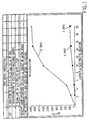
- the graph in Figure 1 contains the results of simple experiments where a given amount of LMO is added to a given amount of electrolyte. There are six samples. The first one does not contain any added water, only residual water is present. The five other ones have controlled amounts of water added in them, namely, 2.5, 5, 10, 15, and 20 microliters of water. All samples were made under argon atmosphere, so as not to pick up any additional water from the atmosphere.
- the beaker contained only lithium manganese oxide, Li 1 Mn 2 O 4 , the electrolyte, 2:1 ratio by weight of EC/DMC dissolved therein 1 molar LiPF 6 .
- Equations 1 and 2 show the interaction of water with the acidic electrolyte salt as the main reason for decomposition of cell components.
- the interaction of, for example, LiPF 6 salt with water generates hydrogen fluoride (HF) which is normally in a gaseous state, but is soluble in the organic electrolyte used in the experiments, namely, EC/DMC.
- HF hydrogen fluoride
- POF 3 is also soluble in the electrolyte and leads to the generation of fluorophosphoric acid.
- the reaction of Equation 2 is of significant consequence and is of extreme commercial importance.
- the lithium manganese oxide (here generally represented by the formula LiMn 2 O 4 ) is susceptible to corrosion, the acids shown in the above equations etch away at the lithium manganese oxide producing a lithium deficient material, a lambda manganese oxide ( ⁇ -MnO 2 ), and at the same time replenishes the supply of water.
- the aforesaid reactions are referred to as "avalanche reactions" in that they are able to continue and propagate until essentially all of the lithium manganese oxide is converted to ⁇ -MnO 2 . This is evidenced by the manganese ion (Mn 2+ ) found solubilized in the electrolyte.
- LMO is represented by the nominal general formula LiMn 2 O 4 , and by the more specific formulas such as Li 1+x Mn 2-x O 4 where O ⁇ x ⁇ 0.5 and by Li 1+x Mn 2-x O 4 with -0.2 ⁇ x ⁇ 0.2, or O ⁇ x ⁇ 0.2 in an initial, as prepared, condition.
- the LMO active material In a fully charged state, the LMO active material is not completely depleted of lithium. In the fully charged state, the nominal LiMn 2 O 4 is found to roughly correspond to Li 0.2 Mn 2 O 4 with approximately 0.8 atomic units of lithium having been transferred to the graphitic anode when fully charged. Therefore, acid attack will deplete Li + ions along with Mn +2 ions.
- Tables I and II and Figure 1 demonstrate that the two aforementioned reactions (1 and 2) are occurring. Each reaction has a rate which will dictate how fast/slow it will occur.
- the acidity of the electrolyte (solvent and solubilized salt) is there to begin with, but with the interaction of the water with the acidic electrolyte salt (the exemplary LiPF 6 ), more acid is produced, including the exemplary hydrogen fluoride (HF) and consequently more water.
- the exemplary electrolyte salt, LiPF 6 solubilizes to form an alkali ion, Li + ion, and a counter ion (anionic species) (PF 6 -) which comprises a halogen, fluorinated byproduct.
- the anionic species may further decompose producing the halogen atom in combination with other constituents, such as HF, POF 3 , and LiF. Traces of water present anywhere in the cell components will eventually come into contact with these species and constituents, and according to reaction 2, will produce more acid.
- the additive basic compound when in the presence of the acid (HF), will tie up the fluorine anion (halogen anion) as LiF.
- LiF is an insoluble salt.
- the carbonate anion LiCO 3 -1 and AlO 2 -
- the hydrogen-containing acid is formed by reaction between water, and the electrolyte salt which dissociates to form anionic species which contains a halogen.
- the basic compound is preferably a metal-containing base represented by MX where X represents an electron donor species which reacts with said hydrogen-containing acid to form HX.
- the metal (M) of said MX compound reacts with the halogen-containing species to form a metal-halogen compound which is typically relatively insoluble in the electrolyte solvent.
- the invention comprises minimizing further acid formation by buffering the acidity of the electrolyte so that the acid (HY), or any other acid produced as shown in Equations 1 and 2, is minimized.
- the basic compound be a basic carbonate, basic metal oxide, basic hydroxide, basic amine, or an organic base.
- the basic compound is a lithium-containing carbonate, a lithium metal oxide, a lithium mixed metal oxide, lithium hydroxide, or lithium metal oxide.
- additives which may be selected are LiOH, Li 2 O, LiAlO 2 , Li 2 SiO 3 , Li 2 CO 3 , CaCO 3 , and organic bases such as organic alkyl bases, alkyl bases having not more than 6 carbon atoms per alkyl group, alkylamine bases, butylamines, desirably n-butylamine, and preferably tributylamine; and primary, secondary, and tertiary organic amines are also a part of the generic group.
- lithium manganese oxide continuously exposes fresh lithium manganese oxide surface to compounds dissolved in the electrolyte solution which provides an effective catalyst for reaction decomposition and cleaving of atomic bonds.
- Such mechanism is observed for lithium manganese oxide, but, surprisingly, was not observed for other metal oxides such as lithium cobalt oxide.
- evolution of gas was very minor and essentially not a problem in the case of lithium cobalt oxide (LiCoO 2 ).
- significant evolution of gas was observed in cells formed of lithium manganese oxide (LiMn 2 O 4 ) due to the mechanisms described above.
- the surface of the lithium cobalt oxide active material from a cell was examined and it was observed that a passivated ionically conductive interface was present . This is thought to create a barrier against electron transfer and prevent interaction between the oxide and other components of the cell. Such stable, barrier passivation, was not observed with lithium manganese oxide cells.
- the lithium manganese oxide dissolution causes the passivation layer to be unstable which allows for further break down of organic electrolyte solvent.
- Electrolyte decomposition will occur with any solvent at high enough potential.
- the solvents are organic, aprotic, polar solvents. The extent of decomposition of solvents will occur at different rates and different potentials.
- the solvent may be acyclic carbonate or linear carbonate, yet the same decomposition mechanism applies at different rates.
- Common organic solvents are ⁇ -butyrolactone, tetrahydrofuran, propylene carbonate, vinylene carbonate, ethylene carbonate, dimethyl carbonate, diethyl carbonate, butylene carbonate, methyl-ethyl carbonate, dipropyl carbonate, dibutyl carbonate, diethoxy ethane, ethyl-methyl carbonate, dimethoxyethane, and dioxolane.
- An exemplary break down mechanism will now be described for organic solvents which are acyclic or cyclic compounds comprising a low alkyl group having 1 to 4 carbon atoms. Decomposition was observed in the case of the ethylene carbonate/dimethyl carbonate mixture.
- Electrochemical cells were assembled and prepared having graphite-based anodes, an electrolyte which is 1 molar LiPF 6 , and EC/DMC.
- the cells had a cathode prepared with lithium cobalt oxide (LiCoO 2 ) active material and in the other case, the cell was prepared with lithium manganese oxide active material.
- Each cell had entrained water in the amount of about 350 parts per million equivalent to about 1.6 milligrams of water. Of this, approximately 20 PPM or 0.024 milligrams of water was included in the electrolyte.
- the two cells were prepared in the same manner.
- the content of the exemplary LMO cell will now be described, generic cells are described later, below, with reference to Figure 2 .
- the anode was fabricated by solvent casting a slurry of graphite, binder, plasticizer, and solvent.
- the graphite used for the slurry may be either SFG-15 (Lonza G&T, Ltd; Sins, Switzerland) or BG-35 (Superior Graphite, Chicago, IL), Kynar Flex 2801 TM (a 88:12 copolymer of polyvinylidene difluoride (PVDF) and hexafloropropylene (HFP) was used as the binder, a plasticizer and an electronic grade solvent were also used.
- the slurry was cast onto glass and a free standing electrode was formed as the solvent was evaporated.
- the anode slurry composition was as follows: Component Wet Weight % Dry Weight % Graphite 24.3 58.3 Binder 6.8 16.4 Plasticizer 10.5 25.3 Solvent 58.4 ----- Total 100.0 100.0
- the cathode was fabricated by solvent casting a slurry of LMO, additive (Li 2 CO 3 ), conductive carbon, binder, plasticizer, and solvent.
- the conductive carbon used was Super P (MMM Carbon), Kynar Flex 2801TM was used as the binder along with a plasticizer, and electronic grade acetone was used as the solvent.
- the slurry was cast onto aluminum foil coated with a polyacrylic acid/conductive carbon mixture.
- a cathode slurry was cast onto glass and a free standing electrode was formed as the solvent was evaporated.
- the cathode slurry composition was as follows: Component Wet Weight % Dry Weiqht % Li 2 CO 3 0.45 1.00 LiMn 2 O 4 28.81 64.41 Graphite 2.44 5.45 Binder 4.43 9.90 Plasticizer 8.61 19.24 Solvent 55.27 ----- Total 100.0 100.0
- the separator used to laminate the anode and cathode together and prevent them from electrically shorting together was formed by solvent casting a slurry of fumed silica oxide, binder, and plasticizer diluted with an appropriate solvent.
- the fumed silica (Cabo-Sil) acts as a filler to provide structure for the separator film.
- Kynar 2801 was used as the binder.
- the plasticizer is used to provide film porosity after extraction. Acetone was used as the solvent.
- the slurry was cast onto glass using a doctor blade to cast an approximately 2.3 mil (5.842 x 10 -5 m) thick film after solvent evaporation.
- the separator slurry composition was as follows: Component Wet Weight % Dry Weight % Fumed SiO 2 6.0 22.3 Binder 8.9 33.3 Plasticizer 11.8 44.4 Solvent 73.3 ----- Total 100.0 100.0
- An electrochemical cell of the anode, separator, and cathode films was formed by first hot pressing two 48 cm 2 pieces of the respective electrode materials to an expanded metal mesh grid.
- the films were laminated at 120°C and 50 psi (72.5 x 10 -4 m) Copper grid was used for the anode laminate and aluminum grid was used for the cathode.
- the electrodes and separator film were laminated together by hot pressing'at 115°C and 40 psi (58 x 10 -4 Pa)
- the plasticizer was extracted to create cell porosity by washing three times in a methanol bath for 20 minutes for each bath.
- the cells were dried at 40°C under vacuum overnight after extraction.
- the electrolyte used for the cells was a 2:1 ratio of ethylene carbonate to dimethyl carbonate (EC/DMC) with 1 molar LiPF 6 as the conductive salt (Grant-Ferro Corp., Zachary LA).
- the basic compound may also be added to the electrolyte solution. Therefore, the basic compound may be included in any combination of anode, cathode, and electrolyte.
- a basic compound may also replace a part of the graphite, in a proportion similar to the cathode shown below. It is evident that the electron donor species will 'react to neutralize acid where ever in the cell such acid is found. Further, the transport properties and ion transfer properties of the solvent, at least to some extent, cause transport of basic compound and/or electron donor species throughout the 'cell for neutralizing the acid.
- the two cells were left in storage for one week. After one week, the cell containing the lithium manganese oxide cathode active material was found to contain 2.5 ppm of Mn +2 dissolved in the electrolyte. In contrast, the cell containing the lithium cobalt oxide active material did not contain any dissolved cobalt. This striking difference highlights the surprising susceptibility of LiMn 2 O 4 to corrosion. It was also observed that essentially no gaseous decomposition products were evolved in the case of the lithium cobalt oxide cell, whereas the flexible storage case containing the lithium manganese oxide-based cell had expanded, puffed out like a balloon, demonstrating the presence of gaseous decomposition products.
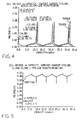
- Figure 4 shows a voltage capacity plot using the 10 percent tributylamine basic compound additive in the cell comprising a graphite electrode and a lithium metal counter-electrode using 1 molar LiPF 6 and EC/DMC solvent.
- the voltage drops to approximately 0.01 volts.
- the average voltage reaches approximately 2 volts versus Li/Li + , with intercalation.
- the percentage difference between the capacity "in” and the capacity "out” on the first cycle corresponds to a surprisingly low capacity loss in the range of 14.8 to 15.4 percent.
- the first and second half cycles are repeated, showing the remarkable consistency and cyclability of this cell.
- Figure 5 shows a voltage capacity plot of lithium manganese oxide cycled with a lithium metal electrode where the cell contains the basic compound 10 percent tributylamine in the electrolyte solution comprising LiPF 6 and EC/DMC. Constant current cycling is at ⁇ 0.2 milliamps per centimeter square, between 3 and 4.3 volts versus Li/Li + .
- Figure 5 demonstrates the excellent reversibility of this system. Cyclic performance is adequately maintained with the basic additive forming a part of the electrolyte solution. Therefore, the basic additive is able to function to prevent decomposition of cell components without demonstrating any incompatibility and without demonstrating any adverse effect on cell operation.
- the basic lithium compound is in direct or indirect ion transfer, ion transport, relationship with the acid in the cathode. This provides electron donor species in contact with or at least closely adjacent particles of the active material. Such species then reacts with acid to prevent acid from attacking the active material. It is preferred that the basic compound additive be dispersed throughout the cathode (positive electrode) of the cell. If the additive is not soluble in the solvent or is not miscible in the electrolyte solvent, it is preferably included in the cathode mixture. If the additive is soluble in the electrolyte or miscible with the electrolyte solvent, it is preferably added to the solvent.
- the additive is a basic liquid miscible in the electrolyte solvent and migrates to and throughout the cathode. Even an immiscible basic liquid will be transported to some extent within the cell by the electrolyte solvent.
- a basic additive which is soluble in the electrolyte solvent migrates to and throughout the cell including the electrodes.
- the basic additive is an insoluble solid or immiscible liquid which forms a part of the electrode mixture, preferably added to the precursor cathode paste.
- the basic compound be in intimate contact with the cathode active material. It is desirable that the basic additive be mixed with particles of the lithium manganese oxide active material in the precursor paste.
- the lithium manganese oxide material being in particle form is intermingled with a basic compound which is itself also in particle form.
- the basic material is in intimate particle-to-particle, grain-to-grain contact, with the lithium manganese oxide active material it is meant to protect.
- the basic compound additive may be included in other components of the cell including the electrolyte and the anode (negative electrode).
- Preferred additives effectively neutralize the undesirable acidic effects without affecting the electrochemical performance of the cell, because the metal ion of the additive is the same ion, namely, lithium, which is the ionic species which engages in the electrochemical function of a cell. These additives, therefore, effectively and efficiently block the recurring reactions which lead to acid formation, lithium manganese oxide degradation, and consequential gas generation.
- the method and compositions of the invention can be easily used commercially to form electrochemical cells having improved electrochemical stability and capacity.
- a typical laminated battery cell structure 10 is depicted in Figure 2. It comprises a negative electrode side 12, a positive electrode side 14, and an electrolyte/separator 16 therebetween. Negative electrode side 12 includes current collector 18, and positive electrode side 14 includes current collector 22.
- An electrolyte separator film 16 membrane of plasticized copolymer is positioned upon the electrode element and is covered with a positive electrode membrane 24 comprising a composition of a finely divided lithium intercalation compound in a polymeric binder matrix.
- An aluminum collector foil or grid 22 completes the assembly.
- Protective bagging material 40 covers the cell and prevents infiltration of air and moisture.
- a multicell battery configuration is prepared with the same components in a slightly different arrangement.
- the relative weight proportions of the components of the positive electrode are generally: 50-90% by weight active material; 5-30% carbon black as the electric conductive diluent; and 3-20% binder chosen to hold all particulate materials in contact with one another without degrading ionic conductivity. Stated ranges are not critical, and the amount of active material in an electrode may range from 25-85 weight percent.
- the negative electrode comprises about 50-95% by weight of a preferred graphite, with the balance constituted by the binder.
- a typical electrolyte separator film comprises approximately two parts polymer for every one part of a preferred fumed silica.
- the separator film Before removal of the plasticizer, the separator film comprises about 20-70% by weight of the composition; the balance constituted by the polymer and fumed silica in the aforesaid relative weight proportion.
- the conductive solvent comprises the solvent of the invention and suitable salts. Desirable salts and solvent/salt ratios are described in USPN 5,712,059 and 5,418,091. One example is a mixture in a weight ratio of. about 90 parts or more of solvent to 10 parts or less of salt. Therefore, the range of salt content may be very broad.
- Separator membrane element 16 is generally polymeric and prepared from a composition comprising a copolymer.
- a preferred composition is the 75 to 92% vinylidene fluoride with 8 to 25% hexafluoropropylene copolymer (available commercially from Atochem North America as Kynar FLEX) and an organic solvent plasticizer.
- the plasticizing solvent may be one of the various organic compounds commonly used as casting solvents, for example, carbonates. Higher-boiling plasticizer compounds such as dibutyl phthalate, dimethyl phthalate, diethyl phthalate, and tris butoxyethyl phosphate are particularly suitable.
- Inorganic filler adjuncts such as fumed alumina or silanized fumed silica, may be used to enhance the physical strength and melt viscosity of a separator membrane and,' in some compositions, to increase the subsequent level of electrolyte solution absorption.
- the electrochemical cell may be prepared in a variety of ways.
- the negative electrode may be metallic lithium.
- the negative electrode is an intercalation active material, such as, metal oxides and graphite.
- the components of the electrode are the metal oxide, electrically conductive carbon, and binder, in proportions similar to that described above for the positive electrode.
- the negative electrode active material is graphite particles.
- Various methods for fabricating electrochemical cells and batteries and for forming electrode components are described herein. The invention is not, however, limited by any particular fabrication method.
- cathode compositions are prepared in the form of precursor pastes with a casting solvent and coated onto a current collector, it is possible to mix the lithium manganese oxide particles with particles of the basic compound additive and include them together as part of the precursor paste which is coated onto the current collector.
- the additive added to the paste may be in solid or liquid form.
- a liquid additive must be less volatile than the casting solvent, so that the liquid additive will remain in the paste after removal of the casting solvent. Therefore, the liquid additive will remain in intimate contact with the lithium manganese oxide active material after the cathode is formed.
- a liquid base such as liquid organic base is used, it may be added directly to the electrolyte solution after the cell has been assembled or at any stage of cell assembly.
- the additive in particle form may also be included as a part of the electrolyte. It is thought that a solid insoluble additive is most effective when it is included directly as part of the cathode composition. It is thought that the additive in particle form would be least effective when included with the electrolyte or merely in surface contact with the cathode as it will not be in intimate contact with the bulk of the cathode lithium manganese oxide.
- the particle basic compound may also be added in the anode to counteract formation of acid by any water present in the anode, however, this is most remote from the cathode and will be of less direct influence in protecting the cathode active material from degradation.
- the amount of the basic compound additive should be sufficient to buffer the electrolyte solution.
- the electrolyte solution is typically 1 molar LiPF 6 , or an equivalent salt, in an organic solvent such as EC/DMC. This solution by itself will be somewhat acidic.
- the invention seeks to prevent additional acid formation and prevent increased acidity by reaction of the salt with water. Therefore, the amount of additive should be sufficient to buffer the solution and cause its acidity to be maintained near the level of the electrolyte solution itself and prevent increased acid concentration due to decomposition of the electrolyte salt and reaction with water.
- the amount of additive should be in an amount by weight which is less than the amount by weight of said active material in the cathode.
- An amount of additive equal to about 1 percent by weight of the LMO should be sufficient, and is thought to be 3 times greater than that required for a cell containing an estimated 350 ppm retained water.
- the amount of additive should not be so great that it significantly changes the acidity of the 1 molar LiPF 6 EC/DMC solution causing it to be relatively basic.
- the basic additive be electrochemically stable and not cause any other side reactions or interactions that could effect the operation of the cell. Therefore, a lithium-based compound is preferred.
- the basic additive should be stable and able to sustain voltage in the range of about 3.5 to 4.5 volts at which a lithium manganese oxide cell operates.
- the compound be a lithium-containing carbonate, such as lithium metal oxide, lithium hydroxide, so that when it reacts in solution to cause neutralization it does not release heterogeneous ions, that is, ions other than lithium. Therefore, lithium salts are preferred.
- Mixed oxides and mixed metal oxides, such as LiAlO 2 and Li 2 SiO 3 are desirable.
- the additive function as a buffer and not cause the electrolyte solution to become more basic.
- the acidity of the typical electrolyte described above (LiPF 6 ) is about a pH of 4. Therefore, if the basic compound additive has a pH in the range of 9 to 11, it should be sufficiently basic to act as a buffer. It is preferred that the pH of the basic compound additive not be above 12 or 13.
- the examples below show the use of lithium carbonate to enrich the lithium content of the spinel LMO by forming an LMO/Li 2 CO 3 mixture and then reacting or decomposing the Li 2 CO 3 .
- the result is particles of LMO enriched with lithium.
- Lithium manganese oxide spinel (LMO), a single spinel, was obtained from Japan Energy Corporation having the specifications as per Table III, and designated Japan Energy Corporation ISR 140B.
- the method used to make all the treated LMO in the below examples is as per the following steps. The procedure begins with mixing LMO and lithium carbonate by ball milling for 60 minutes. A low level (1-2 weight percent) of high purity lithium carbonate around 5 micron (5 x 10 -6 m) mparticle size is used. Such lithium carbonate is available from Pacific Lithium, New Zealand. Large ceramic media was used for this operation. This caused no attrition of the material. The media was then removed from the mixture.
- the mixed Li 2 CO 3 /LMO was heated in a Box Furnace, set at between 600-750°C, for 30 minutes.
- the treated material was removed from the furnace and immediately transferred to a second Box Furnace set at 450°C for 1 hour.
- This furnace had a good supply of flowing air throughout to minimize oxygen deficiency and to overcome the tendency of LMO to lose oxygen at about 700°C or higher.
- the treated material was then removed from the second furnace and allowed to cool to room temperature.
- the color change of the LMO as per Table III is of interest.
- the treated LMO has a slight red color, and this differs from the untreated LMO which is grey/black .
- a material of the formula Li 2 MnO 3 is known to be red in color.
- the treated product is thought to include cations of lithium bound to the spinel particles at least at the external surface.
- a graphite electrode was fabricated by solvent casting a slurry of MCMB2528 graphite, binder, plasticizer, and casting solvent.
- MCMB2528 is a mesocarbon microbead material supplied by Alumina Trading, which is the U.S. distributor for the supplier, Osaka Gas Company of Japan. This material has a density of about 2.24 grams per cubic centimeter; a particle size maximum for at least 95% by weight of the particles of 37 microns (37 x 10 -6 m)median size of about 22.5 microns (22.5 x 10 -6 m)and an interlayer distance of about 0.336.
- the binder was a copolymer of polyvinylidene difluoride (PVDF) and hexafluoropropylene (HFP) in a wt. ratio of PVDF to HFP of 88:12.
- PVDF polyvinylidene difluoride
- HFP hexafluoropropylene
- This binder is sold under the designation of Kynar Flex 2801®, showing it's a registered trademark. Kynar Flex is available from Atochem Corporation.
- An electronic grade solvent was used.
- the slurry was cast onto glass and a free standing electrode was formed as the casting solvent evaporated.
- the electrode composition was approximately as follows on a dry weight % basis: 70 graphite; 9.5 binder; 17.5 plasticizer and 3.0 conductive carbon.
- An electrode cathode was also fabricated by solvent casting a slurry of heat treated lithium manganese oxide (LMO) as per Example II, conductive carbon, binder, plasticizer, and solvent.
- the conductive carbon used was Super P (MMM carbon), Kynar Flex 2801® was used as the binder along with a plasticizer, and electronic grade acetone was used as the solvent.
- the slurry was cast onto aluminum foil coated with polyacrylic acid/conductive carbon mixture.
- the slurry was cast onto glass and a free standing electrode was formed as the solvent was evaporated.
- the cathode electrode composition was approximately as follows on a dry weight % basis: 72.9 treated LMO; 3.0 carbon, 8.1 binder; and 16.0 plasticizer. In a preferred method, prior to cell construction the plasticizer is extracted.
- a rocking chair battery was prepared comprising the anode, the cathode, and an electrolyte.
- the ratio of the active 'anode mass to the active cathode mass was 1:3.23.
- the two electrode layers were arranged with an electrolyte layer in between, and the layers were laminated together using heat and pressure as per the Bell Comm. Res. patents incorporated herein by reference earlier.
- the cell is activated with EC/DMC solvent solution containing 1 M LiPF 6 salt.
- Another cell was prepared with an anode prepared in accordance with the method of Example III .
- untreated LMO was used to form the cathode as per Table III "Before" column.
- the cathode was otherwise prepared as per Example III.
- Example III An additional cell was prepared with an anode prepared in accordance with the method of Example III.
- the LMO for the cathode was as-received, untreated LMO per Table III "Before" column.
- the as-received spinel lithium manganese oxide is in particle form. Based on XRD analysis, each such particle consists of homogeneous, single phase spinel lithium manganese oxide. Since XRD is accurate to within about 1 or 2%, this is essentially homogeneous.
- the cathode also included particulate lithium carbonate as per Example I.
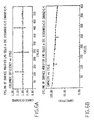
- Figure 6 is a two-part graph.
- the cell of Figure 6 contained the LMO heat treated with lithium carbonate.
- Figure 6A shows the excellent rechargeability and
- Figure 6B shows the excellent cyclability and capacity of the cell prepared in accordance with Examples II and III.
- the capacity was determined at constant current cycling for up to 400 cycles consistent with the test parameters described above, and at 23°C versus graphite anode at 2 hour discharge (C/2) and 5 hour charge rate (C/5).
- Figure 6 shows long cycle life demonstrated by the relatively slow capacity fade with cycle numbers.
- the recharge ratio data shows the absence of any appreciable side reactions and decompositions over the extended life cycling. This can be more particularly seen from Figure 6A .
- the recharge ratio maintains its value exceptionally close to 1.
- the cell maintains over 92 percent of its capacity over extended cycling to 100 cycles over 89 percent of its capacity to 200 cycles, and over 75 percent of its capacity at about 400 cycles.
- the combination of slow, minimal capacity fade along with excellent recharge ratio demonstrates the absence of any appreciable side reactions. It cycled well with low capacity fade. It indicated that the lithium carbonate heated with LMO stabilized the LMO active material. As per all of the Examples, the use of lithium carbonate as an additive stabilizes the LMO cathode active material against breakdown.
- Example IV the additional cells as per Example IV were prepared where the cathode did noc contain any lithium carbonate and the cathode LMO was not treated with lithium carbonate.
- This cell had a lithium metal oxide positive electrode and a MCMB negative counter-electrode.
- the ratio of the active anode mass to the active cathode mass was 1:3.0.
- This comparative cell without lithium carbonate was stored at 60°C for 25 days, along with cells having lithium carbonate additive of the invention as powder additive (Example V) or LMO heat treated with lithium carbonate (Examples II, III).
- Figure 7 contains the results of cycling the comparative cell (without lithium carbonate) and repeats the performance of the cells of the invention for direct comparison.
- the cells having LMO active material alone, or LMO with particulate lithium carbonate have lesser performance.
- the cells that did not have LMO heat treated with carbonate had 60-70% loss of capacity after 40-50 cycles. This is evidence that cathode breakdown occurred for the non-heat-treated LMO.
- the cell with the LMO heat treated lithium carbonate maintained over 70% of its capacity after about 50 cycles. Further evidence of lack of cathode breakdown in this cell is as per Figures 8 and 9 .
- the cell does not expand in volume and puff up. This shows absence of gas formation caused by breakdown. Absence of such gassing, and absence of irreversible charge consumption demonstrates the unique and important advantages of the invention.
- Table IV contains data for cells stored at 60°C for 7 days in an electrolyte comprising 1 molar LiPF 6 , EC/DMC at 2:1 by weight. Three samples are shown. The first sample is for the lithium manganese oxide spinel as obtained from the vendor and untreated, that is, having no lithium carbonate added or reacted therewith. The second case is LQ1 which has a weight ratio of carbonate to spinel of 1 to 99 and where this mixture was heated at 750°C for about 0.5 hours.
- the electrode of the first case labelled LMO produced 21.8 ppm of Mn +2 after 7 days.
- Example II may be modified.
- the heat treatment method of Example II recited heat treating the mixture in a first furnace at 600-750°C for 30 minutes. Then removing the material to a second furnace set at 450°C for 1 hour and that the second furnace had a good supply of flowing air. The material was then removed from the second furnace and allowed to cool to room temperature. These steps can be replaced by heating the mixture in a single box furnace set at between 650 to 750°C for 30 minutes. Then the furnace is turned off and the material is allowed to cool in the furnace while insuring there is a good supply of flowing air throughout.
- the heating and cooling may be conducted in a Multiple Heat Zone Rotary Furnace.
- the material is fed into the hottest part of the furnace, typically at 650-750°C. Then, the material travels through the furnace to another heat zone at a lower temperature, for example, 600°C. Then the material progress to a zone at 400°C to 450°C, and finally is allowed to cool to room temperature. A good supply of flowing air is provided throughout the furnace.
- the present invention provides an effective means for interfering with the reaction mechanism of acid attack, corrosion of lithium manganese oxide active material.
- This oxidation degradation is surprisingly not a problem in the case of a comparative lithium cobalt oxide.
- the individual particles of such active material are passivated.
- the passivation layer is effectively formed around each lithium cobalt oxide particle, therefore, encapsulating each of the particles in a protective film. This prevents degradation of other cell components, and particularly degradation of the electrolyte.
- the lithium manganese oxide active material is subject to continuing, repetitive corrosive attack which does not permit the development of a stable passivation layer.
- the lithium manganese oxide degradation occurs essentially unabated, and causes break down of other cell components, and particularly the electrolyte.
- the invention has defined the mechanisms of such break down and has identified additives necessary to interfere with such break down and decomposition.
- the additive is included in the cell so that it is in direct contact or closely adjacent, in close indirect contact, with individual particles of the lithium manganese oxide.
- the additive is dispersed within cathode. Such contact can be achieved by an additive which is itself in particle form, and where the particles of the additive are in direct contact or nearly adjacent to the particles of the lithium manganese oxide.
- Such close, intimate contact between the basic additive and the lithium manganese oxide particles may also be achieved by an additive which is in liquid form and is able to migrate to the lithium manganese oxide particles. Such close interaction is also achieved by an additive which is soluble in the liquid electrolyte solution. Where the basic additive is soluble in the electrolyte, the ionic species of such solubility would be in intimate association, intimate relation with the individual particles of the lithium manganese oxide.
- oxides, hydroxides, and carbonates which are known to be basic, not all oxides are suitable. For example, silicon oxide is acidic and would not be suitable. Other basic additives among the preferred class are less desirable if they are not electrochemically stable.
- Carbonates, aluminates, and silicates are particularly desired as they are weak bases. Lithium carbonates, lithium aluminates, and lithium silicates are particularly preferred because they contain a lithium species, and are shown by experimental evidence to be effective in stabilizing the cell.
- the additive is reacted with or decomposed onto the spinel LMO particles.
- Complete or partial decomposition is possible.
- Some amount of additive decomposed to achieve Li-enriched LMO is combinable with the inclusion of particulate additive.
- Other combinations are possible such as partial decomposition which causes Li-enrichment and dispersion of the additive onto the LMO surface.
Landscapes
- Chemical & Material Sciences (AREA)
- Chemical Kinetics & Catalysis (AREA)
- Electrochemistry (AREA)
- General Chemical & Material Sciences (AREA)
- Inorganic Chemistry (AREA)
- Organic Chemistry (AREA)
- Engineering & Computer Science (AREA)
- Manufacturing & Machinery (AREA)
- Materials Engineering (AREA)
- Condensed Matter Physics & Semiconductors (AREA)
- General Physics & Mathematics (AREA)
- Physics & Mathematics (AREA)
- Battery Electrode And Active Subsutance (AREA)
- Secondary Cells (AREA)
- Inorganic Compounds Of Heavy Metals (AREA)
- Primary Cells (AREA)
Claims (23)
- Verfahren zum Behandeln von Partikeln eines Lithium-Mangan-Oxids vom kubischen Spinell-Typ mit der allgemeinen Formel Li1-xMn2-xO4, das die Schritte (a) der Bildung eines Gemisches, das Partikel des kubischen Lithium-Mangan-Oxids und Lithiumcarbonat umfasst, und (b) des Erhitzens des Gemisches für eine Zeitdauer und bei einer Temperatur umfasst, die ausreichend sind um mindestens einen Teil des Lithiumcarbonats zu zersetzen, wobei dadurch ein behandeltes Lithium-Mangan-Oxid vom kubischen Spinell-Typ mit vergrößertem Lithium-Gehalt zur Verfügung gestellt wird, das durch die allgemeine Formel Li1+zMn2-zO4 dargestellt wird, worin x größer als oder gleich Null ist, z größer als x ist und z kleiner als oder gleich 0,20 ist.
- Verfahren nach Anspruch 1, worin z größer als 0,08 ist.
- Verfahren nach Anspruch 1, worin x kleiner als oder gleich 0,08 ist.
- Verfahren nach Anspruch 1, worin das Lithiumcarbonat in Schritt (a) in Form von Partikeln vorliegt.
- Verfahren nach Anspruch 1, worin das Lithiumcarbonat in Schritt (a) in Form von Partikeln vorliegt und an die Oberfläche der Lithium-Mangan-Oxid-Partikel gebunden ist.
- Verfahren zum Behandeln von Partikeln des Lithium-Mangan-Oxids vom kubischen Spinell-Typ, das die Schritte (a) der Bildung eines Gemisches, das Partikel des kubischen Lithium-Mangan-Oxids und Lithiumcarbonat umfasst, und (b) des Erhitzens des Gemisches für eine Zeitdauer und bei einer Temperatur umfasst, die ausreichend sind um mindestens einen Teil des Lithiumcarbonats zu zersetzen, wobei dadurch ein behandeltes Lithium-Mangan-Oxid vom Spinell-Typ mit einem vergrößerten Lithium-Gehalt, verglichen zum unbehandelten Lithium-Mangan-Oxid vom kubischen Spinell-Typ, zur Verfügung gestellt wird.
- Verfahren nach Anspruch 6, worin im Wesentlichen das gesamte Lithiumcarbonat zersetzt wird.
- Verfahren nach Anspruch 6, worin der Schritt des Erhitzens in einer Luftatmosphäre durchgeführt wird.
- Verfahren nach Anspruch 6, worin der Schritt des Erhitzens in einer strömenden Luftatmosphäre durchgeführt wird.
- Verfahren nach Anspruch 6, worin das Erhitzen bei einer Temperatur in einem Bereich von 500°C bis 800°C durchgeführt wird.
- Verfahren nach Anspruch 6, worin das Erhitzen für eine Zeitdauer von bis zu 10 Stunden durchgeführt wird.
- Verfahren nach Anspruch 6, worin das Lithiumcarbonat in dem Gemisch des Schrittes (a) in einer Menge von bis zu 5 Gew.-% des Gesamtgemisches vorliegt.
- Verfahren nach Anspruch 6, worin das Erhitzen in Stufen einer zuerst erhöhten Temperatur und dann Abkühlen auf Raumtemperatur durchgeführt wird.
- Partikel des Lithium-Mangan-Oxids (LMO) vom kubischen Spinell-Typ der allgemeinen Formel Li1+zMn2-zO4 umfassende Zusammensetzung, worin 0<z≤0,20, das durch ein Zersetzungsprodukt von Lithiumcarbonat mit Lithium angereichert ist, das einen Teil des jeweiligen Partikels bildet, und das durch eine verringerte Oberfläche und einen erhöhten Kapazitätserhalt beim periodischen Durchlaufen, ausgedrückt in Milliamperestunden pro Gramm, im Vergleich zu dem nicht angereicherten Spinell gekennzeichnet ist.
- Zusammensetzung nach Anspruch 14, worin das Zerfallsprodukt ein Reaktionsprodukt der LMO-Partikel und Lithiumcarbonat ist.
- Zusammensetzung nach Anspruch 14, worin der Lithium-reiche Spinell durch die allgemeine Formel Li1+zMn2-zO4 dargestellt ist, worin 0,081≤z≤0,20.
- Zusammensetzung nach Anspruch 14, worin das Zersetzungsprodukt Lithiumkationen enthält, die an die Spinell-Partikel an einer äußeren Oberfläche der einzelnen Partikel gebunden sind.
- Zusammensetzung nach Anspruch 14, worin das Reaktionsprodukt Li2MnO3 enthält und der Lithium-reiche Spinell durch die allgemeine Formel Li1+zMn2-zO4 dargestellt wird, worin 0,081≤z≤0,20.
- Gemisch, das Partikel des Lithium-reichen Lithium-Mangan-Oxids vom Spinell-Typ mit der allgemeinen Formel Li1+zMn2-zO4, worin 0,081≤z≤0,20, und eine basische Lithiumenthaltende Verbindung umfasst.
- Gemisch nach Anspruch 19, worin die basische Lithiumenthaltende Verbindung Lithiumcarbonat ist, wobei das Lithiumcarbonat in Form von Partikeln vorliegt und die Lithiumcarbonat-Partikel mit Partikeln des Lithium-reichen Spinells vermischt werden.
- Gemisch nach Anspruch 20, worin das Lithiumcarbonat auf der Oberfläche der Partikel des Lithium-reichen Spinells dispergiert ist und an diese Oberfläche gebunden ist.
- Verfahren zur Herstellung eines Elektrodenfilms für eine elektrochemische Zelle, das Folgendes umfasst:(a) Aufbringen von Lithiumcarbonat-Partikeln auf größere Partikel des Lithium-Mangan-Oxid vom kubischen Spinell-Typ und Zersetzen des Lithiumcarbonats unter Bildung eines Lithium-angereicherten Lithium-Mangan-Oxids vom Spinell-Typ,(b) Bildung eines Gemisches, das Partikel des Lithiumangereicherten Lithium-Mangan-Oxids vom Spinell-Typ, Lithiumcarbonat-Partikel und ein Bindemittel umfasst, und(c) Bildung eines Films aus dem Gemisch aus Schritt (b).
- Verfahren nach Anspruch 22, worin das Gemisch aus Schritt (b) eine Aufschlämmung ist, die weiter Partikel von leitfähigem Kohlenstoff und ein Lösungsmittel zum Gießen enthält, und worin Schritt (c) das Gießen der Aufschlämmung auf eine Oberfläche und das Entfernen des Lösungsmittels umfasst.
Applications Claiming Priority (3)
| Application Number | Priority Date | Filing Date | Title |
|---|---|---|---|
| US307355 | 1999-05-07 | ||
| US09/307,355 US6183718B1 (en) | 1996-12-09 | 1999-05-07 | Method of making stabilized electrochemical cell active material of lithium manganese oxide |
| PCT/US2000/010352 WO2000069006A1 (en) | 1999-05-07 | 2000-04-18 | Stabilized electrochemical cell active material |
Publications (2)
| Publication Number | Publication Date |
|---|---|
| EP1190458A1 EP1190458A1 (de) | 2002-03-27 |
| EP1190458B1 true EP1190458B1 (de) | 2003-10-15 |
Family
ID=23189386
Family Applications (1)
| Application Number | Title | Priority Date | Filing Date |
|---|---|---|---|
| EP00926071A Expired - Lifetime EP1190458B1 (de) | 1999-05-07 | 2000-04-18 | Stabilisiertes elektrochemisches zellenmaterial |
Country Status (10)
| Country | Link |
|---|---|
| US (2) | US6183718B1 (de) |
| EP (1) | EP1190458B1 (de) |
| JP (1) | JP4891481B2 (de) |
| KR (1) | KR100690483B1 (de) |
| CN (1) | CN1196213C (de) |
| AT (1) | ATE252277T1 (de) |
| AU (1) | AU4466300A (de) |
| CA (1) | CA2370892C (de) |
| DE (1) | DE60005955T2 (de) |
| WO (1) | WO2000069006A1 (de) |
Families Citing this family (56)
| Publication number | Priority date | Publication date | Assignee | Title |
|---|---|---|---|---|
| US6489060B1 (en) * | 1999-05-26 | 2002-12-03 | E-One Moli Energy (Canada) Limited | Rechargeable spinel lithium batteries with greatly improved elevated temperature cycle life |
| DE19932750A1 (de) * | 1999-07-14 | 2001-01-18 | Nbt Gmbh | Verfahren zur Herstellung von Lithiumspinellen |
| US6468695B1 (en) | 1999-08-18 | 2002-10-22 | Valence Technology Inc. | Active material having extended cycle life |
| US6387568B1 (en) * | 2000-04-27 | 2002-05-14 | Valence Technology, Inc. | Lithium metal fluorophosphate materials and preparation thereof |
| US7524584B2 (en) * | 2000-04-27 | 2009-04-28 | Valence Technology, Inc. | Electrode active material for a secondary electrochemical cell |
| US6777132B2 (en) * | 2000-04-27 | 2004-08-17 | Valence Technology, Inc. | Alkali/transition metal halo—and hydroxy-phosphates and related electrode active materials |
| US6964827B2 (en) * | 2000-04-27 | 2005-11-15 | Valence Technology, Inc. | Alkali/transition metal halo- and hydroxy-phosphates and related electrode active materials |
| US8057769B2 (en) * | 2000-04-27 | 2011-11-15 | Valence Technology, Inc. | Method for making phosphate-based electrode active materials |
| US6558844B2 (en) * | 2001-01-31 | 2003-05-06 | Wilmont F. Howard, Jr. | Stabilized spinel battery cathode material and methods |
| US6580598B2 (en) * | 2001-02-15 | 2003-06-17 | Luxon Energy Devices Corporation | Deionizers with energy recovery |
| US6605385B2 (en) * | 2001-03-22 | 2003-08-12 | Wilson Greatbatch Ltd. | Electrochemical cell having an electrode with a carbonate additive in the electrode active mixture |
| WO2002097907A2 (en) * | 2001-04-06 | 2002-12-05 | Valence Technology, Inc. | Sodium ion batteries |
| US7393476B2 (en) * | 2001-11-22 | 2008-07-01 | Gs Yuasa Corporation | Positive electrode active material for lithium secondary cell and lithium secondary cell |
| US6815122B2 (en) | 2002-03-06 | 2004-11-09 | Valence Technology, Inc. | Alkali transition metal phosphates and related electrode active materials |
| US7422823B2 (en) * | 2002-04-03 | 2008-09-09 | Valence Technology, Inc. | Alkali-iron-cobalt phosphates and related electrode active materials |
| US20030190527A1 (en) * | 2002-04-03 | 2003-10-09 | James Pugh | Batteries comprising alkali-transition metal phosphates and preferred electrolytes |
| US7482097B2 (en) * | 2002-04-03 | 2009-01-27 | Valence Technology, Inc. | Alkali-transition metal phosphates having a +3 valence non-transition element and related electrode active materials |
| CN100542951C (zh) | 2002-05-17 | 2009-09-23 | 威伦斯技术公司 | 用作阴极活性材料的金属化合物的合成 |
| US7118830B1 (en) * | 2004-03-23 | 2006-10-10 | Hammond Group, Inc. | Battery paste additive and method for producing battery plates |
| US8021784B2 (en) * | 2004-03-23 | 2011-09-20 | Hammond Group, Inc. | Cureless battery paste and method for producing battery plates |
| US7718319B2 (en) * | 2006-09-25 | 2010-05-18 | Board Of Regents, The University Of Texas System | Cation-substituted spinel oxide and oxyfluoride cathodes for lithium ion batteries |
| KR20110076955A (ko) * | 2008-09-30 | 2011-07-06 | 엔비아 시스템즈 인코포레이티드 | 비용량이 높은 불소 도핑된 리튬 풍부 금속 산화물 양극 배터리 재료 및 상당하는 배터리 |
| US8389160B2 (en) * | 2008-10-07 | 2013-03-05 | Envia Systems, Inc. | Positive electrode materials for lithium ion batteries having a high specific discharge capacity and processes for the synthesis of these materials |
| US8465873B2 (en) | 2008-12-11 | 2013-06-18 | Envia Systems, Inc. | Positive electrode materials for high discharge capacity lithium ion batteries |
| CN102484249A (zh) | 2009-08-27 | 2012-05-30 | 安维亚系统公司 | 具有高比容量和优异循环的层层富含锂的复合金属氧化物 |
| EP2471133A4 (de) * | 2009-08-27 | 2014-02-12 | Envia Systems Inc | Metalloxidbeschichtetes positivelektrodenmaterial für lithiumbatterien |
| JP5646831B2 (ja) * | 2009-09-04 | 2014-12-24 | 日立マクセル株式会社 | リチウム二次電池およびその製造方法、並びにリチウム二次電池用セパレータ |
| DE102009049326A1 (de) | 2009-10-14 | 2011-04-21 | Li-Tec Battery Gmbh | Kathodische Elektrode und elektrochemische Zelle hierzu |
| US9843041B2 (en) * | 2009-11-11 | 2017-12-12 | Zenlabs Energy, Inc. | Coated positive electrode materials for lithium ion batteries |
| US8993177B2 (en) * | 2009-12-04 | 2015-03-31 | Envia Systems, Inc. | Lithium ion battery with high voltage electrolytes and additives |
| DE102010011414A1 (de) | 2010-03-15 | 2011-09-15 | Li-Tec Battery Gmbh | Lithiumionenzelle mit intrinsischem Schutz gegen thermisches Durchgehen |
| DE102010011413A1 (de) | 2010-03-15 | 2011-09-15 | Li-Tec Battery Gmbh | Kathodische Elektrode und elektrochemische Zelle für dynamische Einsätze |
| US8741484B2 (en) | 2010-04-02 | 2014-06-03 | Envia Systems, Inc. | Doped positive electrode active materials and lithium ion secondary battery constructed therefrom |
| US8928286B2 (en) | 2010-09-03 | 2015-01-06 | Envia Systems, Inc. | Very long cycling of lithium ion batteries with lithium rich cathode materials |
| US8663849B2 (en) | 2010-09-22 | 2014-03-04 | Envia Systems, Inc. | Metal halide coatings on lithium ion battery positive electrode materials and corresponding batteries |
| JP5989087B2 (ja) | 2011-04-06 | 2016-09-07 | ユミコア | 充電池用のガラスコーティングされたカソード粉末 |
| EP2717377B1 (de) * | 2011-06-03 | 2020-08-05 | Positec Power Tools (Suzhou) Co., Ltd | Batterie |
| US10170762B2 (en) | 2011-12-12 | 2019-01-01 | Zenlabs Energy, Inc. | Lithium metal oxides with multiple phases and stable high energy electrochemical cycling |
| JP5694208B2 (ja) * | 2012-01-19 | 2015-04-01 | 株式会社東芝 | 非水電解質電池用負極活物質及びその製造方法、非水電解質電池および電池パック |
| US9070489B2 (en) | 2012-02-07 | 2015-06-30 | Envia Systems, Inc. | Mixed phase lithium metal oxide compositions with desirable battery performance |
| US9552901B2 (en) | 2012-08-17 | 2017-01-24 | Envia Systems, Inc. | Lithium ion batteries with high energy density, excellent cycling capability and low internal impedance |
| US10115962B2 (en) | 2012-12-20 | 2018-10-30 | Envia Systems, Inc. | High capacity cathode material with stabilizing nanocoatings |
| CN105050960A (zh) | 2013-02-01 | 2015-11-11 | 特罗诺克斯有限公司 | 改善的锂锰氧化物组合物 |
| JP5809772B2 (ja) | 2013-10-10 | 2015-11-11 | 三井金属鉱業株式会社 | リチウム過剰型層状リチウム金属複合酸化物の製造方法 |
| JP2016025027A (ja) * | 2014-07-23 | 2016-02-08 | トヨタ自動車株式会社 | 固体電池用正極の製造方法及び固体電池の製造方法、並びに、正極用スラリー |
| CN107406274B (zh) * | 2015-03-13 | 2020-05-26 | 三井金属矿业株式会社 | 具有层结构的锂金属复合氧化物的制造方法 |
| EP3353844B1 (de) | 2015-03-27 | 2022-05-11 | Mason K. Harrup | Vollständig anorganische lösungsmittel für elektrolyte |
| US10461373B2 (en) * | 2015-12-03 | 2019-10-29 | GM Global Technology Operations LLC | Adding dry metal oxide for metal nitride particles to improve battery cycle life and power performance |
| US10978748B2 (en) | 2016-03-24 | 2021-04-13 | Uchicago Argonne, Llc | Materials to improve the performance of lithium and sodium batteries |
| WO2018012015A1 (ja) * | 2016-07-14 | 2018-01-18 | 三井金属鉱業株式会社 | 全固体型リチウム二次電池用正極活物質 |
| US10707531B1 (en) | 2016-09-27 | 2020-07-07 | New Dominion Enterprises Inc. | All-inorganic solvents for electrolytes |
| MX2019014048A (es) * | 2017-05-31 | 2020-02-05 | Univ Leland Stanford Junior | Bateria recargable ultra-estable de manganeso con reacciones de solido-liquido-gas. |
| WO2020113201A1 (en) * | 2018-12-01 | 2020-06-04 | Nanodian | Nanostructured inorganic electrode materials with functionalized surfaces |
| JP7606811B2 (ja) * | 2019-09-18 | 2024-12-26 | 信越化学工業株式会社 | 負極の製造方法 |
| CN111900330A (zh) * | 2020-07-27 | 2020-11-06 | 珠海冠宇电池股份有限公司 | 一种正极片及其应用 |
| CN115498258A (zh) * | 2022-08-16 | 2022-12-20 | 深圳市德方创域新能源科技有限公司 | 电解液添加剂、锂离子电池电解液及锂离子电池 |
Family Cites Families (32)
| Publication number | Priority date | Publication date | Assignee | Title |
|---|---|---|---|---|
| US4215188A (en) | 1979-08-13 | 1980-07-29 | Honeywell Inc. | Rechargeable electrochemical cell |
| US4279972A (en) | 1979-08-27 | 1981-07-21 | Duracell International Inc. | Non-aqueous electrolyte cell |
| JPS5981870A (ja) | 1982-11-01 | 1984-05-11 | Hitachi Maxell Ltd | 非水電解液用溶質の製造法 |
| US4465747A (en) | 1983-06-29 | 1984-08-14 | Union Carbide Corporation | Alkali metal or alkaline earth metal compound additive for manganese dioxide-containing nonaqueous cells |
| JPH0640492B2 (ja) | 1985-01-16 | 1994-05-25 | 松下電器産業株式会社 | 有機電解液電池 |
| JP3077218B2 (ja) | 1991-03-13 | 2000-08-14 | ソニー株式会社 | 非水電解液二次電池 |
| DE69205542T3 (de) | 1991-04-26 | 2001-06-07 | Sony Corp., Tokio/Tokyo | Sekundärbatterie mit nichtwässrigem elektrolyt. |
| JP3016627B2 (ja) | 1991-06-06 | 2000-03-06 | 東芝電池株式会社 | 非水溶媒二次電池 |
| US5192629A (en) | 1992-04-21 | 1993-03-09 | Bell Communications Research, Inc. | High-voltage-stable electrolytes for Li1+x Mn2 O4 /carbon secondary batteries |
| US5474858A (en) | 1992-07-21 | 1995-12-12 | Medtronic, Inc. | Method for preventing gas formation in electro-chemical cells |
| JP3238954B2 (ja) | 1992-09-25 | 2001-12-17 | 三洋電機株式会社 | 非水系二次電池 |
| DE69411714T2 (de) | 1993-03-17 | 1998-11-12 | Ultralife Batteries Uk Ltd | Lithiumhaltiges manganoxid |
| US5419985A (en) | 1993-03-30 | 1995-05-30 | Valence Technology Inc. | Additive for electrode |
| JPH06333598A (ja) | 1993-05-26 | 1994-12-02 | Tokin Corp | リチウム2次電池用電解液 |
| US5435054A (en) | 1993-11-15 | 1995-07-25 | Valence Technology, Inc. | Method for producing electrochemical cell |
| US5463179A (en) | 1993-12-06 | 1995-10-31 | Chaloner-Gill; Benjamin | Solid electrolyte obtained by the polymerization of diacrylate monomer having a rigid alkane segment |
| US5399447A (en) | 1993-12-06 | 1995-03-21 | Valence Technology, Inc. | Acidity reduction of adhesion promoter layer and electrolytic cells produced therefrom |
| JPH07235297A (ja) | 1993-12-27 | 1995-09-05 | Sanyo Electric Co Ltd | 非水電解液二次電池 |
| CA2114493C (en) * | 1994-01-28 | 1999-01-12 | Jeffrey Raymond Dahn | Method for increasing the reversible capacity of lithium transition metal oxide cathodes |
| JP3426689B2 (ja) | 1994-03-23 | 2003-07-14 | 三洋電機株式会社 | 非水電解質二次電池 |
| US5482795A (en) | 1994-05-25 | 1996-01-09 | Chaloner-Gill; Benjamin | Solid electrolyte utilizing a polymeric matrix obtained by the polymerization of a substituted allylic chloroformate |
| JPH08321326A (ja) | 1995-05-24 | 1996-12-03 | Sanyo Electric Co Ltd | リチウム二次電池 |
| US5693307A (en) * | 1995-06-07 | 1997-12-02 | Duracell, Inc. | Process for making a lithiated lithium manganese oxide spinel |
| US5702679A (en) * | 1995-10-06 | 1997-12-30 | Kerr-Mcgee Chemical Corp. | Method of preparing Li1+X- Mn2-X O4 for use as secondary battery |
| US5753202A (en) * | 1996-04-08 | 1998-05-19 | Duracell Inc. | Method of preparation of lithium manganese oxide spinel |
| US5733685A (en) * | 1996-07-12 | 1998-03-31 | Duracell Inc. | Method of treating lithium manganese oxide spinel |
| US5783328A (en) * | 1996-07-12 | 1998-07-21 | Duracell, Inc. | Method of treating lithium manganese oxide spinel |
| US5869207A (en) * | 1996-12-09 | 1999-02-09 | Valence Technology, Inc. | Stabilized electrochemical cell |
| JPH11102703A (ja) * | 1997-09-26 | 1999-04-13 | Asahi Chem Ind Co Ltd | 非水二次電池 |
| JPH11302020A (ja) * | 1998-04-20 | 1999-11-02 | Ube Ind Ltd | リチウムマンガン系複合酸化物およびその製造法ならびにその用途 |
| US5939043A (en) * | 1998-06-26 | 1999-08-17 | Ga-Tek Inc. | Process for preparing Lix Mn2 O4 intercalation compounds |
| US6468695B1 (en) * | 1999-08-18 | 2002-10-22 | Valence Technology Inc. | Active material having extended cycle life |
-
1999
- 1999-05-07 US US09/307,355 patent/US6183718B1/en not_active Expired - Lifetime
-
2000
- 2000-04-18 KR KR1020017014241A patent/KR100690483B1/ko not_active Expired - Fee Related
- 2000-04-18 WO PCT/US2000/010352 patent/WO2000069006A1/en not_active Ceased
- 2000-04-18 CA CA2370892A patent/CA2370892C/en not_active Expired - Fee Related
- 2000-04-18 EP EP00926071A patent/EP1190458B1/de not_active Expired - Lifetime
- 2000-04-18 AU AU44663/00A patent/AU4466300A/en not_active Abandoned
- 2000-04-18 JP JP2000617505A patent/JP4891481B2/ja not_active Expired - Fee Related
- 2000-04-18 CN CNB008077711A patent/CN1196213C/zh not_active Expired - Fee Related
- 2000-04-18 DE DE60005955T patent/DE60005955T2/de not_active Expired - Fee Related
- 2000-04-18 AT AT00926071T patent/ATE252277T1/de not_active IP Right Cessation
- 2000-11-06 US US09/707,100 patent/US6555026B1/en not_active Expired - Fee Related
Also Published As
| Publication number | Publication date |
|---|---|
| CN1351767A (zh) | 2002-05-29 |
| AU4466300A (en) | 2000-11-21 |
| CN1196213C (zh) | 2005-04-06 |
| KR100690483B1 (ko) | 2007-03-09 |
| CA2370892A1 (en) | 2000-11-16 |
| CA2370892C (en) | 2011-07-05 |
| US6555026B1 (en) | 2003-04-29 |
| ATE252277T1 (de) | 2003-11-15 |
| US6183718B1 (en) | 2001-02-06 |
| KR20020007404A (ko) | 2002-01-26 |
| DE60005955T2 (de) | 2004-08-12 |
| JP4891481B2 (ja) | 2012-03-07 |
| WO2000069006A1 (en) | 2000-11-16 |
| EP1190458A1 (de) | 2002-03-27 |
| JP2002544110A (ja) | 2002-12-24 |
| DE60005955D1 (de) | 2003-11-20 |
Similar Documents
| Publication | Publication Date | Title |
|---|---|---|
| EP1190458B1 (de) | Stabilisiertes elektrochemisches zellenmaterial | |
| EP0947027B1 (de) | Stabilisierte elektrochemische zelle | |
| US6869547B2 (en) | Stabilized electrochemical cell active material | |
| EP3926708A1 (de) | Kathodenaktivmaterial für eine lithiumsekundärbatterie, lithiumsekundärbatterie und herstellungsverfahren dafür | |
| US5846673A (en) | Additive to stabilize electrochemical cell | |
| KR100670507B1 (ko) | 리튬 이차 전지 | |
| KR101965016B1 (ko) | 블렌딩된 캐소드 물질 | |
| US6468695B1 (en) | Active material having extended cycle life | |
| US5587133A (en) | Delithiated cobalt oxide and nickel oxide phases and method of preparing same | |
| KR100417085B1 (ko) | 새로운 전해액과 이를 이용하는 리튬 이온 전지 | |
| HK1024984B (en) | Stabilized electrochemical cell | |
| EP4679553A1 (de) | Elektrolyt für lithiumsekundärbatterie und lithiumsekundärbatterie damit | |
| EP4648161A1 (de) | Elektrolytlösung für lithiumsekundärbatterie und lithiumsekundärbatterie damit | |
| KR100458603B1 (ko) | 새로운 첨가제를 포함하는 전해액 및 이를 포함하는 리튬2차 전지 | |
| KR20240071872A (ko) | 리튬 이차 전지용 음극 조성물 및 이를 사용해 제조된 리튬 이차 전지 | |
| KR20240117911A (ko) | 아연이온전지용 양극활물질 및 이를 이용한 아연이온전지 | |
| KR20240074563A (ko) | 리튬 이차 전지용 양극 활물질 및 이를 포함하는 리튬 이차 전지 | |
| KR20210000197A (ko) | 전해질 첨가 구조체 및 그 제조 방법 | |
| MXPA97005570A (en) | Nickel oxide ases and coolant oxide deslitiadas and method to prepare mis |
Legal Events
| Date | Code | Title | Description |
|---|---|---|---|
| PUAI | Public reference made under article 153(3) epc to a published international application that has entered the european phase |
Free format text: ORIGINAL CODE: 0009012 |
|
| 17P | Request for examination filed |
Effective date: 20011019 |
|
| AK | Designated contracting states |
Kind code of ref document: A1 Designated state(s): AT BE CH CY DE DK ES FI FR GB GR IE IT LI LU MC NL PT SE |
|
| AX | Request for extension of the european patent |
Free format text: AL;LT;LV;MK;RO;SI |
|
| 17Q | First examination report despatched |
Effective date: 20020423 |
|
| GRAH | Despatch of communication of intention to grant a patent |
Free format text: ORIGINAL CODE: EPIDOS IGRA |
|
| GRAS | Grant fee paid |
Free format text: ORIGINAL CODE: EPIDOSNIGR3 |
|
| GRAA | (expected) grant |
Free format text: ORIGINAL CODE: 0009210 |
|
| AK | Designated contracting states |
Kind code of ref document: B1 Designated state(s): AT BE CH CY DE DK ES FI FR GB GR IE IT LI LU MC NL PT SE |
|
| PG25 | Lapsed in a contracting state [announced via postgrant information from national office to epo] |
Ref country code: IT Free format text: LAPSE BECAUSE OF FAILURE TO SUBMIT A TRANSLATION OF THE DESCRIPTION OR TO PAY THE FEE WITHIN THE PRESCRIBED TIME-LIMIT;WARNING: LAPSES OF ITALIAN PATENTS WITH EFFECTIVE DATE BEFORE 2007 MAY HAVE OCCURRED AT ANY TIME BEFORE 2007. THE CORRECT EFFECTIVE DATE MAY BE DIFFERENT FROM THE ONE RECORDED. Effective date: 20031015 Ref country code: BE Free format text: LAPSE BECAUSE OF FAILURE TO SUBMIT A TRANSLATION OF THE DESCRIPTION OR TO PAY THE FEE WITHIN THE PRESCRIBED TIME-LIMIT Effective date: 20031015 Ref country code: NL Free format text: LAPSE BECAUSE OF FAILURE TO SUBMIT A TRANSLATION OF THE DESCRIPTION OR TO PAY THE FEE WITHIN THE PRESCRIBED TIME-LIMIT Effective date: 20031015 Ref country code: CH Free format text: LAPSE BECAUSE OF FAILURE TO SUBMIT A TRANSLATION OF THE DESCRIPTION OR TO PAY THE FEE WITHIN THE PRESCRIBED TIME-LIMIT Effective date: 20031015 Ref country code: FI Free format text: LAPSE BECAUSE OF FAILURE TO SUBMIT A TRANSLATION OF THE DESCRIPTION OR TO PAY THE FEE WITHIN THE PRESCRIBED TIME-LIMIT Effective date: 20031015 Ref country code: AT Free format text: LAPSE BECAUSE OF FAILURE TO SUBMIT A TRANSLATION OF THE DESCRIPTION OR TO PAY THE FEE WITHIN THE PRESCRIBED TIME-LIMIT Effective date: 20031015 Ref country code: CY Free format text: LAPSE BECAUSE OF FAILURE TO SUBMIT A TRANSLATION OF THE DESCRIPTION OR TO PAY THE FEE WITHIN THE PRESCRIBED TIME-LIMIT Effective date: 20031015 Ref country code: ES Free format text: LAPSE BECAUSE OF FAILURE TO SUBMIT A TRANSLATION OF THE DESCRIPTION OR TO PAY THE FEE WITHIN THE PRESCRIBED TIME-LIMIT Effective date: 20031015 Ref country code: LI Free format text: LAPSE BECAUSE OF FAILURE TO SUBMIT A TRANSLATION OF THE DESCRIPTION OR TO PAY THE FEE WITHIN THE PRESCRIBED TIME-LIMIT Effective date: 20031015 |
|
| REG | Reference to a national code |
Ref country code: GB Ref legal event code: FG4D Ref country code: CH Ref legal event code: EP |
|
| REG | Reference to a national code |
Ref country code: IE Ref legal event code: FG4D |
|
| REF | Corresponds to: |
Ref document number: 60005955 Country of ref document: DE Date of ref document: 20031120 Kind code of ref document: P |
|
| PG25 | Lapsed in a contracting state [announced via postgrant information from national office to epo] |
Ref country code: DK Free format text: LAPSE BECAUSE OF FAILURE TO SUBMIT A TRANSLATION OF THE DESCRIPTION OR TO PAY THE FEE WITHIN THE PRESCRIBED TIME-LIMIT Effective date: 20040115 Ref country code: SE Free format text: LAPSE BECAUSE OF FAILURE TO SUBMIT A TRANSLATION OF THE DESCRIPTION OR TO PAY THE FEE WITHIN THE PRESCRIBED TIME-LIMIT Effective date: 20040115 Ref country code: GR Free format text: LAPSE BECAUSE OF FAILURE TO SUBMIT A TRANSLATION OF THE DESCRIPTION OR TO PAY THE FEE WITHIN THE PRESCRIBED TIME-LIMIT Effective date: 20040115 |
|
| LTIE | Lt: invalidation of european patent or patent extension |
Effective date: 20031015 |
|
| NLV1 | Nl: lapsed or annulled due to failure to fulfill the requirements of art. 29p and 29m of the patents act | ||
| PG25 | Lapsed in a contracting state [announced via postgrant information from national office to epo] |
Ref country code: LU Free format text: LAPSE BECAUSE OF NON-PAYMENT OF DUE FEES Effective date: 20040418 |
|
| PG25 | Lapsed in a contracting state [announced via postgrant information from national office to epo] |
Ref country code: IE Free format text: LAPSE BECAUSE OF NON-PAYMENT OF DUE FEES Effective date: 20040419 |
|
| PG25 | Lapsed in a contracting state [announced via postgrant information from national office to epo] |
Ref country code: MC Free format text: LAPSE BECAUSE OF NON-PAYMENT OF DUE FEES Effective date: 20040430 |
|
| REG | Reference to a national code |
Ref country code: CH Ref legal event code: PL |
|
| ET | Fr: translation filed | ||
| PLBE | No opposition filed within time limit |
Free format text: ORIGINAL CODE: 0009261 |
|
| STAA | Information on the status of an ep patent application or granted ep patent |
Free format text: STATUS: NO OPPOSITION FILED WITHIN TIME LIMIT |
|
| 26N | No opposition filed |
Effective date: 20040716 |
|
| REG | Reference to a national code |
Ref country code: IE Ref legal event code: MM4A |
|
| PGFP | Annual fee paid to national office [announced via postgrant information from national office to epo] |
Ref country code: GB Payment date: 20050413 Year of fee payment: 6 |
|
| PGFP | Annual fee paid to national office [announced via postgrant information from national office to epo] |
Ref country code: DE Payment date: 20050531 Year of fee payment: 6 |
|
| PG25 | Lapsed in a contracting state [announced via postgrant information from national office to epo] |
Ref country code: GB Free format text: LAPSE BECAUSE OF NON-PAYMENT OF DUE FEES Effective date: 20060418 |
|
| PG25 | Lapsed in a contracting state [announced via postgrant information from national office to epo] |
Ref country code: DE Free format text: LAPSE BECAUSE OF NON-PAYMENT OF DUE FEES Effective date: 20061101 |
|
| GBPC | Gb: european patent ceased through non-payment of renewal fee |
Effective date: 20060418 |
|
| PG25 | Lapsed in a contracting state [announced via postgrant information from national office to epo] |
Ref country code: PT Free format text: LAPSE BECAUSE OF NON-PAYMENT OF DUE FEES Effective date: 20040315 |
|
| PGFP | Annual fee paid to national office [announced via postgrant information from national office to epo] |
Ref country code: FR Payment date: 20140417 Year of fee payment: 15 |
|
| REG | Reference to a national code |
Ref country code: FR Ref legal event code: ST Effective date: 20151231 |
|
| PG25 | Lapsed in a contracting state [announced via postgrant information from national office to epo] |
Ref country code: FR Free format text: LAPSE BECAUSE OF NON-PAYMENT OF DUE FEES Effective date: 20150430 |