EP1140747B1 - Procede de separation d'un melange comprenant au moins un hydrofluoroalcane et du fluorure d'hydrogene, et procede de preparation d'un hydrofluroalcane - Google Patents
Procede de separation d'un melange comprenant au moins un hydrofluoroalcane et du fluorure d'hydrogene, et procede de preparation d'un hydrofluroalcane Download PDFInfo
- Publication number
- EP1140747B1 EP1140747B1 EP99967969A EP99967969A EP1140747B1 EP 1140747 B1 EP1140747 B1 EP 1140747B1 EP 99967969 A EP99967969 A EP 99967969A EP 99967969 A EP99967969 A EP 99967969A EP 1140747 B1 EP1140747 B1 EP 1140747B1
- Authority
- EP
- European Patent Office
- Prior art keywords
- hydrofluoroalkane
- hydrogen fluoride
- process according
- reaction
- mixture
- Prior art date
- Legal status (The legal status is an assumption and is not a legal conclusion. Google has not performed a legal analysis and makes no representation as to the accuracy of the status listed.)
- Expired - Lifetime
Links
- 150000005828 hydrofluoroalkanes Chemical class 0.000 title claims abstract description 139
- KRHYYFGTRYWZRS-UHFFFAOYSA-N Fluorane Chemical compound F KRHYYFGTRYWZRS-UHFFFAOYSA-N 0.000 title claims abstract description 117
- 229910000040 hydrogen fluoride Inorganic materials 0.000 title claims abstract description 116
- 239000000203 mixture Substances 0.000 title claims abstract description 114
- 238000000034 method Methods 0.000 title claims abstract description 52
- 238000004519 manufacturing process Methods 0.000 title description 7
- 238000000926 separation method Methods 0.000 claims abstract description 48
- 239000002243 precursor Substances 0.000 claims abstract description 47
- 238000006555 catalytic reaction Methods 0.000 claims abstract description 31
- 238000006243 chemical reaction Methods 0.000 claims description 68
- WZLFPVPRZGTCKP-UHFFFAOYSA-N 1,1,1,3,3-pentafluorobutane Chemical group CC(F)(F)CC(F)(F)F WZLFPVPRZGTCKP-UHFFFAOYSA-N 0.000 claims description 51
- 150000002894 organic compounds Chemical class 0.000 claims description 34
- 239000003054 catalyst Substances 0.000 claims description 25
- 238000002360 preparation method Methods 0.000 claims description 25
- 239000007791 liquid phase Substances 0.000 claims description 16
- FFBFEBDZFWMXBE-UHFFFAOYSA-N 1,1,1,3,3-pentachlorobutane Chemical compound CC(Cl)(Cl)CC(Cl)(Cl)Cl FFBFEBDZFWMXBE-UHFFFAOYSA-N 0.000 claims description 15
- 239000007795 chemical reaction product Substances 0.000 claims description 14
- 125000004432 carbon atom Chemical group C* 0.000 claims description 10
- MSSNHSVIGIHOJA-UHFFFAOYSA-N pentafluoropropane Chemical group FC(F)CC(F)(F)F MSSNHSVIGIHOJA-UHFFFAOYSA-N 0.000 claims description 10
- ZZUFCTLCJUWOSV-UHFFFAOYSA-N furosemide Chemical compound C1=C(Cl)C(S(=O)(=O)N)=CC(C(O)=O)=C1NCC1=CC=CO1 ZZUFCTLCJUWOSV-UHFFFAOYSA-N 0.000 claims description 8
- 125000001309 chloro group Chemical group Cl* 0.000 claims description 7
- 239000000047 product Substances 0.000 claims description 7
- -1 titanium halide Chemical class 0.000 claims description 6
- XJDNKRIXUMDJCW-UHFFFAOYSA-J titanium tetrachloride Chemical compound Cl[Ti](Cl)(Cl)Cl XJDNKRIXUMDJCW-UHFFFAOYSA-J 0.000 claims description 6
- 150000001875 compounds Chemical class 0.000 claims description 5
- 238000011282 treatment Methods 0.000 claims description 5
- 239000011541 reaction mixture Substances 0.000 claims description 4
- 239000010936 titanium Substances 0.000 claims description 4
- 229910052719 titanium Inorganic materials 0.000 claims description 4
- YFMFNYKEUDLDTL-UHFFFAOYSA-N 1,1,1,2,3,3,3-heptafluoropropane Chemical group FC(F)(F)C(F)C(F)(F)F YFMFNYKEUDLDTL-UHFFFAOYSA-N 0.000 claims description 3
- JZKJJRVPJFNKMB-UHFFFAOYSA-N 1,3-dichloro-1,1,3-trifluorobutane Chemical compound CC(F)(Cl)CC(F)(F)Cl JZKJJRVPJFNKMB-UHFFFAOYSA-N 0.000 claims description 3
- BSERHUYXVAIRSG-UHFFFAOYSA-N 1-chloro-1,1,3,3-tetrafluorobutane Chemical compound CC(F)(F)CC(F)(F)Cl BSERHUYXVAIRSG-UHFFFAOYSA-N 0.000 claims description 3
- HFZJRXWWTAKJAO-UHFFFAOYSA-N 3,3-dichloro-1,1,1-trifluorobutane Chemical compound CC(Cl)(Cl)CC(F)(F)F HFZJRXWWTAKJAO-UHFFFAOYSA-N 0.000 claims description 3
- BNUSKMGXRXIWAF-UHFFFAOYSA-N 3-chloro-1,1,1,3-tetrafluorobutane Chemical compound CC(F)(Cl)CC(F)(F)F BNUSKMGXRXIWAF-UHFFFAOYSA-N 0.000 claims description 3
- VVWFZKBKXPXGBH-UHFFFAOYSA-N 1,1,1,3,3-pentachloropropane Chemical compound ClC(Cl)CC(Cl)(Cl)Cl VVWFZKBKXPXGBH-UHFFFAOYSA-N 0.000 claims description 2
- HCCXTSAGOJXOJG-UHFFFAOYSA-N 1,1,1,3-tetrachloro-3-fluorobutane Chemical compound CC(F)(Cl)CC(Cl)(Cl)Cl HCCXTSAGOJXOJG-UHFFFAOYSA-N 0.000 claims description 2
- IZPMJFLFAHTFRK-UHFFFAOYSA-N 1,1,1-trichloro-3,3-difluorobutane Chemical compound CC(F)(F)CC(Cl)(Cl)Cl IZPMJFLFAHTFRK-UHFFFAOYSA-N 0.000 claims description 2
- XHDSPHHDGAQIDF-UHFFFAOYSA-N 1,1,3,3-tetrachloro-1-fluorobutane Chemical compound CC(Cl)(Cl)CC(F)(Cl)Cl XHDSPHHDGAQIDF-UHFFFAOYSA-N 0.000 claims description 2
- XQVOZHXFNGMERA-UHFFFAOYSA-N 1,1,3-trichloro-1,3-difluorobutane Chemical compound CC(F)(Cl)CC(F)(Cl)Cl XQVOZHXFNGMERA-UHFFFAOYSA-N 0.000 claims description 2
- MRKAIYYTIQVWCK-UHFFFAOYSA-N 1,1-dichloro-1,3,3-trifluorobutane Chemical compound CC(F)(F)CC(F)(Cl)Cl MRKAIYYTIQVWCK-UHFFFAOYSA-N 0.000 claims description 2
- RMDJNEOJTZWCJE-UHFFFAOYSA-N 1,3,3-trichloro-1,1-difluorobutane Chemical compound CC(Cl)(Cl)CC(F)(F)Cl RMDJNEOJTZWCJE-UHFFFAOYSA-N 0.000 claims description 2
- 125000004805 propylene group Chemical group [H]C([H])([H])C([H])([*:1])C([H])([H])[*:2] 0.000 claims 1
- 125000000383 tetramethylene group Chemical group [H]C([H])([*:1])C([H])([H])C([H])([H])C([H])([H])[*:2] 0.000 claims 1
- 238000004821 distillation Methods 0.000 description 26
- 239000012429 reaction media Substances 0.000 description 15
- 239000000543 intermediate Substances 0.000 description 14
- 238000009835 boiling Methods 0.000 description 13
- 239000012535 impurity Substances 0.000 description 11
- VEXZGXHMUGYJMC-UHFFFAOYSA-N Hydrochloric acid Chemical compound Cl VEXZGXHMUGYJMC-UHFFFAOYSA-N 0.000 description 10
- IXCSERBJSXMMFS-UHFFFAOYSA-N hydrogen chloride Substances Cl.Cl IXCSERBJSXMMFS-UHFFFAOYSA-N 0.000 description 10
- 229910000041 hydrogen chloride Inorganic materials 0.000 description 10
- 230000015572 biosynthetic process Effects 0.000 description 9
- 238000003786 synthesis reaction Methods 0.000 description 9
- 239000007788 liquid Substances 0.000 description 8
- XJHCXCQVJFPJIK-UHFFFAOYSA-M caesium fluoride Chemical compound [F-].[Cs+] XJHCXCQVJFPJIK-UHFFFAOYSA-M 0.000 description 6
- 230000003197 catalytic effect Effects 0.000 description 6
- 238000009434 installation Methods 0.000 description 6
- 239000007789 gas Substances 0.000 description 5
- 239000003153 chemical reaction reagent Substances 0.000 description 4
- 229910052801 chlorine Inorganic materials 0.000 description 4
- 239000012071 phase Substances 0.000 description 4
- 239000000376 reactant Substances 0.000 description 4
- FYIRUPZTYPILDH-UHFFFAOYSA-N 1,1,1,2,3,3-hexafluoropropane Chemical compound FC(F)C(F)C(F)(F)F FYIRUPZTYPILDH-UHFFFAOYSA-N 0.000 description 3
- KRHYYFGTRYWZRS-UHFFFAOYSA-M Fluoride anion Chemical compound [F-] KRHYYFGTRYWZRS-UHFFFAOYSA-M 0.000 description 3
- ATJFFYVFTNAWJD-UHFFFAOYSA-N Tin Chemical compound [Sn] ATJFFYVFTNAWJD-UHFFFAOYSA-N 0.000 description 3
- 229910001515 alkali metal fluoride Inorganic materials 0.000 description 3
- 150000001336 alkenes Chemical class 0.000 description 3
- 239000000470 constituent Substances 0.000 description 3
- 230000000694 effects Effects 0.000 description 3
- OMRRUNXAWXNVFW-UHFFFAOYSA-N fluoridochlorine Chemical class ClF OMRRUNXAWXNVFW-UHFFFAOYSA-N 0.000 description 3
- 229910052731 fluorine Inorganic materials 0.000 description 3
- 125000001153 fluoro group Chemical group F* 0.000 description 3
- 239000001257 hydrogen Substances 0.000 description 3
- 229910052739 hydrogen Inorganic materials 0.000 description 3
- 125000004435 hydrogen atom Chemical class [H]* 0.000 description 3
- 229910052751 metal Inorganic materials 0.000 description 3
- 239000002184 metal Substances 0.000 description 3
- RIQRGMUSBYGDBL-UHFFFAOYSA-N 1,1,1,2,2,3,4,5,5,5-decafluoropentane Chemical compound FC(F)(F)C(F)C(F)C(F)(F)C(F)(F)F RIQRGMUSBYGDBL-UHFFFAOYSA-N 0.000 description 2
- ZDCWZRQSHBQRGN-UHFFFAOYSA-N 1,1,1,2,3-pentafluoropropane Chemical compound FCC(F)C(F)(F)F ZDCWZRQSHBQRGN-UHFFFAOYSA-N 0.000 description 2
- BBEAZDGZMVABIC-UHFFFAOYSA-N 1,1,1,3,3,3-hexachloropropane Chemical compound ClC(Cl)(Cl)CC(Cl)(Cl)Cl BBEAZDGZMVABIC-UHFFFAOYSA-N 0.000 description 2
- CXIGIYYQHHRBJC-UHFFFAOYSA-N 1,1,1,4,4,4-hexafluorobutane Chemical compound FC(F)(F)CCC(F)(F)F CXIGIYYQHHRBJC-UHFFFAOYSA-N 0.000 description 2
- AWTOFSDLNREIFS-UHFFFAOYSA-N 1,1,2,2,3-pentafluoropropane Chemical compound FCC(F)(F)C(F)F AWTOFSDLNREIFS-UHFFFAOYSA-N 0.000 description 2
- XPAUQCAVYXOWFR-UHFFFAOYSA-N 1,1-dichloro-1,3-difluorobut-2-ene Chemical compound CC(F)=CC(F)(Cl)Cl XPAUQCAVYXOWFR-UHFFFAOYSA-N 0.000 description 2
- DOSUCSMNYNCWBY-UHFFFAOYSA-N 1-chloro-1,1,3-trifluorobut-2-ene Chemical compound CC(F)=CC(F)(F)Cl DOSUCSMNYNCWBY-UHFFFAOYSA-N 0.000 description 2
- KQBWUCNIYWMKEK-UHFFFAOYSA-N 1-chloro-1-fluorobut-1-ene Chemical class CCC=C(F)Cl KQBWUCNIYWMKEK-UHFFFAOYSA-N 0.000 description 2
- OEPOKWHJYJXUGD-UHFFFAOYSA-N 2-(3-phenylmethoxyphenyl)-1,3-thiazole-4-carbaldehyde Chemical compound O=CC1=CSC(C=2C=C(OCC=3C=CC=CC=3)C=CC=2)=N1 OEPOKWHJYJXUGD-UHFFFAOYSA-N 0.000 description 2
- UFHFLCQGNIYNRP-UHFFFAOYSA-N Hydrogen Chemical compound [H][H] UFHFLCQGNIYNRP-UHFFFAOYSA-N 0.000 description 2
- XEEYBQQBJWHFJM-UHFFFAOYSA-N Iron Chemical compound [Fe] XEEYBQQBJWHFJM-UHFFFAOYSA-N 0.000 description 2
- CYTYCFOTNPOANT-UHFFFAOYSA-N Perchloroethylene Chemical group ClC(Cl)=C(Cl)Cl CYTYCFOTNPOANT-UHFFFAOYSA-N 0.000 description 2
- 241000183024 Populus tremula Species 0.000 description 2
- ZLMJMSJWJFRBEC-UHFFFAOYSA-N Potassium Chemical compound [K] ZLMJMSJWJFRBEC-UHFFFAOYSA-N 0.000 description 2
- 229910021627 Tin(IV) chloride Inorganic materials 0.000 description 2
- RTAQQCXQSZGOHL-UHFFFAOYSA-N Titanium Chemical compound [Ti] RTAQQCXQSZGOHL-UHFFFAOYSA-N 0.000 description 2
- 238000009825 accumulation Methods 0.000 description 2
- 238000010533 azeotropic distillation Methods 0.000 description 2
- 239000006227 byproduct Substances 0.000 description 2
- 229910052799 carbon Inorganic materials 0.000 description 2
- 239000012295 chemical reaction liquid Substances 0.000 description 2
- 239000000460 chlorine Substances 0.000 description 2
- 150000001805 chlorine compounds Chemical class 0.000 description 2
- 238000011109 contamination Methods 0.000 description 2
- 238000000605 extraction Methods 0.000 description 2
- 150000002222 fluorine compounds Chemical class 0.000 description 2
- 150000002430 hydrocarbons Chemical class 0.000 description 2
- 239000000463 material Substances 0.000 description 2
- 239000012074 organic phase Substances 0.000 description 2
- 229910052700 potassium Inorganic materials 0.000 description 2
- 239000011698 potassium fluoride Substances 0.000 description 2
- 238000010926 purge Methods 0.000 description 2
- 230000035484 reaction time Effects 0.000 description 2
- 230000001105 regulatory effect Effects 0.000 description 2
- 238000005070 sampling Methods 0.000 description 2
- 239000002904 solvent Substances 0.000 description 2
- 238000003756 stirring Methods 0.000 description 2
- 229950011008 tetrachloroethylene Drugs 0.000 description 2
- VZGDMQKNWNREIO-UHFFFAOYSA-N tetrachloromethane Chemical compound ClC(Cl)(Cl)Cl VZGDMQKNWNREIO-UHFFFAOYSA-N 0.000 description 2
- 229910052718 tin Inorganic materials 0.000 description 2
- HPGGPRDJHPYFRM-UHFFFAOYSA-J tin(iv) chloride Chemical compound Cl[Sn](Cl)(Cl)Cl HPGGPRDJHPYFRM-UHFFFAOYSA-J 0.000 description 2
- 150000003608 titanium Chemical class 0.000 description 2
- 150000003609 titanium compounds Chemical group 0.000 description 2
- LDTMPQQAWUMPKS-OWOJBTEDSA-N (e)-1-chloro-3,3,3-trifluoroprop-1-ene Chemical compound FC(F)(F)\C=C\Cl LDTMPQQAWUMPKS-OWOJBTEDSA-N 0.000 description 1
- BCFNCPFDOWQWDP-UHFFFAOYSA-N 1,1,1,2,2,3,4,5,5,5-decachloropentane Chemical compound ClC(Cl)(Cl)C(Cl)C(Cl)C(Cl)(Cl)C(Cl)(Cl)Cl BCFNCPFDOWQWDP-UHFFFAOYSA-N 0.000 description 1
- LZOUTMTXULWVSU-UHFFFAOYSA-N 1,1,1,2,3,3,3-heptachloropropane Chemical compound ClC(Cl)(Cl)C(Cl)C(Cl)(Cl)Cl LZOUTMTXULWVSU-UHFFFAOYSA-N 0.000 description 1
- ARPHZKDALCEJAD-UHFFFAOYSA-N 1,1,1,2,3,3-hexachloropropane Chemical compound ClC(Cl)C(Cl)C(Cl)(Cl)Cl ARPHZKDALCEJAD-UHFFFAOYSA-N 0.000 description 1
- ZXPCCXXSNUIVNK-UHFFFAOYSA-N 1,1,1,2,3-pentachloropropane Chemical compound ClCC(Cl)C(Cl)(Cl)Cl ZXPCCXXSNUIVNK-UHFFFAOYSA-N 0.000 description 1
- NSGXIBWMJZWTPY-UHFFFAOYSA-N 1,1,1,3,3,3-hexafluoropropane Chemical compound FC(F)(F)CC(F)(F)F NSGXIBWMJZWTPY-UHFFFAOYSA-N 0.000 description 1
- GMWOFVVPEWUYMH-UHFFFAOYSA-N 1,1,1,3,3-pentachloro-2-methylpropane Chemical compound ClC(Cl)C(C)C(Cl)(Cl)Cl GMWOFVVPEWUYMH-UHFFFAOYSA-N 0.000 description 1
- MINPZZUPSSVGJN-UHFFFAOYSA-N 1,1,1,4,4,4-hexachlorobutane Chemical compound ClC(Cl)(Cl)CCC(Cl)(Cl)Cl MINPZZUPSSVGJN-UHFFFAOYSA-N 0.000 description 1
- UOCLXMDMGBRAIB-UHFFFAOYSA-N 1,1,1-trichloroethane Chemical compound CC(Cl)(Cl)Cl UOCLXMDMGBRAIB-UHFFFAOYSA-N 0.000 description 1
- IYFMQUDCYNWFTL-UHFFFAOYSA-N 1,1,2,2,3-pentachloropropane Chemical compound ClCC(Cl)(Cl)C(Cl)Cl IYFMQUDCYNWFTL-UHFFFAOYSA-N 0.000 description 1
- BQCIDUSAKPWEOX-UHFFFAOYSA-N 1,1-Difluoroethene Chemical compound FC(F)=C BQCIDUSAKPWEOX-UHFFFAOYSA-N 0.000 description 1
- BOUGCJDAQLKBQH-UHFFFAOYSA-N 1-chloro-1,2,2,2-tetrafluoroethane Chemical compound FC(Cl)C(F)(F)F BOUGCJDAQLKBQH-UHFFFAOYSA-N 0.000 description 1
- BLEZTPDKUBSTII-UHFFFAOYSA-N 1-chloro-1-fluoroprop-1-ene Chemical class CC=C(F)Cl BLEZTPDKUBSTII-UHFFFAOYSA-N 0.000 description 1
- OUKWBMHBHGGKQE-UHFFFAOYSA-N 1-chloro-4,4,4-trifluorobut-1-ene Chemical class FC(F)(F)CC=CCl OUKWBMHBHGGKQE-UHFFFAOYSA-N 0.000 description 1
- OHMHBGPWCHTMQE-UHFFFAOYSA-N 2,2-dichloro-1,1,1-trifluoroethane Chemical compound FC(F)(F)C(Cl)Cl OHMHBGPWCHTMQE-UHFFFAOYSA-N 0.000 description 1
- PNLQPWWBHXMFCA-UHFFFAOYSA-N 2-chloroprop-1-ene Chemical class CC(Cl)=C PNLQPWWBHXMFCA-UHFFFAOYSA-N 0.000 description 1
- DZDLBWDCTJUPKD-UHFFFAOYSA-N 3,3-dichloro-1,1-difluorobut-1-ene Chemical class CC(Cl)(Cl)C=C(F)F DZDLBWDCTJUPKD-UHFFFAOYSA-N 0.000 description 1
- ZOXJGFHDIHLPTG-UHFFFAOYSA-N Boron Chemical compound [B] ZOXJGFHDIHLPTG-UHFFFAOYSA-N 0.000 description 1
- ZOKXTWBITQBERF-UHFFFAOYSA-N Molybdenum Chemical compound [Mo] ZOKXTWBITQBERF-UHFFFAOYSA-N 0.000 description 1
- XSTXAVWGXDQKEL-UHFFFAOYSA-N Trichloroethylene Chemical group ClC=C(Cl)Cl XSTXAVWGXDQKEL-UHFFFAOYSA-N 0.000 description 1
- BZHJMEDXRYGGRV-UHFFFAOYSA-N Vinyl chloride Chemical compound ClC=C BZHJMEDXRYGGRV-UHFFFAOYSA-N 0.000 description 1
- 150000001335 aliphatic alkanes Chemical class 0.000 description 1
- 150000001412 amines Chemical class 0.000 description 1
- 229910052787 antimony Inorganic materials 0.000 description 1
- WATWJIUSRGPENY-UHFFFAOYSA-N antimony atom Chemical compound [Sb] WATWJIUSRGPENY-UHFFFAOYSA-N 0.000 description 1
- 229910052796 boron Inorganic materials 0.000 description 1
- 150000001722 carbon compounds Chemical class 0.000 description 1
- UUAGAQFQZIEFAH-UHFFFAOYSA-N chlorotrifluoroethylene Chemical group FC(F)=C(F)Cl UUAGAQFQZIEFAH-UHFFFAOYSA-N 0.000 description 1
- 150000001879 copper Chemical class 0.000 description 1
- 238000000354 decomposition reaction Methods 0.000 description 1
- 230000003247 decreasing effect Effects 0.000 description 1
- 238000000895 extractive distillation Methods 0.000 description 1
- 239000012530 fluid Substances 0.000 description 1
- NBVXSUQYWXRMNV-UHFFFAOYSA-N fluoromethane Chemical compound FC NBVXSUQYWXRMNV-UHFFFAOYSA-N 0.000 description 1
- 239000007792 gaseous phase Substances 0.000 description 1
- 150000004820 halides Chemical class 0.000 description 1
- HCDGVLDPFQMKDK-UHFFFAOYSA-N hexafluoropropylene Chemical compound FC(F)=C(F)C(F)(F)F HCDGVLDPFQMKDK-UHFFFAOYSA-N 0.000 description 1
- 239000003701 inert diluent Substances 0.000 description 1
- 229910052742 iron Inorganic materials 0.000 description 1
- 239000012528 membrane Substances 0.000 description 1
- 150000002739 metals Chemical class 0.000 description 1
- 229910052750 molybdenum Inorganic materials 0.000 description 1
- 239000011733 molybdenum Substances 0.000 description 1
- 230000037361 pathway Effects 0.000 description 1
- 230000000737 periodic effect Effects 0.000 description 1
- 238000000746 purification Methods 0.000 description 1
- 238000011084 recovery Methods 0.000 description 1
- 150000003839 salts Chemical class 0.000 description 1
- 239000000523 sample Substances 0.000 description 1
- 239000007787 solid Substances 0.000 description 1
- 238000001179 sorption measurement Methods 0.000 description 1
- 229910001220 stainless steel Inorganic materials 0.000 description 1
- 239000010935 stainless steel Substances 0.000 description 1
- 239000007858 starting material Substances 0.000 description 1
- 238000006467 substitution reaction Methods 0.000 description 1
- 229910052715 tantalum Inorganic materials 0.000 description 1
- GUVRBAGPIYLISA-UHFFFAOYSA-N tantalum atom Chemical compound [Ta] GUVRBAGPIYLISA-UHFFFAOYSA-N 0.000 description 1
- 239000011135 tin Substances 0.000 description 1
- 238000005406 washing Methods 0.000 description 1
- 238000003809 water extraction Methods 0.000 description 1
Images

Classifications
-
- C—CHEMISTRY; METALLURGY
- C07—ORGANIC CHEMISTRY
- C07C—ACYCLIC OR CARBOCYCLIC COMPOUNDS
- C07C19/00—Acyclic saturated compounds containing halogen atoms
- C07C19/08—Acyclic saturated compounds containing halogen atoms containing fluorine
-
- C—CHEMISTRY; METALLURGY
- C01—INORGANIC CHEMISTRY
- C01B—NON-METALLIC ELEMENTS; COMPOUNDS THEREOF; METALLOIDS OR COMPOUNDS THEREOF NOT COVERED BY SUBCLASS C01C
- C01B7/00—Halogens; Halogen acids
- C01B7/19—Fluorine; Hydrogen fluoride
- C01B7/191—Hydrogen fluoride
- C01B7/195—Separation; Purification
-
- C—CHEMISTRY; METALLURGY
- C01—INORGANIC CHEMISTRY
- C01B—NON-METALLIC ELEMENTS; COMPOUNDS THEREOF; METALLOIDS OR COMPOUNDS THEREOF NOT COVERED BY SUBCLASS C01C
- C01B7/00—Halogens; Halogen acids
- C01B7/19—Fluorine; Hydrogen fluoride
- C01B7/191—Hydrogen fluoride
- C01B7/195—Separation; Purification
- C01B7/196—Separation; Purification by distillation
-
- C—CHEMISTRY; METALLURGY
- C07—ORGANIC CHEMISTRY
- C07C—ACYCLIC OR CARBOCYCLIC COMPOUNDS
- C07C17/00—Preparation of halogenated hydrocarbons
- C07C17/093—Preparation of halogenated hydrocarbons by replacement by halogens
- C07C17/20—Preparation of halogenated hydrocarbons by replacement by halogens of halogen atoms by other halogen atoms
- C07C17/202—Preparation of halogenated hydrocarbons by replacement by halogens of halogen atoms by other halogen atoms two or more compounds being involved in the reaction
- C07C17/206—Preparation of halogenated hydrocarbons by replacement by halogens of halogen atoms by other halogen atoms two or more compounds being involved in the reaction the other compound being HX
-
- C—CHEMISTRY; METALLURGY
- C07—ORGANIC CHEMISTRY
- C07C—ACYCLIC OR CARBOCYCLIC COMPOUNDS
- C07C17/00—Preparation of halogenated hydrocarbons
- C07C17/38—Separation; Purification; Stabilisation; Use of additives
Definitions
- the present invention relates to a process for separating a mixture comprising a hydrofluoroalkane and hydrogen fluoride, as well as processes for preparing a hydrofluoroalkane and azeotropic compositions.
- Hydrofluoroalkanes can be prepared by reaction of a suitable chlorinated precursor with hydrogen fluoride, as described, for example, in patent applications. EP-A1-0699649 and WO-A1-97 / 15540 (on behalf of SOLVAY) and in the patent application WO-A1-97 / 05089 .
- the mixture of reaction products contains, in addition to the desired hydrofluoroalkane, hydrogen chloride originating from the removal of the chlorine atom (s) from the starting chlorinated precursor, the fluoride of hydrogen, chlorofluorinated intermediates, generally unconverted chlorinated precursor, optionally inert diluents, as well as various by-products in small amounts.
- the patent application WO-A1-97 / 05089 discloses a process for purifying hydro (chloro) fluoroalkanes (especially 1,1,1,3,3-pentafluoropropane or HFC-245fa) from azeotropic mixtures with hydrogen fluoride by a two-way azeotropic distillation technique successive distillation steps at different temperatures and pressures.
- hydro (chloro) fluoroalkanes especially 1,1,1,3,3-pentafluoropropane or HFC-245fa
- This azeotropic distillation technique however has the disadvantages of requiring a large difference in temperature or pressure between the two columns so as to have a sufficient separation potential (difference in composition between the azeotrope at low pressure / temperature and the azeotrope at high pressure / temperature) and generate a large flow rate between the two columns.
- the patent application WO-A1-97 / 13719 discloses a process for separating and recovering hydrogen fluoride from its mixtures (azeotropic) with, inter alia, hydrofluoroalkanes containing from 1 to 6 carbon atoms (in particular, HFC-245fa).
- the mixture is contacted with a solution of alkali metal fluoride (particularly potassium or cesium fluoride) and the organic phase is separated from the hydrogen fluoride and alkali metal fluoride phase.
- the documents WO 91/04955 , US 3381044 and US 5414165 relate to the reaction of HF / fluorocarbon mixtures in the presence of catalyst.
- the document EP 601373-A relates to the separation of HF from its mixtures with HCFC-123 and / or HCFC-124 by extraction with perchlorethylene.
- the object of the present invention is to provide a process for the separation of a mixture comprising at least one hydrofluoroalkane, preferably containing from 3 to 6 carbon atoms, and hydrogen fluoride, which does not have the drawbacks of the aforementioned processes. .
- the invention therefore relates to a process for separating a mixture comprising at least one hydrofluoroalkane and hydrogen fluoride, hereinafter referred to as a hydrofluoroalkane / hydrogen fluoride mixture, in which, in the absence of a catalyst, the catalyst is reacted with hydrofluoroalkane / hydrogen fluoride mixture with at least one organic compound capable of reacting with hydrogen fluoride.
- the reaction of the hydrofluoroalkane / hydrogen fluoride mixture with at least one organic compound capable of reacting with hydrogen fluoride makes it possible to consume at least a portion of the hydrogen fluoride.
- the separation process according to the invention thus provides a mixture of reaction products depleted of hydrogen fluoride. This is of interest in the context of a hydrofluoroalkane synthesis, said mixture may be used in particular as an extraction solvent.
- the reaction product mixture obtained is also suitable as a starting material when subjected to minus a subsequent process step for recovering the hydrofluoroalkane. It is thus possible to obtain hydrofluoroalkane substantially free of hydrogen fluoride.
- a particular advantage occurs when the hydrofluoroalkane is capable of forming an azeotrope or azeotropic azeotrope with hydrogen fluoride because it is possible to "break" such an azeotrope, that is to say that the separation process according to the invention is capable of providing a mixture in which the hydrofluoroalkane and the hydrogen fluoride are present in proportions different from those for which they form an azeotrope or a pseudo-azeotrope.
- 1,1,1,3,3-pentafluoropropane (HFC-245fa) and 1,1,1,3,3-pentafluorobutane (HFC-365mfc) are particularly preferred.
- 1,1,1,3,3-Pentafluorobutane (HFC-365mfc) is very particularly preferred.
- organic compounds used in the separation process according to the invention are capable of reacting with hydrogen fluoride.
- organic compounds are, inter alia, linear or branched, preferably chlorinated and / or brominated, optionally substituted alkanes comprising from 1 to 10 carbon atoms and optionally substituted alkenes comprising from 2 to 10 carbon atoms.
- a chlorinated or chlorofluorinated organic compound is often used.
- halogenated olefins are chlorinated, fluorinated or chlorofluorinated olefins, for example vinyl chloride, vinylidene chloride, trichlorethylene, perchlorethylene, vinylidene fluoride and chlorotrifluoroethylene or fluoropropenes such as for example, hexafluoropropene.
- the organic compound is a chlorinated or chlorofluorinated precursor of the hydrofluoroalkane.
- Chlorinated or chlorofluorinated precursor of the hydrofluoroalkane is understood to mean hydrochloroalkanes and hydrochlorofluoroalkanes, that is to say respectively chlorinated and chlorofluorinated hydrocarbon compounds containing at least one chlorine atom and at least one hydrogen atom, the same number of carbon atoms as the desired hydrofluoroalkane and at least one fluorine atom less than the desired hydrofluoroalkane.
- the desired hydrofluoroalkane can be obtained from at least one chlorinated or chlorofluorinated precursor of the hydrofluoroalkane by a reaction of this precursor with hydrogen fluoride.
- hydrochloroalkanes such as 1,1,1,3,3-pentachloropropane (HCC-240fa), 1,1,2,2,3-pentachloropropane (HCC-240aa), 1,1,1,2,3-pentachloropropane (HCC-240db), 1,1,1,3,3,3-hexachloropropane ( HCC-230fa), 1,1,1,2,3,3-hexachloropropane (HCC-230da), 1,1,1,2,3,3,3-heptachloropropane (HCC-220da), 1, 1,1,3,3-pentachloro-2-methylpropane (HCC-360years), 1,1,1,3,3-pentachlorobutane (HCC-360jfa), 1,1,1,4,4,4- hexachlorobutane (HCC-240fa), 1,1,1,1,4,4,4- hexachlorobutane (HCC-240fa), 1,1,1,1,4,4,4- hex
- chlorinated or chlorofluorinated precursor of the hydrofluoroalkane, (hydro) chloroalkenes and (hydro) chlorofluoroalkenes that is to say respectively chlorinated and chlorofluorinated carbon compounds containing at least one chlorine atom and optionally at least one hydrogen atom, the same number of carbon atoms as the desired hydrofluoroalkane and at least one fluorine atom less than the desired hydrofluoroalkane.
- Examples include (hydro) chloro (fluoro) propenes such as, for example, 1-chloro-3,3,3-trifluoroprop-1-ene as a precursor for 1,1,1,3,3-pentafluoropropane and (hydro) chloro (fluoro) butenes such as, for example dichlorodifluorobutenes such as in particular 1,1-dichloro-1,3-difluorobut-2-ene and / or chlorotrifluorobutenes, such as in particular 1-chloro-1,1,3-trifluorobut-2-ene as precursors of 1,1, 1,3,3-pentafluorobutane.
- hydro chloro (fluoro) propenes such as, for example, 1-chloro-3,3,3-trifluoroprop-1-ene as a precursor for 1,1,1,3,3-pentafluoropropane
- chloro (fluoro) butenes such as, for example dichlorodiflu
- the reaction between the hydrofluoroalkane / hydrogen fluoride mixture and the organic compound is preferably carried out in the liquid phase.
- the reaction between the hydrofluoroalkane / hydrogen fluoride mixture and the organic compound is carried out in the absence of catalyst.
- the molar ratio between the hydrogen fluoride and the hydrofluoroalkane in the hydrofluoroalkane / hydrogen fluoride mixture to be separated by the separation process according to the invention is variable.
- the hydrogen fluoride may be in excess relative to the hydrofluoroalkane in the hydrofluoroalkane / hydrogen fluoride mixture to be separated by the separation process according to the invention.
- the separation process according to the invention is well suited when the hydrofluoroalkane is capable of forming an azeotrope or a pseudoazeotrope with hydrogen fluoride.
- the separation process according to the invention is applicable to a hydrofluoroalkane / hydrogen fluoride mixture of azeotropic composition or close to the azeotropic composition.
- the separation process according to the invention finds an advantageous use for the separation of the mixture comprising 1,1,1,3,3-pentafluorobutane (HFC-365mfc) and hydrogen fluoride.
- the composition of the azeotropic mixture of hydrogen fluoride / 1,1,1,3,3-pentafluorobutane is approximately 60/40% by weight, ie a molar ratio of hydrogen fluoride / l. 1,1,3,3-pentafluorobutane of about 11 mol / mol.
- the separation of the mixture comprising 1,1,1,3,3-pentafluorobutane and hydrogen fluoride is carried out by the reaction of the mixture 1,1,1,3,3 pentafluorobutane / hydrogen fluoride with a precursor of 1,1,1,3,3-pentafluorobutane, preferably 1,1,1,3,3-pentachlorobutane, in the absence of catalyst.
- 1,1,1,3,3-Pentachlorobutane can be obtained for example by telomerization of chlorinated compounds such as, for example, 2-chloropropene with carbon tetrachloride or vinylidene chloride with 1,1,1-trichloroethane. presence of different catalysts such as in particular pentacarbonyl iron or copper salts in combination with an amine.
- the hydrofluoroalkane / hydrogen fluoride mixture and the organic compound are used in such proportions that the molar ratio between the hydrogen fluoride and the organic compound is generally at least 0.5 mol / mol.
- the molar ratio between the hydrogen fluoride and the organic compound is generally at least 0.5 mol / mol.
- the molar ratio between the hydrogen fluoride and the organic compound used generally does not exceed 15 mol / mol. It is preferable that this molar ratio does not exceed 10 mol / mol.
- the temperature at which the reaction is carried out between the hydrofluoroalkane / hydrogen fluoride mixture and the organic compound is generally at least 60 ° C. Preferably, the temperature is at least 80 ° C. In general, the temperature does not exceed 160 ° C. Preferably, it does not exceed 140 ° C.
- the reaction between the hydrofluoroalkane / hydrogen fluoride mixture and the organic compound in the separation process according to the invention is preferably carried out in the liquid phase.
- the pressure is chosen so as to maintain the reaction medium in liquid form.
- the pressure used varies according to the temperature of the reaction medium. It is generally less than or equal to 40 bar. Preferably, it is less than or equal to 35 bar. In a particularly advantageous manner, the pressure is less than or equal to 25 bar. In general, the pressure is greater than or equal to 5 bar. Preferably, the pressure is greater than or equal to 10 bar.
- the separation process according to the invention can be carried out batchwise or continuously.
- the duration of the reaction between the hydrofluoroalkane / hydrogen fluoride mixture and the organic compound generally varies by 10 min. at 5 o'clock. Preferably, this time is at least 0.5 h. Advantageously, this time is at least 1 h. In general, this duration does not exceed 4 hours. Preferably, this duration does not exceed 2.5 h.
- the residence time of the reactants in the reactor is generally at least 0.5 h. Usually, it does not exceed 30 h. Typically, it varies from 5 to 25 h. Preferably, it ranges from 10 to 20 hours.
- the residence time of the reagents in the reactor is intended to denote the ratio between the volume of the reaction medium and the volume flow rate of the reaction medium at the outlet of the reactor.
- hydrofluoroalkane is 1,1,1,3,3-pentafluorobutane and the organic compound is 1,1,1,3,3-pentachlorobutane
- good results are obtained with a molar ratio between hydrogen fluoride and 1,1,1,3,3-pentachlorobutane, less than 15 mol / mol, preferably ranging from 5 to 10 mol / mol, with a reaction temperature ranging from 80 to 140 ° C, preferably from 110 to 120 ° C, at a pressure of 5 to 40 bar, preferably from 15 to 25 bar, and with a residence time of reactants in the reactor of 0.5 to 25 h.
- reaction between the hydrofluoroalkane / hydrogen fluoride mixture and the organic compound in the process according to the invention can be carried out in any reactor constructed of a material resistant to the temperature, pressure and reactants used, especially hydrogen fluoride.
- all or part of the hydrogen chloride formed by the reaction is continuously removed.
- at least 80% of the hydrogen chloride is removed.
- the mixture of reaction products obtained is subjected to the reaction of the hydrofluoroalkane / hydrogen fluoride mixture with at least one organic compound capable of reacting with hydrogen fluoride at minus a subsequent process step for recovering the hydrofluoroalkane.
- usable treatment steps are, inter alia, treatments that can be used to separate hydrofluoroalkane from residual hydrogen fluoride, such as, for example, adsorption on a solid, such as NaF, a washing with water extraction, separation by an appropriate membrane, extractive distillation or at least one distillation. Among these treatments distillation has given good results.
- a distillation is carried out in three stages.
- a first distillation step (I) is intended to recover at least one fraction comprising the residual hydrogen fluoride.
- a second distillation step (II) is intended to recover at least one fraction comprising the non-volatile impurities.
- a third distillation step (III) is intended to recover at least one fraction consisting of essentially pure hydrofluoroalkane. Any sequence of these distillations giving a satisfactory separation result and allowing the recovery of at least one fraction containing essentially pure hydrofluoroalkane can be adopted. A sequence in which step (I) is carried out first then step (III) and then step (II) gave good results.
- the invention therefore relates to a process for separating a mixture comprising at least one hydrofluoroalkane and hydrogen fluoride, wherein said mixture is reacted in the absence of catalyst with at least one chlorinated or chlorofluorinated precursor of the hydrofluoroalkane and then, the hydrofluoroalkane depleted in hydrogen fluoride is recovered, preferably by subjecting the mixture of reaction products obtained to at least one distillation.
- the reaction mixture is advantageously withdrawn from the reactor in liquid form and then subjected to at least one distillation step.
- the present invention also aims to provide a process for preparing a hydrofluoroalkane starting from a chlorinated or chlorofluorinated precursor of hydrofluoroalkane and hydrogen fluoride.
- the invention relates to a process for the preparation of a hydrofluoroalkane according to which, in a first reaction step, at least one chlorinated or chlorofluorinated precursor of the hydrofluoroalkane is reacted with hydrogen fluoride and is reacted in a subsequent reaction step at least a portion of the products formed in the first step with hydrogen fluoride, one of the reaction steps comprising a separation process according to the invention.
- hydrofluoroalkane is formed in the first reaction stage and in the subsequent reaction stage. Often a hydrofluoroalkane conversion is maintained of the sum of the chlorinated or chlorofluorinated precursors used in each step of at least 5 mol%. More often the conversion is maintained at at least 10 mol%. Preferably, the conversion is maintained at at least 20 mol%. In a particularly preferred manner, the conversion is maintained at at least 50 mol%.
- the conversion to hydrofluoroalkane of the sum of the chlorinated or chlorofluorinated precursors to the hydrofluoroalkane used in each step is different in the first reaction stage and in the subsequent reaction stage.
- a conversion is often maintained as described above in the first step and a second, higher conversion is maintained in the subsequent step.
- this second conversion of the sum of the chlorinated or chlorofluorinated precursors used in this second step is at least 70 mol%.
- the content is at least 10% by weight. Generally, the content is at most 20% by weight. Preferably, it is at most 15% by weight.
- the hydrogen fluoride content in the reaction medium of the subsequent reaction stage is at least 40% by weight.
- the content is at least 60% by weight.
- the content is at most 75% by weight.
- it is at most 70% by weight.
- the preparation process may comprise catalytic reaction steps and / or reaction steps carried out in the absence of catalyst.
- the preparation process according to the invention comprises at least one reaction step carried out in the absence of catalyst and at least one catalytic reaction stage.
- the preferred reaction conditions correspond to the conditions described above for the reaction between the hydrofluoroalkane / hydrogen fluoride mixture and the organic compound in the separation process according to the invention.
- the two reaction stages are carried out in the liquid phase and the hydrofluoroalkane / hydrogen fluoride mixture is withdrawn from the catalytic reaction stage in gaseous form, most often in the form of an azeotropic composition.
- hydrofluoroalkanes that can be prepared by the preparation method according to the invention are the same as the hydrofluoroalkanes separable from their mixtures with hydrogen fluoride by the separation process according to the invention mentioned above.
- chlorinated or chlorofluorinated precursors that can be used in the catalytic and non-catalytic reaction stages of the process for preparing a hydrofluoroalkane according to the invention are the same as the chlorinated or chlorofluorinated precursors that can be used in the separation process according to the invention mentioned above.
- the chlorinated or chlorofluorinated precursor used in the catalytic reaction stage comprises a mixture of chlorofluorinated intermediates formed in the non-catalytic reaction stage by the reaction of at least a portion of the hydrogen fluoride of a hydrofluoroalkane / hydrogen fluoride with a chlorinated or chlorofluorinated precursor of the hydrofluoroalkane, the non-catalytic reaction stage of the method of preparation then corresponds to the reaction of the separation method according to the invention described above.
- the preparation process according to the invention is particularly efficient for the preparation of 1,1,1,3,3-pentafluorobutane.
- the precursor of the hydrofluoroalkane used in the catalytic reaction step may be 1,1,1,3 , 3-pentachlorobutane, a mixture of chlorofluorinated intermediates, or a mixture of these products with 1,1,1,3,3-pentachlorobutane.
- the chlorofluorinated intermediates formed in the non-catalytic reaction stage of the process are essentially isomers of HCFC-363 and HCFC-364 that is 1,1-dichloro-1,3,3-trifluorobutane (HCFC-363kfc).
- HCFC-3631fb 1,3-dichloro-1,1,3-trifluorobutane
- HCFC-363mfa 1,3-dichloro-1,1,3-trifluorobutane
- HCFC-3641fc 1,3-dichloro-1,1,1-trifluorobutane
- HCFC-364mfb 3-chloro-1,1,1,3-tetrafluorobutane
- the precursor of the hydrofluoroalkane used in the non-catalytic reaction stage of the process is preferably 1,1,1,3,3-pentafluorobutane. , 1,3,3-pentachlorobutane.
- catalysts for the reaction of the catalytic reaction stage of the process for preparing the hydrofluoroalkane according to the invention it is possible, for example, to use catalysts that can promote the substitution of a chlorine atom with a fluorine atom.
- the metal derivatives chosen from the metals of groups IIIa, IVa and b, Va and b, VIb of the Periodic Table of the Elements and their mixtures.
- the derivatives of titanium, tantalum, molybdenum, boron, tin and antimony are especially preferred.
- titanium or tin derivatives are used. Titanium derivatives are particularly suitable.
- salts and more particularly halides mention may be made.
- chlorides, fluorides and chlorofluorides are particularly preferred.
- Particularly preferred catalysts in the process for preparing the hydrofluoroalkane according to the invention are chlorides, fluorides and chlorofluorides of titanium and tin and mixtures thereof. Titanium tetrachloride and tin tetrachloride are particularly suitable.
- the amount of catalyst used in the catalytic reaction stage of the process for preparing a hydrofluoroalkane according to the invention may vary within wide limits. It is usually at least 0.5 mol%. Preferably, it is at least 2 mol%. More than preferred, it is at least 5 mol%. Most often, it does not exceed 30 mol%. Preferably, it does not exceed 20 mol%. More than preferred, it does not exceed 10 mol%.
- it implements hydrogen fluoride in an amount such that the molar ratio between the hydrogen fluoride and the chlorinated or chlorofluorinated precursor of the hydrofluoroalkane is generally at least 3 mol / mol. Preferably, one works with a molar ratio of at least 5 mol / mol. Most often, this molar ratio does not exceed 15 mol / mol. Preferably, it does not exceed 10 mol / mol.
- the temperature at which the reaction of the catalytic reaction step of the process is carried out is generally at least 60 ° C. Preferably it is at least 80 ° C. In general, it does not exceed 160 ° C. Preferably, it does not exceed 140 ° C.
- the reaction between the hydrogen fluoride and the chlorinated or chlorofluorinated precursor of the hydrofluoroalkane of the catalytic reaction stage of the process is preferably carried out in the liquid phase.
- the pressure is chosen so as to maintain the reaction medium in liquid form.
- the pressure used in the reaction of the catalytic reaction stage of the process varies as a function of the temperature of the reaction medium. It is generally less than or equal to 35 bar. In a particularly advantageous manner, the pressure is less than or equal to 25 bar. In general, the pressure is greater than or equal to 5 bar. Preferably, the pressure is greater than or equal to 10-bar.
- the catalytic reaction stage of the preparation process according to the invention can be carried out batchwise or continuously.
- the reaction time generally varies by 10 min. at 5 o'clock.
- this time is at least 0.5 h.
- this time is at least 1 h.
- this duration does not exceed 4 hours.
- this duration does not exceed 2.5 h.
- the residence time of the reactants in the reactor is generally at least 0.5 h. Usually, it does not exceed 50 hours. Typically, it ranges from 10 to 40 hours. Preferably, it is from 10 to 30 hours.
- the catalytic reaction is preferably carried out in the presence of titanium tetrachloride or tin tetrachloride as catalyst, more preferably especially in the presence of titanium tetrachloride. Good results were obtained at a temperature of 80 to 140 ° C, at a temperature of pressure which varies from 10 to 25 bar and with a residence time of the reagents in the catalytic reactor of 1 to 5 hours.
- reaction of the catalytic reaction stage of the preparation process according to the invention can be carried out in any reactor constructed of a material resistant to the temperature, the pressure and the reagents used, especially hydrogen fluoride.
- a mixture of hydrogen chloride and hydrofluoroalkane / hydrogen fluoride is drawn off, preferably in the gaseous phase, a mixture which supplies the stage non-catalytic reaction of the preparation process according to the invention, optionally after separation of the hydrogen chloride it contains.
- An advantageous technique consists in carrying out the catalytic reaction in a boiling reactor at a temperature and a pressure such that the hydrogen chloride and the hydrofluoroalkane formed are gaseous, whereas the reagents and other reaction products are essentially at the boiling point. liquid state.
- the boiling reactor is advantageously surmounted by a distillation column in order to complete the separation.
- the reactor of the catalytic reaction stage of the process is advantageously provided with a purge.
- a specific embodiment of the preparation process according to the invention relates to a process for the preparation of a hydrofluoroalkane according to which, in a catalytic reaction step, at least one chlorinated or chlorofluorinated precursor of the hydrofluoroalkane is reacted with fluoride.
- the catalyst is a titanium compound.
- the reaction is often carried out in the liquid phase and the titanium compound is a titanium halide, preferably titanium tetrachloride.
- the conditions described above for the catalytic reaction stage of the preparation process also apply to this embodiment.
- This embodiment is well suited for the synthesis of hydrofluoroalkanes comprising from 3 to 6 carbon atoms such as, for example, 1,1,1,3,3-pentafluoropropane and 1,1,1,3,3-pentafluorobutane. It is particularly suitable for the synthesis of 1,1,1,3,3-pentafluorobutane, preferably in one step from 1,1,1,3,3-pentachlorobutane.
- the synthesis of a hydrofluoroalkane is carried out by reaction in the liquid phase of at least one chlorinated or chlorofluorinated precursor of the hydrofluoroalkane with an atomic ratio F / Cl in the precursor of less than 1 with fluoride.
- this embodiment is carried out starting from a chlorinated precursor of the hydrofluoroalkane in the absence of catalyst.
- the term "fluorinated or chlorofluorinated organic compounds” is intended to mean the desired hydrofluoroalkane and chlorofluorinated intermediates of the hydrofluoroalkane. It is also intended to designate certain reaction by-products and / or certain impurities introduced by the precursor used in the synthesis process.
- the weight content of fluorinated or chlorofluorinated organic compounds in the liquid medium is at least 70%. In a particularly preferred manner, it is at least 80%. In general, it does not exceed 99% by weight. Preferably, it does not exceed 98.5% by weight.
- the operating conditions of the reaction described in the separation process according to the invention are directly applicable to this embodiment.
- the operating conditions are preferably such that the liquid phase is withdrawn.
- This process advantageously applies to the synthesis of 1,1,1,3,3-pentafluorobutane from 1,1,1,3,3-pentachlorobutane.
- reaction liquid medium preferably at least 50% of the reaction liquid medium consists of 1,1,1,3,3-pentafluorobutane and isomers of HCFC-363 and HCFC-364.
- This embodiment is advantageous because the presence of the desired hydrofluoroalkane and its chlorofluorinated intermediates in the reaction liquid medium in large proportions has a solvent effect on the mixture of hydrogen fluoride and the chlorinated or chlorofluorinated precursor of the hydrofluoroalkane. which makes it possible to increase the productivity of the reaction, in particular because certain low reactive chlorofluorine intermediates which accumulate in the medium in the absence of the hydrofluoroalkane appear to be formed in much smaller quantities under the conditions of this reaction. embodiment.
- the invention also relates to azeotropic or pseudoazeotropic compositions consisting essentially of 1.5 mol% to 27.5 mol% of 1,1,1,3,3-pentafluorobutane and 72.5% to 98.5% molar. molar hydrogen fluoride.
- thermodynamic state of a fluid is defined by four interdependent variables: the pressure (P), the temperature (T), the composition of the liquid phase (X) and the composition of the gas phase (Y).
- a true azeotrope is a particular two or more component system for which, at a given temperature and at a given pressure, the composition of the liquid phase X is exactly equal to the composition of the gas phase Y.
- a pseudo-azeotrope is a a 2 or more component system for which, at a given temperature and at a given pressure, X is substantially equal to Y. In practice, it means that the constituents of such azeotropic and pseudo-azeotropic systems can not be easily separated by distillation
- a pseudo-azeotropic mixture is understood to mean a mixture of two constituents whose boiling point (at a given pressure) differs from the boiling point of the true azeotrope of 0.5.degree. maximum. Mixtures whose boiling point differs from the boiling point of the true azeotrope of up to 0.2 ° C are preferred. Mixtures whose boiling point differs from the boiling point of the true azeotrope by up to 0.1 ° C are particularly preferred.
- 1,1,1,3,3-Pentafluorobutane and hydrogen fluoride form a binary azeotrope or pseudo-azeotrope when their mixture contains about 72.5 to 98.5 mol% of hydrogen fluoride.
- the binary composition Under a pressure of 1 bar, the binary composition consists essentially of about 91 to 98.5 mol% of hydrogen fluoride and 1.5 to 9 mol% of 1,1,1,3,3-pentafluorobutane and present a minimum boiling point of about 18 ° C.
- the binary composition Under a pressure of 10 bar, the binary composition consists essentially of 78 to 85 mol% of hydrogen fluoride and 15 to 22 mol% of 1,1,1,3,3-pentafluorobutane and has a minimum boiling point. about 90 ° C.
- the binary composition consists essentially of about 75 to 84 mol% of hydrogen fluoride and 16 to 25 mol% of 1,1,1,3,3-pentafluorobutane and has a point of minimum boiling at about 97 ° C.
- compositions according to the invention can be used, for example, for the purification of 1,1,1,3,3-pentafluorobutane.
- the compositions can be used to separate 1,1,1,3,3-pentafluorobutane and hydrogen fluoride on the one hand and impurities on the other hand.
- composition according to the invention rich in 1,1,1,3,3-pentafluorobutane.
- the composition contains at least 10 mol% of 1,1,1,3,3-pentafluorobutane. More often, the composition contains at least 15 mol% of 1,1,1,3,3-pentafluorobutane. Preferably it contains at least 20 mol% of 1,1,1,3,3-pentafluorobutane.
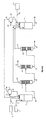
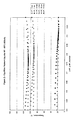
- FIGS. 1 to 3 illustrate respectively specific embodiments of the process for separating a mixture comprising at least one hydrofluoroalkane and hydrogen fluoride, the process for producing a hydrofluoroalkane and the azeotropic or pseudoazeotropic compositions according to the present invention.
- the Figure 1 illustrates the variant of the separation process according to the invention wherein the reaction between the hydrofluoroalkane / hydrogen fluoride mixture and the organic compound, in this case a chlorinated or chlorofluorinated precursor of the hydrofluoroalkane, is carried out in the absence of catalyst.
- the chlorinated or chlorofluorinated precursor of the hydrofluoroalkane from a reservoir (1) is introduced via a path (2) into a reactor (5).
- the hydrofluoroalkane / hydrogen fluoride mixture to be separated according to the invention from a reservoir (3) is introduced via a route (4) into the reactor (5).
- the hydrogen fluoride of the hydrofluoroalkane / hydrogen fluoride mixture reacts with the chlorinated or chlorofluorinated precursor of the hydrofluoroalkane to give a mixture of reaction products containing hydrofluoroalkane, hydrogen fluoride, and the like.
- the hydrogen chloride is withdrawn in gaseous form from the mixture of the other reaction products via the route (6), separated from the other reaction products possibly entrained in the separator (7), and withdrawn via the (8) channel. driven back to the reactor (5) via the channel (9).
- the mixture of the other reaction products is sent in liquid form, via the channel (10), in a distillation step (11).
- a mixture comprising hydrofluoroalkane and hydrogen fluoride which is optionally recycled to the reactor (5) via the channel (12).
- a mixture of products containing mainly hydrofluoroalkane, chlorofluorinated intermediates of the hydrofluoroalkane, optionally unreacted precursor and nonvolatile impurities is collected.
- the mixture of products containing mainly hydrofluoroalkane, chlorofluorinated intermediates of the hydrofluoroalkane, optionally unreacted precursor and nonvolatile impurities collected by the route (13) is introduced into the distillation (19).
- the essentially pure hydrofluoroalkane is collected.
- the bottom of the distillation (21) there is collected a mixture comprising hydrofluoroalkane, chlorofluorinated intermediates of the hydrofluoroalkane, non-volatile impurities and optionally unreacted precursor, which is sent in a third distillation (22).
- the product mixture collected at the top of the distillation (22) is sent to a catalytic reactor (25) via the channel (23).
- the mixture of hydrofluoroalkane and hydrogen fluoride collected at the top of the column (11) is also sent to the reactor (25) via the channel (26).
- the reactor (25), which contains a catalyst, is fed via the hydrogen fluoride pathway (28) from the reservoir (27).
- the hydrogen fluoride reacts with the products from the column (22).
- a hydrofluoroalkane / hydrogen fluoride and hydrogen chloride mixture is withdrawn from the reactor (25) in gaseous form via the channel (29) and introduced into a separator (30).
- the hydrofluoroalkane / hydrogen fluoride and hydrogen chloride mixture is sent via the path (31) to the reactor (5).
- the other reaction products return to the reactor (25) via the channel (32).
- the reactor (25) is provided with a purge (33).
- the conversion rate (TT) of 1,1,1,3,3-pentachlorobutane (PCBa) is the ratio, expressed in percent, of the amount of amount not converted at the end of the reaction and the amount used.
- Example 1 was conducted in an installation conforming to figure 1 .
- the results are shown in the table below.
- the conversion rate of 1,1,1,3,3-pentachlorobutane used varied from 94 to 100 mol%, respectively, between 1 h and 30 h of reaction.
- the HF / 1,1,1,3,3-pentafluorobutane molar ratio decreased from 6 to 1.8 mol / mol, respectively, between 1 h and 30 h reaction.
- the amounts of 1,1,1,3,3-pentafluorobutane (HFC-365mfc) and chlorofluorinated intermediates (HCFC-361, -362, -363 and -364) present in the reaction medium after the various samplings are also indicated.
- Example 2 In the same reactor as in Example 1, 5.0 moles of hydrogen fluoride and 0.053 moles of titanium tetrachloride were introduced. The reactor was then immersed in a thermostatic bath and maintained at a temperature of 135 ° C. with continuous stirring. The pressure was regulated at 25 bar. The reactor was fed continuously with 0.1mol / h of 1,1,1,3,3-pentachlorobutane and 1mol / h of hydrogen fluoride. The reactor was degassed continuously to maintain the level of the reaction mixture in the reactor substantially constant. The amount of 1,1,1,3,3-pentafluorobutane in the withdrawn gases corresponded to a yield relative to the amount of 1,1,1,3,3-pentachlorobutane used of 97%.
- the gases drawn off were a mixture of hydrogen fluoride / 1,1,1,3,3-pentafluorobutane in a molar ratio close to 5/1 which can advantageously be used in the separation process according to the invention.
- Examples 3 to 5 in the figure 3 represent the vapor / liquid equilibria of binary compositions of 1,1,1,3,3-pentafluorobutane and hydrogen fluoride at three different pressures.
- x HF means the molar proportion of hydrogen fluoride in the liquid phase
- y HF means the molar proportion of hydrogen fluoride in the gas phase.
- the data on which the curves are based were obtained by calculation using Aspen Plus ® software from Aspen Tech ® based on measured and calculated thermodynamic properties of 1,1,1,3,3-pentafluorobutane mixtures. and hydrogen fluoride.
- Example 3 is given by the curves corresponding to a pressure of 1 bar.
- Example 4 is given by the curves corresponding to a pressure of 10 bar.
- Example 5 is given by the curves corresponding to a pressure of 15 bar.
Landscapes
- Chemical & Material Sciences (AREA)
- Organic Chemistry (AREA)
- Inorganic Chemistry (AREA)
- Chemical Kinetics & Catalysis (AREA)
- Organic Low-Molecular-Weight Compounds And Preparation Thereof (AREA)
- Low-Molecular Organic Synthesis Reactions Using Catalysts (AREA)
- Catalysts (AREA)
Priority Applications (2)
| Application Number | Priority Date | Filing Date | Title |
|---|---|---|---|
| EP11153263A EP2368869A1 (fr) | 1998-12-18 | 1999-12-16 | Procédé catalytique de fabrication d'un hydrofluoroalcane |
| EP09158967A EP2078708A1 (fr) | 1998-12-18 | 1999-12-16 | Compositions azéotropiques, leur utilisation et procédés de synthèse d'un hydrofluoroalcane |
Applications Claiming Priority (3)
| Application Number | Priority Date | Filing Date | Title |
|---|---|---|---|
| BE9800910 | 1998-12-18 | ||
| BE9800910 | 1998-12-18 | ||
| PCT/EP1999/010173 WO2000037401A1 (fr) | 1998-12-18 | 1999-12-16 | Procede de separation d'un melange comprenant au moins un hydrofluoroalcane et du fluorure d'hydrogene, procedes de preparation d'un hydrofluoroalcane et compositions azeotropiques |
Related Child Applications (1)
| Application Number | Title | Priority Date | Filing Date |
|---|---|---|---|
| EP09158967A Division EP2078708A1 (fr) | 1998-12-18 | 1999-12-16 | Compositions azéotropiques, leur utilisation et procédés de synthèse d'un hydrofluoroalcane |
Publications (2)
| Publication Number | Publication Date |
|---|---|
| EP1140747A1 EP1140747A1 (fr) | 2001-10-10 |
| EP1140747B1 true EP1140747B1 (fr) | 2009-04-29 |
Family
ID=3891577
Family Applications (3)
| Application Number | Title | Priority Date | Filing Date |
|---|---|---|---|
| EP99967969A Expired - Lifetime EP1140747B1 (fr) | 1998-12-18 | 1999-12-16 | Procede de separation d'un melange comprenant au moins un hydrofluoroalcane et du fluorure d'hydrogene, et procede de preparation d'un hydrofluroalcane |
| EP09158967A Ceased EP2078708A1 (fr) | 1998-12-18 | 1999-12-16 | Compositions azéotropiques, leur utilisation et procédés de synthèse d'un hydrofluoroalcane |
| EP11153263A Withdrawn EP2368869A1 (fr) | 1998-12-18 | 1999-12-16 | Procédé catalytique de fabrication d'un hydrofluoroalcane |
Family Applications After (2)
| Application Number | Title | Priority Date | Filing Date |
|---|---|---|---|
| EP09158967A Ceased EP2078708A1 (fr) | 1998-12-18 | 1999-12-16 | Compositions azéotropiques, leur utilisation et procédés de synthèse d'un hydrofluoroalcane |
| EP11153263A Withdrawn EP2368869A1 (fr) | 1998-12-18 | 1999-12-16 | Procédé catalytique de fabrication d'un hydrofluoroalcane |
Country Status (19)
| Country | Link |
|---|---|
| US (4) | US6521803B1 (https=) |
| EP (3) | EP1140747B1 (https=) |
| JP (2) | JP4785251B2 (https=) |
| KR (1) | KR100684939B1 (https=) |
| CN (5) | CN101284758B (https=) |
| AR (1) | AR021727A1 (https=) |
| AT (1) | ATE430119T1 (https=) |
| AU (1) | AU769820B2 (https=) |
| BR (1) | BR9916345B1 (https=) |
| CA (1) | CA2355385C (https=) |
| CZ (1) | CZ303077B6 (https=) |
| DE (1) | DE69940828D1 (https=) |
| ES (1) | ES2325778T3 (https=) |
| HU (1) | HU227729B1 (https=) |
| PL (4) | PL208572B1 (https=) |
| RU (2) | RU2392260C2 (https=) |
| TW (1) | TW499407B (https=) |
| WO (1) | WO2000037401A1 (https=) |
| ZA (1) | ZA200104829B (https=) |
Families Citing this family (31)
| Publication number | Priority date | Publication date | Assignee | Title |
|---|---|---|---|---|
| CA2355385C (fr) * | 1998-12-18 | 2010-04-27 | Solvay (Societe Anonyme) | Procede de separation d'un melange comprenant au moins un hydrofluoroalcane et du fluorure d'hydrogene, procedes de preparation d'un hydrofluoroalcane et compositions azeotropiques |
| WO2002098529A1 (en) | 2001-06-01 | 2002-12-12 | Honeywell International, Inc. | Azeotrope-like compositions of 1,1,1,3,3-pentafluorobutane and hydrogen fluoride |
| US7094936B1 (en) * | 2001-07-20 | 2006-08-22 | Great Lakes Chemical Corporation | Process for preparing halogenated alkanes |
| US20030028057A1 (en) * | 2001-07-20 | 2003-02-06 | Stephen Owens | Methods and materials for the preparation and purification of halogenated hydrocarbons |
| FR2855069B1 (fr) * | 2003-05-22 | 2006-06-16 | Solvay | Procede pour la separation d'au moins un compose organique |
| US6988994B2 (en) * | 2003-08-14 | 2006-01-24 | New York University | Positive airway pressure system and method for treatment of sleeping disorder in patient |
| US8101219B2 (en) * | 2004-03-05 | 2012-01-24 | Eggology, Inc. | Apparatus for preparing egg products in a microwave oven |
| US7709438B2 (en) * | 2005-11-01 | 2010-05-04 | E. I. Du Pont De Nemours And Company | Azeotrope compositions comprising nonafluoropentene and hydrogen fluoride and uses thereof |
| US8766020B2 (en) * | 2008-07-31 | 2014-07-01 | Honeywell International Inc. | Process for producing 2,3,3,3-tetrafluoropropene |
| US20070106099A1 (en) * | 2005-11-10 | 2007-05-10 | Pcbu Services, Inc. | Production processes and systems |
| WO2008002500A1 (en) | 2006-06-27 | 2008-01-03 | E. I. Du Pont De Nemours And Company | Tetrafluoropropene production processes |
| US7803975B2 (en) * | 2006-07-13 | 2010-09-28 | E.I. Du Pont De Nemours And Company | Process for separating a fluoroolefin from HF by liquid-liquid extraction |
| US9040759B2 (en) * | 2007-07-06 | 2015-05-26 | Honeywell International Inc. | Preparation of fluorinated olefins via catalytic dehydrohalogenation of halogenated hydrocarbons |
| CN101952230B (zh) * | 2008-02-21 | 2015-07-22 | 纳幕尔杜邦公司 | 通过共沸蒸馏使2,3,3,3-四氟丙烯与氟化氢分离的方法 |
| WO2009105517A2 (en) * | 2008-02-21 | 2009-08-27 | E. I. Du Pont De Nemours And Company | Azeotrope compositions comprising 3,3,3-trifluoropropene and hydrogen fluoride and processes for separation thereof |
| KR102136117B1 (ko) * | 2008-02-21 | 2020-07-22 | 더 케무어스 컴퍼니 에프씨, 엘엘씨 | 공비 증류에 의한 플루오르화수소로부터의 1,3,3,3-테트라플루오로프로펜의 분리 방법 |
| US8410040B2 (en) * | 2008-10-31 | 2013-04-02 | Honeywell International Inc. | Azeotrope-like compositions of 1,1,1,2,3-pentachloropropane and hydrogen fluoride |
| US8008243B2 (en) * | 2008-10-31 | 2011-08-30 | Honeywell International Inc. | Azeotrope-like compositions of 1,1,2,3-tetrachloropropene and hydrogen fluoride |
| CN102227395A (zh) * | 2008-11-13 | 2011-10-26 | 苏威氟有限公司 | 氢氟烯烃、氢氟烯烃的制造以及使用氢氟烯烃的方法 |
| WO2010060868A1 (en) * | 2008-11-25 | 2010-06-03 | Solvay Fluor Gmbh | Process for the preparation of chlorofluoroalkenes |
| US8093441B2 (en) * | 2008-12-18 | 2012-01-10 | Exxonmobil Research And Engineering Company | Removal of light fluoroalkanes from hydrocarbon streams |
| US8075797B2 (en) * | 2009-01-29 | 2011-12-13 | Honeywell International Inc. | Azeotrope-like compositions of pentafluoropropane, chlorotrifluoropropene, and hydrogen fluoride |
| TW201103972A (en) | 2009-04-01 | 2011-02-01 | Solvay Fluor Gmbh | Process for the manufacture of etched items |
| EP2552877B1 (en) | 2010-04-02 | 2014-11-26 | Solvay Sa | Process for dehydrochlorination of hydrochlorofluoroalkanes |
| US8921622B2 (en) | 2010-04-02 | 2014-12-30 | Solvay Sa | Process for dehydrofluorinating hydrochlorofluoroalkanes and products obtained thereby |
| US8487155B2 (en) | 2010-12-07 | 2013-07-16 | Exxonmobil Research And Engineering Company | Removal of light fluoroalkanes from hydrocarbon streams |
| US8999909B2 (en) | 2012-02-23 | 2015-04-07 | Honeywell International Inc. | Azeotropic compositions of 1,1,1,3,3-pentachloropropane and hydrogen fluoride |
| CN111094503B (zh) * | 2017-09-11 | 2022-04-01 | 科慕埃弗西有限公司 | 包含氟化氢和含氟烃的共沸组合物 |
| CN110092707B (zh) * | 2018-01-30 | 2020-08-11 | 中昊晨光化工研究院有限公司 | 一种四氟乙烯生产过程中去除氟化氢的方法 |
| CN113939492B (zh) * | 2019-04-05 | 2024-05-17 | 科慕埃弗西有限公司 | 用于制备z-1,1,1,4,4,4-六氟丁-2-烯的方法以及用于制备其的中间体 |
| JP6958596B2 (ja) * | 2019-07-01 | 2021-11-02 | ダイキン工業株式会社 | アルカンの製造方法 |
Family Cites Families (25)
| Publication number | Priority date | Publication date | Assignee | Title |
|---|---|---|---|---|
| DE1443616C3 (de) * | 1963-11-13 | 1974-05-09 | Chemische Fabrik Von Heyden Gmbh, 8000 Muenchen | Verbessertes Verfahren zur Fluorierung und Polyfluorierung von Chlor enthaltenden niederen aliphatischen Halogenkohlenwasserstoffen |
| AU6647690A (en) | 1989-10-04 | 1991-04-28 | E.I. Du Pont De Nemours And Company | Fluorocarbon purification process |
| GB9007029D0 (en) * | 1990-03-29 | 1990-05-30 | Ici Plc | Chemical process |
| US5276225A (en) * | 1991-04-17 | 1994-01-04 | Elf Atochem S.A. | Process for separating hydrogen fluoride from its mixtures with 1,1,1-trifluoro-2-chloroethane |
| DE69319711T2 (de) * | 1992-04-13 | 1999-01-07 | Daikin Industries, Ltd., Osaka | Verfahren zur entfernung von fluorwasserstoff |
| IT1256631B (it) * | 1992-12-10 | 1995-12-12 | Ausimont Spa | Procedimento per la separazione di hf da sue miscele con gli idroclorofluorcarburi 123 e/o 124 |
| US5395997A (en) * | 1993-07-29 | 1995-03-07 | Alliedsignal Inc. | Process for the preparation of hydrofluorocarbons having 3 to 7 carbon atoms |
| RU2065430C1 (ru) * | 1994-05-26 | 1996-08-20 | Российский научный центр "Прикладная химия" | Способ получения 1,1,1,3,3-пентафторпропана |
| US5414165A (en) | 1994-07-29 | 1995-05-09 | E. I. Du Pont De Nemours And Company | Process for the manufacture of 1,1,1,3,3,3,-hexafluoropropane |
| FR2724167B1 (fr) | 1994-09-05 | 1996-11-29 | Solvay | Procede pour l'hydrofluoration de chloro (fluoro) butane |
| RU2126396C1 (ru) | 1994-09-14 | 1999-02-20 | Сагами Кемикал Рисерч Сентр | Производные эпоксициклогексана и регуляторы роста растений |
| FR2724928B1 (fr) * | 1994-09-26 | 1996-10-31 | Atochem Elf Sa | Synthese de 1,1,1,3,3-pentafluoropropane |
| KR100516407B1 (ko) * | 1995-08-01 | 2005-09-27 | 이.아이,듀우판드네모아앤드캄파니 | 할로카본의 제조 방법, 선택된 화합물 및 hf 함유 공비조성물 |
| US5616819A (en) * | 1995-08-28 | 1997-04-01 | Laroche Industries Inc. | Process for preparing fluorinated aliphatic compounds |
| CN1110449C (zh) | 1995-10-10 | 2003-06-04 | 英尼奥斯费罗控股有限公司 | 分离和回收氟化氢的方法以及制备含氟有机化合物的方法 |
| FR2740132B1 (fr) | 1995-10-23 | 1997-12-19 | Solvay | Procede pour la preparation de 1,1,1,3,3-pentafluoropropane |
| FR2744442B1 (fr) * | 1996-02-01 | 1998-02-27 | Atochem Elf Sa | Preparation du 1,1,1,3,3-pentachlorobutane et du 1,1,1,3,3,-pentafluorobutane |
| JP3831987B2 (ja) * | 1996-09-25 | 2006-10-11 | 旭硝子株式会社 | 1,1,1,3,3−ペンタフルオロプロパンの製造方法 |
| US6023004A (en) * | 1996-11-12 | 2000-02-08 | Alliedsignal, Inc. | Liquid phase catalytic fluorination of hydrochlorocarbon and hydrochlorofluorocarbon |
| FR2768727A1 (fr) * | 1997-09-23 | 1999-03-26 | Atochem Elf Sa | Synthese du 1,1,1,3,3-pentafluoropropane |
| FR2768717B1 (fr) * | 1997-09-24 | 1999-11-12 | Solvay | Procede de separation de fluorure d'hydrogene de ses melanges avec un hydrofluoroalcane contenant de 3 a 6 atomes de carbone |
| BE1011765A3 (fr) * | 1998-02-26 | 2000-01-11 | Solvay | Procede d'hydrofluoration d'hydrocarbures. |
| CA2355385C (fr) * | 1998-12-18 | 2010-04-27 | Solvay (Societe Anonyme) | Procede de separation d'un melange comprenant au moins un hydrofluoroalcane et du fluorure d'hydrogene, procedes de preparation d'un hydrofluoroalcane et compositions azeotropiques |
| FR2791976B1 (fr) * | 1999-03-24 | 2001-07-27 | Solvay | Compositions contenant du fluorure d'hydrogene et du 1,1,1,3,3-pentafluorobutane, procede pour la separation de melanges comprenant de telles compositions et procede pour la synthese de 1,1,1,3,3-pentafluorobutane |
| JP2002540089A (ja) * | 1999-03-24 | 2002-11-26 | ソルヴェイ | フッ化水素と1,1,1,3,3−ペンタフルオロブタンとの混合物からのフッ化水素の分離方法及び1,1,1,3,3−ペンタフルオロブタンの製造方法 |
-
1999
- 1999-12-16 CA CA2355385A patent/CA2355385C/fr not_active Expired - Fee Related
- 1999-12-16 RU RU2005122401/04A patent/RU2392260C2/ru not_active IP Right Cessation
- 1999-12-16 PL PL385267A patent/PL208572B1/pl unknown
- 1999-12-16 BR BRPI9916345-4A patent/BR9916345B1/pt not_active IP Right Cessation
- 1999-12-16 DE DE69940828T patent/DE69940828D1/de not_active Expired - Lifetime
- 1999-12-16 EP EP99967969A patent/EP1140747B1/fr not_active Expired - Lifetime
- 1999-12-16 EP EP09158967A patent/EP2078708A1/fr not_active Ceased
- 1999-12-16 RU RU2001119986/04A patent/RU2261856C2/ru not_active IP Right Cessation
- 1999-12-16 CN CN2008100854764A patent/CN101284758B/zh not_active Expired - Lifetime
- 1999-12-16 CN CNA2005100651304A patent/CN1680232A/zh active Pending
- 1999-12-16 AR ARP990106474A patent/AR021727A1/es not_active Application Discontinuation
- 1999-12-16 PL PL349391A patent/PL200329B1/pl unknown
- 1999-12-16 CN CN201510305450.6A patent/CN104987277A/zh active Pending
- 1999-12-16 WO PCT/EP1999/010173 patent/WO2000037401A1/fr not_active Ceased
- 1999-12-16 US US09/868,368 patent/US6521803B1/en not_active Expired - Lifetime
- 1999-12-16 AT AT99967969T patent/ATE430119T1/de not_active IP Right Cessation
- 1999-12-16 KR KR1020017007485A patent/KR100684939B1/ko not_active Expired - Fee Related
- 1999-12-16 AU AU24333/00A patent/AU769820B2/en not_active Ceased
- 1999-12-16 PL PL385268A patent/PL206502B1/pl unknown
- 1999-12-16 CN CNA2008100854779A patent/CN101284757A/zh active Pending
- 1999-12-16 JP JP2000589475A patent/JP4785251B2/ja not_active Expired - Fee Related
- 1999-12-16 CZ CZ20012215A patent/CZ303077B6/cs not_active IP Right Cessation
- 1999-12-16 HU HU0104672A patent/HU227729B1/hu not_active IP Right Cessation
- 1999-12-16 ES ES99967969T patent/ES2325778T3/es not_active Expired - Lifetime
- 1999-12-16 CN CNB998162469A patent/CN100387561C/zh not_active Ceased
- 1999-12-16 PL PL385266A patent/PL208571B1/pl unknown
- 1999-12-16 EP EP11153263A patent/EP2368869A1/fr not_active Withdrawn
- 1999-12-27 TW TW088123242A patent/TW499407B/zh not_active IP Right Cessation
-
2001
- 2001-06-13 ZA ZA200104829A patent/ZA200104829B/xx unknown
-
2002
- 2002-10-29 US US10/282,785 patent/US7074434B2/en not_active Expired - Fee Related
-
2006
- 2006-06-28 US US11/476,306 patent/US7223892B2/en not_active Expired - Fee Related
-
2007
- 2007-05-25 US US11/753,970 patent/US7566809B2/en not_active Expired - Fee Related
-
2009
- 2009-06-15 JP JP2009142392A patent/JP5144592B2/ja not_active Expired - Fee Related
Also Published As
Similar Documents
| Publication | Publication Date | Title |
|---|---|---|
| EP1140747B1 (fr) | Procede de separation d'un melange comprenant au moins un hydrofluoroalcane et du fluorure d'hydrogene, et procede de preparation d'un hydrofluroalcane | |
| CA2073533C (fr) | Procede pour la preparation de 1-chloro-1,1,3,3,3-pentafluoropropane et de 1,1,1,3,3,3-hexafluoropropane | |
| EP1056698B1 (fr) | Procede d'hydrofluoration d'hydrocarbures chlores | |
| EP0905085B1 (fr) | Procédé de séparation de fluorure d'hydrogène de ses mélanges avec un hydrofluoroalcane contenant de 3 à 6 atomes de carbone | |
| EP0699649B1 (fr) | Procédé pour l'hydrofluoration de chloro(fluoro)butane | |
| BE1007393A3 (fr) | Procede pour la preparation de 1-chloro-1-fluoroethane et/ou de 1,1-difluoroethane. | |
| BE1005095A3 (fr) | Procede pour la preparation de 1,1-dichloro-1,3,3,3-tetrafluoropropane. | |
| WO1991018852A1 (fr) | Procede de preparation de 1,1-dichloro-1-fluoroethane | |
| FR2733227A1 (fr) | Procede pour la preparation de 1,1-difluoroethane | |
| MXPA01006206A (en) | Method for separating a mixture comprising at least an hydrofluoroalkane and hydrogen fluoride, methods for preparing a hydrofluoroalkane and azeotropic compositions | |
| WO2018178552A1 (fr) | Procédé de production du 2,3,3,3-tetrafluoropropène |
Legal Events
| Date | Code | Title | Description |
|---|---|---|---|
| PUAI | Public reference made under article 153(3) epc to a published international application that has entered the european phase |
Free format text: ORIGINAL CODE: 0009012 |
|
| 17P | Request for examination filed |
Effective date: 20010718 |
|
| AK | Designated contracting states |
Kind code of ref document: A1 Designated state(s): AT BE CH CY DE DK ES FI FR GB GR IE IT LI LU MC NL PT SE |
|
| AX | Request for extension of the european patent |
Free format text: AL;LT;LV;MK;RO;SI |
|
| 17Q | First examination report despatched |
Effective date: 20030110 |
|
| RTI1 | Title (correction) |
Free format text: METHOD FOR SEPARATING A MIXTURE COMPRISING AT LEAST A HYDROFLUOROALKANE AND HYDROGEN FLUORIDE, AND PROCESS FOR PREPARING A HYDROFLUOROALKANE |
|
| GRAP | Despatch of communication of intention to grant a patent |
Free format text: ORIGINAL CODE: EPIDOSNIGR1 |
|
| GRAS | Grant fee paid |
Free format text: ORIGINAL CODE: EPIDOSNIGR3 |
|
| GRAA | (expected) grant |
Free format text: ORIGINAL CODE: 0009210 |
|
| AK | Designated contracting states |
Kind code of ref document: B1 Designated state(s): AT BE CH CY DE DK ES FI FR GB GR IE IT LI LU MC NL PT SE |
|
| REG | Reference to a national code |
Ref country code: GB Ref legal event code: FG4D Free format text: NOT ENGLISH |
|
| REG | Reference to a national code |
Ref country code: CH Ref legal event code: EP |
|
| REF | Corresponds to: |
Ref document number: 69940828 Country of ref document: DE Date of ref document: 20090610 Kind code of ref document: P |
|
| REG | Reference to a national code |
Ref country code: IE Ref legal event code: FG4D |
|
| REG | Reference to a national code |
Ref country code: ES Ref legal event code: FG2A Ref document number: 2325778 Country of ref document: ES Kind code of ref document: T3 |
|
| PG25 | Lapsed in a contracting state [announced via postgrant information from national office to epo] |
Ref country code: PT Free format text: LAPSE BECAUSE OF FAILURE TO SUBMIT A TRANSLATION OF THE DESCRIPTION OR TO PAY THE FEE WITHIN THE PRESCRIBED TIME-LIMIT Effective date: 20090829 Ref country code: FI Free format text: LAPSE BECAUSE OF FAILURE TO SUBMIT A TRANSLATION OF THE DESCRIPTION OR TO PAY THE FEE WITHIN THE PRESCRIBED TIME-LIMIT Effective date: 20090429 Ref country code: AT Free format text: LAPSE BECAUSE OF FAILURE TO SUBMIT A TRANSLATION OF THE DESCRIPTION OR TO PAY THE FEE WITHIN THE PRESCRIBED TIME-LIMIT Effective date: 20090429 |
|
| PG25 | Lapsed in a contracting state [announced via postgrant information from national office to epo] |
Ref country code: SE Free format text: LAPSE BECAUSE OF FAILURE TO SUBMIT A TRANSLATION OF THE DESCRIPTION OR TO PAY THE FEE WITHIN THE PRESCRIBED TIME-LIMIT Effective date: 20090729 |
|
| REG | Reference to a national code |
Ref country code: IE Ref legal event code: FD4D |
|
| PG25 | Lapsed in a contracting state [announced via postgrant information from national office to epo] |
Ref country code: IE Free format text: LAPSE BECAUSE OF FAILURE TO SUBMIT A TRANSLATION OF THE DESCRIPTION OR TO PAY THE FEE WITHIN THE PRESCRIBED TIME-LIMIT Effective date: 20090429 Ref country code: DK Free format text: LAPSE BECAUSE OF FAILURE TO SUBMIT A TRANSLATION OF THE DESCRIPTION OR TO PAY THE FEE WITHIN THE PRESCRIBED TIME-LIMIT Effective date: 20090429 |
|
| PLBE | No opposition filed within time limit |
Free format text: ORIGINAL CODE: 0009261 |
|
| STAA | Information on the status of an ep patent application or granted ep patent |
Free format text: STATUS: NO OPPOSITION FILED WITHIN TIME LIMIT |
|
| 26N | No opposition filed |
Effective date: 20100201 |
|
| PG25 | Lapsed in a contracting state [announced via postgrant information from national office to epo] |
Ref country code: MC Free format text: LAPSE BECAUSE OF NON-PAYMENT OF DUE FEES Effective date: 20100701 |
|
| REG | Reference to a national code |
Ref country code: CH Ref legal event code: PL |
|
| PG25 | Lapsed in a contracting state [announced via postgrant information from national office to epo] |
Ref country code: LI Free format text: LAPSE BECAUSE OF NON-PAYMENT OF DUE FEES Effective date: 20091231 Ref country code: GR Free format text: LAPSE BECAUSE OF FAILURE TO SUBMIT A TRANSLATION OF THE DESCRIPTION OR TO PAY THE FEE WITHIN THE PRESCRIBED TIME-LIMIT Effective date: 20090730 Ref country code: CH Free format text: LAPSE BECAUSE OF NON-PAYMENT OF DUE FEES Effective date: 20091231 |
|
| PG25 | Lapsed in a contracting state [announced via postgrant information from national office to epo] |
Ref country code: LU Free format text: LAPSE BECAUSE OF NON-PAYMENT OF DUE FEES Effective date: 20091216 |
|
| PG25 | Lapsed in a contracting state [announced via postgrant information from national office to epo] |
Ref country code: CY Free format text: LAPSE BECAUSE OF FAILURE TO SUBMIT A TRANSLATION OF THE DESCRIPTION OR TO PAY THE FEE WITHIN THE PRESCRIBED TIME-LIMIT Effective date: 20090429 |
|
| REG | Reference to a national code |
Ref country code: FR Ref legal event code: PLFP Year of fee payment: 17 |
|
| REG | Reference to a national code |
Ref country code: FR Ref legal event code: PLFP Year of fee payment: 18 |
|
| REG | Reference to a national code |
Ref country code: FR Ref legal event code: PLFP Year of fee payment: 19 |
|
| PGFP | Annual fee paid to national office [announced via postgrant information from national office to epo] |
Ref country code: NL Payment date: 20171115 Year of fee payment: 19 Ref country code: DE Payment date: 20171212 Year of fee payment: 19 Ref country code: FR Payment date: 20171113 Year of fee payment: 19 |
|
| PGFP | Annual fee paid to national office [announced via postgrant information from national office to epo] |
Ref country code: GB Payment date: 20171213 Year of fee payment: 19 Ref country code: BE Payment date: 20171113 Year of fee payment: 19 |
|
| PGFP | Annual fee paid to national office [announced via postgrant information from national office to epo] |
Ref country code: ES Payment date: 20180104 Year of fee payment: 19 |
|
| PGFP | Annual fee paid to national office [announced via postgrant information from national office to epo] |
Ref country code: IT Payment date: 20171221 Year of fee payment: 19 |
|
| REG | Reference to a national code |
Ref country code: DE Ref legal event code: R119 Ref document number: 69940828 Country of ref document: DE |
|
| REG | Reference to a national code |
Ref country code: NL Ref legal event code: MM Effective date: 20190101 |
|
| GBPC | Gb: european patent ceased through non-payment of renewal fee |
Effective date: 20181216 |
|
| PG25 | Lapsed in a contracting state [announced via postgrant information from national office to epo] |
Ref country code: NL Free format text: LAPSE BECAUSE OF NON-PAYMENT OF DUE FEES Effective date: 20190101 |
|
| REG | Reference to a national code |
Ref country code: BE Ref legal event code: MM Effective date: 20181231 |
|
| PG25 | Lapsed in a contracting state [announced via postgrant information from national office to epo] |
Ref country code: DE Free format text: LAPSE BECAUSE OF NON-PAYMENT OF DUE FEES Effective date: 20190702 Ref country code: IT Free format text: LAPSE BECAUSE OF NON-PAYMENT OF DUE FEES Effective date: 20181216 |
|
| PG25 | Lapsed in a contracting state [announced via postgrant information from national office to epo] |
Ref country code: BE Free format text: LAPSE BECAUSE OF NON-PAYMENT OF DUE FEES Effective date: 20181231 |
|
| PG25 | Lapsed in a contracting state [announced via postgrant information from national office to epo] |
Ref country code: GB Free format text: LAPSE BECAUSE OF NON-PAYMENT OF DUE FEES Effective date: 20181216 |
|
| REG | Reference to a national code |
Ref country code: ES Ref legal event code: FD2A Effective date: 20200203 |
|
| PG25 | Lapsed in a contracting state [announced via postgrant information from national office to epo] |
Ref country code: FR Free format text: LAPSE BECAUSE OF NON-PAYMENT OF DUE FEES Effective date: 20181231 |
|
| PG25 | Lapsed in a contracting state [announced via postgrant information from national office to epo] |
Ref country code: ES Free format text: LAPSE BECAUSE OF NON-PAYMENT OF DUE FEES Effective date: 20181217 |