EP1092999B1 - Zoom lens and photographing apparatus having the same - Google Patents
Zoom lens and photographing apparatus having the same Download PDFInfo
- Publication number
- EP1092999B1 EP1092999B1 EP00308465A EP00308465A EP1092999B1 EP 1092999 B1 EP1092999 B1 EP 1092999B1 EP 00308465 A EP00308465 A EP 00308465A EP 00308465 A EP00308465 A EP 00308465A EP 1092999 B1 EP1092999 B1 EP 1092999B1
- Authority
- EP
- European Patent Office
- Prior art keywords
- lens
- image
- subunit
- lens unit
- positive
- Prior art date
- Legal status (The legal status is an assumption and is not a legal conclusion. Google has not performed a legal analysis and makes no representation as to the accuracy of the status listed.)
- Expired - Lifetime
Links
- 230000003287 optical effect Effects 0.000 claims description 57
- 239000000463 material Substances 0.000 claims description 28
- 238000006243 chemical reaction Methods 0.000 claims description 8
- 239000004606 Fillers/Extenders Substances 0.000 claims description 6
- 230000004075 alteration Effects 0.000 description 124
- 238000010586 diagram Methods 0.000 description 36
- 230000000087 stabilizing effect Effects 0.000 description 26
- 238000010276 construction Methods 0.000 description 12
- 230000006641 stabilisation Effects 0.000 description 10
- 238000011105 stabilization Methods 0.000 description 10
- 206010010071 Coma Diseases 0.000 description 6
- 238000000926 separation method Methods 0.000 description 6
- 230000007246 mechanism Effects 0.000 description 5
- 238000000034 method Methods 0.000 description 5
- 230000008859 change Effects 0.000 description 4
- 230000004907 flux Effects 0.000 description 4
- 239000011521 glass Substances 0.000 description 4
- 201000009310 astigmatism Diseases 0.000 description 3
- 230000001133 acceleration Effects 0.000 description 2
- 239000000470 constituent Substances 0.000 description 2
- 230000009467 reduction Effects 0.000 description 2
- 230000008901 benefit Effects 0.000 description 1
- 230000006866 deterioration Effects 0.000 description 1
- 230000000694 effects Effects 0.000 description 1
- 238000003780 insertion Methods 0.000 description 1
- 230000037431 insertion Effects 0.000 description 1
- 230000004044 response Effects 0.000 description 1
Images




Classifications
-
- G—PHYSICS
- G02—OPTICS
- G02B—OPTICAL ELEMENTS, SYSTEMS OR APPARATUS
- G02B27/00—Optical systems or apparatus not provided for by any of the groups G02B1/00 - G02B26/00, G02B30/00
- G02B27/64—Imaging systems using optical elements for stabilisation of the lateral and angular position of the image
- G02B27/646—Imaging systems using optical elements for stabilisation of the lateral and angular position of the image compensating for small deviations, e.g. due to vibration or shake
-
- G—PHYSICS
- G02—OPTICS
- G02B—OPTICAL ELEMENTS, SYSTEMS OR APPARATUS
- G02B15/00—Optical objectives with means for varying the magnification
- G02B15/14—Optical objectives with means for varying the magnification by axial movement of one or more lenses or groups of lenses relative to the image plane for continuously varying the equivalent focal length of the objective
- G02B15/144—Optical objectives with means for varying the magnification by axial movement of one or more lenses or groups of lenses relative to the image plane for continuously varying the equivalent focal length of the objective having four groups only
- G02B15/1441—Optical objectives with means for varying the magnification by axial movement of one or more lenses or groups of lenses relative to the image plane for continuously varying the equivalent focal length of the objective having four groups only the first group being positive
- G02B15/144113—Optical objectives with means for varying the magnification by axial movement of one or more lenses or groups of lenses relative to the image plane for continuously varying the equivalent focal length of the objective having four groups only the first group being positive arranged +-++
-
- G—PHYSICS
- G02—OPTICS
- G02B—OPTICAL ELEMENTS, SYSTEMS OR APPARATUS
- G02B15/00—Optical objectives with means for varying the magnification
- G02B15/14—Optical objectives with means for varying the magnification by axial movement of one or more lenses or groups of lenses relative to the image plane for continuously varying the equivalent focal length of the objective
- G02B15/16—Optical objectives with means for varying the magnification by axial movement of one or more lenses or groups of lenses relative to the image plane for continuously varying the equivalent focal length of the objective with interdependent non-linearly related movements between one lens or lens group, and another lens or lens group
- G02B15/163—Optical objectives with means for varying the magnification by axial movement of one or more lenses or groups of lenses relative to the image plane for continuously varying the equivalent focal length of the objective with interdependent non-linearly related movements between one lens or lens group, and another lens or lens group having a first movable lens or lens group and a second movable lens or lens group, both in front of a fixed lens or lens group
- G02B15/167—Optical objectives with means for varying the magnification by axial movement of one or more lenses or groups of lenses relative to the image plane for continuously varying the equivalent focal length of the objective with interdependent non-linearly related movements between one lens or lens group, and another lens or lens group having a first movable lens or lens group and a second movable lens or lens group, both in front of a fixed lens or lens group having an additional fixed front lens or group of lenses
- G02B15/173—Optical objectives with means for varying the magnification by axial movement of one or more lenses or groups of lenses relative to the image plane for continuously varying the equivalent focal length of the objective with interdependent non-linearly related movements between one lens or lens group, and another lens or lens group having a first movable lens or lens group and a second movable lens or lens group, both in front of a fixed lens or lens group having an additional fixed front lens or group of lenses arranged +-+
Definitions
- the present invention relates to a zoom lens having an image stabilizing function, and, more particularly, to a zoom lens having an image stabilizing function, which is suited for a television camera, a photographic camera, a video camera or the like, and which has high optical performance over the entire range of variable magnification even during an image stabilizing operation in which a lens unit that is a part of the lens system is made to move in a direction perpendicular to the optical axis so as to correct an image shake caused by the vibration of the zoom lens for the purpose of obtaining a stationary image, with the construction of the zoom lens, such as the refractive power arrangement of the whole zoom lens and the arrangement of the moving lens units for the variation of magnification, appropriately set. Further, the present invention relates to a photographing apparatus having such a zoom lens.
- a zoom lens to be associated with the CCD is also required to have an almost uniform resolution from the center of an image plane to the periphery thereof.
- the zoom lens is required to have the various aberrations, such as coma, astigmatism and distortion, corrected well and to have high optical performance over the entire image plane.
- the zoom lens is required to have a large relative aperture, a wide angle of view and a high variable magnification ratio while being small in size and light in weight, and moreover to have a long back focal distance for enabling a color separation optical system and a variety of filters to be disposed in front of an image pickup means.
- Japanese Laid-Open Patent Application No. Hei 1-116619 Japanese Laid-Open Patent Application No. Hei 2-124521, etc.
- a method of obtaining a stationary image by detecting the vibration of a photographing system by means of an acceleration sensor or the like and causing a lens unit that is a part of the photographing system to shift in a direction perpendicular to the optical axis according to a signal obtained by the acceleration sensor or the like.
- a zoom lens comprising four lens units, i.e., in order from the object side, a first lens unit of positive refractive power, a second lens unit of negative refractive power, a third lens unit of positive refractive power and a fourth lens unit of positive refractive power, in which the fourth lens unit is composed of a front lens subunit of positive refractive power and a rear lens subunit of positive refractive power, and the shaking of a photographed image caused by the vibration of the zoom lens is corrected by moving the front lens subunit in a direction perpendicular to the optical axis.
- a zoom lens comprising five lens units, i.e., in order from the object side, a first lens unit of positive refractive power, a second lens unit of negative refractive power, a third lens unit of positive refractive power, a movable fourth lens unit of negative refractive power and a fifth lens unit of positive refractive power, in which all lens elements move axially during zooming, and in which the shaking of a photographed image caused by the vibration of the zoom lens is corrected by moving the fourth lens unit in a direction perpendicular to the optical axis.
- a telephoto-type zoom lens comprising four lens units, i.e., in order from the object side, first to fourth lens units of positive, negative, positive and positive refractive powers, respectively, in which the image stabilization is performed by moving the second lens unit in a direction perpendicular to the optical axis.
- a zoom lens comprising four lens units, i.e., in order from the object side, first to fourth lens units of negative, positive, negative and positive refractive powers, respectively, in which the image stabilization is performed by moving the third lens unit in a direction perpendicular to the optical axis.
- variable magnification optical system comprising four lens units, i.e., in order from the object side, first to fourth lens units of positive, negative, positive and positive refractive powers, respectively, in which the image stabilization is performed by moving the whole of the third lens unit in a direction perpendicular to the optical axis.
- the method of obtaining a stationary image by disposing an image stabilizing optical system in front of a photographing system and driving and controlling a movable lens unit that is a part of the image stabilizing optical system to prevent the shaking of a photographed image causes such a problem that the whole apparatus becomes large in size and a moving mechanism for moving the movable lens unit becomes complicated.
- the front lens subunit of positive refractive power serving as an image-stabilizing lens unit has a relatively large effective diameter, and, as a result, there is a tendency for the image-stabilizing lens unit to become large and heavy to increase the size of a driving mechanism for the image-stabilizing lens unit.
- the fourth lens unit is a lens unit arranged to move in the optical axis direction during the variation of magnification, there is a tendency for a driving control mechanism for the fourth lens unit to become complicated.
- the first lens subunit consists of one positive lens and one negative lens.
- the first lens subunit consists of one positive lens and two negative lenses.
- the fourth lens unit in the zoom lens, further has a second lens subunit of positive refractive power on the image side of the first lens subunit.
- the zoom lens in the zoom lens, the third lens unit is of positive refractive power, and the fourth lens unit consists of, in order from the object side to the image side, the first lens subunit of negative refractive power and the second lens subunit of positive refractive power.
- ⁇ p(4R) is, when the second lens subunit includes only one positive lens, an Abbe number of material of the positive lens included in the second lens subunit or, when the second lens subunit includes a plurality of positive lenses, a mean value of Abbe numbers of material of all the positive lenses included in the second lens subunit
- ⁇ n(4R) is, when the second lens subunit includes only one negative lens, an Abbe number of material of the negative lens included in the second lens subunit or, when the second lens subunit includes a plurality of negative lenses, a mean value of Abbe numbers of material of all the negative lenses included in the second lens subunit.
- an image forming magnification of the second lens unit varies within a range including -1 ⁇ during the variation of magnification
- an image forming magnification of the third lens unit varies within a range including -1 ⁇ during the variation of magnification, and the following conditions are satisfied: 5 ⁇ Z2 0.15 ⁇ Z2 / Z where Z2 is a rate of variation of lateral magnification of the second lens unit, and Z is a zoom ratio of the zoom lens.
- an extender conversion optical system for varying the focal length of the zoom lens is insertably and detachably disposed in a position on the image side of the first lens subunit.
- a photographing apparatus comprising a zoom lens according to claim 1.
- the amount of aberration ⁇ 'Y of the entire lens system occurring when a lens unit p that is a part of the photographic lens is parallel-decentered by a distance E becomes the sum of the amount of aberration ⁇ Y occurring before the parallel-decentering and the amount of decentering aberration ⁇ Y(E) produced by the parallel-decentering, as shown in the equation (a).
- the amount of decentering aberration ⁇ Y(E) is represented, as shown in the equation (b), by using primary decentering coma (IIE), primary decentering astigmatism (IIIE), primary decentering curvature of field (PE), primary decentering distortion (VE1), primary decentering surplus distortion (VE2) and primary original point shift ⁇ E.
- the various aberrations (IIE) to ( ⁇ E) shown in the equations (c) to (h) are represented by using aberration coefficients I p , II p , III p , P p and V p of the decentering lens unit and aberration coefficients I q , II q , III q , P q and V q of a lens system disposed on the image side of the decentering lens unit, where, when the focal length of the entire lens system is normalized to "1", an incidence angle and an exit angle of an on-axial marginal ray of light on and from the decentering lens unit are denoted by ⁇ p and ⁇ p ', respectively, and an incidence angle of a principal ray passing through the pupil center is denoted by ⁇ p .
- the amount of chromatic aberration ⁇ cYa of the entire lens system occurring when the lens unit p is parallel-decentered by the distance E becomes the sum of the amount of chromatic aberration ⁇ cY occurring before the parallel-decentering and the amount of decentering chromatic aberration ⁇ cY(E) produced by the parallel-decentering, as shown in the equation (i).
- the amount of chromatic aberration ⁇ cY occurring before the parallel-decentering and the amount of decentering chromatic aberration ⁇ cY(E) produced by the parallel-decentering can be expressed by using longitudinal chromatic aberration L, lateral chromatic aberration T and primary decentering chromatic aberration TE, as shown in the equations (j) and (k).
- the primary decentering chromatic aberration TE in the equation ( l ) can be expressed by using chromatic aberration coefficients L p and T p of the lens unit p and chromatic aberration coefficients L q and T q of the whole lens system disposed on the image side of the decentering lens unit.
- the one that represents the movement of an image caused by the decentering is the primary original point shift ( ⁇ E), and the ones that influence the image forming performance are the primary decentering coma (IIE), primary decentering astigmatism (IIIE), primary decentering curvature of field (PE) and primary decentering chromatic aberration (TE).
- IIE primary decentering coma
- IIIE primary decentering astigmatism
- PE primary decentering curvature of field
- TE primary decentering chromatic aberration
- the zoom lens having an image stabilizing function according to the invention is constructed with the above-mentioned points taken into consideration.
- Fig. 27A is a conceptual diagram of the zoom lens having an image stabilizing function.
- reference character F denotes a focusing lens unit (front lens unit), serving as a first lens unit, of positive refractive power.
- Reference character V denotes a variator, serving as a second lens unit, of negative refractive power for the variation of magnification.
- the variation of magnification from the wide-angle end to the telephoto end is effected by moving the variator V monotonically toward the image side along the optical axis.
- Reference character C denotes a compensator, serving as a third lens unit, of positive refractive power, which is arranged to move nonlinearly toward the object side along the optical axis so as to compensate for the shift of an image plane caused by the variation of magnification.
- the variator V and the compensator C constitute a magnification varying system.
- the compensator C may be of negative refractive power.
- Reference character SP denotes a stop
- reference character R denotes a stationary relay lens unit, serving as a fourth lens unit, of positive refractive power as a whole.
- the relay lens unit R is composed of a lens subunit 4F of negative refractive power and a lens subunit 4R of positive refractive power.
- an image point I' formed by the lens unit F through the lens unit C does not vary in position during the variation of magnification. Accordingly, taking into consideration the image forming relationship of the relay lens unit R only, the arrangement and the paraxial tracing value of the relay lens unit R are unvaried irrespective of the variation of magnification. Therefore, by disposing the image-stabilizing lens unit in a lens unit disposed on the image side of the magnification varying lens units and arranged to be stationary during the variation of magnification, it is possible to prevent the variation of the various decentering aberrations due to the variation of magnification.
- the lens subunit 4F of negative refractive power disposed on the object side of the lens subunit 4R of positive refractive power, or a lens unit that is a part of the lens subunit 4F it is possible to reduce the effective diameter of the image-stabilizing lens unit, thereby attaining the reduction in size and weight of the image-stabilizing lens unit and the reduction in size of the whole image stabilizing device.
- the zoom lens further has the following characteristic features, thereby obtaining the more advantageous effects.
- the zoom lens is made to satisfy the following condition (1): ⁇ ' - ⁇ ⁇ -0.45
- the increase of the amount of decentering E4s causes the amount of movement of the image-stabilizing lens unit to increase rapidly, and, in addition, the effective diameter of the image-stabilizing lens unit is increased in consideration of the decentering, so that the required driving force increases rapidly, resulting in an increase in size of the whole mechanism. Further, in association with the increase of the amount of decentering E4s, the occurrence of decentering aberration becomes large, so that the optical performance during the image stabilizing operation deteriorates.
- the image-stabilizing lens unit may be composed of one negative lens.
- the image-stabilizing lens unit is composed of at least one positive lens and at least one negative lens.
- the zoom lens is made to satisfy the following condition (2): ⁇ n(4S) - ⁇ p(4S) > 10 where ⁇ n(4S) is, when the image-stabilizing lens unit includes only one negative lens, an Abbe number of material of the negative lens included in the image-stabilizing lens unit or, when the image-stabilizing lens unit includes a plurality of negative lenses, a mean value of Abbe numbers of material of all the negative lenses included in the image-stabilizing lens unit, and ⁇ p(4S) is, when the image-stabilizing lens unit includes only one positive lens, an Abbe number of material of the positive lens included in the image-stabilizing lens unit or, when the image-stabilizing lens unit includes a plurality of positive lenses, a mean value of Abbe numbers of material of all the positive lenses included in the image-stabilizing lens unit.
- condition (2) If the condition (2) is not satisfied, it becomes difficult to control the various chromatic aberration coefficients of the image-stabilizing lens unit. Thus, it becomes difficult to correct decentering chromatic aberrations, so that the asymmetry of color becomes apt to occur during the image stabilizing operation.
- the lens subunit 4R disposed on the image side of the image-stabilizing lens unit is not made to be composed of at least one positive lens and at least one negative lens, it becomes difficult to control the various shared values of aberration coefficients.
- it becomes difficult to correct decentering aberrations so that the various decentering aberrations, such as decentering coma and decentering curvature of field, become apt to occur.
- the zoom lens is made to satisfy the following condition (3): ⁇ p(4R) - ⁇ n(4R) > 10 where ⁇ p(4R) is, when the lens subunit 4R includes only one positive lens, an Abbe number of material of the positive lens included in the lens subunit 4R or, when the lens subunit 4R includes a plurality of positive lenses, a mean value of Abbe numbers of material of all the positive lenses included in the lens subunit 4R, and ⁇ n(4R) is, when the lens subunit 4R includes only one negative lens, an Abbe number of material of the negative lens included in the lens subunit 4R or, when the lens subunit 4R includes a plurality of negative lenses, a mean value of Abbe numbers of material of all the negative lenses included in the lens subunit 4R.
- condition (3) If the condition (3) is not satisfied, it becomes difficult to control the various chromatic aberration coefficients of the lens subunit 4R disposed on the image side of the image-stabilizing lens unit. Thus, it becomes difficult to correct decentering chromatic aberrations of the image-stabilizing lens unit, so that the asymmetry of color becomes apt to occur during the image stabilizing operation.
- such a high zoom ratio as 40x or more is attained by effecting the variation of lateral magnification with the third lens unit as well as the second lens unit.
- an image forming magnification of the second lens unit varies within a range including -1 ⁇ during the variation of magnification
- an image forming magnification of the third lens unit varies within a range including -1 ⁇ during the variation of magnification, and the following conditions are satisfied: 5 ⁇ Z2 0.15 ⁇ Z2 / Z where Z2 is a rate of variation of lateral magnification of the second lens unit, and Z is a zoom ratio of the zoom lens.
- an optical system (4E) for shifting the range of variable magnification toward the telephoto side or the wide-angle side may be made to be located on the image side of the image-stabilizing lens unit by such a unit switching method as to detachably insert a lens unit, such as a built-in extender conversion optical system. In that instance, it is unnecessary to change the control of the image-stabilizing lens unit before and after the shift of the range of variable magnification.
- Fig. 27B is an optical conceptual diagram showing the zoom lens when the extender conversion optical system (focal-length conversion optical system) 4E is inserted in a position on the image side of the image-stabilizing lens unit. Since, as shown in Fig.
- the disposition of lens units on the object side of the image-stabilizing lens unit does not change before and after the shift of the focal length due to the insertion or detachment of the extender conversion optical system 4E, the amount of decentering E of the image-stabilizing lens unit required for obtaining a desired correction angle ⁇ also does not change, so that it is unnecessary to change the control of the image-stabilizing lens unit.
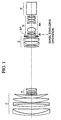
- Fig. 1 is a sectional view showing the construction of a zoom lens at the wide-angle end according to the numerical example 1 of the invention.
- reference character F denotes a focusing lens unit (front lens unit), serving as a first lens unit, of positive refractive power.
- Reference character V denotes a variator, serving as a second lens unit, of negative refractive power for the variation of magnification. The variation of magnification from the wide-angle end to the telephoto end is effected by moving the variator V monotonically toward the image side along the optical axis.
- Reference character C denotes a compensator, serving as a third lens unit, of positive refractive power, which is arranged to move nonlinearly toward the object side along the optical axis so as to compensate for the shift of an image plane caused by the variation of magnification.
- the variator V and the compensator C constitute a magnification varying system.
- Reference character SP denotes a stop
- reference character R denotes a stationary relay lens unit, serving as a fourth lens unit, of positive refractive power as a whole
- Reference character P denotes a color separation prism, an optical filter or the like, which is illustrated as a glass block in Fig. 1.
- the fourth lens unit is composed of a lens subunit 4F of negative refractive power and a lens subunit 4R of positive refractive power.
- the whole lens subunit 4F serves as the image-stabilizing lens unit, having the function of moving in a direction perpendicular to the optical axis for the purpose of stabilizing an image.
- the image-stabilizing lens unit is composed of one negative lens and one positive lens.
- a converted inclination angle of incidence of a light flux on the image-stabilizing lens unit is denoted by ⁇
- a converted inclination angle of exit of a light flux from the image-stabilizing lens unit 4S denoted by ⁇ '
- an Abbe number of material of the negative lens of the image-stabilizing lens unit is denoted by ⁇ n(4S)
- ⁇ p(4S) an Abbe number of material of the positive lens of the image-stabilizing lens unit
- the lens subunit 4R is composed of five positive lenses and three negative lenses.
- ⁇ p(4R) a mean value of Abbe numbers of material of the positive lenses of the lens subunit 4R
- ⁇ n(4R) a mean value of Abbe numbers of material of the negative lenses of the lens subunit 4R
- the rate of variation Z2 of lateral magnification of the second lens unit is 9.21, and the zoom ratio Z is 44.1, so that the above conditions (4) and (5) are satisfied.
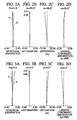
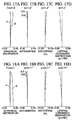
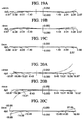
- Figs. 2A to 2D through Figs. 5A to 5D are aberration diagrams showing the various longitudinal aberrations at the wide-angle end, at the focal length f of 69.79 mm, at the focal length f of 257.37 mm and at the telephoto end, respectively, in the zoom lens according to the numerical example 1.
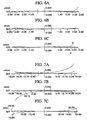
- Figs. 6A to 6C through Figs. 9A to 9C are aberration diagrams showing lateral aberrations, with the image height being 0 mm and ⁇ 4 mm, at the wide-angle end, at the focal length f of 69.79 mm, at the focal length f of 257.37 mm and at the telephoto end, respectively, in the zoom lens according to the numerical example 1.
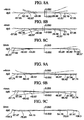
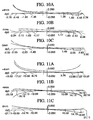
- Figs. 10A to 10C through Figs. 13A to 13C are aberration diagrams showing lateral aberrations, with the image height being 0 mm and ⁇ 4 mm, when the image stabilizing lens unit has shifted at the wide-angle end, at the focal length f of 69.79 mm, at the focal length f of 257.37 mm and at the telephoto end, respectively, in the zoom lens according to the numerical example 1.
- the image-stabilizing lens unit is composed of the whole lens subunit 4F
- this arrangement may be changed to such a construction that the lens subunit 4F, with the number of constituent lenses thereof increased, is divided into a plurality of lens units and a certain lens unit among the plurality of lens units is made to be the image-stabilizing lens unit.
- the refractive power arrangement of the entire lens system, the arrangement of the magnification varying lens units and the arrangement of the image-stabilizing lens unit in the fourth lens unit are appropriately set, and the lens construction of the image-stabilizing lens unit is also appropriately set. Accordingly, it is possible to obtain high optical performance over the entire range of variable magnification even during the image stabilizing operation.
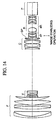
- Fig. 14 is a sectional view showing the construction of a zoom lens at the wide-angle end according to a numerical example 2 of the invention.
- reference character F denotes a focusing lens unit (front lens unit), serving as a first lens unit, of positive refractive power.
- Reference character V denotes a variator, serving as a second lens unit, of negative refractive power for the variation of magnification.
- the variation of magnification from the wide-angle end to the telephoto end is effected by moving the variator V monotonically toward the image side along the optical axis.
- Reference character C denotes a compensator, serving as a third lens unit, of positive refractive power, which is arranged to move nonlinearly toward the object side along the optical axis so as to compensate for the shift of an image plane caused by the variation of magnification.
- the variator V and the compensator C constitute a magnification varying system.
- Reference character SP denotes a stop
- reference character R denotes a stationary relay lens unit, serving as a fourth lens unit, of positive refractive power as a whole
- Reference character P denotes a color separation prism, an optical filter or the like, which is illustrated as a glass block in Fig. 14.
- the fourth lens unit is composed of a lens subunit 4F of negative refractive power and a lens subunit 4R of positive refractive power.
- the whole lens subunit 4F serves as the image-stabilizing lens unit, having the function of moving in a direction perpendicular to the optical axis for the purpose of stabilizing an image.
- the image-stabilizing lens unit is composed of two negative lenses and one positive lens.
- the lens subunit 4R is composed of five positive lenses and three negative lenses.
- a mean value of Abbe numbers of material of the positive lenses of the lens subunit 4R is denoted by ⁇ p(4R)
- a mean value of Abbe numbers of material of the negative lenses of the lens subunit 4R is denoted by vn(4R)
- the rate of variation Z2 of lateral magnification of the second lens unit is 9.21, and the zoom ratio Z is 44.1, so that the above conditions (4) and (5) are satisfied.
- Figs. 15A to 15D through Figs. 18A to 18D are aberration diagrams showing the various longitudinal aberrations at the wide-angle end, at the focal length f of 69.79 mm, at the focal length f of 257.37 mm and at the telephoto end, respectively, in the zoom lens according to the numerical example 2.
- Figs. 19A to 19C through Figs. 22A to 22C are aberration diagrams showing lateral aberrations, with the image height being 0 mm and ⁇ 4 mm, at the wide-angle end, at the focal length f of 69.79 mm, at the focal length f of 257.37 mm and at the telephoto end, respectively, in the zoom lens according to the numerical example 2.
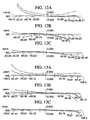
- Figs. 23A to 23C through Figs. 26A to 26C are aberration diagrams showing lateral aberrations, with the image height being 0 mm and ⁇ 4 mm, when the image stabilizing lens unit has shifted at the wide-angle end, at the focal length f of 69.79 mm, at the focal length f of 257.37 mm and at the telephoto end, respectively, in the zoom lens according to the numerical example 2.
- the image-stabilizing lens unit is composed of the whole lens subunit 4F
- this arrangement may be changed to such a construction that the lens subunit 4F, with the number of constituent lenses thereof increased, is divided into a plurality of lens units and a certain lens unit among the plurality of lens units is made to be the image-stabilizing lens unit.
- the refractive power arrangement of the entire lens system, the arrangement of the magnification varying lens units and the arrangement of the image-stabilizing lens unit in the fourth lens unit are appropriately set, and the lens construction of the image-stabilizing lens unit is also appropriately set. Accordingly, it is possible to obtain high optical performance over the entire range of variable magnification even during the image stabilizing operation.
- ri is the radius of curvature of the i-th lens surface, when counted from the object side
- di is the i-th lens thickness or air separation, when counted from the object side
- ni and ⁇ i are respectively the refractive index and Abbe number of glass of the i-th lens element, when counted from the object side.
- the last two lens surfaces constitute a glass block, such as a face plate or a filter.
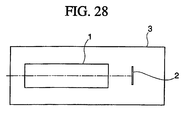
- Fig. 28 is a schematic diagram showing the photographing apparatus.
- reference numeral 1 denotes a photographing optical system using a zoom lens according to the embodiment of the invention
- reference numeral 2 denotes a photoelectric conversion means such as a CCD
- reference numeral 3 denotes a photographing apparatus body (casing).
- a zoom lens having an image stabilizing function suited for the so-called four-unit zoom lens in which the shaking of a photographed image is corrected by driving a lens unit that is a part of the zoom lens to decenter in a direction perpendicular to the optical axis, and each lens element of the zoom lens is appropriately set to reduce the size of the image-stabilizing lens unit and to correct well the various aberrations and decentering aberration.
- the refractive power arrangement of the entire lens system, the arrangement of the magnification varying lens units and the arrangement of the fourth lens unit are appropriately set. Accordingly, it is possible to attain a zoom lens having an image stabilizing function with the whole mechanism therefor reduced in size and weight and having high optical performance over the entire range of variable magnification even during the image stabilizing operation.
Landscapes
- Physics & Mathematics (AREA)
- General Physics & Mathematics (AREA)
- Optics & Photonics (AREA)
- Nonlinear Science (AREA)
- Lenses (AREA)
- Adjustment Of Camera Lenses (AREA)
Applications Claiming Priority (2)
| Application Number | Priority Date | Filing Date | Title |
|---|---|---|---|
| JP27459699A JP3564014B2 (ja) | 1999-09-28 | 1999-09-28 | 防振機能を有したズームレンズ及びそれを有するテレビカメラ |
| JP27459699 | 1999-09-28 |
Publications (3)
| Publication Number | Publication Date |
|---|---|
| EP1092999A2 EP1092999A2 (en) | 2001-04-18 |
| EP1092999A3 EP1092999A3 (en) | 2003-09-17 |
| EP1092999B1 true EP1092999B1 (en) | 2005-06-15 |
Family
ID=17543953
Family Applications (1)
| Application Number | Title | Priority Date | Filing Date |
|---|---|---|---|
| EP00308465A Expired - Lifetime EP1092999B1 (en) | 1999-09-28 | 2000-09-27 | Zoom lens and photographing apparatus having the same |
Country Status (4)
| Country | Link |
|---|---|
| US (1) | US6989942B1 (enExample) |
| EP (1) | EP1092999B1 (enExample) |
| JP (1) | JP3564014B2 (enExample) |
| DE (1) | DE60020787T2 (enExample) |
Families Citing this family (19)
| Publication number | Priority date | Publication date | Assignee | Title |
|---|---|---|---|---|
| JP2005141056A (ja) * | 2003-11-07 | 2005-06-02 | Canon Inc | ズームレンズ |
| US7158315B2 (en) * | 2004-03-30 | 2007-01-02 | Nikon Corporation | Zoom lens system |
| JP4557585B2 (ja) | 2004-03-31 | 2010-10-06 | キヤノン株式会社 | ズームレンズおよび撮影システム |
| JP4585794B2 (ja) * | 2004-05-31 | 2010-11-24 | キヤノン株式会社 | ズームレンズ及びそれを有する撮像装置 |
| JP4865239B2 (ja) * | 2005-02-21 | 2012-02-01 | キヤノン株式会社 | ズームレンズ及びそれを有する撮像装置 |
| JP4143933B2 (ja) * | 2005-03-29 | 2008-09-03 | ソニー株式会社 | ズームレンズ及び撮像装置 |
| JP4982786B2 (ja) | 2006-03-28 | 2012-07-25 | コニカミノルタアドバンストレイヤー株式会社 | 撮像光学系および撮像装置 |
| US8730584B2 (en) * | 2008-07-15 | 2014-05-20 | Nikon Corporation | Variable magnification optical system, optical apparatus provided with same and method for variable magnification using variable magnification optical system |
| JP5489480B2 (ja) * | 2009-01-30 | 2014-05-14 | キヤノン株式会社 | ズームレンズ及びそれを有する撮像装置 |
| US8416506B2 (en) * | 2009-02-20 | 2013-04-09 | Nikon Corporation | Zoom lens, optical apparatus equipped therewith and method for manufacturing the zoom lens |
| JP5455403B2 (ja) * | 2009-03-18 | 2014-03-26 | キヤノン株式会社 | ズームレンズ及びそれを有する撮像装置 |
| US8339713B2 (en) * | 2009-11-04 | 2012-12-25 | Nikon Corporation | Zoom optical system, optical apparatus and method for manufacturing zoom optical system |
| JP5409841B2 (ja) * | 2012-05-17 | 2014-02-05 | キヤノン株式会社 | 光学系及びそれを有する撮像装置 |
| CN104769478B (zh) | 2012-11-08 | 2017-04-05 | 富士胶片株式会社 | 变焦透镜以及摄像装置 |
| WO2015162883A1 (ja) | 2014-04-21 | 2015-10-29 | 株式会社ニコン | 変倍光学系、光学機器及び変倍光学系の製造方法 |
| JP6446821B2 (ja) * | 2014-04-21 | 2019-01-09 | 株式会社ニコン | 変倍光学系及び光学機器 |
| JP6463250B2 (ja) | 2015-10-20 | 2019-01-30 | キヤノン株式会社 | ズームレンズ及びそれを有する撮像装置 |
| JP6695293B2 (ja) * | 2017-03-07 | 2020-05-20 | 富士フイルム株式会社 | ズームレンズおよび撮像装置 |
| CN117031716B (zh) * | 2023-02-03 | 2024-03-12 | 东莞市宇瞳光学科技股份有限公司 | 一种变焦镜头 |
Family Cites Families (32)
| Publication number | Priority date | Publication date | Assignee | Title |
|---|---|---|---|---|
| DE2533825C3 (de) * | 1975-07-29 | 1979-02-01 | Jos. Schneider & Co, Optische Werke, 6550 Bad Kreuznach | Entfernungseinstellung bei Objektiven mit veränderbarer Brennweite |
| JPS6079319A (ja) * | 1983-10-06 | 1985-05-07 | Canon Inc | 高変倍ズ−ムレンズ |
| JP2502282B2 (ja) | 1985-03-29 | 1996-05-29 | キヤノン株式会社 | 防振光学系 |
| JP2535969B2 (ja) | 1987-10-30 | 1996-09-18 | キヤノン株式会社 | 防振機能を有した変倍光学系 |
| US5270857A (en) | 1987-10-30 | 1993-12-14 | Canon Kabushiki Kaisha | Optical system for stabilizing an image |
| JP2816714B2 (ja) | 1988-07-28 | 1998-10-27 | 旭光学工業株式会社 | 振動補償ズームレンズ |
| US5039211A (en) | 1988-07-28 | 1991-08-13 | Asahi Kogaku Kogyo Kabushiki Kaisha | Zoom lens capable of image blur compensation |
| US5097360A (en) | 1988-10-07 | 1992-03-17 | Canon Kabushiki Kaisha | Zoom lens capable of changing a range of variable focal length |
| JP3003370B2 (ja) | 1992-02-18 | 2000-01-24 | キヤノン株式会社 | 防振機能を有した変倍光学系 |
| JP3102200B2 (ja) * | 1993-03-31 | 2000-10-23 | キヤノン株式会社 | ズームレンズ |
| JPH0727975A (ja) * | 1993-07-12 | 1995-01-31 | Nikon Corp | 防振機能を備えたリアコンバージョンレンズ |
| JP3371917B2 (ja) | 1993-07-12 | 2003-01-27 | 株式会社ニコン | 防振機能を備えたズームレンズ |
| JPH0792431A (ja) | 1993-09-22 | 1995-04-07 | Nikon Corp | 防振機能を備えたズームレンズ |
| JPH07152002A (ja) | 1993-11-29 | 1995-06-16 | Nikon Corp | 防振機能を備えたズームレンズ |
| JPH07199124A (ja) | 1993-12-28 | 1995-08-04 | Nikon Corp | 防振機能を備えたズームレンズ |
| US5790316A (en) * | 1994-04-26 | 1998-08-04 | Canon Kabushiki Kaisha | Zoom lens |
| JPH0829738A (ja) | 1994-07-18 | 1996-02-02 | Nikon Corp | 防振ズームレンズ |
| US5694253A (en) * | 1995-02-02 | 1997-12-02 | Nikon Corporation | High zoom ratio zoom lens |
| JP3412964B2 (ja) * | 1995-05-10 | 2003-06-03 | キヤノン株式会社 | 防振機能を有した光学系 |
| JP3708995B2 (ja) * | 1995-09-20 | 2005-10-19 | ペンタックス株式会社 | ズームレンズ |
| US5781348A (en) | 1995-09-26 | 1998-07-14 | Nikon Corporation | Zoom lens system |
| US6104432A (en) * | 1995-11-10 | 2000-08-15 | Sony Corporation | Compact image pickup lens system for a video camera |
| JP3651996B2 (ja) | 1996-01-12 | 2005-05-25 | キヤノン株式会社 | フランジバック調整方法及びそれを用いた撮影レンズ |
| JPH09329744A (ja) | 1996-06-07 | 1997-12-22 | Nikon Corp | 撮像サイズ変換光学系 |
| JPH1062686A (ja) * | 1996-08-19 | 1998-03-06 | Fuji Photo Optical Co Ltd | インナーフォーカシングタイプのズームレンズ |
| US6025962A (en) | 1996-09-12 | 2000-02-15 | Nikon Corporation | Zoom lens with an anti-vibration function |
| JPH1090601A (ja) | 1996-09-12 | 1998-04-10 | Nikon Corp | 防振機能を備えたズームレンズ |
| US6473231B2 (en) * | 1997-03-18 | 2002-10-29 | Canon Kabushiki Kaisha | Variable magnification optical system having image stabilizing function |
| US6225614B1 (en) * | 1997-08-29 | 2001-05-01 | Nikon Corporation | Lens barrel and motion compensation device having a motion compensation optical system position detection unit |
| JPH11237551A (ja) * | 1997-12-18 | 1999-08-31 | Matsushita Electric Ind Co Ltd | ズームレンズ及びそれを用いたビデオカメラ |
| JP3557344B2 (ja) * | 1998-04-28 | 2004-08-25 | 松下電器産業株式会社 | ズームレンズ |
| US6560016B2 (en) * | 2000-03-31 | 2003-05-06 | Canon Kabushiki Kaisha | Zoom lens and photographing apparatus using the same |
-
1999
- 1999-09-28 JP JP27459699A patent/JP3564014B2/ja not_active Expired - Fee Related
-
2000
- 2000-09-26 US US09/669,664 patent/US6989942B1/en not_active Expired - Fee Related
- 2000-09-27 EP EP00308465A patent/EP1092999B1/en not_active Expired - Lifetime
- 2000-09-27 DE DE60020787T patent/DE60020787T2/de not_active Expired - Lifetime
Also Published As
| Publication number | Publication date |
|---|---|
| DE60020787D1 (de) | 2005-07-21 |
| JP2001100099A (ja) | 2001-04-13 |
| EP1092999A3 (en) | 2003-09-17 |
| US6989942B1 (en) | 2006-01-24 |
| EP1092999A2 (en) | 2001-04-18 |
| JP3564014B2 (ja) | 2004-09-08 |
| DE60020787T2 (de) | 2006-05-11 |
Similar Documents
| Publication | Publication Date | Title |
|---|---|---|
| EP1092999B1 (en) | Zoom lens and photographing apparatus having the same | |
| JP3376177B2 (ja) | ズームレンズ | |
| JP3486560B2 (ja) | ズームレンズ | |
| US7190520B2 (en) | Zoom lens system and imaging apparatus having the same | |
| US6646804B2 (en) | Zoom lens system and optical apparatus using the same | |
| JP5072474B2 (ja) | ズームレンズ及びそれを有する撮像装置 | |
| EP2026113B1 (en) | Zoom lens of the telephoto type having four lens groups | |
| JP5006575B2 (ja) | ズームレンズ及びそれを用いた撮像装置 | |
| JP2988164B2 (ja) | リヤーフォーカス式のズームレンズ | |
| EP1220001B1 (en) | Zoom lens and photographing system | |
| JPH06242378A (ja) | ズームレンズ | |
| US5097360A (en) | Zoom lens capable of changing a range of variable focal length | |
| EP1148369B1 (en) | Zoom lens and photographing apparatus using the same | |
| JP3102200B2 (ja) | ズームレンズ | |
| JP4612795B2 (ja) | ズームレンズ及びそれを用いた撮像装置 | |
| JP4545849B2 (ja) | 変倍光学系 | |
| US20050099699A1 (en) | Zoom lens and image-taking system | |
| JP4630578B2 (ja) | ズームレンズ及びそれを有する撮像装置 | |
| JP2009198656A (ja) | ズームレンズ及びそれを有する撮像装置 | |
| JP3144059B2 (ja) | リヤーフォーカス式のズームレンズ | |
| JP4865218B2 (ja) | ズームレンズ及びそれを有する撮像装置 | |
| JP4944495B2 (ja) | ズームレンズ及びそれを用いた撮像装置 | |
| US5995296A (en) | Zoom lens | |
| JPH06250086A (ja) | ズームレンズ | |
| EP0967506B1 (en) | Zoom lens |
Legal Events
| Date | Code | Title | Description |
|---|---|---|---|
| PUAI | Public reference made under article 153(3) epc to a published international application that has entered the european phase |
Free format text: ORIGINAL CODE: 0009012 |
|
| AK | Designated contracting states |
Kind code of ref document: A2 Designated state(s): AT BE CH CY DE DK ES FI FR GB GR IE IT LI LU MC NL PT SE |
|
| AX | Request for extension of the european patent |
Free format text: AL;LT;LV;MK;RO;SI |
|
| PUAL | Search report despatched |
Free format text: ORIGINAL CODE: 0009013 |
|
| AK | Designated contracting states |
Kind code of ref document: A3 Designated state(s): AT BE CH CY DE DK ES FI FR GB GR IE IT LI LU MC NL PT SE |
|
| AX | Request for extension of the european patent |
Extension state: AL LT LV MK RO SI |
|
| RIC1 | Information provided on ipc code assigned before grant |
Ipc: 7G 02B 15/173 A Ipc: 7G 02B 27/64 B |
|
| 17P | Request for examination filed |
Effective date: 20040206 |
|
| 17Q | First examination report despatched |
Effective date: 20040305 |
|
| AKX | Designation fees paid |
Designated state(s): DE FR GB |
|
| GRAP | Despatch of communication of intention to grant a patent |
Free format text: ORIGINAL CODE: EPIDOSNIGR1 |
|
| GRAS | Grant fee paid |
Free format text: ORIGINAL CODE: EPIDOSNIGR3 |
|
| GRAA | (expected) grant |
Free format text: ORIGINAL CODE: 0009210 |
|
| AK | Designated contracting states |
Kind code of ref document: B1 Designated state(s): DE FR GB |
|
| REG | Reference to a national code |
Ref country code: GB Ref legal event code: FG4D |
|
| REF | Corresponds to: |
Ref document number: 60020787 Country of ref document: DE Date of ref document: 20050721 Kind code of ref document: P |
|
| ET | Fr: translation filed | ||
| PLBE | No opposition filed within time limit |
Free format text: ORIGINAL CODE: 0009261 |
|
| STAA | Information on the status of an ep patent application or granted ep patent |
Free format text: STATUS: NO OPPOSITION FILED WITHIN TIME LIMIT |
|
| 26N | No opposition filed |
Effective date: 20060316 |
|
| REG | Reference to a national code |
Ref country code: FR Ref legal event code: PLFP Year of fee payment: 17 |
|
| PGFP | Annual fee paid to national office [announced via postgrant information from national office to epo] |
Ref country code: DE Payment date: 20160930 Year of fee payment: 17 Ref country code: GB Payment date: 20160914 Year of fee payment: 17 |
|
| PGFP | Annual fee paid to national office [announced via postgrant information from national office to epo] |
Ref country code: FR Payment date: 20160926 Year of fee payment: 17 |
|
| REG | Reference to a national code |
Ref country code: DE Ref legal event code: R119 Ref document number: 60020787 Country of ref document: DE |
|
| GBPC | Gb: european patent ceased through non-payment of renewal fee |
Effective date: 20170927 |
|
| REG | Reference to a national code |
Ref country code: FR Ref legal event code: ST Effective date: 20180531 |
|
| PG25 | Lapsed in a contracting state [announced via postgrant information from national office to epo] |
Ref country code: DE Free format text: LAPSE BECAUSE OF NON-PAYMENT OF DUE FEES Effective date: 20180404 Ref country code: GB Free format text: LAPSE BECAUSE OF NON-PAYMENT OF DUE FEES Effective date: 20170927 |
|
| PG25 | Lapsed in a contracting state [announced via postgrant information from national office to epo] |
Ref country code: FR Free format text: LAPSE BECAUSE OF NON-PAYMENT OF DUE FEES Effective date: 20171002 |