EP0975697B1 - Thiazin-indigo pigmente, diese enthaltende feste lösungen und ihre herstellung - Google Patents
Thiazin-indigo pigmente, diese enthaltende feste lösungen und ihre herstellung Download PDFInfo
- Publication number
- EP0975697B1 EP0975697B1 EP98900634A EP98900634A EP0975697B1 EP 0975697 B1 EP0975697 B1 EP 0975697B1 EP 98900634 A EP98900634 A EP 98900634A EP 98900634 A EP98900634 A EP 98900634A EP 0975697 B1 EP0975697 B1 EP 0975697B1
- Authority
- EP
- European Patent Office
- Prior art keywords
- formula
- mixture
- pigment
- group
- hydrogen
- Prior art date
- Legal status (The legal status is an assumption and is not a legal conclusion. Google has not performed a legal analysis and makes no representation as to the accuracy of the status listed.)
- Expired - Lifetime
Links
- 239000000049 pigment Substances 0.000 title claims description 100
- 229940097275 indigo Drugs 0.000 title claims description 61
- 235000000177 Indigofera tinctoria Nutrition 0.000 title claims description 24
- COHYTHOBJLSHDF-UHFFFAOYSA-N indigo powder Natural products N1C2=CC=CC=C2C(=O)C1=C1C(=O)C2=CC=CC=C2N1 COHYTHOBJLSHDF-UHFFFAOYSA-N 0.000 title claims description 24
- AGIJRRREJXSQJR-UHFFFAOYSA-N 2h-thiazine Chemical compound N1SC=CC=C1 AGIJRRREJXSQJR-UHFFFAOYSA-N 0.000 title claims description 19
- 239000006104 solid solution Substances 0.000 title claims description 16
- 238000002360 preparation method Methods 0.000 title description 9
- ZMXDDKWLCZADIW-UHFFFAOYSA-N N,N-Dimethylformamide Chemical group CN(C)C=O ZMXDDKWLCZADIW-UHFFFAOYSA-N 0.000 claims description 93
- 239000000203 mixture Substances 0.000 claims description 48
- QTBSBXVTEAMEQO-UHFFFAOYSA-N Acetic acid Chemical compound CC(O)=O QTBSBXVTEAMEQO-UHFFFAOYSA-N 0.000 claims description 39
- 238000000034 method Methods 0.000 claims description 28
- 239000001257 hydrogen Substances 0.000 claims description 22
- 229910052739 hydrogen Inorganic materials 0.000 claims description 22
- 150000001875 compounds Chemical class 0.000 claims description 21
- 229910052736 halogen Inorganic materials 0.000 claims description 17
- 150000002367 halogens Chemical class 0.000 claims description 17
- 150000002431 hydrogen Chemical class 0.000 claims description 17
- 125000001997 phenyl group Chemical group [H]C1=C([H])C([H])=C(*)C([H])=C1[H] 0.000 claims description 17
- 229910052757 nitrogen Inorganic materials 0.000 claims description 15
- 125000004178 (C1-C4) alkyl group Chemical group 0.000 claims description 13
- 125000000229 (C1-C4)alkoxy group Chemical group 0.000 claims description 10
- 239000002253 acid Substances 0.000 claims description 10
- 150000002148 esters Chemical class 0.000 claims description 10
- -1 phenoxy, phenyl Chemical group 0.000 claims description 10
- 238000006243 chemical reaction Methods 0.000 claims description 9
- 239000000460 chlorine Substances 0.000 claims description 9
- 239000002904 solvent Substances 0.000 claims description 9
- 150000001732 carboxylic acid derivatives Chemical class 0.000 claims description 8
- 239000003880 polar aprotic solvent Substances 0.000 claims description 8
- 125000004429 atom Chemical group 0.000 claims description 6
- 229910052794 bromium Inorganic materials 0.000 claims description 6
- 229910052801 chlorine Inorganic materials 0.000 claims description 6
- 125000004093 cyano group Chemical group *C#N 0.000 claims description 6
- ZFTFAPZRGNKQPU-UHFFFAOYSA-N dicarbonic acid Chemical compound OC(=O)OC(O)=O ZFTFAPZRGNKQPU-UHFFFAOYSA-N 0.000 claims description 6
- 125000000623 heterocyclic group Chemical group 0.000 claims description 6
- 125000001424 substituent group Chemical group 0.000 claims description 6
- 125000003545 alkoxy group Chemical group 0.000 claims description 5
- 229910052731 fluorine Inorganic materials 0.000 claims description 5
- 239000000976 ink Substances 0.000 claims description 5
- 239000008247 solid mixture Substances 0.000 claims description 5
- 239000000758 substrate Substances 0.000 claims description 5
- BVKZGUZCCUSVTD-UHFFFAOYSA-L Carbonate Chemical compound [O-]C([O-])=O BVKZGUZCCUSVTD-UHFFFAOYSA-L 0.000 claims description 4
- NRCMAYZCPIVABH-UHFFFAOYSA-N Quinacridone Chemical compound N1C2=CC=CC=C2C(=O)C2=C1C=C1C(=O)C3=CC=CC=C3NC1=C2 NRCMAYZCPIVABH-UHFFFAOYSA-N 0.000 claims description 4
- 125000003118 aryl group Chemical group 0.000 claims description 4
- 150000001540 azides Chemical class 0.000 claims description 4
- 239000003054 catalyst Substances 0.000 claims description 4
- 239000000835 fiber Substances 0.000 claims description 4
- WKBOTKDWSSQWDR-UHFFFAOYSA-N Bromine atom Chemical compound [Br] WKBOTKDWSSQWDR-UHFFFAOYSA-N 0.000 claims description 3
- ZAMOUSCENKQFHK-UHFFFAOYSA-N Chlorine atom Chemical compound [Cl] ZAMOUSCENKQFHK-UHFFFAOYSA-N 0.000 claims description 3
- PXGOKWXKJXAPGV-UHFFFAOYSA-N Fluorine Chemical compound FF PXGOKWXKJXAPGV-UHFFFAOYSA-N 0.000 claims description 3
- UFHFLCQGNIYNRP-UHFFFAOYSA-N Hydrogen Chemical compound [H][H] UFHFLCQGNIYNRP-UHFFFAOYSA-N 0.000 claims description 3
- 230000015572 biosynthetic process Effects 0.000 claims description 3
- GDTBXPJZTBHREO-UHFFFAOYSA-N bromine Substances BrBr GDTBXPJZTBHREO-UHFFFAOYSA-N 0.000 claims description 3
- 125000004432 carbon atom Chemical group C* 0.000 claims description 3
- 239000011737 fluorine Substances 0.000 claims description 3
- 239000003960 organic solvent Substances 0.000 claims description 3
- 125000000951 phenoxy group Chemical group [H]C1=C([H])C([H])=C(O*)C([H])=C1[H] 0.000 claims description 3
- FYNROBRQIVCIQF-UHFFFAOYSA-N pyrrolo[3,2-b]pyrrole-5,6-dione Chemical compound C1=CN=C2C(=O)C(=O)N=C21 FYNROBRQIVCIQF-UHFFFAOYSA-N 0.000 claims description 3
- 238000006467 substitution reaction Methods 0.000 claims description 3
- 229920001059 synthetic polymer Polymers 0.000 claims description 3
- 229920003002 synthetic resin Polymers 0.000 claims description 3
- 239000000057 synthetic resin Substances 0.000 claims description 3
- 239000004753 textile Substances 0.000 claims description 3
- 125000006702 (C1-C18) alkyl group Chemical group 0.000 claims description 2
- 125000004169 (C1-C6) alkyl group Chemical group 0.000 claims description 2
- HYZJCKYKOHLVJF-UHFFFAOYSA-N 1H-benzimidazole Chemical compound C1=CC=C2NC=NC2=C1 HYZJCKYKOHLVJF-UHFFFAOYSA-N 0.000 claims description 2
- PYKYMHQGRFAEBM-UHFFFAOYSA-N anthraquinone Natural products CCC(=O)c1c(O)c2C(=O)C3C(C=CC=C3O)C(=O)c2cc1CC(=O)OC PYKYMHQGRFAEBM-UHFFFAOYSA-N 0.000 claims description 2
- 150000004056 anthraquinones Chemical class 0.000 claims description 2
- QVGXLLKOCUKJST-UHFFFAOYSA-N atomic oxygen Chemical group [O] QVGXLLKOCUKJST-UHFFFAOYSA-N 0.000 claims description 2
- 229910052799 carbon Inorganic materials 0.000 claims description 2
- 238000009833 condensation Methods 0.000 claims description 2
- 230000005494 condensation Effects 0.000 claims description 2
- 150000004696 coordination complex Chemical class 0.000 claims description 2
- VILAVOFMIJHSJA-UHFFFAOYSA-N dicarbon monoxide Chemical group [C]=C=O VILAVOFMIJHSJA-UHFFFAOYSA-N 0.000 claims description 2
- PPSZHCXTGRHULJ-UHFFFAOYSA-N dioxazine Chemical compound O1ON=CC=C1 PPSZHCXTGRHULJ-UHFFFAOYSA-N 0.000 claims description 2
- 125000004435 hydrogen atom Chemical group [H]* 0.000 claims description 2
- PXZQEOJJUGGUIB-UHFFFAOYSA-N isoindolin-1-one Chemical compound C1=CC=C2C(=O)NCC2=C1 PXZQEOJJUGGUIB-UHFFFAOYSA-N 0.000 claims description 2
- GWVMLCQWXVFZCN-UHFFFAOYSA-N isoindoline Chemical compound C1=CC=C2CNCC2=C1 GWVMLCQWXVFZCN-UHFFFAOYSA-N 0.000 claims description 2
- 150000001455 metallic ions Chemical class 0.000 claims description 2
- 125000004433 nitrogen atom Chemical group N* 0.000 claims description 2
- 239000001301 oxygen Substances 0.000 claims description 2
- 229910052760 oxygen Inorganic materials 0.000 claims description 2
- 125000004430 oxygen atom Chemical group O* 0.000 claims description 2
- DGBWPZSGHAXYGK-UHFFFAOYSA-N perinone Chemical compound C12=NC3=CC=CC=C3N2C(=O)C2=CC=C3C4=C2C1=CC=C4C(=O)N1C2=CC=CC=C2N=C13 DGBWPZSGHAXYGK-UHFFFAOYSA-N 0.000 claims description 2
- 125000002080 perylenyl group Chemical group C1(=CC=C2C=CC=C3C4=CC=CC5=CC=CC(C1=C23)=C45)* 0.000 claims description 2
- CSHWQDPOILHKBI-UHFFFAOYSA-N peryrene Natural products C1=CC(C2=CC=CC=3C2=C2C=CC=3)=C3C2=CC=CC3=C1 CSHWQDPOILHKBI-UHFFFAOYSA-N 0.000 claims description 2
- IEQIEDJGQAUEQZ-UHFFFAOYSA-N phthalocyanine Chemical compound N1C(N=C2C3=CC=CC=C3C(N=C3C4=CC=CC=C4C(=N4)N3)=N2)=C(C=CC=C2)C2=C1N=C1C2=CC=CC=C2C4=N1 IEQIEDJGQAUEQZ-UHFFFAOYSA-N 0.000 claims description 2
- 230000019612 pigmentation Effects 0.000 claims description 2
- IZMJMCDDWKSTTK-UHFFFAOYSA-N quinoline yellow Chemical compound C1=CC=CC2=NC(C3C(C4=CC=CC=C4C3=O)=O)=CC=C21 IZMJMCDDWKSTTK-UHFFFAOYSA-N 0.000 claims description 2
- 150000003254 radicals Chemical class 0.000 claims description 2
- JOUDBUYBGJYFFP-FOCLMDBBSA-N thioindigo Chemical compound S\1C2=CC=CC=C2C(=O)C/1=C1/C(=O)C2=CC=CC=C2S1 JOUDBUYBGJYFFP-FOCLMDBBSA-N 0.000 claims description 2
- ZVQOOHYFBIDMTQ-UHFFFAOYSA-N [methyl(oxido){1-[6-(trifluoromethyl)pyridin-3-yl]ethyl}-lambda(6)-sulfanylidene]cyanamide Chemical compound N#CN=S(C)(=O)C(C)C1=CC=C(C(F)(F)F)N=C1 ZVQOOHYFBIDMTQ-UHFFFAOYSA-N 0.000 claims 1
- 239000003086 colorant Substances 0.000 claims 1
- OKKJLVBELUTLKV-UHFFFAOYSA-N Methanol Chemical compound OC OKKJLVBELUTLKV-UHFFFAOYSA-N 0.000 description 42
- 239000000725 suspension Substances 0.000 description 25
- XLYOFNOQVPJJNP-UHFFFAOYSA-N water Substances O XLYOFNOQVPJJNP-UHFFFAOYSA-N 0.000 description 25
- ZLILRRGWBOKBIG-UHFFFAOYSA-N 4h-1,4-benzothiazine Chemical compound C1=CC=C2NC=CSC2=C1 ZLILRRGWBOKBIG-UHFFFAOYSA-N 0.000 description 24
- LFQSCWFLJHTTHZ-UHFFFAOYSA-N Ethanol Chemical compound CCO LFQSCWFLJHTTHZ-UHFFFAOYSA-N 0.000 description 23
- CSCPPACGZOOCGX-UHFFFAOYSA-N Acetone Chemical compound CC(C)=O CSCPPACGZOOCGX-UHFFFAOYSA-N 0.000 description 18
- 239000000843 powder Substances 0.000 description 18
- 239000011521 glass Substances 0.000 description 17
- 239000007787 solid Substances 0.000 description 14
- 239000011324 bead Substances 0.000 description 12
- DYHSDKLCOJIUFX-UHFFFAOYSA-N tert-butoxycarbonyl anhydride Chemical compound CC(C)(C)OC(=O)OC(=O)OC(C)(C)C DYHSDKLCOJIUFX-UHFFFAOYSA-N 0.000 description 12
- 239000000243 solution Substances 0.000 description 11
- FAPWRFPIFSIZLT-UHFFFAOYSA-M Sodium chloride Chemical compound [Na+].[Cl-] FAPWRFPIFSIZLT-UHFFFAOYSA-M 0.000 description 10
- 229920000915 polyvinyl chloride Polymers 0.000 description 10
- 239000004800 polyvinyl chloride Substances 0.000 description 10
- 0 CC(C=CC*)=CCNC Chemical compound CC(C=CC*)=CCNC 0.000 description 9
- 238000003756 stirring Methods 0.000 description 9
- DVSIMTIVFCIAIP-UHFFFAOYSA-N 2-aminobenzenethiol;zinc Chemical compound [Zn].NC1=CC=CC=C1S DVSIMTIVFCIAIP-UHFFFAOYSA-N 0.000 description 8
- AGULWIQIYWWFBJ-UHFFFAOYSA-N 3,4-dichlorofuran-2,5-dione Chemical compound ClC1=C(Cl)C(=O)OC1=O AGULWIQIYWWFBJ-UHFFFAOYSA-N 0.000 description 8
- FXHOOIRPVKKKFG-UHFFFAOYSA-N N,N-Dimethylacetamide Chemical compound CN(C)C(C)=O FXHOOIRPVKKKFG-UHFFFAOYSA-N 0.000 description 8
- 229940113088 dimethylacetamide Drugs 0.000 description 7
- VHYFNPMBLIVWCW-UHFFFAOYSA-N 4-Dimethylaminopyridine Chemical compound CN(C)C1=CC=NC=C1 VHYFNPMBLIVWCW-UHFFFAOYSA-N 0.000 description 6
- HEMHJVSKTPXQMS-UHFFFAOYSA-M Sodium hydroxide Chemical compound [OH-].[Na+] HEMHJVSKTPXQMS-UHFFFAOYSA-M 0.000 description 6
- YXFVVABEGXRONW-UHFFFAOYSA-N Toluene Chemical compound CC1=CC=CC=C1 YXFVVABEGXRONW-UHFFFAOYSA-N 0.000 description 6
- 125000000217 alkyl group Chemical group 0.000 description 5
- 125000004122 cyclic group Chemical group 0.000 description 5
- 239000004922 lacquer Substances 0.000 description 5
- 239000011780 sodium chloride Substances 0.000 description 5
- 238000003786 synthesis reaction Methods 0.000 description 5
- UJVBZCCNLAAMOV-UHFFFAOYSA-N 2h-1,2-benzothiazine Chemical class C1=CC=C2C=CNSC2=C1 UJVBZCCNLAAMOV-UHFFFAOYSA-N 0.000 description 4
- IAZDPXIOMUYVGZ-UHFFFAOYSA-N Dimethylsulphoxide Chemical compound CS(C)=O IAZDPXIOMUYVGZ-UHFFFAOYSA-N 0.000 description 4
- CTQNGGLPUBDAKN-UHFFFAOYSA-N O-Xylene Chemical compound CC1=CC=CC=C1C CTQNGGLPUBDAKN-UHFFFAOYSA-N 0.000 description 4
- QAOWNCQODCNURD-UHFFFAOYSA-N Sulfuric acid Chemical compound OS(O)(=O)=O QAOWNCQODCNURD-UHFFFAOYSA-N 0.000 description 4
- MVPPADPHJFYWMZ-UHFFFAOYSA-N chlorobenzene Chemical compound ClC1=CC=CC=C1 MVPPADPHJFYWMZ-UHFFFAOYSA-N 0.000 description 4
- 238000000576 coating method Methods 0.000 description 4
- LQNUZADURLCDLV-UHFFFAOYSA-N nitrobenzene Chemical compound [O-][N+](=O)C1=CC=CC=C1 LQNUZADURLCDLV-UHFFFAOYSA-N 0.000 description 4
- 239000001053 orange pigment Substances 0.000 description 4
- 239000001054 red pigment Substances 0.000 description 4
- 125000005931 tert-butyloxycarbonyl group Chemical group [H]C([H])([H])C(OC(*)=O)(C([H])([H])[H])C([H])([H])[H] 0.000 description 4
- 230000009466 transformation Effects 0.000 description 4
- 239000008096 xylene Substances 0.000 description 4
- 150000003751 zinc Chemical class 0.000 description 4
- KXDHJXZQYSOELW-UHFFFAOYSA-M Carbamate Chemical compound NC([O-])=O KXDHJXZQYSOELW-UHFFFAOYSA-M 0.000 description 3
- SECXISVLQFMRJM-UHFFFAOYSA-N N-Methylpyrrolidone Chemical compound CN1CCCC1=O SECXISVLQFMRJM-UHFFFAOYSA-N 0.000 description 3
- KWYUFKZDYYNOTN-UHFFFAOYSA-M Potassium hydroxide Chemical compound [OH-].[K+] KWYUFKZDYYNOTN-UHFFFAOYSA-M 0.000 description 3
- 239000011248 coating agent Substances 0.000 description 3
- 230000000052 comparative effect Effects 0.000 description 3
- 239000006185 dispersion Substances 0.000 description 3
- 230000007717 exclusion Effects 0.000 description 3
- 125000002496 methyl group Chemical group [H]C([H])([H])* 0.000 description 3
- KJIFKLIQANRMOU-UHFFFAOYSA-N oxidanium;4-methylbenzenesulfonate Chemical compound O.CC1=CC=C(S(O)(=O)=O)C=C1 KJIFKLIQANRMOU-UHFFFAOYSA-N 0.000 description 3
- 238000010992 reflux Methods 0.000 description 3
- 238000011282 treatment Methods 0.000 description 3
- GMZBMXSSGCHKEM-UHFFFAOYSA-N 1,4-bis(4-chlorophenyl)pyrrolo[3,4-c]pyrrole-3,6-dione Chemical compound C1=CC(Cl)=CC=C1C1=NC(=O)C2=C1C(=O)N=C2C1=CC=C(Cl)C=C1 GMZBMXSSGCHKEM-UHFFFAOYSA-N 0.000 description 2
- TXWSZJSDZKWQAU-UHFFFAOYSA-N 2,9-dimethyl-5,12-dihydroquinolino[2,3-b]acridine-7,14-dione Chemical compound N1C2=CC=C(C)C=C2C(=O)C2=C1C=C(C(=O)C=1C(=CC=C(C=1)C)N1)C1=C2 TXWSZJSDZKWQAU-UHFFFAOYSA-N 0.000 description 2
- VEXZGXHMUGYJMC-UHFFFAOYSA-N Hydrochloric acid Chemical compound Cl VEXZGXHMUGYJMC-UHFFFAOYSA-N 0.000 description 2
- UFWIBTONFRDIAS-UHFFFAOYSA-N Naphthalene Chemical compound C1=CC=CC2=CC=CC=C21 UFWIBTONFRDIAS-UHFFFAOYSA-N 0.000 description 2
- JUJWROOIHBZHMG-UHFFFAOYSA-N Pyridine Chemical compound C1=CC=NC=C1 JUJWROOIHBZHMG-UHFFFAOYSA-N 0.000 description 2
- 229910000831 Steel Inorganic materials 0.000 description 2
- GWEVSGVZZGPLCZ-UHFFFAOYSA-N Titan oxide Chemical compound O=[Ti]=O GWEVSGVZZGPLCZ-UHFFFAOYSA-N 0.000 description 2
- 125000003282 alkyl amino group Chemical group 0.000 description 2
- 150000004657 carbamic acid derivatives Chemical class 0.000 description 2
- WSFSSNUMVMOOMR-UHFFFAOYSA-N formaldehyde Substances O=C WSFSSNUMVMOOMR-UHFFFAOYSA-N 0.000 description 2
- 238000010438 heat treatment Methods 0.000 description 2
- WQYVRQLZKVEZGA-UHFFFAOYSA-N hypochlorite Chemical compound Cl[O-] WQYVRQLZKVEZGA-UHFFFAOYSA-N 0.000 description 2
- 150000002688 maleic acid derivatives Chemical class 0.000 description 2
- 238000005259 measurement Methods 0.000 description 2
- 239000000155 melt Substances 0.000 description 2
- 150000007522 mineralic acids Chemical class 0.000 description 2
- 150000007524 organic acids Chemical class 0.000 description 2
- 239000002245 particle Substances 0.000 description 2
- 239000000376 reactant Substances 0.000 description 2
- 229920005989 resin Polymers 0.000 description 2
- 239000011347 resin Substances 0.000 description 2
- 239000010959 steel Substances 0.000 description 2
- 230000002194 synthesizing effect Effects 0.000 description 2
- JOXIMZWYDAKGHI-UHFFFAOYSA-N toluene-4-sulfonic acid Chemical compound CC1=CC=C(S(O)(=O)=O)C=C1 JOXIMZWYDAKGHI-UHFFFAOYSA-N 0.000 description 2
- XBWXVDYCAXTIJV-UHFFFAOYSA-N 2-amino-5-methylbenzenethiol;zinc Chemical compound [Zn].CC1=CC=C(N)C(S)=C1 XBWXVDYCAXTIJV-UHFFFAOYSA-N 0.000 description 1
- IXMSYGRKMPVIPY-CIIODKQPSA-N C/C=C\C(\C(F)(F)F)=C/C Chemical compound C/C=C\C(\C(F)(F)F)=C/C IXMSYGRKMPVIPY-CIIODKQPSA-N 0.000 description 1
- DGAQECJNVWCQMB-PUAWFVPOSA-M Ilexoside XXIX Chemical compound C[C@@H]1CC[C@@]2(CC[C@@]3(C(=CC[C@H]4[C@]3(CC[C@@H]5[C@@]4(CC[C@@H](C5(C)C)OS(=O)(=O)[O-])C)C)[C@@H]2[C@]1(C)O)C)C(=O)O[C@H]6[C@@H]([C@H]([C@@H]([C@H](O6)CO)O)O)O.[Na+] DGAQECJNVWCQMB-PUAWFVPOSA-M 0.000 description 1
- 239000004698 Polyethylene Substances 0.000 description 1
- 239000004793 Polystyrene Substances 0.000 description 1
- ZLMJMSJWJFRBEC-UHFFFAOYSA-N Potassium Chemical compound [K] ZLMJMSJWJFRBEC-UHFFFAOYSA-N 0.000 description 1
- OFOBLEOULBTSOW-UHFFFAOYSA-N Propanedioic acid Natural products OC(=O)CC(O)=O OFOBLEOULBTSOW-UHFFFAOYSA-N 0.000 description 1
- 239000003377 acid catalyst Substances 0.000 description 1
- 230000002378 acidificating effect Effects 0.000 description 1
- 125000002252 acyl group Chemical group 0.000 description 1
- 125000004442 acylamino group Chemical group 0.000 description 1
- 125000004423 acyloxy group Chemical group 0.000 description 1
- 239000000654 additive Substances 0.000 description 1
- 125000002490 anilino group Chemical group [H]N(*)C1=C([H])C([H])=C([H])C([H])=C1[H] 0.000 description 1
- 239000008365 aqueous carrier Substances 0.000 description 1
- 150000001555 benzenes Chemical group 0.000 description 1
- 238000004061 bleaching Methods 0.000 description 1
- GTRGJJDVSJFNTE-UHFFFAOYSA-N chembl2009633 Chemical compound OC1=CC=C2C=C(S(O)(=O)=O)C=CC2=C1N=NC1=CC=CC=C1 GTRGJJDVSJFNTE-UHFFFAOYSA-N 0.000 description 1
- 229910001919 chlorite Inorganic materials 0.000 description 1
- 229910052619 chlorite group Inorganic materials 0.000 description 1
- QBWCMBCROVPCKQ-UHFFFAOYSA-N chlorous acid Chemical compound OCl=O QBWCMBCROVPCKQ-UHFFFAOYSA-N 0.000 description 1
- 238000000354 decomposition reaction Methods 0.000 description 1
- MWEFNFXRDHFBBP-UHFFFAOYSA-N ditert-butyl 1,4-bis(4-chlorophenyl)-3,6-dioxopyrrolo[3,4-c]pyrrole-2,5-dicarboxylate Chemical compound CC(C)(C)OC(=O)N1C(=O)C2=C(C=3C=CC(Cl)=CC=3)N(C(=O)OC(C)(C)C)C(=O)C2=C1C1=CC=C(Cl)C=C1 MWEFNFXRDHFBBP-UHFFFAOYSA-N 0.000 description 1
- PWTCMKHYMFCBIK-UHFFFAOYSA-N ditert-butyl 3,6-dioxo-1,4-diphenylpyrrolo[3,4-c]pyrrole-2,5-dicarboxylate Chemical compound CC(C)(C)OC(=O)N1C(=O)C2=C(C=3C=CC=CC=3)N(C(=O)OC(C)(C)C)C(=O)C2=C1C1=CC=CC=C1 PWTCMKHYMFCBIK-UHFFFAOYSA-N 0.000 description 1
- 238000001035 drying Methods 0.000 description 1
- 238000004043 dyeing Methods 0.000 description 1
- 125000001495 ethyl group Chemical group [H]C([H])([H])C([H])([H])* 0.000 description 1
- 239000012442 inert solvent Substances 0.000 description 1
- 239000002649 leather substitute Substances 0.000 description 1
- VZCYOOQTPOCHFL-UPHRSURJSA-N maleic acid Chemical compound OC(=O)\C=C/C(O)=O VZCYOOQTPOCHFL-UPHRSURJSA-N 0.000 description 1
- 239000011976 maleic acid Substances 0.000 description 1
- 238000004519 manufacturing process Methods 0.000 description 1
- 239000000463 material Substances 0.000 description 1
- 238000013508 migration Methods 0.000 description 1
- 230000005012 migration Effects 0.000 description 1
- 239000012778 molding material Substances 0.000 description 1
- 125000000449 nitro group Chemical group [O-][N+](*)=O 0.000 description 1
- 239000003921 oil Substances 0.000 description 1
- 239000000123 paper Substances 0.000 description 1
- 150000002978 peroxides Chemical class 0.000 description 1
- 229920003023 plastic Polymers 0.000 description 1
- 239000004033 plastic Substances 0.000 description 1
- 229920000728 polyester Polymers 0.000 description 1
- 229920000573 polyethylene Polymers 0.000 description 1
- 229920000137 polyphosphoric acid Polymers 0.000 description 1
- 229920002223 polystyrene Polymers 0.000 description 1
- 229910052700 potassium Inorganic materials 0.000 description 1
- 239000011591 potassium Substances 0.000 description 1
- 230000001376 precipitating effect Effects 0.000 description 1
- 238000001556 precipitation Methods 0.000 description 1
- 125000002924 primary amino group Chemical group [H]N([H])* 0.000 description 1
- UMJSCPRVCHMLSP-UHFFFAOYSA-N pyridine Natural products COC1=CC=CN=C1 UMJSCPRVCHMLSP-UHFFFAOYSA-N 0.000 description 1
- XSCHRSMBECNVNS-UHFFFAOYSA-N quinoxaline Chemical compound N1=CC=NC2=CC=CC=C21 XSCHRSMBECNVNS-UHFFFAOYSA-N 0.000 description 1
- 239000011541 reaction mixture Substances 0.000 description 1
- 239000005060 rubber Substances 0.000 description 1
- 239000011734 sodium Substances 0.000 description 1
- 229910052708 sodium Inorganic materials 0.000 description 1
- 238000009987 spinning Methods 0.000 description 1
- 239000007858 starting material Substances 0.000 description 1
- 239000000126 substance Substances 0.000 description 1
- 238000007669 thermal treatment Methods 0.000 description 1
- 125000004001 thioalkyl group Chemical group 0.000 description 1
- VZCYOOQTPOCHFL-UHFFFAOYSA-N trans-butenedioic acid Natural products OC(=O)C=CC(O)=O VZCYOOQTPOCHFL-UHFFFAOYSA-N 0.000 description 1
- 238000000844 transformation Methods 0.000 description 1
- 125000002023 trifluoromethyl group Chemical group FC(F)(F)* 0.000 description 1
- 238000005406 washing Methods 0.000 description 1
Classifications
-
- C—CHEMISTRY; METALLURGY
- C09—DYES; PAINTS; POLISHES; NATURAL RESINS; ADHESIVES; COMPOSITIONS NOT OTHERWISE PROVIDED FOR; APPLICATIONS OF MATERIALS NOT OTHERWISE PROVIDED FOR
- C09D—COATING COMPOSITIONS, e.g. PAINTS, VARNISHES OR LACQUERS; FILLING PASTES; CHEMICAL PAINT OR INK REMOVERS; INKS; CORRECTING FLUIDS; WOODSTAINS; PASTES OR SOLIDS FOR COLOURING OR PRINTING; USE OF MATERIALS THEREFOR
- C09D11/00—Inks
- C09D11/02—Printing inks
- C09D11/03—Printing inks characterised by features other than the chemical nature of the binder
- C09D11/037—Printing inks characterised by features other than the chemical nature of the binder characterised by the pigment
-
- C—CHEMISTRY; METALLURGY
- C08—ORGANIC MACROMOLECULAR COMPOUNDS; THEIR PREPARATION OR CHEMICAL WORKING-UP; COMPOSITIONS BASED THEREON
- C08K—Use of inorganic or non-macromolecular organic substances as compounding ingredients
- C08K5/00—Use of organic ingredients
- C08K5/0008—Organic ingredients according to more than one of the "one dot" groups of C08K5/01 - C08K5/59
- C08K5/0041—Optical brightening agents, organic pigments
-
- C—CHEMISTRY; METALLURGY
- C09—DYES; PAINTS; POLISHES; NATURAL RESINS; ADHESIVES; COMPOSITIONS NOT OTHERWISE PROVIDED FOR; APPLICATIONS OF MATERIALS NOT OTHERWISE PROVIDED FOR
- C09B—ORGANIC DYES OR CLOSELY-RELATED COMPOUNDS FOR PRODUCING DYES, e.g. PIGMENTS; MORDANTS; LAKES
- C09B67/00—Influencing the physical, e.g. the dyeing or printing properties of dyestuffs without chemical reactions, e.g. by treating with solvents grinding or grinding assistants, coating of pigments or dyes; Process features in the making of dyestuff preparations; Dyestuff preparations of a special physical nature, e.g. tablets, films
- C09B67/0033—Blends of pigments; Mixtured crystals; Solid solutions
-
- C—CHEMISTRY; METALLURGY
- C09—DYES; PAINTS; POLISHES; NATURAL RESINS; ADHESIVES; COMPOSITIONS NOT OTHERWISE PROVIDED FOR; APPLICATIONS OF MATERIALS NOT OTHERWISE PROVIDED FOR
- C09B—ORGANIC DYES OR CLOSELY-RELATED COMPOUNDS FOR PRODUCING DYES, e.g. PIGMENTS; MORDANTS; LAKES
- C09B7/00—Indigoid dyes
Definitions
- This invention relates to thiazine indigo pigments, solid solutions thereof and to a process of forming such pigments and solid solutions.
- Thiazine indigo compounds are an important series of pigments.
- Prior art processes for forming these pigments involve the reaction of certain o-aminomercapto- carbocycles or heterocycles with maleic acid or a derivative thereof in the presence of a solvent.
- the solvents useful for this purpose were recognized to be either a carboxylic acid (which also acted to catalyze the reaction) or an inert polar aprotic solvent.
- the invention provides in one of its aspects a pigment which is a compound according to the formula (I) wherein R 1 and R 2 are independently the atoms necessary to complete the formation of a substituted or unsubstituted aromatic or aliphatic carbocyclic or heterocyclic ring system, the radicals R 3 und R 4 , independently of each other, are hydrogen or a group of the formulae (II), (III) or (IV) whereby in the formulae (II), (III) and (IV)
- R 1 and R 2 are independently selected from the residues consisting of wherein
- R 1 is a residue which consists of the atoms necessary to complete a benzene ring which is optionally substituted with, for example halogen or alkyl and R 2 consists of the atoms necessary to complete a ring system which is a differently substituted benzene ring or a different substituted or unsubstituted aromatic or aliphatic carbocyclic or heterocyclic ring system, e.g. naphthalene, pyridine or 1,4-benzodiazine.
- the pigments may be substituted on the ring systems with one or more of any of the non-water-solubilising substituents common in the art of pigments.
- the ring system substituents are selected from the group consisting of halogen, trifluoromethyl, nitro, cyano, alkyl, alkoxy, amino, alkylamino, thioalkyl, phenoxy, phenylamino, phenylthio, acyl, acyloxy or acylamino.
- halogen includes fluorine and especially chlorine and bromine.
- alkyl or “alkoxy” includes said functionality having from 1 to 4 carbon atoms.
- alkylamino and phenylamino include N,N-dialkylamino and N,N-diphenylamino as well as N-monoalkylamino and N-monophenylamino.
- alkyl, alkoxy, phenyl and phenoxy substituents may themselves contain one or more substituents selected from the substituents hereinabove described.
- the invention provides in one of its further aspects a process of forming thiazine indigo pigments according to the formula (I) wherein R 1 and R 2 are independently the atoms necessary to complete the formation of a substituted or unsubstituted aromatic or aliphatic carbocyclic or heterocyclic ring system, R 3 and R 4 are hydrogen, comprising the step of reacting in the presence of a solvent system comprising a carboxylic acid and an inert polar aprotic solvent, a compound of formula (II) and a compound of formula (III) wherein R 5 and R' 5 independently are H or a metallic ion selected from Na + , K + or Zn 2+ with a compound of formula (IV) wherein Hal is Cl or Br, R 6 and R' 6 independently of the other is a leaving group commonly used in substitution reactions at carbonyl carbon atoms, e.g. Cl or alkoxy or R 6 and R 6 ' together represent an oxygen atom.
- the molar ratio of the reactants is 1:1:1.
- the process is carried out in the presence of a carboxylic acid, e.g. acetic acid, which also acts as a catalyst, and an inert polar aprotic solvent, e.g. xylene or a xylene mixture, nitrobenzene, chlorobenzene, dimethylformamide, or dimethylacetamide, in particular dimethylformamide, dimethyl acetamide or N-methylpyrrolidone.
- the reaction is preferably carried out in solvent system which consists of 5 to 95% by weight of carboxylic acid, e.g. acetic acid, more preferably 10% by weight and 95 to 5% by weight of polar aprotic solvent, more preferably 90% by weight.
- the reaction temperature is preferably of the order of 60 to 200°C
- the thiazine indigo pigments produced by the above process may be symmetrically substituted, that is R 1 and R 2 as well as R 3 and R 4 are identical. Alternatively, they may be asymmetrically substituted, that is, R 1 and R 2 or R 3 and R 4 are not identical. Non-identity refers to either the ring systems R 1 and R 2 being different or, in the event that the ring systems are identical, the substituents attached to the respective ring systems are different.
- the asymmetrical compounds are novel compounds.
- Thiazine indigo pigments according to formula (I) in which at least one of the substituents R 3 and R 4 is not hydrogen, are produced by reacting the pigments of formula (I) in which both R 3 and R 4 are hydrogen, with a dicarbonate of formula (V) R' 3 -O-R' 3 or with a trihaloacetic acid ester of the formula (VI) (R 7 ) 3 -C-R' 3 or with a mixture of dicarbonate of the formula (V) and a dicarbonate of the formula (VII) R' 4 -O-R' 4 or with a mixture of trihaloacetic acid ester of the formula (VI) and a trihaloacetic acid ester of the formula (VIII) (R 7 ) 3 -C-R' 4 or with an azide of the formula (IX) R 3 N 3 which can also be used as a mixture 1:1 with an azide of the formula (X) R 4 N 3 or with a carbonate of the formula (XI) R'
- the invention also provides a solid solution or a mixture of a thiazine indigo pigment according to formula (I) and another pigment of the class comprising diketopyrrolo-pyrrole, quinacridone, anthraquinone, benzimidazole, naphthole AS, azo condensation, isoindolinone, isoindoline, perylene, dioxazine, indigo, thioindigo, metal complex, perinone, quinophthalone and phthalocyanine pigments.
- a thiazine indigo pigment according to formula (I) and another pigment of the class comprising diketopyrrolo-pyrrole, quinacridone, anthraquinone, benzimidazole, naphthole AS, azo condensation, isoindolinone, isoindoline, perylene, dioxazine, indigo, thioindigo, metal complex, perinone, quinophthalone and phthalo
- the portion of the thiazine indigo pigment in said solid solutions or mixtures can vary between 20 and 80 % by weight, in particular between 30 and 70 % by weight, especially between 40 and 60 % by weight.
- the preferred pigments according to formula (I) are those indicated above and most preferred pigments are those according to formula (I) in which R 1 and R 2 are the residues consisting of the atoms necessary to complete a benzene ring which is optionally substituted with, for example halogen or alkyl.
- Another aspect of the present invention is a method for preparing said solid solutions or mixtures by synthesizing and/or finishing one of said pigments in the presence of the other. So it is possible to synthesize a pigment of formula (I) in the presence of the other pigment, or the other pigment is synthesized in the presence of a thiazine indigo pigment of formula (I).
- the conditions of synthesizing the pigments of formula (I) are described above. Especially, the reactants and the other pigments are employed in such portions as to yield a solid solution or mixture as described above.
- the solid solutions and/or the mixtures of a thiazine-indigo pigment and another pigment can be prepared by dissolving the pigments in an appropriate solvent like dimethylsulfoxide or an alcohol, in the presence of sodium hydroxide or potassium hydroxide or sodium alcoholate or potassium alcoholate, and precipitating the pigment in water or a mixture of water and an alcohol, or adding water or a mixture of water and an alcohol into the alcaline solution of pigments.
- an appropriate solvent like dimethylsulfoxide or an alcohol
- sodium hydroxide or potassium hydroxide or sodium alcoholate or potassium alcoholate precipitating the pigment in water or a mixture of water and an alcohol, or adding water or a mixture of water and an alcohol into the alcaline solution of pigments.
- organic or inorganic acids in the precipitation step.
- Another way to prepare solid solutions and/or the mixtures of a thiazine-indigo pigment and another pigment is to dissolve partially or completely a thiazine-indigo pigment and another pigment in sulfuric acid or concentrated sulfuric acid, or polyphosphoric acid, at temperatures from 0°C to 200°C, and to precipitate the pigment particles by adding water or a mixture of water and an alcohol, or by pouring the acidic medium in ice or water or a mixture of water and an alcohol.
- the thiazine indigo pigments formed by a process according to the invention are suitable for the mass pigmentation of suitable substrates including synthetic polymers, synthetic resins and regenerated fibers optionally in the presence of solvents.
- suitable substrates include synthetic polymers, synthetic resins and regenerated fibers optionally in the presence of solvents.
- substrates more particularly include oil, water and solvent based surface coatings, polyester spinning melts, polyethylene, polystyrene and polyvinyl chloride molding materials, rubber and synthetic leather.
- the pigments can be used in the manufacture of printing inks, for the mass coloration of paper and for coating and printing textiles.
- the thiazine indigo pigments When applied to the afore-mentioned substrates the thiazine indigo pigments are found to be resistant to migration and fast to light, and show fastness to washing, chlorite, hypochlorite and peroxide bleaching, rubbing, overspraying and solvents. Notably, the pigments display high tinctorial power, good opacity and good heat stability.
- the thiazine indigo pigments according to the invention are used in amounts of 0.01 to 30% by weight, preferably of 0.1 to 10% by weight.
- thiazine-indigo pigments according to formula (I) and another pigment of the class previously listed, especially of the class of diketopyrrolopyrrole, quinacridone or thiazine-indigo, by decomposing the carbamate of a thiazine-indigo pigment in the presence of the carbamate of another pigment.
- the carbamate of the thiazine-indigo pigment is added and decomposes in the preparation of the other pigment.
- the transformations can be carried out in an inert solvent such as xylene or a xylene mixture, nitrobenzene, chlorobenzene, dimethylformamide, dimethylacetamide or N-methylpyrrolidone.
- an inert solvent such as xylene or a xylene mixture, nitrobenzene, chlorobenzene, dimethylformamide, dimethylacetamide or N-methylpyrrolidone.
- Examples 3 to 26 are synthesised according to a process described in Example 2 using the appropriate starting materials.
- trans-2,2'-bis(4H-1,4-naphthothiazine)-indigo of the formula when using trans-2,2'-bis(4H-1,4-naphthothiazine)-indigo of the formula the corresponding trans-2,2'-bis(4H-1,4-naphthothiazine)-indigo of the formula can be produced. 4,7g of the product are obtained.
- trans-2,2'-bis(4H-1,4-benzothiazine)-indigo compounds of the formula in which R 1 and R 2 have the meaning indicated in columns 2 and 3 of the following table corresponding trans-2,2'-bis(4H-1,4-benzothiazine)-indigo compounds of the formula are produced.
- Example R 1 R 2 Results 31 6-Cl 6'-Cl 92,1% 32 7-CH 3 7'-Cl 86% 33 6-Cl 7'-CH 3 95,6%
- 1,11g N,N'-bis(tert.-butoxycarbonyl)-7,7'-dimethyl-trans-2,2'-bis(4H-1,4-benzothiazine)-indigo from Example 28 are stirred in 20ml acetone. Then 2ml HCl 30% are added at once. The mixture is stirred during 23 hours under reflux and then cooled to 30°C. The precipitated pigment is filtrated, washed first with 50ml acetone, then with 50ml methanol and dryed in vacuum at 90°C. One obtains 0,625g of an orange powder. The analytical data of the powder correspond to those of pure 7,7'-dimethyl-trans-2,2'-bis(4H-1,4-benzothiazine)-indigo.
- Each of the pigments (obtained according to Examples 1 to 39) are milled following a known procedure.
- a 500 ml glass flask is filled with 10g of pigment, 30g of NaCl, 150 ml of acetone and 500g of glass beads having a diameter of 0.6 to 0.9 mm.
- the flask is closed and rotated on a roller mill for 72 hours.
- the glass beads are separated, the pigment suspension is filtered and washed with 2 liters of water.
- the pigment is dried at 80°C under vacuum before testing.
- a reactor of 500 ml is charged with 150 ml of dimethylformamide and 15 ml of acetic acid, then 16.7 g (0.1 mol) of dichloromaleic anhydride, and 6.1 g of 3,6-di(4-chlorophenyl)-1,4-diketopyrrolo-[3,4,c]-pyrrole. 15.65 g ( 0.05 mol) of o-aminothiophenol zinc salt is added over 45 min, keeping the temperature below 20°C. A further 15.65 g ( 0.05 mol) of zinc salt is added over 30 min. The resultant red suspension is gradually heated to 135°C and the temperature maintained for 12 hours. The red suspension is filtered hot, and washed with dimethylformamide and ethanol.
- the red solid is dried at 80°C under vacuum. 29.12 g of a red pigment is isolated.
- a 500 ml glass flask is filled with 10 g of the crude pigment, 30 g of NaCl, 150 ml of acetone and 500 g of glass beads having a diameter of 0.6 to 0.9 mm. The flask is closed and rotated on a roller mill for 16 hours. The glass beads are separated, the pigment suspension is diluted with water, filtered and washed with 2 liters of water. The pigment is dried at 80°C under vacuum and ground before testing.
- a reactor of 500 ml is charged with 150 ml of dimethylformamide and 15 ml of acetic acid, then 11.7 g (0.07 mol) of dichloromaleic anhydride, and 17.11 g of 3,6-di(4-chlorophenyl)-1,4-diketopyrrolo-[3,4,c]-pyrrole. 10.96 g ( 0.035 mol) of o-aminothiophenol zinc salt is added over 45 min, keeping the temperature below 20°C. A further 10.96 g ( 0.035 mol) of zinc salt is added over 30 min. The resultant red suspension is gradually heated to 135°C and the temperature maintained for 12 hours.
- the red suspension is filtered hot, and washed with dimethylformamide and ethanol.
- the red solid is dried at 80°C under vacuum.
- 27.4 g of a red pigment is isolated.
- a 500 ml glass flask is filled with 10 g of the crude pigment, 30 g of NaCl, 150 ml of acetone and 500 g of glass beads having a diameter of 0.6 to 0.9 mm.
- the flask is closed and rotated on a roller mill for 16 hours.
- the glass beads are separated, the pigment suspension is diluted with water, filtered and washed with 2 liters of water.
- the pigment is dried at 80°C under vacuum and ground before testing.
- a reactor of 500 ml is charged with 150 ml of dimethylformamide and 15 ml of acetic acid, then 16.7 g (0.1 mol) of dichloromaleic anhydride, and 6.1 g of 2,9-dimethylquinacridone. 15.65 g ( 0.05 mol) of o-aminothiophenol zinc salt is added over 45 min, keeping the temperature below 20°C. A further 15.65 g ( 0.05 mol) of zinc salt is added over 30 min. The resultant red suspension is gradually heated to 135°C and the temperature maintained for 12 hours. The red suspension is filtered hot, and washed with dimethylformamide and ethanol. The red solid is dried at 80°C under vacuum. 25 g of a red pigment is isolated.
- a 500 ml glass flask is filled with 10 g of the crude pigment, 30 g of NaCl, 150 ml of acetone and 500 g of glass beads having a diameter of 0.6 to 0.9 mm.
- the flask is closed and rotated on a roller mill for 16 hours.
- the glass beads are separated, the pigment suspension is diluted with water, filtered and washed with 2 liters of water.
- the pigment is dried at 80°C under vacuum and ground before testing.
- a reactor of 500 ml is charged with 150 ml of dimethylformamide and 15 ml of acetic acid, then 16.7 g (0.1 mol) of dichloromaleic anhydride, and 6.1 g of ⁇ -quinacridone. 15.65 g ( 0.05 mol) of o-aminothiophenol zinc salt is added over 45 min, keeping the temperature below 20°C. A further 15.65 g ( 0.05 mol) of zinc salt is added over 30 min. The resultant red suspension is gradually heated to 135°C and the temperature maintained for 12 hours. The red suspension is filtered hot, and washed with dimethylformamide and ethanol. The red solid is dried at 80°C under vacuum. 26 g of a red pigment is isolated.
- a 500 ml glass flask is filled with 10 g of the crude pigment, 30 g of NaCl, 150 ml of acetone and 500 g of glass beads having a diameter of 0.6 to 0.9 mm.
- the flask is closed and rotated on a roller mill for 16 hours.
- the glass beads are separated, the pigment suspension is diluted with water, filtered and washed with 2 liters of water.
- the pigment is dried at 80°C under vacuum and ground before testing.
- Co-synthesis and/or Solid solutions of thiazine-indigos (I), with pigments of following structures (II), (III), (IV), (V), (VI), (VII), (VIII) or (IX): are prepared according to the process described in the previous examples 40-43, adjusting the amount of pigment introduced in the beginning to reach the expected ratio between thiazine-indigo and the other pigment. They are listed in the following table.
- a mixture of 310 ml of dimethylsulfoxide and 14,5 ml of sodium hydroxide 32 % is heated to 45°C.
- 12 g of 1,4-diketo-3,6-di(4-chlorophenyl)-pyrrolo[3,4-c]pyrrole and 12 g oftrans-2,2'-bis(4H-1,4-benzothiazine)-indigo are introduced in the alcaline solution.
- the mixture is then heated at 85°C for 30min.
- the hot alcaline solution is transferred into another reactor containing 700 ml of methanol at 25°C.
- the suspension of pigment is then refluxed for 3 hours and filtered, washed with 400 ml of methanol, 600 ml of water, then dried at 90°C under vacuum. 21,3 g of a red powder are obtained.
- PVC-white 5% TiO2
- pigment 100 parts
- the mixture is passed between two rollers for 5 minutes, the front roller being heated at 178°C and the rear roller being heated at 163°C.
- the PVC sheet is then treated again between the two rollers heated at 80°C. Then the sheet is pressed under a pressure of 30 bars between two chromium-plated steel plates heated at 165°C, for 30 seconds.
- alkydmelamine-formaldehyde (AMF) resin coating is performed following the DIN 53235-1, DIN 8780/2 and 8781/1 procedures:
- alkydmelamine-formaldehyde (AMF) resin coating is performed following the DIN 53235-1, DIN 8780/2 and 8781/1 procedures:
- DH*, DC* and DL* are the colorimetric coordinates in the polar system L*, C* and H* of the CIELAB system.
- the point that represents the product Example 1 in lacquer or PVC is taken as the origin of the axes. So that these figures show the difference between Example X and 1, and Example Y and 1.
- a negative value of DC* means products X and Y are duller than Example 1 in PVC or lacquer.
Landscapes
- Chemical & Material Sciences (AREA)
- Organic Chemistry (AREA)
- Chemical Kinetics & Catalysis (AREA)
- Engineering & Computer Science (AREA)
- Polymers & Plastics (AREA)
- Medicinal Chemistry (AREA)
- General Chemical & Material Sciences (AREA)
- Life Sciences & Earth Sciences (AREA)
- Health & Medical Sciences (AREA)
- Materials Engineering (AREA)
- Wood Science & Technology (AREA)
- Nitrogen And Oxygen Or Sulfur-Condensed Heterocyclic Ring Systems (AREA)
- Optical Filters (AREA)
- Inks, Pencil-Leads, Or Crayons (AREA)
- Plural Heterocyclic Compounds (AREA)
- Compositions Of Macromolecular Compounds (AREA)
Claims (10)
- Als Pigment geeignete Verbindung der Formel (I)worin die beiden Formelglieder R1 und R2 jeweils unabhängig voneinander einen zur Vervollständigung eines substituierten oder unsubstituierten aromatischen oder aliphatischen carbocyclischen oder heterocyclischen Ringsystems erforderlichen Rest darstellen und die Reste R3 und R4 unabhängig voneinander Wasserstoff oder eine Gruppe der Formeln (II), (III) oder (IV)

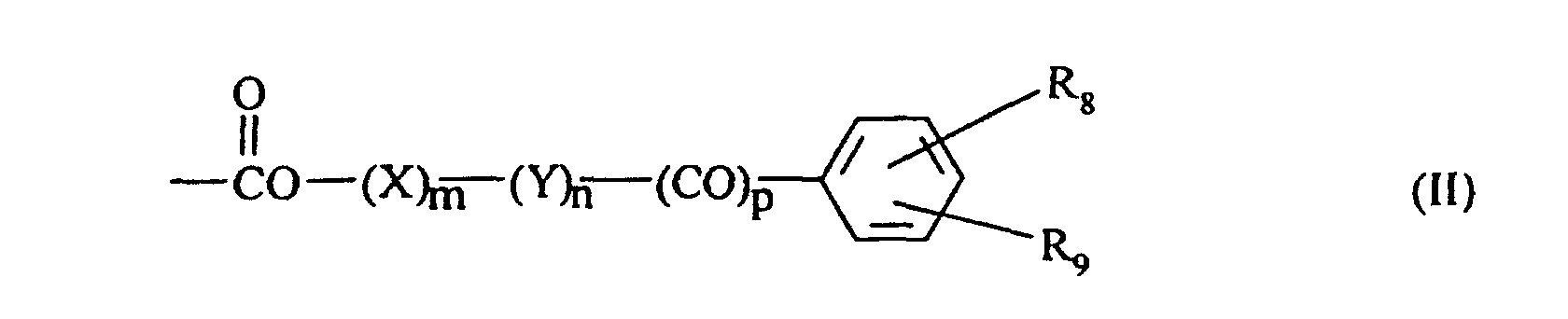
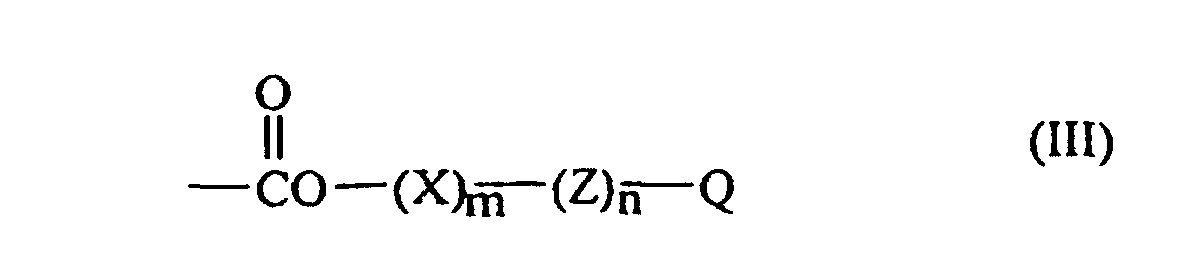 bedeuten, wobei in den Formeln (II), (III) und (IV)
- m, n und p
- unabhängig voneinander Null oder 1 bedeuten,
- X
- C1-14-Alkylen oder C2-8-Alkenylen,
- Y
- eine Gruppe -V-(CH2)q-,
- Z
- eine Gruppe -V-(CH2)r-,
- V
- C3-6-Cycloalkylen,
- q
- eine Zahl von 1 bis 6 und
- r
- eine Zahl von Null bis 6 bedeutet,
Q für Wasserstoff, CN, Si(R8)3, eine Gruppe C(R12)(R13)(R14), wobei R12, R13 und R14 die Bedeutung Halogen haben, eine Gruppeworin R8 und R9 die obengenannte Bedeutung haben, eine Gruppe SO2-R15 oder SR15, wobei R15 die Bedeutung C1-4-Alkyl hat, eine Gruppe CH(R16)2, wobei R16 gegebenenfalls durch C1-4-Alkyl, C1-4-Alkoxy oder Halogen substituiertes Phenyl bedeutet, oder eine Gruppe der Formel
 steht,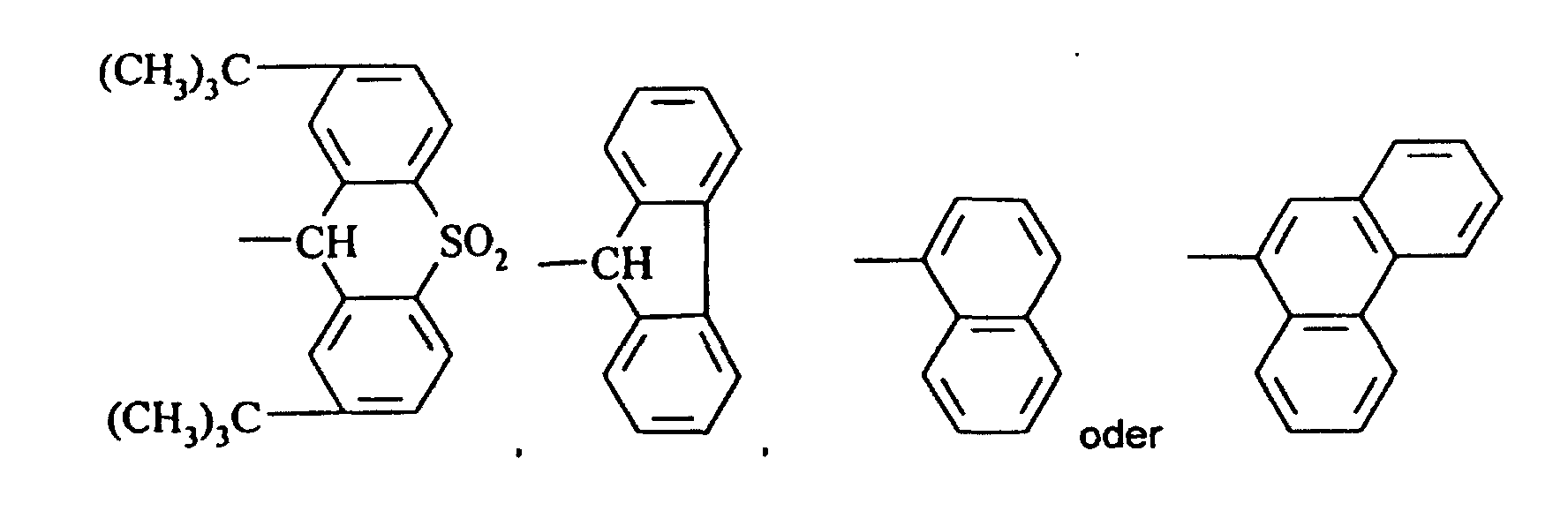
- R10 und R11
- unabhängig voneinander Wasserstoff, C1-18-Alkyl, eine Gruppe
worin X, Y, R8 R9, m und n die obengenannte Bedeutung haben, bezeichnen oder R10 und R11 zusammen mit dem sie verbindenden Stickstoffatom einen Pyrrolidinyl-, Piperidinyl- oder Morpholinylrest bilden,

mit der Massgabe, dass bei R3 und/oder R4 gleich einer Gruppe der Formel (III), Q gleich Wasserstoff und n gleich Null m für 1 und X für eine an dem an Sauerstoff gebundenen Kohlenstoffatom verzweigte C2-14-Alkylen- oder C2-8-Alkenylengruppe stehen muss und dass bei R3 und R4 beide gleich Wasserstoff R1 und R2 nicht gleich sein können.
- Verfahren zur Herstellung von Thiazinindigo-Pigmenten der Formel (I) gemäss Anspruch 1, in der R3 und R4 für Wasserstoff stehen, bei dem man eine Verbindung der Formel (II) und eine Verbindung der Formel (III)worin R5 und R'5 unabhängig voneinander für H oder ein unter Na+, K+ oder Zn2+ ausgewähltes Metallion stehen, mit einer Verbindung der Formel (IV) in deren cis- oder trans-Form
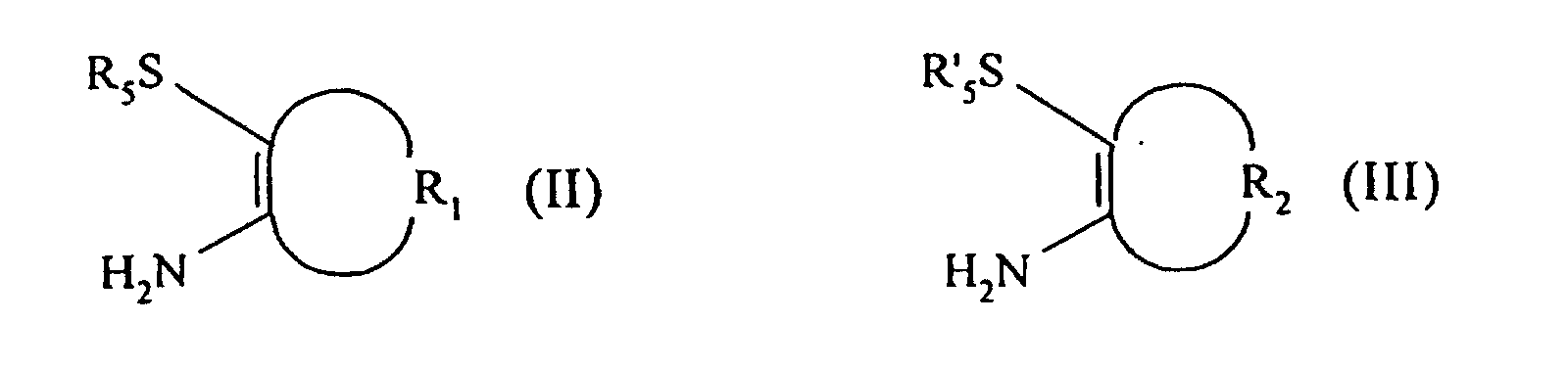 worin Hal für F, Cl oder Br steht und R6 und R'6 unabhängig voneinander eine bei Substitutionsreaktionen an Carbonyl-Kohlenstoffatomen gängige Abgangsgruppe, beispielsweise Cl oder Alkoxy, bezeichnen oder R6 und R'6 zusammen ein Sauerstoffatom darstellen, in einem Lösungsmittelsystem aus einer Carbonsäure und einem inerten polaren aprotischen Lösungsmittel umsetzt.
- Verfahren nach Anspruch 2, bei dem man als Carbonsäure Essigsäure einsetzt.
- Verfahren nach Anspruch 2 oder 3, bei dem man als porales aprotisches Lösungsmittel Dimethylformamid einsetzt.
- Verfahren zur Herstellung von Thiazinindigo-Pigmenten der Formel (I) gemäss Anspruch 1, in der mindestens einer der Substituenten R3 und R4 nicht Wasserstoff bedeutet, bei dem man Pigmente gemäss der Formel (I), in der R3 und R4 beide Wasserstoff bedeuten, mit einem Dicarbonat der Formel (V)auch als Mischung mit einem Alkylideniminooxyameisensäureester der Formel (XIV)
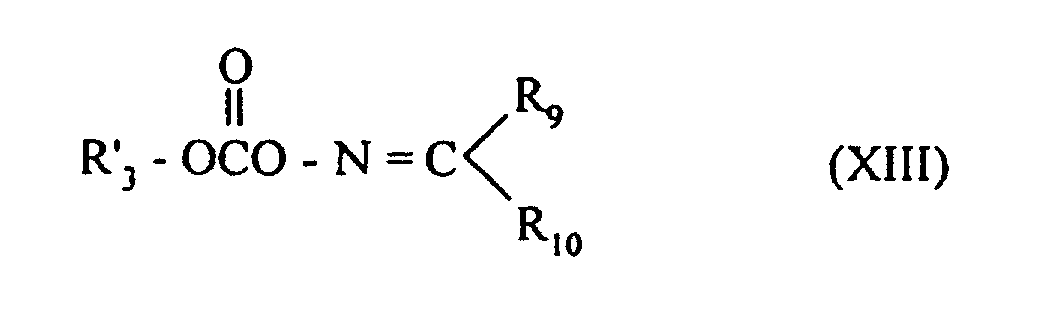 in einem Verhältnis von 1:1, wobei in den Formeln (V), (VI), (VII), (VIII), (IX), (X), (XI), (XII), (XIII) und (XIV)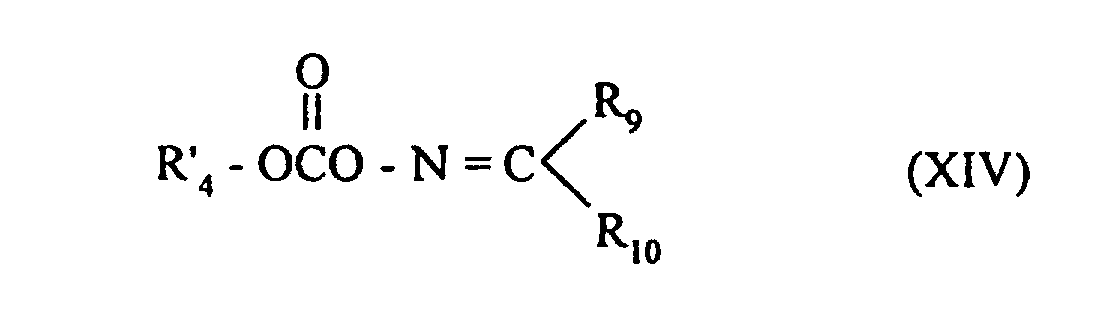
- R'3 und R'4
- die von Wasserstoff verschiedenen Bedeutungen von R3 und R4 haben,
- R7
- Chlor, Fluor oder Brom bedeutet,
- R8
- C1-4-Alkyl oder gegebenenfalls durch Halogen, C1-4-Alkyl, C1-4-Alkoxy oder -CN substituiertes Phenyl bezeichnet,
- R9
- für -CN oder -COOR8 und
- R10
- gegebenenfalls durch Halogen, C1-4-Alkyl, C1-4-Alkoxy oder -CN substituiertes Phenyl bezeichnet,
- Feste Lösung oder eine Mischung aus einem Thiazinindigo-Pigment der Formel (I) und einem anderen Pigment aus der Klasse der Diketopyrrolopyrrol-, Chinacridon-, Anthrachinon-, Benzimidazol-, Naphtol-AS-, Azokondensations-, Isoindolinon-, Isoindolin-, Perylen-, Dioxazin-, Indigo-, Thioindigo-, Metallkomplex-, Perinon-, Chinophthalon- und Phthalocyanin-Pigmente.
- Verwendung eines Pigments der Formel (I) gemäss Anspruch 1, einer festen Lösung oder einer Mischung gemäss Anspruch 6 zum Färben von Substraten, vorzugsweise synthetischen Polymeren, synthetischen Harzen und Regeneratfasern, in der Masse.
- Verwendung eines Pigments der Formel (I) gemäss Anspruch 1, einer festen Lösung oder einer Mischung gemäss Anspruch 6 als Farbmittel für Druckfarben oder Textilien.
- Synthetische Polymere, synthetische Harze und Regeneratfasern, enthaltend ein Pigment der Formel (I) gemäss Anspruch 1, eine feste Lösung oder eine Mischung gemäss Anspruch 6.
- Druckfarben oder bedruckte Textilien, enthaltend ein Pigment der Formel (I) gemäss Anspruch 1 oder eine feste Lösung oder Mischung gemäss Anspruch 6.
Applications Claiming Priority (9)
| Application Number | Priority Date | Filing Date | Title |
|---|---|---|---|
| GBGB9701784.2A GB9701784D0 (en) | 1997-01-29 | 1997-01-29 | Improvements in or relating to organic compounds |
| GB9701784 | 1997-01-29 | ||
| GB9709193 | 1997-05-07 | ||
| GBGB9709193.8A GB9709193D0 (en) | 1997-05-07 | 1997-05-07 | Organic compounds |
| GB9716159 | 1997-08-01 | ||
| GBGB9716159.0A GB9716159D0 (en) | 1997-08-01 | 1997-08-01 | Solid solutions of thiazine indigo pigments |
| CH286997 | 1997-12-12 | ||
| CH286997 | 1997-12-12 | ||
| PCT/IB1998/000109 WO1998032800A1 (en) | 1997-01-29 | 1998-01-28 | Thiazine indigo pigments, solid solutions thereof and their preparation |
Publications (2)
| Publication Number | Publication Date |
|---|---|
| EP0975697A1 EP0975697A1 (de) | 2000-02-02 |
| EP0975697B1 true EP0975697B1 (de) | 2003-04-16 |
Family
ID=27428521
Family Applications (1)
| Application Number | Title | Priority Date | Filing Date |
|---|---|---|---|
| EP98900634A Expired - Lifetime EP0975697B1 (de) | 1997-01-29 | 1998-01-28 | Thiazin-indigo pigmente, diese enthaltende feste lösungen und ihre herstellung |
Country Status (8)
| Country | Link |
|---|---|
| US (1) | US6200378B1 (de) |
| EP (1) | EP0975697B1 (de) |
| JP (1) | JP2001519837A (de) |
| KR (1) | KR20000070575A (de) |
| AU (1) | AU5572698A (de) |
| DE (1) | DE69813541T2 (de) |
| ES (1) | ES2197455T3 (de) |
| WO (1) | WO1998032800A1 (de) |
Families Citing this family (18)
| Publication number | Priority date | Publication date | Assignee | Title |
|---|---|---|---|---|
| JP2000344757A (ja) | 1999-03-18 | 2000-12-12 | Clariant Internatl Ltd | チアジン−インジゴ化合物およびその新規中間体の製造方法 |
| US6375732B1 (en) * | 1999-04-08 | 2002-04-23 | Clariant Finance (Bvi) Limited | Pigments, the process of their manufacturing and their use |
| JP4526650B2 (ja) * | 1999-04-22 | 2010-08-18 | クラリアント ファイナンス (ビーブイアイ) リミティド | 固溶体 |
| GB9914173D0 (en) * | 1999-06-18 | 1999-08-18 | Clariant Int Ltd | New heterocyclic compounds |
| ATE267847T1 (de) | 1999-08-11 | 2004-06-15 | Clariant Finance Bvi Ltd | Pigment zum färben von polyolefinen ohne verziehen |
| JP4689913B2 (ja) | 1999-10-01 | 2011-06-01 | キャボット コーポレイション | 立体基および両親媒性基を有する修飾顔料 |
| DE10030475A1 (de) | 2000-06-21 | 2002-01-03 | Clariant Gmbh | Verfahren zur Herstellung von trans-Thiazinindigo-Pigmenten |
| AU2001287995A1 (en) * | 2000-11-24 | 2002-06-03 | Clariant Finance (Bvi) Limited | Use of pigments in cosmetic, in particular in make-up |
| US7052541B2 (en) * | 2002-06-19 | 2006-05-30 | Board Of Regents, The University Of Texas System | Color compositions |
| EP1416018A1 (de) * | 2002-10-31 | 2004-05-06 | Clariant International Ltd. | Pigmentformulierungen und Verfahren zu deren Herstellung |
| JP4649099B2 (ja) * | 2003-07-08 | 2011-03-09 | 東洋インキ製造株式会社 | 着色組成物およびカラーフィルタ |
| US7425235B2 (en) * | 2005-02-11 | 2008-09-16 | The Board Of Regents Of The University Of Texas System | Color compositions and methods of manufacture |
| US20070033747A1 (en) * | 2005-06-17 | 2007-02-15 | The Board Of Regents Of The University Of Texas System | Organic/Inorganic Lewis Acid Composite Materials |
| TWI351422B (en) * | 2006-04-28 | 2011-11-01 | Toyo Ink Mfg Co | Thiazineindigo pigment dispersant, and pigment com |
| JP5239462B2 (ja) * | 2008-04-02 | 2013-07-17 | 東洋インキScホールディングス株式会社 | チアジンインジゴ顔料分散剤、それを用いた顔料組成物、着色組成物およびカラーフィルタ |
| JP6120757B2 (ja) * | 2013-12-10 | 2017-04-26 | 大日精化工業株式会社 | ジケトピロロピロール顔料組成物およびそれを用いた顔料着色剤 |
| US10246590B2 (en) | 2016-06-17 | 2019-04-02 | Sanko Tekstil Isletmeleri San. Ve Tic. A.S. | Use of indigo derivatives for dyeing synthetic textiles, novel indigo derivatives and process for dyeing synthetic textiles |
| ES2710013T3 (es) | 2016-06-17 | 2019-04-22 | Sanko Tekstil Isletmeleri San Ve Tic As | Uso de derivados del índigo como tintes de cambio de color irreversible para materiales textiles, nuevos compuestos y procedimiento para teñir materiales textiles |
Family Cites Families (7)
| Publication number | Priority date | Publication date | Assignee | Title |
|---|---|---|---|---|
| GB1358574A (en) * | 1970-10-21 | 1974-07-03 | Sandoz Ltd | Sparingly soluble heterocyclic compounds and processes for their production |
| DE2536120A1 (de) * | 1975-08-13 | 1977-03-03 | Basf Ag | Verfahren zur herstellung von schwerloeslichen farbstoffen |
| EP0648770B1 (de) * | 1993-10-13 | 2000-05-17 | Ciba SC Holding AG | Pyrrolo[3,4-c]pyrrole |
| EP0654506B1 (de) * | 1993-11-22 | 2000-05-17 | Ciba SC Holding AG | Verfahren zur Herstellung synergistischer Pigmentgemische |
| EP0690057B1 (de) * | 1994-06-29 | 1999-09-08 | Ciba SC Holding AG | Neue Kristallmodifikation eines Diketopyrrolopyrrolpigments |
| DE59506764D1 (de) * | 1994-06-29 | 1999-10-14 | Ciba Sc Holding Ag | Zwei neue Kristallmodifikationen eines Diketopyrrolopyrrolpigments |
| DE59506763D1 (de) * | 1994-06-29 | 1999-10-14 | Ciba Sc Holding Ag | Neue Kristallmodifikation eines Diketopyrrolopyrrolpigments |
-
1998
- 1998-01-28 ES ES98900634T patent/ES2197455T3/es not_active Expired - Lifetime
- 1998-01-28 JP JP53177898A patent/JP2001519837A/ja active Pending
- 1998-01-28 WO PCT/IB1998/000109 patent/WO1998032800A1/en not_active Ceased
- 1998-01-28 DE DE69813541T patent/DE69813541T2/de not_active Expired - Fee Related
- 1998-01-28 US US09/355,124 patent/US6200378B1/en not_active Expired - Fee Related
- 1998-01-28 AU AU55726/98A patent/AU5572698A/en not_active Abandoned
- 1998-01-28 EP EP98900634A patent/EP0975697B1/de not_active Expired - Lifetime
- 1998-01-28 KR KR1019997006822A patent/KR20000070575A/ko not_active Ceased
Also Published As
| Publication number | Publication date |
|---|---|
| US6200378B1 (en) | 2001-03-13 |
| WO1998032800A1 (en) | 1998-07-30 |
| KR20000070575A (ko) | 2000-11-25 |
| DE69813541T2 (de) | 2003-11-06 |
| EP0975697A1 (de) | 2000-02-02 |
| ES2197455T3 (es) | 2004-01-01 |
| DE69813541D1 (de) | 2003-05-22 |
| AU5572698A (en) | 1998-08-18 |
| JP2001519837A (ja) | 2001-10-23 |
Similar Documents
| Publication | Publication Date | Title |
|---|---|---|
| US6200378B1 (en) | Thiazine indigo pigments, solid solutions thereof and their preparation | |
| US6127549A (en) | Fluorescent indigo pigments | |
| JP3862772B2 (ja) | 1、4−ジケトピロロピロールの混晶および固溶体 | |
| JP3712751B2 (ja) | 相乗作用顔料混合物の製造方法 | |
| EP0794235B1 (de) | Ternäre feste Lösungen von 1,4-Diketopyrrolopyrrolen und Chinacridonen | |
| KR100452658B1 (ko) | 1,4-디케토피롤로피롤의고용체 | |
| JP2573642B2 (ja) | ピロロ−〔3,4−c〕−ピロールとキナクリドンとの固溶体 | |
| KR100685542B1 (ko) | 혼성 안료 | |
| KR101672390B1 (ko) | 프탈로시아닌 화합물 및 그 제조 방법, 및 당해 프탈로시아닌 화합물을 함유하는 착색 조성물 | |
| KR100378930B1 (ko) | 디케토피롤로피롤안료의2종의신규결정변태 | |
| EP1083176B1 (de) | Katalytisches Oxidationsverfahren zur Herstellung von Chinacridonpigmenten unter Verwendung eines Polyalkylenglykolmediums | |
| EP1046680B1 (de) | Pigmente, Verfahren zu deren Herstellung und deren Verwendung | |
| KR100378928B1 (ko) | 디케토피롤로피롤안료의신규결정변태 | |
| CA2144816A1 (en) | Preparation of phthalocyanine pigments | |
| EP1341851B1 (de) | Verfahren zur herstellung von triphendioxazinpigmenten | |
| US3729330A (en) | Phthalocyanine organic pigments | |
| JP2003003088A (ja) | キノロノキノロン−イソインドリノン固溶体及び顔料 | |
| JPH11130972A (ja) | 有機顔料 | |
| JPH1017783A (ja) | 有機顔料 | |
| JPH03170458A (ja) | 複素環化合物とそれから得られるポルフイリン化合物 | |
| MXPA95001847A (es) | Proceso para preparar pigmentos de ftalocianina metalicos | |
| MXPA00008740A (en) | Catalyzed oxidation process for preparing quinacridone pigments using a polyalkylene glycol medium |
Legal Events
| Date | Code | Title | Description |
|---|---|---|---|
| PUAI | Public reference made under article 153(3) epc to a published international application that has entered the european phase |
Free format text: ORIGINAL CODE: 0009012 |
|
| 17P | Request for examination filed |
Effective date: 19990706 |
|
| AK | Designated contracting states |
Kind code of ref document: A1 Designated state(s): BE CH DE ES FR GB IT LI |
|
| 17Q | First examination report despatched |
Effective date: 20000622 |
|
| GRAH | Despatch of communication of intention to grant a patent |
Free format text: ORIGINAL CODE: EPIDOS IGRA |
|
| GRAH | Despatch of communication of intention to grant a patent |
Free format text: ORIGINAL CODE: EPIDOS IGRA |
|
| GRAA | (expected) grant |
Free format text: ORIGINAL CODE: 0009210 |
|
| AK | Designated contracting states |
Designated state(s): BE CH DE ES FR GB IT LI |
|
| REG | Reference to a national code |
Ref country code: GB Ref legal event code: FG4D |
|
| REG | Reference to a national code |
Ref country code: CH Ref legal event code: NV Representative=s name: CLARIANT INTERNATIONAL LTD. Ref country code: CH Ref legal event code: EP |
|
| REF | Corresponds to: |
Ref document number: 69813541 Country of ref document: DE Date of ref document: 20030522 Kind code of ref document: P |
|
| ET | Fr: translation filed | ||
| PGFP | Annual fee paid to national office [announced via postgrant information from national office to epo] |
Ref country code: FR Payment date: 20031210 Year of fee payment: 7 |
|
| PGFP | Annual fee paid to national office [announced via postgrant information from national office to epo] |
Ref country code: GB Payment date: 20031215 Year of fee payment: 7 Ref country code: BE Payment date: 20031215 Year of fee payment: 7 |
|
| REG | Reference to a national code |
Ref country code: ES Ref legal event code: FG2A Ref document number: 2197455 Country of ref document: ES Kind code of ref document: T3 |
|
| PGFP | Annual fee paid to national office [announced via postgrant information from national office to epo] |
Ref country code: ES Payment date: 20040108 Year of fee payment: 7 |
|
| PLBE | No opposition filed within time limit |
Free format text: ORIGINAL CODE: 0009261 |
|
| STAA | Information on the status of an ep patent application or granted ep patent |
Free format text: STATUS: NO OPPOSITION FILED WITHIN TIME LIMIT |
|
| 26N | No opposition filed |
Effective date: 20040119 |
|
| PGFP | Annual fee paid to national office [announced via postgrant information from national office to epo] |
Ref country code: CH Payment date: 20040407 Year of fee payment: 7 |
|
| PG25 | Lapsed in a contracting state [announced via postgrant information from national office to epo] |
Ref country code: IT Free format text: LAPSE BECAUSE OF NON-PAYMENT OF DUE FEES;WARNING: LAPSES OF ITALIAN PATENTS WITH EFFECTIVE DATE BEFORE 2007 MAY HAVE OCCURRED AT ANY TIME BEFORE 2007. THE CORRECT EFFECTIVE DATE MAY BE DIFFERENT FROM THE ONE RECORDED. Effective date: 20050128 Ref country code: GB Free format text: LAPSE BECAUSE OF NON-PAYMENT OF DUE FEES Effective date: 20050128 |
|
| PG25 | Lapsed in a contracting state [announced via postgrant information from national office to epo] |
Ref country code: ES Free format text: LAPSE BECAUSE OF NON-PAYMENT OF DUE FEES Effective date: 20050129 |
|
| PG25 | Lapsed in a contracting state [announced via postgrant information from national office to epo] |
Ref country code: LI Free format text: LAPSE BECAUSE OF NON-PAYMENT OF DUE FEES Effective date: 20050131 Ref country code: CH Free format text: LAPSE BECAUSE OF NON-PAYMENT OF DUE FEES Effective date: 20050131 Ref country code: BE Free format text: LAPSE BECAUSE OF NON-PAYMENT OF DUE FEES Effective date: 20050131 |
|
| BERE | Be: lapsed |
Owner name: *CLARIANT FINANCE (BVI) LTD Effective date: 20050131 |
|
| GBPC | Gb: european patent ceased through non-payment of renewal fee |
Effective date: 20050128 |
|
| REG | Reference to a national code |
Ref country code: CH Ref legal event code: PL |
|
| PG25 | Lapsed in a contracting state [announced via postgrant information from national office to epo] |
Ref country code: FR Free format text: LAPSE BECAUSE OF NON-PAYMENT OF DUE FEES Effective date: 20050930 |
|
| REG | Reference to a national code |
Ref country code: FR Ref legal event code: ST |
|
| REG | Reference to a national code |
Ref country code: ES Ref legal event code: FD2A Effective date: 20050129 |
|
| BERE | Be: lapsed |
Owner name: *CLARIANT FINANCE (BVI) LTD Effective date: 20050131 |
|
| PGFP | Annual fee paid to national office [announced via postgrant information from national office to epo] |
Ref country code: DE Payment date: 20081212 Year of fee payment: 12 |
|
| PG25 | Lapsed in a contracting state [announced via postgrant information from national office to epo] |
Ref country code: DE Free format text: LAPSE BECAUSE OF NON-PAYMENT OF DUE FEES Effective date: 20100803 |