EP0944715B1 - Druckvermittelte, intrazellulaere verabreichung von molekuelen oder mikropartikeln - Google Patents
Druckvermittelte, intrazellulaere verabreichung von molekuelen oder mikropartikeln Download PDFInfo
- Publication number
- EP0944715B1 EP0944715B1 EP97948268A EP97948268A EP0944715B1 EP 0944715 B1 EP0944715 B1 EP 0944715B1 EP 97948268 A EP97948268 A EP 97948268A EP 97948268 A EP97948268 A EP 97948268A EP 0944715 B1 EP0944715 B1 EP 0944715B1
- Authority
- EP
- European Patent Office
- Prior art keywords
- molecule
- cell
- pressure
- atom
- particle
- Prior art date
- Legal status (The legal status is an assumption and is not a legal conclusion. Google has not performed a legal analysis and makes no representation as to the accuracy of the status listed.)
- Expired - Lifetime
Links
- 230000001404 mediated effect Effects 0.000 title description 12
- 230000003834 intracellular effect Effects 0.000 title description 9
- 239000011859 microparticle Substances 0.000 title description 2
- 238000011534 incubation Methods 0.000 claims abstract description 48
- 238000000034 method Methods 0.000 claims abstract description 35
- 239000002245 particle Substances 0.000 claims abstract description 19
- 239000007788 liquid Substances 0.000 claims abstract description 7
- 230000002708 enhancing effect Effects 0.000 claims abstract 2
- 210000004204 blood vessel Anatomy 0.000 claims description 41
- 210000000056 organ Anatomy 0.000 claims description 30
- 108090000623 proteins and genes Proteins 0.000 claims description 11
- 208000014674 injury Diseases 0.000 claims description 10
- 238000000338 in vitro Methods 0.000 claims description 9
- 230000001681 protective effect Effects 0.000 claims description 9
- 230000008733 trauma Effects 0.000 claims description 9
- 102000004169 proteins and genes Human genes 0.000 claims description 8
- 238000001727 in vivo Methods 0.000 claims description 7
- 150000007523 nucleic acids Chemical class 0.000 claims description 6
- 108020004707 nucleic acids Proteins 0.000 claims description 4
- 102000039446 nucleic acids Human genes 0.000 claims description 4
- 241001465754 Metazoa Species 0.000 claims description 3
- 238000004519 manufacturing process Methods 0.000 claims description 3
- 239000002773 nucleotide Substances 0.000 claims description 3
- 125000003729 nucleotide group Chemical group 0.000 claims description 3
- 108090000765 processed proteins & peptides Proteins 0.000 claims description 3
- 238000003825 pressing Methods 0.000 claims description 2
- 230000001225 therapeutic effect Effects 0.000 claims 2
- 210000004027 cell Anatomy 0.000 description 48
- 210000001519 tissue Anatomy 0.000 description 47
- 238000001890 transfection Methods 0.000 description 45
- 239000000126 substance Substances 0.000 description 35
- 108091034117 Oligonucleotide Proteins 0.000 description 34
- 229940124276 oligodeoxyribonucleotide Drugs 0.000 description 34
- 239000000243 solution Substances 0.000 description 31
- 241000700159 Rattus Species 0.000 description 25
- 210000002216 heart Anatomy 0.000 description 18
- 230000000692 anti-sense effect Effects 0.000 description 15
- 108091000080 Phosphotransferase Proteins 0.000 description 10
- 210000001367 artery Anatomy 0.000 description 10
- 230000000694 effects Effects 0.000 description 10
- 102000020233 phosphotransferase Human genes 0.000 description 10
- 210000003462 vein Anatomy 0.000 description 9
- 102000004889 Interleukin-6 Human genes 0.000 description 8
- 108090001005 Interleukin-6 Proteins 0.000 description 8
- 101150012716 CDK1 gene Proteins 0.000 description 7
- 108050006400 Cyclin Proteins 0.000 description 7
- 101100059559 Emericella nidulans (strain FGSC A4 / ATCC 38163 / CBS 112.46 / NRRL 194 / M139) nimX gene Proteins 0.000 description 7
- 102000015271 Intercellular Adhesion Molecule-1 Human genes 0.000 description 7
- 108010064593 Intercellular Adhesion Molecule-1 Proteins 0.000 description 7
- 102000009339 Proliferating Cell Nuclear Antigen Human genes 0.000 description 7
- 101100273808 Xenopus laevis cdk1-b gene Proteins 0.000 description 7
- 229940100601 interleukin-6 Drugs 0.000 description 7
- 210000003752 saphenous vein Anatomy 0.000 description 7
- 238000002054 transplantation Methods 0.000 description 7
- 108060001084 Luciferase Proteins 0.000 description 6
- FAPWRFPIFSIZLT-UHFFFAOYSA-M Sodium chloride Chemical compound [Na+].[Cl-] FAPWRFPIFSIZLT-UHFFFAOYSA-M 0.000 description 6
- 210000000170 cell membrane Anatomy 0.000 description 6
- 230000009467 reduction Effects 0.000 description 6
- 238000002965 ELISA Methods 0.000 description 5
- 241000283973 Oryctolagus cuniculus Species 0.000 description 5
- 239000008280 blood Substances 0.000 description 5
- 210000004369 blood Anatomy 0.000 description 5
- 210000001715 carotid artery Anatomy 0.000 description 5
- MHMNJMPURVTYEJ-UHFFFAOYSA-N fluorescein-5-isothiocyanate Chemical compound O1C(=O)C2=CC(N=C=S)=CC=C2C21C1=CC=C(O)C=C1OC1=CC(O)=CC=C21 MHMNJMPURVTYEJ-UHFFFAOYSA-N 0.000 description 5
- 230000030648 nucleus localization Effects 0.000 description 5
- 210000004509 vascular smooth muscle cell Anatomy 0.000 description 5
- 108090000331 Firefly luciferases Proteins 0.000 description 4
- 239000005089 Luciferase Substances 0.000 description 4
- 210000003038 endothelium Anatomy 0.000 description 4
- 230000005764 inhibitory process Effects 0.000 description 4
- 150000002500 ions Chemical class 0.000 description 4
- 208000028867 ischemia Diseases 0.000 description 4
- 210000003734 kidney Anatomy 0.000 description 4
- 239000012528 membrane Substances 0.000 description 4
- 108020004999 messenger RNA Proteins 0.000 description 4
- 239000013612 plasmid Substances 0.000 description 4
- 210000005239 tubule Anatomy 0.000 description 4
- 230000006378 damage Effects 0.000 description 3
- 238000000799 fluorescence microscopy Methods 0.000 description 3
- 208000037906 ischaemic injury Diseases 0.000 description 3
- 230000007774 longterm Effects 0.000 description 3
- 229940046166 oligodeoxynucleotide Drugs 0.000 description 3
- 230000002441 reversible effect Effects 0.000 description 3
- 150000003384 small molecules Chemical class 0.000 description 3
- 108090000790 Enzymes Proteins 0.000 description 2
- 102000004190 Enzymes Human genes 0.000 description 2
- 239000000232 Lipid Bilayer Substances 0.000 description 2
- 108700005075 Regulator Genes Proteins 0.000 description 2
- 210000000709 aorta Anatomy 0.000 description 2
- 230000003143 atherosclerotic effect Effects 0.000 description 2
- 230000004888 barrier function Effects 0.000 description 2
- 230000022131 cell cycle Effects 0.000 description 2
- 230000004700 cellular uptake Effects 0.000 description 2
- 210000004351 coronary vessel Anatomy 0.000 description 2
- 210000000805 cytoplasm Anatomy 0.000 description 2
- 235000014113 dietary fatty acids Nutrition 0.000 description 2
- 238000002474 experimental method Methods 0.000 description 2
- 229930195729 fatty acid Natural products 0.000 description 2
- 239000000194 fatty acid Substances 0.000 description 2
- 150000004665 fatty acids Chemical class 0.000 description 2
- 238000011010 flushing procedure Methods 0.000 description 2
- 239000007789 gas Substances 0.000 description 2
- 230000002496 gastric effect Effects 0.000 description 2
- 239000001963 growth medium Substances 0.000 description 2
- 206010020718 hyperplasia Diseases 0.000 description 2
- 238000010191 image analysis Methods 0.000 description 2
- 230000006698 induction Effects 0.000 description 2
- 238000009830 intercalation Methods 0.000 description 2
- 150000002605 large molecules Chemical class 0.000 description 2
- 230000033001 locomotion Effects 0.000 description 2
- 230000002132 lysosomal effect Effects 0.000 description 2
- 229920002521 macromolecule Polymers 0.000 description 2
- 239000000463 material Substances 0.000 description 2
- 230000035699 permeability Effects 0.000 description 2
- 238000003752 polymerase chain reaction Methods 0.000 description 2
- 238000001356 surgical procedure Methods 0.000 description 2
- 206010020880 Hypertrophy Diseases 0.000 description 1
- 206010062016 Immunosuppression Diseases 0.000 description 1
- 208000034827 Neointima Diseases 0.000 description 1
- 208000027418 Wounds and injury Diseases 0.000 description 1
- 239000013543 active substance Substances 0.000 description 1
- 230000003044 adaptive effect Effects 0.000 description 1
- 210000000702 aorta abdominal Anatomy 0.000 description 1
- 238000003556 assay Methods 0.000 description 1
- 230000004071 biological effect Effects 0.000 description 1
- 210000000988 bone and bone Anatomy 0.000 description 1
- 210000001185 bone marrow Anatomy 0.000 description 1
- 210000003855 cell nucleus Anatomy 0.000 description 1
- 230000001413 cellular effect Effects 0.000 description 1
- 230000033077 cellular process Effects 0.000 description 1
- 230000008859 change Effects 0.000 description 1
- 239000000084 colloidal system Substances 0.000 description 1
- 238000004891 communication Methods 0.000 description 1
- 210000002808 connective tissue Anatomy 0.000 description 1
- 238000002716 delivery method Methods 0.000 description 1
- 230000001079 digestive effect Effects 0.000 description 1
- 201000010099 disease Diseases 0.000 description 1
- 208000037265 diseases, disorders, signs and symptoms Diseases 0.000 description 1
- 239000003814 drug Substances 0.000 description 1
- 229940079593 drug Drugs 0.000 description 1
- 230000002124 endocrine Effects 0.000 description 1
- 230000012202 endocytosis Effects 0.000 description 1
- 230000001159 endocytotic effect Effects 0.000 description 1
- 230000003511 endothelial effect Effects 0.000 description 1
- 230000002255 enzymatic effect Effects 0.000 description 1
- 230000007717 exclusion Effects 0.000 description 1
- 239000012530 fluid Substances 0.000 description 1
- 238000003306 harvesting Methods 0.000 description 1
- 210000002837 heart atrium Anatomy 0.000 description 1
- 239000005556 hormone Substances 0.000 description 1
- 229940088597 hormone Drugs 0.000 description 1
- 230000001506 immunosuppresive effect Effects 0.000 description 1
- 230000017306 interleukin-6 production Effects 0.000 description 1
- 210000003093 intracellular space Anatomy 0.000 description 1
- 238000010253 intravenous injection Methods 0.000 description 1
- 210000004731 jugular vein Anatomy 0.000 description 1
- 210000003292 kidney cell Anatomy 0.000 description 1
- 238000002372 labelling Methods 0.000 description 1
- 239000003446 ligand Substances 0.000 description 1
- 210000004185 liver Anatomy 0.000 description 1
- 210000003712 lysosome Anatomy 0.000 description 1
- 230000001868 lysosomic effect Effects 0.000 description 1
- 238000005259 measurement Methods 0.000 description 1
- 230000007246 mechanism Effects 0.000 description 1
- 238000000386 microscopy Methods 0.000 description 1
- 210000003205 muscle Anatomy 0.000 description 1
- 230000008692 neointimal formation Effects 0.000 description 1
- 230000007935 neutral effect Effects 0.000 description 1
- 210000004940 nucleus Anatomy 0.000 description 1
- 238000005457 optimization Methods 0.000 description 1
- 230000010412 perfusion Effects 0.000 description 1
- 230000000144 pharmacologic effect Effects 0.000 description 1
- 230000008884 pinocytosis Effects 0.000 description 1
- 229920000642 polymer Polymers 0.000 description 1
- 239000011148 porous material Substances 0.000 description 1
- 230000008569 process Effects 0.000 description 1
- 102000004196 processed proteins & peptides Human genes 0.000 description 1
- 238000011002 quantification Methods 0.000 description 1
- 238000003762 quantitative reverse transcription PCR Methods 0.000 description 1
- 230000002285 radioactive effect Effects 0.000 description 1
- 238000007789 sealing Methods 0.000 description 1
- 239000011780 sodium chloride Substances 0.000 description 1
- 241000894007 species Species 0.000 description 1
- 239000000725 suspension Substances 0.000 description 1
- 230000002459 sustained effect Effects 0.000 description 1
- 230000008719 thickening Effects 0.000 description 1
- 230000000451 tissue damage Effects 0.000 description 1
- 231100000827 tissue damage Toxicity 0.000 description 1
- 231100000331 toxic Toxicity 0.000 description 1
- 230000002588 toxic effect Effects 0.000 description 1
- 230000014616 translation Effects 0.000 description 1
- 230000003827 upregulation Effects 0.000 description 1
Images




Classifications
-
- C—CHEMISTRY; METALLURGY
- C12—BIOCHEMISTRY; BEER; SPIRITS; WINE; VINEGAR; MICROBIOLOGY; ENZYMOLOGY; MUTATION OR GENETIC ENGINEERING
- C12M—APPARATUS FOR ENZYMOLOGY OR MICROBIOLOGY; APPARATUS FOR CULTURING MICROORGANISMS FOR PRODUCING BIOMASS, FOR GROWING CELLS OR FOR OBTAINING FERMENTATION OR METABOLIC PRODUCTS, i.e. BIOREACTORS OR FERMENTERS
- C12M3/00—Tissue, human, animal or plant cell, or virus culture apparatus
- C12M3/04—Tissue, human, animal or plant cell, or virus culture apparatus with means providing thin layers
-
- A—HUMAN NECESSITIES
- A61—MEDICAL OR VETERINARY SCIENCE; HYGIENE
- A61M—DEVICES FOR INTRODUCING MEDIA INTO, OR ONTO, THE BODY; DEVICES FOR TRANSDUCING BODY MEDIA OR FOR TAKING MEDIA FROM THE BODY; DEVICES FOR PRODUCING OR ENDING SLEEP OR STUPOR
- A61M5/00—Devices for bringing media into the body in a subcutaneous, intra-vascular or intramuscular way; Accessories therefor, e.g. filling or cleaning devices, arm-rests
- A61M5/14—Infusion devices, e.g. infusing by gravity; Blood infusion; Accessories therefor
- A61M5/142—Pressure infusion, e.g. using pumps
- A61M5/145—Pressure infusion, e.g. using pumps using pressurised reservoirs, e.g. pressurised by means of pistons
- A61M5/1452—Pressure infusion, e.g. using pumps using pressurised reservoirs, e.g. pressurised by means of pistons pressurised by means of pistons
-
- A—HUMAN NECESSITIES
- A61—MEDICAL OR VETERINARY SCIENCE; HYGIENE
- A61M—DEVICES FOR INTRODUCING MEDIA INTO, OR ONTO, THE BODY; DEVICES FOR TRANSDUCING BODY MEDIA OR FOR TAKING MEDIA FROM THE BODY; DEVICES FOR PRODUCING OR ENDING SLEEP OR STUPOR
- A61M37/00—Other apparatus for introducing media into the body; Percutany, i.e. introducing medicines into the body by diffusion through the skin
-
- A—HUMAN NECESSITIES
- A61—MEDICAL OR VETERINARY SCIENCE; HYGIENE
- A61P—SPECIFIC THERAPEUTIC ACTIVITY OF CHEMICAL COMPOUNDS OR MEDICINAL PREPARATIONS
- A61P43/00—Drugs for specific purposes, not provided for in groups A61P1/00-A61P41/00
-
- C—CHEMISTRY; METALLURGY
- C12—BIOCHEMISTRY; BEER; SPIRITS; WINE; VINEGAR; MICROBIOLOGY; ENZYMOLOGY; MUTATION OR GENETIC ENGINEERING
- C12M—APPARATUS FOR ENZYMOLOGY OR MICROBIOLOGY; APPARATUS FOR CULTURING MICROORGANISMS FOR PRODUCING BIOMASS, FOR GROWING CELLS OR FOR OBTAINING FERMENTATION OR METABOLIC PRODUCTS, i.e. BIOREACTORS OR FERMENTERS
- C12M23/00—Constructional details, e.g. recesses, hinges
- C12M23/02—Form or structure of the vessel
- C12M23/14—Bags
-
- C—CHEMISTRY; METALLURGY
- C12—BIOCHEMISTRY; BEER; SPIRITS; WINE; VINEGAR; MICROBIOLOGY; ENZYMOLOGY; MUTATION OR GENETIC ENGINEERING
- C12M—APPARATUS FOR ENZYMOLOGY OR MICROBIOLOGY; APPARATUS FOR CULTURING MICROORGANISMS FOR PRODUCING BIOMASS, FOR GROWING CELLS OR FOR OBTAINING FERMENTATION OR METABOLIC PRODUCTS, i.e. BIOREACTORS OR FERMENTERS
- C12M35/00—Means for application of stress for stimulating the growth of microorganisms or the generation of fermentation or metabolic products; Means for electroporation or cell fusion
- C12M35/04—Mechanical means, e.g. sonic waves, stretching forces, pressure or shear stimuli
-
- C—CHEMISTRY; METALLURGY
- C12—BIOCHEMISTRY; BEER; SPIRITS; WINE; VINEGAR; MICROBIOLOGY; ENZYMOLOGY; MUTATION OR GENETIC ENGINEERING
- C12M—APPARATUS FOR ENZYMOLOGY OR MICROBIOLOGY; APPARATUS FOR CULTURING MICROORGANISMS FOR PRODUCING BIOMASS, FOR GROWING CELLS OR FOR OBTAINING FERMENTATION OR METABOLIC PRODUCTS, i.e. BIOREACTORS OR FERMENTERS
- C12M41/00—Means for regulation, monitoring, measurement or control, e.g. flow regulation
- C12M41/40—Means for regulation, monitoring, measurement or control, e.g. flow regulation of pressure
-
- C—CHEMISTRY; METALLURGY
- C12—BIOCHEMISTRY; BEER; SPIRITS; WINE; VINEGAR; MICROBIOLOGY; ENZYMOLOGY; MUTATION OR GENETIC ENGINEERING
- C12N—MICROORGANISMS OR ENZYMES; COMPOSITIONS THEREOF; PROPAGATING, PRESERVING, OR MAINTAINING MICROORGANISMS; MUTATION OR GENETIC ENGINEERING; CULTURE MEDIA
- C12N15/00—Mutation or genetic engineering; DNA or RNA concerning genetic engineering, vectors, e.g. plasmids, or their isolation, preparation or purification; Use of hosts therefor
- C12N15/09—Recombinant DNA-technology
- C12N15/11—DNA or RNA fragments; Modified forms thereof; Non-coding nucleic acids having a biological activity
- C12N15/111—General methods applicable to biologically active non-coding nucleic acids
-
- C—CHEMISTRY; METALLURGY
- C12—BIOCHEMISTRY; BEER; SPIRITS; WINE; VINEGAR; MICROBIOLOGY; ENZYMOLOGY; MUTATION OR GENETIC ENGINEERING
- C12N—MICROORGANISMS OR ENZYMES; COMPOSITIONS THEREOF; PROPAGATING, PRESERVING, OR MAINTAINING MICROORGANISMS; MUTATION OR GENETIC ENGINEERING; CULTURE MEDIA
- C12N15/00—Mutation or genetic engineering; DNA or RNA concerning genetic engineering, vectors, e.g. plasmids, or their isolation, preparation or purification; Use of hosts therefor
- C12N15/09—Recombinant DNA-technology
- C12N15/11—DNA or RNA fragments; Modified forms thereof; Non-coding nucleic acids having a biological activity
- C12N15/113—Non-coding nucleic acids modulating the expression of genes, e.g. antisense oligonucleotides; Antisense DNA or RNA; Triplex- forming oligonucleotides; Catalytic nucleic acids, e.g. ribozymes; Nucleic acids used in co-suppression or gene silencing
- C12N15/1136—Non-coding nucleic acids modulating the expression of genes, e.g. antisense oligonucleotides; Antisense DNA or RNA; Triplex- forming oligonucleotides; Catalytic nucleic acids, e.g. ribozymes; Nucleic acids used in co-suppression or gene silencing against growth factors, growth regulators, cytokines, lymphokines or hormones
-
- C—CHEMISTRY; METALLURGY
- C12—BIOCHEMISTRY; BEER; SPIRITS; WINE; VINEGAR; MICROBIOLOGY; ENZYMOLOGY; MUTATION OR GENETIC ENGINEERING
- C12N—MICROORGANISMS OR ENZYMES; COMPOSITIONS THEREOF; PROPAGATING, PRESERVING, OR MAINTAINING MICROORGANISMS; MUTATION OR GENETIC ENGINEERING; CULTURE MEDIA
- C12N15/00—Mutation or genetic engineering; DNA or RNA concerning genetic engineering, vectors, e.g. plasmids, or their isolation, preparation or purification; Use of hosts therefor
- C12N15/09—Recombinant DNA-technology
- C12N15/87—Introduction of foreign genetic material using processes not otherwise provided for, e.g. co-transformation
-
- C—CHEMISTRY; METALLURGY
- C12—BIOCHEMISTRY; BEER; SPIRITS; WINE; VINEGAR; MICROBIOLOGY; ENZYMOLOGY; MUTATION OR GENETIC ENGINEERING
- C12N—MICROORGANISMS OR ENZYMES; COMPOSITIONS THEREOF; PROPAGATING, PRESERVING, OR MAINTAINING MICROORGANISMS; MUTATION OR GENETIC ENGINEERING; CULTURE MEDIA
- C12N15/00—Mutation or genetic engineering; DNA or RNA concerning genetic engineering, vectors, e.g. plasmids, or their isolation, preparation or purification; Use of hosts therefor
- C12N15/09—Recombinant DNA-technology
- C12N15/87—Introduction of foreign genetic material using processes not otherwise provided for, e.g. co-transformation
- C12N15/89—Introduction of foreign genetic material using processes not otherwise provided for, e.g. co-transformation using microinjection
-
- A—HUMAN NECESSITIES
- A61—MEDICAL OR VETERINARY SCIENCE; HYGIENE
- A61M—DEVICES FOR INTRODUCING MEDIA INTO, OR ONTO, THE BODY; DEVICES FOR TRANSDUCING BODY MEDIA OR FOR TAKING MEDIA FROM THE BODY; DEVICES FOR PRODUCING OR ENDING SLEEP OR STUPOR
- A61M25/00—Catheters; Hollow probes
- A61M25/10—Balloon catheters
- A61M2025/1043—Balloon catheters with special features or adapted for special applications
- A61M2025/105—Balloon catheters with special features or adapted for special applications having a balloon suitable for drug delivery, e.g. by using holes for delivery, drug coating or membranes
-
- A—HUMAN NECESSITIES
- A61—MEDICAL OR VETERINARY SCIENCE; HYGIENE
- A61M—DEVICES FOR INTRODUCING MEDIA INTO, OR ONTO, THE BODY; DEVICES FOR TRANSDUCING BODY MEDIA OR FOR TAKING MEDIA FROM THE BODY; DEVICES FOR PRODUCING OR ENDING SLEEP OR STUPOR
- A61M25/00—Catheters; Hollow probes
- A61M25/10—Balloon catheters
- A61M2025/1043—Balloon catheters with special features or adapted for special applications
- A61M2025/1052—Balloon catheters with special features or adapted for special applications for temporarily occluding a vessel for isolating a sector
-
- A—HUMAN NECESSITIES
- A61—MEDICAL OR VETERINARY SCIENCE; HYGIENE
- A61M—DEVICES FOR INTRODUCING MEDIA INTO, OR ONTO, THE BODY; DEVICES FOR TRANSDUCING BODY MEDIA OR FOR TAKING MEDIA FROM THE BODY; DEVICES FOR PRODUCING OR ENDING SLEEP OR STUPOR
- A61M25/00—Catheters; Hollow probes
- A61M25/10—Balloon catheters
- A61M25/1011—Multiple balloon catheters
-
- C—CHEMISTRY; METALLURGY
- C12—BIOCHEMISTRY; BEER; SPIRITS; WINE; VINEGAR; MICROBIOLOGY; ENZYMOLOGY; MUTATION OR GENETIC ENGINEERING
- C12N—MICROORGANISMS OR ENZYMES; COMPOSITIONS THEREOF; PROPAGATING, PRESERVING, OR MAINTAINING MICROORGANISMS; MUTATION OR GENETIC ENGINEERING; CULTURE MEDIA
- C12N2310/00—Structure or type of the nucleic acid
- C12N2310/30—Chemical structure
- C12N2310/35—Nature of the modification
- C12N2310/351—Conjugate
- C12N2310/3517—Marker; Tag
-
- C—CHEMISTRY; METALLURGY
- C12—BIOCHEMISTRY; BEER; SPIRITS; WINE; VINEGAR; MICROBIOLOGY; ENZYMOLOGY; MUTATION OR GENETIC ENGINEERING
- C12N—MICROORGANISMS OR ENZYMES; COMPOSITIONS THEREOF; PROPAGATING, PRESERVING, OR MAINTAINING MICROORGANISMS; MUTATION OR GENETIC ENGINEERING; CULTURE MEDIA
- C12N2320/00—Applications; Uses
- C12N2320/30—Special therapeutic applications
- C12N2320/32—Special delivery means, e.g. tissue-specific
Definitions
- This invention relates to facilitation of the uptake of extracellular substances by living cells.
- WO 96/34967 is a prior art document under Art. 54(3) and (4) EPC and dicloses a method and apparatus for delivering nucleotides into living cells.
- the method of the invention involves delivery of a substance to the extracellular environment of a living cell or cells, creation of an enclosed space around the cell or cells, and establishment of an elevated incubation pressure within the enclosed space sufficient to enhance uptake of the substance by the cell or cells.
- the substance can range in size from'a small molecule to a microparticle, and can exert a range of effects on, or serve a range of functions in, the cells by which it is taken up.
- the substance can be a small molecule (e.g ., a drug), a sugar, a fatty acid or a fatty acid derivative, or a protein ( e.g. , an antibody, an enzyme, or a hormone).
- the cells can exist in vitro, in tissue or organ culture.
- a purpose of this invention is to induce a greater degree of intracellular uptake of microscopic or molecular species than would otherwise be expected or realized within a target cell or population of cells.
- This method can therefore be used to facilitate the intracellular delivery of larger amounts of a substance, which would normally be taken up by cells only in smaller quantities, or to allow uptake by a cell of a substance that would otherwise remain excluded by the cell membrane in the extracellular environment.
- This invention can also yield more efficient uptake by a larger percentage of cells in a target population, and allow specific organs or tissues to be targeted.
- Intracellular delivery carried out using the method of the invention is also advantageous in not causing tissue damage (e.g., distension) or trauma, and in not being potentially toxic to cells.
- the intracellular delivery method of the invention provides a means of delivery to the cell cytoplasm without entailing lysosomal compartmentalization, thereby providing protection from destruction of the delivered substance by lysosomal enzymes.
- This method can also enhance movement of substances across intracellular barriers, into spaces such as the cell nucleus.
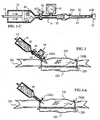
- Fig. 1-A depicts a delivery system of the present invention.
- Fig. 1-B shows the system of Fig. 1-A attached to a free end of a blood vessel, before delivery of a solution containing a substance to be delivered to the blood vessel.
- Fig. 1-C shows the system and blood vessel of Fig. 1-B during delivery of a solution containing a substance to be delivered to the endothelium of the blood vessel.
- Fig. 1-C' shows the system and blood vessel of Fig. 1-B during delivery of a solution containing a substance to be delivered to the endothelium and outside surface of the blood vessel.
- Fig. 2 illustrates delivery to a portion of a blood vessel defining part of the boundary of the pressurized enclosure.
- Fig. 3-A depicts an alternative method of intracellular delivery to a blood vessel.
- Fig: 3-B shows the blood vessel of Fig. 3-A, wherein the blood vessel is pressurized mechanically.
- Fig. 4-A depicts a two-balloon catheter adapted to deliver a solution containing a substance to be delivered into a blood vessel.
- Fig. 4-B shows the catheter of Fig. 4-A with the balloons in an inflated state.
- Fig. 4-C shows a catheter system having a balloon and inner tubules for delivering a solution containing a substance to be delivered to the walls of a blood vessel.
- Fig. 5-A illustrates delivery to blood vessels in an organ.
- Fig. 5-B shows the use of balloon-catheters for pressurizing an organ.
- Fig. 6 shows a delivery system comprising a pressurization chamber.
- Fig. 7-A shows transfection efficiency as a function of applied pressure for human saphenous vein transfected according to the present invention.
- Fig. 7-B illustrates the effect of a distension-preventing sheath on transfection efficiency for FITC-ODN transfected human saphenous vein.
- Fig. 7-C illustrates inhibition of IL-6 protein production following transfection of IL-6 antisense ODN into human saphenous vein.
- Fig. 8-A illustrates inhibition of IL-6 mRNA production following transfection of IL-6 antisense ODN into human saphenous vein of a first subject.
- Fig. 8-B is a graph similar to that in Fig. 8-A, for a second subject.
- Fig. 8-C is a graph similar to that in Fig. 8-A, for a third subject.
- Fig. 9-A shows transfection efficiency for in vivo transfection of rabbit carotid artery measured by fluorescence microscopy.
- Fig. 9-B shows luciferase activity for control, healthy, and atherosclerotic cells following in vivo transfection of rabbit carotid artery with DNA encoding firefly luciferase.
- Fig. 10 shows transfection efficiencies for rat vascular smooth muscle cells transfected in vitro according to a method of the present invention.
- Fig. 11 shows luciferase activities for rat kidneys perfused with plasmid DNA containing the gene encoding firefly luciferase.
- Fig. 12-A shows the effect of pressure on transfection efficiency for rat aorta cells.
- Fig. 12-B shows ischemia-induced PCNA expression in transplanted rat aortae with and without pressure-mediated transfection of antisense-PCNA ODN.
- Fig. 12-C shows ischemia-induced cdc2 kinase expression in transplanted rat aortae with and without pressure-mediated transfection of antisense-cdc2 kinase ODN.
- Fig. 12-A shows the effect of pressure on transfection efficiency for rat aorta cells.
- Fig. 12-B shows ischemia-induced PCNA expression in transplanted rat aortae with and without pressure-mediated transfection of antisense-PCNA ODN.
- Fig. 12-C shows ischemia-induced cdc2 kinase expression in transplanted rat aortae with and without pressure-mediated transfection of antisense-cd
- 12-D shows illustrates the reduction in lumenal narrowing of isotransplanted, ischemic-injured rat aortae, resulting from pressure-mediated transfection with antisense ODN against both PCNA and cdc2 kinase.
- Fig. 13-A shows transfection efficiencies for rat hearts transfected ex vivo with FITC-ODN, with and without pressure.
- Fig. 13-B shows ICAM-1 expression in transplanted rat hearts with and without pressure-mediated transfection of antisense-ICAM-1 ODN.
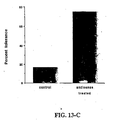
- Fig. 13-C illustrates the induction of long-term graft acceptance by pressure-mediated transfection of transplanted rat hearts with antisense ODN against ICAM-1.
- Fig. 14-A shows wall thicknesses at 6 weeks and 6 months after transplantation for untreated (control) grafts, and grafts transfected with either reverse antisense (control) ODN or with antisense ODN against both PCNA and cdc2 kinase.
- Fig. 14-B shows results similar to those in Fig. 14-A for veins transfected with E2F decoy ODN, as compared to untreated grafts and control grafts transfected with scrambled ODN.
- the types of substances that can be used with this invention include (1) charged atoms or ions, (2) neutral or charged small molecules (e.g ., molecules having a molecular weight of ⁇ 1,000), with the exception of small nucleic acids, (3) large molecules ( e.g. , molecules having a molecular weight of ⁇ 1,000), especially proteins and peptides, with the exception of nucleic acids, (4) polymers and filaments (generally ⁇ 10 ⁇ m in greatest dimension), (5) inorganic atoms and molecules, and (6) microscopic particles (generally ⁇ 10 ⁇ m in greatest dimension).
- These substances can be delivered to the extracellular environment of the cell in a wide range of concentrations, preferably, but not limited to, 1 nM to 1 mM, depending on the type of substance and its intended use.
- concentrations to be used in each application of the invention can be determined by the user based on his or her knowledge of the chemistry, biochemistry, or functional properties of the substance to be delivered.
- the substance can exist in solution in the extracellular environment, or it can comprise a suspension or colloid.
- a sealed enclosure containing the tissue and the extracellular environment is defined, and the incubation pressure is established, within the sealed enclosure.
- the boundary of the enclosure is defined substantially by an enclosing means, so that target tissue (tissue comprising the target cell) is subjected to isotropic pressure, and does not distend or experience trauma.
- part of the enclosure boundary is defined by a tissue.
- a protective means such as an inelastic sheath is then placed around the tissue to prevent distension and trauma in the tissue.
- a sealed enclosure is preferably defined between occlusions formed by inflatable balloons or tie wraps.
- a solution containing a substance to be delivered is delivered to the enclosure through a catheter having a delivery outlet between the occlusions.
- an enclosure is defined within an organ by establishing occlusions within organ conduits (e.g ., blood vessels), such that a space within the organ can be pressurized.
- the incubation pressure used to facilitate cellular uptake is preferably maintained at a predetermined level for a predetermined incubation period.
- the incubation pressure depends on the application, including parameters such as the incubation period, the tissue type, and the molecule being delivered.
- the incubation pressure used can range from, for example, 50 mm Hg to 5 atmospheres above ambient pressure, for example, 300 mm Hg to 1500 mm Hg above ambient pressure, or 0 to 2 atmospheres above ambient temperature; higher or lower pressures can also be used, provided that effective delivery is achieved and that a counter veiling injury is not sustained by the target cell or cells.
- the incubation period used to facilitate cellular uptake can vary, depending on parameters such as the incubation pressure, the target tissue type, the molecule being delivered, and the desired dosage.
- the duration of the incubation pressure can range, for example, from approximately 1 second to four hours.
- the pressure duration is between 20 seconds and 30 minutes, more preferably between 60 seconds and 10 minutes.
- Suitable mammalian target tissues include blood vessel tissue (in particular, veins used as grafts in arteries), heart, bone marrow, connective tissue, liver, kidney, genital-urinary system tissue, bones, muscles, gastrointestinal organs, and endocrine and exocrine organs.
- the in vitro methods of the present invention can be applied to parts of an organ, to a whole organ ( e.g ., a heart).
- the invention relates also to the use of a reservoir and a catheter in the manufacture of a system for delivering an atom, a molecule, or a particle of maximum dimension of ⁇ 10 ⁇ m into a living cell in a tissue in vivo.
- Applications of the present invention also include the treatment of allografts (grafts derived from a different subject than the transplant patient) and syngrafts (grafts derived from the transplant patient).
- the conditions for each application of the invention can be determined by labeling the substance with a radioactive, fluorescent, or chemical tag, and then following the substance, following pressure-enhanced administration, via the label.
- measurement of biological activity can be carried out.
- optimization of delivery conditions can be achieved via quantification of delivery of an easily-labeled material that is chemically and/or physically similar to the desired substance.
- a system for delivering a molecule into a cell using the in vitro methods of the invention includes an enclosing means for defining at least part of a boundary of a sealed enclosure, and a pressurization means for establishing an incubation pressure within the enclosure.
- the enclosure contains the target cell and an extracellular environment of the cell.
- a delivery means such as a catheter or syringe is used to deliver the molecule to the extracellular environment, directly or indirectly ( e.g ., by intravenous injection).
- the enclosure boundary is defined by the enclosing means, and possibly by tissue.
- Suitable enclosing means include, depending on the embodiment, a pressurization chamber, an impermeable sheath or bag, and an occlusion means for occluding a passage in a tissue.
- a pressurization chamber is particularly suited for the treatment of grafts or entire organisms, while other devices are well suited for intraoperative treatment of tissue.
- the enclosure boundary is defined substantially by the enclosing means. Pressure is then applied to the target tissue uniformly from all directions, and the target tissue is not subjected to a risk of suffering trauma.
- part of the boundary is defined by a tissue (e.g ., the target tissue). The tissue forming part of the enclosure boundary is subjected to pressure from one side only, and can become distended. A protective means such as an inelastic sheath is placed around the tissue to prevent distension and trauma in the tissue.
- Figs. 1-A through 1-C' illustrate methods of pressurized delivery of molecules to cells of a blood vessel.
- Fig. 1-A is a side view of a delivery system 11 of the present invention.
- System 11 comprises a reservoir 10 for holding a solution 40 containing a substance to be delivered, and a delivery means for expelling solution 40 from reservoir 10 .
- the delivery means comprises a plunger 12 and a delivery tube 14. Opposite plunger 12, reservoir 10 opens into tube 14. Attached to tube 14 are, listed in order of proximity to reservoir 10, a stopcock 16, a pressure gauge 18, a retracted sheath 20, and a notch 22. Sheath 20 is preferably impermeable and inelastic. Notch 22 is next to a distal open end 30 of tube 14. Stopcock 16 is initially in a closed position, preventing solution 40 from passing from reservoir 10 to tube 14 .
- Fig. 1-B shows a blood vessel 24 attached to system 11. Open end 30 is placed into a proximal end of blood vessel 24. Notch 22 fits inside a proximal end of tissue 24. Sheath 20 is pulled down to cover tissue 24. A tie or ligature 26A is wrapped around sheath 20 and tissue 24 at the point where they are attached to tube 14, to prevent tissue 24 from slipping from open end 30. When stopcock 16 is turned to an open position, the solution 40 enters tube 14 and sheath 20, flushing out all gases and liquids present through open end 28 of sheath 20. After the flushing, a tie wrap 26B is placed over distal open end 28 of sheath 20 to form a water-tight seal, as shown in Figs. 1-C and 1-C' .
- Fig. 1-C illustrates delivery targeted to the endothelium of blood vessel 24, while Fig. 1-C' illustrates delivery to the endothelium and to the outside surface of blood vessel 24.
- tie wrap 26B is placed around sheath 20 and tissue 24. Tie wrap 26B occludes blood vessel 24. Stopcock 16 is turned to its open position, and plunger 12 is pushed, such that the solution 40 is delivered into vessel 24 under a delivery pressure. The delivery pressure is allowed to increase until an incubation pressure is reached, and stopcock 16 is closed. Blood vessel 24 is allowed to incubate for an incubation period, after which tie wrap 26B is untied to release the pressure (not illustrated).
- the boundary of a sealed enclosure is defined by the walls of vessel 24 and by an enclosing means.
- the sealed enclosure contains the target (endothelial) cells of blood vessel 24, and their extracellular environment. If stopcock 16 is in a closed position, the enclosing means comprises tube 14, stopcock 16, and ligature 26B. If stopcock 16 is in an open position, the enclosing means comprises ligature 26B , tube 14, plunger 12, and parts of the walls of reservoir 10.
- the enclosing means defines at least part of the boundary of the enclosure.
- part of the boundary of the enclosure is defined by blood vessel 24. Applying pressure only to the inside of blood vessel 24 could cause blood vessel 24 to distend and experience trauma. Sheath 20 acts as a protective means, preventing blood vessel 24 from distending. In an arrangement such as the one in Fig. 1-C , it is thus important that sheath 20 be inelastic.
- tie wrap 26B around sheath 20 only, as illustrated in Fig. 1-C' .
- the sealed enclosure containing the target cells of blood vessel 24 and their extracellular environment is defined substantially by an enclosing means. If stopcock 16 is in a closed position, the enclosing means comprises sheath 20, tube 14 , stopcock 16, and ligature 26B' . If stopcock 16 is in an open position, the enclosing means comprises sheath 20, tube 14, ligature 26B' , plunger 12, and parts of the walls of reservoir 10.
- the boundary of the enclosure is defined substantially by the enclosing means.
- the pressure around blood vessel 24 is uniform, and thus blood vessel 24 does not experience trauma. Since sheath 20 acts as part of the enclosing means, it is important that sheath 20 be impermeable. Sheath 20 need not necessarily be inelastic in the arrangement of Fig. 1-C', however, since the use of an elastic sheath would not lead to trauma in blood vessel 24 .
- Fig. 2 illustrates delivery of molecules to a blood vessel.
- Tube 14 is inserted into the lumen of a vessel 224 .
- a sheath 220 wraps around vessel 224, and a fastener 228 (e.g ., a heat seal) attaches the two flaps of sheet 220 to form a tube.
- Sheath 220 acts as a protective means, preventing the distension of vessel 224.
- Two tie wraps 226A and 226B wrap around sheath 220. Tie wraps 226A and 226B act as occluding means, occluding vessel 224.
- Occlusions 226A and 226B, and the walls of vessel 224 between occlusions 226A and 226B define a sealed enclosure 230 containing the target cells of vessel 224 and their extracellular environment.
- the solution 40 is injected into the sealed enclosure, and segment 230 is allowed to incubate for an incubation period. After the incubation period, occlusions 226A and 226B are removed, and blood is allowed to flow through vessel 224 .
- Figs. 3-A and 3-B illustrate a delivery system having distinct delivery and pressurization elements, used to deliver molecules to the blood vessel shown in Fig. 2.
- a rigid tubular wrap 250 is placed around sheet 220, and a vise 252 is placed around wrap 250, as illustrated in Fig. 3-B.
- Wrap 250 is circumferentially flexible, so that the diameter of the tube it forms is variable, but it is rigid axially, so that even when its diameter changes, it still remains substantially tubular.
- a tightening screw 254 tightens vise 252 , pulling wrap 250 tight, creating pressure within vessel 224. This pressure is maintained for an incubation period, after which screw 254 is unscrewed.
- Figs. 4-A through 4-D illustrate a method of delivering a solution containing a substance to be delivered to the lumen of a blood vessel 324 through a catheter 314 .
- Catheter 314 is inserted into vessel 324.
- Catheter 314 is closed at its end 316.
- Catheter 314 has two balloons 332A and 332B, and a delivery port 330 between balloons 332A and 332B.
- balloons 332A and 332B are deflated, as shown in Fig. 4-A.
- balloons 332A and 332B are inflated, as shown in Fig. 3-B.
- Balloons 332A and 332B occlude vessel 324 and create a sealed enclosure 334 within vessel 324.
- a solution 340 containing a substance to be delivered is delivered to enclosure 334 through port 330.
- Solution 340 is delivered under pressure, such that enclosure 334 becomes pressurized.
- balloons 332A and 332B are deflated and target enclosure 334 is depressurized.
- Fig. 4-C shows an alternative delivery system of the present invention, in which a balloon mounted on a catheter has miniature tubules for delivering a solution containing a substance to be delivered to the walls of the vessel.
- a balloon 432 has tubules 450 that are directly connected to holes 452 in the segment of catheter 314 within balloon 432.
- solution 440 exits holes 452, travels through tubules 450, and reaches the walls of vessel 324.
- Fig. 5-A illustrates the use of system 11 for delivery to blood conduits (vessels and/or atria and ventricles) of an organ 124 such as a heart.
- a protective sheath 120 is wrapped around organ 124.
- Organ 124 has an artery 112 which carries blood into it and a vein 114 which carries blood away.
- Tube 14 is inserted into the lumen of artery 112, and sheath 120 is wrapped around artery 112 and vein 114.
- Tie wrap 126A is tightened around sheath 120 at artery 112, and tie wrap 126B is tightened around sheath 120 at vein 114 , to prevent leakage of fluid out of organ 124.
- Tie wrap 126A allows tube 14 to enter artery 112, yet wraps tightly enough to seal artery 112 from leakage.
- a solution 40 containing a substance to be delivered is injected, and organ 124 is allowed to incubate. After the incubation period, tie wraps 126A and 126B are removed, and blood is allowed to flow through organ 124 once more.
- Fig. 5-B illustrate the use of balloon-catheters for sealing an inlet and an outlet of an organ (e.g ., a gastrointestinal organ).
- a catheter 550 with a balloon 552 is inserted into a first organ conduit 512 in communication with an organ 524, and another catheter 560 with a balloon 562 is inserted into a second organ conduit 514 leading away from organ 524.
- balloons 552 and 562 are deflated (not illustrated).
- balloons 552, 562 are inflated and establish occlusions in conduits 512, 514, respectively.
- a solution 540 containing a substance to be delivered is delivered to organ 524 under a delivery pressure.
- FIG. 6 illustrates the use of a pressurization chamber to facilitate delivery of substances to cells.
- a holding means such as a dish 610 contains a tissue 624 containing target cells.
- a solution 640 containing the substance is placed in dish 610.
- Dish 610 is placed in a pressure chamber 650.
- Chamber 650 is closed and sealed, and a pressurized gas (e.g ., CO 2 ) is introduced into chamber 650 through a duct 660.
- Solution 640 and tissue 624 are maintained under an incubation pressure for an incubation period.
- Tissue 624 can comprise an entire organ.
- a pressurization chamber is shown in Fig. 6 incubation period.
- the increase in membrane permeability requires an increased pressure within the cell and/or extracellular environment, but not necessarily a pressure gradient across the cell membrane. It is possible that proteins forming transmembrane channels change conformation at high pressure, and thus allow the passage of molecules through the channels and into the cytoplasm.
- incubation periods and concentrations used depend on the target tissue type. For example, as is described further below, an incubation period of approximately 5 minutes at low pressure ( ⁇ 0.5 atm) is sufficient for achieving a near-maximal transfection efficiency in human saphenous vein, while an incubation period of over one hour at high pressure ( ⁇ 2 atm) is required for achieving a transfection efficiency of 80-90% in rat aortae. For rat hearts, an incubation period of 30 to 45 minutes at 2 atm is necessary for a transfection efficiency above 50%. In general, the incubation period necessary to achieve a given transfection efficiency in different tissue types varies from minutes to hours, at incubation pressures on the order of atmospheres. Suitable incubation periods and pressures for a given tissue type can be readily determined by the skilled artisan.
- the walls of the pressurized enclosure do not include living tissue, since tissue forming parts of the enclosure wall is subject to mechanical stress.
- Some surgical procedures such as the treatment of blood vessels connected to the circulatory system during the procedure (see Figs. 3-A and 3-B ), require that at least parts of the enclosure walls be defined by tissue. In such a case, it is important that a protective means be used to prevent distension of the tissue.
- Grafts treated ex-vivo are, in general, preferably treated by incubation in a pressurized chamber or an equivalent pressurized enclosure.
- the transfection efficiency of a method of the present invention was investigated in vitro by measuring the inhibition of IL-6 production by antisense ODN in whole organ culture. Vein segments were incubated in growth medium for 24 hours after transfection. Transfections were performed at 5 mM, 10 mM, and 100 mM for 10 minutes, according to a method similar to that illustrated in Fig. 1-C .
- Quantitative reverse transcription PCR was used to measure the reduction in IL-6 mRNA resulting from antisense-ODN transfection performed according to the present invention.
- Three specimens of human saphenous vein were transfected as illustrated in Fig. 1-C , and mRNA levels in antisense-transfected vein segments were compared to levels in untreated and reverse antisense (control) ODN-transfected segments. Results for the three specimens are shown in Figs. 8-A, 8-B, and 8-C, respectively. Reductions in mRNA levels indicate sequence-specific efficacy of antisense-ODN treatment.
- Fig. 11 illustrates the effect of pressure on transfection efficiency for rat kidney cells perfused in vivo with plasmid DNA containing the gene for firefly luciferase, as illustrated in Fig. 6 .
- Fig. 12-A shows the effect of pressure on transfection efficiency for rat aorta cells.
- Aortae were harvested from donor rats and incubated at 4°C for 24 hours in physiologic solution to induce ischemic injury, in a manner similar to that illustrated in Fig. 1-C' .
- Fig. 12-B shows ischemia-induced PCNA expression in transplanted rat aortae with and without pressure-mediated transfection of antisense-PCNA ODN.
- the transfection procedure was similar to that illustrated in Fig. 1-C' .
- Ischemic injuries were induced by 24 hour incubations at 4°C, either in saline solution (control), or in saline solution containing 40 ⁇ M ODN.
- a pressure of 2 atm above atmospheric pressure was applied during incubation to both control and ODN-treated samples.
- Fig. 12-C shows ischemia-induced cdc2 kinase expression in transplanted rat aortae with and without pressure-mediated transfection of antisense-cdc2 kinase ODN.
- the transfection, transplantation, and harvesting procedures were similar to those described above in relation to Fig. 12-B.
- Protein levels for cdc2 kinase were measured by ELISA.
- Fig. 12-D illustrates the reduction in lumenal narrowing of isotransplanted, ischemic-injured rat aortae, resulting from pressure-mediated transfection with antisense ODN against both PCNA and cdc2 kinase.
- Ischemic injury was induced by 24 hours of incubation at 4°C in either saline solution (control), or antisense-PCNA/antisense-cdc2 kinase ODN solution (40 ⁇ M each). A pressure of 2 atm above ambient pressure was applied to all tissues (including control).
- Fig. 13-A shows transfection efficiencies for rat hearts transfected ex vivo with FITC-ODN, with and without pressure.
- Fig. 13-B shows ICAM-1 expression in transplanted rat hearts, with and without pressure-mediated transfection of antisense-ICAM-1 ODN.
- Either saline (control) or antisense-ICAM-1-ODN solution (80 ⁇ M) was perfused into the coronary arteries of donor PVG strain hearts after aortic crossclamping. The hearts were then submerged in FITC-ODN solution and exposed to 2 atm above ambient pressure for 45 minutes at 4°C, as illustrated in Fig. 6 .
- Fig. 13-C illustrates the induction of long-term graft acceptance by pressure-mediated transfection of transplanted rat hearts with antisense ODN against ICAM-1.
- PVG strain rat hearts were harvested and transfected ex-vivo with either antisense-ICAM-1 ODN solution (80 ⁇ m) or with saline solution (control), as described above in relation to Fig. 13-B.
- Figs. 14-A and 14-B show inhibition of neointimal hyperplasia in rabbit jugular veins grafted into carotid arteries, following pressure-mediated transfection with ODN designed to block up regulation of cell cycle regulatory genes.
- Fig. 14-A shows wall thicknesses at 6 weeks and 6 months after transplantation for untreated (control) grafts, and grafts transfected with either reverse antisense (control) ODN or with,antisense ODN against both PCNA and cdc2 kinase.
- Neointima formation was inhibited for up to 6 months, while medial hypertrophy allows adaptive wall thickening to reduce wall stress in the high-pressure arterial environment.
- Fig. 14-B shows results similar to those in Fig. 14-A for veins transfected with E2F decoy ODN, as compared to untreated grafts and control grafts transfected with scrambled ODN.
- n 6, p ⁇ 0.005.
- a time-varying incubation pressure can be used in general.
- Many potential designs for enclosing means, protective means, and/or occluding means can be readily devised by one skilled in the art, depending on the application.
- Various incubation pressures, periods, and active agent dosages leading to desirable or near-maximal transfection efficiencies can be readily determined for different tissue types.
Landscapes
- Health & Medical Sciences (AREA)
- Engineering & Computer Science (AREA)
- Life Sciences & Earth Sciences (AREA)
- Genetics & Genomics (AREA)
- Biomedical Technology (AREA)
- Chemical & Material Sciences (AREA)
- Organic Chemistry (AREA)
- Bioinformatics & Cheminformatics (AREA)
- Wood Science & Technology (AREA)
- Zoology (AREA)
- Biotechnology (AREA)
- General Engineering & Computer Science (AREA)
- General Health & Medical Sciences (AREA)
- Microbiology (AREA)
- Biochemistry (AREA)
- Molecular Biology (AREA)
- Biophysics (AREA)
- Plant Pathology (AREA)
- Physics & Mathematics (AREA)
- Sustainable Development (AREA)
- Animal Behavior & Ethology (AREA)
- Veterinary Medicine (AREA)
- Public Health (AREA)
- Hematology (AREA)
- Heart & Thoracic Surgery (AREA)
- Anesthesiology (AREA)
- Cell Biology (AREA)
- Endocrinology (AREA)
- Mechanical Engineering (AREA)
- Analytical Chemistry (AREA)
- Medical Informatics (AREA)
- Dermatology (AREA)
- Clinical Laboratory Science (AREA)
- Vascular Medicine (AREA)
- Medicinal Chemistry (AREA)
- General Chemical & Material Sciences (AREA)
- Virology (AREA)
- Nuclear Medicine, Radiotherapy & Molecular Imaging (AREA)
- Pharmacology & Pharmacy (AREA)
- Chemical Kinetics & Catalysis (AREA)
Claims (23)
- Ein in vitro Verfahren zur Steigerung der Aufnahme eines Atoms, eines Moleküls, mit der Ausnahme von Nukleinsäuren, oder eines Partikels mit einer maximalen Dimension von <10 µm durch eine Zelle, wobei das Verfahren umfasstIn-Kontakt-Bringen der Zelle und eines flüssigen Mediums, welches das Atom, Molekül oder Partikel umfasst,Aufrechterhalten der Zelle und des flüssigen Mediums in einem eingeschlossenen Raum, undUnterziehen der eingeschlossenen Zelle und des flüssigen Mediums eines Inkubationsdrucks, der ausreicht, die Aufnahme des Atoms, Moleküls oder Partikels durch die Zelle zu steigern, wobei ein am menschlichen oder tierischen Körper ausgeübtes Verfahren ausgeschlossen ist.
- Verfahren gemäß Anspruch 1, wobei die Zelle innerhalb eines Säuger-Blutgefässes enthalten ist, das an zwei Stellen versiegelt ist, um den eingeschlossenen Raum bereitzustellen.
- Verfahren gemäß Anspruch 1, wobei das Molekül ein therapeutisches, geladenes organisches Molekül mit einem Molekulargewicht von weniger als 1000 ist.
- Verfahren gemäß Anspruch 1, wobei das Molekül ein Protein oder ein Peptid mit einem Molekulargewicht von mehr als 1000 ist.
- Verfahren gemäß Anspruch 1, wobei der Inkubationsdruck zwischen 50 mm Hg und 5 Atmosphären über Umgebungsdruck liegt.
- Verfahren gemäß Anspruch 5, wobei der Inkubationsdruck zwischen 200 mm Hg und 2,5 Atmosphären über Umgebungsdruck liegt.
- Verfahren gemäß Anspruch 1, wobei die Zelle in einem Blutgefäß oder Organ vom Säuger enthalten ist, und der Inkubationsdruck äquilibriert zwischen dem Äußeren und Inneren des Gefäßes oder des Organs, so dass zwischen dem Äußeren und Inneren im wesentlichen kein Druckgradient vorliegt.
- Verwendung eines Reservoirs und eines Katheters zur Herstellung eines Systems zum Transport eines Atoms, eines Moleküls oder eines Partikels mit einer maximalen Dimension von <10 um in eine lebende Zelle in ein Gewebe in vivo, wobei:das Reservoir zum Halten einer Lösung, die das Atom, Molekül oder Partikel enthält, geeignet ist;das System zum Transport des Atoms, Moleküls oder Partikels in die extrazelluläre Umgebung der lebenden Zelle des Gewebes und zur Anwendung von Druck auf diese Zelle und Umgebung geeignet ist, wodurch die Aufnahme des Atoms, Moleküls oder Partikels durch diese lebende Zelle erleichtert wird; und wobeidas Atom, Molekül oder Partikel kein Nukleotid ist.
- Verwendung eines Systems zum Transport eines Atoms, eines Moleküls oder eines Partikels mit einer maximalen Dimension von <10 µm in vitro in eine lebende Zelle, wobei das Atom, Molekül oder Partikel kein Nukleotid ist, wobei das System umfasst:ein Mittel zum Einschließen zur Definition wenigstens eines Teils einer Begrenzung einer versiegelten Einschließung, wobei die versiegelte Einschließung die Zelle und eine extrazelluläre Umgebung der Zelle enthält; undein Mittel zur Druckregelung zur Etablierung eines Inkubationsdrucks oberhalb des Luftdrucks in der versiegelten Einschließung, wodurch die Aufnahme des Atoms, Moleküls oder Partikels durch die lebende Zelle erleichtert wird, wobei die Verwendung des Systems in einem Verfahren, das am menschlichen oder tierischen Körper ausgeübt wird, ausgeschlossen ist.
- Verwendung gemäß Anspruch 9, wobei das Mittel zum Einschließen eine Druckregelungskammer umfasst.
- Verwendung gemäß Anspruch 10, wobei ein Mittel zur Halterung in die Druckregelungskammer eingesetzt wird, um ein Gewebe, das Zielzellen enthält und eine Lösung, die das Atom, Molekül oder Partikel enthält, zu halten.
- Verwendung gemäß Anspruch 8, wobei die Zelle innerhalb eines Säuger-Blutgefässes enthalten ist, das an zwei Stellen versiegelt ist, um den eingeschlossenen Raum bereitzustellen.
- Verwendung gemäß Anspruch 8 oder 9, wobei das Molekül ein therapeutisches, geladenes organisches Molekül mit einem Molekulargewicht von weniger als 1000 ist.
- Verwendung gemäß Anspruch 8 oder 9, wobei das Molekül ein Protein oder ein Peptid mit einem Molekulargewicht von mehr als 1000 ist.
- Verwendung gemäß Anspruch 8 oder 9, wobei der Inkubationsdruck zwischen 50 mm Hg und 5 Atmosphären über Umgebungsdruck liegt.
- Verwendung gemäß Anspruch 8 oder 9, wobei der Inkubationsdruck zwischen 200 mm Hg und 2,5 Atmosphären über Umgebungsdruck liegt.
- Verwendung gemäß Anspruch 8 oder 9, wobei die Zelle in einem Blutgefäß oder Organ vom Säuger enthalten ist, und der Inkubationsdruck äquilibriert zwischen dem Äußeren und Inneren des Gefäßes oder des Organs, so dass zwischen dem Äußeren und Inneren im wesentlichen kein Druckgradient vorliegt.
- Verwendung gemäß Anspruch 9, wobei das Mittel zum Einschließen eine undurchlässige Ummantelung umfasst.
- Verwendung gemäß Anspruch 9, wobei das Mittel zum Einschließen ein Mittel zur Verstopfung zur Verstopfung einer Passage in einem Gewebe umfasst.
- Verwendung gemäß Anspruch 9, wobei die Begrenzung im wesentlichen durch das Mittel zum Einschließen definiert wird.
- Verwendung gemäß Anspruch 9, wobei Teil der Begrenzung durch ein Gewebe definiert wird.
- Verwendung gemäß Anspruch 9, wobei das System weiter ein Mittel zum Schutz umfasst, das dazu geeignet ist, um das Gewebe herum platziert zu werden, um einem Trauma in diesem Gewebe vorzubeugen.
- Verwendung gemäß Anspruch 22, wobei das Mittel zum Schutz eine unelastische Ummantelung umfasst.
Priority Applications (1)
| Application Number | Priority Date | Filing Date | Title |
|---|---|---|---|
| EP02019889A EP1279412A3 (de) | 1996-11-07 | 1997-11-07 | Druckvermittelte, intrazelluläre verabreichung von molekuelen oder mikropartikeln |
Applications Claiming Priority (3)
| Application Number | Priority Date | Filing Date | Title |
|---|---|---|---|
| US745023 | 1996-11-07 | ||
| US08/745,023 US5922687A (en) | 1995-05-04 | 1996-11-07 | Intracellular delivery of nucleic acids using pressure |
| PCT/US1997/020696 WO1998020109A1 (en) | 1996-11-07 | 1997-11-07 | Pressure-mediated intracellular delivery of molecules or microparticles |
Related Child Applications (1)
| Application Number | Title | Priority Date | Filing Date |
|---|---|---|---|
| EP02019889A Division EP1279412A3 (de) | 1996-11-07 | 1997-11-07 | Druckvermittelte, intrazelluläre verabreichung von molekuelen oder mikropartikeln |
Publications (3)
| Publication Number | Publication Date |
|---|---|
| EP0944715A1 EP0944715A1 (de) | 1999-09-29 |
| EP0944715A4 EP0944715A4 (de) | 1999-12-22 |
| EP0944715B1 true EP0944715B1 (de) | 2002-09-11 |
Family
ID=24994918
Family Applications (2)
| Application Number | Title | Priority Date | Filing Date |
|---|---|---|---|
| EP02019889A Withdrawn EP1279412A3 (de) | 1996-11-07 | 1997-11-07 | Druckvermittelte, intrazelluläre verabreichung von molekuelen oder mikropartikeln |
| EP97948268A Expired - Lifetime EP0944715B1 (de) | 1996-11-07 | 1997-11-07 | Druckvermittelte, intrazellulaere verabreichung von molekuelen oder mikropartikeln |
Family Applications Before (1)
| Application Number | Title | Priority Date | Filing Date |
|---|---|---|---|
| EP02019889A Withdrawn EP1279412A3 (de) | 1996-11-07 | 1997-11-07 | Druckvermittelte, intrazelluläre verabreichung von molekuelen oder mikropartikeln |
Country Status (15)
| Country | Link |
|---|---|
| US (1) | US5922687A (de) |
| EP (2) | EP1279412A3 (de) |
| JP (3) | JP2001505419A (de) |
| KR (1) | KR100449330B1 (de) |
| CN (1) | CN1109749C (de) |
| AT (1) | ATE223967T1 (de) |
| AU (1) | AU736298B2 (de) |
| BR (1) | BR9713334A (de) |
| CA (1) | CA2271244C (de) |
| DE (1) | DE69715449T2 (de) |
| DK (1) | DK0944715T3 (de) |
| ES (1) | ES2183221T3 (de) |
| IL (1) | IL129808A (de) |
| PT (1) | PT944715E (de) |
| WO (1) | WO1998020109A1 (de) |
Families Citing this family (136)
| Publication number | Priority date | Publication date | Assignee | Title |
|---|---|---|---|---|
| US7803782B2 (en) * | 2003-05-28 | 2010-09-28 | Roche Madison Inc. | Intravenous delivery of polynucleotides to cells in mammalian limb |
| US6627616B2 (en) * | 1995-12-13 | 2003-09-30 | Mirus Corporation | Intravascular delivery of non-viral nucleic acid |
| US7507722B1 (en) | 1999-11-05 | 2009-03-24 | Roche Madison Inc. | Intravascular delivery of nucleic acid |
| US20020001574A1 (en) * | 1995-12-13 | 2002-01-03 | Jon A. Woiff | Process of delivering a polynucleotide to a muscle cell via the vascular system |
| US20040259828A1 (en) * | 1995-12-13 | 2004-12-23 | Wolff Jon A. | Intravascular delivery of non-viral nucleic acid |
| US6379966B2 (en) * | 1999-02-26 | 2002-04-30 | Mirus Corporation | Intravascular delivery of non-viral nucleic acid |
| US6676626B1 (en) | 1998-05-01 | 2004-01-13 | Ekos Corporation | Ultrasound assembly with increased efficacy |
| US6582392B1 (en) | 1998-05-01 | 2003-06-24 | Ekos Corporation | Ultrasound assembly for use with a catheter |
| US7435723B2 (en) * | 1997-11-21 | 2008-10-14 | Mirus Bio Corporation | Process for delivery of polynucleotides to the prostate |
| US6699231B1 (en) | 1997-12-31 | 2004-03-02 | Heartport, Inc. | Methods and apparatus for perfusion of isolated tissue structure |
| US6722370B1 (en) * | 1998-07-17 | 2004-04-20 | Corgentech, Inc. | Delivery of a composition to the liver by utilizing the portal vein |
| EP1113836A4 (de) * | 1998-09-14 | 2008-01-23 | Mirus Bio Corp | Verfahren zur freigabe von nukleinsäure an herzgewebe |
| WO2000050617A1 (en) * | 1999-02-26 | 2000-08-31 | Mirus Corporation | Intravascular delivery of non-viral nucleic acid |
| ATE482233T1 (de) * | 1999-06-28 | 2010-10-15 | Oklahoma Med Res Found | Inhibitoren des memapsin 2 und ihre verwendung |
| DE60031442T2 (de) | 1999-11-05 | 2007-03-29 | Mirus Bio Corp., Madison | Intravaskuläre nukleinsäurezuführung |
| US7642248B2 (en) * | 1999-11-05 | 2010-01-05 | Roche Madison Inc | Devices and processes for distribution of genetic material to mammalian limb |
| US7214369B2 (en) * | 2003-05-05 | 2007-05-08 | Mirus Bio Corporation | Devices and processes for distribution of genetic material to mammalian limb |
| AU1661201A (en) | 1999-11-18 | 2001-05-30 | Epimmune, Inc. | Heteroclitic analogs and related methods |
| US20040072785A1 (en) * | 1999-11-23 | 2004-04-15 | Wolff Jon A. | Intravascular delivery of non-viral nucleic acid |
| US6346098B1 (en) | 2000-03-07 | 2002-02-12 | The Board Of Trustees Of The Leland Stanford Junior University | Methods and kits for locally administering an active agent to an interstitial space of a host |
| US7094408B2 (en) * | 2000-04-28 | 2006-08-22 | The United States Of America As Represented By The Department Of Health And Human Services | Immunogenicity using a combination of DNA and vaccinia virus vector vaccines |
| JP2004511219A (ja) | 2000-07-12 | 2004-04-15 | アジェンシス,インコーポレイテッド | 膀胱癌、卵巣癌、肺癌、および腎臓癌の診断および治療に有用な腫瘍抗原 |
| AU2001280789A1 (en) * | 2000-07-25 | 2002-02-05 | The Board Of Trustees Of The Leland Stanford Junior University | Non-viral linear dna vectors and methods for using the same |
| PT1313850E (pt) | 2000-08-28 | 2008-11-18 | Agensys Inc | Ácido nucleico e proteína correspondente denominados 85p1b3 úteis no tratamento e na detecção de cancro |
| ATE536187T1 (de) | 2000-10-19 | 2011-12-15 | Epimmune Inc | Hla-klasse-i- und -klasse-ii-bindende peptide und ihre verwendungen |
| WO2002066611A2 (en) * | 2001-02-16 | 2002-08-29 | The Board Of Trustees Of The Leland Stanford Junior University | Minimal plasmid vectors that provide for persistent and high level gene expression and methods for using the same |
| US6924358B2 (en) | 2001-03-05 | 2005-08-02 | Agensys, Inc. | 121P1F1: a tissue specific protein highly expressed in various cancers |
| US7271240B2 (en) | 2001-03-14 | 2007-09-18 | Agensys, Inc. | 125P5C8: a tissue specific protein highly expressed in various cancers |
| EP2280030A3 (de) | 2001-04-10 | 2011-06-15 | Agensys, Inc. | Nukleinsäuren und zugehörige Proteine für die Behandlung und den Nachweis von Krebs |
| US20030191073A1 (en) | 2001-11-07 | 2003-10-09 | Challita-Eid Pia M. | Nucleic acid and corresponding protein entitled 161P2F10B useful in treatment and detection of cancer |
| US10590418B2 (en) * | 2001-07-23 | 2020-03-17 | The Board Of Trustees Of The Leland Stanford Junior University | Methods and compositions for RNAi mediated inhibition of gene expression in mammals |
| DK1409506T3 (da) | 2001-07-23 | 2012-08-06 | Univ Leland Stanford Junior | Fremgangsmåder og sammensætninger til RNAi-formidlet inhibering af genekspression i pattedyr |
| JP2005505271A (ja) | 2001-09-06 | 2005-02-24 | アジェンシス, インコーポレイテッド | 癌の処置および検出において有用なsteap−1と名称が与えられる核酸および対応するタンパク質 |
| EP1721977A3 (de) | 2001-09-17 | 2008-10-15 | PDL BioPharma, Inc. | Verfahren zur Krebsdiagnose, Zusammensetzungen und Screening-verfahren für Krebsmodulatoren |
| US7220239B2 (en) | 2001-12-03 | 2007-05-22 | Ekos Corporation | Catheter with multiple ultrasound radiating members |
| US7141044B2 (en) * | 2001-12-11 | 2006-11-28 | Ekos Corporation | Alternate site gene therapy |
| DE10211589A1 (de) * | 2002-03-15 | 2003-10-02 | Steffen-Sebastian Bolz | In vitro-Transfektion und Langzeitkultivierung von isolierten Organen |
| US8226629B1 (en) | 2002-04-01 | 2012-07-24 | Ekos Corporation | Ultrasonic catheter power control |
| US20030204167A1 (en) * | 2002-04-24 | 2003-10-30 | Johnson Lanny L. | Device for delivering liquid medications, nutrients or gases to local tissue |
| US20060094006A1 (en) * | 2002-05-01 | 2006-05-04 | Genoveffa Franchini | Immunotherapy regimens in hiv-infected patients |
| US20030228691A1 (en) * | 2002-05-17 | 2003-12-11 | Lewis David L. | Processes for inhibiting gene expression using polynucleotides |
| EP2070949B1 (de) | 2002-06-10 | 2013-01-16 | Vaccinex, Inc. | C35-Antikörper und ihre Verwendung zur Behandlung von Krebs |
| EP1585560A4 (de) * | 2002-07-26 | 2011-03-16 | Mirus Bio Corp | Zuführung von molekülen und komplexen zu säugerzellen in vivo |
| WO2004016733A2 (en) | 2002-08-16 | 2004-02-26 | Agensys, Inc. | Nucleic acid and corresponding protein entitled 251p5g2 useful in treatment and detection of cancer |
| JP2006515162A (ja) * | 2002-08-29 | 2006-05-25 | ザ ボード オブ トラスティーズ オブ ザ リーランド スタンフォード ジュニア ユニバーシティ | 環状核酸ベクター、ならびに同ベクターの作製法および使用法 |
| US6921371B2 (en) | 2002-10-14 | 2005-07-26 | Ekos Corporation | Ultrasound radiating members for catheter |
| JP2006508163A (ja) | 2002-11-27 | 2006-03-09 | アジェンシス, インコーポレイテッド | 癌の処置および検出において有用な24p4c12と称される、核酸および対応タンパク質 |
| EP1903056A3 (de) | 2002-12-10 | 2008-05-07 | Idm Pharma, Inc. | HLA-A1, -A2, -A3, -A24, -B7 and -B44 bindende Peptide die Tumorassoziiert-Antigen Epitopen enthalten, und Zusammensetzungen davon |
| US7781415B2 (en) * | 2003-02-07 | 2010-08-24 | Roche Madison Inc. | Process for delivering sirna to cardiac muscle tissue |
| CA2515699C (en) | 2003-02-10 | 2015-01-27 | Aya Jakobovits | Nucleic acid and corresponding protein named 158p1d7 useful in the treatment and detection of bladder and other cancers |
| WO2004105681A2 (en) * | 2003-04-28 | 2004-12-09 | Innogenetics N.V. | Cd4+ human papillomavirus (hpv) epitopes |
| EP2319524B1 (de) | 2003-05-30 | 2013-08-21 | Agensys, Inc. | Prostatstammzellenantigen-Varianten und Untersequenzen davon |
| WO2005025497A2 (en) * | 2003-09-05 | 2005-03-24 | Genencor International, Inc. | Hpv cd8+ t-cell epitopes |
| WO2005035547A2 (en) * | 2003-10-06 | 2005-04-21 | Corgentech, Inc. | E2f oligonucleotide decoy molecules |
| US20050215503A1 (en) * | 2003-12-03 | 2005-09-29 | Mcevoy Leslie M | HIF oligonucleotide decoy molecules |
| KR20060103957A (ko) * | 2004-01-15 | 2006-10-04 | 알자 코포레이션 | 치료제 전달용의 리포솜 조성물 |
| GB0406728D0 (en) * | 2004-03-25 | 2004-04-28 | Hydrodynamic Gene Delivery Ltd | Gene therapy |
| SI1747023T1 (sl) | 2004-05-04 | 2011-06-30 | Univ Leland Stanford Junior | Postopki in sestavki za zmanjĺ anje koliäśine genoma hcv v taräśni celici |
| WO2005112620A2 (en) * | 2004-05-18 | 2005-12-01 | Massachusetts Institute Of Technology | A cre-lox based method for conditional rna interference |
| WO2005118864A2 (en) | 2004-05-28 | 2005-12-15 | Agensys, Inc. | Antibodies and related molecules that bind to psca proteins |
| US7482158B2 (en) * | 2004-07-01 | 2009-01-27 | Mathison Brian H | Composite polynucleic acid therapeutics |
| EP1799835A4 (de) * | 2004-08-23 | 2009-05-13 | Hong Bock Lee | Verfahren zum gentransfer in die organellen von zellen: direkter gentransfer in mitochondrien |
| US20070036740A1 (en) * | 2004-10-06 | 2007-02-15 | Reed Kenneth C | Modulation of hair growth |
| CA2583826A1 (en) * | 2004-10-22 | 2006-05-04 | Benitec, Inc. | Therapeutic rnai agents for treating psoriasis |
| US20060115462A1 (en) * | 2004-12-01 | 2006-06-01 | Vladimir Subbotin | Direct DNA delivery to bone cells |
| CA2593509A1 (en) * | 2005-01-06 | 2006-07-13 | Benitec, Inc. | Rnai agents for maintenance of stem cells |
| ES2459466T3 (es) | 2005-02-25 | 2014-05-09 | Oncotherapy Science, Inc. | Vacunas de péptidos para cánceres de pulmón que expresan polipéptidos TTK, URLC10 o KOC1 |
| PT1855707E (pt) | 2005-02-28 | 2012-05-25 | Oncotherapy Science Inc | Péptidos de epítopo derivados de receptor de factor de crescimento endotelial vascular 1 e vacinas contendo estes péptidos |
| EP2444099A1 (de) | 2005-03-31 | 2012-04-25 | Agensys, Inc. | An 161P2F10B-Proteine bindende Antikörper und zugehörige Moleküle |
| US20060292159A1 (en) * | 2005-06-08 | 2006-12-28 | Ranscht Barbara E | Methods for the inhibition of neovascularization and cancer metastasis |
| US8674059B2 (en) | 2005-07-27 | 2014-03-18 | Oncotherapy Science, Inc. | Colon cancer related gene TOM34 |
| CA2618508A1 (en) * | 2005-08-10 | 2007-02-22 | Oklahoma Medical Research Foundation | Truncated memapsin 2 for use for treating alzheimer's disease |
| US20070143195A1 (en) * | 2005-12-15 | 2007-06-21 | Bell Ryan B | Systems and methods for evaluating terms of a deal to purchase a vehicle |
| US20070173470A1 (en) * | 2006-01-23 | 2007-07-26 | Chi-Hung Lin | Methods for delivering extracellular target into cells |
| KR101454287B1 (ko) | 2006-10-17 | 2014-11-04 | 온코세라피 사이언스 가부시키가이샤 | Mphosph1 또는 depdc1 폴리펩티드를 발현하는 암에 대한 펩티드 백신 |
| US10182833B2 (en) | 2007-01-08 | 2019-01-22 | Ekos Corporation | Power parameters for ultrasonic catheter |
| TWI610939B (zh) | 2007-02-21 | 2018-01-11 | 腫瘤療法 科學股份有限公司 | 表現腫瘤相關抗原之癌症的胜肽疫苗 |
| US9043994B2 (en) * | 2007-03-13 | 2015-06-02 | Massachusetts Institute Of Technology | Cre-lox based gene knockdown constructs and methods of use thereof |
| TW201425333A (zh) | 2007-04-11 | 2014-07-01 | Oncotherapy Science Inc | 腫瘤血管內皮標誌8胜肽及包含此胜肽之疫苗 |
| US8202983B2 (en) | 2007-05-10 | 2012-06-19 | Agilent Technologies, Inc. | Thiocarbon-protecting groups for RNA synthesis |
| US9044568B2 (en) | 2007-06-22 | 2015-06-02 | Ekos Corporation | Method and apparatus for treatment of intracranial hemorrhages |
| EP2222697B1 (de) | 2007-11-01 | 2012-12-05 | Perseid Therapeutics LLC | Immunosuppressive polypeptide und nukleinsäuren |
| CN102066410B (zh) | 2007-11-01 | 2017-01-18 | 梅约医学教育与研究基金会 | Hla‑dr结合肽和它们的应用 |
| US9017660B2 (en) | 2009-11-11 | 2015-04-28 | Advaxis, Inc. | Compositions and methods for prevention of escape mutation in the treatment of Her2/neu over-expressing tumors |
| JP5757863B2 (ja) | 2008-05-19 | 2015-08-05 | アドバクシス インコーポレイテッド | 異種抗原のための二重送達システム |
| US9650639B2 (en) | 2008-05-19 | 2017-05-16 | Advaxis, Inc. | Dual delivery system for heterologous antigens |
| WO2009152618A1 (en) | 2008-06-17 | 2009-12-23 | The Governing Council Of The University Of Toronto | Device for investigation of a flow conduit |
| CA2728291C (en) * | 2008-07-03 | 2017-06-20 | The Board Of Trustees Of The Leland Stanford Junior University | Minicircle dna vector preparations and methods of making and using the same |
| US8945885B2 (en) | 2008-07-03 | 2015-02-03 | The Board Of Trustees Of The Leland Stanford Junior University | Minicircle DNA vector preparations and methods of making and using the same |
| EP2329044B1 (de) | 2008-08-27 | 2016-05-18 | Oncotherapy Science, Inc. | Prmt1 für zielgene zur krebstherapie und -diagnose |
| US8784829B2 (en) * | 2008-10-23 | 2014-07-22 | Intervet Inc. | Lawsonia intracellularis vaccines |
| CN102292069B (zh) | 2008-11-26 | 2014-07-30 | 中外制药株式会社 | 囊泡制剂 |
| WO2010061881A1 (ja) | 2008-11-26 | 2010-06-03 | 中外製薬株式会社 | C型肝炎ウイルスの働きを阻害するオリゴリボヌクレオチドまたはペプチド核酸 |
| TWI500932B (zh) | 2008-12-05 | 2015-09-21 | Oncotherapy Science Inc | Wdrpuh抗原決定位胜肽以及含此胜肽之疫苗 |
| TWI469791B (zh) | 2009-02-18 | 2015-01-21 | Oncotherapy Science Inc | Foxm1胜肽以及含此胜肽之疫苗 |
| EP2405959A4 (de) * | 2009-03-13 | 2013-10-16 | Univ Tufts | Verfahren, vorrichtungen und kits zur einführung von genetischem material in lebende zellen |
| US9017991B2 (en) * | 2009-03-13 | 2015-04-28 | Tufts University | Methods tip assemblies and kits for introducing material into cells |
| RU2733985C2 (ru) | 2009-03-18 | 2020-10-09 | Онкотерапи Сайенс, Инк. | Пептиды neil3 и включающие их вакцины |
| TWI507204B (zh) | 2009-05-26 | 2015-11-11 | Oncotherapy Science Inc | Cdc45l胜肽與含此胜肽之疫苗 |
| US10016617B2 (en) | 2009-11-11 | 2018-07-10 | The Trustees Of The University Of Pennsylvania | Combination immuno therapy and radiotherapy for the treatment of Her-2-positive cancers |
| TW201136604A (en) | 2009-12-14 | 2011-11-01 | Oncotherapy Science Inc | TMEM22 peptides and vaccines including the same |
| US20130052221A1 (en) | 2010-02-26 | 2013-02-28 | The Govt. of the U.S, as represented by The Sec. of The Dept. of Health and Human Services | Dna-protein vaccination protocols |
| JP5838482B2 (ja) | 2010-03-11 | 2016-01-06 | オンコセラピー・サイエンス株式会社 | Hjurpペプチドおよびそれを含むワクチン |
| US11020444B2 (en) * | 2010-04-23 | 2021-06-01 | Scicotec Gmbh | Transluminal delivery of viruses for treatment of diseased tissue |
| EP2621527A4 (de) | 2010-10-01 | 2015-12-09 | Univ Pennsylvania | Verwendung von listerien-impfstoffvektoren zur umkehrung einer impfstoff-unempfänglichkeit bei patienten mit parasiteninfektionen |
| EP3332804A1 (de) | 2011-03-11 | 2018-06-13 | Advaxis, Inc. | Adjuvanzien auf listerien-basis |
| DK2742133T3 (en) | 2011-08-12 | 2017-12-04 | Oncotherapy Science Inc | MPHOSPH1 PEPTIDES AND VACCINES CONTAINING THESE |
| MX355759B (es) | 2011-10-28 | 2018-04-27 | Oncotherapy Science Inc | Peptidos topk y vacunas que incluyen los mismos. |
| US10058599B2 (en) | 2012-03-12 | 2018-08-28 | Advaxis, Inc. | Suppressor cell function inhibition following Listeria vaccine treatment |
| JP6255594B2 (ja) | 2012-07-10 | 2018-01-10 | オンコセラピー・サイエンス株式会社 | Th1細胞のLY6Kエピトープペプチドおよびこれを含有するワクチン |
| EP2872530A4 (de) | 2012-07-10 | 2016-04-06 | Oncotherapy Science Inc | Kif20a-epitop-peptide für th1-zellen und impfstoffe damit |
| MX362912B (es) | 2012-09-11 | 2019-02-22 | Oncotherapy Science Inc | Péptidos ube2t y vacunas que incluyen los mismos. |
| AU2014209218B2 (en) | 2013-01-25 | 2018-06-07 | Xcell Biosciences, Inc. | Methods, compositions, kits, and systems for selective enrichment of target cells |
| TWI658049B (zh) | 2013-03-12 | 2019-05-01 | 腫瘤療法 科學股份有限公司 | Kntc2胜肽及含此胜肽之疫苗 |
| EP2971011B1 (de) | 2013-03-15 | 2021-11-10 | The Regents of the University of California | Frachtlieferung mit hohem durchsatz in lebende zellen mittels photothermaler plattformen |
| US10022441B2 (en) | 2013-03-27 | 2018-07-17 | Immunovaccine Technologies, Inc. | Method for improving the efficacy of a survivin vaccine in the treatment of cancer |
| AU2015235932B2 (en) * | 2014-03-28 | 2021-08-05 | The Regents Of The University Of California | Efficient delivery of large cargos into cells on a porous substrate |
| US10760040B1 (en) | 2014-07-03 | 2020-09-01 | NanoCav, LLC | Mechanical transfection devices and methods |
| US10081816B1 (en) * | 2014-07-03 | 2018-09-25 | Nant Holdings Ip, Llc | Mechanical transfection devices and methods |
| EP3178837B1 (de) | 2014-08-04 | 2021-01-13 | Oncotherapy Science, Inc. | Urlc10-abgeleitetes peptid und impfstoff damit |
| AU2015300256B2 (en) | 2014-08-04 | 2020-01-30 | Oncotherapy Science, Inc. | KOC1-Derived peptide and vaccine including same |
| CN113321703A (zh) | 2014-08-04 | 2021-08-31 | 肿瘤疗法科学股份有限公司 | Cdca1衍生的肽和含有它们的疫苗 |
| CN107531736B (zh) | 2015-01-06 | 2022-04-15 | 免疫疫苗科技公司 | 脂质a模拟物、其制备方法和用途 |
| WO2016183420A1 (en) | 2015-05-13 | 2016-11-17 | The United States Of America As Represented By The Secretary Of The Department Of Health And Human Services | Methods and compositions for inducing an immune response using conserved element constructs |
| US10656025B2 (en) | 2015-06-10 | 2020-05-19 | Ekos Corporation | Ultrasound catheter |
| MX2018004308A (es) | 2015-10-08 | 2018-05-01 | Oncotherapy Science Inc | Peptido derivado de foxm1 y vacuna que lo incluye. |
| US20170369904A1 (en) * | 2016-06-22 | 2017-12-28 | Xcell Biosciences, Inc. | Methods for increasing cell culture transfection efficiency and cellular reprogramming |
| US10533189B2 (en) * | 2016-09-20 | 2020-01-14 | The Chinese University Of Hong Kong | Highly specific delivery of polynucleotides to the cell nucleus via compression |
| EP3645092B1 (de) * | 2017-06-30 | 2024-04-03 | Avectas Limited | Elektrospray-katheter |
| WO2019229722A1 (en) * | 2018-06-01 | 2019-12-05 | Avectas Limited | Cell engineering platform |
| TW202023581A (zh) | 2018-08-02 | 2020-07-01 | 日商腫瘤療法 科學股份有限公司 | 來自cdca1的胜肽及含有此的疫苗 |
| CN118139663A (zh) * | 2021-06-24 | 2024-06-04 | 阿维塔斯有限公司 | 喷雾喷嘴 |
| CN114736796A (zh) * | 2021-12-13 | 2022-07-12 | 湖北嘉士医疗科技有限公司 | 一种旋转阀芯组合的核酸检测试剂盒 |
| EP4452384A4 (de) * | 2021-12-23 | 2025-07-02 | Aldevron Llc | Vorrichtungen und verfahren zur hohlgewebeelektroübertragung |
| WO2025024923A1 (en) * | 2023-07-28 | 2025-02-06 | Henderson Jeffrey T | Method, system and apparatus for the introduction of materials across lipid membranes using modifications in hydrostatic pressure |
| WO2025226643A1 (en) * | 2024-04-23 | 2025-10-30 | TransCytos, LLC | Devices and methods for transfection |
Family Cites Families (5)
| Publication number | Priority date | Publication date | Assignee | Title |
|---|---|---|---|---|
| US5328470A (en) * | 1989-03-31 | 1994-07-12 | The Regents Of The University Of Michigan | Treatment of diseases by site-specific instillation of cells or site-specific transformation of cells and kits therefor |
| US5698531A (en) * | 1989-03-31 | 1997-12-16 | The Regents Of The University Of Michigan | Treatment of diseases by site-specific instillation of cells or site-specific transformation of cells and kits therefor |
| US5674192A (en) * | 1990-12-28 | 1997-10-07 | Boston Scientific Corporation | Drug delivery |
| US5584803A (en) * | 1991-07-16 | 1996-12-17 | Heartport, Inc. | System for cardiac procedures |
| US5766901A (en) * | 1995-05-04 | 1998-06-16 | The Board Of Trustees Of The Leland Stanford Junior University | Apparatus and method for delivering a nucleotide into cell nuclei |
-
1996
- 1996-11-07 US US08/745,023 patent/US5922687A/en not_active Expired - Fee Related
-
1997
- 1997-11-07 KR KR10-1999-7004103A patent/KR100449330B1/ko not_active Expired - Fee Related
- 1997-11-07 DE DE69715449T patent/DE69715449T2/de not_active Expired - Fee Related
- 1997-11-07 BR BR9713334-5A patent/BR9713334A/pt not_active Application Discontinuation
- 1997-11-07 AT AT97948268T patent/ATE223967T1/de not_active IP Right Cessation
- 1997-11-07 WO PCT/US1997/020696 patent/WO1998020109A1/en not_active Ceased
- 1997-11-07 PT PT97948268T patent/PT944715E/pt unknown
- 1997-11-07 DK DK97948268T patent/DK0944715T3/da active
- 1997-11-07 CN CN97181265A patent/CN1109749C/zh not_active Expired - Fee Related
- 1997-11-07 IL IL12980897A patent/IL129808A/en not_active IP Right Cessation
- 1997-11-07 ES ES97948268T patent/ES2183221T3/es not_active Expired - Lifetime
- 1997-11-07 EP EP02019889A patent/EP1279412A3/de not_active Withdrawn
- 1997-11-07 CA CA002271244A patent/CA2271244C/en not_active Expired - Fee Related
- 1997-11-07 EP EP97948268A patent/EP0944715B1/de not_active Expired - Lifetime
- 1997-11-07 AU AU70020/98A patent/AU736298B2/en not_active Ceased
- 1997-11-07 JP JP52188198A patent/JP2001505419A/ja not_active Withdrawn
-
2007
- 2007-09-04 JP JP2007228799A patent/JP2008054681A/ja not_active Ceased
-
2008
- 2008-05-07 JP JP2008121322A patent/JP2008237221A/ja active Pending
Also Published As
| Publication number | Publication date |
|---|---|
| KR100449330B1 (ko) | 2004-09-18 |
| DE69715449D1 (de) | 2002-10-17 |
| DK0944715T3 (da) | 2002-12-30 |
| EP1279412A2 (de) | 2003-01-29 |
| AU7002098A (en) | 1998-05-29 |
| JP2008054681A (ja) | 2008-03-13 |
| US5922687A (en) | 1999-07-13 |
| CA2271244A1 (en) | 1998-05-14 |
| EP1279412A3 (de) | 2003-12-17 |
| PT944715E (pt) | 2003-01-31 |
| BR9713334A (pt) | 2000-05-09 |
| CN1109749C (zh) | 2003-05-28 |
| JP2001505419A (ja) | 2001-04-24 |
| IL129808A (en) | 2004-06-20 |
| EP0944715A4 (de) | 1999-12-22 |
| DE69715449T2 (de) | 2003-07-31 |
| EP0944715A1 (de) | 1999-09-29 |
| CA2271244C (en) | 2008-09-02 |
| JP2008237221A (ja) | 2008-10-09 |
| ATE223967T1 (de) | 2002-09-15 |
| IL129808A0 (en) | 2000-02-29 |
| ES2183221T3 (es) | 2003-03-16 |
| WO1998020109A1 (en) | 1998-05-14 |
| HK1022711A1 (en) | 2000-08-18 |
| KR20000053164A (ko) | 2000-08-25 |
| AU736298B2 (en) | 2001-07-26 |
| CN1244213A (zh) | 2000-02-09 |
Similar Documents
| Publication | Publication Date | Title |
|---|---|---|
| EP0944715B1 (de) | Druckvermittelte, intrazellulaere verabreichung von molekuelen oder mikropartikeln | |
| Seunguk et al. | Improved distribution of small molecules and viral vectors in the murine brain using a hollow fiber catheter | |
| Chapman et al. | Gene transfer into coronary arteries of intact animals with a percutaneous balloon catheter. | |
| AU2009202335B2 (en) | Pulsatile flux drug delivery | |
| DE69925936T2 (de) | Vorrichtung zur lokalen verabreichung einer arznei in einer körperhöhle | |
| Al‐Dosari et al. | Hydrodynamic delivery | |
| JPH08512282A (ja) | 皮下埋め込み可能複数物質運搬システム | |
| CN103961788A (zh) | 闭塞灌流导管 | |
| EP0826059B1 (de) | Apparat und verfahren zur einschleunigung eines nucleotids in zellkerne | |
| HK1022711B (en) | Pressure-mediated intracellular delivery of molecules or microparticles | |
| MXPA99004201A (en) | Pressure-mediated intracellular delivery of molecules or microparticles | |
| CN107519489A (zh) | miR‑375抑制剂在制备抗血管衰老药物中的应用 | |
| JP7811121B2 (ja) | 下肢に留置する細胞留置デバイス | |
| US9127281B2 (en) | siRNA molecules for the treatment of blood vessels | |
| Deng et al. | MicroRNA delivery strategies to the lung in a model of pulmonary hypertension | |
| Andersen et al. | Endothelial cells are susceptible to rapid siRNA transfection and gene silencing ex vivo | |
| JP2003519483A (ja) | 組織を処理するための方法および器具 | |
| US20040266712A1 (en) | Selective inhibition of vascular smooth muscle cell proliferation | |
| Kaneda et al. | Development of Protein-Liposome Gene Delivery System and Its Application for the Treatment of Acquired Diseases | |
| TW200839013A (en) | A novel method of protecting islet cells from apoptosis during the donor harvesting process |
Legal Events
| Date | Code | Title | Description |
|---|---|---|---|
| PUAI | Public reference made under article 153(3) epc to a published international application that has entered the european phase |
Free format text: ORIGINAL CODE: 0009012 |
|
| 17P | Request for examination filed |
Effective date: 19990602 |
|
| AK | Designated contracting states |
Kind code of ref document: A1 Designated state(s): AT BE CH DE DK ES FI FR GB GR IE IT LI NL PT SE |
|
| A4 | Supplementary search report drawn up and despatched |
Effective date: 19991108 |
|
| AK | Designated contracting states |
Kind code of ref document: A4 Designated state(s): AT BE CH DE DK ES FI FR GB GR IE IT LI NL PT SE |
|
| 17Q | First examination report despatched |
Effective date: 20000320 |
|
| GRAG | Despatch of communication of intention to grant |
Free format text: ORIGINAL CODE: EPIDOS AGRA |
|
| GRAG | Despatch of communication of intention to grant |
Free format text: ORIGINAL CODE: EPIDOS AGRA |
|
| GRAG | Despatch of communication of intention to grant |
Free format text: ORIGINAL CODE: EPIDOS AGRA |
|
| GRAH | Despatch of communication of intention to grant a patent |
Free format text: ORIGINAL CODE: EPIDOS IGRA |
|
| GRAH | Despatch of communication of intention to grant a patent |
Free format text: ORIGINAL CODE: EPIDOS IGRA |
|
| GRAA | (expected) grant |
Free format text: ORIGINAL CODE: 0009210 |
|
| AK | Designated contracting states |
Kind code of ref document: B1 Designated state(s): AT BE CH DE DK ES FI FR GB GR IE IT LI NL PT SE |
|
| REF | Corresponds to: |
Ref document number: 223967 Country of ref document: AT Date of ref document: 20020915 Kind code of ref document: T |
|
| REG | Reference to a national code |
Ref country code: GB Ref legal event code: FG4D |
|
| REG | Reference to a national code |
Ref country code: CH Ref legal event code: EP |
|
| REG | Reference to a national code |
Ref country code: IE Ref legal event code: FG4D |
|
| REF | Corresponds to: |
Ref document number: 69715449 Country of ref document: DE Date of ref document: 20021017 |
|
| REG | Reference to a national code |
Ref country code: DK Ref legal event code: T3 |
|
| REG | Reference to a national code |
Ref country code: CH Ref legal event code: NV Representative=s name: BOVARD AG PATENTANWAELTE |
|
| REG | Reference to a national code |
Ref country code: PT Ref legal event code: SC4A Free format text: AVAILABILITY OF NATIONAL TRANSLATION Effective date: 20021210 |
|
| REG | Reference to a national code |
Ref country code: GR Ref legal event code: EP Ref document number: 20020404158 Country of ref document: GR |
|
| REG | Reference to a national code |
Ref country code: ES Ref legal event code: FG2A Ref document number: 2183221 Country of ref document: ES Kind code of ref document: T3 |
|
| ET | Fr: translation filed | ||
| PLBE | No opposition filed within time limit |
Free format text: ORIGINAL CODE: 0009261 |
|
| STAA | Information on the status of an ep patent application or granted ep patent |
Free format text: STATUS: NO OPPOSITION FILED WITHIN TIME LIMIT |
|
| 26N | No opposition filed |
Effective date: 20030612 |
|
| PGFP | Annual fee paid to national office [announced via postgrant information from national office to epo] |
Ref country code: NL Payment date: 20071124 Year of fee payment: 11 Ref country code: ES Payment date: 20071126 Year of fee payment: 11 Ref country code: DK Payment date: 20071130 Year of fee payment: 11 |
|
| PGFP | Annual fee paid to national office [announced via postgrant information from national office to epo] |
Ref country code: AT Payment date: 20071019 Year of fee payment: 11 Ref country code: CH Payment date: 20071129 Year of fee payment: 11 Ref country code: FI Payment date: 20071129 Year of fee payment: 11 Ref country code: IT Payment date: 20071128 Year of fee payment: 11 |
|
| PGFP | Annual fee paid to national office [announced via postgrant information from national office to epo] |
Ref country code: SE Payment date: 20071128 Year of fee payment: 11 Ref country code: BE Payment date: 20071213 Year of fee payment: 11 |
|
| PGFP | Annual fee paid to national office [announced via postgrant information from national office to epo] |
Ref country code: GB Payment date: 20071128 Year of fee payment: 11 Ref country code: FR Payment date: 20071119 Year of fee payment: 11 |
|
| PGFP | Annual fee paid to national office [announced via postgrant information from national office to epo] |
Ref country code: PT Payment date: 20071121 Year of fee payment: 11 Ref country code: GR Payment date: 20071129 Year of fee payment: 11 Ref country code: DE Payment date: 20071221 Year of fee payment: 11 |
|
| REG | Reference to a national code |
Ref country code: PT Ref legal event code: MM4A Free format text: LAPSE DUE TO NON-PAYMENT OF FEES Effective date: 20090507 |
|
| BERE | Be: lapsed |
Owner name: THE *BOARD OF TRUSTEES OF THE LELAND STANFORD JUNI Effective date: 20081130 |
|
| REG | Reference to a national code |
Ref country code: CH Ref legal event code: PL |
|
| REG | Reference to a national code |
Ref country code: DK Ref legal event code: EBP |
|
| EUG | Se: european patent has lapsed | ||
| GBPC | Gb: european patent ceased through non-payment of renewal fee |
Effective date: 20081107 |
|
| PG25 | Lapsed in a contracting state [announced via postgrant information from national office to epo] |
Ref country code: NL Free format text: LAPSE BECAUSE OF NON-PAYMENT OF DUE FEES Effective date: 20090601 Ref country code: FI Free format text: LAPSE BECAUSE OF NON-PAYMENT OF DUE FEES Effective date: 20081107 |
|
| NLV4 | Nl: lapsed or anulled due to non-payment of the annual fee |
Effective date: 20090601 |
|
| REG | Reference to a national code |
Ref country code: IE Ref legal event code: MM4A |
|
| PG25 | Lapsed in a contracting state [announced via postgrant information from national office to epo] |
Ref country code: PT Free format text: LAPSE BECAUSE OF NON-PAYMENT OF DUE FEES Effective date: 20090507 Ref country code: IT Free format text: LAPSE BECAUSE OF NON-PAYMENT OF DUE FEES Effective date: 20081107 Ref country code: AT Free format text: LAPSE BECAUSE OF NON-PAYMENT OF DUE FEES Effective date: 20081107 |
|
| PGFP | Annual fee paid to national office [announced via postgrant information from national office to epo] |
Ref country code: IE Payment date: 20071126 Year of fee payment: 11 |
|
| REG | Reference to a national code |
Ref country code: FR Ref legal event code: ST Effective date: 20090731 |
|
| PG25 | Lapsed in a contracting state [announced via postgrant information from national office to epo] |
Ref country code: BE Free format text: LAPSE BECAUSE OF NON-PAYMENT OF DUE FEES Effective date: 20081130 |
|
| PG25 | Lapsed in a contracting state [announced via postgrant information from national office to epo] |
Ref country code: LI Free format text: LAPSE BECAUSE OF NON-PAYMENT OF DUE FEES Effective date: 20081130 Ref country code: IE Free format text: LAPSE BECAUSE OF NON-PAYMENT OF DUE FEES Effective date: 20081107 Ref country code: DK Free format text: LAPSE BECAUSE OF NON-PAYMENT OF DUE FEES Effective date: 20081130 Ref country code: DE Free format text: LAPSE BECAUSE OF NON-PAYMENT OF DUE FEES Effective date: 20090603 Ref country code: CH Free format text: LAPSE BECAUSE OF NON-PAYMENT OF DUE FEES Effective date: 20081130 |
|
| PG25 | Lapsed in a contracting state [announced via postgrant information from national office to epo] |
Ref country code: GR Free format text: LAPSE BECAUSE OF NON-PAYMENT OF DUE FEES Effective date: 20090603 Ref country code: GB Free format text: LAPSE BECAUSE OF NON-PAYMENT OF DUE FEES Effective date: 20081107 |
|
| REG | Reference to a national code |
Ref country code: ES Ref legal event code: FD2A Effective date: 20081108 |
|
| PG25 | Lapsed in a contracting state [announced via postgrant information from national office to epo] |
Ref country code: ES Free format text: LAPSE BECAUSE OF NON-PAYMENT OF DUE FEES Effective date: 20081108 |
|
| PG25 | Lapsed in a contracting state [announced via postgrant information from national office to epo] |
Ref country code: SE Free format text: LAPSE BECAUSE OF NON-PAYMENT OF DUE FEES Effective date: 20081108 |
|
| PG25 | Lapsed in a contracting state [announced via postgrant information from national office to epo] |
Ref country code: FR Free format text: LAPSE BECAUSE OF NON-PAYMENT OF DUE FEES Effective date: 20081130 |