EP0826059B1 - Apparat und verfahren zur einschleunigung eines nucleotids in zellkerne - Google Patents
Apparat und verfahren zur einschleunigung eines nucleotids in zellkerne Download PDFInfo
- Publication number
- EP0826059B1 EP0826059B1 EP96914572A EP96914572A EP0826059B1 EP 0826059 B1 EP0826059 B1 EP 0826059B1 EP 96914572 A EP96914572 A EP 96914572A EP 96914572 A EP96914572 A EP 96914572A EP 0826059 B1 EP0826059 B1 EP 0826059B1
- Authority
- EP
- European Patent Office
- Prior art keywords
- nucleotide
- tissue
- living cells
- cells
- sheath
- Prior art date
- Legal status (The legal status is an assumption and is not a legal conclusion. Google has not performed a legal analysis and makes no representation as to the accuracy of the status listed.)
- Expired - Lifetime
Links
- 239000002773 nucleotide Substances 0.000 title claims abstract description 89
- 125000003729 nucleotide group Chemical group 0.000 title claims abstract description 89
- 238000000034 method Methods 0.000 title abstract description 32
- 210000003855 cell nucleus Anatomy 0.000 title description 4
- 238000001727 in vivo Methods 0.000 claims abstract description 16
- 239000012530 fluid Substances 0.000 claims abstract description 9
- 239000000725 suspension Substances 0.000 claims abstract description 4
- 239000007789 gas Substances 0.000 claims description 10
- 238000011534 incubation Methods 0.000 claims description 10
- 206010061688 Barotrauma Diseases 0.000 claims description 5
- 238000011010 flushing procedure Methods 0.000 claims description 5
- 238000000338 in vitro Methods 0.000 claims description 4
- 238000004519 manufacturing process Methods 0.000 claims description 4
- 241001465754 Metazoa Species 0.000 claims description 2
- 238000007789 sealing Methods 0.000 claims description 2
- 238000003825 pressing Methods 0.000 claims 1
- 238000005086 pumping Methods 0.000 claims 1
- 238000001890 transfection Methods 0.000 abstract description 25
- 210000000056 organ Anatomy 0.000 abstract description 18
- 230000006835 compression Effects 0.000 abstract 1
- 238000007906 compression Methods 0.000 abstract 1
- 230000001939 inductive effect Effects 0.000 abstract 1
- 210000001519 tissue Anatomy 0.000 description 48
- 210000004027 cell Anatomy 0.000 description 39
- 239000000243 solution Substances 0.000 description 34
- 108020004414 DNA Proteins 0.000 description 23
- 102000053602 DNA Human genes 0.000 description 23
- 108091034117 Oligonucleotide Proteins 0.000 description 12
- 210000001367 artery Anatomy 0.000 description 11
- 229940124276 oligodeoxyribonucleotide Drugs 0.000 description 11
- 239000000203 mixture Substances 0.000 description 10
- 102000004889 Interleukin-6 Human genes 0.000 description 8
- 108090001005 Interleukin-6 Proteins 0.000 description 8
- 230000000694 effects Effects 0.000 description 8
- 210000003462 vein Anatomy 0.000 description 8
- 229940100601 interleukin-6 Drugs 0.000 description 7
- 108060001084 Luciferase Proteins 0.000 description 6
- 230000000692 anti-sense effect Effects 0.000 description 6
- 210000003752 saphenous vein Anatomy 0.000 description 6
- 241000700159 Rattus Species 0.000 description 5
- 239000013612 plasmid Substances 0.000 description 5
- 108090000623 proteins and genes Proteins 0.000 description 5
- 229920002477 rna polymer Polymers 0.000 description 5
- 210000004509 vascular smooth muscle cell Anatomy 0.000 description 5
- 108090000331 Firefly luciferases Proteins 0.000 description 4
- 239000005089 Luciferase Substances 0.000 description 4
- 241000283973 Oryctolagus cuniculus Species 0.000 description 4
- 239000008280 blood Substances 0.000 description 4
- 210000004369 blood Anatomy 0.000 description 4
- 210000001715 carotid artery Anatomy 0.000 description 4
- 238000009472 formulation Methods 0.000 description 4
- 108020004999 messenger RNA Proteins 0.000 description 4
- 230000030648 nucleus localization Effects 0.000 description 4
- 230000009467 reduction Effects 0.000 description 4
- 210000005239 tubule Anatomy 0.000 description 4
- 238000002965 ELISA Methods 0.000 description 3
- MHMNJMPURVTYEJ-UHFFFAOYSA-N fluorescein-5-isothiocyanate Chemical compound O1C(=O)C2=CC(N=C=S)=CC=C2C21C1=CC=C(O)C=C1OC1=CC(O)=CC=C21 MHMNJMPURVTYEJ-UHFFFAOYSA-N 0.000 description 3
- 230000005764 inhibitory process Effects 0.000 description 3
- 210000003734 kidney Anatomy 0.000 description 3
- 239000000463 material Substances 0.000 description 3
- 210000004940 nucleus Anatomy 0.000 description 3
- 239000013603 viral vector Substances 0.000 description 3
- 230000003143 atherosclerotic effect Effects 0.000 description 2
- 239000012620 biological material Substances 0.000 description 2
- 210000004204 blood vessel Anatomy 0.000 description 2
- 210000000805 cytoplasm Anatomy 0.000 description 2
- 239000003814 drug Substances 0.000 description 2
- 238000000799 fluorescence microscopy Methods 0.000 description 2
- 239000012634 fragment Substances 0.000 description 2
- 238000002347 injection Methods 0.000 description 2
- 239000007924 injection Substances 0.000 description 2
- 238000003780 insertion Methods 0.000 description 2
- 230000037431 insertion Effects 0.000 description 2
- 150000002632 lipids Chemical class 0.000 description 2
- 230000004807 localization Effects 0.000 description 2
- 229940046166 oligodeoxynucleotide Drugs 0.000 description 2
- 239000002245 particle Substances 0.000 description 2
- 231100000614 poison Toxicity 0.000 description 2
- 238000003752 polymerase chain reaction Methods 0.000 description 2
- 102000004169 proteins and genes Human genes 0.000 description 2
- 238000011160 research Methods 0.000 description 2
- 231100000331 toxic Toxicity 0.000 description 2
- 230000002588 toxic effect Effects 0.000 description 2
- 239000003440 toxic substance Substances 0.000 description 2
- PENWAFASUFITRC-UHFFFAOYSA-N 2-(4-chlorophenyl)imidazo[2,1-a]isoquinoline Chemical compound C1=CC(Cl)=CC=C1C1=CN(C=CC=2C3=CC=CC=2)C3=N1 PENWAFASUFITRC-UHFFFAOYSA-N 0.000 description 1
- 102000053642 Catalytic RNA Human genes 0.000 description 1
- 108090000994 Catalytic RNA Proteins 0.000 description 1
- 241000282412 Homo Species 0.000 description 1
- 108091028043 Nucleic acid sequence Proteins 0.000 description 1
- FAPWRFPIFSIZLT-UHFFFAOYSA-M Sodium chloride Chemical compound [Na+].[Cl-] FAPWRFPIFSIZLT-UHFFFAOYSA-M 0.000 description 1
- RYYWUUFWQRZTIU-UHFFFAOYSA-N Thiophosphoric acid Chemical class OP(O)(S)=O RYYWUUFWQRZTIU-UHFFFAOYSA-N 0.000 description 1
- 206010060872 Transplant failure Diseases 0.000 description 1
- JLCPHMBAVCMARE-UHFFFAOYSA-N [3-[[3-[[3-[[3-[[3-[[3-[[3-[[3-[[3-[[3-[[3-[[5-(2-amino-6-oxo-1H-purin-9-yl)-3-[[3-[[3-[[3-[[3-[[3-[[5-(2-amino-6-oxo-1H-purin-9-yl)-3-[[5-(2-amino-6-oxo-1H-purin-9-yl)-3-hydroxyoxolan-2-yl]methoxy-hydroxyphosphoryl]oxyoxolan-2-yl]methoxy-hydroxyphosphoryl]oxy-5-(5-methyl-2,4-dioxopyrimidin-1-yl)oxolan-2-yl]methoxy-hydroxyphosphoryl]oxy-5-(6-aminopurin-9-yl)oxolan-2-yl]methoxy-hydroxyphosphoryl]oxy-5-(6-aminopurin-9-yl)oxolan-2-yl]methoxy-hydroxyphosphoryl]oxy-5-(6-aminopurin-9-yl)oxolan-2-yl]methoxy-hydroxyphosphoryl]oxy-5-(6-aminopurin-9-yl)oxolan-2-yl]methoxy-hydroxyphosphoryl]oxyoxolan-2-yl]methoxy-hydroxyphosphoryl]oxy-5-(5-methyl-2,4-dioxopyrimidin-1-yl)oxolan-2-yl]methoxy-hydroxyphosphoryl]oxy-5-(4-amino-2-oxopyrimidin-1-yl)oxolan-2-yl]methoxy-hydroxyphosphoryl]oxy-5-(5-methyl-2,4-dioxopyrimidin-1-yl)oxolan-2-yl]methoxy-hydroxyphosphoryl]oxy-5-(5-methyl-2,4-dioxopyrimidin-1-yl)oxolan-2-yl]methoxy-hydroxyphosphoryl]oxy-5-(6-aminopurin-9-yl)oxolan-2-yl]methoxy-hydroxyphosphoryl]oxy-5-(6-aminopurin-9-yl)oxolan-2-yl]methoxy-hydroxyphosphoryl]oxy-5-(4-amino-2-oxopyrimidin-1-yl)oxolan-2-yl]methoxy-hydroxyphosphoryl]oxy-5-(4-amino-2-oxopyrimidin-1-yl)oxolan-2-yl]methoxy-hydroxyphosphoryl]oxy-5-(4-amino-2-oxopyrimidin-1-yl)oxolan-2-yl]methoxy-hydroxyphosphoryl]oxy-5-(6-aminopurin-9-yl)oxolan-2-yl]methoxy-hydroxyphosphoryl]oxy-5-(4-amino-2-oxopyrimidin-1-yl)oxolan-2-yl]methyl [5-(6-aminopurin-9-yl)-2-(hydroxymethyl)oxolan-3-yl] hydrogen phosphate Polymers Cc1cn(C2CC(OP(O)(=O)OCC3OC(CC3OP(O)(=O)OCC3OC(CC3O)n3cnc4c3nc(N)[nH]c4=O)n3cnc4c3nc(N)[nH]c4=O)C(COP(O)(=O)OC3CC(OC3COP(O)(=O)OC3CC(OC3COP(O)(=O)OC3CC(OC3COP(O)(=O)OC3CC(OC3COP(O)(=O)OC3CC(OC3COP(O)(=O)OC3CC(OC3COP(O)(=O)OC3CC(OC3COP(O)(=O)OC3CC(OC3COP(O)(=O)OC3CC(OC3COP(O)(=O)OC3CC(OC3COP(O)(=O)OC3CC(OC3COP(O)(=O)OC3CC(OC3COP(O)(=O)OC3CC(OC3COP(O)(=O)OC3CC(OC3COP(O)(=O)OC3CC(OC3COP(O)(=O)OC3CC(OC3COP(O)(=O)OC3CC(OC3CO)n3cnc4c(N)ncnc34)n3ccc(N)nc3=O)n3cnc4c(N)ncnc34)n3ccc(N)nc3=O)n3ccc(N)nc3=O)n3ccc(N)nc3=O)n3cnc4c(N)ncnc34)n3cnc4c(N)ncnc34)n3cc(C)c(=O)[nH]c3=O)n3cc(C)c(=O)[nH]c3=O)n3ccc(N)nc3=O)n3cc(C)c(=O)[nH]c3=O)n3cnc4c3nc(N)[nH]c4=O)n3cnc4c(N)ncnc34)n3cnc4c(N)ncnc34)n3cnc4c(N)ncnc34)n3cnc4c(N)ncnc34)O2)c(=O)[nH]c1=O JLCPHMBAVCMARE-UHFFFAOYSA-N 0.000 description 1
- 230000001133 acceleration Effects 0.000 description 1
- 230000002411 adverse Effects 0.000 description 1
- 238000013459 approach Methods 0.000 description 1
- 238000003556 assay Methods 0.000 description 1
- 125000002091 cationic group Chemical group 0.000 description 1
- 238000004113 cell culture Methods 0.000 description 1
- 230000000536 complexating effect Effects 0.000 description 1
- 238000010276 construction Methods 0.000 description 1
- 238000002716 delivery method Methods 0.000 description 1
- 230000001419 dependent effect Effects 0.000 description 1
- 201000010099 disease Diseases 0.000 description 1
- 208000037265 diseases, disorders, signs and symptoms Diseases 0.000 description 1
- 229940079593 drug Drugs 0.000 description 1
- 238000005538 encapsulation Methods 0.000 description 1
- 210000002889 endothelial cell Anatomy 0.000 description 1
- 238000002474 experimental method Methods 0.000 description 1
- 230000002068 genetic effect Effects 0.000 description 1
- 239000001963 growth medium Substances 0.000 description 1
- 230000001900 immune effect Effects 0.000 description 1
- 238000010348 incorporation Methods 0.000 description 1
- 230000017306 interleukin-6 production Effects 0.000 description 1
- 210000003292 kidney cell Anatomy 0.000 description 1
- 239000007788 liquid Substances 0.000 description 1
- 239000003960 organic solvent Substances 0.000 description 1
- 230000010412 perfusion Effects 0.000 description 1
- 230000000144 pharmacologic effect Effects 0.000 description 1
- 102000040430 polynucleotide Human genes 0.000 description 1
- 108091033319 polynucleotide Proteins 0.000 description 1
- 239000002157 polynucleotide Substances 0.000 description 1
- 230000001681 protective effect Effects 0.000 description 1
- 238000003762 quantitative reverse transcription PCR Methods 0.000 description 1
- 108091092562 ribozyme Proteins 0.000 description 1
- 230000035939 shock Effects 0.000 description 1
- 239000000126 substance Substances 0.000 description 1
- 238000001356 surgical procedure Methods 0.000 description 1
- 238000012546 transfer Methods 0.000 description 1
- 230000014616 translation Effects 0.000 description 1
- 239000013598 vector Substances 0.000 description 1
Images


Classifications
-
- C—CHEMISTRY; METALLURGY
- C12—BIOCHEMISTRY; BEER; SPIRITS; WINE; VINEGAR; MICROBIOLOGY; ENZYMOLOGY; MUTATION OR GENETIC ENGINEERING
- C12N—MICROORGANISMS OR ENZYMES; COMPOSITIONS THEREOF; PROPAGATING, PRESERVING, OR MAINTAINING MICROORGANISMS; MUTATION OR GENETIC ENGINEERING; CULTURE MEDIA
- C12N15/00—Mutation or genetic engineering; DNA or RNA concerning genetic engineering, vectors, e.g. plasmids, or their isolation, preparation or purification; Use of hosts therefor
- C12N15/09—Recombinant DNA-technology
- C12N15/11—DNA or RNA fragments; Modified forms thereof; Non-coding nucleic acids having a biological activity
- C12N15/111—General methods applicable to biologically active non-coding nucleic acids
-
- A—HUMAN NECESSITIES
- A61—MEDICAL OR VETERINARY SCIENCE; HYGIENE
- A61M—DEVICES FOR INTRODUCING MEDIA INTO, OR ONTO, THE BODY; DEVICES FOR TRANSDUCING BODY MEDIA OR FOR TAKING MEDIA FROM THE BODY; DEVICES FOR PRODUCING OR ENDING SLEEP OR STUPOR
- A61M37/00—Other apparatus for introducing media into the body; Percutany, i.e. introducing medicines into the body by diffusion through the skin
-
- A—HUMAN NECESSITIES
- A61—MEDICAL OR VETERINARY SCIENCE; HYGIENE
- A61M—DEVICES FOR INTRODUCING MEDIA INTO, OR ONTO, THE BODY; DEVICES FOR TRANSDUCING BODY MEDIA OR FOR TAKING MEDIA FROM THE BODY; DEVICES FOR PRODUCING OR ENDING SLEEP OR STUPOR
- A61M5/00—Devices for bringing media into the body in a subcutaneous, intra-vascular or intramuscular way; Accessories therefor, e.g. filling or cleaning devices, arm-rests
- A61M5/14—Infusion devices, e.g. infusing by gravity; Blood infusion; Accessories therefor
- A61M5/142—Pressure infusion, e.g. using pumps
- A61M5/145—Pressure infusion, e.g. using pumps using pressurised reservoirs, e.g. pressurised by means of pistons
-
- C—CHEMISTRY; METALLURGY
- C12—BIOCHEMISTRY; BEER; SPIRITS; WINE; VINEGAR; MICROBIOLOGY; ENZYMOLOGY; MUTATION OR GENETIC ENGINEERING
- C12M—APPARATUS FOR ENZYMOLOGY OR MICROBIOLOGY; APPARATUS FOR CULTURING MICROORGANISMS FOR PRODUCING BIOMASS, FOR GROWING CELLS OR FOR OBTAINING FERMENTATION OR METABOLIC PRODUCTS, i.e. BIOREACTORS OR FERMENTERS
- C12M23/00—Constructional details, e.g. recesses, hinges
- C12M23/02—Form or structure of the vessel
- C12M23/14—Bags
-
- C—CHEMISTRY; METALLURGY
- C12—BIOCHEMISTRY; BEER; SPIRITS; WINE; VINEGAR; MICROBIOLOGY; ENZYMOLOGY; MUTATION OR GENETIC ENGINEERING
- C12M—APPARATUS FOR ENZYMOLOGY OR MICROBIOLOGY; APPARATUS FOR CULTURING MICROORGANISMS FOR PRODUCING BIOMASS, FOR GROWING CELLS OR FOR OBTAINING FERMENTATION OR METABOLIC PRODUCTS, i.e. BIOREACTORS OR FERMENTERS
- C12M35/00—Means for application of stress for stimulating the growth of microorganisms or the generation of fermentation or metabolic products; Means for electroporation or cell fusion
-
- C—CHEMISTRY; METALLURGY
- C12—BIOCHEMISTRY; BEER; SPIRITS; WINE; VINEGAR; MICROBIOLOGY; ENZYMOLOGY; MUTATION OR GENETIC ENGINEERING
- C12M—APPARATUS FOR ENZYMOLOGY OR MICROBIOLOGY; APPARATUS FOR CULTURING MICROORGANISMS FOR PRODUCING BIOMASS, FOR GROWING CELLS OR FOR OBTAINING FERMENTATION OR METABOLIC PRODUCTS, i.e. BIOREACTORS OR FERMENTERS
- C12M35/00—Means for application of stress for stimulating the growth of microorganisms or the generation of fermentation or metabolic products; Means for electroporation or cell fusion
- C12M35/04—Mechanical means, e.g. sonic waves, stretching forces, pressure or shear stimuli
-
- C—CHEMISTRY; METALLURGY
- C12—BIOCHEMISTRY; BEER; SPIRITS; WINE; VINEGAR; MICROBIOLOGY; ENZYMOLOGY; MUTATION OR GENETIC ENGINEERING
- C12M—APPARATUS FOR ENZYMOLOGY OR MICROBIOLOGY; APPARATUS FOR CULTURING MICROORGANISMS FOR PRODUCING BIOMASS, FOR GROWING CELLS OR FOR OBTAINING FERMENTATION OR METABOLIC PRODUCTS, i.e. BIOREACTORS OR FERMENTERS
- C12M41/00—Means for regulation, monitoring, measurement or control, e.g. flow regulation
- C12M41/40—Means for regulation, monitoring, measurement or control, e.g. flow regulation of pressure
-
- C—CHEMISTRY; METALLURGY
- C12—BIOCHEMISTRY; BEER; SPIRITS; WINE; VINEGAR; MICROBIOLOGY; ENZYMOLOGY; MUTATION OR GENETIC ENGINEERING
- C12N—MICROORGANISMS OR ENZYMES; COMPOSITIONS THEREOF; PROPAGATING, PRESERVING, OR MAINTAINING MICROORGANISMS; MUTATION OR GENETIC ENGINEERING; CULTURE MEDIA
- C12N15/00—Mutation or genetic engineering; DNA or RNA concerning genetic engineering, vectors, e.g. plasmids, or their isolation, preparation or purification; Use of hosts therefor
- C12N15/09—Recombinant DNA-technology
- C12N15/11—DNA or RNA fragments; Modified forms thereof; Non-coding nucleic acids having a biological activity
- C12N15/113—Non-coding nucleic acids modulating the expression of genes, e.g. antisense oligonucleotides; Antisense DNA or RNA; Triplex- forming oligonucleotides; Catalytic nucleic acids, e.g. ribozymes; Nucleic acids used in co-suppression or gene silencing
- C12N15/1136—Non-coding nucleic acids modulating the expression of genes, e.g. antisense oligonucleotides; Antisense DNA or RNA; Triplex- forming oligonucleotides; Catalytic nucleic acids, e.g. ribozymes; Nucleic acids used in co-suppression or gene silencing against growth factors, growth regulators, cytokines, lymphokines or hormones
-
- C—CHEMISTRY; METALLURGY
- C12—BIOCHEMISTRY; BEER; SPIRITS; WINE; VINEGAR; MICROBIOLOGY; ENZYMOLOGY; MUTATION OR GENETIC ENGINEERING
- C12N—MICROORGANISMS OR ENZYMES; COMPOSITIONS THEREOF; PROPAGATING, PRESERVING, OR MAINTAINING MICROORGANISMS; MUTATION OR GENETIC ENGINEERING; CULTURE MEDIA
- C12N15/00—Mutation or genetic engineering; DNA or RNA concerning genetic engineering, vectors, e.g. plasmids, or their isolation, preparation or purification; Use of hosts therefor
- C12N15/09—Recombinant DNA-technology
- C12N15/87—Introduction of foreign genetic material using processes not otherwise provided for, e.g. co-transformation
-
- C—CHEMISTRY; METALLURGY
- C12—BIOCHEMISTRY; BEER; SPIRITS; WINE; VINEGAR; MICROBIOLOGY; ENZYMOLOGY; MUTATION OR GENETIC ENGINEERING
- C12N—MICROORGANISMS OR ENZYMES; COMPOSITIONS THEREOF; PROPAGATING, PRESERVING, OR MAINTAINING MICROORGANISMS; MUTATION OR GENETIC ENGINEERING; CULTURE MEDIA
- C12N15/00—Mutation or genetic engineering; DNA or RNA concerning genetic engineering, vectors, e.g. plasmids, or their isolation, preparation or purification; Use of hosts therefor
- C12N15/09—Recombinant DNA-technology
- C12N15/87—Introduction of foreign genetic material using processes not otherwise provided for, e.g. co-transformation
- C12N15/89—Introduction of foreign genetic material using processes not otherwise provided for, e.g. co-transformation using microinjection
-
- A—HUMAN NECESSITIES
- A61—MEDICAL OR VETERINARY SCIENCE; HYGIENE
- A61M—DEVICES FOR INTRODUCING MEDIA INTO, OR ONTO, THE BODY; DEVICES FOR TRANSDUCING BODY MEDIA OR FOR TAKING MEDIA FROM THE BODY; DEVICES FOR PRODUCING OR ENDING SLEEP OR STUPOR
- A61M25/00—Catheters; Hollow probes
- A61M25/10—Balloon catheters
- A61M2025/1043—Balloon catheters with special features or adapted for special applications
- A61M2025/105—Balloon catheters with special features or adapted for special applications having a balloon suitable for drug delivery, e.g. by using holes for delivery, drug coating or membranes
-
- A—HUMAN NECESSITIES
- A61—MEDICAL OR VETERINARY SCIENCE; HYGIENE
- A61M—DEVICES FOR INTRODUCING MEDIA INTO, OR ONTO, THE BODY; DEVICES FOR TRANSDUCING BODY MEDIA OR FOR TAKING MEDIA FROM THE BODY; DEVICES FOR PRODUCING OR ENDING SLEEP OR STUPOR
- A61M25/00—Catheters; Hollow probes
- A61M25/10—Balloon catheters
- A61M2025/1043—Balloon catheters with special features or adapted for special applications
- A61M2025/1052—Balloon catheters with special features or adapted for special applications for temporarily occluding a vessel for isolating a sector
-
- A—HUMAN NECESSITIES
- A61—MEDICAL OR VETERINARY SCIENCE; HYGIENE
- A61M—DEVICES FOR INTRODUCING MEDIA INTO, OR ONTO, THE BODY; DEVICES FOR TRANSDUCING BODY MEDIA OR FOR TAKING MEDIA FROM THE BODY; DEVICES FOR PRODUCING OR ENDING SLEEP OR STUPOR
- A61M25/00—Catheters; Hollow probes
- A61M25/10—Balloon catheters
- A61M25/1011—Multiple balloon catheters
-
- C—CHEMISTRY; METALLURGY
- C12—BIOCHEMISTRY; BEER; SPIRITS; WINE; VINEGAR; MICROBIOLOGY; ENZYMOLOGY; MUTATION OR GENETIC ENGINEERING
- C12N—MICROORGANISMS OR ENZYMES; COMPOSITIONS THEREOF; PROPAGATING, PRESERVING, OR MAINTAINING MICROORGANISMS; MUTATION OR GENETIC ENGINEERING; CULTURE MEDIA
- C12N2310/00—Structure or type of the nucleic acid
- C12N2310/30—Chemical structure
- C12N2310/35—Nature of the modification
- C12N2310/351—Conjugate
- C12N2310/3517—Marker; Tag
-
- C—CHEMISTRY; METALLURGY
- C12—BIOCHEMISTRY; BEER; SPIRITS; WINE; VINEGAR; MICROBIOLOGY; ENZYMOLOGY; MUTATION OR GENETIC ENGINEERING
- C12N—MICROORGANISMS OR ENZYMES; COMPOSITIONS THEREOF; PROPAGATING, PRESERVING, OR MAINTAINING MICROORGANISMS; MUTATION OR GENETIC ENGINEERING; CULTURE MEDIA
- C12N2320/00—Applications; Uses
- C12N2320/30—Special therapeutic applications
- C12N2320/32—Special delivery means, e.g. tissue-specific
Definitions
- the present invention relates to the field of delivery of nucleotides into cells of tissues both in vivo and ex vivo , and in particular to utilizing controlled pressures to effect cell uptake and localization of exogenous nucleotides inside cell nuclei.
- nucleotide such as deoxyribonucleic acid (DNA), ribonucleic acid (RNA), etc.
- DNA deoxyribonucleic acid
- RNA ribonucleic acid
- Free nucleotides need to be delivered into cells, both in vivo and ex vivo , for the purpose of transfection or other genetic or pharmacological manipulation.
- Drugs containing nucleotides have to be incorporated into cells of living tissue to be effective. In fact, for many applications, the nucleotide needs not only to be admitted into the cells, but also localized in their nuclei.
- formulations such as cationic lipids, which form complexes with DNA to facilitate the entry of DNA into cells and subsequent nuclear localization.
- formulations such as cationic lipids, which form complexes with DNA to facilitate the entry of DNA into cells and subsequent nuclear localization.
- none of these formulations has been reported to achieve a transfection efficiency higher than 10% of an intact tissue either in vivo or ex vivo .
- exposure of living tissue to the formulations themselves is undesirable, since many of them are known to be toxic or harmful.
- Another delivery method is based on DNA encapsulation.
- U.S. Patent no. 4,394,448 Szoka; Jr. et al. describe a method of inserting DNA or fragments thereof into . living cells.
- the DNA or fragment is first prepared in an aqueous mixture.
- This aqueous mixture is then placed in a mixture of a lipid vesicle wall-forming composition with an organic solvent.
- the DNA becomes encapsulated in the vesicle, and, once this has occurred, the vesicle is brought in contact with the target cell. Insertion takes place on contact.
- the transfection efficiency of this method and related variations is still very low.
- EP-0 414 044 there is a device described for treating a cell whereby a piston is propelled in a cylinder which collides with a plate body with a small injection hole which injects a cell treating material attached to the front end of the piston into the sample containing the cell.
- WO-92 204439 and WO-91 11526 there is an apparatus for injecting DNA into cells described by bombarding the cells with DNA-coated micro-projectiles or by means of a biological biolistic insertion technique, respectively.
- a method taught by Sanford et al. in U.S. Patents 5,179,022 and 5,204,253 uses accelerated microprojectiles to deliver biological material into living cells.
- the microprojectiles are accelerated through a first vacuum chamber and deflected by a receiving plate into a second vacuum chamber through an aperture in the plate.
- the microprojectiles enter the biological material into which they are then incorporated.
- the microprojectiles are accelerated by a "cold" gas shock ⁇ a gas shock wave generated from an ambient temperature gas. The accelerated microprojectiles penetrate the surface of the target cells or tissues and become incorporated inside them.
- This biolistic method has several drawbacks. First, it is not suited for use with intact tissues either in vivo or ex vivo due to high impact energies. Second, the microprojectiles do not easily migrate within the tissue, since they lose most of their kinetic energy on initial impact. Meanwhile, a feasible method of generating particle acceleration within tissue has not been developed.
- the object of the present invention to provide a method and apparatus for efficient delivery of exogenous nucleotides into cells of tissues both in vivo and ex vivo.
- the method and apparatus of the invention enable high delivery efficiencies with nuclear localization in more than 90% of exposed cells.
- the invention eliminates the need for viral vectors and foreign particles or substances formerly required for the complexing of nucleotides. Also, the cells are not exposed to high-speed foreign materials, as in the case of biolistic techniques.
- Yet another object of the invention is to ensure that the apparatus for delivering the nucleotides is low-cost, simple in construction, and easy to operate.
- the nucleotide delivery system therefore subjects cells in a tissue to a high-pressure fluid environment containing nucleotides.
- the invention employs various different systems for delivering the solution and for pressurizing the tissue.
- the delivery system and pressurization system are the same system; this is accomplished by using a syringe-like tool to inject a nucleotide solution into a tissue.
- the pressurization system is a gas chamber or a mechanical vise
- the delivery system is a catheter with balloons mounted on it to occlude vessels and create watertight segments within a vessel.
- This nucleotide delivery system operates on any tissue which can be temporarily sealed, including entire organs or organisms.
- the tissue is protected from barotrauma by the use of an impermeable, inelastic sheath surrounding it.
- the tissue may not experience barotrauma, and it is sufficient to seal it from the passing of fluids. If the tissue is a vessel or an organ with a lumen which is already a contained space, then only the points of fluid ingress and egress need to be sealed, with balloons or temporary ligatures (such as tie-wraps).
- Fig. 1 is a side view showing the initial state of the preferred embodiment of the nucleotide solution delivery system.
- the system comprises a syringe-like structure with a reservoir 10 to hold a nucleotide solution 40, and a plunger 12.
- a nucleotide solution can contain DNA, RNA or associated molecules.
- Opposite plunger 12, reservoir 10 opens into a tube 14. Attached around tube 14, listed in order of proximity to reservoir 10, are a stopcock 16, a pressure gauge 18, a retracted sheath 20, and a notch 22.
- Notch 22 is next to the distal open end 30 of tube 14.
- Sheath 20 is neither permeable nor elastic, in order to protect the tissue from experiencing barotrauma. Stopcock 16 is initially in the closed position; preventing solution 40 from passing from reservoir 10 to tube 14.
- Fig. 2 illustrates how a tubular tissue sample 24 is mounted. Open end 30 is placed into the proximal end of a living, tubular tissue 24. Notch 22 fits inside proximal end of tissue 24 and a tie or ligature 26A is placed to prevent. tissue 24 from slipping off open end 30. Then, sheath 20 is pulled down to cover tissue 24. Ligature 26A is wrapped around sheath 20 and tissue 24 at the point where they are attached to tube 14. In this embodiment, the ligature is a tie wrap 26A.
- stopcock 16 is turned to the open position allowing nucleotide solution 40 to enter tube 14 and sheath 20, flushing out all gases and liquids present through open end 28 of sheath 20.
- a tie wrap 26B is placed over distal open end 28 of sheath 20 to form a watertight seal.
- tie wrap 26B is placed around sheath 20 and tissue 24.
- tie wrap 26B is also possible to place tie wrap 26B around sheath 20 only. One must ensure, however, that tie wrap 26B is wrapped in a tight manner.
- Fig. 3 illustrates how nucleotide solution 40 in tissue 24 is pressurized.
- Stopcock 16 is turned to the open position, and plunger 12 is pushed, such that nucleotide solution 40 is injected into sheath 20 under an injection pressure.
- the pressure inside sheath 20 is allowed to increase until a predetermined incubation pressure ⁇ generally between at least 300 mm Hg and 1,500 mm Hg ⁇ has been reached.
- stopcock 16 is closed (not illustrated).
- Tissue 24 is then allowed to incubate for a period of time, after which tie wrap 26B is untied to release the pressure (not illustrated).
- Fig. 4 illustrates an alternative embodiment of the nucleotide delivery system which operates on an organ.
- a protective sheath 120 is wrapped around an organ 124.
- Organ 124 has an artery 112 which carries blood into it and a vein 114 which carries blood away.
- tube 14 is inserted into the lumen of artery 112.
- sheath 120 is wrapped around artery 112 and vein 114.
- Tie wrap 126A is tightened around sheath 120 at artery 112
- tie wrap 126B is tightened around sheath 120 at vein 114, to prevent leakage of fluid out of organ 124.
- Tie wrap 126A allows tube 14 to enter artery 112, yet wraps tightly enough to seal artery 112 from leakage.
- nucleotide . solution 40 is injected, and organ 124 is allowed to incubate. After the incubation period, tie wraps 126A and 1263 are removed, and blood is allowed to flow through organ 124 once more.
- this embodiment is identical in structure and operation with the preferred embodiment.
- Fig. 5 illustrates an alternative embodiment which operates on a segment of tubular tissue, for example, a blood vessel.
- tube 14 is inserted into the lumen of a vessel 224 which is still connected to the body of a living animal.
- a sheathing sheet 220 wraps around vessel 224, and a fastener 228 attaches the two flaps of sheet 220 to form a tube.
- fastener 228 may be a heat seal.
- Two tie wraps 226A and 2263 wrap around sheet 220. Tie wrap 226A wraps around sheet 220 where tube 14 enters, and tie wrap 226B wraps around the other end of sheet 220. Tie wraps 226A and 226B thus make a segment 230 of vessel 224 watertight.
- nucleotide solution 40 is injected, and segment 230 is allowed to incubate. After the incubation period, tie wraps 226A and 226B are removed, and segment 230 is perfused by blood once more.
- this embodiment is identical in structure and operation with the preferred embodiment.
- Fig. 6 is an alternative embodiment of Fig. 5 in which there are distinct delivery and pressurization systems.
- nucleotide solution 40 is delivered into the lumen of vessel 224 in the same way.
- tie wraps 226A and 226B are placed on sheet 220, a rigid tubular wrap 250 is placed around sheet 220, and a vise 252 is placed around wrap 250, as illustrated in Fig. 7.
- Wrap 250 is circumferentially flexible, so that the diameter of the tube it forms is variable, but it is rigid axially, so that even when its diameter changes, it still remains substantially tubular.
- a tightening screw 254 tightens vise 252, pulling wrap 250 tight, creating pressure within vessel 224. This pressure is maintained for an incubation period, after which screw 254 is unscrewed, releasing the pressure.
- this embodiment is identical in structure and operation with the embodiment of Fig. 5 .
- Fig. 8 shows an alternative embodiment of the invention in which the nucleotide solution is delivered into the lumen of a vessel via a catheter.
- a catheter 314 is inserted into a vessel 324.
- Catheter 314 is closed at its end 316. Some distance from end 316, there is an open port 330.
- Mounted on catheter 314 before and after port 330 are two balloons 332A and 332B. Initially, balloons 332A and 332B are deflated.
- Fig. 9 shows the embodiment of Fig. 8 in action.
- Balloons 332A and 332B are inflated, and they occlude vessel 324 where they are inflated, creating a leak-proof segment 334 within vessel 324 .
- a nucleotide solution 340 is delivered through catheter 314, exiting from port 330. Solution 340 is pressurized, so segment 334 also becomes pressurized.
- balloons 332A and 332B are deflated and segment 334 becomes depressurized again.
- Fig. 10 shows an alternative embodiment of Fig. 8 in which a balloon mounted to the catheter has miniature tubules for delivering the nucleotide solution to the walls of the vessel.
- Fig. 10 shows this embodiment in the state in which a balloon 432 has already been inflated, but the nucleotide solution has not yet been delivered. In this embodiment, there is no port 330 on catheter 314. Balloon 432 has tubules 450 which are directly connected to holes 452 in the segment of catheter 314 within balloon 432.
- Fig. 11 shows the embodiment of Fig. 10 in action.
- a pressurized nucleotide solution 440 is delivered through catheter 314, solution 440 exits holes 452, travels through tubules 450, and reaches the walls of vessel 324.
- this embodiment is identical to the embodiment in Fig. 8.
- Fig. 12 shows another alternative embodiment of Fig. 8 in which two catheters with balloons pressurize an organ.
- a catheter 550 with a balloon 552 is inserted into an artery 512 leading to an organ 524, and another catheter 560 with a balloon 562 is inserted into a vein 514 leading away from organ 524.
- balloons 552 and 562 are deflated (not illustrated). Once their respective catheters are inserted, they are inflated, thus occluding artery 512 and vein 514.
- a pressurized nucleotide solution 540 is delivered into organ 524.
- this embodiment is identical in operation to the embodiment of Fig. 8.
- Fig. 13 illustrates another alternative embodiment of the invention, which utilizes a pressure chamber.
- a dish 610 contains a culture 624 of living tissue.
- Fig. 14 shows how an unpressurized nucleotide solution 640 is introduced into culture 624 .
- dish 610 is placed into a pressure chamber 650, as shown in Fig. 15.
- Chamber 650 is as yet unpressurized.
- chamber 650 is closed and sealed, and a pressurized gas, such as CO 2 , is introduced into chamber 650 through a duct 660, thus pressurizing solution 640 and culture 624.
- duct 660 is closed off to release the pressure.
- This embodiment can also be used for introducing a nucleotide into the cells of an entire organism. To do this an organism is placed inside chamber 650 and the pressurized gas introduced through duct 660 contains the nucleotide to be taken up into the cells of the organism.
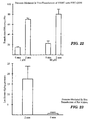
- FITC-ODN Human saphenous vein was transfected with FITC-ODN, according to a method of the present invention.
- the transfection efficiency of a method of the present invention was investigated in vitro by measuring the inhibition of IL-6 production by antisense ODN in whole organ culture. Vein segments were incubated for 24 hours after transfection.
- Quantitative reverse transcription PCR was used to measure the reduction in IL-6 mRNA resulting from antisense-ODN transfection performed according to the present invention.
- Three specimens of human saphenous vein were transfected, and mRNA levels in antisense-transfected vein segments were compared to levels in untreated and reverse antisense (control) ODN-transfected segments. Results for the three specimens are shown in Fig. 19-A, 19-B and 19-C, respectively. Reductions in mRNA levels indicate sequence-specific efficacy of antisense-ODN treatment.
- nucleotide delivery system introduces exogenous nucleotides into cells in intact tissue in vivo or ex vivo without using foreign and potentially toxic substances. Specifically, this method allows cells to absorb pure DNA in solution at a 90% transfection efficiency, in some circumstances, without disrupting the normal functioning of the tissue. Furthermore, every embodiment described above uses tools and methods which are commonly available, and easy to operate.
- the tie wrap may be replaced by any sealing mechanism, for example, a suture ligature, a suture tie, or a clamp;
- the tissue need not be tubular, but only needs to be easily wrapped by a sheath; the sheath is not always necessary, for example if the tissue can maintain high pressure without a sheath.
- the sheath is useful for allowing exposure of the tissue to nucleotide at high pressure without over-distension of the tissue, and for preventing loss of pressure due to leakage of nucleotide solution through small holes or side branches of the tissue.
- Sheaths of various sizes, shapes, and materials can be used. Furthermore, a sheath may be elastic, so that it may be constricted in order to provide pressure to the tissue. An inelastic can be constricted as well, e.g., by twisting, to thus increase the pressure within. Furthermore, it is not necessary for the sheath to be in contact the tissue; a fluid solution can be introduced between the sheath and the tissue.
- the system is capable of delivering nucleotides into the cells of an entire organism, provided the organism can be placed in a pressurized environment.
- the nucleotide can be presented in either a solution or a suspension.
- the plunger can be automated by a servo-mechanism so as to deliver nucleotide solution at a safe but efficient rate.
- Another means of pressurizing tissue is to introduce an inflatable balloon into the lumen of an organ itself.
- the pressure can be as little as 300 mm Hg and as much as 1500 mm Hg. Lower or higher pressures are also possible, provided the nucleotide is localized in the cell nucleus and the necessary measures are taken to prevent barotrauma.
- any composition containing a nucleotide can be used with a method of the present invention.
- compositions are solutions comprising DNA or RNA oligonucleotides, polynucleotides, plasmids, aptomers, modified forms of DNA or RNA (e.g. phosphorothioates or ribozymes), or proteins chemically associated with DNA.
- the nucleotide sequence delivered depends on the application. There are many such applications, including for example the treatment of grafts to prevent graft failure or graft disease. Examples of such grafts include blood vessel grafts used is bypass surgery. Effective nucleotide sequences for various applications are known in the art.
- a method of the present invention can be used to deliver nucleotides to the cytoplasm of cells.
Landscapes
- Health & Medical Sciences (AREA)
- Engineering & Computer Science (AREA)
- Life Sciences & Earth Sciences (AREA)
- Genetics & Genomics (AREA)
- Chemical & Material Sciences (AREA)
- Biomedical Technology (AREA)
- Organic Chemistry (AREA)
- Wood Science & Technology (AREA)
- Bioinformatics & Cheminformatics (AREA)
- Zoology (AREA)
- Biotechnology (AREA)
- General Engineering & Computer Science (AREA)
- General Health & Medical Sciences (AREA)
- Microbiology (AREA)
- Biochemistry (AREA)
- Molecular Biology (AREA)
- Physics & Mathematics (AREA)
- Plant Pathology (AREA)
- Biophysics (AREA)
- Sustainable Development (AREA)
- Cell Biology (AREA)
- Anesthesiology (AREA)
- Heart & Thoracic Surgery (AREA)
- Hematology (AREA)
- Animal Behavior & Ethology (AREA)
- Public Health (AREA)
- Veterinary Medicine (AREA)
- Vascular Medicine (AREA)
- Analytical Chemistry (AREA)
- Mechanical Engineering (AREA)
- Endocrinology (AREA)
- Dermatology (AREA)
- Medical Informatics (AREA)
- Clinical Laboratory Science (AREA)
- Medicines That Contain Protein Lipid Enzymes And Other Medicines (AREA)
- Apparatus Associated With Microorganisms And Enzymes (AREA)
- Preparation Of Compounds By Using Micro-Organisms (AREA)
- Infusion, Injection, And Reservoir Apparatuses (AREA)
- Pharmaceuticals Containing Other Organic And Inorganic Compounds (AREA)
- Micro-Organisms Or Cultivation Processes Thereof (AREA)
Claims (17)
- Eine Vorrichtung zur Einführung eines Nucleotids in lebende Zellen in einem Gewebe, wobei die Vorrichtung umfasst:a) ein Behältnis, welches das Nucleotid beinhaltet;b) ein Einführungssystem zum Einbringen des Nucleotids unter Druck in die extrazelluläre Umgebung der lebenden Zellen des Gewebes, wodurch die Aufnahme des Nucleotids in die lebenden Zellen bewirkt wird; undc) eine Hülle zur Umschließung des Gewebes, wobei die Hülle in ausreichendem Maß undurchlässig ist, um das Gewebe unter einem Inkubationsüberdruck zu halten, um dadurch die Aufnahme des Nucleotids zu erleichtern und das Gewebe vor einem Barotrauma zu schützen.
- Vorrichtung nach Anspruch 1, wobei zwischen der Hülle und dem Gewebe ein Fluid vorliegt.
- Vorrichtung nach Anspruch 1, weiter umfassend
d) eine Abdichtungseinrichtung, die auf der Hülle angeordnet ist, um ein Auslaufen aus dem Bereich zwischen der Hülle und dem Gewebe zu verhindern. - Vorrichtung nach Anspruch 1, weiter umfassend:
e) eine Spüleinrichtung zur Entfernung von Fluiden und Gasen aus dem Raum, der von dem Gewebe eingenommen wird, bevor das Nucleotid eingebracht wird. - Vorrichtung nach Anspruch 4, wobei die Spüleinrichtung eine undurchlässige Hülle und eine Pumpeinrichtung zum Durchleiten eines Spülgases durch die undurchlässige Hülle umfasst.
- Vorrichtung nach Anspruch 5, wobei das Gewebe zu einem lebenden Tier gehört.
- Vorrichtung nach Anspruch 1, wobei das Nucleotid in einer Suspension vorliegt.
- Vorrichtung nach Anspruch 1, wobei das Nucleotid in einer Lösung vorliegt.
- Vorrichtung nach Anspruch 1, wobei das Nucleotid aus der Gruppe bestehend aus DNA, RNA und entsprechenden Molekülen ausgewählt ist.
- Verwendung eines Behältnisses und eines Kathetersystems zur Herstellung einer Vorrichtung zur Einführung eines Nucleotids in lebende Zellen in einem Gewebe in vivo, wobeia) das Behältnis angepasst ist, um das Nucleotid zu beinhalten; undb) das Kathetersystem angepasst ist, um das Nucleotid in die extrazelluläre Umgebung der lebenden Zellen des Gewebes einzubringen und um Druck auf die Zellen und die Umgebung auszuüben, um dadurch die Aufnahme des Nucleotids in die lebenden Zellen zu bewirken, und wobei das Kathetersystem einen aufblasbaren Ballon umfasst, um den Bereich, der das Gewebe umfasst, abzudichten.
- Verwendung einer Vorrichtung zur Einführung eines Nucleotids in lebende Zellen in vitro, wobei die Vorrichtung umfasst:a) eine Druckkammer;b) einen innerhalb der Druckkammer angeordneten Behälter zur Aufnahme der lebenden Zellen und des Nucleotids; undc) eine Einrichtung zur Beaufschlagung mit Druck, insbesondere eine Einrichtung zur Beaufschlagung mit Druck zur Einführung eines mit Druck beaufschlagten Gases in die Druckkammer, um einen Inkubationsüberdruck in der Druckkammer aufzubauen, um dadurch die Aufnahme des Nucleotids in die lebenden Zellen zu bewirken.
- Verwendung nach Anspruch 11, wobei das Nucleotid in einer Suspension vorliegt.
- Verwendung nach Anspruch 11, wobei das Nucleotid in einer Lösung vorliegt.
- Verwendung nach Anspruch 11, wobei das Nucleotid aus der Gruppe bestehend aus DNA, RNA und entsprechenden Molekülen ausgewählt ist.
- Verwendung einer Druckmesseinrichtung zur Herstellung einer Vorrichtung zur Einführung eines Nucleotids in lebende Zellen in einem Gewebe in vivo, wobei:a) die Vorrichtung angepasst ist, um das Nucleotid in die extrazelluläre Umgebung der lebenden Zellen einzuführen; undb) die Vorrichtung ferner angepasst ist, um einen Inkubationsüberdruck um das Gewebe aufzubauen, um dadurch die Aufnahme des Nucleotids in die lebenden Zellen zu bewirken.
- Verwendung einer Druckmesseinrichtung zur Herstellung einer Vorrichtung zur Einführung eines Nucleotids in lebende Zellen in einem Gewebe in vivo, wobei:a) die Vorrichtung angepasst ist, um das Nucleotid in die extrazelluläre Umgebung der lebenden Zellen einzuführen;b) die Vorrichtung ferner angepasst ist, um eine Umschließung zu definieren, welche die lebenden Zellen und die extrazelluläre Umgebung umfasst; undc) die Vorrichtung ferner angepasst ist, um einen Inkubationsüberdruck in der Umschließung aufzubauen, um dadurch die Aufnahme des Nucleotids in die lebenden Zellen zu bewirken.
- Verwendung nach Anspruch 16, wobei der gesamte Organismus in die Umschließung eingebracht wird.
Applications Claiming Priority (3)
| Application Number | Priority Date | Filing Date | Title |
|---|---|---|---|
| US434750 | 1995-05-04 | ||
| US08/434,750 US5766901A (en) | 1995-05-04 | 1995-05-04 | Apparatus and method for delivering a nucleotide into cell nuclei |
| PCT/US1996/006271 WO1996034967A1 (en) | 1995-05-04 | 1996-05-03 | Apparatus and method for delivering a nucleotide into cell nuclei |
Publications (3)
| Publication Number | Publication Date |
|---|---|
| EP0826059A1 EP0826059A1 (de) | 1998-03-04 |
| EP0826059A4 EP0826059A4 (de) | 1998-07-01 |
| EP0826059B1 true EP0826059B1 (de) | 2001-08-29 |
Family
ID=23725522
Family Applications (1)
| Application Number | Title | Priority Date | Filing Date |
|---|---|---|---|
| EP96914572A Expired - Lifetime EP0826059B1 (de) | 1995-05-04 | 1996-05-03 | Apparat und verfahren zur einschleunigung eines nucleotids in zellkerne |
Country Status (9)
| Country | Link |
|---|---|
| US (1) | US5766901A (de) |
| EP (1) | EP0826059B1 (de) |
| JP (1) | JP3865318B2 (de) |
| AT (1) | ATE204904T1 (de) |
| CA (1) | CA2219091A1 (de) |
| DE (1) | DE69614846T2 (de) |
| DK (1) | DK0826059T3 (de) |
| ES (1) | ES2163018T3 (de) |
| WO (1) | WO1996034967A1 (de) |
Families Citing this family (11)
| Publication number | Priority date | Publication date | Assignee | Title |
|---|---|---|---|---|
| US5922687A (en) * | 1995-05-04 | 1999-07-13 | Board Of Trustees Of The Leland Stanford Junior University | Intracellular delivery of nucleic acids using pressure |
| AU1922999A (en) * | 1997-12-16 | 1999-07-05 | Baylor College Of Medicine | Needle-free injection of formulated nucleic acid molecules |
| US6699231B1 (en) | 1997-12-31 | 2004-03-02 | Heartport, Inc. | Methods and apparatus for perfusion of isolated tissue structure |
| US6722370B1 (en) | 1998-07-17 | 2004-04-20 | Corgentech, Inc. | Delivery of a composition to the liver by utilizing the portal vein |
| DE19834612A1 (de) * | 1998-07-31 | 2000-02-24 | Dornier Medtech Holding Int Gmbh | Verfahren zum intrazellulären Transfer von Oligonukleotiden und Vorrichtung zur Durchführung desselben |
| US6077256A (en) * | 1998-10-06 | 2000-06-20 | Mann; Michael J. | Delivery of a composition to the lung |
| US20070173470A1 (en) * | 2006-01-23 | 2007-07-26 | Chi-Hung Lin | Methods for delivering extracellular target into cells |
| US9017991B2 (en) * | 2009-03-13 | 2015-04-28 | Tufts University | Methods tip assemblies and kits for introducing material into cells |
| JPWO2012056756A1 (ja) * | 2010-10-25 | 2014-03-20 | 学校法人立命館 | 導入対象物質の送達装置の作動方法および導入対象物質の送達方法 |
| CN111001077A (zh) * | 2018-10-04 | 2020-04-14 | 口径疗法有限责任公司 | 用于以高压输注胶束的球囊导管系统 |
| AU2021268179A1 (en) | 2020-05-04 | 2022-11-17 | Rutgers, The State University Of New Jersey | System and method to use suction to enhance permeabilization and transfection of cells |
Family Cites Families (6)
| Publication number | Priority date | Publication date | Assignee | Title |
|---|---|---|---|---|
| US5328470A (en) * | 1989-03-31 | 1994-07-12 | The Regents Of The University Of Michigan | Treatment of diseases by site-specific instillation of cells or site-specific transformation of cells and kits therefor |
| JPH0376568A (ja) * | 1989-08-16 | 1991-04-02 | Minoru Igari | 細胞処理用噴射装置及び同装置のピストン |
| US5066587A (en) * | 1990-01-26 | 1991-11-19 | The Upjohn Company | Gas driven microprojectile accelerator and method of use |
| WO1992004439A1 (en) * | 1990-08-30 | 1992-03-19 | Brian John Bellhouse | Ballistic apparatus |
| TW360548B (en) * | 1993-04-08 | 1999-06-11 | Powderject Res Ltd | Products for therapeutic use |
| DE4401076C2 (de) * | 1994-01-15 | 1998-12-03 | Eppendorf Geraetebau Netheler | Vorrichtung zur Injektion von Flüssigkeiten in biologische Zellen |
-
1995
- 1995-05-04 US US08/434,750 patent/US5766901A/en not_active Expired - Fee Related
-
1996
- 1996-05-03 DE DE69614846T patent/DE69614846T2/de not_active Expired - Fee Related
- 1996-05-03 CA CA002219091A patent/CA2219091A1/en not_active Abandoned
- 1996-05-03 EP EP96914572A patent/EP0826059B1/de not_active Expired - Lifetime
- 1996-05-03 WO PCT/US1996/006271 patent/WO1996034967A1/en not_active Ceased
- 1996-05-03 JP JP53354496A patent/JP3865318B2/ja not_active Expired - Fee Related
- 1996-05-03 ES ES96914572T patent/ES2163018T3/es not_active Expired - Lifetime
- 1996-05-03 AT AT96914572T patent/ATE204904T1/de not_active IP Right Cessation
- 1996-05-03 DK DK96914572T patent/DK0826059T3/da active
Also Published As
| Publication number | Publication date |
|---|---|
| WO1996034967A1 (en) | 1996-11-07 |
| ES2163018T3 (es) | 2002-01-16 |
| CA2219091A1 (en) | 1996-11-07 |
| US5766901A (en) | 1998-06-16 |
| DK0826059T3 (da) | 2001-12-17 |
| ATE204904T1 (de) | 2001-09-15 |
| EP0826059A4 (de) | 1998-07-01 |
| JPH11505112A (ja) | 1999-05-18 |
| EP0826059A1 (de) | 1998-03-04 |
| JP3865318B2 (ja) | 2007-01-10 |
| DE69614846T2 (de) | 2002-05-16 |
| DE69614846D1 (de) | 2001-10-04 |
Similar Documents
| Publication | Publication Date | Title |
|---|---|---|
| KR100449330B1 (ko) | 미소입자의 압력-매개 세포내 전달 | |
| Chapman et al. | Gene transfer into coronary arteries of intact animals with a percutaneous balloon catheter. | |
| EP0826059B1 (de) | Apparat und verfahren zur einschleunigung eines nucleotids in zellkerne | |
| JP5449872B2 (ja) | 拍動流薬物送達 | |
| Seunguk et al. | Improved distribution of small molecules and viral vectors in the murine brain using a hollow fiber catheter | |
| CA2425745C (en) | Expression of exogenous polynucleotide sequences in a vertebrate | |
| Al‐Dosari et al. | Hydrodynamic delivery | |
| WO2004110533A1 (ja) | 薬剤が収容された針無注射器 | |
| EP1956894B1 (de) | Verfahren, zusammensetzungen und geräte mit stechzellen/kapseln für die vorbereitung von gewebe vor der abgabe eines wirkstoffs | |
| HK1022711B (en) | Pressure-mediated intracellular delivery of molecules or microparticles | |
| US20030004125A1 (en) | Inducible gene | |
| Maruyama et al. | Rat kidney-targeted naked plasmid DNA transfer by retrograde injection into the renal vein | |
| CN110403682A (zh) | 提高肺癌穿刺活检安全性的水凝胶注射器 | |
| MXPA99004201A (en) | Pressure-mediated intracellular delivery of molecules or microparticles | |
| JP2003519483A (ja) | 組織を処理するための方法および器具 | |
| US20050260157A1 (en) | Method and agent for treating vulnerable plaque | |
| WO2007109677A2 (en) | A novel method of protecting islet cells from apoptosis during the donor harvesting process | |
| Efficiency | 19. Optimised Pulses for Electro Gene Transfer to Muscle Tissue Reduce Adverse Effects on Cellular Integrity and Function | |
| US20080076728A1 (en) | Novel method of protecting islet cells from apoptosis during the donor harvesting process |
Legal Events
| Date | Code | Title | Description |
|---|---|---|---|
| PUAI | Public reference made under article 153(3) epc to a published international application that has entered the european phase |
Free format text: ORIGINAL CODE: 0009012 |
|
| 17P | Request for examination filed |
Effective date: 19971105 |
|
| AK | Designated contracting states |
Kind code of ref document: A1 Designated state(s): AT BE CH DE DK ES FI FR GB GR IE IT LI LU MC NL PT SE |
|
| A4 | Supplementary search report drawn up and despatched |
Effective date: 19980518 |
|
| AK | Designated contracting states |
Kind code of ref document: A4 Designated state(s): AT BE CH DE DK ES FI FR GB GR IE IT LI LU MC NL PT SE |
|
| 17Q | First examination report despatched |
Effective date: 19980826 |
|
| GRAG | Despatch of communication of intention to grant |
Free format text: ORIGINAL CODE: EPIDOS AGRA |
|
| GRAG | Despatch of communication of intention to grant |
Free format text: ORIGINAL CODE: EPIDOS AGRA |
|
| GRAH | Despatch of communication of intention to grant a patent |
Free format text: ORIGINAL CODE: EPIDOS IGRA |
|
| GRAH | Despatch of communication of intention to grant a patent |
Free format text: ORIGINAL CODE: EPIDOS IGRA |
|
| GRAA | (expected) grant |
Free format text: ORIGINAL CODE: 0009210 |
|
| AK | Designated contracting states |
Kind code of ref document: B1 Designated state(s): AT BE CH DE DK ES FI FR GB GR IE IT LI LU MC NL PT SE |
|
| PG25 | Lapsed in a contracting state [announced via postgrant information from national office to epo] |
Ref country code: AT Free format text: LAPSE BECAUSE OF FAILURE TO SUBMIT A TRANSLATION OF THE DESCRIPTION OR TO PAY THE FEE WITHIN THE PRESCRIBED TIME-LIMIT Effective date: 20010829 |
|
| REF | Corresponds to: |
Ref document number: 204904 Country of ref document: AT Date of ref document: 20010915 Kind code of ref document: T |
|
| REG | Reference to a national code |
Ref country code: CH Ref legal event code: EP |
|
| REG | Reference to a national code |
Ref country code: IE Ref legal event code: FG4D |
|
| REF | Corresponds to: |
Ref document number: 69614846 Country of ref document: DE Date of ref document: 20011004 |
|
| PG25 | Lapsed in a contracting state [announced via postgrant information from national office to epo] |
Ref country code: PT Free format text: LAPSE BECAUSE OF FAILURE TO SUBMIT A TRANSLATION OF THE DESCRIPTION OR TO PAY THE FEE WITHIN THE PRESCRIBED TIME-LIMIT Effective date: 20011129 |
|
| PG25 | Lapsed in a contracting state [announced via postgrant information from national office to epo] |
Ref country code: GR Free format text: LAPSE BECAUSE OF FAILURE TO SUBMIT A TRANSLATION OF THE DESCRIPTION OR TO PAY THE FEE WITHIN THE PRESCRIBED TIME-LIMIT Effective date: 20011130 |
|
| REG | Reference to a national code |
Ref country code: CH Ref legal event code: NV Representative=s name: E. BLUM & CO. PATENTANWAELTE |
|
| REG | Reference to a national code |
Ref country code: GB Ref legal event code: IF02 |
|
| REG | Reference to a national code |
Ref country code: ES Ref legal event code: FG2A Ref document number: 2163018 Country of ref document: ES Kind code of ref document: T3 |
|
| EN | Fr: translation not filed | ||
| PGFP | Annual fee paid to national office [announced via postgrant information from national office to epo] |
Ref country code: MC Payment date: 20020422 Year of fee payment: 7 |
|
| PGFP | Annual fee paid to national office [announced via postgrant information from national office to epo] |
Ref country code: IE Payment date: 20020528 Year of fee payment: 7 |
|
| PLBE | No opposition filed within time limit |
Free format text: ORIGINAL CODE: 0009261 |
|
| STAA | Information on the status of an ep patent application or granted ep patent |
Free format text: STATUS: NO OPPOSITION FILED WITHIN TIME LIMIT |
|
| 26N | No opposition filed | ||
| PG25 | Lapsed in a contracting state [announced via postgrant information from national office to epo] |
Ref country code: IE Free format text: LAPSE BECAUSE OF NON-PAYMENT OF DUE FEES Effective date: 20030505 |
|
| PG25 | Lapsed in a contracting state [announced via postgrant information from national office to epo] |
Ref country code: MC Free format text: LAPSE BECAUSE OF NON-PAYMENT OF DUE FEES Effective date: 20030531 |
|
| REG | Reference to a national code |
Ref country code: IE Ref legal event code: MM4A |
|
| ET | Fr: translation filed | ||
| REG | Reference to a national code |
Ref country code: FR Ref legal event code: ERR Free format text: BOPI DE PUBLICATION N: 02/04 PAGES: 243 PARTIE DU BULLETIN CONCERNEE: BREVETS EUROPEENS DONT LA TRADUCTION N'A PAS ETE REMISE A I'INPI IL Y A LIEU DE SUPPRIMER: LA MENTION DE LA NON REMISE. LA REMISE DE LA TRADUCTION EST PUBLIEE DANS LE PRESENT BOPI. |
|
| REG | Reference to a national code |
Ref country code: CH Ref legal event code: PFA Owner name: THE BOARD OF TRUSTEES OF THE LELAND STANFORD JUNI Free format text: THE BOARD OF TRUSTEES OF THE LELAND STANFORD JUNIOR UNIVERSITY#900 WELCH ROAD, SUITE 350#STANFORD, CA 94304 (US) -TRANSFER TO- THE BOARD OF TRUSTEES OF THE LELAND STANFORD JUNIOR UNIVERSITY#900 WELCH ROAD, SUITE 350#STANFORD, CA 94304 (US) |
|
| PGFP | Annual fee paid to national office [announced via postgrant information from national office to epo] |
Ref country code: LU Payment date: 20080606 Year of fee payment: 13 Ref country code: ES Payment date: 20080526 Year of fee payment: 13 Ref country code: DK Payment date: 20080528 Year of fee payment: 13 Ref country code: CH Payment date: 20080530 Year of fee payment: 13 |
|
| PGFP | Annual fee paid to national office [announced via postgrant information from national office to epo] |
Ref country code: BE Payment date: 20080624 Year of fee payment: 13 Ref country code: FI Payment date: 20080530 Year of fee payment: 13 |
|
| PGFP | Annual fee paid to national office [announced via postgrant information from national office to epo] |
Ref country code: SE Payment date: 20080529 Year of fee payment: 13 Ref country code: NL Payment date: 20080524 Year of fee payment: 13 Ref country code: DE Payment date: 20080630 Year of fee payment: 13 |
|
| PGFP | Annual fee paid to national office [announced via postgrant information from national office to epo] |
Ref country code: IT Payment date: 20080528 Year of fee payment: 13 |
|
| PGFP | Annual fee paid to national office [announced via postgrant information from national office to epo] |
Ref country code: GB Payment date: 20080529 Year of fee payment: 13 |
|
| BERE | Be: lapsed |
Owner name: THE *BOARD OF TRUSTEES OF THE LELAND STANFORD JUNI Effective date: 20090531 |
|
| REG | Reference to a national code |
Ref country code: CH Ref legal event code: PL |
|
| REG | Reference to a national code |
Ref country code: DK Ref legal event code: EBP |
|
| GBPC | Gb: european patent ceased through non-payment of renewal fee |
Effective date: 20090503 |
|
| PG25 | Lapsed in a contracting state [announced via postgrant information from national office to epo] |
Ref country code: LI Free format text: LAPSE BECAUSE OF NON-PAYMENT OF DUE FEES Effective date: 20090531 Ref country code: FI Free format text: LAPSE BECAUSE OF NON-PAYMENT OF DUE FEES Effective date: 20090503 Ref country code: CH Free format text: LAPSE BECAUSE OF NON-PAYMENT OF DUE FEES Effective date: 20090531 |
|
| NLV4 | Nl: lapsed or anulled due to non-payment of the annual fee |
Effective date: 20091201 |
|
| PG25 | Lapsed in a contracting state [announced via postgrant information from national office to epo] |
Ref country code: NL Free format text: LAPSE BECAUSE OF NON-PAYMENT OF DUE FEES Effective date: 20091201 |
|
| REG | Reference to a national code |
Ref country code: FR Ref legal event code: ST Effective date: 20100129 |
|
| PG25 | Lapsed in a contracting state [announced via postgrant information from national office to epo] |
Ref country code: FR Free format text: LAPSE BECAUSE OF NON-PAYMENT OF DUE FEES Effective date: 20090602 Ref country code: DK Free format text: LAPSE BECAUSE OF NON-PAYMENT OF DUE FEES Effective date: 20090531 |
|
| PGFP | Annual fee paid to national office [announced via postgrant information from national office to epo] |
Ref country code: FR Payment date: 20080519 Year of fee payment: 13 |
|
| PG25 | Lapsed in a contracting state [announced via postgrant information from national office to epo] |
Ref country code: GB Free format text: LAPSE BECAUSE OF NON-PAYMENT OF DUE FEES Effective date: 20090503 |
|
| PG25 | Lapsed in a contracting state [announced via postgrant information from national office to epo] |
Ref country code: DE Free format text: LAPSE BECAUSE OF NON-PAYMENT OF DUE FEES Effective date: 20091201 Ref country code: BE Free format text: LAPSE BECAUSE OF NON-PAYMENT OF DUE FEES Effective date: 20090531 |
|
| REG | Reference to a national code |
Ref country code: ES Ref legal event code: FD2A Effective date: 20090504 |
|
| PG25 | Lapsed in a contracting state [announced via postgrant information from national office to epo] |
Ref country code: ES Free format text: LAPSE BECAUSE OF NON-PAYMENT OF DUE FEES Effective date: 20090504 |
|
| PG25 | Lapsed in a contracting state [announced via postgrant information from national office to epo] |
Ref country code: IT Free format text: LAPSE BECAUSE OF NON-PAYMENT OF DUE FEES Effective date: 20090503 |
|
| PG25 | Lapsed in a contracting state [announced via postgrant information from national office to epo] |
Ref country code: LU Free format text: LAPSE BECAUSE OF NON-PAYMENT OF DUE FEES Effective date: 20090503 |
|
| PG25 | Lapsed in a contracting state [announced via postgrant information from national office to epo] |
Ref country code: SE Free format text: LAPSE BECAUSE OF NON-PAYMENT OF DUE FEES Effective date: 20090504 |