EP0906760B1 - Substanz, die in keimenden saaten von gräsern vorkommt und proteine und unlösliche ballaststoffe enthält, und ihre verwendung - Google Patents
Substanz, die in keimenden saaten von gräsern vorkommt und proteine und unlösliche ballaststoffe enthält, und ihre verwendung Download PDFInfo
- Publication number
- EP0906760B1 EP0906760B1 EP97905445A EP97905445A EP0906760B1 EP 0906760 B1 EP0906760 B1 EP 0906760B1 EP 97905445 A EP97905445 A EP 97905445A EP 97905445 A EP97905445 A EP 97905445A EP 0906760 B1 EP0906760 B1 EP 0906760B1
- Authority
- EP
- European Patent Office
- Prior art keywords
- insoluble dietary
- composition
- weight
- dietary fibers
- containing proteins
- Prior art date
- Legal status (The legal status is an assumption and is not a legal conclusion. Google has not performed a legal analysis and makes no representation as to the accuracy of the status listed.)
- Expired - Lifetime
Links
- 235000013325 dietary fiber Nutrition 0.000 title claims abstract description 158
- 102000004169 proteins and genes Human genes 0.000 title claims abstract description 145
- 108090000623 proteins and genes Proteins 0.000 title claims abstract description 145
- 239000000126 substance Substances 0.000 title abstract description 102
- 239000000203 mixture Substances 0.000 claims abstract description 162
- 235000013305 food Nutrition 0.000 claims abstract description 15
- 238000000034 method Methods 0.000 claims description 47
- 206010012735 Diarrhoea Diseases 0.000 claims description 40
- 206010009900 Colitis ulcerative Diseases 0.000 claims description 38
- 201000006704 Ulcerative Colitis Diseases 0.000 claims description 38
- 235000013339 cereals Nutrition 0.000 claims description 29
- 238000011282 treatment Methods 0.000 claims description 29
- 210000000436 anus Anatomy 0.000 claims description 22
- 206010028980 Neoplasm Diseases 0.000 claims description 17
- 241000209094 Oryza Species 0.000 claims description 17
- 235000007164 Oryza sativa Nutrition 0.000 claims description 17
- 201000011510 cancer Diseases 0.000 claims description 17
- 230000006378 damage Effects 0.000 claims description 17
- 235000009566 rice Nutrition 0.000 claims description 17
- 230000000694 effects Effects 0.000 claims description 16
- 241000209219 Hordeum Species 0.000 claims description 15
- 235000007340 Hordeum vulgare Nutrition 0.000 claims description 15
- 241000209056 Secale Species 0.000 claims description 12
- 239000003814 drug Substances 0.000 claims description 12
- 108010050181 aleurone Proteins 0.000 claims description 11
- 210000004347 intestinal mucosa Anatomy 0.000 claims description 11
- 238000002360 preparation method Methods 0.000 claims description 11
- 230000008569 process Effects 0.000 claims description 9
- 238000003801 milling Methods 0.000 claims description 8
- 238000003825 pressing Methods 0.000 claims description 8
- 238000002679 ablation Methods 0.000 claims description 7
- 239000002246 antineoplastic agent Substances 0.000 claims description 7
- 239000010903 husk Substances 0.000 claims description 7
- 102000004190 Enzymes Human genes 0.000 claims description 6
- 108090000790 Enzymes Proteins 0.000 claims description 6
- 238000007873 sieving Methods 0.000 claims description 6
- 230000000968 intestinal effect Effects 0.000 claims description 5
- 108090000765 processed proteins & peptides Proteins 0.000 claims description 4
- 238000001914 filtration Methods 0.000 claims description 2
- 238000007790 scraping Methods 0.000 claims 8
- 150000003384 small molecules Chemical class 0.000 claims 1
- 241000209504 Poaceae Species 0.000 abstract description 14
- 239000004480 active ingredient Substances 0.000 abstract 1
- 239000008194 pharmaceutical composition Substances 0.000 abstract 1
- 235000018102 proteins Nutrition 0.000 description 133
- 238000009472 formulation Methods 0.000 description 73
- 238000002474 experimental method Methods 0.000 description 57
- 230000000052 comparative effect Effects 0.000 description 55
- 238000012360 testing method Methods 0.000 description 48
- 239000001913 cellulose Substances 0.000 description 25
- 229920002678 cellulose Polymers 0.000 description 25
- 210000004877 mucosa Anatomy 0.000 description 25
- 239000005018 casein Substances 0.000 description 22
- BECPQYXYKAMYBN-UHFFFAOYSA-N casein, tech. Chemical compound NCCCCC(C(O)=O)N=C(O)C(CC(O)=O)N=C(O)C(CCC(O)=N)N=C(O)C(CC(C)C)N=C(O)C(CCC(O)=O)N=C(O)C(CC(O)=O)N=C(O)C(CCC(O)=O)N=C(O)C(C(C)O)N=C(O)C(CCC(O)=N)N=C(O)C(CCC(O)=N)N=C(O)C(CCC(O)=N)N=C(O)C(CCC(O)=O)N=C(O)C(CCC(O)=O)N=C(O)C(COP(O)(O)=O)N=C(O)C(CCC(O)=N)N=C(O)C(N)CC1=CC=CC=C1 BECPQYXYKAMYBN-UHFFFAOYSA-N 0.000 description 22
- 235000021240 caseins Nutrition 0.000 description 22
- 241001465754 Metazoa Species 0.000 description 21
- 229920003045 dextran sodium sulfate Polymers 0.000 description 21
- XLYOFNOQVPJJNP-UHFFFAOYSA-N water Substances O XLYOFNOQVPJJNP-UHFFFAOYSA-N 0.000 description 14
- 239000000463 material Substances 0.000 description 13
- 238000009395 breeding Methods 0.000 description 12
- 230000001488 breeding effect Effects 0.000 description 12
- 210000001072 colon Anatomy 0.000 description 12
- 235000005687 corn oil Nutrition 0.000 description 12
- 239000002285 corn oil Substances 0.000 description 12
- 229910052500 inorganic mineral Inorganic materials 0.000 description 11
- 210000002429 large intestine Anatomy 0.000 description 11
- 239000011707 mineral Substances 0.000 description 11
- 235000010755 mineral Nutrition 0.000 description 11
- 208000026775 severe diarrhea Diseases 0.000 description 11
- 235000013343 vitamin Nutrition 0.000 description 11
- 229930003231 vitamin Natural products 0.000 description 11
- 239000011782 vitamin Substances 0.000 description 11
- 229940088594 vitamin Drugs 0.000 description 11
- 150000003722 vitamin derivatives Chemical class 0.000 description 11
- 239000001763 2-hydroxyethyl(trimethyl)azanium Substances 0.000 description 10
- 235000019743 Choline chloride Nutrition 0.000 description 10
- 229920002472 Starch Polymers 0.000 description 10
- 229960003178 choline chloride Drugs 0.000 description 10
- SGMZJAMFUVOLNK-UHFFFAOYSA-M choline chloride Chemical compound [Cl-].C[N+](C)(C)CCO SGMZJAMFUVOLNK-UHFFFAOYSA-M 0.000 description 10
- 239000008107 starch Substances 0.000 description 10
- 235000019698 starch Nutrition 0.000 description 10
- 208000037265 diseases, disorders, signs and symptoms Diseases 0.000 description 9
- ZDXPYRJPNDTMRX-UHFFFAOYSA-N Glutamine Chemical compound OC(=O)C(N)CCC(N)=O ZDXPYRJPNDTMRX-UHFFFAOYSA-N 0.000 description 8
- GXCLVBGFBYZDAG-UHFFFAOYSA-N N-[2-(1H-indol-3-yl)ethyl]-N-methylprop-2-en-1-amine Chemical compound CN(CCC1=CNC2=C1C=CC=C2)CC=C GXCLVBGFBYZDAG-UHFFFAOYSA-N 0.000 description 8
- 241000700159 Rattus Species 0.000 description 8
- 201000010099 disease Diseases 0.000 description 8
- 235000007238 Secale cereale Nutrition 0.000 description 7
- 239000002994 raw material Substances 0.000 description 7
- 235000019750 Crude protein Nutrition 0.000 description 6
- WSFSSNUMVMOOMR-UHFFFAOYSA-N Formaldehyde Chemical compound O=C WSFSSNUMVMOOMR-UHFFFAOYSA-N 0.000 description 6
- 230000005856 abnormality Effects 0.000 description 6
- 235000019784 crude fat Nutrition 0.000 description 6
- 239000005720 sucrose Substances 0.000 description 6
- 229930006000 Sucrose Natural products 0.000 description 5
- CZMRCDWAGMRECN-UGDNZRGBSA-N Sucrose Chemical compound O[C@H]1[C@H](O)[C@@H](CO)O[C@@]1(CO)O[C@@H]1[C@H](O)[C@@H](O)[C@H](O)[C@@H](CO)O1 CZMRCDWAGMRECN-UGDNZRGBSA-N 0.000 description 5
- 239000004615 ingredient Substances 0.000 description 5
- NCEXYHBECQHGNR-QZQOTICOSA-N sulfasalazine Chemical compound C1=C(O)C(C(=O)O)=CC(\N=N\C=2C=CC(=CC=2)S(=O)(=O)NC=2N=CC=CC=2)=C1 NCEXYHBECQHGNR-QZQOTICOSA-N 0.000 description 5
- 229960001940 sulfasalazine Drugs 0.000 description 5
- 208000024891 symptom Diseases 0.000 description 5
- IJGRMHOSHXDMSA-UHFFFAOYSA-N Atomic nitrogen Chemical compound N#N IJGRMHOSHXDMSA-UHFFFAOYSA-N 0.000 description 4
- 229920002488 Hemicellulose Polymers 0.000 description 4
- 241000276489 Merlangius merlangus Species 0.000 description 4
- VCUFZILGIRCDQQ-KRWDZBQOSA-N N-[[(5S)-2-oxo-3-(2-oxo-3H-1,3-benzoxazol-6-yl)-1,3-oxazolidin-5-yl]methyl]-2-[[3-(trifluoromethoxy)phenyl]methylamino]pyrimidine-5-carboxamide Chemical compound O=C1O[C@H](CN1C1=CC2=C(NC(O2)=O)C=C1)CNC(=O)C=1C=NC(=NC=1)NCC1=CC(=CC=C1)OC(F)(F)F VCUFZILGIRCDQQ-KRWDZBQOSA-N 0.000 description 4
- 235000013361 beverage Nutrition 0.000 description 4
- 230000037396 body weight Effects 0.000 description 4
- 238000002512 chemotherapy Methods 0.000 description 4
- 229940088598 enzyme Drugs 0.000 description 4
- 230000003628 erosive effect Effects 0.000 description 4
- VEXZGXHMUGYJMC-UHFFFAOYSA-N hydrochloric acid Substances Cl VEXZGXHMUGYJMC-UHFFFAOYSA-N 0.000 description 4
- 229920005610 lignin Polymers 0.000 description 4
- 238000005259 measurement Methods 0.000 description 4
- 239000000047 product Substances 0.000 description 4
- 238000011084 recovery Methods 0.000 description 4
- 230000009467 reduction Effects 0.000 description 4
- 239000007787 solid Substances 0.000 description 4
- 241000725101 Clea Species 0.000 description 3
- RTZKZFJDLAIYFH-UHFFFAOYSA-N Diethyl ether Chemical compound CCOCC RTZKZFJDLAIYFH-UHFFFAOYSA-N 0.000 description 3
- HEMHJVSKTPXQMS-UHFFFAOYSA-M Sodium hydroxide Chemical compound [OH-].[Na+] HEMHJVSKTPXQMS-UHFFFAOYSA-M 0.000 description 3
- 238000010521 absorption reaction Methods 0.000 description 3
- 235000005911 diet Nutrition 0.000 description 3
- 230000037213 diet Effects 0.000 description 3
- 229940079593 drug Drugs 0.000 description 3
- 238000001035 drying Methods 0.000 description 3
- 238000011156 evaluation Methods 0.000 description 3
- 238000004108 freeze drying Methods 0.000 description 3
- 239000000825 pharmaceutical preparation Substances 0.000 description 3
- 230000005855 radiation Effects 0.000 description 3
- 238000001959 radiotherapy Methods 0.000 description 3
- 210000000813 small intestine Anatomy 0.000 description 3
- NHJVRSWLHSJWIN-UHFFFAOYSA-N 2,4,6-trinitrobenzenesulfonic acid Chemical compound OS(=O)(=O)C1=C([N+]([O-])=O)C=C([N+]([O-])=O)C=C1[N+]([O-])=O NHJVRSWLHSJWIN-UHFFFAOYSA-N 0.000 description 2
- VTYYLEPIZMXCLO-UHFFFAOYSA-L Calcium carbonate Chemical compound [Ca+2].[O-]C([O-])=O VTYYLEPIZMXCLO-UHFFFAOYSA-L 0.000 description 2
- 238000007696 Kjeldahl method Methods 0.000 description 2
- FBOZXECLQNJBKD-ZDUSSCGKSA-N L-methotrexate Chemical compound C=1N=C2N=C(N)N=C(N)C2=NC=1CN(C)C1=CC=C(C(=O)N[C@@H](CCC(O)=O)C(O)=O)C=C1 FBOZXECLQNJBKD-ZDUSSCGKSA-N 0.000 description 2
- 108091005804 Peptidases Proteins 0.000 description 2
- UIIMBOGNXHQVGW-UHFFFAOYSA-M Sodium bicarbonate Chemical compound [Na+].OC([O-])=O UIIMBOGNXHQVGW-UHFFFAOYSA-M 0.000 description 2
- FAPWRFPIFSIZLT-UHFFFAOYSA-M Sodium chloride Chemical compound [Na+].[Cl-] FAPWRFPIFSIZLT-UHFFFAOYSA-M 0.000 description 2
- 238000004458 analytical method Methods 0.000 description 2
- 239000003242 anti bacterial agent Substances 0.000 description 2
- BLFLLBZGZJTVJG-UHFFFAOYSA-N benzocaine Chemical compound CCOC(=O)C1=CC=C(N)C=C1 BLFLLBZGZJTVJG-UHFFFAOYSA-N 0.000 description 2
- 230000015572 biosynthetic process Effects 0.000 description 2
- 235000021329 brown rice Nutrition 0.000 description 2
- 239000000872 buffer Substances 0.000 description 2
- OSGAYBCDTDRGGQ-UHFFFAOYSA-L calcium sulfate Chemical compound [Ca+2].[O-]S([O-])(=O)=O OSGAYBCDTDRGGQ-UHFFFAOYSA-L 0.000 description 2
- 239000002775 capsule Substances 0.000 description 2
- 238000006243 chemical reaction Methods 0.000 description 2
- 230000003247 decreasing effect Effects 0.000 description 2
- 238000011161 development Methods 0.000 description 2
- 230000029142 excretion Effects 0.000 description 2
- 239000000835 fiber Substances 0.000 description 2
- 239000008187 granular material Substances 0.000 description 2
- 230000006872 improvement Effects 0.000 description 2
- 238000011534 incubation Methods 0.000 description 2
- 235000020888 liquid diet Nutrition 0.000 description 2
- 229960000485 methotrexate Drugs 0.000 description 2
- 238000012986 modification Methods 0.000 description 2
- 230000004048 modification Effects 0.000 description 2
- 229910052757 nitrogen Inorganic materials 0.000 description 2
- 235000015097 nutrients Nutrition 0.000 description 2
- 239000000546 pharmaceutical excipient Substances 0.000 description 2
- 239000000843 powder Substances 0.000 description 2
- 230000002265 prevention Effects 0.000 description 2
- 230000009528 severe injury Effects 0.000 description 2
- 230000004083 survival effect Effects 0.000 description 2
- 239000000725 suspension Substances 0.000 description 2
- 229940126585 therapeutic drug Drugs 0.000 description 2
- 238000002560 therapeutic procedure Methods 0.000 description 2
- QKNYBSVHEMOAJP-UHFFFAOYSA-N 2-amino-2-(hydroxymethyl)propane-1,3-diol;hydron;chloride Chemical compound Cl.OCC(N)(CO)CO QKNYBSVHEMOAJP-UHFFFAOYSA-N 0.000 description 1
- 208000004998 Abdominal Pain Diseases 0.000 description 1
- GUBGYTABKSRVRQ-XLOQQCSPSA-N Alpha-Lactose Chemical compound O[C@@H]1[C@@H](O)[C@@H](O)[C@@H](CO)O[C@H]1O[C@@H]1[C@@H](CO)O[C@H](O)[C@H](O)[C@H]1O GUBGYTABKSRVRQ-XLOQQCSPSA-N 0.000 description 1
- 206010002091 Anaesthesia Diseases 0.000 description 1
- 108091005658 Basic proteases Proteins 0.000 description 1
- 206010009944 Colon cancer Diseases 0.000 description 1
- 229920002261 Corn starch Polymers 0.000 description 1
- 208000011231 Crohn disease Diseases 0.000 description 1
- 206010012741 Diarrhoea haemorrhagic Diseases 0.000 description 1
- 241000196324 Embryophyta Species 0.000 description 1
- JOYRKODLDBILNP-UHFFFAOYSA-N Ethyl urethane Chemical compound CCOC(N)=O JOYRKODLDBILNP-UHFFFAOYSA-N 0.000 description 1
- GHASVSINZRGABV-UHFFFAOYSA-N Fluorouracil Chemical compound FC1=CNC(=O)NC1=O GHASVSINZRGABV-UHFFFAOYSA-N 0.000 description 1
- WQZGKKKJIJFFOK-GASJEMHNSA-N Glucose Natural products OC[C@H]1OC(O)[C@H](O)[C@@H](O)[C@@H]1O WQZGKKKJIJFFOK-GASJEMHNSA-N 0.000 description 1
- GUBGYTABKSRVRQ-QKKXKWKRSA-N Lactose Natural products OC[C@H]1O[C@@H](O[C@H]2[C@H](O)[C@@H](O)C(O)O[C@@H]2CO)[C@H](O)[C@@H](O)[C@H]1O GUBGYTABKSRVRQ-QKKXKWKRSA-N 0.000 description 1
- 241000699670 Mus sp. Species 0.000 description 1
- NIPNSKYNPDTRPC-UHFFFAOYSA-N N-[2-oxo-2-(2,4,6,7-tetrahydrotriazolo[4,5-c]pyridin-5-yl)ethyl]-2-[[3-(trifluoromethoxy)phenyl]methylamino]pyrimidine-5-carboxamide Chemical compound O=C(CNC(=O)C=1C=NC(=NC=1)NCC1=CC(=CC=C1)OC(F)(F)F)N1CC2=C(CC1)NN=N2 NIPNSKYNPDTRPC-UHFFFAOYSA-N 0.000 description 1
- 208000002193 Pain Diseases 0.000 description 1
- 108010019160 Pancreatin Proteins 0.000 description 1
- 102000035195 Peptidases Human genes 0.000 description 1
- 239000004365 Protease Substances 0.000 description 1
- 102100037486 Reverse transcriptase/ribonuclease H Human genes 0.000 description 1
- 238000000944 Soxhlet extraction Methods 0.000 description 1
- 208000025865 Ulcer Diseases 0.000 description 1
- 210000001015 abdomen Anatomy 0.000 description 1
- 239000000654 additive Substances 0.000 description 1
- 239000003513 alkali Substances 0.000 description 1
- 230000037005 anaesthesia Effects 0.000 description 1
- 230000003872 anastomosis Effects 0.000 description 1
- 229940041181 antineoplastic drug Drugs 0.000 description 1
- 239000003963 antioxidant agent Substances 0.000 description 1
- 235000006708 antioxidants Nutrition 0.000 description 1
- 230000001174 ascending effect Effects 0.000 description 1
- 230000001363 autoimmune Effects 0.000 description 1
- 235000013405 beer Nutrition 0.000 description 1
- WQZGKKKJIJFFOK-VFUOTHLCSA-N beta-D-glucose Chemical compound OC[C@H]1O[C@@H](O)[C@H](O)[C@@H](O)[C@@H]1O WQZGKKKJIJFFOK-VFUOTHLCSA-N 0.000 description 1
- 239000011230 binding agent Substances 0.000 description 1
- 230000003115 biocidal effect Effects 0.000 description 1
- 229910000019 calcium carbonate Inorganic materials 0.000 description 1
- 210000004027 cell Anatomy 0.000 description 1
- 235000019365 chlortetracycline Nutrition 0.000 description 1
- 230000001684 chronic effect Effects 0.000 description 1
- 208000029742 colonic neoplasm Diseases 0.000 description 1
- 238000007906 compression Methods 0.000 description 1
- 230000006835 compression Effects 0.000 description 1
- 239000008120 corn starch Substances 0.000 description 1
- 239000002385 cottonseed oil Substances 0.000 description 1
- 235000012343 cottonseed oil Nutrition 0.000 description 1
- 230000034994 death Effects 0.000 description 1
- 231100000517 death Toxicity 0.000 description 1
- 238000009792 diffusion process Methods 0.000 description 1
- 230000029087 digestion Effects 0.000 description 1
- 239000003085 diluting agent Substances 0.000 description 1
- 208000035475 disorder Diseases 0.000 description 1
- 239000002270 dispersing agent Substances 0.000 description 1
- 239000006185 dispersion Substances 0.000 description 1
- 239000012153 distilled water Substances 0.000 description 1
- 239000002552 dosage form Substances 0.000 description 1
- 238000001647 drug administration Methods 0.000 description 1
- 230000004064 dysfunction Effects 0.000 description 1
- 201000006549 dyspepsia Diseases 0.000 description 1
- 235000005686 eating Nutrition 0.000 description 1
- 235000006694 eating habits Nutrition 0.000 description 1
- 235000013399 edible fruits Nutrition 0.000 description 1
- 239000003792 electrolyte Substances 0.000 description 1
- 239000003995 emulsifying agent Substances 0.000 description 1
- 210000002919 epithelial cell Anatomy 0.000 description 1
- 238000000605 extraction Methods 0.000 description 1
- 239000000706 filtrate Substances 0.000 description 1
- 229960002949 fluorouracil Drugs 0.000 description 1
- 238000005194 fractionation Methods 0.000 description 1
- 238000007710 freezing Methods 0.000 description 1
- 230000008014 freezing Effects 0.000 description 1
- 210000001035 gastrointestinal tract Anatomy 0.000 description 1
- 239000008103 glucose Substances 0.000 description 1
- 238000010438 heat treatment Methods 0.000 description 1
- 230000001900 immune effect Effects 0.000 description 1
- 210000000936 intestine Anatomy 0.000 description 1
- 238000011835 investigation Methods 0.000 description 1
- 210000001630 jejunum Anatomy 0.000 description 1
- 239000008101 lactose Substances 0.000 description 1
- 150000002632 lipids Chemical class 0.000 description 1
- 239000007788 liquid Substances 0.000 description 1
- 210000003750 lower gastrointestinal tract Anatomy 0.000 description 1
- 239000000314 lubricant Substances 0.000 description 1
- 235000012054 meals Nutrition 0.000 description 1
- 230000003340 mental effect Effects 0.000 description 1
- 229930014626 natural product Natural products 0.000 description 1
- 230000007935 neutral effect Effects 0.000 description 1
- 231100000957 no side effect Toxicity 0.000 description 1
- 235000016709 nutrition Nutrition 0.000 description 1
- 230000035764 nutrition Effects 0.000 description 1
- 239000004006 olive oil Substances 0.000 description 1
- 235000008390 olive oil Nutrition 0.000 description 1
- 230000036407 pain Effects 0.000 description 1
- 229940055695 pancreatin Drugs 0.000 description 1
- 239000012188 paraffin wax Substances 0.000 description 1
- 210000004197 pelvis Anatomy 0.000 description 1
- 230000002093 peripheral effect Effects 0.000 description 1
- 230000002980 postoperative effect Effects 0.000 description 1
- 230000002062 proliferating effect Effects 0.000 description 1
- 239000008213 purified water Substances 0.000 description 1
- 210000001187 pylorus Anatomy 0.000 description 1
- 210000000664 rectum Anatomy 0.000 description 1
- 230000001105 regulatory effect Effects 0.000 description 1
- 238000011160 research Methods 0.000 description 1
- 238000012216 screening Methods 0.000 description 1
- 239000008159 sesame oil Substances 0.000 description 1
- 235000011803 sesame oil Nutrition 0.000 description 1
- 229910000030 sodium bicarbonate Inorganic materials 0.000 description 1
- 235000017557 sodium bicarbonate Nutrition 0.000 description 1
- 239000011780 sodium chloride Substances 0.000 description 1
- 239000000243 solution Substances 0.000 description 1
- 239000002904 solvent Substances 0.000 description 1
- 239000003549 soybean oil Substances 0.000 description 1
- 235000012424 soybean oil Nutrition 0.000 description 1
- 238000010561 standard procedure Methods 0.000 description 1
- 235000000346 sugar Nutrition 0.000 description 1
- 150000008163 sugars Chemical class 0.000 description 1
- 238000001356 surgical procedure Methods 0.000 description 1
- 239000000375 suspending agent Substances 0.000 description 1
- 230000001225 therapeutic effect Effects 0.000 description 1
- 210000001519 tissue Anatomy 0.000 description 1
- 210000004881 tumor cell Anatomy 0.000 description 1
- 231100000397 ulcer Toxicity 0.000 description 1
- 238000005406 washing Methods 0.000 description 1
Images




Classifications
-
- A—HUMAN NECESSITIES
- A61—MEDICAL OR VETERINARY SCIENCE; HYGIENE
- A61K—PREPARATIONS FOR MEDICAL, DENTAL OR TOILETRY PURPOSES
- A61K36/00—Medicinal preparations of undetermined constitution containing material from algae, lichens, fungi or plants, or derivatives thereof, e.g. traditional herbal medicines
- A61K36/18—Magnoliophyta (angiosperms)
- A61K36/88—Liliopsida (monocotyledons)
- A61K36/899—Poaceae or Gramineae (Grass family), e.g. bamboo, corn or sugar cane
-
- A—HUMAN NECESSITIES
- A23—FOODS OR FOODSTUFFS; TREATMENT THEREOF, NOT COVERED BY OTHER CLASSES
- A23K—FODDER
- A23K20/00—Accessory food factors for animal feeding-stuffs
- A23K20/10—Organic substances
- A23K20/142—Amino acids; Derivatives thereof
- A23K20/147—Polymeric derivatives, e.g. peptides or proteins
-
- A—HUMAN NECESSITIES
- A23—FOODS OR FOODSTUFFS; TREATMENT THEREOF, NOT COVERED BY OTHER CLASSES
- A23L—FOODS, FOODSTUFFS OR NON-ALCOHOLIC BEVERAGES, NOT OTHERWISE PROVIDED FOR; PREPARATION OR TREATMENT THEREOF
- A23L33/00—Modifying nutritive qualities of foods; Dietetic products; Preparation or treatment thereof
- A23L33/10—Modifying nutritive qualities of foods; Dietetic products; Preparation or treatment thereof using additives
- A23L33/17—Amino acids, peptides or proteins
- A23L33/185—Vegetable proteins
-
- A—HUMAN NECESSITIES
- A23—FOODS OR FOODSTUFFS; TREATMENT THEREOF, NOT COVERED BY OTHER CLASSES
- A23L—FOODS, FOODSTUFFS OR NON-ALCOHOLIC BEVERAGES, NOT OTHERWISE PROVIDED FOR; PREPARATION OR TREATMENT THEREOF
- A23L33/00—Modifying nutritive qualities of foods; Dietetic products; Preparation or treatment thereof
- A23L33/20—Reducing nutritive value; Dietetic products with reduced nutritive value
- A23L33/21—Addition of substantially indigestible substances, e.g. dietary fibres
-
- A—HUMAN NECESSITIES
- A61—MEDICAL OR VETERINARY SCIENCE; HYGIENE
- A61K—PREPARATIONS FOR MEDICAL, DENTAL OR TOILETRY PURPOSES
- A61K36/00—Medicinal preparations of undetermined constitution containing material from algae, lichens, fungi or plants, or derivatives thereof, e.g. traditional herbal medicines
- A61K36/18—Magnoliophyta (angiosperms)
- A61K36/88—Liliopsida (monocotyledons)
-
- A—HUMAN NECESSITIES
- A61—MEDICAL OR VETERINARY SCIENCE; HYGIENE
- A61K—PREPARATIONS FOR MEDICAL, DENTAL OR TOILETRY PURPOSES
- A61K36/00—Medicinal preparations of undetermined constitution containing material from algae, lichens, fungi or plants, or derivatives thereof, e.g. traditional herbal medicines
- A61K36/18—Magnoliophyta (angiosperms)
- A61K36/88—Liliopsida (monocotyledons)
- A61K36/899—Poaceae or Gramineae (Grass family), e.g. bamboo, corn or sugar cane
- A61K36/8998—Hordeum (barley)
-
- A—HUMAN NECESSITIES
- A61—MEDICAL OR VETERINARY SCIENCE; HYGIENE
- A61P—SPECIFIC THERAPEUTIC ACTIVITY OF CHEMICAL COMPOUNDS OR MEDICINAL PREPARATIONS
- A61P1/00—Drugs for disorders of the alimentary tract or the digestive system
- A61P1/04—Drugs for disorders of the alimentary tract or the digestive system for ulcers, gastritis or reflux esophagitis, e.g. antacids, inhibitors of acid secretion, mucosal protectants
-
- A—HUMAN NECESSITIES
- A61—MEDICAL OR VETERINARY SCIENCE; HYGIENE
- A61P—SPECIFIC THERAPEUTIC ACTIVITY OF CHEMICAL COMPOUNDS OR MEDICINAL PREPARATIONS
- A61P1/00—Drugs for disorders of the alimentary tract or the digestive system
- A61P1/10—Laxatives
-
- A—HUMAN NECESSITIES
- A61—MEDICAL OR VETERINARY SCIENCE; HYGIENE
- A61P—SPECIFIC THERAPEUTIC ACTIVITY OF CHEMICAL COMPOUNDS OR MEDICINAL PREPARATIONS
- A61P43/00—Drugs for specific purposes, not provided for in groups A61P1/00-A61P41/00
Definitions
- the present invention relates to the use of a composition comprising proteins and insoluble dietary fibers, which are isolated from the germinated seed of a grass family plant.
- Ulcerative colitis has been rapidly growing in the number of patients in Japan since the 1970's. Main complaints of the disease include bloody diarrhea, abdominal pains and the like. It is a chronic and diffuse disease of the large intestine, and, after the initial onset at the rectum, it expands in an ascending manner to the deep part of the large intestine with repeated remissions and flare-ups.
- the etiology of the disease is unknown at present although its association with the diet has been studied because the incidence of the disease increased with the Westernization of eating habits of the Japanese people.
- cancer ranks top as a cause of deaths in Japan today. It is an extremely intractable disease and the ratio of its successful treatment is not very high at present.
- Current treatments of cancer include surgical removal, radiation exposure, chemotherapy (administration of anti-cancer agents), immunological therapy, etc., with great strides being made in each method.
- cancer treatment by a single method is believed to be a very difficult challenge.
- the surgical process is a very effective means since it removes the tumor cells themselves but its sole use cannot attain a complete cure and, hence, radiation therapy and chemotherapy are simultaneously applied in most cases.
- the biggest problem encountered in this case is the side effects resulting from the radiation therapy and the chemotherapy. Either therapy attacks cancerous cells having high proliferating activities, so naturally severe damages are also inflicted upon tissues having high rate of growth such as mucosal epithelial cells.
- the intestinal mucosa is greatly damaged thereby causing a significant reduction in the absorption of orally administered nutrients and an ensuing severe diarrhea, which ultimately put the patient in a greatly damaged condition. In an extreme case, the patient may eventually die.
- very few effective means have so far been available that can protect the damage of intestinal mucosa and prevent diarrhea.
- EP 0 620 007 discloses a composition comprising an extract of ground germinated rise which has been treated enzymatically with proteolytic enzyme followed by compression and/or filtration. This composition can be used for the treatment of ulcers and in fruits or drinks.
- the present gist of the invention is: the use of a composition comprising 10 to 70% protein by weight and 20 to 70% insoluble fibre by weight for the preparation of a medicine or medicinal food composition for the treatment of ulcerative colitis, for preventing or reducing the side effects of cancer treatments, for improving the bowel movement of a patient who has undergone intestinal ablation, and for improving the bowel movement of a patient with an artificial anus.
- the composition containing proteins and insoluble dietary fibers as used herein is a component obtained from the germinated seed of rice, barley, and rye.
- the germinated seed of a grass family plant is used as a raw material in separating a composition containing proteins and insoluble dietary fibers with the protein content being 10 to 70% by weight and the insoluble dietary fiber content 20 to 70% by weight, and preferably with the protein content being 10 to 60% by weight and the insoluble dietary fiber content 20 to 50% by weight.
- the nitrogen content is first obtained using the Kjeldahl method and by 6.25 which is a protein conversion coefficient.
- the content of dietary fibers is the sum of the amounts of all dietary fibers present that are determined based on the method shown in "Dietary Fiber", Innami and Kiriyama, eds., pp.38 -40, 1989 , Daiichi Shuppan.
- the two specific methods for producing such the composition of the present invention containing proteins and insoluble dietary fibers are the following.
- the husks of germinated seeds of a grass family are gradually scraped off (until the weight becomes about 90% that of the original raw material), and then the fractions containing the aleurone layer and the germ are gradually scraped off until the residue is endosperm only (until the weight becomes about 80% that of the original raw material), and the aleurone layer-germ fraction is obtained.
- the weights mentioned above are just guide figures and the fractionation is preferably carried out with the aleurone layer etc. are examined under an electron microscope.
- brewer's grains which are the barley malt remaining after use as the raw material of beer.
- the second specific method for obtaining the composition containing proteins and insoluble dietary fibers from brewer's grains is the one described in Japanese Post-Unexamined Patent Publication (Kokoku) No. 4-31666 .
- the brewer's grains in the wet state are treated by pressing and milling and the pressed and milled product thus obtained may be sieved in the presence of water.
- the fraction that has passed through the sieve is the substance containing proteins and insoluble dietary fibers. More particularly, brewer's grains in the wet state are first treated by pressing and milling.
- any pulverizer can be used that has a structure capable of exerting a compressive force on the raw material to be treated for pressing and milling of the brewer's grains
- a roll mill is specifically preferred.
- the gap between the rolls is 0.05 to 2 mm, preferably 0.1 to 0.3 mm.
- a water content in the brewer's grains is preferably adjusted to 65% or higher.
- the pressed and milled product is sieved in the presence of water. In this sieving, the husk remains on the sieve and the substance containing proteins and insoluble dietary fibers passes through it.
- the size of the openings in the sieve is 5 to 50 mesh, preferably 20 to 50 mesh.
- the above-mentioned pressing and milling and sieving operations are preferably repeated 2 to 5 times.
- the fractions thus obtained as the undersizes through the sieve are usually dried before use.
- the drying methods include, but are not limited to, drying with warm air at a temperature of 50 to 100° C, and lyophilization.
- the fractions may be used in the wet state, where their water content is preferably adjusted to about 10 to 90%.
- the dispersibility of the material into water may be enhanced by converting the contained proteins into smaller molecules using an enzyme, etc.
- the substance containing proteins and insoluble dietary fibers is dispersed in water of pH 9, which is then subjected to a thermal dispersing treatment such as autoclaving. After the temperature of the dispersion has risen to 50 °C, alkali protease (such as Alkalase by Novo) is added to about 0.02% followed by incubation for about 24 hours, where upon the proteins are converted to smaller molecules with an average peptide chain length of about 5 to 8.
- the average peptide chain length can be determined by the TNBS method ( Nakamura et al., Nippon Shokuhin Kogyo Gakkaishi 38: 377-383, 1991 ).
- the content of the insoluble dietary fibers may be enhanced by removing some of the protein fraction.
- the substance containing proteins and insoluble dietary fibers is treated by artificial digestion ( Matoba et al., Journal of Japanese Society of Food and Nutrition, 34: 415-421, 1981 ) .
- the fraction of proteins and insoluble dietary fibers is sequentially reacted in a pepsin-hydrochloric acid solution and then in a pancreatin-hydrochloric acid solution in order to yield an undigested fraction.
- the content of dietary fibers can be enhanced to as high as 70% by weight.
- this is not the sole examples of the methods that can be applied.
- Oral administration of the composition of the present invention containing proteins and insoluble dietary fibers can not only alleviate severe diarrhea derived from ulcerative colitis, but daily intake of the substance can increase resistance to ulcerative colitis itself.
- the composition of the present invention containing proteins and insoluble dietary fibers is preferally taken in at least 1 g, more preferably at least 12 g, per day. Since the substance containing proteins and insoluble dietary fibers is derived from the germinated seed of a grass family plant, it will do no harm even if it is taken excessively and, hence, it can be adopted in daily eating programs.
- the administration or intake of the composition of the present invention may be timed before, between, or after meals.
- the composition of the present invention containing proteins and insoluble dietary fibers may be used to prevent or reduce the side effects of cancer treatments.
- the methods of cancer treatment include the radiation therapy in which a radiation such as gamma rays are applied, the chemotherapy in which anti-cancer drugs such as methotrexate and fluorouracil are administered, and combinations of thesemethods.
- the side effects of cancer treatments include damages to intestinal mucosa and the resultant diarrhea.
- the composition of the present invention containing proteins and insoluble dietary fibers may be given at least one day, preferably one week, before cancer treatment. Alternatively, the composition containing proteins and insoluble dietary fibers may be given concomitantly with or after cancer treatment.
- the daily dosage for adults is 1 g or more, preferably 12 g or more.
- the composition is derived from the germinated seed of a grass family plant, so it will do no harm even if it is taken excessively. Accordingly, it is preferably administered continuously during the cancer treatment.
- Oral intake of the composition of the present invention containing proteins and insoluble dietary fibers can promote improvement in the bowel movement of a patient who has undergone massive ablation of the bowels or a patient who wears an artificial anus.
- the proteins and insoluble dietary fibers are preferably taken in at least 4 g, more preferably at least 12 g, per day, Since the proteins and insoluble dietary fibers are components derived from the germinated seed of a grass family plant, it will do no harm even if it is taken excessively.
- the composition containing proteins and insoluble dietary fibers according to the present invention may be added to foods and beverages.
- the foods and beverages to which the substance containing proteins and insoluble dietary fibers according to the present invention can be added include those containing natural products or processed products as the derivatives.
- the composition can be added in an amount of 0.01 to 1 g per gram of food or beverage.
- the composition containing proteins and insoluble dietary fibers according to the present invention can be added to foods and beverages in various dosage forms such as solutions, suspensions, powders, granules, capsules, and the like.
- composition containing proteins and insoluble dietary fibers according to the present invention is formulated as a pharmaceutical preparation.
- the mode of drug administration is in no way but exemplary routes of administration may be peroral, enteral and the like.
- the composition containing proteins and insoluble dietary fibers can be administered as it is or alternatively it can be administered in the form of a solution, a suspension, powder, granule, a tablet, a capsule, and the like in combination with a pharmaceutically acceptable excipient.
- the preparation contains the above composition containing proteins and insoluble dietary fibers according to the present invention in a suitable amount of 1 to 50%, preferably 1 to 30%.
- excipient examples include: sugars such as lactose,sucrose and glucose; starch, inorganic substances such as calcium carbonate and calcium sulfate; and other commonly used substances such as crystalline cellulose, distilled water, purified water, sesame oil, soybean oil, corn oil, olive oil, and cotton seed oil.
- additives such as binders, lubricants, dispersants, suspending agents, emulsifiers, diluents, buffers, anti-oxidants, anti-bacterial agents can be used.
- Other pharmaceutical preparations may be mixed or used in combination. The above preparations may be sterilized.
- Crude protein as shown in Table 1 was determined using Kjeldahl method (the coefficient of nitrogen conversion to protein was set at 6.25), crude fat was determined using the soxhlet extraction method with diethyl ether as the extraction solvent, the ash content was determined by the direct in cineration method with the sample placed in a crucible, and the dietary fiber content was determined by calculating the sum of the amounts of hemicellulose, cellulose, and lignin shown in Table 2.
- a material with an enhanced content of dietary fibers was prepared from the substance containing proteins and insoluble dietary fibers that had been obtained in Formulation Example 1.
- test animal male SD rats (3-week old, about 50 g) that had been acclimated to the experimental condition by a preparatory breeding with the solid feed (CE-2, Nippon clea) for one week were used in groups of five animals each.
- the feeds used in Test Example 1 were as shown in Table 5.
- Ulcerative colitis was experimentally developed by giving the animal the feed mixed with dextran sodium sulfate. This is a modification of Iwanaga's method ( Journal of Gastroenterology 29: 430-438, 1994 ). The substance containing proteins and insoluble dietary fibers was also given ad libitum in a mixture with the feed. After breeding for 5 days, the appearances of the stool and the anus were examined and the state of diarrhea was evaluated by scoring. Then the colon was excised and fixed in 10% formalin buffer to prepare sections of the mucosa, and the microscopic view of the mucosa were also examined. Table 5 Composition of the feed
- the basic feed was prepared so as to contain 10% of protein from casein, 5% of lipid from corn oil, 1% of vitamin, 3.5% of minerals, and 0.2% of choline chloride. The weight was adjusted using corn starch.
- the basic feed was supplemented with casein and cellulose to provide the protein and dietary fiber contents that would be given by adding 10% of the substance containing proteins and insoluble dietary fibers according to Formulation Example 1. Then, dextran sodium sulfate was added at 4% to induce ulcerative colitis.
- Experiment Group 1 After the substance containing proteins and insoluble dietary fibers according to Formulation Example 1 was added to the basic feed at 10%, dextran sulfate sodium was added at 4% to induce ulcerative colitis.
- Fig. 1 shows the diarrhea scores of Experiment Group 1 and Comparative Group 1.
- the diarrhea score of Fig. 1 is the average of scores assigned to the rats in each group on the basis of the following 6-level rating: 0, normal; 1, slightly soft; 2, considerably soft; 3, stools cannot be picked up; 4, diarrhea + slightly eroded anus; 5, diarrhea + badly eroded anus.
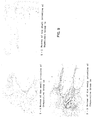
- Fig. 2 shows the appearance of stools from Comparative Group 1 (2-1) and Experiment Group 1 (2-1).
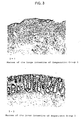
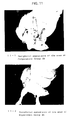
- Fig. 3 shows the appearance of the colon mucosas of Experiment Group 1 and Comparative Group 1. As shown in Fig.
- the method of preparing the basic feed was the same as in Test Example 1.
- Comparative Group 2 The basic feed was supplemented with casein and cellulose to provide the protein and dietary fiber contents that would be given by adding 10% of the substance containing proteins and insoluble dietary fibers according to Formulation Example 1.
- Experiment Group 2 The substance containing proteins and insoluble dietary fibers according Formulation Example 1 was added to the basic feed at 10%.
- Experiment Group 3 Salazosulfapyridine (salazopyrine: manufactured by Green Cross K.K.) was added to the feed of Comparative Group 2 at 0.5 g/kg feed (so that the approximate dose would be equal to 50 mg/kg body weight). The dose of salazosulfapyridine was decided by referring to Folia. Pharmacol.
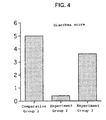
- Fig. 4 shows the diarrhea scores of Experiment Groups 2 and 3, and Comparative Group 2. Evaluation by scoring was made in a similar manner to Test Example 1. As shown in Fig. 4, recovery from diarrhea was very fast in the group that was given the substance containing proteins and insoluble dietary fibers. The degree was significantly better than from salazosulfapyridine, a drug currently used as a therapeutic drug for ulcerative colitis. The present experiment has shown that the administration of the substance containing proteins and insoluble dietary fibers can effectively promote amelioration of symptoms even if it is taken after development of ulcerative colitis. Similar results are confirmed for the substance containing proteins and insoluble dietary fibers according to Formulation Examples 2 through 4.
- the substance containing proteins and insoluble dietary fibers prepared in Formulation Example 5 was tested to determine whether it could treat severe diarrhea associated with ulcerative colitis or abnormalities in the mucosa of colon.
- Test Example 3 These were basically the same as in Test Example 1.
- the feeds used in Test example 3 were as shown in Table 7. After breeding for 5 days, the appearances of the stool and the anus were examined and the appearance of diarrhea was evaluated by scoring.
- Test Example Group 3 The basic feed was supplemented with casein and cellulose to provide the protein and dietary fiber contents that would be given by adding 10% of the substance containing proteins and insoluble dietary fibers according to Formulation Example 5. Then, dextran sodium sulfate was added thereto at 4% to induce ulcerative colitis.
- Test Example Group 4 The substance containing proteins and insoluble dietary fibers of Formulation Example 5 was added to the basic feed at 10%, and dextran sulfate sodium was added at 4% to induce ulcerative colitis.
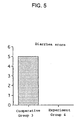
- Fig. 5 shows the diarrhea scores of Experiment Group 4, and Comparative Group 3. Evaluation by scoring was made in a similar manner to Test example 1. As shown in Fig. 5, the substance containing proteins and insoluble dietary fibers of Formulation Example 5 has also shown a very marked amelioration of main symptoms of ulcerative colitis.
- the substance containing proteins and insoluble dietary fibers prepared in Formulation Example 6 was tested to determine whether it could treat severe diarrhea associated with ulcerative colitis or abnormalities in the mucosa of colon.
- test animal male Std-ddY mice (6-week old, about 30 g) that had been acclimated to the experimental condition by a preparatory breeding with the solid feed (CE-2, Nippon clea) for one week were used in groups of five animals each.
- the feeds used in Test Example 4 were as shown in Table 8.
- Ulcerative colitis was experimentally developed by giving the animal the feed mixed with dextran sodium sulfate. This is a modification of Iwanaga's method ( Journal of Gastroenterology 29: 430-438, 1994 ). The substance containing proteins and insoluble dietary fibers was also given ad libitum in a mixture with the feed. After breeding for 3 days, the appearances of the stool and the anus were examined on day 4 and the state of diarrhea was evaluated by scoring.
- the method of preparing the basic feed was the same as in Test Example 1. Comparative Group 4: Dextran sodium sulfate was added to the basic feed at 4% to induce ulcerative colitis. Experiment Group 5 : After the substance containing proteins and insoluble dietary fibers according to Formulation Example 6 was added to the basic feed at 5%, dextran sodium sulfate was added at 4% to induce ulcerative colitis.
- Fig. 6 shows the diarrhea scores of Experiment Group 5 and Comparative Group 4. Evaluation by scoring was made in a similar manner to Test Example 1. As shown in Fig. 6, the substance containing proteins and insoluble dietary fibers according to Formulation Example 6 has also shown a very effective amelioration of main symptoms of ulcerative colitis.
- the substance containing proteins and insoluble dietary fibers prepared in Formulation Example 1 was tested to determine whether it could prevent or ameliorate severe damages on the mucosa of colon and diarrhea when anti-cancer agents were being used.
- mice Male SD rats (4-week old), after preparatory breeding with the solid feed (CE-2, Nippon clea) for one week, were divided into groups of five animals each (body weight at the time of grouping was 136.2 g). They were then bred for one week by giving ad libitum the feed shown in Table 9. On day 7, 8 and 9, methotrexate (manufactured by Nippon Lederle) was given intraperitoneally at 5 mg/kg body weight. The animals were further bred for 5 days, and on day 5, after fasting for 4 hours, the jejunum (portions at 15 to 30 cm from the pylorus) was taken out under anesthesia with urethane. It was then fixed in formalin and embedded with paraffin and stained with hematoxylin-eosin for microscopic observation.
- the following comparative examples were set up: 1) a comparative control group (cellulose was used as a dietary fiber) and 2) a group to which glutamin commonly held as an ideal nutrient for intestinal mucosa was added. On the last three days, stools were collected and their dry weight was measured.
- the method of preparing the basic feed was the same as in Test Example 1.
- Comparative Group 1a The basic feed was supplemented with casein and cellulose to provide the protein and dietary fiber contents that would be given by adding 10% of the substance containing proteins and insoluble dietary fibers according to Formulation Example 1.
- Experiment Group 1a The substance containing proteins and insoluble dietary fibers according to Formulation Example 1 was added to the basic feed at 10%.
- Experiment Group 2a Glutamin was added to the basic feed at 1.13%. This is equivalent to the content of glutamin obtained when the substance containing proteins and insoluble dietary fibers was added to the feed at 10%.
- casein and cellulose were added so that the weights of proteins and dietary fibers would be the same as in Experiment Group 1a.
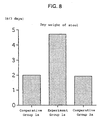
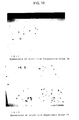
- Figs. 8 and 9 show the dry weight of the stools from Experiment Group 1a and Comparative Group 1a and 2a. Comparative Groups 1a and 2a had severe diarrhea.
- Fig. 9 shows the appearance of the mucosas of the small intestines of Experiment Group 1a and Comparative Groups 1a and 2a (9-2, 9-1, and 9-3, respectively) .
- excretion of the stool was normal in Experiment Group 1a that took the substance containing proteins and insoluble dietary fibers, but a reduction in the dry weight of stool excretion was observed in Comparative Groups 1a and 2a due to diarrhea.
- mice Male ST-Wistar rats (3-week old), after preparatory breeding with the casein-sucrose diet (the basic feed or Comparative Group 3a as shown in Table 10) for one week, were divided into groups of seven animals each. Subsequently, the animals were fed the test feed shown in Table 10 for 10 days, and on day 11 they were exposed to a radiation of 10 Gy (from 60Co) in a localized area (lower abdomen). They were bred for 8 more days and the effect of the substance containing proteins and insoluble dietary fibers to prevent the damage on the intestinal mucosa due to radiation exposure was evaluated in terms of the survival rate.
- 10 Gy from 60Co
- Comparative Group 3a The sucrose basic feed group with 20% casein and 0% dietary fiber
- Experiment Group 2a The substance containing proteins and insoluble dietary fibers prepared in Formulation example 1 was added to the sucrose basic feed at 10% and its sucrose content was accordingly reduced.
- Comparative Experiment Group 3a Group 2a (% by weight) Casein 20 20 Mineral mix 3.5 3.5 Vitamin mix 1 1 Sucrose 70.3 60.3 Corn oil 5 5 The substance containing proteins and insoluble dietary fibers according to Formulation example 1 10 Choline chloride 0.2 0.2
- the substance containing proteins and insoluble dietary fibers prepared in Formulation example 1 was tested to determine whether it would permit normal stool formation when a massive ablation of the lower gastrointestinal tract (the large intestine) was carried out.
- test animal male SD rats (4-week old, about 50 g) that had been acclimated to the experimental condition by a preparatory breeding with the feed shown in Table 12 for one week were used in groups of 10 animals each.
- the large intestine was removed in such a way that the anus and the large intestine within the pelvis were left intact; then, an end-to-end anastomosis of the small intestine was conducted.
- the animals were given again the feed shown in Table 12 and bred for one week, and the appearance of the stool and the anus were examined.
- the method of preparing the basic feed was the same as in Test Example 1.
- Comparative Group 1b The basic feed was supplemented with casein and cellulose to provide the protein and dietary fiber contents that would be given by adding 10% of the substance containing proteins and insoluble dietary fibers according to Formulation Example 1.
- Experiment Group 1b The substance containing proteins and insoluble dietary fibers according to Formulation Example 1 was added to the basic feed at 10%.
- the substance containing proteins and insoluble dietary fibers permitted normal stool formation very effectively after ablation of the gastrointestinal tract.
- ungerminated barley was fractionated under the same conditions as described above.
- the resulting substance containing proteins and insoluble dietary fibers had protein and dietary fiber contents of 16.3% and 31.5%, respectively.
- Germinated rice was dried and dehusked. After accurate weight measurement, the dehusked grains were scraped from the surface with TDB2A, a rice whiting machine for brewery use (manufactured by Satake Seisakusho; working rotational speed, 500 rpm) .
- the scraped rice grains which weighed 100 - 95% of the initial rice grains were obtained as the substance containing proteins and insoluble dietary fibers. Its protein and dietary fiber contents were 17.6% and 21.6%, respectively.
- ungerminated brown (dehusked) rice was fractionated under the same conditions as described above.
- the resulting substance containing proteins and insoluble dietary fibers had protein and dietary fiber contents of 16.3% and 28.5%, respectively.
- Test Examples 7 and 8 The effect of the substance containing proteins and insoluble dietary fibers prepared in Test Examples 7 and 8 was investigated.
- Test Example 8 The same as in Test Example 1.
- the feeds used in Test Example 8 were as shown in Table 13.
- Comparative Group 5 Same as the feed for Experiment Group 6, except that no substance containing proteins and insoluble dietary fibers was added and that it was supplemented with casein and cellulose to provide the corresponding protein and dietary fiber contents. It contained 3.5% of dextran sodium sulfate in order to induce ulcerative colitis. Comparative Group 6: The substance containing proteins and insoluble dietary fibers which was derived from "ungerminated barley" and prepared in Formulation Example 7 was added to the basic feed at 10%, and dextran sodium sulfate was added at 3.5% in order to induce ulcerative colitis.
- Experiment Group 6 The substance containing proteins and insoluble dietary fibers which was derived from barley malt and prepared in Formulation Example 7 was added to the basic feed at 10%, and dextran sodium sulfate was added at 3.5% in order to induce ulcerative colitis.
- Comparative Group 7 The substance containing proteins and insoluble dietary fibers which was derived from "ungerminated brown rice" and prepared in Formulation Example 8 was added to the basic feed at 10%, and dextran sodium sulfate was added at 3.5% in order to induce ulcerative colitis.
- Experiment Group 7 The substance containing proteins and insoluble dietary fibers which was derived from germinated rice grains and prepared in Formulation Example 8 was added to the basic feed at 10%, and dextran sodium sulfate was added at 3.5% in order to induce ulcerative colitis.
- the diarrhea score decreased only when the substances containing proteins and insoluble dietary fibers that derived from the germinated barley and the germinated rice was taken by the animals. Therefore, it was demonstrated that both of these substances containing proteins and insoluble dietary fibers can prevent the severe diarrhea associated with ulcerative colitis.
- the scraped rye malt grains which weighed 100 - 96% of the initial rye malt grains were obtained as the substance containing proteins and insoluble dietary fibers. Its protein and dietary fiber contents were 16.3% and 35%, respectively.
- test animal male SD rats (3-week old, about 50 g) that had been acclimated to the experimental condition by a preparatory breeding with a solid feed for one week were used in groups of five animals each.
- the feeds used in Test Example 9 were as shown in Table 15.
- the substances containing proteins and insoluble dietary fibers prepared in Formulation Examples 9 and 10 were also given ad libitum in admixture with the feed. After breeding for 5 days, the appearance of the stool and the anus was examined and the severity of diarrhea was evaluated by scoring. Then the colon was ablated totally and fixed in 10% formalin to prepare sections of the mucosa, and the images of the mucosa were also examined. The results were, as shown in Table 16; the amelioration of diarrhea and the prevention of erosion in the anus and damage on the mucosa of the large intestine were possible only when the substance containing proteins and insoluble dietary fibers prepared in Formulation Example 9 was taken by the animals.
- the severity of diarrhea was classified into 6 levels: 0, normal; 1, slightly soft; 2, considerably soft; 3, stools could not be picked up; 4, diarrhea + slightly eroded anus; 5, diarrhea + badly eroded anus. Also, the damage on the mucosa of the large intestine was scored in accordance with the method of Morris, in which the larger number means a severer damage.
- Comparative Group 1c The basic feed was supplemented with casein and cellulose to provide the protein and dietary fiber contents that would be given by adding 10% of the substance containing proteins and insoluble dietary fibers according to Formulation Example 1. Dextran sodium sulfate was added at 4% to induce ulcerative colitis. Comparative Group 2c: The substance containing proteins and insoluble dietary fibers according to Formulation Example 10 was added to the basic feed at 10%, and dextran sodium sulfate was added at 4% in order to induce ulcerative colitis. Casein and cellulose were also added to give the same protein and dietary fiber contents as in Comparative Group 1c.
- Experiment Group 1c The substance containing proteins and insoluble dietary fibers according to Formulation Example 9 was added to the basic feed at 10%, and dextran sodium sulfate was added at 4% in order to induce ulcerative colitis. Casein and cellulose were also added to give the same protein and dietary fiber contents as in Comparative Group 1c.
- Table 17 Table of Ingredients (% by weight) Crude protein 50.2 Crude fat 13.7 Ash content 1.5 Dietary fiber 33.6
- Table 18 Composition of Dietary fibers (%) Hemicellulose 69.9 Cellulose 23.3 Lignin 6.8
- the substance containing proteins and insoluble dietary fibers prepared in Formulation Example 11 was tested to determine whether it could treat the severe diarrhea associated with ulcerative colitis or abnormalities in the mucosa of the large intestine.
- Test Example 1 The test animals and the method of developing ulcerative colitis were as shown in Test Example 1, except that the feeds used in Test Example 10 were as shown in Table 19 below.
- Table 19 Comparative Experiment Example 1
- Example 1 (% by weight) Casein 14.6 10 Mineral mix* 1 3.5 3.5 Vitamin mix* 2 1.0 1.0 Starch 69.2 66.8 Corn oil 5.0 Cellulose 3.0
- the substance containing proteins and insoluble dietary fibers according to Formulation Example 11 10.0 Choline chloride 0.2 0.2 dextran sodium sulfate 3.5 3.5 * 1 in conformity with AIN-93 * 2 in conformity with AIN-93
- the composition derived from the germinated seed of a grass family plant of the present invention is capable of treating the diarrhea associated with ulcerative colitis and it is also effective in preventing disorders of the mucosa of the large intestine.
- the composition derived from the germinated seed of a grass family plant of the present invention can effectively prevent damages on the intestinal mucosa and control the ensuing onset of diarrhea, both symptoms being severe side effects resulting from administration of anti-cancer agents.
- the composition derived from the germinated seed of a grass family plant of the present invention can effectively improve the bowel movement of a patient who has undergone intestinal ablation or a patient with an artificial anus.
- the composition derived from the germinated seed of a grass family plant of the present invention has no side effects.
Landscapes
- Health & Medical Sciences (AREA)
- Life Sciences & Earth Sciences (AREA)
- Natural Medicines & Medicinal Plants (AREA)
- Chemical & Material Sciences (AREA)
- Engineering & Computer Science (AREA)
- Polymers & Plastics (AREA)
- Mycology (AREA)
- Medicinal Chemistry (AREA)
- Veterinary Medicine (AREA)
- Pharmacology & Pharmacy (AREA)
- Public Health (AREA)
- Animal Behavior & Ethology (AREA)
- General Health & Medical Sciences (AREA)
- Botany (AREA)
- Food Science & Technology (AREA)
- Proteomics, Peptides & Aminoacids (AREA)
- Alternative & Traditional Medicine (AREA)
- Biotechnology (AREA)
- Epidemiology (AREA)
- Medical Informatics (AREA)
- Microbiology (AREA)
- Nutrition Science (AREA)
- Chemical Kinetics & Catalysis (AREA)
- General Chemical & Material Sciences (AREA)
- Organic Chemistry (AREA)
- Bioinformatics & Cheminformatics (AREA)
- Nuclear Medicine, Radiotherapy & Molecular Imaging (AREA)
- Animal Husbandry (AREA)
- Zoology (AREA)
- Medicines That Contain Protein Lipid Enzymes And Other Medicines (AREA)
- Coloring Foods And Improving Nutritive Qualities (AREA)
- Medicines Containing Plant Substances (AREA)
- Pharmaceuticals Containing Other Organic And Inorganic Compounds (AREA)
- External Artificial Organs (AREA)
- Treatments For Attaching Organic Compounds To Fibrous Goods (AREA)
- Fodder In General (AREA)
Claims (12)
- Verwendung einer Zusammensetzung umfassend 10 bis 70 Gew.% Protein und 20 bis 70 Gew.% unlösliche Ballaststoffe, erhältlich durch ein Verfahren umfassend die Schritte:Abschaben der Hülsen von keimenden Gerste-, Reis- oder Roggenpflanzensamen undErhalten der Aleuronschicht und der Hülsenfraktion der keimenden Samen durch allmähliches Abschaben der Fraktionen, die die Aleuronschicht und Keim enthalten, bis einzig das Endosperm zurückbleibt,zur Herstellung eines Medikaments oder einer medizinischen Nahrungszusammensetzung zur Behandlung von eiternder Kolitis.
- Verwendung einer Zusammensetzung umfassend 10 bis 70 Gew.% Protein und 20 bis 70 Gew.% unlösliche Ballaststoffe, erhältlich durch das Verfahren umfassend die Schritte:Pressen und Mahlen von Getreidekörnern von Brauern im Naßzustand undDurchpassieren durch ein Sieb von 20-50 Maschenweite,zur Herstellung eines Medikaments oder einer medizinischen Nahrungszusammensetzung zur Behandlung von eiternder Kolitis.
- Verwendung einer Zusammensetzung umfassend 10 bis 70 Gew.% Protein und 20 bis 70 Gew.% unlösliche Ballaststoffe, erhältlich durch das Verfahren umfassend die Schritte:Abschaben der Hülsen von keimenden Gerste-, Reis- oder Roggenpflanzensamen undErhalten der Aleuronschicht und der Hülsenfraktion der keimenden Samen durch allmähliches Abschaben der Fraktionen, die die Aleuronschicht und Keim enthalten, bis einzig das Endosperm zurückbleibt,zur Herstellung eines Medikaments oder einer medizinischen Nahrungszusammensetzung zur Verhinderung oder Verringerung von Nebenwirkungen der Krebsbehandlung, wobei die Nebenwirkung einer Krebsbehandlung Durchfall oder Schädigung der Darmschleimhaut ist.
- Verwendung einer Zusammensetzung umfassend 10 bis 70 Gew.% Protein und 20 bis 70 Gew.% unlösliche Ballaststoffe, erhältlich durch das Verfahren umfassend die Schritte:Pressen und Mahlen von Getreidekörnern von Brauern im Naßzustand undDurchpassieren durch ein Sieb von 20-50 Maschenweite,zur Herstellung eines Medikaments oder einer medizinischen Nahrungszusammensetzung zur Verhinderung oder Verringerung von Nebenwirkungen der Krebsbehandlung, wobei die Nebenwirkung einer Krebsbehandlung Durchfall oder Schädigung der Darmschleimhaut ist.
- Verwendung eine Zusammensetzung umfassend 10 bis 70 Gew.% unlösliche Ballaststoffe, erhältlich durch das Verfahren umfassend die Schritte:Abschaben der Hülsen von keimenden Gerste-, Reis- oder Roggenpflanzensamen undErhalten der Aleuronschicht und der Hülsenfraktion der keimenden Samen durch allmähliches Abschaben der Fraktionen, die die Aleuronschicht und Keim enthalten, bis einzig das Endosperm zurückbleibt,zur Herstellung eines Medikaments oder einer medizinischen Nahrungszusammensetzung zur Verbesserung des Stuhlgangs eines Patienten, der einer Darmablatation unterzogen wurde.
- Verwendung einer Zusammensetzung umfassend 10 bis 70 Gew.% Protein und 20 bis 70 Gew.% unlösliche Ballaststoffe, erhältlich durch das Verfahren umfassend die Schritte:Pressen und Mahlen von Getreidekörnern von Brauern im Naßzustand undDurchpassieren durch ein Sieb von 20-50 Maschenweite,zur Herstellung eines Medikaments oder einer medizinischen Nahrungszusammensetzung zur Verbesserung des Stuhlgangs eines Patienten, der einer Darmablatation unterzogen wurde.
- Verwendung einer Zusammensetzung umfassend 10 bis 70 Gew.% Protein und 20 bis 70 Gew.% unlösliche Ballaststoffe, erhältlich durch das Verfahren umfassend die Schritte:Abschaben der Hülsen von keimenden Gerste-, Reis- oder Roggenpflanzensamen undErhalten der Aleuronschicht und der Hülsenfraktion der keimenden Samen durch allmähliches Abschaben der Fraktionen, die die Aleuronschicht und Keim enthalten, bis einzig das Endosperm zurückbleibt,zur Herstellung eines Medikaments oder einer medizinischen Nahrungszusammensetzung zur Verbesserung des Stuhlgangs eines Patienten mit einem künstlichen Darmausgang.
- Verwendung einer Zusammensetzung umfassend 10 bis 70 Gew.% Protein und 20 bis 70 Gew.% unlösliche Ballaststoffe, erhältlich durch das Verfahren umfassend die Schritte:Pressen und Mahlen von Getreidekörnern von Brauern im Naßzustand undDurchpassieren durch ein Sieb von 20-50 Maschenweite,zur Herstellung eines Medikaments oder einer medizinischen Nahrungszusammensetzung zur Verbesserung des Stuhlgangs eines Patienten mit einem künstlichen Darmausgang.
- Verwendung der Zusammensetzung wie in den Ansprüchen 1 bis 8 beansprucht, wobei die Proteine in kleine Moleküle mit einer durchschnittlichen Peptidlänge von ungefähr 5 bis 8 durch Enzymbehandlung umgewandelt worden sind.
- Verwendung der Zusammensetzung wie in den Ansprüchen 1 bis 8 beansprucht, wobei die Menge der unlöslichen Ballaststoffe durch Enzymbehandlung und Filtrierung gesteigert worden ist.
- Verwendung der Zusammensetzung wie in den Ansprüchen 3 bis 4 beansprucht, wobei die Krebsbehandlung durch Verabreichung eines Antikrebsmittels oder durch Bestrahlung mit Gammastrahlen bewirkt wird.
- Verwendung der Zusammensetzung wie in Anspruch 12 oder 13 beansprucht, wobei die Krebsbehandlung durch Kombinieren der Verabreichung eines Antikrebsmittels und Bestrahlung mit Gammastrahlen bewirkt wird.
Priority Applications (1)
| Application Number | Priority Date | Filing Date | Title |
|---|---|---|---|
| EP06021229A EP1757301B1 (de) | 1996-04-05 | 1997-03-05 | Verfahren zur Herstellung einer Substanz, die in keimenden Saaten von Gräsern vorkommt und Proteine und unlösliche Ballaststoffe enthält |
Applications Claiming Priority (5)
| Application Number | Priority Date | Filing Date | Title |
|---|---|---|---|
| JP83780/96 | 1996-04-05 | ||
| JP83779/96 | 1996-04-05 | ||
| JP8377996 | 1996-04-05 | ||
| JP8378096 | 1996-04-05 | ||
| PCT/JP1997/000671 WO1997037674A1 (en) | 1996-04-05 | 1997-03-05 | Substance originating in germinating seeds of gramineous plant and containing proteins and insoluble dietary fibers and use thereof |
Related Child Applications (1)
| Application Number | Title | Priority Date | Filing Date |
|---|---|---|---|
| EP06021229A Division EP1757301B1 (de) | 1996-04-05 | 1997-03-05 | Verfahren zur Herstellung einer Substanz, die in keimenden Saaten von Gräsern vorkommt und Proteine und unlösliche Ballaststoffe enthält |
Publications (3)
| Publication Number | Publication Date |
|---|---|
| EP0906760A1 EP0906760A1 (de) | 1999-04-07 |
| EP0906760A4 EP0906760A4 (de) | 2001-07-18 |
| EP0906760B1 true EP0906760B1 (de) | 2007-06-27 |
Family
ID=26424820
Family Applications (2)
| Application Number | Title | Priority Date | Filing Date |
|---|---|---|---|
| EP97905445A Expired - Lifetime EP0906760B1 (de) | 1996-04-05 | 1997-03-05 | Substanz, die in keimenden saaten von gräsern vorkommt und proteine und unlösliche ballaststoffe enthält, und ihre verwendung |
| EP06021229A Expired - Lifetime EP1757301B1 (de) | 1996-04-05 | 1997-03-05 | Verfahren zur Herstellung einer Substanz, die in keimenden Saaten von Gräsern vorkommt und Proteine und unlösliche Ballaststoffe enthält |
Family Applications After (1)
| Application Number | Title | Priority Date | Filing Date |
|---|---|---|---|
| EP06021229A Expired - Lifetime EP1757301B1 (de) | 1996-04-05 | 1997-03-05 | Verfahren zur Herstellung einer Substanz, die in keimenden Saaten von Gräsern vorkommt und Proteine und unlösliche Ballaststoffe enthält |
Country Status (8)
| Country | Link |
|---|---|
| US (3) | US6348221B1 (de) |
| EP (2) | EP0906760B1 (de) |
| JP (1) | JP3746522B2 (de) |
| AT (2) | ATE365560T1 (de) |
| AU (1) | AU722942B2 (de) |
| CA (1) | CA2249430A1 (de) |
| DE (2) | DE69737859T2 (de) |
| WO (1) | WO1997037674A1 (de) |
Families Citing this family (12)
| Publication number | Priority date | Publication date | Assignee | Title |
|---|---|---|---|---|
| JP2001294532A (ja) * | 2000-04-14 | 2001-10-23 | Kirin Brewery Co Ltd | 経口組成物 |
| EP1372641A4 (de) | 2001-03-05 | 2004-08-25 | Stephen P Ernest | Enterale formulierung |
| US8496006B2 (en) * | 2005-01-20 | 2013-07-30 | Pulmonx Corporation | Methods and devices for passive residual lung volume reduction and functional lung volume expansion |
| ATE554770T1 (de) * | 2006-04-13 | 2012-05-15 | Taiho Pharmaceutical Co Ltd | Therapeutisches mittel gegen entzündliche darmerkrankungen |
| TWI429439B (zh) * | 2007-10-11 | 2014-03-11 | Taiho Pharmaceutical Co Ltd | And a therapeutic agent for inflammatory bowel disease using a uracil derivative as an active ingredient |
| AU2008339365A1 (en) * | 2007-12-19 | 2009-06-25 | Kirin Holdings Kabushiki Kaisha | Insoluble dietary fiber-containing product derived from grain seeds |
| AR069826A1 (es) * | 2008-11-05 | 2010-02-24 | Pampa Group Srl | Procedimiento para secar hez de malta |
| WO2010071225A1 (ja) * | 2008-12-17 | 2010-06-24 | キリンホールディングス株式会社 | 穀類植物種子由来の不溶性食物繊維を含有する過敏性腸症候群抑制用物質 |
| RU2580040C2 (ru) * | 2009-12-22 | 2016-04-10 | Проби Аб | Неферментированные композиции, включающие фракцию на основе злаков и пробиотик, и их применение |
| FR3025427B1 (fr) | 2014-09-05 | 2019-04-26 | Universite Joseph Fourier | Procede de traitement preventif ou curatif des alterations induites par les polluants organiques persistants |
| JP7444554B2 (ja) * | 2019-06-21 | 2024-03-06 | 大和製罐株式会社 | 難溶性飲料製品 |
| CN111328847A (zh) * | 2020-02-28 | 2020-06-26 | 西昌市正中食品有限公司 | 一种苦荞酥性高纤饼干 |
Family Cites Families (24)
| Publication number | Priority date | Publication date | Assignee | Title |
|---|---|---|---|---|
| GB1219564A (en) * | 1966-11-07 | 1971-01-20 | Arthur Samy | Improvements in or relating to food products |
| SE450325B (sv) * | 1983-02-23 | 1987-06-22 | Tricum Ab | Kostfiberprodukt baserad pa skaldelar fran froet hos ceralier |
| JPS6379834A (ja) * | 1986-09-25 | 1988-04-09 | Kozo Niwa | 活性酸素抑制組成物 |
| DE3712986A1 (de) * | 1987-04-16 | 1988-10-27 | Marbert Gmbh | Medizinische zubereitungen auf der grundlage von biertreberextrakt, verfahren zu deren herstellung sowie verwendung von biertreberextrakt zur herstellung von kosmetischen zubereitungen und ein spezieller biertreberextrakt |
| JPH03123479A (ja) * | 1988-11-18 | 1991-05-27 | Kirin Brewery Co Ltd | ビール粕から高タンパク質含有物、繊維質及び/又は植物油を製造する方法 |
| JPH074170B2 (ja) * | 1990-02-20 | 1995-01-25 | 麒麟麦酒株式会社 | ビール粕由来の高タンパク質含有粉粒体 |
| JPH0431666A (ja) | 1990-05-28 | 1992-02-03 | Oki Electric Ind Co Ltd | 内燃機関用電子制御装置とその制御方法 |
| US5262419A (en) * | 1992-06-11 | 1993-11-16 | E. R. Squibb & Sons, Inc. | Method for the prophylaxis and/or treatment of ulcerative gastrointestinal conditions using a potassium channel activator |
| CA2115707A1 (en) * | 1993-02-16 | 1994-08-17 | Takashi Tokuyama | Antiulcer agent |
| JP3678436B2 (ja) * | 1993-02-16 | 2005-08-03 | 株式会社創研 | 抗潰瘍剤 |
| JPH06298660A (ja) * | 1993-02-19 | 1994-10-25 | Soken Kk | 米からの癌予防・治療剤 |
| JP2654468B2 (ja) * | 1993-03-26 | 1997-09-17 | 農林水産省水産庁養殖研究所長 | 粉末麦芽タンパク質配合ニジマス用飼料 |
| JPH06293656A (ja) * | 1993-04-07 | 1994-10-21 | Soken Kk | 米からの癌予防・治療剤 |
| JPH0741426A (ja) | 1993-05-25 | 1995-02-10 | Soken Kk | 米からの活性酸素消去剤 |
| JP3779739B2 (ja) * | 1993-12-06 | 2006-05-31 | 株式会社創研 | 米からの塩害防止剤 |
| JPH07278586A (ja) * | 1994-04-12 | 1995-10-24 | Nippon Suisan Kaisha Ltd | 粉末油脂およびそれを用いた食品 |
| JP2834407B2 (ja) * | 1994-07-26 | 1998-12-09 | 麒麟麦酒株式会社 | 湿式ビール粕穀皮剥離方法およびその装置 |
| JPH0892113A (ja) * | 1994-09-26 | 1996-04-09 | Soken Kk | 米からの抗炎症剤 |
| JP3811197B2 (ja) * | 1994-10-25 | 2006-08-16 | 株式会社創研 | 米からのヘリコバクター・ピロリ除菌剤 |
| JP3638975B2 (ja) * | 1994-12-07 | 2005-04-13 | 麒麟麦酒株式会社 | 便通改善剤、腸粘膜増殖増強剤および経腸栄養剤 |
| US5489440A (en) * | 1995-03-06 | 1996-02-06 | Abbott Laboratories | Rice flour-based oral rehydration solution |
| JPH08336358A (ja) * | 1995-06-14 | 1996-12-24 | Kirin Brewery Co Ltd | ビール粕由来高タンパク質含有物を配合した子豚用人工乳 |
| JPH0912464A (ja) * | 1995-06-28 | 1997-01-14 | Kirin Brewery Co Ltd | 食品アレルギー抑制剤およびそれを含有する飲食品 |
| US5614242A (en) * | 1995-09-27 | 1997-03-25 | Barkley Seed, Inc. | Food ingredients derived from viscous barley grain and the process of making |
-
1997
- 1997-03-05 CA CA002249430A patent/CA2249430A1/en not_active Abandoned
- 1997-03-05 WO PCT/JP1997/000671 patent/WO1997037674A1/ja not_active Ceased
- 1997-03-05 EP EP97905445A patent/EP0906760B1/de not_active Expired - Lifetime
- 1997-03-05 AU AU22316/97A patent/AU722942B2/en not_active Ceased
- 1997-03-05 US US09/155,857 patent/US6348221B1/en not_active Expired - Fee Related
- 1997-03-05 EP EP06021229A patent/EP1757301B1/de not_active Expired - Lifetime
- 1997-03-05 AT AT97905445T patent/ATE365560T1/de not_active IP Right Cessation
- 1997-03-05 JP JP53603497A patent/JP3746522B2/ja not_active Expired - Fee Related
- 1997-03-05 DE DE69737859T patent/DE69737859T2/de not_active Expired - Fee Related
- 1997-03-05 AT AT06021229T patent/ATE422360T1/de not_active IP Right Cessation
- 1997-03-05 DE DE69739259T patent/DE69739259D1/de not_active Expired - Fee Related
-
1999
- 1999-09-09 US US09/392,246 patent/US6284290B1/en not_active Expired - Fee Related
-
2001
- 2001-10-09 US US09/971,659 patent/US6475533B2/en not_active Expired - Fee Related
Non-Patent Citations (1)
| Title |
|---|
| None * |
Also Published As
| Publication number | Publication date |
|---|---|
| JP3746522B2 (ja) | 2006-02-15 |
| US6284290B1 (en) | 2001-09-04 |
| EP1757301B1 (de) | 2009-02-11 |
| CA2249430A1 (en) | 1997-10-16 |
| US6348221B1 (en) | 2002-02-19 |
| WO1997037674A1 (en) | 1997-10-16 |
| ATE422360T1 (de) | 2009-02-15 |
| US20020064570A1 (en) | 2002-05-30 |
| EP1757301A1 (de) | 2007-02-28 |
| ATE365560T1 (de) | 2007-07-15 |
| AU2231697A (en) | 1997-10-29 |
| DE69737859T2 (de) | 2008-03-06 |
| AU722942B2 (en) | 2000-08-17 |
| DE69737859D1 (de) | 2007-08-09 |
| US20010016214A1 (en) | 2001-08-23 |
| EP0906760A4 (de) | 2001-07-18 |
| EP0906760A1 (de) | 1999-04-07 |
| US6475533B2 (en) | 2002-11-05 |
| DE69739259D1 (de) | 2009-03-26 |
Similar Documents
| Publication | Publication Date | Title |
|---|---|---|
| KR102134209B1 (ko) | 효소 생산능이 우수한 전통 발효식품 유래 신규 균주 및 이를 이용하여 곡물 발효 효소식품을 제조하는 방법 | |
| CN112586744B (zh) | 一种可控制体重的益生菌片剂及其制备方法 | |
| Kanauchi et al. | Protein, and dietary fiber-rich new foodstuff from brewer’s spent grain increased excretion of feces and jejunum mucosal protein content in rats | |
| EP1757301B1 (de) | Verfahren zur Herstellung einer Substanz, die in keimenden Saaten von Gräsern vorkommt und Proteine und unlösliche Ballaststoffe enthält | |
| EP0717996B1 (de) | Zusammensetzung enthaltend dehydratisierte getrocknete Mungbohnenkeime und pflanzlichen Ballaststoff zur Verwendung als Nahrungszusatz in der Gesundheitspflege | |
| KR20110116344A (ko) | 식이섬유, 올리고당 및 유산생성바실러스를 함유하여 장기능개선 및 배변활동 촉진용 조성물 | |
| EP0474230B1 (de) | Unlösliche Diät-FASERN, Verfahren zu ihrer Herstellung und Diät-FASERN enthaltende Nahrungsmittel | |
| JPWO1997037674A1 (ja) | イネ科植物の発芽種子由来のタンパク質および不溶性食物センイを含有する物質並びにその用途 | |
| JP5484913B2 (ja) | 穀類植物種子由来の不溶性食物繊維含有物質 | |
| WO2010071225A1 (ja) | 穀類植物種子由来の不溶性食物繊維を含有する過敏性腸症候群抑制用物質 | |
| KR20000066369A (ko) | 식이섬유를 함유한 카카오 추출물 | |
| JPH09278664A (ja) | 新規な食物センイ組成物 | |
| Mälkki et al. | Oat fiber. Production, composition, physicochemical properties, physiological effects, safety, and food applications | |
| JP2011000055A (ja) | 穀類植物種子由来の不溶性食物繊維を含有する満腹感持続用組成物 | |
| JP4746893B2 (ja) | イネ科植物の発芽種子由来のタンパク質および不溶性食物センイを含有する物質並びにその用途 | |
| JP3638975B2 (ja) | 便通改善剤、腸粘膜増殖増強剤および経腸栄養剤 | |
| CN111406928B (zh) | 具有改善慢性腹泻功能的红枣发酵食品及其制备方法与用途 | |
| JPH11246422A (ja) | 消化管内環境改善剤 | |
| KR101373493B1 (ko) | 톳을 유효성분으로 함유하는 비만 또는 고지혈증 및 동맥경화성 혈관계 질환의 예방 및 치료용 조성물 | |
| EA001653B1 (ru) | Лекарственный препарат для регуляции активности кишечника, содержащий измельченное льняное семя, и способ его производства | |
| KR102802652B1 (ko) | 고도의 내산소성을 보유한 아커만시아 뮤시니필라 snuvet05am 균주 및 이의 용도 | |
| JP7458662B2 (ja) | 組成物 | |
| CN109430838A (zh) | 一种肠道调理杂粮粉冲剂及其加工方法 | |
| CN111616336A (zh) | 一种促进肠蠕动、有益肠道健康的糕点馅料、糕点及其制备方法 | |
| JPH04281763A (ja) | 食品用組成物および整腸作用性食品 |
Legal Events
| Date | Code | Title | Description |
|---|---|---|---|
| PUAI | Public reference made under article 153(3) epc to a published international application that has entered the european phase |
Free format text: ORIGINAL CODE: 0009012 |
|
| 17P | Request for examination filed |
Effective date: 19981005 |
|
| AK | Designated contracting states |
Kind code of ref document: A1 Designated state(s): AT BE CH DE DK ES FI FR GB GR IE IT LI LU MC NL PT SE |
|
| A4 | Supplementary search report drawn up and despatched |
Effective date: 20010605 |
|
| AK | Designated contracting states |
Kind code of ref document: A4 Designated state(s): AT BE CH DE DK ES FI FR GB GR IE IT LI LU MC NL PT SE |
|
| RIC1 | Information provided on ipc code assigned before grant |
Free format text: 7A 61K 35/78 A, 7A 23L 1/30 B, 7A 23K 1/16 B, 7A 23L 1/305 B, 7A 23L 1/308 B |
|
| 17Q | First examination report despatched |
Effective date: 20030821 |
|
| GRAP | Despatch of communication of intention to grant a patent |
Free format text: ORIGINAL CODE: EPIDOSNIGR1 |
|
| RIC1 | Information provided on ipc code assigned before grant |
Ipc: A23L 1/308 20060101ALI20070122BHEP Ipc: A23L 1/305 20060101ALI20070122BHEP Ipc: A23K 1/16 20060101ALI20070122BHEP Ipc: A23L 1/30 20060101ALI20070122BHEP Ipc: A61K 36/886 20060101AFI20070122BHEP |
|
| GRAS | Grant fee paid |
Free format text: ORIGINAL CODE: EPIDOSNIGR3 |
|
| GRAA | (expected) grant |
Free format text: ORIGINAL CODE: 0009210 |
|
| AK | Designated contracting states |
Kind code of ref document: B1 Designated state(s): AT BE CH DE DK ES FI FR GB GR IE IT LI LU MC NL PT SE |
|
| REG | Reference to a national code |
Ref country code: GB Ref legal event code: FG4D |
|
| REG | Reference to a national code |
Ref country code: CH Ref legal event code: EP |
|
| REG | Reference to a national code |
Ref country code: IE Ref legal event code: FG4D |
|
| REF | Corresponds to: |
Ref document number: 69737859 Country of ref document: DE Date of ref document: 20070809 Kind code of ref document: P |
|
| PG25 | Lapsed in a contracting state [announced via postgrant information from national office to epo] |
Ref country code: SE Free format text: LAPSE BECAUSE OF FAILURE TO SUBMIT A TRANSLATION OF THE DESCRIPTION OR TO PAY THE FEE WITHIN THE PRESCRIBED TIME-LIMIT Effective date: 20070927 |
|
| ET | Fr: translation filed | ||
| PG25 | Lapsed in a contracting state [announced via postgrant information from national office to epo] |
Ref country code: AT Free format text: LAPSE BECAUSE OF FAILURE TO SUBMIT A TRANSLATION OF THE DESCRIPTION OR TO PAY THE FEE WITHIN THE PRESCRIBED TIME-LIMIT Effective date: 20070627 |
|
| NLV1 | Nl: lapsed or annulled due to failure to fulfill the requirements of art. 29p and 29m of the patents act | ||
| REG | Reference to a national code |
Ref country code: CH Ref legal event code: PL |
|
| PG25 | Lapsed in a contracting state [announced via postgrant information from national office to epo] |
Ref country code: BE Free format text: LAPSE BECAUSE OF FAILURE TO SUBMIT A TRANSLATION OF THE DESCRIPTION OR TO PAY THE FEE WITHIN THE PRESCRIBED TIME-LIMIT Effective date: 20070627 |
|
| PG25 | Lapsed in a contracting state [announced via postgrant information from national office to epo] |
Ref country code: PT Free format text: LAPSE BECAUSE OF FAILURE TO SUBMIT A TRANSLATION OF THE DESCRIPTION OR TO PAY THE FEE WITHIN THE PRESCRIBED TIME-LIMIT Effective date: 20071127 Ref country code: NL Free format text: LAPSE BECAUSE OF FAILURE TO SUBMIT A TRANSLATION OF THE DESCRIPTION OR TO PAY THE FEE WITHIN THE PRESCRIBED TIME-LIMIT Effective date: 20070627 Ref country code: ES Free format text: LAPSE BECAUSE OF FAILURE TO SUBMIT A TRANSLATION OF THE DESCRIPTION OR TO PAY THE FEE WITHIN THE PRESCRIBED TIME-LIMIT Effective date: 20071008 |
|
| PG25 | Lapsed in a contracting state [announced via postgrant information from national office to epo] |
Ref country code: CH Free format text: LAPSE BECAUSE OF FAILURE TO SUBMIT A TRANSLATION OF THE DESCRIPTION OR TO PAY THE FEE WITHIN THE PRESCRIBED TIME-LIMIT Effective date: 20070627 Ref country code: LI Free format text: LAPSE BECAUSE OF FAILURE TO SUBMIT A TRANSLATION OF THE DESCRIPTION OR TO PAY THE FEE WITHIN THE PRESCRIBED TIME-LIMIT Effective date: 20070627 |
|
| PG25 | Lapsed in a contracting state [announced via postgrant information from national office to epo] |
Ref country code: IT Free format text: LAPSE BECAUSE OF FAILURE TO SUBMIT A TRANSLATION OF THE DESCRIPTION OR TO PAY THE FEE WITHIN THE PRESCRIBED TIME-LIMIT Effective date: 20070627 Ref country code: GR Free format text: LAPSE BECAUSE OF FAILURE TO SUBMIT A TRANSLATION OF THE DESCRIPTION OR TO PAY THE FEE WITHIN THE PRESCRIBED TIME-LIMIT Effective date: 20070928 Ref country code: DK Free format text: LAPSE BECAUSE OF FAILURE TO SUBMIT A TRANSLATION OF THE DESCRIPTION OR TO PAY THE FEE WITHIN THE PRESCRIBED TIME-LIMIT Effective date: 20070627 |
|
| PLBE | No opposition filed within time limit |
Free format text: ORIGINAL CODE: 0009261 |
|
| STAA | Information on the status of an ep patent application or granted ep patent |
Free format text: STATUS: NO OPPOSITION FILED WITHIN TIME LIMIT |
|
| 26N | No opposition filed |
Effective date: 20080328 |
|
| PG25 | Lapsed in a contracting state [announced via postgrant information from national office to epo] |
Ref country code: MC Free format text: LAPSE BECAUSE OF NON-PAYMENT OF DUE FEES Effective date: 20080331 |
|
| PG25 | Lapsed in a contracting state [announced via postgrant information from national office to epo] |
Ref country code: IE Free format text: LAPSE BECAUSE OF NON-PAYMENT OF DUE FEES Effective date: 20080305 |
|
| PG25 | Lapsed in a contracting state [announced via postgrant information from national office to epo] |
Ref country code: FI Free format text: LAPSE BECAUSE OF FAILURE TO SUBMIT A TRANSLATION OF THE DESCRIPTION OR TO PAY THE FEE WITHIN THE PRESCRIBED TIME-LIMIT Effective date: 20070627 |
|
| PGFP | Annual fee paid to national office [announced via postgrant information from national office to epo] |
Ref country code: GB Payment date: 20090320 Year of fee payment: 13 |
|
| PGFP | Annual fee paid to national office [announced via postgrant information from national office to epo] |
Ref country code: FR Payment date: 20090327 Year of fee payment: 13 Ref country code: DE Payment date: 20090326 Year of fee payment: 13 |
|
| PG25 | Lapsed in a contracting state [announced via postgrant information from national office to epo] |
Ref country code: LU Free format text: LAPSE BECAUSE OF NON-PAYMENT OF DUE FEES Effective date: 20080305 |
|
| GBPC | Gb: european patent ceased through non-payment of renewal fee |
Effective date: 20100305 |
|
| REG | Reference to a national code |
Ref country code: FR Ref legal event code: ST Effective date: 20101130 |
|
| PG25 | Lapsed in a contracting state [announced via postgrant information from national office to epo] |
Ref country code: FR Free format text: LAPSE BECAUSE OF NON-PAYMENT OF DUE FEES Effective date: 20100331 |
|
| PG25 | Lapsed in a contracting state [announced via postgrant information from national office to epo] |
Ref country code: DE Free format text: LAPSE BECAUSE OF NON-PAYMENT OF DUE FEES Effective date: 20101001 |
|
| PG25 | Lapsed in a contracting state [announced via postgrant information from national office to epo] |
Ref country code: GB Free format text: LAPSE BECAUSE OF NON-PAYMENT OF DUE FEES Effective date: 20100305 |