EP0846160B1 - Methods for enhancing the production of viral vaccines in cell culture by interferon suppression - Google Patents
Methods for enhancing the production of viral vaccines in cell culture by interferon suppression Download PDFInfo
- Publication number
- EP0846160B1 EP0846160B1 EP96929066A EP96929066A EP0846160B1 EP 0846160 B1 EP0846160 B1 EP 0846160B1 EP 96929066 A EP96929066 A EP 96929066A EP 96929066 A EP96929066 A EP 96929066A EP 0846160 B1 EP0846160 B1 EP 0846160B1
- Authority
- EP
- European Patent Office
- Prior art keywords
- virus
- cell
- pkr
- gene
- cells
- Prior art date
- Legal status (The legal status is an assumption and is not a legal conclusion. Google has not performed a legal analysis and makes no representation as to the accuracy of the status listed.)
- Expired - Lifetime
Links
Images

Classifications
-
- C—CHEMISTRY; METALLURGY
- C12—BIOCHEMISTRY; BEER; SPIRITS; WINE; VINEGAR; MICROBIOLOGY; ENZYMOLOGY; MUTATION OR GENETIC ENGINEERING
- C12N—MICROORGANISMS OR ENZYMES; COMPOSITIONS THEREOF; PROPAGATING, PRESERVING, OR MAINTAINING MICROORGANISMS; MUTATION OR GENETIC ENGINEERING; CULTURE MEDIA
- C12N9/00—Enzymes; Proenzymes; Compositions thereof; Processes for preparing, activating, inhibiting, separating or purifying enzymes
- C12N9/10—Transferases (2.)
- C12N9/12—Transferases (2.) transferring phosphorus containing groups, e.g. kinases (2.7)
- C12N9/1205—Phosphotransferases with an alcohol group as acceptor (2.7.1), e.g. protein kinases
-
- C—CHEMISTRY; METALLURGY
- C07—ORGANIC CHEMISTRY
- C07K—PEPTIDES
- C07K14/00—Peptides having more than 20 amino acids; Gastrins; Somatostatins; Melanotropins; Derivatives thereof
- C07K14/435—Peptides having more than 20 amino acids; Gastrins; Somatostatins; Melanotropins; Derivatives thereof from animals; from humans
- C07K14/52—Cytokines; Lymphokines; Interferons
- C07K14/555—Interferons [IFN]
-
- C—CHEMISTRY; METALLURGY
- C12—BIOCHEMISTRY; BEER; SPIRITS; WINE; VINEGAR; MICROBIOLOGY; ENZYMOLOGY; MUTATION OR GENETIC ENGINEERING
- C12N—MICROORGANISMS OR ENZYMES; COMPOSITIONS THEREOF; PROPAGATING, PRESERVING, OR MAINTAINING MICROORGANISMS; MUTATION OR GENETIC ENGINEERING; CULTURE MEDIA
- C12N15/00—Mutation or genetic engineering; DNA or RNA concerning genetic engineering, vectors, e.g. plasmids, or their isolation, preparation or purification; Use of hosts therefor
- C12N15/09—Recombinant DNA-technology
- C12N15/11—DNA or RNA fragments; Modified forms thereof; Non-coding nucleic acids having a biological activity
- C12N15/113—Non-coding nucleic acids modulating the expression of genes, e.g. antisense oligonucleotides; Antisense DNA or RNA; Triplex- forming oligonucleotides; Catalytic nucleic acids, e.g. ribozymes; Nucleic acids used in co-suppression or gene silencing
- C12N15/1137—Non-coding nucleic acids modulating the expression of genes, e.g. antisense oligonucleotides; Antisense DNA or RNA; Triplex- forming oligonucleotides; Catalytic nucleic acids, e.g. ribozymes; Nucleic acids used in co-suppression or gene silencing against enzymes
-
- C—CHEMISTRY; METALLURGY
- C12—BIOCHEMISTRY; BEER; SPIRITS; WINE; VINEGAR; MICROBIOLOGY; ENZYMOLOGY; MUTATION OR GENETIC ENGINEERING
- C12N—MICROORGANISMS OR ENZYMES; COMPOSITIONS THEREOF; PROPAGATING, PRESERVING, OR MAINTAINING MICROORGANISMS; MUTATION OR GENETIC ENGINEERING; CULTURE MEDIA
- C12N15/00—Mutation or genetic engineering; DNA or RNA concerning genetic engineering, vectors, e.g. plasmids, or their isolation, preparation or purification; Use of hosts therefor
- C12N15/09—Recombinant DNA-technology
- C12N15/63—Introduction of foreign genetic material using vectors; Vectors; Use of hosts therefor; Regulation of expression
- C12N15/67—General methods for enhancing the expression
-
- C—CHEMISTRY; METALLURGY
- C12—BIOCHEMISTRY; BEER; SPIRITS; WINE; VINEGAR; MICROBIOLOGY; ENZYMOLOGY; MUTATION OR GENETIC ENGINEERING
- C12N—MICROORGANISMS OR ENZYMES; COMPOSITIONS THEREOF; PROPAGATING, PRESERVING, OR MAINTAINING MICROORGANISMS; MUTATION OR GENETIC ENGINEERING; CULTURE MEDIA
- C12N7/00—Viruses; Bacteriophages; Compositions thereof; Preparation or purification thereof
-
- C—CHEMISTRY; METALLURGY
- C12—BIOCHEMISTRY; BEER; SPIRITS; WINE; VINEGAR; MICROBIOLOGY; ENZYMOLOGY; MUTATION OR GENETIC ENGINEERING
- C12P—FERMENTATION OR ENZYME-USING PROCESSES TO SYNTHESISE A DESIRED CHEMICAL COMPOUND OR COMPOSITION OR TO SEPARATE OPTICAL ISOMERS FROM A RACEMIC MIXTURE
- C12P21/00—Preparation of peptides or proteins
- C12P21/02—Preparation of peptides or proteins having a known sequence of two or more amino acids, e.g. glutathione
-
- C—CHEMISTRY; METALLURGY
- C12—BIOCHEMISTRY; BEER; SPIRITS; WINE; VINEGAR; MICROBIOLOGY; ENZYMOLOGY; MUTATION OR GENETIC ENGINEERING
- C12Q—MEASURING OR TESTING PROCESSES INVOLVING ENZYMES, NUCLEIC ACIDS OR MICROORGANISMS; COMPOSITIONS OR TEST PAPERS THEREFOR; PROCESSES OF PREPARING SUCH COMPOSITIONS; CONDITION-RESPONSIVE CONTROL IN MICROBIOLOGICAL OR ENZYMOLOGICAL PROCESSES
- C12Q1/00—Measuring or testing processes involving enzymes, nucleic acids or microorganisms; Compositions therefor; Processes of preparing such compositions
- C12Q1/02—Measuring or testing processes involving enzymes, nucleic acids or microorganisms; Compositions therefor; Processes of preparing such compositions involving viable microorganisms
- C12Q1/18—Testing for antimicrobial activity of a material
-
- A—HUMAN NECESSITIES
- A61—MEDICAL OR VETERINARY SCIENCE; HYGIENE
- A61K—PREPARATIONS FOR MEDICAL, DENTAL OR TOILETRY PURPOSES
- A61K38/00—Medicinal preparations containing peptides
-
- C—CHEMISTRY; METALLURGY
- C12—BIOCHEMISTRY; BEER; SPIRITS; WINE; VINEGAR; MICROBIOLOGY; ENZYMOLOGY; MUTATION OR GENETIC ENGINEERING
- C12N—MICROORGANISMS OR ENZYMES; COMPOSITIONS THEREOF; PROPAGATING, PRESERVING, OR MAINTAINING MICROORGANISMS; MUTATION OR GENETIC ENGINEERING; CULTURE MEDIA
- C12N2310/00—Structure or type of the nucleic acid
- C12N2310/10—Type of nucleic acid
- C12N2310/11—Antisense
- C12N2310/111—Antisense spanning the whole gene, or a large part of it
-
- C—CHEMISTRY; METALLURGY
- C12—BIOCHEMISTRY; BEER; SPIRITS; WINE; VINEGAR; MICROBIOLOGY; ENZYMOLOGY; MUTATION OR GENETIC ENGINEERING
- C12N—MICROORGANISMS OR ENZYMES; COMPOSITIONS THEREOF; PROPAGATING, PRESERVING, OR MAINTAINING MICROORGANISMS; MUTATION OR GENETIC ENGINEERING; CULTURE MEDIA
- C12N2710/00—MICROORGANISMS OR ENZYMES; COMPOSITIONS THEREOF; PROPAGATING, PRESERVING, OR MAINTAINING MICROORGANISMS; MUTATION OR GENETIC ENGINEERING; CULTURE MEDIA dsDNA viruses
- C12N2710/00011—Details
- C12N2710/16011—Herpesviridae
- C12N2710/16611—Simplexvirus, e.g. human herpesvirus 1, 2
- C12N2710/16641—Use of virus, viral particle or viral elements as a vector
- C12N2710/16643—Use of virus, viral particle or viral elements as a vector viral genome or elements thereof as genetic vector
-
- C—CHEMISTRY; METALLURGY
- C12—BIOCHEMISTRY; BEER; SPIRITS; WINE; VINEGAR; MICROBIOLOGY; ENZYMOLOGY; MUTATION OR GENETIC ENGINEERING
- C12N—MICROORGANISMS OR ENZYMES; COMPOSITIONS THEREOF; PROPAGATING, PRESERVING, OR MAINTAINING MICROORGANISMS; MUTATION OR GENETIC ENGINEERING; CULTURE MEDIA
- C12N2770/00—MICROORGANISMS OR ENZYMES; COMPOSITIONS THEREOF; PROPAGATING, PRESERVING, OR MAINTAINING MICROORGANISMS; MUTATION OR GENETIC ENGINEERING; CULTURE MEDIA ssRNA viruses positive-sense
- C12N2770/00011—Details
- C12N2770/32011—Picornaviridae
- C12N2770/32051—Methods of production or purification of viral material
Definitions
- the present invention relates to methods for the production of virus for vaccine production in cell culture.
- IFN interferon
- IFN- ⁇ and IFN- ⁇ are encoded by a super family of intronless genes consisting of the IFN- ⁇ gene family and a single IFN- ⁇ gene.
- Type II interferon, or IFN- ⁇ consists of only a single type and is restricted to lymphocytes (T-ceils and natural killer cells).
- Type I interferons mediate diverse biological processes including induction of antiviral activities, regulation of cellular growth and differentiation, and modulation of immune functions (Sen, G- C. & Lengyel. P. (1992) J. Biol. Chem. 267, 5017-5020; Pestka, S. & Langer, J. A. (1987) Ann. Rev. Biochem. 56 , 727-777).
- the induced expression of Type I IFNs which include the IFN- ⁇ and BFN- ⁇ gene families, is detected typically following viral infections. Many studies have identified promoter elements and transcription factors involved in regulating the expression of Type I IFNs (Du, W., Thanos, D. & Maniatis. T.
- IFNs belong to a class of negative growth factors having the ability to inhibit growth of a wide variety of cells with both normal and transformed phenotypes.
- IFN therapy has been shown to be beneficial in the treatment of human malignancies such as Kaposi's sarcoma, chronic myelogenous leukemia, non-Hodgkin's lymphoma and hairy cell leukemia as well as the treatment of infectious diseases such as papilloma virus (genital warts) and hepatitis B and C (reviewed by Guttennan Proc. Natl Acad Sci. 91:1198-1205 1994).
- genetically-engineered bacterially-produced IFN- ⁇ was approved for treatment of multiple sclerosis, a relatively common neurological disease affecting at least 250,000 patients in the US alone.
- IFNs elicit their biological activities by binding to their cognate receptors followed by signal transduction leading to induction of IFN-stimulated genes, ISG. While a number of ISGs have been identified, only some of them have been characterized and their biological activities examined. The best studied examples of ISGs include a double-stranded RNA (dsRNA) dependent kinase (PKR, formerly known as p68 kinase), 2'-5'-linked oligoadenylate (2-5A) synthetase, and Mx proteins (Taylor JL, Grossberg SE. Virus Research 1990 15:1-26.; Williams BRG. Eur. J. Biochem. 1991 200:1-11). Human Mx A protein is a 76 kD protein that inhibits multiplication of influenza virus and vesicular stomatitis virus (Pavlovic et al. (1990) J. Viol. 64 , 3370-3375).
- dsRNA double-stranded RNA
- 2'-5' Oligoadenylate synthetase uses ATP to synthesize short oligomers of up to 12 adenylate residues linked by 2'-5'-phosphodiester bonds.
- the resulting oligoadenylate molecules allosterically activate a latent ribonuclease, RNase L, that degrades viral and cellular RNAs.
- RNase L a latent ribonuclease
- the 2-5A synthetase pathway appears to be important for the reduced synthesis of viral proteins in cell-free protein-synthesizing systems isolated from IFN-treated cells and presumably for resistance to viral infection in vivo at least for some classes of virus.
- PKR protein kinase RNA-dependent
- PKR is the only identified dsRNA-binding protein known to possess a kinase activity.
- PKR is a serine/threonine kinase whose enzymatic activation requires dsRNA binding and consequent autophosphorylation (Galabru, J. & Hovanessian, A. (1987) J. Biol. Chem. 262 , 15538-15544; Meurs, E., Chong, K., Galabru, J., Thomas, N. S., Kerr, I. M., Williams, B. R. G. & Hovanessian, A. G. (1990) Cell 62 , 379-390).
- PKR has also been referred to in the literature as dsRNA-activated protein kinase, P1/e1F2 kinase, DAI or dsI for dsRNA-activated inhibitor, and p68 (human) or p65 (murine) kinase.
- Analogous enzymes have been described in rabbit reticulocytes, different murine tissues, and human peripheral blood mononuclear cells (Farrel et al. (1977) Cell 11 , 187-200; Levin et al. (1978) Proc. Nart Acad. Sci. USA 75 , 1121-1125; Hovanessian (1980) Biochimie 62 , 775-778; Krust et al.
- PKR eukaryotic initiation factor-2
- eIF-2a eukaryotic initiation factor-2
- PKR can phosphorylate initiation factor elF-2 ⁇ in vitro when activated by double-stranded RNA (Chong et al. (1992) EMBO J. 11 , 1553-1562).
- PKR protein kinase kinase kinase
- An additional biological function for PKR is its puracive role as a signal transducer.
- Kumar et al. demonstrated that PKR can phosphorylate I ⁇ B ⁇ , resulting in the release and activation of nuclear factor ⁇ B (NF- ⁇ B) (Kumar, A., Haque, J., Lacoste, J., Hiscott, J. & Williams, B. R. G. (1994) Proc . Natl. Acad. Sci. USA 91 , 6288-6292).
- this may represent a mechanism through which PKR mediates dsRNA activation of IFN- ⁇ transcription (Visvanathan, K V. & Goodbourne, S. (1989) EMBO J. 8 , 1129-1138).
- the catalytic kinase subdomain of PKR i.e., of p68 (human) kinase and p65 (murine) kinase
- PKR catalytic kinase subdomain of PKR
- p68 human kinase
- p65 murine kinase
- yeast GCN2 kinase Chong et al. (1992) EMBO J . 11 , 1553-1562; Feng et al. (1992) Proc. Natl. Acad Sci: USA 89 , 5447-5451.
- Recombinant p68 kinase expressed in yeast Saccharomyces cerevisiae exhibits a growth-suppressive phenotype.
- the present inventor has surprisingly discovered that manipulating the expression of certain ISGs can have beneficial uses. He has discovered that suppression of the expression of the PKR protein or the 2-5A syntherase protein or both results in a substantially higher viral yield from virus-infected cells which is useful for enhancing the production of vaccines in animal cell culture.
- PKR protein kinase kinase kinase kinase kinase kinase kinase kinase kinase kinase kinase kinase kinase kinase kinase kinase kinase kinase kinase kinase kinase kinase activity.
- a PKR dominant negative mutant, [Arg 296 ]PKR which contains a single amino acid substitution of arginine for the invariant lysine in the catalytic domain II at position 296 has been described (Visvanathan, K. V. & Goodbourne, S. (1989) EMBO J.
- This mutant protein [Arg 296 ]PKR can specifically suppress the activity of endogenous wild-type PKR in vivo. Additional mutants have been generated by altering the dsRNA binding motifs. For example, Feng et al. (Proc. Natl Acad Sci USA 1992 89:5447-5451) abolished dsRNA binding ability of PKR by deletional analysis to obtain mutants with deletions between amino acid residues 39-50 or 58-69.
- the invention provides a method for production of a viral vaccine for an animal virus comprising:
- the present inventor has surprisingly found that animal cells that are deficient in interferon-mediated antiviral responses, particularly cells deficient in dsRNA dependent kinase, 2'-5' oligoadenylate synthetase or both, produce a higher viral yield when infected with an animal virus than cells with normal levels of these proteins. Increases of viral yield by as much as 10 3 to 10 4 or more can be obtained using the method of the present invention.
- the ability to obtain high yields of virus in PKR- or 2-5A synthetase-deficient cell culture makes it possible to produce large amounts of virus within a short time. This is particularly important for production of viral vaccines, most particularly for RNA virus, including influenza virus.
- the harvested virus produced by the method of the invention may be additionally prepared for vaccine use by purification, for instance by sterile filtration, ultrafiltration and/or concentration by column chromatography or other methods.
- the harvested virus may optionally be treated to inactivate the virus for the production of killed viral vaccines.
- the cell has a targeted deletion in the PKR gene.
- PKR is meant human p68 kinase or any analog or homolog of human p68 kinase.
- analog of human p68 kinase is meant any double-stranded RNA-dependent kinase that mediates ds-RNA activation of interferon transcription.
- ds-RNA dependent kinases are p68 kinase equivalents present in other species, such as, for example, rabbits or mice and in different tissues among the various species.
- murine p65 kinase is an analog of human p68 kinase.
- homolog a protein homologous to at least one domain of human p68 kinase, such as, for example, the dsRNA-binding domain or the kinase domain.
- a functional kinase homolog is yeast GCN2 kinase.
- PKR activity can be determined by any of a number of techniques that are well-known in the art.
- the activity of PKR can be determined directly by, for example, an autophosphorylation assay such as that described in Maran et al. (Science 265:789-792 1994) or Silverman et al. (Silverman, RH., and Krause, D. (1986) in Interferons: A practical approach. Morris, A.G. and Clemens, M.J., eds, pp. 71-74 IRL Press, Oxford-Washington, DC.).
- an autophosphorylation assay for PKR activity is carried out as follows: Extracts from cells to be examined for PKR activity which contain approximately 100 ⁇ g of protein are incubated with 20 ⁇ l of poly(I):poly(C)-cellulose beads for 60 min on ice. The kinase is immobilized and activated on the beads. After washings of the polynucleotide cellulose-bound kinase fractions, an autophosphorylation reaction is performed at 30°C for 30 min in an assay solution.
- the assay solution contains 1 ⁇ Cl of [ ⁇ 32 P]ATP, 1.5 mM magnesium acetate, 10 ⁇ M ATP pH 7.5, 0.5% NP 40, and 100 ⁇ g/ml leupeptin.
- the samples are heated at 90°C for 3 min in gel sample buffer containing sodium dodecyl sulfate (SDS) and the proteins are analysed by 10% SDS-polyacrylamide gel electrophoresus.
- SDS sodium dodecyl sulfate
- the gels are dried and autoradiographs are prepared using XAR-5 X-ray film (KodaK).
- PKR activity may be determined indirectly by analysis techniques that detect the presence of mRNA or cDNA (e.g. Northern or Southern blots) or the presence of the protein (e.g. Western blot).
- analysis techniques that detect the presence of mRNA or cDNA (e.g. Northern or Southern blots) or the presence of the protein (e.g. Western blot).
- the present invention provides a method for production of a viral vaccine in a cell that has a targeted deletion in the 2'-5' oligoadenylate gene.
- 2-5A synthetase activity can be determined by methods similar to those used for determining PKR activity, that is, Western blots using 2-5A synthetase specific antibodies, Northern blots using oligonucleotide or cDNA probes specific for 2-5A synthetase or enzyme activity assays (see, Read et al . J, Infect. Dis. 1985 152:466-472; Hassel and Ts'o J. Viral. Methods 1994 50:323-334).
- 2-5A synthetase activity is determined as follows. Cells to be assayed are treated with IFN- ⁇ 2 (100 U/1ml in RPMI plus 10% fetal bovine serum). Briefly, the cell cultures are incubated for 18 hr at 37°C, washed and the cell pellets are treated with cell lysis buffer for 10 min at 4°C. Aliquots of the cellular extract are incubated with poly(I):poly(C)-agarose beads for 30 min at 30°C, to allow for binding as well activation of the 2-5A synthetase enzyme.
- the beads are washed and then incubated in an assay solution containing 3 mM ATP, 4 ⁇ Ci 3 H-ATP per assay sample, and 20mM Hepes buffer pH 7.5 for 20 hr at 30°C. Following incubation, the samples are heated at 90°C to inactivate the enzyme, followed by treatment with bacterial alkaline phosphatase (BAP).
- BAP bacterial alkaline phosphatase
- the 2-5 oligoA synthesized is resistant to BAP.
- the amount of 2-5 oligo A is determined by spotting a sample onto filter paper, washing and counting the 3 H radioactivity using a scintillation counter. The amount of oligoA product produced is correlated with the enzyme activity by conventional methods.
- 2-5A synthetase can be assayed by a radioimmune and radiobinding method (Knight M, et al. Radioimmune, radiobinding and HPLC analysis of 2-5A and related oligonucleotides from intact cells, Nature 1980 288:189-192).
- cell cultures deficient in both PKR activity and 2-5A synthetase activity can be made by a combination of the methods described above.
- the doubly deficient cell cultures can be prepared either sequentially (that is, by first selecting cultures deficient in one activity and then using that cell culture as the starting material for preparing the second deficient culture) or similtaneously (selection for both deficiencies at once).
- the present invention provides a method for production of a viral vaccine in a cell has a targeted deletion in the human MxA gene.
- MxA activity can be determined by methods similar to those used for determining residual PKR activity, that is, Western blots using MxA specific antibodies, Northern blots using oligonucleotide or cDNA probes specific for MxA or enzyme activity assays (Garber et al. (1991) Virology 180, 754-762; Zürchef et al. (1992) Journal of Virology 66, 5059-5066).
- MxA activity is determined as described in Zurcher et al .
- the cells may be cultured in the presence of an inhibitor of an interferon receptor.
- cells can be engineered to express, in the absence of a normal interferon receptor, a mutant interferon receptor that is unresponsive to interferon.
- the cell culture may be deficient in interferon-specific transcriptional regulators.
- interferon-specific transcriptional regulator is IRF1.
- Cells stably deficient in interferon-specific transcriptional regulators can be obtained by any of a number of techniques well known in the art, such as, for example, random or site-directed mutagenesis, targeted gene deletion, or transfection with antisense vectors.
- Transiently deficient cells can be obtained by culturing cells in the presence of antisense oligonucleotides or specific inhibitors of interferon transcription.
- the method of the present invention can be practiced with a variety of animal cell cultures, including primary cell cultures, diploid cell cultures and continuous cell cultures. Particularly useful are cell cultures that are currently used for the production of vaccine, most particularly those cell cultures that have been approved for vaccine production by the USFDA and or WHO, for example, MRC-5, a human diploid cell line from fetal lung tissue (Nature Lond. 1970 227:168-170). and WI-38, a human diploid cell line derived from embryonic lung tissue (Am. J. Hyg. 1962 75:240; First International Conference on Vaccines against Viral and Rickettsial Diseases of Man, Pan American Health Organizadoz, Pub. No. 147: 581 May 1981).
- Chang liver cells Chang, RS Proc. Soc. Exp. Biol. Med. 1954 87:440
- U937 human promonocytic cells Sundstrom et al. Int. J. Cancer 1976 17:565-577
- Vero cells MRC-9 cells
- 1MR-90 cells 1MR-91 cells
- Lederle 130 cells Biologicals 18:143-146 1991.
- U937 cells are particularly useful for viruses that infect immune cells expressing GD4, for example. HIV.
- the particular cell culture chosen will depend on the virus which is to be produced; in general, the cell culture will be derived from the species which is the natural host for the virus, although this is not essential for the practice of the present invention (for example, human virus can be grown on a canine kidney cell line (MDCK cells) or a green monkey kidney cell line (Vero cells; Swanson et al. J. Biol. Stand. 1988 16:311)).
- preferred host cells are derivatives of MRC-5.
- preferred host cells are derivatives of U937, H9, CEM or CD4-expressing HUT78 cells. Cell lines used for the production of vaccines are well known and readily available from commercial suppliers, for example, American Type Culture Collection.
- the infection of the interferon-mediated antiviral response-deficient cells with donor virus according to the present invention is carried out by conventional techniques (see for example Peetermans, J. Vaccine 1992 10 supp 1:S99-101; Shevitz et al. in Viral Vaccines Mizrahi, a. ed. pp 1-35 1990 Wiley-Liss).
- virus is added to the cell culture at between 0.001 to 0.5 TCID 50 per cell, preferably at 0.01 to 0.10 TCID 50 per cell, but will vary as appropriate for the particular virus and cell host being used. As is readily apparent to one of ordinary skill in the art, every cell of the cell culture need not be infected initially for efficient viral production.
- the infected cells are cultured under conditions appropriate for the particular cells and viral production at various times after infection is monitored. Viral production can be monitored by any of a number of standard techniques including plaque-forming unit assays, TCID 50 assays or hemagglutination inhibition assays (Robertson et al. J. Gen. Virol. 1991 72:2671-2677).
- the infected cells are cultured under conditions sufficient to provide efficient viral growth.
- the cells can be cultured until maximum viral production is achieved as indicated by a plateauing of the viral yield.
- the virus is harvested by standard techniques and substantially purified from other cellular components (see for example, Peetermans 1992).
- the harvested virus may be used as a live viral vaccine, either fully virulent or attenuated, or may be inactivated before use by methods that are well-known in the art, for example, by treatment with formaldehyde (Peetermans, J Vaccine 1992 10 Suppl 1:S99-101; US Patent No. RE 33,164).
- the vaccine may be available in dry form, to be mixed with a diluent, or may be in liquid form, preferably in aqueous Solution, either concentrated or ready to use.
- the vaccine is administered alone or in combination with Pharmaceutically acceptable carriers, adjuvants, preservatives, diluents and other additives useful to enhance immunogenicity or aid in administration or storage as are well-known in the art.
- Suitable adjuvants include aluminum hydroxide, alum, aluminum phosphate, Freunds or those described in U.S. Patent Nos. 3,790,665 and 3,919,411.
- Other suitable additives include sucrose, dextrose, lactose, and other non-toxic substances.
- the vaccines are administered to animals by various routes, including intramuscular, intravenous, subcutaneous, intratracheal. intranasal, or by aerosol spray and the vaccines are contemplated for the beneficial use in a variety of animals including human, equine, avian, feline, canine and bovine.
- donor virus is meant the particular viral strain that is replicated in vivo to produce the vaccine.
- the particular donor animal virus used will depend upon the viral vaccine desired.
- Donor viruses currently used for vaccine production are well-known in the art and the method of the present invention can be readily adapted to any newly identified donor virus.
- Preferred donor viruses include human influenza virus, especially influenza A (H3N2) and influenza A (H1N1) (see USPN 4,552,758; ATCC Nos. VR-2072, VR-2073, VR-897); influenza A described in USPN 3,953,592; influenza B (USPN 3,962,423; ATCC Nos.
- the donor virus can be identical to the viral pathogen or may be a naturally-occurring attenuated form, an attenuated form produced by serial passage through cell culture or a recombinant or reassortant form. Any viral strain may be used as donor virus provided that it retains the requisite antigenicity to afford protection against the viral pathogen.
- the method of the present invention is particularly useful with attenuated or poorly replicating donor viruses.
- Some of the vaccines that can be provided by the methods of the present invention include, but are not limited to, human vaccines for poliovirus" measles, mumps, rubella. hepatitis A, influenza, parainfluenza. Japanese encephalitis, cytomegalovirus, HIV, Dengue fever virus, rabies and Varicella-zoster virus, as well as many non-human animal vaccines including, for example, vaccines for feline leukemia virus, bovine rhinotracheitis virus (red nose virus), cowpox virus, canine hepatitis virus, canine distemper virus, equine rhinovirus, equine influenza virus, equine pneumonia virus, equine infectious anemia virus, equine encephalitis virus, ovine encephalitis virus, ovine blue tongue virus, rabies virus, swine influenza virus and simian immunodeficiency virus.
- the method of the present invention is not limited to vaccine production for human
- the cDNA inserts corresponding to the wild type human PKR gene and the dominant negative [Arg 296 ]PKR mutant gene, from the plasmids pBS-8.6R and yex6M were released by HindIII digestion and subcloned into pRC-CMV (Invitrogen), a constitutive eukaryotic expression plasmid containing a G41 8-resistance marker.
- the orientation of the inserts in selected clones was determined by restriction digest analysis and confirmed by sequencing (Sequenase 2.0, USB).
- Stable transfectants were obtained by elearoporation of 5 X 10 6 exponentially growing U937 cells with 10 mg of each plasmid, in serum-free RPMI-1640 containing DEAE-dextran (50 mgfmL), with a Gene Pulser apparatus (BioRad) set at 500 ⁇ F, 250V. Bulk populations of stable transfectants were obtained by selection with 400 ⁇ g/mL genedcin (GIBCO-BRL) for 3 weeks. Clonal lines were subsequently obtained by limiting dilution cloning. Cell lines were cultured in RPMI-1640 containing 10% fetal calf serum (complete media) and geneticin.
- U937-neo also called U9K-C
- U937-ASI also called U9K-A1
- U937-AS3 also called U9K-A3
- U937-M13 also called U9K-M13
- U937-M22 also called U9K-M22
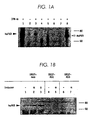
- PKR kinase activity was measured in an autophosphorylation assay that uses poly(I):poly(C)-cellulose for binding and activation of PKR enzyme.
- PKR autophosphorylation assay was performed essentially as described by Maran et al. with the following modifications.
- Cell extracts (100 ⁇ g of protein per assay) were incubated with poly(I):poly(C)-cellulose for 1 hour on ice, washed three times, and incubated for 30 minutes at 30°C in 50 ⁇ l of a reaction buffer (20 mM HEPES (pH 7.5), 50 mM KCl, 5 mM 2-mercaptoethanol, 1.5 mM Magnesium acetate, 1.5 mM MnCl 2 ) containing 1 ⁇ Ci of [ ⁇ - 32 P]ATP. Proteins were separated on a 10% SDS-polyacrylamide gel and analyzed by autoradiography.
- PKR activity in these cells has been previously characterized (Meurs et al.) (Fig. 1A, lanes 1 and 8).
- U937-neo cells contained low basal levels of PKR activity which increased following treatment with IFN- ⁇ (Fig. 1A, lanes 2 and 3).
- PKR activity in the parental, untransfected U937 cells was similar to U937-neo cells.
- PKR activity was not detected in any of the four cell lines transfected with pPKR-AS or p[Arg 296 ]PKR plasmids.
- treatment of these cells with IFN- ⁇ did not restore PKR activity (Fig. 1A, lanes 4-7), nor did treatment with IFN- ⁇ .
- PKR protein Basal level of PKR protein was detectable in U937-neo cells (Fig. 1B, lane 1) and increased following treatment with IFN- ⁇ or IFN- ⁇ (Fig. 1B, lanes 2 and 3). In contrast, PKR expression was significantly diminished in both U937-AS1 and U937-AS3 cells (Fig. 1B, lanes 4 and 6) and did not increase following treatment with IFN- ⁇ (Fig 1B, lanes 5 and 7). While PKR protein was detectable in U937-M13 and U937-M22 cells, the mutant [Arg 296 ]PKR protein was not distinguishable from wild type PKR by using Western blot analysis.
- Example 5 Enhanced EMCV replication in PKR-deficient cells
- EMCV encephalotnyocarditis virus
- the cells were washed again twice and replenished with media containing 1% FCS, Samples were collected at the required time points and lysed by three rounds of freeze-thaw. Four-fold serial dilutions of the samples were added onto L929 monolayers and incubated for 48 hours, followed by staining with 0.05% crystal violet to determine cytopathic effects and median tissue culture infective dose (TCID 50 ).
Landscapes
- Life Sciences & Earth Sciences (AREA)
- Health & Medical Sciences (AREA)
- Chemical & Material Sciences (AREA)
- Organic Chemistry (AREA)
- Genetics & Genomics (AREA)
- Engineering & Computer Science (AREA)
- Zoology (AREA)
- Wood Science & Technology (AREA)
- Bioinformatics & Cheminformatics (AREA)
- Biotechnology (AREA)
- General Engineering & Computer Science (AREA)
- Molecular Biology (AREA)
- Biochemistry (AREA)
- Biomedical Technology (AREA)
- General Health & Medical Sciences (AREA)
- Microbiology (AREA)
- Proteomics, Peptides & Aminoacids (AREA)
- Biophysics (AREA)
- Physics & Mathematics (AREA)
- Medicinal Chemistry (AREA)
- Immunology (AREA)
- Toxicology (AREA)
- Virology (AREA)
- Plant Pathology (AREA)
- Chemical Kinetics & Catalysis (AREA)
- Gastroenterology & Hepatology (AREA)
- General Chemical & Material Sciences (AREA)
- Analytical Chemistry (AREA)
- Micro-Organisms Or Cultivation Processes Thereof (AREA)
- Medicines Containing Antibodies Or Antigens For Use As Internal Diagnostic Agents (AREA)
- Preparation Of Compounds By Using Micro-Organisms (AREA)
- Medicines That Contain Protein Lipid Enzymes And Other Medicines (AREA)
- Peptides Or Proteins (AREA)
- Measuring Or Testing Involving Enzymes Or Micro-Organisms (AREA)
Applications Claiming Priority (4)
| Application Number | Priority Date | Filing Date | Title |
|---|---|---|---|
| US2621 | 1979-01-11 | ||
| US262195P | 1995-08-22 | 1995-08-22 | |
| US2621P | 1995-08-22 | ||
| PCT/US1996/013745 WO1997008292A1 (en) | 1995-08-22 | 1996-08-22 | Methods for enhancing the production of viral vaccines in cell culture by interferon suppression |
Publications (3)
| Publication Number | Publication Date |
|---|---|
| EP0846160A1 EP0846160A1 (en) | 1998-06-10 |
| EP0846160A4 EP0846160A4 (en) | 2002-01-02 |
| EP0846160B1 true EP0846160B1 (en) | 2005-02-16 |
Family
ID=21701659
Family Applications (2)
| Application Number | Title | Priority Date | Filing Date |
|---|---|---|---|
| EP96929066A Expired - Lifetime EP0846160B1 (en) | 1995-08-22 | 1996-08-22 | Methods for enhancing the production of viral vaccines in cell culture by interferon suppression |
| EP96929017A Withdrawn EP0846174A4 (en) | 1995-08-22 | 1996-08-22 | METHOD FOR STIMULATING THE PRODUCTION OF INTERFERONS IN A CELL CULTURE |
Family Applications After (1)
| Application Number | Title | Priority Date | Filing Date |
|---|---|---|---|
| EP96929017A Withdrawn EP0846174A4 (en) | 1995-08-22 | 1996-08-22 | METHOD FOR STIMULATING THE PRODUCTION OF INTERFERONS IN A CELL CULTURE |
Country Status (10)
| Country | Link |
|---|---|
| US (6) | US5840565A (enExample) |
| EP (2) | EP0846160B1 (enExample) |
| JP (2) | JP4267693B2 (enExample) |
| CN (1) | CN1161469C (enExample) |
| AT (1) | ATE289348T1 (enExample) |
| AU (2) | AU707130B2 (enExample) |
| BR (1) | BR9610550A (enExample) |
| CA (2) | CA2229405C (enExample) |
| DE (1) | DE69634360T2 (enExample) |
| WO (2) | WO1997008324A1 (enExample) |
Families Citing this family (60)
| Publication number | Priority date | Publication date | Assignee | Title |
|---|---|---|---|---|
| US6855519B2 (en) * | 1995-08-22 | 2005-02-15 | The Regents Of The University Of California | Methods for enhancing the production of interferon in cell culture |
| US5840565A (en) * | 1995-08-22 | 1998-11-24 | The Regents Of The University Of California | Methods for enhancing the production of viral vaccines in PKR-deficient cell culture |
| US6740519B1 (en) * | 1997-11-03 | 2004-05-25 | Mount Sinai School Of Medicine | Immortalized, homozygous stat1-deficient mammalian cell lines and their uses |
| SK288544B6 (sk) | 1998-06-12 | 2018-03-05 | Mount Sinai School Of Medicine | Geneticky skonštruovaný oslabený chimérny vírus chrípky, vakcinačný prostriedok a farmaceutický prostriedok s jeho obsahom a ich použitie |
| US6762038B1 (en) * | 1998-09-09 | 2004-07-13 | The Cleveland Clinic Foundation | Mutant cell lines and methods for producing enhanced levels of recombinant proteins |
| HK1048650A1 (zh) * | 1999-06-15 | 2003-04-11 | Genetrol Biotherapeutics | 在细胞培养物中增强细胞激动素(cytokines)的方法 |
| EP1067179A1 (en) * | 1999-07-09 | 2001-01-10 | Pierre Fabre Medicament | Method to select attenuated paramyxoviridae useful for vaccines and therapeutics |
| WO2001018185A1 (en) * | 1999-09-08 | 2001-03-15 | Genetrol Biotherapeutics, Inc. | High level cytokine production with enhanced cell viability |
| US20010031859A1 (en) * | 1999-09-08 | 2001-10-18 | Lau Allan S. | High level cytokine production with enhanced cell viability |
| AU2001257001A1 (en) | 2000-04-10 | 2001-10-23 | Mount Sinai School Of Medicine Of New York University | Screening methods for identifying viral proteins with interferon antagonizing functions and potential antiviral agents |
| IL136232A0 (en) * | 2000-05-18 | 2001-05-20 | Bar Ilan University Res Author | Measurements of enzymatic activity in a single, individual cell in population |
| WO2002012477A2 (en) * | 2000-08-04 | 2002-02-14 | Chiron Corporation | Enhanced replication of hcv rna |
| US20020150541A1 (en) * | 2000-09-12 | 2002-10-17 | Gene Trol Biotherapeutics, Inc. | Compositions comprising mixtures of therapeutic proteins and methods of producing the same |
| AU2001290855A1 (en) | 2000-09-14 | 2002-03-26 | Genetrol Biotherapeutics, Inc. | Method and cell composition for screening compounds for anti-inflammatory activity |
| JP2005500816A (ja) * | 2000-12-19 | 2005-01-13 | ジーントロール バイオセラピューティクス, インコーポレイテッド | サイトカイン産生を増加するための増大したpkr発現を有する細胞 |
| DE10104094C1 (de) * | 2001-01-31 | 2002-07-25 | Angelika Vallbracht-Flehmig | Verfahren zur Erhöhung der Virusvermehrung und Virusausbeute in Zellkulturen, durch Blockade der RNaseL-Aktivierung |
| EP1438385A1 (en) * | 2001-10-25 | 2004-07-21 | Bar-Ilan University | Interactive transparent individual cells biochip processor |
| IL154677A0 (en) * | 2003-02-27 | 2003-09-17 | Univ Bar Ilan | A method and apparatus for manipulating an individual cell |
| US20060240548A1 (en) * | 2003-06-26 | 2006-10-26 | Mordechai Deutsch | Materials for constructing cell-chips, cell-chip covers, cell-chips coats, processed cell-chips and uses thereof |
| US7888110B2 (en) | 2003-06-26 | 2011-02-15 | Seng Enterprises Ltd. | Pico liter well holding device and method of making the same |
| US9200245B2 (en) | 2003-06-26 | 2015-12-01 | Seng Enterprises Ltd. | Multiwell plate |
| US8597597B2 (en) | 2003-06-26 | 2013-12-03 | Seng Enterprises Ltd. | Picoliter well holding device and method of making the same |
| WO2005008626A1 (en) * | 2003-07-11 | 2005-01-27 | University Of North Carolina At Chapel Hill | Methods and systems for controlling a computer using a video image and for combining the video image with a computer desktop |
| US20050064524A1 (en) * | 2003-08-11 | 2005-03-24 | Mordechai Deutsch | Population of cells utilizable for substance detection and methods and devices using same |
| AU2004263037B2 (en) * | 2003-08-11 | 2011-02-10 | Japan As Represented By The Director-General Of National Institute Of Infectious Diseases | Novel vaccine containing adjuvant capable of inducing mucosal immunity |
| BRPI0415771A (pt) | 2003-10-23 | 2006-12-26 | Illumigen Biosciences Inc | detecção de mutações em um gene associado à resistência a infecção viral, oas1 |
| NZ591879A (en) * | 2003-10-23 | 2012-11-30 | Kineta Two Llc | Detection of mutations in a gene associated with resistance to viral infection, OAS1 |
| BRPI0507169A (pt) | 2004-02-02 | 2007-06-26 | Ambrx Inc | polipeptìdeos do hormÈnio de crescimento humano modificados e seu usos |
| WO2005074893A1 (en) * | 2004-02-03 | 2005-08-18 | Chemagis Ltd. | Stable amorphous forms of montelukast sodium |
| CN1922308A (zh) * | 2004-02-23 | 2007-02-28 | 克鲁塞尔荷兰公司 | 病毒纯化方法 |
| BRPI0511776B1 (pt) | 2004-06-01 | 2016-11-29 | Sinai School Medicine | vírus atenuado de influenza de suínos geneticamente engenheirado, formulação imunogênica, formulação farmacêutica, uso da formulação imunogênica, uso do vírus atenuado de influenza de suínos geneticamente engenheirado, uso da formulação farmacêutica e método para produzir uma vacina, uma formulação imunogênica ou uma formulação farmacêutica |
| WO2006003664A1 (en) * | 2004-07-07 | 2006-01-12 | Seng Enterprises Ltd. | Method and device for identifying an image of a well in an image of a well-bearing component |
| US7403647B2 (en) * | 2004-09-13 | 2008-07-22 | Seng Enterprises Ltd. | Method for identifying an image of a well in an image of a well-bearing component |
| US20080009051A1 (en) * | 2004-08-25 | 2008-01-10 | Seng Enterprises Ltd. | Method and Device for Isolating Cells |
| US20060051369A1 (en) * | 2004-08-27 | 2006-03-09 | Taylor Deborah R | ADAR1 antiviral pathway |
| US20080107683A1 (en) * | 2004-11-30 | 2008-05-08 | David Hone | Bacterial Packaging Strains Useful for Generation and Production of Recombinant Double-Stranded RNA Nucleocapsids and Uses Thereof |
| ES2352344T3 (es) | 2005-01-25 | 2011-02-17 | Seng Enterprises Limited | Dispositivo de microfluido para estudio de células. |
| EP1855713B1 (en) | 2005-02-15 | 2016-04-27 | Mount Sinai School of Medicine | Genetically engineered equine influenza virus and uses thereof |
| ATE412737T1 (de) * | 2005-04-11 | 2008-11-15 | Crucell Holland Bv | Virusreinigung mit ultrafiltration |
| UA95446C2 (ru) * | 2005-05-04 | 2011-08-10 | Іллюміджен Байосайєнсіз, Інк. | Мутаци в генах oas1 |
| DE102005034043B4 (de) * | 2005-07-18 | 2019-12-12 | Südzucker Aktiengesellschaft Mannheim/Ochsenfurt | Gemisch, enthaltend L-Carnitin und Trehalulose, sowie Produkt enthaltend das Gemisch |
| US20070111309A1 (en) * | 2005-10-04 | 2007-05-17 | Daelli Marcelo G | Vero cell line adapted to grow in suspension |
| US20070141555A1 (en) * | 2005-10-11 | 2007-06-21 | Mordechai Deutsch | Current damper for the study of cells |
| WO2007052245A1 (en) | 2005-11-03 | 2007-05-10 | Seng Enterprises Ltd. | Method and device for studying floating, living cells |
| US20070196333A1 (en) * | 2006-02-23 | 2007-08-23 | Fu-Yung Lin | Composition comprising mixtures of IFN-alpha subtypes |
| US20060223999A1 (en) * | 2006-05-10 | 2006-10-05 | Chemagis Ltd. | Process for preparing montelukast and precursors thereof |
| CN101675071B (zh) | 2007-05-02 | 2014-06-18 | Ambrx公司 | 经修饰干扰素β多肽和其用途 |
| US9145540B1 (en) | 2007-11-15 | 2015-09-29 | Seng Enterprises Ltd. | Device for the study of living cells |
| WO2009081409A2 (en) | 2007-12-26 | 2009-07-02 | Seng Enterprises Ltd. | Device for the study of living cells |
| SG188143A1 (en) | 2008-02-08 | 2013-03-28 | Ambrx Inc | Modified leptin polypeptides and their uses |
| EP2133358A1 (en) * | 2008-06-10 | 2009-12-16 | Universitätsklinikum Freiburg | Rift valley fever virus-like particles and their use for immunization and as test system |
| RU2011107757A (ru) | 2008-08-01 | 2012-09-10 | Гамма Ваксинс Пти Лимитед (Au) | Вакцины против гриппа |
| CN102257135B (zh) | 2008-12-16 | 2017-06-09 | 纳米医疗公司 | 流感疫苗的生产 |
| SG184833A1 (en) | 2010-04-14 | 2012-11-29 | Emd Millipore Corp | Methods of producing high titer, high purity virus stocks and methods of use thereof |
| WO2012100302A1 (en) | 2011-01-27 | 2012-08-02 | Gamma Vaccines Pty Limited | Combination vaccines |
| WO2013182498A1 (en) * | 2012-06-04 | 2013-12-12 | Novartis Ag | Improved safety testing |
| BR112015018493A2 (pt) | 2013-02-05 | 2017-08-22 | Univ Georgia | Linhagens celulares para produção de vírus e métodos de uso |
| KR20170122786A (ko) | 2015-02-26 | 2017-11-06 | 베링거잉겔하임베트메디카게엠베하 | 2가 돼지 인플루엔자 바이러스 백신 |
| WO2017070167A1 (en) * | 2015-10-20 | 2017-04-27 | The University Of North Carolina At Chapel Hill | Methods and compositions for modified factor ix fusion proteins |
| KR102651055B1 (ko) | 2016-03-24 | 2024-03-26 | 삼성디스플레이 주식회사 | 광학 필름 및 디스플레이 장치 |
Family Cites Families (16)
| Publication number | Priority date | Publication date | Assignee | Title |
|---|---|---|---|---|
| USRE33164E (en) * | 1979-05-15 | 1990-02-13 | Mobay Corporation | Influenza vaccine production in liquid cell culture |
| JPS5754586A (en) * | 1980-09-18 | 1982-04-01 | Ajinomoto Co Inc | Cell strain producing human interferon prolongably, its preparation, and preparation of human interferon using it |
| US4579821A (en) * | 1981-11-23 | 1986-04-01 | University Patents, Inc. | Control of DNA sequence transcription |
| JPS58209993A (ja) * | 1982-05-31 | 1983-12-07 | Mochida Pharmaceut Co Ltd | インタ−フエロンの産生方法 |
| EP0097353B1 (en) * | 1982-06-21 | 1990-08-16 | The Wellcome Foundation Limited | Improved process for interferon production |
| US4485038A (en) * | 1982-10-19 | 1984-11-27 | Health Research (Roswell Park Division) | Method for the production and purification of human leukocyte interferon |
| US4966843A (en) * | 1982-11-01 | 1990-10-30 | Cetus Corporation | Expression of interferon genes in Chinese hamster ovary cells |
| US4745053A (en) * | 1983-07-08 | 1988-05-17 | Kabushiki Kaisha Hayashibara Seibutsu Kagaku Kenkyojo | Process for producing human interferon and method for assaying the interferon productivity of blood |
| JPS6062997A (ja) * | 1983-09-17 | 1985-04-11 | Mochida Pharmaceut Co Ltd | インタ−フエロンの生産方法 |
| US5196323A (en) * | 1985-04-27 | 1993-03-23 | Boehringer Ingelheim International Gmbh | Process for preparing and purifying alpha-interferon |
| US4732683A (en) * | 1986-12-02 | 1988-03-22 | Biospectrum, Inc. | Purification method for alpha interferon |
| ATE161041T1 (de) * | 1989-08-25 | 1997-12-15 | Chiron Corp | Verfahren zur hcv-züchtung in zell-linien aus b- oder t-lymphozyten |
| US5149531A (en) * | 1990-06-27 | 1992-09-22 | University Of Pittsburgh Of The Commonwealth System Of Higher Education | Method of using cold-adapted live influenza virus vaccine as an antiviral agent against influenza |
| JPH05260981A (ja) * | 1992-03-02 | 1993-10-12 | Massachusetts Inst Of Technol <Mit> | ヘムに調節される真核細胞開始因子2αキナーゼをコードするDNA |
| FR2689520B1 (fr) * | 1992-04-03 | 1996-07-19 | Bio Merieux | Procede et milieu de culture pour l'obtention de cellules infectees par un virus associe a la sclerose en plaques. |
| US5840565A (en) | 1995-08-22 | 1998-11-24 | The Regents Of The University Of California | Methods for enhancing the production of viral vaccines in PKR-deficient cell culture |
-
1996
- 1996-08-21 US US08/700,198 patent/US5840565A/en not_active Expired - Lifetime
- 1996-08-22 EP EP96929066A patent/EP0846160B1/en not_active Expired - Lifetime
- 1996-08-22 JP JP51050897A patent/JP4267693B2/ja not_active Expired - Lifetime
- 1996-08-22 EP EP96929017A patent/EP0846174A4/en not_active Withdrawn
- 1996-08-22 CA CA002229405A patent/CA2229405C/en not_active Expired - Fee Related
- 1996-08-22 CA CA2229163A patent/CA2229163C/en not_active Expired - Lifetime
- 1996-08-22 WO PCT/US1996/013627 patent/WO1997008324A1/en not_active Ceased
- 1996-08-22 DE DE69634360T patent/DE69634360T2/de not_active Expired - Lifetime
- 1996-08-22 BR BR9610550A patent/BR9610550A/pt not_active Application Discontinuation
- 1996-08-22 AU AU68608/96A patent/AU707130B2/en not_active Expired
- 1996-08-22 AU AU68576/96A patent/AU6857696A/en not_active Abandoned
- 1996-08-22 JP JP51045097A patent/JP3432519B2/ja not_active Expired - Fee Related
- 1996-08-22 WO PCT/US1996/013745 patent/WO1997008292A1/en not_active Ceased
- 1996-08-22 AT AT96929066T patent/ATE289348T1/de active
- 1996-08-22 CN CNB961977515A patent/CN1161469C/zh not_active Expired - Fee Related
-
1999
- 1999-11-19 US US09/444,224 patent/US6159712A/en not_active Expired - Fee Related
-
2000
- 2000-06-12 US US09/591,813 patent/US6489144B1/en not_active Expired - Fee Related
- 2000-12-13 US US09/736,748 patent/US6673591B2/en not_active Expired - Fee Related
- 2000-12-13 US US09/737,126 patent/US6686190B2/en not_active Expired - Lifetime
-
2003
- 2003-11-24 US US10/722,349 patent/US7132271B2/en not_active Expired - Fee Related
Also Published As
| Publication number | Publication date |
|---|---|
| AU6857696A (en) | 1997-03-19 |
| CA2229405C (en) | 2004-03-02 |
| US20010001290A1 (en) | 2001-05-17 |
| CA2229163C (en) | 2011-04-05 |
| US20040157310A1 (en) | 2004-08-12 |
| EP0846174A1 (en) | 1998-06-10 |
| US20010001709A1 (en) | 2001-05-24 |
| US6159712A (en) | 2000-12-12 |
| CN1161469C (zh) | 2004-08-11 |
| DE69634360T2 (de) | 2005-12-29 |
| EP0846160A1 (en) | 1998-06-10 |
| BR9610550A (pt) | 1999-07-06 |
| EP0846174A4 (en) | 2003-02-05 |
| JP4267693B2 (ja) | 2009-05-27 |
| MX9801423A (es) | 1998-05-31 |
| CA2229163A1 (en) | 1997-03-06 |
| JP3432519B2 (ja) | 2003-08-04 |
| US6686190B2 (en) | 2004-02-03 |
| JPH11511324A (ja) | 1999-10-05 |
| EP0846160A4 (en) | 2002-01-02 |
| WO1997008324A1 (en) | 1997-03-06 |
| US6489144B1 (en) | 2002-12-03 |
| JPH11514344A (ja) | 1999-12-07 |
| US6673591B2 (en) | 2004-01-06 |
| AU6860896A (en) | 1997-03-19 |
| US7132271B2 (en) | 2006-11-07 |
| AU707130B2 (en) | 1999-07-01 |
| CA2229405A1 (en) | 1997-03-06 |
| ATE289348T1 (de) | 2005-03-15 |
| WO1997008292A1 (en) | 1997-03-06 |
| DE69634360D1 (de) | 2005-03-24 |
| US5840565A (en) | 1998-11-24 |
| CN1200148A (zh) | 1998-11-25 |
Similar Documents
| Publication | Publication Date | Title |
|---|---|---|
| US6686190B2 (en) | Methods for enhancing the production of viral vaccines in cell culture | |
| Komatsu et al. | Interferon-γ induced type I nitric oxide synthase activity inhibits viral replication in neurons | |
| Der et al. | Involvement of the double-stranded-RNA-dependent kinase PKR in interferon expression and interferon-mediated antiviral activity. | |
| Kittel et al. | Rescue of influenza virus expressing GFP from the NS1 reading frame | |
| Schneider-Schaulies et al. | Cell type-specific MxA-mediated inhibition of measles virus transcription in human brain cells | |
| Toth et al. | RNA-specific adenosine deaminase ADAR1 suppresses measles virus-induced apoptosis and activation of protein kinase PKR | |
| Nori et al. | Inhibition of v-src-induced transformation by a GTPase-activating protein | |
| Schultz-Cherry et al. | Induction of apoptosis by influenza virus | |
| Komatsu et al. | Mechanisms of cytokine-mediated inhibition of viral replication | |
| Bovolenta et al. | Vesicular stomatitis virus infection induces a nuclear DNA-binding factor specific for the interferon-stimulated response element | |
| US6864061B2 (en) | Method for screening compounds for anti-inflammatory activity | |
| Závada et al. | Complementation and phenotypic stabilization of vesicular stomatitis virus temperature-sensitive and thermolabile mutants by avian myeloblastosis virus | |
| Wecker et al. | Curtailment of the latent period by double-infection with polioviruses | |
| MXPA98001423A (en) | Methods to improve the production of viral vaccines in cellular cultivation through interruption suppression | |
| US5686263A (en) | Method for enhancing gene expression | |
| WO1992014839A1 (en) | Test method | |
| Schmidt et al. | Progression of a vesicular stomatitis virus infection in primary lymphocytes is restricted at multiple levels during B cell activation | |
| US6855519B2 (en) | Methods for enhancing the production of interferon in cell culture | |
| JP2026511495A (ja) | ウイルス複製のモジュレートのための、gas7の発現及び/又は活性のモジュレート | |
| Rodrigues | Interferon, virus vaccines and antiviral drugs | |
| Stewart | PKR, myocarditis and the cardiac response to reovirus infection | |
| Lai | The Human Coronavirus Nucleocapsid Protein and Its Effects on the Innate Immune Response |
Legal Events
| Date | Code | Title | Description |
|---|---|---|---|
| PUAI | Public reference made under article 153(3) epc to a published international application that has entered the european phase |
Free format text: ORIGINAL CODE: 0009012 |
|
| 17P | Request for examination filed |
Effective date: 19980310 |
|
| AK | Designated contracting states |
Kind code of ref document: A1 Designated state(s): AT BE CH DE DK ES FI FR GB GR IE IT LI LU MC NL PT SE |
|
| RAP1 | Party data changed (applicant data changed or rights of an application transferred) |
Owner name: THE REGENTS OF THE UNIVERSITY OF CALIFORNIA |
|
| A4 | Supplementary search report drawn up and despatched |
Effective date: 20011114 |
|
| AK | Designated contracting states |
Kind code of ref document: A4 Designated state(s): AT BE CH DE DK ES FI FR GB GR IE IT LI LU MC NL PT SE |
|
| 17Q | First examination report despatched |
Effective date: 20020924 |
|
| GRAP | Despatch of communication of intention to grant a patent |
Free format text: ORIGINAL CODE: EPIDOSNIGR1 |
|
| GRAS | Grant fee paid |
Free format text: ORIGINAL CODE: EPIDOSNIGR3 |
|
| GRAA | (expected) grant |
Free format text: ORIGINAL CODE: 0009210 |
|
| AK | Designated contracting states |
Kind code of ref document: B1 Designated state(s): AT BE CH DE DK ES FI FR GB GR IE IT LI LU MC NL PT SE |
|
| PG25 | Lapsed in a contracting state [announced via postgrant information from national office to epo] |
Ref country code: NL Free format text: LAPSE BECAUSE OF FAILURE TO SUBMIT A TRANSLATION OF THE DESCRIPTION OR TO PAY THE FEE WITHIN THE PRESCRIBED TIME-LIMIT Effective date: 20050216 Ref country code: IT Free format text: LAPSE BECAUSE OF FAILURE TO SUBMIT A TRANSLATION OF THE DESCRIPTION OR TO PAY THE FEE WITHIN THE PRE;WARNING: LAPSES OF ITALIAN PATENTS WITH EFFECTIVE DATE BEFORE 2007 MAY HAVE OCCURRED AT ANY TIME BEFORE 2007. THE CORRECT EFFECTIVE DATE MAY BE DIFFERENT FROM THE ONE RECORDED.SCRIBED TIME-LIMIT Effective date: 20050216 Ref country code: FI Free format text: LAPSE BECAUSE OF FAILURE TO SUBMIT A TRANSLATION OF THE DESCRIPTION OR TO PAY THE FEE WITHIN THE PRESCRIBED TIME-LIMIT Effective date: 20050216 Ref country code: ES Free format text: LAPSE BECAUSE OF FAILURE TO SUBMIT A TRANSLATION OF THE DESCRIPTION OR TO PAY THE FEE WITHIN THE PRESCRIBED TIME-LIMIT Effective date: 20050216 |
|
| REG | Reference to a national code |
Ref country code: GB Ref legal event code: FG4D |
|
| REG | Reference to a national code |
Ref country code: CH Ref legal event code: EP |
|
| REG | Reference to a national code |
Ref country code: IE Ref legal event code: FG4D |
|
| REF | Corresponds to: |
Ref document number: 69634360 Country of ref document: DE Date of ref document: 20050324 Kind code of ref document: P |
|
| PG25 | Lapsed in a contracting state [announced via postgrant information from national office to epo] |
Ref country code: SE Free format text: LAPSE BECAUSE OF FAILURE TO SUBMIT A TRANSLATION OF THE DESCRIPTION OR TO PAY THE FEE WITHIN THE PRESCRIBED TIME-LIMIT Effective date: 20050516 Ref country code: GR Free format text: LAPSE BECAUSE OF FAILURE TO SUBMIT A TRANSLATION OF THE DESCRIPTION OR TO PAY THE FEE WITHIN THE PRESCRIBED TIME-LIMIT Effective date: 20050516 Ref country code: DK Free format text: LAPSE BECAUSE OF FAILURE TO SUBMIT A TRANSLATION OF THE DESCRIPTION OR TO PAY THE FEE WITHIN THE PRESCRIBED TIME-LIMIT Effective date: 20050516 |
|
| REG | Reference to a national code |
Ref country code: CH Ref legal event code: NV Representative=s name: R. A. EGLI & CO. PATENTANWAELTE |
|
| PG25 | Lapsed in a contracting state [announced via postgrant information from national office to epo] |
Ref country code: PT Free format text: LAPSE BECAUSE OF FAILURE TO SUBMIT A TRANSLATION OF THE DESCRIPTION OR TO PAY THE FEE WITHIN THE PRESCRIBED TIME-LIMIT Effective date: 20050718 |
|
| NLV1 | Nl: lapsed or annulled due to failure to fulfill the requirements of art. 29p and 29m of the patents act | ||
| PG25 | Lapsed in a contracting state [announced via postgrant information from national office to epo] |
Ref country code: LU Free format text: LAPSE BECAUSE OF NON-PAYMENT OF DUE FEES Effective date: 20050822 |
|
| PG25 | Lapsed in a contracting state [announced via postgrant information from national office to epo] |
Ref country code: MC Free format text: LAPSE BECAUSE OF NON-PAYMENT OF DUE FEES Effective date: 20050831 |
|
| PLBE | No opposition filed within time limit |
Free format text: ORIGINAL CODE: 0009261 |
|
| STAA | Information on the status of an ep patent application or granted ep patent |
Free format text: STATUS: NO OPPOSITION FILED WITHIN TIME LIMIT |
|
| 26N | No opposition filed |
Effective date: 20051117 |
|
| ET | Fr: translation filed | ||
| REG | Reference to a national code |
Ref country code: FR Ref legal event code: PLFP Year of fee payment: 20 |
|
| PGFP | Annual fee paid to national office [announced via postgrant information from national office to epo] |
Ref country code: CH Payment date: 20150827 Year of fee payment: 20 Ref country code: GB Payment date: 20150827 Year of fee payment: 20 Ref country code: DE Payment date: 20150827 Year of fee payment: 20 Ref country code: IE Payment date: 20150828 Year of fee payment: 20 |
|
| PGFP | Annual fee paid to national office [announced via postgrant information from national office to epo] |
Ref country code: AT Payment date: 20150803 Year of fee payment: 20 Ref country code: FR Payment date: 20150817 Year of fee payment: 20 Ref country code: BE Payment date: 20150827 Year of fee payment: 20 |
|
| REG | Reference to a national code |
Ref country code: DE Ref legal event code: R071 Ref document number: 69634360 Country of ref document: DE |
|
| REG | Reference to a national code |
Ref country code: CH Ref legal event code: PL |
|
| REG | Reference to a national code |
Ref country code: GB Ref legal event code: PE20 Expiry date: 20160821 |
|
| REG | Reference to a national code |
Ref country code: IE Ref legal event code: MK9A |
|
| REG | Reference to a national code |
Ref country code: AT Ref legal event code: MK07 Ref document number: 289348 Country of ref document: AT Kind code of ref document: T Effective date: 20160822 |
|
| PG25 | Lapsed in a contracting state [announced via postgrant information from national office to epo] |
Ref country code: IE Free format text: LAPSE BECAUSE OF EXPIRATION OF PROTECTION Effective date: 20160822 Ref country code: GB Free format text: LAPSE BECAUSE OF EXPIRATION OF PROTECTION Effective date: 20160821 |