EP0822197B1 - Verfahren zur Herstellung von aromatischen Biphosphaten - Google Patents
Verfahren zur Herstellung von aromatischen Biphosphaten Download PDFInfo
- Publication number
- EP0822197B1 EP0822197B1 EP96120319A EP96120319A EP0822197B1 EP 0822197 B1 EP0822197 B1 EP 0822197B1 EP 96120319 A EP96120319 A EP 96120319A EP 96120319 A EP96120319 A EP 96120319A EP 0822197 B1 EP0822197 B1 EP 0822197B1
- Authority
- EP
- European Patent Office
- Prior art keywords
- aromatic
- bisphosphates
- preparing aromatic
- preparing
- lewis acid
- Prior art date
- Legal status (The legal status is an assumption and is not a legal conclusion. Google has not performed a legal analysis and makes no representation as to the accuracy of the status listed.)
- Expired - Lifetime
Links
- 238000004519 manufacturing process Methods 0.000 title claims description 27
- XHXFXVLFKHQFAL-UHFFFAOYSA-N phosphoryl trichloride Chemical group ClP(Cl)(Cl)=O XHXFXVLFKHQFAL-UHFFFAOYSA-N 0.000 claims description 46
- 150000001875 compounds Chemical class 0.000 claims description 43
- 125000003118 aryl group Chemical group 0.000 claims description 36
- 238000004821 distillation Methods 0.000 claims description 35
- 238000006243 chemical reaction Methods 0.000 claims description 34
- OAICVXFJPJFONN-UHFFFAOYSA-N Phosphorus Chemical compound [P] OAICVXFJPJFONN-UHFFFAOYSA-N 0.000 claims description 27
- 229910052698 phosphorus Inorganic materials 0.000 claims description 27
- 239000011574 phosphorus Substances 0.000 claims description 27
- 239000011541 reaction mixture Substances 0.000 claims description 26
- 239000006227 byproduct Substances 0.000 claims description 21
- 239000011968 lewis acid catalyst Substances 0.000 claims description 13
- NXXYKOUNUYWIHA-UHFFFAOYSA-N 2,6-Dimethylphenol Chemical compound CC1=CC=CC(C)=C1O NXXYKOUNUYWIHA-UHFFFAOYSA-N 0.000 claims description 12
- TWRXJAOTZQYOKJ-UHFFFAOYSA-L Magnesium chloride Chemical compound [Mg+2].[Cl-].[Cl-] TWRXJAOTZQYOKJ-UHFFFAOYSA-L 0.000 claims description 12
- VSCWAEJMTAWNJL-UHFFFAOYSA-K aluminium trichloride Chemical compound Cl[Al](Cl)Cl VSCWAEJMTAWNJL-UHFFFAOYSA-K 0.000 claims description 12
- 125000000217 alkyl group Chemical group 0.000 claims description 9
- 239000010409 thin film Substances 0.000 claims description 9
- QIGBRXMKCJKVMJ-UHFFFAOYSA-N Hydroquinone Chemical compound OC1=CC=C(O)C=C1 QIGBRXMKCJKVMJ-UHFFFAOYSA-N 0.000 claims description 8
- 238000009835 boiling Methods 0.000 claims description 8
- 239000000047 product Substances 0.000 claims description 8
- 229910001629 magnesium chloride Inorganic materials 0.000 claims description 6
- JIAARYAFYJHUJI-UHFFFAOYSA-L zinc dichloride Chemical compound [Cl-].[Cl-].[Zn+2] JIAARYAFYJHUJI-UHFFFAOYSA-L 0.000 claims description 6
- 125000004432 carbon atom Chemical group C* 0.000 claims description 4
- 125000004435 hydrogen atom Chemical group [H]* 0.000 claims description 4
- VMPVEPPRYRXYNP-UHFFFAOYSA-I antimony(5+);pentachloride Chemical compound Cl[Sb](Cl)(Cl)(Cl)Cl VMPVEPPRYRXYNP-UHFFFAOYSA-I 0.000 claims description 3
- VCCBEIPGXKNHFW-UHFFFAOYSA-N biphenyl-4,4'-diol Chemical compound C1=CC(O)=CC=C1C1=CC=C(O)C=C1 VCCBEIPGXKNHFW-UHFFFAOYSA-N 0.000 claims description 3
- HPGGPRDJHPYFRM-UHFFFAOYSA-J tin(iv) chloride Chemical compound Cl[Sn](Cl)(Cl)Cl HPGGPRDJHPYFRM-UHFFFAOYSA-J 0.000 claims description 3
- XJDNKRIXUMDJCW-UHFFFAOYSA-J titanium tetrachloride Chemical compound Cl[Ti](Cl)(Cl)Cl XJDNKRIXUMDJCW-UHFFFAOYSA-J 0.000 claims description 3
- 239000011592 zinc chloride Substances 0.000 claims description 3
- 235000005074 zinc chloride Nutrition 0.000 claims description 3
- BPRYUXCVCCNUFE-UHFFFAOYSA-N 2,4,6-trimethylphenol Chemical compound CC1=CC(C)=C(O)C(C)=C1 BPRYUXCVCCNUFE-UHFFFAOYSA-N 0.000 claims description 2
- UXCDUFKZSUBXGM-UHFFFAOYSA-N phosphoric tribromide Chemical compound BrP(Br)(Br)=O UXCDUFKZSUBXGM-UHFFFAOYSA-N 0.000 claims description 2
- 238000000034 method Methods 0.000 description 22
- 239000000203 mixture Substances 0.000 description 21
- 229920005989 resin Polymers 0.000 description 21
- 239000011347 resin Substances 0.000 description 21
- 229910019142 PO4 Inorganic materials 0.000 description 16
- 235000021317 phosphate Nutrition 0.000 description 15
- NBIIXXVUZAFLBC-UHFFFAOYSA-K phosphate Chemical compound [O-]P([O-])([O-])=O NBIIXXVUZAFLBC-UHFFFAOYSA-K 0.000 description 14
- 239000010452 phosphate Substances 0.000 description 14
- 238000007711 solidification Methods 0.000 description 12
- 230000008023 solidification Effects 0.000 description 12
- 239000003054 catalyst Substances 0.000 description 11
- 239000007795 chemical reaction product Substances 0.000 description 11
- 239000002904 solvent Substances 0.000 description 10
- CTQNGGLPUBDAKN-UHFFFAOYSA-N O-Xylene Chemical compound CC1=CC=CC=C1C CTQNGGLPUBDAKN-UHFFFAOYSA-N 0.000 description 9
- -1 nitrogen-containing heterocyclic compound Chemical class 0.000 description 9
- 239000008096 xylene Substances 0.000 description 9
- 239000013078 crystal Substances 0.000 description 7
- 239000012467 final product Substances 0.000 description 7
- 239000003063 flame retardant Substances 0.000 description 7
- YXFVVABEGXRONW-UHFFFAOYSA-N Toluene Chemical compound CC1=CC=CC=C1 YXFVVABEGXRONW-UHFFFAOYSA-N 0.000 description 6
- ZMANZCXQSJIPKH-UHFFFAOYSA-N Triethylamine Chemical compound CCN(CC)CC ZMANZCXQSJIPKH-UHFFFAOYSA-N 0.000 description 6
- 238000000465 moulding Methods 0.000 description 6
- 239000000243 solution Substances 0.000 description 6
- 239000001226 triphosphate Substances 0.000 description 6
- 235000011178 triphosphate Nutrition 0.000 description 6
- UNXRWKVEANCORM-UHFFFAOYSA-N triphosphoric acid Chemical compound OP(O)(=O)OP(O)(=O)OP(O)(O)=O UNXRWKVEANCORM-UHFFFAOYSA-N 0.000 description 6
- 238000004458 analytical method Methods 0.000 description 5
- 230000000694 effects Effects 0.000 description 5
- 239000000843 powder Substances 0.000 description 5
- 238000000746 purification Methods 0.000 description 5
- XLYOFNOQVPJJNP-UHFFFAOYSA-N water Substances O XLYOFNOQVPJJNP-UHFFFAOYSA-N 0.000 description 5
- VEXZGXHMUGYJMC-UHFFFAOYSA-N Hydrochloric acid Chemical compound Cl VEXZGXHMUGYJMC-UHFFFAOYSA-N 0.000 description 4
- MVPPADPHJFYWMZ-UHFFFAOYSA-N chlorobenzene Chemical compound ClC1=CC=CC=C1 MVPPADPHJFYWMZ-UHFFFAOYSA-N 0.000 description 4
- 238000005227 gel permeation chromatography Methods 0.000 description 4
- 239000003960 organic solvent Substances 0.000 description 4
- OKKJLVBELUTLKV-UHFFFAOYSA-N Methanol Chemical compound OC OKKJLVBELUTLKV-UHFFFAOYSA-N 0.000 description 3
- 239000000654 additive Substances 0.000 description 3
- 238000004587 chromatography analysis Methods 0.000 description 3
- 239000010408 film Substances 0.000 description 3
- 238000001914 filtration Methods 0.000 description 3
- 238000004817 gas chromatography Methods 0.000 description 3
- 239000012535 impurity Substances 0.000 description 3
- 238000004898 kneading Methods 0.000 description 3
- 239000007788 liquid Substances 0.000 description 3
- 229920003023 plastic Polymers 0.000 description 3
- 239000004033 plastic Substances 0.000 description 3
- 239000004014 plasticizer Substances 0.000 description 3
- 238000012545 processing Methods 0.000 description 3
- GHMLBKRAJCXXBS-UHFFFAOYSA-N resorcinol Chemical compound OC1=CC=CC(O)=C1 GHMLBKRAJCXXBS-UHFFFAOYSA-N 0.000 description 3
- 229960001755 resorcinol Drugs 0.000 description 3
- 229920005992 thermoplastic resin Polymers 0.000 description 3
- 229920001187 thermosetting polymer Polymers 0.000 description 3
- OCJBOOLMMGQPQU-UHFFFAOYSA-N 1,4-dichlorobenzene Chemical compound ClC1=CC=C(Cl)C=C1 OCJBOOLMMGQPQU-UHFFFAOYSA-N 0.000 description 2
- LFQSCWFLJHTTHZ-UHFFFAOYSA-N Ethanol Chemical compound CCO LFQSCWFLJHTTHZ-UHFFFAOYSA-N 0.000 description 2
- 239000004698 Polyethylene Substances 0.000 description 2
- PPBRXRYQALVLMV-UHFFFAOYSA-N Styrene Chemical compound C=CC1=CC=CC=C1 PPBRXRYQALVLMV-UHFFFAOYSA-N 0.000 description 2
- SXLKPPPUUDWMTK-UHFFFAOYSA-N [2,3,4,6-tetrakis(2,6-dimethylphenyl)-5-phosphonooxyphenyl] dihydrogen phosphate Chemical compound CC1=CC=CC(C)=C1C(C(=C1C=2C(=CC=CC=2C)C)OP(O)(O)=O)=C(OP(O)(O)=O)C(C=2C(=CC=CC=2C)C)=C1C1=C(C)C=CC=C1C SXLKPPPUUDWMTK-UHFFFAOYSA-N 0.000 description 2
- 230000000996 additive effect Effects 0.000 description 2
- 239000003963 antioxidant agent Substances 0.000 description 2
- 239000011260 aqueous acid Substances 0.000 description 2
- IISBACLAFKSPIT-UHFFFAOYSA-N bisphenol A Chemical compound C=1C=C(O)C=CC=1C(C)(C)C1=CC=C(O)C=C1 IISBACLAFKSPIT-UHFFFAOYSA-N 0.000 description 2
- PXKLMJQFEQBVLD-UHFFFAOYSA-N bisphenol F Chemical compound C1=CC(O)=CC=C1CC1=CC=C(O)C=C1 PXKLMJQFEQBVLD-UHFFFAOYSA-N 0.000 description 2
- 125000005340 bisphosphate group Chemical group 0.000 description 2
- 238000012662 bulk polymerization Methods 0.000 description 2
- YCIMNLLNPGFGHC-UHFFFAOYSA-N catechol Chemical compound OC1=CC=CC=C1O YCIMNLLNPGFGHC-UHFFFAOYSA-N 0.000 description 2
- 125000001309 chloro group Chemical group Cl* 0.000 description 2
- 229940117389 dichlorobenzene Drugs 0.000 description 2
- 239000001177 diphosphate Substances 0.000 description 2
- 235000011180 diphosphates Nutrition 0.000 description 2
- 238000004128 high performance liquid chromatography Methods 0.000 description 2
- 230000008018 melting Effects 0.000 description 2
- 238000002844 melting Methods 0.000 description 2
- 125000002496 methyl group Chemical group [H]C([H])([H])* 0.000 description 2
- 238000005887 phenylation reaction Methods 0.000 description 2
- 229920000573 polyethylene Polymers 0.000 description 2
- 238000003756 stirring Methods 0.000 description 2
- 238000012360 testing method Methods 0.000 description 2
- WXCXJSOCIOHPLT-UHFFFAOYSA-N 2-[chloro-(2,6-dimethylphenoxy)phosphoryl]oxy-1,3-dimethylbenzene Chemical compound CC1=CC=CC(C)=C1OP(Cl)(=O)OC1=C(C)C=CC=C1C WXCXJSOCIOHPLT-UHFFFAOYSA-N 0.000 description 1
- VPWNQTHUCYMVMZ-UHFFFAOYSA-N 4,4'-sulfonyldiphenol Chemical compound C1=CC(O)=CC=C1S(=O)(=O)C1=CC=C(O)C=C1 VPWNQTHUCYMVMZ-UHFFFAOYSA-N 0.000 description 1
- YGYPMFPGZQPETF-UHFFFAOYSA-N 4-(4-hydroxy-3,5-dimethylphenyl)-2,6-dimethylphenol Chemical compound CC1=C(O)C(C)=CC(C=2C=C(C)C(O)=C(C)C=2)=C1 YGYPMFPGZQPETF-UHFFFAOYSA-N 0.000 description 1
- 0 CCC(C)(*(*)=O)OC1=C(*)C=C*(*)C=C1N=O Chemical compound CCC(C)(*(*)=O)OC1=C(*)C=C*(*)C=C1N=O 0.000 description 1
- 239000004709 Chlorinated polyethylene Substances 0.000 description 1
- 239000004641 Diallyl-phthalate Substances 0.000 description 1
- UFHFLCQGNIYNRP-UHFFFAOYSA-N Hydrogen Chemical compound [H][H] UFHFLCQGNIYNRP-UHFFFAOYSA-N 0.000 description 1
- 229920000106 Liquid crystal polymer Polymers 0.000 description 1
- 239000004640 Melamine resin Substances 0.000 description 1
- 229920000877 Melamine resin Polymers 0.000 description 1
- ISWSIDIOOBJBQZ-UHFFFAOYSA-N Phenol Chemical compound OC1=CC=CC=C1 ISWSIDIOOBJBQZ-UHFFFAOYSA-N 0.000 description 1
- 239000004696 Poly ether ether ketone Substances 0.000 description 1
- 239000004952 Polyamide Substances 0.000 description 1
- 239000004693 Polybenzimidazole Substances 0.000 description 1
- 239000005062 Polybutadiene Substances 0.000 description 1
- 239000004695 Polyether sulfone Substances 0.000 description 1
- 239000004642 Polyimide Substances 0.000 description 1
- 239000004721 Polyphenylene oxide Substances 0.000 description 1
- 239000004734 Polyphenylene sulfide Substances 0.000 description 1
- 239000004743 Polypropylene Substances 0.000 description 1
- UCKMPCXJQFINFW-UHFFFAOYSA-N Sulphide Chemical compound [S-2] UCKMPCXJQFINFW-UHFFFAOYSA-N 0.000 description 1
- 229920001807 Urea-formaldehyde Polymers 0.000 description 1
- 229920000122 acrylonitrile butadiene styrene Polymers 0.000 description 1
- 238000013019 agitation Methods 0.000 description 1
- 150000001412 amines Chemical class 0.000 description 1
- 230000003078 antioxidant effect Effects 0.000 description 1
- 239000007864 aqueous solution Substances 0.000 description 1
- 230000015572 biosynthetic process Effects 0.000 description 1
- QUDWYFHPNIMBFC-UHFFFAOYSA-N bis(prop-2-enyl) benzene-1,2-dicarboxylate Chemical compound C=CCOC(=O)C1=CC=CC=C1C(=O)OCC=C QUDWYFHPNIMBFC-UHFFFAOYSA-N 0.000 description 1
- 229910052799 carbon Inorganic materials 0.000 description 1
- 239000012159 carrier gas Substances 0.000 description 1
- 239000003153 chemical reaction reagent Substances 0.000 description 1
- 239000007810 chemical reaction solvent Substances 0.000 description 1
- 239000002131 composite material Substances 0.000 description 1
- 238000001816 cooling Methods 0.000 description 1
- 230000003247 decreasing effect Effects 0.000 description 1
- 230000000593 degrading effect Effects 0.000 description 1
- 238000013461 design Methods 0.000 description 1
- XPPKVPWEQAFLFU-UHFFFAOYSA-J diphosphate(4-) Chemical compound [O-]P([O-])(=O)OP([O-])([O-])=O XPPKVPWEQAFLFU-UHFFFAOYSA-J 0.000 description 1
- 239000006185 dispersion Substances 0.000 description 1
- 229920006351 engineering plastic Polymers 0.000 description 1
- 150000002148 esters Chemical class 0.000 description 1
- 125000001495 ethyl group Chemical group [H]C([H])([H])C([H])([H])* 0.000 description 1
- 238000001704 evaporation Methods 0.000 description 1
- 230000008020 evaporation Effects 0.000 description 1
- 238000002474 experimental method Methods 0.000 description 1
- 239000000835 fiber Substances 0.000 description 1
- 239000000945 filler Substances 0.000 description 1
- 239000000706 filtrate Substances 0.000 description 1
- 239000000446 fuel Substances 0.000 description 1
- 239000011521 glass Substances 0.000 description 1
- 229910052736 halogen Inorganic materials 0.000 description 1
- 125000005843 halogen group Chemical group 0.000 description 1
- 150000002367 halogens Chemical class 0.000 description 1
- 238000010438 heat treatment Methods 0.000 description 1
- 229920005669 high impact polystyrene Polymers 0.000 description 1
- 239000004797 high-impact polystyrene Substances 0.000 description 1
- 239000012433 hydrogen halide Substances 0.000 description 1
- 229910000039 hydrogen halide Inorganic materials 0.000 description 1
- 238000002347 injection Methods 0.000 description 1
- 239000007924 injection Substances 0.000 description 1
- 125000000959 isobutyl group Chemical group [H]C([H])([H])C([H])(C([H])([H])[H])C([H])([H])* 0.000 description 1
- 125000001972 isopentyl group Chemical group [H]C([H])([H])C([H])(C([H])([H])[H])C([H])([H])C([H])([H])* 0.000 description 1
- 125000001449 isopropyl group Chemical group [H]C([H])([H])C([H])(*)C([H])([H])[H] 0.000 description 1
- 238000011068 loading method Methods 0.000 description 1
- 239000000314 lubricant Substances 0.000 description 1
- 238000005259 measurement Methods 0.000 description 1
- 239000000178 monomer Substances 0.000 description 1
- 125000004108 n-butyl group Chemical group [H]C([H])([H])C([H])([H])C([H])([H])C([H])([H])* 0.000 description 1
- 125000000740 n-pentyl group Chemical group [H]C([H])([H])C([H])([H])C([H])([H])C([H])([H])C([H])([H])* 0.000 description 1
- 125000004123 n-propyl group Chemical group [H]C([H])([H])C([H])([H])C([H])([H])* 0.000 description 1
- 125000001971 neopentyl group Chemical group [H]C([*])([H])C(C([H])([H])[H])(C([H])([H])[H])C([H])([H])[H] 0.000 description 1
- 239000005011 phenolic resin Substances 0.000 description 1
- 150000003013 phosphoric acid derivatives Chemical class 0.000 description 1
- 230000000704 physical effect Effects 0.000 description 1
- 231100000614 poison Toxicity 0.000 description 1
- 230000007096 poisonous effect Effects 0.000 description 1
- 229920001643 poly(ether ketone) Polymers 0.000 description 1
- 229920003229 poly(methyl methacrylate) Polymers 0.000 description 1
- 229920002492 poly(sulfone) Polymers 0.000 description 1
- 229920002490 poly(thioether-sulfone) polymer Polymers 0.000 description 1
- 229920002647 polyamide Polymers 0.000 description 1
- 229920002480 polybenzimidazole Polymers 0.000 description 1
- 229920002857 polybutadiene Polymers 0.000 description 1
- 239000004417 polycarbonate Substances 0.000 description 1
- 229920000515 polycarbonate Polymers 0.000 description 1
- 229920000728 polyester Polymers 0.000 description 1
- 229920006393 polyether sulfone Polymers 0.000 description 1
- 229920002530 polyetherether ketone Polymers 0.000 description 1
- 229920001721 polyimide Polymers 0.000 description 1
- 239000004926 polymethyl methacrylate Substances 0.000 description 1
- 229920006380 polyphenylene oxide Polymers 0.000 description 1
- 229920000069 polyphenylene sulfide Polymers 0.000 description 1
- 229920001155 polypropylene Polymers 0.000 description 1
- 229920002635 polyurethane Polymers 0.000 description 1
- 239000004814 polyurethane Substances 0.000 description 1
- 229920000915 polyvinyl chloride Polymers 0.000 description 1
- 239000004800 polyvinyl chloride Substances 0.000 description 1
- 239000000376 reactant Substances 0.000 description 1
- 230000009257 reactivity Effects 0.000 description 1
- 238000010992 reflux Methods 0.000 description 1
- 238000011160 research Methods 0.000 description 1
- 239000011342 resin composition Substances 0.000 description 1
- 238000007789 sealing Methods 0.000 description 1
- 125000002914 sec-butyl group Chemical group [H]C([H])([H])C([H])([H])C([H])(*)C([H])([H])[H] 0.000 description 1
- 238000000926 separation method Methods 0.000 description 1
- 238000001577 simple distillation Methods 0.000 description 1
- 238000001256 steam distillation Methods 0.000 description 1
- 239000000126 substance Substances 0.000 description 1
- 125000001424 substituent group Chemical group 0.000 description 1
- 239000013589 supplement Substances 0.000 description 1
- 238000003786 synthesis reaction Methods 0.000 description 1
- 229920003002 synthetic resin Polymers 0.000 description 1
- 239000000057 synthetic resin Substances 0.000 description 1
- 125000000999 tert-butyl group Chemical group [H]C([H])([H])C(*)(C([H])([H])[H])C([H])([H])[H] 0.000 description 1
- 125000001973 tert-pentyl group Chemical group [H]C([H])([H])C([H])([H])C(*)(C([H])([H])[H])C([H])([H])[H] 0.000 description 1
- IMFACGCPASFAPR-UHFFFAOYSA-N tributylamine Chemical compound CCCCN(CCCC)CCCC IMFACGCPASFAPR-UHFFFAOYSA-N 0.000 description 1
- 229920006337 unsaturated polyester resin Polymers 0.000 description 1
- 238000005406 washing Methods 0.000 description 1
Images



Classifications
-
- C—CHEMISTRY; METALLURGY
- C07—ORGANIC CHEMISTRY
- C07F—ACYCLIC, CARBOCYCLIC OR HETEROCYCLIC COMPOUNDS CONTAINING ELEMENTS OTHER THAN CARBON, HYDROGEN, HALOGEN, OXYGEN, NITROGEN, SULFUR, SELENIUM OR TELLURIUM
- C07F9/00—Compounds containing elements of Groups 5 or 15 of the Periodic Table
- C07F9/02—Phosphorus compounds
- C07F9/06—Phosphorus compounds without P—C bonds
- C07F9/08—Esters of oxyacids of phosphorus
- C07F9/09—Esters of phosphoric acids
- C07F9/12—Esters of phosphoric acids with hydroxyaryl compounds
Definitions
- the present invention relates to a process for preparing aromatic bisphosphates. More particularly, the present invention relates to a process for preparing highly pure aromatic bisphosphates having an extremely low content of oligomeric phosphates and triphosphate components, capable of being solidified easily, and being useful as a fire retardant or a plasticizer for a synthetic resin.
- Aromatic bisphosphates have characteristics such as low volatility, high temperature stability and no poisonous halogens, so that they are used as a fire retardant or plasticizer for imparting fire retardancy, temperature stability and good moldability to thermoplastic resin or thermosetting resin. Also, aromatic bisphosphates have a resistance to the temperature (about 300°C) for molding highly functional plastics that have been recently developed.
- One method (1) involves reacting an aromatic monohydroxy compound with a phosphorus oxyhalide and then reacting the resultant with an aromatic dihydroxy compound.
- the other method (2) involves reacting an aromatic dihydroxy compound with a phosphorus oxyhalide and then reacting the resultant with an aromatic monohydroxy compound.
- the method (2) if a theoretical amount of phosphorus oxyhalide is reacted with an aromatic dihydroxy compound, it is inevitable that an oligomeric phosphate is produced as a by-product. Therefore, the compound obtained by reacting the reaction mixture containing the by-product with an aromatic monohydroxy compound contains a large amount of the oligomeric phosphate, so that the obtained compound will have a resin-like shape.
- An excess amount of phosphorus oxyhalide used in the reaction reduces only the ratio of the oligomeric phosphate produced as a by-product and does not produce an aromatic bisphosphate of high purity.
- the unreacted phosphorus oxyhalide in the reaction mixture must be removed before the reaction with an aromatic monohydroxy compound. Accordingly, the method (2) is not an economical and efficient manufacturing process.
- the oligomeric phosphate produced as a by-product is not preferable because it lowers the purity of the object aromatic bisphosphate and, therefore, prolongs the time required for solidification of the aromatic bisphosphate in a melted state after the reaction or makes it difficult to solidify the aromatic bisphosphate.
- the triaryl phosphate produced as a by-product is not preferable because it is poor in heat resistivity and causes plate-out at the time of molding the resin, contaminating the surface of the obtained molded article or degrading the appearance.
- Japanese Unexamined Patent Publication (Kokai) No. HEI 8(1996)-143584 discloses a process of preparing a diarylphosphorohalidate compound of high purity by reacting 2,6-xylenol with phosphorus oxyhalide in the presence of a nitrogen-containing heterocyclic compound catalyst.
- the above Japanese article does not mention a purification process by distillation.
- EP 509506 discloses a method for preparing aromatic diphosphates without any distillative purification step of the diarylphosphorohalidate product of the first step.
- US 3360591 relates to biphosphates used as additive of fuels.
- the method for preparing them need a distillation step of the diarylphosphorohalidate itself.
- EP 521628 concerns the process for preparing a mixture of mono- to penta-phosphates by changing the molar ratio of the reactants.
- the purpose of the present invention is to provide a process of preparing aromatic bisphosphates of high purity from which crystalline powders can be easily obtained.
- the inventors of the present invention have made a thorough research for solving the above-mentioned problems and have found out the following.
- an aromatic bisphosphate of high purity can be prepared by reacting an aromatic monohydroxy compound with a little excess amount of phosphorus oxyhalide and subjecting the obtained reaction mixture to a distillation treatment so as to remove the by-products other than the object compound.
- the present invention provides a process for preparing aromatic bisphosphates, comprising: a first step of reacting an aromatic monohydroxy compound having a steric hindrance group at the ortho position, with a phosphorus oxyhalide in the presence of a Lewis acid catalyst (a) to yield a reaction mixture containing diarylphosphorohalidate, and a second step of reacting the reaction mixture of the first step with an aromatic dihydroxy compound in the presence of a Lewis acid catalyst (b) to obtain an aromatic bisphosphate, wherein the aromatic monohydroxy compound and the phosphorus oxyhalide are reacted in a molar ratio of 2.0 : 1.0-1.1 in the first step, and the reaction mixture of the first step is subjected to a distillation treatment before the reaction of the second step, thereby obtaining the aromatic bisphosphate of high purity.
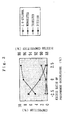
- Fig. 1 is a view showing a composition ratio (excluding the solvent) as analyzed by chromatography on the reaction product distilled after the reaction according as the excess ratio of the phosphorus oxychloride is varied in the first step.
- Fig. 2 is a view showing a composition ratio (excluding the solvent) as analyzed by chromatography on the reaction product not distilled after the reaction according as the excess ratio of the phosphorus oxychloride is varied in the first step.
- Fig. 3 is a view showing an effect of the excess ratio of the phosphorus oxychloride on the purity of the final product (aromatic bisphosphate).
- Fig. 4 is a view showing an effect of the excess ratio of the phosphorus oxychloride on the ratio of the by-products (oligomeric phosphate and triphosphate) contained in the product when the reaction mixture obtained in the first step is distilled.
- Fig. 5 is a view showing an effect of the excess ratio of the phosphorus oxychloride on the ratio of the by-products (oligomeric phosphate and triphosphate) contained in the product when the reaction mixture obtained in the first step is not distilled.
- Fig. 6 is a schematic view of a thin film distillation apparatus that can be used in the present invention.
- the obtained reaction mixture is then distilled for obtaining the diarylphosphorohalidate of high purity.
- formula (III) wherein the definition of R 1 , R 2 , R 3 , R 4 , Y, k and m is the same as that of the formulas (I)
- the "lower alkyl group” in the definitions of R 1 , R 2 , R 3 and R 4 in the formulas (I) to (IV) may be a straight chain or branched chain alkyl group having 1 to 5 carbon atoms.
- Examples of the "lower alkyl groups” include methyl, ethyl, n-propyl, isopropyl, n-butyl, isobutyl, sec-butyl, tert-butyl, n-pentyl, isopentyl, tert-pentyl and neo-pentyl, among which methyl is preferable.
- the aromatic monohydroxy compound for use in the present invention may be a compound represented by the formula (I), which may be, for example, 2,6-xylenol or 2,4,6-trimethylphenol.
- the phosphorus oxyhalide for use in the present invention may be phosphorus oxychloride or phosphorus oxybromide, among which phosphorus oxychloride is preferable.
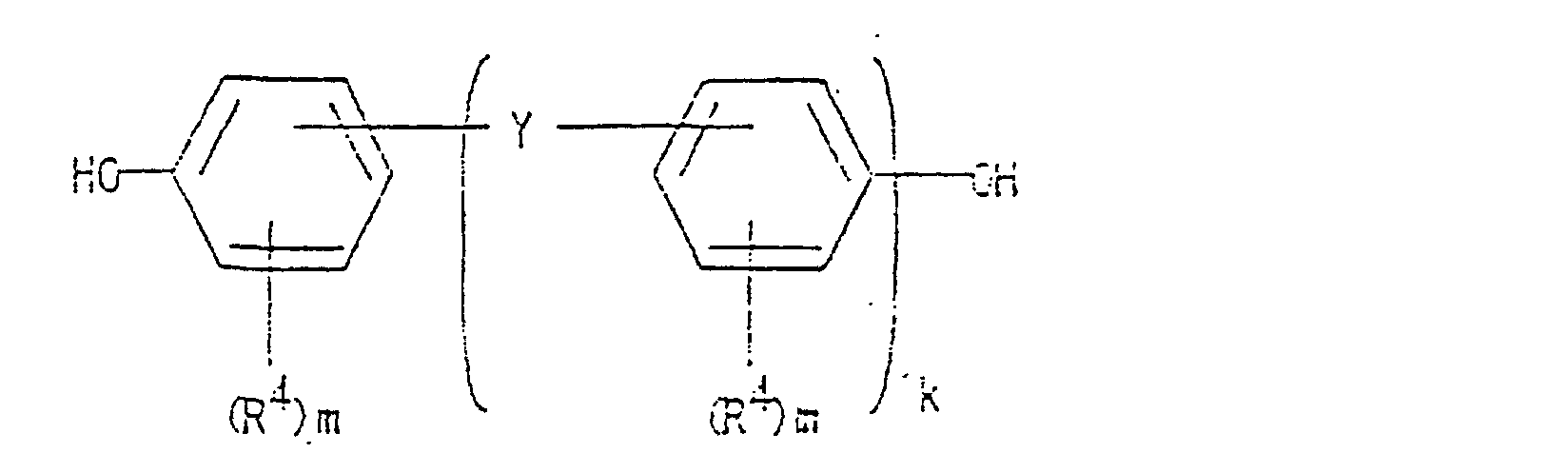
- the aromatic dihydroxy compound for use in the present invention may be a compound represented by the formula (III), which may be, for example, hydroquinone, resorcin, pyrocatechol, 4,4'-biphenol, 2,2',6,6'-tetramethyl-4,4'-biphenol, bisphenol A, bisphenol S or bisphenol F, among which hydroquinone, resorcin and 4,4'-biphenol are preferable examples.
- formula (III) may be, for example, hydroquinone, resorcin, pyrocatechol, 4,4'-biphenol, 2,2',6,6'-tetramethyl-4,4'-biphenol, bisphenol A, bisphenol S or bisphenol F, among which hydroquinone, resorcin and 4,4'-biphenol are preferable examples.
- the Lewis acid catalyst (a) for use in the reaction of the first step of the present invention may be, for example, aluminum chloride, magnesium chloride, titanium chloride, antimony pentachloride, zinc chloride or tin chloride, among which magnesium chloride is preferable. A mixture of two or more of these compounds may also be used as the catalyst.
- the Lewis acid catalyst (b) for the second step may be the catalyst remaining in the reaction mixture of the first step. However, it is possible to supplement further catalyst, which may be preferably aluminum chloride. Also, an amine such as triethylamine or tributylamine may be used as the catalyst.
- phosphorus oxyhalide is used in a ratio of 0.5 mole equivalent or more relative to the aromatic monohydroxy compound.
- phosphorus oxyhalide is used in an amount of 1.0 to 2.0 mole, preferably 1.0 to 1.1 mole, more preferably 1.0 to 1.05 mole, with respect to 2 mole of the aromatic monohydroxy compound. If the amount of phosphorus oxyhalide is too small, the amount of triaryl phosphate produced as a by-product will be large, which is not preferable.
- the aromatic dihydroxy compound is used in a ratio of 0.5 mole equivalent with respect to the diarylphosphorohalidate obtained in the first step.
- the amount of catalyst to be used in the first step may be more than 0.1 wt%, preferably 0.5 to 2.0 wt% relative to the phosphorus oxyhalide.
- the amount of catalyst to be used in the second step may be more than 0.1 wt%, preferably 0.5 to 5.0 wt% relative to the phosphorus oxyhalide used in the first step.
- the reactions in the first and second steps may be carried out at a temperature of 50°C to 250°C, preferably 100°C to 200°C. If the reaction temperature is lower than 50°C, the reactivity will be poor, which is not preferable. If the reaction temperature is higher than 250°C, by-products are produced by an ester interchange reaction, which is not preferable.
- reaction system may be kept under reduced pressure so as to remove hydrogen halide produced as a by-product in the reaction away from the reaction system and to promote the reaction.
- the reaction solvent is not necessarily needed and may be optionally used in the first step.
- the solvent to be used may be, for example, xylene, toluene, chlorobenzene or dichlorobenzene.
- the reaction mixture obtained in the first step contains monoarylphosphorodihalidate at about 0.1 to 5% and a small amount of unreacted phosphorus oxyhalide as low boiling point components. These components are removed by the distillation treatment.
- the method for distillation treatment may be a conventional one such as simple distillation or rectification as long as the phosphorus oxyhalide or monoarylphosphorodihalidate which are low boiling point components can be cut out by distillation.
- thin film distillation is preferable and industrially advantageous because it can efficiently remove only the low boiling point components.
- the thin film distillation apparatus may be a commercially available one.
- a Wiped Film Evaporator manufactured by Shinko Pantec Co., Ltd. in Japan
- a Shell & Tube type Heat Exchanger manufactured by Tokai Carbon Co., Ltd. in Japan
- Fig. 6 is a schematic view of a Wiped Film Evaporator as an example of the above thin film distillation apparatus.
- the Evaporator shown in Fig. 6 includes a rotor (4) rotated by driving force of a geared motor (1), a mechanical seal (2) capable of high vacuum sealing, a wiper (6) which is mounted on the rotor (4) and slides on the inside of a glass still (5), and nozzles.
- the liquid to be processed is supplied from a feeding nozzle (3) and evaporates on an evaporation surface (not shown).
- Distillate liquid containing the low boiling point components condensed in an internal condenser (7) is discharged from a distillate nozzle (8), while residual liquid containing the high boiling point components is discharged from a residue nozzle (9).
- impurities such as the catalyst in the reaction products are removed by a conventional washing process after the reaction is completed. Removal of impurities can be achieved by, for example, contacting the reaction product with an aqueous acid solution such as aqueous hydrochloric acid solution to extract the impurities to the aqueous solution side.
- an aqueous acid solution such as aqueous hydrochloric acid solution
- an organic solvent may be added for preventing the aromatic bisphosphate from being solidified.
- the organic solvent to be used here may be preferably a solvent in which the solubility of the bisphosphate is high.
- the organic solvent may be, for example, toluene, xylene, chlorobenzene or dichlorobenzene, but it is not specifically limited thereto. Also, a mixture of these solvents may be used as well.
- the temperature at the time of contacting with the aqueous acid solution is within the range from the room temperature up to the boiling point of the solution.
- the contact is usually performed within the range of 30°C to 120°C.
- the amount of the organic solvent to be used may be any amount as long as at least the aromatic bisphosphate is not deposited at the temperature of contact.
- the washed mixture may be cooled to precipitate crystals, which are separated by filtration; or the washed mixture is subjected to removal of water dissolved or dispersed in the washed mixture and then cooled to precipitate crystals, followed by filtration.
- the aromatic bisphosphate in a melted state is cooled, solidified, and made into powders with a flaker or a kneader. The latter is industrially preferable.
- the obtained crystals may be dried as they are for use.
- the obtained crystals may be dried after the crystals are washed with a solvent such as water, methanol or ethanol which substantially does not dissolve the aromatic diphosphate.
- the aromatic bisphosphate of high purity obtained by the production process according to the present invention can be used as a fire retardant, an antioxidant and a plasticizer for a thermoplastic resin or a thermosetting resin.
- the obtained aromatic bisphosphate is advantageous because it does not decrease the physical properties of the resin so much by addition.
- thermoplastic resins include chlorinated polyethylene, polyethylene, polypropylene, polybutadiene, styrene resin, high-impact polystyrene, polyvinyl chloride, ACS resin, AS resin, ABS resin, modified polyphenylene oxide, polymethyl methacrylate, polyamide, polyester, polycarbonate, polyphenylene sulfide, polyethylene sulfide, polyimide, polyetheretherketone, polyether sulfone, polysulfone, polyallylate, polyetherketones, polyethernitrile, polythioether sulfone, polybenzimidazole, polycarbodiimide, liquid crystalline polymer and composite plastics.
- thermosetting resins include polyurethane, phenol resin, melamine resin, urea resin, unsaturated polyester resin and diallyl phthalate resin.
- One of these resins may be singly used. Alternatively, two or more of these resins may be used in combination.
- the above resins may optionally contain various kinds of additives such as other fire retardants, antioxidants, fillers and lubricants in accordance with the needs.
- the kind and amount of the aromatic bisphosphate to be used is suitably determined in accordance with the kind of the resin and the required degree of fire retardancy.
- the aromatic bisphosphate is used in a ratio of 0.1 to 100 parts by weight with respect to 100 parts by weight of the resin.
- a fire retardant molded article may be obtained by kneading and molding the above resin, the aromatic bisphosphate and, optionally, the above additive by a conventional process.
- the aromatic bisphosphate is given to the resin by, for example, (a) adding the aromatic bisphosphate together with monomers to be supplied in bulk polymerization, (b) adding the aromatic bisphosphate during the final stage of the reaction in the bulk polymerization, (c) adding the aromatic bisphosphate at the time of molding the resin or (d) applying the aromatic bisphosphate as a solution or dispersion on the surface of the resin such as a film or a fiber.
- the fire retardant is preferably provided in powder form, which exhibits a good effect in kneading the fire retardant with resin.
- the aromatic bisphosphate of high purity prepared according to the present invention is in the form of crystalline powders of 95% or more purity and can be suitably used for kneading with the resin.
- the aromatic bisphosphate prepared according to the present invention is excellent in temperature stability and has a property such as being capable of withstanding the molding and processing temperature for an engineering plastic or a highly functional plastic having a higher function.
- JIS Japanese Industrial Standard
- the purity of the reaction product obtained at the first step was measured by FID method by gas chromatography (GC, using GC-14A manufactured by Shimadzu Corporation in Japan) after phenylating the unreacted chloro group.
- the purity of the reaction product obtained in the second step and the final product was measured by gel permeation chromatography (GPC using HLC-8020 manufactured by Tosoh Corporation in Japan, and HLC-8010 for data processing).
- the solidifiability of the final product was judged from the state of solidification by performing the following operations.
- the obtained reaction mixture was divided into two, and 300g of the reaction mixture was subjected to thin film distillation at 3 Torr and 160°C, thereby removing the solvent xylene and the low boiling-point components as initial distillate.
- the resultant was 90% of the initial weight.
- the thin film distillation apparatus used in this Example was a 2-03 type thin film distillation apparatus for room experiments manufactured by Shinko Pantec Co., Ltd. in Japan.
- Fig. 6 shows a view of the apparatus.
- the initial distillate contained 29g of xylene and 29g of the other low boiling-point components.
- the obtained distillation residue weighed 241g.
- Example 2 The same steps as in the Example 1 were carried out except that the phosphorus oxychloride was used in a chemically equivalent amount to 2,6-xylenol.
- Figs. 1 and 2 show a composition ratio (excluding the solvent) as analyzed by chromatography on the reaction product after the reaction according as the excess ratio of the phosphorus oxychloride is varied in the first step.
- Fig. 1 shows a case in which the distillation treatment is performed, whereas Fig. 2 shows a case in which the distillation treatment is not performed.
- GC composition in the Figures represents a composition by analysis with gas chromatography.
- Fig. 3 shows an effect of the excess ratio of the phosphorus oxychloride on the purity of the final product (aromatic bisphosphate). This shows that the reaction product obtained by reaction with a little excess amount of phosphorus oxychloride in the first step and subsequent distillation treatment yields a high purity of the final product (aromatic bisphosphate).
- the term "GPC composition” in the Figure represents a composition by analysis with gel permeation chromatography.
- Figs. 4 and 5 show the ratio of by-products (oligomeric phosphate and triphosphate) contained in the product according as the excess ratio of the phosphorus oxychloride is varied in the first step.
- Fig. 4 shows a case in which the distillation treatment is performed after the first step, whereas Fig. 5 shows a case in which the distillation treatment is not performed.
- the amount of oligomeric phosphate and aromatic triphosphate contained in the aromatic bisphosphate will be extremely small, so that the aromatic bisphosphate will be highly purified and the solidification speed will be high. Therefore, the process of solidifying and making the product into powders after the reaction will be extremely simplified, making it easier to handle the product. Moreover, there will be no plate-out at the time of molding the resin. This leads to improved commercial value in the molded article.
Landscapes
- Chemical & Material Sciences (AREA)
- Organic Chemistry (AREA)
- Health & Medical Sciences (AREA)
- Life Sciences & Earth Sciences (AREA)
- Biochemistry (AREA)
- General Health & Medical Sciences (AREA)
- Molecular Biology (AREA)
- Low-Molecular Organic Synthesis Reactions Using Catalysts (AREA)
- Fireproofing Substances (AREA)
- Compositions Of Macromolecular Compounds (AREA)
Claims (18)
- Verfahren zur Herstellung aromatischer Bisphosphate, umfassend:wobei im ersten Schritt die aromatische Monohydroxyverbindung und das Phosphoroxyhalogenid in einem molaren Verhältnis von 2.0 zu 1.0 bis 1.1 umgesetzt werden, und das Reaktionsgemisch aus dem ersten Schritt vor der Umsetzung des zweiten Schritts einer Destillationsbehandlung unterzogen wird, um verbleibendes, unumgesetztes Phosphoroxyhalidate und Monoarylphosphorodihalogenid, welche niedrigsiedende Nebenprodukte darstellen, zu entfernen, um dadurch das aromatische Bisphosphat in hoher Reinheit zu erhalten,als ersten Schritt die Umsetzung einer aromatischen Monohydroxyverbindung, welche einen sterisch gehinderten Rest in der ortho-Position aufweist, mit einem Phosphoroxyhalogenid in Gegenwart eines Lewissäurekatalysators (a), um ein Reaktionsgemisch zu erhalten, welche Diarylphosphorohalidate enthält, undals zweiten Schritt die Umsetzung des Reaktionsgemisches aus dem ersten Schritt mit einer aromatischen Dihydroxyverbindung in Gegenwart eines Lewissäurekatalysators (b), um ein aromatisches Bisphosphat zu erhalten,
wobei die aromatische Monohydroxyverbindung aus dem ersten Schritt durch folgende Formel (I) dargestellt wird:wobei R1 und R2 gleich oder verschieden sind und geradkettige oder verzweigte Alkylreste mit 1 bis 5 Kohlenstoffatomen sind, und R3 ein Wasserstoffatom oder ein geradkettiger oder verzweigter Alkylrest mit 1 bis 5 Kohlenstoffatomen ist.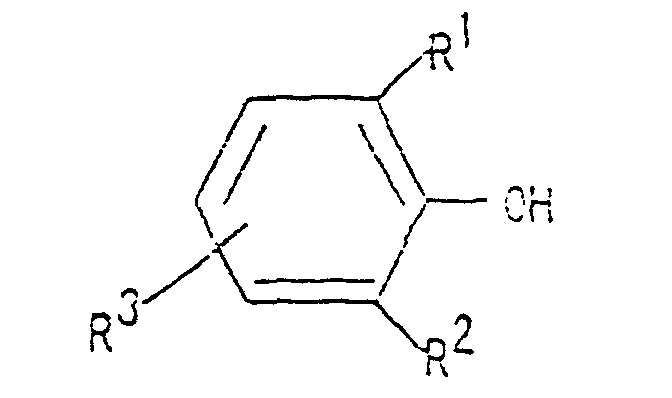
- Verfahren zur Herstellung aromatischer Bisphosphate gemäß Anspruch 1, wobei die aromatische Monohydroxyverbindung 2,6-Xylenol oder 2,4,6-Trimethylphenol ist.
- Verfahren zur Herstellung aromatischer Bisphosphate gemäß Anspruch 1, wobei das Phosphoroxyhalogenid Phosphoroxychlorid oder Phosphoroxybromid ist.
- Verfahren zur Herstellung aromatischer Bisphosphate gemäß Anspruch 3, wobei im ersten Schritt das molare Verhältnis der aromatischen Monohydroxyverbindung zum Phosphoroxychlorid 2.0 zu 1.0 bis 1.05 beträgt.
- Verfahren zur Herstellung aromatischer Bisphosphate gemäß Anspruch 1, wobei der erste Schritt bei einer Temperatur von 50 bis 250 °C durchgeführt wird.
- Verfahren zur Herstellung aromatischer Bisphosphate gemäß Anspruch 5, wobei der erste Schritt bei einer Temperatur von 100 bis 200 °C durchgeführt wird.
- Verfahren zur Herstellung aromatischer Bisphosphate gemäß Anspruch 1, wobei der Lewissäurekatalysator (a) aus Magnesiumchlorid, Aluminiumchlorid, Titanchlorid, Antimonpentachlorid, Zinkchlorid und Zinnchlorid ausgewählt ist.
- Verfahren zur Herstellung aromatischer Bisphosphate gemäß Anspruch 7, wobei der Lewissäurekatalysator (a) Magnesiumchlorid ist.
- Verfahren zur Herstellung aromatischer Bisphosphate gemäß Anspruch 1, wobei der Lewissäurekatalysator (a) in einem Verhältnis von 0.5 bis 2.0 Gew.-% bezogen auf das Phosphoroxyhalogenid zugegeben wird.
- Verfahren zur Herstellung aromatischer Bisphosphate gemäß Anspruch 1, wobei die aromatische Dihydroxyverbindung durch folgende Formel (III) dargestellt wird:wobei R4 ein Wasserstoffatom oder ein geradkettiger oder verzweigter Alkylrest mit 1 bis 5 Kohlenstoffatomen ist; Y eine Bindung, eine Gruppe -CH2-, -C(CH3)2-, -S-, SO2-, -O-, -CO-, oder -N=N- ist; k 0 oder 1 ist; und m eine ganze Zahl von 0 bis 4 ist.
- Verfahren zur Herstellung aromatischer Bisphosphate gemäß Anspruch 10, wobei die aromatische Dihydroxyverbindung Hydrochinon oder 4,4'-Biphenol ist.
- Verfahren zur Herstellung aromatischer Bisphosphate gemäß Anspruch 1, wobei die aromatische Dihydroxyverbindung im zweiten Schritt in einem Verhältnis von 0.5 Moläquivalenten bezogen auf das Produkt des ersten Schritts eingesetzt wird.
- Verfahren zur Herstellung aromatischer Bisphosphate gemäß Anspruch 1, wobei der zweite Schritt bei einer Temperatur von 50 bis 250 °C durchgeführt wird.
- Verfahren zur Herstellung aromatischer Bisphosphate gemäß Anspruch 13, wobei der zweite Schritt bei einer Temperatur von 100 bis 200 °C durchgeführt wird.
- Verfahren zur Herstellung aromatischer Bisphosphate gemäß Anspruch 1, wobei der Lewissäurekatalysator (b) aus Magnesiumchlorid, Aluminiumchlorid, Titanchlorid, Antimonpentachlorid, Zinkchlorid und Zinnchlorid ausgewählt ist.
- Verfahren zur Herstellung aromatischer Bisphosphate gemäß Anspruch 15, wobei der Lewissäurekatalysator (b) Aluminiumchlorid ist.
- Verfahren zur Herstellung aromatischer Bisphosphate gemäß Anspruch 1, wobei der Lewissäurekatalysator (b) in einem Verhältnis von 0.5 bis 5.0 Gew.-% bezogen auf das Phosphoroxyhalogenid, welches im ersten Schritt eingesetzt wird, zugegeben wird.
- Verfahren zur Herstellung aromatischer Bisphosphate gemäß Anspruch 1, wobei das Reaktionsgemisch einer Destillationsbehandlung in einer Dünnschichtdestillationsapparatur unterzogen wird, um Nebenprodukte, welche von der Zielverbindung verschieden sind, zu entfernen.
Applications Claiming Priority (3)
| Application Number | Priority Date | Filing Date | Title |
|---|---|---|---|
| JP200770/96 | 1996-07-30 | ||
| JP20077096 | 1996-07-30 | ||
| JP20077096A JP3383159B2 (ja) | 1996-07-30 | 1996-07-30 | 芳香族ビスホスフェートの製造方法 |
Publications (3)
| Publication Number | Publication Date |
|---|---|
| EP0822197A2 EP0822197A2 (de) | 1998-02-04 |
| EP0822197A3 EP0822197A3 (de) | 1999-01-13 |
| EP0822197B1 true EP0822197B1 (de) | 2003-04-02 |
Family
ID=16429894
Family Applications (1)
| Application Number | Title | Priority Date | Filing Date |
|---|---|---|---|
| EP96120319A Expired - Lifetime EP0822197B1 (de) | 1996-07-30 | 1996-12-18 | Verfahren zur Herstellung von aromatischen Biphosphaten |
Country Status (4)
| Country | Link |
|---|---|
| US (1) | US5880308A (de) |
| EP (1) | EP0822197B1 (de) |
| JP (1) | JP3383159B2 (de) |
| DE (1) | DE69627141T2 (de) |
Cited By (1)
| Publication number | Priority date | Publication date | Assignee | Title |
|---|---|---|---|---|
| WO2013085097A1 (ko) * | 2011-12-06 | 2013-06-13 | 제일모직주식회사 | 새로운 구조를 갖는 인계 화합물, 이의 제조방법, 및 이를 포함하는 난연성 열가소성 수지 조성물 |
Families Citing this family (9)
| Publication number | Priority date | Publication date | Assignee | Title |
|---|---|---|---|---|
| US6388120B1 (en) * | 1998-02-13 | 2002-05-14 | Pabu Services, Inc. | Continuous process for the manufacture of phosphoric acid esters |
| JP3793867B2 (ja) | 1999-02-16 | 2006-07-05 | 大八化学工業株式会社 | ホスホロハリデートの製造方法 |
| JP4931618B2 (ja) * | 2007-01-25 | 2012-05-16 | 旭化成ケミカルズ株式会社 | 耐傷性、および意匠性に優れる難燃性熱可塑性樹脂組成物 |
| AU2009276505B2 (en) | 2008-08-01 | 2015-04-23 | Intersect Ent, Inc. | Methods and devices for crimping self-expanding devices |
| CN101723974B (zh) * | 2008-10-29 | 2012-05-30 | 中国石油天然气股份有限公司 | 阻燃剂间苯二酚双(2,6-二甲基芳基磷酸酯)的制备方法 |
| WO2010082426A1 (ja) * | 2009-01-19 | 2010-07-22 | 大八化学工業株式会社 | リン系難燃剤組成物およびそれを含有する難燃性樹脂組成物、成形体 |
| JP6132262B2 (ja) * | 2011-08-30 | 2017-05-24 | 三菱瓦斯化学株式会社 | ポリエステル樹脂組成物及びその製造方法 |
| EP2987844A4 (de) * | 2013-04-15 | 2017-02-08 | Daihachi Chemical Industry Co., Ltd. | Flammschutzmittelzusammensetzung und flammhemmende harzzusammensetzung damit sowie formkörper |
| KR20170120140A (ko) * | 2015-02-20 | 2017-10-30 | 에프알엑스 폴리머스, 인코포레이티드 | 난연성 열경화성 조성물 |
Family Cites Families (8)
| Publication number | Priority date | Publication date | Assignee | Title |
|---|---|---|---|---|
| US3254973A (en) * | 1962-07-31 | 1966-06-07 | Socony Mobil Oil Co Inc | Gasolines and phosphorus-containing additives therefor |
| US3360591A (en) | 1962-07-31 | 1967-12-26 | Mobil Oil Corp | Diphosphates of divalent aryl hydrocarbons |
| JPH0218336A (ja) * | 1988-06-27 | 1990-01-22 | Kaigaa Inc | 感応化されたレーザガラス |
| US5122556A (en) * | 1990-04-23 | 1992-06-16 | General Electric Company | Tetra (lower alkaryl) p-phenylene diphosphate-polycarbonate blends |
| JP2552780B2 (ja) * | 1991-04-16 | 1996-11-13 | 大八化学工業株式会社 | 芳香族ジホスフェートの製造方法と用途 |
| AU655284B2 (en) * | 1991-06-14 | 1994-12-15 | Ethyl Corporation | Organic phosphates and their preparation |
| US5420327A (en) * | 1992-09-14 | 1995-05-30 | Akzo Nobel N.V. | Process for forming hydrocarbyl bisphosphate compound |
| JPH08143584A (ja) * | 1994-11-17 | 1996-06-04 | Asahi Denka Kogyo Kk | ジアリールホスホロハリデート化合物の製造方法 |
-
1996
- 1996-07-30 JP JP20077096A patent/JP3383159B2/ja not_active Expired - Fee Related
- 1996-12-09 US US08/761,376 patent/US5880308A/en not_active Expired - Lifetime
- 1996-12-18 DE DE69627141T patent/DE69627141T2/de not_active Expired - Lifetime
- 1996-12-18 EP EP96120319A patent/EP0822197B1/de not_active Expired - Lifetime
Cited By (1)
| Publication number | Priority date | Publication date | Assignee | Title |
|---|---|---|---|---|
| WO2013085097A1 (ko) * | 2011-12-06 | 2013-06-13 | 제일모직주식회사 | 새로운 구조를 갖는 인계 화합물, 이의 제조방법, 및 이를 포함하는 난연성 열가소성 수지 조성물 |
Also Published As
| Publication number | Publication date |
|---|---|
| EP0822197A2 (de) | 1998-02-04 |
| DE69627141D1 (de) | 2003-05-08 |
| US5880308A (en) | 1999-03-09 |
| JP3383159B2 (ja) | 2003-03-04 |
| JPH1045774A (ja) | 1998-02-17 |
| EP0822197A3 (de) | 1999-01-13 |
| DE69627141T2 (de) | 2004-01-29 |
Similar Documents
| Publication | Publication Date | Title |
|---|---|---|
| JP2552780B2 (ja) | 芳香族ジホスフェートの製造方法と用途 | |
| KR100720873B1 (ko) | 비스페놀-a 비스(디페닐 포스페이트)-기재 방염제 | |
| US5880308A (en) | Process for preparing aromatic bisphosphates | |
| JP5700789B2 (ja) | リン系難燃剤組成物およびそれを含有する難燃性樹脂組成物、成形体 | |
| EP1327635B1 (de) | Herstellung von Phenylphosphate Estern mit 4,4'-Biphenol | |
| KR101813478B1 (ko) | 방향족 디포스페이트의 제조방법 | |
| EP1403272B1 (de) | Verfahren zur herstellung von phosphorsäureestern | |
| US6605736B1 (en) | Process for the preparation of condensed phosphoric esters | |
| JP3063949B2 (ja) | ビスホスフィンオキシド単量体及びそれから製造されたポリカーボネート | |
| JP4546011B2 (ja) | 縮合型燐酸エステルの製造方法 | |
| JP2004511564A (ja) | リン酸エステルの製法 | |
| JPWO2001007446A1 (ja) | 縮合型燐酸エステルの製造方法 | |
| JP4536185B2 (ja) | 縮合燐酸エステルの製造方法 | |
| JP4097384B2 (ja) | ジアリールホスホロハリデートの製造方法 | |
| KR101864260B1 (ko) | 인산 에스터 제조 방법 | |
| WO2003089442A1 (en) | A method of preparing phosphoric ester | |
| JP4084095B2 (ja) | ペンタエリスリトールジホスホネートの製造方法 | |
| JP2825466B2 (ja) | 芳香族ジホスフェート含有難燃性熱安定性樹脂組成物 | |
| JP4084096B2 (ja) | ペンタエリスリトールジホスホネートの製造方法 | |
| JP2002371089A (ja) | ホスホニウム塩、その製造方法およびその用途 | |
| JP2004035481A (ja) | スピロ環ジホスホネート化合物の製造方法 | |
| JP2004035480A (ja) | スピロ環ジホスホネート化合物の製造方法 | |
| KR20150143520A (ko) | 난연제 조성물 및 그것을 함유하는 난연성 수지 조성물 및 성형체 | |
| JP2000327688A (ja) | ホスフェートの製造方法 | |
| JP2004018387A (ja) | ペンタエリスリトールジホスホネートの製造方法 |
Legal Events
| Date | Code | Title | Description |
|---|---|---|---|
| PUAI | Public reference made under article 153(3) epc to a published international application that has entered the european phase |
Free format text: ORIGINAL CODE: 0009012 |
|
| AK | Designated contracting states |
Kind code of ref document: A2 Designated state(s): DE GB NL |
|
| PUAL | Search report despatched |
Free format text: ORIGINAL CODE: 0009013 |
|
| AK | Designated contracting states |
Kind code of ref document: A3 Designated state(s): DE GB NL |
|
| 17P | Request for examination filed |
Effective date: 19990713 |
|
| AKX | Designation fees paid |
Free format text: DE GB NL |
|
| RBV | Designated contracting states (corrected) |
Designated state(s): DE GB NL |
|
| RAP1 | Party data changed (applicant data changed or rights of an application transferred) |
Owner name: DAIHACHI CHEMICAL INDUSTRY CO., LTD. |
|
| 17Q | First examination report despatched |
Effective date: 20010215 |
|
| GRAG | Despatch of communication of intention to grant |
Free format text: ORIGINAL CODE: EPIDOS AGRA |
|
| GRAG | Despatch of communication of intention to grant |
Free format text: ORIGINAL CODE: EPIDOS AGRA |
|
| GRAH | Despatch of communication of intention to grant a patent |
Free format text: ORIGINAL CODE: EPIDOS IGRA |
|
| GRAH | Despatch of communication of intention to grant a patent |
Free format text: ORIGINAL CODE: EPIDOS IGRA |
|
| GRAA | (expected) grant |
Free format text: ORIGINAL CODE: 0009210 |
|
| AK | Designated contracting states |
Designated state(s): DE GB NL |
|
| REG | Reference to a national code |
Ref country code: GB Ref legal event code: FG4D |
|
| REF | Corresponds to: |
Ref document number: 69627141 Country of ref document: DE Date of ref document: 20030508 Kind code of ref document: P |
|
| PLBE | No opposition filed within time limit |
Free format text: ORIGINAL CODE: 0009261 |
|
| STAA | Information on the status of an ep patent application or granted ep patent |
Free format text: STATUS: NO OPPOSITION FILED WITHIN TIME LIMIT |
|
| 26N | No opposition filed |
Effective date: 20040105 |
|
| PGFP | Annual fee paid to national office [announced via postgrant information from national office to epo] |
Ref country code: NL Payment date: 20131115 Year of fee payment: 18 |
|
| REG | Reference to a national code |
Ref country code: NL Ref legal event code: V1 Effective date: 20150701 |
|
| REG | Reference to a national code |
Ref country code: NL Ref legal event code: V1 Effective date: 20150701 |
|
| PG25 | Lapsed in a contracting state [announced via postgrant information from national office to epo] |
Ref country code: NL Free format text: LAPSE BECAUSE OF NON-PAYMENT OF DUE FEES Effective date: 20150701 |
|
| PGFP | Annual fee paid to national office [announced via postgrant information from national office to epo] |
Ref country code: GB Payment date: 20151221 Year of fee payment: 20 |
|
| PGFP | Annual fee paid to national office [announced via postgrant information from national office to epo] |
Ref country code: DE Payment date: 20160128 Year of fee payment: 20 |
|
| REG | Reference to a national code |
Ref country code: DE Ref legal event code: R071 Ref document number: 69627141 Country of ref document: DE |
|
| REG | Reference to a national code |
Ref country code: GB Ref legal event code: PE20 Expiry date: 20161217 |
|
| PG25 | Lapsed in a contracting state [announced via postgrant information from national office to epo] |
Ref country code: GB Free format text: LAPSE BECAUSE OF EXPIRATION OF PROTECTION Effective date: 20161217 |