EP0808903A2 - Lysophospholipase d'aspergillus produite par recombinaison - Google Patents
Lysophospholipase d'aspergillus produite par recombinaison Download PDFInfo
- Publication number
- EP0808903A2 EP0808903A2 EP97104976A EP97104976A EP0808903A2 EP 0808903 A2 EP0808903 A2 EP 0808903A2 EP 97104976 A EP97104976 A EP 97104976A EP 97104976 A EP97104976 A EP 97104976A EP 0808903 A2 EP0808903 A2 EP 0808903A2
- Authority
- EP
- European Patent Office
- Prior art keywords
- aspergillus
- lpl
- dna
- foetidus
- nucleotide sequence
- Prior art date
- Legal status (The legal status is an assumption and is not a legal conclusion. Google has not performed a legal analysis and makes no representation as to the accuracy of the status listed.)
- Withdrawn
Links
Images


Classifications
-
- C—CHEMISTRY; METALLURGY
- C12—BIOCHEMISTRY; BEER; SPIRITS; WINE; VINEGAR; MICROBIOLOGY; ENZYMOLOGY; MUTATION OR GENETIC ENGINEERING
- C12N—MICROORGANISMS OR ENZYMES; COMPOSITIONS THEREOF; PROPAGATING, PRESERVING, OR MAINTAINING MICROORGANISMS; MUTATION OR GENETIC ENGINEERING; CULTURE MEDIA
- C12N15/00—Mutation or genetic engineering; DNA or RNA concerning genetic engineering, vectors, e.g. plasmids, or their isolation, preparation or purification; Use of hosts therefor
- C12N15/09—Recombinant DNA-technology
- C12N15/63—Introduction of foreign genetic material using vectors; Vectors; Use of hosts therefor; Regulation of expression
- C12N15/79—Vectors or expression systems specially adapted for eukaryotic hosts
- C12N15/80—Vectors or expression systems specially adapted for eukaryotic hosts for fungi
- C12N15/81—Vectors or expression systems specially adapted for eukaryotic hosts for fungi for yeasts
- C12N15/815—Vectors or expression systems specially adapted for eukaryotic hosts for fungi for yeasts for yeasts other than Saccharomyces
-
- C—CHEMISTRY; METALLURGY
- C12—BIOCHEMISTRY; BEER; SPIRITS; WINE; VINEGAR; MICROBIOLOGY; ENZYMOLOGY; MUTATION OR GENETIC ENGINEERING
- C12N—MICROORGANISMS OR ENZYMES; COMPOSITIONS THEREOF; PROPAGATING, PRESERVING, OR MAINTAINING MICROORGANISMS; MUTATION OR GENETIC ENGINEERING; CULTURE MEDIA
- C12N15/00—Mutation or genetic engineering; DNA or RNA concerning genetic engineering, vectors, e.g. plasmids, or their isolation, preparation or purification; Use of hosts therefor
- C12N15/09—Recombinant DNA-technology
- C12N15/11—DNA or RNA fragments; Modified forms thereof; Non-coding nucleic acids having a biological activity
- C12N15/62—DNA sequences coding for fusion proteins
- C12N15/625—DNA sequences coding for fusion proteins containing a sequence coding for a signal sequence
-
- C—CHEMISTRY; METALLURGY
- C12—BIOCHEMISTRY; BEER; SPIRITS; WINE; VINEGAR; MICROBIOLOGY; ENZYMOLOGY; MUTATION OR GENETIC ENGINEERING
- C12N—MICROORGANISMS OR ENZYMES; COMPOSITIONS THEREOF; PROPAGATING, PRESERVING, OR MAINTAINING MICROORGANISMS; MUTATION OR GENETIC ENGINEERING; CULTURE MEDIA
- C12N9/00—Enzymes; Proenzymes; Compositions thereof; Processes for preparing, activating, inhibiting, separating or purifying enzymes
- C12N9/14—Hydrolases (3)
- C12N9/16—Hydrolases (3) acting on ester bonds (3.1)
- C12N9/18—Carboxylic ester hydrolases (3.1.1)
-
- C—CHEMISTRY; METALLURGY
- C13—SUGAR INDUSTRY
- C13K—SACCHARIDES OBTAINED FROM NATURAL SOURCES OR BY HYDROLYSIS OF NATURALLY OCCURRING DISACCHARIDES, OLIGOSACCHARIDES OR POLYSACCHARIDES
- C13K7/00—Maltose
-
- C—CHEMISTRY; METALLURGY
- C07—ORGANIC CHEMISTRY
- C07K—PEPTIDES
- C07K2319/00—Fusion polypeptide
- C07K2319/01—Fusion polypeptide containing a localisation/targetting motif
- C07K2319/02—Fusion polypeptide containing a localisation/targetting motif containing a signal sequence
Definitions
- the invention relates to a recombinant deoxyribonucleic acid (DNA) from Aspergillus, preferably from Aspergillus foetidus , which codes for a lysophospholipase (LPL, phospholipase B, 2-lysophosphatidylcholine acylhydrolase, IUB 3.1.1.5), vectors containing this DNA and further DNA sequences contain for expression of the LPL gene, and filamentous fungi transformed with these vectors, which can express the recombinant DNA.
- the invention further relates to enzyme products which contain a recombinant LPL produced by means of the recombinant filamentous fungi, and to processes for improving the filtration of starch hydrolysates by means of the recombinant LPL.
- EP 0 219 269 describes an Aspergillus niger phospholipase which contains xylanase and ⁇ -glucanase in suitable proportions and the filtration performance increased from 100 to 300 l / h ⁇ m 2 when clarifying maltose syrup.
- Konieczny-Janda and Richter isolated an enzyme from Aspergillus niger glucoamylase that partially hydrolyzes the lysophospholipids of wheat starch so that the insoluble constituents aggregate and thus become filterable.
- the isolated enzyme cleaves wheat lipids and synthetic lysophospholipids.
- the present invention has for its object to provide an inexpensive lysophospholipase for the filtration of starch syrup, especially maltose syrup, which was obtained by ⁇ -amylase treatment of maltodextrin solutions. Furthermore, the lysophospholipase is said to be free of glucoamylases and transglucosidases. Furthermore, the transformed host organism is said to be able to produce the lysophospholipase in large quantities. The enzyme is said to be able to produce preparations which are particularly suitable for the hydrolysis of lysophospholipids and thus for the clarification of starch hydrolysates.
- the object is achieved by a recombinant deoxyribonucleic acid (DNA) which can be isolated from Aspergillus and which is characterized in that it codes for a lysophospholipase (LPL) and the nucleotide sequence indicated in SEQ ID NO 1 for the mature LPL or a nucleotide sequence derived therefrom, the hybridized under stringent conditions with the nucleotide sequence given in SEQ ID NO 1 for the mature LPL.
- LPL lysophospholipase
- the DNA is preferably isolated from Aspergillus foetidus.
- This DNA can be used to produce vectors, in particular plasmids, with which Aspergillus strains or Trichoderma reesei strains can be transformed. Strains which express and secrete LPL in high amounts can then be selected from the transformants obtained. These transformed host organisms in turn allow processes for the production of LPL in large quantities.
- the fermentation juices obtained in this way can be used to produce LPL-containing enzyme products which are particularly suitable for the hydrolysis of lysophospholipids.
- the host organism By choosing the host organism it is possible to produce the lysophospholipase with high yield and essentially free of interfering enzymes such as glucoamylases and transglucosidases, so that the enzyme product produced according to the invention accelerates the filtration of maltose syrup to a greater extent and at the same time the formation of undesired by-products in the clarified syrup can be reduced than is possible with conventionally produced preparations.
- FIG. 1 shows the plasmid map of the vector pKC9.
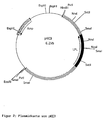
- FIG. 2 shows the plasmid map of the vector pKC3.
- FIG. 3 shows the plasmid map of the vector pKC12.
- the invention relates to a recombinant deoxyribonucleic acid (DNA) isolatable from Aspergillus foetidus, which is characterized in that it codes for a lysophospholipase (LPL) and the nucleotide sequence specified in SEQ ID NO 1 for the mature LPL or a nucleotide sequence derived therefrom, which can be found under stringent conditions with the nucleotide sequence specified in SEQ ID NO 1 for the mature LPL.
- LPL lysophospholipase
- SEQ ID NO 1 corresponds to the chromosomal LPL gene from A. foetidus RH3046 with 5 'and 3' flanking sequences.
- the nucleotide sequence for the mature LPL is understood to mean the DNA sequence obtained according to SEQ ID NO 1 and coding for the structural gene of the LPL without the signal peptide.
- the nucleotide sequence for the mature LPL are thus those exon sequences which code for amino acids 1 (Ser) to 270 (Leu).
- the invention further relates to a nucleotide sequence derived from the nucleotide sequence for the mature LPL. These are to be understood as nucleotide sequences which differ from the nucleotide sequence given in SEQ ID NO 1, but which hybridize with this DNA for the LPL under stringent conditions.
- stringent hybridization conditions is familiar to the person skilled in the art (see e.g. Maniatis et al., (1982), Molecular Cloning, A Laboratory Manual, Cold Spring Harbor Laboratory, New York). Stringent hybridization conditions are those under which only DNA molecules with a high degree of homology, e.g. > 85%, hybridize with each other.
- the stringency of the test conditions can e.g. can be adjusted by the hybridization temperature or by the salt concentration of the hybridization solution.
- DNA sequences derived from the LPL structural gene can have, for example, deviations in the nucleotide sequence without deviations in the amino acid sequence due to the degeneration of the genetic code. Minor deviations in the nucleotide sequence can also lead to functionally insignificant changes in the amino acid sequence of the enzyme.
- Broadly homologous genes that can be isolated from other strains of A. foetidus or closely related Aspergillus species by the present invention are therefore included.
- the invention also encompasses fusion proteins which have essential parts of the parts of the LPL gene or nucleotide sequences derived therefrom for the enzymatic function of the protein.
- the sequence description according to SEQ ID NO 1 also contains the coding sequence for the signal peptide lying in front of the nucleotide sequence for the mature LPL, starting with the amino acid 1 (Met) to 21 (Pro). This is followed by a six amino acid propeptide, from position 22 (Ala) to 27 (Arg).
- the functional promoter region of the LPL gene (nucleotide 1 to 1608) lies in front of the signal peptide sequence.
- the TAA stop codon and a region which functions as a transcription terminator are located behind the structural gene.
- the sequence description according to SEQ ID NO 1 shows the entire amino acid sequence of the LPL with the signal peptide.
- the recombinant DNA according to the invention can be isolated by isolating an LPL gene from the genome of an LPL-producing Aspergillus strain, in particular an A. foetidus strain, e.g. from A. foetidus RH3046.
- RNA and / or DNA is obtained from the cell material of the Aspergillus strain.
- the cell material is preferably grown in a medium in which the strain produces as much LPL as possible, since the content of LPL-specific RNA in this induced cell material is higher than in non-induced cell material. This results in a higher proportion of LPL-specific cDNA in the cDNA synthesis, which facilitates the isolation of the LPL cDNA.
- Suitable growth media are e.g. Minimal media for fungi containing components containing lysolecithin, e.g. a fraction from soy is added.
- the cell harvest is advantageously carried out by freezing the filtered mycelium in liquid nitrogen.
- RNA can be prepared from the cell material in a manner known per se.
- the mycelium is homogenized under liquid nitrogen, for example in the presence of detergents such as SDS (sodium dodecyl sulfate), and the RNA is obtained by phenol, phenol-chloroform extractions, optionally with the addition of isoamyl alcohol.
- SDS sodium dodecyl sulfate
- the RNA is then extracted from the aqueous Phase precipitated by adding salts such as lithium chloride.
- a complementary single-stranded DNA can first be generated from the RNA in a manner known per se by means of reverse transcriptase (RNA-dependent DNA polymerase).
- the RNA is mixed with a mixture of deoxynucleoside triphosphates (dATP, dCTP, dGTP and dTTP), an oligo (dT) primer that hybridizes with the poly (A) end of the mRNA, and a reverse transcriptase, e.g. the reverse transcriptase of Moloney mouse leukemia virus (M-MuLV), which produces a complementary single-stranded DNA.
- dATP deoxynucleoside triphosphates
- dCTP deoxynucleoside triphosphates
- dGTP dGTP
- dT oligo primer
- a reverse transcriptase e.g. the reverse transcriptase of Moloney mouse leukemia virus (M-MuLV), which produces a complementary single-stranded
- a complementary strand is in turn synthesized with the DNA polymerase to the single-stranded DNA, so that a double-stranded cDNA is now present.
- the yield of LPL-specific cDNA can be increased many times by means of the tag DNA polymerase in a manner known per se using the polymerase chain reaction (PCR).
- PCR polymerase chain reaction
- the single-stranded cDNA is incubated with a mixture of deoxynucleoside triphosphates, a corresponding partial sequence of the oligo (dT) primer for the reverse reaction and an LPL-specific primer for the forward reaction.
- the LPL-specific primer is derived from the amino acid sequence of the LPL and is theoretically intended to hybridize only to a specific region of the single-stranded LPL cDNA.
- the cDNA synthesis is started with the Taq DNA polymerase and thus runs only in a defined area, i.e. between two oligonucleotides.
- the PCR products are purified and inserted into the plasmid pUC18. After transformation into E. coli DH5 ⁇ , the plasmid DNA can be prepared from the selected colonies and then hybridized with a radioactively labeled DNA probe.
- the cDNA insert of a positive clone is sequenced. A match of the amino acid sequence derived from the nucleotide sequence with the sequence determined by Edman degradation confirms the LPL gene sought.
- the LPL cDNA obtained can be used as a gene probe for Southern hybridization and genomic cloning of the LPL.
- the chromosomal LPL gene can be isolated by direct cloning of the chromosomal DNA hydrolysed with restriction enzymes into the plasmid pUC18.
- Genomic DNA can be obtained from the mycelium regardless of the cell growing conditions. Cultivation of the cell material in a complete medium for fungi, e.g. Sabouraud broth.
- the isolation of the DNA from the cell material can be carried out in a manner known per se by homogenizing the cell material in a buffer, e.g. 100 mM Tris-HCl, pH 7.5, 300 mM NaCl, 200 mM EDTA, and subsequent extraction with phenol, chloroform-isoamyl alcohol.
- the DNA is precipitated from the aqueous phase by adding ethanol and sodium acetate. It is mixed with a restriction enzyme, e.g. BamHI, completely cleaved and then fractionated by size in a sucrose gradient.
- a restriction enzyme e.g. BamHI
- the fractions are collected with DNA fragments of the size of approximately 9 to 10 kb.
- the DNA is inserted into the vector pUC18.
- the LPL transformants sought can be identified by colony hybridization.
- the isolated DNA is characterized in a manner known per se by restriction analysis and subsequent sequencing, e.g. according to the Sanger method.
- the position of the exon and intron sequences can be determined by comparing the cDNA sequence with the sequence of the chromosomal gene.
- the DNA sequences according to a) are required to convert the vector DNA into E. coli, e.g. E. coli DH5 ⁇ , to be able to multiply.
- a DNA sequence can be a phage, e.g. phage EMBL3, a cosmid or, preferably, a plasmid.
- Suitable plasmids are e.g. pBR322, pUC18 or pUC19 or fragments of these plasmids, if any, which contain at least the replication origin and a selection marker for E. coli.
- the vectors also contain DNA sequences according to b) which lead to expression and secretion of the gene product of the LPL gene according to c) in Aspergillus strains or in T. reesei strains.
- These DNA sequences according to b) are functionally linked to the LPL gene. These are e.g. 5'- and 3'-flanking sequences, such as 5 'of the gene promoters, a signal peptide sequence, 3' of the gene terminators.
- Other functional DNA sequences that may be present are e.g. Ribosome binding sites for translation, enhancers or "upstream activating sequences" or polyadenylation functions.
- Signal peptide sequences are DNA sequences coding for amino acids which are located 5 'immediately in front of the structural gene and which occur in extracellular proteins and which are transcribed and translated together with the structural gene. When the protein is secreted from the cell, the signal peptide sequences become split off, which creates the actual "mature" protein. A signal peptide sequence is therefore necessary in order to achieve the secretion of the LPL from the host cell. Likewise, a promoter and a terminator are required to initiate translation or to terminate the transcription of the gene.
- This can be the promoter naturally located in the chromosome of A. foetidus, the signal peptide sequence and / or the terminator of the LPL gene.
- the functional DNA sequences can likewise originate from other genes, the products of which are expressed and secreted in fungal strains of the genus Aspergillus or in T. reesei.
- genes which have suitable functional DNA sequences are e.g. the TAKA amylase A gene from A. oryzae (EP 0 238 023), the pectin esterase gene or the polygalacturonidase gene from A. niger (EP 0 388 593), the glucoamylase gene from A. awamori (EP 0 215 594), the cellobiohydrolase gene I (cbh 1) from T. reesei (EP 0 244 234).
- TAKA amylase A gene from A. oryzae EP 0 238 023
- the pectin esterase gene or the polygalacturonidase gene from A. niger EP 0 388 593
- the glucoamylase gene from A. awamori
- the cellobiohydrolase gene I cbh 1 from T. reesei (EP 0 244 234).
- the DNA sequence according to c) contains the LPL structural gene or a DNA sequence derived therefrom.
- This DNA sequence can e.g. in the form of a chromosomal gene with the naturally contained introns or as cDNA derived from the messenger ribonucleic acid (mRNA) without introns.
- mRNA messenger ribonucleic acid
- a vector according to the invention is, for example, the plasmid pKC3 (see FIG. 2).
- the plasmid consists of the well-known E. coli plasmid pUC19 and a HindIII / EcoRI restriction fragment from the chromosomal DNA of A. foetidus RH3046.
- the restriction fragment contains the structural gene of the LPL with the natural DNA sequence coding for the signal peptide and the natural promoter sequences 5 'in front of the gene and 3' behind the gene.
- the DNA sequences in front of and behind the structural gene including the signal peptide sequence are functional and lead to expression and secretion in filamentous fungi of the genus Aspergillus, for example in strains of A. foetidus, A. niger, A. phoenicis, A. oryzae or A. soy
- a gene with functional DNA sequences e.g. another promoter or signal peptide sequence
- a vector see e.g. Maniatis et al., (1982), Molecular Cloning, A Laboratory Manual, Cold Spring Harbor Laboratory, New York.
- the nucleotide sequence for the mature LPL gene or a nucleotide sequence derived therefrom can therefore also be linked to functional sequences other than the functional DNA sequences present in pKC3, pKC9 or pKC12, which are used for the expression and secretion of the LPL in a filamentous fungus of the genus Aspergillus or are suitable in T. reesei.
- Functional promoter sequences are of particular importance for the level of expression. These are DNA sequences of approximately 500 to 2000 base pairs in length, which are each 5 'before the start codon of an Aspergillus or a T. reesei gene.
- Such DNA sequences can e.g. are isolated as restriction fragments and ligated with restriction fragments of the LPL gene including the signal peptide sequence. Incompatible restriction sites or areas without suitable restriction sites, e.g. are bridged or replaced by synthetically produced oligonucleotides so that the original DNA sequence is retained. In this way, the DNA sequence of the LPL gene, including the signal peptide, can be retained unchanged and can be functionally linked to an unchanged promoter sequence.
- the natural promoter can be exchanged for another.
- suitable promoters are known.
- the TAKA amylase promoter from A. oryzae (see EP 0 238 023) is suitable for expression in A. oryzae or A. sojae strains, the gpdA promoter from A. nidulans (PUNT et al. (1987) , Gene 56, pp. 117-124) for expression in A. nidulans, A. niger, A. phoenicis, A. japonicus, A. foetidus or A. awamori strains.
- Suitable for expression in a T. reesei strain is, for example, the cbh1 promoter from T. reesei (EP-A-0 244 234).
- the natural chromosomal terminator sequence according to SEQ ID NO 1 lying behind the structural gene is preferred as the terminator.
- Suitable is e.g. the trpC terminator from A. nidulans (PUNT et al., loc. cit.) or the pectin esterase terminator from A. niger (EP 0 388 593).
- the plasmids according to the invention can be used in the transformation of Aspergillus or Trichoderma reesei strains.
- the plasmids can be integrated several times into the genome of the host strains.
- LPL productivity can be significantly increased by increasing the number of gene copies and / or by using stronger promoters. From a large number of transformants, those with particularly high productivity can be selected. By promoting LPL productivity, secondary activities such as undesirable glucoamylase activity also take a back seat. Strains transformed according to the invention are therefore particularly well suited for the large-scale production of LPL enzyme products.
- Fungus strains of species whose good production properties for enzymes are known are particularly suitable for the expression and secretion of LPL.
- Strains of the species A. niger, A. awamori, A. phoenicis, A. japonicus, A. foetidus, A. oryzae or A. sojae and T. reesei are particularly preferred.
- Suitable strains can be obtained from publicly available strain collections, such as ATCC, DSM, CBS or NRRL.
- Suitable host strains include, in particular, A. awamori ATCC 11360, A. foetidus ATCC 10254 and ATCC 11359, A. japonicus 16873, A. oryzae NRRL 695, A.
- A. sojae DSM 10090 is particularly suitable.
- the gene donor strain A. foetidus RH3046 is also particularly suitable (cf. page 3).
- EP 0 184 438 (US 4 885 249) describes e.g. a transformation method for A. niger, in which the argB gene from A. nidulans is used as a selection marker.
- EP 0 238 023 describes a generally applicable transformation method for A. oryzae strains.
- the plasmid p3SR2 with the amdS gene from A. nidulans is used as a selection marker.
- EP 0 244 234 describes the transformation of T. reesei with this vector.
- the transformation of A. niger with p3SR2 is described by Kelly and Hynes (1985), EMBO Journal 4, pp. 475-479.
- the vector pAN7-1 (PUNT et al. (1987), Gene 56, pp. 117-124) can preferably be used .
- Transformants can then be selected based on their resistance to hygromycin B.
- a third selection principle is used for the transformation of A. sojae, since the strains of this type used both utilize acetamide and are resistant to hygromycin B. Selection on chlorine-containing nutrient media isolates mutants whose nitrate reductase gene (niaD) is defective and which therefore no longer grow with nitrate as the sole nitrogen source (Cove, D.J. (1976) Heredity 36, 191-203). The defect is compensated for by transformation with the plasmid pSTA10 (Unkles, SE et al. (1989) Mol. Gen. Genet. 218, 99-104), on which the intact information for the nitrate reductase gene is located, so that the Transformants with nitrate as the sole nitrogen source grow, while the non-transformed cells remain in growth.
- pSTA10 Unkles, SE et al. (1989) Mol. Gen. Genet. 218, 99-104
- protoplasts are first produced from vegetative cells or from conidiospores under the influence of enzymes in an osmotically stabilized medium. This is usually done after several washing steps added plasmid DNA to be transformed in the presence of polyethylene glycol (PEG) and CaCl 2 , which leads to the uptake of the DNA in the cells. After the transformation, the protoplasts are regenerated on osmotically stabilized medium, a selection being made for cells which have taken up a marker gene.
- PEG polyethylene glycol
- CaCl 2 a selection being made for cells which have taken up a marker gene.
- the fungal strains are preferably transformed by the co-transformation method, in which a plasmid with a selection marker for Aspergillus or T. reesei strains and a vector according to the invention - a phage DNA or a cosmid DNA or preferably a plasmid with the LPL- Gene - are added simultaneously to the cells to be transformed.
- A. sojae DSM 10090 can, for example, be co-transformed with the plasmids pSTA10 and pKC9. Nitrate-utilizing transformants can then be selected.
- the transformed host strain can be incubated in a suitable medium in submerged culture.
- suitable media are those in which filamentous fungi show good growth, in particular those in which the LPL is also well formed.
- Media are well suited, which are known to show good growth of the respective Aspergillus or T. reesei host strain and at the same time form LPL.
- inexpensive natural products such as corn steep powder or corn steep liquor, rye bran, wheat bran, potato dextrin, maltodextrin, potato protein, molasses, etc., is also particularly advantageous with regard to inexpensive media.
- ammonium salts as N sources, for example ammonium sulfate, is also favorable .
- the expert can be based on media known for the fermentation of Aspergillus or Trichoderma reesei strains and can find out particularly suitable media through experiments.
- a suitable medium can contain, for example, 5% maltodextrin and 3% corn powder in tap water.
- the LPL can be produced by submerged fermentation.
- the inoculation can usually take place via a vaccination cascade from a culture tube or a Petri dish culture via shake flasks, optionally one or more pre-fermenters into a main fermenter.
- a typical fermentation time is approx. 30 to 120 hours at approx. 28 ° C under aerobic conditions.
- the cell material e.g. separated by filtration and the LPL-containing culture juice is harvested and cleaned.
- the culture juice can become liquid or dry LPL products, e.g. processed by ultrafiltration, spray drying or spray granulation. In this way, LPL enzyme products can be produced which are suitable for the hydrolysis of lysophosphatides.
- the hydrolysis reaction is best carried out in the temperature range from 20 to 65 ° C., preferably from 35 to 55 ° C., in 5 to 24 hours with stirring.
- the starting syrups are expediently used in a slurry or solution with a solids content of 5 to 35% by weight.
- the pH is generally in the range from 4 to 5, preferably 4.5.
- the process is preferably carried out in one step by letting the LPL act. It is advisable to use 250 to 800 units of LPL per kg of dry syrup.
- the recombinant LPL significantly higher flow rates can be achieved than is possible, for example, with the conventional LPL described in EP 0 219 269.
- Pasteurizing the syrup usually inactivates the enzyme LPL.
- ion exchange chromatography was carried out on DEAE-Fractogel (Merck).
- DEAE-Fractogel Merck
- 2440 ml of the buffered, desalted enzyme solution were applied in several (9) batches to a DEAE Fractogel column (height 235 mm, diameter 50 mm).
- the column was rinsed with buffer A.
- Elution was carried out in a continuous gradient from buffer A to buffer B (buffer A + 1 M NaCl). It was eluted at an elution rate of 12 ml / min and 18 ml fractions were collected.
- An LPL unit is defined as the amount of enzyme which causes a hydrolysis rate of 1 micromole per minute in a 0.010 molar aqueous solution of lysolecithin at pH 4.5 and 55 ° C.
- the LPL activity was measured as follows: 0.1 ml of enzyme solution was added to 0.5 ml of substrate solution preheated at 55 ° C. (0.01 M lysolecithin, Sigma order no. L4129, in 0.01 M Na- Acetate buffer, pH 4.5). After 1 min and after 10 min reaction time at 55 ° C., 0.1 ml of this batch was added to 1 ml of reaction mixture A preheated to 37 ° C. (5 min) (test from Boehringer Mannheim, "Free fatty acids, semi-micro test", order No.
- reaction mixture A contains 11 ml of K-phosphate buffer, pH 7.8, tribromohydroxy-benzoic acid, Mg chloride and stabilizers, and a tablet which contains ATP, CoA, acyl-CoA synthetase, peroxidase, ascorbate oxidase, 4-aminoantipyrine and stabilizers) and incubated at 37 ° C. for 5 min.
- Elution of the LPL started at about 0.1 M NaCl.
- the LPL-containing fractions from several runs were combined, against H 2 O dest . dialyzed and then lyophilized.
- the lyophilisate was taken up in 168 ml of buffer A.
- 1 ml of the samples in 168 batches was applied to a Mono Q (Pharmacia, 10 ml) anion exchange chromatography column and again eluted in a continuous gradient from buffer A to buffer B.
- the main amount of LPL eluted between 180 and 210 mmol NaCl.
- the eluate, 4035 ml was against H 2 O dest . dialyzed and then lyophilized.
- the lyophilisate was taken up in 100 ml of buffer A and further purified by gel chromatography in 5 20 ml runs over a Sephacryl S-200 HR (Pharmacia) column (770 mm ⁇ 50 mm).
- the LPL-containing fractions (300 ml) were combined and mixed with 300 ml of 3.4 M ammonium sulfate solution and separated in 15 runs with 40 ml each via a phenyl-Sepharose (Pharmacia, FF, 83 mm ⁇ 10 mm), with 1, Wash 7 M ammonium sulfate solution in buffer A (buffer C) and elute with a continuous gradient of buffer C and buffer A.
- the LPL-containing fractions (85 ml) were combined, the specific activity was approx. 72 LPL units / mg protein.
- the final purification was carried out by reverse phase chromatography (HPLC) on Nucleosil 500-5 C3 PPN (standard prep separation column, Macherey and Nagel). 1350 ⁇ l of the LPL-containing fractions were applied. Elution was carried out with an ammonium formate buffer system (buffer A: 10 mM ammonium formate, pH 7.5 (95%), acetonitrile (5%) and buffer B: 100 mM ammonium formate, pH 7.5 (5%), acetonitrile (95 %), 9 to 10, up to 80% buffer B. The LPL eluted at approx. 47% buffer B.
- the purified protein shows a uniform band with a molecular weight of approx. 37,000 Daltons in SDS gel electrophoresis.
- the isoelectric point is around pH 4.2.
- the protein purified in this way was used for sequencing.
- the peptides were separated by reverse phase HPLC chromatography after cleavage with endoproteinase Asp-N.
- the N-terminal sequence of the native protein as well as the sequence of the prepared peptides have been identified Use of a gas phase sequencer (Applied Biosystems Model 470A) determined.
- N-terminal amino acid sequence is: Ser-Val-Ser-Thr-Ser-Thr-Leu-Asp-Glu-Leu-Gln-Leu-Phe-Ala-Gln-Trp-Ser-Ala-Ala-Ala-Tyr-Cys-Ser-Asn-Asn- Ile-Asp-Ser.
- the sequence of the KC13 oligonucleotide was derived from the N-terminal amino acid sequence of the lysophospholipase and changed at the 5 'end in the sense of the oligonucleotide TCCAAGCTT in order to obtain a HindIII cleavage site.
- the oligonucleotide KC13 represents a so-called "mixed probe". Its sequence is:
- the nucleotide sequence was synthesized according to that of Beaucage, SL and Caruthers, MH, (1981), Tetrahedron Letters 22, pp. 1859-1862, developed phosphoramidite processes and was carried out using a DNA synthesizer (Applied Biosystems 380 A DNA Synthesizer).
- RNA from Aspergillus foetidus a modified method according to Vierula, P.J. and Kapoor, M., (1989), J. Biol. Chem. 264, pp. 1108-1114.
- the cDNA synthesis was carried out according to the method of Russo et al., (1991), EMBO J. 10, pp. 563-571.
- the principle of this process is based on first of all using an oligo (dT) primer (EA13) to rewrite all polyadenylated RNA molecules into single-stranded cDNA.
- This cDNA synthesis is followed by a PCR reaction. It is started by a sequence-specific primer (KC13).
- the reverse reaction takes place through a partial sequence of the oligo (dT) primer (EA14). Recognition interfaces for restriction enzymes are already built into this sequence.
- the sequence of the EA13 or EA14 oligonucleotide is:
- RNA 10 ⁇ g total RNA, 50 mM Tris-HCl, pH 8.3, 5 mM MgCl 2 , 75 mM KCl, 5 mM DTT, 0.4 mM dNTP (each 0.4 mM dATP, dCTP, dGTP, dTTP), 30 pmol EA13 and 200 U M-MLV reverse Transcriptase (Gibco-BRL GmbH, 7514 Eggenstein, Germany). It was incubated for 45 min at 42 ° C.
- amino acid sequence derived from the nucleotide sequence matches the sequence determined by Edman degradation.
- the plasmid pKC1 / 36 only contained the nucleotide and amino acid sequence of the lysophospholipase cDNA from codon 29.
- the entire cDNA was cloned Gene carried out by means of the PCR method. The isolation of the RNA, the synthesis of the single-stranded cDNA and the conditions for the polymerase chain reaction were maintained as before when the plasmid pKC1 / 36 was cloned.
- oligonucleotide KC24 was changed instead of Oligonucleotide KC13 as a primer in the polymerase chain reaction.
- the oligonucleotide KC24 was derived from the genomic lysophospholipase gene and is located from nucleotide -50 in front of the start codon ATG. Its sequence (KC24) is: 5'-GTT GGT CGC AAG GTT TTG-3 '.
- the PCR product was digested with AccI and inserted into the plasmid pUC18 digested with the same enzyme.
- the HindIII / SalI fragment of the plasmid pKC1 / 36 was used as the gene probe for the identification of colonies.
- the new recombinant plasmid called pKC / ATG was sequenced. The sequence of the insertion is shown in SEQ ID NO 1.
- the chromosomal lysophospholipase gene was isolated by direct cloning of the chromosomal DNA hydrolyzed with restriction enzymes into the vector pUC18.
- the chromosomal DNA was isolated from A. foetidus RH3046, fragmented with restriction enzymes and characterized in a Southern analysis.
- the HindIII / SalI fragment from plasmid pKC1 / 36 was used as the hybridization probe.
- the chromosomal DNA of A. foetidus RH3046 was completely hydrolyzed with BamHI and then fractionated in size in a sucrose gradient.
- the plasmid pKC6 contained a very large 5 'or 3' untranslated region
- the PstI fragment was isolated from the plasmid pKC6 and inserted into the plasmid pUC18 cleaved with PstI.
- the new plasmid was named pKC3.
- the entire insertion sequence of the plasmid pKC3 is shown in SEQ ID NO 1.
- the 3 'non-coding region comprises 997 nucleotides.
- the signal sequence determined by computer analysis contains 21 amino acids.
- the lysophospholipase gene is presumably synthesized as a preproprotein, the pro-peptide comprising six amino acids.
- the vector pKC9 contains the genomic lysophospholipase gene and the Aspergillus oryzae- ⁇ -amylase promoter from the plasmid pK54.
- the initiation sequence TA TAC CGC AAG ATG TTC had to be exchanged for the sequence AC CTG CTA ACC ATG TTC, which contains the recognition sequence for BspMI.
- the polymerase chain reaction (PCR) was used for this.
- Two oligonucleotide primers with the following sequences were used:
- the amplified fragment was purified, hydrolyzed with BspMI and HindIII and inserted into the plasmid pK54 cleaved with NcoI / HindIII.
- the construction of the plasmid pKC9 was confirmed by a restriction analysis and the subsequent sequencing.
- the lysophospholipase gene was inserted into the plasmid pKC12 under the control of the Aspergillus niger xylanase promoter.
- the construction of the plasmid pKC12 was carried out in the same way as that of the plasmid pKC9.
- the amplified fragment containing the lysophospholipase gene was hydrolyzed with BspMI and HindIII and inserted into the plasmid pxylP cut with NcoI / HindIII, which contains the Aspergillus niger xylanase promoter.
- the construction of the plasmid pKC12 was confirmed by a restriction analysis and subsequent sequencing.
- a spore suspension in about 10 ml of 0.85% NaCl was prepared from an approximately two-week-old petri dish culture of the mushroom strain to be transformed by washing it off with the aid of a spatula.
- Four 1 l shake flasks were inoculated with 100 ml Czapek-Dox minimal medium (Oxoid) with 0.1% yeast extract each with 1 ml spore suspension and incubated for approx. 16 hours at 28 ° C on a rotary shaker at 120 revolutions per minute .
- the mycelium from four shaking flasks each was harvested over a paper filter and rinsed with about 50 ml of MP buffer (1.2 mM MgSO 4 in 10 mM phosphate buffer, pH 5.8). After the buffer expired, the moist mycelium became weighed. As a rule, about 3 to 5 g of moist mycelium were obtained.
- the protoplast suspension was passed through a glass wool filter soaked in MP buffer to separate any coarse mycelium that was still present and transferred to centrifuge tubes.
- the top half of the tubes were overlaid with 600 mM sorbitol, 100 mM Tris-HCl, pH 7.0.
- the tubes were centrifuged at 2500 g for 10 min.
- the protoplasts were removed from the intermediate layer and taken up in 1 M sorbitol, 10 mM Tris-HCl, pH 7.5.
- the protoplasts were then washed twice with STC buffer (1 M sorbitol, 10 mM Tris-HCl, pH 7.5, 10 mM CaCl 2 ) by centrifugation at 1500 g and finally taken up in 1 ml of STC buffer.
- the strains of the species A. niger, A. awamori, A. foetidus, A. japonicus or A. phoenicis can also be transformed with the plasmid p3SR2.
- the transformation was preferably carried out with the plasmid pAN7-1.
- the protoplast preparation and the addition of plasmid DNA are carried out in an analogous manner as described above for the plasmid p3SR2.
- the Petri dishes are incubated at 37 ° C.
- Transformants resistant to hygromycin B can be vaccinated after about 3 to 10 days and transferred to Czapek-Dox minimal medium (oxoid) with 50 ⁇ g hygromycin B / ml and 1.5% by weight agar (oxoid) to check the resistance .
- a third selection principle is used for the transformation of A. sojae, since the strains of this type used both utilize acetamide and are resistant to hygromycin B. Selection on chlorate-containing nutrient media isolates mutants whose nitrate reductase gene (niaD) is defective and which therefore no longer grow with nitrate as the sole nitrogen source (Cove, DJ (1976) Heredity 36, 191-203).
- niaD nitrate reductase gene
- pSTA10 Unkles, SE et al. (1989) Mol. Gen. Genet. 218, 99-104
- Transformants resistant to hygromycin B were isolated from the agar dishes with regeneration medium by co-transforming A. foetidus RH3046 with the two plasmids pAN7-1 (see Example 8) and pKC12 in the manner described above. After checking for purity by smears, the transformants were tested in shaking tests for the production of LPL.
- the strain A. sojae RH 3782 niaD22 a mutant of A. sojae RH 3782 produced according to Cove (1976), is produced in the following nutrient solution Glucose (Merck) 2% Malt extract (Oxoid) 0.5% Bacto Peptone (Difco) 0.025% deionized water set pH to 5.0; Sterilization: 30 min at 121 ° C dressed.
- Protoplasts are obtained from the mycelium using the method described in Example 8 and these are co-transformed with pSTA10 as the selection plasmid and one of the plasmids pKC3, pKC9 or pKC12.
- the transformants are isolated from the agar plates and streaked out on nitrate-sucrose agar.
- a variety of transformants were obtained by selection and subsequent purification on a nutrient medium with nitrate as the sole N source and in shake flasks using the following nutrient solution Maltodextrin 3.75% Corn powder 3.0% KH 2 PO 4 1.0% K 2 HPO 4 0.7% Triton X-100 1.0% in tap water, sterilized at 121 ° C for 30 min, checked for production of LPL.
- transformants which produce no or only small amounts of LPL - such as the non-transformed host A. sojae RH 3782 or A.
- sojae RH 3782 niaD22 - those transformants are also found which have significantly increased LPL activity in the culture filtrate. These strains, called co-transformants, are suitable for the production of the enzyme. Strain or transformant relative LPL activity A. sojae RH 3782 niaD22 100 A. sojae RH 3782 niaD22 pSTA10 pKC3 230 A. sojae RH 3782 niaD22 pSTA10 pKC9 320 A. sojae RH 3782 niaD22 pSTA10 pKC12 220
Landscapes
- Life Sciences & Earth Sciences (AREA)
- Health & Medical Sciences (AREA)
- Genetics & Genomics (AREA)
- Chemical & Material Sciences (AREA)
- Engineering & Computer Science (AREA)
- Organic Chemistry (AREA)
- Bioinformatics & Cheminformatics (AREA)
- Biomedical Technology (AREA)
- Zoology (AREA)
- Wood Science & Technology (AREA)
- Biotechnology (AREA)
- General Engineering & Computer Science (AREA)
- Molecular Biology (AREA)
- Biochemistry (AREA)
- Microbiology (AREA)
- General Health & Medical Sciences (AREA)
- Plant Pathology (AREA)
- Biophysics (AREA)
- Physics & Mathematics (AREA)
- Mycology (AREA)
- Medicinal Chemistry (AREA)
- Enzymes And Modification Thereof (AREA)
- Micro-Organisms Or Cultivation Processes Thereof (AREA)
Applications Claiming Priority (2)
| Application Number | Priority Date | Filing Date | Title |
|---|---|---|---|
| DE19620649A DE19620649A1 (de) | 1996-05-22 | 1996-05-22 | Rekombinant hergestellte Lysophospholipase aus Aspergillus |
| DE19620649 | 1996-05-22 |
Publications (2)
| Publication Number | Publication Date |
|---|---|
| EP0808903A2 true EP0808903A2 (fr) | 1997-11-26 |
| EP0808903A3 EP0808903A3 (fr) | 1999-07-14 |
Family
ID=7795042
Family Applications (1)
| Application Number | Title | Priority Date | Filing Date |
|---|---|---|---|
| EP97104976A Withdrawn EP0808903A3 (fr) | 1996-05-22 | 1997-03-24 | Lysophospholipase d'aspergillus produite par recombinaison |
Country Status (5)
| Country | Link |
|---|---|
| US (1) | US5965422A (fr) |
| EP (1) | EP0808903A3 (fr) |
| AU (1) | AU718990B2 (fr) |
| CA (1) | CA2205411A1 (fr) |
| DE (1) | DE19620649A1 (fr) |
Cited By (14)
| Publication number | Priority date | Publication date | Assignee | Title |
|---|---|---|---|---|
| WO1998031790A1 (fr) * | 1997-01-16 | 1998-07-23 | Röhm Gmbh | Proteine a activite de phospholipase |
| WO1998045453A1 (fr) * | 1997-04-09 | 1998-10-15 | Danisco A/S | Lipase et son utilisation pour ameliorer des pates a pain et des produits de boulangerie |
| US6514739B1 (en) | 1999-10-14 | 2003-02-04 | Hiroaki Udagawa | Lysophospholipase |
| JP2005525818A (ja) * | 2002-05-21 | 2005-09-02 | デーエスエム イーペー アセッツ ベスローテン フェンノートシャップ | 新規なホスホリパーゼおよびその使用 |
| WO2006039541A2 (fr) | 2004-09-30 | 2006-04-13 | Novozymes, Inc. | Polypeptides presentant une activite lipase et polynucleotides codant lesdits polypeptides |
| WO2008040465A1 (fr) * | 2006-10-02 | 2008-04-10 | Ab Enzymes Gmbh | Clonage, expression et utilisation de lysophospholipases acides |
| WO2010068650A1 (fr) | 2008-12-12 | 2010-06-17 | Novozymes, Inc. | Polypeptides présentant une activité lipase et polynucléotides codant lesdits polypeptides |
| WO2011051322A1 (fr) | 2009-10-28 | 2011-05-05 | Ab Enzymes Gmbh | Clonage, expression et utilisation de phospholipases acides |
| US7993876B2 (en) | 2006-10-02 | 2011-08-09 | Ab Enzymes Gmbh | DNA encoding phospholipases and methods of using same |
| WO2012062817A1 (fr) | 2010-11-12 | 2012-05-18 | Novozymes A/S | Polypeptides ayant une activité phospholipase c et polynucléotides codant pour ceux-ci |
| AU2011204998B2 (en) * | 1998-11-27 | 2013-02-14 | Novozymes A/S | Lipolytic enzyme variants |
| WO2013096653A1 (fr) | 2011-12-22 | 2013-06-27 | Danisco Us Inc. | Compositions et méthodes comprenant un variant d'enzyme lipolytique |
| WO2014090161A1 (fr) | 2012-12-11 | 2014-06-19 | Novozymes A/S | Polypeptides ayant une activité phospholipase c et polynucléotides codant pour ceux-ci |
| US10329546B2 (en) | 2013-07-19 | 2019-06-25 | Danisco Us Inc | Compositions and methods comprising a lipolytic enzyme variant |
Families Citing this family (16)
| Publication number | Priority date | Publication date | Assignee | Title |
|---|---|---|---|---|
| US6936289B2 (en) | 1995-06-07 | 2005-08-30 | Danisco A/S | Method of improving the properties of a flour dough, a flour dough improving composition and improved food products |
| DK1098988T4 (da) | 1998-07-21 | 2007-09-03 | Danisco | Födevare |
| US7312062B2 (en) * | 1998-11-27 | 2007-12-25 | Novozymes A/S | Lipolytic enzyme variants |
| US6146869A (en) * | 1999-10-21 | 2000-11-14 | Novo Nordisk Biotech, Inc. | Polypeptides having phospholipase B activity and nucleic acids encoding same |
| NZ528260A (en) | 2001-05-18 | 2005-09-30 | Danisco | Method of improving dough and bread quality with the addition of an enzyme that hydrolyses a glycolipid and a phospholipid and incapable of hydrolysing a triglyceride or monoglyceride |
| US7955814B2 (en) | 2003-01-17 | 2011-06-07 | Danisco A/S | Method |
| MXPA05007654A (es) | 2003-01-17 | 2005-09-30 | Danisco | Metodo. |
| US20050196766A1 (en) | 2003-12-24 | 2005-09-08 | Soe Jorn B. | Proteins |
| GB0716126D0 (en) | 2007-08-17 | 2007-09-26 | Danisco | Process |
| US7718408B2 (en) | 2003-12-24 | 2010-05-18 | Danisco A/S | Method |
| US7906307B2 (en) | 2003-12-24 | 2011-03-15 | Danisco A/S | Variant lipid acyltransferases and methods of making |
| GB0405637D0 (en) | 2004-03-12 | 2004-04-21 | Danisco | Protein |
| EA014985B1 (ru) | 2004-07-16 | 2011-04-29 | Даниско А/С | Способ ферментативного рафинирования пищевых масел гидратацией и применение липидацилтрансферазы для осуществления способа |
| EP2049659A1 (fr) * | 2006-07-24 | 2009-04-22 | AB Enzymes GmbH | Assemblages de vecteurs et procede d'expression et de secretion de polypeptides dans des champignons filamenteux en utilisant un site de coupure 2a a automaturation |
| AU2007344910B2 (en) | 2007-01-25 | 2013-03-28 | Dupont Nutrition Biosciences Aps | Production of a lipid acyltransferase from transformed Bacillus licheniformis cells |
| CL2018000789A1 (es) * | 2018-03-27 | 2018-07-20 | Aguamarina Spa | Procedimiento para utilizar el relave como material de construcción dándole características impermeabilizantes y reduciendo su agrietamiento |
Family Cites Families (5)
| Publication number | Priority date | Publication date | Assignee | Title |
|---|---|---|---|---|
| GB8525012D0 (en) * | 1985-10-10 | 1985-11-13 | Cpc International Inc | Carbohydrate refining process |
| JPH0678510B2 (ja) * | 1988-05-16 | 1994-10-05 | 三菱化成株式会社 | 中空糸結束用接着剤 |
| GB8915299D0 (en) * | 1989-07-04 | 1989-08-23 | Cerestar Holding Bv | Carbohydrate refining process and a supported enzyme for use therein |
| JPH03151879A (ja) * | 1989-11-10 | 1991-06-28 | Toyobo Co Ltd | リポプロテインリパーゼの遺伝情報を有するdna配列 |
| DE19701348A1 (de) * | 1997-01-16 | 1998-07-23 | Roehm Gmbh | Protein mit Phospholipaseaktivität |
-
1996
- 1996-05-22 DE DE19620649A patent/DE19620649A1/de not_active Withdrawn
-
1997
- 1997-03-24 EP EP97104976A patent/EP0808903A3/fr not_active Withdrawn
- 1997-05-01 AU AU19976/97A patent/AU718990B2/en not_active Ceased
- 1997-05-15 CA CA002205411A patent/CA2205411A1/fr not_active Abandoned
- 1997-05-20 US US08/859,106 patent/US5965422A/en not_active Expired - Fee Related
Cited By (31)
| Publication number | Priority date | Publication date | Assignee | Title |
|---|---|---|---|---|
| US6140094A (en) * | 1997-01-16 | 2000-10-31 | Rohm Gmbh | Protein with phospholipase activity |
| WO1998031790A1 (fr) * | 1997-01-16 | 1998-07-23 | Röhm Gmbh | Proteine a activite de phospholipase |
| EP1679373A3 (fr) * | 1997-04-09 | 2008-01-23 | Danisco A/S | Lipase et son utilisation pour améliorer des pâtes et des produits de panification |
| WO1998045453A1 (fr) * | 1997-04-09 | 1998-10-15 | Danisco A/S | Lipase et son utilisation pour ameliorer des pates a pain et des produits de boulangerie |
| EP1193314A1 (fr) * | 1997-04-09 | 2002-04-03 | Danisco A/S | Lipase et son utilisation pour améliorer des pâtes à pain et des produits de boulangerie |
| US6852346B2 (en) | 1997-04-09 | 2005-02-08 | Danisco A/S | Method for preparing flour doughs and products made from such doughs using lipase |
| AU2011204998B2 (en) * | 1998-11-27 | 2013-02-14 | Novozymes A/S | Lipolytic enzyme variants |
| US6514739B1 (en) | 1999-10-14 | 2003-02-04 | Hiroaki Udagawa | Lysophospholipase |
| US6759225B2 (en) | 1999-10-14 | 2004-07-06 | Novozymes A/S | Lysophospholipase |
| JP2005525818A (ja) * | 2002-05-21 | 2005-09-02 | デーエスエム イーペー アセッツ ベスローテン フェンノートシャップ | 新規なホスホリパーゼおよびその使用 |
| US7838274B2 (en) | 2002-05-21 | 2010-11-23 | Dsm Ip Assets B.V. | Phospholipases and uses thereof |
| US7588925B2 (en) | 2002-05-21 | 2009-09-15 | Dsm Ip Assets B.V. | Phospholipases and uses thereof |
| EP2302042A2 (fr) | 2004-09-30 | 2011-03-30 | Novozymes A/S | Polypeptides dotés d'activité lipase et polynucléotides les codant |
| EP2295555A2 (fr) | 2004-09-30 | 2011-03-16 | Novozymes, Inc. | Polypeptides dotés d'activité lipase et polynucléotides les codant |
| EP2298872A2 (fr) | 2004-09-30 | 2011-03-23 | Novozymes A/S | Polypeptides dotés d'activité lipase et polynucléotides les codant |
| WO2006039541A2 (fr) | 2004-09-30 | 2006-04-13 | Novozymes, Inc. | Polypeptides presentant une activite lipase et polynucleotides codant lesdits polypeptides |
| US7993876B2 (en) | 2006-10-02 | 2011-08-09 | Ab Enzymes Gmbh | DNA encoding phospholipases and methods of using same |
| WO2008040465A1 (fr) * | 2006-10-02 | 2008-04-10 | Ab Enzymes Gmbh | Clonage, expression et utilisation de lysophospholipases acides |
| US8507241B2 (en) | 2006-10-02 | 2013-08-13 | Ab Enzymes Gmbh | Cloning, expression and use of acid lysophospholipases |
| US8653241B2 (en) | 2006-10-02 | 2014-02-18 | Ab Enzymes Gmbh | Phospholipase polypeptide and a DNA encoding same |
| WO2010068650A1 (fr) | 2008-12-12 | 2010-06-17 | Novozymes, Inc. | Polypeptides présentant une activité lipase et polynucléotides codant lesdits polypeptides |
| US9045713B2 (en) | 2009-10-28 | 2015-06-02 | Ab Enzymes Gmbh | Cloning, expression and use of acid phospholipases |
| WO2011051322A1 (fr) | 2009-10-28 | 2011-05-05 | Ab Enzymes Gmbh | Clonage, expression et utilisation de phospholipases acides |
| DE102009051013A1 (de) | 2009-10-28 | 2011-06-09 | Ab Enzymes Gmbh | Klonierung, Expression und Verwendung saurer Phospholipasen |
| US9322003B2 (en) | 2009-10-28 | 2016-04-26 | Ab Enzymes Gmbh | Cloning, expression and use of acid phospholipases |
| WO2012062817A1 (fr) | 2010-11-12 | 2012-05-18 | Novozymes A/S | Polypeptides ayant une activité phospholipase c et polynucléotides codant pour ceux-ci |
| WO2013096653A1 (fr) | 2011-12-22 | 2013-06-27 | Danisco Us Inc. | Compositions et méthodes comprenant un variant d'enzyme lipolytique |
| WO2014090161A1 (fr) | 2012-12-11 | 2014-06-19 | Novozymes A/S | Polypeptides ayant une activité phospholipase c et polynucléotides codant pour ceux-ci |
| US10329546B2 (en) | 2013-07-19 | 2019-06-25 | Danisco Us Inc | Compositions and methods comprising a lipolytic enzyme variant |
| EP3696264A1 (fr) | 2013-07-19 | 2020-08-19 | Danisco US Inc. | Compositions et procédés comprenant une variante d'enzyme lipolytique |
| US10870839B2 (en) | 2013-07-19 | 2020-12-22 | Danisco Us Inc | Compositions and methods comprising a lipolytic enzyme variant |
Also Published As
| Publication number | Publication date |
|---|---|
| US5965422A (en) | 1999-10-12 |
| CA2205411A1 (fr) | 1997-11-22 |
| AU1997697A (en) | 1997-11-27 |
| DE19620649A1 (de) | 1997-11-27 |
| AU718990B2 (en) | 2000-05-04 |
| EP0808903A3 (fr) | 1999-07-14 |
Similar Documents
| Publication | Publication Date | Title |
|---|---|---|
| DE19620649A1 (de) | Rekombinant hergestellte Lysophospholipase aus Aspergillus | |
| DE3854249T2 (de) | Rekombinante Humicola-Lipase und Verfahren zur Herstellung von rekombinanten Humicola-Lipasen. | |
| EP0904357B1 (fr) | Proteine avec activite de phospholipase | |
| DE69735199T2 (de) | Alkaline-phosphatase-defiziente, filamentöse pilze | |
| DE69532603T2 (de) | Hefestämme und modifizierte albumine | |
| DE3752379T2 (de) | Verfahren zur Herstellung von Proteinprodukten in Aspergillus-Oryzae und in Aspergillus zu verwendender Promotor | |
| DE3650202T2 (de) | Expression von heterologen Polypeptiden in filamentösen Pilzen, Verfahren zu deren Herstellung und Vektoren zu deren Herstellung. | |
| DE3587168T2 (de) | Glucoamylasegen. | |
| DE3588008T2 (de) | Hefestämme zur erzeugung cellulolytischer enzyme und verfahren und mittel zu deren herstellung. | |
| DE69132422T2 (de) | Xylanaseproduktion | |
| DE69637011T2 (de) | Herstellung enzymatisch aktiver, rekombinanter carboxypeptidase b | |
| DE69231137T2 (de) | Verfahren zur Herstellung von Peroxidasen in einem Aspergillusstamm | |
| DE69323879T2 (de) | Herstellung von rekombinanten, menschlichem lactoferrin | |
| Khanh et al. | Characterization and expression of a genomic pectin methyl esterase-encoding gene in Aspergillus niger | |
| DE60036647T2 (de) | Klonierung und expression einer extrazellulären säurebeständigen lipase aus yarrowia lipolytica | |
| DE69535696T2 (de) | Tripeptidyl-aminopeptidase | |
| DE69231995T2 (de) | Verfahren zur Herstellung/Sekretion eines Proteins durch einen transformiertenSchimmelpilz unter Verwendung von Expressions-/Sekretions- Regulationsregionenaus Aspergillus | |
| DE69225522T2 (de) | Klonierung und Expression einer Acetylxylanesterase aus Fungi | |
| DE69232197T2 (de) | Klonierung und Expression von Genen, kodierend für Enzyme aus Pilzen, die Arabinan abbauen | |
| JP2001017180A (ja) | 新規なプロモーター、及びそれを用いたタンパク質の発現方法 | |
| EP0388593B1 (fr) | Méthode par l'expression de polygalacturonidase et pectinestérase dans Aspergillus niger et Aspergillus awamori | |
| DE68907166T2 (de) | Verfahren zur Herstellung von menschlichem Lysozym. | |
| DE69325169T2 (de) | Verfahren zur herstellung von häm-proteinen | |
| US6326477B1 (en) | Process for modifying glucose repression | |
| DE69517750T2 (de) | Herstellung eines natürlichen Süssungsmittel-Proteins |
Legal Events
| Date | Code | Title | Description |
|---|---|---|---|
| PUAI | Public reference made under article 153(3) epc to a published international application that has entered the european phase |
Free format text: ORIGINAL CODE: 0009012 |
|
| AK | Designated contracting states |
Kind code of ref document: A2 Designated state(s): BE DE FR GB IT NL |
|
| PUAL | Search report despatched |
Free format text: ORIGINAL CODE: 0009013 |
|
| AK | Designated contracting states |
Kind code of ref document: A3 Designated state(s): BE DE FR GB IT NL |
|
| 17P | Request for examination filed |
Effective date: 19990928 |
|
| RAP1 | Party data changed (applicant data changed or rights of an application transferred) |
Owner name: ROEHM GMBH & CO. KG |
|
| STAA | Information on the status of an ep patent application or granted ep patent |
Free format text: STATUS: THE APPLICATION IS DEEMED TO BE WITHDRAWN |
|
| 18D | Application deemed to be withdrawn |
Effective date: 20021001 |