EP0671517B1 - Vorgefertigtes Bauelement, Verfahren zur Herstellung und Verwendung desselben - Google Patents
Vorgefertigtes Bauelement, Verfahren zur Herstellung und Verwendung desselben Download PDFInfo
- Publication number
- EP0671517B1 EP0671517B1 EP95103114A EP95103114A EP0671517B1 EP 0671517 B1 EP0671517 B1 EP 0671517B1 EP 95103114 A EP95103114 A EP 95103114A EP 95103114 A EP95103114 A EP 95103114A EP 0671517 B1 EP0671517 B1 EP 0671517B1
- Authority
- EP
- European Patent Office
- Prior art keywords
- front wall
- building element
- wall
- rear wall
- prefabricated
- Prior art date
- Legal status (The legal status is an assumption and is not a legal conclusion. Google has not performed a legal analysis and makes no representation as to the accuracy of the status listed.)
- Expired - Lifetime
Links
- 238000004519 manufacturing process Methods 0.000 title claims description 10
- 239000000463 material Substances 0.000 claims abstract description 29
- 239000011490 mineral wool Substances 0.000 claims description 26
- 239000004570 mortar (masonry) Substances 0.000 claims description 23
- 238000005192 partition Methods 0.000 claims description 17
- 238000000034 method Methods 0.000 claims description 10
- 239000002023 wood Substances 0.000 claims description 10
- XLYOFNOQVPJJNP-UHFFFAOYSA-N water Chemical compound O XLYOFNOQVPJJNP-UHFFFAOYSA-N 0.000 claims description 7
- 239000004744 fabric Substances 0.000 claims description 5
- 241000446313 Lamella Species 0.000 claims description 3
- 238000001125 extrusion Methods 0.000 claims description 2
- 230000009969 flowable effect Effects 0.000 claims description 2
- 238000003825 pressing Methods 0.000 claims description 2
- 238000007373 indentation Methods 0.000 claims 2
- 238000004513 sizing Methods 0.000 claims 2
- 239000004566 building material Substances 0.000 claims 1
- 238000010030 laminating Methods 0.000 claims 1
- 238000009423 ventilation Methods 0.000 abstract description 24
- 239000004035 construction material Substances 0.000 abstract description 2
- 239000000853 adhesive Substances 0.000 description 15
- 230000001070 adhesive effect Effects 0.000 description 15
- 230000000630 rising effect Effects 0.000 description 14
- 239000000758 substrate Substances 0.000 description 9
- 238000004026 adhesive bonding Methods 0.000 description 6
- 239000002184 metal Substances 0.000 description 6
- 238000010276 construction Methods 0.000 description 3
- 239000011810 insulating material Substances 0.000 description 3
- 238000005516 engineering process Methods 0.000 description 2
- 239000000835 fiber Substances 0.000 description 2
- 229910052500 inorganic mineral Inorganic materials 0.000 description 2
- 238000009413 insulation Methods 0.000 description 2
- 239000011707 mineral Substances 0.000 description 2
- 239000000203 mixture Substances 0.000 description 2
- 239000007787 solid Substances 0.000 description 2
- 238000009736 wetting Methods 0.000 description 2
- 238000010521 absorption reaction Methods 0.000 description 1
- 239000003513 alkali Substances 0.000 description 1
- 238000004873 anchoring Methods 0.000 description 1
- 238000005452 bending Methods 0.000 description 1
- 238000005253 cladding Methods 0.000 description 1
- 238000009833 condensation Methods 0.000 description 1
- 230000005494 condensation Effects 0.000 description 1
- 230000001419 dependent effect Effects 0.000 description 1
- 238000009795 derivation Methods 0.000 description 1
- 238000005553 drilling Methods 0.000 description 1
- 238000009434 installation Methods 0.000 description 1
- 239000003562 lightweight material Substances 0.000 description 1
- 230000000149 penetrating effect Effects 0.000 description 1
- 238000001556 precipitation Methods 0.000 description 1
- 238000000926 separation method Methods 0.000 description 1
- 239000007921 spray Substances 0.000 description 1
- 230000003068 static effect Effects 0.000 description 1
- 238000003860 storage Methods 0.000 description 1
- 239000000126 substance Substances 0.000 description 1
- 239000000725 suspension Substances 0.000 description 1
- 239000004753 textile Substances 0.000 description 1
- 230000000007 visual effect Effects 0.000 description 1
Images



Classifications
-
- E—FIXED CONSTRUCTIONS
- E04—BUILDING
- E04B—GENERAL BUILDING CONSTRUCTIONS; WALLS, e.g. PARTITIONS; ROOFS; FLOORS; CEILINGS; INSULATION OR OTHER PROTECTION OF BUILDINGS
- E04B2/00—Walls, e.g. partitions, for buildings; Wall construction with regard to insulation; Connections specially adapted to walls
- E04B2/02—Walls, e.g. partitions, for buildings; Wall construction with regard to insulation; Connections specially adapted to walls built-up from layers of building elements
- E04B2/14—Walls having cavities in, but not between, the elements, i.e. each cavity being enclosed by at least four sides forming part of one single element
- E04B2/16—Walls having cavities in, but not between, the elements, i.e. each cavity being enclosed by at least four sides forming part of one single element using elements having specially-designed means for stabilising the position
Definitions
- the present invention relates to a prefabricated component for rising walls, a method of making the same and its use for the production of ventilated rising, i.e. towering walls.
- Rising walls are used for a wide variety of purposes and for a wide variety of purposes Way made. Except for one especially the statics and There are rising walls for soundproofing of the solid surface increasingly from thermal insulation and are also using provided with an outer layer, which, adapted to the respective purposes, too has decorative character and the external appearance of the rising Wall determined.
- rising exterior facades often plastered, clinkered or provided with panels and shingles.
- interior walls are also often plastered, tiled, papered and / or painted.
- the rising walls are said to perform in addition to the above functions Possibility to be permeable to water vapor. This requirement is only met by met some of the materials used, so that a removal of the Water vapor is required by other measures.
- the reduction of humidity, the derivation of possibly penetrating precipitation, the capillary separation of the clothing from the thermal insulation or the wall surface and the drainage of condensation on the inside of the clothing is optimally guaranteed by ventilation of the outer wall cladding the rising wall. Therefore, has long been used for exterior wall coverings the curtain wall and thus the rear-ventilated facade was built. This will the supporting wall is physically separated from the weather shell.
- the usual curtain / ventilated facade has so far been produced by fastening a mostly horizontal wooden battens on which one vertical battens made of wood is applied. On this battens then attached the facade panel.
- a major disadvantage of this design Wood is that only certain types of facade panels are suitable for this which also have different visual appearances depending on the type of attachment cause. As a substructure of clothing with Open, closed or overlapped joints or joints also come Profiles or brackets made of metal for use. This curtain wall could not be plastered or covered with clinker and tiles. On Another disadvantage is that the wood used for this is in exposed areas has a limited lifespan or chemical as permanent protection must be impregnated so that it is not easily disposed of when demolished can be.
- a prefabricated component which one Has front wall and a rear wall, between which vertical ventilation channels that run a clear width between the front wall and the Have a back wall of at least 2 cm and be vertical Partitions at intervals of at least 2 cm and at most 15 cm from each other are separated, with at least the rear wall permeable to water vapor. and the front wall is made of a material that is screwed, plastered, can be glued and nailed.
- the object of the invention is to make rising walls simple, reliable, inexpensive and environmentally friendly with an outer wall covering like this to design that they are ventilated and save time easily assembled and combined with a wide variety of surface materials can be, i.e. that they are also screwed, plastered and glued can. If possible, they should even be nailable. Thereby should Possibility to use only one material as a supporting element for the outer clothing come which is easy to handle, sufficiently stable against mechanical and other attacks is and ultimately disposed of easily can.
- the component according to the invention is characterized in that the The rear wall is glued with mineral wool panels, in particular mineral wool lamella panels.
- Such components can be attached to the facade with the help of an adhesive mortar so that installation is particularly quick and easy is.
- the size of the component is preferred chosen a little smaller, for example in the dimensions 40 x 60 cm.
- the top and bottom edges are again preferably with groove and Spring trained. The arrangement of the holes and webs remains unchanged that the vertical ventilation channels remain connected.
- This embodiment of the component is preferred, inter alia, because prefabricated corner elements can be used by two glued components can be used, of which one has a section not back-glued with mineral wool panels, whereby this section is as wide as the thickness of the component with glued on Mineral wool board.
- This embodiment is particularly advantageous for the configuration in Lintel, in the window reveal etc.
- the assembly is much easier, because the component is glued to the mineral wool plate and this in turn with the facade, so that there is increased mechanical stability.
- this embodiment of the components can also be used on some Places are also connected to the facade with dowels. This However, it will only be done if it is also absolutely necessary for mechanical reasons appears necessary.
- the front wall can be in the area above the partitions have shallow depressions. At these points it can be easy be drilled centrally and a corresponding dowel and / or only one Screw are used, which are screwed into a dowel in the subsurface becomes.
- Gluing the components with mineral wool panels, which in particular as Mineral wool slat plates are formed using adhesive mortar.
- This adhesive mortar is usually machined, punctiform and / or bead-shaped applied. Since mineral wool laminate panels have cut surfaces, on which the fibers are predominantly arranged perpendicular to the surface the gluing has certain difficulties, since the mortar is usually with a Toothed trowel must be worked into the plate surface.
- the cut surfaces the mineral wool slat panels before applying the thin layer the adhesive mortar is blown dust-free, as this improves wetting and Adhesion of the adhesive mortar leads to the mineral substrate. Factory this is also easy to do while on site such additional Measures are more difficult to carry out, especially if workplace hygiene Aspects are taken into account.
- the prefabricated components according to the invention can be designed such that they are, for example, not heavier than 50 N / m 2 and can therefore be bonded up to a height of 100 m.
- only critical corners should be additionally dowelled and screwed.
- 60 x 40 cm for example, four ventilation ducts with a distance of 10.8 cm between the partitions are obtained.
- the partitions have a thickness of 4.2 cm. Even if two such components are not placed flush on top of each other, there is still an overlap of the ventilation channels of sufficient size, which ensure good ventilation.
- a total of five mutually offset flat recesses of 2 to 3 mm depth and a central recess of a further 2 mm on the front wall in the area above the partition walls enable the necessary drilling if necessary in the right place and anchoring and screwing to the substrate at a distance of approx. 20 to 30 cm.
- the clear width of the vertically extending ventilation channels between the front wall and the rear wall of the component according to the invention must be at least 2 cm, since otherwise there is insufficient air circulation in the ventilation channels.
- the cross-section of the ventilation openings should be at least 50 cm 2 per 1 m wall length according to DIN 18516 T.1.
- the distances between the vertical partition walls must therefore be at least 2 cm.
- somewhat larger distances are chosen so that the channels take the form of slots with a clear width of at least 2 cm.
- the distances between the perpendicular dividing walls should not, however, be more than 15 cm, since otherwise the mechanical stability of the component suffers.
- the thickness of the front wall and the rear wall is not critical, provided that the material used ensures sufficient mechanical stability in the chosen dimensions of the ventilation ducts.
- special fabric can be inserted, which can also improve the mechanical properties of the plate.
- certain requirements must be placed on the fabric, for example in the case of mineral training, the fabric must be alkali-resistant.
- the rear wall is permeable to water vapor, which is already achieved if the rear wall consists only of a fabric placed on the webs, and the front wall consists of a material that is subsequently screwed, plastered, glued and, if necessary, even can be nailed.
- the front wall and rear wall be made of the same material to manufacture.
- Set capillary-capable ones are particularly suitable for this Lightweight construction materials, as these meet all building physical requirements for the front and meet the back wall.
- the partitions between the front wall and the back wall can in principle consist of any material, which is good, light and reliable with the front wall and the back wall lets connect.
- metal also comes in for the partition walls Question, which in the form of metal bars, angled metal bands made of solid Sheet metal or expanded metal etc. can be made.
- Particularly easy and therefore preferred are embodiments in which the partitions are also made of the same material between the front wall and the rear wall are.
- the component can also be produced in one piece using the extrusion process. at In such embodiments, the corners of the ventilation channels are preferred rounded.
- the material is in non-set, flowable or free-flowing Form is entered into a press and pressed.
- the ventilation channels are obtained by using appropriately shaped rods be inserted, which are pulled out after pressing.
- top and bottom ventilation slots have, so that a constant ventilation is ensured, the removal moisture is necessary.
- this requires rising wall through, for example, windows and doors, special detailed training, so that even in the shorter, interrupted facade constructions ventilation is ensured.
- the upper edge and the lower edge are preferably in the form of an asymmetrical groove and tongue formed, the groove on the back additional space for has a hook. It is then possible to use the building boards in certain Attach distances and interlock with horizontal rails.
- the front wall of the plate preferably has one on its side edge shallow recess of 0.2 to 0.5 cm deep and 3 to 6 cm wide. This The recess can then be reinforced with tissue and mortar and ensures a tight seal of the front wall.
- the format of the components can vary in principle, but it is recommended to choose the dimensions so that the clearances usual in construction are easy can be met.
- the preferred dimension is therefore 60 x 120 cm.
- the strength of the front wall and the back wall from a capillary Lightweight material can then be selected in the range from 7 to 25 mm.
- the Clear width between the front and rear wall is preferably 2.5 cm selected.
- the total thickness of the component is therefore in the range between 4 and 8 cm. In the case of a material with a low spatial density, the weight is of the component is still in an area that is easy to handle Assembly enables.
- the front wall of the component according to the invention can be plastered, pasted and even nailed if necessary, the surface of the rising wall can be architecturally interesting design by using different materials.
- window and door frames can be plastered, while adjacent surfaces are clinkered, tiled or with staggered Plates can be covered.
- wood chips at least in the front wall.
- the proportion of wood chips can be between 10 and 50% by volume.
- wood chips are inserted plane-parallel so that they are in this Level are well interlinked and intertwined. If you can there may also be more than one wood chip level in the panel. Out For reasons of fire protection, the wood chips should be pretreated or fireproof to be encased.
- the prefabricated component according to the invention is particularly suitable for rising Walls are used as an exterior facade, but it is also possible to use it to build interior walls against those emerging from the masonry Moisture should be isolated.
- the rear ventilation of the inner wall can also be of interest in high rooms where a Circulation of the air from the floor to the ceiling and vice versa is desired. This will result in better energy utilization and an improved indoor climate er concluded.
- this prefabricated component soundproofing technology for sound absorption can be used indoors.
- the front wall and the rear wall of the component from different materials, it is also possible to solve difficult special tasks, since only the rear wall is permeable to water vapor must be, while the front wall is also made of very stable, but not water-permeable materials can be made.
- the production such components can in turn by connecting two Prefabricated half shells are made that are made of different materials are. It is also possible to use three different materials for the front wall, Back wall and partitions to choose.
- the component according to the invention allows it to be used as System element of a curtain wall, unevenness and to compensate for fluctuations in the thickness of the substrate, as the insulating material Such deviations between the substrate and the rear wall of the component can compensate.
- a light concealed with heat-insulating properties has proven itself, which is manufactured and offered by Marmorit GmbH under the name tup .
- other materials are also suitable, although care must be taken to ensure that the material is ultimately capillary-active, permeable to water vapor, light, stable, non-combustible if possible and also resilient to bending stresses. The manufacturing process is therefore dependent on the material used and the requirements for the finished components.
Landscapes
- Engineering & Computer Science (AREA)
- Architecture (AREA)
- Physics & Mathematics (AREA)
- Electromagnetism (AREA)
- Civil Engineering (AREA)
- Structural Engineering (AREA)
- Building Environments (AREA)
- Transition And Organic Metals Composition Catalysts For Addition Polymerization (AREA)
- Diaphragms For Electromechanical Transducers (AREA)
- Finishing Walls (AREA)
- Conveying And Assembling Of Building Elements In Situ (AREA)
Description
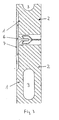
- Fig. 1
- ist ein horizontaler Schnitt durch den dem Mauerwerk abgewandten, die Hinterlüftung aufweisenden Teil eines erfindungsgemäßen Bauelements.
- Fig. 2
- ist ein senkrechter Schnitt durch den Hinterlüftungsteil des erfindungsgemäßen Bauelements.
- Fig. 3
- ist ein horizontaler Schnitt durch den Hinterlüftungsbereich zweier aneinander grenzender Bauelemente.
- Fig. 4
- ist ein senkrechter Schnitt durch zwei aneinander grenzende Bauelemente, die am Untergrund befestigt sind, wobei der Zwischenraum zwischen Untergrund und Bauelement mit Isolierstoffen ausgefüllt ist.
- Fig. 5
- ist ein horizontaler Schnitt durch zwei aneinander grenzende Bauelemente, die am Untergrund befestigt sind, wobei der Zwischenraum zwischen Untergrund und dem Bauelement mit Isolierstoffen ausgefüllt ist.
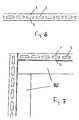
- Fig. 6
- zeigt wiederum einen Schnitt durch den Hinterlüftungsteil eines erfindungsgemäßen Bauelements.
- Fig. 7
- zeigt den Schnitt durch ein Eckelement mit Hinterlüftungsteilen und Mineralwolleplatten.
Claims (16)
- Vorgefertigtes Bauelement für aufgehende Wände, mitdadurch gekennzeichnet,einer Vorderwand (1) und einer Rückwand (2), zwischen denen senkrechte Entlüftungskanäle (3) verlaufen, die eine lichte Weite zwischen der Vorderwand (1) und der Rückwand (2) von mindestens 2 cm und durch senkrecht verlaufende Trennwände in Abständen von mindestens 2 cm und höchstens 15 cm voneinander getrennt sind,wobei zumindest die Rückwand (2) wasserdampfdurchlässig ist und die Vorderwand (1) aus einem Material besteht, welches geschraubt, verputzt, beklebt und genagelt werden kann,dass die Rückwand (2) verklebt ist mit Mineralwolleplatten (10), insbesondere mit Mineralwollelamellenplatten verklebt ist.
- Bauelement nach Anspruch 1, dadurch gekennzeichnet, dass die freiliegende, nicht mit der Rückwand (2) verklebte Rückseite der Mineralwolleplatten (10) mit einer dünnen abgebundenen Schicht Klebemörtel vorbeschichtet ist.
- Bauelement nach einem der Ansprüche 1 oder 2, dadurch gekennzeichnet, dass ein vorgefertigtes Eckelement aus zwei miteinander über Eck verklebten Bauelementen besteht, von denen eines ein nicht mit Mineralwolleplatten (10) hinterklebtes Teilstück aufweist, wobei diese Teilstück so breit ist wie die Dicke des Bauelements mit aufgeklebter Mineralwolleplatte (10).
- Bauelement nach einem der Ansprüche 1 bis 3, dadurch gekennzeichnet, dass die Vorderwand (1) im Bereich oberhalb der Trennwände flache Vertiefungen aufweist.
- Bauelement nach einem der Ansprüche 1 bis 4, dadurch gekennzeichnet, dass mindestens die Vorderwand (1) und die Rückwand (2) aus einem Material bestehen, welches ein abgebundenes kapillarfähiges Leichtbaumaterial ist.
- Bauelement nach einem der Ansprüche 1 bis 5, dadurch gekennzeichnet, dass die Vorderwand (1), die Rückwand (2) und die Trennwände aus dem gleichen Material bestehen.
- Bauelement nach einem der Ansprüche 1 bis 6, dadurch gekennzeichnet, dass die Ober- und Unterkante als Nut und Feder ausgebildet sind.
- Bauelement nach einem der Ansprüche 1 bis 7, dadurch gekennzeichnet, dass die Oberkante und Unterkante als asymmetrische Nut und Feder ausgebildet sind, wobei die Nut auf der Rückseite zusätzlichen Platz für eine Einhängung aufweist.
- Bauelement nach einem der Ansprüche 1 bis 5, dadurch gekennzeichnet, dass die Rückwand (2) aus stabilem Gewebe besteht, welches fest mit der Vorderwand (1) verbunden ist.
- Bauelement nach einem der Ansprüche 1 bis 9, dadurch gekennzeichnet, dass die Vorderwand an ihren seitlichen Kanten eine flache Vertiefung von 0,2 bis 0,5 cm Tiefe und 3 bis 6 cm Breite aufweist.
- Verfahren zur Herstellung von vorgefertigten Bauelementen nach einem der Ansprüche 1 bis 10,
dadurch gekennzeichnet,dass vorgefertigte Platten für die Vorderwand (1) und vorgefertigte Platten für die Rückwand (2) über vorgefertigte, die Trennwände bildende Stege fest miteinander verbunden werden, unddass die Rückwände (2) der vorgefertigten Bauelemente mit Hilfe eines Klebemörtels mit Mineralwolleplatten (10) verklebt werden. - Verfahren nach Anspruch 11, dadurch gekennzeichnet, dass zwei vorgefertigte Halbschalen miteinander verbunden werden.
- Verfahren nach Anspruch 11 oder 12, dadurch gekennzeichnet, dass Vorderwand (1), Rückwand (2) und Trennwände aus dem gleichen Material bestehen und im Strangpressverfahren in einem Stück gefertigt werden.
- Verfahren nach Anspruch 12, dadurch gekennzeichnet, dass Vorderwand (1), Rückwand (2) und Trennwände aus dem gleichen Material bestehen und dieses Material in nicht abgebundener, fließfähiger oder rieselfähiger Form in eine Presse eingegeben und verpresst wird, wobei die Entlüftungskanäle durch eingelegte, nach dem Pressen herausziehbare Stangen ausgebildet werden.
- Verfahren nach einem der Ansprüche 11 bis 14, dadurch gekennzeichnet, dass zumindest die Vorderwand (1) Holzspäne enthält.
- Verwendung von Bauelementen nach einem der Ansprüche 1 bis 10 zur Herstellung von hinterlüfteten aufgehenden Wänden.
Applications Claiming Priority (6)
| Application Number | Priority Date | Filing Date | Title |
|---|---|---|---|
| DE4407717 | 1994-03-08 | ||
| DE4407717 | 1994-03-08 | ||
| DE4422092 | 1994-06-24 | ||
| DE4422092 | 1994-06-24 | ||
| DE4442749 | 1994-12-01 | ||
| DE4442749 | 1994-12-01 |
Publications (3)
| Publication Number | Publication Date |
|---|---|
| EP0671517A2 EP0671517A2 (de) | 1995-09-13 |
| EP0671517A3 EP0671517A3 (de) | 1997-04-16 |
| EP0671517B1 true EP0671517B1 (de) | 2003-05-28 |
Family
ID=27206152
Family Applications (1)
| Application Number | Title | Priority Date | Filing Date |
|---|---|---|---|
| EP95103114A Expired - Lifetime EP0671517B1 (de) | 1994-03-08 | 1995-03-04 | Vorgefertigtes Bauelement, Verfahren zur Herstellung und Verwendung desselben |
Country Status (3)
| Country | Link |
|---|---|
| EP (1) | EP0671517B1 (de) |
| AT (1) | ATE241740T1 (de) |
| DE (1) | DE59510698D1 (de) |
Families Citing this family (1)
| Publication number | Priority date | Publication date | Assignee | Title |
|---|---|---|---|---|
| ES2163993B1 (es) * | 1999-09-13 | 2003-04-01 | Higon Rafael Vicente Sanchez | Tabique ligero prefabricado. |
Citations (1)
| Publication number | Priority date | Publication date | Assignee | Title |
|---|---|---|---|---|
| DE2856074A1 (de) * | 1978-12-23 | 1980-07-10 | Schunk Guenter Ing Grad | Doppelschaliges wandelement fuer eine nasszelle, z.b. baderaum |
Family Cites Families (5)
| Publication number | Priority date | Publication date | Assignee | Title |
|---|---|---|---|---|
| FR1052559A (fr) * | 1952-03-18 | 1954-01-26 | éléments de construction à rotules | |
| FR1180680A (fr) * | 1957-05-29 | 1959-06-08 | élément céramique standard de construction, orientable et de structure alvéolaire, pour incorporation à des parois en béton | |
| US4038798A (en) * | 1975-03-05 | 1977-08-02 | U-Forms International, Inc. | Composite permanent block-form for reinforced concrete construction and method of making same |
| FR2573110B1 (fr) * | 1984-11-09 | 1987-07-31 | Entreprises Const Soc Gen | Procede de construction d'un batiment a ossature legere avec parement exterieur, brique destinee a ce parement, paroi et ossature realisees selon ce procede. |
| AT388202B (de) * | 1984-11-27 | 1989-05-26 | Wienerberger Baustoffind Ag | Wand-bauplatte, wandverbau aus solchen wand-bauplatten, sowie verfahren und vorrichtungen zur herstellung eines solchen wandverbandes |
-
1995
- 1995-03-04 AT AT95103114T patent/ATE241740T1/de active
- 1995-03-04 EP EP95103114A patent/EP0671517B1/de not_active Expired - Lifetime
- 1995-03-04 DE DE59510698T patent/DE59510698D1/de not_active Expired - Lifetime
Patent Citations (1)
| Publication number | Priority date | Publication date | Assignee | Title |
|---|---|---|---|---|
| DE2856074A1 (de) * | 1978-12-23 | 1980-07-10 | Schunk Guenter Ing Grad | Doppelschaliges wandelement fuer eine nasszelle, z.b. baderaum |
Also Published As
| Publication number | Publication date |
|---|---|
| EP0671517A2 (de) | 1995-09-13 |
| EP0671517A3 (de) | 1997-04-16 |
| ATE241740T1 (de) | 2003-06-15 |
| DE59510698D1 (de) | 2003-07-03 |
Similar Documents
| Publication | Publication Date | Title |
|---|---|---|
| EP1343943B1 (de) | Platte für den innenausbau und trockenbau sowie verfahren zum erstellen von neuen wänden eines raumes oder zur verkleidung von vorhandenen flächen eines raumes | |
| EP0191144A2 (de) | Plattenförmiger Baukörper zur Erstellung und Verkleidung von Mauern, Wänden und Fassaden | |
| DE202007017751U1 (de) | Wärmedämmverbundsystem und vorgefertigtes Wärmedämmelement für ein solches System | |
| DE9410265U1 (de) | Mehrschichtige Wand in Holzrahmen-Bauweise, hieraus aufgebautes Holzrahmenbauteil, sowie hiermit errichtetes Haus, insbesondere Niedrigenergiehaus | |
| EP0396700B1 (de) | Befestigung von gegeständen an einer isolationsschicht von geringer mechanischer festigkeit | |
| AT403936B (de) | Wandelement | |
| EP0671517B1 (de) | Vorgefertigtes Bauelement, Verfahren zur Herstellung und Verwendung desselben | |
| AT17112U1 (de) | Wand- oder Dachbekleidungsbaueinheit, Wand- und Dachbekleidungssystem, insbesondere hinterlüftetes oder hinterlüftbares Wand- und Dachbekleidungssystem, sowie Wand, insbesondere Holzrahmenbauwand, und Dach und Verwendung der Wand- oder Dachbekleidungsbaueinheit | |
| EP1270837B1 (de) | Wärmedämmung von Wänden und/oder Decken von Gebäuden | |
| AT413410B (de) | Holzwandtafel | |
| DE4238134C2 (de) | Verfahren zur wärmedämmenden Verkleidung eines Gebäudes mit steinernen Platten und nach diesem Verfahren hergestellte Verkleidung | |
| EP1045945A1 (de) | Trägerelement zur befestigung von unterkonstruktionen | |
| DE19604571C2 (de) | Formkörper für die Außendämmung von Bauwerken | |
| AT409986B (de) | Vorsatzschale | |
| AT527214B1 (de) | Platte für den Trockenausbau | |
| DE19841294A1 (de) | Verputzelement als Verputzhilfe | |
| CH669629A5 (de) | ||
| DE102005016995B3 (de) | Außenwandelement in Holzrahmenkonstruktion | |
| EP0204015A1 (de) | Bausatz zur Herstellung einer wärmegedämmten Vorhangfassade | |
| DE29809317U1 (de) | Schalldämmende Innen- oder Außenwandbekleidung | |
| DE1930119A1 (de) | Gebaeudeflaechenverkleidung und Verfahren zu ihrer Herstellung | |
| DE2551597A1 (de) | Waermedaemmelemente mit aussenseitig angeordneten durchlueftungskanaelen fuer gebaeudeaussenwaende | |
| DE3244511A1 (de) | Verfahren zum verkleiden von fassaden und fassadenelement zur durchfuehrung des verfahrens | |
| DE2600372A1 (de) | Fassadenplatte | |
| CH720181B1 (de) | Laibungsverkleidungsplatte |
Legal Events
| Date | Code | Title | Description |
|---|---|---|---|
| PUAI | Public reference made under article 153(3) epc to a published international application that has entered the european phase |
Free format text: ORIGINAL CODE: 0009012 |
|
| AK | Designated contracting states |
Kind code of ref document: A2 Designated state(s): AT BE CH DE DK ES FR GB IE IT LI LU MC NL SE |
|
| PUAL | Search report despatched |
Free format text: ORIGINAL CODE: 0009013 |
|
| AK | Designated contracting states |
Kind code of ref document: A3 Designated state(s): AT BE CH DE DK ES FR GB IE IT LI LU MC NL SE |
|
| 17P | Request for examination filed |
Effective date: 19970531 |
|
| RAP1 | Party data changed (applicant data changed or rights of an application transferred) |
Owner name: MARMORIT GMBH |
|
| 17Q | First examination report despatched |
Effective date: 20020319 |
|
| GRAH | Despatch of communication of intention to grant a patent |
Free format text: ORIGINAL CODE: EPIDOS IGRA |
|
| GRAH | Despatch of communication of intention to grant a patent |
Free format text: ORIGINAL CODE: EPIDOS IGRA |
|
| GRAA | (expected) grant |
Free format text: ORIGINAL CODE: 0009210 |
|
| AK | Designated contracting states |
Designated state(s): AT BE CH DE DK ES FR GB IE IT LI LU MC NL SE |
|
| PG25 | Lapsed in a contracting state [announced via postgrant information from national office to epo] |
Ref country code: NL Free format text: LAPSE BECAUSE OF FAILURE TO SUBMIT A TRANSLATION OF THE DESCRIPTION OR TO PAY THE FEE WITHIN THE PRESCRIBED TIME-LIMIT Effective date: 20030528 Ref country code: IT Free format text: LAPSE BECAUSE OF FAILURE TO SUBMIT A TRANSLATION OF THE DESCRIPTION OR TO PAY THE FEE WITHIN THE PRESCRIBED TIME-LIMIT;WARNING: LAPSES OF ITALIAN PATENTS WITH EFFECTIVE DATE BEFORE 2007 MAY HAVE OCCURRED AT ANY TIME BEFORE 2007. THE CORRECT EFFECTIVE DATE MAY BE DIFFERENT FROM THE ONE RECORDED. Effective date: 20030528 Ref country code: IE Free format text: LAPSE BECAUSE OF FAILURE TO SUBMIT A TRANSLATION OF THE DESCRIPTION OR TO PAY THE FEE WITHIN THE PRESCRIBED TIME-LIMIT Effective date: 20030528 Ref country code: GB Free format text: LAPSE BECAUSE OF FAILURE TO SUBMIT A TRANSLATION OF THE DESCRIPTION OR TO PAY THE FEE WITHIN THE PRESCRIBED TIME-LIMIT Effective date: 20030528 Ref country code: FR Free format text: LAPSE BECAUSE OF FAILURE TO SUBMIT A TRANSLATION OF THE DESCRIPTION OR TO PAY THE FEE WITHIN THE PRESCRIBED TIME-LIMIT Effective date: 20030528 |
|
| REG | Reference to a national code |
Ref country code: GB Ref legal event code: FG4D Free format text: NOT ENGLISH |
|
| REG | Reference to a national code |
Ref country code: CH Ref legal event code: EP |
|
| REG | Reference to a national code |
Ref country code: IE Ref legal event code: FG4D Free format text: GERMAN |
|
| REF | Corresponds to: |
Ref document number: 59510698 Country of ref document: DE Date of ref document: 20030703 Kind code of ref document: P |
|
| PG25 | Lapsed in a contracting state [announced via postgrant information from national office to epo] |
Ref country code: SE Free format text: LAPSE BECAUSE OF FAILURE TO SUBMIT A TRANSLATION OF THE DESCRIPTION OR TO PAY THE FEE WITHIN THE PRESCRIBED TIME-LIMIT Effective date: 20030828 Ref country code: DK Free format text: LAPSE BECAUSE OF FAILURE TO SUBMIT A TRANSLATION OF THE DESCRIPTION OR TO PAY THE FEE WITHIN THE PRESCRIBED TIME-LIMIT Effective date: 20030828 |
|
| REG | Reference to a national code |
Ref country code: CH Ref legal event code: NV Representative=s name: HEPP WENGER & RYFFEL AG |
|
| PG25 | Lapsed in a contracting state [announced via postgrant information from national office to epo] |
Ref country code: ES Free format text: LAPSE BECAUSE OF FAILURE TO SUBMIT A TRANSLATION OF THE DESCRIPTION OR TO PAY THE FEE WITHIN THE PRESCRIBED TIME-LIMIT Effective date: 20030908 |
|
| NLV1 | Nl: lapsed or annulled due to failure to fulfill the requirements of art. 29p and 29m of the patents act | ||
| GBV | Gb: ep patent (uk) treated as always having been void in accordance with gb section 77(7)/1977 [no translation filed] |
Effective date: 20030528 |
|
| REG | Reference to a national code |
Ref country code: IE Ref legal event code: FD4D |
|
| PG25 | Lapsed in a contracting state [announced via postgrant information from national office to epo] |
Ref country code: LU Free format text: LAPSE BECAUSE OF NON-PAYMENT OF DUE FEES Effective date: 20040304 |
|
| PG25 | Lapsed in a contracting state [announced via postgrant information from national office to epo] |
Ref country code: MC Free format text: LAPSE BECAUSE OF NON-PAYMENT OF DUE FEES Effective date: 20040331 Ref country code: BE Free format text: LAPSE BECAUSE OF NON-PAYMENT OF DUE FEES Effective date: 20040331 |
|
| PLBE | No opposition filed within time limit |
Free format text: ORIGINAL CODE: 0009261 |
|
| STAA | Information on the status of an ep patent application or granted ep patent |
Free format text: STATUS: NO OPPOSITION FILED WITHIN TIME LIMIT |
|
| 26N | No opposition filed |
Effective date: 20040302 |
|
| EN | Fr: translation not filed | ||
| BERE | Be: lapsed |
Owner name: *MARMORIT G.M.B.H. Effective date: 20040331 |
|
| PGFP | Annual fee paid to national office [announced via postgrant information from national office to epo] |
Ref country code: CH Payment date: 20130319 Year of fee payment: 19 |
|
| PGFP | Annual fee paid to national office [announced via postgrant information from national office to epo] |
Ref country code: AT Payment date: 20130318 Year of fee payment: 19 |
|
| PGFP | Annual fee paid to national office [announced via postgrant information from national office to epo] |
Ref country code: DE Payment date: 20130528 Year of fee payment: 19 |
|
| REG | Reference to a national code |
Ref country code: DE Ref legal event code: R119 Ref document number: 59510698 Country of ref document: DE |
|
| REG | Reference to a national code |
Ref country code: CH Ref legal event code: PL |
|
| REG | Reference to a national code |
Ref country code: AT Ref legal event code: MM01 Ref document number: 241740 Country of ref document: AT Kind code of ref document: T Effective date: 20140304 |
|
| REG | Reference to a national code |
Ref country code: DE Ref legal event code: R119 Ref document number: 59510698 Country of ref document: DE Effective date: 20141001 |
|
| PG25 | Lapsed in a contracting state [announced via postgrant information from national office to epo] |
Ref country code: CH Free format text: LAPSE BECAUSE OF NON-PAYMENT OF DUE FEES Effective date: 20140331 Ref country code: LI Free format text: LAPSE BECAUSE OF NON-PAYMENT OF DUE FEES Effective date: 20140331 Ref country code: DE Free format text: LAPSE BECAUSE OF NON-PAYMENT OF DUE FEES Effective date: 20141001 |
|
| PG25 | Lapsed in a contracting state [announced via postgrant information from national office to epo] |
Ref country code: AT Free format text: LAPSE BECAUSE OF NON-PAYMENT OF DUE FEES Effective date: 20140304 |