EP0651799B1 - Fibrin binding domain polypeptides and uses and methods of producing same - Google Patents
Fibrin binding domain polypeptides and uses and methods of producing same Download PDFInfo
- Publication number
- EP0651799B1 EP0651799B1 EP91911888A EP91911888A EP0651799B1 EP 0651799 B1 EP0651799 B1 EP 0651799B1 EP 91911888 A EP91911888 A EP 91911888A EP 91911888 A EP91911888 A EP 91911888A EP 0651799 B1 EP0651799 B1 EP 0651799B1
- Authority
- EP
- European Patent Office
- Prior art keywords
- polypeptide
- fibrin
- fbd
- binding
- gln
- Prior art date
- Legal status (The legal status is an assumption and is not a legal conclusion. Google has not performed a legal analysis and makes no representation as to the accuracy of the status listed.)
- Expired - Lifetime
Links
Images












Classifications
-
- A—HUMAN NECESSITIES
- A61—MEDICAL OR VETERINARY SCIENCE; HYGIENE
- A61K—PREPARATIONS FOR MEDICAL, DENTAL OR TOILETRY PURPOSES
- A61K49/00—Preparations for testing in vivo
- A61K49/0004—Screening or testing of compounds for diagnosis of disorders, assessment of conditions, e.g. renal clearance, gastric emptying, testing for diabetes, allergy, rheuma, pancreas functions
- A61K49/0008—Screening agents using (non-human) animal models or transgenic animal models or chimeric hosts, e.g. Alzheimer disease animal model, transgenic model for heart failure
-
- A—HUMAN NECESSITIES
- A61—MEDICAL OR VETERINARY SCIENCE; HYGIENE
- A61K—PREPARATIONS FOR MEDICAL, DENTAL OR TOILETRY PURPOSES
- A61K47/00—Medicinal preparations characterised by the non-active ingredients used, e.g. carriers or inert additives; Targeting or modifying agents chemically bound to the active ingredient
- A61K47/50—Medicinal preparations characterised by the non-active ingredients used, e.g. carriers or inert additives; Targeting or modifying agents chemically bound to the active ingredient the non-active ingredient being chemically bound to the active ingredient, e.g. polymer-drug conjugates
- A61K47/51—Medicinal preparations characterised by the non-active ingredients used, e.g. carriers or inert additives; Targeting or modifying agents chemically bound to the active ingredient the non-active ingredient being chemically bound to the active ingredient, e.g. polymer-drug conjugates the non-active ingredient being a modifying agent
- A61K47/62—Medicinal preparations characterised by the non-active ingredients used, e.g. carriers or inert additives; Targeting or modifying agents chemically bound to the active ingredient the non-active ingredient being chemically bound to the active ingredient, e.g. polymer-drug conjugates the non-active ingredient being a modifying agent the modifying agent being a protein, peptide or polyamino acid
- A61K47/64—Drug-peptide, drug-protein or drug-polyamino acid conjugates, i.e. the modifying agent being a peptide, protein or polyamino acid which is covalently bonded or complexed to a therapeutically active agent
- A61K47/6415—Toxins or lectins, e.g. clostridial toxins or Pseudomonas exotoxins
-
- A—HUMAN NECESSITIES
- A61—MEDICAL OR VETERINARY SCIENCE; HYGIENE
- A61K—PREPARATIONS FOR MEDICAL, DENTAL OR TOILETRY PURPOSES
- A61K49/00—Preparations for testing in vivo
- A61K49/0002—General or multifunctional contrast agents, e.g. chelated agents
-
- A—HUMAN NECESSITIES
- A61—MEDICAL OR VETERINARY SCIENCE; HYGIENE
- A61K—PREPARATIONS FOR MEDICAL, DENTAL OR TOILETRY PURPOSES
- A61K49/00—Preparations for testing in vivo
- A61K49/0004—Screening or testing of compounds for diagnosis of disorders, assessment of conditions, e.g. renal clearance, gastric emptying, testing for diabetes, allergy, rheuma, pancreas functions
-
- A—HUMAN NECESSITIES
- A61—MEDICAL OR VETERINARY SCIENCE; HYGIENE
- A61K—PREPARATIONS FOR MEDICAL, DENTAL OR TOILETRY PURPOSES
- A61K51/00—Preparations containing radioactive substances for use in therapy or testing in vivo
- A61K51/02—Preparations containing radioactive substances for use in therapy or testing in vivo characterised by the carrier, i.e. characterised by the agent or material covalently linked or complexing the radioactive nucleus
- A61K51/04—Organic compounds
- A61K51/08—Peptides, e.g. proteins, carriers being peptides, polyamino acids, proteins
- A61K51/082—Peptides, e.g. proteins, carriers being peptides, polyamino acids, proteins the peptide being a RGD-containing peptide
-
- A—HUMAN NECESSITIES
- A61—MEDICAL OR VETERINARY SCIENCE; HYGIENE
- A61K—PREPARATIONS FOR MEDICAL, DENTAL OR TOILETRY PURPOSES
- A61K51/00—Preparations containing radioactive substances for use in therapy or testing in vivo
- A61K51/02—Preparations containing radioactive substances for use in therapy or testing in vivo characterised by the carrier, i.e. characterised by the agent or material covalently linked or complexing the radioactive nucleus
- A61K51/04—Organic compounds
- A61K51/08—Peptides, e.g. proteins, carriers being peptides, polyamino acids, proteins
- A61K51/088—Peptides, e.g. proteins, carriers being peptides, polyamino acids, proteins conjugates with carriers being peptides, polyamino acids or proteins
-
- A—HUMAN NECESSITIES
- A61—MEDICAL OR VETERINARY SCIENCE; HYGIENE
- A61M—DEVICES FOR INTRODUCING MEDIA INTO, OR ONTO, THE BODY; DEVICES FOR TRANSDUCING BODY MEDIA OR FOR TAKING MEDIA FROM THE BODY; DEVICES FOR PRODUCING OR ENDING SLEEP OR STUPOR
- A61M25/00—Catheters; Hollow probes
- A61M25/0043—Catheters; Hollow probes characterised by structural features
- A61M25/0045—Catheters; Hollow probes characterised by structural features multi-layered, e.g. coated
-
- C—CHEMISTRY; METALLURGY
- C07—ORGANIC CHEMISTRY
- C07K—PEPTIDES
- C07K1/00—General methods for the preparation of peptides, i.e. processes for the organic chemical preparation of peptides or proteins of any length
- C07K1/107—General methods for the preparation of peptides, i.e. processes for the organic chemical preparation of peptides or proteins of any length by chemical modification of precursor peptides
- C07K1/113—General methods for the preparation of peptides, i.e. processes for the organic chemical preparation of peptides or proteins of any length by chemical modification of precursor peptides without change of the primary structure
- C07K1/1133—General methods for the preparation of peptides, i.e. processes for the organic chemical preparation of peptides or proteins of any length by chemical modification of precursor peptides without change of the primary structure by redox-reactions involving cystein/cystin side chains
-
- C—CHEMISTRY; METALLURGY
- C07—ORGANIC CHEMISTRY
- C07K—PEPTIDES
- C07K14/00—Peptides having more than 20 amino acids; Gastrins; Somatostatins; Melanotropins; Derivatives thereof
- C07K14/195—Peptides having more than 20 amino acids; Gastrins; Somatostatins; Melanotropins; Derivatives thereof from bacteria
- C07K14/315—Peptides having more than 20 amino acids; Gastrins; Somatostatins; Melanotropins; Derivatives thereof from bacteria from Streptococcus (G), e.g. Enterococci
- C07K14/3153—Streptokinase
-
- C—CHEMISTRY; METALLURGY
- C07—ORGANIC CHEMISTRY
- C07K—PEPTIDES
- C07K14/00—Peptides having more than 20 amino acids; Gastrins; Somatostatins; Melanotropins; Derivatives thereof
- C07K14/435—Peptides having more than 20 amino acids; Gastrins; Somatostatins; Melanotropins; Derivatives thereof from animals; from humans
- C07K14/78—Connective tissue peptides, e.g. collagen, elastin, laminin, fibronectin, vitronectin or cold insoluble globulin [CIG]
-
- C—CHEMISTRY; METALLURGY
- C07—ORGANIC CHEMISTRY
- C07K—PEPTIDES
- C07K19/00—Hybrid peptides, i.e. peptides covalently bound to nucleic acids, or non-covalently bound protein-protein complexes
-
- C—CHEMISTRY; METALLURGY
- C07—ORGANIC CHEMISTRY
- C07K—PEPTIDES
- C07K7/00—Peptides having 5 to 20 amino acids in a fully defined sequence; Derivatives thereof
- C07K7/04—Linear peptides containing only normal peptide links
- C07K7/06—Linear peptides containing only normal peptide links having 5 to 11 amino acids
-
- A—HUMAN NECESSITIES
- A61—MEDICAL OR VETERINARY SCIENCE; HYGIENE
- A61K—PREPARATIONS FOR MEDICAL, DENTAL OR TOILETRY PURPOSES
- A61K2123/00—Preparations for testing in vivo
-
- A—HUMAN NECESSITIES
- A61—MEDICAL OR VETERINARY SCIENCE; HYGIENE
- A61K—PREPARATIONS FOR MEDICAL, DENTAL OR TOILETRY PURPOSES
- A61K38/00—Medicinal preparations containing peptides
-
- C—CHEMISTRY; METALLURGY
- C07—ORGANIC CHEMISTRY
- C07K—PEPTIDES
- C07K2319/00—Fusion polypeptide
-
- C—CHEMISTRY; METALLURGY
- C07—ORGANIC CHEMISTRY
- C07K—PEPTIDES
- C07K2319/00—Fusion polypeptide
- C07K2319/33—Fusion polypeptide fusions for targeting to specific cell types, e.g. tissue specific targeting, targeting of a bacterial subspecies
Definitions
- a probable mechanism is that the earliest lesions, fatty streaks, consisting of mixtures of T cells and monocyte-derived macrophages, form in the subendothelium followed by a secretion of various cytokines, which leads to a migration of smooth cells into the intima and their accumulation therein.
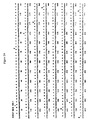
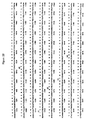
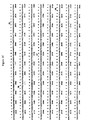
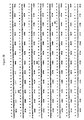
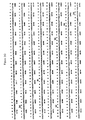
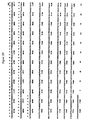
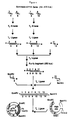
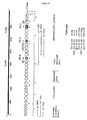
- Figure 4 The DNA fragment coding for amino acids 1 to 153 of the N-terminal domain of human FN was assembled from the 7 pairs of chemically synthesized oligomers shown in Figure 3 as follows:
- Binding of 3.0 x 10 6 PFU/ml of 125 I- S. aureus (1 CPM/3 PFU) to "Uno" bronchial plastic catheters (3 cm for each reaction, in duplicate) coated with FN was carried out as described in methods.
- competition reactions were performed, the bacteria and the added protein were preincubated at room temperature for 30 minutes and then added to the catheters for further incubation as described in the methods section.
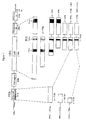
- FIG. 9 Recombinant polypeptides of fibronectin domains compared to full-length fibronectin
- This plasmid gave good expression of an approximately 45 kD polypeptide comprising the r12 kD fibrin binding domain and the 33 kD cell binding domain of fibronectin; this fused polypeptide was expressed under the control of the ⁇ promoter and the ⁇ -lactamase ribosomal binding site.
- Plasmid pFN 195-4 is a good expressor of the r31 kD fibrin binding domain fused to the sequence asp-gly-arg-gly-asp-ser (DGRGDS), under the control of the ⁇ promoter and the ⁇ -lactamase ribosomal binding site.
- DGRGDS sequence asp-gly-arg-gly-asp-ser
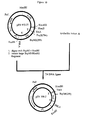
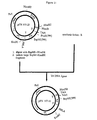
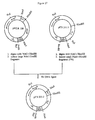
- FIG. 14 Construction of plasmid pFN 194-2 which expresses a fused 31 kD FBD-33 kD CBD polypeptide
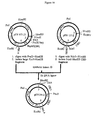
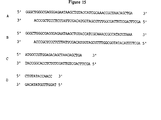
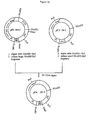
- the large PvuII-HindIII fragment produced by digestion of plasmid pFN 975-25 with PvuII and HindIII was isolated and ligated with T4 DNA ligase to a pair of linkers, D ( Figure 15) and then ligated to the cell binding domain (CBD) fragment obtained by digestion of plasmid pFN 137-2 (ATCC Accession No. 67910) with NdeI and HindIII; see Figure 12 for definition of the CBD domain.
- the resulting plasmid, designated pFN 194-2 was transformed to Escherichia coli strain A1645 and thence to Escherichia coli strain A4255.
- plasmid pFN 194-2 An example of such a high expressor is plasmid pFN 205-5 described in Figure 25.
- FIG. 20 Comparison of binding of 125 I-r12 kD to fresh and frozen fibrin clots
- fibrin clots were incubated with 0.15 ⁇ M 125 I-r12 kD in the presence or absence of 0.02 units/ml guinea-pig liver transglutaminase (Sigma). The binding to fibrin clots was measured as described in Example 6.
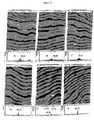
- Figure 21 Refolding and purification of the r20 kD polypeptide as monitored by elution profiles from a Superose 12 column (attached to a FPLC)
- Q-Sepharose bound polypeptides i.e., material which was separated from the purified r20 kD
- D Flow-through from the Q-Sepharose column
- E Flow-through from the Heparin-Sepharose column, i.e., material which was separated from the purified r20 kD
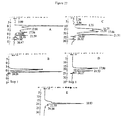
- Figure 22 Refolding and purification of the r12 kD polypeptide as monitored by elution profiles from a Superose 12 column (attached to a Waters HPLC system)
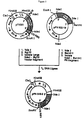
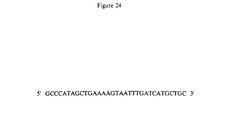
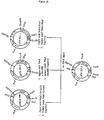
- the plasmid from a positive clone was designated pFN 208-13, and deposited in the ATCC in a host E.coli A4255 as Accession No. 68456. This plasmid expresses an 18.5 kD FBD polypeptide of the amino terminal end of the molecule under control of the ⁇ P L promotor and the ⁇ -lactamase ribosomal binding site.
- FIG. 25 Construction of Plasmid pFN 205-5
- the resulting plasmid designated 205-5 is a high expressor of a 64 kD polypeptide containing the 31 kD FBD fused to the 33 kD CBD under control of the ⁇ P L promotor, CII ribosomal binding site and containing the trp transcription terminator designated "ter" immediately downstream of the structural gene.
- This polypeptide has been purified and refolded essentially as described for a 31 kD FBD polypeptide disclosed in the above-referenced PCT publication.
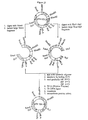
- the large fragment was isolated from the HindIII-StyI digest of plasmid pFN 949-2 (ATCC Accession No. 67831), and ligated with the small fragment isolated from the HindIII-StyI digest of plasmid pFN 196-2 (ATCC Accession No. 68328).
- the resulting plasmid designated pFN 201-3 expresses the 12 kD FBD polypeptide under control of the ⁇ P L promotor and CII ribosomal binding site.
- Plasmid pFN 203-2 is also known as pFN 203-2-3.
- Example 9 Preparation of labelled S. aureus and the endothelial cell (EC) binding assay are described in Example 9. The inhibitory effect of plasmatic and recombinant 31 kD, recombinant 18.5 kD, and recombinant 12 kD on binding of S. aureus to EC were tested.
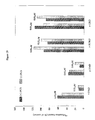
- This figure shows the specificity of different FBD polypeptides to a preformed fibrin clot as described in Example 9.
- the FBD polypeptides tested were the 31 kD, 20 kD, 18.5 kD and 12 kD. Additionally, a 45 kD fusion polypeptide of the 12 kD FBD fragment fused to the 33 kD CBD (Example 40) was tested.
- a 33 kD CBD polypeptide (coassigned PCT Publication No. WO/90/07577, pages 62-64) was included as a control. All of the FBD polypeptides tested, including the 45 kD fusion polypeptide, bound to a preformed fibrin clot in similar proportions (25-38% bound).
- the full length recombinant fibrin binding domain (the r31 kD polypeptide) described in this application comprises the first 262 amino acids of fibronectin with the sequence arg-ala-ala-val at the carboxy-terminus. An additional methionine residue is present at the amino terminus of all the final polypeptides and polypeptide fragments of the FBD.
- the plasmatic fibrin binding domain derived by tryptic digestion of plasma fibronectin comprises the first 259 amino acids of fibronectin, i.e. with arginine at the carboxy-terminus and the first encoded amino acid, glutamine, converted to a pyroglutamate residue.
- An example of a lytic Escherichia coli strain is A4048 which harbors plasmid pHG44 (ATCC No. 53217).
- F - strains are Escherichia coli S ⁇ 930 (F - ) harboring plasmid pMF 5534 deposited under ATCC No. 67703 and Escherichia coli W31100 (F - ) harboring plasmid pMFS 929 deposited under ATCC No. 67705.
- plasmids which may be used for production of FBD polypeptides are the following:
- the imageable marker used is a matter of choice to one skilled in the art. It is preferred that the marker be a radioactive isotope, an element which is opaque to X-rays, or a paramagnetic ion.
- markers used in the above methods for imaging a fibrin-containing substance are radioactive isotopes, elements which are opaque to X-rays, or paramagnetic ions. Most preferred markers are radioactive isotopes, such as indium-111, technetium-99m, iodine-123, iodine-125, iodine-131, krypton-81m, xenon-133, and gallium-67.
- the amino acid sequence of the various functional domains are determined by cleavage of the cDNA which encodes the domains with restriction enzymes, and do not necessarily correspond to the amino acid sequence of the domains as obtained and defined by proteolytic digestion of fibronectin.
- the invention provides an Escherichia coli cell containing the plasmid designated pFN 975-25 and wherein the cell is deposited under ATCC Accession No. 67832; an Escherichia coli cell containing the plasmid designated pFN 949-2 and wherein the cell is deposited under ATCC Accession No. 67831; and an Escherichia coli cell containing the plasmid designated pFN 196-2 and wherein the cell is deposited under ATCC Accession No. 68328; an Escherichia coli cell containing the plasmid designated pFN 203-2 and wherein the cell is deposited under ATCC Accession No. 68606; and an Escherichia coli cell containing the plasmid designated pFN 208-13 and wherein the cell is deposited under ATCC Accession No. 68456.
- the polypeptide so produced is the 12 kD polypeptide fragment of the fibrin binding domain as defined above.
- fused or “bound” encompasses polypeptides bound covalently, non-covalently, or conjugated.
- the polypeptides may be conjugated through other chemical moities including amino acid or polypeptide cross-linkers, which are standardly used in the art and are well-known to those skilled in the art to which the subject invention pertains.
- thrombi Numerous methods are known in the art for detection of thrombi, such as radioactive labeling (nuclear medicine use of isotopes), radio-opaque labeling (such as CAT scan), and Magnetic Resonance Imaging (MRI). Any of these labeling methods can be used in the method of the subject invention for detecting the thrombus. In each of these detection methods the polypeptide is used as a diagnostic agent for detecting the thrombus.
- Also provided is a method of refolding and reoxidizing the polypeptide as defined above having an amino acid sequence substantially present in the fibrin binding domain of naturally-occurring human fibronectin but lacking the disulfide bonds of naturally-occurring human fibronectin and being capable of binding to fibrin which comprises contacting the polypeptide with a thiol-containing compound in the presence or absence of a disulfide so as to refold and reoxidize the polypeptide.
- the thiol-containing compound is ⁇ -mercaptoethanol and the disulfide is produced in situ by introduction of air.
- the subject invention also provides a method for recovering a purified biologically active polypeptide as defined above having an amino acid sequence substantially present in the fibrin binding domain of naturally-occurring human fibronectin and being capable of binding to fibrin which comprises:
- the separating of the concentrated polypeptide in step (c) comprises chromatography, preferably Heparin-Sepharose chromatography.
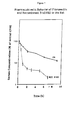
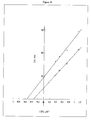
- rats were injected intravenously with r31 kD FBD labeled with 125 I and blood samples taken at intervals were added to Na citrate. Aliquots of the blood were treated as follows: either (a) treated with 20% TCA and the TCA insoluble counts were measured; or (b) incubated with preformed clot (using 20 ⁇ l whole blood from control rat); binding of the 125 I-31 kD FBD to preformed clot was measured under the conditions of the two-step Reaction II described above.
- the covalent binding of the fibrin binding domain of plasmatic fibronectin to fibrin in a clot is mainly due to the reaction of amino acid no. 3 of fibronectin (glutamine) with fibrin; this binding reaction is enzymatically controlled by the enzyme transglutaminase which specifically recognizes the amino acid sequence containing this glutamine residue.
- a solution containing 3 ⁇ M r31 kD FBD, 10 mM CaCl 2 , 0.015 units/ml transglutaminase and 60 ⁇ M 14 C putrescine (specific activity 100 mc/mmole) was incubated at 37°C for 5 hours.
- the amount of 14 C-putrescine incorporated into the 31 kD FBD was measured by TCA precipitation of an aliquot of this reaction solution and demonstrated the incorporation of an equivalent amount to 2.8-3 ⁇ M solution of 14 C-putrescine into the r31 kD protein; this indicates that more than 90% of the glutamine at position number 3 of the FBD covalently reacted with the 14 C-putrescine.
- transglutaminase greatly increased the binding of r31 kD polypeptide to the clot.
- the level of binding of the r20 kD and r12 kD polypeptides is still sufficiently high to demonstrate the potential of radiolabeled r20 kD and r12 kD polypeptides as radiopharmaceuticals for thrombus imaging. Similar experiments using the r31 kD-DGRGDS polypeptide (Example 4, D and Figure 13) showed that it binds at about the same level as the r31 kD.
- Fibrin clots were either used fresh or after storage at -70°C in a two-step Reaction II binding experiment with 125 I-r12 FBD, prepared as described in Example 5.
- the stainless steel coil-induced venous thrombus model in rats was used to study the uptake of labeled r31 kD, r20 kD and r12 kD FBD polypeptides.
- the model employed was as described by Maffrand et al. [Thrombosis and Haemostasis 59 : 225-230 (1988)].
- the three recombinant polypeptides were labeled with 125 I as described in Example 3 and utilized in the rat model as described in A above.
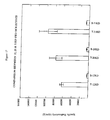
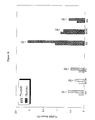
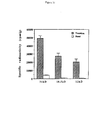
- the results, shown in Figure 17, indicate that each of the three molecules was specifically localized in the clots as compared to the blood, by comparing the specific radioactivities; the specific radioactivity of the clots appeared to be higher with the longer molecules than the shorter polypeptides (143,000, 78,500 and 63,000 cpm/g clot for the r31 kD, r20 kD and r12 kD polypeptides, respectively), but the differences were not statistically significant.
- a radiopharmaceutical for clinical imaging of atherosclerotic lesions and thrombi should yield positive results within the first few hours after injection (33).
- a shorter lived radiolabel could be used.
- indium-111 ( 111 In) or technetium-99m ( 99m Tc) may be more suitable as radiotracers, since they have half-life of 67 hours and 6 hours, respectively (32); another short-lived low energy label is iodine-123 ( 123 I) with a half-life of 13.3 hours.
- NMRI ultrasound and X-ray imaging with metal chelates
- U.S. Patent 4,647,447 antibody coupling with metal chelates is mentioned at column 7, line 42.
- Monoclonal antibodies labeled with polymeric paramagnetic chelates and their use in NMRI methods have also been described [Shreve, P. et al., Magnetic Resonance in Medicine 3 : 336-340 (1986) and Brady, T. et al. in Proceedings of the Society of Magnetic Resonance in Medicine, Second Annual Meeting, Soc. of Magnetic Resonance in Medicine, Inc., San Francisco, p 10, 1983 referenced by Koutcher, J. et al., J. Nucl. Med. 25 : 506-513 (1984)].
- Example 6 The biological activity of the r31 kD, r20 kD, r12 kD FBD polypeptides has been described in Example 6. This example will disclose additional results observed using the FBD polypeptide fragments; these are the 12 kD obtained as described in Examples 4 and 5, and the 18.5 kD constructed, oxidized/refolded, and purified as shown in Examples 4 and 10.
- the clot formation and FBD binding were performed as described below in a modified version of the two-step reaction II described in Example 6. To avoid artifacts of aggregation and precipitation of the FBD polypeptides, the final centrifugation step is eliminated and the clot is transferred to a new tube and then extensively washed.
- plates When indicated “+TG”, plates also contained transglutaminase at 0.02 U/ ml (Sigma). Experimental plates were incubated for 60 minutes at 37°C in a CO 2 incubator, washed 3 times with 1 ml “washing solution” (PBS containing 2 mM PMSF and 2 mM (EDTA). Bound radioactivity was then extracted by incubation for 60 min. with "Extraction solution” (washing solution containing 1% deoxycholate, 2 mM PMSF, 2 mM EDTA, 2 mM NME, and 2 mM iodoacetic acid). The solution is then transferred to tubes and the radioactivity measured in a gamma counter.
- washing solution PBS containing 2 mM PMSF and 2 mM (EDTA).
- the fibrin binding domain of authentic plasma derived FN has been shown to interact with high affinity to specific receptors on the surface of bacteria.
- the sites at which Staphylococcus aureus typically initiates infection are rich in FN, e.g. blood clots and subendothelium.
- exogenous FN enhances bacterial adhesion to these sites.
- FN binds to S. aureus through saturable, specific surface protein receptors. Scatchard analysis has revealed high affinity receptors with binding constant of 5 x 10 -9 M, and a range of 100-20,000 receptors per bacterium (19).
- FN receptors correlates with invasiveness and pathogenicity of the clinical isolates. Removal of the FN receptors from S. aureus by mechanical means, or by growth of the bacteria in the presence of antibiotics decreases their ability to adhere to FN.
- FN is a divalent molecule consisting of multiple functional domains with cell binding and collagen binding activities in addition to bacterial binding, it can anchor the bacteria to the wound via the various components of the extracellular matrix as well as via the FN receptor in tissue cells.
- Another approach to understanding the interaction between FN and S. aureus is through the inhibition of the binding of S. aureus to endothelial cells by the FBD polypeptide fragments.
- the mixture was incubated for 2 hours at 20°C while rocking.
- the amount of binding was assayed by removing 100 ⁇ l of the incubation mixture and layering on top of 0.5 ml PBS layered on 3 ml 10% Percoll-0.15 M NaCl in a 5 ml siliconized tube. This was then centrifuged at 1,350 x g (4,000 rpm in a SW bucket rotor) for 15 minutes at 20°C. The supernatant was aspirated and the pellet assayed for radioactivity.
- Plastic vials were coated with 0.3 ml of 50 ⁇ g/ ml FN, or 1% BSA.
- the tubes were incubated with shaking at 4°C overnight. The tubes were then washed with 5 ml PBS three times. Then 0.3 ml of 1% BSA in PBS was added and the tubes were further incubated with shaking for 2-3 hours at 20°C (for blocking free sites).
- the bacteria (4 x 10 6 pfu/ ml, 3 pfu/cpm) were added to the vials at concentrations indicated in the figure legends.
- the final volume of the assay mix was 0.3 ml PBS.
- the mix was slowly agitated at 4°C for 90-120 minutes.
- S. aureus SA113 (ATCC Accession No. 35556) were grown in Tryptic Soy Broth (Difco Laboratories, U.S.A.) at 37° using a 1 l fermentor culture. Bacteria were harvested in the middle of the logarithmic phase when optical density reached 2.30 OD (at 660 nm). The bacterial pellet was resuspended in 500 ml of PBS containing 5 mM PMSF and washed 3 times. The cells were then suspended in 100 ml PBS with 1 mM PMSF and 5 mM NEM (N-Ethyl maleimide, Sigma E-3876), heat-inactivated at 88°C for 20 min.
- NEM N-Ethyl maleimide
- the cells were maintained at 37°C and 5.5% CO 2 in 150 ml tissue culture flasks (Falcon).
- This increased binding of 125 I-rFBD to S. aureus as compared to 125 I-FN binding to S. aureus can be attributed to a higher affinity of a monovalent domain in comparison to bivalent multidomain of intact plasma derived FN.
- rFBD r31 kD
- Table C summarizes and compares the activities of various FBD polypeptide fragments as described above. Comparison of Activities and Binding Specificity of Various FBD Polypeptide Fragments Activity 31 kD 18.5 kD 12 kD Fibrin Binding High High High Binding to Vascular Components High Low Low Bacterial Binding Yes No No Inhibition of Binding of S. aureus to Endothelial Cells Yes No No No
- the recombinant FBD proteins - r31 kD ("5 fingers”), 18.5 kD (a more authentic version of the "3 fingers” than the previously described 20 kD) and r12 kD (“2 fingers”) - are expressed in E. coli and refolded/reoxidized, before being purified to homogeneity (>98% purity).
- the refolding/reoxidation processes used for the full 31 kD FBD polypeptide (5-fingered) and for the shorter 12 kD and 18.5 kD FBD polypeptide fragments (2- and 3-fingered) are different and have been described above in Examples 2 and 5.
- Example 5 The method of Example 5 has been found to be applicable to all 2- and 3-fingered FBD proteins, that have so far been refolded, but not to the 5-fingered protein, the 31 kD, even when the reduction (followed by reoxidation) is performed on purified plasma-derived 31 kD, i.e., "opening" and refolding the protein.
- This procedure has recently been improved without affecting the principle of the refolding process, and the improved procedure has been found applicable to the 12 kD, 18.5 kD, and 20 kD polypeptides, and to the 45 kD FBD-CBD hybrid polypeptide (12 kD-33 kD) but not to the 31 kD polypeptide.
- the process is essentially as described in Example 5.
- the following description relates to the 12 kD polypeptide and similar results were obtained for the 18.5 kD FBD polypeptide and 45 kD FBD-CBD hybrid polypeptides; these polypeptides were expressed by plasmids pFN 203-2 ( Figure 27), pFN 208-13 ( Figure 23) and plasmid pFN 202-5 ( Figure 12), respectively.
- the bacterial cake was produced as described in Example 2 by fermentation of E. coli strain A4255 harboring plasmid pFN 203-2 (as described in Figure 27).
- the FBD polypeptide fragments produced by the methods of this application were evaluated and compared in a series of characterization tests by the following methods known in the art.
- Eppendorf tubes containing frozen 125 I-FBD are allowed to thaw at room temperature, and then mixed by vortexing. Two 5 ⁇ l aliquots are removed for radioactivity monitoring.
- high specific activity 125 I-FBD is used, dilution in siliconized tubes with high salt buffer (0.6 M NaCl- 20 mM, NaHCO 3 pH 8-9) should be carried out before counting. The stock solution is then centrifuged at top speed in an Eppendorf centrifuge and the supernatant removed to another siliconized tube. Two 5 ⁇ l aliquots are counted again. The differences between the radioactivity obtained before and after centrifugation represent the "percent precipitation".
- the reaction is carried out in 300 ⁇ l of a 150 mM NaCl-20 mM NaHCO 3 , pH 8.0, containing also: 0.1x Tyrode's buffer; 0.6% BSA; 5 mM CaCl 2 ; 0.15 ⁇ M 125 I-FBD; 6 ⁇ l Transglutaminase (0.02U/ ml) - see Section 12.
- FBD proteins contain an extra methionine at the amino terminus, and instead of the pyroglutamate residue, which is the blocked N-terminus of the p31 kD (obtained by post-translational modification from the coded Gln), their N-terminal Met is followed by a Gln residue.
- the positive identification of FBD proteins was also confirmed by Western blot analysis of the gels - developed with anti-20 kD. The 45 kD was identified by developing its blots with both anti-20 kD and anti-33 kD of the cell binding domain.
- Table E provides actual measured values for the FBD polypeptides assayed. Characterization Parameters for the FBD proteins METHOD PARAMETERS 1. SDS-PAGE ⁇ ME molecular weight ( cf . markers); purity & homogeneity 2. " -ME molecular weight ( cf . markers); purity & homogeneity 3. Gel filt. (Superose 12) retention time; half-height bandwidth 4. UV spectroscopy absorption coeffic.- ⁇ max -1%.;absorbance ratio ⁇ max / ⁇ min 5. Intrinsic fluorescence specific intensity (I/prot. conc.); ⁇ max 6. Amino acid composition residue number - equivalence to theoretical value 7.
- Simple and efficient fibrin-directed thrombolytic agents are a major goal of the pharmaceutical industry.
- Our approach for the development of such a drug is based on the observation that the N-terminal fibrin binding domain of fibronectin (FBD) can be specifically cross-linked to fibrin clots by Factor XIIIa. Since newly formed thrombi are the only environment which is enriched in activated Factor XIII, FBD may display preferential binding to new over old thrombi and become an ultimate targeting vehicle. We therefore generated, by chemical cross-linking, chimeric FBD-Streptokinase conjugates and analyzed their activity in clot dissolution.
- BBD N-terminal fibrin binding domain of fibronectin
- TPA Tissue plasminogen activator
- SK Streptokinase
- TPA and SK both degrade fibrin, but they differ in their mode of action.
- TPA exhibits fibrin - selective plasminogen activation.
- the selectivity of TPA is due to the presence of fibrin binding sites at the amino terminal region of the molecule.
- TPA binds to fibrin with a K d of 0.16 ⁇ M. When bound to fibrin, its K m for the process of plasminogen activation decreases from 83 ⁇ M to 0.18 ⁇ M resulting in an efficient enzymatic conversion of plasminogen to plasmin.
- SK interacts with plasminogen to form an activation complex capable of catalyzing the formation of plasmin. This interaction is not dependent on fibrin binding.
- the activated SK-plasminogen complex in the blood stream may catalyze a systemic conversion of circulating plasminogen to plasmin.
- the activated plasmin is preferentially inhibited by ⁇ 2 -antiplasmin. Once the inhibitor capacity is exhausted, free fibrinogen, fibrin and some other plasma proteins are degraded by plasmin. The resulting fibrinogenolysis causes disruption of the normal coagulation mechanisms, increasing thereby the risk of hemorrhage.
- TPA and SK were recently compared for their therapeutic efficiency in several large scale human clinical trials. According to the accumulated data SK is the agent of choice for most patients (Scrip No. 1597, pages 22-23, March 8, 1991).
- SK is the agent of choice for most patients (Scrip No. 1597, pages 22-23, March 8, 1991).
- Both chemical cross-linking and recombinant DNA methods are used to design the desired molecules.
- Several chimeric plasminogen activator molecules have been constructed containing various high affinity fibrin binding domains of several plasma-derived proteins or anti-fibrin monoclonal antibodies bound to the catalytic domain of TPA. These molecules are being analyzed by several pharmaceutical companies for their therapeutic efficacy.
- FBD polypeptide fragments of the FN (12 kD, 18.5 kD, 20 kD and 31 kD). These polypeptides have been studied in vitro and in vivo for their ability to become covalently bound to fibrin clots and thrombi in the presence of factor XIIIa (Example 6, 9, 13).
- Factor XIIIa Factor XIIIa
- FBD polypeptides and fragments spanning the amino terminal region of FN were derivatized with N-succinimidyl-3-(2-pyridyldithio) propionate (SPDP) - a heterobifunctional cross-linker.
- SPDP N-succinimidyl-3-(2-pyridyldithio) propionate
- SPDP reacts at alkaline pH with primary amines introducing 2-pyridyl- disulfide groups into the protein.
- the number of cross-linker groups per FBD molecule was calculated.
- the plasmatic 31 kD FBD molecule very poor reaction yields were obtained as it tended to precipitate under the conditions of the chemical modification.
- Further experiments were performed with the recombinant 12 kD FBD molecule produced by plasmid pFN 196-2 ( Figure 10). Approximately 2 residues of cross-linker were found to be introduced per each 12 kD FBD molecule.
- the calculated number of pyridyl-disulfide and thiol groups on each of the FBD and SK molecules is about 2.
- the conjugation mixture thus formed contained mostly the desired 1:1 hybrid.
- the cross-linked FBD-SK complex purified by Heparin-Sepharose chromatography, was compared to native SK using the following criteria:
- Applicants additionally envisage construction of a chimera FBD-SK polypeptide encoded by a recombinant plasmid.
- Example 7 The model employed is essentially that described in Example 7. Recombinant 12 kD-, 18.5 kD- and 31 kD-FBD polypeptide fragments were labelled with 111 In by the DTPA method (Example 8).
- the labelled materials (specific activity approx. 5x10 6 cpm/ ⁇ g) were administered intravenously (5x10 6 cpm/rat) into coil- bearing rats (Example 7) 5h after insertion of the coils.
- the coils bearing the thrombi were removed and counted 24h after administration of the label.
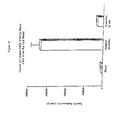
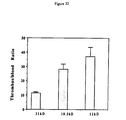
- Figure 31 presents the results of the specific radioactivity in the clots and blood
- Figure 32 presents the respective thrombus to blood ratios. As shown, high thrombus specific radioactivity values were obtained with the three compounds.
- the initial plasma-derived gel that contains both fibrin and fibronectin, is readily invaded by fibroblasts and serves hemostatic and adhesive functions, providing a provisional matrix for cell migration and a reservoir of chemotactic and growth factors ("wound hormones").
- the fibrin extravascular gel which rapidly forms a lattice, incorporates fibronectin. It has been shown that the fibroblasts in vivo attach to the fibrin lattice primarily via fibronectin (Grinnell, F. et al.
- Interference reflection microscopy of cells spread on the 75kD CBD alone, showed only amorphous 'grey' patches and spots (which, from electron microscopy - EM - of ventral membrane replicates, are known to be associated with clathrin-based structures), but incorporation of FBD (recombinant or plasma-derived) as co-substrate induced formation of clearly-defined focal adhesion structures, visualized in IRM as dense black streaks (the density of color showing closer contact of the ventral surface to the substrate). IRM/EM correlations showed that these tight, ordered adhesions corresponded to the termini of cytoskeletal stress fibers.
- the spreading assay was performed with NRK cells, subcultured for 18 hours before being detached by 0.1mg/ml TPCK-trypsin (Sigma Chemical Co.) and resuspended in Ca 2+ -containing Eagle's minimum essential medium (EMEM) for 20 min at 37°. These cells were obtained in a single-cell suspension by gentle sucking into a 5ml syringe fitted with a hypodermic needle, followed by 3 washes with EMEM containing 2% w/v ovalbumin. The spreading of the cells was monitored by resuspending the washed NRK cells on the coverslip with the protein substrate at a density of 1x10 4 cells/cm 2 .
- the biological activity was tested with in vitro by binding of the 111 In-labeled DTPA-modified FBD to preformed clots and in vivo in the steel coil-induced venous thrombi model in rats.
Landscapes
- Health & Medical Sciences (AREA)
- Chemical & Material Sciences (AREA)
- Life Sciences & Earth Sciences (AREA)
- General Health & Medical Sciences (AREA)
- Proteomics, Peptides & Aminoacids (AREA)
- Organic Chemistry (AREA)
- Medicinal Chemistry (AREA)
- Veterinary Medicine (AREA)
- Public Health (AREA)
- Animal Behavior & Ethology (AREA)
- Biochemistry (AREA)
- Biophysics (AREA)
- Epidemiology (AREA)
- Molecular Biology (AREA)
- Genetics & Genomics (AREA)
- Engineering & Computer Science (AREA)
- Toxicology (AREA)
- Gastroenterology & Hepatology (AREA)
- Pharmacology & Pharmacy (AREA)
- Biomedical Technology (AREA)
- Bioinformatics & Cheminformatics (AREA)
- Urology & Nephrology (AREA)
- Zoology (AREA)
- Physics & Mathematics (AREA)
- Diabetes (AREA)
- Endocrinology (AREA)
- Optics & Photonics (AREA)
- Pathology (AREA)
- Rheumatology (AREA)
- Chemical Kinetics & Catalysis (AREA)
- Heart & Thoracic Surgery (AREA)
- Anesthesiology (AREA)
- General Chemical & Material Sciences (AREA)
- Analytical Chemistry (AREA)
- Hematology (AREA)
- Pulmonology (AREA)
- Peptides Or Proteins (AREA)
- Preparation Of Compounds By Using Micro-Organisms (AREA)
- Medicines That Contain Protein Lipid Enzymes And Other Medicines (AREA)
- Machine Translation (AREA)
Applications Claiming Priority (3)
| Application Number | Priority Date | Filing Date | Title |
|---|---|---|---|
| US526397 | 1990-05-21 | ||
| US07/526,397 US5270030A (en) | 1988-12-29 | 1990-05-21 | Fibrin binding domain polypeptide and method of producing |
| PCT/US1991/003584 WO1991017765A1 (en) | 1990-05-21 | 1991-05-21 | Fibrin binding domain polypeptides and uses and methods of producing same |
Publications (3)
| Publication Number | Publication Date |
|---|---|
| EP0651799A4 EP0651799A4 (en) | 1993-10-05 |
| EP0651799A1 EP0651799A1 (en) | 1995-05-10 |
| EP0651799B1 true EP0651799B1 (en) | 1999-08-18 |
Family
ID=24097174
Family Applications (1)
| Application Number | Title | Priority Date | Filing Date |
|---|---|---|---|
| EP91911888A Expired - Lifetime EP0651799B1 (en) | 1990-05-21 | 1991-05-21 | Fibrin binding domain polypeptides and uses and methods of producing same |
Country Status (17)
| Country | Link |
|---|---|
| US (4) | US5270030A (enExample) |
| EP (1) | EP0651799B1 (enExample) |
| JP (1) | JP3419772B2 (enExample) |
| AT (1) | ATE183545T1 (enExample) |
| AU (1) | AU660618B2 (enExample) |
| CA (1) | CA2083271C (enExample) |
| DE (1) | DE69131539T2 (enExample) |
| DK (1) | DK0651799T3 (enExample) |
| ES (1) | ES2137928T3 (enExample) |
| FI (1) | FI108298B (enExample) |
| GR (1) | GR3031708T3 (enExample) |
| HU (1) | HU216302B (enExample) |
| IL (1) | IL98197A0 (enExample) |
| NO (1) | NO310559B1 (enExample) |
| NZ (1) | NZ238208A (enExample) |
| RU (1) | RU2109750C1 (enExample) |
| WO (1) | WO1991017765A1 (enExample) |
Families Citing this family (94)
| Publication number | Priority date | Publication date | Assignee | Title |
|---|---|---|---|---|
| US5972890A (en) * | 1988-05-02 | 1999-10-26 | New England Deaconess Hospital Corporation | Synthetic peptides for arterial imaging |
| US5679320A (en) * | 1988-12-29 | 1997-10-21 | Bio-Technology General Corp. | Fibrin binding domain polypeptides and uses and methods of producing same |
| US7087722B1 (en) * | 1988-12-29 | 2006-08-08 | Savient Pharmaceuticals, Inc. | Fibrin binding domain polypeptides and uses and methods of producing same |
| US5270030A (en) * | 1988-12-29 | 1993-12-14 | Bio-Technology General Corp. | Fibrin binding domain polypeptide and method of producing |
| FI924964L (fi) * | 1990-05-04 | 1992-11-03 | Isis Pharmaceuticals Inc | Modulering av genexpression genom stoerande inverkan pao sekundaerstrukturen hos rna |
| US5792742A (en) * | 1991-06-14 | 1998-08-11 | New York University | Fibrin-binding peptide fragments of fibronectin |
| WO1993020228A1 (fr) * | 1992-03-31 | 1993-10-14 | Toray Industries, Inc. | Nouvelle proteine physiologiquement active et promoteur de la croissance des cellules souches hemopoietiques |
| US5968476A (en) * | 1992-05-21 | 1999-10-19 | Diatide, Inc. | Technetium-99m labeled peptides for thrombus imaging |
| DK145092D0 (enExample) * | 1992-12-03 | 1992-12-03 | Novo Nordisk As | |
| US5750088A (en) | 1993-03-30 | 1998-05-12 | The Dupont Merck Pharmaceutical Company | Stable hydrazones linked to a peptide moiety as reagents for the preparation of radiopharmaceuticals |
| US5879657A (en) * | 1993-03-30 | 1999-03-09 | The Dupont Merck Pharmaceutical Company | Radiolabeled platelet GPIIb/IIIa receptor antagonists as imaging agents for the diagnosis of thromboembolic disorders |
| US6218529B1 (en) * | 1995-07-31 | 2001-04-17 | Urocor, Inc. | Biomarkers and targets for diagnosis, prognosis and management of prostate, breast and bladder cancer |
| ES2252785T3 (es) * | 1996-05-16 | 2006-05-16 | THE TEXAS A&M UNIVERSITY SYSTEM | Composiciones proteinicas fijadoras de colageno y metodos de utilizacion. |
| US20030176663A1 (en) * | 1998-05-11 | 2003-09-18 | Eidgenossische Technische Hochscule | Specific binding molecules for scintigraphy |
| WO1999060018A1 (en) * | 1998-05-15 | 1999-11-25 | Nycomed Amersham Plc | Labelled glutamine and lysine analogues |
| IN190822B (enExample) | 1998-12-24 | 2003-08-23 | Council Scient Ind Res | |
| US6808698B1 (en) | 1999-03-26 | 2004-10-26 | Bristol-Myers Squibb Pharma Company | Method for localization of blood clots |
| US6426145B1 (en) | 1999-05-20 | 2002-07-30 | Scimed Life Systems, Inc. | Radiopaque compositions for visualization of medical devices |
| US6254852B1 (en) | 1999-07-16 | 2001-07-03 | Dupont Pharmaceuticals Company | Porous inorganic targeted ultrasound contrast agents |
| US6685914B1 (en) | 1999-09-13 | 2004-02-03 | Bristol-Myers Squibb Pharma Company | Macrocyclic chelants for metallopharmaceuticals |
| WO2001062800A1 (en) * | 2000-02-24 | 2001-08-30 | Eidgenössische Technische Hochschule Zürich | Antibody specific for the ed-b domain of fibronectin, conjugates comprising said antibody, and their use for the detection and treatment of angiogenesis |
| YU17503A (sh) * | 2000-09-07 | 2006-05-25 | Schering Aktiengesellschaft | Receptor oblasti (ii) edb-fibronektina |
| AU2002213003A1 (en) * | 2000-10-03 | 2002-04-15 | The Board Of Trustees Of The University Of Arkansas | Method for detecting and excising nonpalpable lesions |
| US20040121314A1 (en) * | 2002-12-06 | 2004-06-24 | Ecker David J. | Methods for rapid detection and identification of bioagents in containers |
| US20040121313A1 (en) | 2002-12-06 | 2004-06-24 | Ecker David J. | Methods for rapid detection and identification of bioagents in organs for transplantation |
| US20030027135A1 (en) | 2001-03-02 | 2003-02-06 | Ecker David J. | Method for rapid detection and identification of bioagents |
| US7226739B2 (en) | 2001-03-02 | 2007-06-05 | Isis Pharmaceuticals, Inc | Methods for rapid detection and identification of bioagents in epidemiological and forensic investigations |
| US7666588B2 (en) | 2001-03-02 | 2010-02-23 | Ibis Biosciences, Inc. | Methods for rapid forensic analysis of mitochondrial DNA and characterization of mitochondrial DNA heteroplasmy |
| US20020169288A1 (en) * | 2001-03-15 | 2002-11-14 | Magnus Hook | Collagen-binding adhesin from staphylococcus epidermidis and method of use |
| US8073627B2 (en) | 2001-06-26 | 2011-12-06 | Ibis Biosciences, Inc. | System for indentification of pathogens |
| US7217510B2 (en) | 2001-06-26 | 2007-05-15 | Isis Pharmaceuticals, Inc. | Methods for providing bacterial bioagent characterizing information |
| US20030224476A1 (en) * | 2002-03-01 | 2003-12-04 | Szu-Yi Chou | Method of producing transglutaminase reactive compound |
| EP1578399A4 (en) * | 2002-12-06 | 2007-11-28 | Isis Pharmaceuticals Inc | Methods for rapid identification of pathogens in humans and animals |
| US8046171B2 (en) | 2003-04-18 | 2011-10-25 | Ibis Biosciences, Inc. | Methods and apparatus for genetic evaluation |
| US8057993B2 (en) | 2003-04-26 | 2011-11-15 | Ibis Biosciences, Inc. | Methods for identification of coronaviruses |
| US8158354B2 (en) | 2003-05-13 | 2012-04-17 | Ibis Biosciences, Inc. | Methods for rapid purification of nucleic acids for subsequent analysis by mass spectrometry by solution capture |
| US7964343B2 (en) | 2003-05-13 | 2011-06-21 | Ibis Biosciences, Inc. | Method for rapid purification of nucleic acids for subsequent analysis by mass spectrometry by solution capture |
| US7319149B2 (en) * | 2003-06-13 | 2008-01-15 | Bristol-Myers Squibb Pharma Company | Chelants and macrocyclic metal complex radiopharmaceuticals thereof |
| US7317104B2 (en) | 2003-06-13 | 2008-01-08 | Bristol-Myers Squibb Pharma Company | Chelants and macrocyclic metal complex radiopharmaceuticals thereof |
| US8097416B2 (en) | 2003-09-11 | 2012-01-17 | Ibis Biosciences, Inc. | Methods for identification of sepsis-causing bacteria |
| US8546082B2 (en) | 2003-09-11 | 2013-10-01 | Ibis Biosciences, Inc. | Methods for identification of sepsis-causing bacteria |
| US8288523B2 (en) | 2003-09-11 | 2012-10-16 | Ibis Biosciences, Inc. | Compositions for use in identification of bacteria |
| US20050197310A1 (en) | 2004-01-30 | 2005-09-08 | Orna Mor | Oligoribonucleotides and methods of use thereof for treatment of fibrotic conditions and other diseases |
| US7666592B2 (en) | 2004-02-18 | 2010-02-23 | Ibis Biosciences, Inc. | Methods for concurrent identification and quantification of an unknown bioagent |
| US8119336B2 (en) | 2004-03-03 | 2012-02-21 | Ibis Biosciences, Inc. | Compositions for use in identification of alphaviruses |
| JP4810533B2 (ja) | 2004-05-24 | 2011-11-09 | アイビス バイオサイエンシズ インコーポレイティッド | ディジタルスレショルド化による選択的イオン濾過作用を用いた質量分光測定法 |
| US20050266411A1 (en) | 2004-05-25 | 2005-12-01 | Hofstadler Steven A | Methods for rapid forensic analysis of mitochondrial DNA |
| US7811753B2 (en) | 2004-07-14 | 2010-10-12 | Ibis Biosciences, Inc. | Methods for repairing degraded DNA |
| DK2319925T3 (da) | 2004-08-16 | 2018-11-05 | Quark Pharmaceuticals Inc | Terapeutiske anvendelser af RTP801-hæmmere |
| WO2006135400A2 (en) | 2004-08-24 | 2006-12-21 | Isis Pharmaceuticals, Inc. | Methods for rapid identification of recombinant organisms |
| PL1799269T3 (pl) | 2004-09-28 | 2017-01-31 | Quark Pharmaceuticals, Inc. | Oligorybonukleotydy i sposoby ich zastosowania do leczenia łysienia, ostrej niewydolności nerek i innych chorób |
| US8182992B2 (en) | 2005-03-03 | 2012-05-22 | Ibis Biosciences, Inc. | Compositions for use in identification of adventitious viruses |
| US8084207B2 (en) | 2005-03-03 | 2011-12-27 | Ibis Bioscience, Inc. | Compositions for use in identification of papillomavirus |
| ATE483825T1 (de) * | 2005-04-13 | 2010-10-15 | Ibis Biosciences Inc | Zusammensetzungen für die identifizierung von adenoviren |
| US7414254B2 (en) * | 2005-06-28 | 2008-08-19 | United Pharmacy Partners, Inc. | Tungsten pig for radio-pharmaceuticals |
| AU2006272776B2 (en) | 2005-07-21 | 2012-01-19 | Ibis Biosciences, Inc. | Methods for rapid identification and quantitation of nucleic acid variants |
| UY30097A1 (es) | 2006-01-20 | 2007-08-31 | Atugen Ag | Usos terapeuticos de inhibidores de rtp801 |
| JP5420412B2 (ja) | 2006-09-14 | 2014-02-19 | アイビス バイオサイエンシズ インコーポレイティッド | 病原体の同定のための標的全ゲノム増幅方法 |
| JP2010507387A (ja) | 2006-10-25 | 2010-03-11 | クアーク・ファーマスーティカルス、インコーポレイテッド | 新規のsiRNAおよびその使用方法 |
| WO2008104002A2 (en) | 2007-02-23 | 2008-08-28 | Ibis Biosciences, Inc. | Methods for rapid forensic dna analysis |
| WO2008151023A2 (en) | 2007-06-01 | 2008-12-11 | Ibis Biosciences, Inc. | Methods and compositions for multiple displacement amplification of nucleic acids |
| CN101815521B (zh) | 2007-10-03 | 2014-12-10 | 夸克制药公司 | 新siRNA结构 |
| US8253725B2 (en) * | 2007-12-28 | 2012-08-28 | St. Jude Medical, Atrial Fibrillation Division, Inc. | Method and system for generating surface models of geometric structures |
| JP5524189B2 (ja) | 2008-06-06 | 2014-06-18 | クォーク ファーマシューティカルズ インコーポレーティッド | 耳障害治療のための組成物および方法 |
| EP2349549B1 (en) | 2008-09-16 | 2012-07-18 | Ibis Biosciences, Inc. | Mixing cartridges, mixing stations, and related kits, and system |
| EP2347254A2 (en) | 2008-09-16 | 2011-07-27 | Ibis Biosciences, Inc. | Sample processing units, systems, and related methods |
| WO2010033625A1 (en) | 2008-09-16 | 2010-03-25 | Ibis Biosciences, Inc. | Microplate handling systems and related computer program products and methods |
| US8864821B2 (en) * | 2008-11-26 | 2014-10-21 | Visen Medical, Inc. | Methods and compositions for identifying subjects at risk of developing stent thrombosis |
| WO2010080452A2 (en) | 2008-12-18 | 2010-07-15 | Quark Pharmaceuticals, Inc. | siRNA COMPOUNDS AND METHODS OF USE THEREOF |
| WO2010093943A1 (en) | 2009-02-12 | 2010-08-19 | Ibis Biosciences, Inc. | Ionization probe assemblies |
| GB0905328D0 (en) * | 2009-03-27 | 2009-05-13 | Ge Healthcare Ltd | Indole derivatives |
| WO2011008972A1 (en) | 2009-07-17 | 2011-01-20 | Ibis Biosciences, Inc. | Systems for bioagent identification |
| WO2011008971A1 (en) | 2009-07-17 | 2011-01-20 | Ibis Biosciences, Inc. | Lift and mount apparatus |
| EP2957641B1 (en) | 2009-10-15 | 2017-05-17 | Ibis Biosciences, Inc. | Multiple displacement amplification |
| KR20120102630A (ko) | 2009-11-26 | 2012-09-18 | 쿠아크 파마수티칼스 인코퍼레이티드 | 말단 치환체를 포함하는 에스아이 알엔에이 화합물 |
| EP2510098B1 (en) | 2009-12-09 | 2015-02-11 | Quark Pharmaceuticals, Inc. | Methods and compositions for treating diseases, disorders or injury of the cns |
| WO2011084193A1 (en) | 2010-01-07 | 2011-07-14 | Quark Pharmaceuticals, Inc. | Oligonucleotide compounds comprising non-nucleotide overhangs |
| RU2012153703A (ru) | 2010-06-24 | 2014-07-27 | Кварк Фармасьютикалс, Инк. | Соединения двухцепочечных рнк к rhoa и их применение |
| CA2818024C (en) | 2010-12-06 | 2019-09-24 | Quark Pharmaceuticals, Inc. | Double stranded oligonucleotide compounds comprising positional modifications |
| JP6132775B2 (ja) | 2011-03-03 | 2017-05-24 | クォーク ファーマシューティカルズ インコーポレーティッドQuark Pharmaceuticals,Inc. | Toll様受容体経路のオリゴヌクレオチド修飾因子 |
| US9796979B2 (en) | 2011-03-03 | 2017-10-24 | Quark Pharmaceuticals Inc. | Oligonucleotide modulators of the toll-like receptor pathway |
| BR112014010769B1 (pt) | 2011-11-03 | 2021-08-03 | Quark Pharmaceuticals, Inc | Uso de um composto de rna de fita dupla para preparar um medicamento para tratar doença de ménière |
| WO2013070821A1 (en) | 2011-11-08 | 2013-05-16 | Quark Pharmaceuticals, Inc. | Methods and compositions for treating diseases, disorders or injury of the nervous system |
| CA2858630A1 (en) | 2012-01-12 | 2013-07-18 | Quark Pharmaceuticals, Inc. | Combination therapy for treating hearing and balance disorders |
| WO2014043291A1 (en) | 2012-09-12 | 2014-03-20 | Quark Pharmaceuticals, Inc. | Double-stranded nucleic acid compounds |
| ES2872349T3 (es) | 2012-09-12 | 2021-11-02 | Quark Pharmaceuticals Inc | Moléculas de oligonucleótidos bicatenarios para DDIT4 y métodos de uso de las mismas |
| AU2013315524B2 (en) | 2012-09-12 | 2019-01-31 | Quark Pharmaceuticals, Inc. | Double-stranded oligonucleotide molecules to p53 and methods of use thereof |
| WO2015015498A1 (en) | 2013-07-31 | 2015-02-05 | Qbi Enterprises Ltd. | Methods of use of sphingolipid polyalkylamine oligonucleotide compounds |
| EP3027222A1 (en) | 2013-07-31 | 2016-06-08 | QBI Enterprises Ltd. | Sphingolipid-polyalkylamine-oligonucleotide compounds |
| WO2016054079A1 (en) | 2014-09-29 | 2016-04-07 | Zyomed Corp. | Systems and methods for blood glucose and other analyte detection and measurement using collision computing |
| US9554738B1 (en) | 2016-03-30 | 2017-01-31 | Zyomed Corp. | Spectroscopic tomography systems and methods for noninvasive detection and measurement of analytes using collision computing |
| EP3671511B1 (en) | 2018-12-19 | 2022-07-06 | Rohde & Schwarz GmbH & Co. KG | Communication system and method |
| EP3922720A1 (en) | 2020-06-09 | 2021-12-15 | Universidad de Murcia | Therapy to prevent adverse cardiac remodeling following an acute myocardial infarction |
| ES2894201B2 (es) * | 2020-08-05 | 2022-09-29 | Fundacion Para La Investig Biomedica Del Hospital Gregorio Maranon | Compuestos radioactivos basados en proteinas selectivas de bacterias para la deteccion no invasiva de focos infecciosos |
Family Cites Families (13)
| Publication number | Priority date | Publication date | Assignee | Title |
|---|---|---|---|---|
| US4315906A (en) * | 1979-05-21 | 1982-02-16 | New England Nuclear Corporation | Cold insoluble globulin, its purification and use |
| US4455290A (en) * | 1981-04-02 | 1984-06-19 | Research Corporation | Inhibition of fibrin polymerization by a peptide isolated from fibrin Fragment D1 |
| US4663146A (en) * | 1983-07-29 | 1987-05-05 | Codon Genetic Engineering Laboratories | Methods and compositions for the diagnosis of bloodclots using plasminogen activator |
| US4587122A (en) * | 1985-04-23 | 1986-05-06 | The Green Cross Corporation | Fibronectin-dextran-drug complex and method of preparation thereof |
| GB8516421D0 (en) * | 1985-06-28 | 1985-07-31 | Biotechnology Interface Ltd | Fibronectins |
| US4734362A (en) * | 1986-02-03 | 1988-03-29 | Cambridge Bioscience Corporation | Process for purifying recombinant proteins, and products thereof |
| WO1989000051A1 (en) * | 1987-07-07 | 1989-01-12 | Cytrx Biopool Ltd. | Fibrin-binding compound and method |
| US4839464A (en) * | 1987-08-25 | 1989-06-13 | Regents Of The University Of Minnesota | Polypeptides with fibronectin activity |
| JP2561122B2 (ja) * | 1988-04-13 | 1996-12-04 | 寳酒造株式会社 | 機能性ポリペプチド |
| JP2561131B2 (ja) * | 1988-06-30 | 1996-12-04 | 寳酒造株式会社 | 細胞接着活性ポリペプチド |
| US5270030A (en) * | 1988-12-29 | 1993-12-14 | Bio-Technology General Corp. | Fibrin binding domain polypeptide and method of producing |
| KR910700339A (ko) * | 1988-12-29 | 1991-03-14 | 보겔, 티그바 | 인체 피브로넥틴의 폴리펩티드 유사체의 클로닝과 제조및 이 폴리펩티드 유사체의 이용방법 |
| US5026537A (en) * | 1989-04-06 | 1991-06-25 | Centocor, Inc. | Methods for imaging atherosclerotic plaque |
-
1990
- 1990-05-21 US US07/526,397 patent/US5270030A/en not_active Expired - Lifetime
-
1991
- 1991-05-21 JP JP51119791A patent/JP3419772B2/ja not_active Expired - Lifetime
- 1991-05-21 WO PCT/US1991/003584 patent/WO1991017765A1/en not_active Ceased
- 1991-05-21 NZ NZ238208A patent/NZ238208A/xx not_active IP Right Cessation
- 1991-05-21 DE DE69131539T patent/DE69131539T2/de not_active Expired - Lifetime
- 1991-05-21 IL IL98197A patent/IL98197A0/xx unknown
- 1991-05-21 EP EP91911888A patent/EP0651799B1/en not_active Expired - Lifetime
- 1991-05-21 AU AU80760/91A patent/AU660618B2/en not_active Expired
- 1991-05-21 CA CA002083271A patent/CA2083271C/en not_active Expired - Lifetime
- 1991-05-21 DK DK91911888T patent/DK0651799T3/da active
- 1991-05-21 RU RU92016360/13A patent/RU2109750C1/ru active
- 1991-05-21 ES ES91911888T patent/ES2137928T3/es not_active Expired - Lifetime
- 1991-05-21 AT AT91911888T patent/ATE183545T1/de not_active IP Right Cessation
- 1991-05-21 HU HU9203516A patent/HU216302B/hu unknown
-
1992
- 1992-11-13 NO NO19924405A patent/NO310559B1/no not_active IP Right Cessation
- 1992-11-20 FI FI925296A patent/FI108298B/fi active
-
1993
- 1993-05-04 US US08/058,241 patent/US5455158A/en not_active Expired - Lifetime
-
1995
- 1995-03-24 US US08/409,750 patent/US5965383A/en not_active Expired - Lifetime
-
1997
- 1997-08-11 US US08/909,140 patent/US6121426A/en not_active Expired - Fee Related
-
1999
- 1999-11-03 GR GR990402800T patent/GR3031708T3/el unknown
Also Published As
| Publication number | Publication date |
|---|---|
| JPH05508766A (ja) | 1993-12-09 |
| AU8076091A (en) | 1991-12-10 |
| HU9203516D0 (en) | 1993-04-28 |
| HU216302B (hu) | 1999-06-28 |
| FI925296A0 (fi) | 1992-11-20 |
| IL98197A0 (en) | 1992-06-21 |
| RU2109750C1 (ru) | 1998-04-27 |
| DE69131539D1 (de) | 1999-09-23 |
| EP0651799A4 (en) | 1993-10-05 |
| US5965383A (en) | 1999-10-12 |
| HK1013255A1 (en) | 1999-08-20 |
| EP0651799A1 (en) | 1995-05-10 |
| ATE183545T1 (de) | 1999-09-15 |
| NO310559B1 (no) | 2001-07-23 |
| US6121426A (en) | 2000-09-19 |
| ES2137928T3 (es) | 2000-01-01 |
| AU660618B2 (en) | 1995-07-06 |
| DE69131539T2 (de) | 2000-05-04 |
| CA2083271A1 (en) | 1991-11-22 |
| NZ238208A (en) | 1993-01-27 |
| NO924405L (no) | 1993-01-13 |
| DK0651799T3 (da) | 2000-03-06 |
| JP3419772B2 (ja) | 2003-06-23 |
| FI925296A7 (fi) | 1992-11-20 |
| NO924405D0 (no) | 1992-11-13 |
| US5270030A (en) | 1993-12-14 |
| FI108298B (fi) | 2001-12-31 |
| US5455158A (en) | 1995-10-03 |
| GR3031708T3 (en) | 2000-02-29 |
| HUT66189A (en) | 1994-10-28 |
| WO1991017765A1 (en) | 1991-11-28 |
| CA2083271C (en) | 2002-04-09 |
Similar Documents
| Publication | Publication Date | Title |
|---|---|---|
| AU660618B2 (en) | Fibrin binding domain polypeptides and uses and methods of producing same | |
| US5011686A (en) | Thrombus specific conjugates | |
| JP2801236B2 (ja) | フィブリン結合性蛋白質を用いる血餅の診断方法 | |
| US4916070A (en) | Fibrin-specific antibodies and method of screening for the antibodies | |
| US5632986A (en) | Phospholipid-targeted thrombolytic agents | |
| JP3991086B2 (ja) | 造影剤として有用なフィブリン結合部分 | |
| JP2002505338A (ja) | 生物学的に活性な分子の血清半減期を増加するための方法 | |
| US5869616A (en) | Fibrin binding domain polypeptides and uses and methods of producing same | |
| WO1992019279A1 (en) | Phospholipid-targeted thrombolytic agents | |
| WO1989012680A1 (en) | USE OF MODIFIED tPA TO DETECT BLOOD CLOTS | |
| US7087722B1 (en) | Fibrin binding domain polypeptides and uses and methods of producing same | |
| HK1013255B (en) | Fibrin binding domain polypeptides and uses and methods of producing same | |
| KR100219115B1 (ko) | 피브린 결합 도메인 폴리펩티드, 그의 용도 및 그의 제조방법 | |
| JP3095771B2 (ja) | ヒトフィブロネクチンポリペプチド類似体のクローニング及び製造並びにこのようなポリペプチド類似体の使用法 | |
| JPS6360938A (ja) | 修飾組織型プラスミノ−ゲン活性化因子およびその製造方法 | |
| Ezov et al. | Recombinant polypeptides derived from the fibrin binding domain of fibronectin are potential agents for the imaging of blood clots | |
| IE911587A1 (en) | Clot imaging agents and use thereof | |
| AU6164290A (en) | Atherosclerotic plaque specific antigens, antibodies thereto, and uses thereof | |
| WO1992013557A1 (en) | Stabilized antibody fragments | |
| JPS63267734A (ja) | 腫瘍および炎症用診断薬 | |
| JPS63269980A (ja) | 新規化合物、その製法及びそれを含む医薬組成物 | |
| HK1168544A (en) | Human protein scaffold with controlled serum pharmacokinetics | |
| Leung | Abbreviated name: 111 In-DOTA-FibPep Synonym: Agent category: Peptide | |
| Leung | tetraacetic acid-Ac-RWQPCPAESWT-Cha-CWDPGGGK-NH2 (FibPep) |
Legal Events
| Date | Code | Title | Description |
|---|---|---|---|
| PUAI | Public reference made under article 153(3) epc to a published international application that has entered the european phase |
Free format text: ORIGINAL CODE: 0009012 |
|
| 17P | Request for examination filed |
Effective date: 19921221 |
|
| AK | Designated contracting states |
Kind code of ref document: A1 Designated state(s): AT BE CH DE DK ES FR GB GR IT LI LU NL SE |
|
| 17Q | First examination report despatched |
Effective date: 19960911 |
|
| GRAG | Despatch of communication of intention to grant |
Free format text: ORIGINAL CODE: EPIDOS AGRA |
|
| GRAG | Despatch of communication of intention to grant |
Free format text: ORIGINAL CODE: EPIDOS AGRA |
|
| GRAG | Despatch of communication of intention to grant |
Free format text: ORIGINAL CODE: EPIDOS AGRA |
|
| GRAH | Despatch of communication of intention to grant a patent |
Free format text: ORIGINAL CODE: EPIDOS IGRA |
|
| RAP1 | Party data changed (applicant data changed or rights of an application transferred) |
Owner name: BIO-TECHNOLOGY GENERAL CORPORATION |
|
| GRAH | Despatch of communication of intention to grant a patent |
Free format text: ORIGINAL CODE: EPIDOS IGRA |
|
| GRAA | (expected) grant |
Free format text: ORIGINAL CODE: 0009210 |
|
| AK | Designated contracting states |
Kind code of ref document: B1 Designated state(s): AT BE CH DE DK ES FR GB GR IT LI LU NL SE |
|
| REF | Corresponds to: |
Ref document number: 183545 Country of ref document: AT Date of ref document: 19990915 Kind code of ref document: T |
|
| REG | Reference to a national code |
Ref country code: CH Ref legal event code: EP |
|
| REF | Corresponds to: |
Ref document number: 69131539 Country of ref document: DE Date of ref document: 19990923 |
|
| ET | Fr: translation filed | ||
| ITF | It: translation for a ep patent filed | ||
| REG | Reference to a national code |
Ref country code: CH Ref legal event code: NV Representative=s name: E. BLUM & CO. PATENTANWAELTE |
|
| REG | Reference to a national code |
Ref country code: ES Ref legal event code: FG2A Ref document number: 2137928 Country of ref document: ES Kind code of ref document: T3 |
|
| REG | Reference to a national code |
Ref country code: DK Ref legal event code: T3 |
|
| PLBE | No opposition filed within time limit |
Free format text: ORIGINAL CODE: 0009261 |
|
| STAA | Information on the status of an ep patent application or granted ep patent |
Free format text: STATUS: NO OPPOSITION FILED WITHIN TIME LIMIT |
|
| 26N | No opposition filed | ||
| REG | Reference to a national code |
Ref country code: GB Ref legal event code: IF02 |
|
| REG | Reference to a national code |
Ref country code: CH Ref legal event code: PFA Owner name: SAVIENT PHARMACEUTICALS, INC. Free format text: BIO-TECHNOLOGY GENERAL CORPORATION#70 WOOD AVENUE SOUTH#ISELIN, NJ 08830 (US) -TRANSFER TO- SAVIENT PHARMACEUTICALS, INC.#ONE TOWER CENTER BOULEVARD 14TH FLOOR#EAST BRUNSWICK NEW JERSEY 08816 (US) |
|
| BECA | Be: change of holder's address |
Owner name: *SAVIENT PHARMACEUTICALS INC.ONE TOWER CENTER BOUL Effective date: 20040315 |
|
| NLT1 | Nl: modifications of names registered in virtue of documents presented to the patent office pursuant to art. 16 a, paragraph 1 |
Owner name: SAVIENT PHARMACEUTICALS, INC. |
|
| REG | Reference to a national code |
Ref country code: FR Ref legal event code: CD |
|
| REG | Reference to a national code |
Ref country code: CH Ref legal event code: PFA Owner name: SAVIENT PHARMACEUTICALS, INC. Free format text: SAVIENT PHARMACEUTICALS, INC.#ONE TOWER CENTER BOULEVARD 14TH FLOOR#EAST BRUNSWICK NEW JERSEY 08816 (US) -TRANSFER TO- SAVIENT PHARMACEUTICALS, INC.#ONE TOWER CENTER BOULEVARD 14TH FLOOR#EAST BRUNSWICK NEW JERSEY 08816 (US) |
|
| PGFP | Annual fee paid to national office [announced via postgrant information from national office to epo] |
Ref country code: FR Payment date: 20100611 Year of fee payment: 20 Ref country code: DK Payment date: 20100512 Year of fee payment: 20 Ref country code: LU Payment date: 20100518 Year of fee payment: 20 Ref country code: ES Payment date: 20100525 Year of fee payment: 20 |
|
| PGFP | Annual fee paid to national office [announced via postgrant information from national office to epo] |
Ref country code: AT Payment date: 20100513 Year of fee payment: 20 Ref country code: DE Payment date: 20100521 Year of fee payment: 20 Ref country code: IT Payment date: 20100524 Year of fee payment: 20 Ref country code: NL Payment date: 20100514 Year of fee payment: 20 |
|
| PGFP | Annual fee paid to national office [announced via postgrant information from national office to epo] |
Ref country code: CH Payment date: 20100525 Year of fee payment: 20 Ref country code: BE Payment date: 20100517 Year of fee payment: 20 |
|
| PGFP | Annual fee paid to national office [announced via postgrant information from national office to epo] |
Ref country code: GB Payment date: 20100519 Year of fee payment: 20 Ref country code: SE Payment date: 20100517 Year of fee payment: 20 |
|
| PGFP | Annual fee paid to national office [announced via postgrant information from national office to epo] |
Ref country code: GR Payment date: 20100528 Year of fee payment: 20 |
|
| REG | Reference to a national code |
Ref country code: DE Ref legal event code: R071 Ref document number: 69131539 Country of ref document: DE |
|
| BE20 | Be: patent expired |
Owner name: *SAVIENT PHARMACEUTICALS INC. Effective date: 20110521 |
|
| REG | Reference to a national code |
Ref country code: CH Ref legal event code: PL |
|
| REG | Reference to a national code |
Ref country code: NL Ref legal event code: V4 Effective date: 20110521 |
|
| REG | Reference to a national code |
Ref country code: DK Ref legal event code: EUP |
|
| REG | Reference to a national code |
Ref country code: GB Ref legal event code: PE20 Expiry date: 20110520 |
|
| REG | Reference to a national code |
Ref country code: SE Ref legal event code: EUG |
|
| PG25 | Lapsed in a contracting state [announced via postgrant information from national office to epo] |
Ref country code: GB Free format text: LAPSE BECAUSE OF EXPIRATION OF PROTECTION Effective date: 20110520 Ref country code: NL Free format text: LAPSE BECAUSE OF EXPIRATION OF PROTECTION Effective date: 20110521 |
|
| REG | Reference to a national code |
Ref country code: ES Ref legal event code: FD2A Effective date: 20120206 |
|
| PG25 | Lapsed in a contracting state [announced via postgrant information from national office to epo] |
Ref country code: ES Free format text: LAPSE BECAUSE OF EXPIRATION OF PROTECTION Effective date: 20110522 |
|
| PG25 | Lapsed in a contracting state [announced via postgrant information from national office to epo] |
Ref country code: DE Free format text: LAPSE BECAUSE OF EXPIRATION OF PROTECTION Effective date: 20110522 |