EP0540164B1 - Disc recording and reproducing apparatus and disc - Google Patents
Disc recording and reproducing apparatus and disc Download PDFInfo
- Publication number
- EP0540164B1 EP0540164B1 EP92308522A EP92308522A EP0540164B1 EP 0540164 B1 EP0540164 B1 EP 0540164B1 EP 92308522 A EP92308522 A EP 92308522A EP 92308522 A EP92308522 A EP 92308522A EP 0540164 B1 EP0540164 B1 EP 0540164B1
- Authority
- EP
- European Patent Office
- Prior art keywords
- data
- recording
- recorded
- region
- disc
- Prior art date
- Legal status (The legal status is an assumption and is not a legal conclusion. Google has not performed a legal analysis and makes no representation as to the accuracy of the status listed.)
- Expired - Lifetime
Links
Images



Classifications
-
- G—PHYSICS
- G11—INFORMATION STORAGE
- G11B—INFORMATION STORAGE BASED ON RELATIVE MOVEMENT BETWEEN RECORD CARRIER AND TRANSDUCER
- G11B27/00—Editing; Indexing; Addressing; Timing or synchronising; Monitoring; Measuring tape travel
- G11B27/10—Indexing; Addressing; Timing or synchronising; Measuring tape travel
- G11B27/19—Indexing; Addressing; Timing or synchronising; Measuring tape travel by using information detectable on the record carrier
- G11B27/28—Indexing; Addressing; Timing or synchronising; Measuring tape travel by using information detectable on the record carrier by using information signals recorded by the same method as the main recording
- G11B27/32—Indexing; Addressing; Timing or synchronising; Measuring tape travel by using information detectable on the record carrier by using information signals recorded by the same method as the main recording on separate auxiliary tracks of the same or an auxiliary record carrier
- G11B27/327—Table of contents
- G11B27/329—Table of contents on a disc [VTOC]
-
- G—PHYSICS
- G11—INFORMATION STORAGE
- G11B—INFORMATION STORAGE BASED ON RELATIVE MOVEMENT BETWEEN RECORD CARRIER AND TRANSDUCER
- G11B20/00—Signal processing not specific to the method of recording or reproducing; Circuits therefor
- G11B20/00007—Time or data compression or expansion
-
- G—PHYSICS
- G11—INFORMATION STORAGE
- G11B—INFORMATION STORAGE BASED ON RELATIVE MOVEMENT BETWEEN RECORD CARRIER AND TRANSDUCER
- G11B27/00—Editing; Indexing; Addressing; Timing or synchronising; Monitoring; Measuring tape travel
- G11B27/02—Editing, e.g. varying the order of information signals recorded on, or reproduced from, record carriers
- G11B27/031—Electronic editing of digitised analogue information signals, e.g. audio or video signals
- G11B27/036—Insert-editing
-
- G—PHYSICS
- G11—INFORMATION STORAGE
- G11B—INFORMATION STORAGE BASED ON RELATIVE MOVEMENT BETWEEN RECORD CARRIER AND TRANSDUCER
- G11B27/00—Editing; Indexing; Addressing; Timing or synchronising; Monitoring; Measuring tape travel
- G11B27/10—Indexing; Addressing; Timing or synchronising; Measuring tape travel
- G11B27/102—Programmed access in sequence to addressed parts of tracks of operating record carriers
- G11B27/105—Programmed access in sequence to addressed parts of tracks of operating record carriers of operating discs
-
- G—PHYSICS
- G11—INFORMATION STORAGE
- G11B—INFORMATION STORAGE BASED ON RELATIVE MOVEMENT BETWEEN RECORD CARRIER AND TRANSDUCER
- G11B27/00—Editing; Indexing; Addressing; Timing or synchronising; Monitoring; Measuring tape travel
- G11B27/10—Indexing; Addressing; Timing or synchronising; Measuring tape travel
- G11B27/11—Indexing; Addressing; Timing or synchronising; Measuring tape travel by using information not detectable on the record carrier
-
- G—PHYSICS
- G11—INFORMATION STORAGE
- G11B—INFORMATION STORAGE BASED ON RELATIVE MOVEMENT BETWEEN RECORD CARRIER AND TRANSDUCER
- G11B27/00—Editing; Indexing; Addressing; Timing or synchronising; Monitoring; Measuring tape travel
- G11B27/10—Indexing; Addressing; Timing or synchronising; Measuring tape travel
- G11B27/19—Indexing; Addressing; Timing or synchronising; Measuring tape travel by using information detectable on the record carrier
- G11B27/28—Indexing; Addressing; Timing or synchronising; Measuring tape travel by using information detectable on the record carrier by using information signals recorded by the same method as the main recording
- G11B27/30—Indexing; Addressing; Timing or synchronising; Measuring tape travel by using information detectable on the record carrier by using information signals recorded by the same method as the main recording on the same track as the main recording
- G11B27/3027—Indexing; Addressing; Timing or synchronising; Measuring tape travel by using information detectable on the record carrier by using information signals recorded by the same method as the main recording on the same track as the main recording used signal is digitally coded
- G11B27/3063—Subcodes
-
- G—PHYSICS
- G11—INFORMATION STORAGE
- G11B—INFORMATION STORAGE BASED ON RELATIVE MOVEMENT BETWEEN RECORD CARRIER AND TRANSDUCER
- G11B20/00—Signal processing not specific to the method of recording or reproducing; Circuits therefor
- G11B20/10—Digital recording or reproducing
- G11B20/12—Formatting, e.g. arrangement of data block or words on the record carriers
- G11B2020/1264—Formatting, e.g. arrangement of data block or words on the record carriers wherein the formatting concerns a specific kind of data
- G11B2020/1265—Control data, system data or management information, i.e. data used to access or process user data
- G11B2020/1277—Control data, system data or management information, i.e. data used to access or process user data for managing gaps between two recordings, e.g. control data in linking areas, run-in or run-out fields, guard or buffer zones
-
- G—PHYSICS
- G11—INFORMATION STORAGE
- G11B—INFORMATION STORAGE BASED ON RELATIVE MOVEMENT BETWEEN RECORD CARRIER AND TRANSDUCER
- G11B2220/00—Record carriers by type
- G11B2220/20—Disc-shaped record carriers
- G11B2220/21—Disc-shaped record carriers characterised in that the disc is of read-only, rewritable, or recordable type
- G11B2220/211—Discs having both read-only and rewritable or recordable areas containing application data; Partial ROM media
-
- G—PHYSICS
- G11—INFORMATION STORAGE
- G11B—INFORMATION STORAGE BASED ON RELATIVE MOVEMENT BETWEEN RECORD CARRIER AND TRANSDUCER
- G11B2220/00—Record carriers by type
- G11B2220/20—Disc-shaped record carriers
- G11B2220/25—Disc-shaped record carriers characterised in that the disc is based on a specific recording technology
- G11B2220/2525—Magneto-optical [MO] discs
- G11B2220/2529—Mini-discs
-
- G—PHYSICS
- G11—INFORMATION STORAGE
- G11B—INFORMATION STORAGE BASED ON RELATIVE MOVEMENT BETWEEN RECORD CARRIER AND TRANSDUCER
- G11B2220/00—Record carriers by type
- G11B2220/60—Solid state media
- G11B2220/65—Solid state media wherein solid state memory is used for storing indexing information or metadata
-
- G—PHYSICS
- G11—INFORMATION STORAGE
- G11B—INFORMATION STORAGE BASED ON RELATIVE MOVEMENT BETWEEN RECORD CARRIER AND TRANSDUCER
- G11B27/00—Editing; Indexing; Addressing; Timing or synchronising; Monitoring; Measuring tape travel
- G11B27/02—Editing, e.g. varying the order of information signals recorded on, or reproduced from, record carriers
- G11B27/031—Electronic editing of digitised analogue information signals, e.g. audio or video signals
- G11B27/034—Electronic editing of digitised analogue information signals, e.g. audio or video signals on discs
Definitions
- This invention relates to a disc recording apparatus, a disc reproducing apparatus for reproducing recorded data and a disc shaped medium.
- PC-DOS It is known in PC-DOS to store files of data on a magnetic disc.
- the files are stored on the disc in groups of sectors called clusters, the clusters being non-contiguous on the disc.
- the number of sectors in a cluster is fixed.
- the amount of data storable in one cluster is fixed.
- a directory is stored in a group of sectors at the outer edge of the disc.
- the directory includes for each file, a file name and the absolute address of the first cluster of the file.
- a file allocation table contains the addresses of all clusters on the disc. Associated with the address of the first cluster of the file is the address of the next cluster of the file and so on.
- An optical disc may have a recording capacity larger by two to three orders of magnitude than that of a magnetic disc and may be accessed at a higher speed as compared to a recording medium in a tape form. Moreover, optical discs provide superior durability as data recording/reproduction may be made in a contact-free manner on or from the recording medium. Consequently, optical discs have become very popular in recent years.
- a well known example of an optical disc is the so-called compact disc (CD).
- 8-bit-per-symbol signals are converted into 14-bit signals (channel bits) by eight to fourteen modulation (EFM) and each frame is made up of 24 bit sync signals, 14-bit (1-symbol) subcode, 14x32 bit (32 symbol) data, such as play data and parity data, and 3 bits each between neighbouring symbols, making up a total of 588 bits, with 98 frames making up a subcode block.
- the absolute address of each subcode block is defined by Q-channel subcode signals and data such as play data are processed with one subcode block as a unit.
- a lead-in region is provided on the compact disc on a radially inner side of a data region in which the play information etc.
- table-of-contents data (or TOC data) indicating the recording positions in the data region, a time code indicating the start positions of passages on the disc, passage numbers of a first passage and the last passage of the disc, a passage number of the last passage and the end position of the last passage, which are sub-coded and recorded as sub-code signals of the Q-channel.
- a disc with a disc diameter of 12cm and a disc with a disc diameter of 8cm (a so-called CD single) can be used.
- the recording/reproducing apparatus is required to become rather large resulting in poor portability.
- a disc which is 8cm or less in diameter it could be contemplated to use a disc which is 8cm or less in diameter.
- the pocket size recording/reproducing apparatus is intended for an optical disc 8cm or less in diameter.
- the maximum playback time (recording time) of the disc 8mm in diameter is as short as 20 to 22 minutes. This means that, for example, a classical music symphony cannot be recorded on the disc. A playback time of 74 minutes or longer, which is similar to that with the current 12 cm CD, is desirable. Also, it is not possible for the user to make recording with the conventional CD-DA system. Moreover, the non-contact optical pickup device is vulnerable to mechanical shock and subject to detracking or defocusing when subjected to vibrations. Accordingly if the apparatus is to be of a portable type, it is desirable to mitigate any adverse effects on the reproducing operation otherwise caused by detracking or defocusing.
- the recording/reproducing time of the disc 8 m in diameter is of the order of 20 to 22 minutes, as with the CD-DA format.
- the optical pickup device is, however, also liable to detracking and defocusing as a result of mechanical vibrations, so that it is desirable to take measures for inhibiting any adverse effects on the recording or reproducing operations.
- the disc is rotationally driven at the same linear velocity as the standard CD-DA format so that continuous compressed audio data are reproduced at a rate of one unit per n recording units on the disc.
- This unit is termed a block or sector, with each block (sector) being made up of 98 frames with a period of 1/75 second.
- the data string undergoes predetermined encoding similar to that applied to the usual CD format audio data, such as error coding and interleaving, so that the data of the audio sector S and data of the data sectors D are recorded in a scrambled manner in the recording sectors on the disc.
- the other data sectors D may include, for example, video or computer data. If bit-compressed audio signals are employed in these data sectors, a data string of cyclically arranged 4-channel audio sectors S1 to S4, that is a data string [S1, S2, S3, S4, S1, S2, S3, S4 ..], is recorded after encoding on the disc.
- the 4-channel audio signals are linked from the first channel to the fourth channel. Continuous reproduction for a fourfold time interval may be made at this time by reproducing data corresponding to the audio sector S1 from the innermost region to the outermost region of the disc, then reverting to the innermost region for reproducing second channel data corresponding to the audio sector S2 to the outermost region, then reproducing third channel data corresponding to the audio sector S3 from the innermost region to the outermost region of the disc and finally be reproducing data of the fourth channel data corresponding to the audio sector S4 from the innermost region to the outermost region of the disc.
- beginning and end addresses are recorded as TOC data.
- continuous data need to be recorded in a continuous region because the information is lost by accessing a non-continuous region. Since continuous data can not be subdivided for being recorded in plural regions with the CD-MO format, recording can be made only in a continuous vacant region if it is desired to re-record data on a track from which previous recording has been erased, or to perform an editing operation.
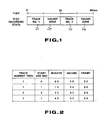
- first play data are recorded in a data zone D 1 from 0 minute to 15 minutes
- second play data are recorded in a data zone D 3 from 30 minutes to 45 minutes
- no data are recorded in a data zone D 2 from 15 minutes to 30 minutes or a data zone D 4 from 45 minutes to 60 minutes.
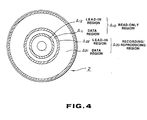
- Figure 2 represents a track number data "1” indicating the first play data with recording start data "0”, and recording start position data "00" minute 00 second 00 frame” and a track number data "1” indicating the first play data, with recording end data "1” and recording end position data "15 minute 04 second 00 frame” which are recorded in the lead-in region as the information indicating that the first play data have been recorded in the data region from 0 minute to 15 minutes.
- a track number data "2" indicating the second play data with recording start data “0” and recording start position data "30 minute 00 second 06 frame”
- a track number data "2" indicating the second play data with recording end data "1” and a recording end position data "45 minute 00 second 00 frame” are recorded in the lead-in region as the information indicating that the second play data have been recorded in the data region of from 30 minutes to 45 minutes.
- third play data are recorded on the magneto-optical disc, recording cannot be made over the vacant data zones D 2 and D 4 , but can be made only in the range of the recording capacity of one of the data zones D 2 and D 4 .
- a disc recording apparatus in which input data is stored in a memory and read out therefrom for being recorded in a recordable data region of a disc, and in which a data table indicating the contents of said recording region is recorded in a lead-in region of said disc, the disc recording apparatus comprising
- a disc-shaped recording medium comprising a recording region having plural data zones into which data is subdivided and recorded, and a lead-in region in which a data table indicating the contents of the recording region is recorded, the contents data table comprising for input data recorded in plural non-continuous data zones a first data location containing track number data identifying the input data and a data table address of a second data location, containing the start address of an initial data zone containing an initial portion of the said input data, and link data indicating the address of another second data location containing a subsequent portion of said input data, characterised in that the input data is continuous compressed data and the said second data location contains the said start address and the end address of the said initial data zone and the link data indicates the data table address of another second data location containing the start and end address and link data (if any) of a subsequent data zone containing a subsequent portion of the said input data.
- disc reproducing apparatus for reproducing a disc according to the said another aspect, the disc reproducing apparatus comprising
- FIG. 3 is a schematic block diagram of an optical disc recording/reproducing apparatus embodying the present invention.
- the optical disc recording/reproducing apparatus shown in Figure 3 may be used in conjunction with a magneto-optical disc having a recording/reproducing region capable of data recording and data reproduction, a read-only optical disc having a read-only region for recorded data, or a magneto-optical disc having a recording/reproducing region capable of data recording and reproduction and a read-only region for recorded data.
- the disc 2 may be rotationally driven by a spindle motor 1.
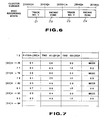
- the following description is made of the magneto-optical disc 2 having a read-only region A 10 and a recording/reproducing region A 20 radially outwardly of the read-only region A 10 , as shown in Figure 4.
- the read-only region A 10 of the magneto-optical disc 2 includes a data region All in which data such as play data is recorded and a lead-in region A 12 provided radially inwardly of the data region A 11 .
- digital data are recorded as pits and lands associated with "1" and "0".
- recording start address data and recording end address data are recorded for all of the play data as table-of-contents data (or TOC data) indicating the recording positions or recording contents of the data region A 11 .
- the recording/reproducing region A 20 of the optical disc 1 includes a data region A 21 for recording data such as play data and a lead-in region A 22 provided radially inwardly of the data region A 21 .
- the recording/reproducing region A 20 is the region for the magneto-optical recording medium.
- In the lead-in region A 22 there are recorded, as TOC data indicating the recording positions or the recording contents of the recording data recorded in the data region A 21 , track number data indicating continuous recording data recorded in each data region, address data indicating the position of the data regions, and linking address data indicating the linking from a data region to another data region of destination.
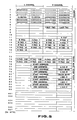
- the TOC data are recorded in the lead-in region A 22 , as main data contiguous to 16-byte header data, as shown in a data table shown in the diagrammatic view of Figure 5.
- vertical addresses 0 to 3 are those for header data
- 12 bytes of the vertical addresses 0 to 2 are synchronizing signals
- first and second bytes of the vertical address 3 are allocated to cluster addresses.
- the fourth byte of the vertical address 11 is allocated to a pointer P-FAT indicating a vacant region in the data table.
- the region of the vertical addresses 12 to 16 make up a track number table, with the first byte of the vertical address 12 being allocated to a pointer P-FRA of a start address of a recordable region for the recording data.
- the second byte of the vertical address 12 to the fourth byte of the vertical address 75 are allocated to pointers P-TNO n of start addresses for track numbers n .
- the vertical addresses 76 to 85 make up an address table of the data region and are allocated to start and end addresses of the data regions designated by the pointers P-FRA and P-TNOn.
- First to third bytes of even-numbered addresses of the vertical address 76 ff. are allocated to start addresses of the data region, while first to third bytes of odd-numbered addresses of the vertical addresses 76 ff are allocated to end addresses of the data region.
- Fourth bytes of even-numbered addresses of the vertical addresses 76 ff are allocated to various track mode data such as copyright protecting mode or overwrite inhibiting mode.
- Fourth bytes of odd-numbered addresses of the vertical addresses 76 ff are allocated to pointers Link-P indicating the linking destination from a given data region to another data region.
- H indicating the vertical address 84 is recorded as P-FAT data of the fourth byte of the vertical address 11.
- H indicating the vertical address 76 is recorded as P-FRA data of the first byte of the vertical address 12.
- H indicating the vertical address 78 is recorded as a pointer P-TNO1 of the second byte of the vertical address 12.
- H indicating the vertical address 82 is recorded as a pointer P-TN02 of the third byte of the vertical address 12.
- Start address data that is [01C4] H cluster, [00] H sector, of the data zone D 2 are recorded as first to third bytes of the vertical address 76 designated by the pointer P-FRA data [00] H of the first byte of the vertical address 12.
- End address data that is [0383] H cluster, [1F] H sector of the data zone D 2 are recorded as first to third bytes of the next vertical address 77.
- H indicating the vertical address 80 is recorded as a pointer Link-P data of the fourth byte of the vertical address 77.
- Start address data that is [0546] H cluster
- H sector of the data zone D 4 are recorded as first to third bytes of the vertical address 80 designated by the pointer Link-P data
- H End address data that is [0708] H cluster
- H sector of the data zone D 4 is recorded as first to third bytes of the next vertical address 81.
- H indicating that there is no vacant zone contiguous to the data zone D 4 is recorded as a pointer Link-P data of the fourth byte of the vertical address 77.
- Start address data that is [0000] H cluster
- H sector of the data zone D 1 , in which the first play data are recorded
- start address data that is [01] H of the second byte of the vertical address 12.
- End address data that is [01C4] H cluster
- [1F] H sector of the data zone D 1 are recorded as first to third bytes of the next vertical address 79.
- [00] H indicating that there is no vacant zone contiguous to the data zone D 1 is recorded as a pointer Link-P data of the fourth byte of the vertical address 79.
- Start address data that is [0384] H cluster
- H sector of the data zone D 3 , in which the second play data are recorded
- start address data are recorded as first to third bytes of the vertical address 82 designated by the pointer P-TNO2 data [03] H of the third byte of the vertical address 12.
- End address data that is [0545] H cluster
- [1F] H sector of the data zone D 3 are recorded as first to third bytes of the next vertical address 83.
- [00] H indicating that there is no vacant zone contiguous to the data zone D 3 is recorded as a pointer Link-P data of the fourth byte of the vertical address 83.
- the recording/reproducing region A 20 of the optical disc 1 of the present embodiment has the data region A 21 in which data such as play data are recorded and the lead-in region A 22 provided radially inwardly of the data region A 21 .
- TOC data indicating the recording positions and recording contents of the recording data recorded in the data region A 21
- track number table data made up of track number data indicating the continuous recorded data recorded in the data regions
- address table data made up of address data indicating the positions of the data regions and linking address data indicating the linking destination from a given data region to another data region are recorded in the lead-in region A 22 , so that the continuous recording data may be subdivided for being recorded in plural data zones.
- the continuous recording data may thus be easily and reliably managed by the track number data.
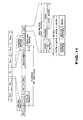
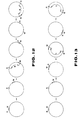
- Third play data may be recorded across the data zones D 2 and D 4 as shown in Figure 8. In this case, if recording of the third play data is terminated at the [0546] H cluster within the data zone D 4 , the TOC data table is rewritten as indicated in Figure 9.
- a point P-TN03 data [02] H indicating the vertical address 80 is recorded in the fourth byte of the vertical address 12 as a pointer of address data indicating the position of the data zone in which the third play data are recorded. Since the third play data have been recorded across the data zones D 2 , D 4 , the vacant zone in which recording data may be recorded is a data zone D 5 from [05DD] H cluster to [0708] H cluster, so that start address data, that is [05DD] H cluster, [00] H sector, of the data zone D 5 are recorded as first to third bytes of the vertical address 76 designated by the pointer P-FRA data [00] H of the first byte of the vertical address 12.
- End address data that is [0708] H cluster
- [1F] H sector of the data zone D 5 are recorded as first to third bytes of the next vertical address 77.
- [00] H indicating that there is no vacant zone contiguous to the data zone D 5 is recorded as a pointer Link-P data of the fourth byte of the vertical address 77.
- Start address data that is [01C4] H cluster, [00] H sector, of the data zone D 2 are recorded as first to third bytes of the vertical address 80 designated by the pointer P-TN03 data [02] H of the fourth byte of the vertical address 12.
- End address data that is [0383] H cluster, [1F] H sector of the data zone D 2 are recorded as first to third bytes of the vertical address 80 designated by power P-TN03 data [02] H of the fourth byte of the vertical address 12.
- End address data that is [0383] H cluster, [1F] sector of the data zone D 2 are recorded as first to third bytes of the next vertical address 80.
- H indicating the vertical address 84 is recorded as a pointer Link-P data of the fourth byte of the vertical address 81.
- start address data that is [0546] H cluster
- H sector of the data zone D 4 are recorded as first to third bytes of the vertical address 84 designated by the pointer Link-P data
- End address data that is [05DC] H cluster
- [1F] H sector of the data zone D 4 are recorded as first to third bytes of the next vertical address 85.
- [00] H indicating that there is no vacant zone contiguous to the data zone D 4 is recorded as a pointer Link-P data of the fourth byte of the vertical address 77.
- a magnetic field modulated in accordance with recording data is applied by a magnetic head 4 to a magneto-optical disc 1 rotationally driven by the spindle motor 1, while a laser light is radiated on the disc by an optical head 3, for recording data along a recording track of the recording/reproducing region A 20 of the disc 2.
- a recording track of the read-only region A 10 and the recording/reproducing region A 20 of the magneto-optical disc 2 is traced by a laser light by the optical head 3 for optically reproducing the recorded data.
- the optical head 3 is made up of optical components, such as a laser light source, for example a laser diode, a collimator lens 32, a beam splitter 33, an object lens 34 and a polarization beam splitter 35, first and second photodetectors 36, 37 for detecting the light split by the polarization beam splitter 35, first signal synthesizer 38 for summing and synthesizing detection outputs of the photodetectors 36, 37, and a second signal synthesizer 39 for subtractively synthesizing the detection outputs.
- the optical head 3 is mounted facing the magnetic head 4 with the magneto-optical disc 1 in-between.
- the optical head 3 When recording data in the recording/reproducing region A 20 of the magneto-optical disc 2, the optical head 3 radiates a laser light to a target track of the magneto-optical disc 2, to which a magnetic field modulated in accordance with the recording data is applied by the magnetic head 4 driven by the head driving circuit 16 of the recording system as later described, for recording the data by thermomagnetic recording.
- the optical head 3 also detects the laser light reflected from the irradiated target track for detecting focusing errors by the so-called astigmatic method, while detecting tracking errors by the so-called push-pull method.
- the optical head 3 When reproducing data from the read-only region A 10 of the magneto-optical disc 2, the optical head 3 detects changes in the light volume of the reflected light from the target track of the magneto-optical disc 2 for producing playback signals. Detection outputs by the photodetectors 36, 37 are summed and synthesized by the first signal synthesizer 38 to produce playback signals which are outputted via a changeover switch 40.
- the playback signals may be produced by detecting the difference in the polarization angle (Kerr rotation angle) of the laser light reflected from the target track.
- Detection outputs of the photodetectors 36, 37 are subtractively synthesized by the second signal synthesizer 39 to produce playback signals which are supplied to changeover switch 40 which may be changed over depending on various operating modes by a system controller 7 which will be explained subsequently.
- An output of the optical head 3 is supplied to an RF circuit 5 as shown in Figure 3.
- the RF circuit 5 extracts the focusing error signals and tracking error signals from the output of the optical head 3 to supply the extracted signals to a servo control circuit 6, while converting the playback signals into binary-valued signals which are supplied to a decoder 21 of the reproducing system as later explained.
- the servo control circuit 6 is made up of a focusing servo control circuit, a tracking servo control circuit, a spindle motor servo control circuit and a thread servo control circuit etc.
- the focusing servo control circuit controls the focusing of the optical head 3 optical system for reducing the focusing error signal to zero.
- the tracking servo control circuit controls the tracking of the optical head 3 optical system for reducing the tracking error signal to zero.
- the spindle motor servo control circuit controls the spindle motor 1 for rotationally driving the magneto-optical disc 2 at a predetermined rotational velocity, for example at a constant linear velocity.
- the thread servo control circuit causes the optical head 3 and the magnetic head 4 to be moved to a target track of the magneto-optical disc 2 designated by system controller 7.
- a key unit 8 and a display 9 are connected to system controller 7.
- the system controller 7 controls the recording system and the reproducing system under the operating modes designated by the key input data entered by the key unit 8.
- the system controller 7 also controls the recording position or the playback position on the recording track traced by the optical head 3 and the magnetic head 4 based on the sector-by-sector address data reproduced from the recording track of the magneto-optical disc 2.
- the system controller 7 stores the TOC data read from the lead-in region A 12 of the read-only region A 10 of the magneto-optical disc 2 to control the playback position in the data region A 11 of the read-only region A 10 based on the TOC data.
- the system controller 7 also stores the TOC data read from the lead-in region A 22 of the read-only region A 20 based on the TOC data. During the recording mode, system controller 7 automatically generates the above-mentioned TOC data table, indicating the recording position in the data region A 21 of the recording/reproducing region A 20 for recording the generated TOC data table in the lead-in region A 22 on termination of the recording mode.
- the recording system of the optical disc recording/reproducing system has an A/D converter 12 supplied with analog audio signals A IN from an input terminal 10 via a low-pass filter 11.
- the digital audio data from the A/D converter 12 are supplied to an adaptive transform acoustic coding (ATRAC) encoder 13.
- ATRAC adaptive transform acoustic coding
- the ATRAC encoder 13 analyzes the waveform on the time axis of the digital audio data of the data rate of 1.4 Mbits per second, quantized from the audio signals A IN by the A/D converter 12, into about 1000 components on the frequency axis, by so-called orthogonal transform, with data for a maximum of about 20 ms as one block, for sequentially extracting the frequency components, beginning from those more critical to the human auditory sense, for generating digital audio data having the data rate of 300 k bits/second. That is, the operation of compressing the digital audio data having the data rate of 1.4 Mbits/second to digital audio date having the data rate of 300 kbits/second, (which is about one-fifth of 1.4 Mbits/second) is carried out. In this manner, the data transmission rate is converted from a rate of 75 sectors/second in the standard CD-Da format to about 15 sectors/second.
- the memory 14 has its data writing and reading controlled by the system controller 7 and is used for transiently storing the compressed audio data supplied from the ATRAC encoder 13 for subsequent recording on the disc when the necessity arises. That is, the compressed audio data supplied from the ATRAC encoder 13 has its data transfer rate reduced to about one-fifth of the standard data transfer rate of 75 sectors/second, that is to 15 sectors/second. It is these compressed data that are continuously written in the memory 14. Although it suffices to record the compressed data at a rate of one of five sectors of the compressed data, it is extremely difficult to record every five sectors on a real time basis.
- the overall data transfer rate, inclusive of the non-recording period, of the read out and recorded data, is the above-mentioned low rate of 15 sectors/second, while the instantaneous data transfer rate within the time of the burst-like recording operation is 75 sectors/second.
- the compressed audio data read out from memory 14 in a burst manner at the above-mentioned transfer rate of 75 sectors/second, that is the recorded data, are supplied to an encoder 15.
- the data of the data string, supplied from memory 14 to encoder 15 and recorded continuously in one recording operation, are a cluster composed of plural sectors, such as 32 sectors, and several cluster-linking sectors arrayed before and after the cluster.
- the cluster-linking sector is selected to be longer than the interleaving length at the encoder 15 so that data of other clusters is not affected by interleaving.
- the recording data in the optical disc recording/reproducing apparatus are arrayed into plural clusters each composed of a predetermined number of sectors, with several cluster-linking sectors arrayed between neighbouring clusters.
- a cluster C is composed of 32 sectors or blocks B0 to B31, a single sub-data sector S and three cluster-linking sectors L1 to L3, totalling 36 sectors, and is linked to neighbouring clusters via the linking clusters L1 to L3.
- cluster-by-cluster recording it becomes unnecessary to take account of mutual intervention with the adjacent clusters due to interleaving so that data processing may be simplified significantly. Should it not be possible to effect regular recording of the recording data during initial recording, re-recording may be made on the cluster-by-cluster basis. On the other hand, should it not be possible to make effective data reading during reproduction, re-reading may be made on the cluster-by-cluster basis.
- the encoder 15 effects encoding for error correction, such as parity appendage or interleaving, and EFM encoding, on the recording data supplied in a burst manner from memory 14 as described above.
- the recording data processed with encoding by encoder 15 are supplied to the magnetic head driving circuit 16.
- the magnetic head driving circuit 16 is connected to the magnetic head 4 for driving the magnetic head 4 for applying a magnetic field modulated in accordance with the recording data to the magneto-optical disc 2.
- the digital data obtained by the A/D converter 12 are audio PCM data having a sampling frequency of 44.1 kHz, 16 quantization bits and a data transfer rate of 75 sectors/second.
- the compressed audio data continuously outputted from ATRAC encoder 13 at the transfer rate of 15 sectors/second, are supplied to memory 14.
- the system controller 7 controls the memory 14 in such a manner that the compressed audio data are continuously written in memory 14 at the transfer rate of 15 sectors/second by continuously incrementing write pointer W of the memory 14 at the transfer rate of 15 sectors/second and, when the volume of the compressed data stored in memory 14 exceeds a predetermined volume K, the compressed audio data are read in a burst manner from memory 14 as recording data by the above volume K at the transfer rate of 75 sectors/second by incrementing a read pointer R of memory 14 in a burst fashion at the transfer rate of 75 sectors/second.
- the recording data read out in a burst manner from memory 14 may be recorded in a continuous state on a recording track of the magneto-optical disc 2 by controlling the recording position on the recording track of the magneto-optical disc 2 by system controller 7. Since the data writing region in excess of the predetermined volume is maintained at all times in memory 14, input data may be written in the data writing region in excess of the predetermined volume even when system controller 7 detects the occurrence of track jumps to discontinue the recording operation on the magneto-optical disc 2 so that the operation of restoration may be performed in the interim. In this manner, input data may be continuously written on the recording track of the magneto-optical disc 2.
- the reproducing system of the optical disc recording/reproducing apparatus is hereinafter explained.
- the reproducing system is designed to reproduce the recording data continuously recorded on the recording tracks of the read-only region A 10 and the recording/reproducing region A 20 of the magneto-optical disc 2, and is provided with a decoder 21 to which a playback output produced upon tracing the recording track of the magneto-optical disc 2 with a laser light from the optical head 3, that is the playback signals from the read-only region A 10 outputted via changeover switch 40 from the first signal synthesizer 38 or the playback signals from the recording/reproducing region A 20 outputted via the changeover switch 40 from the second signal synthesizer 39, is supplied after conversion into binary-valued signals by the RF circuit 5.
- the decoder 21 is the counterpart of the encoder 15 of the above-described recording system and effects the above-mentioned decoding for error correction and EFM decoding on the binary-valued playback output from RF circuit 5 to reproduce the compressed audio data at the transfer rate of 75 sectors/second.
- the playback data from decoder 21 are supplied to a memory 22.
- the memory 22 has data reading and writing controlled by system controller 7 so that the playback data supplied from decoder 21 at the transfer rate of 75 sectors/second are written in the memory 22 at the transfer rate of 75 sectors/second. Also the playback data written in the burst manner in memory 22 at the transfer rate of 75 sectors/second are continuously read at the transfer rate of 15 sectors/second.
- the system controller 7 causes the TOC data read out from the lead-in region A 12 of the read-only region A 10 or the lead-in region A 22 of the recording/reproducing region A 20 of the magneto-optical disc 2 to be stored in TOC memory 20 to control the recording position or the reproducing position in the data region A 11 of the read-only region A 10 or the data region A 21 of the recording/reproducing region A 20 based on the TOC data.
- the system controller 7 controls the memory 22 in such a manner that the playback data are written in the memory 22 at the transfer rate of 75 sectors/second and the playback data are continuously read from memory 22 at the above-mentioned transfer rate of 15 sectors/second, while controlling the playback position so that the playback data written therein in a burst manner from memory 22 by the above memory control will be continuously reproduced from the recording track of the magneto-optical disc 2.
- the playback position is controlled by controlling the playback position of the playback data read out in a burst manner from memory 22 by system controller 7 and by supplying a control signal designating the playback position on the recording track of the magneto-optical disc 2 to the servo control circuit 6.
- the system controller 7 controls memory 22 by incrementing the write pointer W of memory 22 at the transfer rate of 75 sectors/second for writing the playback data in memory 22 at the transfer rate of 75 sectors/second, continuously incrementing the read pointer R of memory 22 at the transfer rate of 15 sectors/second for continuously reading the playback data from memory 22 at the transfer rate of 15 sectors/second, discontinuing the writing when the write pointer W has overtaken the read pointer R and again incrementing the write pointer W in a burst manner at the transfer rate of 75 sectors/second for writing the data when the data volume of the playback data stored in memory 22 is less than the predetermined data volume L.
- the compressed audio data reproduced from the recording track of the magneto-optical disc 2 may be written in memory 22 in a burst manner at the transfer rate of 75 sectors/second and read out continuously from memory 22 as playback data at the transfer rate of 15 sectors/second, so that the playback data may be continuously read from memory 22 while a data volume in excess of the predetermined volume L is perpetually maintained in memory 22.
- the playback data read out in a burst manner from the magneto-optical disc 2 may be reproduced in a continuous state from the recording track of the magneto-optical disc 2 by controlling the playback position on the recording track of the magneto-optical disc 2 by system controller 7.
- the playback data may be read from the data readout region in excess of the predetermined volume L to continue the outputting of the analog audio signals even when the system controller 7 detects the occurrence of a track jump by disturbances to discontinue the reproducing operation, and the operation of restoration may be carried out in the interim.
- the compressed audio data continuously read out from memory 22 at the transfer rate of 15 sectors/second are supplied to an ATRAC decoder 23.
- the ATRAC decoder 2 has its operating mode designated by system controller 7 and, with the present disc recording/reproducing apparatus, expands the compressed audio data by a factor of five to reproduce the digital audio data having the transfer rate of 75 sectors/second.
- the digital audio data for ATRAC decoder 23 are supplied to a D/A converter 24.
- the D/A converter 24 converts the digital audio data from ATRAC decoder 23 into an analog form to produce analog audio signals A OUT which are outputted via a low-pass filter 25 at an output terminal 26.
- the reproducing system of the present optical disc recording/reproducing apparatus has a digital outputting function so that the digital audio data from the ATRAC decoder 23 may be outputted via a digital output encoder 27 at a digital output terminal 28 as digital audio signal D OUT .
- the recording/reproducing region A 20 of the optical disc 2 has the data region A 21 in which data such as play data are recorded and the lead-in region A 22 arranged radially inwardly of the data region A 21 , and track number table data made up of track number data indicating continuous recording data recorded in the data region and address table data made up of address data indication the positions of data zones and linking address data indicating the destination of linking from one to another data zone are stored in the lead-in region A 22 , so that the continuous recording data may be subdivided and recorded in plural recording zones.
- the continuous recording data subdivided and recorded in the plural data regions of the recording/reproducing region A 20 may be reproduced.
- the continuous recording data may be easily and reliably controlled by the track number table data.
- the TOC data generated in the TOC data table having the track number table and the address table as shown in Figure 5 are recorded in the lead-in region A 22 of the recording/reproducing region A 22 .
- a linking flag region indicating the presence or absence of linking destination from one to another data region may be provided in the TOC data of the CD-MO format and the address data indicating the plural recording positions and the linking flag may be recorded in the lead-in region A 22 for the recording data of the common track number TNO n .
- continuous recording data may be subdivided and recorded by data recording means in plural data zones of the disc, while the track number data indicating the continuous recording data recorded in the recording regions, the address data indicating the positions of the data regions and the address data indicating the destination of linking from one data zone to another are recorded in the lead-in region of the disc, so that the continuous recording data may be subdivided and recorded in the plural recording zones.
- data recorded on the disc in which continuous recording data are subdivided and recorded in plural data regions, and in which the track number data indicating the continuous recording data recorded in each data region, address data indicating the position of each data region and linking address data indicating the linking destination from one data region to another are recorded in the lead-in region, are reproduced by reading the track number data, address data and the linking address data from the lead-in region by lead-in data reproducing means, and by reading the continuous recording data from the plural data regions of the disc by reproducing means based on the track number data, address data and the linking address data, so that the continuous recording data may be reproduced from the plural data regions in which the continuous recording data are subdivided and recorded in the subdivided state.
- the continuous recording data are subdivided and recorded in plural data regions, while track number data indicating the continuous recording data recorded in each data region, the address data indicating the positions of the data regions and the linking address data indicating the linking destination from one data region to another are recorded in the lead-in region, so that the continuous recording data may be recorded and/or reproduced via the plural data regions.
Landscapes
- Engineering & Computer Science (AREA)
- Multimedia (AREA)
- Signal Processing (AREA)
- Signal Processing For Digital Recording And Reproducing (AREA)
- Indexing, Searching, Synchronizing, And The Amount Of Synchronization Travel Of Record Carriers (AREA)
- Moving Of Head For Track Selection And Changing (AREA)
- Optical Recording Or Reproduction (AREA)
- Management Or Editing Of Information On Record Carriers (AREA)
Applications Claiming Priority (2)
| Application Number | Priority Date | Filing Date | Title |
|---|---|---|---|
| JP275067/91 | 1991-09-27 | ||
| JP27506791A JP3158556B2 (ja) | 1991-09-27 | 1991-09-27 | ディスク記録装置及びディスク再生装置 |
Publications (2)
| Publication Number | Publication Date |
|---|---|
| EP0540164A1 EP0540164A1 (en) | 1993-05-05 |
| EP0540164B1 true EP0540164B1 (en) | 1998-04-22 |
Family
ID=17550381
Family Applications (1)
| Application Number | Title | Priority Date | Filing Date |
|---|---|---|---|
| EP92308522A Expired - Lifetime EP0540164B1 (en) | 1991-09-27 | 1992-09-18 | Disc recording and reproducing apparatus and disc |
Country Status (6)
| Country | Link |
|---|---|
| US (1) | US5388093A (enExample) |
| EP (1) | EP0540164B1 (enExample) |
| JP (1) | JP3158556B2 (enExample) |
| KR (1) | KR100245156B1 (enExample) |
| CA (1) | CA2078762C (enExample) |
| DE (1) | DE69225193T2 (enExample) |
Families Citing this family (67)
| Publication number | Priority date | Publication date | Assignee | Title |
|---|---|---|---|---|
| US5115240A (en) * | 1989-09-26 | 1992-05-19 | Sony Corporation | Method and apparatus for encoding voice signals divided into a plurality of frequency bands |
| JP2896480B2 (ja) * | 1992-04-16 | 1999-05-31 | 三菱電機株式会社 | 記録装置及び再生装置 |
| JP3220960B2 (ja) * | 1992-04-24 | 2001-10-22 | ソニー株式会社 | 情報記録装置 |
| JP3355649B2 (ja) * | 1992-05-20 | 2002-12-09 | ソニー株式会社 | 記録又は再生装置 |
| JP3435703B2 (ja) * | 1992-05-20 | 2003-08-11 | ソニー株式会社 | 再生装置、再生方法 |
| JP3435712B2 (ja) * | 1992-05-22 | 2003-08-11 | ソニー株式会社 | ディスクの再生装置の演奏方法、ディスク再生装置 |
| US5633841A (en) * | 1992-05-25 | 1997-05-27 | Sony Corporation | Optical disc recording/reproducing apparatus having automatic protection of previously recorded data |
| TW258810B (enExample) * | 1992-05-25 | 1995-10-01 | Sony Co Ltd | |
| JP3153933B2 (ja) * | 1992-06-16 | 2001-04-09 | ソニー株式会社 | データ符号化装置及び方法並びにデータ復号化装置及び方法 |
| JP3130380B2 (ja) * | 1992-08-28 | 2001-01-31 | 株式会社ケンウッド | 光ディスク記録再生装置 |
| EP0586189B1 (en) | 1992-09-03 | 2000-06-28 | Sony Corporation | Data recording apparatus and methods |
| JP3233234B2 (ja) * | 1992-09-07 | 2001-11-26 | ソニー株式会社 | ディスク記録装置 |
| JP3218743B2 (ja) * | 1992-10-16 | 2001-10-15 | ソニー株式会社 | 記録/再生装置、ディスク記録再生システム、及び記録方法 |
| JP3393345B2 (ja) * | 1992-10-31 | 2003-04-07 | ソニー株式会社 | デイスク再生装置、メモリ制御回路及びメモリ制御方法 |
| US5418762A (en) * | 1992-12-09 | 1995-05-23 | Sony Corporation | Optical disk recording device having a pre-recording mode |
| JP3186292B2 (ja) * | 1993-02-02 | 2001-07-11 | ソニー株式会社 | 高能率符号化方法及び装置 |
| JP3440952B2 (ja) * | 1993-02-24 | 2003-08-25 | ソニー株式会社 | データ記録方法及びデータ再生方法 |
| JP3427410B2 (ja) * | 1993-02-24 | 2003-07-14 | ソニー株式会社 | 光ディスク記録装置および光ディスク再生装置 |
| US5687397A (en) * | 1993-02-26 | 1997-11-11 | Sony Corporation | System for expansion of data storage medium to store user data |
| JP3123290B2 (ja) * | 1993-03-09 | 2001-01-09 | ソニー株式会社 | 圧縮データ記録装置及び方法、圧縮データ再生方法、記録媒体 |
| JP3186307B2 (ja) * | 1993-03-09 | 2001-07-11 | ソニー株式会社 | 圧縮データ記録装置及び方法 |
| JP3433759B2 (ja) * | 1993-04-23 | 2003-08-04 | ソニー株式会社 | 記録位置取得装置 |
| JP3353381B2 (ja) * | 1993-04-23 | 2002-12-03 | ソニー株式会社 | 記録再生装置 |
| JP3353382B2 (ja) * | 1993-04-23 | 2002-12-03 | ソニー株式会社 | 記録又は再生装置、及びメモリ制御装置 |
| US5897652A (en) * | 1993-04-23 | 1999-04-27 | Sony Corporation | Memory control device and address generating circuit |
| US5581654A (en) * | 1993-05-25 | 1996-12-03 | Sony Corporation | Method and apparatus for information encoding and decoding |
| JPH0765551A (ja) * | 1993-08-24 | 1995-03-10 | Sony Corp | 再生装置 |
| JP3033653B2 (ja) * | 1993-09-09 | 2000-04-17 | 日本電気株式会社 | ディジタルオーディオ用インターフェイス回路及び録音・再生装置 |
| DE69426894T2 (de) * | 1993-09-16 | 2001-07-26 | Toshiba Kawasaki Kk | Digitales Videosignal |
| DE4436820C2 (de) * | 1993-10-14 | 1997-01-02 | Ricoh Kk | Aufnahmeverfahren für ein wiederbeschreibbares optisches Informationsaufnahmemedium |
| HK1010464A1 (en) * | 1993-10-29 | 1999-06-17 | Kabushiki Kaisha Toshiba | Recording medium which can cope with various languages and reproduction apparatus |
| JPH07182784A (ja) * | 1993-11-15 | 1995-07-21 | Sony Electron Inc | 磁気光学ディスク上にディジタル・オーディオ・データを記録するための単一ディジタル信号処理装置 |
| KR0138329B1 (ko) * | 1994-02-07 | 1998-06-15 | 김광호 | 디지탈신호처리시스템에 있어서 인터페이스방법 및 장치 |
| US5608713A (en) * | 1994-02-09 | 1997-03-04 | Sony Corporation | Bit allocation of digital audio signal blocks by non-linear processing |
| US5715355A (en) * | 1994-03-19 | 1998-02-03 | Sony Corporation | Optical disk having a particular format to store user-selected data, such as video data or computer files, including a dedicated TOC region |
| JP3186412B2 (ja) * | 1994-04-01 | 2001-07-11 | ソニー株式会社 | 情報符号化方法、情報復号化方法、及び情報伝送方法 |
| JP3277699B2 (ja) * | 1994-06-13 | 2002-04-22 | ソニー株式会社 | 信号符号化方法及び装置並びに信号復号化方法及び装置 |
| JP3277705B2 (ja) | 1994-07-27 | 2002-04-22 | ソニー株式会社 | 情報符号化装置及び方法、並びに情報復号化装置及び方法 |
| JP3341474B2 (ja) * | 1994-07-28 | 2002-11-05 | ソニー株式会社 | 情報符号化方法及び復号化方法、情報符号化装置及び復号化装置、並びに情報記録媒体 |
| JP3359745B2 (ja) * | 1994-07-29 | 2002-12-24 | シャープ株式会社 | 動画像再生装置、及び動画像記録装置 |
| US5574953A (en) * | 1994-08-19 | 1996-11-12 | Hewlett-Packard Company | Storing compressed data in non-contiguous memory |
| US5778142A (en) * | 1994-11-24 | 1998-07-07 | Kabushiki Kaisha Toshiba | Large capacity recording medium, method and apparatus for reproducing data from a large-capacity recording medium, and method and apparatus for recording data on a large-capacity recording medium |
| JP3557674B2 (ja) * | 1994-12-15 | 2004-08-25 | ソニー株式会社 | 高能率符号化方法及び装置 |
| US6009202A (en) * | 1994-12-28 | 1999-12-28 | Kabushiki Kaisha Toshiba | Image information encoding/decoding system |
| US5721720A (en) * | 1994-12-28 | 1998-02-24 | Kabushiki Kaisha Toshiba | Optical recording medium recording pixel data as a compressed unit data block |
| US5745639A (en) * | 1995-01-04 | 1998-04-28 | International Business Machines Corporation | Apparatus for improving the continuous supply or display time of full-motion video and other data |
| CA2168327C (en) * | 1995-01-30 | 2000-04-11 | Shinichi Kikuchi | A recording medium on which a data containing navigation data is recorded, a method and apparatus for reproducing a data according to navigationdata, a method and apparatus for recording a data containing navigation data on a recording medium. |
| EP0727780B1 (en) * | 1995-02-16 | 2002-01-23 | Kabushiki Kaisha Toshiba | Output control system for switchable audio channels |
| CN1086498C (zh) * | 1995-02-22 | 2002-06-19 | 株式会社东芝 | 信息记录方法,信息重放方法以及信息重放装置 |
| US6009433A (en) * | 1995-04-14 | 1999-12-28 | Kabushiki Kaisha Toshiba | Information storage and information transmission media with parental control |
| US6009234A (en) | 1995-04-14 | 1999-12-28 | Kabushiki Kaisha Toshiba | Method of reproducing information |
| US5813010A (en) * | 1995-04-14 | 1998-09-22 | Kabushiki Kaisha Toshiba | Information storage and information transmission media with parental control |
| CA2173929C (en) * | 1995-04-14 | 2001-04-03 | Kazuhiko Taira | Method, apparatus and recording medium for reproducing information |
| US5623701A (en) * | 1995-06-06 | 1997-04-22 | International Business Machines Corporation | Data compression method and structure for a direct access storage device |
| US5537658A (en) * | 1995-06-07 | 1996-07-16 | International Business Machines Corporation | Distributed directory method and structure for direct access storage device (DASD) data compression |
| JPH0973461A (ja) * | 1995-09-06 | 1997-03-18 | Shinano Kenshi Co Ltd | 音声による文章情報再生装置 |
| ATE202234T1 (de) * | 1995-09-15 | 2001-06-15 | Koninkl Philips Electronics Nv | Informationsübertragung über die eingangszone eines informationsträgers |
| JP3642863B2 (ja) * | 1996-02-02 | 2005-04-27 | ソニー株式会社 | ディスク、ディスク形成装置、およびディスク形成方法 |
| JPH09259440A (ja) * | 1996-03-25 | 1997-10-03 | Sony Corp | 記録媒体、アドレス記録方法および装置、並びに、記録再生方法および装置 |
| US6049517A (en) * | 1996-04-30 | 2000-04-11 | Sony Corporation | Dual format audio signal compression |
| JP3204217B2 (ja) * | 1998-06-17 | 2001-09-04 | 日本電気株式会社 | 記録符号変換方法及び復号方法並びに同期信号挿入方法 |
| JP2000339922A (ja) | 1999-05-25 | 2000-12-08 | Mitsumi Electric Co Ltd | オーディオディスクの作成方法 |
| MXPA02011760A (es) | 2000-05-31 | 2003-04-10 | Matsushita Electric Ind Co Ltd | Medio de registro de informacion, metodo de registro de informacion, aparato de registro de informacion, metodo de reproduccion de informacion y aparato de reproduccion de informacion. |
| JP2002268949A (ja) * | 2001-03-12 | 2002-09-20 | Pioneer Electronic Corp | 複製管理方法、複製管理装置、記録媒体およびプログラム |
| CN1331122C (zh) * | 2002-05-20 | 2007-08-08 | 三星电子株式会社 | 在光盘上记录数据的方法 |
| US6690630B1 (en) * | 2002-07-31 | 2004-02-10 | Mediatek Inc. | Compact disc decoder and method for correcting address errors in header data based on an input error flag |
| US7120849B2 (en) * | 2002-11-05 | 2006-10-10 | Samsung Electronics Co., Ltd. | Data storage medium having link zone and apparatus and method for recording/reproducing data on/from the data storage medium |
Citations (1)
| Publication number | Priority date | Publication date | Assignee | Title |
|---|---|---|---|---|
| US4814903A (en) * | 1987-06-29 | 1989-03-21 | International Business Machines Corporation | Alternate storage areas in magnetooptical media |
Family Cites Families (13)
| Publication number | Priority date | Publication date | Assignee | Title |
|---|---|---|---|---|
| FR2317726A1 (fr) * | 1975-07-09 | 1977-02-04 | Labo Electronique Physique | Systeme d'enregistrement et de reproduction d'informations, notamment d'informations sonores |
| US4229808A (en) * | 1978-12-21 | 1980-10-21 | Ncr Corporation | Method for recording multiple data segments on a storage disc with eccentricity factor |
| US4754483A (en) * | 1980-10-31 | 1988-06-28 | Sri International | Data compression system and method for audio signals |
| US4413289A (en) * | 1981-03-13 | 1983-11-01 | Sri International | Digital recording and playback method and apparatus |
| US4791623A (en) * | 1986-04-03 | 1988-12-13 | Optotech, Inc. | File management system for use in an optical data storage system |
| US4882754A (en) * | 1987-08-25 | 1989-11-21 | Digideck, Inc. | Data compression system and method with buffer control |
| JP3060460B2 (ja) * | 1989-05-15 | 2000-07-10 | ソニー株式会社 | デイスク、デイスク記録装置及びデイスク記録再生装置 |
| KR100195317B1 (ko) * | 1990-01-19 | 1999-06-15 | 이데이 노부유끼 | 데이터기록방법및데이터재생방법 |
| DE4007814A1 (de) * | 1990-03-12 | 1991-09-19 | Thomson Brandt Gmbh | Verfahren zur aufzeichnung und wiedergabe von digitalen daten auf einem aufzeichnungstraeger |
| JP2881980B2 (ja) * | 1990-06-29 | 1999-04-12 | ソニー株式会社 | ディスク記録装置及びディスク再生装置 |
| JP2995822B2 (ja) * | 1990-08-23 | 1999-12-27 | ソニー株式会社 | 円盤状記録媒体の記録装置及び再生装置 |
| JP3141242B2 (ja) * | 1990-08-24 | 2001-03-05 | ソニー株式会社 | 光ディスク記録装置 |
| US5272691A (en) * | 1991-05-30 | 1993-12-21 | Matsushita Electric Industrial Co., Ltd. | Method for recording and reproducing compressed data |
-
1991
- 1991-09-27 JP JP27506791A patent/JP3158556B2/ja not_active Expired - Lifetime
-
1992
- 1992-09-16 US US07/945,488 patent/US5388093A/en not_active Expired - Lifetime
- 1992-09-18 DE DE69225193T patent/DE69225193T2/de not_active Expired - Lifetime
- 1992-09-18 EP EP92308522A patent/EP0540164B1/en not_active Expired - Lifetime
- 1992-09-21 CA CA002078762A patent/CA2078762C/en not_active Expired - Lifetime
- 1992-09-26 KR KR1019920017687A patent/KR100245156B1/ko not_active Expired - Lifetime
Patent Citations (1)
| Publication number | Priority date | Publication date | Assignee | Title |
|---|---|---|---|---|
| US4814903A (en) * | 1987-06-29 | 1989-03-21 | International Business Machines Corporation | Alternate storage areas in magnetooptical media |
Non-Patent Citations (2)
| Title |
|---|
| Computer Design June 1971, p.49-54 * |
| Electronic & Wireless World Oct.86, p.45-46 * |
Also Published As
| Publication number | Publication date |
|---|---|
| KR100245156B1 (ko) | 2000-02-15 |
| CA2078762C (en) | 2000-05-30 |
| DE69225193D1 (de) | 1998-05-28 |
| DE69225193T2 (de) | 1998-08-20 |
| CA2078762A1 (en) | 1993-03-28 |
| JPH0589601A (ja) | 1993-04-09 |
| JP3158556B2 (ja) | 2001-04-23 |
| EP0540164A1 (en) | 1993-05-05 |
| US5388093A (en) | 1995-02-07 |
Similar Documents
| Publication | Publication Date | Title |
|---|---|---|
| US5388093A (en) | Disc recording and/or reproducing apparatus for recording continuous compressed data in plural data regions and disc therefor | |
| US5224087A (en) | Apparatus for recording compressed digital information to an optical disc | |
| US5243588A (en) | Method and apparatus for reading digital data bursts comprising data clusters and cluster linking sectors | |
| EP0506471B1 (en) | Disk recording and reproduction | |
| US6205104B1 (en) | Recording/reproducing apparatus for compressed data | |
| JP3158557B2 (ja) | 再生装置 | |
| EP0512821B1 (en) | Disc recording apparatus and disc reproducing apparatus | |
| US5337295A (en) | Digital audio signal reproducing apparatus | |
| JPH0589601A5 (enExample) | ||
| US5963521A (en) | Recording and/or reproducing method and apparatus with dubbing mode | |
| JP3239388B2 (ja) | デイスク記録装置、デイスク再生装置及び記録方法 | |
| JP3235109B2 (ja) | ディジタルオーディオ信号記録装置 | |
| JP3729758B2 (ja) | ディスク | |
| JP3134856B2 (ja) | ディスク記録装置及びディスク再生装置 | |
| JP3407734B2 (ja) | ディスク及びデータ記録方法 | |
| JP2001236741A (ja) | ディスク | |
| JPH05290385A (ja) | 光ディスク |
Legal Events
| Date | Code | Title | Description |
|---|---|---|---|
| PUAI | Public reference made under article 153(3) epc to a published international application that has entered the european phase |
Free format text: ORIGINAL CODE: 0009012 |
|
| AK | Designated contracting states |
Kind code of ref document: A1 Designated state(s): DE FR GB NL |
|
| 17P | Request for examination filed |
Effective date: 19930930 |
|
| 17Q | First examination report despatched |
Effective date: 19960215 |
|
| GRAG | Despatch of communication of intention to grant |
Free format text: ORIGINAL CODE: EPIDOS AGRA |
|
| GRAG | Despatch of communication of intention to grant |
Free format text: ORIGINAL CODE: EPIDOS AGRA |
|
| GRAH | Despatch of communication of intention to grant a patent |
Free format text: ORIGINAL CODE: EPIDOS IGRA |
|
| GRAH | Despatch of communication of intention to grant a patent |
Free format text: ORIGINAL CODE: EPIDOS IGRA |
|
| GRAA | (expected) grant |
Free format text: ORIGINAL CODE: 0009210 |
|
| AK | Designated contracting states |
Kind code of ref document: B1 Designated state(s): DE FR GB NL |
|
| REF | Corresponds to: |
Ref document number: 69225193 Country of ref document: DE Date of ref document: 19980528 |
|
| ET | Fr: translation filed | ||
| PLBE | No opposition filed within time limit |
Free format text: ORIGINAL CODE: 0009261 |
|
| 26N | No opposition filed | ||
| REG | Reference to a national code |
Ref country code: GB Ref legal event code: IF02 |
|
| PGFP | Annual fee paid to national office [announced via postgrant information from national office to epo] |
Ref country code: DE Payment date: 20110923 Year of fee payment: 20 Ref country code: GB Payment date: 20110920 Year of fee payment: 20 Ref country code: FR Payment date: 20110928 Year of fee payment: 20 |
|
| PGFP | Annual fee paid to national office [announced via postgrant information from national office to epo] |
Ref country code: NL Payment date: 20110929 Year of fee payment: 20 |
|
| REG | Reference to a national code |
Ref country code: DE Ref legal event code: R071 Ref document number: 69225193 Country of ref document: DE |
|
| REG | Reference to a national code |
Ref country code: DE Ref legal event code: R071 Ref document number: 69225193 Country of ref document: DE |
|
| REG | Reference to a national code |
Ref country code: NL Ref legal event code: V4 Effective date: 20120918 |
|
| REG | Reference to a national code |
Ref country code: GB Ref legal event code: PE20 Expiry date: 20120917 |
|
| PG25 | Lapsed in a contracting state [announced via postgrant information from national office to epo] |
Ref country code: GB Free format text: LAPSE BECAUSE OF EXPIRATION OF PROTECTION Effective date: 20120917 Ref country code: DE Free format text: LAPSE BECAUSE OF EXPIRATION OF PROTECTION Effective date: 20120919 |