EP0496273A1 - Verfahren zur Herstellung von hochreinem Quarzglas - Google Patents
Verfahren zur Herstellung von hochreinem Quarzglas Download PDFInfo
- Publication number
- EP0496273A1 EP0496273A1 EP92100633A EP92100633A EP0496273A1 EP 0496273 A1 EP0496273 A1 EP 0496273A1 EP 92100633 A EP92100633 A EP 92100633A EP 92100633 A EP92100633 A EP 92100633A EP 0496273 A1 EP0496273 A1 EP 0496273A1
- Authority
- EP
- European Patent Office
- Prior art keywords
- silicon tetrachloride
- oxygen
- silane
- hydrogen
- quartz glass
- Prior art date
- Legal status (The legal status is an assumption and is not a legal conclusion. Google has not performed a legal analysis and makes no representation as to the accuracy of the status listed.)
- Withdrawn
Links
- 238000000034 method Methods 0.000 title claims abstract description 46
- VYPSYNLAJGMNEJ-UHFFFAOYSA-N Silicium dioxide Chemical compound O=[Si]=O VYPSYNLAJGMNEJ-UHFFFAOYSA-N 0.000 title claims abstract description 37
- 238000004519 manufacturing process Methods 0.000 title claims description 16
- BLRPTPMANUNPDV-UHFFFAOYSA-N Silane Chemical compound [SiH4] BLRPTPMANUNPDV-UHFFFAOYSA-N 0.000 claims abstract description 36
- 229910000077 silane Inorganic materials 0.000 claims abstract description 33
- VXEGSRKPIUDPQT-UHFFFAOYSA-N 4-[4-(4-methoxyphenyl)piperazin-1-yl]aniline Chemical compound C1=CC(OC)=CC=C1N1CCN(C=2C=CC(N)=CC=2)CC1 VXEGSRKPIUDPQT-UHFFFAOYSA-N 0.000 claims abstract description 27
- 239000005049 silicon tetrachloride Substances 0.000 claims abstract description 27
- 239000001301 oxygen Substances 0.000 claims abstract description 25
- 229910052760 oxygen Inorganic materials 0.000 claims abstract description 25
- QVGXLLKOCUKJST-UHFFFAOYSA-N atomic oxygen Chemical compound [O] QVGXLLKOCUKJST-UHFFFAOYSA-N 0.000 claims abstract description 24
- 239000001257 hydrogen Substances 0.000 claims abstract description 20
- 229910052739 hydrogen Inorganic materials 0.000 claims abstract description 20
- UFHFLCQGNIYNRP-UHFFFAOYSA-N Hydrogen Chemical compound [H][H] UFHFLCQGNIYNRP-UHFFFAOYSA-N 0.000 claims abstract description 17
- 229910052710 silicon Inorganic materials 0.000 claims abstract description 16
- 239000000203 mixture Substances 0.000 claims abstract description 14
- 239000010703 silicon Substances 0.000 claims abstract description 14
- KWGKDLIKAYFUFQ-UHFFFAOYSA-M lithium chloride Chemical compound [Li+].[Cl-] KWGKDLIKAYFUFQ-UHFFFAOYSA-M 0.000 claims abstract description 13
- WCUXLLCKKVVCTQ-UHFFFAOYSA-M Potassium chloride Chemical compound [Cl-].[K+] WCUXLLCKKVVCTQ-UHFFFAOYSA-M 0.000 claims abstract description 11
- KZBUYRJDOAKODT-UHFFFAOYSA-N Chlorine Chemical compound ClCl KZBUYRJDOAKODT-UHFFFAOYSA-N 0.000 claims abstract description 10
- WHXSMMKQMYFTQS-UHFFFAOYSA-N Lithium Chemical compound [Li] WHXSMMKQMYFTQS-UHFFFAOYSA-N 0.000 claims abstract description 10
- 229910000103 lithium hydride Inorganic materials 0.000 claims abstract description 9
- 238000006243 chemical reaction Methods 0.000 claims abstract description 8
- 230000005496 eutectics Effects 0.000 claims abstract description 6
- 239000001103 potassium chloride Substances 0.000 claims abstract description 5
- 235000011164 potassium chloride Nutrition 0.000 claims abstract description 5
- 239000000155 melt Substances 0.000 claims abstract description 4
- XLYOFNOQVPJJNP-UHFFFAOYSA-N water Substances O XLYOFNOQVPJJNP-UHFFFAOYSA-N 0.000 claims description 18
- 238000002485 combustion reaction Methods 0.000 claims description 10
- 238000005868 electrolysis reaction Methods 0.000 claims description 9
- ZAMOUSCENKQFHK-UHFFFAOYSA-N Chlorine atom Chemical compound [Cl] ZAMOUSCENKQFHK-UHFFFAOYSA-N 0.000 claims description 3
- 239000000460 chlorine Substances 0.000 claims description 3
- 229910052801 chlorine Inorganic materials 0.000 claims description 3
- 238000002844 melting Methods 0.000 claims description 2
- 230000008018 melting Effects 0.000 claims description 2
- 238000010304 firing Methods 0.000 abstract 1
- XUIMIQQOPSSXEZ-UHFFFAOYSA-N Silicon Chemical compound [Si] XUIMIQQOPSSXEZ-UHFFFAOYSA-N 0.000 description 14
- 235000012239 silicon dioxide Nutrition 0.000 description 12
- 239000010453 quartz Substances 0.000 description 10
- 150000003839 salts Chemical class 0.000 description 7
- 239000004071 soot Substances 0.000 description 7
- ATUOYWHBWRKTHZ-UHFFFAOYSA-N Propane Chemical compound CCC ATUOYWHBWRKTHZ-UHFFFAOYSA-N 0.000 description 6
- 239000000463 material Substances 0.000 description 6
- 230000001105 regulatory effect Effects 0.000 description 6
- 239000012528 membrane Substances 0.000 description 5
- 239000007858 starting material Substances 0.000 description 5
- CURLTUGMZLYLDI-UHFFFAOYSA-N Carbon dioxide Chemical compound O=C=O CURLTUGMZLYLDI-UHFFFAOYSA-N 0.000 description 4
- XEEYBQQBJWHFJM-UHFFFAOYSA-N Iron Chemical compound [Fe] XEEYBQQBJWHFJM-UHFFFAOYSA-N 0.000 description 4
- 239000007789 gas Substances 0.000 description 4
- 150000002431 hydrogen Chemical class 0.000 description 4
- 239000000047 product Substances 0.000 description 4
- 150000004756 silanes Chemical class 0.000 description 4
- 239000002699 waste material Substances 0.000 description 4
- -1 Lithiumhydrid Chemical compound 0.000 description 3
- 239000001294 propane Substances 0.000 description 3
- 239000000126 substance Substances 0.000 description 3
- 231100000331 toxic Toxicity 0.000 description 3
- 230000002588 toxic effect Effects 0.000 description 3
- OKTJSMMVPCPJKN-UHFFFAOYSA-N Carbon Chemical compound [C] OKTJSMMVPCPJKN-UHFFFAOYSA-N 0.000 description 2
- MYMOFIZGZYHOMD-UHFFFAOYSA-N Dioxygen Chemical compound O=O MYMOFIZGZYHOMD-UHFFFAOYSA-N 0.000 description 2
- VEXZGXHMUGYJMC-UHFFFAOYSA-N Hydrochloric acid Chemical compound Cl VEXZGXHMUGYJMC-UHFFFAOYSA-N 0.000 description 2
- 239000006227 byproduct Substances 0.000 description 2
- BRPQOXSCLDDYGP-UHFFFAOYSA-N calcium oxide Chemical compound [O-2].[Ca+2] BRPQOXSCLDDYGP-UHFFFAOYSA-N 0.000 description 2
- 239000000292 calcium oxide Substances 0.000 description 2
- ODINCKMPIJJUCX-UHFFFAOYSA-N calcium oxide Inorganic materials [Ca]=O ODINCKMPIJJUCX-UHFFFAOYSA-N 0.000 description 2
- 239000001569 carbon dioxide Substances 0.000 description 2
- 229910002092 carbon dioxide Inorganic materials 0.000 description 2
- 238000001816 cooling Methods 0.000 description 2
- 239000008367 deionised water Substances 0.000 description 2
- 229910021641 deionized water Inorganic materials 0.000 description 2
- 230000007613 environmental effect Effects 0.000 description 2
- 239000011521 glass Substances 0.000 description 2
- 239000006066 glass batch Substances 0.000 description 2
- 229910002804 graphite Inorganic materials 0.000 description 2
- 239000010439 graphite Substances 0.000 description 2
- 239000000383 hazardous chemical Substances 0.000 description 2
- 229910000041 hydrogen chloride Inorganic materials 0.000 description 2
- IXCSERBJSXMMFS-UHFFFAOYSA-N hydrogen chloride Substances Cl.Cl IXCSERBJSXMMFS-UHFFFAOYSA-N 0.000 description 2
- 239000000377 silicon dioxide Substances 0.000 description 2
- 229910007264 Si2H6 Inorganic materials 0.000 description 1
- 238000010521 absorption reaction Methods 0.000 description 1
- 239000005388 borosilicate glass Substances 0.000 description 1
- 229910052799 carbon Inorganic materials 0.000 description 1
- 239000006229 carbon black Substances 0.000 description 1
- 239000007795 chemical reaction product Substances 0.000 description 1
- 150000001805 chlorine compounds Chemical class 0.000 description 1
- 229910052681 coesite Inorganic materials 0.000 description 1
- 239000000567 combustion gas Substances 0.000 description 1
- 238000011109 contamination Methods 0.000 description 1
- 229910052906 cristobalite Inorganic materials 0.000 description 1
- 238000010586 diagram Methods 0.000 description 1
- PZPGRFITIJYNEJ-UHFFFAOYSA-N disilane Chemical compound [SiH3][SiH3] PZPGRFITIJYNEJ-UHFFFAOYSA-N 0.000 description 1
- 230000005611 electricity Effects 0.000 description 1
- 238000007380 fibre production Methods 0.000 description 1
- 231100001261 hazardous Toxicity 0.000 description 1
- 150000004678 hydrides Chemical class 0.000 description 1
- 230000007062 hydrolysis Effects 0.000 description 1
- 238000006460 hydrolysis reaction Methods 0.000 description 1
- 239000012535 impurity Substances 0.000 description 1
- 239000000543 intermediate Substances 0.000 description 1
- 229910052742 iron Inorganic materials 0.000 description 1
- UQSXHKLRYXJYBZ-UHFFFAOYSA-N iron oxide Inorganic materials [Fe]=O UQSXHKLRYXJYBZ-UHFFFAOYSA-N 0.000 description 1
- 229910052744 lithium Inorganic materials 0.000 description 1
- 230000007257 malfunction Effects 0.000 description 1
- 229910052751 metal Inorganic materials 0.000 description 1
- 239000002184 metal Substances 0.000 description 1
- 229910001507 metal halide Inorganic materials 0.000 description 1
- 150000005309 metal halides Chemical class 0.000 description 1
- VUZPPFZMUPKLLV-UHFFFAOYSA-N methane;hydrate Chemical compound C.O VUZPPFZMUPKLLV-UHFFFAOYSA-N 0.000 description 1
- 230000003287 optical effect Effects 0.000 description 1
- 239000013307 optical fiber Substances 0.000 description 1
- 229920001343 polytetrafluoroethylene Polymers 0.000 description 1
- 239000004810 polytetrafluoroethylene Substances 0.000 description 1
- 230000001681 protective effect Effects 0.000 description 1
- 230000005855 radiation Effects 0.000 description 1
- 239000002994 raw material Substances 0.000 description 1
- XJKVPKYVPCWHFO-UHFFFAOYSA-N silicon;hydrate Chemical compound O.[Si] XJKVPKYVPCWHFO-UHFFFAOYSA-N 0.000 description 1
- 230000003595 spectral effect Effects 0.000 description 1
- 229910052682 stishovite Inorganic materials 0.000 description 1
- 229910052715 tantalum Inorganic materials 0.000 description 1
- GUVRBAGPIYLISA-UHFFFAOYSA-N tantalum atom Chemical compound [Ta] GUVRBAGPIYLISA-UHFFFAOYSA-N 0.000 description 1
- 229910052905 tridymite Inorganic materials 0.000 description 1
- 230000035899 viability Effects 0.000 description 1
Images


Classifications
-
- C—CHEMISTRY; METALLURGY
- C03—GLASS; MINERAL OR SLAG WOOL
- C03B—MANUFACTURE, SHAPING, OR SUPPLEMENTARY PROCESSES
- C03B37/00—Manufacture or treatment of flakes, fibres, or filaments from softened glass, minerals, or slags
- C03B37/01—Manufacture of glass fibres or filaments
- C03B37/012—Manufacture of preforms for drawing fibres or filaments
- C03B37/014—Manufacture of preforms for drawing fibres or filaments made entirely or partially by chemical means, e.g. vapour phase deposition of bulk porous glass either by outside vapour deposition [OVD], or by outside vapour phase oxidation [OVPO] or by vapour axial deposition [VAD]
- C03B37/01413—Reactant delivery systems
-
- C—CHEMISTRY; METALLURGY
- C03—GLASS; MINERAL OR SLAG WOOL
- C03B—MANUFACTURE, SHAPING, OR SUPPLEMENTARY PROCESSES
- C03B19/00—Other methods of shaping glass
- C03B19/14—Other methods of shaping glass by gas- or vapour- phase reaction processes
- C03B19/1415—Reactant delivery systems
-
- C—CHEMISTRY; METALLURGY
- C03—GLASS; MINERAL OR SLAG WOOL
- C03C—CHEMICAL COMPOSITION OF GLASSES, GLAZES OR VITREOUS ENAMELS; SURFACE TREATMENT OF GLASS; SURFACE TREATMENT OF FIBRES OR FILAMENTS MADE FROM GLASS, MINERALS OR SLAGS; JOINING GLASS TO GLASS OR OTHER MATERIALS
- C03C3/00—Glass compositions
- C03C3/04—Glass compositions containing silica
- C03C3/06—Glass compositions containing silica with more than 90% silica by weight, e.g. quartz
-
- C—CHEMISTRY; METALLURGY
- C25—ELECTROLYTIC OR ELECTROPHORETIC PROCESSES; APPARATUS THEREFOR
- C25B—ELECTROLYTIC OR ELECTROPHORETIC PROCESSES FOR THE PRODUCTION OF COMPOUNDS OR NON-METALS; APPARATUS THEREFOR
- C25B1/00—Electrolytic production of inorganic compounds or non-metals
-
- C—CHEMISTRY; METALLURGY
- C03—GLASS; MINERAL OR SLAG WOOL
- C03B—MANUFACTURE, SHAPING, OR SUPPLEMENTARY PROCESSES
- C03B2201/00—Type of glass produced
- C03B2201/02—Pure silica glass, e.g. pure fused quartz
-
- C—CHEMISTRY; METALLURGY
- C03—GLASS; MINERAL OR SLAG WOOL
- C03B—MANUFACTURE, SHAPING, OR SUPPLEMENTARY PROCESSES
- C03B2207/00—Glass deposition burners
- C03B2207/30—For glass precursor of non-standard type, e.g. solid SiH3F
- C03B2207/32—Non-halide
-
- C—CHEMISTRY; METALLURGY
- C03—GLASS; MINERAL OR SLAG WOOL
- C03C—CHEMICAL COMPOSITION OF GLASSES, GLAZES OR VITREOUS ENAMELS; SURFACE TREATMENT OF GLASS; SURFACE TREATMENT OF FIBRES OR FILAMENTS MADE FROM GLASS, MINERALS OR SLAGS; JOINING GLASS TO GLASS OR OTHER MATERIALS
- C03C2201/00—Glass compositions
- C03C2201/02—Pure silica glass, e.g. pure fused quartz
-
- C—CHEMISTRY; METALLURGY
- C03—GLASS; MINERAL OR SLAG WOOL
- C03C—CHEMICAL COMPOSITION OF GLASSES, GLAZES OR VITREOUS ENAMELS; SURFACE TREATMENT OF GLASS; SURFACE TREATMENT OF FIBRES OR FILAMENTS MADE FROM GLASS, MINERALS OR SLAGS; JOINING GLASS TO GLASS OR OTHER MATERIALS
- C03C2203/00—Production processes
- C03C2203/40—Gas-phase processes
Definitions
- the invention relates to a method for producing high-purity quartz glass by burning a silane / oxygen mixture.
- Synthetic quartz glass is used for optical purposes, for example in the UV spectral range up to about 180 nm, and for the production of optical fibers for various purposes.
- Synthetic quartz glass is usually produced according to US-A-2,272,342 (02/10/1942). In this process, gaseous silicon tetrachloride is hydrolyzed using a special burner with a propane-oxygen flame and melted into a "lot" of synthetic quartz glass (SiO2). Depending on the production process, such items weigh up to 70 kg. After production, they are cut or drilled to the required dimensions for the respective application using glass processing machines.
- this method In addition to being economically inefficient, this method also has the disadvantage that silicon tetrachloride and propane as well as large amounts of compressed oxygen must be provided, chemicals which are subject to the Hazardous Substances Ordinance and special precautions must be taken for their storage. In addition to carbon dioxide and water, toxic hydrogen chloride gas is generated as waste products.
- the object of the invention was therefore to provide a process for producing high-purity quartz glass which can be carried out in an environmentally friendly and waste-avoiding manner without the need to use or store dangerous and toxic intermediates.
- the process according to the invention is a combined process in which no dangerous materials are used as the starting material. Only basic silicon and water come into consideration as starting materials, in particular if, in accordance with a preferred embodiment of the method according to the invention, the hydrogen required for the reaction at the cathode is generated directly by electrolysis of water and the oxygen which is produced as Part of the oxygen required for combustion in stage c) is used.
- the procedure according to the invention makes it possible to produce chlorine gas, silicon tetrachloride and optionally hydrogen and oxygen only in those amounts which are required for immediate further processing.
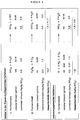
- FIG. 1 The chemistry of the method according to the invention is shown in the attached FIG. 1 .
- a eutectic melt of potassium chloride and lithium chloride is first prepared.
- the temperature of the eutectic molten salt is, for example, around 360 to 650 ° C.
- the melt is subjected to electrolysis, whereby chlorine gas is generated at the anode (which can consist, for example, of graphite). This step is shown under the number 1) in Figure 1.
- the temperature at the anode is preferably in the range of about 400 ° C.
- Elemental hydrogen is introduced at the cathode, where it reacts with the electrolytically formed metal lithium to form lithium hydride. This step is shown under the number 2) in Figure 1.
- the temperature at the cathode (which can be, for example, a tantalum cathode) is in the range from 550 to 650 ° C., preferably in the order of approximately 600 ° C.
- the lithium hydride dissolved in the salt melt is preferably reacted with silicon tetrachloride in the salt melt at a temperature in the order of magnitude of approximately 400.degree. It forms hydrogen-containing silanes, in particular SiH4 in addition to Si2H6 and H2, as well as lithium chloride, which is again subjected to electrolysis. This reaction step is shown under the number 3) in Figure 1.
- the hydrogen-containing silane mixture is drawn off and immediately burned with oxygen to produce synthetic quartz glass. This step is shown under the number 4) in Figure 1.
- the only byproduct of combustion is water.
- the chlorine gas formed at the anode is fed directly to a heated reactor with a temperature gradient of 100 to 800 ° C, in which it is converted with elemental silicon in a conventional manner to silicon tetrachloride, which is used quantitatively for the production of silane.
- This reaction step is shown under the number 5) in Figure 1.
- the production of the hydrogen is also included in the combined process. This is done by electrolysis of water in such quantities as are required for the immediate further processing of the hydrogen.
- the oxygen obtained is not stoichiometric enough to burn the resulting silanes; however, only a subset of the stoichiometrically required amount is obtained from an additional oxygen source (for example by absorption processes from air or additional water electrolysis) is required.
- the electrolysis of the eutectic melt of potassium chloride and lithium chloride can be carried out in a manner known per se with the introduction of silicon tetrachloride.
- the production of silane in a molten salt on a laboratory scale was carried out by Sundermeyer and Glemser in Angew. Chemie, 70 (1958), page 625. Sundermeyer and Litz describe the electrochemical representation of hydrides in molten salts also in Chemie-Ing.-Techn., 37 (1965), pages 14 to 18.
- the molten salt is preferably carried out in a three-chamber reactor which has an anode chamber, a cathode chamber and has a third chamber downstream of the cathode chamber, in which the reaction of the lithium hydride with the silicon tetrachloride takes place.
- a three-chamber reactor which has an anode chamber, a cathode chamber and has a third chamber downstream of the cathode chamber, in which the reaction of the lithium hydride with the silicon tetrachloride takes place.
- Such devices can be made of conventional materials. However, the use of an apparatus made of quartz glass is preferred, it being possible for less critical points to be formed from borosilicate glass or polytetrafluoroethylene.
- the silane mixture can be burned with conventional burners, a burner made of quartz glass also preferably being used here.
- the burner can be designed so that a lot of up to 100 kg of synthetic quartz glass can be melted with it. Quartz soot produced in the silane combustion can be separated in a scrubber, for example with a ring suction system, together with the water vapor which is produced as a by-product.
- FIG. 2 A diagram of the three-chamber reactor used in accordance with the invention with a downstream silicon tetrachloride reactor is shown in the attached FIG. 2 .
- K1 represents the anode chamber
- K2 the cathode chamber
- K3 the downstream chamber for the production of silanes.
- the anode (+) which is preferably formed from graphite, is immersed in the anode chamber K1.
- Lines provided with regulating valves (V) lead from the anode chamber, optionally via one or more membrane pumps (M), to the silicon tetrachloride reactor (S).
- elemental silicon is reacted with the chlorine withdrawn from the anode chamber to form silicon tetrachloride.
- a low-temperature rectification (T) is shown.
- the silicon tetrachloride which may be obtained via the low-temperature rectification (T) is introduced into the silane chamber (K3) via a further line with a regulating valve (V) and a membrane pump (M).
- the cathode chamber is provided with one or more supply lines for elemental hydrogen, optionally with one or more regulating valves (V) and a membrane pump (M), in order to circulate the hydrogen.
- the silane formed there can be drawn off from the silane chamber (K3) via lines which are optionally provided with a membrane pump (M) and regulating valve (V). It is possible to rectify the hydrogen-containing silane or silane mixture produced in order to recycle unreacted silicon tetrachloride.
- a low-temperature rectification (T) is shown, from which the silane or mixture can be withdrawn via a line, optionally provided with a regulating valve (V) and membrane pump (M).
- the silane or silane mixture formed in the molten salt which may contain hydrogen, is burned with elemental oxygen to give synthetic quartz glass in the form of "lots".
- Such items can be up to 100 kg in size.
- the combustion takes place in a silane / oxygen burner. It is possible, for example, to burn the silane / oxygen mixture by means of a burner at the upper end of a furnace, which is chamber-shaped and has a turn-and-turn plate at its lower end, on which the synthetic quartz glass batch is deposited.
- the lot is produced in the usual way. The plate rotates during quartz production; as the item grows, it lowers at the same time.
- the water vapor produced during the combustion and the quartz soot produced during the combustion can be sucked off between the introduction point of the silane / oxygen burner and the item formed, for example by means of a ring suction line.
- the extracted mixture obtained can be suctioned off, for example, using a water washer in which the quartz soot is deposited.
- the washer is preferably filled with deionized water in order to avoid contamination of the quartz soot. This is also high-purity synthetic quartz glass.
- the quartz soot After removal from the scrubber, for example by decanting, the quartz soot can be dried and, for example, melted under a protective gas at high temperatures. Melting temperatures are on the order of approximately 2500 ° C.
- the synthetic quartz glass batch obtained during the combustion is cooled (annealed) in a conventional manner, for example in a batch cooling furnace.
- FIG. 3 B represents the silane / oxygen burner.
- D shows a rotating / lifting plate.
- the burner B is inserted into the lot furnace (02) from above.
- a ring suction (R) serves to extract water vapor and quartz soot and leads into the washer (W), which is filled with deionized water, for example.
- 01 in Figure 3 represents a lot cooling furnace.
- the procedure according to the invention makes it possible to produce quartz glass of the highest purity, since no volatile metal halides are introduced into the process.
- the process according to the invention is environmentally friendly, since only water vapor and quartz soot are produced when the silane mixture is burned with oxygen.
- the quartz carbon black can be used as quartz sintered material for other purposes, for example for fiber production.
- the process according to the invention is risk-free with regard to industrial regulatory requirements, since only silicon, water and electricity and small amounts of oxygen are used for the process. In the event of an accident, only the smallest amounts of chlorine gas can be emitted, since only as much silane is generated as is needed for the combustion to synthetic quartz glass.
- the silicon used is a harmless material. It is not necessary for the silicon to be highly purified. Technical grade silicon is sufficient. Such material can contain, for example, iron and optionally calcium oxide. Its purity is, for example, approximately 98.5 to 99.5%. Impurities such as iron and calcium oxide do not interfere because the corresponding chlorides that can be formed in the process are not volatile.
- Rectification steps are not necessary in the process according to the invention, although they can be carried out.
- the rectification can be carried out using customary methods.
- the process according to the invention is carried out in such a way that just as much silane is produced as is required for the combustion process.
- Appropriate dimensioning of the three-chamber reactor can ensure that only a small amount of chlorine gas can be emitted in the event of a malfunction (glass breakage). Therefore, the method according to the invention is also innovative from the point of view of commercial regulations, while various precautions had to be taken in the prior art.
- Silicon tetrachloride is a chemical that is subject to the Hazardous Substances Ordinance and special precautions must be taken for the storage of propane and compressed oxygen. All such precautions are omitted for the method according to the invention, since only the storage of elemental silicon, a completely harmless substance, is required. In areas with good solar radiation, the invention offers Process also the photovaltics, an additional aspect to the environmental friendliness of the process.
- the method according to the invention requires only 0.6 kg of non-hazardous starting material, which is another Relief of the environment due to lower transport volume (energy saving and the associated reduction in emissions).
Landscapes
- Chemical & Material Sciences (AREA)
- Engineering & Computer Science (AREA)
- Materials Engineering (AREA)
- Chemical Kinetics & Catalysis (AREA)
- Organic Chemistry (AREA)
- Geochemistry & Mineralogy (AREA)
- Manufacturing & Machinery (AREA)
- General Chemical & Material Sciences (AREA)
- Life Sciences & Earth Sciences (AREA)
- Metallurgy (AREA)
- Electrochemistry (AREA)
- General Life Sciences & Earth Sciences (AREA)
- Inorganic Chemistry (AREA)
- Silicon Compounds (AREA)
- Glass Melting And Manufacturing (AREA)
- Manufacture, Treatment Of Glass Fibers (AREA)
- Glass Compositions (AREA)
Applications Claiming Priority (2)
| Application Number | Priority Date | Filing Date | Title |
|---|---|---|---|
| DE19914101687 DE4101687C1 (enExample) | 1991-01-22 | 1991-01-22 | |
| DE4101687 | 1991-01-22 |
Publications (1)
| Publication Number | Publication Date |
|---|---|
| EP0496273A1 true EP0496273A1 (de) | 1992-07-29 |
Family
ID=6423429
Family Applications (1)
| Application Number | Title | Priority Date | Filing Date |
|---|---|---|---|
| EP92100633A Withdrawn EP0496273A1 (de) | 1991-01-22 | 1992-01-16 | Verfahren zur Herstellung von hochreinem Quarzglas |
Country Status (3)
| Country | Link |
|---|---|
| EP (1) | EP0496273A1 (enExample) |
| JP (1) | JPH04325410A (enExample) |
| DE (1) | DE4101687C1 (enExample) |
Families Citing this family (5)
| Publication number | Priority date | Publication date | Assignee | Title |
|---|---|---|---|---|
| US5510007A (en) * | 1994-08-31 | 1996-04-23 | At&T Corp. | Electrochemical generation of silane |
| US8821825B2 (en) | 2010-12-23 | 2014-09-02 | Sunedison, Inc. | Methods for producing silane |
| US8388914B2 (en) | 2010-12-23 | 2013-03-05 | Memc Electronic Materials, Inc. | Systems for producing silane |
| CN103384640B (zh) * | 2010-12-23 | 2016-03-02 | Memc电子材料有限公司 | 用于制备硅烷的方法和系统 |
| WO2020116522A1 (ja) * | 2018-12-04 | 2020-06-11 | 住友電気工業株式会社 | ガラス微粒子堆積体製造用の原料供給装置および原料供給方法 |
Citations (2)
| Publication number | Priority date | Publication date | Assignee | Title |
|---|---|---|---|---|
| US3078218A (en) * | 1958-08-04 | 1963-02-19 | Union Carbide Corp | Hydrogenation of halogen compounds of elements of groups iii and iv of the periodic system |
| DE3835208A1 (de) * | 1988-10-15 | 1990-05-17 | Deutsche Bundespost | Verfahren zur herstellung von undotiertem und fluordotiertem quarzglas |
Family Cites Families (1)
| Publication number | Priority date | Publication date | Assignee | Title |
|---|---|---|---|---|
| US2272342A (en) * | 1934-08-27 | 1942-02-10 | Corning Glass Works | Method of making a transparent article of silica |
-
1991
- 1991-01-22 DE DE19914101687 patent/DE4101687C1/de not_active Expired - Fee Related
-
1992
- 1992-01-16 EP EP92100633A patent/EP0496273A1/de not_active Withdrawn
- 1992-01-22 JP JP936792A patent/JPH04325410A/ja active Pending
Patent Citations (2)
| Publication number | Priority date | Publication date | Assignee | Title |
|---|---|---|---|---|
| US3078218A (en) * | 1958-08-04 | 1963-02-19 | Union Carbide Corp | Hydrogenation of halogen compounds of elements of groups iii and iv of the periodic system |
| DE3835208A1 (de) * | 1988-10-15 | 1990-05-17 | Deutsche Bundespost | Verfahren zur herstellung von undotiertem und fluordotiertem quarzglas |
Non-Patent Citations (2)
| Title |
|---|
| CHEMICAL ABSTRACTS, vol. 103, no. 14, Oktober 1985, Columbus, Ohio, US; abstract no. 109043N, Seite 269 ;Spalte 1 ; * |
| SOLID STATE TECHNOLOGY. Bd. 30, Nr. 7, Juli 1987, WASHINGTON US Seiten 53 - 59; P.A. TAYLOR: 'Silane: manufacture and applications' * |
Also Published As
| Publication number | Publication date |
|---|---|
| JPH04325410A (ja) | 1992-11-13 |
| DE4101687C1 (enExample) | 1992-04-16 |
Similar Documents
| Publication | Publication Date | Title |
|---|---|---|
| US2347496A (en) | Preparation of pigments | |
| DE3236705C2 (de) | Verfahren zur Herstellung von Silicium | |
| DE1208740B (de) | Verfahren zur Herstellung reiner Kieselsaeure durch Verdampfen einer oxydierbaren Siliciumverbindung in einem elementaren und/oder gebundenen Sauerstoff enthaltenden Gasstrom | |
| DE3513731A1 (de) | Verfahren zur vernichtung gefaehrlicher abfaelle | |
| DE19502550A1 (de) | Verbessertes Verfahren zur Hydrierung von Tetrachlorsilan | |
| RU2057377C1 (ru) | Способ переработки оружейного высокообогащенного урана и его сплавов в топливный материал для атомных реакторов | |
| DE4101687C1 (enExample) | ||
| DE102008012711A1 (de) | Verfahren zur Herstellung von polykristallinem Silizium | |
| DE2451840A1 (de) | Verfahren und vorrichtung zur herstellung von wasserfreien metallchloriden | |
| US5707599A (en) | Process for purifying tantalum oxide and other metal oxides | |
| CN1083418A (zh) | 从有机硅化工废渣中回收有用物质的工艺 | |
| EP0116342B1 (de) | Verfahren zur Herstellung einer glasigen Vorform für Lichtwellenleiter | |
| DE69718382T2 (de) | Verfahren zur Herstellung von gasförmigem Wasserstoffbromid und Vorrichtung zu dessen Durchführung | |
| DE1119832B (de) | Verfahren zur Herstellung von Chlorwasserstoff | |
| Jolly et al. | Hydrides of Groups IV and V | |
| DE3841209A1 (de) | Verfahren zum herstellen von schwefelhexafluorid | |
| DE2920998A1 (de) | Verfahren zur herstellung von wasserfreiem wismuttrichlorid | |
| WO2020130531A1 (ko) | 칼슘 하이드라이드의 제조 방법 | |
| CH640803A5 (de) | Verfahren zur herstellung von siliciumcarbid. | |
| DE1226088B (de) | Verfahren zur Herstellung von hochreinem kristallinem Siliciumcarbid | |
| DE3809367C2 (enExample) | ||
| DE3136786A1 (de) | "siliciumorganisches polymeres und verfahren zu dessen herstellung" | |
| DE1667709A1 (de) | Verfahren zum Herstellen von Galliumarsenid | |
| DE2042052A1 (de) | Verfahren zur Herstellung von Titandioxid | |
| DE102006008898B4 (de) | Verfahren zur Rückgewinnung von Titandioxid aus Eisen enthaltender Makulatur der Dekorpapierherstellung nach der Blattbildung |
Legal Events
| Date | Code | Title | Description |
|---|---|---|---|
| PUAI | Public reference made under article 153(3) epc to a published international application that has entered the european phase |
Free format text: ORIGINAL CODE: 0009012 |
|
| AK | Designated contracting states |
Kind code of ref document: A1 Designated state(s): AT BE CH DE DK ES FR GB GR IT LI LU MC NL PT SE |
|
| 17P | Request for examination filed |
Effective date: 19930414 |
|
| 17Q | First examination report despatched |
Effective date: 19940311 |
|
| STAA | Information on the status of an ep patent application or granted ep patent |
Free format text: STATUS: THE APPLICATION IS DEEMED TO BE WITHDRAWN |
|
| 18D | Application deemed to be withdrawn |
Effective date: 19940802 |