EP0423769B1 - Verfahren zur Hydroformylierung von Olefinen - Google Patents
Verfahren zur Hydroformylierung von Olefinen Download PDFInfo
- Publication number
- EP0423769B1 EP0423769B1 EP90119931A EP90119931A EP0423769B1 EP 0423769 B1 EP0423769 B1 EP 0423769B1 EP 90119931 A EP90119931 A EP 90119931A EP 90119931 A EP90119931 A EP 90119931A EP 0423769 B1 EP0423769 B1 EP 0423769B1
- Authority
- EP
- European Patent Office
- Prior art keywords
- reactor system
- stage reactor
- olefin
- reaction
- process according
- Prior art date
- Legal status (The legal status is an assumption and is not a legal conclusion. Google has not performed a legal analysis and makes no representation as to the accuracy of the status listed.)
- Expired - Lifetime
Links
- 150000001336 alkenes Chemical class 0.000 title claims description 65
- JRZJOMJEPLMPRA-UHFFFAOYSA-N olefin Natural products CCCCCCCC=C JRZJOMJEPLMPRA-UHFFFAOYSA-N 0.000 title claims description 61
- 238000000034 method Methods 0.000 title claims description 26
- 238000007037 hydroformylation reaction Methods 0.000 title claims description 24
- 238000006243 chemical reaction Methods 0.000 claims description 149
- 239000003054 catalyst Substances 0.000 claims description 56
- 238000002156 mixing Methods 0.000 claims description 45
- 239000007788 liquid Substances 0.000 claims description 37
- 239000010948 rhodium Substances 0.000 claims description 20
- 229910052703 rhodium Inorganic materials 0.000 claims description 19
- MHOVAHRLVXNVSD-UHFFFAOYSA-N rhodium atom Chemical compound [Rh] MHOVAHRLVXNVSD-UHFFFAOYSA-N 0.000 claims description 19
- 239000000047 product Substances 0.000 claims description 16
- 150000002903 organophosphorus compounds Chemical class 0.000 claims description 14
- -1 alkylaryl phosphines Chemical class 0.000 claims description 13
- 239000000203 mixture Substances 0.000 claims description 11
- 239000007791 liquid phase Substances 0.000 claims description 10
- UFHFLCQGNIYNRP-UHFFFAOYSA-N Hydrogen Chemical compound [H][H] UFHFLCQGNIYNRP-UHFFFAOYSA-N 0.000 claims description 9
- 238000009792 diffusion process Methods 0.000 claims description 9
- 229910052739 hydrogen Inorganic materials 0.000 claims description 9
- 239000001257 hydrogen Substances 0.000 claims description 9
- 239000003446 ligand Substances 0.000 claims description 9
- UGFAIRIUMAVXCW-UHFFFAOYSA-N Carbon monoxide Chemical compound [O+]#[C-] UGFAIRIUMAVXCW-UHFFFAOYSA-N 0.000 claims description 8
- 229910002091 carbon monoxide Inorganic materials 0.000 claims description 8
- 239000002904 solvent Substances 0.000 claims description 8
- 238000013019 agitation Methods 0.000 claims description 5
- 239000006227 byproduct Substances 0.000 claims description 4
- 229930195733 hydrocarbon Natural products 0.000 claims description 4
- 125000004432 carbon atom Chemical group C* 0.000 claims description 3
- 150000003839 salts Chemical class 0.000 claims description 3
- 150000001338 aliphatic hydrocarbons Chemical class 0.000 claims description 2
- 150000004945 aromatic hydrocarbons Chemical class 0.000 claims description 2
- 150000002148 esters Chemical class 0.000 claims description 2
- XLYOFNOQVPJJNP-UHFFFAOYSA-N water Substances O XLYOFNOQVPJJNP-UHFFFAOYSA-N 0.000 claims description 2
- 150000003003 phosphines Chemical class 0.000 claims 3
- 150000001298 alcohols Chemical class 0.000 claims 1
- 150000002170 ethers Chemical class 0.000 claims 1
- 125000002485 formyl group Chemical class [H]C(*)=O 0.000 claims 1
- AQSJGOWTSHOLKH-UHFFFAOYSA-N phosphite(3-) Chemical class [O-]P([O-])[O-] AQSJGOWTSHOLKH-UHFFFAOYSA-N 0.000 claims 1
- 150000003283 rhodium Chemical class 0.000 claims 1
- 150000001299 aldehydes Chemical class 0.000 description 67
- 239000007789 gas Substances 0.000 description 54
- QQONPFPTGQHPMA-UHFFFAOYSA-N propylene Natural products CC=C QQONPFPTGQHPMA-UHFFFAOYSA-N 0.000 description 39
- 125000004805 propylene group Chemical group [H]C([H])([H])C([H])([*:1])C([H])([H])[*:2] 0.000 description 39
- 238000000926 separation method Methods 0.000 description 23
- ATUOYWHBWRKTHZ-UHFFFAOYSA-N Propane Chemical compound CCC ATUOYWHBWRKTHZ-UHFFFAOYSA-N 0.000 description 18
- 239000000700 radioactive tracer Substances 0.000 description 18
- RIOQSEWOXXDEQQ-UHFFFAOYSA-N triphenylphosphine Chemical compound C1=CC=CC=C1P(C=1C=CC=CC=1)C1=CC=CC=C1 RIOQSEWOXXDEQQ-UHFFFAOYSA-N 0.000 description 18
- 239000002994 raw material Substances 0.000 description 17
- XYFCBTPGUUZFHI-UHFFFAOYSA-N Phosphine Chemical compound P XYFCBTPGUUZFHI-UHFFFAOYSA-N 0.000 description 11
- VLKZOEOYAKHREP-UHFFFAOYSA-N n-Hexane Chemical compound CCCCCC VLKZOEOYAKHREP-UHFFFAOYSA-N 0.000 description 11
- ZTQSAGDEMFDKMZ-UHFFFAOYSA-N Butyraldehyde Chemical compound CCCC=O ZTQSAGDEMFDKMZ-UHFFFAOYSA-N 0.000 description 10
- 239000001294 propane Substances 0.000 description 9
- 230000000052 comparative effect Effects 0.000 description 8
- 238000004821 distillation Methods 0.000 description 7
- 229910000073 phosphorus hydride Inorganic materials 0.000 description 7
- 230000005587 bubbling Effects 0.000 description 6
- 150000002430 hydrocarbons Chemical class 0.000 description 6
- LFQSCWFLJHTTHZ-UHFFFAOYSA-N Ethanol Chemical compound CCO LFQSCWFLJHTTHZ-UHFFFAOYSA-N 0.000 description 5
- 238000007796 conventional method Methods 0.000 description 5
- 238000005192 partition Methods 0.000 description 5
- 238000004064 recycling Methods 0.000 description 5
- 238000010586 diagram Methods 0.000 description 4
- 238000009826 distribution Methods 0.000 description 4
- 238000004817 gas chromatography Methods 0.000 description 4
- 239000012071 phase Substances 0.000 description 4
- YXFVVABEGXRONW-UHFFFAOYSA-N Toluene Chemical compound CC1=CC=CC=C1 YXFVVABEGXRONW-UHFFFAOYSA-N 0.000 description 3
- 238000009835 boiling Methods 0.000 description 3
- 239000007795 chemical reaction product Substances 0.000 description 3
- 230000000694 effects Effects 0.000 description 3
- KBPLFHHGFOOTCA-UHFFFAOYSA-N 1-Octanol Chemical compound CCCCCCCCO KBPLFHHGFOOTCA-UHFFFAOYSA-N 0.000 description 2
- IJGRMHOSHXDMSA-UHFFFAOYSA-N Atomic nitrogen Chemical compound N#N IJGRMHOSHXDMSA-UHFFFAOYSA-N 0.000 description 2
- 239000004215 Carbon black (E152) Substances 0.000 description 2
- RTZKZFJDLAIYFH-UHFFFAOYSA-N Diethyl ether Chemical compound CCOCC RTZKZFJDLAIYFH-UHFFFAOYSA-N 0.000 description 2
- LRHPLDYGYMQRHN-UHFFFAOYSA-N N-Butanol Chemical compound CCCCO LRHPLDYGYMQRHN-UHFFFAOYSA-N 0.000 description 2
- URLKBWYHVLBVBO-UHFFFAOYSA-N Para-Xylene Chemical group CC1=CC=C(C)C=C1 URLKBWYHVLBVBO-UHFFFAOYSA-N 0.000 description 2
- NINIDFKCEFEMDL-UHFFFAOYSA-N Sulfur Chemical compound [S] NINIDFKCEFEMDL-UHFFFAOYSA-N 0.000 description 2
- 238000004458 analytical method Methods 0.000 description 2
- 230000006866 deterioration Effects 0.000 description 2
- 238000000605 extraction Methods 0.000 description 2
- 229910052736 halogen Inorganic materials 0.000 description 2
- 150000002367 halogens Chemical class 0.000 description 2
- 239000000463 material Substances 0.000 description 2
- 238000006068 polycondensation reaction Methods 0.000 description 2
- 238000002360 preparation method Methods 0.000 description 2
- 238000010517 secondary reaction Methods 0.000 description 2
- 229910052717 sulfur Inorganic materials 0.000 description 2
- 239000011593 sulfur Substances 0.000 description 2
- 239000013638 trimer Substances 0.000 description 2
- HVLLSGMXQDNUAL-UHFFFAOYSA-N triphenyl phosphite Chemical compound C=1C=CC=CC=1OP(OC=1C=CC=CC=1)OC1=CC=CC=C1 HVLLSGMXQDNUAL-UHFFFAOYSA-N 0.000 description 2
- MBVAQOHBPXKYMF-LNTINUHCSA-N (z)-4-hydroxypent-3-en-2-one;rhodium Chemical compound [Rh].C\C(O)=C\C(C)=O.C\C(O)=C\C(C)=O.C\C(O)=C\C(C)=O MBVAQOHBPXKYMF-LNTINUHCSA-N 0.000 description 1
- XDTMQSROBMDMFD-UHFFFAOYSA-N Cyclohexane Chemical compound C1CCCCC1 XDTMQSROBMDMFD-UHFFFAOYSA-N 0.000 description 1
- MQIUGAXCHLFZKX-UHFFFAOYSA-N Di-n-octyl phthalate Natural products CCCCCCCCOC(=O)C1=CC=CC=C1C(=O)OCCCCCCCC MQIUGAXCHLFZKX-UHFFFAOYSA-N 0.000 description 1
- AMIMRNSIRUDHCM-UHFFFAOYSA-N Isopropylaldehyde Chemical compound CC(C)C=O AMIMRNSIRUDHCM-UHFFFAOYSA-N 0.000 description 1
- CTQNGGLPUBDAKN-UHFFFAOYSA-N O-Xylene Chemical compound CC1=CC=CC=C1C CTQNGGLPUBDAKN-UHFFFAOYSA-N 0.000 description 1
- 239000002202 Polyethylene glycol Substances 0.000 description 1
- 238000009825 accumulation Methods 0.000 description 1
- 230000002411 adverse Effects 0.000 description 1
- 125000000217 alkyl group Chemical group 0.000 description 1
- 125000002947 alkylene group Chemical group 0.000 description 1
- 125000003118 aryl group Chemical group 0.000 description 1
- QVGXLLKOCUKJST-UHFFFAOYSA-N atomic oxygen Chemical compound [O] QVGXLLKOCUKJST-UHFFFAOYSA-N 0.000 description 1
- 230000015572 biosynthetic process Effects 0.000 description 1
- BJQHLKABXJIVAM-UHFFFAOYSA-N bis(2-ethylhexyl) phthalate Chemical compound CCCCC(CC)COC(=O)C1=CC=CC=C1C(=O)OCC(CC)CCCC BJQHLKABXJIVAM-UHFFFAOYSA-N 0.000 description 1
- WXMZPPIDLJRXNK-UHFFFAOYSA-N butyl(diphenyl)phosphane Chemical compound C=1C=CC=CC=1P(CCCC)C1=CC=CC=C1 WXMZPPIDLJRXNK-UHFFFAOYSA-N 0.000 description 1
- 229910052799 carbon Inorganic materials 0.000 description 1
- 238000003889 chemical engineering Methods 0.000 description 1
- 239000007810 chemical reaction solvent Substances 0.000 description 1
- 150000001875 compounds Chemical class 0.000 description 1
- 238000010276 construction Methods 0.000 description 1
- 238000002425 crystallisation Methods 0.000 description 1
- 230000008025 crystallization Effects 0.000 description 1
- 150000001993 dienes Chemical class 0.000 description 1
- 239000000539 dimer Substances 0.000 description 1
- 239000012530 fluid Substances 0.000 description 1
- 238000005227 gel permeation chromatography Methods 0.000 description 1
- 239000012535 impurity Substances 0.000 description 1
- 229910017053 inorganic salt Inorganic materials 0.000 description 1
- 125000005647 linker group Chemical group 0.000 description 1
- 238000005259 measurement Methods 0.000 description 1
- 239000012528 membrane Substances 0.000 description 1
- 229910052757 nitrogen Inorganic materials 0.000 description 1
- QJGQUHMNIGDVPM-UHFFFAOYSA-N nitrogen group Chemical group [N] QJGQUHMNIGDVPM-UHFFFAOYSA-N 0.000 description 1
- 231100000989 no adverse effect Toxicity 0.000 description 1
- TVMXDCGIABBOFY-UHFFFAOYSA-N octane Chemical compound CCCCCCCC TVMXDCGIABBOFY-UHFFFAOYSA-N 0.000 description 1
- 238000005457 optimization Methods 0.000 description 1
- SJLOMQIUPFZJAN-UHFFFAOYSA-N oxorhodium Chemical compound [Rh]=O SJLOMQIUPFZJAN-UHFFFAOYSA-N 0.000 description 1
- 229910052760 oxygen Inorganic materials 0.000 description 1
- 239000001301 oxygen Substances 0.000 description 1
- 150000002978 peroxides Chemical class 0.000 description 1
- 125000001997 phenyl group Chemical group [H]C1=C([H])C([H])=C(*)C([H])=C1[H] 0.000 description 1
- OSRKWUXYLYWDOH-UHFFFAOYSA-N phenyl(dipropyl)phosphane Chemical compound CCCP(CCC)C1=CC=CC=C1 OSRKWUXYLYWDOH-UHFFFAOYSA-N 0.000 description 1
- OJMIONKXNSYLSR-UHFFFAOYSA-N phosphorous acid Chemical compound OP(O)O OJMIONKXNSYLSR-UHFFFAOYSA-N 0.000 description 1
- 239000002574 poison Substances 0.000 description 1
- 231100000614 poison Toxicity 0.000 description 1
- 229920001223 polyethylene glycol Polymers 0.000 description 1
- 229920000642 polymer Polymers 0.000 description 1
- 229920001451 polypropylene glycol Polymers 0.000 description 1
- 238000010926 purge Methods 0.000 description 1
- 230000035484 reaction time Effects 0.000 description 1
- 230000000717 retained effect Effects 0.000 description 1
- 229910003450 rhodium oxide Inorganic materials 0.000 description 1
- SVOOVMQUISJERI-UHFFFAOYSA-K rhodium(3+);triacetate Chemical compound [Rh+3].CC([O-])=O.CC([O-])=O.CC([O-])=O SVOOVMQUISJERI-UHFFFAOYSA-K 0.000 description 1
- VXNYVYJABGOSBX-UHFFFAOYSA-N rhodium(3+);trinitrate Chemical compound [Rh+3].[O-][N+]([O-])=O.[O-][N+]([O-])=O.[O-][N+]([O-])=O VXNYVYJABGOSBX-UHFFFAOYSA-N 0.000 description 1
- 239000000243 solution Substances 0.000 description 1
- 238000001179 sorption measurement Methods 0.000 description 1
- 238000003756 stirring Methods 0.000 description 1
- ZUHZGEOKBKGPSW-UHFFFAOYSA-N tetraglyme Chemical compound COCCOCCOCCOCCOC ZUHZGEOKBKGPSW-UHFFFAOYSA-N 0.000 description 1
- 238000007669 thermal treatment Methods 0.000 description 1
- TUQOTMZNTHZOKS-UHFFFAOYSA-N tributylphosphine Chemical compound CCCCP(CCCC)CCCC TUQOTMZNTHZOKS-UHFFFAOYSA-N 0.000 description 1
- WLPUWLXVBWGYMZ-UHFFFAOYSA-N tricyclohexylphosphine Chemical compound C1CCCCC1P(C1CCCCC1)C1CCCCC1 WLPUWLXVBWGYMZ-UHFFFAOYSA-N 0.000 description 1
- 150000005671 trienes Chemical class 0.000 description 1
- YFNKIDBQEZZDLK-UHFFFAOYSA-N triglyme Chemical compound COCCOCCOCCOC YFNKIDBQEZZDLK-UHFFFAOYSA-N 0.000 description 1
- RMZAYIKUYWXQPB-UHFFFAOYSA-N trioctylphosphane Chemical compound CCCCCCCCP(CCCCCCCC)CCCCCCCC RMZAYIKUYWXQPB-UHFFFAOYSA-N 0.000 description 1
- FIQMHBFVRAXMOP-UHFFFAOYSA-N triphenylphosphane oxide Chemical compound C=1C=CC=CC=1P(C=1C=CC=CC=1)(=O)C1=CC=CC=C1 FIQMHBFVRAXMOP-UHFFFAOYSA-N 0.000 description 1
- COIOYMYWGDAQPM-UHFFFAOYSA-N tris(2-methylphenyl)phosphane Chemical compound CC1=CC=CC=C1P(C=1C(=CC=CC=1)C)C1=CC=CC=C1C COIOYMYWGDAQPM-UHFFFAOYSA-N 0.000 description 1
- HGBOYTHUEUWSSQ-UHFFFAOYSA-N valeric aldehyde Natural products CCCCC=O HGBOYTHUEUWSSQ-UHFFFAOYSA-N 0.000 description 1
- 239000008096 xylene Substances 0.000 description 1
Images

Classifications
-
- C—CHEMISTRY; METALLURGY
- C07—ORGANIC CHEMISTRY
- C07C—ACYCLIC OR CARBOCYCLIC COMPOUNDS
- C07C45/00—Preparation of compounds having >C = O groups bound only to carbon or hydrogen atoms; Preparation of chelates of such compounds
- C07C45/49—Preparation of compounds having >C = O groups bound only to carbon or hydrogen atoms; Preparation of chelates of such compounds by reaction with carbon monoxide
- C07C45/50—Preparation of compounds having >C = O groups bound only to carbon or hydrogen atoms; Preparation of chelates of such compounds by reaction with carbon monoxide by oxo-reactions
-
- C—CHEMISTRY; METALLURGY
- C07—ORGANIC CHEMISTRY
- C07C—ACYCLIC OR CARBOCYCLIC COMPOUNDS
- C07C47/00—Compounds having —CHO groups
- C07C47/02—Saturated compounds having —CHO groups bound to acyclic carbon atoms or to hydrogen
Definitions
- the present invention relates to a process for hydroformylation of an olefin, which comprises reacting an olefin with carbon monoxide and hydrogen in the presence of a rhodium catalyst having a trivalent organic phosphorus compound. More particularly, the present invention relates to a process for hydroformylation of an improved reaction system.
- Japanese Unexamined Patent Publication No. 88816/1974 discloses a method wherein a gas-liquid mixed phase is passed through in a specified direction in 2 or 3 reactors.
- Japanese Unexamined Patent Publication No. 125103/1977 discloses a reaction system of gas stripping type by means of a single stage complete mixing tank.
- Japanese Unexamined Patent Publication No. 218546/1986 discloses a reaction system wherein complete mixing tanks are combined for two stage reaction.
- Japanese Unexamined Patent Publication No. 13295/1980 discloses a reaction system of loop type.
- GB-A-1 387 657 discloses a process for hydroformylation of an olefin comprising catalytically reacting the olefin with hydrogen and carbon monoxide in a primary reaction zone so that an aldehyde or aldehyde and alcohol is produced and some olefin remains unconverted, withdrawing aldehyde or aldehyde and alcohol product as vapour along with gases including unconverted olefin from the primary reaction zone, separating aldehyde or aldehyde and alcohol from the gases thus withdrawn, recycling part of the separated gases including unconverted olefin to a primary reaction zone and hydroformylating part of the unconverted olefin in a secondary reaction zone and separating further aldehyde or aldehyde and alcohol product from the secondary reaction zone without further recycling of the remaining separated gases.
- the reaction system for the hydroformylation reaction is required to minimize low boiling point components (hereinafter referred to simply as LB) such as paraffins as reaction byproducts and high boiling point components (hereinafter referred to as HB) as polycondensation products of the formed aldehyde, and at the same time to increase the conversion of the olefin i.e. to reduce the proportion of the unreacted olefin.
- LB low boiling point components
- HB high boiling point components
- the present inventors have conducted extensive studies on the above problems and as a result, have found it possible to solve the problems by conducting the hydroformylation reaction by means of a specific combination of two reactor systems having different mixing characteristics.
- the present invention has been accomplished on the basis of this discovery.
- the present invention provides a process for hydroformylation of an olefin, which comprises reacting an olefin with carbon monoxide and hydrogen in the presence of a rhodium catalyst having a trivalent organic phosphorus compound as a ligand, wherein the hydroformylation reaction is conducted by two stage reactor systems i.e.
- a first stage reactor system comprising a reactor or reactors having a mixing characteristic of the liquid phase being substantially of complete mixing type
- a second stage reactor system being a reaction system of catalyst solution-circulating type and comprising a reactor or reactors having a mixing characteristic of piston flow type
- U a non-dimensional number U (hereinafter referred to as a "flow mixing parameter") defined by the formula (I): U ⁇ u ⁇ L/2 E ⁇ (I) wherein u is an average flow velocity (cm/sec), L is the length (cm) of the reaction layer, and E is an average diffusion coefficient (cm2/sec), is at least 0.4
- a gaseous product or gas-liquid mixture discharged from the first stage reactor system is separated into a stream containing the unreacted olefin and other stream, and a part or whole of the stream containing the unreacted olefin is supplied to the second stage reactor system.
- the olefin may be a single olefin or a mixture of olefins. Preferred is an olefin having from 2 to 5 carbon atoms or a mixture of such olefins. The most preferred olefin is propylene. Further, even a raw material having a low purity of an olefin containing hydrocarbons other than olefins such as paraffins, may also be useful. The olefin material is usually employed without any special pretreatment.
- a rhodium catalyst having a trivalent organic phosphorus compound as a ligand is used as the catalyst.
- the trivalent organic phosphorus compound it is possible to employ not only an organic phosphorus compound having an ability as a trivalent monodentate ligand, such as a trialkyl phosphine such as tributyl phosphine or trioctyl phosphine, a triaryl phosphine such as triphenyl phosphine, tritolyl phosphine or a triaryl phosphine having hydrogen of the phenyl group substituted by a sulfonic group or by halogen, a tricycloalkyl phosphine such as tricyclohexyl phosphine, an alkylaryl phosphine such as monobutyldiphenyl phosphine or dipropylphenyl phosphine, a cycloalkylaryl phosphine
- rhodium source it is possible to employ not only a rhodium complex such as hydridocarbonyltris(triphenyl phosphine) rhodium or acetoxybis(triphenyl phosphine) rhodium, but also an organic salt such as rhodium acetylacetonate or rhodium acetate, an inorganic salt such as rhodium nitrate, or an oxide such as rhodium oxide. Rhodium may directly be fed into the hydroformylation reactor.
- the solvent for the preparation of this catalyst solution is usually selected from the reaction solvents which will be described hereinafter. However, it may or may not be the same as the solvent for reaction.
- the above treatment may be conducted in a batch system or in a continuous system.
- the olefin itself may be used as the solvent, or it is possible to use the formed aldehyde or HB formed as a byproduct. Further, it is possible to employ a solvent which is capable of dissolving the catalyst and which does not adversely affect the reaction, such as an aliphatic hydrocarbon such as hexane or octane, an aromatic hydrocarbon such as toluene or xylene, an alicyclic hydrocarbon such as cyclohexane, an alcohol such as butanol, octanol, polyethylene glycol or polypropylene glycol, an ether such triglyme or tetraglyme, an ester such as dioctyl phthalate, or water.
- a solvent which is capable of dissolving the catalyst and which does not adversely affect the reaction such as an aliphatic hydrocarbon such as hexane or octane, an aromatic hydrocarbon such as toluene or xylene, an
- the first stage reactor system comprises a reactor or reactors wherein the mixing characteristic of the liquid phase is of substantially complete mixing type
- the second stage reactor system is a reaction system of catalyst solution circulating type and comprises a reactor or reactors having a mixing characteristic of piston flow type wherein when the mixing characteristic of the liquid phase is represented by a diffusion model, the flow mixing parameter U is at least 0.4.
- a gaseous product or a gas-liquid mixture discharged from the first stage reactor system is separated into a stream containing the unreacted olefin and other stream, and a part or whole of the stream containing the unreacted olefin is supplied to the second stage reactor system.
- the mixing characteristic of the liquid phase of the above reactor or reactors can be represented by the flow mixing parameter U expressed by means of the diffusion model as described hereinafter. Accordingly, in the process of the present invention, the mixing characteristic of the liquid phase in the reactor system is expressed by the value of parameter U as represented by a diffusion model.
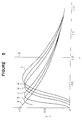
- the mixing characteristic in a diffusion model can be quantitatively analyzed by a tracer test by a pulse response method.
- the tracer is preferably the one which is not present in the system and which does not change by the reaction.
- it may be a paraffinic hydrocarbon not contained in the raw materials, a solvent not used for the reaction system or an oxide of an organic phosphorus compound not used in the reaction system.
- a reactor wherein the mixing characteristic of the liquid phase is substantially of complete mixing type is used alone, or a plurality of such reactors are used in parallel or in series.
- the characteristic substantially of complete mixing type means that the flow mixing parameter U of the formula (I) is less than 0.4. U is preferably not higher than 0.3.
- the structure of the reactor having a complete mixing characteristic is known and is usually an agitation tank provided with a stirrer.
- a substantially complete mixing characteristic can be obtained by the stirring effects of the gas.
- the whole of the olefin raw material and a part or whole of a gas mixture (hereinafter referred to as an oxo gas) of hydrogen and carbon monoxide, are fed to this first stage reactor system.
- the reaction system may be a catalyst solution circulating system wherein the catalyst solution is withdrawn out of the reactor together with the product, or a so-called gas stripping system wherein the product is distilled in the form of a gas while confining the catalyst solution in the reactor.
- the separation method differs depending on e.g. the boiling point of the olefin. However, the separation is conducted usually by a conventional method such as distillation or stripping by means of a gas. In such a case, if necessary, the separation of a gas component composed essentially of the oxo gas may be conducted prior to the separation of the unreacted olefin. A part or whole of the gas component composed essentially of the oxo gas and the separated unreacted olefin, is fed to the second stage reactor system, and the rest is recycled to the first stage reactor system.
- the stream containing the formed aldehyde is subjected to separation of the formed aldehyde from other components by a conventional method such as distillation.
- a conventional method such as distillation.
- the other components contain the catalyst as in the case of the catalyst solution circulating system
- such other components can be recycled as a catalyst solution to the first stage reactor system.
- the aldehyde separation step may be combined with the second stage aldehyde separation step, as will be described hereinafter.
- olefin which was not separated in the previous step for separation of the unreacted olefin, may sometimes be recovered by this aldehyde separation.
- the recovered olefin is usually recycled to the first stage reactor system, but it may be fed to the second stage reactor system.
- the second stage reactor system is a reaction system in which a reactor of a catalyst solution circulating type is used alone or a plurality of such reactors are used in parallel and/or in series, and the mixing characteristic of the liquid phase in each reactor is a piston flow type mixing characteristic where the flow mixing parameter U ⁇ 0.4, preferably U ⁇ 0.5.
- U the upper limit
- U is usually within a range of from 0.4 to 100, preferably from 0.5 to 50.
- Construction of such a reactor can be made by a conventional method, for example, by providing a plurality of perforated partitions to a cylindrical reactor, or by using a pipe reactor and increasing the liquid linear speed.
- the unreacted olefin and oxo gas discharged from the first stage reactor system and, if necessary, an additional oxo gas raw material, are fed together with the circulating catalyst solution to the second stage reactor system.
- the gas-liquid mixture discharged from the second stage reactor system is, if necessary, cooled and then separated into a gas and a liquid containing the formed aldehyde and the catalyst.
- the gas is purged, but a part thereof may be recycled to the second stage reactor system.
- the formed aldehyde is separated by a conventional method such as distillation, and the catalyst solution is recycled to the second stage reactor system.
- first stage aldehyde separation step and the second stage aldehyde separation step may be conducted by the same apparatus.
- the stream after separation of the unreacted olefin of the first stage is combined with the stream before or after the gas separation of the second stage, and if necessary after being subjected to gas separation, the mixture is separated into the aldehyde and the catalyst solution, whereupon the catalyst solution is recycled to the second stage reactor system, but a part thereof may be recycled also to the first stage reactor system.
- a part of the circulating catalyst solution is withdrawn, and HB is separated by a known method such as distillation, crystallization or extraction, and the catalyst component may be recovered and combined to the circulating catalyst solution for reuse.
- the first stage reactor system has a characteristic of substantially complete mixing type, and the concentration distribution in the liquid is not substantially present, whereby the reaction can be conducted under the optimum one point reaction condition, and accordingly the yield of LB and HB can be minimized. If this reaction is conducted by a reactor system having a mixing characteristic of piston flow type, a concentration distribution will necessarily be formed in the reactor, and accordingly, the reaction is conducted under a relatively wide range of condition, whereby the optimization of the reaction tends to be difficult. In the reactor having a complete mixing characteristic, there is a limit in reducing the concentration of the olefin. The concentration of the olefin and the volume of the reactor are inversely proportional.
- the second stage reactor system is essential.
- the second stage reactor system is designed so that the aldehyde formed in the first stage reactor system will not substantially be fed to the second stage reactor system.
- the aldehyde is usually highly reactive and unstable. Accordingly, if it is fed to the second stage reactor system, it is likely to undergo polycondensation by the heat in the reactors to form HB, whereby it is impossible to minimize the yield of HB.
- the second stage reactor system it is preferred to employ a reaction system having a mixing characteristic of piston flow type.
- a piston flow type reactor having a mixing characteristic with a flow mixing parameter U ⁇ 0.4, it is possible to reduce the amount of the unreacted olefin at the outlet to an extremely small level. A certain concentration distribution exists in the reactor. Accordingly, it is here not possible to minimize the yield of LB and HB.
- the value for U of the second stage may be set at a relatively large value over 0.4, and when the reaction rate in the second stage is large, the value for U at the second stage is set at a relatively small level of at least 0.4, whereby the yield of LB and HB can be minimized as a total of the first and second stages.
- the molar ratio of the conversion of the olefin in the second stage reactor system to the conversion of the olefin in the first stage reactor system is usually at least 1, preferably at least 0.5, more preferably at least 0.3. From the industrial point of view, the molar ratio is within a range of from 0.01 to 1, preferably from 0.01 to 0.5, more preferably from 0.03 to 0.2.
- Propylene purity Propane 3.5 mol% Propylene 96.5 mol%
- Oxo gas purity H2 50.23 mol% CO 49.77 mol%
- Catalyst solution A rhodium hydridocarbonyltris(triphenyl phosphine) complex was dissolved in p-xylene so that triphenyl phosphine would be 15 wt% and rhodium would be 200 ppm.
- Reaction temperature 90°C Total pressure 16 kg/cm2G H2/CO 2.0 Liquid residence time (Empty column base) About 2.0 hours
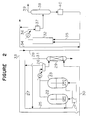
- the reaction product solution was withdrawn by a pipe 4 by over flow in a gas-liquid mixed phase, then cooled to 80°C and subjected to gas-liquid separation at a gas-liquid separator 5, whereupon the gas was adjusted so that the empty column base GLV became 20 m/H and recycled by a pipe 8, and the rest was fed by a pipe 10 to a second stage reactor system.
- the liquid after the gas-liquid separation a substantial amount of the unreacted propylene was dissolved. Therefore, the liquid was subjected to gas stripping at a gas stripping column 9 with about 88% of the total amount of fresh oxo gas from a pipe 1, whereby the total amount of the propylene dissolved in the liquid was recovered and recycled via pipes 11 and 7 to the first stage reactor system.
- a packed column having a height of 5 m was used as the gas stripping column 9 a packed column having a height of 5 m was used.
- the second stage reactor system comprised one cylindrical bubbling column reactor 12 provided internally with ten perforated partitions and no stirrer.
- the feed gas from the first stage reactor system via a pipe 10
- oxo gas corresponding to about 12% of the total amount of fresh oxo gas
- recycling gas via a pipe 15
- a circulating catalyst solution via a pipe 14
- the reaction product solution was a gas-liquid mixed phase, was cooled to 60°C and then via a pipe 16, subjected to gas-liquid separation at a gas-liquid separator 17, whereupon a predetermined amount of the gas was adjusted so that an empty column base GLV at the inlet of the reactor became 20 m/hr and recycled by a pipe 15, and the rest of the gas was purged.
- the liquid after the gas-liquid separation was combined with the liquid of the first stage reactor system after the propylene stripping with oxo gas (a pipe 18), and the combined liquid was separated at the distillation column 19 into the product aldehyde (a pipe 20) and the catalyst solution.
- the catalyst solution was recycled via a catalyst drum 21 to the first stage reactor system and to the second stage reactor system.
- the reaction was conducted continuously for four days.
- reaction conditions were stabilized from the second day to present constant results, and no deterioration in the activity was observed.
- the average values during the three days of from the second day to the fourth day are shown below.
- the selectivity for propane in the second stage reactor system is slightly poor as compared with the first stage reactor system. However, there was no adverse effect to the overall reaction results.
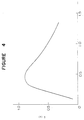
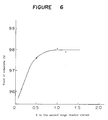
- n-Hexane was used as a tracer, and it was fed for three minutes at a flow rate of 1/10 (weight flow ratio) of the flow rate of the circulating catalyst solution, to the circulating catalyst line immediately prior to the inlet of the reactor, and the change with time of the concentration of n-hexane was observed at the outlet of the reactor by gas chromatography. Firstly, the measurement was conducted with respect to the second stage reactor system.
- the operation was conducted in the same manner as in Example 1 except that the reaction temperature of the second stage reactor system and the first stage reactor system was 95°C, and the number of partitions in the bubbling column of the second stage reactor system was changed to 15 sheets.
- Example 1 The raw material propylene and oxo gas were the same as in Example 1.
- the catalyst solution was exactly the same as used in Example 1.
- HB solution was prepared as follows:
- n-butyraldehyde 5 wt% triphenyl phosphine was added, and the mixture was heat-treated at 120°C for 20 days under nitrogen. Twenty days later, this solution was analyzed by gas chromatography, whereby remaining n-butyraldehyde was 3.2 wt%, 27.4 wt% was found to be the dimer of n-butyraldehyde, and 60 wt% was found to be the trimer (others: 9.4 wt%).
- triphenyl phosphine and rhodium hydridocarbonyltris(triphenyl phosphine) complex was added to obtain a catalyst solution containing 14.0 wt% of triphenyl phosphine and 420 ppm by weight of rhodium.
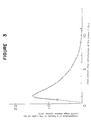
- the first stage reactor system comprised two reactors each with a capacity of 1/2 of the first stage reactor in Example 1, disposed in parallel to each other (agitation tank reactors 22 and 23).
- the raw material propylene (a pipe 24), and 88% of the total amount of fresh oxo gas and recycle gas (a pipe 25) were fed in equal amounts to the respective reactors.
- the product aldehyde, LB and HB were subjected to gas stripping, and the liquid surface in each reactor was maintained at a predetermined level.
- the catalyst solution was retained in the reactors 22 and 23 in a confined system.
- the gaseous product streams at the outlet of the first stage reactor system were joined together and cooled to 70°C. Then, the cooled product was subjected to gas-liquid separation in a gas-liquid separator 26, whereupon a predetermined amount of the gas required for stripping the product, was recycled by a pipe 27, and the rest was fed via a pipe 28 to the second stage reactor system.
- Example 2 In the liquid after the gas-liquid separation, a substantial amount of unreacted proplyene was dissolved. Therefore, in the same manner as in Example 1, it was subjected to gas stripping by a gas stripping column 29 with about 88% of the total amount of fresh oxo gas from a pipe 30, to recover all the amount of proplyene dissolved in the liquid, and the recovered proplyene was recycled to the first stage reactor system via a pipe 31 and a pipe 25.
- the gas stripping column 29 was a packed column having a height of 5 meters.
- the second stage reactor system was the same as used in Example 1.
- the reaction product solution was a gas-liquid mixed phase, and it was cooled to 60°C and then subjected to gas-liquid separation by a gas-liquid separator 37 via a tube 36, whereupon a predetermined amount of the gas was recycled by a pipe 34 so that the empty column base GLV in the reactor became 20 m/hr, and the rest of the gas was purged.
- the liquid after the gas-liquid separation was separated by a distillation column 38 into the product aldehyde (a pipe 39) and the catalyst solution, and the catalyst solution was recycled to the second stage reactor system via a catalyst drum 40.
- the reaction was conducted continuously for three days.
- Example 2 The operation was conducted in exactly the same manner as in Example 1 except that for the second stage reactor system, an agitation tank reactor having the same volume as the bubbling column reactor used for the second stage reactor system in Example 1, was used.
- Example 2 The operation was conducted in exactly the same manner as in Example 1 except that for the first stage reactor system, a cylindrical bubbling column reactor having the same volume as the first stage reactor in Example 1 and provided with 8 partitions, was employed.
- Example 2 The operation was conducted in exactly the same manner as in Example 1 except that for the first stage reactor system, the first stage reactor system of Comparative Example 2 was employed, and for the second stage reactor system, the second stage reactor system of Comparative Example 1 was employed.
- the hydroformylation reaction is conducted by means of a specific combination of two reactor systems having different mixing characteristics, whereby the hydroformylation of an olefin can be efficiently conducted while suppressing the formation of by-products.
Landscapes
- Chemical & Material Sciences (AREA)
- Organic Chemistry (AREA)
- Chemical Kinetics & Catalysis (AREA)
- Organic Low-Molecular-Weight Compounds And Preparation Thereof (AREA)
- Low-Molecular Organic Synthesis Reactions Using Catalysts (AREA)
- Catalysts (AREA)
Claims (12)
- Verfahren zur Hydroformylierung von Olefinen, das die Reaktion eines Olefins mit Kohlenmonoxid und Wasserstoff in Gegenwart eines Rhodium-Katalysators mit einer trivalenten organischen Phosphorverbindung als einen Liganden, umfaßt,
worin die Hydroformylierungsreaktion mit zweistufigen Reaktorsystemen durchgeführt wird, d.h.
mit einem Reaktorsystem der ersten Stufe, umfassend einen Reaktor oder Reaktoren mit einer Mischungscharakteristik der flüssigen Phase, die im wesentlichen vom vollständigen Mischungstyps ist, und
mit einem Reaktorsystem der zweiten Stufe, das ein Reaktorsystem des Katalysatorlösungsumlauftyps ist, und folgendes umfaßt:
einen Reaktor oder Reaktoren mit einer Mischungscharakteristik vom Kolbenflußtyp, worin, wenn die Mischungscharakteristik der flüssigen Phase durch ein Diffusionsmodell dargestellt wird, eine dimensionslose Zahl U (hiernach als ein "Flußmischungs-Parameter" bezeichnet), definiert durch die Formel (I):

wobei u eine mittlere Flußgeschwindigkeit (cm/s) ist, L die Länge (cm) der Reaktionsschicht ist, undE ein mittlerer Diffusionskoeffizient (cm²/s) ist, mindestens 0,4 ist, wobei ein gasförmiges Produkt oder Gas-Flüssiggemisch, das aus dem Reaktorsystem der ersten Stufe abgelassen wird, in einen Strom, enthaltend das unreagierte Olefin und einen anderen Strom, getrennt wird, und
ein Teil des ganzen Stroms, enthaltend das unreagierte Olefin, dem Reaktorsystem der zweiten Stufe zugeführt wird. - Verfahren gemäß Anspruch 1, worin das Olefin ein Olefin mit 2 bis 5 Kohlenstoffatomen oder ein Gemisch von Olefinen mit 2 bis 5 Kohlenstoffatomen ist.
- Verfahren gemäß Anspruch 1, worin die trivalente organische Phosphorverbindung ausgewählt ist aus der Gruppe, bestehend aus Trialkylphosphinen, Triarylphosphinen, Tricycloalkylphosphinen, Alkylarylphosphinen, Cycloalkylarylphosphinen, Alkylcycloalkylphosphinen und Phosphiten.
- Verfahren gemäß Anspruch 1, worin die Rhodiumquelle ausgewählt ist aus der Gruppe, bestehend aus Rhodium-Komplexen, organischen Salzen, anorganischen Salzen und Oxiden.
- Verfahren gemäß Anspruch 1, worin die Hydroformylierungsreaktion durchgeführt wird in einem Lösungsmittel, ausgewählt aus der Gruppe, bestehend aus dem Olefin selbst, gebildetem Aldehyd, HB, gebildet als ein Nebenprodukt, aliphatische Kohlenwasserstoffe, aromatische Kohlenwasserstoffe, alicyclische Kohlenwasserstoffe, Alkohole, Ether, Ester und Wasser.
- Verfahren gemäß Anspruch 1, worin der Flußmischungsparameter U des Reaktors oder der Reaktoren des Reaktorsystems der ersten Stufe weniger als 0,4 ist.
- Verfahren gemäß Anspruch 6, worin U des Reaktors oder der Reaktoren des Reaktorsystems der ersten Stufe höchstens 0,3 ist.
- Verfahren gemäß Anspruch 1, worin der Reaktor oder die Reaktoren des Reaktorsystems der ersten Stufe ein Schütteltank oder Tanks, ausgerüstet mit einem Rührer, sind.
- Verfahren gemäß Anspruch 1, worin der Flußmischungsparameter U des Reaktorsystems der zweiten Stufe 0,4 ≦ U ≦ 100 ist.
- Verfahren gemäß Anspruch 1, worin U des Reaktorsystems der zweiten Stufe 50 ≧ U ≧ 0,5 ist.
- Verfahren gemäß Anspruch 1, worin das molare Verhältnis des Olefinumsatzes im Reaktorsystem der zweiten Stufe zum Olefinumsatz im Reaktorsystem der ersten Stufe höchstens 1 ist.
- Verfahren gemäß Anspruch 11, worin das molare Verhältnis des Olefinumsatzes in einem Bereich von 0,01 bis 1 ist.
Applications Claiming Priority (2)
| Application Number | Priority Date | Filing Date | Title |
|---|---|---|---|
| JP272275/89 | 1989-10-19 | ||
| JP27227589 | 1989-10-19 |
Publications (3)
| Publication Number | Publication Date |
|---|---|
| EP0423769A2 EP0423769A2 (de) | 1991-04-24 |
| EP0423769A3 EP0423769A3 (en) | 1991-07-24 |
| EP0423769B1 true EP0423769B1 (de) | 1995-03-01 |
Family
ID=17511582
Family Applications (1)
| Application Number | Title | Priority Date | Filing Date |
|---|---|---|---|
| EP90119931A Expired - Lifetime EP0423769B1 (de) | 1989-10-19 | 1990-10-17 | Verfahren zur Hydroformylierung von Olefinen |
Country Status (8)
| Country | Link |
|---|---|
| US (1) | US5105018A (de) |
| EP (1) | EP0423769B1 (de) |
| JP (1) | JP2893902B2 (de) |
| KR (1) | KR0152655B1 (de) |
| BR (1) | BR9005296A (de) |
| CA (1) | CA2027991C (de) |
| DE (1) | DE69017346T2 (de) |
| ES (1) | ES2075865T3 (de) |
Families Citing this family (43)
| Publication number | Priority date | Publication date | Assignee | Title |
|---|---|---|---|---|
| US5426238A (en) * | 1993-06-10 | 1995-06-20 | Mitsubishi Kasei Corporation | Method for producing an aldehyde |
| US5367106A (en) * | 1993-09-20 | 1994-11-22 | Hoechst Celanese Corporation | Coupled secondary oxo reaction system |
| US5410091A (en) * | 1994-06-02 | 1995-04-25 | Quimica Oxal C.A. | Rhodium catalyzed oxo process in tubular reactor |
| ZA96178B (en) * | 1995-01-18 | 1997-06-30 | Exxon Chemical Patents Inc | Organic compounds and processes for their manufacture |
| DE19530698A1 (de) * | 1995-08-21 | 1997-02-27 | Basf Ag | Verfahren zur Aufarbeitung eines flüssigen Hydroformylierungsaustrags |
| US5744650A (en) * | 1995-12-06 | 1998-04-28 | Union Carbide Chemicals & Plastics Technology Corporation | Metal-Ligand complex catalyzed processes |
| FR2763938B1 (fr) * | 1997-05-27 | 1999-10-22 | Inst Francais Du Petrole | Procede pour l'hydroformylation d'olefines |
| DE19836807A1 (de) | 1998-08-14 | 2000-02-17 | Basf Ag | Verfahren zur Herstellung von Aldehyden und/oder Alkoholen oder Aminen |
| US7217321B2 (en) * | 2001-04-06 | 2007-05-15 | California Institute Of Technology | Microfluidic protein crystallography techniques |
| DE19954665B4 (de) * | 1999-11-13 | 2004-02-12 | Celanese Chemicals Europe Gmbh | Verfahren zur Hydroformylierung olefinisch ungesättigter Verbindungen |
| US6906164B2 (en) * | 2000-12-07 | 2005-06-14 | Eastman Chemical Company | Polyester process using a pipe reactor |
| CN1225444C (zh) * | 2001-03-08 | 2005-11-02 | 三菱化学株式会社 | 醛类的制备方法 |
| DE10160368B4 (de) * | 2001-12-08 | 2004-04-08 | Celanese Chemicals Europe Gmbh | Verfahren zur Herstellung von Aldehyden |
| WO2004035595A1 (en) * | 2002-10-15 | 2004-04-29 | Union Carbide Chemicals & Plastics Technology Corporation | Bis-chelating ligand and use thereof in carbonylation processes |
| ES2308230T3 (es) | 2003-10-21 | 2008-12-01 | Basf Se | Metodo para la produccion continua de aldehidos. |
| DE10357718A1 (de) | 2003-12-09 | 2005-07-21 | Basf Ag | Verfahren zur Herstellung von Tricyclodecandialdehyd |
| KR100547587B1 (ko) * | 2004-06-12 | 2006-01-31 | 주식회사 엘지화학 | 인을 포함하는 촉매 조성물 및 이를 이용한히드로포르밀화 방법 |
| US7943094B2 (en) * | 2006-12-07 | 2011-05-17 | Grupo Petrotemex, S.A. De C.V. | Polyester production system employing horizontally elongated esterification vessel |
| EP2152655B1 (de) * | 2007-05-29 | 2017-07-05 | LG Chem. Ltd. | Verfahren zur hydroformylierung von olefinen und vorrichtung dafür |
| US8739145B2 (en) * | 2008-03-26 | 2014-05-27 | Avaya Inc. | Super nested block method to minimize coverage testing overhead |
| KR101229195B1 (ko) * | 2009-10-07 | 2013-02-01 | 주식회사 엘지화학 | 올레핀으로부터 고 수율의 알데히드 제조 방법 및 이에 사용되는 반응 장치 |
| CN102115433B (zh) * | 2010-12-06 | 2013-09-11 | 淄博诺奥化工有限公司 | 一种乙烯低压羰基合成生产丙醛的方法 |
| CN102826972B (zh) * | 2011-06-17 | 2015-05-13 | 中国石油化工股份有限公司 | 一种烯烃氢甲酰化反应制备醛的方法 |
| CA2858351C (en) * | 2011-12-20 | 2016-11-22 | Dow Technology Investments Llc | A hydroformylation process |
| CN104144901B (zh) | 2012-03-07 | 2017-03-01 | 巴斯夫欧洲公司 | C3‑c20醛氢化和蒸馏中的热集成方法 |
| WO2013144735A1 (en) | 2012-03-26 | 2013-10-03 | Sasol Technology (Proprietary) Limited | Conversion of a mixture of c2 - and c3 -olefins to butanol |
| US8889917B2 (en) | 2012-04-12 | 2014-11-18 | Basf Se | Method of supplementing the catalyst in continuous hydroformylation |
| PL2836474T3 (pl) | 2012-04-12 | 2018-06-29 | Basf Se | Sposób uzupełniania katalizatora podczas ciągłego hydroformylowania |
| US9340480B2 (en) | 2013-04-30 | 2016-05-17 | Oxea Corporation | Aldehyde production process with multi-stage condensation |
| EP3083542A1 (de) | 2013-12-19 | 2016-10-26 | Dow Technology Investments LLC | Hydroformylierungsverfahren |
| CN104725170B (zh) | 2013-12-19 | 2019-08-23 | 陶氏技术投资有限责任公司 | 加氢甲酰化方法 |
| BR112018000481B1 (pt) | 2015-07-10 | 2022-01-11 | Basf Se | Processos para preparação de compostos e de (-)- ambrox (v) |
| US10647651B2 (en) | 2015-10-12 | 2020-05-12 | Basf Se | Hydroformylation process for producing 1,6-disubstituted hexane derivatives |
| JP6889179B2 (ja) * | 2016-03-18 | 2021-06-18 | ダウ テクノロジー インベストメンツ リミティド ライアビリティー カンパニー | ヒドロホルミル化プロセス |
| TW201840362A (zh) | 2016-11-08 | 2018-11-16 | 美商陶氏科技投資有限公司 | 使去活化的氫甲醯化催化劑溶液再生的方法 |
| TWI758353B (zh) | 2016-11-08 | 2022-03-21 | 美商陶氏科技投資有限公司 | 使去活化的氫甲醯化催化劑溶液再生的方法 |
| TW201840363A (zh) | 2016-11-08 | 2018-11-16 | 美商陶氏科技投資有限公司 | 處理氫甲醯化催化劑溶液之方法 |
| CN110621663A (zh) | 2017-06-13 | 2019-12-27 | 巴斯夫欧洲公司 | 制备1,6-己二醇衍生物的加氢甲酰基化方法 |
| SE543297C2 (en) | 2019-07-18 | 2020-11-17 | Perstorp Ab | USE OF A METHOD FOR REDUCTION OF HEAVY END FORMATION AND CATALYST LOSS IN A HYDROFORMYLATION PROCESS COMPRISING A BIDENTATE PHOSPHITE LIGAND |
| WO2021029983A1 (en) | 2019-08-09 | 2021-02-18 | OQ Chemicals Corporation | Hydroformylation system with vent reactor recycle to primary reactor |
| EP4103571B1 (de) | 2020-02-11 | 2023-11-15 | Basf Se | Niederdruckhydroformylierung von diisobuten |
| JP2024500349A (ja) | 2020-12-22 | 2024-01-09 | ダウ テクノロジー インベストメンツ リミティド ライアビリティー カンパニー | ヒドロホルミル化反応方法 |
| CN117942895A (zh) * | 2024-01-23 | 2024-04-30 | 兖矿鲁南化工有限公司 | 一种丁醇装置反应器气液混合反应系统 |
Family Cites Families (12)
| Publication number | Priority date | Publication date | Assignee | Title |
|---|---|---|---|---|
| US3239566A (en) * | 1960-07-22 | 1966-03-08 | Shell Oil Co | Hydroformylation of olefins |
| US3518319A (en) * | 1965-03-30 | 1970-06-30 | Exxon Research Engineering Co | Process for improving oxo selectivity to unbranched alcohols |
| US3590087A (en) * | 1968-02-28 | 1971-06-29 | Shell Oil Co | Trans-annular sec-phosphine in complex combination with cobalt and carbon monoxide as a catalyst in the oxo alcohol process |
| US3636159A (en) * | 1968-12-19 | 1972-01-18 | Phillips Petroleum Co | Hydroformylation process and catalyst |
| FR2053177B1 (de) * | 1969-07-26 | 1973-03-16 | Basf Ag | |
| US3868422A (en) * | 1971-12-23 | 1975-02-25 | Eastman Kodak Co | Multistage hydroformylation process |
| GB1387657A (en) * | 1972-08-25 | 1975-03-19 | Davy Powergas Ltd | Hydroformylation process |
| SU827476A1 (ru) * | 1978-12-26 | 1981-05-07 | Предприятие П/Я Р-6913 | Способ получени -цианпропионовогоАльдЕгидА и ЕгО диМЕТилАцЕТАл |
| DE16285T1 (de) * | 1979-03-21 | 1983-04-28 | Davy Mckee (London) Ltd., London | Verfahren zur herstellung von aldehyden durch hydroformylierung von alkenen. |
| US4528404A (en) * | 1983-03-16 | 1985-07-09 | Exxon Research And Engineering Co. | High temperature hydroformylation in the presence of triarylphosphine rhodium carbonyl hydride complex catalyst systems |
| CA1259331A (en) * | 1984-03-30 | 1989-09-12 | Gregory J. Dembowski | Process for recovery of phosphorus ligand from vaporized aldehyde |
| US4593127A (en) * | 1985-01-11 | 1986-06-03 | Union Carbide Corporation | Hydroformylation process |
-
1990
- 1990-09-12 JP JP2242038A patent/JP2893902B2/ja not_active Expired - Fee Related
- 1990-10-12 US US07/596,383 patent/US5105018A/en not_active Expired - Lifetime
- 1990-10-17 ES ES90119931T patent/ES2075865T3/es not_active Expired - Lifetime
- 1990-10-17 EP EP90119931A patent/EP0423769B1/de not_active Expired - Lifetime
- 1990-10-17 DE DE69017346T patent/DE69017346T2/de not_active Expired - Lifetime
- 1990-10-18 CA CA002027991A patent/CA2027991C/en not_active Expired - Lifetime
- 1990-10-19 KR KR1019900016731A patent/KR0152655B1/ko not_active Expired - Lifetime
- 1990-10-19 BR BR909005296A patent/BR9005296A/pt not_active IP Right Cessation
Also Published As
| Publication number | Publication date |
|---|---|
| EP0423769A2 (de) | 1991-04-24 |
| CA2027991C (en) | 2001-04-24 |
| DE69017346T2 (de) | 1995-10-12 |
| DE69017346D1 (de) | 1995-04-06 |
| KR910007852A (ko) | 1991-05-30 |
| ES2075865T3 (es) | 1995-10-16 |
| JP2893902B2 (ja) | 1999-05-24 |
| EP0423769A3 (en) | 1991-07-24 |
| KR0152655B1 (ko) | 1998-10-15 |
| JPH03204831A (ja) | 1991-09-06 |
| US5105018A (en) | 1992-04-14 |
| CA2027991A1 (en) | 1991-04-20 |
| BR9005296A (pt) | 1991-09-17 |
Similar Documents
| Publication | Publication Date | Title |
|---|---|---|
| US5105018A (en) | Process for hydroformylation of an olefin | |
| US4778929A (en) | Continuous hydroformylation of olefinically unsaturated compounds | |
| US4533757A (en) | Continuous hydroformylation of olefinically unsaturated compounds | |
| EP2280920B1 (de) | Verfahren zur herstellung von c5-aldehydgemischen mit hohem n-pentanalanteil | |
| US4247486A (en) | Cyclic hydroformylation process | |
| US4400547A (en) | Hydroformylation process utilizing an unmodified rhodium catalyst and the stabilization and regeneration thereof | |
| CA1084946A (en) | Reduction of catalyst deactivation in processes for hydroformylation of olefins with rhodium complex catalysts | |
| US6969777B2 (en) | Method for the hydroformylation of olefins comprising 2 to 8 carbon atoms | |
| US4334042A (en) | Carbonylation of olefinic compounds | |
| EP1294669B1 (de) | Verfahren zur hydroformylierung von olefinen mit 2 bis 8 kohlenstoffatomen | |
| US10792652B2 (en) | Methods to rejuvenate a deactivated hydroformylation catalyst solution | |
| GB1582010A (en) | Cyclic hudroformylation process | |
| US5648553A (en) | Method for producing aldehydes | |
| KR101539779B1 (ko) | 노르말부탄올과 이소부틸알데히드의 병산 방법 | |
| US5426238A (en) | Method for producing an aldehyde | |
| US20240308947A1 (en) | Method for producing aldehyde | |
| EP0054986A1 (de) | Verfahren zur Hydroformylierung von Olefinen | |
| US4292448A (en) | Process for the hydroformylation of olefins | |
| RU2005713C1 (ru) | Способ получения альдегидов c4-c5 | |
| JP7707517B2 (ja) | アルデヒドの製造方法 | |
| CN110862307A (zh) | 一种混合碳四氢甲酰化反应制备醛的方法 | |
| EP0103891B1 (de) | Verfahren zum Herstellen von alpha-Acetoxypropionaldehyd | |
| WO2021091687A1 (en) | Processes for recovery of rhodium from a hydroformylation process | |
| JP7355230B2 (ja) | アルデヒドの製造方法及び触媒の製造方法 | |
| JP7438945B2 (ja) | 環状ヘミアセタール化合物の製造方法 |
Legal Events
| Date | Code | Title | Description |
|---|---|---|---|
| PUAI | Public reference made under article 153(3) epc to a published international application that has entered the european phase |
Free format text: ORIGINAL CODE: 0009012 |
|
| AK | Designated contracting states |
Kind code of ref document: A2 Designated state(s): BE DE ES FR GB NL SE |
|
| PUAL | Search report despatched |
Free format text: ORIGINAL CODE: 0009013 |
|
| AK | Designated contracting states |
Kind code of ref document: A3 Designated state(s): BE DE ES FR GB NL SE |
|
| 17P | Request for examination filed |
Effective date: 19910925 |
|
| 17Q | First examination report despatched |
Effective date: 19930315 |
|
| GRAA | (expected) grant |
Free format text: ORIGINAL CODE: 0009210 |
|
| AK | Designated contracting states |
Kind code of ref document: B1 Designated state(s): BE DE ES FR GB NL SE |
|
| REF | Corresponds to: |
Ref document number: 69017346 Country of ref document: DE Date of ref document: 19950406 |
|
| RAP2 | Party data changed (patent owner data changed or rights of a patent transferred) |
Owner name: MITSUBISHI CHEMICAL CORPORATION |
|
| ET | Fr: translation filed | ||
| REG | Reference to a national code |
Ref country code: FR Ref legal event code: RM |
|
| REG | Reference to a national code |
Ref country code: ES Ref legal event code: FG2A Ref document number: 2075865 Country of ref document: ES Kind code of ref document: T3 |
|
| PLBE | No opposition filed within time limit |
Free format text: ORIGINAL CODE: 0009261 |
|
| STAA | Information on the status of an ep patent application or granted ep patent |
Free format text: STATUS: NO OPPOSITION FILED WITHIN TIME LIMIT |
|
| 26N | No opposition filed | ||
| REG | Reference to a national code |
Ref country code: GB Ref legal event code: IF02 |
|
| PGFP | Annual fee paid to national office [announced via postgrant information from national office to epo] |
Ref country code: SE Payment date: 20090918 Year of fee payment: 20 |
|
| PGFP | Annual fee paid to national office [announced via postgrant information from national office to epo] |
Ref country code: ES Payment date: 20091028 Year of fee payment: 20 Ref country code: DE Payment date: 20091123 Year of fee payment: 20 |
|
| PGFP | Annual fee paid to national office [announced via postgrant information from national office to epo] |
Ref country code: NL Payment date: 20090924 Year of fee payment: 20 |
|
| PGFP | Annual fee paid to national office [announced via postgrant information from national office to epo] |
Ref country code: GB Payment date: 20091014 Year of fee payment: 20 |
|
| PGFP | Annual fee paid to national office [announced via postgrant information from national office to epo] |
Ref country code: BE Payment date: 20091019 Year of fee payment: 20 |
|
| REG | Reference to a national code |
Ref country code: NL Ref legal event code: V4 Effective date: 20101017 |
|
| BE20 | Be: patent expired |
Owner name: *MITSUBISHI CHEMICAL CORP. Effective date: 20101017 |
|
| REG | Reference to a national code |
Ref country code: GB Ref legal event code: PE20 Expiry date: 20101016 |
|
| EUG | Se: european patent has lapsed | ||
| PG25 | Lapsed in a contracting state [announced via postgrant information from national office to epo] |
Ref country code: NL Free format text: LAPSE BECAUSE OF EXPIRATION OF PROTECTION Effective date: 20101017 |
|
| REG | Reference to a national code |
Ref country code: ES Ref legal event code: FD2A Effective date: 20110301 |
|
| PG25 | Lapsed in a contracting state [announced via postgrant information from national office to epo] |
Ref country code: GB Free format text: LAPSE BECAUSE OF EXPIRATION OF PROTECTION Effective date: 20101016 |
|
| PG25 | Lapsed in a contracting state [announced via postgrant information from national office to epo] |
Ref country code: ES Free format text: LAPSE BECAUSE OF EXPIRATION OF PROTECTION Effective date: 20101018 |
|
| PGFP | Annual fee paid to national office [announced via postgrant information from national office to epo] |
Ref country code: FR Payment date: 20091006 Year of fee payment: 20 |
|
| PG25 | Lapsed in a contracting state [announced via postgrant information from national office to epo] |
Ref country code: DE Free format text: LAPSE BECAUSE OF EXPIRATION OF PROTECTION Effective date: 20101017 |