EP0400031B2 - Kaltgewalztes blech oder band und verfahren zu seiner herstellung - Google Patents
Kaltgewalztes blech oder band und verfahren zu seiner herstellung Download PDFInfo
- Publication number
- EP0400031B2 EP0400031B2 EP89901844A EP89901844A EP0400031B2 EP 0400031 B2 EP0400031 B2 EP 0400031B2 EP 89901844 A EP89901844 A EP 89901844A EP 89901844 A EP89901844 A EP 89901844A EP 0400031 B2 EP0400031 B2 EP 0400031B2
- Authority
- EP
- European Patent Office
- Prior art keywords
- titanium
- epsilon
- cold
- approx
- strip
- Prior art date
- Legal status (The legal status is an assumption and is not a legal conclusion. Google has not performed a legal analysis and makes no representation as to the accuracy of the status listed.)
- Expired - Lifetime
Links
Images





Classifications
-
- C—CHEMISTRY; METALLURGY
- C21—METALLURGY OF IRON
- C21D—MODIFYING THE PHYSICAL STRUCTURE OF FERROUS METALS; GENERAL DEVICES FOR HEAT TREATMENT OF FERROUS OR NON-FERROUS METALS OR ALLOYS; MAKING METAL MALLEABLE, e.g. BY DECARBURISATION OR TEMPERING
- C21D8/00—Modifying the physical properties of ferrous metals or ferrous alloys by deformation combined with, or followed by, heat treatment
- C21D8/02—Modifying the physical properties of ferrous metals or ferrous alloys by deformation combined with, or followed by, heat treatment during manufacturing of plates or strips
- C21D8/04—Modifying the physical properties of ferrous metals or ferrous alloys by deformation combined with, or followed by, heat treatment during manufacturing of plates or strips to produce plates or strips for drawing, e.g. for deep-drawing
- C21D8/0421—Modifying the physical properties of ferrous metals or ferrous alloys by deformation combined with, or followed by, heat treatment during manufacturing of plates or strips to produce plates or strips for drawing, e.g. for deep-drawing characterised by the working steps
- C21D8/0426—Hot rolling
-
- C—CHEMISTRY; METALLURGY
- C22—METALLURGY; FERROUS OR NON-FERROUS ALLOYS; TREATMENT OF ALLOYS OR NON-FERROUS METALS
- C22C—ALLOYS
- C22C38/00—Ferrous alloys, e.g. steel alloys
- C22C38/06—Ferrous alloys, e.g. steel alloys containing aluminium
-
- C—CHEMISTRY; METALLURGY
- C22—METALLURGY; FERROUS OR NON-FERROUS ALLOYS; TREATMENT OF ALLOYS OR NON-FERROUS METALS
- C22C—ALLOYS
- C22C38/00—Ferrous alloys, e.g. steel alloys
- C22C38/14—Ferrous alloys, e.g. steel alloys containing titanium or zirconium
-
- C—CHEMISTRY; METALLURGY
- C21—METALLURGY OF IRON
- C21D—MODIFYING THE PHYSICAL STRUCTURE OF FERROUS METALS; GENERAL DEVICES FOR HEAT TREATMENT OF FERROUS OR NON-FERROUS METALS OR ALLOYS; MAKING METAL MALLEABLE, e.g. BY DECARBURISATION OR TEMPERING
- C21D8/00—Modifying the physical properties of ferrous metals or ferrous alloys by deformation combined with, or followed by, heat treatment
- C21D8/02—Modifying the physical properties of ferrous metals or ferrous alloys by deformation combined with, or followed by, heat treatment during manufacturing of plates or strips
- C21D8/04—Modifying the physical properties of ferrous metals or ferrous alloys by deformation combined with, or followed by, heat treatment during manufacturing of plates or strips to produce plates or strips for drawing, e.g. for deep-drawing
- C21D8/0421—Modifying the physical properties of ferrous metals or ferrous alloys by deformation combined with, or followed by, heat treatment during manufacturing of plates or strips to produce plates or strips for drawing, e.g. for deep-drawing characterised by the working steps
- C21D8/0436—Cold rolling
-
- C—CHEMISTRY; METALLURGY
- C21—METALLURGY OF IRON
- C21D—MODIFYING THE PHYSICAL STRUCTURE OF FERROUS METALS; GENERAL DEVICES FOR HEAT TREATMENT OF FERROUS OR NON-FERROUS METALS OR ALLOYS; MAKING METAL MALLEABLE, e.g. BY DECARBURISATION OR TEMPERING
- C21D8/00—Modifying the physical properties of ferrous metals or ferrous alloys by deformation combined with, or followed by, heat treatment
- C21D8/02—Modifying the physical properties of ferrous metals or ferrous alloys by deformation combined with, or followed by, heat treatment during manufacturing of plates or strips
- C21D8/04—Modifying the physical properties of ferrous metals or ferrous alloys by deformation combined with, or followed by, heat treatment during manufacturing of plates or strips to produce plates or strips for drawing, e.g. for deep-drawing
- C21D8/0447—Modifying the physical properties of ferrous metals or ferrous alloys by deformation combined with, or followed by, heat treatment during manufacturing of plates or strips to produce plates or strips for drawing, e.g. for deep-drawing characterised by the heat treatment
- C21D8/0473—Final recrystallisation annealing
Definitions
- the invention relates to a method for producing a sheet or strip and to Deep-drawing suitable sheet or strip according to the preambles of claims 1 and 5.
- Texture-free cold-rolled strip is used to deep-draw rotationally symmetrical steel parts or sheet metal is used, so that quasi-isotropic forming is possible and the drawn part is free of corners. This means that a z. B. cylindrical deep-drawn part has no wavy edge.
- the value for the plane anisotropy is calculated from the anisotropy r for different things Expansion behavior of the material in the rolling direction as well as at 45 degrees and 90 degrees. For Different deep-drawing properties, different r-values can be set.
- tip-free material can only be obtained by normalizing of the cold-rolled strip in a continuous annealing at about 1000 degrees Celsius, the sheet in the final state a grain size ASTM 8 with a relative tip height of approx. 0.3 to 0.4% and delta r approx. Reach ⁇ 0.1.
- DE-OS 32 34 574 is a generic cold-rolled steel sheet suitable for deep drawing or steel band known.
- the titanium content should, depending on the carbon, oxygen, Sulfur and nitrogen, can rise to values up to 0.15%, the reel temperature over 700 degrees Celsius or at least 580 degrees Celsius with subsequent hot strip heating to over 700 degrees Celsius.
- US Pat. No. 4,125,416 discloses, inter alia, a method in which hot-rolled slabs at temperatures above 830 ° C. made of alloy steel, which 0.06-0.20% C, 0.5-2.0% Mn, 0.30- May contain 0.50% Si as well as Nb and Ti in quantities of 0.01-0.10%, heated to temperatures above 980 ° C, then rolled into hot strip and coiled at 450-650 ° C. C contents of 0.10-0.11%, a Ti content of 0.1% and an Nb content of 0.04% are specified for the production of high-strength cold strip from this hot strip. At 67% degree of deformation, a high-strength cold strip with a yield strength greater than 48.1 kg / mm 2 is produced, which is then recrystallized annealed in a bundle or in a continuous anneal.
- EP-A1-101 740 recommends a slab heating temperature of less than 1100 degrees Celsius, a final roll temperature of less than Ar 3 , reel temperatures of 320-600 degrees Celsius and cold rolling degrees of 50-95% and recrystallizing continuous annealing for a generic cold-rolled steel.
- a steel with a maximum of 0.005% carbon, a maximum of 0.004% nitrogen and a maximum of 0.02% niobium is to be used in combination with one or more of the elements aluminum, chromium, boron or tungsten. High average r values above 1.2 are achieved. There are no indications that the material is rough after deep-drawing.
- Another method for producing deep-drawing steels with a slab annealing temperature lower 1100 degrees Celsius, final rolling temperature max. 780 degrees Celsius and reel temperatures of at least 450 degrees Celsius and cold strip annealing in the hood or continuous annealing furnace are in EP-B1-120 976 disclosed.
- the method should achieve r values around 2; Values for tip formation are not disclosed.
- hot strip has good quasi-isotropic formability, but one insufficient surface quality and tolerances, and also not in thicknesses below 1.2 mm is produced.
- the invention is therefore based on the object of proposing a sheet-free steel sheet which is suitable for deep drawing or at least poor in drawing and a corresponding production process in which continuous annealing at temperatures above A 1 is dispensed with, but can nevertheless be produced inexpensively.
- the grain size values of at best ASTM 8 corresponding to 490 ⁇ m 2 which are usually achieved in the state of the art for steel St 4 NZ or RSt 14 by normal annealing, can be undercut by recrystallizing annealing using the process according to the invention, with additional low yield strength values being able to be maintained by selecting appropriate ones Cold rolling degrees depending on the titanium content. This has the advantage that high investments for a continuous annealing for a normal annealing treatment can be dispensed with.
- a particular advantage of the hot strip produced in this way is that, in principle, none There is a restriction regarding the subsequent cold rolling provided that the degree of cold rolling is at least approx. 5 %, i.e. remains above the known critical weak cold deformation that occurs during recrystallization annealing leads to coarse grain. So far, the production of almost strip-free cold strip was on certain degrees of cold rolling are bound, unless normal annealing is used.
- the variation of the cold rolling degrees depending on the amount of the alloyed titanium is at simultaneous addition of niobium within the specified limits to cold rolling degrees of 45 to 85% limited.
- niobium does not hinder the early formation of titanium nitride, so that this too Steel alloy according to the invention does not have a pan-cake structure during recrystallizing annealing can arise.
- a serious technical and economic importance of the invention lies in the use of the Thin sheets for rotationally symmetrical deep-drawn parts such as needle bearing cages, pulley halves etc.
- the sheet metal according to the invention can in these cases without substantial rework such as cutting the Tip are used.
- the low-headedness also prevents the emergence of sectoral thermoforming Wall weaknesses, so that the drawn parts do not show any imbalance when rotating. Additional advantages Low-end or corner-free cold strip are known, so that a further description is unnecessary.
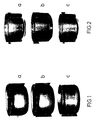
- Figure 1 shows three different cups, which are to define the terms used in the following, pointed (Fig. 1a), low-pointed (Fig. 1b) and free (Fig. 1c), since the measurement of the height with the commercially available corner measuring devices, in particular low-cornered and Tip-free wells with small height differences are problematic even with the smallest deep-drawn burrs on the edge of the well.
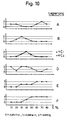
- This definition was adopted for Figure 10 to represent the lobes of wells from the different melts.
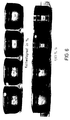
- the finding was confirmed that the steel E coiled at 710 degrees Celsius is free of flakes only at cold rolling degrees of less than approx. 25% and can only be described as low in the range 30 - 50% of cold rolling.
- cornering was found at cold rolling degrees greater than 30%.
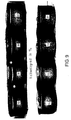
- the photos in Figures 8 and 9 demonstrate this impressively.
- Table 2 shows the grain size achieved according to the invention in ASTM units; the achievable grain refinement compared to steels without titanium addition according to the state of the Technology is significant and extends to ASTM 11.
- the coarsest grain was obtained with a small addition of Ti and a low degree of cold rolling (ASTM 7).
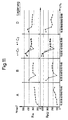
- ASTM 9-10 the hot strip values for the grain size (ASTM 9-10) were compared in FIG.
- For a steel C (variants C3 - C5) tests were carried out with variable coiling temperature Th and annealing throughput Pg (Table 3). While fluctuations in the throughput of the bell annealer from 1.1 - 1.9 t / h did not have a negative effect on the grain size or the level anisotropy Delta r, an increase in the reel temperature to 710 degrees Celsius with roughly the same end temperatures resulted in coarsening and deterioration the plane anisotropy.
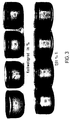
- Figures 2a, 2b, 2c show corresponding results on wells made of 180 mm rounds, the with 100 mm stamps with 50 kN retention force were deep drawn.
- Table 1 also shows the melt analyzes of the process to be used according to the invention
- Steel G with 0.01% titanium, H with 0.02% titanium and I with 0.03% titanium with 0.05% and 0.06% niobium addition A comparative steel K with 0.05% niobium addition but without titanium content was listed.
- From the melts G - I according to the invention and the comparative melt K slabs of 220 mm thickness cast in the strand. After heating in the pusher furnace to 1250 degrees Celsius, the slab was Rolled into 4 mm thick hot strip and coiled and cooled to room temperature. The The final roll temperature was 880 degrees Celsius and the reel temperature was 510 degrees Celsius. After this The strips were pickled by cold rolling in different stages from 10 to 80% on thin sheet thickness reduced and reeled.
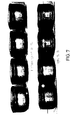
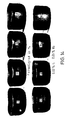
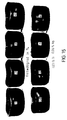
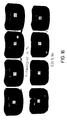
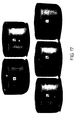
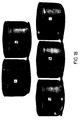
- the tightly wrapped coil was placed in the bell annealer of the Ludwig construction type heated to 700 degrees Celsius and with a throughput rate of 1.1 tons or 1.8 Annealed tons per hour recrystallizing, then in the bell annealing furnace to 120 degrees Celsius cooled. After tempering with a degree of deformation of 1.1%, the strip became sheet metal assembled. Sheet rounds of 90 mm in diameter were closed with drawing dies of 50 mm in diameter Cups deep-drawn ( Figures 13 - 16).
- the yield strength and tensile strength values were found to be more than 50 N / mm 2 above the characteristic values of the only titanium-alloyed material.
Landscapes
- Chemical & Material Sciences (AREA)
- Engineering & Computer Science (AREA)
- Mechanical Engineering (AREA)
- Materials Engineering (AREA)
- Metallurgy (AREA)
- Organic Chemistry (AREA)
- Physics & Mathematics (AREA)
- Thermal Sciences (AREA)
- Crystallography & Structural Chemistry (AREA)
- Heat Treatment Of Sheet Steel (AREA)
- Heat Treatment Of Steel (AREA)
- Continuous Casting (AREA)
Description
Für die Erzeugung hochfesten Kaltbandes aus diesem Warmband sind C-Gehalte von 0,10-0,11 %, ein Ti-Gehalt von 0,1 % und ein Nb-Gehalt von 0,04 % angegeben. Bei 67 % Umformgrad wird ein hochfestes Kaltband mit einer Streckgrenze größer als 48,1 kg/mm2 erzeugt, daß anschließend im Bund oder in einer Durchlaufglühe rekristallisierend geglüht wird.
Vorteilhafte Weiterbildungen der Erfindung sind in den Unteransprüchen erfaßt.
Blechronden von 90 bzw. 180 mm Durchmesser wurden mit Ziehstempeln von 50 bzw. 100 mm Durchmesser bei Haltekräften von 50 kN zu Näpfchen tiefgezogen.
Diese Definition wurde für Figur 10 zur Darstellung der Zipfeligkeit von Näpfchen aus den verschiedenen Schmelzen übernommen. Bestätigt wurde die Erkenntnis, daß der bei 710 Grad Celsius gehaspelte Stahl E nur bei Kaltwalzgraden kleiner ca. 25 % zipfelfrei ist und im Bereich 30 - 50 % Kaltwalzgrad allenfalls als zipfelarm bezeichnet werden kann. Für den Vergleichsstahl F der gemäß Stand der Technik bei 500 Grad Celsius gehaspelt wurde, wurde Zipfeligkeit bei Kaltwalzgraden größer 30 % festgestellt.
Die Fotos in den Figuren 8 und 9 belegen dies eindrucksvoll.
Die Näpfchen waren bei Kaltwalzgraden von Epsilon = 30 - 50 % absolut zipfelfrei, während Kaltwalzgrade von 20 % bzw. 60 % nur zipfelarmes Näpfchen-Ziehen ermöglichte.
Zipfelfrei bei Epsilon = 10 % sowie 50 - 80 %
Zipfelarm bei Epsilon = 20 %; 40 %
Zipfelfrei bei Epsilon = 10 - 20 % sowie 60 - 80 %
Zipfelarm bei Epsilon = 30 %; 50 %
Zipfelfrei bei Epsilon = 60 - 70 % bzw. 20 %
Zipfelarm bei Epsilon = 15 %, 25 %; 55 %; 80 %
Für einen Stahl C (Varianten C3 - C5) wurden Versuche mit variabler Haspeltemperatur Th und Glühdurchsatz Pg durchgeführt (Tabelle 3). Während Schwankungen in der Durchsatzmenge des Haubenglühofens von 1,1 - 1,9 t/h sowohl die Korngröße als auch die ebene Anisotropie Delta r nicht negativ beeinflußten, hatte eine Erhöhung der Haspeltemperaturen auf 710 Grad Celsius bei annähernd gleichen Walzendtemperaturen eine Kornvergröberung und eine Verschlechterung der ebenen Anisotropie zur Folge.
Die Näpfchen waren bei Kaltwalzgraden von Epsilon = 45 bis 85 % in der Kategorie zipfelarm und bei etwa 60 bis 80 % Kaltwalzgraden sogar zipfelfrei.
Zipfelarm im Bereich Epsilon = 55 bis 85 % fast zipfelfrei im Bereich von 60 bis 75 %.
Zipfelarm im Bereich von 60 bis 70 % Kaltwalzgraden.

| Stahl | Tw °C | Th °C | K min / max | Figur |
| A | 860 | 490 | 10 / 7 | 3 |
| B | 870 | 500 | 11 / 9 | 4 |
| C1 | 870 | 500 | 11 / 9 | 5 |
| C2 | 880 | 450 | 11 / 9 | 6 |
| D | 890 | 430 | 11 / 9 | 7 |
| E | 900 | 710 | 9 / 4 | 8 |
| F | 890 | 500 | 9 / 6 | 9 |
| Stahl | Tw °C | Th °C | Pg t/h | K | Δr min /max | Figur |
| C3 | 880 | 520 | 1,1 | 9 - 10 | -0,07/+0,06 | 2a |
| C4 | 915 | 540 | 1,9 | 9 - 10 | -0,04/+0,08 | 2b |
| C5 | 870 | 710 | 1,9 | 8 - 9 | +0,09/+0,17 | 2c |
- Tw
- Walzendtemperatur
- Th
- Haspeltemperatur
- K
- Korngröße nach ASTM
- Pg
- Glühdurchsatz
- Δr
- ebene Anisotropie
Claims (7)
- Verfahren zur Herstellung eines kaltgewalzten Bleches oder Bandes mit guter quasi-isotroper Umform barkeit aus Stahl mit folgender Zusammensetzung in Gewichtsprozenten:bei dem die Bramme auf oberhalb 1120 Grad Celsius erwärmt und zu Warmband bei einer Walzendtemperatur oberhalb des Ar3-Punktes ausgewalzt und bei 520 ± 100 Grad Celsius gehaspelt und nach dem Kaltwalzen rekristallisierend im Bund geglüht wird.0,03 - 0,08 % Kohlenstoffmax. 0,40 % Silizium0,10 bis 1,0 % Manganmax. 0,08 % Phosphormax. 0,02 % Schwefelmax. 0,009 % Stickstoff0,015 bis 0,08 % Aluminium0,01 bis 0,04 % Titanmax. 0,15 % von einem oder mehreren der Elemente aus der Gruppe Kupfer, Vanadium, Nickel Rest Eisen und unvermeidbare Verunreinigungen, wobei der Titangehalt mindestens dem 3,5-fachen des Stickstoffgehaltes entspricht,
- Verfahren zur Herstellung eines kaltgewalzten Bleches oder Bandes gemäß Anspruch 1, dadurch gekennzeichnet, daß es in Abhängigkeit vom Titangehatt mit nachstehenden Umformgraden (Epsilon) kaltgewalzt wird:
ca. 0,01 % Titan Epsilon 20 - 60 %, vorzugsweise 30 - 50 % ca. 0,02 % Titan Epsilon 5 - 20 %, vorzugsweise 10 - 15 % oder Epsilon 40 - 85 %, vorzugsweise 50 - 80 % ca. 0,03 % Titan Epsilon 5 - 25 %, vorzugsweise 10 - 20 % oder Epsilon 50 - 85 %, vorzugsweise 60 - 80 % ca. 0,04 % Titan Epsilon 15 - 25 %, vorzugsweise 20 % oder Epsilon 55 - 80 %, vorzugsweise 60 - 70 % - Verfahren zur Herstellung eines kaltgewalzten Bleches oder Bandes mit guter quasi-isotroper Umformbarkeit aus Stahl mit folgender Zusammensetzung in Gewichtsprozenten:bei dem die Bramme auf oberhalb 1120 Grad Celsius erwärmt und zu Warmband bei einer Walzendtemperatur oberhalb des Ar3-Punktes ausgewalzt und bei 520 ± 100 Grad Celsius gehaspelt, dann in Abhängigkeit vom Titangehalt mit nachstehenden Umformgraden (Epsilon) kaltgewalzt wird:0,03 - 0,08 % Kohlenstoffmax. 0,40 % Silizium0,10 bis 1,0 % Manganmax. 0,08 % Phosphormax. 0,02 % Schwefelmax. 0,009 % Stickstoff0,015 bis 0,08 % Aluminium0,01 bis 0,04 % Titanmax. 0,15 % von einem oder mehreren der Elemente aus der Gruppe Kupfer, Vanadium, Nickel 0,01 bis 0,06 % Niob
Rest Eisen und unvermeidbare Verunreinigungen, wobei der Titangehalt mindestens dem 3,5-fachen des Stickstoffgehaltes entspricht,ca. 0,01 % Titan Epsilon 45 bis 85 % ca. 0,02 % Titan Epsilon 55 bis 85 % ca. 0,03 % Titan Epsilon 60 bis 70 % - Verfahren nach einem der Ansprüche 1 bis 3, dadurch gekennzeichnet, daß der Stahl nach dem Kaltwalzen im Festbund geglüht wird.
- Zum Tiefziehen geeignetes Blech oder Band aus Stahl in der angegebenen Zusammensetzung und hergestellt nach einem der in den Ansprüchen 1 bis 4 angegebenen Verfahren, gekennzeichnet durch ein rekristallisiertes Gefüge mit einer Ferritkorngröße feiner als ASTM 7 für einen Titangehalt von 0,01 % und feiner als ASTM 9 für Titangehalte von 0,015 bis 0,04 % und durch einen Titangehalt, der mindestens dem 3,5-fachen des Stickstoffgehaltes entspricht.
- Verwendung eines gemäß einem der Verfahren nach Anspruch 1 bis 4 hergestellten Bleches oder Bandes für das zipfelarme Tiefziehen vorzugsweise von rotationssymmetrischen Teilen.
- Verwendung eines Stahles gemäß Anspruch 1 oder 3 für die Herstellung tiefgezogener, vorzugsweise rotationssymmetrischer Teile.
Priority Applications (1)
| Application Number | Priority Date | Filing Date | Title |
|---|---|---|---|
| AT89901844T ATE97169T1 (de) | 1988-01-29 | 1989-01-27 | Kaltgewalztes blech oder band und verfahren zu seiner herstellung. |
Applications Claiming Priority (5)
| Application Number | Priority Date | Filing Date | Title |
|---|---|---|---|
| DE3803064A DE3803064C2 (de) | 1988-01-29 | 1988-01-29 | Kaltgewalztes Blech oder Band und Verfahren zu seiner Herstellung |
| DE3803064 | 1988-01-29 | ||
| DE3843732 | 1988-12-22 | ||
| DE3843732A DE3843732C2 (de) | 1988-01-29 | 1988-12-22 | Kaltgewalztes Blech oder Band und Verfahren zu seiner Herstellung |
| PCT/DE1989/000057 WO1989007158A1 (en) | 1988-01-29 | 1989-01-27 | Cold-rolled sheet or strip and process for manufacturing them |
Publications (3)
| Publication Number | Publication Date |
|---|---|
| EP0400031A1 EP0400031A1 (de) | 1990-12-05 |
| EP0400031B1 EP0400031B1 (de) | 1993-11-10 |
| EP0400031B2 true EP0400031B2 (de) | 2002-01-02 |
Family
ID=25864488
Family Applications (1)
| Application Number | Title | Priority Date | Filing Date |
|---|---|---|---|
| EP89901844A Expired - Lifetime EP0400031B2 (de) | 1988-01-29 | 1989-01-27 | Kaltgewalztes blech oder band und verfahren zu seiner herstellung |
Country Status (8)
| Country | Link |
|---|---|
| US (1) | US5139580A (de) |
| EP (1) | EP0400031B2 (de) |
| JP (1) | JPH0814003B2 (de) |
| DD (1) | DD285298B5 (de) |
| DE (3) | DE3803064C2 (de) |
| ES (1) | ES2018975A6 (de) |
| GR (1) | GR1000537B (de) |
| WO (1) | WO1989007158A1 (de) |
Families Citing this family (23)
| Publication number | Priority date | Publication date | Assignee | Title |
|---|---|---|---|---|
| JPH04500541A (ja) * | 1989-05-09 | 1992-01-30 | シュタールヴェルケ パイネ・ザルツギッター アクチエンゲゼルシャフト | 腰折れのない熱間帯材及び耐老化性のどぶづけめっきされる冷間帯材の製造方法 |
| DE4015249A1 (de) * | 1989-05-09 | 1991-02-28 | Salzgitter Peine Stahlwerke | Verfahren zur herstellung von feuerverzinktem kaltband |
| US5686194A (en) * | 1994-02-07 | 1997-11-11 | Toyo Kohan Co., Ltd. | Resin film laminated steel for can by dry forming |
| US5556485A (en) * | 1994-11-07 | 1996-09-17 | Bethlehem Steel Corporation | Bake hardenable vanadium containing steel and method of making thereof |
| DE19543804B4 (de) * | 1995-11-24 | 2004-02-05 | Salzgitter Ag | Verfahren zur Herstellung von feuerverzinktem Stahlband und damit hergestelltes feuerverzinktes Blech oder Band aus Stahl |
| DE19547181C1 (de) * | 1995-12-16 | 1996-10-10 | Krupp Ag Hoesch Krupp | Verfahren zur Herstellung eines kaltgewalzten, höherfesten Bandstahles mit guter Umformbarkeit bei isotropen Eigenschaften |
| US5656102A (en) * | 1996-02-27 | 1997-08-12 | Bethlehem Steel Corporation | Bake hardenable vanadium containing steel and method thereof |
| DE19622164C1 (de) * | 1996-06-01 | 1997-05-07 | Thyssen Stahl Ag | Verfahren zur Erzeugung eines kaltgewalzten Stahlbleches oder -bandes mit guter Umformbarkeit |
| BE1011066A3 (fr) * | 1997-03-27 | 1999-04-06 | Cockerill Rech & Dev | Acier au niobium et procede de fabrication de produits plats a partir de celui-ci. |
| DE19736509A1 (de) * | 1997-08-22 | 1999-04-22 | Krupp Ag Hoesch Krupp | Verfahren zur Herstellung eines kaltgewalzten Ti-IF-Bandstahles mit hervorragender Umformbarkeit bei isotropen Eigenschaften |
| DE19834361A1 (de) * | 1998-07-30 | 2000-02-03 | Schaeffler Waelzlager Ohg | Bauteil, insbesondere Wälzlager- und Motorenbauteil |
| DE19840788C2 (de) * | 1998-09-08 | 2000-10-05 | Thyssenkrupp Stahl Ag | Verfahren zur Erzeugung von kaltgewalzten Bändern oder Blechen |
| WO2000040765A1 (de) * | 1998-12-30 | 2000-07-13 | Hille & Müller Gmbh & Co. | Stahlband mit guten umformeigenschaften sowie verfahren zum herstellen desselben |
| DE10020118B4 (de) * | 2000-04-22 | 2009-11-12 | Schaeffler Kg | Wälzlagerbauteil |
| DE10055338C1 (de) * | 2000-11-08 | 2002-03-07 | Thyssenkrupp Stahl Ag | Verfahren zum Herstellen eines bei niedrigen Verformungsgraden kaltverformten Kaltbandes |
| DE10102932C1 (de) | 2001-01-23 | 2002-08-22 | Salzgitter Ag | Verfahren zur Herstellung eines kalt gewalzten Bandes oder Bleches aus Stahl und nach dem Verfahren herstellbares Band oder Blech |
| KR20060028909A (ko) * | 2004-09-30 | 2006-04-04 | 주식회사 포스코 | 형상 동결성이 우수한 고강도 냉연강판 및 그 제조방법 |
| RU2379370C1 (ru) * | 2008-04-14 | 2010-01-20 | Открытое акционерное общество "Магнитогорский металлургический комбинат" | Низкоуглеродистая холоднокатаная листовая сталь для глубокой штамповки |
| RU2379371C1 (ru) * | 2008-04-16 | 2010-01-20 | Открытое акционерное общество "Магнитогорский металлургический комбинат" | Низкоуглеродистая холоднокатаная листовая сталь для глубокой штамповки изделий бытового назначения |
| RU2379369C1 (ru) * | 2008-06-18 | 2010-01-20 | Открытое акционерное общество "Магнитогорский металлургический комбинат" | Низкоуглеродистая холоднокатаная листовая сталь |
| RU2395616C2 (ru) * | 2008-07-21 | 2010-07-27 | Открытое акционерное общество "Магнитогорский металлургический комбинат" | Низкоуглеродистая холоднокатаная автолистовая сталь для глубокой штамповки |
| DE102012211458B3 (de) * | 2012-07-03 | 2013-11-21 | Schaeffler Technologies AG & Co. KG | Deckel mit Ölspeicherfunktionalität für ein Gehäuse eines elektrohydraulischen Ventiltriebes eines Verbrennungsmotors |
| WO2023135550A1 (en) | 2022-01-13 | 2023-07-20 | Tata Steel Limited | Cold rolled low carbon microalloyed steel and method of manufacturing thereof |
Family Cites Families (18)
| Publication number | Priority date | Publication date | Assignee | Title |
|---|---|---|---|---|
| NL6901060A (de) * | 1969-01-22 | 1970-07-24 | Koninklijke Hoogovens En Staal | |
| JPS5241209B1 (de) * | 1970-12-19 | 1977-10-17 | ||
| US3947293A (en) * | 1972-01-31 | 1976-03-30 | Nippon Steel Corporation | Method for producing high-strength cold rolled steel sheet |
| US3814636A (en) * | 1972-03-02 | 1974-06-04 | Steel Corp | Method for production of low carbon steel with high drawability and retarded aging characteristics |
| US3897280A (en) * | 1972-12-23 | 1975-07-29 | Nippon Steel Corp | Method for manufacturing a steel sheet and product obtained thereby |
| JPS5333919A (en) * | 1976-09-10 | 1978-03-30 | Nippon Steel Corp | Production of cold rolled aluminum killed steel sheet with excellent deep drawability |
| JPS582249B2 (ja) * | 1977-05-07 | 1983-01-14 | 新日本製鐵株式会社 | プレス成形用冷延鋼板の連続焼鈍方法 |
| JPS5529128A (en) * | 1978-08-23 | 1980-03-01 | Mitsui Mining & Smelting Co | Method of surface treating printed circuit copper foil |
| JPS57104627A (en) * | 1980-12-19 | 1982-06-29 | Nippon Kokan Kk <Nkk> | Manufacture of cold rolled soft steel plate with superior press formability by continuous annealing |
| JPS57169022A (en) * | 1981-04-11 | 1982-10-18 | Sumitomo Metal Ind Ltd | Production of cold rolled mild steel plate by continuous annealing |
| JPS5867827A (ja) * | 1981-09-18 | 1983-04-22 | Nippon Steel Corp | 深紋り用冷延鋼板の製造方法 |
| JPS6045689B2 (ja) * | 1982-02-19 | 1985-10-11 | 川崎製鉄株式会社 | プレス成形性にすぐれた冷延鋼板の製造方法 |
| JPS5967321A (ja) * | 1982-10-08 | 1984-04-17 | Kawasaki Steel Corp | プレス成形用冷延鋼板の製造方法 |
| JPS5967322A (ja) * | 1982-10-08 | 1984-04-17 | Kawasaki Steel Corp | 深絞り用冷延鋼板の製造方法 |
| JPS5989727A (ja) * | 1982-11-12 | 1984-05-24 | Kawasaki Steel Corp | プレス成形性の優れた超深絞り用冷延鋼板の製造方法 |
| CA1259827A (en) * | 1984-07-17 | 1989-09-26 | Mitsumasa Kurosawa | Cold-rolled steel sheets and a method of manufacturing the same |
| JPS62287018A (ja) * | 1986-06-06 | 1987-12-12 | Nippon Steel Corp | 深絞り性の優れた高強度冷延鋼板の製造方法 |
| US4889566A (en) * | 1987-06-18 | 1989-12-26 | Kawasaki Steel Corporation | Method for producing cold rolled steel sheets having improved spot weldability |
-
1988
- 1988-01-29 DE DE3803064A patent/DE3803064C2/de not_active Expired - Fee Related
- 1988-12-22 DE DE3843732A patent/DE3843732C2/de not_active Expired - Fee Related
-
1989
- 1989-01-27 WO PCT/DE1989/000057 patent/WO1989007158A1/de not_active Ceased
- 1989-01-27 DD DD32529689A patent/DD285298B5/de active IP Right Maintenance
- 1989-01-27 DE DE89901844T patent/DE58906176D1/de not_active Expired - Lifetime
- 1989-01-27 EP EP89901844A patent/EP0400031B2/de not_active Expired - Lifetime
- 1989-01-27 GR GR890100609A patent/GR1000537B/el not_active IP Right Cessation
- 1989-01-27 JP JP1501686A patent/JPH0814003B2/ja not_active Expired - Lifetime
- 1989-11-27 ES ES8904050A patent/ES2018975A6/es not_active Expired - Lifetime
-
1990
- 1990-07-18 US US07/555,171 patent/US5139580A/en not_active Expired - Lifetime
Also Published As
| Publication number | Publication date |
|---|---|
| US5139580A (en) | 1992-08-18 |
| WO1989007158A1 (en) | 1989-08-10 |
| EP0400031A1 (de) | 1990-12-05 |
| GR1000537B (el) | 1992-08-25 |
| EP0400031B1 (de) | 1993-11-10 |
| DE3843732A1 (de) | 1990-07-05 |
| JPH03503185A (ja) | 1991-07-18 |
| DD285298B5 (de) | 1999-01-28 |
| DD285298A5 (de) | 1990-12-12 |
| DE3843732C2 (de) | 2001-05-10 |
| DE3803064C2 (de) | 1995-04-20 |
| JPH0814003B2 (ja) | 1996-02-14 |
| ES2018975A6 (es) | 1991-05-16 |
| DE58906176D1 (de) | 1993-12-16 |
| DE3803064C1 (en) | 1989-04-06 |
Similar Documents
| Publication | Publication Date | Title |
|---|---|---|
| EP0400031B2 (de) | Kaltgewalztes blech oder band und verfahren zu seiner herstellung | |
| DE69221597T2 (de) | Hochfestes warmgewalztes Stahlfeinblech mit niedrigem Strechgrenzenverhältnis und Verfahren zu seiner Herstellung | |
| DE3312257C2 (de) | ||
| DE69329236T2 (de) | Kaltgewalztes stahlblech mit guter einbrennhärtbarkeit, ohne kaltalterungserscheinungen und exzellenter giessbarkeit, tauchzink-beschichtetes kaltgewalztes stahlblech und deren herstellungsverfahren | |
| DE3323255C2 (de) | ||
| DE2324788C2 (de) | Verfahren zur Herstellung eines nicht-alternden, kohlenstoffarmen Tiefzieh-Stahls | |
| DE69518451T2 (de) | Verfahren zum Herstellen alterungsbeständiger, gut verformbarer Stahlbleche für die Fertigung von Dosen | |
| DE69021471T2 (de) | Kaltgewalztes Tiefziehblech aus Stahl und Verfahren zu seiner Herstellung. | |
| DE3126386C3 (de) | ||
| EP2840159B1 (de) | Verfahren zum Herstellen eines Stahlbauteils | |
| DE69130555T2 (de) | Hochfestes Stahleinblech zur Umformung durch Pressen und Verfahren zur Herstellung dieser Bleche | |
| DE3045761C2 (de) | Verfahren zur Herstellung eines hochfesten kaltgewalzten Stahlbands mit ausgezeichneter Preßformbarkeit | |
| DE69618263T2 (de) | Kaltgewalztes Stahlblech mit hervorragender Pressverformbarkeit und Herstellungsverfahren | |
| DE3221840C2 (de) | ||
| DE10023312C1 (de) | Galvannealed-Feinblech und Verfahren zum Herstellen von derartigem Feinblech | |
| EP3875611B1 (de) | Kaltgewalztes stahlflachprodukt für verpackungen | |
| DE69806312T2 (de) | Verfahren zum Herstellen eines dünnes Bandes aus Stahl mit sehr niedriger Kohlenstoffgehalt zur Herstellung von tiefgezogene Produkten für Verpackungen und also hergestelltes dünnes Band | |
| DE69708224T3 (de) | Stahlblech mit hervorragender formbarkeit, weiterverarbeitungsversprödungswiderstand und rostbeständigkeit für zweiteiliges batteriegehäuse | |
| DE2942338A1 (de) | Verfahren zur herstellung von alterungsbestaendigem kaltgewalztem stahlband | |
| DE2211324A1 (de) | Niedrig legierter Stahl | |
| DE68917116T3 (de) | Verfahren zur Herstellung von Stahlblech mit hervorragender Tiefziehbarkeit. | |
| DE69117876T3 (de) | Kaltgewalztes Stahlband mit hervorragender Pressverformbarkeit und Verfahren zur Herstellung | |
| EP3719147B1 (de) | Warmgewalztes stahlflachprodukt und verfahren zu seiner herstellung | |
| DE69416973T2 (de) | Verfahren zum Herstellen kaltgewalzter Stahlbleche mit geringer planarer Anisotropie und guter Verarbeitbarkeit für die Fertigung von Dosen | |
| DE69012073T2 (de) | Hochfestes kaltgewalztes Stahlblech, entweder feuerverzinkt oder nicht, mit verbesserten Streckbördeleigenschaften und Herstellungsverfahren. |
Legal Events
| Date | Code | Title | Description |
|---|---|---|---|
| PUAI | Public reference made under article 153(3) epc to a published international application that has entered the european phase |
Free format text: ORIGINAL CODE: 0009012 |
|
| 17P | Request for examination filed |
Effective date: 19900528 |
|
| AK | Designated contracting states |
Kind code of ref document: A1 Designated state(s): AT BE CH DE FR GB IT LI LU NL SE |
|
| RAP3 | Party data changed (applicant data changed or rights of an application transferred) |
Owner name: PREUSSAG STAHL AKTIENGESELLSCHAFT |
|
| 17Q | First examination report despatched |
Effective date: 19921119 |
|
| GRAA | (expected) grant |
Free format text: ORIGINAL CODE: 0009210 |
|
| AK | Designated contracting states |
Kind code of ref document: B1 Designated state(s): AT BE CH DE FR GB IT LI LU NL SE |
|
| REF | Corresponds to: |
Ref document number: 97169 Country of ref document: AT Date of ref document: 19931115 Kind code of ref document: T |
|
| REF | Corresponds to: |
Ref document number: 58906176 Country of ref document: DE Date of ref document: 19931216 |
|
| EPTA | Lu: last paid annual fee | ||
| ITF | It: translation for a ep patent filed | ||
| GBT | Gb: translation of ep patent filed (gb section 77(6)(a)/1977) |
Effective date: 19940217 |
|
| ET | Fr: translation filed | ||
| PLBI | Opposition filed |
Free format text: ORIGINAL CODE: 0009260 |
|
| 26 | Opposition filed |
Opponent name: KRUPP HOESCH STAHL AG Effective date: 19940806 Opponent name: THYSSEN STAHL AG Effective date: 19940805 |
|
| NLR1 | Nl: opposition has been filed with the epo |
Opponent name: KRUPP HOESCH STHAL AG Opponent name: THYSSEN STAHL AG |
|
| EAL | Se: european patent in force in sweden |
Ref document number: 89901844.4 |
|
| PLBO | Opposition rejected |
Free format text: ORIGINAL CODE: EPIDOS REJO |
|
| APAC | Appeal dossier modified |
Free format text: ORIGINAL CODE: EPIDOS NOAPO |
|
| APAA | Appeal reference recorded |
Free format text: ORIGINAL CODE: EPIDOS REFN |
|
| RAP2 | Party data changed (patent owner data changed or rights of a patent transferred) |
Owner name: SALZGITTER AG |
|
| NLT2 | Nl: modifications (of names), taken from the european patent patent bulletin |
Owner name: SALZGITTER AG |
|
| PGFP | Annual fee paid to national office [announced via postgrant information from national office to epo] |
Ref country code: CH Payment date: 20010124 Year of fee payment: 13 |
|
| APAC | Appeal dossier modified |
Free format text: ORIGINAL CODE: EPIDOS NOAPO |
|
| PLAW | Interlocutory decision in opposition |
Free format text: ORIGINAL CODE: EPIDOS IDOP |
|
| PUAH | Patent maintained in amended form |
Free format text: ORIGINAL CODE: 0009272 |
|
| STAA | Information on the status of an ep patent application or granted ep patent |
Free format text: STATUS: PATENT MAINTAINED AS AMENDED |
|
| REG | Reference to a national code |
Ref country code: GB Ref legal event code: IF02 |
|
| 27A | Patent maintained in amended form |
Effective date: 20020102 |
|
| AK | Designated contracting states |
Kind code of ref document: B2 Designated state(s): AT BE CH DE FR GB IT LI LU NL SE |
|
| PG25 | Lapsed in a contracting state [announced via postgrant information from national office to epo] |
Ref country code: CH Free format text: LAPSE BECAUSE OF NON-PAYMENT OF DUE FEES Effective date: 20020131 Ref country code: LI Free format text: LAPSE BECAUSE OF NON-PAYMENT OF DUE FEES Effective date: 20020131 |
|
| REG | Reference to a national code |
Ref country code: CH Ref legal event code: AEN Free format text: AUFRECHTERHALTUNG DES PATENTES IN GEAENDERTER FORM |
|
| NLR2 | Nl: decision of opposition | ||
| GBTA | Gb: translation of amended ep patent filed (gb section 77(6)(b)/1977) | ||
| ET3 | Fr: translation filed ** decision concerning opposition | ||
| NLR3 | Nl: receipt of modified translations in the netherlands language after an opposition procedure | ||
| REG | Reference to a national code |
Ref country code: CH Ref legal event code: PL |
|
| NLR3 | Nl: receipt of modified translations in the netherlands language after an opposition procedure | ||
| APAH | Appeal reference modified |
Free format text: ORIGINAL CODE: EPIDOSCREFNO |
|
| PGFP | Annual fee paid to national office [announced via postgrant information from national office to epo] |
Ref country code: SE Payment date: 20060112 Year of fee payment: 18 |
|
| PGFP | Annual fee paid to national office [announced via postgrant information from national office to epo] |
Ref country code: AT Payment date: 20060113 Year of fee payment: 18 Ref country code: NL Payment date: 20060113 Year of fee payment: 18 |
|
| PGFP | Annual fee paid to national office [announced via postgrant information from national office to epo] |
Ref country code: LU Payment date: 20060118 Year of fee payment: 18 |
|
| PGFP | Annual fee paid to national office [announced via postgrant information from national office to epo] |
Ref country code: GB Payment date: 20060120 Year of fee payment: 18 |
|
| PGFP | Annual fee paid to national office [announced via postgrant information from national office to epo] |
Ref country code: BE Payment date: 20060207 Year of fee payment: 18 |
|
| PG25 | Lapsed in a contracting state [announced via postgrant information from national office to epo] |
Ref country code: SE Free format text: LAPSE BECAUSE OF NON-PAYMENT OF DUE FEES Effective date: 20070128 |
|
| EUG | Se: european patent has lapsed | ||
| GBPC | Gb: european patent ceased through non-payment of renewal fee |
Effective date: 20070127 |
|
| NLV4 | Nl: lapsed or anulled due to non-payment of the annual fee |
Effective date: 20070801 |
|
| PG25 | Lapsed in a contracting state [announced via postgrant information from national office to epo] |
Ref country code: AT Free format text: LAPSE BECAUSE OF NON-PAYMENT OF DUE FEES Effective date: 20070127 Ref country code: GB Free format text: LAPSE BECAUSE OF NON-PAYMENT OF DUE FEES Effective date: 20070127 |
|
| BERE | Be: lapsed |
Owner name: *SALZGITTER A.G. Effective date: 20070131 |
|
| PG25 | Lapsed in a contracting state [announced via postgrant information from national office to epo] |
Ref country code: BE Free format text: LAPSE BECAUSE OF NON-PAYMENT OF DUE FEES Effective date: 20070131 |
|
| PGFP | Annual fee paid to national office [announced via postgrant information from national office to epo] |
Ref country code: IT Payment date: 20070626 Year of fee payment: 19 |
|
| PG25 | Lapsed in a contracting state [announced via postgrant information from national office to epo] |
Ref country code: NL Free format text: LAPSE BECAUSE OF NON-PAYMENT OF DUE FEES Effective date: 20070801 |
|
| PGFP | Annual fee paid to national office [announced via postgrant information from national office to epo] |
Ref country code: DE Payment date: 20080122 Year of fee payment: 20 |
|
| PGFP | Annual fee paid to national office [announced via postgrant information from national office to epo] |
Ref country code: FR Payment date: 20080111 Year of fee payment: 20 |
|
| PG25 | Lapsed in a contracting state [announced via postgrant information from national office to epo] |
Ref country code: IT Free format text: LAPSE BECAUSE OF NON-PAYMENT OF DUE FEES Effective date: 20080127 Ref country code: LU Free format text: LAPSE BECAUSE OF NON-PAYMENT OF DUE FEES Effective date: 20070127 |