EP0385692A2 - Optisch aktive Verbindungen - Google Patents
Optisch aktive Verbindungen Download PDFInfo
- Publication number
- EP0385692A2 EP0385692A2 EP19900302013 EP90302013A EP0385692A2 EP 0385692 A2 EP0385692 A2 EP 0385692A2 EP 19900302013 EP19900302013 EP 19900302013 EP 90302013 A EP90302013 A EP 90302013A EP 0385692 A2 EP0385692 A2 EP 0385692A2
- Authority
- EP
- European Patent Office
- Prior art keywords
- optically active
- substituted
- formula
- active compound
- compound
- Prior art date
- Legal status (The legal status is an assumption and is not a legal conclusion. Google has not performed a legal analysis and makes no representation as to the accuracy of the status listed.)
- Granted
Links
Images












Classifications
-
- C—CHEMISTRY; METALLURGY
- C09—DYES; PAINTS; POLISHES; NATURAL RESINS; ADHESIVES; COMPOSITIONS NOT OTHERWISE PROVIDED FOR; APPLICATIONS OF MATERIALS NOT OTHERWISE PROVIDED FOR
- C09K—MATERIALS FOR MISCELLANEOUS APPLICATIONS, NOT PROVIDED FOR ELSEWHERE
- C09K19/00—Liquid crystal materials
- C09K19/52—Liquid crystal materials characterised by components which are not liquid crystals, e.g. additives with special physical aspect: solvents, solid particles
- C09K19/58—Dopants or charge transfer agents
- C09K19/586—Optically active dopants; chiral dopants
- C09K19/588—Heterocyclic compounds
-
- C—CHEMISTRY; METALLURGY
- C07—ORGANIC CHEMISTRY
- C07C—ACYCLIC OR CARBOCYCLIC COMPOUNDS
- C07C255/00—Carboxylic acid nitriles
- C07C255/01—Carboxylic acid nitriles having cyano groups bound to acyclic carbon atoms
- C07C255/32—Carboxylic acid nitriles having cyano groups bound to acyclic carbon atoms having cyano groups bound to acyclic carbon atoms of a carbon skeleton containing at least one six-membered aromatic ring
- C07C255/33—Carboxylic acid nitriles having cyano groups bound to acyclic carbon atoms having cyano groups bound to acyclic carbon atoms of a carbon skeleton containing at least one six-membered aromatic ring with cyano groups linked to the six-membered aromatic ring, or to the condensed ring system containing that ring, by saturated carbon chains
-
- C—CHEMISTRY; METALLURGY
- C07—ORGANIC CHEMISTRY
- C07C—ACYCLIC OR CARBOCYCLIC COMPOUNDS
- C07C255/00—Carboxylic acid nitriles
- C07C255/01—Carboxylic acid nitriles having cyano groups bound to acyclic carbon atoms
- C07C255/32—Carboxylic acid nitriles having cyano groups bound to acyclic carbon atoms having cyano groups bound to acyclic carbon atoms of a carbon skeleton containing at least one six-membered aromatic ring
- C07C255/37—Carboxylic acid nitriles having cyano groups bound to acyclic carbon atoms having cyano groups bound to acyclic carbon atoms of a carbon skeleton containing at least one six-membered aromatic ring the carbon skeleton being further substituted by etherified hydroxy groups
-
- C—CHEMISTRY; METALLURGY
- C07—ORGANIC CHEMISTRY
- C07C—ACYCLIC OR CARBOCYCLIC COMPOUNDS
- C07C255/00—Carboxylic acid nitriles
- C07C255/01—Carboxylic acid nitriles having cyano groups bound to acyclic carbon atoms
- C07C255/32—Carboxylic acid nitriles having cyano groups bound to acyclic carbon atoms having cyano groups bound to acyclic carbon atoms of a carbon skeleton containing at least one six-membered aromatic ring
- C07C255/38—Carboxylic acid nitriles having cyano groups bound to acyclic carbon atoms having cyano groups bound to acyclic carbon atoms of a carbon skeleton containing at least one six-membered aromatic ring the carbon skeleton being further substituted by esterified hydroxy groups
-
- C—CHEMISTRY; METALLURGY
- C07—ORGANIC CHEMISTRY
- C07C—ACYCLIC OR CARBOCYCLIC COMPOUNDS
- C07C43/00—Ethers; Compounds having groups, groups or groups
- C07C43/02—Ethers
- C07C43/03—Ethers having all ether-oxygen atoms bound to acyclic carbon atoms
- C07C43/14—Unsaturated ethers
- C07C43/17—Unsaturated ethers containing halogen
- C07C43/174—Unsaturated ethers containing halogen containing six-membered aromatic rings
-
- C—CHEMISTRY; METALLURGY
- C07—ORGANIC CHEMISTRY
- C07C—ACYCLIC OR CARBOCYCLIC COMPOUNDS
- C07C43/00—Ethers; Compounds having groups, groups or groups
- C07C43/02—Ethers
- C07C43/03—Ethers having all ether-oxygen atoms bound to acyclic carbon atoms
- C07C43/14—Unsaturated ethers
- C07C43/17—Unsaturated ethers containing halogen
- C07C43/174—Unsaturated ethers containing halogen containing six-membered aromatic rings
- C07C43/176—Unsaturated ethers containing halogen containing six-membered aromatic rings having unsaturation outside the aromatic rings
-
- C—CHEMISTRY; METALLURGY
- C07—ORGANIC CHEMISTRY
- C07C—ACYCLIC OR CARBOCYCLIC COMPOUNDS
- C07C43/00—Ethers; Compounds having groups, groups or groups
- C07C43/02—Ethers
- C07C43/20—Ethers having an ether-oxygen atom bound to a carbon atom of a six-membered aromatic ring
- C07C43/225—Ethers having an ether-oxygen atom bound to a carbon atom of a six-membered aromatic ring containing halogen
-
- C—CHEMISTRY; METALLURGY
- C07—ORGANIC CHEMISTRY
- C07D—HETEROCYCLIC COMPOUNDS
- C07D239/00—Heterocyclic compounds containing 1,3-diazine or hydrogenated 1,3-diazine rings
- C07D239/02—Heterocyclic compounds containing 1,3-diazine or hydrogenated 1,3-diazine rings not condensed with other rings
- C07D239/24—Heterocyclic compounds containing 1,3-diazine or hydrogenated 1,3-diazine rings not condensed with other rings having three or more double bonds between ring members or between ring members and non-ring members
- C07D239/28—Heterocyclic compounds containing 1,3-diazine or hydrogenated 1,3-diazine rings not condensed with other rings having three or more double bonds between ring members or between ring members and non-ring members with hetero atoms or with carbon atoms having three bonds to hetero atoms with at the most one bond to halogen, directly attached to ring carbon atoms
- C07D239/32—One oxygen, sulfur or nitrogen atom
- C07D239/34—One oxygen atom
-
- C—CHEMISTRY; METALLURGY
- C09—DYES; PAINTS; POLISHES; NATURAL RESINS; ADHESIVES; COMPOSITIONS NOT OTHERWISE PROVIDED FOR; APPLICATIONS OF MATERIALS NOT OTHERWISE PROVIDED FOR
- C09K—MATERIALS FOR MISCELLANEOUS APPLICATIONS, NOT PROVIDED FOR ELSEWHERE
- C09K19/00—Liquid crystal materials
- C09K19/04—Liquid crystal materials characterised by the chemical structure of the liquid crystal components, e.g. by a specific unit
- C09K19/06—Non-steroidal liquid crystal compounds
- C09K19/08—Non-steroidal liquid crystal compounds containing at least two non-condensed rings
- C09K19/10—Non-steroidal liquid crystal compounds containing at least two non-condensed rings containing at least two benzene rings
- C09K19/12—Non-steroidal liquid crystal compounds containing at least two non-condensed rings containing at least two benzene rings at least two benzene rings directly linked, e.g. biphenyls
- C09K19/126—Compounds containing at least one asymmetric carbon atom
-
- C—CHEMISTRY; METALLURGY
- C09—DYES; PAINTS; POLISHES; NATURAL RESINS; ADHESIVES; COMPOSITIONS NOT OTHERWISE PROVIDED FOR; APPLICATIONS OF MATERIALS NOT OTHERWISE PROVIDED FOR
- C09K—MATERIALS FOR MISCELLANEOUS APPLICATIONS, NOT PROVIDED FOR ELSEWHERE
- C09K19/00—Liquid crystal materials
- C09K19/04—Liquid crystal materials characterised by the chemical structure of the liquid crystal components, e.g. by a specific unit
- C09K19/06—Non-steroidal liquid crystal compounds
- C09K19/08—Non-steroidal liquid crystal compounds containing at least two non-condensed rings
- C09K19/10—Non-steroidal liquid crystal compounds containing at least two non-condensed rings containing at least two benzene rings
- C09K19/14—Non-steroidal liquid crystal compounds containing at least two non-condensed rings containing at least two benzene rings linked by a carbon chain
- C09K19/18—Non-steroidal liquid crystal compounds containing at least two non-condensed rings containing at least two benzene rings linked by a carbon chain the chain containing carbon-to-carbon triple bonds, e.g. tolans
-
- C—CHEMISTRY; METALLURGY
- C09—DYES; PAINTS; POLISHES; NATURAL RESINS; ADHESIVES; COMPOSITIONS NOT OTHERWISE PROVIDED FOR; APPLICATIONS OF MATERIALS NOT OTHERWISE PROVIDED FOR
- C09K—MATERIALS FOR MISCELLANEOUS APPLICATIONS, NOT PROVIDED FOR ELSEWHERE
- C09K19/00—Liquid crystal materials
- C09K19/04—Liquid crystal materials characterised by the chemical structure of the liquid crystal components, e.g. by a specific unit
- C09K19/06—Non-steroidal liquid crystal compounds
- C09K19/32—Non-steroidal liquid crystal compounds containing condensed ring systems, i.e. fused, bridged or spiro ring systems
- C09K19/322—Compounds containing a naphthalene ring or a completely or partially hydrogenated naphthalene ring
-
- C—CHEMISTRY; METALLURGY
- C09—DYES; PAINTS; POLISHES; NATURAL RESINS; ADHESIVES; COMPOSITIONS NOT OTHERWISE PROVIDED FOR; APPLICATIONS OF MATERIALS NOT OTHERWISE PROVIDED FOR
- C09K—MATERIALS FOR MISCELLANEOUS APPLICATIONS, NOT PROVIDED FOR ELSEWHERE
- C09K19/00—Liquid crystal materials
- C09K19/04—Liquid crystal materials characterised by the chemical structure of the liquid crystal components, e.g. by a specific unit
- C09K19/06—Non-steroidal liquid crystal compounds
- C09K19/34—Non-steroidal liquid crystal compounds containing at least one heterocyclic ring
- C09K19/3441—Non-steroidal liquid crystal compounds containing at least one heterocyclic ring having nitrogen as hetero atom
-
- C—CHEMISTRY; METALLURGY
- C09—DYES; PAINTS; POLISHES; NATURAL RESINS; ADHESIVES; COMPOSITIONS NOT OTHERWISE PROVIDED FOR; APPLICATIONS OF MATERIALS NOT OTHERWISE PROVIDED FOR
- C09K—MATERIALS FOR MISCELLANEOUS APPLICATIONS, NOT PROVIDED FOR ELSEWHERE
- C09K19/00—Liquid crystal materials
- C09K19/52—Liquid crystal materials characterised by components which are not liquid crystals, e.g. additives with special physical aspect: solvents, solid particles
- C09K19/58—Dopants or charge transfer agents
- C09K19/586—Optically active dopants; chiral dopants
Definitions
- This invention relates to optically active compounds. More particularly, it relates to optically active compounds usuful as components for liquid crystal compositions.
- ferroelectric liquid crystal materials obtained by adding optically active compounds to liquid crystal matrix, such as liquid crystal compounds or compositions showing smectic C phase or smectic H phase [Ann. Phys.,3,237 (1987)].
- optically active compounds used for this purpose, produced from optically active alcohols (such as optically active 2-octanol or optically active 2-butanol) of small intramolecular dipole moment, provide long response time when added to liquid crystal compounds or compositions as matrix, and are in difficulty for practical use.
- optically active alcohols such as optically active 2-octanol or optically active 2-butanol
- optically active compounds represented by the following general formula (1), (2) or (3) : wherein R and R are the same or different alkyl groups containing 1 to 20 carbon atoms, which may be substituted with at least one subsituent selected from the group consisting of F, CI and alkoxy groups:
- X is - (direct bond), 0, S, COO, OOC, OCOO or C#C;
- Y is - (direct bond), O, S, COO, OOC, OCOO, CH 2 O, OCH 2 , C#C or CH 2 CH 2 ;
- A is a cyclic group selected from the group consisting of Ph, Pyr, Pym, Pyd, Pyz, Bp and Nt;
- m is 0 or 1;
- n is 0 or an integer of 1 to 5;
- a 2 is Bp, Nt, Pym-Ph, Ph-Pym, A 1 -Y 2 -Py
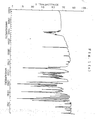
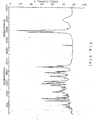
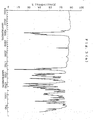
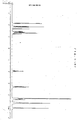
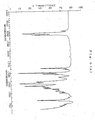
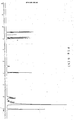
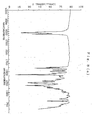
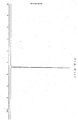
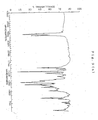
- Fig.1 (a) to Fig. 13(a) are IR spectra of optically active compounds of Examples 1 to 13, respectively.
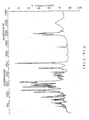
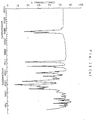
- Fig.1(b) to Fig.13(b) are H-NMR spectra of optically active compounds of Examples 1 to 13, respectively.
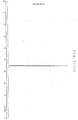
- Fig.6(c) to Fig.13(c) are F-MMR spectra of optically active compounds of Examples 6 to 13, respectively.
- R and R are the same or different alkyl groups containing usually 1 - 20, preferably 1 - 18 carbon atoms, which may be substituted with at least one substituent selected from the group consisting of fluorine, chlorine and alkoxy groups containing 1 to 10 or more carbon atoms.
- alkyl groups are straight-chain alkyl groups, such as methyl, ethyl, n-propyl, n-butyl, n-pentyl, n-hexyl, n-heptyl, n-octyl, n-nonyl, n-decyl, n-undecyl, n-dodecyl, n-tridecyl, n-tetradecyl, n-pentadecyl, n-hexadecyl and n-octadecyl groups; branched alkyl groups, such as iso-propyl, 1-methylpropyl, 1-methylbutyl, 1-methylpentyl, 1-methylhexyl, 1-methylheptyl, 1-methyloctyl, 2-methylpropyl, 2-methylbutyl, 2-methylpentyl, 2-methylhexyl, 2-methylhepty
- Alkyl groups R and R may contain one or more asymmetric carbon atoms, and may be optically active (hereinafter referred to as oa).
- Suitable oa groups include, for example, oa alkyl groups, such as oa 1-methylpropyl, oa 1-methylbutyl, oa 1-methylpentyl, oa 1-methylhexyl, oa 1-methylheptyl. oa 1-methyloctyl, oa 2-methylbutyl, oa 2-methylpentyl, oa 2-methylhexyl, oa 2-methylheptyl, oa 2-methyloctyl, oa 2-methylnonyl, oa 2-methyldecyl, oa.
- oa 2-fluorotetradecyl, oa 2-fluoro-3-methylbutyl, oa 2-fluoro-3-methylpentyl and oa 2-fluoro-4-methylpentyl groups CI-substituted oa alkyl groups, such as oa 2-chloropropyl, oa 2-chlorobutyl, oa 2-chloropentyl, oa 2-chlorohexyl, oa 2-chloroheptyl, oa 2-chlorooctyl, oa 2-chlorononyl, oa 2- chlorodecyl, oa 2-chloroundecyl, oa 2-chlorododecyl, oa 2-chlorotridecyl, oa 2-chloro-3-methylbutyl, oa 2-chloro-3-methylpentyl and oa 2-chloro-4-methylpentyl groups; and alk
- alkyl groups containing 1 to 16, particularly 1 to 15 , more particularly 1 to 14 carbon atoms are preferred.
- X is preferably - (direct bond), O (ether oxygen linkage), C#C or S, more preferably -, C#C or 0, particularly - or O.
- Y preferred are O, COO, CH 2 O and C#C, particularly 0, COO and C#C.
- cyclic group A 1 is : Ph Pyr's hereinafter referred to as ⁇ Pry)], Pym's (hereinafter referred to as Pym> and ⁇ Prm, nespectively)], Pyd and Nt
- cyclic groups may be substituted with 1 - 4 halogen atoms, such as fluorine, chlorine and bromine atoms, or 1 - 2 substituent groups, such as cyano, nitro and trifluoromethyl groups.
- Suitable substituted cyclic groups are F-substituted Ph's, such as (hereinafter referred to as PhF and FPh, respectively), and F-substituted Bp's, such as Ph-PhF and FPh-Ph.
- Ph and Pyr's.
- n is preferably 0 to 3, more preferably 0 or 1.
- illustrative examples of said cyclic group A 2 include the followings : 1) Bp; 2)Nt: 3)Pym-Ph's [Pym>-Ph and ⁇ Pym-Ph] and Ph-Pym's [Ph- ⁇ Pym and Ph-Pym>], preferably Pym>-Ph, Ph- ⁇ Pym and Ph-Pym>; 4) A 4 -Y 2 -A 5 , wherein A4 and A 5 are independently selected from Ph and Bp; and 5) A 1 -Y 2 -Pyr, preferably those, wherein A 1 is Ph, Bp, Pyd or Nt.
- illustrative examples of said cyclic group A3 include the followings: 1) Nt; 2) A 6 -CH 2 CH 2 -A 7 , wherein A 6 and A 7 are independently selected from Ph, Bp and Nt; and 3) A 1 -Y 2 -Pyr , preferably those, wherein A 1 is Ph, Bp, Pym>, Pyd or Nt.
- each cyclic group (Ph, Pyr, Pym, Pyd, Pyz, Bp or Nt), constituting A,, A 2 , A3, A4, A 5 , A 6 and A 7 may be independently selected from Ph, Bp and Nt; and 3) A 1 -Y 2 -Pyr, preferably those, wherein A 1 is Ph, Bp, ⁇ Pyr, Pym>, Pyd or Nt.
- each cyclic group (Ph, Pyr, Pym, Pyd, Pyz, Bp or Nt), constituting A 1 , A 2 , A 3 , A 4 , A 5 , A 6 and A 7 may be substituted with 1 - 4 fluorine atoms or with 1 - 2 substituents selected from the group consisting of CI, cyano, nitro and trifluoromethyl groups; among which preferred are substituted with up to 4 fluorine atoms.
- Illustrative examples of the compounds represented by the formulae (1), (2) and (3) include those shown in Table 1-1 to Table 9.
- Optically active compounds (B35) can be obtained by known methods (such as those written in “Oil Chemistry”, No.35, p.608-613, and Preprint of "The 13th Fluorochemistry Discussion", 4D113).
- Optically active sites of R, R and R in the above and also hereinafter can be derived respectively from the corresponding oa alcohols or oa carboxylic acids.
- These oa alcohols and/or oa carboxylic acids are commercially available, or can be prepared by asymmetric reduction of the corresponding ketones with enzymes, microorganisms or asymmetric metal catalysts, or derived from naturally ocurring oa compounds (such as oa amino acids, oa hydroxy acids and esters thereof), or synthetic oa compounds (such as oa 2-fluoroalkyl alcohols, 2-chloroalkyl alcohols and oa epoxy compounds).
- (C1) is reduced with lithium aluminum hydride to obtain (C2), followed by halogenating the OH group with a halogenating reagent (such as thionyl chloride) to obtain (C3).
- (C16) and (B2) are reacted in anhydrous DMF or DMSO at room temperature or under heating to obtain a compound of the invention represented by the formula (Ca).
- a compound of the invention represented by (Cb) can be produced by heating (C4) and (B2) under reflux in anhydrous DMF in the presence of cuprous iodide.
- (F1) and (F2) are reacted in triethylamine in an atomosphere of inert gas using zero- or bi-valent palladium catalyst to obtain (F3).
- (F3) and (B2), as mentioned above [B] are heated under reflux in an anhydrous DMF in the presence of cuprous iodide to obtain a compound of the invention represented by the formula (Fa).
- (F4) is reacted subsequently with LiAIH 4 , SOCl 2 and then (B2) in the same manner as described in [B] [IV] forming (B24) from (B21) to obtain (F7).
- (F1) and (F7) are reacted in triethylamine in an atomosphere of inert gas using zero- or bi-valent palladium catalyst to obtain a compound of the invention represented by the formula (Fb).
- (F1) can be prepared in the same manner as (H1) described below, wherein As is substituted with A 1 .
- Optically active alcohols (G2) can be obtained as the intermediates for (B2), and include (B28), (B30), (B33), and precursors (before reaction with MH) of (B39) and (B43), as mentioned above [V] and [VI] in [B].
- (H4) is reacted in the presence of a base (such as sodium hydroxide) with an alkylating agent (such as alkyl halide) to obtain (H5).
- (H5) is reacted with 3-methyl-1-butyn-3-ol in triethylamine under an atmosohere of inert gas using zero- or bi-valent palladium catalyst to form (H6), followed by reacting powdery sodium hydroxide in anhydrous toluene to produce (H1 ).
- (H7) and (H8) are reacted in triethylamine in an atomosphere of inert gas using zero- or bi-valent palladium catalyst to obtain (H9).
- an alkali metal halide is reacted therewith to produce (H11).
- (H11) is reacted with 3-methyl-1-butyn-3-ol in triethylamine under an atmosohere of inert gas using zero- or bi-valent palladium catalyst to form (H12), followed by reacting powdery sodium hydroxide in anhydrous toluene to produce (H1").
- (Ja) may also be produced by reacting (F1) with (J2) in triethylamine in an atomosphere of inert gas using zero- or bi-valent palladium catalyst to obtain (J3), and thereafter hydrolyzing (J3) with an alkali (such as sodium hydroxide) and then treating with an acid (such as hydrochloric acid) to form (J4), followed by esterifying (J4) with an optically active alcohol (G2) mentioned above [G], using a dehydrating agent (such as N,N -dicyclohexylcarbodiimide).
- a dehydrating agent such as N,N -dicyclohexylcarbodiimide
- liquid crystals are used in the forms of liquid crystal compositions containing two or more components; and optically active compounds of the present invention can be used as a component of liquid crystal compositions.
- This invention provide a liquid crystal composition containing as components thereof a mixture of a plurality of liquid crystal compounds, said liquid crystal compounds comprising at least one compound represented by the formula (1), (2) or (3).
- Compounds of the formula (1), (2) or (3) include ones which present liquid crystals by themselves, and ones which don't present liquid crystals by themselves but can provide liquid crystal compositions.
- Liquid crystal compositions may contain one or more liquid crystals other than the compounds of the formula (1), (2) or (3).
- suitable liquid crystals include : smectic liquid crystals, for example, smectic liquid crystals free from any optically active site, such as 2-p-alkyloxyphenyl-5-alkylpyrimidines, 2-p-alkanoyloxyphenyl-5-alkylpyrimidines, 2-p-alkyloxycarbonyl-phenyl-5-alkylpyrimidines, 2-p-alkylphenyl-5-p-alkyloxy-phenylpyrimidines, 2-p-alkyloxy-m-fluorophenyl-5-alkyl-pyrimidines, 2-p-alkyloxyphenyl-5-(trans-4-alkylcyclohexyl)pyridines, 2-p-alkyloxy-m-fluorophenyl-5-alkylpyridines, 2-p-(p'-alkylphenyl)
- Liquid crystal compositions may contain other components, for example, chiral compounds showing no liquid crystaline properties, pleochroic dyes (such as anthraquinone dyes, azo dyes and the like), and so on.
- pleochroic dyes such as anthraquinone dyes, azo dyes and the like
- each component in the liquid crystal compositions are, for example, as follows the compound(s) of the formula (1): usually 0.1 - 20%, preferably at least 1%, more preferably 2 - 10%; other smectic liquid crystal(s) : usually 80- 99.9%, preferably at least 90%, more preferably 95 - 98%; pleochroic dye(s) : usually 0 - 5 %.
- ferroelectric liquid crystal compositions By applying voltage, ferroelectric liquid crystal compositions cause photo-switching phenomena, which are applied for producing display elements of quick response [See for example, JPN Patent Pubrication Nos.107216/1981 and 118744/1984, and N.A.Clark and S.T.Lagerwall:Applied Physics Letters,36,899(1980)].
- Liquid crystals, showing ferroelectricity, according to the invention bring about optical switching phenomena by voltage applying, and can provide rapid responce display devices, such as those described in JPN Lay-open Patents No.107216/1981 and No.118744/1984, and N.A.Clark and S.T. Lagerwall, "Applied Physics Letters "36,899(1980).
- liquid crystal compositions of this invention can be used as photo-switching elements (display devices), for instance, by sealing in vacuum into liquid crystal cells having cell distance of 0.5 - 10 micron m (preferably 0.5 - 3 micron m), followed by providing polarizers on both sides.
- the above liquid crystal cells can be produced by combining, through a spacer, two surface-aligned glass substrates provided with transparent electrodes.
- suitable spacers are alumina beads, glass fiber and polyimide film.
- Alignment can be done by conventional alignment treatment, such as application of polyimide membrane, rubbing treatment, oblique vapor-deposition of SiO.
- % represents % by weight; and the structure of the compounds was confirmed with analysis of NMR (nuclear magnetic resonance), MS (mass spectrum) and IR (infrared adsorption), and elemental analysis.
- Example 2 2) was repeated except that 0.67 g of oa 2-methyl-1-butanol was used instead of 1.2 g of decyl alcohol, and that the hexane-soluble matter was purified using liquid chromatography instead of recrystalization with methanol, to obtain 0.5 g of Compound No.1-13 of this invention.
- Example 4 was repeated except that 2.0 g of 4-hexylbenzoic acid chloride (prepared from 4-n-hexylbenzoic acid with thionyl chloride) were used instead of 2.2 g of 4-n-hexyloxybenzoic acid chloride to obtain 2.2 g of Compound No.1-63 of this invention.
- Example 6 was repeated except that 3.59 g of p-n-decyloxy-p -chloromethylbiphenyl (prepared reducing p-n-decyloxy-p'-carboxybiphenyl with lithium aluminum hydride, followed by chlorinating with thionyl chloride) were used instead of 4.36 g of p-n-decyloxy-p'-iodo-biphenyl and 1.90 g of cuprous iodide, and that refluxing was carried out for 3 hours instead of 2 hours, to obtain 2.9 g of liquid oa p-n-decyloxy-p'-(1-trifluoromethyl-heptyloxymethyl)biphenyl [Compound No.2-70] of this invention.
- the hexane phase was washed subsequently with water, an aqueous solution of sodium hydrogen sulfite and then water, followed by distilling off the hexane to obtain 7.7 g of oily oa p-(1-trifluoromethyl-heptyloxy)-iodobenzene.
- the toluene phase was washed with 1N hydrochloric acid aqueous solution and then with water, followed by distilling off the toluene to obtain a black oily material.
- This material was dissolved into hexane, and purified by passing through a short silica gel column and then recrystalizing twice with ethanol to obtain 2.0 g of white crystalline oa p-n-decyloxy-p'-(1-trifluoromethyl-heptyloxy)tolan [Compound No.5-4] of this invention.
- the product was introduced into iced water, and extracted with hexane.
- the hexane phase was washed subsequently with water, 1 N-hydrochloric acid aqueous solution and then water, followed by distilling off the hexane to obtain 3.8 g of oily oa p-(l-trifluoro-methyl-heptyloxymethyl)-iodobenzene.
- Example 9, 2) was repeated except using 2.0 g of oa instead of 1.9 g of oa p-(1-trifluoromethylhep- tyloxy)iodobenzene, to obtain 2.20 g of white crystalline oa p-n-decyloxy-p'-(1-trifluoromethyl-heptylox- ymethyl)tolan [Compound No.5-4 of this invention.
- This acid chloride was dissolved into 10 ml of dry pyridine, to which, under cooling, 0.55 g of 1-trifluoromethyl-heptanol were added dropwise slowly. After the addition was over, stirring was continued an hour under cooling with ice and then reacting them at 80 C for 6 hours. After completion of the reaction, the product was introduced into iced water, and extracted with toluene. The toluene phase was washed subsequently with 1N-hydrochloric acid aqueous solution, water, saturated aquous solution of sodium hydrogen carbonate and then water, followed by distilling off the toluene to obtain a pale yellow oily material.
- the hexane phase was washed with 1N hydrochloric acid aqueous solution and then with water, followed by distilling off the hexane to obtain 22.8 g of a solid compound of the formula :
- Liquid crystal compositions containing known smectic liquid crystals and a compound of this invention were prepared according to the following formulation :
- Each composition was injected into cells of 2 micron m thickness, provided with transparent electrodes, which had been coated with polyvinyl alcohol and surface-aligned by rubbing. Each element was placed between two crossed polarizers, and response time was measured from change of intensity of transmitted light when voltage of 10V was applied. The results (Response Time, micro sec.) were as shown in Table 10.
- Example 14 was repeated except that the following formulation was used.
Landscapes
- Chemical & Material Sciences (AREA)
- Organic Chemistry (AREA)
- Crystallography & Structural Chemistry (AREA)
- Engineering & Computer Science (AREA)
- Materials Engineering (AREA)
- Organic Low-Molecular-Weight Compounds And Preparation Thereof (AREA)
- Liquid Crystal Substances (AREA)
- Plural Heterocyclic Compounds (AREA)
Applications Claiming Priority (16)
| Application Number | Priority Date | Filing Date | Title |
|---|---|---|---|
| JP47948/89 | 1989-02-27 | ||
| JP47949/89 | 1989-02-27 | ||
| JP1047949A JPH03115243A (ja) | 1989-02-27 | 1989-02-27 | 光学活性化合物 |
| JP1047948A JPH0729966B2 (ja) | 1989-02-27 | 1989-02-27 | 光学活性化合物 |
| JP49468/89 | 1989-03-01 | ||
| JP4947089 | 1989-03-01 | ||
| JP1049469A JPH02229174A (ja) | 1989-03-01 | 1989-03-01 | 光学活性化合物 |
| JP1049468A JPH02229128A (ja) | 1989-03-01 | 1989-03-01 | 光学活性化合物 |
| JP49469/89 | 1989-03-01 | ||
| JP49470/89 | 1989-03-01 | ||
| JP1192061A JPH0356445A (ja) | 1989-07-25 | 1989-07-25 | 光学活性化合物 |
| JP192061/89 | 1989-07-25 | ||
| JP299928/89 | 1989-11-17 | ||
| JP1299928A JPH03161473A (ja) | 1989-11-17 | 1989-11-17 | 光学活性化合物 |
| JP303851/89 | 1989-11-22 | ||
| JP1303851A JP2608789B2 (ja) | 1989-03-01 | 1989-11-22 | 光学活性化合物 |
Related Child Applications (2)
| Application Number | Title | Priority Date | Filing Date |
|---|---|---|---|
| EP92203667.8 Division-Into | 1990-02-26 | ||
| EP19920203667 Division EP0542381A3 (de) | 1989-02-27 | 1990-02-26 | Optisch-aktive Verbindungen |
Publications (3)
| Publication Number | Publication Date |
|---|---|
| EP0385692A2 true EP0385692A2 (de) | 1990-09-05 |
| EP0385692A3 EP0385692A3 (de) | 1991-10-30 |
| EP0385692B1 EP0385692B1 (de) | 1993-10-06 |
Family
ID=27572360
Family Applications (2)
| Application Number | Title | Priority Date | Filing Date |
|---|---|---|---|
| EP90302013A Expired - Lifetime EP0385692B1 (de) | 1989-02-27 | 1990-02-26 | Optisch aktive Verbindungen |
| EP19920203667 Withdrawn EP0542381A3 (de) | 1989-02-27 | 1990-02-26 | Optisch-aktive Verbindungen |
Family Applications After (1)
| Application Number | Title | Priority Date | Filing Date |
|---|---|---|---|
| EP19920203667 Withdrawn EP0542381A3 (de) | 1989-02-27 | 1990-02-26 | Optisch-aktive Verbindungen |
Country Status (3)
| Country | Link |
|---|---|
| US (2) | US5160662A (de) |
| EP (2) | EP0385692B1 (de) |
| DE (1) | DE69003709T2 (de) |
Cited By (3)
| Publication number | Priority date | Publication date | Assignee | Title |
|---|---|---|---|---|
| WO1992009576A1 (de) * | 1990-11-27 | 1992-06-11 | MERCK Patent Gesellschaft mit beschränkter Haftung | 3,6-disubstituierte-2-halogenpyridine |
| EP0518636A1 (de) * | 1991-06-11 | 1992-12-16 | Sanyo Chemical Industries Ltd. | Flüssigkristalline Verbindungen sowie Flüssigkristallzusammensetzungen |
| US5686020A (en) * | 1990-09-04 | 1997-11-11 | Canon Kabushiki Kaisha | Mesomorphic compound, liquid crystal composition, liquid crystal device, display apparatus and display method |
Families Citing this family (3)
| Publication number | Priority date | Publication date | Assignee | Title |
|---|---|---|---|---|
| CA2022880A1 (en) * | 1989-08-18 | 1991-02-19 | Toyozi Shimizu | Carboxylate compounds, liquid crystal compositions containing said compounds and liquid crystal element |
| JP3487613B2 (ja) * | 1992-07-24 | 2004-01-19 | メルク パテント ゲゼルシャフト ミット ベシュレンクテル ハフトング | キラル2,6−ジフルオロベンゼン誘導体 |
| US5770108A (en) * | 1995-06-28 | 1998-06-23 | Mitsui Toatsu Chemicals, Inc. | Pyrimidine compound and liquid crystal composition and liquid crystal element using the same |
Family Cites Families (9)
| Publication number | Priority date | Publication date | Assignee | Title |
|---|---|---|---|---|
| US4613209A (en) * | 1982-03-23 | 1986-09-23 | At&T Bell Laboratories | Smectic liquid crystals |
| EP0110299B2 (de) * | 1982-11-26 | 1993-06-09 | Hitachi, Ltd. | Smektische Flüssigkristallverbindungen und Flüssigkristallzusammensetzungen |
| JPS62169883A (ja) * | 1985-10-30 | 1987-07-27 | Canon Inc | 液晶素子 |
| WO1987005017A2 (en) * | 1986-02-17 | 1987-08-27 | MERCK Patent Gesellschaft mit beschränkter Haftung | Optically active compounds |
| JP2562606B2 (ja) * | 1986-09-08 | 1996-12-11 | ダイセル化学工業株式会社 | 光学活性化合物 |
| DE3887569T2 (de) * | 1987-06-04 | 1994-08-04 | Canon Kk | Flüssigkristallzusammensetzung und Flüssigkristall-Vorrichtung, die diese enthält. |
| EP0294852B1 (de) * | 1987-06-12 | 1995-12-06 | Canon Kabushiki Kaisha | Vorrichtung mit einem ferroelektrischen Flüssigkristall |
| DE3812191A1 (de) * | 1988-04-13 | 1989-10-26 | Merck Patent Gmbh | Chirale oder achirale ringverbindungen |
| JPH02169883A (ja) * | 1988-12-21 | 1990-06-29 | Toyoda Mach Works Ltd | ベーンポンプ |
-
1990
- 1990-02-26 EP EP90302013A patent/EP0385692B1/de not_active Expired - Lifetime
- 1990-02-26 EP EP19920203667 patent/EP0542381A3/de not_active Withdrawn
- 1990-02-26 DE DE90302013T patent/DE69003709T2/de not_active Expired - Fee Related
- 1990-02-27 US US07/486,008 patent/US5160662A/en not_active Expired - Fee Related
-
1992
- 1992-04-29 US US07/875,654 patent/US5290478A/en not_active Expired - Fee Related
Cited By (3)
| Publication number | Priority date | Publication date | Assignee | Title |
|---|---|---|---|---|
| US5686020A (en) * | 1990-09-04 | 1997-11-11 | Canon Kabushiki Kaisha | Mesomorphic compound, liquid crystal composition, liquid crystal device, display apparatus and display method |
| WO1992009576A1 (de) * | 1990-11-27 | 1992-06-11 | MERCK Patent Gesellschaft mit beschränkter Haftung | 3,6-disubstituierte-2-halogenpyridine |
| EP0518636A1 (de) * | 1991-06-11 | 1992-12-16 | Sanyo Chemical Industries Ltd. | Flüssigkristalline Verbindungen sowie Flüssigkristallzusammensetzungen |
Also Published As
| Publication number | Publication date |
|---|---|
| US5290478A (en) | 1994-03-01 |
| EP0385692A3 (de) | 1991-10-30 |
| EP0542381A2 (de) | 1993-05-19 |
| US5160662A (en) | 1992-11-03 |
| DE69003709T2 (de) | 1994-03-10 |
| EP0385692B1 (de) | 1993-10-06 |
| DE69003709D1 (de) | 1993-11-11 |
| EP0542381A3 (de) | 1993-06-02 |
Similar Documents
| Publication | Publication Date | Title |
|---|---|---|
| EP0407438B1 (de) | An der seite fluorierte 4-cyanophenyl und 4'-cyanobiphenyl-benzoate | |
| EP0110299A2 (de) | Smektische Flüssigkristallverbindungen und Flüssigkristallzusammensetzungen | |
| US5061399A (en) | Optically active naphthalene compounds and liquid crystal materials and devices incorporating them | |
| EP0281424B1 (de) | Optisch aktive Verbindungen mit mehreren asymmetrischen Kohlenstoffatomen | |
| JPH01502908A (ja) | トラン化合物 | |
| US5700393A (en) | Liquid crystalline compounds | |
| EP0257457B1 (de) | Optisch-aktive 2-Methyl-1,3-propandiol-Derivate, sie enthaltende flüssigkristalline Zusammensetzungen und optisches schaltendes Element | |
| US5154851A (en) | Liquid crystal compound having large optical anisotropy value | |
| EP0385692B1 (de) | Optisch aktive Verbindungen | |
| EP0440643A1 (de) | Fluorinierte 4"-cyanosubstituierte terphenyle. | |
| US5252253A (en) | Phenyl naphthalenes having liquid crystalline properties | |
| EP0453503B1 (de) | Flüssigkristalline eigenschaften besitzende phenylnaphthalene | |
| EP0391956B1 (de) | Cyanhydrinderivate und deren verwendung in flüssigkristallmaterialien und vorrichtungen | |
| JPH02225434A (ja) | 光学活性化合物 | |
| US5178791A (en) | Halogenated diphenyldiacetylene liquid crystals | |
| JP2524341B2 (ja) | 光学活性液晶化合物および組成物 | |
| EP0351782A2 (de) | Optisch aktive Verbindungen, Flüssigkristallzusammensetzungen, welche diese Verbindungen enthalten, sowie optische Flüssigkristall-Modulatoren, in denen diese Zusammensetzungen verwendetsind | |
| JPH02229128A (ja) | 光学活性化合物 | |
| JPH04506817A (ja) | フェニルシクロヘキサン類および液晶媒体 | |
| JPS61143350A (ja) | カルボニトリル化合物 | |
| JPH04502627A (ja) | フェニルシクロヘキサン化合物および液晶相 | |
| JPS6345258A (ja) | 光学活性6−置換−ピリジン−3−カルボン酸エステル化合物および液晶 | |
| JP2745073B2 (ja) | フェニルアセチレン化合物 | |
| JP2608789B2 (ja) | 光学活性化合物 | |
| JPH01146842A (ja) | 液晶性化合物および液晶組成物 |
Legal Events
| Date | Code | Title | Description |
|---|---|---|---|
| PUAI | Public reference made under article 153(3) epc to a published international application that has entered the european phase |
Free format text: ORIGINAL CODE: 0009012 |
|
| AK | Designated contracting states |
Kind code of ref document: A2 Designated state(s): CH DE FR GB IT LI NL |
|
| RIN1 | Information on inventor provided before grant (corrected) |
Inventor name: KISHIKI, HIROSHI Inventor name: YOSHIO, KUNKIYO Inventor name: WATANABE, TETSUYA Inventor name: SATOH, MASAHIRO |
|
| 17P | Request for examination filed |
Effective date: 19901228 |
|
| PUAL | Search report despatched |
Free format text: ORIGINAL CODE: 0009013 |
|
| AK | Designated contracting states |
Kind code of ref document: A3 Designated state(s): CH DE FR GB IT LI NL |
|
| 17Q | First examination report despatched |
Effective date: 19920807 |
|
| GRAA | (expected) grant |
Free format text: ORIGINAL CODE: 0009210 |
|
| AK | Designated contracting states |
Kind code of ref document: B1 Designated state(s): CH DE FR GB IT LI NL |
|
| PG25 | Lapsed in a contracting state [announced via postgrant information from national office to epo] |
Ref country code: LI Effective date: 19931006 Ref country code: CH Effective date: 19931006 |
|
| XX | Miscellaneous (additional remarks) |
Free format text: TEILANMELDUNG 92203667.8 EINGEREICHT AM 26/02/90. |
|
| ITF | It: translation for a ep patent filed | ||
| REF | Corresponds to: |
Ref document number: 69003709 Country of ref document: DE Date of ref document: 19931111 |
|
| ET | Fr: translation filed | ||
| REG | Reference to a national code |
Ref country code: CH Ref legal event code: PL |
|
| PGFP | Annual fee paid to national office [announced via postgrant information from national office to epo] |
Ref country code: FR Payment date: 19940127 Year of fee payment: 5 |
|
| PGFP | Annual fee paid to national office [announced via postgrant information from national office to epo] |
Ref country code: GB Payment date: 19940221 Year of fee payment: 5 |
|
| PGFP | Annual fee paid to national office [announced via postgrant information from national office to epo] |
Ref country code: NL Payment date: 19940228 Year of fee payment: 5 |
|
| PGFP | Annual fee paid to national office [announced via postgrant information from national office to epo] |
Ref country code: DE Payment date: 19940429 Year of fee payment: 5 |
|
| PLBE | No opposition filed within time limit |
Free format text: ORIGINAL CODE: 0009261 |
|
| STAA | Information on the status of an ep patent application or granted ep patent |
Free format text: STATUS: NO OPPOSITION FILED WITHIN TIME LIMIT |
|
| 26N | No opposition filed | ||
| PG25 | Lapsed in a contracting state [announced via postgrant information from national office to epo] |
Ref country code: GB Effective date: 19950226 |
|
| PG25 | Lapsed in a contracting state [announced via postgrant information from national office to epo] |
Ref country code: NL Effective date: 19950901 |
|
| GBPC | Gb: european patent ceased through non-payment of renewal fee |
Effective date: 19950226 |
|
| PG25 | Lapsed in a contracting state [announced via postgrant information from national office to epo] |
Ref country code: FR Effective date: 19951031 |
|
| NLV4 | Nl: lapsed or anulled due to non-payment of the annual fee |
Effective date: 19950901 |
|
| PG25 | Lapsed in a contracting state [announced via postgrant information from national office to epo] |
Ref country code: DE Effective date: 19951101 |
|
| REG | Reference to a national code |
Ref country code: FR Ref legal event code: ST |
|
| PG25 | Lapsed in a contracting state [announced via postgrant information from national office to epo] |
Ref country code: IT Free format text: LAPSE BECAUSE OF NON-PAYMENT OF DUE FEES Effective date: 20050226 |