EP0302389B1 - Alpha-ungesättigte Amine, ihre Herstellung und Verwendung - Google Patents
Alpha-ungesättigte Amine, ihre Herstellung und Verwendung Download PDFInfo
- Publication number
- EP0302389B1 EP0302389B1 EP88112210A EP88112210A EP0302389B1 EP 0302389 B1 EP0302389 B1 EP 0302389B1 EP 88112210 A EP88112210 A EP 88112210A EP 88112210 A EP88112210 A EP 88112210A EP 0302389 B1 EP0302389 B1 EP 0302389B1
- Authority
- EP
- European Patent Office
- Prior art keywords
- compound
- methyl
- amino
- pyridylmethyl
- alkyl
- Prior art date
- Legal status (The legal status is an assumption and is not a legal conclusion. Google has not performed a legal analysis and makes no representation as to the accuracy of the status listed.)
- Expired - Lifetime
Links
- 0 C=C(CC*1)C1C1CC1 Chemical compound C=C(CC*1)C1C1CC1 0.000 description 16
- IZQRRJYVWYRVAK-ALCCZGGFSA-N CC(C)=C/C=C(\N=C)/Br Chemical compound CC(C)=C/C=C(\N=C)/Br IZQRRJYVWYRVAK-ALCCZGGFSA-N 0.000 description 1
- XWKFPIODWVPXLX-UHFFFAOYSA-N Cc1ccc(C)nc1 Chemical compound Cc1ccc(C)nc1 XWKFPIODWVPXLX-UHFFFAOYSA-N 0.000 description 1
- ITQTTZVARXURQS-UHFFFAOYSA-N Cc1cccnc1 Chemical compound Cc1cccnc1 ITQTTZVARXURQS-UHFFFAOYSA-N 0.000 description 1
- ICMJQBNCXFJBPE-UHFFFAOYSA-N Cc1cnc(O)[s]1 Chemical compound Cc1cnc(O)[s]1 ICMJQBNCXFJBPE-UHFFFAOYSA-N 0.000 description 1
Classifications
-
- C—CHEMISTRY; METALLURGY
- C07—ORGANIC CHEMISTRY
- C07D—HETEROCYCLIC COMPOUNDS
- C07D213/00—Heterocyclic compounds containing six-membered rings, not condensed with other rings, with one nitrogen atom as the only ring hetero atom and three or more double bonds between ring members or between ring members and non-ring members
- C07D213/02—Heterocyclic compounds containing six-membered rings, not condensed with other rings, with one nitrogen atom as the only ring hetero atom and three or more double bonds between ring members or between ring members and non-ring members having three double bonds between ring members or between ring members and non-ring members
- C07D213/04—Heterocyclic compounds containing six-membered rings, not condensed with other rings, with one nitrogen atom as the only ring hetero atom and three or more double bonds between ring members or between ring members and non-ring members having three double bonds between ring members or between ring members and non-ring members having no bond between the ring nitrogen atom and a non-ring member or having only hydrogen or carbon atoms directly attached to the ring nitrogen atom
- C07D213/24—Heterocyclic compounds containing six-membered rings, not condensed with other rings, with one nitrogen atom as the only ring hetero atom and three or more double bonds between ring members or between ring members and non-ring members having three double bonds between ring members or between ring members and non-ring members having no bond between the ring nitrogen atom and a non-ring member or having only hydrogen or carbon atoms directly attached to the ring nitrogen atom with substituted hydrocarbon radicals attached to ring carbon atoms
- C07D213/36—Radicals substituted by singly-bound nitrogen atoms
- C07D213/40—Acylated substituent nitrogen atom
-
- A—HUMAN NECESSITIES
- A01—AGRICULTURE; FORESTRY; ANIMAL HUSBANDRY; HUNTING; TRAPPING; FISHING
- A01N—PRESERVATION OF BODIES OF HUMANS OR ANIMALS OR PLANTS OR PARTS THEREOF; BIOCIDES, e.g. AS DISINFECTANTS, AS PESTICIDES OR AS HERBICIDES; PEST REPELLANTS OR ATTRACTANTS; PLANT GROWTH REGULATORS
- A01N35/00—Biocides, pest repellants or attractants, or plant growth regulators containing organic compounds containing a carbon atom having two bonds to hetero atoms with at the most one bond to halogen, e.g. aldehyde radical
- A01N35/08—Biocides, pest repellants or attractants, or plant growth regulators containing organic compounds containing a carbon atom having two bonds to hetero atoms with at the most one bond to halogen, e.g. aldehyde radical at least one of the bonds to hetero atoms is to nitrogen
-
- A—HUMAN NECESSITIES
- A01—AGRICULTURE; FORESTRY; ANIMAL HUSBANDRY; HUNTING; TRAPPING; FISHING
- A01N—PRESERVATION OF BODIES OF HUMANS OR ANIMALS OR PLANTS OR PARTS THEREOF; BIOCIDES, e.g. AS DISINFECTANTS, AS PESTICIDES OR AS HERBICIDES; PEST REPELLANTS OR ATTRACTANTS; PLANT GROWTH REGULATORS
- A01N43/00—Biocides, pest repellants or attractants, or plant growth regulators containing heterocyclic compounds
- A01N43/34—Biocides, pest repellants or attractants, or plant growth regulators containing heterocyclic compounds having rings with one nitrogen atom as the only ring hetero atom
- A01N43/40—Biocides, pest repellants or attractants, or plant growth regulators containing heterocyclic compounds having rings with one nitrogen atom as the only ring hetero atom six-membered rings
-
- A—HUMAN NECESSITIES
- A01—AGRICULTURE; FORESTRY; ANIMAL HUSBANDRY; HUNTING; TRAPPING; FISHING
- A01N—PRESERVATION OF BODIES OF HUMANS OR ANIMALS OR PLANTS OR PARTS THEREOF; BIOCIDES, e.g. AS DISINFECTANTS, AS PESTICIDES OR AS HERBICIDES; PEST REPELLANTS OR ATTRACTANTS; PLANT GROWTH REGULATORS
- A01N43/00—Biocides, pest repellants or attractants, or plant growth regulators containing heterocyclic compounds
- A01N43/34—Biocides, pest repellants or attractants, or plant growth regulators containing heterocyclic compounds having rings with one nitrogen atom as the only ring hetero atom
- A01N43/40—Biocides, pest repellants or attractants, or plant growth regulators containing heterocyclic compounds having rings with one nitrogen atom as the only ring hetero atom six-membered rings
- A01N43/42—Biocides, pest repellants or attractants, or plant growth regulators containing heterocyclic compounds having rings with one nitrogen atom as the only ring hetero atom six-membered rings condensed with carbocyclic rings
-
- A—HUMAN NECESSITIES
- A01—AGRICULTURE; FORESTRY; ANIMAL HUSBANDRY; HUNTING; TRAPPING; FISHING
- A01N—PRESERVATION OF BODIES OF HUMANS OR ANIMALS OR PLANTS OR PARTS THEREOF; BIOCIDES, e.g. AS DISINFECTANTS, AS PESTICIDES OR AS HERBICIDES; PEST REPELLANTS OR ATTRACTANTS; PLANT GROWTH REGULATORS
- A01N43/00—Biocides, pest repellants or attractants, or plant growth regulators containing heterocyclic compounds
- A01N43/48—Biocides, pest repellants or attractants, or plant growth regulators containing heterocyclic compounds having rings with two nitrogen atoms as the only ring hetero atoms
- A01N43/60—1,4-Diazines; Hydrogenated 1,4-diazines
-
- A—HUMAN NECESSITIES
- A01—AGRICULTURE; FORESTRY; ANIMAL HUSBANDRY; HUNTING; TRAPPING; FISHING
- A01N—PRESERVATION OF BODIES OF HUMANS OR ANIMALS OR PLANTS OR PARTS THEREOF; BIOCIDES, e.g. AS DISINFECTANTS, AS PESTICIDES OR AS HERBICIDES; PEST REPELLANTS OR ATTRACTANTS; PLANT GROWTH REGULATORS
- A01N43/00—Biocides, pest repellants or attractants, or plant growth regulators containing heterocyclic compounds
- A01N43/72—Biocides, pest repellants or attractants, or plant growth regulators containing heterocyclic compounds having rings with nitrogen atoms and oxygen or sulfur atoms as ring hetero atoms
- A01N43/74—Biocides, pest repellants or attractants, or plant growth regulators containing heterocyclic compounds having rings with nitrogen atoms and oxygen or sulfur atoms as ring hetero atoms five-membered rings with one nitrogen atom and either one oxygen atom or one sulfur atom in positions 1,3
- A01N43/78—1,3-Thiazoles; Hydrogenated 1,3-thiazoles
-
- A—HUMAN NECESSITIES
- A01—AGRICULTURE; FORESTRY; ANIMAL HUSBANDRY; HUNTING; TRAPPING; FISHING
- A01N—PRESERVATION OF BODIES OF HUMANS OR ANIMALS OR PLANTS OR PARTS THEREOF; BIOCIDES, e.g. AS DISINFECTANTS, AS PESTICIDES OR AS HERBICIDES; PEST REPELLANTS OR ATTRACTANTS; PLANT GROWTH REGULATORS
- A01N47/00—Biocides, pest repellants or attractants, or plant growth regulators containing organic compounds containing a carbon atom not being member of a ring and having no bond to a carbon or hydrogen atom, e.g. derivatives of carbonic acid
- A01N47/08—Biocides, pest repellants or attractants, or plant growth regulators containing organic compounds containing a carbon atom not being member of a ring and having no bond to a carbon or hydrogen atom, e.g. derivatives of carbonic acid the carbon atom having one or more single bonds to nitrogen atoms
- A01N47/10—Carbamic acid derivatives, i.e. containing the group —O—CO—N<; Thio analogues thereof
- A01N47/24—Carbamic acid derivatives, i.e. containing the group —O—CO—N<; Thio analogues thereof containing the groups, or; Thio analogues thereof
-
- A—HUMAN NECESSITIES
- A01—AGRICULTURE; FORESTRY; ANIMAL HUSBANDRY; HUNTING; TRAPPING; FISHING
- A01N—PRESERVATION OF BODIES OF HUMANS OR ANIMALS OR PLANTS OR PARTS THEREOF; BIOCIDES, e.g. AS DISINFECTANTS, AS PESTICIDES OR AS HERBICIDES; PEST REPELLANTS OR ATTRACTANTS; PLANT GROWTH REGULATORS
- A01N55/00—Biocides, pest repellants or attractants, or plant growth regulators, containing organic compounds containing elements other than carbon, hydrogen, halogen, oxygen, nitrogen and sulfur
-
- C—CHEMISTRY; METALLURGY
- C07—ORGANIC CHEMISTRY
- C07C—ACYCLIC OR CARBOCYCLIC COMPOUNDS
- C07C211/00—Compounds containing amino groups bound to a carbon skeleton
- C07C211/01—Compounds containing amino groups bound to a carbon skeleton having amino groups bound to acyclic carbon atoms
- C07C211/26—Compounds containing amino groups bound to a carbon skeleton having amino groups bound to acyclic carbon atoms of an unsaturated carbon skeleton containing at least one six-membered aromatic ring
- C07C211/29—Compounds containing amino groups bound to a carbon skeleton having amino groups bound to acyclic carbon atoms of an unsaturated carbon skeleton containing at least one six-membered aromatic ring the carbon skeleton being further substituted by halogen atoms or by nitro or nitroso groups
-
- C—CHEMISTRY; METALLURGY
- C07—ORGANIC CHEMISTRY
- C07D—HETEROCYCLIC COMPOUNDS
- C07D213/00—Heterocyclic compounds containing six-membered rings, not condensed with other rings, with one nitrogen atom as the only ring hetero atom and three or more double bonds between ring members or between ring members and non-ring members
- C07D213/02—Heterocyclic compounds containing six-membered rings, not condensed with other rings, with one nitrogen atom as the only ring hetero atom and three or more double bonds between ring members or between ring members and non-ring members having three double bonds between ring members or between ring members and non-ring members
- C07D213/04—Heterocyclic compounds containing six-membered rings, not condensed with other rings, with one nitrogen atom as the only ring hetero atom and three or more double bonds between ring members or between ring members and non-ring members having three double bonds between ring members or between ring members and non-ring members having no bond between the ring nitrogen atom and a non-ring member or having only hydrogen or carbon atoms directly attached to the ring nitrogen atom
- C07D213/24—Heterocyclic compounds containing six-membered rings, not condensed with other rings, with one nitrogen atom as the only ring hetero atom and three or more double bonds between ring members or between ring members and non-ring members having three double bonds between ring members or between ring members and non-ring members having no bond between the ring nitrogen atom and a non-ring member or having only hydrogen or carbon atoms directly attached to the ring nitrogen atom with substituted hydrocarbon radicals attached to ring carbon atoms
- C07D213/36—Radicals substituted by singly-bound nitrogen atoms
- C07D213/38—Radicals substituted by singly-bound nitrogen atoms having only hydrogen or hydrocarbon radicals attached to the substituent nitrogen atom
-
- C—CHEMISTRY; METALLURGY
- C07—ORGANIC CHEMISTRY
- C07D—HETEROCYCLIC COMPOUNDS
- C07D213/00—Heterocyclic compounds containing six-membered rings, not condensed with other rings, with one nitrogen atom as the only ring hetero atom and three or more double bonds between ring members or between ring members and non-ring members
- C07D213/02—Heterocyclic compounds containing six-membered rings, not condensed with other rings, with one nitrogen atom as the only ring hetero atom and three or more double bonds between ring members or between ring members and non-ring members having three double bonds between ring members or between ring members and non-ring members
- C07D213/04—Heterocyclic compounds containing six-membered rings, not condensed with other rings, with one nitrogen atom as the only ring hetero atom and three or more double bonds between ring members or between ring members and non-ring members having three double bonds between ring members or between ring members and non-ring members having no bond between the ring nitrogen atom and a non-ring member or having only hydrogen or carbon atoms directly attached to the ring nitrogen atom
- C07D213/24—Heterocyclic compounds containing six-membered rings, not condensed with other rings, with one nitrogen atom as the only ring hetero atom and three or more double bonds between ring members or between ring members and non-ring members having three double bonds between ring members or between ring members and non-ring members having no bond between the ring nitrogen atom and a non-ring member or having only hydrogen or carbon atoms directly attached to the ring nitrogen atom with substituted hydrocarbon radicals attached to ring carbon atoms
- C07D213/36—Radicals substituted by singly-bound nitrogen atoms
- C07D213/42—Radicals substituted by singly-bound nitrogen atoms having hetero atoms attached to the substituent nitrogen atom
-
- C—CHEMISTRY; METALLURGY
- C07—ORGANIC CHEMISTRY
- C07D—HETEROCYCLIC COMPOUNDS
- C07D213/00—Heterocyclic compounds containing six-membered rings, not condensed with other rings, with one nitrogen atom as the only ring hetero atom and three or more double bonds between ring members or between ring members and non-ring members
- C07D213/02—Heterocyclic compounds containing six-membered rings, not condensed with other rings, with one nitrogen atom as the only ring hetero atom and three or more double bonds between ring members or between ring members and non-ring members having three double bonds between ring members or between ring members and non-ring members
- C07D213/04—Heterocyclic compounds containing six-membered rings, not condensed with other rings, with one nitrogen atom as the only ring hetero atom and three or more double bonds between ring members or between ring members and non-ring members having three double bonds between ring members or between ring members and non-ring members having no bond between the ring nitrogen atom and a non-ring member or having only hydrogen or carbon atoms directly attached to the ring nitrogen atom
- C07D213/60—Heterocyclic compounds containing six-membered rings, not condensed with other rings, with one nitrogen atom as the only ring hetero atom and three or more double bonds between ring members or between ring members and non-ring members having three double bonds between ring members or between ring members and non-ring members having no bond between the ring nitrogen atom and a non-ring member or having only hydrogen or carbon atoms directly attached to the ring nitrogen atom with hetero atoms or with carbon atoms having three bonds to hetero atoms with at the most one bond to halogen, e.g. ester or nitrile radicals, directly attached to ring carbon atoms
- C07D213/61—Halogen atoms or nitro radicals
-
- C—CHEMISTRY; METALLURGY
- C07—ORGANIC CHEMISTRY
- C07D—HETEROCYCLIC COMPOUNDS
- C07D213/00—Heterocyclic compounds containing six-membered rings, not condensed with other rings, with one nitrogen atom as the only ring hetero atom and three or more double bonds between ring members or between ring members and non-ring members
- C07D213/02—Heterocyclic compounds containing six-membered rings, not condensed with other rings, with one nitrogen atom as the only ring hetero atom and three or more double bonds between ring members or between ring members and non-ring members having three double bonds between ring members or between ring members and non-ring members
- C07D213/04—Heterocyclic compounds containing six-membered rings, not condensed with other rings, with one nitrogen atom as the only ring hetero atom and three or more double bonds between ring members or between ring members and non-ring members having three double bonds between ring members or between ring members and non-ring members having no bond between the ring nitrogen atom and a non-ring member or having only hydrogen or carbon atoms directly attached to the ring nitrogen atom
- C07D213/60—Heterocyclic compounds containing six-membered rings, not condensed with other rings, with one nitrogen atom as the only ring hetero atom and three or more double bonds between ring members or between ring members and non-ring members having three double bonds between ring members or between ring members and non-ring members having no bond between the ring nitrogen atom and a non-ring member or having only hydrogen or carbon atoms directly attached to the ring nitrogen atom with hetero atoms or with carbon atoms having three bonds to hetero atoms with at the most one bond to halogen, e.g. ester or nitrile radicals, directly attached to ring carbon atoms
- C07D213/62—Oxygen or sulfur atoms
- C07D213/63—One oxygen atom
- C07D213/64—One oxygen atom attached in position 2 or 6
-
- C—CHEMISTRY; METALLURGY
- C07—ORGANIC CHEMISTRY
- C07D—HETEROCYCLIC COMPOUNDS
- C07D213/00—Heterocyclic compounds containing six-membered rings, not condensed with other rings, with one nitrogen atom as the only ring hetero atom and three or more double bonds between ring members or between ring members and non-ring members
- C07D213/02—Heterocyclic compounds containing six-membered rings, not condensed with other rings, with one nitrogen atom as the only ring hetero atom and three or more double bonds between ring members or between ring members and non-ring members having three double bonds between ring members or between ring members and non-ring members
- C07D213/04—Heterocyclic compounds containing six-membered rings, not condensed with other rings, with one nitrogen atom as the only ring hetero atom and three or more double bonds between ring members or between ring members and non-ring members having three double bonds between ring members or between ring members and non-ring members having no bond between the ring nitrogen atom and a non-ring member or having only hydrogen or carbon atoms directly attached to the ring nitrogen atom
- C07D213/60—Heterocyclic compounds containing six-membered rings, not condensed with other rings, with one nitrogen atom as the only ring hetero atom and three or more double bonds between ring members or between ring members and non-ring members having three double bonds between ring members or between ring members and non-ring members having no bond between the ring nitrogen atom and a non-ring member or having only hydrogen or carbon atoms directly attached to the ring nitrogen atom with hetero atoms or with carbon atoms having three bonds to hetero atoms with at the most one bond to halogen, e.g. ester or nitrile radicals, directly attached to ring carbon atoms
- C07D213/62—Oxygen or sulfur atoms
- C07D213/70—Sulfur atoms
-
- C—CHEMISTRY; METALLURGY
- C07—ORGANIC CHEMISTRY
- C07D—HETEROCYCLIC COMPOUNDS
- C07D213/00—Heterocyclic compounds containing six-membered rings, not condensed with other rings, with one nitrogen atom as the only ring hetero atom and three or more double bonds between ring members or between ring members and non-ring members
- C07D213/02—Heterocyclic compounds containing six-membered rings, not condensed with other rings, with one nitrogen atom as the only ring hetero atom and three or more double bonds between ring members or between ring members and non-ring members having three double bonds between ring members or between ring members and non-ring members
- C07D213/04—Heterocyclic compounds containing six-membered rings, not condensed with other rings, with one nitrogen atom as the only ring hetero atom and three or more double bonds between ring members or between ring members and non-ring members having three double bonds between ring members or between ring members and non-ring members having no bond between the ring nitrogen atom and a non-ring member or having only hydrogen or carbon atoms directly attached to the ring nitrogen atom
- C07D213/60—Heterocyclic compounds containing six-membered rings, not condensed with other rings, with one nitrogen atom as the only ring hetero atom and three or more double bonds between ring members or between ring members and non-ring members having three double bonds between ring members or between ring members and non-ring members having no bond between the ring nitrogen atom and a non-ring member or having only hydrogen or carbon atoms directly attached to the ring nitrogen atom with hetero atoms or with carbon atoms having three bonds to hetero atoms with at the most one bond to halogen, e.g. ester or nitrile radicals, directly attached to ring carbon atoms
- C07D213/72—Nitrogen atoms
- C07D213/74—Amino or imino radicals substituted by hydrocarbon or substituted hydrocarbon radicals
-
- C—CHEMISTRY; METALLURGY
- C07—ORGANIC CHEMISTRY
- C07D—HETEROCYCLIC COMPOUNDS
- C07D215/00—Heterocyclic compounds containing quinoline or hydrogenated quinoline ring systems
- C07D215/02—Heterocyclic compounds containing quinoline or hydrogenated quinoline ring systems having no bond between the ring nitrogen atom and a non-ring member or having only hydrogen atoms or carbon atoms directly attached to the ring nitrogen atom
- C07D215/12—Heterocyclic compounds containing quinoline or hydrogenated quinoline ring systems having no bond between the ring nitrogen atom and a non-ring member or having only hydrogen atoms or carbon atoms directly attached to the ring nitrogen atom with substituted hydrocarbon radicals attached to ring carbon atoms
-
- C—CHEMISTRY; METALLURGY
- C07—ORGANIC CHEMISTRY
- C07D—HETEROCYCLIC COMPOUNDS
- C07D239/00—Heterocyclic compounds containing 1,3-diazine or hydrogenated 1,3-diazine rings
- C07D239/02—Heterocyclic compounds containing 1,3-diazine or hydrogenated 1,3-diazine rings not condensed with other rings
- C07D239/24—Heterocyclic compounds containing 1,3-diazine or hydrogenated 1,3-diazine rings not condensed with other rings having three or more double bonds between ring members or between ring members and non-ring members
- C07D239/26—Heterocyclic compounds containing 1,3-diazine or hydrogenated 1,3-diazine rings not condensed with other rings having three or more double bonds between ring members or between ring members and non-ring members with only hydrogen atoms, hydrocarbon or substituted hydrocarbon radicals, directly attached to ring carbon atoms
-
- C—CHEMISTRY; METALLURGY
- C07—ORGANIC CHEMISTRY
- C07D—HETEROCYCLIC COMPOUNDS
- C07D241/00—Heterocyclic compounds containing 1,4-diazine or hydrogenated 1,4-diazine rings
- C07D241/02—Heterocyclic compounds containing 1,4-diazine or hydrogenated 1,4-diazine rings not condensed with other rings
- C07D241/10—Heterocyclic compounds containing 1,4-diazine or hydrogenated 1,4-diazine rings not condensed with other rings having three double bonds between ring members or between ring members and non-ring members
- C07D241/12—Heterocyclic compounds containing 1,4-diazine or hydrogenated 1,4-diazine rings not condensed with other rings having three double bonds between ring members or between ring members and non-ring members with only hydrogen atoms, hydrocarbon or substituted hydrocarbon radicals, directly attached to ring carbon atoms
-
- C—CHEMISTRY; METALLURGY
- C07—ORGANIC CHEMISTRY
- C07D—HETEROCYCLIC COMPOUNDS
- C07D277/00—Heterocyclic compounds containing 1,3-thiazole or hydrogenated 1,3-thiazole rings
- C07D277/02—Heterocyclic compounds containing 1,3-thiazole or hydrogenated 1,3-thiazole rings not condensed with other rings
- C07D277/20—Heterocyclic compounds containing 1,3-thiazole or hydrogenated 1,3-thiazole rings not condensed with other rings having two or three double bonds between ring members or between ring members and non-ring members
- C07D277/22—Heterocyclic compounds containing 1,3-thiazole or hydrogenated 1,3-thiazole rings not condensed with other rings having two or three double bonds between ring members or between ring members and non-ring members with only hydrogen atoms, hydrocarbon or substituted hydrocarbon radicals, directly attached to ring carbon atoms
- C07D277/28—Radicals substituted by nitrogen atoms
-
- C—CHEMISTRY; METALLURGY
- C07—ORGANIC CHEMISTRY
- C07D—HETEROCYCLIC COMPOUNDS
- C07D277/00—Heterocyclic compounds containing 1,3-thiazole or hydrogenated 1,3-thiazole rings
- C07D277/02—Heterocyclic compounds containing 1,3-thiazole or hydrogenated 1,3-thiazole rings not condensed with other rings
- C07D277/20—Heterocyclic compounds containing 1,3-thiazole or hydrogenated 1,3-thiazole rings not condensed with other rings having two or three double bonds between ring members or between ring members and non-ring members
- C07D277/32—Heterocyclic compounds containing 1,3-thiazole or hydrogenated 1,3-thiazole rings not condensed with other rings having two or three double bonds between ring members or between ring members and non-ring members with hetero atoms or with carbon atoms having three bonds to hetero atoms with at the most one bond to halogen, e.g. ester or nitrile radicals, directly attached to ring carbon atoms
-
- C—CHEMISTRY; METALLURGY
- C07—ORGANIC CHEMISTRY
- C07D—HETEROCYCLIC COMPOUNDS
- C07D277/00—Heterocyclic compounds containing 1,3-thiazole or hydrogenated 1,3-thiazole rings
- C07D277/02—Heterocyclic compounds containing 1,3-thiazole or hydrogenated 1,3-thiazole rings not condensed with other rings
- C07D277/20—Heterocyclic compounds containing 1,3-thiazole or hydrogenated 1,3-thiazole rings not condensed with other rings having two or three double bonds between ring members or between ring members and non-ring members
- C07D277/32—Heterocyclic compounds containing 1,3-thiazole or hydrogenated 1,3-thiazole rings not condensed with other rings having two or three double bonds between ring members or between ring members and non-ring members with hetero atoms or with carbon atoms having three bonds to hetero atoms with at the most one bond to halogen, e.g. ester or nitrile radicals, directly attached to ring carbon atoms
- C07D277/38—Nitrogen atoms
- C07D277/42—Amino or imino radicals substituted by hydrocarbon or substituted hydrocarbon radicals
-
- C—CHEMISTRY; METALLURGY
- C07—ORGANIC CHEMISTRY
- C07D—HETEROCYCLIC COMPOUNDS
- C07D401/00—Heterocyclic compounds containing two or more hetero rings, having nitrogen atoms as the only ring hetero atoms, at least one ring being a six-membered ring with only one nitrogen atom
- C07D401/02—Heterocyclic compounds containing two or more hetero rings, having nitrogen atoms as the only ring hetero atoms, at least one ring being a six-membered ring with only one nitrogen atom containing two hetero rings
- C07D401/06—Heterocyclic compounds containing two or more hetero rings, having nitrogen atoms as the only ring hetero atoms, at least one ring being a six-membered ring with only one nitrogen atom containing two hetero rings linked by a carbon chain containing only aliphatic carbon atoms
-
- C—CHEMISTRY; METALLURGY
- C07—ORGANIC CHEMISTRY
- C07F—ACYCLIC, CARBOCYCLIC OR HETEROCYCLIC COMPOUNDS CONTAINING ELEMENTS OTHER THAN CARBON, HYDROGEN, HALOGEN, OXYGEN, NITROGEN, SULFUR, SELENIUM OR TELLURIUM
- C07F7/00—Compounds containing elements of Groups 4 or 14 of the Periodic Table
- C07F7/02—Silicon compounds
- C07F7/08—Compounds having one or more C—Si linkages
- C07F7/0803—Compounds with Si-C or Si-Si linkages
- C07F7/081—Compounds with Si-C or Si-Si linkages comprising at least one atom selected from the elements N, O, halogen, S, Se or Te
- C07F7/0812—Compounds with Si-C or Si-Si linkages comprising at least one atom selected from the elements N, O, halogen, S, Se or Te comprising a heterocyclic ring
Definitions
- This invention relates to agrochemically useful ⁇ -unsaturated amines having insecticidal/miticidal activity, their production and use.
- ⁇ -unsaturated amines such compounds as (i) cimetidine (described for example in Journal of Medicinal Chemistry 24 , 913, 1981),(ii) ranitidine (described for example in Agents Actions 11 , 160, 1981) and (iii) famotidine (described for example in Journal of Medicinal Chemistry 27 , 849, 1984)are known as histamine H2 receptor antagonists.
- EP-A-0 154 178 and EP-A-0 163 855 disclose nitromethylene-derivatives which exhibit insecticidal activity.
- EP-A-0 302 833 which partly constitutes prior art under Art. 54(3) EPC also discloses insecticidal nitroethylene derivatives.
- the invention is, thus, concerned with:
- one of X1 and X2 is an electron-attracting group with the other being a hydrogen atom or an electron-attracting group.
- the electron-attracting group represents by X1 and X2 includes, among others, cyano, nitro, C1 ⁇ 4alkoxy-carbonyl (e.g. methoxycarbonyl, ethoxycarbonyl, etc.), hydroxycarbonyl, C6 ⁇ 10aryloxy-carbonyl (e.g. phenoxycarbonyl etc.), heterocycleoxycarbonyl wherein the heterocycle moiety is as mentioned below (e.g.
- C1 ⁇ 4alkylsulfonyl which may be substituted with halogen (e.g. methylsulfonyl, trifluoromethylsulfonyl, ethylsulfonyl, etc.), aminosulfonyl, di-C1 ⁇ 4alkoxyphosphoryl (e.g. diethoxyphosphoryl,etc.), C1 ⁇ 4acyl which may be substituted with halogen (e.g.
- a C1 ⁇ 4alkylcarbonyl such as acetyl, trichloroacetyl, trifluoroacetyl, etc.
- C1 ⁇ 4alkylsulfonylthiocarbamoyl e.g. methylsulfonylthiocarbamoyl, etc.
- carbamoyl and so on
- R1 may be a group attached through a carbon, oxygen or sulfur atom, but a group attached through a nitrogen atom is preferred.
- a group of the formula can be used.
- R3 is for example a hydrogen atom, an alkyl group (for example, a C1 ⁇ 6 alkyl group such as methyl, ethyl, n-propyl, i-propyl, n-butyl, i-butyl, n-hexyl, etc.), an C6 ⁇ 10aryl group (for example, phenyl, etc.), an C7 ⁇ 9 aralkyl group (for example a phenylalkyl such as benzyl, etc.), a heterocyclic group as mentioned below (for example, pyridyl, etc.), a C1 ⁇ 4acyl group (for example, formyl, acetyl, propionyl, etc.),
- R4 is for example a hydrogen atom, or an alkyl (for example, C1 ⁇ 4 alkyl groups such as methyl, ethyl, etc.), cycloalkyl (for example, C3 ⁇ 6 cycloalkyl groups such as cyclohexyl, etc.), alkenyl (for example, C2 ⁇ 4 alkenyl groups such as vinyl, allyl, etc.), cycloalkenyl (e.g.
- C3 ⁇ 6 cycloalkenyl groups such as cyclohexenyl, etc.
- alkynyl for example, C2 ⁇ 4 alkynyl groups such as ethynyl, etc.
- substituents e.g.
- hydroxyl,C1 ⁇ 4 alkoxy such as methoxy, halogen such as fluorine, di-C1 ⁇ 4 alkylamino such as dimethylamino, C1 ⁇ 4 alkylthio such as i-propylthio and n-propylthio, C1 ⁇ 3 acylamino such as acetylamino, C1 ⁇ 4 alkylsulfonylamino such as methylsulfonylamino, tri-C1 ⁇ 4 alkylsilyl such as trimethylsilyl, pyridyl or thiazolyl which may optionally be substituted with a halogen atom, etc.).
- R3 and R4 may, taken together with the adjacent nitrogen atom, constitute a 5- or 6-membered cyclic amino group such as and so on.
- the group attached through a nitrogen atom, represented by R1 includes an amino group which may optionally be substituted (for example by any of the alkyl, aryl, aralkyl, heterocyclic, acyl, alkoxycarbonyl, aryloxycarbonyl, heterocycleoxycarbonyl, arylsulfonyl, alkylsulfonyl, dialkoxyphosphoryl, cycloalkyl, alkenyl, cycloalkenyl and alkynyl groups mentioned in the above definition of R3 and R4) such as di-substituted amino groups, e.g.
- R2 is a hydrogen atom or a group attached through a carbon, nitrogen or oxygen atom.
- the group attached through a carbon atom, R2, includes, among others, C1 ⁇ 4 acyl (for example, formyl, acetyl, propionyl, etc.), alkyl (for example, C1 ⁇ 4 alkyl groups such as methyl, ethyl, n-propyl, i-propyl, n-butyl, i-butyl, sec-butyl, etc.), alkenyl (for example, C2 ⁇ 4 alkenyl groups such as vinyl, allyl, etc.), cycloalkyl (for example, C3 ⁇ 6 cycloalkyl groups such as cyclopentyl, cyclohexyl, etc.), C6 ⁇ 10 aryl (for example, phenyl, naphthyl, etc.), C7 ⁇ 9 aralkyl (for example phenylalkyl such as benzyl
- These groups may each be substituted by 1 to 3 substituents (for example, C1 ⁇ 4 alkylthio groups such as methylthio, ethylthio, etc., C1 ⁇ 4 alkoxy groups such as methoxy, ethoxy, etc., mono- or di-C1 ⁇ 4 alkylamino groups such as methylamino, dimethylamino, etc., C1 ⁇ 4 alkoxy-carbonyl groups such as methoxycarbonyl, ethoxycarbonyl, etc., C1 ⁇ 4 alkylsulfonyl groups such as methylsulfonyl, ethylsulfonyl, etc., halogen atoms such as fluorine,chlorine, bromine iodine, etc., C1 ⁇ 4 acyl groups including alkanoyls such as acetyl, etc., benzoyl, phenylsulfonyl, pyridyl and so on).
- the group attached through a nitrogen atom, R2 includes, among others, the groups mentioned in the definition of R1.
- the group attached through an oxygen atom, R2 includes, among others, alkoxy (for example, C1 ⁇ 4 alkoxy groups such as methoxy, ethoxy, etc.), cycloalkoxy (for example, C3 ⁇ 6 cycloalkoxy groups such as cyclohexyloxy etc.), alkenyloxy (for example, C2 ⁇ 4 alkenyloxy groups such as vinyloxy, allyloxy, etc.), cycloalkenyloxy (for example, C3 ⁇ 6 cycloalkenyloxy groups such as cyclohexenyloxy etc.), alkynyloxy (for example, ethynyloxy etc.), C6 ⁇ 10 aryloxy (for example, phenoxy, etc.), heterocycleoxy wherein the heterocycle moiety is as mentioned below (for example, thienyloxy etc.) and hydroxyl.
- R2 is preferably a group attached through a carbon, nitrogen or oxygen group, such as formyl, an alkyl group (particularly C1 ⁇ 4 alkyl groups such as methyl, ethyl, etc.) which may optionally be substituted (for example by the C1 ⁇ 4 alkylthio, C1 ⁇ 4 alkoxy, mono- or di-C1 ⁇ 4 alkylamino, C1 ⁇ 4 alkoxycarbonyl, C1 ⁇ 4 alkylsulfonyl, acetyl, benzoyl, phenylsulfonyl, pyridyl, etc.), an amino group which may optionally be substituted (for example, those mentioned in the definition of R1) and a hydroxyl group which may optionally be substituted, for example by the above-mentioned C1 ⁇ 4 alkyl, C3 ⁇ 6 cyclo
- n means 0, 1 or 2. Therefore, -C n H 2n - in the formulas [I°] and [I] represents a single bond, -CH2-, -CH2CH2-, or although the single bond or -CH2- is preferred.
- the symbols A° and A mean a heterocyclic group as mentioned below (such as 3-pyridyl, 6-chloro-3-pyridyl, 6-methoxy-3-pyridyl, 6-methyl-3-pyridyl, 3-quinolyl, etc.), preferably one which may optionally be substituted with one to three of the choices (i), (iv), (Viii), (XVii), (XLVi), (XLViii) and so on as mentioned below, or a cyclic hydrocarbon group as mentioned below (such as cyclopropyl, cyclohexyl, phenyl, p-chlorophenyl and so on), preferably one which may optionally be substituted with one or two of the choice (XVii) as mentioned below.
- a heterocyclic group as mentioned below (such as 3-pyridyl, 6-chloro-3-pyridyl, 6-methoxy-3-pyridyl, 6-methyl-3-pyridyl, 3-
- the heterocyclic group of A° or A is more preferably a pyridyl or thiazolyl group which may optionally be substituted, such as 3-pyridyl, 6-chloro-3-pyridyl, 6-bromo-3-pyridyl, 2-chloro-5-thiazolyl and so on.
- the cyclic hydrocarbon group A is more preferably a halophenyl group such as p-chlorophenyl and so on.
- alkyl cycloalkyl, alkenyl, cycloalkenyl, alkynyl, aryl, aralkyl, heterocyclic and cyclic hydrocarbon groups in the definitions of X1, X2, R1, R2, R3, R4, A° and A, the following groups, among others, may be employed and each of these groups may have 1 to 5 substituents such as (i) through (Lii) which appear hereinafter.
- the alkyl group preferably contains 1 to 20 carbon atoms and is more preferably a group of 1 to 8 carbon atoms. This alkyl group may be straight-chain or branched. Specific examples of the alkyl group include methyl, ethyl, propyl, isopropyl, butyl, isobutyl, sec-butyl, tert-butyl, pentyl, hexyl, heptyl, octyl, nonyl, 2-ethylhexyl, decyl, undecyl, dodecyl, tridecyl, tetradecyl, pentadecyl, hexadecyl, octadecyl, nonadecyl, eicosyl and so on.
- the cycloalkyl group is preferably a group of 3 to 6 carbon atoms, such as cyclopropyl, cyclobutyl, cyclopentyl, cyclohexyl and so on.
- the alkenyl group is preferably a group of 2 to 6 carbon atoms.
- Specific examples of such alkenyl group include vinyl, allyl, isopropenyl, methallyl, 1,1-dimethylallyl, 2-butenyl, 3-butenyl, 2-pentenyl, 4-pentenyl, 5-hexenyl and so on.
- the cycloalkenyl group is preferably a group of 3 to 6 carbon atoms, such as 1-cyclopropenyl, 2-cyclopropenyl, 1-cyclobutenyl, 2-cyclobutenyl, 1-cyclopentenyl, 2-cyclopentenyl, 3-cyclopentenyl, 1-cyclohexenyl, 2-cyclohexenyl, 3-cyclohexenyl, 1,3-cyclohexadien-1-yl, 1,4-cyclohexadien-1-yl, 1,3-cyclopentadien-1-yl,2,4-cyclopentadien-1-yl and so on.
- the alkynyl group is preferably a group of 2 to 6 carbon atoms, such as ethynyl, propargyl, 2-butyn-1-yl, 3-butyn-1-yl, 3-butyn-2-yl, 1-pentyn-3-yl, 3-pentyn-1-yl, 4-pentyn-2-yl, 3-hexyn-1-yl and so on.
- the aryl group may for example be phenyl or naphthyl.
- the aralkyl group may for example be benzyl, phenethyl, naphthylmethyl or the like.
- the heterocyclic group includes, among others, 5- to 8-membered rings each containing 1 to 5 hetero atoms such as oxygen, sulfur and nitrogen or fused rings derived therefrom, such as 2- or 3- thienyl, 2- or 3- furyl, 2- or 3- pyrrolyl, 2-, 3- or 4- pyridyl, 2-, 4- or 5-oxazolyl, 2-, 4- or 5- thiazolyl, 3-, 4- or 5- pyrazolyl, 2-, 4- or 5- imidazolyl, 3-, 4- or 5- isoxazolyl, 3-, 4- or 5- isothiazolyl, 3- or 5- (1,2,4-oxadiazolyl), 1,3,4-oxadiazolyl, 3- or 5-(1,2,4-thiadiazolyl), 1,3,4-thiadiazolyl, 4- or 5-(1,2,3-thiadiazolyl), 1,2,5-thiadiazolyl, 1,2,3-triazolyl, 1,2,4-triazolyl, 1H- or 2H tetrazoly
- the cyclic hydrocarbon group includes, among others, C3 ⁇ 6 cycloalkyl groups such as cyclopropyl, cyclobutyl, cyclopentyl, cyclohexyl, etc., C3 ⁇ 6 cycloalkenyl groups such as 1-cyclopropenyl, 2-cyclobutenyl, 1-cyclohexenyl, 2-cyclohexenyl, 1,3-cyclohexadien-1-yl, etc., and C6 ⁇ 10 aryl groups such as phenyl, naphthyl and so on.
- C3 ⁇ 6 cycloalkyl groups such as cyclopropyl, cyclobutyl, cyclopentyl, cyclohexyl, etc.
- C3 ⁇ 6 cycloalkenyl groups such as 1-cyclopropenyl, 2-cyclobutenyl, 1-cyclohexenyl, 2-cyclohexenyl, 1,3-cyclohexadien
- Preferred examples of the unsaturated amines of formulas [I°] and [I] or salts thereof include: The ⁇ -unsaturated amines of the formula: wherein R 1a is a mono-C1 ⁇ 6 alkylamino group, an N-C1 ⁇ 6 alkyl-N-formylamino group or an amino group; R 2a is an C1 ⁇ 4 alkyl group or an C1 ⁇ 4 alkoxy group; A a is a chloropyridyl group, or salts thereof; the ⁇ -unsaturated amines of the formula: wherein R 1b is a mono-C1 ⁇ 6 alkylamino group or an N-C1 ⁇ 6 alkyl-N-formylamino group; A a has the meaning defined hereinbefore, or salts thereof; the ⁇ -unsaturated amines of the formula: wherein R 1c is a di-C1 ⁇ 6 alkylamino group; R 2b is a hydrogen atom, a formy
- the mono-C1 ⁇ 6 alkylamino group represented by R 1a or R 1b includes, among others, monomethylamino, monoethylamino, mono-n-propylamino, mono-i-propylamino, mono-n-butylamino, mono-i-butylamino, mono-n-hexylamino, etc. and preferably mono-C1 ⁇ 4-alkyl amino groups such as mono-methylamino, monoethylamino and so on.
- the N-C1 ⁇ 6 alkyl-N-formylamino group represented by R 1a or R 1b includes, among others, N-methyl-N-formylamino, N-ethyl-N-formylamino, N-n-propyl-N-formylamino, N-i-propyl-N-formylamino, N-n-butyl-N-formylamino, N-n-hexyl-N-formylamino, etc. and preferably N-C1 ⁇ 4 alkyl-N-formylamino groups such as N-methyl-N-formylamino, N-ethyl-N-formylamino and so on.
- the di-C1 ⁇ 6 alkylamino group represented by R 1c includes, among others, dimethylamino, N-ethyl-N-methylamino, diethylamino, di-n-propylamino, di-i-propylamino, di-n-butylamino, di-i-butylamino, di-n-pentylamino, di-i-pentylamino, di-n-hexylamino, etc. and preferably di-C1 ⁇ 4 alkylamino groups such as dimethylamino, N-ethyl-N-methylamino and diethylamino.
- the C1 ⁇ 4 alkyl group represented by R 2a or R 2c includes, among others, the alkyl groups mentioned in the definition of R2 above and preferably methyl, ethyl and so on.
- the C1 ⁇ 4 alkoxy group represented by R 2a includes, among others, the alkoxy groups mentioned in the definition of R2 above and preferably methoxy, ethoxy and so on.
- the chloropyridyl group represented by A a or A b includes, among others, 2-chloro-3-pyridyl, 4-chloro-3-pyridyl, 5-chloro-3-pyridyl, 6-chloro-3-pyridyl, 3-chloro-4-pyridyl, etc. and preferably 6-chloro-3-pyridyl and so on.
- the pyridyl group represented by A b includes 3-pyridyl, 4-pyridyl, etc. and preferably 3-pyridyl.
- Typical ⁇ -unsaturated amines of formulas [I°] and [I] or salts thereof include : The ⁇ -unsaturated amines of the formula : wherein X 2a is a hydrogen atom, C1 ⁇ 4 alkoxycarbonyl or C1 ⁇ 4 alkylsulfonylthiocarbamoyl; R 2c is a hydrogen atom, C1 ⁇ 3 acyl, C1 ⁇ 4 alkyl, mono- or di- C1 ⁇ 4 alkoxy-C1 ⁇ 4 alkyl, C7 ⁇ 9 aralkyl, mono- or di- C1 ⁇ 4 alkylamino or C1 ⁇ 4 alkoxy; A c is 3- or 4- pyridyl, pyrazinyl or 4- or 5- thiazolyl which may optionally be substituted with halogen, C1 ⁇ 4 alkyl or C1 ⁇ 4 alkoxy; and R 3a , R 4a and n are as defined above, or salts thereof; the ⁇
- the compound [I] or its salt can be produced by the analogous known processes and further by the following processes, for instance.
- R5 is an C1 ⁇ 4 alkyl group such as methyl, ethyl, etc. or an C7 ⁇ 9aralkyl group such as benzyl etc.
- Y is a hydrogen atom or an alkali metal such as sodium, potassium, etc.
- X1, X2, R1, R2, R3, R4, R5, n and A have the meanings defined hereinbefore.
- X1, X2, R1, R2, Hal, n and A have the meanings defined hereinbefore.
- X1, X2, R1, R2, Hal, n and A have the meanings defined hereinbefore.
- R1, R2, n, A and R5 have the meanings defined hereinbefore;
- X3 is an electron-attracting group.
- R6 is a group attached through a nitrogen atom containing at least one hydrogen atom.
- the compounds [III], [IV] [V], [VI], [XI], [IX′], [IX ⁇ ], [X], [XIV], [XVI], [XVII], [XVIII], [XIX], [I-5], [I-6] and so on may be used in a form of a salt (e.g. one as mentioned below in a salt of the compound [I]).
- a compound of general formula [II] is reacted with an amino compound of general formula [III] or a salt thereof to give a compound of general formula [IV] which is then reacted with an amino compound of general formula [V] or a salt thereof, or a compound of general formula [II] is reacted with a compound of general formula [V] to give a compound of general formula [VI] which is then reacted with a compound of general formula [III], to thereby give a compound [I].
- the reactions of [II] ⁇ [IV], [IV] ⁇ [I], [II] ⁇ [VI] and [VI] ⁇ [I] may respectively be conducted in an appropriate solvent.
- solvents such as methanol, ethanol, propanol, butanol, etc.
- aromatic hydrocarbons such as benzene, toluene, xylene, etc.
- ethers such as diethyl ether, dipropyl ether, dibutyl ether, tetrahydrofuran, dioxane, etc.
- nitriles such as acetonitrile, propionitrile, etc.
- acid amides such as dimethylformamide, dimethylacetamide, etc.
- sulfoxides such as dimethyl fulfoxide,etc.
- sulfones such as sulfolane, etc.
- phosphoramides such as hexamethylphosphoramide etc., as well as various mixtures
- the reaction is preferably conducted at supratmospheric pressure.
- the reaction temperature may range from 30 to 150°C and preferably from 50 to 150°C.
- the reaction time is generally 5 minutes to 48 hours, depending on the reaction temperature, reactant, reagent and solvent.
- the proportions of reagents [III] and [V] in the reactions [II] ⁇ [IV] and [II] ⁇ [VI] may each be 1 to 1.2 molar equivalents relative to [II].
- the use of [III] and [V] in further excess is preferably avoided to prevent by-production of the diamino compound.
- the reaction [II] ⁇ [IV]and [II] ⁇ [VI] in a concentrated reaction mixture may occasionally give the by-product, the diamino compound, it is desirable to avoid the reactions in such condition.
- a base may be permitted to be concomitantly present for the purpose of promoting the reaction or suppressing secondary reactions.
- organic bases such as triethylamine, N-methylmorpholine, pyridine, 1,8-diazabicyclo[5,4,0]-7-undecene, 1,5-azabicyclo[4,3,0]non-5-ene, etc.
- reagent [III] or [V] an alkali metal salt of reagent [III] or [V]
- the sodium salt, lithium salt, potassium salt, etc. can be employed.
- the compound [IV] or [VI] may be isolated and purified by conventional procedures such as concentration, concentration under reduced pressure, pH adjustment, redistribution, solvent extraction, distillation, crystallization, recrystallization, chromatography, etc. and subjected to the next reaction.
- the reaction mixture containing [IV] or [VI] may be such be directly used as the starting reactant for the next reaction.
- the starting compound of general formula [II] for Process 1) can be synthesized by the procedures described in Chem. Ber. 100 , 591 (1967), Acta. Chem. Scand. 22 , 1107 (1968), Synthesis 1986 , 967, Chem. Ber. 95 , 2861 (1962), Tetraheron 30 , 2413 (1974), Synthesis 1984 , 797 and other literature or by procedures analogous thereto.
- the compound [III] can be synthesized by the procedures described in Organic Functional Group Preparations, Academic Press, Vol 1, Chapter 13 (1968) and Vol 3, Chapter 10 (1972) and other literature or by procedures analogous thereto, and the compound [V] can be synthesized by the procedures described in Survey of Organic Syntheses, Wiley-Interscience (1970), Chapter 8 and other literature or by procedures analogous thereto.
- a solvent there is no limitation on such a solvent provided that it does not interact with the reactant or the reagent but it is preferable to select a solvent capable of dissolving both the reactant and reagent.
- aromatic hydrocarbons such as benzene, toluene, xylene, etc.
- aliphatic hydrocarbons such as pentane, hexane, heptane, petroleum ether, ligroine, petroleum benzene, etc.
- ethers such as diethyl ether, dipropyl ether, dibutyl ether, tetrahydrofuran, dioxane, etc.
- acid amides such as dimethylformamide, dimethylacetamide, etc.
- sulfoxides such as dimethyl sulfoxide etc.
- sulfones such as sulfolane etc.
- phosphoramides such as hexamethylphosphoramide etc.
- halogenated hydrocarbons such as chloroform, dichloromethane, carbon tetrachloride, 1,2-dichloroethane, etc.
- the reaction temperature is about -30° to 200°C and preferably 0 to 150°C.
- the reaction time varies with such conditions as reaction temperature, reactant, reagent, reaction system concentration and solvent, but generally in the range of 1 minute to 24 hours.
- the compounds [VIII], [VIII′] and [VIII ⁇ ] thus obtained can each be subjected to the next reaction either without isolation or after isolation from the reaction mixture by the known procedure.
- Each of the reactions [VIII] ⁇ [IX], [VIII′] ⁇ [IX′] and [VIII''] ⁇ [IX ⁇ ] may also be conducted in a solvent.
- methyl acetate, ethyl acetate, butyl acetate, methyl formate, ethyl formate, ethyl propionate, etc. can also be employed.
- the reagent methyl iodide may be utilized as the solvent.
- a base may be permitted to be present in the reaction system or permitted to act on the reaction system before or after the reaction and there are cases in which such practice contributes to improved results.
- the base that can be used for the above purpose, there may be mentioned sodium hydride, sodium metal, alcoholates such as sodium ethoxide, sodium methoxide, potassium tert-butoxide, etc., organic bases such as triethylamine, diisopropylethylamine, pyridine, N,N-dimethylaniline, etc. and inorganic bases such as potassium carbonate and so on.
- the proportion of the base is preferably 0.8 to 1.2 molar equivalents relative to [VIII], [VIII′] or [VIII ⁇ ].
- [IX], [IX′] or [IX ⁇ ] is formed as the hydroiodide so that this hydroiodide must be neutralized to obtain [IX], [IX′] or [IX ⁇ ].
- the base for this purpose is preferably a water-soluble inorganic base such as sodium carbonate, sodium hydrogen carbonate, potassium hydrogen carbonate, potassium carbonate, sodium hydroxide, potassium hydroxide and so on.
- the reaction temperature is 0 to 100°C and preferably 20 to 80°C.
- the reaction time is generally 0.1 to 24 hours.
- the proportion of methyl iodide required for the reaction is not less than 1 molar equivalent relative to [VIII], [VIII′] or [VIII ⁇ ] and may be used in a larger amount as the solvent.
- the [IX], [IX′] or [IX ⁇ ] thus produced may be isolated by the conventional procedure before submission to the next reaction or the reaction product mixture may be directly used as the starting material in the next reaction.
- aromatic hydrocarbons such as benzene, toluene, xylene, etc.
- aprotic polar solvents such as dimethylformamide, dimethylacetamide, dimethyl sulfoxide, sulfolane, hexamethylphosphoramide, etc.
- ethers such as tetrahydrofuran, dioxane and so on.
- aromatic hydrocarbons such as benzene, toluene, xylene, etc.
- aprotic polar solvents such as dimethylformamide, dimethylacetamide, dimethyl sulfoxide, sulfolane, hexamethylphosphoramide, etc.
- ethers such as tetrahydrofuran, dioxane and so on.
- catalyst there may be employed zinc chloride, zinc bromide, zinc iodide, cupric chloride and so on.
- the reaction temperature is 30 to 200°C, preferably 50-150°C.
- the reaction time is generally 0.1 to 48 hours.
- the proportion of active methylene compound [X] necessary for the reaction is 1 to 5 molar equivalents relative to [IX], [IX′] or [IX ⁇ ]. Where [X] is a low-boiling compound, it can be used in a solvent amount.
- the starting compounds [VII], [VII′] and [VII ⁇ ] can be synthesized by the procedures described in Organic Functional Group Preparations, Vol. 1, Academic Press (1968), Chapter 12 and other literature or by procedures analogous thereto, and the compound [X] can be synthesized by procedures described in Formation of C-C Bonds, Vol. 1, Georg Thieme Publishers, Stuttgart (1973) and other literature.
- the aforementioned Process 3) comprises reacting a compound [XI] or [XII] with an amino compound of general formula [III] or a salt thereof (e.g. the salt of an alkali metal such as Na or K) and reacting the resulting product further with an amino compound of general formula [V] or a salt (alkali metal salt) thereof or, alternatively, reacting a compound [XI] or [XII] with an amino compound of general formula [V] or a salt thereof and then reacting the resulting product with an amino compound of general formula [III] or a salt thereof to give the desired compound [I].
- an amino compound of general formula [III] or a salt thereof e.g. the salt of an alkali metal such as Na or K
- Process 3 The reactions in Process 3) can be conducted in the same manner as those in Process 1) and the reaction conditions described for Process 1) can be utilized. However, since compounds [XI] and [XII] are generally more reactive than compound [II], the reactions are preferably conducted under somewhat milder conditions as compared with Process 1).
- the aforementioned Process 4 comprises reacting an acid amide of general formula [XIII] or an acid amide of general formula [XV] with a halogenating agent to give a halide of general formula [XIV] or [XVI] and reacting the halide with an amino compound of general formula [V] or a salt thereof or an amino compound of general formula [III] or a salt thereof to give the desired compound [I].
- the reaction of [XIII] ⁇ [XIV] and that of [XV] ⁇ [XVI] are preferably conducted in a solvent.
- solvent there may be mentioned halogenated hydrocarbons such as dichloromethane, chloroform, carbon tetrachloride, 1,2-dichloroethane, etc., ethers such as diethyl ether, tetrahydrofuran, dioxane, etc., nitriles such as acetonitrile, propionitrile, etc. and so on.
- This reaction is preferably carried out under anhydrous conditions.
- the halogenating agent may for example be phosphorus pentachloride, hosphorus oxychloride, phosphorus trichloride, thionyl chloride, oxalyl chloride or the like.
- the proportion of the halogenating agent is 1 to 10 molar equivalents, preferably 1 to 5 molar equivalents, relative to [XIII] or [XV].
- a base is permitted to be present in the reaction system in order to trap the byproduct hydrogen chloride, and as such base, there may be used various organic bases such as pyridine, triethylamine, diisopropylethylamine, N-methylmorpholine, N,N-dimethylaniline, N,N-diethylamine and so on.
- the reaction temperature is -80° to 100°C and preferably -50° to 50°C.
- the reaction time is generally 0.1 to 24 hours, depending on the reactant, base, solvent, reaction concentration and reaction temperature.
- the products [XIV] and [XVI] can be isolated and purified by the aforementioned known procedures before submission to the next reaction or the reaction product mixture may be directly used in the next reaction.
- the reaction of [XIV] ⁇ [I] and that of [XVI] ⁇ [I] can each be conducted in a solvent similar to those mentioned for the reactions of [XIII] ⁇ [XIV] and [XV] ⁇ [XVI], preferably under anhydrous conditions.
- the proportion of [V] or a salt thereof and that of [III] or a salt thereof are 1 to 10 molar equivalents, preferably 1 to 5 molar equivalents, relative to [XIV] and [XVI], respectively.
- a different base is preferably permitted to be present.
- a such base there may be used any of the bases mentioned for the reactions of [XIII] ⁇ [XIV] and [XV] ⁇ [XVI].
- the reaction temperature is -80°C to 100°C and preferably -50°C to 50°C.
- the reaction time is generally 0.1 to 24 hours.
- the starting compounds [XIII] and [XV] can be synthesized by the procedures described in Formation of C-C Bonds, Vol. 1, Georg Thieme Publishers, Stuttgart (1973) and Chemical Society of Japan(ed.): 'Shin Jikken Kagaku Koza' (New Series of Experimental Chemistry), Vol. 14,II, Maruzen (1977), Chapters 5 and 7 and other literature or by procedures analogous thereto.
- the aforementioned Process 5 comprises reacting a compound of general formula [XVII] with a halide of general formula [XVIII] to give the desired compound [I].
- the reaction according to Process 5) is preferably conducted in an appropriate solvent.
- solvent there may be employed acid amides such as dimethylformamide, dimethylacetamide, etc., sulfoxides such as dimethyl sulfoxide etc., sulfones such as sulfolane etc., phosphoramides such as hexamethylphosphoramide etc., ethers such as tetrahydrofuran, dioxane, 1,2-dimethoxyethane, diethylene glycol dimethyl ether, etc., and so on. Mixtures of such solvents may likewise be employed.
- This reaction is preferably conducted in the presence of a base.
- the compound [XVII] be converted to the salt of said base before it is subjected to the reaction.
- the proportion of the base is preferably 1 to 1.5 molar equivalents relative to [XVII].
- This reaction is preferably conducted under anhydrous conditions and may be carried out in an atmosphere of nitrogen gas or argon gas.
- the proportion of [XVIII] is 1 to 2 molar equivalents, preferably 1 to 1.5 molar equivalents, relative to [XVII].
- the reaction temperature is -70°C to 150°C and preferably -50°C to 100°C.
- the reaction time is generally 0.1 to 48 hours.
- the compound [XVII] can be easily prepared, for example by using a compound of general formula R2NH2 wherein R2 has the meaning defined hereinbefore, instead of compound [III] in said Processes 1 through 4).
- the compound [XVIII] can be synthesized by the process described in Organic Functional Group Preparations, Vol. 1, Academic Press (1968), Chapter 6 and other literature or by procedures analogous thereto.
- the aforementioned Process 6 comprises subjecting a compound of general formula [XIX], which falls within the category of compound [I], to hydrolysis reaction and, then, to decarboxylation reaction to give a compound of general formula [I-4] which falls within the category of compound [I].
- the above hydrolysis reaction can be conducted under the conditions of hydrolysis of esters which are known in the art.
- a solvent such as water, alcohols (e.g. methanol, ethanol, propanol, butanol, diethylene glycol, 2-methoxyethanol, etc.), ketones (e.g. acetone etc.), ethers (e.g. tetrahydrofuran, dioxane, dimethoxyethane, etc.), amides (e.g. dimethylformamide, dimethylacetamide, hexamethylphosphoramide, etc.), sulfoxides (e.g. dimethyl sulfoxide etc.), sulfones (e.g. sulfolane etc.) and carboxylic acids (e.g.
- alcohols e.g. methanol, ethanol, propanol, butanol, diethylene glycol, 2-methoxyethanol, etc.
- ketones e.g. acetone etc.
- ethers e.g. tetrahydrofuran, dioxane, dimeth
- the hydrolysis reaction can be conducted using an acid (for example, mineral acids such as hydrochloric acid, hydrobromic acid, sulfuric acid, etc., organic acids such as p-toluenesulfonic acid etc., strongly acidic ion exchange resins, and so on) or a base (for example, sodium hydroxide, potassium hydroxide, potassism carbonate, sodium hydrogen carbonate, barium hydroxide, calcium hydroxide, sodium methoxide, ammonia and so on), although the use of a base is preferred.
- the proportion of the base is about 1 to 10 molar equivalents, preferably about 1.2 to 4 molar equivalents, relative to [XIX].
- the reaction temperature is about -20°C to 200°C, preferably about -5°C to 120°C, and the reaction time is about 0.1 to 48 hours, preferably about 0.1 to 24 hours.
- the decarboxylation reaction proceeds simultaneously with said hydrolysis reaction in many cases and usually no special procedure is required. If necessary, this reaction may be carried out by heating in the hydrolysis solvent.
- the reaction temperature is generally about 0 to 200°C, preferably 30 to 150°C, and the reaction time is 0.1 to 48 hours and preferably 0.1 to 24 hours.
- the aforementioned Process 7) comprises subjecting a compound of general formula [I-5] or a compound of general formula [I-6] to alkylation, acylation, alkoxycarbonylation, sulfonylation or phosphorylation to give a compound [I].
- the amino group in [I-5] or [I-6] is alkylated with an alkylating agent such as an alkyl chloride, alkyl bromide, alkyl iodide, dialkyl sulfate or the like.
- an alkylating agent such as an alkyl chloride, alkyl bromide, alkyl iodide, dialkyl sulfate or the like.
- the proportion of the alkylating agent is about 1 to 3 equivalents relative to the starting compound in many instances.
- This alkylation reaction may be conducted under the same conditions as those described for Process 5).
- acylation, sulfonylation, phosphorylation and alkoxycarbonylation reaction can each be conducted by procedures known per se or by procedures analogous thereto.
- the acylating agent for said acylation reaction may for example be an acyl halide or acid anhydride containing a group of R1 or R2.
- the sulfonylating agent for said sulfonylation reaction may for example be a sulfonyl halide or sulfonic anhydride containing a group of R1 or R2.
- the alkoxycarbonylating agent for said alkoxycarbonylation reaction may for example an alkoxycarbonyl halide or carbonate containing a group of R1 or R2.
- the preferred halogens in the above-mentioned halide reagents are bromine and chlorine.
- each such reagent is at least one molar equivalent, preferably about 1 to 5 molar equivalents, relative to the starting compound.
- an acid anhydride is used as the acylating agent in the above acylation reaction, it can be employed in excess.
- These reactions are carried out in a solvent capable of dissolving the compound [I-5] or [I-6] and the respective reagents and as preferred examples of such solvent, there may be mentioned dichloromethane, chloroform, dichloroethane, tetrahydrofuran, dioxane, N,N-dimethylformamide, N,N-dimethylacetamide, dimethyl sulfoxide, hexamethylphosphorotriamide, pyridine and so on.
- the reaction temperature is about -50°C to 150°C and the reaction time is about 0.1 to 48 hours.
- the reaction may be hastened and the secondary reactions suppressed to improve the yield when the reaction is conducted in the concomitant presence of an amine such as triethylamine, dimethylaminopyridine, pyridine, N,N-dimethylaniline, N,N-diethylaniline, etc., sodium hydride, potassium hydride, sodium amide, n-butyllithium, lithium diisopropylamide or the like.
- an amine such as triethylamine, dimethylaminopyridine, pyridine, N,N-dimethylaniline, N,N-diethylaniline, etc., sodium hydride, potassium hydride, sodium amide, n-butyllithium, lithium diisopropylamide or the like.
- the object compound [I] or salt thereof thus produced can be isolated and purified by conventional procedures such as concentration, concentration under reduced pressure, distillation, fractional distillation, pH adjustment, redistribution, solvent extraction, crystallization, recrystallization, chromatography and so on.
- the compound [I] is obtained as the free compound, it can be converted to an agrochemically useful salt and where a salt is obtained, it can converted to the free compound [I], using the conventional procedure in either case.
- the compound [I] contains acidic groups such as carboxyl, sulfo and/or phosphono groups in its positions X1, X2, R1, R2 and/or A, it may form a salt with a base.
- the base used for this purpose there may be mentioned inorganic bases such as sodium, potassium, lithium, calcium, magnesium, ammonia, etc. and organic bases such as pyridine, collidine, triethylamine, triethanolamine and so on.
- the compound [I] contains basic groups such as amino, substituted amino and/or other groups in its positions X1, X2, R1, R2 and/or A, it can form an acid addition salt.
- acid addition salts there may be mentioned hydrochloride, hydrobromide, hydroiodide, nitrate, sulfate, phosphate, acetate, benzoate, maleate, fumarate, succinate, tartarate, citrate, oxalate, glyoxalate, aspartate, methanesulfonate, methanedisulfonate, 1,2-ethanedisulfonate, benzenesulfonate and so on.
- the compound [I] may form an inner salt, which also falls within the scope of the invention.
- the compound [I] and its stereoisomer and tautomer (for example, where the compound [I] is a compound of the formula wherein the symbols have the meanings defined hereinbefore, its tautomer of the formula wherein the symbols have the meanings defined hereinbefore, also falls into the category of compound [I]) can be used, either independently or in the form of a mixture, as an insecticidal/miti(acari)cidal agent.
- the compound [I] and its salt according to the invention are effective in the control of household pests and animal or plant parasitizing insects and mites, and exhibit strong pesticidal effects as a contact poison when applied directly to the host animals and plants.
- the most salient feature of the compound is that it displays potent pesticidal effects even after it has been absorbed into plants via the root, leaf, stem or the like and come into contact with the pests as the pests suck or gnaw on the plants. This property is advantageous in the control or sucking/biting insects and ticks.
- the compound of the invention is of low toxicity to plants and fish, thus having safe and useful characteristics as an agricultural pesticide.
- the compound [I] and its salts and compositions containing the same are particularly effective in the control of the following kinds of pests: pests of the order Hemiptera such as Eurydema rugosum , Scotinophara lurida , Riptortus clavatus , Stephanitis nashi , Laodelphax striatellus , Nilaparvata lugens , Nephotettix cincticeps , Unaspis yanonensis , Aphis glycines , Lipaphis erysimi , Brevicoryne brassicae , Aphis gossypii , Sogattela furcifera , Nezara viridula , Trialeurodes vaporariorum , Myzus persicae , Pseudococcus comstocki , Aphis promi , Nezara spp., Cimex lectularius
- the compound [I] or salt of the invention for application of the compound [I] or salt of the invention as an insecticide/miti(acari)cide, it can be formulated into any possible and desired application form for agrochemicals.
- an emulsifiable concentrate, oil preparation, wettable powders, dusts, granules, tablets, aerosol, ointment or the like can be manufactured.
- compositions may be further supplemented with emulsifiers, suspending agents, spreader-stickers, penetrating agents, wetting agents, thickeners, stabilizers and so on, and any of such preparations can be manufactured by the per se known procedures.
- concentration of the active ingredient (compound [I] or salt thereof) in such an insecticidal/miti(acari)cidal composition of the invention depends on the intended application. Generally speaking, the proper concentration is about 10 to 90 weight percent for emulsifiable concentrate and wettable powders, about 0.1 to 10 weight percent for oils and dusts and about 1 to 20 weight percent for granules, for instance. However, the concentration may be adjusted according to the intended application. In the case of an emulsifiable concentrate or a wettable powder, it is diluted with water or the like to a suitable concentration (for example, 100 to 100,000-fold dilution) before spraying.
- a suitable concentration for example, 100 to 100,000-fold dilution
- the liquid carrier includes, among others, water, alcohols (e.g. methyl alcohol, ethyl alcohol, n-propyl alcohol, isopropyl alcohol, ethylene glycol, etc.), ketones (e.g. acetone, methyl ethyl ketone, etc.), ethers (e.g. dioxane, tetrahydrofuran, ethylene glycol monomethyl ether, diethylene glycol monomethyl ether, propylene glycol monomethyl ether, etc.), aliphatic hydrocarbons (e.g. kerosin, kerosene, fuel oil, machine oil, etc.), aromatic hydrocarbons (e.g.
- benzene, toluene, xylene, solvent naphtha, methylnaphthalene, etc.), halogenated hydrocarbons e.g. methylene chloride, chloroform, carbon tetrachloride, etc.
- acid amides e.g. dimethylformamide, dimethylacetamide, etc.
- esters e.g. ethyl acetate, butyl acetate, fatty acid glycerin esters, etc.
- nitriles e.g. acetonitrile, propionitrile, etc.
- solvents or a mixture of two or more of them can be used as the carrier.
- the solid carrier includes, among others, vegetable powders (e.g. soybean flour, tobacco flour, wheat flour, sawdust, etc.), mineral powders (e.g. clays such as kaolin, bentonite, acid clay, etc., talcs such as talc, pyrophillite, etc. and silicates such as diatomaceous earth, mica powder, etc.), alumina, sulfur powder, activated carbon and so on. These powders can be used singly or as a mixture.
- vegetable powders e.g. soybean flour, tobacco flour, wheat flour, sawdust, etc.
- mineral powders e.g. clays such as kaolin, bentonite, acid clay, etc., talcs such as talc, pyrophillite, etc. and silicates such as diatomaceous earth, mica powder, etc.
- talcs such as talc, pyrophillite, etc.
- silicates such as diatomaceous earth, mica powder, etc.
- the ointment base that can be employed include, among others, any or a mixture of polyethylene glycol, pectin, higher fatty acid polyhydric alcohol esters such as monostearic acid glycerin ester etc., cellulose derivatives such as methylcellulose etc., sodium alginate, bentonite, higher alcohols, polyhydric alcohols such as glycerin, vaseline, white petrolatum, liquid paraffin, lard, vegetable oils, lanolin, anhydrous lanolin, hydrogenated oils, resins, etc., or mixtures thereof with the any of the following surfactants.
- Surfactants which can be optionally used as said emulsifier, spreader/sticker, penetrating agent, dispersing agent, etc. include soaps and nonionic or anionic surfactants such as polyoxyethylene alkyl aryl ethers (e.g. Noigen, E.A. 142®, manufactured by Daiichi Kogyo Seiyaku Co., Ltd., JAPAN; Nonal®, Toho Chemical, JAPAN), alkylsulfates (e.g. Emal 10®, Emal 40®, manufactured by Kao Corporation, JAPAN), alkylsulfonates (e.g.
- nonionic or anionic surfactants such as polyoxyethylene alkyl aryl ethers (e.g. Noigen, E.A. 142®, manufactured by Daiichi Kogyo Seiyaku Co., Ltd., JAPAN; Nonal®, Toho Chemical, JAPAN), alkylsulfates (e.g. Emal 10
- Neogen® Neogen T®, manufactured by Daiichi Kogyo Seiyaku Co., Ltd.; Neopellex®, manufactured by Kao Corporation
- polyethylene glycol ethers e.g. Nonipol 85®, Nonipol 100®, Nonipol 160®, manufactured by Sanyo Chemical Industries, Ltd., JAPAN
- polyhydric alcohol esters e.g. Tween 20®, Tween 80®, manufactured by Kao Corporation.
- the compound of the invention can be used in combination with other insecticides (pyrethroid insecticides, organophosphorus insecticides, carbamate insecticides, natural insecticides, etc.), miticides (acaricides), nematocides, herbicides, plant hormones, plant growth regulators, fungicides (copper fungicides, organochlorine fungicides, organosulfur fungicides, phenolic fungicides, etc.), synergists, attractants, repellents, pigments, fertilizers and so on.
- insecticides pyrethroid insecticides, organophosphorus insecticides, carbamate insecticides, natural insecticides, etc.
- miticides acaricides
- nematocides herbicides
- plant hormones plant growth regulators
- fungicides copper fungicides, organochlorine fungicides, organosulfur fungicides, phenolic fungicides, etc.
- the resulting insecticide /miticide according to the invention is of low toxicity and safe and is an excellent agrochemical.
- the insecticidal/miticidal agent of the invention can be used in the same manner as the conventional insecticides and miticides and produces effects surpassing those of the latter.
- the insecticidal/miticidal agent of this invention can be applied for control of pests by such procedures as nursery bed treatment, stem/foliage spray or dusting, direct application to pests, paddy water treatment, soil treatment and so on.
- the dosage can be selected from a broad range according to the timing, site and method of application.
- the preferred dosage of the active ingredient (compound [I] or a salt thereof) per hectare is 0.3 g to 3,000 g and, for still better results, 50 g to 1,000 g.
- the insecticidal/miticidal agent of the invention is provided as a wettable powder, it can be used as diluted so that the final concentration of the active ingredient will be in the range of 0.1 to 1,000 ppm, preferably 10 to 500 ppm.
- the compound [I] of the invention has excellent insecticidal/miticidal activity which is well demonstrated by the following test examples.
- An emulsifiable concentrate of the compound of the invention prepared in the same manner as Example 112 below, was diluted with water to a concentration of 500 ppm and sprayed over the stems and leaves of rice seedlings in the 2-leaf stage at the rate of 10 ml per paper pot. Water was put in test tubes and the treated rice seedlings were placed therein. Then, 10 brown planthopper larvae were released in each tube, which was then capped with an aluminum cap. The test tubes were maintained in an incubator at 25°C and the dead insects were counted 7 days after release. The % mortality was calculated using the following formula. The results are shown in Table 1.
- TLC thin layer chromatography
- Merck Kieselgel 60 F254 (Art. 5715) was used as the TLC plate, the column chromatographic eluent as the developing solvent, and the UV detector as the means of detection.
- silica gel for column packing Merck Kieselgel 60 (70-230 mesh, Art. 7734) was used.
- the NMR data represent 1H-NMR spectra determined using tetramethylsilane as either an internal or an external standard and, unless otherwise indicated, a Varian EM390 (90 MHz) spectrometer.
- the NMR data carrying the indication of 400 MHz were generated using a JEOL GX-400 (400 MHz) spectrometer. All the ⁇ data are in ppm. Where a solvent mixture was used as the developer or eluent, the ratio of respective solvents is given in parentheses.
- Example 1 The procedure of Example 1 was repeated except that N-methyl-N-pyridylmethylamine was used in lieu of 3-pyridylmethylamine to give the title compound as a pale yellow viscous oil.
- Example 5 The procedure of Example 5 was repeated using 1-(2,2-dimethyl-1-hydrazino)-1-methylthio-2-nitroethylene to give the title compound as white prisms. m.p.: 158-159°C NMR (CDCl3) ⁇ : 2.63 (s), 4.36 (d), 6.45 (s), 6.85 (br s), 10.36 (br s)
- Example 28 The step (2) of Example 28 was repeated except that 1-(N-ethyl-N-methyl)amino-1-methylthio-2-nitroethylene was used in lieu of 1-dimethylamino-1-methylthio-2-nitroethylene to give the title compound as pale yellow crystals.
- Example 3 The reaction procedure of Example 3 was repeated except that 1-(6-chloro-3-pyridylmethyl)amino-1-methylthio-2-nitroethylene and hydrazine hydrate were used in lieu of 1-methylthio-1-(3-pyridylmethyl)amino-2-nitroethylene and aqueous methylamine solution, respectively. The procedure gave the title compound as pale yellow crystals.
- Example 72 The steps (1), (2), (3) and (4) of Example 72 were repeated except that 2-chloro-5-n-propylaminopyridine was used in lieu of 2-chloro-5-ethylaminopyridine to obtain the following compounds in the respective steps.
- Example 72 The steps (1), (2), (3) and (4) of Example 72 were repeated except that 2-chloro-5-n-butylaminopyridine was used in lieu of 2-chloro-5-ethylaminopyridine to give the following compounds in the respective steps.
- Example 46 The reaction procedure of Example 46 was repeated except that 1-[N-(6-chloro-3-pyridylmethyl)-N-methyl]-amino-1-methylamino-2-nitroethylene was used in lieu of 1-methylamino-1-[N-methyl-N-(3-pyridylmethyl)]amino-2-nitroethylene to give the title compound as a yellow resinous mass.
- Example 46 The reaction procedure of Example 46 was repeated except that 1-[N-(6-chloro-3-pyridylmethyl)-N-ethyl]amino-1-methylamino-2-nitroethylene was used in lieu of 1-methylamino-1-[N-methyl-N-(3-pyridylmethyl)]amino-2-nitroethylene to give the title compound as a yellow resinous mass.
- Example 46 The reaction procedure of Example 46 was repeated cxcept that 1-[N-(6-chloro-3-pyridyl)-N-methyl]amino-1-methylamino-2-nitroethylene was used in lieu of 1-methylamino-1-[N-methyl-N-(3-pyridylmethyl)]amino-2-nitroethylene to give the title compound as yellow crystals.
- Example 46 The reaction procedure of Example 46 was repeated except that 1-N-(6-chloro-3-pyridylmethyl)amino-1-dimethylamino-2-nitroethylene was used in lieu of 1-methylamino-1-[N-methyl-N-(3-pyridylmethyl)]amino-2-nitroethylene to give the title compound as pale yellow crystals.
- Example 96 The reaction procedure of Example 96 was repeated except that 1-N-(6-bromo-3-pyridylmethyl)amino-1-methylamino-2-nitroethylene was used in lieu of 1-N-(6-chloro-3-pyridylmethyl)amino-1-methylamino-2-nitroethylene.
- Example 46 The reaction procedure of Example 46 was repeated except that 1-[N-(2-chloro-5-thiazolylmethyl)-N-methyl]amino-1-methylamino-2-nitroethylene was used in lieu of 1-methylamino-1-[N-methyl-N-(3-pyridylmethyl)-amino-2-nitroethylene, to give the title compound as pale yellow resinous product.
- Example 46 The reaction procedure of Example 46 was repeated except that 1-[N-(2-chloro-5-thiazolylmethyl)-N-ethyl]amino-1-methylamino-2-nitroethylene was used in lieu of 1-methylamino-1-[N-methyl-N-(3-pyridylmethyl)lamino-2-nitroethylene, to give the title compound as yellow crystals. m.p.: 99-100°C.
- Example 100 The reaction procedure of Example 100 was repeated except that 1-N-(2-chloro-5-thiazolylmethyl)amino-1-methylamino-2-nitroethylene was used in lieu of 1-N-(6-bromo-3-pyridylmethyl)amino-1-methylamino-2-nitroethylene, to give the title compound (Compound 124) as crystals and a mixture (70:30) of the title compounds (Compound 123 and Compound 124) as viscous product.
- Example 46 The reaction procedure of Example 46 was repeated except that 1-[N-(6-bromo-3-pyridylmethyl)-N-methyl]amino-1-metylamino-2-nitroethylene was used in lieu of 1-methylamino-1-[N-methyl-N-(3-pyridylmethyl)]amino-2-nitroethylene, to give the title compound as yellow resinous product.
- Example 46 The reaction procedure of Example 46 was repeated except that 1-[N-(6-bromo-3-pyridylmethyl)-N-ethyl]amino-1-methylamino-2-nitroethylene was used in lieu of 1-methylamino-1-[N-methyl-N-(3-pyridylmethyl)]amino-2-nitroethylene, to give the title compound as yellow crystals.
- Example 88 The steps (1), (2), (3) and (4) of Example 88 were repeated except that 6-bromo-3-pyridylmethylamine was used in lieu of 6-chloro-3-pyridylmethylamine, to give the following compounds in the respective steps.
- Example 46 The reaction procedure of Example 46 was repeated except that 1-N-(6-bromo-3-pyridylmethyl)amino-1-dimethylamino-2-nitroethylene was used in lieu of 1-methylamino-1-[N-methyl-N-(3-pyridylmethyl)]amino-2-nitroethylene, to give the title compound as pale yellow crystals.
- Example 88 The steps (1), (2), (3) and (4) of Example 88 were repeated except that 2-chloro-5-thiazolylmethylamine was used in lieu of 6-chloro-3-pyridylmethylamine, to give the following compounds in the respective steps.
- Example 46 The reaction procedure of Example 46 was repeated except that 1-N-(2-chloro-5-thiazolylmethyl)amino-1-dimethylamino-2-nitroethylene was used in lieu of 1-methylamino-1-[N-methyl-N-(3-pyridylmethyl)]amino-2-nitroethylene, to give the title compound as white crystals.
- the NMR value of this product indicated this product was a mixture (6:1) of isomers.
- An emulsifiable concentrate was manufactured by mixing the following ingredients.
- Compound 17 20 weight % Xylene 75 weight %
- a wettable powder was manufactured by mixing the following ingredients.
- Compound 12 20 weight % Sodium ligninsulfonate 5 weight % Polyoxyethylene glycol ether (Nonipol 85®) 5 weight % White carbon 30 weight % Clay 40 weight %
- a dust was manufactured by mixing the following ingredients.
- Compound 19 3 weight % White carbon 3 weight % Clay 94 weight %
- a granular product was prepared by admixing and granulating the following components.
- Compound 25 2 weight % Sodium ligninsulfonate 5 weight % Clay 93 weight %
Landscapes
- Chemical & Material Sciences (AREA)
- Organic Chemistry (AREA)
- Life Sciences & Earth Sciences (AREA)
- Wood Science & Technology (AREA)
- Environmental Sciences (AREA)
- Plant Pathology (AREA)
- Health & Medical Sciences (AREA)
- Engineering & Computer Science (AREA)
- Dentistry (AREA)
- General Health & Medical Sciences (AREA)
- Agronomy & Crop Science (AREA)
- Zoology (AREA)
- Pest Control & Pesticides (AREA)
- Plural Heterocyclic Compounds (AREA)
- Agricultural Chemicals And Associated Chemicals (AREA)
- Pyridine Compounds (AREA)
- Organic Low-Molecular-Weight Compounds And Preparation Thereof (AREA)
- Low-Molecular Organic Synthesis Reactions Using Catalysts (AREA)
- Pharmaceuticals Containing Other Organic And Inorganic Compounds (AREA)
- Thiazole And Isothizaole Compounds (AREA)
- Addition Polymer Or Copolymer, Post-Treatments, Or Chemical Modifications (AREA)
- Cephalosporin Compounds (AREA)
- Hydrogenated Pyridines (AREA)
Claims (17)
- α-Ungesättigtes Amin der Formel

eines von X¹ und X² eine elektronenanziehende Gruppe ist und das andere ein Wasserstoffatom oder eine elektronenanziehende Gruppe ist, in welcher die elektronenanziehende Gruppe Cyano, Nitro, C₁₋₄-Alkoxycarbonyl, Carboxy, C₆₋₁₀-Aryloxycarbonyl, Heterocyclyloxycarbonyl, C₁₋₄-Alkylsulfonyl, welches mit Halogen substituiert sein kann, Aminosulfonyl, Di-C₁₋₄-alkoxyphosphoryl, C₁₋₄-Alkanoyl, welches mit Halogen substituiert sein kann, C₁₋₄-Alkylsulfonylthiocarbamoyl, Carbamoyl oder Halogen ist, oder X¹ und X² zusammen mit dem Kohlenstoffatom, an welches sie gebunden sind, einen Ring der Formel
R¹ eine Gruppe der Formel
R³ Wasserstoff, C₁₋₂₀-Alkyl, C₆₋₁₀-Aryl, C₇₋₉-Aralkyl, Heterocyclyl, C₁₋₄-Alkanoyl, C₆₋₁₀-Arylcarbonyl, C₁₋₄-Alkoxycarbonyl, C₆₋₁₀-Aryloxycarbonyl, Heterocyclyloxycarbonyl, C₆₋₁₀-Arylsulfonyl, C₁₋₄-Alkylsulfonyl, Di-C₁₋₄-alkoxyphosphoryl, C₁₋₄-Alkoxy, Hydroxy, Amino, Di-C₁₋₄-alkylamino, C₁₋₄-Alkanoylamino, C₁₋₄-Alkoxycarbonylamino, C₁₋₄-Alkylsulfonylamino, Di-C₁₋₄-alkoxyphosphorylamino, C₇₋₉-Aralkyloxy oder C₁₋₄-Alkoxycarbonyl-C₁₋₄-alkyl ist, und
R⁴ Wasserstoff, C₁₋₂₀-Alkyl, C₃₋₆-Cycloalkyl, C₂₋₆-Alkenyl, C₃₋₆-Cycloalkenyl oder C₂₋₆-Alkinyl ist, wobei jedes der für R⁴ definierten Reste außer Wasserstoff gegebenenfalls durch 1 bis 3 Substituenten substituiert sein kann, welche aus der aus Hydroxy, C₁₋₄-Alkoxy, Halogen, Di-C₁₋₄-alkylamino, C₁₋₄-Alkylthio, C₁₋₃-Alkanoylamino, C₁₋₄-Alkylsulfonylamino, Tri-C₁₋₄-alkylsilyl, Pyridyl und Thiazolyl bestehenden Gruppe ausgewählt sind, und jedes Pyridyl und Thiazolyl durch Halogen weiter substituiert sein kann, oder
R³ und R⁴ zusammen mit dem benachbarten Stickstoffatom eine cyclische Aminogruppe der Formel
R² (1) Wasserstoff, (2) eine über ein Kohlenstoffatom gebundene Gruppe, welche aus der Klasse ausgewählt ist, die aus C₁₋₄-Alkanoyl, C₁₋₂₀-Alkyl, C₂₋₆-Alkenyl, C₃₋₆-Cycloalkyl, C₆₋₁₀-Aryl, C₇₋₉-Aralkyl und 3- oder 4-Pyridyl besteht, wobei die über ein Kohlenstoff gebundene Gruppe gegebenenfalls durch 1 bis 3 Substituenten substituiert ist, welche aus der Klasse ausgewählt sind, die aus C₁₋₄-Alkylthio, C₁₋₄-Alkoxy, Mono- oder Di-C₁₋₄-alkylamino, C₁₋₄-Alkoxycarbonyl, C₁₋₄-Alkylsulfonyl, Halogen und C₁₋₄-Alkanoyl besteht, (3) eine über ein Sauerstoffatom gebundene Gruppe, welche aus der Klasse ausgewählt ist, die aus C₁₋₄-Alkoxy, C₃₋₆-Cycloalkoxy, C₂₋₄-Alkenyloxy, C₃₋₆-Cycloalkenyloxy, Ethinyloxy, C₆₋₁₀-Aryloxy, Thienyloxy und Hydroxy besteht, wobei die über ein Sauerstoffatom gebundene Gruppe gegebenenfalls durch 1 bis 3 Substituenten substituiert ist, welche aus der Klasse ausgewählt sind, die aus Halogen und Phenyl besteht, oder (4) eine über ein Stickstoffatom gebundene Gruppe der Formel
R³ und R⁴ die vorstehend angegebenen Bedeutungen besitzen,
n eine ganze Zahl 0, 1 oder 2 ist,
A° ein Heterocyclus ist,
wobei der Heterocyclus in dem Heterocyclylcarbonyl für X¹ und X², der Heterocyclus für R³, der Heterocyclus in dem Heterocyclyloxycarbonyl für R³ und der Heterocyclus für A° ein aus der Klasse ausgewähltes Mitglied ist, welche aus Thienyl, Furyl, Pyrrolyl, Pyridyl, Oxazolyl, Thiazolyl, Pyrazolyl, Imidazolyl, Isoxazolyl, Isothiazolyl, Oxadiazolyl, Thiadiazolyl, Triazolyl, Tetrazolyl, N-Oxidopyridyl, Pyrimidinyl, N-Oxidopyrimidinyl, Pyridazinyl, Pyrazinyl, N-Oxidopyridazinyl, Benzofuryl, Benzothiazolyl, Benzoxazolyl, Triazinyl, Oxatriazinyl, Tetrazo[1,5-b]pyridazinyl, Triazolo[4,5-b]pyridazinyl, Oxoimidazinyl, Dioxotriazinyl, Pyrrolidinyl, Piperidinyl, Pyranyl, Thiopyranyl, 1,4-Oxazinyl, Morpholinyl, 1,4-Thiazinyl, 1,3-Thiazinyl, Piperazinyl, Benzimidazolyl, Chinolyl, Isochinolyl, Indolizinyl, Chinolizinyl, 1,8-Naphthyridinyl, Purinyl, Pteridinyl, Dibenzofuranyl, Carbazolyl, Acridinyl, Phenanthridinyl, Phenazinyl, Phenothiazinyl und Phenoxazinyl besteht, wobei der Heterocyclus gegebenenfalls durch 1 bis 5 Substituenten substituiert ist, welche aus der Gruppe ausgewählt sind, die aus(i) C₁₋₄-Alkyl(ii) C₃₋₆-Cycloalkyl(iii) C₆₋₁₀-Aryl(iv) C₁₋₄-Alkoxy(v) C₃₋₆-Cycloalkyloxy(vi) C₆₋₁₀-Aryloxy(vii) C₇₋₁₂-Aralkyloxy(viii) C₁₋₄-Alkylthio(ix) C₃₋₆-Cycloalkylthio(x) C₆₋₁₀-Arylthio(xi) C₇₋₁₂-Aralkylthio(xii) Mono-C₁₋₄-alkylamino(xiii) Di-C₁₋₄-alkylamino(xiv) C₃₋₆-Cycloalkylamino(xv) C₆₋₁₀-Arylamino(xvi) C₇₋₁₂-Aralkylamino(xvii) Halogen(xviii) C₁₋₄-Alkoxycarbonyl(xix) C₆₋₁₀-Aryloxycarbonyl(xx) C₃₋₆-Cycloalkyloxycarbonyl(xxi) C₇₋₁₂-Aralkyloxycarbonyl(xxii) C₁₋₅-Alkanoyl(xxiii) C₁₋₁₅-Alkanoyloxy(xxiv) Carbamoyl, N-Methylcarbamoyl, N,N-Dimethylcarbamoyl, N-Ethylcarbamoyl, N,N-Diethylcarbamoyl, N-Phenylcarbamoyl, Pyrrolidinocarbamoyl, Piperidinocarbamoyl, Piperazinocarbamoyl, Morpholinocarbamoyl oder N-Benzylcarbamoyl,(xxv) N-Methylcarbamoyloxy, N,N-Dimethylcarbamoyloxy, N-Ethylcarbamoyloxy, N-Benzylcarbamoyloxy, N,N-Dibenzylcarbamoyloxy oder N-Phenylcarbamoyloxy,(xxvi) C₁₋₄-Alkanoylamino,(xxvii) C₆₋₁₀-Arylcarbonylamino,(xxviii) C₁₋₄-Alkoxycarbonylamino,(xxix) C₇₋₁₂-Aralkyloxycarbonyl,(xxx) Methansulfonylamino, Ethansulfonylamino, Butansulfonylamino, Benzolsulfonylamino, Toluolsulfonylamino, Naphthalinsulfonylamino, Trifluormethansulfonylamino, 2-Chlorethansulfonylamino oder 2,2,2-Trifluormethansulfonylamino,(xxxi) Pyrrolidinyl, Pyrrolyl, Pyrazolyl, Imidazolyl, Furyl, Thienyl, Oxazolyl, Isoxazolyl, Isothiazolyl, Thiazolyl, Piperidinyl, Pyridyl, Piperazinyl, Pyrimidinyl, Pyranyl, Tetrahydropyranyl, Tetrahydrofuryl, Indolyl, Chinolyl, 1,3,4-Oxadiazolyl, Thieno[2,3-d]pyridyl, 1,2,3-Thiadiazolyl, 1,3,4-Thiadiazolyl, 1,2,3-Triazolyl, 1,2,4-Triazolyl, 1,3,4-Triazolyl, Tetrazolyl, 4,5-Dihydro-1,3-dioxazolyl, Tetrazolo[1,5-b]pyridazinyl, Benzothiazolyl, Benzoxazolyl, Benzimidazolyl oder Benzothienyl,(xxxii) einer Heterocyclylthio-, Heterocyclyloxy-, Heterocyclylamino- oder Heterocyclylcarbonylaminogruppe, welche aus dem Binden irgendeiner der vorstehend definierten heterocyclischen Gruppen (xxxi) an das S-, O-, N-Atom oder eine Carbonylaminogruppe stammt,(xxxiii) Di-C₁₋₄-alkylphosphinothioylamino,(xxxiv) Methoxyimino, Ethoxyimino, 2-Fluorethoxyimino, Carboxymethoxyimino, 1-Carboxy-1-methylethoxyimino, 2,2,2-Trichlorethoxycarbonylmethoxyimino, 1-(2,2,2-Trichlorethoxycarbonyl)-1-methylethoxyimino, (2-Aminothiazol-4-yl)methoxyimino oder (1H-Imidazol-4-yl)methoxyimino,(xxxv) C₁₋₄-Alkylsulfonyloxy,(xxxvi) C₆₋₁₀-Arylsulfonyloxy,(xxxvii) Di-C₆₋₁₀-arylphosphinothioylamino,(xxxviii) Thiocarbamoylthio, N-Methylthiocarbamoylthio, N,N-Dimethylthiocarbamoylthio, N-Ethylthiocarbamoylthio, N-Benzylthiocarbamoylthio, N,N-Dibenzylthiocarbamoylthio oder N-Phenylthiocarbamoylthio,(xxxix) Trimethylsilyloxy, t-Butyldimethylsilyloxy, t-Butyldiphenylsilyloxy oder Dimethylphenylsilyloxy,(xL) Trimethylsilyl, t-Butyldimethylsilyl, t-Butyldiphenylsilyl oder Dimethylphenylsilyl,(xLi) C₁₋₄-Alkylsulfinyl,(xLii) C₆₋₁₀-Arylsulfinyl,(xLiii) C₁₋₄-Alkylsulfonyl,(xLiv) C₆₋₁₀-Arylsulfonyl,(xLv) C₁₋₄-Alkoxycarbonyloxy,(xLvi) Halogen-C₁₋₄-alkyl,(xLvii) Halogen-C₁₋₄-alkoxy, Halogen-C₁₋₄-alkylthio, Halogen-C₁₋₄-alkylsulfinyl oder Halogen-C₁₋₄-alkylsulfonyl,(xLviii) Cyano, Nitro, Hydroxyl, Carboxyl, Sulfo, Phosphono,(xLix) C₁₋₄-Alkyloxysulfonyl,(L) C₆₋₁₀-Aryloxysulfonyl,(Li) C₇₋₁₂-Aralkyloxysulfonyl und(Lii) einer Di-C₁₋₄-alkyloxyphosphorylgruppe besteht,mit der Maßgabe, daß wenn R² ein Wasserstoffatom ist, R¹ eine Gruppe der Formel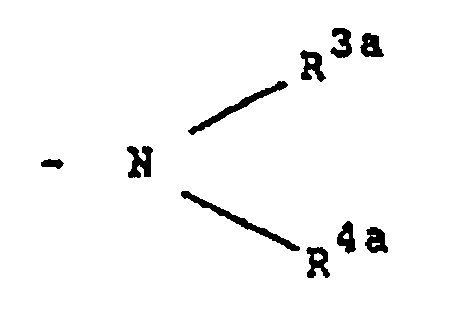
und mit der Maßgabe, daß wenn
R¹
R³ Wasserstoff, C₁₋₅-Alkyl oder C₃₋₆-Cycloalkyl ist,
R⁴ Wasserstoff, C₁₋₅-Alkyl, C₃₋₆-Cycloalkyl, Benzyl oder Pyrimidinylmethyl ist, oder
R³ und R⁴ zusammen mit dem benachbarten Stickstoffatom eine cyclische Aminogruppe Pyrrolidinyl oder Piperazinyl bilden und
R² Wasserstoff, C₁₋₅-Alkyl oder C₃₋₆-Cycloalkyl ist,
A° kein durch C₁₋₄-Halogenalkyl, C₁₋₄-Halogenalkoxy, C₁₋₄-Halogenalkylthio, C₁₋₄-Halogenalkylsulfinyl, C₁₋₄-Halogenalkylsulfonyl, Cyano, Nitro oder Hydroxyl substituiertes Pyridyl ist,
oder ein Salz derselben. - Verbindung wie in Anspruch 1 beansprucht, worin R² Wasserstoff ist, R¹ eine Gruppe der Formel

- Verbindung wie in Anspruch 1 beansprucht, worin R² von Wasserstoff verschieden ist.
- Verbindung wie in Anspruch 1 beansprucht, worin
X¹ Nitro ist,
X² Wasserstoff, C₁₋₂-Alkoxycarbonyl oder C₁₋₂-Alkylsulfonylthiocarbamoyl ist,
R¹ Amino, Mono- oder Di-C₁₋₄-alkylamino, Halogen-C₁₋₄-alkylamino, N-C₁₋₄-Alkyl-N-C₁₋₂-alkanoylamino, N-Halogen-C₁₋₄-alkyl-N-C₁₋₂-alkanoylamino oder C₁₋₂-Alkanoylamino ist,
R² Wasserstoff, C₁₋₂-Alkoxy, Di-C₁₋₂-alkylamino, C₁₋₄-Alkyl, Halogen-C₁₋₄-alkyl oder C₁₋₂-Alkanoyl ist,
n 0 oder 1 ist,
A° 2- oder 3-Thienyl, 2- oder 3-Furyl, 2- oder 3-Pyrrolyl, 2-, 3- oder 4-Pyridyl, 2-, 4- oder 5-Oxazolyl, 2-, 4- oder 5-Thiazolyl, 3-, 4- oder 5-Pyrazolyl, 2-, 4- oder 5-Imidazolyl, 3-, 4-oder 5-Isoxazolyl, 3-, 4- oder 5-Isothiazolyl, 3- oder 5-(1,2,4-Oxadiazolyl), 1,3,4-Oxadiazolyl, 3- oder 5-(1,2,4-Thiadiazolyl), 1,3,4-Thiadiazolyl, 4- oder 5-(1,2,3-Thiadiazolyl), 1,2,5-Thiadiazolyl, 1,2,3-Triazolyl, 1,2,4-Triazolyl, 1H- oder 2H-Tetrazolyl, N-Oxido-2-, 3- oder 4-pyridyl, 2-, 4- oder 5-Pyrimidinyl, N-Oxido-2-, 4- oder 5-pyrimidinyl, 3- oder 4-Pyridazinyl, Pyrazinyl, N-Oxido-3- oder 4-pyridazinyl, Benzofuryl, Benzothiazolyl, Benzoxazolyl, Triazinyl, Oxotriazinyl, Tetrazolo[1,5-b]pyridazinyl, Triazolo[4,5-b]pyridazinyl, Oxoimidazinyl, Dioxotriazinyl, Pyrrolidinyl, Piperidinyl, Pyranyl, Thiopyranyl, 1,4-Oxazinyl, Morpholinyl, 1,4-Thiazinyl, 1,3-Thiazinyl, Piperazinyl, Benzimidazolyl, Chinolyl, Isochinolyl, Cinnolinyl, Phthalazinyl, Chinazolinyl, Chinoxalinyl, Indolizinyl, Chinolizinyl, 1,8-Naphthyridinyl, Purinyl, Pteridinyl, Dibenzofuranyl, Carbazolyl, Acridinyl, Phenanthridinyl, Phenazinyl, Phenothiazinyl oder Phenoxazinyl ist, wovon jedes gegebenenfalls mit Halogen, C₁₋₄-Alkyl, Halogen-C₁₋₄-alkyl, C₁₋₄-Alkoxy, Halogen-C₁₋₄-alkoxy, C₁₋₄-Alkylthio oder Halogen-C₁₋₄-alkylthio substituiert sein kann, oder ein Salz derselben. - Verbindung wie in Anspruch 1 beansprucht, worin
X¹ Nitro ist,
X² Wasserstoff oder C₁₋₂-Alkylsulfonylthiocarbamoyl ist,
R¹ Amino, Mono- oder Di-C₁₋₂-alkylamino, Halogen-C₁₋₂-alkylamino, N-C₁₋₂-Alkyl-N-C₁₋₂-alkanoylamino, N-Halogen-C₁₋₂-alkyl-N-C₁₋₂-alkanoylamino oder C₁₋₂-Alkanoylamino ist,
R² Wasserstoff, C₁₋₂-Alkoxy, Di-C₁₋₂-alkylamino, C₁₋₄-Alkyl, Halogen-C₁₋₄-alkyl oder C₁₋₂-Alkanoyl ist,
n 1 ist, und
A° Pyridyl, Pyrazinyl oder Thiazolyl ist, wovon jedes gegebenenfalls mit Kalogen, C₁₋₄-Alkyl , Halogen-C₁₋₄-alkyl, C₁₋₄-Alkoxy, Halogen-C₁₋₄-alkoxy, C₁₋₄-Alkylthio oder Halogen-C₁₋₄-alkylthio substituiert sein kann, oder ein Salz derselben. - Verbindung wie in Anspruch 1 beansprucht mit der Formel

X2a Wasserstoff, C₁₋₄-Alkoxycarbonyl oder C₁₋₄-Alkylsulfonylthiocarbamoyl ist,
R2c Wasserstoff, C₁₋₃-Alkanoyl, C₁₋₄-Alkyl, Mono- oder Di-C₁₋₄-alkoxy-C₁₋₄-alkyl, C₇₋₉-Alalkyl, Mono- oder Di-C₁₋₄-alkylamino oder C₁₋₄-Alkoxy ist,
Ac 3- oder 4-Pyridyl, Pyrazinyl oder 4- oder 5-Thiazolyl ist, wovon jedes gegebenenfalls mit Halogen, C₁₋₄-Alkyl oder C₁₋₄-Alkoxy substituiert sein kann,
n 1 ist und
R3a und R4a wie in Anspruch 1 definiert sind, oder ein Salz derselben. - Verbindung wie in Anspruch 1 beansprucht, welche eine Verbindung der Formel

X2a Wasserstoff, C₁₋₄-Alkoxycarbonyl oder C₁₋₄-Alkylsulfonylthiocarbamoyl ist,
R1d Amino, Mono- oder Di-C₁₋₄-alkylamino, N-C₁₋₄-Alkyl-N-C₁₋₃-alkanoylamino, C₇₋₉-Aralkylamino, Halogenthiazolyl-C₁₋₂-alkylamino oder C₁₋₄-Alkoxy-C₁₋₂-alkylamino ist,
R2c Wasserstoff, C₁₋₃-Alkanoyl, C₁₋₄-Alkyl, Mono- oder Di-C₁₋₄-alkoxy-C₁₋₄-alkyl, C₇₋₉-Aralkyl, Mono- oder Di-C₁₋₄-alkylamino oder C₁₋₄-Alkoxy ist,
n 0, 1 oder 2 ist und
Ad 3- oder 4-Pyridyl, Pyrazinyl oder 5-Thiazolyl ist, wovon jedes gegebenenfalls mit Halogen, C₁₋₄-Alkyl oder C₁₋₄-Alkoxy substituiert sein kann, oder ein Salz derselben. - Verbindung wie in Anspruch 1 beansprucht, welche eine Verbindung der Formel

X2b Wasserstoff oder C₁₋₂-Alkylsulfonylthiocarbamoyl ist,
R1e Amino, Mono- oder Di-C₁₋₂-alkylamino oder N-C₁₋₂-Alkyl-N-formylamino,
R2d Wasserstoff, C₁₋₂-Alkyl oder C₁₋₃-Alkanoyl ist und
Ae eine Gruppe der Formel
- Verbindung wie in Anspruch 1 beansprucht, welche eine Verbindung der Formel

X2c Wasserstoff oder Methylsulfonylthiocarbamoyl ist,
R1f Amino, Methylamino, Dimethylamino oder N-Methyl-N-formylamino ist,
R2d ein Wasserstoffatom, Formyl oder C₁₋₂-Alkyl ist und
Ae eine Gruppe der Formel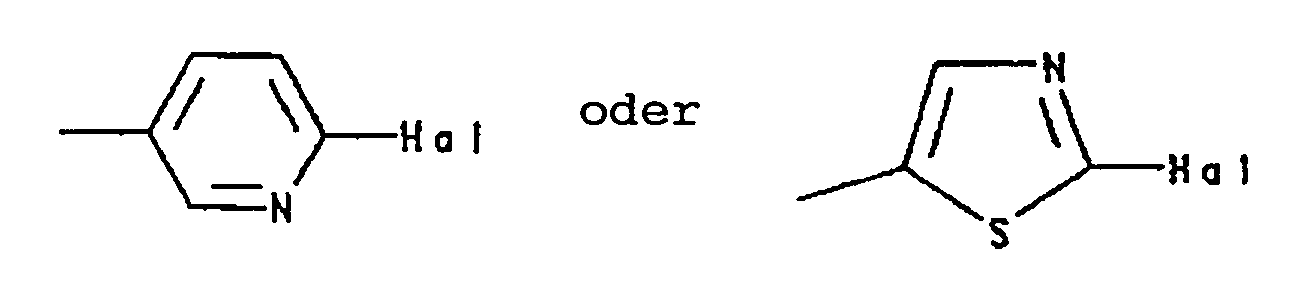
- Verbindung wie in Anspruch 1 beansprucht, welche eine Verbindung der Formel

R1e Amino, Mono- oder Di-C₁₋₂-alkylamino oder N-C₁₋₂-Alkyl-N-formylamino ist,
R2e C₁₋₂-Alkyl oder Formyl ist und
Hal ein Halogenatom ist, oder ein Salz derselben. - Verbindung wie in Anspruch 1 beansprucht, worin der Heterocyclus aus der folgenden Gruppe ausgewählt ist und gegebenenfalls wie in Anspruch 1 definiert substituiert ist, wobei die Gruppe aus 2- oder 3-Thienyl, 2- oder 3-Furyl, 2- oder 3-Pyrrolyl, 2-, 4- oder 5-Oxazolyl, 2-, 4- oder 5-Thiazolyl, 3-, 4-oder 5-Pyrazolyl, 2-, 4- oder 5-Imidazolyl, 3-, 4- oder 5-Isoxazolyl, 3-, 4- oder 5-Isothiazolyl, 3- oder 5-(1,2,4-Oxadiazolyl), 1,3,4-Oxadiazolyl, 3- oder 5-(1,2,4-Thiadiazolyl), 1,3,4-Thiadiazolyl, 4- oder 5-(1,2,3-Thiadiazolyl), 1,2,5-Thiadiazolyl, 1,2,3-Triazolyl, 1,2,4-Triazolyl, 1H- oder 2H-Tetrazolyl, N-Oxido-2-, 3- oder 4-pyridyl, 2-, 4- oder 5-Pyrimidinyl, N-Oxido-2-, 4- oder 5-pyrimidinyl, 3- oder 4-Pyridazinyl, Pyrazinyl, N-Oxido-3- oder 4-pyridazinyl, Benzofuryl, Benzothiazolyl, Benzoxazolyl, Triazinyl, Oxotriazinyl, Tetrazolo[1,5-b]pyridazinyl, Triazolo[4,5-b]pyridazinyl, Oxoimidazinyl, Dioxotriazinyl, Pyrrolidinyl, Piperidinyl, Pyranyl, Thiopyranyl, 1,4-Oxazinyl, Morpholinyl, 1,4-Thiazinyl, 1,3-Thiazinyl, Piperazinyl, Benzimidazolyl, Chinolyl, Isochinolyl, Cinnolinyl, Phthalazinyl, Chinazolinyl, Chinoxalinyl, Indolizinyl, Chinolizinyl, 1,8-Naphthyridinyl, Purinyl, Pteridinyl, Dibenzofuranyl, Carbazolyl, Acridinyl, Phenanthridinyl, Phenazinyl, Phenothiazinyl und Phenoxazinyl besteht.
- Verbindung wie in Anspruch 1 beansprucht, welche aus 1-[N-(6-Chlor-3-pyridylmethyl)-N-methyl]amino-1-methylamino-2-nitroethylen, 1-(6-Chlor-3-pyridylmethyl)amino-1-dimethylamino-2-nitroethylen und 1-[N-(6-Chlor-3-pyridylmethyl)-N-ethyl]amino-1-methylamino-2-nitroethylen ausgewählt ist.
- Insektizide/milbizide Zusammensetzung, welche eine insektizid/milbizid wirksame Menge wenigstens eines der in einem der Ansprüche 1 bis 12 beanspruchten α-ungesättigten Amine oder ein Salz derselben zusammen mit einem geeigneten Träger oder Trägern umfaßt.
- Verfahren zu Herstellung eines α-ungesättigten Amins der Formel
 (1) Umsetzen einer Verbindung der Formel
Y - W²
oder einem Salz derselben, oder(2) Umsetzen einer Verbindung der Formel
 (3) Umsetzen einer Verbindung der Formel
O₂N - CH₂C(Hal)₃
(i) mit einer Verbindung der Formel
R¹ - Y
oder einem Salz derselben, oder (ii) mit einer Verbindung der Formel
R¹ - Y
oder einem Salz derselben und anschließend das Umsetzen des sich daraus ergebenden Produkts mit einer Verbindung der Formel (4) Umsetzen einer Verbindung der Formel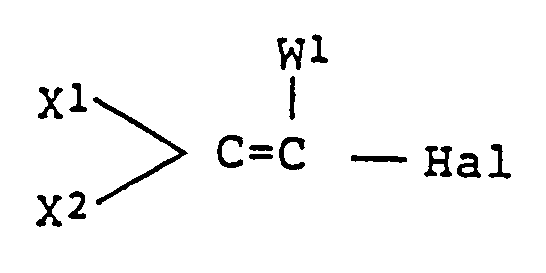
Y - W²
oder einem Salz derselben, oder(5) Umsetzen einer Verbindung der Formel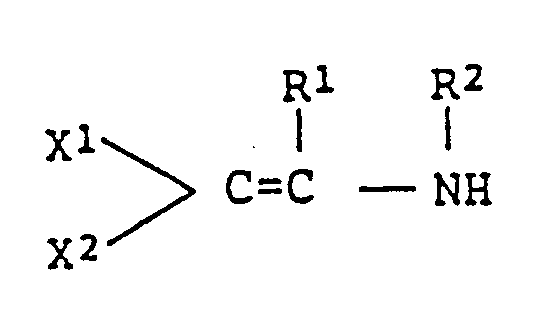
A° - CnH2n - Hal
oder einem Salz derselben, oder(6) Unterziehen einer Verbindung der Formel (7) Unterziehen einer Verbindung der Formel

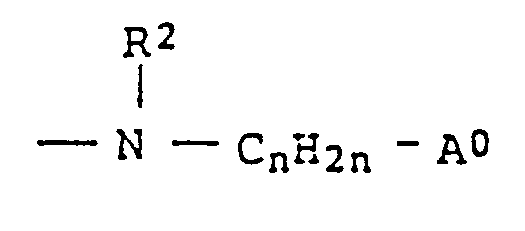
- Verfahren zum Bekämpfen unerwünschter Insekten oder Milben, welches das Aufbringen einer insektizid oder milbizid wirksamen Menge der in einem der Ansprüche 1 bis 12 definierten Verbindung der Formel [I°] oder eines Salzes derselben auf die Insekten oder Milben oder ihren Lebensraum umfaßt.
- Verfahren des Anspruchs 15, bei welchem die Verbindung oder das Salz in einer Zusammensetzung der Verbindung oder des Salzes mit einem geeigneten Träger oder Trägern angewandt wird.
- Verfahren zum Bekämpfen unerwünschter Insekten oder Milben, welches das Aufbringen einer insektizid oder milbizid wirksamen Mengeder in Anspruch 12 definierten Verbindung der Formel [I°] umfaßt.
Priority Applications (3)
| Application Number | Priority Date | Filing Date | Title |
|---|---|---|---|
| EP92115873A EP0529680B1 (de) | 1987-08-01 | 1988-07-28 | Zwischenprodukte, ihre Herstellung und Verwendung zur Herstellung alpha-ungesättigter Amine |
| AT88112210T ATE98955T1 (de) | 1987-08-01 | 1988-07-28 | Alpha-ungesaettigte amine, ihre herstellung und verwendung. |
| EP92111470A EP0509559B1 (de) | 1987-08-01 | 1988-07-28 | Alpha-ungesättigte Amine, ihre Herstellung und Verwendung |
Applications Claiming Priority (8)
| Application Number | Priority Date | Filing Date | Title |
|---|---|---|---|
| JP19279387 | 1987-08-01 | ||
| JP192793/87 | 1987-08-01 | ||
| JP258856/87 | 1987-10-13 | ||
| JP25885687 | 1987-10-13 | ||
| JP1625988 | 1988-01-26 | ||
| JP16259/88 | 1988-01-26 | ||
| JP64885/88 | 1988-03-17 | ||
| JP6488588 | 1988-03-17 |
Related Child Applications (4)
| Application Number | Title | Priority Date | Filing Date |
|---|---|---|---|
| EP92111470.8 Division-Into | 1988-07-28 | ||
| EP92115873.9 Division-Into | 1988-07-28 | ||
| EP92111470A Division EP0509559B1 (de) | 1987-08-01 | 1988-07-28 | Alpha-ungesättigte Amine, ihre Herstellung und Verwendung |
| EP92115873A Division EP0529680B1 (de) | 1987-08-01 | 1988-07-28 | Zwischenprodukte, ihre Herstellung und Verwendung zur Herstellung alpha-ungesättigter Amine |
Publications (3)
| Publication Number | Publication Date |
|---|---|
| EP0302389A2 EP0302389A2 (de) | 1989-02-08 |
| EP0302389A3 EP0302389A3 (en) | 1990-01-31 |
| EP0302389B1 true EP0302389B1 (de) | 1993-12-22 |
Family
ID=27456540
Family Applications (3)
| Application Number | Title | Priority Date | Filing Date |
|---|---|---|---|
| EP92115873A Expired - Lifetime EP0529680B1 (de) | 1987-08-01 | 1988-07-28 | Zwischenprodukte, ihre Herstellung und Verwendung zur Herstellung alpha-ungesättigter Amine |
| EP92111470A Expired - Lifetime EP0509559B1 (de) | 1987-08-01 | 1988-07-28 | Alpha-ungesättigte Amine, ihre Herstellung und Verwendung |
| EP88112210A Expired - Lifetime EP0302389B1 (de) | 1987-08-01 | 1988-07-28 | Alpha-ungesättigte Amine, ihre Herstellung und Verwendung |
Family Applications Before (2)
| Application Number | Title | Priority Date | Filing Date |
|---|---|---|---|
| EP92115873A Expired - Lifetime EP0529680B1 (de) | 1987-08-01 | 1988-07-28 | Zwischenprodukte, ihre Herstellung und Verwendung zur Herstellung alpha-ungesättigter Amine |
| EP92111470A Expired - Lifetime EP0509559B1 (de) | 1987-08-01 | 1988-07-28 | Alpha-ungesättigte Amine, ihre Herstellung und Verwendung |
Country Status (12)
| Country | Link |
|---|---|
| US (6) | US5849768A (de) |
| EP (3) | EP0529680B1 (de) |
| JP (5) | JPH05345761A (de) |
| KR (3) | KR970005908B1 (de) |
| CN (3) | CN1027447C (de) |
| AT (3) | ATE166051T1 (de) |
| CA (3) | CA1340990C (de) |
| DE (4) | DE3856493T2 (de) |
| ES (2) | ES2061569T3 (de) |
| HU (2) | HU204496B (de) |
| IL (3) | IL100688A (de) |
| NL (1) | NL300113I2 (de) |
Cited By (43)
| Publication number | Priority date | Publication date | Assignee | Title |
|---|---|---|---|---|
| US4918086A (en) * | 1987-08-07 | 1990-04-17 | Ciba-Geigy Corporation | 1-nitro-2,2-diaminoethylene derivatives |
| EP0375907A1 (de) * | 1988-11-29 | 1990-07-04 | Nihon Bayer Agrochem K.K. | Nitroverbindungen als Insektizide |
| GB2228003A (en) * | 1989-02-13 | 1990-08-15 | Shell Int Research | Pesticidal nitroethene compounds |
| EP0383091A1 (de) * | 1989-02-13 | 1990-08-22 | Nihon Bayer Agrochem K.K. | Nitroverbindungen als Insektizide |
| WO1991004965A1 (en) * | 1989-10-06 | 1991-04-18 | Nippon Soda Co., Ltd. | Amine derivatives |
| EP0446913A1 (de) * | 1990-03-16 | 1991-09-18 | Takeda Chemical Industries, Ltd. | Verfahren zur Herstellung von Chlorothiazolderivaten |
| EP0425978A3 (en) * | 1989-10-24 | 1991-11-06 | Agro-Kanesho Co., Ltd. | Nitroguanidine compounds and insecticides |
| WO1991017659A1 (en) * | 1990-05-17 | 1991-11-28 | E.I. Du Pont De Nemours And Company | Arthropodicidal nitroethylenes and nitroguanidines |
| EP0425030A3 (en) * | 1989-10-27 | 1991-12-11 | Shell Internationale Research Maatschappij B.V. | Butenone compounds, their preparation and their use as pesticides |
| EP0434357A3 (en) * | 1989-12-22 | 1991-12-27 | Imperial Chemical Industries Plc | Fungicides |
| EP0392560A3 (de) * | 1989-04-14 | 1992-01-08 | Takeda Chemical Industries, Ltd. | Diaminoethylen-Verbindungen |
| US5087632A (en) * | 1989-06-16 | 1992-02-11 | Nihon Tokushu Noyaku Seizo K.K. | Formicidal agent for combating termites |
| EP0453398A3 (en) * | 1990-04-06 | 1992-05-20 | Ciba-Geigy Ag | Nitroenamine derivatives as pesticides |
| EP0496106A1 (de) * | 1990-12-28 | 1992-07-29 | Takeda Chemical Industries, Ltd. | Stabile agrochemische Zusammensetzungen |
| US5204359A (en) * | 1989-02-13 | 1993-04-20 | Nihon Bayer Agrochem K.K. | Insecticidally active nitro compounds |
| EP0542086A1 (de) * | 1991-11-13 | 1993-05-19 | Bayer Ag | Verfahren zur Herstellung von N-[(2-Chlor-pyridin-5-yl)methyl]-ethylendiamin |
| US5216016A (en) * | 1991-03-14 | 1993-06-01 | Ciba-Geigy Corporation | Insecticidal composition |
| US5223520A (en) * | 1991-04-04 | 1993-06-29 | Ciba-Geigy Corporation | Pyridine compounds which are useful as pesticides |
| US5238949A (en) * | 1988-11-29 | 1993-08-24 | Nihon Bayer Agrochem K.K. | Insecticidally active nitro pyridyl compounds |
| EP0556684A1 (de) * | 1992-02-19 | 1993-08-25 | Bayer Ag | Verfahren zur Herstellung von 2-Chlor-5-alkylaminomethyl-pyridinen |
| WO1993024002A1 (de) * | 1992-05-23 | 1993-12-09 | Ciba-Geigy Ag | 1-[n-(halo-3-pyridylmethyl)]-n-methylamino-1-alkylamino-2-nitroethylen-derivate zur bekämpfung von flöhen bei haustieren |
| US5364989A (en) * | 1989-01-31 | 1994-11-15 | Takeda Chemical Industries, Ltd. | 1,1,1-trichloro-2-nitroethane production |
| US5424437A (en) * | 1993-02-01 | 1995-06-13 | Koei Chemical Co., Ltd. | Process for preparing a 2-chloro-5-aminomethyl-pyridine |
| US5580983A (en) * | 1994-07-04 | 1996-12-03 | Bayer Aktiengesellschaft | Process for the preparation of N-acylated 2-chloro-5-aminomethylpyridines |
| US5585388A (en) * | 1995-04-07 | 1996-12-17 | Sibia Neurosciences, Inc. | Substituted pyridines useful as modulators of acetylcholine receptors |
| US5674520A (en) * | 1993-04-01 | 1997-10-07 | Shell Research Limited | Composition containing a nitromethylene compound for use in combating molluscs |
| US5696256A (en) * | 1990-04-13 | 1997-12-09 | Takeda Chemical Industries, Ltd. | Process for preparing and using guanidine derivatives |
| US5703132A (en) * | 1994-01-20 | 1997-12-30 | Hoechst Schering Agrevo Gmbh | Synergistic combinations of ammonium salts |
| US5744608A (en) * | 1995-09-08 | 1998-04-28 | Nippon Soda Co., Ltd. | Method for manufacturing 3-(aminomethyl)-6-chloropyridines |
| US5750548A (en) * | 1994-01-24 | 1998-05-12 | Novartis Corp. | 1- N-(halo-3-pyridylmethyl)!-N-methylamino-1-alklamino-2-nitroethylene derivatives for controlling fleas in domestic animals |
| US5852041A (en) * | 1993-04-07 | 1998-12-22 | Sibia Neurosciences, Inc. | Substituted pyridines useful as modulators of acethylcholine receptors |
| US5936093A (en) * | 1997-07-24 | 1999-08-10 | Bayer Aktiengesellschaft | Process for preparing pyridylmethyl isothiocyanates |
| US6008363A (en) * | 1995-06-23 | 1999-12-28 | Takeda Chemical Industries, Ltd. | Process for producing guanidine derivatives, intermediates therefor and their production |
| US6232328B1 (en) * | 1994-05-20 | 2001-05-15 | Bayer Aktiengesellschaft | Non-systemic control of parasites |
| US6369054B1 (en) | 1998-02-23 | 2002-04-09 | Bayer Ag | Aqueous agents for combating parasitic insects and acarina in human beings |
| US6403803B1 (en) | 2000-12-08 | 2002-06-11 | Bayer Aktiengesellschaft | Bis(2-chlorothiazolyl-5-methyl)amine and its salts, and process for working up reaction mixtures comprising 5-aminomethyl-2-chlorothiazole and bis(2-chlorothiazolyl-5-methyl)amine |
| US6492399B1 (en) | 1998-06-16 | 2002-12-10 | Targacept, Inc. | Pharmaceutical compositions and methods for use |
| US6506903B1 (en) | 1908-03-29 | 2003-01-14 | Shionogi & Co., Ltd. | Process for producing 4-thiazolylmethyl derivative |
| US6538013B2 (en) | 1998-11-17 | 2003-03-25 | Novartis Animal Health Us, Inc. | Acyclic and cyclic guanidine-and acetamidine derivatives, their preparation and their use as pesticides, esp. as parasiticides |
| US7659228B2 (en) | 1995-12-27 | 2010-02-09 | Bayer Aktiengesellschaft | Synergistic insecticide mixtures |
| US7745375B2 (en) | 2003-10-13 | 2010-06-29 | Bayer Cropscience Ag | Synergistic insecticide mixtures |
| CN103392705A (zh) * | 2013-07-22 | 2013-11-20 | 浙江威尔达化工有限公司 | 一种含氟苯虫酰胺和烯啶虫胺的杀虫组合物及其应用 |
| US12162913B2 (en) | 2016-02-01 | 2024-12-10 | Blanco Animal Health GmbH | Rhipicephalus nicotinic acetylcholine receptor and pest control acting thereon |
Families Citing this family (68)
| Publication number | Priority date | Publication date | Assignee | Title |
|---|---|---|---|---|
| DE3911224A1 (de) * | 1989-04-07 | 1990-10-11 | Bayer Ag | Verfahren zur herstellung von 2-chlor-5-aminomethylpyridin |
| EP0539588A1 (de) * | 1990-07-05 | 1993-05-05 | Nippon Soda Co., Ltd. | Aminderivat |
| DE4232561A1 (de) * | 1992-09-29 | 1994-03-31 | Bayer Ag | Bekämpfung von Fischparasiten |
| DE4414569A1 (de) * | 1994-04-27 | 1995-11-02 | Bayer Ag | Verwendung von substituierten Aminen zur Behandlung von Hirnleistungsstörungen |
| DE4426753A1 (de) | 1994-07-28 | 1996-02-01 | Bayer Ag | Mittel zur Bekämpfung von Pflanzenschädlingen |
| JP3493476B2 (ja) * | 1994-09-30 | 2004-02-03 | バイエルクロップサイエンス株式会社 | 白蟻防除剤組成物 |
| KR0168979B1 (ko) * | 1995-07-12 | 1999-01-15 | 김종인 | 티아졸릴 트리아졸로티아졸 유도체 |
| US5794887A (en) | 1995-11-17 | 1998-08-18 | Komerath; Narayanan M. | Stagnation point vortex controller |
| DE19622355A1 (de) | 1996-06-04 | 1997-12-11 | Bayer Ag | Formkörper die agrochemische Mittel freisetzen |
| WO1999033809A1 (en) * | 1997-12-24 | 1999-07-08 | Takeda Chemical Industries, Ltd. | Method for producing isoureas |
| DE19823396A1 (de) | 1998-05-26 | 1999-12-02 | Bayer Ag | Synergistische insektizide Mischungen |
| US6149913A (en) * | 1998-11-16 | 2000-11-21 | Rhone-Poulenc Ag Company, Inc. | Compositions and methods for controlling insects |
| DE19913174A1 (de) | 1999-03-24 | 2000-09-28 | Bayer Ag | Synergistische insektizide Mischungen |
| US6156703A (en) * | 1999-05-21 | 2000-12-05 | Ijo Products, Llc | Method of inhibiting fruit set on fruit producing plants using an aqueous emulsion of eicosenyl eicosenoate and docosenyl eicosenoate |
| DE19948129A1 (de) * | 1999-10-07 | 2001-04-12 | Bayer Ag | Wirkstoffkombinationen mit insektiziden und akariziden Eigenschaften |
| DE19953775A1 (de) | 1999-11-09 | 2001-05-10 | Bayer Ag | Wirkstoffkombinationen mit insektiziden und akariziden Eigenschaften |
| DE10024934A1 (de) | 2000-05-19 | 2001-11-22 | Bayer Ag | Wirkstoffkombinationen mit insektiziden akariziden Eigenschaften |
| US20020103233A1 (en) | 2000-11-30 | 2002-08-01 | Arther Robert G. | Compositions for enhanced acaricidal activity |
| DE10117676A1 (de) | 2001-04-09 | 2002-10-10 | Bayer Ag | Dermal applizierbare flüssige Formulierungen zur Bekämpfung von parasitierenden Insekten an Tieren |
| DE10119423A1 (de) * | 2001-04-20 | 2002-10-24 | Bayer Ag | Neue insektizid wirkende Azole |
| DE10140108A1 (de) * | 2001-08-16 | 2003-03-06 | Bayer Cropscience Ag | Fungizide Wirkstoffkombinationen |
| DE10162727A1 (de) * | 2001-12-20 | 2003-07-10 | Henkel Kgaa | Neue Alkalische Protease aus Bacillus gibsonii (DSM 14391) und Wasch-und Reinigungsmittel enthaltend diese neue Alkalische Protease |
| BR0309522A (pt) * | 2002-04-26 | 2005-02-09 | Ishihara Sangyo Kaisha | Compostos piridina ou sais destes e herbicidas contendo os mesmos |
| US20060058359A1 (en) * | 2002-12-19 | 2006-03-16 | Samaritoni Jack G | Compounds useful as pesticides |
| DE60335138D1 (de) * | 2002-12-20 | 2011-01-05 | Dow Agrosciences Llc | Als pestizide geeignete verbindungen |
| DE102004006075A1 (de) | 2003-11-14 | 2005-06-16 | Bayer Cropscience Ag | Wirkstoffkombinationen mit insektiziden Eigenschaften |
| JP4664924B2 (ja) | 2003-12-02 | 2011-04-06 | ウーツェーベー ファルマ ゲーエムベーハー | 中枢神経因性疼痛の治療のためのペプチド化合物の新規使用 |
| DE102004033289A1 (de) * | 2004-04-24 | 2005-11-10 | Bayer Cropscience Ag | Synergistische insektizide Mischungen |
| DE102004038329A1 (de) * | 2004-06-16 | 2005-12-29 | Bayer Cropscience Ag | Synergistische insektizide Mischungen |
| TWI344958B (en) * | 2004-06-17 | 2011-07-11 | Sumitomo Chemical Co | Process for preparing thiazole compound |
| EP1776116B1 (de) | 2004-07-28 | 2010-09-29 | Intervet International BV | Veterinärmedizinische zusammensetzung mit einem arylpyrazol und einem nitroenamin mit erhöhter antiparasitischer aktivität |
| SG155230A1 (en) * | 2004-08-25 | 2009-09-30 | Bayer Cropscience Lp | Method of controlling termites |
| DE102004062512A1 (de) | 2004-12-24 | 2006-07-06 | Bayer Cropscience Ag | Synergistische Mischungen mit insektizider und fungizider Wirkung |
| DE102004062513A1 (de) | 2004-12-24 | 2006-07-06 | Bayer Cropscience Ag | Insektizide auf Basis von Neonicotinoiden und ausgewählten Strobilurinen |
| US9919979B2 (en) | 2005-01-21 | 2018-03-20 | Bayer Cropscience Lp | Fertilizer-compatible composition |
| JP4839660B2 (ja) * | 2005-04-07 | 2011-12-21 | 住友化学株式会社 | チアゾール化合物の製造法 |
| EP1731037A1 (de) | 2005-06-04 | 2006-12-13 | Bayer CropScience AG | Erhöhung der Stresstoleranz durch Anwendung von Nikotinoiden auf Planzen, die genmodifiziert worden sind, um stresstolerant zu werden |
| CN104170838B (zh) | 2005-06-09 | 2016-03-30 | 拜尔农作物科学股份公司 | 活性物质结合物 |
| EP1893759B1 (de) | 2005-06-15 | 2009-08-12 | Bayer BioScience N.V. | Verfahren zum erhöhen der widerstandsfähigkeit von pflanzen gegen hypoxische bedingungen |
| DE102005048539A1 (de) * | 2005-10-11 | 2007-04-12 | Bayer Cropscience Ag | Suspensionskonzentrate auf Ölbasis |
| DE102006015468A1 (de) * | 2006-03-31 | 2007-10-04 | Bayer Cropscience Ag | Substituierte Enaminocarbonylverbindungen |
| AU2013224672B2 (en) * | 2006-03-31 | 2016-05-12 | Bayer Cropscience Aktiengesellschaft | Substituted enaminocarbonyl compounds |
| DE102006015467A1 (de) | 2006-03-31 | 2007-10-04 | Bayer Cropscience Ag | Substituierte Enaminocarbonylverbindungen |
| DE102006030710A1 (de) * | 2006-07-03 | 2008-01-10 | Bayer Cropscience Ag | Synergistische insektizide und fungizide Mischungen |
| DE102006033572A1 (de) | 2006-07-20 | 2008-01-24 | Bayer Cropscience Ag | N'-Cyano-N-halogenalkyl-imidamid Derivate |
| DE102006046161A1 (de) * | 2006-09-29 | 2008-04-03 | Bayer Cropscience Ag | Neue kristalline Modifikation |
| DE102006046688B3 (de) * | 2006-09-29 | 2008-01-24 | Siemens Ag | Kälteanlage mit einem warmen und einem kalten Verbindungselement und einem mit den Verbindungselementen verbundenen Wärmerohr |
| MX2009003378A (es) * | 2006-09-30 | 2009-04-09 | Bayer Cropscience Ag | Concentrados en suspension para la mejora de la absorcion por la raiz de principios activos agroquimicos. |
| EP2008519A1 (de) | 2007-06-28 | 2008-12-31 | Bayer CropScience AG | Verwendung von Wirkstoffkombinationen mit insektiziden Eigenschaften zur Bekämpfung von tierischen Schädlingen aus der Familie der Stinkwanzen |
| JP5266944B2 (ja) * | 2007-08-08 | 2013-08-21 | 住友化学株式会社 | α−不飽和アミン化合物の分離精製方法 |
| EP2039678A1 (de) | 2007-09-18 | 2009-03-25 | Bayer CropScience AG | Verfahren zum Herstellen von 4-Aminobut-2-enoliden |
| DE102007045956A1 (de) | 2007-09-26 | 2009-04-09 | Bayer Cropscience Ag | Wirkstoffkombination mit insektiziden und akariziden Eigenschaften |
| US8124793B2 (en) * | 2007-11-27 | 2012-02-28 | Gail Marie Cronyn, legal representative | Derivatives of ethylene methanedisulfonate as cancer chemotherapeutic agents |
| EP2107058A1 (de) | 2008-03-31 | 2009-10-07 | Bayer CropScience AG | Substituierte Enaminothiocarbonylverbindungen |
| EP2127522A1 (de) | 2008-05-29 | 2009-12-02 | Bayer CropScience AG | Wirkstoffkombinationen mit insektiziden und akariziden Eigenschaften |
| EP2227951A1 (de) | 2009-01-23 | 2010-09-15 | Bayer CropScience AG | Verwendung von Enaminocarbonylverbindungen zur Bekämpfung von durch Insekten übertragenen Viren |
| EP2225940B1 (de) | 2009-03-05 | 2014-03-12 | GAT Microencapsulation GmbH | Öldispersionen von nAChR-bindenden Neonicotinoiden |
| EP2264008A1 (de) | 2009-06-18 | 2010-12-22 | Bayer CropScience AG | Substituierte Enaminocarbonylverbindungen |
| EP2382865A1 (de) | 2010-04-28 | 2011-11-02 | Bayer CropScience AG | Synergistische Wirkstoffkombinationen |
| WO2012062740A1 (de) | 2010-11-12 | 2012-05-18 | Bayer Cropscience Ag | Verfahren zur herstellung von 2,2-difluorethylamin-derivaten ausgehend von n-(2,2-difluorethyl)prop-2-en-1-amin |
| WO2012107585A1 (fr) | 2011-02-11 | 2012-08-16 | Ceva Sante Animale Sa | Nouvelles compositions antiparasitaires topiques concentrees et stables |
| EP2707373A1 (de) | 2011-05-10 | 2014-03-19 | Bayer Intellectual Property GmbH | Bicyclische (thio)carbonylamidine |
| WO2013056730A1 (en) | 2011-10-18 | 2013-04-25 | In2Care B.V. | Systemic use of compounds in humans that kill free-living blood-feeding ectoparasites |
| CN102633740A (zh) * | 2012-02-29 | 2012-08-15 | 江苏省农用激素工程技术研究中心有限公司 | 新烟碱类化合物及其制备方法和应用 |
| CN102690258B (zh) * | 2012-05-29 | 2015-11-25 | 湖北省生物农药工程研究中心 | 含氮杂环亚胺衍生物及其制备方法和用途 |
| CN102827070B (zh) * | 2012-08-27 | 2016-08-10 | 安徽常泰化工有限公司 | 一种合成n-(6-氯-3-吡啶甲基)-甲胺的改进工艺 |
| WO2014035469A1 (en) | 2012-08-31 | 2014-03-06 | Bayer Cropscience Lp | Combinations and methods for controlling turfgrass pests |
| CN104402806A (zh) * | 2014-10-31 | 2015-03-11 | 安徽绩溪县徽煌化工有限公司 | 一种烯啶虫胺的制备方法 |
Family Cites Families (32)
| Publication number | Priority date | Publication date | Assignee | Title |
|---|---|---|---|---|
| DE454695C (de) * | 1925-02-03 | 1928-01-14 | Curt Raeth Dr | Verfahren zur Darstellung von 2-Amino-5-jodpyridin |
| DE1445762A1 (de) * | 1964-04-29 | 1969-01-16 | Bayer Ag | Verfahren zur Herstellung von Chinonderivaten |
| AT264522B (de) * | 1965-09-07 | 1968-09-10 | Unimed Inc | Verfahren zur Herstellung von (β-2- oder 4-Pyridyläthyl)-alkylaminen |
| US3777027A (en) * | 1970-09-15 | 1973-12-04 | Smithkline Corp | Anorectic compositions comprising n-pyridylalkyl-beta-alkoxy-beta-trifluoro-methylphenalkylamines |
| GB1554153A (en) * | 1975-05-15 | 1979-10-17 | Smith Kline French Lab | Process for making 2-amino-2-alkylthionitroethylenes |
| SE7609666L (sv) * | 1975-09-12 | 1977-03-13 | Roussel Uclaf | Sett att framstella nya 5-aminometyltiazolderivat |
| US4177274A (en) * | 1975-12-09 | 1979-12-04 | Merck & Co., Inc. | Substituted imidazo [1,2-a] pyridines |
| FR2361111A1 (fr) * | 1976-08-11 | 1978-03-10 | Roussel Uclaf | Nouveaux derives de 5-thiazole alkylamine, un procede pour leur preparation et leur application comme medicaments |
| US4233302A (en) * | 1977-12-23 | 1980-11-11 | Glaxo Group Limited | Amine derivatives and pharmaceutical compositions containing them |
| US4159382A (en) * | 1978-06-28 | 1979-06-26 | The Dow Chemical Company | Process for preparing picolylamine |
| US4250316A (en) * | 1978-11-24 | 1981-02-10 | Bristol-Myers Company | Pyridyl guanidine anti-ulcer agents |
| GR78463B (de) | 1982-03-25 | 1984-09-27 | Smith Kline French Lab | |
| US4386209A (en) * | 1982-04-08 | 1983-05-31 | Reilly Tar & Chemical Corporation | Chichibabin reaction |
| IT1190793B (it) * | 1982-04-27 | 1988-02-24 | Magis Farmaceutici | Composti attivi nel trattamento dell'ulcera e sintomi allergici della pelle |
| DE3232462A1 (de) * | 1982-09-01 | 1984-03-01 | Bayer Ag, 5090 Leverkusen | 2-nitro-1,1-ethendiamine, verfahren zu ihrer herstellung sowie ihre verwendung als arzneimittel |
| DE3343884A1 (de) * | 1982-12-08 | 1984-06-14 | Degussa Ag, 6000 Frankfurt | Neue ethendiamin- und guanidin-derivate |
| US4499097A (en) * | 1983-03-10 | 1985-02-12 | American Cyanamid Company | 2-(Pyridyl)imidazolyl ketones |
| US4482437A (en) * | 1984-04-05 | 1984-11-13 | Reilly Tar & Chemical Corp. | Electrochemical reductions of cyanopyridine bases |
| ZW5085A1 (en) * | 1984-04-13 | 1985-09-18 | Nihon Tokushu Noyaku Seizo Kk | Nitromethylene derivatives,intermediates thereof,processes for production thereof,and insecticides |
| IT1196133B (it) * | 1984-06-06 | 1988-11-10 | Ausonia Farma Srl | Derivati furanici con attivita' antiulcera |
| JPH066585B2 (ja) * | 1985-02-04 | 1994-01-26 | 日本バイエルアグロケム株式会社 | ニトロメチレン誘導体、その製法及び殺虫剤 |
| JPH0649699B2 (ja) * | 1985-02-04 | 1994-06-29 | 日本バイエルアグロケム株式会社 | ニトロメチレン誘導体、その製法及び殺虫剤 |
| JPS61267575A (ja) * | 1985-05-21 | 1986-11-27 | Nippon Tokushu Noyaku Seizo Kk | ニトロイミノ誘導体、その製法及び殺虫剤 |
| JPS6248681A (ja) * | 1985-08-28 | 1987-03-03 | Nippon Tokushu Noyaku Seizo Kk | ニトロメチレン誘導体の製造方法 |
| MA20552A1 (fr) * | 1985-10-11 | 1986-07-01 | Pan Medica Sa | Alkylacarboxamides de pyridylalkylamines,leurs preparations et leurs utilisations |
| JPS62138478A (ja) * | 1985-12-13 | 1987-06-22 | Banyu Pharmaceut Co Ltd | グアニジン誘導体の製造法 |
| DE3603100C2 (de) * | 1986-02-01 | 1994-08-25 | Bayer Ag | Verfahren zur Herstellung von Nitromethylen-Derivaten |
| JPH0717621B2 (ja) * | 1986-03-07 | 1995-03-01 | 日本バイエルアグロケム株式会社 | 新規ヘテロ環式化合物 |
| JPH085859B2 (ja) * | 1986-07-01 | 1996-01-24 | 日本バイエルアグロケム株式会社 | 新規アルキレンジアミン類 |
| DE3639877A1 (de) * | 1986-11-21 | 1988-05-26 | Bayer Ag | Hetarylalkyl substituierte 5- und 6-ringheterocyclen |
| US4918086A (en) * | 1987-08-07 | 1990-04-17 | Ciba-Geigy Corporation | 1-nitro-2,2-diaminoethylene derivatives |
| JP2779403B2 (ja) * | 1988-11-29 | 1998-07-23 | 日本バイエルアグロケム株式会社 | 殺虫性ニトロ化合物 |
-
1988
- 1988-07-28 AT AT92115873T patent/ATE166051T1/de not_active IP Right Cessation
- 1988-07-28 DE DE3856493T patent/DE3856493T2/de not_active Expired - Lifetime
- 1988-07-28 AT AT88112210T patent/ATE98955T1/de active
- 1988-07-28 DE DE2003199003 patent/DE10399003I2/de active Active
- 1988-07-28 IL IL10068888A patent/IL100688A/en not_active IP Right Cessation
- 1988-07-28 EP EP92115873A patent/EP0529680B1/de not_active Expired - Lifetime
- 1988-07-28 DE DE3856183T patent/DE3856183T2/de not_active Expired - Lifetime
- 1988-07-28 EP EP92111470A patent/EP0509559B1/de not_active Expired - Lifetime
- 1988-07-28 US US07/225,367 patent/US5849768A/en not_active Expired - Lifetime
- 1988-07-28 ES ES88112210T patent/ES2061569T3/es not_active Expired - Lifetime
- 1988-07-28 ES ES92111470T patent/ES2161212T3/es not_active Expired - Lifetime
- 1988-07-28 EP EP88112210A patent/EP0302389B1/de not_active Expired - Lifetime
- 1988-07-28 IL IL87250A patent/IL87250A/xx not_active IP Right Cessation
- 1988-07-28 AT AT92111470T patent/ATE206400T1/de not_active IP Right Cessation
- 1988-07-28 DE DE3886467T patent/DE3886467T2/de not_active Expired - Lifetime
- 1988-07-29 HU HU884040A patent/HU204496B/hu unknown
- 1988-07-29 CA CA000616738A patent/CA1340990C/en not_active Expired - Lifetime
- 1988-07-29 CA CA000573430A patent/CA1340991C/en not_active Expired - Lifetime
- 1988-07-29 HU HU90722A patent/HU205076B/hu unknown
- 1988-07-29 CA CA000616737A patent/CA1341008C/en not_active Expired - Lifetime
- 1988-08-01 CN CN88104801A patent/CN1027447C/zh not_active Expired - Lifetime
- 1988-08-01 KR KR1019880009848A patent/KR970005908B1/ko not_active Expired - Lifetime
-
1989
- 1989-09-13 US US07/406,515 patent/US5175301A/en not_active Expired - Lifetime
-
1991
- 1991-02-14 US US07/655,072 patent/US5214152A/en not_active Expired - Lifetime
-
1992
- 1992-01-17 IL IL100688A patent/IL100688A0/xx unknown
- 1992-09-17 US US07/946,542 patent/US6407248B1/en not_active Expired - Lifetime
-
1993
- 1993-01-21 JP JP5008115A patent/JPH05345761A/ja active Pending
- 1993-01-21 JP JP5008114A patent/JPH05345760A/ja active Pending
- 1993-01-21 JP JP5008116A patent/JPH0749424B2/ja not_active Expired - Lifetime
- 1993-07-31 KR KR1019930014803A patent/KR0122856B1/ko not_active Expired - Lifetime
- 1993-07-31 KR KR1019930014804A patent/KR970011459B1/ko not_active Expired - Lifetime
- 1993-11-05 CN CN93114206A patent/CN1036649C/zh not_active Expired - Lifetime
- 1993-11-05 CN CN93114205A patent/CN1083432C/zh not_active Expired - Lifetime
-
1994
- 1994-09-26 JP JP6254222A patent/JP2551393B2/ja not_active Expired - Lifetime
- 1994-09-26 JP JP6254221A patent/JP2551392B2/ja not_active Expired - Lifetime
-
1997
- 1997-10-24 US US08/957,749 patent/US5935981A/en not_active Expired - Fee Related
-
1999
- 1999-01-11 US US09/227,538 patent/US6124297A/en not_active Expired - Fee Related
-
2003
- 2003-01-27 NL NL300113C patent/NL300113I2/nl unknown
Cited By (61)
| Publication number | Priority date | Publication date | Assignee | Title |
|---|---|---|---|---|
| US6506903B1 (en) | 1908-03-29 | 2003-01-14 | Shionogi & Co., Ltd. | Process for producing 4-thiazolylmethyl derivative |
| US4918086A (en) * | 1987-08-07 | 1990-04-17 | Ciba-Geigy Corporation | 1-nitro-2,2-diaminoethylene derivatives |
| US5051434A (en) * | 1988-11-29 | 1991-09-24 | Nihon Tokushu Noyaku Seizo K.K. | Insecticidally active nitro guanidine compounds |
| EP0375907A1 (de) * | 1988-11-29 | 1990-07-04 | Nihon Bayer Agrochem K.K. | Nitroverbindungen als Insektizide |
| US5238949A (en) * | 1988-11-29 | 1993-08-24 | Nihon Bayer Agrochem K.K. | Insecticidally active nitro pyridyl compounds |
| USRE35811E (en) * | 1988-11-29 | 1998-05-26 | Nihon Bayer Agrochem K.K. | Insecticidally active nitro guanidine compounds |
| US5364989A (en) * | 1989-01-31 | 1994-11-15 | Takeda Chemical Industries, Ltd. | 1,1,1-trichloro-2-nitroethane production |
| US5204359A (en) * | 1989-02-13 | 1993-04-20 | Nihon Bayer Agrochem K.K. | Insecticidally active nitro compounds |
| EP0383091A1 (de) * | 1989-02-13 | 1990-08-22 | Nihon Bayer Agrochem K.K. | Nitroverbindungen als Insektizide |
| US5084467A (en) * | 1989-02-13 | 1992-01-28 | Nihon Tokushu Noyaku Seizo K.K. | Insecticidally active nitro guanidine compounds |
| GB2228003A (en) * | 1989-02-13 | 1990-08-15 | Shell Int Research | Pesticidal nitroethene compounds |
| US5438065A (en) * | 1989-04-14 | 1995-08-01 | Takeda Chemical Industries | Diaminoethylene compounds |
| EP0392560A3 (de) * | 1989-04-14 | 1992-01-08 | Takeda Chemical Industries, Ltd. | Diaminoethylen-Verbindungen |
| US5087632A (en) * | 1989-06-16 | 1992-02-11 | Nihon Tokushu Noyaku Seizo K.K. | Formicidal agent for combating termites |
| WO1991004965A1 (en) * | 1989-10-06 | 1991-04-18 | Nippon Soda Co., Ltd. | Amine derivatives |
| US5166164A (en) * | 1989-10-24 | 1992-11-24 | Agro-Kanesho Co., Ltd. | Nitroguanidine compounds useful as insecticides |
| EP0425978A3 (en) * | 1989-10-24 | 1991-11-06 | Agro-Kanesho Co., Ltd. | Nitroguanidine compounds and insecticides |
| EP0425030A3 (en) * | 1989-10-27 | 1991-12-11 | Shell Internationale Research Maatschappij B.V. | Butenone compounds, their preparation and their use as pesticides |
| US5225423A (en) * | 1989-10-27 | 1993-07-06 | Shell Research Limited | Butenone compounds, their preparation and their use as pesticides |
| EP0434357A3 (en) * | 1989-12-22 | 1991-12-27 | Imperial Chemical Industries Plc | Fungicides |
| EP0446913A1 (de) * | 1990-03-16 | 1991-09-18 | Takeda Chemical Industries, Ltd. | Verfahren zur Herstellung von Chlorothiazolderivaten |
| US5180833A (en) * | 1990-03-16 | 1993-01-19 | Takeda Chemical Industries, Ltd. | Process for the preparation of chlorothiazole derivatives |
| EP0453398A3 (en) * | 1990-04-06 | 1992-05-20 | Ciba-Geigy Ag | Nitroenamine derivatives as pesticides |
| TR25776A (tr) * | 1990-04-06 | 1993-09-01 | Ciba Geigy Ag | NITROENAMIN TüREVLERI,BUNLARI HAZIRLAMAYA MAHSUS YÖNTEMLER,BU BILESIKLERI IHTIVA EDEN TERKIPLER VE BUNLARIN HASERE KONTROLüNDE KULLANILMALARI. |
| US5696256A (en) * | 1990-04-13 | 1997-12-09 | Takeda Chemical Industries, Ltd. | Process for preparing and using guanidine derivatives |
| US6160126A (en) * | 1990-04-13 | 2000-12-12 | Takeda Chemical Industries, Ltd. | Synthetic Intermediates for the preparation of N, N'-Di-substituted isothiourea derivatives and N-cyclic(methyl)-N'-Substituted isothiourea derivatives |
| WO1991017659A1 (en) * | 1990-05-17 | 1991-11-28 | E.I. Du Pont De Nemours And Company | Arthropodicidal nitroethylenes and nitroguanidines |
| EP0496106A1 (de) * | 1990-12-28 | 1992-07-29 | Takeda Chemical Industries, Ltd. | Stabile agrochemische Zusammensetzungen |
| US5230893A (en) * | 1990-12-28 | 1993-07-27 | Takeda Chemical Industries, Ltd. | Stable agrochemical compositions including alpha-unsaturated amine derivative and acid incorporated into a carrier |
| US5216016A (en) * | 1991-03-14 | 1993-06-01 | Ciba-Geigy Corporation | Insecticidal composition |
| US5223520A (en) * | 1991-04-04 | 1993-06-29 | Ciba-Geigy Corporation | Pyridine compounds which are useful as pesticides |
| US5352794A (en) * | 1991-11-13 | 1994-10-04 | Bayer Aktiengesellschaft | Process for the preparation of N-(2-chloro-pyridin-5-yl-methyl)ethylenediamine |
| EP0542086A1 (de) * | 1991-11-13 | 1993-05-19 | Bayer Ag | Verfahren zur Herstellung von N-[(2-Chlor-pyridin-5-yl)methyl]-ethylendiamin |
| US5382671A (en) * | 1992-02-19 | 1995-01-17 | Bayer Aktiengesellschaft | Process for the preparation of 2-chloro-5-alkylaminomethyl-pyridines |
| EP0556684A1 (de) * | 1992-02-19 | 1993-08-25 | Bayer Ag | Verfahren zur Herstellung von 2-Chlor-5-alkylaminomethyl-pyridinen |
| AU673329B2 (en) * | 1992-05-23 | 1996-11-07 | Novartis Ag | 1-(N-(halo-3-pyridylmethyl))-N-methylamino-1-alkylamino-2- nitroethylene derivatives for use against fleas on pets |
| WO1993024002A1 (de) * | 1992-05-23 | 1993-12-09 | Ciba-Geigy Ag | 1-[n-(halo-3-pyridylmethyl)]-n-methylamino-1-alkylamino-2-nitroethylen-derivate zur bekämpfung von flöhen bei haustieren |
| US5424437A (en) * | 1993-02-01 | 1995-06-13 | Koei Chemical Co., Ltd. | Process for preparing a 2-chloro-5-aminomethyl-pyridine |
| US5674520A (en) * | 1993-04-01 | 1997-10-07 | Shell Research Limited | Composition containing a nitromethylene compound for use in combating molluscs |
| US5852041A (en) * | 1993-04-07 | 1998-12-22 | Sibia Neurosciences, Inc. | Substituted pyridines useful as modulators of acethylcholine receptors |
| US5792755A (en) * | 1994-01-20 | 1998-08-11 | Hoechst Aktiengesellschaft | Synergistic combinations of ammonium salts |
| US5703132A (en) * | 1994-01-20 | 1997-12-30 | Hoechst Schering Agrevo Gmbh | Synergistic combinations of ammonium salts |
| US5750548A (en) * | 1994-01-24 | 1998-05-12 | Novartis Corp. | 1- N-(halo-3-pyridylmethyl)!-N-methylamino-1-alklamino-2-nitroethylene derivatives for controlling fleas in domestic animals |
| US6232328B1 (en) * | 1994-05-20 | 2001-05-15 | Bayer Aktiengesellschaft | Non-systemic control of parasites |
| US5580983A (en) * | 1994-07-04 | 1996-12-03 | Bayer Aktiengesellschaft | Process for the preparation of N-acylated 2-chloro-5-aminomethylpyridines |
| US5585388A (en) * | 1995-04-07 | 1996-12-17 | Sibia Neurosciences, Inc. | Substituted pyridines useful as modulators of acetylcholine receptors |
| US6008363A (en) * | 1995-06-23 | 1999-12-28 | Takeda Chemical Industries, Ltd. | Process for producing guanidine derivatives, intermediates therefor and their production |
| US6166215A (en) * | 1995-06-23 | 2000-12-26 | Takeda Chemical Industries, Ltd. | Process for producing guanidine derivatives, intermediates therefor and their production |
| US5744608A (en) * | 1995-09-08 | 1998-04-28 | Nippon Soda Co., Ltd. | Method for manufacturing 3-(aminomethyl)-6-chloropyridines |
| US7659228B2 (en) | 1995-12-27 | 2010-02-09 | Bayer Aktiengesellschaft | Synergistic insecticide mixtures |
| US5936093A (en) * | 1997-07-24 | 1999-08-10 | Bayer Aktiengesellschaft | Process for preparing pyridylmethyl isothiocyanates |
| US6166214A (en) * | 1997-07-24 | 2000-12-26 | Bayer Aktiengesellschaft | Process for preparing pyridylmethyl isothiocyanates |
| US6369054B1 (en) | 1998-02-23 | 2002-04-09 | Bayer Ag | Aqueous agents for combating parasitic insects and acarina in human beings |
| US6492399B1 (en) | 1998-06-16 | 2002-12-10 | Targacept, Inc. | Pharmaceutical compositions and methods for use |
| US6759407B2 (en) | 1998-11-17 | 2004-07-06 | Novartis Animal Health Us, Inc. | Acyclic and cyclic guanidine- and acetamidine derivatives, their preparation and their use as pesticides, ESP as parasiticides |
| US6538013B2 (en) | 1998-11-17 | 2003-03-25 | Novartis Animal Health Us, Inc. | Acyclic and cyclic guanidine-and acetamidine derivatives, their preparation and their use as pesticides, esp. as parasiticides |
| US7271184B2 (en) | 1998-11-17 | 2007-09-18 | Novartis Animal Health Us, Inc. | Acyclic and cyclic guanidine- and acetamidine derivatives, their preparation and their use as pesticides, esp. as parasiticides |
| US6403803B1 (en) | 2000-12-08 | 2002-06-11 | Bayer Aktiengesellschaft | Bis(2-chlorothiazolyl-5-methyl)amine and its salts, and process for working up reaction mixtures comprising 5-aminomethyl-2-chlorothiazole and bis(2-chlorothiazolyl-5-methyl)amine |
| US7745375B2 (en) | 2003-10-13 | 2010-06-29 | Bayer Cropscience Ag | Synergistic insecticide mixtures |
| CN103392705A (zh) * | 2013-07-22 | 2013-11-20 | 浙江威尔达化工有限公司 | 一种含氟苯虫酰胺和烯啶虫胺的杀虫组合物及其应用 |
| US12162913B2 (en) | 2016-02-01 | 2024-12-10 | Blanco Animal Health GmbH | Rhipicephalus nicotinic acetylcholine receptor and pest control acting thereon |
Also Published As
Similar Documents
| Publication | Publication Date | Title |
|---|---|---|
| EP0302389B1 (de) | Alpha-ungesättigte Amine, ihre Herstellung und Verwendung | |
| US5489603A (en) | Guanidine derivatives, their production and insecticides | |
| JP2546003B2 (ja) | グアニジン誘導体、その製造法及び殺虫剤 | |
| JPH0714916B2 (ja) | α‐不飽和アミン類及びそれを含む組成物 | |
| KR0135974B1 (ko) | 테트라히드로피리미딘 화합물, 이의 제조 방법 및 이를 함유하는 해충 방제 조성물 | |
| US5696256A (en) | Process for preparing and using guanidine derivatives | |
| CA2014490C (en) | Diaminoethylene compounds | |
| EP0381130B1 (de) | Herstellung von alpha-ungesättigten Aminen | |
| JP3038555B2 (ja) | テトラヒドロピリミジン化合物,その製造法及び製剤 | |
| JPH07278094A (ja) | グアニジン誘導体、その製造法及び殺虫剤 |
Legal Events
| Date | Code | Title | Description |
|---|---|---|---|
| PUAI | Public reference made under article 153(3) epc to a published international application that has entered the european phase |
Free format text: ORIGINAL CODE: 0009012 |
|
| AK | Designated contracting states |
Kind code of ref document: A2 Designated state(s): AT BE CH DE ES FR GB GR IT LI LU NL SE |
|
| PUAL | Search report despatched |
Free format text: ORIGINAL CODE: 0009013 |
|
| AK | Designated contracting states |
Kind code of ref document: A3 Designated state(s): AT BE CH DE ES FR GB GR IT LI LU NL SE |
|
| 17P | Request for examination filed |
Effective date: 19900629 |
|
| 17Q | First examination report despatched |
Effective date: 19910816 |
|
| RAP3 | Party data changed (applicant data changed or rights of an application transferred) |
Owner name: TAKEDA CHEMICAL INDUSTRIES, LTD. |
|
| GRAA | (expected) grant |
Free format text: ORIGINAL CODE: 0009210 |
|
| AK | Designated contracting states |
Kind code of ref document: B1 Designated state(s): AT BE CH DE ES FR GB GR IT LI LU NL SE |
|
| REF | Corresponds to: |
Ref document number: 98955 Country of ref document: AT Date of ref document: 19940115 Kind code of ref document: T |
|
| XX | Miscellaneous (additional remarks) |
Free format text: TEILANMELDUNG 92111470.8 EINGEREICHT AM 28/07/88. |
|
| ET | Fr: translation filed | ||
| ITF | It: translation for a ep patent filed | ||
| REF | Corresponds to: |
Ref document number: 3886467 Country of ref document: DE Date of ref document: 19940203 |
|
| REG | Reference to a national code |
Ref country code: GR Ref legal event code: FG4A Free format text: 3011003 |
|
| EPTA | Lu: last paid annual fee | ||
| REG | Reference to a national code |
Ref country code: AT Ref legal event code: UEP Ref document number: 98955 Country of ref document: AT Kind code of ref document: T |
|
| PLBE | No opposition filed within time limit |
Free format text: ORIGINAL CODE: 0009261 |
|
| STAA | Information on the status of an ep patent application or granted ep patent |
Free format text: STATUS: NO OPPOSITION FILED WITHIN TIME LIMIT |
|
| 26N | No opposition filed | ||
| REG | Reference to a national code |
Ref country code: ES Ref legal event code: FG2A Ref document number: 2061569 Country of ref document: ES Kind code of ref document: T3 |
|
| EAL | Se: european patent in force in sweden |
Ref document number: 88112210.5 |
|
| REG | Reference to a national code |
Ref country code: CH Ref legal event code: SPCF Free format text: PRODUCT NAME: NITENPYRAM; IKS-ZULASSUNG, 55168 25.05.1999 Spc suppl protection certif: C00302389/01 Filing date: 19990810 |
|
| REG | Reference to a national code |
Ref country code: CH Ref legal event code: SPCG Free format text: PRODUCT NAME: NITENPYRAM; IKS-ZULASSUNG, 55168 25.05.1999 Spc suppl protection certif: C00302389/01 Filing date: 19990810 Extension date: 20130727 |
|
| REG | Reference to a national code |
Ref country code: GB Ref legal event code: IF02 |
|
| REG | Reference to a national code |
Ref country code: GB Ref legal event code: CTFF Free format text: GBCTFFSPC/GB02/013: 20020131 |
|
| REG | Reference to a national code |
Ref country code: FR Ref legal event code: CP Free format text: PRODUCT NAME: NITENPYRAM; NAT. REGISTRATION NO/DATE: 11 895 20020819; FIRST REGISTRATION: LI - 55 168 1 19990525 Spc suppl protection certif: 03C0006 Filing date: 20030210 |
|
| REG | Reference to a national code |
Ref country code: FR Ref legal event code: TP |
|
| REG | Reference to a national code |
Ref country code: CH Ref legal event code: PUE Owner name: SUMITOMO CHEMICAL TAKEDA AGRO COMPANY, LIMITED Free format text: TAKEDA CHEMICAL INDUSTRIES, LTD#1-1, DOSHOMACHI 4-CHOME#CHUO-KU/OSAKA (JP) -TRANSFER TO- SUMITOMO CHEMICAL TAKEDA AGRO COMPANY, LIMITED#13-10, NIHONBASHI 2-CHOME CHUO-KU#TOKYO (JP) |
|
| REG | Reference to a national code |
Ref country code: FR Ref legal event code: CR Free format text: 03C0006, 20030210 Spc suppl protection certif: 03C0006 Filing date: 20030210 |
|
| REG | Reference to a national code |
Ref country code: NL Ref legal event code: AC1 Spc suppl protection certif: 300113 Filing date: 20030127 |
|
| REG | Reference to a national code |
Ref country code: SE Ref legal event code: SPCF Free format text: PRODUCT NAME: NITENPYRAM, N-[(6-KLOR-3-PYRIDINYL)METYL]-N-ETYL-N-METYL-2-NITRO-1,1-ETENDIAMIN; NAT REG/DATE: 18383 20021018; FRIST REG.: CH 55168 01 19990525 Spc suppl protection certif: 0390009-9 |
|
| REG | Reference to a national code |
Ref country code: FR Ref legal event code: CP |
|
| REG | Reference to a national code |
Ref country code: NL Ref legal event code: KC1 Spc suppl protection certif: 300113 Filing date: 20080728 Expiry date: 20130727 |
|
| REG | Reference to a national code |
Ref country code: GB Ref legal event code: 732E |
|
| NLS | Nl: assignments of ep-patents |
Owner name: SUMITOMO CHEMICAL TAKEDA AGRO COMPANY, LIMITED |
|
| REG | Reference to a national code |
Ref country code: GB Ref legal event code: CTFG Free format text: SPC/GB02/013: 20030918, EXPIRES: 20130727 Spc suppl protection certif: SPC/GB02/013 Filing date: 20030918 Expiry date: 20130727 |
|
| REG | Reference to a national code |
Ref country code: ES Ref legal event code: PC2A |
|
| REG | Reference to a national code |
Ref country code: SE Ref legal event code: SPCG Spc suppl protection certif: 03900099.L Ref country code: SE Ref legal event code: SPCG Free format text: 0390009-9 Spc suppl protection certif: 0390009-9 |
|
| REG | Reference to a national code |
Ref country code: AT Ref legal event code: EEIH Ref document number: 98955 Country of ref document: AT Kind code of ref document: T |
|
| REG | Reference to a national code |
Ref country code: AT Ref legal event code: ESZA Free format text: PRODUCT NAME: NITENPYRAM Spc suppl protection certif: SZ 1/2003 Filing date: 20030115 |
|
| REG | Reference to a national code |
Ref country code: FR Ref legal event code: CY Free format text: 03C0006, 20030210, EXPIRES: 20130727 Spc suppl protection certif: 03C0006 Filing date: 20030210 |
|
| REG | Reference to a national code |
Ref country code: AT Ref legal event code: EEZF Spc suppl protection certif: SZ 1/2003 Filing date: 20030115 Expiry date: 20130728 Extension date: 20130728 Effective date: 20070402 |
|
| PGFP | Annual fee paid to national office [announced via postgrant information from national office to epo] |
Ref country code: DE Payment date: 20070726 Year of fee payment: 20 |
|
| PGFP | Annual fee paid to national office [announced via postgrant information from national office to epo] |
Ref country code: ES Payment date: 20070727 Year of fee payment: 20 |
|
| PGFP | Annual fee paid to national office [announced via postgrant information from national office to epo] |
Ref country code: LU Payment date: 20070730 Year of fee payment: 20 |
|
| PGFP | Annual fee paid to national office [announced via postgrant information from national office to epo] |
Ref country code: CH Payment date: 20070727 Year of fee payment: 20 Ref country code: AT Payment date: 20070711 Year of fee payment: 20 |
|
| PGFP | Annual fee paid to national office [announced via postgrant information from national office to epo] |
Ref country code: GB Payment date: 20070725 Year of fee payment: 20 |
|
| PGFP | Annual fee paid to national office [announced via postgrant information from national office to epo] |
Ref country code: SE Payment date: 20070704 Year of fee payment: 20 Ref country code: IT Payment date: 20070727 Year of fee payment: 20 Ref country code: NL Payment date: 20070715 Year of fee payment: 20 |
|
| PGFP | Annual fee paid to national office [announced via postgrant information from national office to epo] |
Ref country code: BE Payment date: 20071004 Year of fee payment: 20 |
|
| PGFP | Annual fee paid to national office [announced via postgrant information from national office to epo] |
Ref country code: FR Payment date: 20070710 Year of fee payment: 20 |
|
| PGFP | Annual fee paid to national office [announced via postgrant information from national office to epo] |
Ref country code: GR Payment date: 20070620 Year of fee payment: 20 |
|
| REG | Reference to a national code |
Ref country code: CH Ref legal event code: PFA Owner name: SUMITOMO CHEMICAL TAKEDA AGRO COMPANY, LIMITED Free format text: SUMITOMO CHEMICAL TAKEDA AGRO COMPANY, LIMITED#13-10, NIHONBASHI 2-CHOME CHUO-KU#TOKYO (JP) -TRANSFER TO- SUMITOMO CHEMICAL TAKEDA AGRO COMPANY, LIMITED#13-10, NIHONBASHI 2-CHOME CHUO-KU#TOKYO (JP) Ref country code: CH Ref legal event code: SPCN Free format text: FORMER REPRESENTATIVE: A. BRAUN, BRAUN, HERITIER, ESCHMANN AG PATENTANWAELTE, CH Spc suppl protection certif: C00302389/01 Representative=s name: BOHEST AG, CH |
|
| BE20 | Be: patent expired |
Owner name: *SUMITOMO CHEMICAL TAKEDA AGRO CY LTD Effective date: 20080728 |
|
| REG | Reference to a national code |
Ref country code: CH Ref legal event code: PL |
|
| REG | Reference to a national code |
Ref country code: GB Ref legal event code: CTFE Spc suppl protection certif: SPC/GB02/013 Filing date: 20020131 Expiry date: 20080727 Extension date: 20130727 Ref country code: GB Ref legal event code: PE20 Expiry date: 20080727 |
|
| EUG | Se: european patent has lapsed | ||
| NLV7 | Nl: ceased due to reaching the maximum lifetime of a patent |
Effective date: 20080728 |
|
| REG | Reference to a national code |
Ref country code: AT Ref legal event code: EELA Ref document number: 98955 Country of ref document: AT Kind code of ref document: T |
|
| PG25 | Lapsed in a contracting state [announced via postgrant information from national office to epo] |
Ref country code: NL Free format text: LAPSE BECAUSE OF EXPIRATION OF PROTECTION Effective date: 20080728 |
|
| PG25 | Lapsed in a contracting state [announced via postgrant information from national office to epo] |
Ref country code: GB Free format text: LAPSE BECAUSE OF EXPIRATION OF PROTECTION Effective date: 20080727 |
|
| REG | Reference to a national code |
Ref country code: ES Ref legal event code: FD2A Effective date: 20120110 |
|
| PG25 | Lapsed in a contracting state [announced via postgrant information from national office to epo] |
Ref country code: ES Free format text: LAPSE BECAUSE OF EXPIRATION OF PROTECTION Effective date: 20080729 |
|
| REG | Reference to a national code |
Ref country code: CH Ref legal event code: SPCL Spc suppl protection certif: C00302389/01 |
|
| REG | Reference to a national code |
Ref country code: NL Ref legal event code: SPCX Free format text: PRODUCT NAME: NITENPYRAM OF EEN ZOUT DAARVAN; NAT. REGISTRATION NO/DATE: REG NL 09988-REG NL 09989 20020803; FIRST REGISTRATION: GB VM 12501/4059-VM 12501/4060 20010803 Spc suppl protection certif: C300113 Filing date: 20030127 Expiry date: 20080728 Extension date: 20130727 |
|
| REG | Reference to a national code |
Ref country code: GB Ref legal event code: SPCE Free format text: PRODUCT NAME: NITENPYRAM OPTIONALLY IN THE FORM OF A SALT THEREOF; REGISTERED: CH 55168 02 19990522; UK 12501/4059 20010701; UK 12501/4060 20010701 Spc suppl protection certif: SPC/GB02/013 Filing date: 20020131 Expiry date: 20080727 Extension date: 20130727 |
|
| REG | Reference to a national code |
Ref country code: AT Ref legal event code: SPCX Ref document number: 98955 Country of ref document: AT Kind code of ref document: T Free format text: PRODUCT NAME: NITENPYRAM; NAT. REGISTRATION NO/DATE: 8-00538, 8-00539 20020801; FIRST REGISTRATION: LI 55168 01, 55168 02 19990525 Spc suppl protection certif: 1/2003 Filing date: 20030115 Expiry date: 20080728 Extension date: 20130728 Effective date: 20130728 |