EP0223247A2 - Direkter Gentransfer in Plastide und Mitochondrien - Google Patents
Direkter Gentransfer in Plastide und Mitochondrien Download PDFInfo
- Publication number
- EP0223247A2 EP0223247A2 EP86116056A EP86116056A EP0223247A2 EP 0223247 A2 EP0223247 A2 EP 0223247A2 EP 86116056 A EP86116056 A EP 86116056A EP 86116056 A EP86116056 A EP 86116056A EP 0223247 A2 EP0223247 A2 EP 0223247A2
- Authority
- EP
- European Patent Office
- Prior art keywords
- dna
- protoplasts
- gene
- plastids
- mitochondria
- Prior art date
- Legal status (The legal status is an assumption and is not a legal conclusion. Google has not performed a legal analysis and makes no representation as to the accuracy of the status listed.)
- Withdrawn
Links
- 210000002706 plastid Anatomy 0.000 title claims abstract description 80
- 210000003470 mitochondria Anatomy 0.000 title claims abstract description 60
- 108090000623 proteins and genes Proteins 0.000 title claims description 132
- 238000012546 transfer Methods 0.000 title claims description 30
- 210000001938 protoplast Anatomy 0.000 claims abstract description 103
- 238000000034 method Methods 0.000 claims abstract description 96
- 244000052769 pathogen Species 0.000 claims abstract description 12
- 230000001717 pathogenic effect Effects 0.000 claims abstract description 8
- 230000035515 penetration Effects 0.000 claims abstract description 4
- 241000196324 Embryophyta Species 0.000 claims description 131
- 210000004027 cell Anatomy 0.000 claims description 76
- 108020004414 DNA Proteins 0.000 claims description 62
- 230000009466 transformation Effects 0.000 claims description 57
- 239000004009 herbicide Substances 0.000 claims description 50
- 230000002363 herbicidal effect Effects 0.000 claims description 34
- 229920001223 polyethylene glycol Polymers 0.000 claims description 30
- 239000002202 Polyethylene glycol Substances 0.000 claims description 29
- MXWJVTOOROXGIU-UHFFFAOYSA-N atrazine Chemical group CCNC1=NC(Cl)=NC(NC(C)C)=N1 MXWJVTOOROXGIU-UHFFFAOYSA-N 0.000 claims description 29
- 239000002609 medium Substances 0.000 claims description 26
- 239000000725 suspension Substances 0.000 claims description 23
- 239000001963 growth medium Substances 0.000 claims description 20
- 229960005091 chloramphenicol Drugs 0.000 claims description 18
- WIIZWVCIJKGZOK-RKDXNWHRSA-N chloramphenicol Chemical compound ClC(Cl)C(=O)N[C@H](CO)[C@H](O)C1=CC=C([N+]([O-])=O)C=C1 WIIZWVCIJKGZOK-RKDXNWHRSA-N 0.000 claims description 18
- 238000004520 electroporation Methods 0.000 claims description 18
- 238000002635 electroconvulsive therapy Methods 0.000 claims description 15
- 150000005846 sugar alcohols Polymers 0.000 claims description 11
- 241000209504 Poaceae Species 0.000 claims description 9
- 230000003115 biocidal effect Effects 0.000 claims description 9
- 244000062793 Sorghum vulgare Species 0.000 claims description 7
- 235000013339 cereals Nutrition 0.000 claims description 7
- 230000004927 fusion Effects 0.000 claims description 7
- 230000010354 integration Effects 0.000 claims description 7
- 239000003550 marker Substances 0.000 claims description 6
- 239000012528 membrane Substances 0.000 claims description 6
- 230000008569 process Effects 0.000 claims description 6
- 244000075850 Avena orientalis Species 0.000 claims description 5
- 241000209056 Secale Species 0.000 claims description 5
- 235000011684 Sorghum saccharatum Nutrition 0.000 claims description 5
- 235000021307 Triticum Nutrition 0.000 claims description 5
- 240000008042 Zea mays Species 0.000 claims description 5
- FYYHWMGAXLPEAU-UHFFFAOYSA-N Magnesium Chemical compound [Mg] FYYHWMGAXLPEAU-UHFFFAOYSA-N 0.000 claims description 4
- 235000005824 Zea mays ssp. parviglumis Nutrition 0.000 claims description 4
- 235000002017 Zea mays subsp mays Nutrition 0.000 claims description 4
- -1 calcium cations Chemical class 0.000 claims description 4
- 150000001768 cations Chemical class 0.000 claims description 4
- 235000005822 corn Nutrition 0.000 claims description 4
- 239000011777 magnesium Substances 0.000 claims description 4
- 229910052749 magnesium Inorganic materials 0.000 claims description 4
- 230000008929 regeneration Effects 0.000 claims description 4
- 238000011069 regeneration method Methods 0.000 claims description 4
- 230000010076 replication Effects 0.000 claims description 4
- 235000007319 Avena orientalis Nutrition 0.000 claims description 3
- 240000005979 Hordeum vulgare Species 0.000 claims description 3
- 235000007340 Hordeum vulgare Nutrition 0.000 claims description 3
- 235000007164 Oryza sativa Nutrition 0.000 claims description 3
- 235000007238 Secale cereale Nutrition 0.000 claims description 3
- 239000003242 anti bacterial agent Substances 0.000 claims description 3
- 239000011575 calcium Substances 0.000 claims description 3
- 229910052791 calcium Inorganic materials 0.000 claims description 3
- 230000007910 cell fusion Effects 0.000 claims description 3
- 239000000463 material Substances 0.000 claims description 3
- 235000019713 millet Nutrition 0.000 claims description 3
- 235000009566 rice Nutrition 0.000 claims description 3
- 101710163270 Nuclease Proteins 0.000 claims description 2
- 229960000318 kanamycin Drugs 0.000 claims description 2
- SBUJHOSQTJFQJX-NOAMYHISSA-N kanamycin Chemical compound O[C@@H]1[C@@H](O)[C@H](O)[C@@H](CN)O[C@@H]1O[C@H]1[C@H](O)[C@@H](O[C@@H]2[C@@H]([C@@H](N)[C@H](O)[C@@H](CO)O2)O)[C@H](N)C[C@@H]1N SBUJHOSQTJFQJX-NOAMYHISSA-N 0.000 claims description 2
- 229930027917 kanamycin Natural products 0.000 claims description 2
- 229930182823 kanamycin A Natural products 0.000 claims description 2
- 229920001451 polypropylene glycol Polymers 0.000 claims description 2
- 108020004638 Circular DNA Proteins 0.000 claims 2
- LYCAIKOWRPUZTN-UHFFFAOYSA-N Ethylene glycol Chemical compound OCCO LYCAIKOWRPUZTN-UHFFFAOYSA-N 0.000 claims 2
- 240000007594 Oryza sativa Species 0.000 claims 1
- 240000006394 Sorghum bicolor Species 0.000 claims 1
- 244000098338 Triticum aestivum Species 0.000 claims 1
- 210000000170 cell membrane Anatomy 0.000 claims 1
- WGCNASOHLSPBMP-UHFFFAOYSA-N hydroxyacetaldehyde Natural products OCC=O WGCNASOHLSPBMP-UHFFFAOYSA-N 0.000 claims 1
- 229920002554 vinyl polymer Polymers 0.000 claims 1
- 239000013612 plasmid Substances 0.000 description 50
- 239000012634 fragment Substances 0.000 description 33
- 210000003763 chloroplast Anatomy 0.000 description 22
- 239000000243 solution Substances 0.000 description 22
- 108091028043 Nucleic acid sequence Proteins 0.000 description 21
- 101150075980 psbA gene Proteins 0.000 description 21
- 108091026890 Coding region Proteins 0.000 description 16
- 229920001184 polypeptide Polymers 0.000 description 16
- 108090000765 processed proteins & peptides Proteins 0.000 description 16
- 102000004196 processed proteins & peptides Human genes 0.000 description 16
- 102000004190 Enzymes Human genes 0.000 description 14
- 108090000790 Enzymes Proteins 0.000 description 14
- 229940088598 enzyme Drugs 0.000 description 14
- 108020005196 Mitochondrial DNA Proteins 0.000 description 11
- 235000002637 Nicotiana tabacum Nutrition 0.000 description 11
- 238000010276 construction Methods 0.000 description 11
- 241000588724 Escherichia coli Species 0.000 description 10
- 244000061176 Nicotiana tabacum Species 0.000 description 10
- 210000001519 tissue Anatomy 0.000 description 10
- 108091032973 (ribonucleotides)n+m Proteins 0.000 description 9
- FBPFZTCFMRRESA-KVTDHHQDSA-N D-Mannitol Chemical compound OC[C@@H](O)[C@@H](O)[C@H](O)[C@H](O)CO FBPFZTCFMRRESA-KVTDHHQDSA-N 0.000 description 9
- 229930195725 Mannitol Natural products 0.000 description 9
- 239000000594 mannitol Substances 0.000 description 9
- 235000010355 mannitol Nutrition 0.000 description 9
- 239000000203 mixture Substances 0.000 description 9
- 240000008100 Brassica rapa Species 0.000 description 8
- DHMQDGOQFOQNFH-UHFFFAOYSA-N Glycine Chemical compound NCC(O)=O DHMQDGOQFOQNFH-UHFFFAOYSA-N 0.000 description 8
- 101150055766 cat gene Proteins 0.000 description 8
- 238000004113 cell culture Methods 0.000 description 8
- 244000038559 crop plants Species 0.000 description 8
- 239000013598 vector Substances 0.000 description 8
- 230000002438 mitochondrial effect Effects 0.000 description 7
- 229920000936 Agarose Polymers 0.000 description 6
- 235000011292 Brassica rapa Nutrition 0.000 description 6
- 240000007377 Petunia x hybrida Species 0.000 description 6
- 108010003581 Ribulose-bisphosphate carboxylase Proteins 0.000 description 6
- 239000012526 feed medium Substances 0.000 description 6
- 230000029553 photosynthesis Effects 0.000 description 6
- 238000010672 photosynthesis Methods 0.000 description 6
- 238000012216 screening Methods 0.000 description 6
- 241000589158 Agrobacterium Species 0.000 description 5
- 235000011331 Brassica Nutrition 0.000 description 5
- 241000219198 Brassica Species 0.000 description 5
- 108010035563 Chloramphenicol O-acetyltransferase Proteins 0.000 description 5
- 241000208818 Helianthus Species 0.000 description 5
- 244000100545 Lolium multiflorum Species 0.000 description 5
- 241000207763 Solanum Species 0.000 description 5
- 238000001514 detection method Methods 0.000 description 5
- 230000002068 genetic effect Effects 0.000 description 5
- 238000010348 incorporation Methods 0.000 description 5
- 208000015181 infectious disease Diseases 0.000 description 5
- 238000004519 manufacturing process Methods 0.000 description 5
- 230000000243 photosynthetic effect Effects 0.000 description 5
- 101100301006 Allochromatium vinosum (strain ATCC 17899 / DSM 180 / NBRC 103801 / NCIMB 10441 / D) cbbL2 gene Proteins 0.000 description 4
- 244000105624 Arachis hypogaea Species 0.000 description 4
- 108700003860 Bacterial Genes Proteins 0.000 description 4
- 102100026189 Beta-galactosidase Human genes 0.000 description 4
- UXVMQQNJUSDDNG-UHFFFAOYSA-L Calcium chloride Chemical compound [Cl-].[Cl-].[Ca+2] UXVMQQNJUSDDNG-UHFFFAOYSA-L 0.000 description 4
- 108700031407 Chloroplast Genes Proteins 0.000 description 4
- 241000207199 Citrus Species 0.000 description 4
- 102000053602 DNA Human genes 0.000 description 4
- 108010070675 Glutathione transferase Proteins 0.000 description 4
- 239000004471 Glycine Substances 0.000 description 4
- 241000227653 Lycopersicon Species 0.000 description 4
- TWRXJAOTZQYOKJ-UHFFFAOYSA-L Magnesium chloride Chemical compound [Mg+2].[Cl-].[Cl-] TWRXJAOTZQYOKJ-UHFFFAOYSA-L 0.000 description 4
- 241000219823 Medicago Species 0.000 description 4
- 241000208125 Nicotiana Species 0.000 description 4
- 241000209094 Oryza Species 0.000 description 4
- 102000004020 Oxygenases Human genes 0.000 description 4
- 108090000417 Oxygenases Proteins 0.000 description 4
- 241000219843 Pisum Species 0.000 description 4
- 235000002634 Solanum Nutrition 0.000 description 4
- CZMRCDWAGMRECN-UGDNZRGBSA-N Sucrose Chemical compound O[C@H]1[C@H](O)[C@@H](CO)O[C@@]1(CO)O[C@@H]1[C@H](O)[C@@H](O)[C@H](O)[C@@H](CO)O1 CZMRCDWAGMRECN-UGDNZRGBSA-N 0.000 description 4
- 229930006000 Sucrose Natural products 0.000 description 4
- 241000219793 Trifolium Species 0.000 description 4
- 241000209140 Triticum Species 0.000 description 4
- 230000001580 bacterial effect Effects 0.000 description 4
- 108010005774 beta-Galactosidase Proteins 0.000 description 4
- 230000015572 biosynthetic process Effects 0.000 description 4
- 239000001110 calcium chloride Substances 0.000 description 4
- 229910001628 calcium chloride Inorganic materials 0.000 description 4
- 235000011148 calcium chloride Nutrition 0.000 description 4
- 101150004101 cbbL gene Proteins 0.000 description 4
- 235000020971 citrus fruits Nutrition 0.000 description 4
- 239000003599 detergent Substances 0.000 description 4
- 230000000694 effects Effects 0.000 description 4
- 238000002474 experimental method Methods 0.000 description 4
- 238000000338 in vitro Methods 0.000 description 4
- 238000011534 incubation Methods 0.000 description 4
- 239000002773 nucleotide Substances 0.000 description 4
- 125000003729 nucleotide group Chemical group 0.000 description 4
- 230000003204 osmotic effect Effects 0.000 description 4
- 101150010007 psbD gene Proteins 0.000 description 4
- 101150074945 rbcL gene Proteins 0.000 description 4
- 108091008146 restriction endonucleases Proteins 0.000 description 4
- 238000004062 sedimentation Methods 0.000 description 4
- 239000005720 sucrose Substances 0.000 description 4
- 229920001817 Agar Polymers 0.000 description 3
- 244000300297 Amaranthus hybridus Species 0.000 description 3
- 235000003911 Arachis Nutrition 0.000 description 3
- 108010077805 Bacterial Proteins Proteins 0.000 description 3
- 235000011293 Brassica napus Nutrition 0.000 description 3
- 240000001879 Digitalis lutea Species 0.000 description 3
- 102000005720 Glutathione transferase Human genes 0.000 description 3
- 241000208278 Hyoscyamus Species 0.000 description 3
- XEEYBQQBJWHFJM-UHFFFAOYSA-N Iron Chemical compound [Fe] XEEYBQQBJWHFJM-UHFFFAOYSA-N 0.000 description 3
- NWBJYWHLCVSVIJ-UHFFFAOYSA-N N-benzyladenine Chemical compound N=1C=NC=2NC=NC=2C=1NCC1=CC=CC=C1 NWBJYWHLCVSVIJ-UHFFFAOYSA-N 0.000 description 3
- 241000219833 Phaseolus Species 0.000 description 3
- ISAKRJDGNUQOIC-UHFFFAOYSA-N Uracil Chemical class O=C1C=CNC(=O)N1 ISAKRJDGNUQOIC-UHFFFAOYSA-N 0.000 description 3
- 239000008272 agar Substances 0.000 description 3
- 239000007864 aqueous solution Substances 0.000 description 3
- 239000011324 bead Substances 0.000 description 3
- 230000008901 benefit Effects 0.000 description 3
- 230000008859 change Effects 0.000 description 3
- 238000004040 coloring Methods 0.000 description 3
- 230000000295 complement effect Effects 0.000 description 3
- 238000010586 diagram Methods 0.000 description 3
- 235000021186 dishes Nutrition 0.000 description 3
- 210000002257 embryonic structure Anatomy 0.000 description 3
- 230000005284 excitation Effects 0.000 description 3
- 238000010353 genetic engineering Methods 0.000 description 3
- 230000002779 inactivation Effects 0.000 description 3
- 230000006698 induction Effects 0.000 description 3
- 239000007788 liquid Substances 0.000 description 3
- 108020004999 messenger RNA Proteins 0.000 description 3
- 235000015097 nutrients Nutrition 0.000 description 3
- 239000000047 product Substances 0.000 description 3
- 230000001568 sexual effect Effects 0.000 description 3
- 239000000758 substrate Substances 0.000 description 3
- 238000012360 testing method Methods 0.000 description 3
- 238000013518 transcription Methods 0.000 description 3
- 230000035897 transcription Effects 0.000 description 3
- 238000005406 washing Methods 0.000 description 3
- XLYOFNOQVPJJNP-UHFFFAOYSA-N water Substances O XLYOFNOQVPJJNP-UHFFFAOYSA-N 0.000 description 3
- JYEUMXHLPRZUAT-UHFFFAOYSA-N 1,2,3-triazine Chemical compound C1=CN=NN=C1 JYEUMXHLPRZUAT-UHFFFAOYSA-N 0.000 description 2
- PRPINYUDVPFIRX-UHFFFAOYSA-N 1-naphthaleneacetic acid Chemical compound C1=CC=C2C(CC(=O)O)=CC=CC2=C1 PRPINYUDVPFIRX-UHFFFAOYSA-N 0.000 description 2
- 239000005971 1-naphthylacetic acid Substances 0.000 description 2
- XMTQQYYKAHVGBJ-UHFFFAOYSA-N 3-(3,4-DICHLOROPHENYL)-1,1-DIMETHYLUREA Chemical compound CN(C)C(=O)NC1=CC=C(Cl)C(Cl)=C1 XMTQQYYKAHVGBJ-UHFFFAOYSA-N 0.000 description 2
- 241000234282 Allium Species 0.000 description 2
- 235000003840 Amygdalus nana Nutrition 0.000 description 2
- 244000296825 Amygdalus nana Species 0.000 description 2
- 235000007119 Ananas comosus Nutrition 0.000 description 2
- 244000099147 Ananas comosus Species 0.000 description 2
- 235000005781 Avena Nutrition 0.000 description 2
- 241000894006 Bacteria Species 0.000 description 2
- 240000007124 Brassica oleracea Species 0.000 description 2
- 235000003899 Brassica oleracea var acephala Nutrition 0.000 description 2
- 235000011299 Brassica oleracea var botrytis Nutrition 0.000 description 2
- 235000011301 Brassica oleracea var capitata Nutrition 0.000 description 2
- 235000001169 Brassica oleracea var oleracea Nutrition 0.000 description 2
- 240000003259 Brassica oleracea var. botrytis Species 0.000 description 2
- 235000000540 Brassica rapa subsp rapa Nutrition 0.000 description 2
- 241000219193 Brassicaceae Species 0.000 description 2
- OYPRJOBELJOOCE-UHFFFAOYSA-N Calcium Chemical compound [Ca] OYPRJOBELJOOCE-UHFFFAOYSA-N 0.000 description 2
- 240000001548 Camellia japonica Species 0.000 description 2
- 241000723377 Coffea Species 0.000 description 2
- 241001507921 Cydonia Species 0.000 description 2
- 235000009807 Cydonia Nutrition 0.000 description 2
- 241000208175 Daucus Species 0.000 description 2
- 244000000626 Daucus carota Species 0.000 description 2
- 235000002767 Daucus carota Nutrition 0.000 description 2
- 101100015982 Dictyostelium discoideum gcsA gene Proteins 0.000 description 2
- LFQSCWFLJHTTHZ-UHFFFAOYSA-N Ethanol Chemical compound CCO LFQSCWFLJHTTHZ-UHFFFAOYSA-N 0.000 description 2
- 241000220223 Fragaria Species 0.000 description 2
- 241000233866 Fungi Species 0.000 description 2
- WQZGKKKJIJFFOK-GASJEMHNSA-N Glucose Natural products OC[C@H]1OC(O)[C@H](O)[C@@H](O)[C@@H]1O WQZGKKKJIJFFOK-GASJEMHNSA-N 0.000 description 2
- 241000219146 Gossypium Species 0.000 description 2
- SQUHHTBVTRBESD-UHFFFAOYSA-N Hexa-Ac-myo-Inositol Natural products CC(=O)OC1C(OC(C)=O)C(OC(C)=O)C(OC(C)=O)C(OC(C)=O)C1OC(C)=O SQUHHTBVTRBESD-UHFFFAOYSA-N 0.000 description 2
- 241000238631 Hexapoda Species 0.000 description 2
- 241000209219 Hordeum Species 0.000 description 2
- COHYTHOBJLSHDF-UHFFFAOYSA-N Indigo Chemical compound N1C2=CC=CC=C2C(=O)C1=C1C(=O)C2=CC=CC=C2N1 COHYTHOBJLSHDF-UHFFFAOYSA-N 0.000 description 2
- 229920005479 Lucite® Polymers 0.000 description 2
- 235000002262 Lycopersicon Nutrition 0.000 description 2
- 235000007688 Lycopersicon esculentum Nutrition 0.000 description 2
- 241000218922 Magnoliophyta Species 0.000 description 2
- 241000220225 Malus Species 0.000 description 2
- 235000017587 Medicago sativa ssp. sativa Nutrition 0.000 description 2
- 241001465754 Metazoa Species 0.000 description 2
- 241000234295 Musa Species 0.000 description 2
- 101100172084 Mycobacterium tuberculosis (strain ATCC 25618 / H37Rv) egtA gene Proteins 0.000 description 2
- 241000209117 Panicum Species 0.000 description 2
- 235000006443 Panicum miliaceum subsp. miliaceum Nutrition 0.000 description 2
- 235000009037 Panicum miliaceum subsp. ruderale Nutrition 0.000 description 2
- 235000011432 Prunus Nutrition 0.000 description 2
- 241000220324 Pyrus Species 0.000 description 2
- 241001092459 Rubus Species 0.000 description 2
- 241000209051 Saccharum Species 0.000 description 2
- 235000005775 Setaria Nutrition 0.000 description 2
- 241000232088 Setaria <nematode> Species 0.000 description 2
- FAPWRFPIFSIZLT-UHFFFAOYSA-M Sodium chloride Chemical compound [Na+].[Cl-] FAPWRFPIFSIZLT-UHFFFAOYSA-M 0.000 description 2
- 241000208292 Solanaceae Species 0.000 description 2
- 235000002595 Solanum tuberosum Nutrition 0.000 description 2
- 244000061456 Solanum tuberosum Species 0.000 description 2
- XSQUKJJJFZCRTK-UHFFFAOYSA-N Urea Chemical compound NC(N)=O XSQUKJJJFZCRTK-UHFFFAOYSA-N 0.000 description 2
- 235000009392 Vitis Nutrition 0.000 description 2
- 241000219095 Vitis Species 0.000 description 2
- 239000011543 agarose gel Substances 0.000 description 2
- 230000000692 anti-sense effect Effects 0.000 description 2
- 229940088710 antibiotic agent Drugs 0.000 description 2
- 244000309466 calf Species 0.000 description 2
- 210000003855 cell nucleus Anatomy 0.000 description 2
- 210000002421 cell wall Anatomy 0.000 description 2
- 238000005119 centrifugation Methods 0.000 description 2
- 229930002875 chlorophyll Natural products 0.000 description 2
- 235000019804 chlorophyll Nutrition 0.000 description 2
- ATNHDLDRLWWWCB-AENOIHSZSA-M chlorophyll a Chemical compound C1([C@@H](C(=O)OC)C(=O)C2=C3C)=C2N2C3=CC(C(CC)=C3C)=[N+]4C3=CC3=C(C=C)C(C)=C5N3[Mg-2]42[N+]2=C1[C@@H](CCC(=O)OC\C=C(/C)CCC[C@H](C)CCC[C@H](C)CCCC(C)C)[C@H](C)C2=C5 ATNHDLDRLWWWCB-AENOIHSZSA-M 0.000 description 2
- 239000003593 chromogenic compound Substances 0.000 description 2
- 235000018597 common camellia Nutrition 0.000 description 2
- 238000007796 conventional method Methods 0.000 description 2
- 238000012136 culture method Methods 0.000 description 2
- 238000011161 development Methods 0.000 description 2
- 230000018109 developmental process Effects 0.000 description 2
- 238000005188 flotation Methods 0.000 description 2
- OVBPIULPVIDEAO-LBPRGKRZSA-N folic acid Chemical compound C=1N=C2NC(N)=NC(=O)C2=NC=1CNC1=CC=C(C(=O)N[C@@H](CCC(O)=O)C(O)=O)C=C1 OVBPIULPVIDEAO-LBPRGKRZSA-N 0.000 description 2
- 239000012737 fresh medium Substances 0.000 description 2
- 239000008103 glucose Substances 0.000 description 2
- RWSXRVCMGQZWBV-WDSKDSINSA-N glutathione Chemical compound OC(=O)[C@@H](N)CCC(=O)N[C@@H](CS)C(=O)NCC(O)=O RWSXRVCMGQZWBV-WDSKDSINSA-N 0.000 description 2
- XDDAORKBJWWYJS-UHFFFAOYSA-N glyphosate Chemical compound OC(=O)CNCP(O)(O)=O XDDAORKBJWWYJS-UHFFFAOYSA-N 0.000 description 2
- 101150019860 gshA gene Proteins 0.000 description 2
- 101150096947 gshB gene Proteins 0.000 description 2
- 238000010438 heat treatment Methods 0.000 description 2
- 229910001410 inorganic ion Inorganic materials 0.000 description 2
- 229960000367 inositol Drugs 0.000 description 2
- CDAISMWEOUEBRE-GPIVLXJGSA-N inositol Chemical compound O[C@H]1[C@H](O)[C@@H](O)[C@H](O)[C@H](O)[C@@H]1O CDAISMWEOUEBRE-GPIVLXJGSA-N 0.000 description 2
- 238000002955 isolation Methods 0.000 description 2
- 238000009630 liquid culture Methods 0.000 description 2
- 229910001629 magnesium chloride Inorganic materials 0.000 description 2
- 238000002156 mixing Methods 0.000 description 2
- 230000035772 mutation Effects 0.000 description 2
- 108010058731 nopaline synthase Proteins 0.000 description 2
- 229930000184 phytotoxin Natural products 0.000 description 2
- 238000003976 plant breeding Methods 0.000 description 2
- 239000003123 plant toxin Substances 0.000 description 2
- 239000013600 plasmid vector Substances 0.000 description 2
- 229920003023 plastic Polymers 0.000 description 2
- 239000004033 plastic Substances 0.000 description 2
- 239000004926 polymethyl methacrylate Substances 0.000 description 2
- 235000014774 prunus Nutrition 0.000 description 2
- 235000021251 pulses Nutrition 0.000 description 2
- 238000011160 research Methods 0.000 description 2
- CDAISMWEOUEBRE-UHFFFAOYSA-N scyllo-inosotol Natural products OC1C(O)C(O)C(O)C(O)C1O CDAISMWEOUEBRE-UHFFFAOYSA-N 0.000 description 2
- 239000007858 starting material Substances 0.000 description 2
- 238000003756 stirring Methods 0.000 description 2
- 238000003786 synthesis reaction Methods 0.000 description 2
- 210000001541 thymus gland Anatomy 0.000 description 2
- 238000000844 transformation Methods 0.000 description 2
- WDLCRTLULMGVMR-QWRGUYRKSA-N (2s)-2-amino-5-[[(2r)-1-(carboxymethylamino)-3-[[4-(ethylamino)-6-(propan-2-ylamino)-1,3,5-triazin-2-yl]sulfanyl]-1-oxopropan-2-yl]amino]-5-oxopentanoic acid Chemical compound CCNC1=NC(NC(C)C)=NC(SC[C@H](NC(=O)CC[C@H](N)C(O)=O)C(=O)NCC(O)=O)=N1 WDLCRTLULMGVMR-QWRGUYRKSA-N 0.000 description 1
- OVSKIKFHRZPJSS-UHFFFAOYSA-N 2,4-D Chemical compound OC(=O)COC1=CC=C(Cl)C=C1Cl OVSKIKFHRZPJSS-UHFFFAOYSA-N 0.000 description 1
- OVSKIKFHRZPJSS-DOMIDYPGSA-N 2-(2,4-dichlorophenoxy)acetic acid Chemical compound OC(=O)[14CH2]OC1=CC=C(Cl)C=C1Cl OVSKIKFHRZPJSS-DOMIDYPGSA-N 0.000 description 1
- LGGQQYXFFSOIJY-UHFFFAOYSA-N 2-(3-methylbut-2-enyl)-7h-purin-6-amine Chemical compound CC(C)=CCC1=NC(N)=C2NC=NC2=N1 LGGQQYXFFSOIJY-UHFFFAOYSA-N 0.000 description 1
- CTSLUCNDVMMDHG-UHFFFAOYSA-N 5-bromo-3-(butan-2-yl)-6-methylpyrimidine-2,4(1H,3H)-dione Chemical compound CCC(C)N1C(=O)NC(C)=C(Br)C1=O CTSLUCNDVMMDHG-UHFFFAOYSA-N 0.000 description 1
- 241000219317 Amaranthaceae Species 0.000 description 1
- 241000219318 Amaranthus Species 0.000 description 1
- 235000009328 Amaranthus caudatus Nutrition 0.000 description 1
- 240000001592 Amaranthus caudatus Species 0.000 description 1
- 241000219194 Arabidopsis Species 0.000 description 1
- 235000017060 Arachis glabrata Nutrition 0.000 description 1
- 235000010777 Arachis hypogaea Nutrition 0.000 description 1
- 235000018262 Arachis monticola Nutrition 0.000 description 1
- 244000003416 Asparagus officinalis Species 0.000 description 1
- 235000005340 Asparagus officinalis Nutrition 0.000 description 1
- 241000208838 Asteraceae Species 0.000 description 1
- 241001106067 Atropa Species 0.000 description 1
- 229930192334 Auxin Natural products 0.000 description 1
- 235000016068 Berberis vulgaris Nutrition 0.000 description 1
- 241000335053 Beta vulgaris Species 0.000 description 1
- 241000537222 Betabaculovirus Species 0.000 description 1
- BVKZGUZCCUSVTD-UHFFFAOYSA-M Bicarbonate Chemical compound OC([O-])=O BVKZGUZCCUSVTD-UHFFFAOYSA-M 0.000 description 1
- 240000002791 Brassica napus Species 0.000 description 1
- 241000234670 Bromeliaceae Species 0.000 description 1
- OKTJSMMVPCPJKN-UHFFFAOYSA-N Carbon Chemical compound [C] OKTJSMMVPCPJKN-UHFFFAOYSA-N 0.000 description 1
- 241000208328 Catharanthus Species 0.000 description 1
- 108010059892 Cellulase Proteins 0.000 description 1
- 241000195585 Chlamydomonas Species 0.000 description 1
- 108020004998 Chloroplast DNA Proteins 0.000 description 1
- 241000723343 Cichorium Species 0.000 description 1
- 235000005979 Citrus limon Nutrition 0.000 description 1
- 244000131522 Citrus pyriformis Species 0.000 description 1
- RYGMFSIKBFXOCR-UHFFFAOYSA-N Copper Chemical compound [Cu] RYGMFSIKBFXOCR-UHFFFAOYSA-N 0.000 description 1
- 229920000742 Cotton Polymers 0.000 description 1
- 241000195493 Cryptophyta Species 0.000 description 1
- 241000192700 Cyanobacteria Species 0.000 description 1
- 108010066133 D-octopine dehydrogenase Proteins 0.000 description 1
- YAHZABJORDUQGO-NQXXGFSBSA-N D-ribulose 1,5-bisphosphate Chemical compound OP(=O)(O)OC[C@@H](O)[C@@H](O)C(=O)COP(O)(O)=O YAHZABJORDUQGO-NQXXGFSBSA-N 0.000 description 1
- 102000012410 DNA Ligases Human genes 0.000 description 1
- 108010061982 DNA Ligases Proteins 0.000 description 1
- 102000004163 DNA-directed RNA polymerases Human genes 0.000 description 1
- 108090000626 DNA-directed RNA polymerases Proteins 0.000 description 1
- 239000005510 Diuron Substances 0.000 description 1
- 108010042407 Endonucleases Proteins 0.000 description 1
- 102000004533 Endonucleases Human genes 0.000 description 1
- 241001131785 Escherichia coli HB101 Species 0.000 description 1
- 241000195620 Euglena Species 0.000 description 1
- 241000220485 Fabaceae Species 0.000 description 1
- 241000208152 Geranium Species 0.000 description 1
- 108010024636 Glutathione Proteins 0.000 description 1
- 108010063907 Glutathione Reductase Proteins 0.000 description 1
- 102100036442 Glutathione reductase, mitochondrial Human genes 0.000 description 1
- 235000010469 Glycine max Nutrition 0.000 description 1
- 244000068988 Glycine max Species 0.000 description 1
- 239000005562 Glyphosate Substances 0.000 description 1
- 235000009438 Gossypium Nutrition 0.000 description 1
- 235000003222 Helianthus annuus Nutrition 0.000 description 1
- 244000020551 Helianthus annuus Species 0.000 description 1
- 101000635799 Homo sapiens Run domain Beclin-1-interacting and cysteine-rich domain-containing protein Proteins 0.000 description 1
- 241001495123 Hyoscyamus muticus Species 0.000 description 1
- 206010020649 Hyperkeratosis Diseases 0.000 description 1
- 108010025815 Kanamycin Kinase Proteins 0.000 description 1
- FAIXYKHYOGVFKA-UHFFFAOYSA-N Kinetin Natural products N=1C=NC=2N=CNC=2C=1N(C)C1=CC=CO1 FAIXYKHYOGVFKA-UHFFFAOYSA-N 0.000 description 1
- 241000234280 Liliaceae Species 0.000 description 1
- 241000209082 Lolium Species 0.000 description 1
- VVQNEPGJFQJSBK-UHFFFAOYSA-N Methyl methacrylate Chemical compound COC(=O)C(C)=C VVQNEPGJFQJSBK-UHFFFAOYSA-N 0.000 description 1
- 239000005583 Metribuzin Substances 0.000 description 1
- 235000016462 Mimosa pudica Nutrition 0.000 description 1
- 240000001140 Mimosa pudica Species 0.000 description 1
- 241000234615 Musaceae Species 0.000 description 1
- OVBPIULPVIDEAO-UHFFFAOYSA-N N-Pteroyl-L-glutaminsaeure Natural products C=1N=C2NC(N)=NC(=O)C2=NC=1CNC1=CC=C(C(=O)NC(CCC(O)=O)C(O)=O)C=C1 OVBPIULPVIDEAO-UHFFFAOYSA-N 0.000 description 1
- 229910002651 NO3 Inorganic materials 0.000 description 1
- 241000208133 Nicotiana plumbaginifolia Species 0.000 description 1
- NHNBFGGVMKEFGY-UHFFFAOYSA-N Nitrate Chemical compound [O-][N+]([O-])=O NHNBFGGVMKEFGY-UHFFFAOYSA-N 0.000 description 1
- 239000000020 Nitrocellulose Substances 0.000 description 1
- 108700026244 Open Reading Frames Proteins 0.000 description 1
- 229910019142 PO4 Inorganic materials 0.000 description 1
- 235000010627 Phaseolus vulgaris Nutrition 0.000 description 1
- 244000046052 Phaseolus vulgaris Species 0.000 description 1
- 108010060806 Photosystem II Protein Complex Proteins 0.000 description 1
- 108700001094 Plant Genes Proteins 0.000 description 1
- 239000004372 Polyvinyl alcohol Substances 0.000 description 1
- 241001107098 Rubiaceae Species 0.000 description 1
- 102100030852 Run domain Beclin-1-interacting and cysteine-rich domain-containing protein Human genes 0.000 description 1
- 241001093501 Rutaceae Species 0.000 description 1
- 240000004808 Saccharomyces cerevisiae Species 0.000 description 1
- 241001106018 Salpiglossis Species 0.000 description 1
- 235000008406 SarachaNachtschatten Nutrition 0.000 description 1
- 235000004790 Solanum aculeatissimum Nutrition 0.000 description 1
- 235000008424 Solanum demissum Nutrition 0.000 description 1
- 235000018253 Solanum ferox Nutrition 0.000 description 1
- 235000000208 Solanum incanum Nutrition 0.000 description 1
- 235000013131 Solanum macrocarpon Nutrition 0.000 description 1
- 235000002594 Solanum nigrum Nutrition 0.000 description 1
- 244000061457 Solanum nigrum Species 0.000 description 1
- 235000009869 Solanum phureja Nutrition 0.000 description 1
- 235000000341 Solanum ptychanthum Nutrition 0.000 description 1
- 235000017622 Solanum xanthocarpum Nutrition 0.000 description 1
- 229920002472 Starch Polymers 0.000 description 1
- 229940100389 Sulfonylurea Drugs 0.000 description 1
- 241000192707 Synechococcus Species 0.000 description 1
- 108700026226 TATA Box Proteins 0.000 description 1
- NBQCNZYJJMBDKY-UHFFFAOYSA-N Terbacil Chemical compound CC=1NC(=O)N(C(C)(C)C)C(=O)C=1Cl NBQCNZYJJMBDKY-UHFFFAOYSA-N 0.000 description 1
- 241001122767 Theaceae Species 0.000 description 1
- JZRWCGZRTZMZEH-UHFFFAOYSA-N Thiamine Natural products CC1=C(CCO)SC=[N+]1CC1=CN=C(C)N=C1N JZRWCGZRTZMZEH-UHFFFAOYSA-N 0.000 description 1
- 241000700605 Viruses Species 0.000 description 1
- 241000219094 Vitaceae Species 0.000 description 1
- 235000007244 Zea mays Nutrition 0.000 description 1
- HCHKCACWOHOZIP-UHFFFAOYSA-N Zinc Chemical compound [Zn] HCHKCACWOHOZIP-UHFFFAOYSA-N 0.000 description 1
- 150000001298 alcohols Chemical class 0.000 description 1
- RQVYBGPQFYCBGX-UHFFFAOYSA-N ametryn Chemical compound CCNC1=NC(NC(C)C)=NC(SC)=N1 RQVYBGPQFYCBGX-UHFFFAOYSA-N 0.000 description 1
- 150000001413 amino acids Chemical class 0.000 description 1
- 238000003556 assay Methods 0.000 description 1
- QVGXLLKOCUKJST-UHFFFAOYSA-N atomic oxygen Chemical compound [O] QVGXLLKOCUKJST-UHFFFAOYSA-N 0.000 description 1
- 238000000376 autoradiography Methods 0.000 description 1
- 239000002363 auxin Substances 0.000 description 1
- WQZGKKKJIJFFOK-VFUOTHLCSA-N beta-D-glucose Chemical compound OC[C@H]1O[C@@H](O)[C@H](O)[C@@H](O)[C@@H]1O WQZGKKKJIJFFOK-VFUOTHLCSA-N 0.000 description 1
- 230000004071 biological effect Effects 0.000 description 1
- 230000005540 biological transmission Effects 0.000 description 1
- 239000007844 bleaching agent Substances 0.000 description 1
- 239000001506 calcium phosphate Substances 0.000 description 1
- 229910000389 calcium phosphate Inorganic materials 0.000 description 1
- 235000011010 calcium phosphates Nutrition 0.000 description 1
- 239000003990 capacitor Substances 0.000 description 1
- 239000004202 carbamide Substances 0.000 description 1
- 229910052799 carbon Inorganic materials 0.000 description 1
- 230000032823 cell division Effects 0.000 description 1
- 230000001413 cellular effect Effects 0.000 description 1
- 229940106157 cellulase Drugs 0.000 description 1
- IVUXTESCPZUGJC-UHFFFAOYSA-N chloroxuron Chemical compound C1=CC(NC(=O)N(C)C)=CC=C1OC1=CC=C(Cl)C=C1 IVUXTESCPZUGJC-UHFFFAOYSA-N 0.000 description 1
- 238000003776 cleavage reaction Methods 0.000 description 1
- 239000013599 cloning vector Substances 0.000 description 1
- 239000010941 cobalt Substances 0.000 description 1
- 229910017052 cobalt Inorganic materials 0.000 description 1
- GUTLYIVDDKVIGB-UHFFFAOYSA-N cobalt atom Chemical compound [Co] GUTLYIVDDKVIGB-UHFFFAOYSA-N 0.000 description 1
- 239000000084 colloidal system Substances 0.000 description 1
- 238000010668 complexation reaction Methods 0.000 description 1
- 229910052802 copper Inorganic materials 0.000 description 1
- 239000010949 copper Substances 0.000 description 1
- 230000010154 cross-pollination Effects 0.000 description 1
- 238000012258 culturing Methods 0.000 description 1
- 238000005520 cutting process Methods 0.000 description 1
- 239000004062 cytokinin Chemical class 0.000 description 1
- UQHKFADEQIVWID-UHFFFAOYSA-N cytokinin Chemical class C1=NC=2C(NCC=C(CO)C)=NC=NC=2N1C1CC(O)C(CO)O1 UQHKFADEQIVWID-UHFFFAOYSA-N 0.000 description 1
- 230000001461 cytolytic effect Effects 0.000 description 1
- 210000000805 cytoplasm Anatomy 0.000 description 1
- 238000001784 detoxification Methods 0.000 description 1
- QEMZNSKDTGKKFO-UHFFFAOYSA-N dichloromethylurea Chemical compound NC(=O)NC(Cl)Cl QEMZNSKDTGKKFO-UHFFFAOYSA-N 0.000 description 1
- 238000007599 discharging Methods 0.000 description 1
- 108010081495 driselase Proteins 0.000 description 1
- 238000001962 electrophoresis Methods 0.000 description 1
- 239000003995 emulsifying agent Substances 0.000 description 1
- CCIVGXIOQKPBKL-UHFFFAOYSA-M ethanesulfonate Chemical compound CCS([O-])(=O)=O CCIVGXIOQKPBKL-UHFFFAOYSA-M 0.000 description 1
- 210000001723 extracellular space Anatomy 0.000 description 1
- 239000000835 fiber Substances 0.000 description 1
- 238000001914 filtration Methods 0.000 description 1
- 229960000304 folic acid Drugs 0.000 description 1
- 235000019152 folic acid Nutrition 0.000 description 1
- 239000011724 folic acid Substances 0.000 description 1
- 229960003180 glutathione Drugs 0.000 description 1
- 229940097068 glyphosate Drugs 0.000 description 1
- 239000003630 growth substance Substances 0.000 description 1
- 230000006801 homologous recombination Effects 0.000 description 1
- 238000002744 homologous recombination Methods 0.000 description 1
- 125000002887 hydroxy group Chemical group [H]O* 0.000 description 1
- 230000006872 improvement Effects 0.000 description 1
- 230000000415 inactivating effect Effects 0.000 description 1
- SEOVTRFCIGRIMH-UHFFFAOYSA-N indole-3-acetic acid Chemical class C1=CC=C2C(CC(=O)O)=CNC2=C1 SEOVTRFCIGRIMH-UHFFFAOYSA-N 0.000 description 1
- 230000000977 initiatory effect Effects 0.000 description 1
- 229910052742 iron Inorganic materials 0.000 description 1
- QANMHLXAZMSUEX-UHFFFAOYSA-N kinetin Chemical compound N=1C=NC=2N=CNC=2C=1NCC1=CC=CO1 QANMHLXAZMSUEX-UHFFFAOYSA-N 0.000 description 1
- 229960001669 kinetin Drugs 0.000 description 1
- 101150066555 lacZ gene Proteins 0.000 description 1
- 230000002045 lasting effect Effects 0.000 description 1
- 231100000518 lethal Toxicity 0.000 description 1
- 230000001665 lethal effect Effects 0.000 description 1
- 239000002502 liposome Substances 0.000 description 1
- 238000012423 maintenance Methods 0.000 description 1
- WPBNNNQJVZRUHP-UHFFFAOYSA-L manganese(2+);methyl n-[[2-(methoxycarbonylcarbamothioylamino)phenyl]carbamothioyl]carbamate;n-[2-(sulfidocarbothioylamino)ethyl]carbamodithioate Chemical compound [Mn+2].[S-]C(=S)NCCNC([S-])=S.COC(=O)NC(=S)NC1=CC=CC=C1NC(=S)NC(=O)OC WPBNNNQJVZRUHP-UHFFFAOYSA-L 0.000 description 1
- 238000005259 measurement Methods 0.000 description 1
- FOXFZRUHNHCZPX-UHFFFAOYSA-N metribuzin Chemical compound CSC1=NN=C(C(C)(C)C)C(=O)N1N FOXFZRUHNHCZPX-UHFFFAOYSA-N 0.000 description 1
- 230000000813 microbial effect Effects 0.000 description 1
- 238000010369 molecular cloning Methods 0.000 description 1
- 230000007935 neutral effect Effects 0.000 description 1
- 150000002823 nitrates Chemical class 0.000 description 1
- 229920001220 nitrocellulos Polymers 0.000 description 1
- 108020004707 nucleic acids Proteins 0.000 description 1
- 102000039446 nucleic acids Human genes 0.000 description 1
- 150000007523 nucleic acids Chemical class 0.000 description 1
- 210000000056 organ Anatomy 0.000 description 1
- 210000003463 organelle Anatomy 0.000 description 1
- 229910052760 oxygen Inorganic materials 0.000 description 1
- 239000001301 oxygen Substances 0.000 description 1
- 235000020232 peanut Nutrition 0.000 description 1
- 230000002085 persistent effect Effects 0.000 description 1
- 235000021317 phosphate Nutrition 0.000 description 1
- 239000008363 phosphate buffer Substances 0.000 description 1
- 150000003013 phosphoric acid derivatives Chemical class 0.000 description 1
- 230000001766 physiological effect Effects 0.000 description 1
- 229930195732 phytohormone Natural products 0.000 description 1
- 230000003032 phytopathogenic effect Effects 0.000 description 1
- 239000001739 pinus spp. Substances 0.000 description 1
- 230000037039 plant physiology Effects 0.000 description 1
- 238000004161 plant tissue culture Methods 0.000 description 1
- 230000010287 polarization Effects 0.000 description 1
- 229920000729 poly(L-lysine) polymer Polymers 0.000 description 1
- 230000008488 polyadenylation Effects 0.000 description 1
- 108010055896 polyornithine Proteins 0.000 description 1
- 229920002451 polyvinyl alcohol Polymers 0.000 description 1
- 239000011148 porous material Substances 0.000 description 1
- 238000001556 precipitation Methods 0.000 description 1
- 230000005855 radiation Effects 0.000 description 1
- 239000011347 resin Substances 0.000 description 1
- 229920005989 resin Polymers 0.000 description 1
- 230000000717 retained effect Effects 0.000 description 1
- 230000007017 scission Effects 0.000 description 1
- 230000010153 self-pollination Effects 0.000 description 1
- 230000037432 silent mutation Effects 0.000 description 1
- ODCWYMIRDDJXKW-UHFFFAOYSA-N simazine Chemical compound CCNC1=NC(Cl)=NC(NCC)=N1 ODCWYMIRDDJXKW-UHFFFAOYSA-N 0.000 description 1
- 239000011780 sodium chloride Substances 0.000 description 1
- 239000001509 sodium citrate Substances 0.000 description 1
- NLJMYIDDQXHKNR-UHFFFAOYSA-K sodium citrate Chemical compound O.O.[Na+].[Na+].[Na+].[O-]C(=O)CC(O)(CC([O-])=O)C([O-])=O NLJMYIDDQXHKNR-UHFFFAOYSA-K 0.000 description 1
- 230000000392 somatic effect Effects 0.000 description 1
- 125000006850 spacer group Chemical group 0.000 description 1
- 239000008107 starch Substances 0.000 description 1
- 235000019698 starch Nutrition 0.000 description 1
- 239000000126 substance Substances 0.000 description 1
- 238000006467 substitution reaction Methods 0.000 description 1
- 150000003467 sulfuric acid derivatives Chemical class 0.000 description 1
- 239000013589 supplement Substances 0.000 description 1
- 238000004114 suspension culture Methods 0.000 description 1
- 208000024891 symptom Diseases 0.000 description 1
- 230000009897 systematic effect Effects 0.000 description 1
- KYMBYSLLVAOCFI-UHFFFAOYSA-N thiamine Chemical compound CC1=C(CCO)SCN1CC1=CN=C(C)N=C1N KYMBYSLLVAOCFI-UHFFFAOYSA-N 0.000 description 1
- 235000019157 thiamine Nutrition 0.000 description 1
- 229960003495 thiamine Drugs 0.000 description 1
- 239000011721 thiamine Substances 0.000 description 1
- 239000003104 tissue culture media Substances 0.000 description 1
- 230000001988 toxicity Effects 0.000 description 1
- 231100000419 toxicity Toxicity 0.000 description 1
- 239000011573 trace mineral Substances 0.000 description 1
- 235000013619 trace mineral Nutrition 0.000 description 1
- 230000002103 transcriptional effect Effects 0.000 description 1
- 238000013519 translation Methods 0.000 description 1
- 230000014621 translational initiation Effects 0.000 description 1
- QORWJWZARLRLPR-UHFFFAOYSA-H tricalcium bis(phosphate) Chemical compound [Ca+2].[Ca+2].[Ca+2].[O-]P([O-])([O-])=O.[O-]P([O-])([O-])=O QORWJWZARLRLPR-UHFFFAOYSA-H 0.000 description 1
- 229940035893 uracil Drugs 0.000 description 1
- 229940088594 vitamin Drugs 0.000 description 1
- 239000011782 vitamin Substances 0.000 description 1
- 235000013343 vitamin Nutrition 0.000 description 1
- 229930003231 vitamin Natural products 0.000 description 1
- 230000003442 weekly effect Effects 0.000 description 1
- 239000011701 zinc Substances 0.000 description 1
- 229910052725 zinc Inorganic materials 0.000 description 1
Images
Classifications
-
- C—CHEMISTRY; METALLURGY
- C12—BIOCHEMISTRY; BEER; SPIRITS; WINE; VINEGAR; MICROBIOLOGY; ENZYMOLOGY; MUTATION OR GENETIC ENGINEERING
- C12N—MICROORGANISMS OR ENZYMES; COMPOSITIONS THEREOF; PROPAGATING, PRESERVING, OR MAINTAINING MICROORGANISMS; MUTATION OR GENETIC ENGINEERING; CULTURE MEDIA
- C12N15/00—Mutation or genetic engineering; DNA or RNA concerning genetic engineering, vectors, e.g. plasmids, or their isolation, preparation or purification; Use of hosts therefor
- C12N15/09—Recombinant DNA-technology
- C12N15/63—Introduction of foreign genetic material using vectors; Vectors; Use of hosts therefor; Regulation of expression
-
- C—CHEMISTRY; METALLURGY
- C07—ORGANIC CHEMISTRY
- C07K—PEPTIDES
- C07K14/00—Peptides having more than 20 amino acids; Gastrins; Somatostatins; Melanotropins; Derivatives thereof
- C07K14/415—Peptides having more than 20 amino acids; Gastrins; Somatostatins; Melanotropins; Derivatives thereof from plants
-
- C—CHEMISTRY; METALLURGY
- C12—BIOCHEMISTRY; BEER; SPIRITS; WINE; VINEGAR; MICROBIOLOGY; ENZYMOLOGY; MUTATION OR GENETIC ENGINEERING
- C12N—MICROORGANISMS OR ENZYMES; COMPOSITIONS THEREOF; PROPAGATING, PRESERVING, OR MAINTAINING MICROORGANISMS; MUTATION OR GENETIC ENGINEERING; CULTURE MEDIA
- C12N15/00—Mutation or genetic engineering; DNA or RNA concerning genetic engineering, vectors, e.g. plasmids, or their isolation, preparation or purification; Use of hosts therefor
- C12N15/09—Recombinant DNA-technology
- C12N15/11—DNA or RNA fragments; Modified forms thereof; Non-coding nucleic acids having a biological activity
- C12N15/52—Genes encoding for enzymes or proenzymes
-
- C—CHEMISTRY; METALLURGY
- C12—BIOCHEMISTRY; BEER; SPIRITS; WINE; VINEGAR; MICROBIOLOGY; ENZYMOLOGY; MUTATION OR GENETIC ENGINEERING
- C12N—MICROORGANISMS OR ENZYMES; COMPOSITIONS THEREOF; PROPAGATING, PRESERVING, OR MAINTAINING MICROORGANISMS; MUTATION OR GENETIC ENGINEERING; CULTURE MEDIA
- C12N15/00—Mutation or genetic engineering; DNA or RNA concerning genetic engineering, vectors, e.g. plasmids, or their isolation, preparation or purification; Use of hosts therefor
- C12N15/09—Recombinant DNA-technology
- C12N15/63—Introduction of foreign genetic material using vectors; Vectors; Use of hosts therefor; Regulation of expression
- C12N15/79—Vectors or expression systems specially adapted for eukaryotic hosts
- C12N15/82—Vectors or expression systems specially adapted for eukaryotic hosts for plant cells, e.g. plant artificial chromosomes (PACs)
- C12N15/8201—Methods for introducing genetic material into plant cells, e.g. DNA, RNA, stable or transient incorporation, tissue culture methods adapted for transformation
- C12N15/8214—Plastid transformation
Definitions
- the present invention relates to a method for the direct gene transfer into the plastids and mitochondria, preferably into the chloroplasts of plant protoplasts.
- plants In the context of the present invention, the generic term plants is to be understood as meaning all unicellular or multicellular organisms which are capable of performing photosynthesis.
- Plant protoplasts are plant cells whose cell walls have been completely or partially removed by treatment with cellulolytic enzymes.
- the chloroplasts are a target for representatives from different herbicide classes, e.g. for the triazine herbicides. It was only recently discovered that the atrazine, a member of the triazine herbicide, interacts with a 32 kd polypeptide encoded by a chloroplast gene, the so-called psbA gene (Hirschberg et al., 1984).
- Another disadvantage in the introduction of genes that have a desirable property, such as a herbicide resistance, mediate, in the nuclear genome of a plant lies in the ability of some plants to cross-pollinate weeds. Such crossings open up a possibility of transferring these properties, which are desired in crop plants, to weeds.
- pathogens such as, for example, an Agrobacterium, which contains Ti plasmid vector systems.
- pathogens such as, for example, an Agrobacterium, which contains Ti plasmid vector systems.
- An essential part of the present invention is therefore to provide a method for the direct introduction of genes into the genome of plastids and mitochondria, preferably of chloroplasts, without infection of the cells with a pathogen and maintenance of the genes in said genome.
- the present invention furthermore relates to the production of whole plants which contain genetically manipulated plastids and mitochondria, under conditions under which the property (s) tailored by means of recombinant genetic engineering are stably maintained and are expressed.
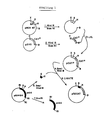
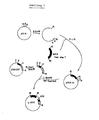
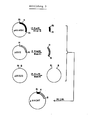
- X / Sl denotes a location at which a hybrid restriction site is created by connecting an XhoI sequence to a SalI sequence, which cannot be cut by any of the enzymes.
- CAT denotes the coding region of the chloramphenicol acetyl transferase.
- CAT o denotes the promoter-free form of the CAT gene.
- the psbA gene is characterized by a black bar, the associated promoter by a black box.
- a “gene” is a DNA sequence, characterized by a promoter and a transcribable DNA sequence.
- the promoter which in most cases is not transcribed, triggers the transcription of the subsequent, in some cases also the surrounding gene sequences into the corresponding RNA.
- the RNA may or may not be translated into a polypeptide. If the RNA is translated, it is called mRNA.
- the RNA sequence that corresponds to the mRNA as well as the mRNA itself are from a 5 ⁇ region that is not translated, a coding region, and a 3 ⁇ region composed, which is also not translated. Only the coding region is translated into the corresponding polypeptide.
- the "active" parts of a DNA sequence form those sections which are responsible for the function of the DNA sequence.
- Some examples of active areas of DNA sequences include the RNA polymerase binding site, the initiation signal (TATA box) of the promoter, the ribosome binding site and the translation initiation signal of the untranslated 5 ⁇ region, the coding sequence, the transcription stop signal and the polyadenylation signal of the untranslated 3 ⁇ region.
- TATA box initiation signal
- the different spacer sections in which the DNA sequence has no meaning are not considered to be active DNA sequences.
- a "variant" of a natural DNA sequence forms a modified form of the natural sequence that fulfills the same function. This can be a mutant or a synthetic DNA sequence which is essentially homologous to the corresponding natural sequence.
- a DNA sequence is considered to be essentially homologous to a second DNA sequence if at least 70%, preferably at least 80%, in particular at least 90% of the active portions of the DNA sequence are homologous. To determine substantial homology, two different nucleotides within a DNA sequence of a coding region are still considered homologous if the mutual exchange of these nucleotides leads to a silent mutation.
- a DNA sequence "comes from” a source, such as the plastids or mitochondria, if this DNA sequence occurs in this source.
- the present invention also includes variants of such a DNA sequence.
- a DNA sequence is "functional" in plastids or mitochondria if it fulfills its expected function and is retained in the progeny of the plastids and mitochondria.
- Transformable, plant protoplasts means protoplasts which, after a direct gene transfer, contain a plastid or a mitochondrial genome which has covalently linked DNA which does not normally occur in these plastids or mitochondria.
- Plant protoplasts which can be transformed with the aid of the method according to the invention can be derived from cultivated cells and from cells which are built into plant parts or multicellular plants.
- the transformable plant protoplasts can also be derived from single-cell plants, such as algae.
- Some examples of unicellular plants include the cyanobacteria (eg Synechococcus spp. ) As well as Chlamydomonas and Euglena .
- plant protoplasts derived from multicellular plants are particularly preferred. After the transformation has taken place, the protoplasts can optionally be regenerated into whole plants.
- Some examples of such plant proton plastics are: Solanum spp. (Potato), Gossypium spp. (Cotton), Glycine spp. (Soybean), Petunia spp. (Petunia), Daucus spp. (Carrot) Citrus spp (orange, lemon), Lycopersicon spp. (Tomato), Brassica spp. (Beet, cabbage, cauliflower etc.), beta spp. (Turnip), Phaseolus spp. (Bean), Helianthus spp. (Sunflower), Arachis spp. (Peanut), Amaranthus spp. (Foxtail), Medicago spp.
- Transformable plastids are e.g. Chromoplasts, Amyloplasts, Leucoplasts, Etioplasts, Proplastide and Chloroplasts.
- the chloroplasts are particularly preferred for the transformation.
- the present invention further relates to genes that are functional in the plastids and mitochondria.
- the genes of the present invention impart a desired, useful property by their inclusion on the plastids and mitochondria.
- Some examples of such useful properties are: phytotoxin resistance, e.g. Herbicide or antibiotic resistance, improved photosynthetic efficiency and enzyme activity in cases where a chromogenic substrate for the enzyme is known.
- Herbicide resistance in the present case means resistance to all herbicides which are active in the plastids or mitochondria.
- herbicides are active in chloroplasts.
- These classes of herbicides include e.g. the triazine, urea, sonfonylurea and uracil derivatives, as well as the glyphosate (N-phosphomethylglycine).
- triazine herbicides include atrazine, ametryn, metribuzin and simazine.
- urea herbicides include the phenylureas, e.g. Diuron, chloroxuron and fluorometuron as well as the DCMU (dichloromethyl urea). Examples of sulfonylureas are oust and glean, and for uracil herbicides bromacil and terbacil. These and other herbicides are described in LeBaron and Gressel (1982).
- herbicide resistance e.g. against atrazine
- transferring to plants is desirable for various reasons. For example, it allows the use of this herbicide in higher doses on plants which are then tolerant of said herbicide. With the higher herbicide doses, you can simultaneously achieve better weed control efficiency.
- herbicide resistance can also be used as a selective marker that is genetically linked to a physiological property that is difficult to select in itself.
- a donor plasmid is constructed which contains a gene which brings about herbicide resistance and a second gene which gives the other desirable property. This can be an increased photosynthetic efficiency, for example.
- This donor DNA is introduced into plant protoplasts, which can be regenerated into a plant cell culture or whole plants. The resulting plants then have both the properties of the herbicide resistance and the said second property. If these plants are allowed to grow in the presence of the corresponding herbicide, it is possible to select plants which have said second property.
- Herbicide resistance to atrazine (2-chloro-4-ethylamino-6-isopropylamino-1,3,5-triazine) is particularly preferred.
- Antibiotic resistance can be used for the in vitro identification of cells with transformed plastids or mitochondria.
- Antibiotic resistance is a property that can be used for the in vitro identification of cells containing transformed plastids or mitochondria. Genes that carry this selectable marker are extremely useful when genetically linked to agronomically useful traits. Resistance to chloramphenicol, kanamycin or, in principle, resistance to any other antibiotics are suitable for this.
- a useful property which is primarily suitable as a marker for a selection (screening) for identifying plant cells from tissue cultures which contain genetically manipulated plastids or mitochondria, is achieved e.g. by introducing a gene which codes for an enzyme which has a coloring substrate. If the enzyme in question is, for example, beta-galactosidase, the plant cells are plated out on a tissue culture medium which contains the coloring substrate Xgal (5-chloro-4-bromo-3-indolyl- ⁇ -D-galactoside) . Plant cells that contain genetically manipulated plastids or mitochondria are stained by the dye indigo blue, as this is released due to the cleavage of Xgal by ⁇ -galactosidase.
- genes which are suitable for the present invention can be obtained by methods known per se. These methods are, for example, the isolation of natural genes that normally only occur outside the plastids or mitochondria or their variants that are to be introduced.
- Said gene can be any naturally occurring gene or one of its variants that are functional in the plastids or mitochondria.
- Naturally occurring platid, mitochondrial or bacterial genes are preferred.
- Chloroplast genes are particularly preferred.
- Some examples of naturally occurring bacterial genes are, for example, those which code for antibiotic resistance or for enzymes with a coloring substrate.
- a bacterial gene that is able to transfer antibiotic resistance to plastids or mitochondria is, for example, the chloramphenicol acetyl transferase gene.
- a bacterial gene that codes for an enzyme with a chromogenic substrate is, for example, lacZ, which codes for the ⁇ -galactosidase.
- Some examples of plastid or mitochondrial genes are genes that code for herbicide resistance or for improved photosynthetic efficiency.
- a chloroplast gene that is able to transmit herbicide resistance is, for example, the mutated psbA gene, which was described by Hirschberg et al.
- a chloroplast gene that is able to transfer improved photosynthetic efficiency is represented, for example, by a modified form of rbcL, which codes for a modified large subunit of ribulose-1,5-bisphosphate carboxylase / oxygenase (Rubisco).
- Rubisco ribulose-1,5-bisphosphate carboxylase / oxygenase
- a gene that expresses the large Rubisco subunit is already present in the chloroplasts and is involved in photosynthesis. However, it is also possible to introduce a modified (mutated, manipulated or heterologous) form of this gene with improved photosynthetic efficiency [Jordan et al., (1981)].
- a chimeric gene is a gene or at least one Part of a gene, preferably an active part of a gene that is naturally not covalently bound to the other parts.
- the chimeric gene can either specify an RNA transcript or encode a polypeptide.
- promoters of the chimeric gene are all promoters which are functional in plastids or mitochondria.
- Promoters for chimeric genes can come from a naturally occurring plastid or mitochondrial gene or from a gene that is not found in the plastids or mitochondria.
- naturally occurring promoters from plastids or mitochondrial genes particular preference is given to those which come from psbA, psbD and rbcL genes.
- Said promoters can also be variants of natural promoters.
- a heterologous promoter of the chimeric gene can be a natural promoter which does not normally occur in plastids or mitochondria.
- bacterial promoters in plastids or mitochondria can also be functional. Any bacterial promoter that is functional in plastids or mitochondria can therefore also be used according to the invention as a promoter of the chimeric gene.
- Some useful bacterial promoters are e.g. those of the neomycin phosphotransferase II gene and the T-DNA genes, e.g. the nopaline synthase gene of the Ti plasmid.
- Any partially or completely synthetically produced promoter that is functional in plastids or mitochondria can also be used as a heterologous promoter.
- the untranslated 5 ⁇ region of the chimeric gene of the present invention can be any untranslated 5 ⁇ region that is functional in the plastids or mitochondria.
- the untranslated 5 ⁇ region can originate, for example, from plastid or mitochondrial genes or from genes of other origin.
- a preferred homologous untranslated 5 ⁇ region comes from the psbA, psbD or rbcL genes.
- a preferred heterologous, untranslated 5 ⁇ region comes from bacterial genes. Synthetic untranslated 5 ⁇ regions, which are similar to their natural role models due to an effective ribosome binding site, are also part of the present invention.
- any coding region that is able to transfer a desirable property to a plant cell is suitable for the inventive use as a coding region.
- Both the coding regions of the naturally occurring genes mentioned above and coding regions from other sources can be used in the context of the present invention for the production of a chimeric gene.
- the coding regions can be derived from naturally occurring plastid or mitochondrial genes or from another source; they may also be wholly or partially synthetic or made by fusing two or more such coding regions while maintaining the reading frame.
- Each of these coding sections codes for a polypeptide that imparts one or more new properties to the cells and plants.
- polypeptide that is determined by a gene that occurs naturally in the chloroplasts of certain plants is the mutated form of the 32 kd polypeptide, which was described by Hirschberg et al. (1983). It could be shown, that this polypeptide transmits atrazine resistance to certain weeds.
- the psbA gene which codes for said polypeptide can, however, also be transferred to useful plants, such as, for example, crop plants, using the method according to the invention.
- a coded region that does not come from plastids or mitochondria is the coding region of the plant, animal or bacterial gshA and gshB genes or that of the glutathione reductase ( gor ) gene, all of which can transmit their useful properties, if they are introduced into plant plastids or mitochondria.
- gshA and gshB encode enzymes that catalyze the synthesis of the tripeptide glutathione, which in turn is responsible for the conjugative detoxification of numerous herbicides (Meister et al., 1983; and Rennberg; 1982).
- a coding region that is not derived from plastids or mitochondria is the coding section of a glutathione S-transferase gene from plants, animals, insects or bacteria.
- glutathione-S-transferase s
- Glutathione-S-transferase detoxifies the phytotoxin by catalyzing the formation of an atrazine-glutathione conjugate.
- Another coding region useful for the chimeric gene of the present invention encodes a more efficient form of Rubisco.
- Such coding sections can optionally originate from naturally occurring genes.
- the coding region of the present invention may optionally also result from two or more different coding sections.
- Polypeptides that are specified by such coding regions are referred to as fusion polypeptides.
- a fusion polypeptide is a more efficient form of Rubisco.
- Rubisco has two functions, firstly as a carboxylase and secondly as an oxygenase.
- the carboxylase function is effective in the course of photosynthesis, but the oxygenase function is undesirable.
- a useful fusion polypeptide has a portion that maximizes carboxylase function and a second portion that minimizes oxygenase function.
- the untranslated 3 ⁇ region of the chimeric gene can either be naturally present in a plastid or mitochondrial gene or it can be of heterologous origin.
- a non-translated 3 ⁇ region is preferred which originates from a plastid or mitochondrial gene.
- the preferred non-translated 3 ⁇ sections are those of the psbA, psbD or rbcL genes.
- RNA transcripts can specify RNA transcripts and are already usable as such in some cases.
- transcripts can be tRNA or rRNA.
- the transcript may also be an RNA that has a sequence that is complementary to at least a portion of a sequence of another RNA transcript.
- Such complementary sequences known as anti-sense sequences, can, if they are only long enough, disrupt the function of RNA sequences to which they are complementary, or they can block the transcription of this RNA from the corresponding gene ; [See. Pestka et al., (1984); Melton, (1985); Izant et al., (1984); Simons et al., (1984) and Coleman, (1984)].
- Transcribed regions which are useful in the context of the present invention can optionally originate from naturally transcribed sections, or they can be wholly or partly synthetically produced.
- Anti-sense sequences can are also derived from at least a portion of a naturally occurring gene by reversing the orientation of said portion of the naturally occurring gene with respect to its promoter.
- genes which are suitable for use in the context of the present invention are inserted into a plasmid cloning vector according to methods known per se [Maniatis et al., (1982)].
- the carrier DNA can consist of two linear DNA strands, so that the entire construction that is to be introduced into the plant cell is a linear DNA molecule. Said structure can also have a circular structure - plasmid structure - for gene transformation.
- the carrier DNA can be of synthetic origin as well as derived from naturally occurring DNA sequences which have been treated with suitable restriction endonucleases. Therefore, naturally occurring plasmids that have been opened with one or more restriction endonucleases are also suitable for use as carrier DNA.
- a plasmid is the easily accessible plasmid pUC8 [described by Messing et al., (1982)]. Fragments of naturally occurring plasmids can also be used as carrier DNA according to the invention.
- the construction intended for the transformation can optionally contain DNA derived from a Ti plasmid or from a modified Ti plasmid.
- a plasmid is considered a modified Ti plasmid if it has at least one T-DNA border region.
- a T-DNA border region is a DNA sequence within an Agrobacterium genome, which causes the incorporation of another sequence within the genome (T-DNA) into the plant cells with which the Agrobacterium comes into contact.
- the T-DNA border region can be, for example, a sequence of a vector, such as a Ti or Ri plasmid or one modified Ti or Ri plasmids.
- the T-DNA can also be a sequence that lies on the same vector as the border region or on a different vector.
- the method according to the invention is therefore particularly advantageous when the transmitted gene is coupled to a replication signal which is effective in plant cells or with an integration signal which is effective in plant cells or with a combination of both signals.
- Protoplasts cell culture cells, cells in plant tissues, pollen, pollen tubes, egg cells, embryonic sacs or zygotes as well as embryos in different stages of development are representative examples of plant cells that are suitable as a starting material for a transformation. Protoplasts are preferred because they can be used directly without further pretreatment. Isolated plant protoplasts, cells or tissues can be obtained using methods known per se or using methods that are analogous to known methods.
- Isolated plant protoplasts which are suitable as starting material for the production of isolated cells and tissues, can be extracted from all parts of the plant, for example the leaves, embryos, Isolate stems, flowers, roots or pollen. Protoplasts from leaves are preferred. Isolated protoplasts can also be obtained from cell cultures. Methods for isolating protoplasts are described, for example, in Gamberg et al. (1975).
- the transfer of the new gene into the plant cell takes place directly, i.e. without prior infection of the cell with a pathogen such as, for example, a phytopathogenic bacterium, virus or fungus and without the transmission of DNA by insects or fungi which are able to infect plants with DNA-transmitting pathogens.
- a pathogen such as, for example, a phytopathogenic bacterium, virus or fungus
- This direct gene transfer is achieved in that the DNA containing the gene contacts the plant protoplasts and the plastids and mitochondria contained therein in a medium for a period of time which is necessary for the penetration of the gene into the protoplasts and into the plastids therein and mitochondria is sufficient.
- the transformation frequency can be increased by combining this step with different gene transfer techniques.
- techniques include treatment with poly-L-ornithine or poly-L-lysine, liposome fusion, DNA-protein complexation, change in the charge ratio on the protoplast membrane, fusion with microbial protoplasts or calcium phosphate precipitation, and in particular by treatment with certain polyhydrated ones Alcohols such as Polyethylene glycol, heat shock treatment and electroporation, and a combination of these three techniques.
- Suitable media according to the invention are all media which permit the DNA carrying the gene to penetrate into the protoplasts and into the plastids or mitochondria within these protoplasts.
- Suitable media for the joint incubation of cheating with the receptor protoplast are preferably osmotically stabilized culture media, such as those developed for protoplast cultures.
- inositol, folic acid, thiamine an energy and carbon source, for example sucrose or glucose and growth regulators in the form of natural or synthetic phytohormones of the auxin and cytokinin class in a concentration range of 0.01 to 10 mg / liter.
- These culture media are additionally osmotically stabilized by adding sugar alcohols (e.g. mannitol), sugar (e.g. glucose) or salt ions (e.g. CaCl2) and adjusted to a pH value in the range from 5.6 to 6.5.
- sugar alcohols e.g. mannitol
- sugar e.g. glucose
- salt ions e.g. CaCl2
- a particularly suitable medium for the direct transformation of protoplasts contains a polyhydric alcohol which is able to change the protoplast membrane and which is useful in mediating cell fusion.
- the preferred polyhydric alcohol is polyethylene glycol.
- Polyhydric alcohols with longer chains, for example polypropylene glycol (425 to 4000 g / mol), polyvinyl alcohol or polyhydric alcohols, the hydroxyl groups of which are partially or completely alkylated, can also be used.
- polyhydroxylated detergents the ge Usually used in agriculture and tolerated by the plants also represent suitable polyhydric alcohols: Such detergents are described, for example, in the following publication: "Mc Cutcheons Detergents and Emulsifiers Annual” MC Publishing Corp., Ridgewood, New Jersey, (1981); Stache, H., “Tensid-Taschenbuch", Carl Hanser Verlag, Kunststoff / Vienna, (1981).
- the preferred polyhydric alcohols here are polyethylene glycols with a molecular weight between 1000 and 10000 g / mol, preferably between 3000 and 8000 g / mol.
- the transformation frequency of the direct gene transfer can be increased significantly by the methods described in detail below.
- a protoplast suspension is first added to the culture medium.
- the DNA that contains the gene and can be present as linear DNA or in the form of a circular plasmid is then added to the mixture of polyethylene glycol and culture medium.
- the protoplasts and the DNA containing the gene can first be placed in the culture medium and only then can the polyethylene glycol be added.
- electroporation and heat shock treatment have also proven to be particularly advantageous process measures.
- the protoplasts are suspended in an osmotic, e.g. a solution of mannitol / calcium chloride.
- the suspension is then placed in small containers e.g. heated in centrifuge tubes, preferably in a water bath.
- the duration of the heating process depends on the preselected temperature. Generally, the temperatures range from 40 ° C to 80 ° C and are maintained for from 1 second to 1 hour. The best results are obtained at a temperature in the range from 40 ° to 50 ° C. to 4 to 6 minutes, in particular at 45 ° and 5 minutes.
- the suspension is then cooled to room temperature or less. It can also be shown that the transformation frequency is increased by inactivating extracellular nucleases. Inactivation can be achieved using divalent cations tolerated by plants, such as magnesium or calcium. Inactivation is more effective when the transformation is carried out at high pH values, with the optimal pH range between 9 and 10.5.
- polyethylene glycol treatment has proven advantageous: polyethylene glycol treatment, heat shock treatment and electroporation, with particularly good results being achieved when these techniques are applied after the introduction of the foreign gene and protoplasts in a liquid.
- the preferred procedure consists of a heat shock treatment before the treatment with polyethylene glycol and, if appropriate, subsequent electroporation.
- the additional electroporation leads to a further increase in the transformation frequency; in some cases the results achieved by heat shock treatment and polyethylene glycol treatment cannot be improved significantly by additional electroporatioin.
- the method according to the invention thus makes it possible to achieve high transformation frequencies without pathogens such as e.g. Viruses and Agrobacterium or natural or modified Ti plasmid for the transformation.
- pathogens such as e.g. Viruses and Agrobacterium or natural or modified Ti plasmid for the transformation.
- An advantageous embodiment of the method according to the invention is characterized, for example, by converting the protoplasts into a mannitol solution and then mixing the protoplast suspension thus obtained with an aqueous DNA solution which contains the gene.
- the protoplasts are then incubated in this mixture for 5 minutes at 45 ° C. and then cooled to 0 ° C. for 10 seconds. After the incubation, enough polyethylene glycol (MW 3000 to 8000) is added to this mixture to achieve a PEG concentration of 1 to 25%, preferably around 8%.
- the treatment is then carried out in the electroporator.
- the protoplast suspension is then diluted with culture medium and can finally remain in the culture medium for the regeneration of its cell walls.
- the method according to the invention is suitable for the transformation of all plant cells, in particular for cells from the systematic groups of angiospermae and gymnospermae.
- Plants from the Coniferae class are of primary interest among the Gymnosperae.
- angiospermae in addition to deciduous trees and shrubs, plants from the following families are of particular interest: Solanaceae, Cruciferae, Compositae, Liliaceae, Vitaceae, Chenopodiaceae, Rutaceae, Bromeliaceae, Rubiaceae, Theaceae, Musaceae or Gramineaione and within the order of the Leguminosae family.
- Plants from the genus Nicotiana, Petunia, Hyoscyamus, Brassica and Lolium are of particular interest, for example Nicotiana tabacum , Nicotiana plumbaginifolia , Petunia hybrida , Hyoscyamus muticus , Brassica napus , Brassica rapa and Lolium multiflorum .
- Plastids and mitochondria of all those plants that can be regenerated from protoplasts can also be successfully transformed using the method according to the invention.
- plastids and mitochondria from representatives of the family of the Graminae (grasses) that also contain cereals, e.g. Include corn, wheat, rice, barley, oats, millet, rye and sorghum to be genetically manipulated.
- the present invention now allows the genetic transformation of plastids and mitochondria from Gramineae cells, including cereal cells, using direct gene transformation. In the same way it is possible to carry out the transformation of plastids and mitochondria of any other crop, e.g.
- the incorporation of transformed genes into plastids or mitochondria can be demonstrated using conventional methods, e.g. by genetic crossing experiments or with molecular biological detection methods, in particular the Southern detection method for plastid and mitochondrial DNA as well as the enzyme activity test.
- the Southern detection method can be carried out, for example, as follows: After treatment with restriction enzymes, the DNA isolated from plastids or mitochondria of transformed cells or protoplasts is subjected to electrophoresis in a 1% agarose gel, then transferred to a nitrocellulose membrane [ Southern et al., (1975)] and with an in vitro labeled DNA, the existence of which is established should hybridize.
- the DNA can be labeled in vitro with a specific activity between 5 x 10⁸ and 10 x 108 cpm / microgram using the "nick translation" [Rigby et al., (1977)].
- the filters are then washed three times for one hour with an aqueous solution of a 0.03 M sodium citrate solution and a 0.3 M sodium chloride solution at a temperature of 65 ° C.
- the hybridized DNA is visualized on an X-ray film by autoradiography lasting one to several days.
- the cells which are transformed with the desired gene are isolated using methods known per se. These methods include selection and screening.
- the selection of nuclear genes is described in Fraley et al., (1983); Herrera-Estrella et al., (1983); and Bevan et al., (1983). Screening may be for ⁇ -galactosidase [Helmer et al., (1984)], for nopaline synthase or octopine synthase [Wostemeyer et al., (1984); DeGreve et al., (1982)] or for atrazine resistance.
- the present invention now allows the genetic transformation of plastids and mitochondria of Gramineae cells, including the said cereal cells, using direct gene transformation.
- any other crop such as plants of the genus Solanum, Nicotiana, Brassica, Beta, Pisum, Phaseolus, Glycine, Helianthus, Allium, Triticum, Hordeum, Avena, Setaria, Oryza, Cydonia, Pyrus, Malus, Rubus, Fragaria, Prunus , Arachis, Secale, Panicum, Saccharum, Coffea, Camellia, Musa, Pineapple, Vitis, Sorghum, Helianthus or Citrus.
- the incorporation of transformed genes in plastids or mitochondria can be demonstrated using conventional methods, e.g. by genetic crossing experiments or with molecular biological detection methods, in particular the Southern detection method for plastid and mitochondrial DNA as well as the enzyme activity test.
- One advantage of introducing genes into plastids or mitochondria through direct gene transfer is the possibility of simultaneous inactivation of unwanted genes that are already present in the plastid or mitochondrial genome. This is possible because the incorporation of foreign genes into the plastid or mitochondrial genome does not necessarily involve homologous recombination when direct gene transfer is used. For example, a donor DNA molecule that carries an atrazine-resistant form of psbA is not necessarily integrated at the location where the corresponding atrazine-sensitive gene is located. On the other hand, since the plastid and mitochondrial genomes are relatively small, it is quite possible to select the transformed plant cells and to find out those in which the donor DNA was accidentally incorporated into any desired function of the recipient genome.
- the direct gene transfer in plastid and mitochondrial genomes therefore also opens up a way to inactivate genes that was previously not feasible. With the help of appropriate screening, it is thus possible, for example, to find transformed plant cells in which the atrazine-sensitive psbA gene is inactivated by the incorporation of a donor DNA which carries an atrazine resistance gene.
- Another advantage of direct gene transfer into the genomes of plastids and mitochondria is that, unlike nuclear genomes, these genomes are inherited maternally by the cytoplasm and therefore are usually not transmitted to their sexual offspring by pollen. Therefore, the possibility of transferring genes which impart desirable traits for crop plants from crop plants to weeds is greatly reduced.
- Plant cells in cell cultures which are transformed with the aid of the method according to the invention can optionally be used for the production of polypeptides which are encoded by the inserted genes.
- Such synthesis products include, for example, the 32 kd polypeptide expressed by psbA, chloramphenicol acetyltransferase, glutathione-S-transferase and the large subunit of Rubisco.
- the plant cells which contain the built-in genes can in some cases also be regenerated into multicellular plants which express the gene and therefore have the desired new property.
- Any plant that can be regenerated from plant cells, which in turn are derived from protoplates, can be produced using the method according to the invention.
- Examples of such whole plants are: Solanum spp. (Potato), Petunia spp. (Petunia), Daucus spp. (Carrot), Lycopersicon spp. (Tomato), Brassica spp. (Turnip, cabbage, cauliflower etc.), Medicago spp. (Alfalfa), Trifolium spp. (Clover), citrus, atropa, hyosxyamus, salpiglossis, arabidopsis, digitalis, cichorium, gossipium, glycine, geranium, anthirrhinum and asparagus.
- plants are regenerated according to methods known per se; see Evans and Bravo, (1983); Dale, (1983); For example, plants can be regenerated from any suitable offshoot, such as cells, calli, tissues, organs, buds, cuttings, saplings, root fibers, plantlets, somatic embryos and others.
- the present invention further relates to photoplasts, plant cells, cell aggregates, plants and in particular the seeds of plants which have been produced with the aid of the process according to the invention, and for as long as the seeds formed contain the built-in gene and thus the desired property resulting therefrom. It also relates to all progeny of plants that were produced using the method according to the invention, both sexual and vegetative progeny.
- Sexual offspring can be obtained through self-pollination or cross-pollination, whereby offspring also include all crossing and fusion products with the transformed plant material defined in the previous paragraph, provided that these offspring have the property introduced by the transformation.
- Seeds and progeny of herbicidally resistant or tolerant parents who have unstable herbicide resistance or tolerance can maintain their herbicide resistance or tolerance as long as they grow in the presence of the herbicide.
- a preferred herbicide is atrazine.
- the present invention thus allows the production of genetically manipulated plants which are capable of being treated with herbicides, e.g. survive with atrazine, at concentrations that are lethal for sensitive plants.
- Example 2 can be repeated with a plasmid other than pMON 187.
- a suitable plasmid which has the Km r gene of Tn 903 can be constructed as follows:
- a 1.2 AvaII fragment containing the Km r gene of Tn 903 is isolated from the plasmid pAO2 [Oca et al., (1982)].
- the ends of the AvaII fragment are filled in using Klenow polymerase and BamHI linkers are linked to the smooth ends of the fragments.
- the DNA is then treated with the restriction enzymes TaqI and BamHI and spliced into the plasmid pBR327, which was previously digested with ClaI and BamHI. Recombinants that have the Tn903 fragment transfer Km r to E. coli.
- Example 4 Construction of plasmid pUCH1, a vector with a psbA gene and a chimeric psbA / CAT gene construction (see Fig. 2)
- Tobacco protoplasts with a population density of 2.106 per ml are in 1 ml of a K3 medium [cf. Z. Plant Physiology 78 , 453-455 (1976); Mutation Research 81 , 165-175 (1981)] which contains 0.1 mg / liter 2.4 dichlorophenoxyacetic acid, 1.0 mg / liter 1-naphthylacetic acid and 0.2 mg / liter 6-benzylaminopurine.
- Protoplasts are obtained from an enzyme suspension by flotation on 0.6 M sucrose at a pH of 5.8 and subsequent sedimentation at 100 g in 0.17 M calcium chloride at pH 5.8 for 5 minutes.
- the culture medium is diluted in each Petri dish with 0.3 parts by volume of a fresh K3 medium and incubated for a further 4 days at 24 ° C and 3000 lux.
- the clones which have developed from the protoplasts are embedded in a culture medium solidified with 1% agarose, which contains 10 mg / liter of chloramphenicol and at 24 ° C. in the dark according to the "bead type culture method" [ Plant Cell Report, 2 , 244-247 (1983)].
- the culture medium is replaced by a fresh medium of the same type every 5 days.
- the resistant calli of 2 to 3 mm in diameter are placed on an LS culture medium solidified with agar [Physiol. Plans. 18 , 100-127 (1965)], which contains 0.05 mg / liter of 2,4-dichlorophenoxyacetic acid, 2 mg / liter of 1-naphthylacetic acid, 0.1 mg / liter of 6-benzylaminopurine, 0.1 mg / liter of kinetin and 10 mg / liter of chloramphenicol.
- Chloramphenicol-resistant Nicotiana tabacum Petit Havana SRI plants are obtained by induction on LS medium with 10 ml / liter chloramphenicol and 0.2 mg / liter 6-benzylaminopurine and subsequent root induction on T medium [Science 163 , 85-87, (1969)].
- Chloramphenicol-resistant calli and plants are selected essentially in accordance with the information given in De Block et al., (1984).
- An atrazine toxicity curve is created for non-transformed calli in a concentration range from 1 to 10 micromoles of atrazine and different light intensities.
- Calli and control calli presumably derived from chloroplast transformants are applied to nutrient plates, treated with atrazine concentrations and light intensities which completely bleach the chlorophyll from the control tissues. Resistance to atrazine is checked visually due to the persistent greening of resistant tissue.
- Plants obtained from chloroplast transformants are tested for atrazine resistance using the following methods:
- Chlorophyll fluorescence induction in leaves If electron transport on the reducing side of Photosystem II is inhibited, such as by atrazine, the chlorophyll-absorbed radiation energy is re-emitted as fluorescence. This fluorescence can be measured on the leaf surface. The fluorescence measurement is carried out on leaf disks which are stretched horizontally over a transparent, Lucite window, as described in Nalkin et al., (1981). [Lucite stands for polymerized resin made of methyl methacrylate.] The excitation light comes from a dc driven projector which, after passing through a filter, is in a band of actinic light from 500 to 600 nm with intensities around 10 nE x cm x2x s ⁇ 1 results.
- the duration of the excitation light is 3 ms.
- the excitation light is aligned perpendicular to the leaf surface and the fluorescence from the same surface is collected using a flexible light guide system and then transfer to a red-sensitive photomultiplier after passing a cut-off filter (660 nm).
- the fluorescence passes are recorded on an oscilloscope and filmed directly.
- Brassica rapa protoplasts are washed with a suitable osmotic and suspended in a population density of 5 ⁇ 106 per ml in a culture medium which, according to the instructions in [Protoplast 83 , Proceedings Experientia Supplementum, Birkhäuser Verlag, Basel, Vol. 45 (1983, 44-45] 40% polyethylene glycol (PEG) with a molecular weight of 6000, dissolved in modified F medium (pH 5.8) (cf. Example 1b), is mixed with the Protoplast suspension mixed to a final concentration of 13% PEG.
- PEG polyethylene glycol
- a solution consisting of 50 micrograms of the plasmid pBRCAT or p32CAT digested with endonuclease Sal I and 60 micrograms of water is then immediately added to this mixture. With occasional stirring, this mixture is incubated at 20 ° to 25 ° C for 30 minutes. Then 2 ml of modified F medium (6 ml in total) and 2 ml of culture medium (4 ml in total) are added three times at 5 minute intervals. The protoplast suspension is transferred to Petri dishes with a cross section of 10 cm and supplemented with additional culture medium to a total volume of 20 ml. These protoplast suspensions are incubated for 45 minutes at 26 ° C in the dark.
- the protoplasts are isolated by sedimentation at 100 g for 5 minutes, taken up in an initially liquid culture medium which is later solidified by agarose gel and according to the "bead type culture method" [Plant Cell Reports, 2 , 244-247 (1983)] cultured. After four days, in the developmental stage of the first cell division, chloramphenicol is added to the cultures in a concentration of 10 mg / liter. The liquid culture medium that surrounds the agarose segments is replaced by fresh, chloramphenicol-containing nutrient solution every four days. After four weeks, the chloramphenicol-resistant clones are isolated and then further cultivated by supplying them with nutrient solution containing chloramphenicol every week (10 mg / liter).
- the protoplasts are isolated by centrifugation (5 minutes at 100 g) and in 4 ml of CC culture medium [Potrykus, Harms and Lörz, Callus Formation from Cell Culture Protoplasts of Corn (Zea Mays L.), Theor. Appl. Genet. 54 , 209-214 (1979)] and incubated at 24 ° C in the dark. After 14 days, the developing cell cultures are transferred to the same medium, which now contains chloramphenicol (10 mg / liter).
- Resistant colonies are transferred to an agar medium - the same medium as above, 10 mg / liter chloramphenicol without osmotic - and then, after they have reached the size of several grams of fresh weight per colony, with regard to the presence of the bacterial gene and analyzed the biological activity of the gene.
- Example 10 Transformation of cultivated Nicotiana tabacum cells by transferring p32CAT, pBRCAT or pUCHI with the aid of electroporation
- Protoplasts are obtained by sedimentation of 50 ml of a 10 g phase suspension culture of a nitrate reductase-defective variant of Nicotiana tabacum, cell strain nia-115 [Müller, AJ and R. Grafe, Mol. Gen. Genet.
- the transformation is carried out with the help of electroporation.
- the chamber of a Dialog® "Porator” (available from Dialog GmbH, Harffstrasse 34, 4000 Dusseldorf, Federal Republic of Germany) is sterilized by washing with 70% alcohol and then with 100% alcohol and with a stream of sterile air from a blower laminar air flow dried.
- the protoplasts are suspended in a concentration of 1 ⁇ 106 / ml in a 0.4 M mannitol solution and adjusted to a resistance of 1.4 kOhm with magnesium chloride. Then pBRCAT, pUCHI or p32CAT is added in a concentration of 10 micrograms / ml.
- Example 11 Transformation of chloroplasts from Nicotiana tabacum cells by transfer of the donor DNA using electroporation
- the electroporator and the protoplasts are prepared according to example 10 or example 6.
- protoplates of Nicotiana tabacum are resuspended in a concentration of 1.6 ⁇ 106 / ml in a mannitol solution [0.4 M, buffered with 0.5% w / v 2- (N-morpholine) -ethanesulfonic acid; pH 5.6].
- the resistance of the protoplast suspension is measured in the porator chamber (0.38 ml) and adjusted to a value between 1 and 1.2 kOhm with a magnesium chloride solution.
- 0.5 ml samples are taken and placed in a plastic tube (5 ml volume) which can be closed with a lid and into which 40 microliters of water with 8 micrograms of donor DNA and 20 micrograms of calf thymus DNA have previously been added, as well as 0.25 ml of a polyethylene glycol solution ( 24% w / v in 0.4 M mannitol).
- the protoplasts are then cultivated according to the "bead type culturing method".
- Calli tissue obtained by selecting the transformed material with chloramphenicol is obtained and plants which are regenerated therefrom contain the CAT enzyme (chloramphenicol acetyl transferase) as a product of the CAT gene.
- chloramphenicol acetyl transferase chloramphenicol acetyl transferase
- Example 12 Transformation of Nicotiana tabacum cells by transfer of the CAT gene using the heat-shock treatment
- Protoplasts which have been isolated from leaves or from Nicotiana tabacum cell cultures are obtained as described in Examples 6 and 10 and transferred to an osmotically stabilized medium analogously to the preceding examples.
- the protoplast suspensions are kept at 45 ° C for 5 minutes and then cooled to 0 ° C with ice for 10 seconds; the plasmid pBRCAT, pUCHI or pBRCAT, as described in Examples 6 and 10, is then added.
- the heat-shock treatment increases the transformation frequency by a factor of 10 or more compared to a transformation that is carried out without this treatment.
- Example 13 Transformation of plant cells of different origins by transferring the CAT gene by bringing protoplasts and genes together in a first step and then carrying out a combined treatment
- Plant protoplasts Nicotiana tabacum cv Petit Havana SRI ( A ); Brassica rapa cv Just Right ( B ) and Lolium multiflorum ( C ) are isolated and transferred to an osmotically stabilized medium according to Example 11.
- the protoplast suspensions are mixed with the plasmid pUCH1, p32CAT or pBRCAT according to Examples 6 to 9 but without simultaneous treatment with polyethylene glycol.
- the protoplast suspensions are then subjected to a heat shock treatment according to Example 12 and then subjected to a polyethylene glycol treatment corresponding to Examples 6 to 9 and finally to electroporation according to Example 11.
- the transformation frequency with this procedure is between 10 ⁇ 3 and 10 ⁇ 2, but can be increased to 1% to 2% depending on the selected conditions.
Landscapes
- Health & Medical Sciences (AREA)
- Genetics & Genomics (AREA)
- Life Sciences & Earth Sciences (AREA)
- Engineering & Computer Science (AREA)
- Chemical & Material Sciences (AREA)
- Organic Chemistry (AREA)
- Biomedical Technology (AREA)
- Biotechnology (AREA)
- General Engineering & Computer Science (AREA)
- Bioinformatics & Cheminformatics (AREA)
- Wood Science & Technology (AREA)
- Zoology (AREA)
- Molecular Biology (AREA)
- Biochemistry (AREA)
- Biophysics (AREA)
- General Health & Medical Sciences (AREA)
- Physics & Mathematics (AREA)
- Microbiology (AREA)
- Plant Pathology (AREA)
- Botany (AREA)
- Gastroenterology & Hepatology (AREA)
- Medicinal Chemistry (AREA)
- Proteomics, Peptides & Aminoacids (AREA)
- Cell Biology (AREA)
- Breeding Of Plants And Reproduction By Means Of Culturing (AREA)
- Micro-Organisms Or Cultivation Processes Thereof (AREA)
Abstract
Description
- Die vorliegende Erfindung betrifft ein Verfahren für den direkten Gentransfer in die Plastide und die Mitochondrien, vorzugsweise in die Chloroplasten von pflanzlichen Protoplasten.
- Im Rahmen der vorliegenden Erfindung sind unter dem Oberbegriff Pflanzen alle ein- oder vielzelligen Organismen zu verstehen, die befähigt sind Photosynthesen durchzuführen.
- Als pflanzliche Protoplasten werden Pflanzen-Zellen bezeichnet, deren Zellwände durch Behandlung mit cellulolytischen Enzymen ganz oder teilweise entfernt worden sind.
- Die Chloroplasten bilden einen Angriffspunkt für Vertreter aus verschiedenen Herbizid-Klassen, so z.B. für die Triazin-Herbizide. Erst kürzlich wurde entdeckt, dass das Atrazin, ein Vertreter der Triazin-Herbizide, mit einem 32 kd Polypetid in Wechselwirkung tritt, das von einem Chloroplasten-Gen, dem sogenannten psbA-Gen, codiert wird (Hirschberg et al., 1984).
- Die Substitution eines einzigen Nucleotids innerhalb der kodierenden Region des psbA-Gens, die den Austausch einer einzigen Aminosäure im 32 kd Polypeptid zur Folge hat, führt zu einer Resistenz gegenüber Atrazin. Solche Mutationen findet man bei Unkräutern, so z.B. bei Amaranthus hybridus und Solanum nigrum.
- Es wäre nun wünschenswert, wenn es gelänge Gene direkt in die Plastide- und Mitochondriengenome von Pflanzen, insbesondere von Kulturpflanzen, einzubauen. Dies würde es ermöglichen, solchen Pflanzen neue, wünschenswerte Eigenschaften zu verleihen. Um Herbizid-resistente Pflanzen zu erzeugen werden beispielsweise Gene, die eine Herbizid-Resistenz vermitteln, in Herbizid-sensitiven Chloroplasten benötigt.
- Die bisherigen Anstrengungen galten im allgemeinen einer genetischen Manipulation des nuclearen Genoms der pflanzlichen Zelle, um eine Resistenz oder eine Toleranz gegenüber Herbiziden zu erzielen, die in Chloroplasten aktiv sind.
- Diese Vorgehensweise führt jedoch lediglich zu marginalen Toleranzerscheinungen gegenüber diesen Herbiziden, nicht aber zu wirklichen Resistenzen.
- Bisher wurde es für unmöglich gehalten, eine echte Resistenz gegenüber Herbiziden, die in Chloroplasten wirksam sind, mit Hilfe des direkten Gentransfers auf Kultur-Pflanzen zu übertragen, da man bisher davon ausging, dass eine Transformation von Plastiden, wie z.B. den Chloroplasten, mit dieser Methode nicht möglich ist.
- Ein weiterer Nachteil bei der Einschleusung von Genen, die eine wünschenswerte Eigenschaft, wie z.B. eine Herbizid-resistenz, vermitteln, ins nucleare Genom einer Pflanze liegt in der Fähigkeit einiger Pflanzen zur Fremdbestäubung von Unkräutern begründet. Solche Kreuzungen eröffnen eine Möglichkeit, diese bei Kulturpflanzen erwünschten Eigenschaften in Unkräuter zu übertragen.
- Eine der am häufigsten verwendeten Methoden zur Einschleusung von Genen ins nucleare Genom von Pflanzen besteht in der Infektion von Zellen mit Pathogenen, wie z.B. einem Agrobacterium, das Ti-Plasmid Vektor-Systeme enthält. (Barton et al., 1983; Chilton et al., 1985). Diese Verfahren haben aber deutliche Nachteile, die im Zusammenhang mit dem Infektionsvorgang stehen. Diese Nachteile bestehen zum einen in einer begrenzten Wirtspezifität zum anderen in der Notwendigkeit, die transformierten Pflanzenzellen von dem für die Transformation verwendeten Pathogen wieder zu befreien.
- Es wurden darüberhinaus Bedenken gegen eine Entlassung solcher Pathogene in die Umwelt laut. (Roberts, 1985).
- De Block et al. (1985) berichten über die Verwendung eines Agrobakterium Ti-Plasmid Vektor-Systems für die Einschleusung eines für eine Antibiotika-Resistenz kodierenden Gens, ins Chloroplasten-Genom von Tabak-Protoplasten, aus denen vollständige Zellen und schliesslich komplette, fertile Pflanzen regeneriert werden konnten. Die Autoren fanden jedoch, dass das Gen in Abwesenheit der entsprechenden Antibiotika instabil war und nach kurzer Zeit wieder verloren ging. Die Erhaltung von Pflanzen unter Antibiotika-Selektionsdruck stellt aber keine praktische Anwendung dar.
- Verfahren für die direkte Transformation von pflanzlichen Protoplasten mit nackter linearer DNA oder zirkulärer Plasmid-DNA sind ebenfalls bekannt (Paszkowski et al., 1984; sowie Schilperoort et al., 1983). Bei diesen Verfahren wird kein Pathogen für den Infektionsvorgang benötigt. Bis zum jetzigen Zeitpunkt blieben diese Methoden jedoch auf die nucleare Transformation beschränkt.
- Es werden daher Verfahren benötigt, die den direkten Transfer von nützlichen Genen in das Genom von Plastiden und Mitochondrien erlauben, so dass vorteilhafte, neue Eigenschaften auf pflanzliche Zellen übertragen werden können, ohne dass eine vorherige Infektion der Zellen mit einem Pathogen notwendig ist und wobei gleichzeitig verhindert wird, dass diese Eigenschaften auf Unkräuter übertragen werden. Weiterhin besteht ein Bedürfnis für ein Verfahren, das den stabilen Transfer von Genen in Plastide und Mitochondrien von Pflanzen-Zellen und ganzen Pflanzen gewährleistet, so dass die Expression besagter Gene nicht während der Entwicklung der Kultur-Pflanzen auf dem Feld verloren geht.
- Ein wesentlicher Bestandteil der vorliegenden Erfindung besteht somit in der Bereitstellung eines Verfahrens für die direkte Einführung von Genen in das Genom von Plastiden und Mitochondrien, vorzugsweise von Chloroplasten, ohne Infektion der Zellen mit einem Pathogen und Erhaltung der Gene in besagtem Genom. Ein weiterer Gegenstand der vorliegenden Erfindung besteht in der Herstellung ganzer Pflanzen, die genetisch manipulierte Plastide und Mitochondrien enthalten, und zwar unter Bedingungen, unter denen die mittels rekombinanter Gentechnologie massgeschneiderten Eigenschaft(en) stabil erhalten bleiben und zur Expression gelangen.
- Wie aus der nachfolgenden Beschreibung hervorgeht, werden diese und noch weitere Ziele durch die Bereitstellung des erfindungsgemässen Verfahrens zur direkten Einschleusung von DNA in die Plastide und Mitochondiren von pflanzlichen Protoplasten erreicht, wobei besagte DNA aus einem oder mehreren Genen und in Plastiden und Mitochondrien aktiven Promotoren besteht und das Verfahren sich dadurch kennzeichnet, dass man in Abwesenheit eines Pathogens diese besagte DNA mit Protoplasten in einem Medium so lange in Kontakt bringt, dass die Penetration des Gens in die Protoplasten und die darin befindlichen Plastide und Mitochondrien gewährleistet ist.
-
- Abb. 1 zeigt ein Fliessdiagramm der Einzelschritte für die Konstruktion der Plasmide pCATO und p32CAT.
- Abb. 2 zeigt ein Fliessdiagramm der Einzelschritte für die Konstruktion des Plasmids pUCH1.
- Abb. 3 zeigt ein Fliessdiagramm der Einzelschritte für die Konstruktion des Plasmids pBRCAT>
- In den beiliegenden Abbildungen werden folgende Kurzsymbole verwendet:
X = XhoI
S = SmaI
H = HindIII
B = BamHI
RI = EcoRi
SI = SalI
LIG. = Ligierung mittels einer T4 DNA Ligase - X/Sl bezeichnet eine Stelle, an der durch das Verbinden einer XhoI-Sequenz mit einer SalI-Sequenz eine hybride Restriktionsschnittstelle geschaffen wird, die von keinem der Enzyme geschnitten werden kann.
- CAT bezeichnet die kodierende Region der Chloramphenicol-Acetyl-Transferase. CATo bezeichnet die promotorfreie Form des CAT-Gens.
- In den Abbildungen 1 bis 3 wird das psbA-Gen durch einen schwarzen Balken, der zugehörige Promotor durch einen schwarzen Kasten charakterisiert.
- In den Abbildungen 1 bis 3 ist für CAT kodierende Region punktiert gezeichnet.
- In der vorliegenden Erfindungs-Beschreibung und den Patentansprüchen gelten folgende Definitionen:
- Ein "Gen" ist eine DNA-Sequenz, gekennzeichnet durch einen Promotor und eine transkribierbare DNA-Sequenz.
- Der Promoter, der in den meisten Fällen nicht transkribiert wird, veranlasst die Transkription der nachfolgenden, in einigen Fällen auch den ihn umgebenden Gen-Sequenzen in die entsprechende RNA. Die RNA kann oder auch nicht in ein Polypetid übersetzt werden. Falls die RNA übersetzt wird bezeichnet man sie als mRNA. Die RNA-Sequenz, die der mRNA entspricht sowie auch die mRNA selbst sind aus einer 5ʹ Region, die nicht übersetzt wird, einer kodierenden Region, sowie einer 3ʹ Region zusammengesetzt, die ebenfalls nicht übersetzt wird. Nur die kodierende Region wird in das entsprechende Polypeptid übersetzt.
- Die "aktiven" Teile einer DNA-Sequenz bilden diejenigen Abschnitte, die für die Funktion der DNA-Sequenz verantwortlich sind. Einige Beispiele von aktiven Bereichen von DNA-Sequenzen umfassen die RNA-Polymerase-Bindungsstelle, das Initiationssignal (TATA-Box) des Promotors, die Ribosomenbindungsstelle sowie das Translationsinitiationssignal der nicht übersetzten 5ʹ-Region, die kodierende Sequenz, das Transkriptions-Stop-Signal sowie das Polyadenylations-Signal der nicht übersetzten 3ʹ-Region. Die verschiedenen Spacer-Abschnitte, in denen die DNA-Sequenz keine Bedeutung hat, werden nicht als aktive DNA-Sequenzen betrachtet.
- Eine "Variante" einer natürlichen DNA-Sequenz bildet eine modifizierte Form der natürlichen Sequenz, die die gleiche Funktion erfüllt. Dabei kann es sich um eine Mutante oder eine synthetische DNA-Sequenz handeln, die im wesentlichen zu der entsprechenden natürlichen Sequenz homolog ist.
- Als im wesentlichen homolog zu einer zweiten DNA-Sequenz betrachtet man eine DNA-Sequenz dann, wenn mindestens 70 %, vorzugsweise mindestens 80 %, insbesondere mindestens 90 % der aktiven Anteile der DNA-Sequenz homolog sind. Zur Feststellung der substantiellen Homologie werden zwei verschiedene Nucleotide innerhalb einer DNA-Sequenz einer kodierenden Region immer noch als homolog angesehen, wenn der gegenseitige Austausch dieser Nucleotide zu einer stillen Mutation führt.
- Eine DNA-Sequenz "stammt ab von" einer Quelle, wie z.B. den Plastiden oder Mitochondrien, wenn diese DNA-Sequenz in dieser Quelle vorkommt. Die vorliegende Erfindung umfasst auch Varianten einer solchen DNA-Sequenz.
- Eine DNA-Sequenz ist "funktionell" in Plastiden oder Mitochondrien, wenn sie ihre erwartete Funktion erfüllt und in den Nachkommen der Plastide und Mitochondrien erhalten bleibt.
- Unter "transformierbaren, pflanzlichen Protoplasten", versteht man Protoplasten, die nach einem direkten Gen-Transfer ein Plastid- oder ein Mitochondriengenom enthalten, das kovalent- verknüpfte DNA aufweist, die normalerweise in diesen Plastiden oder Mitochondrien nicht vorkommt.
- Pflanzliche Protoplasten die mit Hilfe des erfindungsgemässen Verfahrens transformierbar sind, können von kultivierten Zellen, sowie von Zellen die in Pflanzenteilen oder vielzelligen Pflanzen eingebaut vorliegen, abstammen. Die transformierbaren pflanzlichen Protoplasten können aber ebenso von einzelligen Pflanzen, wie z.B. Algen abstammen. Einige Beispiele einzelliger Pflanzen umfassen die Cyanobacterien (e.g. Synechococcus spp.) sowie Chlamydomonas und Euglena. Besonders bevorzugt im Rahmen der vorliegenden Erfindung sind jedoch pflanzliche Protoplasten, die von vielzelligen Pflanzen abstammen. Nach der erfolgten Transformation können die Protoplasten gegebenenfalls zu ganzen Pflanzen regeneriert werden.
- Mit Hilfe der vorliegenden Erfindung ist es nunmehr möglich die Plastide und Mitochondrien jeglicher pflanzlicher Protoplasten gezielt genetisch zu modifizieren.
- Einige Beispiele derartiger pflanzlicher Protonplasten sind: Solanum spp. (Kartoffel), Gossypium spp. (Baumwolle), Glycine spp. (Sojabohne), Petunia spp. (Petunie), Daucus spp. (Karotte) Citrus spp (Orange, Zitrone), Lycopersicon spp. (Tomate), Brassica spp. (Rübe, Kohl, Blumenkohl etc), Beta spp. (Rübe), Phaseolus spp. (Bohne), Helianthus spp. (Sonnenblume), Arachis spp. (Erdnuss), Amaranthus spp. (Fuchsschwanz), Medicago spp. (Alfalfa), Trifolium spp. (Klee), Atropy spp. (Nachtschatten), Hyoscyamus spp. (Bilsenkraut), Digitalis spp. (Fingerhut), Catharanthus spp. (Immergrün), Pisum spp. (Erbse), und Pinus spp. (Kiefer).
- Transformierbare Plastide sind z.B. Chromoplasten, Amyloplasten, Leucoplasten, Etioplasten, Proplastide und Chloroplasten. Besonders bevorzugt für die Transformation sind die Chloroplasten.
- Die vorliegende Erfindung betrifft ferner Gene, die in den Plastiden und Mitochondrien funktionsfähig sind. Die Gene der vorliegenden Erfindung übertragen durch ihre Einschliessung auf die Plastide und Mitochondrien eine gewünschte, nützliche Eigenschaft. Einige Beispiele für solche nützlichen Eigenschaften sind: die Phytotoxin-Resistenz, wie z.B. Herbizid- oder Antibiotika-Resistenz, verbesserte photosynthetische Effizienz sowie Enzymaktivität in Fällen, in denen ein chromogenes Substrat für das Enzym bekannt ist.
- Unter Herbizid-Resistenz versteht man im vorliegenden Fall eine Resistenz gegenüber allen Herbiziden, die in den Plastiden oder Mitochondrien aktiv sind. So sind beispielsweise zahlreiche Herbizide in Chloroplasten aktiv. Zu diesen Herbizidklassen gehören z.B. die Triazin-, Harnstoff-, Sonfonylharnstoff- sowie die Uracilderivate, ebenso wie das Glyphosate (N-Phosphomethylglycin).
- Einige Beispiele für Triazin-Herbizide umfassen das Atrazin, Ametryn, Metribuzin sowie das Simazin. Einige Beispiele für Harnstoff-Herbizide schliessen die Phenylharnstoffe, wie z.B. Diuron, Chloroxuron und Fluormeturon sowie das DCMU (Dichlormethylharnstoff) ein. Beispiele für Sulfonylharnstoffe sind Oust and Glean, sowie für Uracil-Herbizide das Bromacil und Terbacil. Diese und andere Herbicide sind in LeBaron und Gressel (1982) beschrieben.
- Um eine Zelle gegenüber Herbiziden resistent zu machen, ist es nicht nötig, dass man mittels direktem Gentransfer in jeden der 50 bis 100 Chloropasten dieser Zelle ein für die Herbizid-Resistenz kodierendes Gen einschleust. Ein direkter Gentransfer in einen kleinen Teil der vorhandenen Chlorodplasten ist völlig ausreichend um die Zellen vor Herbiziden zu schützen.
- Die Möglichkeit eine Herbizid-Resistenz z.B. gegen Atrazin, auf Pflanzen zu übertragen ist aus verschiedenen Gründen wünschenswert. Sie erlaubt beispielsweise die Anwendung dieses Herbizids in höheren Dosen auf Pflanzen, die dann tolerant sind gegenüber besagtem Herbizid. Mit den höheren Herbizid-Dosen erzielt man dann gleichzeitig eine bessere Effizienz in der Unkrautbekämpfung.
- Darüberhinaus kann die Herbizid-Resistenz aber auch als selektiver Marker verwendet werden, der genetisch mit einer physiologischen Eigenschaft gekoppelt wird, die an sich schwierig zu selektieren ist. Um diese Möglichkeit nutzen zu können, wird ein Donor-Plasmid konstruiert, das ein Gen enthält, das eine Herbizid-Resistenz bewirkt sowie ein zweites Gen, das die andere wünschenswerte Eigenschaft vermittelt. Dabei kann es sich beispielsweise um eine erhöhte photosynthetische Effizienz handeln. Diese Donor-DNA wird in pflanzliche Protoplasten eingeschleust, die zu einer pflanzlichen Zellkultur oder zu ganzen Pflanzen regeneriert werden können. Die resultierenden Pflanzen besitzen dann sowohl die Eigenschaften der Herbizid-Resistenz aus auch die besagte zweite Eigenschaft. Lässt man diese Pflanzen in Gegenwart des entsprechenden Herbizids wachsen, so ist es möglich, Pflanzen zu selektionieren, die diese besagte zweite Eigenschaft besitzen.
- Darüberhinaus gestattet die Einführung einer Donor-DNA, die sowohl eine Herbizid-Resistenz, als auch eine zweite aus angronomischer Sicht nützliche Eigenschaft auf pflanzliche Chloroplasten überträgt, diese zweite Eigenschaft in den Chloroplasten stabil zu erhalten, wenn man die Pflanzen in Gegenwart des Herbizids anbaut.
- Auf die Instabilität fremder Gene in Chloroplasten hat bereits De Block et al. (1985) hingewiesen (siehe oben).
- Besonders bevorzugt ist eine Herbizid-Resistenz gegenüber Atrazin (2-Chlor-4-ethylamino-6-isopropylamino-1,3,5-triazin).
- Für die in vitro-Identifizierung von Zellen mit transformierten Plastiden oder Mitochondrien, kann eine Antibiotika-Resistenz verwendet werden.
- Eine Antibiotika-Resistenz ist eine Eigenschaft, die für die in vitro-Identifizierung von Zellen, die transformierte Plastide oder Mitochondrien enthalten, verwendet werden kann. Gene, die diesen selektierbaren Marker tragen, sind ausserordentlich nützlich, wenn sie auf genetischem Weg mit agronomisch nützlichen Eigenschaften verknüpft werden. Hierfür eignen sich beispielsweise Resistenzen gegen Chloramphenicol, Kanamycin oder aber in Prinzip auch Resistenzen gegenüber beliebigden anderen Antibiotika.
- Eine nützliche Eigenschaft, die in erster Linie als Marker für eine Auslese (Screening) zur Identifizierung von Pflanzen-Zellen von Gewebe-Kulturen geeignet ist, die genetisch manipulierte Plastide oder Mitochondrien enthalten, erreicht man z.B. durch Einschleusung eines Gens, das für ein Enzym kodiert, welches ein farbgebendes Substrat besitzt. Handelt es sich bei besagtem Enzym beispielsweise um beta-Galaktosidase, so werden die Pflanzen-Zellen auf einem Gewebekultur-Medium ausplatiert, das das farbgebende Substrat Xgal (5-Chlor-4-brom-3-indolyl-β-D-galactosid) enthält. Pflanzenzellen, die genetisch manipulierte Plastide oder Mitochondrien enthalten, werden dabei durch den Farbstoff Indigoblau angefärbt, da dieser aufgrund der Spaltung von Xgal durch β-Galaktosidase freigesetzt wird.
- Die Gene, die für die vorliegende Erfindung geeignet sind, können nach an sich bekannten Methoden gewonnen werden. Bei diesen Methoden handelt es sich z.B. um die Isolierung natürlicher, normalerweise nur ausserhalb der Plastide oder Mitochondrien vorkommender Gene oder deren Varianten, die eingeschleust werden sollen.
- Besagtes Gen kann jedes natürlich vorkommende Gen oder eine seiner in den Plastiden oder Mitochondrien funktionsfähigen Varianten sein. Bevorzugt sind natürlich vorkommende Platid-, Mitochondrien- oder Bakterien-Gene. Besonders bevorzugt sind Chloroplast-Gene.
- Um sicher zu sein, dass sich besagtes Gen tatsächlich in den Plastiden oder Mitochondrien befindet und nicht etwa im Zellkern, kann man vorteilhafterweise, aber nicht zwingend notwendig, ein im Zellkern nicht oder aber zumindest deutlich weniger als in den Platiden oder Mitochondrien funktionsfähiges Gen einsetzen.
- Einige Beispiele natürlich vorkommender Bakterien-Gene sind z.B. solche, die für eine Antibiotika-Resistenz oder für Enzyme mit einem farbgebenden Substrat kodieren. Ein bakterielles Gen, das in der Lage ist eine Antibiotika-Resistenz auf Plastide oder Mitochondrien zu übertragen, ist z.B. das Chloramphenicol-Acetyl-Transferase-Gen. Ein bakterielles Gen, das für ein Enzym mit chromogenem Substrat codiert, ist z.B. lacZ, das für die β-Galaktosidase kodiert. Einige Beispiele von Plastid- oder Mitochondrien-Genen sind Gene, die für eine Herbizid-Resistenz oder für eine verbesserte photosynthetische Effizienz kodieren. Ein Chlorplasten-Gen, das in der Lage ist eine Herbizid-Resistenz zu übertragen, ist z.B. das mutierte psbA Gen, welches von Hirschberg et al. (1983) beschrieben wird oder eine Mutante des psbD-Gens (Rochaix et al., 1984). Ein Chloroplasten-Gen, das in der Lage ist eine verbesserte photosynthetische Effizienz zu übertragen, wird z.B. durch eine modifizierte Form von rbcL repräsentiert, das für eine modifizierte grosse Untereinheit der Ribulose-1,5-bisphosphat-carboxylase/oxygenase (Rubisco) kodiert. Ein Gen, das die grosse Untereinheit der Rubisco exprimiert, ist bereits in den Chloroplasten enthalten und bei der Photosynthese beteiligt. Es ist aber auch möglich, eine modifizierte (mutierte, manipulierte oder heterologe) Form diese Gens mit verbesserter photosynthetischer Effizienz [Jordan et al., (1981)] einzuschleusen. Eine weitere Möglichkeit ein Gen zu erhalten, das in den Plastiden oder Mitochondrien funktionsfähig ist, besteht in der Konstruktion eines chimären Gens. Ein chimäres Gen ist ein Gen oder zumindest ein Teil eines Gens, vorzugsweise ein aktiver Teil eines Gens, der natürlicherweise nicht kovalent an die übrigen Teile gebunden ist. Das chimäre Gen kann entweder ein RNA-Transkript spezifizieren oder für ein Polypeptid kodieren.
- Als Promotoren des chimären Gens kommen in Rahmen der vorliegenden Erfindung alle Promotoren in Frage, die in Plastiden oder Mitochondrien funktionsfähig sind. Promotoren für chimäre Gene können von einem natürlich vorkommenden Plastid- oder Mitochondrien-Gen oder von einem Gen stammen, das nicht in den Plastiden oder Mitochondrien vorkommt. Unter den natürlich vorkommenden Promotoren aus Plastiden oder Mitochondrien-Genen sind insbesondere solche bevorzugt, die aus psbA, psbD und rbcL-Genen stammen. Bei besagten Promotoren kann es sich ebenso um Varianten natürlicher Promotoren handeln. Bei einem heterologen Promotor des chimären Gens kann es sich erfindugnsgemäss um einen natürlichen Promotor handeln, der normalerweise nicht in Plastiden oder Mitochondrien vorkommt.
- Da die Funktionen von Plastid- oder Mitochondrien-Genen oft ähnlich oder mit den Fuktionen von bakteriellen Genen identisch sind, können auch bakterielle Promotoren in Plastiden oder Mitochondrien funktionsfähig sein. Jeder bakterielle Promotor, der in Plastiden oder Mitochondrien funktionsfähig ist, kann daher auch erfindungsgemäss als Promotor des chimären Gens eingesetzt werden. Einige brauchbare bakterielle Promotoren sind z.B. solche des Neomycin-Phosphotransferase-II-Gens und der T-DNA-Gene, wie z.B. das Nopalin-Synthase-Gen des Ti-Plasmids.
- Als heterologer Promotor kommt auch jeder teilweise oder vollständig synthetisch hergestellte Promotor in Frage, der in Plastiden oder Mitochondrien funktionsfähig ist.
- Teilweise oder vollständig synthetisch hergestellte Promotoren, die ihren natürlichen Vorbildern dadurch ähneln, dass sie 10 Nucleotide unterhalb des Transkriptions-Starks eine TATAAT-ähnliche Sequenz aufweisen, sind ebenfalls Bestandteil vorliegender Erfindung.
- Bei der nicht übersetzten 5ʹ-Region des chimären Gens der vorliegenden Erfindung kann es sich um jede beliebige nicht übersetzte 5ʹ-Region handeln, die in den Plastiden oder Mitochondrien funktionsfähig ist. Die nicht übersetzte 5ʹ-Region kann beispielsweise von Plastid-oder Mitochondrien-Genen oder von Genen anderen Ursprungs stammen. Eine bevorzugte homologe nicht übersetzte 5ʹ-Region stammt von den psbA, psbD oder rbcL-Genen. Eine bevorzugte heterologe nicht übersetzte 5ʹ-Region stammt von bakteriellen Genen. Synthetische nicht übersetzte 5ʹ-Regionen, die aufgrund einer effektiven Ribosomenbindungsstelle ihren natürlichen Vorbildern ähneln, sind ebenfalls Bestandteil vorliegender Erfindung.
- Im Prinzip eignet sich jede beliebige kodierende Region, die in der Lage ist eine wünschenswerte Eigenschaft auf eine Pflanzen-Zelle zu übertragen, für die erfindungsgemässe Verwendung als kodierende Region. Sowohl die kodierenden Regionen der oben erwähnten natürlicherweise vorkommenden Gene als auch kodierende Regionen aus anderen Quellen können im Rahmen der vorliegenden Erfindung für die Herstellung eines chimären Gens verwendet werden.
- Folglich können die kodierenden Regionen im Rahmen der vorliegenden Erfindung von natürlicherweise vorkommenden Plastid- oder Mitochondrien-Genen oder von einer anderen Quelle stammen; sie können auch vollständig oder teilweise synthetisch oder durch Fusion zweier oder mehrerer solcher kodierender Regionen unter Beibehaltung des Leserahmens hergestellt sein.
- Jede dieser kodierenden Abschnitte kodiert für ein Polypeptid, das eine oder mehrere neue Eigenschaften auf die Zellen und Pflanzen überträgt.
- Ein Beispiel für ein Polypeptid, das durch ein natürlicherweise in den Chloroplasten bestimmter Pflanzen vorkommendes Gen bestimmt wird, ist die mutierte Form des 32 kd Polypeptids, das von Hirschberg et al. (1983) beschrieben wird. Es konnte gezeigt werden, dass dieses Polypeptid eine Atrazin-Resistenz auf bestimmte Unkräuter überträgt. Das psbA-Gen, welches für besagtes Polypeptid kodiert, kann aber auch auf nützliche Pflanzen, wie z.B. Kulturpflanzen unter Verwendung des erfindungsgemässen Verfahrens übertragen werden.
- Ein Beispiel für eine kodierte Region, die nicht aus Plastiden oder Mitochondrien stammt, ist die kodierende Region der pflanzlichen, tierischen oder bakteriellen gshA und gshB-Gene oder die des Glutathion-Reduktase-Gens (gor), wobei alle ihre nützlichen Eigenschaften übertragen können, wenn sie in pflanzliche Plastiden oder Mitochondrien eingeschleust werden. gshA und gshB kodieren Enzyme, die die Synthese des Tripeptides Glutathion katalysieren, welches seinerseits für die konjugative Detoxifikation zahlreicher Herbizide verantwortlich ist (Meister et al., 1983; sowie Rennenberg; 1982).
- Ein weiteres Beispiel für eine kodierende Region, die nicht aus Plastiden oder Mitochondrien stammt, ist der kodierende Abschnitt eines Glutathion-S-Transferase-Gens aus Pflanzen, Tieren, Insekten oder Bakterien. In manchen Pflanzen [Shimabukuroy et al., (1971)], die bekanntermassen gegenüber dem Herbizid Atrazin tolerant sind, bildet die Anwesenheit der Glutathion-S-Transferase(n) die Grundlage dieser Toleranz. Die Glutathion-S-Transferase detoxifiziert das Phytotoxin, indem es die Bildung eines Atrazin-Glutathion-Konjugates katalysiert.
- Eine andere kodierende Region, die für das chimäre Gen der vorliegenden Erfindung brauchbar ist, kodiert eine effizientere Form von Rubisco. Solche kodierenden Abschnitte können gegebenenfalls von natürlicherweise vorkommenden Genen stammen.
- Die kodierende Region der vorliegenden Erfindung kann gegebenenfalls auch aus zwei oder mehreren verschieden kodierenden Abschnitten herrühren. Polypeptide, die durch solche kodierenden Regionen spezifiziert werden bezeichnet man als Fusions-Polypeptide.
- Ein Beispiel für eine Fusions-Polypeptid stellt eine effizientere Form von Rubisco dar. Rubisco hat zwei Funktionen, zum einen als Carboxylase zum anderen als Oxygenase. Die Carboxylase-Funktion ist im Verlauf der Photosynthese wirksam, die Oxygenase-Funktion dagegen ist unerwünscht. Ein brauchbares Fusions-Polypeptid besitzt dementsprechend einen Anteil der die Carboxylase-Funktion maximiert und einen zweiten Teil, der die Oxygenase-Funktion minimiert.
- Die nicht translatierte 3ʹ-Region des chimären Gens kann entweder natürlicherweise in einem Plastid- oder Mitochondrien-Gen vorliegen oder sie kann heterologen Ursprungs sein. Bevorzugt ist eine nicht translatierte 3ʹ-Region, die aus einem Plastid- oder Mitochondrien-Gen stammt. Die bevorzugten nicht translatierten 3ʹ-Abschnitte sind diejenigen der psbA, psbD oder rbcL-Gene.
- Die transkribierten Regionen der Gene der vorliegenden Erfindung können RNA-Transkripte spezifizieren und sind in einigen Fällen schon als solche verwendbar.
- Bei diesen Transkripten kann es sich um tRNA oder rRNA handeln. Das Transkript kann ebenso eine RNA sein, die eine Sequenz besitzt die zumindest einem Teil einer Sequenz eines anderen RNA-Transkripts komplementär ist. Solche komplementären Sequenzen, die unter der Bezeichnung Anti-sense Sequenzen bekannt sind, können, falls sie nur lang genug sind, die Funktion von RNA-Sequenzen, zu denen sie komplementär sind, stören oder sie können die Transkription dieser RNA von dem entsprechenden Gen blockieren; [Vgl. Pestka et al., (1984); Melton, (1985); Izant et al., (1984); Simons et al., (1984) und Coleman, (1984)].
- Transkribierte Regionen, die im Rahmen der vorliegenden Erfindung brauchbar sind, können gegebenenfalls von natürlicherweise transkribierten Abschnitten stammen oder aber sie können ganz oder teilweise synthetisch hergestellt sein. Anti-sense-Sequenzen können ebenso von zumindest einem Teil eines natürlicherweise vorkommenden Gens stammen, indem man die Orientierung besagten Teils des natürlicherweise vorkommenden Gens in Bezug auf seinen Promotor umkehrt.
- Die Gene, die für eine Verwendung im Rahmen der vorliegenden Erfindung geeignet sind, werden nach an sich bekannten Methoden in ein Plasmid-Klonierungs-Vektor eingebaut bzw. eingeführt [Maniatis et al., (1982)].
- Für die Integration von Fremdgenen in die genomische DNA von Pflanzen-Zellen ist es vorteilhaft, wenn die Gene von neutralen DNA-Sequenzen, sogenannter Carrier-DNA, flankiert werden. Die Carrier-DNA kann aus zwei linearen DNA-Strängen bestehen, so dass die gesamte Konstruktion, die in die Pflanzenzelle eingeschleust werden soll, ein lineares DNA-Molekül darstellt. Besagtes Gebilde kann für die Gen-Transformation aber ebenso eine zirkuläre Struktur - Plasmid-Struktur - aufweisen. Die Carrier-DNA kann sowohl synthetischen Ursprungs sein als auch von natürlicherweise vorkommenden DNA-Sequenzen abstammen, die mit geeigneten Restriktionsendonukleasen behandelt wurden. Daher sind beispielsweise auch natürlich vorkommende Plasmide, die mit ein oder mehreren Restriktionsendonukleasen geöffnet wurden für die Verwendung als Carrier-DNA geeignet. Als Beispiel für ein solches Plasmid ist das leicht zugängliche Plasmid pUC8 [beschrieben bei Messing et al., (1982)] zu nennen. Fragmente von natürlicherweise vorkommenden Plasmiden können ebenso als Carrier-DNA erfindungsgemäss verwendet werden. Die für die Transformation vorgesehene Konstruktion kann gegebenenfalls von einem Ti-Plasmid oder von einem modifizierten Ti-Plasmid stammende DNA enthalten. Ein Plasmid wird als modifiziertes Ti-Plasmid angesehen, wenn es zumindest ein T-DNA-Grenzregion besitzt. Eine T-DNA Grenzregion ist eine DNA-Sequenz innerhalb eines Agrobakterium-Genoms, welche den Einbau einer anderen Sequenz innerhalb des Genoms (T-DNA) in die Pflanzenzellen mit denen das Agrobacterium in Kontakt gerät verursacht. Bei der T-DNA Grenzregion kann es sich beispielsweise um eine Sequenz eines Vektors handeln, wie z.B. eines Ti- oder Ri-Plasmids oder eines modifizierten Ti- oder Ri-Plasmids. Bei der T-DNA kann es sich auch um eine Sequenz handeln, die auf dem selben Vektor liegt wie die Grenz-Region oder aber auf einem anderen Vektor.
- Die Wahrscheinlichkeit der genetischen Transformation (Transformationsrate) einer Pflanzenzelle kann durch verschiedene Faktoren gesteigert werden. Wie aus Experimenten mit Hefe bekannt ist, steigt dementsprechend die Anzahl geglückter stabiler Gen-Transformationen:
- 1) mit der Zunahme der Zahl der Kopien von neuen Genen pro Zelle,
- 2) wenn ein Replikationssignal mit einem neuen Gen kombiniert wird und
- 3) wenn ein Integrationssignal mit einem neuen Gen kombiniert wird, wobei unter einem Integrationssignal ein Signal zu verstehen ist, das die Integration eines DNA-Stranges in einen anderen DNA-Strang fördert.
- Das erfindungsgemässe Verfahren findet daher dann eine besonders vorteilhafte Anwendung, wenn das übertragene Gen mit einem Replikationssignal gekoppelt ist, das in pflanzlichen Zellen wirksam ist oder mit einem Integrationssignal, das in pflanzlichen Zellen wirksam ist oder mit einer Kombination beider Signale.
- Protoplasten, Zellkultur-Zellen, Zellen in Pflanzengeweben, Pollen, Pollenschläuchen, Eizellen, Embryonalsäcke oder Zygoten sowie Embryonen in unterschiedlichen Entwicklungsstadien sind repräsentative Beispiele für Pflanzenzellen, die als Ausgangsmaterial für eine Transformation geeignet sind. Bevorzugt sind Protoplasten, da diese direkt ohne weitere Vorbehandlung verwendet werden können. Isolierte pflanzliche Protoplasten, Zellen oder Gewebe können mit Hilfe an sich bekannter Methoden oder mit Hilfe von Methoden, die analog zu bekannten Methoden sind, gewonnen werden.
- Isolierte pflanzliche Protoplasten, die sich als Ausgangsmaterial für die Gewinnung von isolierten Zellen und Geweben eignen, lassen sich aus allen Teilen der Pflanze, z.B. den Blättern, Embryonen, Stielen, Blüten, Wurzeln oder Pollen isolieren. Bevorzugt werden Protoplasten aus Blättern. Isolierte Protoplasten können aber auch aus Zellkulturen erhalten werden. Methoden zur Isolierung von Protoplasten werden beispielsweise in Gamberg et al. (1975) beschrieben.
- Der Transfer des neuen Gens in die Pflanzenzelle erfolgt auf direktem Wege, d.h. ohne vorherige Infektion der Zelle mit einem Pathogen wie beispielsweise einem pflanzenpathogenen Bakterium, Virus oder Pilz und ohne Uebertragung von DNA durch Insekten oder Pilze, die in der Lage sind Pflanzen mit DNA-übertragenden Pathogenen zu infizieren. Dieser direkte Gentransfer wird dadurch erreicht, dass die das Gen enthaltende DNA mit den pflanzlichen Protoplasten und den darin enthaltenen Plastiden und Mitochondrien in einem Medium für eine solche Zeitspanne in Kontakt bringt, welche für die Penetration des Gens in die Protoplasten und in die darin befindlichen Plastide und Mitochondrien ausreicht.
- Die Transformationsfrequenz kann dadurch erhöht werden, dass man diesen Schritt mit verschiedenen Gentransfer-Techniken kombiniert. Beispiele solcher Techniken umfassen die Behandlung mit Poly-L-Ornithin oder Poly-L-Lysin, die Liposomenfusion, DNA-Protein-Komplexierung, Veränderung der Ladungsverhältnisse an der Protoplastenmembran, Fusion mit mikrobiellen Protoplasten oder Kalziumphosphat-Präzipitation sowie insbesondere durch Behandlung mit bestimmten polyhydrierten Alkoholen wie z.B. Polyethylenglykol, ferner durch Hitzeschockbehandlung und Elektroporation sowie durch eine Kombination dieser zuletzt genannten drei Techniken.
- Als erfindungsgemäss verwendbare Medien kommen alle Medien in Frage, die der DNA, die das Gen trägt, die Penetration in die Protoplasten sowie in die Plastide oder Mitochondrien innerhalb dieser Protoplasten erlauben.
- Geeignete Medien für die gemeinsame Inkubation des Fremdgehens mit dem Rezeptor-Protoplasten sind vorzugsweise osmotisch stabilisierte Kulturmedien, wie sie für Protoplasten-Kulturen entwickelt wurden.
- Zahlreiche, inzwischen erhältliche Kultur-Medien unterscheiden sich in einzelnen Komponenten oder Gruppen von Komponenten. Die Zusammensetzung all dieser Medien steht jedoch in Einklang mit dem Prinzip, dass sie alle eine Gruppe anorganischer Ionen in einem Konzentrationsbereich von ca. 10 mg/Liter bis zu einigen hundert mg/Liter (sogenannte Makroelemente wie Nitrate, Phosphate, Sulfate, Kalzium, Magnesium, Eisen, etc.) besitzen; eine weitere Gruppe anorganischer Ionen mit einer maximalen Konzentrationen von einigen mg/Liter (sogenannte Spurenelemente wie Kobalt, Zink, Kupfer, Mangan, etc); eine Anzahl von Vitaminen (z.B. Inositol, Folsäure, Thiamin); eine Energie- und Kohlenstoffquelle, beispielsweise Sucrose oder Glucose und Wuchsregulatoren in Form natürlicher oder synthetischer Phytohormone der Auxin- und Cytokinin-Klasse in einem Konzentrationsbereich von 0.01 bis 10 mg/Liter.
- Diese Kulturmedien sind zusätzlich noch osmotisch stabilisiert durch Zusatz von Zuckeralkoholen (z.B. Mannitol), Zucker (z.B. Glucose) oder Salz-Ionen (z.B. CaCl₂) sowie auf einen pH-Wert im Bereich von 5.6 bis 6.5 eingestellt.
- Eine ausführlichere Beschreibung konventioneller Kulturmedien findet man beispielsweise bei Kobliz et al. (1974).
- Ein besonders geeignetes Medium für die direkte Transformation von Protoplasten enthält einen mehrwertigen Alkohol, der in der Lage ist die Protoplastenmembran zu verändern und der sich bei der Vermittlung der Zellfusion als nützlich erweist. Der bevorzugte mehrwertige Alkohol ist Polyethylenglykol. Mehrwertige Alkohole mit längeren Ketten, beispielsweise Polypropylenglykol (425 bis 4000 g/mol), Polyvinylalkohol oder mehrwertige Alkohole, deren Hydroxylgruppen teilweise oder komplett alkyliert sind, können auch verwendet werden. Die polyhydroxylierten Detergentien, die ge wöhnlich in der Landwirtschaft Verwendung finden und von den Pflanzen toleriert werden, stellen ebenfalls geeignete mehrwertige Alkohole dar: Solche Detergentien sind z.B. in der folgenden Publikation beschrieben:
"Mc Cutcheons's Detergents and Emulsifiers Annual"
MC Publishing Corp., Ridgewood, New Jersey, (1981);
Stache, H., "Tensid-Taschenbuch",
Carl Hanser Verlag, München/Wien, (1981). - Die hier bevorzugten mehrwertigen Alkohole sind Polyethylenglykole mit einem Molekulargewicht zwischen 1000 und 10000 g/mol, vorzugsweise zwischen 3000 und 8000 g/mol.
- Die Transformationsfrequenz des direkten Gentransfers kann durch die nachfolgend im Detail beschriebenen Verfahren wesentlich erhöht werden.
- Bei der Polyethylenglykol Behandlung wird zunächst eine Protoplasten-Suspension dem Kultur-Medium zugegeben. Die DNA, die das Gen enthält und als lineare DNA oder in Form eines zirkulären Plasmids vorliegen kann, wird anschliessend zur vorgelegten Mischung aus Polyethylenglykol und Kultur-Medium gegeben. Alternativ zu dieser Vorgehensweise können auch zuerst die Protoplasten sowie die das Gen enthaltende DNA im Kultur-Medium vorgelegt und dann erst das Polyethylenglykol hinzugefügt werden.
- Im Rahmen der vorliegenden Erfindung erwiesen sich die Elektroporation sowie die Hitzeschockbehandlung ebenfalls als besonders vorteilhafte Verfahrensmassnahmen.
- Neumann et al. (1982) berichten, dass bei der Elektroporation Protoplasten zunächst in ein Osmotikum überführt werden, z.B. in eine Mannitol/Magnesium-Suspension und diese Protoplastensuspension anschliessend in eine Elektroporator-Kammer zwischen zwei Elektroden eingebracht wird. Durch Entladung eines Kondensators über der Suspension werden die Protoplasten für einen kurzen Moment mit einem elektrischen Impuls von hoher Spannung beaufschlagt, was zu einer Polarisation der Protoplastmembran und einer Oeffnung von Poren in der Membran führt.
- Bei der Hitzebehandlung werden die Protoplasten in einem Osmotikum suspendiert, z.B. einer Lösung von Mannitol/Calciumchlorid. Anschliessend wird die Suspension in kleinen Behältern z.B. in Zentrifugenröhrchen, vorzugsweise im Wasserbad, erhitzt. Die Dauer des Erhitzungsvorgangs hängt von der vorgewählten Temperatur ab. Im allgemeinen bewegen sich die Temperaturen im Bereich von 40°C bis 80°C und werden für die Dauer von 1 Sekunde bis zu einer Stunde aufrechterhalten. Die besten Ergebnisse erzielt man bei einer Temperatur im Bereich von 40° bis 50°C bis 4 bis 6 Minuten, insbesondere bei 45° und 5 Minuten. Die Suspension wird anschliessend auf Raumtemperatur oder weniger abgekühlt. Es kann ebenso gezeigt werden, dass die Transformations-Frequenz durch Inaktivierung extrazellulärer Nukleasen gesteigert wird. Die Inaktivierung kann durch Verwendung divalenter Kationen, die von Pflanzen toleriert werden, wie beispielsweise Magnesium oder Kalzium erreicht werden. Die Inaktivierung ist effektiver, wenn die Transformation bei hohen pH-Werten durchgeführt wird, wobei der optimale pH-Bereich zwischen 9 und 10.5 liegt.
- Ueberraschenderweise führt die selektive Nutzung dieser verschiedenen Methoden zu einer deutlichen Erhöhung der Transformations-Frequenz, was ein bereits seit langem angestrebtes Ziel auf dem Gebiet des Genetic Engineering darstellt.
- Je geringer die Transformations-Frequenz bei den Gen-Transformationsexperimenten ist, um so schwieriger und zeitaufwendiger ist es, die wenigen klonierten Zellen, die von transformierten Zellen abstammen, unter der grossen Zahl von nicht transformierten Klonen herauszufinden. Bei einer nur geringen Transformations-Frequenz ist es praktisch unmöglich, die konventionellen Screening-Methoden anzuwenden, es sei denn, das verwendete Gen besitzt einen selektiven Marker (z.B. Resistenz gegenüber einer bestimmten Substanz). Geringe Transformations-Frequenzen erfordern daher einen sehr beträchtlichen Arbeits- und Zeitaufwand, wenn man Gene ohne Marker-Funktionen verwendet.
- Durch das Zusammenbringen von Fremdgen und Rezeptor-Protoplasten vor der Anwendung anderer Massnahmen, wie z.B. der Polyethylenglykol-Behandlung, der Elektroporation und der Hitzeschockbehandlung, lässt sich, im Vergleich zu einer Vorgehensweise, bei der die einzelnen Verfahrensschritte in einer anderen Reihenfolge durchgeführt werden, eine signifikante Verbesserung in der Transformations-Frequenz erreichen .
- Eine Kombination von zwei oder drei der im folgenden aufgezählten Techniken hat sich als vorteilhaft erweisen: Polyethylenglykolbehandlung, Hitzeschockbehandlung und Elektroporation, wobei besonders gute Ergebnisse erzielt werden, wenn diese Techniken nach dem Einbringen des Fremdgens und der Protoplasten in einer Flüssigkeit angewendet werden. Die bevorzugte Verfahrensweise besteht in einer Hitzeschockbehandlung vor der Poylethylenglykol-Behandlung und einer gegebenenfalls nachfolgenden Elektroporation. Im allgemeinen führt die zusätzliche Elektroporation zu einer weiteren Zunahme der Transformations-Frequenz; in manchen Fällen können die Ergebnisse die durch Hitzeschockbehandlung und Polyäthylenglykolbehandlung erzielt wurden jedoch auch durch eine zusätzliche Elektroporatioin nicht wesentlich verbessert werden.
- Man kann ferner auch divalente Kationen einsetzen, die von Pflanzen toleriert werden und/oder eine Transformation bei pH-Werten zwischen pH 9 und 10.5 mit den einzelnen, die Transformationsfrequenz verändernden, oben bereits beschriebenen Massnahmen kombinieren, nämlich mit der Polyethylenglykol-Behandlung, der Hitzeschockbehandlung und der Elektroporation.
- Das erfindungsgemässe Verfahren macht es somit möglich, hohe Transformations-Frequenzen zu erreichen ohne Pathogene wie z.B. Viren und Agrobakterium oder natürliche oder modifizierte Ti-Plasmid für die Transformation verwenden zu müssen.
- Eine vorteilhafte Ausführungsform des erfindungsgemässen Verfahren ist beispielsweise dadurch charakterisiert, dass die Protoplasten in eine Mannitol-Lösung überführt werden und anschliessend die so erhaltene Protoplasten-Suspension mit einer wässrigen DNA-Lösung, die das Gen enthält, vermischt wird. Die Protoplasten werden dann in diesem Gemisch 5 Minuten bei 45°C inkubiert und anschliessend 10 Sekunden auf 0°C abgekühlt. Im Anschluss an die Inkubation wird diesem Gemisch so viel Polyethylenglykol (MG 3000 bis 8000) zugesetzt, dass eine PEG-Konzentration von 1 bis 25 %, vorzugsweise um 8 %, erreicht ist. Nach vorsichtigem und sorgfältigem Vermischen erfolgt dann die Behandlung in dem Elektroporator. Die Protoplastensuspension wird sodann mit Kulturmedium verdünnt, und kann schliesslich zur Regeneration ihrer Zellwände im Kulturmedium verbleiben.
- Das erfindungsgemässe Verfahren ist für die Transformation aller pflanzlichen Zellen geeignet, insbesondere für Zellen aus den systematischen Gruppen der Angiospermae und Gymnospermae.
- Unter den Gymnosperae sind in erster Linie Pflanzen aus der Klasse Coniferae von Interesse.
- Unter den Angiospermae sind neben Laubbäumen und Sträuchern Pflanzen aus den folgenden Familien von besonderem Interesse: Solanaceae, Cruciferae, Compositae, Liliaceae, Vitaceae, Chenopodiaceae, Rutaceae, Bromeliaceae, Rubiaceae, Theaceae, Musaceae oder Gramineae und innerhalb der Ordnung Leguminosae die Familie der Papilionaceae.
- Besonders bevorzugt sind Vertreter aus den Familien der Solanaceae, Cruciferae und Gramineae.
- Von besonderem Interesse sind Pflanzen aus der Gattung Nicotiana, Petunia, Hyoscyamus, Brassica und Lolium, so zum Beispiel Nicotiana tabacum, Nicotiana plumbaginifolia, Petunia hybrida, Hyoscyamus muticus, Brassica napus, Brassica rapa und Lolium multiflorum.
- Plastide und Mitochondrien all jener Pflanzen, die aus Protoplasten regenerierbar sind, können ebenfalls erfolgreich mit Hilfe des erfindungsgemässen Verfahrens tranformiert werden. Bis zum heutigen Zeitpunkt war es nicht möglich, Plastide und Mitochondrien von Vertretern aus der Familie der Graminae (Gräser) die ebenso Getreidearten, wie z.B. Mais, Weizen, Reis, Gerste, Hafer, Hirse, Roggen und Sorghum umfassen, genetisch zu manipulieren. Die vorliegende Erfindung erlaubt nunmehr die genetische Transformation von Plastiden und Mitochondrien von Gramineen-Zellen, einschliesslich der Getreide-Zellen, unter Anwendung der direkten Gentransformation. In gleicher Weise ist es möglich, die Transformation von Plastiden und Mitochondrien jeder beliebigen anderen Kulturpflanze durchzuführen, wie z.B. Pflanzen der Gattung Solanum, Nicotiana, Brassica, Beta, Pisum, Phaseolus, Glycine, Helianthus, Allium, Triticum, Hordeum, Avena, Setaria, Oryza, Cydonia, Pyrus, Malus, Rubus, Fragaria, Prunus, Arachis, Secale, Panicum Saccharum, Coffea, Camellia, Musa, Ananas, Vitis, Sorghum, Helianthus oder Citrus.
- Der Einbau transformierter Gene in Plastide oder Mitochondrien lässt sich mit Hilfe üblicher Methoden nachweisen, z.B. durch genetische Kreuzungsexperimente oder mit molekularbiologischen Nachweisverfahren, insbesondere dem Nachweisverfahren nach Southern für Plastide- und Mitochondrien DNA sowie dem Enzymaktivitäts-Tests.
- Das Nachweisverfahren nach Southern kann beispielsweise folgendermassen durchgeführt werden: Die DNA, die aus Plastiden oder Mitochondrien transformierter Zellen oder Protoplasten isoliert wurde, wird nach Behandlung mit Restriktionsenzymen in einem 1 %igen Agarose-Gel einer Elektrophorese unterworfen, anschliessend auf eine Nitrocellulose-Membran überführt [Southern et al., (1975)] und mit einer in vitro markierten DNA, deren Existenz festgestellt werden soll, hybridisiert. Die DNA kann in vitro mit einer spezifischen Aktivität zwischen 5 x 10⁸ und 10 x 10⁸ c.p.m./Mikrogramm mit Hilfe der "nick translation" [Rigby et al., (1977)] markiert werden. Die Filter werden anschliessend dreimal für eine Stunde mit einer wässrigen Lösung einer 0.03 M Natriumcitrat Lösung und einer 0.3 M Natriumchlorid-Lösung bei einer Temperatur von 65°C gewaschen. Die hybridisierte DNA wird durch eine ein- bis mehrtägige Autoradiographie auf einem Röntgen-Film sichtbar gemacht.
- Die Zellen, die mit dem gewünschten Gen transformiert sind, werden mit Hilfe von an sich bekannten Methoden isoliert. Diese Methoden beinhalten Selektion und Screening. Die Selektion nuklearer Gene wird bei Fraley et al., (1983); Herrera-Estrella et al., (1983); und Bevan et al., (1983) beschrieben. Ein Screening kann auf β-Galaktosidase [Helmer et al., (1984)], auf Nopalin-Synthase oder Octopin-Synthase [Wostemeyer et al., (1984); DeGreve et al., (1982)] oder auf Atrazin-Resistenz erfolgen.
- Vor dieser Erfindung wusste man nicht, dass Plastide oder Mitochondrien durch direkten Gentransfer transformiert werden können. Dementsprechend war es vorher nicht möglich brauchbare Gene in Form isolierter DNA funktionsfähig in diese Organellen einzuführen. Gene werden als funktionsfähig in das Genom von Plastiden oder Mitochondrien eingebaut betrachtet, wenn sie eingebaut zur Replikation und Expression fähig sind. Plasmide und Mitochondrien all jener Pflanzen, die aus Protoplasten regenerierbar sind, können ebenfalls erfolgreich mit Hilfe des erfindungsgemässen Verfahrens transformiert werden. Bis zum heutigen Zeitpunkt war es bisher nicht möglich, Plastide und Mitochondrien von Vertretern aus der Familie der Gramineae (Gräser), die ebenso Getreidearten, wie z.B. Mais, Weizen, Reis, Gerste, Hafer, Hirse, Roggen und Sorghum umfassen, genetisch zu manipulieren. Die vorliegende Erfindung erlaubt nunmehr die genetische Transformation von Plastiden und Mitochondrien von Gramineen-Zellen, einschliesslich der genannten Getreide-Zellen, unter Anwendung der direkten Gentransformation. In gleicher Weise ist es möglich die Transformation von Plastiden und Mitochondrien jeder beliebigen anderen Kulturpflanze durchzuführen, wie z.B. Pflanzen der Gattung Solanum, Nicotiana, Brassica, Beta, Pisum, Phaseolus, Glycine, Helianthus, Allium, Triticum, Hordeum, Avena, Setaria, Oryza, Cydonia, Pyrus, Malus, Rubus, Fragaria, Prunus, Arachis, Secale, Panicum, Saccharum, Coffea, Camellia, Musa, Ananas, Vitis, Sorghum, Helianthus oder Citrus.
- Der Einbau tranformierter Gene in Plastide oder Mitochondrien lässt sich mit Hilfe üblicher Methoden nachweisen, z.B. durch genetische Kreuzungsexperimente oder mit molekularbiologischen Nachweisverfahren, insbesondere dem Nachweisverfahren nach Southern für Plastid- und Mitochondrien-DNA sowie dem Enzymaktivitäts-Test.
- Ein Vorteil bei der Einführung von Genen in Plastide oder Mitochondrien durch direkten Gentransfer liegt in der Möglichkeit der gleichzeitigen Inaktivierung unerwünschter Gene begründet, die bereits im Plastid- oder Mitochondriengenom vorhanden sind. Dies ist deshalb möglich, weil der Einbau fremder Gene ins Plastid- oder Mitochondriengenom bei Anwendung des direkten Gentransfers nicht notwendigerweise über eine homologe Rekombination verläuft. So wird beispielsweise ein Donor-DNA-Molekül, das eine Atrazin-resistente Form von psbA trägt nicht notwendigerweise an der Stelle, wo sich das entsprechende Atrazin-sensitive Gen befindet, integriert. Da aber auf der anderen Seite die Plastid- und Mitochondriengenome relativ klein sind, ist es durchaus möglich die transformierten Pflanzenzellen zu selektieren und diejenigen herauszufinden, bei denen die Donor-DNA zufälligerweise in irgendeine gewünschte Funktion des Empfänger-Genoms eingebaut wurde. Der direkte Gentransfer in Plastid- und Mitochondriengenome eröffnet daher auch einen Weg zu Inaktivierung von Genen, der bisher nicht durchführbar war. Mit Hilfe eines entsprechenden Screenings ist es somit beispielsweise möglich, tranformierte Pflanzenzellen zu finden, in denen das Atrazin-sensitive psbA Gen durch den Einbau einer Donor-DNA, die ein Atrazin-Resistenzgen trägt, inaktiviert ist.
- Ein weiterer Vorteil des direkten Gentransfers in die Genome von Plastiden und Mitochondrien liegt darin, dass diese Genome, im Gegensatz zu nuklearen Genomen, maternal durch das Cytoplasma vererbt werden und daher gewöhnlich nicht durch Pollen auf ihre sexuellen Nachkommen übertragen werden. Daher wird die Möglichkeit einer Uebertragung von Genen, die für Kulturpflanzen wünschenswerte Merkmale vermitteln, von Kultur-Pflanzen auf Unkräuter stark herabgesetzt.
- Pflanzenzellen in Zellkulturen, die mit Hilfe des erfindungsgemässen Verfahrens transformiert werden, können gegebenenfalls für die Produktion von Polypeptiden verwendet werden, die von den inserierten Genen kodiert werden. Solche Synthese-Produkte schliessen beispielsweise das 32 kd Polypeptid ein, das von psbA exprimiert wird, weiterhin die Chloramphenicol-Acetyltransferase, die Glutathion-S-Transferase und die grosse Untereinheit der Rubisco.
- Die Pflanzenzellen, die die eingebauten Gene enthalten, können in manchen Fällen auch zu multizellulären Pflanzen regeneriert werden, die das Gen exprimieren und daher die gewünschte neue Eigenschaft besitzen. Jede beliebige Pflanze, die aus Pflanzenzellen, die sich ihrerseits wieder aus Protoplaten ableiten, regenerierbar ist, kann mit Hilfe des erfindungsgemässen Verfahrens hergestellt werden.
- Beispiele derartiger, ganzer Pflanzen sind: Solanum spp. (Kartoffel), Petunia spp. (Petunie), Daucus spp. (Karotte), Lycopersicon spp. (Tomate), Brassica spp. (Rübe, Kohl, Blumenkohl etc.), Medicago spp. (Alfalfa), Trifolium spp. (Klee), Zitruns, Atropa, Hyosxyamus, Salpiglossis, Arabidopsis, Digitalis, Cichorium, Gossipium, Glycine, Geranium, Anthirrhinum und Asparagus ein. Die Pflanzen nach an sich bekannten Methoden regeneriert werden; siehe Evans und Bravo, (1983); Dale, (1983); Pflanzen können beispielsweise aus irgendeinem geeigneten Ableger regeneriert werden, wie Zellen, Kalli, Gewebe, Organe, Knospen, Stecklinge, Schösslinge, Wurzelfasern, Pflänzchen, somatischen Embryonen und andere.
- Die vorliegende Erfindung betrifft ferner Photoplasten, Pflanzenzellen, Zellaggregate, Pflanzen und insbesondere die Samen von Pflanzen, die mit Hilfe des erfindungsgemässen Verfahren hergestellt wurden, und zwar so lange, wie die gebildeten Samen das eingebaute Gen und damit die daraus resultierende gewünschte Eigenschaft enthalten. Sie betrifft auch alle Nachkommen von Pflanzen, die mit Hilfe des erfindungsgemässen Verfahrens hergestellt wurden, sowohl sexuelle als auch vegetative Nachkommen.
- Sexuelle Nachkommen können durch Selbst- oder Fremdbestäubung erhalten werden, wobei Nachkommen auch alle Kreuzungs- und Fusionsprodukte mit dem im vorangehenden Paragraphen definierten, transformierten pflanzlichen Material einschliessen, sofern diese Nachkommen die durch die Transformation eingeführte Eigenschaft aufweisen. Samen und Nachkommen herbizid resistenter oder toleranter Eltern, die eine instabile Herbizid-Resistenz oder Toleranz besitzen, können ihre Herbizid-Resistenz oder Toleranz so lange aufrecht erhalten, solange sie in Gegenwart der Herbizide wachsen. Ein bevorzugtes Herbizid ist das Atrazin. Die vorliegende Erfindung erlaubt somit die Herstellung genetisch manipulierter Pflanzen, die in der Lage sind, eine Behandlung mit Herbiziden, wie z.B. mit Atrazin, in Kozentrationen, die lethal sind für sensitive Pflanzen, zu überleben.
- Einzelne Verfahrensmassnahmen der nun folgenden Beispiele können in allgemeiner Form bei Maniatis et al., (1983) nachgelesen werden. Die Enzyme können von New England Biolabs bezogen werden und sind mit Ausnahme der im Text speziell genannten Abweichungen gemäss den Richtlinien des Herstellers zu verwenden.
-
- 1) Das Vektor Plasmid pMON 187, das ein Kmr Gen von Tn 903 trägt, wird mit HindIII und BamHI verdaut.
- 2) Ein promotor-freies CAT Gen wird als Gel-gereinigtes HindIII/BamHI Fragment des Plasmids pSOV [Gorman et al., (1982)] isoliert.
- 3) Das Zusammenfügen des Fragments von Schritt 2) mit dem Fragment von Schritt 1) liefert ein Plasmid, das in E.coli HB101 transformiert wird. Die Selektionierung erfolgt auf APr. Eine Kms Kolonie besitzt das Plasmid mit der in Abbildung 1 angegebenen Struktur für pCATo.
- Beispiel 2 kann mit einem anderen Plasmid als pMON 187 wiederholt werden. Ein geeignetes Plasmid, welches das Kmr Gen von Tn 903 besitzt, kann folgendermassen konstruiert werden:
- Ein 1.2 AvaII Fragment, welches das Kmr-Gen von Tn 903 enthält, wird von dem Plasmid pAO2 [Oca et al., (1982)] isoliert. Die Enden des AvaII Fragmentes werden mit Hilfe der Klenow-Polymerase aufgefüllt und es werden BamHI Linker mit den glatten Enden der Fragmente verknüpft. Die DNA wird anschliessend mit den Restriktionsenzymen TaqI und BamHI behandelt und in das Plasmid pBR327 eingespleisst, welches zuvor mit ClaI und BamHI verdaut wurde. Recombinanten, die das Tn903 Fragment besitzen, übertragen Kmr auf E.coli.
- Die folgenden Arbeitsschritte werden durchgeführt um den psbA Promotor mit dem promotorfreien CATo Gen zu verknüpfen.
- 4) pCATo wird mit SmaI und HindIII verdaut
- 5) Ein Gel-gereinigtes 161 bp SmaI/HindIII Fragment, das den psbA Promotor enthält wird aus dem Plasmid pAH484 isoliert. Das rekombinante Plasmid pAH484 enthält das 3.68 kb EcoRI Fragment einer Chlorplasten DNA aus (Atrazin-) Herbizid-resistenten Amaranthus hybridus, die in pBR322 kloniert wurde. [Hirschberg und McIntosch, (1983)].
- 6) Das in Schritt 5 isolierte Fragment wird mit dem grösseren Fragment, das aus Schritt 4 hervorgeht, verbunden. Die Verknüpfung führt zu p32CAT, das Cmr auf transformierte E.coli-Zellen überträgt.
- Das Plasmid pUCH1 wird in 5 Schritten in dem pUC8-Vektor konstruiert. (Schritte 7 bis 11):
- 7) (Abb. 1) Ein 3.6 kb EcoRI Fragment (Gel-gereinigt), welches das komplette psbA Gen enthält wird von dem oben beschriebenen Plasmid pAH484 isoliert.
- 8) pUC8 (Abb. 2) wird an seiner einzigen EcoRI-Stelle linearisiert.
- 9) Das linearisierte pUC8 Fragment aus Schritt 8) wird mit dem in Schritt 7) beschriebenen Fragment verknüpft. Die Transformation von E.coli ergibt Apr-Kolonien, die das gewünschte, eingebaute Fragment besitzen, wobei eine dieser Kolonien mit pUC8-32 bezeichnet wird.
- 10) Ein Gel-gereinigtes 1.8 kb XhoI/BamHI Fragment wurde von p32Cat isoliert.
- 11) Das aus Schritt 9) resultierende Plasmid, pUC8-32 wird teilweise mit SalI und vollständig mit BamHI verdaut. Die Verknüpfung mit dem aus Schritt 10) resultierenden Fragment und Selektionierung für Cmr nacherfolgter Transformation von E.coli, führt zu einer E.coli Kolonie, die pUCH1 enthält.
- Die Konstruction von pBRCAT wird durch Verknüpfung der folgenden drei DNA-Fragmente erreicht:
- a) dem EcoRI/HindIII (Promotor) Fragment (ca. 660 bp) aus dem psbA Gen im Plasmid pAH484 (Schritt 12);
- b) dem HindIII/BamHI Fragment von pSVO mit einem promotorfreien CAT Gen (Schritt 2; und
- c) dem durch EcoRi/BamHI verdauten pBR322 als Vektor (Schritt 13).
- 14) Die Verknüpfung führt zu einem Plasmid, pBRCAT, das Cmr auf E.coli Wirtszellen überträgt, in welches dieses Plasmid durch Transformation eingeschleust wird.
- Tabak-Protoplasten mit einer Populationsdichte von 2.10⁶ pro ml werden in 1 ml eines K₃-Mediums [vgl. Z.Pflanzenphysiologie 78, 453-455 (1976); Mutation Research 81, 165-175 (1981)] das 0.1 mg/Liter 2.4 Dichlorphenoxyessigsäure, 1.0 mg/Liter 1-Naphthylessigsäure und 0.2 mg/Liter 6-Benzylaminopurin enthält suspendiert. Protoplasten werden aus einer Enzymsuspension durch Flotation auf 0.6 M Sucorose bei einem pH von 5.8 und anschliessender Sedimentation 5 Minuten bei 100 g in 0.17 M Calciumchlorid bei pH 5.8 erhalten. Zu dieser Suspension werden nacheinander 0.5 ml 40 %iges Polyethylenglykol (PEG) mit einem Molekulargewicht von 6000 in modifiziertem (nach dem Autoklavieren wieder auf einen pH-Wert von 5.8 eingestellt) F-Medium [Nature 296, 72-74 (1982)], sowie 65 Mikroliter einer wässrigen Lösung mit 15 Mikrogramm Donor-DNA (p32CAT, pUCH1, oder pBRCAT) und 50 Mikrogramm Kalbsthymus-DNA hinzugefügt. Dieses Gemisch wird 30 Minuten bei 26°C kultiviert, wobei die Lösung gelegentlich bewegt und anschliessend schrittweise mit F-Medium verdünnt wird. Die Protoplasten werden durch Zentrifugieren (5 Minuten bei 100 g) isoliert und anschliessend in 30 ml frischem K₃-Medium resuspendiert. Die weitere Inkubation erfolgt bei 24°C im Dunkeln in 10 ml Portionen in Petri-Schalen mit einem Querschnitt von 10 cm.
- Nach drei Tagen wird das Kulturmedium in jeder Petri-Schale mit 0.3 Volumenteilen eines frischen K₃-Mediums verdünnt und für weitere 4 Tage bei 24°C und 3000 lux inkubiert. Nach insgesamt 7 Tagen werden die Klone, die sich aus den Protoplasten entwickelt haben, in ein mit 1 %iger Agarose verfestigtes Kulturmedium eingebettet, das 10 mg/Liter Chloramphenicol enthält und bei 24°C in Dunkelheit nach der "bead type culture method" [Plant Cell Report, 2, 244-247 (1983)] kultiviert. Das Kulturmedium wird alle 5 Tage durch ein frisches Medium der selben Art ersetzt. Nach 3 bis 4 Wochen ununterbrochener Kultivierung in Chloramphenicol-haltigem Kultur-Medium, werden die resistenten Kalli von 2 bis 3 mm Durchmesser auf ein mit Agar verfestigtes LS Kultur-Medium [Physiol. Plant. 18, 100-127 (1965)], das 0.05 mg/Liter 2.4-Dichlorphenoxyessigsäure, 2mg/Liter 1-Naphthylessigsäure, 0.1 mg/Liter 6-Benzylaminopurin, 0.1 mg/Liter Kinetin und 10 mg/Liter Chloramphenicol enthält, übertragen. Chloramphenicol resistente Nicotiana tabacum Petit Havana SRI Pflanzen erhält man durch Sprossinduktion auf LS-Medium mit 10 ml/Liter Chloramphenicol und 0.2 mg/Liter 6-Benzylaminopurin und anschliessender Wurzelinduktion auf T-Medium [Science 163, 85-87, (1969)].
- Die Selektion Chloramphenicol resistenter Kalli und Pflanzen erfolgt im wesentlichen entsprechend den bei De Block et al., (1984) gemachten Angaben.
- Eine Atrazin Toxizitäts-Kurve wird für nicht-transformierte Kalli in einem Konzentrationsbereich von 1 bis 10 Mikromol Atrazin und verschiedenen Lichtintensitäten erstellt. Mutmasslich von Chlorplasten-Transformanten stammender Kalli und Kontroll-Kalli werden auf Nährager-Platten aufgetragen, mit Atrazin-Konzentrationen und Lichtintensitäten, die das Chlorophyll vollständig aus den Kontrollgeweben herausbleichen, behandelt. Die Resistenz gegenüber Atrazin wird visuell, aufgrund der anhaltenden Ergrünung resistenter Gewebe, geprüft.
- Pflanzen, die von Chloroplasten-Transformanten erhalten wurden, werden nach den folgenden Methoden auf Atrazin-Resistenz geprüft:
- Chlorophyll-Fluoreszenz-Induktion in Blättern. Wird der Elektronentransport auf der reduzierenden Seite von Photosystem II gehemmt, wie beispielsweise durch Atrazin, dann wird die Chlorophyll absorbierte Strahlungs-Energie als Fluoreszenz reemittiert. Diese Fluoreszenz kann auf der Blattoberfläche gemessen werden. Die Fluoreszenzmessung wird an Blattscheibchen, die horizontal über ein transparentes, Lucite-Fenster gespannt sind, wie bei Nalkin et al., (1981) beschrieben, vorgenommen. [Lucite steht für polymerisiertes Harz aus Methylmethacrylat.] Das Erreger-Licht stammt von einem dc getriebenen Projektor, das, nach Passage eines Filters, in einem Band von aktinischem Licht von 500 bis 600 nm mit Intensitäten um 10 nE x cm⁻²x s⁻¹ resultiert. Die Dauer des Erreger-Lichtes beträgt 3 ms. Das Erreger-Licht ist senkrecht zur Blattoberfläche ausgerichtet und die Fluoreszenz von derselben Oberfläche wird mit Hilfe eines flexiblen Lichtführungssystems gesammelt und anschliessend nach Passage eines Cut-off Filters (660 nm) auf einen rotempfindlichen Photomultiplier übertragen. Die Fluoreszenzdurchgänge werden auf einem Oszilloskop aufgezeichnet und direkt verfilmt.
- Lässt man ausgeschnittene Blattstückchen auf einem Phosphat-Puffer haltigen Detergenz aufschwimmen, bleiben sie an der Oberfläche, solange die Photosynthese anhält, die für ein hohes O₂/CO₂ Verhältnis in den Interzellularräumen sorgt.
- Lässt man die Blattstückchen dagegen im Dunkeln aufschwimmen oder fügt man dem Medium Photosynthese hemmende Herbizide bei, dann verlieren sie sehr schnell ihren Auftrieb und gehen unter. Eine Assay-Methode für Atrazin-Resistenz ist bei Hensley (1981) beschrieben. Blattstückchen werden in Röhrchen mit Atrazin haltiger Lösung gegeben und unter Vakuum gesetzt. Die Blattstückchen werden schnell von der Lösung durchdrungen und sinken auf den Grund der Lösung. Das Vakuum wird anschliessend aufgehoben, eine Bicarbonat Lösung wird zugegeben und die Röhrchen dem Licht ausgesetzt. Wird die Photosynthese nicht durch Atrazin gehemmt, dann stellt der photosynthetisch erzeugte Sauerstoff innerhalb des Gewebes die Schwimmfähigkeit wieder her und die Blattstückchen schwimmen zur Oberfläche. Atrazin-sensitive Stückchen verbleiben dagegen am Boden.
- Brassica rapa Protoplasten werden mit einem geeigenten Osmotikum gewaschen und in einer Populationsdichte von 5·10⁶ pro ml in einem Kultur-Medium suspendiert, das entsprechend den Anweisungen in [Protoplast 83, Proceedings Experientia Supplementum, Birkhäuser Verlag, Basel, Vol. 45 (1983, 44-45] hergestellt wird. 40 %iges Polyethylenglykol (PEG) mit einem Molekuargwicht von 6000, gelöst in modifiziertem F-Medium (pH 5.8) (vgl. Beispiel 1b), wird mit der Protoplastensuspension bis zu einer Endkonzentration von 13 % PEG vermischt. Zu diesem Gemisch wird anschliessend sofort eine Lösung bestehend aus 50 Mikrogramm des mit Endonuklease Sal I verdauten Plasmids pBRCAT oder p32CAT und 60 Mikrogramm Wasser hinzugefügt. Unter gelegentlichem Rühren wird diese Mixtur 30 Minuten bei 20° bis 25°C inkubiert. Dann werden dreimal 2 ml modifiziertes F-Medium (insgesamt 6 ml) und zweimal 2 ml Kultur-Medium (insgesamt 4 ml) in 5 Minuten-Intervallen hinzugegeben. Die Protoplastensuspension wird auf Petri-Schalen mit 10 cm Querschnitt übertragen und mit zusätzlichem Kultur-Medium auf ein Gesamtvolumen von 20 ml ergänzt. Diese Protoplastensuspensionen werden 45 Minuten bei 26°C im Dunkeln inkubiert.
- Die Protoplasten werden durch 5-minütige Sedimentation bei 100 g isoliert, in einem zunächst flüssigen, später durch Agarose Gel verfestigten Kultur-Medium aufgenommen und nach der "bead type culture method" [Plant Cell Reports, 2, 244-247 (1983)] kultiviert. Nach vier Tagen, im Entwicklungsstadium der ersten Zellteilung, wird Chloramphenicol in einer Konzentration von 10 mg/Liter zu den Kulturen hinzugegeben. Das flüssige Kultur-Medium, das die Agarose-Segmente umgibt, wird alle vier Tage durch frische, Chloramphenicol haltige Nährlösung ersetzt. Nach vier Wochen werden die Chloramphenicol-resistenten Klone isoliert und anschliessend weiter kultiviert, indem sie wöchentlich mit Chloramphenicol-haltiger Nährlösung versorgt werden (10 mg/Liter).
- Man geht aus von Lolium multiflorum-Protoplasten mit einer Konzentration von 2·10⁶ pro ml in einer 0.4 molaren Mannitol-Lösung von pH 5.8. Zu dieser Suspension werden nacheinander 0.5 ml 40 % Polyethylenglycol (PEG) mit einem Molekulargewicht von 6000 in modifiziertem (pH 5.8) F-Medium [Nature 296, 72-74, (1982)] und 65 Mikroliter einer wässrigen Lösung mit 50 Mikrogramm des Plasmids p32CAT oder pBRCAT hinzugefügt. Dieses Gemisch wird 30 Minuten bei 26°C und gelegentlichem Umrühren inkubiert und anschliessend mit F-Medium verdünnt. Dies geschieht gemäss Beschreibung in [Nature 296, (1982)]. Die Protoplasten werden durch Zentrifugation (5 Minuten bei 100 g) isoliert und in 4 ml CC-Kultur-Medium [Potrykus, Harms und Lörz, Callus Formation from Cell Culture Protoplasts of Corn (Zea Mays L.), Theor. Appl. Genet. 54, 209-214 (1979)] aufgenommen und bei 24°C im Dunkeln inkubiert. Nach 14 Tagen werden die sich entwickelnden Zellkulturen in das gleiche Medium überführt, das aber nunmehr Chloramphenicol (10 mg/Liter) enthält. Resistente Kolonien werden auf ein Agar-Medium - das gleiche Medium wie oben, 10 mg/Liter Chloramphenicol ohne Osmotikum -, übertragen und anschliessend, nachdem sie eine Grösse von mehreren Gramm Frischgewicht pro Kolonie erreicht haben, im Hinblick auf die Gegenwart des bakteriellen Gens und die biologische Aktivität des Gens analysiert.
- Protoplasten werden erhalten durch Sedimentation von 50 ml einer 10 g-Phasen Suspensionskultur einer Nitrat Reduktase defekten Variante von Nicotiana tabacum, Zell-Stamm nia-115 [Müller, A.J. und R. Grafe, Mol. Gen. Genet. 161, 67-76 (1978)] und Resuspension in 20 ml einer Enzym-Lösung [2 % Cellulase Onozuka R-10, 1 % Macerozyme RO19 und 0.5 % Driselase (erhältlich von der Chemischen Fabrik Schweizerhalle, Basel), in einer Wasch-Lösung (0.3 M Mannitol, 0.04 M Calciumchlorid und 0.5 % 2-(N-morpholin)ethansulfonsäure) eingestellt auf pH 5.6 mit KOH] und Inkubation für 3 Stunden auf einer Rundschüttelmaschine bei 24°C. Die Protoplasten werden anschliessend durch Filtration durch ein Sieb mit einer Maschenweite von 100 Mikrometern von unverdautem Gewebe abgetrennt. Das gleiche Volumen einer 0.6 M Sucrose-Lösung wird zugegeben und die erhaltene Suspension 10 Minuten bei 100 g zentrifugiert. Die Protoplasten, die an der Oberfläche aufschwimmen werden gesammelt und dreimal durch Sedimentation in der Wasch-Lösung gewaschen.
- Die Transformation wird mit Hilfe der Elektroporation durchgeführt. Die Kammer eines Dialog® "Porators" (erhältlich von Dialog GmbH, Harffstr. 34, 4000 Düsseldorf, Bundesrepublik Deutschland) wird durch Waschen mit 70 %igen Alkohol und anschliessend mit 100 %igem Alkohol sterilisiert und durch einen Strom steriler Luft aus einem Gebläse mit laminarer Luftströmung getrocknet. Die Protoplasten werden in einer Konzentration von 1·10⁶ /ml in einer 0.4 M Mannitol-Lösung suspendiert und mit Magnesiumchlorid auf einen Widerstand von 1.4 kOhm eingestellt. Anschliessend wird pBRCAT, pUCHI oder p32CAT in einer Konzentration von 10 Mikrogramm/ml zugegeben. 0.38 ml Proben dieser Protoplasten-Suspension werden dreimal in Intervallen von 10 Sekunden mit einer Spannung von 1000 oder 2000 Volt beaufschlagt. Die Protoplasten werden anschliessend in einer Konzentration von 1·10⁵/ml in 3 ml eines AA-CH Mediums [AA Medium of Glimelius, K. et al., Physiol. Plant. 44, 273-277 (1978)], kultiviert, welches sowohl durch Erhöhung der Inositolkonzentration auf 100 mg/Liter und der Sucrose-Konzentration auf 34 g/Liter, als auch durch Zusatz von 0.05 ml/Liter 2-(3-Methyl-2-butenyl)adenin modifiziert wurde und das aufgrund seines Gehalts von 0.6 % Agarose [Sea Plaque, FMC Corp., Marine Colloids Division, P.O. Box 308, Rockland, Maine 04841, USA] verfestigt ist. Nach einer Woche wird die Agarose-Schicht, die die Protoplasten enthält, in 30 ml eines flüssigen AA-CH Mediums überführt, das 10 mg/Liter Chloramphenicol enthält. Nach drei Wochen, in deren Verlauf jeweils die Hälfte des Mediums wöchentlich durch frisches Medium der gleichen Zusammensetzung ersetzt wird, können die transformierten Zellkolonien visuell wahrgenommen werden. Vier Wochen nach der Ueberführung in das Chloramphenicol-haltige Medium werden diese Kolonien auf ein AA-Medium [Glimelius, K. et al., Physiol. Plant. 44, 273-277 (1978)]; mit 0.8% Agar übertragen, das 10 mg/Liter Chloramphenicol enthält, für die weitere Kultivierung und Untersuchung.
- Analoge Untersuchungen mit Protoplasten von Brassica rapa und Lolium multiflorum führen ebenfalls zu erfolgreichen Transformationen.
- Die Präparation des Elektroporators und der Protoplasten erfolgt gemäss Beispiel 10, bzw. Beispiel 6.
- Für die Transformation werden Protoplaten von Nicotiana tabacum in einer Konzentration von 1.6·10⁶/ml in einer Mannitol-Lösung resuspendiert [0.4 M, gepuffert mit 0.5 % w/v 2-(N-Morpholin)-ethansulfonsäure; pH 5.6]. Die Widerstand der Protoplasten-Suspension wird in der Porator-Kammer (0.38 ml) gemessen und mit einer Magnesiumchlorid-Lösung auf einen Wert zwischen 1 und 1.2 kOhm eingestellt. 0.5 ml Proben werden entnommen und kommen in mit einem Deckel verschliessbares Plastik-Röhrchen (5 ml Volumen), in die zuvor 40 Mikroliter Waser mit 8 Mikrogramm Donor-DNA und 20 Mikrogramm Kalbthymus-DNA gegeben wurden, sowie 0.25 ml einer Polyethylenglykol-Lösung (24 % w/v in 0.4 M Mannitol).
- 9 Minuten nach der Zugabe der DNA werden 0.38 ml Proben in die Elektroporator-Kammer gegeben. 10 Minuten nach Zugabe der DNA wird die Protoplastensuspension in der Kammer mit drei Impulsen (1000-2000 Volt) in einem Abstand von 10 Sekunden beaufschlagt. Die behandelten Proben werden in Petrischalen mit 6 cm Durchmesser gegeben und 10 Minuten bei 20°C gehalten. Anschliessend werden 3 ml K₃-Medium mit 0.7 % w/v "Sea Plaque Agarose" zu jeder Petrischale zugegeben und der Inhalt der Schale sorgfältig gemischt. Nach der Verfestigung des Inhalts jeder Schale werden die Kulturen einen Tag bei 24°C Dunkeln und 6 Tage im Hellen gehalten. Die Protoplastenhaltige Agarose wird dann in vier Teile zerschnitten und in ein flüssiges Medium eingebracht. Die Protoplasten werden anschliessend nach der "bead type culturing method" kultiviert. Kalli-Gewebe, das durch Selektion des transformierten Materials mit Chloramphenicol erhalten wird und Pflanzen, die daraus regeneriert werden enthalten das CAT-Enzym (Chloramphenicol-Acetyl-Transferase) als Produkt des CAT-Gens.
- Die Elektroporation führt zu einer 5 bis 10-fachen Erhöhung der Transformations-Frequenz verglichen mit der Methode ohne Elektroporation. Analoge Untersuchungen mit Brassica rapa c.v. Just Right und Lolium multiflorum ergaben ebenfalls einen Anstieg der Transformations-Frequenz in der gleichen Grössenordnung.
- Protoplasten, die aus Blättern oder von Nicotiana tabacum Zellkulturen isoliert wurden, werden, wie in den Beispielen 6 und 10 beschrieben, gewonnen und analog den vorhergehenden Beispielen in ein osmotisch stabilisiertes Medium überführt.
- Die Protoplasten-Suspensionen werden 5 Minuten bei 45°C gehalten, und dann 10 Sekunden mit Eis auf 0°C abgekühlt; anschliessend wird das Plasmid pBRCAT, pUCHI oder pBRCAT, wie in den Beispielen 6 und 10 beschrieben, hinzugefügt.
- Die Hitze-Schock-Behandlung erhöht die Transformations-Frequenz um den Faktor 10 oder mehr, verglichen mit einer Transformation, die ohne diese Behandlung durchgeführt wird.
- Pflanzen-Protoplasten: Nicotiana tabacum c.v. Petit Havana SRI (A); Brassica rapa c.v. Just Right (B) und Lolium multiflorum (C) werden isoliert und gemäss Beispiel 11 auf ein osmotisch stabilisiertes Medium übertragen. Die Protoplasten-Suspensionen werden mit dem Plasmid pUCH1, p32CAT oder pBRCAT entsprechend den Beispielen 6 bis 9 vermischt aber ohne gleichzeitige Behandlung mit Polyethylenglykol. Die Protoplastensuspensionen werden dann gemäss Beispiel 12 einer Hitzeschockbehandlung ausgesetzt und anschliessend einer Polyethylenglykol-Behandlung entsprechenden Beispielen 6 bis 9 und zuletzt einer Elektroporation gemäss Beispiel 11 unterworfen. Die Transformationsfrequenz bei dieser Vorgehensweise liegt zwischen 10⁻³ und 10⁻², kann je nach den gewählten Bedingungen aber auf 1 % bis 2 % gesteigert werden.
- Barton, et al, Cell. 32, 1033 (1983).
Barton and Chilton, Methods in Enzymology, 101, 527 (1984).
Bevan, et al, Nature, 304, 184 (1983).
Bevan, et al, Nucleic Acid Res., 12, 8711 (1984).
Bolivar, et al, Gene 2, 75 (1977).
Chilton, et al, Genetics, 83, 609 (1976).
Chilton, "Plant Gene Vectors", in "The Role of Plant Biotechnology in Plant Breeding", Report des 1984 Plant Breeding Research Forums, 21. bis 23 August (1984), Seiten 177 bis 192 (1985).
Coleman, et al, Cell, 37, 429 (1984).
Comai, et al, Plasmid, 10, 21 (1983).
Dale, "Protoplast Culture and Plant Regeneration of Cereals and Other Recalcitrants Crops" in Protoplasts 1983 Lecture Proceedings, Potrykus et al, (eds), Experientia Supplement, Band 46, Birkhaeuser, Basel, (1983).
De Block, et al, EMBO J., 4, 1367 (1985).
De Block, et al, EMBO J., 3, 1681 (1984).
De Greve, et al, Nature, 300, 752 (1982).
de Framond, et al, Biotechnology, 1, 266 (1983).
Ditta, et al, Proc. Natl. Acad. Sci USA 77, 7347 (1980).
Evans and Bravo, "Protoplast Isolation and Culture" im Handbook of Plant Cell Culture, Band 1, Evans et al (Eds), McMillian Publishing Co., New York, (1983).
Fraley, et al, Proc. Natl. Acad. Sci., 80, 4803 (1983).
Fraley, et al, Biotechnology, 3, 629 (1985).
Fraley, et al, Plant Molecular Biology, 3, 371 (1984).
Gamborg, Plant Physiol., 45, 372 (1970).
Gamborg, et al, Plant Tissue Culture Methods, 11 (1975).
Garfinkel et al, Cell, 27, 143 (1981).
Gorman, et al, Molecular and Cellular Biology, 2, 1044 (1982).
Helmer, et al, Biotechnology, 2, 520 (1984).
Hensley, Weed Sci., 29 70 (1981).
Hepburn, et al, J. Mol Appl. Genet., 2, 211, (1983).
Hernalsteens, et al, Nature, 287, 654 (1980).
Herrera-Estrella, et al, Nature, 303, 209 (1983).
Hirschberg and McIntosch, Science, 222, 1346 (1983).
Hirschberg, et al, Z. Naturforsch., 396, 412 (1984).
Hoekema, et al, Nature, 303, 179 (1983).
Holsters et al, Mol. Genet., 163, 181 (1978).
Horsch, et al, Science, 227, 1229 (1985).
Izart, et al, Cell, 36, 1007 (1984).
Jordan and Ogren, Nature, 291, 513 (1981).
Jorgensen, et al, Mol Gen. Genet, 177, 65 (1979).
Klee, et al, Biotechnology, 3, 637 (1985).
Koblitz, Kulturpflanze, XXII, 93 (1974).
Le Baron and Gressel, Herbicide Resistance in Plants, John Wiley and Sons, (1982).
Maliga, Z., Pflanzenphysiol., 78, 453 (1976).
Malkin, et al, Plant Physiol., 67, 570 (1981).
Maniatis, et al, Molecular Cloning, Cold Springs Harbor Laboratory, (1982).
Matzke and Chilton, J. Mol Appl. Genet., 1, 39 (1981).
Messing, et al, Gene, 19, 269 (1982).
Meister, et al, Ann Rev. Biochem., 52, 711, (1983).
Melton, Proc. Natl. Acad. Sci., 82, 144 (1985).
Murashige, et al, Physiol. Plant, 15, 473 (1962).
Neumann, et al, EMBO J., 7, 841 (1982).
Norrander, et al, Gene 26, 101 (1983).
Oka, et al, Nature, 276, 845 (1978).
Oka, et al, J. Mol. Biol., 147, 217 (1981).
Paszkowski, et al, EMBO J., 3, 2717 (1984).
Pestka, et al, Proc. Natl. Acad. Sci., 81, 7525 (1984).
Rennenberg, Phytochemistry 21, 2771 (1982).
Rigby et al, J. Mol. Biol., 113, 237 (1977).
Roberts, Plant Molecular Biology Reporter, 3, 107 (1985).
Rochaix, et al, Plant Mol. Biol., 3, 363 (1984).
Schilperoort et al, Europäische Patentanmeldung Nr. 86,537 (1983).
Shimabukuro, et al, Plant Physiol., 47, 10 (1971).
Simons, et al, Cell, 34, 683 (1983).
Southern, et al, J. Mol. Biol., 98, 503 (1975).
Wang, et al, Cell, 38, 455 (1984).
Wostemeyer, et al, Mol. Gen., 194, 520 (1984).
Yadav, et al, Proc. Natl. Acad. Sci. USA, 79, 6322 (1982).
Zambryski, et al, EMBO J., 2, 2143, (1983).
Claims (38)
Applications Claiming Priority (2)
| Application Number | Priority Date | Filing Date | Title |
|---|---|---|---|
| US80101485A | 1985-11-22 | 1985-11-22 | |
| US801014 | 1985-11-22 |
Publications (2)
| Publication Number | Publication Date |
|---|---|
| EP0223247A2 true EP0223247A2 (de) | 1987-05-27 |
| EP0223247A3 EP0223247A3 (de) | 1989-11-02 |
Family
ID=25179963
Family Applications (1)
| Application Number | Title | Priority Date | Filing Date |
|---|---|---|---|
| EP86116056A Withdrawn EP0223247A3 (de) | 1985-11-22 | 1986-11-20 | Direkter Gentransfer in Plastide und Mitochondrien |
Country Status (14)
| Country | Link |
|---|---|
| EP (1) | EP0223247A3 (de) |
| JP (1) | JPS62155093A (de) |
| CN (1) | CN86107908A (de) |
| AU (1) | AU6555586A (de) |
| BR (1) | BR8605753A (de) |
| DK (1) | DK559586A (de) |
| FI (1) | FI864720L (de) |
| GB (1) | GB2183660B (de) |
| HU (1) | HUT42672A (de) |
| IL (1) | IL80704A0 (de) |
| NO (1) | NO864681L (de) |
| PL (1) | PL262517A1 (de) |
| PT (1) | PT83781B (de) |
| ZA (1) | ZA868828B (de) |
Cited By (25)
| Publication number | Priority date | Publication date | Assignee | Title |
|---|---|---|---|---|
| EP0292435A1 (de) * | 1987-05-20 | 1988-11-23 | Ciba-Geigy Ag | Zeamays-Pflanzen und transgenetische Zeamays-Pflanzen, die aus Protoplasten oder aus von Protoplasten erhaltenen Zellen regeneriert wurden |
| WO1990008831A1 (en) * | 1989-01-26 | 1990-08-09 | Imperial Chemical Industries Plc | Inhibition of plant cell respiration |
| US5350689A (en) * | 1987-05-20 | 1994-09-27 | Ciba-Geigy Corporation | Zea mays plants and transgenic Zea mays plants regenerated from protoplasts or protoplast-derived cells |
| WO1999005265A3 (en) * | 1997-07-23 | 1999-05-20 | Sanford Scient Inc | Improved plastid transformation of higher plants and production of transgenic plants with herbicide resistance |
| WO2001073085A1 (de) * | 2000-03-24 | 2001-10-04 | Mpb Cologne Gmbh Molecular Plant & Protein Biotechnology | Expressionsvektoren zur anreicherung eines rekombinant hergestellten proteins in unterschiedlichen zellkompartimenten |
| WO2001081605A3 (en) * | 2000-04-26 | 2002-05-23 | Monsanto Technology Llc | Method for the transformation of plant cell plastids |
| EP0885298A4 (de) * | 1996-03-06 | 2002-10-30 | Univ Rutgers | Plasmidtransformation in arabidopsis thaliana |
| WO2002068629A3 (en) * | 2001-01-09 | 2003-03-13 | Wyeth Corp | Dna constructs for cytoplasmic and mithochondrial expression and methods of making and using same |
| WO2007007147A2 (en) | 2005-07-08 | 2007-01-18 | Universidad Nacional Autonoma De Mexico Instituto De Biotecnologia | Novel bacterial proteins with pesticidal activity |
| EP2213681A1 (de) | 2002-03-22 | 2010-08-04 | Bayer BioScience N.V. | Neue insektizide Proteine von Bazillus Thuringiensis |
| WO2010142465A1 (en) | 2009-06-08 | 2010-12-16 | Nunhems B.V. | Drought tolerant plants |
| WO2011000498A1 (en) | 2009-07-01 | 2011-01-06 | Bayer Bioscience N.V. | Methods and means for obtaining plants with enhanced glyphosate tolerance |
| WO2011147968A1 (en) | 2010-05-28 | 2011-12-01 | Nunhems B.V. | Plants with increased fruit size |
| WO2012004013A2 (en) | 2010-07-08 | 2012-01-12 | Bayer Bioscience N.V. | Glucosinolate transporter protein and uses thereof |
| WO2012165961A1 (en) | 2011-05-31 | 2012-12-06 | Keygene N.V. | Pest resistant plants |
| EP2554674A1 (de) | 2007-12-21 | 2013-02-06 | Keygene N.V. | Trichomenspezifische Promotoren |
| WO2013058654A2 (en) | 2011-10-19 | 2013-04-25 | Keygene N.V. | Methods for producing cinnamolide and/or drimendiol |
| WO2014142647A1 (en) | 2013-03-14 | 2014-09-18 | Wageningen Universiteit | Fungals strains with improved citric acid and itaconic acid production |
| WO2017039452A1 (en) | 2015-09-04 | 2017-03-09 | Keygene N.V. | Diplospory gene |
| WO2020239984A1 (en) | 2019-05-29 | 2020-12-03 | Keygene N.V. | Gene for parthenogenesis |
| WO2022079087A1 (en) | 2020-10-13 | 2022-04-21 | Keygene N.V. | Modified promoter of a parthenogenesis gene |
| US11667681B2 (en) | 2016-06-20 | 2023-06-06 | Board Of Supervisors Of Louisiana State University | Green alga bicarbonate transporter and uses thereof |
| US12190997B2 (en) | 2018-08-13 | 2025-01-07 | Aarhus Universitet | Genetically altered LysM receptors with altered agonist specificity and affinity |
| US12378568B2 (en) | 2018-07-13 | 2025-08-05 | Board Of Supervisors Of Louisiana State University And Agricultural And Mechanical College | Green algal bestrophin bicarbonate transporters |
| US12643926B2 (en) | 2020-05-19 | 2026-06-02 | Aarhus Universitet | LysM receptor motifs |
Families Citing this family (16)
| Publication number | Priority date | Publication date | Assignee | Title |
|---|---|---|---|---|
| ATE73845T1 (de) * | 1984-05-11 | 1992-04-15 | Ciba Geigy Ag | Transformation von pflanzenerbgut. |
| DE3587548T2 (de) * | 1984-12-28 | 1993-12-23 | Bayer Ag | Rekombinante DNA, die in pflanzliche Zellen eingebracht werden kann. |
| DE3784860D1 (de) * | 1986-12-05 | 1993-04-22 | Ciba Geigy Ag | Verbessertes verfahren zur transformation von pflanzlichen protoplasten. |
| US6680426B2 (en) | 1991-01-07 | 2004-01-20 | Auburn University | Genetic engineering of plant chloroplasts |
| US5693507A (en) * | 1988-09-26 | 1997-12-02 | Auburn University | Genetic engineering of plant chloroplasts |
| US6512162B2 (en) | 1998-07-10 | 2003-01-28 | Calgene Llc | Expression of eukaryotic peptides in plant plastids |
| US6271444B1 (en) | 1998-07-10 | 2001-08-07 | Calgene Llc | Enhancer elements for increased translation in plant plastids |
| US6492578B1 (en) * | 1998-07-10 | 2002-12-10 | Calgene Llc | Expression of herbicide tolerance genes in plant plastids |
| US6541682B1 (en) | 1998-11-12 | 2003-04-01 | Calgene Llc | Plastid transformation of solanaceous plants |
| US6515206B1 (en) | 1998-12-23 | 2003-02-04 | Calgene Llc | Plastid transformation of Brassica |
| JP4727113B2 (ja) * | 2000-03-22 | 2011-07-20 | アイコン・ジェネティクス,インコーポレイテッド | 植物プラスチドを形質転換する方法およびプラスチド転換植物を製造する方法 |
| CN101979559A (zh) * | 2010-10-29 | 2011-02-23 | 复旦大学 | 一种受高温诱导的启动子及其应用 |
| CN103013904A (zh) * | 2013-01-19 | 2013-04-03 | 安徽科技学院 | 一种高粱原生质体酶解制备法 |
| CN103013905B (zh) * | 2013-01-19 | 2014-03-26 | 安徽科技学院 | 一种真空酶解法制备苏丹草原生质体的方法 |
| JP2019129705A (ja) * | 2016-03-31 | 2019-08-08 | 日本たばこ産業株式会社 | 植物に物質を導入する方法 |
| CN107287185B (zh) * | 2017-07-22 | 2021-05-18 | 贵州省园艺研究所 | 马铃薯四倍体栽培种与二倍体野生种原生质体融合方法 |
Family Cites Families (6)
| Publication number | Priority date | Publication date | Assignee | Title |
|---|---|---|---|---|
| NL8200523A (nl) * | 1982-02-11 | 1983-09-01 | Univ Leiden | Werkwijze voor het in vitro transformeren van planteprotoplasten met plasmide-dna. |
| EP0131620B1 (de) * | 1983-01-17 | 1991-08-21 | Monsanto Company | Genetisch transformierte pflanzen |
| DE3416978A1 (de) * | 1983-05-12 | 1984-12-06 | Stauffer Chemical Co., Westport, Conn. | Durch liposom vermittelte transformation eukaryotischer zellen |
| ATE73845T1 (de) * | 1984-05-11 | 1992-04-15 | Ciba Geigy Ag | Transformation von pflanzenerbgut. |
| ZA853553B (en) * | 1984-05-11 | 1985-12-24 | Ciba Geigy Ag | Transformation of hereditary material of plants |
| AU7461987A (en) * | 1986-06-23 | 1987-12-24 | Biotechnica International Inc. | Transformation of chloroplasts |
-
1986
- 1986-11-19 FI FI864720A patent/FI864720L/fi not_active IP Right Cessation
- 1986-11-20 EP EP86116056A patent/EP0223247A3/de not_active Withdrawn
- 1986-11-20 IL IL80704A patent/IL80704A0/xx unknown
- 1986-11-20 GB GB8627520A patent/GB2183660B/en not_active Expired - Lifetime
- 1986-11-20 PT PT83781A patent/PT83781B/pt unknown
- 1986-11-21 PL PL1986262517A patent/PL262517A1/xx unknown
- 1986-11-21 BR BR8605753A patent/BR8605753A/pt unknown
- 1986-11-21 CN CN198686107908A patent/CN86107908A/zh active Pending
- 1986-11-21 ZA ZA868828A patent/ZA868828B/xx unknown
- 1986-11-21 DK DK559586A patent/DK559586A/da unknown
- 1986-11-21 HU HU864833A patent/HUT42672A/hu unknown
- 1986-11-21 AU AU65555/86A patent/AU6555586A/en not_active Abandoned
- 1986-11-21 NO NO864681A patent/NO864681L/no unknown
- 1986-11-22 JP JP61279546A patent/JPS62155093A/ja active Pending
Cited By (31)
| Publication number | Priority date | Publication date | Assignee | Title |
|---|---|---|---|---|
| US5350689A (en) * | 1987-05-20 | 1994-09-27 | Ciba-Geigy Corporation | Zea mays plants and transgenic Zea mays plants regenerated from protoplasts or protoplast-derived cells |
| US5595733A (en) * | 1987-05-20 | 1997-01-21 | Ciba-Geigy Corporation | Methods for protecting ZEA mays plants against pest damage |
| US5766900A (en) * | 1987-05-20 | 1998-06-16 | Novartis Corporation | Method of regenerating fertile transgenic Zea mays plants from protoplasts |
| US5770450A (en) * | 1987-05-20 | 1998-06-23 | Novartis Finance Corporation | Zea mays plants regenerated from protoplasts or protoplast-derived cells |
| US5824302A (en) * | 1987-05-20 | 1998-10-20 | Novartis Finance Corporation | Method of controlling insect larvae comprising feeding an insecticidal amount of a transgenic maize plant expressing a polypeptide having Bt-crystal protein toxic properties |
| EP0292435A1 (de) * | 1987-05-20 | 1988-11-23 | Ciba-Geigy Ag | Zeamays-Pflanzen und transgenetische Zeamays-Pflanzen, die aus Protoplasten oder aus von Protoplasten erhaltenen Zellen regeneriert wurden |
| WO1990008831A1 (en) * | 1989-01-26 | 1990-08-09 | Imperial Chemical Industries Plc | Inhibition of plant cell respiration |
| EP0885298A4 (de) * | 1996-03-06 | 2002-10-30 | Univ Rutgers | Plasmidtransformation in arabidopsis thaliana |
| WO1999005265A3 (en) * | 1997-07-23 | 1999-05-20 | Sanford Scient Inc | Improved plastid transformation of higher plants and production of transgenic plants with herbicide resistance |
| WO2001073085A1 (de) * | 2000-03-24 | 2001-10-04 | Mpb Cologne Gmbh Molecular Plant & Protein Biotechnology | Expressionsvektoren zur anreicherung eines rekombinant hergestellten proteins in unterschiedlichen zellkompartimenten |
| WO2001081605A3 (en) * | 2000-04-26 | 2002-05-23 | Monsanto Technology Llc | Method for the transformation of plant cell plastids |
| WO2002068629A3 (en) * | 2001-01-09 | 2003-03-13 | Wyeth Corp | Dna constructs for cytoplasmic and mithochondrial expression and methods of making and using same |
| EP2213681A1 (de) | 2002-03-22 | 2010-08-04 | Bayer BioScience N.V. | Neue insektizide Proteine von Bazillus Thuringiensis |
| EP2360179A1 (de) | 2002-03-22 | 2011-08-24 | Bayer BioScience N.V. | Neue insektizide Proteine von Bazillus thuringiensis |
| WO2007007147A2 (en) | 2005-07-08 | 2007-01-18 | Universidad Nacional Autonoma De Mexico Instituto De Biotecnologia | Novel bacterial proteins with pesticidal activity |
| EP2554674A1 (de) | 2007-12-21 | 2013-02-06 | Keygene N.V. | Trichomenspezifische Promotoren |
| WO2010142465A1 (en) | 2009-06-08 | 2010-12-16 | Nunhems B.V. | Drought tolerant plants |
| US9532520B2 (en) | 2009-06-08 | 2017-01-03 | Nunhems B.V. | Drought tolerant plants |
| WO2011000498A1 (en) | 2009-07-01 | 2011-01-06 | Bayer Bioscience N.V. | Methods and means for obtaining plants with enhanced glyphosate tolerance |
| WO2011147968A1 (en) | 2010-05-28 | 2011-12-01 | Nunhems B.V. | Plants with increased fruit size |
| WO2012004013A2 (en) | 2010-07-08 | 2012-01-12 | Bayer Bioscience N.V. | Glucosinolate transporter protein and uses thereof |
| WO2012165961A1 (en) | 2011-05-31 | 2012-12-06 | Keygene N.V. | Pest resistant plants |
| WO2013058654A2 (en) | 2011-10-19 | 2013-04-25 | Keygene N.V. | Methods for producing cinnamolide and/or drimendiol |
| WO2014142647A1 (en) | 2013-03-14 | 2014-09-18 | Wageningen Universiteit | Fungals strains with improved citric acid and itaconic acid production |
| WO2017039452A1 (en) | 2015-09-04 | 2017-03-09 | Keygene N.V. | Diplospory gene |
| US11667681B2 (en) | 2016-06-20 | 2023-06-06 | Board Of Supervisors Of Louisiana State University | Green alga bicarbonate transporter and uses thereof |
| US12378568B2 (en) | 2018-07-13 | 2025-08-05 | Board Of Supervisors Of Louisiana State University And Agricultural And Mechanical College | Green algal bestrophin bicarbonate transporters |
| US12190997B2 (en) | 2018-08-13 | 2025-01-07 | Aarhus Universitet | Genetically altered LysM receptors with altered agonist specificity and affinity |
| WO2020239984A1 (en) | 2019-05-29 | 2020-12-03 | Keygene N.V. | Gene for parthenogenesis |
| US12643926B2 (en) | 2020-05-19 | 2026-06-02 | Aarhus Universitet | LysM receptor motifs |
| WO2022079087A1 (en) | 2020-10-13 | 2022-04-21 | Keygene N.V. | Modified promoter of a parthenogenesis gene |
Also Published As
| Publication number | Publication date |
|---|---|
| JPS62155093A (ja) | 1987-07-10 |
| FI864720A0 (fi) | 1986-11-19 |
| BR8605753A (pt) | 1987-08-25 |
| GB2183660B (en) | 1990-01-10 |
| DK559586D0 (da) | 1986-11-21 |
| FI864720A7 (fi) | 1987-05-23 |
| NO864681D0 (no) | 1986-11-21 |
| FI864720L (fi) | 1987-05-23 |
| EP0223247A3 (de) | 1989-11-02 |
| PT83781A (en) | 1986-12-01 |
| GB2183660A (en) | 1987-06-10 |
| CN86107908A (zh) | 1987-09-30 |
| DK559586A (da) | 1987-05-23 |
| ZA868828B (en) | 1987-09-30 |
| PT83781B (en) | 1988-12-12 |
| HUT42672A (en) | 1987-08-28 |
| NO864681L (no) | 1987-05-25 |
| GB8627520D0 (en) | 1986-12-17 |
| AU6555586A (en) | 1987-05-28 |
| IL80704A0 (en) | 1987-02-27 |
| PL262517A1 (en) | 1987-09-21 |
Similar Documents
| Publication | Publication Date | Title |
|---|---|---|
| EP0164575B1 (de) | Transformation von Pflanzenerbgut | |
| EP0270496B1 (de) | Verbessertes Verfahren zur Transformation von pflanzlichen Protoplasten | |
| US6201169B1 (en) | Transformation of hereditary material of Brassica plants and cells | |
| GB2183660A (en) | Direct insertion of DNA into plastids and mitochondria | |
| EP0298918B1 (de) | Induzierbare Virusresistenz bei Pflanzen | |
| DE69632576T2 (de) | Binärer bac-vektor | |
| DE3887375T2 (de) | Pflanzengewebe-Transformation. | |
| DE69636225T2 (de) | Stimulierung der homologen rekombination in pflanzlichen organismen mittels rekombinations fördernder enzyme | |
| EP0267159A2 (de) | Verfahren zur genetischen Modifikation monokotyler Pflanzen | |
| EP0331083A2 (de) | Verfahren zur Herstellung transgener Pflanzen | |
| DE60027570T2 (de) | Verfahren zur herstellung künstlicher pflanzenchromosomen | |
| DD274234A5 (de) | Verfahren zum Gentransfer in Pflanzen | |
| EP0462065B1 (de) | Neue Signalsequenzen | |
| DE69838983T2 (de) | Transgene lemnaceen | |
| EP0412381B1 (de) | Verwendung von Lysozym gen-Konstruktionen in Pflanzen zur Resistenzerhöhung | |
| DE69007370T2 (de) | Transgene Pflanzen der Art cucumis melo. | |
| EP0317511A2 (de) | Insektizide Baumwollpflanzenzellen | |
| EP0317509A2 (de) | Gezielter Einbau von Genen ins pflanzliche Genom | |
| EP0400553A1 (de) | Verfahren zur Herstellung transgener Pflanzen | |
| EP0362244B1 (de) | Embryonen von nutzpflanzen als aufnahmesystem für fremde genetische information | |
| DD258827A5 (de) | Verfahren zur direkten Einschleusung von DNA in die Plastide und Mitochondrien von pflanzlichen Protoplasten | |
| DE69014100T2 (de) | Cdns des orsv-virus gens. | |
| DE19525034A1 (de) | DNA-Sequenzen und ihre Verwendung | |
| DD281409A5 (de) | Verfahren zur genetischen modifikation monokotyler pflanzen | |
| DD265911A5 (de) | Verfahren zur Transformation pflanzlichen Erbgutes |
Legal Events
| Date | Code | Title | Description |
|---|---|---|---|
| PUAI | Public reference made under article 153(3) epc to a published international application that has entered the european phase |
Free format text: ORIGINAL CODE: 0009012 |
|
| 17P | Request for examination filed |
Effective date: 19861120 |
|
| AK | Designated contracting states |
Kind code of ref document: A2 Designated state(s): AT BE DE ES FR GR IT LU NL SE |
|
| PUAL | Search report despatched |
Free format text: ORIGINAL CODE: 0009013 |
|
| AK | Designated contracting states |
Kind code of ref document: A3 Designated state(s): AT BE DE ES FR GR IT LU NL SE |
|
| STAA | Information on the status of an ep patent application or granted ep patent |
Free format text: STATUS: THE APPLICATION IS DEEMED TO BE WITHDRAWN |
|
| 18D | Application deemed to be withdrawn |
Effective date: 19900503 |
|
| RIN1 | Information on inventor provided before grant (corrected) |
Inventor name: POTRYKUS, INGO, DR. Inventor name: SHILLITO, RAYMOND DOUGLAS, DR. Inventor name: CHILTON, MARY-DELL, DR. |