EP0137166A2 - Zielscheibe aus Molybdenum mit hoher Reinheit und Zielscheibe aus Molybdenumsilizid mit hoher Reinheit für LSi-Elektroden und Verfahren zu deren Herstellung - Google Patents
Zielscheibe aus Molybdenum mit hoher Reinheit und Zielscheibe aus Molybdenumsilizid mit hoher Reinheit für LSi-Elektroden und Verfahren zu deren Herstellung Download PDFInfo
- Publication number
- EP0137166A2 EP0137166A2 EP84108940A EP84108940A EP0137166A2 EP 0137166 A2 EP0137166 A2 EP 0137166A2 EP 84108940 A EP84108940 A EP 84108940A EP 84108940 A EP84108940 A EP 84108940A EP 0137166 A2 EP0137166 A2 EP 0137166A2
- Authority
- EP
- European Patent Office
- Prior art keywords
- molybdenum
- purity
- target
- ppb
- purity molybdenum
- Prior art date
- Legal status (The legal status is an assumption and is not a legal conclusion. Google has not performed a legal analysis and makes no representation as to the accuracy of the status listed.)
- Granted
Links
Images

Classifications
-
- C—CHEMISTRY; METALLURGY
- C22—METALLURGY; FERROUS OR NON-FERROUS ALLOYS; TREATMENT OF ALLOYS OR NON-FERROUS METALS
- C22B—PRODUCTION AND REFINING OF METALS; PRETREATMENT OF RAW MATERIALS
- C22B34/00—Obtaining refractory metals
- C22B34/30—Obtaining chromium, molybdenum or tungsten
- C22B34/34—Obtaining molybdenum
-
- H—ELECTRICITY
- H10—SEMICONDUCTOR DEVICES; ELECTRIC SOLID-STATE DEVICES NOT OTHERWISE PROVIDED FOR
- H10D—INORGANIC ELECTRIC SEMICONDUCTOR DEVICES
- H10D64/00—Electrodes of devices having potential barriers
- H10D64/01—Manufacture or treatment
- H10D64/013—Manufacture or treatment of electrodes having a conductor capacitively coupled to a semiconductor by an insulator
- H10D64/01302—Manufacture or treatment of electrodes having a conductor capacitively coupled to a semiconductor by an insulator the insulator being formed after the semiconductor body, the semiconductor being silicon
- H10D64/01304—Manufacture or treatment of electrodes having a conductor capacitively coupled to a semiconductor by an insulator the insulator being formed after the semiconductor body, the semiconductor being silicon characterised by the conductor
- H10D64/01316—Manufacture or treatment of electrodes having a conductor capacitively coupled to a semiconductor by an insulator the insulator being formed after the semiconductor body, the semiconductor being silicon characterised by the conductor the conductor comprising a layer of elemental metal contacting the insulator, e.g. Ta, W, Mo or Al
-
- H—ELECTRICITY
- H10—SEMICONDUCTOR DEVICES; ELECTRIC SOLID-STATE DEVICES NOT OTHERWISE PROVIDED FOR
- H10D—INORGANIC ELECTRIC SEMICONDUCTOR DEVICES
- H10D64/00—Electrodes of devices having potential barriers
- H10D64/01—Manufacture or treatment
- H10D64/013—Manufacture or treatment of electrodes having a conductor capacitively coupled to a semiconductor by an insulator
- H10D64/01302—Manufacture or treatment of electrodes having a conductor capacitively coupled to a semiconductor by an insulator the insulator being formed after the semiconductor body, the semiconductor being silicon
- H10D64/01304—Manufacture or treatment of electrodes having a conductor capacitively coupled to a semiconductor by an insulator the insulator being formed after the semiconductor body, the semiconductor being silicon characterised by the conductor
- H10D64/01318—Manufacture or treatment of electrodes having a conductor capacitively coupled to a semiconductor by an insulator the insulator being formed after the semiconductor body, the semiconductor being silicon characterised by the conductor the conductor comprising a layer of alloy material, compound material or organic material contacting the insulator, e.g. TiN
- H10D64/0132—Manufacture or treatment of electrodes having a conductor capacitively coupled to a semiconductor by an insulator the insulator being formed after the semiconductor body, the semiconductor being silicon characterised by the conductor the conductor comprising a layer of alloy material, compound material or organic material contacting the insulator, e.g. TiN the conductor being a metallic silicide
-
- H—ELECTRICITY
- H10—SEMICONDUCTOR DEVICES; ELECTRIC SOLID-STATE DEVICES NOT OTHERWISE PROVIDED FOR
- H10D—INORGANIC ELECTRIC SEMICONDUCTOR DEVICES
- H10D64/00—Electrodes of devices having potential barriers
- H10D64/60—Electrodes characterised by their materials
- H10D64/66—Electrodes having a conductor capacitively coupled to a semiconductor by an insulator, e.g. MIS electrodes
- H10D64/665—Electrodes having a conductor capacitively coupled to a semiconductor by an insulator, e.g. MIS electrodes the conductor comprising a layer of elemental metal contacting the insulator, e.g. tungsten or molybdenum
-
- H—ELECTRICITY
- H10—SEMICONDUCTOR DEVICES; ELECTRIC SOLID-STATE DEVICES NOT OTHERWISE PROVIDED FOR
- H10D—INORGANIC ELECTRIC SEMICONDUCTOR DEVICES
- H10D64/00—Electrodes of devices having potential barriers
- H10D64/60—Electrodes characterised by their materials
- H10D64/66—Electrodes having a conductor capacitively coupled to a semiconductor by an insulator, e.g. MIS electrodes
- H10D64/667—Electrodes having a conductor capacitively coupled to a semiconductor by an insulator, e.g. MIS electrodes the conductor comprising a layer of alloy material, compound material or organic material contacting the insulator, e.g. TiN workfunction layers
- H10D64/668—Electrodes having a conductor capacitively coupled to a semiconductor by an insulator, e.g. MIS electrodes the conductor comprising a layer of alloy material, compound material or organic material contacting the insulator, e.g. TiN workfunction layers the layer being a silicide, e.g. TiSi2
-
- H—ELECTRICITY
- H10—SEMICONDUCTOR DEVICES; ELECTRIC SOLID-STATE DEVICES NOT OTHERWISE PROVIDED FOR
- H10P—GENERIC PROCESSES OR APPARATUS FOR THE MANUFACTURE OR TREATMENT OF DEVICES COVERED BY CLASS H10
- H10P14/00—Formation of materials, e.g. in the shape of layers or pillars
- H10P14/40—Formation of materials, e.g. in the shape of layers or pillars of conductive or resistive materials
- H10P14/42—Formation of materials, e.g. in the shape of layers or pillars of conductive or resistive materials using a gas or vapour
-
- Y—GENERAL TAGGING OF NEW TECHNOLOGICAL DEVELOPMENTS; GENERAL TAGGING OF CROSS-SECTIONAL TECHNOLOGIES SPANNING OVER SEVERAL SECTIONS OF THE IPC; TECHNICAL SUBJECTS COVERED BY FORMER USPC CROSS-REFERENCE ART COLLECTIONS [XRACs] AND DIGESTS
- Y10—TECHNICAL SUBJECTS COVERED BY FORMER USPC
- Y10T—TECHNICAL SUBJECTS COVERED BY FORMER US CLASSIFICATION
- Y10T428/00—Stock material or miscellaneous articles
- Y10T428/12—All metal or with adjacent metals
- Y10T428/12493—Composite; i.e., plural, adjacent, spatially distinct metal components [e.g., layers, joint, etc.]
- Y10T428/12528—Semiconductor component
-
- Y—GENERAL TAGGING OF NEW TECHNOLOGICAL DEVELOPMENTS; GENERAL TAGGING OF CROSS-SECTIONAL TECHNOLOGIES SPANNING OVER SEVERAL SECTIONS OF THE IPC; TECHNICAL SUBJECTS COVERED BY FORMER USPC CROSS-REFERENCE ART COLLECTIONS [XRACs] AND DIGESTS
- Y10—TECHNICAL SUBJECTS COVERED BY FORMER USPC
- Y10T—TECHNICAL SUBJECTS COVERED BY FORMER US CLASSIFICATION
- Y10T428/00—Stock material or miscellaneous articles
- Y10T428/12—All metal or with adjacent metals
- Y10T428/12493—Composite; i.e., plural, adjacent, spatially distinct metal components [e.g., layers, joint, etc.]
- Y10T428/12674—Ge- or Si-base component
-
- Y—GENERAL TAGGING OF NEW TECHNOLOGICAL DEVELOPMENTS; GENERAL TAGGING OF CROSS-SECTIONAL TECHNOLOGIES SPANNING OVER SEVERAL SECTIONS OF THE IPC; TECHNICAL SUBJECTS COVERED BY FORMER USPC CROSS-REFERENCE ART COLLECTIONS [XRACs] AND DIGESTS
- Y10—TECHNICAL SUBJECTS COVERED BY FORMER USPC
- Y10T—TECHNICAL SUBJECTS COVERED BY FORMER US CLASSIFICATION
- Y10T428/00—Stock material or miscellaneous articles
- Y10T428/12—All metal or with adjacent metals
- Y10T428/12493—Composite; i.e., plural, adjacent, spatially distinct metal components [e.g., layers, joint, etc.]
- Y10T428/12771—Transition metal-base component
- Y10T428/12806—Refractory [Group IVB, VB, or VIB] metal-base component
- Y10T428/12826—Group VIB metal-base component
- Y10T428/12833—Alternative to or next to each other
Definitions
- This invention relates to a high-purity molybdenum target and a high-purity molybdenum silicide target for use in forming films for electrodes of LSI and also to a process for producing such targets.
- MOS(metal-oxide semiconductor)LSI have hitherto been made of polycrystalline silicon.
- MOS(metal-oxide semiconductor)LSI has hitherto been made of polycrystalline silicon.
- the recent trend toward higher degrees of integration in the fabrication of the MOSLSI is causing a serious problem of signal delay due to the resistivities of polycrystalline silicon gate electrodes.
- the use of high-melting-point materials is desired for the gate electrodes. Varied attempts have therefore been made to utilize the high-melting-point metals and their silicides of lower resistivities than the polycrystalline silicon in the fabrication of MOS gate electrodes.
- the so-called self-aligning method is in use which consists in forming a gate electrode and ionically implanting impurities for doping into the interior of the semiconductor, with the gate electrode itself acting as a mask, so as to define source and drain regions.
- a heat treatment at about 1000 * C is required to activate the impurities following the ion implantation. This is the reason why a high melting-point material is to be chosen for forming MOS gate electrodes.
- Electrode wiring to be formed on silicon devices must satisfy a number of requirements as follows:
- high-melting-point metals those which fairly satisfy the aforementioned conditions are molybdenum and tungsten, with melting points above 2000°C and resistivities below 10 ⁇ cm.
- molybdenum is capable of forming a high-quality film near a bulk resistivity (5.7x10 -6 ⁇ cm).
- VLSI very-large-scale integrations
- Methods of forming molybdenum films are broadly divided into three groups; sputtering, vacuum deposition, and chemical vapor deposition (CVD). Of these, sputtering and vacuum deposition using an electron beam are superior in the quality of resulting film, reproducibility, and adaptability for quantitative production.
- Sputtering is a technique in which a metal target plate is subjected to argon ion bombardment to release the metal from the surface and released metal is deposited on the substrate disposed opposite to the target plate.
- Electron-beam vacuum deposition involves the melting of a molybdenum ingot source by an electron beam and effecting the vapor deposition. Thus, the purity of the resulting film is governed by the purity of the target plate or vapor source.
- the impurities that influence the MOS device performance are classified into the following three groups:
- the molybdenum target plates commercially available today are ones formed simply by compacting molybdenum powder, sintering the compact, and then machining the sintered body.
- the grade being claimed to be the purest is at most 99.9% pure.
- the purity of the cleanest existing molybdenum vapor source is 99.99%.
- the materials are usually not analyzed for their sodium and uranium contents. Analyses made by the present inventors have revealed that the commercial target plates contain several parts per million sodium, more than 500 parts per billion uranium, and several ten ppm iron. These contents are greater than in the other MOSLSI constituent materials, such as polycrystalline silicon and Si0 2 , by at least two orders of magnitude.
- molybdenum silicide is being most widely studied.
- the molybdenum silicide film is often formed by sputtering.
- a molybdenum silicide target is directly employed or a target combining cut pieces of molybdenum and silicon plates in a mosaic pattern is used.
- both molybdenum and silicon targets are provided and they are simultaneously sputtered. So far as silicon is concerned, grades of very high purities already been developed and the purity of the silicide electrode depends solely upon that of the molybdenum used.
- the commercially available clean molybdenum is about 99.9% pure and hence the purity of the resulting molybdenum silicide electrode is at most 99.9%. This has been a major limitation to the use of silicide electrodes for MOSLSI.
- molybdenum target as used herein is intended to embrace a molybdenum material in the form of a plate or other shape as a sputter source or vapor source.
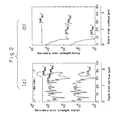
- FIG. 1 is an illustration of the structure of principal part of a MOSFET using a molybdenum or molybdenum silicide gate; and FIGS. 2(a) and (b) are graphs showing the results of SIMS analyses on sodium contents in molybdenum films.
- FIG. 1 shows a MOS field-effect transistor using molybdenum or molybdenum silicide as alternative materials for the gate electrode.
- the numeral 1 indicates a substrate in which a source region 2 and a drain region 3 are provided. Above the substrate 1 is formed, through a gate oxide film 4, a molybdenum or molybdenum silicide gate electrode 5, which in turn is covered with a dielectric, chemically-vapor-deposited SiO 2 6.
- the portions of the CVD SiO 2 6 extending away from the both sides of the molybdenum or molybdenum silicide gate electrode 5 and the corresponding portions of the gate oxide film 4 are formed with contact holes 7 through which a source electrode 8 and a drain electrode 9 make contact, respectively, with the source region 2 and the drain region 3.
- the molybdenum gate electrode or molybdenum silicide electrode 5 is required, as noted above, to be ultrapure, with the least possible alkali metal, radioactive element, and heavy metal contents.
- the molybdenum or molybdenum silicide gate electrode is formed by sputtering or vacuum deposition.
- the molybdenum target as the source should have ultrahigh purity with an alkali metal content of not more than 100 ppb and a radioactive element content of not more than 10 ppb.
- the molybdenum target may take any of varied forms, e.g., planer, square, or columnar, depending on the device in which it is used.
- the commercially available metallic molybdenum or molybdenum compound contains several ppm of sodium, more than 500 ppb of uranium, and over several ten ppm of heavy metals such as iron. Dry purification, based on heating, gas or vacuum treatment or both, proves effective to some degree and could be used in the manufacture of products for applications where the purity requirements are less severe. However, the applications under the invention call for greater purity of 99.999% or more, with an alkali metal content of less than 100 ppb and radioactive element content of less than 10 ppb.
- the present inventors have found that an effect of removing impurities, notably elements of high vapor pressures, can be attained and therefore a high-purity molybdenum shape can be produced by further refining the high-purity molybdenum powder that resulted from wet purification by a dry process, especially by electron-beam melting.
- the processing flow as taught by this invention has now established.
- the molybdenum starting material to be employed is, as noted above, a powdered metallic molybdenum or molybdenum compound of commerce.
- a molybdenum compound such as molybdenum oxide or ammonium molybdate
- Metallic molybdenum dissolves in acids, and molybdenum oxide in ammonia.
- Other molybdenum compounds dissolve in aqueous solvents of high solubilities.
- the acid employable for the above purpose is hydrochloric, nitric, hydrofluoric, or sulfuric acid or a mixture of two or more such acids.
- nitric acid is preferred in that it can be more easily purified by distillation or other known technique and can readily dissolve molybdenum.
- ammonia is desired to be purified by distillation before use. Purification of an aqueous molybdenum solution is accomplished not only by filtration for removal of solid impurities but, where necessary, by crystallization of molybdic acid or ammonium molybdate followed by redissolution. As a condition for handling the resulting solution, a concentration below saturation should, of course, be chosen in consideration of its solubility. This is particularly important with an aqueous molybdenum solution which sometimes exhibits discontinuity in its solubility curve under certain conditions, of temperature in particular.
- the aqueous solution of high-purity molybdenum After the aqueous solution of high-purity molybdenum has been prepared, its composition is adjusted and the temperature controlled to obtain molybdenum-containing crystals. The crystals are collected by solid-liquid separation, washed, and dried. For this wet process it is necessary that the reaction vessel, filter, and other equipment be chemical-resistant and clean. Service water and chemicals to be used must be of high purities, with particularly low alkali metal and radioactive element contents. The water is preferably of ultrahigh purity. Adequate care should also be exercised in securing satisfactory environments for the purification chamber. If necessary, a clean booth and the like may be installed.
- the high-purity molybdenum-containing crystals collected by the above-described wet purification technique are then reduced by heating.
- the reduction is carried out in the usual manner by the use of high-purity hydrogen.
- it is advisable to adopt a two-stage reduction method which consists of heating at 600-700°C at the first stage and at 1000-l100°C at the second stage.
- the reaction vessel is preferably of ceramics because of the resistance to corrosion and heat. Ceramic vessels of alumina, quartz, silicon carbide, and various other oxides, carbides, and nitrides may be used. In any case, care must be taken in choosing a reaction vessel not contaminated with an alkali metal or radioactive element.
- the particle size of the molybdenum-containing crystals is correlated with the particle size of the metallic molybdenum powder obtained by reduction, and from the viewpoint of processing too, it is important to produce the molybdenum-containing crystals in the form of coarse particles.
- the high-purity metallic molybdenum powder obtained by reducing the molybdenum-containing crystals is most preferably melted and formed into an ingot by electron-beam melting that can be expected to achieve an impurity-eliminating effect too.
- the powder compact to be electron-beam melted should be free of occluded gas and have no danger of being contaminated in any way, and is also desired to be a long sintered body with a high apparent density. For these reasons it is most desirable that the manufacture of the sintered compact be by the hot isotactic compacting and the forming of the green compact of molybdenum powder to be so pressed be by cold isotactic compacting. Needless to say, care should be used to employ container materials free from contamination in the both operations.
- the high-purity metallic molybdenum ingot thus formed is plastically worked to a molybdenum target of a final desired form. While the plastic working may be done by hot forging or rolling, it is better accomplished by hot extrusion or vacuum forging which induces less possibility of contamination.
- the cutting and surface finish of the molybdenum plate or other shape are performed in the usual manner with care against contamination.
- the high-purity molybdenum powder is mixed with a high-purity silicon powder, and the mixture is compacted to a green compact and then sintered.
- the high-purity molybdenum target purified and worked in the foregoing manner has extremely low alkali metal and radioactive element contents.
- the molybdenum electrode film formed from this target is obviously superior in gate performance to those made from conventional targets, as is evident from a reference example to appear later.
- a commercially available 99.9%-pure metallic molybdenum powder which contained 9,750 ppb potassium, 1,400 ppb sodium, 710 ppb uranium, 58 ppm iron, and other metal impurities as on the first line of Table 1 was processed by dissolution in nitric acid, purification of the aqueous solution, collection of molybdic acid crystals, and two-step hydrogen reduction to prepare a high-purity metallic molybdenum powder.
- This high-purity metallic molybdenum was sintered through cold isotactic compacting.and hot isotactic compacting, and the sintered compact was electron-beam melted to a high-purity molybdenum ingot.
- This ingot was hot extruded and machined to a disk-shaped high-purity molybdenum target of 12 mm thickness and 254 mm diameter, weighing 6.3 kg. With a purity over 99.999%, it contained less than 30 ppb potassium, less than 10 ppb sodium, 1 ppb uranium, 0.5 ppm iron, and other metal impurities as shown on the last line of Table 1..
- the table gives impurity analyses of a commercially available metallic molybdenum used as the starting material in this example; a high-purity metallic molybdenum obtained by wet purification of the starting material; and a high-purity molybdenum target produced by further dry purification of the above metal powder.
- the Fe through Zr contents were determined by spark source mass spectrometry (SSMS), the K and Na contents by flameless atomic absorption, and the U content by fluorophotometry.
- SSMS spark source mass spectrometry
- a gate oxide film was formed to a thickness of 200 A on 0 a silicon substrate. Further, on this film, a 3000 A-thick molybdenum film was deposited using high-purity molybdenum target obtained in the above example of the invention. A similar film was also deposited using conventional molybdenum target. These molybdenum films were analyzed to determine their uranium and sodium contents. Also, the films were processed by ordinary lithography and etching to form molybdenum electrodes on MOS diodes, and the diodes were subjected to movable-ion tests. The results were as follows.
- MOS diodes were not heat-treated (Example 1) or heat-treated in a nitrogen atmosphere at 1000°C (Example 2).
- the products were tested by the triangular voltage sweep method (TVS). The results are tabulated below. (detectable limit: 3 x 10 9 c m- 2 )
- the molybdenum silicide film is formed in one of three ways; from a molybdenum silicide target made by sintering a mixture of high-purity molybdenum particles and high-purity silicon particles; by the sputtering technique using a mosaic target which combines high-purity molybdenum and high-purity silicon plates; or by simultaneous sputtering of a high-purity molybdenur target and high-purity silicon target.
- silicon having 9-nine or higher purity with low radioactive element and alkali metal contents is available with ease.
- the molybdenum target and molybdenum silicide target of this invention are purer than conventional products by more than two nines. This means that the present invention opens up an avenue for the practical manufacture of molybdenum and molybdenum silicide electrodes which has been deemed necessary and yet has hitherto been hampered by inadequate purities of the available targets.
- Part of the process according to the present invention is applicable to the manufacture of targets for LSI electrodes of high-melting metals other than molybdenum, e.g., of tungsten, titanium, niobium, and tantalum.
- the compacting and sintering of the high-purity metal powder and subsequent processing steps may be common to the processing of the above- mentioned high-melting metals. It is expected that, in conformity with the present process, an effect of removing impurities, mainly the elements with high vapor pressures, can be achieved during melting and ingot forming by electron-beam melting.
Landscapes
- Engineering & Computer Science (AREA)
- Chemical & Material Sciences (AREA)
- Manufacturing & Machinery (AREA)
- Materials Engineering (AREA)
- Mechanical Engineering (AREA)
- Metallurgy (AREA)
- Organic Chemistry (AREA)
- Electrodes Of Semiconductors (AREA)
- Physical Vapour Deposition (AREA)
- Manufacture And Refinement Of Metals (AREA)
Applications Claiming Priority (2)
| Application Number | Priority Date | Filing Date | Title |
|---|---|---|---|
| JP58174164A JPS6066425A (ja) | 1983-09-22 | 1983-09-22 | Lsi電極用の高純度モリブデンタ−ゲツトならびに高純度モリブデンシリサイドタ−ゲツトおよびその製造方法 |
| JP174164/83 | 1983-09-22 |
Publications (3)
| Publication Number | Publication Date |
|---|---|
| EP0137166A2 true EP0137166A2 (de) | 1985-04-17 |
| EP0137166A3 EP0137166A3 (en) | 1987-12-09 |
| EP0137166B1 EP0137166B1 (de) | 1991-05-02 |
Family
ID=15973813
Family Applications (1)
| Application Number | Title | Priority Date | Filing Date |
|---|---|---|---|
| EP84108940A Expired - Lifetime EP0137166B1 (de) | 1983-09-22 | 1984-07-27 | Zielscheibe aus Molybdenum mit hoher Reinheit und Zielscheibe aus Molybdenumsilizid mit hoher Reinheit für LSi-Elektroden und Verfahren zu deren Herstellung |
Country Status (5)
| Country | Link |
|---|---|
| US (2) | US4619695A (de) |
| EP (1) | EP0137166B1 (de) |
| JP (1) | JPS6066425A (de) |
| CA (1) | CA1221475A (de) |
| DE (1) | DE3484529D1 (de) |
Families Citing this family (53)
| Publication number | Priority date | Publication date | Assignee | Title |
|---|---|---|---|---|
| JPS6066425A (ja) * | 1983-09-22 | 1985-04-16 | Nippon Telegr & Teleph Corp <Ntt> | Lsi電極用の高純度モリブデンタ−ゲツトならびに高純度モリブデンシリサイドタ−ゲツトおよびその製造方法 |
| JPS60234364A (ja) * | 1984-05-07 | 1985-11-21 | Toshiba Corp | 半導体装置 |
| US4750932A (en) * | 1985-04-15 | 1988-06-14 | Gte Products Corporation | Refractory metal silicide sputtering target |
| JPH0621350B2 (ja) * | 1985-05-17 | 1994-03-23 | 日立金属株式会社 | スパツタ−タ−ゲツトの製造方法 |
| AT383758B (de) * | 1985-12-23 | 1987-08-25 | Plansee Metallwerk | Verfahren zur herstellung eines sputter-targets |
| JPS62280335A (ja) * | 1986-05-30 | 1987-12-05 | Toshiba Corp | 薄膜形成用高純度チタン材、それを用いて形成されてなるターゲットおよび薄膜、および薄膜形成用高純度チタン材の製造方法 |
| DE3712281A1 (de) * | 1987-04-10 | 1988-10-27 | Heraeus Gmbh W C | Verfahren zur herstellung von hochduktilem tantal-halbzeug |
| JPS63303017A (ja) * | 1987-06-02 | 1988-12-09 | Nippon Mining Co Ltd | タ−ゲツト及びその製造方法 |
| US4895592A (en) * | 1987-12-14 | 1990-01-23 | Eastman Kodak Company | High purity sputtering target material and method for preparing high purity sputtering target materials |
| JP2691414B2 (ja) * | 1988-05-17 | 1997-12-17 | 三井金属鉱業株式会社 | モリブデンまたはタングステンの精製方法 |
| US4838935A (en) * | 1988-05-31 | 1989-06-13 | Cominco Ltd. | Method for making tungsten-titanium sputtering targets and product |
| US6400025B1 (en) | 1989-07-14 | 2002-06-04 | Kabushiki Kaisha Toshiba | Highly purified titanium material, method for preparation of it and sputtering target using it |
| JPH07103432B2 (ja) * | 1989-07-14 | 1995-11-08 | 株式会社東芝 | 半導体素子形成用高純度チタン材、高純度チタン材の製造方法、それを用いたスパッタターゲットおよび高純度チタン膜 |
| KR940008936B1 (ko) * | 1990-02-15 | 1994-09-28 | 가부시끼가이샤 도시바 | 고순도 금속재와 그 성질을 이용한 반도체 장치 및 그 제조방법 |
| EP0483375B1 (de) * | 1990-05-15 | 1996-03-13 | Kabushiki Kaisha Toshiba | Zerstäubungstarget und dessen herstellung |
| EP0480409B1 (de) * | 1990-10-09 | 1994-07-13 | Nec Corporation | Verfahren zur Herstellung eines Ti/TiN/Al Kontaktes unter Benutzung eines reaktiven Zerstäubungsprozesses |
| JP3021900B2 (ja) * | 1991-01-25 | 2000-03-15 | 株式会社東芝 | 半導体素子用高純度導電性膜,それを用いた半導体素子および半導体素子用高純度導電性膜の形成方法 |
| US5234487A (en) * | 1991-04-15 | 1993-08-10 | Tosoh Smd, Inc. | Method of producing tungsten-titanium sputter targets and targets produced thereby |
| US5569455A (en) * | 1992-06-10 | 1996-10-29 | Shimadzu Corporation | Exhaust gas catalytic purifier construction |
| US5700519A (en) * | 1995-01-06 | 1997-12-23 | Sony Corporation | Method for producing ultra high purity titanium films |
| US5919321A (en) * | 1996-08-13 | 1999-07-06 | Hitachi Metals, Ltd. | Target material of metal silicide |
| US6030514A (en) * | 1997-05-02 | 2000-02-29 | Sony Corporation | Method of reducing sputtering burn-in time, minimizing sputtered particulate, and target assembly therefor |
| US6569270B2 (en) * | 1997-07-11 | 2003-05-27 | Honeywell International Inc. | Process for producing a metal article |
| US6045634A (en) * | 1997-08-14 | 2000-04-04 | Praxair S. T. Technology, Inc. | High purity titanium sputtering target and method of making |
| JP3657800B2 (ja) * | 1998-02-20 | 2005-06-08 | 株式会社リケン | 二珪化モリブデン系複合セラミックス発熱体及びその製造方法 |
| US6348139B1 (en) * | 1998-06-17 | 2002-02-19 | Honeywell International Inc. | Tantalum-comprising articles |
| US6348113B1 (en) * | 1998-11-25 | 2002-02-19 | Cabot Corporation | High purity tantalum, products containing the same, and methods of making the same |
| US7245018B1 (en) * | 1999-06-22 | 2007-07-17 | Semiconductor Energy Laboratory Co., Ltd. | Wiring material, semiconductor device provided with a wiring using the wiring material and method of manufacturing thereof |
| US6661096B1 (en) | 1999-06-29 | 2003-12-09 | Semiconductor Energy Laboratory Co., Ltd. | Wiring material semiconductor device provided with a wiring using the wiring material and method of manufacturing thereof |
| US6878250B1 (en) | 1999-12-16 | 2005-04-12 | Honeywell International Inc. | Sputtering targets formed from cast materials |
| US20040072009A1 (en) * | 1999-12-16 | 2004-04-15 | Segal Vladimir M. | Copper sputtering targets and methods of forming copper sputtering targets |
| US6331233B1 (en) | 2000-02-02 | 2001-12-18 | Honeywell International Inc. | Tantalum sputtering target with fine grains and uniform texture and method of manufacture |
| US7517417B2 (en) * | 2000-02-02 | 2009-04-14 | Honeywell International Inc. | Tantalum PVD component producing methods |
| US6310281B1 (en) * | 2000-03-16 | 2001-10-30 | Global Solar Energy, Inc. | Thin-film, flexible photovoltaic module |
| WO2001096620A2 (en) * | 2000-05-22 | 2001-12-20 | Cabot Corporation | High purity niobium and products containing the same, and methods of making the same |
| US6797137B2 (en) * | 2001-04-11 | 2004-09-28 | Heraeus, Inc. | Mechanically alloyed precious metal magnetic sputtering targets fabricated using rapidly solidfied alloy powders and elemental Pt metal |
| JP2002373867A (ja) * | 2001-06-14 | 2002-12-26 | Idemitsu Kosan Co Ltd | 半導体素子用導電性薄膜、半導体素子及びそれらの製造方法 |
| EP1602745B1 (de) * | 2003-03-07 | 2010-10-27 | Nippon Mining & Metals Co., Ltd. | Target aus hafniumlegierung und dessen herstellungsverfahren |
| US7534282B2 (en) * | 2003-09-16 | 2009-05-19 | Japan New Metals Co., Ltd. | High purity metal Mo coarse powder and sintered sputtering target produced by thereof |
| WO2006001976A2 (en) * | 2004-06-15 | 2006-01-05 | Tosoh Smd, Inc. | High purity target manufacturing methods |
| US20060042728A1 (en) * | 2004-08-31 | 2006-03-02 | Brad Lemon | Molybdenum sputtering targets |
| US7470307B2 (en) * | 2005-03-29 | 2008-12-30 | Climax Engineered Materials, Llc | Metal powders and methods for producing the same |
| US20070084527A1 (en) * | 2005-10-19 | 2007-04-19 | Stephane Ferrasse | High-strength mechanical and structural components, and methods of making high-strength components |
| US20070251818A1 (en) * | 2006-05-01 | 2007-11-01 | Wuwen Yi | Copper physical vapor deposition targets and methods of making copper physical vapor deposition targets |
| JP4543012B2 (ja) * | 2006-06-07 | 2010-09-15 | 株式会社東芝 | 高純度Ti−W材から成るターゲット |
| JP4543011B2 (ja) * | 2006-06-07 | 2010-09-15 | 株式会社東芝 | 高純度wシリサイド材から成るターゲット |
| JP5426173B2 (ja) * | 2007-01-12 | 2014-02-26 | 新日鉄住金マテリアルズ株式会社 | Mo系スパッタリングターゲット板,および,その製造方法 |
| US7510313B2 (en) * | 2007-01-23 | 2009-03-31 | Sunoptic Technologies Llc | Fiberoptic illuminator |
| US20090028744A1 (en) * | 2007-07-23 | 2009-01-29 | Heraeus, Inc. | Ultra-high purity NiPt alloys and sputtering targets comprising same |
| US8197885B2 (en) * | 2008-01-11 | 2012-06-12 | Climax Engineered Materials, Llc | Methods for producing sodium/molybdenum power compacts |
| US20090181179A1 (en) * | 2008-01-11 | 2009-07-16 | Climax Engineered Materials, Llc | Sodium/Molybdenum Composite Metal Powders, Products Thereof, and Methods for Producing Photovoltaic Cells |
| JP6919814B2 (ja) * | 2015-07-27 | 2021-08-18 | 日立金属株式会社 | ポリシリコンtftのゲート電極形成用ターゲット材 |
| CN117448837B (zh) * | 2023-11-03 | 2024-07-23 | 广州齐达材料科技有限公司 | 一种去除高纯度钼条表面氧化物的处理方法 |
Family Cites Families (7)
| Publication number | Priority date | Publication date | Assignee | Title |
|---|---|---|---|---|
| US2948609A (en) * | 1960-08-09 | Manufacture of metal articles from | ||
| CA670785A (en) * | 1963-09-17 | Ernest L. Little, Jr. | Powder metallurgy compositions of molybdenum, nitrogen and silicon | |
| JPS474130Y1 (de) * | 1969-03-10 | 1972-02-14 | ||
| US3933474A (en) * | 1974-03-27 | 1976-01-20 | Norton Company | Leech alloying |
| AT377584B (de) * | 1981-06-25 | 1985-04-10 | Klima & Kaelte Gmbh | Eck-verbindung an metallrahmen |
| JPS5861666A (ja) * | 1981-10-09 | 1983-04-12 | Fujitsu Ltd | 半導体装置及びその製造方法 |
| JPS6066425A (ja) * | 1983-09-22 | 1985-04-16 | Nippon Telegr & Teleph Corp <Ntt> | Lsi電極用の高純度モリブデンタ−ゲツトならびに高純度モリブデンシリサイドタ−ゲツトおよびその製造方法 |
-
1983
- 1983-09-22 JP JP58174164A patent/JPS6066425A/ja active Pending
-
1984
- 1984-07-26 US US06/634,895 patent/US4619695A/en not_active Expired - Lifetime
- 1984-07-27 DE DE8484108940T patent/DE3484529D1/de not_active Expired - Lifetime
- 1984-07-27 EP EP84108940A patent/EP0137166B1/de not_active Expired - Lifetime
- 1984-07-30 CA CA000459984A patent/CA1221475A/en not_active Expired
-
1986
- 1986-06-23 US US06/877,559 patent/US4770948A/en not_active Expired - Lifetime
Also Published As
| Publication number | Publication date |
|---|---|
| EP0137166A3 (en) | 1987-12-09 |
| US4770948A (en) | 1988-09-13 |
| JPS6066425A (ja) | 1985-04-16 |
| US4619695A (en) | 1986-10-28 |
| DE3484529D1 (de) | 1991-06-06 |
| EP0137166B1 (de) | 1991-05-02 |
| CA1221475A (en) | 1987-05-05 |
Similar Documents
| Publication | Publication Date | Title |
|---|---|---|
| EP0137166B1 (de) | Zielscheibe aus Molybdenum mit hoher Reinheit und Zielscheibe aus Molybdenumsilizid mit hoher Reinheit für LSi-Elektroden und Verfahren zu deren Herstellung | |
| DE69132504T2 (de) | Verfahren zur Herstellung von hochreinem Titan und von einem Zerstäubungstarget | |
| USRE34598E (en) | Highly pure titanium | |
| KR910003884B1 (ko) | 고융점 금속 실리사이드 스퍼터링 타게트 및 이의 제조방법 | |
| JPH0621346B2 (ja) | 高純度金属タンタル製ターゲットの製造方法 | |
| JP3031474B2 (ja) | 高純度タンタル材,タンタルターゲット,薄膜および半導体装置の製造方法 | |
| JP3974945B2 (ja) | チタンスパッタリングターゲット | |
| JPH04358030A (ja) | 半導体素子形成用高純度スパッタターゲットの製造方法 | |
| JPH116060A (ja) | スパッタリングターゲット及びその製造方法 | |
| Zeng et al. | Correlation of the crystal structural and microstructural effects of the interfacial processes between gold and GaAs | |
| JP3280054B2 (ja) | 半導体用タングステンターゲットの製造方法 | |
| JPH0547976B2 (de) | ||
| JP2000212678A (ja) | 薄膜形成用高純度タンタル及びその製造方法 | |
| US20030206822A1 (en) | High purity iron, method of manufacturing thereof, and high purity iron targets | |
| CN101287858B (zh) | 高纯度Ru合金靶及其制造方法以及溅射膜 | |
| JPH03107453A (ja) | Ti―Wターゲットおよびその製造方法 | |
| JP3528980B2 (ja) | タングステンシリサイドターゲット材およびその製造方法 | |
| JP3228660B2 (ja) | 半導体素子形成用高純度金属材の製造方法 | |
| JPH0593267A (ja) | 半導体用タングステンターゲツトおよびその製造方法 | |
| JP2698752B2 (ja) | 薄膜形成用高純度チタン材、それを用いて形成されてなるターゲットおよび薄膜 | |
| JP3103527B2 (ja) | 半導体素子形成用配線膜および半導体パッケージ | |
| JPH05179435A (ja) | チタンスパッタリングターゲット | |
| JP2601843B2 (ja) | 半導体素子およびその製造方法 | |
| JPS62259448A (ja) | 絶縁膜形成法 | |
| JPS6154647A (ja) | 半導体装置 |
Legal Events
| Date | Code | Title | Description |
|---|---|---|---|
| PUAI | Public reference made under article 153(3) epc to a published international application that has entered the european phase |
Free format text: ORIGINAL CODE: 0009012 |
|
| AK | Designated contracting states |
Designated state(s): DE FR GB NL |
|
| RAP1 | Party data changed (applicant data changed or rights of an application transferred) |
Owner name: NIHON KOGYO KABUSHIKI KAISHA Owner name: NIPPON TELEGRAPH AND TELEPHONE CORPORATION |
|
| 17P | Request for examination filed |
Effective date: 19860218 |
|
| PUAL | Search report despatched |
Free format text: ORIGINAL CODE: 0009013 |
|
| RHK1 | Main classification (correction) |
Ipc: C22B 34/34 |
|
| AK | Designated contracting states |
Kind code of ref document: A3 Designated state(s): DE FR GB NL |
|
| 17Q | First examination report despatched |
Effective date: 19891011 |
|
| GRAA | (expected) grant |
Free format text: ORIGINAL CODE: 0009210 |
|
| AK | Designated contracting states |
Kind code of ref document: B1 Designated state(s): DE FR GB NL |
|
| REF | Corresponds to: |
Ref document number: 3484529 Country of ref document: DE Date of ref document: 19910606 |
|
| ET | Fr: translation filed | ||
| PLBI | Opposition filed |
Free format text: ORIGINAL CODE: 0009260 |
|
| 26 | Opposition filed |
Opponent name: DEGUSSA AG, FRANKFURT - ZWEIGNIEDERLASSUNG WOLFGAN Effective date: 19920129 |
|
| NLR1 | Nl: opposition has been filed with the epo |
Opponent name: DEGUSSA AG. |
|
| REG | Reference to a national code |
Ref country code: FR Ref legal event code: CD |
|
| NLT1 | Nl: modifications of names registered in virtue of documents presented to the patent office pursuant to art. 16 a, paragraph 1 |
Owner name: NIKKO KYODO CO., LTD. EN NIPPON TELEGRAPH AND TELE |
|
| NLT1 | Nl: modifications of names registered in virtue of documents presented to the patent office pursuant to art. 16 a, paragraph 1 |
Owner name: JAPAN ENERGY CORPORATION EN NIPPON TELEGRAPH AND T |
|
| PGFP | Annual fee paid to national office [announced via postgrant information from national office to epo] |
Ref country code: FR Payment date: 19960709 Year of fee payment: 13 |
|
| PGFP | Annual fee paid to national office [announced via postgrant information from national office to epo] |
Ref country code: GB Payment date: 19960718 Year of fee payment: 13 |
|
| PGFP | Annual fee paid to national office [announced via postgrant information from national office to epo] |
Ref country code: NL Payment date: 19960729 Year of fee payment: 13 |
|
| PGFP | Annual fee paid to national office [announced via postgrant information from national office to epo] |
Ref country code: DE Payment date: 19960802 Year of fee payment: 13 |
|
| APAC | Appeal dossier modified |
Free format text: ORIGINAL CODE: EPIDOS NOAPO |
|
| PLBO | Opposition rejected |
Free format text: ORIGINAL CODE: EPIDOS REJO |
|
| RDAH | Patent revoked |
Free format text: ORIGINAL CODE: EPIDOS REVO |
|
| RDAH | Patent revoked |
Free format text: ORIGINAL CODE: EPIDOS REVO |
|
| RDAG | Patent revoked |
Free format text: ORIGINAL CODE: 0009271 |
|
| STAA | Information on the status of an ep patent application or granted ep patent |
Free format text: STATUS: PATENT REVOKED |
|
| 27W | Patent revoked |
Effective date: 19970926 |
|
| GBPR | Gb: patent revoked under art. 102 of the ep convention designating the uk as contracting state |
Free format text: 970926 |
|
| NLR2 | Nl: decision of opposition | ||
| APAH | Appeal reference modified |
Free format text: ORIGINAL CODE: EPIDOSCREFNO |