EP0121901B1 - Ph independent controlled releasable tablets - Google Patents
Ph independent controlled releasable tablets Download PDFInfo
- Publication number
- EP0121901B1 EP0121901B1 EP84103698A EP84103698A EP0121901B1 EP 0121901 B1 EP0121901 B1 EP 0121901B1 EP 84103698 A EP84103698 A EP 84103698A EP 84103698 A EP84103698 A EP 84103698A EP 0121901 B1 EP0121901 B1 EP 0121901B1
- Authority
- EP
- European Patent Office
- Prior art keywords
- acid
- dipyridamole
- tablets
- weight
- starch glycolate
- Prior art date
- Legal status (The legal status is an assumption and is not a legal conclusion. Google has not performed a legal analysis and makes no representation as to the accuracy of the status listed.)
- Expired
Links
Images


Classifications
-
- A—HUMAN NECESSITIES
- A61—MEDICAL OR VETERINARY SCIENCE; HYGIENE
- A61K—PREPARATIONS FOR MEDICAL, DENTAL OR TOILETRY PURPOSES
- A61K9/00—Medicinal preparations characterised by special physical form
- A61K9/20—Pills, tablets, discs, rods
-
- A—HUMAN NECESSITIES
- A61—MEDICAL OR VETERINARY SCIENCE; HYGIENE
- A61K—PREPARATIONS FOR MEDICAL, DENTAL OR TOILETRY PURPOSES
- A61K9/00—Medicinal preparations characterised by special physical form
- A61K9/20—Pills, tablets, discs, rods
- A61K9/2004—Excipients; Inactive ingredients
-
- A—HUMAN NECESSITIES
- A61—MEDICAL OR VETERINARY SCIENCE; HYGIENE
- A61K—PREPARATIONS FOR MEDICAL, DENTAL OR TOILETRY PURPOSES
- A61K31/00—Medicinal preparations containing organic active ingredients
- A61K31/33—Heterocyclic compounds
- A61K31/395—Heterocyclic compounds having nitrogen as a ring hetero atom, e.g. guanethidine or rifamycins
- A61K31/495—Heterocyclic compounds having nitrogen as a ring hetero atom, e.g. guanethidine or rifamycins having six-membered rings with two or more nitrogen atoms as the only ring heteroatoms, e.g. piperazine or tetrazines
- A61K31/505—Pyrimidines; Hydrogenated pyrimidines, e.g. trimethoprim
-
- A—HUMAN NECESSITIES
- A61—MEDICAL OR VETERINARY SCIENCE; HYGIENE
- A61K—PREPARATIONS FOR MEDICAL, DENTAL OR TOILETRY PURPOSES
- A61K9/00—Medicinal preparations characterised by special physical form
- A61K9/20—Pills, tablets, discs, rods
- A61K9/2004—Excipients; Inactive ingredients
- A61K9/2013—Organic compounds, e.g. phospholipids, fats
-
- A—HUMAN NECESSITIES
- A61—MEDICAL OR VETERINARY SCIENCE; HYGIENE
- A61P—SPECIFIC THERAPEUTIC ACTIVITY OF CHEMICAL COMPOUNDS OR MEDICINAL PREPARATIONS
- A61P9/00—Drugs for disorders of the cardiovascular system
- A61P9/08—Vasodilators for multiple indications
-
- A—HUMAN NECESSITIES
- A61—MEDICAL OR VETERINARY SCIENCE; HYGIENE
- A61P—SPECIFIC THERAPEUTIC ACTIVITY OF CHEMICAL COMPOUNDS OR MEDICINAL PREPARATIONS
- A61P9/00—Drugs for disorders of the cardiovascular system
- A61P9/10—Drugs for disorders of the cardiovascular system for treating ischaemic or atherosclerotic diseases, e.g. antianginal drugs, coronary vasodilators, drugs for myocardial infarction, retinopathy, cerebrovascula insufficiency, renal arteriosclerosis
Definitions
- U.S. Patent No. 3,031,450 describes 2,6-bis-(diethanolamino)-4,8-dipiperidino-pyrimido [5,4-d] pyrimidine or dipyridamole as a coronary vasodilator and it has been used in various pharmaceutical forms for many years.
- dipyrimidole is readily water-soluble only in an acidic medium, and therefore it can only go into solution from solid pharmaceutical forms and then be absorbed if the pharmaceutical preparations remain in the acidic range for a sufficiently long period.
- the solubility and hence also the absorption greatly depend upon the retention time and the pH value in the stomach and upper intestinal tract.
- Dipyridamole compositions containing at least 5 equivalents of an acid or acid substance per mole of dipyridamole to obtain a high degree of relative bioavailability have also been described.
- U.S. Patent No. 4,367,217 describes spheroid particles of dipyridamole and at least one acid equivalent of an acid or acid substance per mole of dipyridamole coated with a dialysis membrane of acid-insoluble lacquers soluble in intestinal juices and uncoated particles in a capsule.
- It is an object of the invention to provide novel pH independent, controlled release oral tablets comprising an effective amount of an intimate mixture of dipyridamole or an acid addition salt thereof, at least 18 acid equivalents of at least one non-toxic, pharmaceutically acid or acid substance per mole of dipyridamole and a sufficient amount of a disintegration agent as specified below to allow at least 90% dissolution of dipyridamole in the gastrointestinal pH range of 1 to 7.
- novel compositions of the invention are pH independent, controlled release oral tablets comprising an effective amount of an intimate mixture of dipyridamole or an acid addition salt thereof, at least 18 acid equivalents of at least,one non-toxic, pharmaceutically acid or.acid substance per mole of dipyridamole and as a disintegration agent 5 to 10% by weight of sodium starch glycolate, 10 to 12% by weight of crospovidone or 3 to 5% by weight of croscarmelose, whereby at least 90% dissolution of dipyridamole in the gastrointestinal pH range of 1 to 7 is achieved.
- non-toxic, pharmaceutically acceptable acids for the acid addition salts of dipyridamole are inorganic acids such as hydrochloric acid, hydrobromic acid, sulfuric acid, nitric acid and phosphoric acid and organic acids such as acetic acid, propionic acid, oxalic acid and benzene-sulfonic acid.
- suitable solid acids for the compositions of the invention are non-toxic, pharmaceutically acceptable acids such as fumaric acid, maleic acid, tartaric acid, citric acid, succinic acid, ascorbic acid and mixtures thereof and acid salts such as sodium bisulfate, potassium bisulfate, betaine hydrochloride, monosodium and monopotassium salts of tartaric acid or citric acid and mixtures thereof.
- the disintegration agents are sodium starch glycolate e.g. as sold under the name Primojel®, crospovidone e.g. as sold under the name Polyplasdone -XL@ and croscarmelose e.g. as sold under the name AC-DI-SOL@.
- the amount of disintegrating agent will vary depending upon the specific agent selected but has to be sufficient to maintain continuously a highly localized acidic pH around the tablet to ensure sufficient release of dipyridamole regardless of the pH of the gastrointestinal environment but low enough so the tablet does not rapidly disintegrate into small particles which become rapidly neutralized rendering the dipyridamole insoluble.
- the amount of sodium starch glycolate meeting these requirements has been found to be about 5 to 10%, preferably about 7.5% by weight of the tablet.
- the tablet does not release an adequate amount of dipyridamole because the tablet does not disintegrate sufficiently to expose dipyridamole to the gastrointestinal tracts.
- higher amounts on the order of 17.2% by weight the tablet rapidly disintegrates into small particles and the localized acid pH around dipyridamole is lost whereby dipyridamole becomes insoluble in the gastrointestinal tracts.
- crospovidone should be used in a weight ratio of 10 to 12% and that croscarmelose should be used in an amount of 3 to 5% by weight of the tablet.
- the critical feature is that the tablet should disintegrate at a controlled rate so that at least 90% of the dipyridamole in the tablet will be dissolved and available for absorption by the gastrointestinal tracts of the warm-blooded animals both in the stomach and the intestine. In other words, the differing pH values of the stomach and intestinal tract will not effect the ability of dipyridamole to continuously dissolve.
- the quantity of acid present in relation to the dipyridamole has no upper limit per se; it is only limited by the fact that if the quantity of acid present is too great, it is not possible to produce an oral form of dipyridamole which can be easily swallowed.
- a ratio of at least 18 acid equivalents of acid present to 1 mol of dipyridamole is preferred.
- Fumaric acid has proven to be a particularly suitable acid. It is physiologically non-toxic, and easy to compress, and when combined with dipyridamole, it does not produce a hydroscopic mixture. Its low solubility is essential to the invention; this ensures that, in the gastrointestinal tract the dipyridamole- containing particle is always surrounded by a sufficiently acidic microsphere in which the dipyridamole, which does not dissolve rapidly, is dissolved safely and completely.
- excipients such as polyvinylpyrrolidone, hydrogenated castor oil, and polyacrylic acid
- excipients such as methylcellulose, ethylcellulose, hydroxyethylcellulose, or hydroxypropyl methylcellulose.
- mixtures consisting of dipyridamole and acidic substances may be granulated with fats dissolved in organic solvents or with lacquers resistant to gastric juices and then compressed into tablets.
- a mixture of 0.3 kg of dipyridamole, 0.63 kg of fumaric acid (mass ratio of 1:2.1 0.0702 kg of polyvinyl-pyrrolidone, 0.3738 kg of lactose and 0.108 kg of sodium starch glycolate (7.2% by weight of the total composition) was wet granulated in admixture with isopropanol.
- the wet granulated was screened through an 18 mesh sieve and was dried at about 40°C.
- the dried granulate, 0.012 kg of magnesium stearate and 0.006 kg of colloidal fumed silicon dioxide were blended in a mixer and the mixture was compressed into 50 mg tablets in a tabletting machine.
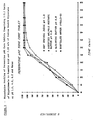
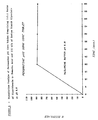
- the tablets showed a 100% dissolution in less than one hour at pH levels of 1.2 (0.1 N HCI) 4.0 (Modified Walpole Acetate Buffer), 6.0 (Mcllvaine Buffer) and water as can be seen from Fig. 1.
- the 100% dissolution is due to the fact that the proper mass ratio of dipyridamole to acid (1:2.1) and the proper amount of sodium starch glycolate (7.2% w/w) provide and maintain high microenvironmental acidic pH around the tablet until dipyridamole is released sufficiently.
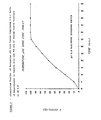
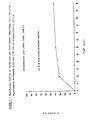
- the tablets showed 100% dissolution in one hour at a pH of 6 due to the fact that the proper mass ratio of dipyridamole to fumaric acid (1:2.1) and the proper amount of sodium starch glycolate (7.5% w/w) provide controlled disintegration and sufficient dissolution of dipyridamole.
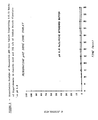
- Example 2 Using the procedure of Example 2, a mixture of 2.4 kg of dipyridamole, 1.790 kg of fumaric acid (1:0.75 by mass), 0.226 kg of polyvinylpyrrolidone, 0.346 kg of sodium starch glycolate (7.2% by weight of total composition) and 0.038 kg of magnesium stearate was formed into 50 mg tablets which showed only a 3% dissolution in one hour at a pH of 6.0 as seen from Fig. 3 due to the fact that there is an insufficient quantity of acid available thus not providing a low enough microenvironmental acidic pH.
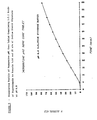
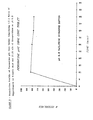
- Example 2 Using the procedure of Example 2, a mixture of 1.2 kg of dipyridamole, 2.04 kg of fumaric acid (1:1.7 by mass), 0.168 kg of polyvinylpyrrolidone, 0.994 kg of lactose, 0.360 kg of sodium starch glycolate (7.5% by weight of the total composition) and 0.038 kg of magnesium stearate was formulated into 50 mg tablets which as can be seen from Fig. 4 showed approximately 70% dissolution in one hour at a pH of 6.0 due to insufficient acid available thus providing too high a localized pH.
- Example 2 Using the procedure of Example 2, a mixture of 0.6 kg of dipyridamole, 1.26 kg of furmaric acid (1:2.1 by mass) 0.1404 kg of polyvinylpyrrolidone, 0.9036 kg of lactose, 0.06 kg of sodium starch glycolate (2% by weight of total composition) and 0.024 kg of magnesium stearate was formed into 50 mg tablets which can be seen from Fig. 5 showed approximately 80% dissolution in one hour at a pH of 6.0 due to prolonged disintegration time.
- Example 2 Using the procedure of Example 2, a mixture of 1.0 kg of dipyridamole, 2.1 kg of fumaric acid (1:2.1 by mass), 0.18 kg of polyvinylpyrrolidone, 0.688 kg (17.2% by weight) of sodium starch glycolate and 0.032 kg of magnesium stearate was formulated into 50 mg tablets which as can be seen from Fig. 6 showed approximately 86% dissolution in one hour at a pH of 6 due to the fact that the tablet disintegrated too rapidly.
- Example 2 Using the procedure of Example 2, a mixture of 0.167 kg of dipyridamole 0.350 kg of fumaric acid (1:2.1 by mass), 0.030 kg of polyvinylpyrrolidone, 0.065 kg of lactose, 0.050 kg of crospovidone (7.5% by weight of the total composition) and 0.005 kg of magnesium stearate was formulated into 50 mg which as can be seen from Fig. 7 showed a 40% dissolution in one hour at a pH of 6.0 due to the fact that the tablet disintegrated too rapidly.
- Example 2 Using the procedure of Example 2, a mixture of 0.625 kg of dipyridamole, 1.313 kg of fumaric acid (1:2.1 by mass), 0.113 kg of polyvinylpyrrolidone, 0.430 kg of crospovidone (17.2% by weight of the total composition) and 0.02 kg of magnesium stearate was formulated into 50 mg tablets which as Fig. 8 illustrates showed a 80% dissolution in one hour at a pH of 6.0 due to the fact that the tablet disintegrated too rapidly.
- Example 2 Using the procedure of Example 2, a mixture of 0.75 kg of dipyridamole, 1.575 kg of fumaric acid (1:2.1 by mass), 0.135 kg of polyvinylpyrrolidone, 0.291 kg of lactose, 0.225 kg of croscarmelose (7.5% by weight of the total composition) and 0.024 kg of magnesium stearate was formulated into 50 mg tablets which as seen from Fig. 9 showed a 75% dissolution in one hour at a pH of 6.0 due to the fact that the tablet disintegrated too rapidly.
Landscapes
- Health & Medical Sciences (AREA)
- Life Sciences & Earth Sciences (AREA)
- Chemical & Material Sciences (AREA)
- Pharmacology & Pharmacy (AREA)
- Animal Behavior & Ethology (AREA)
- Public Health (AREA)
- General Health & Medical Sciences (AREA)
- Veterinary Medicine (AREA)
- Medicinal Chemistry (AREA)
- Epidemiology (AREA)
- Bioinformatics & Cheminformatics (AREA)
- Engineering & Computer Science (AREA)
- General Chemical & Material Sciences (AREA)
- Organic Chemistry (AREA)
- Nuclear Medicine, Radiotherapy & Molecular Imaging (AREA)
- Chemical Kinetics & Catalysis (AREA)
- Heart & Thoracic Surgery (AREA)
- Cardiology (AREA)
- Molecular Biology (AREA)
- Biophysics (AREA)
- Urology & Nephrology (AREA)
- Vascular Medicine (AREA)
- Medicinal Preparation (AREA)
- Cosmetics (AREA)
- Preparation Of Compounds By Using Micro-Organisms (AREA)
- Acyclic And Carbocyclic Compounds In Medicinal Compositions (AREA)
- Agricultural Chemicals And Associated Chemicals (AREA)
- Pharmaceuticals Containing Other Organic And Inorganic Compounds (AREA)
- Nitrogen Condensed Heterocyclic Rings (AREA)
- Materials For Medical Uses (AREA)
Priority Applications (1)
| Application Number | Priority Date | Filing Date | Title |
|---|---|---|---|
| AT84103698T ATE32980T1 (de) | 1983-04-08 | 1984-04-04 | Tabletten mit ph-unabhaengiger kontrollierter freisetzung. |
Applications Claiming Priority (2)
| Application Number | Priority Date | Filing Date | Title |
|---|---|---|---|
| US48328583A | 1983-04-08 | 1983-04-08 | |
| US483285 | 1983-04-08 |
Publications (2)
| Publication Number | Publication Date |
|---|---|
| EP0121901A1 EP0121901A1 (en) | 1984-10-17 |
| EP0121901B1 true EP0121901B1 (en) | 1988-03-16 |
Family
ID=23919470
Family Applications (1)
| Application Number | Title | Priority Date | Filing Date |
|---|---|---|---|
| EP84103698A Expired EP0121901B1 (en) | 1983-04-08 | 1984-04-04 | Ph independent controlled releasable tablets |
Country Status (20)
| Country | Link |
|---|---|
| EP (1) | EP0121901B1 (enExample) |
| JP (1) | JPS6034906A (enExample) |
| KR (1) | KR880002139B1 (enExample) |
| AT (1) | ATE32980T1 (enExample) |
| AU (1) | AU570446B2 (enExample) |
| CA (1) | CA1219216A (enExample) |
| DD (1) | DD222496A5 (enExample) |
| DE (1) | DE3469848D1 (enExample) |
| DK (1) | DK166259C (enExample) |
| ES (1) | ES8601687A1 (enExample) |
| FI (1) | FI82604C (enExample) |
| GR (1) | GR81907B (enExample) |
| HU (1) | HU191542B (enExample) |
| IE (1) | IE57220B1 (enExample) |
| IL (1) | IL71458A (enExample) |
| NO (1) | NO164958C (enExample) |
| NZ (1) | NZ207768A (enExample) |
| PH (1) | PH21585A (enExample) |
| PT (1) | PT78380B (enExample) |
| ZA (1) | ZA842562B (enExample) |
Cited By (1)
| Publication number | Priority date | Publication date | Assignee | Title |
|---|---|---|---|---|
| AU2006284053B2 (en) * | 2005-08-22 | 2010-04-22 | Novartis Ag | Pharmaceutical compositions comprising a pH-dependent drug, a pH modifier and a retarding agent |
Families Citing this family (6)
| Publication number | Priority date | Publication date | Assignee | Title |
|---|---|---|---|---|
| US5188840A (en) * | 1985-09-26 | 1993-02-23 | Chugai Seiyaku Kabushiki Kaisha | Slow-release pharmaceutical agent |
| JPH0776172B2 (ja) * | 1986-04-16 | 1995-08-16 | 藤沢薬品工業株式会社 | マトリツクス錠 |
| JP2535141B2 (ja) * | 1995-01-17 | 1996-09-18 | 中外製薬株式会社 | フマル酸含有徐放性製剤 |
| DE10337697A1 (de) * | 2003-08-16 | 2005-03-24 | Boehringer Ingelheim Pharma Gmbh & Co. Kg | Tablette enthaltend 3-[(2-{[4-(Hexyloxycarbonylamino-imino-methyl)-phenyl-amino]-methyl}-1-methyl-1H-benzimidazol-5-carbonyl)-pyridin-2-yl-amino]-propionsäure-ethylester oder dessen Salze |
| BG860Y1 (bg) * | 2004-09-17 | 2007-02-28 | "Софарма" Ад | Лекарствена форма на дипиридамол |
| CA2671470C (en) | 2006-12-13 | 2012-05-01 | F. Hoffmann-La Roche Ag | Powder formulation for valganciclovir |
Family Cites Families (5)
| Publication number | Priority date | Publication date | Assignee | Title |
|---|---|---|---|---|
| DE2336218C3 (de) * | 1973-07-17 | 1985-11-14 | Byk Gulden Lomberg Chemische Fabrik Gmbh, 7750 Konstanz | Orale Arzneiform |
| DD146547A5 (de) * | 1978-07-15 | 1981-02-18 | Boehringer Sohn Ingelheim | Arzneimittel-retardform mit unloeslichen poroesen diffusionshuellen |
| DE3000979A1 (de) * | 1980-01-12 | 1981-07-23 | Dr. Karl Thomae Gmbh, 7950 Biberach | Neue dipyridamol-retardformen und verfahren zu ihrer herstellung |
| DE3124090A1 (de) * | 1981-06-19 | 1983-01-05 | Dr. Karl Thomae Gmbh, 7950 Biberach | Neue orale dipyridamolformen |
| JPS5839618A (ja) * | 1981-09-04 | 1983-03-08 | Chugai Pharmaceut Co Ltd | 持続性積層錠剤 |
-
1984
- 1984-04-03 KR KR1019840001834A patent/KR880002139B1/ko not_active Expired
- 1984-04-03 HU HU841328A patent/HU191542B/hu not_active IP Right Cessation
- 1984-04-04 AT AT84103698T patent/ATE32980T1/de not_active IP Right Cessation
- 1984-04-04 EP EP84103698A patent/EP0121901B1/en not_active Expired
- 1984-04-04 DE DE8484103698T patent/DE3469848D1/de not_active Expired
- 1984-04-05 GR GR74334A patent/GR81907B/el unknown
- 1984-04-05 ZA ZA842562A patent/ZA842562B/xx unknown
- 1984-04-06 AU AU26609/84A patent/AU570446B2/en not_active Ceased
- 1984-04-06 DD DD84261735A patent/DD222496A5/de not_active IP Right Cessation
- 1984-04-06 DK DK181084A patent/DK166259C/da not_active IP Right Cessation
- 1984-04-06 FI FI841369A patent/FI82604C/fi not_active IP Right Cessation
- 1984-04-06 NZ NZ207768A patent/NZ207768A/en unknown
- 1984-04-06 PT PT78380A patent/PT78380B/pt unknown
- 1984-04-06 NO NO841372A patent/NO164958C/no not_active IP Right Cessation
- 1984-04-06 IE IE856/84A patent/IE57220B1/en not_active IP Right Cessation
- 1984-04-06 CA CA000451489A patent/CA1219216A/en not_active Expired
- 1984-04-06 ES ES531346A patent/ES8601687A1/es not_active Expired
- 1984-04-06 PH PH30512A patent/PH21585A/en unknown
- 1984-04-06 IL IL71458A patent/IL71458A/xx not_active IP Right Cessation
- 1984-04-09 JP JP59070736A patent/JPS6034906A/ja active Granted
Non-Patent Citations (1)
| Title |
|---|
| MARTINDALE, The Extra Pharmacopoeia, 28th Edition, London 1982, Pages 950, 951, 958, 959 * |
Cited By (1)
| Publication number | Priority date | Publication date | Assignee | Title |
|---|---|---|---|---|
| AU2006284053B2 (en) * | 2005-08-22 | 2010-04-22 | Novartis Ag | Pharmaceutical compositions comprising a pH-dependent drug, a pH modifier and a retarding agent |
Also Published As
Similar Documents
| Publication | Publication Date | Title |
|---|---|---|
| AU760006B2 (en) | Method for making granules with masked taste and instant release of the active particle | |
| US4309406A (en) | Sustained release pharmaceutical compositions | |
| JP2608183B2 (ja) | ピモベンダン経口投与製剤 | |
| US5814339A (en) | Film coated tablet of paracetamol and domperidone | |
| JP2009051852A (ja) | ナテグリニド含有製剤 | |
| CA2000763C (en) | Dispersable formulation | |
| JPH0733330B2 (ja) | 弾性被膜を有する安定な固形調剤及びその製造方法 | |
| JP5417662B2 (ja) | ネビラピンの徐放性製剤 | |
| US5364646A (en) | Oral pharmaceutical forms of pimobendan | |
| US3865935A (en) | Tableting of erythromycin base | |
| EP0121901B1 (en) | Ph independent controlled releasable tablets | |
| JPH0157090B2 (enExample) | ||
| US20040157911A1 (en) | Storage-stable and bio-stable formulations of ace inhibitors, and methods for preparation thereof | |
| MXPA05004648A (es) | Comprimidos orales de liberacion extendida y procedimientos de preparacion y uso de los mismos. | |
| ZA200509930B (en) | Tablet comprising fluvastatin and carmellose calcium | |
| JP3122478B2 (ja) | 下部消化管放出型経口製剤 | |
| JPH10226644A (ja) | 医薬組成物 | |
| JPH04230626A (ja) | 改良されたゲムフィブロジル組成物 | |
| JPH08143450A (ja) | 徐放化製剤 | |
| JPS62246512A (ja) | 反復作用製剤 | |
| HK1010687B (en) | Film coated tablet of paracetamol and domperidone | |
| IE910828A1 (en) | Long acting granular pharmaceutical composition |
Legal Events
| Date | Code | Title | Description |
|---|---|---|---|
| PUAI | Public reference made under article 153(3) epc to a published international application that has entered the european phase |
Free format text: ORIGINAL CODE: 0009012 |
|
| AK | Designated contracting states |
Designated state(s): AT BE CH DE FR GB IT LI LU NL SE |
|
| 17P | Request for examination filed |
Effective date: 19850212 |
|
| 17Q | First examination report despatched |
Effective date: 19860403 |
|
| GRAA | (expected) grant |
Free format text: ORIGINAL CODE: 0009210 |
|
| AK | Designated contracting states |
Kind code of ref document: B1 Designated state(s): AT BE CH DE FR GB IT LI LU NL SE |
|
| REF | Corresponds to: |
Ref document number: 32980 Country of ref document: AT Date of ref document: 19880415 Kind code of ref document: T |
|
| REF | Corresponds to: |
Ref document number: 3469848 Country of ref document: DE Date of ref document: 19880421 |
|
| ITF | It: translation for a ep patent filed | ||
| ET | Fr: translation filed | ||
| PLBE | No opposition filed within time limit |
Free format text: ORIGINAL CODE: 0009261 |
|
| STAA | Information on the status of an ep patent application or granted ep patent |
Free format text: STATUS: NO OPPOSITION FILED WITHIN TIME LIMIT |
|
| 26N | No opposition filed | ||
| ITTA | It: last paid annual fee | ||
| EPTA | Lu: last paid annual fee | ||
| EAL | Se: european patent in force in sweden |
Ref document number: 84103698.1 |
|
| REG | Reference to a national code |
Ref country code: GB Ref legal event code: IF02 |
|
| PGFP | Annual fee paid to national office [announced via postgrant information from national office to epo] |
Ref country code: CH Payment date: 20020319 Year of fee payment: 19 |
|
| PGFP | Annual fee paid to national office [announced via postgrant information from national office to epo] |
Ref country code: SE Payment date: 20020327 Year of fee payment: 19 |
|
| PGFP | Annual fee paid to national office [announced via postgrant information from national office to epo] |
Ref country code: NL Payment date: 20020328 Year of fee payment: 19 Ref country code: AT Payment date: 20020328 Year of fee payment: 19 |
|
| PGFP | Annual fee paid to national office [announced via postgrant information from national office to epo] |
Ref country code: GB Payment date: 20020402 Year of fee payment: 19 |
|
| PGFP | Annual fee paid to national office [announced via postgrant information from national office to epo] |
Ref country code: LU Payment date: 20020404 Year of fee payment: 19 |
|
| PGFP | Annual fee paid to national office [announced via postgrant information from national office to epo] |
Ref country code: BE Payment date: 20020412 Year of fee payment: 19 |
|
| PGFP | Annual fee paid to national office [announced via postgrant information from national office to epo] |
Ref country code: FR Payment date: 20020416 Year of fee payment: 19 |
|
| PGFP | Annual fee paid to national office [announced via postgrant information from national office to epo] |
Ref country code: DE Payment date: 20020418 Year of fee payment: 19 |
|
| PG25 | Lapsed in a contracting state [announced via postgrant information from national office to epo] |
Ref country code: LU Free format text: LAPSE BECAUSE OF NON-PAYMENT OF DUE FEES Effective date: 20030404 Ref country code: GB Free format text: LAPSE BECAUSE OF NON-PAYMENT OF DUE FEES Effective date: 20030404 Ref country code: AT Free format text: LAPSE BECAUSE OF NON-PAYMENT OF DUE FEES Effective date: 20030404 |
|
| PG25 | Lapsed in a contracting state [announced via postgrant information from national office to epo] |
Ref country code: SE Free format text: LAPSE BECAUSE OF NON-PAYMENT OF DUE FEES Effective date: 20030405 |
|
| PG25 | Lapsed in a contracting state [announced via postgrant information from national office to epo] |
Ref country code: LI Free format text: LAPSE BECAUSE OF NON-PAYMENT OF DUE FEES Effective date: 20030430 Ref country code: CH Free format text: LAPSE BECAUSE OF NON-PAYMENT OF DUE FEES Effective date: 20030430 Ref country code: BE Free format text: LAPSE BECAUSE OF NON-PAYMENT OF DUE FEES Effective date: 20030430 |
|
| BERE | Be: lapsed |
Owner name: *BOEHRINGER INGELHEIM LTD Effective date: 20030430 |
|
| PG25 | Lapsed in a contracting state [announced via postgrant information from national office to epo] |
Ref country code: NL Free format text: LAPSE BECAUSE OF NON-PAYMENT OF DUE FEES Effective date: 20031101 Ref country code: DE Free format text: LAPSE BECAUSE OF NON-PAYMENT OF DUE FEES Effective date: 20031101 |
|
| GBPC | Gb: european patent ceased through non-payment of renewal fee |
Effective date: 20030404 |
|
| NLV4 | Nl: lapsed or anulled due to non-payment of the annual fee |
Effective date: 20031101 |
|
| EUG | Se: european patent has lapsed | ||
| REG | Reference to a national code |
Ref country code: CH Ref legal event code: PL |
|
| PG25 | Lapsed in a contracting state [announced via postgrant information from national office to epo] |
Ref country code: FR Free format text: LAPSE BECAUSE OF NON-PAYMENT OF DUE FEES Effective date: 20031231 |
|
| REG | Reference to a national code |
Ref country code: FR Ref legal event code: ST |