EP0079842B1 - Nouveaux copolymères acryliques à base de N-acrylylpolyméthylèneimines ou de N-acrylyldialcoylamides, de N,N'-acrylyldiaminoalcanes et de N-acrylylaminoacides (ou esters), leur préparation et leur emploi comme échangeurs cationiques - Google Patents
Nouveaux copolymères acryliques à base de N-acrylylpolyméthylèneimines ou de N-acrylyldialcoylamides, de N,N'-acrylyldiaminoalcanes et de N-acrylylaminoacides (ou esters), leur préparation et leur emploi comme échangeurs cationiques Download PDFInfo
- Publication number
- EP0079842B1 EP0079842B1 EP82402110A EP82402110A EP0079842B1 EP 0079842 B1 EP0079842 B1 EP 0079842B1 EP 82402110 A EP82402110 A EP 82402110A EP 82402110 A EP82402110 A EP 82402110A EP 0079842 B1 EP0079842 B1 EP 0079842B1
- Authority
- EP
- European Patent Office
- Prior art keywords
- acrylyl
- eba
- monomer
- formula
- mol
- Prior art date
- Legal status (The legal status is an assumption and is not a legal conclusion. Google has not performed a legal analysis and makes no representation as to the accuracy of the status listed.)
- Expired
Links
- 238000002360 preparation method Methods 0.000 title claims abstract description 5
- 229920006243 acrylic copolymer Polymers 0.000 title claims abstract description 4
- 150000002148 esters Chemical class 0.000 title claims description 22
- 239000002253 acid Substances 0.000 title description 25
- 150000001768 cations Chemical class 0.000 title description 5
- 150000001408 amides Chemical class 0.000 title description 2
- 150000007513 acids Chemical class 0.000 title 1
- 150000002466 imines Chemical class 0.000 title 1
- XLYOFNOQVPJJNP-UHFFFAOYSA-N water Substances O XLYOFNOQVPJJNP-UHFFFAOYSA-N 0.000 claims abstract description 33
- 150000004702 methyl esters Chemical class 0.000 claims description 33
- 239000000178 monomer Substances 0.000 claims description 30
- 229910052757 nitrogen Inorganic materials 0.000 claims description 20
- 229920001577 copolymer Polymers 0.000 claims description 15
- 239000003795 chemical substances by application Substances 0.000 claims description 13
- 238000000034 method Methods 0.000 claims description 10
- 239000003431 cross linking reagent Substances 0.000 claims description 7
- 239000011159 matrix material Substances 0.000 claims description 5
- 230000008569 process Effects 0.000 claims description 5
- 239000007864 aqueous solution Substances 0.000 claims description 4
- ONIBWKKTOPOVIA-BYPYZUCNSA-N L-Proline Chemical compound OC(=O)[C@@H]1CCCN1 ONIBWKKTOPOVIA-BYPYZUCNSA-N 0.000 claims description 3
- 239000003729 cation exchange resin Substances 0.000 claims description 3
- 239000000839 emulsion Substances 0.000 claims description 3
- 239000003999 initiator Substances 0.000 claims description 3
- 229940023913 cation exchange resins Drugs 0.000 claims description 2
- 239000007788 liquid Substances 0.000 claims description 2
- 239000012074 organic phase Substances 0.000 claims description 2
- 230000004913 activation Effects 0.000 claims 1
- LFQSCWFLJHTTHZ-UHFFFAOYSA-N Ethanol Chemical compound CCO LFQSCWFLJHTTHZ-UHFFFAOYSA-N 0.000 abstract description 41
- ZMXDDKWLCZADIW-UHFFFAOYSA-N N,N-Dimethylformamide Chemical compound CN(C)C=O ZMXDDKWLCZADIW-UHFFFAOYSA-N 0.000 abstract description 9
- YMWUJEATGCHHMB-UHFFFAOYSA-N Dichloromethane Chemical compound ClCCl YMWUJEATGCHHMB-UHFFFAOYSA-N 0.000 abstract description 6
- OKKJLVBELUTLKV-UHFFFAOYSA-N Methanol Chemical compound OC OKKJLVBELUTLKV-UHFFFAOYSA-N 0.000 abstract description 6
- 238000004255 ion exchange chromatography Methods 0.000 abstract description 5
- HEDRZPFGACZZDS-UHFFFAOYSA-N Chloroform Chemical compound ClC(Cl)Cl HEDRZPFGACZZDS-UHFFFAOYSA-N 0.000 abstract description 4
- JUJWROOIHBZHMG-UHFFFAOYSA-N Pyridine Chemical compound C1=CC=NC=C1 JUJWROOIHBZHMG-UHFFFAOYSA-N 0.000 abstract description 4
- 239000002904 solvent Substances 0.000 abstract description 3
- UMJSCPRVCHMLSP-UHFFFAOYSA-N pyridine Natural products COC1=CC=CN=C1 UMJSCPRVCHMLSP-UHFFFAOYSA-N 0.000 abstract description 2
- 239000011347 resin Substances 0.000 description 47
- 229920005989 resin Polymers 0.000 description 47
- 238000007334 copolymerization reaction Methods 0.000 description 26
- HEMHJVSKTPXQMS-UHFFFAOYSA-M Sodium hydroxide Chemical compound [OH-].[Na+] HEMHJVSKTPXQMS-UHFFFAOYSA-M 0.000 description 24
- ROOXNKNUYICQNP-UHFFFAOYSA-N ammonium persulfate Chemical compound [NH4+].[NH4+].[O-]S(=O)(=O)OOS([O-])(=O)=O ROOXNKNUYICQNP-UHFFFAOYSA-N 0.000 description 22
- UCMIRNVEIXFBKS-UHFFFAOYSA-N beta-alanine Chemical compound NCCC(O)=O UCMIRNVEIXFBKS-UHFFFAOYSA-N 0.000 description 22
- 238000006116 polymerization reaction Methods 0.000 description 16
- 230000007062 hydrolysis Effects 0.000 description 15
- 238000006460 hydrolysis reaction Methods 0.000 description 15
- RTZKZFJDLAIYFH-UHFFFAOYSA-N Diethyl ether Chemical compound CCOCC RTZKZFJDLAIYFH-UHFFFAOYSA-N 0.000 description 14
- 235000019441 ethanol Nutrition 0.000 description 14
- 239000000203 mixture Substances 0.000 description 14
- 239000000243 solution Substances 0.000 description 14
- 238000007873 sieving Methods 0.000 description 12
- CSCPPACGZOOCGX-UHFFFAOYSA-N Acetone Chemical compound CC(C)=O CSCPPACGZOOCGX-UHFFFAOYSA-N 0.000 description 11
- 229910001870 ammonium persulfate Inorganic materials 0.000 description 11
- 229940000635 beta-alanine Drugs 0.000 description 11
- KWYHDKDOAIKMQN-UHFFFAOYSA-N N,N,N',N'-tetramethylethylenediamine Chemical compound CN(C)CCN(C)C KWYHDKDOAIKMQN-UHFFFAOYSA-N 0.000 description 10
- FAPWRFPIFSIZLT-UHFFFAOYSA-M Sodium chloride Chemical compound [Na+].[Cl-] FAPWRFPIFSIZLT-UHFFFAOYSA-M 0.000 description 10
- 229920000642 polymer Polymers 0.000 description 9
- -1 N-acrylylamino Chemical group 0.000 description 8
- 108010015792 glycyllysine Proteins 0.000 description 8
- 239000011734 sodium Substances 0.000 description 8
- ZIUHHBKFKCYYJD-UHFFFAOYSA-N n,n'-methylenebisacrylamide Chemical compound C=CC(=O)NCNC(=O)C=C ZIUHHBKFKCYYJD-UHFFFAOYSA-N 0.000 description 7
- VEXZGXHMUGYJMC-UHFFFAOYSA-N Hydrochloric acid Chemical compound Cl VEXZGXHMUGYJMC-UHFFFAOYSA-N 0.000 description 6
- 229960002684 aminocaproic acid Drugs 0.000 description 6
- SLXKOJJOQWFEFD-UHFFFAOYSA-N 6-aminohexanoic acid Chemical compound NCCCCCC(O)=O SLXKOJJOQWFEFD-UHFFFAOYSA-N 0.000 description 5
- QNAYBMKLOCPYGJ-REOHCLBHSA-N L-alanine Chemical compound C[C@H](N)C(O)=O QNAYBMKLOCPYGJ-REOHCLBHSA-N 0.000 description 5
- 235000004279 alanine Nutrition 0.000 description 5
- 239000000872 buffer Substances 0.000 description 5
- 150000001875 compounds Chemical class 0.000 description 5
- 239000008363 phosphate buffer Substances 0.000 description 5
- 239000011780 sodium chloride Substances 0.000 description 5
- 238000003756 stirring Methods 0.000 description 5
- WLPAQAXAZQUXBG-UHFFFAOYSA-N 1-pyrrolidin-1-ylprop-2-en-1-one Chemical compound C=CC(=O)N1CCCC1 WLPAQAXAZQUXBG-UHFFFAOYSA-N 0.000 description 4
- AKVUWTYSNLGBJY-UHFFFAOYSA-N 2-methyl-1-morpholin-4-ylprop-2-en-1-one Chemical compound CC(=C)C(=O)N1CCOCC1 AKVUWTYSNLGBJY-UHFFFAOYSA-N 0.000 description 4
- IJGRMHOSHXDMSA-UHFFFAOYSA-N Atomic nitrogen Chemical compound N#N IJGRMHOSHXDMSA-UHFFFAOYSA-N 0.000 description 4
- 108010033040 Histones Proteins 0.000 description 4
- SENJXOPIZNYLHU-UHFFFAOYSA-N L-leucyl-L-arginine Natural products CC(C)CC(N)C(=O)NC(C(O)=O)CCCN=C(N)N SENJXOPIZNYLHU-UHFFFAOYSA-N 0.000 description 4
- KCXUCYYZNZFGLL-SRVKXCTJSA-N Lys-Ala-Leu Chemical compound [H]N[C@@H](CCCCN)C(=O)N[C@@H](C)C(=O)N[C@@H](CC(C)C)C(O)=O KCXUCYYZNZFGLL-SRVKXCTJSA-N 0.000 description 4
- OVAOHZIOUBEQCJ-IHRRRGAJSA-N Lys-Leu-Arg Chemical compound [H]N[C@@H](CCCCN)C(=O)N[C@@H](CC(C)C)C(=O)N[C@@H](CCCNC(N)=N)C(O)=O OVAOHZIOUBEQCJ-IHRRRGAJSA-N 0.000 description 4
- CDBYLPFSWZWCQE-UHFFFAOYSA-L Sodium Carbonate Chemical compound [Na+].[Na+].[O-]C([O-])=O CDBYLPFSWZWCQE-UHFFFAOYSA-L 0.000 description 4
- 238000007872 degassing Methods 0.000 description 4
- BNIILDVGGAEEIG-UHFFFAOYSA-L disodium hydrogen phosphate Chemical compound [Na+].[Na+].OP([O-])([O-])=O BNIILDVGGAEEIG-UHFFFAOYSA-L 0.000 description 4
- 229910000397 disodium phosphate Inorganic materials 0.000 description 4
- 235000019800 disodium phosphate Nutrition 0.000 description 4
- 239000000499 gel Substances 0.000 description 4
- 108010000761 leucylarginine Proteins 0.000 description 4
- 230000007935 neutral effect Effects 0.000 description 4
- 238000000926 separation method Methods 0.000 description 4
- 239000001488 sodium phosphate Substances 0.000 description 4
- 0 CC[C@@](C)C*[N+](NC#CC)[O-] Chemical compound CC[C@@](C)C*[N+](NC#CC)[O-] 0.000 description 3
- OTMSDBZUPAUEDD-UHFFFAOYSA-N Ethane Chemical compound CC OTMSDBZUPAUEDD-UHFFFAOYSA-N 0.000 description 3
- 102000006947 Histones Human genes 0.000 description 3
- 238000007792 addition Methods 0.000 description 3
- 238000004458 analytical method Methods 0.000 description 3
- 238000010828 elution Methods 0.000 description 3
- 238000007306 functionalization reaction Methods 0.000 description 3
- 150000002500 ions Chemical class 0.000 description 3
- QSHDDOUJBYECFT-UHFFFAOYSA-N mercury Chemical compound [Hg] QSHDDOUJBYECFT-UHFFFAOYSA-N 0.000 description 3
- 229910052753 mercury Inorganic materials 0.000 description 3
- 229920002401 polyacrylamide Polymers 0.000 description 3
- 108090000765 processed proteins & peptides Proteins 0.000 description 3
- 238000007127 saponification reaction Methods 0.000 description 3
- 210000001541 thymus gland Anatomy 0.000 description 3
- 238000011282 treatment Methods 0.000 description 3
- UTDSSTFBUGDVAI-LURJTMIESA-N (2s)-1-prop-2-enoylpyrrolidine-2-carboxylic acid Chemical compound OC(=O)[C@@H]1CCCN1C(=O)C=C UTDSSTFBUGDVAI-LURJTMIESA-N 0.000 description 2
- UHWCAAMSQLMQKV-ZETCQYMHSA-N (2s)-3-methyl-2-(prop-2-enoylamino)butanoic acid Chemical compound CC(C)[C@@H](C(O)=O)NC(=O)C=C UHWCAAMSQLMQKV-ZETCQYMHSA-N 0.000 description 2
- OFDFPXXXMAPNCC-ZETCQYMHSA-N (2s)-4-methyl-2-(prop-2-enoylamino)pentanoic acid Chemical compound CC(C)C[C@@H](C(O)=O)NC(=O)C=C OFDFPXXXMAPNCC-ZETCQYMHSA-N 0.000 description 2
- MYRTYDVEIRVNKP-UHFFFAOYSA-N 1,2-Divinylbenzene Chemical compound C=CC1=CC=CC=C1C=C MYRTYDVEIRVNKP-UHFFFAOYSA-N 0.000 description 2
- HNKNCTHACSPOPO-UHFFFAOYSA-N 1-(azepan-1-yl)prop-2-en-1-one Chemical compound C=CC(=O)N1CCCCCC1 HNKNCTHACSPOPO-UHFFFAOYSA-N 0.000 description 2
- XLPJNCYCZORXHG-UHFFFAOYSA-N 1-morpholin-4-ylprop-2-en-1-one Chemical compound C=CC(=O)N1CCOCC1 XLPJNCYCZORXHG-UHFFFAOYSA-N 0.000 description 2
- OBXSAUMTBVIHRA-UHFFFAOYSA-N 2-[methyl(prop-2-enoyl)amino]acetic acid Chemical compound OC(=O)CN(C)C(=O)C=C OBXSAUMTBVIHRA-UHFFFAOYSA-N 0.000 description 2
- LZCXCXDOGAEFQX-UHFFFAOYSA-N N-Acryloylglycine Chemical compound OC(=O)CNC(=O)C=C LZCXCXDOGAEFQX-UHFFFAOYSA-N 0.000 description 2
- 239000005662 Paraffin oil Substances 0.000 description 2
- 239000004372 Polyvinyl alcohol Substances 0.000 description 2
- 230000002378 acidificating effect Effects 0.000 description 2
- NIXOWILDQLNWCW-UHFFFAOYSA-N acrylic acid group Chemical group C(C=C)(=O)O NIXOWILDQLNWCW-UHFFFAOYSA-N 0.000 description 2
- 229940113721 aminocaproate Drugs 0.000 description 2
- 239000011324 bead Substances 0.000 description 2
- 230000015572 biosynthetic process Effects 0.000 description 2
- 239000007853 buffer solution Substances 0.000 description 2
- 244000309466 calf Species 0.000 description 2
- 238000005277 cation exchange chromatography Methods 0.000 description 2
- 238000006243 chemical reaction Methods 0.000 description 2
- 230000008602 contraction Effects 0.000 description 2
- 239000003480 eluent Substances 0.000 description 2
- 239000003995 emulsifying agent Substances 0.000 description 2
- 229940082150 encore Drugs 0.000 description 2
- 238000001914 filtration Methods 0.000 description 2
- 238000010438 heat treatment Methods 0.000 description 2
- 229910052739 hydrogen Inorganic materials 0.000 description 2
- 230000000977 initiatory effect Effects 0.000 description 2
- 238000001696 ion exchange chromatographie Methods 0.000 description 2
- DWKPPFQULDPWHX-VKHMYHEASA-N l-alanyl ester Chemical compound COC(=O)[C@H](C)N DWKPPFQULDPWHX-VKHMYHEASA-N 0.000 description 2
- 229920002521 macromolecule Polymers 0.000 description 2
- 229940088644 n,n-dimethylacrylamide Drugs 0.000 description 2
- YLGYACDQVQQZSW-UHFFFAOYSA-N n,n-dimethylprop-2-enamide Chemical compound CN(C)C(=O)C=C YLGYACDQVQQZSW-UHFFFAOYSA-N 0.000 description 2
- 239000003960 organic solvent Substances 0.000 description 2
- 239000002245 particle Substances 0.000 description 2
- JRKICGRDRMAZLK-UHFFFAOYSA-L peroxydisulfate Chemical compound [O-]S(=O)(=O)OOS([O-])(=O)=O JRKICGRDRMAZLK-UHFFFAOYSA-L 0.000 description 2
- 239000003208 petroleum Substances 0.000 description 2
- 239000012071 phase Substances 0.000 description 2
- 229920002451 polyvinyl alcohol Polymers 0.000 description 2
- 239000000843 powder Substances 0.000 description 2
- 150000003140 primary amides Chemical group 0.000 description 2
- 238000010526 radical polymerization reaction Methods 0.000 description 2
- 239000006228 supernatant Substances 0.000 description 2
- 239000000725 suspension Substances 0.000 description 2
- 230000008961 swelling Effects 0.000 description 2
- 238000005406 washing Methods 0.000 description 2
- YVNNRQCAABDUMX-UHFFFAOYSA-N 1-(4-methylpiperazin-1-yl)prop-2-en-1-one Chemical compound CN1CCN(C(=O)C=C)CC1 YVNNRQCAABDUMX-UHFFFAOYSA-N 0.000 description 1
- ATGIDKBKPSPHMP-UHFFFAOYSA-N 1-(4-methylpiperazin-1-yl)prop-2-en-1-one hydrochloride Chemical compound Cl.CN1CCN(CC1)C(=O)C=C ATGIDKBKPSPHMP-UHFFFAOYSA-N 0.000 description 1
- HRPVXLWXLXDGHG-UHFFFAOYSA-N Acrylamide Chemical compound NC(=O)C=C HRPVXLWXLXDGHG-UHFFFAOYSA-N 0.000 description 1
- 239000004215 Carbon black (E152) Substances 0.000 description 1
- TVZNFYXAPXOARC-UHFFFAOYSA-N Dl-norleucine methyl ester Chemical compound CCCCC(N)C(=O)OC TVZNFYXAPXOARC-UHFFFAOYSA-N 0.000 description 1
- CERQOIWHTDAKMF-UHFFFAOYSA-N Methacrylic acid Chemical compound CC(=C)C(O)=O CERQOIWHTDAKMF-UHFFFAOYSA-N 0.000 description 1
- 235000019483 Peanut oil Nutrition 0.000 description 1
- 101710093543 Probable non-specific lipid-transfer protein Proteins 0.000 description 1
- VMHLLURERBWHNL-UHFFFAOYSA-M Sodium acetate Chemical compound [Na+].CC([O-])=O VMHLLURERBWHNL-UHFFFAOYSA-M 0.000 description 1
- 229920002125 Sokalan® Polymers 0.000 description 1
- PRXRUNOAOLTIEF-ADSICKODSA-N Sorbitan trioleate Chemical compound CCCCCCCC\C=C/CCCCCCCC(=O)OC[C@@H](OC(=O)CCCCCCC\C=C/CCCCCCCC)[C@H]1OC[C@H](O)[C@H]1OC(=O)CCCCCCC\C=C/CCCCCCCC PRXRUNOAOLTIEF-ADSICKODSA-N 0.000 description 1
- 235000019486 Sunflower oil Nutrition 0.000 description 1
- NWGKJDSIEKMTRX-BFWOXRRGSA-N [(2r)-2-[(3r,4s)-3,4-dihydroxyoxolan-2-yl]-2-hydroxyethyl] (z)-octadec-9-enoate Chemical compound CCCCCCCC\C=C/CCCCCCCC(=O)OC[C@@H](O)C1OC[C@H](O)[C@H]1O NWGKJDSIEKMTRX-BFWOXRRGSA-N 0.000 description 1
- 238000010521 absorption reaction Methods 0.000 description 1
- 238000001042 affinity chromatography Methods 0.000 description 1
- 125000003368 amide group Chemical group 0.000 description 1
- 125000004202 aminomethyl group Chemical group [H]N([H])C([H])([H])* 0.000 description 1
- 239000003957 anion exchange resin Substances 0.000 description 1
- 239000012062 aqueous buffer Substances 0.000 description 1
- 230000006399 behavior Effects 0.000 description 1
- 238000012661 block copolymerization Methods 0.000 description 1
- 230000005587 bubbling Effects 0.000 description 1
- 150000001732 carboxylic acid derivatives Chemical group 0.000 description 1
- 125000002843 carboxylic acid group Chemical group 0.000 description 1
- 230000008859 change Effects 0.000 description 1
- 238000007385 chemical modification Methods 0.000 description 1
- 239000000470 constituent Substances 0.000 description 1
- 238000009826 distribution Methods 0.000 description 1
- 238000001035 drying Methods 0.000 description 1
- 230000008030 elimination Effects 0.000 description 1
- 238000003379 elimination reaction Methods 0.000 description 1
- IQIJRJNHZYUQSD-UHFFFAOYSA-N ethenyl(phenyl)diazene Chemical compound C=CN=NC1=CC=CC=C1 IQIJRJNHZYUQSD-UHFFFAOYSA-N 0.000 description 1
- DQYBDCGIPTYXML-UHFFFAOYSA-N ethoxyethane;hydrate Chemical compound O.CCOCC DQYBDCGIPTYXML-UHFFFAOYSA-N 0.000 description 1
- IYWCBYFJFZCCGV-UHFFFAOYSA-N formamide;hydrate Chemical compound O.NC=O IYWCBYFJFZCCGV-UHFFFAOYSA-N 0.000 description 1
- 229920001002 functional polymer Polymers 0.000 description 1
- BTCSSZJGUNDROE-UHFFFAOYSA-N gamma-aminobutyric acid Chemical compound NCCCC(O)=O BTCSSZJGUNDROE-UHFFFAOYSA-N 0.000 description 1
- 238000000227 grinding Methods 0.000 description 1
- PJJJBBJSCAKJQF-UHFFFAOYSA-N guanidinium chloride Chemical compound [Cl-].NC(N)=[NH2+] PJJJBBJSCAKJQF-UHFFFAOYSA-N 0.000 description 1
- NUKZAGXMHTUAFE-UHFFFAOYSA-N hexanoic acid methyl ester Natural products CCCCCC(=O)OC NUKZAGXMHTUAFE-UHFFFAOYSA-N 0.000 description 1
- 239000012456 homogeneous solution Substances 0.000 description 1
- 229930195733 hydrocarbon Natural products 0.000 description 1
- 150000002430 hydrocarbons Chemical class 0.000 description 1
- 239000001257 hydrogen Substances 0.000 description 1
- 230000003993 interaction Effects 0.000 description 1
- 150000002605 large molecules Chemical class 0.000 description 1
- 230000002045 lasting effect Effects 0.000 description 1
- 239000007791 liquid phase Substances 0.000 description 1
- 238000005259 measurement Methods 0.000 description 1
- 238000010907 mechanical stirring Methods 0.000 description 1
- 125000005395 methacrylic acid group Chemical group 0.000 description 1
- 239000002480 mineral oil Substances 0.000 description 1
- OVHHHVAVHBHXAK-UHFFFAOYSA-N n,n-diethylprop-2-enamide Chemical compound CCN(CC)C(=O)C=C OVHHHVAVHBHXAK-UHFFFAOYSA-N 0.000 description 1
- 230000003287 optical effect Effects 0.000 description 1
- 239000012188 paraffin wax Substances 0.000 description 1
- 239000000312 peanut oil Substances 0.000 description 1
- 229920000136 polysorbate Polymers 0.000 description 1
- 125000002924 primary amino group Chemical group [H]N([H])* 0.000 description 1
- 102000004196 processed proteins & peptides Human genes 0.000 description 1
- 239000000047 product Substances 0.000 description 1
- 230000000750 progressive effect Effects 0.000 description 1
- 235000018102 proteins Nutrition 0.000 description 1
- 108090000623 proteins and genes Proteins 0.000 description 1
- 102000004169 proteins and genes Human genes 0.000 description 1
- 229920005604 random copolymer Polymers 0.000 description 1
- 239000012508 resin bead Substances 0.000 description 1
- 230000000717 retained effect Effects 0.000 description 1
- 150000003334 secondary amides Chemical class 0.000 description 1
- 229920002545 silicone oil Polymers 0.000 description 1
- 239000001632 sodium acetate Substances 0.000 description 1
- 235000017281 sodium acetate Nutrition 0.000 description 1
- 159000000000 sodium salts Chemical class 0.000 description 1
- 239000003549 soybean oil Substances 0.000 description 1
- 235000012424 soybean oil Nutrition 0.000 description 1
- 239000012798 spherical particle Substances 0.000 description 1
- 239000000126 substance Substances 0.000 description 1
- 239000000758 substrate Substances 0.000 description 1
- 239000002600 sunflower oil Substances 0.000 description 1
- 238000010557 suspension polymerization reaction Methods 0.000 description 1
- 230000009466 transformation Effects 0.000 description 1
- 235000015112 vegetable and seed oil Nutrition 0.000 description 1
- 239000008158 vegetable oil Substances 0.000 description 1
- 238000010626 work up procedure Methods 0.000 description 1
Classifications
-
- C—CHEMISTRY; METALLURGY
- C08—ORGANIC MACROMOLECULAR COMPOUNDS; THEIR PREPARATION OR CHEMICAL WORKING-UP; COMPOSITIONS BASED THEREON
- C08F—MACROMOLECULAR COMPOUNDS OBTAINED BY REACTIONS ONLY INVOLVING CARBON-TO-CARBON UNSATURATED BONDS
- C08F220/00—Copolymers of compounds having one or more unsaturated aliphatic radicals, each having only one carbon-to-carbon double bond, and only one being terminated by only one carboxyl radical or a salt, anhydride ester, amide, imide or nitrile thereof
- C08F220/02—Monocarboxylic acids having less than ten carbon atoms; Derivatives thereof
- C08F220/52—Amides or imides
- C08F220/54—Amides, e.g. N,N-dimethylacrylamide or N-isopropylacrylamide
- C08F220/56—Acrylamide; Methacrylamide
-
- C—CHEMISTRY; METALLURGY
- C08—ORGANIC MACROMOLECULAR COMPOUNDS; THEIR PREPARATION OR CHEMICAL WORKING-UP; COMPOSITIONS BASED THEREON
- C08F—MACROMOLECULAR COMPOUNDS OBTAINED BY REACTIONS ONLY INVOLVING CARBON-TO-CARBON UNSATURATED BONDS
- C08F220/00—Copolymers of compounds having one or more unsaturated aliphatic radicals, each having only one carbon-to-carbon double bond, and only one being terminated by only one carboxyl radical or a salt, anhydride ester, amide, imide or nitrile thereof
- C08F220/02—Monocarboxylic acids having less than ten carbon atoms; Derivatives thereof
- C08F220/52—Amides or imides
- C08F220/54—Amides, e.g. N,N-dimethylacrylamide or N-isopropylacrylamide
-
- B—PERFORMING OPERATIONS; TRANSPORTING
- B01—PHYSICAL OR CHEMICAL PROCESSES OR APPARATUS IN GENERAL
- B01J—CHEMICAL OR PHYSICAL PROCESSES, e.g. CATALYSIS OR COLLOID CHEMISTRY; THEIR RELEVANT APPARATUS
- B01J39/00—Cation exchange; Use of material as cation exchangers; Treatment of material for improving the cation exchange properties
- B01J39/08—Use of material as cation exchangers; Treatment of material for improving the cation exchange properties
- B01J39/16—Organic material
- B01J39/18—Macromolecular compounds
- B01J39/20—Macromolecular compounds obtained by reactions only involving unsaturated carbon-to-carbon bonds
-
- B—PERFORMING OPERATIONS; TRANSPORTING
- B01—PHYSICAL OR CHEMICAL PROCESSES OR APPARATUS IN GENERAL
- B01J—CHEMICAL OR PHYSICAL PROCESSES, e.g. CATALYSIS OR COLLOID CHEMISTRY; THEIR RELEVANT APPARATUS
- B01J39/00—Cation exchange; Use of material as cation exchangers; Treatment of material for improving the cation exchange properties
- B01J39/26—Cation exchangers for chromatographic processes
-
- C—CHEMISTRY; METALLURGY
- C07—ORGANIC CHEMISTRY
- C07K—PEPTIDES
- C07K1/00—General methods for the preparation of peptides, i.e. processes for the organic chemical preparation of peptides or proteins of any length
- C07K1/04—General methods for the preparation of peptides, i.e. processes for the organic chemical preparation of peptides or proteins of any length on carriers
- C07K1/042—General methods for the preparation of peptides, i.e. processes for the organic chemical preparation of peptides or proteins of any length on carriers characterised by the nature of the carrier
-
- C—CHEMISTRY; METALLURGY
- C08—ORGANIC MACROMOLECULAR COMPOUNDS; THEIR PREPARATION OR CHEMICAL WORKING-UP; COMPOSITIONS BASED THEREON
- C08F—MACROMOLECULAR COMPOUNDS OBTAINED BY REACTIONS ONLY INVOLVING CARBON-TO-CARBON UNSATURATED BONDS
- C08F8/00—Chemical modification by after-treatment
- C08F8/30—Introducing nitrogen atoms or nitrogen-containing groups
- C08F8/32—Introducing nitrogen atoms or nitrogen-containing groups by reaction with amines
Definitions
- the subject of the present invention is new crosslinked statistical acrylic copolymers which can be used in a very wide range of solvents (water, methylene chloride, chloroform, methanol, ethanol, dimethylformamide, pyridine, etc.), their preparation methods and their use in ion exchange chromatography.
- solvents water, methylene chloride, chloroform, methanol, ethanol, dimethylformamide, pyridine, etc.
- the technique of ion exchange chromatography consists of the use of an insoluble support (matrix) on which are fixed ionizable groups associated with ions of opposite signs (counterions).
- This technique is applicable to the separation of the different constituents of a mixture in solution; the non-ionized molecules will be eluted quickly, the ionized molecules will be more or less retained due to the exchange of ions occurring with the matrix.
- the present invention relates to new copolymers which can be used in particular as cation exchange resins.
- non-functional polymers prepared by radical copolymerization of derivatives of acrylic or methacrylic acid with a crosslinking agent which can be either methylene bis acrylamide (N, N'-diacryloyldiaminomethane, abbreviation MBA), or divinylbenzene.
- a crosslinking agent which can be either methylene bis acrylamide (N, N'-diacryloyldiaminomethane, abbreviation MBA), or divinylbenzene.
- the copolymer of acrylamide and of methylene bis acrylamide gives, after partial hydrolysis by soda, the support known under the trade mark Biogel 70 (Inman and Dintzis, "Biochemistry", 1969, 8, 4074).
- the use as a monomer serving as a mesh, of N-acrylylpolymethyleneimine 1 or of N-acrylyldialcoylamide 2, with disubstituted amide functions makes it possible to completely eliminate the intervention of the hydrogen bonds.
- the resins prepared have a high swelling rate in a wide range of organic solvents (protic and aprotic) and in aqueous buffers of various pH.
- copolymers in acid form are chemically stable in a clearly acidic or basic medium. Treatments lasting several days with solutions of hydrochloric acid or sodium hydroxide 0.5 and 1 M, at room temperature, have shown that no hydrolysis, even partial, takes place.
- copolymers are thermally stable; in fact, by heating at 90 ° C. for 12 h, under a vacuum of 0.1 mm of mercury, no change is observed.
- crosslinked copolymers according to the invention can be prepared, according to known methods, by radical polymerization of the monomers I, II and III.
- the aqueous solution containing the various monomers and the initiator is subjected to a polymerization in homogeneous phase.
- the transparent gel which forms is quickly ground, washed and sieved; this process gives a quantitative yield, in particular of copolymers of homogeneous size.
- the suspension polymerization directly supplies the resin in the form of spherical particles; these are washed with great care, dried. Their size is also very homogeneous; the diameter being between 0.1 and 0.25 mm (microscopic determination).
- an agent initiating the polymerization and the emulsifying agent are added to the homogeneous solution containing the various monomers.
- the whole is poured into an organic liquid phase, immiscible with water, kept stirring.
- the stirring speed is adjusted so as to obtain an emulsion having the desired droplet size.
- the polymerization is then initiated, either by addition of TMEDA, or by slight heating.
- the mixture is then stirred to completion; the resin beads obtained are washed with a hydrocarbon solvent, then with water, ethanol and ethyl ether.
- the resin is finally dried at room temperature under high vacuum.
- liquid organic phase which can be used, mention may, for example, be made of vegetable oils (soybean oil, peanut oil, sunflower oil, etc.) or mineral oils (paraffin oil, silicone oil).
- the emulsifying agent can be one of the products known under the trade name Span, Arlacel or Tween, at a concentration of 0.1 to 4% by volume.
- Identical polymerization conditions are used: from 15 g (0.12 mol) of AP, 1.31 g (7.8. 10 -3 mol) of EBA and 2.55 g (1.631. 10 - 2 mol) of methyl ester of N-acrylyl ⁇ alanine in 34.2 ml of ethanol and with the same quantities of water (18 ml), of phosphate buffer (pH 6.0) (21.6 ml) , ammonium persulfate (3.16 g) and TMEDA (0.53 ml), 9.43 g of dry resin are isolated after saponification under conditions identical to those described in the preceding paragraph and after sieving white.
- the pKa of the OH form is 4.8.
- N-acrylylpyrrolidine (0.12 mol, 15 g)
- EBA 0.0078 mol, 1.31 g
- N-acrylyl s aminocaproate methyl ester (16,31. 10 -3 mol, 3 g). 13 g (68%) of white, dry resin are thus isolated, after elimination of the fines.
- Copolymerization AP EBA, methyl ester of N-acrylyl L-leucine (abbreviation A (L) Leu O CH 3 ).
- the amounts of monomers used are: 15 g of N-acrylylpyrrolidine, 1.31 g of EBA, 3.24 g of methyl ester of N-acrylyl L-leucine.
- the dry ester resin (10.05 g) is hydrolyzed with 300 ml of molar sodium hydroxide. After treatment as indicated above and sieving, 8.49 g of acid resin are isolated. The pKa of the OH form is 4.8.
- N-acrylylmorpholine 5 g (0.0355 mol) of N-acrylylmorpholine, 0.38 g (0.0023 mol) of EBA and 0.995 g (5.38 . 10- 3 mol) of N-acrylyl ⁇ amino methyl caproate are dissolved in 10.4 ml of ethanol. After degassing with the sonicator, 6 ml of water, 7.2 ml of 0.1 M disodium phosphate buffer solution, 1.05 g of ammonium persulfate and 0.176 are successively added, under the conditions indicated in the first example. ml of TM EDA.
- the polymerization leads to 4.93 g (77.4%) of dry white resin.
- the hydrolysis provides, after sieving, 2.35 g of dry acid resin, the pKa of the OH form is 5.1.
- the polymerization is carried out under the conditions of the preceding paragraph, with 5 g (0.0355 mol) of N-acrylylmorpholine, 0.38 g (0.0023 mol) of EBA and 0.844 g (5.38.10 -3) as the monomer. mol) of methyl ester of N-acrylyl ⁇ alanine. 4.24 g (68.2%) of dry ester resin are thus isolated, giving, after hydrolysis and sieving, 2.18 g of dry acid resin. The pKa of the OH form is 4.8.
- ADM N, N-dimethylacrylamide
- EBA methyl ester of N-acrylyl ⁇ aminocaproic acid
- the polymerization is carried out from 4.653 g (0.047 mol) of N-dimethylacrylamide, 0.51 g (0.003 mol) of EBA and 0.81 g (5.16 . 10 -3 mol) of methyl ester of N-acrylyl ⁇ alanine.
- the polymerization is carried out from 2 g of N-diethylacrylamide, 0.17 g of EBA and 0.32 g of methyl ester of N-acrylyl alanine in 4.5 ml of ethanol, by successive additions of 2, 35 ml of water, 2.82 ml of 0.1 M disodium phosphate buffer, 0.42 g of ammonium persulfate and 0.067 ml of TM EDA. After hydrolysis and sieving, 1.31 g of dry acid resin are isolated. The pKa of OH form is 5.5.
- the resin is then sieved. The following size distribution is obtained:
- the reaction can also be carried out in water in place of the phosphate buffer.
- the sodium salts of acid resins are easily obtained by washing the polymers with 0.5M sodium hydroxide solutions. 30 ml of sodium hydroxide solution are used per milliliter of swollen acid resin. The excess soda is removed by washing with water until neutral.
- the particle size is between 0.1 and 0.25 mm.
- the charge in the carboxylic group is close to 0.8 mEq / g of dry resin.
- the chromatograms, fig. 1 and 2 below, show a very good separation between the components of the analyzed mixtures.
- Calf thymus histones were also chromatographed in a sodium chloride gradient (0 to 2M) (fig. 3). A resolution of the various components is observed, with a very short analysis time (5 h), a rapid flow rate (80 ml / h), and a buffer (NaCl) better suited to UV analysis.
- histone ion exchange chromatographies are carried out in gradients with elaborate forms of guanidinium chloride with very slow flow rates and analysis times which can vary between 12 h and several days (J. Bonner et al., "Method in Enzymology", vol. 126; Grossmann L. and Maldave K. Editeurs, Academic Press, New York, 1968).
- the resins according to the invention are therefore compatible with proteins and allow good separations to be easily carried out. It should also be noted that the supports described here admit very high bit rates. It is possible to work up to 300 ml / h with a 1 x 25 cm column.
Landscapes
- Chemical & Material Sciences (AREA)
- Organic Chemistry (AREA)
- Chemical Kinetics & Catalysis (AREA)
- Health & Medical Sciences (AREA)
- Medicinal Chemistry (AREA)
- Polymers & Plastics (AREA)
- Analytical Chemistry (AREA)
- Genetics & Genomics (AREA)
- Life Sciences & Earth Sciences (AREA)
- Biochemistry (AREA)
- Biophysics (AREA)
- General Health & Medical Sciences (AREA)
- General Chemical & Material Sciences (AREA)
- Molecular Biology (AREA)
- Proteomics, Peptides & Aminoacids (AREA)
- Addition Polymer Or Copolymer, Post-Treatments, Or Chemical Modifications (AREA)
- Organic Low-Molecular-Weight Compounds And Preparation Thereof (AREA)
- Peptides Or Proteins (AREA)
- Dental Preparations (AREA)
- Compositions Of Macromolecular Compounds (AREA)
- Polymerisation Methods In General (AREA)
- Separation Of Suspended Particles By Flocculating Agents (AREA)
- Graft Or Block Polymers (AREA)
- Cosmetics (AREA)
- Manufacture Of Macromolecular Shaped Articles (AREA)
Description
- La présente invention a pour objet de nouveaux copolymères acryliques statistiques réticulés, utilisables dans une très large gamme de solvants (eau, chlorure de méthylène, chloroforme, méthanol, éthanol, diméthylformamide, pyridine, etc.), leurs procédés de préparation et leur emploi dans la chromatographie d'échange d'ions.
- La technique de la chromatographie d'échange d'ions consiste en l'emploi d'un support insoluble (matrice) sur lequel sont fixés des groupes ionisa- bles associés à des ions de signes contraires (contre-ions).
- Ces derniers peuvent être échangés avec d'autres ions de même signe, contenus dans une phase mobile que l'on met en contact avec la matrice. Selon le caractère acide ou basique des groupes fixés, on parlera d'une résine échangeuse de cations ou d'anions.
- Cette technique est applicable à la séparation des différents constituants d'un mélange en solution; les molécules non ionisées serontéluées rapidement, les molécules ionisées seront plus ou moins retenues en raison de l'échange d'ions intervenant avec la matrice.
- La présente invention concerne de nouveaux copolymères utilsables notamment comme résines échangeuses de cations.
- Il existe actuellement un certain nombre de résines acryliques ou méthacryliques, possédant des groupes acides carboxyliques, qui sont utilisées comme support en chromatographie d'échange d'ions (échangeurs de cations).
- Elles sont généralement obtenues à partir de polymères non fonctionnels, préparées par copolymérisation radicalaire de dérivés de l'acide acrylique ou méthacrylique avec un agent de réticulation qui peut être soit le méthylène bis acrylamide (N,N'-diacryloyldiaminométhane, abréviation MBA), soit le divinylbenzène.
- Dans la majorité des cas, les fonctions acides sont alors introduites dans la matrice par des modifications chimiques intervenant après la polymérisation. Ces réactions sont difficiles à contrôler et peuvent conduire à un manque d'homogénéité au niveau de la fonctionnalisation (hydrolyse de la maille ou de l'agent de réticulation).
- Ainsi, le copolymère d'acrylamide et de méthylène bis acrylamide (connu sous la marque commerciale Biogel P appartenant à Biorad Laborato- ries) donne, après hydrolyse partielle par la soude, le support connu sous la marque commerciale Biogel 70 (Inman et Dintzis, «Biochemistry», 1969, 8, 4074).
- Il ressort de la structure chimique de ces résines (figure ci-dessous) que la fonction carboxylique est adjacente à la chaîne du polymère; par conséquent, des contraintes stériques gêneront l'interaction entre des molécules volumineuses et le site acide.


- La même critique peut être formulée à l'encontre d'autres résines comme celles connues sous la marque commerciale Trisacryl appartenant à Pharmindustrie (brevets français Nos 2378808 et 2482112), qui, elles, sont obtenues par la copolymérisation avec un monomère fonctionnalisé.
- En outre, certains gels de polyacrylamide (Biogel, Duolite) sont chimiquement instables en milieu basique du fait de l'hydrolyse des groupes amides en groupes carboxyliques, ce qui limite leur domaine d'emploi (Inman et Dintzis, déjà cité).
- Il faut noter également les limitations introduites par le manque de stabilité mécanique des polyacrylamides à fonction amide primaire (Scouten, «Affinity Chromatography: bioselective absorption on inert matrices», Wiley, 1981).
- On peut, enfin, mentionner une résine décrite par Sheppard et coll. («J.C.S. Perkin Trans I», 1981, pp. 529 et 538), résultant de la copolymérisation du N-acrylyldiméthylamide, du N,N'-di- acrylyldiamino-1, 2-éthane et de l'ester méthylique de la N-acrylylsarcosine. Cependant, ce support n'a jamais été hydrolysé en copolymère de N-acrylyldiméthylamide, N,N'-diacrylyldiamino-1, 2 éthane et N-acrylylsarcosine, pour être utilisé en tant qu'échangeur de cation. Si l'on effectue cette transformation et teste la résine acide ainsi obtenue, en chromatographie d'échange d'ions, on constate des variations de volume très importantes en fonction de la force ionique de l'éluant. Ainsi, en travaillant avec des solutions de chlorure de sodium de concentration progressive comprise entre 0 et 0,5 M, on peut noter une contraction de volume supérieure à 50% du support de Sheppard hydrolysé; cela induit un volume mort important et, par là même, une forte incertitude sur la valeur du gradient d'élution; d'où l'utilisation délicate de ce type de support en chromatographie d'échange de cations.
- Afin de proposer un nouveau type de copolymère ne présentant pas les inconvénients de ceux déjà connus, il a été mis au point, conformément à la présente invention, un nouveau type polyvalent de copolymères statistiques réticulés, par copolymérisation de trois monomères distincts définis comme suit:
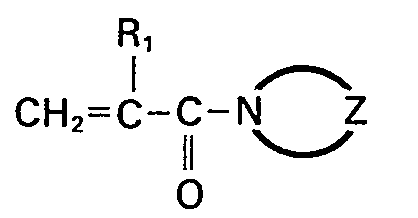
- I. Un monomère défini comme étant la maille du support et qui consiste en une N-acrylylpolyméthylèneimine de formule:


- II. Un monomère défini comme étant l'agent de réticulation et qui consiste en un N,N'-bis- acrylyldiaminoalcane de formule:

- III. Un monomère défini comme étant l'agent de fonctionnalisation et qui consiste en un N-acrylylaminoacide ou ester, de formule:

- R, = H ou-CH3
- R3 = H ou -CH3
- n3=1,2,3 ou5
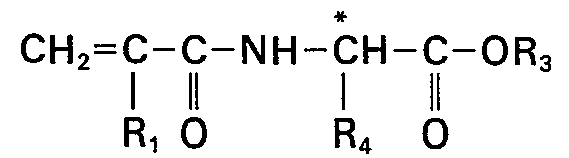
ou un N-acrylylaminoacide (ou ester) asymétrique de série L, de formule: *
- R1 = H ou -CH3
- R3 ayant la signification précédente
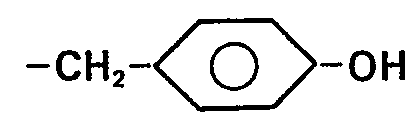
- R4 = -CH3


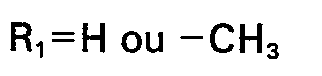
- R1 = H ou -CH3
- R3 ayant la signification précédente.
- L'utilisation comme monomère servant de maille, de N-acrylylpolyméthylèneimine 1 ou de N-acrylyldialcoylamide 2, avec des fonctions amides disubstituées, permet de supprimer totalement l'intervention des liaisons hydrogène. Aussi, les résines préparées ont un fort taux de gonflement dans une large gamme de solvants organiques (protiques et aprotiques) et dans des tampons aqueux de divers pH.
- La fonctionnalisation des supports, réalisée par l'emploi de N-acrylylaminoacides (ou esters) 4, 5 ou 6, rend possible la modification de la nature et de la longueur du bras séparant la fonction acide ou ester du squelette polymérique.
- Certains monomères intervenant dans la maille sont connus. Ils ont été décrits, avec leurs procédés de préparation, dans diverses publications parmi lesquelles:
- Composés 1: R1 = H, Z = -(CH2)4-, -(CH2)5-Z -(CH2)2-O-(CH2)2-Parrod et coll., «J. Polymer. Sci.»,1958, 29,111.
- Composés 2: R, = H, R2 = -cH3
- Ratchford et coll., «J. Amer. Chem. Soc.», 1947, 69, 1911.
- R1 = H, R2 = -C2H5,
- Brevet américain No 2683741.
- Composés 3:
- Les agents de formule 3 sont connus:
- n2 = 1 (commercial)
- n2 = 2
- Sheppard et coll., «J. Chem. Soc. Perkin I», 1981, 529.
- Enfin, certains agents de fonctionnalisation de formule 4, 5 ou 6 ont été décrits dans la littérature.
- Composés 4:
- Brown et coll., «C.R. Acad. Sci.», 1978, 287c, 125.
- R1=CH3,R3=H,n3=1,2,3 ou5
- Batz et Koldehoff, «Makromol. Chem.», 1976, 177,683.
- Winston et Kirchner, «Macromolécules», 1978, 11, 89.
- Loupek et coll., «Bioch. Biophys. Act.», 1977, 481, 289.
- Composés 5:


- Sakota, «Koine Nippon Zagakin Zashi», 1967, 88 (10), 1087.
- La copolymérisation de ces deux catégories de monomères I d'une part, III, d'autre part, utilisés respectivement en tant que maille et agent de fonctionnalisation, avec un agent de réticulation de type II, permet d'obtenir des résines ayant des comportements physiques compatibles avec les chromatographies d'échange d'ions, en particulier en ce qui concerne le débit d'élution. Ainsi, les contractions de volume en fonction de la force ionique de l'éluant aqueux n'ont jamais été supérieures à 15%.
- Les conditions de polymérisation étant parfaitement contrôlées et les rendements élevés, il est possible de faire varier dans une large gamme le taux de fonctionnalisation. Pour cela, il suffit de modifier la quantité relative de N-acrylylaminoacide (ou ester) III, par rapport aux deux autre monomères.
- Les copolymères selon l'invention sont des copolymères statistiques réticulés tridimensionnels, contenant sous forme copolymérisée:
- a) de 30 à 90% en poids d'un monomère correspondant à une N-acrylylpolyméthylèneimine de formule 1 ou à un N-acrylyldialcoylamide de formule 2;
- b) de 2 à 50% en poids d'un monomère correspondant à un N,N'-diacrylyldiaminoalcane de formule 3;
- c) de 2 à 65% en poids d'un monomère correspondant à un acrylylaminoacide ou ester, racémique de formule 4 ou optiquement actif de formule 5 ou 6.
- Les copolymères selon l'invention contiennent de préférence:
- - de 70 à 90% de monomère 1 (définissant la maille) correspondant aux formules 1 et 2;
- - de 3 à 10% de monomère Il (agent de réticulation) correspondant à la formule 3;
- - de 10 à 20% de monomère III (agent de fonctionnalisation) correspondant aux formules 4, 5 et 6.
- Selon l'invention on a pu préparer des supports contenant de 0,2 à 10 mEq en groupe carboxylique par gramme de support sec (directement ou après saponification). Il a été noté, d'autre part, qu'aucune hydrolyse de la fonction ester n'intervient lors de la polymérisation.
- Les copolymères sous forme acide sont chimiquement stables en milieu nettement acide ou basique. Des traitements de plusieurs jours, par des solutions d'acide chlorhydrique ou de soude 0,5 et 1 M, à température ambiante, ont montré qu'aucune hydrolyse, même partielle, n'intervenait.
- Cela est lié à la présence, sur le monomère formant la maille, d'un amide secondaire relativement encombré, beaucoup plus stable que les amides primaires généralement utilisés. Cela permet l'emploi de nos supports dans un domaine de pH très étendu (1 à 14). Les résines obtenues présentent des pK variant de 4,5 à 5,0.
- Ces copolymères sont stables thermiquement; en effet, par chauffage à 90° C pendant 12 h, sous vide de 0,1 mm de mercure, on ne constate aucune modification.
- Enfin, ces supports présentent une excellente stabilité mécanique. Après agitation mécanique pendant plusieurs jours, on ne constate pas de formation de fines (aucune turbidité dans le liquide surnageant).
- Les copolymères réticulés selon l'invention peuvent être préparés, selon des procédés connus, par polymérisation radicalaire des monomères I, Il et III.
- La copolymérisation peut en particulier être effectuée soit en bloc, dans un mélange alcool éthy- lique/eau ou diméthylformamide/eau en milieu tamponné (pH = 6,0), soit en suspension dans les systèmes eau/paraffine ou alcool polyvinyli- que/eau. L'amorçage est réalisé par les initiateurs habituellement utilisés en polymérisation radicalaire. Comme tels, on peut citer:
- - les couples comme N,N,N',N'-tétraméthyl- éthylènediamine (TMEDA) + persulfate alcalin,
- - le persulfate d'ammonium,
- - ou encore l'azo-isobutyronitrile.
- On utilise de 3 à 10% du poids d'agent de réticulation et une quantité d'agent de fonctionnalisation calculée de façon à obtenir 0,2 à 5 mEq de fonction acide carboxylique par gramme de résine sèche (directement ou après saponification); le complément à 100% en poids est constitué par le monomère destiné à constituer la maille.
- Dans le cas de la polymérisation en bloc, la solution aqueuse contenant les différents monomères et l'initiateur est soumise à une polymérisation en phase homogène. Le gel transparent qui se forme est rapidement broyé, lavé et tamisé; ce procédé donne un rendement quantitatif, en particulier de copolymères de taille homogène.
- La polymérisation en suspension fournit directement la résine sous forme de particules sphériques; celles-ci sont lavées avec beaucoup de soin, séchées. Leurtaille est aussi très homogène; le diamètre étant compris entre 0,1 et 0,25 mm (détermination microscopique).
- Dans ce cas, à la solution homogène contenant les différents monomères, on ajoute un l'agent initiateur de la polymérisation et l'agent émulsifiant.
- L'ensemble est versé dans une phase liquide organique, non miscible à l'eau, maintenue sous agitation. La vitesse d'agitation est réglée de façon à obtenir une émulsion ayant la taille de gouttelettes voulue. La polymérisation est alors initiée, soit par addition de TMEDA, soit par un léger chauffage.
- Le mélange est ensuite agité jusqu'à son terme; les perles de résines obtenues sont lavées avec un solvant hydrocarboné, puis à l'eau, à l'éthanol et à l'éther éthylique. La résine est finalement séchée à température ambiante sous vide poussé.
- Comme phase organique liquide, utilisable, on peut citer par exemple les huiles végétales (huile de soja, huile d'arachide, huile de tournesol, etc.) ou minérales (huile de paraffine, huile de silicone).
- L'agent émulsifiant peut être l'un des produits connus sous la dénomination commerciale Span, Arlacel ou Tween, à la concentration de 0,1 à 4% en volume.
- Des exemples ci-après illustrent les différentes techniques de polymérisation ainsi que les différentes résines revendiquées dans la présente invention, sans la limiter.
- Copolymérisation d'acrylylpyrrolidine (abréviation AP), de l'éthylène bis acrylamide, encore appelé N,N'-diacrylyldiamino-9,2 éthane (abréviation EBA) et de l'ester méthylique de la N-acrylylglycine (abréviation A Gly 0 CH3).
- On dissout 0,12 mol (15 g) d'AP, 7,8.10-3 mol (1,31 g) d'EBA et 1,631 .10-2mol (2,33 g) d'ester méthylique de la N-acrylylglycine dans 34,2 ml d'éthanol anhydre. La solution incolore est dégazée 2 min au sonicateur. Par addition de 18 ml d'eau, la solution devient opaque. On laisse dégazer encore 2 min et on ajoute 21,6 ml de tampon phosphate (pH 6,0). Le dégazage est poursuivi jusqu'à retour à une solution limpide. On ajoute alors 3,16 g de persulfate d'ammonium et laisse dissoudre en dégazant. On ajoute alors 0,53 ml de TMEDA (N,N,N',N'-tétraméthyldiamino-1,2 éthane). Il se produit rapidement une élévation de température et la solution se prend en un gel transparent. On abandonne 0,5 h. Après broyage au broyeur Thomas, on laisse décanter dans l'eau afin d'éliminer les fines surnageantes. Cette opération est répétée une deuxième fois. Après filtration, la résine est successivement lavée avec de l'eau, un mélange eau/acétone 50/50 de l'acétone et finalement à l'éther. La poudre blanche obtenue est séchée 12 h à 80° C sous (2 mm) 2,66 mbar. On isole ainsi 13,86 g de résine blanche..Rdt 74,4%.
- Pour transformer cette résine ester en résine acide, on place les 13,86 g précédemment obtenus dans 300 ml de soude molaire et on agite pendant 2 h à 25° C. Après filtration la résine est lavée successivement l'eau,à à l'acide chlorhydrique (10%), à l'eau jusqu'à neutralité, à la soude molaire (500 ml), à l'eau jusqu'à neutralité, à l'acide chlorhydrique (10%), et finalement à l'eau jusqu'à neutralité. On sèche comme précédemment à 80° C sous 2 mm de mercure. Après tamisage pour éliminer les particules dont le diamètre est supérieur à 0,25 mm, on obtient 8,8 g de poudre blanche. Le pKa de la forme OH est de 4,4.
- Des conditions identiques de polymérisation sont utilisées: à partir de 15 g (0,12 mol) d'AP, 1,31 g (7,8 .10-3 mol) d'EBA et 2,55 g (1,631. 10-2 mol) d'ester méthylique de la N-acrylyl β alanine dans 34,2 ml d'éthanol et avec les mêmes quantités d'eau (18 ml), de tampon phosphate (pH 6,0) (21,6 ml), de persulfate d'ammonium (3,16 g) et de TMEDA (0,53 ml), on isole, après saponification dans des conditions identiques à celles décrites dans le paragraphe précédent et après tamisage, 9,43 g de résine sèche et blanche. Le pKa de la forme OH est 4,8.
- Les mêmes conditions de polymérisation que dans les paragraphes précédents sont utilisées à partir des monomères suivants: N-acrylylpyrrolidine (0,12 mol, 15 g), EBA (0,0078 mol,1,31 g) et N-acrylyl s aminocaproate de méthyle (16,31. 10-3 mol, 3 g). On isole ainsi, après élimination des fines, 13 g (68%) de résine blanche et sèche.
- L'hydrolyse dans les mêmes conditions que précédemment conduit, après tamisage, à 10,6 g de résine acide sèche et blanche. Le pKa de la forme OH est 5,1.
- A partir de 15 g (0,12 mol) de AP, 1,31 g (7,8 - 10-3 mol) de EBA et 2,76 g (0,01631 mol) d'ester méthylique de l'acide N-acrylyl y amino butyrique, on isole 12 g de résine ester sèche. Après hydrolyse dans 300 ml de soude molaire, on obtient par tamisage 10,8 g de résine acide sèche. Le pKa de la forme OH est 5,0.
- Les quantités de monomères utilisées sont: 15 g de N-acrylylpyrrolidine, 1,31 g de EBA, 3,24 g d'ester méthylique de la N-acrylyl L-leucine.
- La résine ester sèche (10,05 g) est hydrolysée par 300 ml de soude molaire. Après traitement comme indiqué précédemment et tamisage, on isole 8,49 g de résine acide. Le pKa de la forme OH est 4,8.
- On emploie 15 g de N-acrylylpyrrolidine, 1,31 g de EBA et 3 g d'ester méthylique de la N-acrylyl L-valine. La polymérisation et les traitements habituels donnent 9,96 g de résine ester sèche. L'hydrolyse par 300 ml de soude molaire conduit, dans les mêmes conditions que ci-dessus, à 7,64 g de résine acide blanche et sèche. Le pKa de la forme OH est 5,0.
- A partir de 15 g (0,12 mol) de N-acrylylpyrrolidine, 1,31 g (0,0078 mol de EBA) et 2,98 g d'ester méthylique de la N-acrylyl L-proline (16,31 10-3 mol), on isole 15,03 g (77,7%) de résine sèche. L'hydrolyse dans 300 ml de soude molaire conduit, après tamisage, à 11 g de résine acide sèche. Le pKa de la forme OH est 4,7.
- 5 g (0,0355 mol) de N-acrylylmorpholine, 0,38 g (0,0023 mol) de EBA et 0,995 g (5,38. 10-3 mol) de N-acrylyl ε amino caproate de méthyle sont dissous dans 10,4 ml d'éthanol. Après dégazage au sonicateur, on ajoute successivement, dans les conditions indiquées dans le premier exemple, 6 ml d'eau, 7,2 ml de solution tampon de phosphate disodique 0,1 M, 1,05 g de persulfate d'ammonium et 0,176 ml de TM EDA.
- La polymérisation conduit à 4,93 g (77,4%) de résine sèche et blanche. L'hydrolyse fournit, après tamisage, 2,35 g de résine acide sèche, le pKa de la forme OH est 5,1.
- La polymérisation est effectuée dans les conditions du paragraphe précédent, avec comme monomère 5 g (0,0355 mol) de N-acrylylmorpholine, 0,38 g (0,0023 mol) de EBA et 0,844 g (5,38,10-3 mol) d'ester méthylique de la N-acrylyl β alanine. On isole ainsi 4,24 g (68,2%) de résine ester sèche, donnant, après hydrolyse et tamisage, 2,18 g de résine acide sèche. Le pKa de la forme OH est 4,8.
- 4,653 g (0,047 mol) de N,N-diméthylacrylamide, 0,51 g (0,003 mol) de EBA et 0,955 g (5,16.10-3 mol) de N-acrylyl ε aminocaproate de méthyle sont dissous dans 13,4 ml d'alcool éthylique. Après dégazage au sonicateur, on ajoute successivement, dans les conditions déjà indiquées, 7,05 ml d'eau, 8,46 ml de solution tampon de phosphate disodique 0,1 M, 1,237 g de persulfate d'ammonium et 0,2 ml de TMEDA. On obtient 4,64 g (73%) de résine ester blanche, donnant après hydrolyse et tamisage 2,44 g de résine acide. Le pKa de la forme OH est 5,0.
- Dans les conditions du paragraphe précédent, la polymérisation est effectuée à partir de 4,653 g (0,047 mol) de N-diméthylacrylamide, 0,51 g (0,003 mol) de EBA et 0,81 g (5,16.10-3 mol) d'ester méthylique de la N-acrylyl β alanine.
- Il y a formation de 4,51 g (75,75%) de résine ester sèche conduisant, après hydrolyse et tamisage, à 2,36 g de résine acide, le pKa de la forme OH est 4,7.
- La polymérisation est effectuée à partir de 2 g de N-diéthylacrylamide, 0,17 g de EBA et 0,32 g d'ester méthylique de la N-acrylyl alanine dans 4,5 ml d'éthanol, par additions successives de 2,35 ml d'eau, 2,82 ml de tampon au phosphate disodique 0,1 M, 0,42 g de persulfate d'ammonium et 0,067 ml de TM EDA. Après hydrolyse et tamisage, on isole 1,31 g de résine acide sèche. Le pKa de forme OH est 5,5.
- A partir de 6 g de N-diéthylacrylamide, 0,5 g de EBA et 1,12 g de N-acrylyl ε amino caproate de méthyle dans 18,4 ml d'alcool, et par additions successives de 7,05 ml d'eau, 8,46 ml de tampon au phosphate disodique 0,1 M, 1,24 g de persulfate d'ammonium et 0,2 ml de TM EDA, on obtient, après hydrolyse et tamisage, 4,77 g de résine sèche. Le pKa de la forme OH est 5,42.
- A partir de 6 g de N-acrylyl hexaméthylène- imine, 0,33 g de EBA, 0,65 g d'ester méthylique de la N-acrylyl β alanine dans 8,4 ml d'alcool, on ajoute successivement dans les conditions habituelles 5,6 ml d'eau, 6,9 ml de tampon, 1,0 g de persulfate d'ammonium et 0,18 ml de TMEDA.
- 3,0 g de chlorhydrate de N-acrylyl N'-méthyl- pipérazine, 0,16 g de EBA et 0,3 g d'ester méthylique de la N-acrylyl alanine dans 4,2 ml d'éthanol sont traités successivement par 2,8 ml d'eau, 3,5 ml de tampon, 0,5 g de persulfate d'ammonium et 0,09 ml de TM EDA.
- Dans tous ces exemples, il a été vérifié que les esters obtenus ne s'hydrolysent pas au cours de la polymérisation, les résines ne contiennent aucun CO2H libre.
- On dissout 25 g (0,2 mol) de AP, 2,15 g (1,3. 10-2 mol) de méthylènebisacrylamide et 3,5 g (2,4.10-2 mol) de N-acrylyl alanine dans 57 ml d'éthanol absolu. On ajoute 30 ml d'eau puis 36 ml de tampon phosphate (pH 6,0). La solution limpide est dégazée au sonicateur 2 min. Ajouter 5,27 g de persulfate d'ammonium puis 0,88 ml de TM EDA, laisser polymériser 30 min. Le gel transparent est broyé dans un appareil Thomas, lavé à l'eau, à l'éthanol, puis à l'éther. La résine est séchée sous vide. Rdt: 27,6 g.
- La résine est alors tamisée. On obtient la répartition en taille suivante:

- Un mélange de 18,6 g (0,12 mol) de N-méthacrylylmorpholine, de 1,31 g de EBA (7,8. 10-3 mol), de 2,55 g (1,63.10-2mol) d'ester méthylique de la N-acrylyl β alanine et de 100 mg d'azo-isobutyronitrile sont ajoutés, sous azote, à une solution agitée d'alcool polyvinylique (3 g) et d'eau (250 ml). Le mélange est chauffé 3 h à 70° C. Le polymère est lavé à l'eau chaude, à l'éthanol, à l'acétone, à l'éthanol et à l'éther. Après séchage sous vide (2 mm de mercure) à 80° C, on isole 14,8 g de billes dont le diamètre est compris entre 0,1 et 0,2 mm.
- A partir d'un mélange de 18,6 g (0,12 mol) de N-méthacrylylmorpholine, de 1,31 g (7,8. 10-3 mol) d'EBA, 3,24 g (1,631 10-2 mol) d'ester méthylique de l'acide N-acrylyl ε aminocaproïque et de 100 mg d'azo-isobutyronitrile, traité dans les mêmes conditions que précédemment, on isole 12,6 g de polymère.
- 4 g (3,2 10-2 mol) d'AP, 8 g (5 10-2 mol) de N-acrylyl alanine méthyl ester et 1,2 g (7,14. 10-3 mol) d'EBA sont dissous dans 50 ml de tampon phosphate (KH2P04 0,1 M ramené à pH 6,0 avec de la soude 1 N) et 50 ml d'éthanol. A la solution limpide obtenue, on ajoute 0,6 g de persulfate d'ammonium et 0,3 ml de Span 85. Le mélange est placé dans 400 ml d'huile de paraffine, puis agité jusqu'à obtention de gouttelettes de dimension désirée. Toujours sous agitation, le milieu est désoxygéné par un bullage à l'azote de 20 min. On ajoute alors 0,92 ml de TMEDA. Après 30 min d'agitation, on dilue à l'éther de pétrole, on filtre, lave à l'éther de pétrole, à l'eau, avec un mélange eau/acétone (50/50), à l'acétone, puis à l'éther.
- On obtient ainsi des billes de polymère parfaitement sphériques dont on peut faire varier la taille, en ajustant la vitesse de rotation, entre 0,05 et 0,5 mm. Le rendement est voisin de 90%.
- La réaction peut s'effectuer également dans l'eau à la place du tampon phosphate.
- Les sels de sodium des résines acides sont facilement obtenus en lavant les polymères par des solutions de soude 0,5M. On utilise 30 ml de solution de soude par millilitre de résine acide gonflée. L'excès de soude est éliminé par lavage à l'eau jusqu'à neutralité.
- Les taux de gonflement des polymères ont été mesurés dans l'eau et dans différents solvants organiques. Ces mesures ont été réalisées sur des résines broyées. (Tableaux 1 et 2.)
- Les polyacrylamides préparés ont été testés comme échangeur de cations en chromatographie d'échange de cations sur trois substrats:
- - deux mélanges peptidiques,
- - un mélange de protéines basiques (histones provenant de thymus de veau).
- Les mélanges peptidiques sont composés de 2 peptides de même séquence qui ne diffèrent uniquement que par la charge:
- - Ac Gly Lys Ala Leu Arg Val 0 Me 2 charges > 0
- - Ac GLy Lys Ala Leu Arg Val OH 1 charge > 0
- - Ac Gly Lys Leu Arg Val 0 Me 2 charges > 0
- - Ac Gly Lys Leu Arg Val OH 1 charge > 0
- Les séparations ont été réalisées dans un gradient de chlorure de sodium à pH constant (pH 5,0, acétate de sodium 10-2 M), en utilisant des résines tamisées correspondant aux copolymères suivants:
- - AP + MEBA + A P Ala 0 Na
- - AP + EBA + A s Cap 0 Na
- - AP + EBA + A(L) Pro 0 Na
- - AP + EBA + A Gly 0 Na
- La taille des particules est comprise entre 0,1 et 0,25 mm. La charge en groupement carboxylique est voisine de 0,8 mEq/g de résine sèche. Les chromatogrammes, fig. 1 et 2 ci-après, montrent une très bonne séparation entre les composantes des mélanges analysés.
- Les histones de thymus de veau ont été également chromatographiées dans un gradient de chlorure de sodium (0 à 2M) (fig. 3). On observe une résolution des différentes composantes, avec un temps d'analyse très court (5 h), un débit rapide (80 ml/h), et un tampon (NaCl) mieux adapté à l'analyse par UV.
- Pour une résolution semblable, les chromatographies par échange d'ions d'histones sont effectuées dans des gradients aux formes élaborées de chlorure de guanidinium avec des débits très lents et des temps d'analyse qui peuvent varier entre 12 h et plusieurs jours (J. Bonner et coll., « Method in Enzymology», vol. 126; Grossmann L. et Mal- dave K. Editeurs, Academic Press, New York, 1968).
- Les résines selon l'invention sont donc compatibles avec les protéines et permettent de réaliser facilement de bonnes séparations. Il est à noter de plus que les supports décrits ici admettent des débits très élevés. Il est possible de travailler jusqu'à 300 ml/h avec une colonne 1 x 25 cm.
- Sur ces quatre figures, λ = 210 mm, la solution d'élution est 0,2M en NaCI, les numéros indiqués en abscisses sont ceux de fractions recueillies et les chiffres en ordonnées représentent la densité optique pleine échelle.


Claims (7)


ou un N-acrylylaminoacide (ou ester) asymétrique de série L, de formule:




Priority Applications (1)
| Application Number | Priority Date | Filing Date | Title |
|---|---|---|---|
| AT82402110T ATE14890T1 (de) | 1981-11-19 | 1982-11-19 | Acrylcopolymeren aus n-acrylylpolymethyleniminen oder n-acrylydialkylamiden, n,n'acrylyldiaminoalcanen und nacrylylaminds|uren(oder estern), deren herstellung und deren verwendung als kationenaustauscher. |
Applications Claiming Priority (2)
| Application Number | Priority Date | Filing Date | Title |
|---|---|---|---|
| GB8134861 | 1981-11-19 | ||
| GB8134861 | 1981-11-19 |
Publications (2)
| Publication Number | Publication Date |
|---|---|
| EP0079842A1 EP0079842A1 (fr) | 1983-05-25 |
| EP0079842B1 true EP0079842B1 (fr) | 1985-08-14 |
Family
ID=10525991
Family Applications (2)
| Application Number | Title | Priority Date | Filing Date |
|---|---|---|---|
| EP82402109A Expired EP0081408B1 (fr) | 1981-11-19 | 1982-11-19 | Nouveaux copolymères acryliques à fonctionnalisation aminée et leur préparation |
| EP82402110A Expired EP0079842B1 (fr) | 1981-11-19 | 1982-11-19 | Nouveaux copolymères acryliques à base de N-acrylylpolyméthylèneimines ou de N-acrylyldialcoylamides, de N,N'-acrylyldiaminoalcanes et de N-acrylylaminoacides (ou esters), leur préparation et leur emploi comme échangeurs cationiques |
Family Applications Before (1)
| Application Number | Title | Priority Date | Filing Date |
|---|---|---|---|
| EP82402109A Expired EP0081408B1 (fr) | 1981-11-19 | 1982-11-19 | Nouveaux copolymères acryliques à fonctionnalisation aminée et leur préparation |
Country Status (15)
| Country | Link |
|---|---|
| US (2) | US4436874A (fr) |
| EP (2) | EP0081408B1 (fr) |
| JP (2) | JPS5896615A (fr) |
| KR (2) | KR860000526B1 (fr) |
| AT (2) | ATE14890T1 (fr) |
| AU (2) | AU556992B2 (fr) |
| CA (2) | CA1199448A (fr) |
| DE (2) | DE3265458D1 (fr) |
| DK (2) | DK162532C (fr) |
| FI (2) | FI70234C (fr) |
| MX (2) | MX169477B (fr) |
| NO (2) | NO161978C (fr) |
| NZ (2) | NZ202539A (fr) |
| PL (2) | PL137653B1 (fr) |
| ZA (2) | ZA828369B (fr) |
Families Citing this family (27)
| Publication number | Priority date | Publication date | Assignee | Title |
|---|---|---|---|---|
| US4631327A (en) * | 1982-12-29 | 1986-12-23 | Polaroid Corporation | β-Elimination polymers useful for providing diffusion control layers in diffusion transfer photographic products |
| US4683292A (en) * | 1983-08-12 | 1987-07-28 | Immunetech, Inc. | Immunotherapeutic polypeptide agents which bind to lymphocyte immunoglobulin FC receptors |
| JPS60235638A (ja) * | 1984-05-07 | 1985-11-22 | Mitsui Toatsu Chem Inc | 吸着・分離方法 |
| EP0163404B1 (fr) * | 1984-05-28 | 1990-06-27 | MITSUI TOATSU CHEMICALS, Inc. | Agent d'absorption et de relâchement de vapeur d'eau |
| US4691026A (en) * | 1985-07-30 | 1987-09-01 | Air Products And Chemicals, Inc. | Self- and hydroxyl reactive formaldehyde-free cyclic hemiamidal and hemiamide ketal crosslinking monomers |
| US4788288A (en) * | 1985-07-30 | 1988-11-29 | Air Products And Chemicals, Inc. | Self-and Hydroxyl reactive formaldehyde-free cyclic hemiamidal and hemiamide ketal crosslinking monomers |
| US4663410A (en) * | 1985-08-06 | 1987-05-05 | Air Products And Chemicals, Inc. | Polymers of self- and hydroxyl reactive formaldehyde-free cyclic hemiamidal and hemiamide ketal crosslinking monomers |
| GB8822502D0 (en) * | 1988-09-24 | 1988-10-26 | Expansia Sa | New peptide synthesis method |
| US5175254A (en) * | 1988-09-24 | 1992-12-29 | Societe D'expansion Scientifque Expansia | Solid phase peptide synthesis using a polyacrylic support in aqueous solution |
| US5280093A (en) * | 1989-06-29 | 1994-01-18 | Rhone-Poulenc Chimie | Chiral polymers for the synthesis of pure enantiomers of amino acids |
| US6031074A (en) * | 1989-08-25 | 2000-02-29 | National Institutes Of Health | Automated Peptide design and synthesis |
| FR2652581B1 (fr) * | 1989-10-02 | 1991-12-13 | Rhone Poulenc Chimie | Procede de solubilisation de peptides et procede de synthese de peptides. |
| US7056935B2 (en) * | 1995-06-07 | 2006-06-06 | Gpi Nil Holdings, Inc. | Rotamase enzyme activity inhibitors |
| US20020042377A1 (en) * | 1995-06-07 | 2002-04-11 | Steiner Joseph P. | Rotamase enzyme activity inhibitors |
| US20040221844A1 (en) * | 1997-06-17 | 2004-11-11 | Hunt Peter John | Humidity controller |
| FR2791582B1 (fr) * | 1999-04-02 | 2001-06-08 | Expansia Sa | Utilisation d'un support polymerique acrylique en catalyse supportee |
| AR021155A1 (es) | 1999-07-08 | 2002-06-12 | Lundbeck & Co As H | Tratamiento de desordenes neuroticos |
| FR2802121A1 (fr) * | 1999-12-14 | 2001-06-15 | Expansia Sa | Supports polymeriques organiques possedant des ligands mono- ou bi-dentates et leur utilisation en catalyse supportee |
| US6620939B2 (en) * | 2001-09-18 | 2003-09-16 | General Electric Company | Method for producing bisphenol catalysts and bisphenols |
| US7112702B2 (en) * | 2002-12-12 | 2006-09-26 | General Electric Company | Process for the synthesis of bisphenol |
| US7098253B2 (en) * | 2004-05-20 | 2006-08-29 | 3M Innovative Properties Company | Macroporous ion exchange resins |
| US7674835B2 (en) * | 2005-12-21 | 2010-03-09 | 3M Innovative Properties Company | Method of making macroporous anion exchange resins |
| US7683100B2 (en) * | 2005-12-21 | 2010-03-23 | 3M Innovative Properties Company | Method of making macroporous cation exchange resins |
| US7674836B2 (en) * | 2006-07-28 | 2010-03-09 | 3M Innovative Properties Company | Method of making macroporous cation exchange resins |
| JP2015214592A (ja) * | 2012-09-11 | 2015-12-03 | 味の素株式会社 | 温度応答性ポリマー及びその製造方法 |
| JP7135284B2 (ja) * | 2017-09-29 | 2022-09-13 | 株式会社リコー | 組成物、硬化物、収容容器、像形性装置、及び像形成方法 |
| CN110128589B (zh) * | 2019-05-31 | 2021-12-03 | 上海纳米技术及应用国家工程研究中心有限公司 | 一种氨基酸改性微球的制备方法及其产品 |
Family Cites Families (10)
| Publication number | Priority date | Publication date | Assignee | Title |
|---|---|---|---|---|
| US2845408A (en) * | 1954-08-04 | 1958-07-29 | Rohm & Haas | Linear polymeric amides and methods of making them |
| US3069390A (en) * | 1959-07-17 | 1962-12-18 | Borden Co | Polymeric amides from polymeric acrylic acid esters and n-aminoalkyl alkanol amines and reaction products therefrom |
| BE627745A (fr) * | 1962-01-31 | |||
| GB1108383A (en) * | 1965-12-23 | 1968-04-03 | Kodak Ltd | Acrylic polymers and light sensitive materials containing them |
| JPS4948668B1 (fr) * | 1971-06-26 | 1974-12-23 | ||
| US3814732A (en) * | 1971-10-21 | 1974-06-04 | Hoffmann La Roche | Modified solid supports for solid phase synthesis |
| NL7311320A (fr) * | 1972-09-01 | 1974-03-05 | ||
| FR2205538A1 (en) * | 1972-11-06 | 1974-05-31 | Ceskoslovenska Akademie Ved | Acrylate or methacrylate copolymer - useful as support for solid phase peptide synthesis |
| DE2430128C3 (de) * | 1974-06-22 | 1981-11-05 | Röhm GmbH, 6100 Darmstadt | Verfahren zur Herstellung trägergebundener Polypeptide |
| US3965070A (en) * | 1974-10-07 | 1976-06-22 | Rohm And Haas Company | Crosslinked vinylcarbonyl resins having α-amino acid functionality |
-
1982
- 1982-11-10 US US06/440,440 patent/US4436874A/en not_active Expired - Lifetime
- 1982-11-10 US US06/440,441 patent/US4439545A/en not_active Expired - Lifetime
- 1982-11-15 ZA ZA828369A patent/ZA828369B/xx unknown
- 1982-11-15 FI FI823906A patent/FI70234C/fi not_active IP Right Cessation
- 1982-11-15 ZA ZA828370A patent/ZA828370B/xx unknown
- 1982-11-15 FI FI823905A patent/FI70233C/fi not_active IP Right Cessation
- 1982-11-16 CA CA000415705A patent/CA1199448A/fr not_active Expired
- 1982-11-16 CA CA000415706A patent/CA1199449A/fr not_active Expired
- 1982-11-17 NZ NZ202539A patent/NZ202539A/en unknown
- 1982-11-17 NZ NZ202538A patent/NZ202538A/en unknown
- 1982-11-18 DK DK513382A patent/DK162532C/da not_active IP Right Cessation
- 1982-11-18 AU AU90678/82A patent/AU556992B2/en not_active Ceased
- 1982-11-18 MX MX007920A patent/MX169477B/es unknown
- 1982-11-18 NO NO823864A patent/NO161978C/no not_active IP Right Cessation
- 1982-11-18 PL PL1982239100A patent/PL137653B1/pl unknown
- 1982-11-18 DK DK513282A patent/DK162651C/da not_active IP Right Cessation
- 1982-11-18 NO NO823865A patent/NO161977C/no not_active IP Right Cessation
- 1982-11-18 AU AU90677/82A patent/AU553982B2/en not_active Ceased
- 1982-11-18 MX MX007921A patent/MX166906B/es unknown
- 1982-11-18 PL PL1982239101A patent/PL138979B1/pl unknown
- 1982-11-19 JP JP57203540A patent/JPS5896615A/ja active Granted
- 1982-11-19 DE DE8282402110T patent/DE3265458D1/de not_active Expired
- 1982-11-19 AT AT82402110T patent/ATE14890T1/de active
- 1982-11-19 KR KR8205234A patent/KR860000526B1/ko not_active Expired
- 1982-11-19 AT AT82402109T patent/ATE28468T1/de not_active IP Right Cessation
- 1982-11-19 DE DE8282402109T patent/DE3276811D1/de not_active Expired
- 1982-11-19 KR KR8205233A patent/KR860000559B1/ko not_active Expired
- 1982-11-19 JP JP57203541A patent/JPS5891703A/ja active Pending
- 1982-11-19 EP EP82402109A patent/EP0081408B1/fr not_active Expired
- 1982-11-19 EP EP82402110A patent/EP0079842B1/fr not_active Expired
Also Published As
Similar Documents
| Publication | Publication Date | Title |
|---|---|---|
| EP0079842A1 (fr) | Nouveaux copolymères acryliques à base de N-acrylylpolyméthylèneimines ou de N-acrylyldialcoylamides, de N,N'-acrylyldiaminoalcanes et de N-acrylylaminoacides (ou esters), leur préparation et leur emploi comme échangeurs cationiques | |
| EP0040124B1 (fr) | Nouveaux copolymères hydrophiles à base de N- tris (hydroxyméthyl) méthyl acrylamide, procédés pour leur préparation, gels aqueux desdits copolymères et leur utilisation comme échangeurs d'ions | |
| CA1302614C (fr) | Polymeres composites, leur preparation et leur utilisation en chromatographie liquide | |
| US5959050A (en) | Supports useful for molecular imprinting technology | |
| AU612024B2 (en) | Electrophoretic media | |
| JPH02502465A (ja) | 架橋結合されたポリマー支持体 | |
| DE60118714T2 (de) | Festphasensynthese und reagentien hierfür | |
| CH631467A5 (fr) | Copolymeres statistiques reticules. | |
| JP3184234B2 (ja) | 親水性および両性のモノマー、それらのポリマーおよびゲルならびにそれらのゲルを用いる分離方法 | |
| JPH11515017A (ja) | 電気泳動及びクロマトグラフィー技術でのポリアクリルアミドマトリックスのための、新規アクリルアミド誘導体及び新規な配合物 | |
| JP2000226419A (ja) | 表面改質用の共重合体 | |
| US7052590B1 (en) | Method and kit for the manufacture of separation gels | |
| EP0384091B1 (fr) | Nouveaux dérivés du glycérol, leur procédé de préparation, compositions réticulantes en contenant, et leur utilisation dans l'industrie textile | |
| JP2006056982A (ja) | 親水性化合物/疎水性化合物分離用ゲル、キラリティー分離用ゲル、ゲルを用いた分析システムおよびゲルを用いた分析方法 | |
| JPH10508249A (ja) | 分離用材料およびそれらの製造方法 | |
| JPH11258221A (ja) | カラム充填剤 | |
| US4087598A (en) | Mercurated polymers, method for their preparation and polymers produced therefrom | |
| JPS61162750A (ja) | 光学分割用充填剤 | |
| JPH04149206A (ja) | ミセル様ポリマー | |
| JPH04149205A (ja) | ミセル様ポリマーの製造方法 | |
| JPH02211242A (ja) | 光学分割用吸着剤及びそれを用いる分割方法 | |
| JPS61160054A (ja) | 光学分割用充填剤 | |
| JP2001066295A (ja) | 液体クロマトグラフィー用充填剤 |
Legal Events
| Date | Code | Title | Description |
|---|---|---|---|
| PUAI | Public reference made under article 153(3) epc to a published international application that has entered the european phase |
Free format text: ORIGINAL CODE: 0009012 |
|
| AK | Designated contracting states |
Designated state(s): AT BE CH DE FR GB IT LI LU NL SE |
|
| 17P | Request for examination filed |
Effective date: 19830701 |
|
| RAP1 | Party data changed (applicant data changed or rights of an application transferred) |
Owner name: SOCIETE D'EXPANSION SCIENTIFIQUE EXPANSIA SOCIETE |
|
| ITF | It: translation for a ep patent filed | ||
| GRAA | (expected) grant |
Free format text: ORIGINAL CODE: 0009210 |
|
| AK | Designated contracting states |
Designated state(s): AT BE CH DE FR GB IT LI LU NL SE |
|
| REF | Corresponds to: |
Ref document number: 14890 Country of ref document: AT Date of ref document: 19850815 Kind code of ref document: T |
|
| REF | Corresponds to: |
Ref document number: 3265458 Country of ref document: DE Date of ref document: 19850919 |
|
| PLBE | No opposition filed within time limit |
Free format text: ORIGINAL CODE: 0009261 |
|
| STAA | Information on the status of an ep patent application or granted ep patent |
Free format text: STATUS: NO OPPOSITION FILED WITHIN TIME LIMIT |
|
| 26N | No opposition filed | ||
| ITTA | It: last paid annual fee | ||
| EPTA | Lu: last paid annual fee | ||
| EAL | Se: european patent in force in sweden |
Ref document number: 82402110.9 |
|
| PGFP | Annual fee paid to national office [announced via postgrant information from national office to epo] |
Ref country code: SE Payment date: 19991005 Year of fee payment: 18 |
|
| PGFP | Annual fee paid to national office [announced via postgrant information from national office to epo] |
Ref country code: FR Payment date: 19991013 Year of fee payment: 18 |
|
| PGFP | Annual fee paid to national office [announced via postgrant information from national office to epo] |
Ref country code: AT Payment date: 19991019 Year of fee payment: 18 |
|
| PGFP | Annual fee paid to national office [announced via postgrant information from national office to epo] |
Ref country code: BE Payment date: 19991026 Year of fee payment: 18 |
|
| PGFP | Annual fee paid to national office [announced via postgrant information from national office to epo] |
Ref country code: LU Payment date: 19991028 Year of fee payment: 18 |
|
| PGFP | Annual fee paid to national office [announced via postgrant information from national office to epo] |
Ref country code: DE Payment date: 19991123 Year of fee payment: 18 |
|
| PGFP | Annual fee paid to national office [announced via postgrant information from national office to epo] |
Ref country code: GB Payment date: 19991129 Year of fee payment: 18 |
|
| PGFP | Annual fee paid to national office [announced via postgrant information from national office to epo] |
Ref country code: NL Payment date: 19991130 Year of fee payment: 18 |
|
| PGFP | Annual fee paid to national office [announced via postgrant information from national office to epo] |
Ref country code: CH Payment date: 20000209 Year of fee payment: 18 |
|
| PG25 | Lapsed in a contracting state [announced via postgrant information from national office to epo] |
Ref country code: LU Free format text: LAPSE BECAUSE OF NON-PAYMENT OF DUE FEES Effective date: 20001119 Ref country code: GB Free format text: LAPSE BECAUSE OF NON-PAYMENT OF DUE FEES Effective date: 20001119 Ref country code: AT Free format text: LAPSE BECAUSE OF NON-PAYMENT OF DUE FEES Effective date: 20001119 |
|
| PG25 | Lapsed in a contracting state [announced via postgrant information from national office to epo] |
Ref country code: SE Free format text: THE PATENT HAS BEEN ANNULLED BY A DECISION OF A NATIONAL AUTHORITY Effective date: 20001129 |
|
| PG25 | Lapsed in a contracting state [announced via postgrant information from national office to epo] |
Ref country code: LI Free format text: LAPSE BECAUSE OF NON-PAYMENT OF DUE FEES Effective date: 20001130 Ref country code: CH Free format text: LAPSE BECAUSE OF NON-PAYMENT OF DUE FEES Effective date: 20001130 Ref country code: BE Free format text: LAPSE BECAUSE OF NON-PAYMENT OF DUE FEES Effective date: 20001130 |
|
| BERE | Be: lapsed |
Owner name: SOC. D'EXPANSION SCIENTIFIQUE EXPANSIA S.A. Effective date: 20001130 |
|
| PG25 | Lapsed in a contracting state [announced via postgrant information from national office to epo] |
Ref country code: NL Free format text: LAPSE BECAUSE OF NON-PAYMENT OF DUE FEES Effective date: 20010601 |
|
| GBPC | Gb: european patent ceased through non-payment of renewal fee |
Effective date: 20001119 |
|
| REG | Reference to a national code |
Ref country code: CH Ref legal event code: PL |
|
| EUG | Se: european patent has lapsed |
Ref document number: 82402110.9 |
|
| PG25 | Lapsed in a contracting state [announced via postgrant information from national office to epo] |
Ref country code: FR Free format text: LAPSE BECAUSE OF NON-PAYMENT OF DUE FEES Effective date: 20010731 |
|
| NLV4 | Nl: lapsed or anulled due to non-payment of the annual fee |
Effective date: 20010601 |
|
| PG25 | Lapsed in a contracting state [announced via postgrant information from national office to epo] |
Ref country code: DE Free format text: LAPSE BECAUSE OF NON-PAYMENT OF DUE FEES Effective date: 20010801 |
|
| REG | Reference to a national code |
Ref country code: FR Ref legal event code: ST |